Minnesota Prairie Roots

Writing and photography by Audrey Kletscher Helbling

Learn about local history & more at Oak Ridge Cemetery talk August 21, 2024

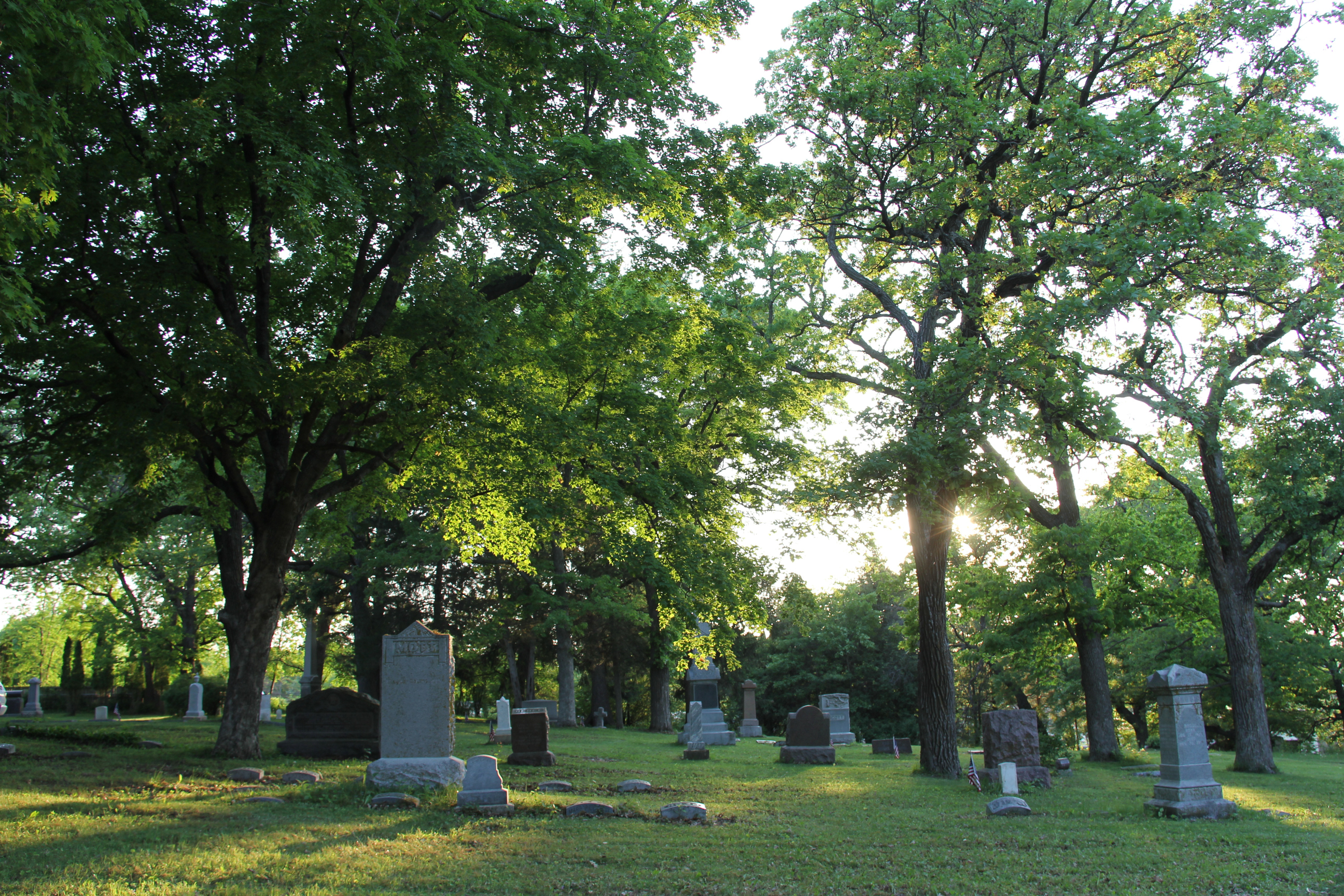
Oak Ridge Cemetery, Faribault. (Minnesota Prairie Roots copyrighted file photo)

FOR ANYONE WHO APPRECIATES local history, especially cemeteries, the Rice County History Museum in Faribault is the place to be at 7 pm Thursday, August 22. Tom Rent, an Oak Ridge Cemetery volunteer, will present “Preserving Faribault’s Oldest Cemetery, Oak Ridge.”

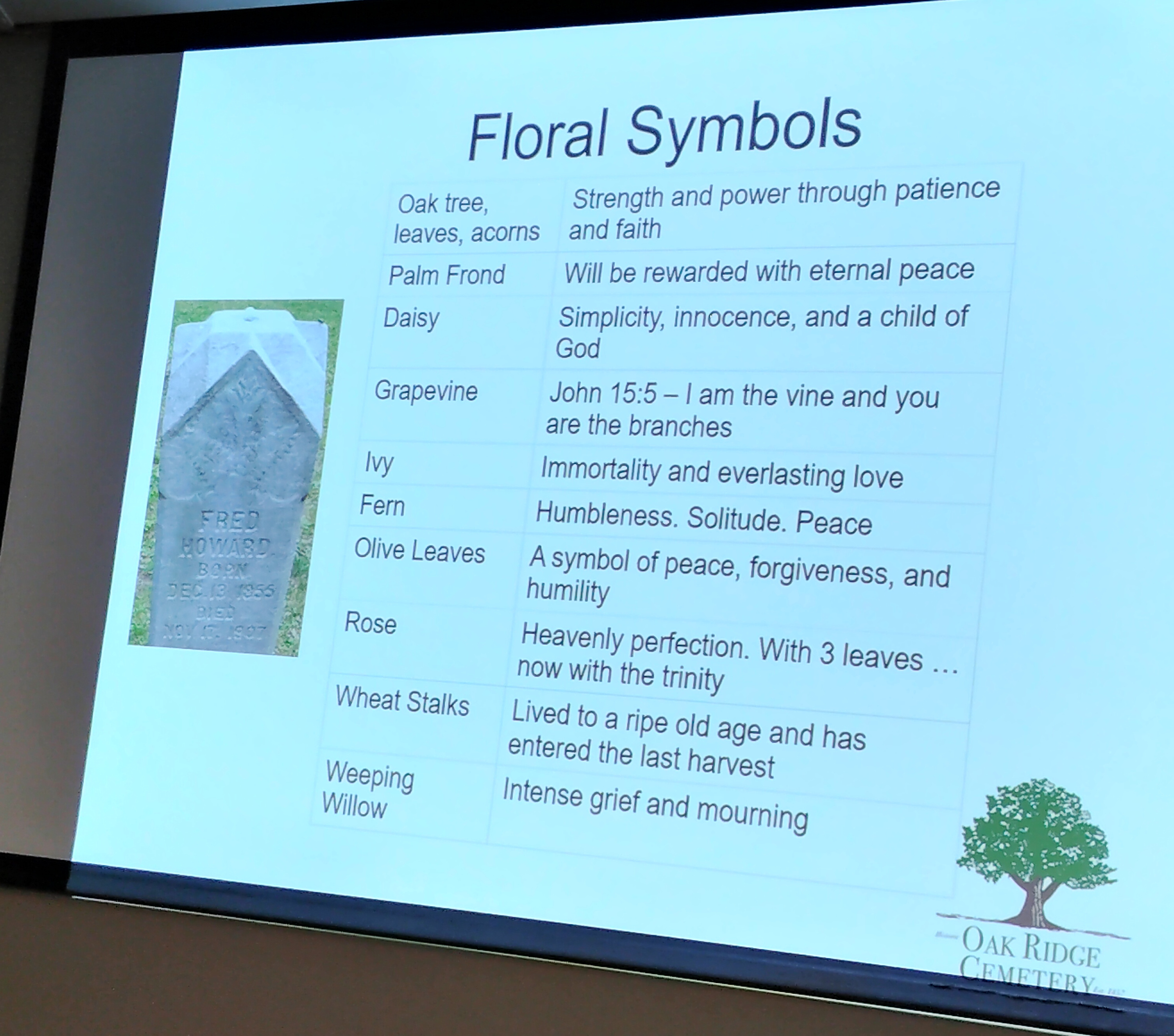
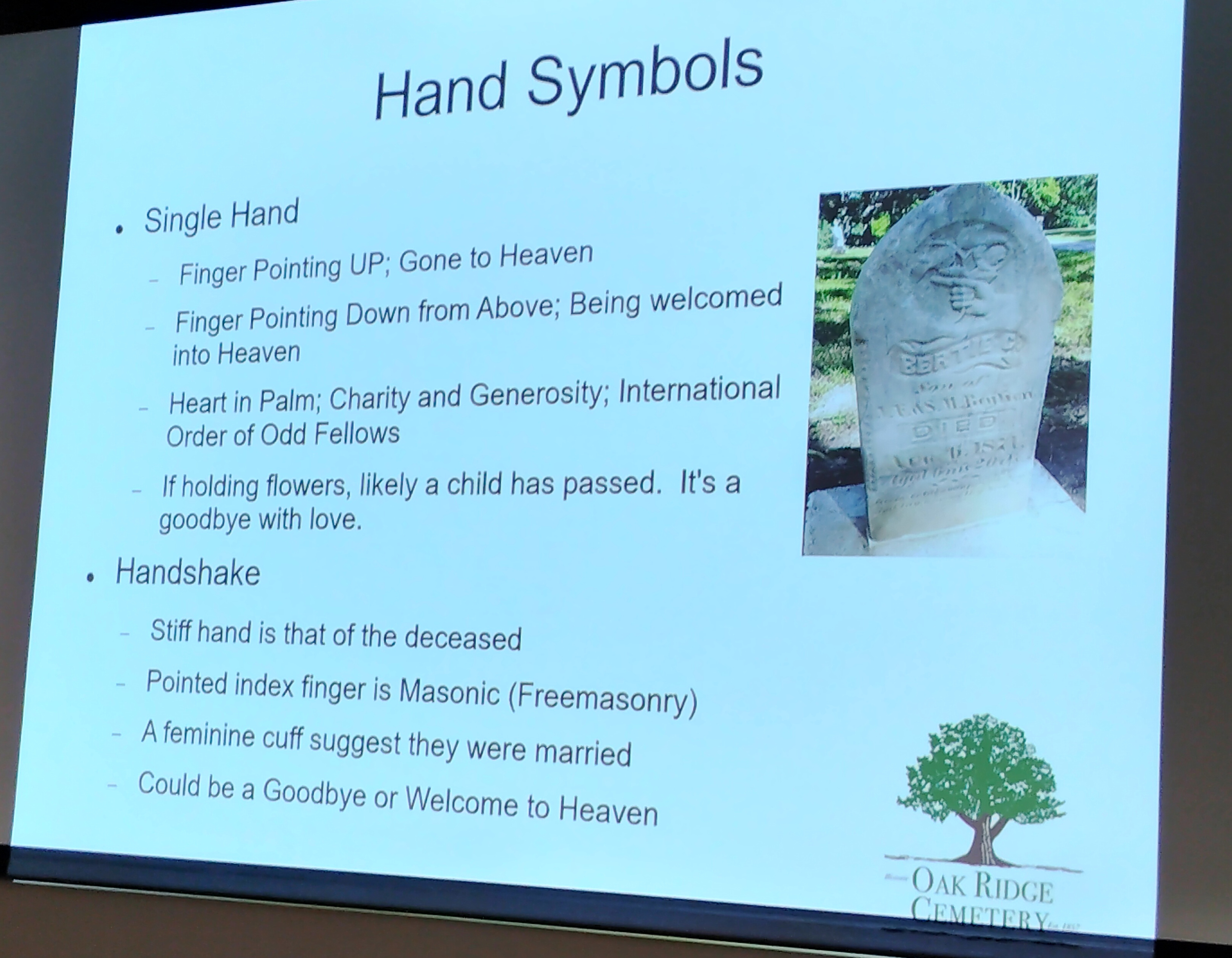
It’s sure to be an informative talk focusing on the cemetery’s history, operation and preservation. Rent will also share photos, stories, headstone symbology, preservation methods and future plans to maintain Oak Ridge Cemetery. Plus, he’ll talk about some of the people who helped shape Faribault and Rice County.

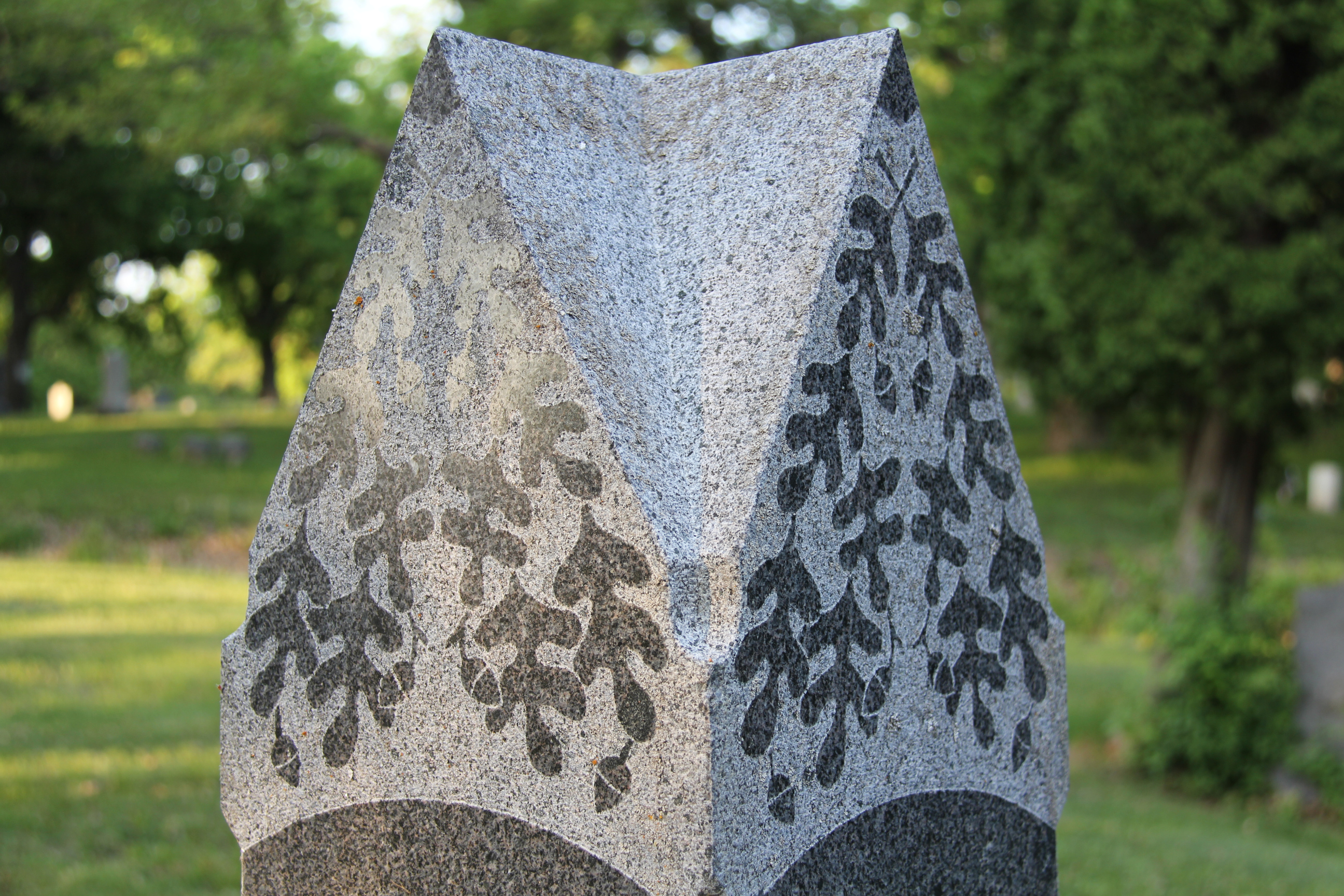
Oak leaves fittingly grace the top of a grave marker at Oak Ridge Cemetery. (Minnesota Prairie Roots copyrighted file photo)

As someone who did not grow up in this region of Minnesota, I’m always interested in learning more about this place I’ve called home for 42 years now. I’ve explored a lot of cemeteries, including Oak Ridge. Cemeteries fascinate me with their history, art, stories, natural beauty, peacefulness and aura of reverence.

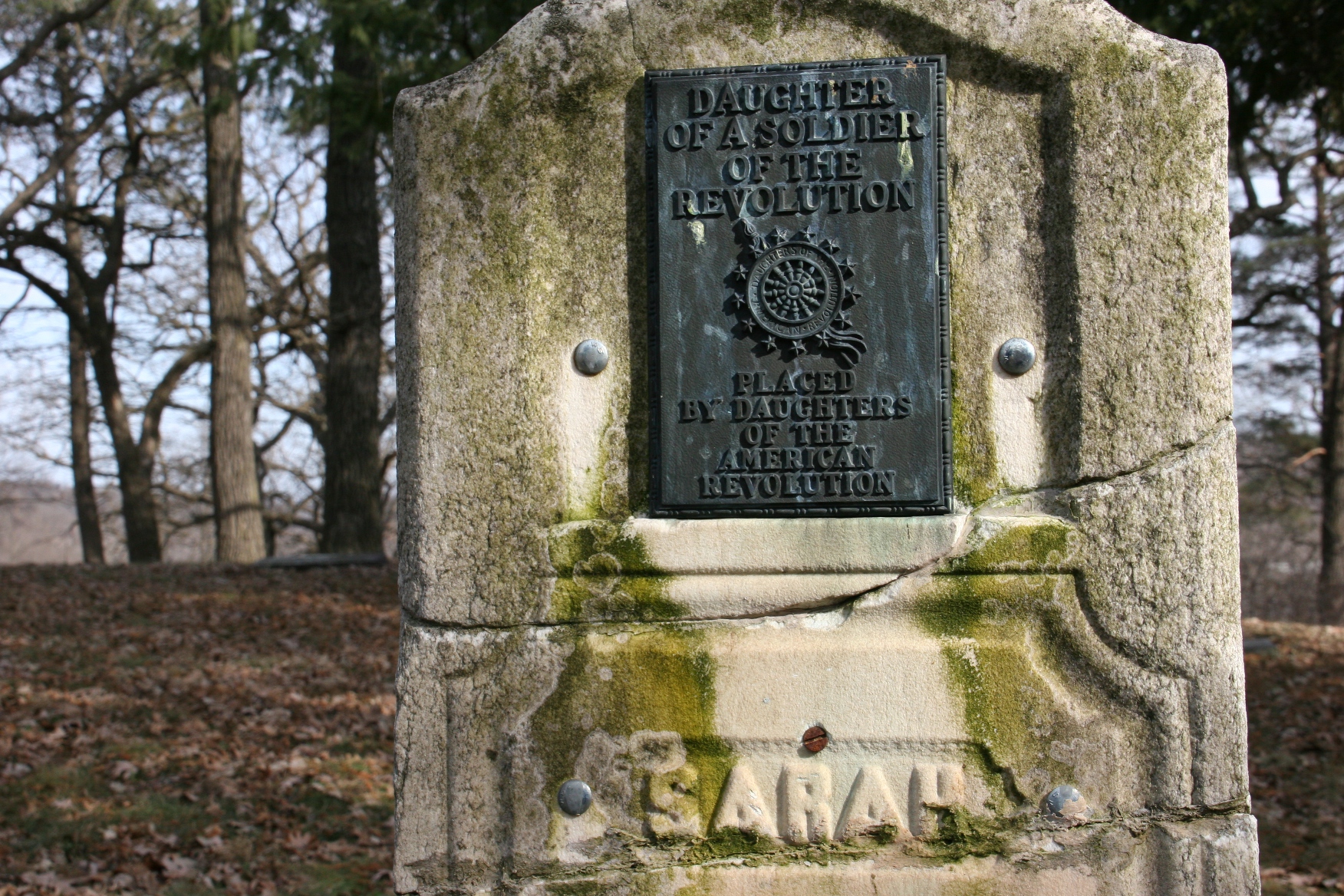
Sarah, daughter of a Revolutionary War soldier, lies buried here. (Minnesota Prairie Roots copyrighted file photo)

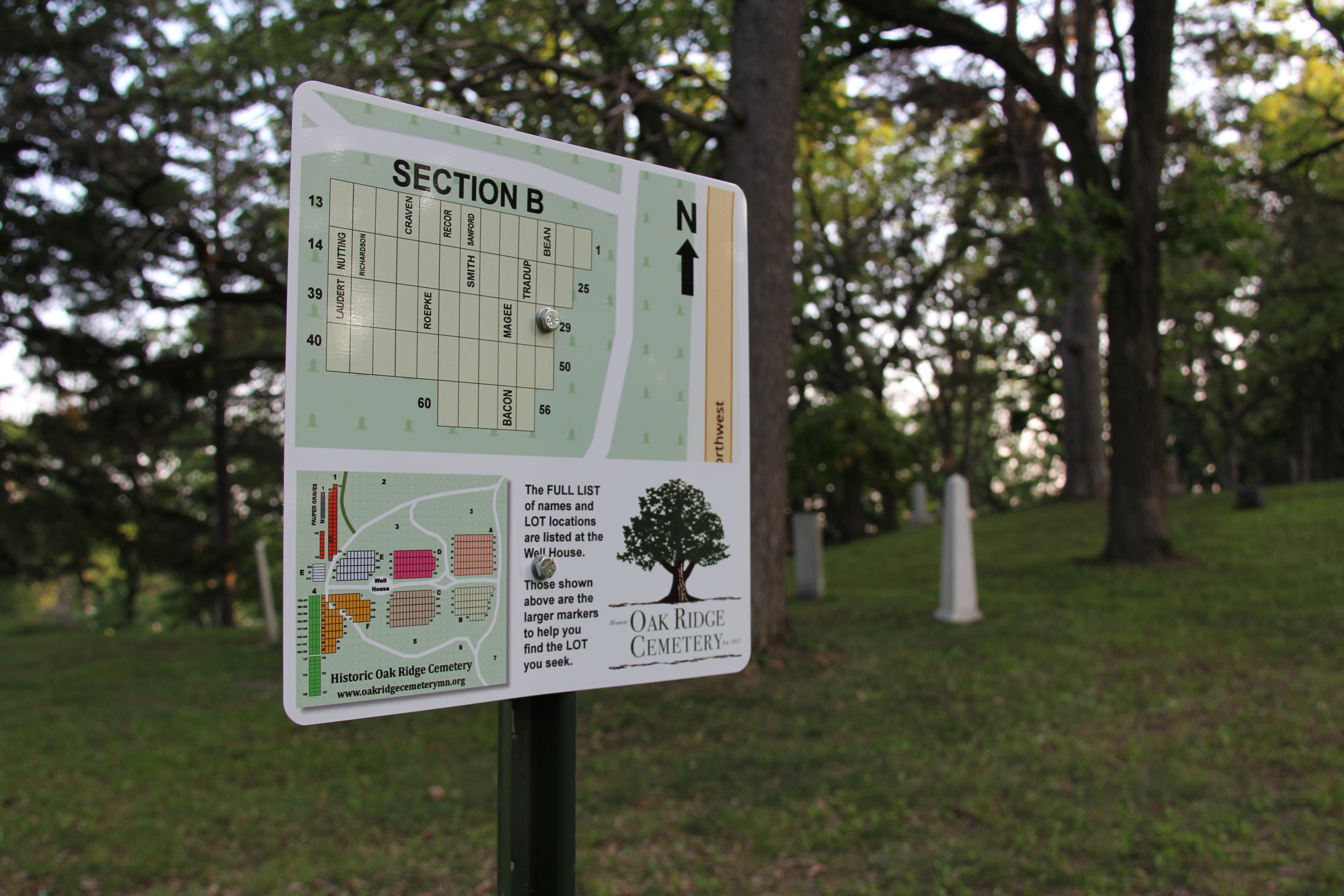
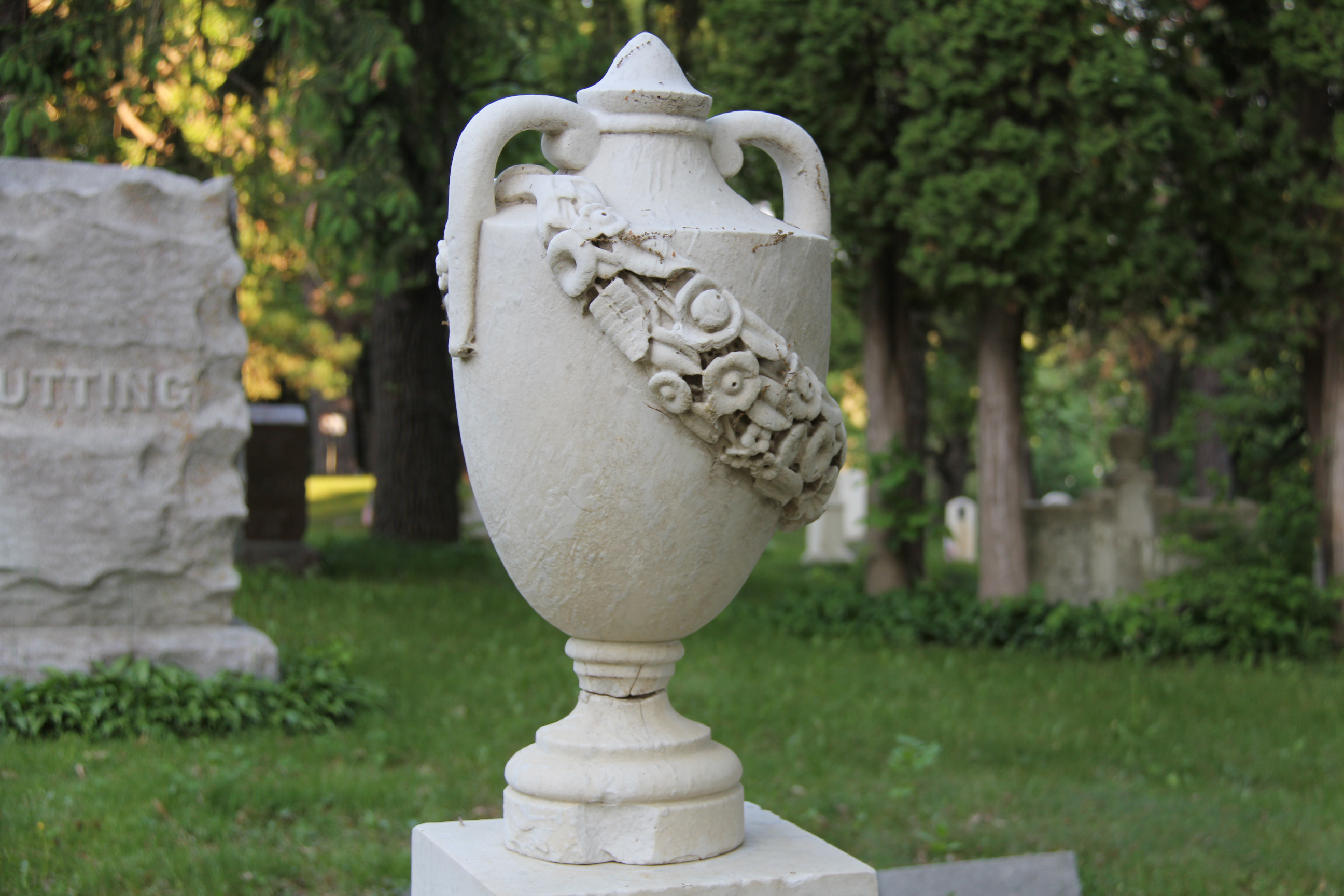
Oak Ridge Cemetery, founded in 1857, sits high atop a hill on Faribault’s north side just off Minnesota State Highway 3. It’s a beautiful, wooded location filled with oak, maple and spruce trees, and many aged headstones. There are names—like Nutting and Buckham—recognizable as key figures in local history. There are Civil War and Spanish American War veterans and a daughter of an American Revolutionary War soldier buried here. Senators and representatives, too. Local leaders and farmers. Immigrants and paupers and people from all walks of life. People with stories. So. Much. History.

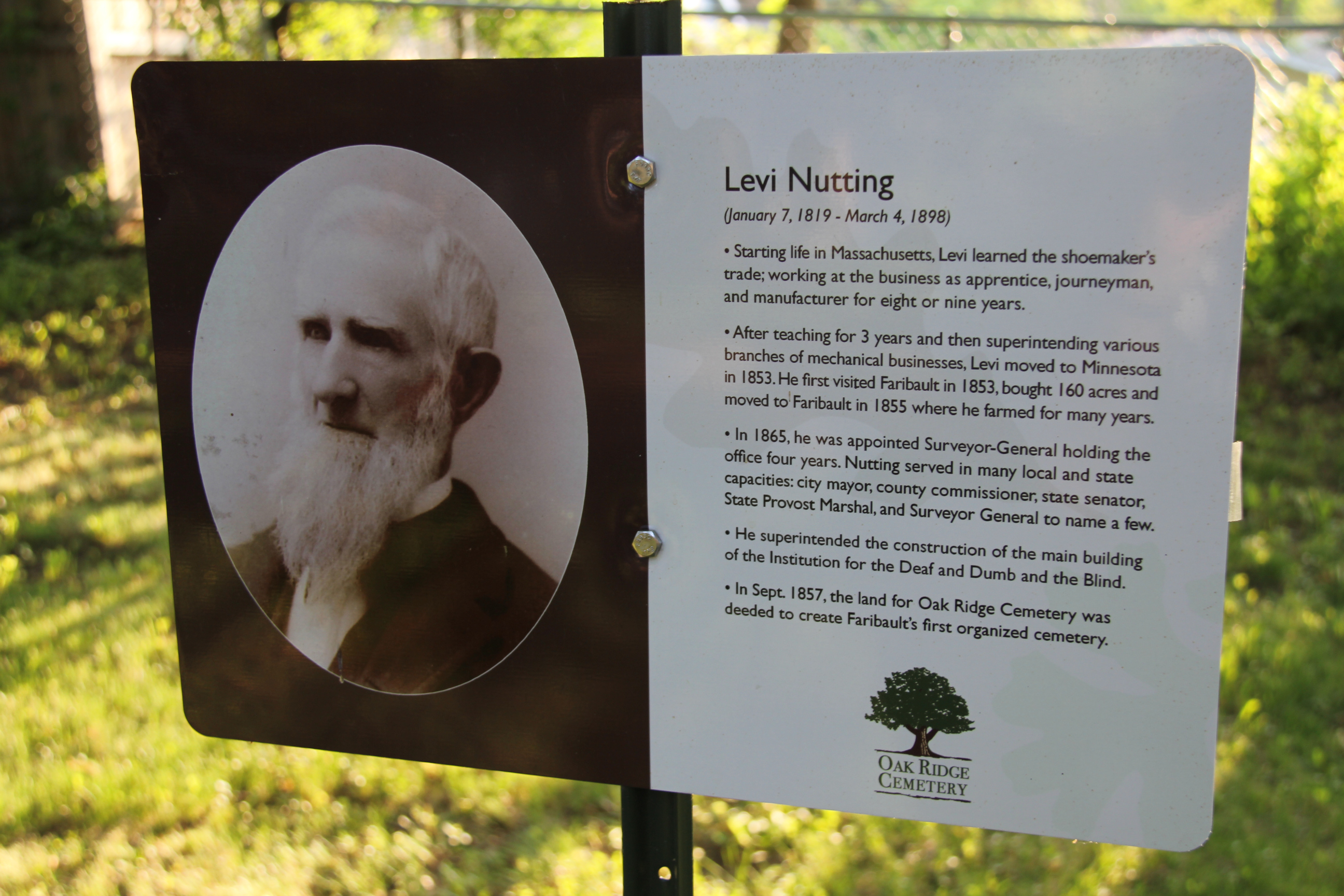
Levi Nutting was important in early Faribault history, as noted in this cemetery signage. (Minnesota Prairie Roots copyrighted file photo)

I especially like that the caretakers/volunteers of Oak Ridge have installed signage profiling some of the people buried in the cemetery. For those like me who are curious about the stories behind the deceased, this is valuable information. I always want to know more beyond names and dates of birth and death. The Oak Ridge Cemetery Facebook page offers lots of historical info, too.

Efforts have also been underway to restore aged tombstones in the cemetery.

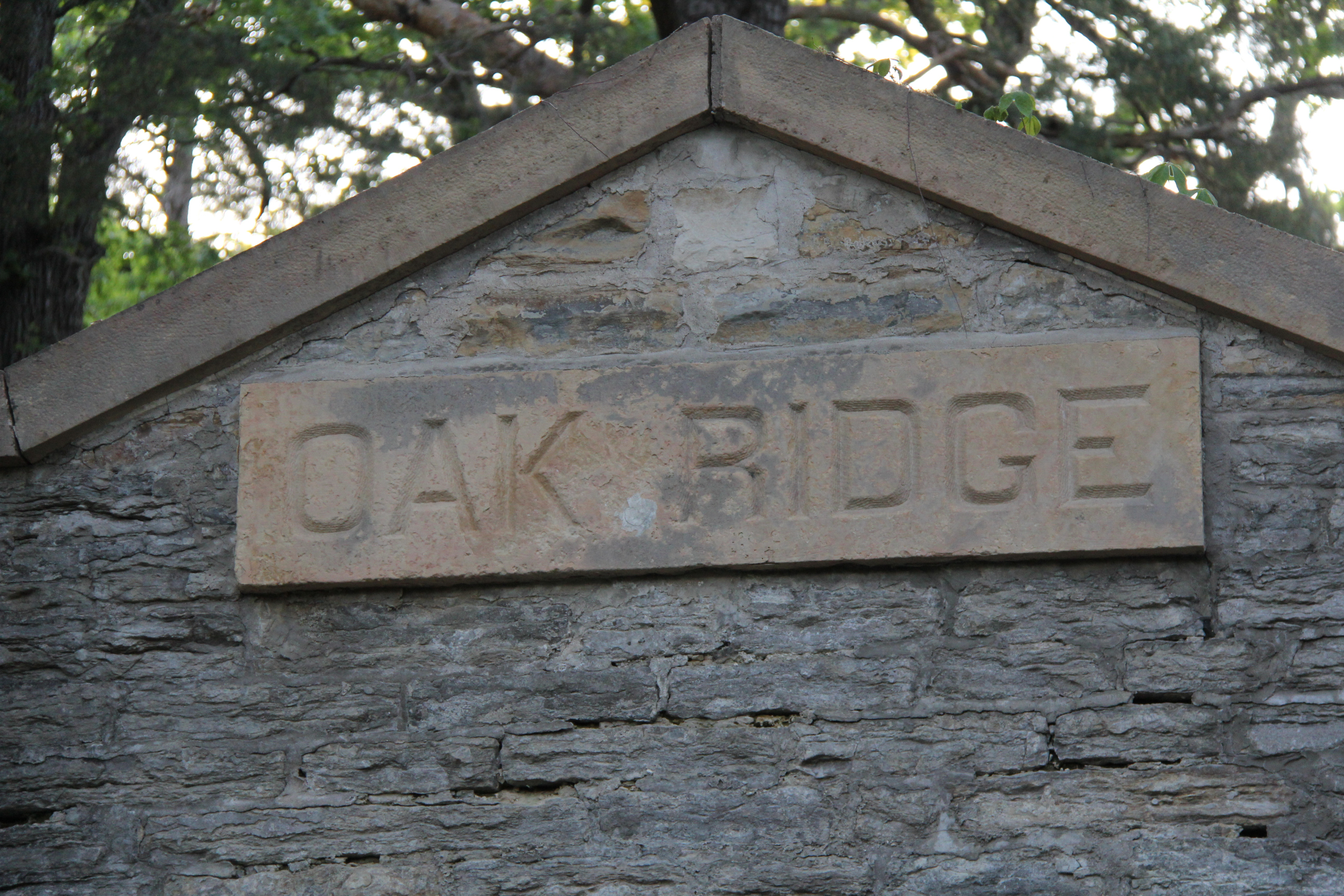
Identifying signage on the limestone crypt at Oak Ridge. (Minnesota Prairie Roots copyrighted file photo)

I expect Tom Rent will cover much of this in Thursday’s talk. He, like so many others, cares deeply about those who lie buried beneath the canopies of trees at Oak Ridge Cemetery.

FYI: To reserve a seat at Thursday’s presentation, call 507-332-2121, email rchs at rchistory.org or stop at the history museum. The program is free to Rice County Historical Society members and $5 for non-members.


Johnston Hall film screening at historical society December 15, 2023

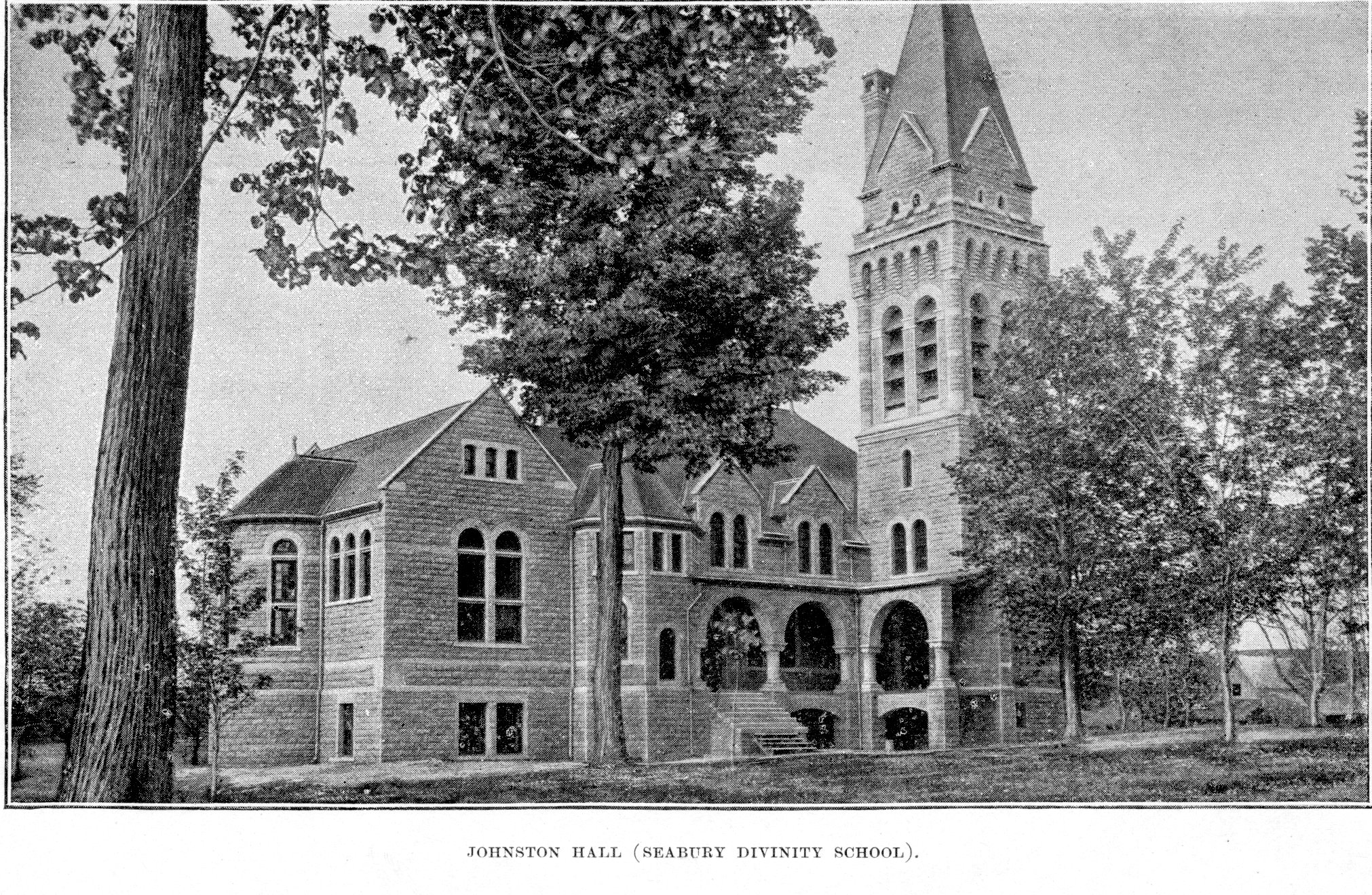
Johnston Hall, date unknown. (Photo courtesy of Rice County Historical Society)

IN EARLY NOVEMBER, I watched a local documentary online about Johnston Hall in the comfort of my home office. The film, “Love Inwrought: Johnston Hall and the Memory of a Building,” was created by Sam Temple and Logan Ledman. The ambitious and talented young filmmakers have, since their high school days, focused on local history through their 1855 History Team (Steamboat Media Co.). Their latest project focuses on Johnston Hall, completed in 1888 as part of Seabury Divinity School. The building was demolished in 2021 after standing on Faribault’s east side for 133 years.

Sam Temple, left to right, Logan Ledman and Troy Temple. (Photo courtesy of 1855 History Team)

This Saturday, December 16, the duo will present a public screening of their film at the Rice County Historical Society in Faribault from 5:30-6:30 pm. And while I am not able to be there, I encourage anyone interested in Johnston Hall and the fine work of writers and directors Temple and Ledman to attend.

A Q & A follows the screening. Attendees are encouraged to share their stories about Johnston Hall, which saw many uses through the years.

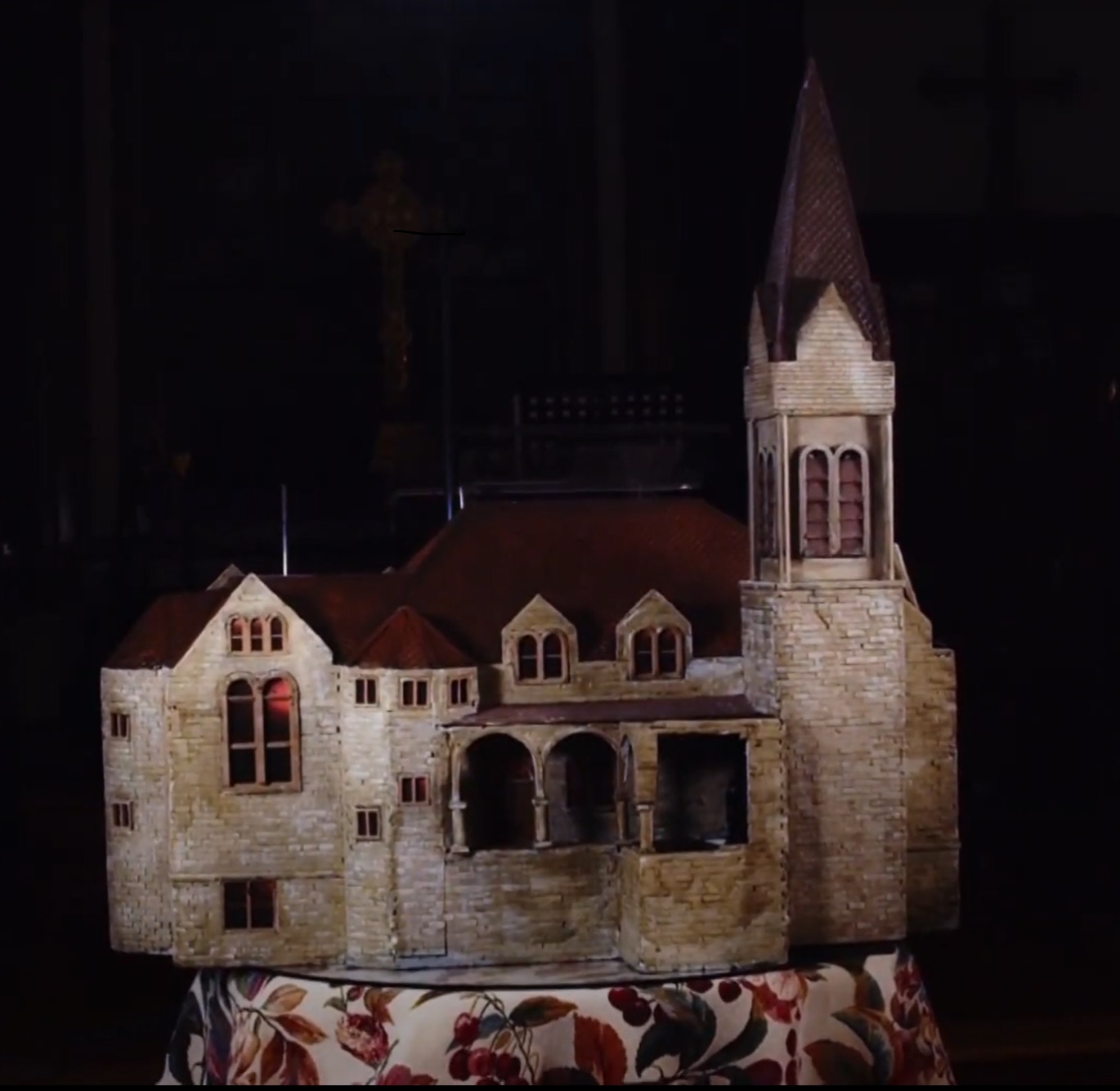
Johnston Hall model. (Photo courtesy of 1855 History Team)

But that’s not all. A model of the building handcrafted by Rathbun Reliquilaries plus artifacts and architectural items saved by the historical society will also be available for viewing.

Saturday’s event offers an ideal opportunity to learn more about Johnston Hall and to meet members of the team that worked diligently to create the documentary. Besides Temple and Ledman those include Troy Temple, illustrator Piper Mohring, composer Sam Dwyer, and actors Steve Searl (portraying Bishop Henry Whipple) and Eli Hastings (as the Rev. Henry St. Clair).

Documentary promo. (Courtesy of 1855 History Team)

According to Sam Temple, the title of the documentary traces to a quote by Bishop Whipple: “There is an unwritten history of faith and love inwrought in every building erected here.” The Episcopalian bishop was referencing buildings (including Johnston Hall) at the schools he helped organize.

This signage stands at Johnston Hall Memorial Garden across the street from the local hospital and clinic. (Minnesota Prairie Roots copyrighted file photo August 2023)

The work of Temple, Ledman and their team is top-notch professional, outstanding and deserving of accolades. These young men are passionate about history, storytelling, filmmaking and creating an appreciation for our past. Their enthusiasm and work impress me. I can’t wait to see what they do next.

FYI: To read my review of “Love Inwrought,” click here.

© Copyright 2023 Audrey Kletscher Helbling
 

A look at Bishop Henry Whipple’s role in Minnesota history February 17, 2023

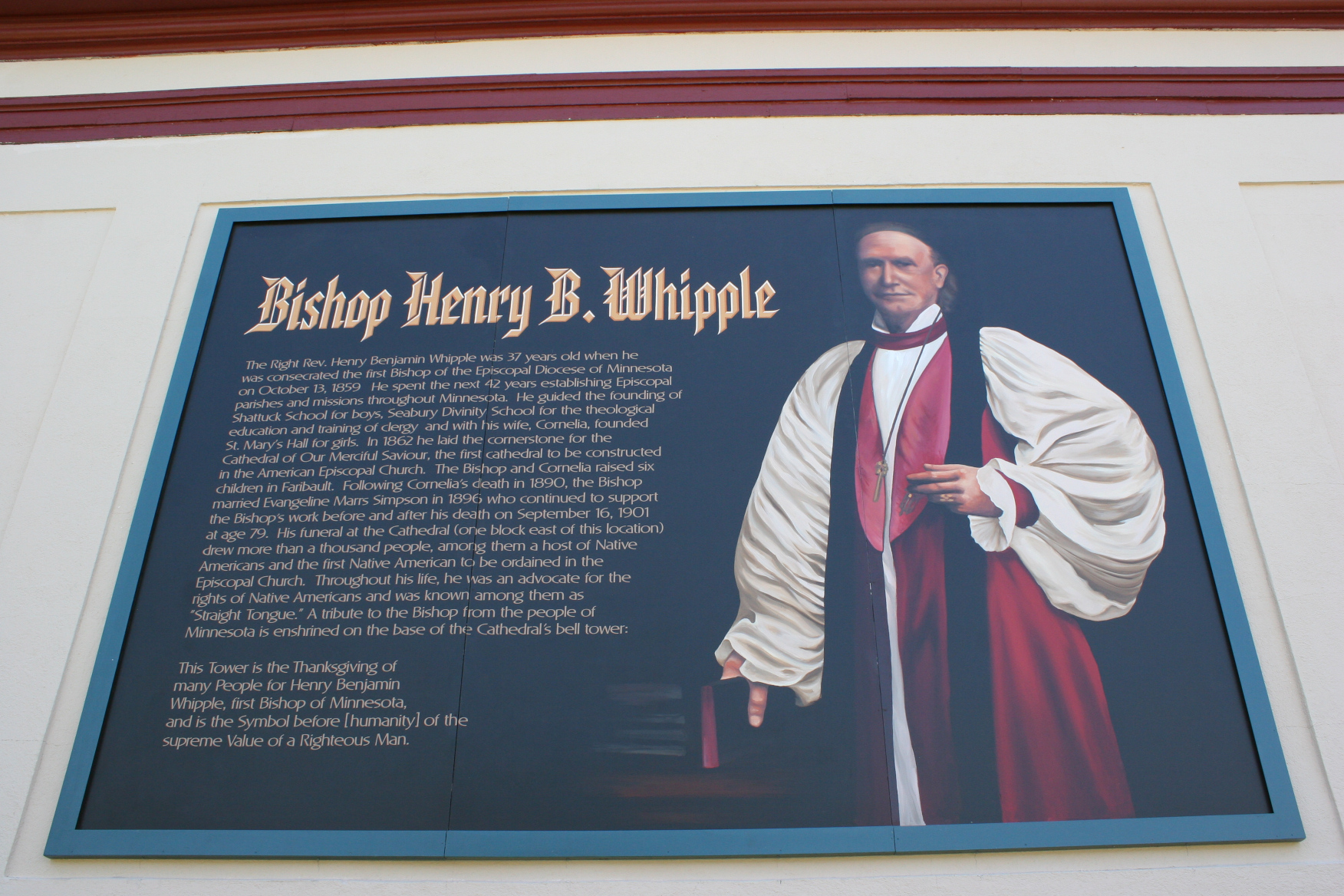
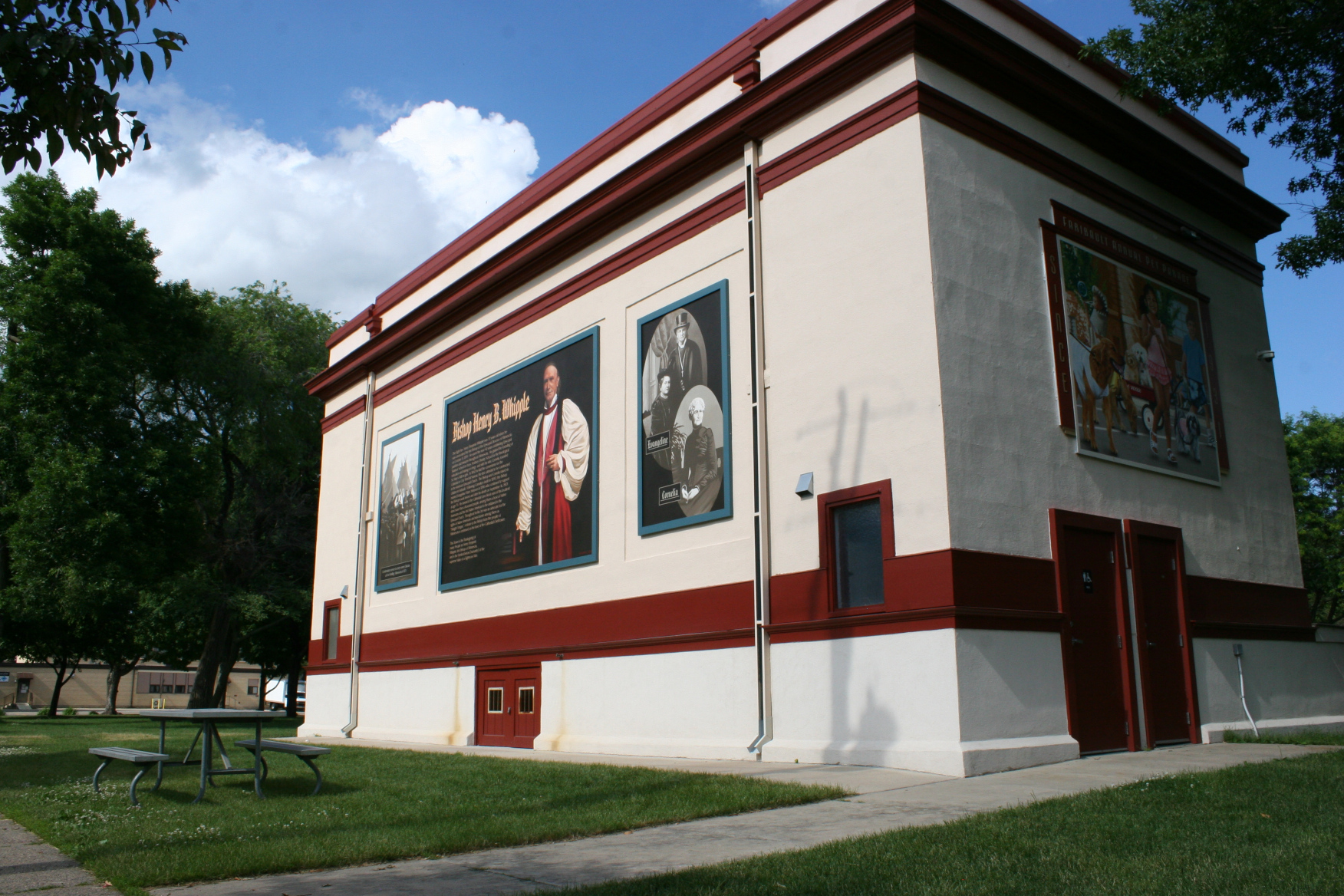
A painting of Bishop Henry Whipple and information about him grace a mural on Faribaults’ Central Park Bandshell. (Minnesota Prairie Roots copyrighted file photo June 2020)

He was known as “Straight Tongue” for his honesty. He was disparagingly called “The Sympathizer” by others for the compassion and care he held for the Dakota. He was Bishop Henry Whipple.

Thursday evening, Rice County Historical Society Executive Director David Nichols spoke to a packed room about this Episcopal priest who played such a pivotal role in Minnesota history, specifically during the time shortly before, and then after, The U.S.-Dakota War of 1862. For me, personally, Nichols’ focused talk connected my home region of Redwood County, the area in which the war centered, to my home of 40 years, Rice County.

I grew up with a limited (white) perspective of the war with no knowledge of Whipple. I only learned of this New York born clergyman upon my move to Faribault in 1982. Nichols broadened my understanding during his presentation and during a question and answer session that followed.

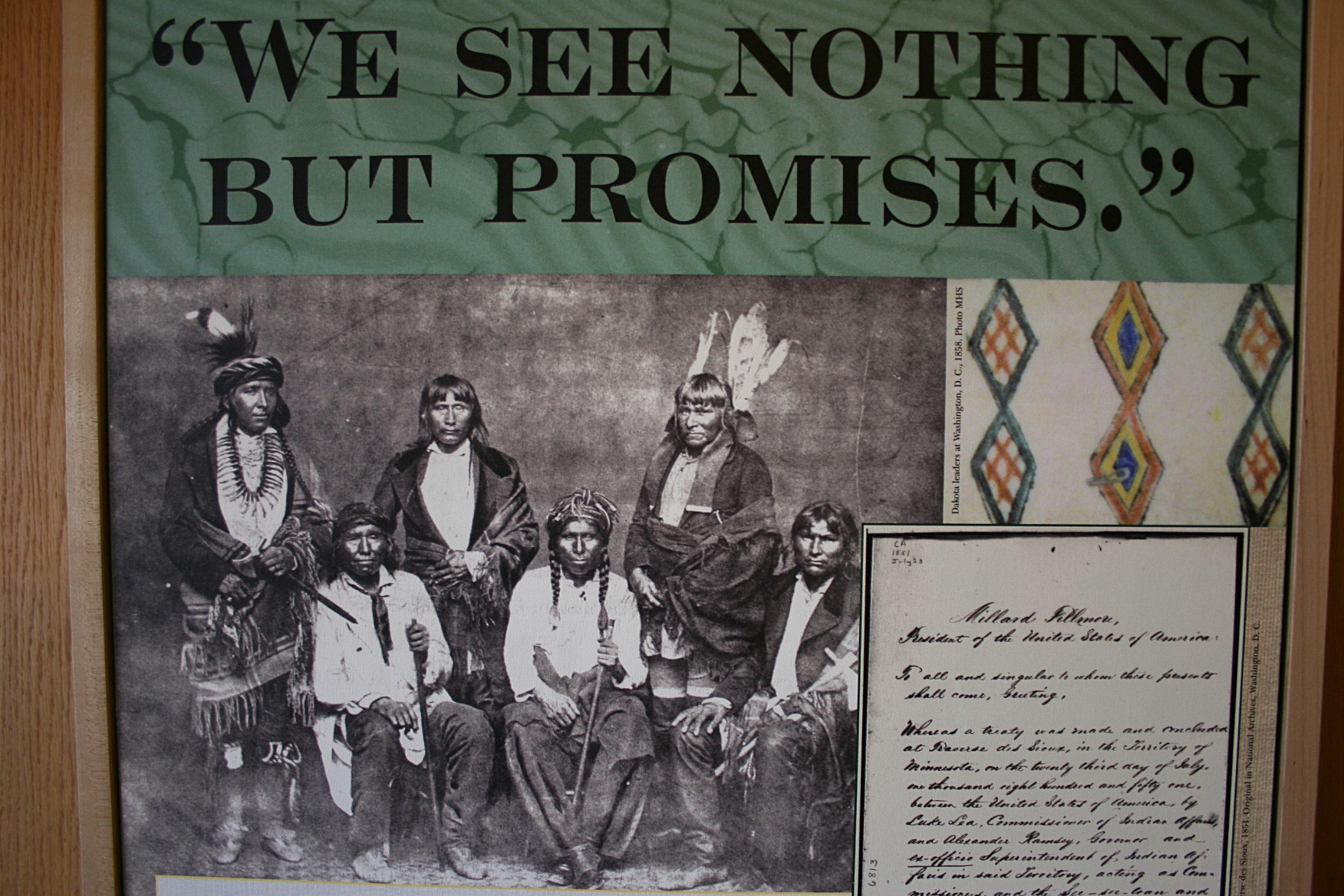
A panel at the Traverse des Sioux Treaty Center in St. Peter shows Dakota leaders photographed in Washington D.C. in 1858. The photo is from the Minnesota Historical Society. It references broken treaty promises and rising tension. (Minnesota Prairie Roots copyrighted file photo)

HIGH TENSIONS

Whipple arrived here in 1860 as the newly-elected Bishop of Minnesota, settling in Faribault. Already at that time, tensions were mounting among settlers and the first peoples of Minnesota, Nichols said. Tensions also existed between the “Farmer Indians” (those who adapted to Euro culture) and “Blanket Indians” (who maintained their Native culture, traditions and lifestyle). Conditions on reservations were terrible with disease, starvation, and dishonest agents failing to provide promised government annuities.

That is the situation Whipple found when he landed in Minnesota. It was a time, noted Nichols, of “tensions about to boil over.” And eventually they did with the outbreak of war in August 1862. It was a decidedly bloody and awful war, as all wars are. Some 600-800 died and the Dakota were eventually displaced from their land.

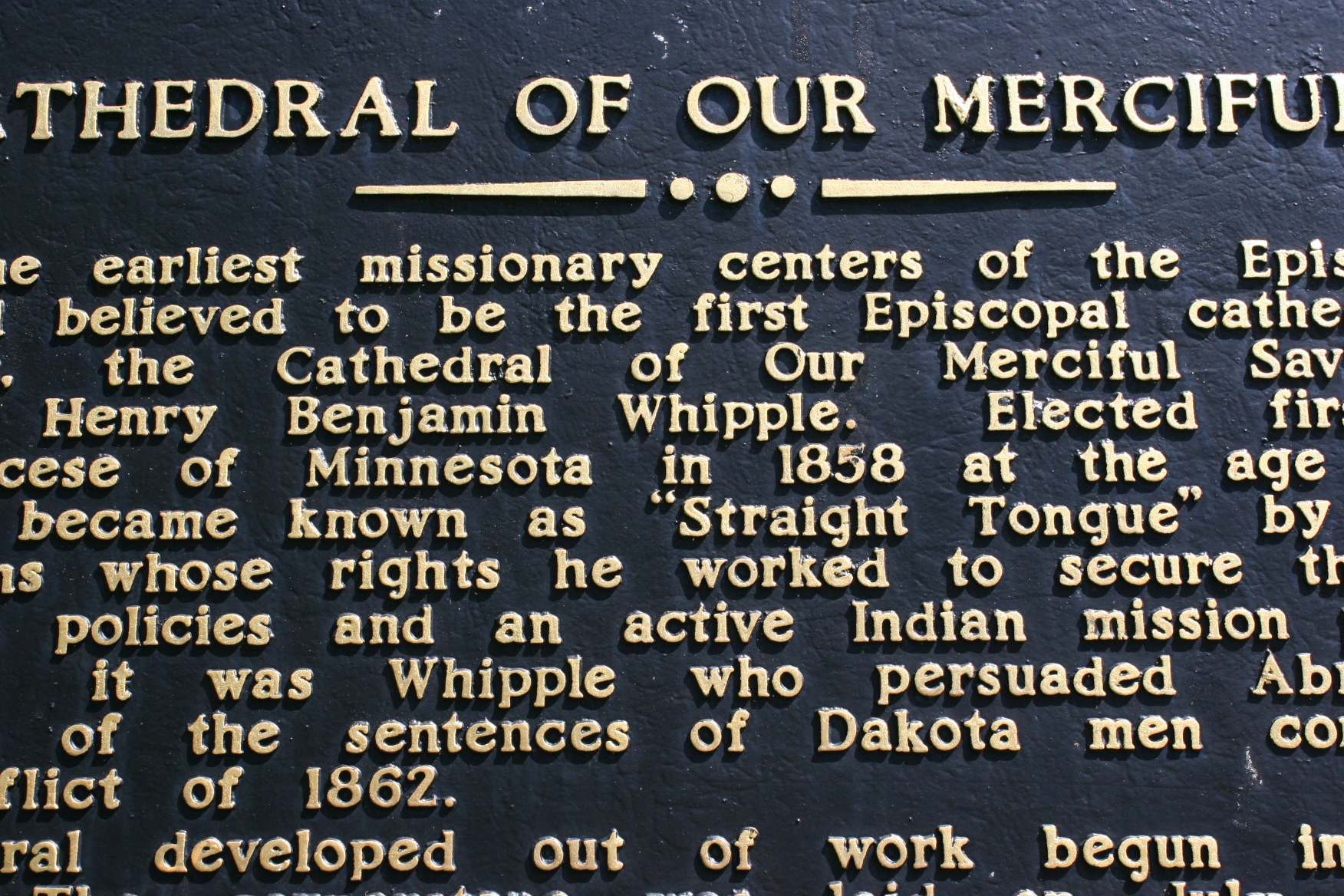
Details on a sign outside The Cathedral of Our Merciful Saviour, Whipple’s church in Faribault. (Minnesota Prairie Roots copyrighted file photo 2020)

THE SHAPING OF A HUMANITARIAN

To understand Whipple’s position and part in this, Nichols provided background. Whipple was involved in New York politics as a “conservative Democrat,” a term which drew laughter from the crowd at Thursday’s presentation. He briefly attended Oberlin College, notable because the college was among the earliest to admit women and African Americans. And Whipple was ordained in 1849, during the so-called “Second Great Awakening” with a focus on civil rights.

Learning this helped me better understand the bishop. All of these experiences shaped a man who spoke with honesty and compassion, advocated for Minnesota’s Indigenous Peoples (both the Dakota and the Ojibwe, natural enemies), called for reform and peace and understanding. Whipple was, said Nichols, a voice for calm, calling for justice, not vengeance, when the short-lived U.S.-Dakota War ended.

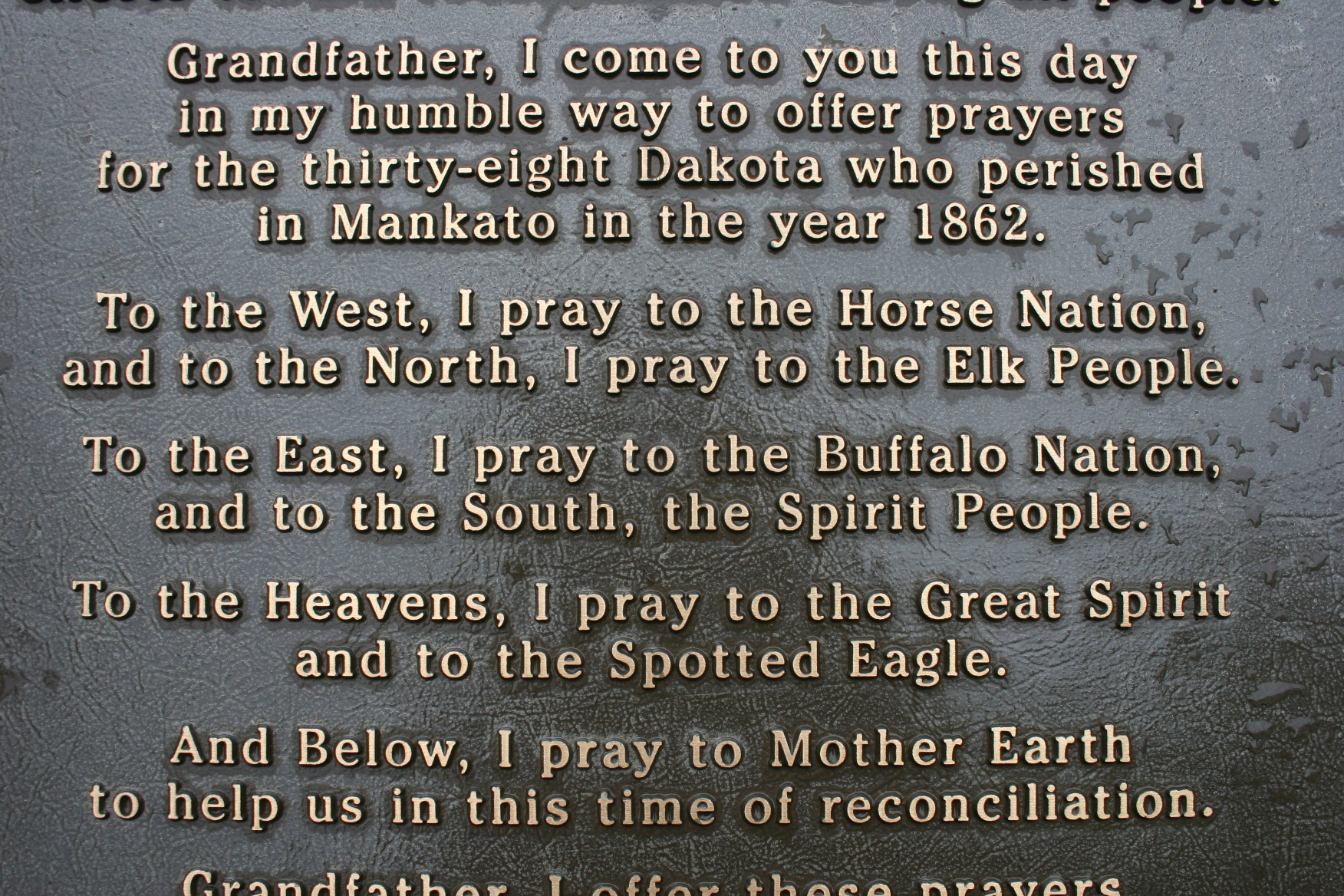
Words on a marker in Reconciliation Park in Mankato where 38 Dakota + 2 were hung on Dec. 26, 1862. (Minnesota Prairie Roots copyrighted file photo May 2012)

ADVOCATING FOR PARDONS

In his many years of missionary work and advocacy, even when his life was threatened by those who viewed him as an “Indian sympathizer,” one singular moment stands out to me. And that is Whipple’s efforts to save the lives of 303 Dakota men sentenced to death after the war. He met with President Abraham Lincoln and was “partly responsible,” Nichols said, for Lincoln’s eventual pardon of all but 38 Dakota. The 38, plus two others, were hung in a public mass execution in Mankato on December 26, 1862. It is a terrible and profoundly awful moment in Minnesota history, especially the history of the Dakota.

A full view of the bandshell mural featuring Bishop Whipple and his first wife, Cornelia, and his second wife, Evangeline. (Minnesota Prairie Roots copyrighted file photo)

ASSIMILATION

While listening to Nichols’ presentation on Whipple, I felt conflicted. Conflicted because the bishop was, he said, “a strong assimilationist.” That label bothered me until I talked further with Nichols. He explained that Whipple did not view himself and Europeans as superior to Native Peoples, but rather observed, in the context of place and time and thinking, the need to adapt versus being driven out. That helped me better understand Whipple’s approach. I recognize, though, and acknowledge the current-day struggles with assimilation, especially as it relates to Indian boarding schools. I appreciate the recognition of, and return to, culture, tradition and heritage today.

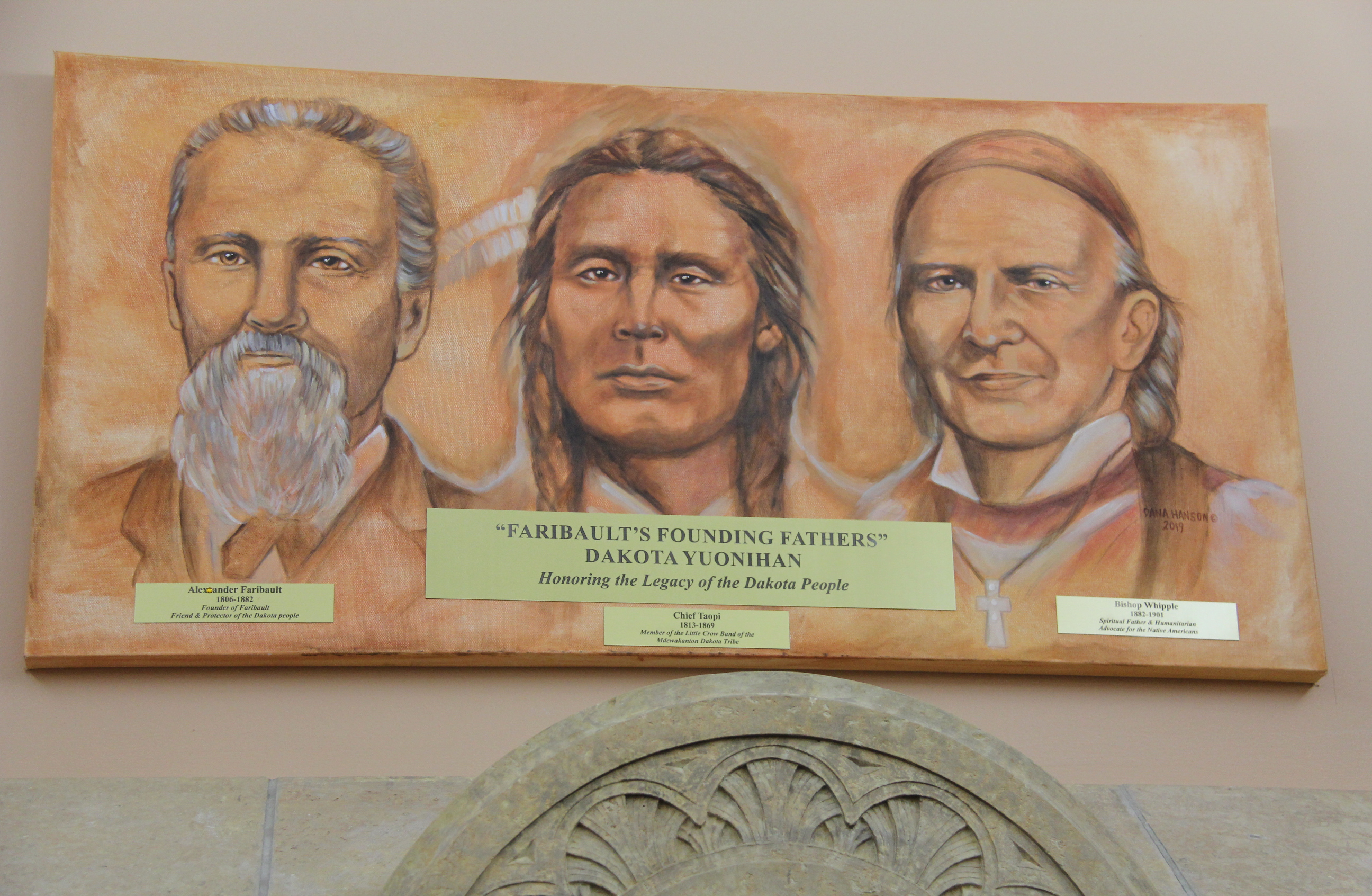
“Faribault’s Founding Fathers,” portraits of Alexander Faribault, left to right, Chief Taopi and Bishop Henry Whipple, by Dana Hanson hangs in Faribault’s Buckham Memorial Library. (Minnesota Prairie Roots copyrighted file photo November 2022)

WELCOMING THE DAKOTA TO FARIBAULT, OR NOT

Whipple, by his words and actions, embraced the Dakota and Ojibwe who called Minnesota home long before white settlers arrived, long before he moved to Faribault. My community, founded by fur trader Alexander Faribault, himself half Dakota, was a safe haven for the Dakota (“you don’t attack family”) during the 1862 war and thereafter, Nichols said. Faribault and Whipple worked together to move 180 Dakota from St. Paul’s Fort Snelling, where they were held following the war, to live on land Alexander owned along the Straight River in Faribault.

I wondered, “Were they welcomed here?” The answer, given by former RCHS Executive Director Susan Garwood, was as I expected. Mixed. While some supported the Dakota’s presence in Faribault, others were vocal in their opposition. In that moment, I thought of our ever-growing immigrant population in my community. Many welcome our newest neighbors and, like Alexander Faribault and Bishop Henry Whipple, support and encourage them. But many also want them gone. History repeats.

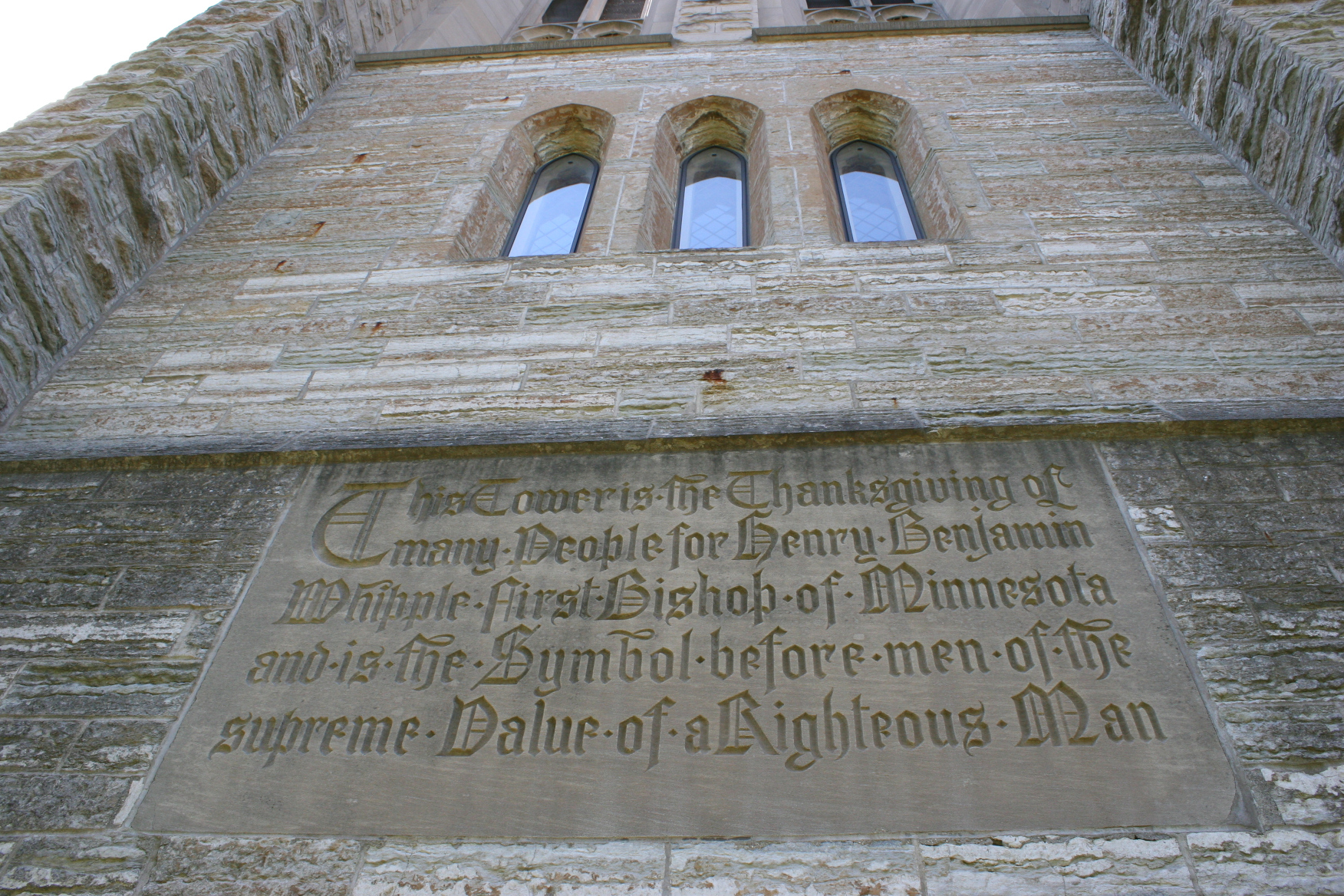
An inscription honors Whipple on the Cathedral bell tower. (Minnesota Prairie Roots copyrighted file photo June 2020)

MARKING HISTORY

Walk around Faribault today and you will see many reminders of the work Whipple did not only locally, but across Minnesota. Historical markers and inscriptions about the bishop grace The Cathedral of Our Merciful Saviour, his faith base. He’s buried under the altar there. Across the street at Central Park, Whipple-themed murals cover the west side of the historic bandshell. Downtown, one of many history-focused benches honors Whipple. And across town, at the Chapel of the Good Shepherd on the campus of Shattuck-St. Mary’s School, a marker notes his role in founding Shattuck and other schools in Faribault.

Efforts are underway now locally to recognize the Dakota as well, to publicly mark their place in the history of Faribault. I’d like to think Bishop Henry Whipple, also known as “Straight Tongue” and “The Sympathizer,” would welcome the idea, would even step up to fund raise, just as he did some 160 years ago to support the relocation of 180 Dakota from Fort Snelling to Faribault.

© Copyright 2023 Audrey Kletscher Helbling
 

A look at German POW camps, including in Faribault January 28, 2023

The Rice County Historical Society, host of the POW presentation. (Minnesota Prairie Roots copyrighted file photo July 2022)

JUST BLOCKS FROM THE VACATED SITE of the former Faribault Canning Company, a group packed a Rice County Historical Society Museum meeting room Thursday evening for a lesson in World War II-related regional history. Specifically, we learned about German Prisoner of War camps in Minnesota and Wisconsin from Matt Carter, executive director of the Dakota County Historical Society. He offered an overview of those camps, which included 15 in Minnesota, one at the canning company in Faribault. Carter is a native of Reedsburg, Wisconsin, home to a POW camp. Growing up, he never learned about the camp in school. That prompted him to later research, write about and present on POW camps in the US.

Former Faribault Daily News reporter Pauline Schreiber photographed the Faribault POW Camp barracks shortly before they were torn down in 1990. (Photo courtesy of the Rice County Historical Society)

WORKING AG-RELATED JOBS

I’ve always held an awareness of Camp Faribault and the prisoners who worked at the canning factory and on area farms. I also knew of the low-slung buildings housing the POWs who arrived here in June 1944. Those barracks were torn down in 1990 during an expansion of Faribault Foods, as the canning company came to be called. The business still exists today, in a sprawling manufacturing and distribution complex opened in 2017 in northwest Faribault’s industrial park.

Back during WWII, with millions of Americans off to serve in the military, POWs like those in Faribault offset the local labor shortage. Faribault Canning requested 200 prisoners to assist during the summer months with pea and sweet corn processing. The company paid the government 55 cents an hour for each POW laborer. That covered food and other living expenses. Prisoners received 80 cents a day for their work. Carter noted that the Faribault-based POWs worked within a 25-mile radius, some also laboring on farms, others installing power poles for Dakota Electric Association and 60 contracted to work for the local Andrews Nursery Company.

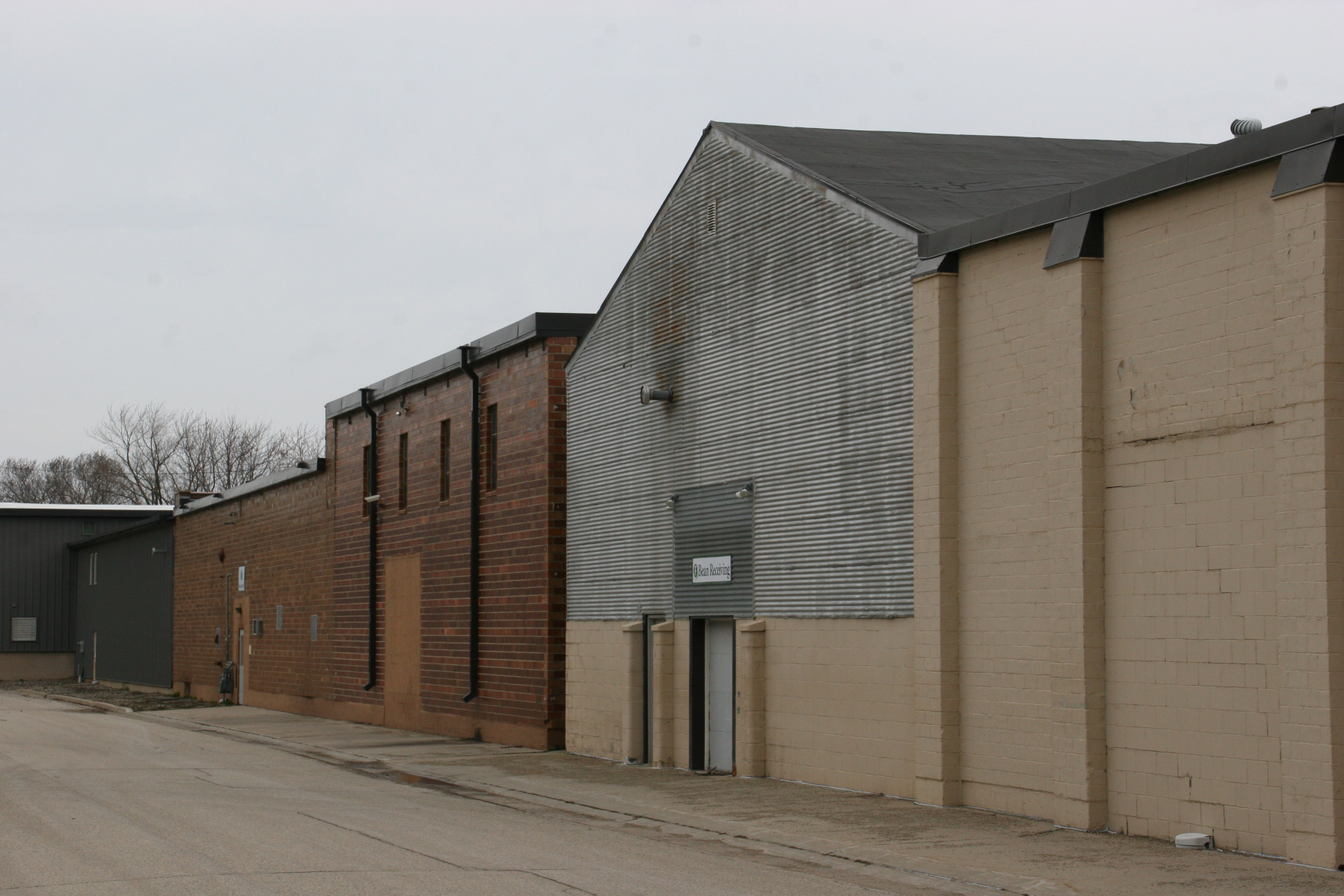
Some of the buildings remaining at the former Faribault Canning Co (Faribault Foods) site. I know nothing about the use or ages of the buildings. (Minnesota Prairie Roots copyrighted photo April 2022)

SETTLING IN AT CAMP FARIBAULT & BEYOND

POW camps were scattered throughout Minnesota with other nearby branch camps, as they were termed, in Owatonna, Montgomery and St. Charles. Camps farther north focused mostly on logging. All were offshoots of barbed wire-secured base camps (where prisoners initially arrived and were processed) in Algona and Clarinda, Iowa. Once prisoners settled in community camps like Faribault, they still remained under guard, although much more loosely watched. An estimated 450,000 – 600,000* prisoners arrived in the US on Liberty Ships during WWII to live in repurposed Civilian Conservation Corps camps, on fairgrounds, even in tents, Carter said. In Faribault, the POWS moved into barracks built by the canning company.

WEDDINGS, PROPAGANDA & “CODDLING”

Within the confines of his just-over-an-hour-long presentation, Carter presented an excellent overview of POW camps, adding some details that I found notably interesting. For example, proxy weddings were performed by local clergy. Under Geneva Convention rules, German prisoners could legally marry women back in Germany. Prisoners would gather flowers for the missing-brides prison camp weddings. Across the ocean their brides perhaps did the same while marrying absent grooms not seen in years.

Carter also shared that prisoners watched newsreels of German war atrocities as part of a reorientation program in the camps. Viewed as propaganda by some POWs, they responded by distributing handwritten propaganda while traveling on secured trains. Baffled by how these leaflets were dropped, officials determined that the papers were dropped down toilets and then onto the rails.

The third bit of shared information that struck me involves food. Newspapers reported how well prisoners ate, how they were being “coddled,” Carter noted. He showed a list of menus, which confirms the generous meals. The reaction was an outcry from an American public living on rationed foods and upset about the treatment of German-held US soldiers. In 1945, POWs were no longer allowed to buy beer, soda or cigarettes. And some of their food choices became less desirable (like hearts and liver).

Once the war ended, prisoners were repatriated, a process that took time. Many later returned to the US because of how well they were treated here, according to Carter. That was encouraging to hear. Even in war-time, kindness existed.

Matt Carter referenced this book during his talk, citing it as a good source of information about POW camps in Minnesota.

DIGGING DEEPER

Today all that remains of the Faribault POW Camp is a marker by the former canning company. If there are stories and photos, I am unaware. But I’m inspired now to dig deeper. I’ve already checked out Prudence by David Treuer from my local library. The novel focuses on a German soldier who escaped from a Minnesota POW camp. I also intend to read Anita Albrecht Buck’s Behind Barbed Wire: German Prisoners of War in Minnesota during World War II.

And maybe some day I’ll travel to Algona, Iowa, to visit the Camp Algona POW Museum and learn more about this place which housed prisoners sent to Minnesota, including to Faribault.

#

*Because of differences and discrepancies in record-keeping, the number of prisoners housed in US POW camps is uncertain. Some sources claim 600,000-plus, while Carter estimates closer to 500,000 prisoners based on his research.

© Copyright 2023 Audrey Kletscher Helbling
 

Connecting with community, history & art at Fall Flea Market September 17, 2022

Shoppers peruse the RCHS Fall Flea Market. (Minnesota Prairie Roots copyrighted photo September 2022)

SATURDAY MORNING FOUND ME wandering among vendors at the Rice County Historical Society Fall Flea Market in Faribault. It was, as always, an enjoyable event, marked by conversations with friends I haven’t seen in awhile, conversations with vendors and reflecting on the past.

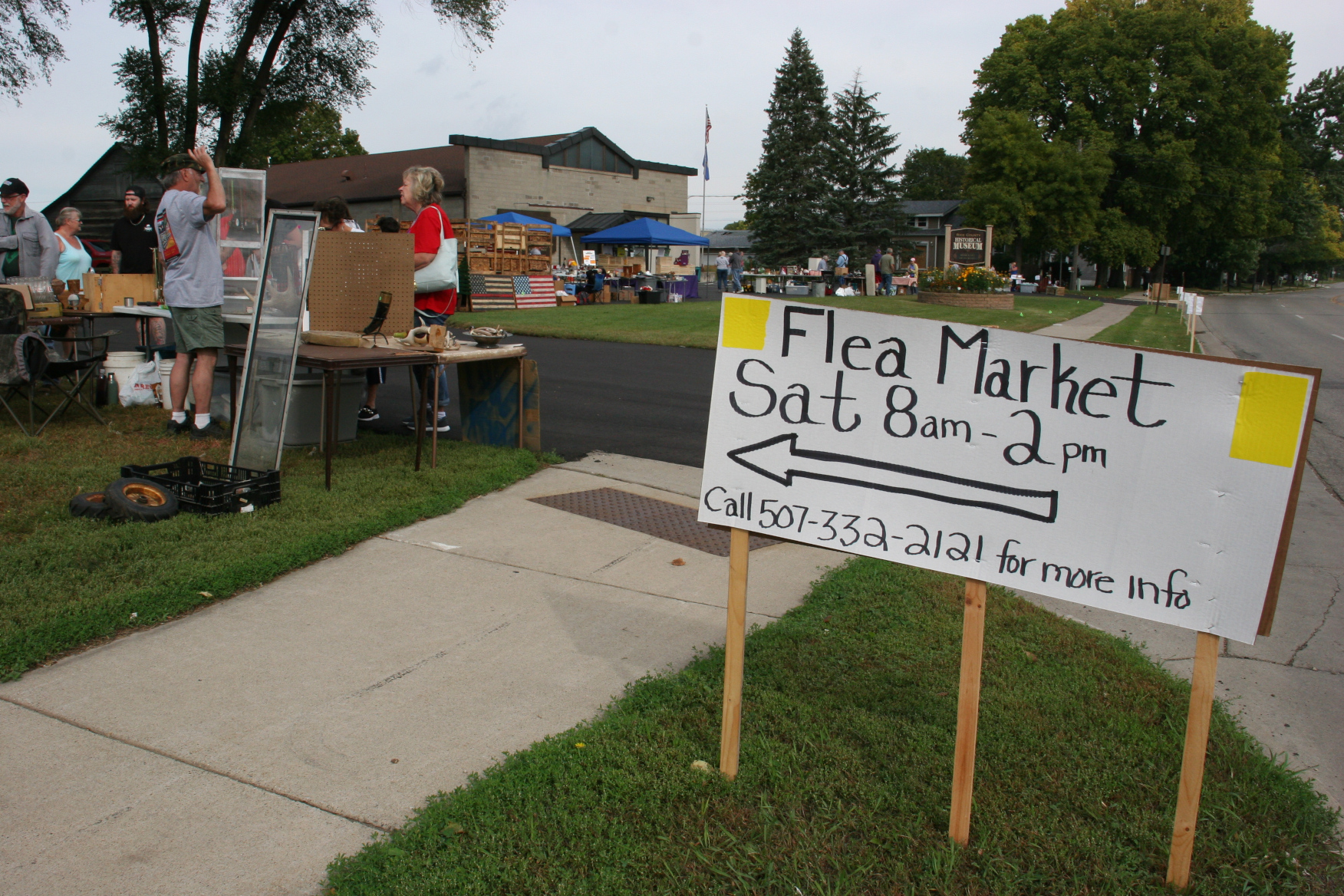
A handwritten sign along Second Avenue points to the flea market in the parking lot and on the grounds of the RCHS. (Minnesota Prairie Roots copyrighted photo September 2022)
A RCHS Faribault sign provides the backdrop for a vendor’s book display themed primarily to Minnesota. (Minnesota Prairie Roots copyrighted photo September 2022)

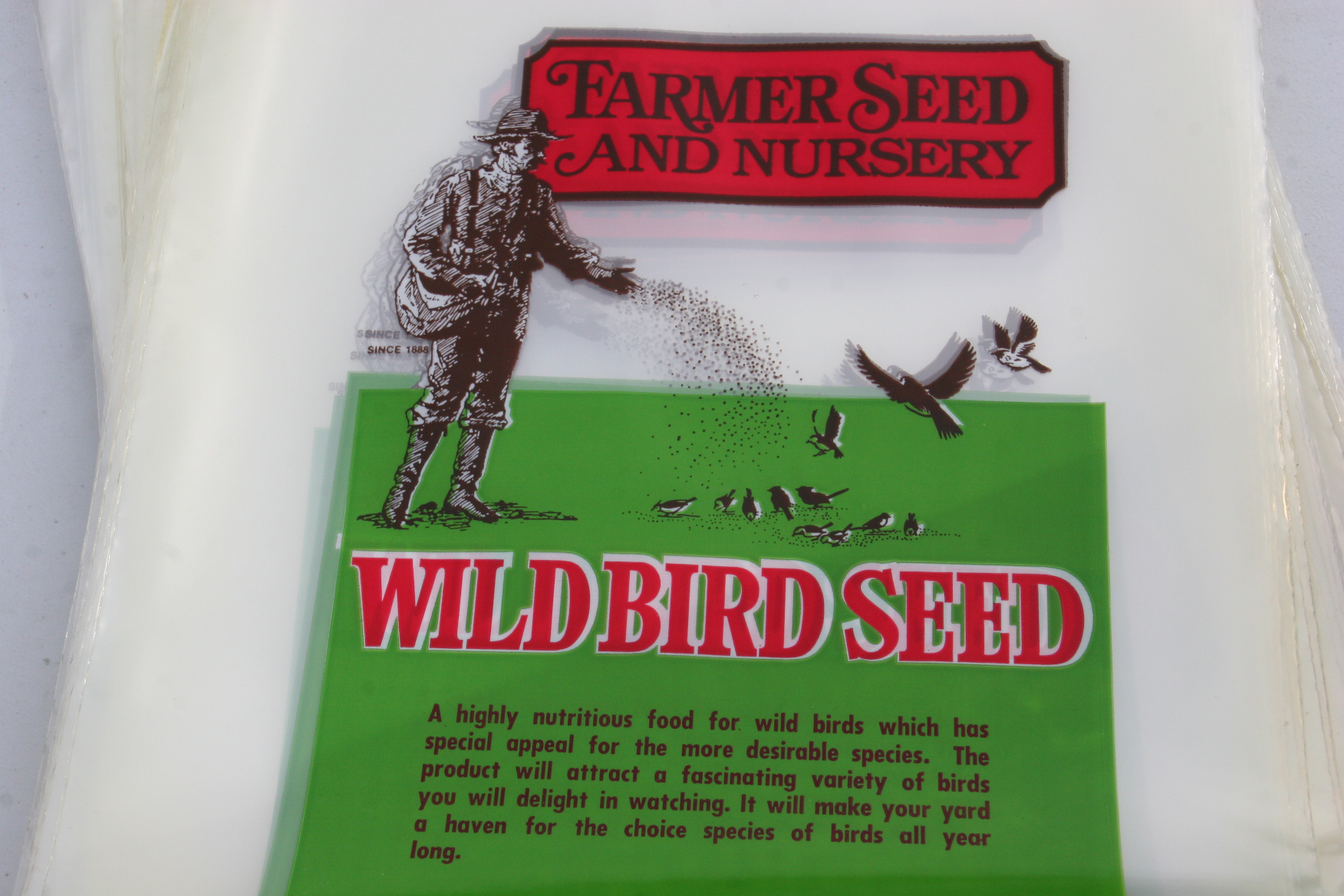
One vendor was giving away these plastic bags from the now closed Farmer Seed & Nursery in Faribault. (Minnesota Prairie Roots copyrighted photo September 2022)

Really, this is what local gatherings are all about for me. They’re about community and connecting, about embracing and appreciating this place I call home.

Beautiful bouquets from Erin’s Acre. (Minnesota Prairie Roots copyrighted photo September 2022)

I was especially delighted to find, among all the vendors of miscellaneous merchandise, several artists. That includes Erin Sellner Honken of Erin’s Acre at Honken Farms. Erin creates with flowers she grows, tends, harvests and arranges into stunning bouquets for CSA subscriptions and special events. With an abundance of flowers right now, she decided to do a pop-up sale at the flea market featuring $10 dahlia mixed bouquets.

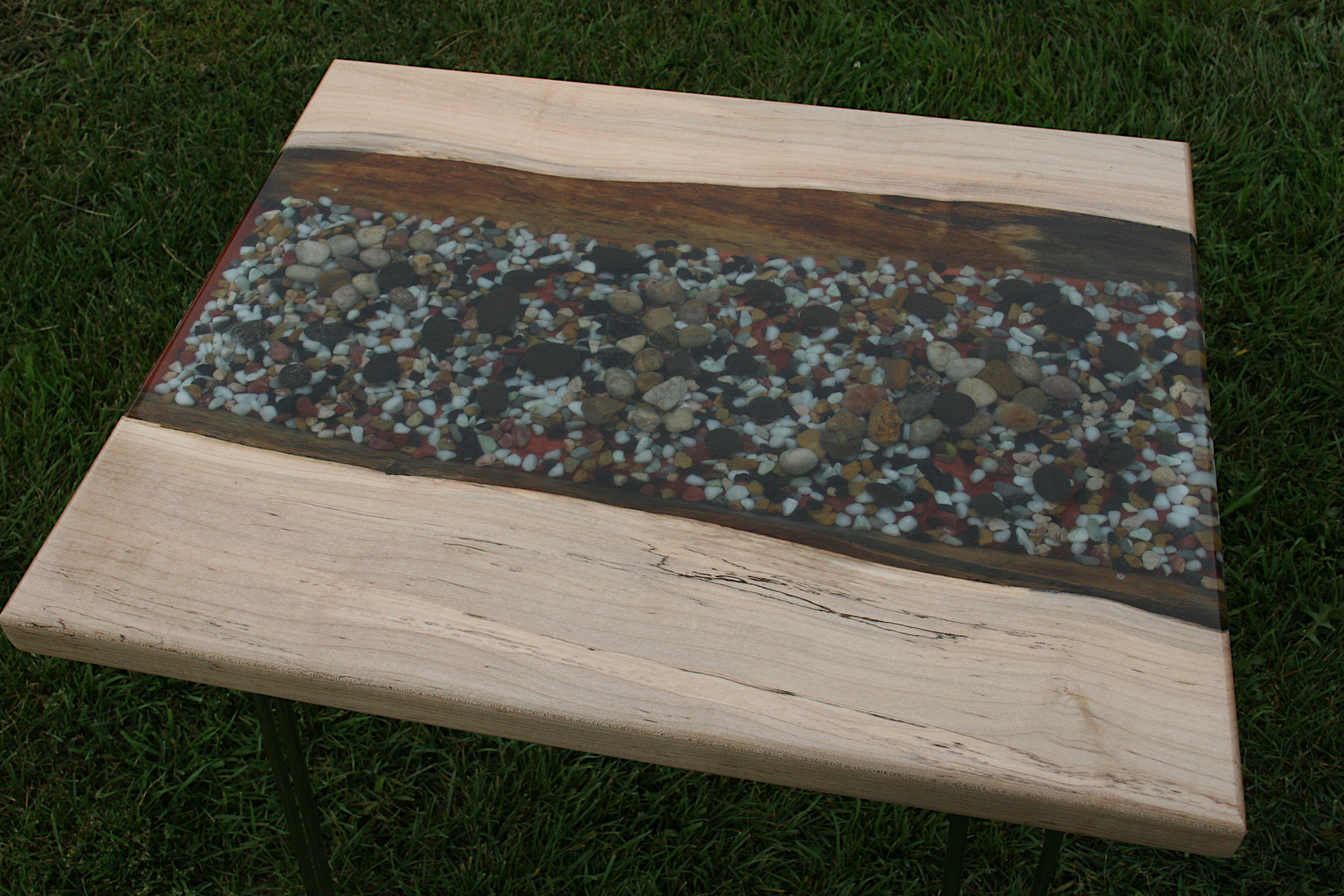
The stunning “river” table by JS Woodcrafts. (Minnesota Prairie Roots copyrighted photo September 2022)

Just down the way by the historic schoolhouse, I discovered Jeremy of JS Woodcrafts. It was his “river” table which drew my attention and admiration. If I could afford the $500 price tag, this maple top table with stones and pebbles epoxied in the middle like a river, would be mine. Love, love, love this work of art.

Spanky’s Woodshed art made from pallets. (Minnesota Prairie Roots copyrighted photo September 2022)

John “Spanky” St. Clair of Spanky’s Woodshed also specializes in woodcrafting. I learned that he uses pallets and aged barn wood to create. Anyone who recycles to create earns my praise.

A flower created by recycling spoons and forks. (Minnesota Prairie Roots copyrighted photo September 2022)

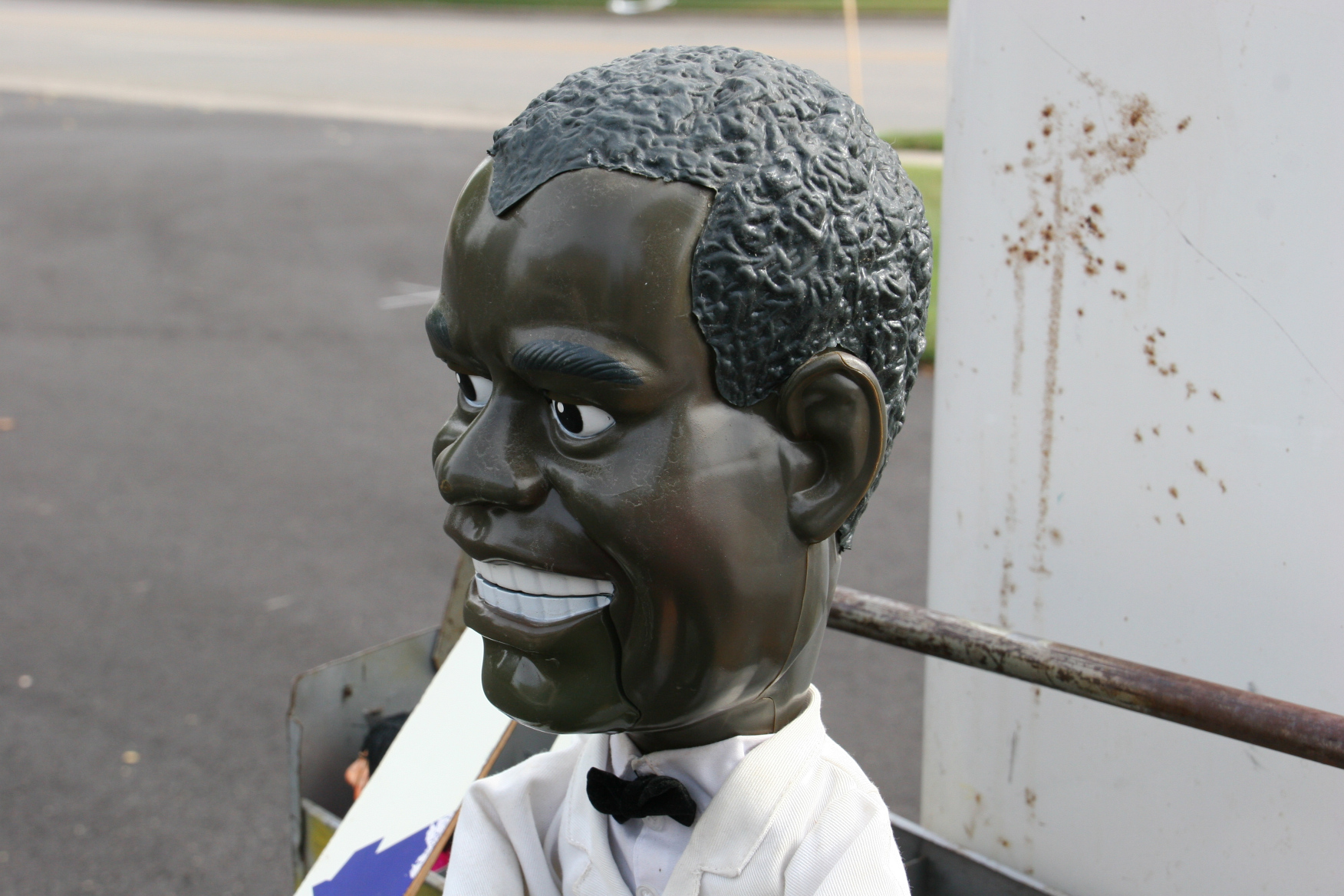
An eye-catching Louie Armstrong. (Minnesota Prairie Roots copyrighted photo September 2022)

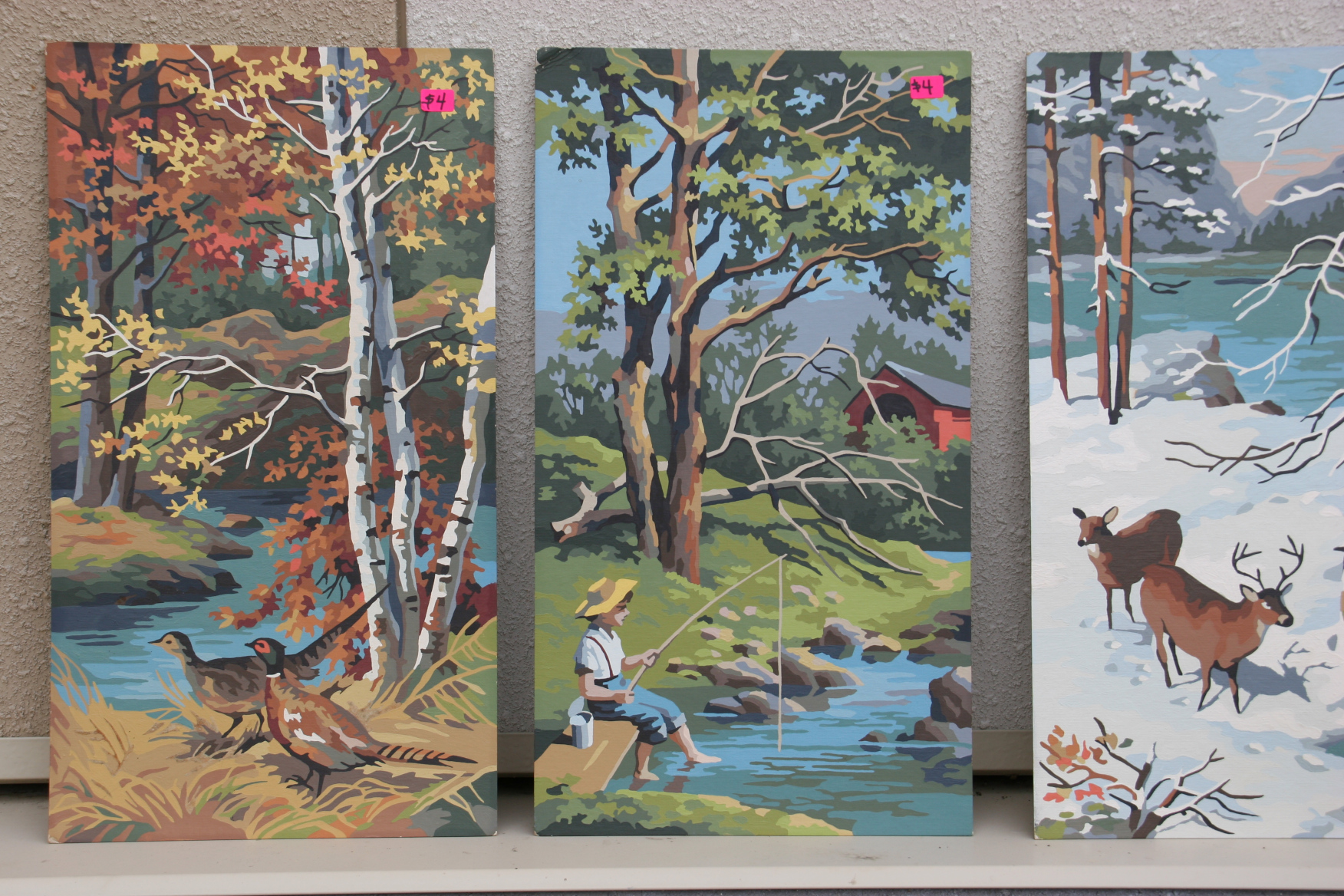
I almost bought the pheasant paint-by-number, one of a trio of paintings. (Minnesota Prairie Roots copyrighted photo September 2022)

I found more art in spoon flowers, in a Louie Armstrong figure, in paint-by-number paintings, in an endless array of merchandise.

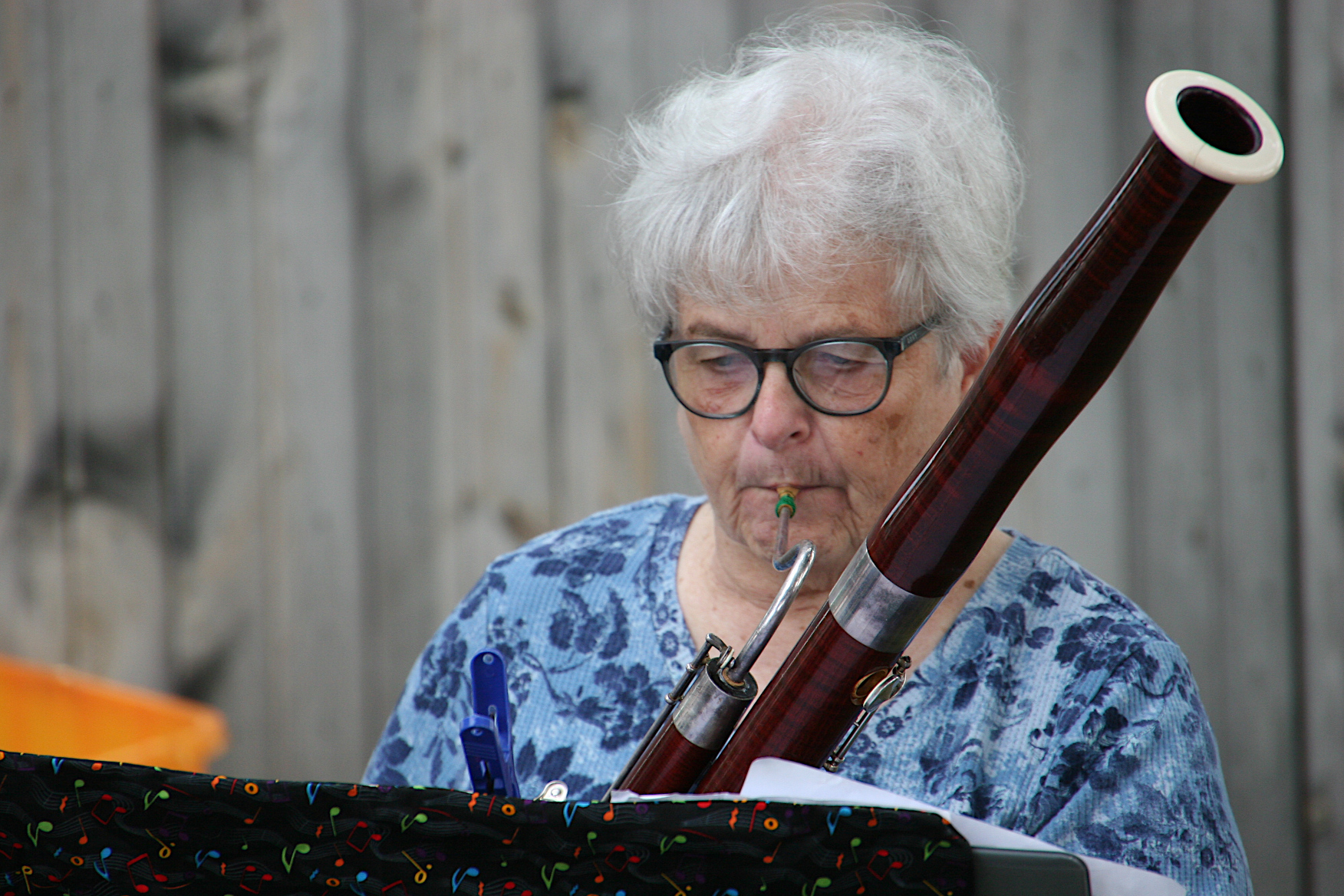
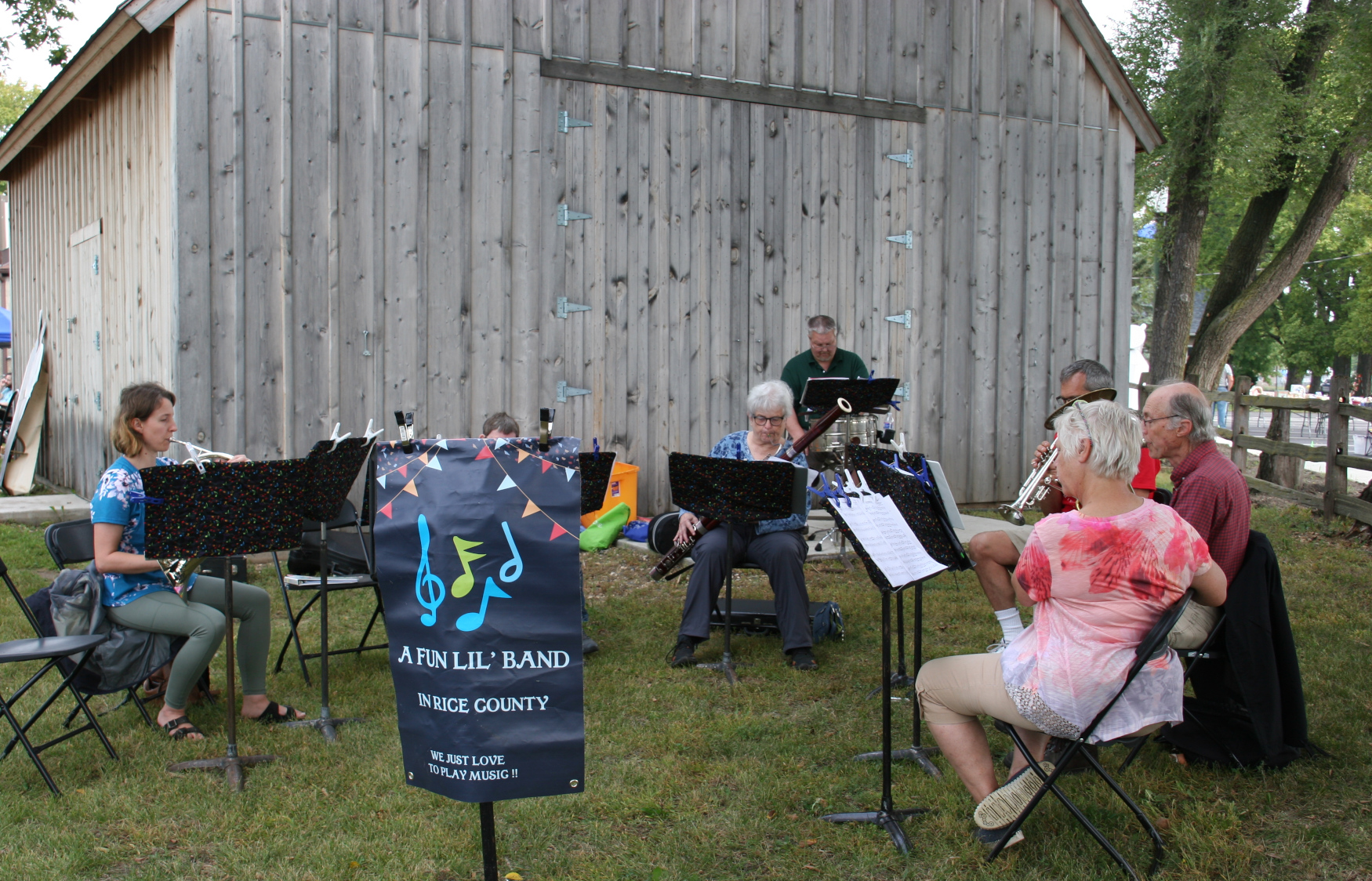
Playing a woodwind in A Fun Lil’ Band. (Minnesota Prairie Roots copyrighted photo September 2022)
Propped against the barn near the band (seemingly listening), cut-outs of Ed and Frank, spokesmen for Bartles & Jaymes winecoolers. (Minnesota Prairie Roots copyrighted photo September 2022)
The band that loves to make music. (Minnesota Prairie Roots copyrighted photo September 2022)

And while I walked I heard music rising from A Fun Lil’ Band in Rice County with a sign declaring WE JUST LOVE TO PLAY MUSIC!! Their music added an extra touch of joy to the morning market.

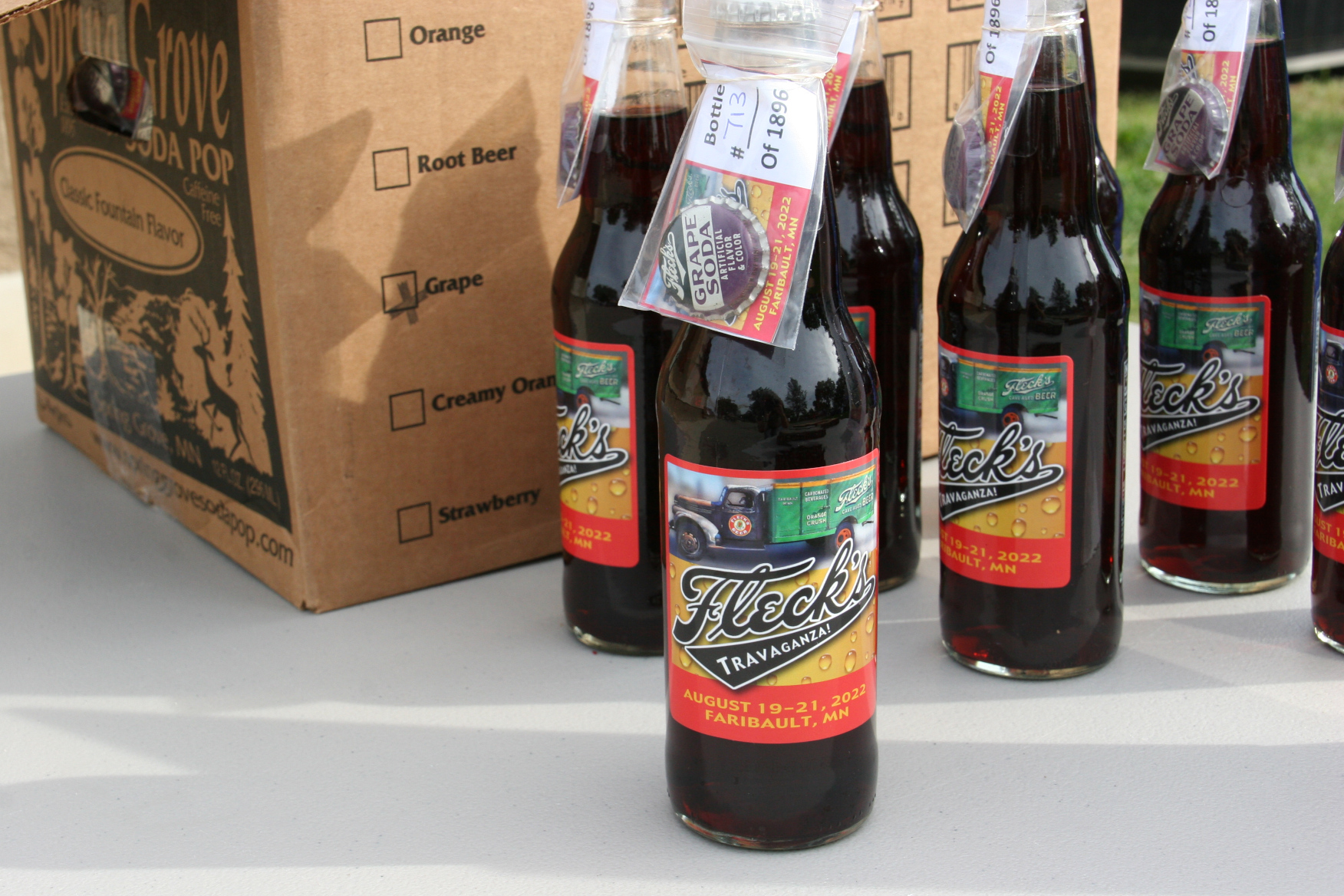
The RCHS was selling collector limited edition bottles of Fleck’s grape soda. (Minnesota Prairie Roots copyrighted photo September 2022)

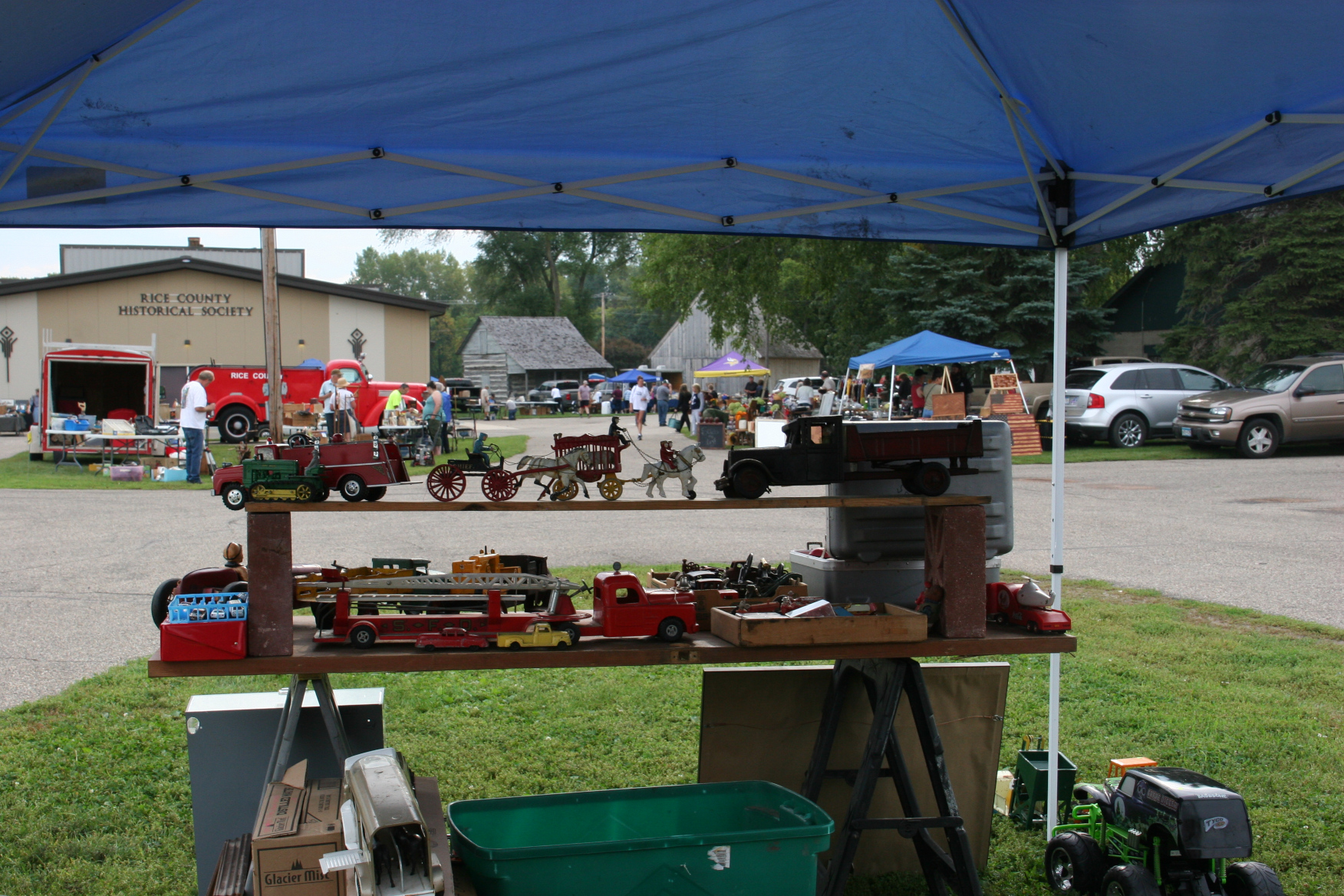
A view through a vendor’s booth featuring old toys. (Minnesota Prairie Roots copyrighted photo September 2022)
A vintage toy tractor reminded me of the farm toys I played with as a child. (Minnesota Prairie Roots copyrighted photo September 2022)

This event is a fundraiser for the Rice County Historical Society. But history is also very much a part of the market in aged and vintage merchandise vended. I reminisced over old farm toys, a baby stroller, a yellow Pyrex mixing bowl. I picked up a few items, pondering whether I should buy, but, in the end, held steady in my determination not to acquire more stuff. I’m at that age…

This colorful character caught my attention. (Minnesota Prairie Roots copyrighted photo September 2022)

Parked along Second Avenue at the RCHS Fall Flea Market. (Minnesota Prairie Roots copyrighted photo September 2022)
I was pushed in a stroller like this, except the stroller was blue. (Minnesota Prairie Roots copyrighted photo September 2022)

Instead, I collect with my camera, gathering images to tell a story, to share this market, to showcase the works of creatives, to express my appreciation for my community, this place I’ve called home for 40 years.

© Copyright 2022 Audrey Kletscher Helbling
 

Celebrating Faribault’s brewing history with Fleck’s Travaganza! August 19, 2022

The event promotional created by Jeff Jarvis of West Cedar Studio.

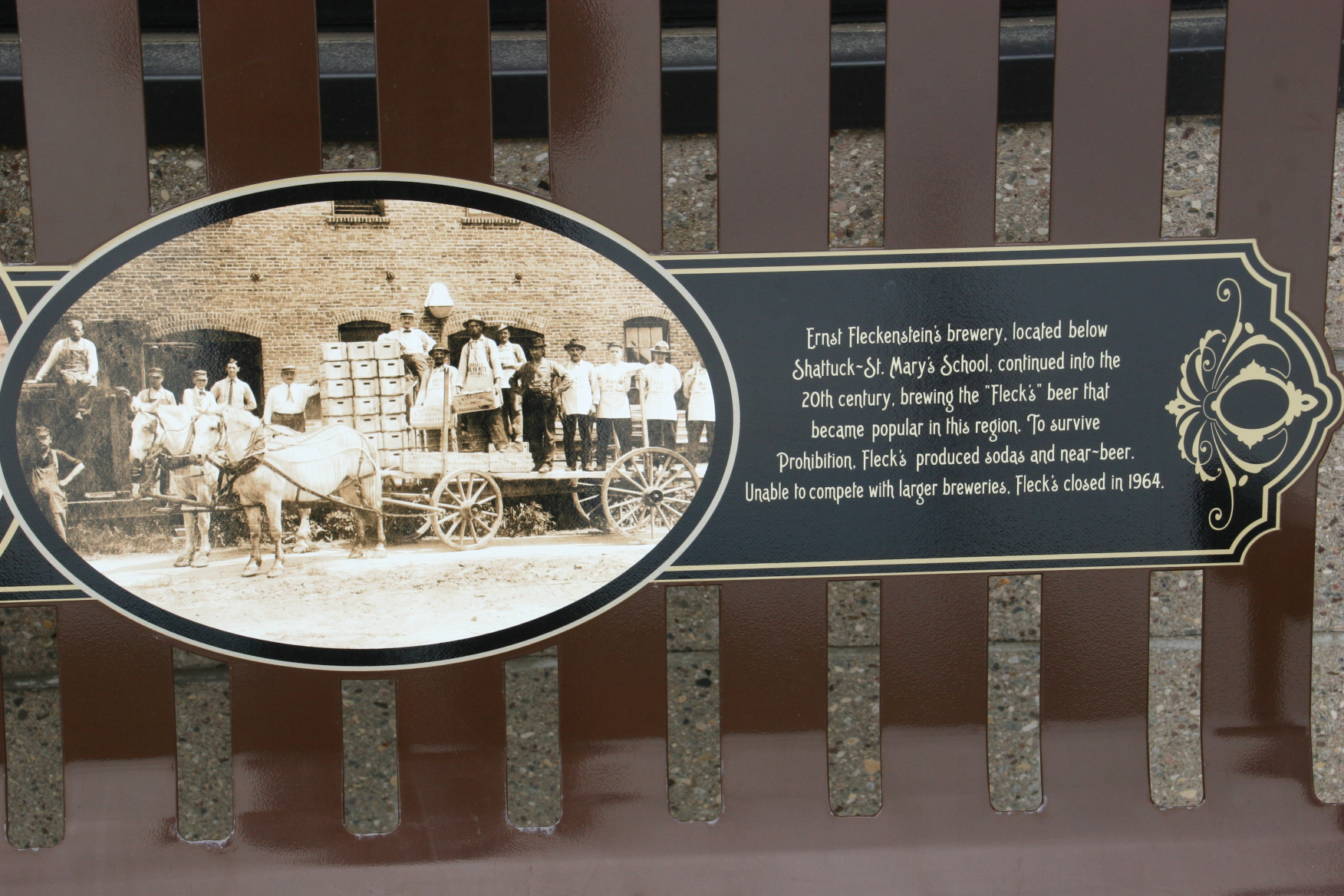
MY COMMUNITY WILL CELEBRATE a rich history of brewing this weekend at the Fleck’s Travaganza!, an event honoring Fleckenstein Brewery. The brewery, opened in 1856 and producing assorted beverages for 108 years (until 1964) in two locations along the Straight River bluffs in Faribault, has long garnered local interest.

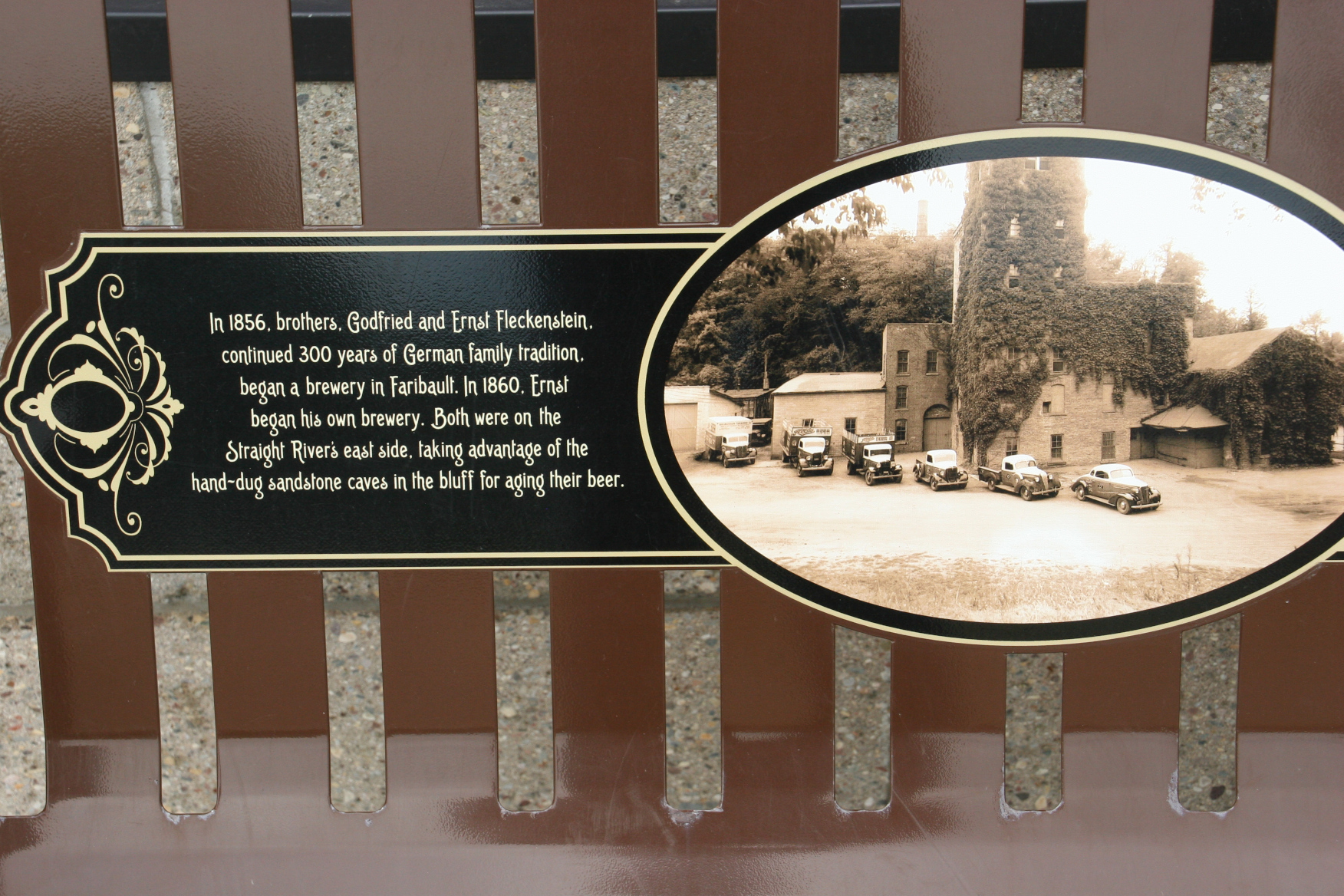
A historical themed bench outside the RCHS summarizes the Fleckenstein family’s brewery history in Faribault. (Minnesota Prairie Roots copyrighted photo July 2022)

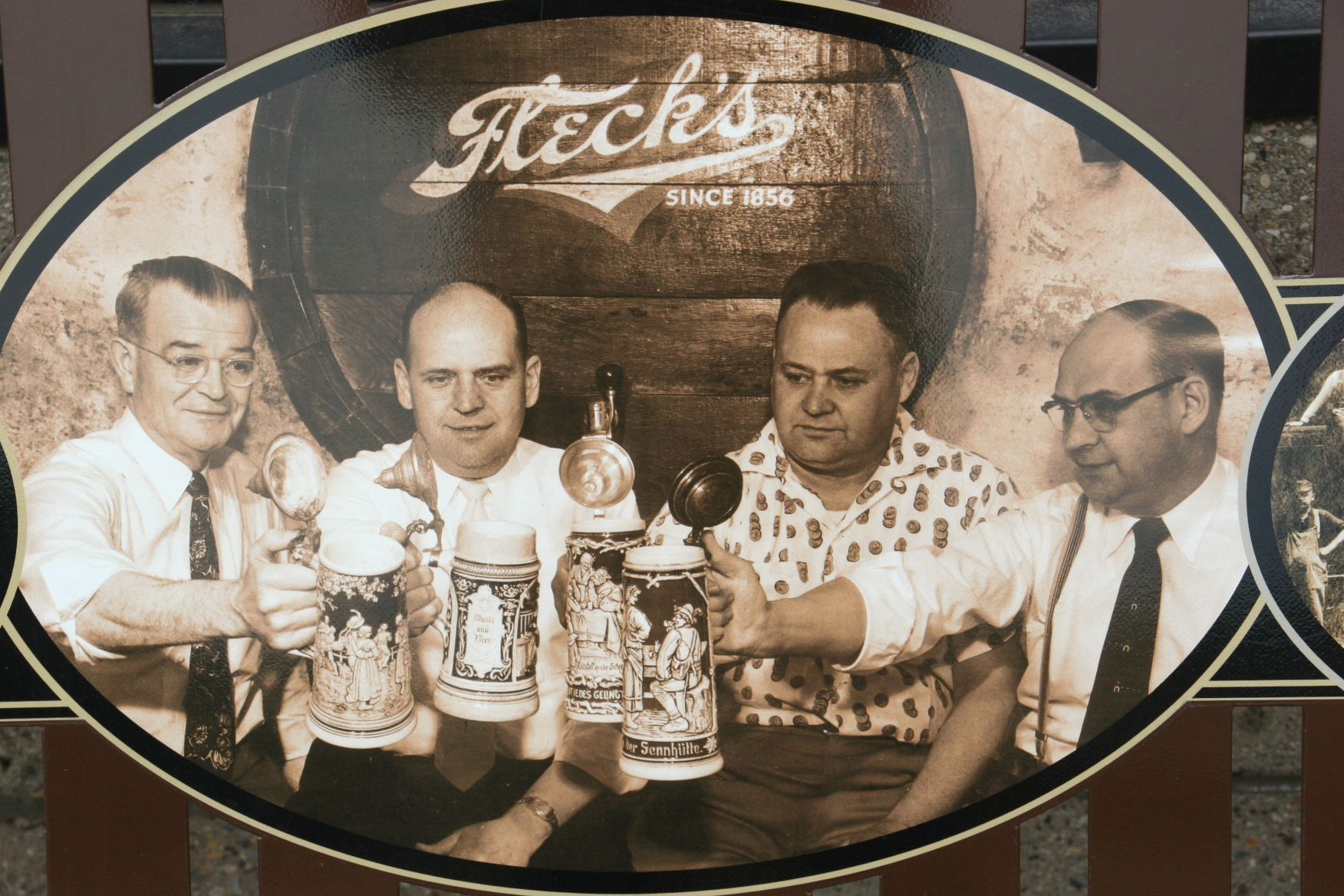
Cheers to Fleck’s beer. This photo is featured on a bench outside the RCHS. (Minnesota Prairie Roots copyrighted photo July 2022)

Even more history on a bench by the RCHS. (Minnesota Prairie Roots copyrighted photo July 2022)

The Rice County Historical Society (RCHS) features the brewery in its museum. Local historian Brian Schmidt collects Fleckenstein items and memorabilia. And the State Bank of Faribault displays a sizable collection of brewery items.

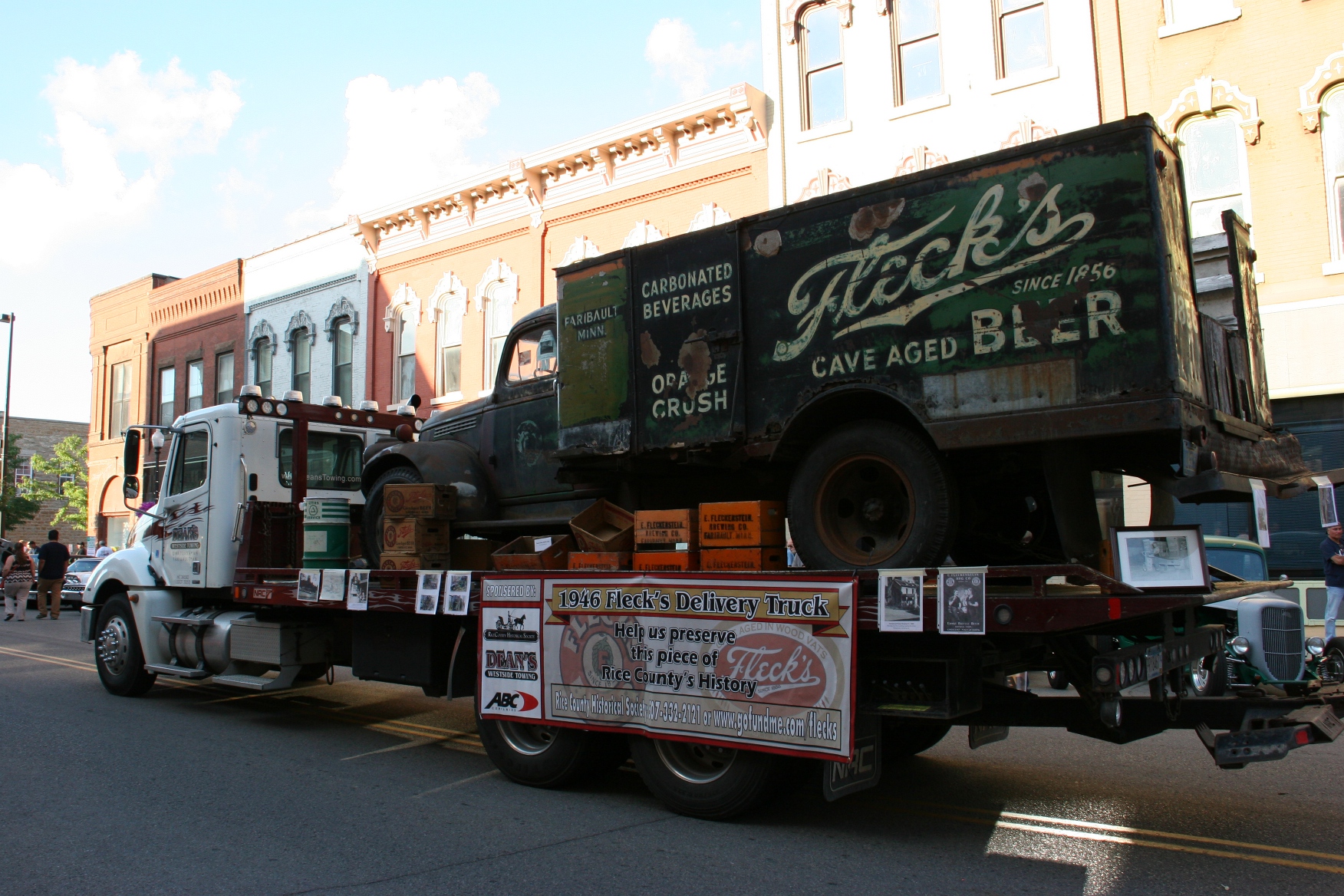
The 1946 Fleck’s delivery truck, pre-restoration, in the July 2016 Faribault Car Cruise Night. (Minnesota Prairie Roots copyrighted file photo 2016)

But this weekend all eyes will focus on a restored 1946 Fleckenstein Brewery delivery truck. That truck will lead a parade of vehicles through Faribault (click on link for the route) beginning at 5:30 pm Friday at the RCHS. The parade follows major routes through town, including past my house on Willow Street, and ends along Central Avenue for the Faribault Car Cruise Night.

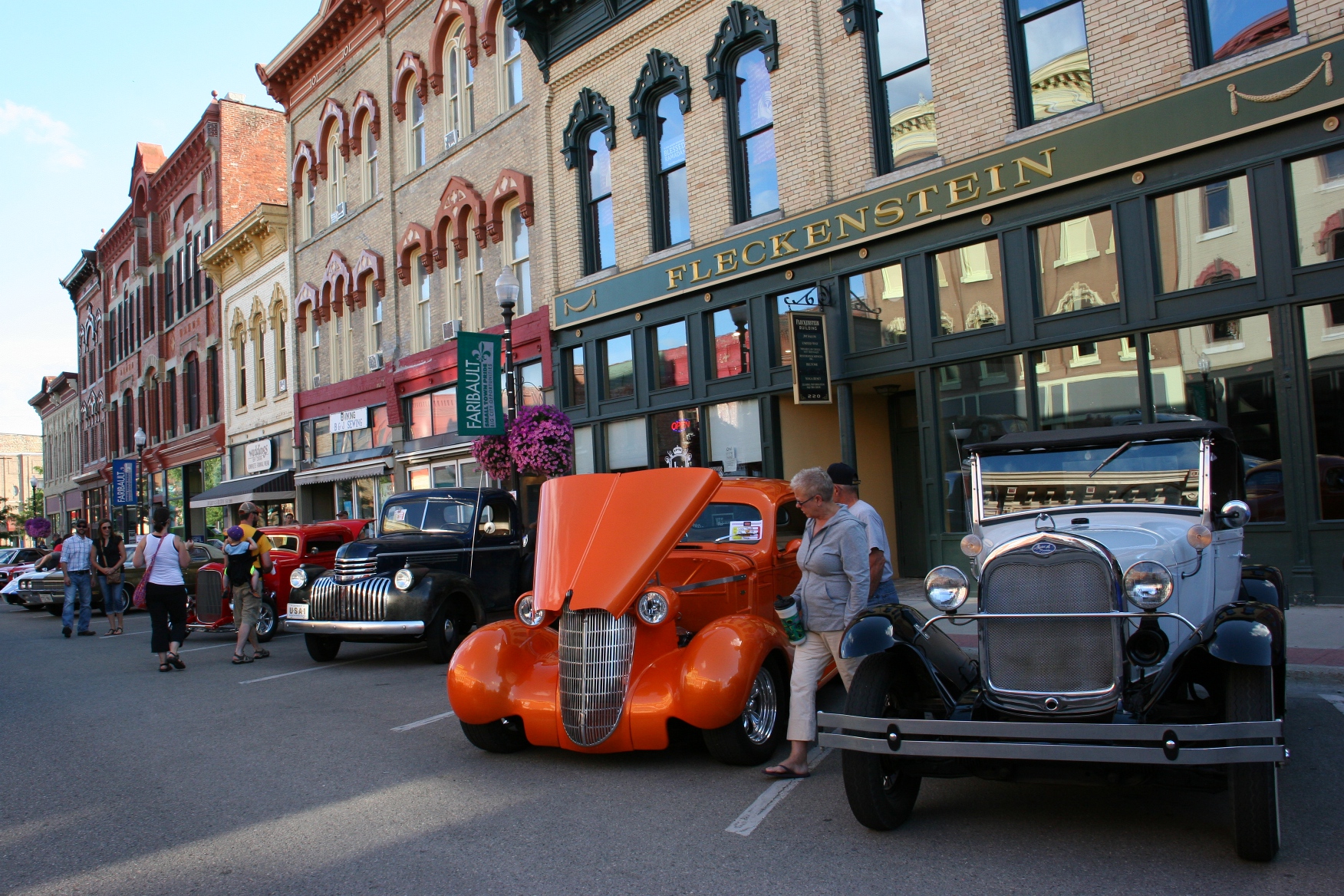
A building in Faribault’s downtown historic district bears the Fleckenstein name. I took this photo, featured several years ago on the cover of the Faribault tourism magazine, during the July 2016 Car Cruise Night. (Minnesota Prairie Roots copyrighted file photo)

The beer delivery truck will also be parked along Central Avenue on Sunday morning during an invitation only RCHS event for volunteers.

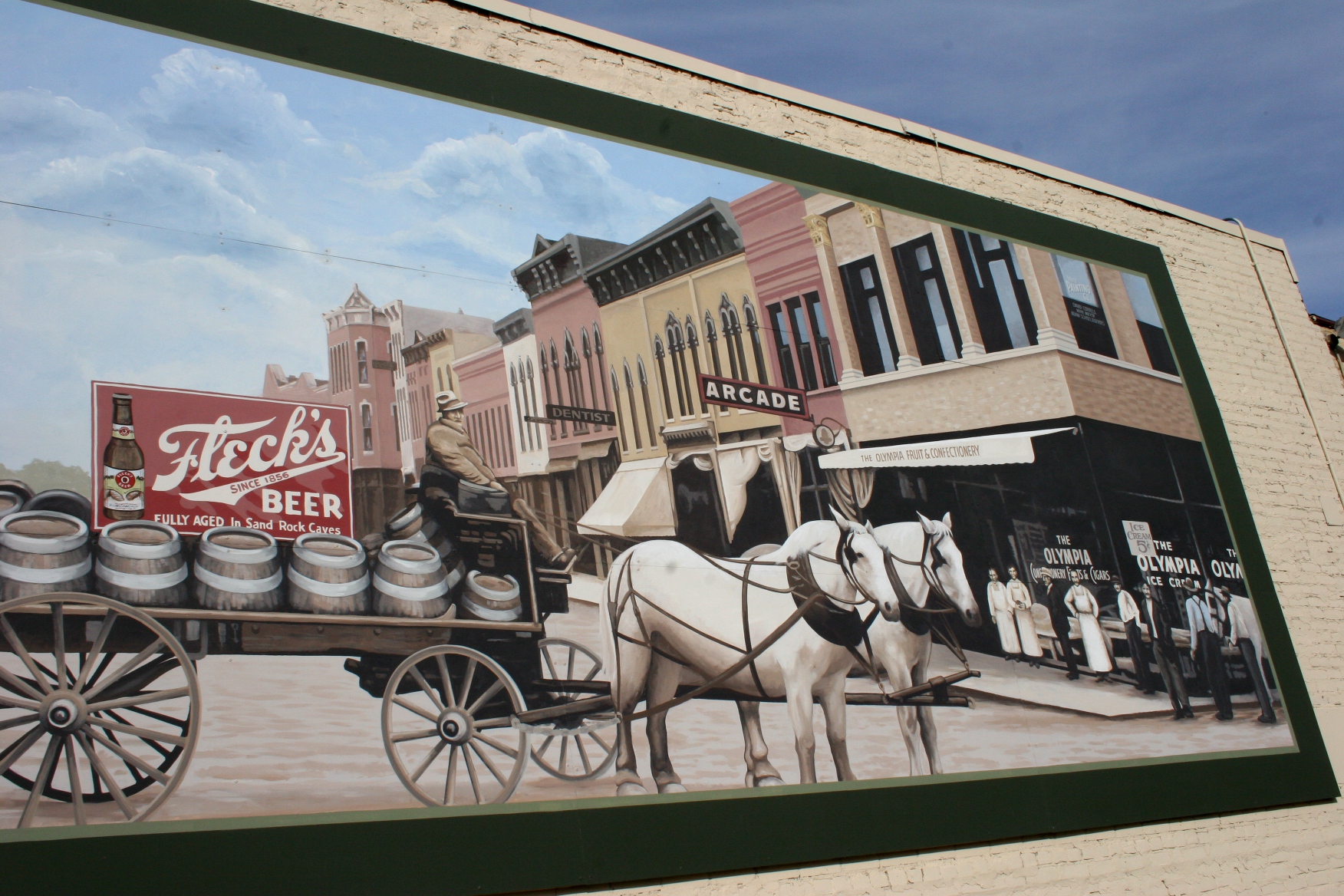
A downtown Faribault mural featuring Fleck’s beer. (Minnesota Prairie Roots copyrighted file photo)

The bank exhibit will be open Friday evening during the Car Cruise in the heart of historic downtown Faribault and also from 9 am – noon Saturday. Just across the street from the bank, a mural features the brewery.

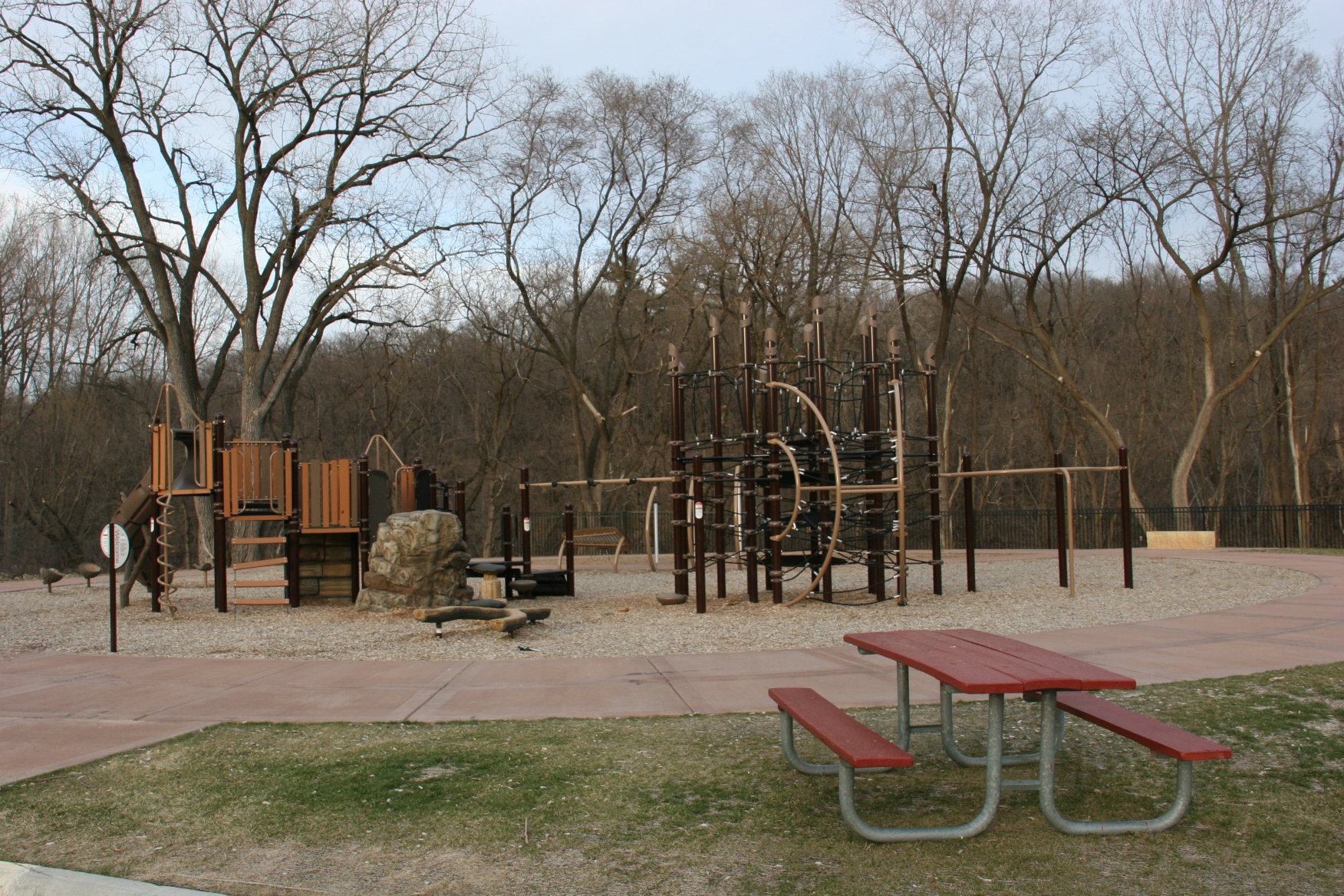
This shows a section of the park, which includes a playground, picnic area and shelter and a river overlook. (Minnesota Prairie Roots copyrighted file photo May 2022)

Saturday brings more events with the 10 am dedication of Fleckenstein Bluffs Park along the Straight River in downtown Faribault.

Faribault artist Rhody Yule created this oil painting of the Fleckenstein Brewery in 1976. The building, and the brewery, no longer exist. The 20-foot Fleck’s beer bottle on the right side of the painting sat near the brewery entrance. Children often had their pictures taken here when their parents took a brewery tour. (Minnesota Prairie Roots copyrighted file photo January 2011)

At 1 pm, “Fleckenstein Brewery, a History” will be presented by collector and historian Schmidt at the RCHS. Special guest is Al Fleckenstein. Following that, at 3 pm, Schmidt leads a tour of the Fleckenstein Brewery ruins site on the campus of Shattuck-St. Mary’s School. Attendance is limited to 50 for the packaged, ticketed events with reservations via the RCHS highly-recommended. Cost for both is $20.

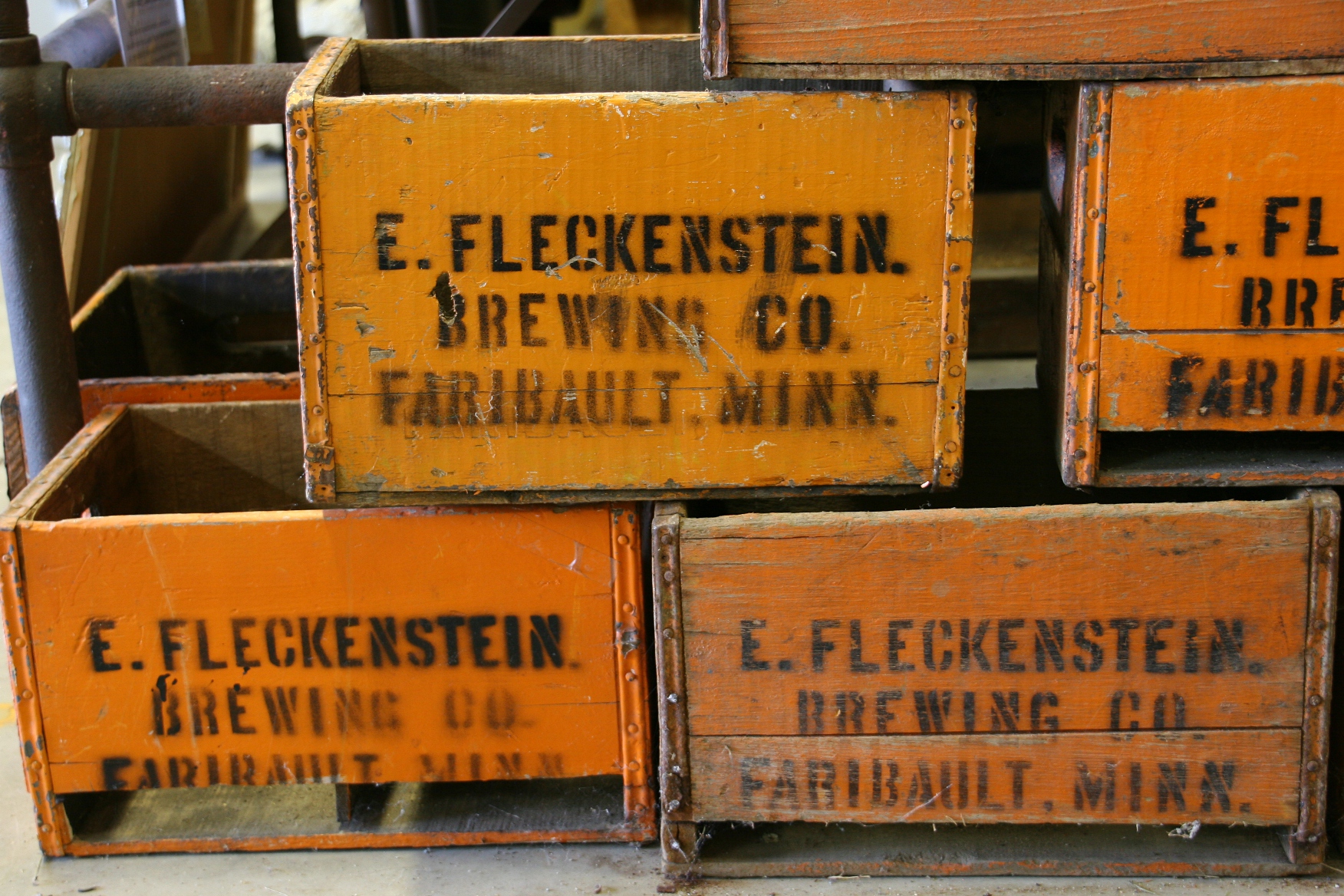
Stacked inside the RCHS Harvest and Heritage Halls are these crates from Fleckenstein Brewing. (Minnesota Prairie Roots copyrighted photo October 2015)

If you want to take home a bit of memorabilia, a commemorative bottle of grape pop is available for $5. Specially-made by Spring Grove Beverages in southeastern Minnesota, the soda comes with an original Fleck’s grape pop cap attached. Proceeds from the soda sales benefit the historical society.

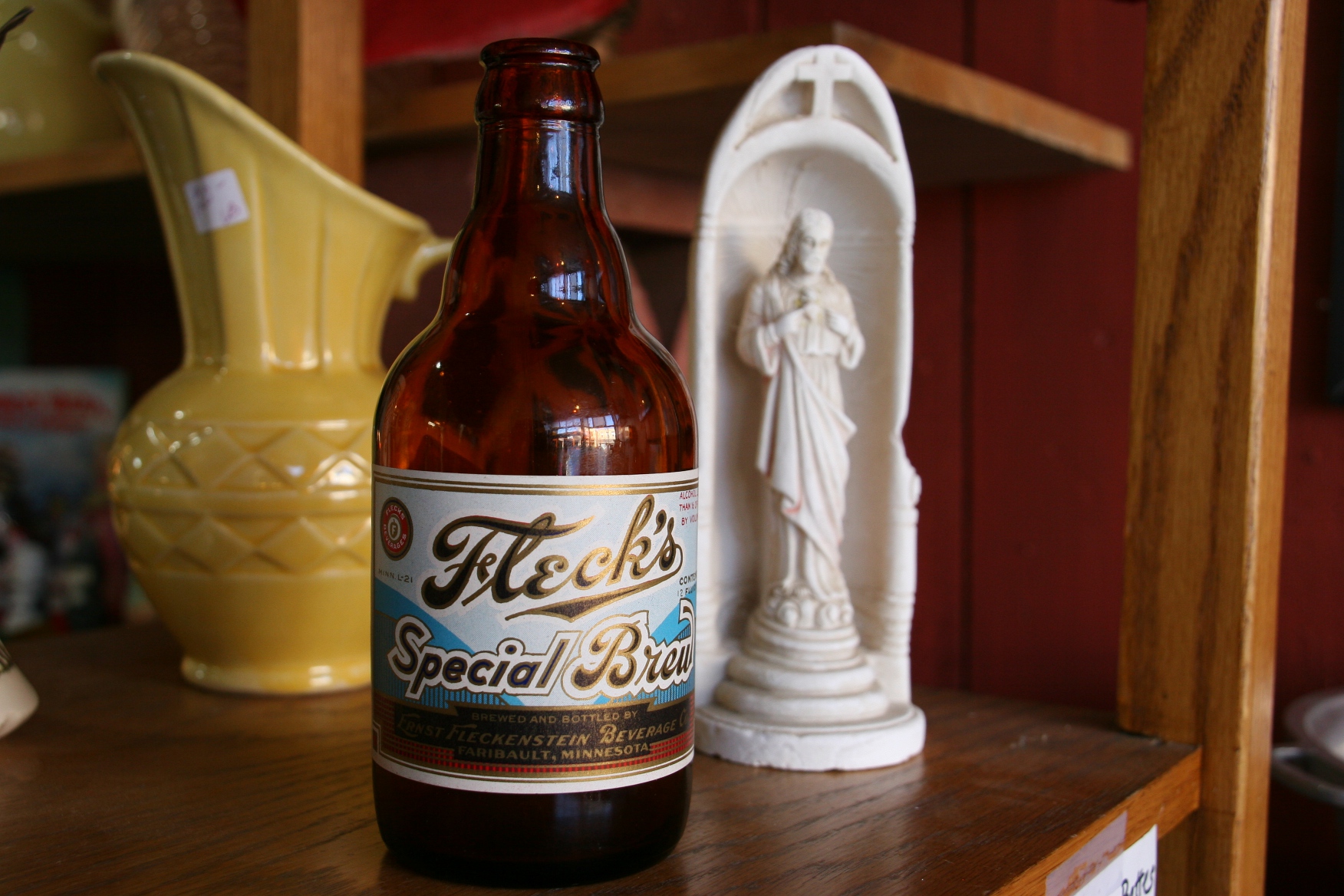
I found this Fleck’s beer bottle at LB Antiques in Jordan in February 2017. (Minnesota Prairie Roots copyrighted file photo)

Now, the only thing missing—and this comes from someone who appreciates and enjoys craft beers—is Faribault-brewed craft beer. Perhaps some day…

© Copyright 2022 Audrey Kletscher Helbling
 

The Tin Man (or woman) in need of a heart July 28, 2022

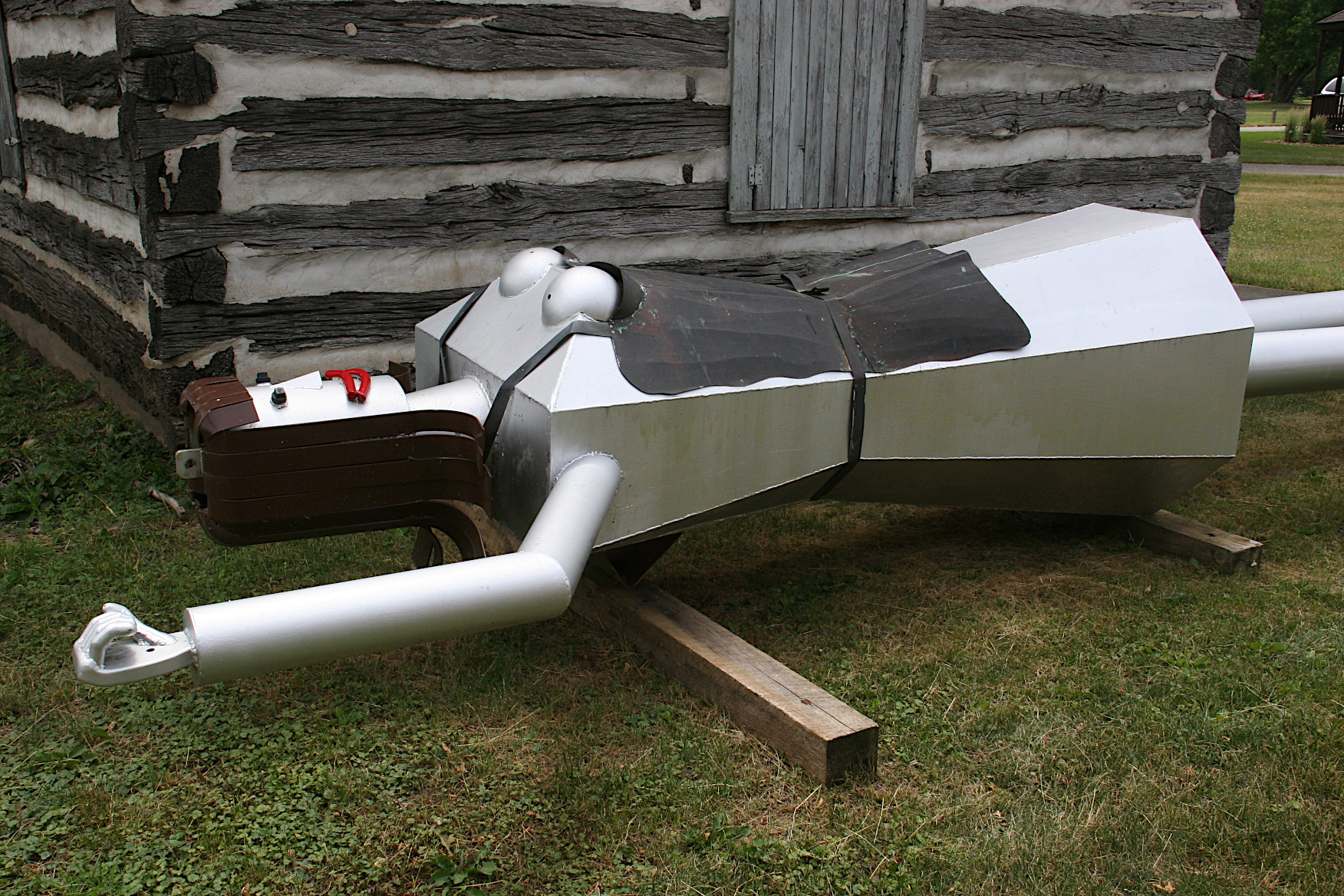
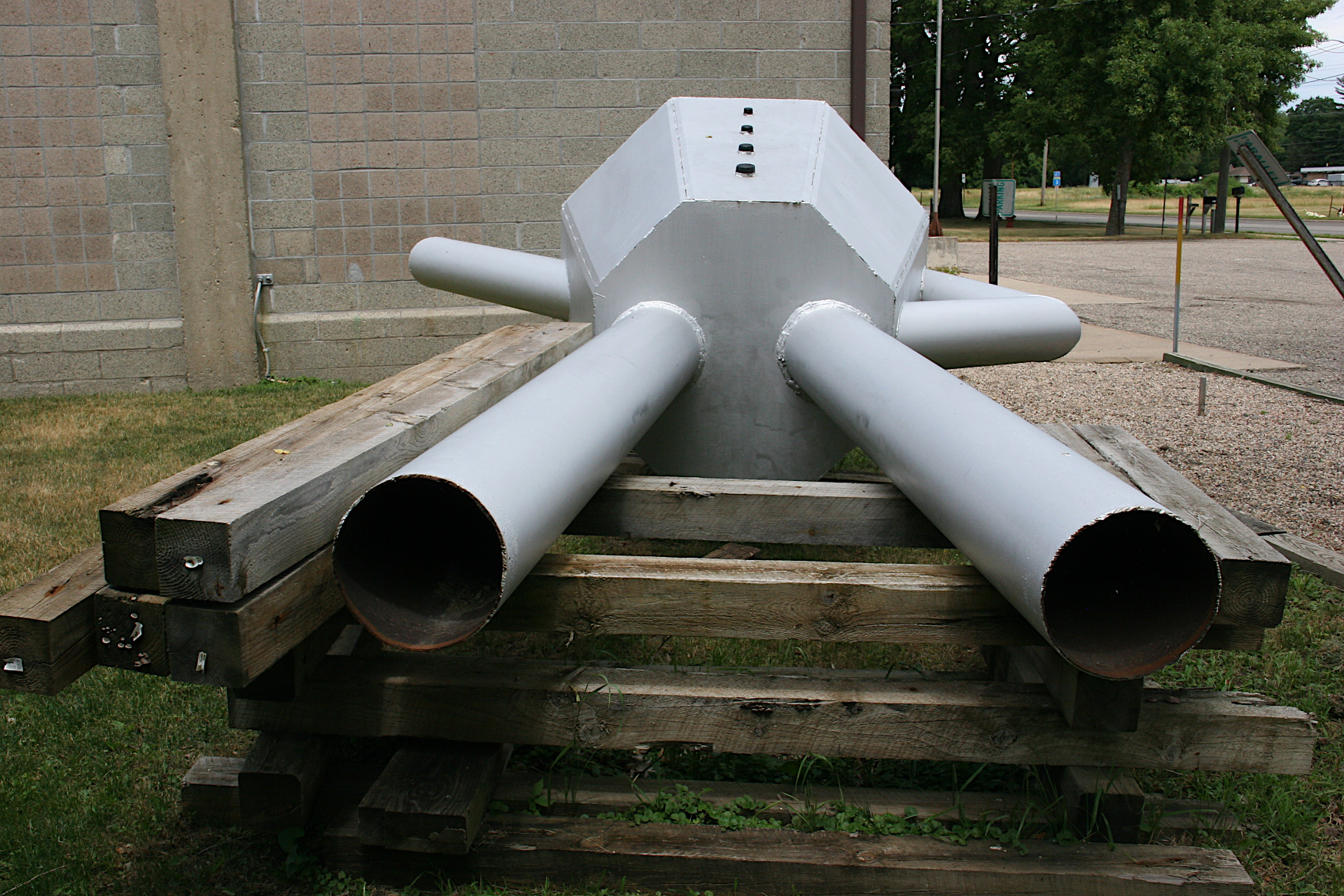
The Tin Woman sculpture from Lockerby Sheet Metal lies outside the log cabin at the Rice County Historical Society in Faribault where she will be placed. (Minnesota Prairie Roots copyrighted photo July 2022)

WHENEVER I THINK of a tin man, I think of three specifics: The Tin Man from The Wizard of Oz, The Tin Man and his family in Faribault, and the absence of a heart.

This Lockerby Sheet Metal Tin Man awaits reassembly outside the county museum. (Minnesota Prairie Roots copyrighted photo July 2022)

In the classic tale by L. Frank Baum, The Tin Man is in need of a heart, or love. The Scarecrow needs a brain. And the Lion needs courage.

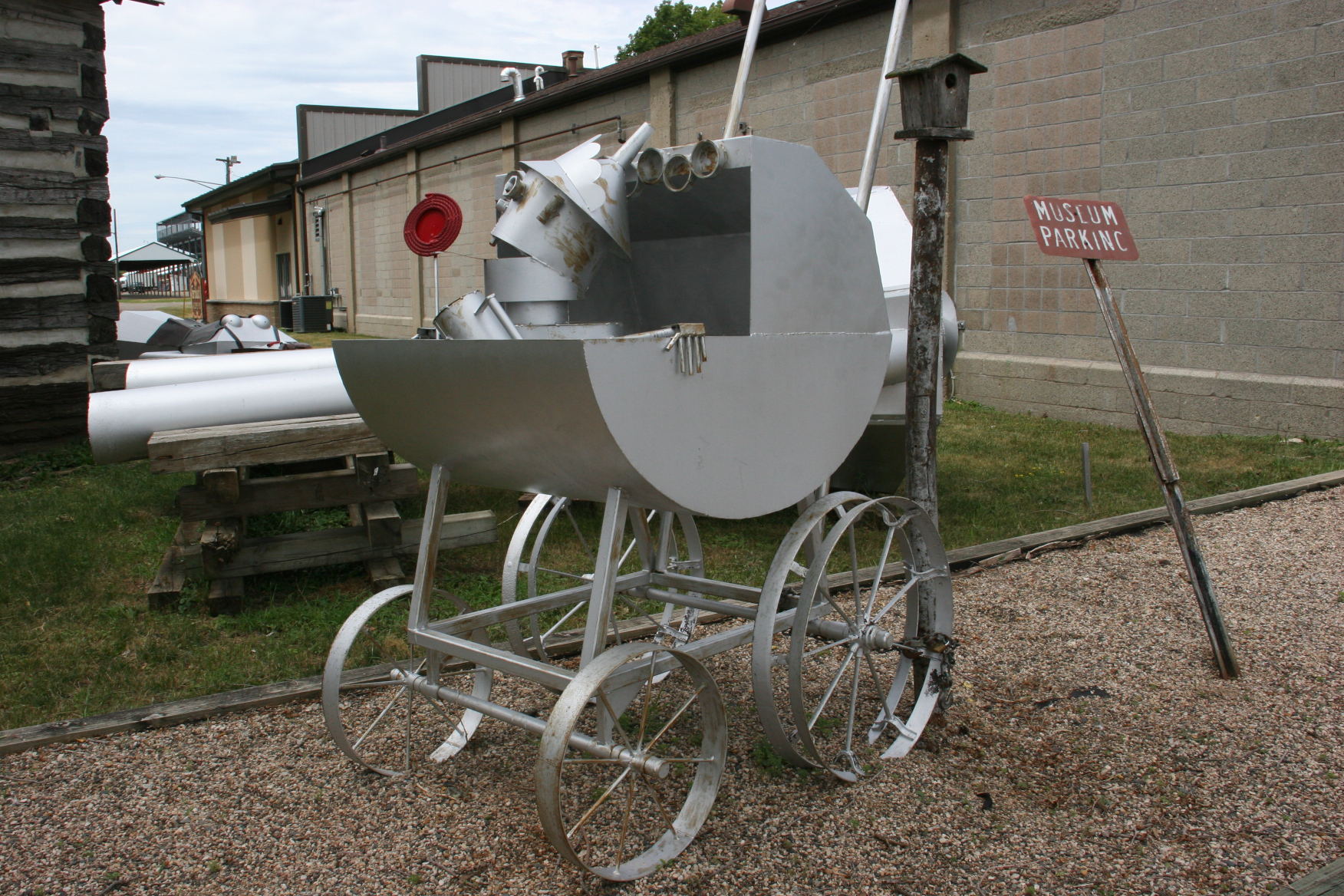
The family includes a baby in a buggy. (Minnesota Prairie Roots copyrighted photo July 2022)

Now you can take away whatever you want from Baum’s book, for there are, indeed, many take-aways. But the basics of love, knowledge and courage stick all the way along The Yellow Brick Road to The Emerald City.

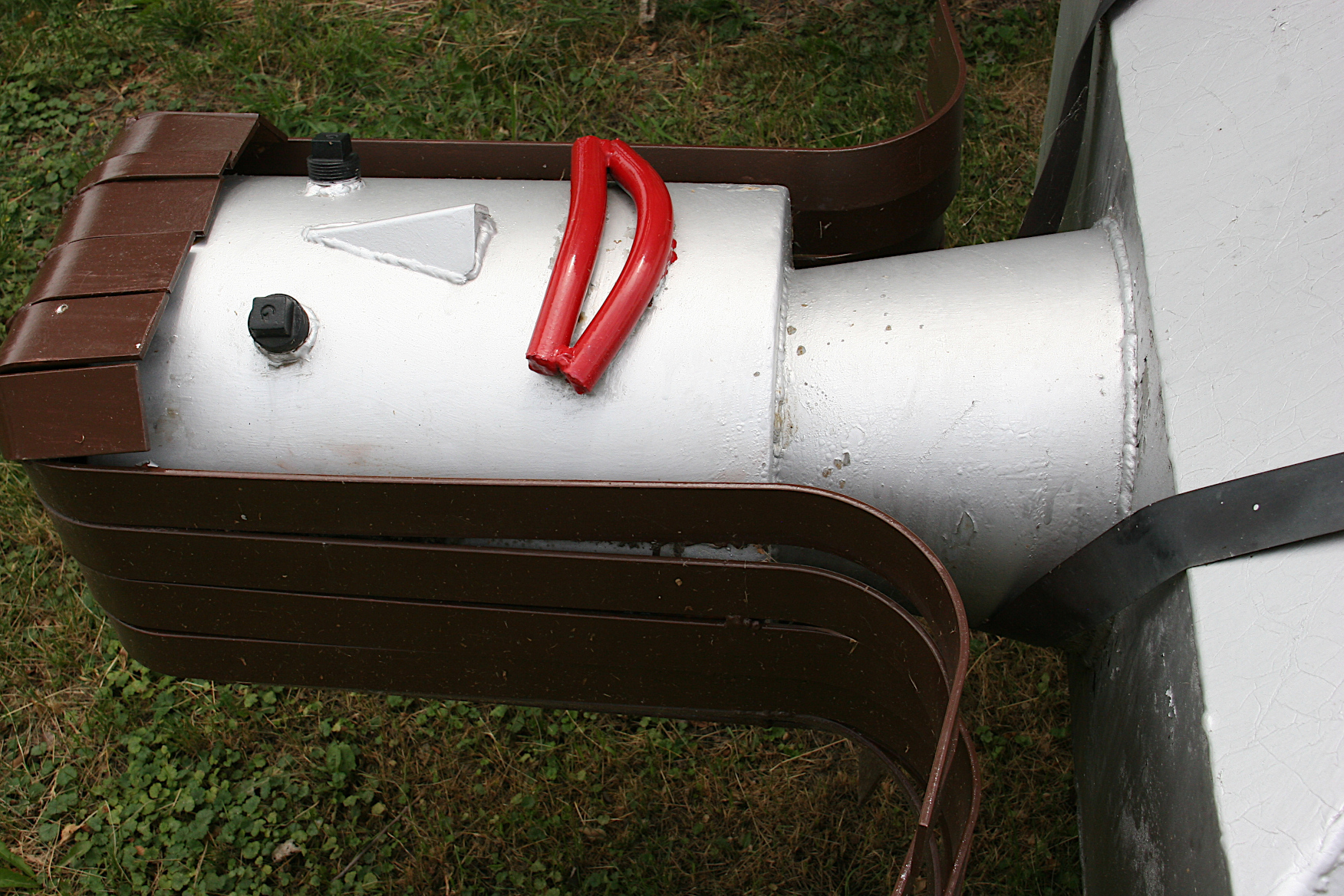
The Tin Woman, up close with her vivid red lips. (Minnesota Prairie Roots copyrighted photo July 2022)

I wish I didn’t believe this to be true. But too often these days I see heartless Tin Man after heartless Tin Man (you may also insert “woman” here) following a narrow pathway of self-focus with no regard for others. There’s no self-awareness of how actions, words, decisions hurt others. Or perhaps, more accurately, there’s no care for how others are affected by what we say or do. That can apply in business, in politics, in relationships, in friendships, in families…

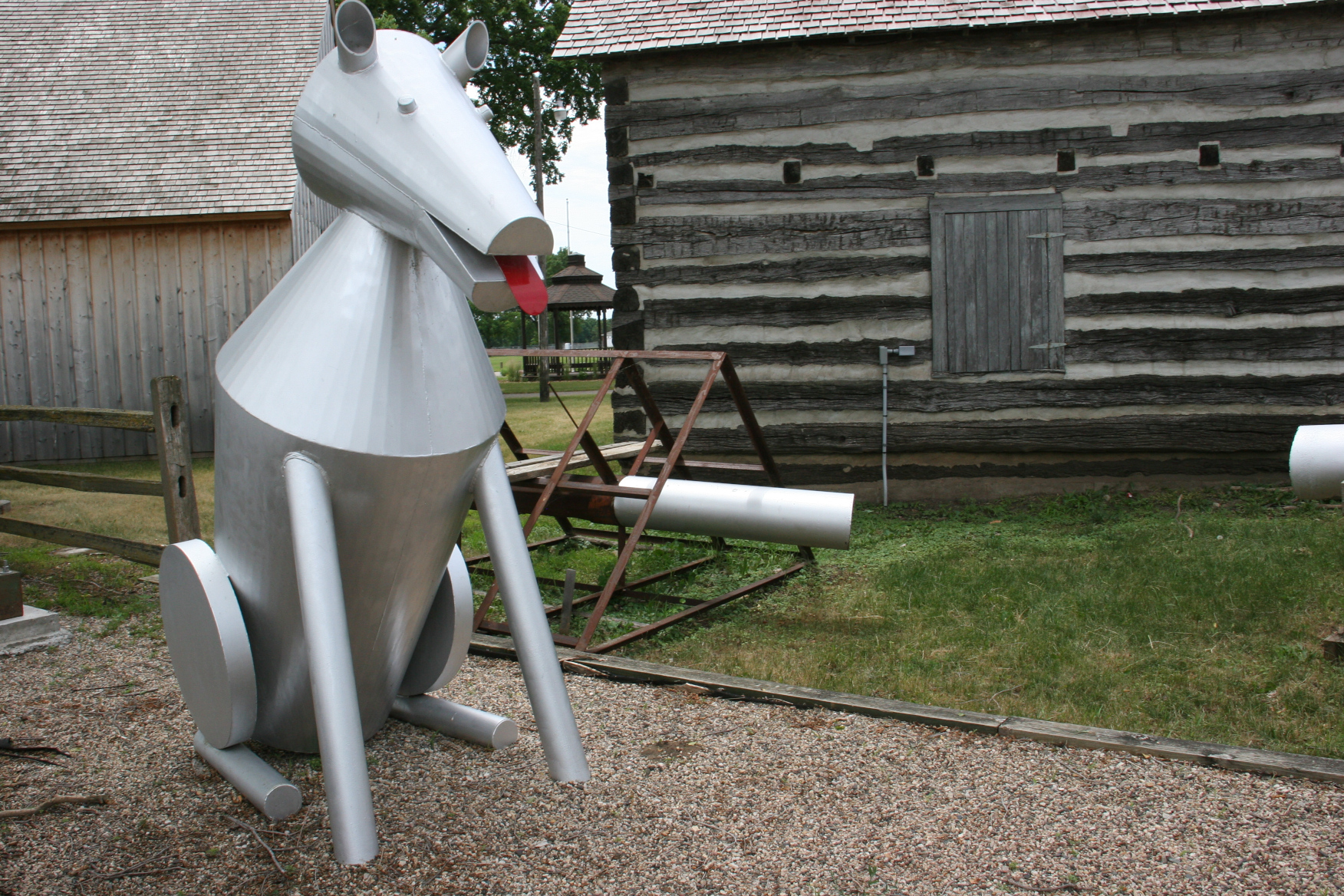
The family even has a dog. (Minnesota Prairie Roots copyrighted photo July 2022)

Sometimes I feel like our collective hearts are missing or atrophying and we really ought to work harder at being kinder, more caring, more considerate, more loving. Better people. Period.

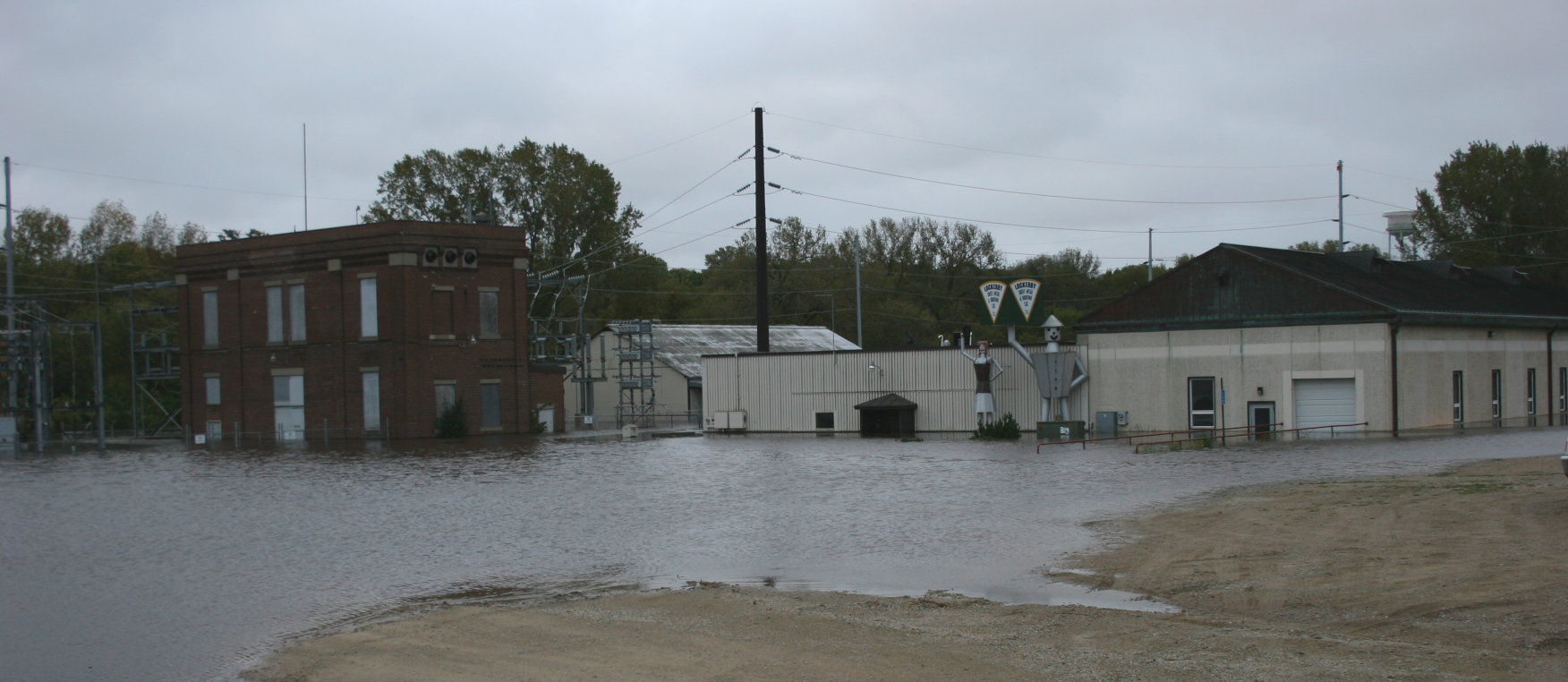
The Tin Man and Woman stand outside Lockerby Sheet Metal in September 2010, when the Straight River flooded. That event devastated the business. (Minnesota Prairie Roots copyrighted file photo September 2010)

That leads me to The Tin Man and his family in Faribault. A few weeks ago I photographed them at the Rice County Historical Society, where they’ve been hanging out for awhile. Originally, their home was at Lockerby Sheet Metal, which closed abruptly in October 2018 after 110 years in business in Faribault. I’m thankful this family found a new home at the RCHS. They are local icons.

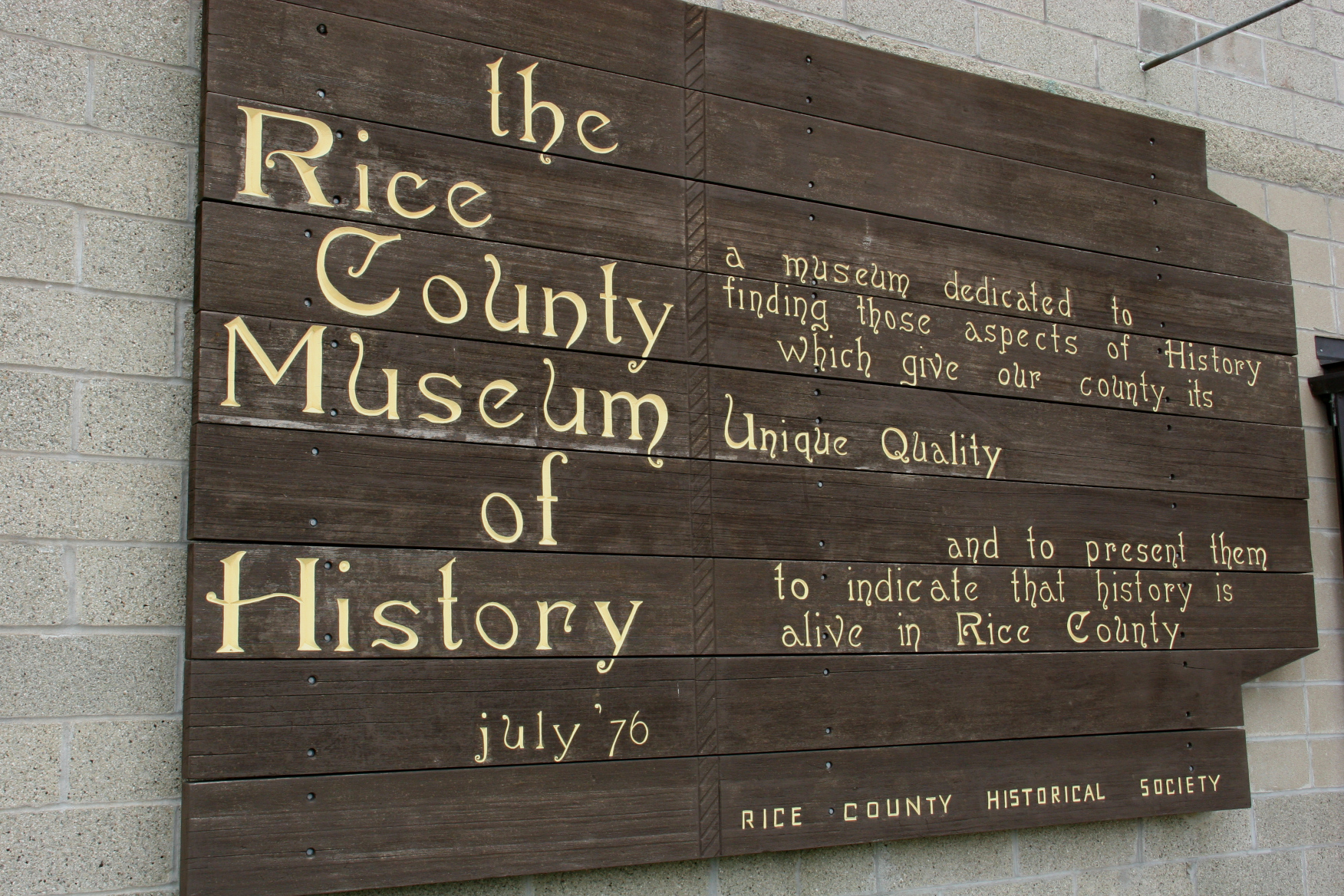
A sign on the Rice County Historical Society states its goal. (Minnesota Prairie Roots copyrighted photo July 2022)

Keeping this family together, recognizing their collective value, says something about the heart of a community. Locals care about The Tin Man and family from an historic, artistic and business perspective. And, perhaps, also from a love perspective. These creations of Lockerby Sheet Metal can visually represent community love. Yes, that’s the marketing, creative and hopeful side of me writing.

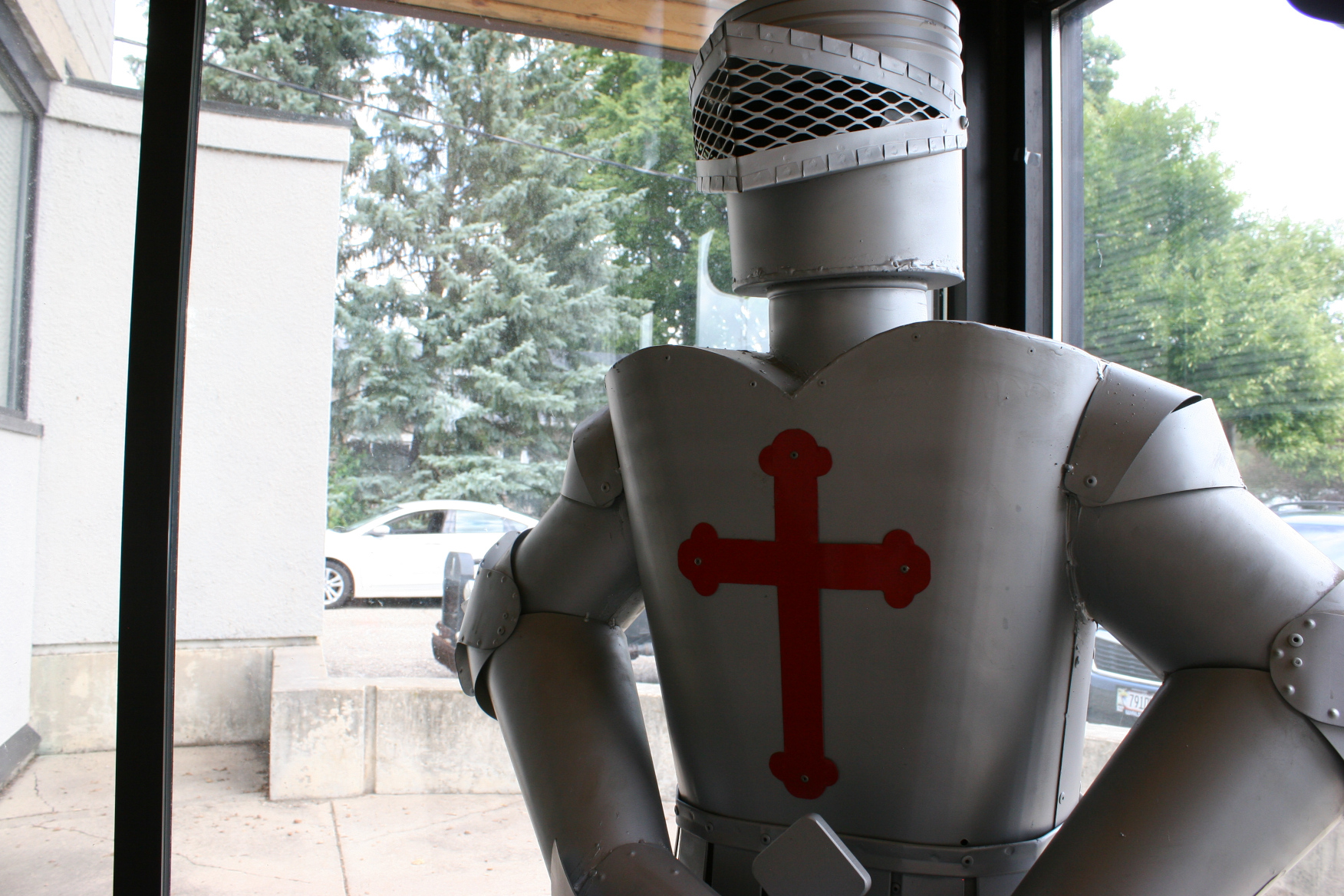
This knight metal art sculpture from Lockerby Sheet Metal stands inside the RCHS entry. (Minnesota Prairie Roots copyrighted file photo)

Even as I believe too much heartlessness exists in today’s world, I also believe that we are capable of growing our love for one another, of strengthening our hearts. Rather than follow a self-focused narrow Yellow Brick Road, we can pause, stop, consider. Pause. Stop. Consider. When we recognize how our words and actions affect others, then we no longer rattle around like a Tin Man (or Woman) without a heart.

THOUGHTS?

© Copyright 2022 Audrey Kletscher Helbling
 

Featuring fun finds, farm-fresh, fiddling & more May 10, 2022

At last spring’s RCHS Spring Flea Market. (Minnesota Prairie Roots copyrighted photo May 2021)

AFTER AN INCREDIBLY long winter followed by an exceptionally cold, cloudy and wet spring, we Minnesotans are ready to get outdoors. We are ready to celebrate. We are ready to let the sun shine into our lives. And this weekend, opportunities abound locally to get out and enjoy spring in southern Minnesota.

Spotted at the spring 2021 flea market. (Minnesota Prairie Roots copyrighted file photo May 2022)

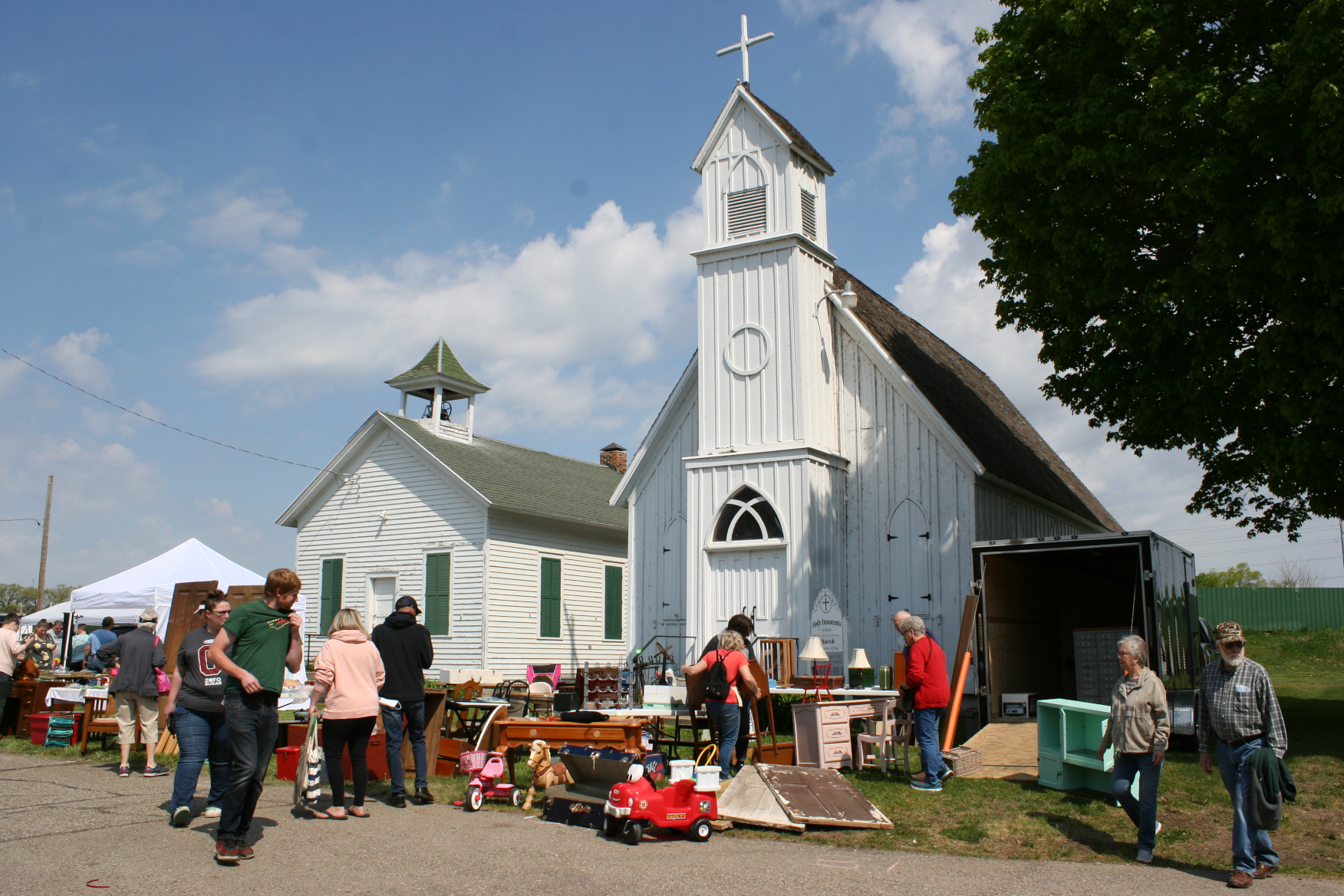
Rise and shine early on Saturday, May 14, to hit the Rice County Historical Society Spring Flea Market from 8 am – 2 pm in the parking lot and behind the RCHS museum in Faribault. I’ve attended many times and enjoy meandering among the vendors of antiques, collectibles, crafts and junk. I mean “junk” in a positive light.

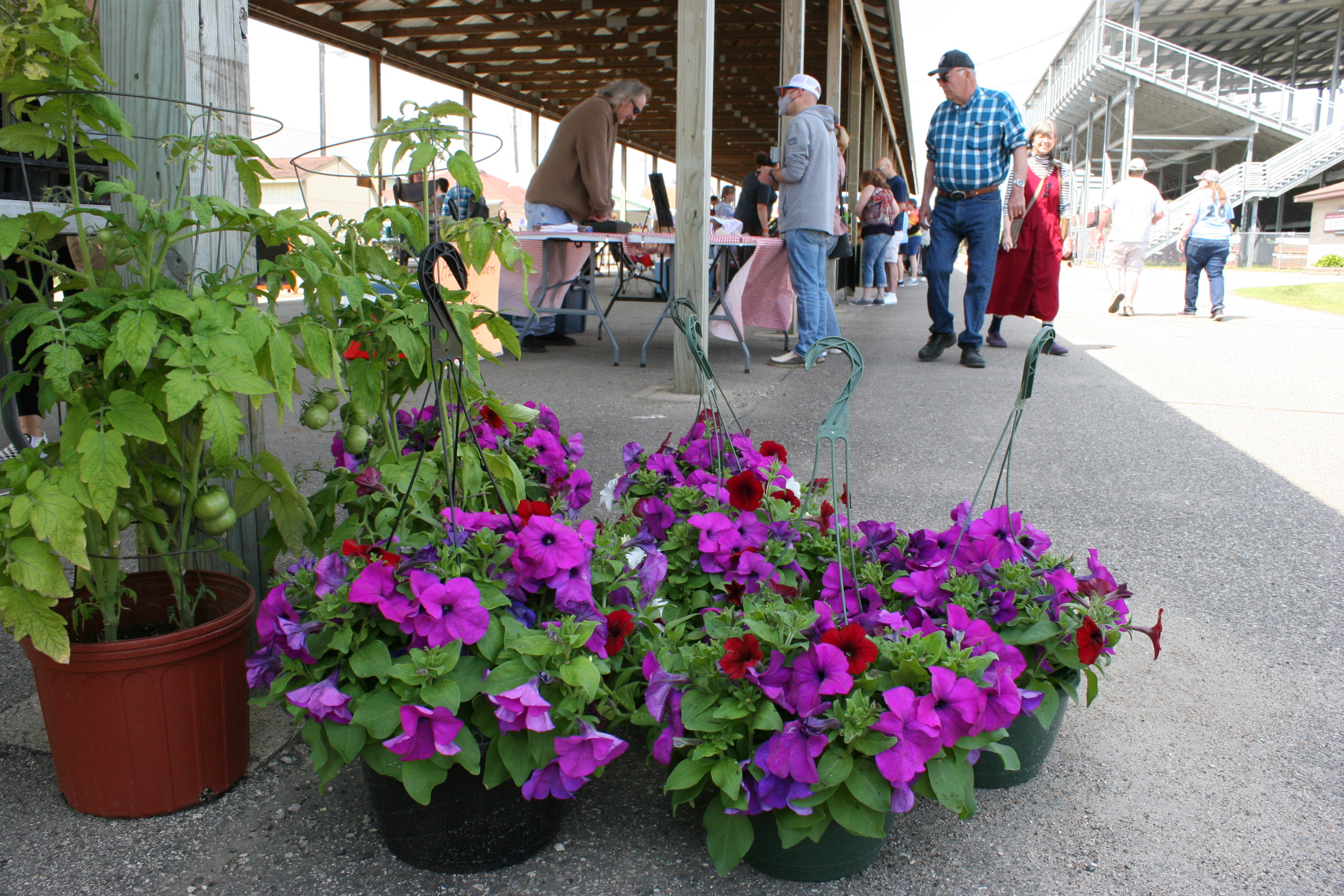
Plants available for purchase a year ago, looking toward the vendor site under the fairgrounds car port. (Minnesota Prairie Roots copyrighted file photo May 2021)

While there, also check out the Cannon Valley Farmers’ Market under the carport at the Rice County Fairgrounds from 10 am – 2 pm. Some 20 area/regional vendors will market spring produce, locally-grown starter plants, cheese, honey, pastries, woolen products, homemade soaps and much more.

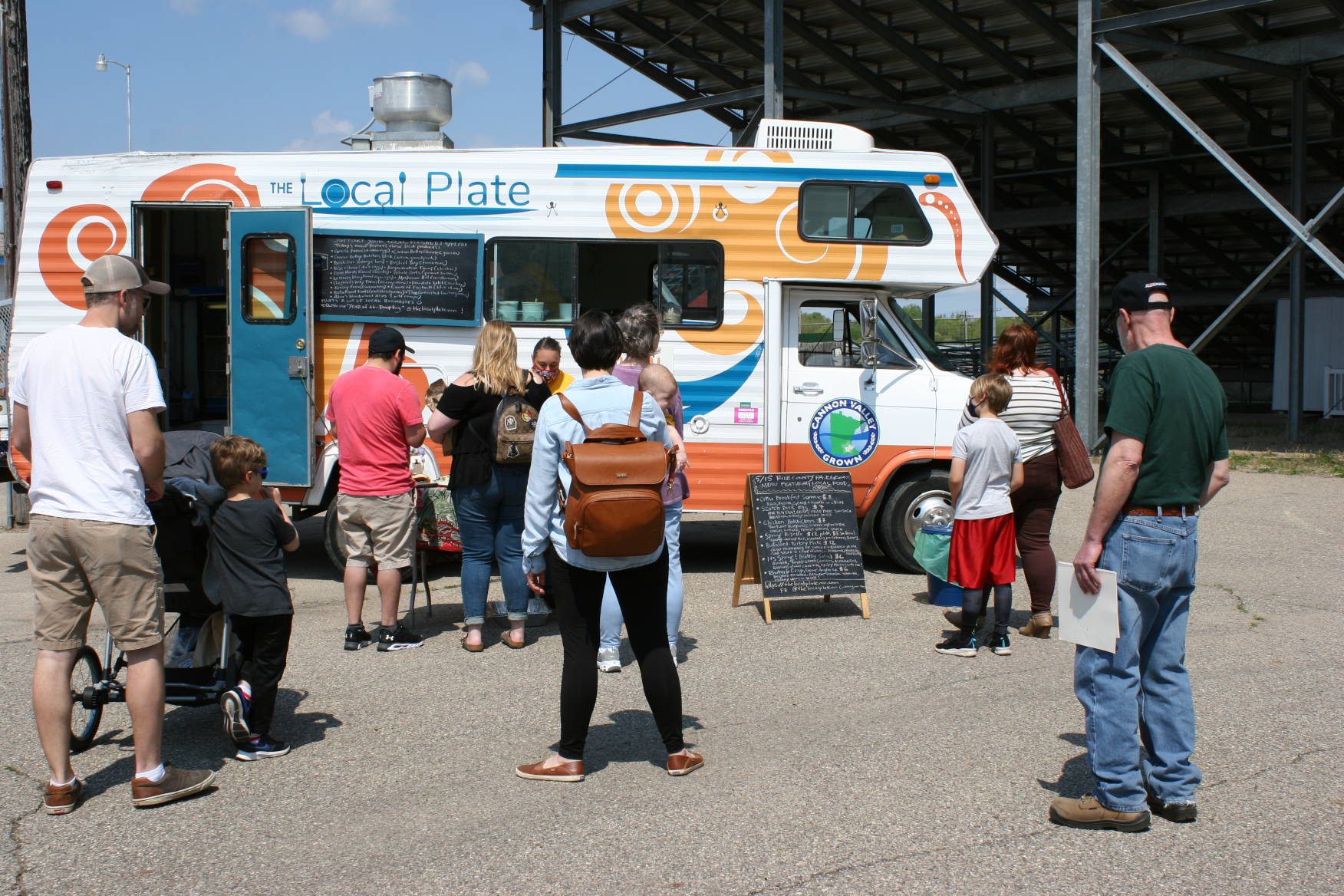
Customers place orders at the Local Plate food truck at the May 2021 Cannon Valley Farmers’ Market. (Minnesota Prairie Roots copyrighted file photo.)

Adding to the farmers’ market draw are local food trucks on site.

A group of mostly Northfield area musicians performed as Hutenanny at a past Valley Grove Country Social. Minnesota Prairie Roots copyrighted file photo September 2010)

On Sunday, May 15, two area historic Norwegian churches celebrate Syttende Mai, Norway’s Constitution Day. Both events begin at 2 pm.

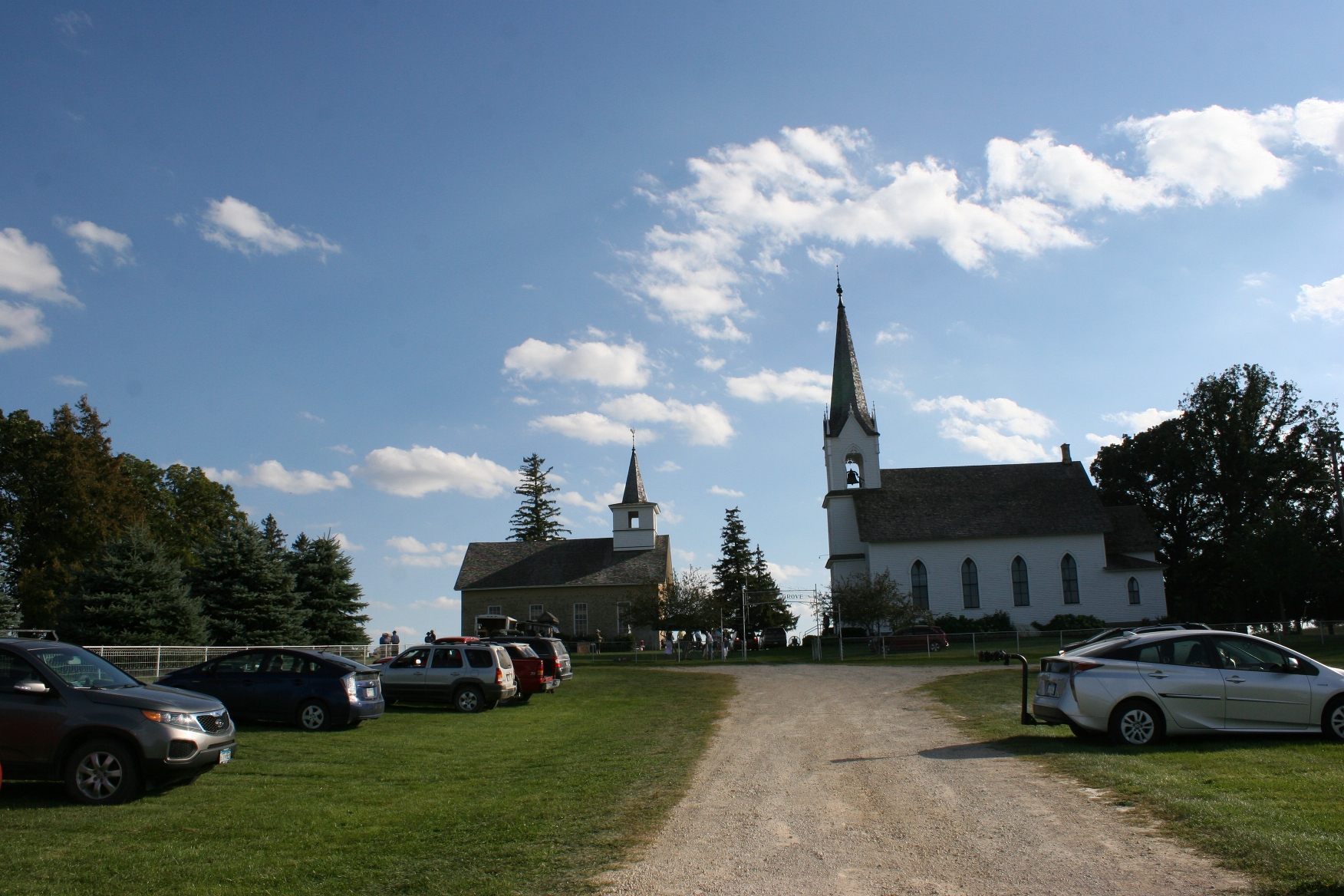
Duo churches grace the hilltop at Valley Grove. (Minnesota Prairie Roots copyrighted file photo 2018)

At Valley Grove churches, rural Nerstrand, the gathering focuses on the dedication of tapestries woven by Robbie LeFlueur. The Minneapolis weaver was commissioned to create four tapestries—three will be complete by May 15—that illustrate church history, the congregation and the surrounding flora and fauna. She will also give a weaving demo. Hardanger fiddlers from St. Olaf College will provide entertainment. Valley Grove, atop a hillside near Nerstrand Big Woods State Park, is a favorite destination of mine given its beautiful and peaceful country setting. I’ve attended numerous celebrations, or simply walked, there and always enjoyed myself. The Syttende Mai event goes until 4 pm.

Completed in the fall of 1899, the second Trondhjem Church sits atop a 100-foot high hill. Listed on the National Register of Historic Sites in Minnesota, this Norwegian church has walls constructed with 24 corners to brace it against the wind. Minnesota Prairie Roots file photo)

In northern Rice County, the Norwegians of Old Trondhjem Church, rural Lonsdale, are hosting Tjarnblom, a Scandinavian folk group as their Syettende Mai celebration begins at 2 pm. There’s a brief meeting of the preservation society followed by coffee (of course), treats (of course) and fellowship (of course). I’ve also attended events at Trondhjem and recommend you join in this Norwegian celebration.

There you go. Four places to go in Rice County that will bring sunshine into your May weekend.

© Copyright 2022 Audrey Kletscher Helbling
 

Reflections from Redwood & Rice counties on NATIVE LIVES MATTER May 2, 2022

Part of a temporary public art installation at Northfield’s Earth Day Celebration. (Minnesota Prairie Roots copyrighted photo April 2022)

IN THE GEOGRAPHICAL BACKGROUND of my childhood, I knew of the “Indian Reservations” to the northwest near Granite Falls and then to the east near Morton. My hometown of Vesta sits between the two, no longer referred to as “reservations” but as the Upper Sioux Indian Community and the Lower Sioux Indian Community.

A Dakota man and Alexander Faribault are depicted trading furs in this sculpture at Heritage Park near the Straight River and site of Faribault’s trading post. Ivan Whillock created the sculpture which graces the Bea Duncan Memorial Fountain in my community of Faribault. (Minnesota Prairie Roots copyrighted file photo 2012)

Today I live 120 miles to the east in Faribault, next to Wapacuta Park. Rice County is the homeland of the Wahpekute (not Wapacuta), a tribal band of the Dakota.

The Earth Day art carried two messages: NATIVE LIVES MATTER and CLIMATE JUSTICE. (Minnesota Prairie Roots copyrighted photo April 2022)

A temporary public art installation at the recent Earth Day Celebration in neighboring Northfield prompted me to reflect on Indigenous people in southern Minnesota. Growing up in Redwood County, my knowledge of area Native Americans focused primarily on “The Sioux Uprising.” History teachers then used that term, rather than the current-day “US-Dakota War of 1862,” which should tell you a thing or ten about how biased that perspective back in the 1970s. How thankful I am that my awareness and understanding have grown and that attitudes are shifting to better reflect all sides of history.

The message grows, blossoms in the Earth Day art. (Minnesota Prairie Roots copyrighted photo April 2022)

The NATIVE LIVES MATTER message bannering the art installation at Northfield’s Earth Day event reinforces a Land Acknowledgment Statement adopted by the City of Northfield in November 2020. That reads as follows:

We stand on the homelands of the Wahpekute and other Bands of the Dakota Nation. We honor with gratitude the people who have stewarded the land throughout the generations and their ongoing contributions to this region. We acknowledge the ongoing injustices that we have committed against the Dakota Nation, and we wish to interrupt this legacy, beginning with acts of healing and honest storytelling about this place.

NATIVE LIVES MATTER fits the spirit of the Land Acknowledgment Statement. Those three words caused me to pause, to think, to consider what I’d been taught all those decades ago and how my thinking has shifted as I’ve aged, opened my mind and learned.

Dakota beadwork displayed and photographed at the Rice County Historical Society Museum, Faribault, in 2010. (Minnesota Prairie Roots copyrighted file photo 2010)

The Rice County Historical Society, which exhibits a collection of Native American artifacts in its Faribault museum, shares a statement similar to the City of Northfield’s on its website:

We acknowledge that the land that is now Rice County, MN, was their (Dakota) homeland and for many tribal members today, it is still their home.

In all of this, I feel a sense of gratitude regarding increasing public recognition of the land history and contributions of Indigenous People in Minnesota. In my home area of Redwood County, nearly 1,000 individuals from the Mdewakanton Band of Dakota call the Lower Sioux Indian Community home. To the east in Yellow Medicine County near Granite Falls, nearly 500 individuals from the Dakota Oyate call the Upper Sioux Indian Community home.

Words on a marker in Reconciliation Park in Mankato where 38 Dakota were hung on Dec. 26, 1862. (Minnesota Prairie Roots copyrighted file photo 2012)

I hope educators in my home area are today teaching students about the local Dakota and even bringing elders into classrooms. I graduated, after all, from Wabasso High School, the name Wabasso coming from a Native word meaning “white rabbit.” I would then go on to attend college in Mankato, site of the largest mass execution in the US with 38 Dakota killed in a public hanging on December 26, 1862.

I would be remiss if I did not share that, during the US-Dakota Conflict of 1862, family members on my mom’s side fled their rural Courtland farm for safety in St. Peter. They later put in a claim to the US government for crop loss.

Details on a sign outside the Cathedral of our Merciful Savior in Faribault. Bishop Henry Whipple, who served here, advocated for the rights of Native Americans and had a strong friendship with them. (Minnesota Prairie Roots copyrighted file photo 2020)

Now, 160 years after that event in my ancestors’ history, I continue growing my knowledge, widening my understanding of Minnesota history and of the Indigenous people who first called this land home.

A graphic of Minnesota is painted on the back of the art installation. (Minnesota Prairie Roots copyrighted photo April 2022)

FYI: Please click here to read previous posts I’ve written on the US-Dakota War (also called Conflict) of 1862.

Also, I suggest you read an article on the Minnesota Public Radio website about efforts to change the Minnesota State flag. The flag depicts, among other details, a Native American in the background riding off into the sunset while a settler focuses the foreground, hands on a plow, rifle nearby. I agree that change is needed. But, as too often happens, the issue has become politically-charged.

© Copyright 2022 Audrey Kletscher Helbling


History talk focuses on early African American residents of our area March 31, 2022

Promo courtesy of Rice County Historical Society.

WHAT DO WE REALLY know about the people and places we call home? Do we know the full story, the full history? Likely not.

This evening the Rice County Historical Society in Faribault hosts a History Talk, “Early African Americans in Southeast Minnesota,” by professional genealogist, lecturer and oral historian Mica Anders. She will share stories about some early African American residents of Rice County and more.

Anders researched African Americans who settled in southeastern Minnesota early on via a history fellowship. The result is her touring history talk and an exhibit, “Early African Americans of Southeast Minnesota,” on display until July 31 at the Minnesota African American Heritage Museum and Gallery in Minneapolis.
Her efforts will certainly enlighten and expand our knowledge of the African Americans who helped shape (and continue to shape) this place, this southeastern Minnesota.