Minnesota Prairie Roots

Writing and photography by Audrey Kletscher Helbling

Faribault area welcomes you to bike, run, eat, drink, learn about history & more this weekend October 6, 2016


fall-festival-291x300-copy

FARIBAULT CELEBRATES FALL this Saturday with a day jammed full of activities for all ages.

If you’ve never been to my southeastern Minnesota community, please join us. If you live here, appreciate what Faribault offers. Here’s a round-up of events slated for Saturday, most in our historic downtown:

Faribault’s Fall Festival begins at noon with the Children’s Costume Parade starting at Community Co-op and continuing north along Central Avenue to Fifth Street. Afterwards, kids, accompanied by adults, can trick-or-treat at downtown businesses until 3 p.m.

Additionally, there will be pumpkin painting, yard games and unicycle shows to keep families and other folks busy and entertained.


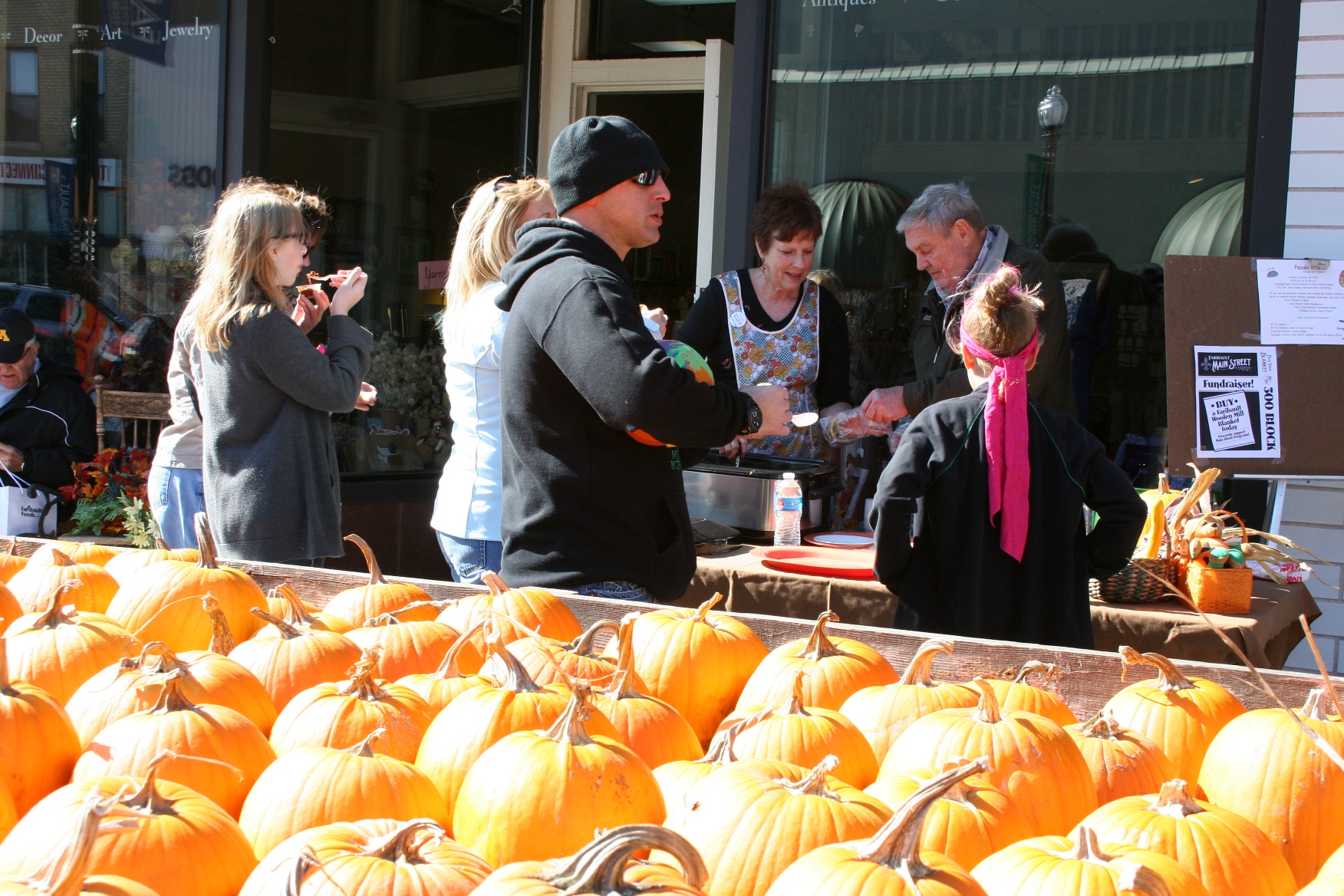
Participants in last year's Chili Contest dish up chili at a business along Central Avenue during the Fall Festival.

Sampling chili during a Fall Festival in downtown Faribault. Minnesota Prairie Roots file photo.


From 12:20 – 2:30 p.m., chili lovers, for a $5 fee, can sample chili from stands set up along historic Central Avenue.


The Adam Weyer Wagon Shop, built of limestone in 1874, is among historic buildings on the tour.

The Adam Weyer Wagon Shop, constructed of limestone in 1874, is among historic buildings on the tour. Weyer built buggies, carriages, wagons and bobsleds here from 1874 in to the early 1900s. He then opened a blacksmith shop. Today the building houses Carriage House Liquors.


Even before the costume parade, a free guided Old Town walking and biking tour of historical sites in downtown Faribault is scheduled from 10 – 11:30 a.m. Participants should meet at Buckham Center, 11 East Division Street.


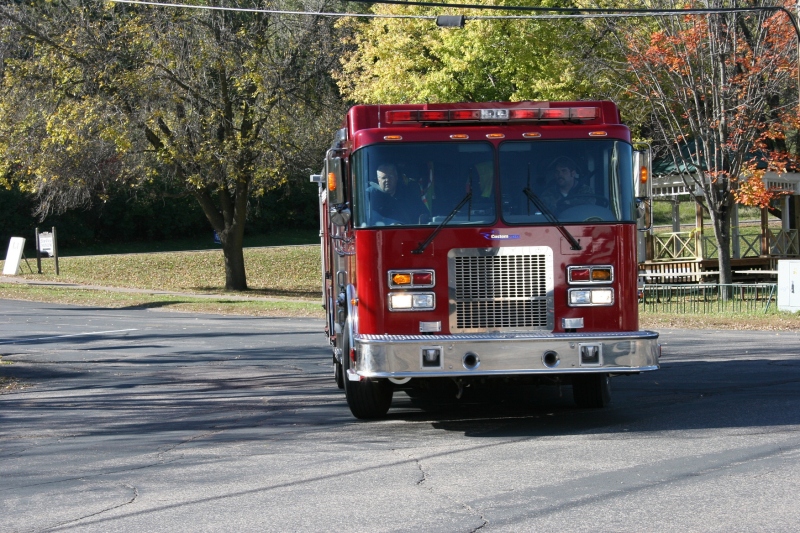
And the volunteer firemen were on duty.

Firefighters return from a call in Marine on St. Croix, on the eastern side of Minnesota. Minnesota Prairie Roots file photo used for illustration purposes only.


Also at 10 a.m., until 2 p.m., the Faribault Fire Department hosts its annual open house. Kids can meet fire fighters and Sparky The Fire Dog. There will be free demos, free fire hats and free smoke detectors.


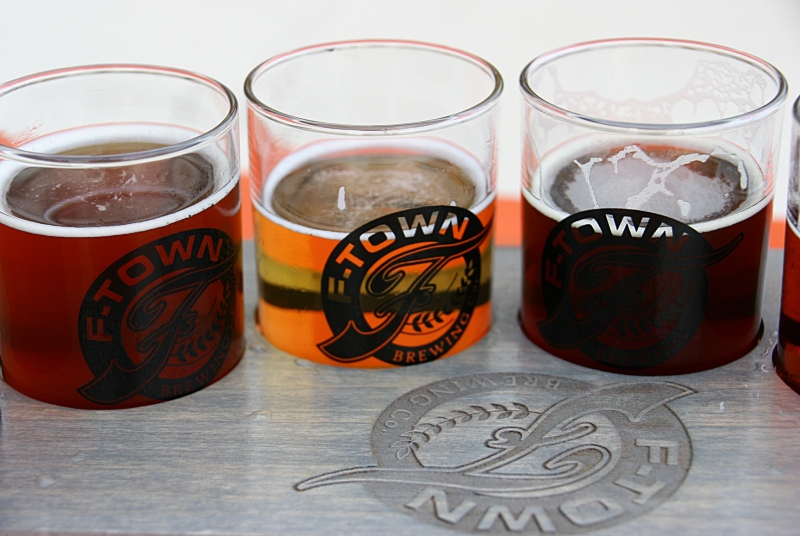
We wanted to sample all of the beers on tap, so we ordered a flight.

A sampler of F-Town beers. Minnesota Prairie Roots file photo.


Half a block off Central Avenue, F-Town Brewing kicks off its F-Oktoberfest at 11 a.m. with Gravel Grinder, a 50-mile charity bike race.

Brewery fun continues for 12 more hours with food trucks, live music and plenty of F-Town beer.


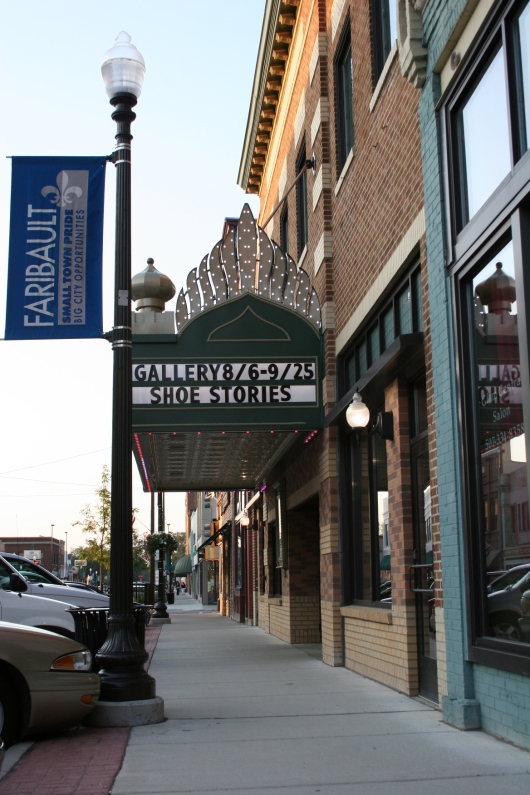
"Shoe Stories" opened Friday at the Paradise Center for the Arts in Faribault.

The Paradise Center for the Arts is housed in a beautifully restored theater. Minnesota Prairie Roots file photo.


At the Paradise Center for the Arts, 321 Central Avenue North, the arts center hosts the Paradise Haunted Basement Tour from 1 – 3 p.m.

And for music fans, the Paradise presents A Tribute to “The Boss” Bruce Springsteen at 7 p.m. Admission price is $15 for members and $20 for non-members.


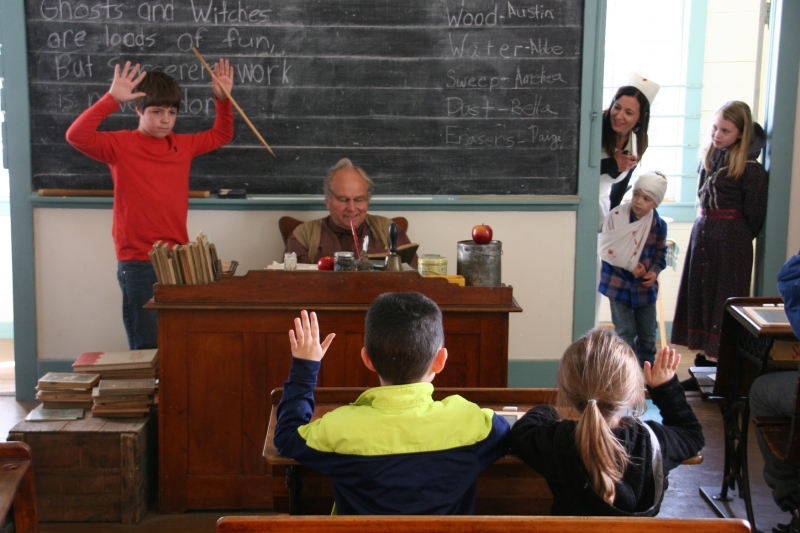
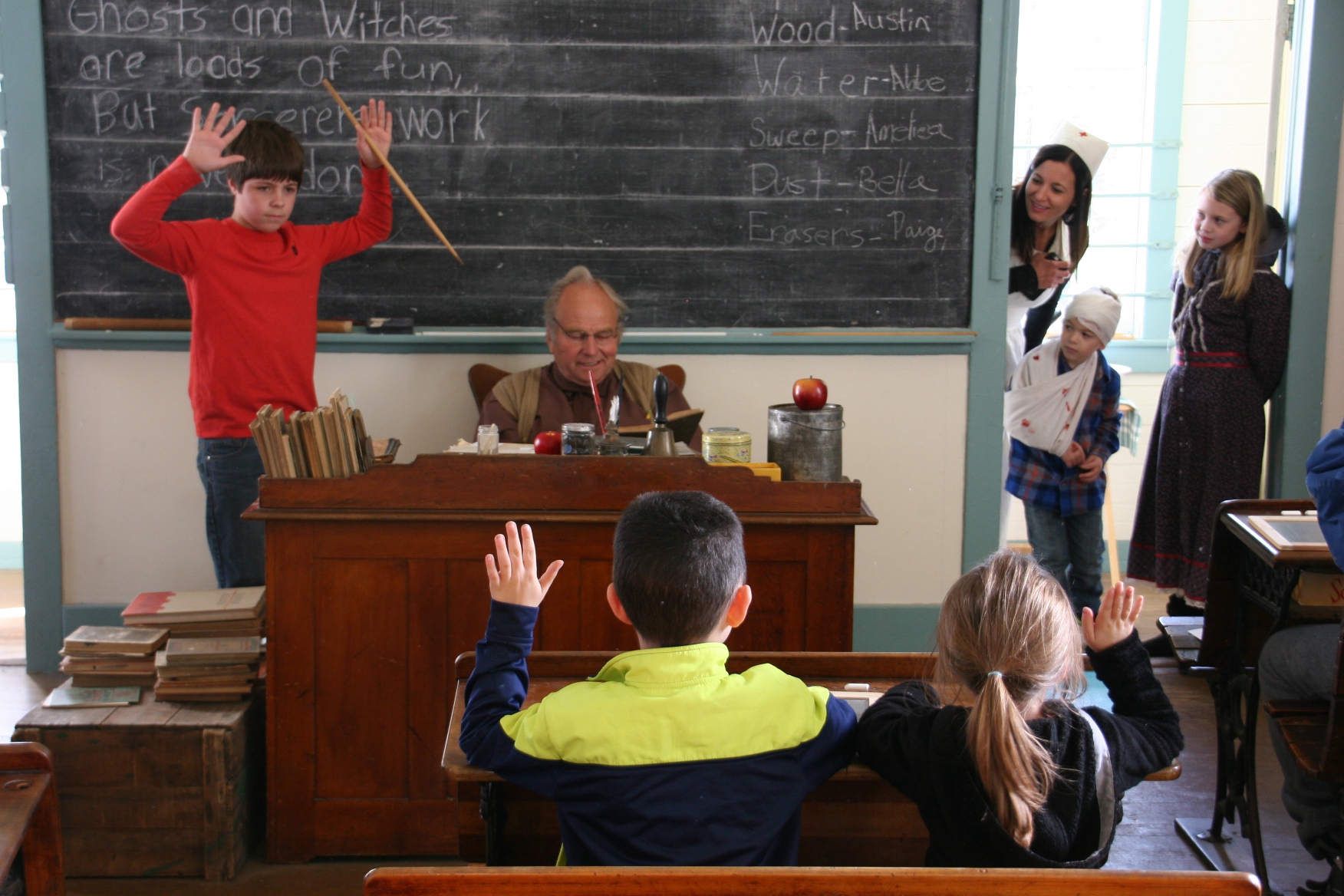
Math class is underway inside the one-room Pleasant Valley School.

Math class is underway inside the one-room Pleasant Valley School during a past “A Night at the Museum.” Minnesota Prairie Roots file photo.


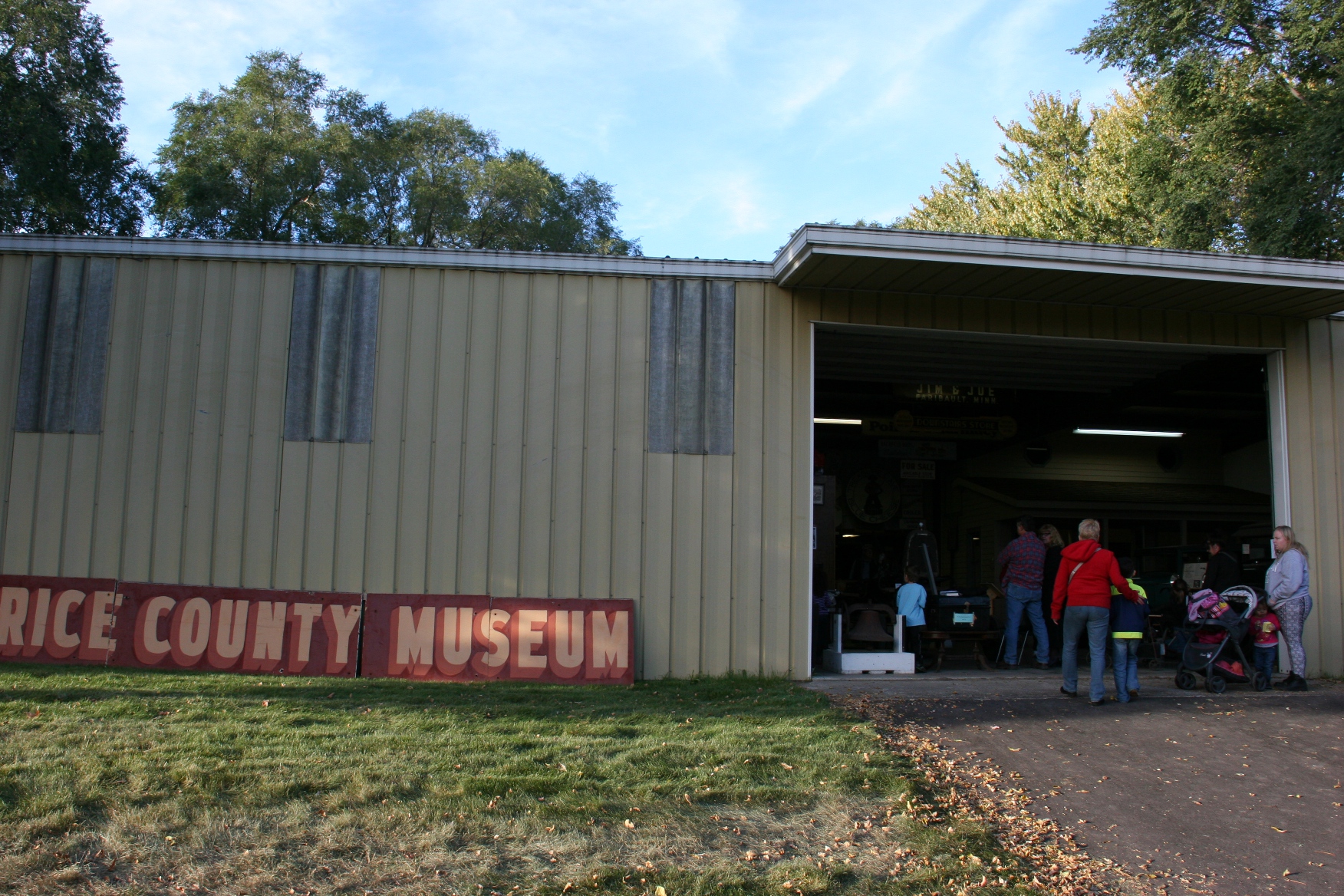
On the north side of town by the Rice County Fairgrounds, the Rice County Historical Society opens its doors and grounds for the fourth annual “A Night at the Museum.” The event, with a $2 admission price for adults and $1 for kids, runs from 4 – 7 p.m. It’s a great opportunity to observe and participate in living history.


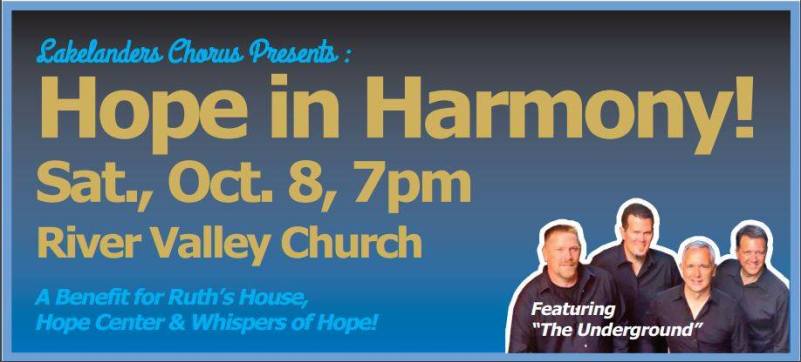
hope-in-harmony


At River Valley Church, 722 Ravine St., the Lakelanders Acapella Chorus will present a 7 p.m. concert benefiting three local organizations that help women dealing with issues like domestic violence, homelessness, addiction, etc. Admission is a free will offering.

There you go. Lots to do in Faribault on Saturday. Come, join the fun, eat (and drink) local, shop local and appreciate all this community offers.


BONUS:

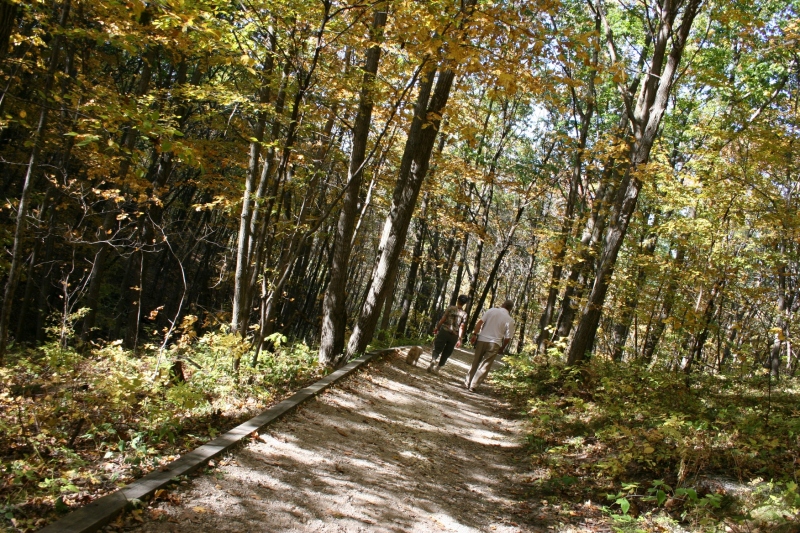
Well-kept and well-traveled paths take hikers deep into the Big Woods.

Well-kept and well-traveled paths take hikers deep into the Big Woods at Nerstrand Big Woods State Park. The park is known for its incredible fall foliage. Minnesota Prairie Roots file photo.


Just to the east of Faribault, St. John’s United Church of Christ, Wheeling Township, hosts its annual Big Woods Run half marathon/10K/5K/kids K through Nerstrand Big Woods State Park. The events begins at 9 a.m. New this year is a guided prairie walk and nature talk.


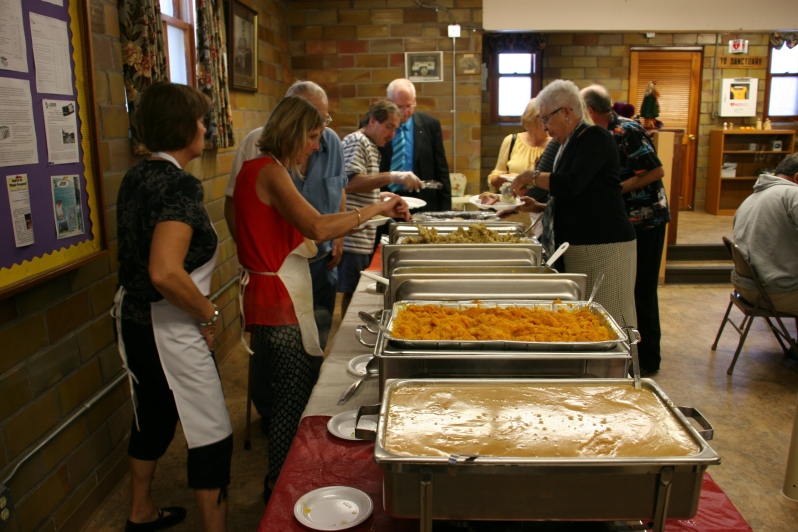
Delicious home-cooked food fills roasters at Trinity's annual fall harvest dinner on Sunday.

Delicious home-cooked food fills roasters at Trinity’s annual fall harvest dinner in the church basement. Minnesota Prairie Roots file photo 2016.


On Sunday, to the west of Faribault at Trinity Lutheran Church, North Morristown, the church will host its annual fall dinner and craft/bake sale. For $12 (ages 13 and up; $5 for those 6 – 12)) you can enjoy a homemade meal of turkey, ham and all the fixings. I’ve eaten here many times and this is an incredibly delicious meal cooked by folks who know how to cook. The food is delicious, the portions ample and the company welcoming and friendly. Serving is from 11 a.m. – 1 p.m.

© Copyright 2016 Audrey Kletscher Helbling
Logo from Faribault Main Street, key organizer of the Faribault Fall Festival.


Anniversary event features amateur silent film clips from Faribault March 16, 2016


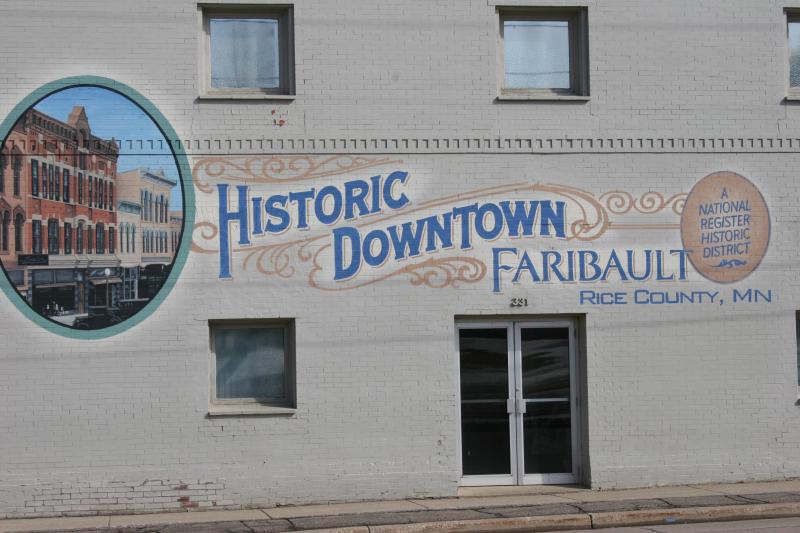
A mural, one of several in the downtown area, promotes historic Faribault.

A mural, one of several in the downtown area, promotes historic Faribault. Minnesota Prairie Roots file photo.

I MAY NOT BE A FARIBAULT NATIVE. But I’ve lived here long enough—34 years—to surface-know local history.

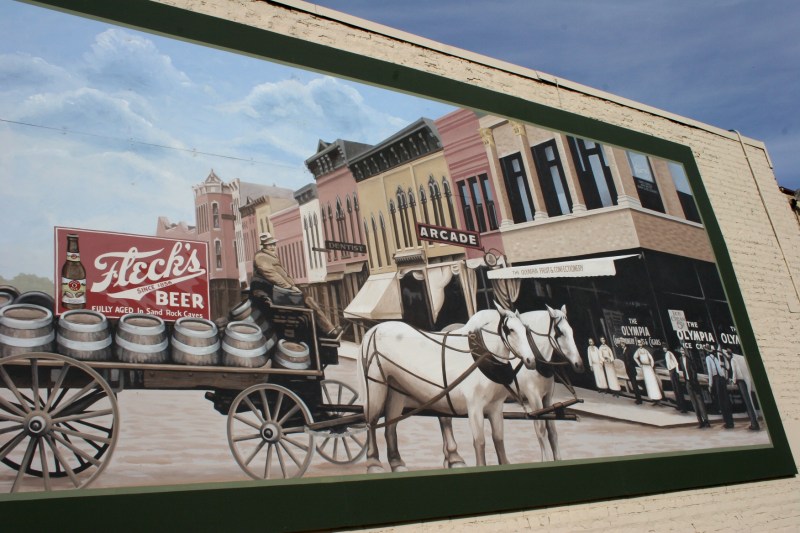
A downtown Faribault mural featuring Fleck's beer.

A downtown Faribault mural features Fleck’s beer. Minnesota Prairie Roots file photo.

So when Brian Schmidt, native historian, collector of Fleckenstein Brewery memorabilia and member of the Rice County Historical Society Board of Directors, called me recently, I listened. Faribault history interests me because, even if I wasn’t born and raised here, this community is now part of my family’s history.

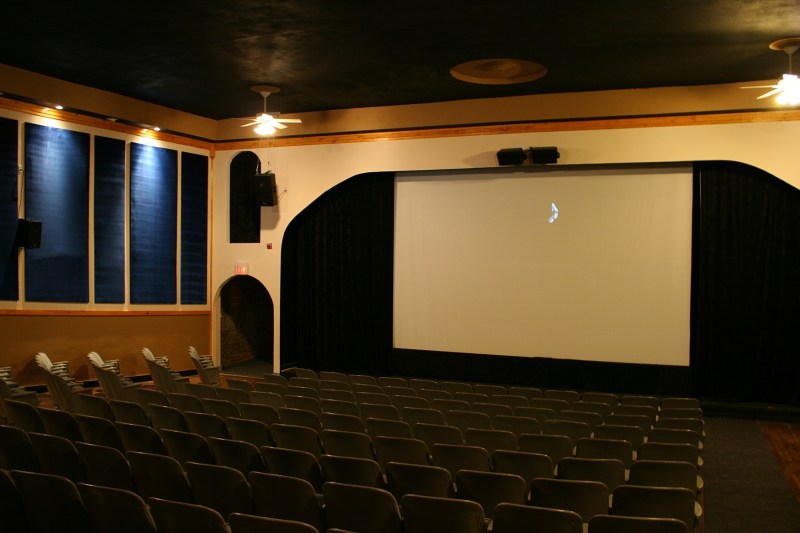
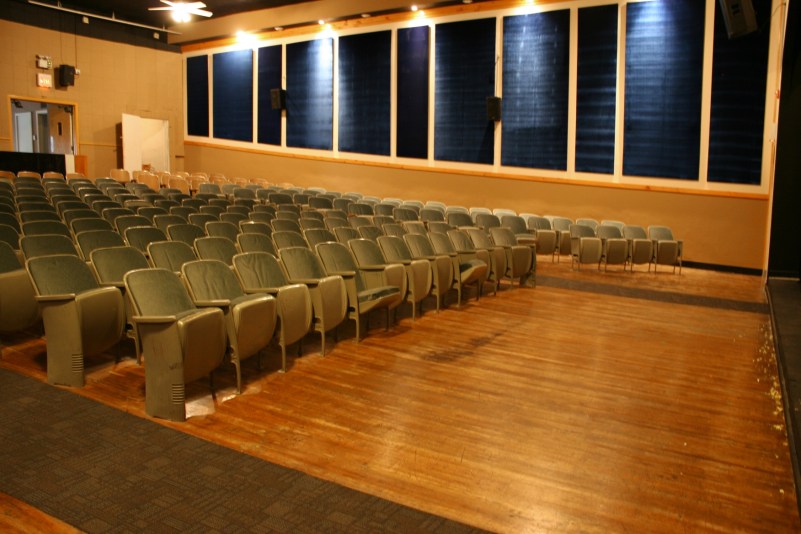
Inside the historic Village Family Theater. Minnesota Prairie Roots file photo 2016.

Inside the historic Village Family Theater. Minnesota Prairie Roots file photo August 2015.

On Saturday, March 19, a previously publicly unseen piece of local history will debut on the big screen at the historic Village Family Theater in the form of a silent movie. I could hear the excitement in Schmidt’s voice as he talked about amateur film footage shot between 1935-1938 by Charles Fleckenstein of Faribault brewery fame.

Schmidt purchased the unmarked film at a Faribault auction house. When he started viewing the clips, he knew he’d stumbled upon something remarkable. And now he’s sharing that discovery in a 10-minute professionally produced silent film montage reminiscent of a bygone era.

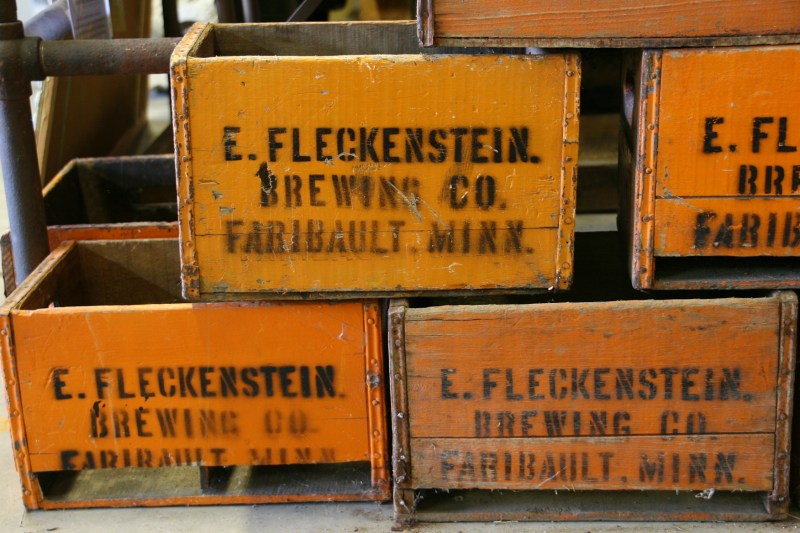
Stacked inside the Harvest and Heritage Halls are these crates from Fleckenstein, which brewed beer and made soda in Faribault.

Stacked inside the RCHS Harvest and Heritage Halls are these crates from Fleckenstein, which brewed beer and made soda in Faribault. Minnesota Prairie Roots file photo October 2015.

Viewers will see workers digging a tunnel and celebrating a birthday at Fleckenstein Brewery (yes, they’re drinking beer), plus other footage of a long ago golf course in the middle of town, the 1938 Faribault Jalopy Race and Thrill Day, The Top amusement ride on Roberds Lake, and the old Faribault Airport and The Bluebird Inn (a former high-end restaurant) south of town.

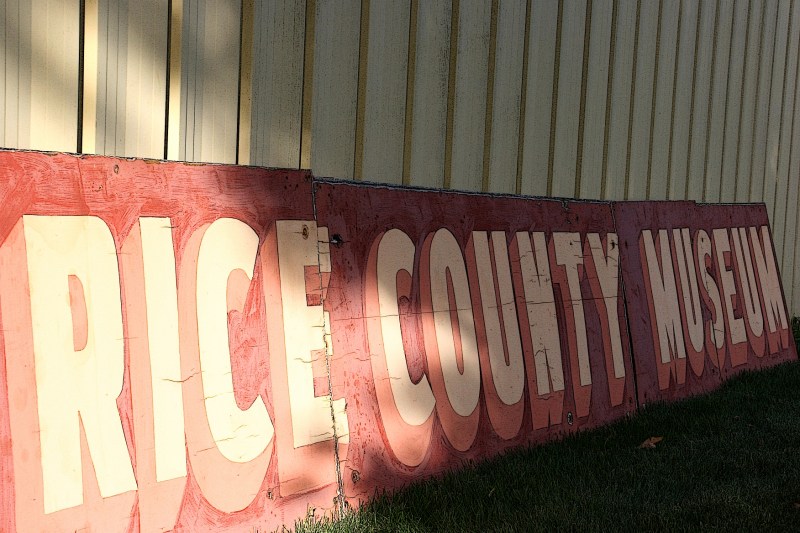
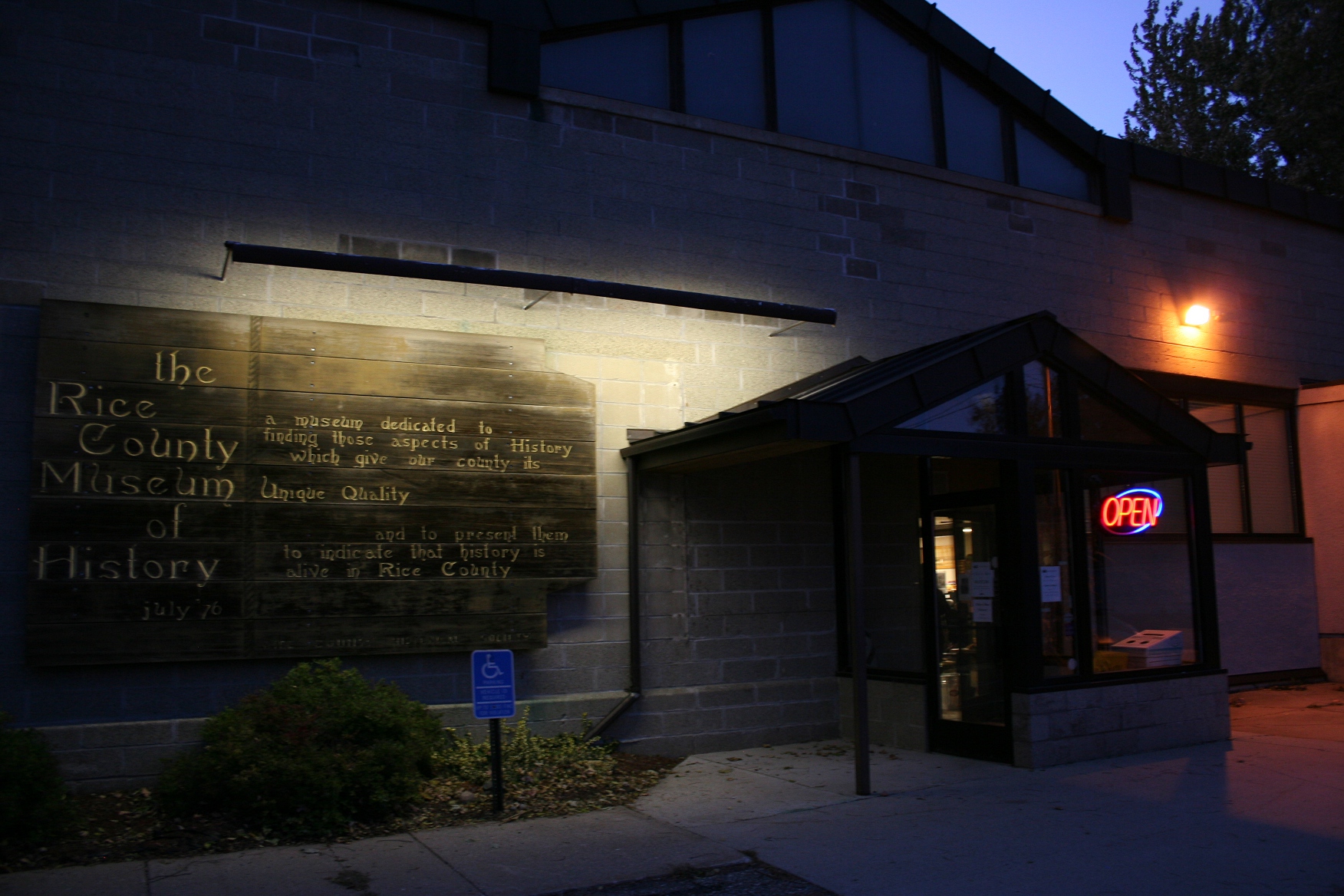
An edited photo of a sign at the Rice County Historical Society. Minnesota Prairie Roots file photo October 2015.

An edited photo of a sign at the Rice County Historical Society. Minnesota Prairie Roots file photo October 2015.

The silent film, followed by the feature film, The Quiet Man starring John Wayne and Maureen O’Hara, kicks off the Rice County Historical Society’s 90th anniversary celebration. Set and filmed in Ireland, the movie seems the ideal classic for a post St. Patrick’s Day show.

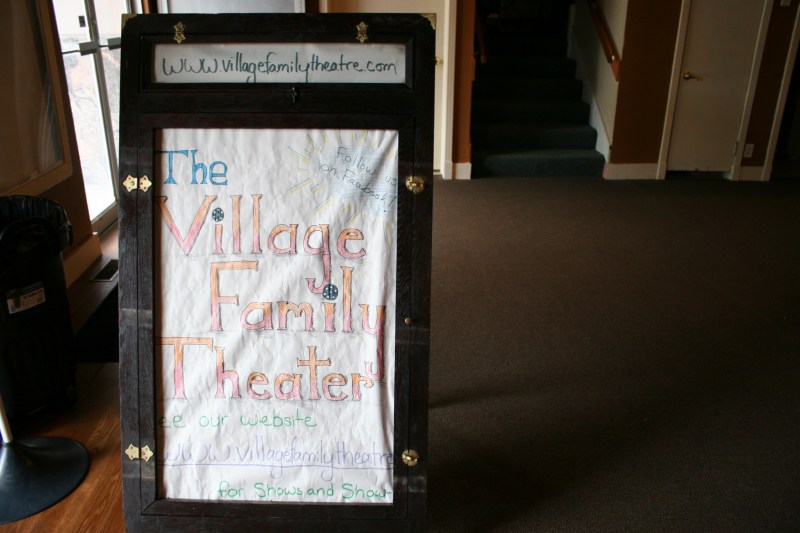
I did a quick tour of the theater in August 2015. This sign sat in the lobby. Minnesota Prairie Roots file photo 2015.

I did a quick drop-in tour of the theater in August 2015. This sign sat in the lobby. Minnesota Prairie Roots file photo 2015.

After the movie, attendees can tour the historic theater, purchased in 2103 by Steve McDonough and since refurbished. The building, just off Faribault’s Central Avenue, was built in 1896 as an Armory, then converted to a funeral parlor in 1912. In the late 1940s, the building became the Village Movie Theater, closing some 40 years ago. It also served for awhile as the Village Bar and as a church.

llllllll

The wooden floor is original to the theater. Minnesota Prairie Roots file photo August 2015.

Schmidt says attendees at the RCHS event should take special note of supporting timbers in the basement. Those were cut to angle the floor for the movie theater. The floor is a floating floor, unattached to the walls.

Surrounded by history while watching history. That’s how I see it.

FYI: The 90th anniversary celebration begins with the silent film showing at 3 p.m. followed by the feature movie and tour. The Village Family Theater is located at 20 Second Street Northwest. Admission is $5 for RCHS members and $7 for non-members.


Memories from “A Night at the Museum” October 5, 2015

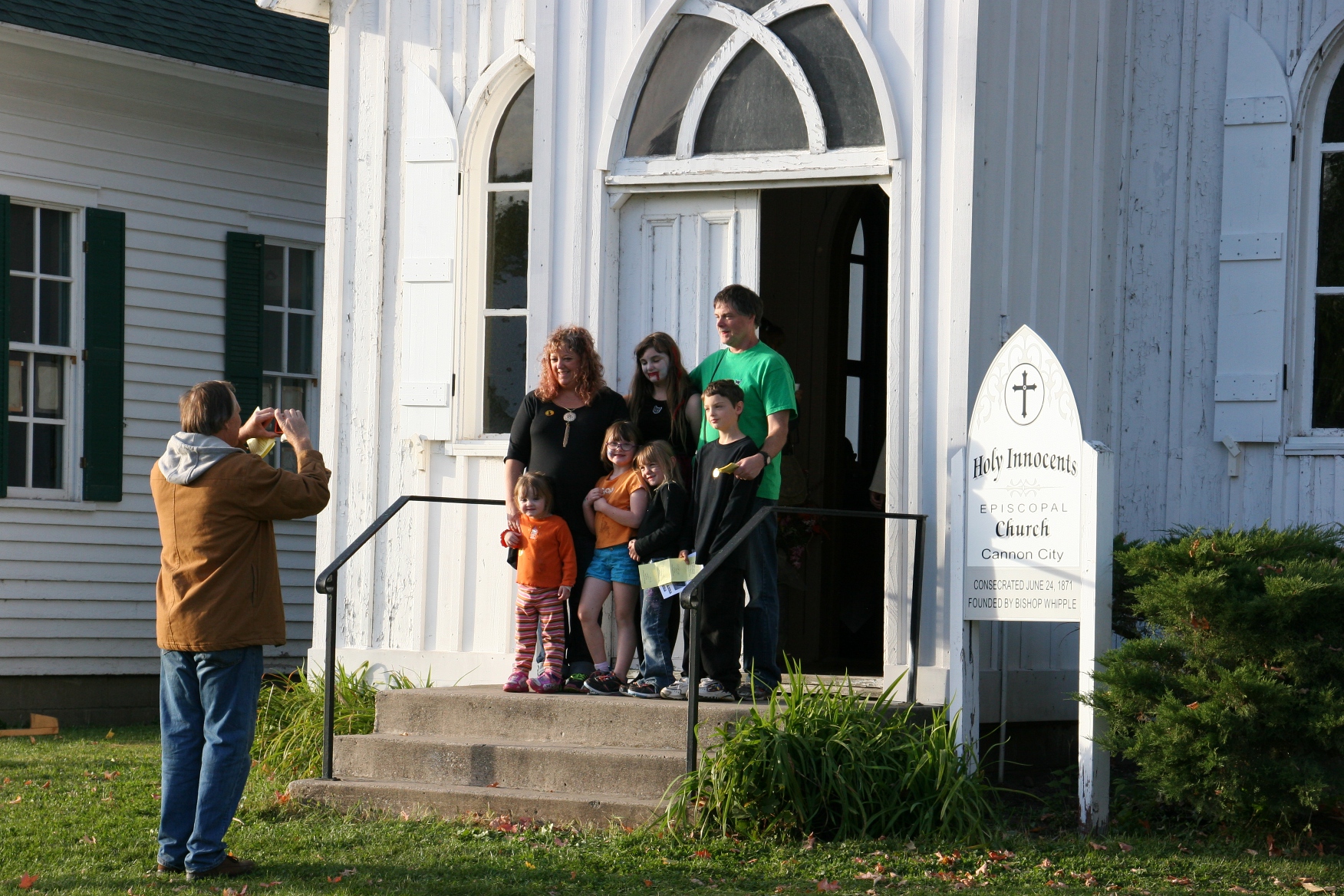
Museum, 90 family photo outside church


ON THE FRONT STEPS of Holy Innocents Episcopal Church, a family posed for photos.


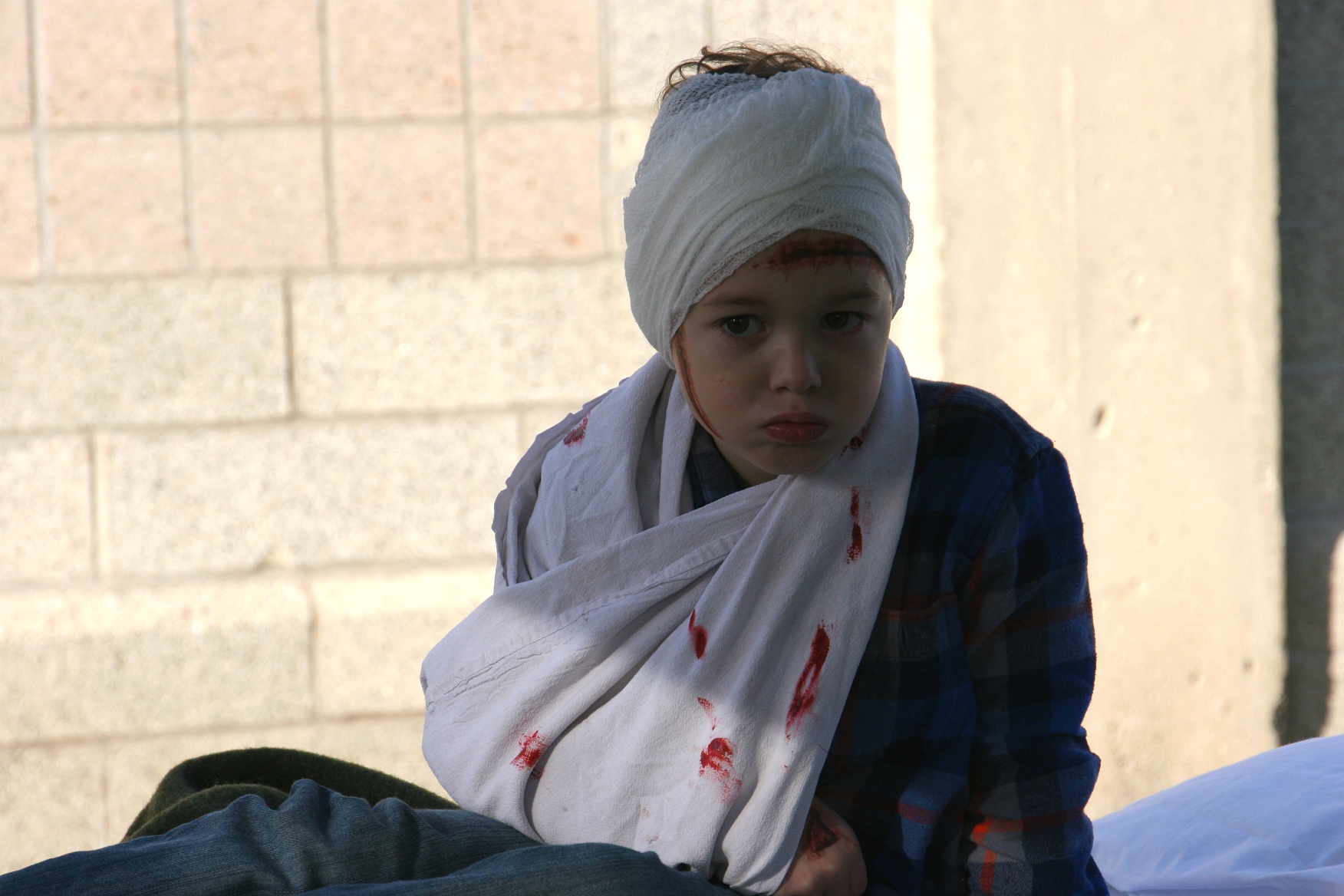
A boy feigns mock injuries for the living history event in Faribault.

A boy feigns mock injuries for a living history event in Faribault on Saturday.

Under a Red Cross tent, nurses tended a young boy kicked in the head by a horse.

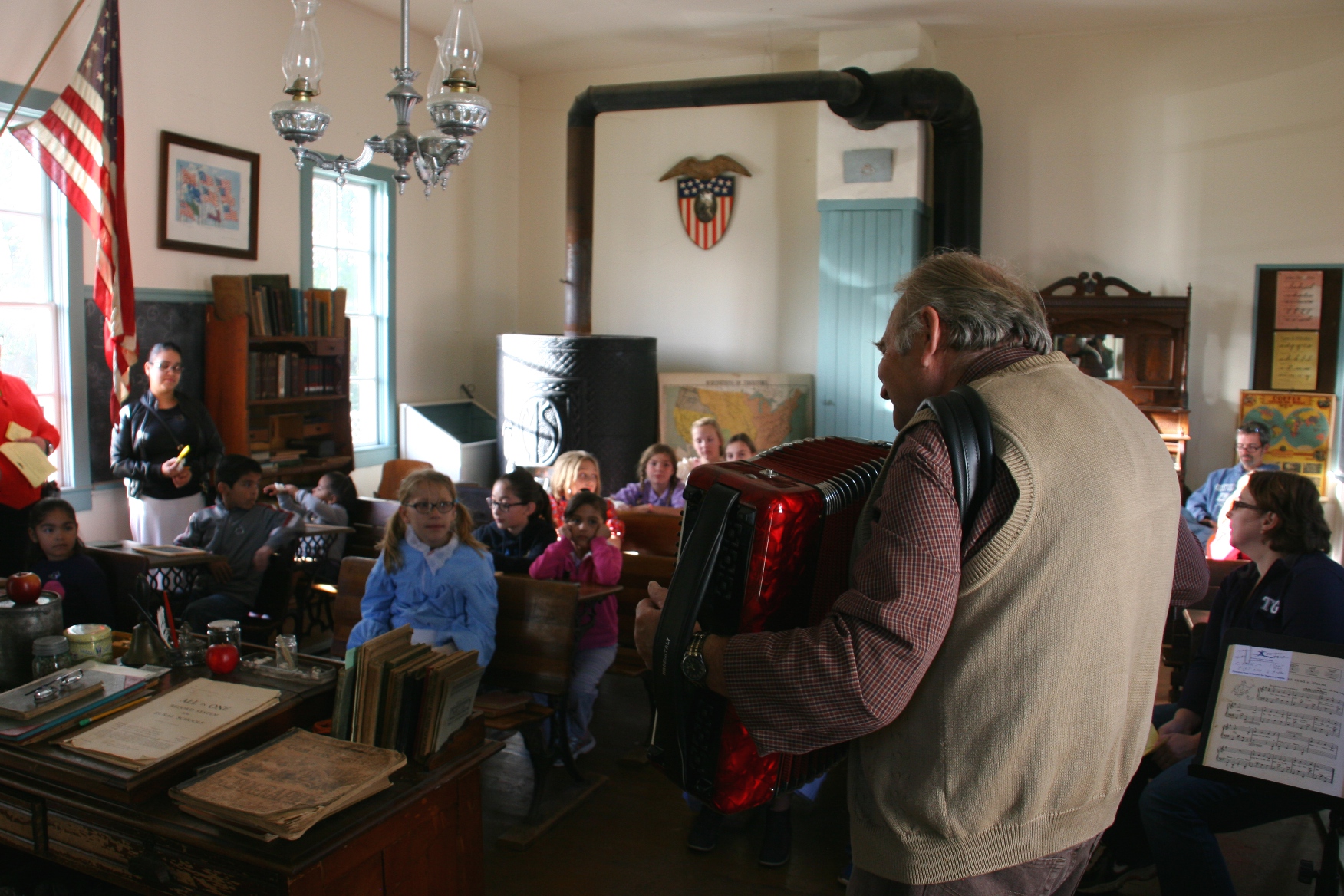
The one-room Pleasant Valley School quickly filled with students as the teacher led his class in songs.

The one-room Pleasant Valley School quickly filled with students as the teacher led his class in songs.

Inside Pleasant Valley School, students sang “If you’re happy and you know it…” along with their accordion-playing teacher.

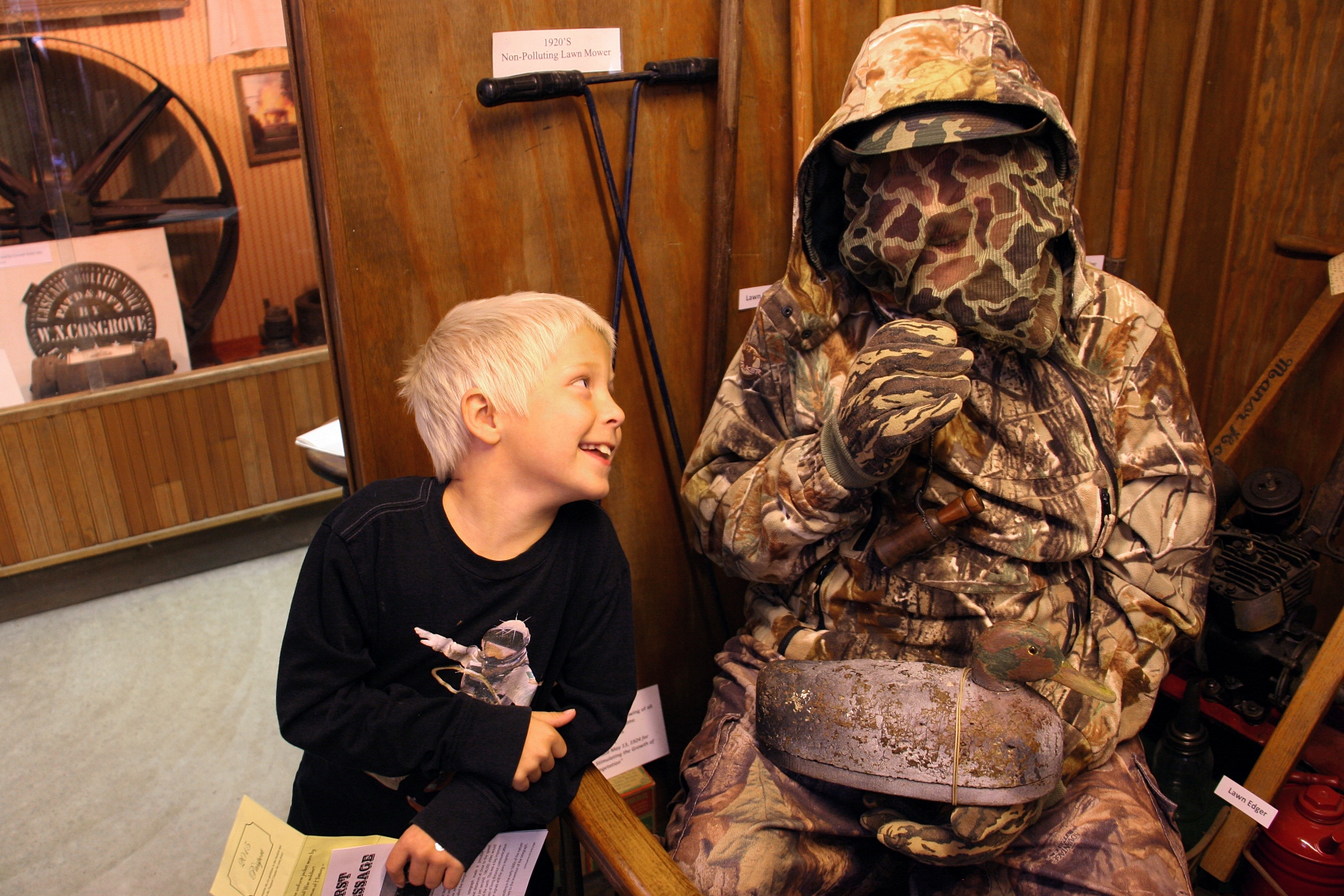
Every time this little guy poked the duck hunter, a duck call emitted. Eventually, he figured out that a real man, Brian Schmidt, was under all that garb. This is the moment Brian revealed himself.

Every time this little guy poked the duck hunter, a duck call emitted. Eventually, he figured out that a real man, Brian Schmidt, was under all that garb. This is the moment Brian revealed himself.

Inside Harvest and Heritage Hall, a boy poked at a duck hunter, wondering whether the camouflaged man was mannequin or real.

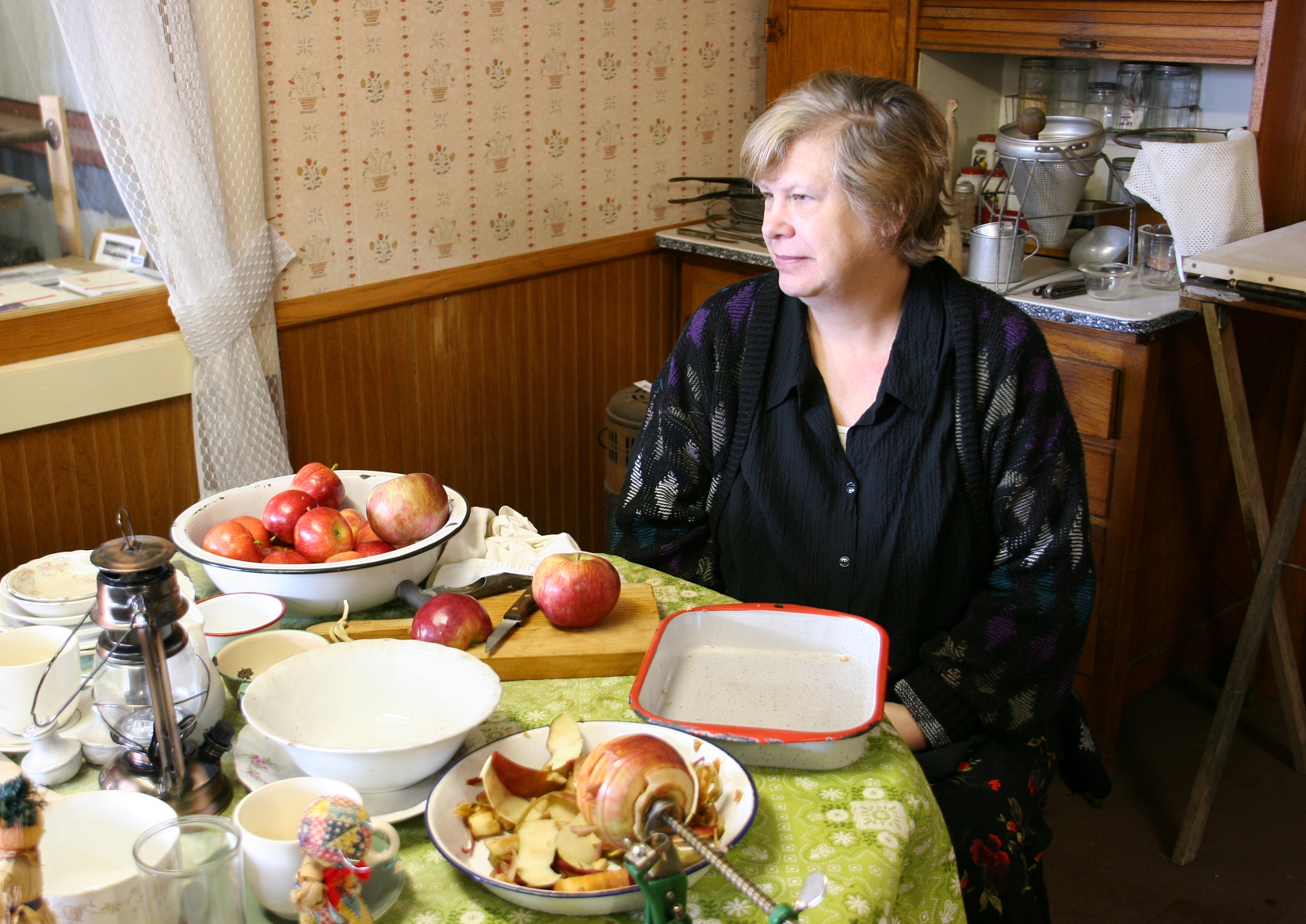
Mrs. Morris takes a break from making applesauce.

Mrs. Morris takes a break from making applesauce.

I love photographing moments like this of people connecting.

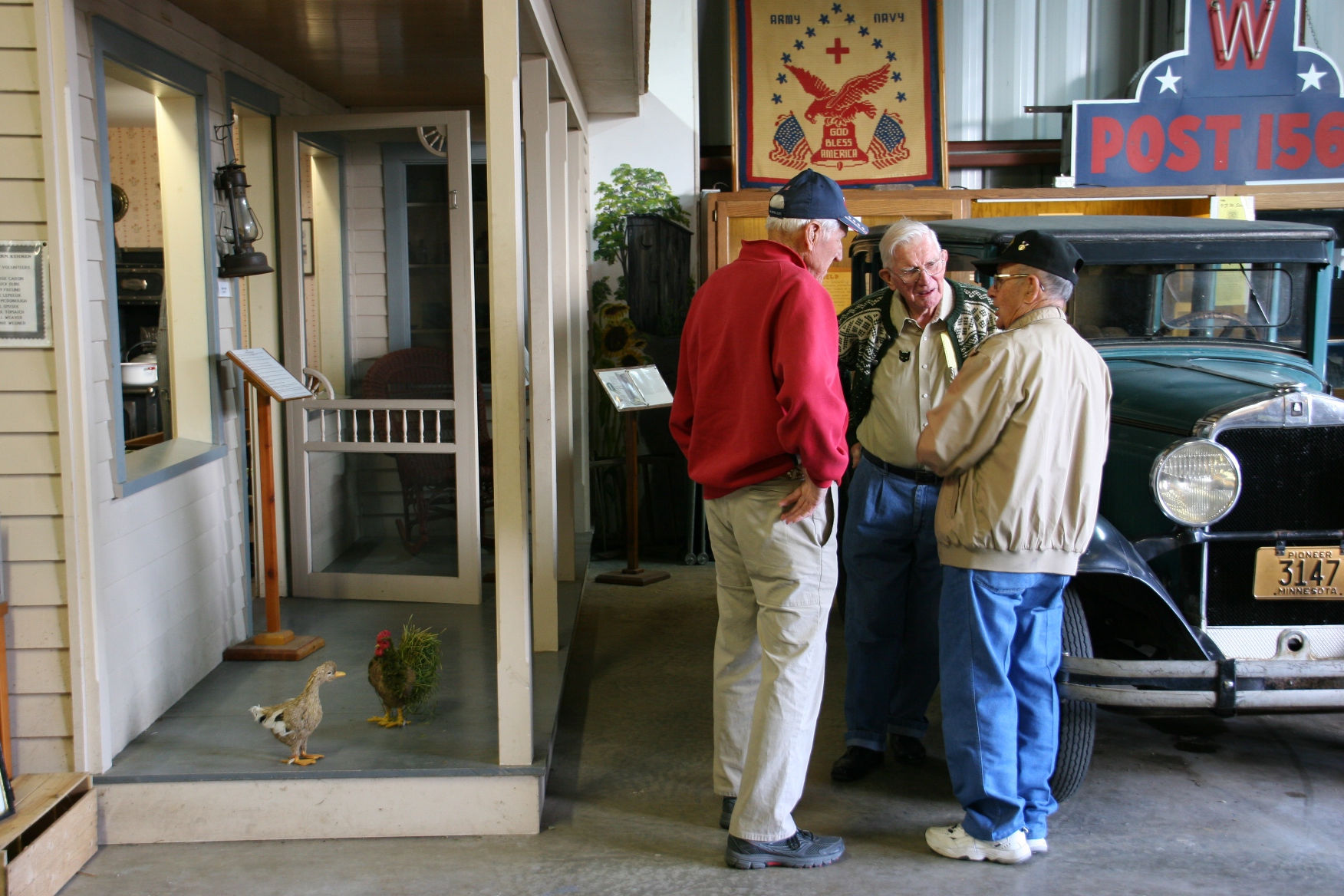
I love photographing moments like this of people connecting, here outside the Morris “home” in the Harvest/Heritage Hall.

Next to Mrs. Morris’ front porch, a trio of men visited while the lady of the house peeled apples in her kitchen.

Participants in "A Night at the Museum" file into the Harvest and Heritage Hall.

Participants in “A Night at the Museum” file into the Harvest and Heritage Hall.

Scenes. Some part of living history activities. Others authentic, in the moment. But all part of the Rice County Historical Society’s annual “A Night at the Museum.”

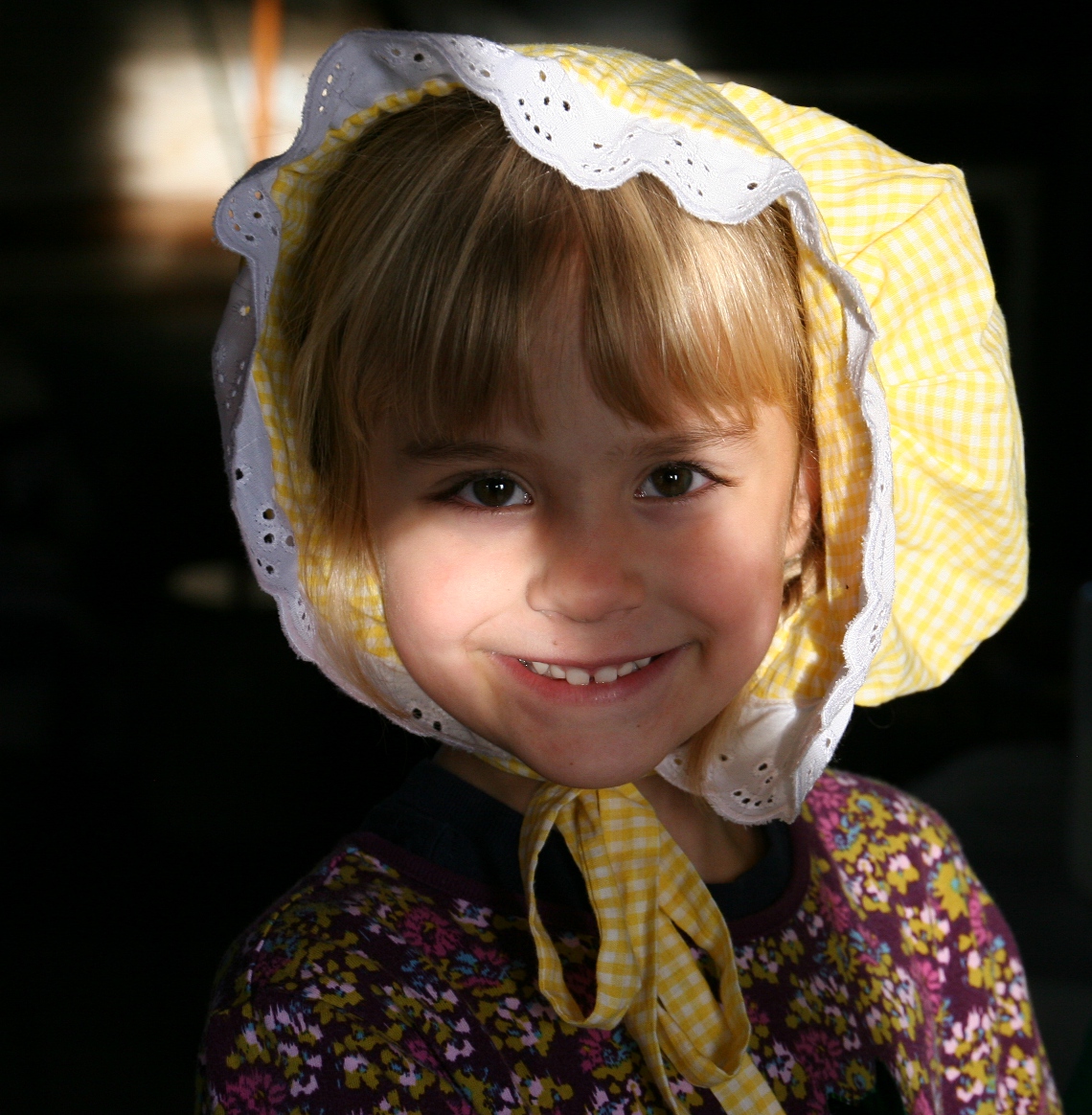
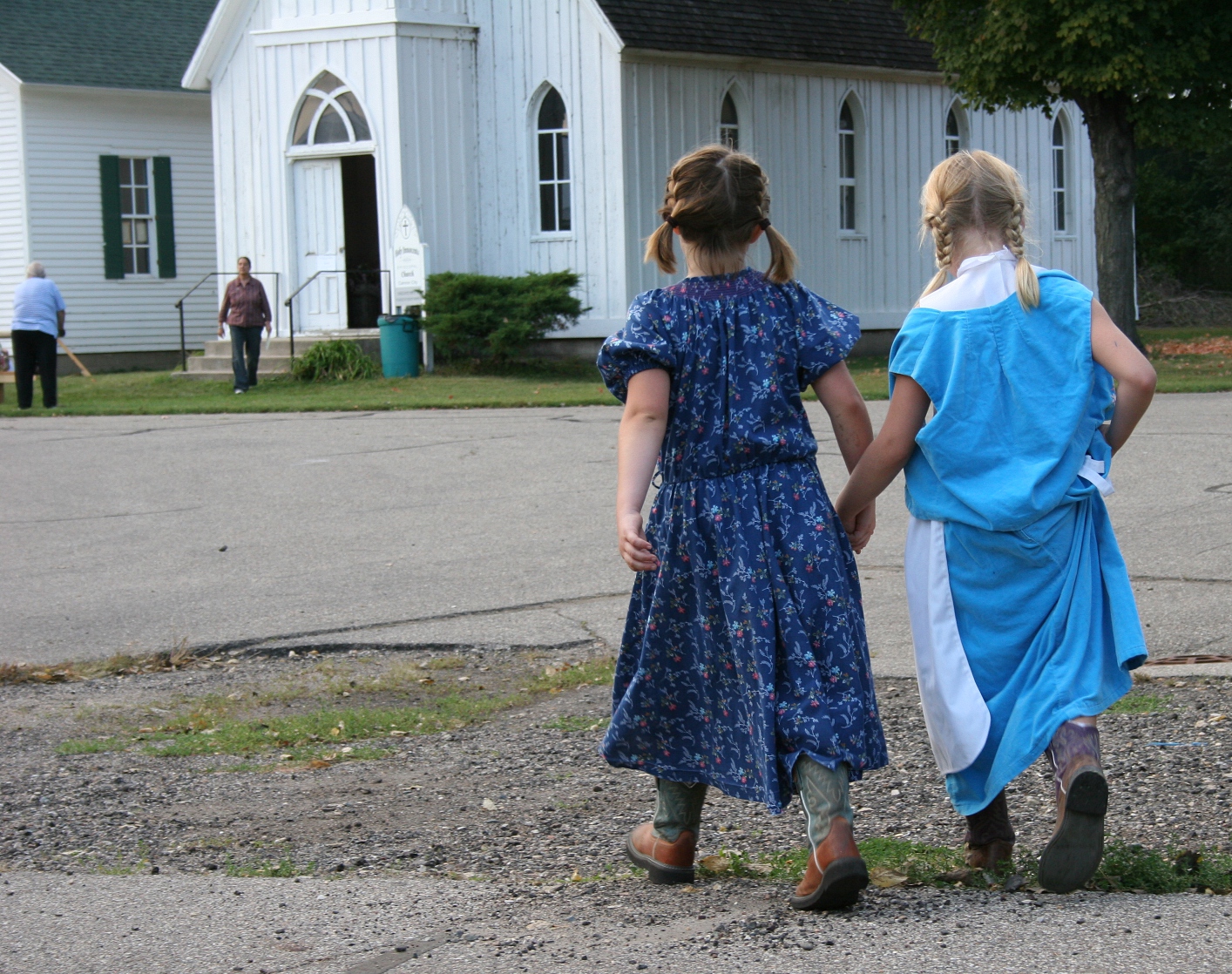
Many kids were dressed in period costume.

Many kids dressed in period costume.

A near perfect Saturday in October brought families and others to the museum grounds in Faribault to participate in this living history program that seems to grow in popularity every year. It’s an engaging event that includes a local history quest game for kids and plenty of learning and reminiscing opportunities for the adults.

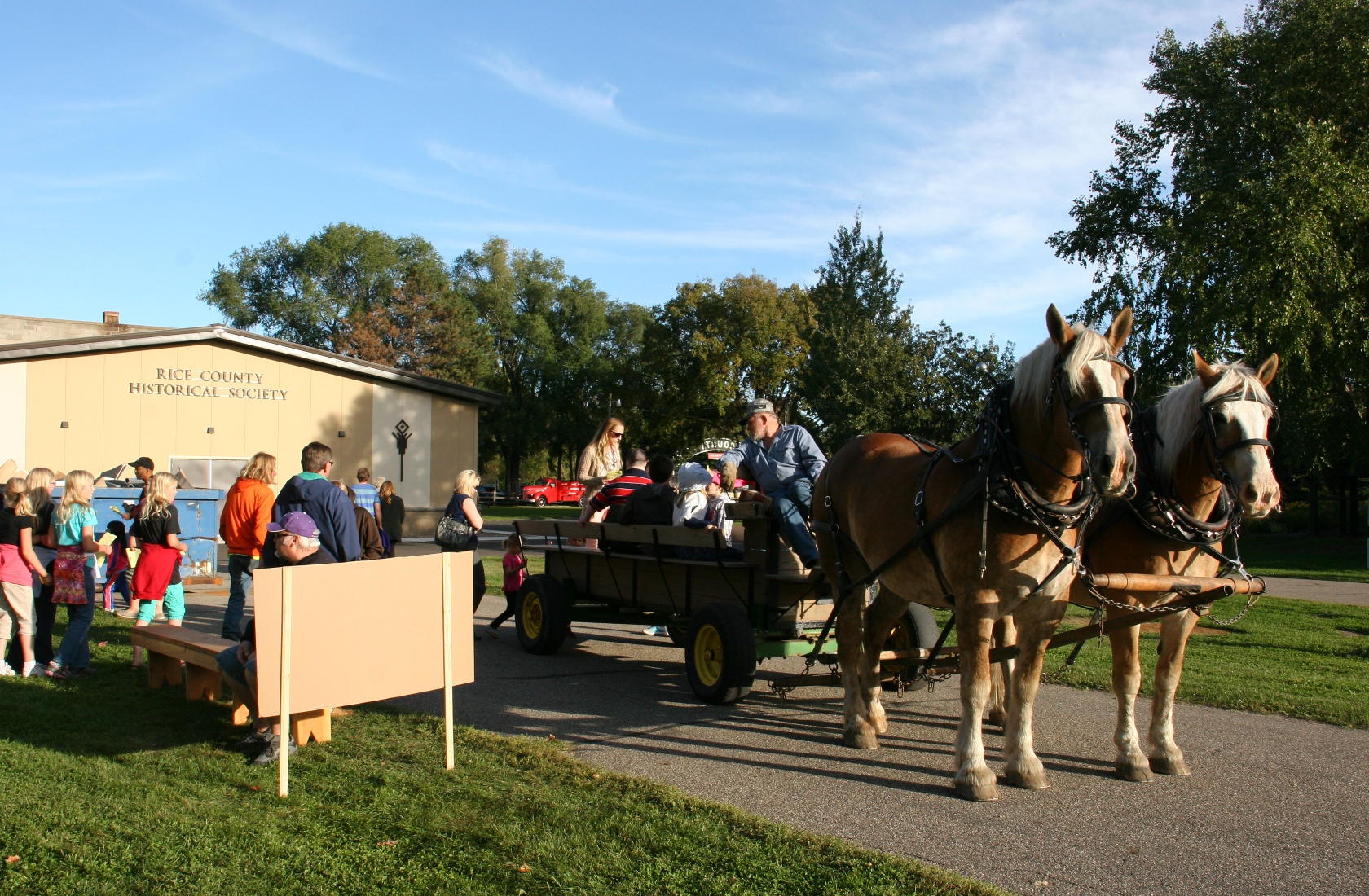
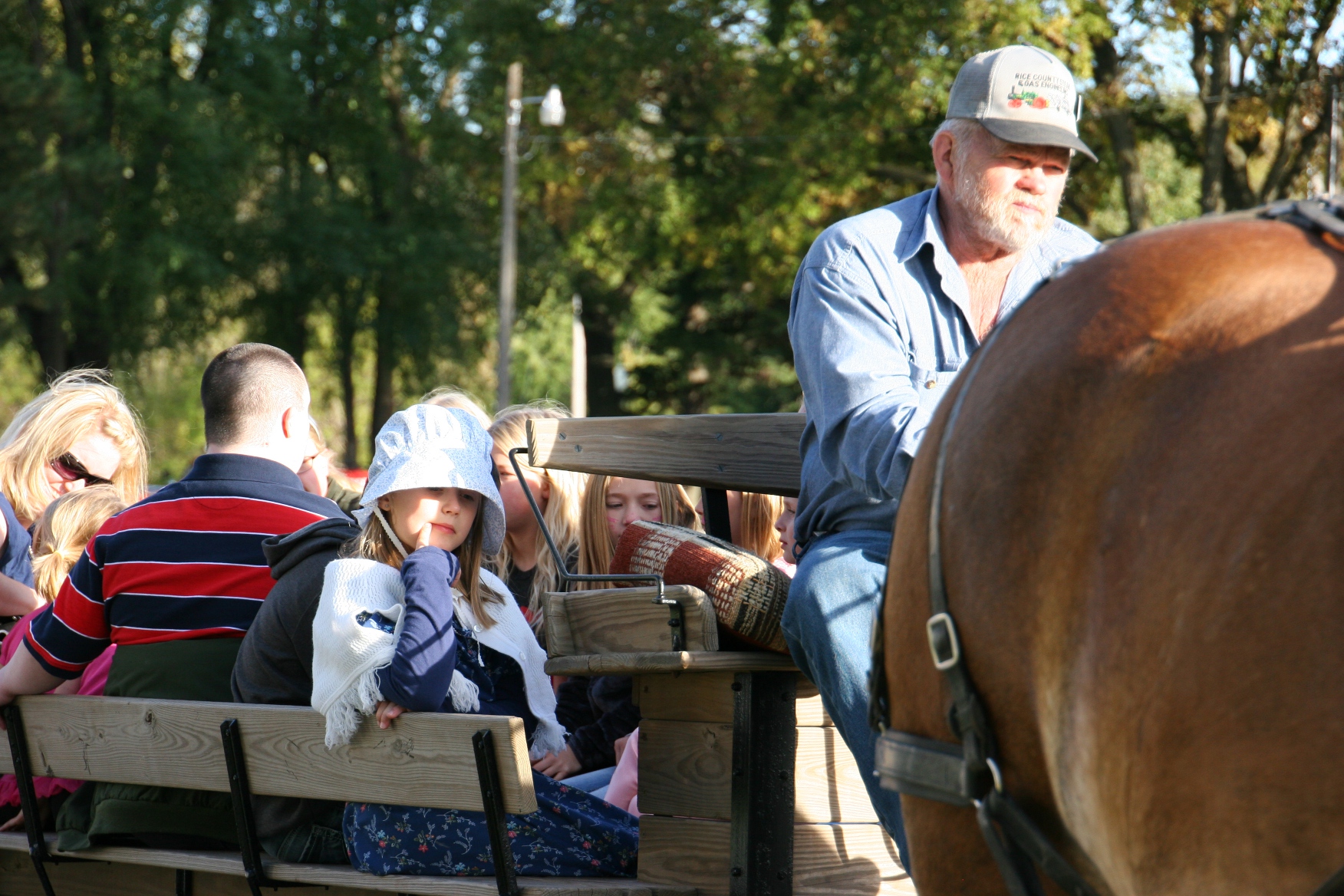
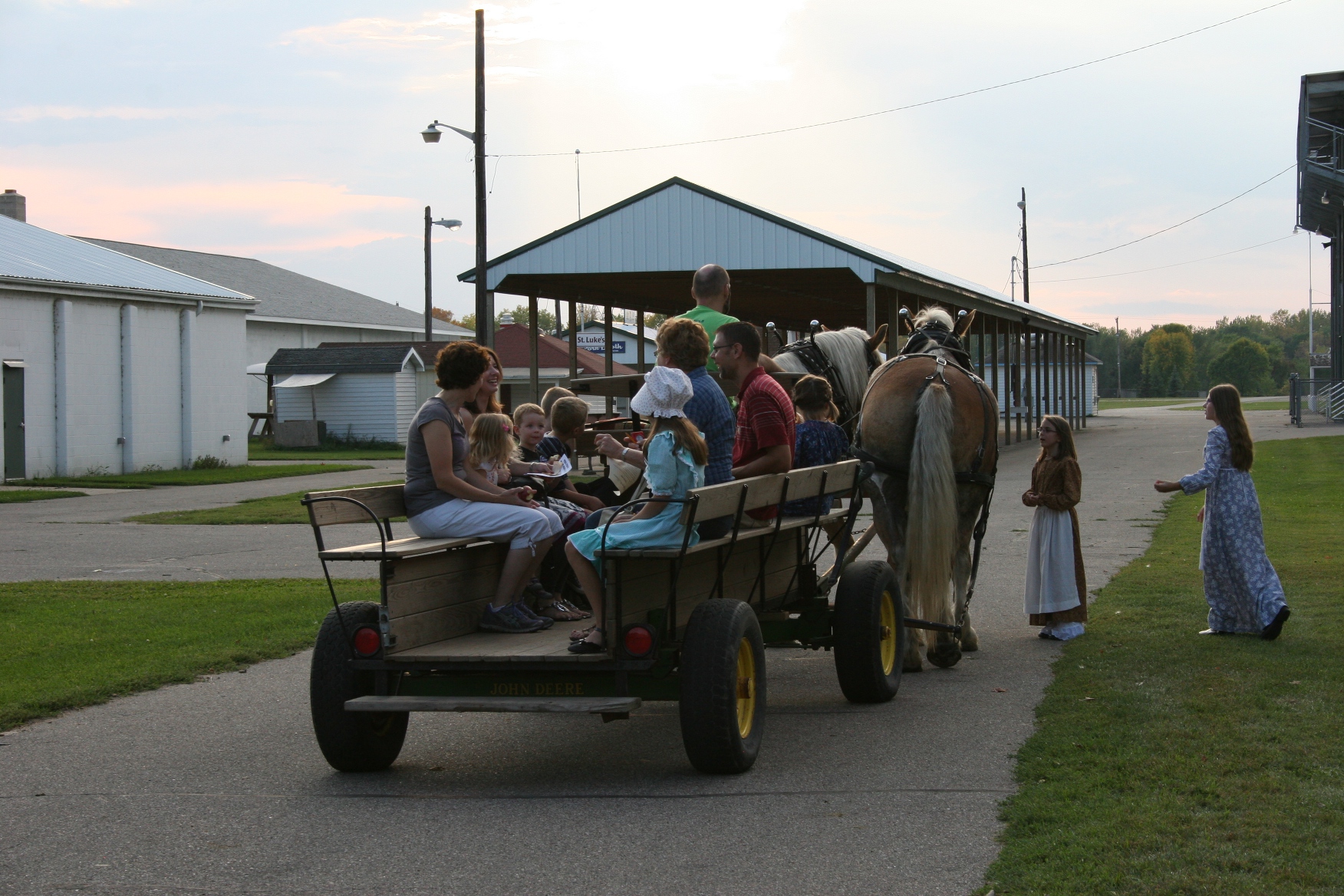
Horse-drawn wagon rides around the Rice County Fairgrounds were popular.

Horse-drawn wagon rides around the Rice County Fairgrounds proved popular.

And mixed in with all the education and fun is the building of memories. I expect kids will remember riding in the horse-pulled wagon, searching for the Bruce Smith display to determine the year the Faribault native and University of Minnesota football player won the Heismann Trophy (1941), struggling to walk on stilts and more. One boy may even remember answering an old crank phone to the question, “Would you like to order a pizza?”, posed by my husband on the other end.

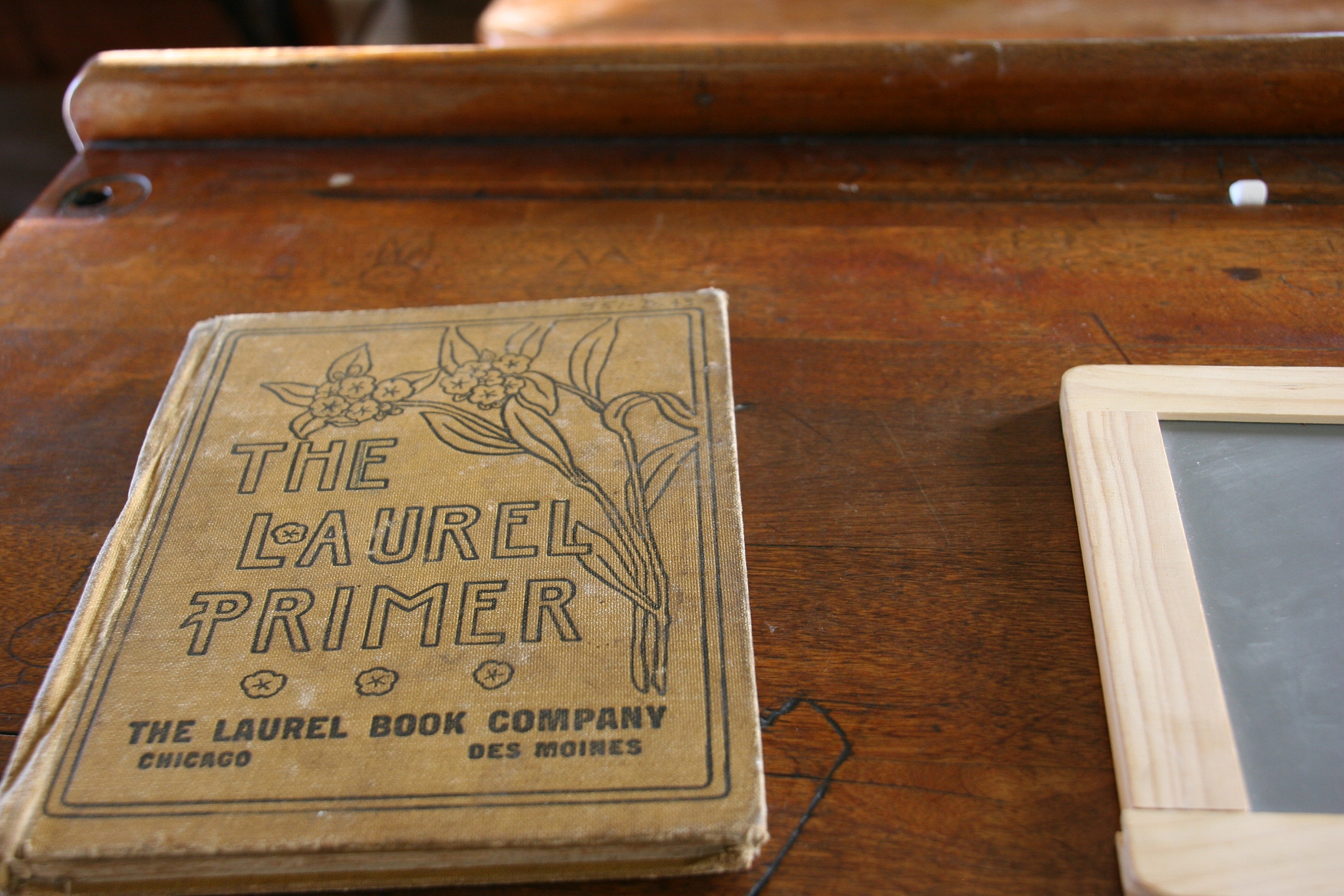
Old books were laid out on school desks.

Old books were laid out on school desks.

I’ll remember, not so pleasantly, the stressed mom who yanked and yelled at her daughter and how I tried to comfort the young girl cowering behind the schoolhouse door. Sometimes life’s moments hurt. But I delighted in finding a scythe I will return to photograph for an author writing a book about Laura Ingalls Wilder. And I was impressed by Gunnar, the friendly and confident elementary-aged boy who informed me that I was landscaping. He was right. I was photographing landscape (horizontal) images with my camera.

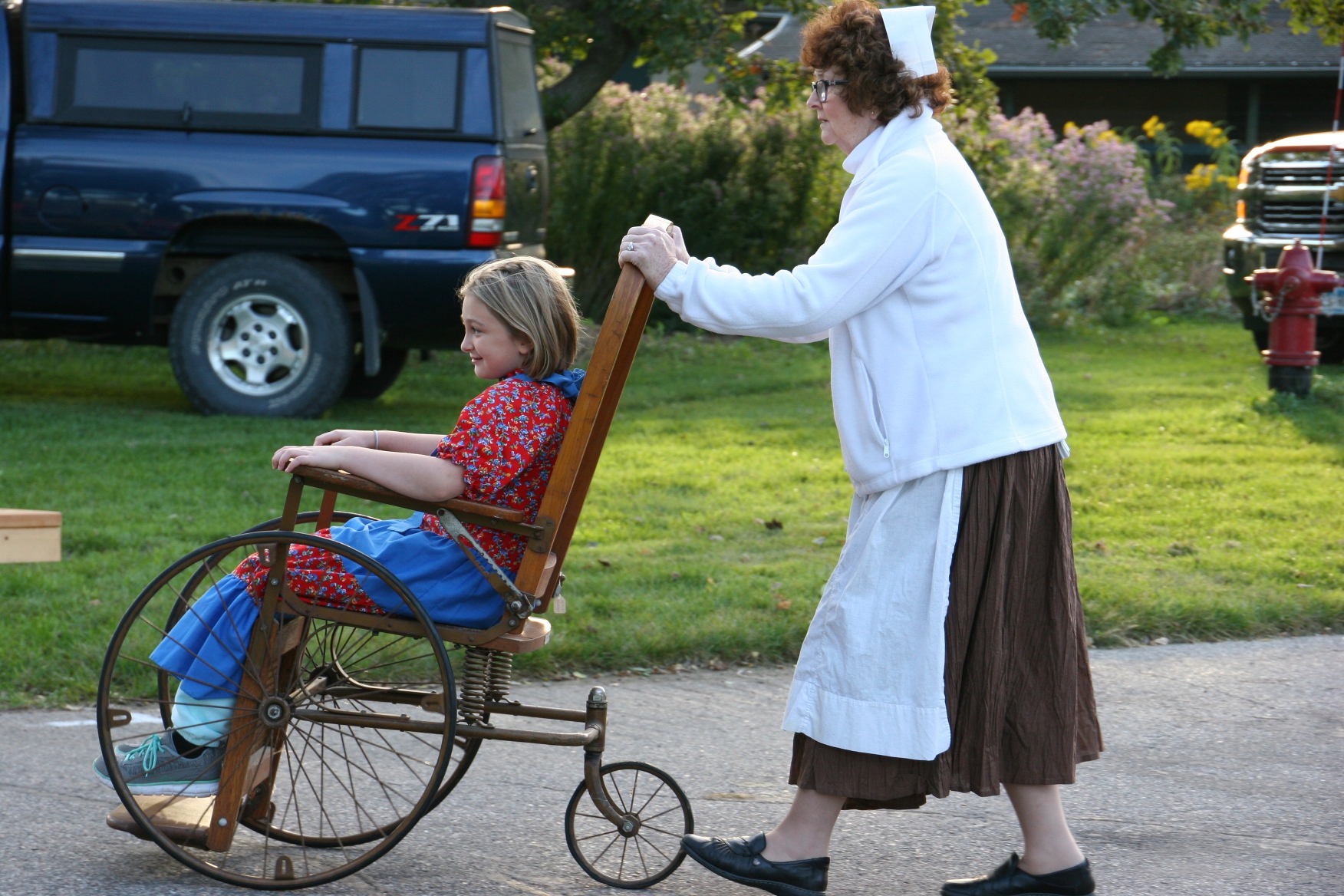
I expect this young girl will remember being pushed around in a wheelchair by a Red Cross nurse during this historical reenactment.

I expect this young girl will remember being pushed around in a wheelchair by a Red Cross nurse during this historical reenactment.

Aside from the unsettling incident I witnessed, I observed moments to savor. Moments that become part of an individual’s history, a family’s history, a couple’s history—remember that night we went to the museum…

BONUS PHOTOS:

A scene photographed looking from the outside into the historic log cabin.

A scene photographed looking from the outside into the historic log cabin.

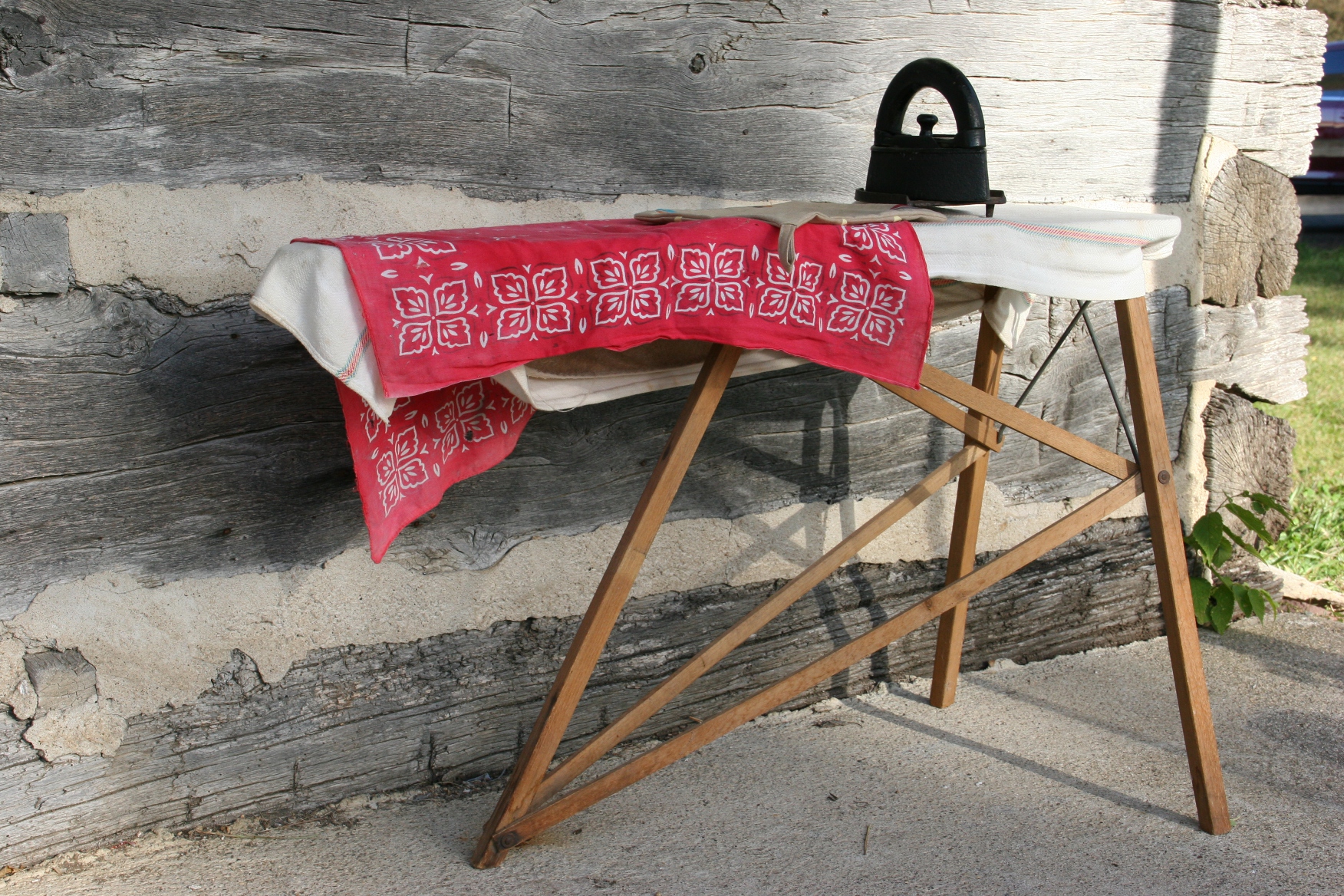
Ready to iron outside the log cabin.

Ready to iron outside the log cabin.

Math class is underway inside the one-room Pleasant Valley School.

Math class is underway inside the one-room Pleasant Valley School.

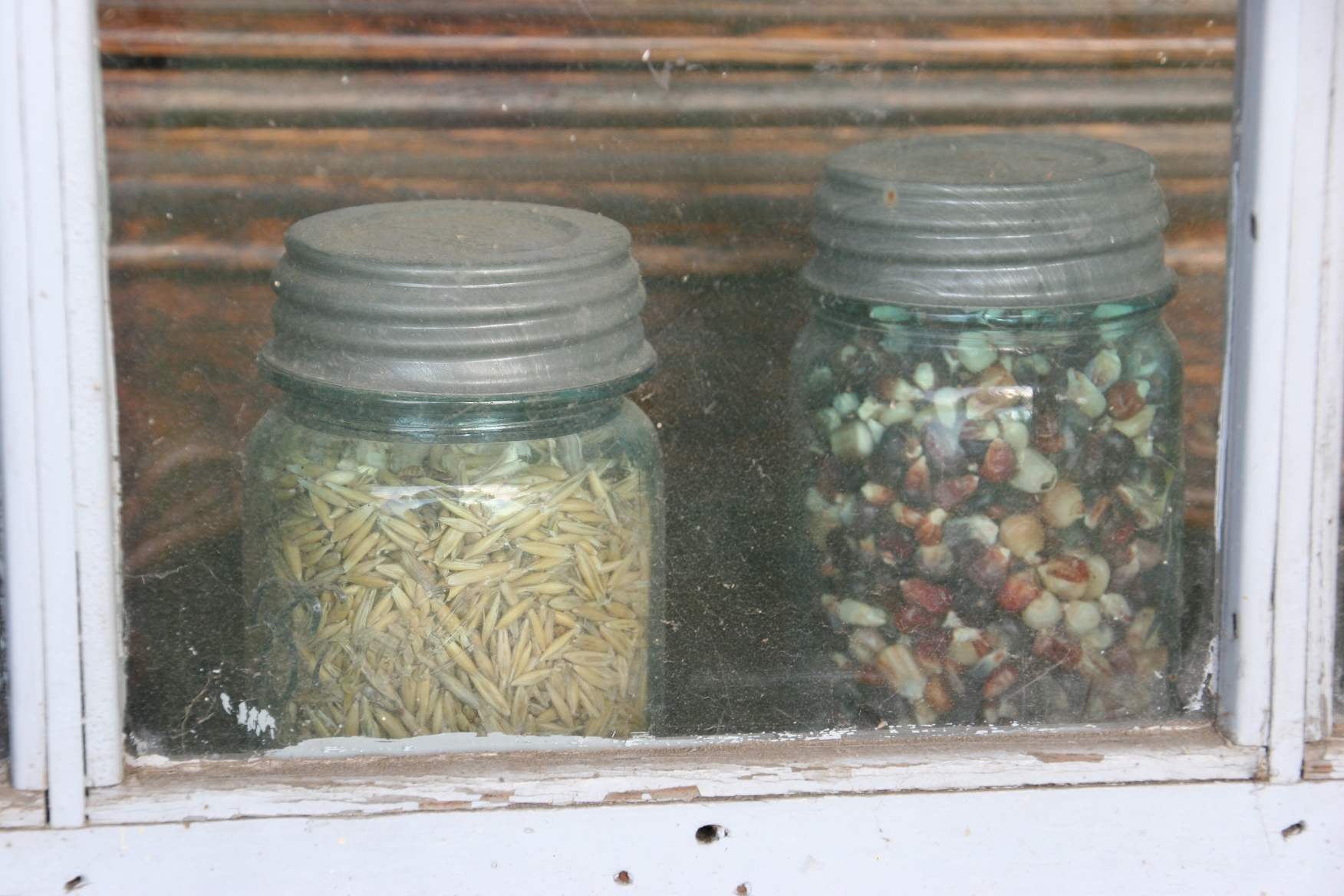
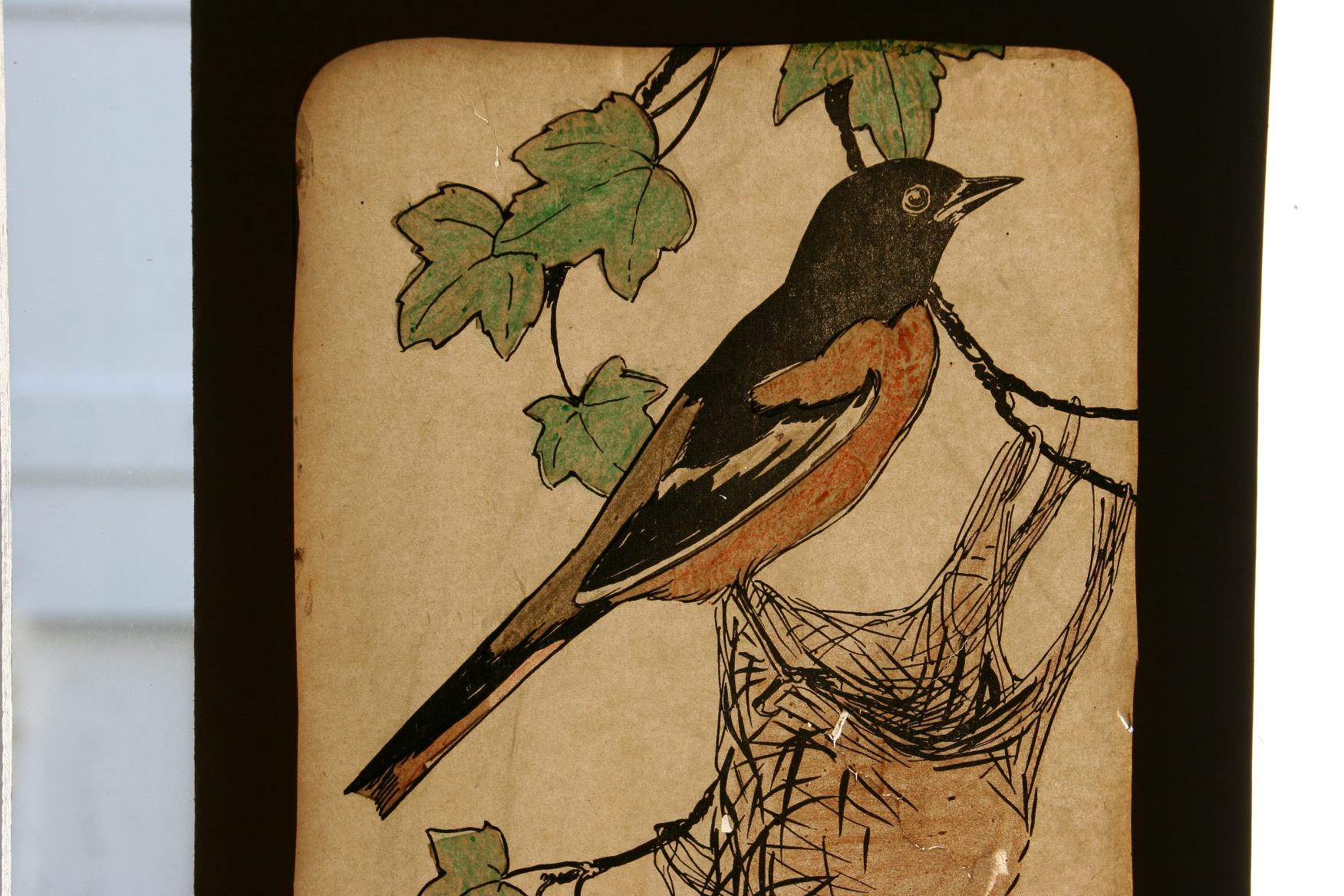
Art in a classroom window.

Art in a classroom window.

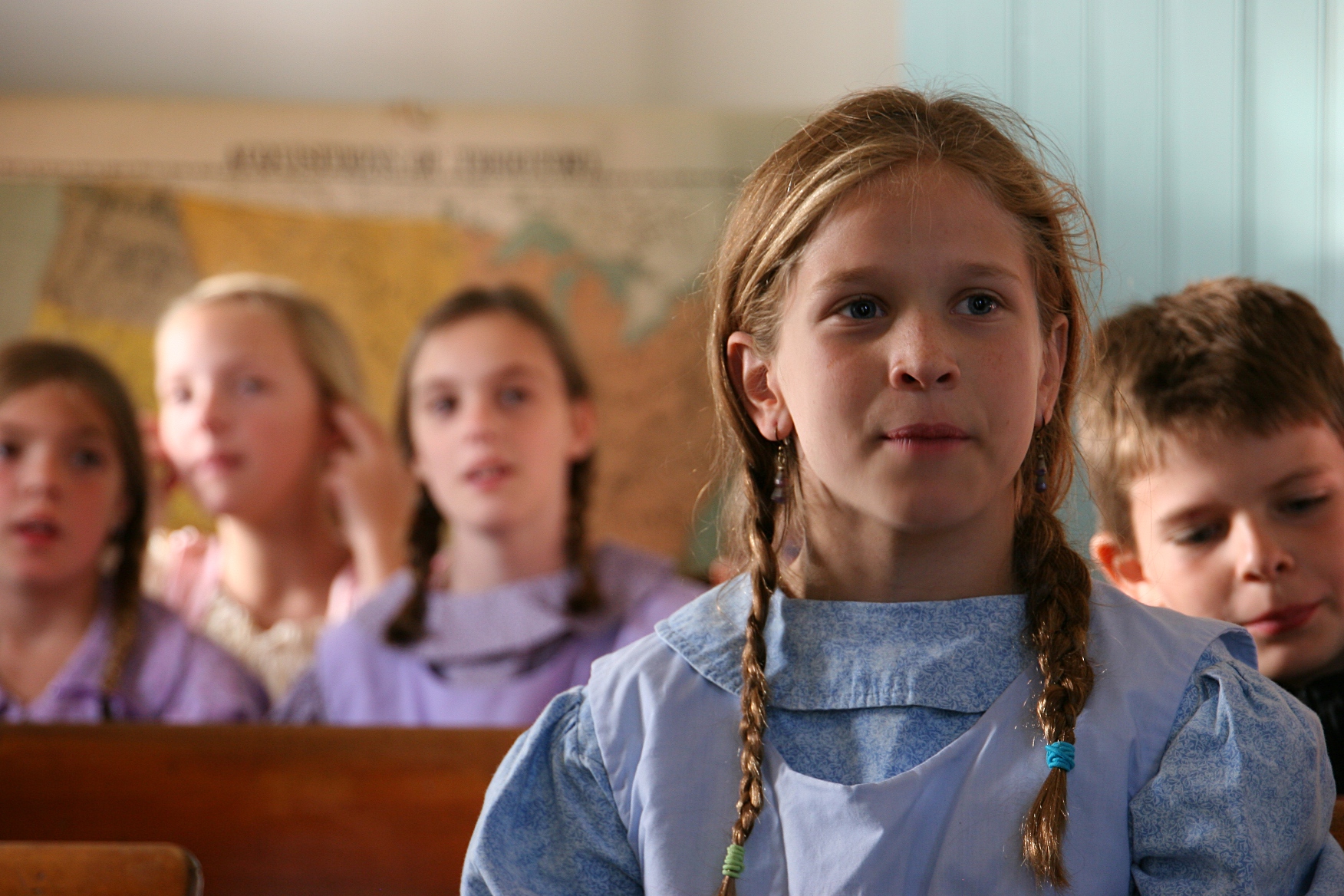
A student reenactor sings along with her class.

A student reenactor in class.

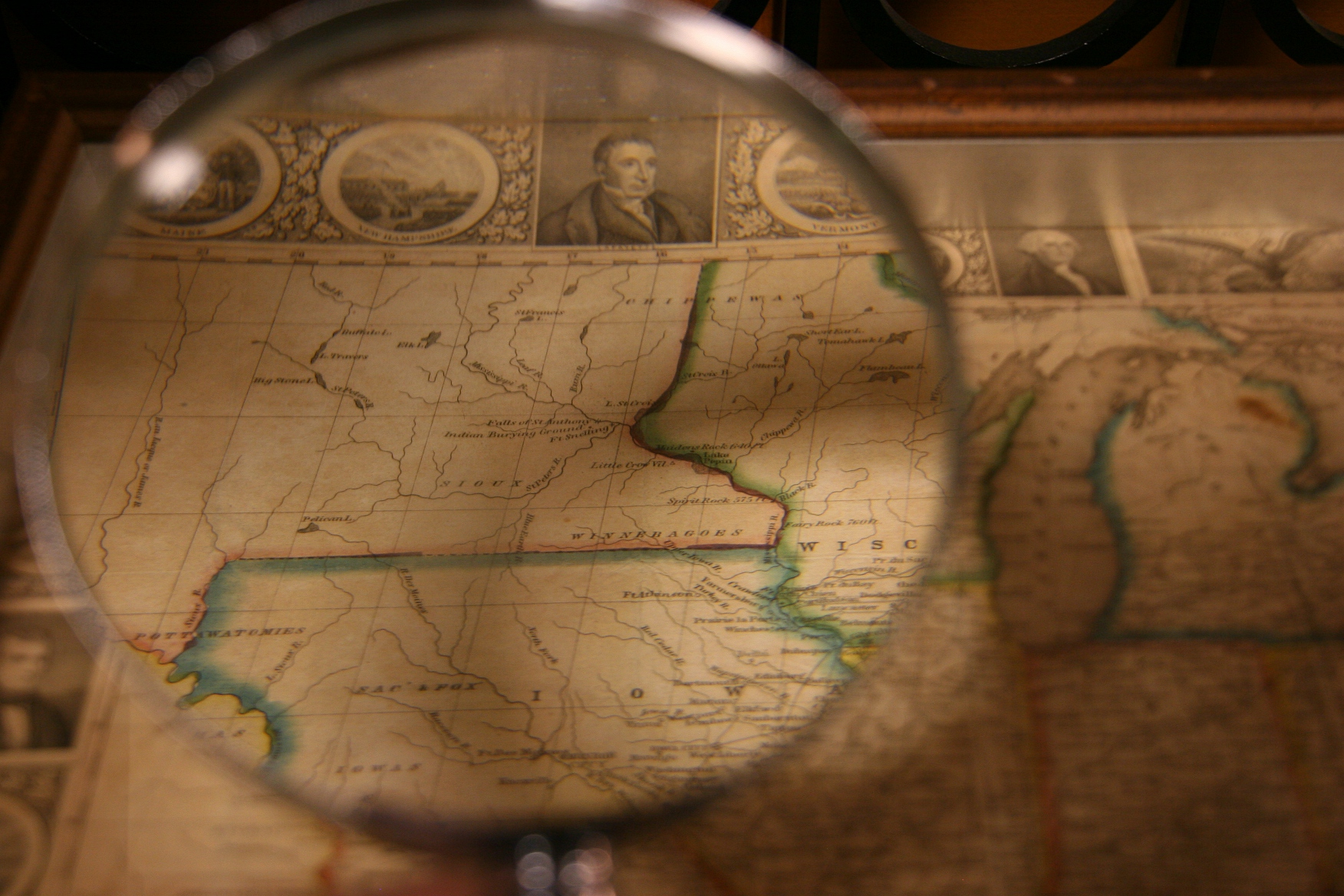
Inside the main museum building, I studied a map with a magnifying glass. Minnesota was spelled with one "n."

Inside the main museum building, I studied an 1849 map with a magnifying glass. Minnesota was spelled with one “n.” And the Minnesota River was labeled the St. Peter River.

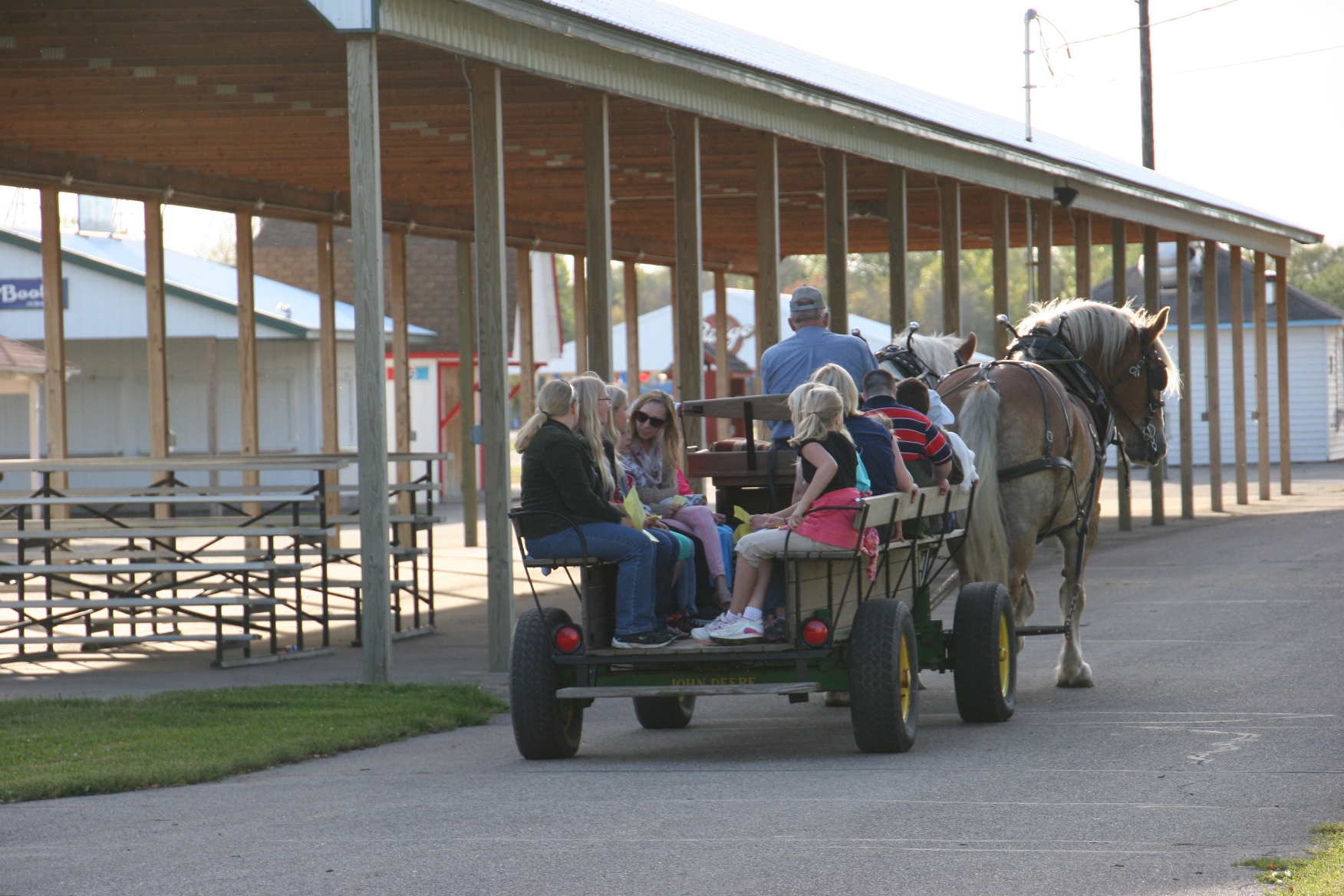
Mike and Pat Fuchs brought their horses and wagon for free rides.

Mike and Pat Fuchs brought their horses and wagon for free rides.

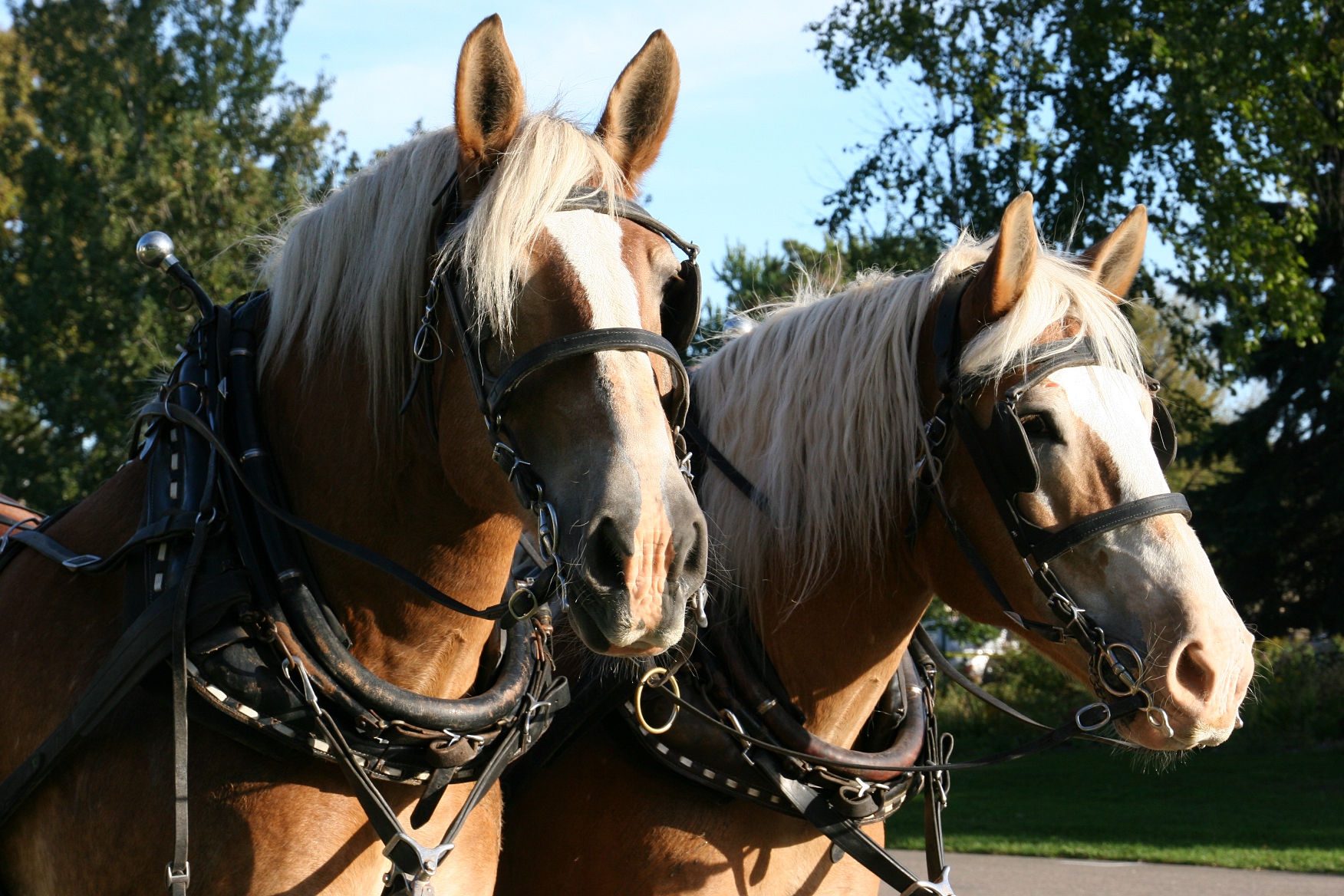
The beautiful horses.

The beautiful horses.

Driving through the fairgrounds.

Driving through the fairgrounds.

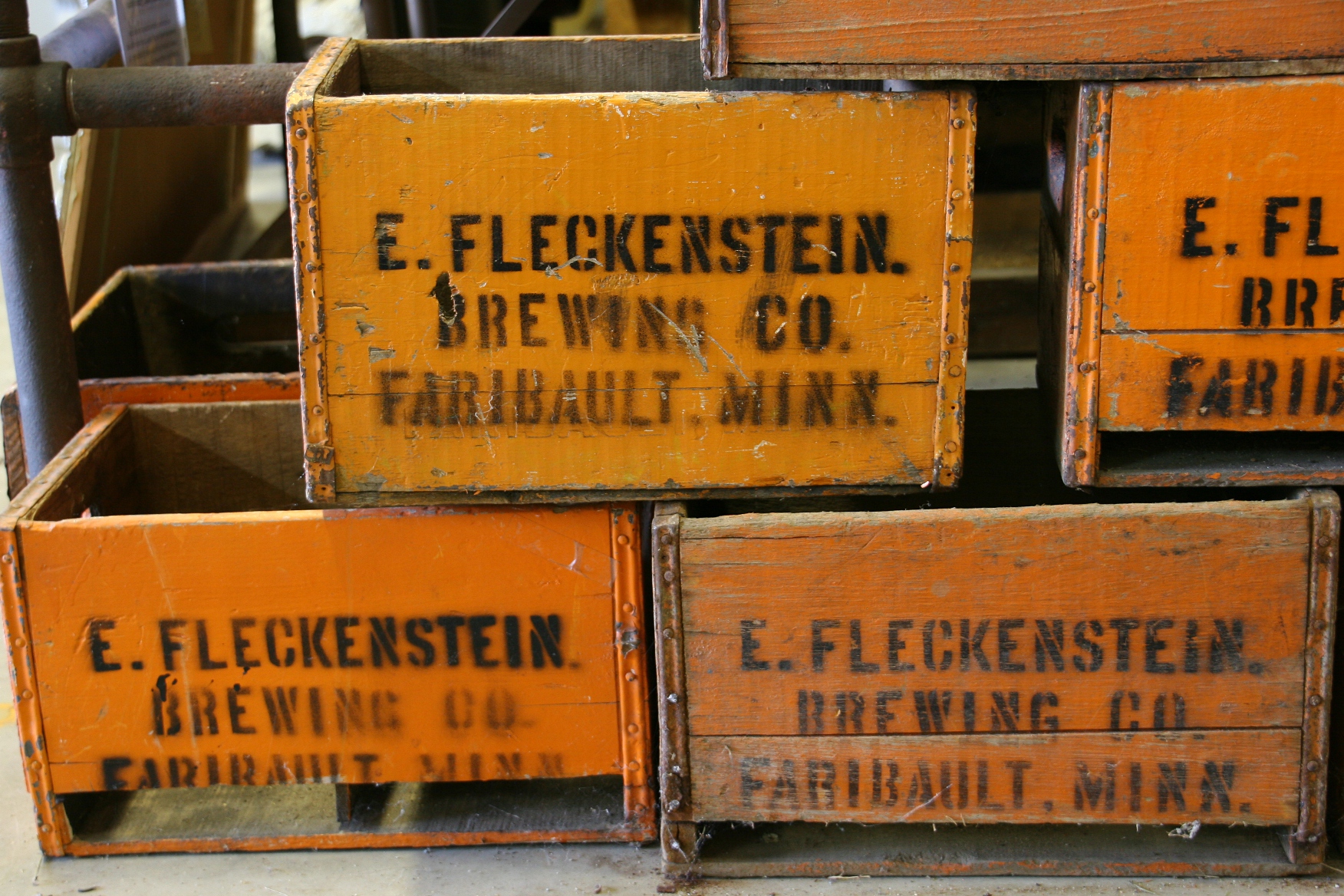
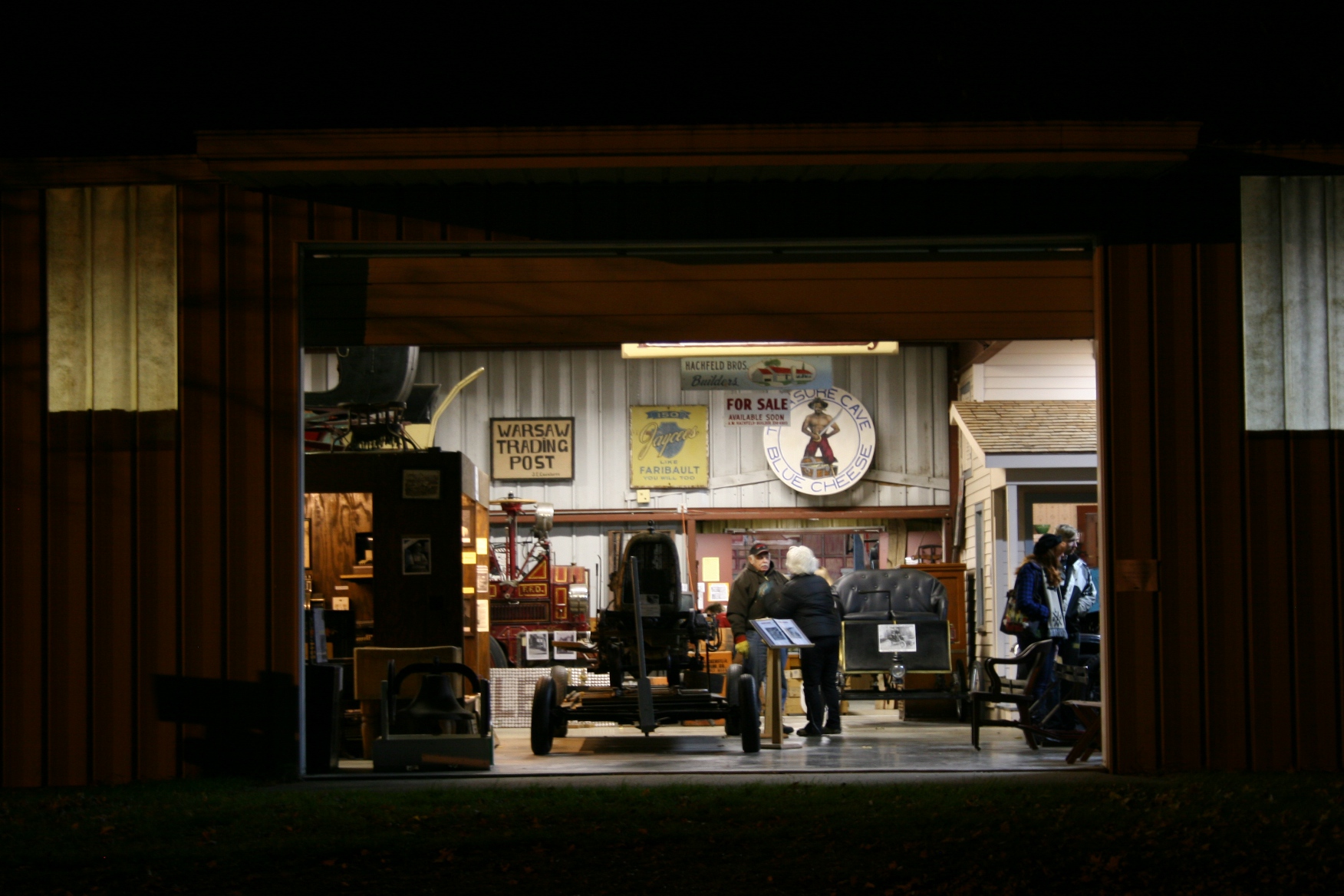
Stacked inside the Harvest and Heritage Halls are these crates from Fleckenstein, which brewed beer and made soda in Faribault.

Stacked inside the Harvest and Heritage Halls are these crates from Fleckenstein, which brewed beer and made soda in Faribault.

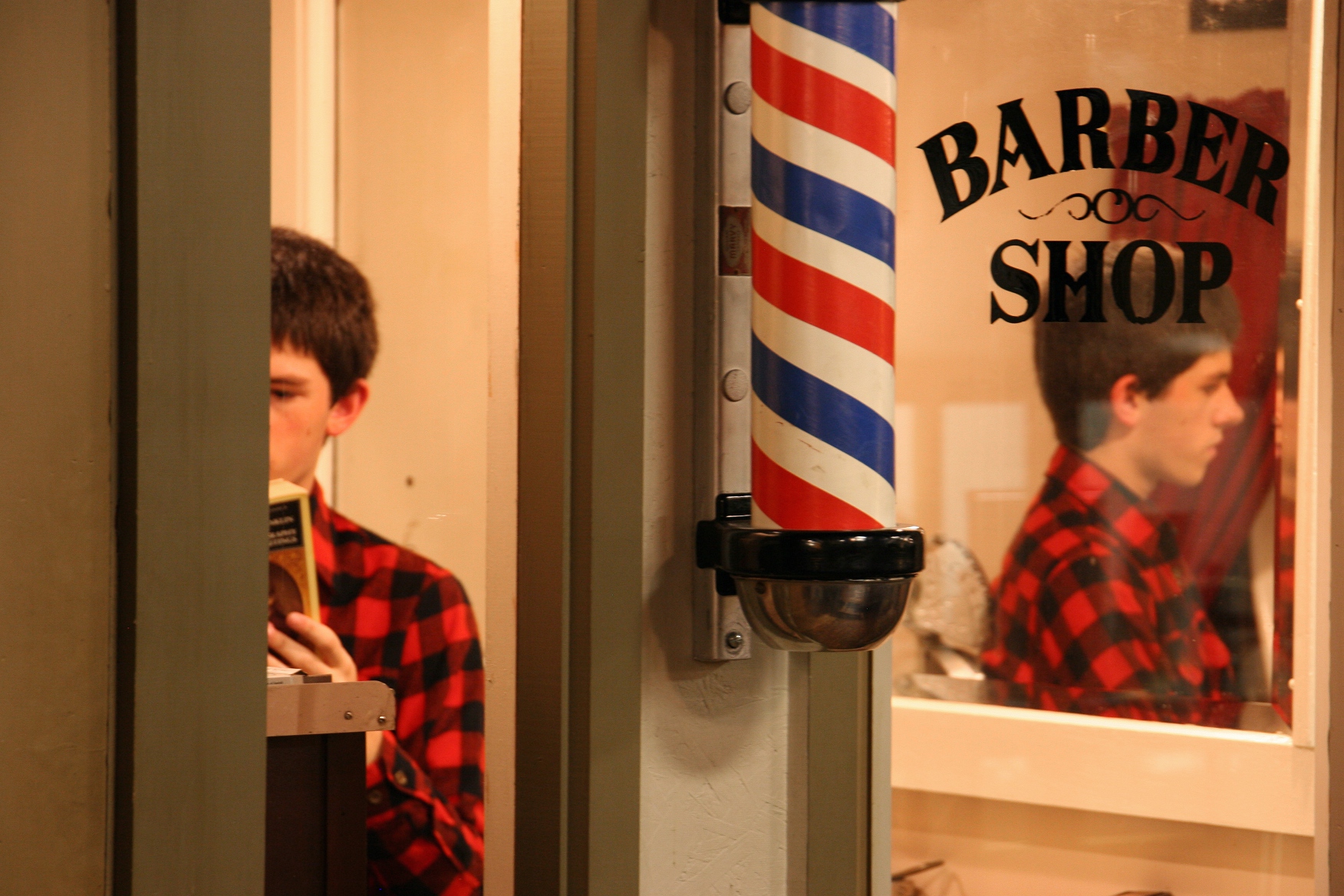
A high school reenactor reads a book in the museum barbershop.

A high school reenactor reads a book in the museum barbershop.

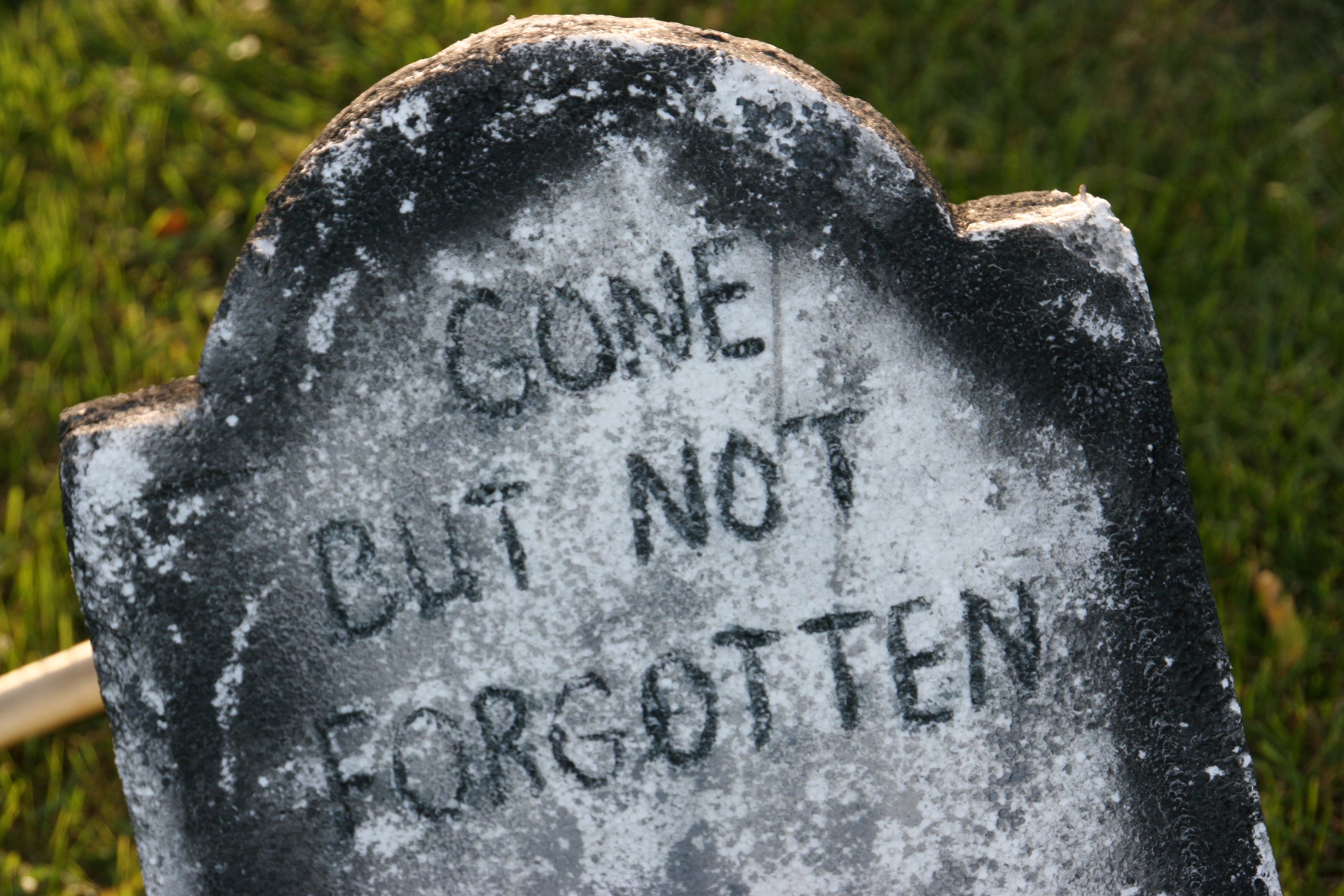
Behind the historic church, I walked through the graveyard.

Behind the historic church, I walked through the graveyard.

© Copyright 2015 Audrey Kletscher Helbling


Minnesota Faces: Historical reenactors “Katie” and “Jim” plus more October 2, 2015

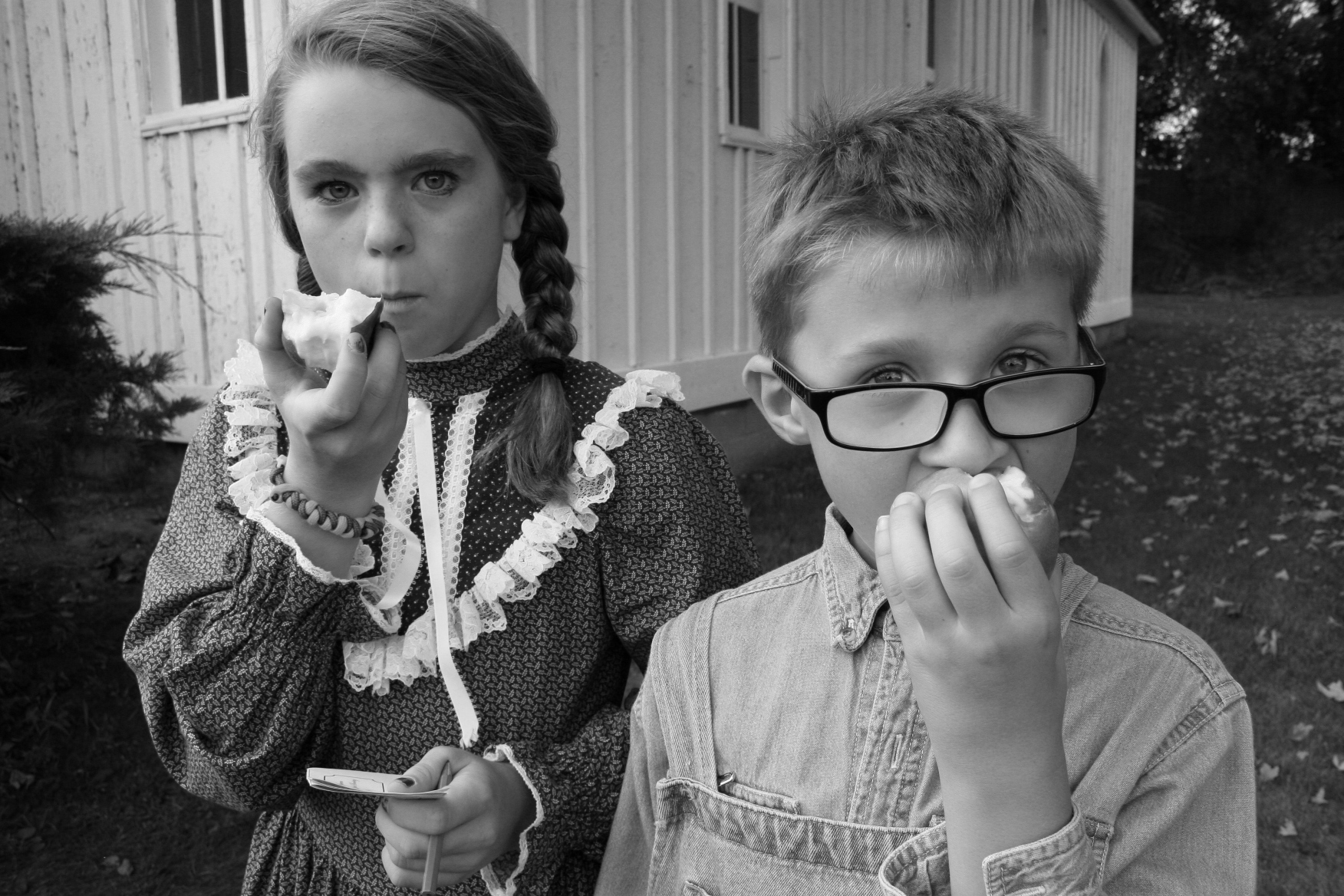
Portrait #42  : Siblings Kaylee and William


Portrait 42, Night at the Museum actors


Back in the day when I studied history, it was dull and boring and printed mostly as straight factual information in books. Dates and events and important people. Page after page after page with the occasional illustration or photo to break up the blocks of copy. Since I’m good at memorizing, I passed history classes with ease, but not with interest.

I haven’t cracked a history textbook in decades. But I presume they are a bit more interesting, perhaps in a storytelling, personalized way.

Today, thankfully, living history conveys the past in a personal and relatable way that a textbook never will. When I met siblings Kaylee and William last September, they were role-playing pioneer children during the Rice County Historical Society’s second annual “A Night at the Museum.

Lots of kids were running around the grounds in period attire or attending class inside the historic Pleasant Valley School. I was learning, too, as I wandered the museum grounds and observed reenactors portraying historical characters. I suspect I’m like most people who find this much more educational and entertaining than simply peering at historical items on display inside museum walls. Not that that doesn’t have value, too. It certainly does. I just prefer living history and am grateful our local historical society started this annual “A Night at the Museum.”

From 4 p.m. – 7 p.m. this Saturday, October 3, attendees can interact with costumed characters from Rice County’s past on the museum grounds at 1814 Northwest Second Avenue in Faribault, right next to the fairgrounds. New this year is a Flashlight Tour of Harvest and Heritage Halls at 6 p.m. There will also be horse-drawn wagon rides and food available around the fire pit. Click here for more information.

Maybe you’ll spot Kaylee and William there, pretending to be Katie and Jim.

#

Participants in last year's Chili Contest dish up chili at a business along Central Avenue during the Fall Festival.

Attendees sample chili at a business along Central Avenue during the 2011 Fall Festival. Minnesota Prairie Roots file photo.

IF YOU WANT TO MAKE a full day of it in Faribault, arrive earlier for the annual downtown Fall Festival and Oktoberfest. Most events begin at noon. However, starting at 9:30, until noon, local artists will gather outside the Paradise Center for the Arts to create en plein air.

At noon there’s a kiddie parade and a Chili Contest with businesses and others offering chili samples (for a fee) until 2 p.m. From 12:30 p.m. – 4:30 p.m., those interested can take the Spooky Basement Tour, a free event at the Paradise Center for the Arts. The PCA is also holding a costume sale.  Kids can go trick-or-treating downtown from 1 – 3 p.m. Games for kids, pumpkin painting and a unicycle show are also among fest activities.

New to the downtown festival this year is Oktoberfest, celebrated from noon to 11 p.m. at Faribault’s new brewery, F-Town Brewing Company, just off Central Avenue. The event features food trucks, yard games, live music and, of course, beer.

© Copyright 2015 Audrey Kletscher Helbling


History comes to life at Rice County museum September 30, 2014

THE SCENES COULD HAVE AIRED on Little House on the Prairie:

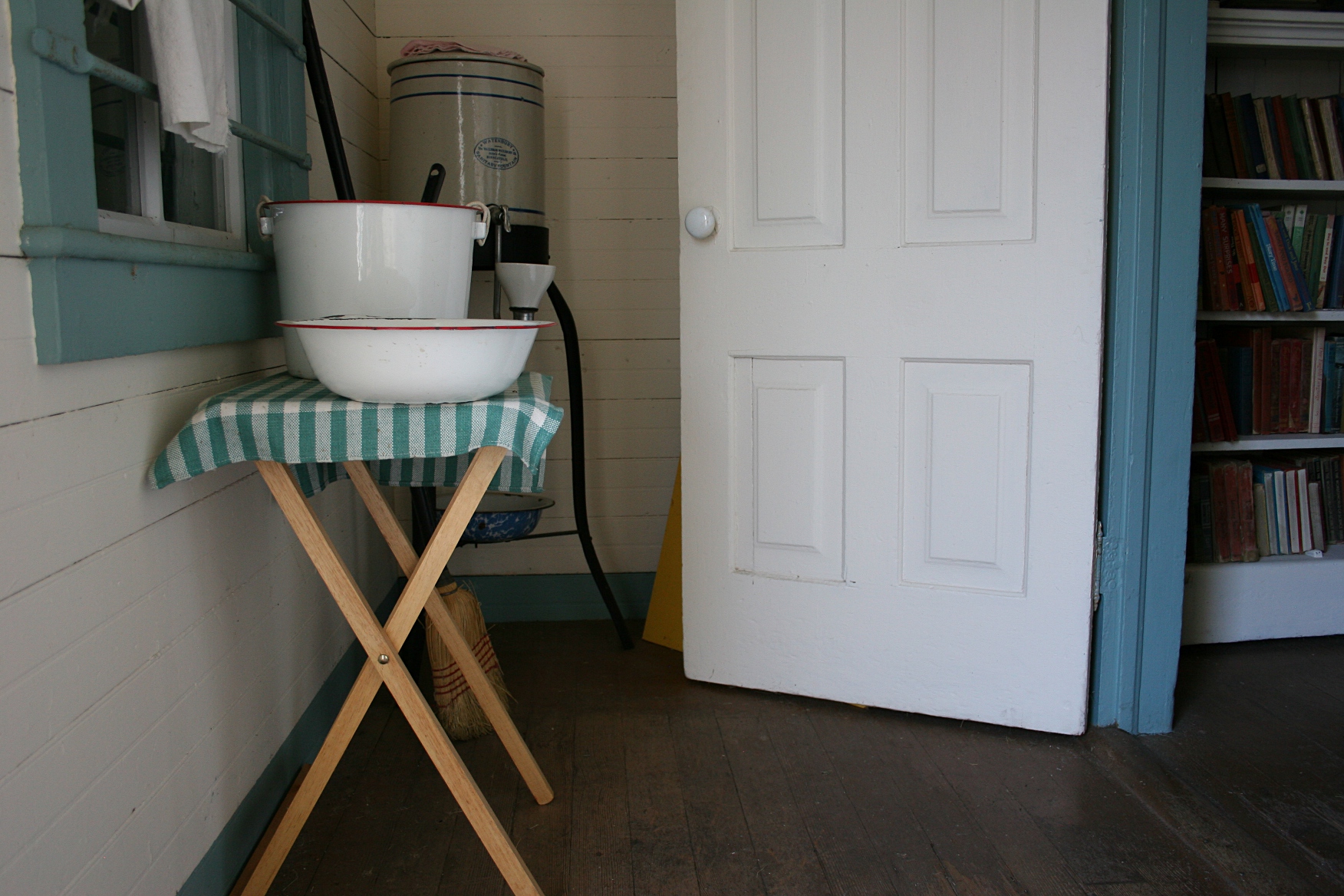
Wash basin and water cooler inside the schoolhouse entry.

Wash basin and water cooler inside the schoolhouse entry.

Harsh clang of the bell summons students inside the one-room Pleasant Valley School—girls to the left, boys to the right.

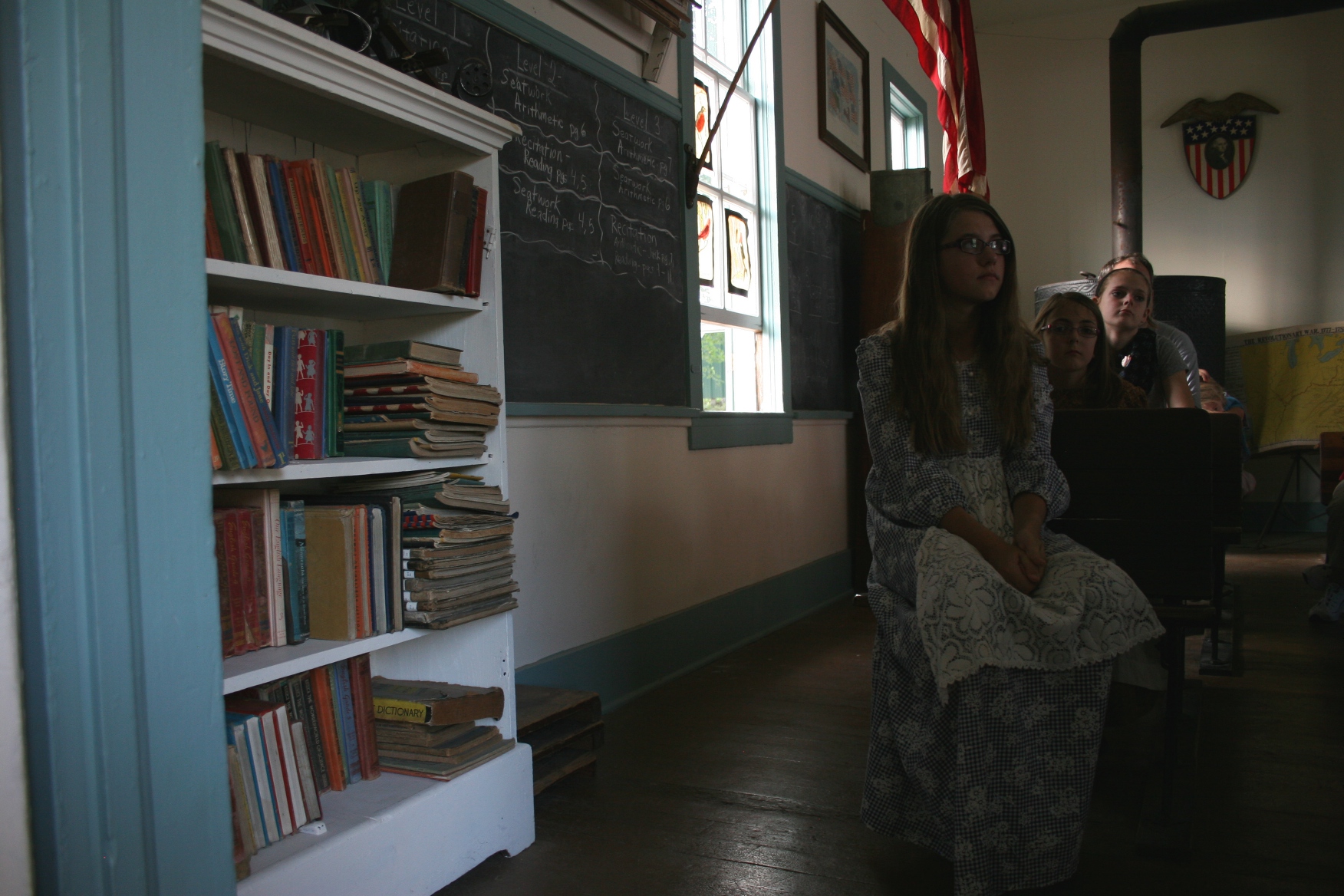
Youth role-playing Pleasant Valley School students.

Youth role-play Pleasant Valley School students.

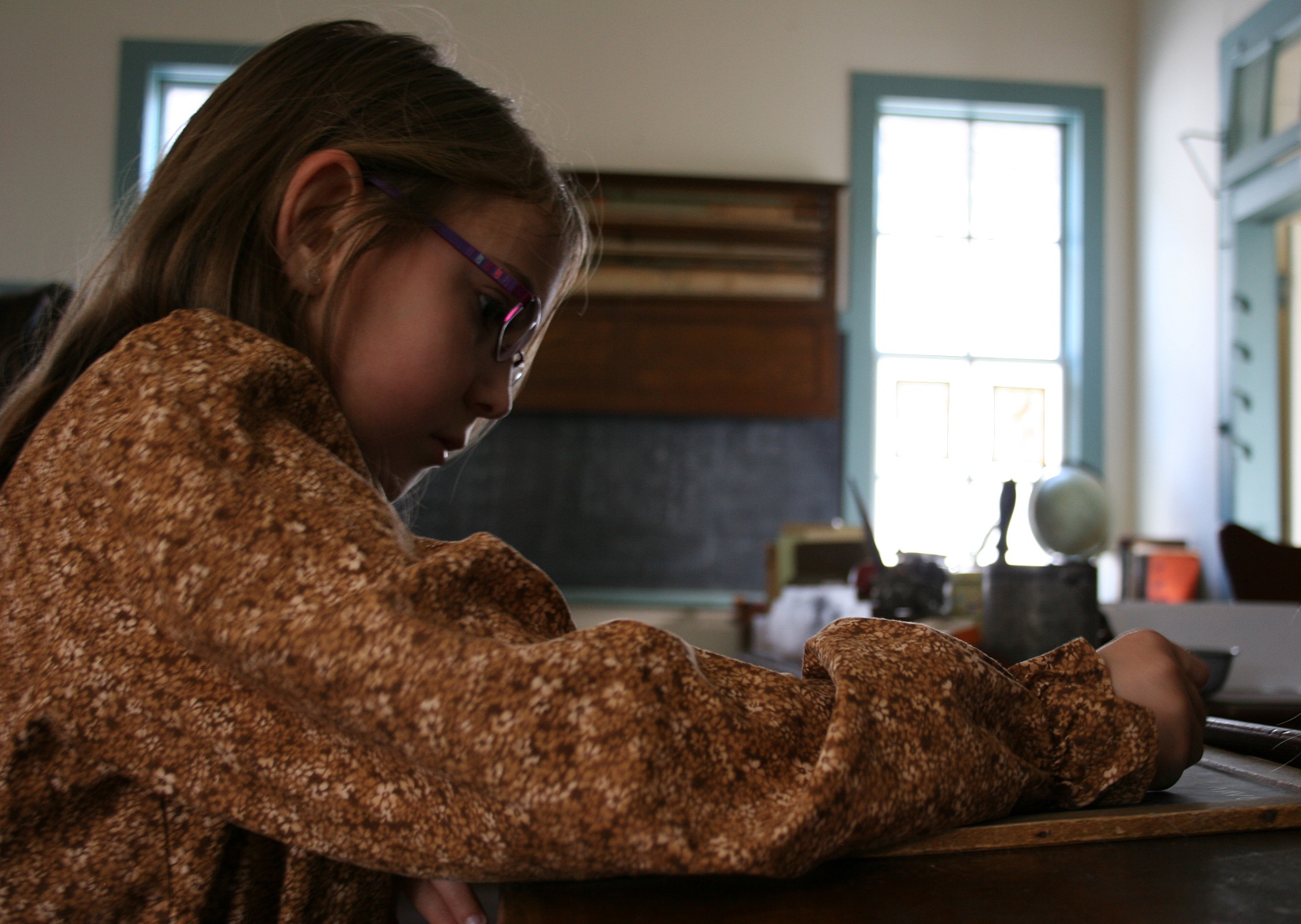
Lessons written on slate.

Lessons written on slate.

Girls in prairie dresses scratch chalk across slate.

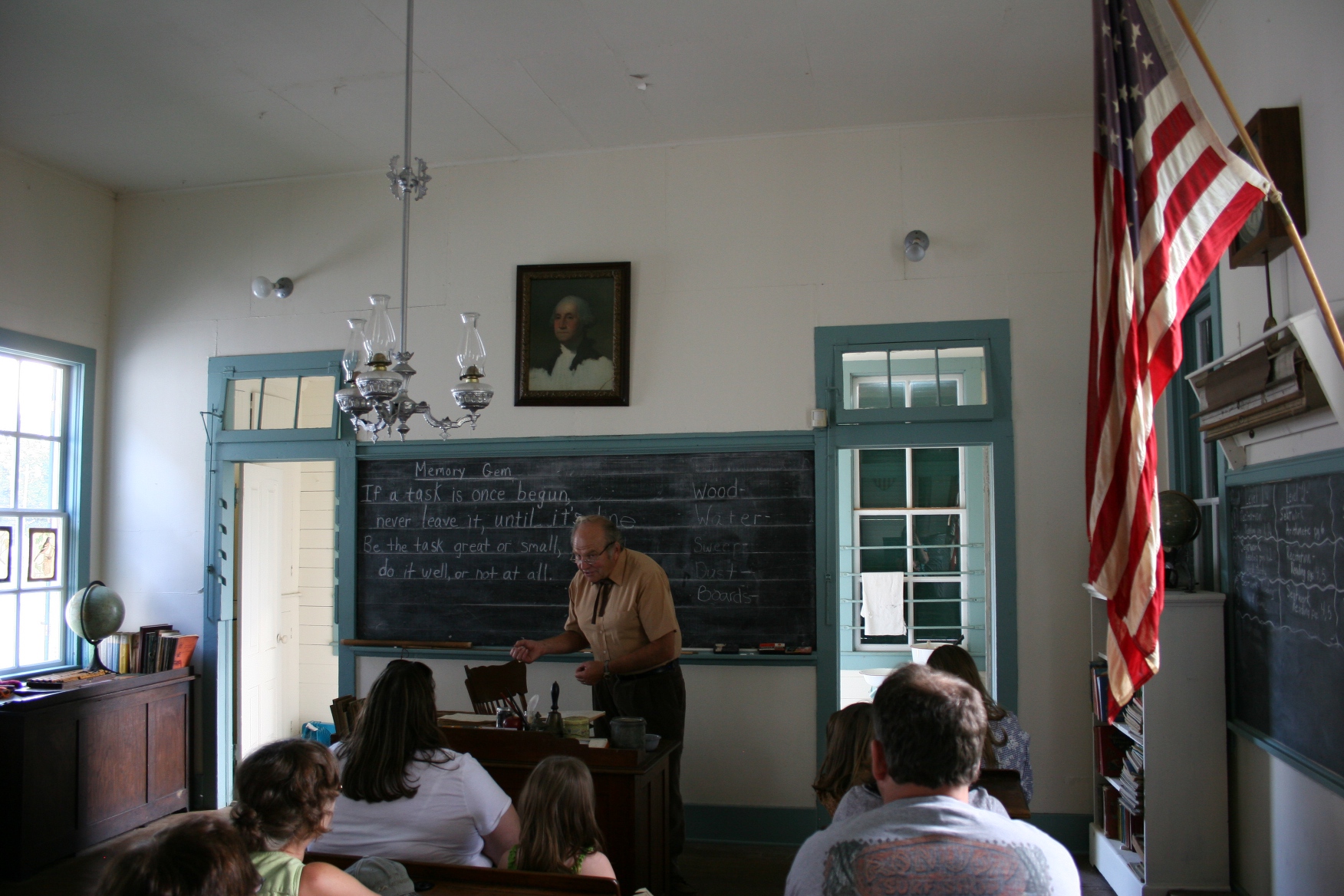
Attendees and participants in A Night at the Museum filled the one-room school.

Inside the one-room school.

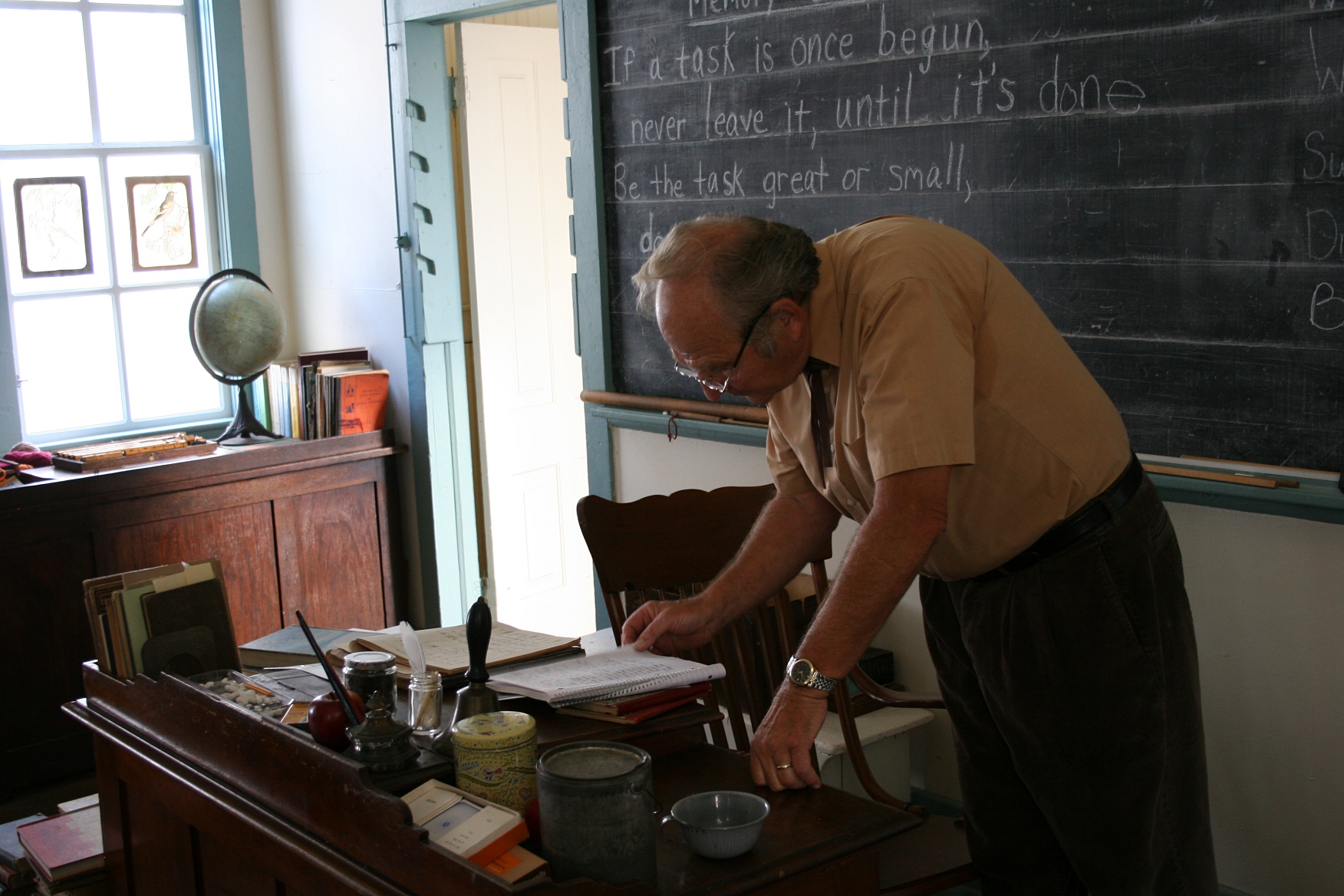
My friend Duane role-plays the Pleasant Valley teacher.

My friend Duane role-plays the Pleasant Valley teacher.

Teacher praises his students with “Good, very good.”

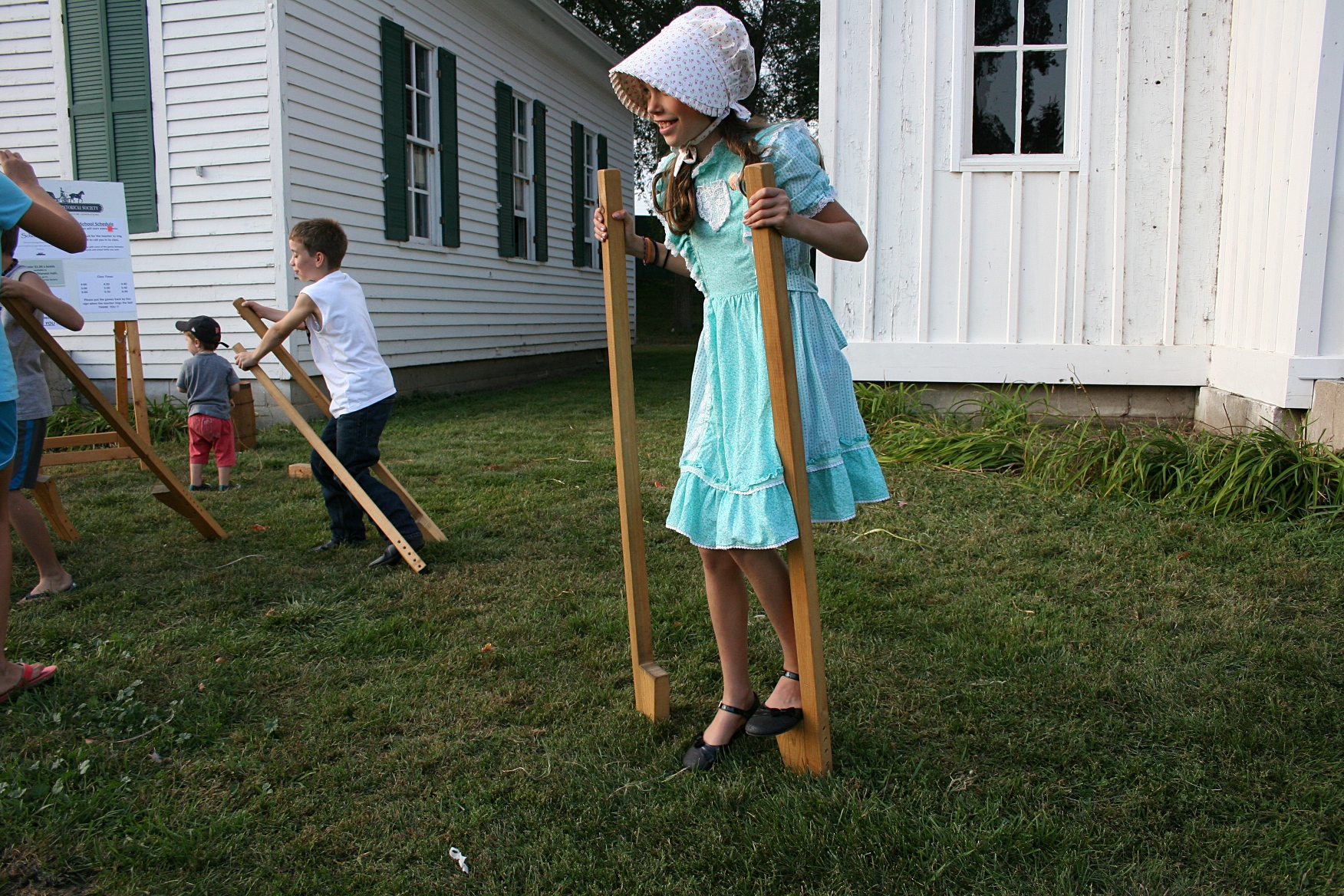
Kids loved trying to walk on stilts.

Kids loved trying to walk on stilts.

Outside, during recess, legs fly in a game of tag while others flail in attempts to walk on stilts.

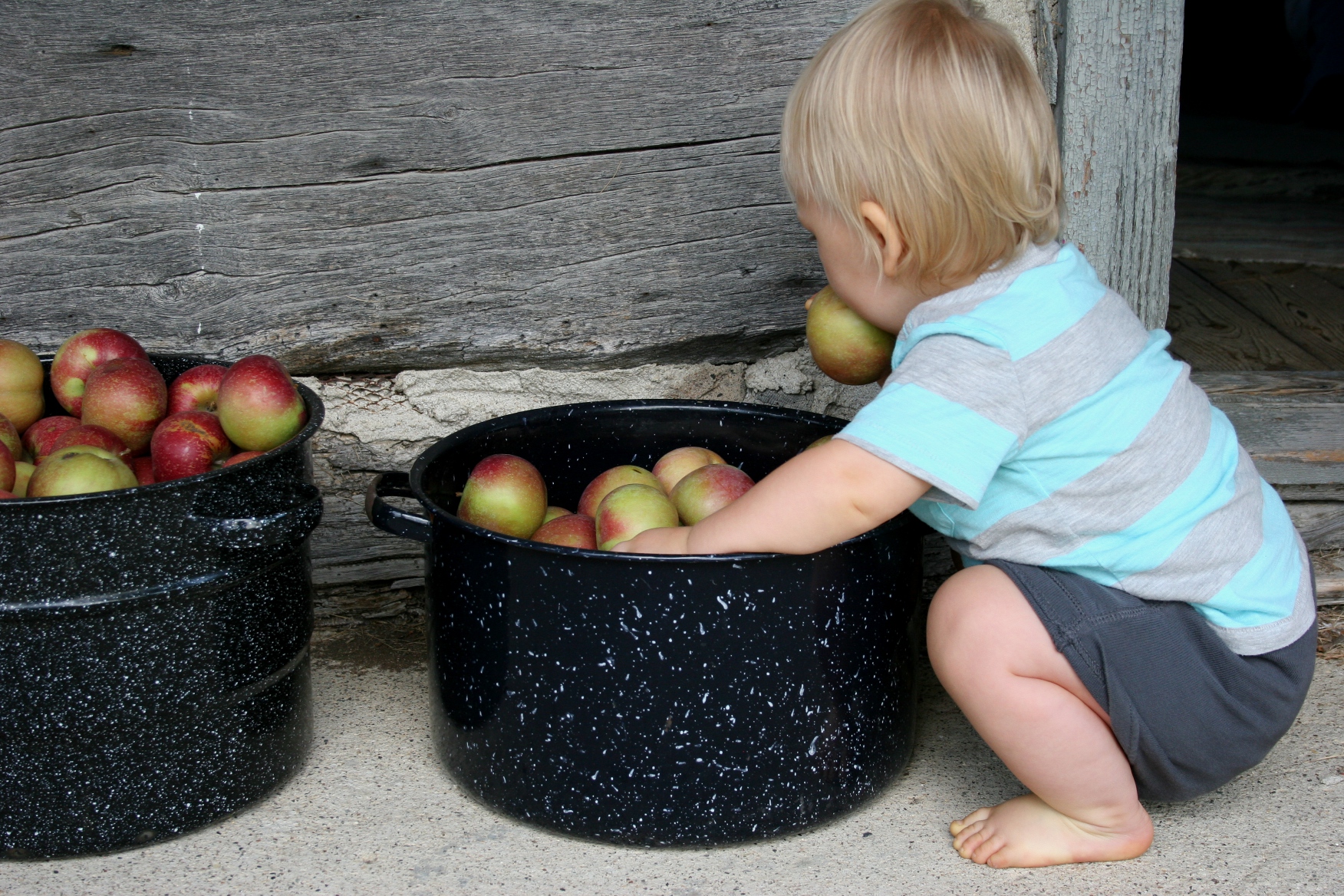
Luke, 13 months, finds an apple outside the log cabin.

Luke, 13 months, finds an apple outside the log cabin.

Across the way, in an 1856 log cabin, the scent of baking bread lingers while a steady hand cranks a butter churn.

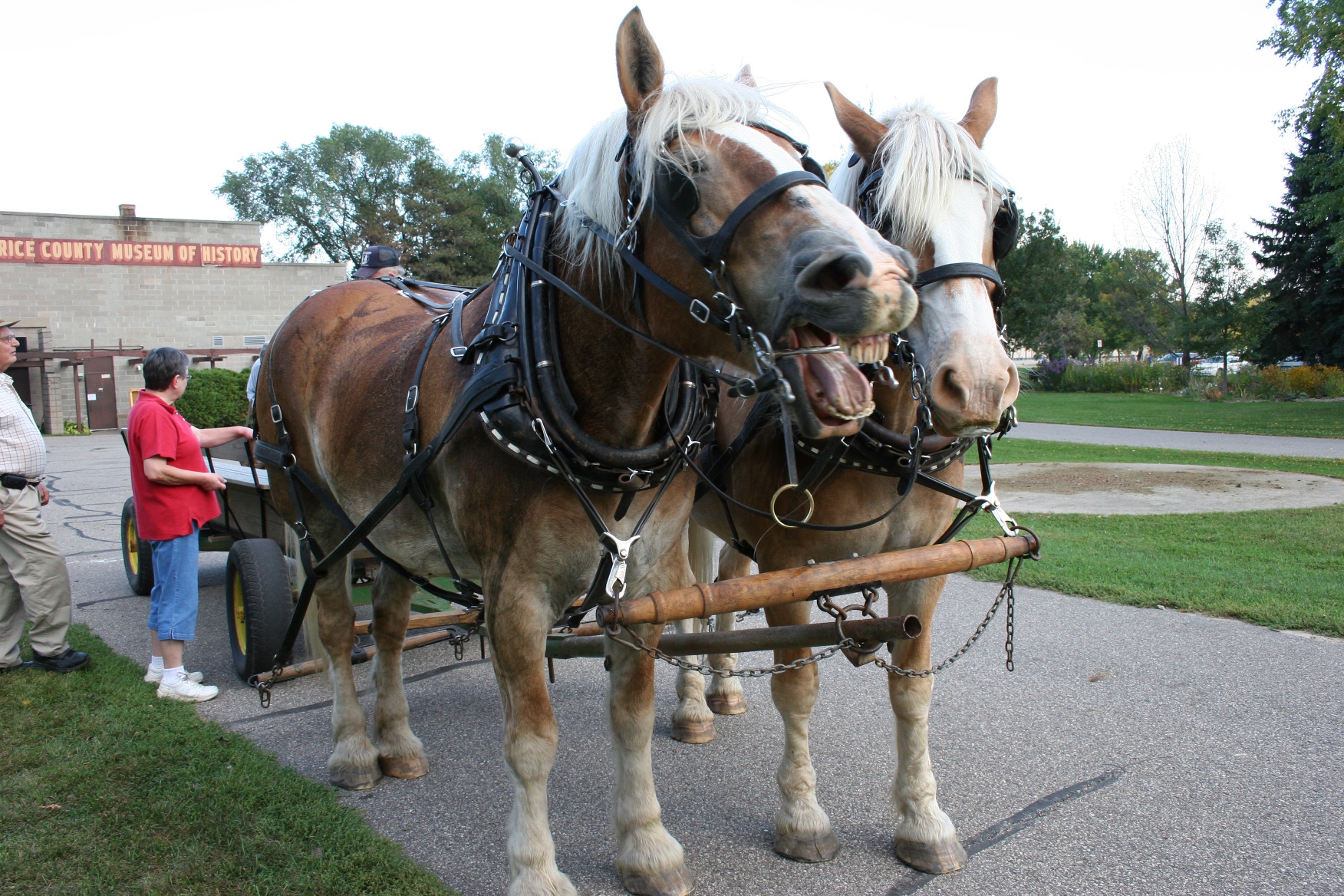
Mike and Pat bring their horses and wagon to many area events.

Mike and Pat bring their horses and wagon to many area events.

Wagon rides around the Rice County Fairgrounds proved popular.

Wagon rides around the Rice County Fairgrounds proved popular.

A team of Belgian horses pulls a wagon, not a covered wagon like Pa Ingalls’, but still, a welcome mode of transportation on a stunning autumn afternoon and evening in southeastern Minnesota.

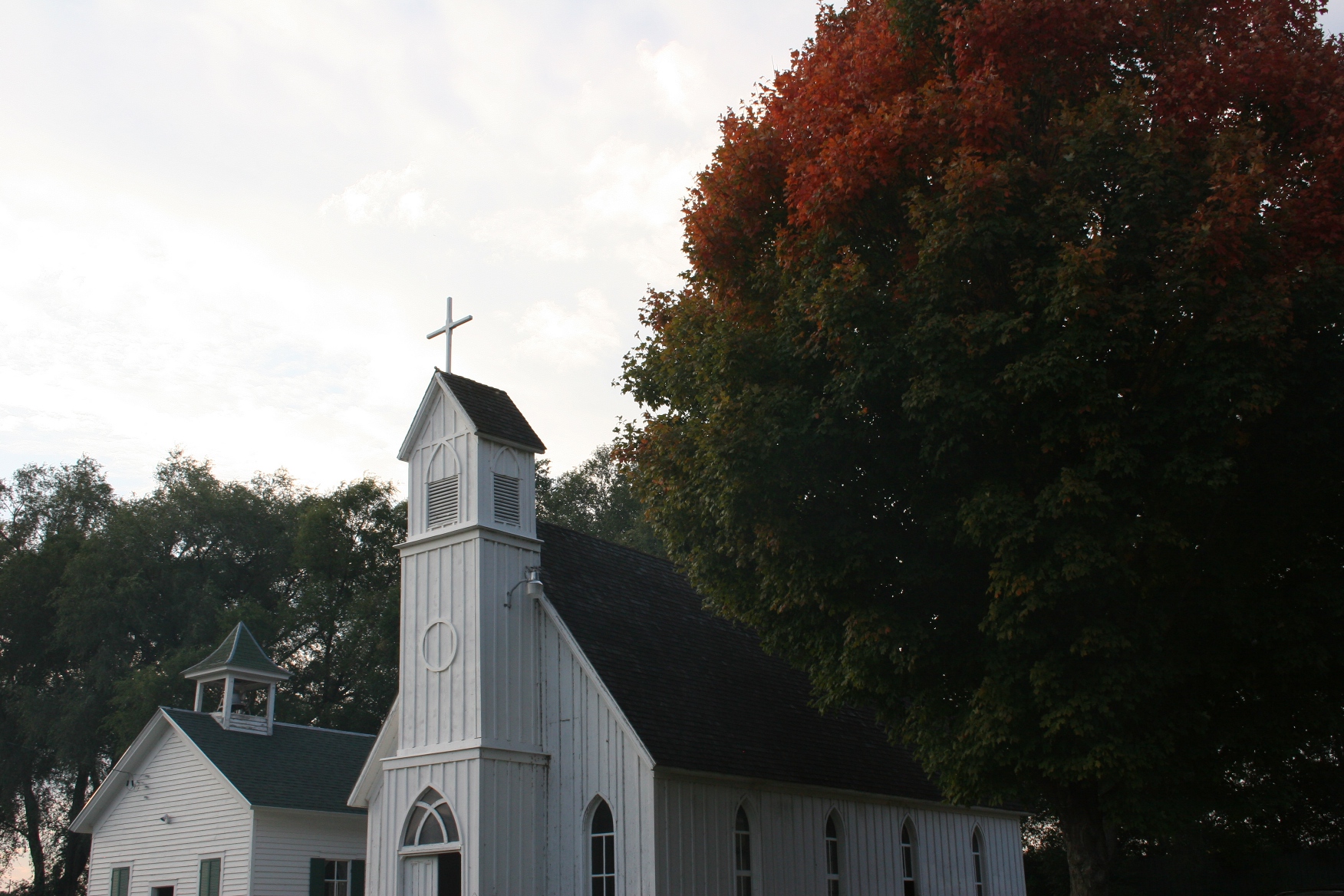
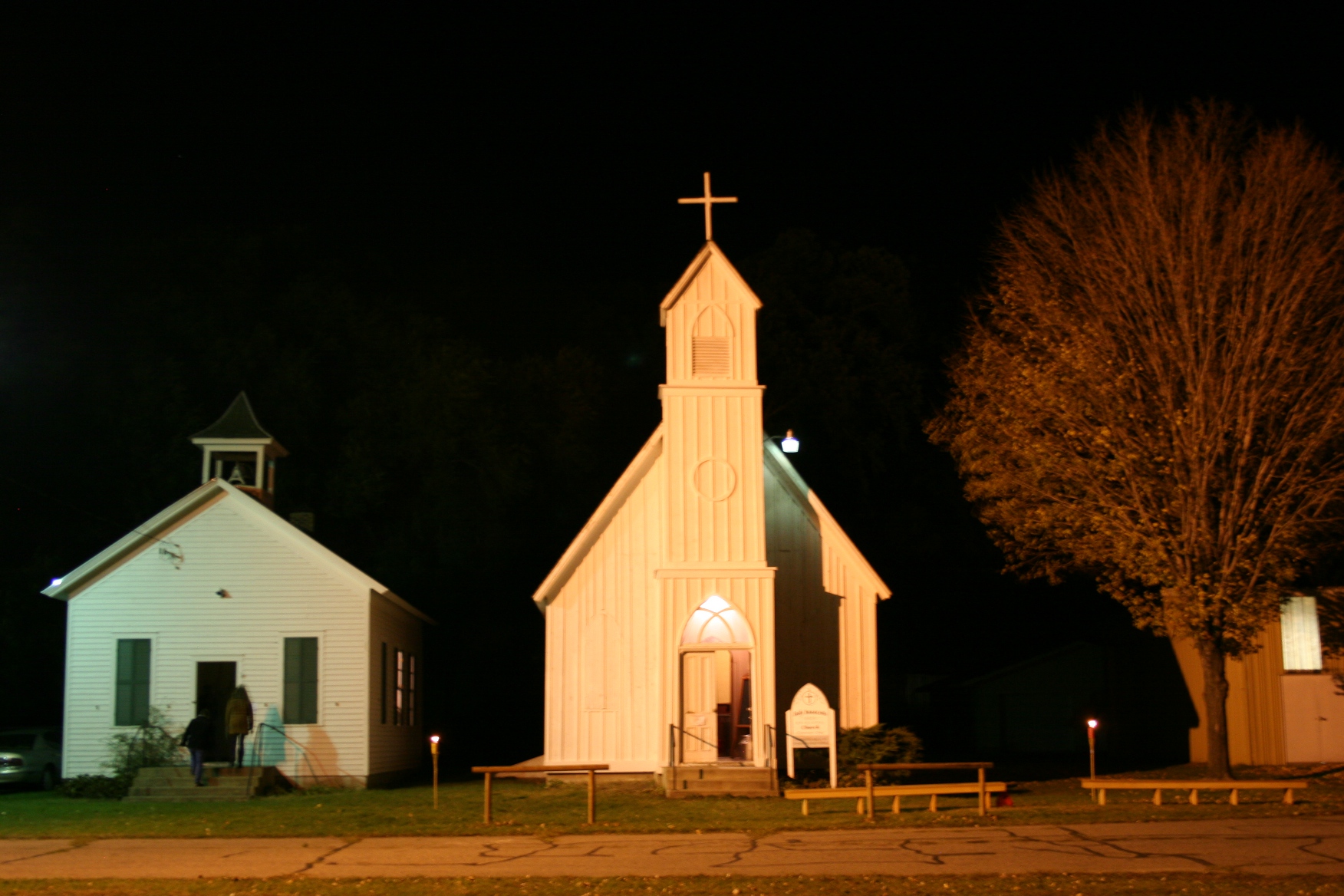
Pleasant Valley School, left, and Holy Innocents Episcopal Church.

Pleasant Valley School, left, and Holy Innocents Episcopal Church at the Rice County Historical Society, Faribault, Minnesota.

Fast forward to July 15, 1944, and Helen Greenville walks the worn floorboards of Holy Innocents Episcopal Church as she prepares for her daughter, Lilas’, wedding. “Oh the Deep, Deep Love” slides from bow to violin strings.

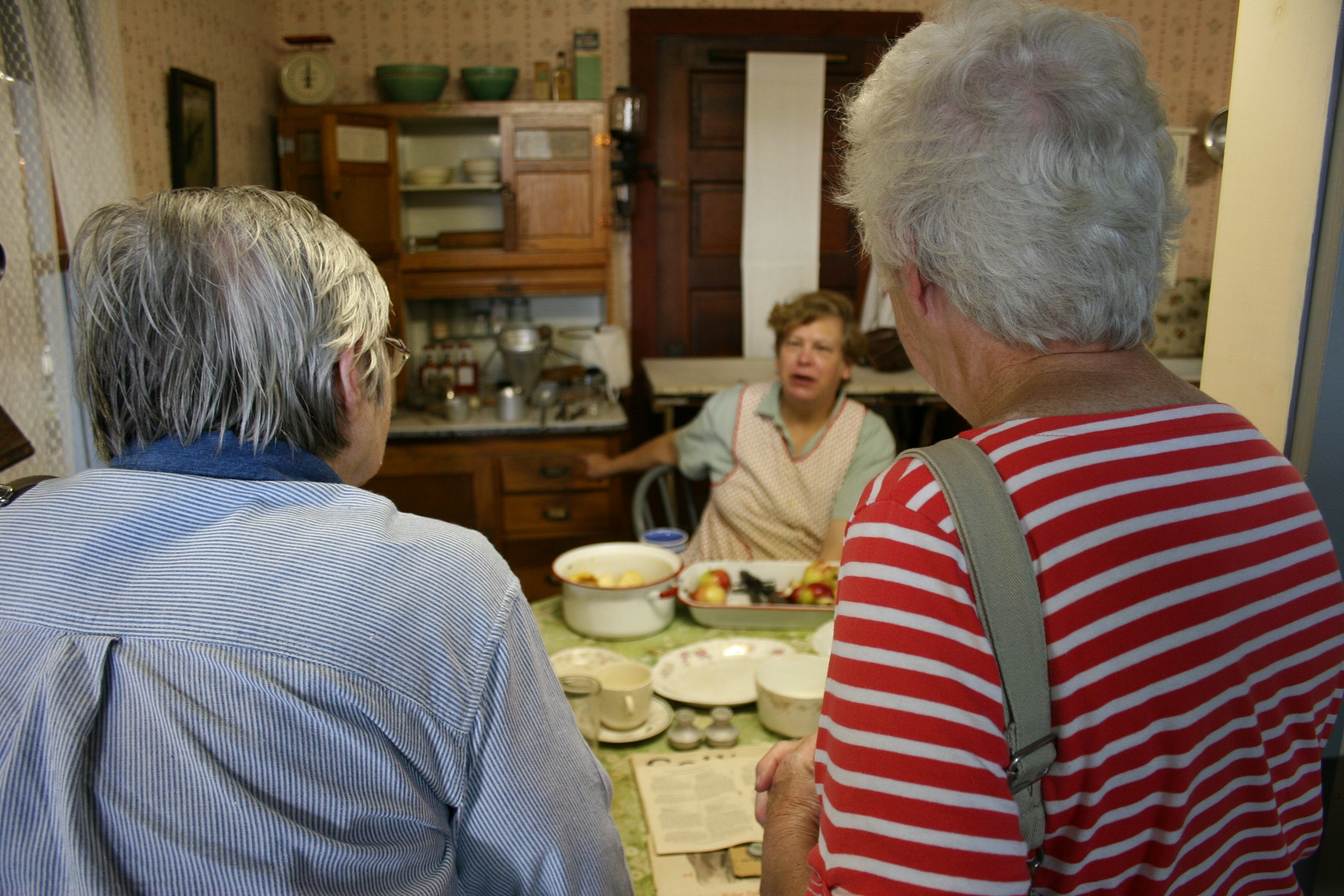
A Night at the Museum attendees visit with Mrs. Morris, who was peeling apples in her kitchen.

Visitors chat with Mrs. Morris, who is peeling apples in her kitchen.

Next door, Mrs. Morris peels apples for applesauce.

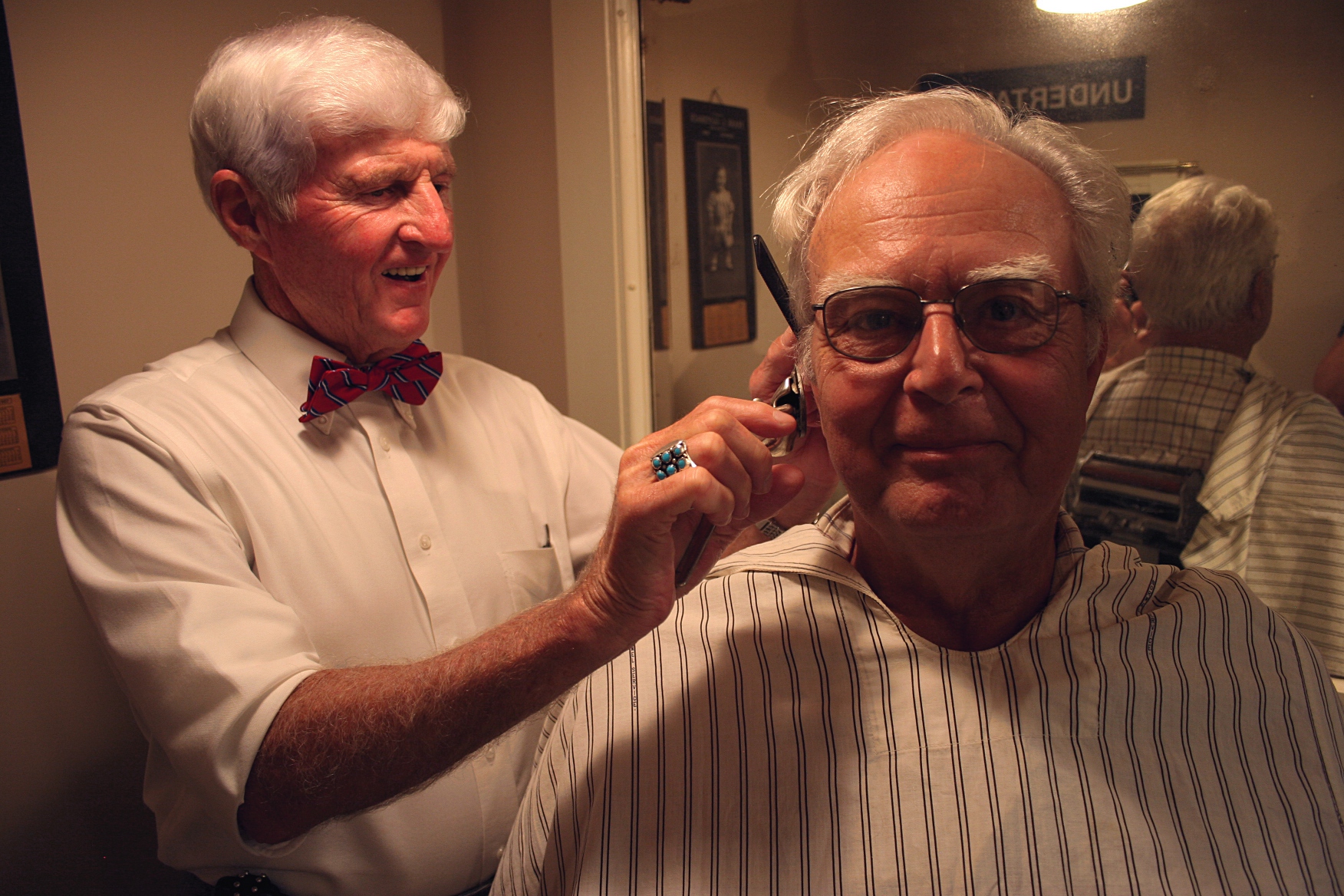
Barber Tom with customer LeRoy inside the museum barbershop.

Barber Tom with customer LeRoy inside the museum barbershop.

In another building, Hopalong Tenacity taps out Morse Code and the barber razors hair and Civil War veteran and businessman John Hutchinson greets guests, all dapper in top hat and tails.

Friends.

Friends.

These scenes and more were part of the Rice County Historical Society’s second annual Night at the Museum, an event which brings history to life inside and outside museum buildings.

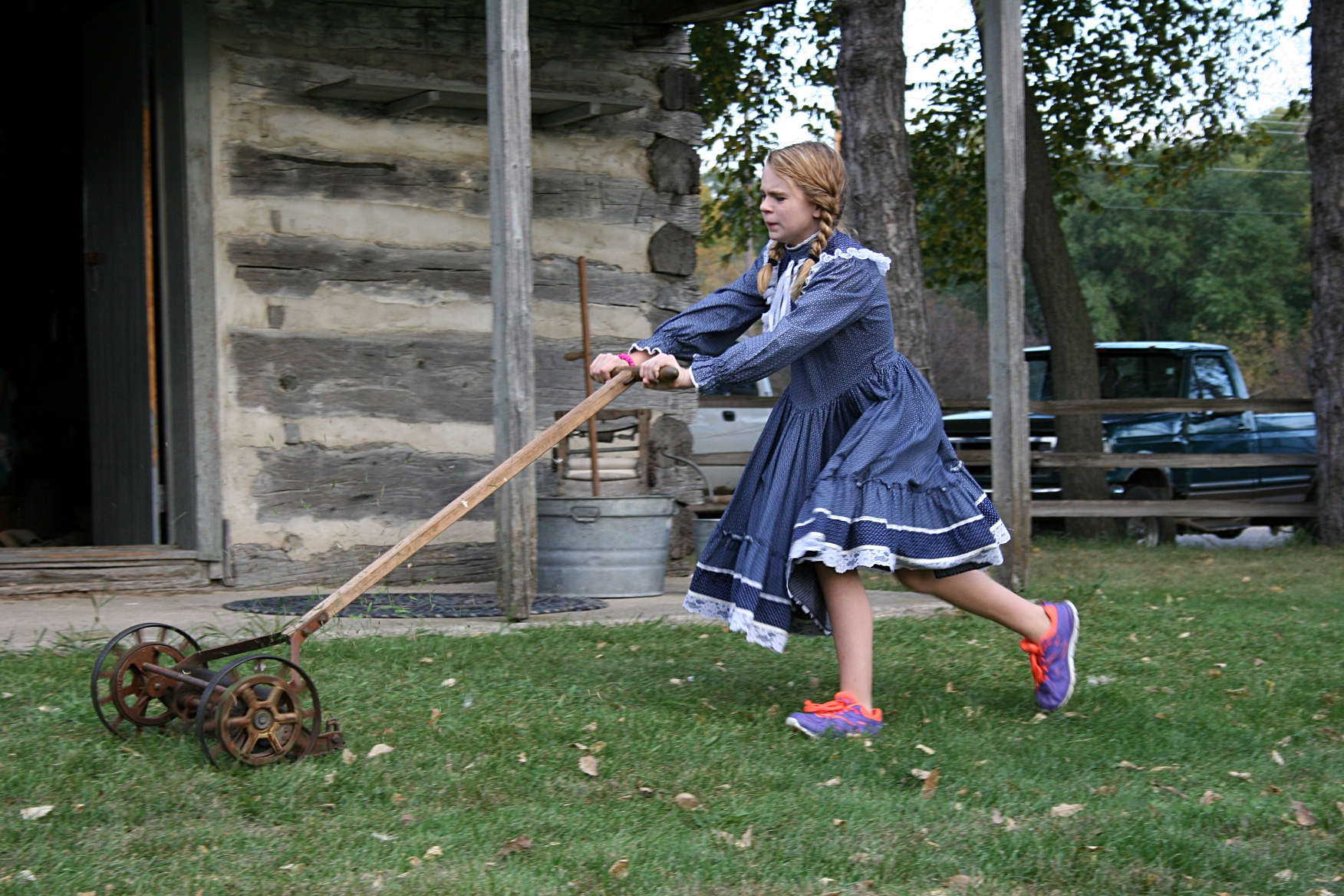
Kaylee, role-playing Katie, struggles to push an old-fashioned lawnmower across the lawn outside the log cabin.

Kaylee, role-playing Katie, struggles to push an old-fashioned lawnmower across the lawn outside the log cabin.

I loved it. This is how I learn history best—through voices and stories and action.

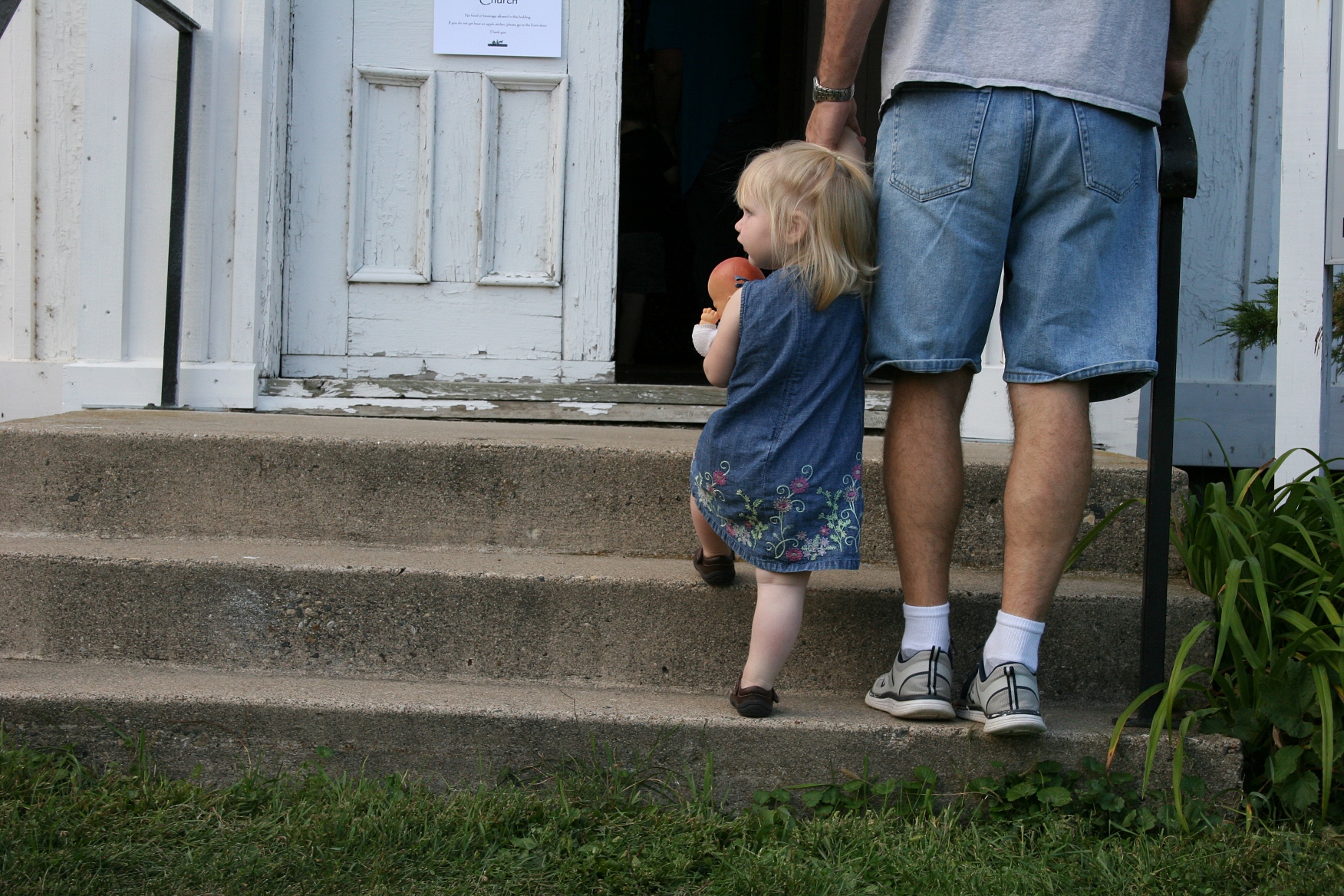
Dad and daughter enter the historic church.

Dad and daughter enter the historic church. A Night at the Museum is definitely a family-oriented event.

And, based on my observations, adults and kids attending and participating likewise embrace this style of sharing history.

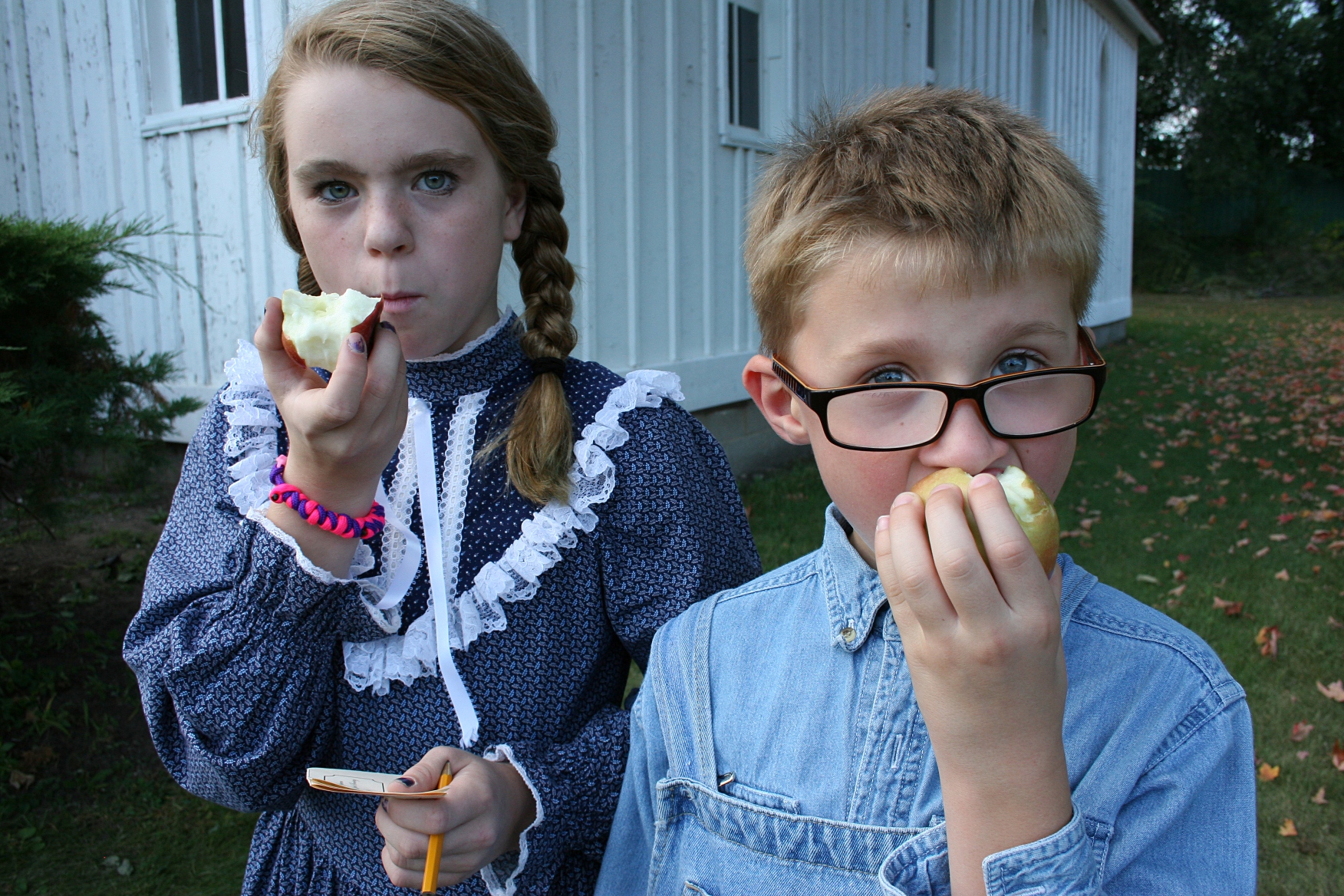
Kaylee and William (AKA Katie and Jim for the evening) raved about the apples.

Siblings Kaylee and William (AKA Katie and Jim for the evening) raved about the apples.

I’d like to see more of these living history events in my community of Faribault, one of Minnesota’s oldest cities founded in 1852 by fur trader Alexander Faribault. Our historic downtown would provide an ideal stage as would the historic Cathedral of Our Merciful Saviour and so many other aged buildings in and around town.

HOW DO YOU BEST learn history? How does your community share its local history?

© Copyright 2014 Audrey Kletscher Helbling


The legend of the Edmund Fitzgerald lives on February 11, 2014

DECADES AGO WHILE TOURING an open iron ore pit on Minnesota’s Iron Range with my parents and perhaps a sibling or two, I met a sailor. Red. His nickname was attributed to his rust-hued hair and beard.

He was a hulk of a young man, crammed into a seat with me on a school bus that bumped down a rugged road into the bowels of the earth.

I honestly do not remember much about Red except that hair and his job laboring on a ship that sailed Lake Superior. We likely talked about the mammoth trucks in the pit. I told him I would be starting college soon and we exchanged addresses.

That fall of 1974, Red sent a few letters, tucked inside official Great Lakes Carriers’ Association envelopes. I can’t recall the content of that correspondence and I soon forgot about Red as I immersed myself in college life.

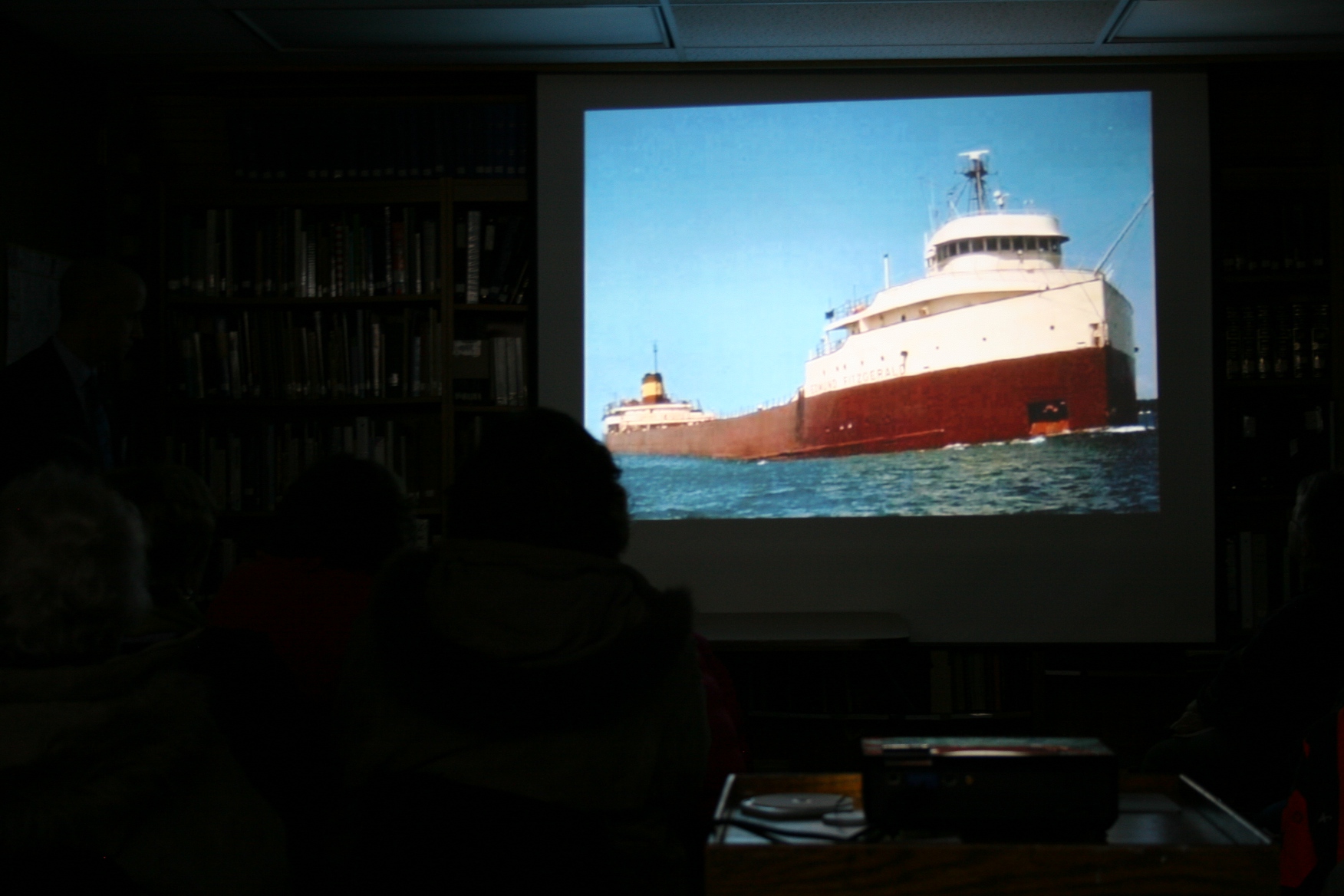
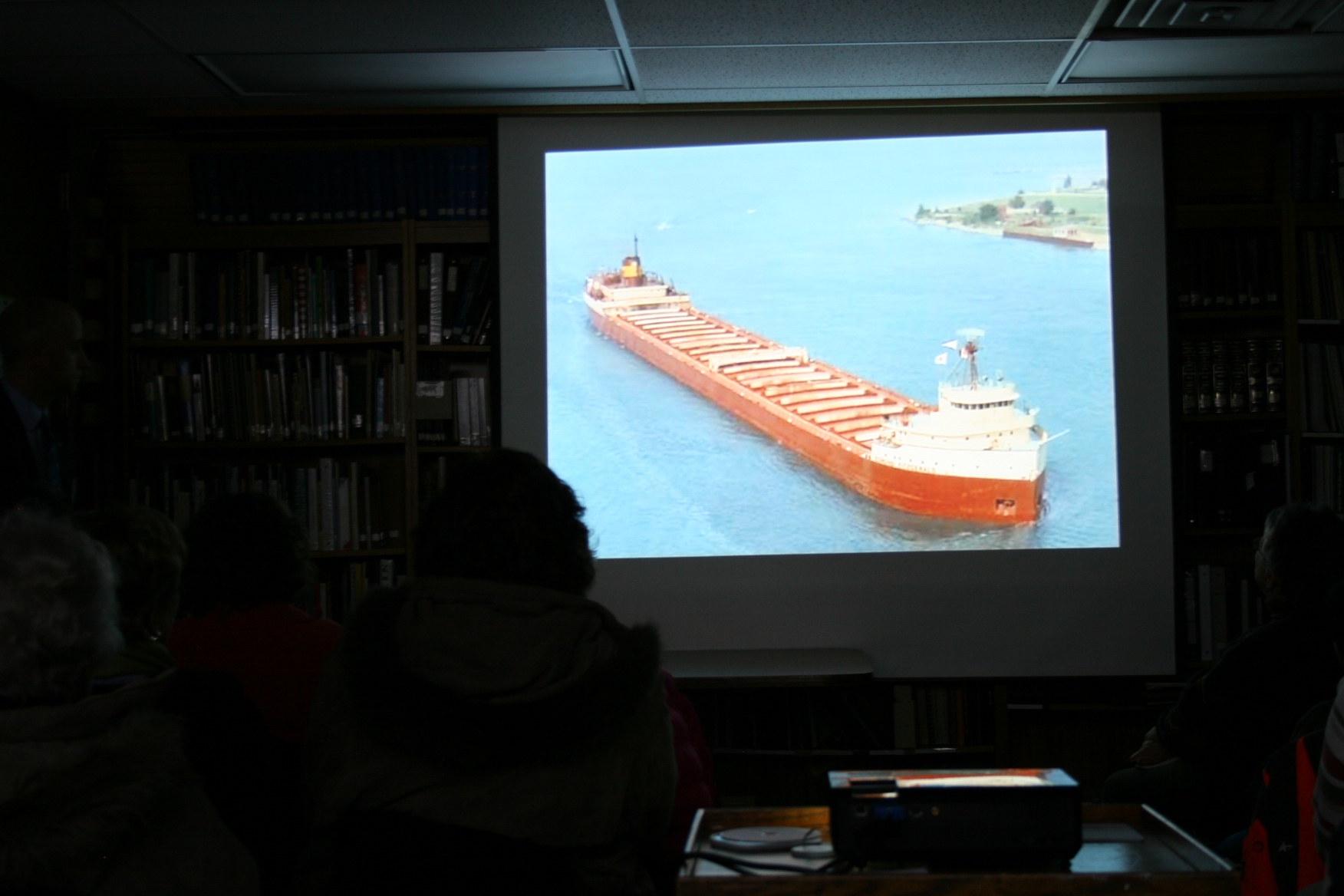
The Edmund Fitzgerald stretched more than two football fields long. This photo is among many shown in a presentation by diver Jim Christian.

The Edmund Fitzgerald stretched two football fields long. This photo is among many shown in a presentation by diver Jim Christian at the Rice County Historical Society.

Yet, I never really have forgotten him, because of The Edmund Fitzgerald, the iron ore carrier which sank in Lake Superior on November 10, 1975, during a fierce storm. I’ve often wondered whether Red may have been on board that ship. Not likely. But the slight possibility exists.

This past Sunday, I thought about Red for the first time in decades when I attended a presentation on The Edmund Fitzgerald at the Rice County Historical Society in Faribault. The event coincides with The Merlin Players’ Valentine’s Day opening of the play, Ten November, at the Paradise Center for the Arts.

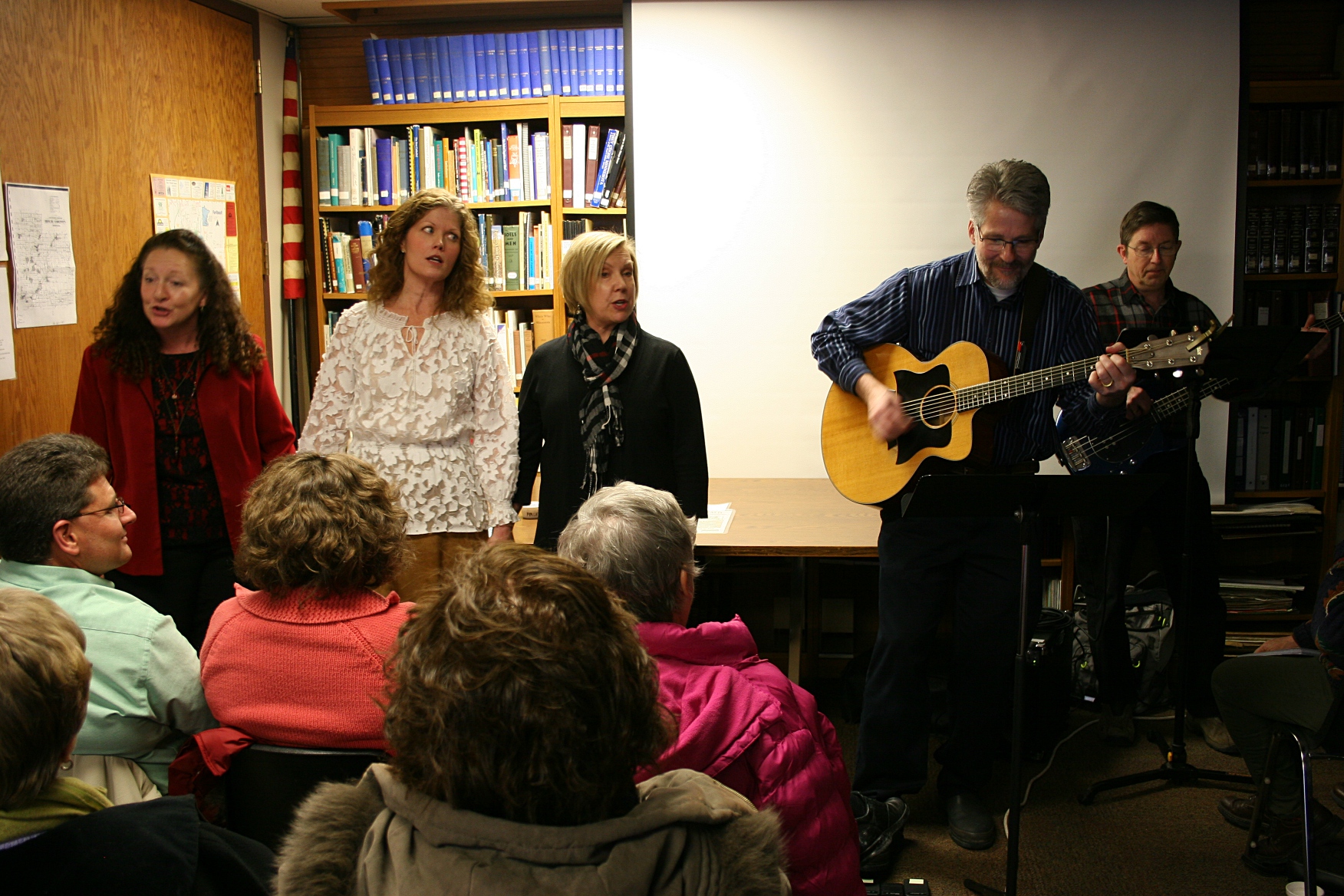
Christina Schweitz, second from left, says is is "an honor" to perform as one of The Three Sisters in The Merlin Players' play, Ten November.

Christina Schweitz, second from left, says it is “an honor” to perform as one of The Three Sisters in The Merlin Players’ play, Ten November. She is flanked by the other “sisters,” Lisa Quimby, left, and Gail Kaderlik.

Inspired by folk singer Gordon Lightfoot’s ballad, “The Wreck of the Edmund Fitzgerald,” the theatrical production is filled with humor and compassion and heartwarming tales, according to performer Lisa Quimby. She was among five musicians—three of them female singers—presenting several songs at Sunday’s museum event. The women represent “The Three Sisters,” a trio of waves, each wave larger than the previous and sometimes cited as a contributing factor to the ship’s sinking.

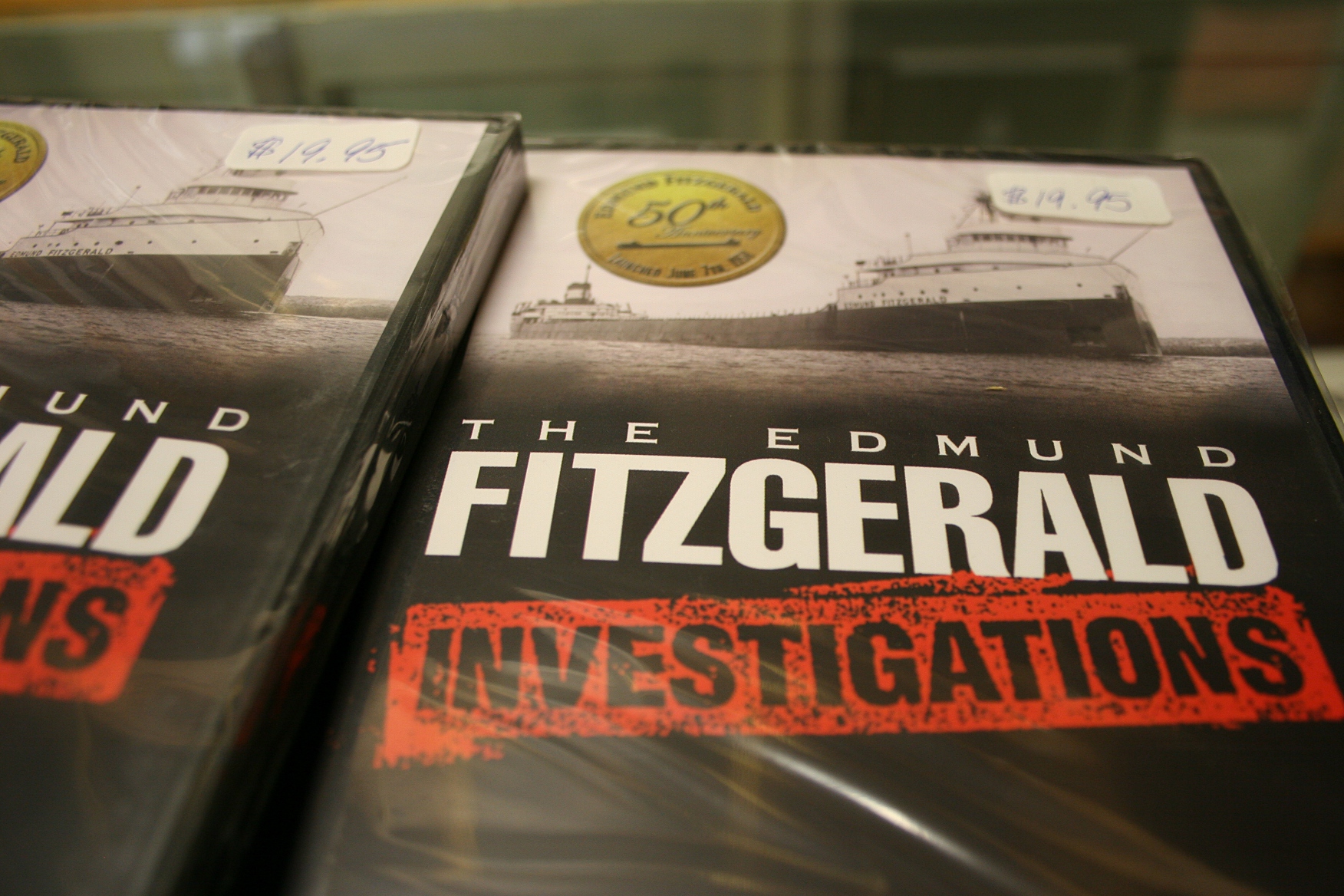
We were shown a half-hour version of this one-hour documentary for sale at the historical society.

We were shown a shortened version of this PBS documentary available for purchase at the historical society.

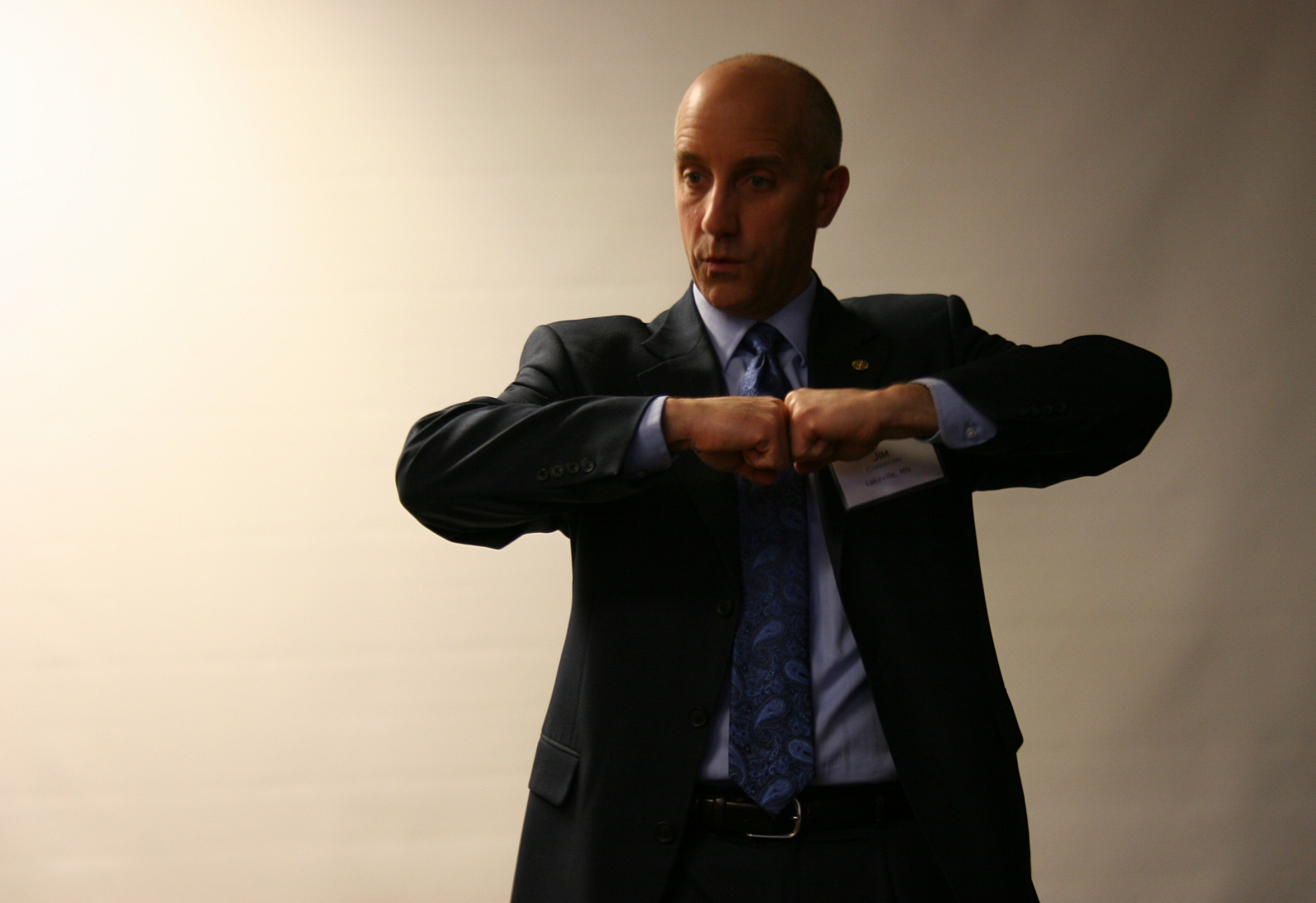
Diver Jim Christian gestures as he provides information on the iron ore carrier and theories on why it sank.

Diver Jim Christian gestures as he provides information on the iron ore carrier and theories on what caused The Fitz to sink.

Based on information I gleaned Sunday after watching The Edmund Fitzgerald Investigations—a half-hour PBS documentary by Ric Mixter—and a presentation by Minnesotan Jim Christian, who has been diving for 28 years and has explored The Fitz wreckage, I wonder if anyone will ever truly know the precise cause of this tragedy.

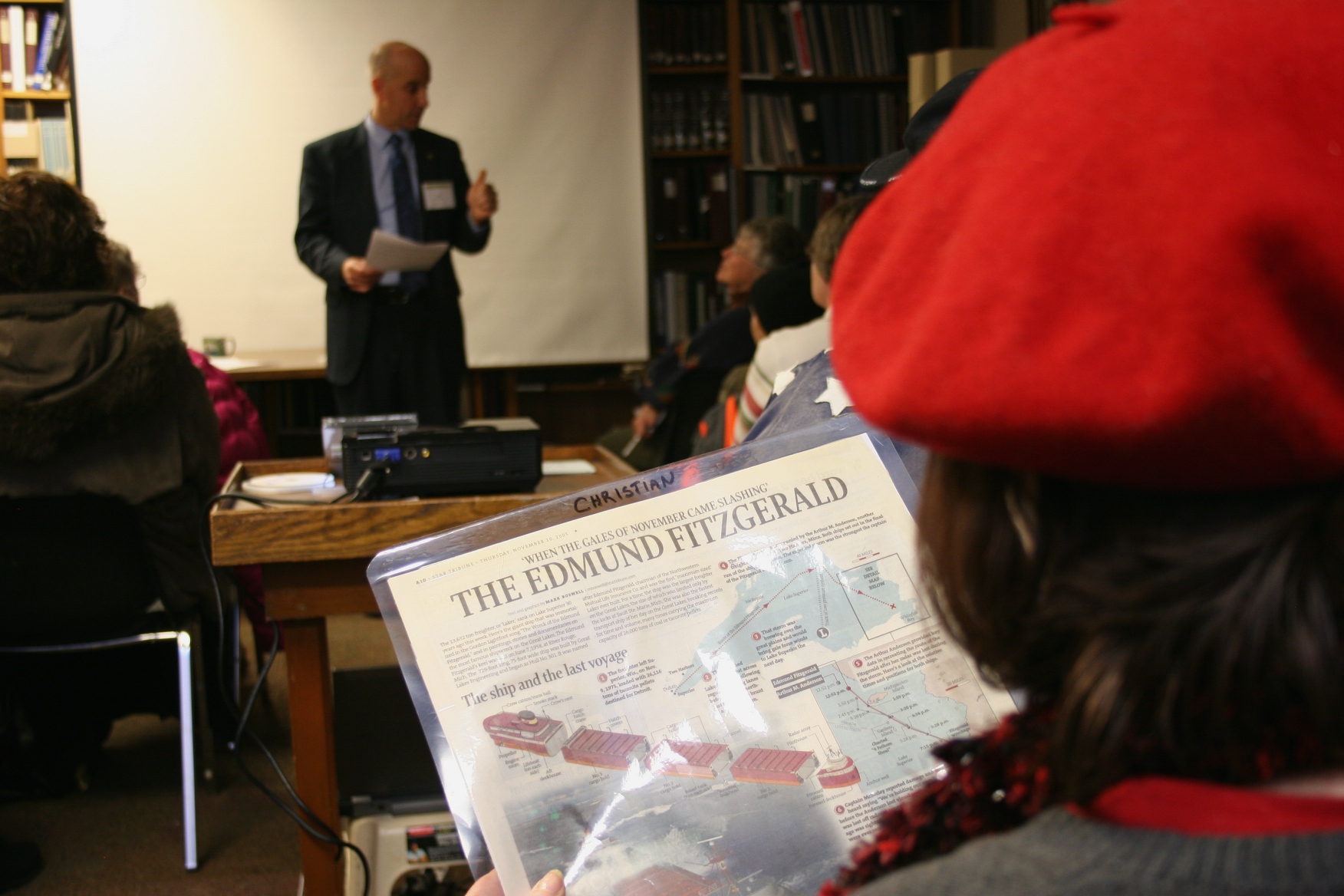
Newspaper clippings about The Fitz were passed among audience members while Jim Christian spoke.

Newspaper clippings about The Fitz were passed among audience members while Jim Christian spoke. The ship was built in 1958.

Twenty-nine men aboard The Edmund Fitzgerald lost their lives in the stormy waters of Lake Superior on November 10, 1975. That is a fact.

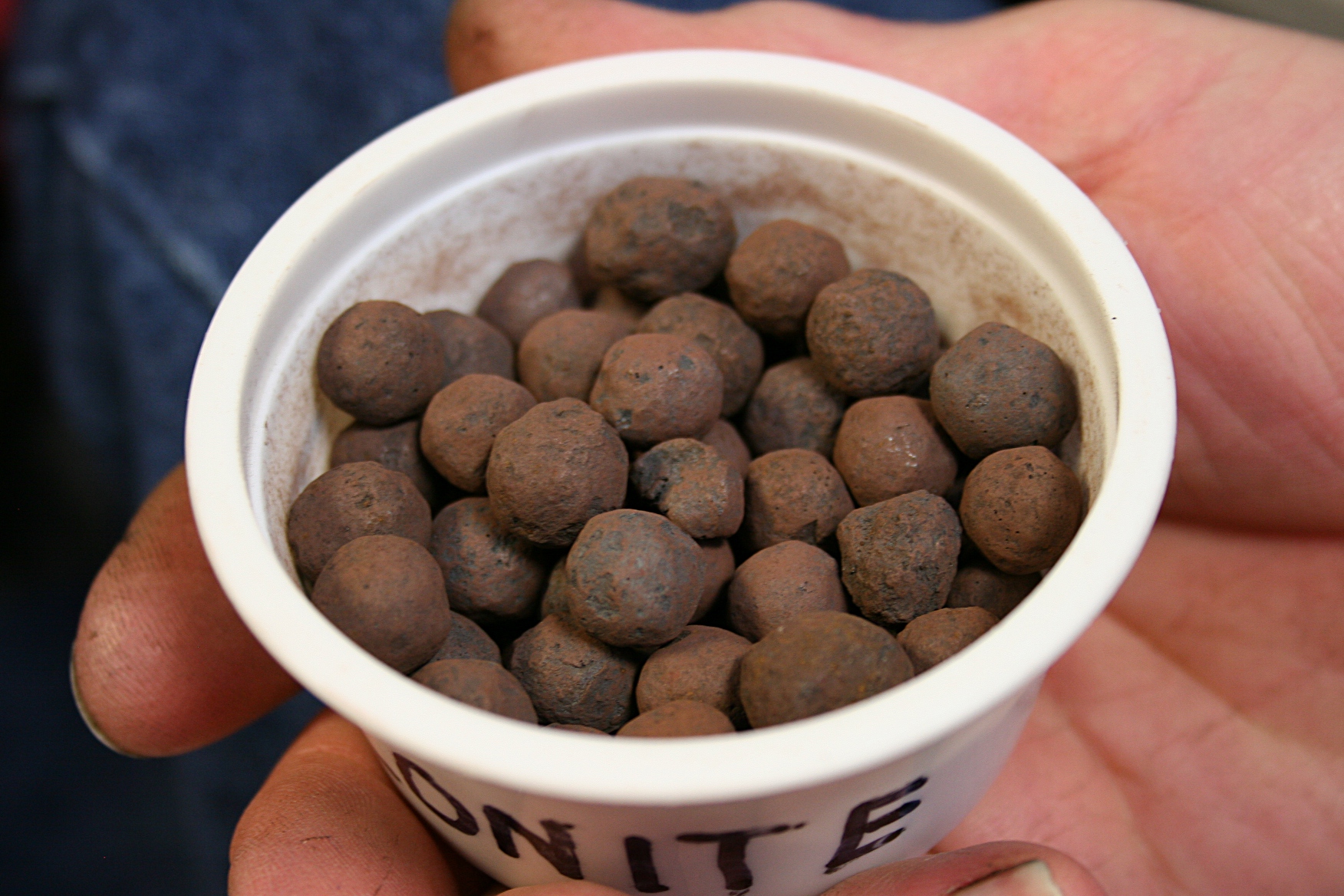
Some 26,000 tons of taconite pellets, like these, filled the cargo holds of The Edmund Fitzgerald as it journeyed across Lake Superior on November 9 and 10, 1975.

Some 26,000 tons of taconite pellets, like these, filled the cargo holds of The Edmund Fitzgerald as it journeyed across Lake Superior on November 9 and 10, 1975.

Winds on that fateful day were described as “hurricane” force with a gale warning issued during the time the 729-foot long by 75-foot wide carrier was en route from Superior, Wisconsin, to Detroit, Michigan, with 26,000 tons of taconite pellets. The ship, loaded with 15 percent more than its originally designed maximum carrying capacity, according to Christian, rode low in the water while storm waves rose to 70 feet. Can you imagine?

Around 7:15 p.m. on November 10, The Edmund Fitzgerald disappeared. The wreckage was later discovered 17 miles northwest of Whitefish Point, Michigan, and has been the focus of many dives and investigations since.

The legend lives on, as does that connection many of us have to The Edmund Fitzgerald, whether through song or theatre or diving or letters written decades ago by a sailor named Red.

Another photo from Jim Christian's presentation shows the 729-foot long Edmund Fitzgerald.

Another photo from Jim Christian’s presentation shows the 729-foot long Edmund Fitzgerald.

HERE ARE SOME OF THE THEORIES offered during Sunday’s presentation as contributing to/cause of The Fitz sinking in Lake Superior in the gales of November 1975. Seas then were termed by a skipper as “the worst (he’d experienced) in 44 years on the lake.”

  • Leaking hatch covers caused by failure to tighten each of the 68 clasps on each of the 21 hatch covers.
  • Mesh screens, rather than watertight walls, separated the three cargo holds.
  • An inability to turn the carrier with three “seas” coming at the ship from three directions.
  • “Beat by the lake” during the fierce storm.
  • The Three Sisters theory of wave building upon wave, overtaking the carrier and causing the cargo to shift forward.
  • Flaws in structural design with weakness in the cargo capacity and too much flex in a ship that was ridden “too hard.”
  • Structural failure of the ship, built in 1958 and the largest carrier on Lake Superior for nearly two decades.
  • Pushing the ship too fast, causing The Fitz and its companion traveler, The Arthur M. Anderson (which made it through the storm), to feel the full fury of the storm.
  • Previous damage to the carrier during grounding and collisions with another ship and with lock walls. The keel had been repaired twice and was termed as “loose again” when The Fitz set sail on November 9.
  • Loaded with too much taconite, causing the ship to ride low in Lake Superior.
  • Negligence.

You can choose to believe what you wish. I’d suggest you do your own research.

This fact I know, though: The legend lives on…

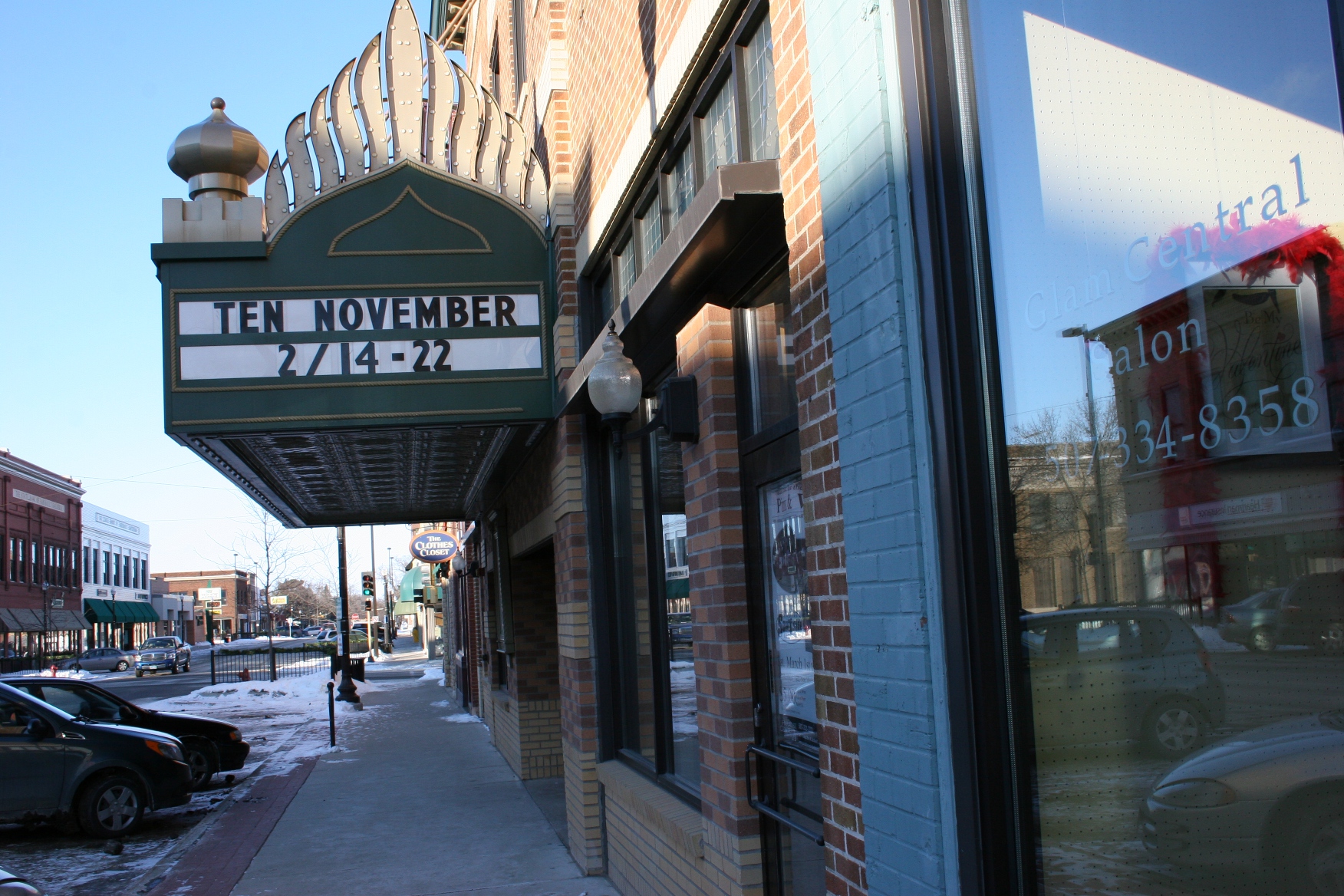
The Paradise Center for the Arts marquee advertises the opening of Ten November.

The Paradise Center for the Arts marquee advertises the opening of Ten November.

FYI: To learn more about The Edmund Fitzgerald, click here to read information on the Great Lakes Shipwreck Museum website.

Performances of Ten November by The Merlin Players are set for 7:30 p.m. February 14, 15, 20, 21 and 22 and for 2 p.m. February 16 at the Paradise Center for the Arts, 321 Central Avenue, Faribault. Click here for more information about this play directed by Eric Parrish, a seasoned director and a professor at Minnesota West Community and Technical College in Worthington.

© Copyright 2014 Audrey Kletscher Helbling


My Night at the Museum October 28, 2013

HISTORY BROUGHT TO LIFE pleases me, for I am an interactive learning history type of person.

I often get overwhelmed and impatient reading information in traditional museum displays.

Arriving around 6:30 p.m. Friday for A Night at the Museum at the Rice County Historical Society in Faribault.

Arriving around 6:30 p.m. Friday for A Night at the Museum at the Rice County Historical Society in Faribault.

So I was excited Friday evening to attend the Rice County Historical Society’s first ever A Night at the Museum in which costumed men, women and children played the roles of historical figures. Like Evangeline Whipple, second wife of Bishop Henry Whipple, and Ordinance Sargent Jones, stationed at Ft. Ridgely during the U.S. – Dakota Conflict of 1862:

Role-playing Evangeline Whipple.

Role-playing Evangeline Whipple.

Playing the role of Ordinance Sgt. Jones.

Playing the role of Ordinance Sgt. Jones.

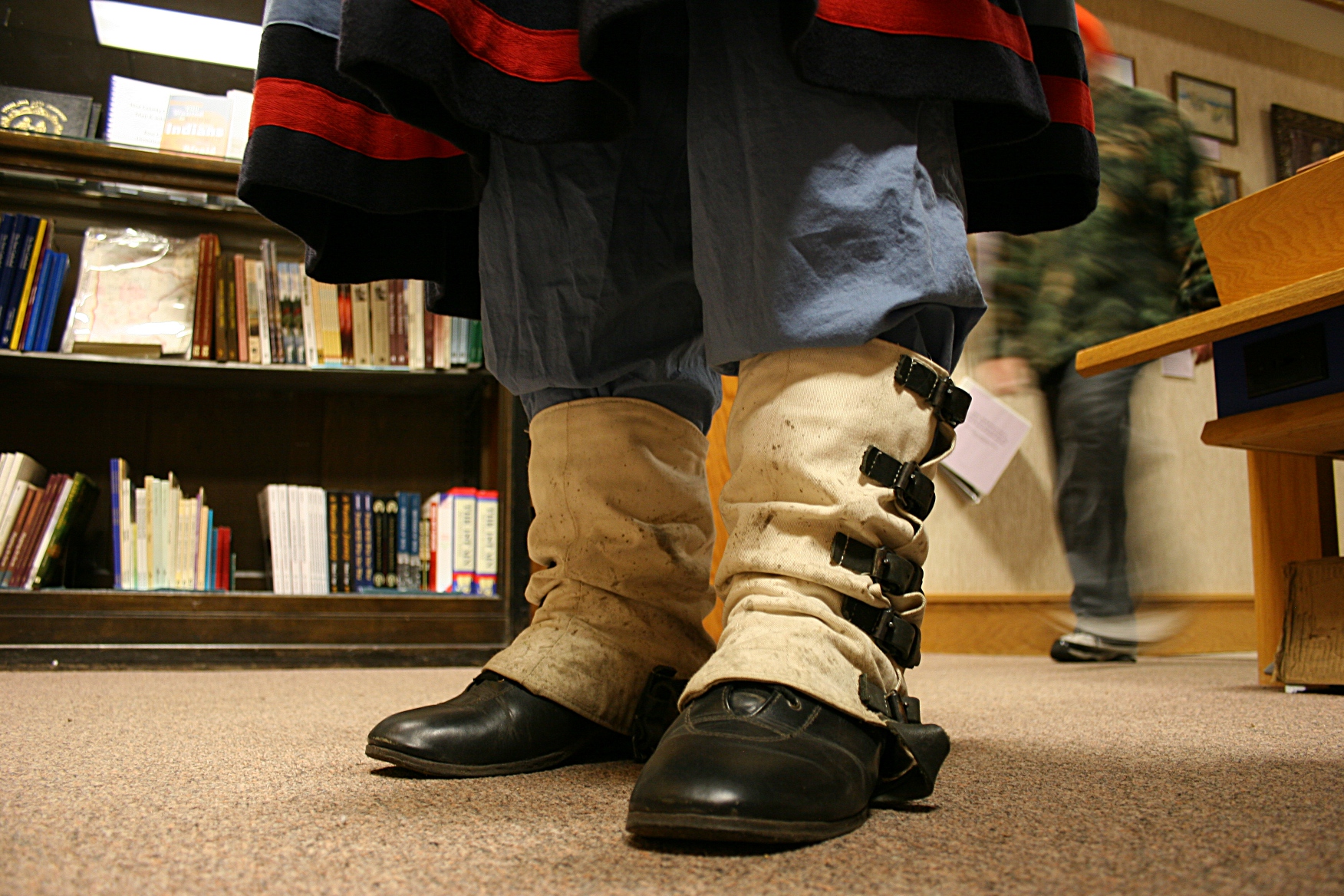
The buckled cloth covering worn by French Mary keeps mud from boots.

The buckled cloth covering worn by French Mary keeps mud from boots.

I spoke with “French Mary” Tepe about her role as a vivandiere with Pennsylvania volunteers in the Civil War. Vivandieres carried a canteen of spirits and more and attended to the sick and wounded. I’d never heard of vivandieres prior to meeting French Mary.

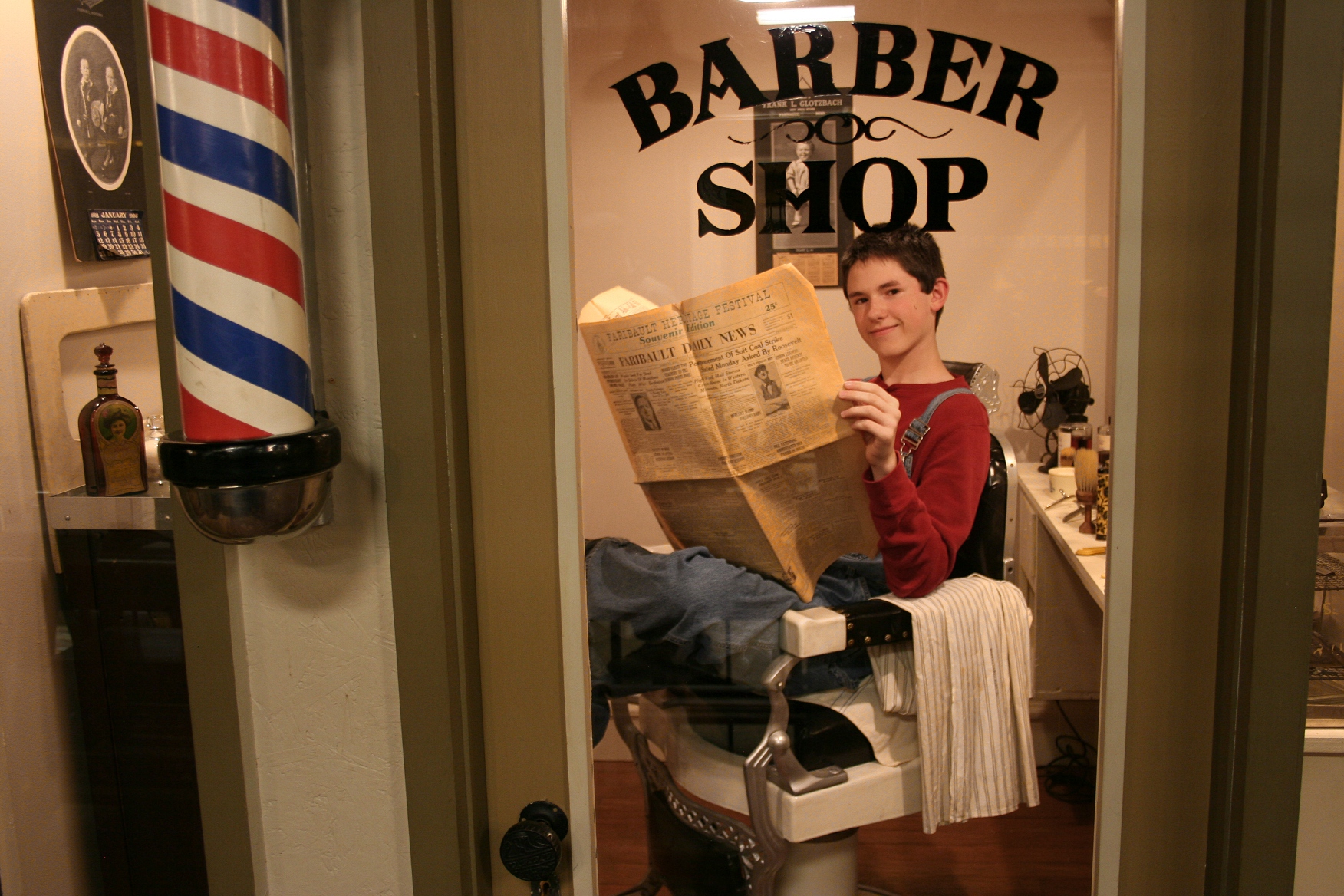
Noah, who volunteers at the library through its youth program, sat in the museum's barbershop chair during A Night at the Museum. in the museum barbershop.

Noah, who volunteers at the library through its youth program, sat in the museum’s barbershop chair.

Noah read a souvenir edition of the Faribault Daily News in an old-time barbershop while Leroy bathed in a second story room above.

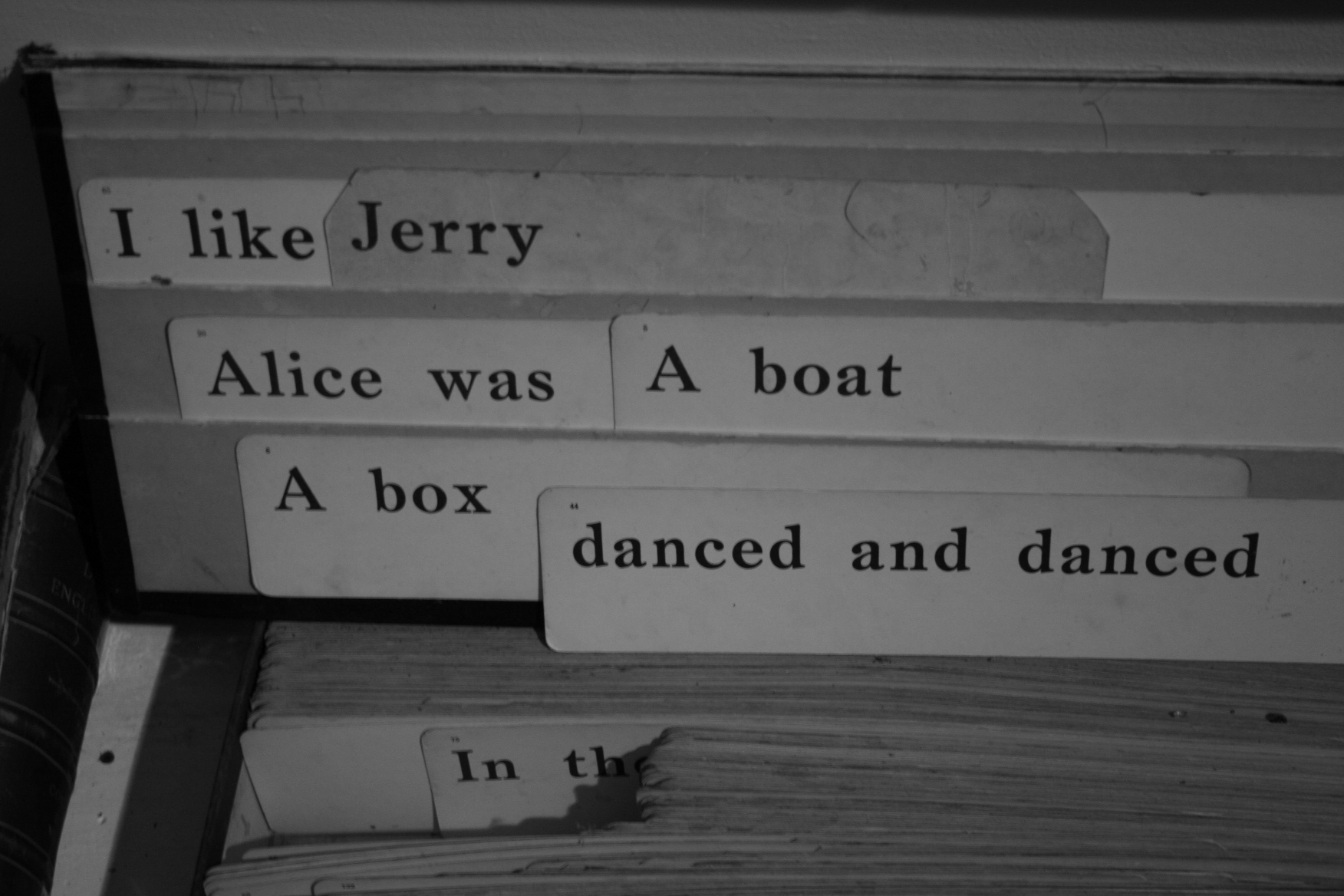
Flash cards in the one-room school.

Flash cards in the one-room school.

Mrs. Sweet taught arithmetic in the late 1850s one-room Pleasant Valley School where Noah’s sister, Hannah, along with others, assumed the roles of students.

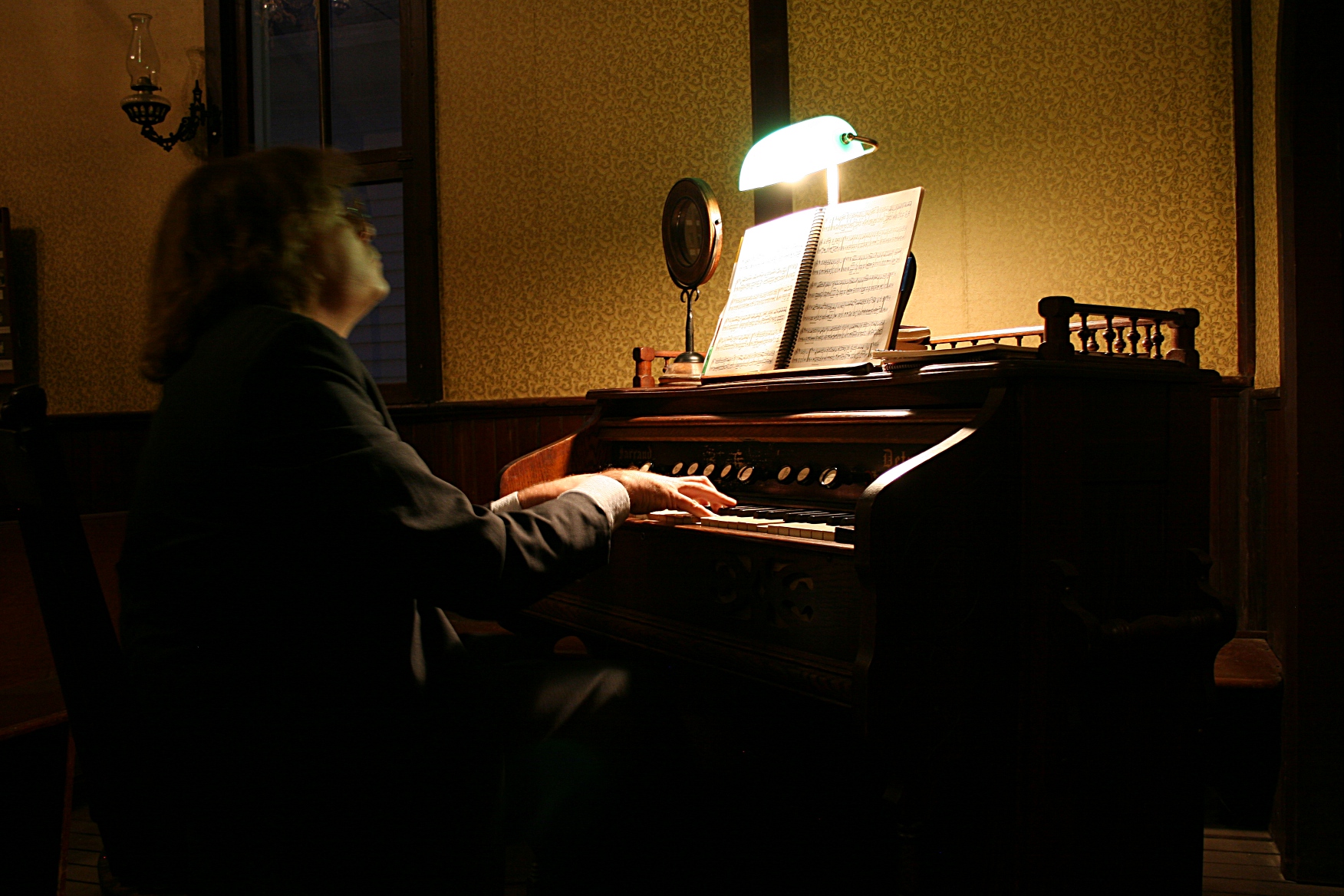
Playing the old pump organ.

Playing the old pump organ.

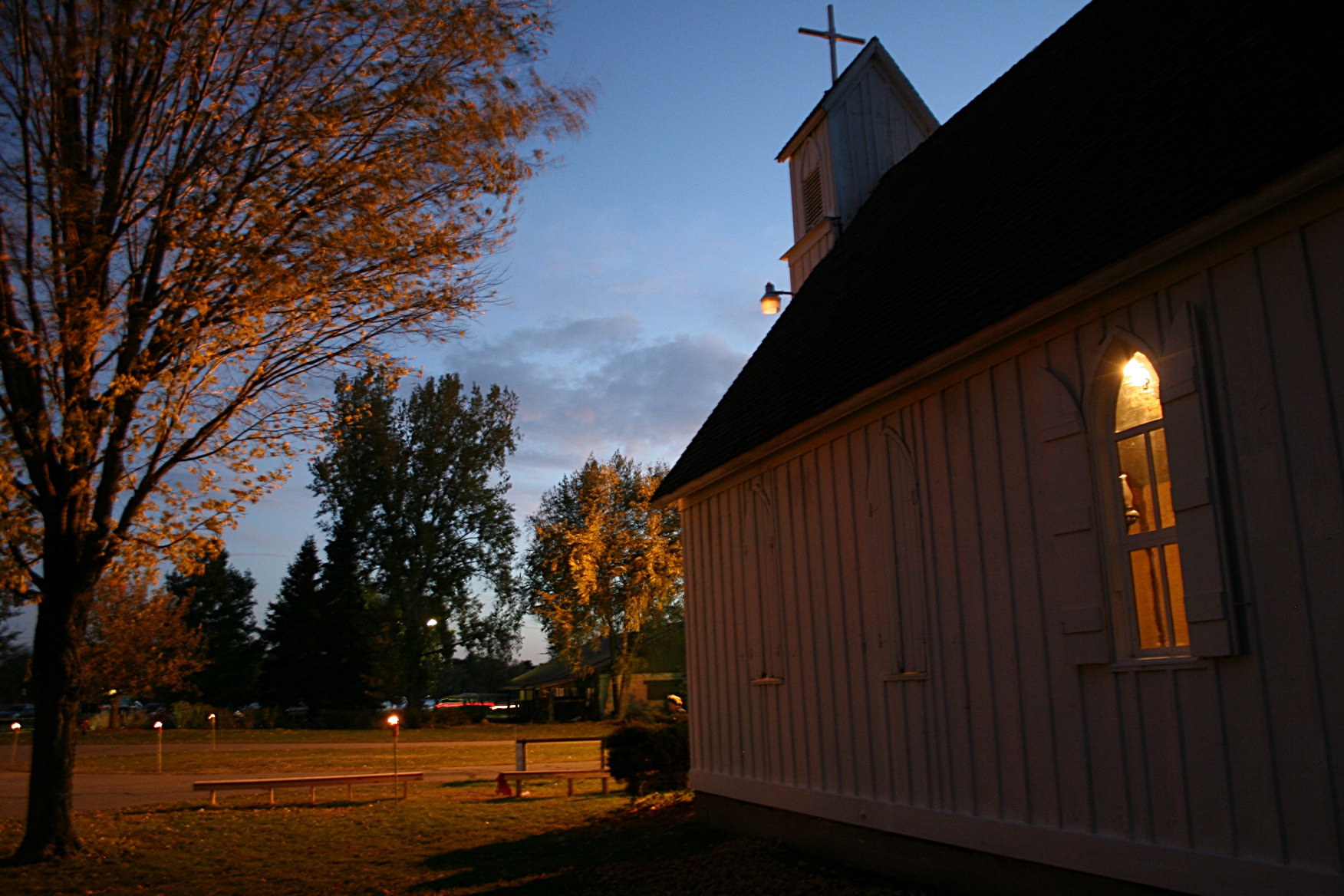
Holy Innocents, from the side.

Holy Innocents.

I listened to music played on the pump organ in Holy Innocents Episcopal Church built in 1869 in Cannon City and consecrated by Bishop Whipple.

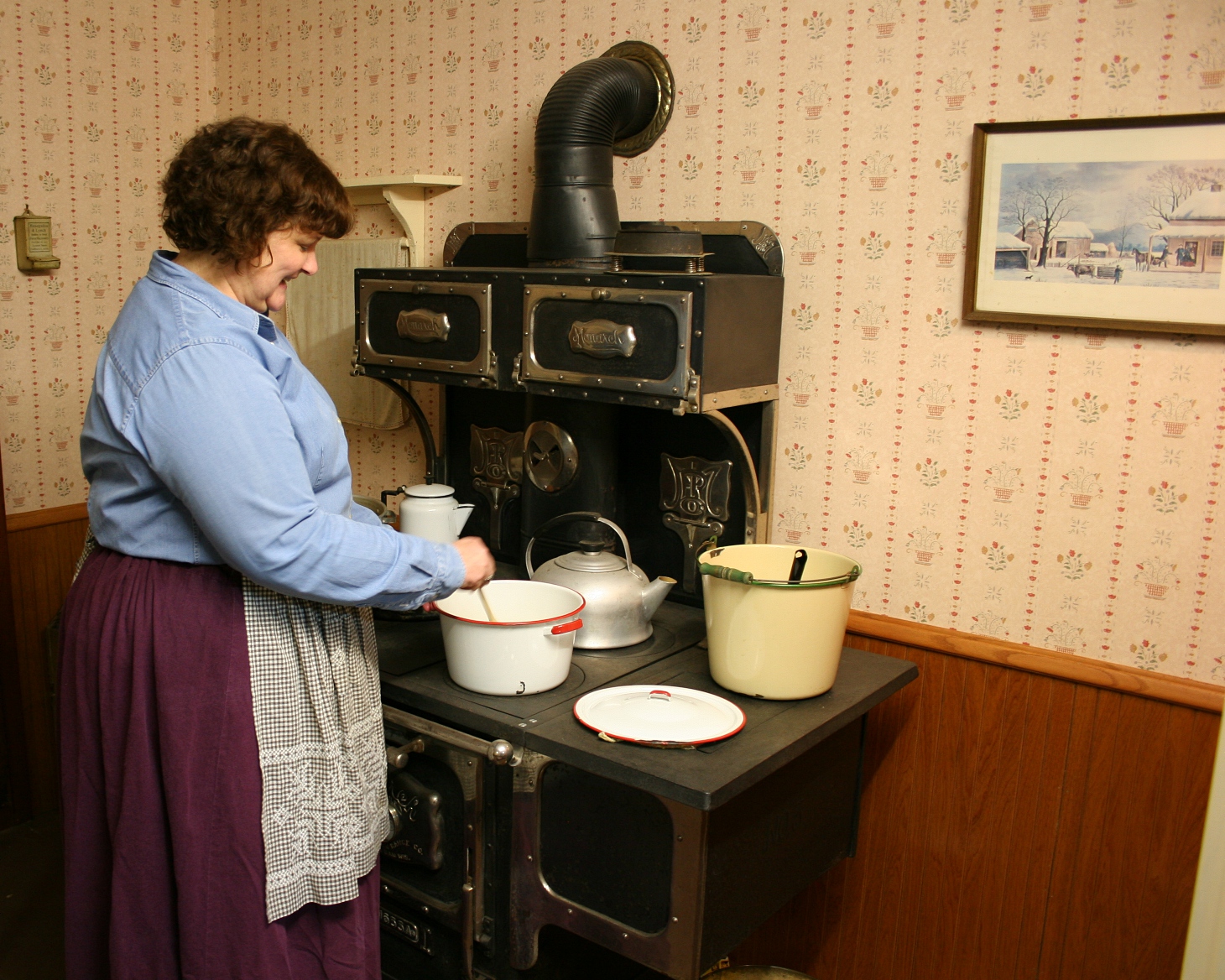
Mrs. Morris supposedly cooking applesauce.

Mrs. Morris “cooking” applesauce.

Next door I spoke with Mrs. Morris who was “cooking” applesauce in her 1920s kitchen. Except she wasn’t really using the old cookstove. The inviting scent of apples wafted, instead, from apple slices heating in a kettle on a mostly out of sight hotplate. Ingenious.

This multiple engaging of the senses added to the experience. In the old log cabin, built in the mid 1800s by a Scandinavian immigrant in the Nerstrand Big Woods, I savored the yeasty aroma of bread baking—not in the old stove—but rather in a bread machine hidden away. Ingenious.

The setting for A Night at the Museum.

The setting for A Night at the Museum.

Outside, several tiki torches flickered, many snuffed out by the strong early evening breeze. Nearby, visitors gathered around a small campfire to sip apple cider, eat hot dogs and/or munch on cookies.

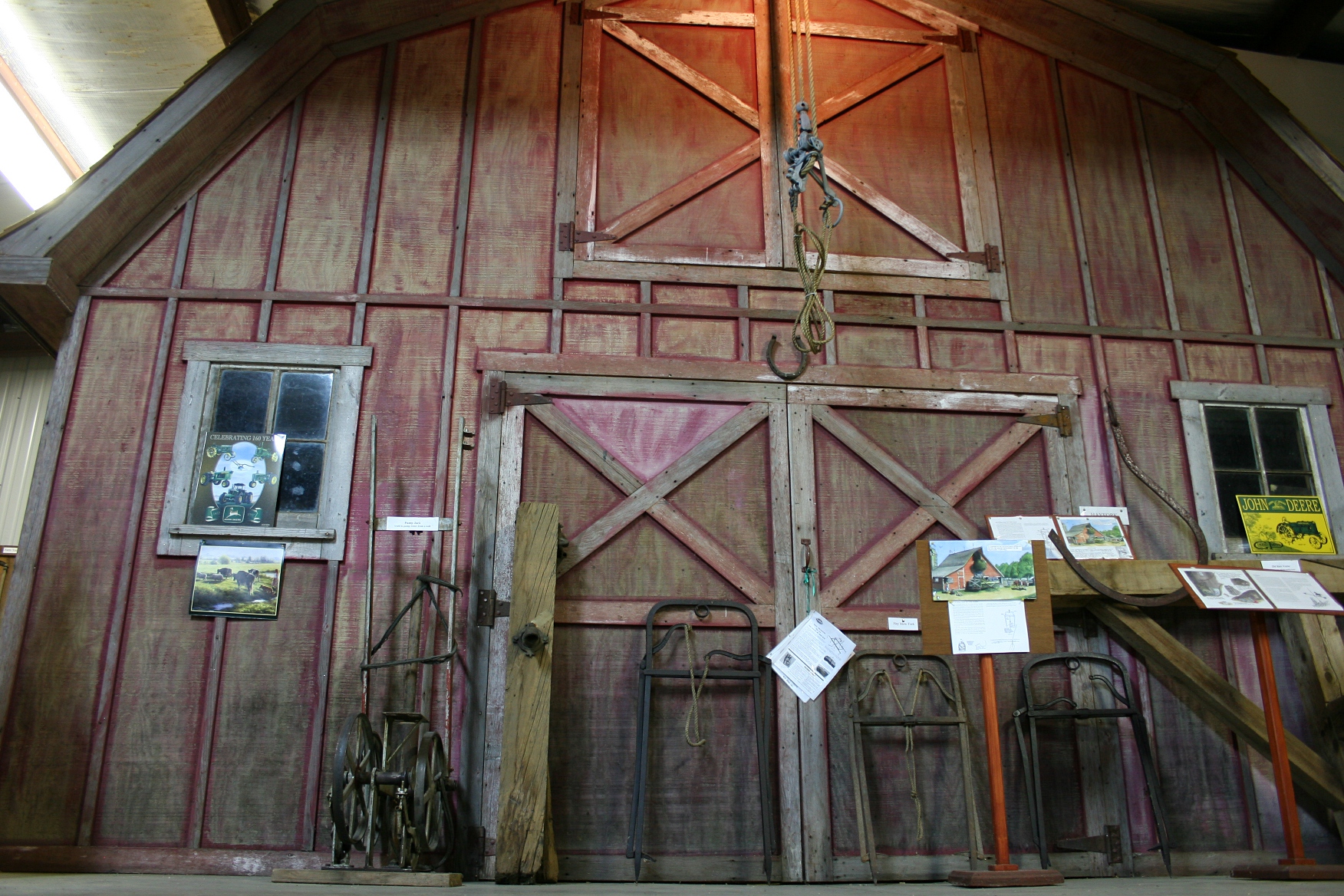
A barn front forms a backdrop in Harvest Hall, where visitors can learn about the area's agricultural heritage.

A barn front forms a backdrop in Harvest Hall, where visitors can learn about the area’s agricultural heritage.

Horses hooves clopped on the pavement as visitors were treated to a wagon ride around the adjoining county fairgrounds.

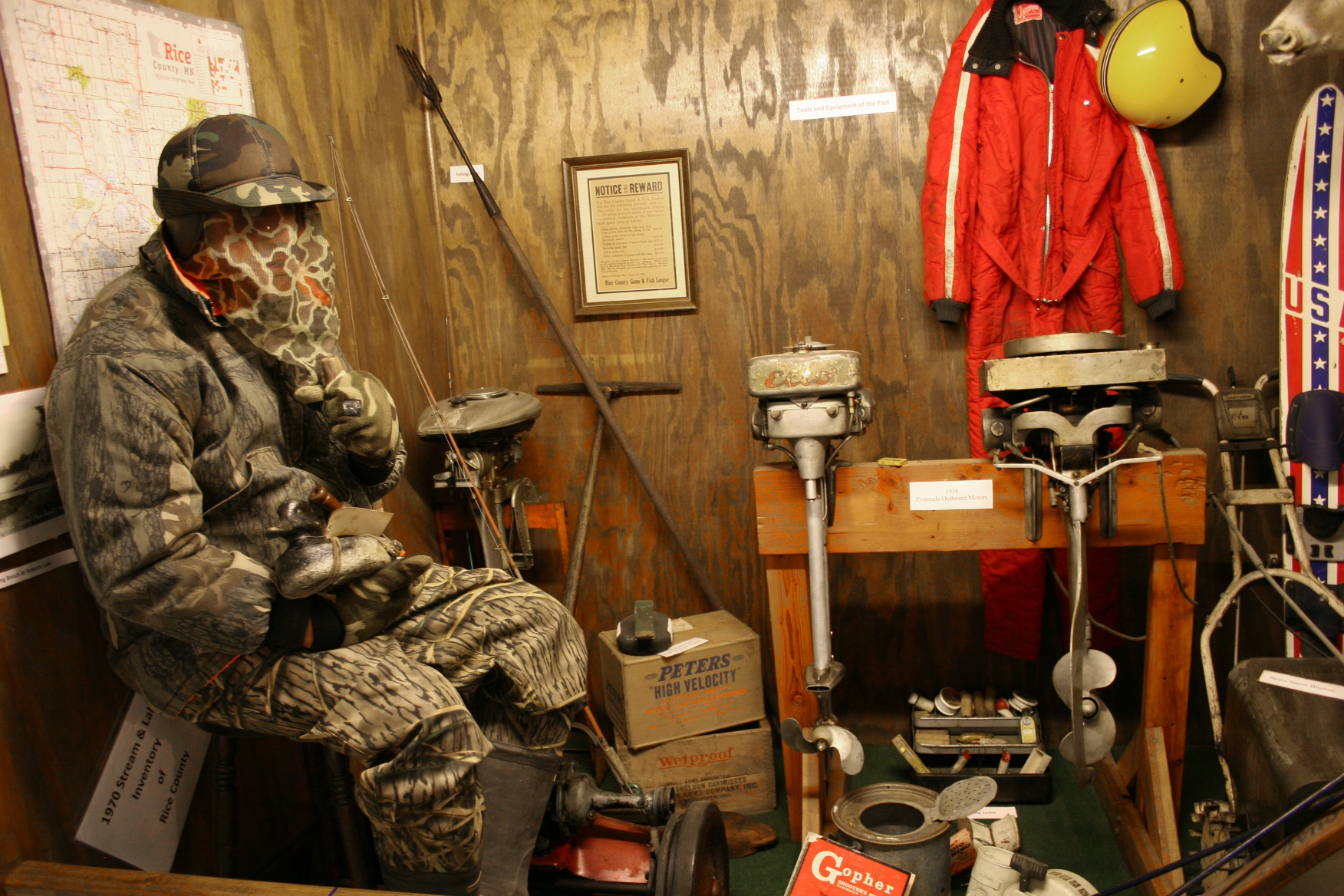
Brian Schmidt dressed as a hunter, not to be confused with a mannequin.

Not a scene from Duck Dynasty.

But the most memorable event of the evening for me, and likely Brian Schmidt who serves on the historical society board, occurred inside Heritage Hall. I stopped briefly at a display on outdoor recreational activities in the county and noticed what I assumed to be a camouflaged duck hunter mannequin in a corner. Except he wasn’t. As I walked away, a duck call sounded. Startled, I turned back, peered more closely at the masked face and realized I’d been fooled. By Brian.

A peek at Heritage Hall.

A peek at Heritage Hall.

Excellent. This Night at the Museum was not billed as a Halloween event. But in that moment, for me, it was.

© Copyright 2013 Audrey Kletscher Helbling


New exhibit highlights Rice County in the U.S.-Dakota War of 1862 September 2, 2012

IT IS EASY TO FORGET SOMETIMES, because I grew up in the region of Minnesota where the U.S.-Dakota War of 1862 was centered, that residents of the county in which I now live also played an integral role in the conflict.

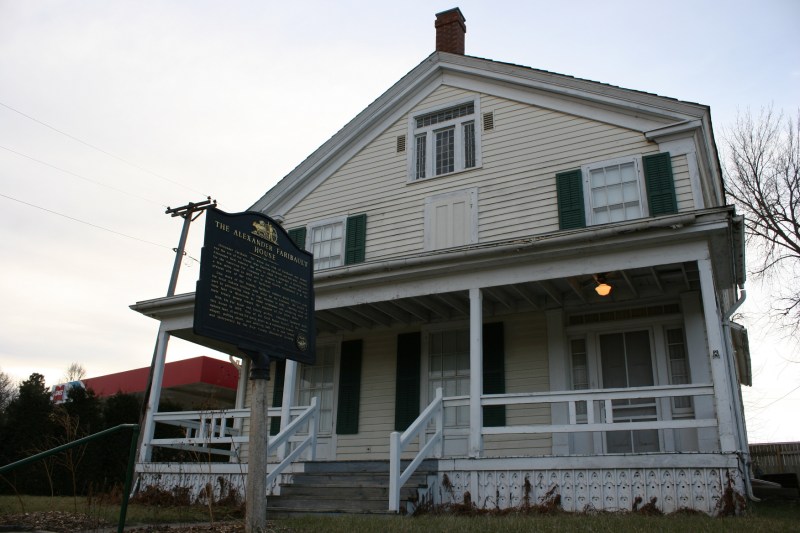
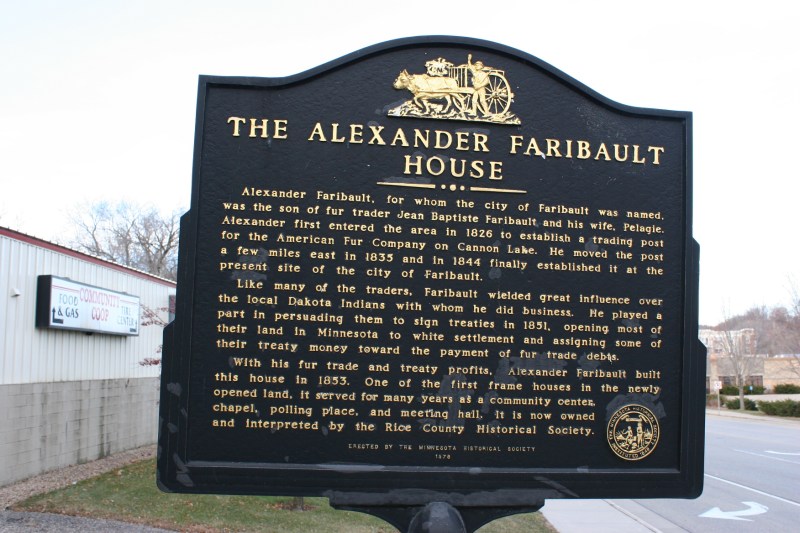
Specifically, Rice County residents Bishop Henry Whipple and Alexander Faribault, after whom my community of Faribault is named, are key persons often noted in historical information written about the war.

I am always surprised that relatively few people from outside of southwestern and central Minnesota know so little about the bloody, six-week war between the Dakota and the white settlers and soldiers given it is a major, defining event in Minnesota history.
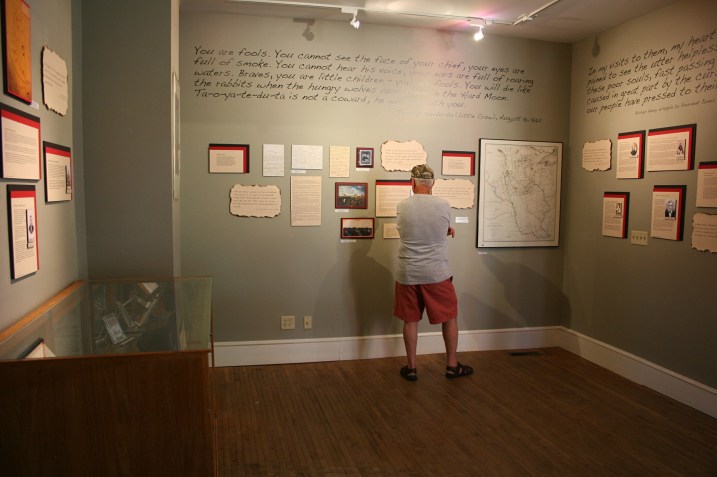
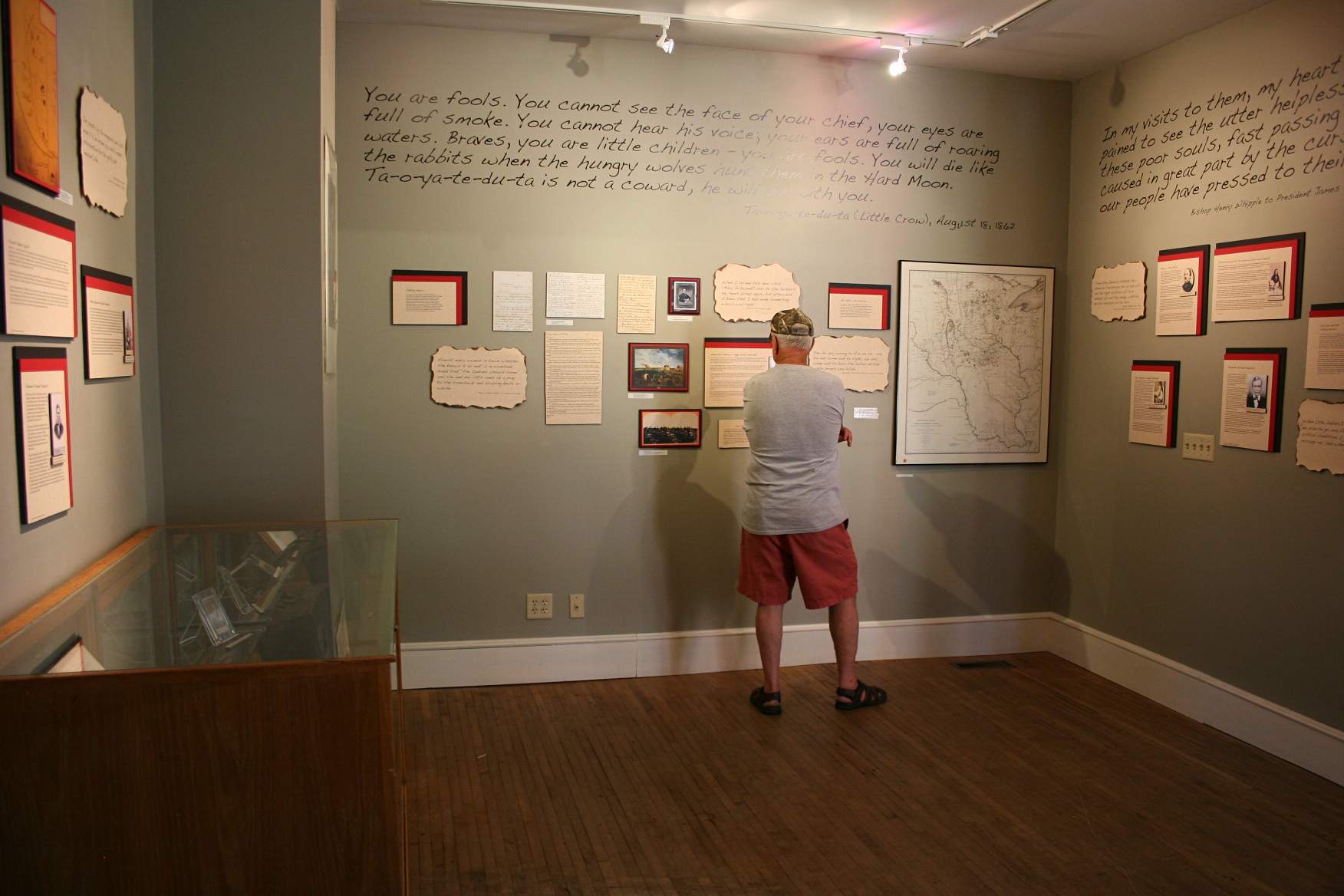
An overview of 1862, Through Rice County’s Eyes, which opened August 22 in Northfield.

However, awareness has grown considerably this year on the 150th anniversary of the war, including right here in Rice County. The Northfield Historical Society, partnering with the Rice County Historical Society, is currently showcasing an exhibit, 1862, Through Rice County’s Eyes.

I recently checked out the Northfield exhibit, which features mostly memorable quotes, volumes of summarized information and copies of photos. It’s a lot of reading.

But if you’re interested in educating yourself, it’s worth the time and concentration needed to absorb the information presented in this exhibit. And I’ll admit to occasionally skimming the postings because I am more of a visual, multi media, show-and-tell kind of history learner. I also had a pretty good background of knowledge going into the exhibit.
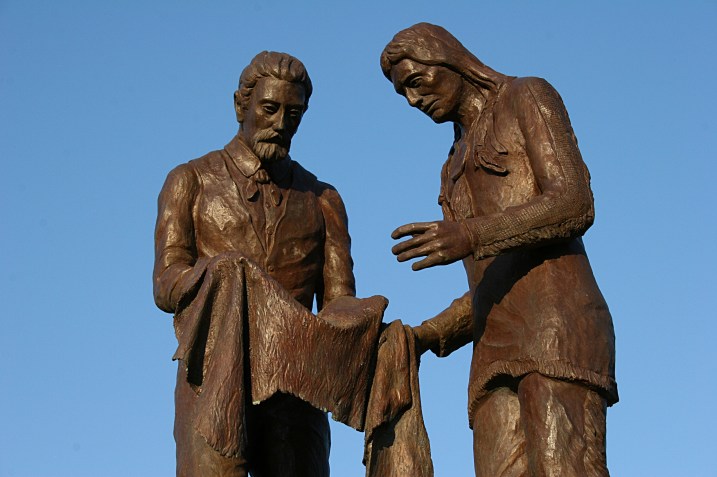
This sculpture of Alexander Faribault trading with a Dakota trading partner stands in Faribault’s Heritage Park near the Straight River and site of Faribault’s trading post. Faribault artist Ivan Whillock created this sculpture which sits atop a fountain known as the Bea Duncan Memorial Fountain.

I knew, for example, that fur trader Alexander Faribault was one-quarter Dakota and married to Mary Elizabeth Graham, whose mother was a family member of a Dakota chief. I knew, too, that Faribault was involved in the negotiating and translating of land treaties between the government and the Dakota before the war and that he benefited financially.

I was aware that Alexander Faribault sheltered the Dakota.
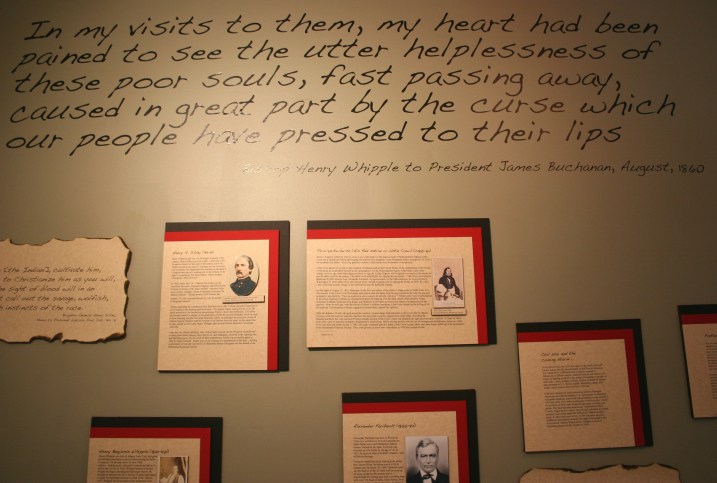
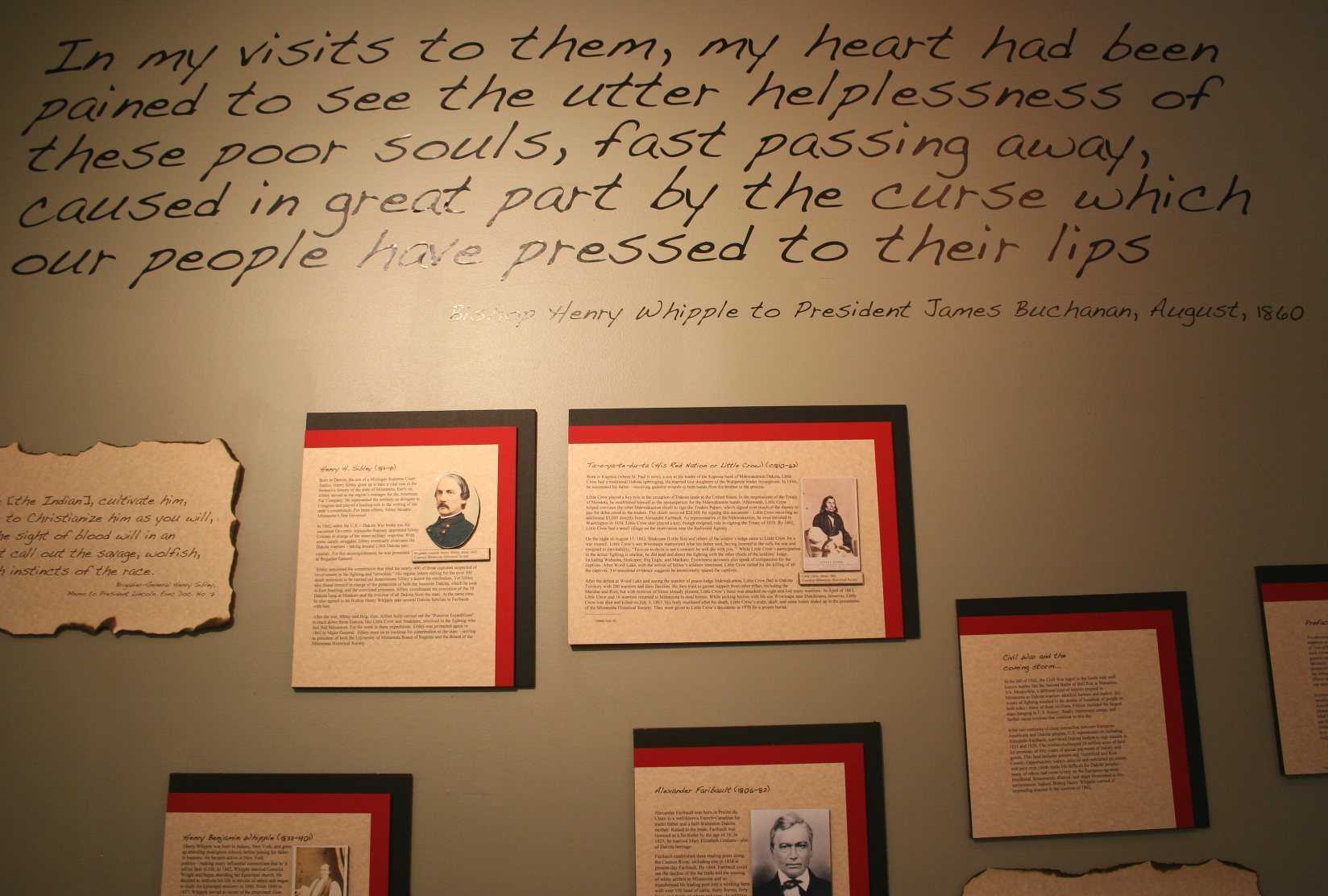
Above the photos and info is this quote by Bishop Henry Whipple to President Buchanan in August 1860: “In my visits to them, my heart had been pained to see the utter helplessness of these poor souls, fast passing away, caused in great part by the curse which our people have pressed to their lips.”

But I had forgotten that Bishop Henry Whipple, a long-time advocate for the rights of the Dakota and known to them as “Straight Tongue,” worked to find a safe refuge for them in the city of Faribault.

Alexander Faribault opened his land to the Dakota. Information in the exhibit states:

This land was the only safe-haven of its kind in a state now prejudiced in fear and anger against anyone with Dakota blood.

According to info in the exhibit, Alexander Faribault, whom you recall was one-fourth Dakota, also experienced prejudice against him. By 1869, this once successful fur trader, flour mill owner and politician had to sell his land and assets, including the land occupied by the Dakota.

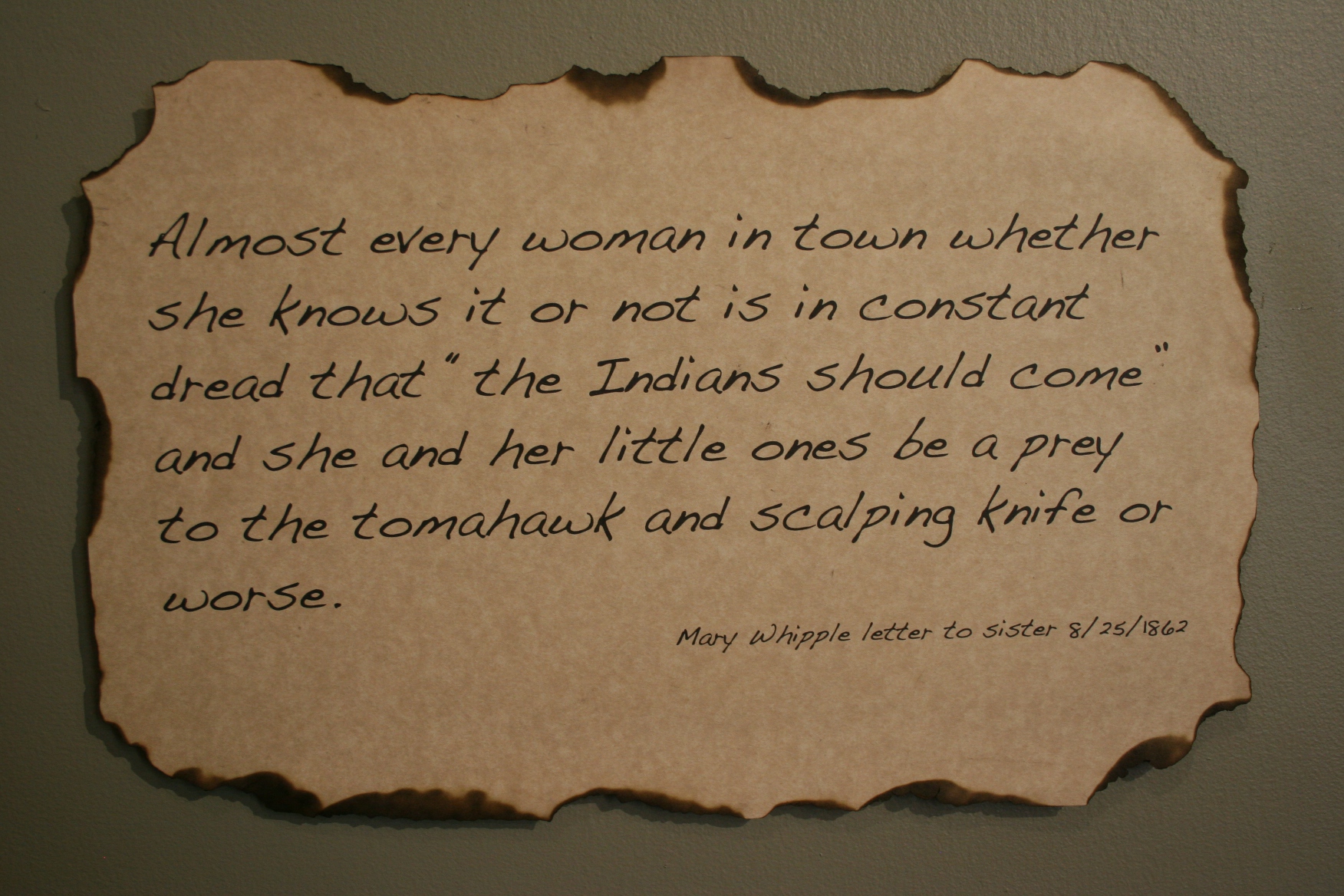
Equally interesting is the quote, below, attributed to Mary Whipple. Even though her husband, the bishop, worked tirelessly to help the Dakota, fear still existed in his home community.
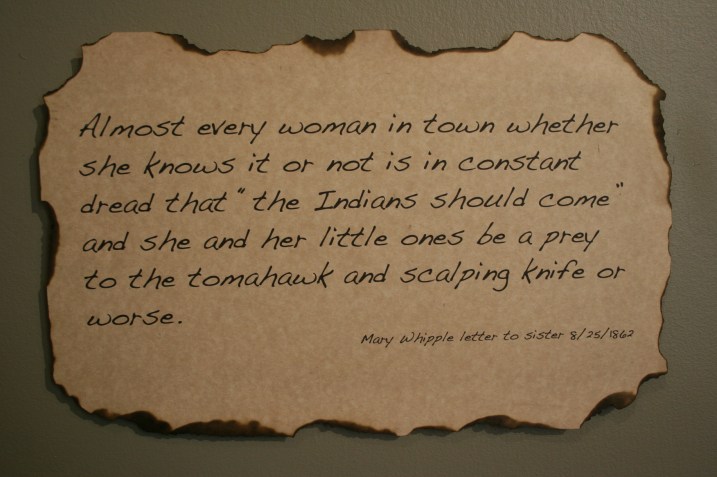
A quote from a letter written by Mary Whipple to her sister during the U.S.-Dakota War.

Perhaps the most interesting fact I learned relates to that of Lt. Rollin Olin, a decade-long resident of Northfield. He was second in command of the Third Minnesota Regiment at the Battle of Wood Lake—the final battle of the war—and a member of a five-man military tribunal which tried the Dakota following the war. He signed more than 300 death sentences for nearly 400 Dakota charged with murder, rape and/or robbery.

For me, that raises the obvious question: How could someone who fought against the Dakota judge them without bias? All members of the tribunal, in fact, had fought the Dakota. The answer, of course, is that Lt. Olin and the other four could not.

Likewise, the Northfield Historical Society is wisely careful to indicate that its new, temporary exhibit may not please everyone or include everything on the topic of Rice County’s connection to the war. On the NHS website, you’ll read this disclaimer:

As varied as these and other local perspectives may be, any exploration of the U.S.-Dakota War of 1862 suffers from the inevitable limitations facing every historical examination—limitations such as scope and biases, past and present, which impact the telling and perception of the stories and data. In presenting the exhibit 1862, Through Rice County’s Eyes this fall, NHS endeavors to draw visitors into thoughtful interest and discussion of this momentous event and its aftermath by sharing local connections. Come and critically examine this exhibit.
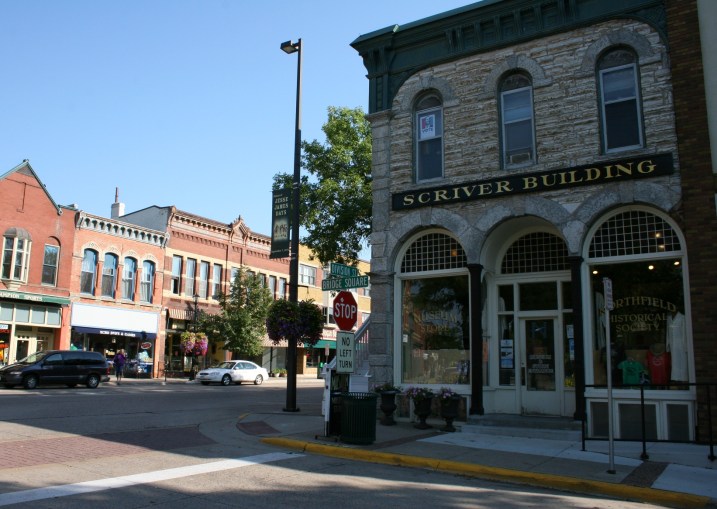
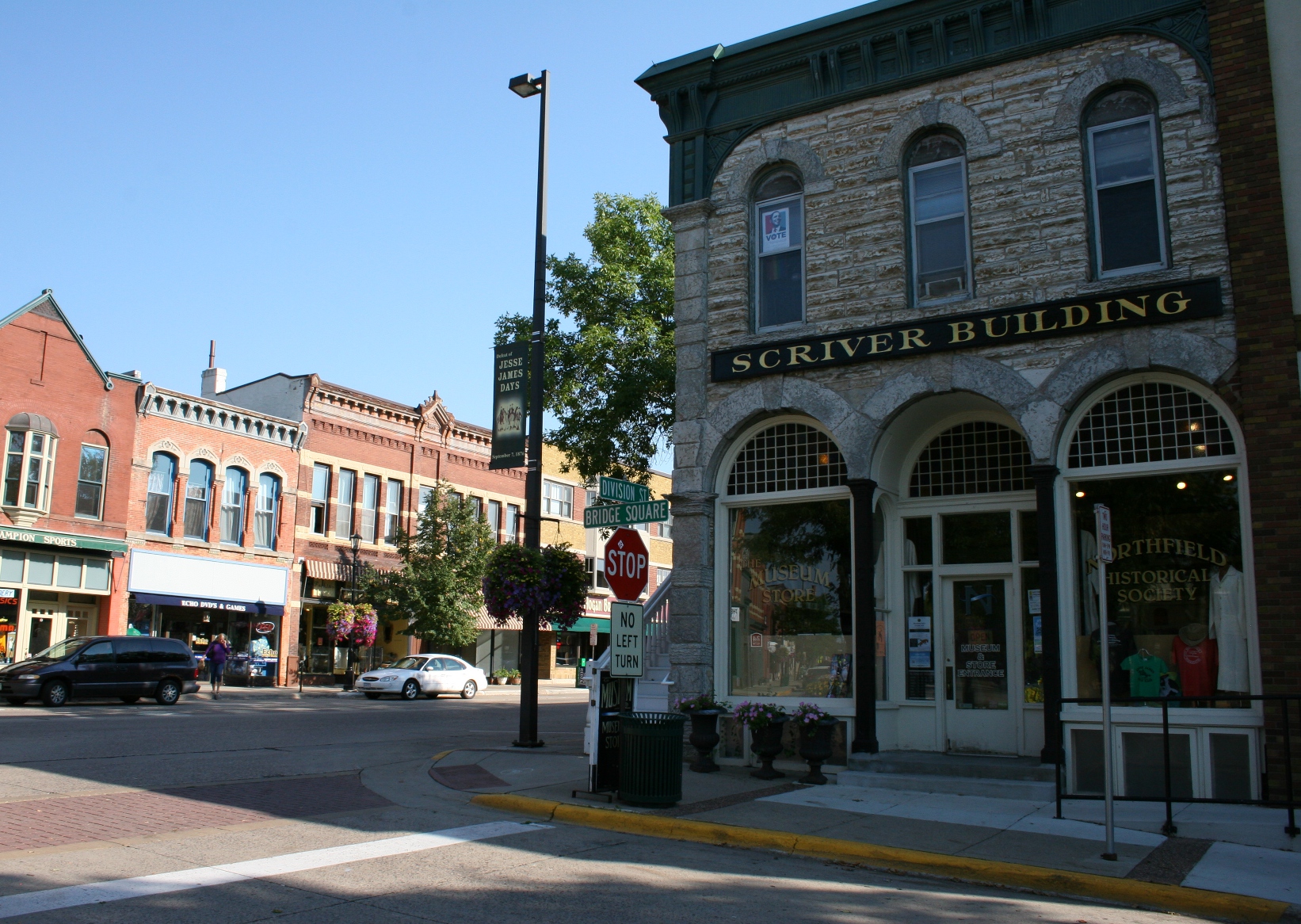
The exterior of the Northfield Historical Society, 408 Division Street, Northfield.

FYI: To learn more about 1862—Through Rice County’s Eyes, click here to the NHS website.

To learn more about the Minnesota counties, county by county, involved in the U.S.-Dakota War of 1862, click here.

© Copyright 2012 Audrey Kletscher Helbling


Take me out to the (vintage) ball game in Faribault August 20, 2011

Curly Schreckenberg watches the vintage baseball match from his Model T Ford.

FRANK “CURLY” SCHRECKENBERG pulled into the Rice County Fairgrounds in his 1918 Model T Ford, a fitting mode of transportation Saturday afternoon for a vintage baseball game between the Northfield Silver Stars and the Rochester Roosters.

“There’s nothing like old-fashioned,” Schreckenberg said as he sat behind the wheel of his Model T, occasionally glancing over at the competition played with 1860 rules. No gloves. No called balls and strikes. No sliding. No spitting. No swearing…

Striker (batter) up!

Schreckenberg’s a fan of ball games. He played church league softball from age 38 – 71, mostly as a pitcher. “I loved playing ball,” he said. “I loved the fellowship.” He was dressed in the uniform of First English, his team for most of his 33 church league years.

His antique car drew lots of attention from the players and from the crowd gathered Saturday for the vintage match. The Silver Stars whooped the Roosters by a score of 6 to 1. Afterward, the players posed for a team photo by the Model T.

With team members sporting names like Cow Pie, Rabbit, Goose, Woodchuck, Bean Field and Admiral, no one seemed to take the event too seriously. Rather, the match focused more on bringing history to life.

Out on the ball field, the players, dressed in vintage uniforms, tried to stay true to the mid-19th century time period.

The Rochester Roosters, the scorekeeper and the umpire posed for a photo after the match.

Likewise, the Silver Stars from Northfield gathered for a team photo.

“Watch the daisy cutters (sharp grounders),” Rabbit, aka Scott Richardson, from the Silver Stars advised.

“Don’t run me over, Tar Cutter,” another player warned.

“I think the whole team ought to be fined.”

“Way to hustle, Bryan,” a teammate said, slipping up on a name.

Wooden bats clustered on the grass behind the players' bench before the match.

Players munched on sunflower seeds on the Silver Stars bench.

At least one Rochester Rooster player sported period style stockings.

Wooden bats and gloveless hands. Bags of sunflower seeds and peanuts. Wood planks balanced between straw bales. Root beer floats. Bell-ringing when an ace (run) was scored. Good-natured bantering. All set a period mood for the 1 ½-hour match (game) between the two teams.

Occasionally a player pulled a cell phone from a pocket, sipped on Gatorade, clicked a digital camera. Ethnic music from a Hispanic celebration across the fairgrounds carried to the ball field, adding to the relaxed setting.

“It’s a beautiful day for a baseball game,” at least one fan was overhead saying.

Indeed, it was a perfect August afternoon for a vintage baseball match in Faribault, even for someone like me who doesn’t get into baseball, but can appreciate living history.

Fans sat in the sun, but most sat under shade trees for the match hosted by the Rice County Historical Society.

Some attendees even brought vintage style wooden folding chairs.

Roosters' bench time and one dirt and grass-stained white uniform.

A young player for the Rochester Roosters.

The end of the match with the victorious Silver Stars on the right and the Roosters on the left.

FYI: Minnesota has some eight vintage baseball teams, I was told on Saturday by the game’s umpire. Most of those are in the eastern part of the state and include teams like the Apple Jacks from La Crescent, the Afton Red Sox and the St. Croixs. The Minnesota teams also compete with Wisconsin teams like the Osceola Onions and the Milwaukee Cream Citys.

© Copyright 2011 Audrey Kletscher Helbling
 

Serving up history and pie in Faribault April 12, 2011

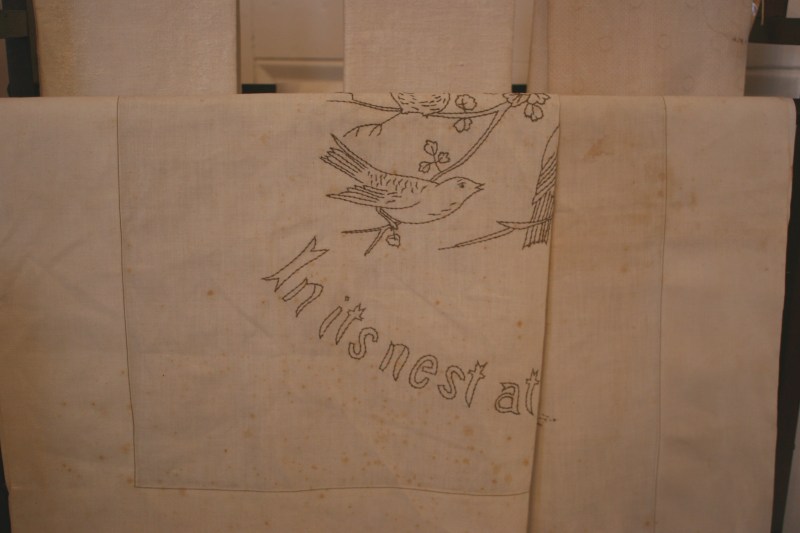
I EXPECT YOU have no clue what you are viewing above. Perhaps you think this is a piece of art in a gallery exhibit.
You would be wrong. Way wrong.

Rather, this shows a portion of a Civil War battle flag that I’ve switched up with some photo editing tools to emphasize the stars and letters and numbers in the upper left corner.
Lighting conditions weren’t ideal for photographing this flag Saturday afternoon in the Guild House at the Cathedral of Our Merciful Saviour in Faribault.
Honestly, I hadn’t even expected to photograph this flag sewn by a group of women in Fairmont and carried by Company C, 6th Minnesota Volunteer Infantry. The last time I asked to photograph the flag at the Rice County Museum of History, my request was denied by director Susan Garwood.

She didn’t know me from Adam, or Eve, although I gave her my business card and explained that I was a writer and blogger. That didn’t matter.

Thankfully, Garwood changed her mind and I got the go-ahead-and-shoot-but-without-flash OK.

Garwood has reason to be cautious. This battle flag is rare, among about a half dozen in Minnesota. Recent restoration cost nearly $7,300.

Here's how the flag really looks. Faded. The company which carried this flag was comprised of men primarily from Bridgewater Township in Rice County, Minnesota. On the back side of the flag 34 stars are sewn representing the number of states in 1862. You are seeing reflections here on the glass encasing the flag.


Just another, upside down, view of the flag and the reflections of visitors viewing it.

I don’t know the value of the restored flag. But it is valuable enough that a Faribault police officer was guarding the flag Saturday afternoon during “Recognition of the Fall of Fort Sumter–The Beginning of the Civil War” sponsored by the Rice County Historical Society and the Cannon Valley Civil War Roundtable.

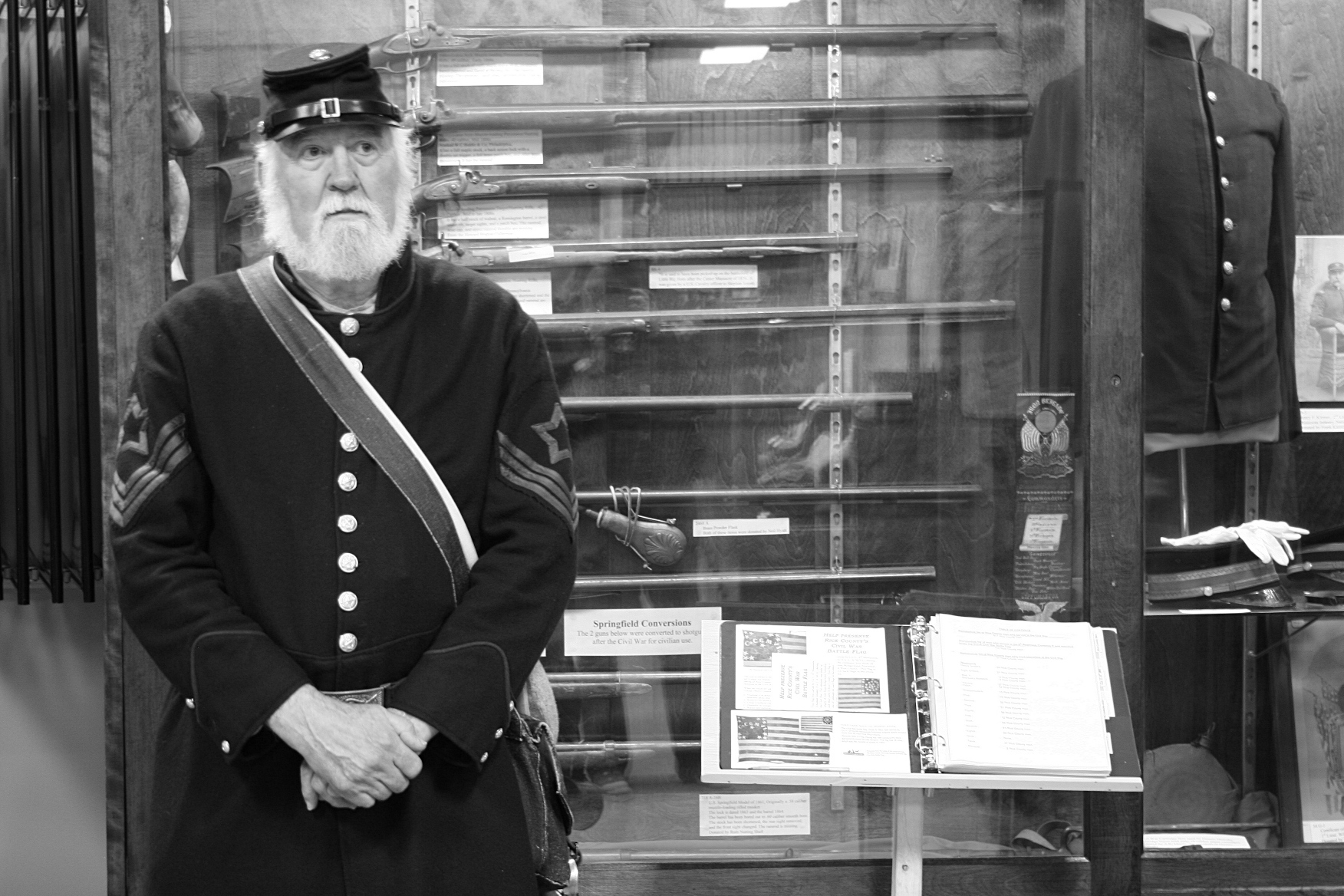
Likewise a collector of Civil War era artifacts was standing guard over his tables full of treasures. He had, among Civil War uniform buttons and other items, an original Lincoln photo engraving (used on the $50 bill) and signature. I didn’t ask the values. Sometimes it’s better not to know these things.


A slightly out of focus photo that I took of an original Lincoln photo engraving for a $50 bill on display Saturday.

The last time I photographed parts of his collection at a 2009 Cannon Valley Civil War Roundtable meeting, he made me promise not to reveal his name. I agreed. I didn’t want to go missing and have my family looking for me under a stadium. That’s an exaggeration, but this collector was serious. My lips are sealed.

I did ask him, though, why he didn’t bring his slave bills, which were advertised as being at the event and one of the key reasons I attended. He simply said he didn’t know he was supposed to bring them. He gave the same answer 1 1/2 years ago at the Roundtable meeting. I had gone to the session then specifically to see the slave documents.

But on Saturday I perused a few other artifacts I hadn’t seen before like…

these old bullets


and two Civil War era muzzleloaders which I was allowed to pick up and which were heavy at 18 and 21 pounds.

I also saw…

these costumed reenactors pull up in a pick-up truck

and this unidentified reenactor, left, posing for photos with Sharon and Richard G. Krom of Rochester. Richard is the great grandson of a Civil War soldier and has written a book, The 1st MN Second to None.

Finally, I sat down with friends and family to enjoy…

a piece of delicious homemade pie made by Rice County Historical Society President Jason Reher. He baked 16 pies for the event. (Jason could be a professional baker; his pie is that good.)

Fortunately for me, Jason had baked my favorite pie and apparently a favorite of many as everyone sitting at my table chose blueberry pie over apple, pumpkin or pecan. Most of us wondered if the blueberries were wild, yet never bothered to walk over and ask the pie-maker.

Jason wondered why I was photographing his pie. I just handed him a business card and figured he’d figure it out.

Copyright 2011 Audrey Kletscher Helbling