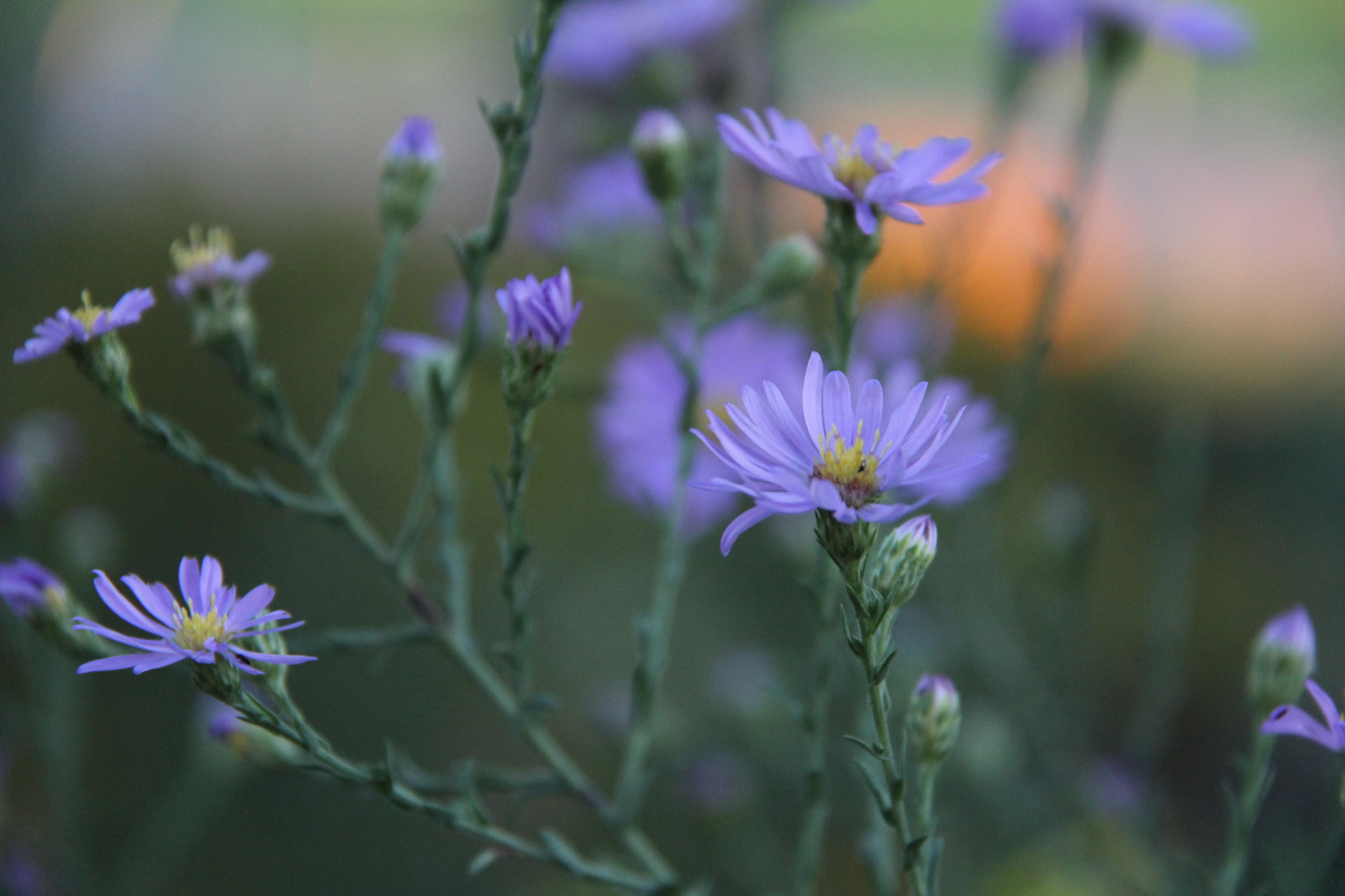
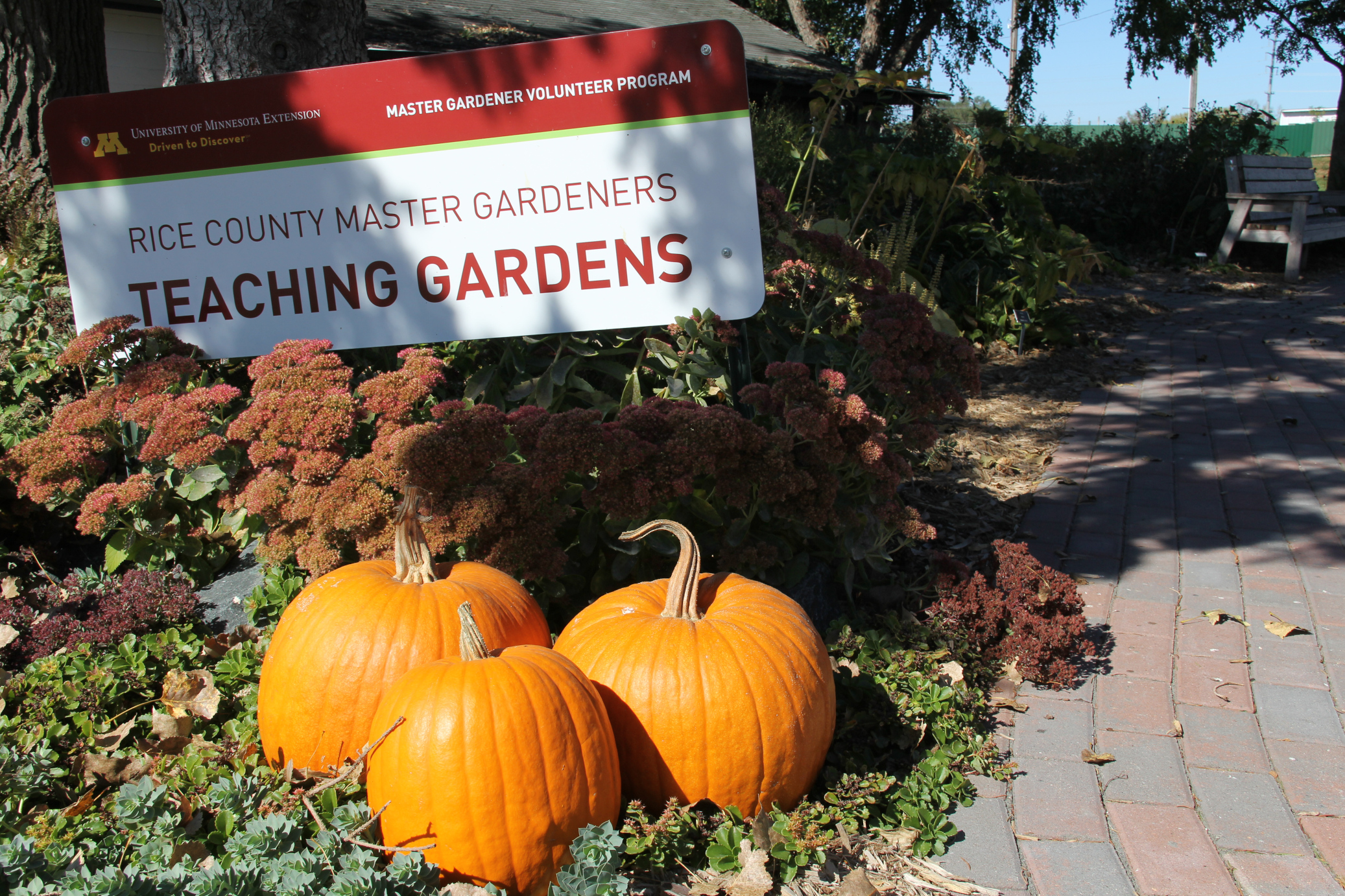
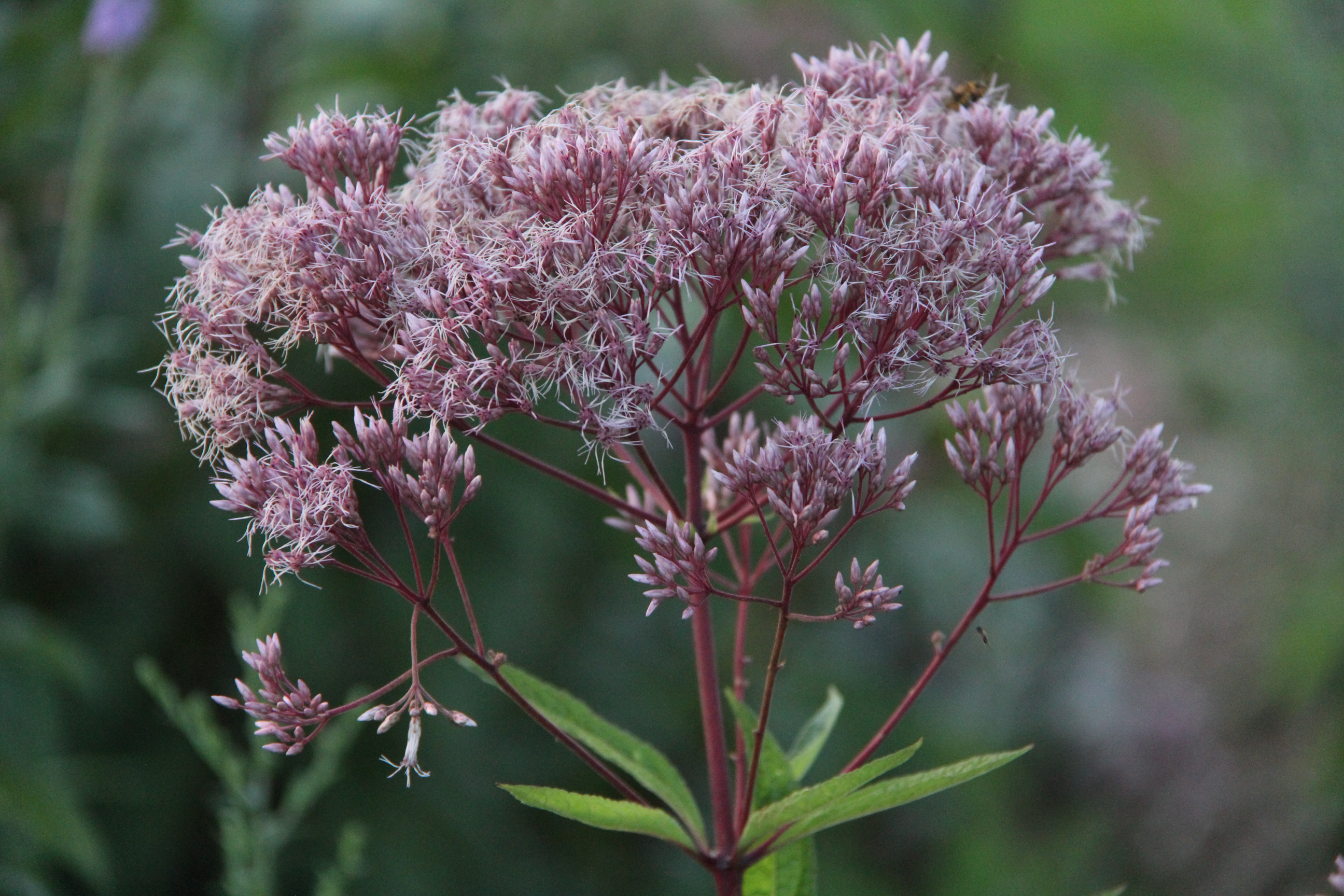
Flowers blooming a few weeks ago in the Rice County Master Gardeners Teaching Gardens. (Minnesota Prairie Roots copyrighted photo September 2025)
IN THIS FLEETING TIME before winter arrives, I find myself drawn to end-of-the-season blooms. And plenty remain, clinging to summer past, attaching to autumn present, but some already ceding to the inevitable cold and snow yet to come.
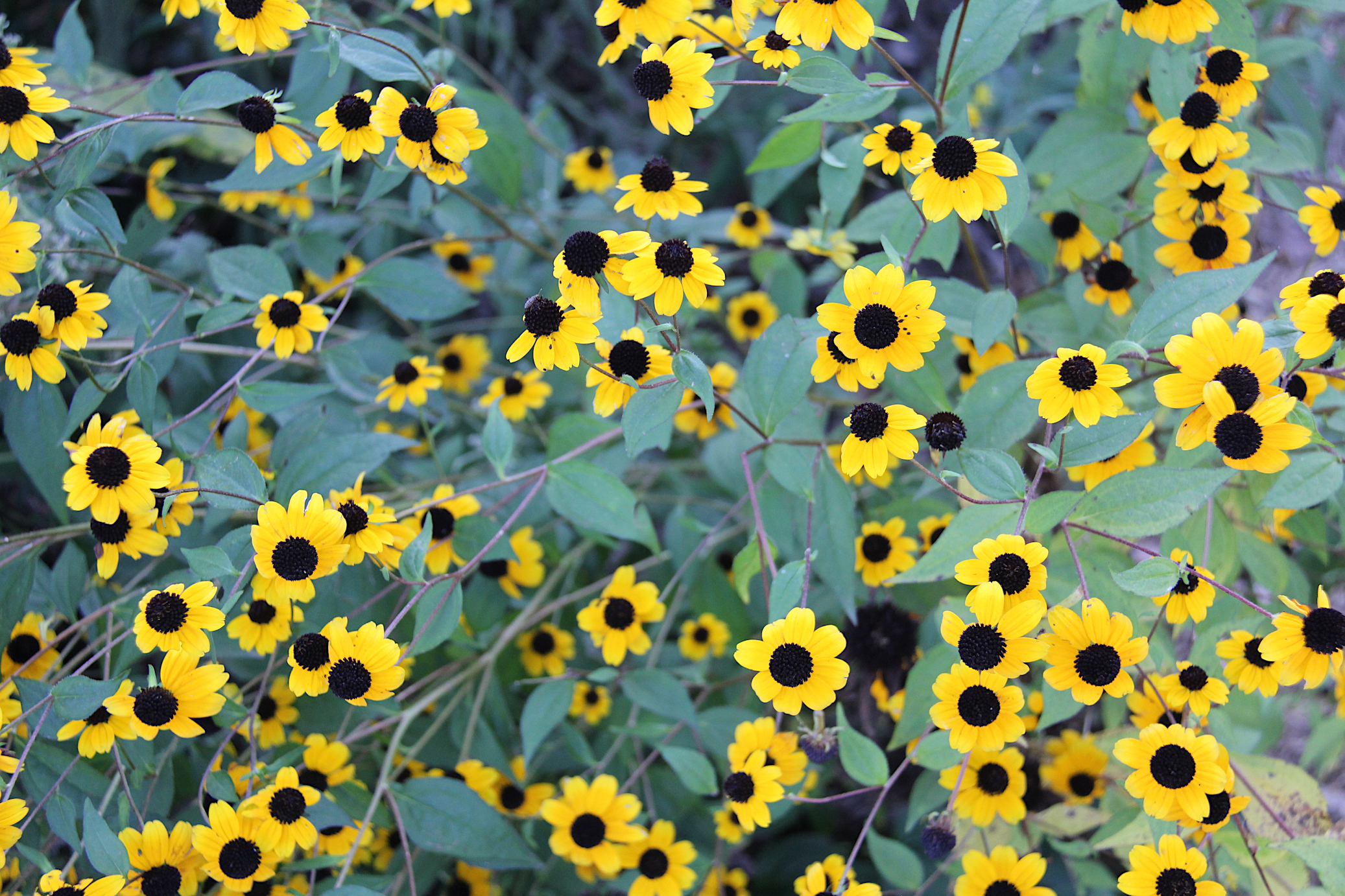
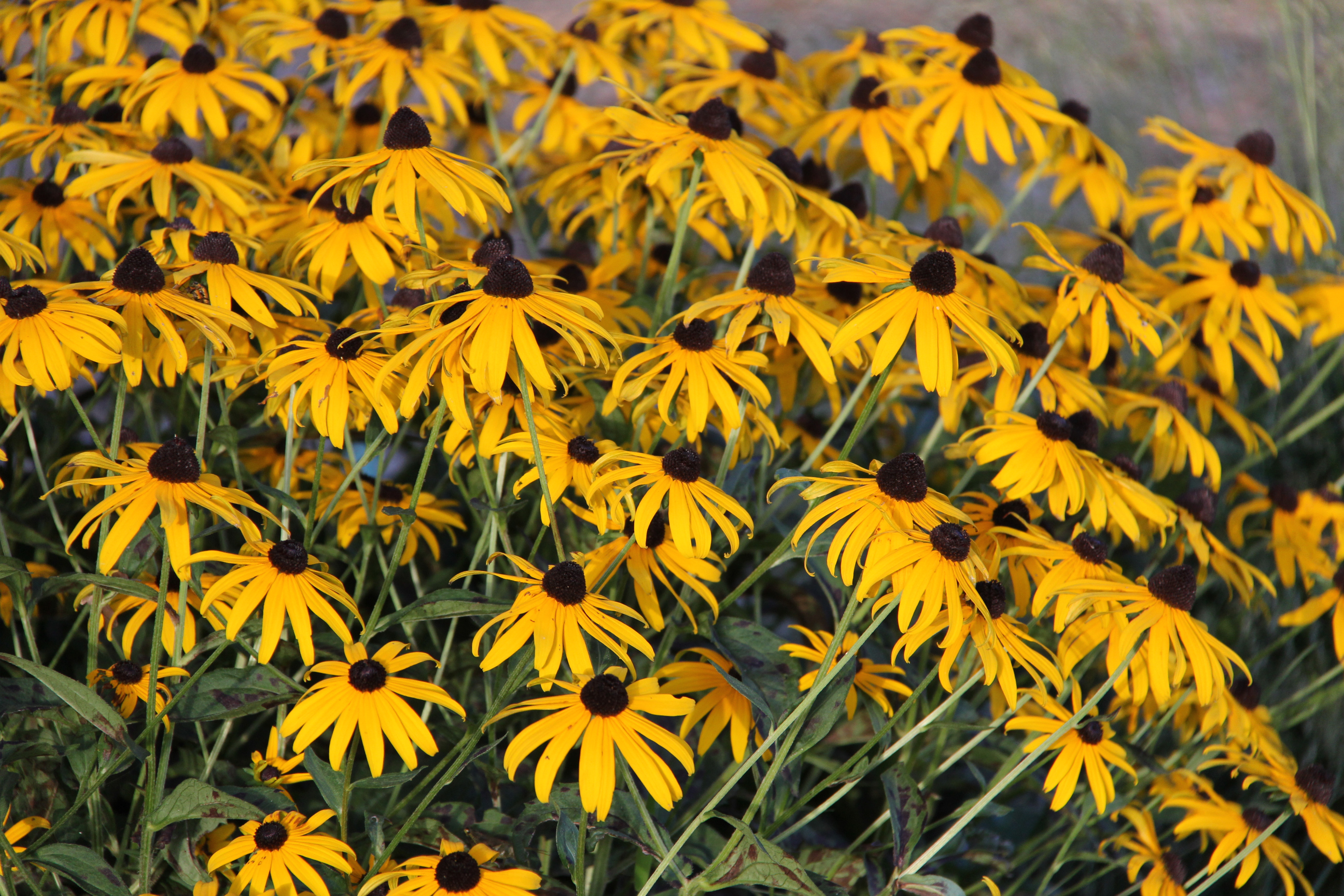
A mass of brown-eyed (I think) susans. (Minnesota Prairie Roots copyrighted photo September 2025)
Even as days grow shorter and nightfall presses dark upon the land, these flowers remain. And I delight in them wherever they stand, bend into the wind, catch the light of the morning and evening sun.
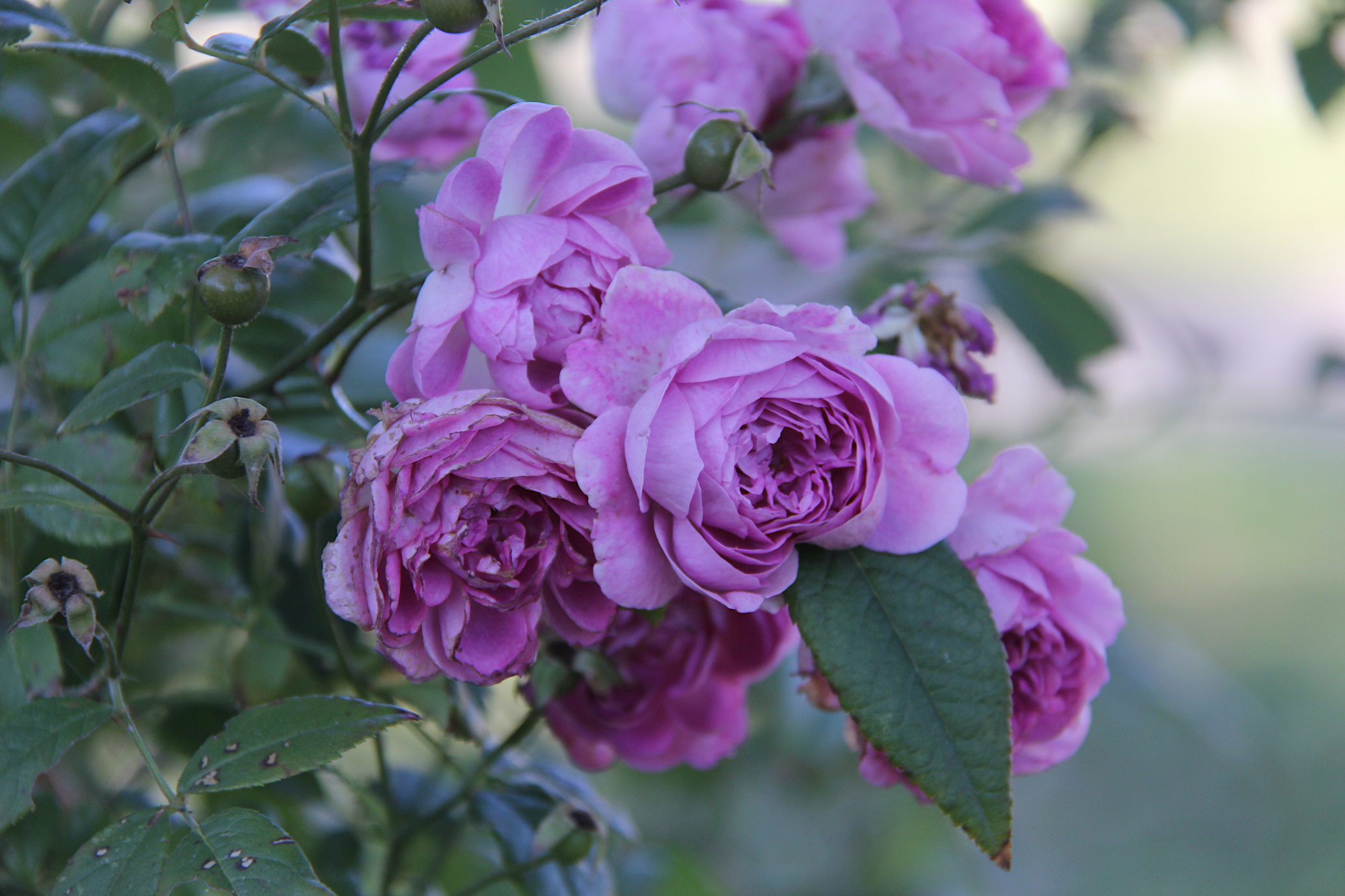
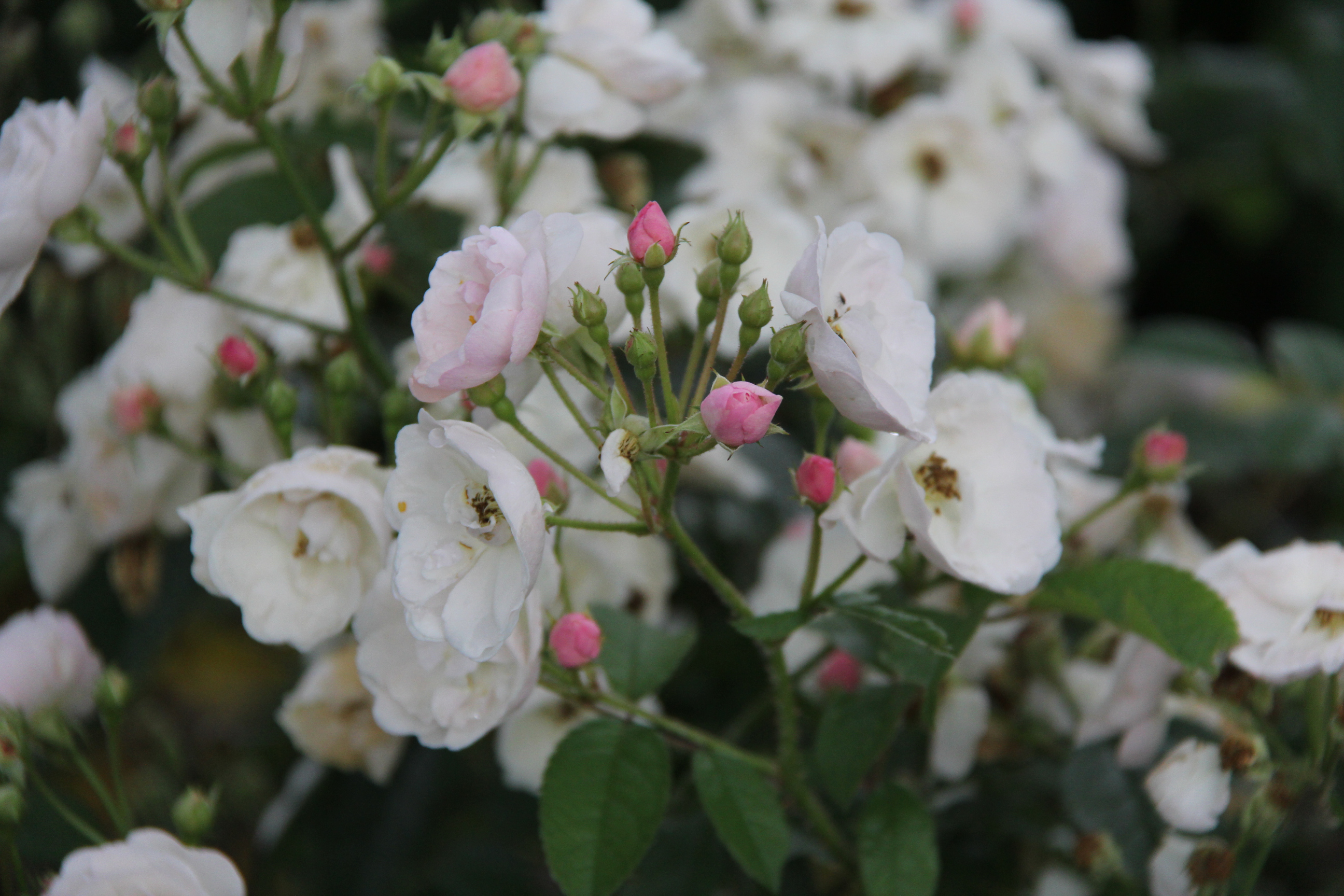
The roses are still blooming. (Minnesota Prairie Roots copyrighted photo October 2025)
Most surprising, perhaps, are the roses that linger. I dip my nose close, expecting the heady scent of perfume, only to be disappointed. They smell ever so faint, a scent barely noticeable.
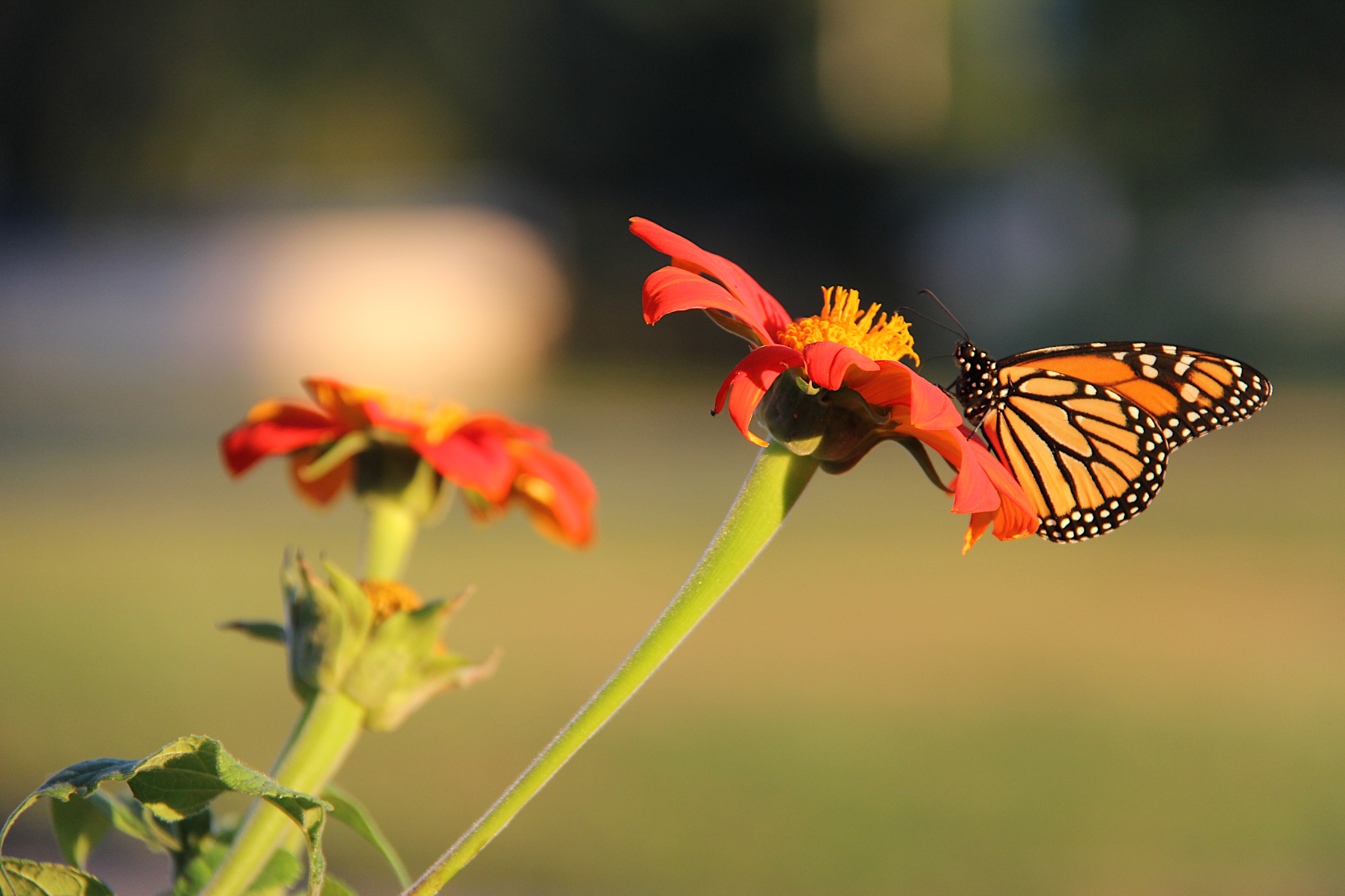
When I took this photo in late September, Monarchs flitted among zinnias. (Minnesota Prairie Roots copyrighted photo September 2025)
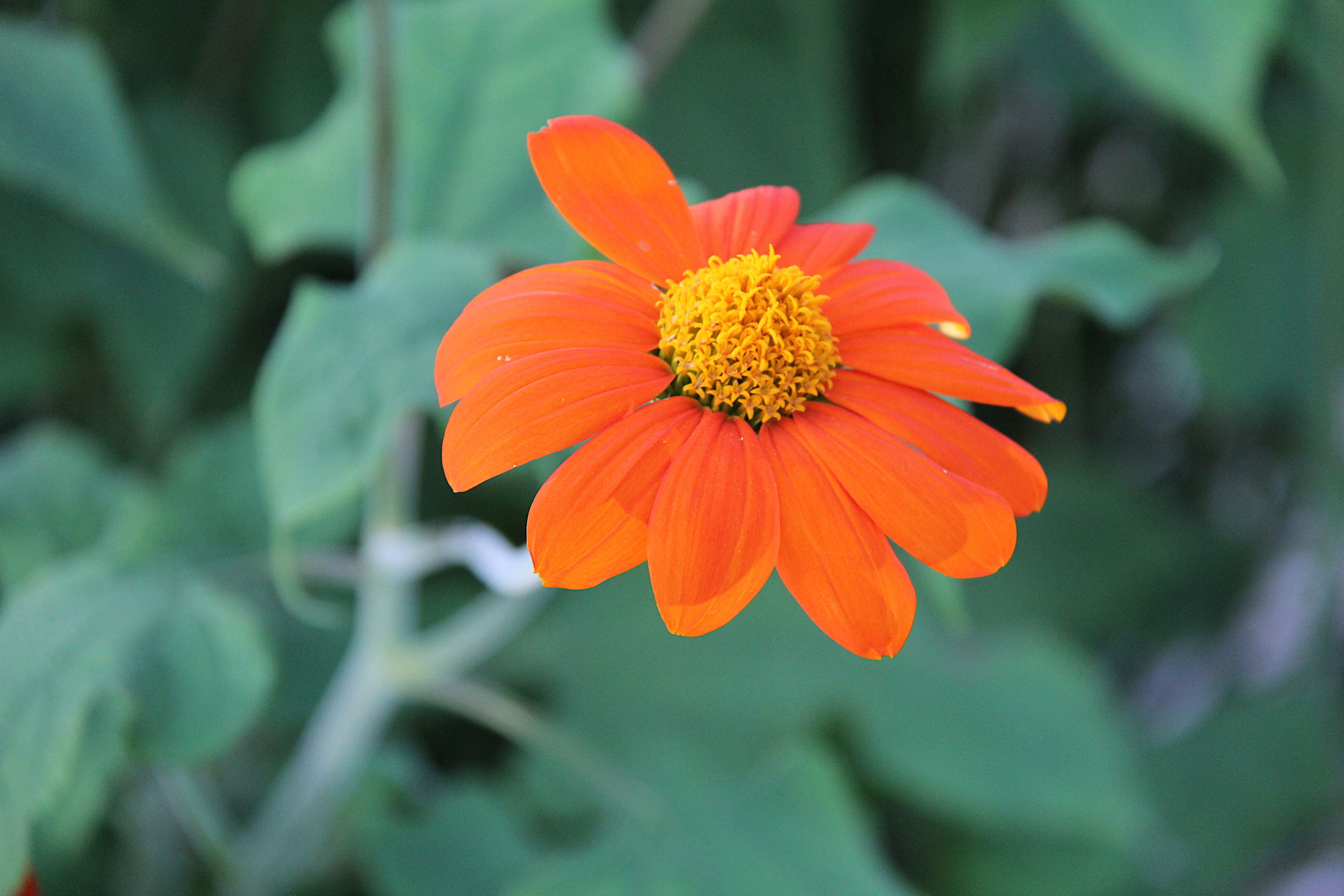
Zinnias flash color, a beacon for monarchs.
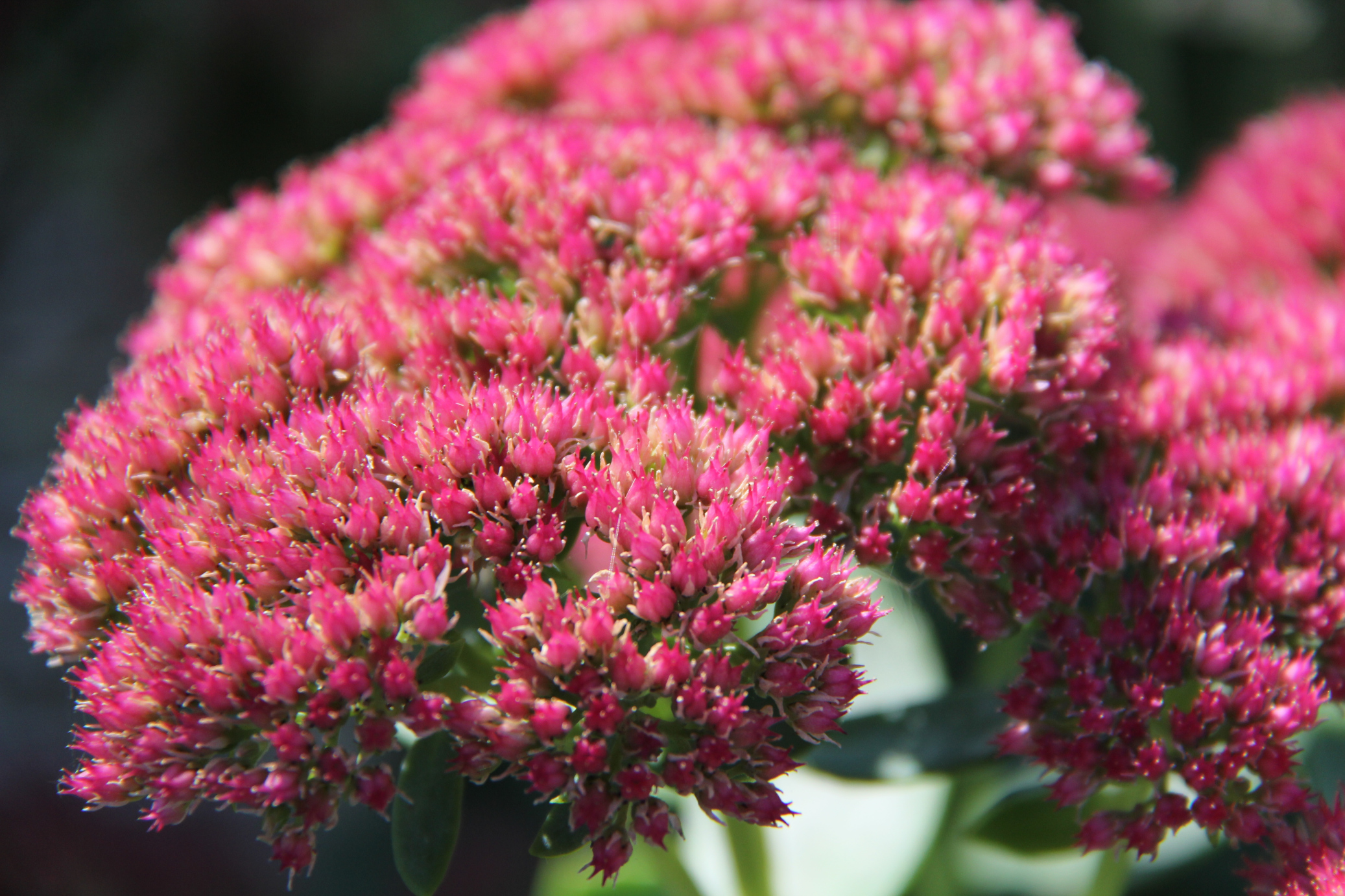
Stunning sedum, absolutely beautiful in the evening light. (Minnesota Prairie Roots copyrighted photo October 2025)
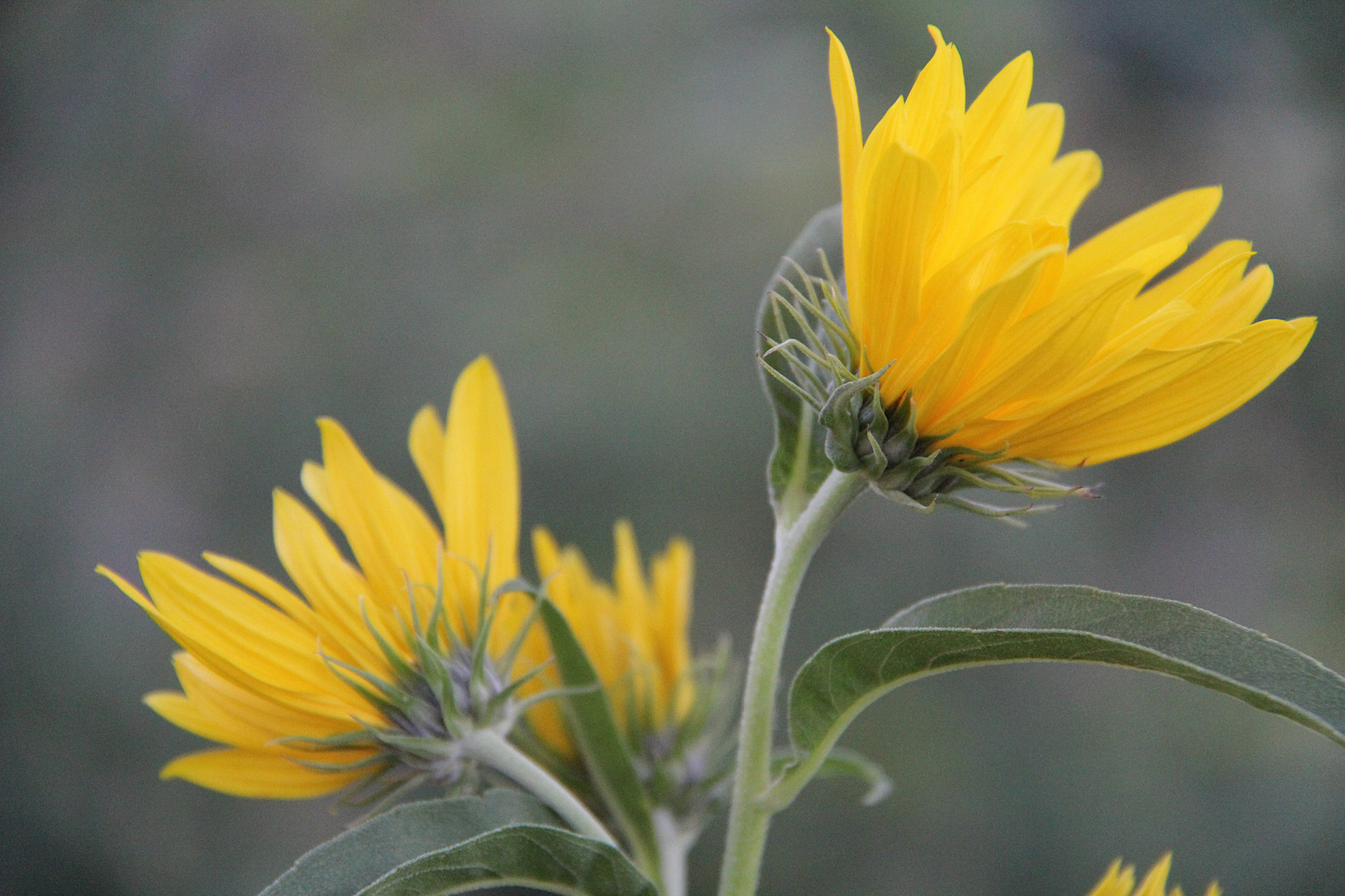
Sedum and seed heads and sunny yellow flowers all cozy together, some spent, some still determined to survive as the season shifts toward winter.
Paver pathways weave through the gardens which include benches, a water feature, rock snakes and more. (Minnesota Prairie Roots copyrighted photo October 2025)
I feel this sense of urgency to focus my eyes on flowers, to imprint upon my memory their glorious beauty. And so I wander among the blooms and dying blooms in the Rice County Master Gardeners Teaching Gardens in Faribault.
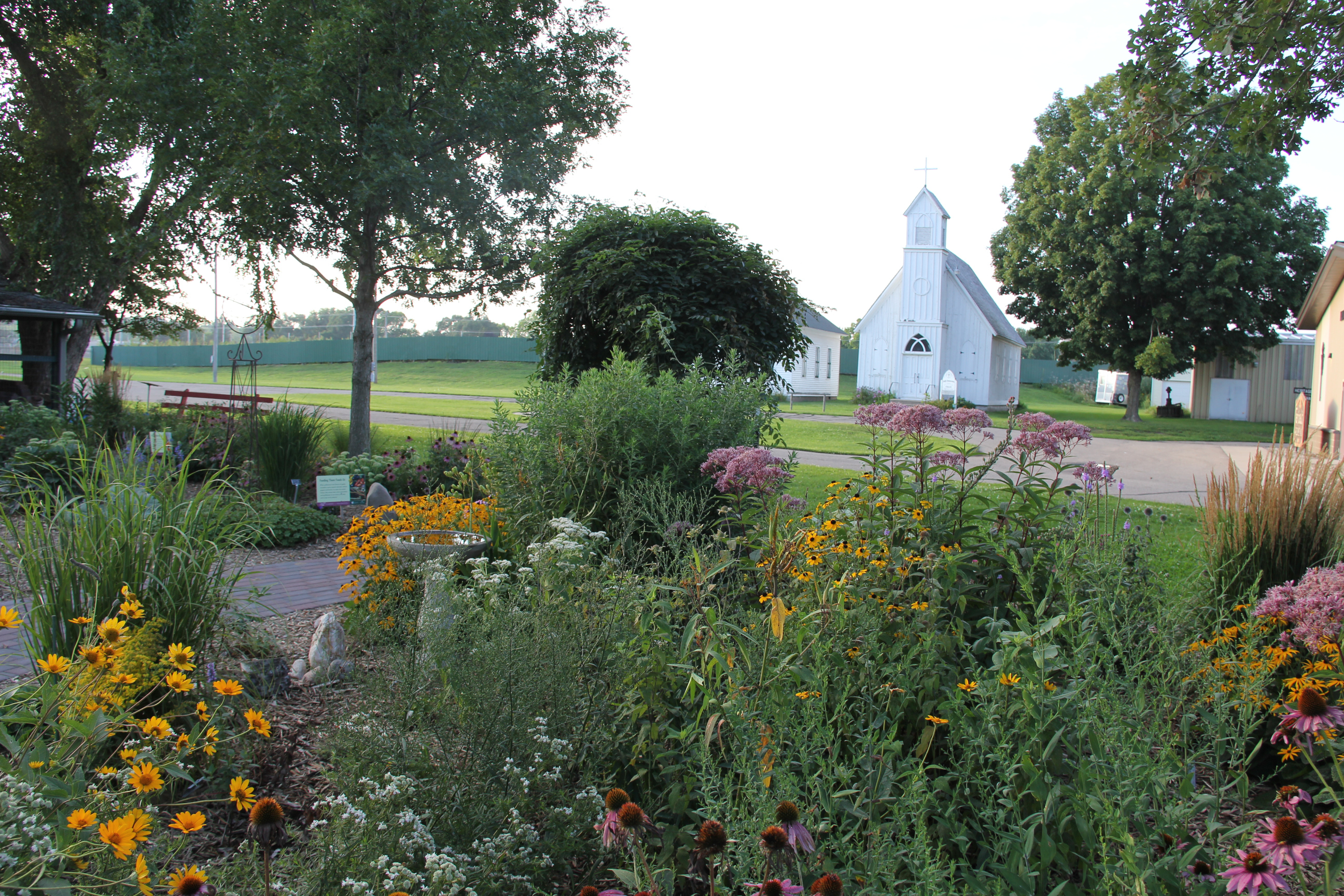
Photographed up close or at a distance, these flowers are lovely in the evening light of autumn. (Minnesota Prairie Roots copyrighted photo September 2025)
I love this oasis on the Rice County Fairgrounds next to the historical society. It offers a peaceful respite just off heavily-trafficked Second Avenue where vehicles rush by, their drivers seemingly unaware of the nearby gardens.
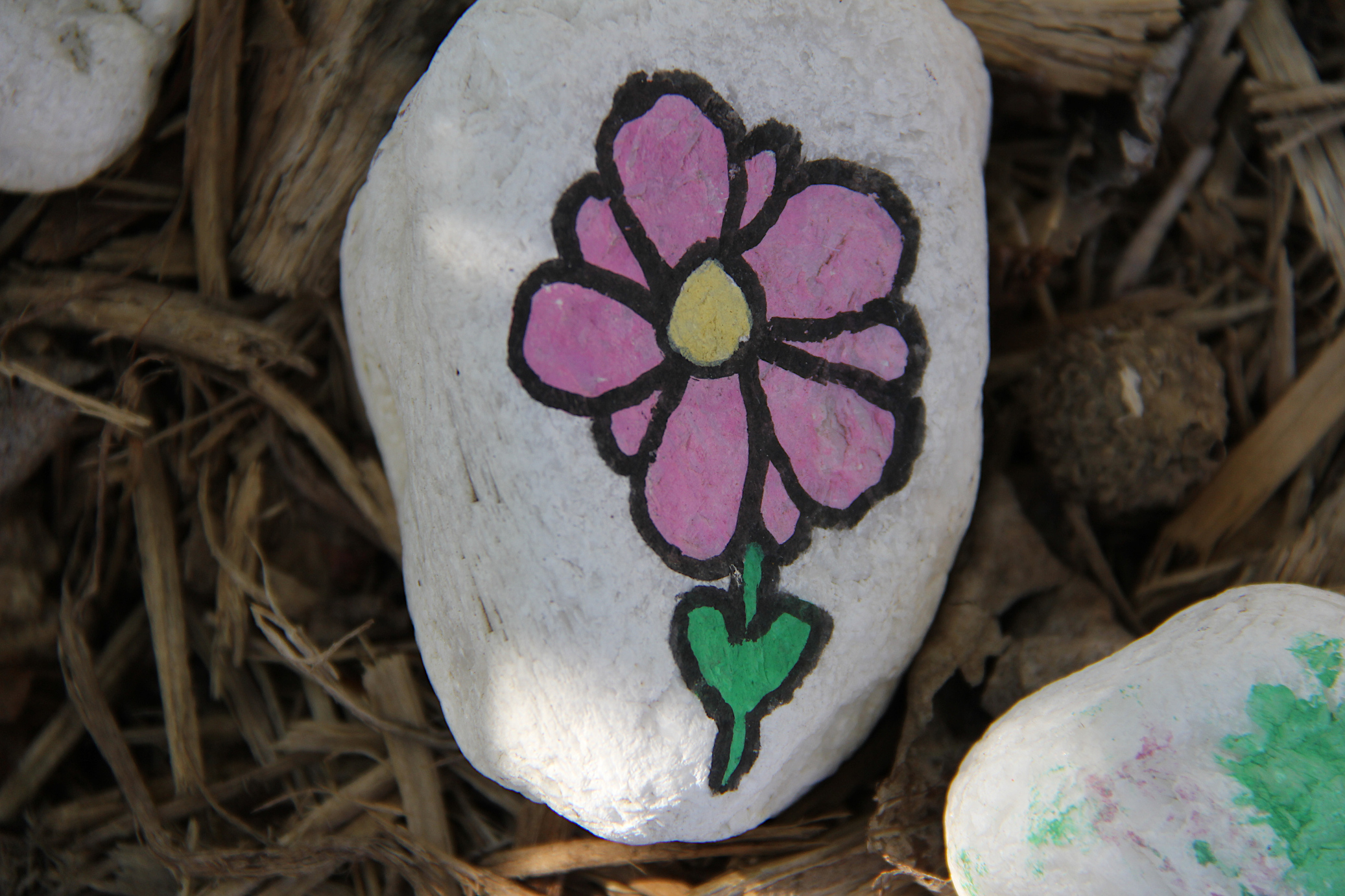
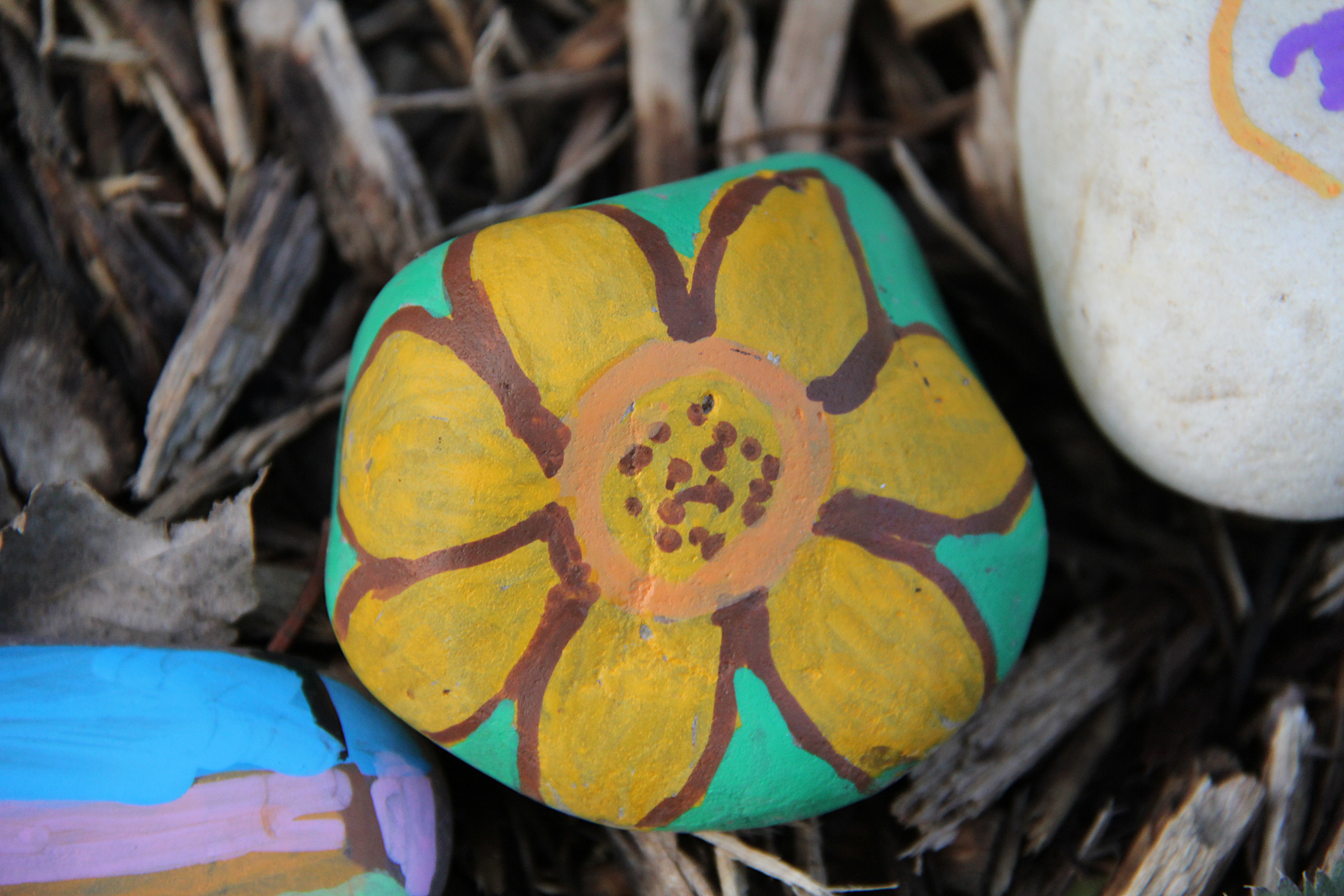
The garden includes two rock snakes, this flower stone among the many forming the serpent. (Minnesota Prairie Roots copyrighted photo October 2025)
But I long ago discovered this spot. Perfect for a picnic. Perfect for wandering. Perfect for photographing flowers. Perfect for reflecting and learning and enjoying. I’m grateful for every volunteer who lovingly tends this garden so I can come here. Sit. Walk. Photograph. Snapshot the scene for future reference.
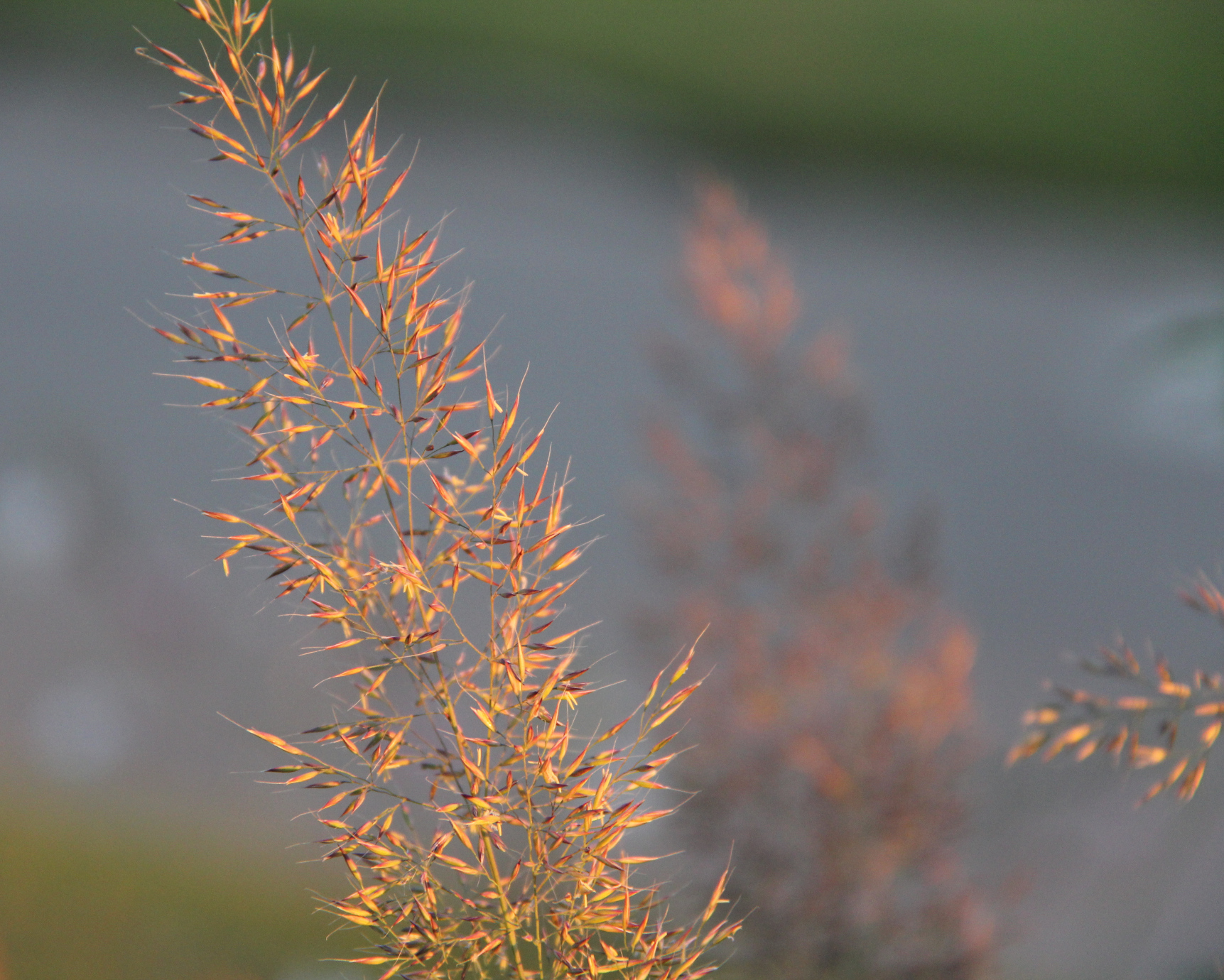
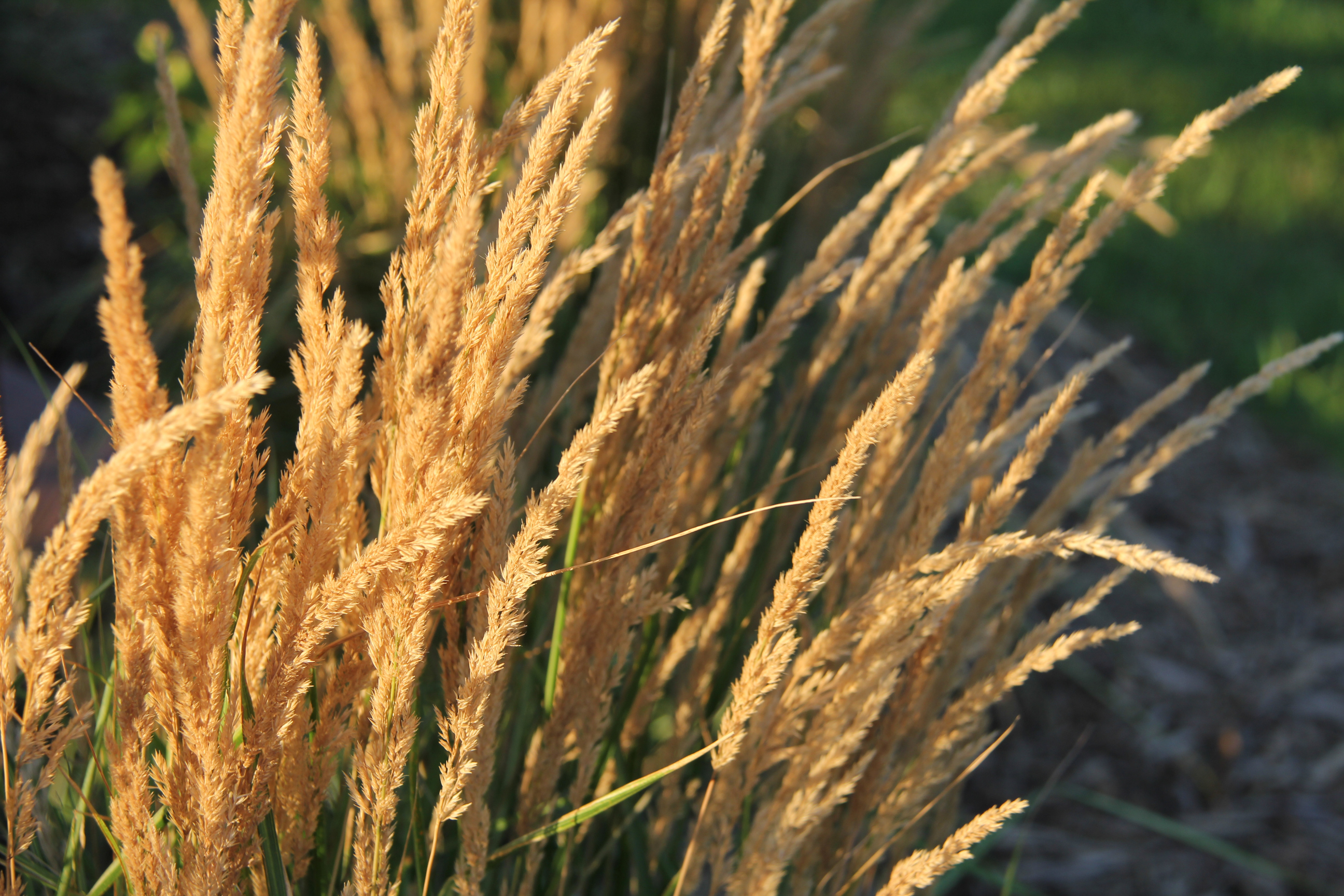
A grass stem glows in the light of sunset. (Minnesota Prairie Roots copyrighted photo September 2025)
When winter comes with its wind and deep-freeze cold and snow, I will remember the pink roses, the bold brown-eyed susans, the grass glowing in the sunlight.
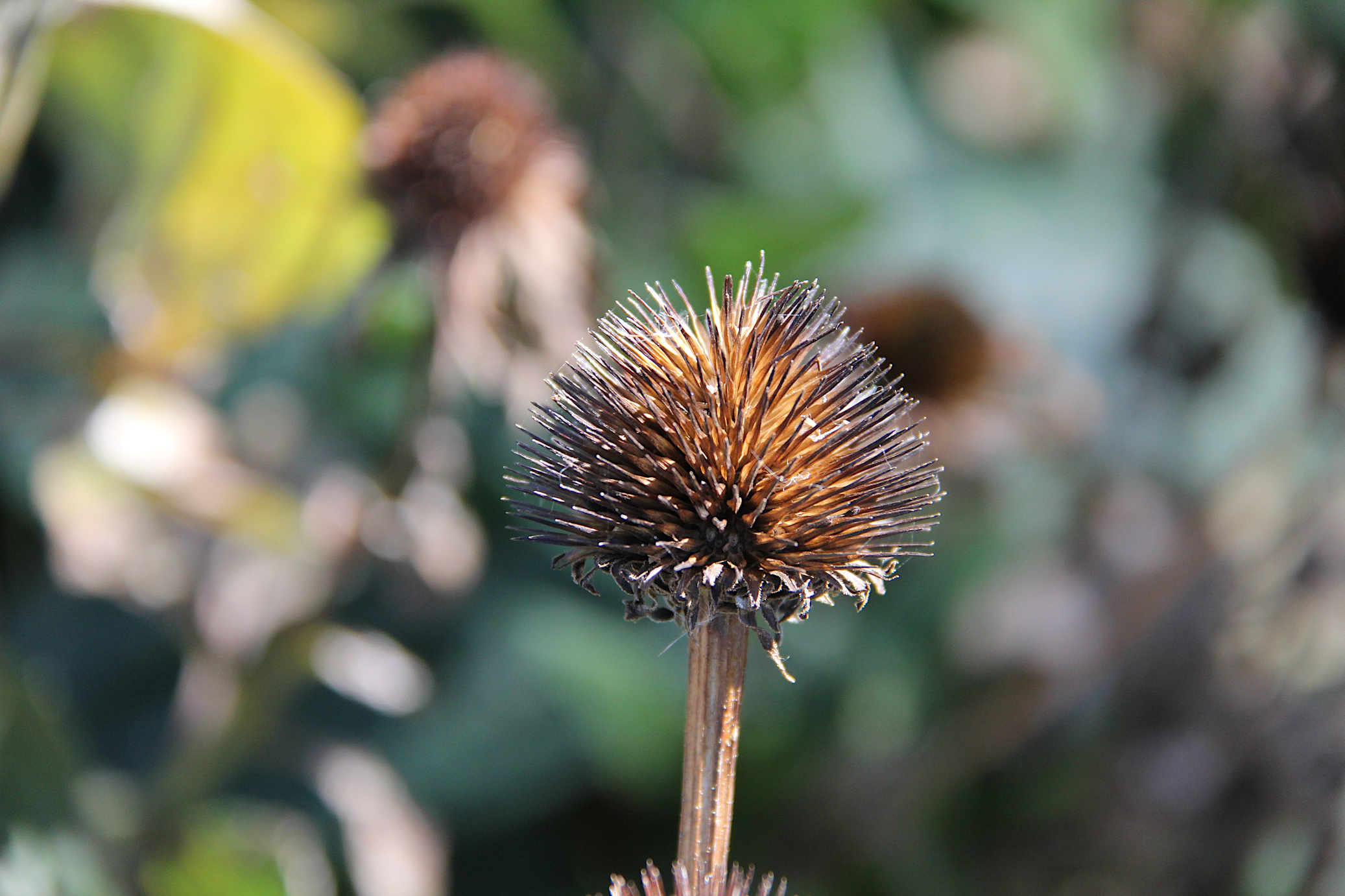
A coneflower seed head. (Minnesota Prairie Roots copyrighted photo October 2025)
And when winter drags on, I will remember this place and how, when spring arrives, the perennials will resurrect and pop through the earth. I will remember, too, how seeds sown in the soil will sprout and push green shoots through the earth to leaf and blossom and bring me summer joy.
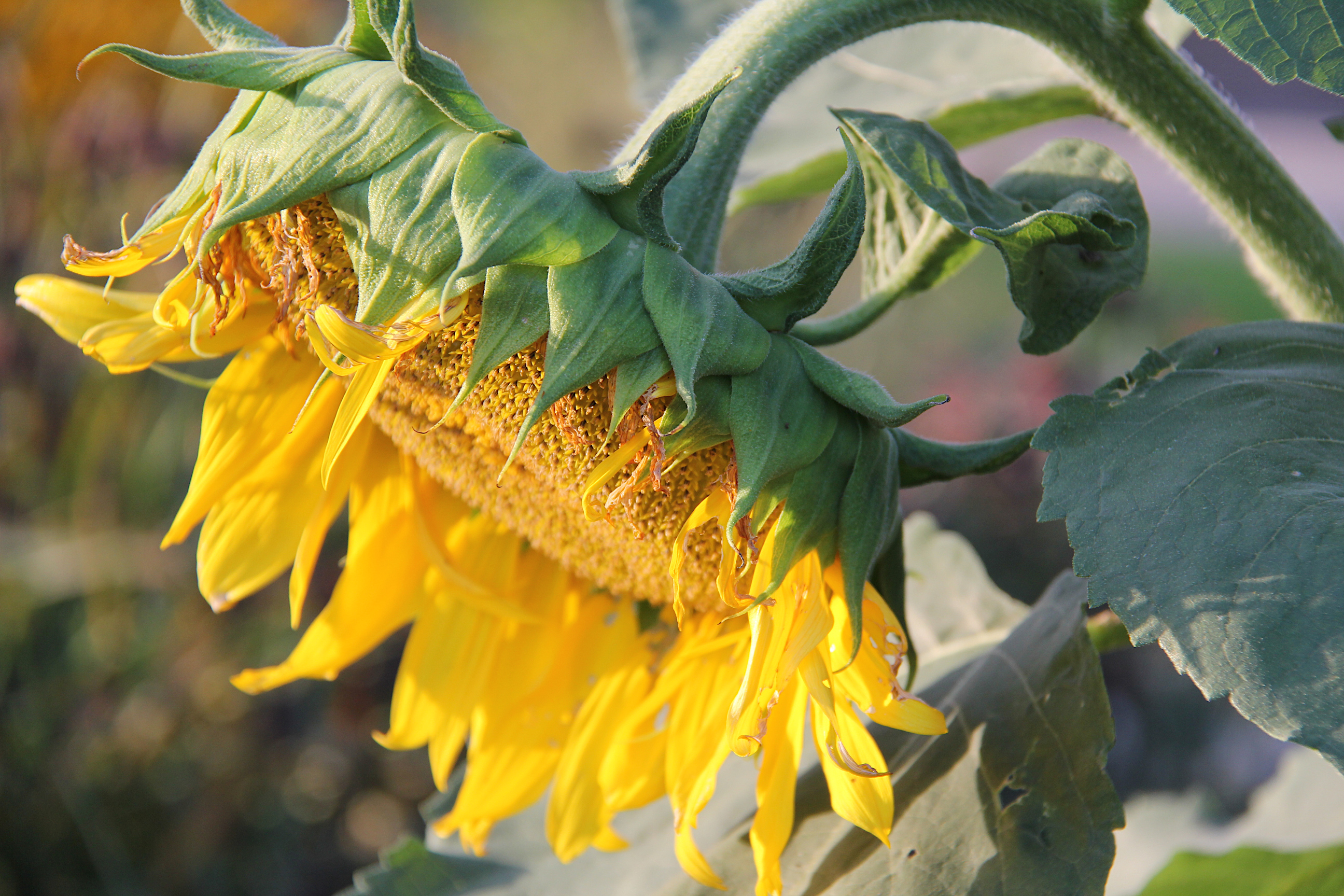
Sunflowers are drooping, like this one in the Rice County Master Gardeners’ Teaching Gardens, Faribault. (Minnesota Prairie Roots copyrighted photo August 2024)
I’M BEGINNING TO FEEL this sense of urgency, as if I need to spend more time outdoors taking in the natural world. It’s not a new feeling, but rather one which rolls into my thoughts at August’s end. When the calendar flips to September, everything shifts. I see it, hear it, smell it, feel it.
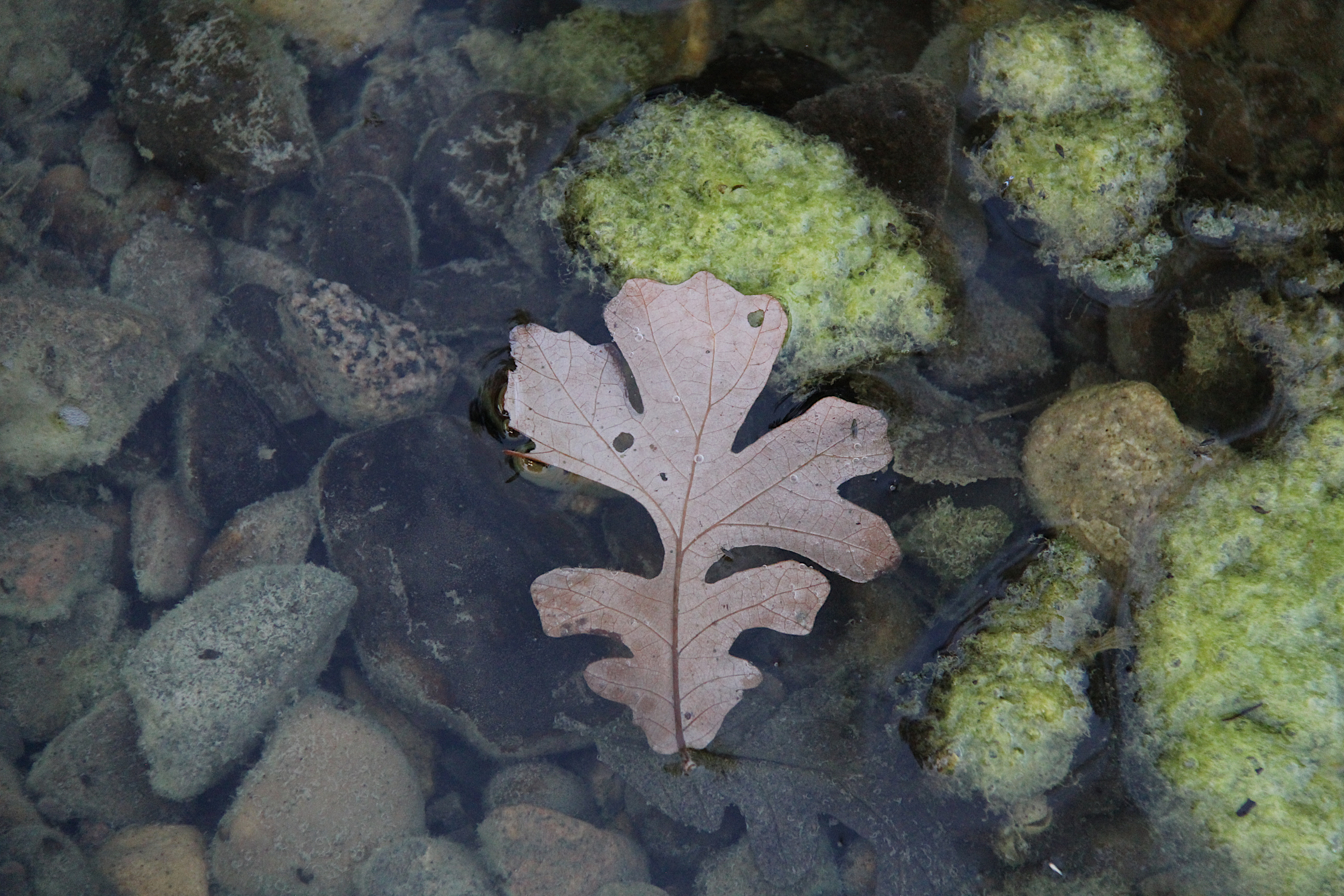
A dried oak leaf floats in a pond at the teaching gardens. (Minnesota Prairie Roots copyrighted photo August 2024)
Outside my front door, massive mophead hydrangeas are drying, morphing from green to brown. Once lush phlox are less full. Maple leaves, in hues of orange and yellow, litter the lawn. All over town, trees are beginning to change color.
Golden grasses sway in the gentle wind of early evening. (Minnesota Prairie Roots copyrighted photo August 2024)
Jolts of color still fill the garden. (Minnesota Prairie Roots copyrighted photo August 2024)
Prolific black-eyed susans. (Minnesota Prairie Roots copyrighted photo August 2024)
Crickets chirp. Cicadas buzz. School buses roll past my house. Everything is shifting. And nowhere is that more noticeable than in a garden.
This shows only a section of the teaching gardens. That’s an historic church, on the grounds of the Rice County Historical Society, in the background. The gardens are next to the RCHS museum. (Minnesota Prairie Roots copyrighted photo August 2024)
And so I encourage you, if you live in a place that will soon change to cold and colorless, to enjoy the flowers while they are still blooming, as I did recently at the Rice County Master Gardeners Teaching Gardens.
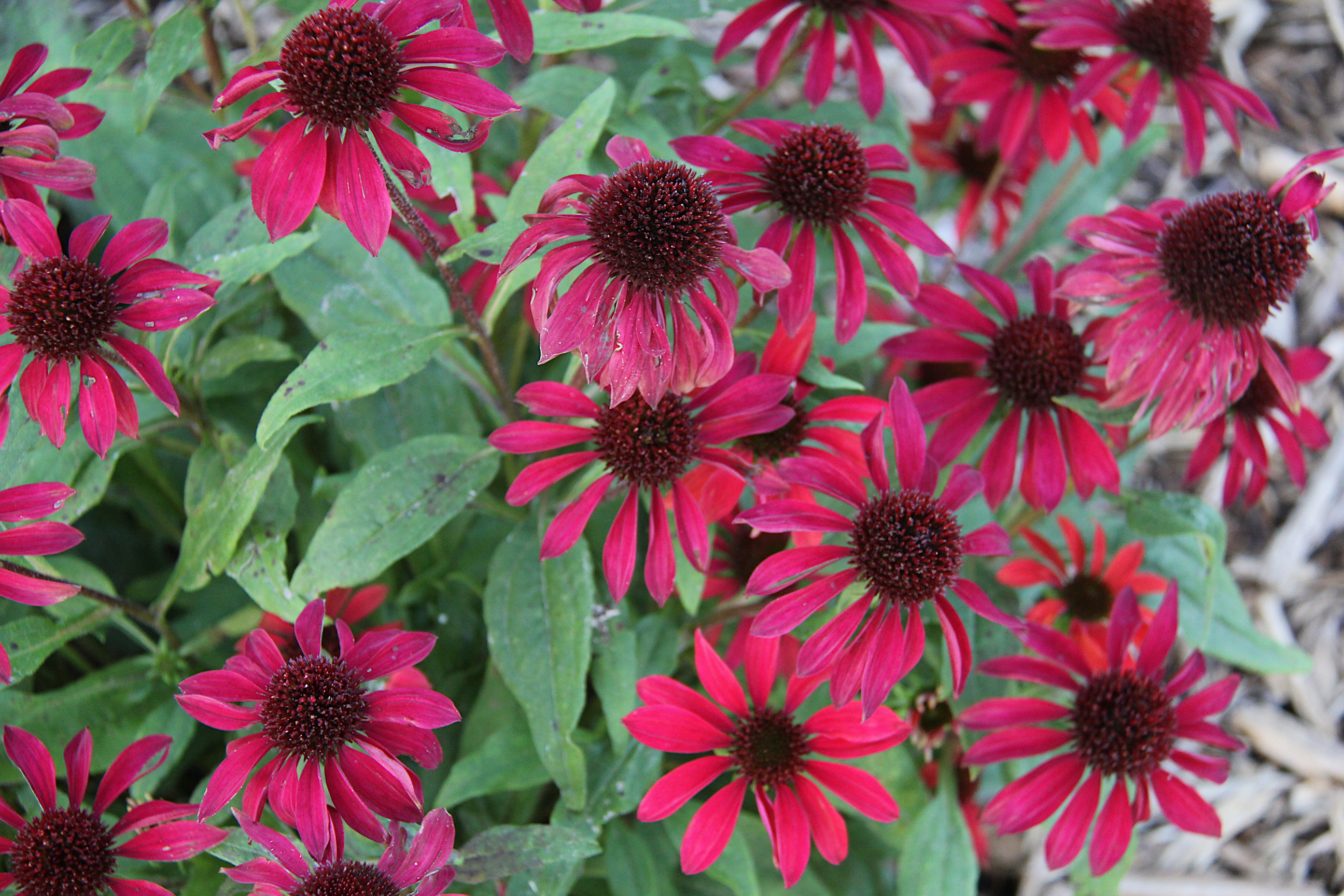
A mass of coneflowers. (Minnesota Prairie Roots copyrighted photo August 2024)
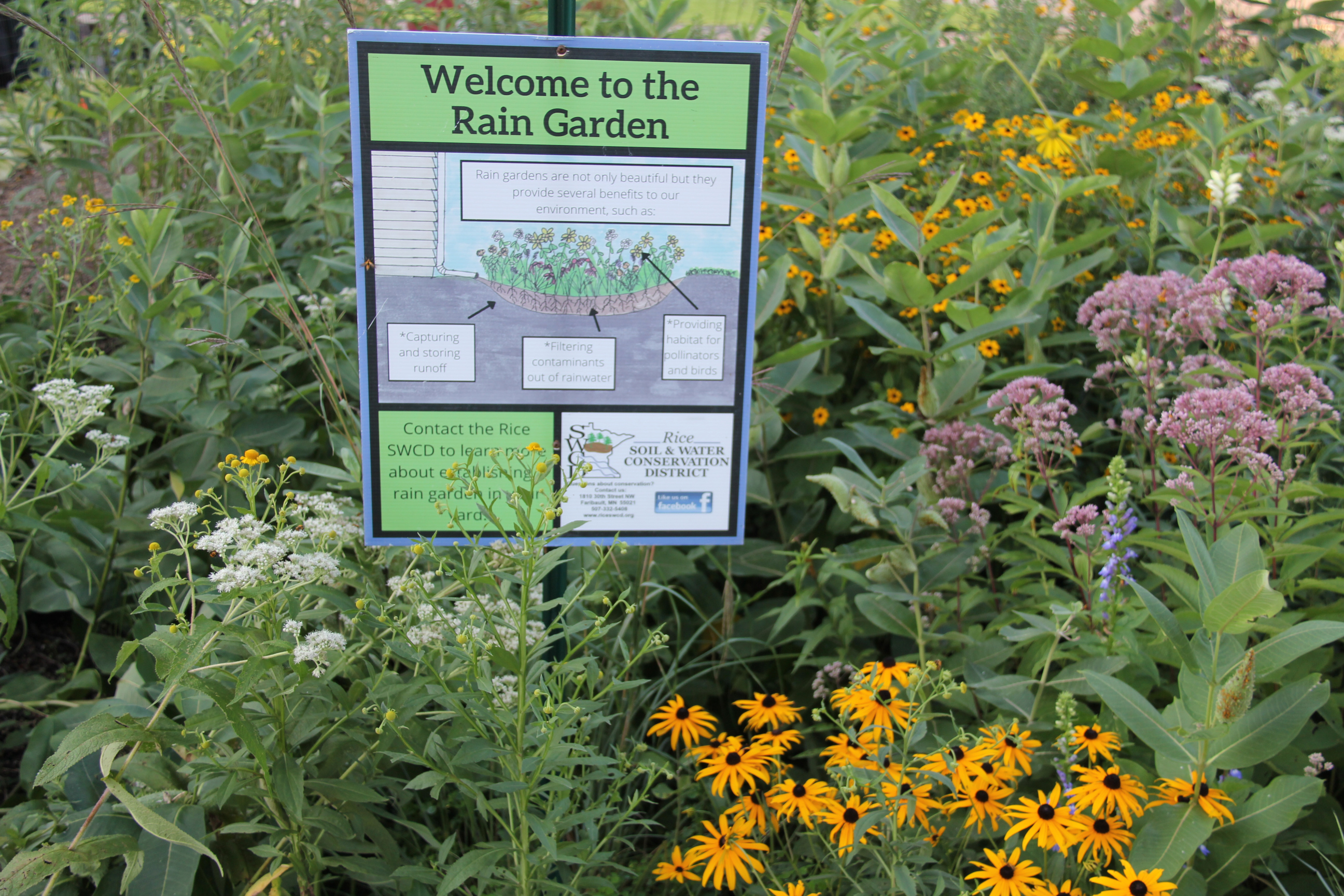
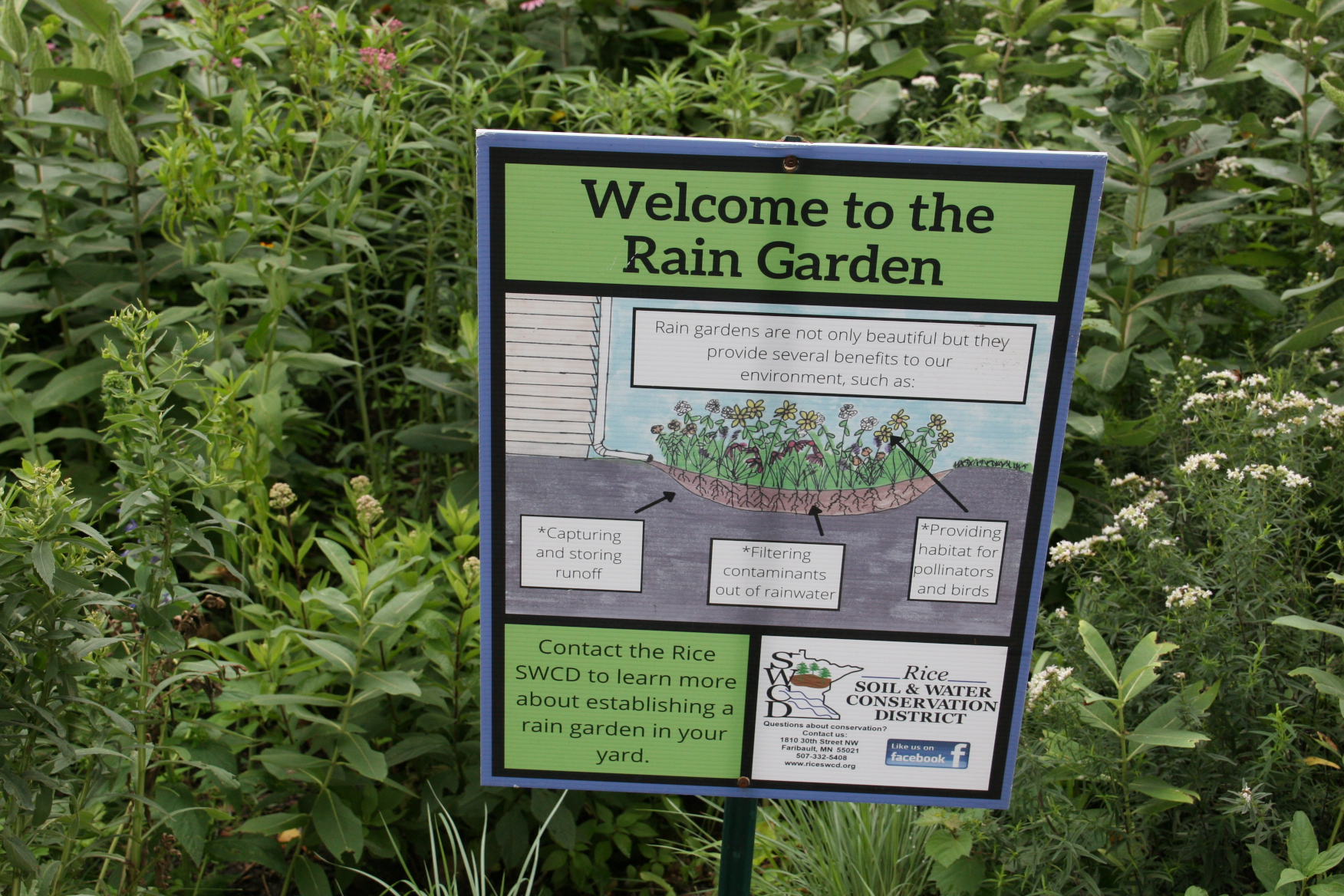
A rain garden flourishes here. (Minnesota Prairie Roots copyrighted photo August 2024)
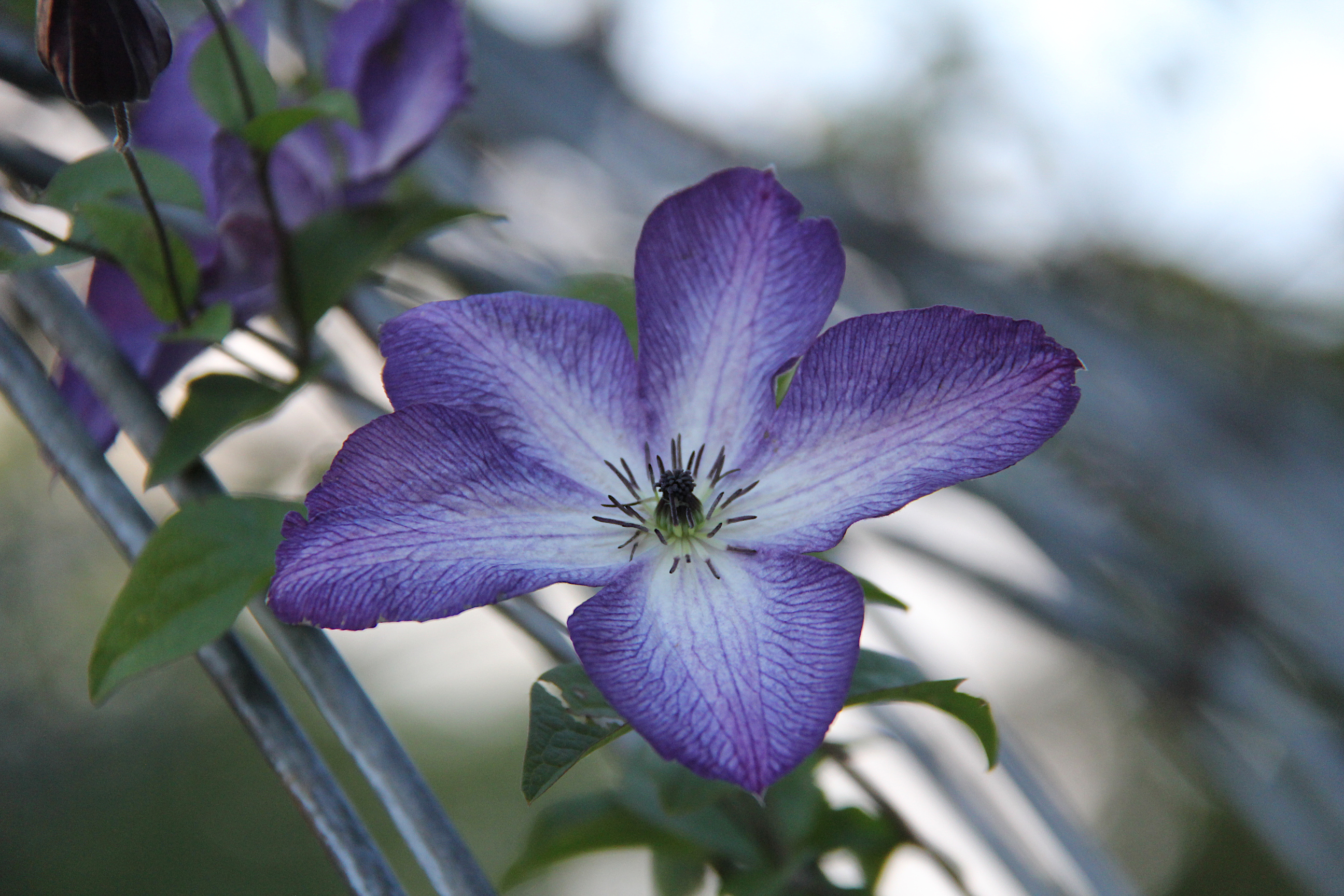
A few clematis were still blooming when I walked the gardens. (Minnesota Prairie Roots copyrighted photo August 2024)
Come, walk with me through this space with its beds of blooms, its textured perennials, its overall loveliness.
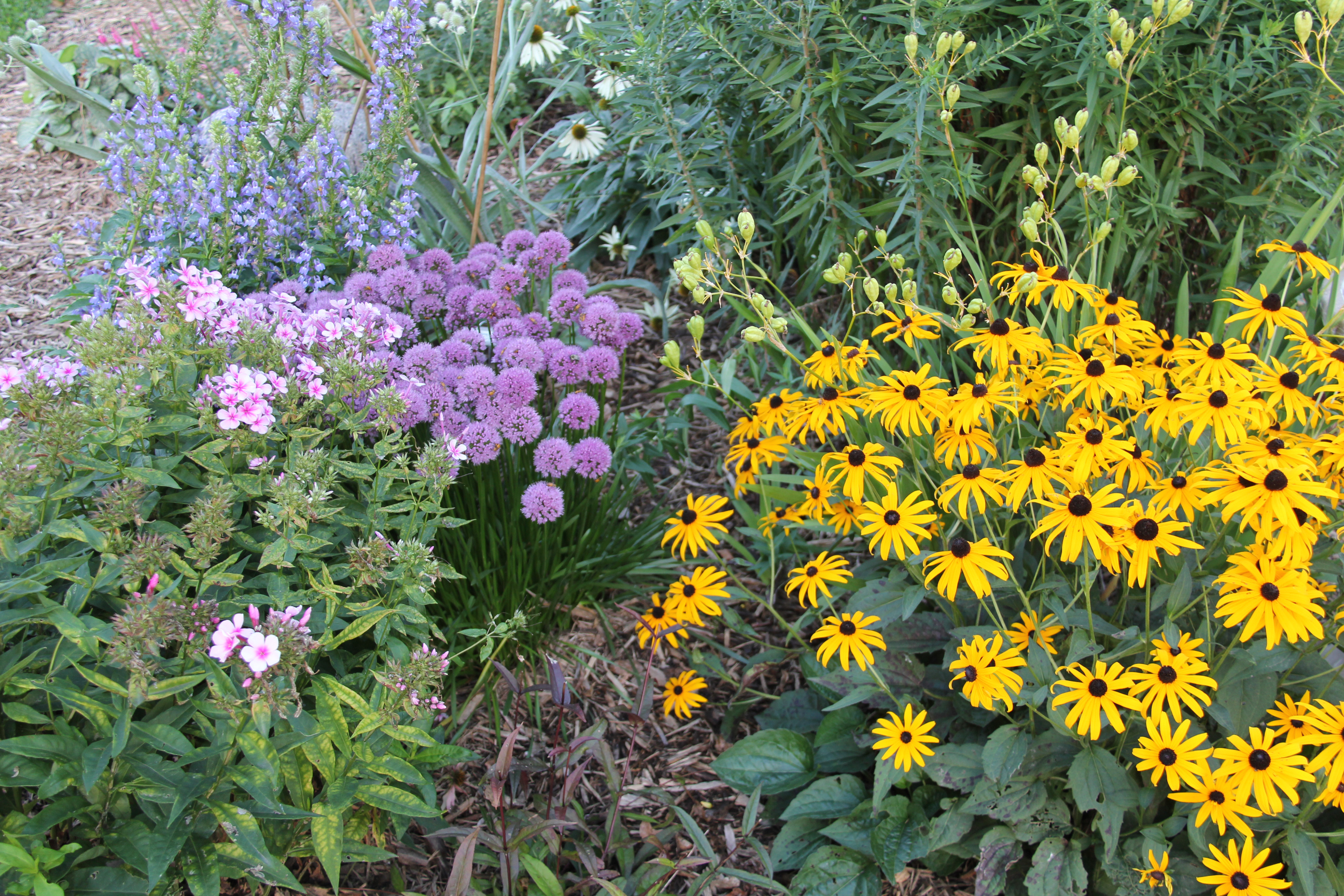
An array of flowers fill the gardens. (Minnesota Prairie Roots copyrighted photo August 2024)
A muted hue that leans into autumn. (Minnesota Prairie Roots copyrighted photo August 2024)
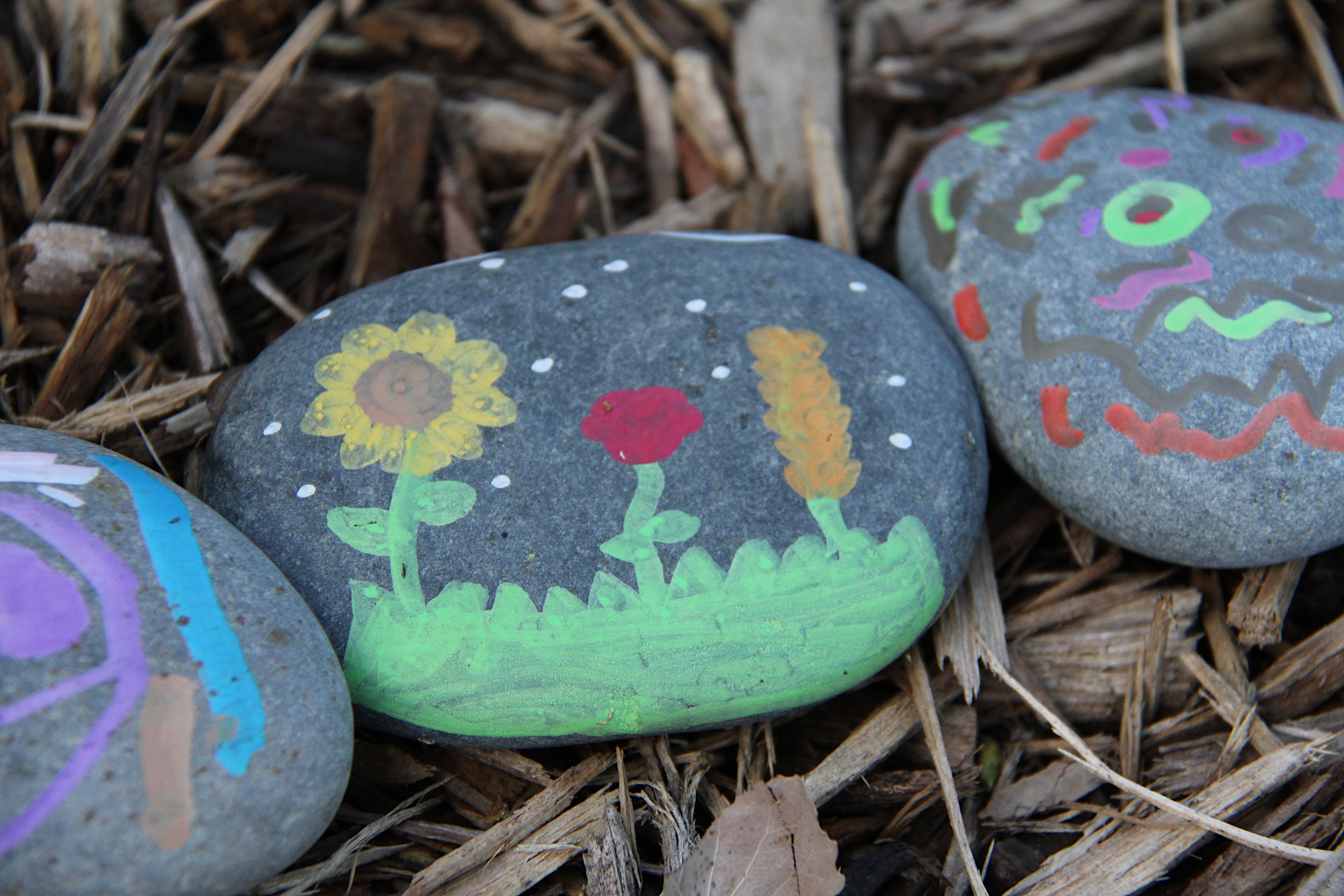
The gardens include rock art, this one in the Rock Art Snake. (Minnesota Prairie Roots copyrighted photo August 2024)
Or find your own garden in your place. Walk. Sit. Take it all in. And when the season shifts, when the flowers are long gone, when the trees have dropped their leaves, then remember this time, these days. Remember the beauty of it all. Remind yourself in the depths of winter how you paused to appreciate these days of summer transitioning into autumn.
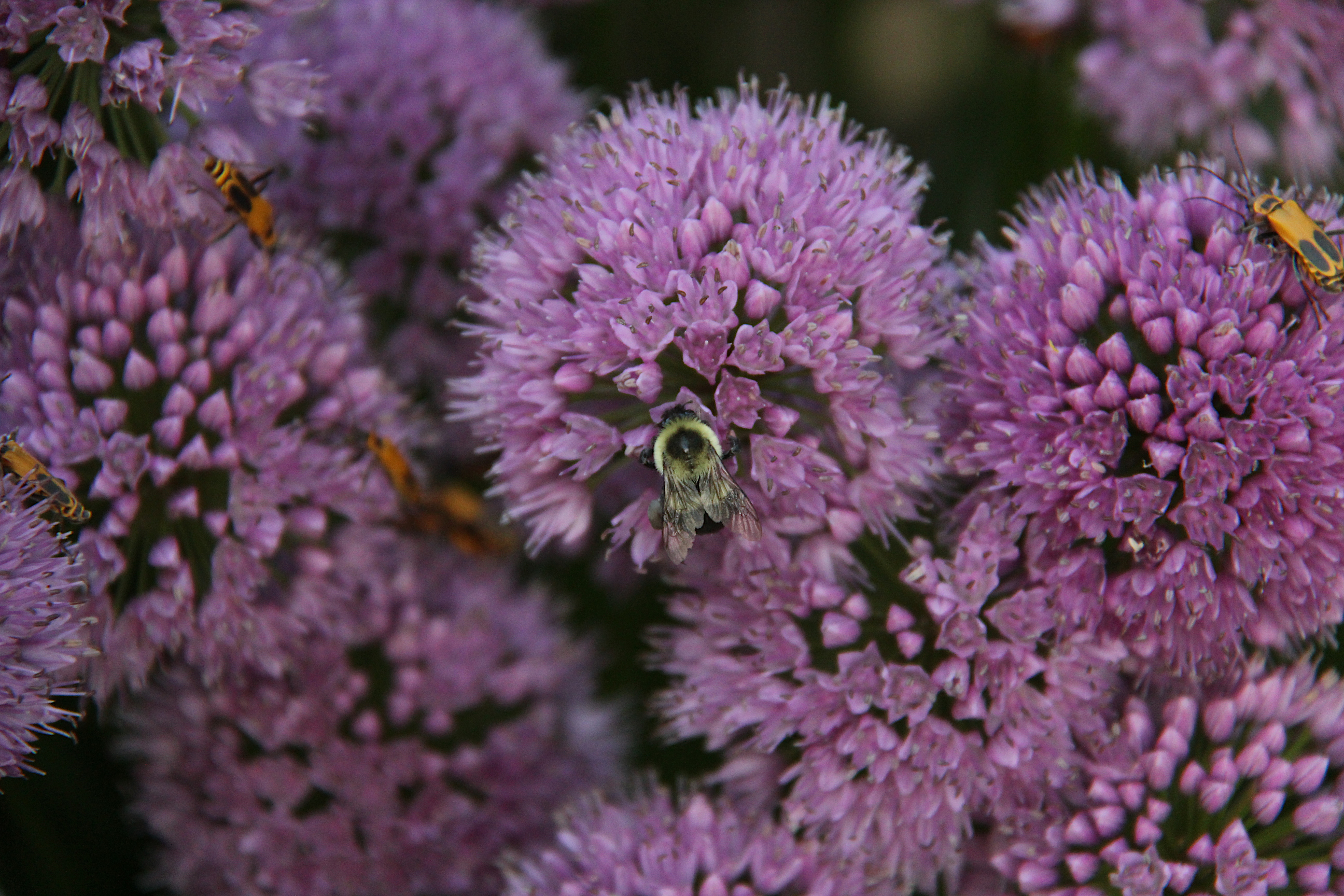
I spotted this bee and other bugs on flowers in the Rice County Master Gardeners’ Teaching Gardens. (Minnesota Prairie Roots copyrighted photo August 2024)
ADMITTEDLY, I NEVER EXCELLED in science. I sort of just got by, learning what I needed to learn to get reasonably good grades in science class. But if I was to go back to the classroom, I’d listen more intently, ask more questions, figure out how the information I was taught actually related to me and my world. In other words, I wouldn’t simply absorb, regurgitate and then move on, which seemed to be the way subjects were taught when I was a student.
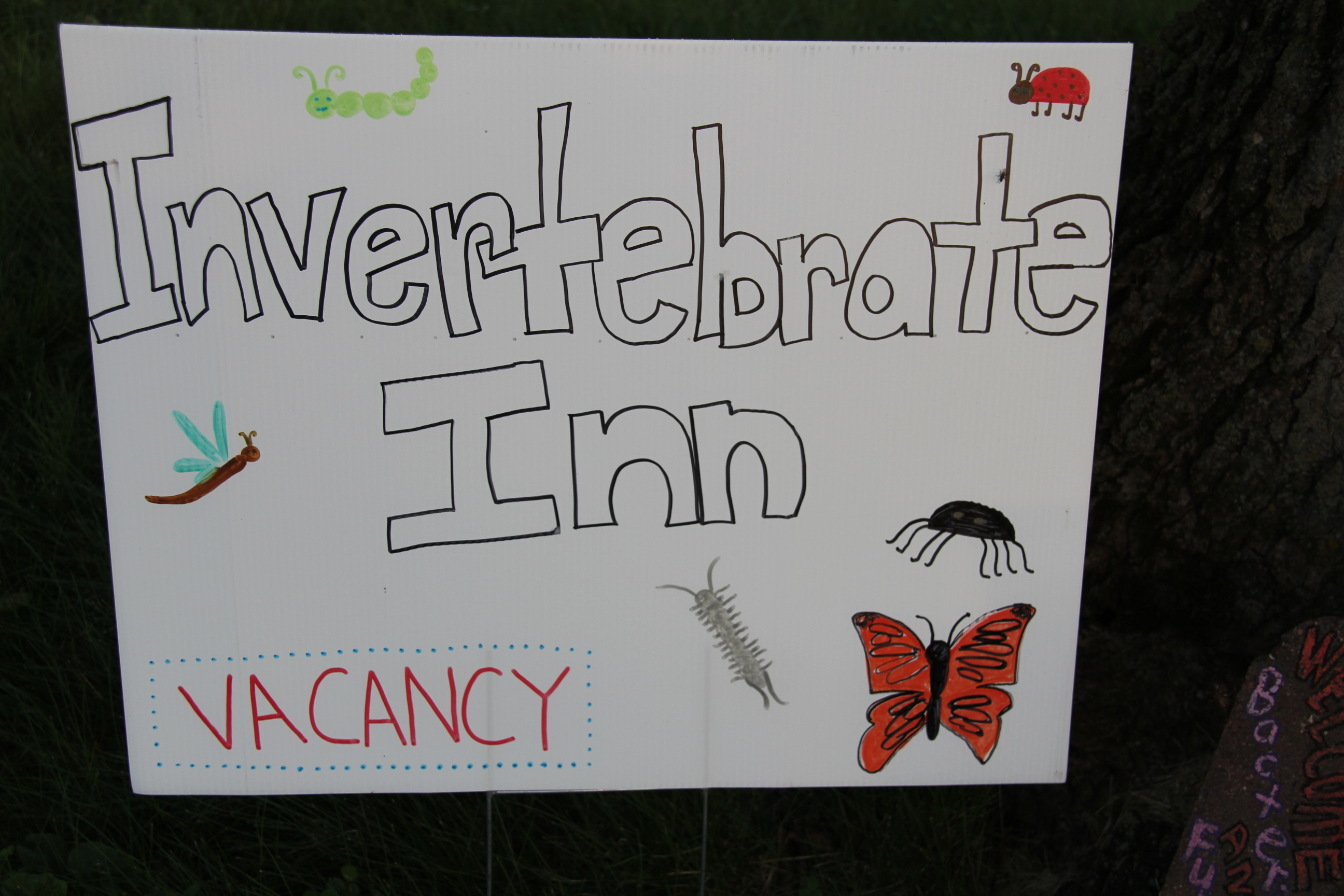
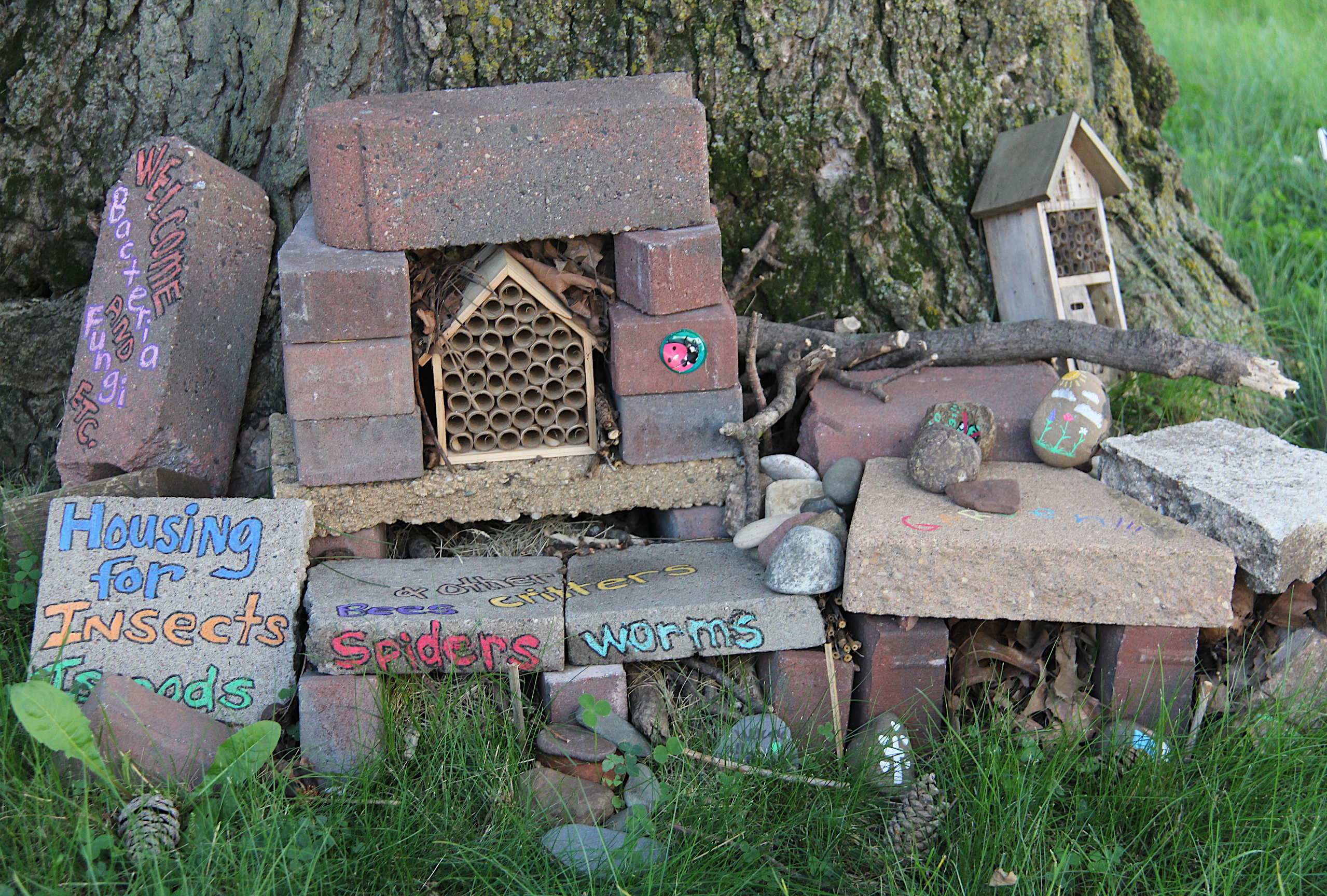
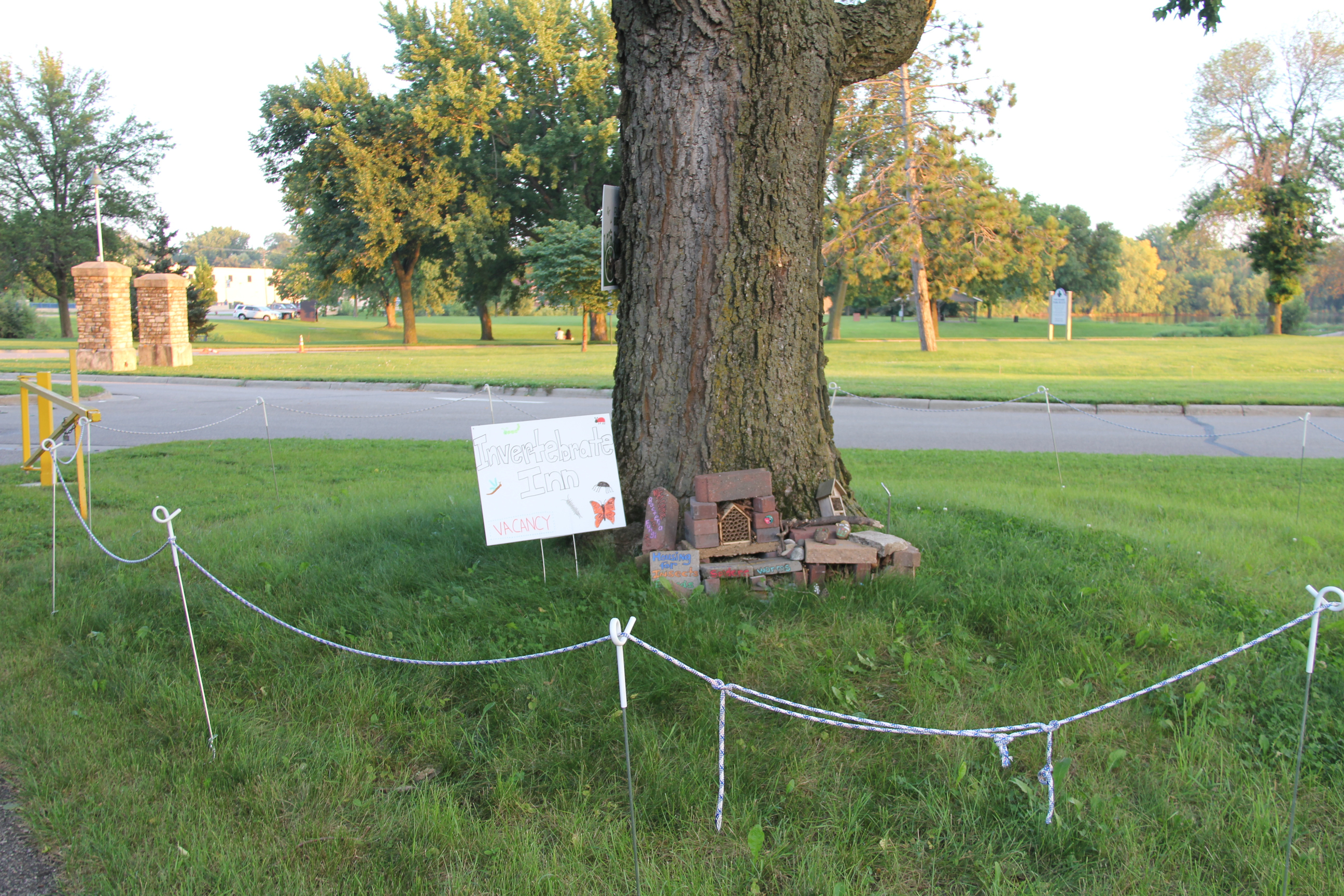
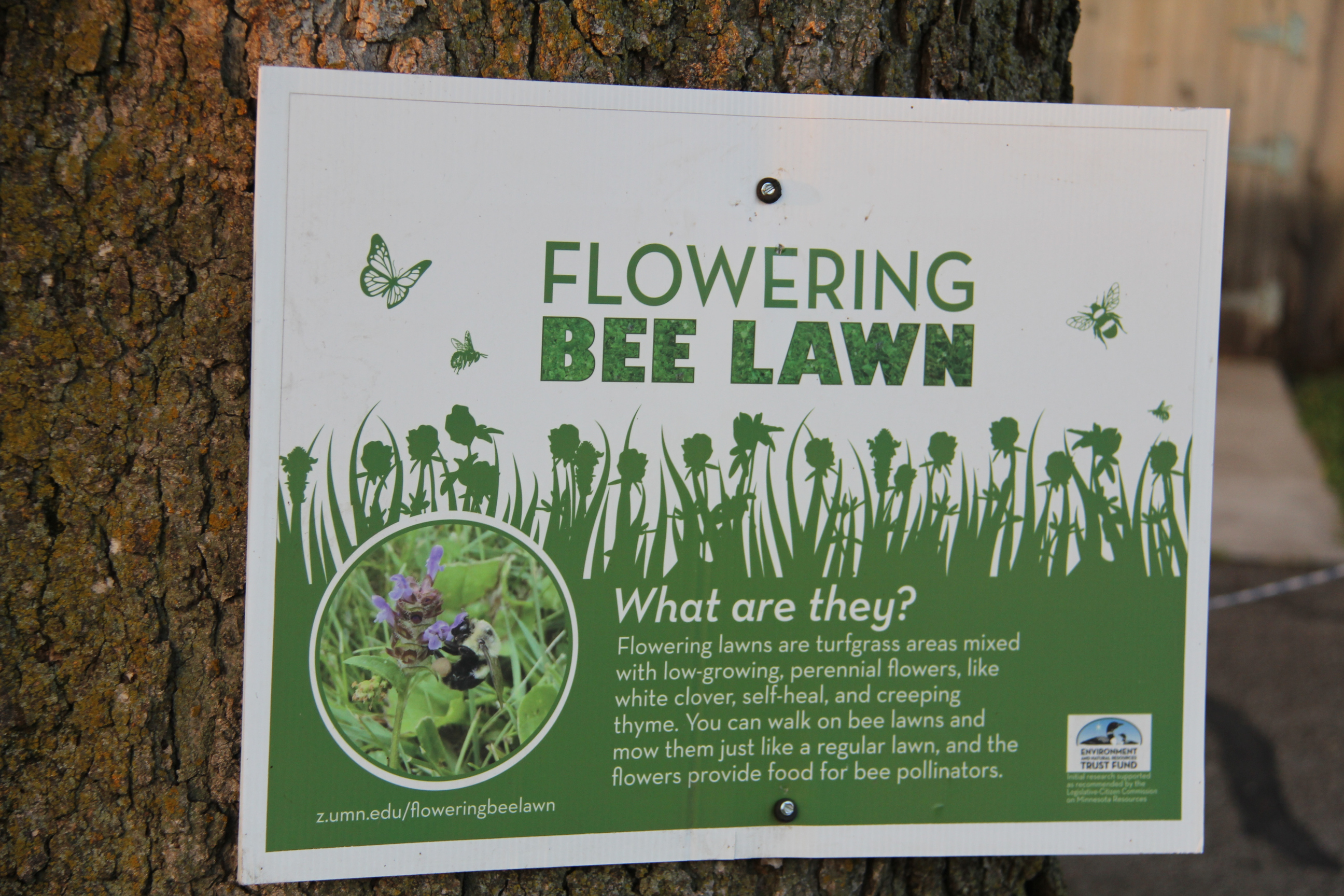
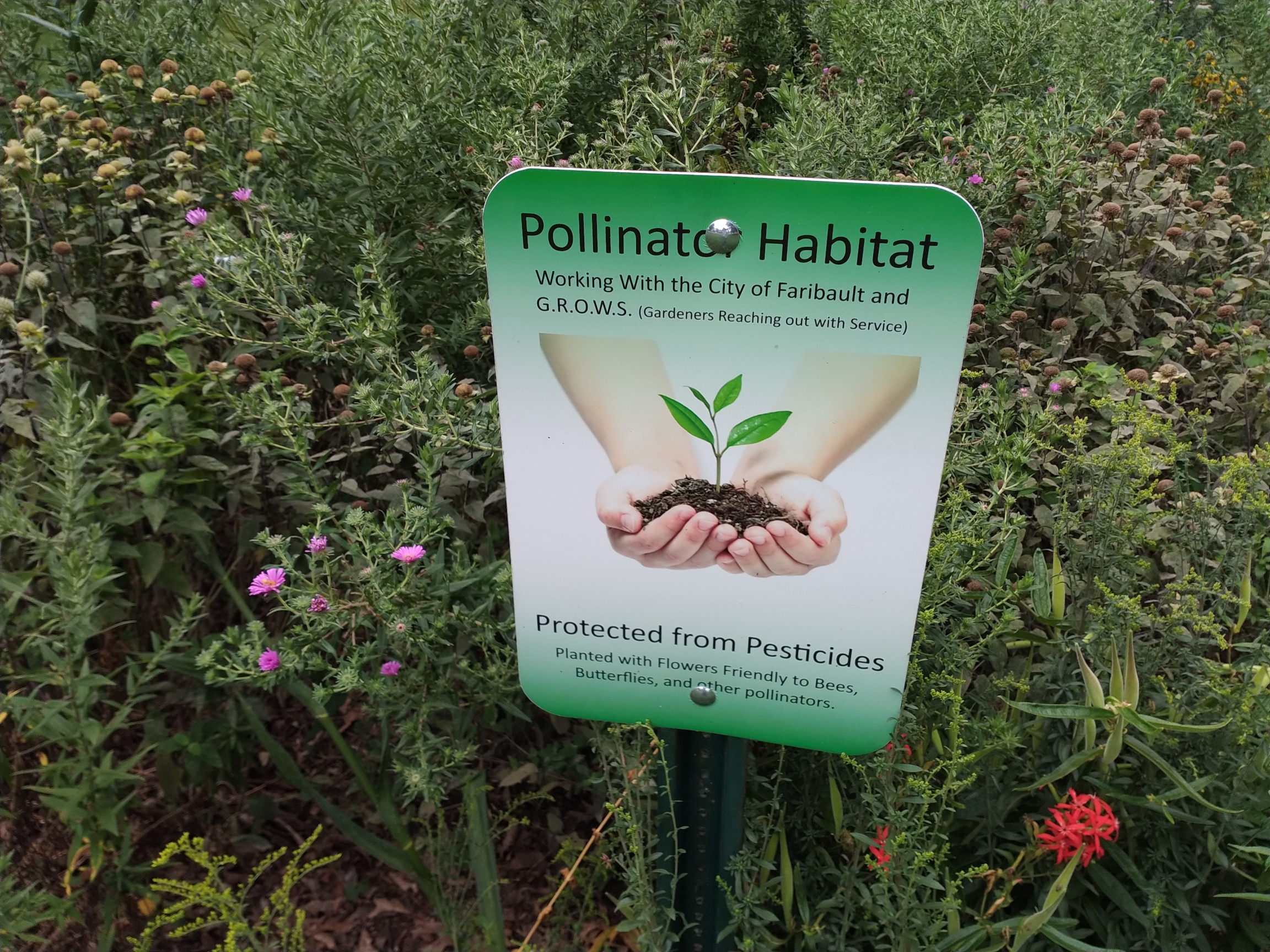
This sign drew me to the base of a tree, where I found an inn and a bee lawn. (Minnesota Prairie Roots copyrighted photo August 2024)
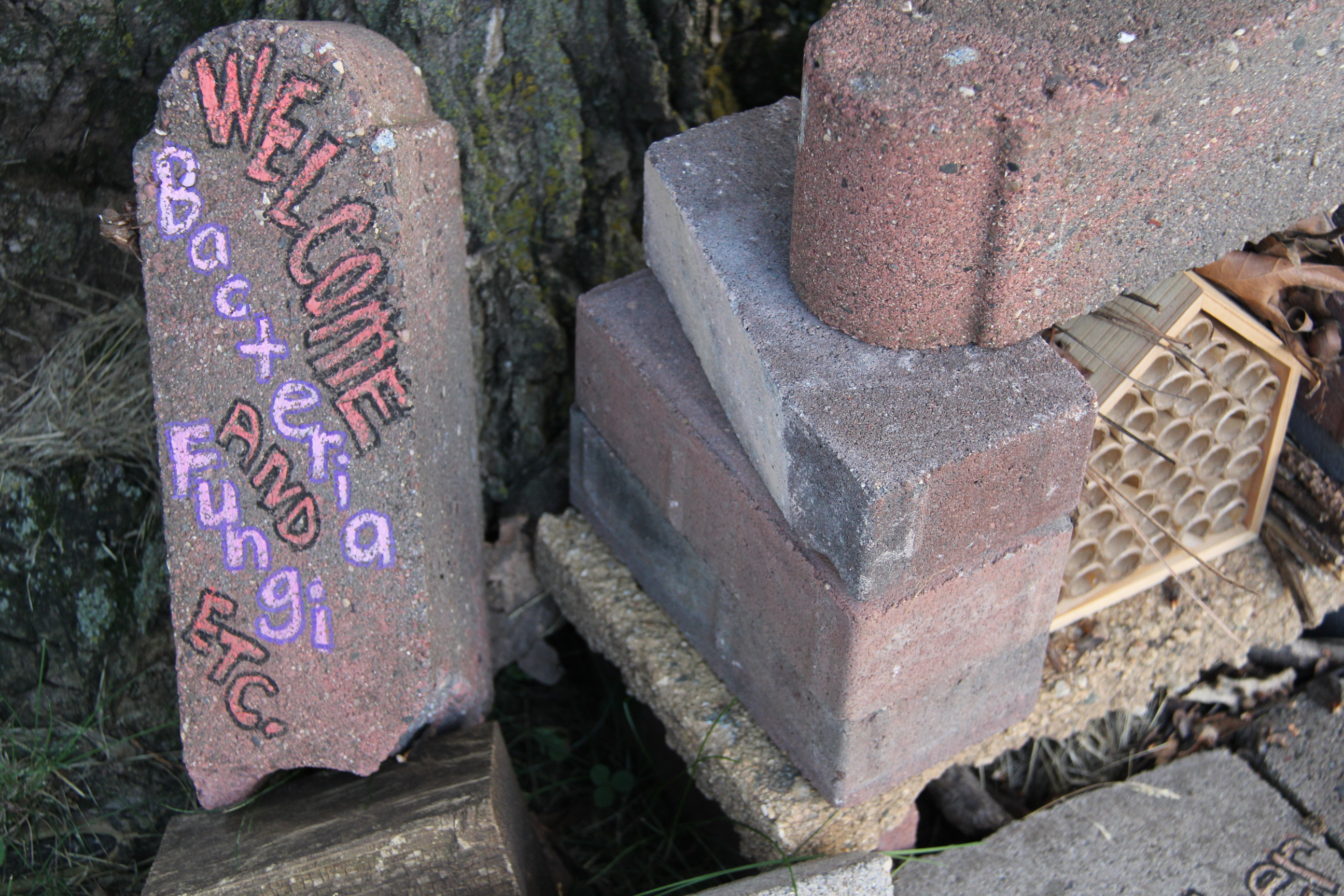
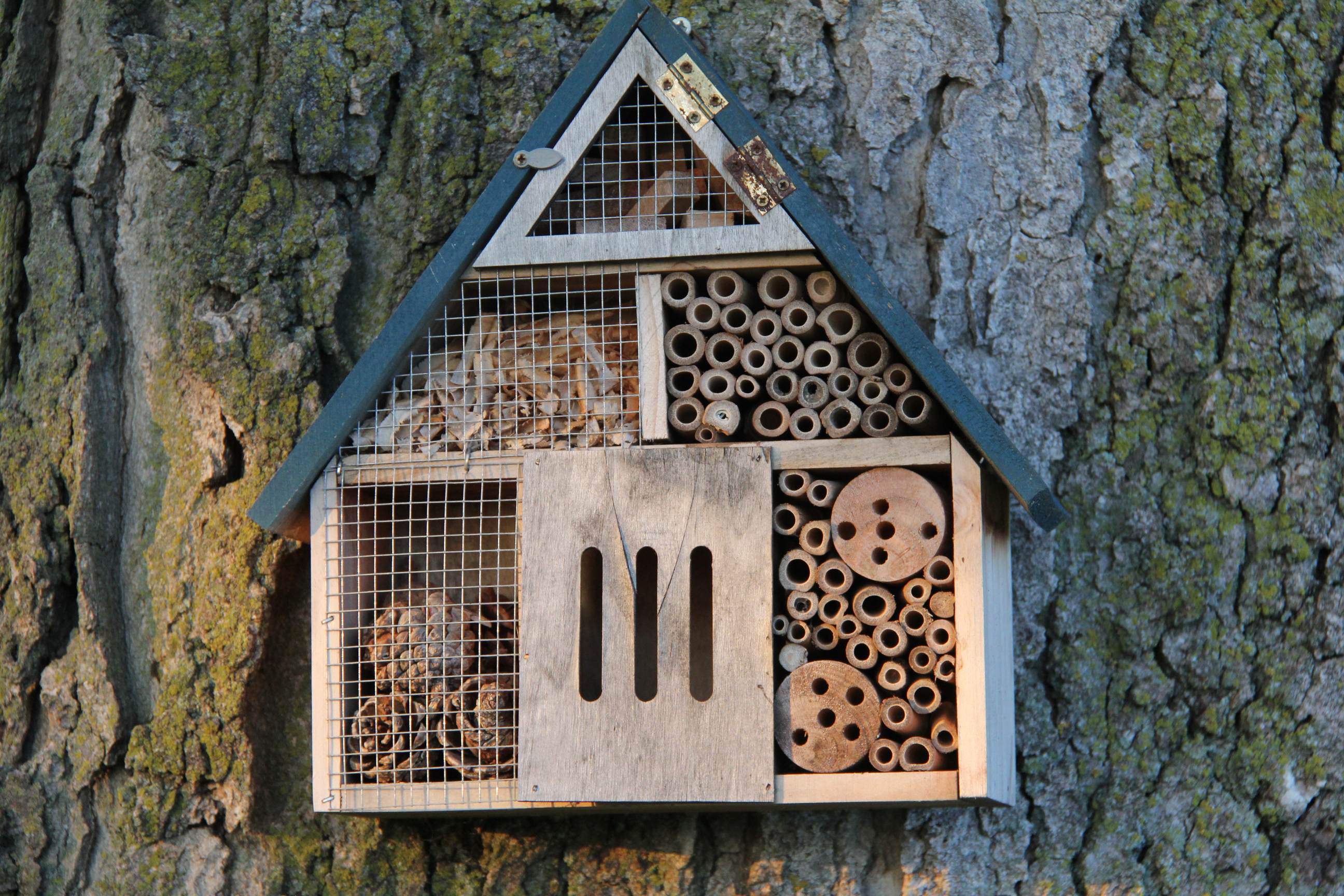
Bricks, stones, sticks and more comprise this haphazard housing unit. (Minnesota Prairie Roots copyrighted photo August 2024)
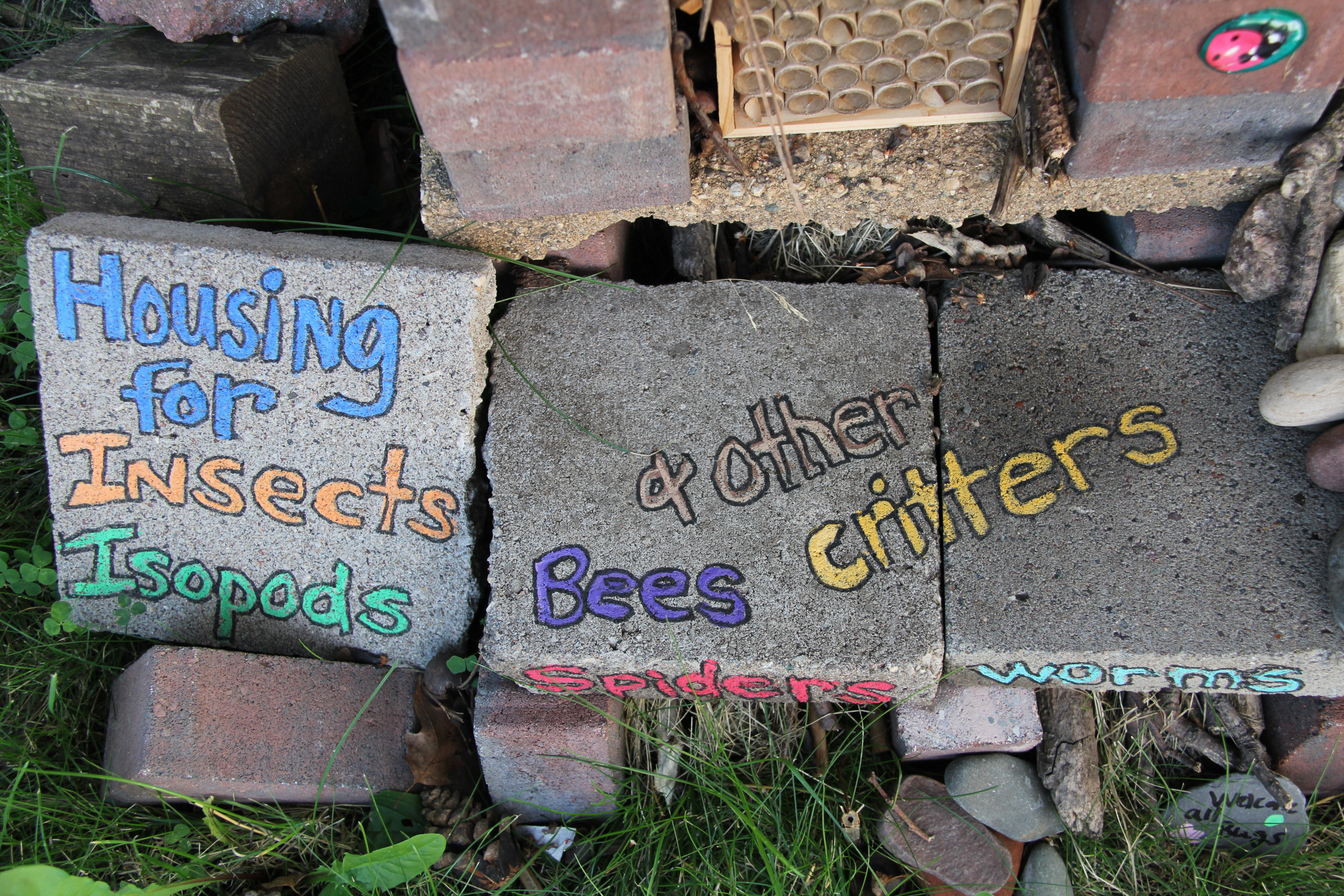
Identifying signage on the Invertebrate Inn. (Minnesota Prairie Roots copyrighted photo August 2024)
Now, as an adult, and an aged one at that, I realize that the core of learning is not memorization. It is rather taking in information that sparks interest, raises questions, causes independent thinking. I am still learning well into my sixties, this year marking 50 years since I graduated from high school.
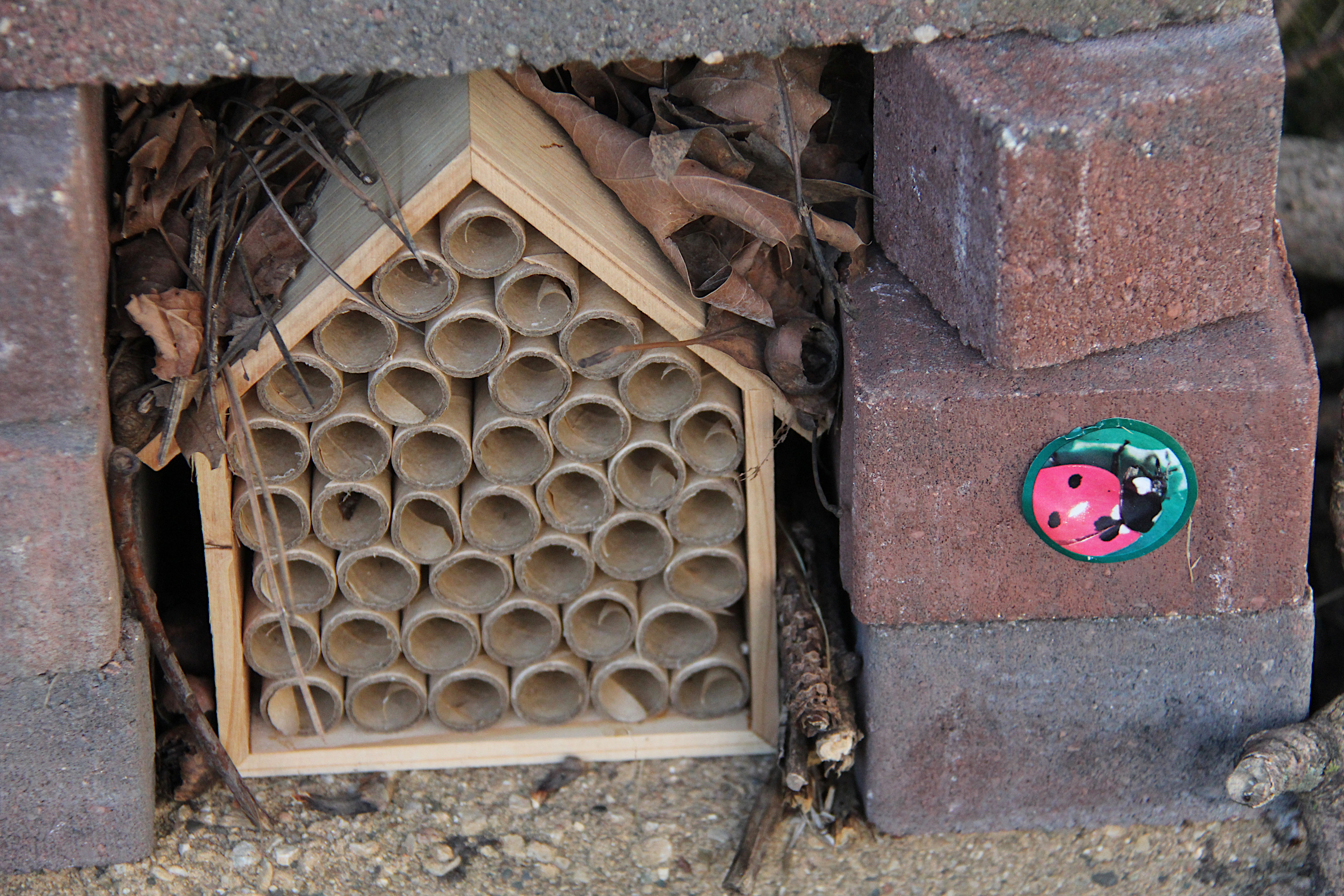
I trust this structure would be a good home for a bug. (Minnesota Prairie Roots copyrighted photo August 2024)
Today I learn because I want to, not because I need to take some class for credits or to earn a degree.
The bee lawn was roped off when I visited. (Minnesota Prairie Roots copyrighted photo August 2024)
Signage on the tree explains a flowering bee lawn. (Minnesota Prairie Roots copyrighted photo August 2024)
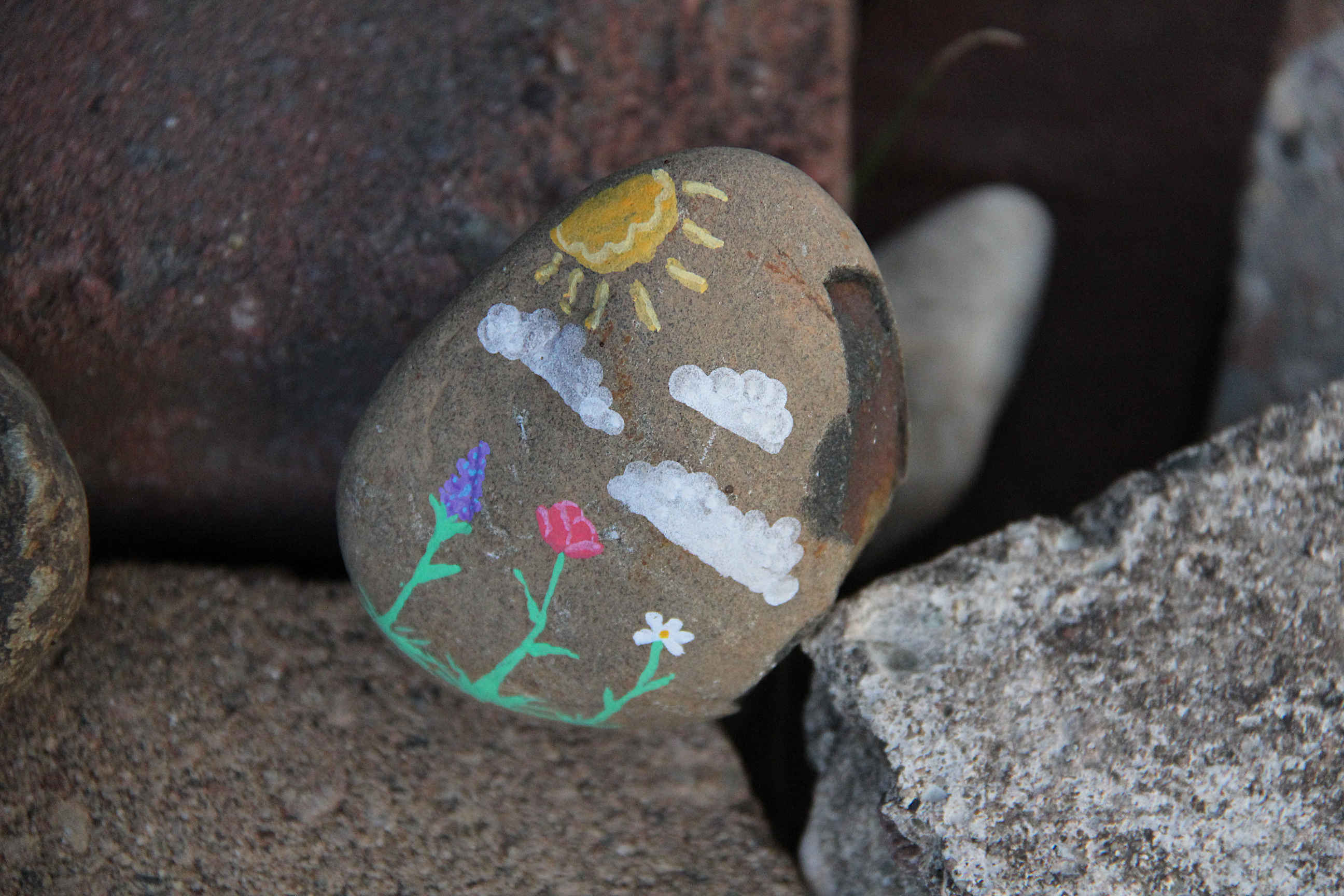
Fitting floral rock art in the inn. (Minnesota Prairie Roots copyrighted photo August 2024)
My latest delve into science was prompted by a visit to the Rice County Master Gardeners Teaching Gardens in Faribault. There I spotted an Invertebrate Inn and a bee lawn, recent additions to the beautiful gardens located at the Rice County Fairgrounds. These are not exactly novel ideas. But I’d not previously considered them much and how they benefit the natural world. Low-lying bee lawns, with their clover and other flowers like creeping thyme, provide nectar and pollen for pollinators.
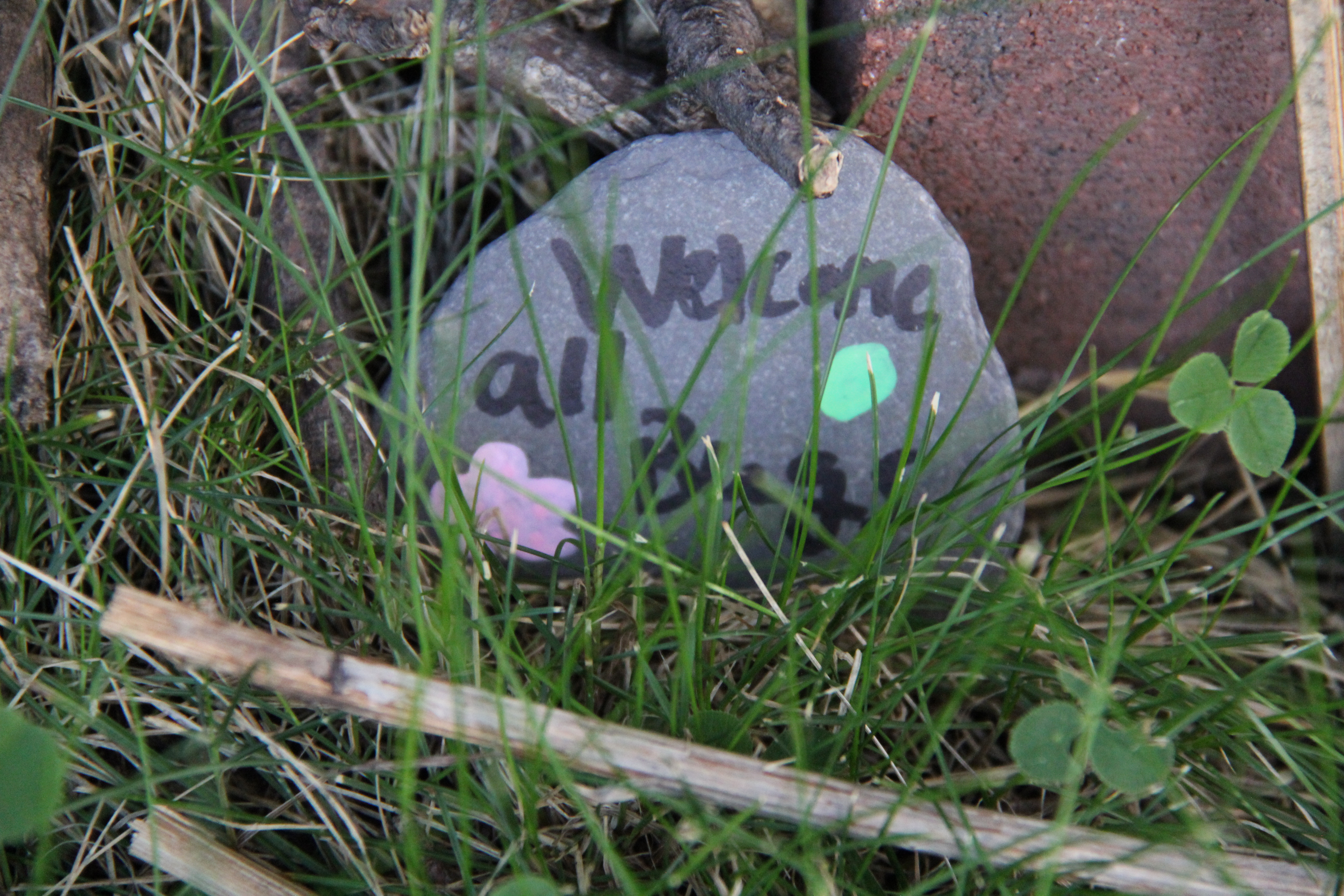
At the inn, a welcome sign for guests. (Minnesota Prairie Roots copyrighted photo August 2024)
In some ways, the inn and the bee lawn remind me of childhood days on the farm with our grass anything but weed-free and manicured. Dandelions and clover were prolific. No weedkiller or insecticides were used except on crops. No nothing applied to the grass, because who cared and who had time to nurture a lawn when there were crops to plant and cultivate and animals to tend?
Housing for more than just insects, isopods, bees, spiders, worms and other critters. (Minnesota Prairie Roots copyrighted photo August 2024)
Times have changed as farming and yard care have evolved. Insecticide and herbicide usage is prevalent. We would be naive to think this has not affected pollinators like butterflies and bees. And so when I discover something like a bee lawn and an Invertebrate Inn, I feel a spark of joy, a sense of gratitude for those who create them.
High rise housing. (Minnesota Prairie Roots copyrighted photo August 2024)
I want my grandchildren to understand that this world they’ve been given is one that needs to be nurtured and appreciated, taken care of in a way that perhaps my generation did not. Sure I celebrated Earth Day, wore Earth Shoes and spouted environmental platitudes of the 1970s. But did that really mean anything, make any long-lasting impact? It was a beginning, I suppose.
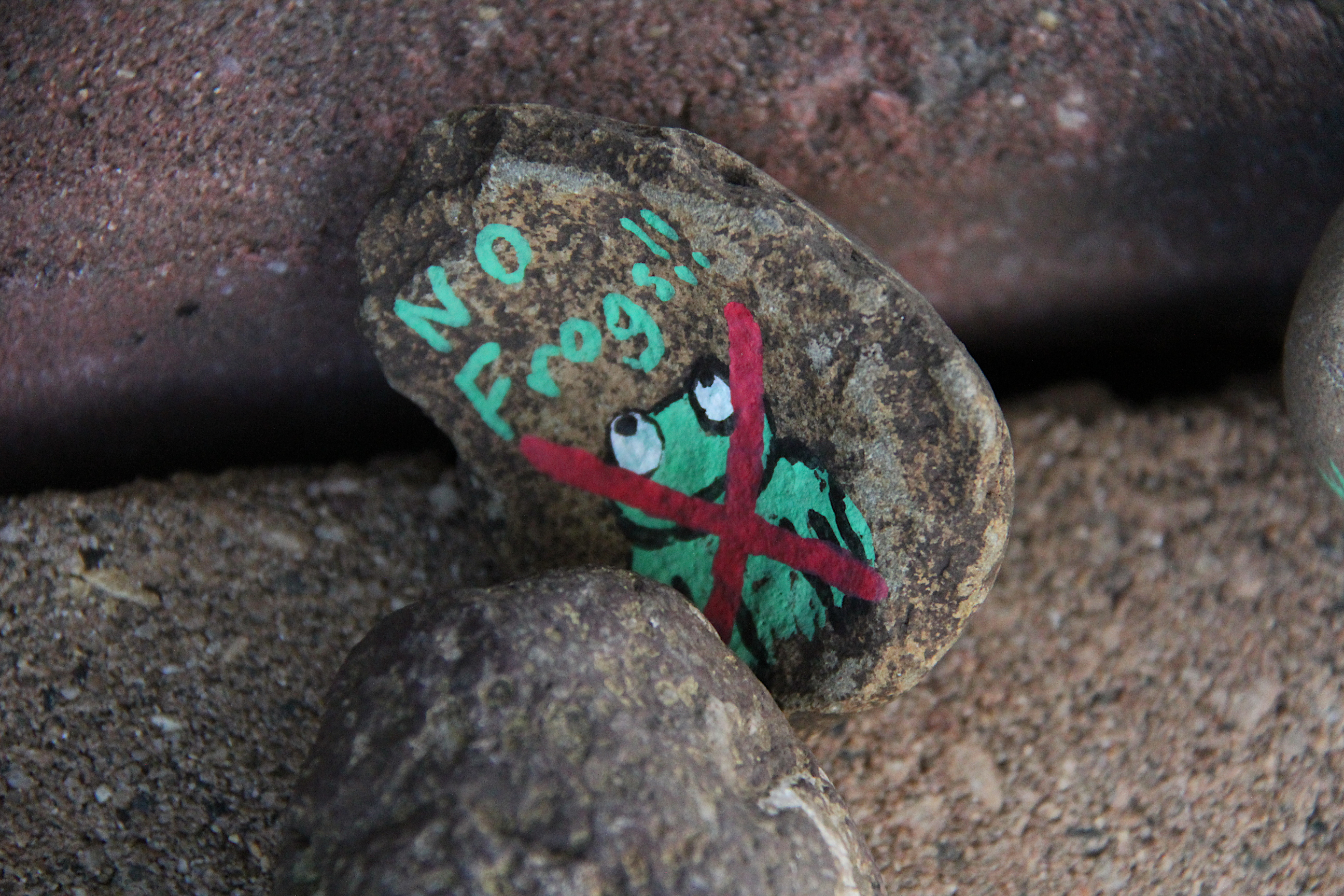
Frogs are banned from the inn. (Minnesota Prairie Roots copyrighted photo August 2024)
I want my grandchildren to ask questions in class, seek out information, learn in a way that is focused on curiosity rather than feeding back facts. I want them to care about the bees and the butterflies and the bugs.
There are other bee lawns, pollinator gardens, etc., in my community, including this one in Central Park. (Minnesota Prairie Roots copyrighted photo August 2024)
I want them to connect with nature, to understand that what they do, or don’t do, to the earth matters. I want them to get their hands dirty in the soil, overturn rocks, hold bugs, pick up worms, plant flowers and, most of all, appreciate this natural world of ours. The science of it. The beauty of it. The peace it brings to the soul. The joy it brings to the spirit. And I want them to care. Always.
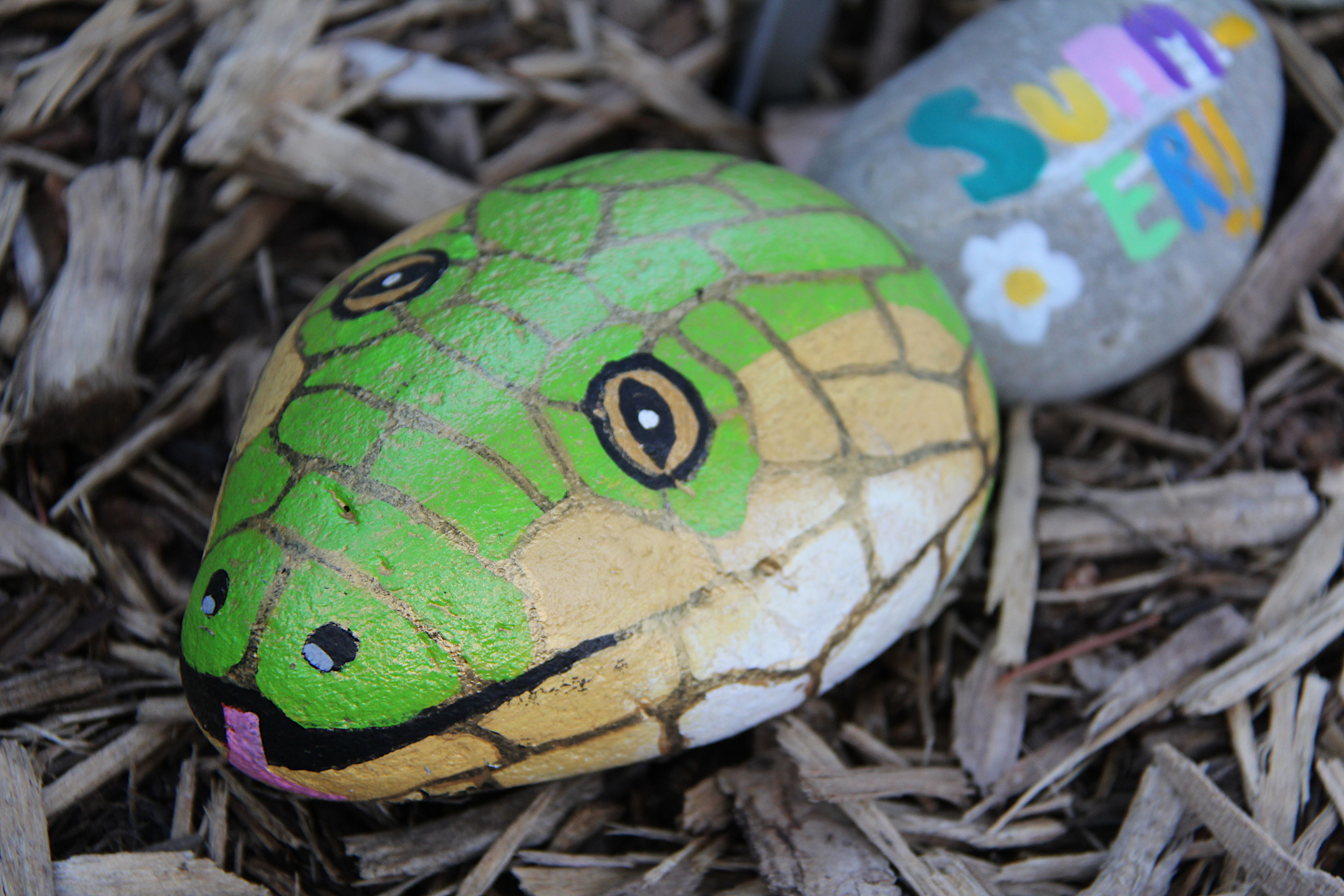
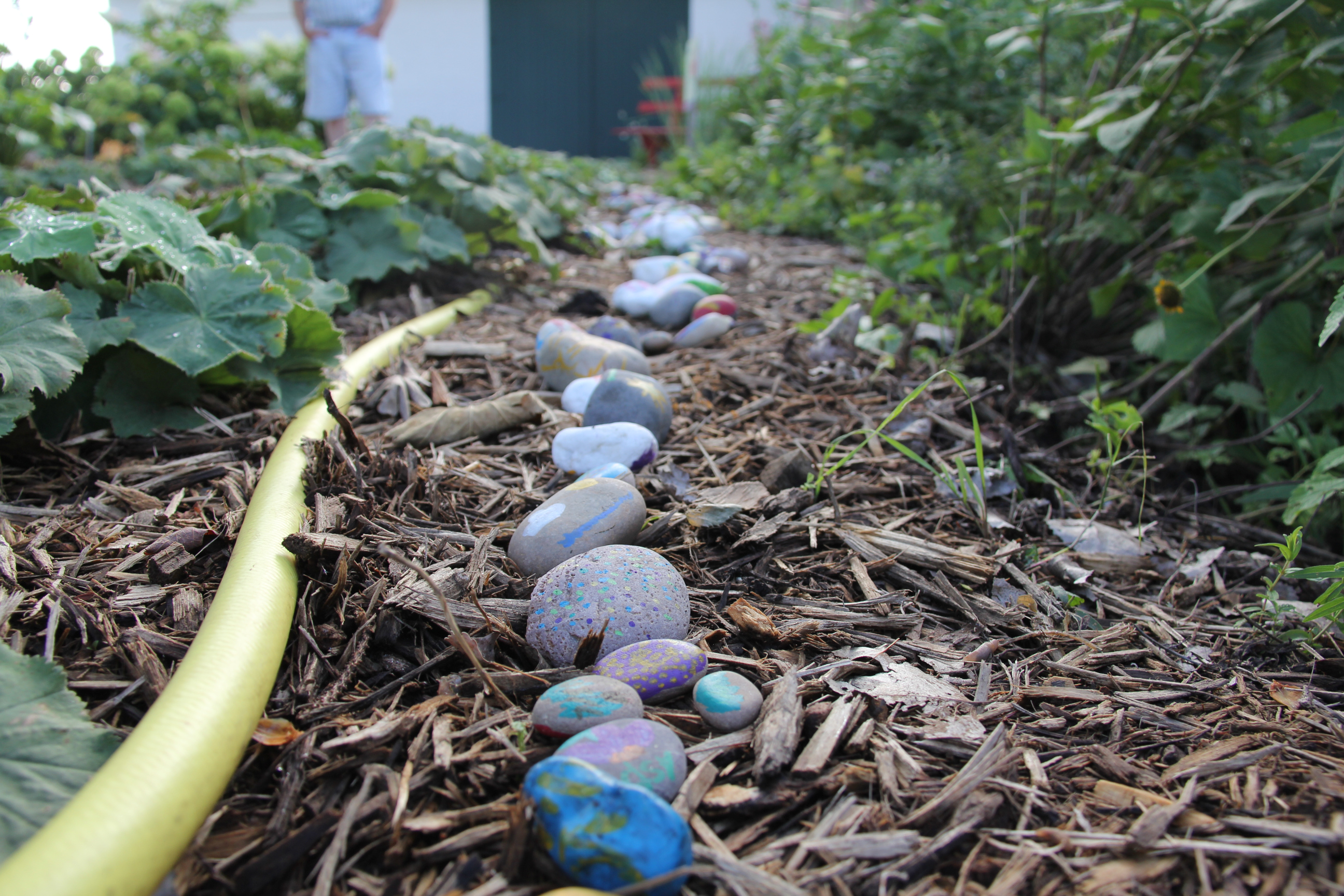
The snake I found in a Faribault garden. (Minnesota Prairie Roots copyrighted photo August 2024)
AS THE BIBLICAL STORY GOES, a cunning snake tempted Eve, convincing her that she could eat fruit from a tree growing in the middle of the Garden of Eden. She believed the snake’s claim of knowledge and immortality. Turns our he manipulated her. Things did not go so well after Eve ate the forbidden fruit and shared it with Adam.
I stood atop a bench to get this photo of the long and winding Rock Snake. (Minnesota Prairie Roots copyrighted photo August 2024)
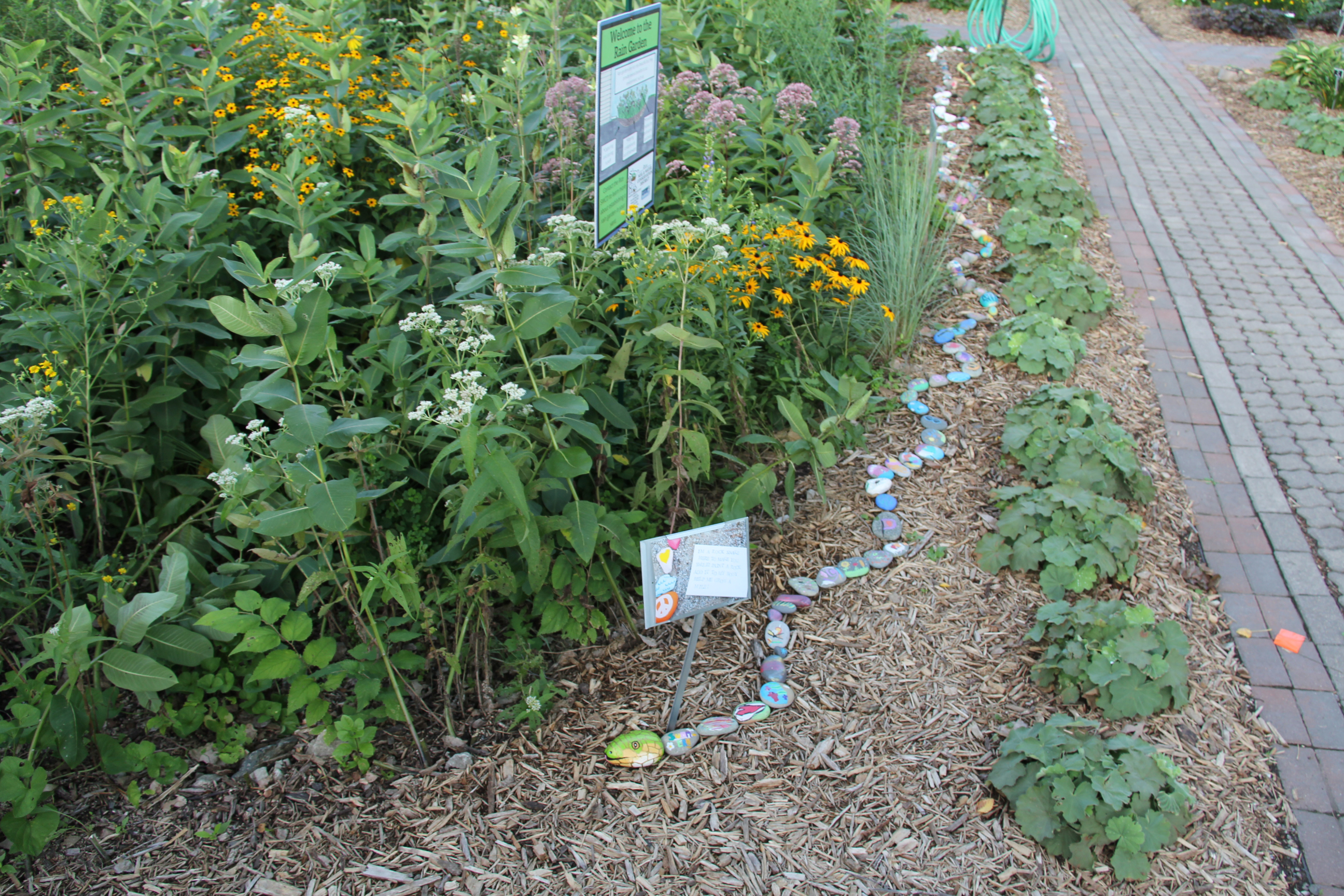
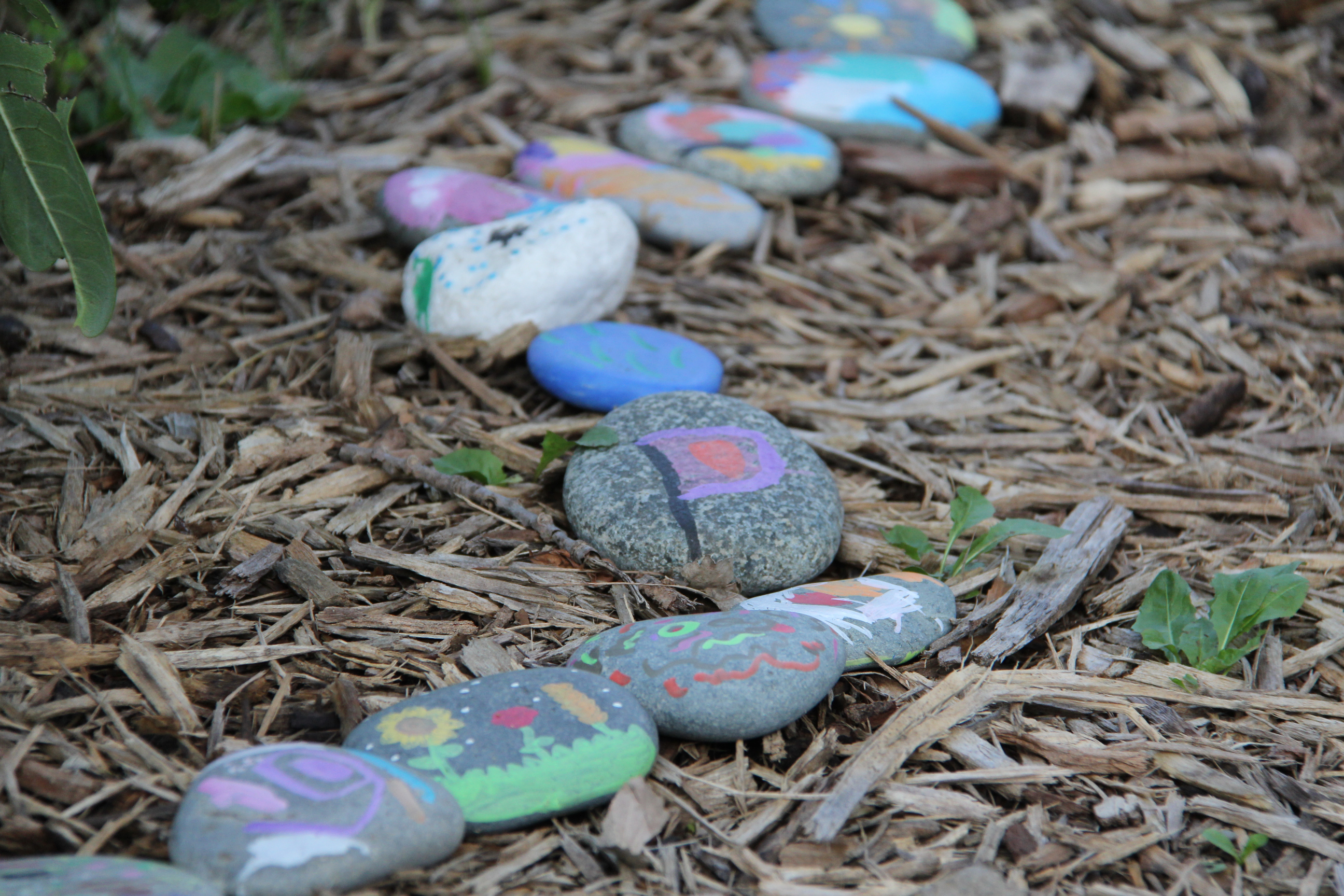
Not all snakes are liars and evildoers. Some, like the one I found recently in a Faribault garden, are quite the opposite. The Rock Snake that stretches an estimated 40 feet across wood chips between a brick pathway and a rain garden in the Rice County Master Gardeners’ Teaching Gardens exudes only goodness.
The Rock Snake slithers (well, not really) past the rain garden. (Minnesota Prairie Roots copyrighted photo August 2024)
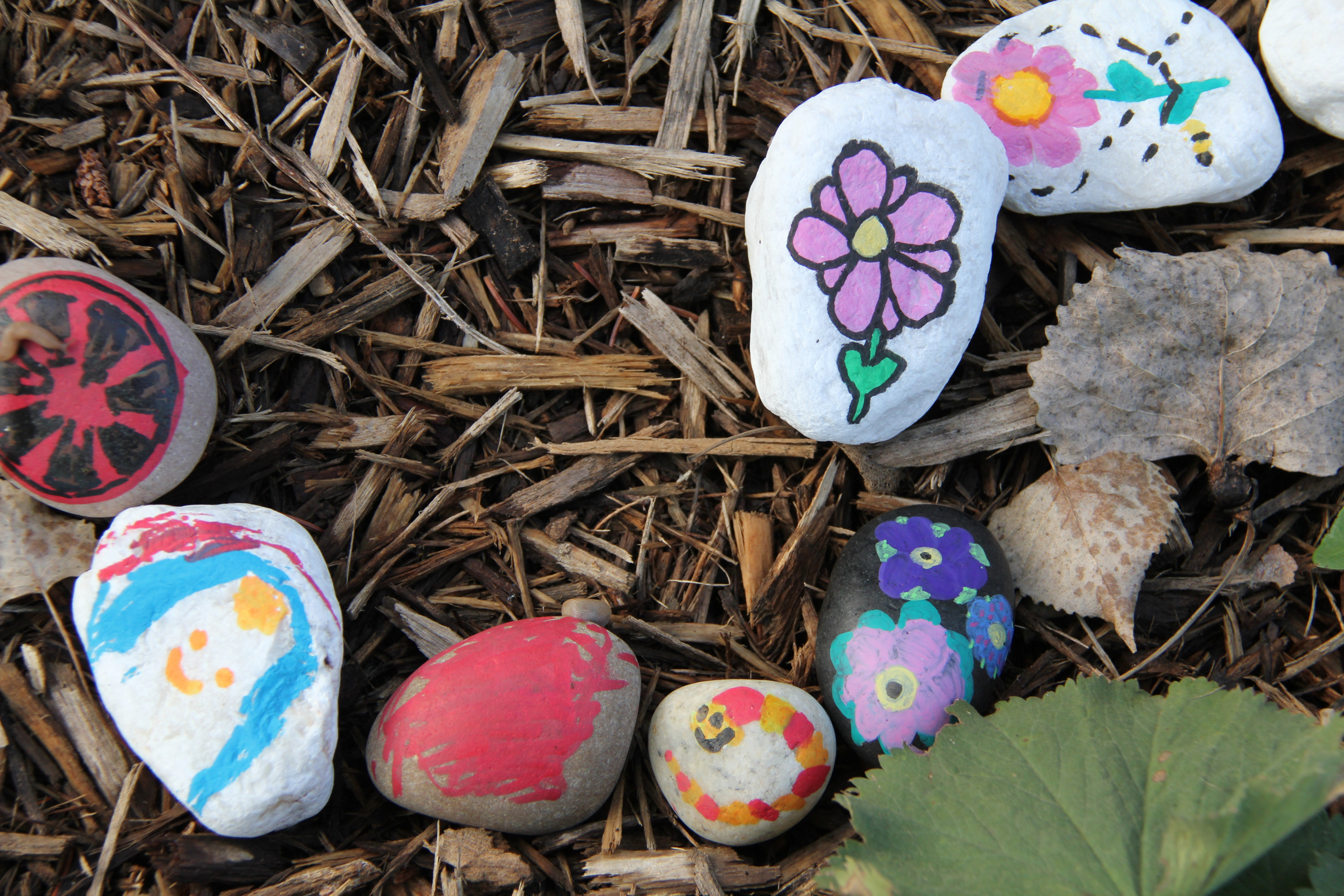
I resisted the temptation to snatch away a segment—a painted rock—of the snake. Some 220 painted stones comprise the serpent. I learned a lesson from Eve. Be strong. Don’t give in to those who would mislead you.
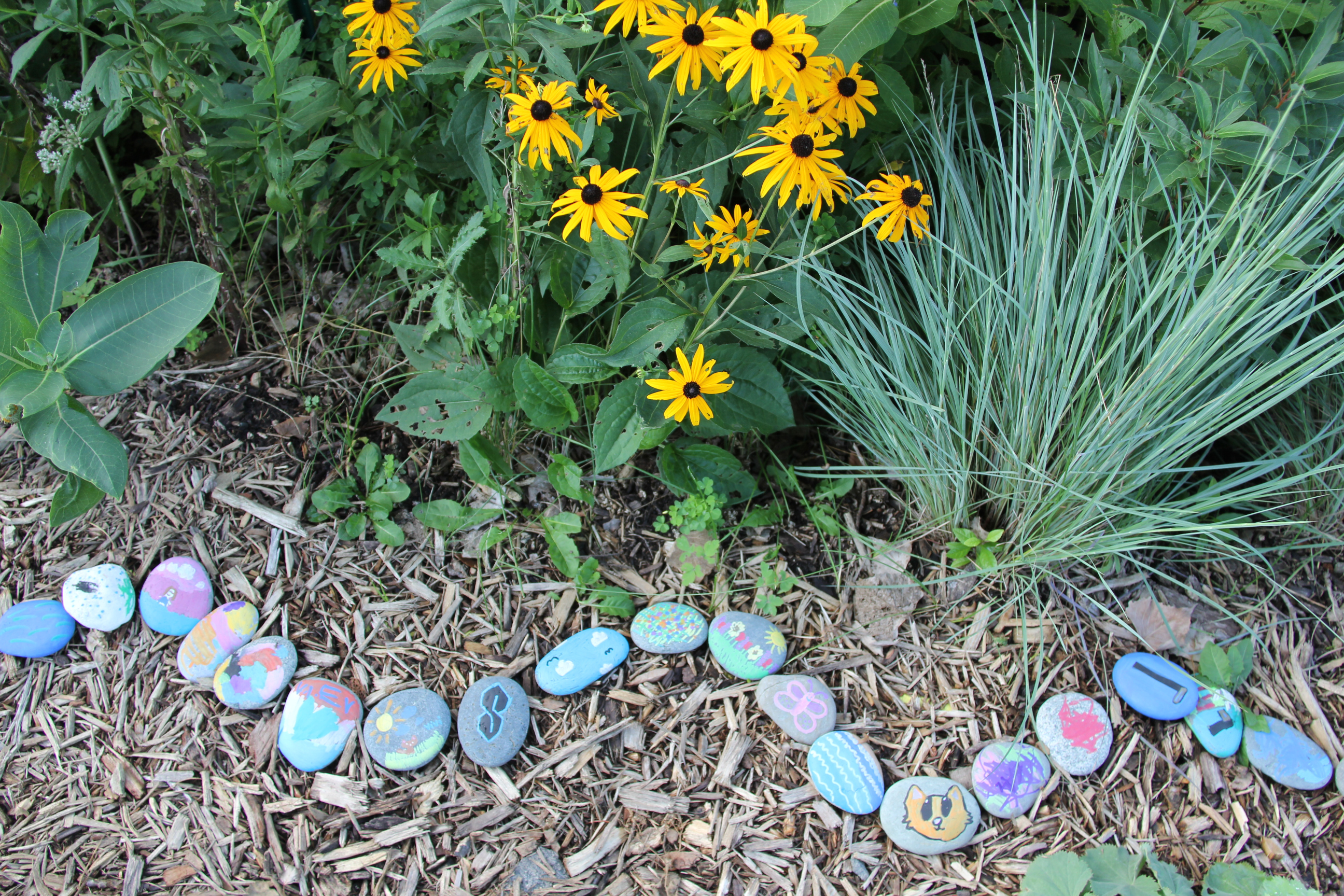
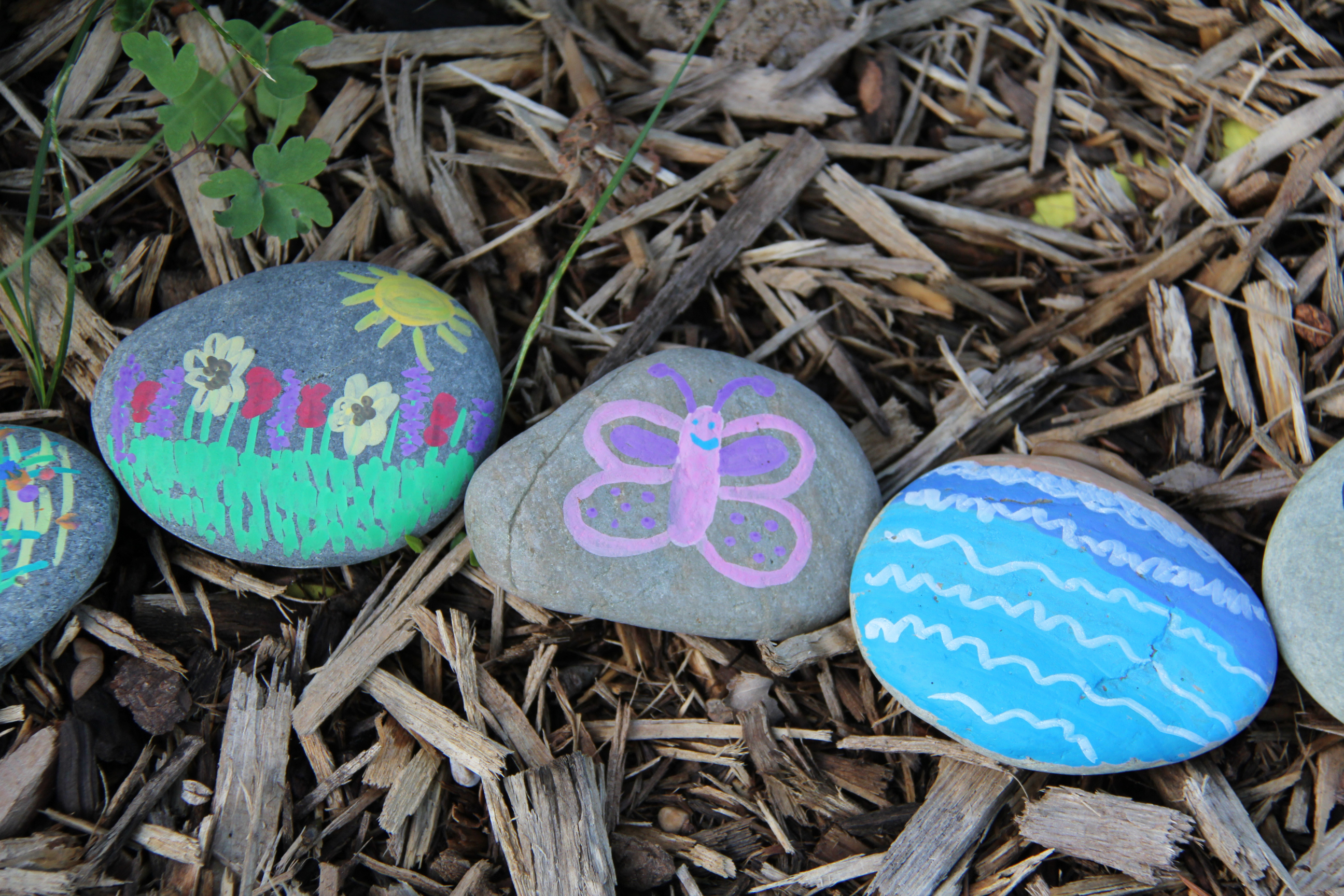
These painted rocks are themed to summer. (Minnesota Prairie Roots copyrighted photo August 2024)
More sunshine and flowers on the snake’s body. (Minnesota Prairie Roots copyrighted photo August 2024)
And yet more flowers bloom on the Rock Snake. (Minnesota Prairie Roots copyrighted photo August 2024)
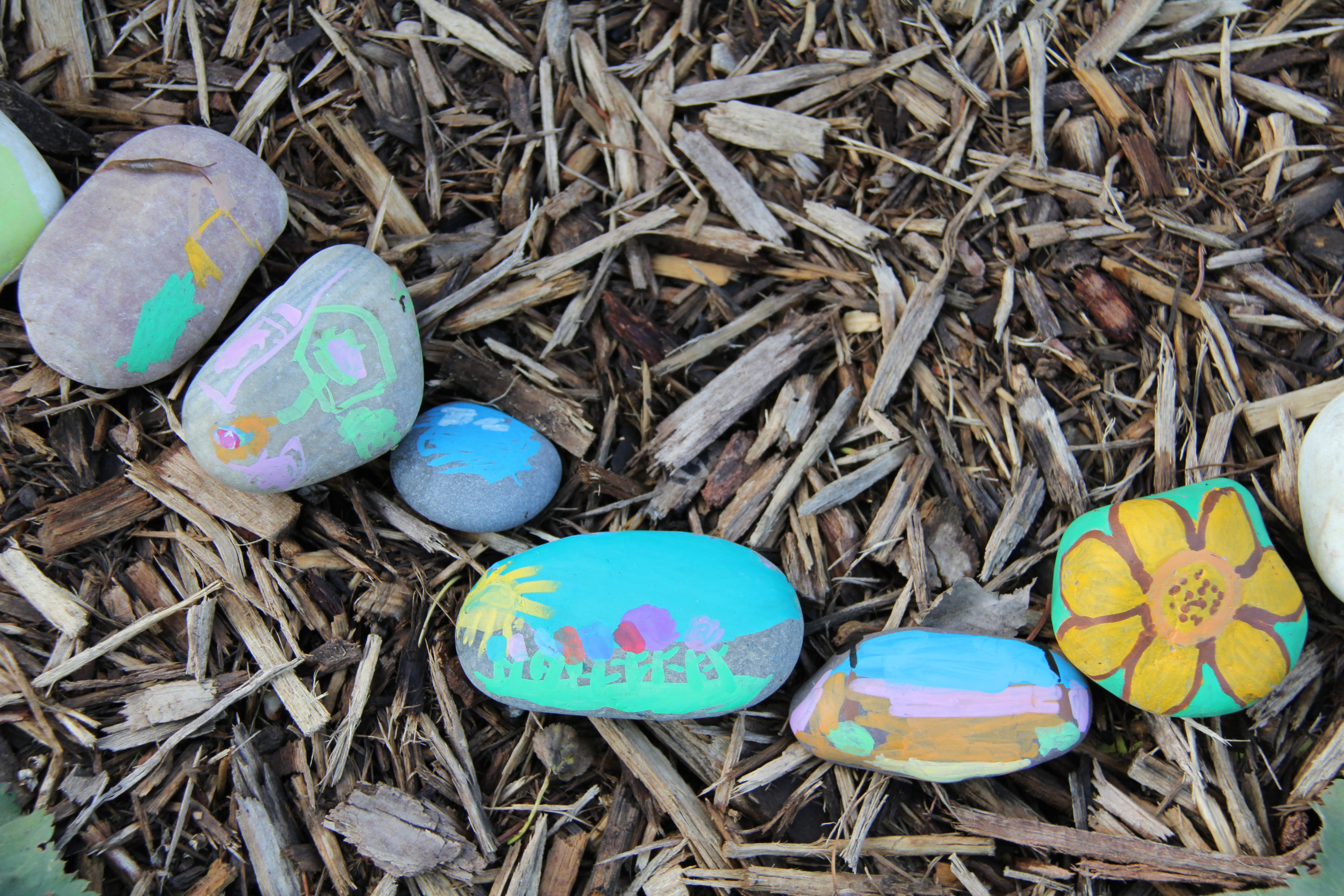
Rather, I opted to photograph and enjoy the Rock Snake with its inspiring, joyful messages, its colorful art. A posted sign invites people to add their own painted rocks, lengthening the snake designed to bring a smile.
(Minnesota Prairie Roots copyrighted photo August 2024)
(Minnesota Prairie Roots copyrighted photo August 2024)
(Minnesota Prairie Roots copyrighted photo August 2024)
And smile I did as I followed the snake’s winding body, bending low to study the art, the words. Many of the stones were painted at the Master Gardeners’ booth during the recent Rice County Fair.
An overview of a small section of the gardens. (Minnesota Prairie Roots copyrighted photo August 2024)
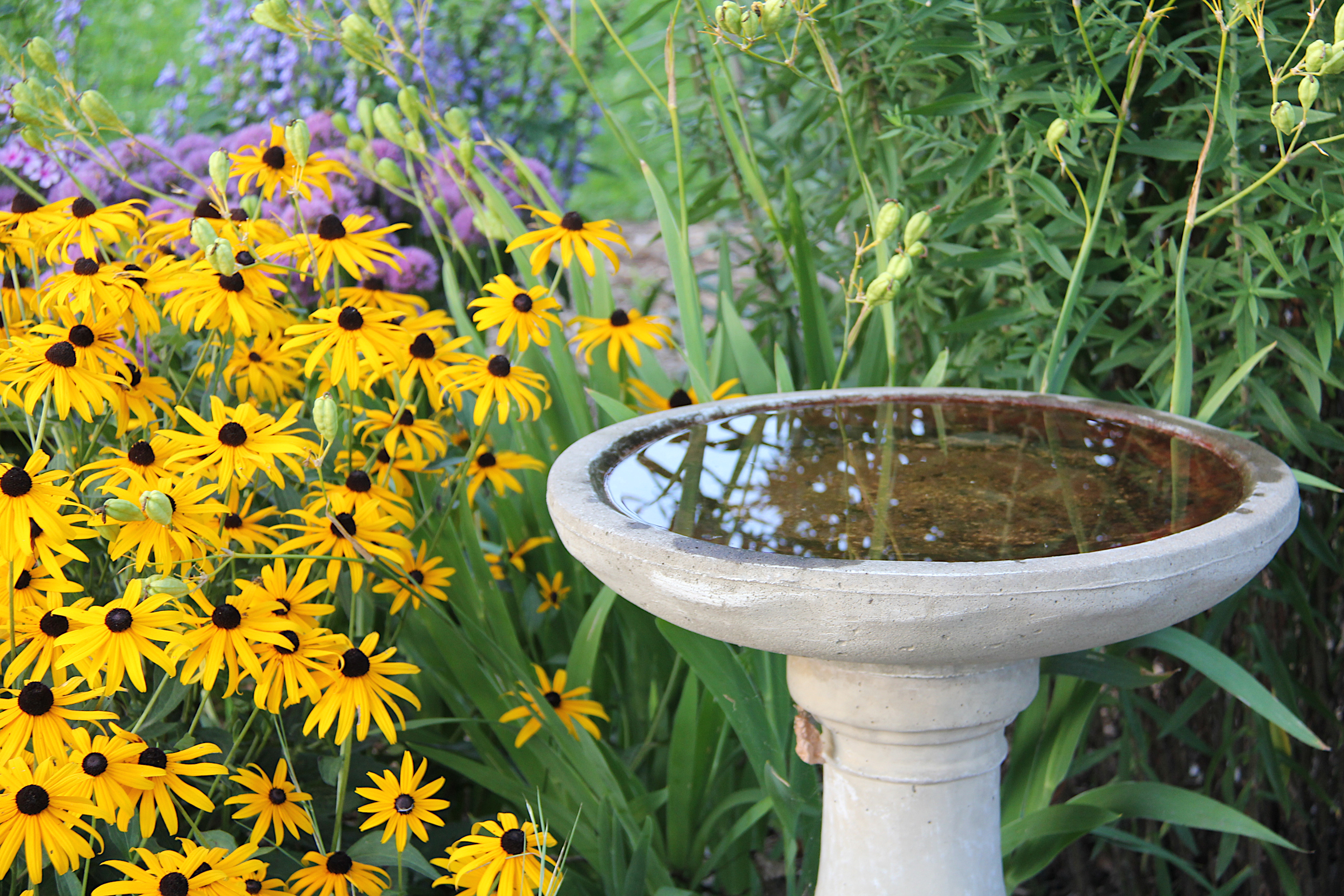
Water features include a bird bath, pond and fountains. (Minnesota Prairie Roots copyrighted photo August 2024)
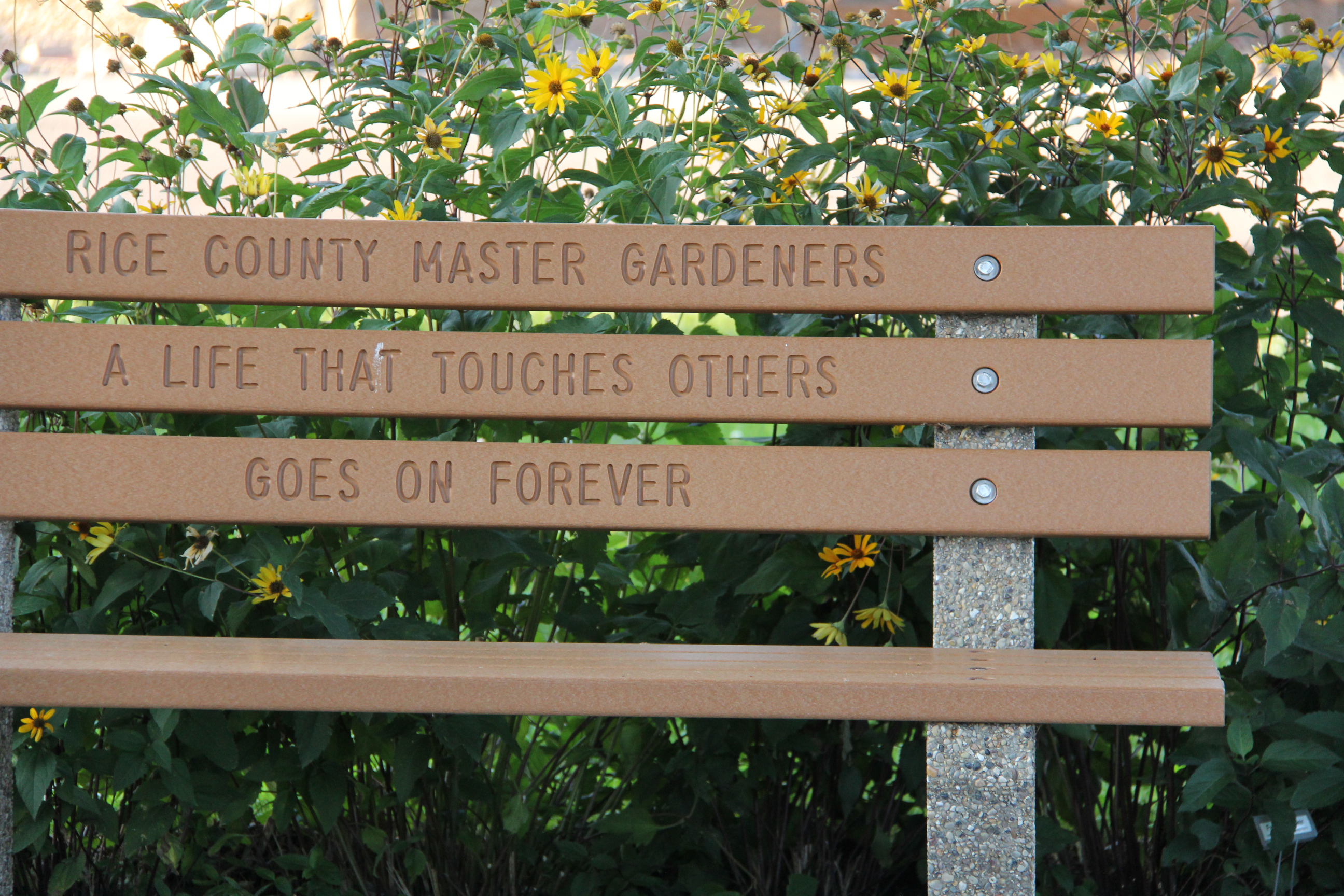
Several benches offer a place to rest, contemplate and enjoy the gardens. (Minnesota Prairie Roots copyrighted photo August 2024)
These gardeners, through their volunteer efforts, have created Faribault’s own Garden of Eden in a spacious area next to the conservation building and the Rice County Historical Society on the city’s north side. It’s taken years to get the garden to this lush, well-kept, welcoming space.
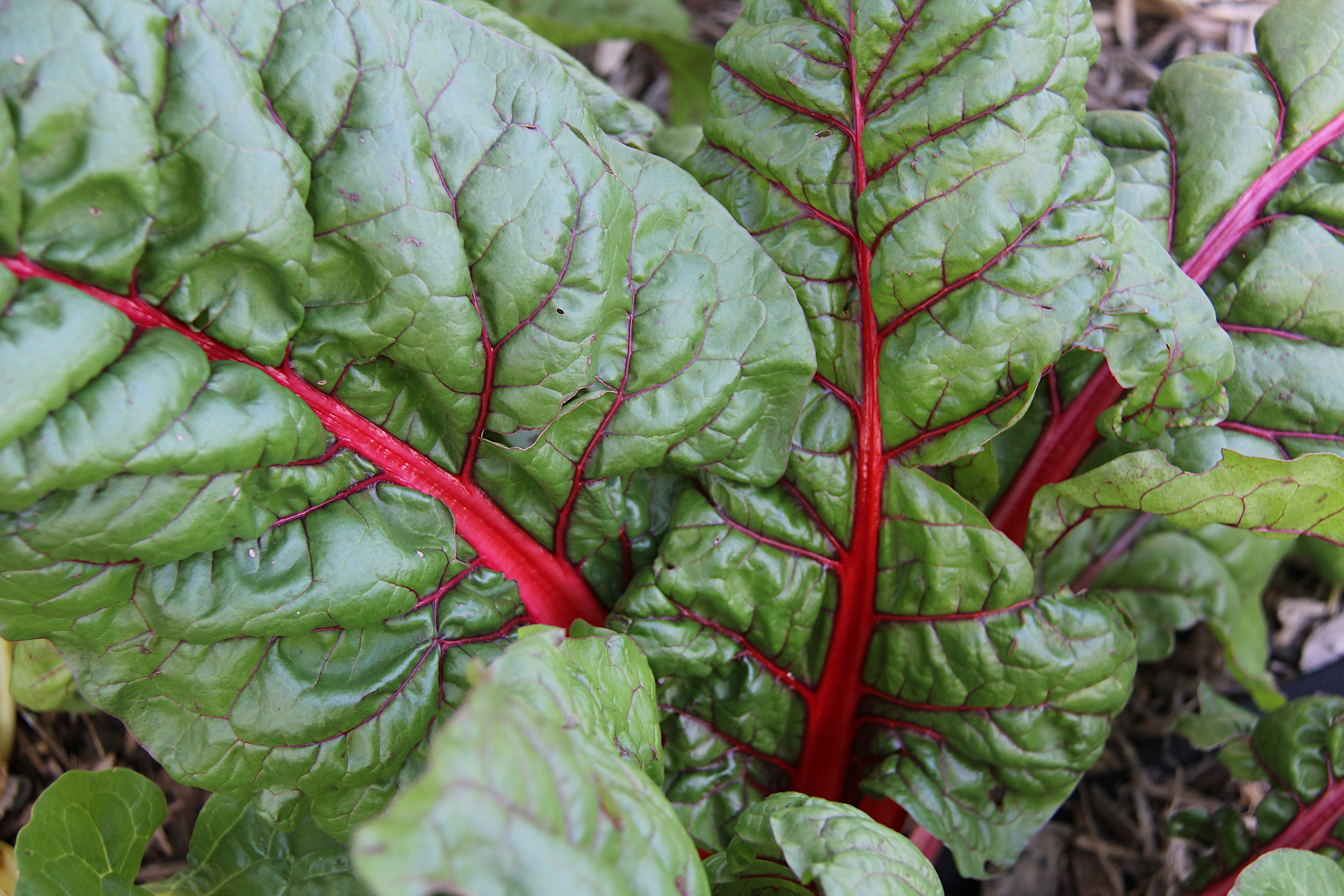
Swiss chard grows in the trial garden. (Minnesota Prairie Roots copyrighted photo August 2024)
I enjoy coming here, meandering among blooming flowers and plants, past the water features, pausing to examine the fairy garden. And now there’s more to see in the Rock Snake and a new bee lawn with habitat. There are trial gardens here and free seeds for the taking and benches for sitting. It is, indeed, a bit of paradise, a respite, a place to rest and contemplate and envelope one’s self in nature.
Flowers are always blooming. (Minnesota Prairie Roots copyrighted photo August 2024)
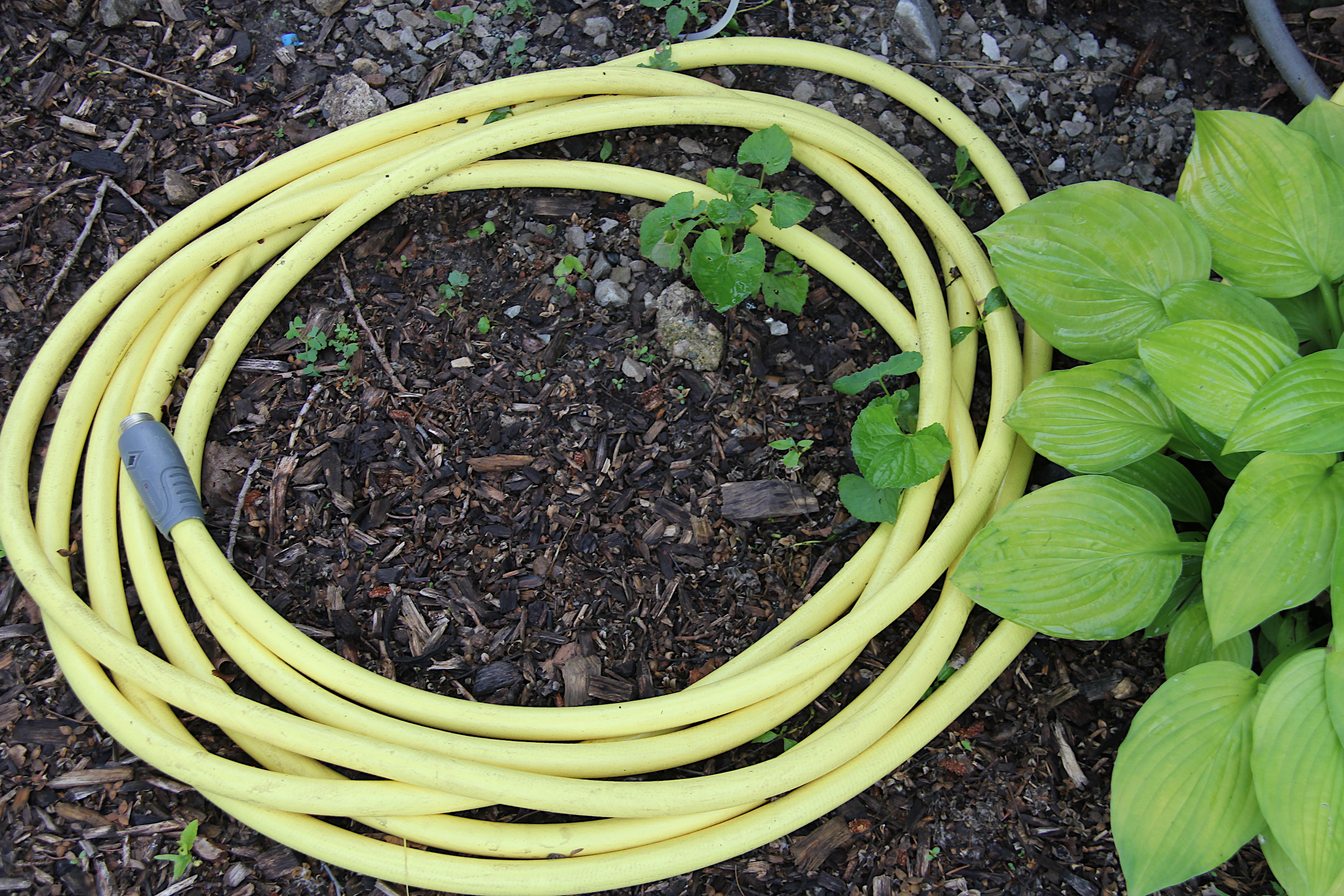
A garden hose runs alongside the Rock Snake. (Minnesota Prairie Roots copyrighted photo August 2024)
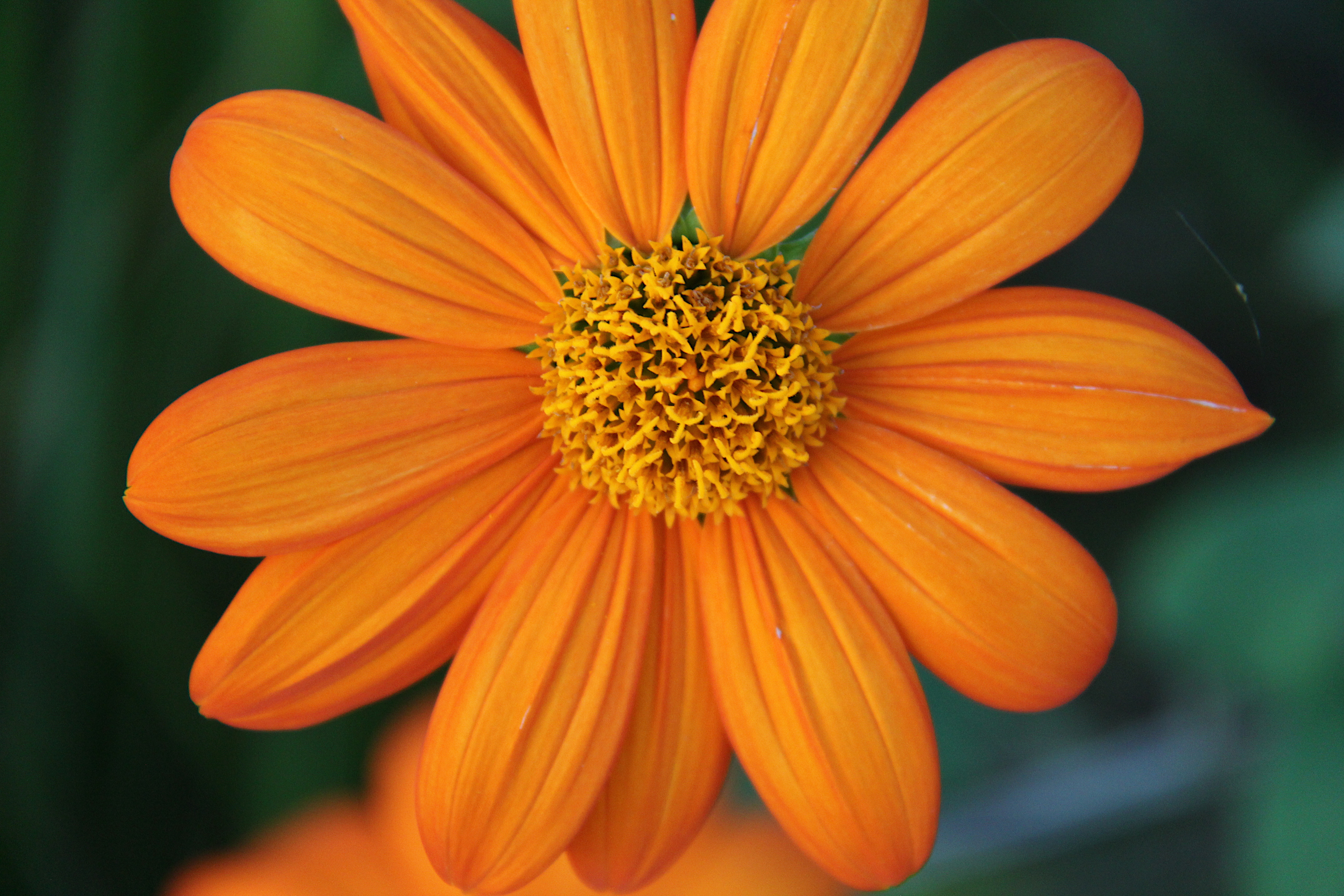
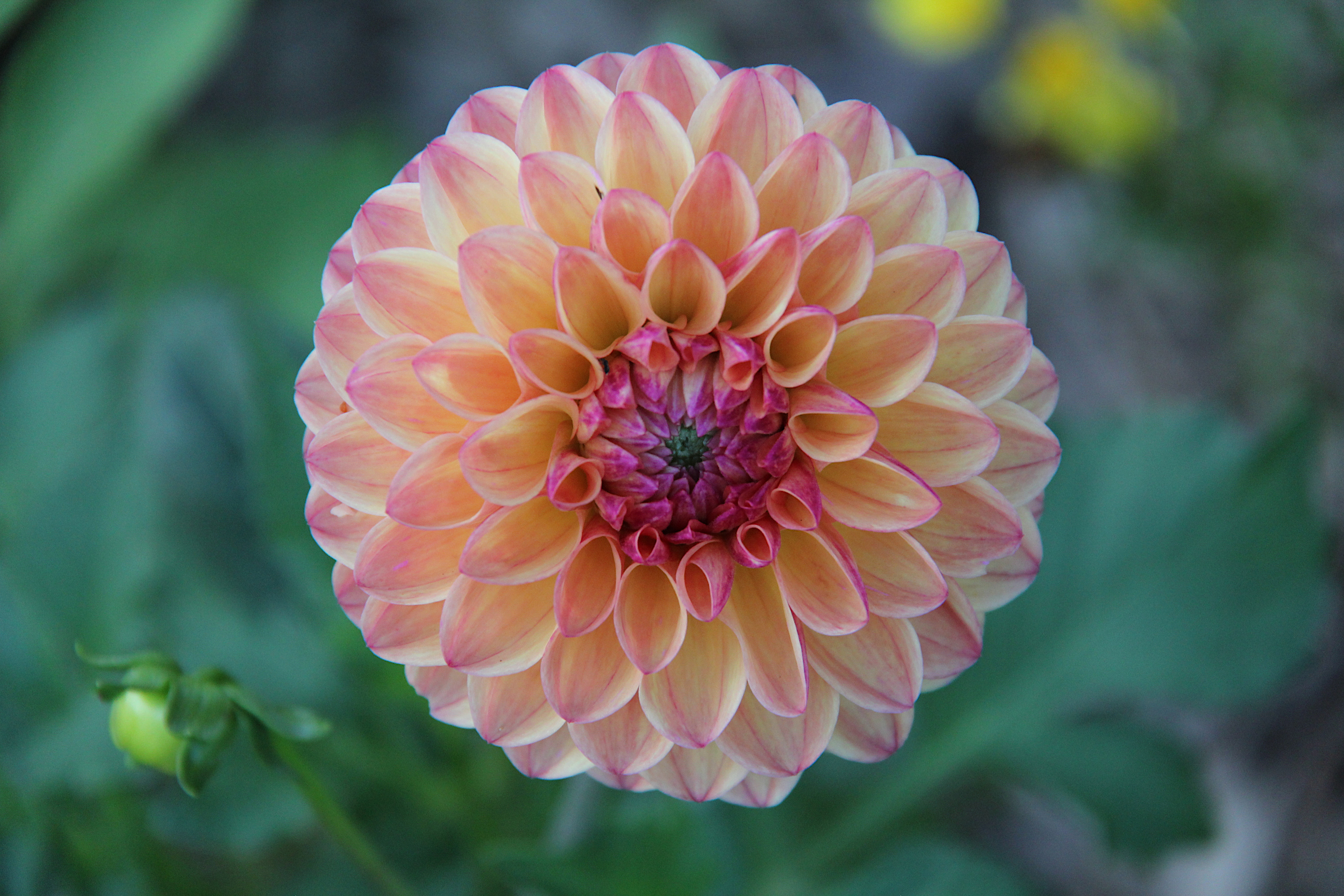
A sturdy dahlia blooms. (Minnesota Prairie Roots copyrighted photo August 2024)
Goodness thrives here. I experience it with my senses. My eyes take in the birds, blooms, bees, butterflies, the colorful Rock Snake. I smell the scent of blossoms. I hear water burbling in fountains, birds chirping. And if I could pluck vegetables from the trial gardens, I would assuredly taste goodness. But I won’t. I will not be tempted. Rather I will look and not touch. Leave and not take. I will leave this bit of Eden as I found it, beautiful and wondrous, a place of peace for anyone who visits.
Monarch on the common milkweed flower. (Minnesota Prairie Roots copyrighted file photo 2023)
I’VE ALWAYS HELD a fascination with milkweeds. Their clusters of vanilla-scented dusty pink flowers draw me to a plant that seems more flower than weed. Unless you were my dad, who wanted the common milkweed removed from his acres of soybeans. Yes, I hoed or pulled plenty of milkweeds from the fields on my southwestern Minnesota childhood farm.
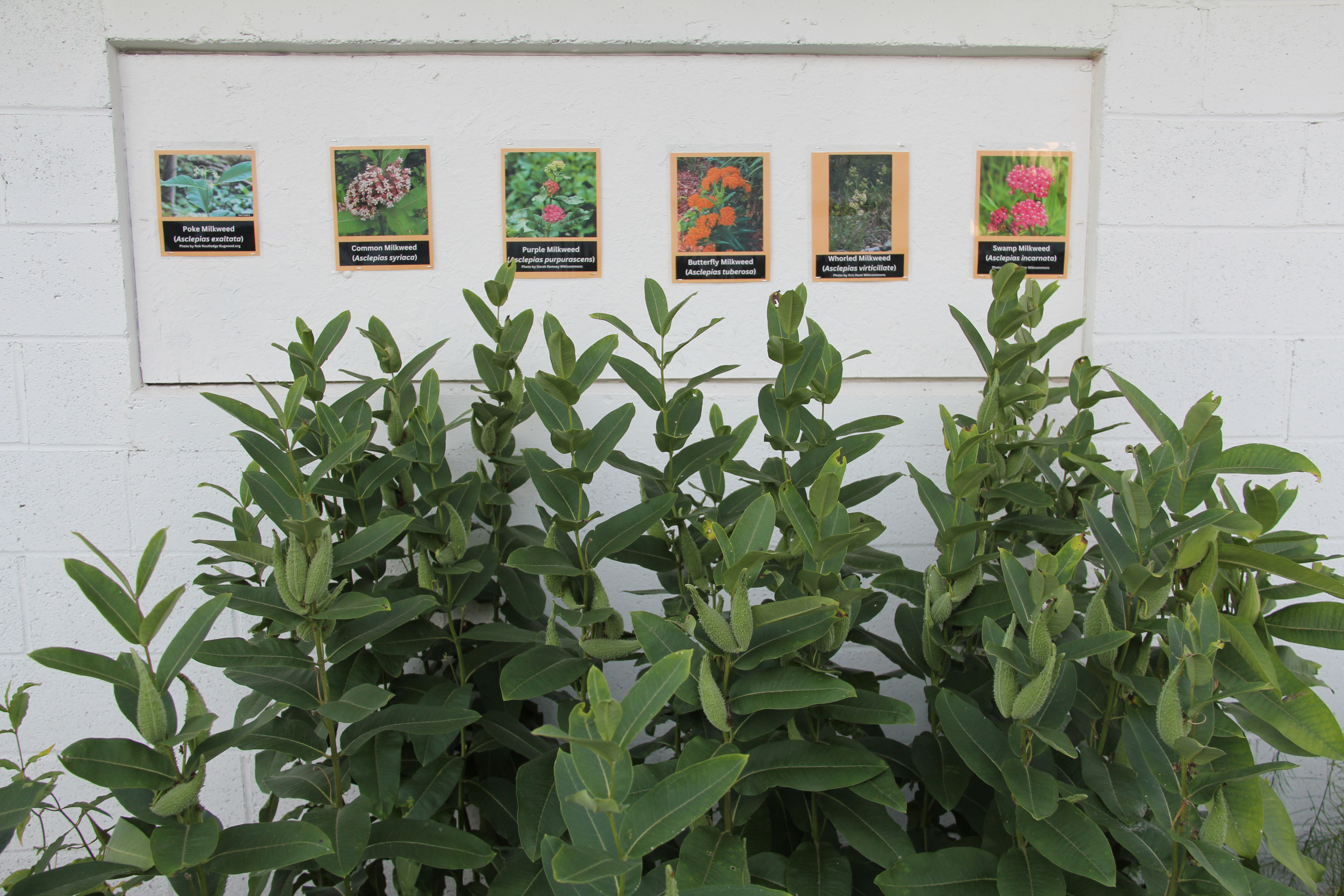
Milkweeds grow next to the conservation building at the Rice County Fairgrounds against a backdrop of identifying milkweed photos. Those include six types: common, poke, purple, butterfly, whorled and swamp. (Minnesota Prairie Roots copyrighted photo August 2024)
My thinking has shifted since then. Today I plant, rather than eradicate, milkweeds. Dad, if he was still alive, might wonder how his farm-raised daughter strayed so far from hoeing to growing.
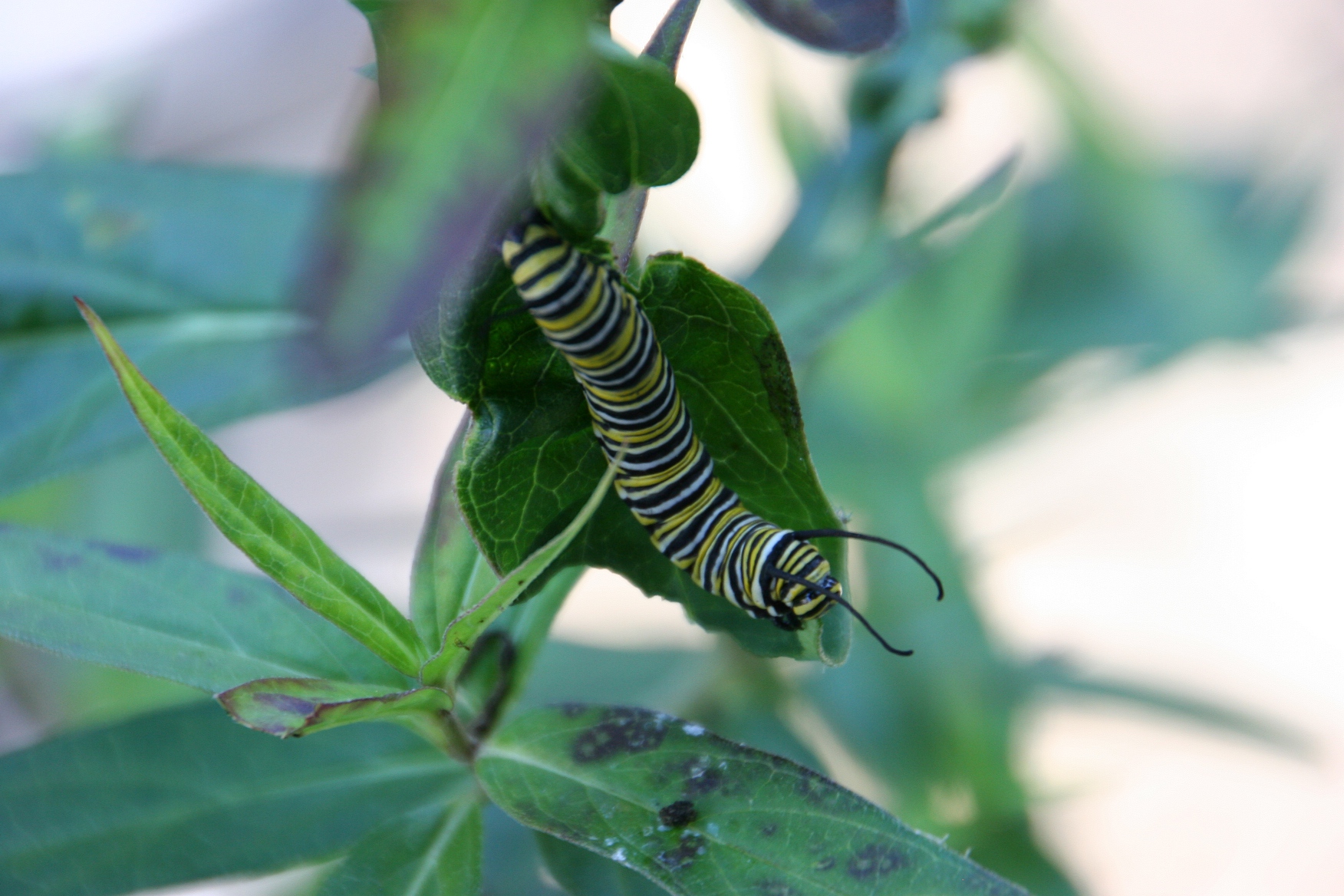
A monarch caterpillar. (Minnesota Prairie Roots copyrighted file photo)
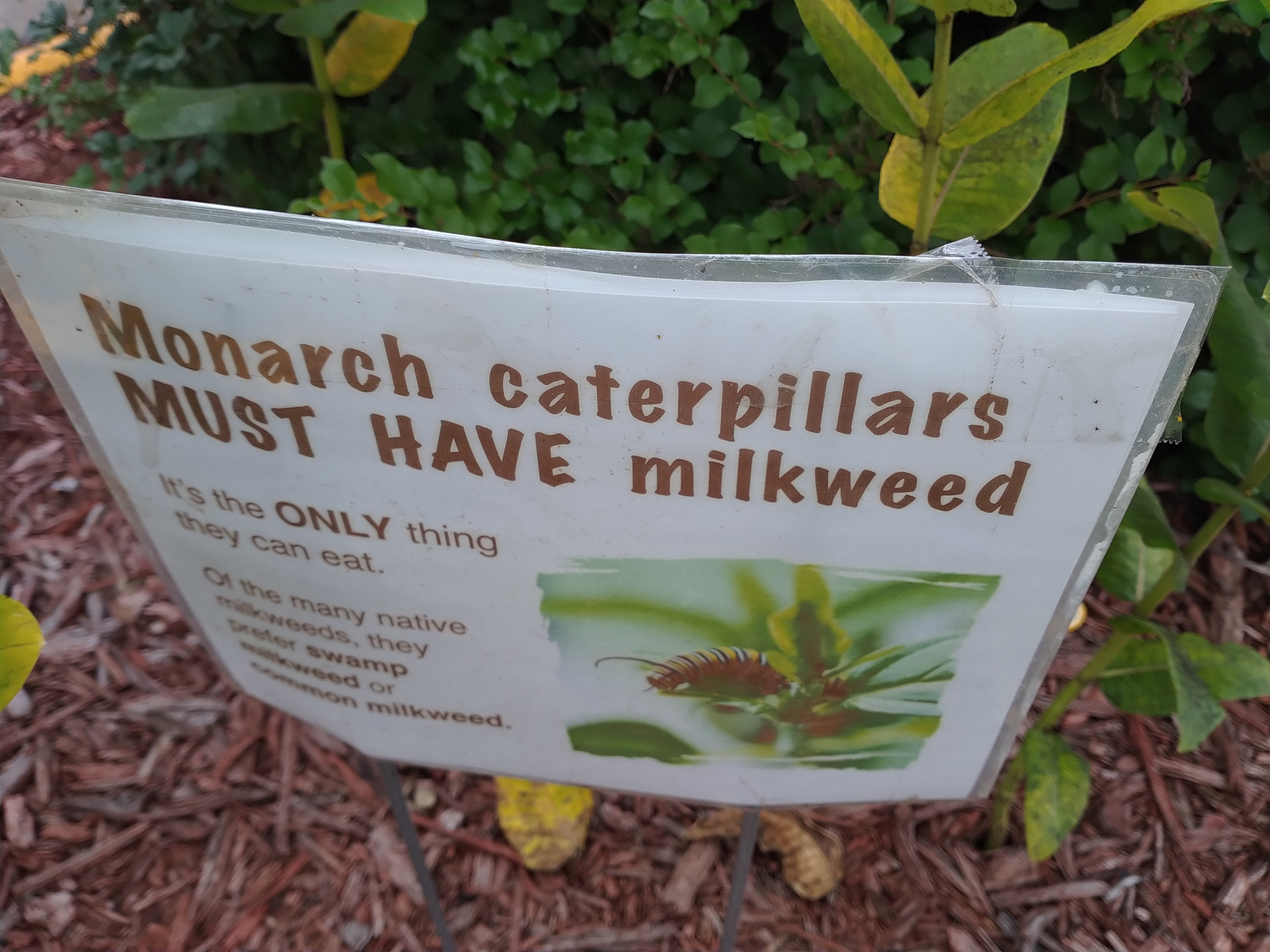
The answer is easy. Long ago I learned the value of milkweeds to our monarch butterfly population. The butterfly lays its eggs on milkweed leaves. And milkweed is the sole source of food for monarch caterpillars. If we want the monarch population to grow, thrive and survive, we need milkweed plants. It’s that simple.
A sign at Hy-Vee grocery store explains the importance of milkweed to monarchs. (Minnesota Prairie Roots copyrighted photo August 2024)
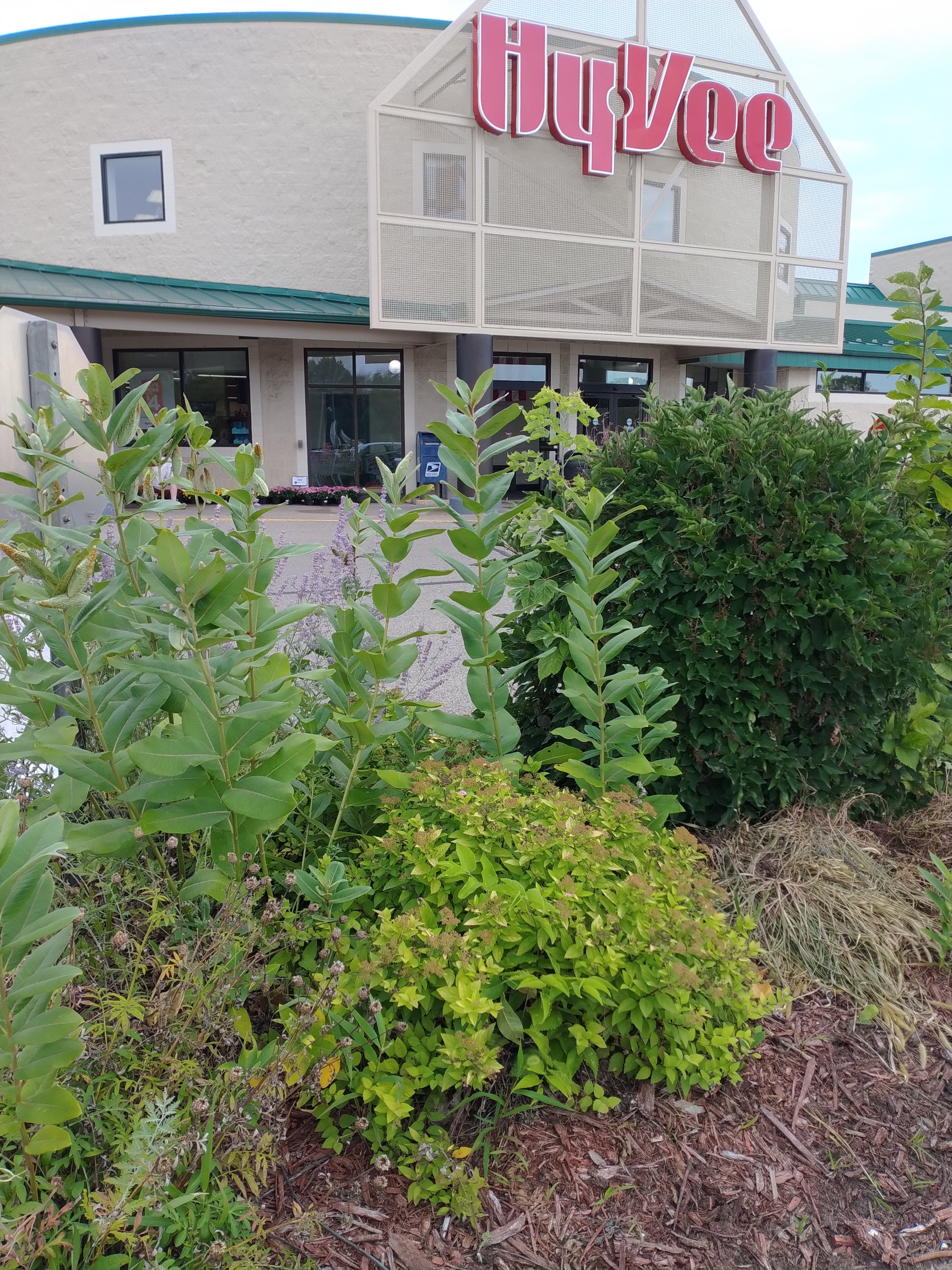
More and more I’ve spotted milkweeds growing in public places in and around Faribault. River Bend Nature Center. Falls Creek County Park. The Rice County Master Gardeners’ Teaching Gardens. Beside the conservation building at the Rice County Fairgrounds. Even in flowerbeds at Hy-Vee grocery store.
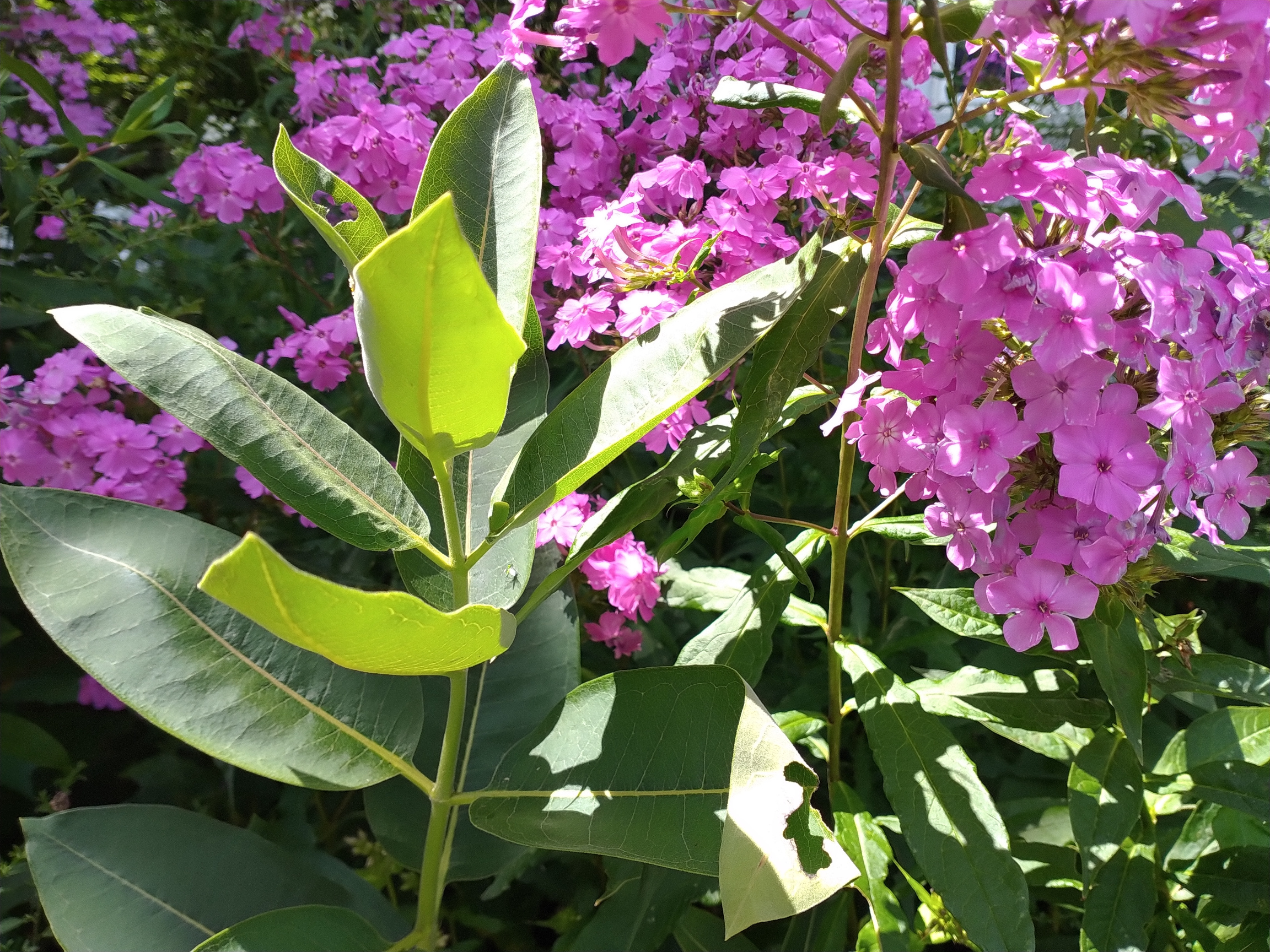
Milkweeds grow among phlox. (Minnesota Prairie Roots copyrighted photo August 2024)
If you walk by my house, you’ll see stray milkweeds popping up here and there. Along a retaining wall. Among the prolific phlox in my messy flowerbeds. The husband has orders not to mow, pull or otherwise remove milkweed plants.
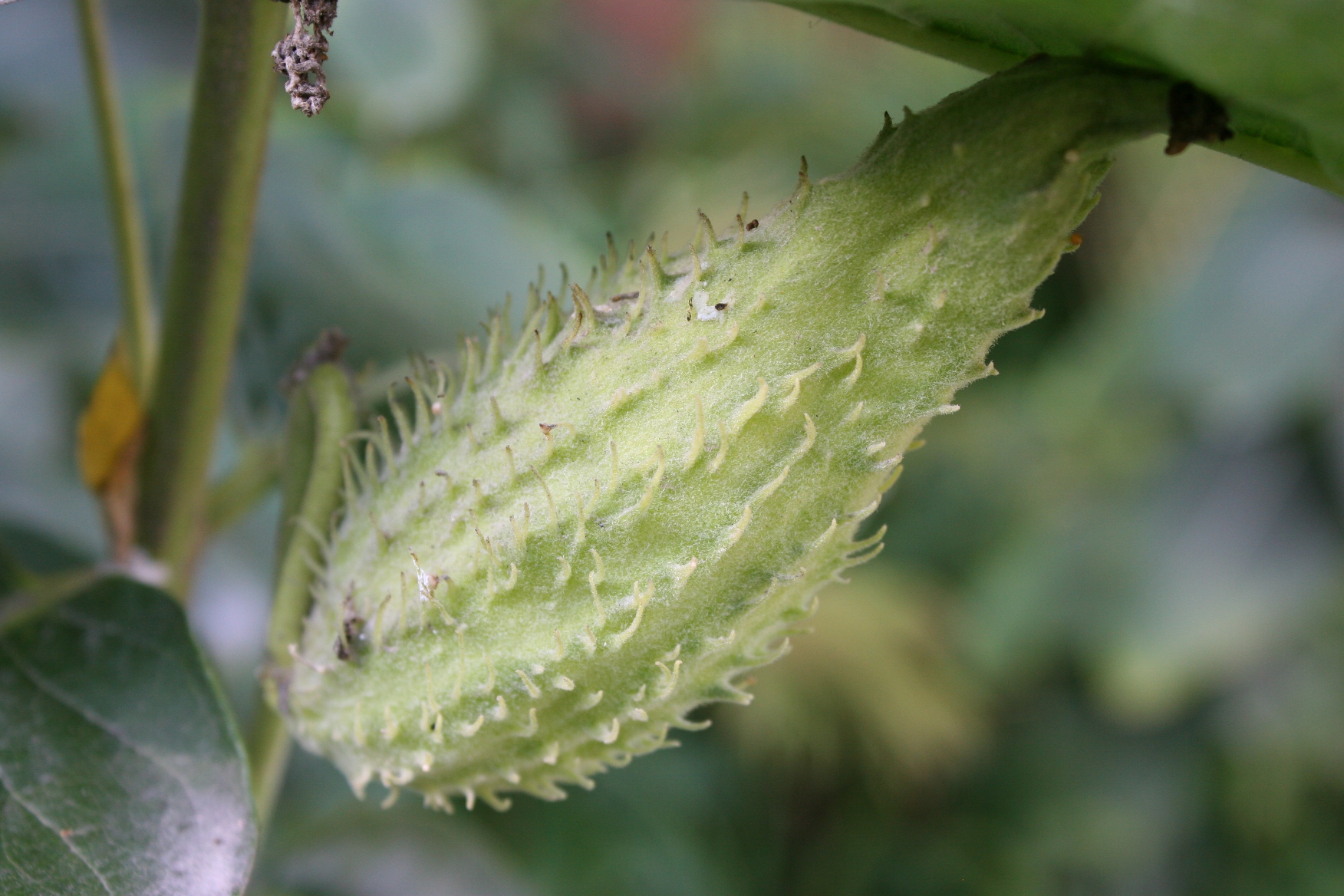
An unripened milkweed pod. (Minnesota Prairie Roots copyrighted file photo)
This time of year, seed pods are forming on milkweeds. Perhaps it’s the writer, the poet, in me that loves the shape of those fat green pods that will eventually dry, burst open and spread seeds on wisps of white fluff carried by the wind.
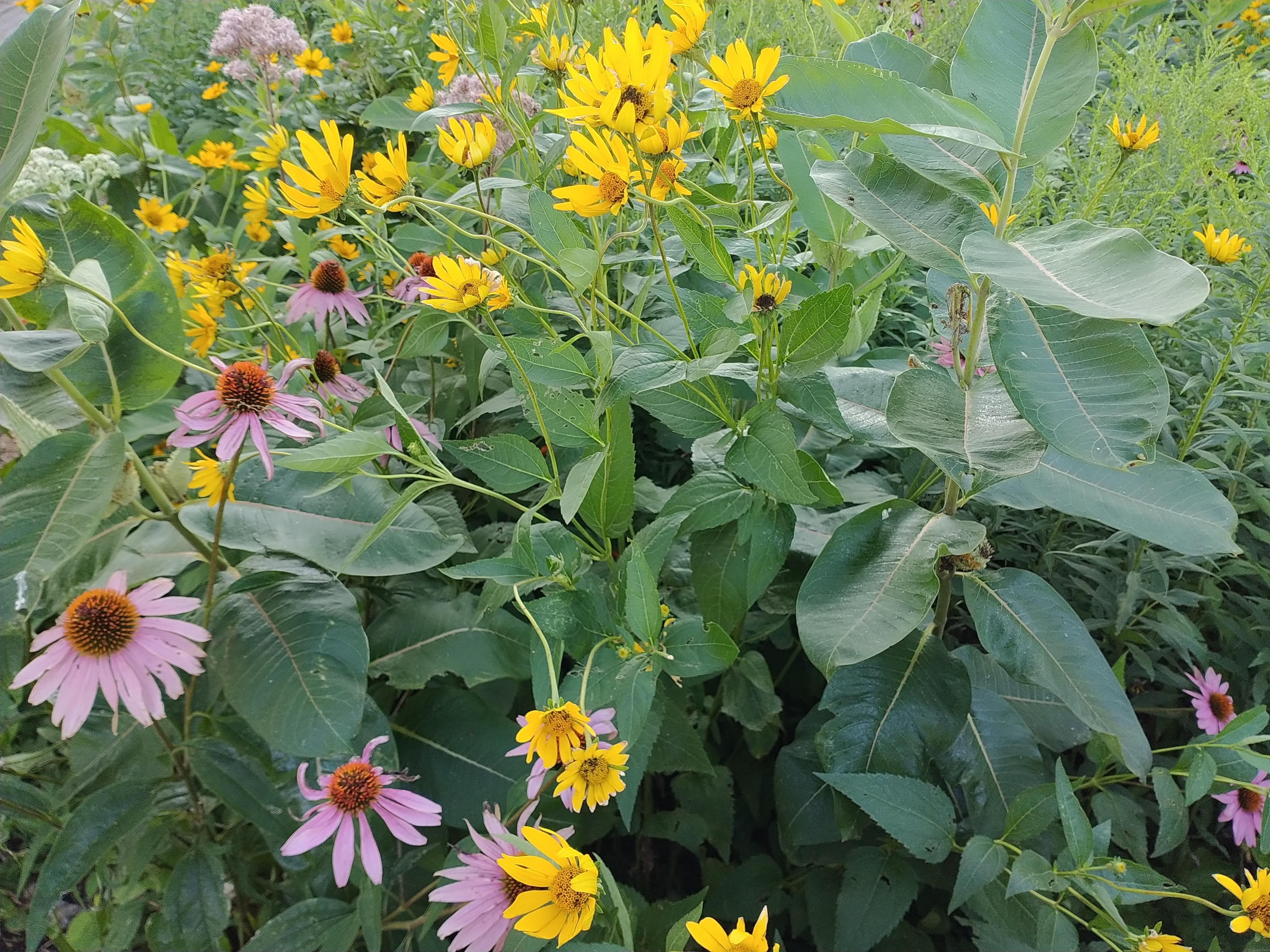
Milkweeds flourish among prairie flowers in the Rice County Master Gardeners Teaching Gardens, Faribault, (Minnesota Prairie Roots copyrighted photo August 2024)
Seeds wing across the landscape, just like monarchs. I remember a time when monarchs were prolific. Yes, even in rural Minnesota where I labored to get rid of milkweed plants.
I discovered milkweeds planted outside Hy-Vee. (Minnesota Prairie Roots copyrighted photo August 2024)
Naturalists, gardeners and others are working hard now to bring back the monarch population. It’s taken time, effort and education to convince people to plant milkweeds for monarchs. I don’t expect butterfly numbers will be what they once were—when monarchs flitted everywhere. But we have to start somewhere, do something. And that begins with each of us. Educating ourselves. Caring. And then deciding that milkweeds really aren’t weeds after all. They are vital to the survival of the monarch butterfly. It’s OK to plant milkweed seeds or allow nature to plant them.
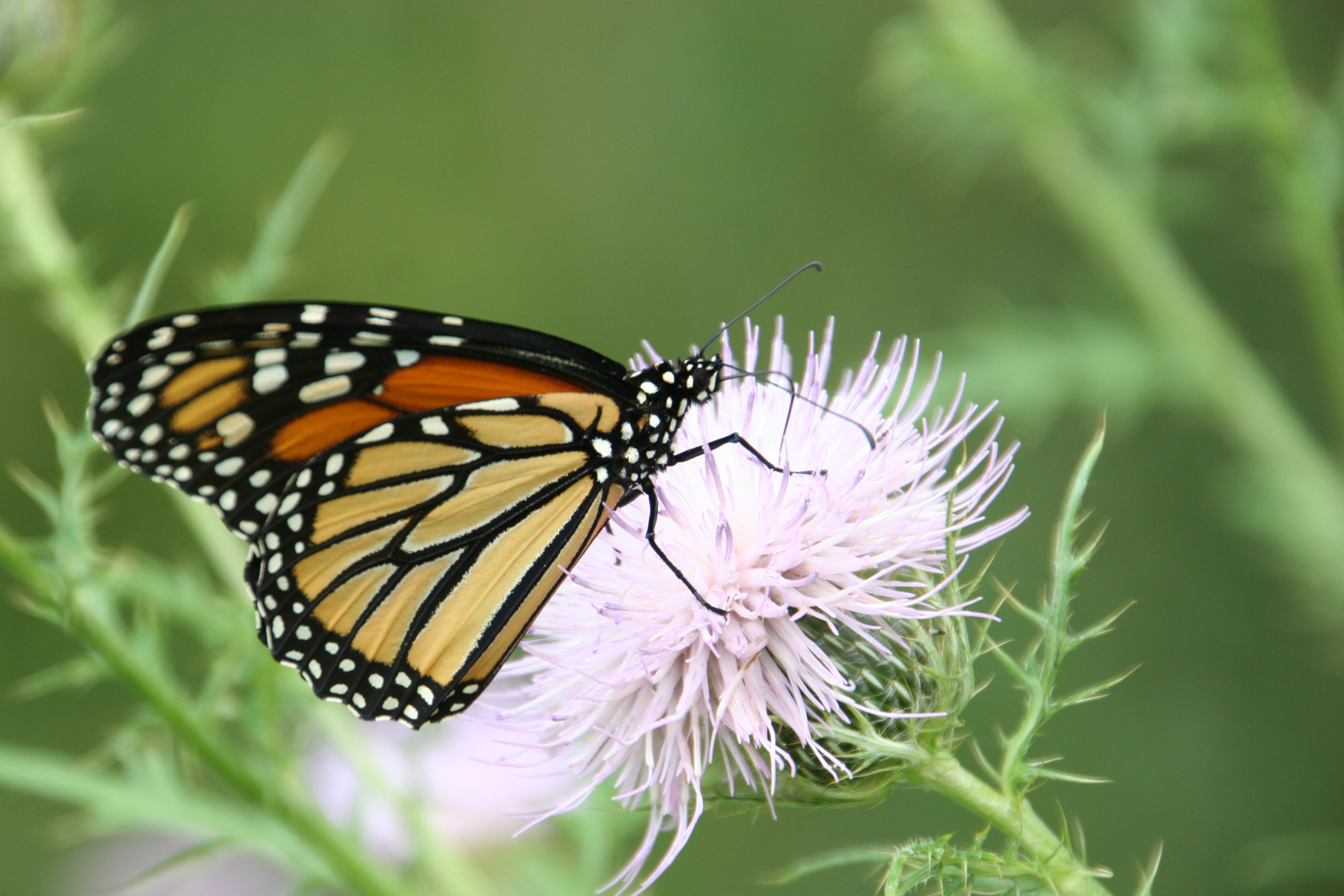
Monarch on a thistle flower. (Minnesota Prairie Roots copyrighted file photo)
I, for one, delight in watching monarchs flit about my yard. They are magical as only a butterfly can be. Delicate, yet strong. Poetically beautiful. Carrying memories and grace on their wings.
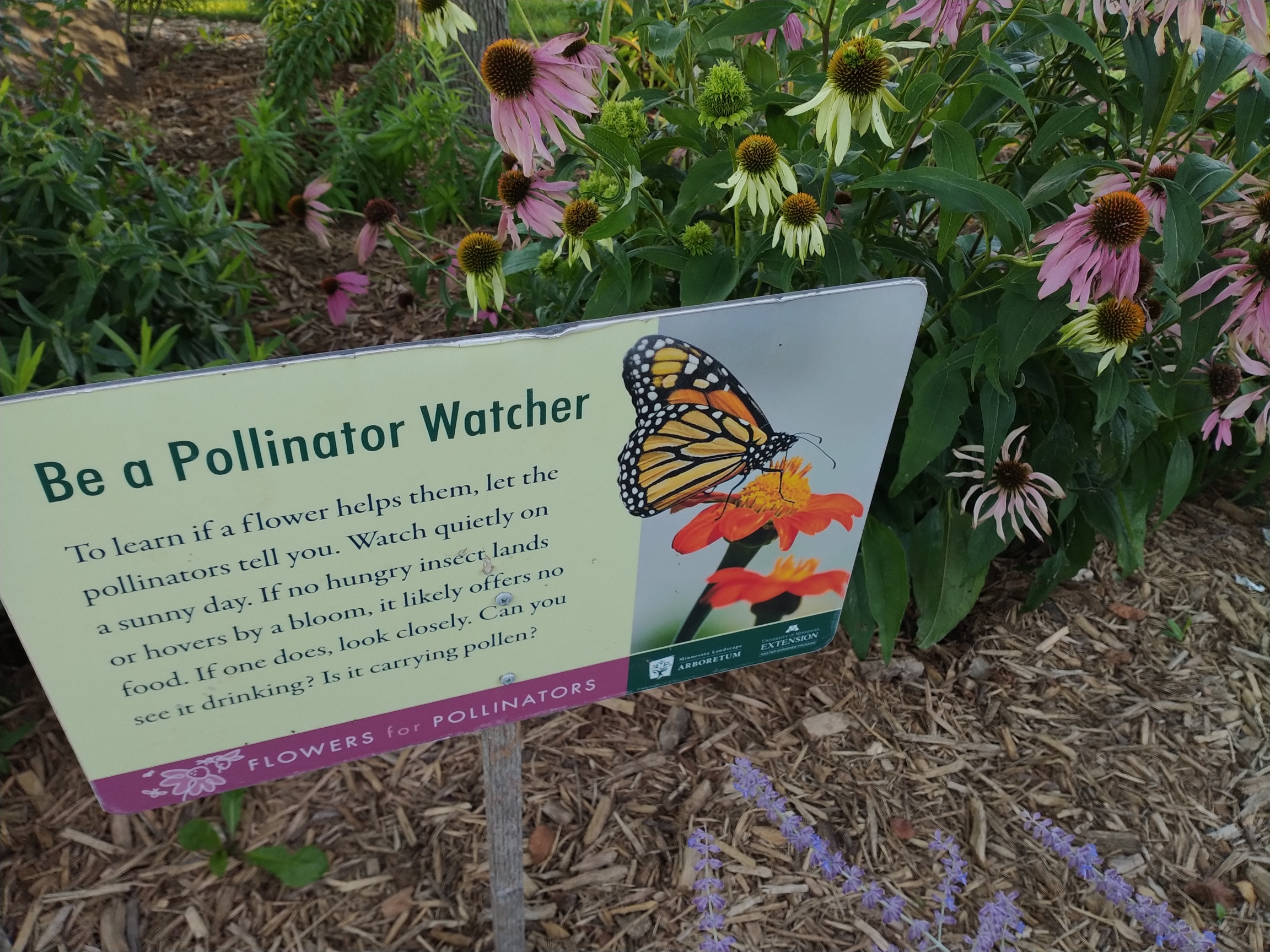
An educational sign among the flowers at the Rice County Master Gardeners Teaching Gardens. (Minnesota Prairie Roots copyrighted photo August 2024)
FYI: Nerstrand Big Woods State Park is hosting a “Monarchs and Milkweeds” presentation at 10 a.m. Saturday, August 24, in the park’s amphitheater. Kathy Gillispie, who raises monarchs from eggs, caterpillars and chrysalises, will speak about her experiences with monarchs. The program is free, but a state park parking pass is needed to enter the rural Nerstrand park.
Roses bloom in the Rice County Master Gardeners Teaching Gardens at the Rice County Fairgrounds in Faribault. (Minnesota Prairie Roots copyrighted photo June 2024)
OH, HOW BEAUTIFUL the flowers that gardeners tend. Petals flash color, painting the landscape in bold and delicate hues. Flowers dip and bend in the wind like silent writers penning poetry. Flowers inspire, bring joy, carry love stories and memories.
Delicate pink flowers in a garden at the Cathedral of Our Merciful Saviour. (Minnesota Prairie Roots copyrighted photo June 2024)
Flowers have always been a part of my life. From my paternal grandma’s unruly flowerbeds to my mom’s rows of colorful zinnias in the vegetable garden to my own flowers growing in a chaotic mess, I’ve delighted in blooms.
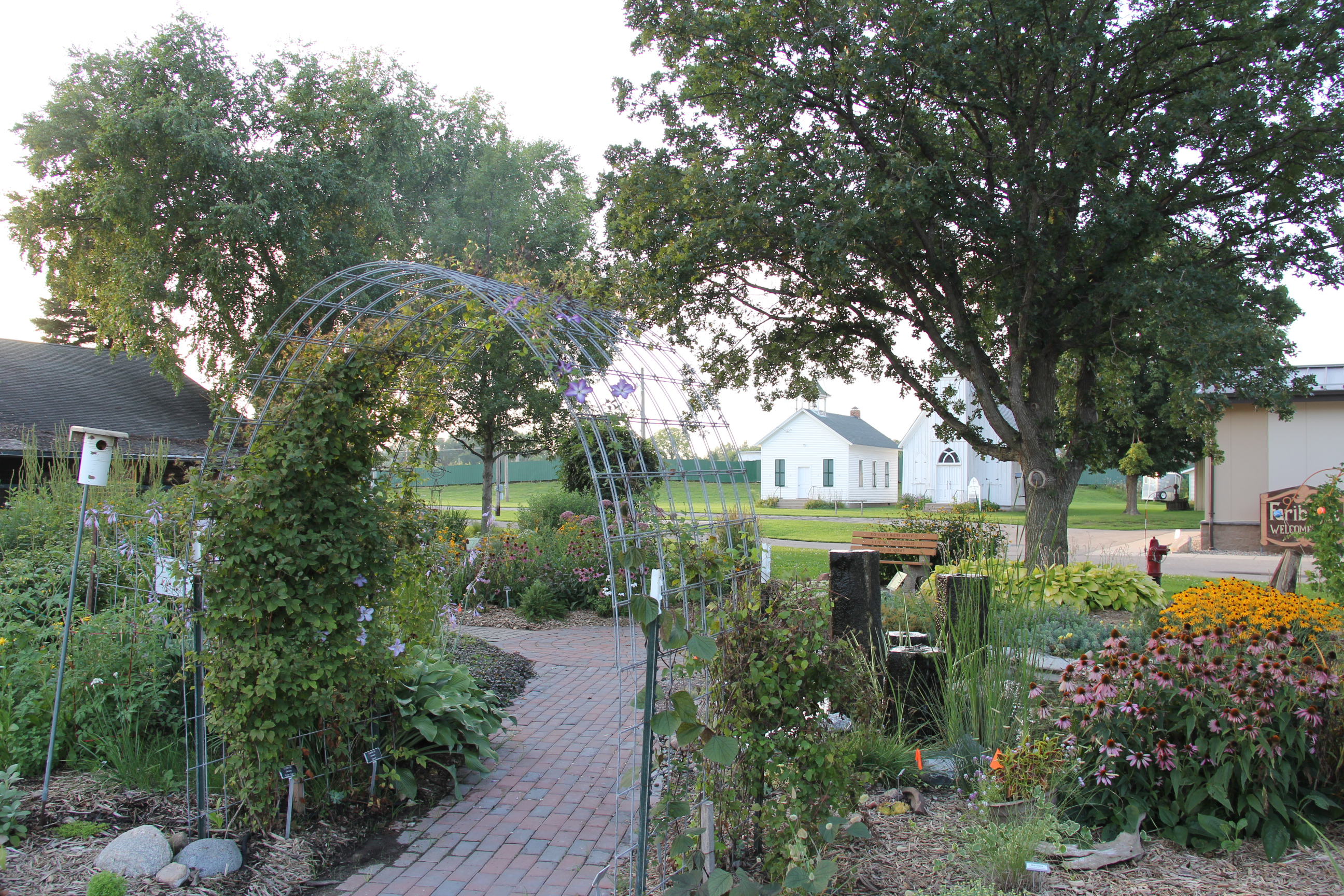
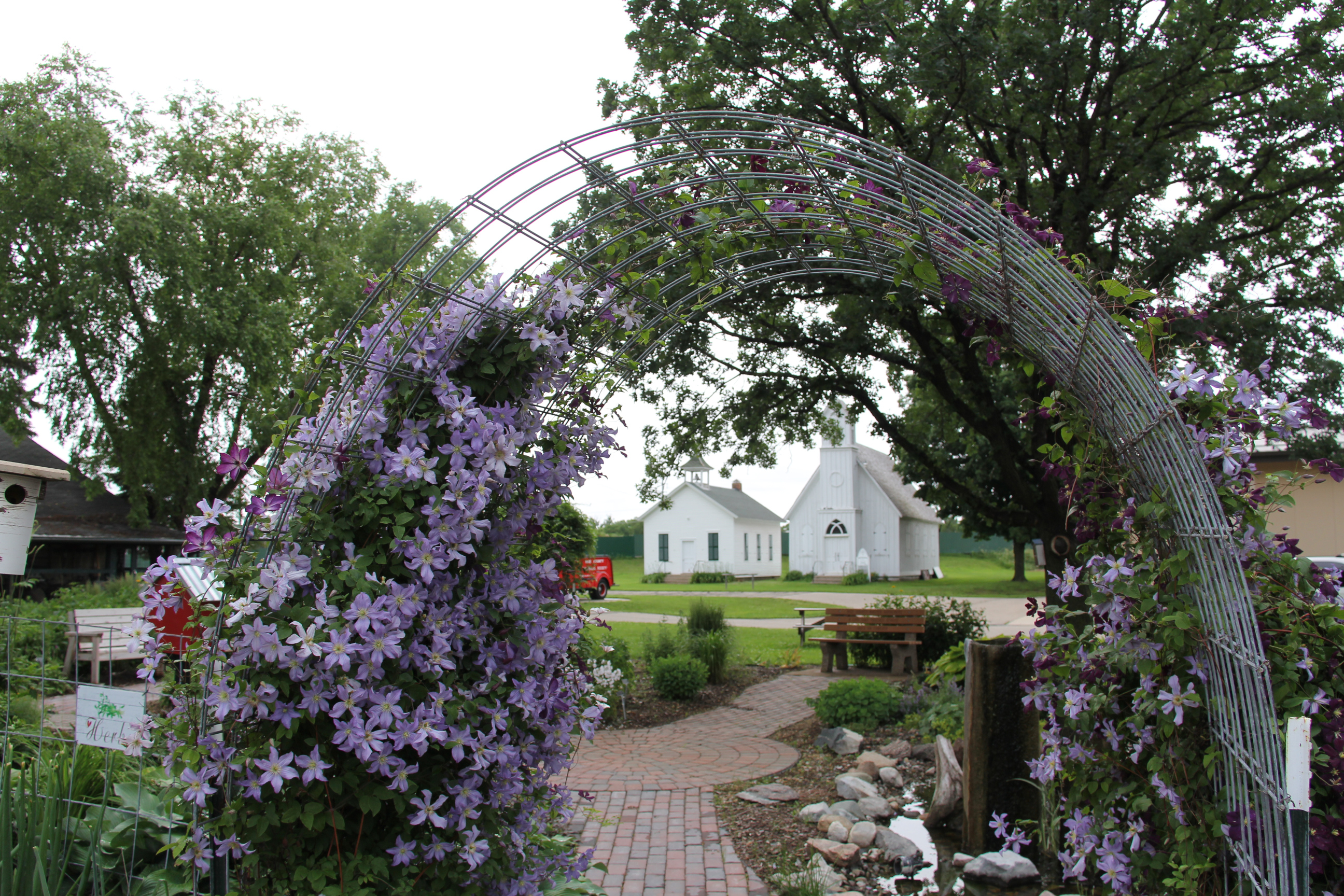
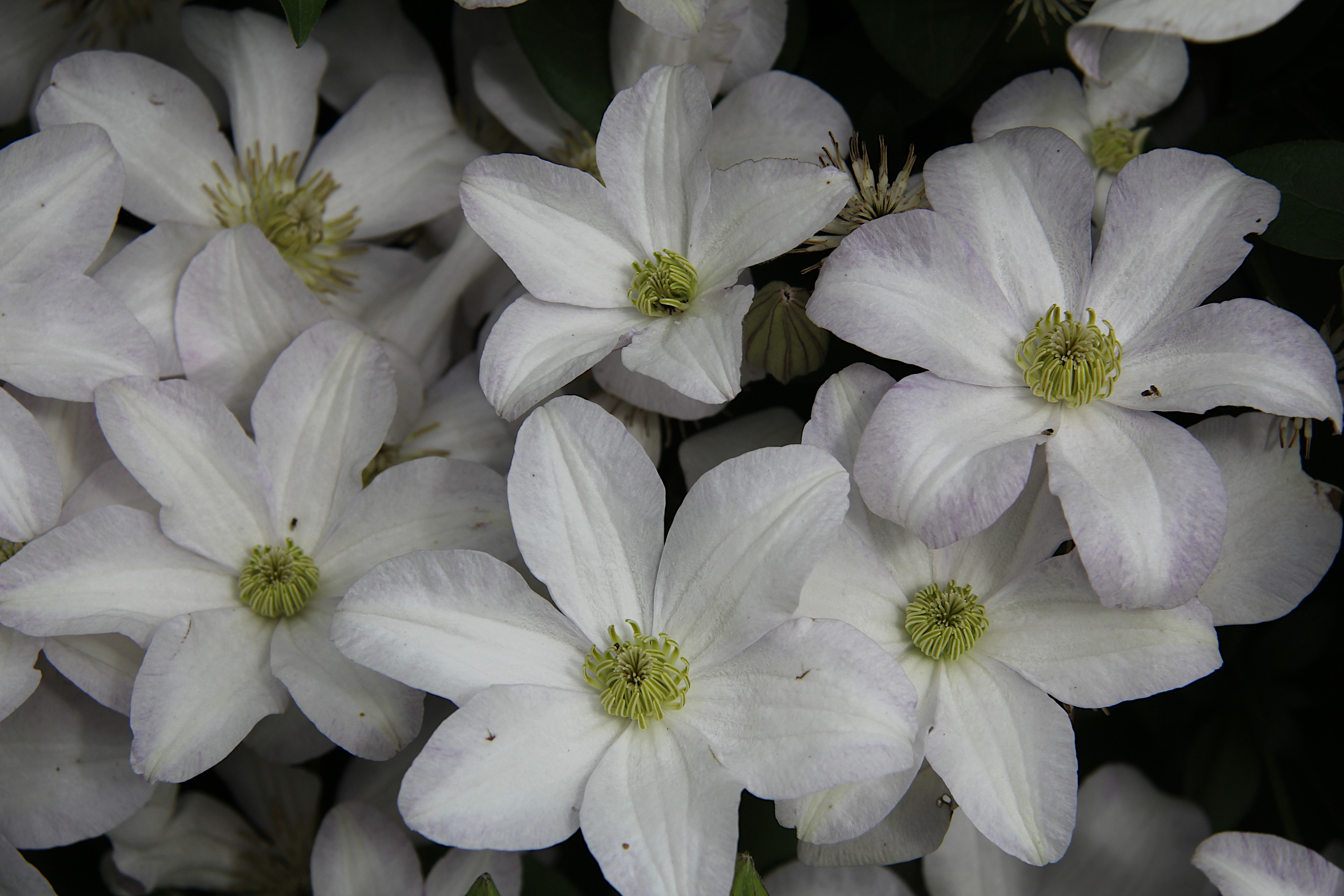
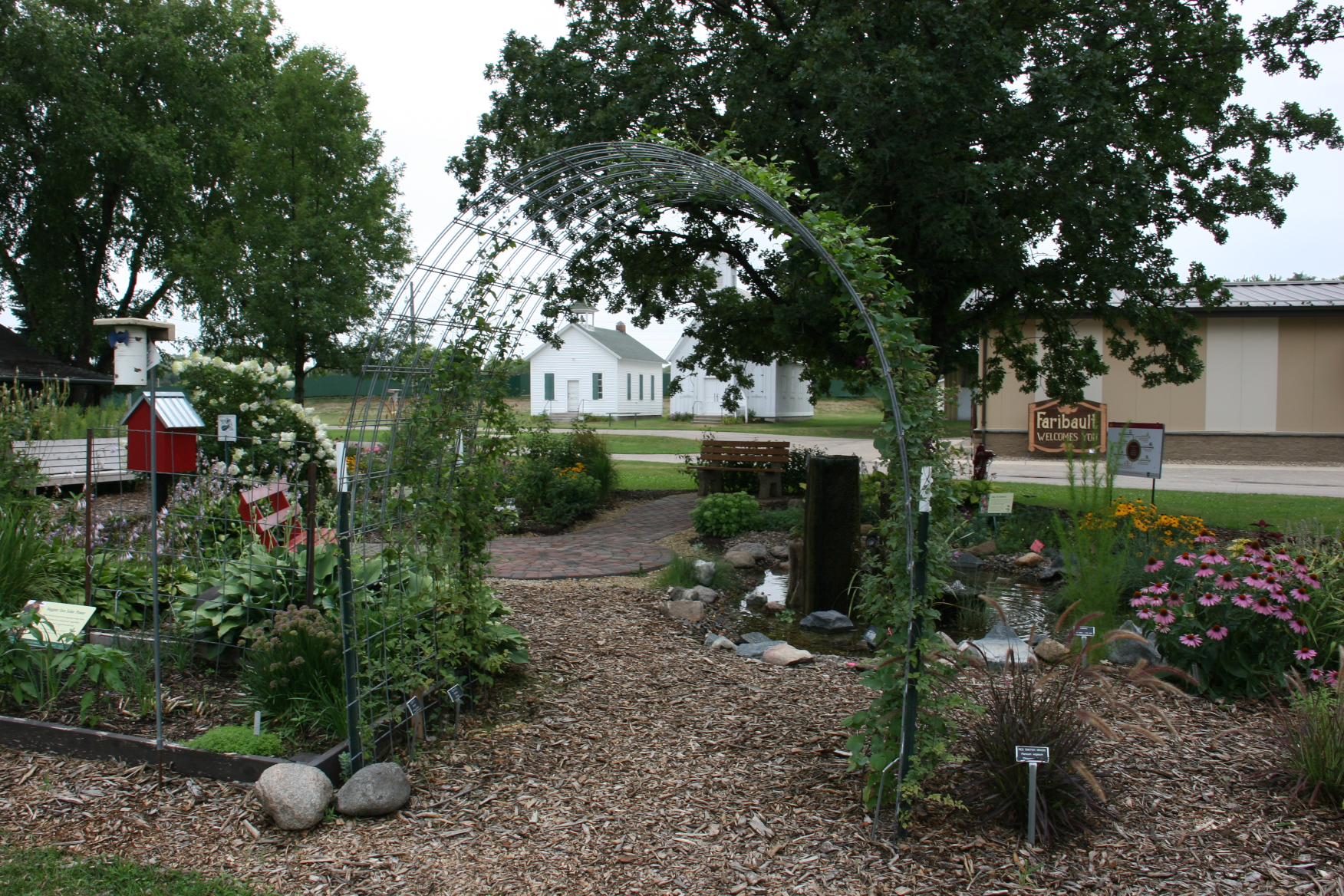
Clematis climb an arched trellis at the teaching gardens. An historic church and school, part of the Rice County Historical Society, are a lovely backdrop. (Minnesota Prairie Roots copyrighted photo June 2024)
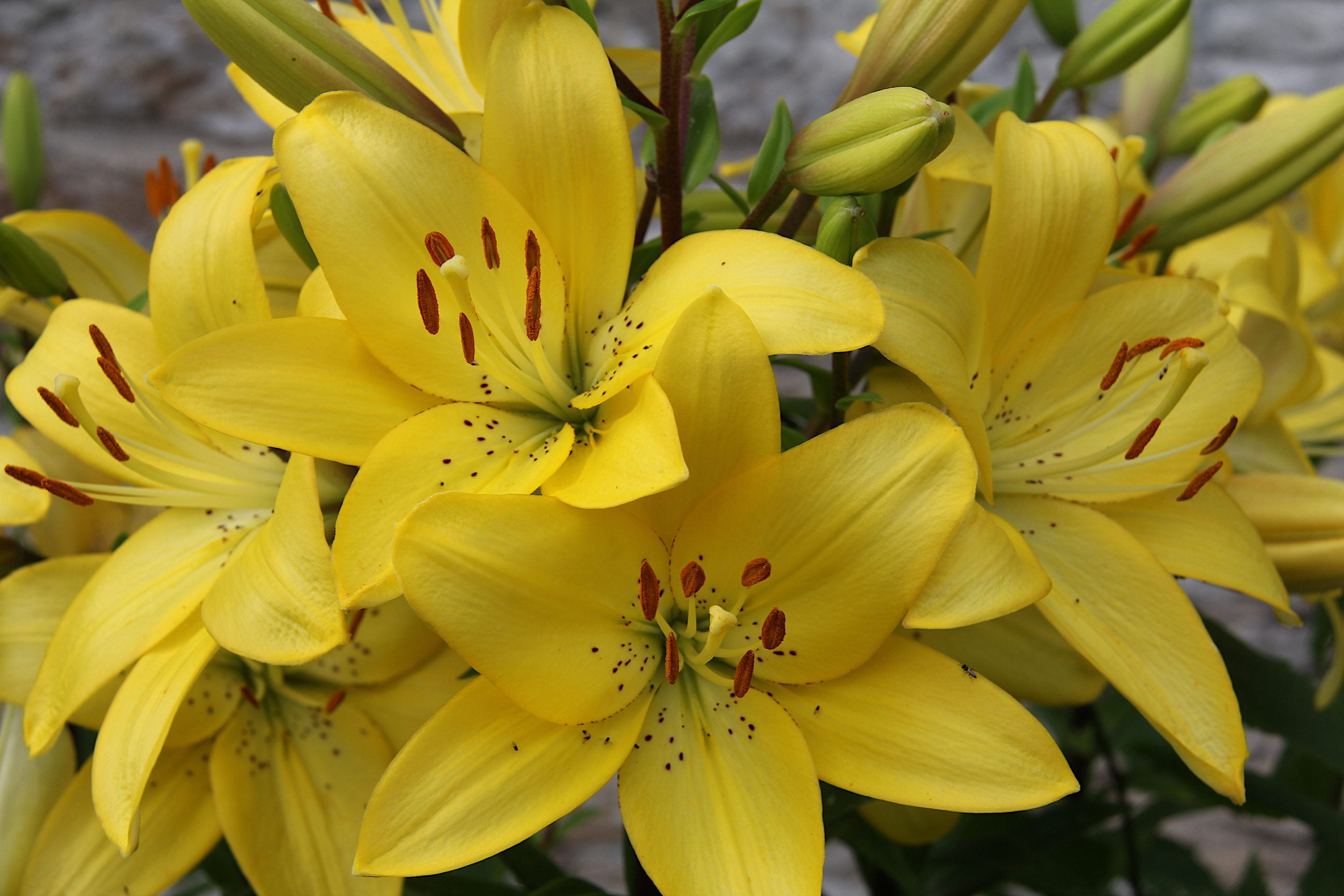
Vivid yellow lilies jolt color into Cathedral gardens. (Minnesota Prairie Roots copyrighted photo June 2024)
Another Cathedral lily. (Minnesota Prairie Roots copyrighted photo June 2024)
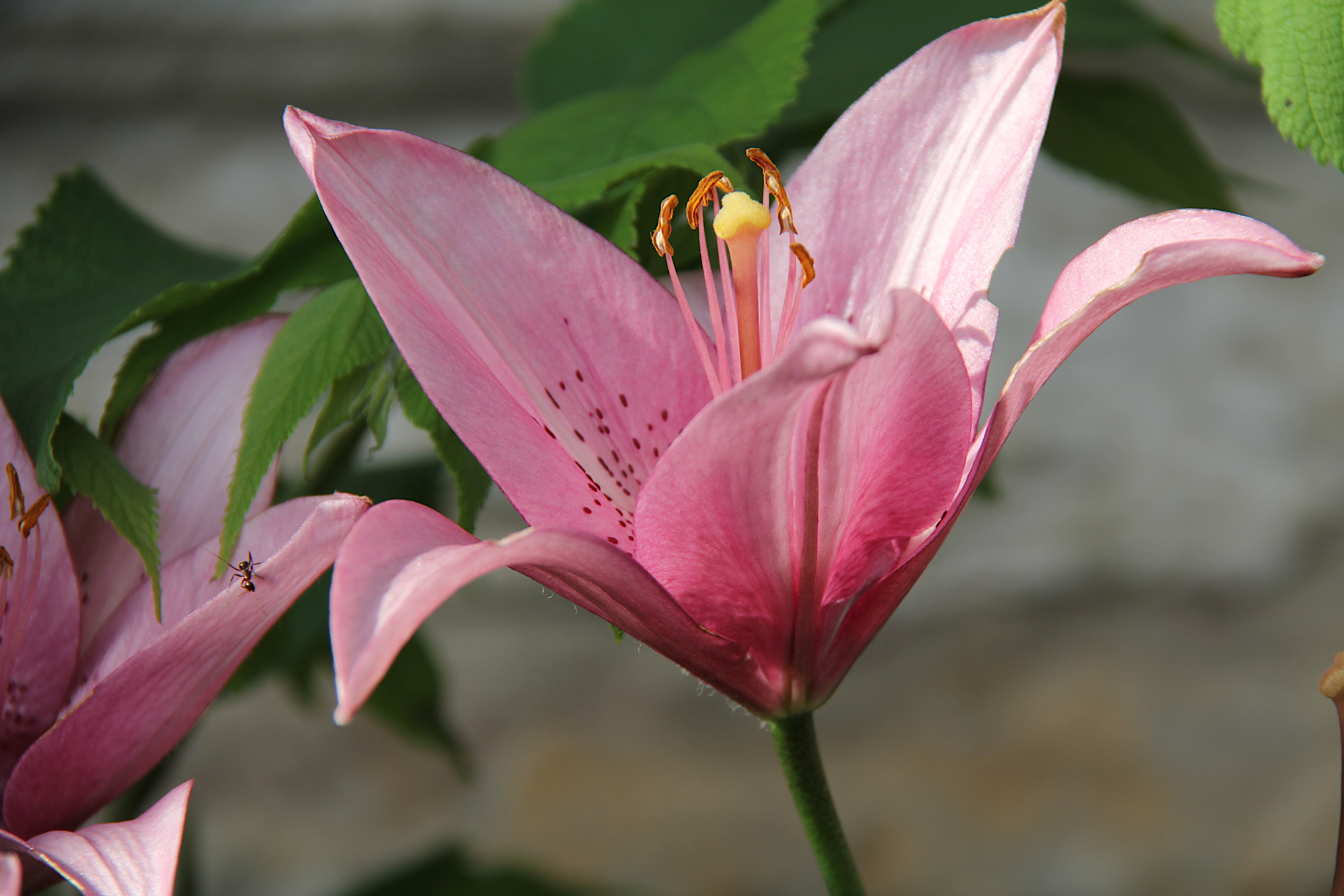
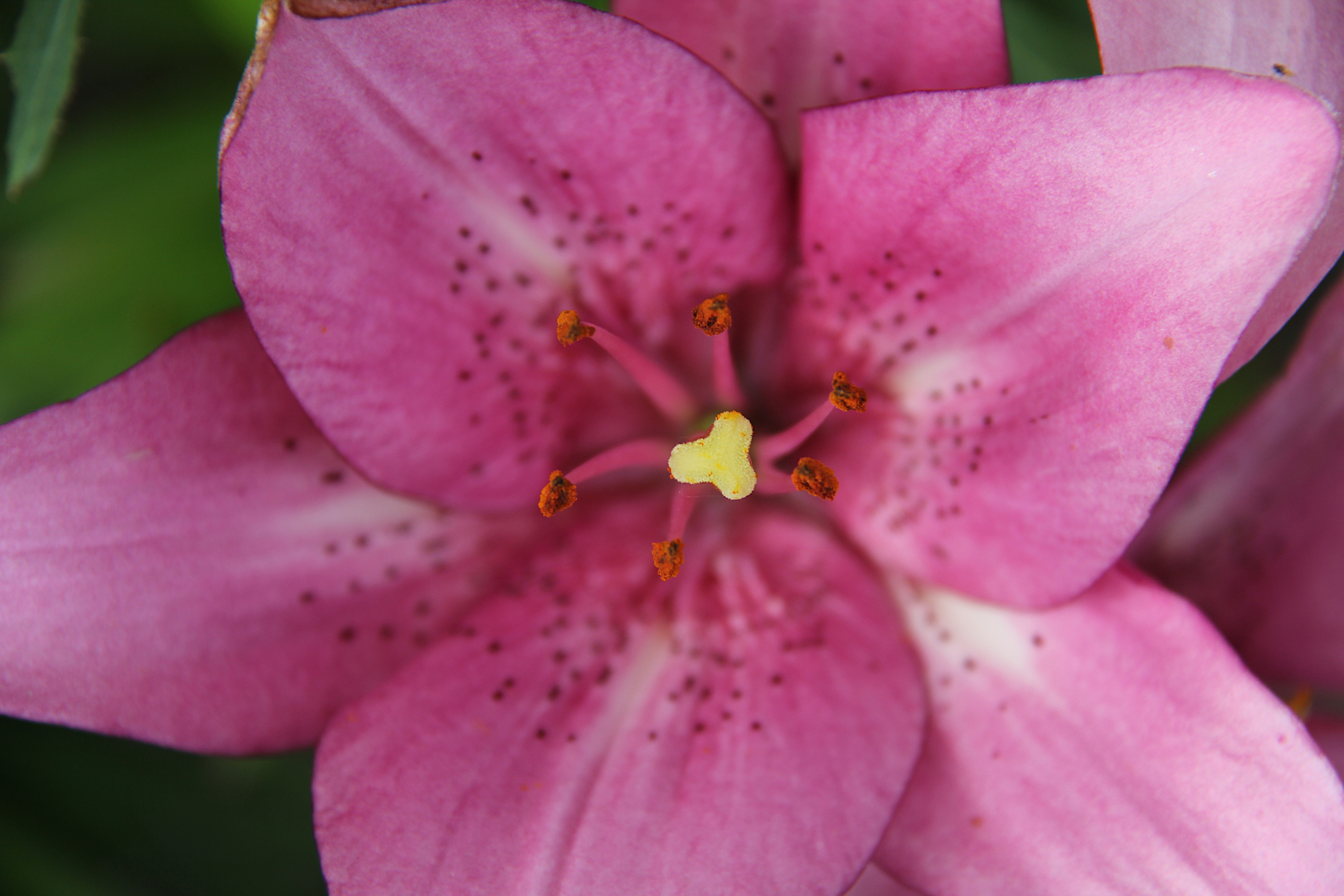
At one time I could identify flower parts, like those shown in this lily close-up blooming at the Cathedral. (Minnesota Prairie Roots copyrighted photo June 2024)
Right now, the lilies are in full bloom. They appear a sturdy lot to me, a lesson in botany with stamens and pistils and all those parts I once learned in a long ago science class. Now I don’t care much about that, just the beauty my eyes take in as I wander among the flowers.
An inviting garden, complete with benches, graces the northside entry to the Cathedral. (Minnesota Prairie Roots copyrighted photo June 2024)
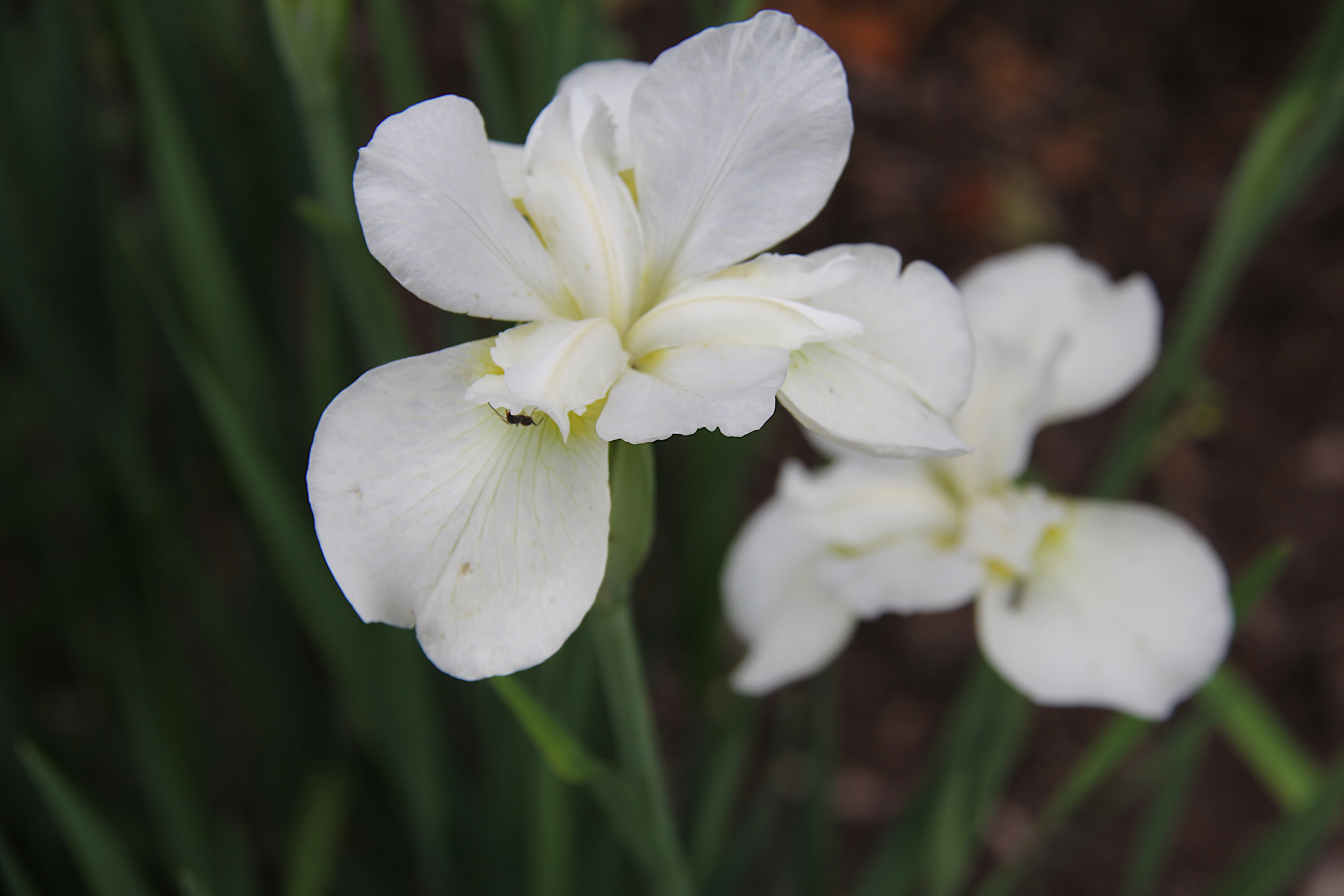
Iris bloom at the Cathedral. (Minnesota Prairie Roots copyrighted photo June 2024)
For use at the teaching gardens when needed. (Minnesota Prairie Roots copyrighted photo June 2024)
I’m thankful for the volunteers who plant, weed and care for flower gardens created out of a love of gardening and out of a desire to beautify a community. It takes time, effort, commitment, and that does not go unnoticed by me.
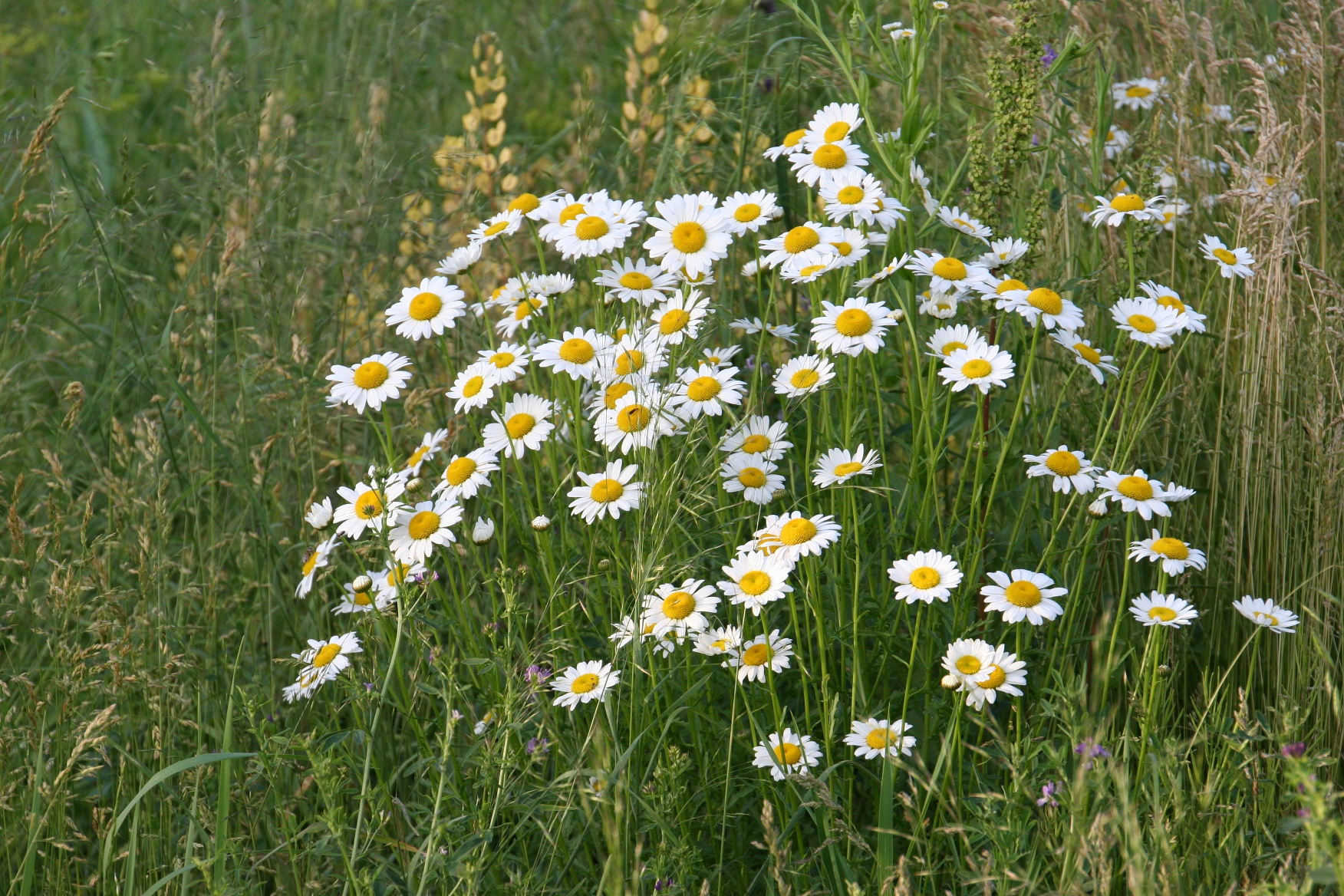
A clump of daisies, similar to these photographed at Faribault Energy Park, grow on my boulevard. (Minnesota Prairie Roots copyrighted file photo July 20219)
Life is full of opportunities to brighten this world. Flowers are one way. I watched the other day from my living room window as a young boy picked a daisy from an errant patch growing in the boulevard by my house. Then his mom plucked one, too, tucking a single stem into the front of her tank top. I didn’t care that they picked the daisies. I could see how happy it made them.
At the teaching gardens, flowers ladder a stem. (Minnesota Prairie Roots copyrighted photo June 2024)
The daisy, such a simple flower, blooming profusely in the grass next to a busy street. Bent by the wind and rain, as if bowing to the earth. The daisy has always been a sunny favorite of mine. Daisies were woven into my bridal bouquet, my bridesmaids’ baskets of flowers and corsages on my wedding day 42 years ago. Flowers hold love stories, memories.
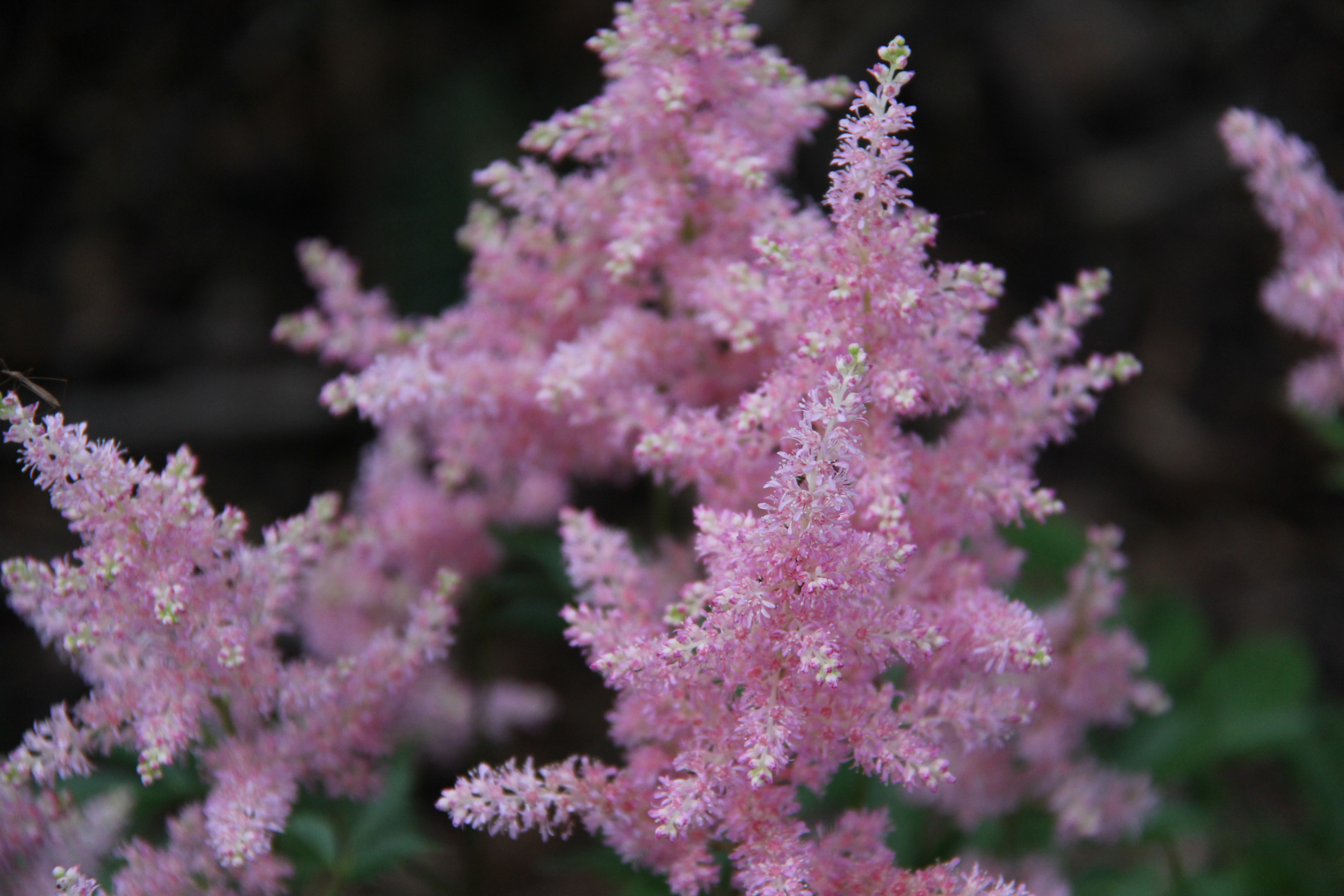
Fanciful astilbe grow in the teaching gardens. (Minnesota Prairie Roots copyrighted photo June 2024)
In bloom at the Cathedral. (Minnesota Prairie Roots copyrighted photo June 2024)
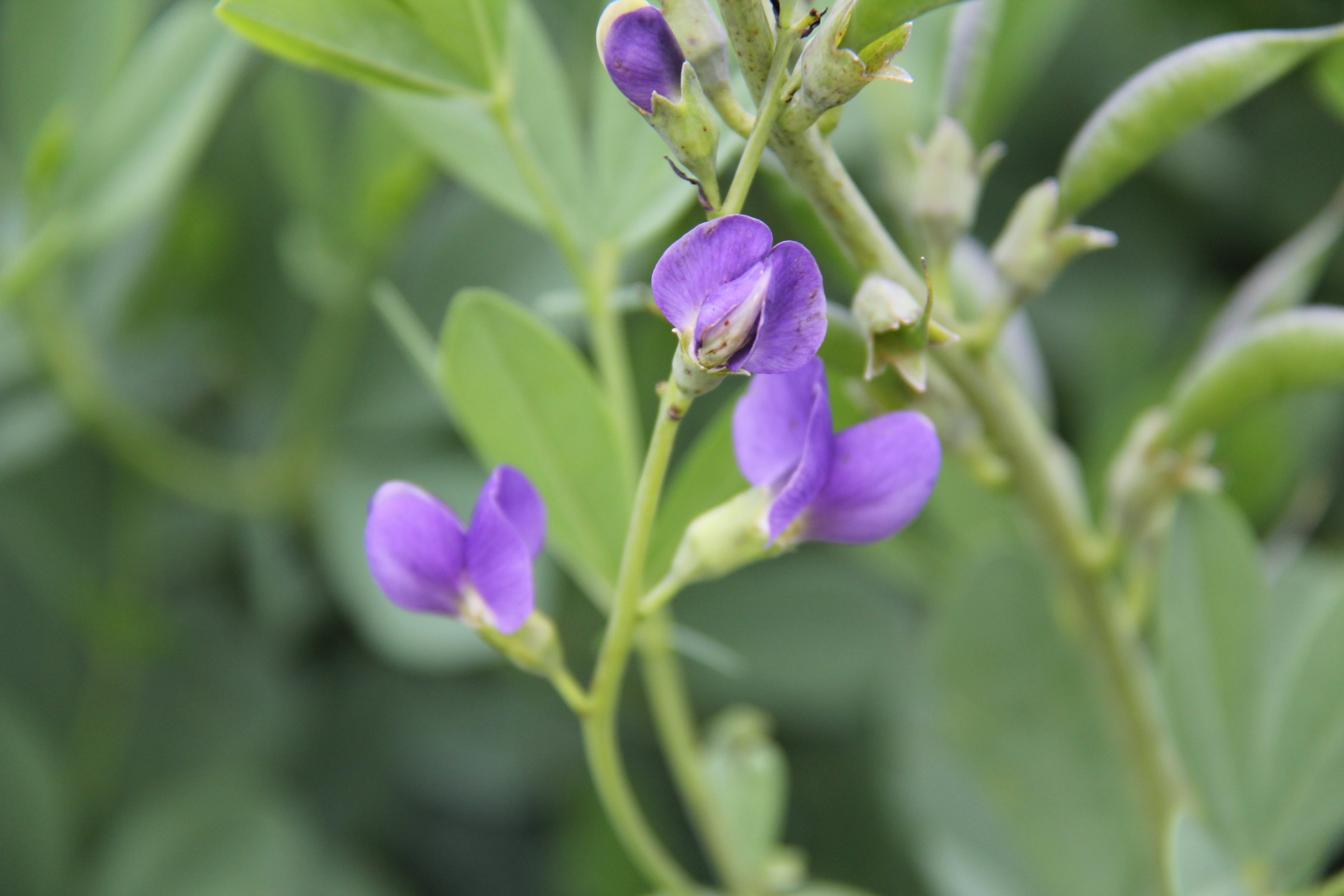
Spots of purple in a Cathedral garden like a single line of poetry. (Minnesota Prairie Roots copyrighted photo June 2024)
I expect, if pressed, anyone could share a flower story. Stories of love and loss, celebration and sorrow, gratitude and healing. Flowers hold stories as much as they write them. Creativity thrives in their bold and delicate hues, in the way they grow and flourish and fade. In the way they stand or bend in the wind, like silent writers penning poetry.
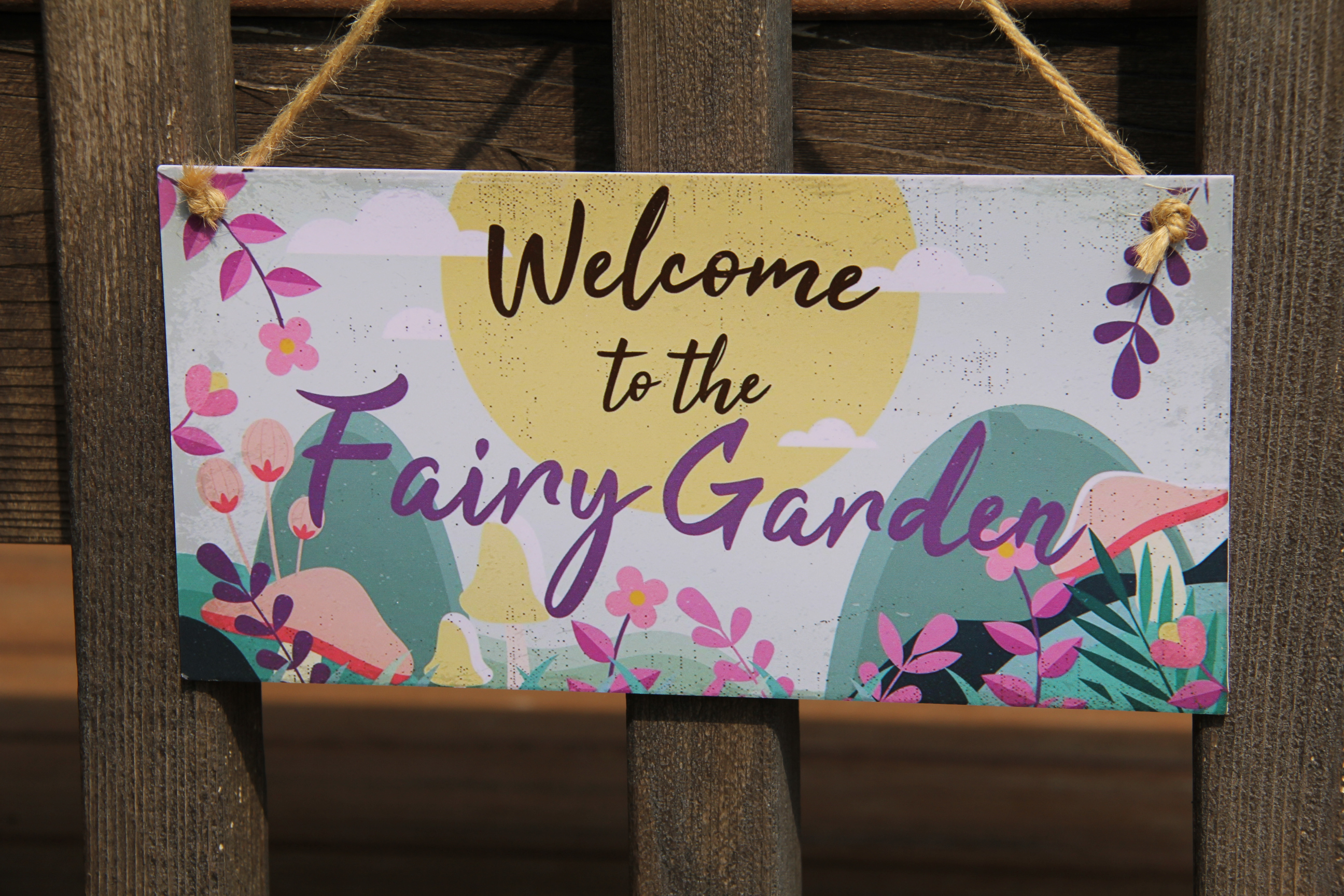
A sign marks the Fairy Garden at the Rice County Master Gardeners Teaching Gardens in Faribault. (Minnesota Prairie Roots copyrighted photo June 2023)
DECIDEDLY MAGICAL. Those words describe my reaction to fairy gardens, mini scenes created with small scale fairies, gnomes, animals and more in an unexpected spot within a flower garden.
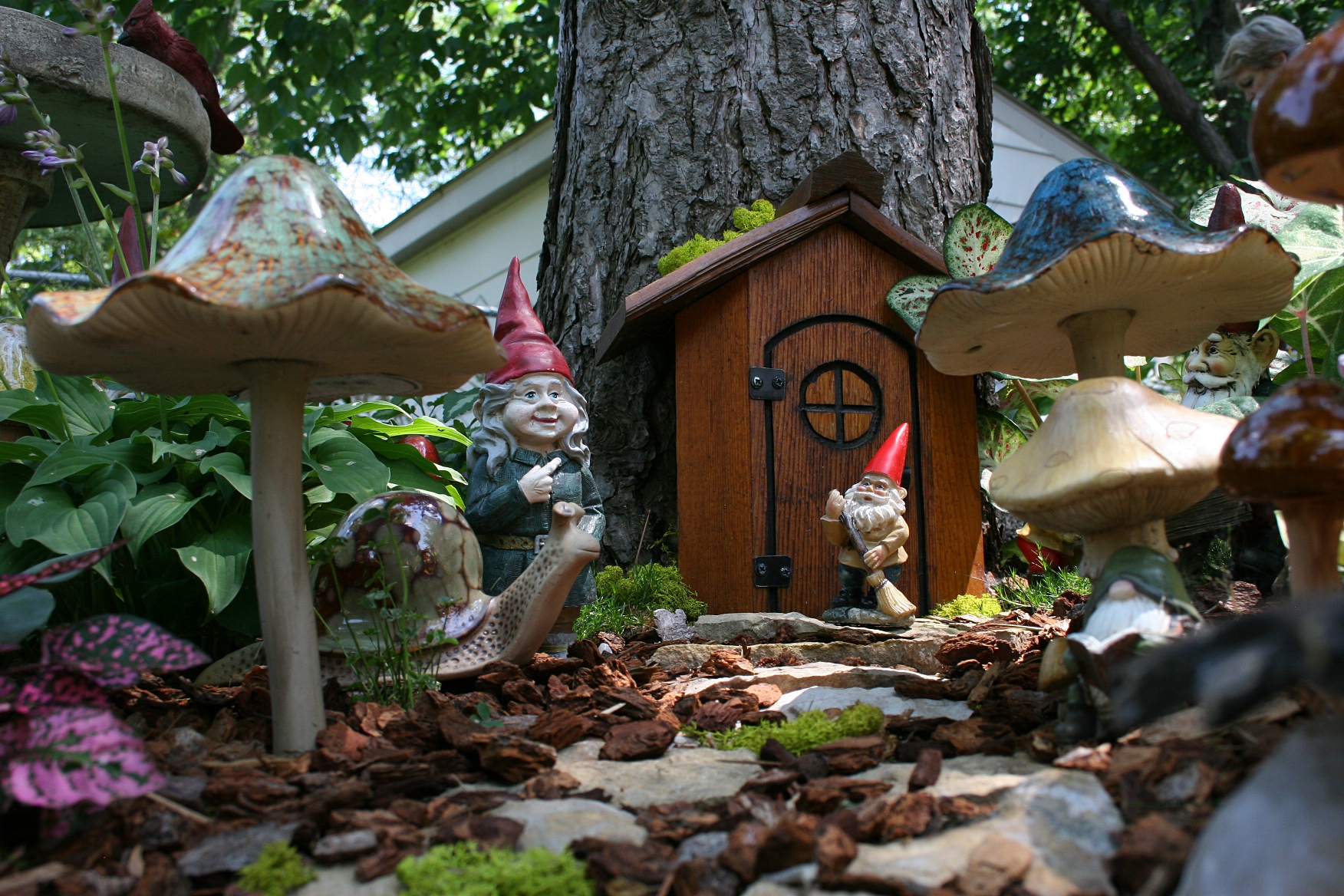
A ground level view of gnomes’ rocky woodland home in the gardens of Susan and Dale Kulsrud, featured in a 2014 garden tour. (Minnesota Prairie Roots copyrighted file photo July 2014)
I saw my first fairy gardens during the Northfield Garden Club 2014 Garden Tour and have loved them ever since.
A unicorn-hugging fairy in the Faribault garden. (Minnesota Prairie Roots copyrighted photo June 2023)
Maybe it’s the kid in me or perhaps the creative in me that appreciates these delightful scenes that transport me from reality into a storybook world. We all need to escape the chaos of life occasionally, even if but for a few minutes. Fairy gardens do just that for me.
Love depicted in a bridal couple in the master gardeners’ garden. (Minnesota Prairie Roots copyrighted photo June 2023)
It’s OK to embrace the child within us, to imagine living in an enchanting place where goodness and kindness and love prevail and everyone gets along. I believe those truths when I spot a fairy garden in the tranquility of a flower garden.
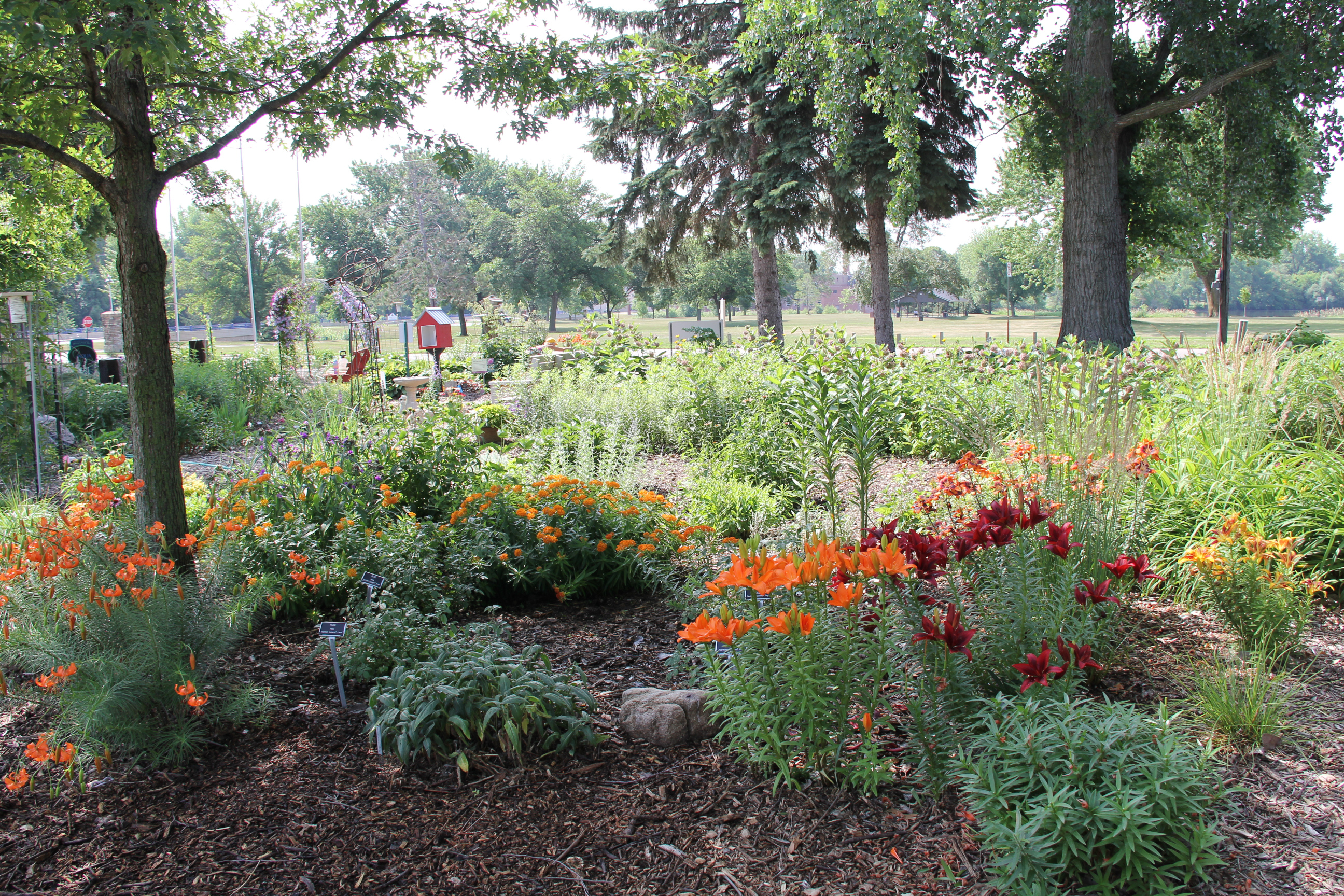
An overview of a section of the master gardeners’ garden in Faribault. (Minnesota Prairie Roots copyrighted photo June 2023)
A variety of birds can be seen at the Faribault garden. (Minnesota Prairie Roots copyrighted photo June 2023)
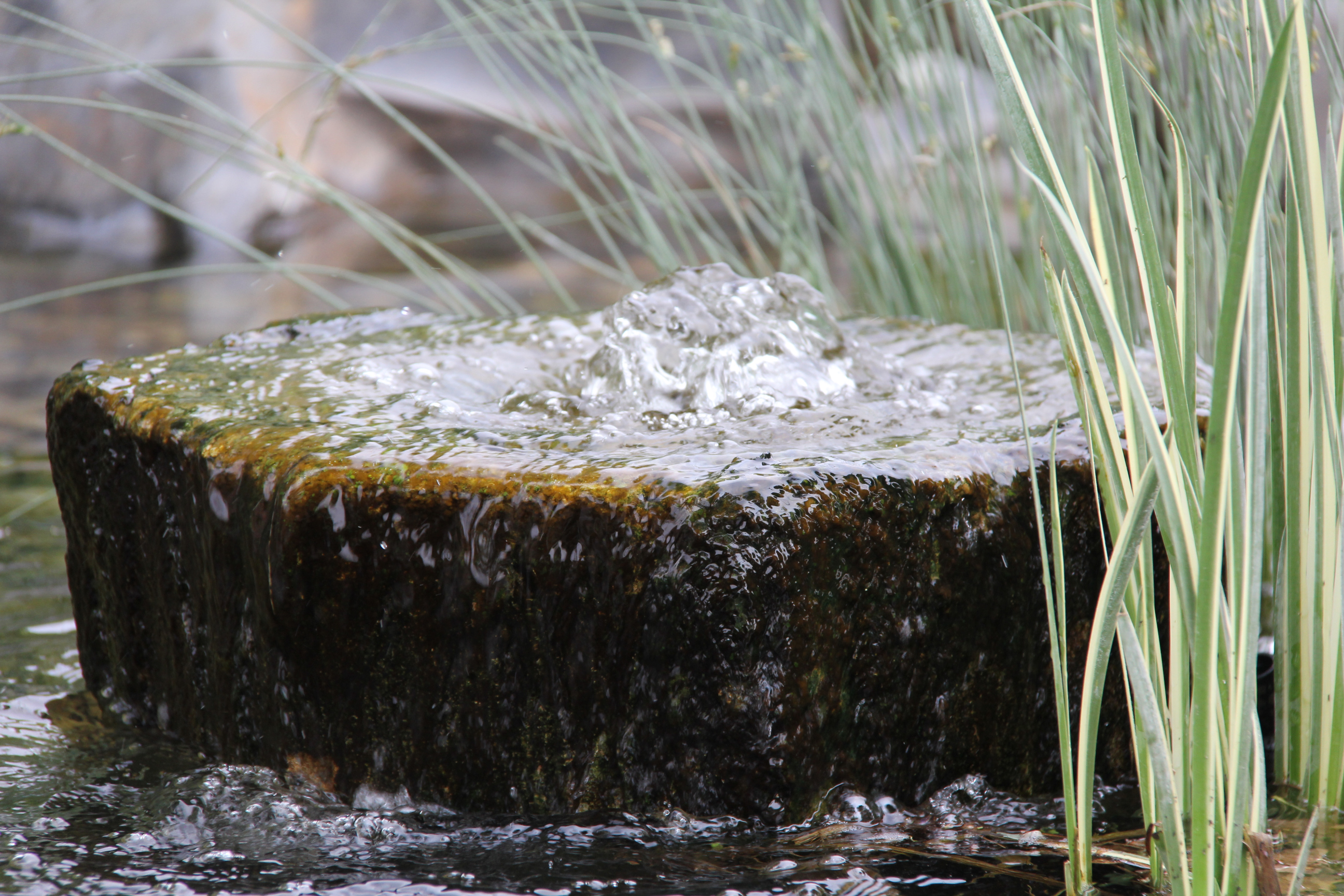
Water bubbles from a stump water feature inside the pond. (Minnesota Prairie Roots copyrighted photo June 2023)
Recently I discovered a new fairy garden at the Rice County Master Gardeners Teaching Gardens located on the Rice County Fairgrounds in Faribault. This garden had already been a favorite spot to visit, to walk among the flowers and other plants, to observe butterflies and birds, and to watch water spilling from a water feature inside a pond.
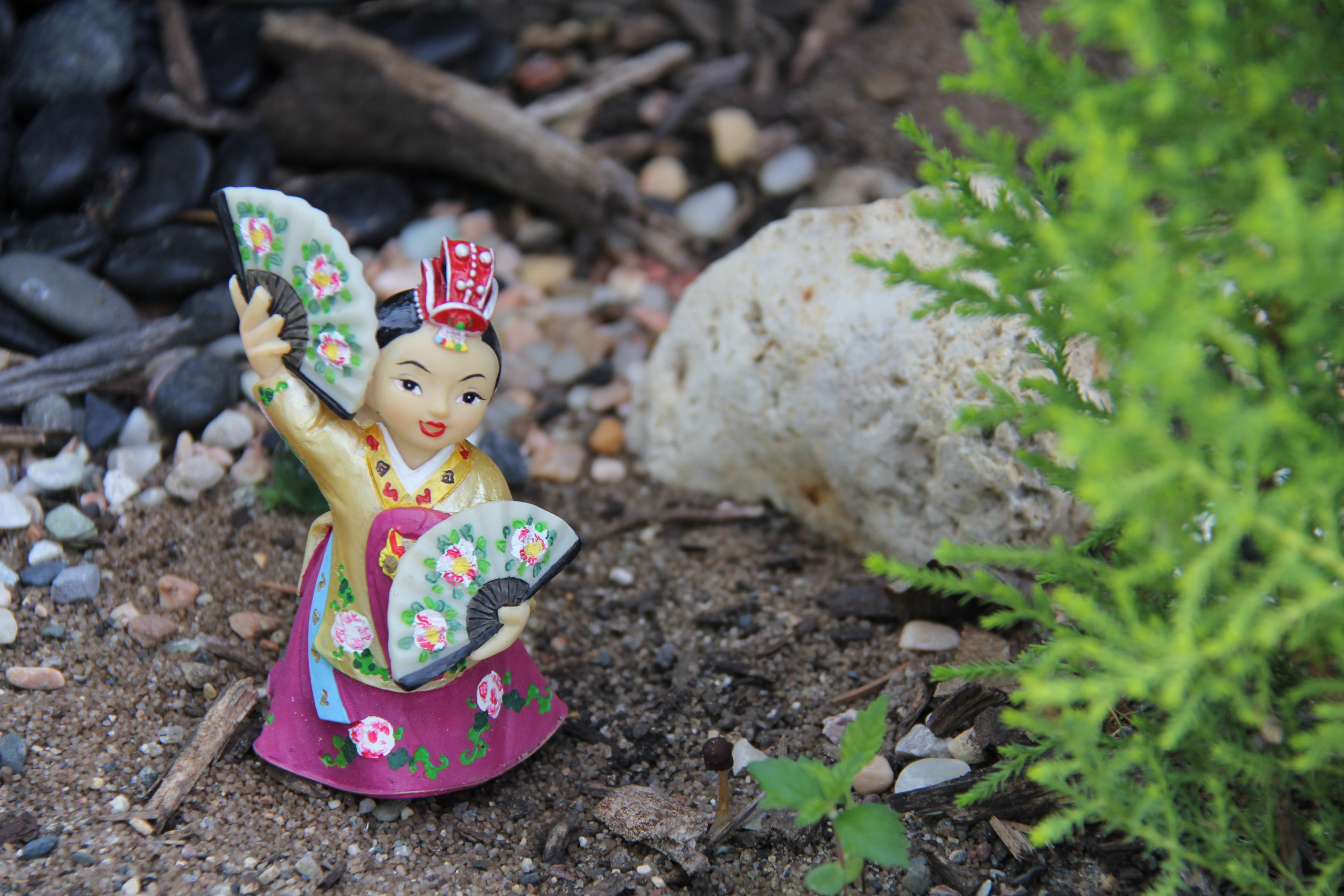
Reflecting the cultural diversity of Faribault. (Minnesota Prairie Roots copyrighted photo June 2023)
A volunteer working there on the day I stopped mentioned that the fairy garden is especially popular with kids, who often move the figurines. I love that—envisioning children playing with the mini people and animals, rearranging the scene, stories spinning through their heads. Imaginative play is something we should all engage in, even as adults. We’re never too old, or too young, for that.
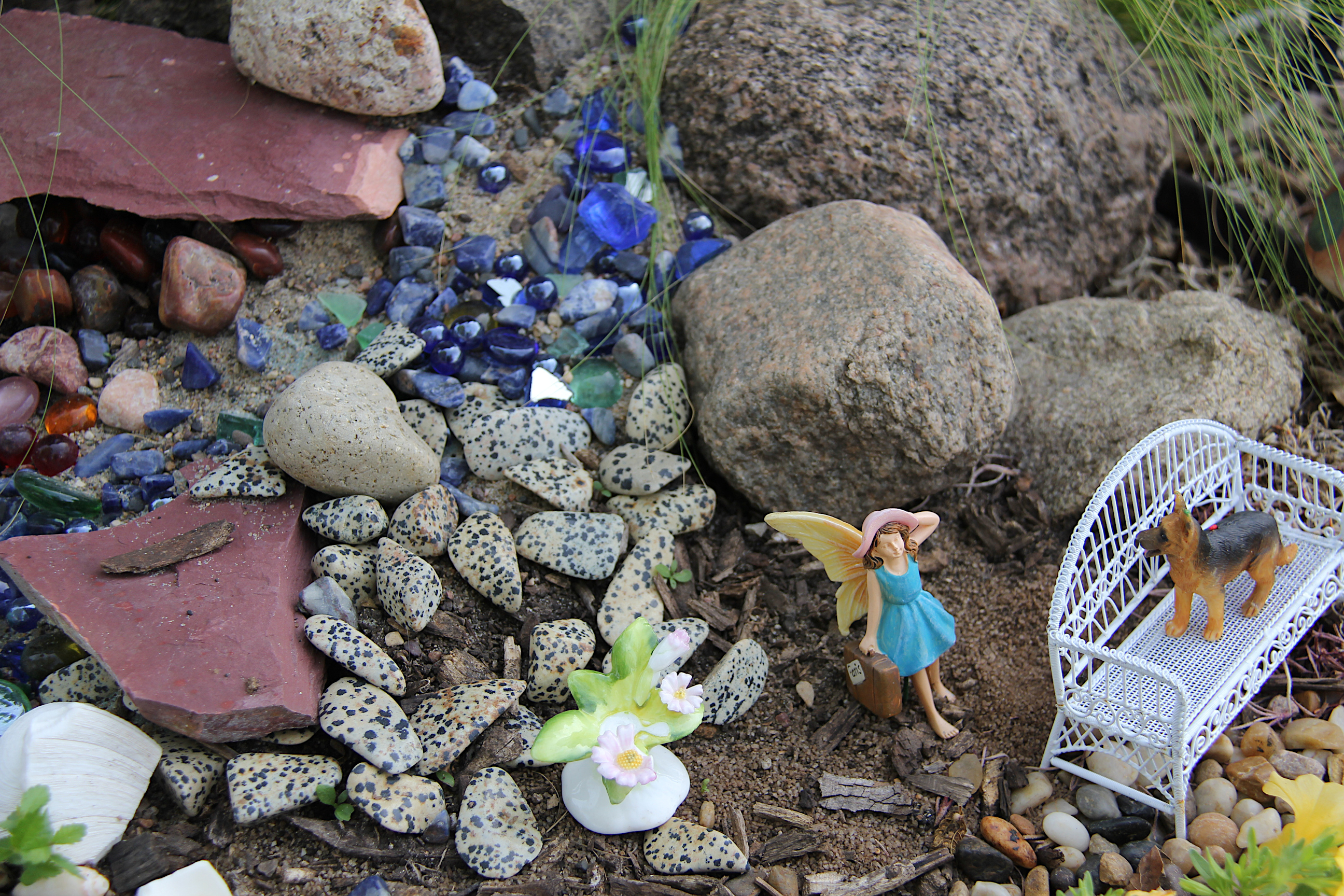
Stones imitate water in this bucolic scene. (Minnesota Prairie Roots copyrighted photo June 2023)
Unlike real life, fairy tales always have happy endings. The prince finds Cinderella. Little Red Riding Hood defeats the Big Bad Wolf. Jack climbs the beanstalk, outsmarts the giant, escapes, and saves the day to live happily ever after. Ah, if only happily ever after was always the ending.
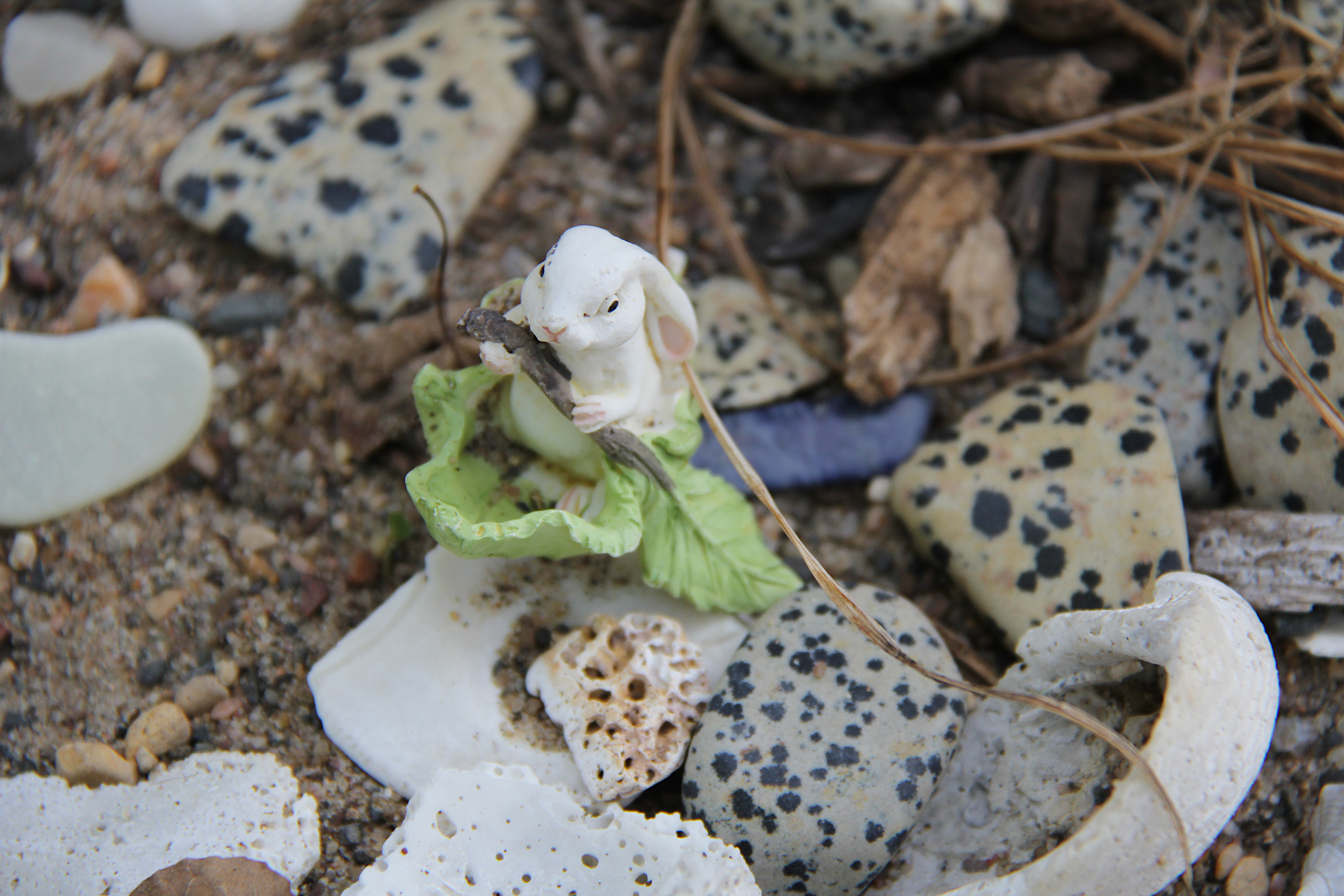
A bunny welcomed in the Faribault garden. (Minnesota Prairie Roots copyrighted photo June 2023)
Fairy gardens offer a respite, happiness, if we we choose to pause, bend low, see them. If we choose to believe in their magic.
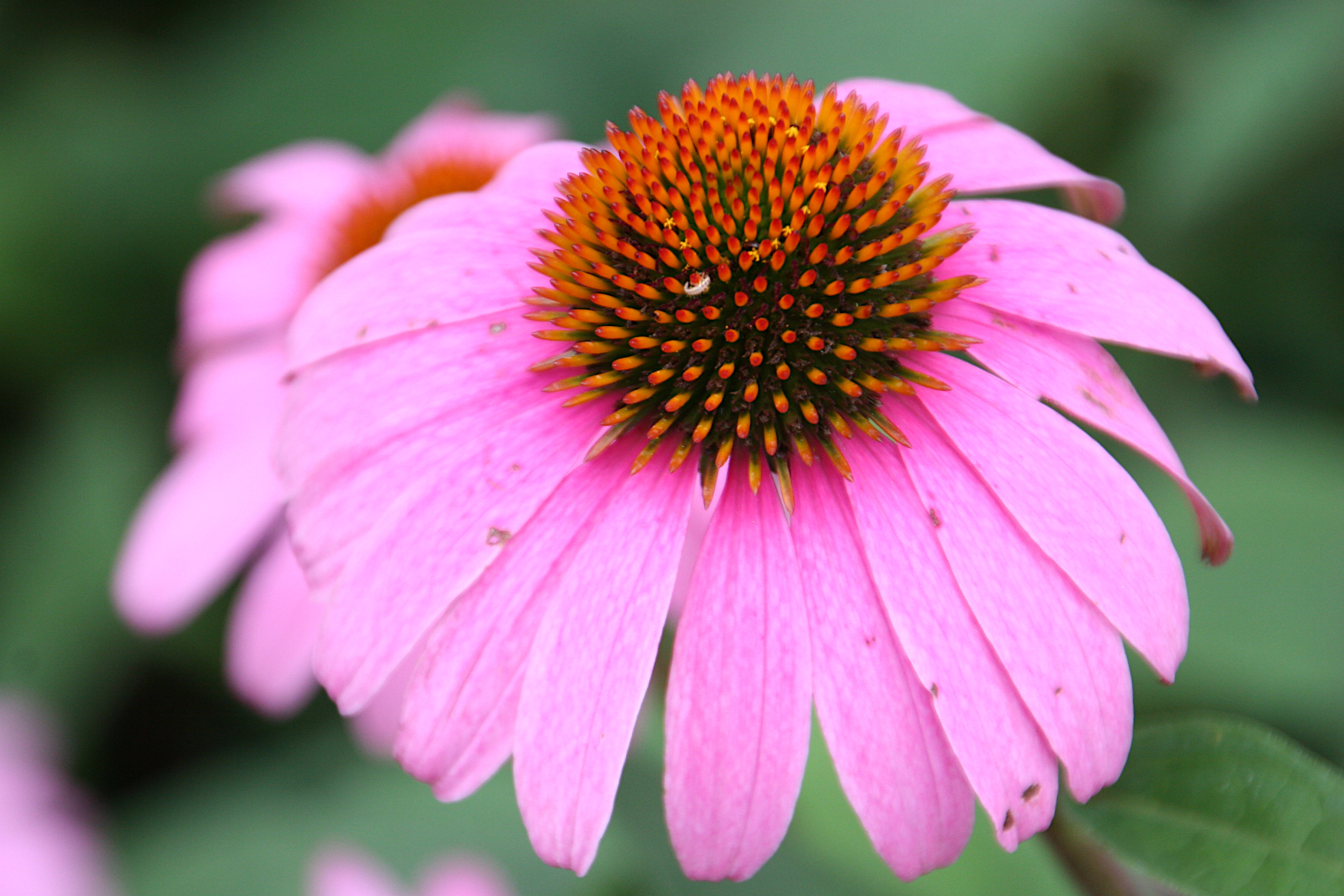
A coneflower up close in the Rice Country Master Gardeners Teaching Garden. (Minnesota Prairie Roots copyrighted photo August 2022)
ANYONE WHO GARDENS understands just how quickly plants can grow. Sunshine and rain make all the difference.
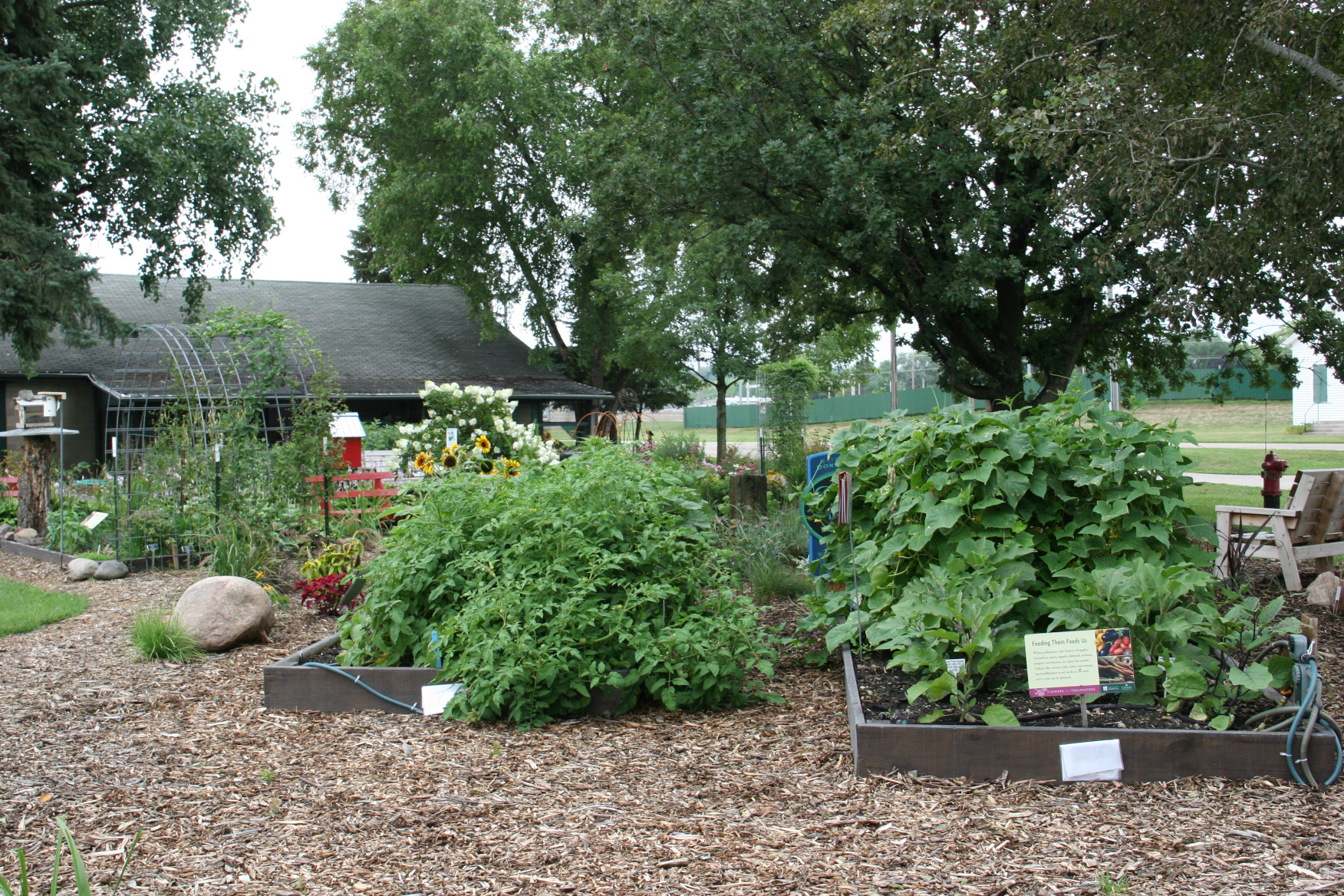
Vegetables grow in the foreground in this photo, other plants and flowers beyond. (Minnesota Prairie Roots copyrighted photo August 2022)
A month had passed between visits to the Rice County Master Gardeners Teaching Garden located at the Rice County Fairgrounds in Faribault. And in those few weeks, the vegetables, flowers and other plants grew in length, height and width, some blossoming, some with fruit emerging.
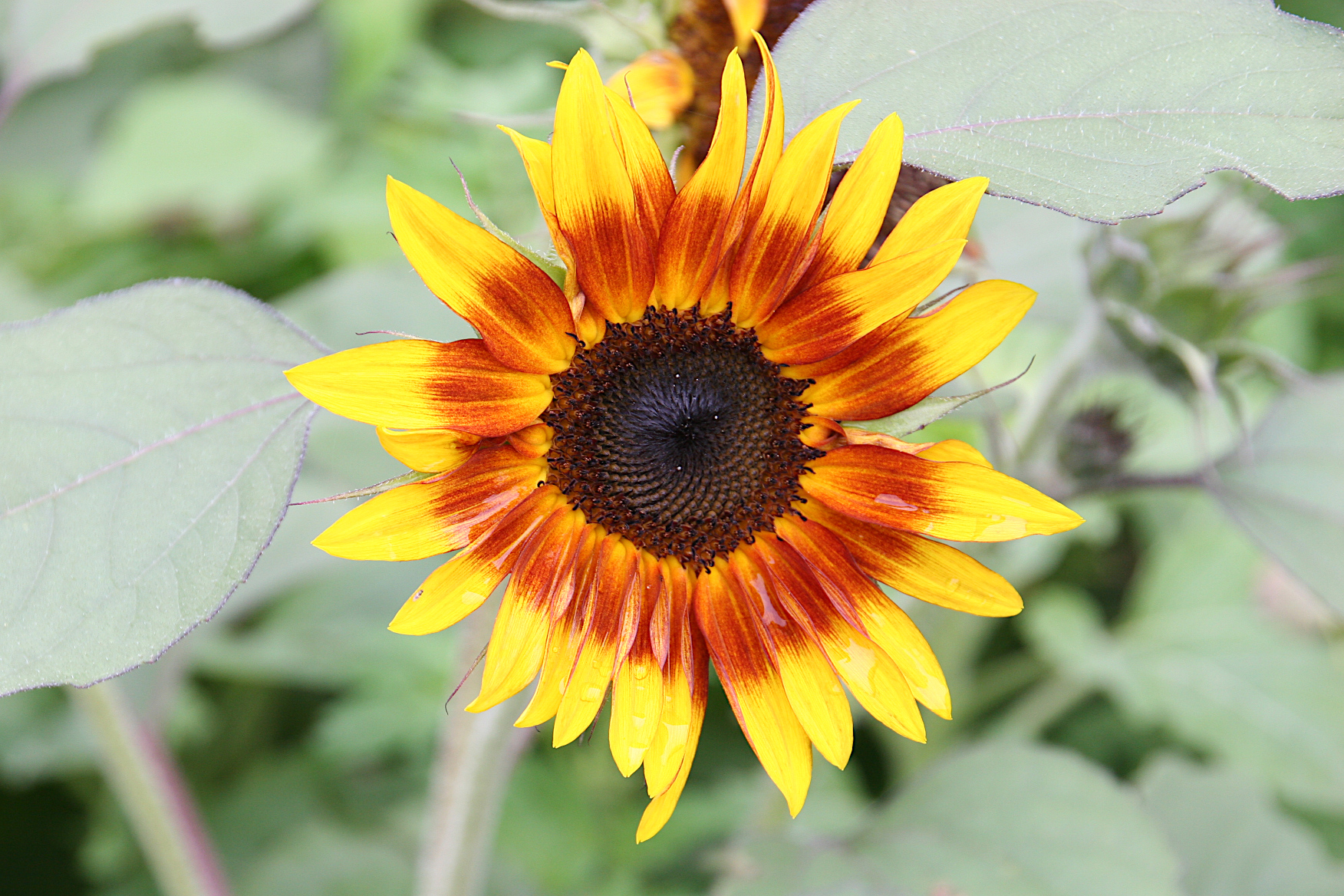
A mini sunflower of sorts (I think) bursts color into the garden. (Minnesota Prairie Roots copyrighted photo August 2022)
There are signs aplenty in this teaching garden. (Minnesota Prairie Roots copyrighted photo August 2022)
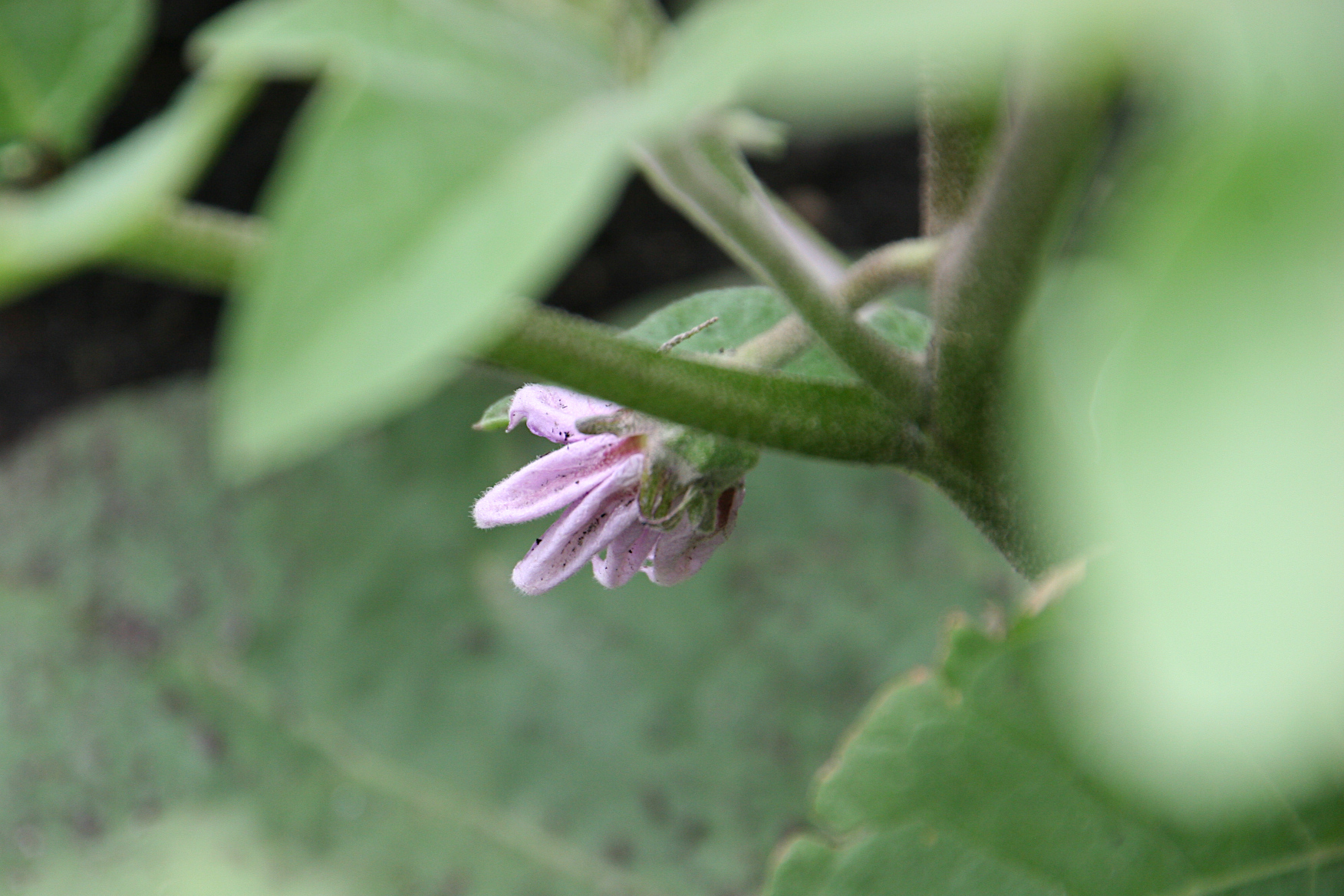
An eggplant blossom. (Minnesota Prairie Roots copyrighted photo August 2022)
To walk here again among the prairie flowers, the zinnias, the hydrangea and hosta, the burpless cucumbers, eggplants, tomatoes and much more is to feel a deep connection to the earth. For it is the soil which roots, which feeds these plants watered by the sky, energized by the sun.
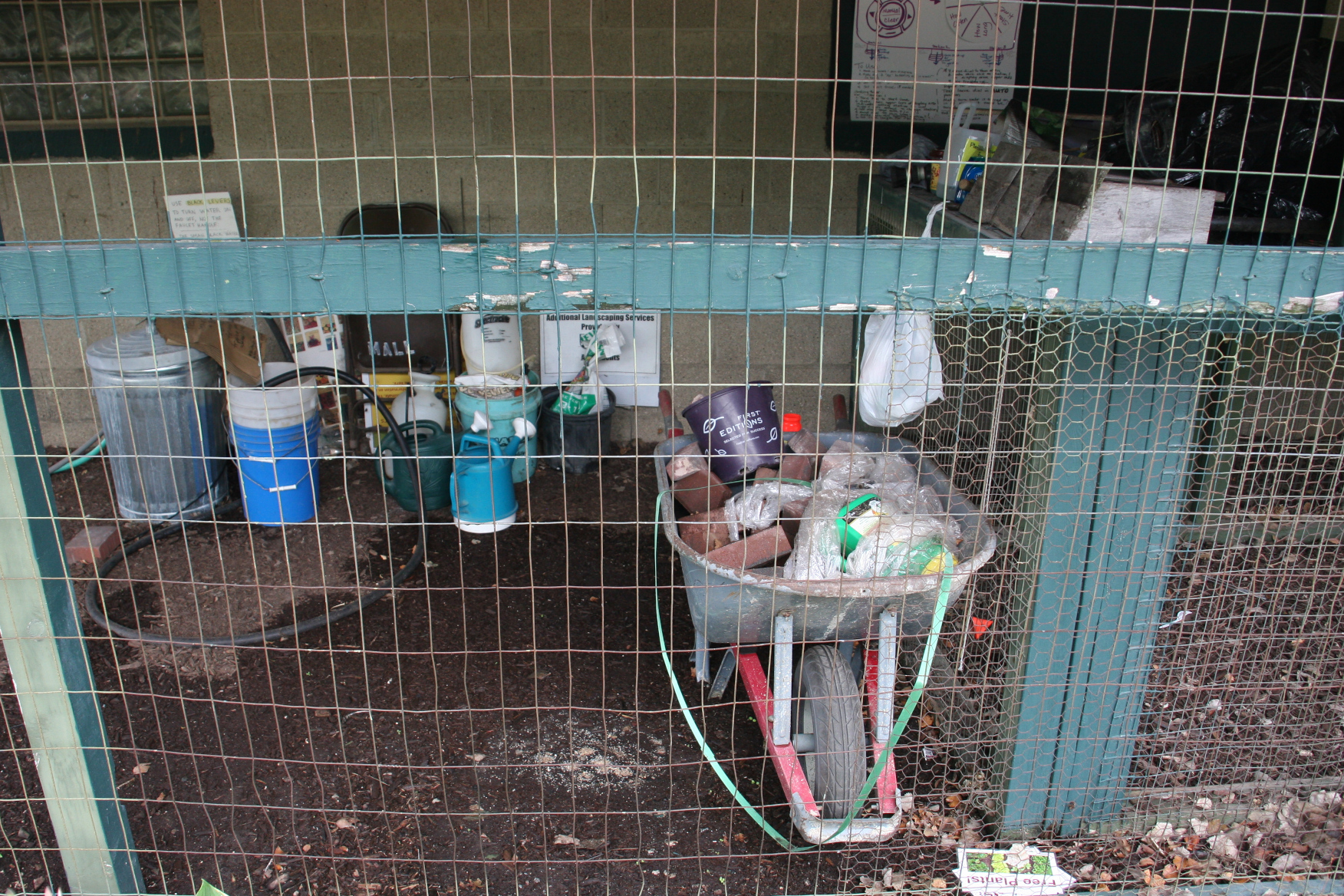
Gardening equipment stashed in a secure area next to the conservation building by the garden. (Minnesota Prairie Roots copyrighted photo August 2022)
And it is volunteer gardeners who plant and tend this beautiful garden for the enjoyment of many. Like me. I appreciate their time, their efforts, their desire to create this peaceful place in my community.
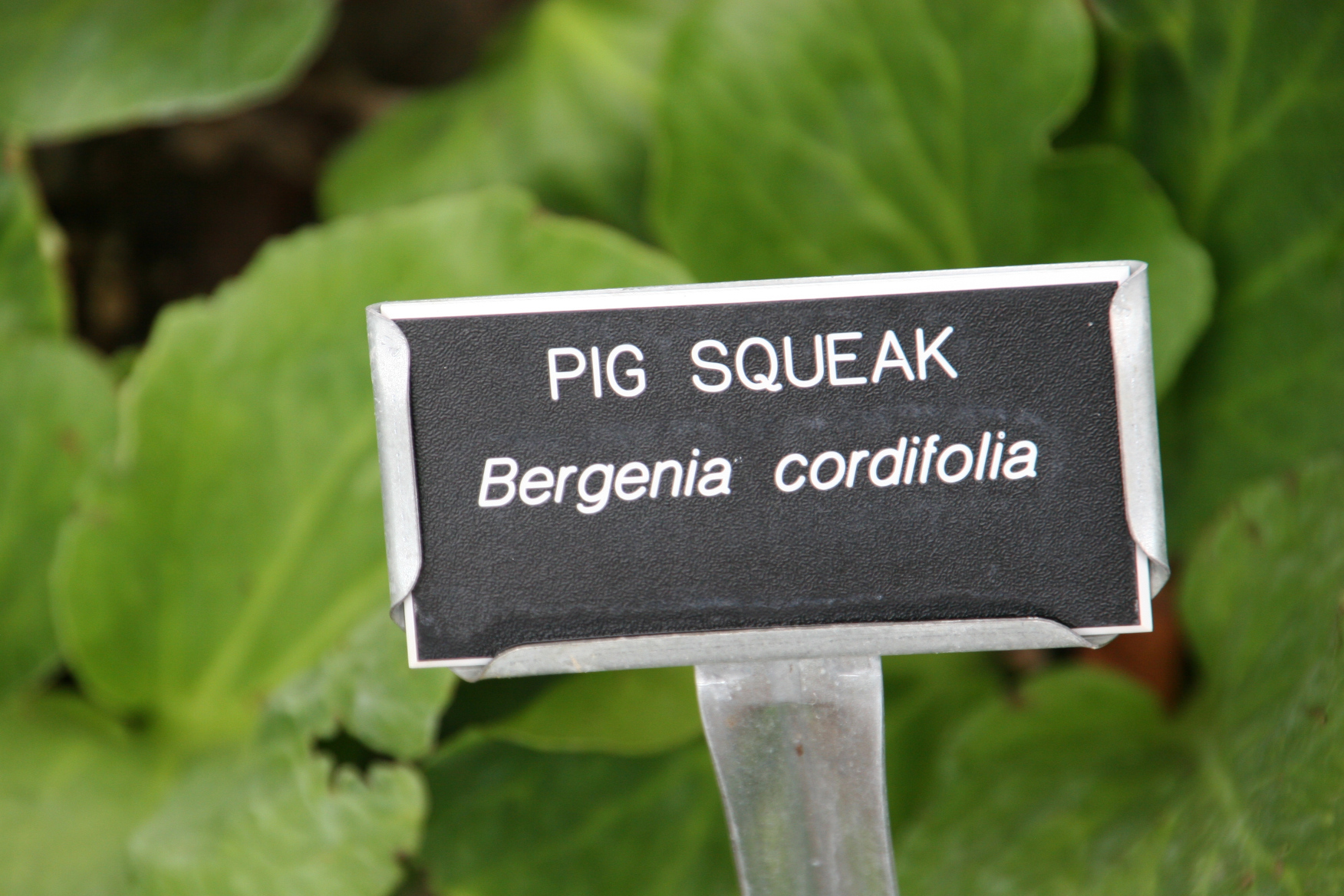
This broad-leafed plant name fascinates me. (Minnesota Prairie Roots copyrighted photo August 2022)
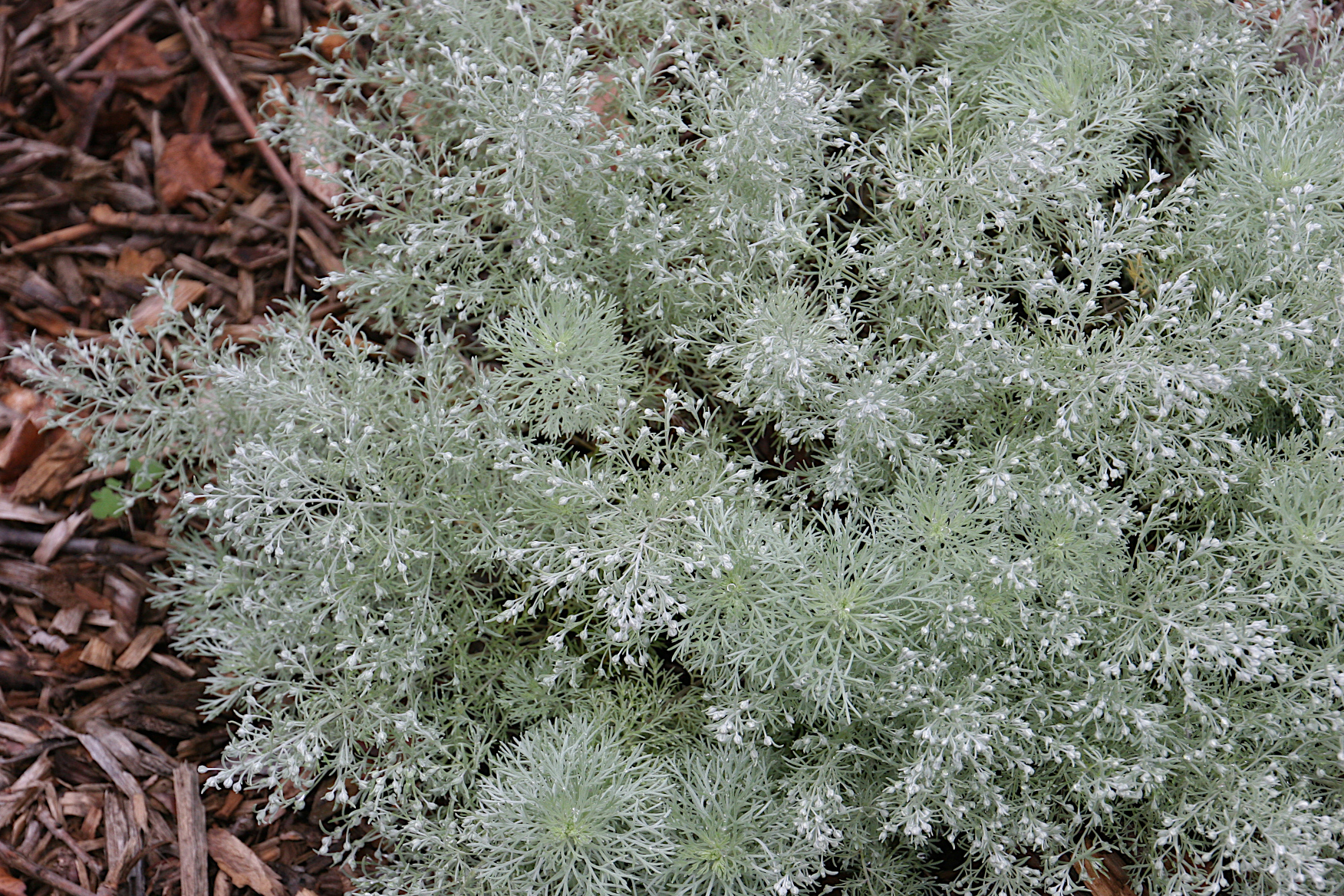
Aiming the camera down at Silver Mound, a wispy plant that I’ve never seen before. (Minnesota Prairie Roots copyrighted photo August 2022)
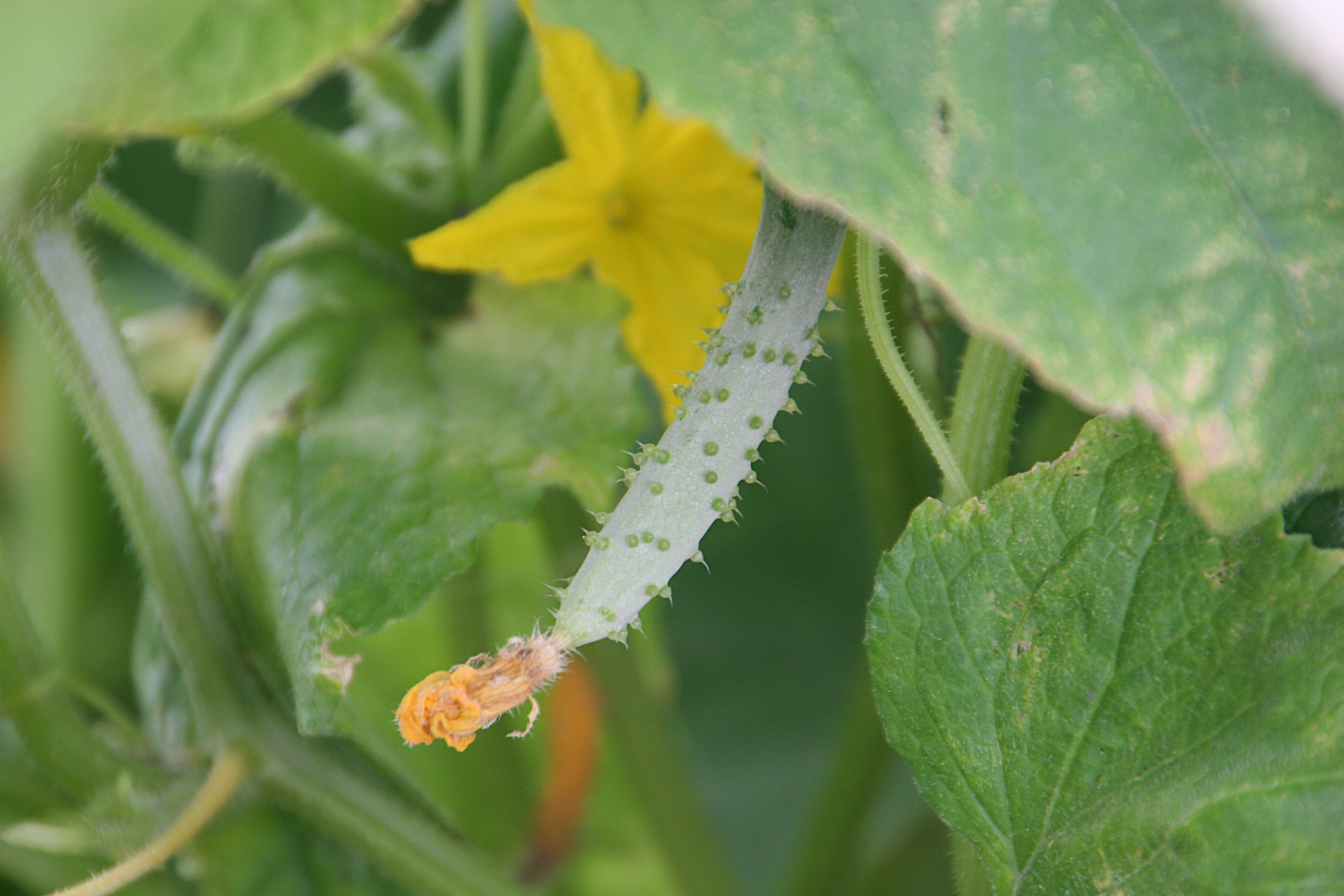
A cucumber forming. (Minnesota Prairie Roots copyrighted photo August 2022)
To visit this spot is to understand how much we each need such a contemplative place. A place simply to meander along wood chip or brick pathways, pausing to appreciate the likes of broad-leafed Pig Squeak or the silvery sheen of Silver Mound or a little-finger-sized prickly cucumber or a Prickly Pear Cactus. There’s a lot to take in among the vast plant varieties.
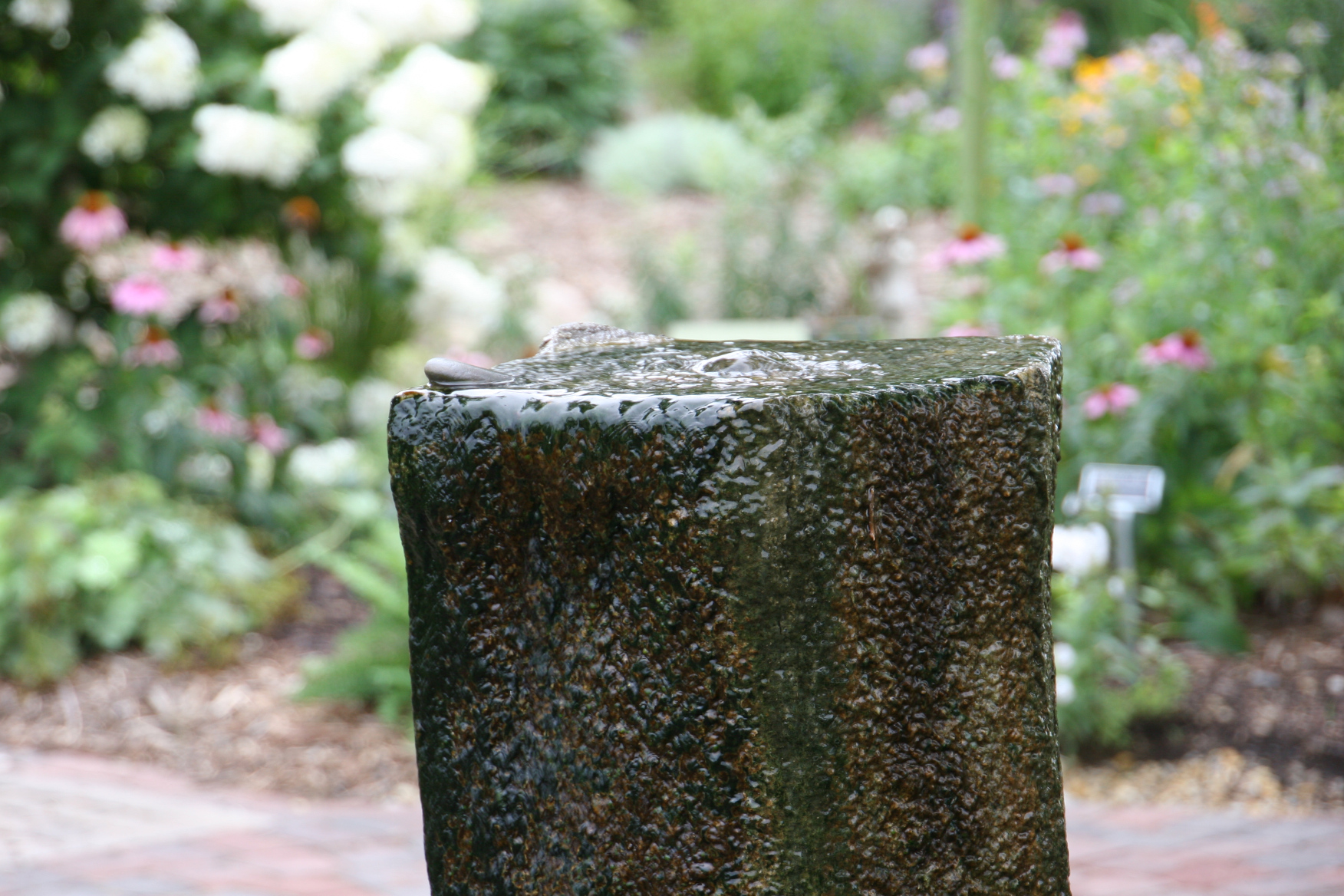
One of the man-made tree stumps gurgles water. (Minnesota Prairie Roots copyrighted photo August 2022)
The water feature is to the right of this centering circle. Across the way are an historic church and school, part of the Rice County Historical Society. (Minnesota Prairie Roots copyrighted photo August 2022)
And then there’s the water, oh, the water. No garden feature soothes more than a fountain. Here five replica tree stumps spill water into a shallow pond, a focal point defined by a circle of bricks connected to brick paths.
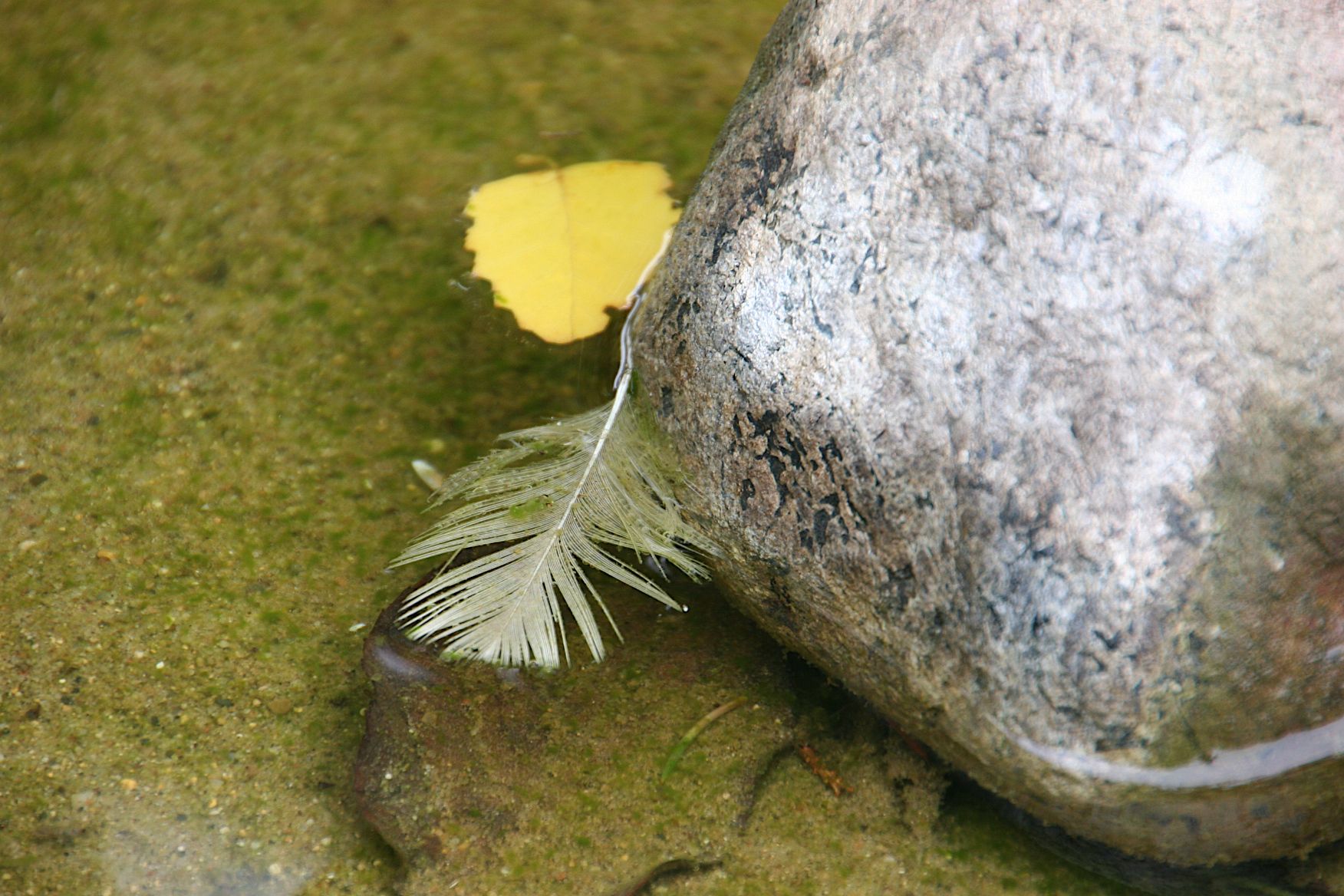
I notice details, like a feather in a bird bath. (Minnesota Prairie Roots copyrighted photo August 2022)
Even a bird bath drew my attention with a feather floating therein.
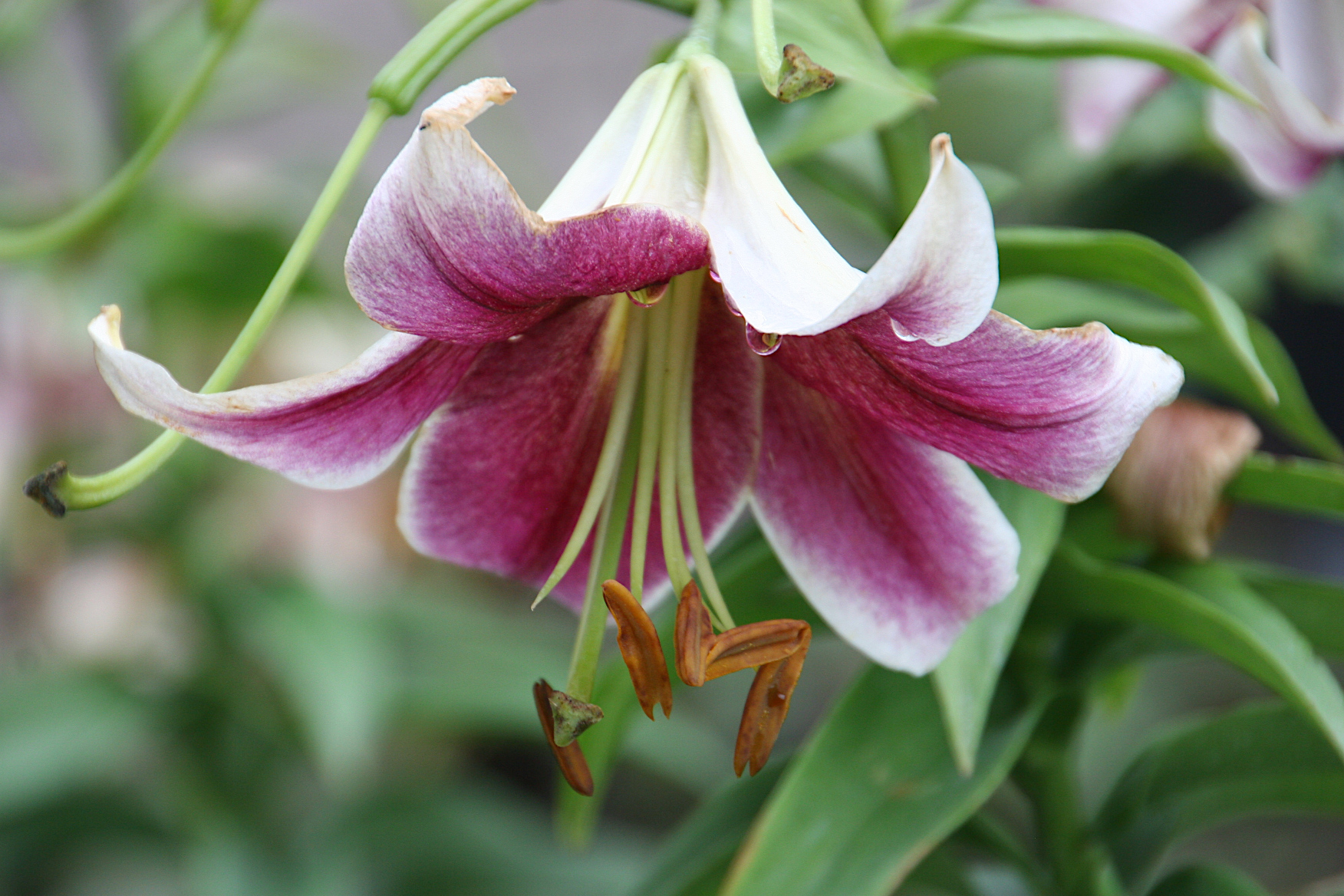
A lily blooms in early August. (Minnesota Prairie Roots copyrighted photo August 2022)
The garden also features an arch for climbing clematis,which bloomed profusely earlier in the summer. (Minnesota Prairie Roots copyrighted photo August 2022)
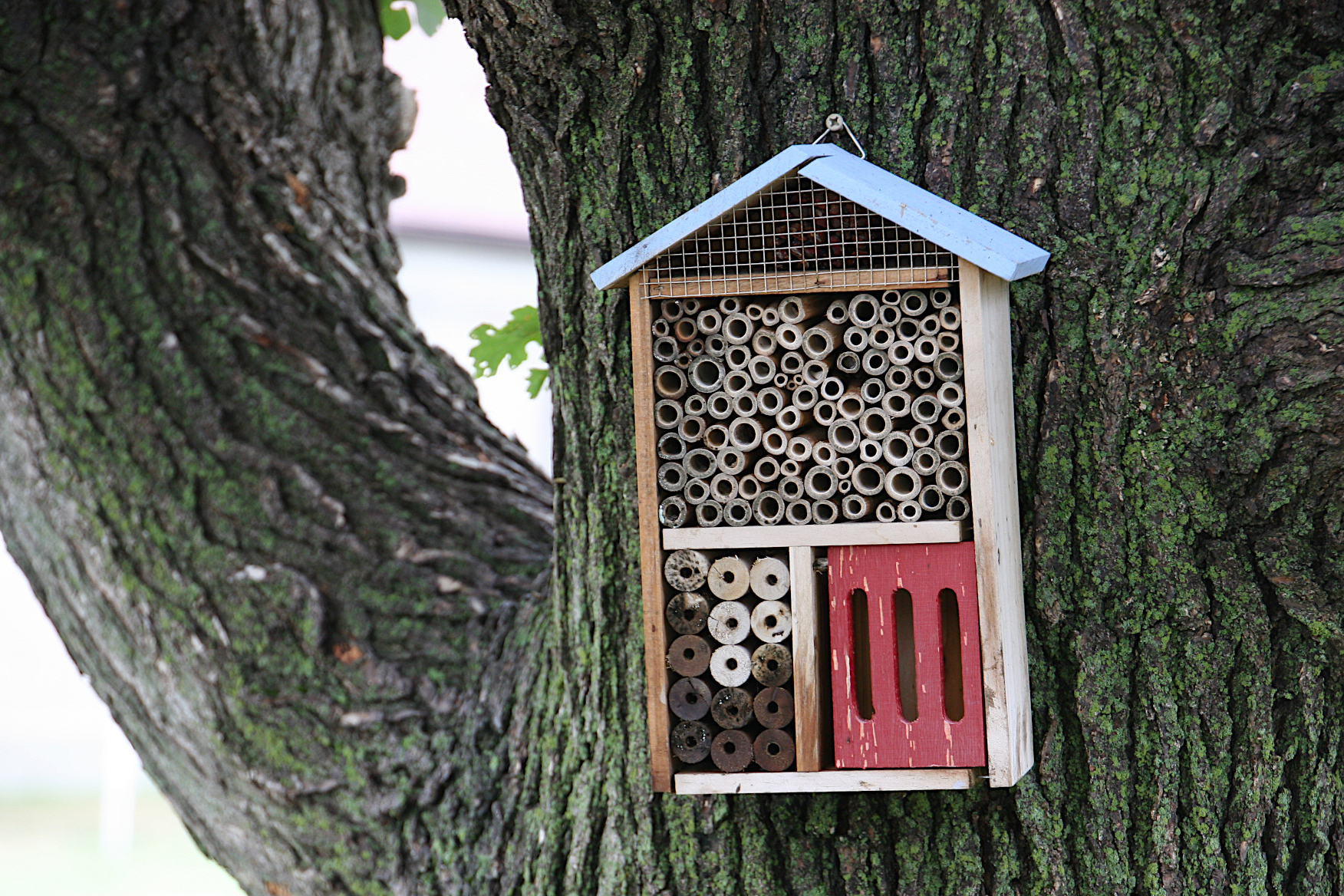
A bee house posted on a tree by the garden. (Minnesota Prairie Roots copyrighted photo August 2022)
Strategically situated benches offer sitting spots to pass the time, chat, read a book or simply take in the garden, the being outdoors, in nature. In this fast-paced world of technology and a deluge of news that is often awful and horrible and unsettling, this garden provides a respite. Nature has a way of working calm into our beings. Easing stress and anxiety. Lifting spirits.
Lovely flowers fill the garden. (Minnesota Prairie Roots copyrighted photo August 2022)
In the challenges which have defined my life in 2022, I feel a deep sense of gratitude for this garden. I feel at peace here among the flowers and vegetables, the birds and butterflies, bushes and trees, here under the southern Minnesota sky.
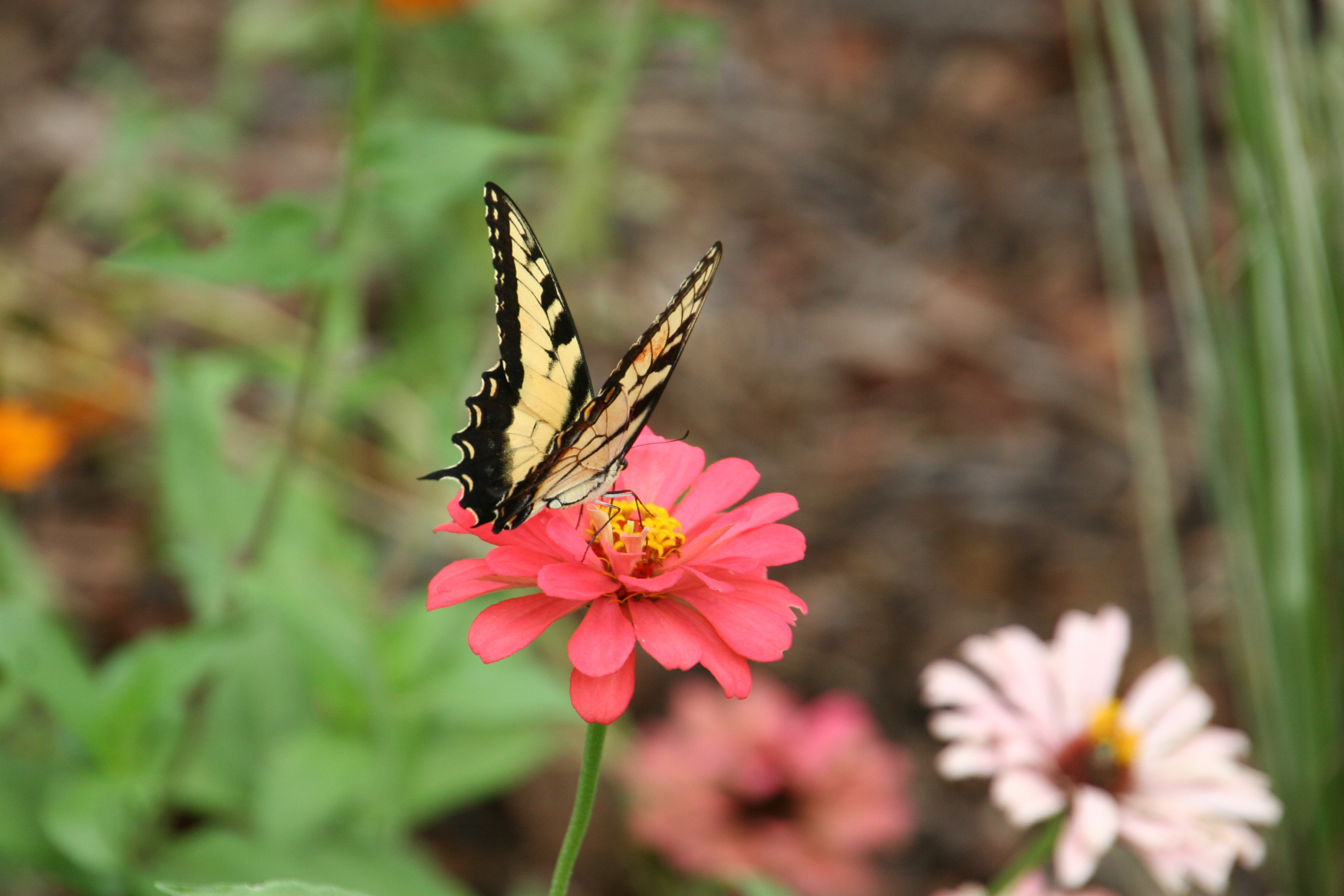
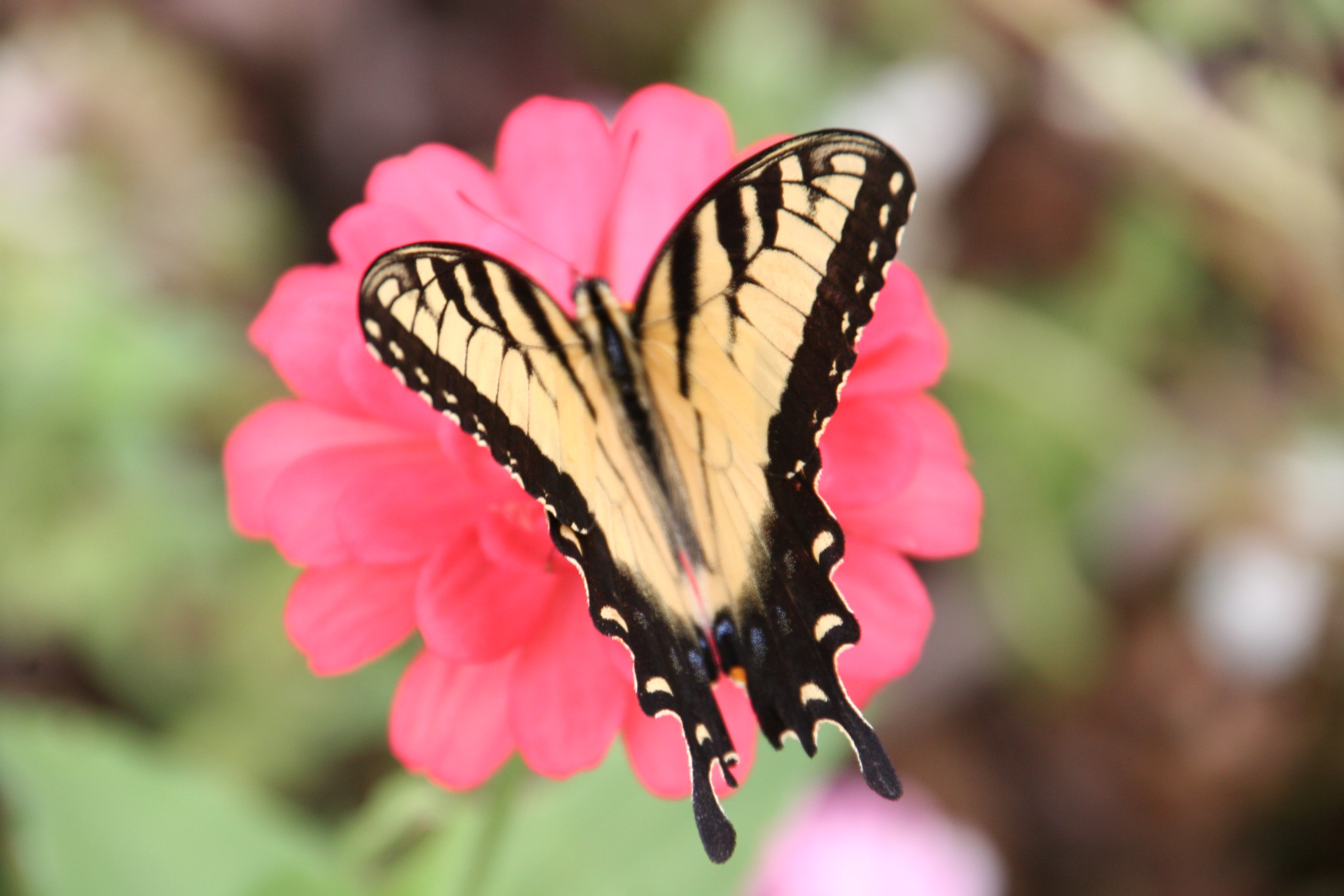
An Eastern tiger swallowtail butterfly atop a zinnia. (Minnesota Prairie Roots copyrighted photo August 2022)
EVERY TIME I SPOTA BUTTERFLY, joy surges through me. There’s something about the flitting flight of a butterfly that captivates me.
But it’s more than that. I appreciate how these insects appear so carefree, as if their very existence is simply to bring beauty and joy into the world. And maybe it is.
The butterfly perches among my favorite garden flowers, zinnias. My mom planted zinnia seeds when I was growing up on the farm. Zinnias are easy to grow from seed, are prolific, hardy and colorful. (Minnesota Prairie Roots copyrighted photo August 2022)
In recent days, I’ve observed two swallowtail butterflies, one black, the other yellow, among the phlox growing wild in my flowerbeds. And some 10 days ago I photographed an Eastern tiger swallowtail atop a zinnia at the Rice County Master Gardeners Teaching Garden in Faribault.
That well-tended garden has become a new favorite oasis for me within the city limits. On the Sunday afternoon I visited the garden, I found friends Paula and Ed already there, resting on a bench. Paula was involved early on with development of this garden. She no longer is, but remains an active gardener. Paula was the one who spotted the swallowtail among the zinnias.
Per her direction, I headed to the zinnia patch to photograph the yellow swallowtail with wings outlined in black, splotches of blue and orange adding to the coloring.
Black-bordered wings are nearly wide open atop a zinnia. (Minnesota Prairie Roots copyrighted photo August 2022)
The swallowtail perched, unhurried atop the yellow-centered pink flower. I had plenty of time to snap multiple frames. That’s often not the case with butterflies.
That butterflies survive a four-stage life cycle from egg to larva (caterpillar) to pupa (chrysalis) to adult butterfly impresses me. At any one stage, a predator could end their lives. But yet, here was this beautiful butterfly among the zinnias. Like the final verse in a lovely summer poem.
TELL ME: What do you appreciate about butterflies? Do you have a favorite?
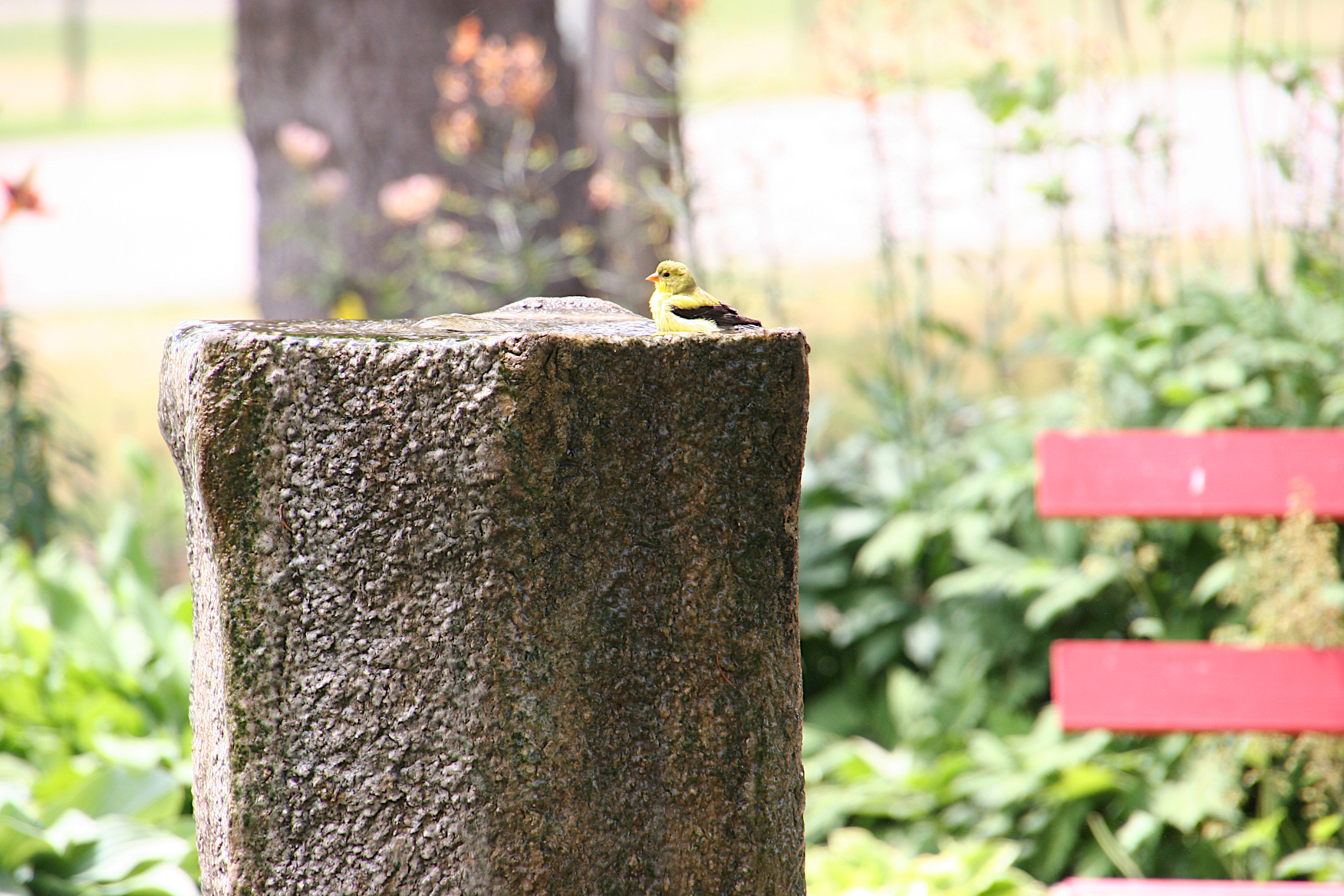
A tiny bird perches in a fountain at the Rice County Master Gardeners Garden, Faribault, Minnesota. (Minnesota Prairie Roots copyrighted file photo July 2022)
I HAVE A MIXED OPINION of birds. I appreciate them at a distance, but not necessarily up close, although I’ve grown more comfortable with their nearness as I’ve aged. Just don’t plunk me in an enclosed garage or other space with a trapped bird. Outdoors is mostly fine.
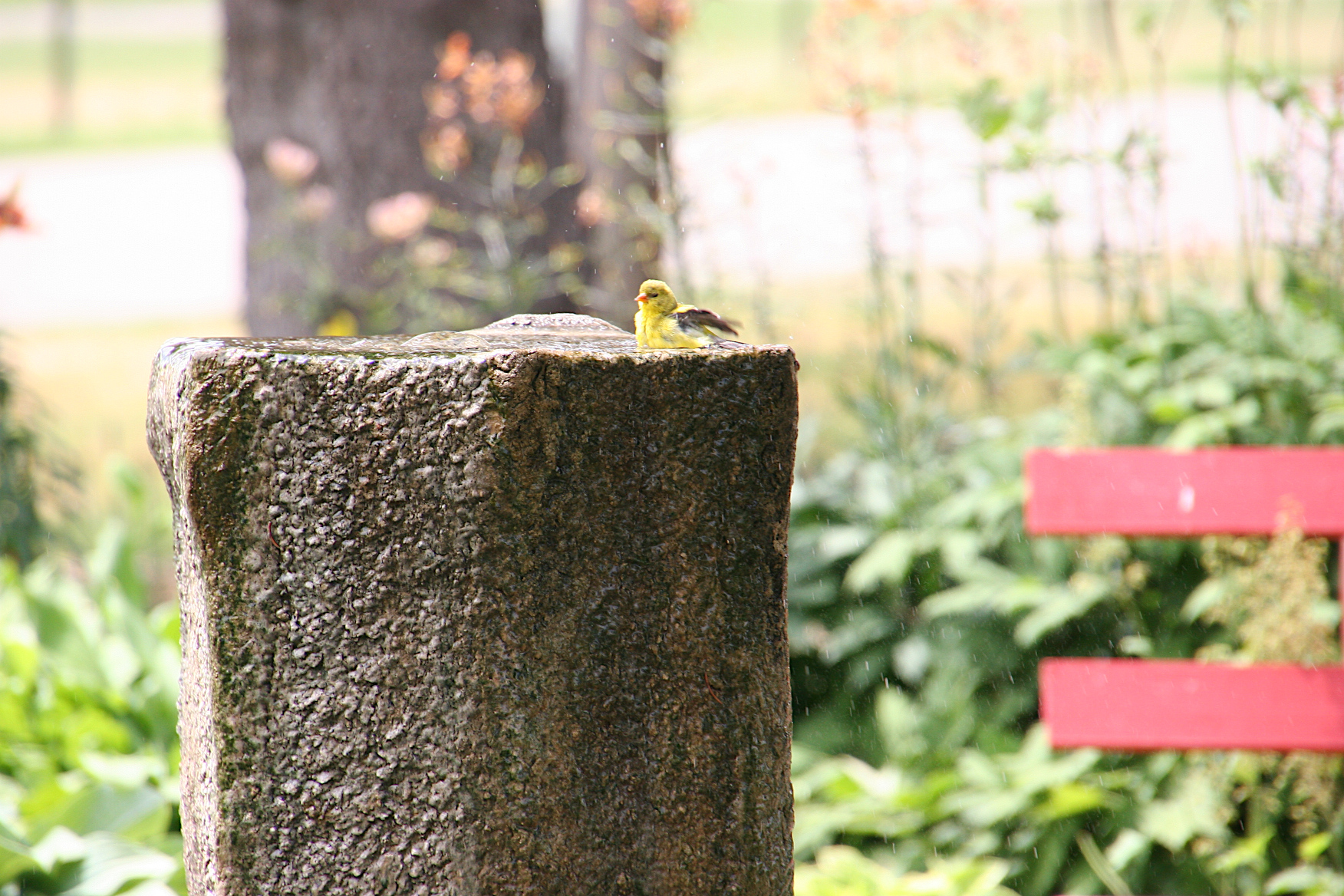
Unfolding of wings to splash in the fountain. (Minnesota Prairie Roots copyrighted photo July 2022)
Recently I observed a cute little yellow bird, a finch, I think, dip into a tree stump water feature at the Rice County Master Gardeners Teaching Gardens at the county fairgrounds in Faribault. With a zoom lens on my 35 mm camera, I photographed the finch briefly splash in the water before flitting away. There was something joyful in that sole moment of focusing on a tiny winged creature.
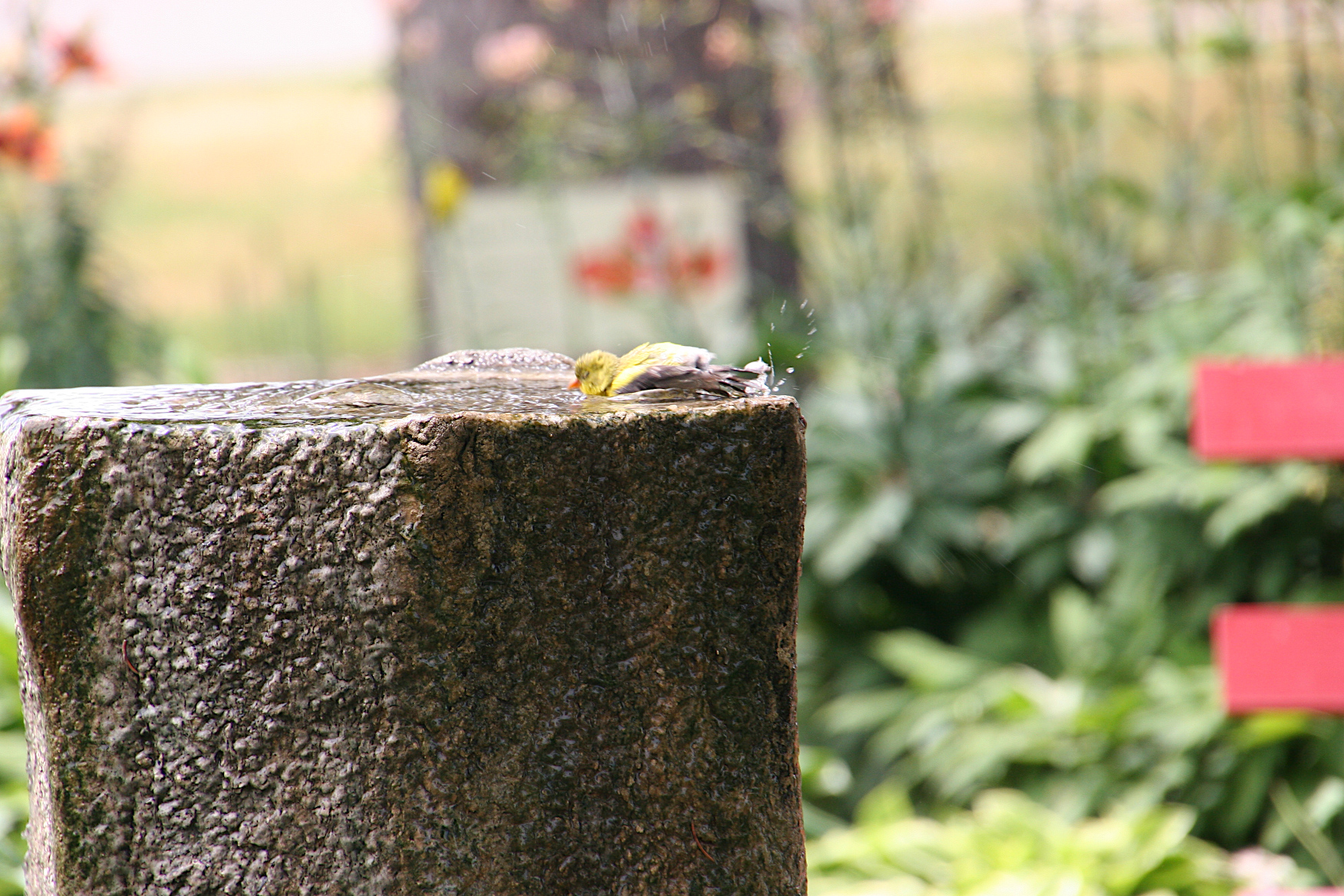
Water droplets fly as this bird bathes in the fountain. (Minnesota Prairie Roots copyrighted photo July 2022)
We need such moments of simplicity. Of peace. Of birdsong, even if this bird isn’t singing. Moments to quiet our souls in the midst of too much busyness and too many distractions. And too much technology.
I remember how my mom loved the Baltimore orioles that one year, quite unexpectedly, showed up on my childhood farm in southwestern Minnesota flashing orange into the trees. She thrilled in their presence among all the blackbirds, sparrows and barn swallows. In her delight, Mom taught me that not all birds were like the swooping swallows I despised.
In my years of doing farm chores, I grew to dislike the swallows that dived as I pushed a wheelbarrow of ground feed down the barn aisle or shoved cow manure into gutters. That the barn ceiling was low only magnified their, to me, menacing presence. The swallows, I now acknowledge, were only protecting their territory, their young, in the mud nests they built inside the barn. And they ate mosquitoes, which I should have appreciated.
Yet I don’t miss the swallows or the rooster that terrorized my siblings and me, until the day Dad grabbed the axe and ended that.
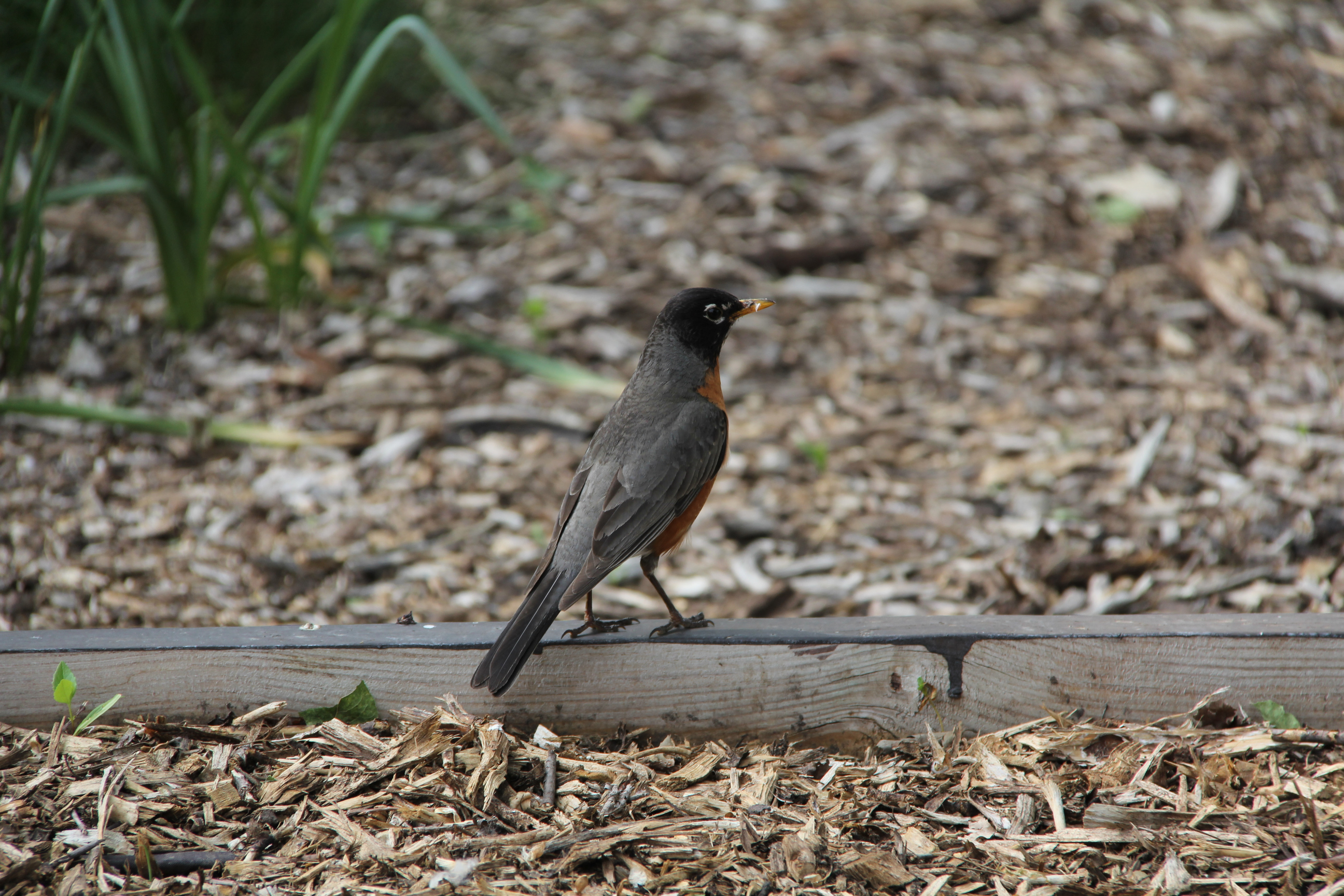
More than 40 years removed from the farm, I seldom see barn swallows. Rather, in my Faribault backyard, I spot cardinals, wrens, robins and occasionally a blue jay. The front and side yards, however, bring massive crows lunching on remnants of fast food tossed by inconsiderate motorists who find my property a convenient place to toss their trash. I’ll never understand that disrespectful mindset of throwing greasy wrappers and bags, food bits, empty bottles and cans, cigarette butts, and more out a vehicle window.
And so these are my evolving bird stories—of shifting from a long ago annoyance of swallows to understanding their behavior, of delighting in the definitive whistle of a cardinal flashing red into the wooded hillside behind my Faribault home, of observing the feeding habits of crows in my front and side yards drawn to garbage tossed by negligent humans.
TELL ME: I’d like to hear your bird stories, positive or negative.











 Minnesota Prairie Roots
Recent Comments