Minnesota Prairie Roots

Writing and photography by Audrey Kletscher Helbling

Stop & smell the roses in small towns, like Kenyon July 8, 2024

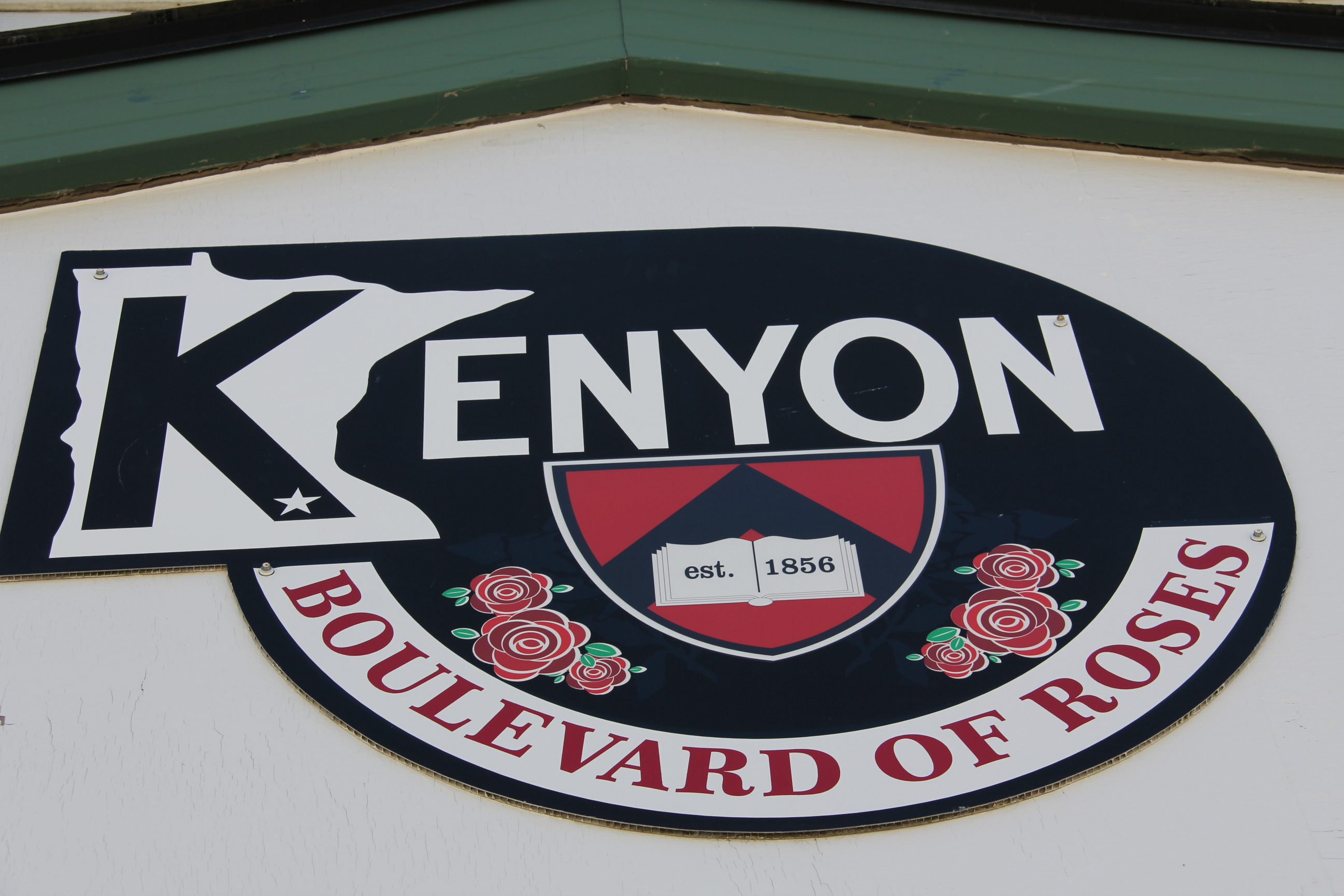
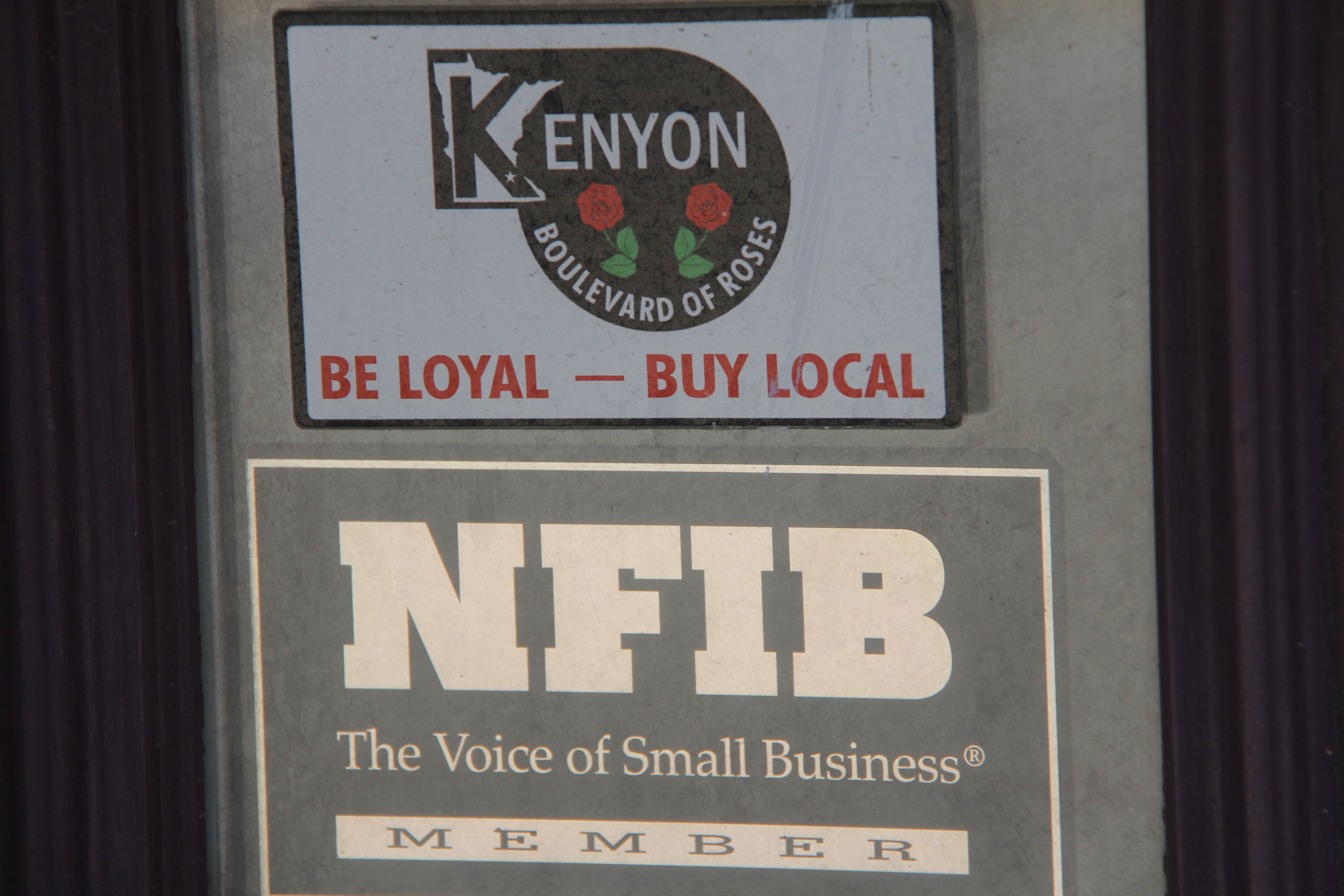
This identifying signage is posted on Kenyon’s city building. (Minnesota Prairie Roots copyrighted photo June 2024)

WHEN IT COMES to branding, everything is coming up roses in Kenyon. Literally.
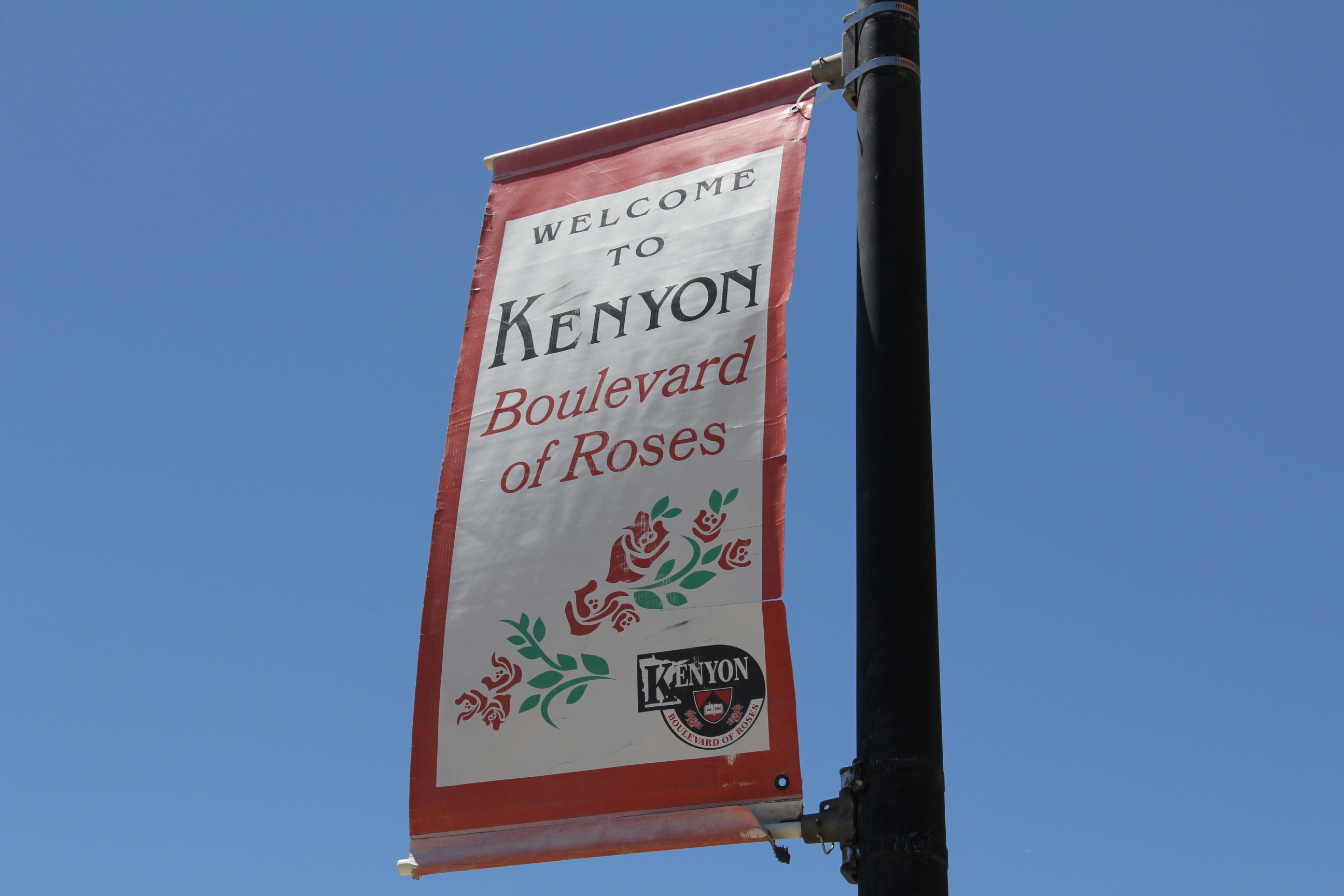
Welcome to Kenyon and its Boulevard of Roses. (Minnesota Prairie Roots copyrighted photo June 2024)
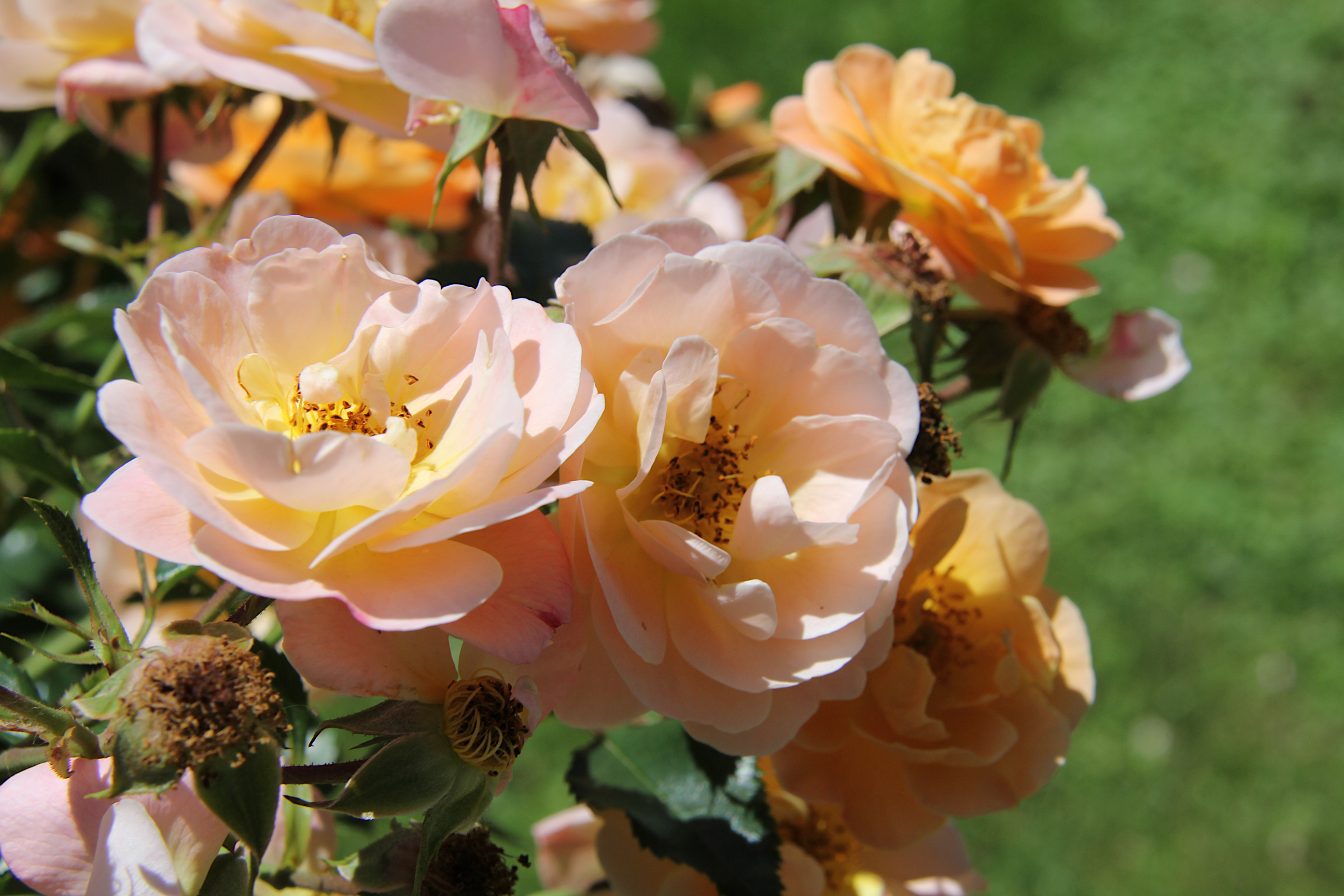
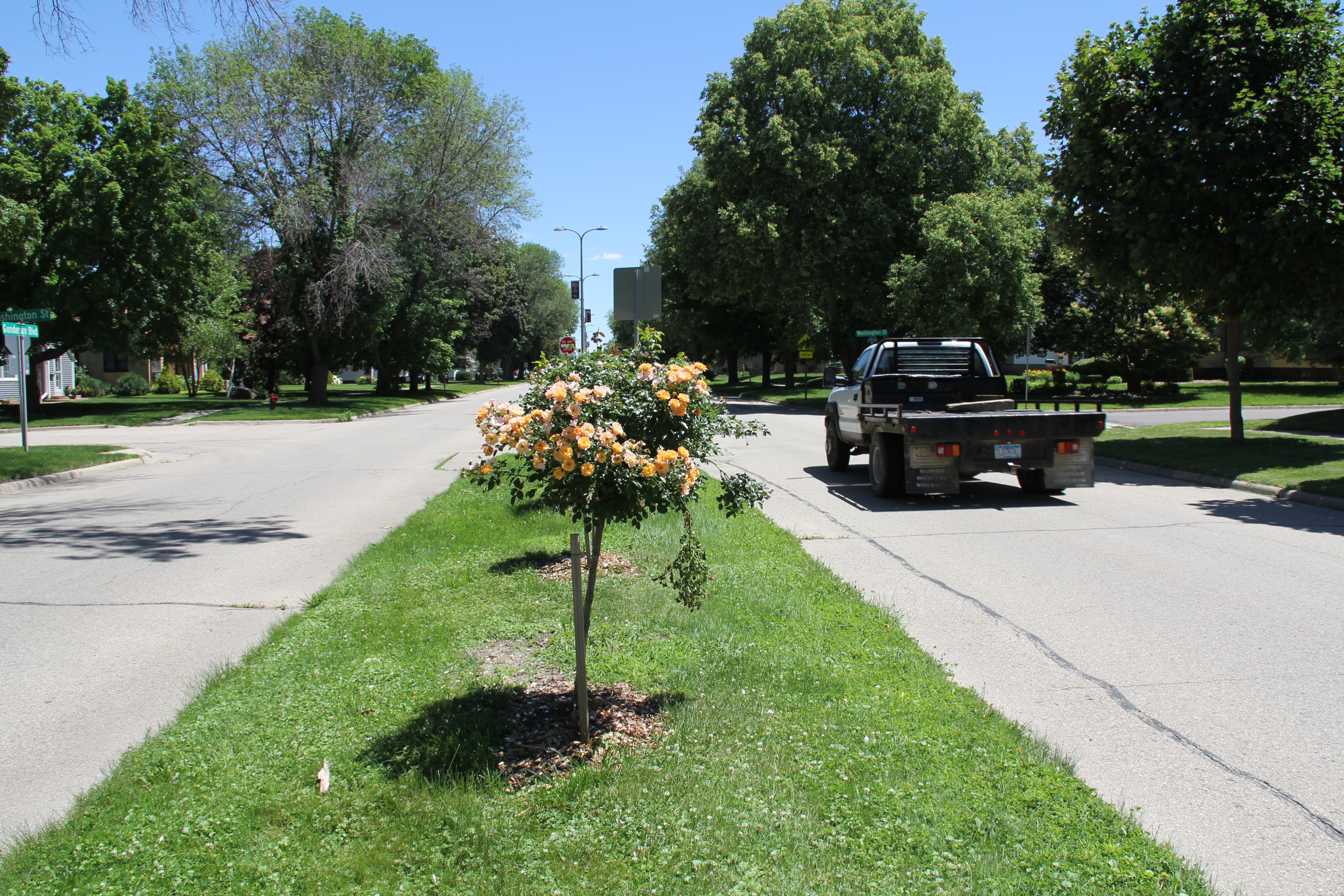
Roses bloom throughout the summer in the boulevard. (Minnesota Prairie Roots copyrighted photo June 2024)
So many lovely roses… (Minnesota Prairie Roots copyrighted photo June 2024)

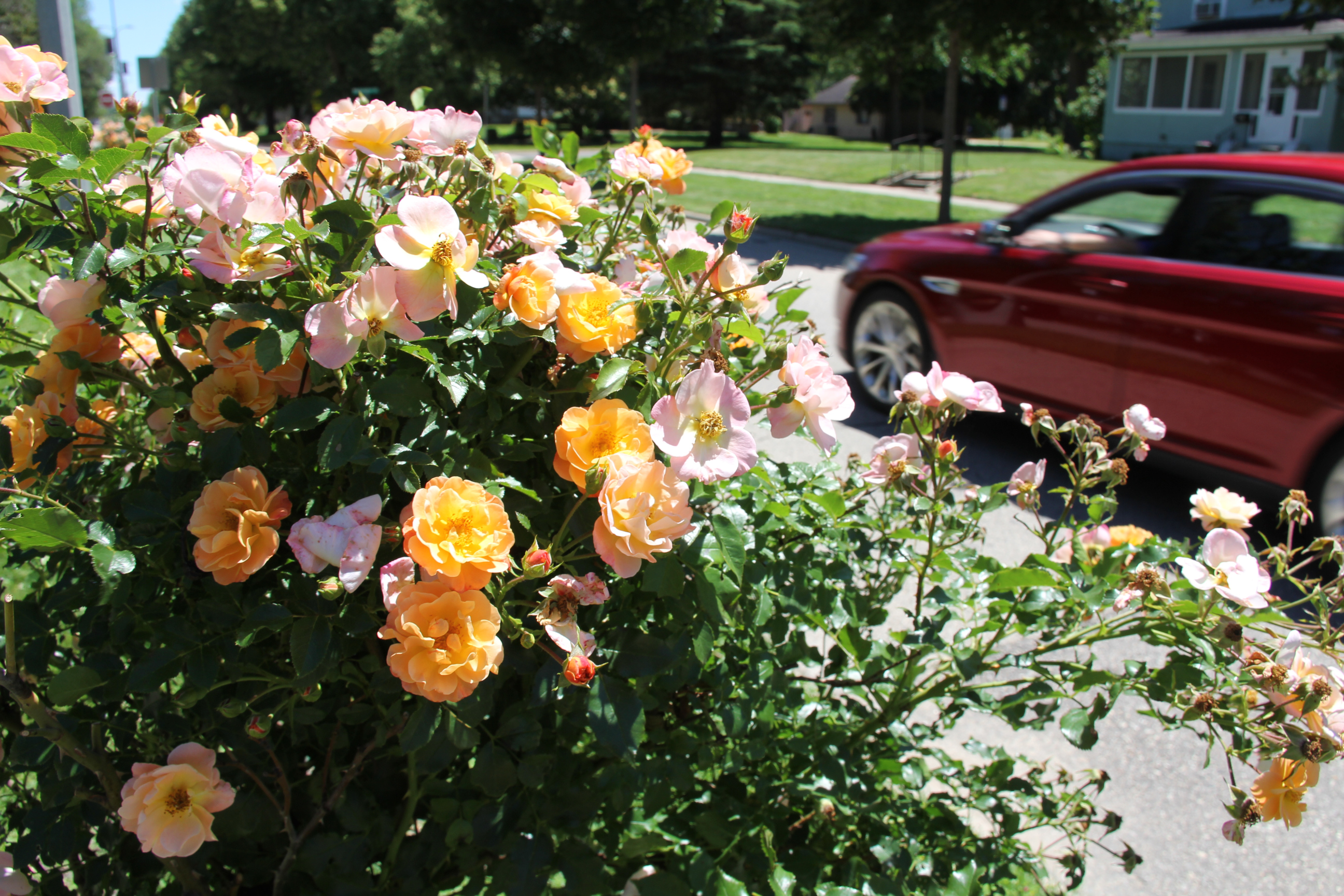
This community of just under 2,000 identifies itself via its Boulevard of Roses which is, indeed, a rose-filled boulevard on Minnesota State Highway 60/Gunderson Boulevard. For blocks along this heavily-traveled roadway on the west side of downtown, tree roses grow, blooming beauty into the landscape.
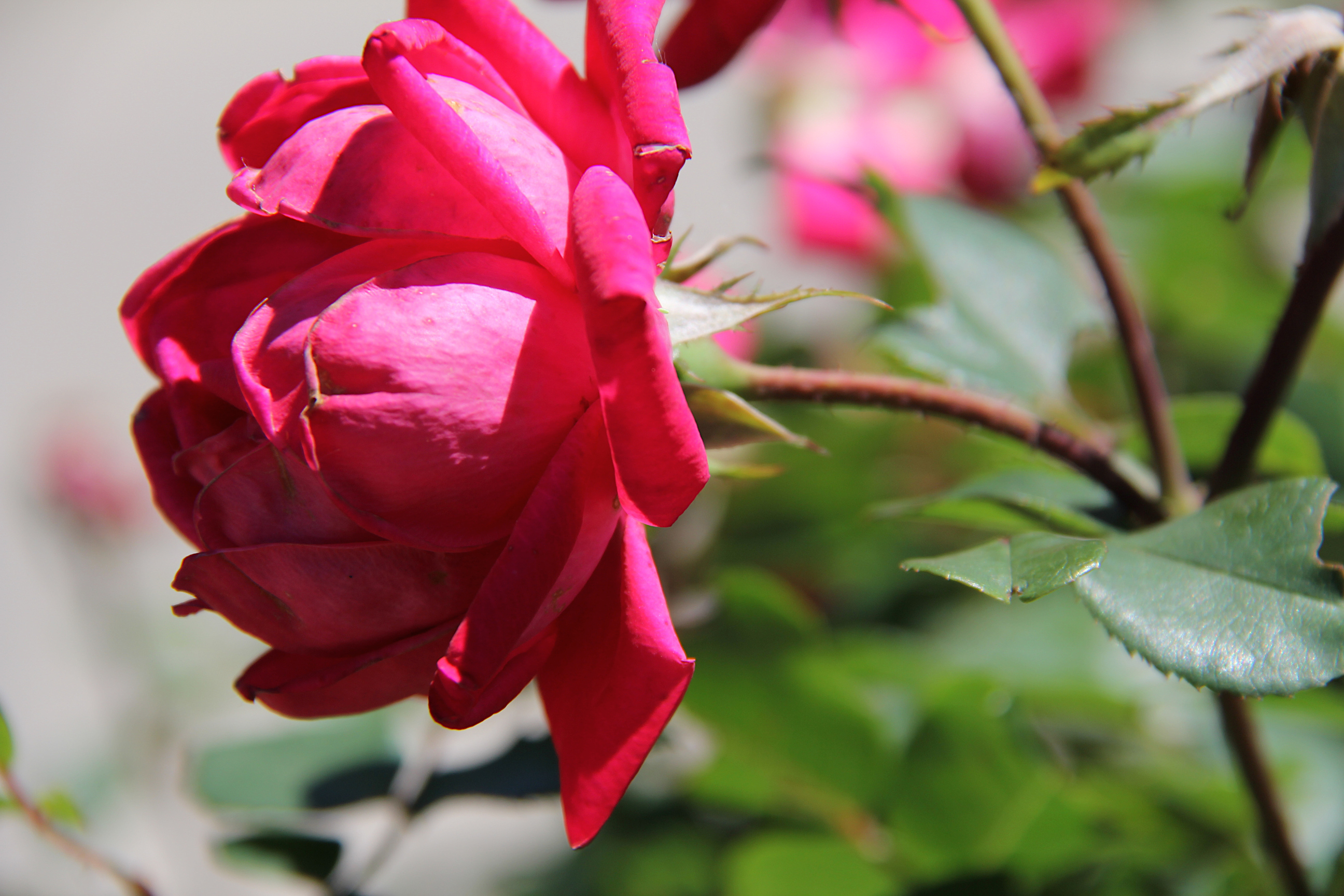
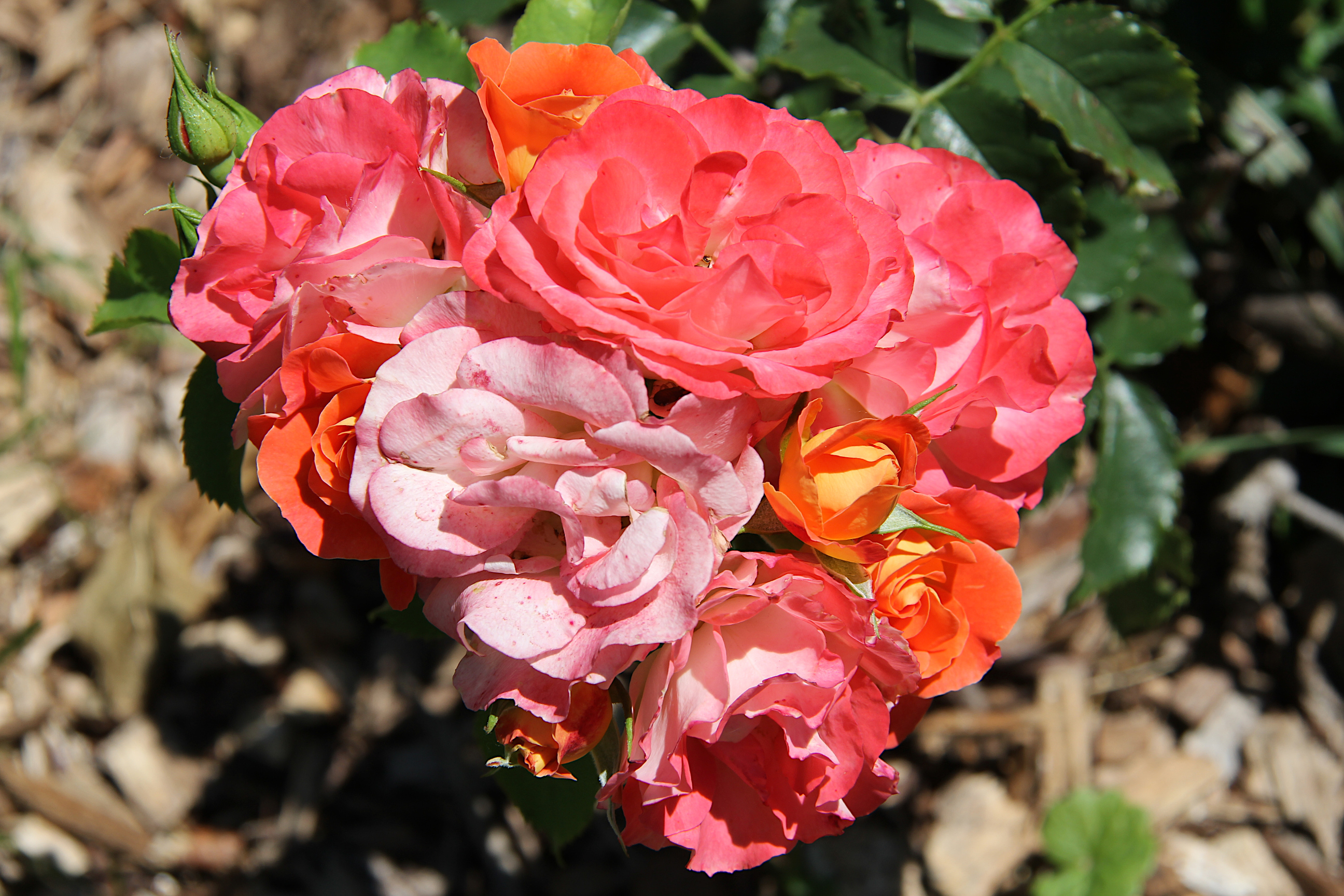
So many beautiful roses in assorted hues. (Minnesota Prairie Roots copyrighted photo June 2024)
Whether growing individually or in clusters, these tree roses are glorious. (Minnesota Prairie Roots copyrighted photo June 2024)
Traffic whizzes by on both sides as you smell/view the roses. (Minnesota Prairie Roots copyrighted photo June 2024)

Recently, I stopped to smell the roses. Literally. I dipped my nose into the perfume-scented flowers, delighting in their fragrance as semi trucks and other motor vehicles blew by me only feet away. Smelling the roses here requires caution. I’ve often wished Kenyon had a public rose garden, allowing for rose viewing, and smelling, in a peaceful setting.
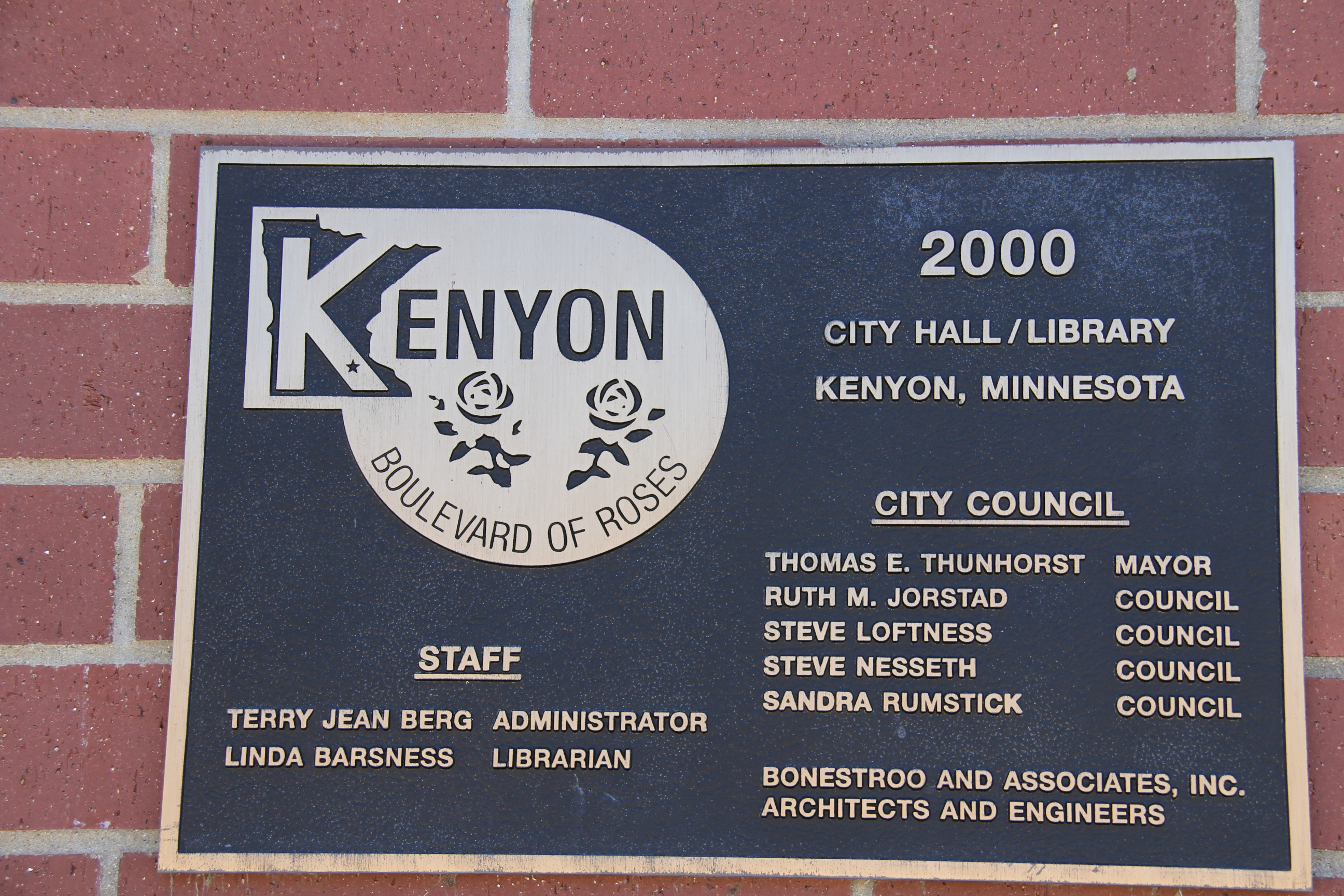
Even a plaque on Kenyon’s city building has the rose brand. (Minnesota Prairie Roots copyrighted photo June 2024)

But that the city has this, this Boulevard of Roses, is a gift. Back in 1962, city employee Lloyd Jystad asked to plant 10 tree roses to spruce up the boulevard. Permission granted. He cared for the rose bushes, which require burying in the ground before winter and then uncovering in the spring. From that initial request, the rose idea grew to include some 100 bushes, which are still cared for by city employees today. The Boulevard of Roses was dedicated in June 1968. That’s a long time of growing and tending roses.
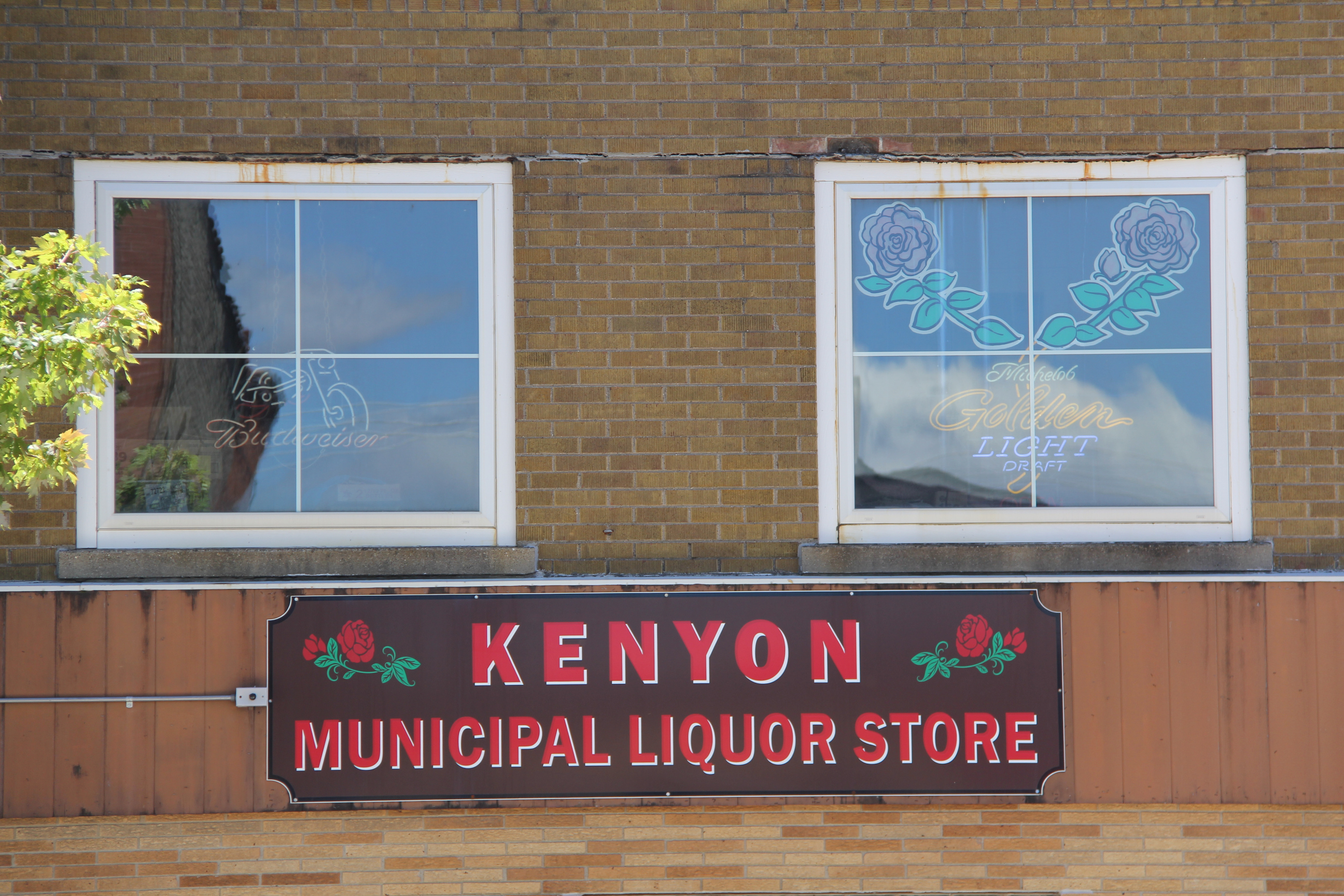
Rose branding on the city liquor store. (Minnesota Prairie Roots copyrighted photo June 2024)

Throughout Kenyon, roses bloom. In many ways, it’s remarkable for a community this small to have such a strong identifier. But I saw roses everywhere during a recent visit, far beyond the real ones that bloom along the highway. The red rose symbol graces many a sign in Kenyon.
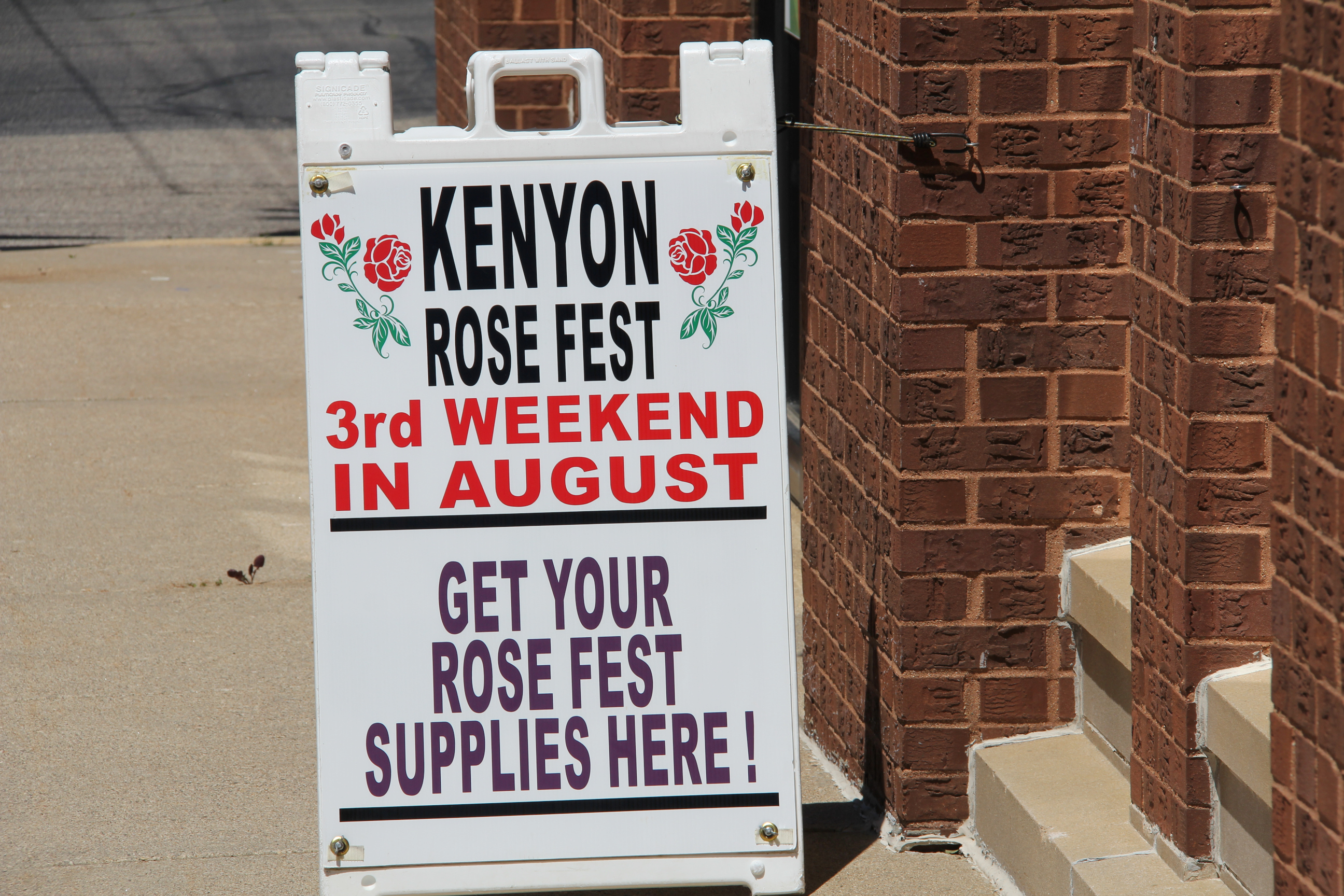
A sandwich board sits outside a small business well in advance of Rose Fest. (Minnesota Prairie Roots copyrighted photo June 2024)
Business branding on a shop door. (Minnesota Prairie Roots copyrighted photo June 2024)
Promoting the upcoming Rose Fest car and truck show in a storefront window. (Minnesota Prairie Roots copyrighted photo June 2024)

The city also celebrates roses in August with the Kenyon Rose Fest, this year August 14-18. It’s your typical small town summer celebration with fest royalty, a parade, a car and truck show, vendor and craft market, great food, and more. Mostly, Rose Fest is about connecting people and community. It brings folks together to celebrate small town life.
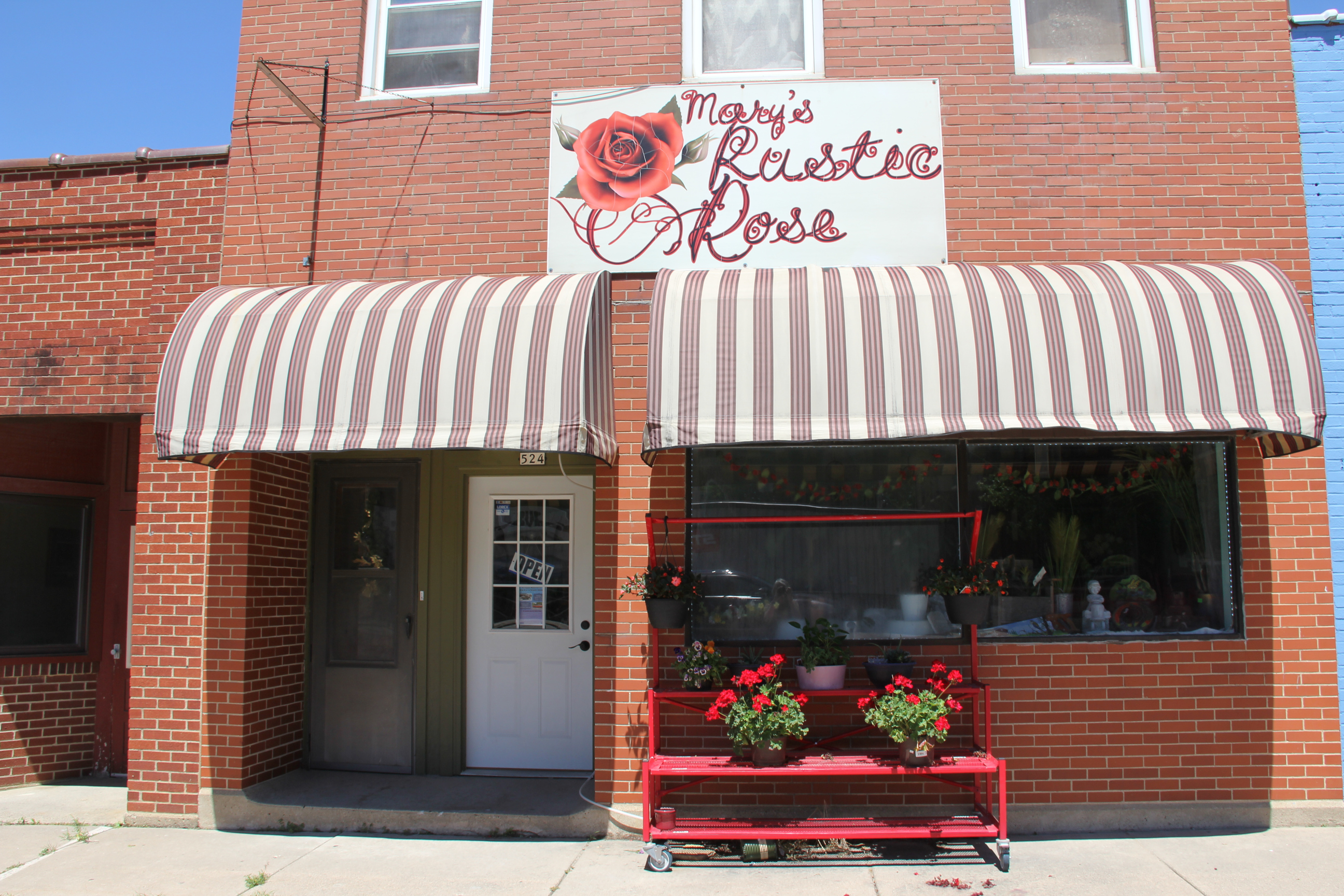
A fitting name for a floral shop in Kenyon. (Minnesota Prairie Roots copyrighted photo June 2024)

I often wonder if motorists, as they drive through Kenyon in their hurry from Point A to Point B, even notice the beauty they’re passing by in the Boulevard of Roses. I’m here to say it’s worth your time to stop, exit your vehicle and smell the roses. Life is much sweeter when we slow down and appreciate the nuances of small towns like Kenyon with its Boulevard of Roses.

© Copyright 2024 Audrey Kletscher Helbling


Walnut Grove mural bridges cultures July 18, 2013

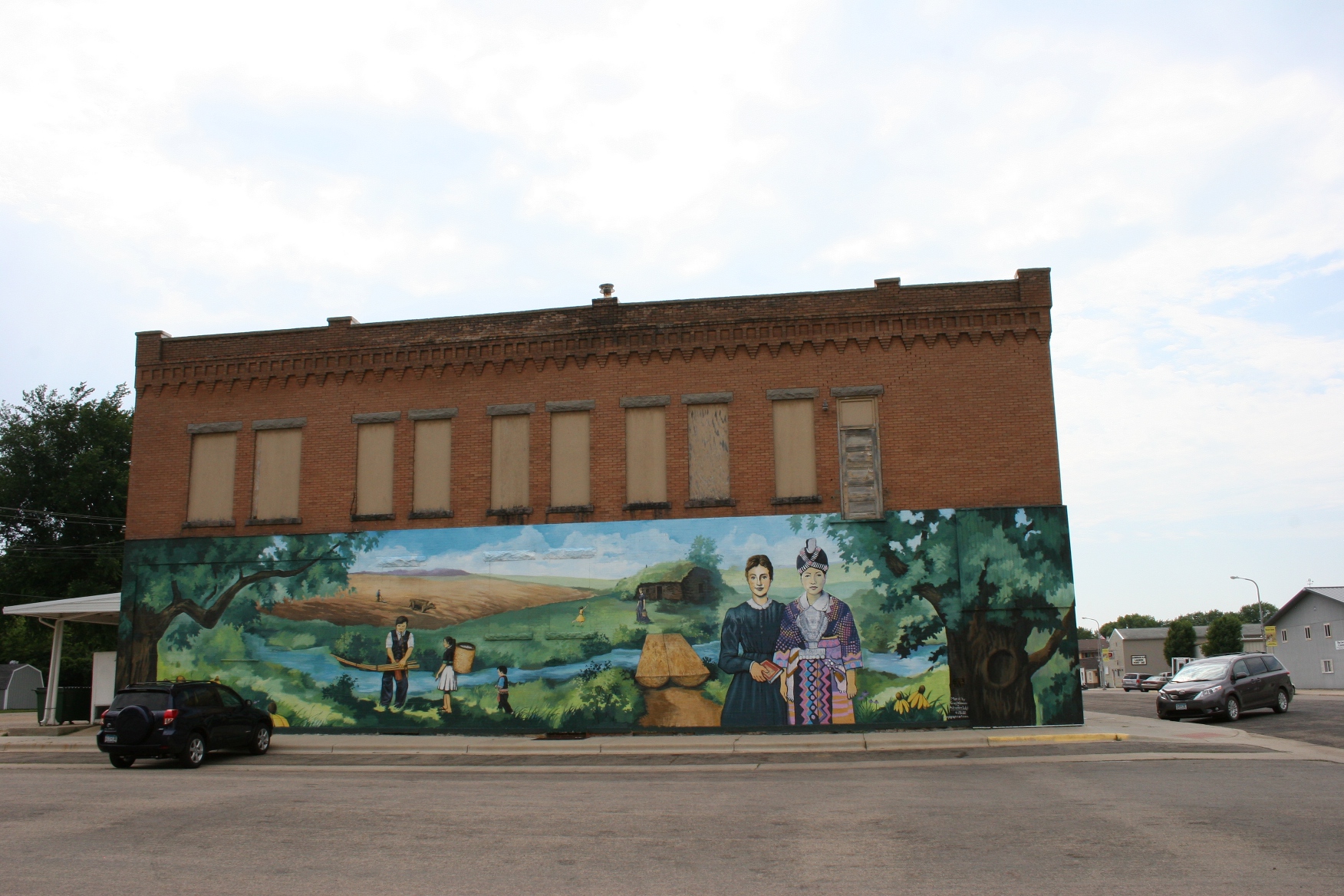
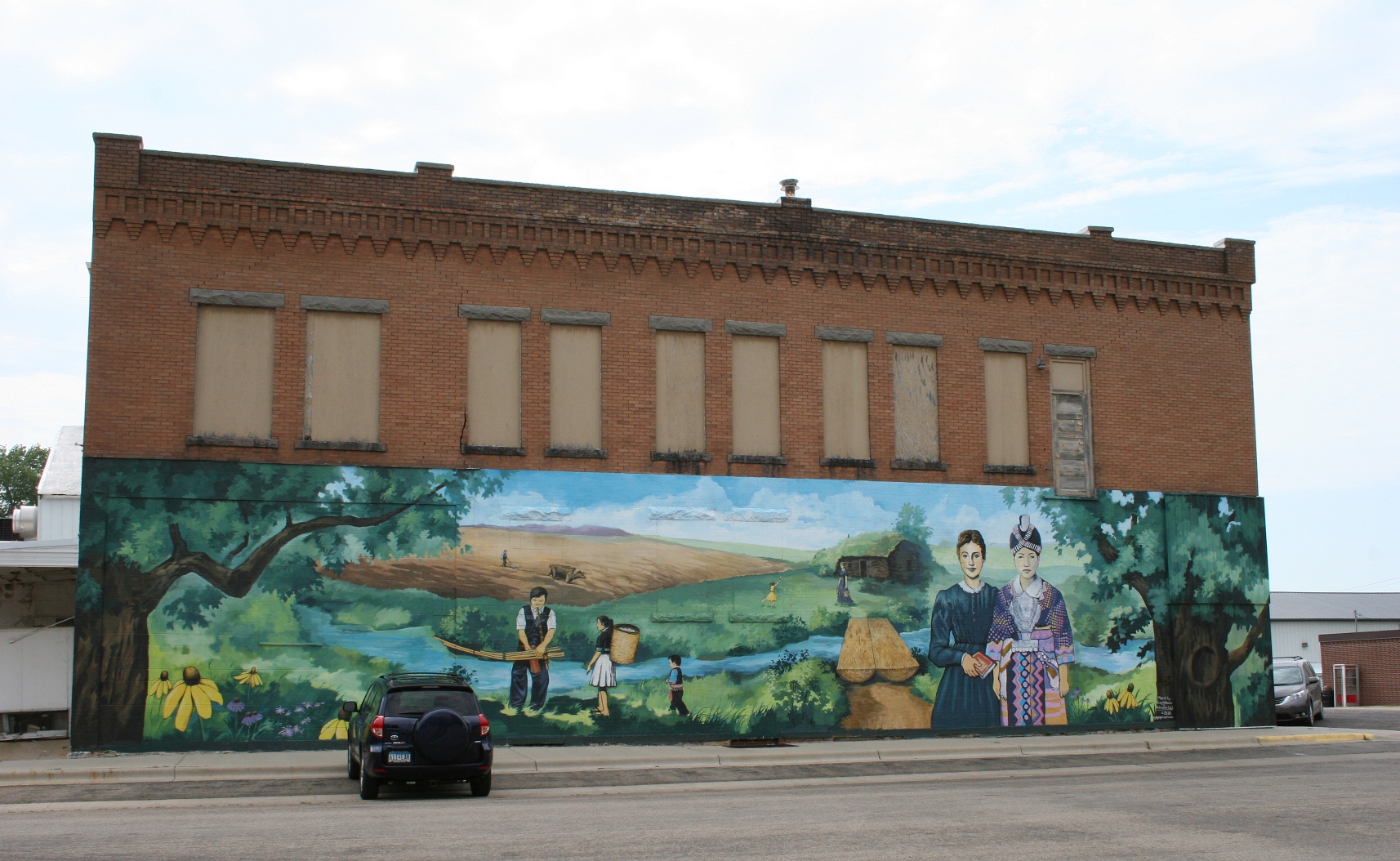
Rochester artist Greg Wimmer was commissioned to paint this mural last summer in downtown Walnut Grove.

Rochester artist Greg Wimmer was commissioned to paint this mural last summer in downtown Walnut Grove.

MY NEPHEW, ADAM KLETSCHER, who lives and teaches in Walnut Grove, told me to check out the new mural downtown when I recently visited this southwestern Minnesota community. So, after leaving the Family Festival during the town’s annual celebration of Laura Ingalls Wilder’s Little House books, I stopped to photograph the 20-foot by 78-foot painting on the east side of Bubai Foods along Main Street.

Being a bit rushed, I failed to photograph the front of the building housing a combination Asian and American food market. And I didn’t have time to go inside and ask questions.

Later I connected with Terry Yang, who moved to Walnut Grove in 2001 from St. Paul, opened the Asian portion of Bubai Foods in 2003 and purchased the American foods side in 2005.

Yang is among the estimated 30 percent of Walnut Grove’s 870 residents of Hmong ethnicity. The Hmong first came to this rural area in 2000, Yang says, to settle in a quiet small town with affordable housing (“We don’t have to lock our houses or cars here,” he says) in a landscape similar to their native Laos.

Walnut Grove is now home to retired Hmong and to young people employed mostly at factories in nearby Marshall, Wabasso and Worthington.

The mural in progress. Photo courtesy of Greg Wimmer.

The mural in progress. Photo courtesy of Greg Wimmer.

It is that infusion of Laotian immigrants that figured in to the design of the community-supported mural painted last summer by Greg Wimmer of Rochester based Wimmer Illustration and Design with assistance from Adrienne Lobl. Mural sponsors included individuals, local businesses and the Laura Ingalls Wilder Museum.

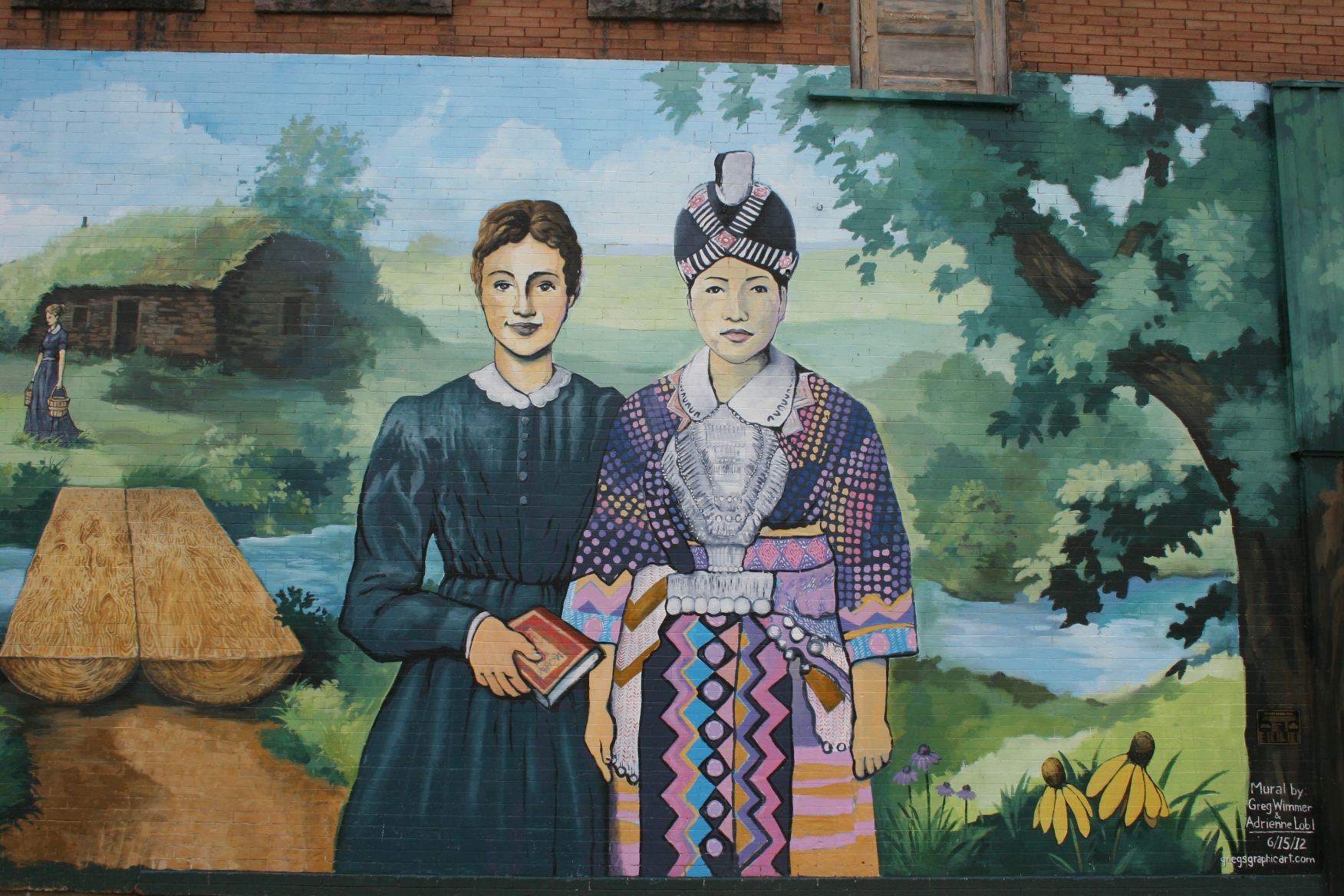
This snippet of the mural shows Laura Ingalls Wilder as a teacher next to a Hmong woman. To the left is the log bridge spanning Plum Creek, where the Ingalls family lived in a dug out.

This snippet of the mural shows Laura Ingalls Wilder as a teacher standing next to a Hmong woman. To the left is the log bridge spanning Plum Creek, where the Ingalls family lived in a sod house.

The painting, Yang says, shows the similarities between Laos and Walnut Grove and also melds the new Hmong culture and the pioneer history of this Minnesota community. For example, Laura Ingalls and a Hmong woman stand side by side, one in a simple lace-collared prairie dress, the other in intricate and colorful traditional celebratory Hmong attire reserved for special occasions like weddings and New Year’s celebrations.

Wimmer worked with the Hmong community, integrating many of their suggestions in to the design. A log bridge spanning Plum Creek, part of an original Ingalls family mural here which had faded and was in need of repair, was incorporated in to the new work and represents the bridging of two cultures, according to the artist.

“My personal opinion is that it (the mural) makes a statement about the changes in the community without saying a word,” Wimmer says.

In the foreground a Hmong man plays a bamboo flute near a rice field as his daughter carries a basket. In the background, a pioneer  busts sod with a an ox and a plow.

In the foreground, left, a Hmong man plays a bamboo flute near a rice field as his daughter carries a basket. In the background, a pioneer busts sod with an ox and a plow.

Yang also references the connections between the two cultures via two farming scenes—of a pioneer man plowing a Minnesota field with an ox, similar to the water buffalo that work the land in Laos, and of a Hmong family near a rice field and shown with a basket for carrying harvested crops from farm to village.

Native prairie plants, like black-eyed Susan and coneflowers, are part of the painting.

Native prairie plants, like black-eyed Susan and coneflowers, are part of the painting.

One of the draws to Walnut Grove, Yang says, is the land available for Hmong to plant gardens. Laotian natives, like native Walnut Grove area residents, are connected to the land.

Yang has always felt welcome in southwestern Minnesota and appreciates the mural showcasing the changes in his community, which now includes, he says, “so many races.”

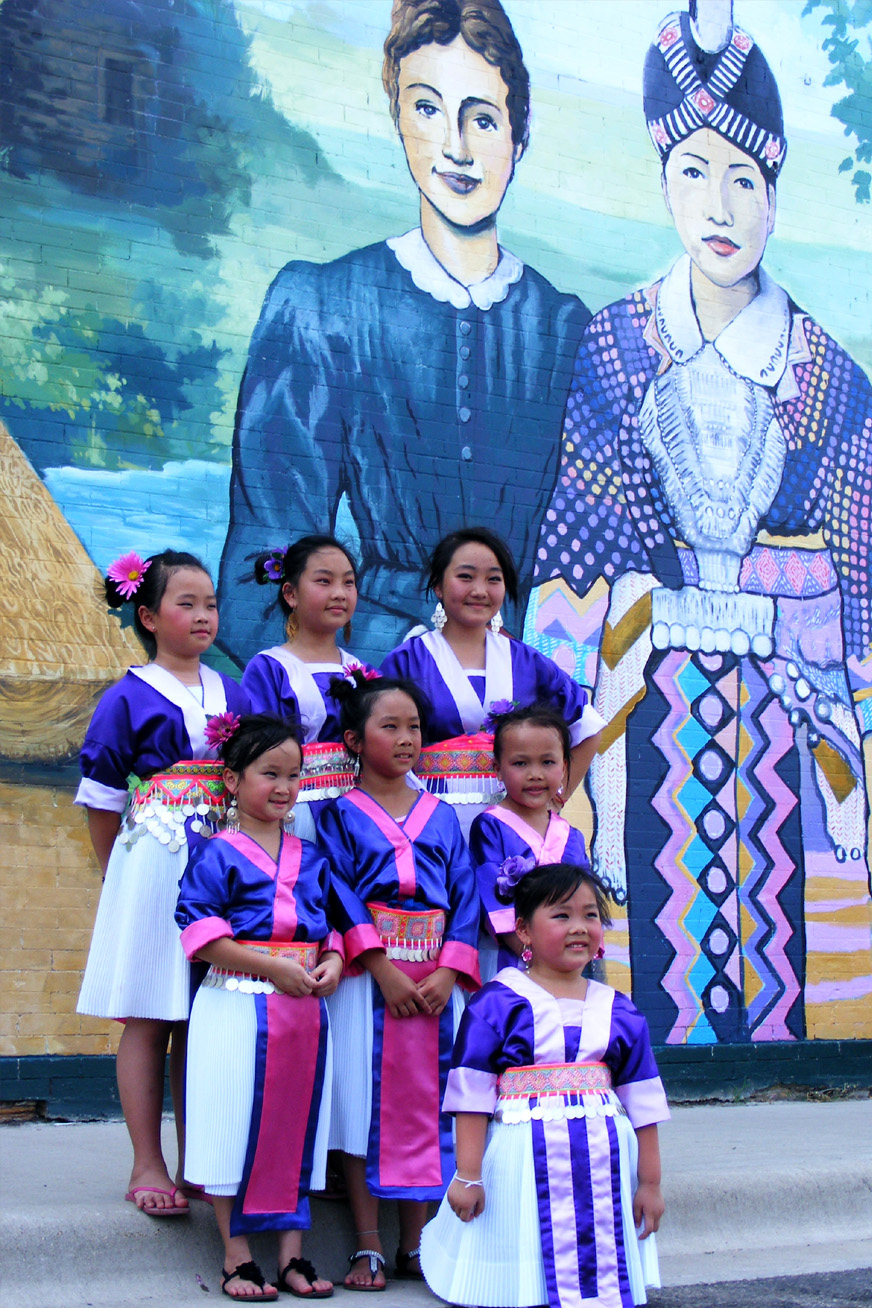
Girls in traditional Hmong dress attended the mural dedication last year.

Girls in traditional Hmong dress attended the mural dedication last year. Photo courtesy of Greg Wimmer.

FYI: Hmong dancers will be among entertainers at the Family Festival from 11 a.m. – 6 p.m. this Saturday, July 20, at the Walnut Grove City Park as part of the festivities celebrating the Little House books by Laura Ingalls Wilder. Click here to see the festival schedule.

And click here for more information about other events at the annual celebration.

BONUS PHOTOS:

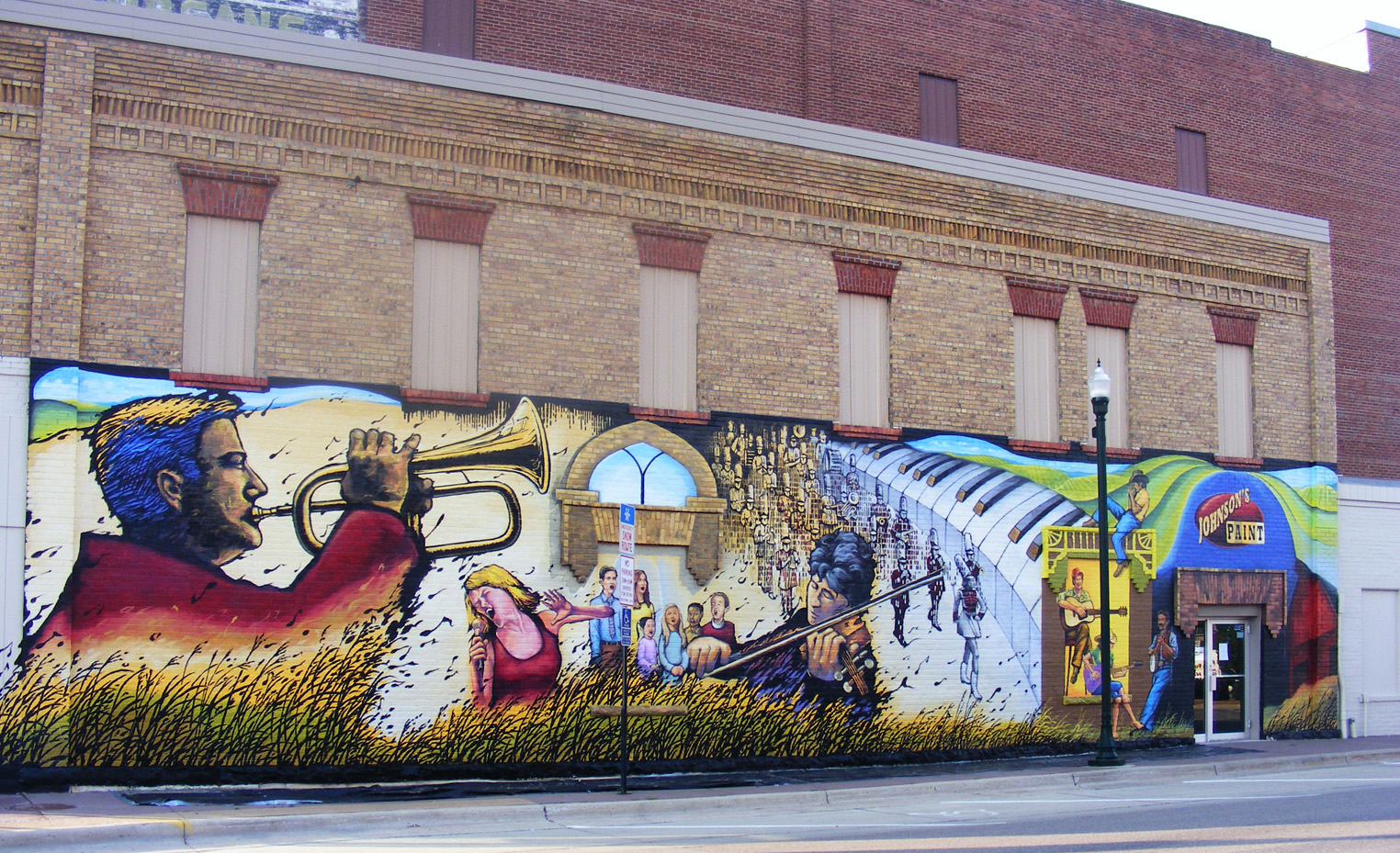
Greg Wimmer painted this mural in nearby Marshall. Photo courtesy of Greg Wimmer.

Greg Wimmer painted this mural in nearby Marshall. Photo courtesy of Greg Wimmer.

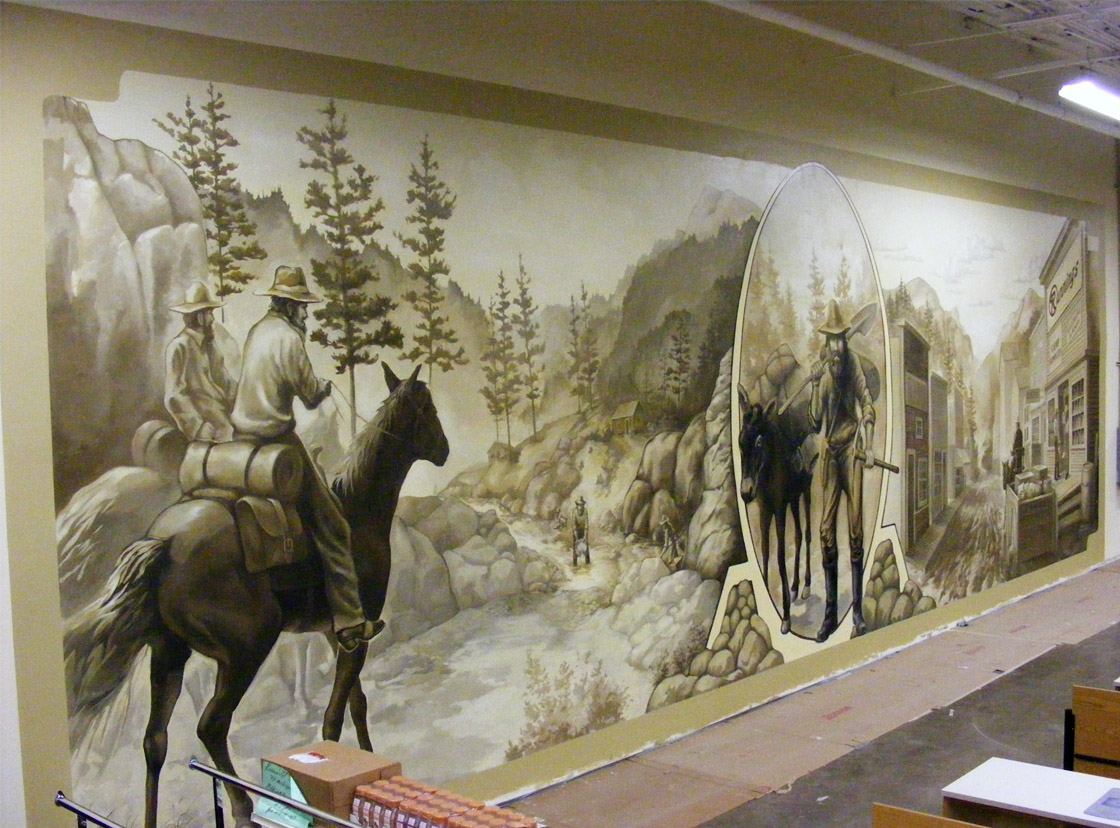
And Wimmer painted this mural in Rapid City, South Dakota. Photo courtesy of Greg Wimmer.

And Wimmer painted this mural in Rapid City, South Dakota. Photo courtesy of Greg Wimmer.

© Copyright 2013 Audrey Kletscher Helbling