
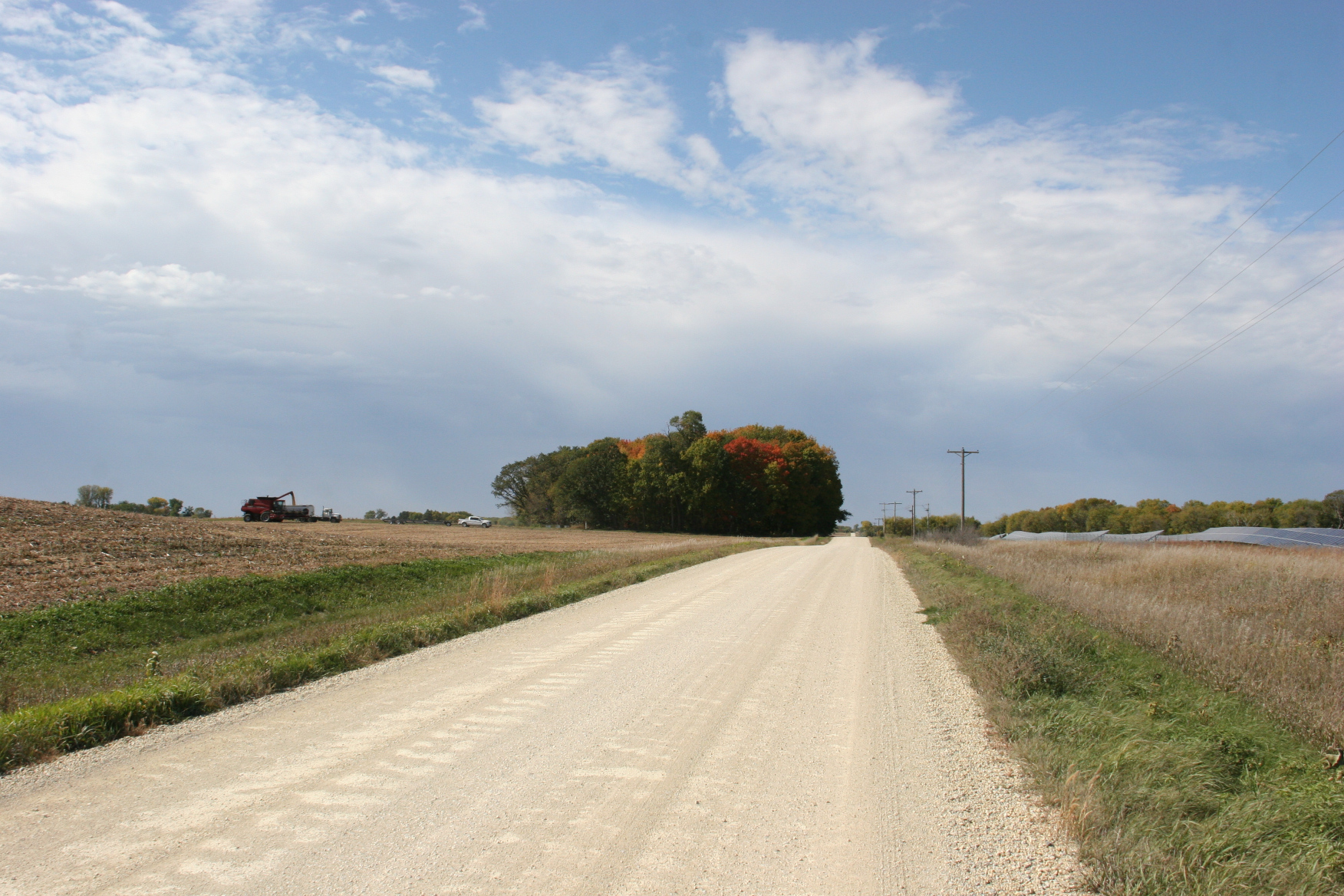
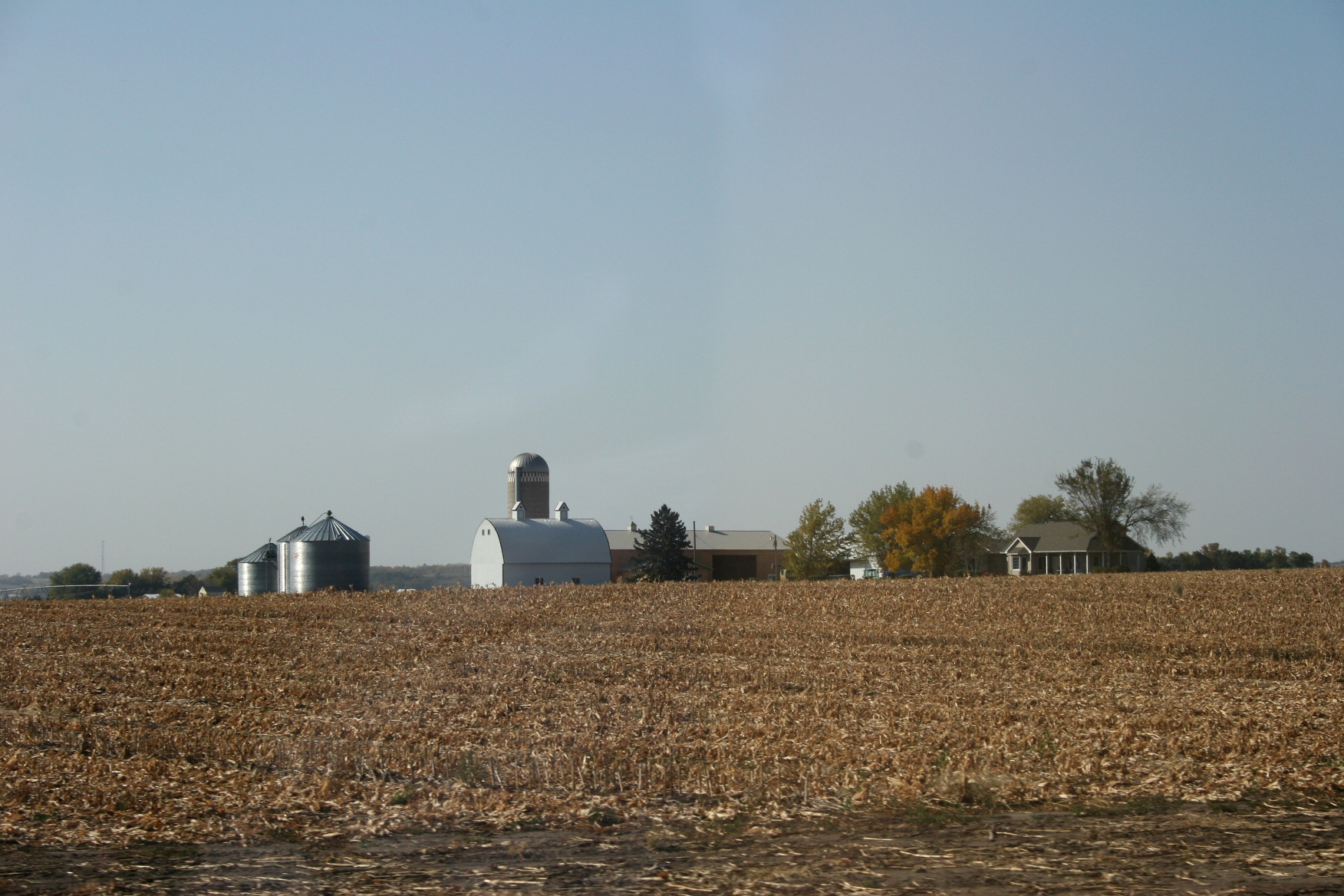
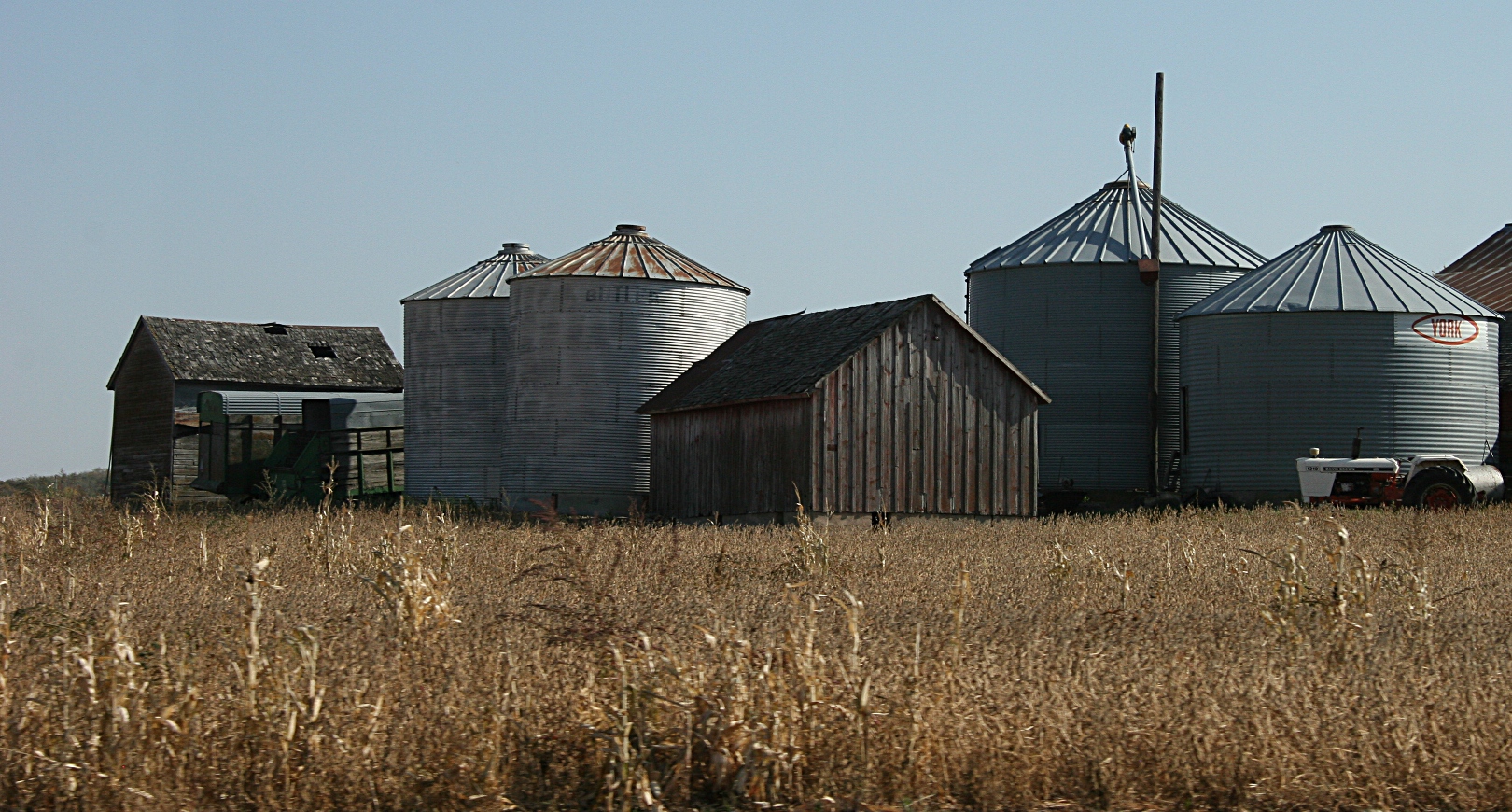
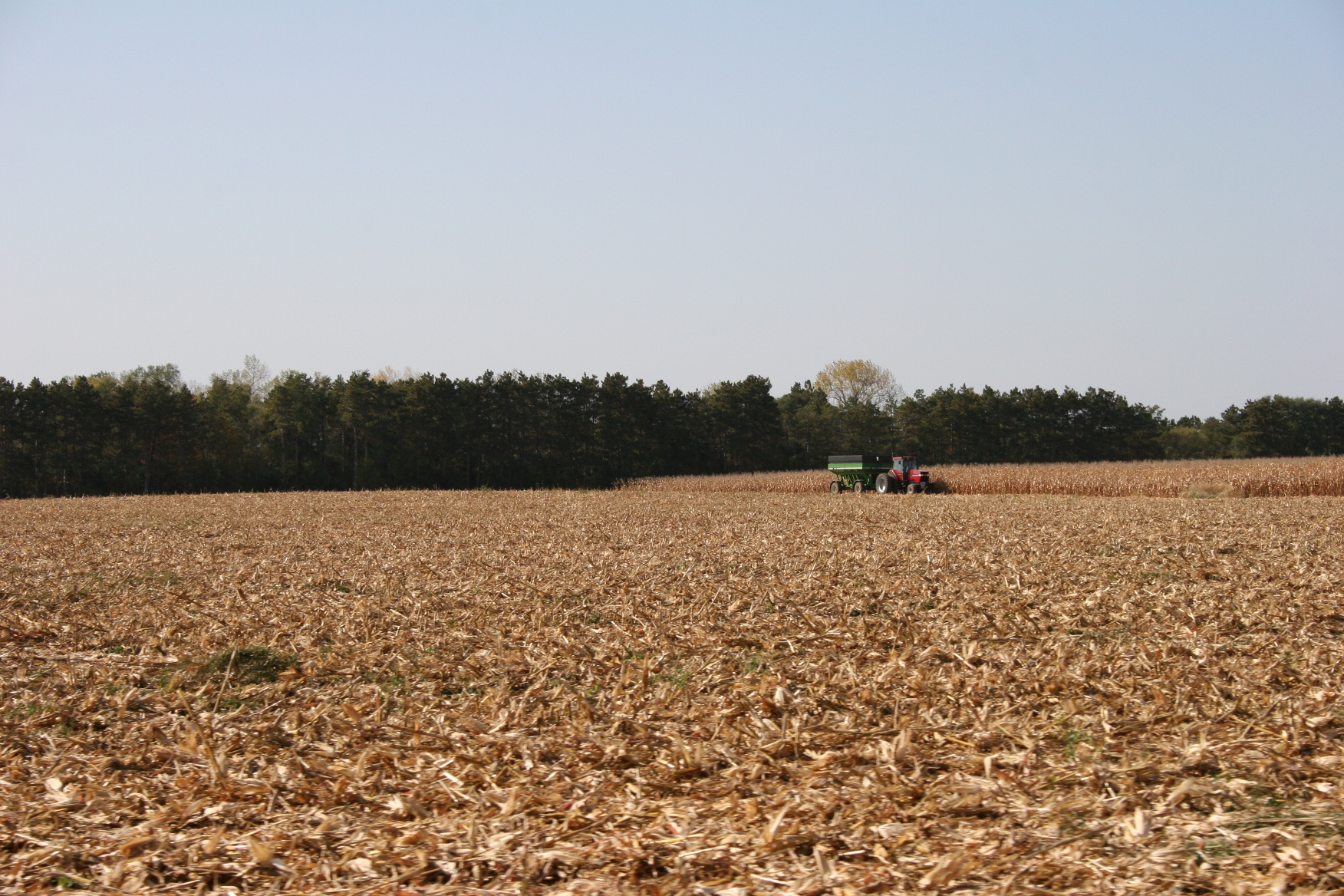
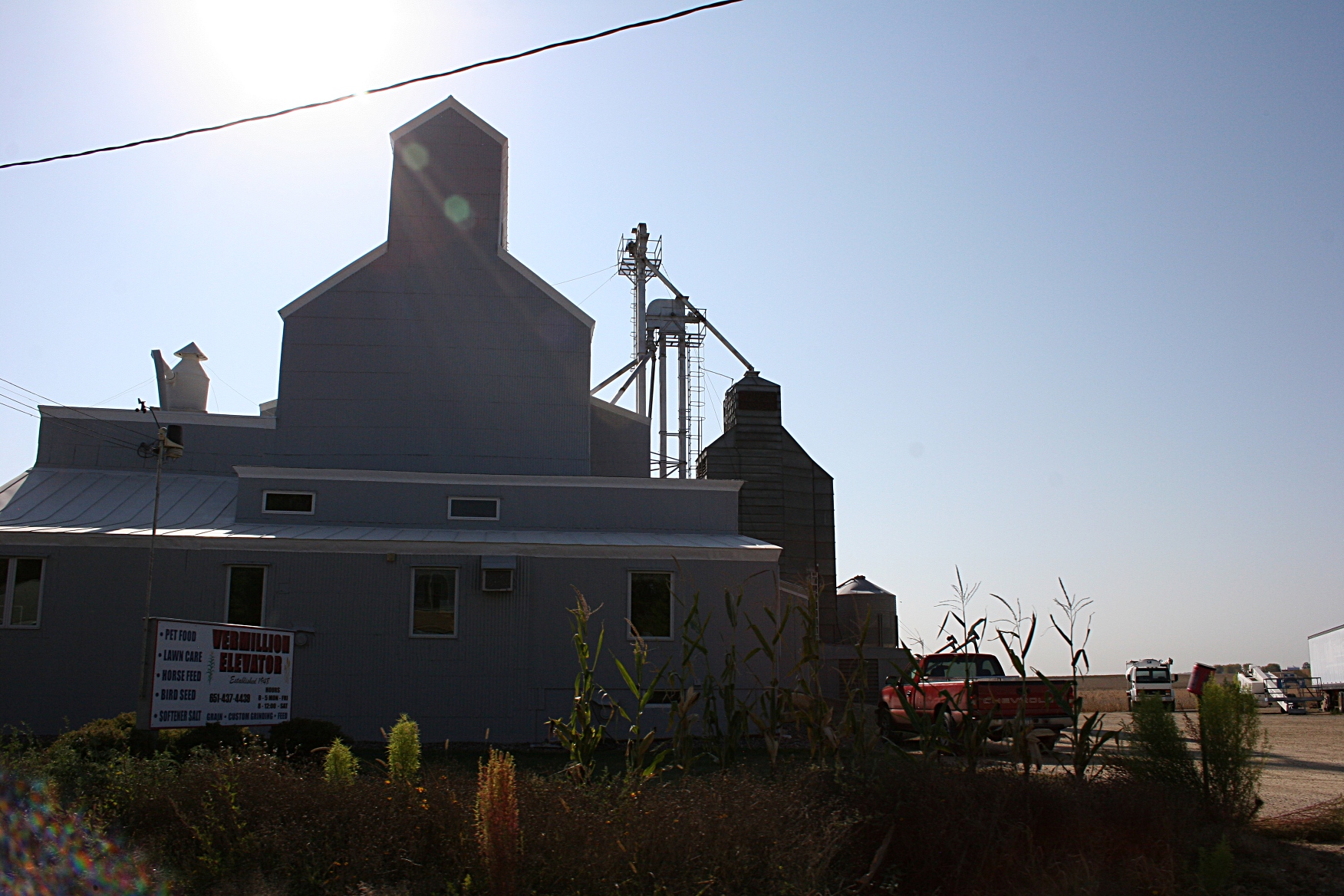
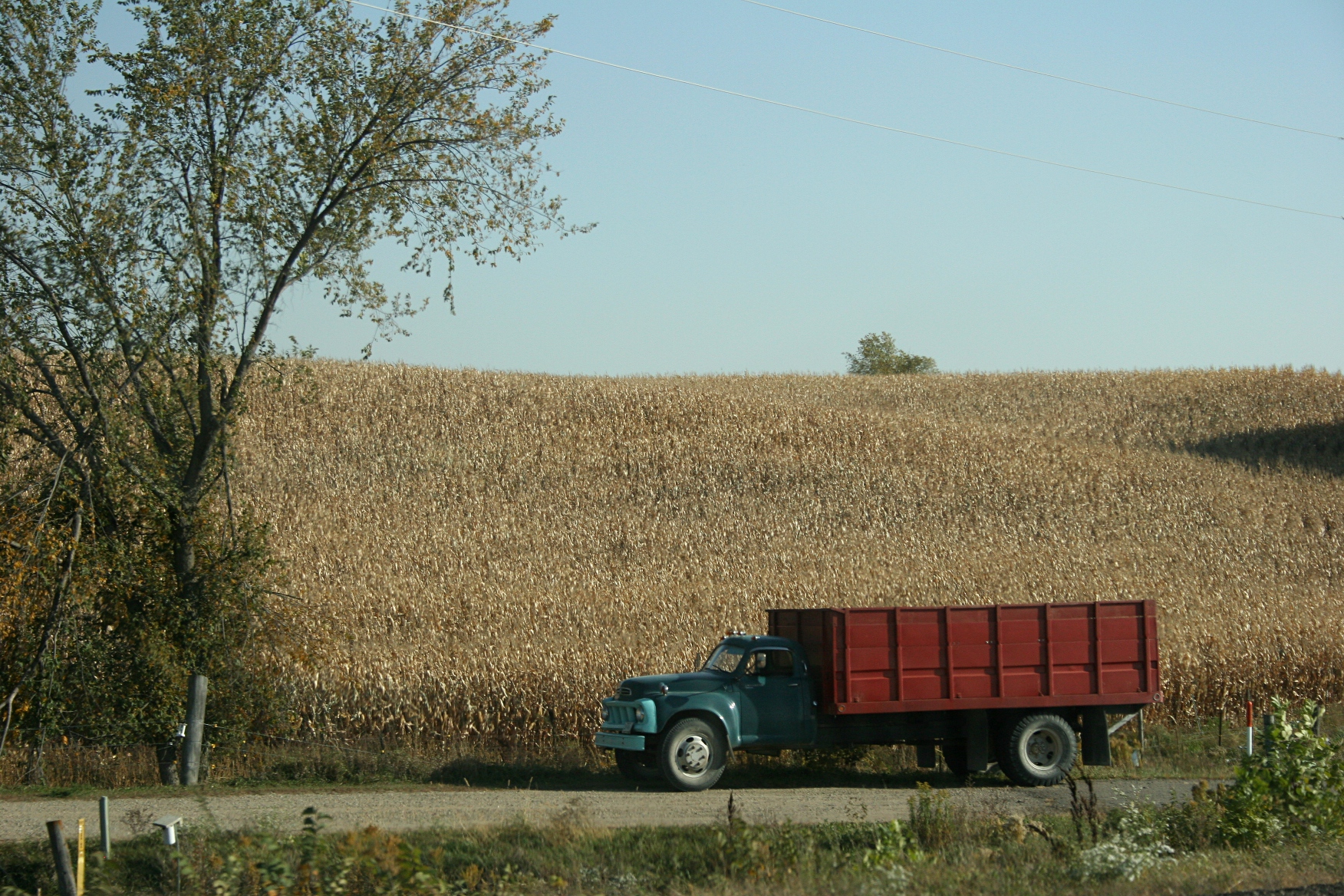
DUST HANGS OVER THE LANDSCAPE like smoke. Hazy. The air dirty with debris kicked up by combines sweeping across corn and soybean fields in southern Minnesota. Harvest is well underway here as farmers bring in the season’s crops.
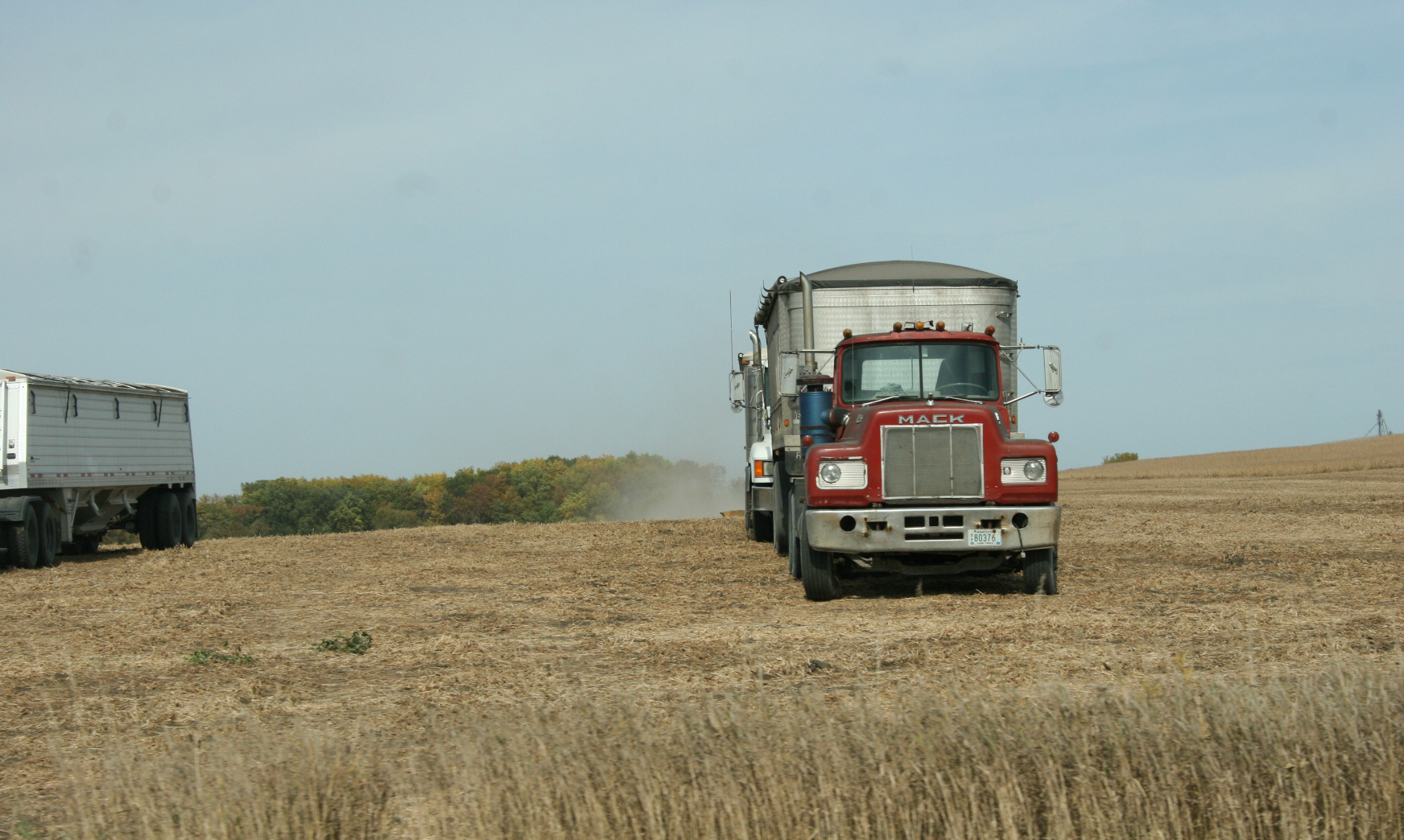
From back country gravel roads to the interstate, I’ve witnessed this scene unfolding before me in recent weeks. Combines chomping. Harvested corn and beans spilling into grain trucks.
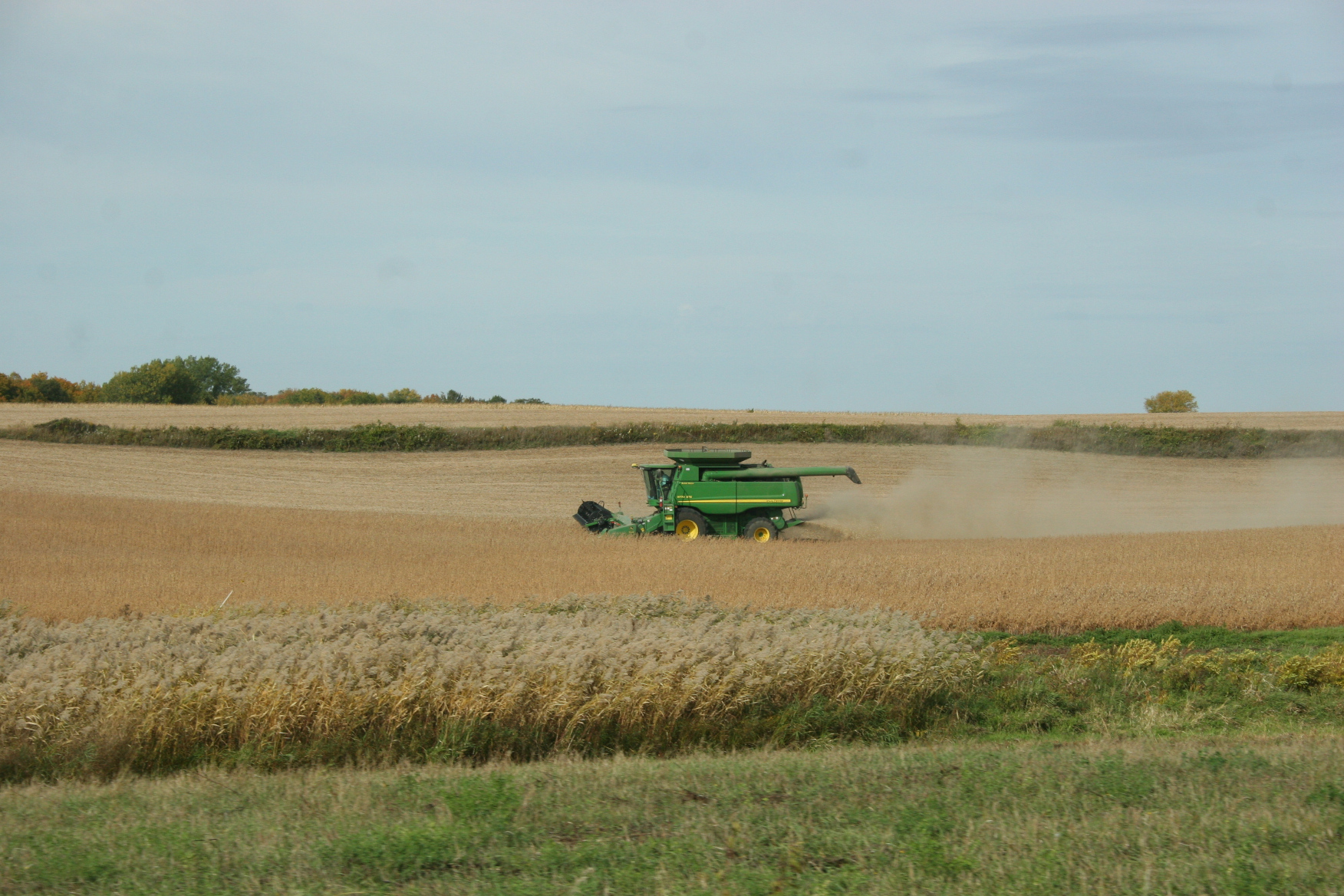
Farmers work all hours of the day and night in the rush to finish gathering crops before winter arrives. In the dark of night, bright headlights spotlight fields. In daylight, sunlight filters through clouds of dust.
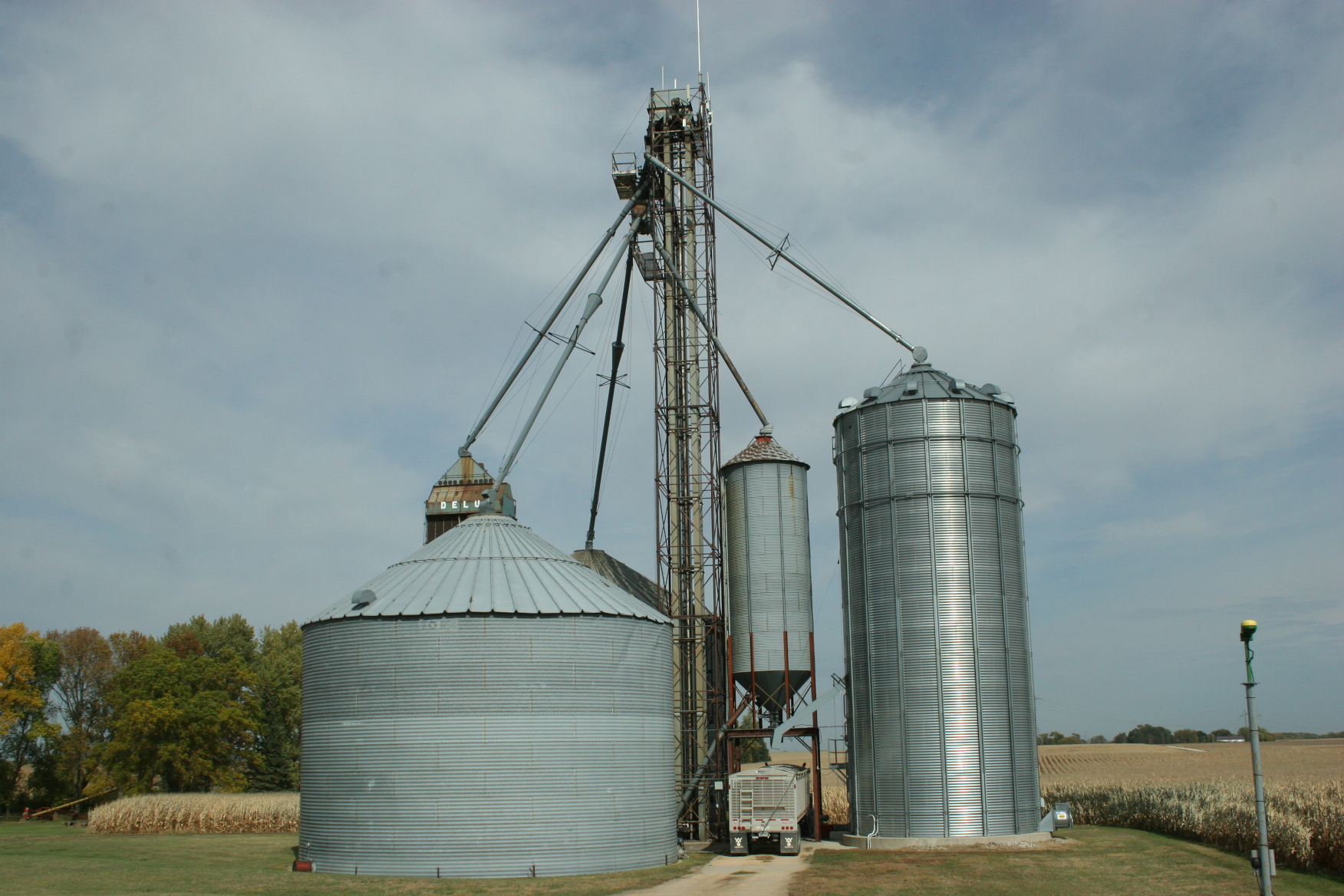
Harvest is part of my DNA by having been raised on a southwestern Minnesota crop and dairy farm. Decades removed from the land, I still take notice of the harvest. The smell. The hues. The hurry. I understand this season in rural Minnesota.
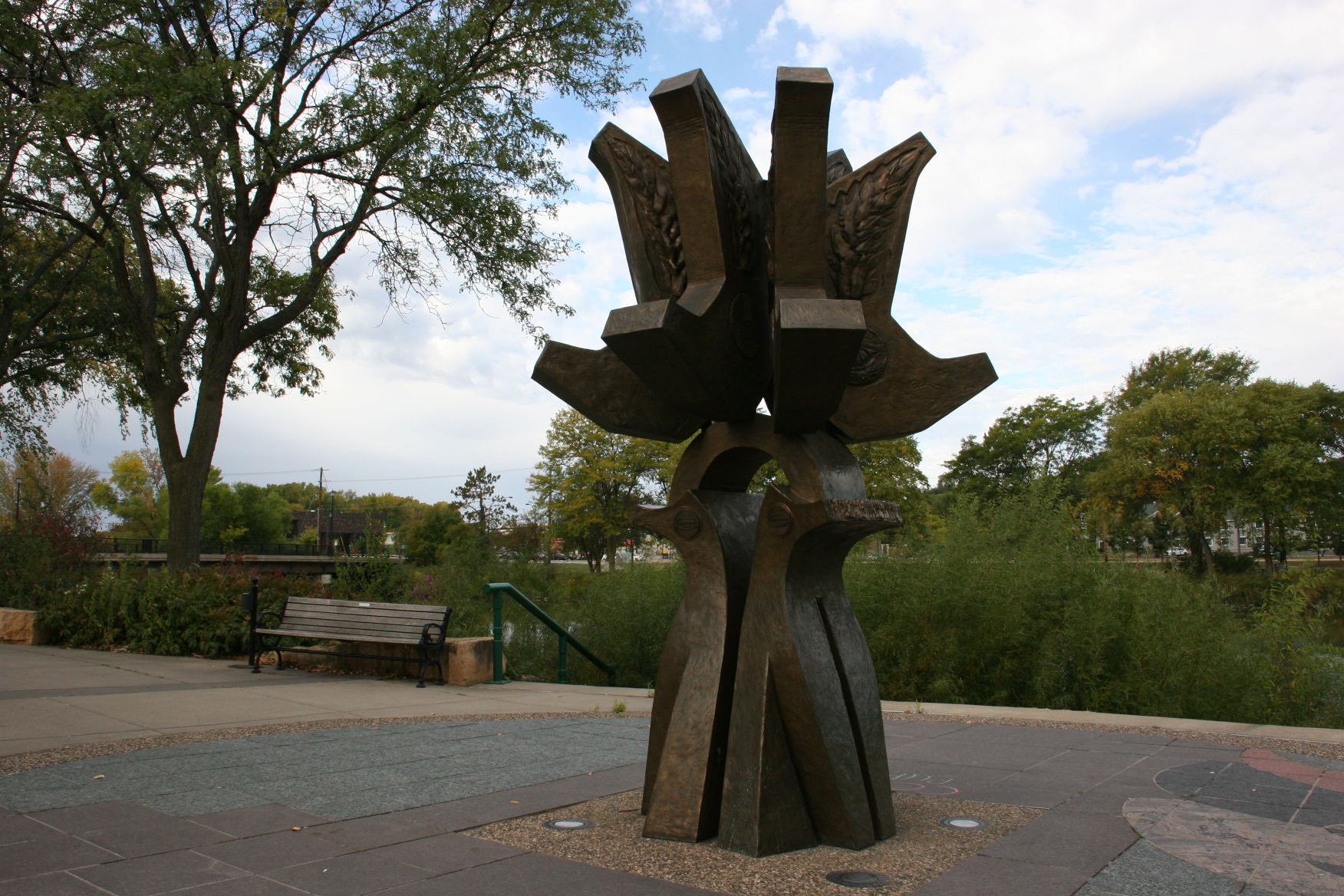
In nearby Northfield, I recently happened upon a bronze sculpture, “Harvest,” which had gone unnoticed by me. It’s been there since 2008 at Sesquicentennial Legacy Plaza along the Cannon River, near the post office, near Bridge Square. In all my visits to Northfield, to the Riverwalk area, I missed this public art created by Raymond Jacobson.
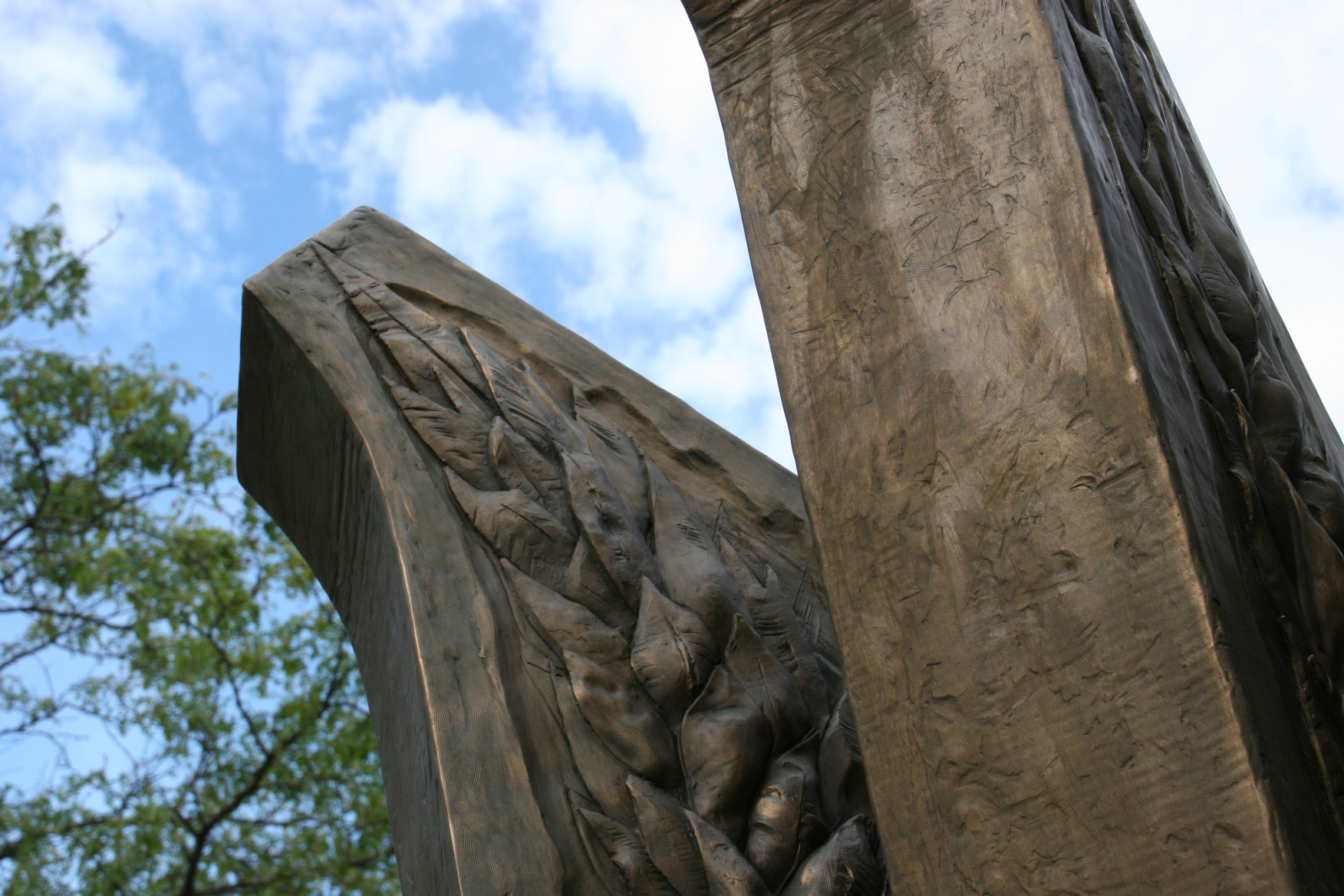
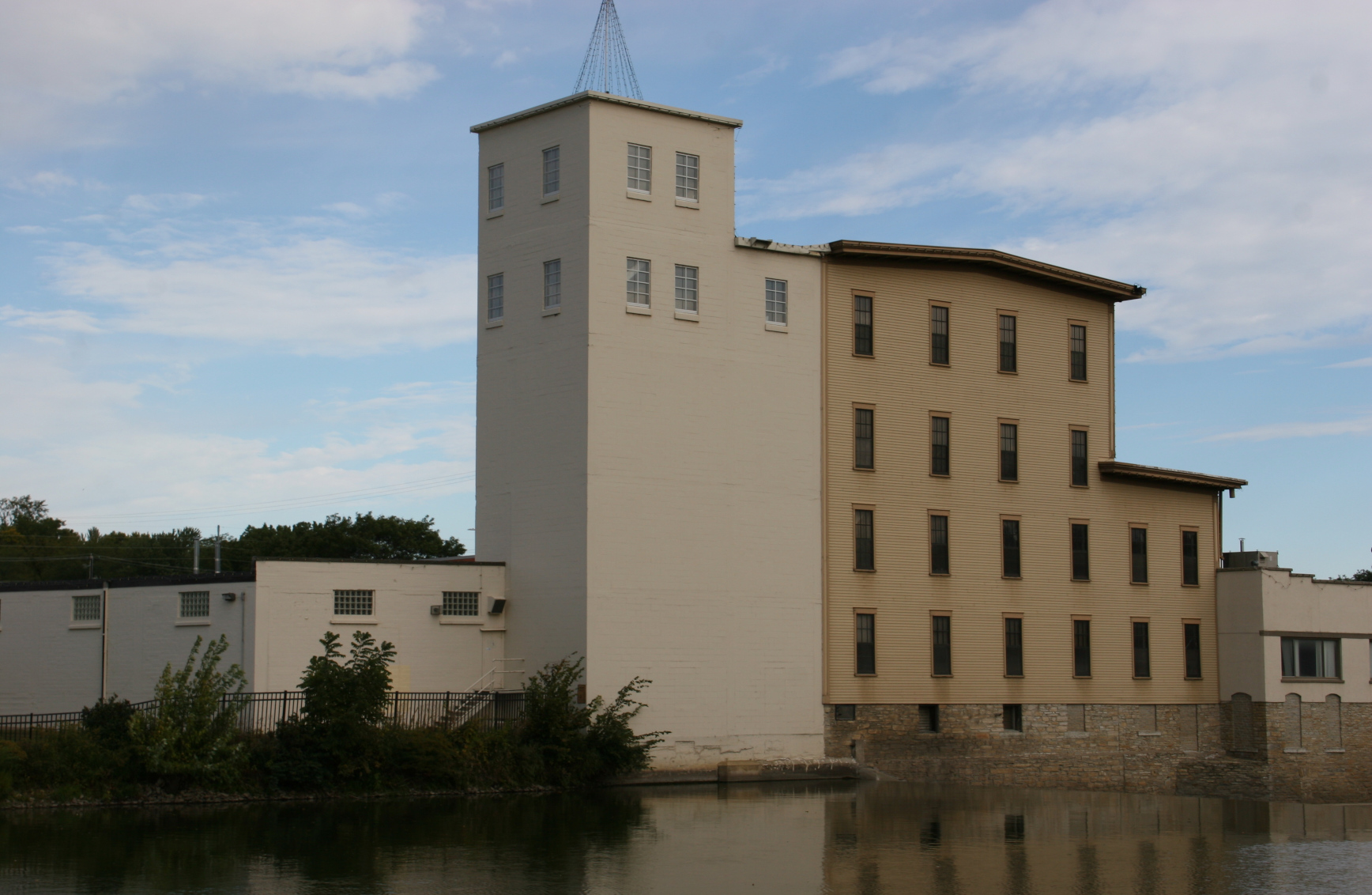
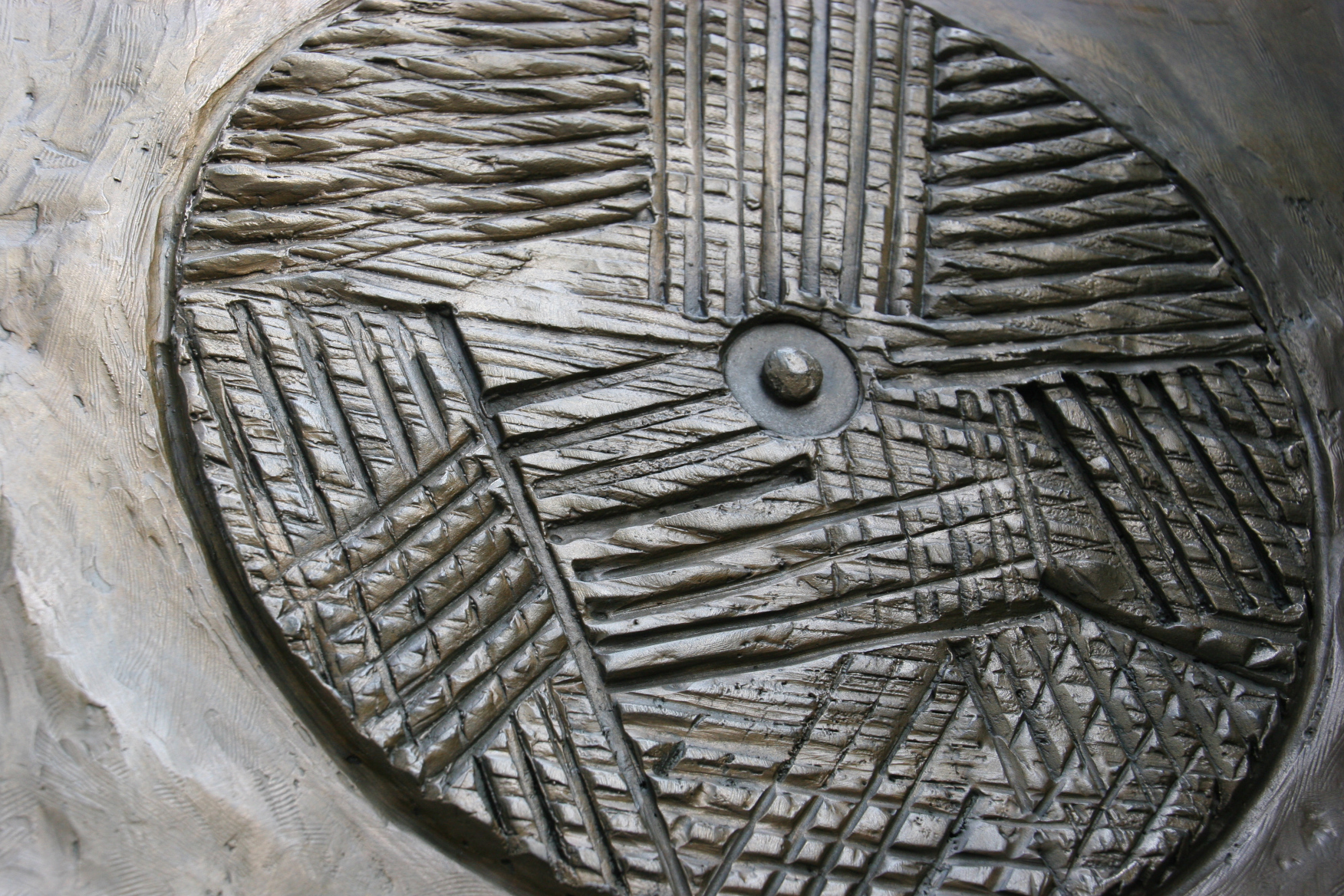
It’s beautiful, fitting for a community rooted in agriculture. The 3,000-pound sculpture symbolizes Northfield’s heritage of wheat farming and milling. Just across the river sits the Ames Mill, where the gristmill in the late 1860s produced 150 barrels of wheat daily.
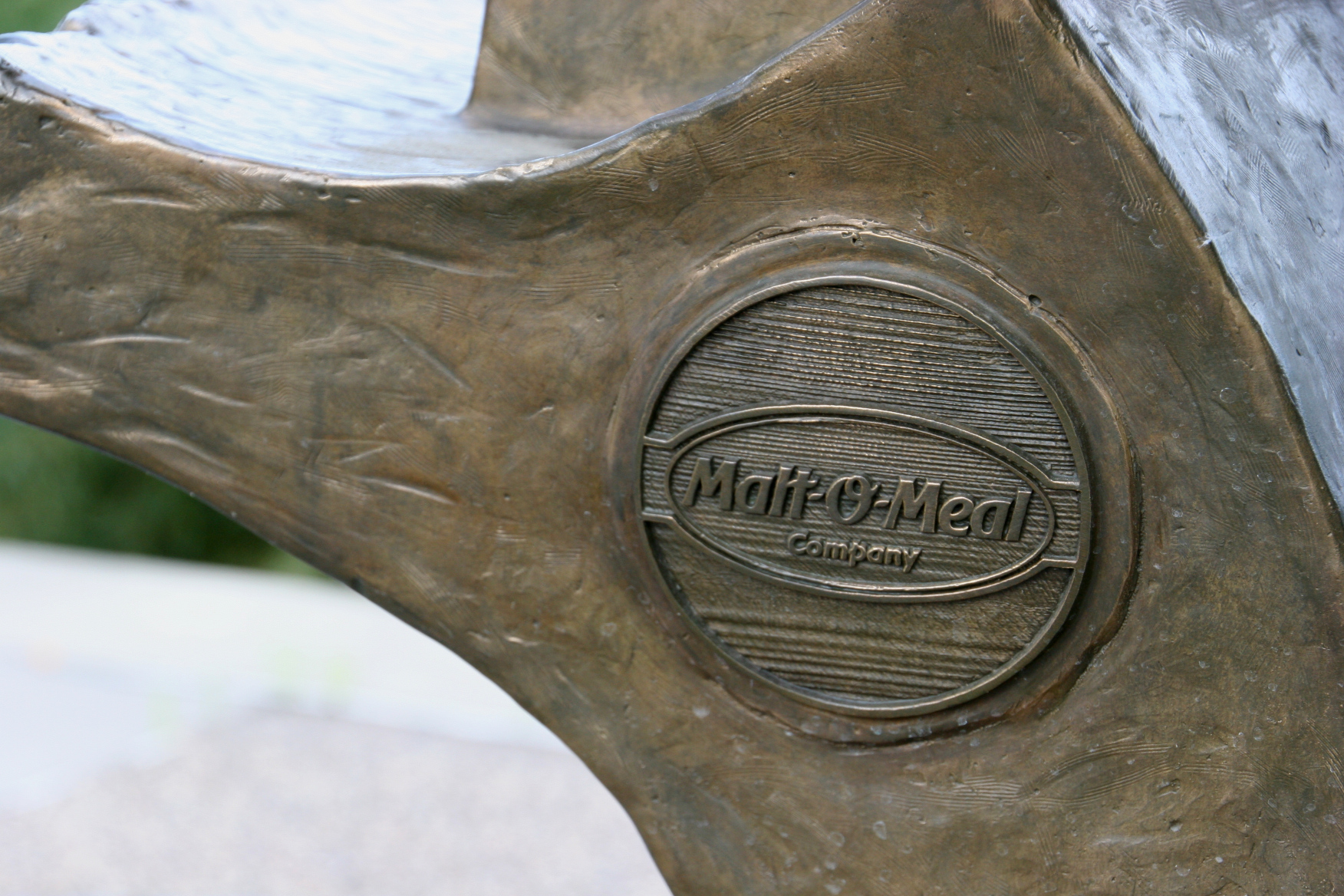
In 1927, John Campbell of the Campbell Cereal Company took over the mill and began producing Malt-O-Meal hot cereal. Today Post Consumer Brands owns the mill and still makes that hot cereal. Dry cereal is manufactured at a nearby production facility. Many days the scent of cereal wafts over Northfield.
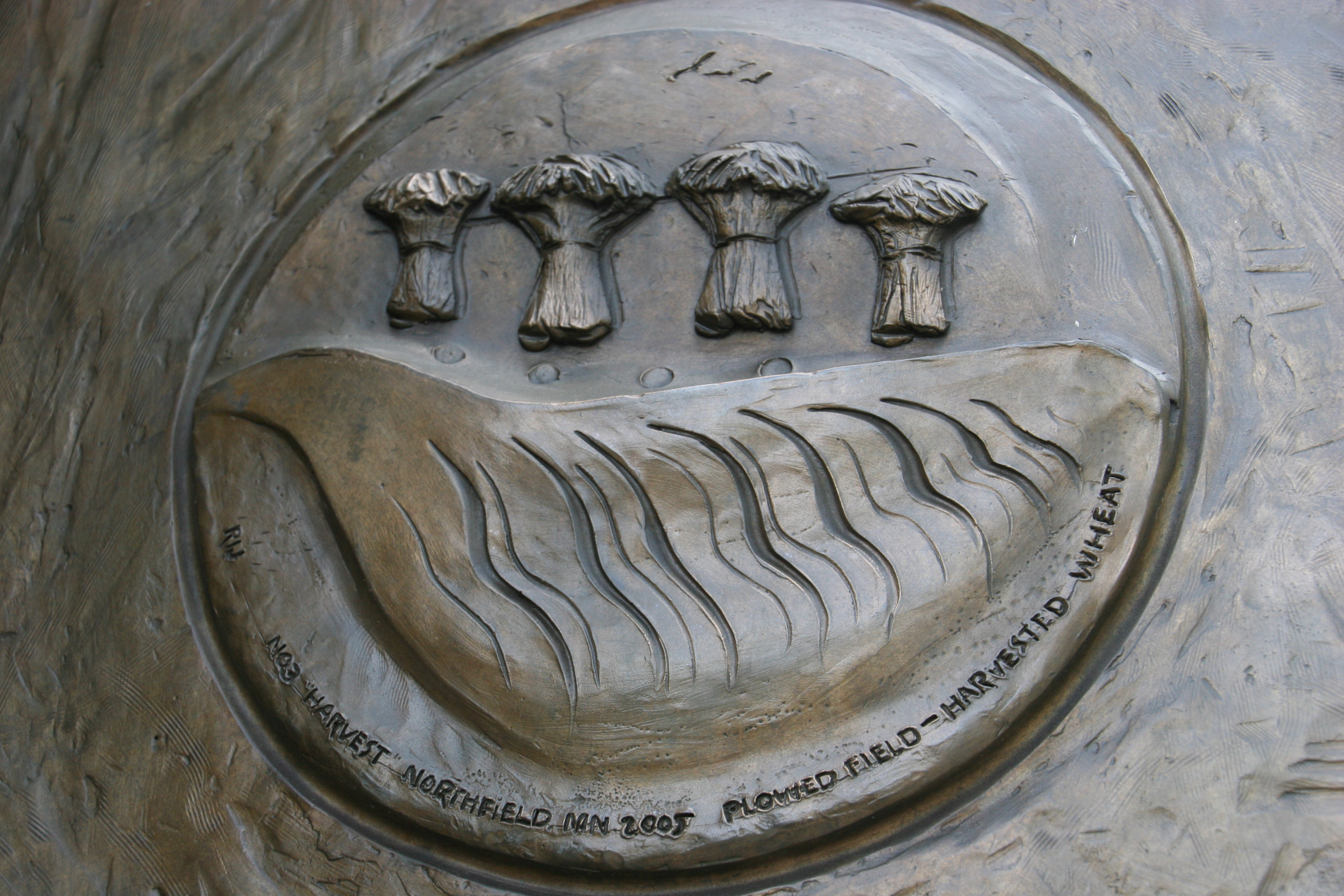
All of this—the smell of cereal, the “Harvest” sculpture, the historic Ames Mill—reminds me of the importance of agriculture in our region. It reminds me, too, of my rural roots. I am grateful for my farm upbringing. I am grateful, too, for those who today plant, tend and harvest crops. They are essential to our economy, feeding the world, providing raw product.
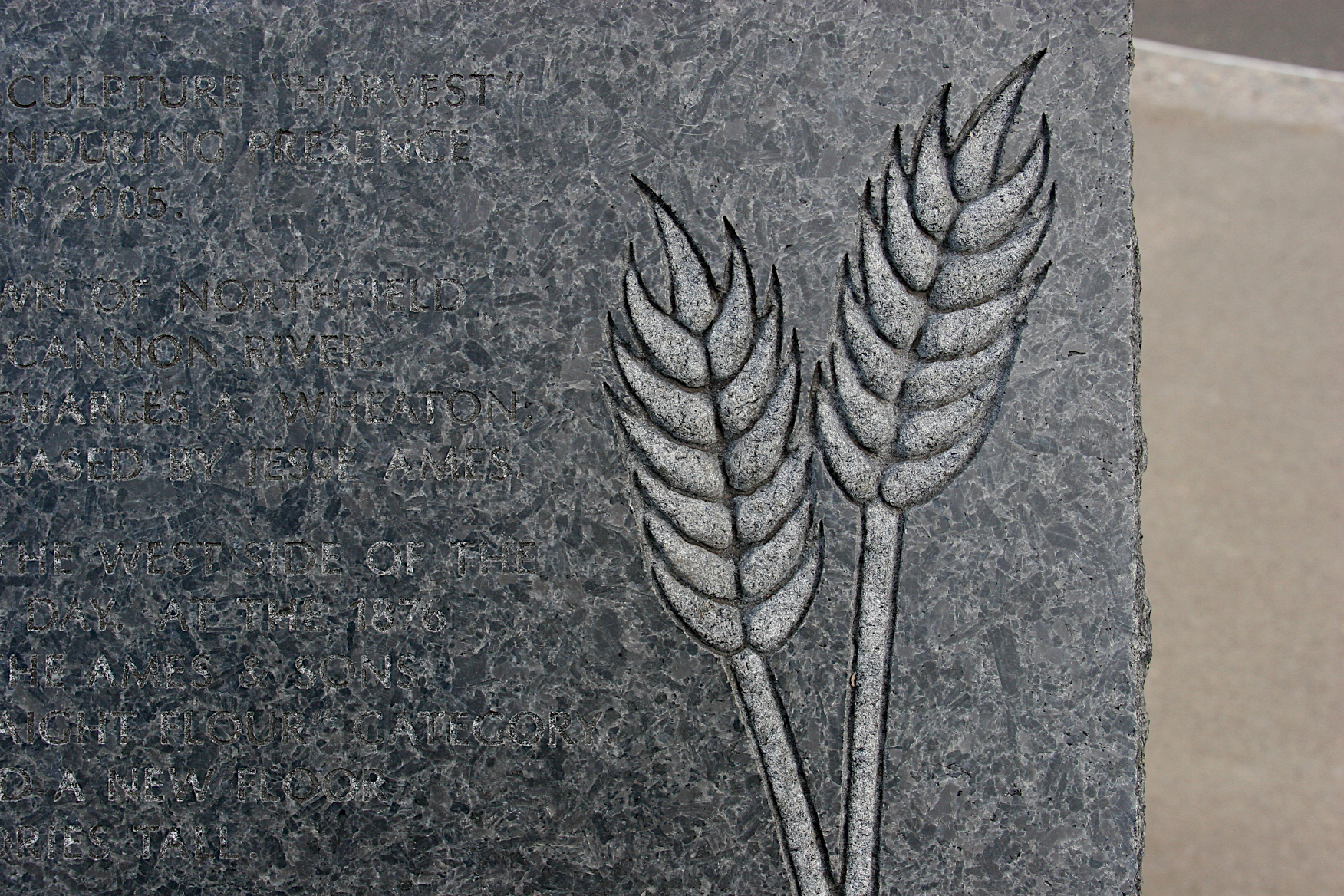
That this season of harvest is honored in a “Harvest” sculpture shows a deep appreciation for history, heritage and agriculture in Northfield. The public art gives me pause to reflect on inspiration in creativity. Today I celebrate the artistic interpretation of harvest displayed along the banks of the Cannon River.
© Copyright 2022 Audrey Kletscher Helbling



 Minnesota Prairie Roots
From words on a government website to soybean markets & a crisis in rural America October 15, 2025
Tags: agriculture, America, China, commentary, farm crisis, farming, messaging, opinion, rural America, rural Minnesota, soybean market, soybeans, tariffs, trade war, United State Department of Agriculture
WHEN I FIRST READ the message bannering the United States Department of Agriculture website during the current government shutdown, my jaw dropped. In a two-sentence statement, “The Radical Left Democrats” are blamed for the closure of the federal government. How unprofessional, I thought, to so blatantly put politics out there on a website designed to help America’s farmers. But then again, why should this surprise me?
United States Secretary of Homeland Security Kristi Noem is doing the same in a video message blaming Democrats for the shutdown. She expects this to be broadcast in airport terminals. Many are opting not to air her clearly political statement. And they shouldn’t. It’s unprofessional and wrong in more ways than I can list, no matter what your political affiliation may be.
But back to that message on the USDA website. It goes on to say that President Donald Trump wants to keep the government open “and support those who feed, fuel and clothe the American people.” Now that is certainly a noble statement at face value, one we could all applaud. Who doesn’t want to support our farmers? But in the context of what the President has done to farmers, the statement seems laughable.
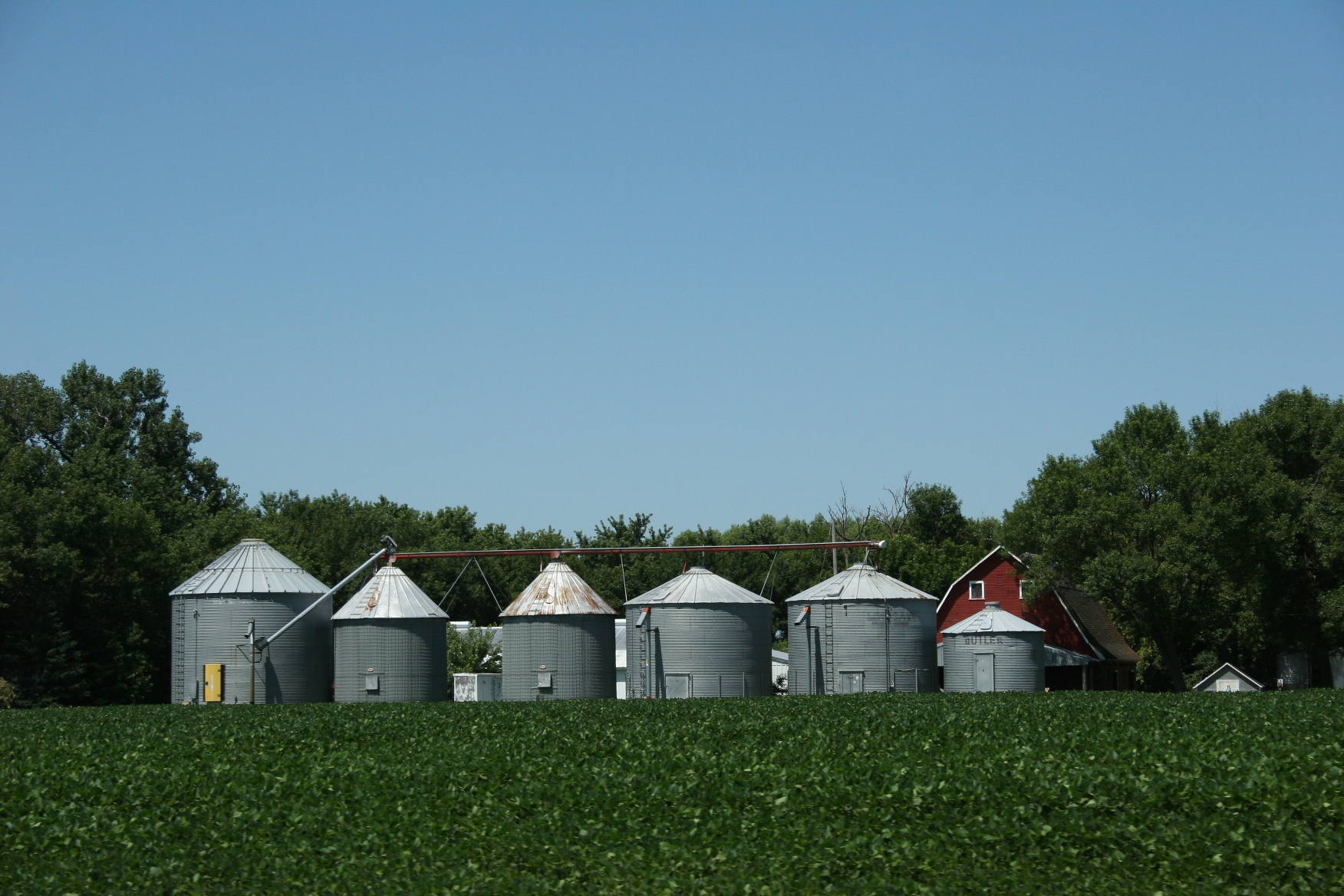
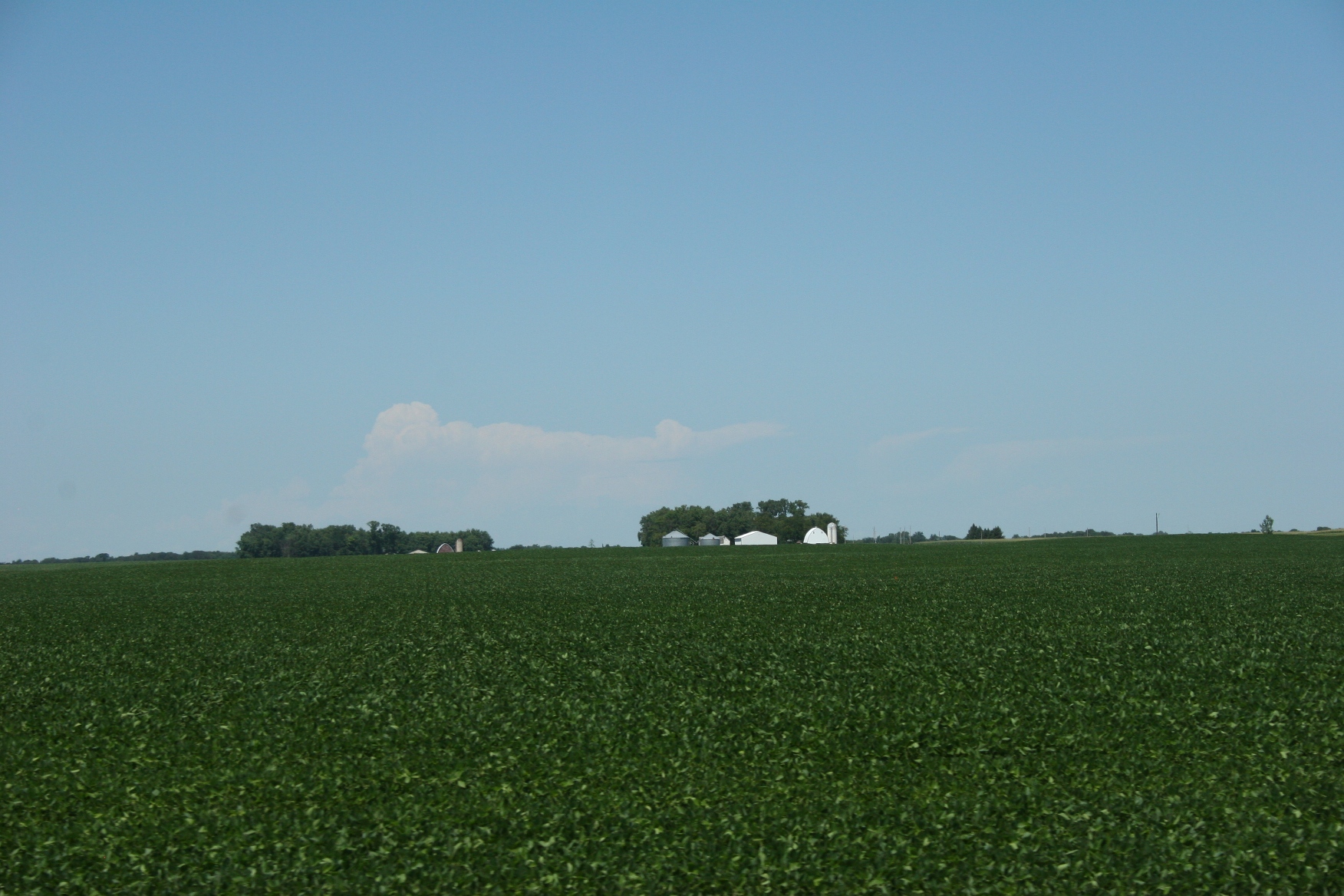
Here in the heartland, farmers have lost a major market for soybeans, my state’s top agricultural export. China has stopped buying soybeans from not only Minnesota, but America. That’s billions of dollars in lost income. And all because of the ongoing trade war between the U.S. and China, begun by the man who slapped tariffs—now averaging 58 percent—on Chinese imports with a threat to increase that to 100 percent. I’m no economist. But even I understand China’s retaliatory tariffs and actions to tap other markets for soybeans. They went to Brazil and Argentina.
And now President Trump proposes sending $20 billion in aid to Argentina, all tied to an upcoming election there. Why would we bail out a country exporting their soybeans to China while our own financially-strapped farmers are suffering because they’ve lost a key market? This makes no sense to me. Again, I’m not an economist or a politician, simply an ordinary American citizen, with a farm upbringing (and who decades ago freelanced for the Minnesota Soybean Growers Association), questioning the logic of any of this.
Even without the Argentinian component tossed into the mix, there’s more. President Trump has proposed an aid package for farmers to help them get through the financial crisis he created via his tariffs and the resulting trade war with China. That aid would come from the money collected from tariffs. Now I know farmers—my dad was one—are fiercely independent and would rather have a market for their cash crops than government aid. If not for the tariffs…
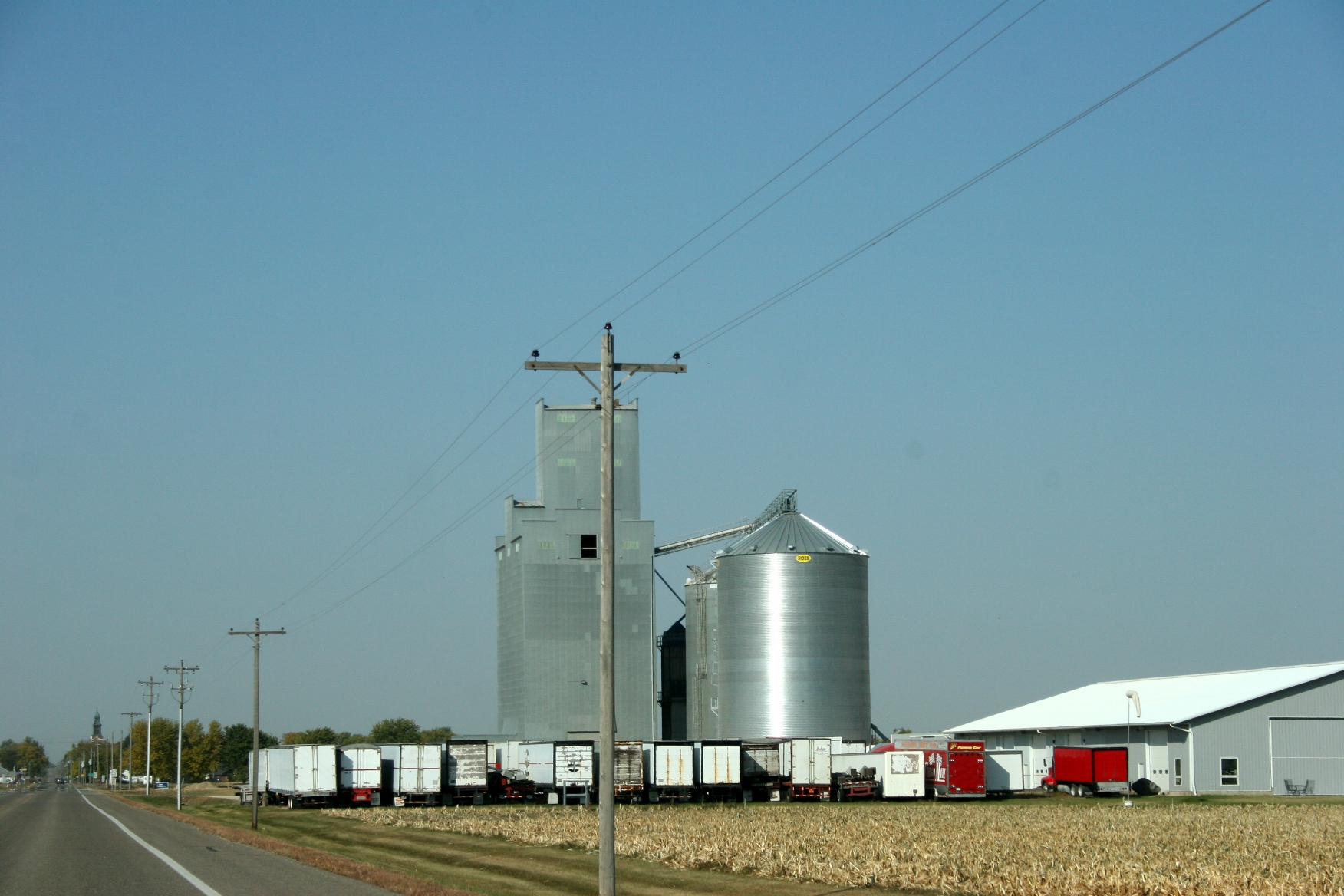
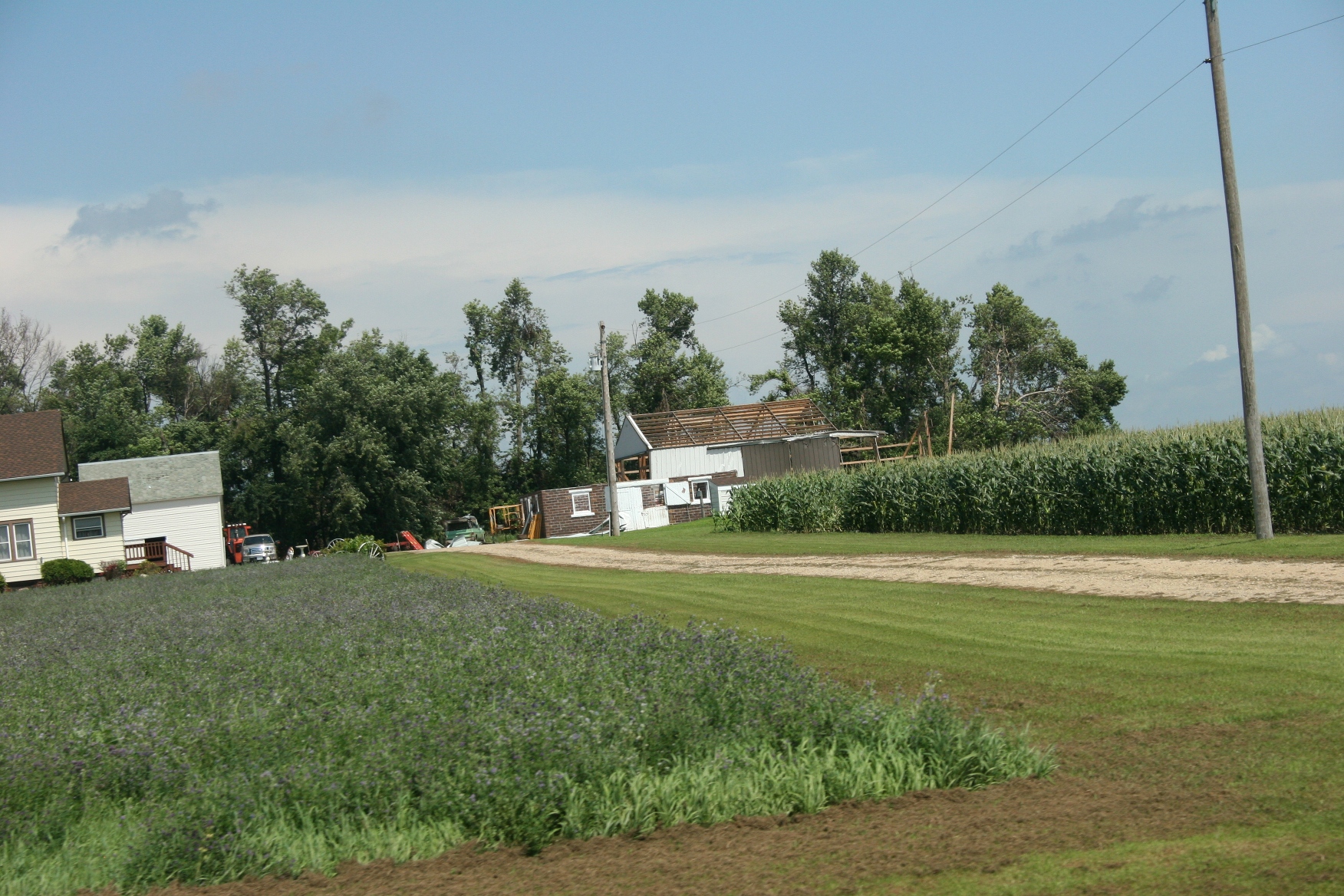
As the harvest continues here in Minnesota, I can’t help but feel for those who work the land, who continue to face so many uncertainties, financial challenges and stressors. Interest rates on loans remain high. Market prices remain low. Land rents continue to rise. Equipment and other costs are high. And on and on, including the loss of the long-standing soybean export market to China, which quite likely may never be reclaimed.
This is becoming a crisis situation for farmers—those who feed, fuel and clothe Americans. From fields to small town Main Street, rural America is hurting. And politically-biased blame words published on a government website aren’t helping.
© Copyright 2025 Audrey Kletscher Helbling