Minnesota Prairie Roots

Writing and photography by Audrey Kletscher Helbling

From proverbs to culture, native Tanzanian shares his insights & stories February 16, 2026

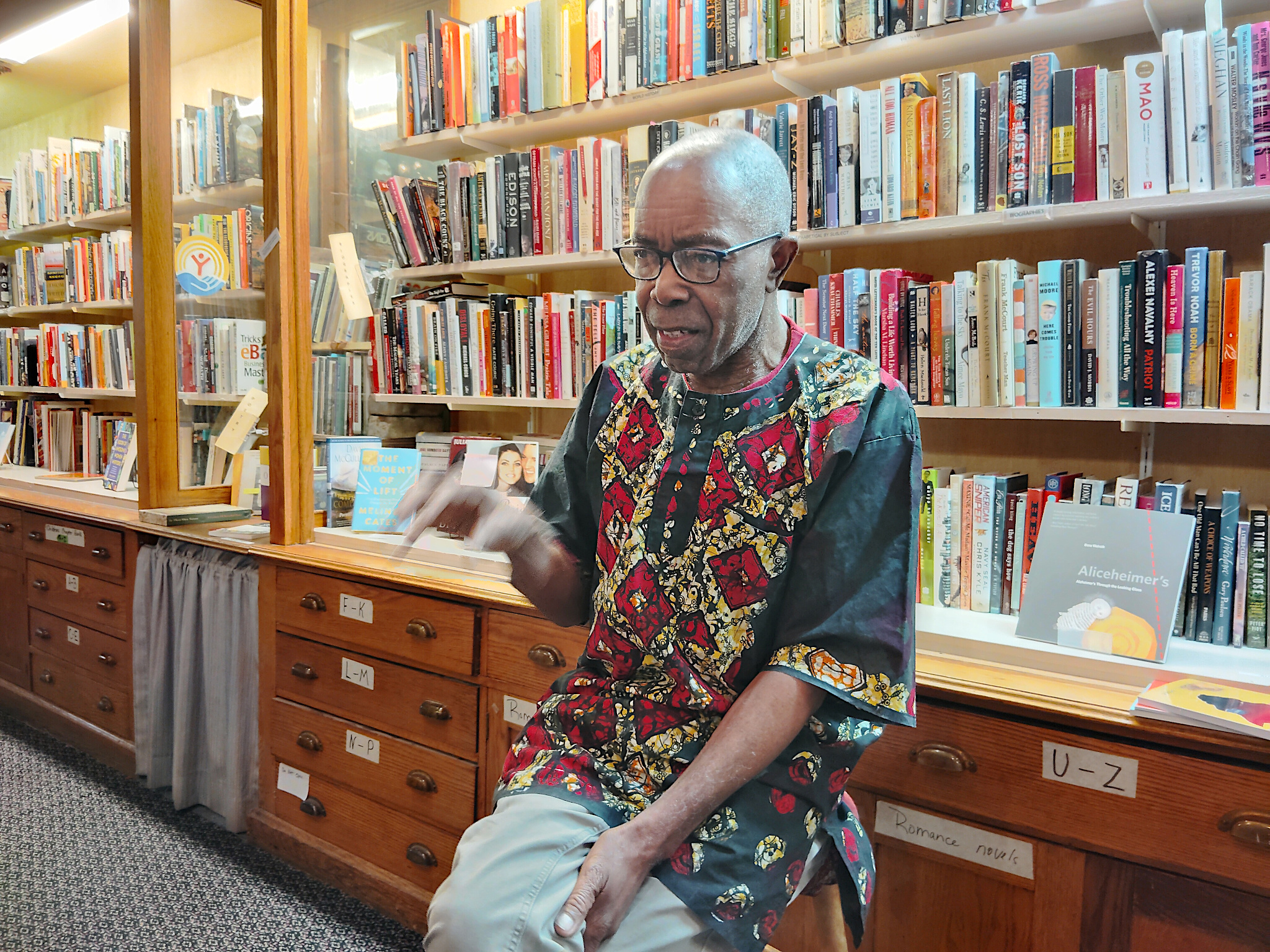
Joseph Mbele shares stories, proverbs and culture on February 11 at Books on Central, Faribault. (Minnesota Prairie Roots copyrighted photo February 2026)

FABLES TEACH LESSONS. Fairy tales offer happy endings. And African proverbs impart wisdom.

Last Wednesday evening, Joseph Mbele, retired St. Olaf College professor of post-colonial literature, cultural consultant, author and storyteller, shared three African proverbs during a literary event at Books on Central. This man, who calls himself an African and a Tanzanian, held the rapt attention of attendees gathered in the used bookshop in the heart of downtown Faribault, home to many Somalis.

THE CROCODILE

While I enjoyed the two African folktales Mbele told, I really appreciated the proverbs. They are, by nature of a proverb, succinct. A few words carry a whole lot of punch. First up, this proverb: “Before you cross the river, don’t insult the crocodile’s mouth.”

Immediately the image of a crocodile’s sharp teeth popped into my mind. As it should have. This proverb, Mbele explained, is about being respectful to people in our relationships and in life in general. Be anything but respectful and we risk negative consequences. Snap.

THE BLACKSMITH

Second up this African proverb: “It’s because of man that the blacksmith makes weapons.” Thinking in African terms, the weapons would be knives and spears. I thought of guns. Mbele repeated the proverb, letting it sink into our brains. “It’s because of man that the blacksmith makes weapons.” The lesson here, Mbele said, is that we can be better than this—be kind, helpful and supportive—so we don’t need to bear arms/weapons. That’s an oversimplification, of course. But proverbs are not meant to be complex.

THE VISUALLY-IMPAIRED

Third, Mbele recited this proverb: “The one-eyed person only thanked God after he saw a blind person.” As someone with vision issues, that hit home. The proverb is a way of teaching gratitude, Mbele said. The contrast between seeing with only one eye and total blindness put the situation in perspective. The thought that there’s always someone who has it worse probably flitted through the minds of everyone in the bookshop.

THE STORYTELLERS

Mbele talked about the tradition of Africans sitting around telling stories to entertain and teach. Languages like his native Matengo, an indigenous language in Tanzania, are oral, not written. As he spoke, I began to understand the importance of folktales in African life. Stories connect people and, like proverbs, teach lessons.

Applied to my own community, Mbele explained that Somali men gathering on downtown Faribault street corners are simply socializing and sharing stories and are not to be feared. “It’s un-African to be by yourself,” he said of a culture that focuses on family and togetherness.

He even went so far as to say an African could be considered evil or a witch if living alone. That surprised me, but drove home the cultural importance of community and family. Now if only everyone in Faribault could hear these proverbs and insights from this native Tanzanian. Then perhaps they would not fear that which they don’t understand, like the Somali elders gathered on street corners downtown telling stories, sharing news or simply sitting in each other’s presence.

© Copyright 2026 Audrey Kletscher Helbling


African folktales & culture focus bookshop literary event February 10, 2026

(Promo credit: Books on Central)

HE’S A MESMERIZING and engaging storyteller. He is Joseph Mbele, retired professor of post-colonial literature at St. Olaf College in Northfield, cultural consultant and author.

And Wednesday, February 11, at 6 p.m., Mbele will be the featured speaker at a free literary event at Books on Central, a volunteer-run used bookshop of the Rice County Area United Way. Located in the heart of historic downtown Faribault, home to many Somali immigrants and refugees, the bookshop seems a fitting place for Mbele to talk about the living tradition of African folktales and the role of the storyteller. Somali men gather on street corners in downtown Faribault to share stories and news.

I’ve heard Mbele speak at this bookshop previously. I absolutely cannot say enough positive things about the warm way he connects with the audience, the way he uses stories to teach, the way he genuinely cares about bridging cultural differences.

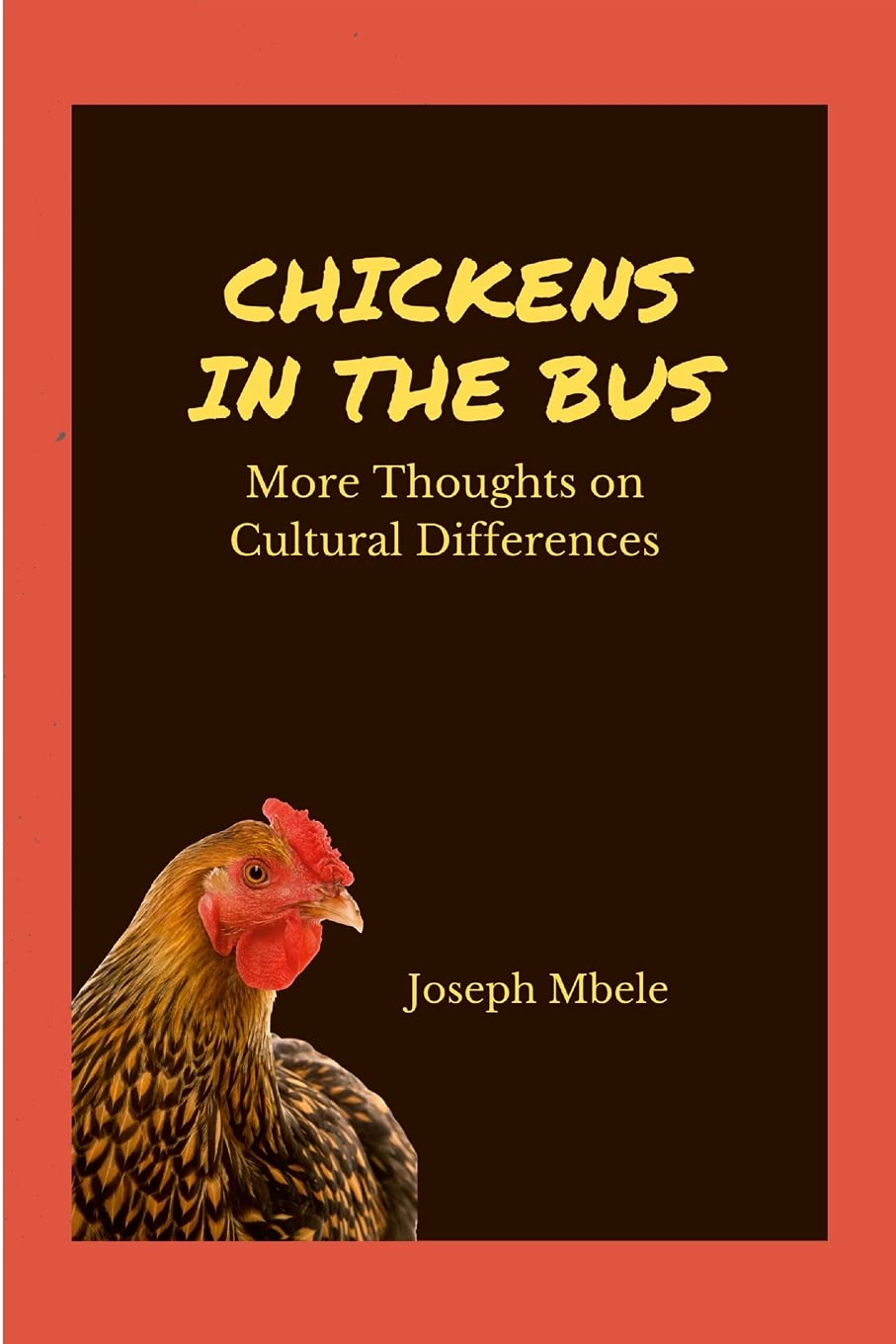
Love this book by Joseph Mbele.

As an author, his writing carries that same compassionate, culturally-connective message. He’s written Africans and Americans: Embracing Cultural Differences, Chickens in the Bus: More Thoughts on Cultural Differences, and Matengo Folktales.

Mbele knows of what he speaks and writes. Born in rural Tanzania, he studied and taught at a public university there; earned a PhD in African Language and Literature from the University of Wisconsin—Madison; and eventually landed in the English department of St. Olaf College in 1991.

His visit to Books on Central on Wednesday evening presents an opportunity to learn from a gifted storyteller about African folktales and culture in a comfortable setting back-dropped by shelves of books.

© Copyright 2026 Audrey Kletscher Helbling

 

I’ve never met Garrison Keillor, but… June 8, 2011

SO, HOW WOULD YOU feel if a photo you took was incorporated into a video/slide show narrated by Garrison Keillor?

Would you slip on your red shoes, lace up the laces and dance a polka?

Since I don’t own red shoes like Keillor and I don’t polka, I enthused to my husband repeatedly about my stroke of luck. I haven’t really boasted to anyone else. We don’t do that sort of thing here in Minnesota. But, I thought maybe I could tell a few of you. A photo I shot of winter on the Minnesota prairie is part of a video/slideshow narrated by our state’s most famous storyteller.

Now, how does this happen to a blogger like me who happily blogs along each day with words and photos from Minnesota, without a thought, not a single thought, that Keillor may someday come into my life. Well, I didn’t exactly meet him and I haven’t exactly spoken to him, but…

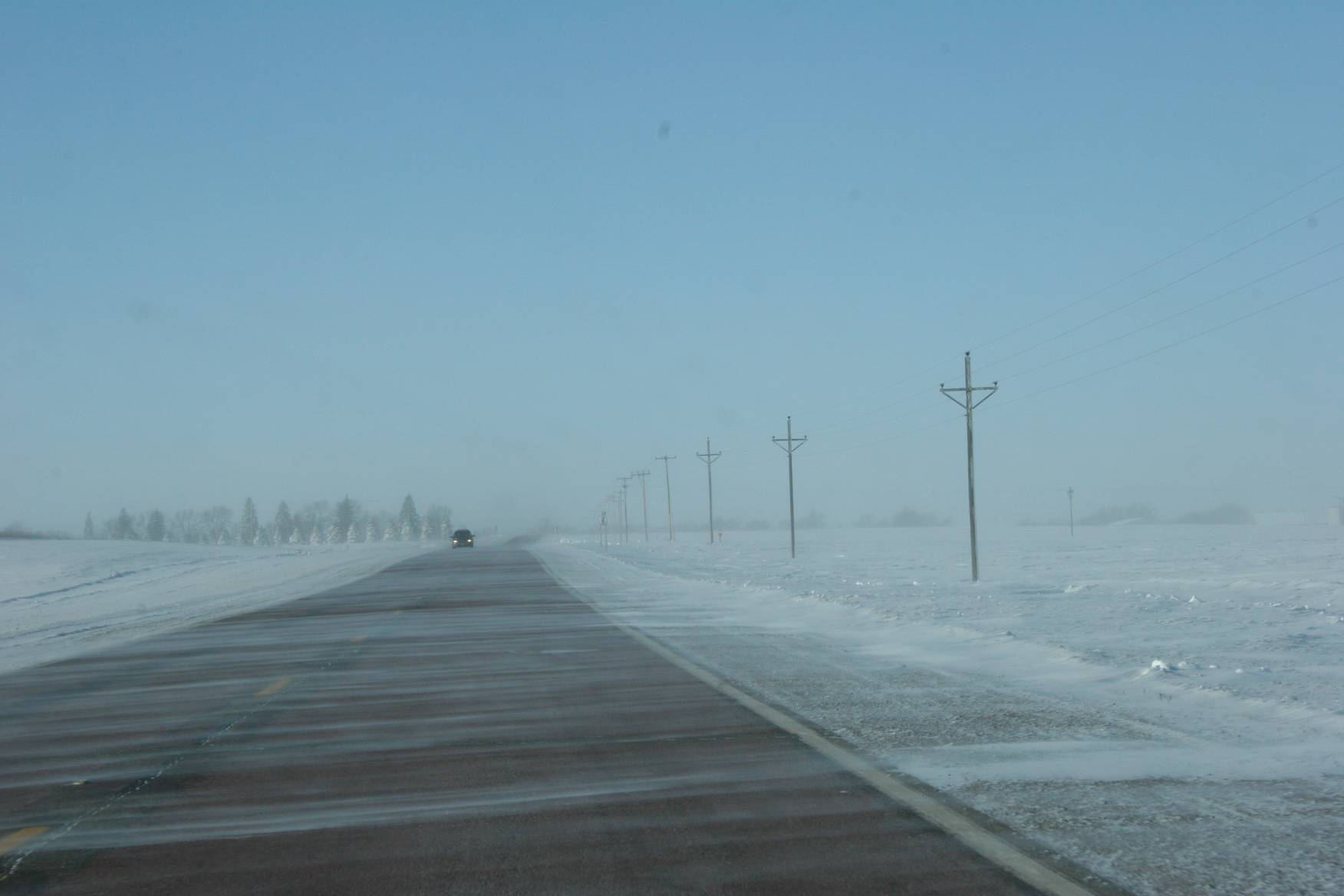
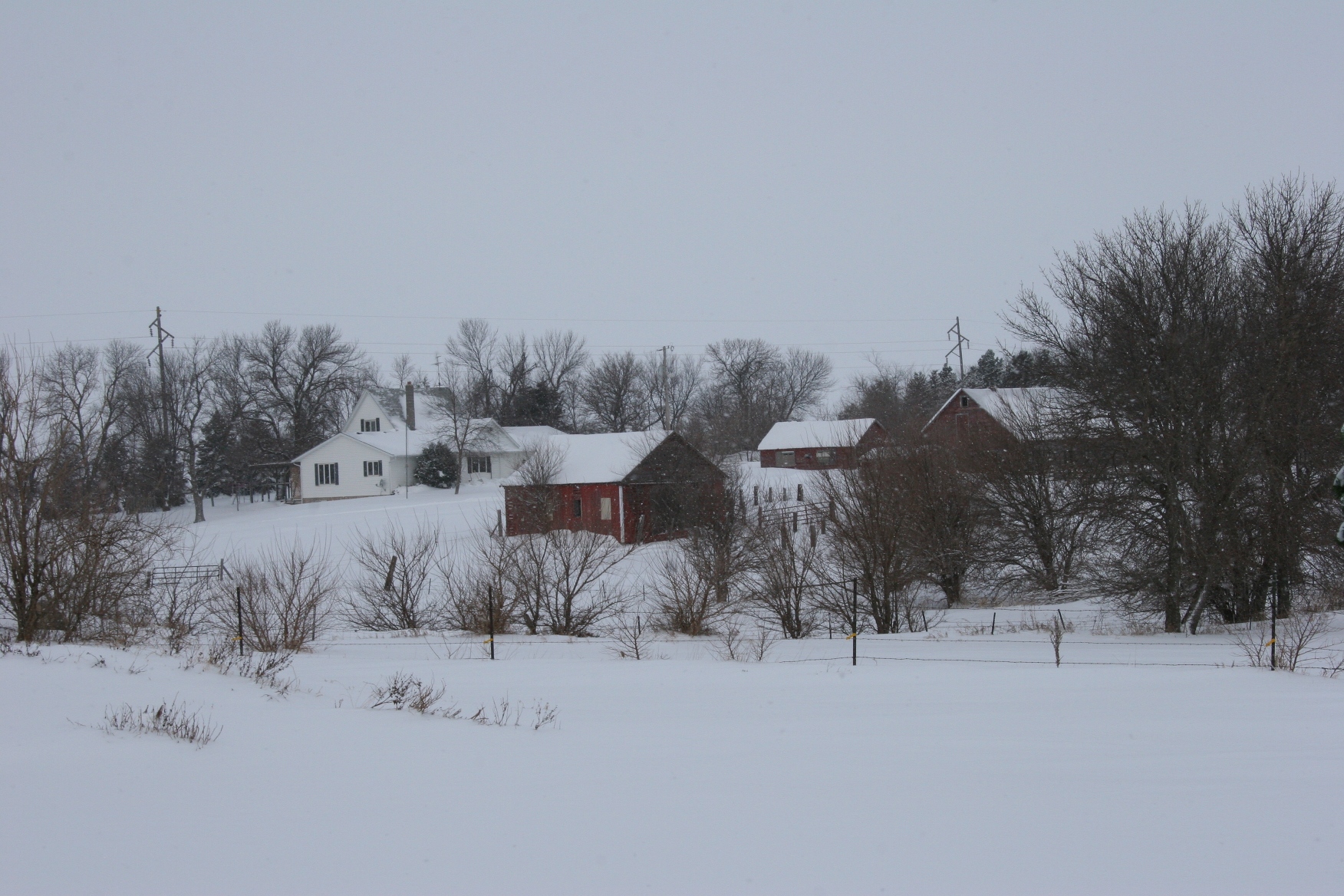
A MONTH AGO, Chris Jones, director of the Center for Educational Technologies at Gordon College in Wenham, Massachusetts, commented on my January 7, 2010, blog post, “Wind and snow equal brutal conditions on the Minnesota prairie.” He was inquiring about using my photo of winter on the prairie in a video/slideshow for retiring President R. Judson Carlberg and his wife, Jan.

Typically I do not personally respond to comments via email. I am cautious that way, protective of my email address and of anybody out there who may not have my best interests in mind. So I didn’t, just like that, snap your fingers, fire off a response to Jones. First I sleuthed. Honestly, I had never heard of Gordon College and I sure can’t spell Massachusetts.

Here’s what I learned from the college’s website: “Gordon College in Wenham, Massachusetts, is among the top Christian colleges in the nation and the only nondenominational Christian college in New England. Gordon is committed to excellence in liberal arts education, spiritual development and academic freedom informed by a framework of faith.”

I am Lutheran and that all sounded conservative enough for me.

So I emailed Jones, with several questions. You really didn’t expect me to not have questions, did you? I asked Mr. Gordon College guy: “Could you explain to me the nature of this video, which photo you are interested in using and where this video will be shown?”

That’s when he dropped Garrison Keillor’s name as the video/slideshow narrator. Sure. Yeah. Use my photo. Wherever. Whenever. Fine with me. Credit me and Minnesota Prairie Roots, send me a link to the completed video and allow me to blog about this and we’ve got a deal.

And so we did. Have a deal. After I promised not to publicly share the video with you. Sorry, I wish I could because it’s an entertaining media presentation, but I gave my word.

I also gave my word that I would make it clear to you, dear readers, that Garrison Keillor doesn’t just go around every day narrating surprise media presentations for college presidents’ retirement parties.

He met Jud and Jan Carlberg on a cruise. They struck up a friendship and, later, when the college was planning the video/slideshow, a Gordon writer “thought boldly, imagining this as a wonderful surprise for the Carlbergs, and started making inquiries,” Paul Rogati, Gordon’s CET multimedia designer, shared in a follow-up email. “When Mr. Keillor agreed to record the narration, the script was written for his style of monologue, with a reference to the winters on the prairies of Minnesota. Your image was a perfect match.”

"The photograph," taken along Minnesota Highway 30 in southwestern Minnesota.

And that is how my photo taken in January 2010 along Minnesota Highway 30 in southwestern Minnesota became connected to Garrison Keillor.

My prairie picture is one of many, many, many images incorporated into this retirement tribute to a “tall Scandinavian scholar from Fall River, Massachusetts” who was inaugurated as Gordon’s seventh president “in a swirling March blizzard” in 1993.

Yes, the whole piece is pure “A Prairie Home Companion” style and it’s a pleasure listening to Keillor’s silken voice glide across the words penned by authors Jo Kadlecek and Martha Stout.

The monologue opens like Keillor’s radio show, but “on Coy Pond on the campus of Gordon College.” It is a pond which “sometimes freezes up solid enough to go ice fishing on,” Keillor professes. And “there are rumors of an ice fishing shack being built” by the retired president with more time on his hands.

Several other references are made to Minnesota in a presentation that mixes humor with factual information about the Carlbergs’ 35-year tenure at Gordon, a “college which includes Lutherans” and which offers students off-campus experiences in places like the Minnesota prairie.

Then, finally, at the end of the video, the Carlbergs are invited to “sometime come up to the prairies of Minnesota to see what winter is all about.” A snippet of my photo appears on the screen, slowly panning out to show the full winter prairie landscape frame.

I’m not sure which the Carlbergs will do first in their retirement—sneak past Gordon College security and park an ice fishing shack on Coy Pond or visit southwestern Minnesota in winter, where, no doubt, “all the women are strong, all the men are good looking and all the children are above average.”

#

WHEN (not if) the Carlbergs travel to Minnesota in the winter, they will also see scenes like this on the southwestern Minnesota prairie:

An elevator along U.S. Highway 14 in southwestern Minnesota.

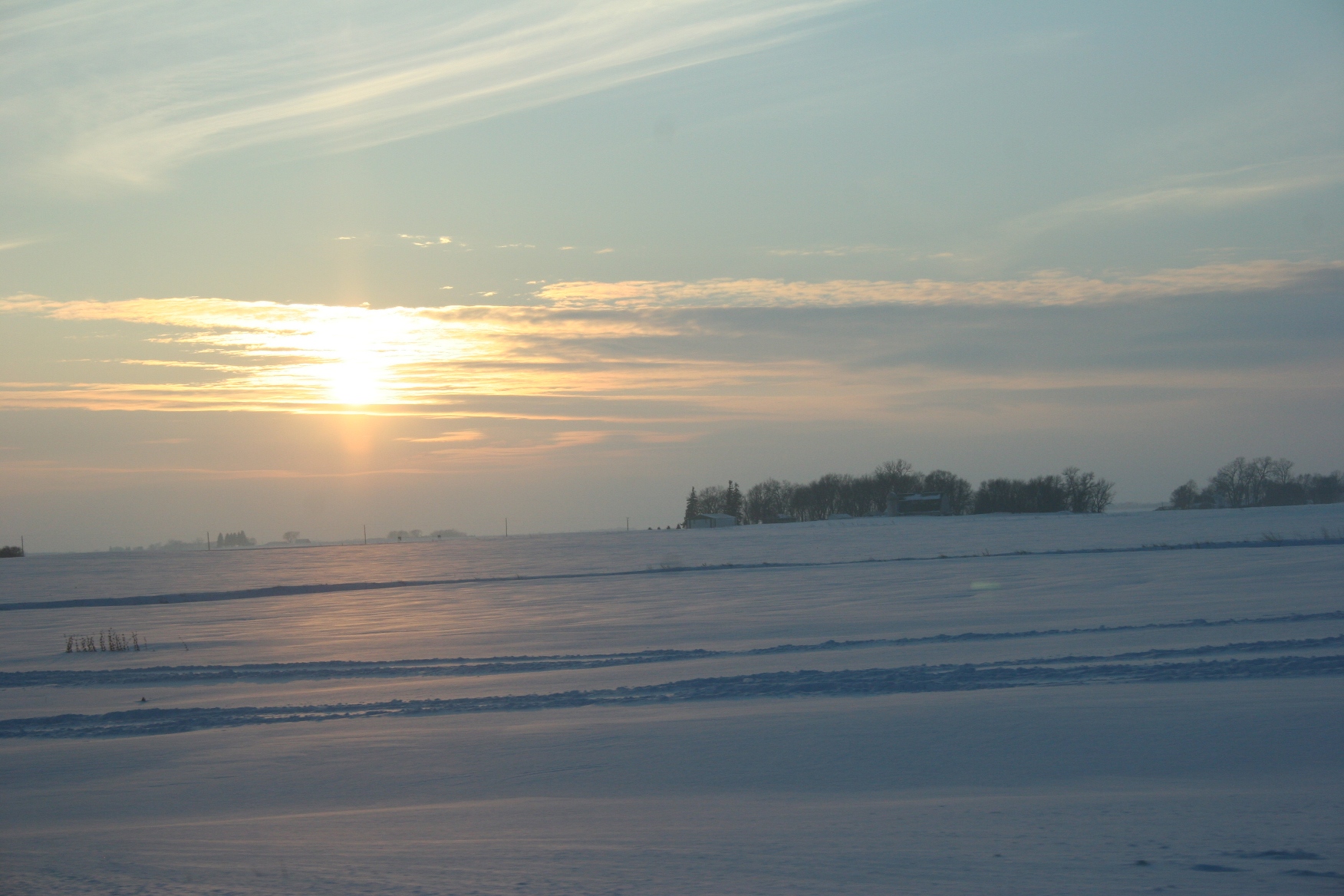
The sun begins to set on the Minnesota prairie.

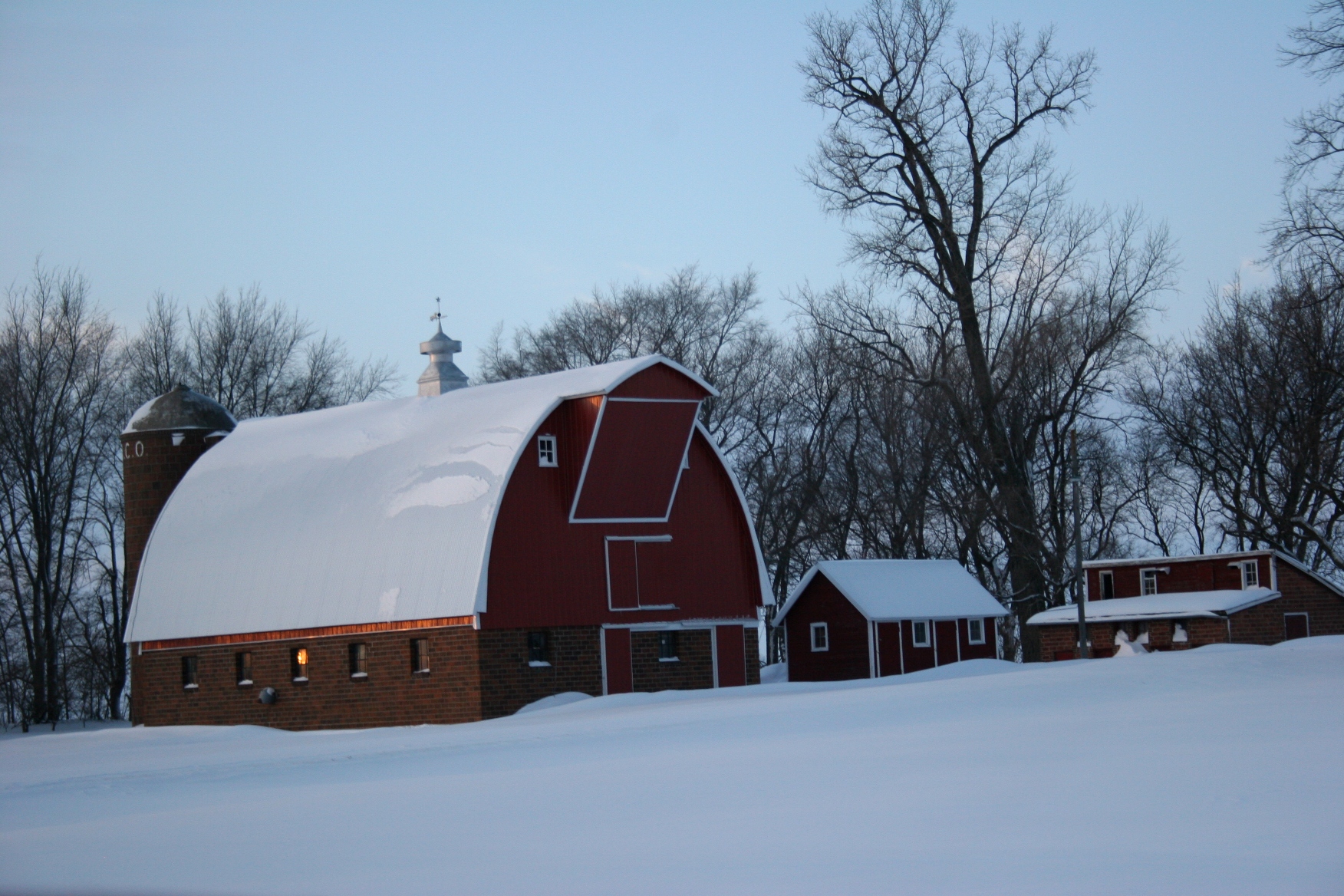
Barns abound in the agricultural region of southwestern Minnesota, this one along U.S. Highway 14.

A picturesque farm site just north of Lamberton in Redwood County, Minnesota.

© Copyright 2011 Audrey Kletscher Helbling