Roses bloom in the Rice County Master Gardeners Teaching Gardens at the Rice County Fairgrounds in Faribault. (Minnesota Prairie Roots copyrighted photo June 2024)
OH, HOW BEAUTIFUL the flowers that gardeners tend. Petals flash color, painting the landscape in bold and delicate hues. Flowers dip and bend in the wind like silent writers penning poetry. Flowers inspire, bring joy, carry love stories and memories.
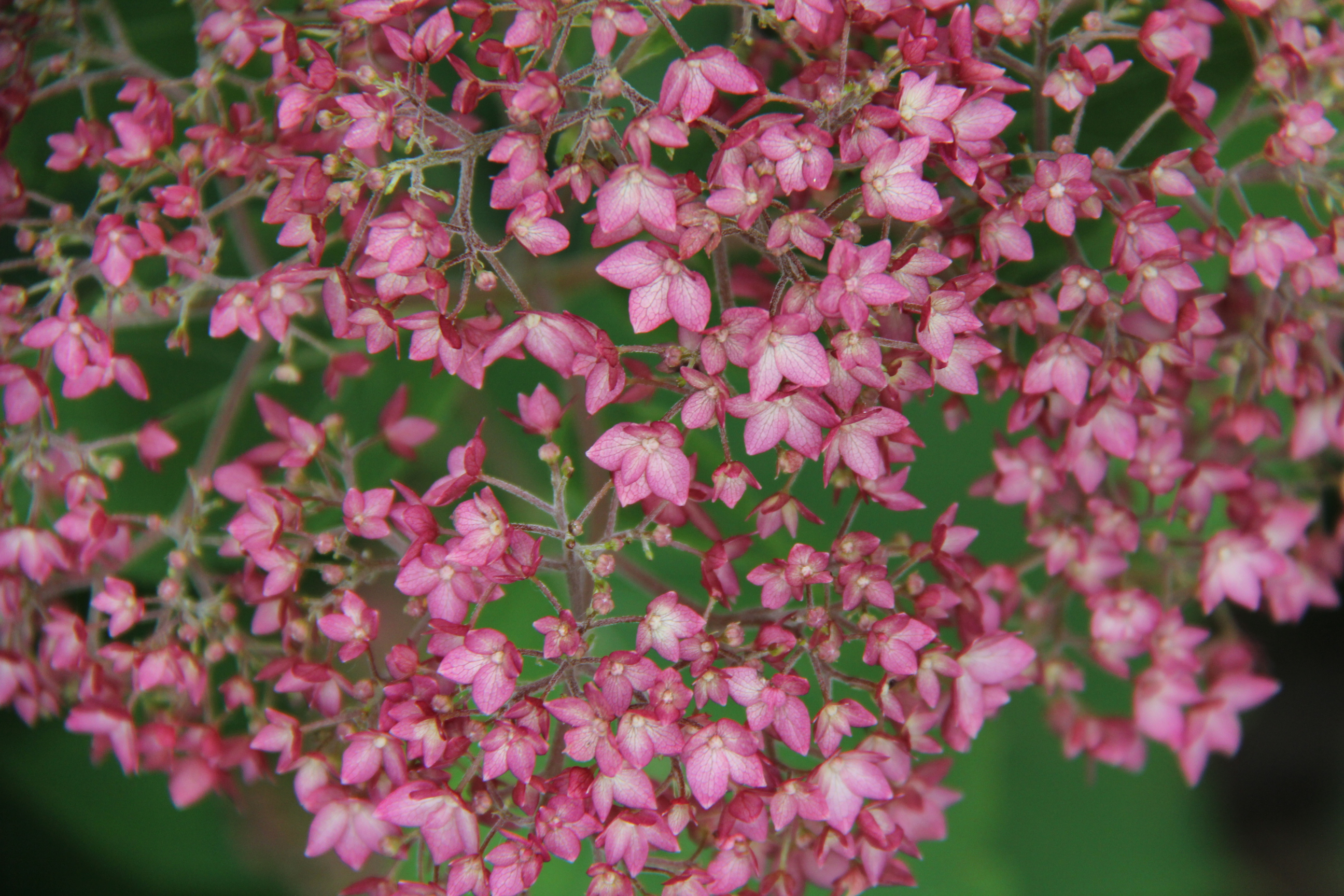
Delicate pink flowers in a garden at the Cathedral of Our Merciful Saviour. (Minnesota Prairie Roots copyrighted photo June 2024)
Flowers have always been a part of my life. From my paternal grandma’s unruly flowerbeds to my mom’s rows of colorful zinnias in the vegetable garden to my own flowers growing in a chaotic mess, I’ve delighted in blooms.
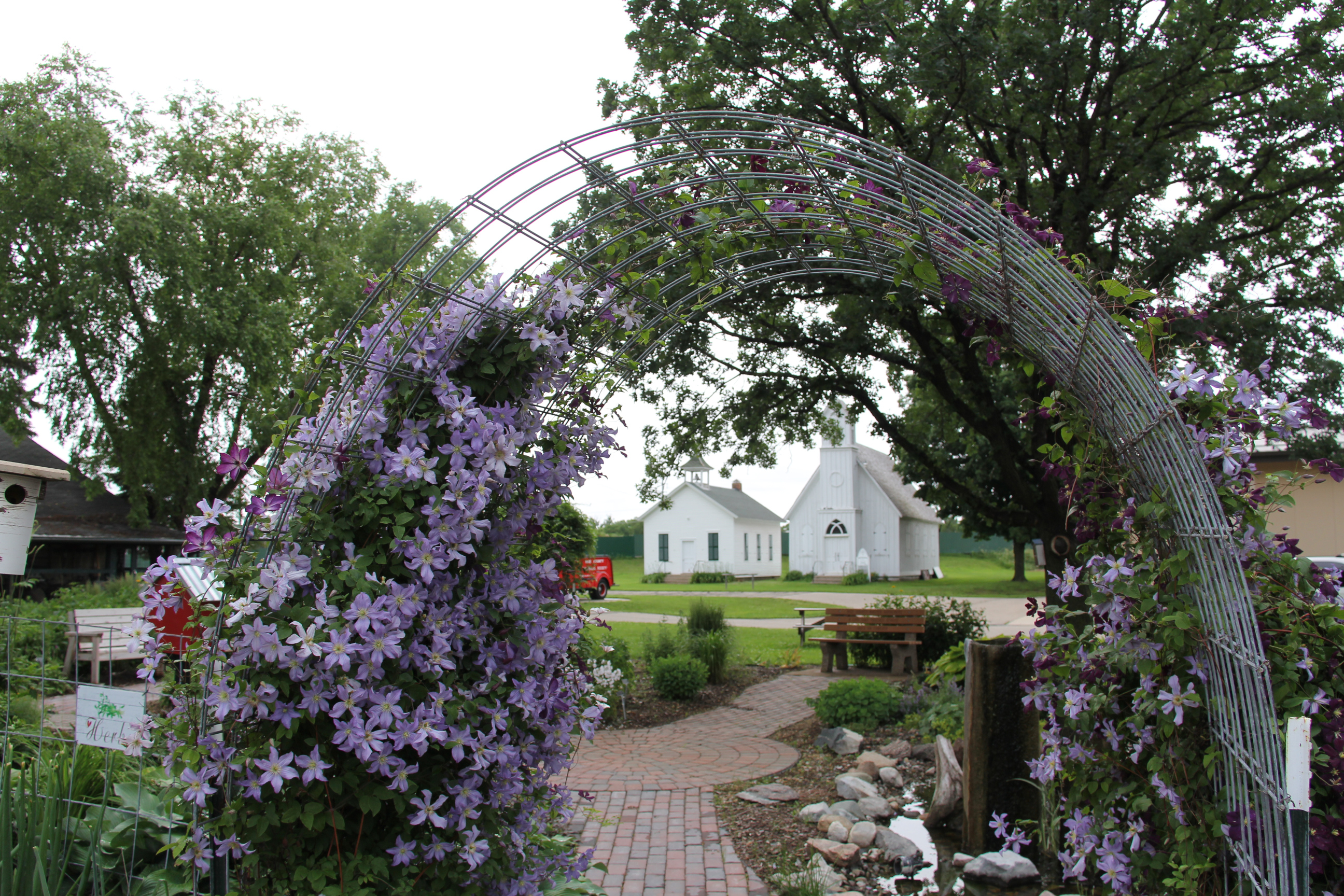
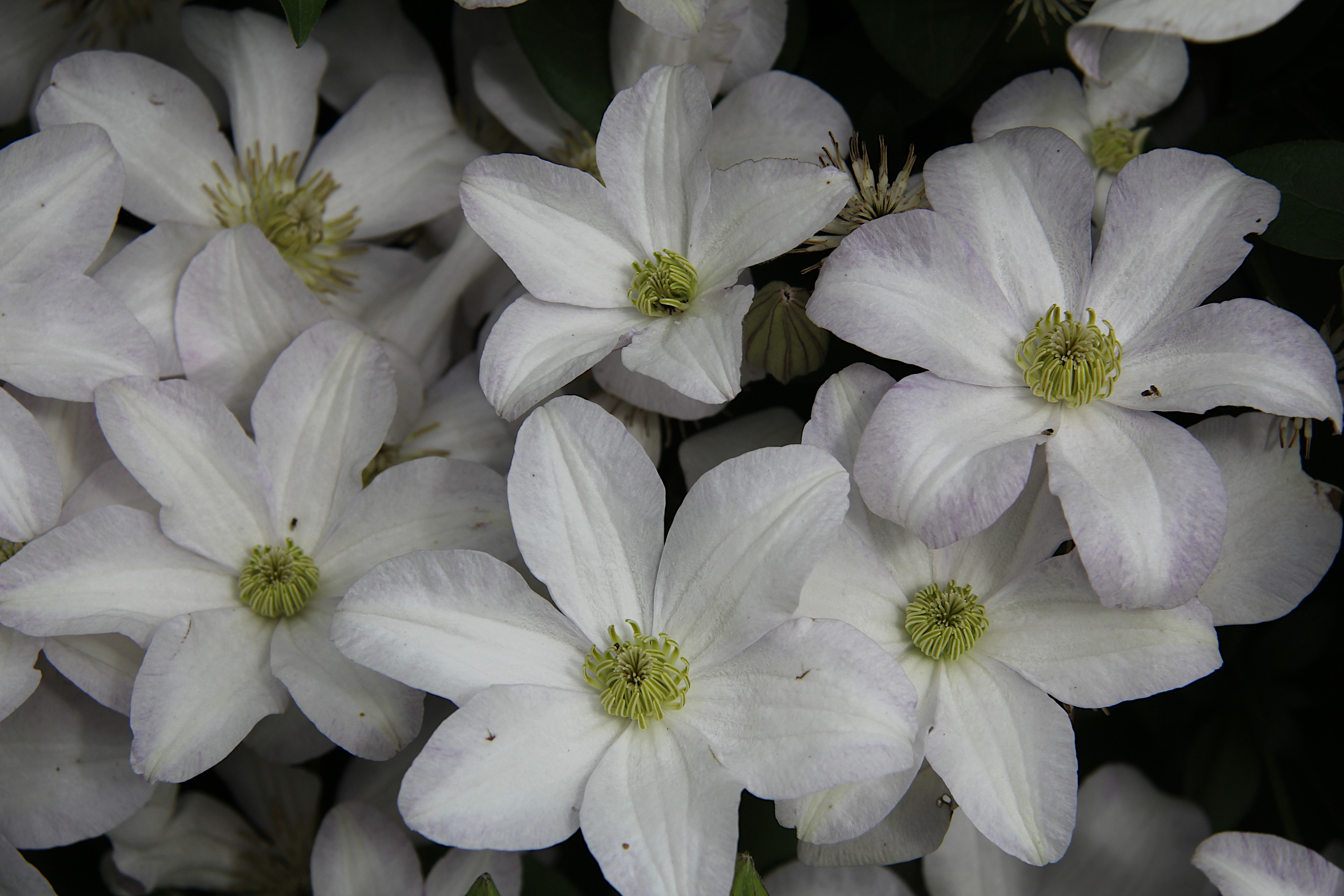
Clematis climb an arched trellis at the teaching gardens. An historic church and school, part of the Rice County Historical Society, are a lovely backdrop. (Minnesota Prairie Roots copyrighted photo June 2024)
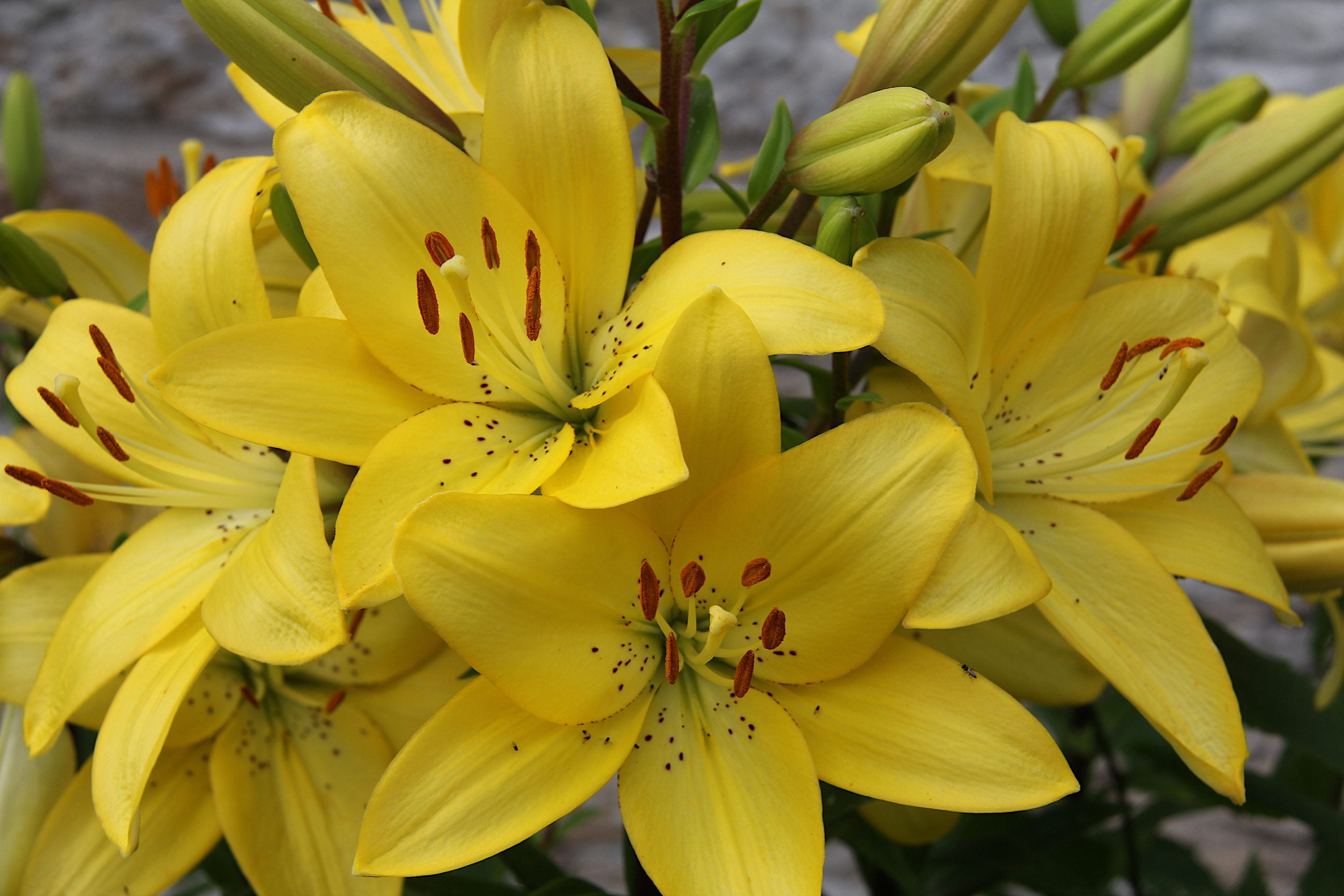
Vivid yellow lilies jolt color into Cathedral gardens. (Minnesota Prairie Roots copyrighted photo June 2024)
Another Cathedral lily. (Minnesota Prairie Roots copyrighted photo June 2024)
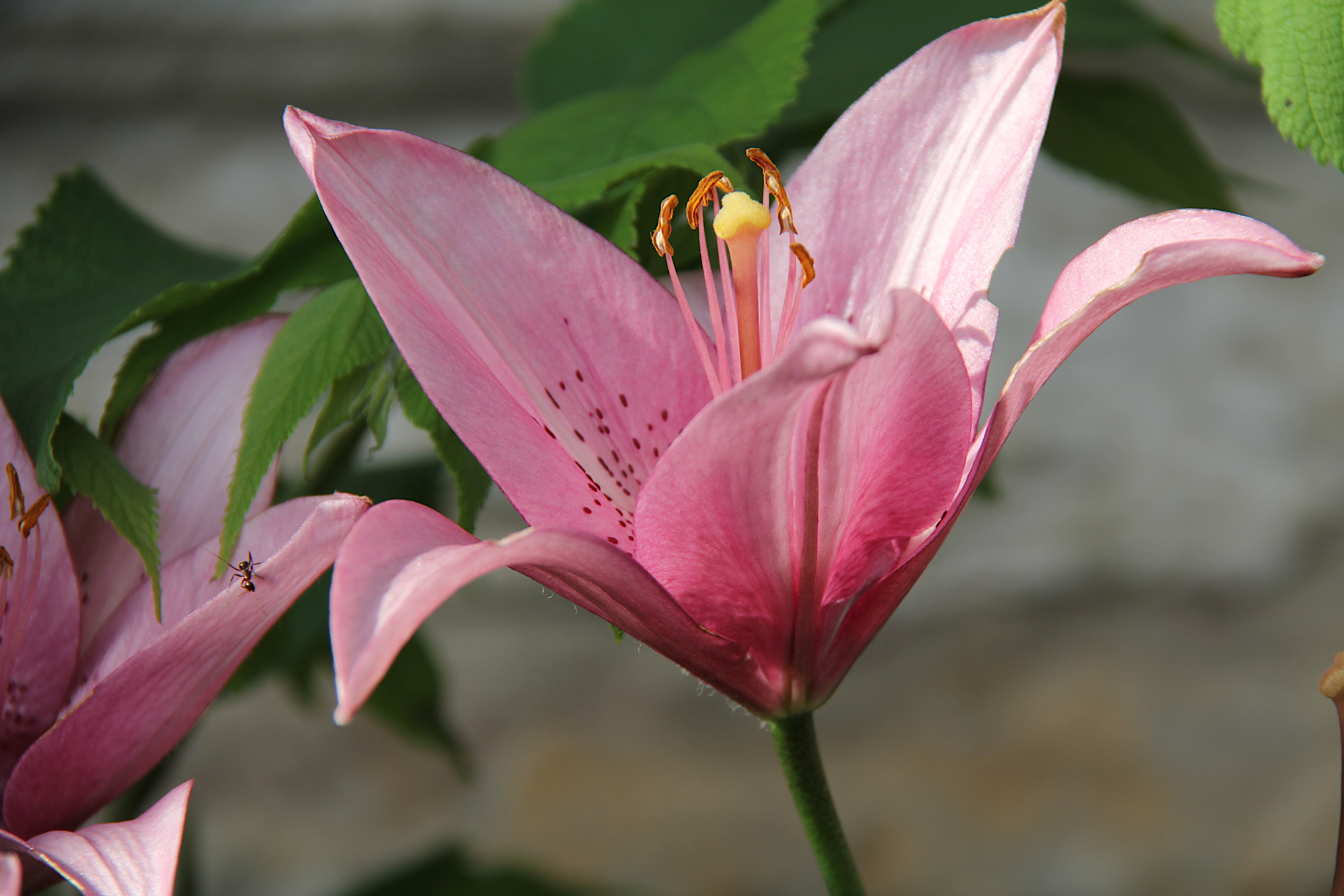
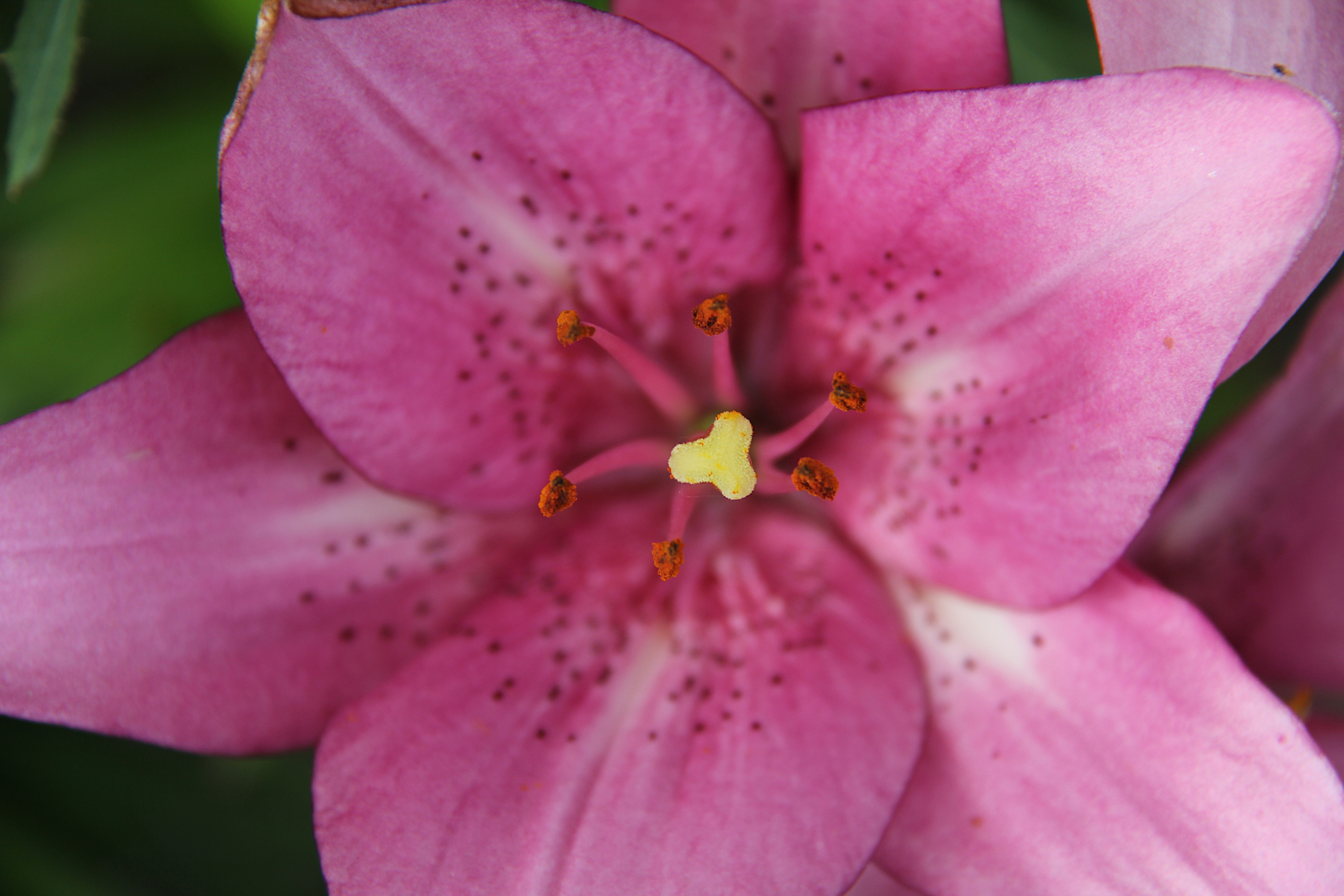
At one time I could identify flower parts, like those shown in this lily close-up blooming at the Cathedral. (Minnesota Prairie Roots copyrighted photo June 2024)
Right now, the lilies are in full bloom. They appear a sturdy lot to me, a lesson in botany with stamens and pistils and all those parts I once learned in a long ago science class. Now I don’t care much about that, just the beauty my eyes take in as I wander among the flowers.
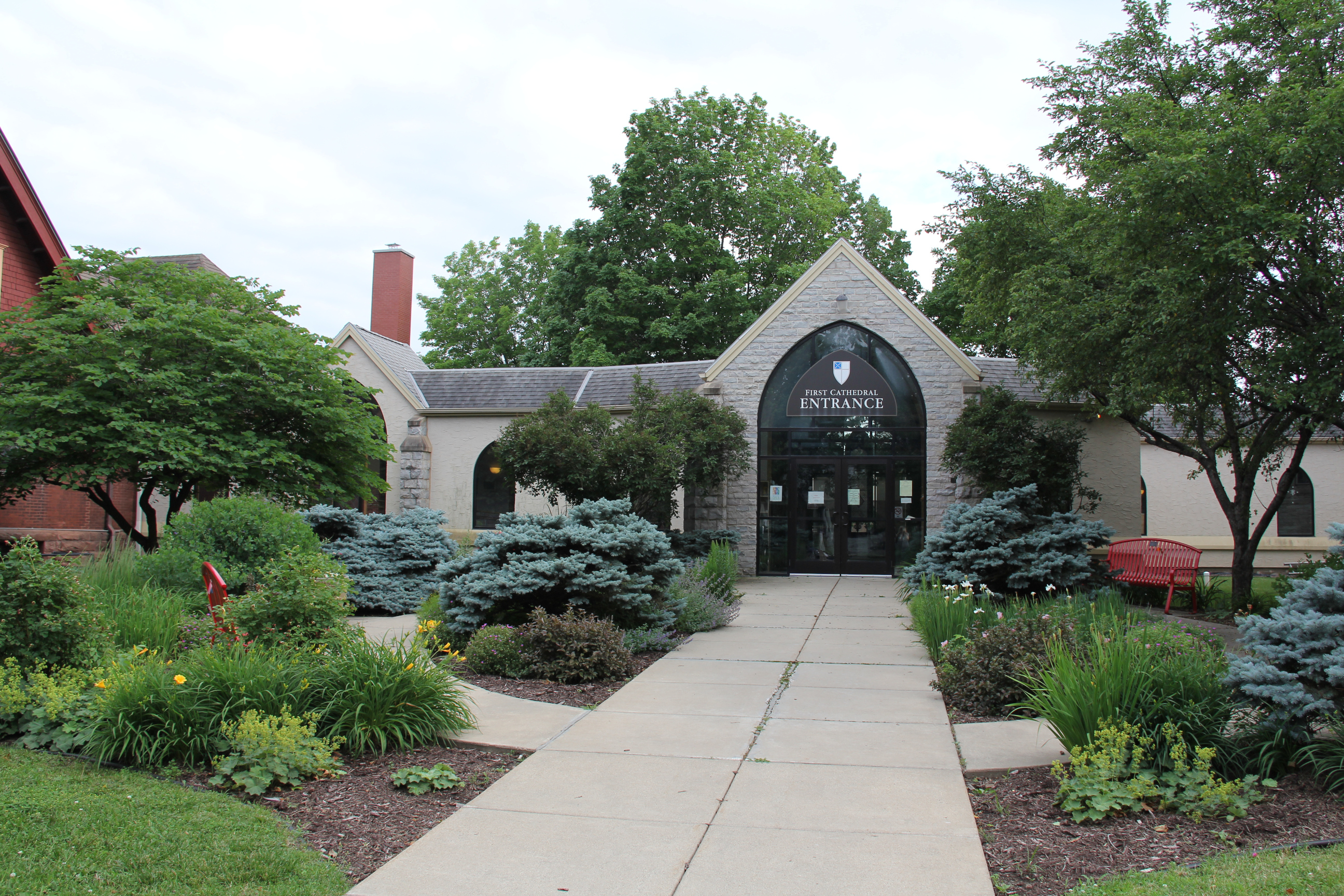
An inviting garden, complete with benches, graces the northside entry to the Cathedral. (Minnesota Prairie Roots copyrighted photo June 2024)
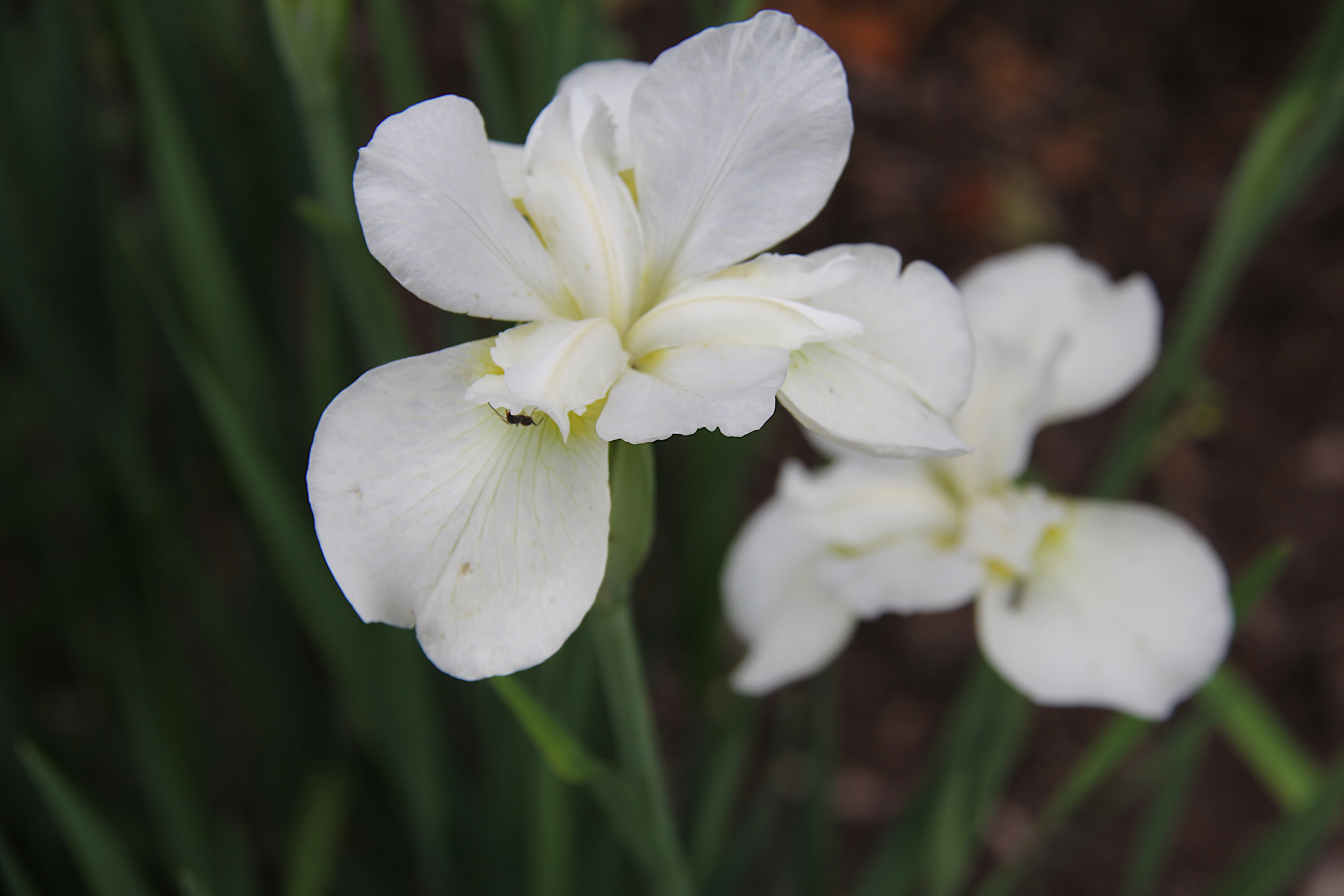
Iris bloom at the Cathedral. (Minnesota Prairie Roots copyrighted photo June 2024)
For use at the teaching gardens when needed. (Minnesota Prairie Roots copyrighted photo June 2024)
I’m thankful for the volunteers who plant, weed and care for flower gardens created out of a love of gardening and out of a desire to beautify a community. It takes time, effort, commitment, and that does not go unnoticed by me.
A clump of daisies, similar to these photographed at Faribault Energy Park, grow on my boulevard. (Minnesota Prairie Roots copyrighted file photo July 20219)
Life is full of opportunities to brighten this world. Flowers are one way. I watched the other day from my living room window as a young boy picked a daisy from an errant patch growing in the boulevard by my house. Then his mom plucked one, too, tucking a single stem into the front of her tank top. I didn’t care that they picked the daisies. I could see how happy it made them.
At the teaching gardens, flowers ladder a stem. (Minnesota Prairie Roots copyrighted photo June 2024)
The daisy, such a simple flower, blooming profusely in the grass next to a busy street. Bent by the wind and rain, as if bowing to the earth. The daisy has always been a sunny favorite of mine. Daisies were woven into my bridal bouquet, my bridesmaids’ baskets of flowers and corsages on my wedding day 42 years ago. Flowers hold love stories, memories.
Fanciful astilbe grow in the teaching gardens. (Minnesota Prairie Roots copyrighted photo June 2024)
In bloom at the Cathedral. (Minnesota Prairie Roots copyrighted photo June 2024)
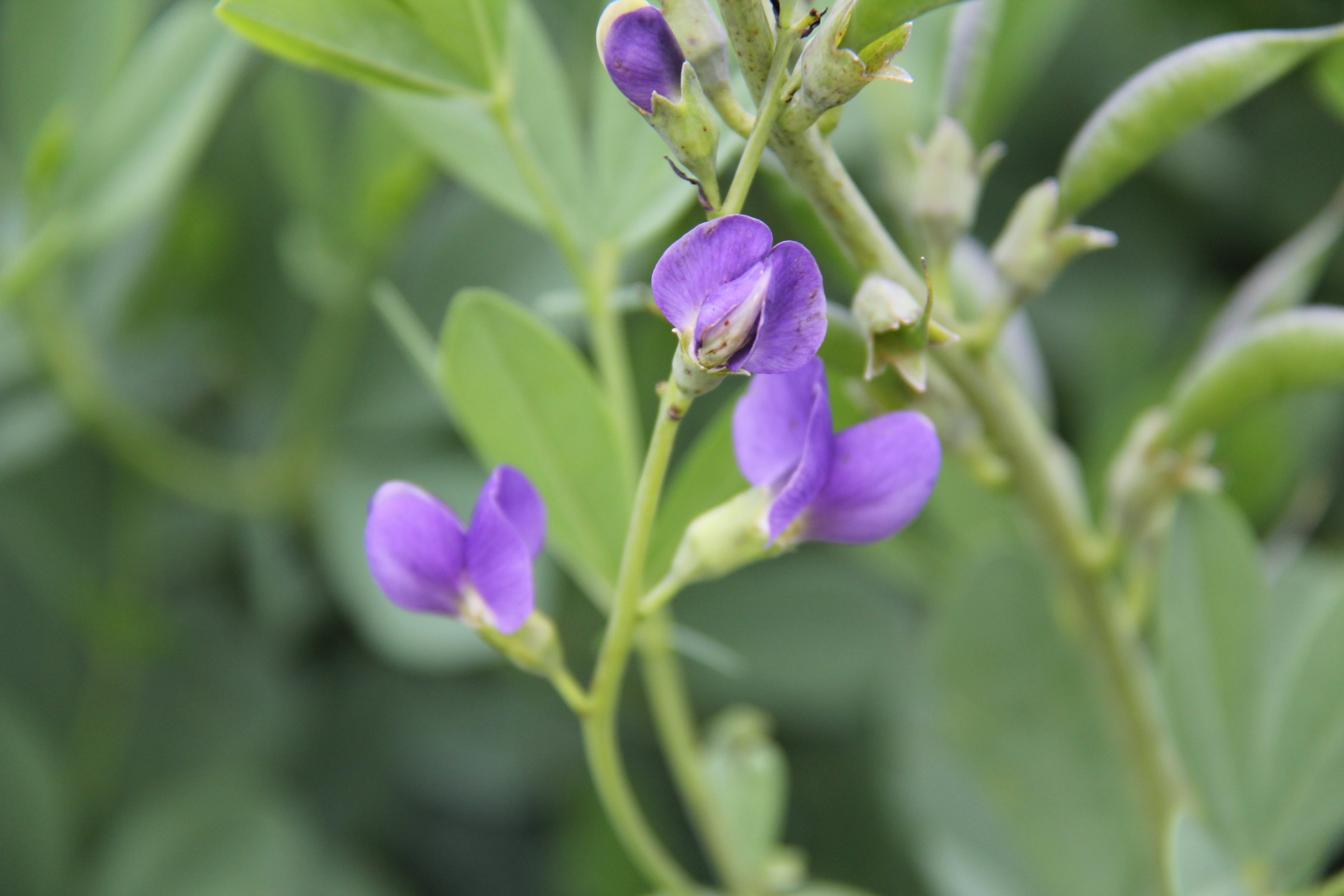
Spots of purple in a Cathedral garden like a single line of poetry. (Minnesota Prairie Roots copyrighted photo June 2024)
I expect, if pressed, anyone could share a flower story. Stories of love and loss, celebration and sorrow, gratitude and healing. Flowers hold stories as much as they write them. Creativity thrives in their bold and delicate hues, in the way they grow and flourish and fade. In the way they stand or bend in the wind, like silent writers penning poetry.
An exhibit at the Rice County Historical Society, Faribault, shares information on the original inhabitants of the county, the Dakota. (Minnesota Prairie Roots copyrighted file photo)
HERITAGE. It’s a word that identifies us, connects us to our families, to our ethnicity, to the way we were raised, the place of our roots. At least that’s my definition.
This week Faribault celebrates Heritage Days. I’ve never felt totally comfortable celebrating heritage in the city I’ve called home since 1982. My heritage, my home, my roots run deep in the southwestern Minnesota prairie some 2 ½ hours west of here.
But many are rooted in this community by birth, by families that trace back generations. If it’s one thing I’ve learned in four decades about the people of Faribault, it’s that many are related to one another via blood and marriage. But I’ve also learned much about the peoples who came before the French, the Irish, the Scandinavians, the Germans, the Cambodians, the Latinos, the Hispanics, the Sudanese, the Somalis… I’ve learned about the Dakota, the original inhabitants of this region.
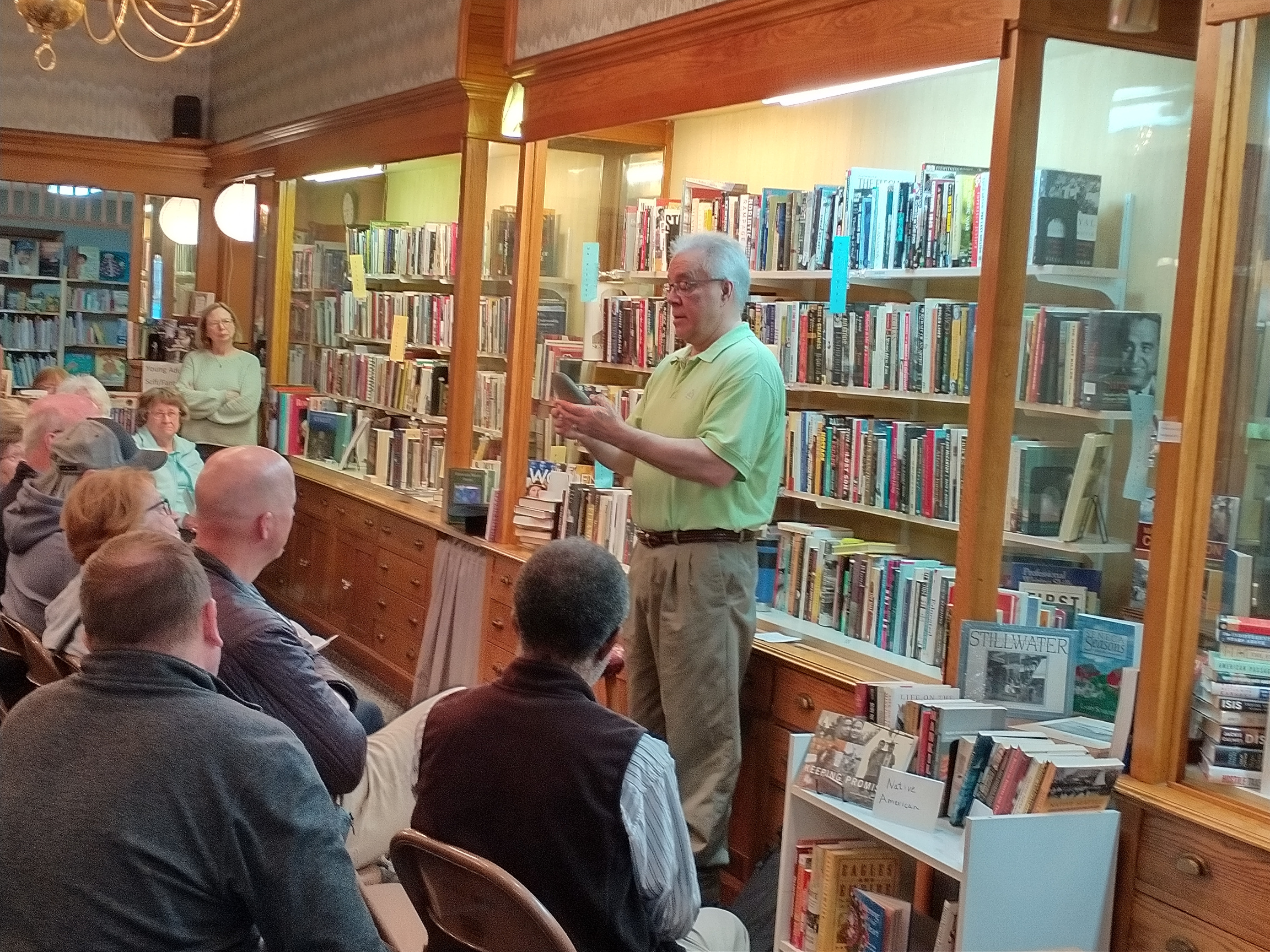
Jeff Jarvis talks about the Dakota at Books on Central. (Minnesota Prairie Roots copyrighted file photo April 2024)
That knowledge came through my own reading and via attending events focused on the Dakota. In April, I listened to local historian and artist Jeff Jarvis talk about the Dakota to a packed audience at Books on Central in Faribault. Jarvis is presenting again, speaking at 6:30 p.m., Wednesday, June 12, on the Wahpekute Dakota at The Cathedral of Our Merciful Saviour, 101 NW Sixth Street, across the street from Faribault’s Central Park.
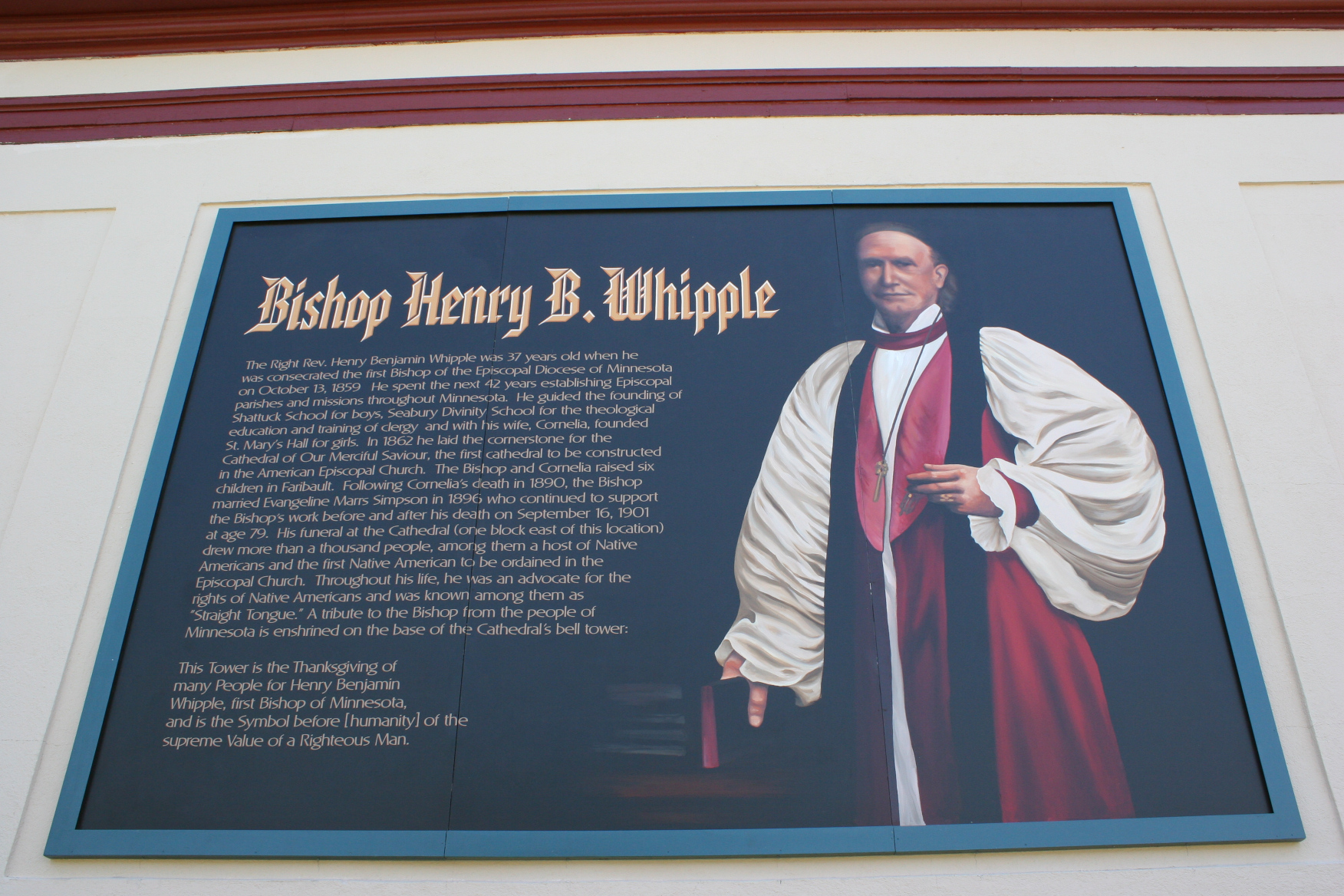
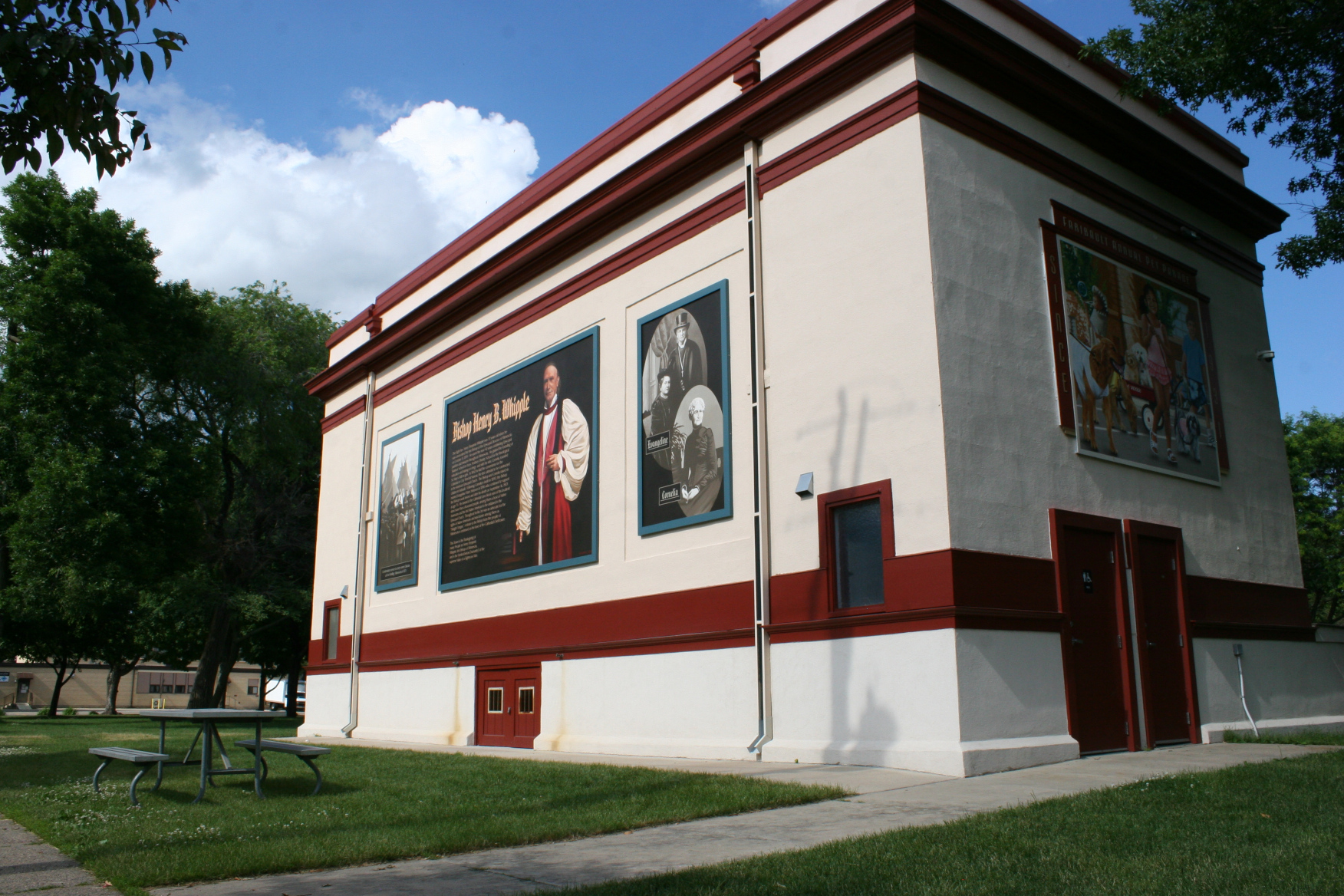
Information on Bishop Henry Whipple focuses one of the murals on the back of the bandshell at Central Park. (Minnesota Prairie Roots copyrighted file photo June 2020)
The Cathedral and its founding leader played an important part in local, state and national history with then Bishop Henry Whipple befriending the Wahpekute Dakota. He also pled with President Abraham Lincoln to spare the lives of 303 Dakota men sentenced to death by the US government following the US-Dakota War of 1862. Eventually all but 38 were pardoned, partially due to Whipple’s efforts.
The pamphlet Jeff Jarvis created about the Wahpekute Dakota. (Minnesota Prairie Roots copyrighted file photo April 2024)
I expect Jarvis will touch on that in his Wednesday evening presentation. He’s an engaging speaker, knowledgeable and passionate. He’s met with Dakota people, compiled a summary of his research in a mini pamphlet titled “The Faribault Dakota, Wahpekute Band.” It features an historic timeline, a Dakota primer of place names, his original art and more.
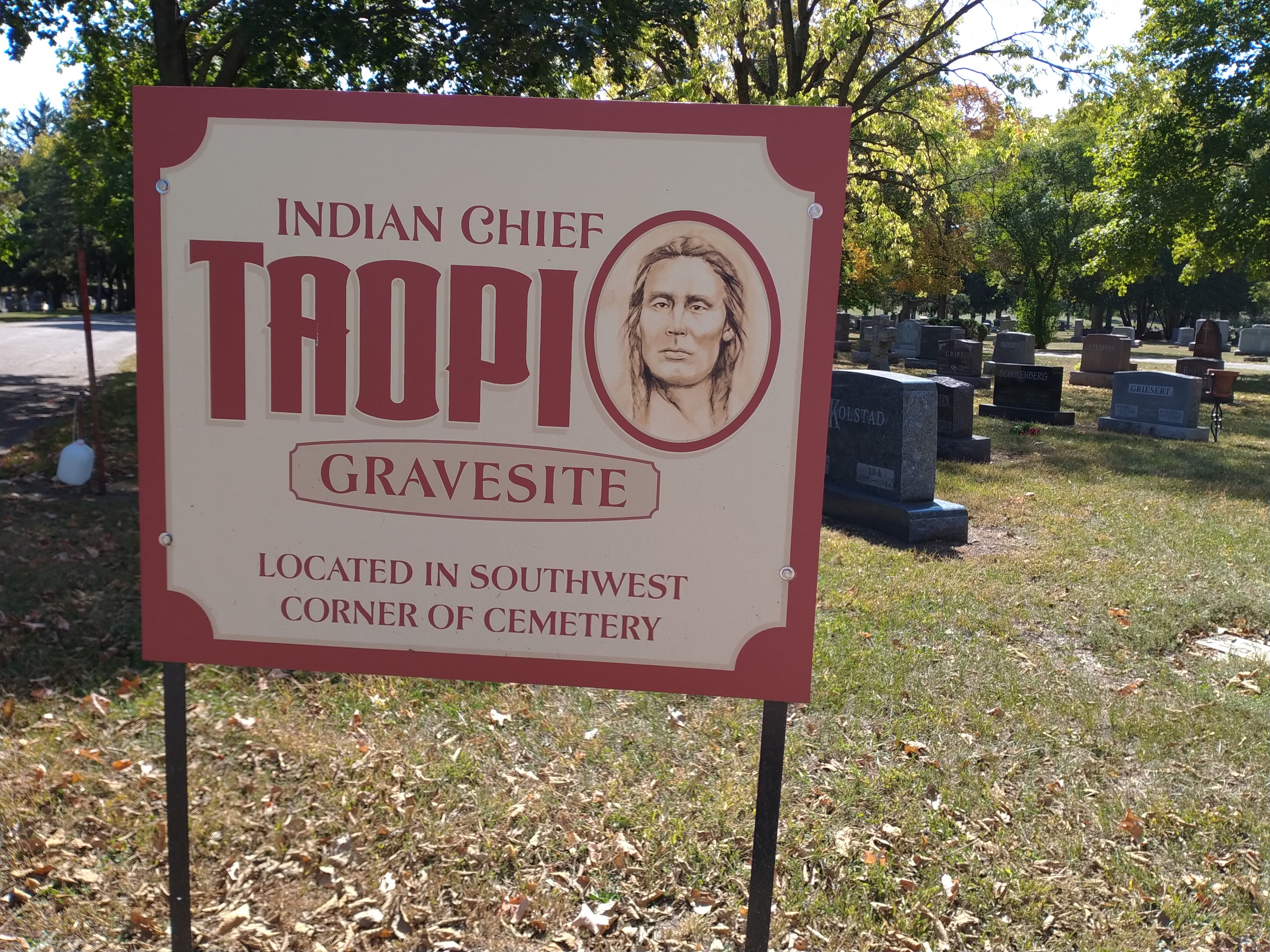
Chief Tapoi, a leader and member of the Little Crow Band of the Mdewakanton Dakota Tribe, lived in Faribault for a while and is buried at Maple Lawn Cemetery. (Minnesota Prairie Roots copyrighted file photo October 2023)
Jarvis is involved in the Faribault Dakota Project, a local endeavor that aims to increase awareness, visibility and knowledge of the original inhabitants of this land. To that end, presentations like his set during Heritage Days are important for locals to attend.
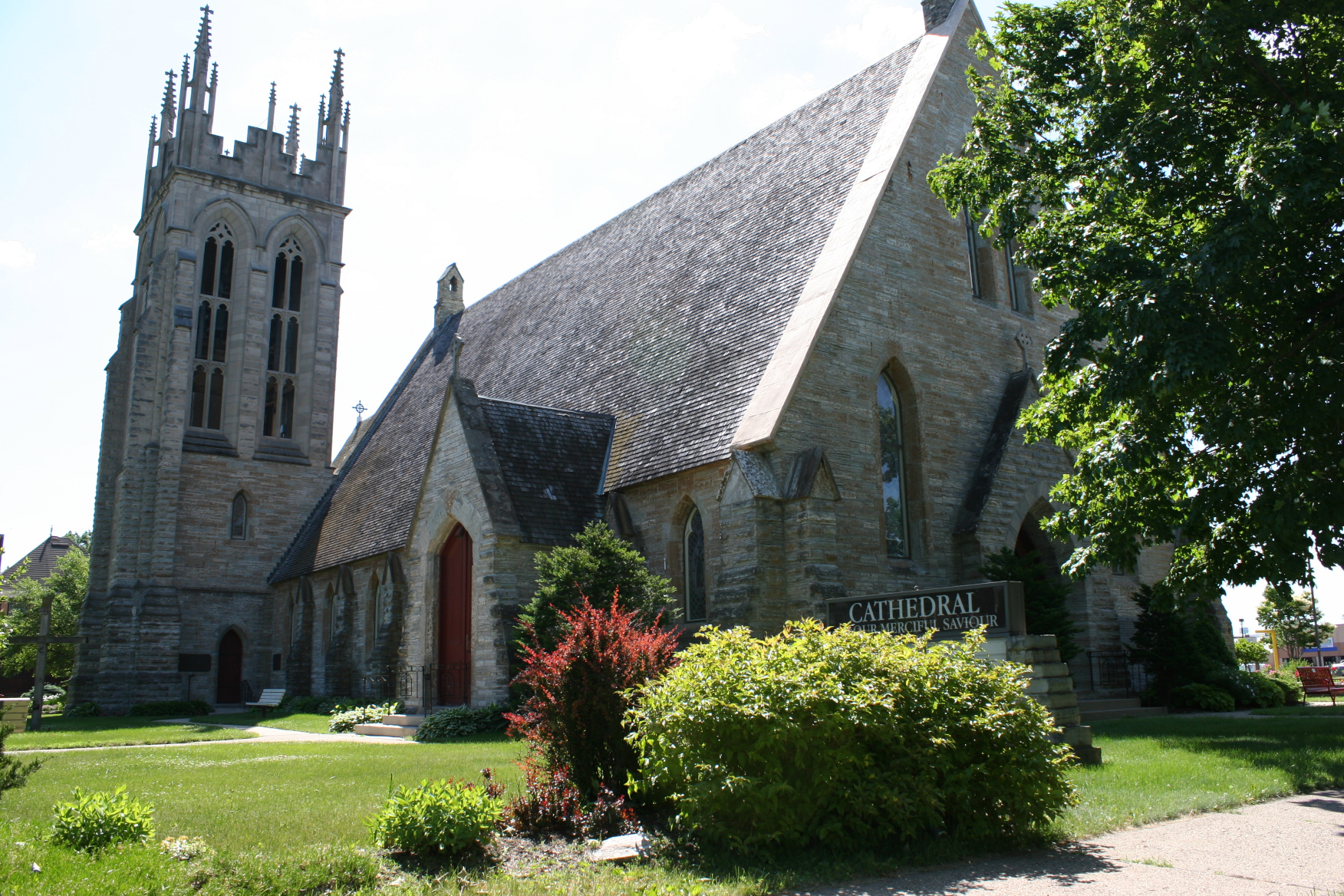
Just across the street from Central Park, the stunning Cathedral of Our Merciful Saviour.(Minnesota Prairie Roots copyrighted file photo)
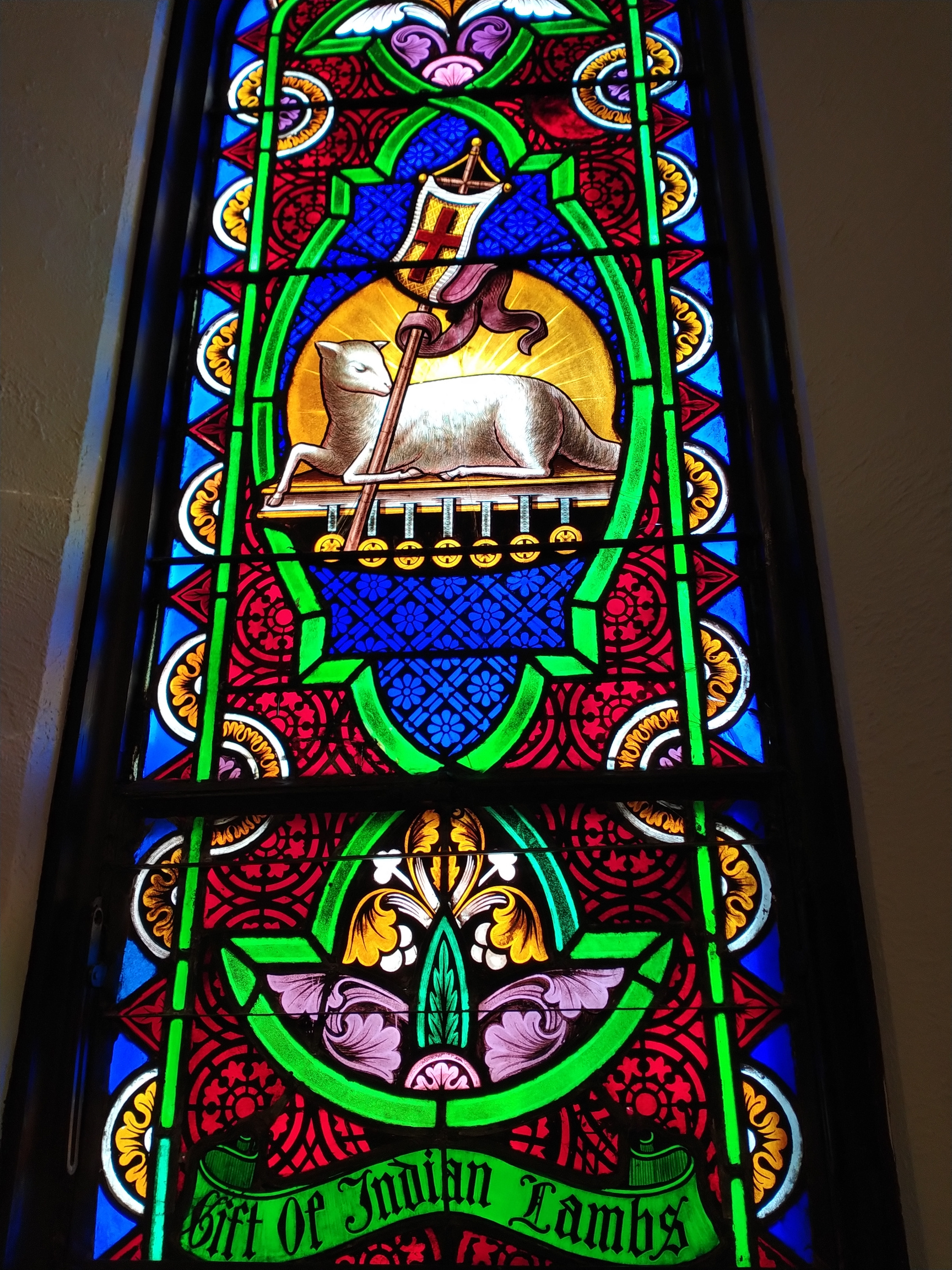
Likewise, free tours of the Cathedral at 11:30 a.m. Sunday, June 16, following a 10 a.m. ecumenical church service, likely will provide more information on the Wahpekute and their connection to Bishop Whipple and the massive limestone church. Several stained glass windows inside the sanctuary were gifted to the Cathedral by the Dakota.
This stained glass window was gifted by the Dakota to the Cathedral in honor of Dakota children. (Minnesota Prairie Roots copyrighted photo November 2023)
The Dakota and this house of worship, which focuses on connecting to the broader community, are such a vital part of Faribault’s history. That’s important to understand, to recognize, to honor no matter one’s heritage. I know locals who’ve lived here their entire lives and have never stepped inside the historic Cathedral. I find that almost unbelievable. We need to understand our past—our connections to peoples and land—to grow our future.
Concert promo courtesy of Jeff Jarvis, The Cathedral of Our Merciful Saviour.
TWO CONCERTS at two Faribault churches. Same day, November 5. Overlapping times. That’s the dilemma for someone like me who would like to attend both concerts Sunday afternoon in my community. Perhaps I can listen to an hour of one before dashing off to the second. Whatever I decide, I realize how fortunate we are to have these local musical offerings.
My friends Gary and Barb ring bells during a past Red Kettle Campaign in Faribault. (Minnesota Prairie Roots copyrighted file photo December 2013)
The first concert, featuring the music of the popular Jivin’ Ivan and the Kings of Swing, begins at 2 pm and continues until 4 pm at Hope United Methodist Church, 3166 197th St. E. It’s a benefit concert kick-off for the Salvation Army’s 2023 Red Kettle Campaign in Rice County. Donations will be accepted at the event. As someone who’s rung bells for the Salvation Army, I fully support this mission to help those in need within my county.
Inside The Cathedral of Our Merciful Saviour, where CVRO performs on Sunday. (Minnesota Prairie Roots copyrighted file photo 2010)
The second concert, “Atmospheres,” begins at 3 pm at The Cathedral of Our Merciful Saviour, 515 Second Ave. NW, across from Faribault’s Central Park. The Cannon Valley Regional Orchestra will perform in the historic cathedral, which has incredible acoustics. This free concert is part of the Merner Concert Series.
A highlight of Sunday’s orchestra concert is the world premiere of “Where the Waters Run,” a tone poem for harp and orchestra by Timothy Mahr featuring harpist Elinor Niemisto. Mahr is a retired professor of music at St. Olaf College, Northfield, and a renowned composer and conductor. Niemisto is also recently-retired from St. Olaf, but continues to teach harp at Carleton College across the river in Northfield.
Now…to try and make both concerts. Choosing one over the other is, well, simply too difficult.
A painting of Bishop Henry Whipple and information about him grace a mural on Faribaults’ Central Park Bandshell. (Minnesota Prairie Roots copyrighted file photo June 2020)
He was known as “Straight Tongue” for his honesty. He was disparagingly called “The Sympathizer” by others for the compassion and care he held for the Dakota. He was Bishop Henry Whipple.
Thursday evening, Rice County Historical Society Executive Director David Nichols spoke to a packed room about this Episcopal priest who played such a pivotal role in Minnesota history, specifically during the time shortly before, and then after, The U.S.-Dakota War of 1862. For me, personally, Nichols’ focused talk connected my home region of Redwood County, the area in which the war centered, to my home of 40 years, Rice County.
I grew up with a limited (white) perspective of the war with no knowledge of Whipple. I only learned of this New York born clergyman upon my move to Faribault in 1982. Nichols broadened my understanding during his presentation and during a question and answer session that followed.
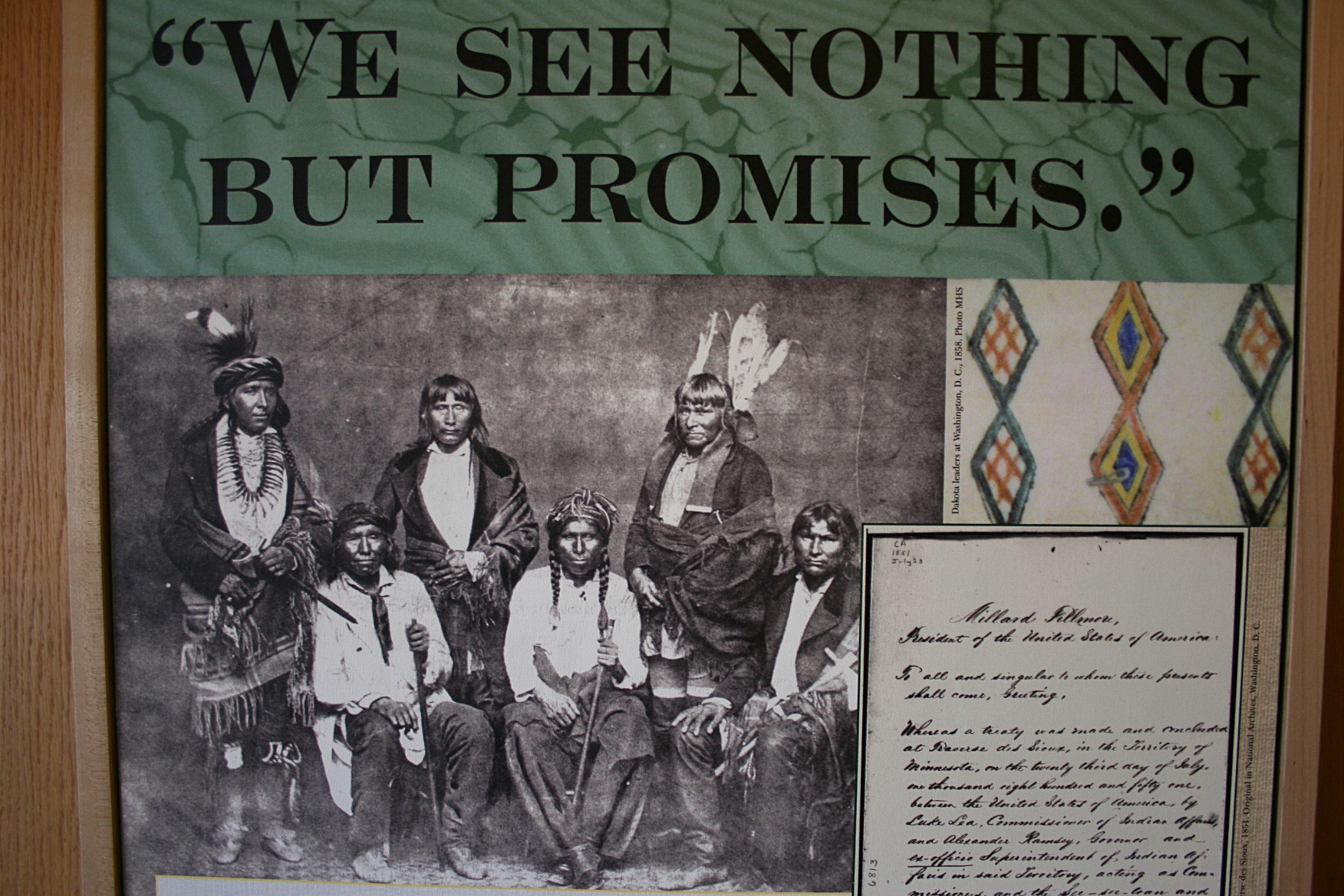
A panel at the Traverse des Sioux Treaty Center in St. Peter shows Dakota leaders photographed in Washington D.C. in 1858. The photo is from the Minnesota Historical Society. It references broken treaty promises and rising tension. (Minnesota Prairie Roots copyrighted file photo)
HIGH TENSIONS
Whipple arrived here in 1860 as the newly-elected Bishop of Minnesota, settling in Faribault. Already at that time, tensions were mounting among settlers and the first peoples of Minnesota, Nichols said. Tensions also existed between the “Farmer Indians” (those who adapted to Euro culture) and “Blanket Indians” (who maintained their Native culture, traditions and lifestyle). Conditions on reservations were terrible with disease, starvation, and dishonest agents failing to provide promised government annuities.
That is the situation Whipple found when he landed in Minnesota. It was a time, noted Nichols, of “tensions about to boil over.” And eventually they did with the outbreak of war in August 1862. It was a decidedly bloody and awful war, as all wars are. Some 600-800 died and the Dakota were eventually displaced from their land.
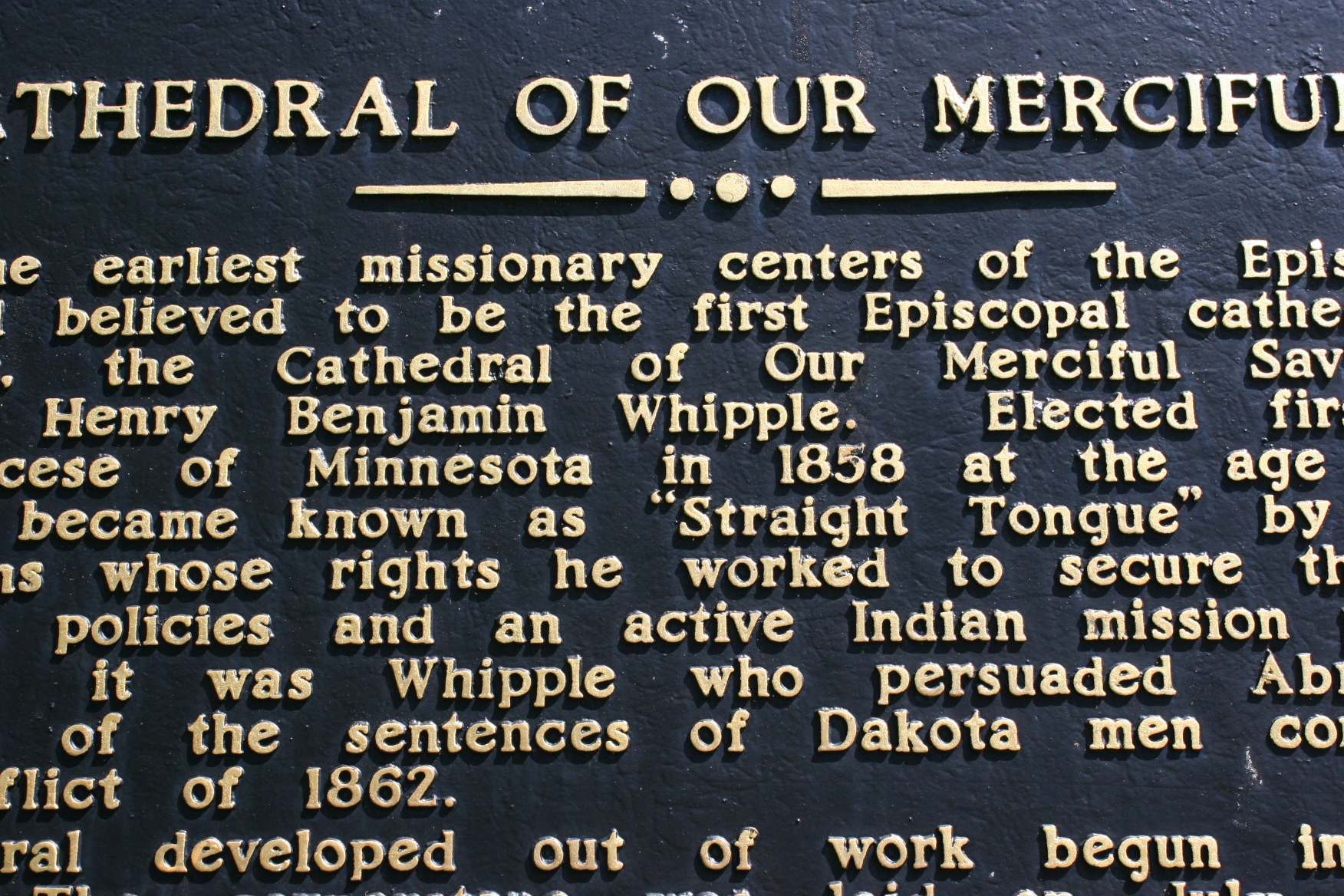
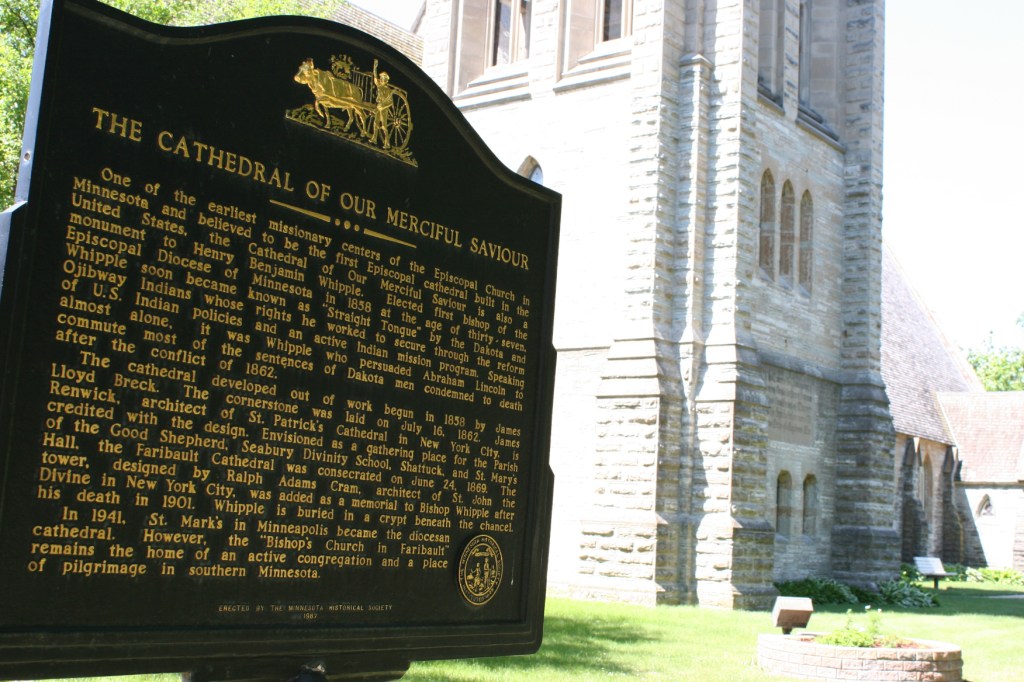
Details on a sign outside The Cathedral of Our Merciful Saviour, Whipple’s church in Faribault. (Minnesota Prairie Roots copyrighted file photo 2020)
THE SHAPING OF A HUMANITARIAN
To understand Whipple’s position and part in this, Nichols provided background. Whipple was involved in New York politics as a “conservative Democrat,” a term which drew laughter from the crowd at Thursday’s presentation. He briefly attended Oberlin College, notable because the college was among the earliest to admit women and African Americans. And Whipple was ordained in 1849, during the so-called “Second Great Awakening” with a focus on civil rights.
Learning this helped me better understand the bishop. All of these experiences shaped a man who spoke with honesty and compassion, advocated for Minnesota’s Indigenous Peoples (both the Dakota and the Ojibwe, natural enemies), called for reform and peace and understanding. Whipple was, said Nichols, a voice for calm, calling for justice, not vengeance, when the short-lived U.S.-Dakota War ended.
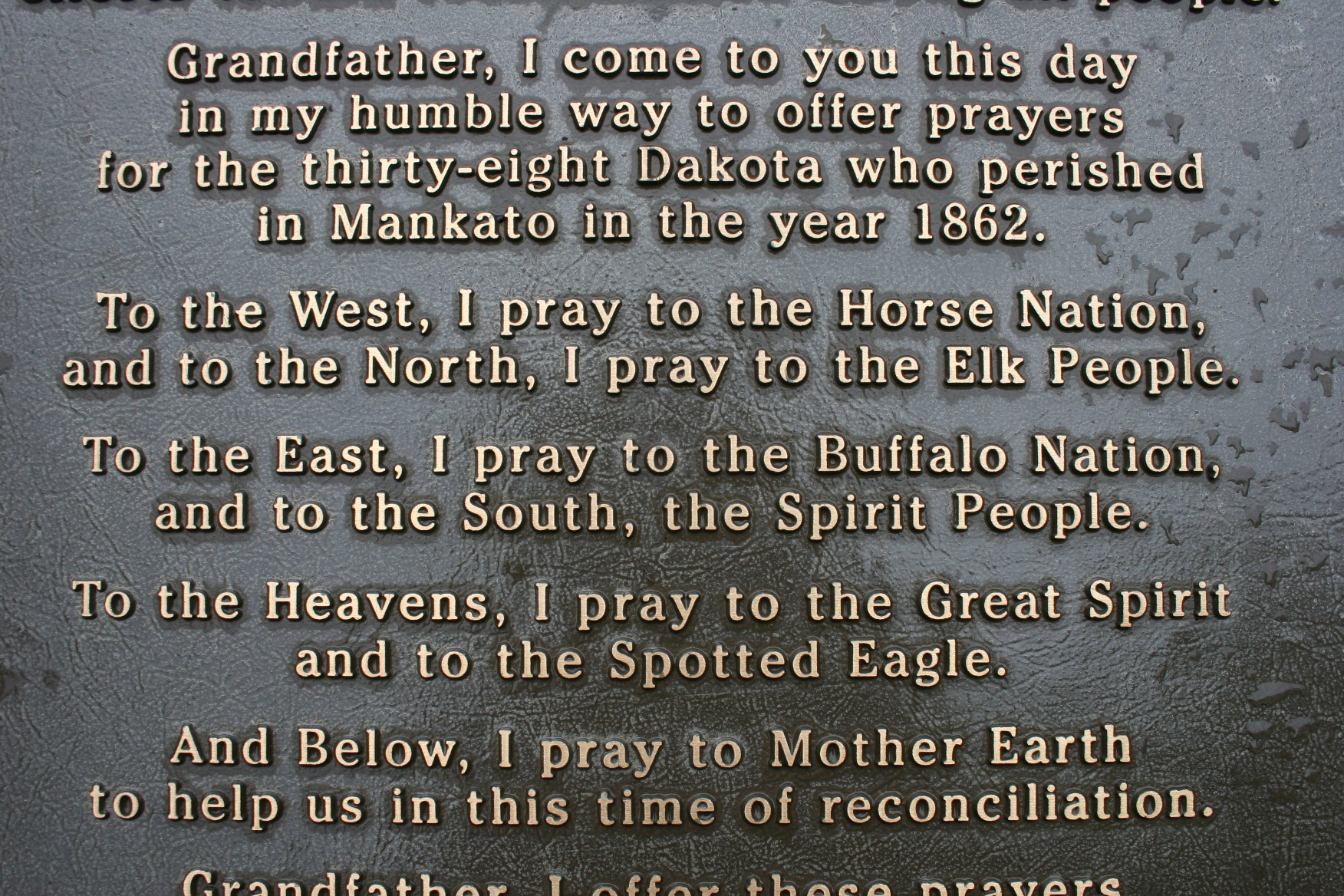
Words on a marker in Reconciliation Park in Mankato where 38 Dakota + 2 were hung on Dec. 26, 1862. (Minnesota Prairie Roots copyrighted file photo May 2012)
ADVOCATING FOR PARDONS
In his many years of missionary work and advocacy, even when his life was threatened by those who viewed him as an “Indian sympathizer,” one singular moment stands out to me. And that is Whipple’s efforts to save the lives of 303 Dakota men sentenced to death after the war. He met with President Abraham Lincoln and was “partly responsible,” Nichols said, for Lincoln’s eventual pardon of all but 38 Dakota. The 38, plus two others, were hung in a public mass execution in Mankato on December 26, 1862. It is a terrible and profoundly awful moment in Minnesota history, especially the history of the Dakota.
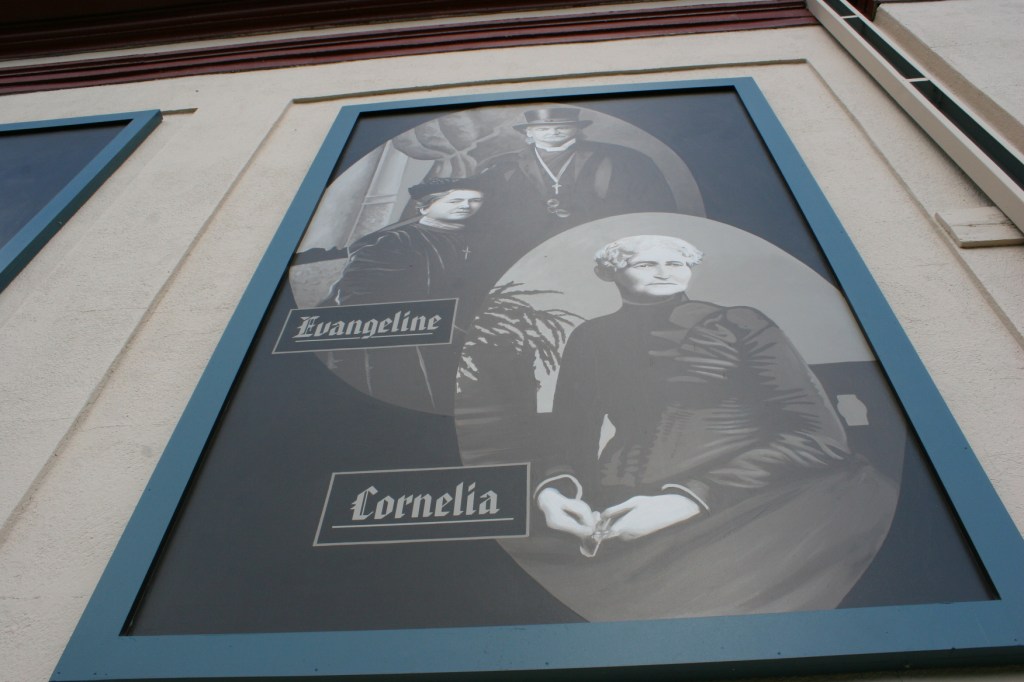
A full view of the bandshell mural featuring Bishop Whipple and his first wife, Cornelia, and his second wife, Evangeline. (Minnesota Prairie Roots copyrighted file photo)
ASSIMILATION
While listening to Nichols’ presentation on Whipple, I felt conflicted. Conflicted because the bishop was, he said, “a strong assimilationist.” That label bothered me until I talked further with Nichols. He explained that Whipple did not view himself and Europeans as superior to Native Peoples, but rather observed, in the context of place and time and thinking, the need to adapt versus being driven out. That helped me better understand Whipple’s approach. I recognize, though, and acknowledge the current-day struggles with assimilation, especially as it relates to Indian boarding schools. I appreciate the recognition of, and return to, culture, tradition and heritage today.
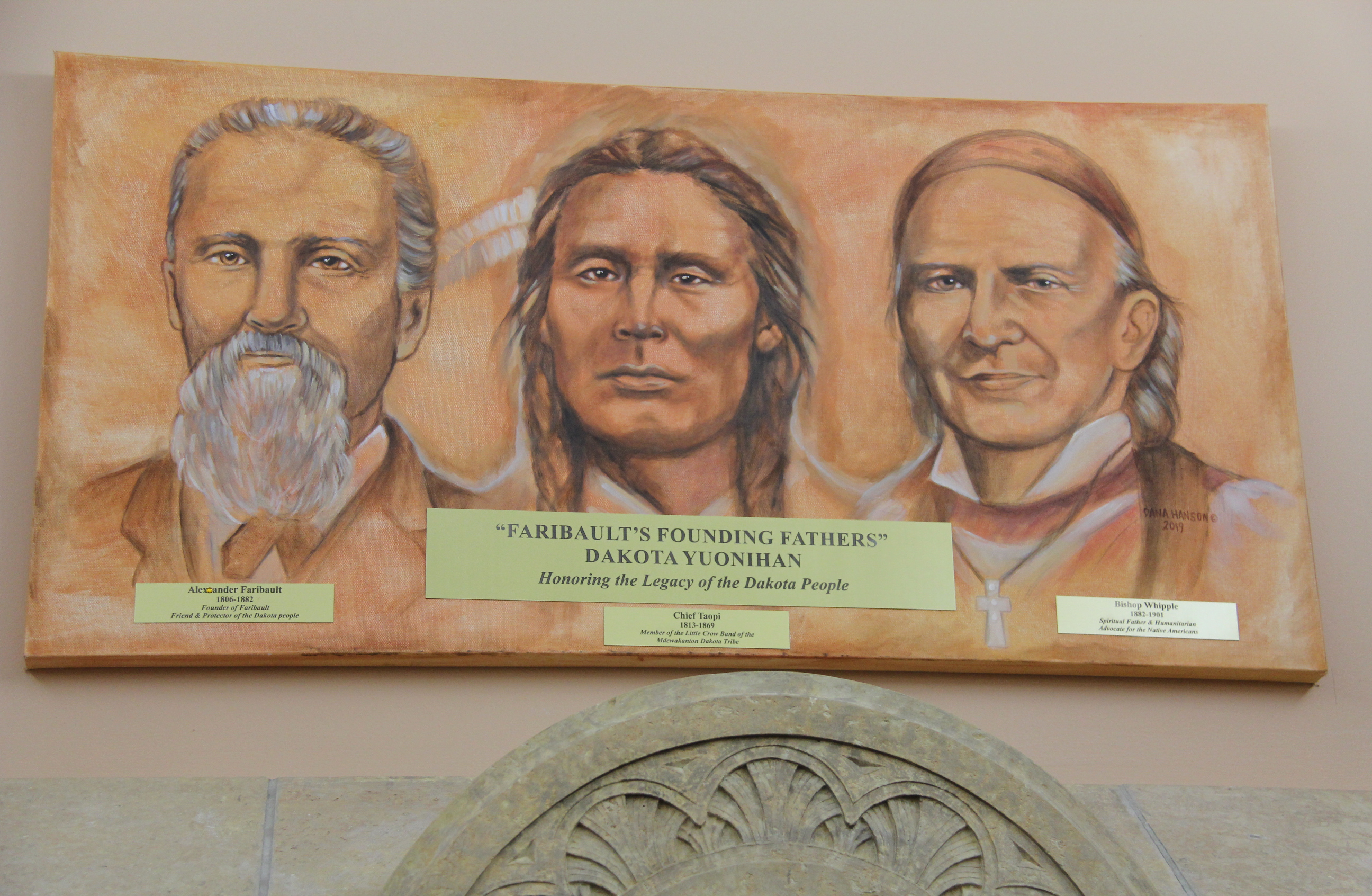
“Faribault’s Founding Fathers,” portraits of Alexander Faribault, left to right, Chief Taopi and Bishop Henry Whipple, by Dana Hanson hangs in Faribault’s Buckham Memorial Library. (Minnesota Prairie Roots copyrighted file photo November 2022)
WELCOMING THE DAKOTA TO FARIBAULT, OR NOT
Whipple, by his words and actions, embraced the Dakota and Ojibwe who called Minnesota home long before white settlers arrived, long before he moved to Faribault. My community, founded by fur trader Alexander Faribault, himself half Dakota, was a safe haven for the Dakota (“you don’t attack family”) during the 1862 war and thereafter, Nichols said. Faribault and Whipple worked together to move 180 Dakota from St. Paul’s Fort Snelling, where they were held following the war, to live on land Alexander owned along the Straight River in Faribault.
I wondered, “Were they welcomed here?” The answer, given by former RCHS Executive Director Susan Garwood, was as I expected. Mixed. While some supported the Dakota’s presence in Faribault, others were vocal in their opposition. In that moment, I thought of our ever-growing immigrant population in my community. Many welcome our newest neighbors and, like Alexander Faribault and Bishop Henry Whipple, support and encourage them. But many also want them gone. History repeats.
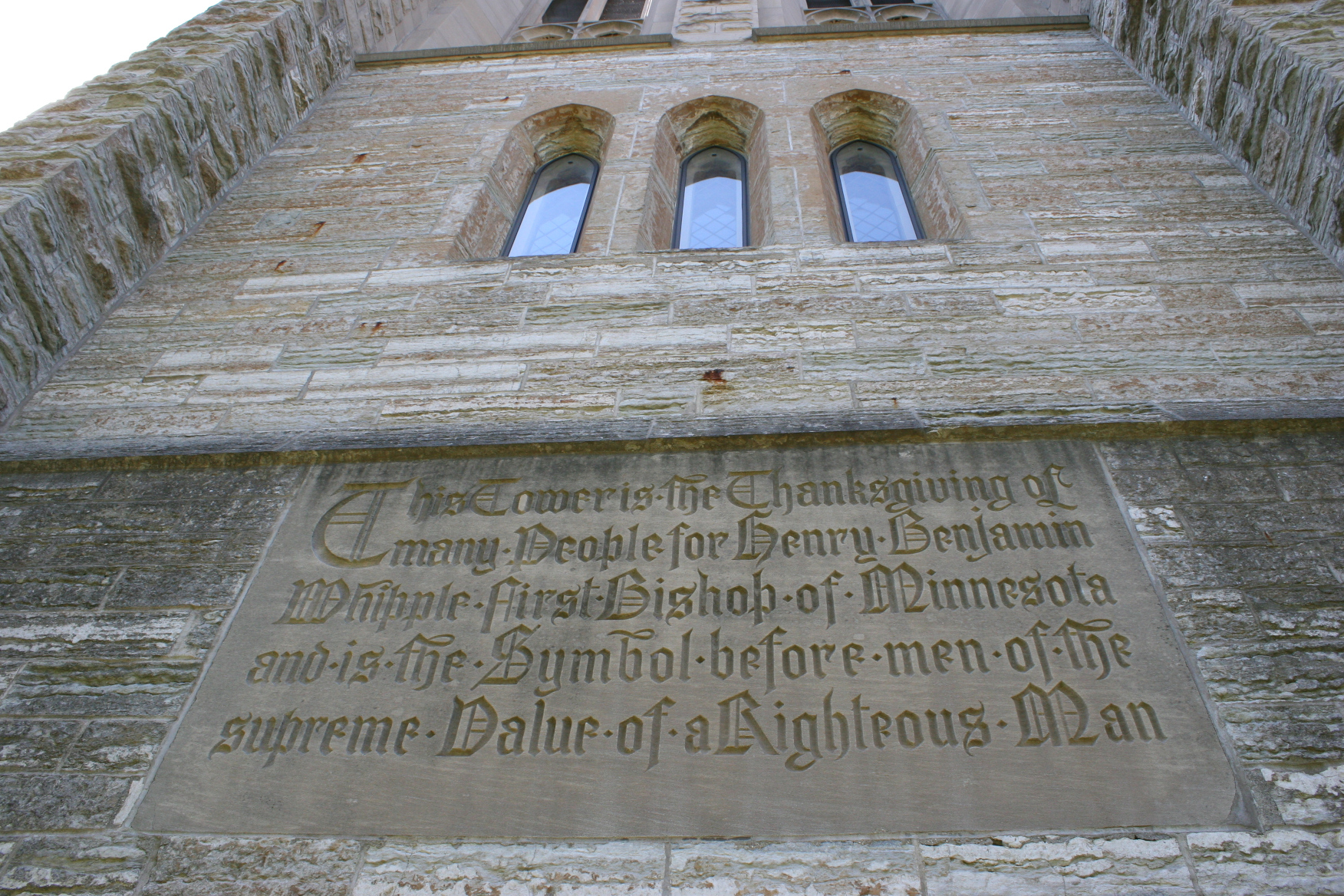
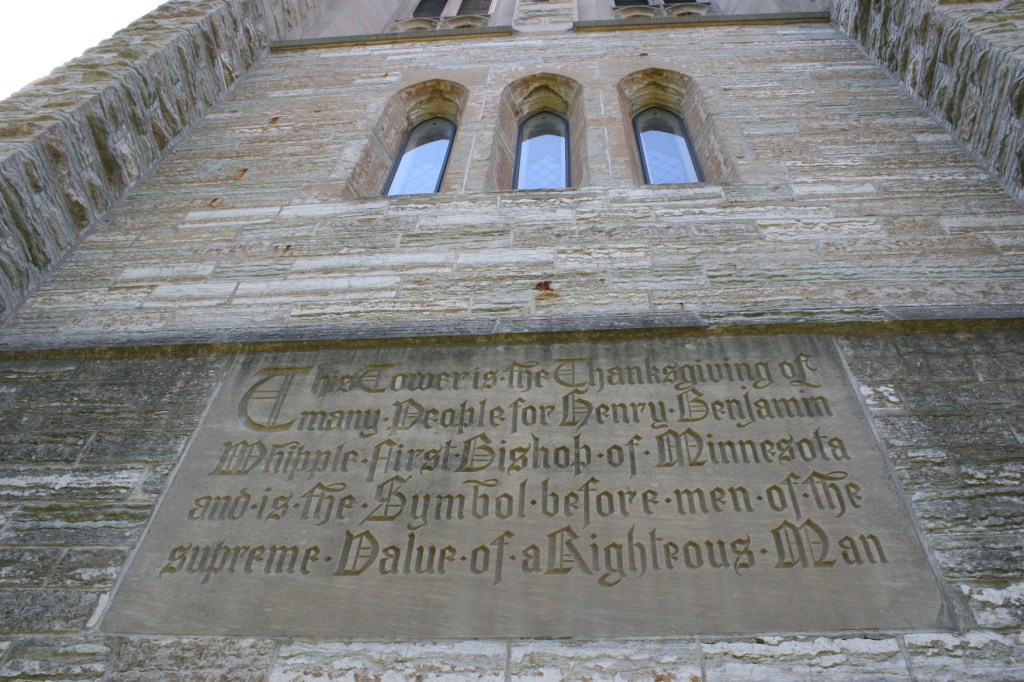
An inscription honors Whipple on the Cathedral bell tower. (Minnesota Prairie Roots copyrighted file photo June 2020)
MARKING HISTORY
Walk around Faribault today and you will see many reminders of the work Whipple did not only locally, but across Minnesota. Historical markers and inscriptions about the bishop grace The Cathedral of Our Merciful Saviour, his faith base. He’s buried under the altar there. Across the street at Central Park, Whipple-themed murals cover the west side of the historic bandshell. Downtown, one of many history-focused benches honors Whipple. And across town, at the Chapel of the Good Shepherd on the campus of Shattuck-St. Mary’s School, a marker notes his role in founding Shattuck and other schools in Faribault.
Efforts are underway now locally to recognize the Dakota as well, to publicly mark their place in the history of Faribault. I’d like to think Bishop Henry Whipple, also known as “Straight Tongue” and “The Sympathizer,” would welcome the idea, would even step up to fund raise, just as he did some 160 years ago to support the relocation of 180 Dakota from Fort Snelling to Faribault.
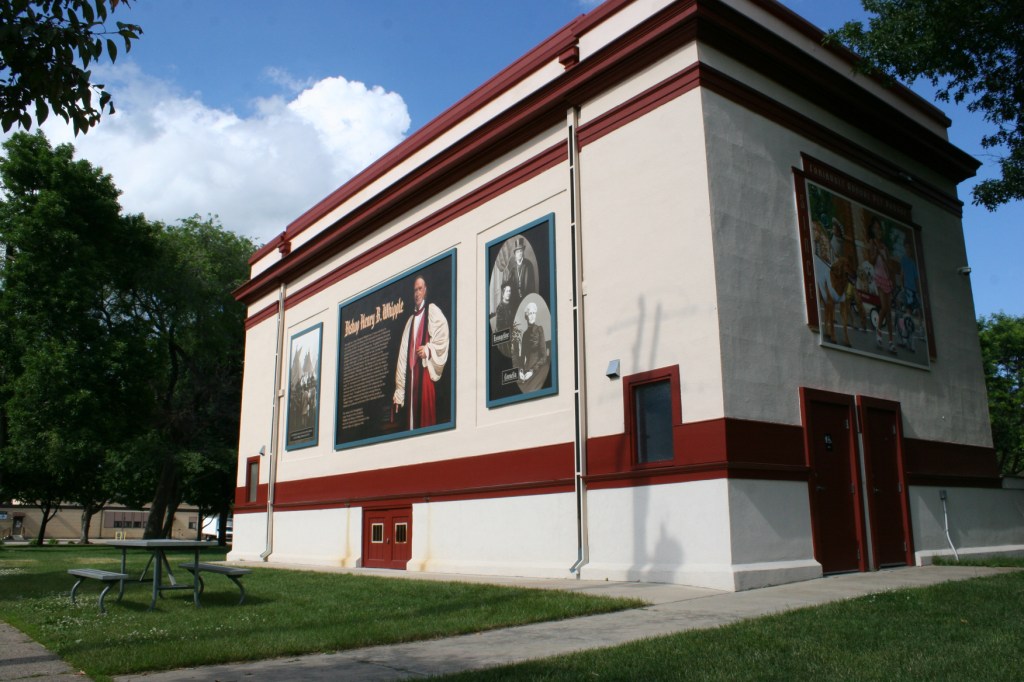
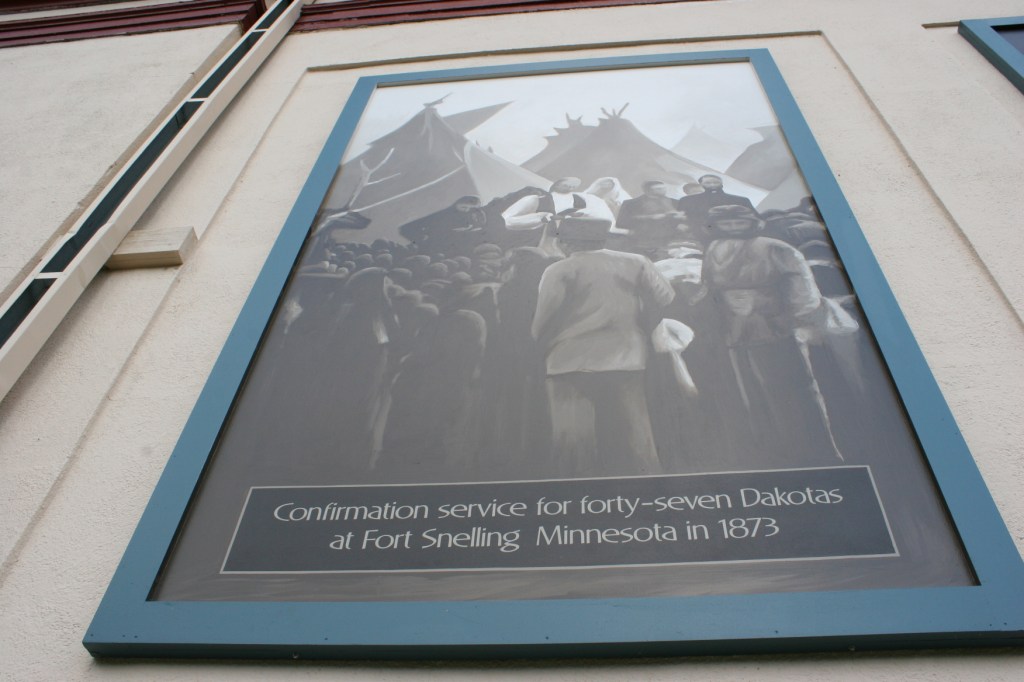
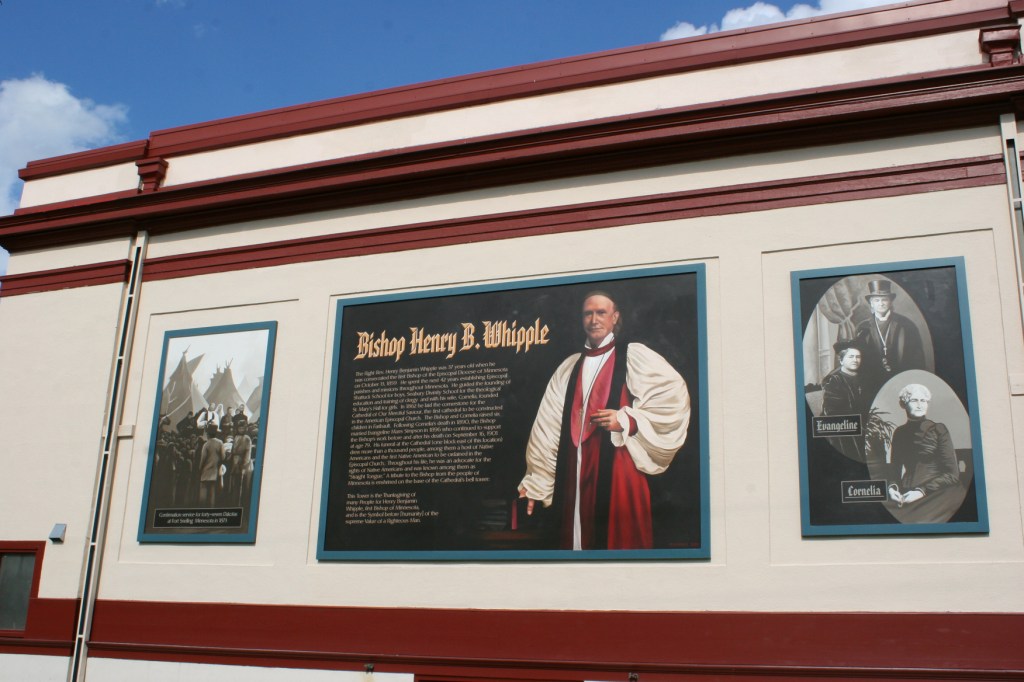
The Central Park Bandshell mural on the left honors Bishop Henry Benjamin Whipple. The one to the right features the Faribault Pet Parade and was placed there several years ago.
THE RECENT INSTALLATION of an historic-themed mural on the west side of the Central Park Bandshell in Faribault prompted me to look more closely at the man featured thereon—Bishop Henry Whipple.
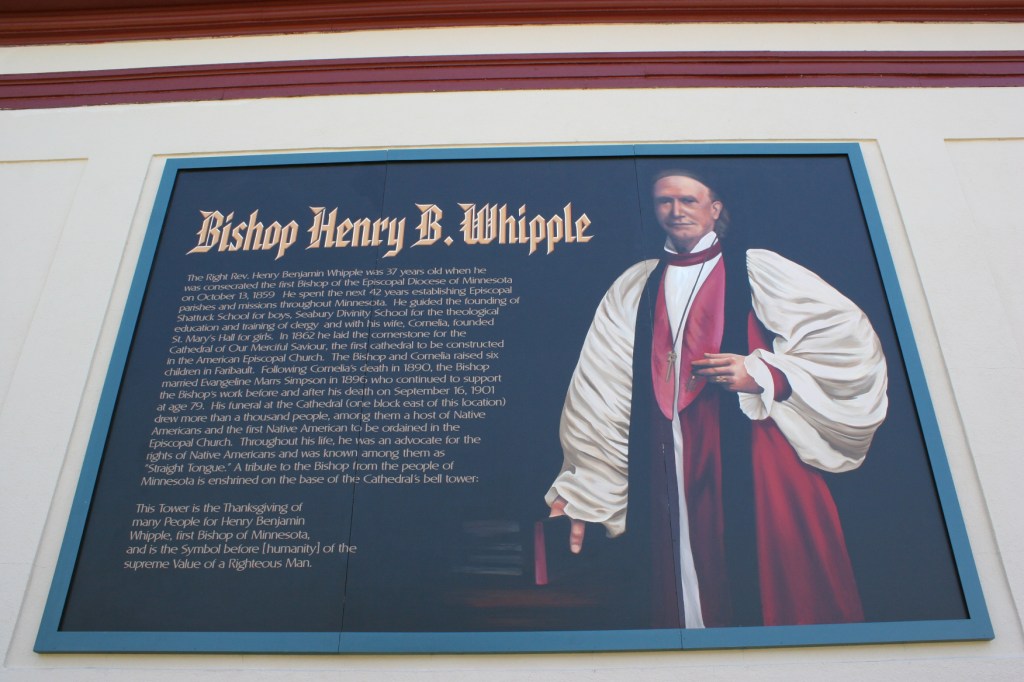
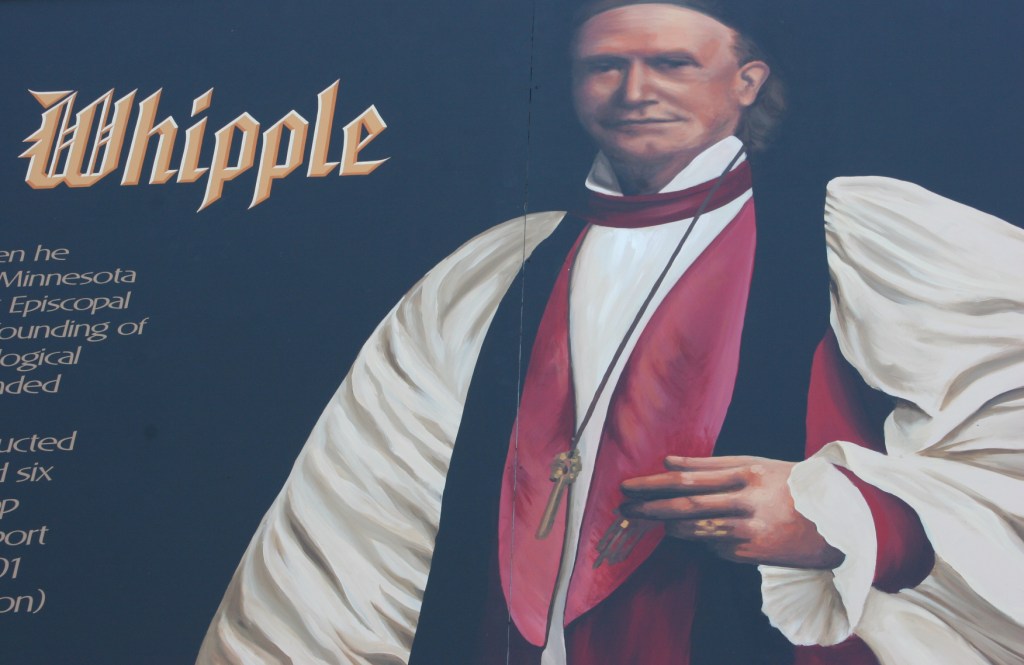
The middle mural panel features a portrait of Bishop Whipple and a summary of information about him.
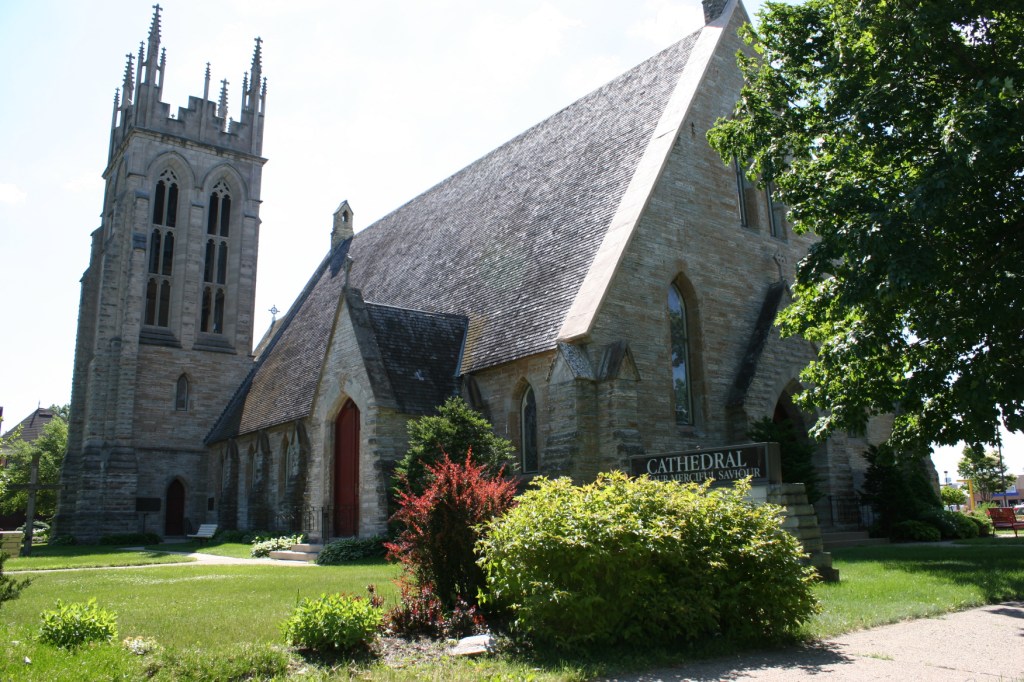
Just across the street from Central Park, the stunning Cathedral of Our Merciful Saviour.
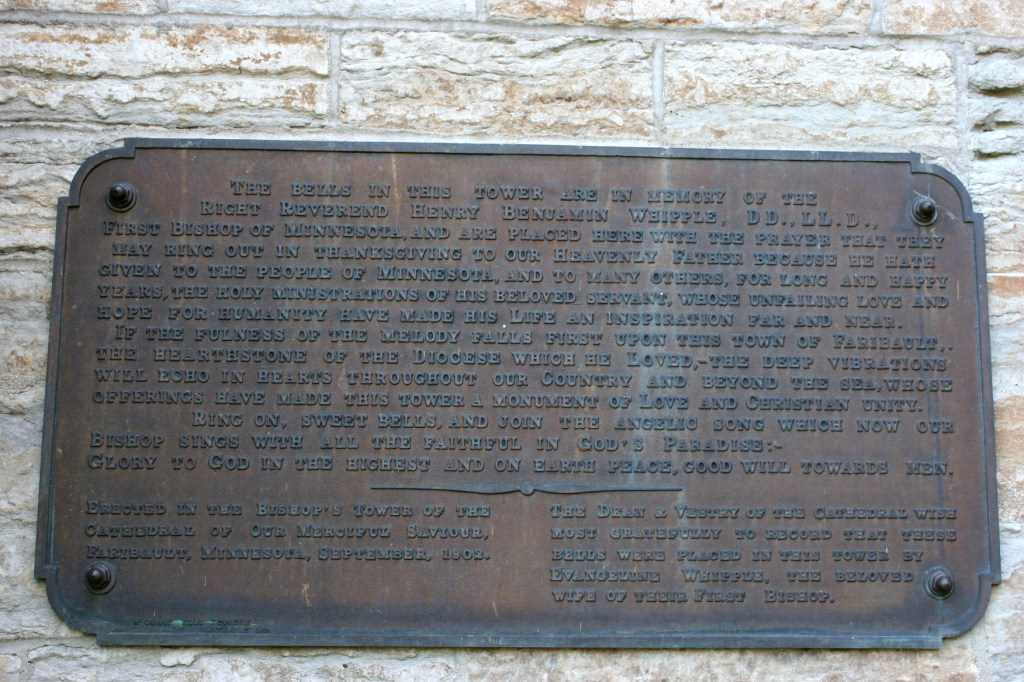
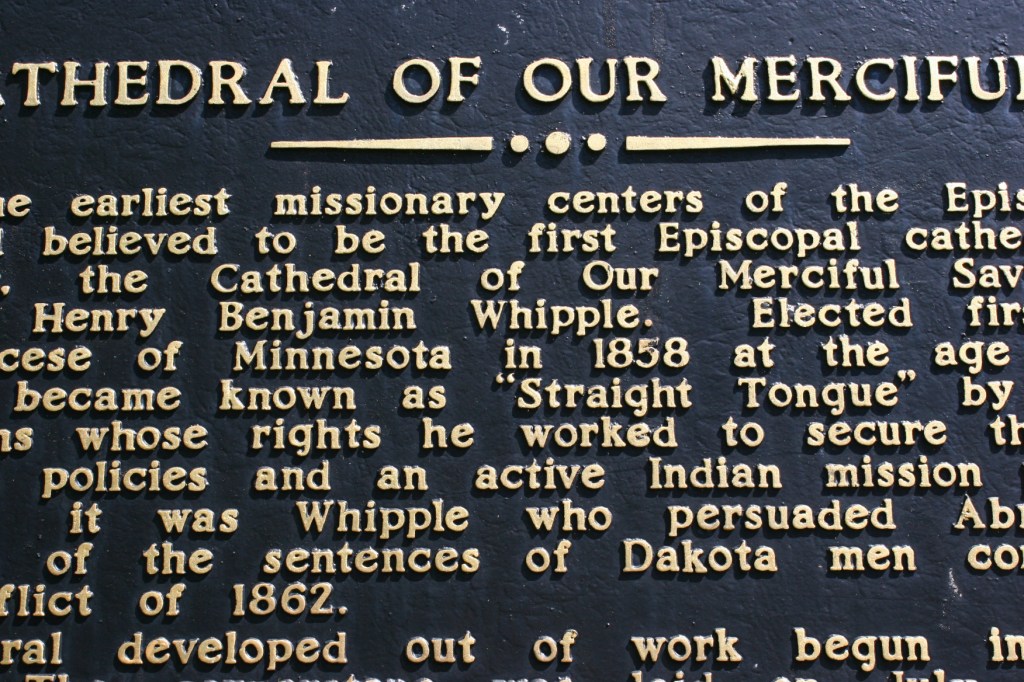
The historic marker posted on the Cathedral bell tower.
He is a prominent figure in the history of my community and the history of Minnesota. Explore Faribault, and you will find Whipple’s name on numerous plaques, including across the street from the park at the Cathedral of Our Merciful Saviour, the cathedral he helped build as Minnesota’s first Episcopal bishop. He’s buried in a crypt beneath the chancel there. The bell tower was dedicated in his honor by his second wife, Evangeline, as “a monument of love and Christian unity.”
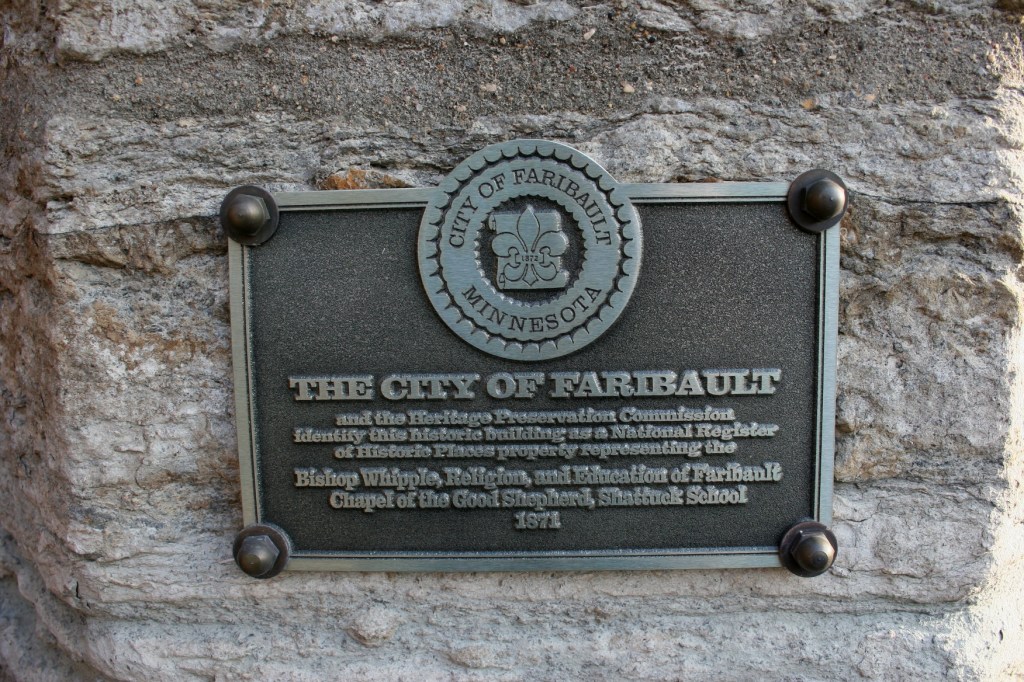
Posted outside the front door of the Chapel of the Good Shepherd. The church is on the National Register of Historic Places. Minnesota Prairie Roots file photo.
On the east side of town, Whipple’s name graces an historical marker at The Chapel of the Good Shepherd on the campus of Shattuck-St. Mary’s School. He helped found the school, separately first as Shattuck School for boys and St. Mary’s Hall for girls, along with St. James and Seabury Divinity schools, all in Faribault.
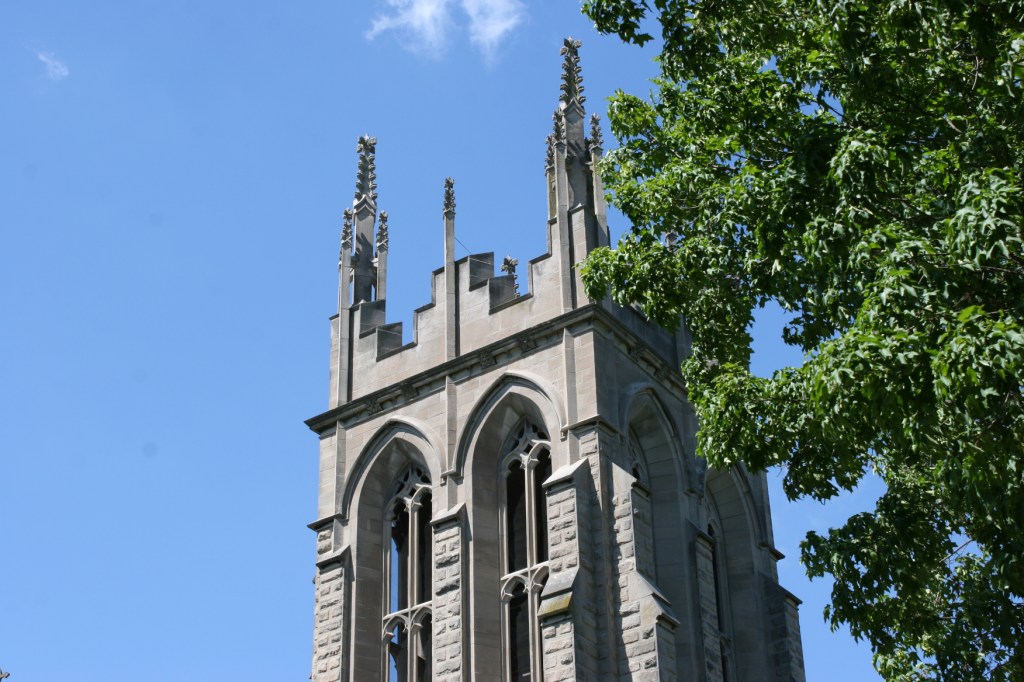
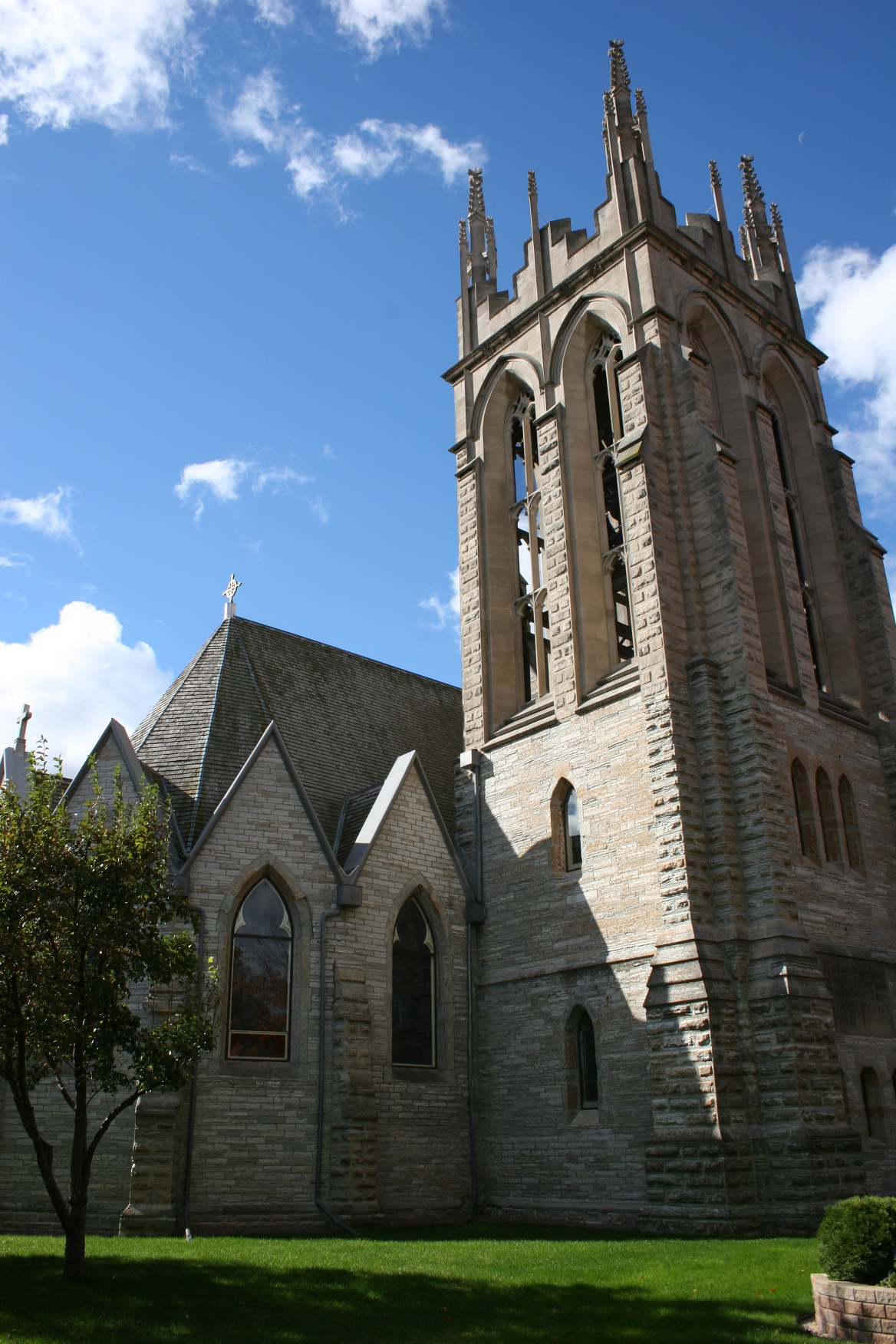
The soaring tower landmarks the Cathedral. Ralph Adams Cram, architect of St. John the Divine in New York City, designed the Cathedral tower. The tower was added as a memorial to Whipple after his death in 1901.
The inscription, in stone, on the bell tower.
An historic marker on the Cathedral grounds.
As admirable as Whipple’s role in founding educational institutions, it is another facet of this man—his humanitarian efforts—which are often cited in history. The inscription on the Cathedral bell tower states that Whipple’s “unfailing love and hope for humanity have made his life an inspiration far and near.”
This panel depicts the relationship between Native peoples and Bishop Whipple.
Bishop Whipple’s portrait, up close.
Details on a sign outside the Cathedral reference Whipple as “Straight Tongue.”
What, exactly, does that mean? To understand, one must consider the time period in which Whipple arrived in Minnesota, just years before the U.S.-Dakota War of 1862. He was a missionary and, as such, worked to educate and convert the Native peoples to Christianity and agrarian ways. (Not necessarily the adaptive approach one would take today toward other cultures, but the mindset then.) In his work, Whipple observed poverty among the Dakota and Ojibwe and mistreatment by the government and began to advocate for their rights. The Native peoples called the bishop “Straight Tongue.” That title speaks to their trust and respect for him.
The mural, in full, including the right panel recognizing Whipple and his first wife, Cornelia, and his second wife, Evangeline.
Whipple was among the few leaders who publicly pressed for sparing the lives of 303 Dakota warriors sentenced to death following the war. President Abraham Lincoln spared or pardoned most, but 38 were still hung during a mass execution in Mankato.
Whipple’s strong public stances on behalf of Native peoples were not necessarily widely-embraced. Rice County Historical Society Executive Director Susan Garwood shared at a presentation I attended several years ago that several assassination attempts were made on the bishop’s life. Following the U.S.-Dakota War, about 80 Native people, under Whipple’s protection, moved to Faribault. Some helped build the Cathedral, a construction process which took from 1862-1869. Additionally, several Dakota and African Americans attended Seabury Divinity School, Garwood noted. That, too, caused concern.
The Whipples.
But through it all, from the information I’ve read, Whipple remained steadfast, unwavering in his compassion toward Native peoples, advocating for them, loving humanity.
I WATCHED AS THEIR crooked arms worked the bows back and forth, mostly gliding, sometimes slowing in almost robotic jerks, across the violins tucked under their chins.
All the while the music flowed—soft and soothing, other times bursting into crescendos of triumph and power.
The rhythm, the tones, the movement mesmerized me as only classical music can.
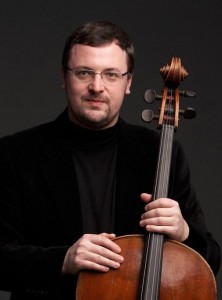
For the first time ever Thursday evening, I attended an orchestra concert. And let me tell you, this performance by the Minnesota Sinfonia, with featured soloist Dmitry Kouzov on the cello, rated as outstanding.
Not that I have anything with which to compare the performance or even a musical background to rate it—I don’t play an instrument nor can I read a musical note. But that matters not. The music moved me, engaged me, transported me.
When Kouzov, an International Beethoven Competition winner, settled into his chair at the historic Cathedral of Our Merciful Saviour in Faribault, his very presence commanded respect. Those of us in the audience knew we were about to hear something truly magical from this cellist who has performed with orchestras like the St. Petersburg Symphony and the National Symphony of Ukraine.
And we did. To watch Kouzov work his cello, to hear sounds ranging from almost ear-hurting shrills to the deepest of depths, impressed. I heard trilling birds and tin cans kicked along a rocky road and imagined immigrants journeying across the Minnesota prairie.
My husband, sitting next to me on the pew in this 150-year-old cathedral, thought cartoon music. I understand his perspective. But I tend to think more in poetic terms. That’s the beauty of music—it is open to interpretation based on individual experiences, personality and perceptions.
I was simply thankful the music and the brooding darkness and warmth of the sanctuary did not lull my husband asleep during the 1 ½ hour Valentine’s Day evening concert. That this chamber orchestra held the interest of an automotive machinist who prefers the likes of Fleetwood Mac, The Moody Blues and Charlie Daniels to classical music should impress you.
The Cathedral of Our Merciful Saviour, shown here in a file photo, offers wonderful acoustics for a concert.
Mostly, I was thankful for the opportunity to attend a concert of this caliber in my community and at no cost. Minnesota Sinfonia, a non-profit whose mission is “to serve the musical and educational needs of the citizens of Minnesota, especially families with children, inner-city youth, seniors and those with limited financial means,” performs all concerts free of charge. The Sinfonia receives support in part from the National Endowment for the Arts and the Minnesota Clean Water, Land & Legacy Amendment.
Faribault’s Shattuck-St. Mary’s School and The Catherdral of Our Merciful Saviour collaborated to bring the Sinfonia to Faribault as part of Shattuck’s Fesler-Lampert Performing Arts series.
The historic Cathedral of Our Merciful Saviour in Faribault. File photo.
I appreciate that this group of professional musicians took their concert outside of the Twin Cities metro area. Outstate Minnesota needs more exposure like this to the performing arts. As I listened, I thought how much my 80-year-old mom, who lives in rural southwestern Minnesota, would enjoy a concert like this. And I wondered why my community of 23,000 could not fill this sanctuary to overflowing for this spectacular free concert of classical music. Next time…
The Minnesota Sinfonia will present two free concerts this weekend in the Twin Cities. A performance is set for 7 p.m. Friday, February 15, in Founders Hall at Metropolitan State University, 700 East 7th Street, St. Paul.
At 4 p.m. on Sunday, February 17, Minnesota Sinfonia will perform at Temple Israel, 2324 Emerson Avenue South, Minneapolis.
Early arrival is recommended at both venues. I’d suggest you search online for more info about these concerts if interested in attending.
(Because The Cathedral of Our Merciful Saviour is especially dark and because photos were not allowed during the performance, I did not take my camera to the concert.)
I GREW UP WITH DIRT under my fingernails, banishing weeds from the garden and then, later, harvesting and preparing veggies to eat fresh or preserve.
My mom canned some, froze some, storing away freezer boxes plump with green beans and beets, corn and other vegetables.
She also preserved fruit in quart jars, with the assistance of us kids, for the long Minnesota winter ahead. Applesauce and cherries. Peaches and pears.
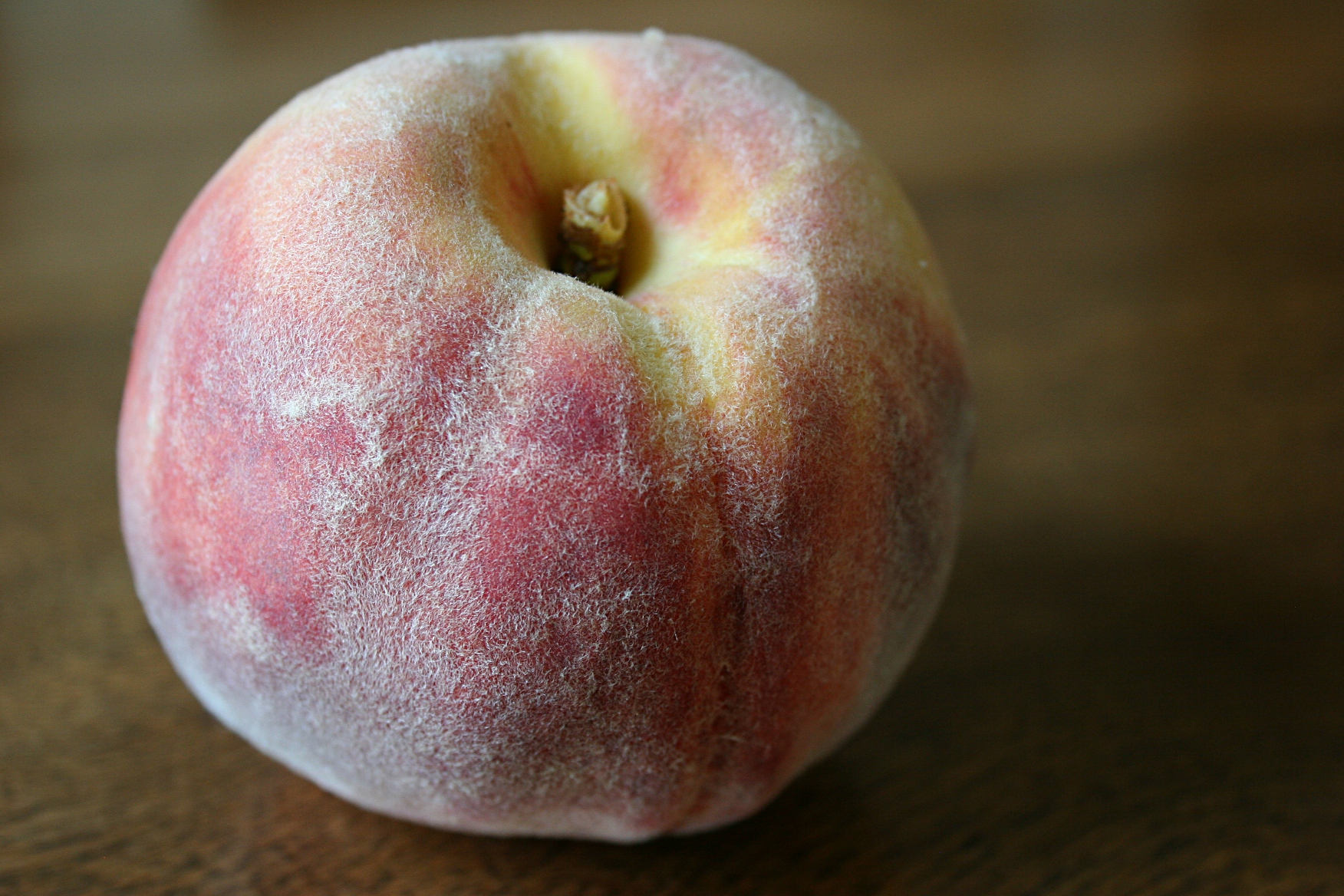
A juicy Colorado peach, from which I must remove the skin because I can’t tolerate the fuzz (feels like a cotton ball) in my mouth.
And then, on a brisk winter evening, when Dad was about to come in for supper after finishing barn chores, she would lift the trap door in the kitchen and send one of us clomping down the creaky, rugged wooden steps to the dirt-floored cellar for a jar of sauce. Dessert. I would tug on the frayed cotton string to switch on the single bare light bulb. Then I would tiptoe reach for a jar of my favorite cherries or peaches.
We got a single box of freshly-picked Colorado peaches. When I was growing up, the peaches came in a wood-slat box that was nailed shut. Each peach was wrapped in tissue paper, which we recycled for use in the outhouse.
Those were my thoughts on Saturday when my husband and I picked up a 20-pound crate of peaches I’d ordered several weeks ago through the Cathedral Community Cafe, a Faribault soup kitchen which every Tuesday offers a free meal to those in need and/or seeking fellowship.
It is a worthy cause with some 9,000 dinners served in 2011 and averaging 150 a week this year. The effort involves about 140 volunteers, 12 churches and four teams of workers.
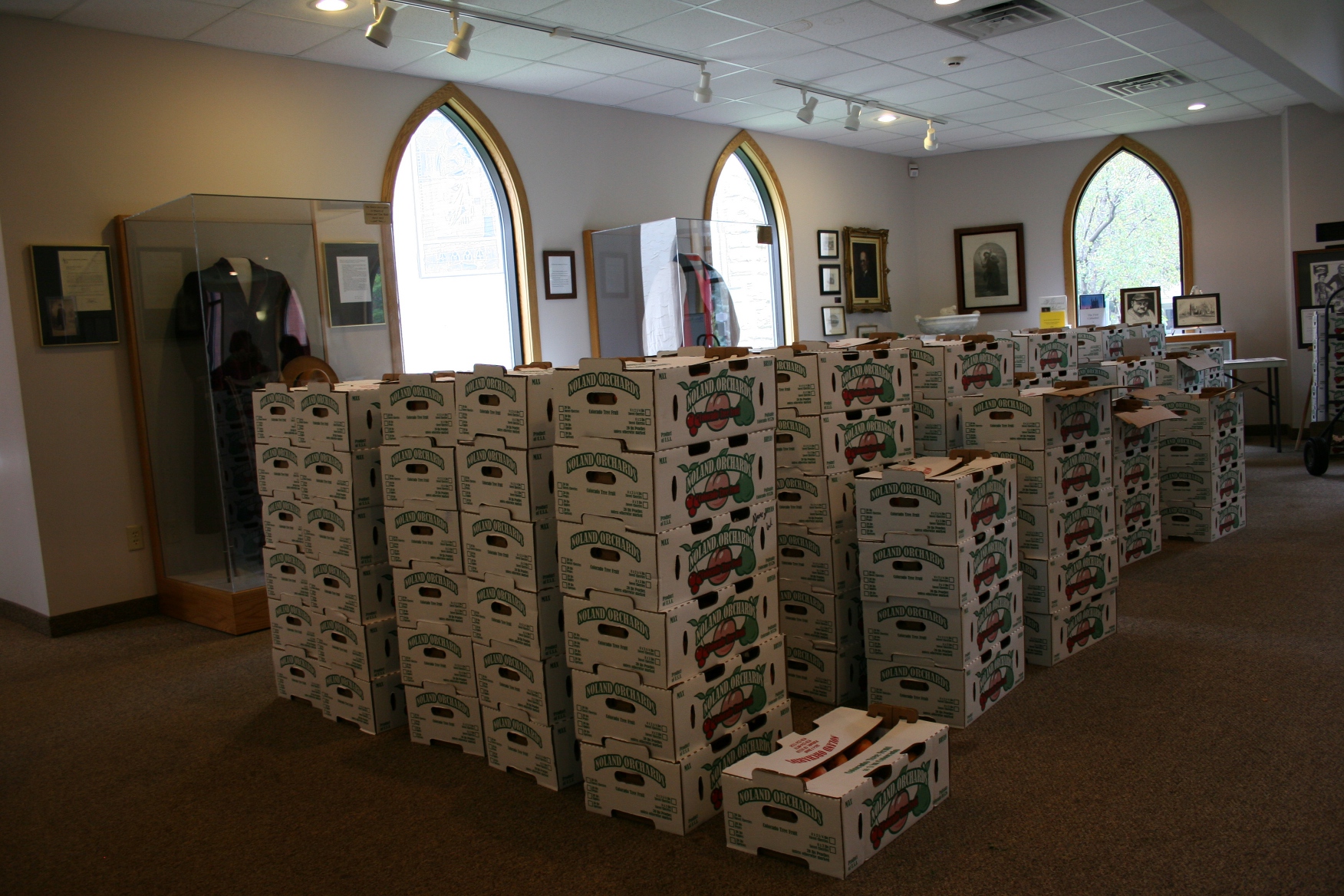
The Community Cathedral Cafe and First English Lutheran youth pre-sold 260 boxes of peaches and ordered an additional 60 to sell to walk-in customers. The peach project has been an ongoing fundraiser for around five years for the cafe and First English youth. About 50 boxes already had been picked up when I photographed this scene.
But like any such organization, the cafe needs money to keep going. The peach project will channel funds into the cafe’s coffers and I’m happy to support the fundraiser by purchasing a $30 crate of fresh Colorado peaches.
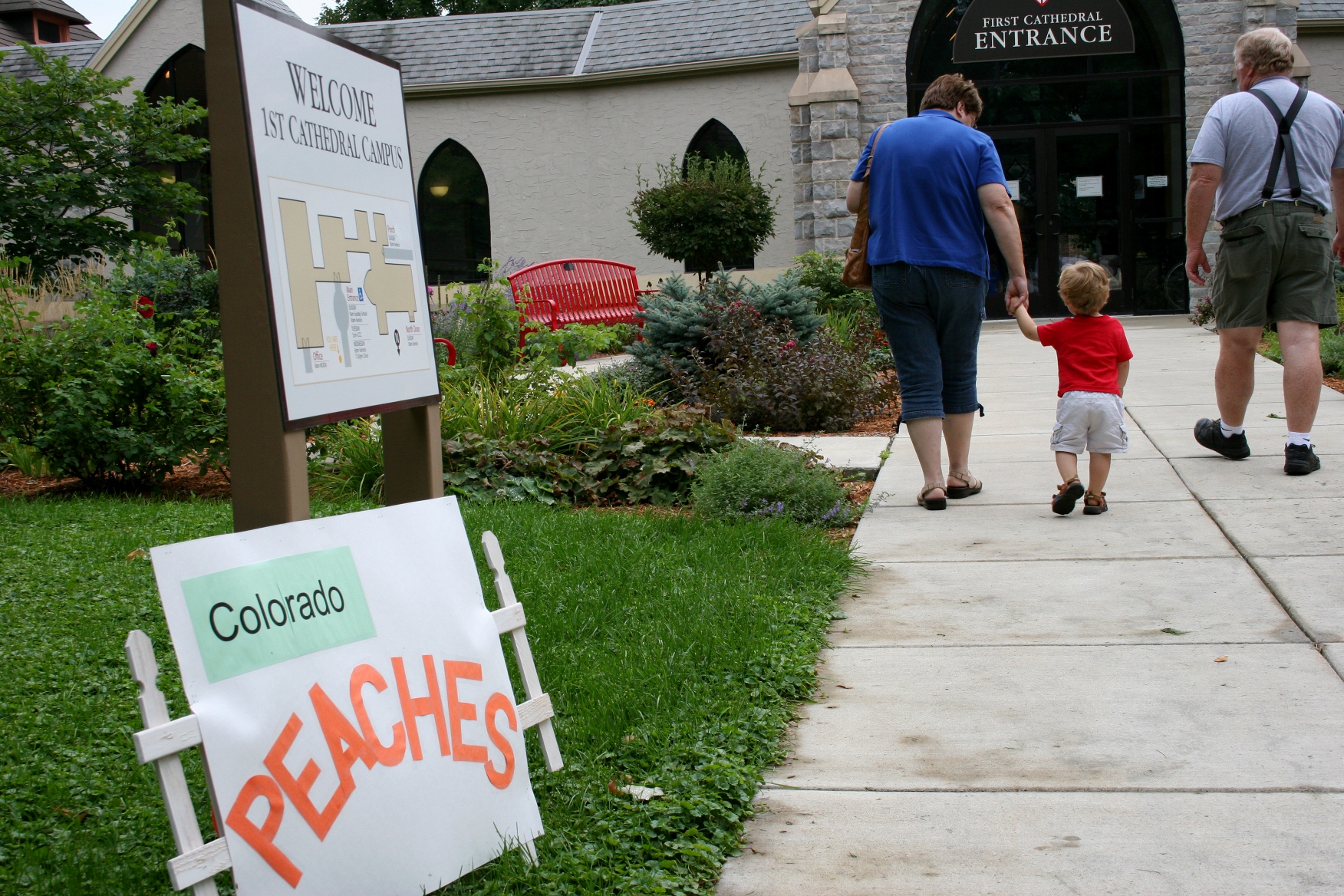
A sign outside the Cathedral Guild House directs customers to the peach pick-up point.
Now, what to do with all those fresh peaches. Thus far I’ve eaten many straight from the box. One evening I blended a peach and vanilla ice cream into a smooth shake. This morning I sliced one into my oatmeal. And I’ve also used thinly-sliced peaches to make a ham and peach panini.
Spread mustard and 1/2 teaspoon honey on one bread slice. Top with ham, cheese and thin peach slices. Top with chopped basil. Place other piece of bread on top and brush lightly with olive oil. Also brush other bread slice with oil. Grill in frying pan until golden brown, flip and grill other side.
Love, love, love this sandwich. My husband not so much. But he’s more an ordinary sandwich guy and I really had to persuade him to even take a bite.
Now, I expect when I bake a peach crisp or a peach cheesecake later this week, he won’t hesitate to scoop up a sizable helping.
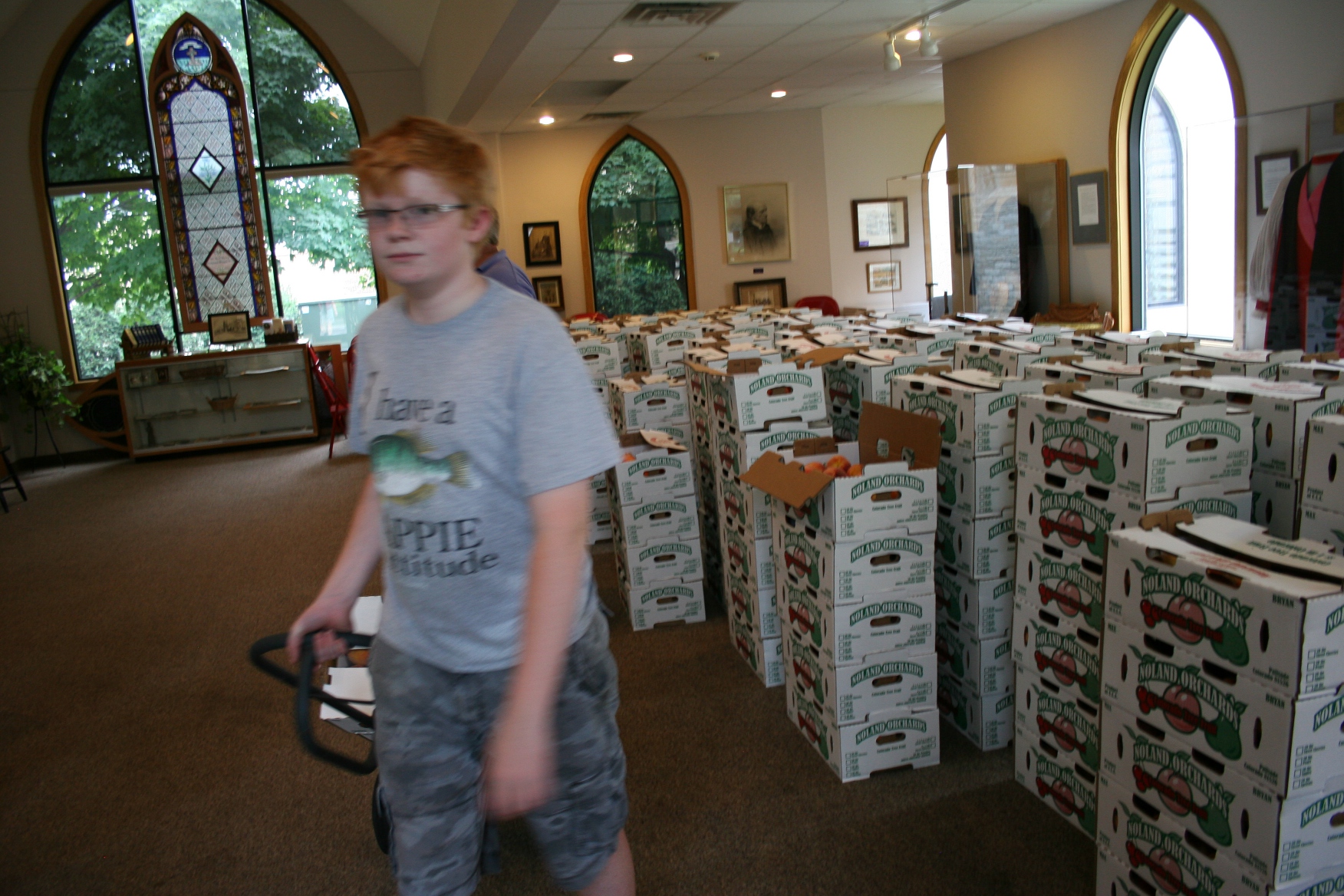
Tyler Welander, 14, who’s raising monies for youth activities at First English, delivers boxes of peaches to vehicles. I suggested to the peach sellers that perhaps they could bake the pies, too, for me to pick up. But one man said, “Oh, that would be down the street at Trinity.” And he would be right. The Trinity Piemakers are currently selling fresh peach, among other, pies. And since I attend Trinity, I can vouch for the delicious goodness of Trinity pies.
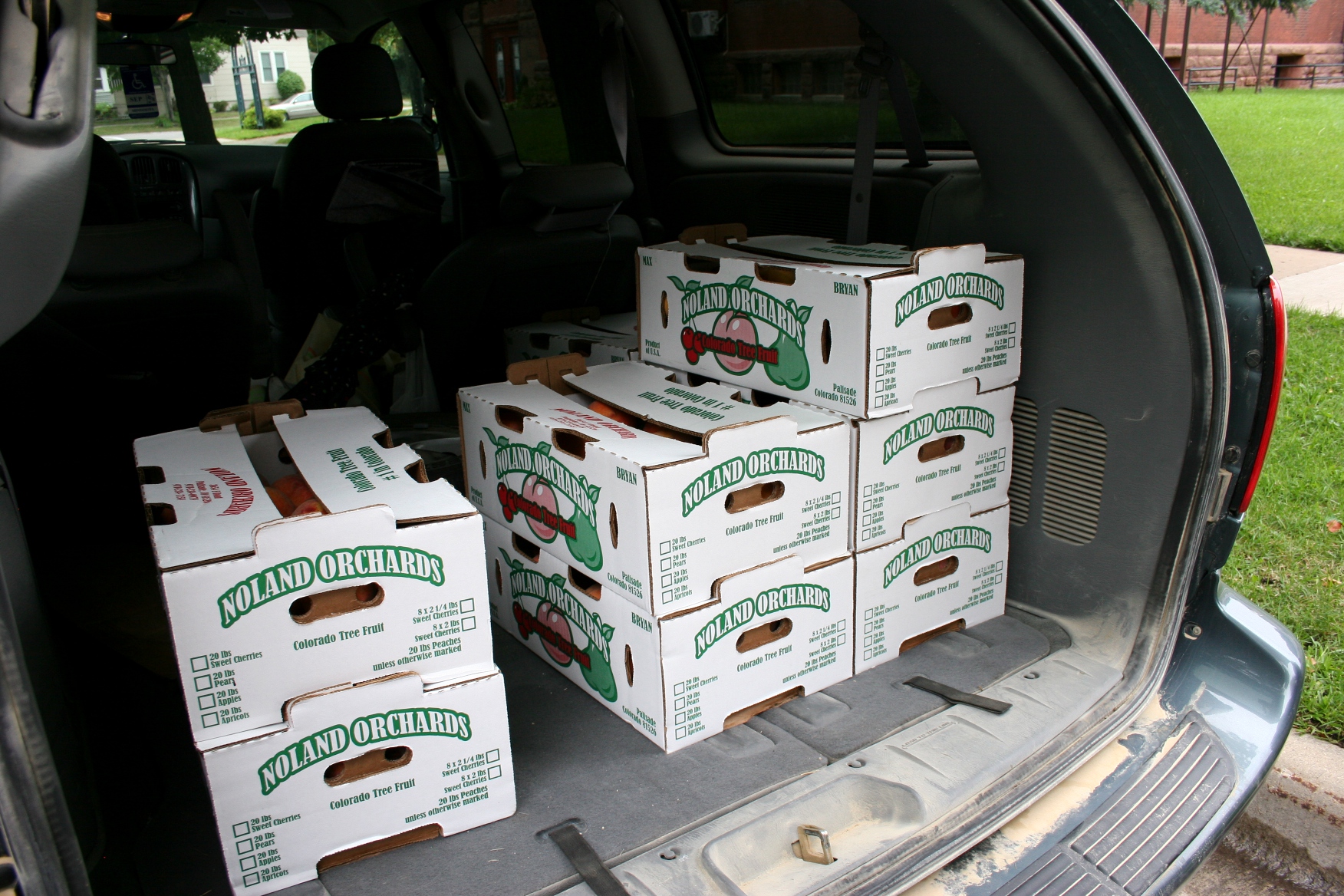
An elderly couple from Farmington ordered nine crates of peaches, seven of which they will deliver to friends.
WHAT’S YOUR FAVORITE peach recipe and what’s the best way to freeze peaches? I’d like to hear.
I EXPECT YOU have no clue what you are viewing above. Perhaps you think this is a piece of art in a gallery exhibit.
You would be wrong. Way wrong.
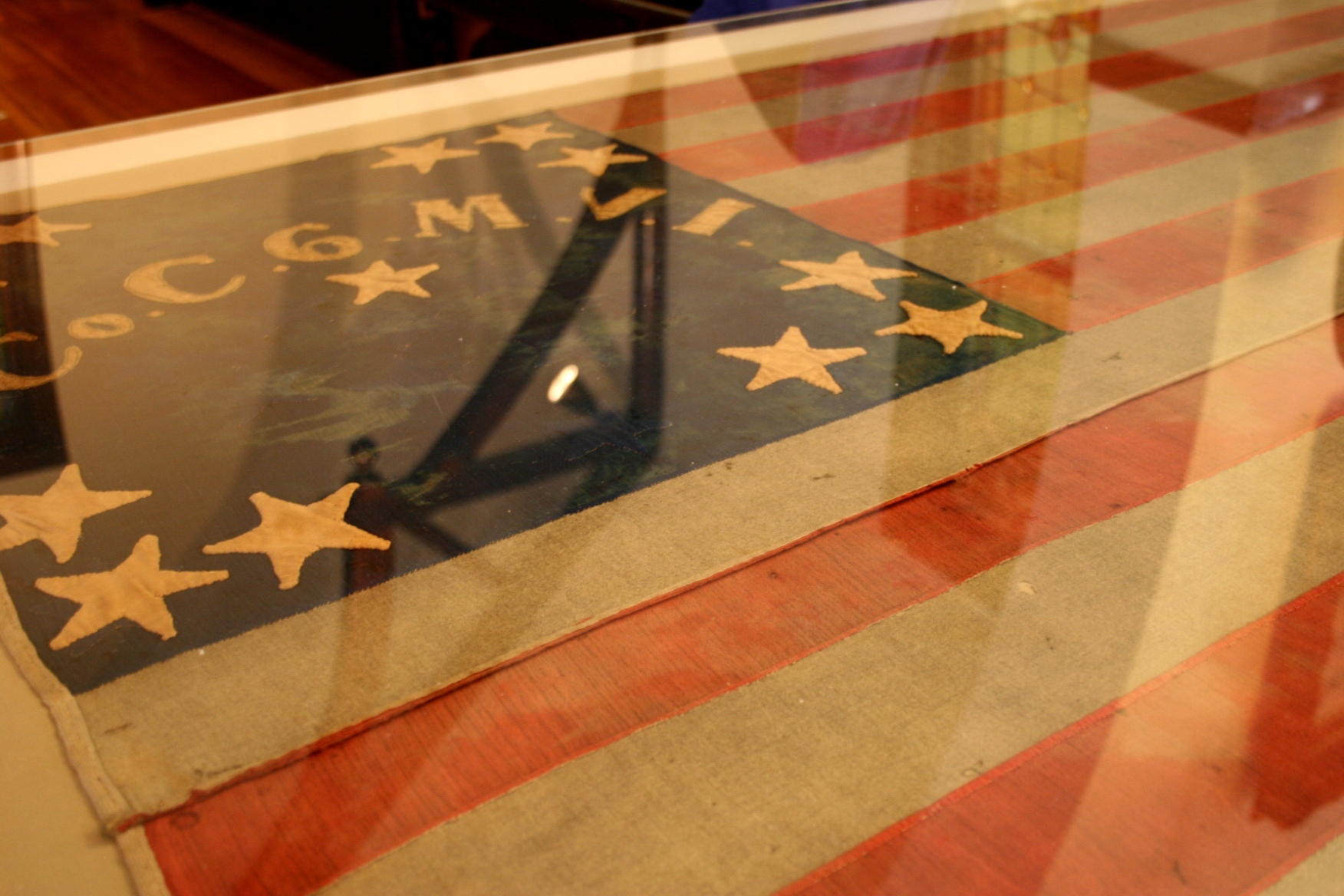
Rather, this shows a portion of a Civil War battle flag that I’ve switched up with some photo editing tools to emphasize the stars and letters and numbers in the upper left corner.
Lighting conditions weren’t ideal for photographing this flag Saturday afternoon in the Guild House at the Cathedral of Our Merciful Saviour in Faribault.
Honestly, I hadn’t even expected to photograph this flag sewn by a group of women in Fairmont and carried by Company C, 6th Minnesota Volunteer Infantry. The last time I asked to photograph the flag at the Rice County Museum of History, my request was denied by director Susan Garwood.
She didn’t know me from Adam, or Eve, although I gave her my business card and explained that I was a writer and blogger. That didn’t matter.
Thankfully, Garwood changed her mind and I got the go-ahead-and-shoot-but-without-flash OK.
Garwood has reason to be cautious. This battle flag is rare, among about a half dozen in Minnesota. Recent restoration cost nearly $7,300.
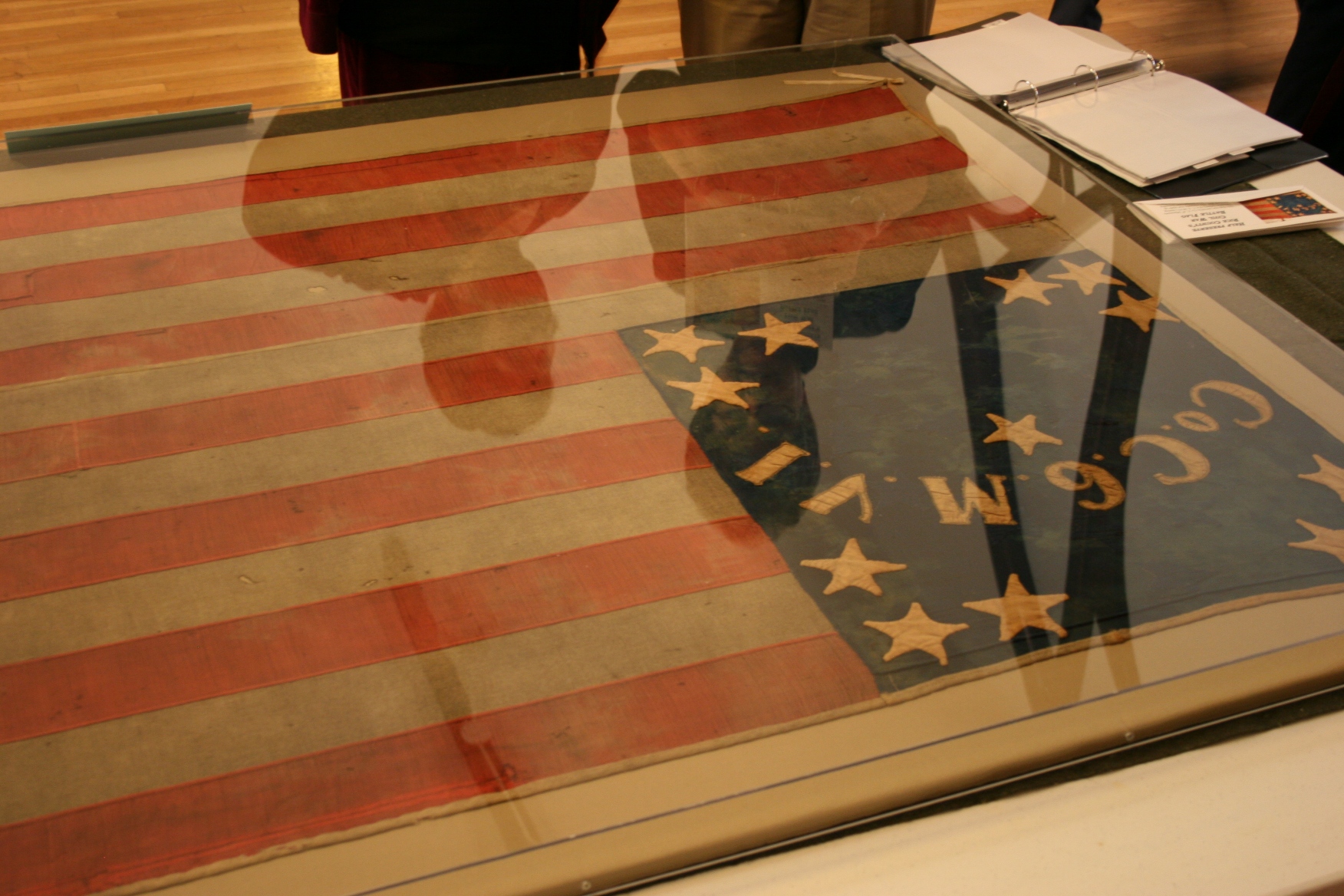
Here's how the flag really looks. Faded. The company which carried this flag was comprised of men primarily from Bridgewater Township in Rice County, Minnesota. On the back side of the flag 34 stars are sewn representing the number of states in 1862. You are seeing reflections here on the glass encasing the flag.
Just another, upside down, view of the flag and the reflections of visitors viewing it.
I don’t know the value of the restored flag. But it is valuable enough that a Faribault police officer was guarding the flag Saturday afternoon during “Recognition of the Fall of Fort Sumter–The Beginning of the Civil War” sponsored by the Rice County Historical Society and the Cannon Valley Civil War Roundtable.
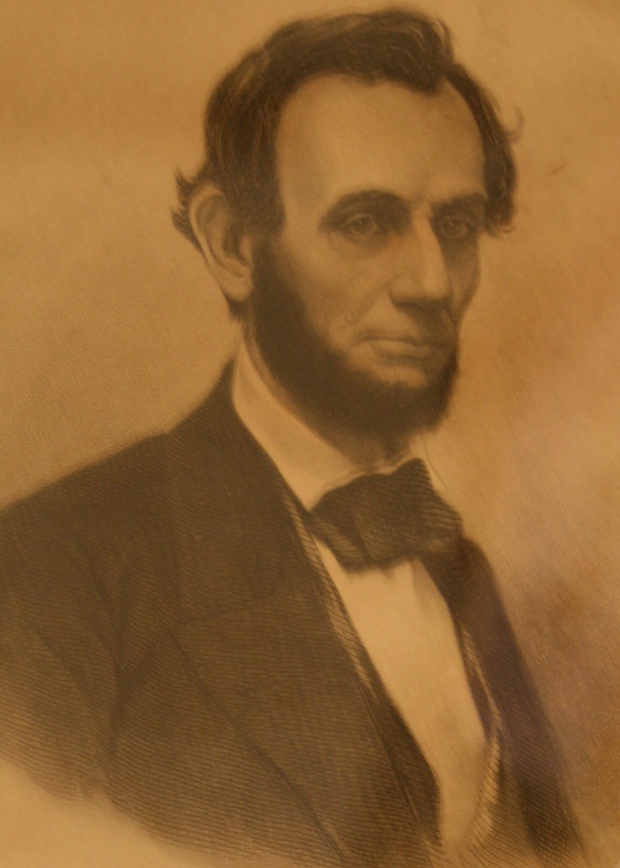
Likewise a collector of Civil War era artifacts was standing guard over his tables full of treasures. He had, among Civil War uniform buttons and other items, an original Lincoln photo engraving (used on the $50 bill) and signature. I didn’t ask the values. Sometimes it’s better not to know these things.
A slightly out of focus photo that I took of an original Lincoln photo engraving for a $50 bill on display Saturday.
The last time I photographed parts of his collection at a 2009 Cannon Valley Civil War Roundtable meeting, he made me promise not to reveal his name. I agreed. I didn’t want to go missing and have my family looking for me under a stadium. That’s an exaggeration, but this collector was serious. My lips are sealed.
I did ask him, though, why he didn’t bring his slave bills, which were advertised as being at the event and one of the key reasons I attended. He simply said he didn’t know he was supposed to bring them. He gave the same answer 1 1/2 years ago at the Roundtable meeting. I had gone to the session then specifically to see the slave documents.
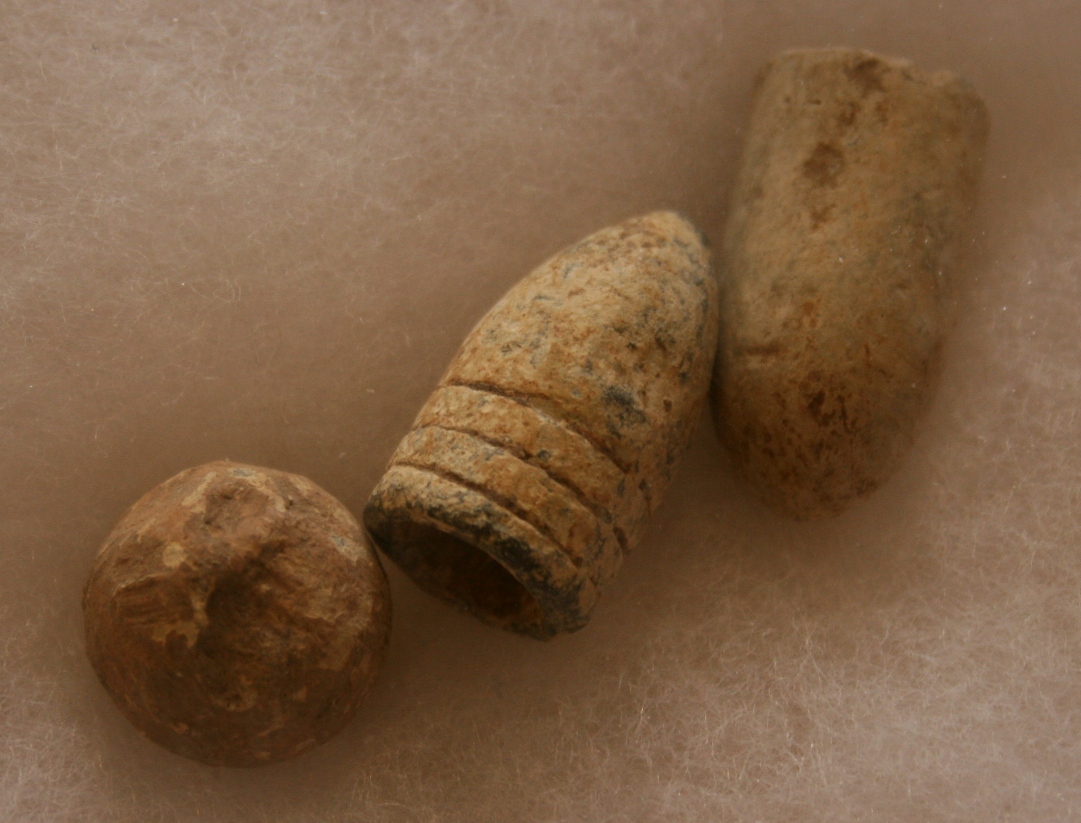
But on Saturday I perused a few other artifacts I hadn’t seen before like…
these old bullets
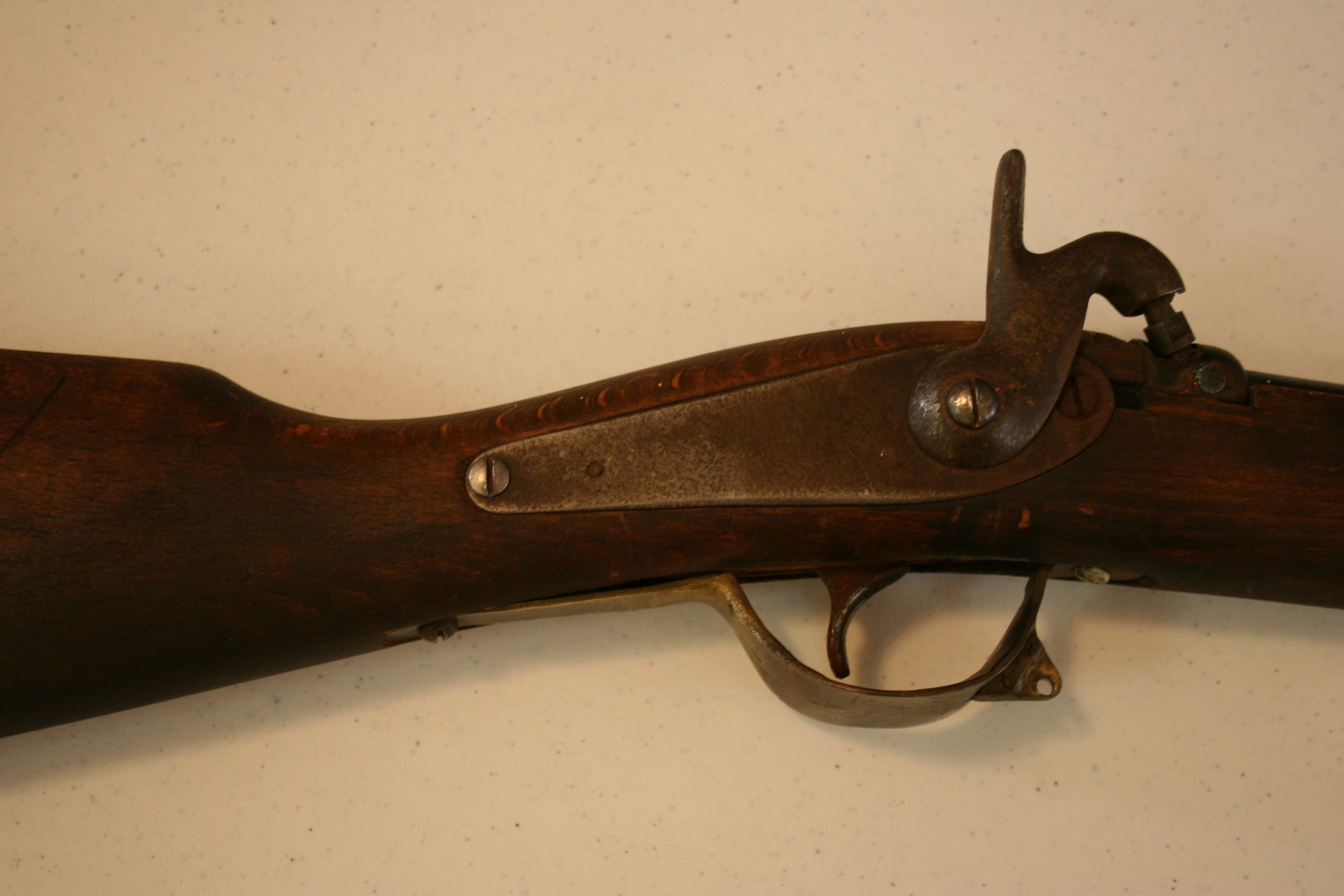
and two Civil War era muzzleloaders which I was allowed to pick up and which were heavy at 18 and 21 pounds.
I also saw…
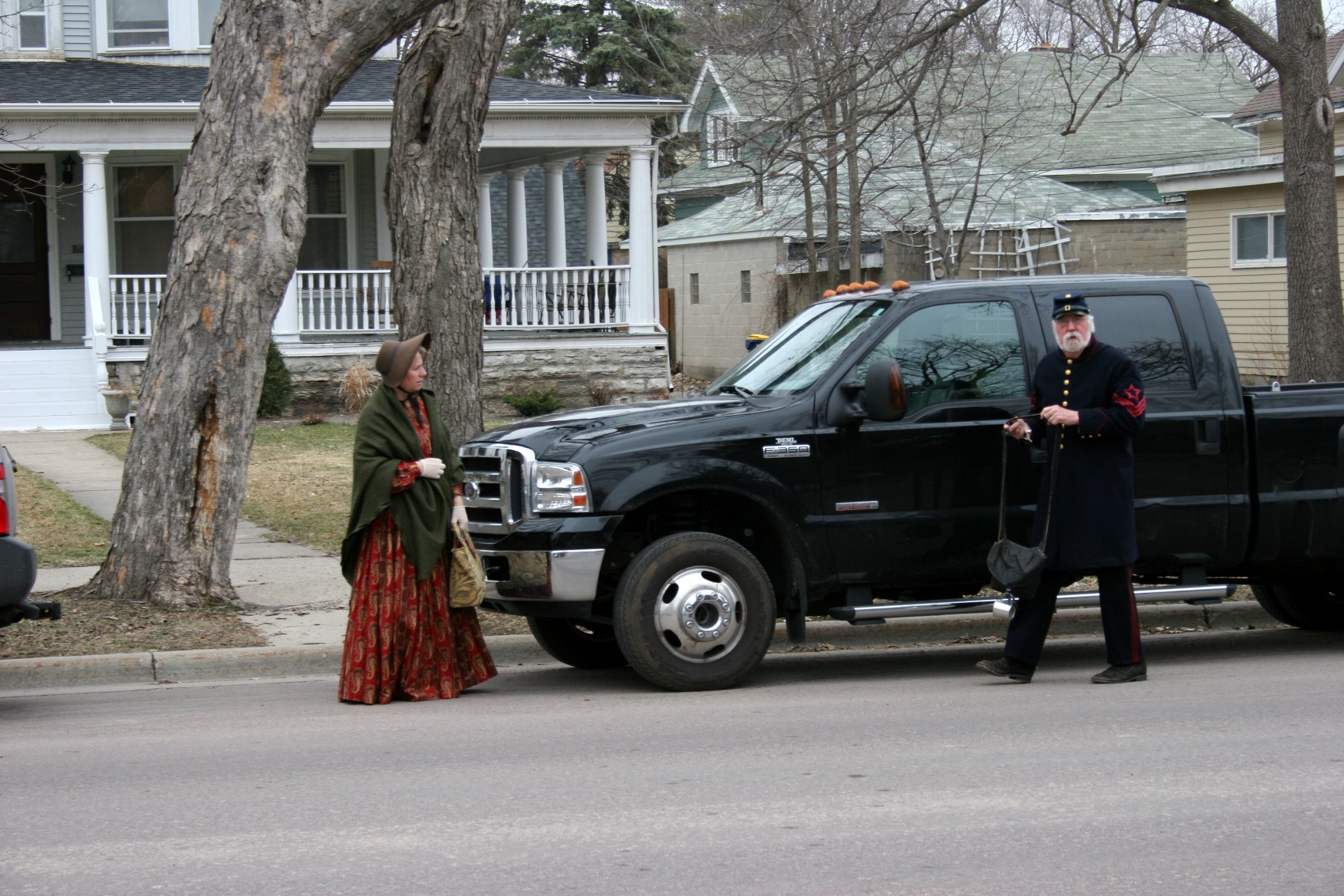
these costumed reenactors pull up in a pick-up truck
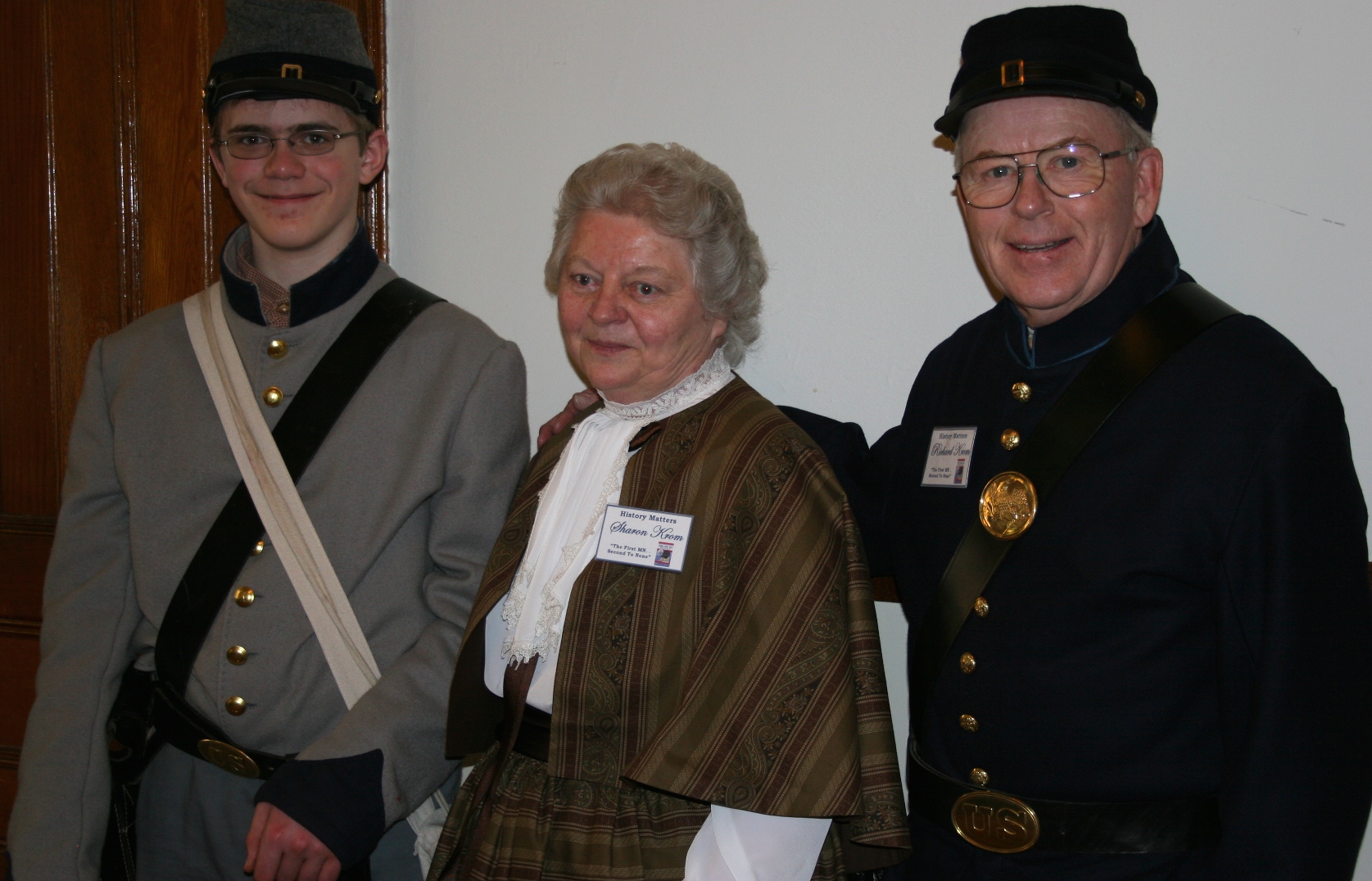
and this unidentified reenactor, left, posing for photos with Sharon and Richard G. Krom of Rochester. Richard is the great grandson of a Civil War soldier and has written a book, The 1st MN Second to None.
Finally, I sat down with friends and family to enjoy…
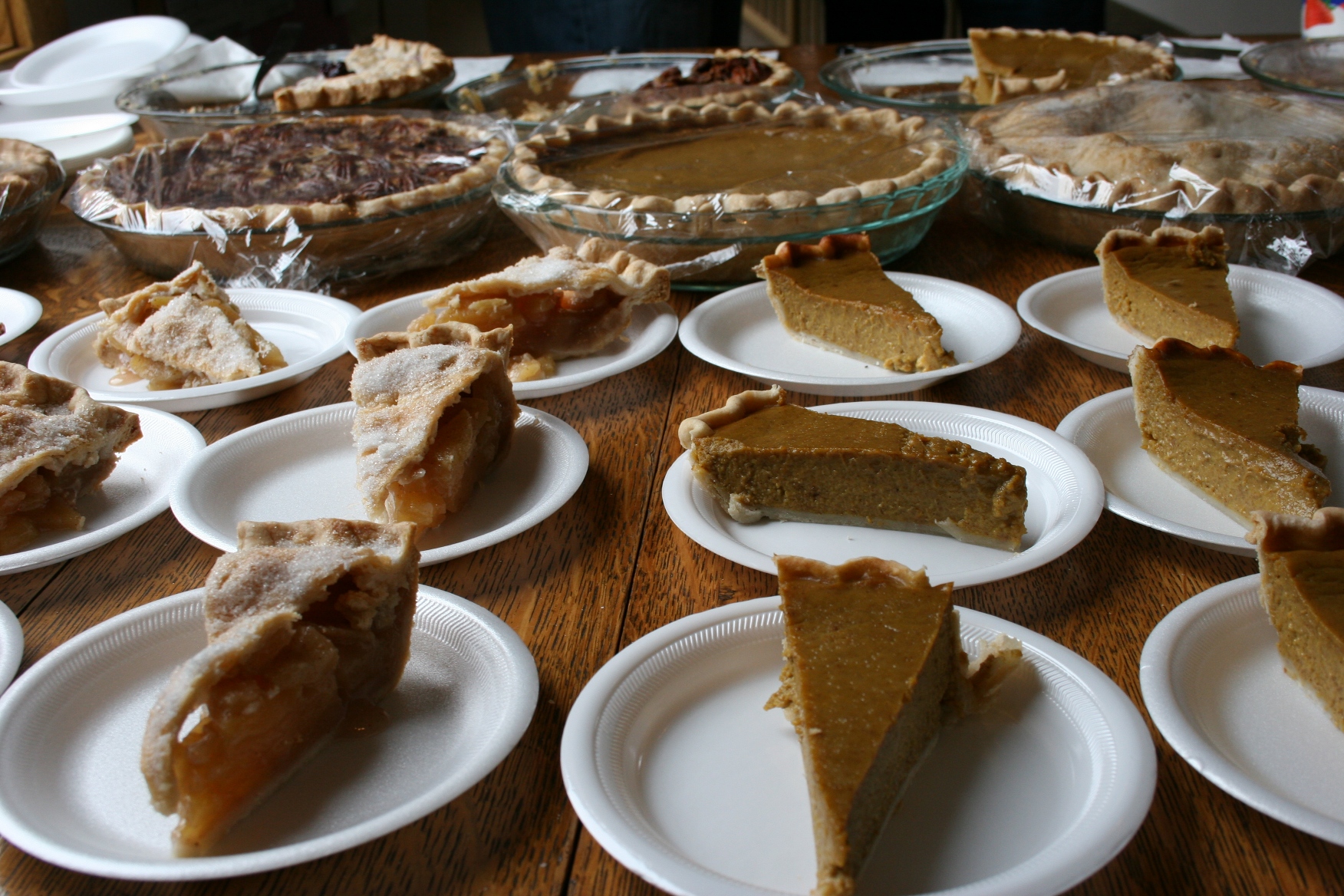
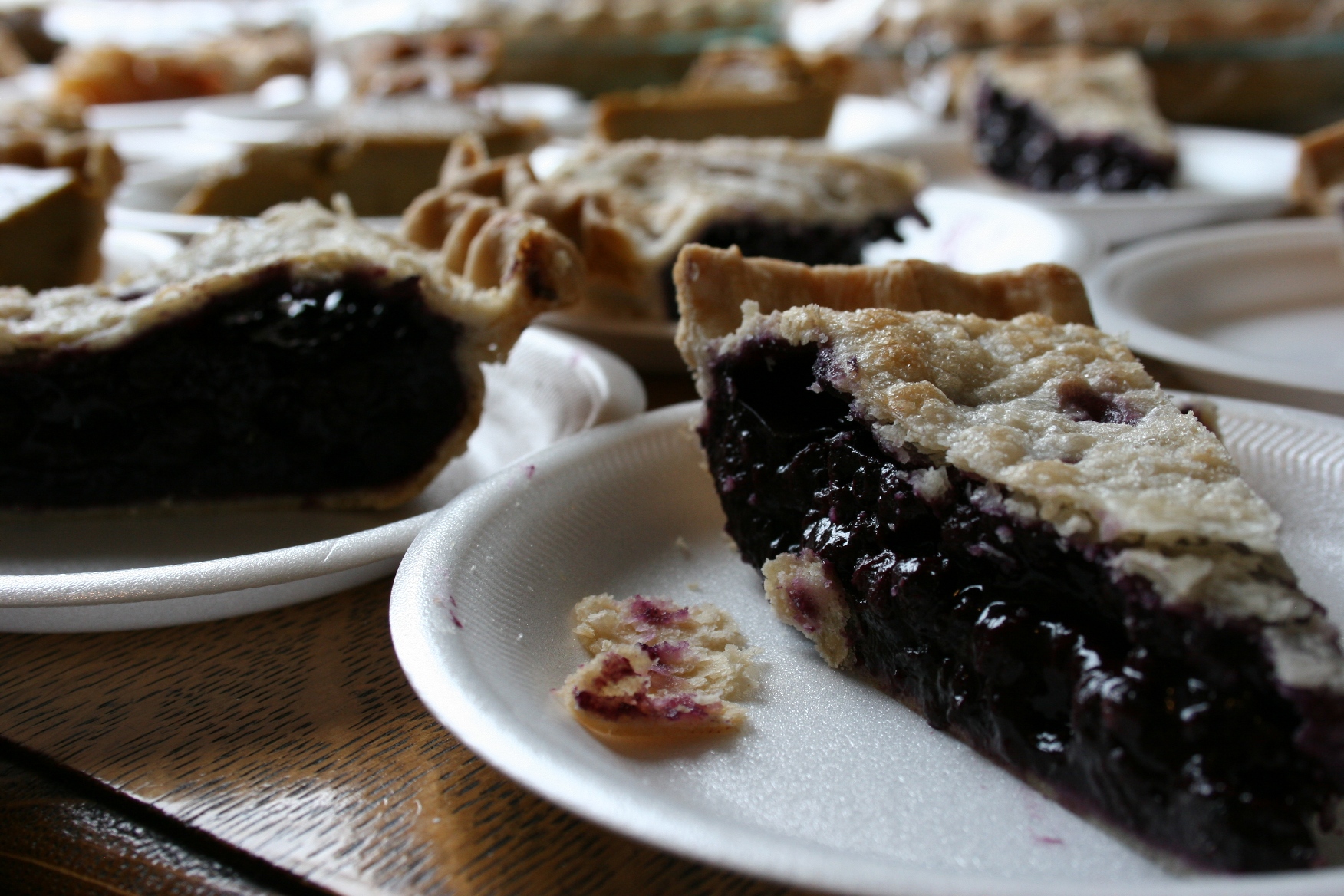
a piece of delicious homemade pie made by Rice County Historical Society President Jason Reher. He baked 16 pies for the event. (Jason could be a professional baker; his pie is that good.)
Fortunately for me, Jason had baked my favorite pie and apparently a favorite of many as everyone sitting at my table chose blueberry pie over apple, pumpkin or pecan. Most of us wondered if the blueberries were wild, yet never bothered to walk over and ask the pie-maker.
Jason wondered why I was photographing his pie. I just handed him a business card and figured he’d figure it out.
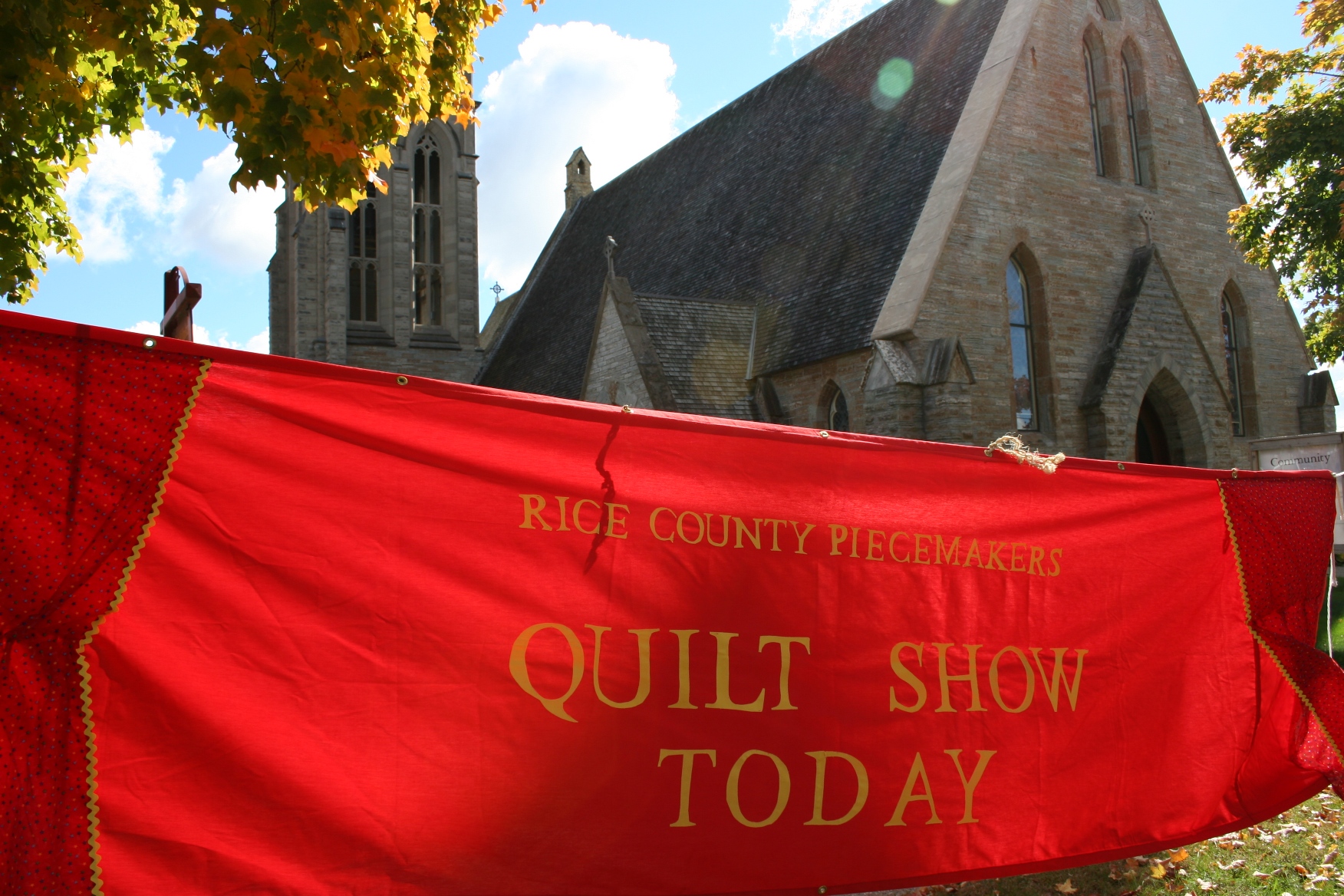
A banner in front of the Cathedral of Our Merciful Saviour along Second Avenue N.W. in Faribault draws visitors to the Rice County Piecemakers Quilt Show.
First, my paternal grandma was a quilter. Therefore, it seems I should be genetically predisposed to quilting. But I am not.
Second, I won a door prize—a stash of fabric pieces—that I was delighted to win because I like to win. The patches were even in my favorite color, green. But, because I don’t quilt, I almost felt like I should return the prize to be awarded to some deserving quilter. I didn’t. Instead, I gave the pieces to my friend Marilynn and her daughter Kellie, who are beginning quilters.
Third, several of the quilters asked if I was a quilter. I replied that I made several baby quilts more than 20 years ago and that I sewed nearly all of my clothes when I was a teenager. I don’t think they were impressed. But it was the best I could offer.
Really, these quilters were very nice and they do some mighty fine work. Their quilts are works of art, masterpieces, examples of detailed stitchery and creativity that leaves me wishing I possessed even an ounce of their talent.
Pam Schuenke received the Viewer's First Choice Award in the Challenge Division for her 28-inch square pineapple block pattern creation. She pieced together 150 fabric swatches into nine blocks and added some autumn pizazz by blanket-stitching the seams with gold metallic thread. Entrants in the Challenge Division had to visibly incorporate five specific fabrics into their quilt pieces. Pam also won the top award in the miscellaneous category with an oriental table runner. She's been a Piecemakers member since the late 1980s.
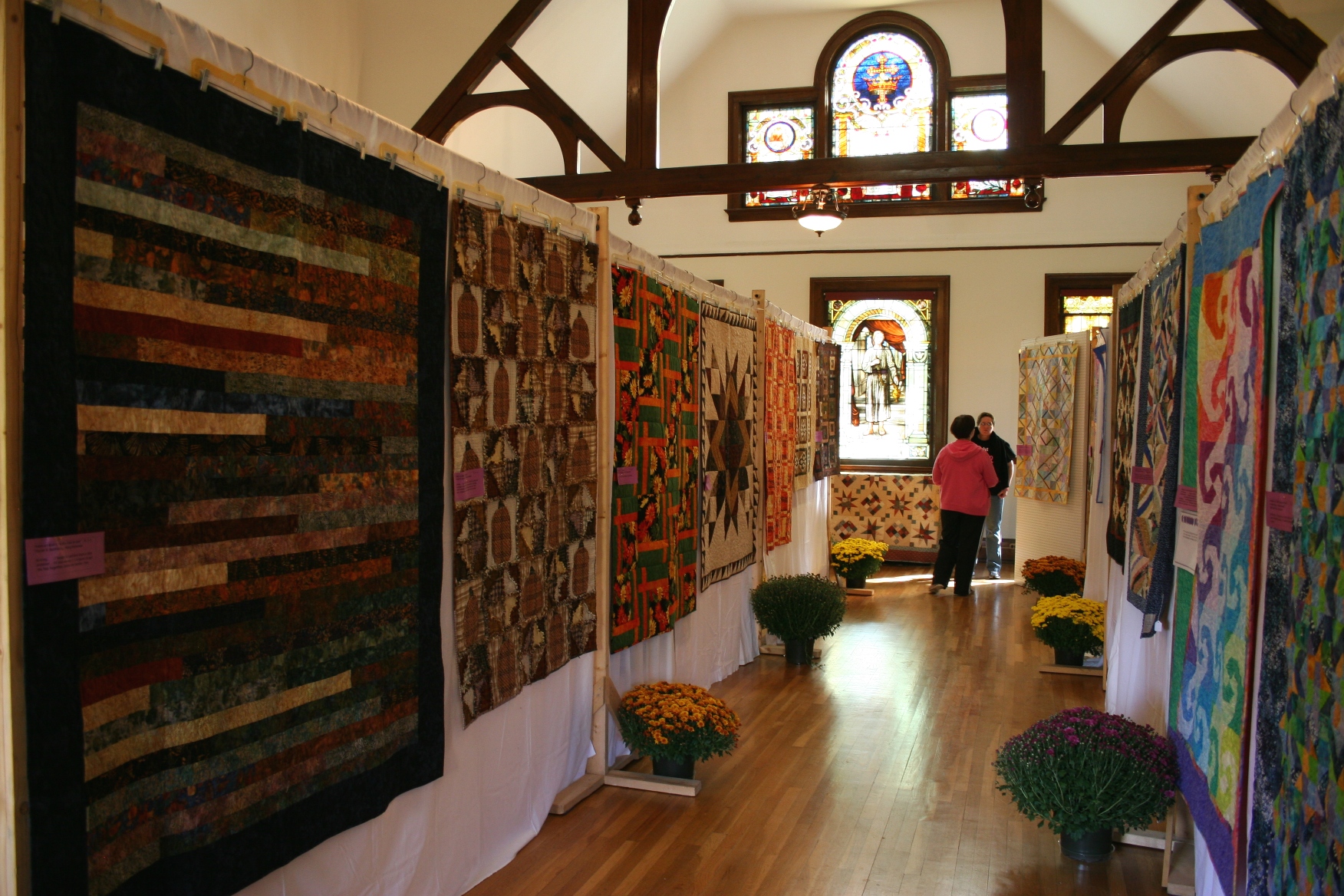
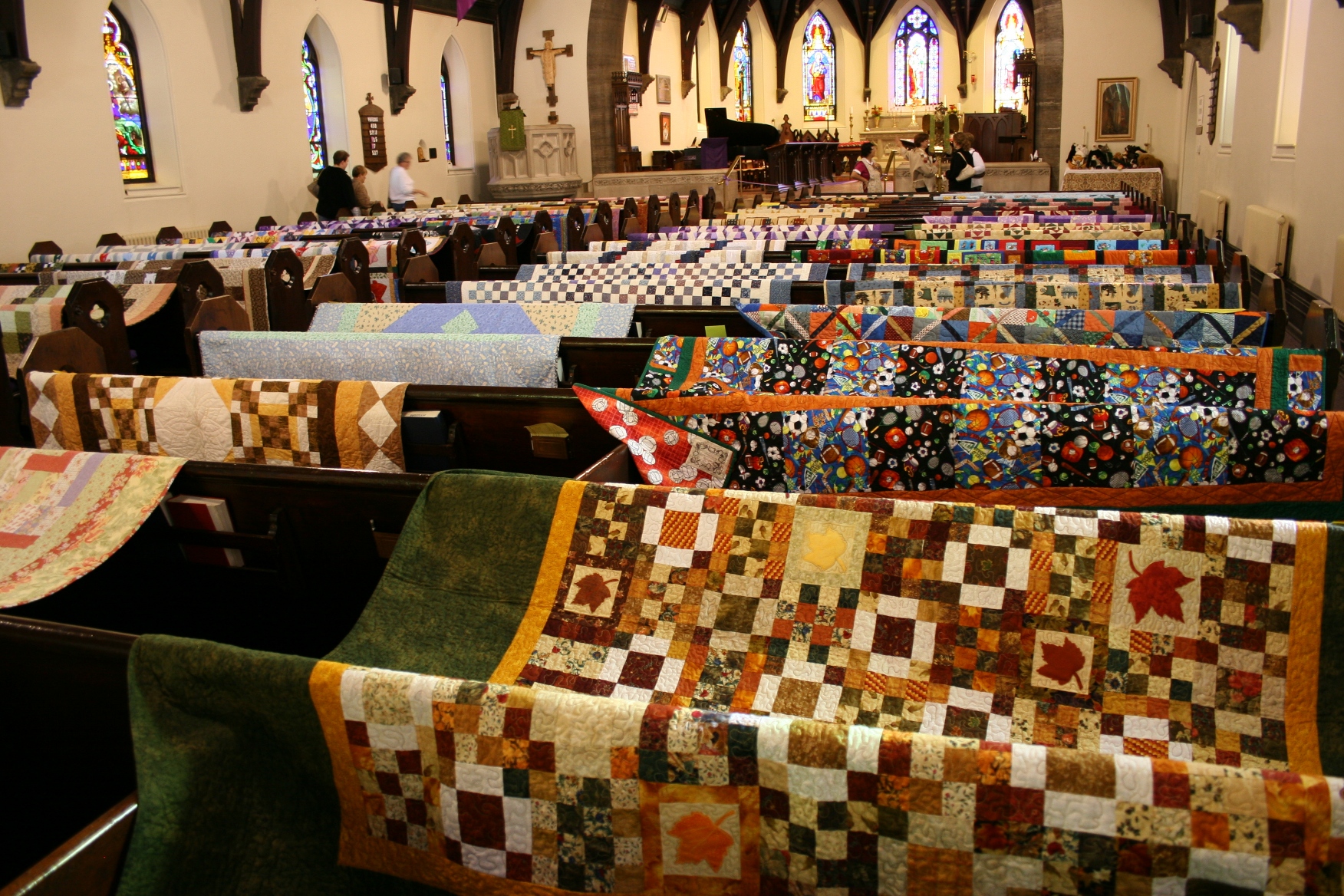
Rows of quilts hung in the cathedral's Guild House.
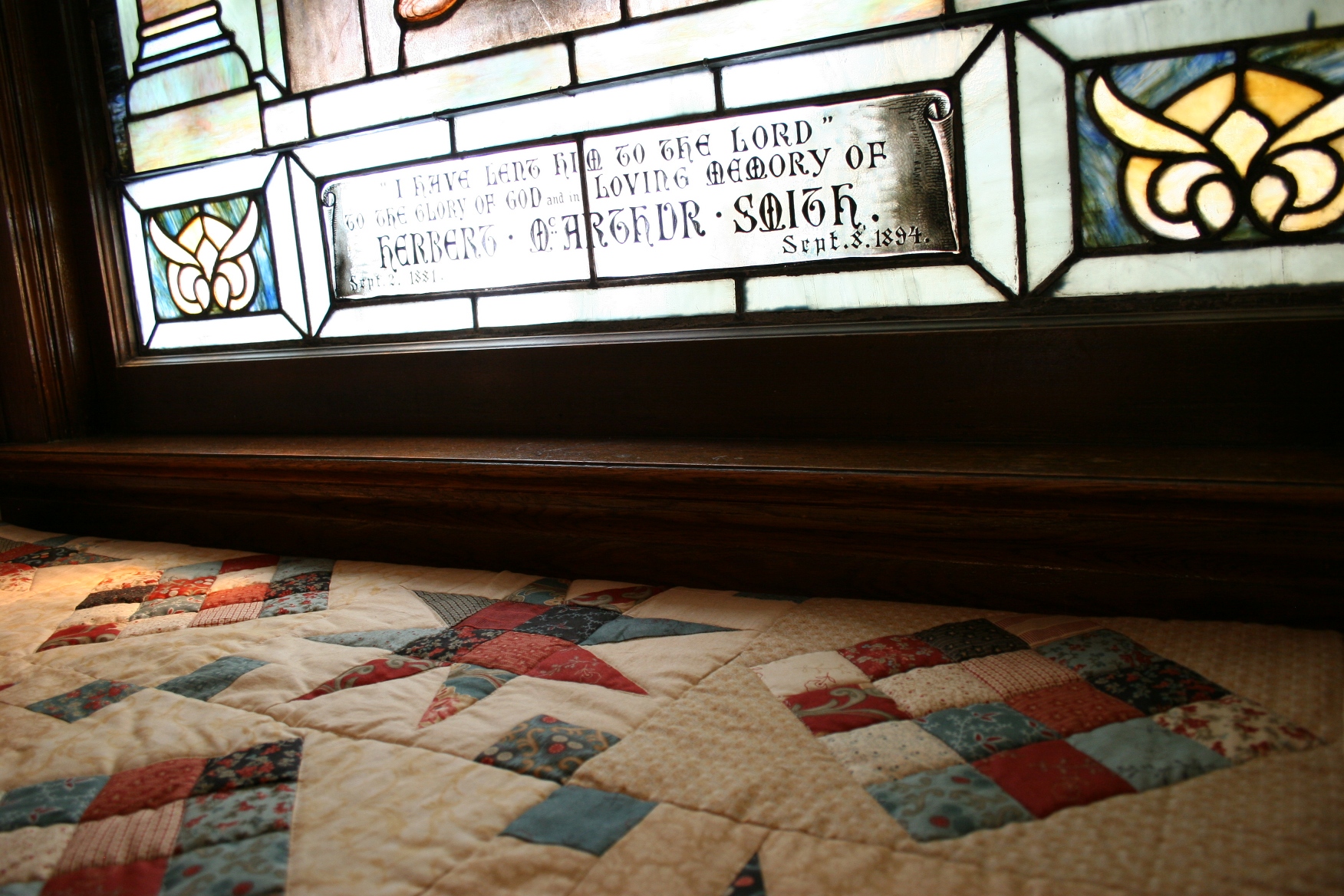
Quilts and stained glass complemented each other.
Brenda Langworthy created this whimsical "Dog Show" quilt.
Some of the challenge quilts, which included five selected fabrics.
Twyla Sporre quilted "Pop Goes the Weasel" in the challenge competition of the Piecemakers exhibit.
The Piecemakers laid quilts across the 50 some pews in the sanctuary. A total of 200 quilts were shown through-out the church complex. Visitors were asked to vote for their favorites in the following categories: bed quilts, throws/lap quilts, baby items, wall hangings, miscellaneous and challenge quilts.
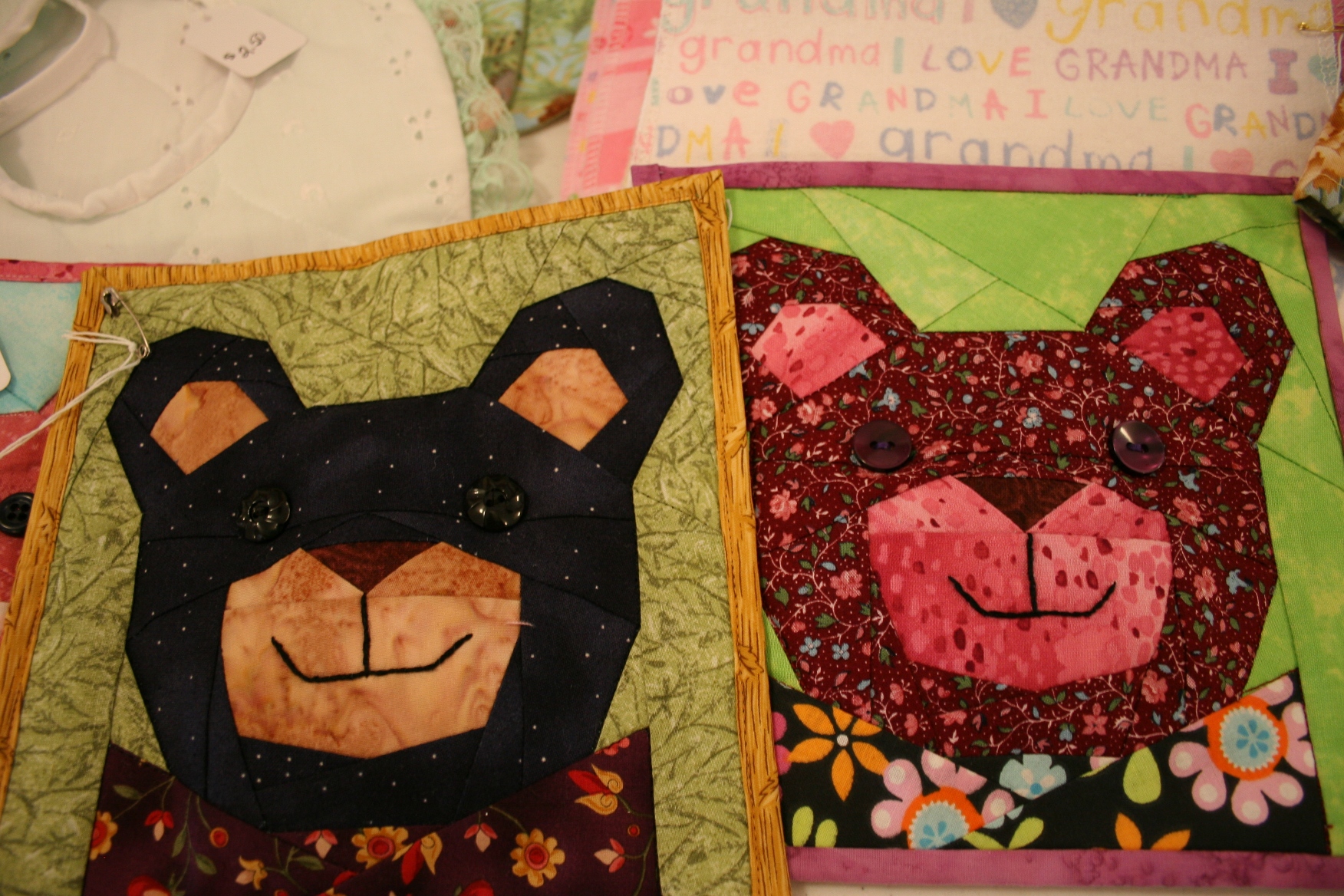
These adorable quilted bear potholders were on sale in the dining room.
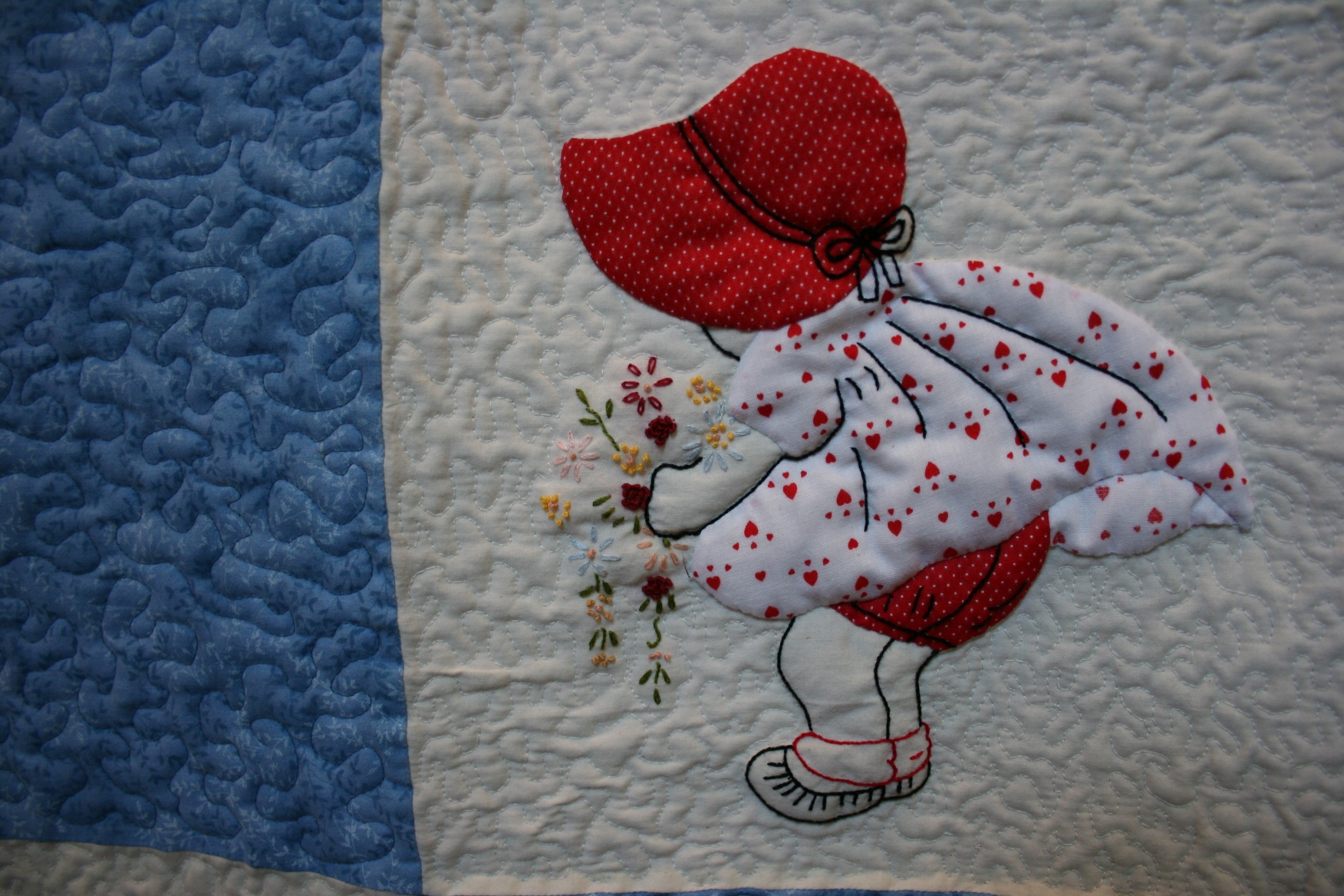
Mary Peterson created "My Fine Sweet Girls," and here's one of those sweet girls.
THE RICE COUNTY PIECEMAKERS meet from 7 – 9 p.m. on the third Thursday of the month at Fourth Avenue United Methodist Church, 219 N.W. Fourth Avenue, Faribault. Meetings feature speakers, demonstrations, and “show and tell.” There are no dues and the club’s motto is “Sewing friendships one stitch at a time.”
THE CHURCH DOOR bangs, the weight of the solid wood slamming against the frame as if decisively shutting out the hot, humid air that oppresses on this sultry Sunday afternoon in August in Minnesota.
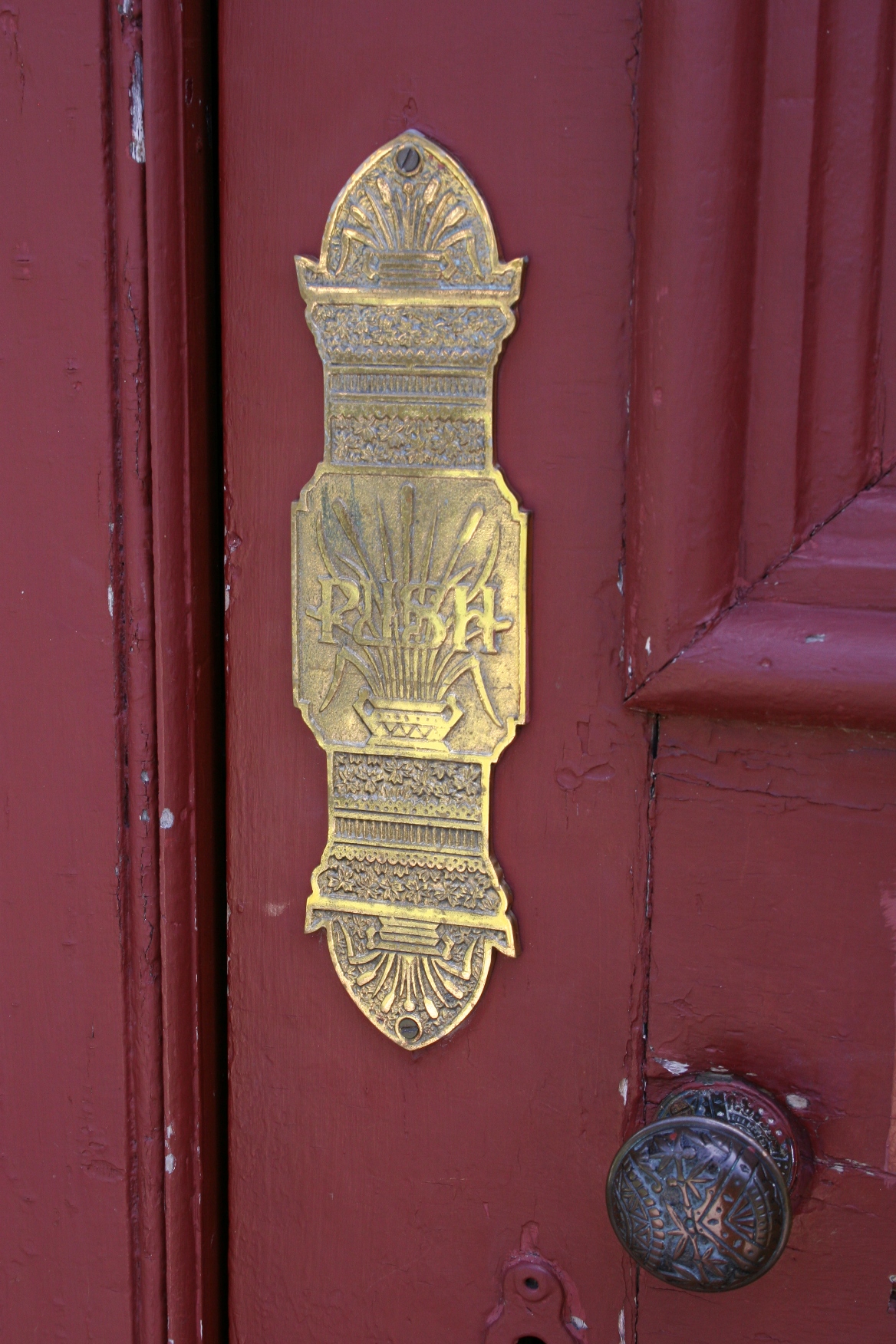
We entered The Cathedral of Our Merciful Saviour through this heavy side door, which you need to push rather than pull, we learned after waiting outside, thinking we were locked out of the church.
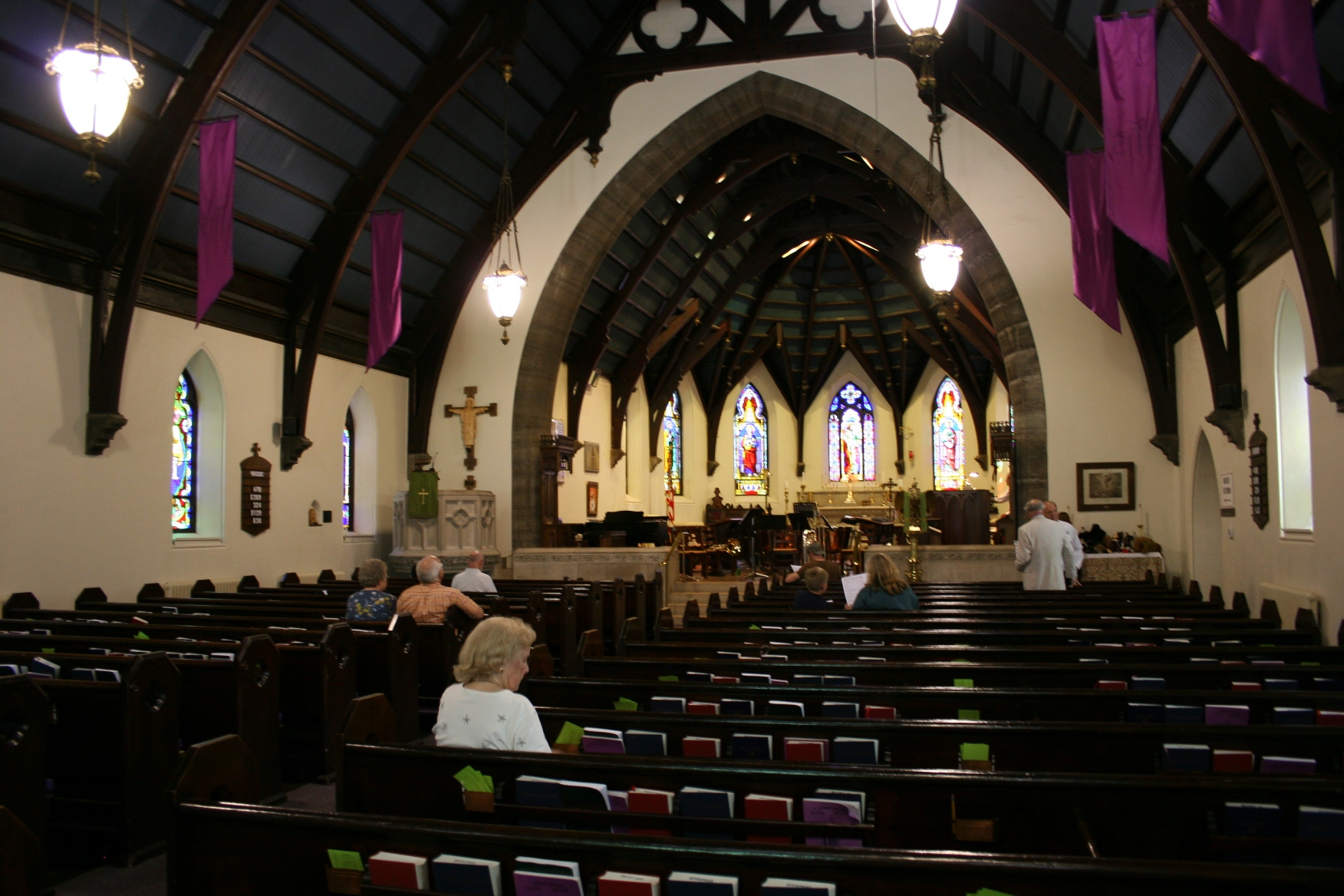
Inside the sanctuary, I seek respite from the suffocating 90-plus degree heat. I settle onto a purple cushion which softens the hardness of wood against flesh in a pew that forces me to sit ramrod straight.
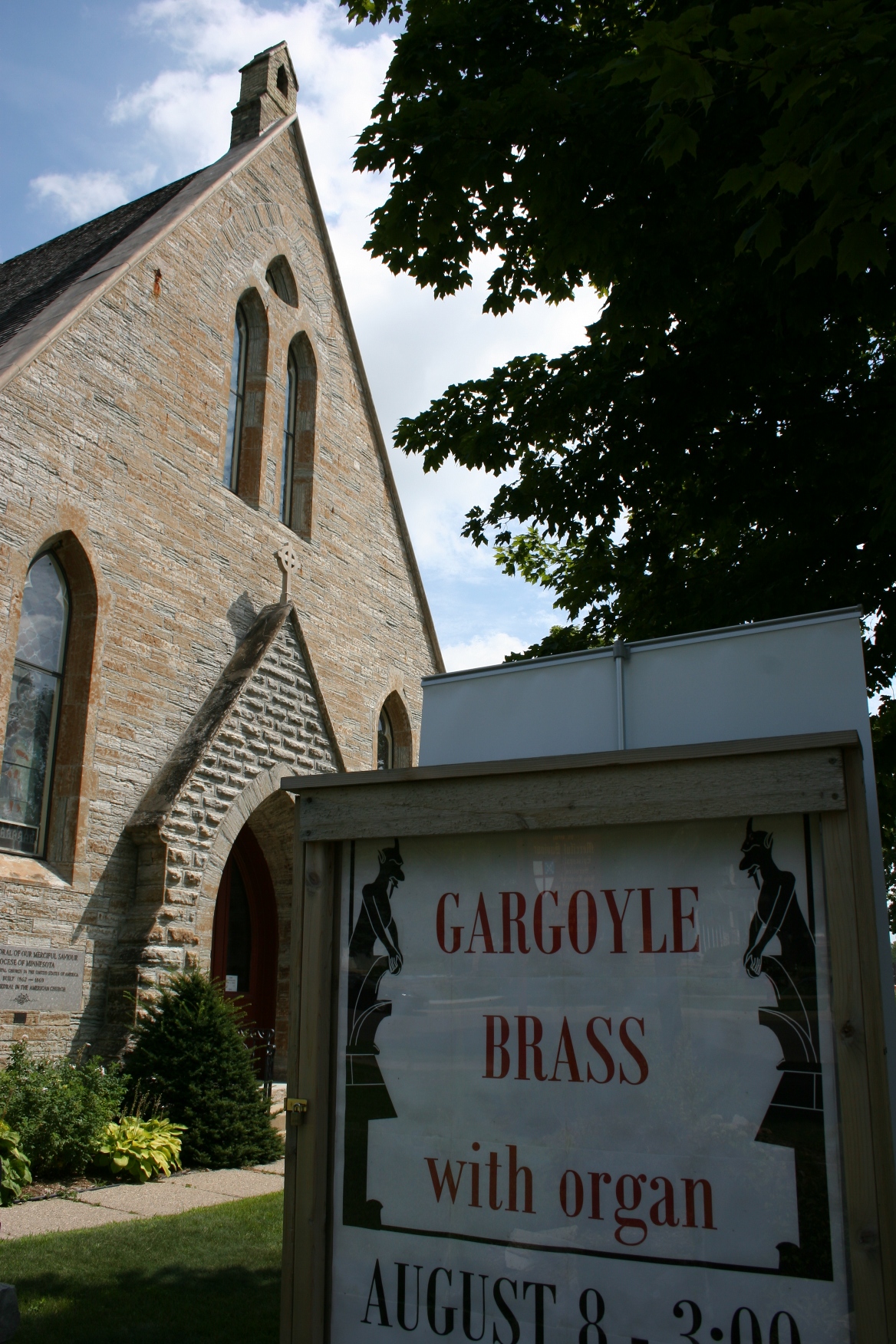
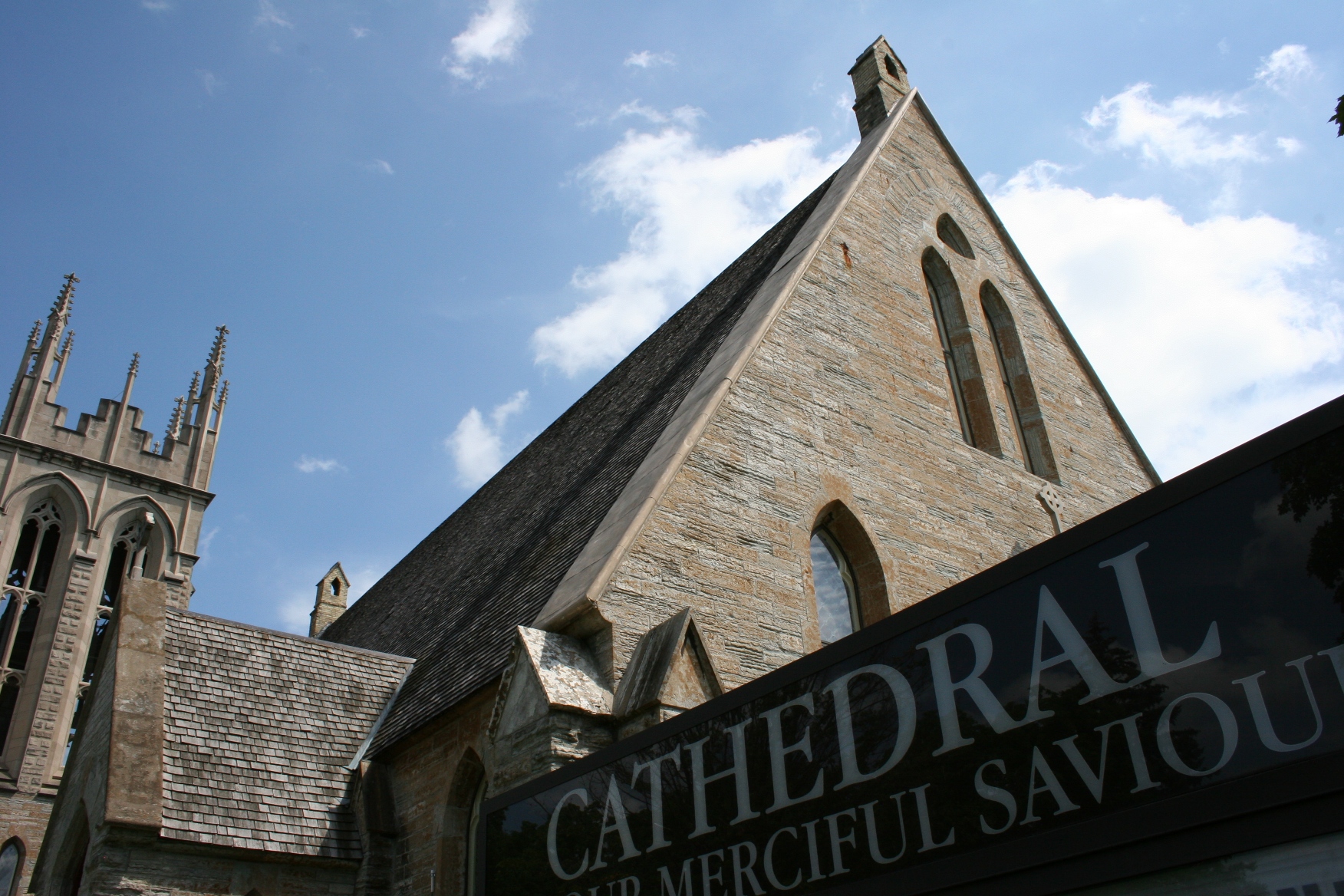
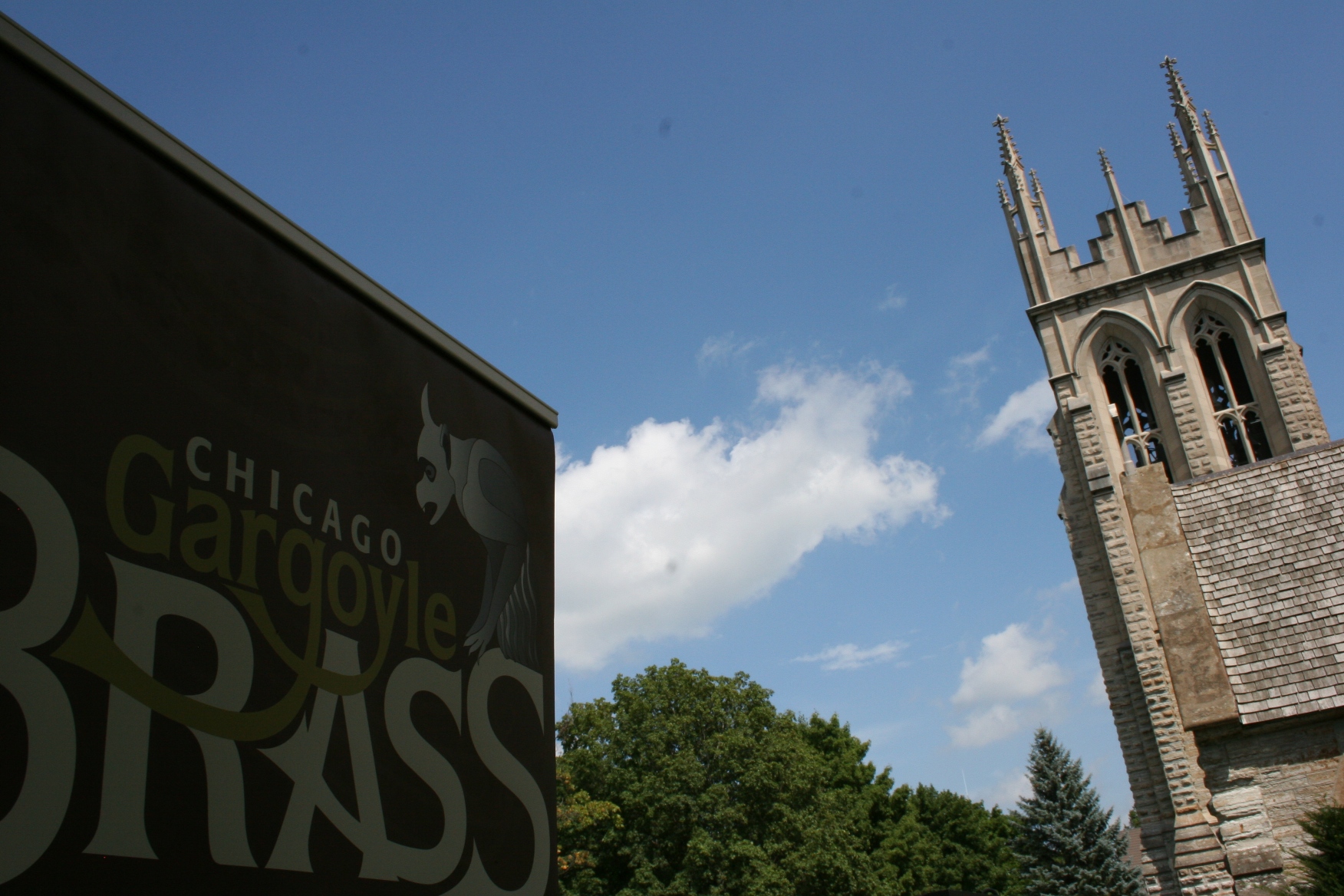
My husband and I, expecting a packed house, have arrived early for a performance by The Chicago Gargoyle Brass at The Cathedral of Our Merciful Saviour in Faribault. This massive structure with its looming tower was constructed from 1862 – 1869 as the first Cathedral of the American Church.
The Chicago Gargoyle Brass presented a Sunday afternoon concert at The Cathedral of Our Merciful Saviour in Faribault.
The Cathedral of Our Merciful Saviour sits along Second Avenue across from Faribault's Central Park.
Inside, I welcome the coolness, visually defined by stone and by the dark wood that shapes the arches of the ceiling.
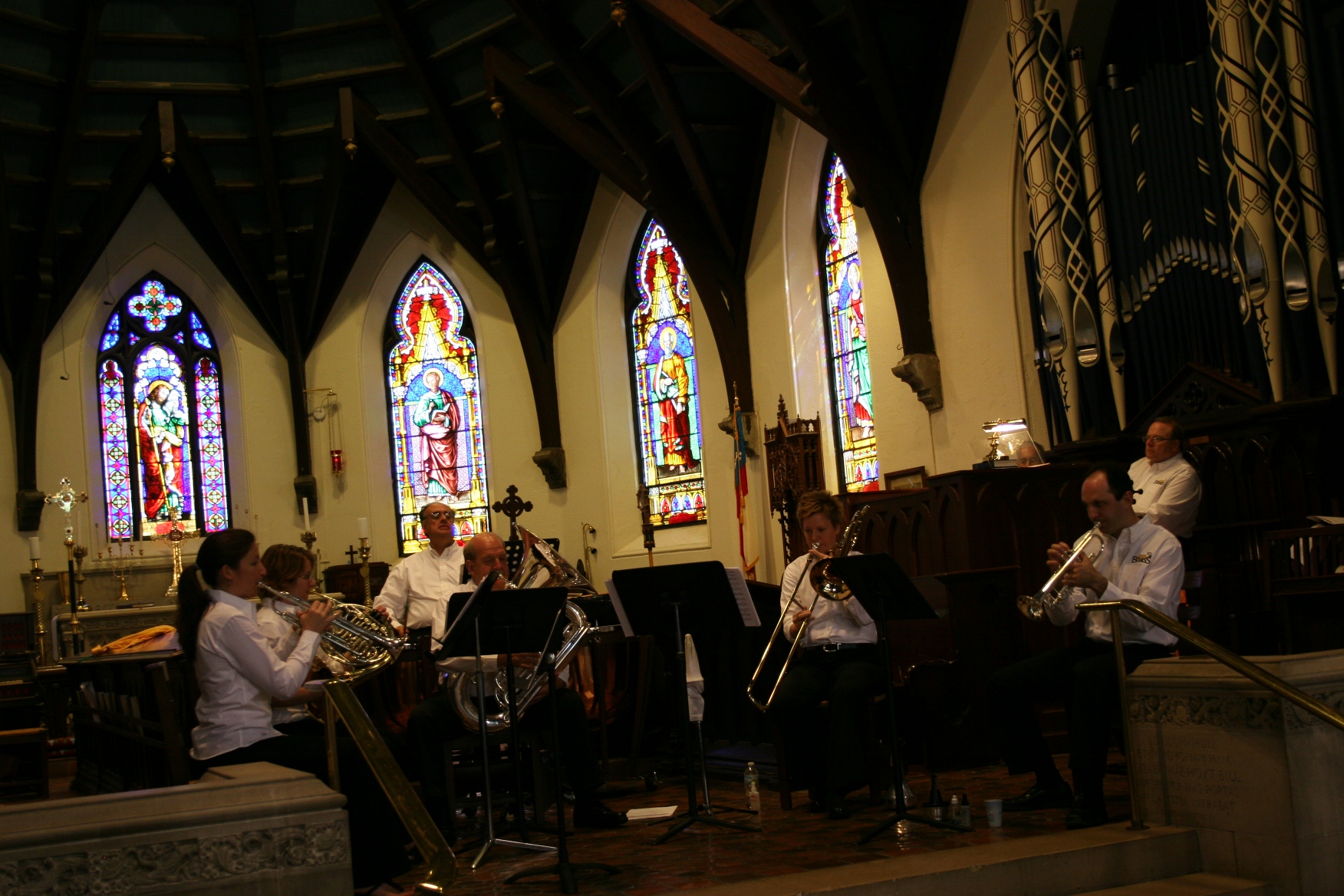
In the chancel area, which stretches an interminable distance from the pews and which is bigger than some country churches I’ve seen, Gargoyle Brass members have positioned their gleaming instruments and music stands at the forefront. Six stained glass windows embrace this “stage” with the glorious 1871 pipe organ (with more old pipes than any other in Minnesota), to the right.
Concert attendees filter into this historic cathedral made of dark wood and stone.
Truly, I am in awe of this cathedral. “This place smells old,” I whisper to Randy as I run my hand along the back of a pew. “Are these the original pews?” They are, I learn upon reading a brochure I’ve picked up. A Civil War veteran cut and planed the wood from northern Minnesota white pine.
I can’t seem to take my eyes off the brass eagle that serves as a lectern given in honor of Bishop Henry Whipple’s wife, Cornelia, who died in July 1890. Bishop Whipple settled in Faribault, oversaw construction of the cathedral and Episcopalian schools and was known for his efforts in helping and befriending Native Americans.
While I wait for the concert to begin, I contemplate the beauty and history of this place and the effort it must have taken to build this stone cathedral.
Soon the concert, part of The Vintage Band Festival hosted in nearby Northfield, begins and we are swept away by the sounds of trumpets, horn, trombone, tuba and timpani (kettledrums) melded with the organ.
The Chicago Gargoyle Brass performs at the Cathedral of Our Merciful Saviour.
I am surprised mostly that the organ does not overpower this cathedral. Often, the music sounds more sedated and muffled than majestic, as I had expected. That has nothing to do with the quality of the organists—for they are superb—but more, I think, to do with the organ placement.
At one point during the concert, a key spring on the organ breaks and a second organist must hold up the key during a performance. “Does someone have some bubblegum?” one of the musicians asks the audience. I’m not sure whether he’s serious or joking, but the concert continues without the gum.
Admittedly, I am no music expert. I can’t read notes. I barely know one instrument from another. So my enjoyment of music is purely, solely authentic, grassroots basic. When my head bobs spontaneously, when I feel the music reverberating, tingling my feet, when I feel an emotional connection, then I know I am hearing good music.
Sunday afternoon I heard good, even great, music from The Chicago Gargoyle Brass, which began in 1992 as a University of Chicago based group. The name was derived from the university’s architecture.
“I love this church,” horn player Arisia Gilmore tells us before performing “Twas a Dark and Stormy Night” with Michael Surratt at the organ. “It’s fitting for the atmosphere we’re trying to portray here.”
As I listen to the music build, like a storm, Randy leans toward me. “Does this remind you of two weeks ago?” he speaks softly into my ear. I nod. He is, like me, recalling the night of July 23 when we were caught in our car on a rural southwestern Minnesota road in the middle of a raging thunderstorm that packed 70 mph winds.
That’s the purpose of music, I think—to stir passions, emotions and, yes, even memories of dark and stormy nights when gargoyles lurk.
A looming tower marks the cathedral located along Second Avenue across from Faribault's Central Park.



















 Minnesota Prairie Roots
Recent Comments