Minnesota Prairie Roots

Writing and photography by Audrey Kletscher Helbling

Beyond just fun, finding the history & heritage in Heritage Days June 11, 2025

This sculpture of Alexander Faribault and a Dakota trading partner stands in Faribault’s Heritage Park near the Straight River and site of Faribault’s trading post. (Minnesota Prairie Roots copyrighted file photo)

HOW DO YOU DEFINE heritage? I ask that question because this week my southern Minnesota community celebrates Heritage Days.

I would define heritage as a cultural or ethnic background. I am, for example, of German heritage.

So one would likely assume then that Heritage Days focuses on heritage. It did. Once. But no more. Not primarily. Rather, this multi-day event in Faribault seems more a June get together with the usual food, music, parade, craft fair and such of any summer community gathering.

It’s not that my city of some 24,000 lacks in cultural and ethnic diversity to theme Heritage Days. We are a bit of a melting pot with our newest residents arriving from Somalia and Sudan. Early on, the French, Irish, Germans and others settled here to shape and grow Faribault. Latinos also define a sizable part of our population. Many others have come from multiple countries to this place along the Cannon and Straight Rivers. Most are generations removed from the homeland. Some, though, are first-generation immigrants.

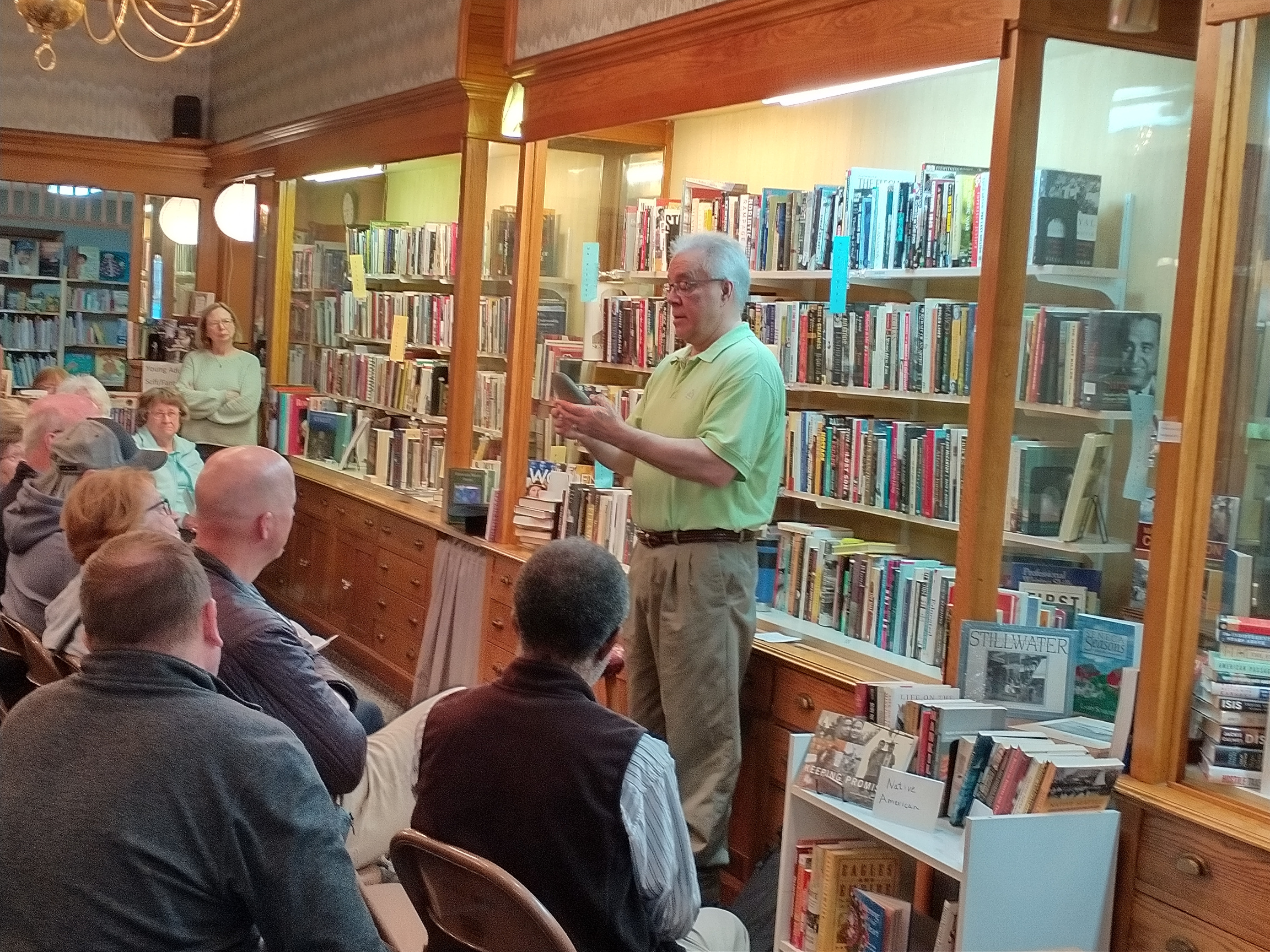
Jeff Jarvis created and handed out this mini booklet about the Wahpekute Band of the Dakota at a previous presentation at Books on Central. (Minnesota Prairie Roots copyrighted file photo)

But back to Heritage Days. Looking through the long list of events, I see several opportunities to learn about local heritage and history. The first happens at 6:30 p.m. Wednesday, June 11, at the Cathedral of Our Merciful Saviour. Regional artist and historian Jeff Jarvis will talk about “The Wakpekute Dakota & Early Faribault History.” I’ve previously heard Jarvis speak on the Dakota, original inhabitants of the land. He’s done his research. I highly recommend attending his presentation. I’m always surprised by how little long-time residents seem to know about the Dakota and their long ago presence in what would become Faribault. Jarvis presents an informative lesson in local Native heritage.

Likewise, the Rice County Historical Society Museum will be open, free of charge, from 10 a.m.-5 p.m. Thursday-Saturday. It’s a good place to see Native American and other artifacts, learn about our early fur trading and additional local history, learn about notable people like Chief Taopi and Bishop Henry Whipple, and more. Bishop Whipple founded and served the Cathedral where Jarvis is speaking.
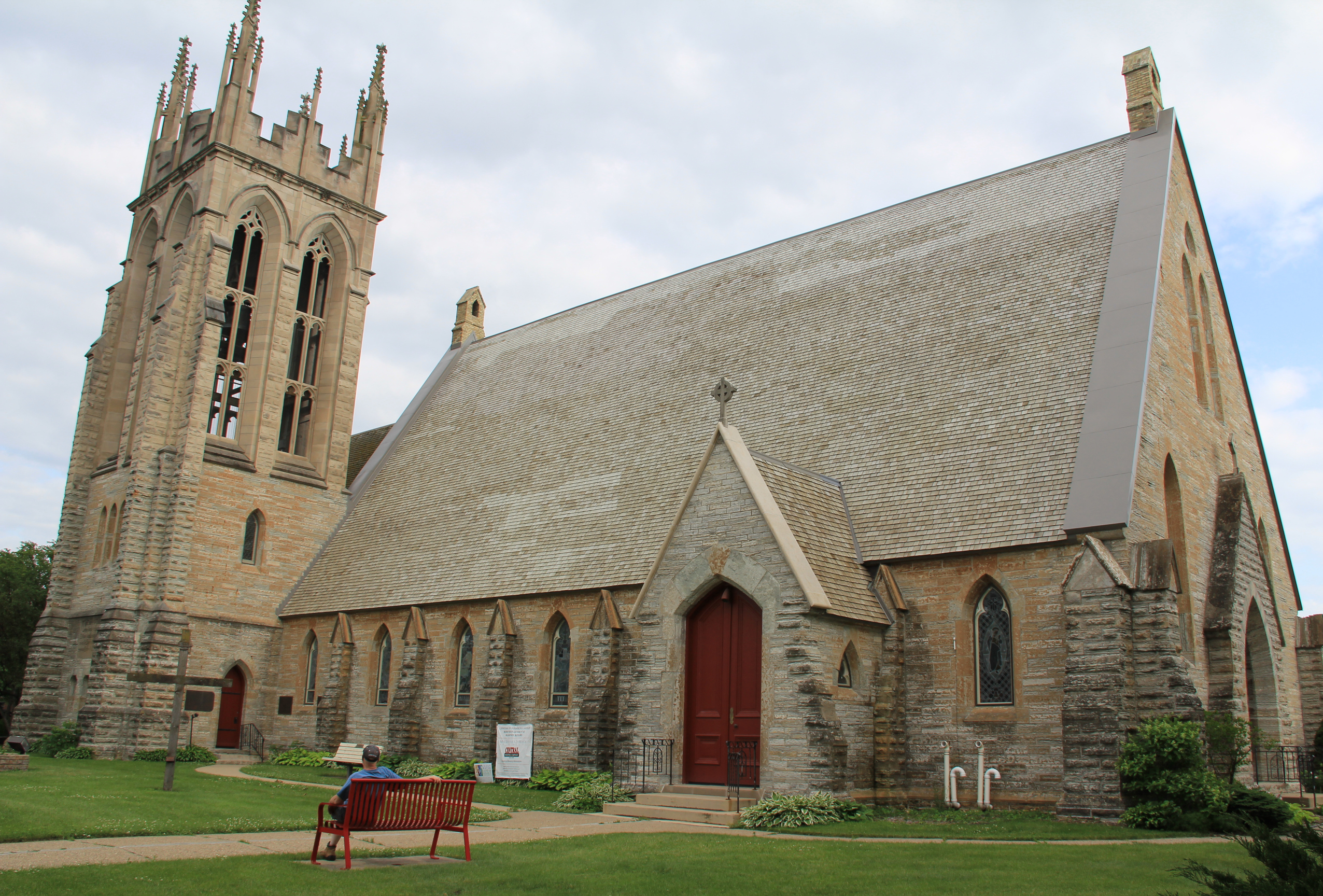
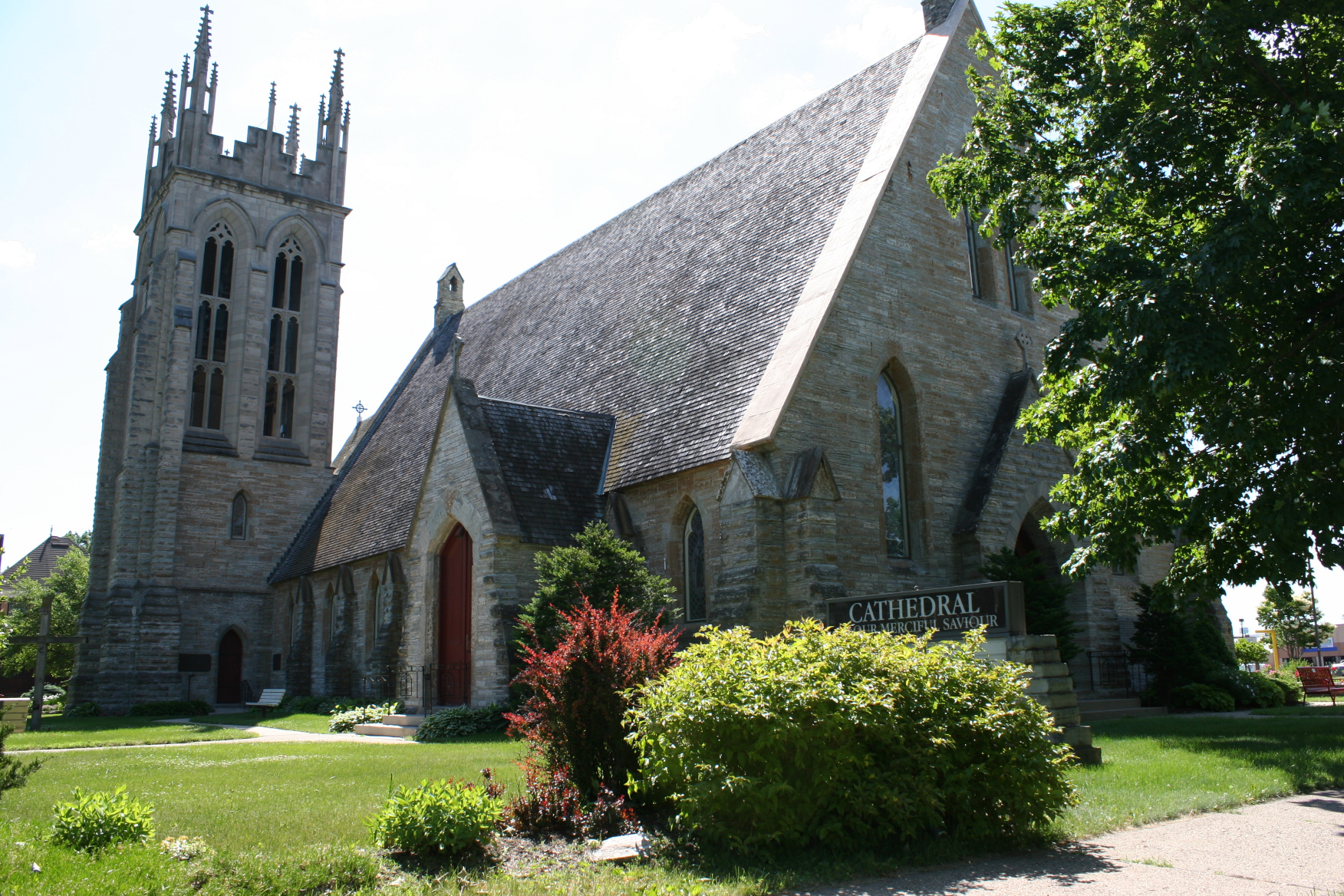
The historic Cathedral of Our Merciful Saviour sits across from Central Park and is a must-see in Faribault. (Minnesota Prairie Roots copyrighted file photo 2024)

The historic Cathedral will be open for tours at 11:30 a.m. Sunday, June 15, following a 10 a.m. Ecumenical Service including bluegrass music. This massive cathedral—and, yes, it really is a cathedral—is important in local Dakota history as the bishop worked closely with Native Americans, some of whom worshipped here.

Fur trader and town founder Alexander Faribault, who was of Dakota and French Canadian heritage, also worked closely with the Dakota. His wood-frame house will be open for free tours from 11 a.m.-3 p.m. Saturday, June 14.
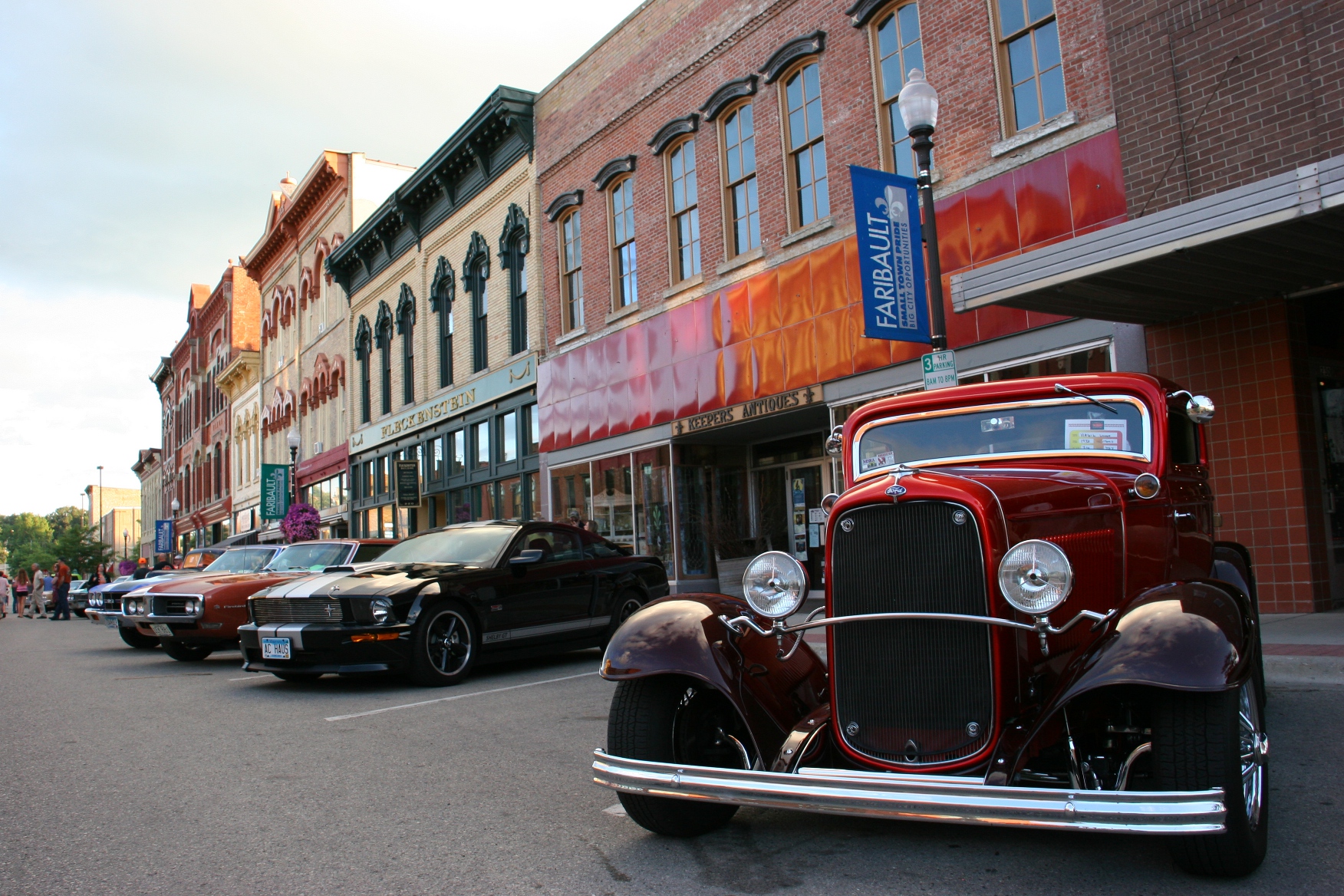
Downtown Faribault features well-kept aged buildings in our historic district. I photographed this scene during a Car Cruise Night. There’s a Car Cruise here Friday, June 13, from 6-9 p.m. (Minnesota Prairie Roots copyrighted file photo)

The Rice County Historical Society will also offer a guided Downtown Walking Tour on Friday and Saturday with two time slots of 11 a.m. and 2 p.m. The $5 tour, led by RCHS Program and Outreach Coordinator Kiran Loewenstein, begins at Central Park. Anticipated to take 1-1 ½ hours, the tour route follows Central Avenue with a focus on the historic district and buildings and early general Faribault history. I expect that will offer ample opportunity to not only learn about early history and heritage, but also to see the heritage of our newest residents in downtown core ethnic businesses.

Two more opportunities to embrace local history (although not officially part of Heritage Days) are inside the State Bank of Faribault along Central Avenue. Local streetscapes and landscapes by Father Jim Zotalis, spiritual leader of the Cathedral, are displayed in a pop-up exhibit in the bank lobby. And for those interested in Faribault’s brewing history, the bank holds an extensive collection of Fleck’s beer memorabilia form long ago Fleckenstein Brewery. Both are accessible during business hours only.

There’s lots happening during Heritage Days, activities that mostly aren’t about heritage. But some are. To see a complete listing of events, click here.

© Copyright 2025 Audrey Kletscher Helbling


Heritage Days talk focuses on the Wahpekute Dakota June 12, 2024

An exhibit at the Rice County Historical Society, Faribault, shares information on the original inhabitants of the county, the Dakota. (Minnesota Prairie Roots copyrighted file photo)

HERITAGE. It’s a word that identifies us, connects us to our families, to our ethnicity, to the way we were raised, the place of our roots. At least that’s my definition.

This week Faribault celebrates Heritage Days. I’ve never felt totally comfortable celebrating heritage in the city I’ve called home since 1982. My heritage, my home, my roots run deep in the southwestern Minnesota prairie some 2 ½ hours west of here.

But many are rooted in this community by birth, by families that trace back generations. If it’s one thing I’ve learned in four decades about the people of Faribault, it’s that many are related to one another via blood and marriage. But I’ve also learned much about the peoples who came before the French, the Irish, the Scandinavians, the Germans, the Cambodians, the Latinos, the Hispanics, the Sudanese, the Somalis… I’ve learned about the Dakota, the original inhabitants of this region.

Jeff Jarvis talks about the Dakota at Books on Central. (Minnesota Prairie Roots copyrighted file photo April 2024)

That knowledge came through my own reading and via attending events focused on the Dakota. In April, I listened to local historian and artist Jeff Jarvis talk about the Dakota to a packed audience at Books on Central in Faribault. Jarvis is presenting again, speaking at 6:30 p.m., Wednesday, June 12, on the Wahpekute Dakota at The Cathedral of Our Merciful Saviour, 101 NW Sixth Street, across the street from Faribault’s Central Park.

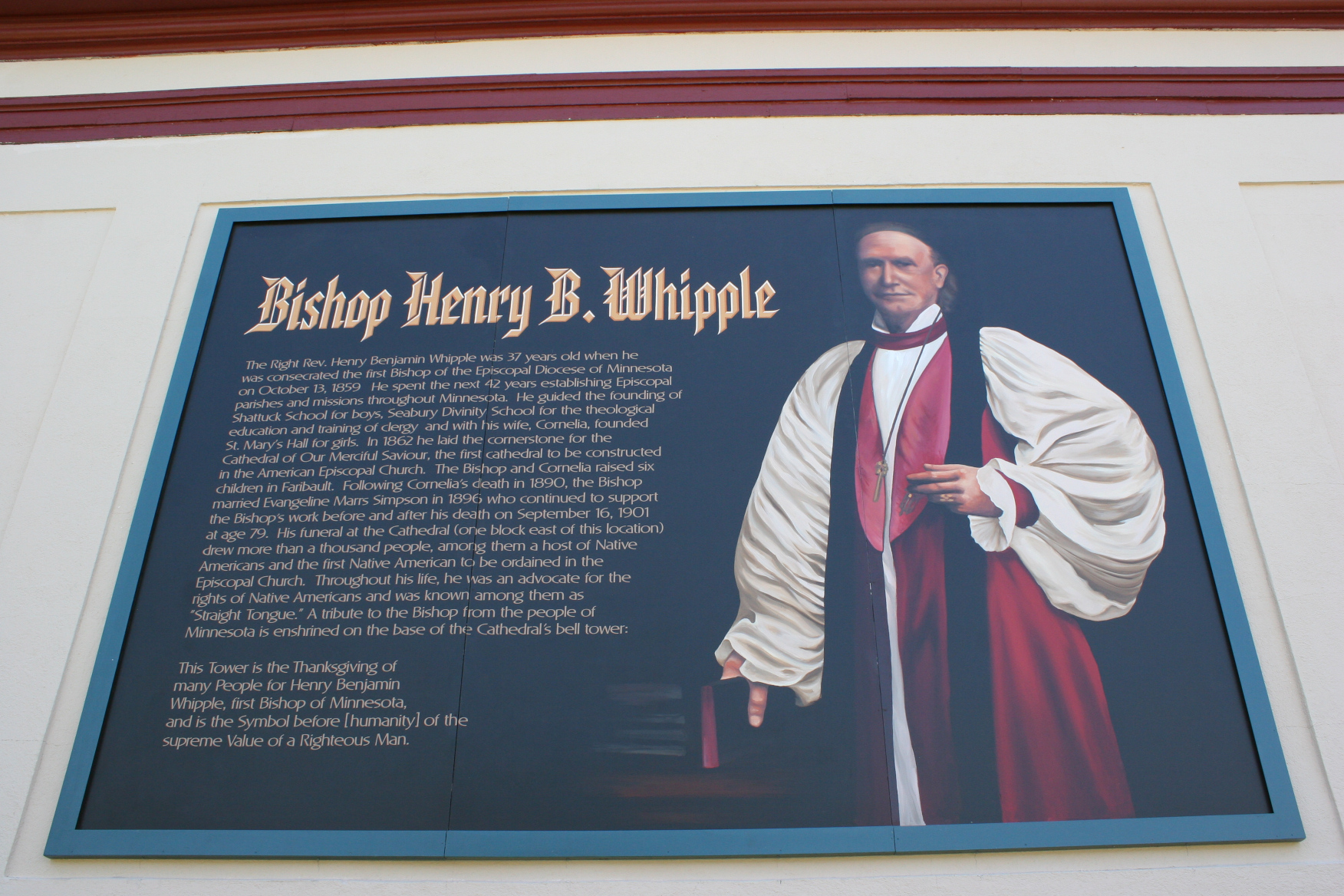
Information on Bishop Henry Whipple focuses one of the murals on the back of the bandshell at Central Park. (Minnesota Prairie Roots copyrighted file photo June 2020)

The Cathedral and its founding leader played an important part in local, state and national history with then Bishop Henry Whipple befriending the Wahpekute Dakota. He also pled with President Abraham Lincoln to spare the lives of 303 Dakota men sentenced to death by the US government following the US-Dakota War of 1862. Eventually all but 38 were pardoned, partially due to Whipple’s efforts.

The pamphlet Jeff Jarvis created about the Wahpekute Dakota. (Minnesota Prairie Roots copyrighted file photo April 2024)

I expect Jarvis will touch on that in his Wednesday evening presentation. He’s an engaging speaker, knowledgeable and passionate. He’s met with Dakota people, compiled a summary of his research in a mini pamphlet titled “The Faribault Dakota, Wahpekute Band.” It features an historic timeline, a Dakota primer of place names, his original art and more.

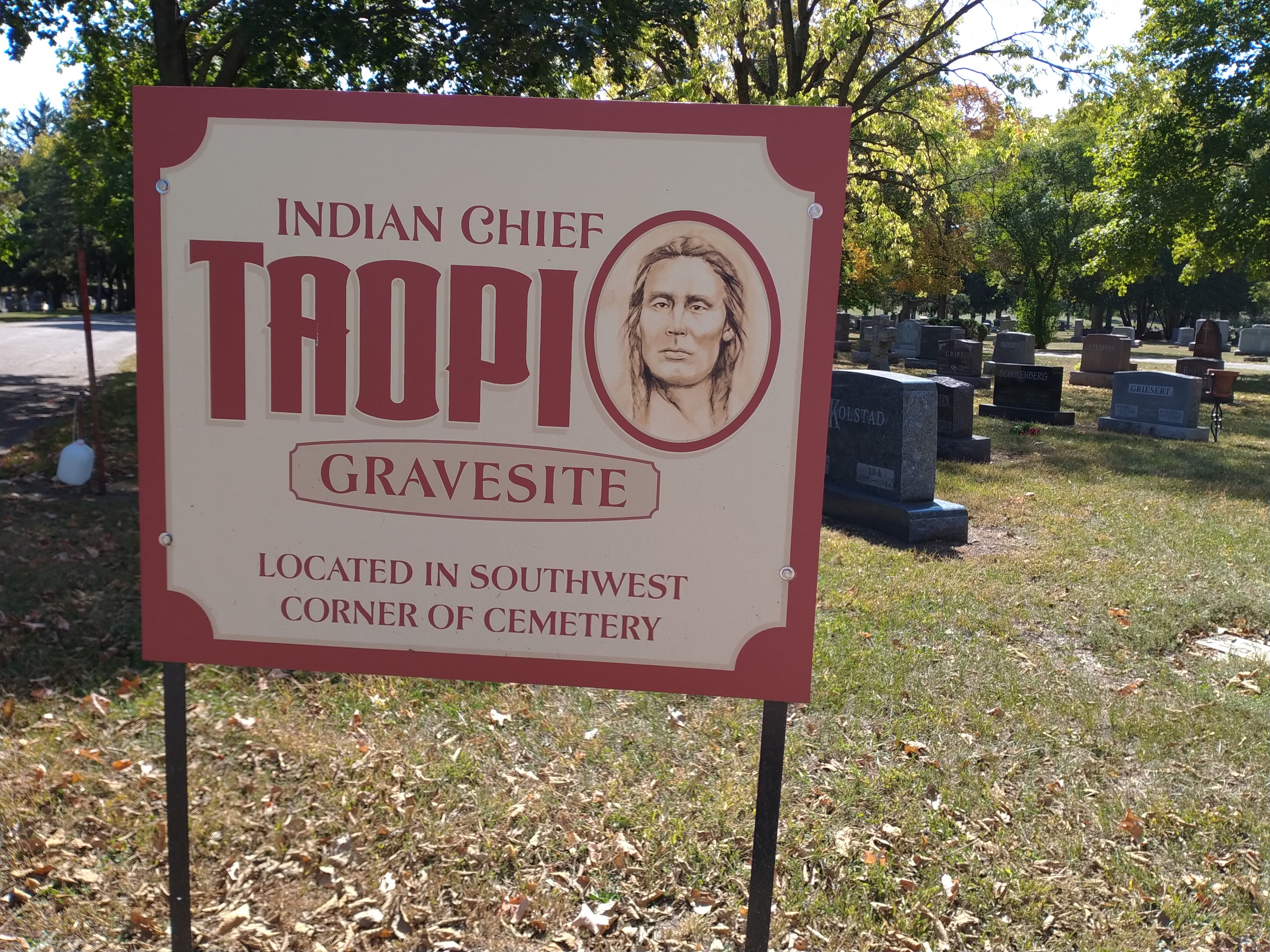
Chief Tapoi, a leader and member of the Little Crow Band of the Mdewakanton Dakota Tribe, lived in Faribault for a while and is buried at Maple Lawn Cemetery. (Minnesota Prairie Roots copyrighted file photo October 2023)

Jarvis is involved in the Faribault Dakota Project, a local endeavor that aims to increase awareness, visibility and knowledge of the original inhabitants of this land. To that end, presentations like his set during Heritage Days are important for locals to attend.

Just across the street from Central Park, the stunning Cathedral of Our Merciful Saviour. (Minnesota Prairie Roots copyrighted file photo)

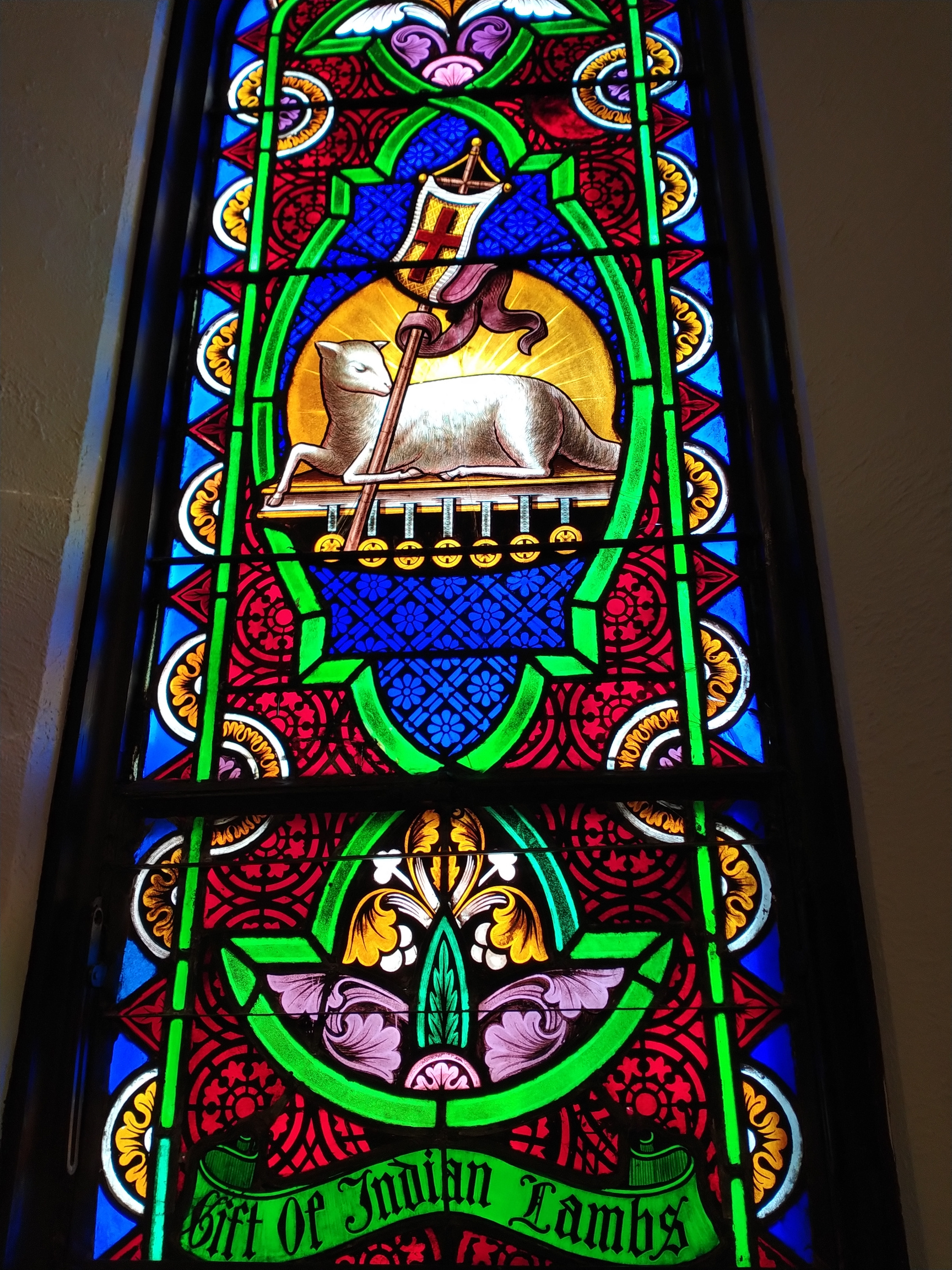
Likewise, free tours of the Cathedral at 11:30 a.m. Sunday, June 16, following a 10 a.m. ecumenical church service, likely will provide more information on the Wahpekute and their connection to Bishop Whipple and the massive limestone church. Several stained glass windows inside the sanctuary were gifted to the Cathedral by the Dakota.

This stained glass window was gifted by the Dakota to the Cathedral in honor of Dakota children. (Minnesota Prairie Roots copyrighted photo November 2023)

The Dakota and this house of worship, which focuses on connecting to the broader community, are such a vital part of Faribault’s history. That’s important to understand, to recognize, to honor no matter one’s heritage. I know locals who’ve lived here their entire lives and have never stepped inside the historic Cathedral. I find that almost unbelievable. We need to understand our past—our connections to peoples and land—to grow our future.

FYI: For a complete listing of Faribault Heritage Day events, click here.

© Copyright 2024 Audrey Kletscher Helbling
 

Celebrating Faribault’s brewing history with Fleck’s Travaganza! August 19, 2022

The event promotional created by Jeff Jarvis of West Cedar Studio.

MY COMMUNITY WILL CELEBRATE a rich history of brewing this weekend at the Fleck’s Travaganza!, an event honoring Fleckenstein Brewery. The brewery, opened in 1856 and producing assorted beverages for 108 years (until 1964) in two locations along the Straight River bluffs in Faribault, has long garnered local interest.

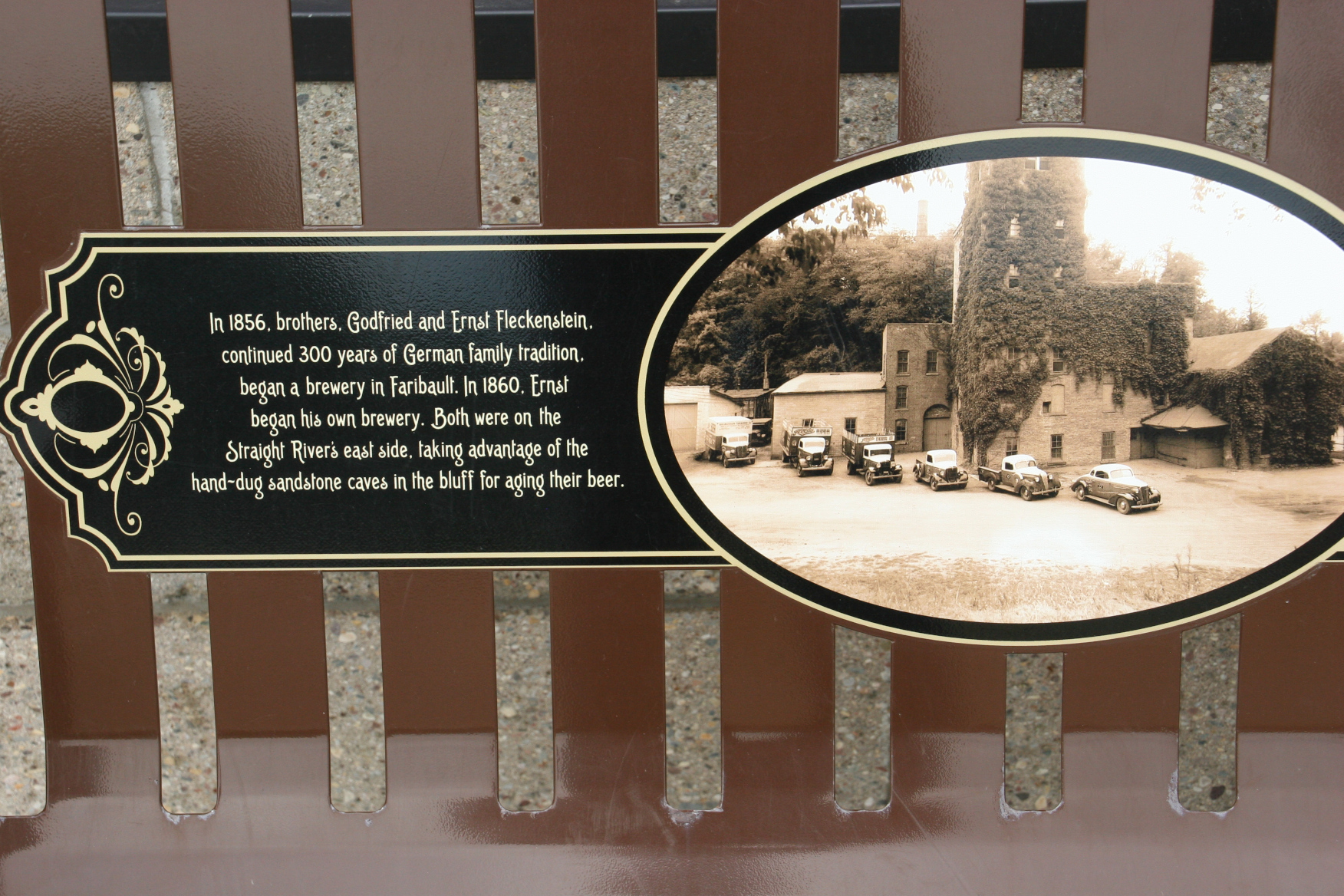
A historical themed bench outside the RCHS summarizes the Fleckenstein family’s brewery history in Faribault. (Minnesota Prairie Roots copyrighted photo July 2022)

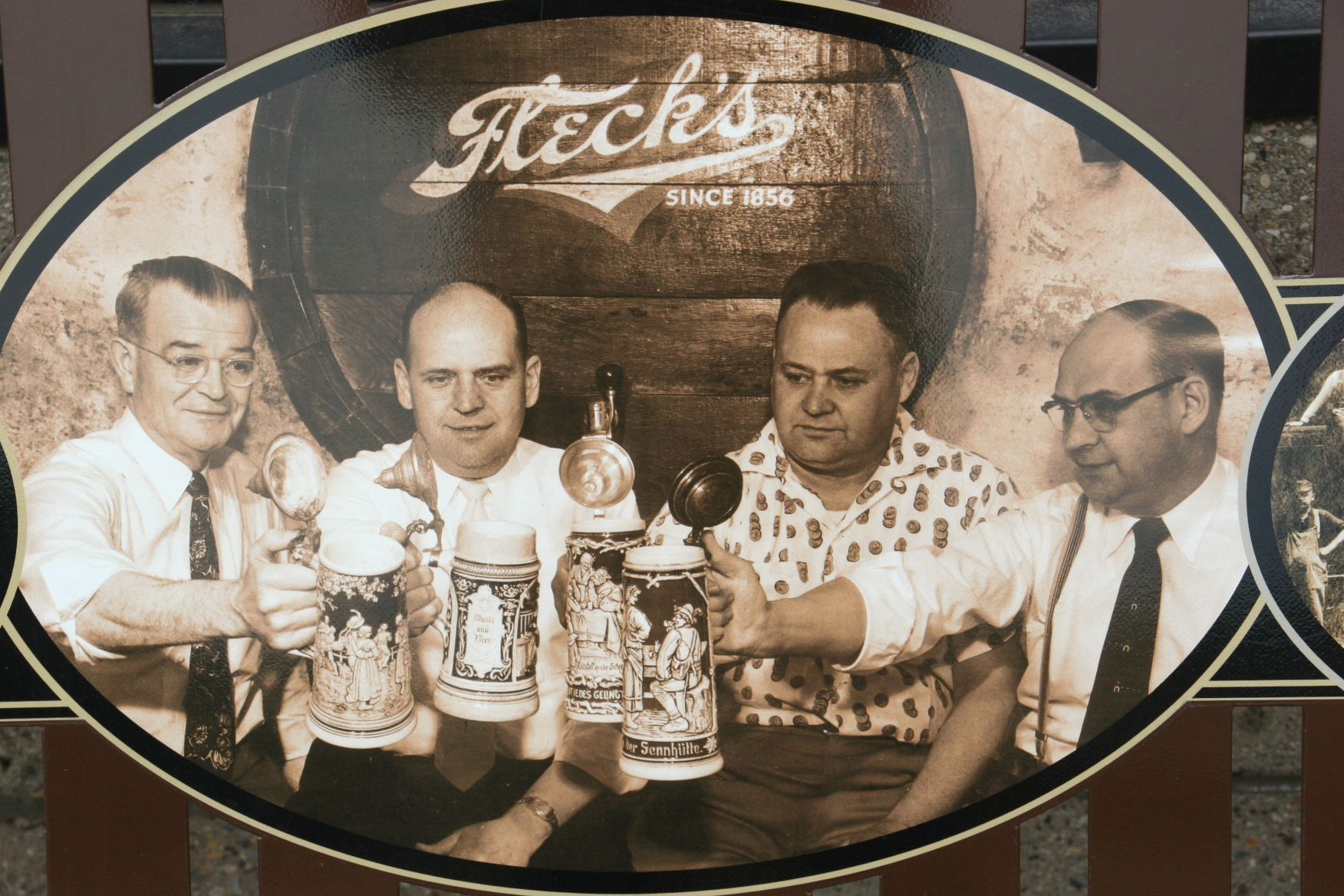
Cheers to Fleck’s beer. This photo is featured on a bench outside the RCHS. (Minnesota Prairie Roots copyrighted photo July 2022)

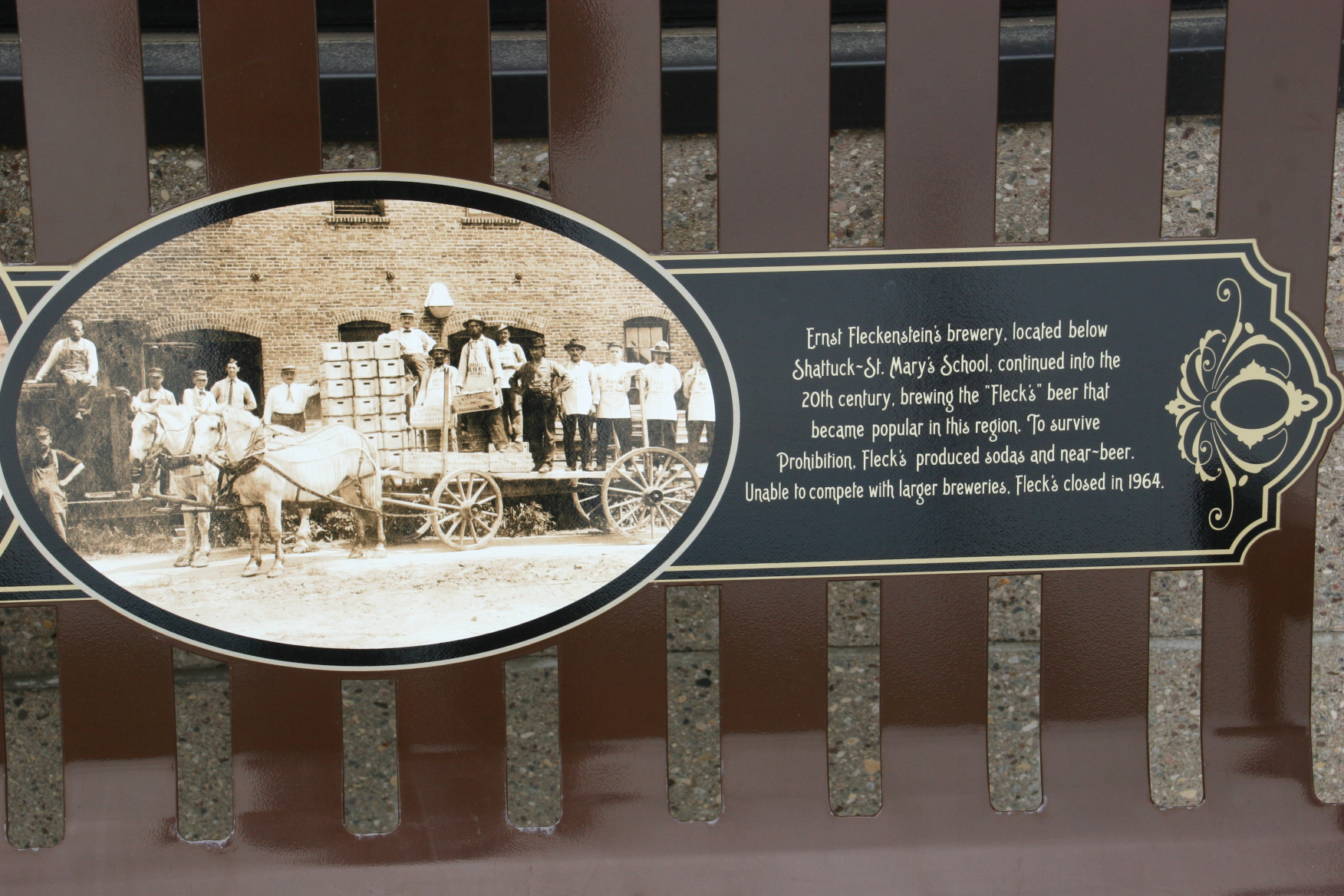
Even more history on a bench by the RCHS. (Minnesota Prairie Roots copyrighted photo July 2022)

The Rice County Historical Society (RCHS) features the brewery in its museum. Local historian Brian Schmidt collects Fleckenstein items and memorabilia. And the State Bank of Faribault displays a sizable collection of brewery items.

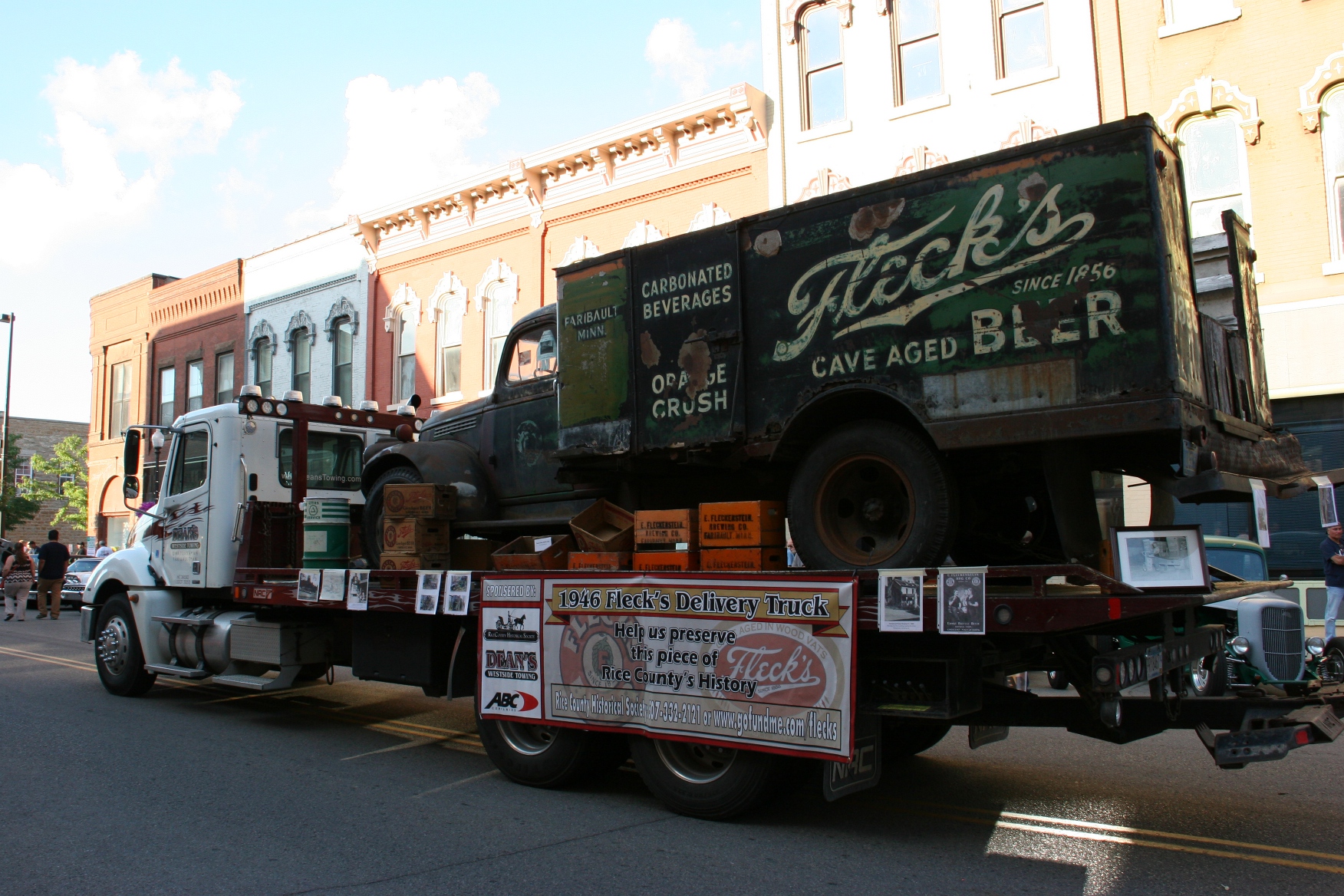
The 1946 Fleck’s delivery truck, pre-restoration, in the July 2016 Faribault Car Cruise Night. (Minnesota Prairie Roots copyrighted file photo 2016)

But this weekend all eyes will focus on a restored 1946 Fleckenstein Brewery delivery truck. That truck will lead a parade of vehicles through Faribault (click on link for the route) beginning at 5:30 pm Friday at the RCHS. The parade follows major routes through town, including past my house on Willow Street, and ends along Central Avenue for the Faribault Car Cruise Night.

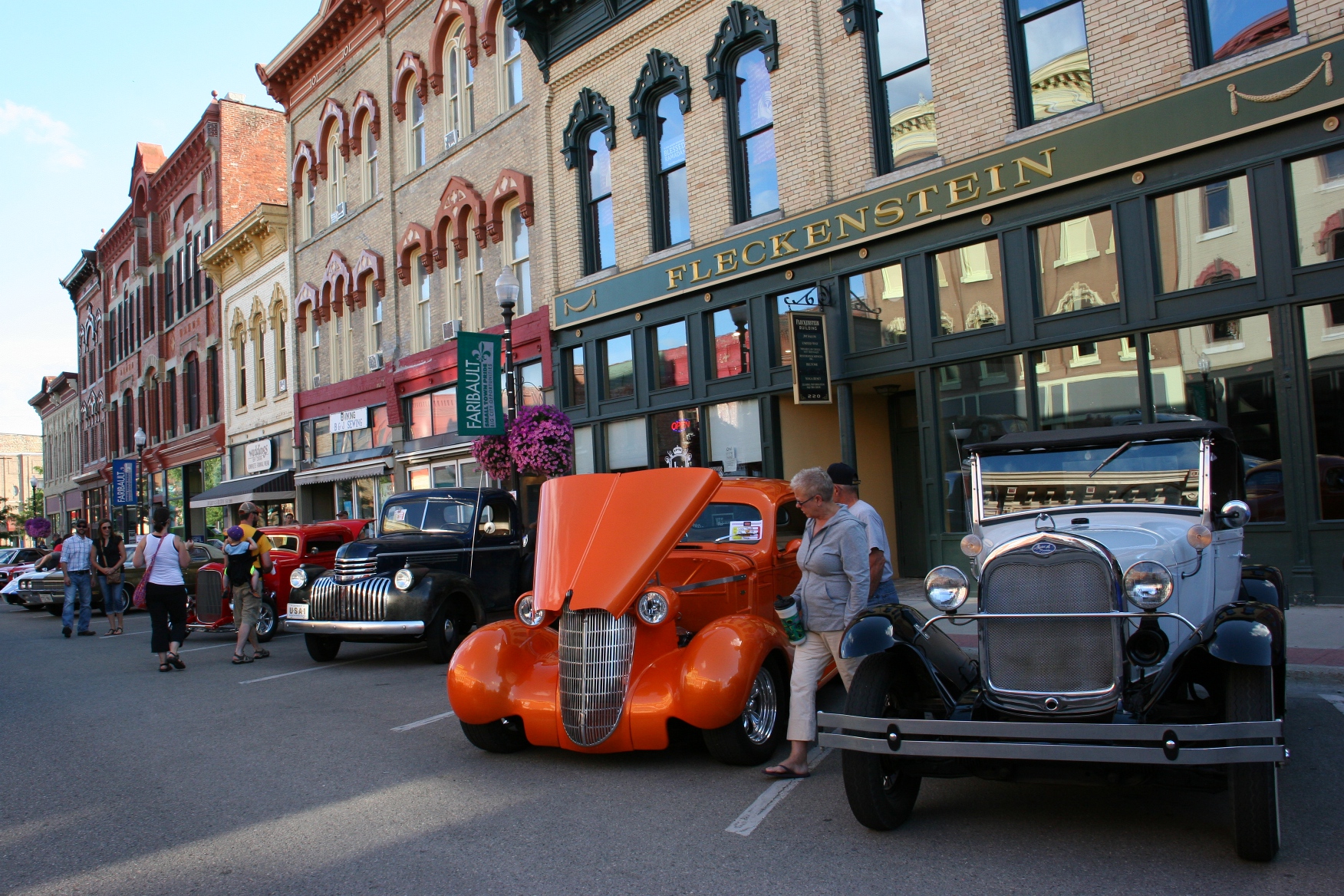
A building in Faribault’s downtown historic district bears the Fleckenstein name. I took this photo, featured several years ago on the cover of the Faribault tourism magazine, during the July 2016 Car Cruise Night. (Minnesota Prairie Roots copyrighted file photo)

The beer delivery truck will also be parked along Central Avenue on Sunday morning during an invitation only RCHS event for volunteers.

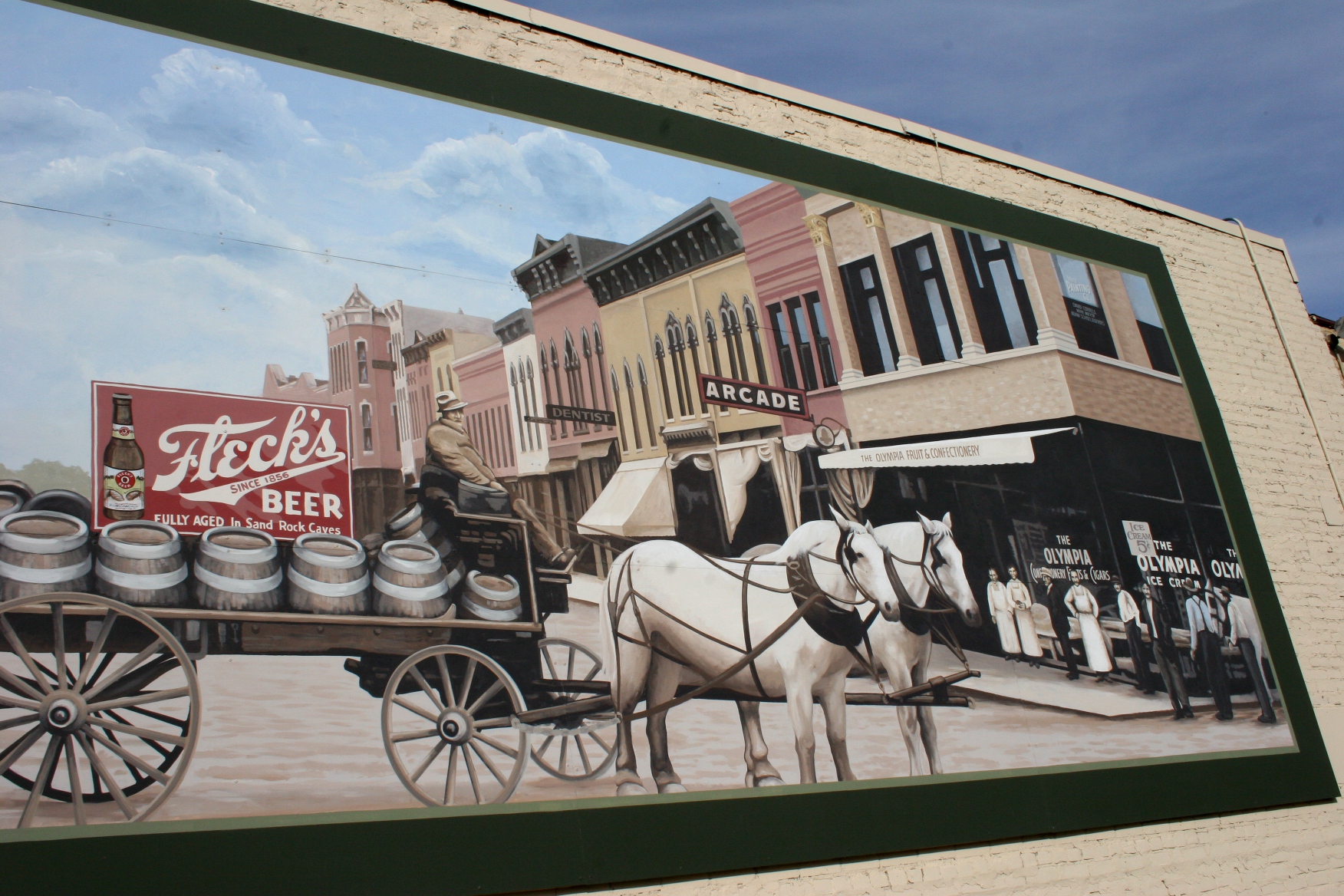
A downtown Faribault mural featuring Fleck’s beer. (Minnesota Prairie Roots copyrighted file photo)

The bank exhibit will be open Friday evening during the Car Cruise in the heart of historic downtown Faribault and also from 9 am – noon Saturday. Just across the street from the bank, a mural features the brewery.

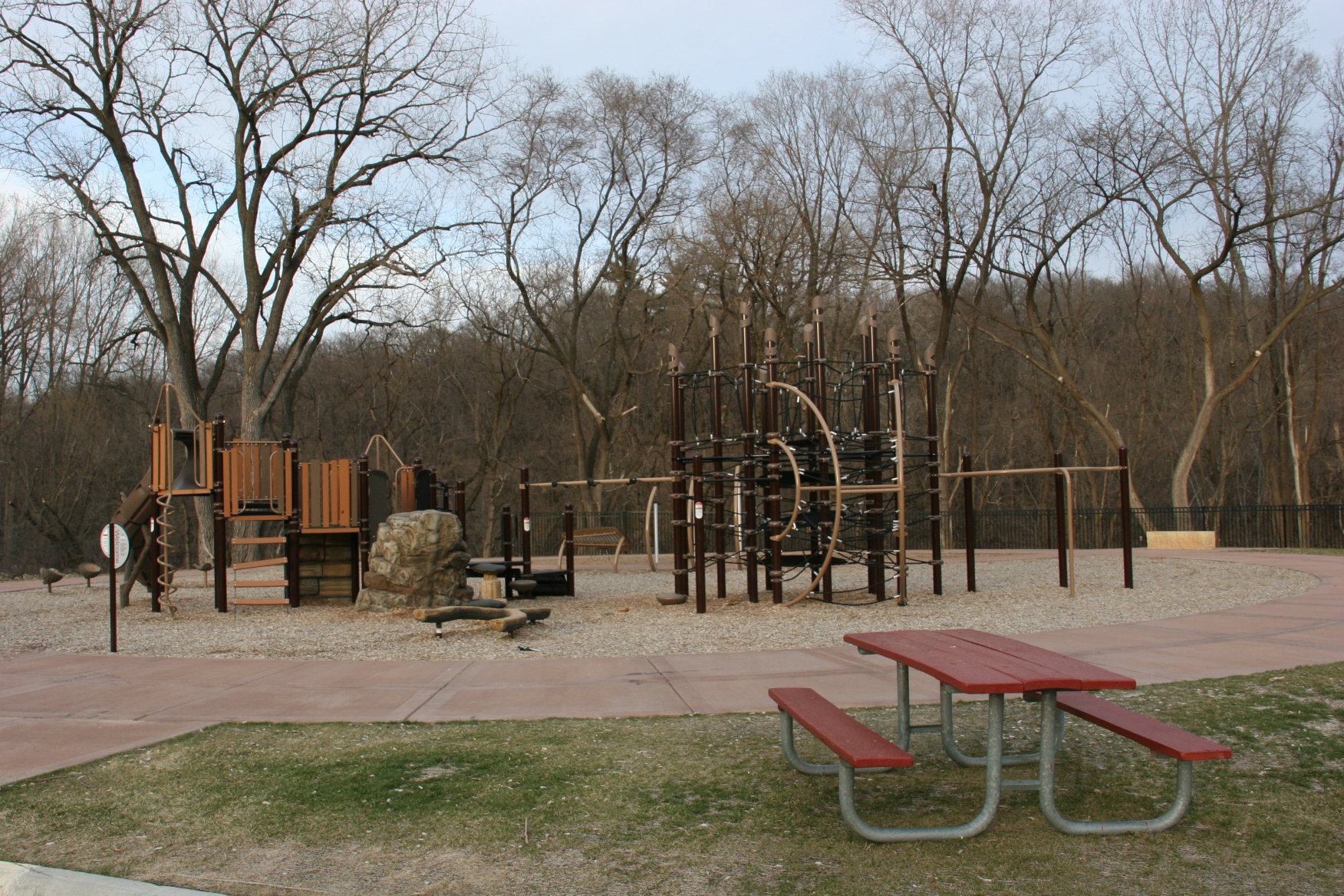
This shows a section of the park, which includes a playground, picnic area and shelter and a river overlook. (Minnesota Prairie Roots copyrighted file photo May 2022)

Saturday brings more events with the 10 am dedication of Fleckenstein Bluffs Park along the Straight River in downtown Faribault.

Faribault artist Rhody Yule created this oil painting of the Fleckenstein Brewery in 1976. The building, and the brewery, no longer exist. The 20-foot Fleck’s beer bottle on the right side of the painting sat near the brewery entrance. Children often had their pictures taken here when their parents took a brewery tour. (Minnesota Prairie Roots copyrighted file photo January 2011)

At 1 pm, “Fleckenstein Brewery, a History” will be presented by collector and historian Schmidt at the RCHS. Special guest is Al Fleckenstein. Following that, at 3 pm, Schmidt leads a tour of the Fleckenstein Brewery ruins site on the campus of Shattuck-St. Mary’s School. Attendance is limited to 50 for the packaged, ticketed events with reservations via the RCHS highly-recommended. Cost for both is $20.

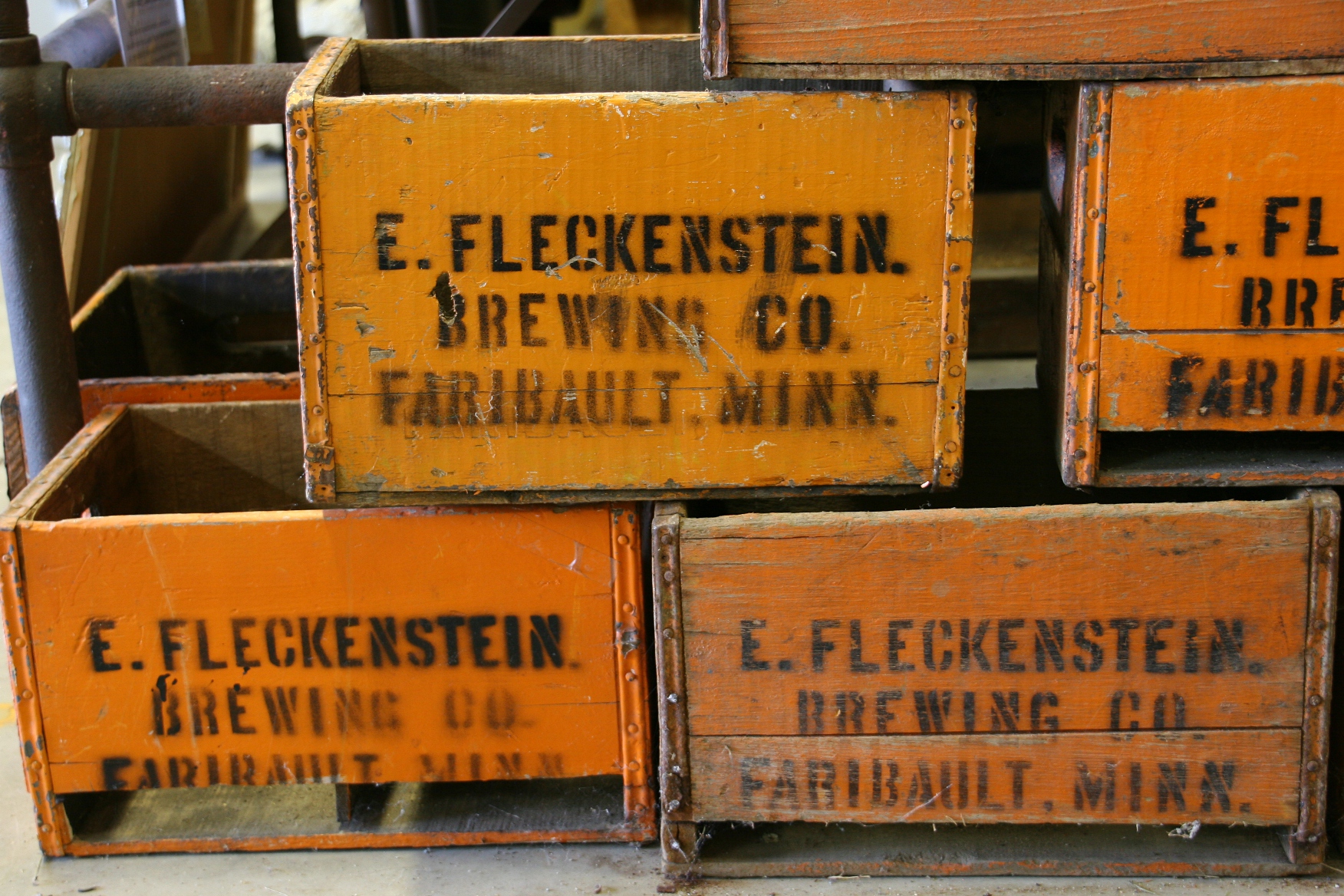
Stacked inside the RCHS Harvest and Heritage Halls are these crates from Fleckenstein Brewing. (Minnesota Prairie Roots copyrighted photo October 2015)

If you want to take home a bit of memorabilia, a commemorative bottle of grape pop is available for $5. Specially-made by Spring Grove Beverages in southeastern Minnesota, the soda comes with an original Fleck’s grape pop cap attached. Proceeds from the soda sales benefit the historical society.

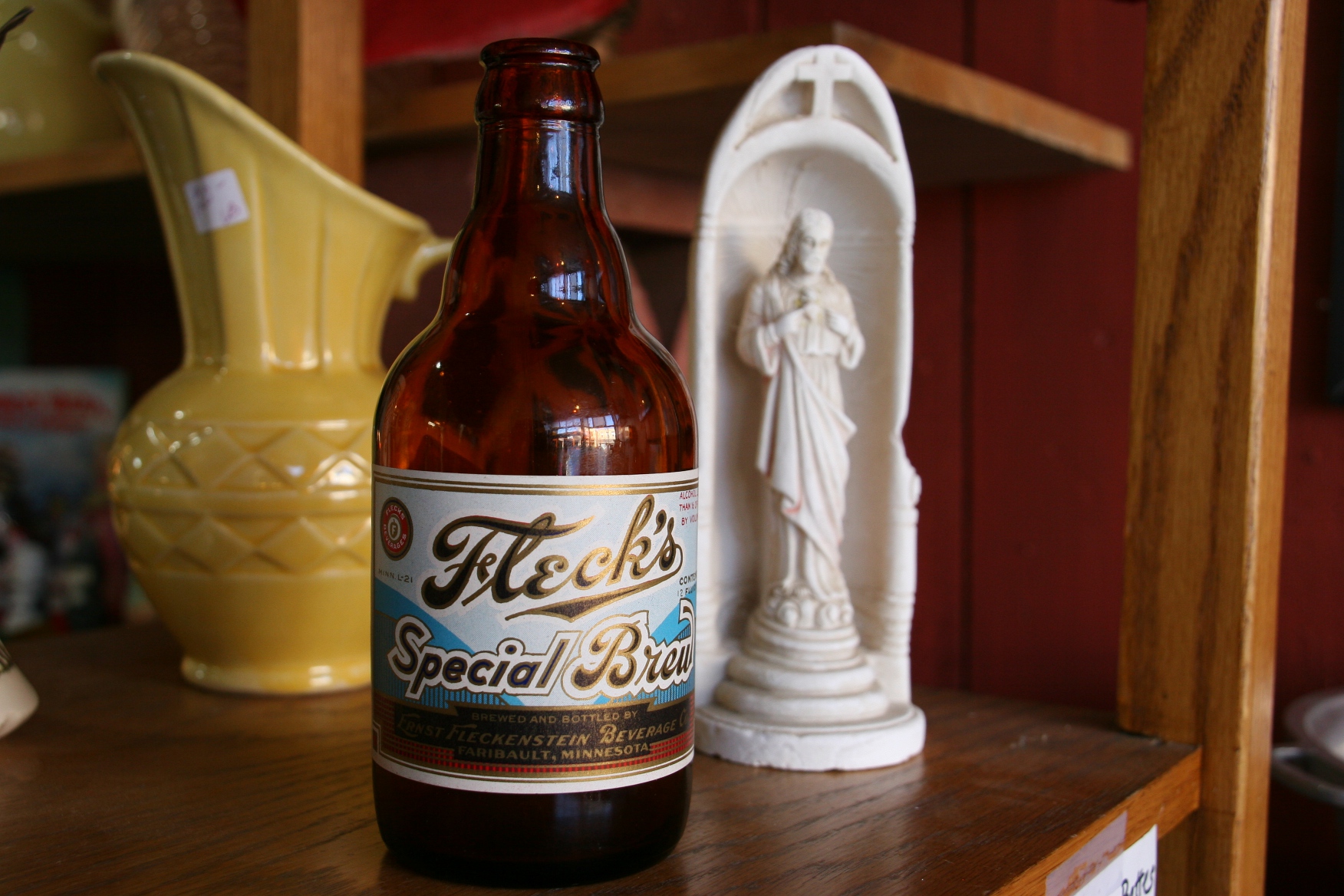
I found this Fleck’s beer bottle at LB Antiques in Jordan in February 2017. (Minnesota Prairie Roots copyrighted file photo)

Now, the only thing missing—and this comes from someone who appreciates and enjoys craft beers—is Faribault-brewed craft beer. Perhaps some day…

© Copyright 2022 Audrey Kletscher Helbling
 

Connect with farmers, the land, animals & more during co-op farm tour July 11, 2019

Filed under: Uncategorized — Audrey Kletscher Helbling @ 5:00 AM
Tags: , , , , , ,

Shepherd’s Way Farms, rural Nerstrand. Minnesota Prairie Roots file photo 2016.


FARM-FRESH VEGETABLES. Free-range chickens. Fields of flowers. Hand-crafted butter and cheeses. Organic berries.


Minnesota Prairie Roots file photo.


All and much more focus the annual Co-op Farm Tour scheduled for 10 a.m. – 4 p.m. this Saturday, July 13, in the eastern half of southern and central Minnesota into western Wisconsin.


Minnesota Prairie Roots 2016 file photo from Shepherd’s Way Farm.


The event offers the public an opportunity to meet farmers on the land, to tour their farms, to engage in farm activities and learn more about local sources of food (and flowers). The more we know, the better informed to make decisions about food choices. The more we know, the better connection with those who grow, raise, tend, harvest.


Approaching Shepherd’s Way Farms, rural Nerstrand. Minnesota Prairie Roots file photo 2016.


As someone raised on a 160-acre crop and dairy farm in southwestern Minnesota, I understand and appreciate these farmers. Farming may seem like an idyllic life-style. But I will tell you that it’s hard work being a small-scale farmer. The job is labor and time intensive. Yet, talk to one of these mostly new-generation farmers and you will hear their passion for farming. They are dedicated and market savvy and passionate in a way that inspires.


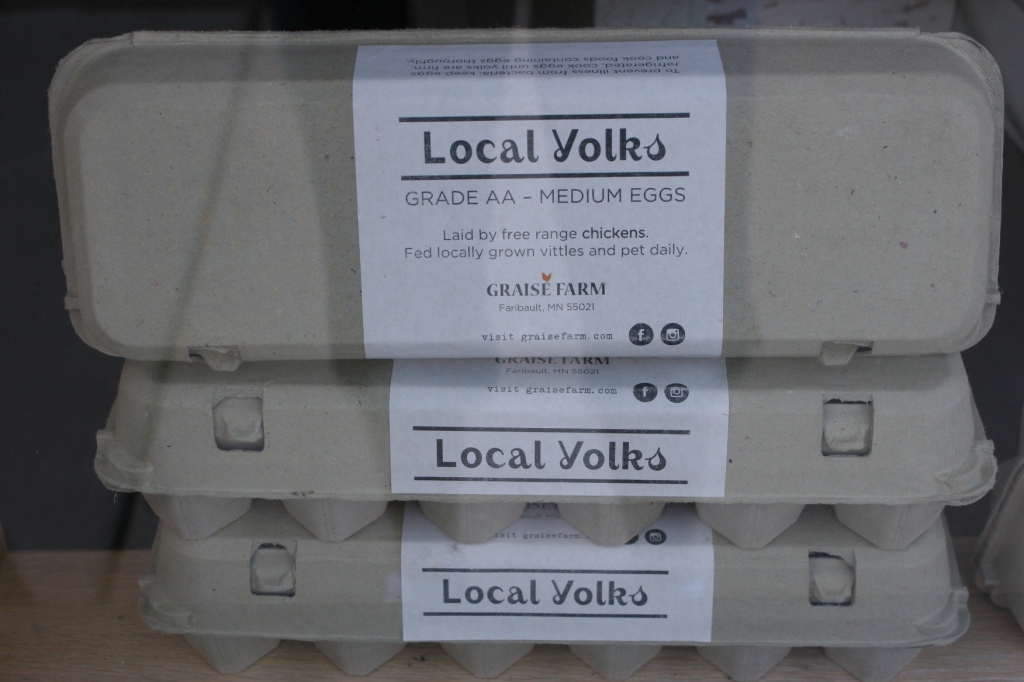
In the window of Ruf Acres Market, cartons promoting eggs from Graise Farm. Minnesota Prairie Roots file photo.


I hope you can find time this weekend to visit one or several of the farms on the Co-op Farm Tour. Several are in my area of Minnesota, including Graise Farm, Faribault; T.C. Farm, Dundas; Twin Organics Farm, Northfield; Shepherd’s Way Farms, Nerstrand; Ferndale Farm & Market, Cannon Falls; Hope Creamery, Hope; and Little Big Sky Farm, Henderson.

FYI: Click here for more info on the Co-op Farm Tour.

© Copyright 2019 Audrey Kletscher Helbling
 

In rural Nerstrand: Of sheep & cheesemaking July 26, 2016


Approaching Shepherd's Way Farms, rural Nerstrand.

Approaching Shepherd’s Way Farms, rural Nerstrand.

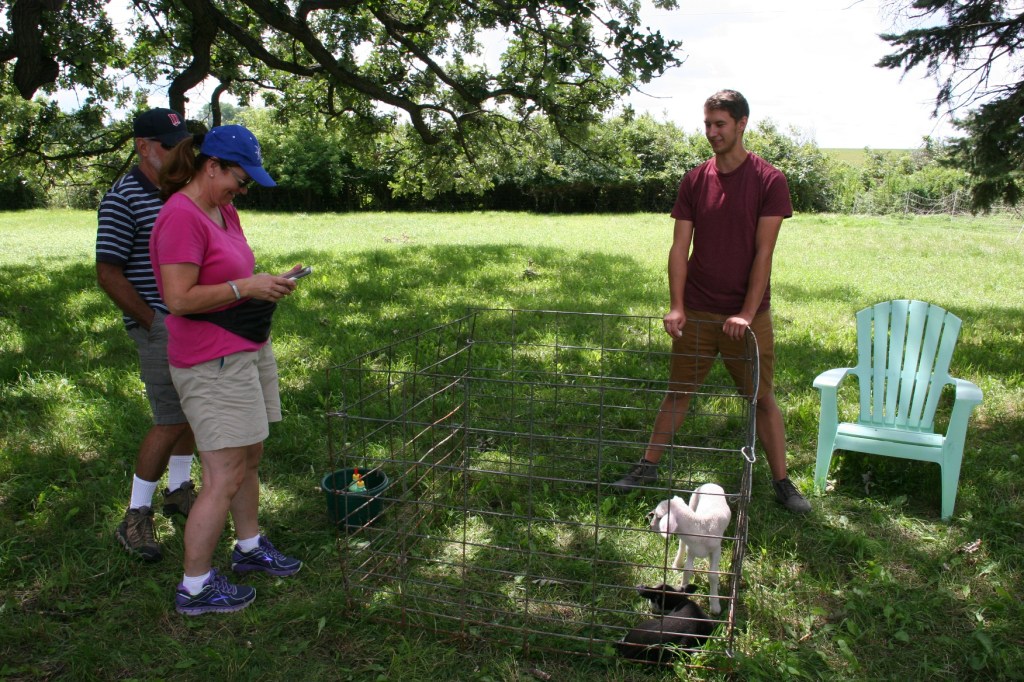
I WAS SMITTEN, simply smitten by the two-day-old lambs at Shepherd’s Way Farms. I wanted to snatch one of the babies from an outdoor pen, tuck it under my arm and scamper to the van.


Shepherd's Way Farms, 111 white lamb


Lucky for the owners of Shepherd’s Way, I am not the rustling type. And lucky for Shepherd’s Way that a hawk, eagle or other predator did not discover these unexpected pasture-born lambs—born out of the regular lambing season.


Shepherd's Way Farms, 151 penned lambs


The lambs, penned under the shade of sprawling oaks, proved a popular attraction during a recent 2106 Eat Local Farm Tour at Steven Read and Jodi Ohlsen Read’s dairy sheep farm near Nerstrand Big Woods State Park.


Shepherd's Way Farms, 143 Burr Oak cheese


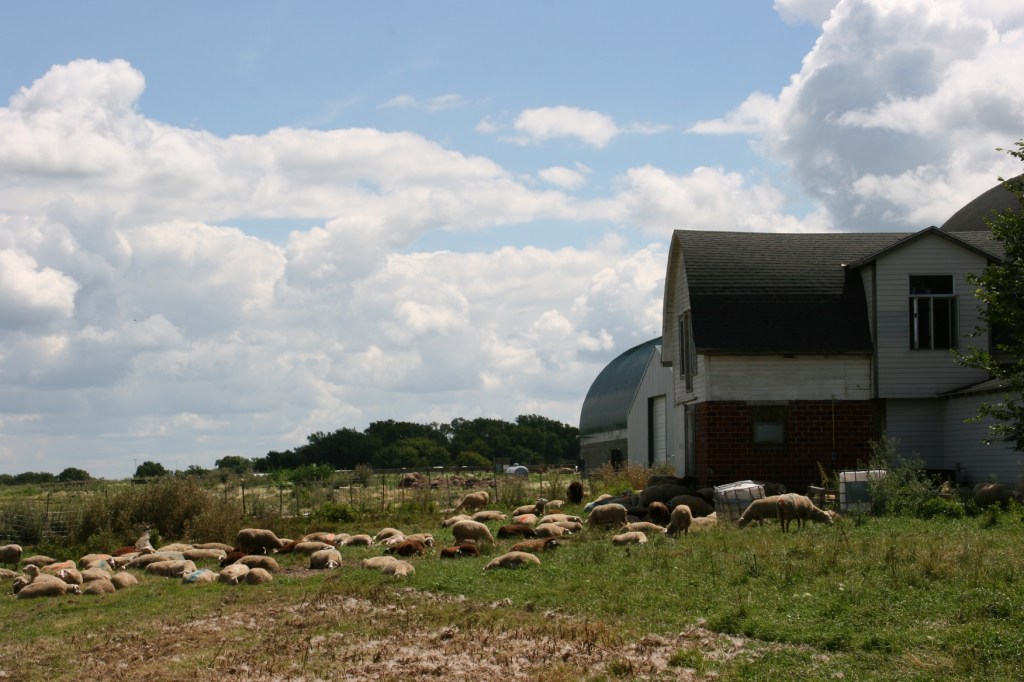
Shepherd's Way Farms, 173 sheep in pasture


Shepherd's Way Farms, 145 Big Woods Blue Cheese


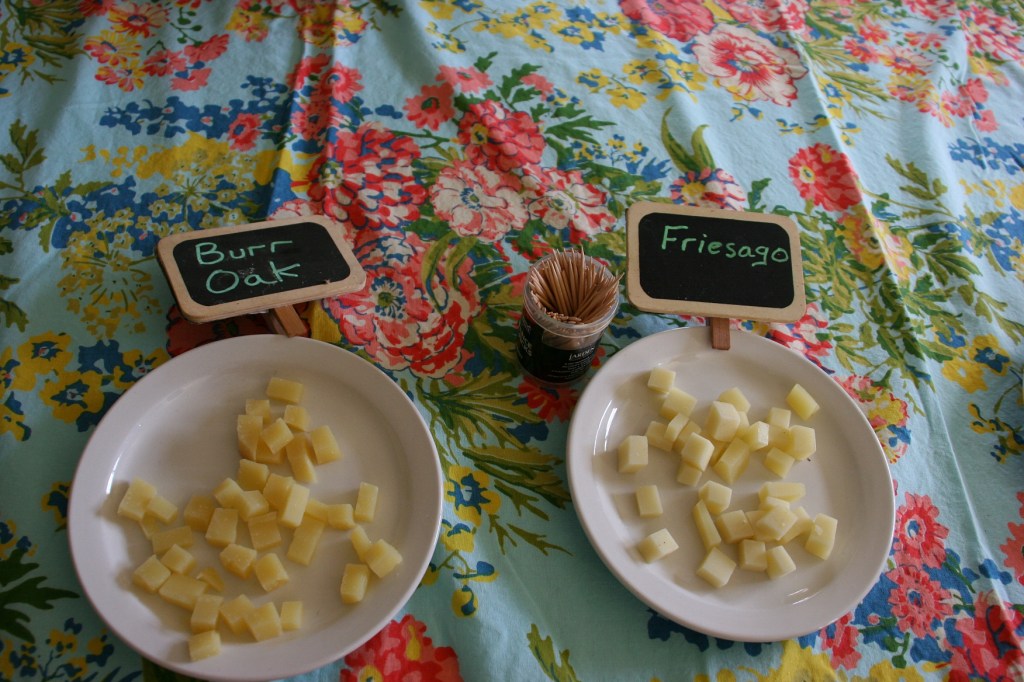
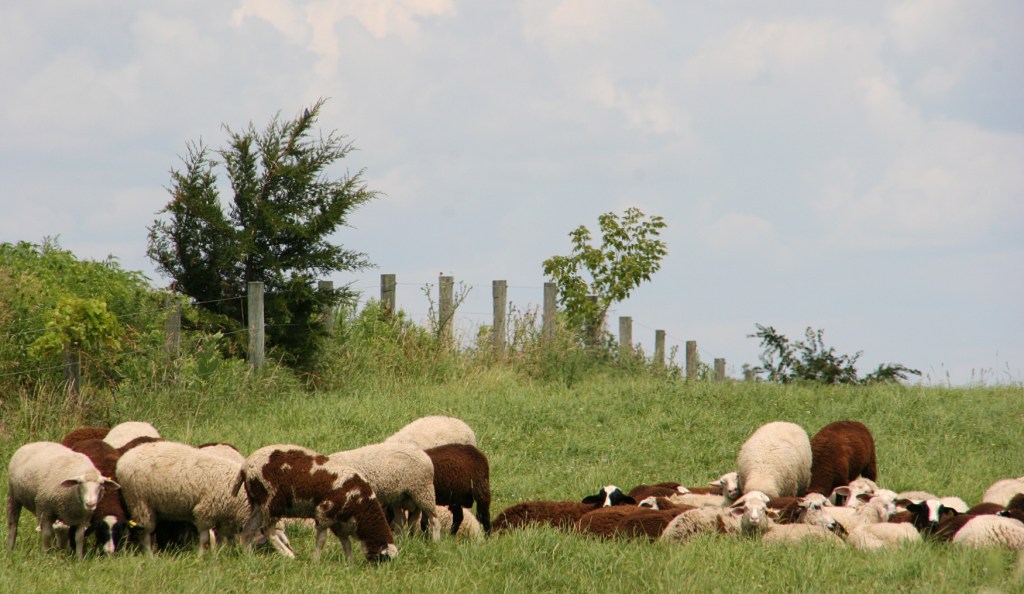
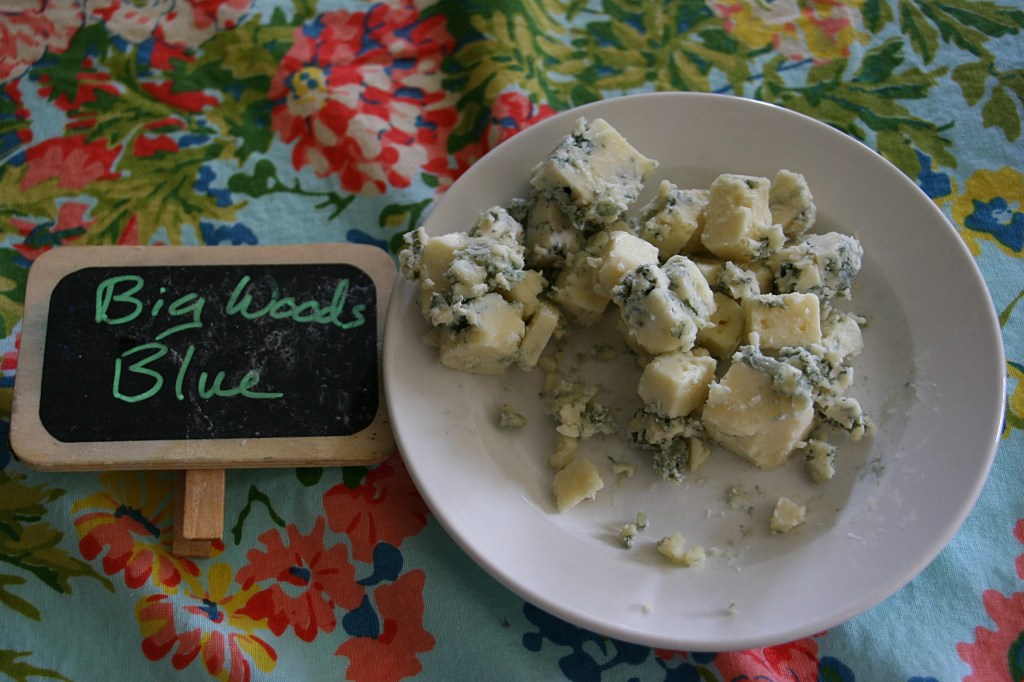
Here sheep graze pastureland, fueling up to produce milk for award-winning handcrafted artisan cheeses. Farm tour visitors sampled those cheeses which range from creamy Shepherd’s Hope to the denser, firmer Burr Oak to a blue cheese appropriately named Big Woods Blue. I found the cheeses especially flavorful and the softer cheeses exquisitely creamy, traits attributed to the higher fat content of sheep’s milk.

Farm co-owner and cheesemaker Jodi Ohlsen Read talks about Shepherd's Way Farms.

Farm co-owner and cheesemaker Jodi Ohlsen Read talks about Shepherd’s Way Farms.

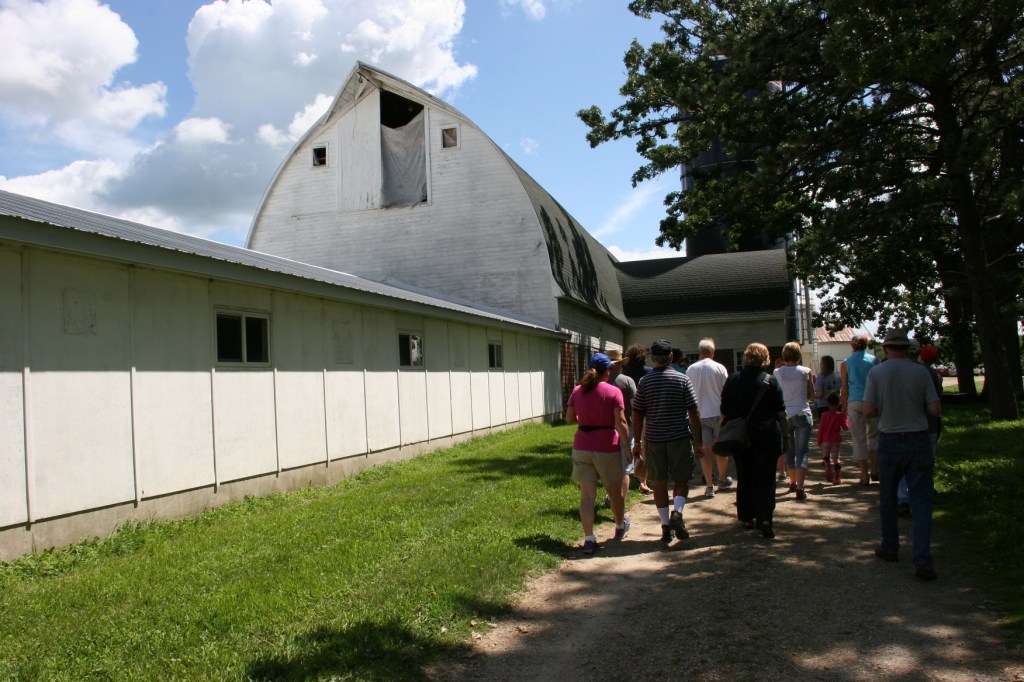
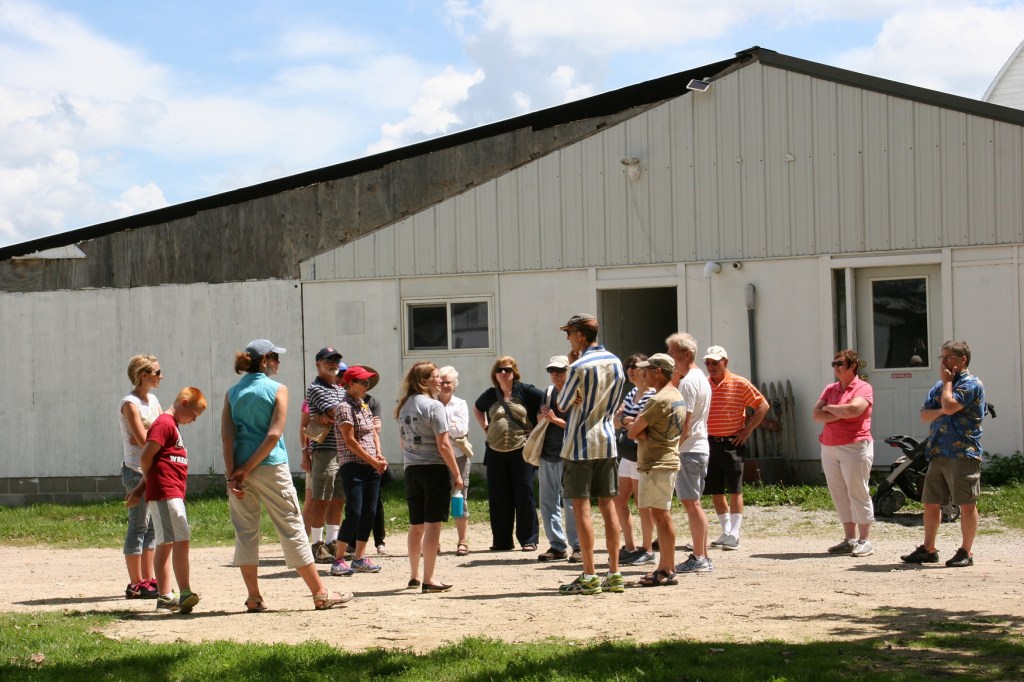
The tour group heads toward the barn.

The tour group heads toward the barn.

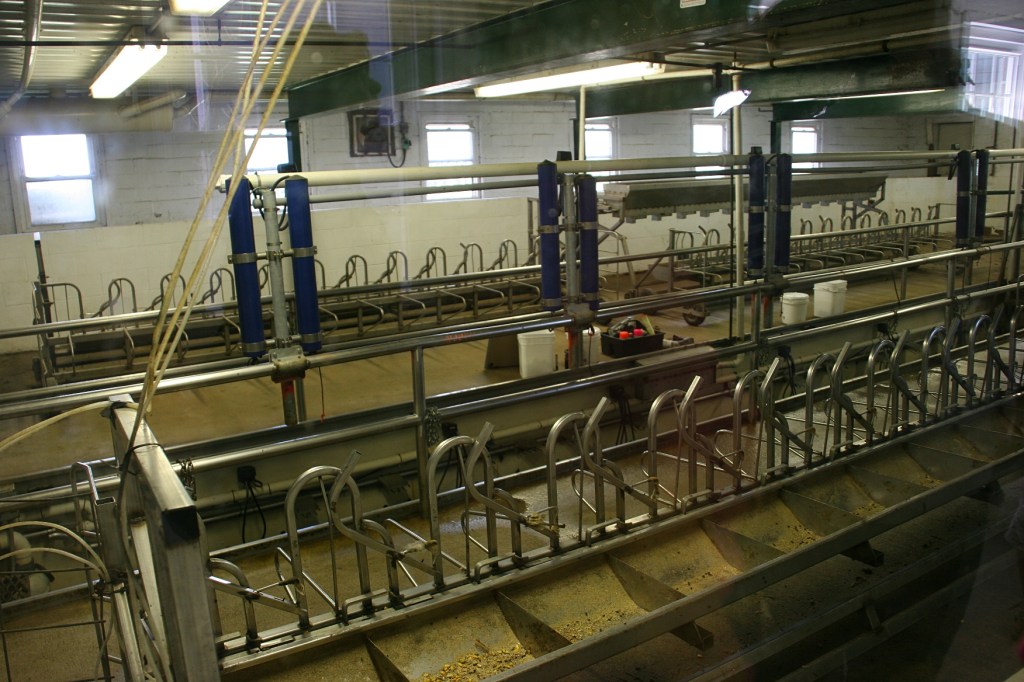
Looking through a window, visitors get a look at the area where the sheep are secured and fed during milking.

Looking through a window, visitors see the area where the sheep are secured and fed during milking.

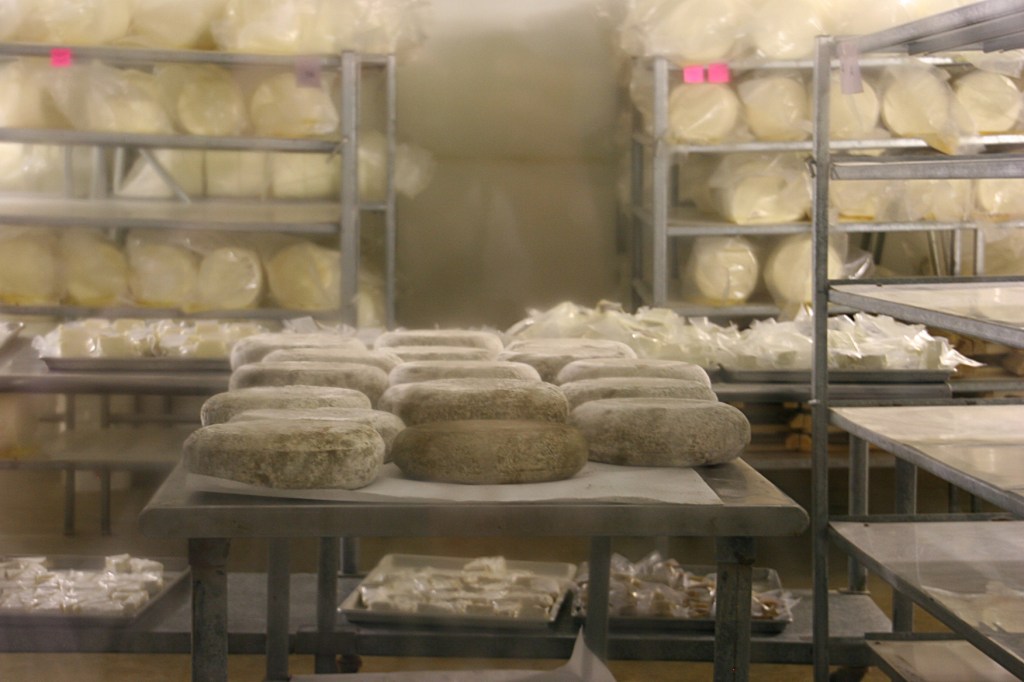
Again, through a window, visitors view aging cheese wheels.

Through an interior window, visitors can view the cheese.

Jodi led visitors on a tour past the milking barn and cheesemaking and aging rooms. As we followed her along a hallway separating us from the operational area, we learned about cheesemaking from start to finish. She’s the cheesemaker. Oversized windows allowed for viewing. Here, some 240 sheep are milked in a process that takes about four hours from set-up to milking to clean-up. Jodi noted that if you don’t like to clean, then sheep dairy farming/cheesemaking is not for you.

Jodi answers questions once the barn tour is finished.

Jodi answers questions following the barn tour.

It is clear from Jodi’s tour that she loves this rural way of life, this place where she’s raised four sons. Although grown, those young men still occasionally help, this day at the tour and also with marketing the family’s cheeses. Shepherd’s Way cheese sells primarily in the Twin Cities—at farmers’ markets and select grocery stores—but also as distant as Chicago and the East Coast. The farm also has a Community Supported Agriculture program.

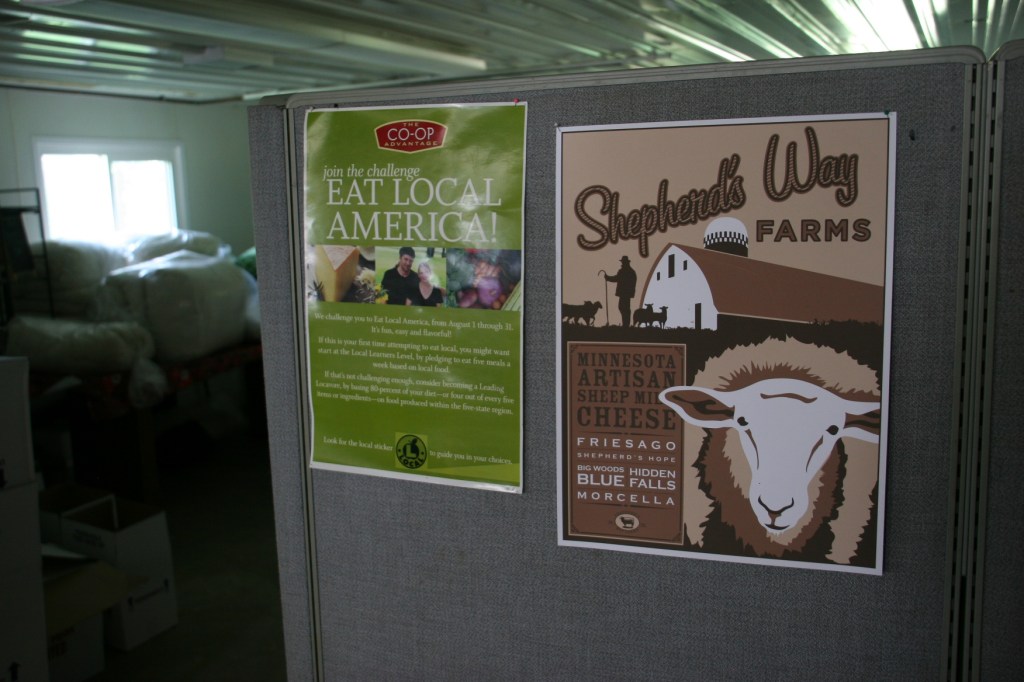
Promotional art showcased inside the on-site store.

Promotional art showcased inside the on-site store.

Classes, tastings and tours are also offered at the farm by the well-spoken and knowledgeable cheesemaker who comes from a pre-dairy professional background in writing and editing.


Shepherd's Way Farms, 127 sheep by barn


Listening to Jodi affirms the farm’s mission statement published on its website:

At Shepherd’s Way Farms, we believe there is a way to live that combines hard work, creativity, respect for the land and animals, and a focus on family and friends. We believe the small family-based farm still has a place in our society. Everything we do, everything we make, is in pursuit of this goal.

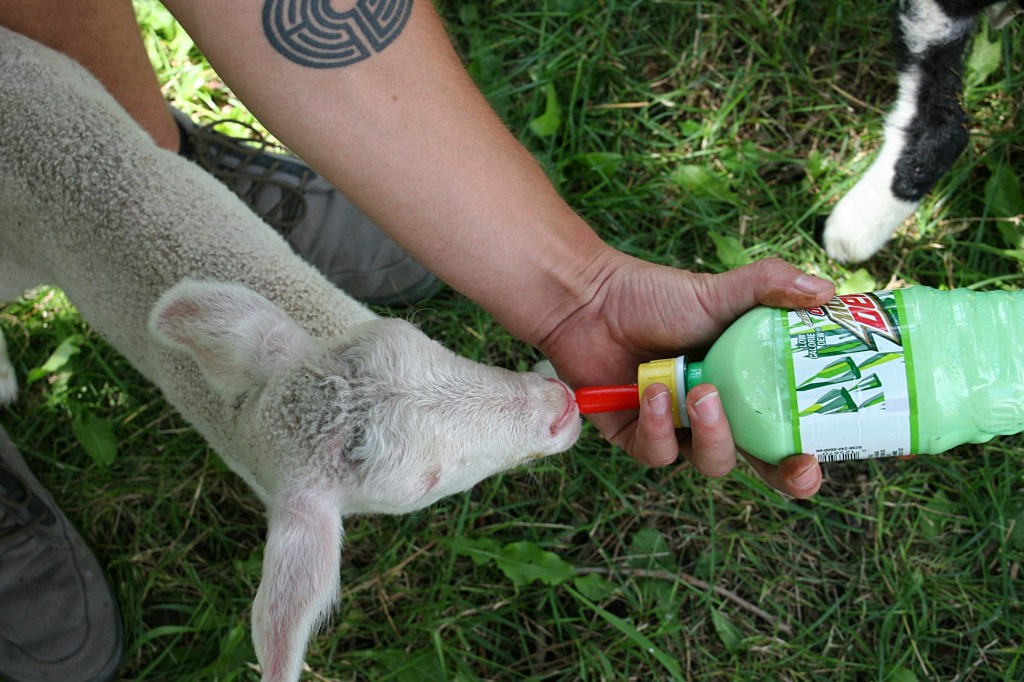
Shepherd's Way Farms, 150 bottle feeding lamb


I left Shepherd’s Way understanding this family’s passion, appreciative of their hard work and savory cheeses, and still wishing I could snatch a lamb.

BONUS PHOTOS:


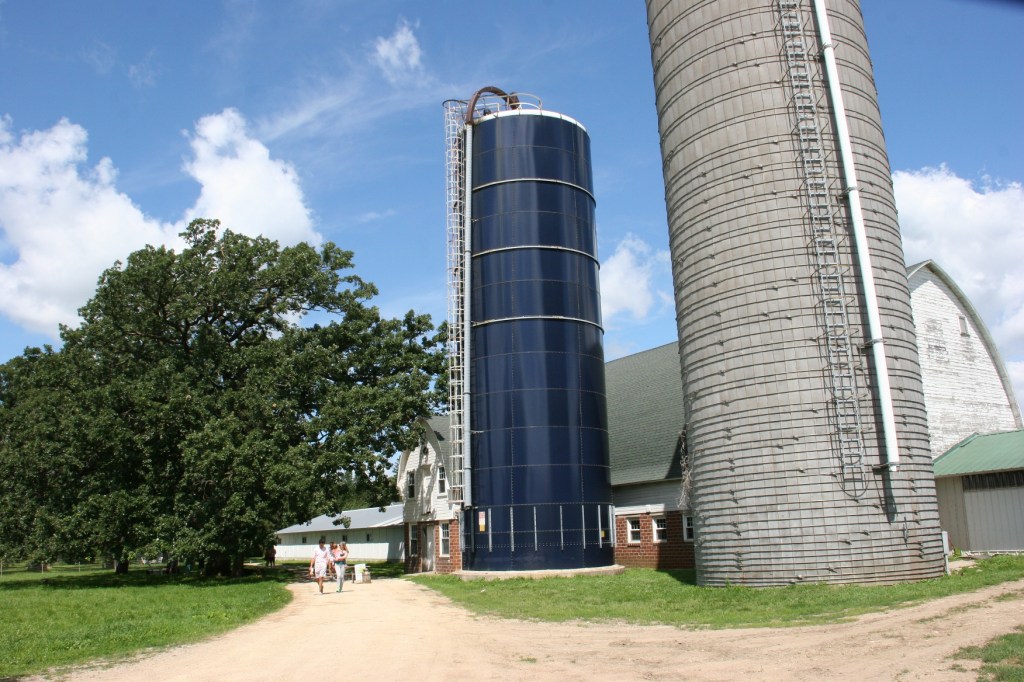
Shepherd's Way Farms, 106 silos & barn

This 1940s former dairy barn and the attached lower building have been converted in to a milking parlor, a cheese production room and a cheese aging room.

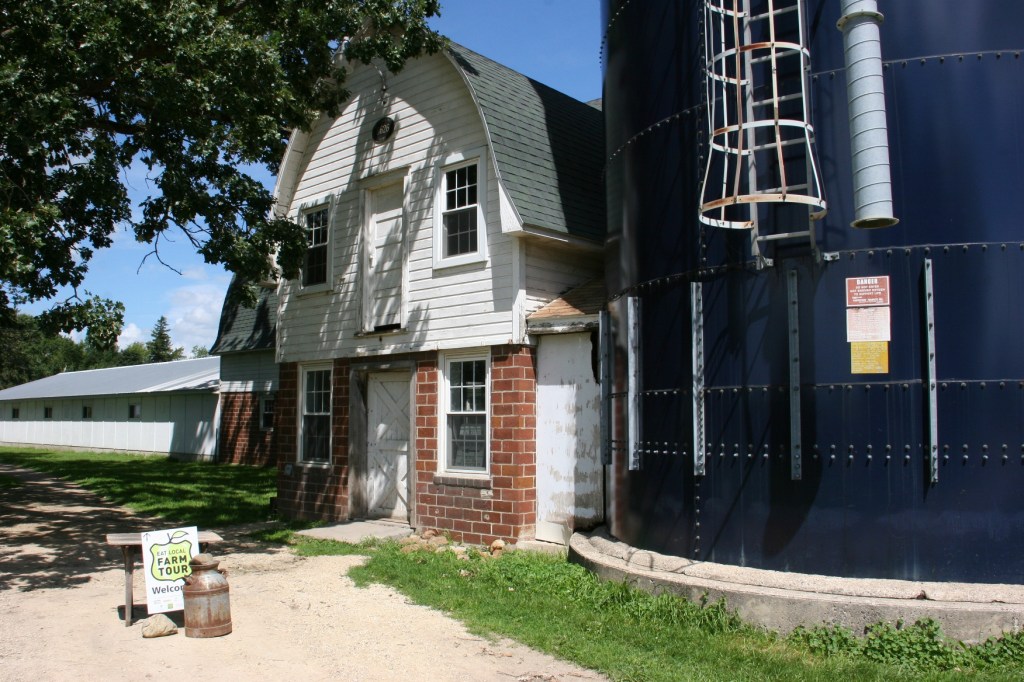
This is a beautiful old barn. I especially like the character of the entry.

This is a beautiful old barn. I especially like the character of the entry.

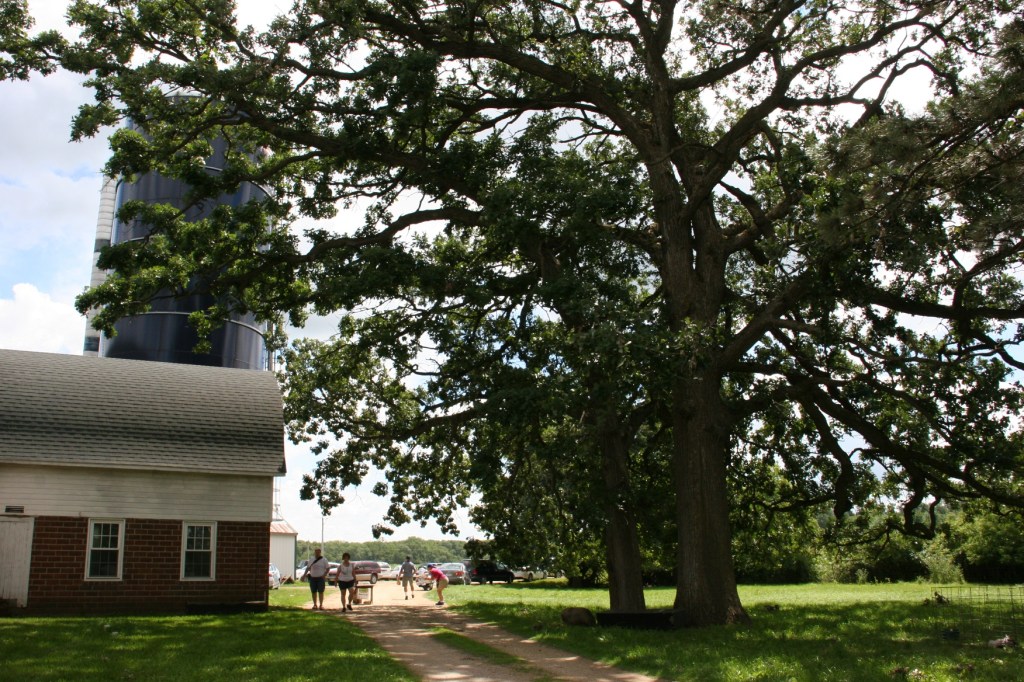
Incredible aged oaks tower near the old barn.

Incredible aged oaks tower near the old barn.

There's a second barn on the property, this one moved several miles from Nerstrand Big Woods State Park.

There’s a second barn on the property, this one moved several miles from Nerstrand Big Woods State Park. The 120-foot long barn replaces the lamb nursery destroyed in a 2005 arson fire.

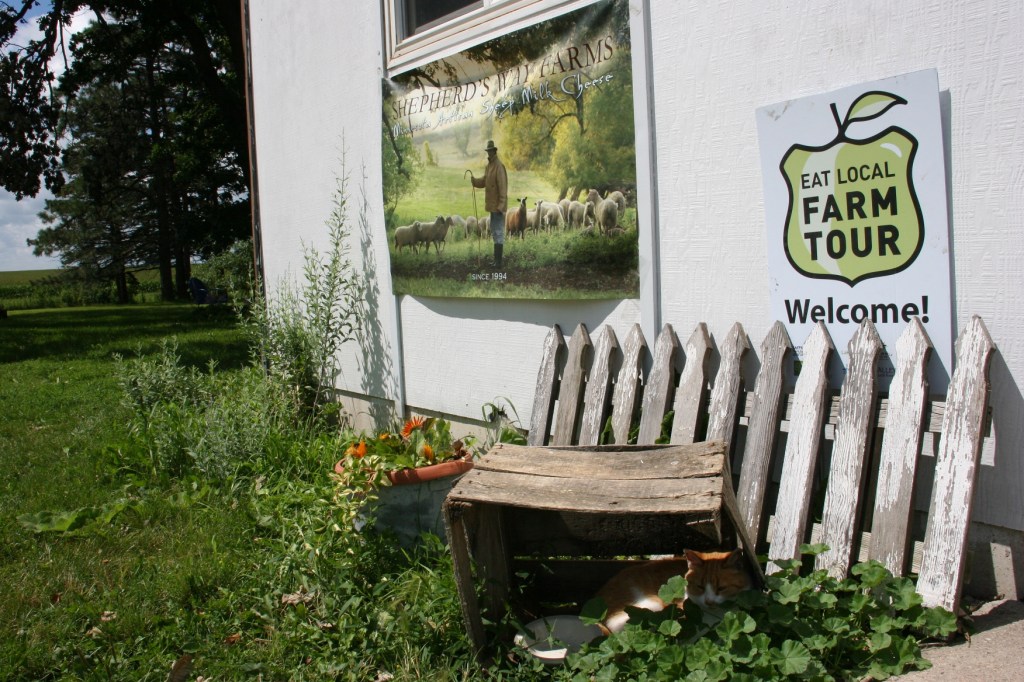
This farm cat hides in a wooden box outside the farm shop/tasting room.

This farm cat hides in a wooden box outside the farm shop/tasting room.

Outside the tasting room/store.

Outside the tasting room/store.

FYI: Click here to read my previous post about Simple Harvest Organic Farm, another Nerstrand area farm I visited during the 2016 Eat Local Farm Tour.

© Copyright 2016 Audrey Kletscher Helbling
 

Hunting for deer at August Schell Brewing Company September 3, 2010

Filed under: Uncategorized — Audrey Kletscher Helbling @ 7:54 AM
Tags: , , , , , ,

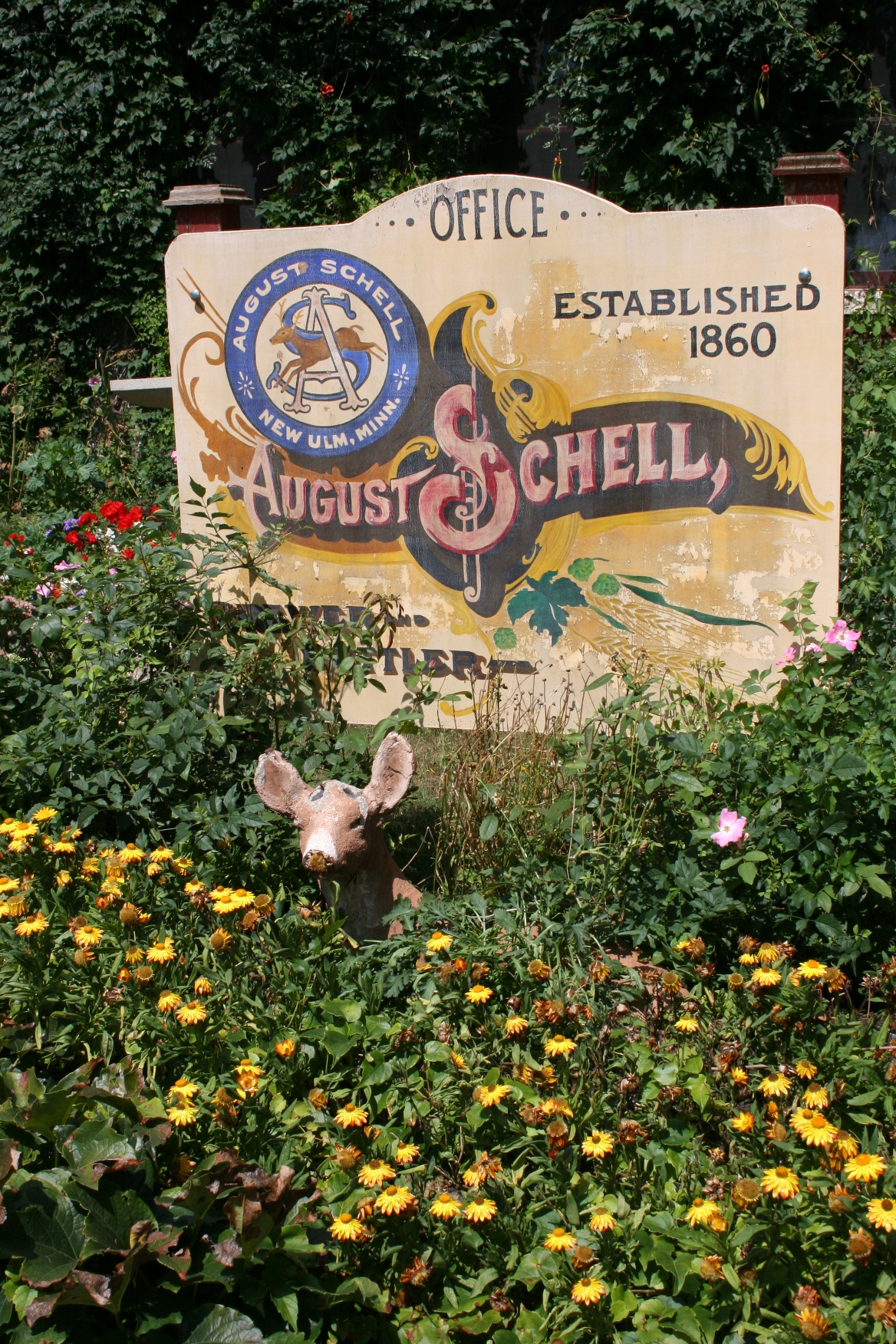
August Schell Brewing Company sign and deer by the corporate office.

I MUST ADMIT THAT prior to my recent tour of the August Schell Brewing Company, I had never really thought about the deer image that brands this New Ulm beer.

But, as our tour guide explained, company founder August Schell loved the white-tail buck.

Indeed he did. Everywhere I turned and walked and looked, I saw deer on the Schell’s company grounds. Only the real deer, which typically are visible to the public, were not around because of health issues, or something like that.

All of these deer got me thinking. Maybe the brewery could add a deer “hunt” to its tours as an activity for children and teens. I bet most kids don’t find the tour all that interesting because it’s geared primarily for adults. A deer scavenger-type hunt would provide an entertaining diversion for the younger generation, or for all ages. I saw grandparents with their grandchildren and I’m certain the elders would welcome a cross-generational activity like this.

So here’s my idea: Create a printed sheet of historical facts that lead to various deer on the grounds. For example, one clue might be “Welcome to the Black Forest, a re-creation of August Schell’s homeland.”

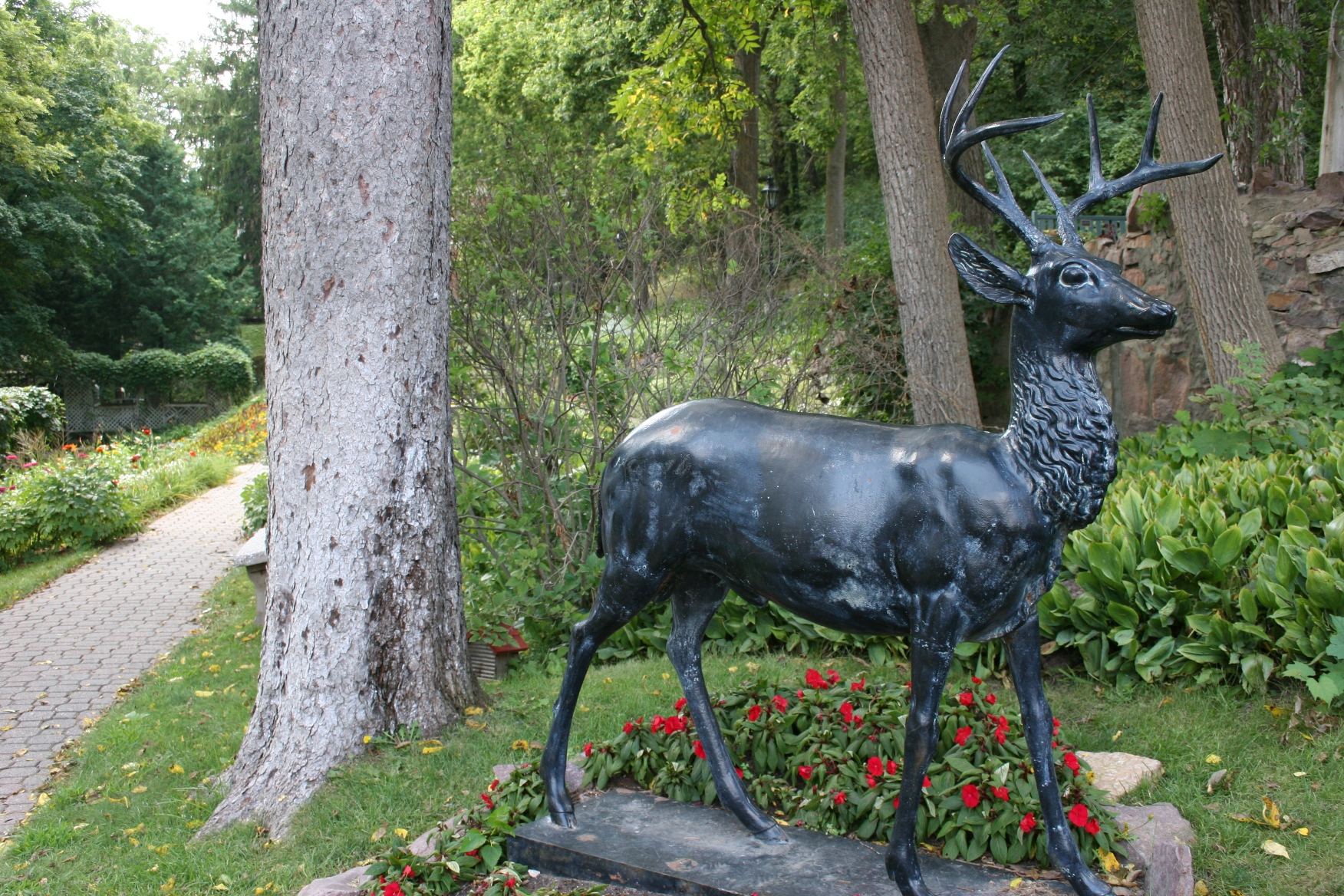
A stately buck statue stands on the edge of the wooded area which resembles August Schell's native Black Forest.

Or: Only the Schell’s company president can live here.

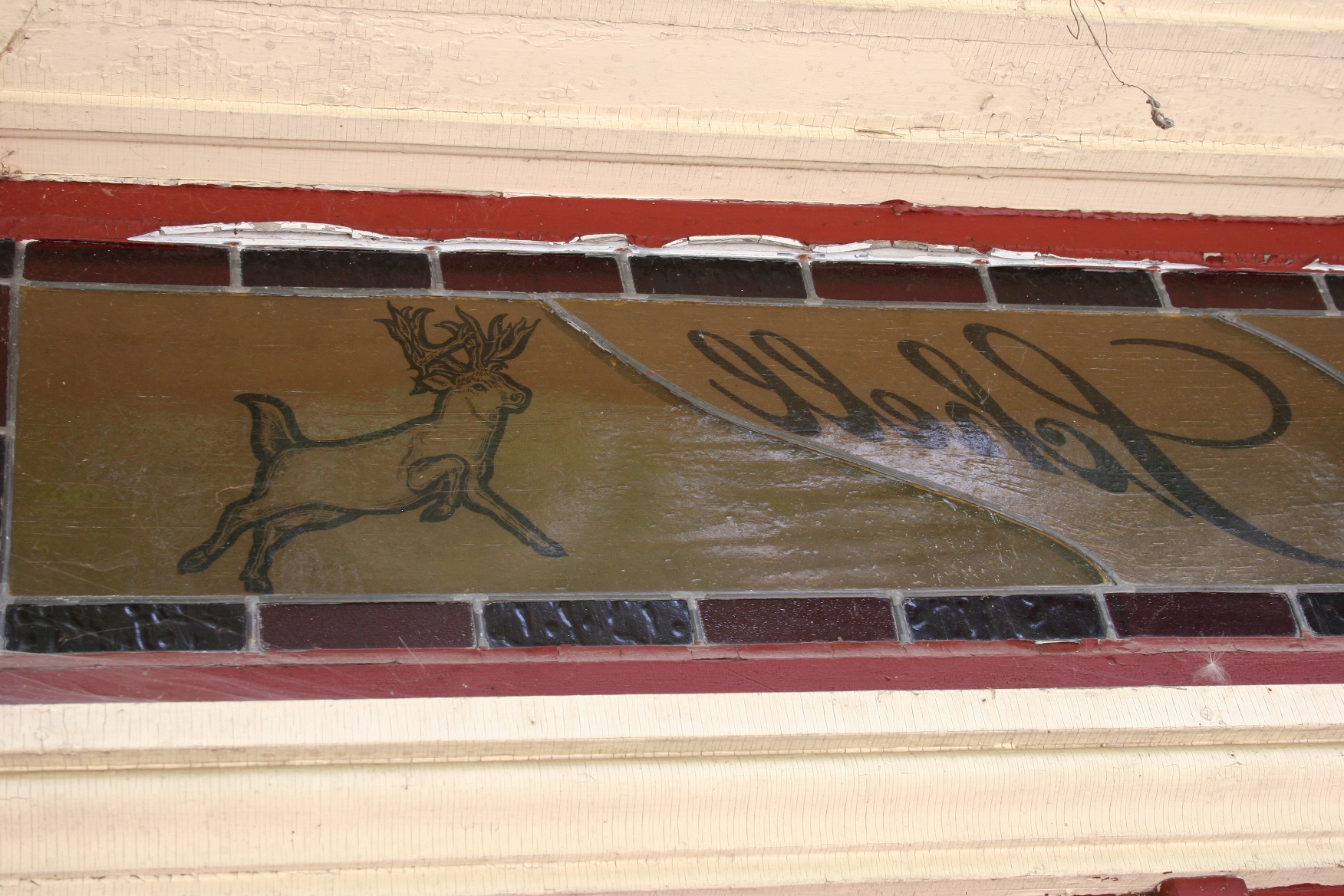
A deer image above an exterior door on the Schell's retirement mansion, where only the president may live.

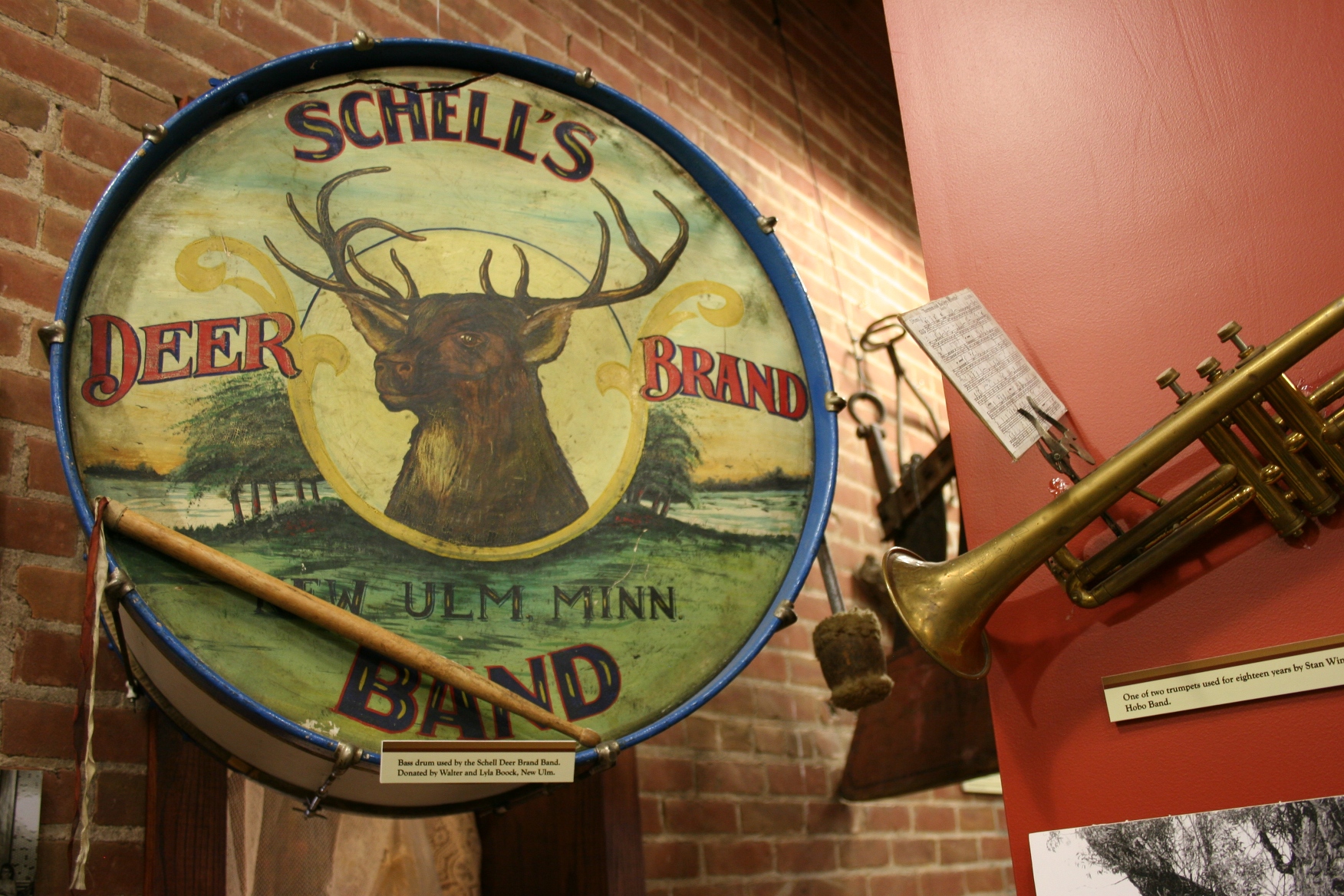
Or: Land a bass when you find this deer.

A Schell's Hobo Band bass drum in the brewery museum.

Game participants would search for the deer, all the while learning about Schell’s and its history. And the brewery would be imprinting the deer brand upon the unsuspecting guests.

Of course, to reward the deer hunters, Schell’s could offer some little deer-stamped trinket to be claimed in the gift shop after the hunt.  (That would increase gift shop traffic, which could also increase sales.) The kids would be happy. The parents and grandparents would be happy.

What do you think? Should Schell’s give my idea a shot?

A deer-branded 150th anniversary beer mug in the gift shop.

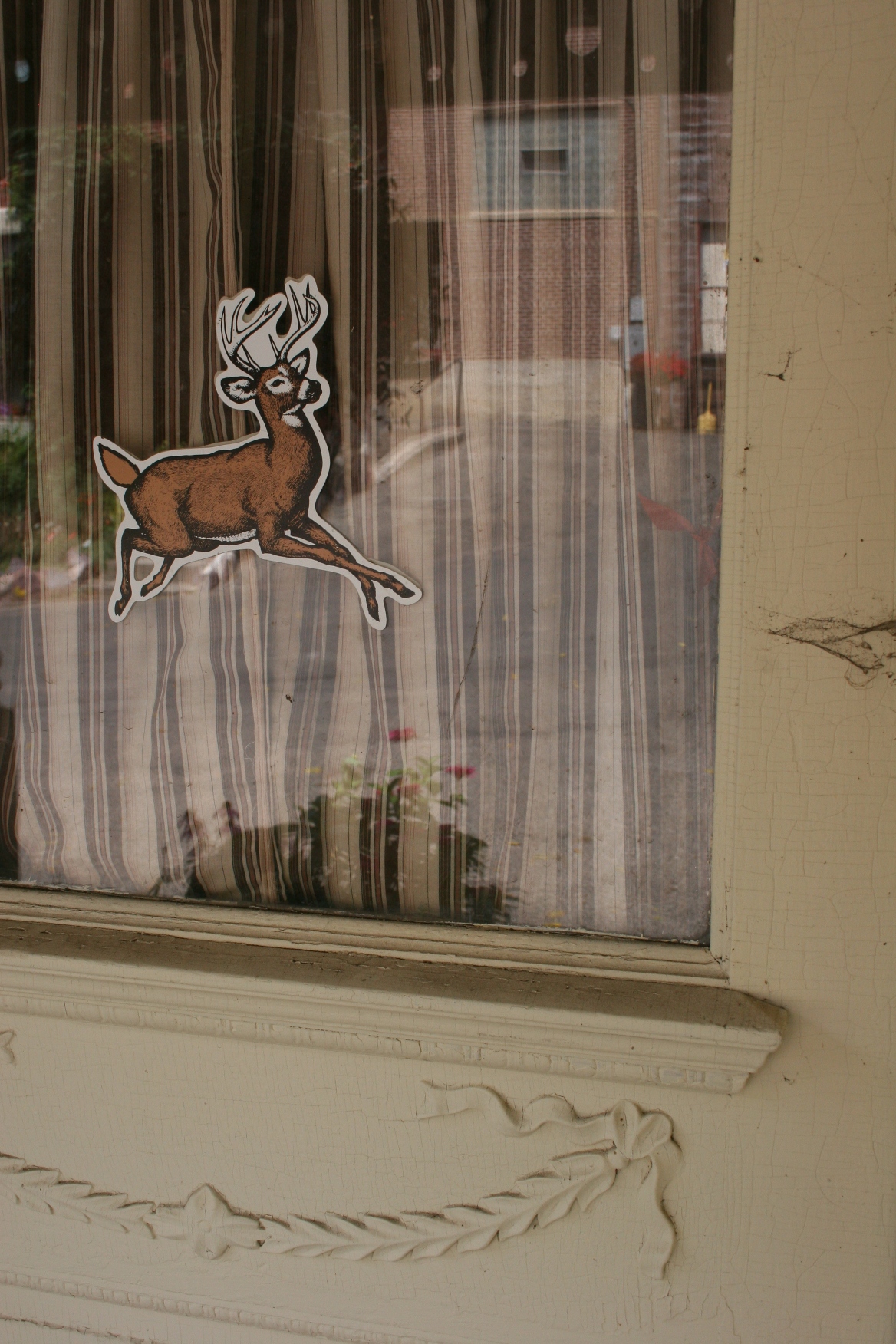
A Schell's deer emblem on the door of the house that once was home to brewery workers during the company's early years.

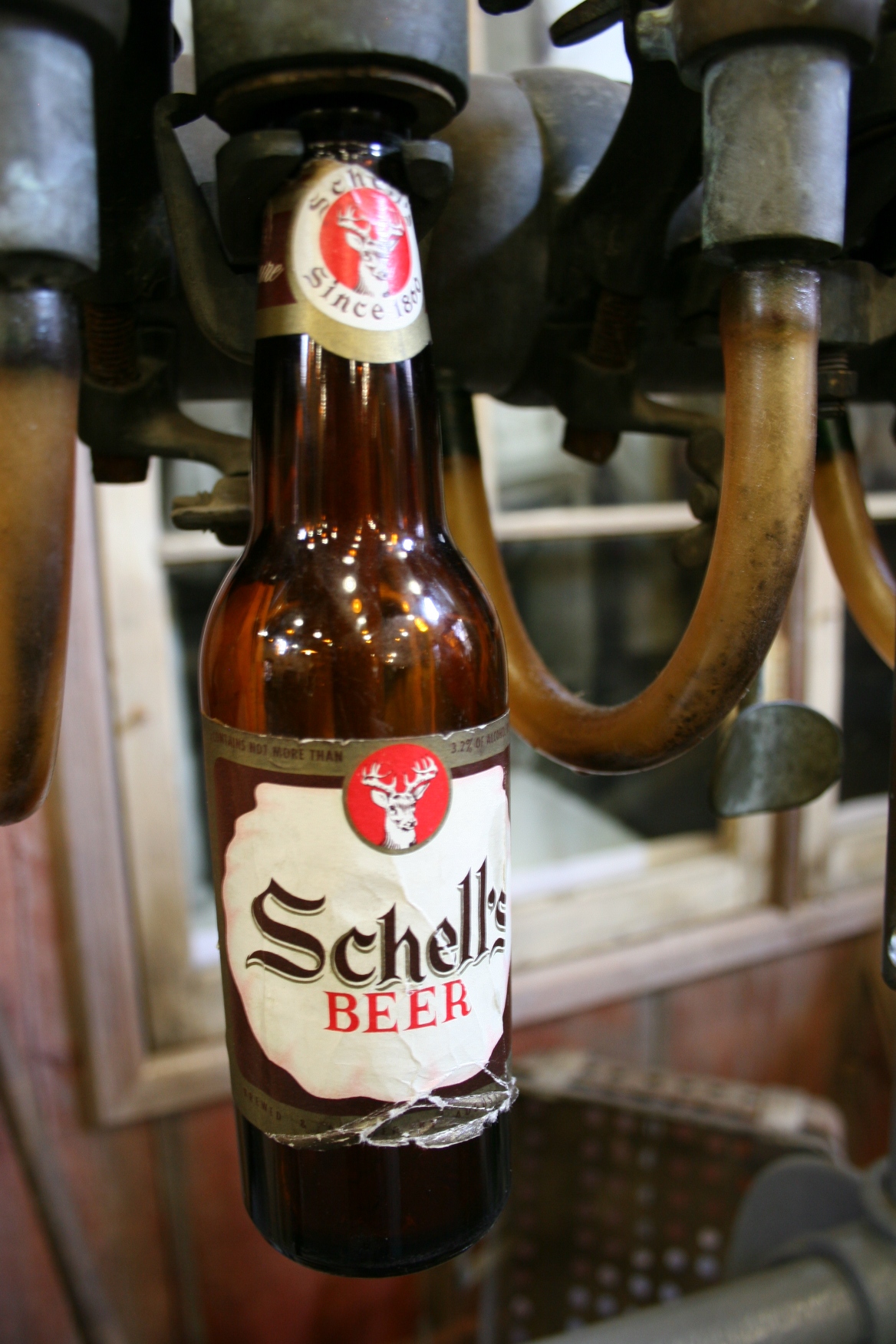
Bottling Schell's deer beer, a museum display.

A successful hunt: Deer antlers form a light in the commons area that links the gift shop and museum on the main floor.

FYI: MANY DEER, a whole herd actually, also can be found in the Schell’s hospitality room. But because that room, where beer is served, remains closed except during the tour or for special occasions, none of those deer are included in my proposed hunt. But if they were, here’s one of the more interesting bucks:

A carved deer light in Schell's hospitality room.

AS A SIDE NOTE, in the book Land of Amber Waters: The History of Brewing in Minnesota by Doug Hoverson, you’ll find a photo of the original Schell’s family home, today the company office. Look closely at that image on page 35 and you’ll see deer antlers stuck on the front of the brick house, between the front first and second floor windows.

© Copyright 2010 Audrey Kletscher Helbling


Learn a little history, drink a little beer on the August Schell Brewing Company tour August 28, 2010

Filed under: Uncategorized — Audrey Kletscher Helbling @ 8:45 PM
Tags: , , , , , ,

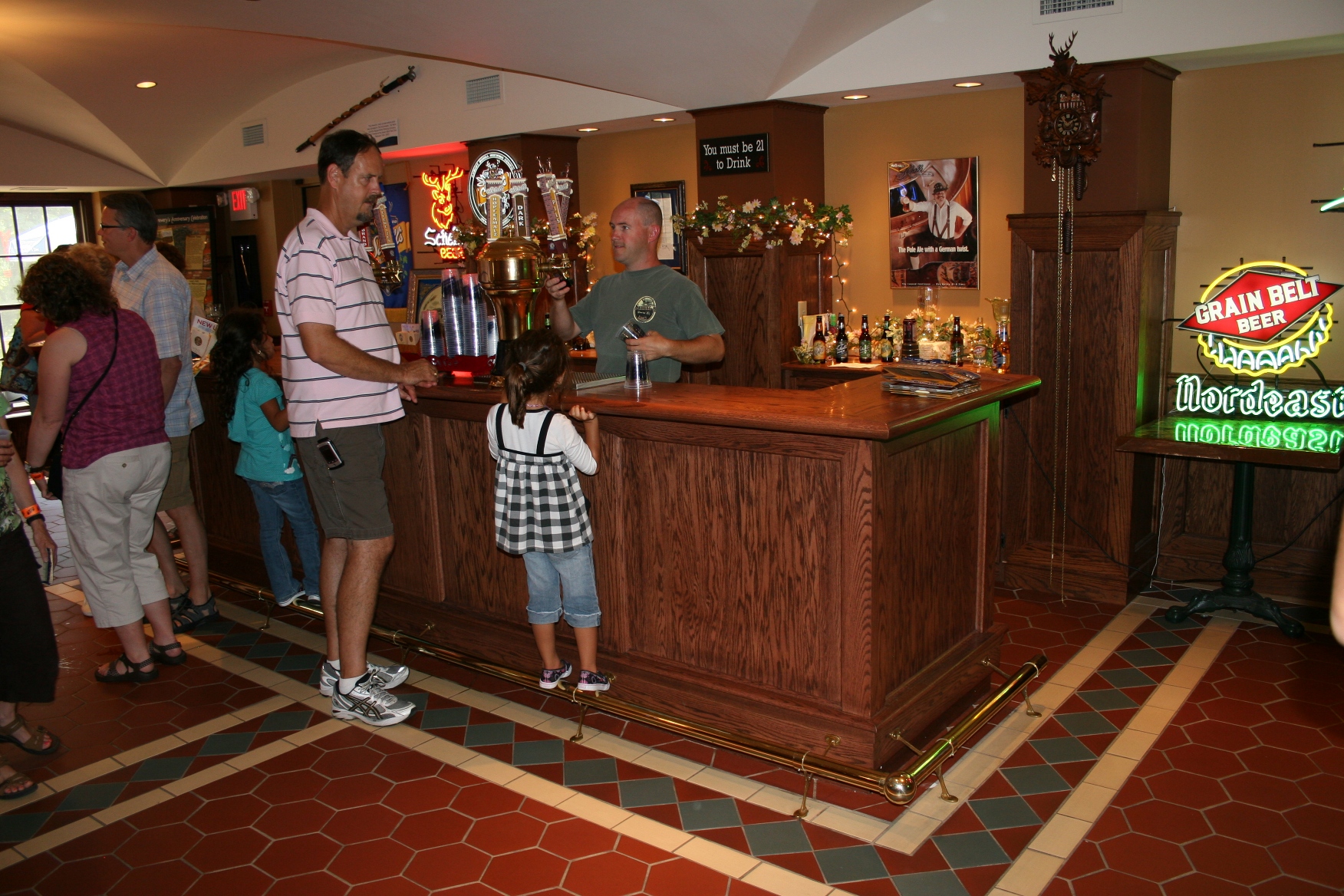
Visitors line up for free tap beer or 1919 root beer following a Schell's brewery tour.

“OK, LET’S DRINK some beer,” our tour guide Matt says, pulling six-packs from a walk-in cooler and distributing bottles among tables in the hospitality/tap room of August Schell Brewing Company.
But before we pour and swig, our bartender instructs us to fill our plastic cups only to the black line, meaning we’ll get about 1 ½ ounces of beer per sample.

On this steamy summer day, the beer goes down fast among the adults who’ve just toured this second oldest family brewery in the United States.

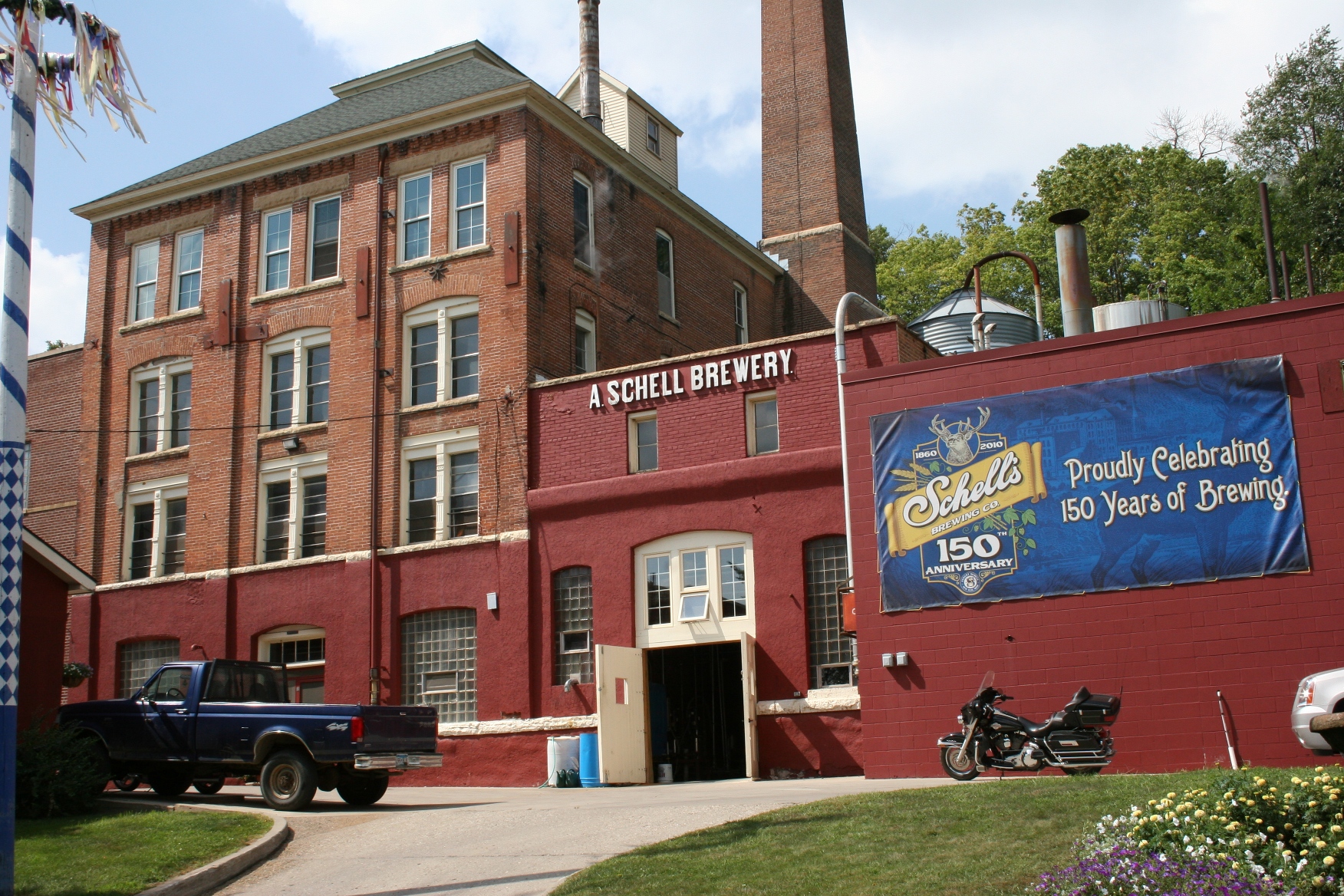
The Schell's brewery is celebrating 150 years in business.

Schell’s has been a New Ulm mainstay since 1860, this year celebrating 150 years in the beer business. That fact surfaces repeatedly during the tour and during the beer tasting session when we are served Hopfenmalz, an amber lager style beer selected by popular vote as the company’s 150th anniversary beer. Matt also passes out other Schell’s beers like Hefeweizen, Pils and Dark, which “isn’t heavy in any way,” but earns the name because of its dark color, he says.

Given the “dark” label, I wouldn’t have tried this beer. Our guide is right, though. Schell’s Dark doesn’t taste dark and this is a beer even I’ll drink.

A sip of Hefeweizen, however, causes me to screw up my face and wish I could toss the sample. Instead, I grab another cup, abandoning the beer “with a beautiful balance of cloves and banana flavors.” I prefer bananas in banana bread, not beer, thank you.

That aside, I’ve enjoyed this historic tour of the brewery tucked in the woods along the banks of the Cottonwood River. The site was carefully selected by August Schell, the flour mill machinist turned brew master, for its natural beauty, artesian springs and riverside location.

Schell was recreating his home in Durbach, Germany, our guide says. I don’t ask, but from what I know of this area in the 1860s, few trees grew here, not exactly like the Schwarzwald back in Deutschland. Perhaps that explains why Matt later tells us that Schell brought pines here from the Black Forest.

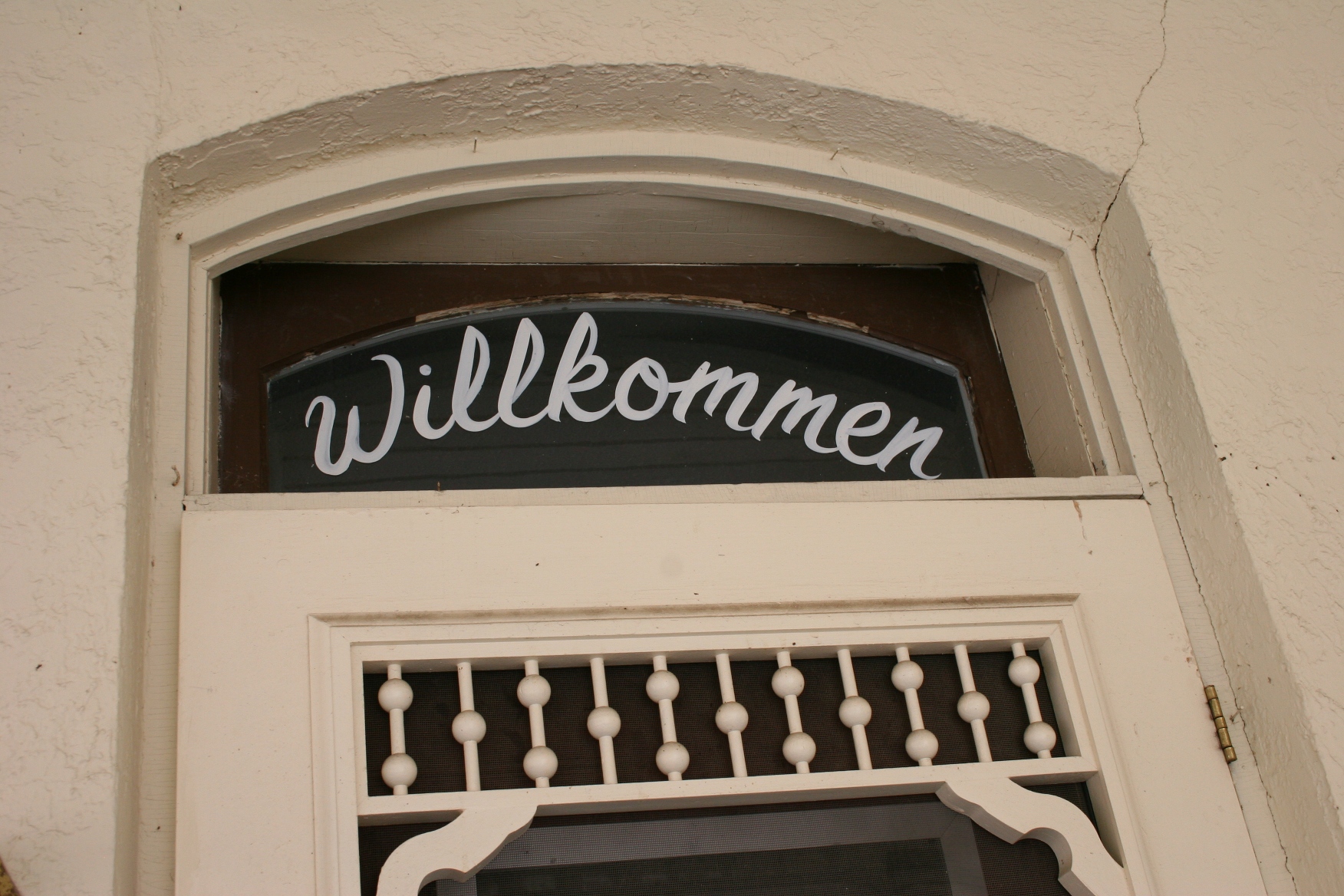
German words can be found in numerous locations at the brewery, including this welcome sign above the doorway to the house once occupied by the Alfred Marti family. Just don't ask your guide to interpret the German.

He also informs us that caves were hand-dug under the brewery, into the hill and under our feet. We are standing on a paved area between two old brick homes and the original family home, now the current-day corporate office. Beer and ice, harvested from the Cottonwood River, were stored in the caves.

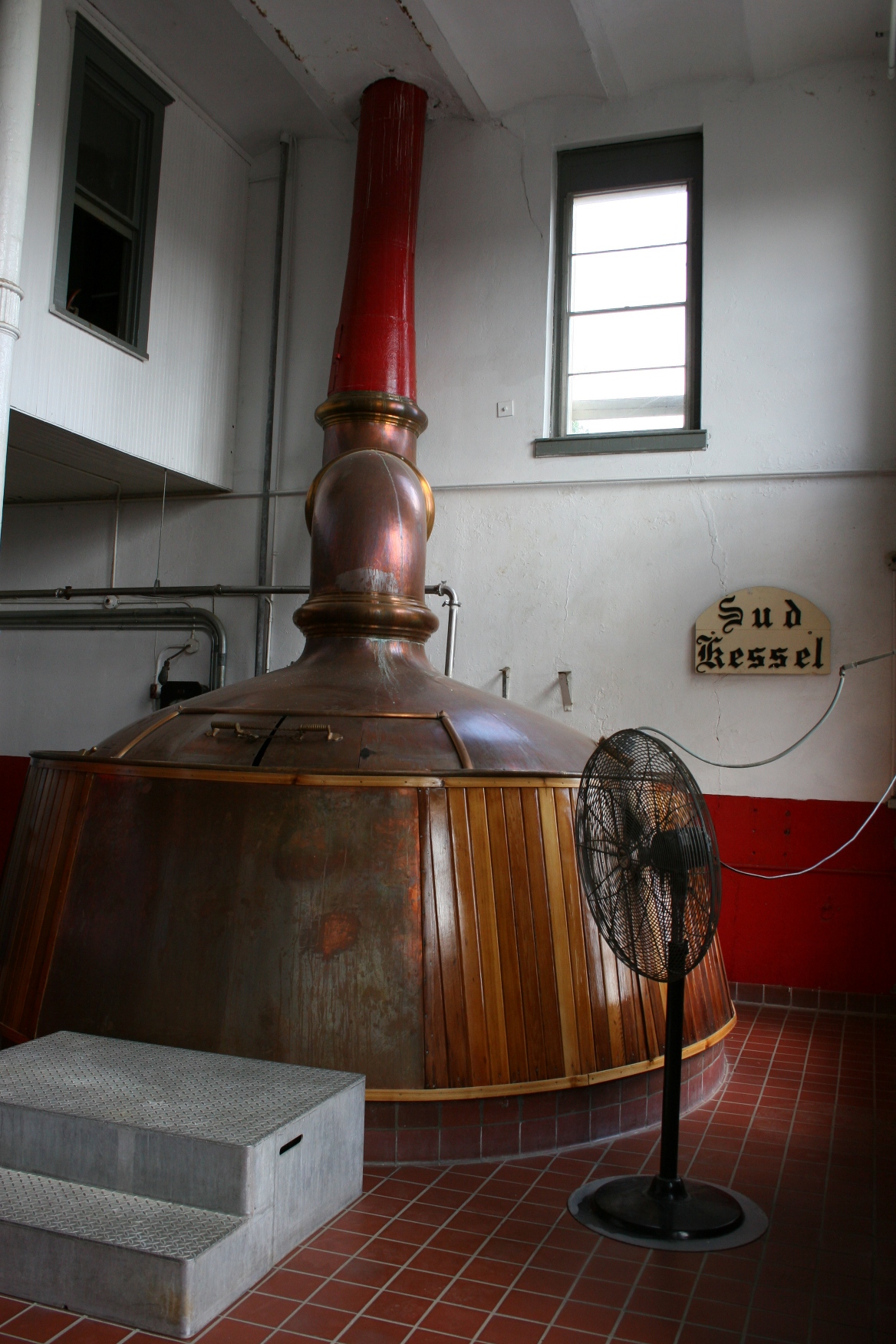
Disappointingly (but understandably), we don’t see any of today’s modern beer-making operation, only Schell’s traditional 1860s brew house, used until 1999. Here we view a hand-hammered copper vessel, Sud Kessel, purchased for $25,000 in 1895. It holds 3,500 gallons of beer, which translates to 38,000 12-ounce bottles or cans. Now that’s a lot of beer.

This is the only peek you'll get of the beer-making process: Schell's vintage Sud Kessel, used from 1895 - 1999.

But you can’t buy any beer at the brewery, our guide says, because it’s against the law to sell it on-grounds. The samples and a 12-ounce glass of beer or Schell’s 1919 root beer come with the $3 tour fee.

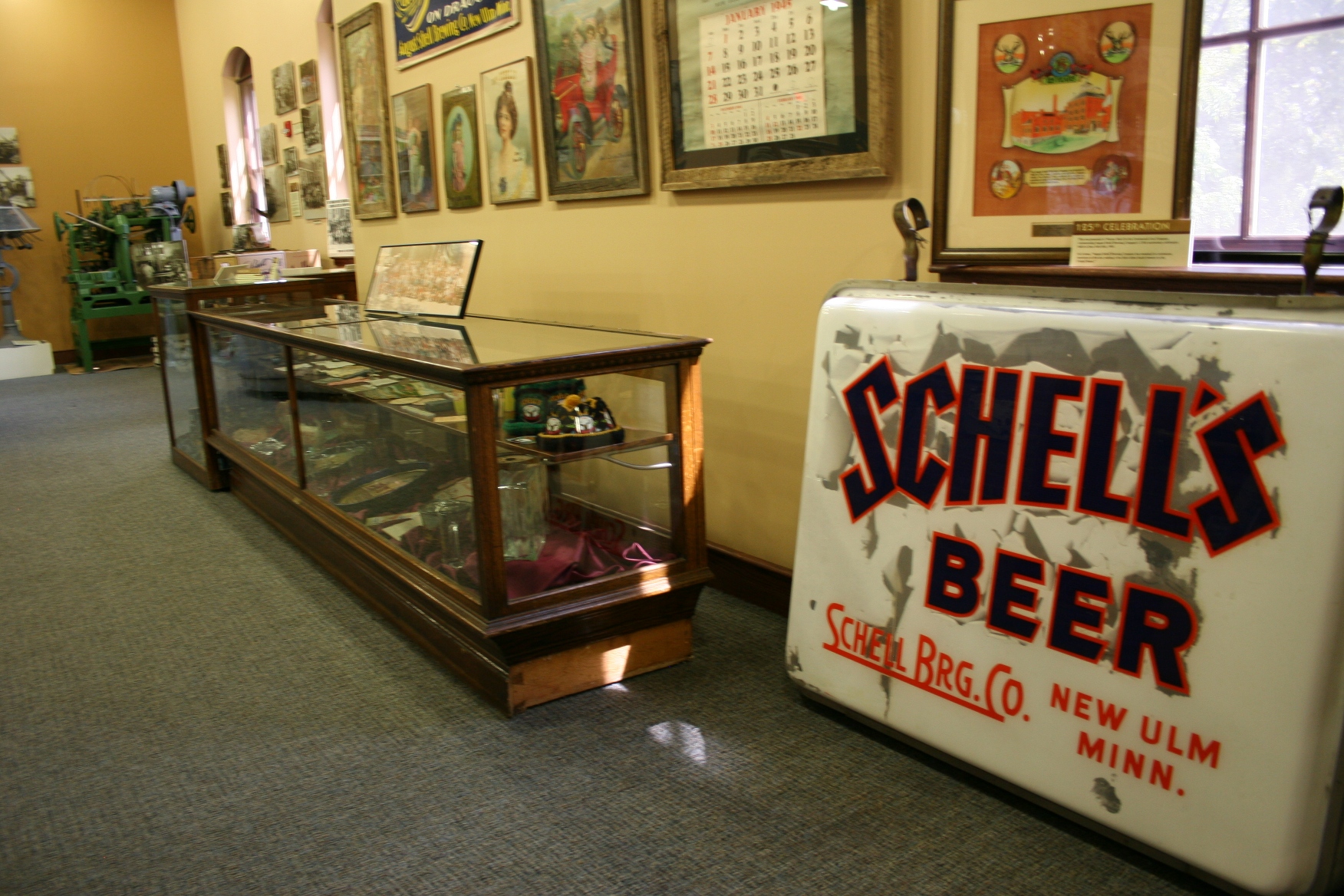
Plenty of history also comes with the guided tour and a visit to the company museum.

The Schell's museum is jam-packed with plenty of information, memorabilia and, yes, even beer bottles.

Among the more interesting facts I learned are these:

  • After the death of her husband, Emma Marti ran the brewery for six years until 1940. As our guide emphasizes, for a woman to run a brewery in that time period certainly ranked as unique. Perhaps Schell’s ought to name a beer in Emma’s honor. Or have they?
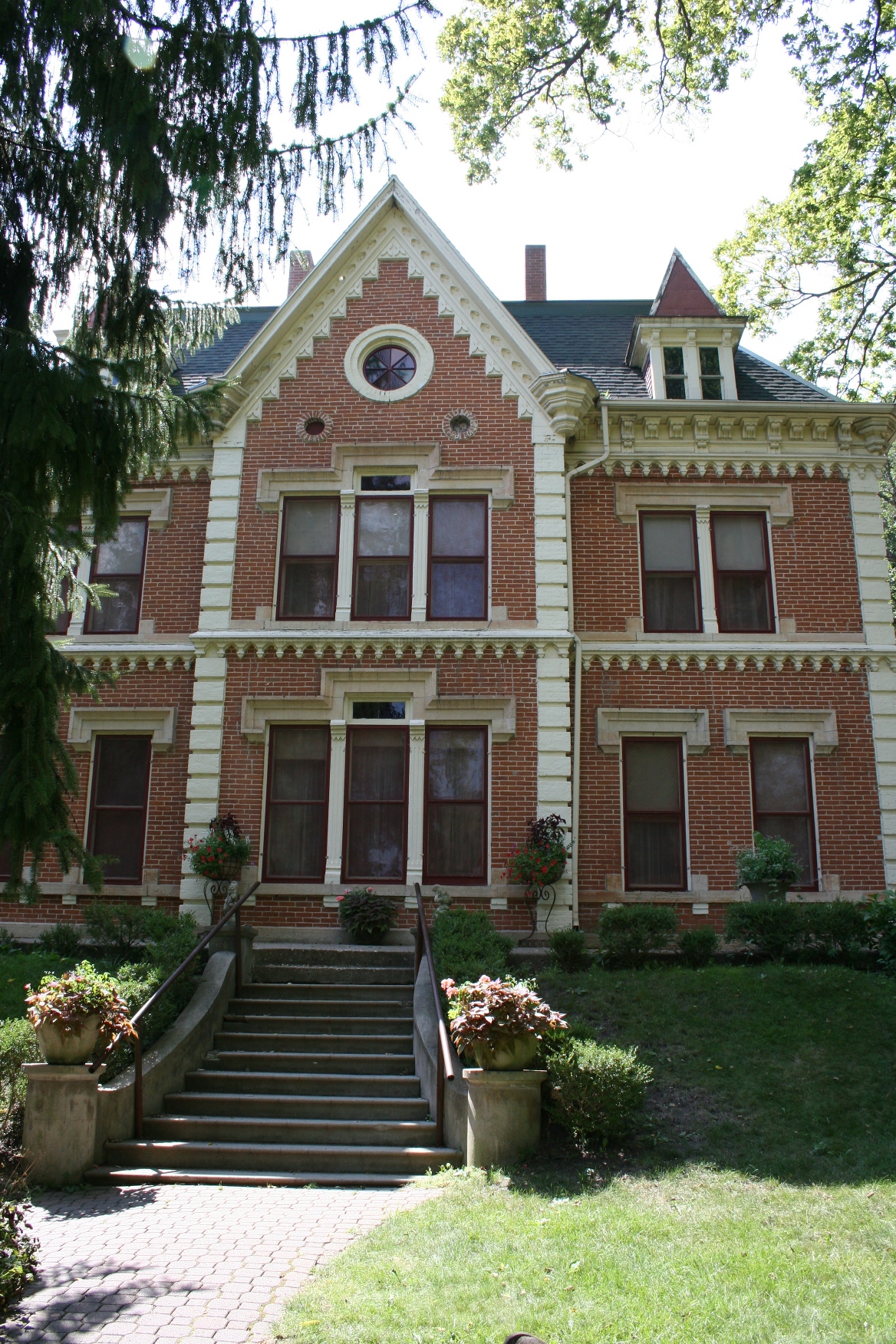
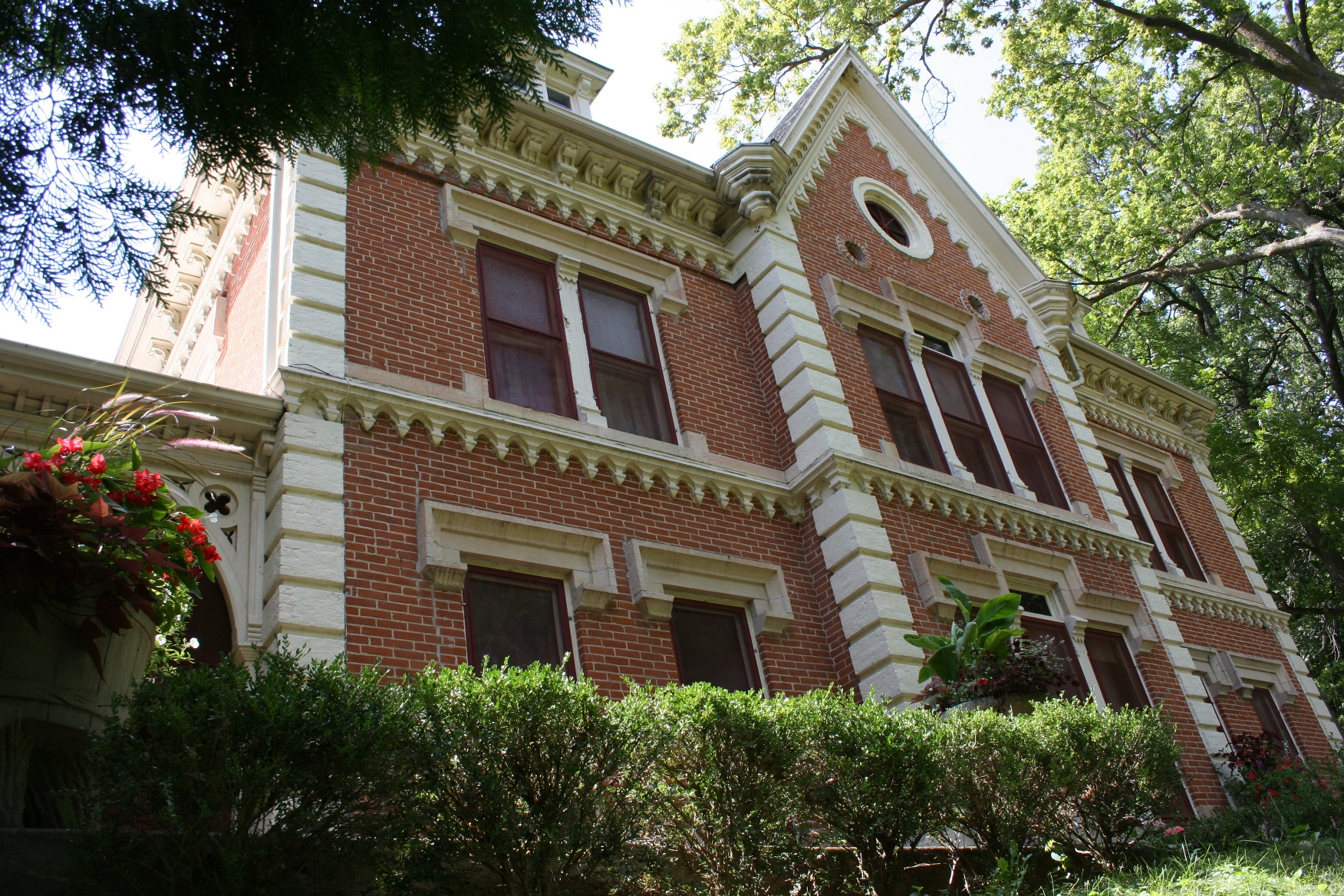
  • Company bylaws allow only the Schell’s president to live in August Schell’s on-site retirement mansion. Because he wants his privacy, current president Ted Marti lives elsewhere, Matt says. The home was last occupied in the 1990s. (Umm, I wouldn’t mind living in a mansion.)

August Schell's retirement mansion, currently unoccupied.

A close-up shot of the mansion, re-emphasizing the point that I could be happy living here.

  • Schell’s changes its “Snowstorm” beer recipe annually. The reason: “There are no two Minnesota snowstorms alike and therefore we are going to change our ‘Snowstorms’ every year,” Matt tells us, quoting president Marti. Ah, Mr. Marti, you clearly know your Minnesota winters as well as you know your beers.

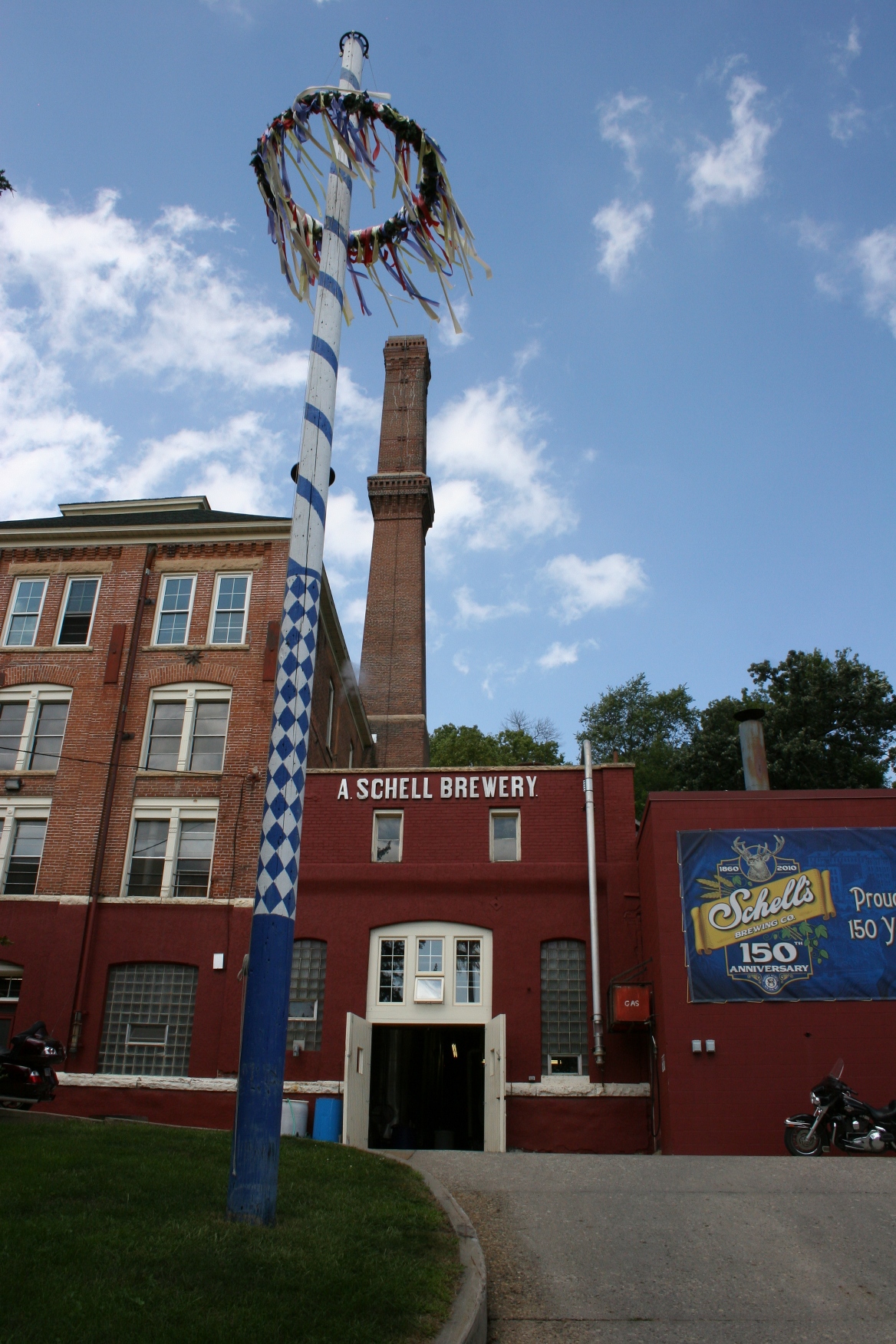
Another view of the brewery. And, no, I don't know anything about the decorative post and failed to ask our tour guide. I had already asked more questions than anyone on the tour, so...

SCHELL’S WILL HOST a two-day 150th birthday celebration, Schellabration, on September 17 and 18. During that event, you can see areas of the brewery not typically seen on the regular tours.

WHAT’S WITH ALL the white-tailed deer at the brewery? Revisit Minnesota Prairie Roots for the answer and for photos and an idea I have related to those deer.

© Copyright 2010 Audrey Kletscher Helbling