Minnesota Prairie Roots

Writing and photography by Audrey Kletscher Helbling

As rain and snow fall, the flood threat rises in Minnesota March 22, 2011

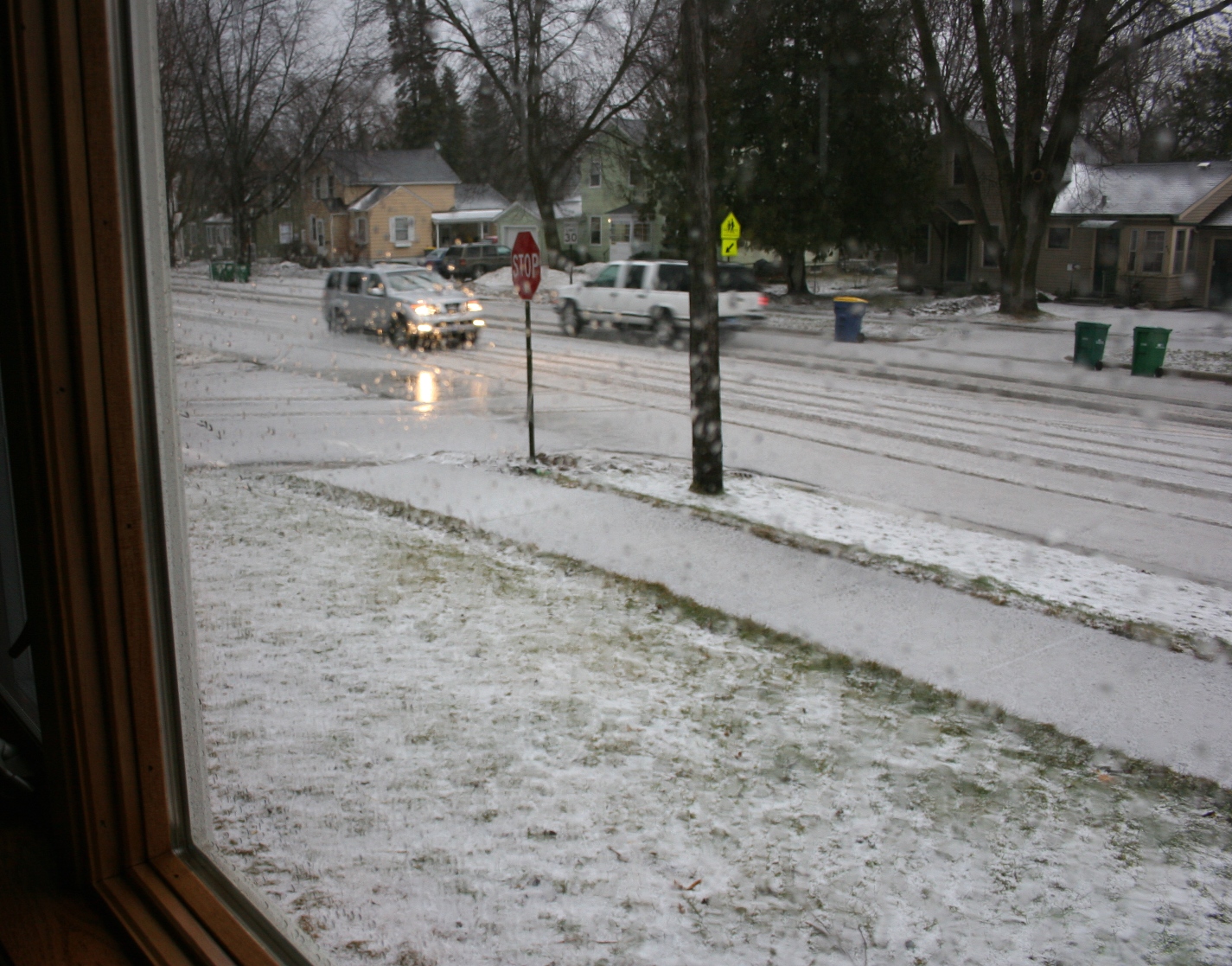
The view from my front window at 8 a.m. today as sleet pelted Faribault.

I AWOKE THIS MORNING to a world of gray and white and sleet pelting in sheets against the windows.

So much for spring…

When I plucked the The Faribault Daily News from the front steps, shook off the water droplets soaking the paper’s plastic sleeve, removed and opened the paper, I read this headline: STILL RISING—National Weather Service declares flood warning for Rice County as Straight River closes in on 10 feet.

And so the spring flood season has begun here in Minnesota with road closures in the Henderson area southwest of the Twin Cities, between Windom and Fulda in southwestern Minnesota and probably other places of which I am unaware.

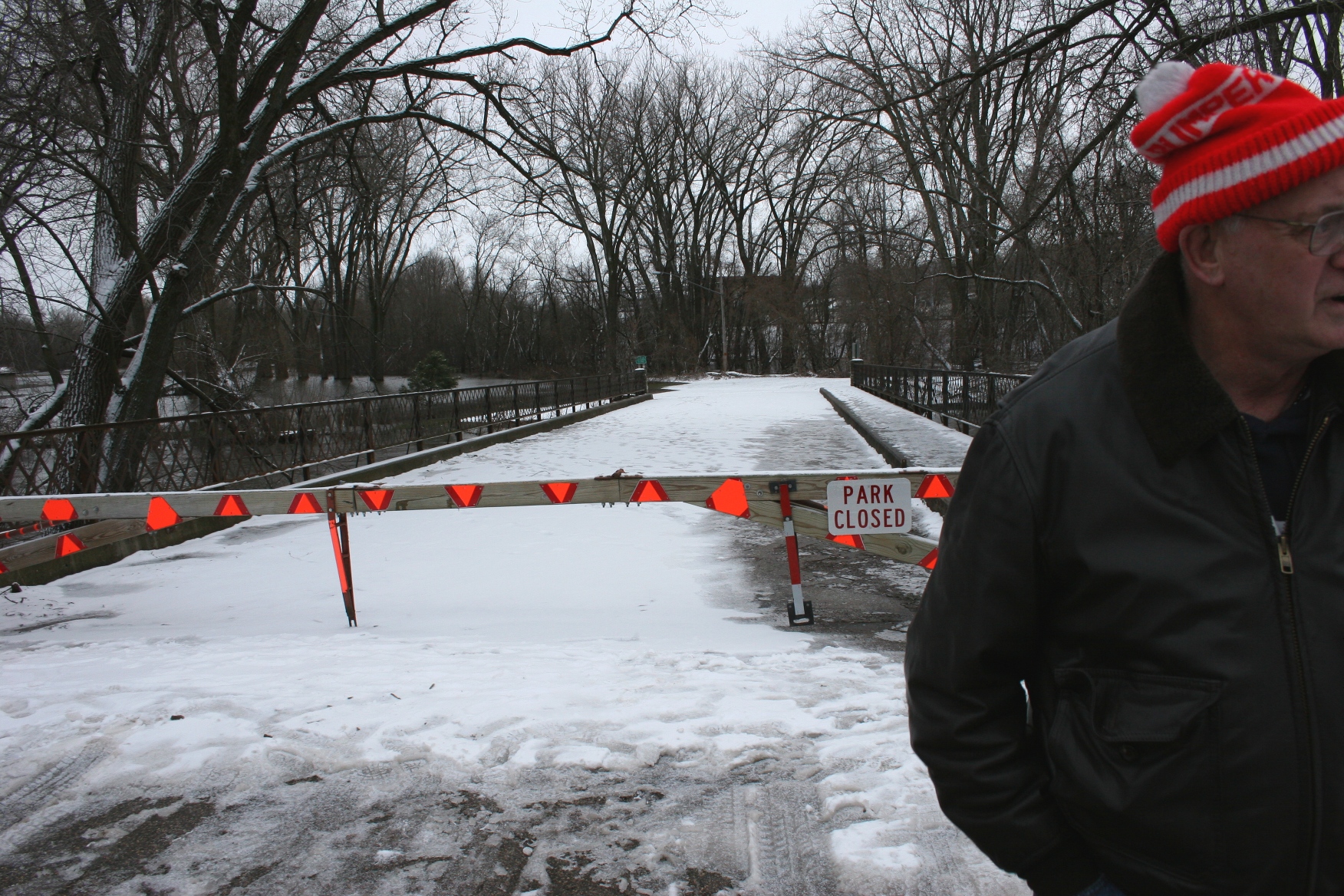
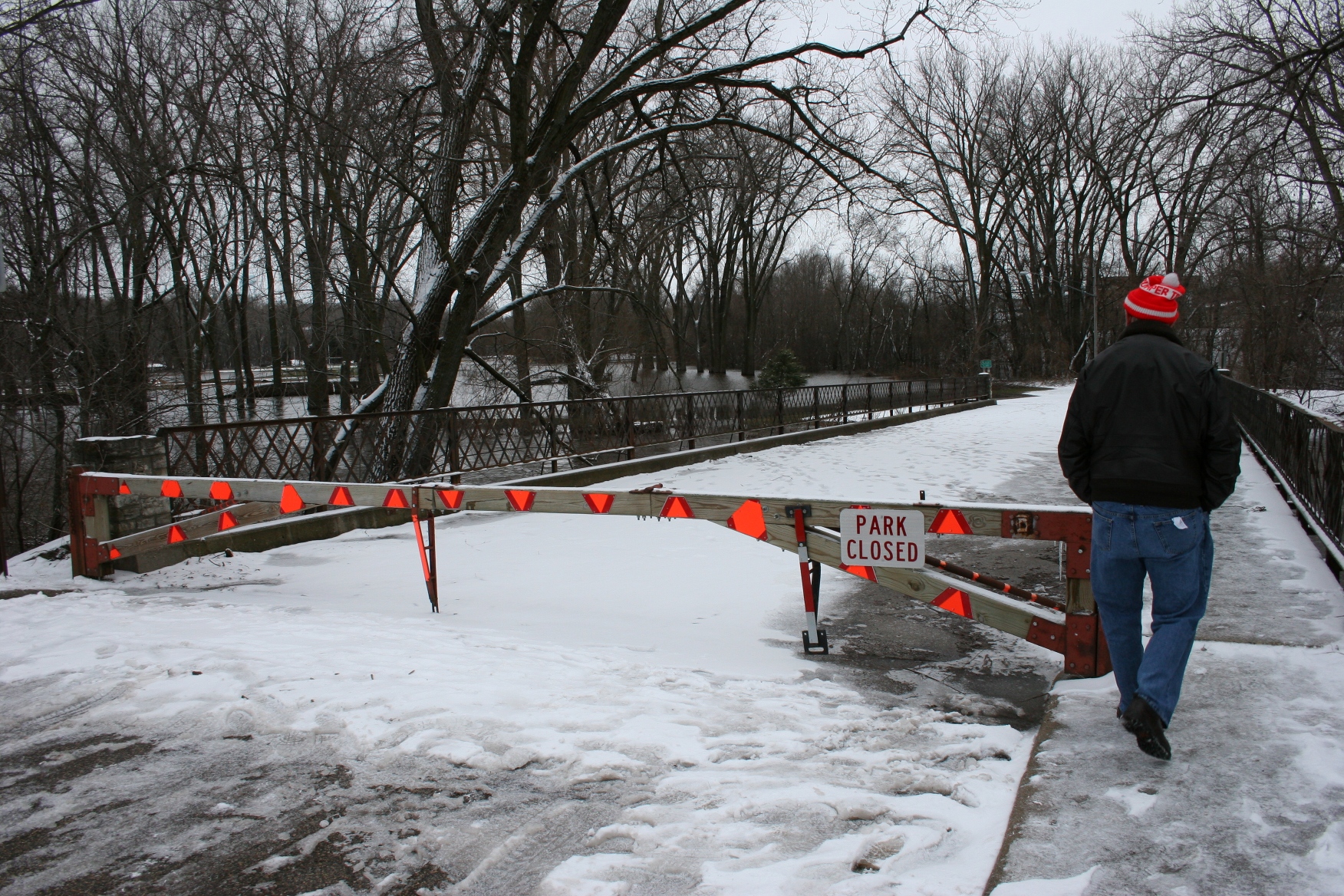
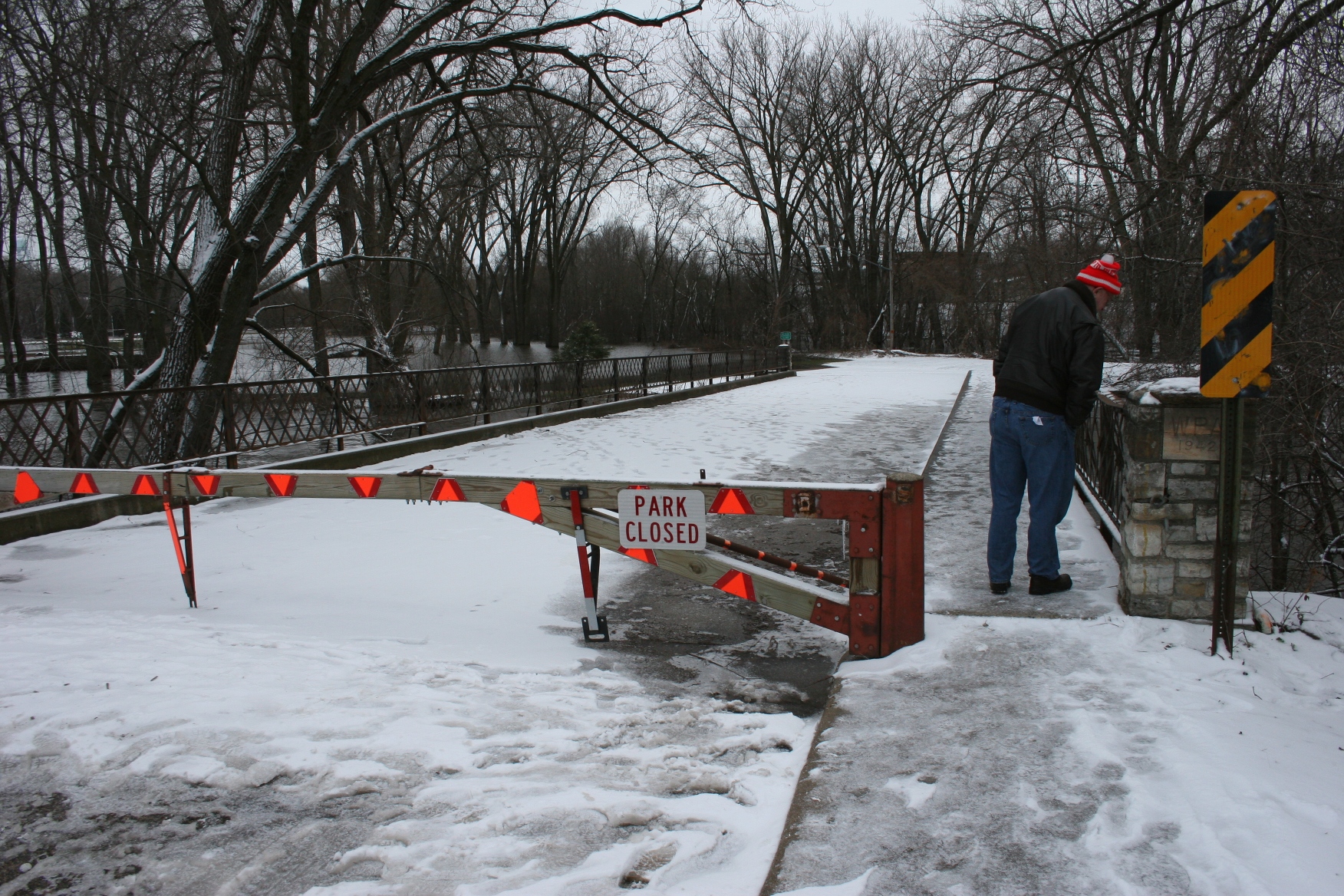
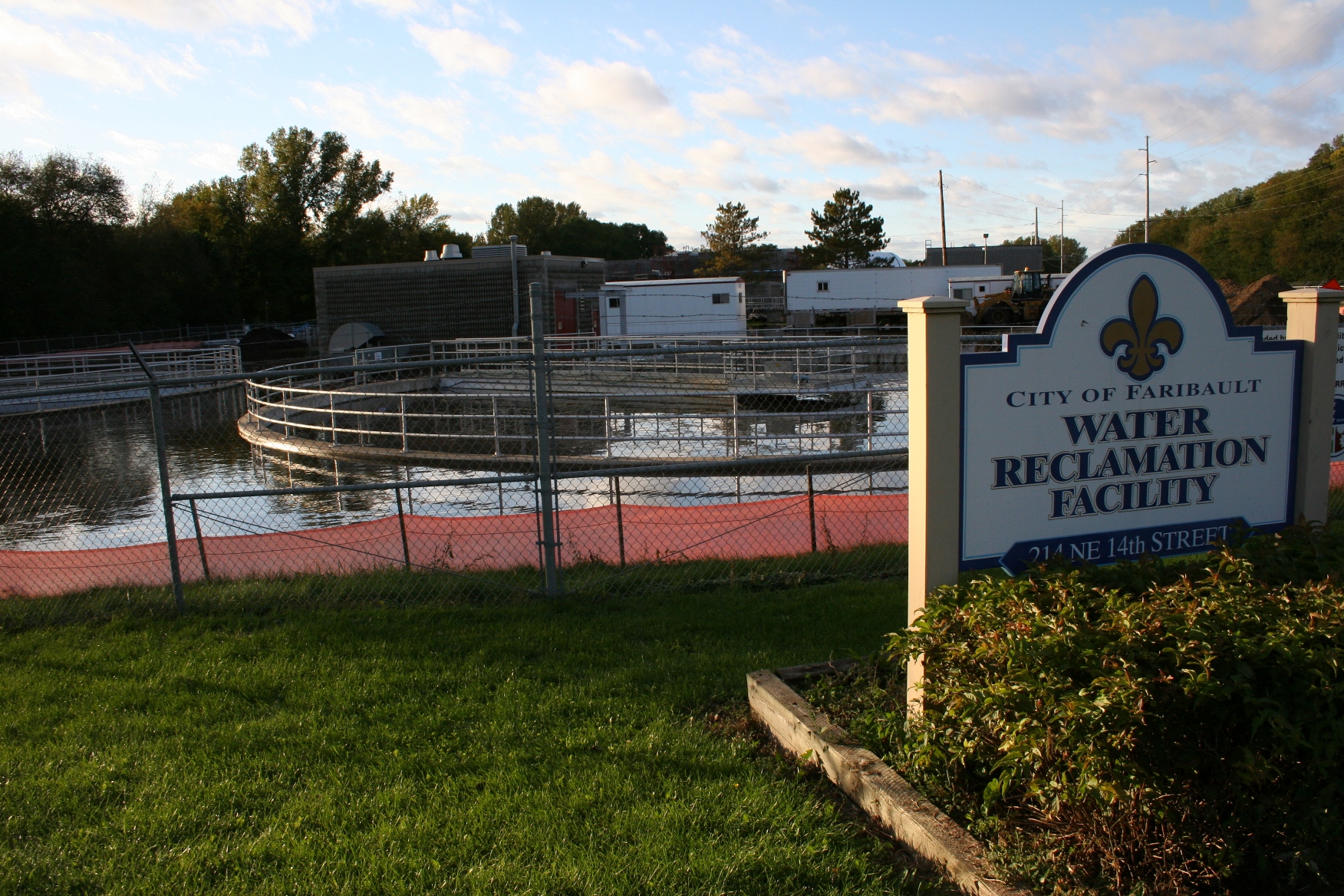
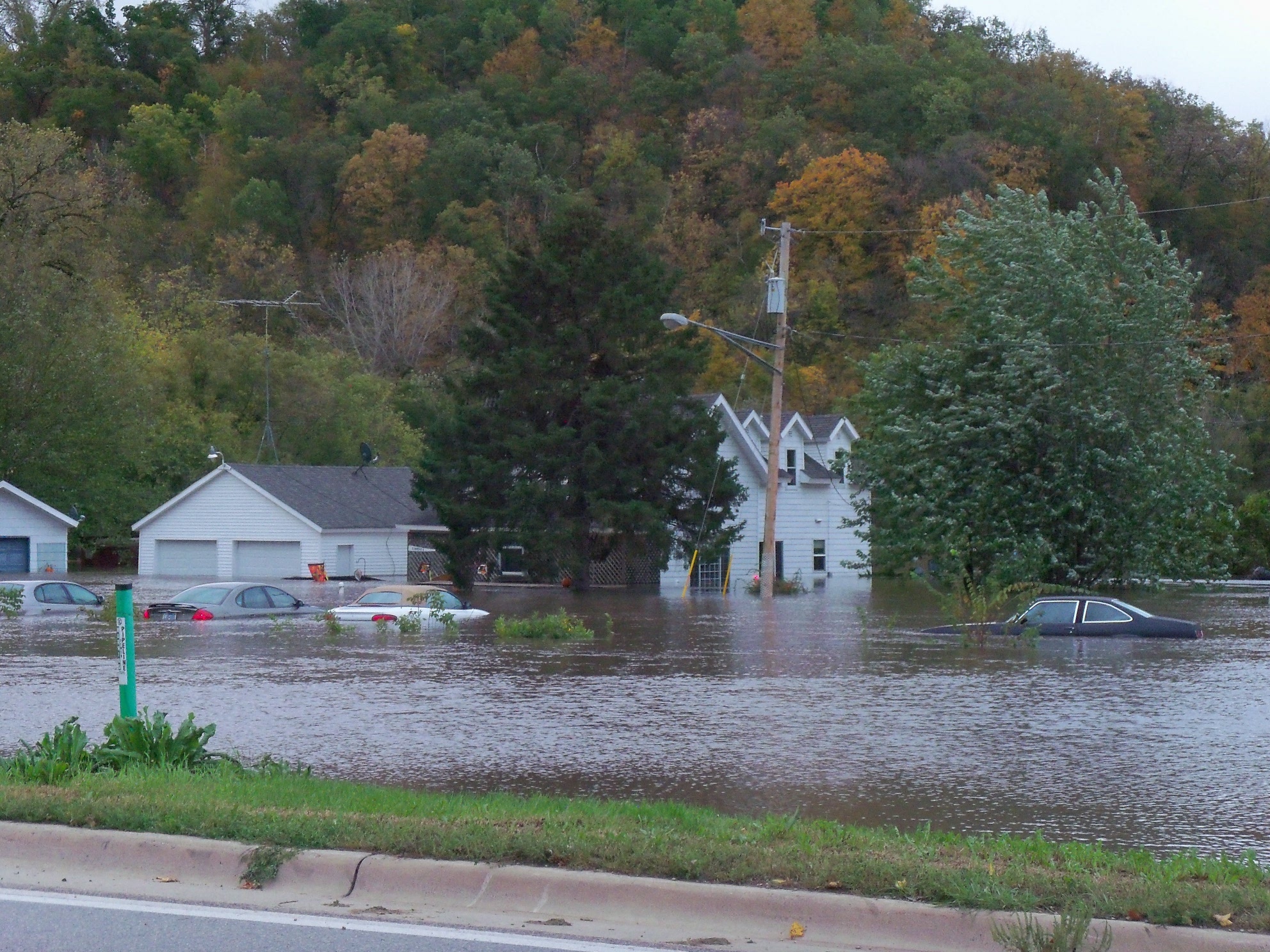
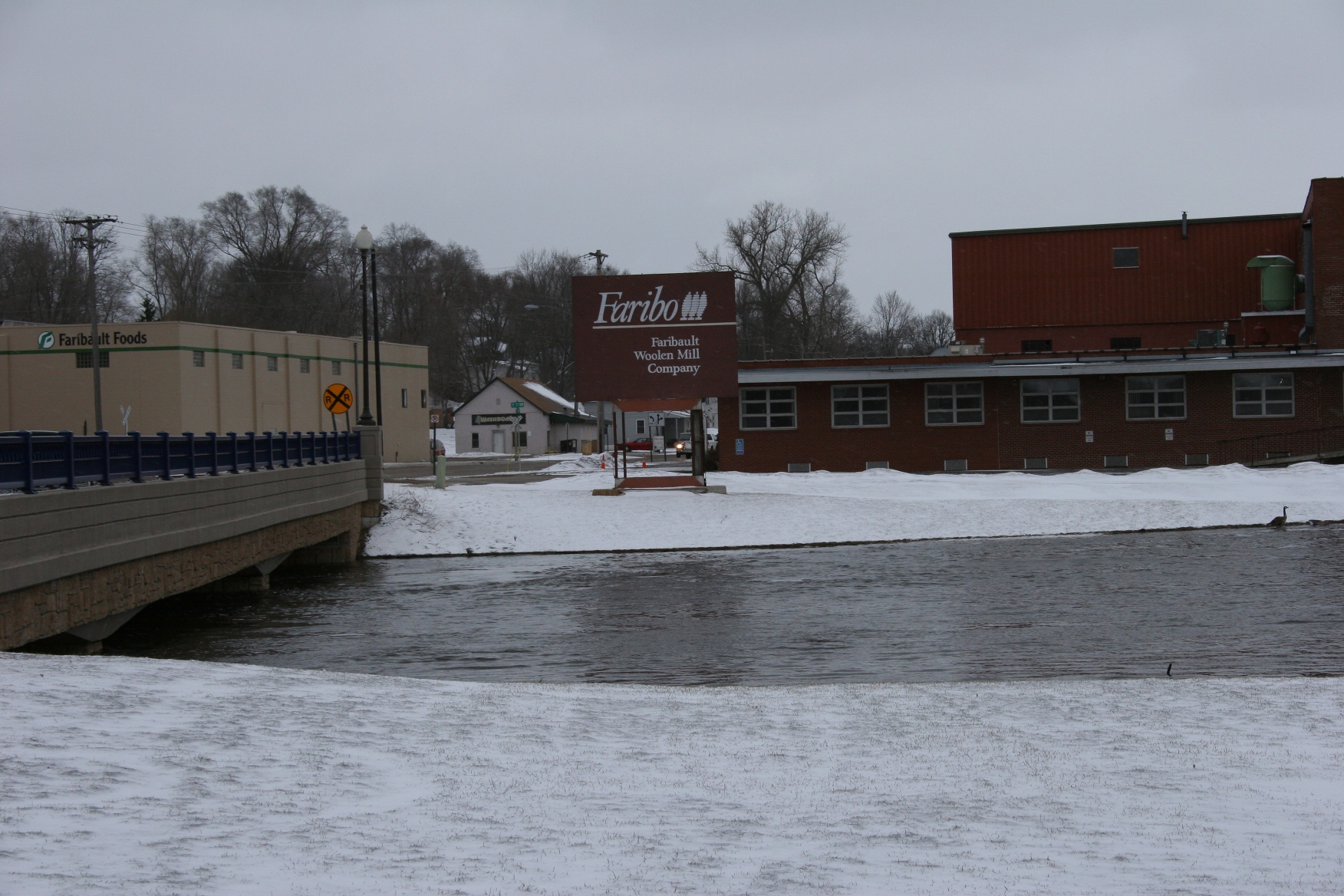
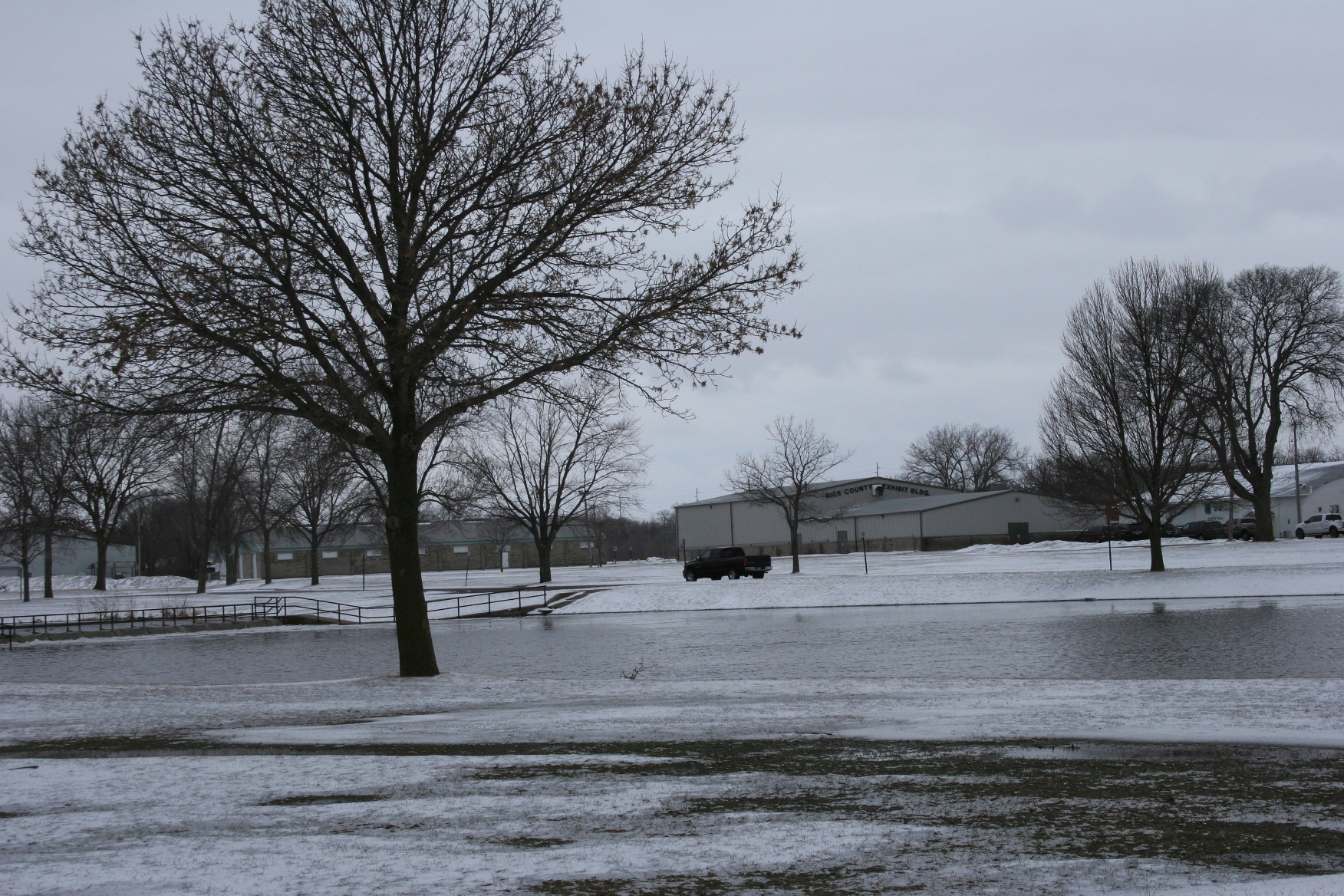
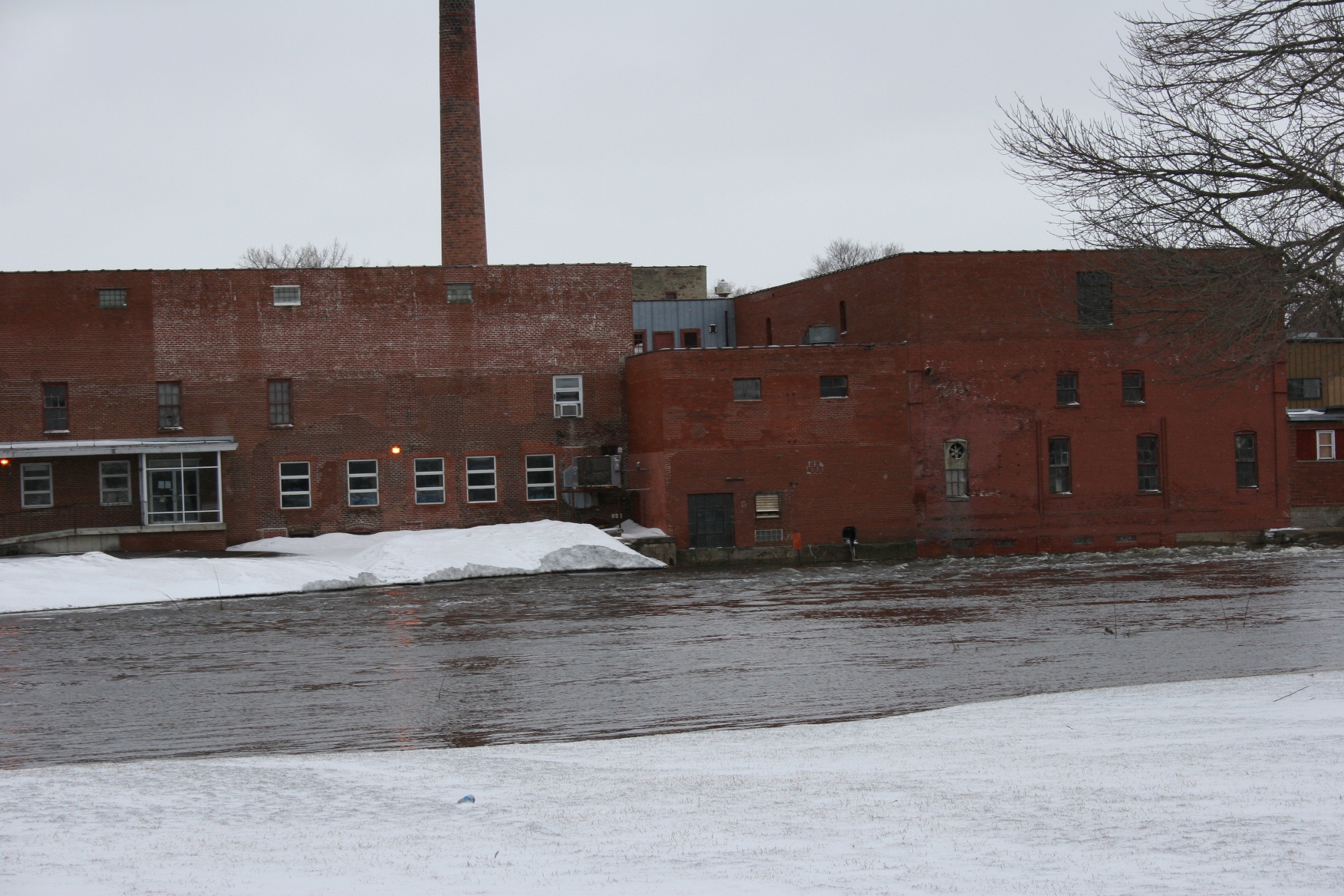
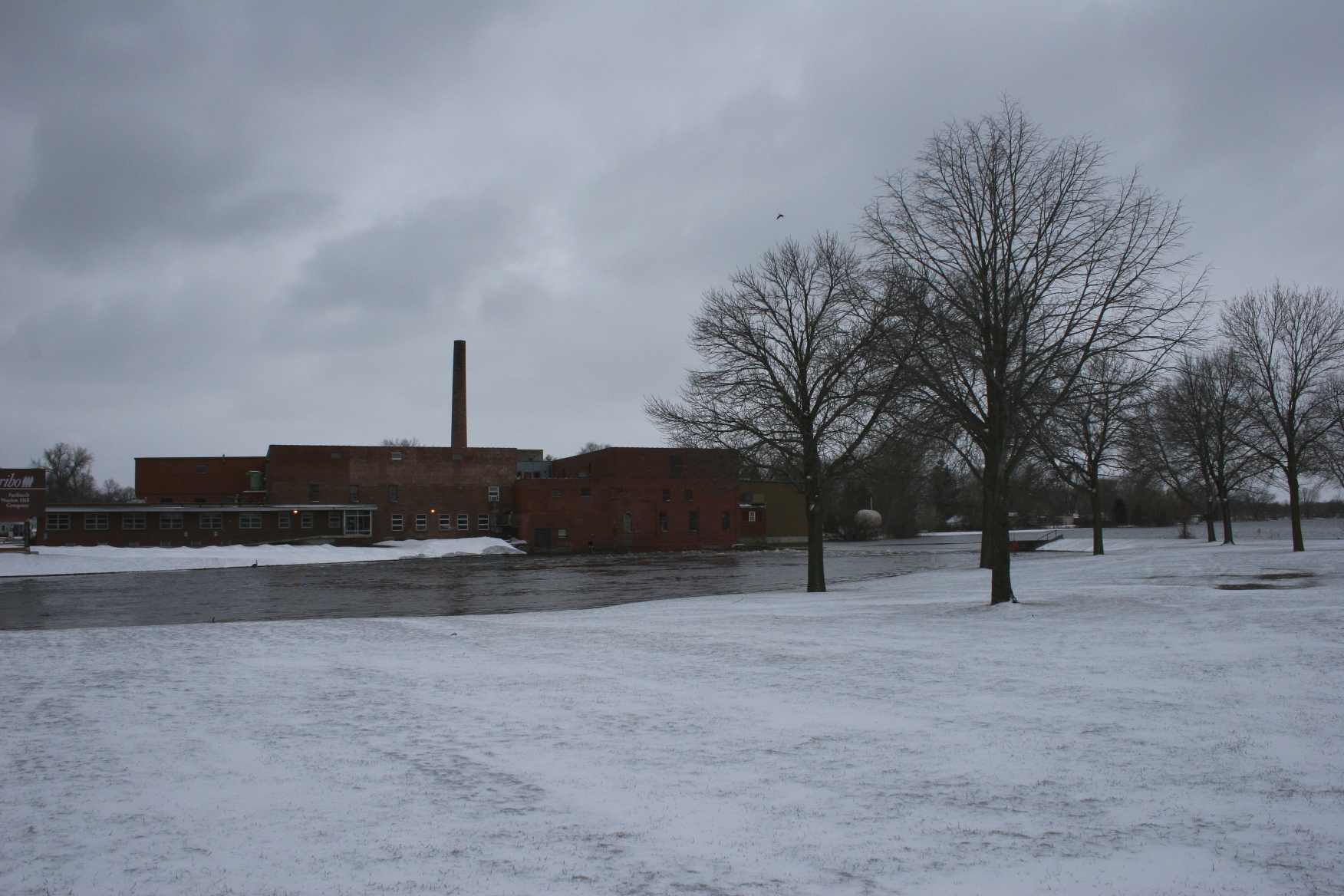
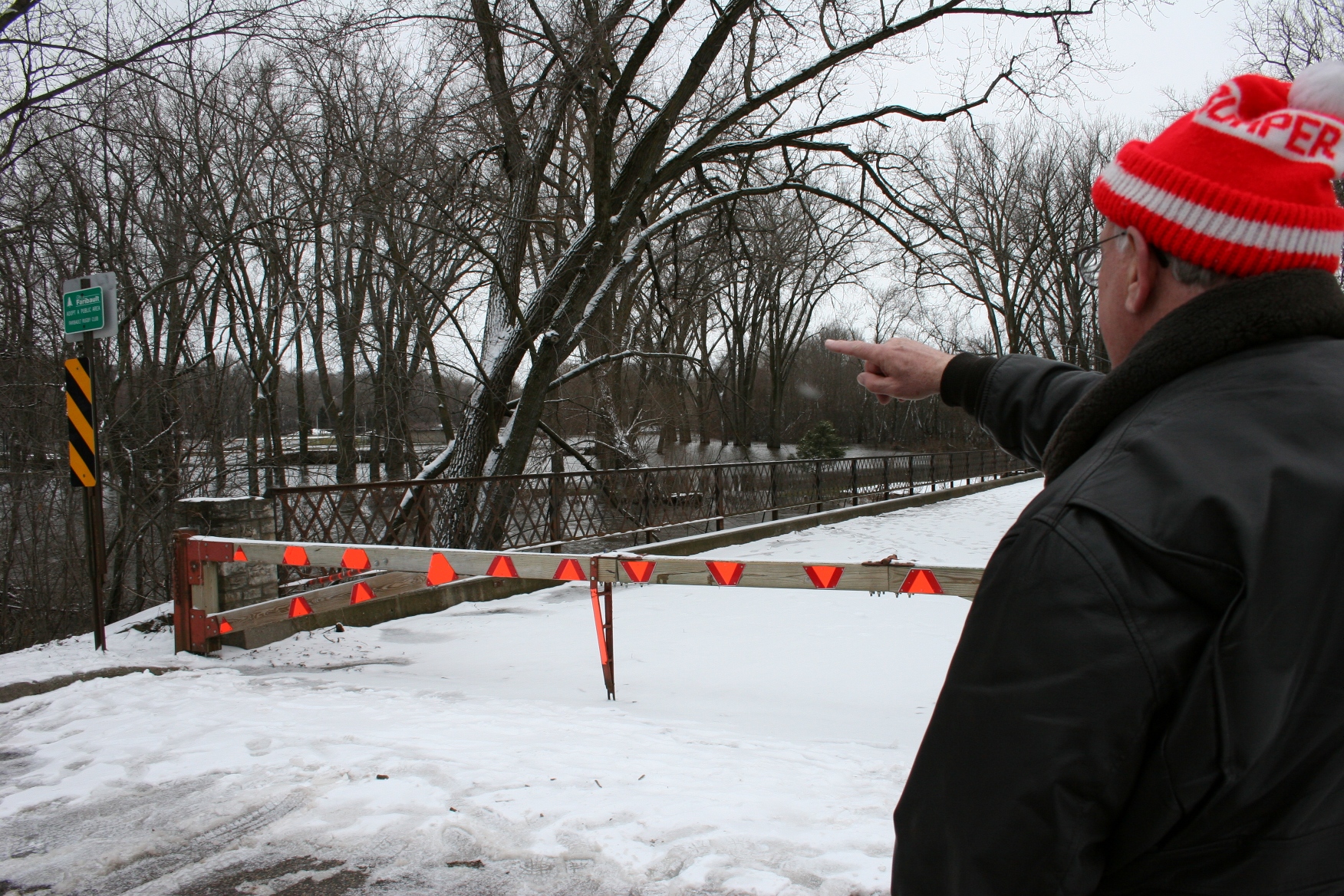
Here in Faribault, officials are keeping a close eye on the rising Straight and Cannon Rivers. Sandbags are filled and plans are in place to put them in place should the need arise. Of major concern is the riverside wastewater treatment plant which was flooded during a flash flood last September. During that flood six months ago, many homes and some businesses were inundated with floodwaters. A local riverside park, which often floods in the spring, was also under feet of water.

Upon checking the National Weather Service Twin Cities, MN., website map, I see most of the southern half of Minnesota falls under a flood warning.

For the north, winter storm and blizzard warnings have been issued. The last I heard, several inches of snow are expected to fall in my area sometime today and/or into tomorrow.

A car passes by my home at 8 a.m. as heavy sleet fell. Sleet also pelted Faribault during the night.

Rain continues to fall here as we approach the noon hour with temperatures hovering several degrees above freezing.

Personally, I’ve been affected by this wet weather with some minor water seeping into a corner of the basement—enough to soak up, move belongings and turn on the fans. It’s a hassle, but certainly nothing compared to the issues some folks will face as the snow and rain fall and the rivers rise.

PLEASE SUBMIT a comment with any information you have about rising rivers/creeks/streams and/or flooding in your area of Minnesota. I would like to share your stories with Minnesota Prairie Roots readers.

© Copyright 2011 Audrey Kletscher Helbling


Part VI: The future for Hammond and Tina March 19, 2011

EDITOR’S NOTE: This post marks the final in a series of six stories that focus on a Hammond, Minnesota, family forced from their home during a September 2010 flash flood. Today we look at Hammond, its recovery and how you can help.

“WE HAVE A LONG ROAD ahead of us and none of it can really start until spring,” says Tina Marlowe, assessing the work that still needs to be done in Hammond. Her family returned to this town of (once) 230 residents shortly after Christmas.

This southeastern Minnesota community exists in limbo as residents await the arrival of warmer weather, and money, to begin rebuilding their community. Many homes must be gutted and rebuilt or torn down. Hammond needs a new city hall and new maintenance equipment. The river bank, river bed, parks and canoe landing need to be cleaned and rebuilt.

“Everything…everything is left to be done,” says Tina, who plans to help form a park committee that will raise $200,000 to update and rebuild the town’s parks. Tubing, canoeing, a horseshoe tournament, camping, fishing, motorcycling and more draw locals and visitors to this quiet river valley, “a beautiful gift of nature that we like to call ‘Our Valley’,” Tina says.

She and good friend Katie Shones will be setting up a Park Fund for donations to rebuild the parks.
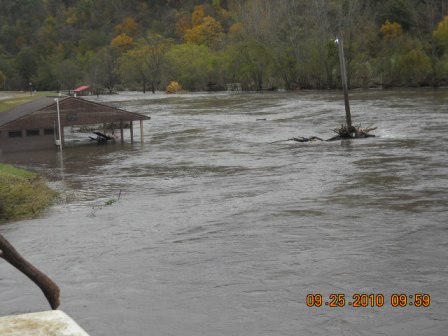
 

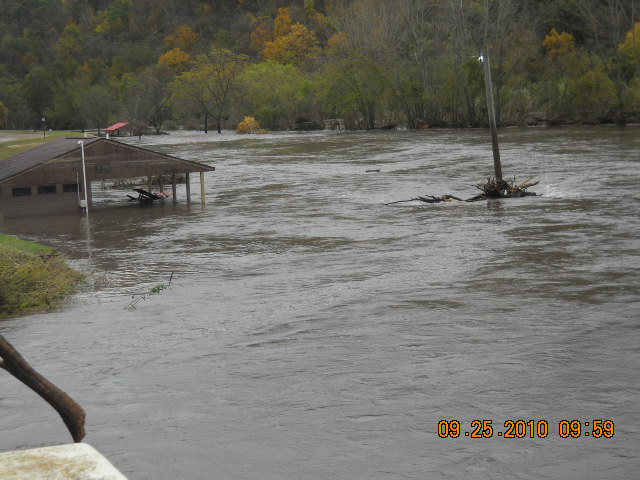
Hammond's riverside park was all but destroyed by the flood. Marks on the shelter roof show how high the water rose. A baseball field next to the shelter, with a fence around it, is covered by receding floodwaters. Jenny Hoffman took this photo at 10 a.m. on Saturday, September 25, 2010.

HOW YOU CAN HELP?

“SINCE OCTOBER, Lutheran Social Service of Minnesota has been very involved in the long-term recovery efforts in the Pine Island – Oronoco area and in Wabasha County,” says Caitlin Hughes, LSS Disaster Services administrative specialist.  “LSSMN assisted in the development of two community supported long-term recovery committees. These committees are working with the LSSMN Southeast Minnesota Disaster Response Team to help families locate the precious resources to rebuild their homes and their lives.  Presently LSSMN has a local staff of three disaster case managers, a volunteer and resource coordinator and a reconstruction manager.

Currently, the disaster case managers are working with over 250 families/ individuals and the rebuild team is assisting 25 clients in using volunteers to make their homes habitable once again.”

St. John’s Lutheran Church is serving as a base for LSS relief operations in Hammond. Contact LSS caseworker Mary Walker at 507-753-3057 business days. St. John’s has served, among other functions, as a site for distribution of food, clothing and other essentials to flood survivors.

INDIVIDUALS INTERESTED in helping with Hammond’s recovery should contact LSS Volunteer Coordinator Dan Kalstabakken at 651-741-7234.

Go to this link for the most up-to-date information on LSS efforts in southeastern Minnesota: http://www.lssmn.org/disaster/

Also visit the Zumbro Valley Disaster Relief Fund.

Tina says flood survivors could use cash donations and that skilled laborers are still needed to help with the ongoing rebuilding efforts.

HELPING THE CHILDREN

LSS also provides support for children who have been through disasters like the Hammond flood.

Camp Noah is a day camp for children impacted by disaster that offers children a safe, caring and fun environment where they can heal and process their disaster experience, according to LSS. The five-day camp is based on a curriculum that celebrates each child’s unique gifts and talents and provides them with an opportunity to share their story.

For more information about Camp Noah, call 612-879-5312 or go to http://www.lssmn.org/camp_noah/
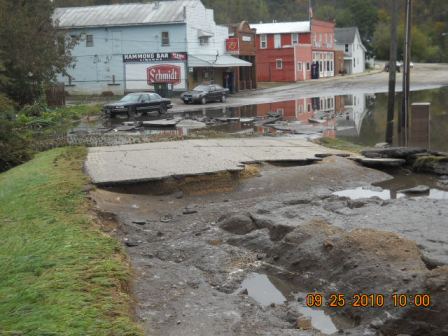
 

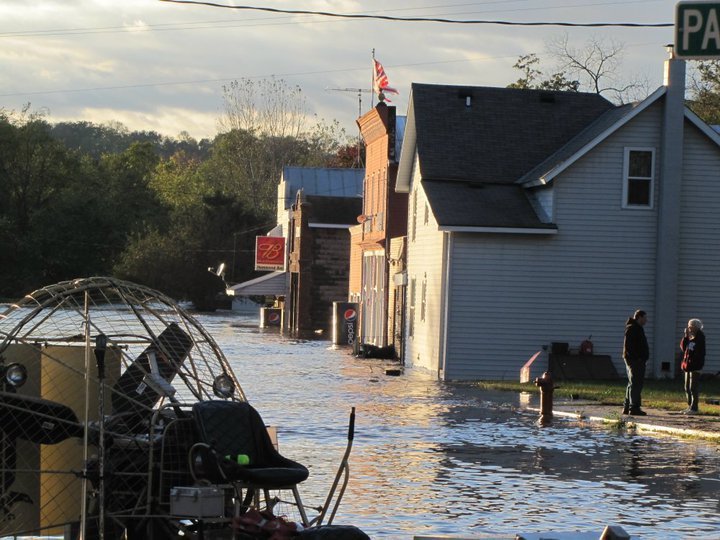
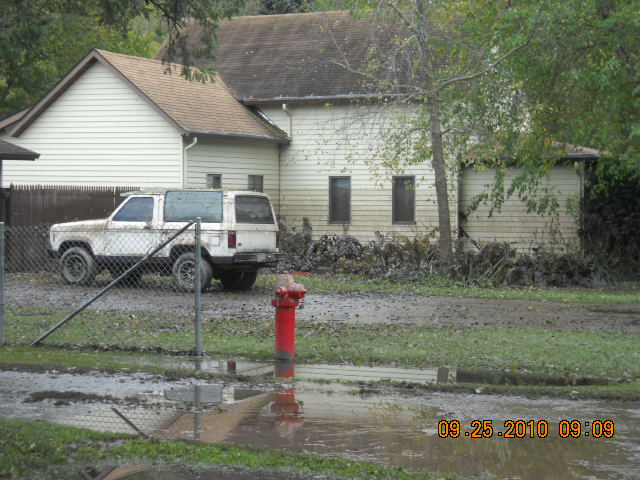
This photo shows the destroyed road that goes from Wabasha County Road 11 to the business area on the east side of Hammond. A bar, bank, cafe, city hall and homes are located along this street. Waters are receding in this photo taken mid-morning on Saturday, September 25, 2010. All of the businesses, city hall and most homes along this road were flooded.

THE FUTURE FOR TINA

Tina and her fiancé, Micheal Mann, are planning a June 25 wedding. The bride will wear the wedding dress she saved from the floodwaters.

“I don’t know how we will get the wedding paid for now…it certainly won’t be all that I planned it to be,” Tina says.

But, despite the financial hardship, the setbacks, the challenges, this determined woman wants to move forward. And that means proceeding with the wedding as planned. Her wedding will give people a break, a reason to “take one night to celebrate all that is real in this life: friends, family and love.”

THIS CONCLUDES my six-part series of stories told through the voice of Hammond flood survivor Tina Marlowe. Thank you, Tina, for the privilege of sharing your story. I admire your strength, your determination and your resiliency.

Thanks also to Katie Shones, who has been my main contact in Hammond since last October. She is one strong, kind woman.

Thanks, too, to Susie Buck for pulling together the many photos featured in this series and to those who allowed their images to be published here.

Sheri Ryan, I am grateful to you also for the use of your photos, but, more importantly, for a deeply personal look at how this flood affected your mom. All too often we view blurs of faces and piles of debris, but we fail to see beyond, to the real hurt that runs deep.

I appreciate every one of you who have so willingly worked with me to tell the story of the people of Hammond through words and photos.

I also appreciate volunteers like Gary Schmidt from the Twin Cities who worked with a Woodbury church to bring volunteers to Hammond in late January and then again one day in March. Gary learned of the need through this blog. I hope to share Gary’s experiences with you in a future post.

I am grateful also to the folks over at Minnesota Public Radio who have plugged my flood series online. In the “Minnesota Today” section, Michael Olson included a reference to my stories in his March 16 statewide blog round-up. My post, “She just wants to hug her house,” was also featured in MPR’S “Blog Box.”

MPR columnist Bob Collins summarized my series and linked to my blog in the “5×8” section of his March 18 “News Cut” column. Bob also publicized my first set of flood stories back in October 2010, when I toured Hammond and Zumbro Falls about two weeks after the flash flood. Thank you, MPR, for helping Hammond’s story reach an even wider audience.

It is my hope, Minnesota Prairie Roots readers, that the flood stories I’ve shared with you this week will touch you. I hope you will be moved to help the residents of Hammond recover from a flood that may have damaged their homes, but has not destroyed their spirits.

These are strong, strong people who continue to need our support, our prayers and our help even six months after the flood.

© Copyright 2011 Audrey Kletscher Helbling


Part V: Help after the Hammond flood March 18, 2011

EDITOR’S NOTE: Minnesotans help one another. So when Tina Marlowe and her family needed assistance after a devastating autumn 2010 flash flood severely damaged their Hammond, Minnesota, home, volunteers were there to assist.

Today, in this fifth in a series of stories, read about the people who helped Tina’s family and the gratitude she feels toward them.


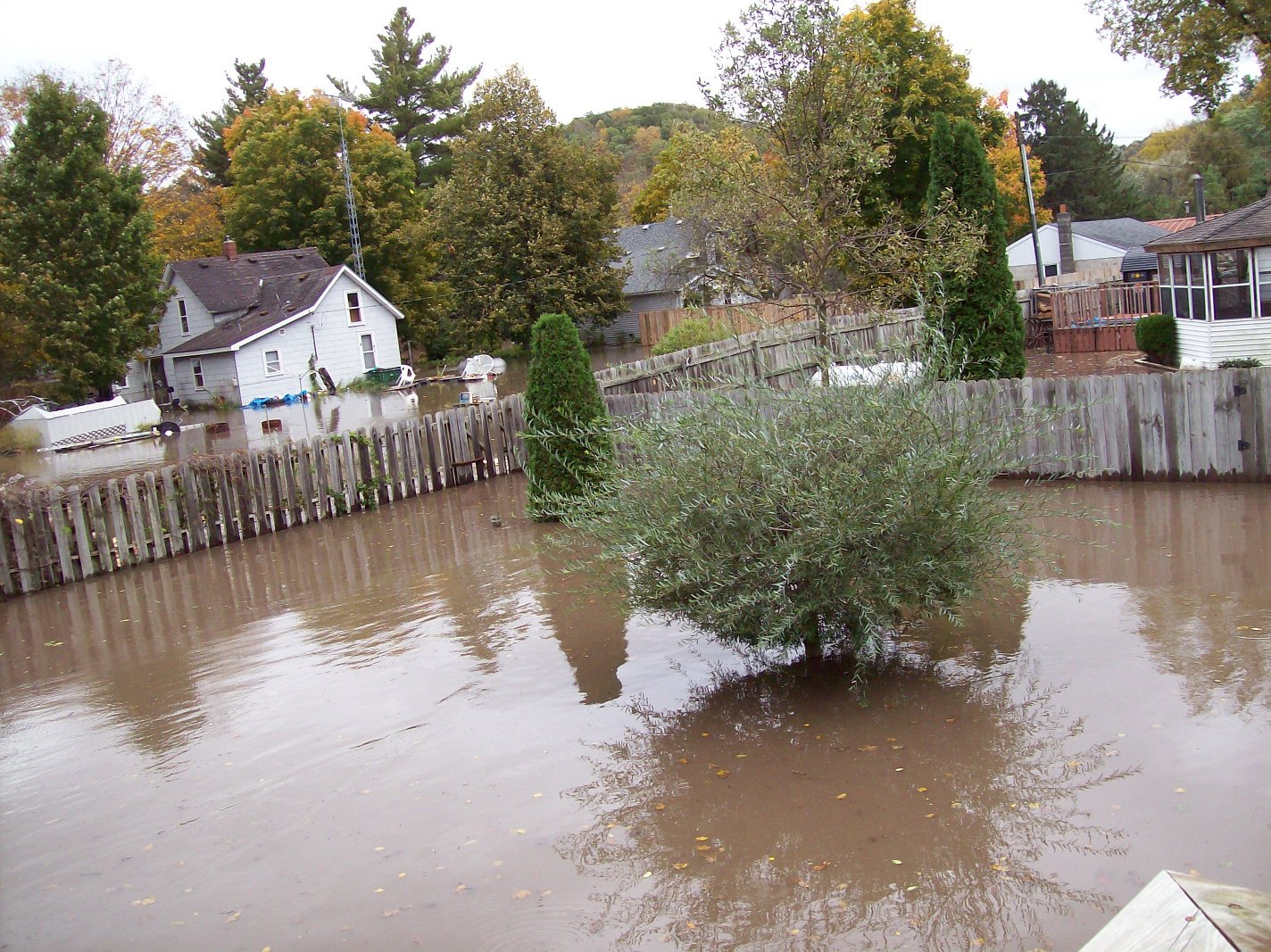
John Bemmert took this photo from the front deck of his house. It shows his flooded yard within the fence, his neighbor's house to the left and his father-in-law's yard on the right. This image was taken on the afternoon of Friday, September 24, 2010.

Floodwaters approach the home of John Bemmert in this photo he took the afternoon of Friday, September 24, 2010. He was one of the lucky ones. The water rose only to the base of the skirting on his home.

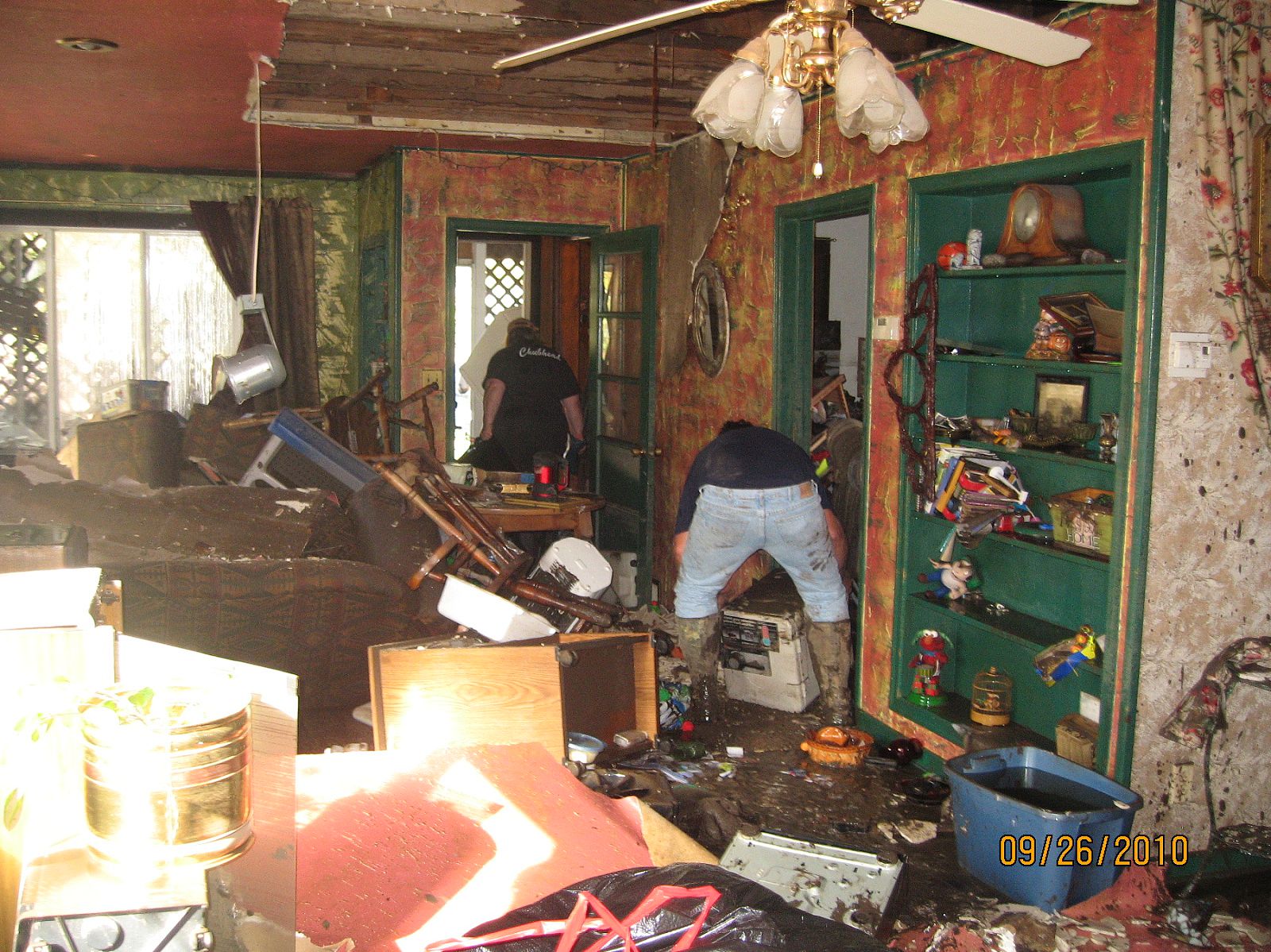
WITH A FLOODED basement and several inches of water on the main level, Tina, her fiancé, two children and future in-laws were forced from their home. When the floodwaters receded, volunteers pitched in to help the family move their belongings and gut their home.

The Sons of Silence Motorcycle Club immediately dispatched a crew to move furniture, clean the basement, and rip out flooring and drywall. A retired couple from the Rushford area, Sentence-to-Serve members and others helped the family. The Rochester Med City Crew MC treated the family to a Thanksgiving dinner.

“I am grateful they took care of us with such dignity and respect,” Tina says of all who assisted them.

Once their house was emptied and dried out, they immediately began the process of rebuilding.

NO FLOOD INSURANCE, BUT HELP CAME

Without flood insurance on their home which lies in the 500-year flood plain, Tina and her family depended on others and sought out programs that could assist them. They accepted a Quickstart Grant, shopped around, made good choices and spent money as wisely as they could to stretch it as far as they could, Tina says.

They also tapped into Cathy Mann’s retirement fund to buy appliances.

Yet, there is nothing to pay for replacing their personal belongings.

In the spirit of giving, people have pitched in—a grant from Tina’s company to help pay hotel bills; co-workers donating money and holding a bake sale and chili feed to cover hotel and food costs; the Plainview-Elgin-Millville School District, through a drive, provided clothes, bedding, other essentials and cash; and a cash donation from Cathy Mann’s (Tina’s future mother-in-law) co-workers helped pay hotel bills.

Through Lion’s Club, Eagles Club, church group and individual donations to the Zumbro Valley Disaster Relief Fund, the family received intermittent assistance with gas and grocery cards.

“The amount of help we received from the community is unbelievable and is something every Minnesotan can, and should, be proud of,” Tina says.


The floodwaters had receded when John Bemmert took this photo on the morning of Saturday, September 25, 2010. It shows the intersection of Wabasha County Road 11 and Second Avenue. The flood tore out the wooden fence. A waterline is visible on the house.

Susie Buck took this photo as floodwater from storm sewers began backing up from the street into her yard before 8 a.m. on Friday, September 24, 2010. Motorists had to drive through her yard to get out of town on the west side of the Zumbro River in Hammond.

PLEASE JOIN MINNESOTA PRAIRIE ROOTS for one last visit with Tina Marlowe as she tells us what remains to be done in Hammond and how you can help.

© Copyright 2011 Audrey Kletscher Helbling
Photos Copyright 2011 by Susie Buck & John Bemmert


Part IV: Hanging onto hope after the flood March 17, 2011

EDITOR’S NOTE: What is it like to lose nearly everything you own in a flood? What is it like to have your life disrupted, to be without a home? This post addresses those questions in this fourth in a series of stories about a Hammond, Minnesota, family that survived a September 2010 flash flood.

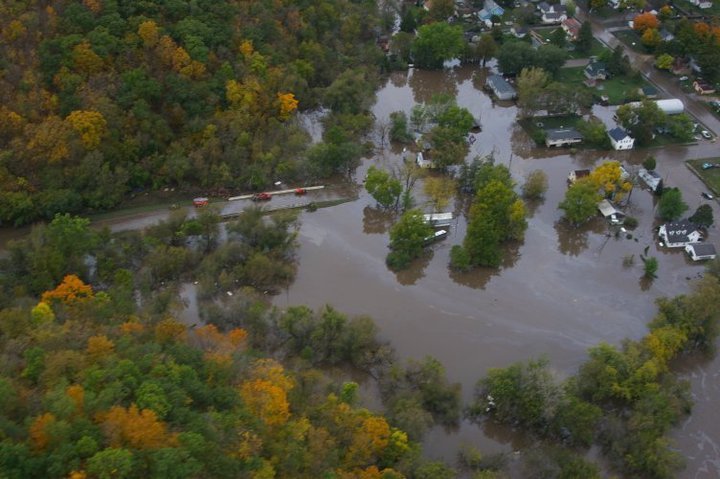
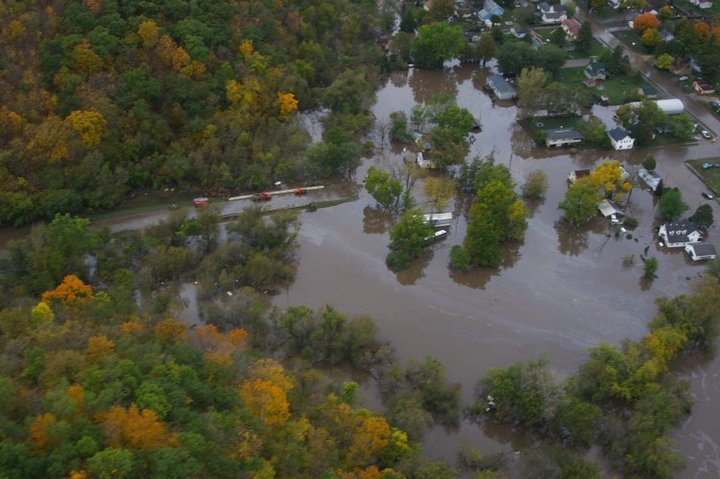
An aerial view of Hammond during the flash flood of September 2010. Photo courtesy of Micheal Mann & Tina Marlowe.

FOR TINA MARLOWE and her family, life abruptly changed after the flooding Zumbro River forced them from their home. Those first few days for Tina, her fiancé, two children and in-laws—all of whom lived together in the same house—were charged with emotion, filled with uncertainty.

“Every member of our family has gone through every emotion you can think of,” Tina says. “Desperation and shock the first few days, looking at the destruction to our home, to our friends’ homes, to our favorite ‘watering hole,’ which is also the community gathering place, to our parks, our river bank, the rubbish and filth.

Wonder and fear as to what will happen to us… Where will we go? Who is going to help us? Where am I going to start? What have I lost? What do I have left? How am I going to pay for it all? Will I be able to financially survive in the meantime? What do I tell the kids?”


Floodwaters from the Zumbro River reached Hammond's business district. Photo courtesy of Micheal Mann & Tina Marlowe.

The bridge connecting east and west Hammond is barely visible during the flood, which also overtook the town's park. Photo courtesy of Micheal Mann & Tina Marlowe.

TINA’S KIDS AND THE LESSONS THEY’VE LEARNED

For Tina’s children, 16-year-old Cassie and 7-year-old Christian, the flood took a major emotional toll. Christian started having behavioral and concentration problems on the bus and in school. Cassie’s life as a busy teen, running around, making plans, came to a screeching halt.

“They went through the extremes of being angry, then indifferent,” Tina says of her children.

Now that the family has returned to Hammond—they moved back right after Christmas, three months after the flood—the kids are beginning to settle back into normal routines and a normal life.

“They have seen and learned a lot,” Tina says. “I hope that the greatest lesson that they get from this is that family, community, and love are the most powerful tools and assets they will ever have. This is the ONLY thing that will get you through when all else is lost, and is all and everything that you need in life to be secure.

We are Minnesotans. We take care of each other.”

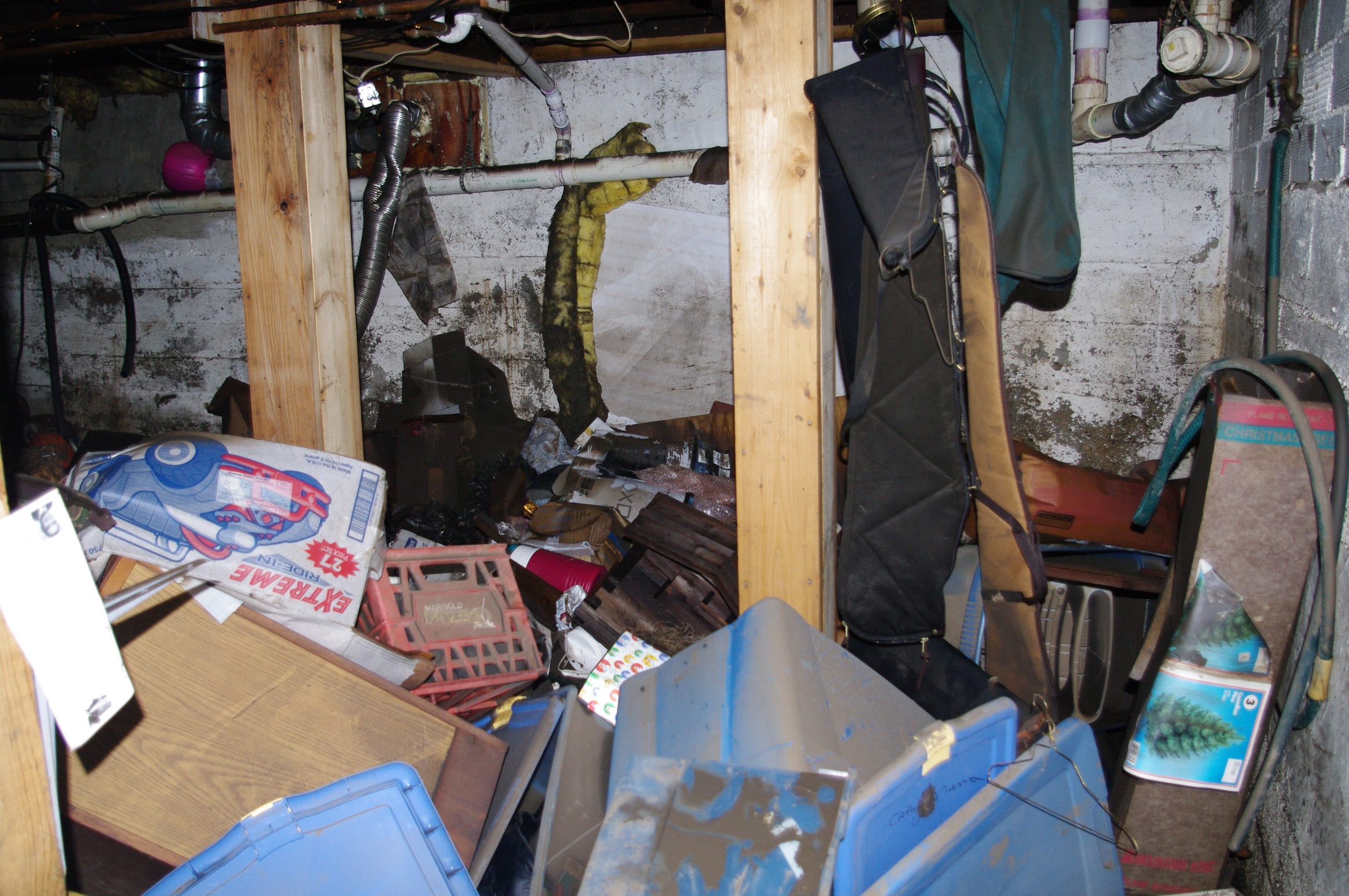
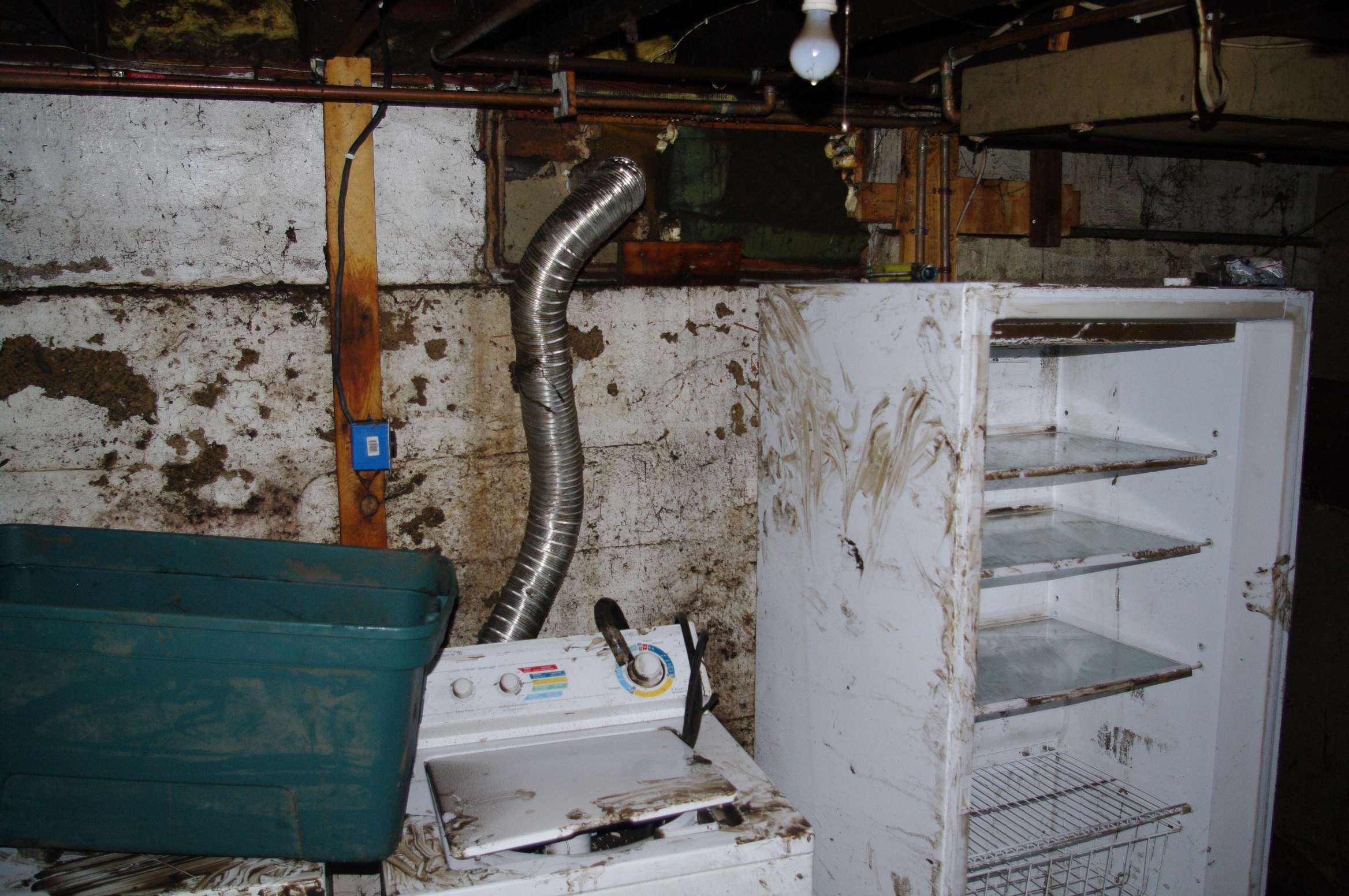
Floodwaters destroyed everything in the basement of the house where Tina, Micheal, Cassie and Christian and Bob and Cathy Mann live. Photo courtesy of Micheal Mann & Tina Marlowe.

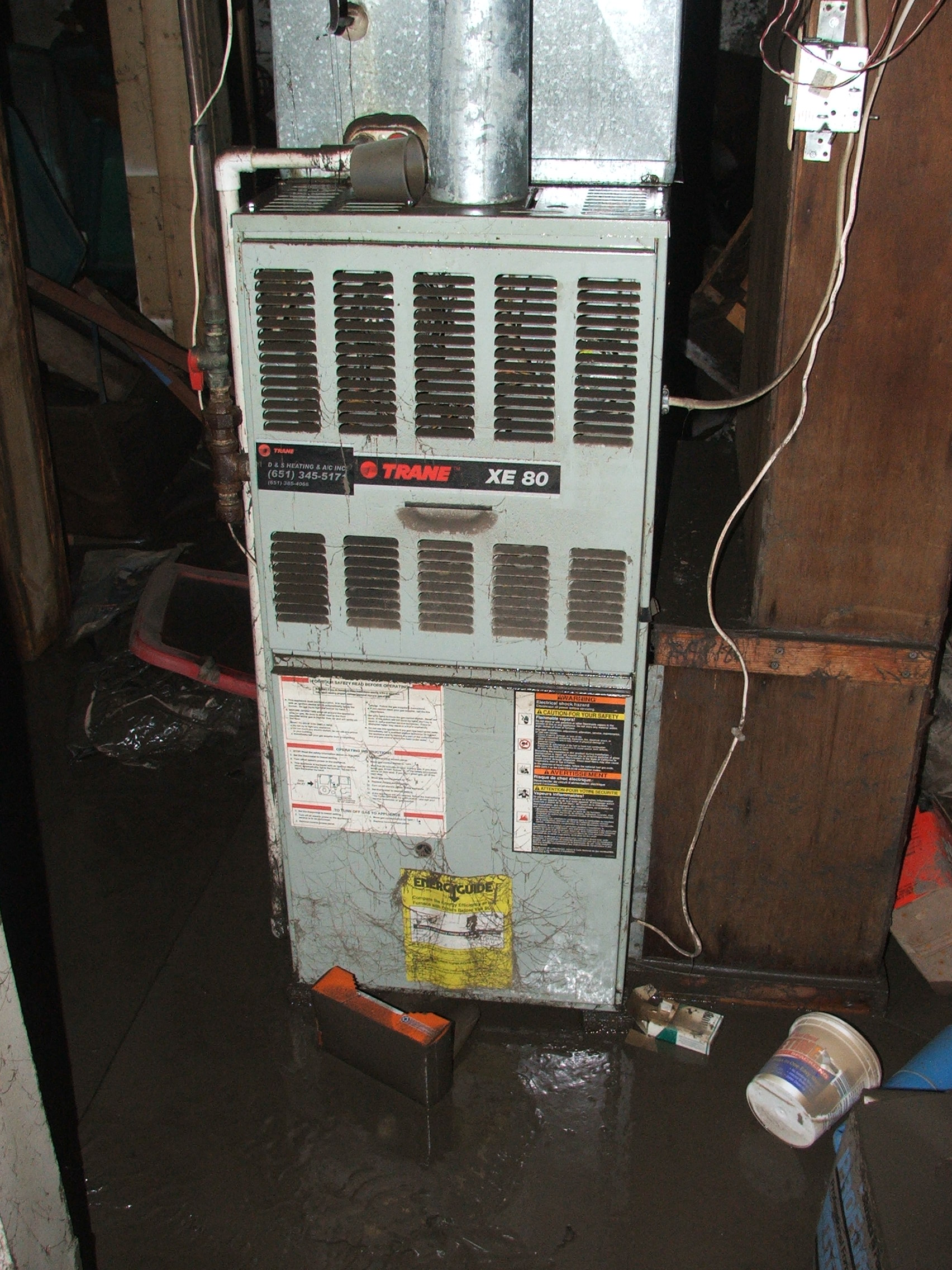
Muck surrounds the furnace in the Mann family's basement. Photo courtesy of Micheal Mann & Tina Marlowe.

Flooded appliances in the basement. Photo courtesy of Micheal Mann & Tina Marlowe.

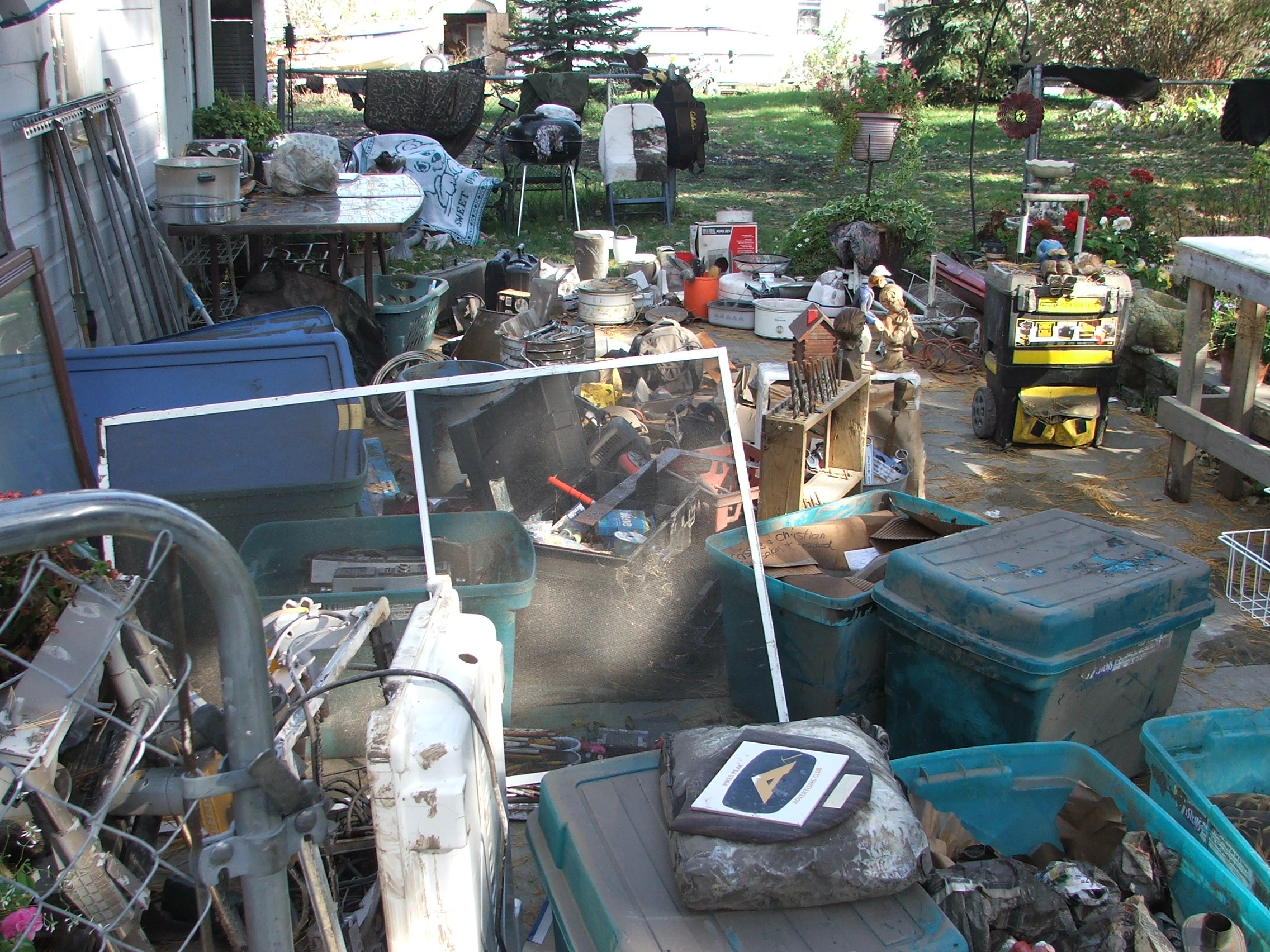
The family's belongings, moved outside to dry after the flood. Photo courtesy of Micheal Mann & Tina Marlowe.

THE ANGER AND QUESTIONS

A devastating natural disaster like this flood raises many questions and elicits mixed emotions, including anger. Tina has felt her share of anger and I’m allowing her to air her concerns here so that perhaps we can all learn from her experience.

Tina says Hammond, population 230, was neglected and forgotten during the “threat” of the rising river. No one came to help on Thursday night until it was too late, she claims. The evacuation in Hammond occurred many hours after the exodus in nearby Zumbro Falls.

While food and shelter were offered in Hammond, Tina says that did not help her family displaced to a hotel in neighboring Rochester.

“There was no immediate help in the aftermath, and a lot of what was being done didn’t make sense to us. We were left to fend for ourselves for nearly two months,” Tina continues.

Her anger focuses on the government “for not having a better plan, and for ultimately abandoning us.” She was angry, too, at President Barack Obama…”when he was doing diplomatic work, when we felt that a simple acknowledgement and signed declaration seemed so simple.”

She felt a loss of hope “when big brother seems to turn his back on you.”

Yet, Tina says she is grateful and humble for the volunteer help, the donations, the support from neighboring communities.

THE WAITING, THE FUTURE, THE HOPE

Anticipation and anxiety marked the family’s days as they awaited word on financing and rebuilding. They were physically, mentally and emotionally exhausted.

When they finally returned home to Hammond, they felt peace, hope and appreciation.

“But it’s not over yet,” Tina says. “There are still feelings of guilt. So many (people) had damages much worse than us. There are those still waiting for answers.

It’s hard to be one of the first ones home. It’s lonely. Our neighbors’ homes are dark and empty. Every day we hear news of another one leaving or another one deciding to stay. The future is still uncertain.

Our quiet, simple life in the valley has been disrupted. This summer we still won’t be able to enjoy all that we enjoy about our valley because of the loss and destruction.

I hang onto hope and realize the meaning of resilience when I watch the bald eagle fly over the river, still making the valley his home too. I feel a lot like that eagle, fighting extinction—refusing to leave the home I love.”

THE NEXT INSTALLMENT in this series looks at how others have helped Tina and her family get back on their feet.

© Copyright 2011 Audrey Kletscher Helbling
Photos courtesy and copyright of Micheal Mann & Tina Marlowe


She just wants to hug her house March 16, 2011


Through the trees and looking down into flooded Hammond, you can see the top of Dallas and Vicki Williamson's house "in" the Zumbro River. Carrie Hofschulte took this photo.

I’M TAKING A BREAK today from sharing flood survivor Tina Marlowe’s experiences to tell you about another family affected by the September 2010 flash flood in southeastern Minnesota during this, National Flood Safety Awareness Week.

Sheri Ryan of Goodhue contacted me shortly after I posted the first in my six-part flood series. She had flood photos and wanted to know if I was interested in posting them here. Once I saw Sheri’s images and read her email, I knew, without a doubt, that these photos and this story needed to be shared.

Sheri is the daughter of Vicki and Dallas Williamson, whose 1881 home in Hammond was heavily-damaged by the floodwaters. The couple is not returning to this Zumbro River community and has relocated 35 miles away to an 1882 farmhouse atop a hill in rural Cannon Falls.

Sheri’s photos are powerful. Upon viewing these images, I was instantly reminded of the pictures my second daughter took while volunteering with clean-up after Hurricane Katrina.

Although the number of individuals affected by the flash floods in Minnesota last fall pales in comparison to Hurricane Katrina, the impact is no less significant. Lives have been thrown into upheaval and chaos in the aftermath of such a devastating natural disaster.

Sheri says her mom is still mourning the loss of her home in Hammond.

“My mom is completely devastated from losing their home and all that was ‘tossed out on the street’ for the loaders to take away, and all that was washed down the river–her beautiful garden, grandsons’ toys, her parents’ stuff/photos, memories…she said the other day that she ‘just wants to give her house a hug’.”

For now, the future of that house is uncertain. The Williamsons won’t be back. But they must decide whether to elevate the house four feet (to be above the 100-year flood plain), tear it down or move it. If they go with a buy-out plan, the house must be torn down and nothing can be built there again.

They had flood insurance, but that did not cover the costs of purchasing the 1882 Cannon Falls area farmhouse.

“…there have not been many decisions yet,” Sheri says. “She (mom) just cannot go through this again. She said it is like a death…a loss…maybe she is still in mourning?”

We would all be wise to remember, as spring flood season approaches, our Minnesota neighbors like Vicki who are still struggling to recover from the floods of nearly six months ago.

Another shot of the Williamsons’ flooded home. Photo by Susie Buck

Above the window you can clearly see the water line marking the height of the floodwaters on the Williamson house. They had just power-washed the house two days before the flood. Sheri Ryan photo.

A day after the floodwaters subsided, you can barely tell that 9 feet and 8 inches of water once surrounded the Williamsons' house. The freezer near the back door had been inside the garage and was moved by floodwaters. Fifty freshly-butchered chickens were scattered across the yard and garage. Vicki Williamson lost all of her freshly-frozen tomato sauce also. The family had to dispose of the rotting food quickly into containers to keep coyotes and other critters from scavenging. Photo by Sheri Ryan

The first day back into their flooded home, the Williamson family had 20 minutes to grab whatever they could carry on the back of a four-wheeler. Photo by Sheri Ryan.

In the Williamsons' bathroom, a layer of muck covered everything. Floodwaters peeled the wallpaper off the walls. Photo by Sheri Ryan.

Flood-damaged debris collected in the Williamsons' front yard. Says Sheri Ryan, "My mom called me on Wednesday just in tears, bawling because they were taking away all of her stuff with pay-loaders." Photo by Sheri Ryan.


The Williamsons' gutted home, including beautiful hardwood floors. Photo by Sheri Ryan.

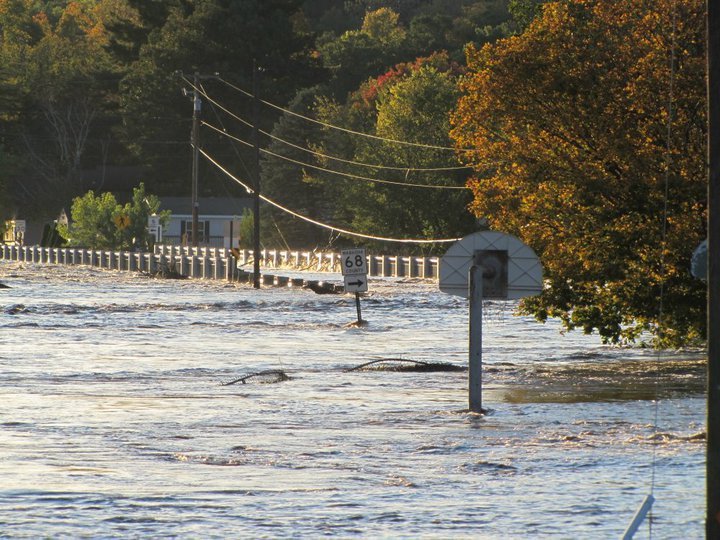
This photo by Carrie Hofschulte shows the Zumbro River raging across the bridge that connects east and west Hammond on Wabasha County Road 11.

Sheri Ryan shot this image of the same bridge, above, when the water had returned to its almost "normal" level.

THANK YOU to Sheri Ryan and Carrie Hofschulte for sharing these incredible photos.

Check back tomorrow for Part IV in my flood series from Hammond.

Text copyright 2011 Audrey Kletscher Helbling
Photos copyright 2011 Sheri Ryan and Carrie Hofschulte


Part III: A flood survivor’s answered prayers March 15, 2011

EDITOR’S NOTE: As Minnesotans prepare for spring floods, I bring you this third in a series of stories from Hammond. Last fall a flash flood raged through this small southeastern Minnesota community. Tina Marlowe, 36, and her family were among the many families left temporarily homeless. Floodwaters engulfed the basement of their home and flooded the main level with several inches of water.

In my last post, we left off with the family moving into a Rochester rental home after living in three different hotels.

Today we look at their material losses and Tina’s perspective on losing so much to the floodwaters.


A waterline on the side of this Hammond home shows just how high floodwaters rose on this house located on the south end of Second Avenue South in Hammond. Jenny Hoffman took the photo on the morning of Saturday, September 25, 2010.

WHEN TINA MOVED in with her future in-laws two years ago, most of her possessions—except for clothes and items stored in third level bedrooms—were stashed in the basement.

She lost nearly everything in the flood: Her kids’ “keepsakes.” A collection of Christmas decorations. College and kids’s books. Small appliances. Her music collection. The list goes on and on.

Her in-laws, Bob and Cathy Mann, lost a life-time of collectibles and memories stored in the basement.

“I was not able to save much, and what I did save is damaged—but I don’t care,” Tina says. “I saved my daughter’s baptism dress, cloth, candle and announcement. I was able to save her birth pillow and silver spoons, and her great-grandmother’s genuine crystal antique perfume decanters.

I was able to save my son’s first Harley Davidson outfit that his grandpa got him, and I saved the baby cowboy boots and baby blankets and, despite the damage, I kept my diploma, hat, senior yearbook and my copy of the Byron Review in which I made the front page for graduation in 1993.

I plan to tell them (my children) that just as these items are memories, the damage that they carry are memories too. I guess if one has to decide what you would save if you could only save a few things, these are the things I prayed would be spared. Somehow I feel that my prayer was answered.”

THE WORK AHEAD OF THEM

When the floodwaters subsided, Tina, her fiancé, Micheal Mann, and the rest of their family knew they were racing against time to move their soaked belongings out and gut the house.

They carried many of their possessions into their garage. In the spring they will sort through the camping equipment, the river fun equipment, the summer pool, the gardening equipment, the food processor, dehydrator, pressure cooker…to see what they can keep.

“It just breaks my heart because everything that makes me and us Minnesota was lost or damaged in this flood,” Tina says. “It will take me years to replace it all.”

CHECK BACK for Part IV of Tina’s story as she shares how her family was impacted emotionally by the flood and more.


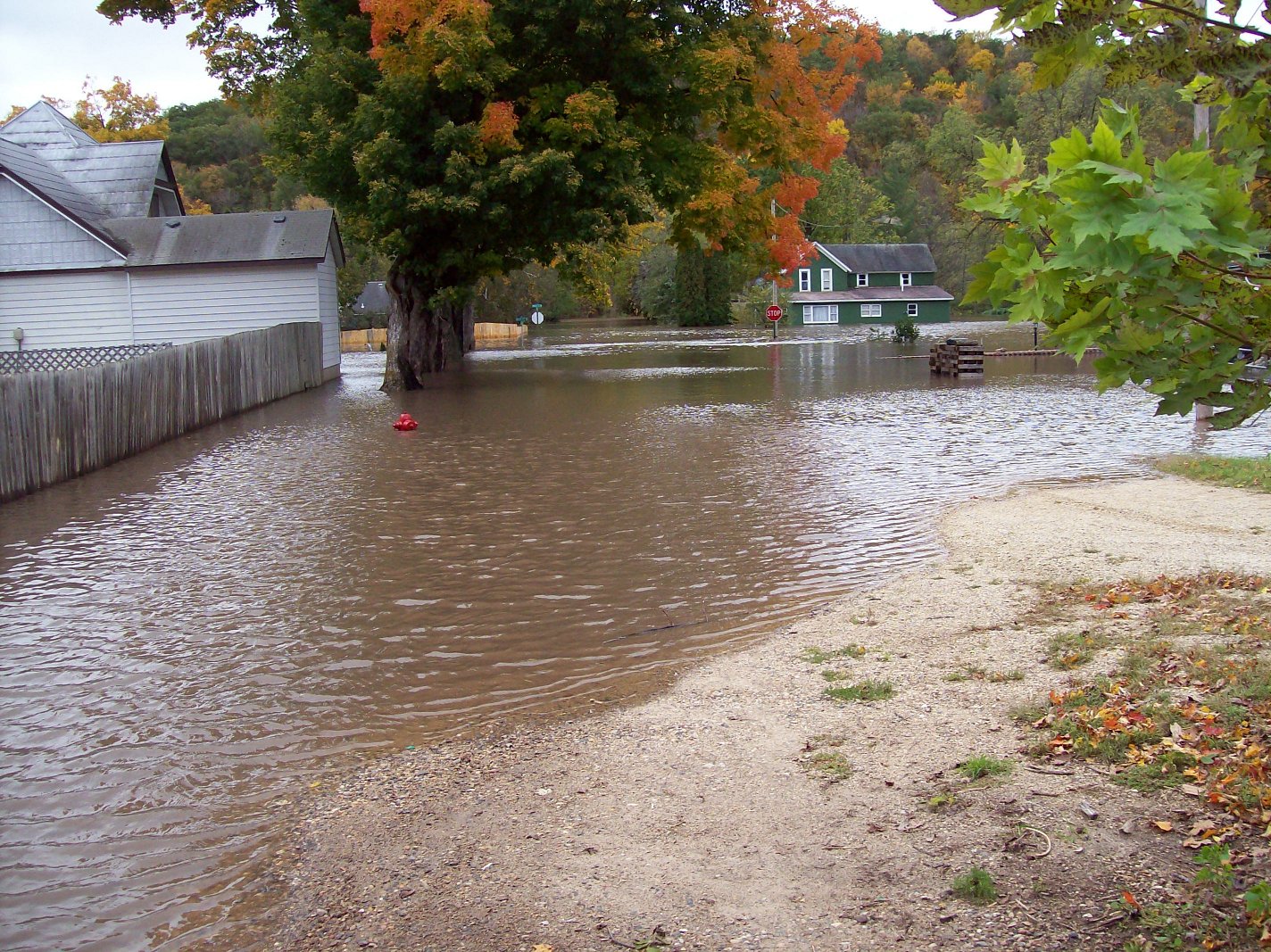
John Bemmert took this photo while standing in his driveway along Second Avenue North on the afternoon of Friday, September 24, 2010. This shows the flooded intersection of Second Avenue and Wabasha County Road 11.

© Copyright 2011 Audrey Kletscher Helbling
 

Part II: One hour to pack, a flood survivor’s story March 14, 2011

EDITOR’S NOTE: Today I bring you the second in a series of stories from a survivor of the flood five months ago in Hammond, Minnesota. Tina Marlowe and her family were forced from their home on September 24, 2010.

We pick up where we left off in my last post with the family fleeing their tiny community as floodwaters rose, engulfing their home.


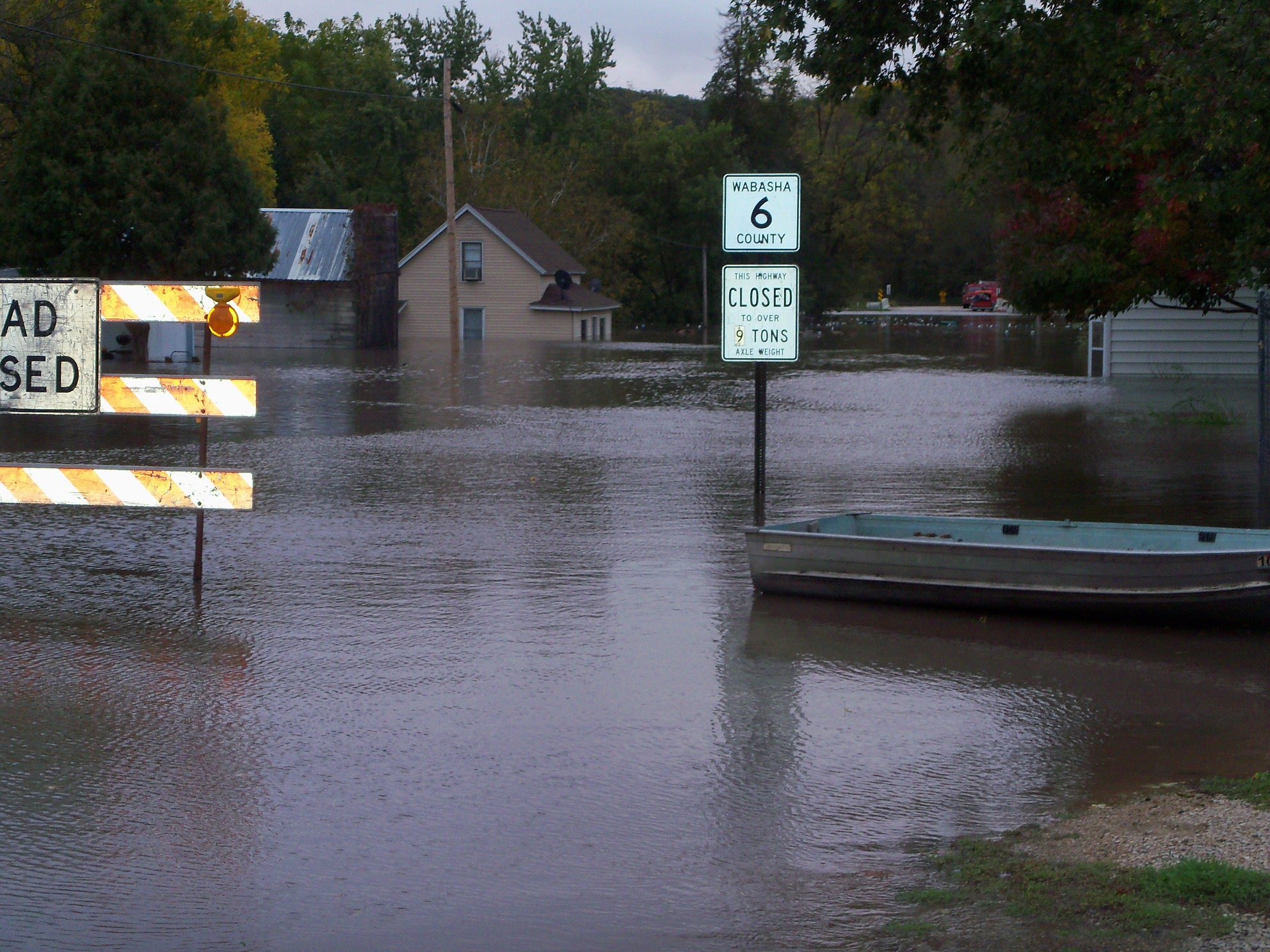
A flooded portion of Bridge Street (Wabasha County Road 6) on the west side of the Zumbro River in Hammond, photographed at 7:30 a.m. on Friday, September 24, 2010. The river was still rapidly rising. Photo by Susie Buck.

LEAVING, AND RETURNING TO, HAMMOND

Ordered to evacuate, the family drove to a friend’s house in nearby Rochester and then booked a hotel room. After the river crested later that day, they returned to Hammond where the National Guard was blocking every entrance into town.

“We were told that the water had not subsided, our town was not safe, we would not be allowed back in that day, and ‘you really do not want to see what was happening to your town,’” Tina says.

But that didn’t stop Tina’s fiancé, Micheal Mann, who grabbed the family’s 35 mm camera, dogged the guard, and hiked the cemetery hill and down again as close as he could get to photograph their house.

He reported back that the water had risen, broken the bank at the bend behind their house and that the river was “flowing” down their street.


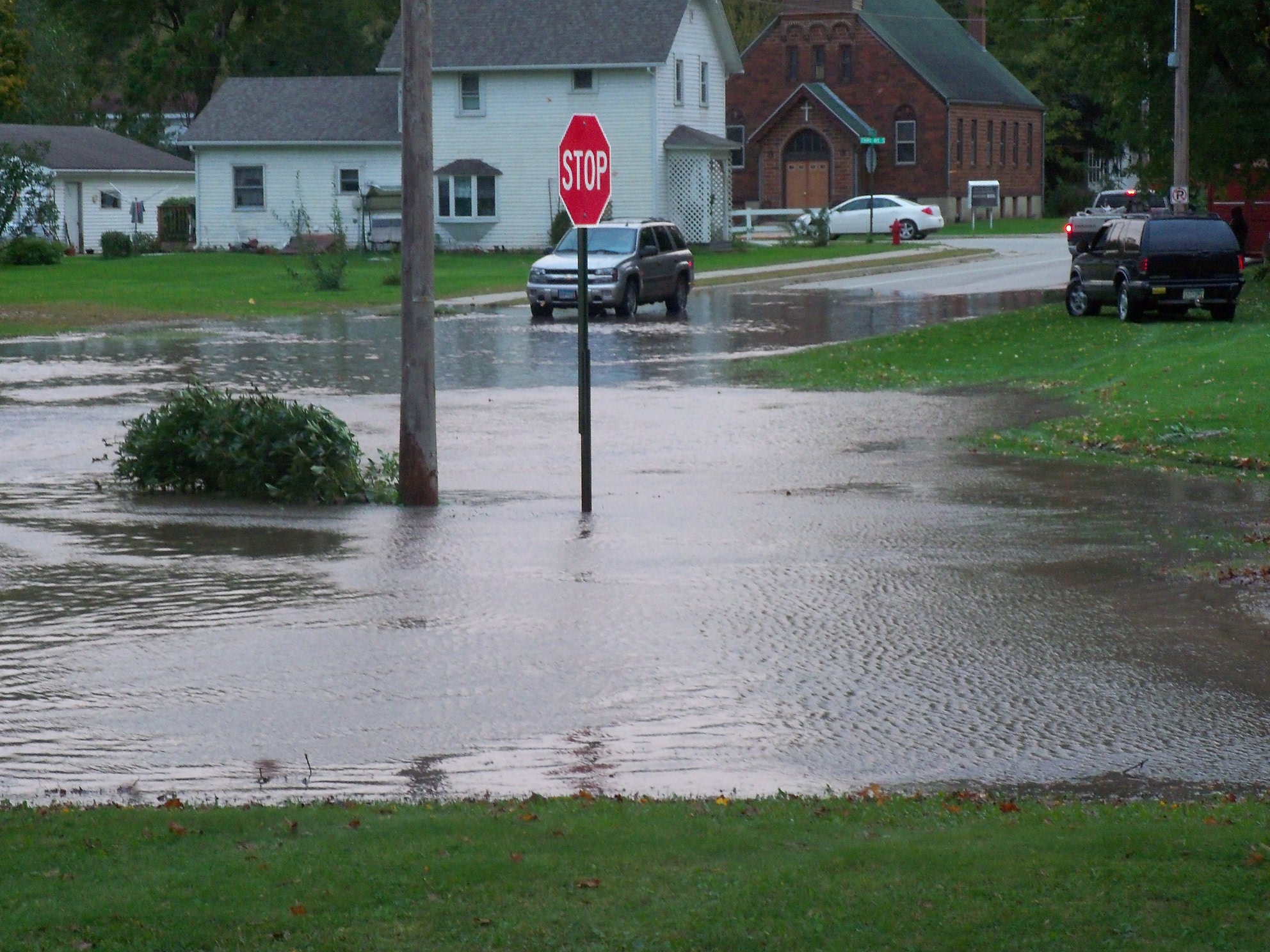
The intersection of Wabasha County Road 11 and Second Avenue in Hammond, photographed by Susie Buck at 7:45 a.m. on Friday, September 24, 2010, from her neighbor's yard. Waters are rising from the storm sewer onto the road and yards. The black Blazer is leaving Hammond on the only route out of town. By the time Susie was told to evacuate around 8:30 a.m., the route was too flooded for cars to drive through. She lost her 2008 Chevrolet Malibu in the flood.

THE NEXT DAY

On Saturday, the family was allowed back into their house for one hour to grab essentials and rescue their pets. I’ll allow Tina to tell you about those 60 minutes.

“When we got in we tried to grab our cat, Tigger, but he was totally freaked out. He ran to his usual hiding spot—the basement. Still full of water (with only about four steps visible), the cat hit the water hard and immediately started crying as you heard the pitter patter of his paws desperately trying to swim. Then suddenly I heard nothing. Devastated and in shock, I just watched the cat drown.

But, we only had an hour, so I had no choice but to direct my attention to the issue at hand—all the clothing, dry food, animal food, medicine, and affects that I could carry. Stuffing duffle bag after duffle bag, we were in survivor mode.

Much to our surprise, in the midst of concentrating and sobbing, there was a riotous yelp from the basement and what looked to be a large, wet rat came dashing up from the basement. Crying in relief, we caught Tigger and dried him off. Somehow he had survived his swim.

Unfortunately when we were evacuated Friday, it was chores day. Amongst other things, the fish bowl had not gotten cleaned and he subsequently died on Monday despite my efforts to keep feeding him. Hammond had no clean water and I could not bring him with us.


This photo taken by Jenny Hoffman on the morning of Saturday, September 25, 2010, shows the entrance to the basement in Susie Buck's house. Susie's basement was flooded and water rose 8 - 15 inches into her main floor. The white tote was sitting on the basement floor before the flood, but rose with the floodwaters. Three days later, when the waters receded, the tote settled back onto the basement floor. The books inside were dry. Susie lives across the street from Tina Marlowe and her family.

DECISIONS

In the light of the situation, we quickly decided that my 16-year-old would have to quit volleyball. Not knowing what was going to be happening from day to day, or where we would live from day to day I just couldn’t even begin to figure it all out. Her friend’s mother volunteered to let Cassie live with her temporarily so she could finish out the season. Knowing how important it is to try and keep their lives as normal as possible, I agreed.

I also called the bus barn and arranged to have Christian (her 7-year-old son) picked up at the closest bus stop to Rochester and I drove my kids to that stop every day so that they could continue to go to Plainview-Elgin-Millville. On top of the nightmare we were living, I did not want to change their schools.

We lived in three different hotels until November, when we found a landlord who was willing to rent us a house on a month-to-month lease, with pets. That is an impossible task, and thank God Julie came along. It was a huge relief to move into that house in Rochester, where we stayed until we moved back home.

I cannot begin to tell you how stressful it is to live in a one-room hotel with four people, and only two burners and a microwave to cook with.”

MINNESOTA PRAIRIE ROOTS readers, I will continue to bring you Tina’s story in future posts. Please check back.

© Copyright 2011 Audrey Kletscher Helbling
 

A glimpse of winter on the Minnesota prairie March 8, 2011


Traveling U.S. Highway 14 west of New Ulm to southwestern Minnesota.

I NEEDED A TRIP to southwestern Minnesota this past weekend, as much to be with extended family as to reconnect with the land where I grew up. I was not disappointed, on both counts.

I embraced the family I love as we talked and laughed and talked and laughed some more while celebrating my middle brother’s 50th birthday until just past midnight on Saturday.

Sometime in between, we joked about the possibility of being snowed in on his Redwood County acreage. Snow was in the forecast and we all know that snow on the prairie, combined with wind, could strand us.

By the time we finished breakfast mid-morning on Sunday, the flakes were flying and U.S. Highway 14 was dusted with snow, enough to cause cautionary travel as my husband, son and I headed east back to our Faribault home.

Fortunately, we drove out of the snow even before reaching New Ulm.

Every time I visit the prairie, I realize all over again how harsh winters are out there and how very different they are from the winters I experience in southeastern Minnesota. Honestly, if you saw the drifts and plowed ridges of snow along Highway 14 and the endless vista of wide open spaces that stretch like a sea of white, you would understand.

Join me on this visual journey along a section of the Laura Ingalls Wilder Historic Highway between New Ulm and Lamberton. These photos don’t even do justice to winters on the prairie because we weren’t traveling in a prairie blizzard. But, in these images, you can envision the possibilities…


Railroad tracks run parallel to Highway 14 as the land stretches under spacious skies.

In some spots along U.S. Highway 14, the snow is piled higher than vehicles.

Snow had been pushed into rows in fields along Highway 14, acting as natural snow fences.

The wind sculpted drifts along the snow fences.

The snow had been pushed into mountains so high that only the top portion of Family Foods was visible from Highway 14 on the eastern side of Sleepy Eye.

Snow pushed off Highway 14, as seen through the windshield of our car.

Visibility was reduced as we traveled along U.S. Highway 14 Sunday morning near Lamberton, creating this surreal image of the local grain elevators. The top seven images were taken on Saturday.

We were thankful the lights on this sign, on the east side of Springfield, were not flashing Sunday morning. During severe winter weather these lights are activated and roads are closed to keep motorists safe.

© Copyright 2011 Audrey Kletscher Helbling


Remembering the children as Minnesota prepares for spring floods February 23, 2011

SOMETIMES WE FORGET, in the jumble of quotes and information, to see a certain human, deeply personal, side of a news story.

Today, thanks to Katie Shones of Hammond, I’m bringing you a child’s perspective on the devastating flood that engulfed her southeastern Minnesota community of 230 during a September 2010 flash flood. I met Katie shortly after the flood.

The disaster was a terrifying ordeal for Hammond residents, who are still reeling in the aftermath. Many have not yet returned to their homes. Some won’t.

Now, as the focus in Minnesota shifts to predicted record spring flooding, as officials prepare for the highest river levels since the 1960s, as crews begin filling sandbags in areas along the Red River, this seems the right moment to let Katie speak—about her children.

But first a little background. Katie and her husband, Scott, live on the east side of Hammond, which is divided by the Zumbro River. The river flows just across Main Street, the highway and the park from the Shones’ home. Floodwaters came within feet—feet—of their house, lapping at their front door.

The home of Katie and Scott Shones and their children, photographed by Hammond resident Gene Reckmann during the September 2010 flood. Their house was spared, by mere feet.

Katie isn’t too worried about flooding this spring. Yet, she’s concerned enough to have a plan. If the Zumbro River rises like it did last fall, she and Scott will haul sand and gravel from a local quarry and build a bank to protect their home. They also have a relocation plan in place.

Their 11-year-old daughter, Rebekah, is ready too. “Ever the resourceful and prepared child she is, she has two bags jam-packed with stuff underneath her bed just in case we have to leave on a moment’s notice due to floodwaters,” Katie says.

This mother’s words break my heart. No child should have to worry about a flood.

But the depth to which the Hammond flood has impacted Rebekah and her 9-year-old brother Jerome reaches beyond concerns about a future flood. “The September flood has affected them more deeply than I had ever imagined,” Katie tells me. “Bekah still occasionally cries out in her sleep, ‘Daddy, Daddy, help me.’ When I ask her what is wrong, she mumbles things about the flood. She never fully wakes up, but I do believe she is having nightmares about that day.”

As a mother, simply reading this brings me to tears. I can only imagine how Katie and Scott feel when they hear their daughter cry out for help in her sleep.

“Jerome has seen the flooding in Australia on the news and is very worried that it will spread to Hammond,” Katie continues. “I have tried to reassure my kids that if it ever gets as bad as it did last fall, we will leave long before it reaches our place and go to Grandma Merle’s (my mother’s farm). The farm is located just two miles from our home, but is on the limestone bluffs above the Zumbro River.”

With so many Hammond residents forced from town and many still not back in their homes, Katie says her children are also without many playmates. “…there never were many children in the area their ages to play with, but now there are only four kids in Hammond left for them to play with.”

That said, the absence of their playmates serves as a daily reminder to Rebekah and Jerome of the floodwaters which ravaged their town and came terrifyingly close to flooding their home.

As Minnesotans physically prepare for the floodwaters that are certain to inundate communities and homes, I hope river town residents are also preparing psychologically, specifically remembering the children like Rebekah and Jerome.

Floodwaters destroyed this portion of Wabasha County Road 11, the river road which runs from Hammond to Jarrett. Gene Reckmann photographed this section of the roadway just outside of Hammond.

THANK YOU, Katie, for allowing me to share your deeply personal story. Thank you also to Gene Reckmann of Hammond for the photos posted here.

READERS, IF YOU have not read my series of posts and photos about the September flood in Hammond and neighboring Zumbro Falls, check my Minnesota Prairie Roots archives for stories published during the week of October 11, 2010.

Copyright 2011 Audrey Kletscher Helbling
 

A snow day in Faribault February 21, 2011

“YOU DIDN’T BELIEVE ME. Give me a high five.”

That’s how the 17-year-old reacted at 7:07 this morning after learning that Faribault schools are closed today because of a snow day.

I wish I had been the one to deliver the good news to him, to a boy who typically lingers in bed until he risks being late for school, which he was one day recently, on a Thursday “late start” day of all days.

But this morning my son heard the “no school” news from his dad, who is currently blowing the eight or nine or 10 inches of snow from ours and our neighbor’s driveways.

Upstairs, the teen is likely back in dreamland and I’ve had a pleasant start to my morning with no snarling, no crabbing, no frowns or grumpy face.

Ah, yes, I love snow days.

© Copyright 2011 Audrey Kletscher Helbling