Appropriate signage for a tavern in St. Patrick, Minnesota. (Minnesota Prairie Roots copyrighted file photo June 2015)
BEER, BASEBALL AND BLESSINGS. Those words define St. Patrick, an unincorporated place of bar, baseball field and Catholic church northeast of New Prague. With the approach of St. Patrick’s Day, now seems a fitting time to revisit this southern Minnesota burg, which I photographed in the summer of 2015.
St. Patrick Church of Cedar Lake Township. (Minnesota Prairie Roots copyrighted file photo June 2015)
St. Patrick’s Bonin Field, named after Father Leon Bonin, who brought baseball back to St. Patrick in the 1950s. (Minnesota Prairie Roots copyrighted file photo June 2015)
Across the road from the St. Patrick cemetery sits St. Patrick’s Tavern. (Minnesota Prairie Roots copyrighted file photo June 2015)
The stately church sits atop a hill, the ball field at the base on one side, the tavern on the other. Pray. Play. And then congregate over a beer and a burger basket at the tavern. Or, on St. Patrick’s Day weekend, corned beef and cabbage downed with on-tap green beer, while supplies last.
Born in Ireland, buried in the St. Patrick Church of Cedar Lake Township Cemetery in southern Minnesota. (Minnesota Prairie Roots copyrighted file photo June 2015)
Bonin Field, home of the St. Patrick Irish. (Minnesota Prairie Roots copyrighted file photo June 2015)
The bar and restaurant in St. Patrick. (Minnesota Prairie Roots copyrighted file photo June 2015)
Even with the minimal time I spent in St. Patrick, I experienced its Irish heritage. It’s reflected on tombstones, in the very names of the church, ball field and bar. It’s reflected on signage. But mostly, it’s this feeling of sacredness, as if the patron saint of the Irish dwells here. In the pews. On the bleachers. Even, I expect, inside the bar. St. Patrick was, after all, a missionary.
St. Patrick’s steeple rises in the background, behind this cemetery angel. (Minnesota Prairie Roots copyrighted file photo June 2015)
And then there’s the sacred art. Crucifixes. An angel statue. Tombstones that hold names and history.
The Holy Family tucks into a corner of the grotto. (Minnesota Prairie Roots copyrighted file photo June 2015)
The beautiful face of Mary at the St. Patrick’s grotto. (Minnesota Prairie Roots copyrighted file photo June 2015)
The loving hand of Mary rests upon her son, Jesus, in this sculpture at St. Patrick’s. (Minnesota Prairie Roots copyrighted file photo June 2015)
Aside the church, a grotto welcomes with the most hauntingly beautiful sculptures.
St. Patrick may seem like nothing more than a country church, just another rural bar and a baseball diamond to passing motorists. But it’s much more, worth the stop for a close-up look at a place rooted in Irish heritage.
More signage on St. Patrick’s Tavern. (Minnesota Prairie Roots copyrighted file photo June 2015)
Next road trip back here, I’ll pop into the tavern, order a brew and maybe a burger, and raise my mug to the Irish who settled here, claimed this land as theirs. Here in St. Patrick, place of beer, baseball and blessings.
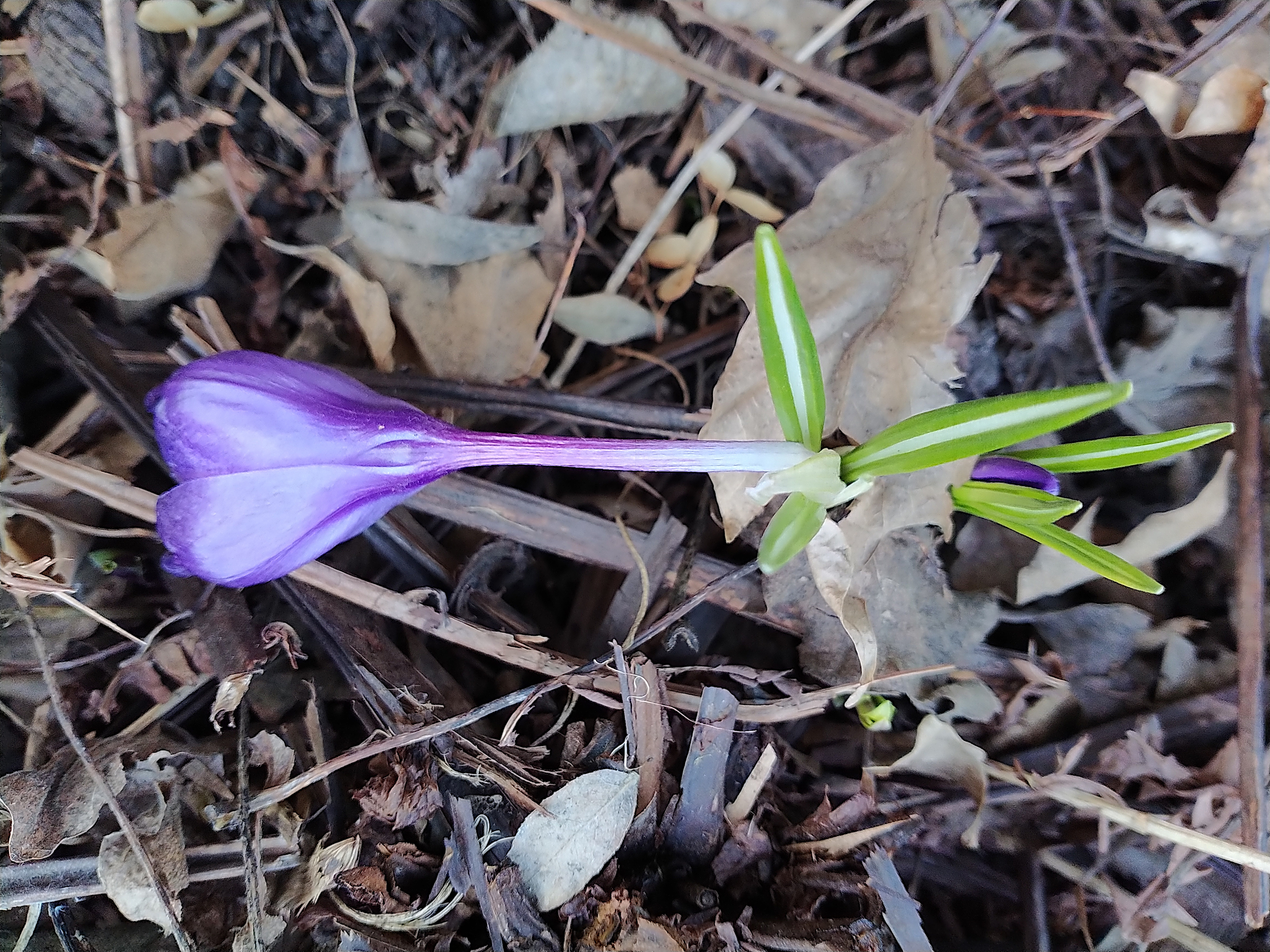
Under a layer of leaves, I found this blooming crocus. Already, in early March. (Minnesota Prairie Roots copyrighted photo March 2024)
IN TRULY UN-MINNESOTAN fashion, I have penned very little this winter about the weather. That is atypical of a life-long resident. We are, if anything, obsessed about weather in Minnesota. We take pride in our cold weather, our snow, in managing to persevere in an often harsh climate. Weather affects our lives on a daily basis.
But this winter season, our image as the Bold Cold North has significantly changed. These past four months have been primarily snow-less and unseasonably warm. Sure, we’ve had a bit of snow and some cold snaps with sub-zero temperatures. Yet nothing like we’ve come to expect.
As I write, I look out my office window to a scene devoid of snow. The temperature is 46 degrees. At 9:51 a.m. on an early March morning. Laundry is drying on the clothesline. And the sun blazes bright upon the monotone landscape.
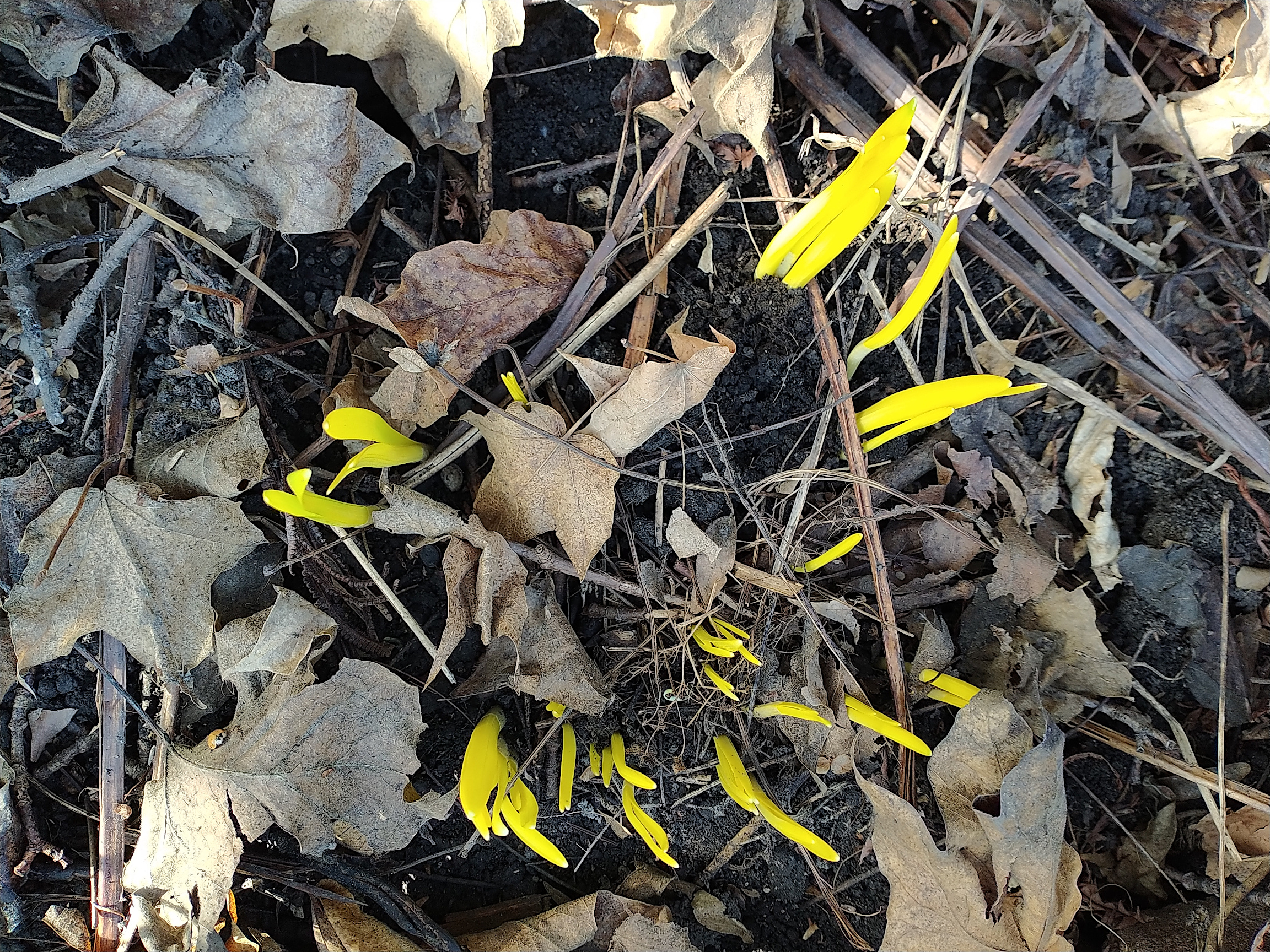
Daffodils, too, are emerging early. (Minnesota Prairie Roots copyrighted photo March 2024)
If I look closely, I see signs of spring come too soon. I need only examine my perennial flowerbeds to find spring flowers emerging from the soil. Under a layer of dried leaf mulch, I uncover a single crocus tipped on its side. I push more leaves aside revealing tender shoots of crocuses and daffodils. They need sunlight to thrive.
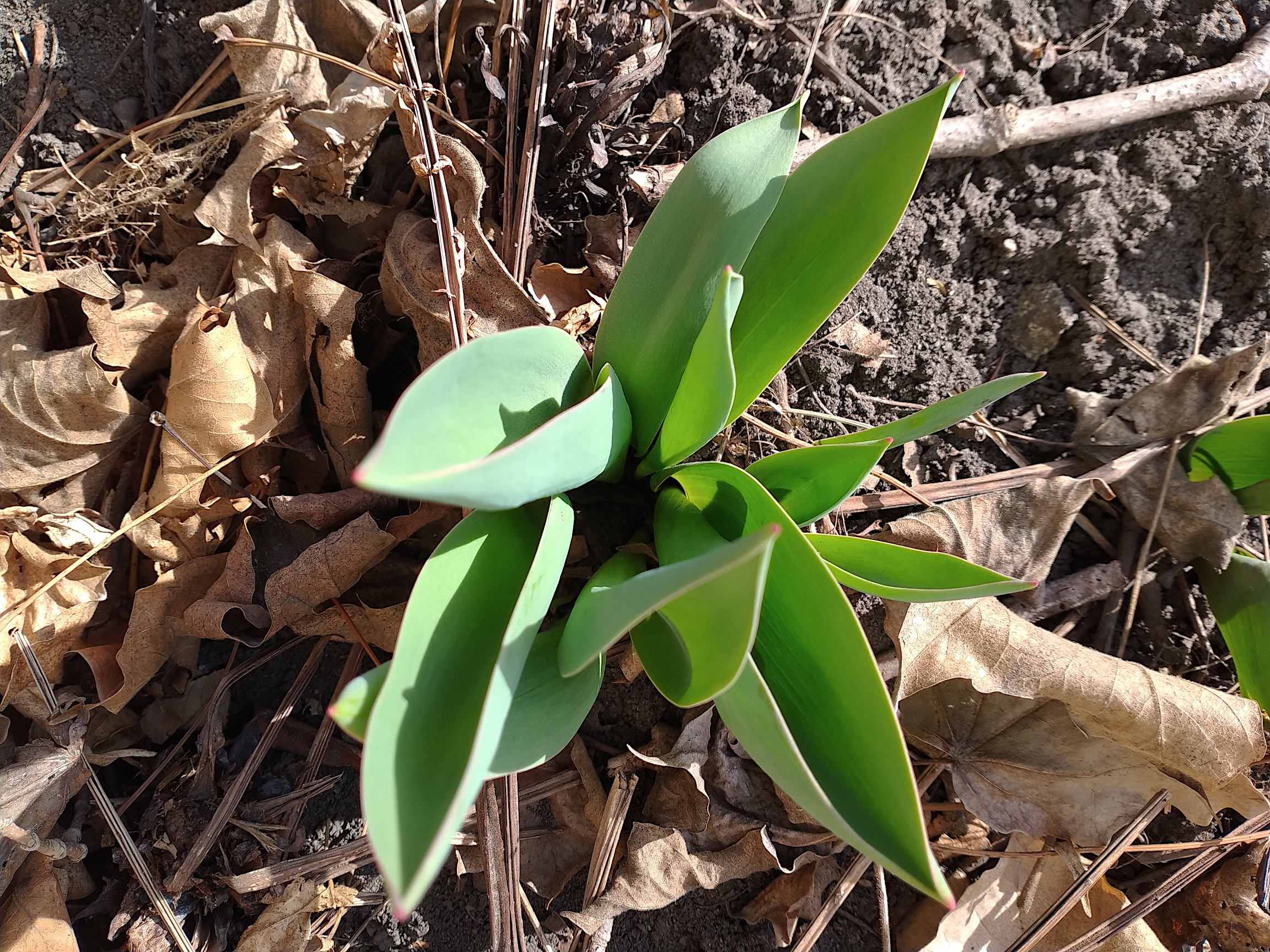
Tulips on the south-facing side of my house started popping weeks ago. (Minnesota Prairie Roots copyrighted photo March 2024)
Tulips and irises are up, too. Too soon. Not yet blooming. I noticed tulip bulbs popping greenery already in February.
All of this is an anomaly. We should be experiencing snowstorms and school closures, hearing the scrape of snowplows, the roar of snowblowers. Kids should be skating and sledding. As much as I appreciate the lack of icy roads and sidewalks, no snow to clear and no worry about winter weather, it just doesn’t feel right.
I’ve realized that I really do like the diversity of distinct seasons in Minnesota. There’s something to be said about anticipating spring after a long hard winter, like we experienced last year with record snowfall…
The restored Security State Bank Building clock in historic downtown Faribault. (Minnesota Prairie Roots copyrighted file photo)
TIME, WHEN YOU’RE YOUNG, seems to pass slowly. You’re waiting, always waiting. To turn another year older. To master a skill. To gain independence. To do whatever seems so important you wonder how you can possibly wait for another day or week or month to pass.
Now I wish time would slow down. But it can’t and it won’t and so I accept the reality of time passing, of aging, of days disappearing too quickly. Of celebrating my 50-year high school class reunion this year. Of my youngest turning thirty. Of me nudging seventy.
A street clock in historic downtown Wabasha. (Minnesota Prairie Roots copyrighted file photo)
In a recent conversation with a beloved aunt, she shared that she can’t believe how old her nieces and nephews are, considering she’s only twenty-nine. I love that about Aunt Dorothy, who has always and forever declared herself on the cusp of thirty while in reality she’s closing in on ninety. I like her thinking.
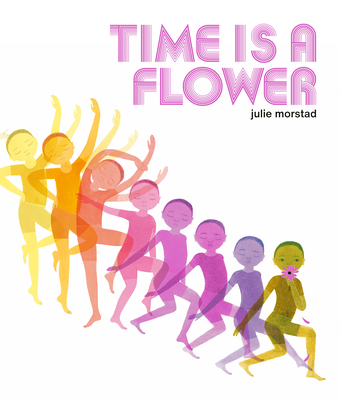
(Book cover sourced online)
By happenstance, I picked up a children’s picture book at my local library a few weeks ago that focuses on time. I’m not trying to go back in time to my childhood. Rather, I enjoy books written for kids. Many hold important messages and beautiful art that resonate with me. I highly-recommend you check out recently-published children’s picture books to see how they’ve evolved over the decades into some timely masterpieces of words and art.
Among the books I selected was Time Is a Flower, written and illustrated by Julie Morstad of Vancouver, British Columbia. In her opening page, Morstad writes of time as a clock, as a calendar, in the traditional ways we consider time.
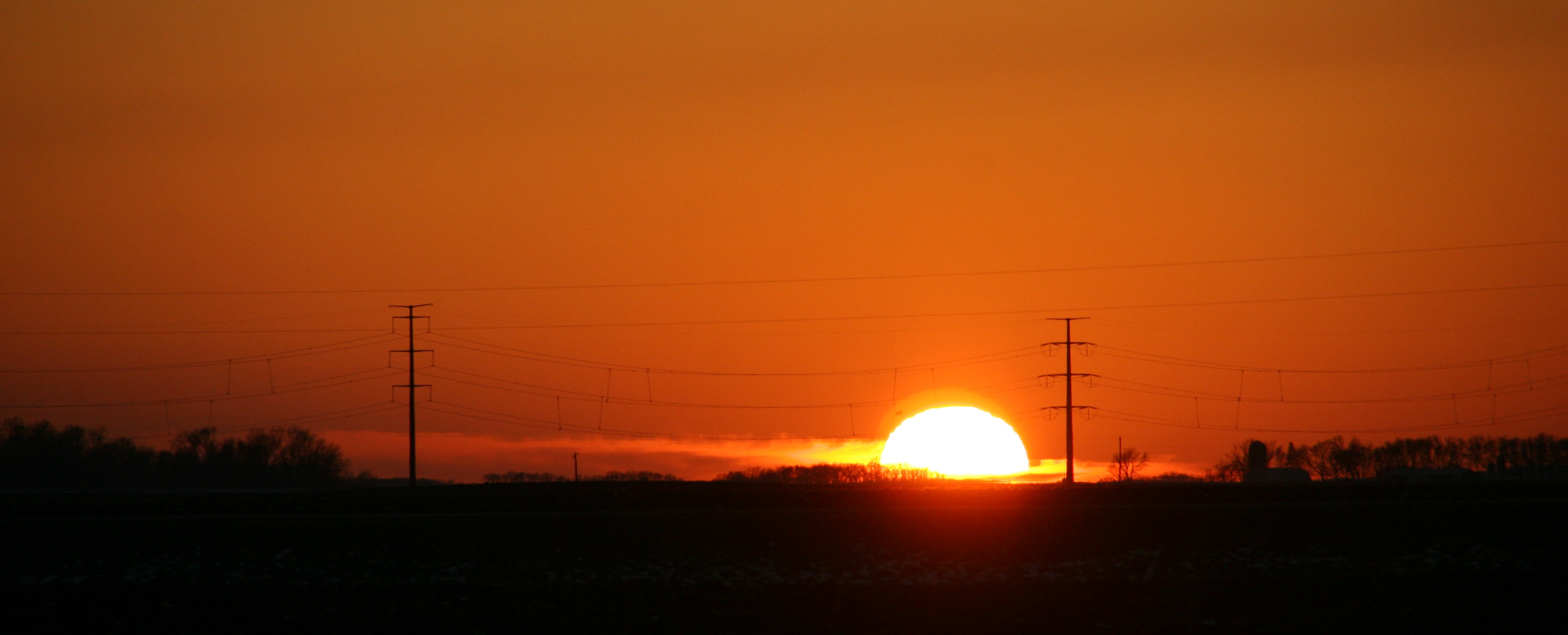
A prairie sunset in southwestern Minnesota. (Minnesota Prairie Roots copyrighted file photo)
But then the book unfolds, page by page, into time comparisons that are simplistic, everyday, ordinary, unremarkable. Yet remarkable in the way Morstad presents them with sparse words and bold art. If I could rip the pages from her book, I would frame her illustrations of a sunset reflected in sunglasses; a child’s long wavy locks woven with bird, butterfly and flower; and a wiggly tooth in a gaping mouth.
A swallowtail butterfly feeds on a zinnia. (Minnesota Prairie Roots copyrighted file photo)
Time is the moments, the memories. The details. Not necessarily the extraordinary. That is the message I take from Morstad’s book. Appreciate the caterpillar, not just the butterfly. Appreciate the seed, not just the flower. Value the slant of sunlight across the floor, and the shadows, too.
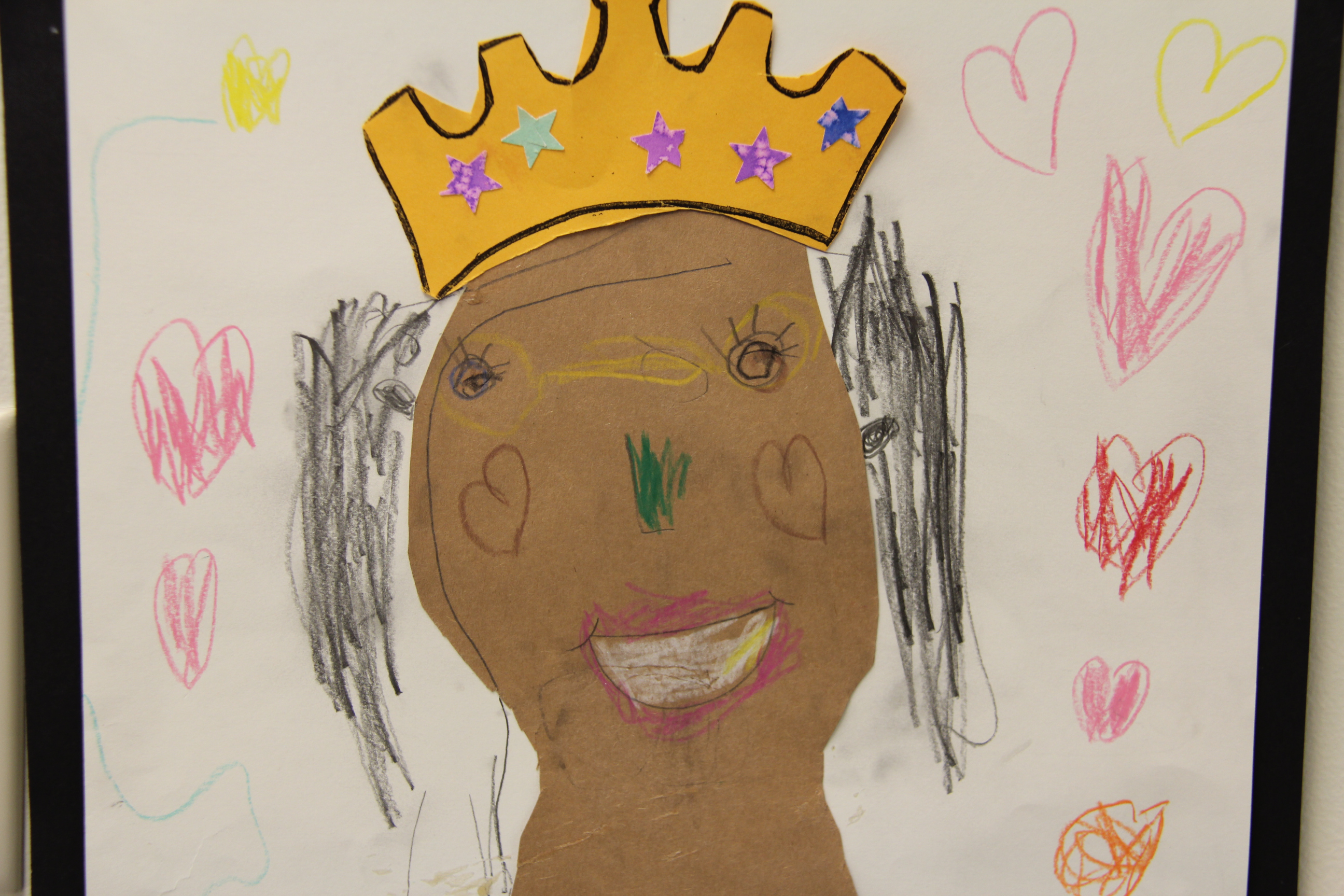
A princess by Roosevelt Elementary School kindergartner Ruweyda, exhibited in March 2023 at the Student Art Show, Paradise Center for the Arts, Faribault. (Minnesota Prairie Roots copyrighted file photo)
As I consider Time Is a Flower, I think of my dear aunt half a country away in New Jersey. Too many years have passed since I’ve seen Aunt Dorothy, so long that I can’t recall the last time we embraced. But I hold memories of her, of our time together. She was the young aunt who arrived from the Twin Cities with discarded jewelry and nail polish for me and my sisters. She was the aunt who called her husband, “My Love,” an endearing name that imprinted upon me her deep love for Uncle Robin (who died in January). She is the aunt who took me into New York City when I was a junior in college visiting her on spring break. She is the aunt who, for my entire life, has called me “My Little Princess.”
A 1950s scene in downtown Faribault honors history and the passage of time in this mural. (Minnesota Prairie Roots copyrighted file photo)
Yes, time passes too quickly. The clock ticks. Days on the calendar advance. Years pass.
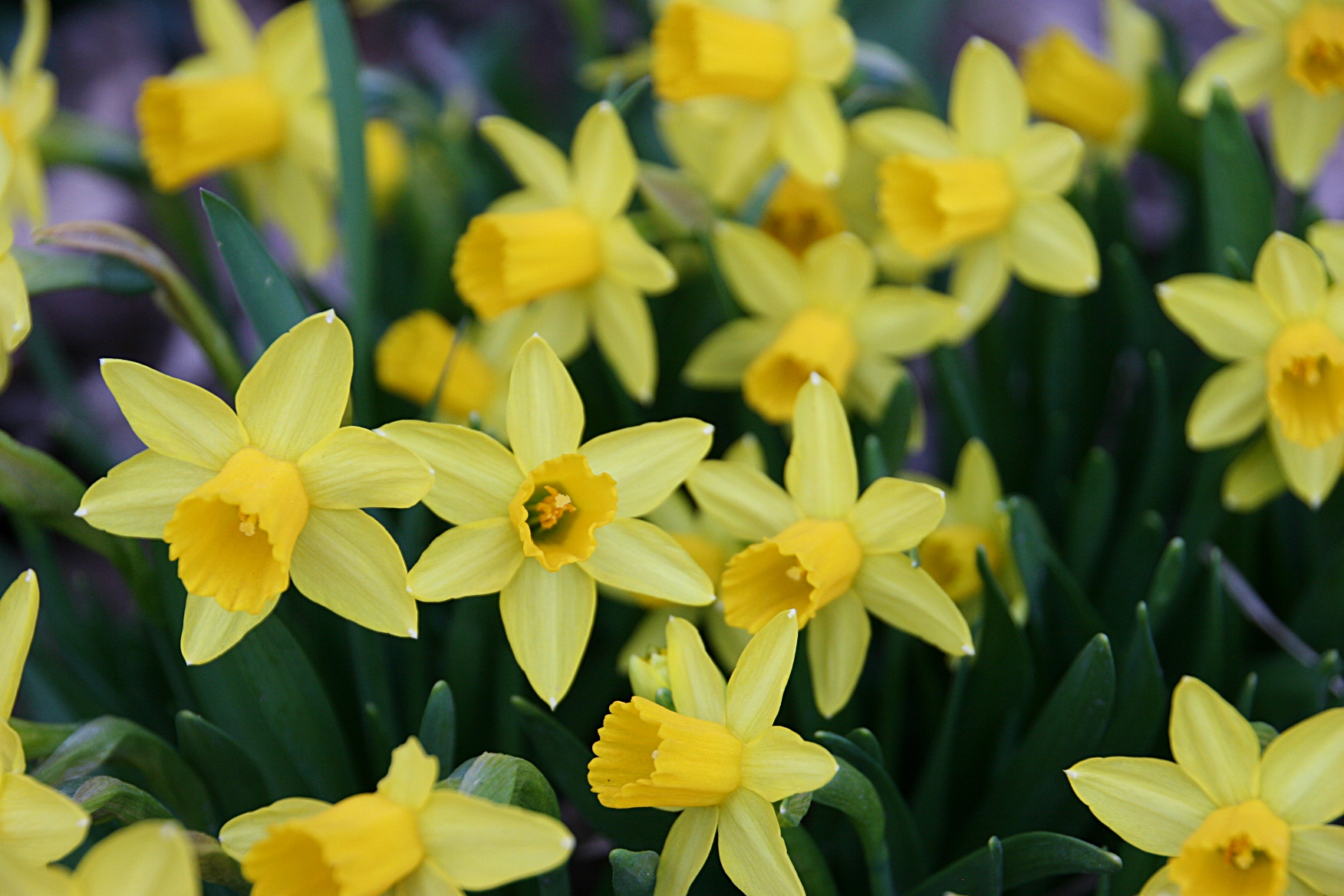
Each spring the daffodils bloom. (Minnesota Prairie Roots copyrighted file photo)
But within each day, seconds and minutes and hours remain. Time to live. Time to love. And time to remember that time is like a flower. Sprouting. Growing. Blooming. Dying. Time is a moment, until it’s a memory.
Most people no longer wear wrist watches. I still do. (Minnesota Prairie Roots copyrighted file photo)
NOTE: Remember, this Sunday, March 10, time changes as we shift to daylight savings time in the U.S. We lose an hour of time as we spring forward.
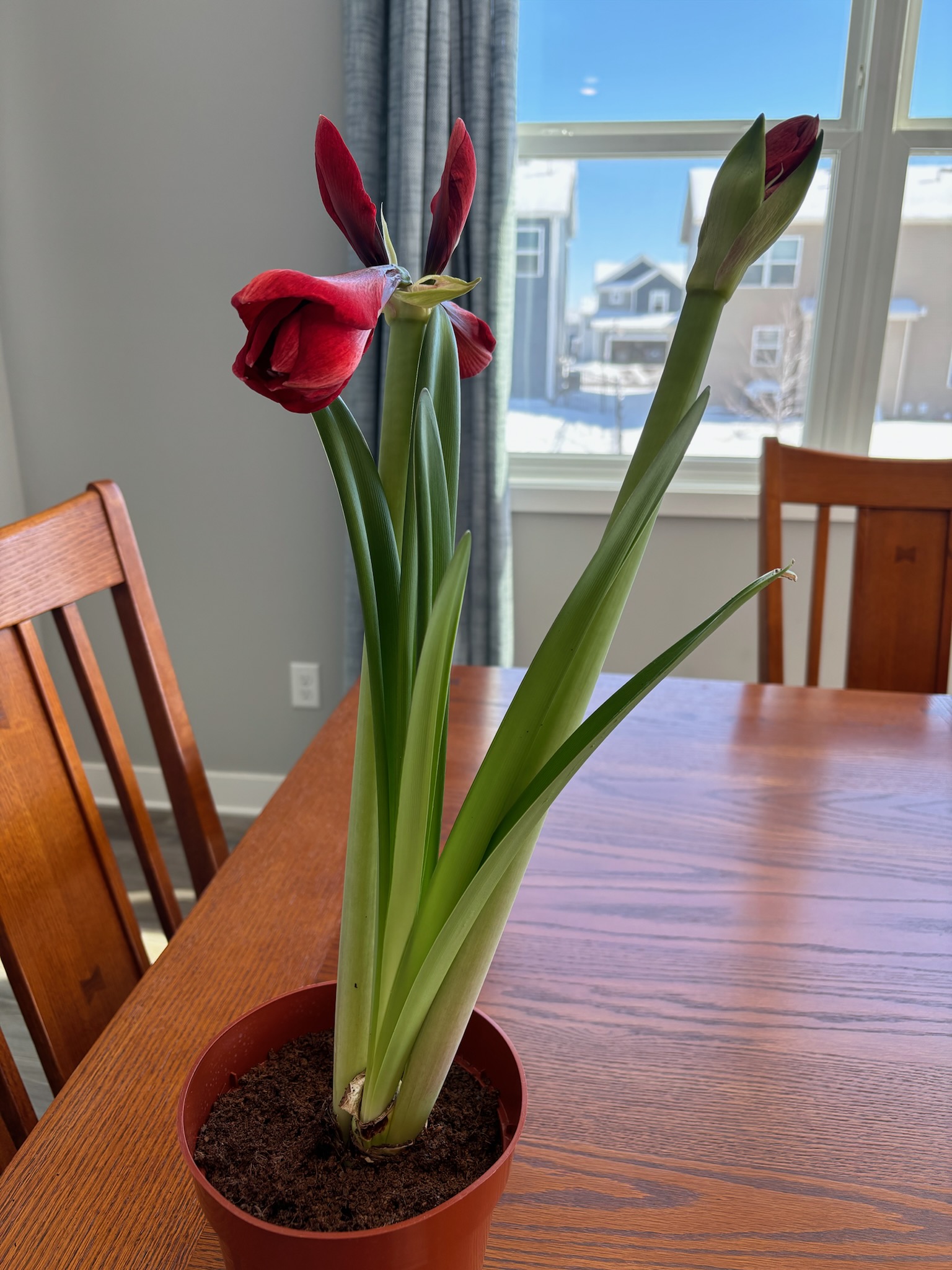
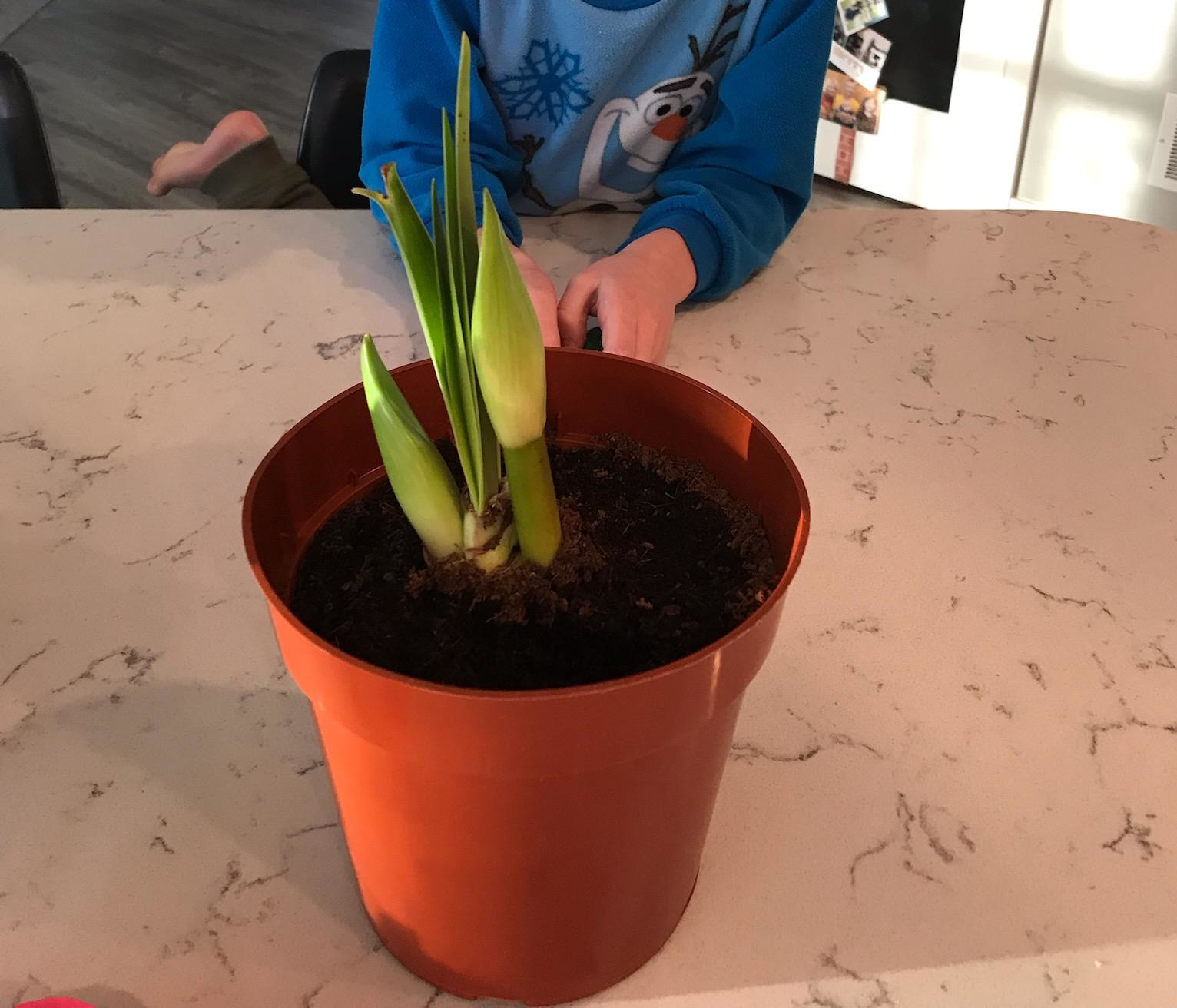
An amaryllis begins to bloom. (Photo credit: Amber Schmidt)
THE BOXED BULBS on an end cap at a big box store caught my eye, as intended. I worked briefly as a grocery store clerk back in the day when cashiers read and punched prices onto cash register keys. I learned then all about moving products by strategically placing them on the end of a shelf row.
So here I was, falling for the age-old marketing gimmick of pushing impulse purchases. But on this day, I was thankful for that end cap display of boxed amaryllis bulbs. This would make the perfect birthday gift for my soon-to-be 5-year-old grandson. Or so I thought.
On Isaac’s birthday in early January, we gathered to celebrate. As Isaac opened his gift stash, it was obvious he liked some presents more than others. That’s the thing about kids his age. They can’t hide their honest reaction, their true feelings. He loved the LEGO sets, the sticker book, the… But when he pulled the boxed bulb from the gift bag, Isaac promptly tossed it aside. Not set the box on the carpet, but threw it. Not even an explanation from Grandma about planting the bulb which would flower in big, beautiful red blooms changed his mind. He didn’t care.
I should back up a minute and explain why I thought this would be a good gift for my grandson. Last spring I gave several packets of seeds to the grandkids. Spinach, carrot and flower seeds, which my eldest daughter planted with her son. He took an interest once the seeds sprouted and the plants grew. Amber called him “Farmer Isaac.”
The farm girl in me felt encouraged. My grandchildren, who live in a sprawling new housing development in the south metro, are far-removed from their rural heritage. It’s important to me that they understand their agrarian roots. Randy and I grew up on crop and dairy farms—farms with large gardens from whence came most of our food. Youth like Isaac and his sister, Isabelle, need to know that food originates on farms, not grocery store shelves. As preschoolers, they loved to dig in the dirt at our house. I would hand them shovels and the dirt would fly. Kids need to touch the earth, splash in mud puddles, gather sticks and pine cones and leaves and do all those activities that connect them to the land. And make their hands dirty.
But now here was this dormant amaryllis bulb all ugly and brown and not looking at all like anything that would ever grow. But, once potted, grow it did. When the first green leaves emerged from the massive bulb at the end of January, Isaac suddenly took an interest. “You better take a picture to show Grandma,” he instructed his mom.
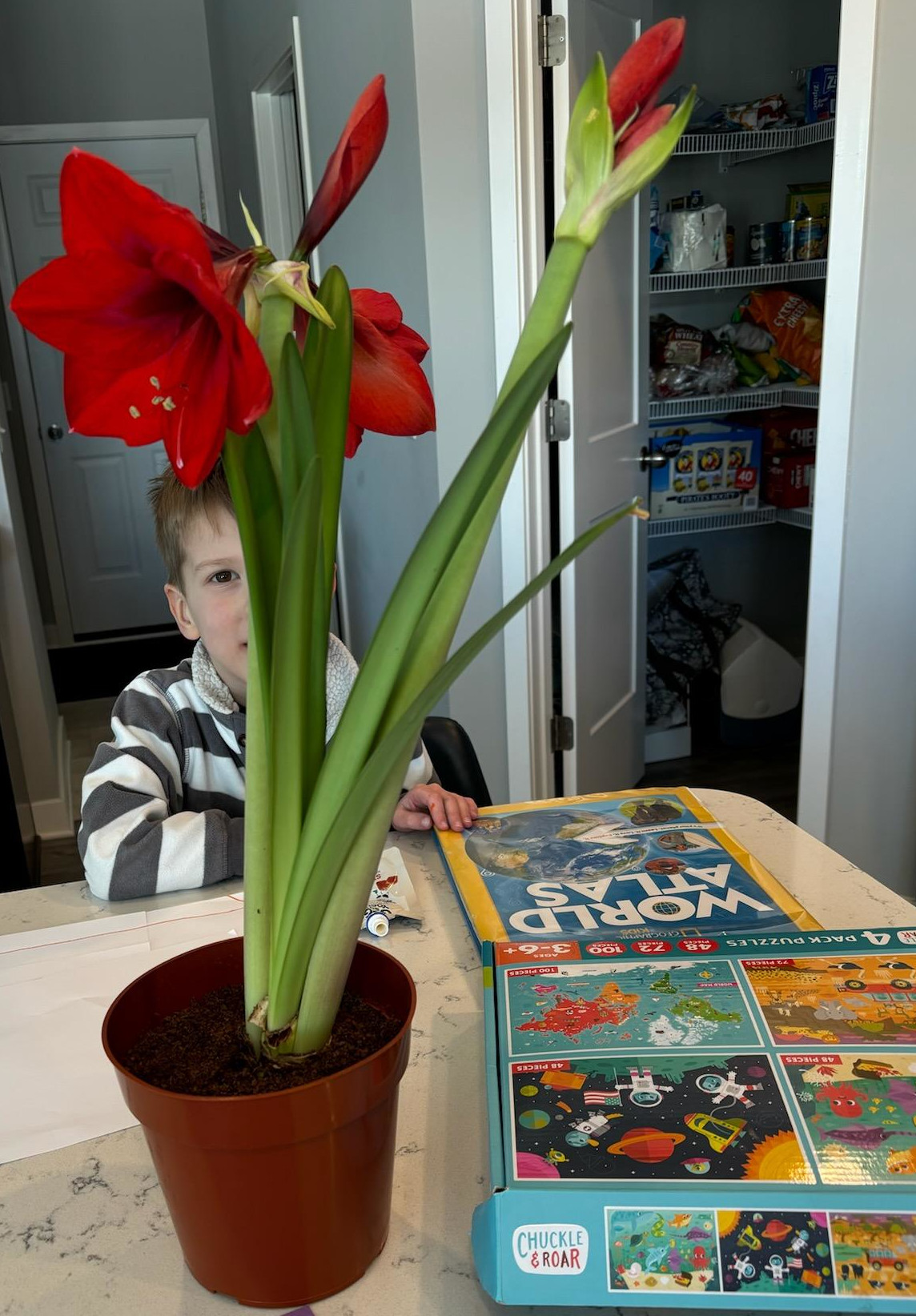
Isaac loves space, puzzles, art and now amaryllis. (Photo credit: Amber Schmidt)
A few weeks later, the first of several flowers bloomed. And there was Isaac again in a photo, right elbow learning on the kitchen island by sheets of paper for his next art project, left hand on his world atlas, jigsaw puzzles and that once dormant amaryllis bulb now blooming in the foreground. His smile was wide, his happiness evident. The amaryllis had its moment. Big. Bold. Beautiful red. No longer tossed aside. Finally and fully appreciated by the birthday boy.
A row of John Deere tractors at the 2022 Rice County Steam & Gas Engines Show, rural Dundas. (Minnesota Prairie Roots copyrighted file photo September 2022)
AS A WRITER, a storyteller, I read obituaries. Doesn’t matter if the deceased is known to me or not. I find obits interesting for the stories therein.
Stories weren’t always part of obituary writing. Obit style has evolved since I graduated in 1978 with a journalism degree from Minnesota State University, Mankato. And that is a good thing. Today’s death notices are not just summaries of facts, but rather personalized in a way that helps the reader understand the person as a person. That holds value to those who are grieving and to those of us who hold no connection to the individual.
I need to backtrack for a moment and share that writing an obituary was my first writing assignment in Reporting 101. Although I’ve forgotten details about that long ago college course, I remember the professor stressing the importance of spelling names correctly. That carried through to all types of newspaper reporting. First reporting job out of college, I learned a source was Dayle, not Dale.
Emmett Haala (Photo source: Sturm Funeral Home)
That MSU instructor also imprinted upon me the importance of obituaries. As I age, I find myself drawn more and more to reading obits. Too often now, I know the deceased. Recently, I found a gem in the obituary of Emmett Haala, 87, of Springfield (that would be Springfield, Minnesota), who died on February 28. His funeral is today.
Hanging out by a John Deere tractor at the Rice County Steam & Gas Engines Show. (Minnesota Prairie Roots copyrighted file photo September 2022)
It wasn’t the basic facts about Emmett that captivated me, but rather his interest in John Deere tractors. He, according to his obit, “lived and breathed John Deere.” Now to anyone with a rural connection, the idea of fierce tractor brand loyalty is familiar. This retired mechanic began his career at age 14 at Runck Hardware and Implement in Springfield, eventually opening Emmett’s Shop in 1970. He was a trusted mechanic who serviced all machinery brands, but favored John Deere.
“Nothing runs like a Deere” is the John Deere slogan. (Minnesota Prairie Roots copyrighted file photo September 2017)
That tidbit got me reminiscing and also contemplating the importance of open houses in rural Minnesota. Events that continue today. Emmett, his death notice read, shared many memories of John Deere Days at Runck Hardware and Implement. He “…enjoyed making hot dogs and coffee for the throngs of people attending and showing the newest John Deere movie.”
To this day, I remain a fan of John Deere. Here Randy and I pose aside a vintage John Deere at Bridgewater Farm, rural Northfield in October 2023. (Photo credit: Amber Schmidt)
That was it. I was hooked. I attended John Deere Day at a farm implement dealership while growing up in southwestern Minnesota. While the event was a way for machinery dealers to get farmers inside their shops, the open houses were also a social gathering for rural folks. My siblings and I piled into the Chevy aside Dad and Mom for the 20-mile drive to Redwood Falls and John Deere Day.
Free food—usually BBQs, baked beans, chips and vanilla ice cream packaged in little plastic cups and eaten with a wooden spoon—comprised dinner (not lunch to us farm types). Maybe there were hot dogs, too, like at Emmett’s place of employment. Memories fade over the decades.
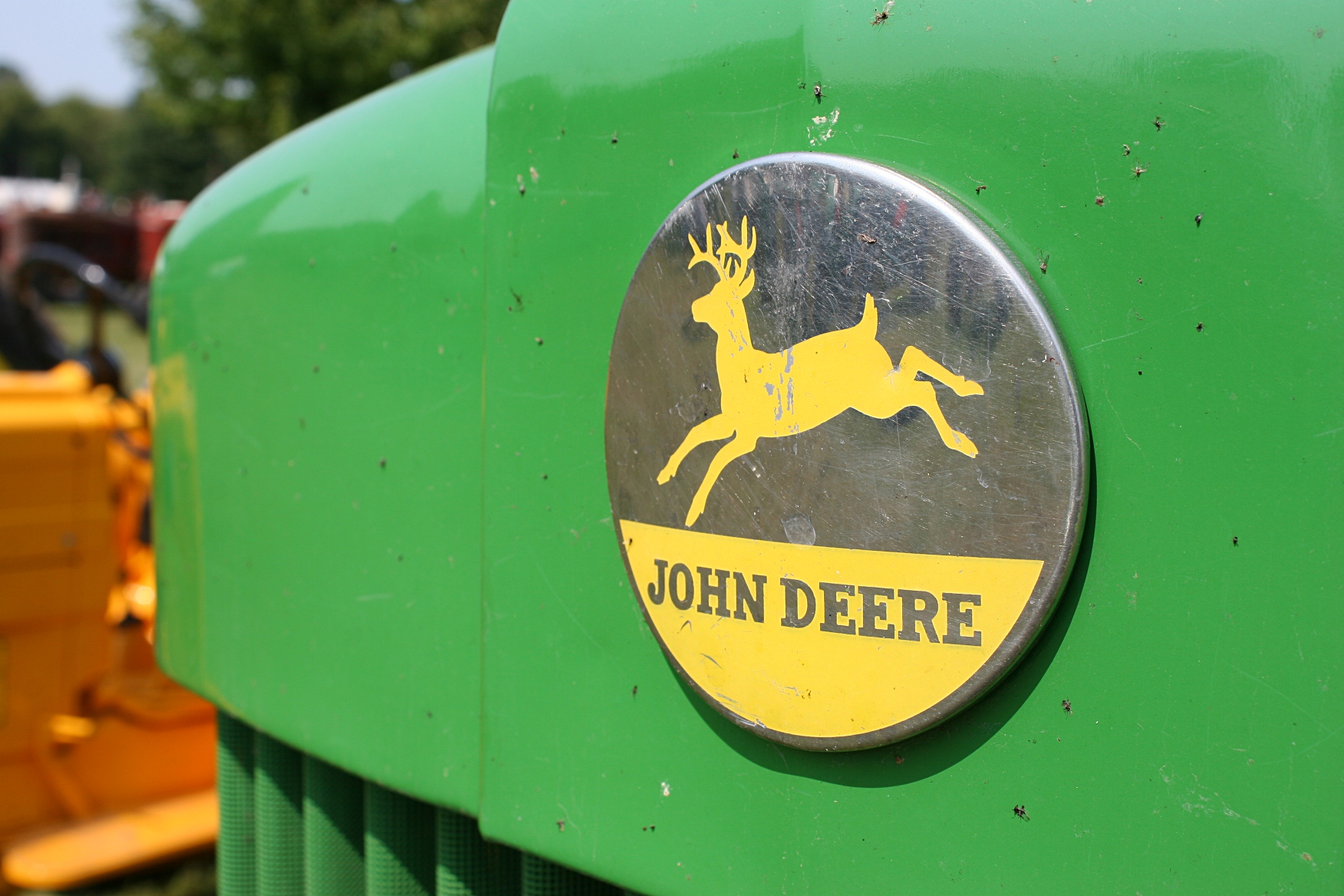
A worn vintage John Deere emblem. (Minnesota Prairie Roots copyrighted file photo September 2017)
But I do recall the John Deere movies shown post meal at the theater in Redwood Falls. Sure, they were nothing but advertisements for “the long green line” of farm machinery. But to a kid who seldom set foot in a theater, the promotional films held all the appeal of a box office hit. Plus, there were door prizes like bags of seed corn and silver dollars. I never won anything. A cousin did.
At the Rice County Steam & Gas Engines Show. (Minnesota Prairie Roots copyrighted file photo September 2017)
And so all those John Deere memories and more—including the distinct pop of my dad’s 1950s John Deere tractor—rushed back. Putt, putt, putt. Emmett belonged to the Prairieland Two Cylinder Club. Nostalgia is powerful. So is the art of crafting an obituary. Many of today’s obituaries feature detailed personal stories, not simply superlatives. Stories that reveal something about the individual who lived and breathed and loved. Stories well beyond life-line basics. Stories of life. Stories that resonate, that connect us to each other. Stories like those of Emmett, who “lived and breathed John Deere.”
(Book cover image sourced online)
FYI: I recommend reading this guidebook to obituary writing by retired The Wall Street Journal obit writer James R. Hagerty: Yours Truly: An Obituary Writer’s Guide to Telling Your Story. Hagerty is the son of Marilyn Hagerty, columnist for The Grand Forks Herald. In a March 2012 “Eatbeat” column, Marilyn reviewed her local Olive Garden and gained instant internet fame.














 Minnesota Prairie Roots
Recent Comments