

WHENEVER SOMEONE ASKS if I’m from Faribault, I respond, “Well, I’ve lived here for 44 years, but I’m new.” I say that half-jokingly, half-truthfully. I’ll never be “from” here. And I am “new” because I haven’t lived here my entire life, like many have. And I’m not related to half the town (semi-exaggerating), like many are.

Then I attempt to explain from whence I came. I start with Mankato, the nearest large city to the west, then work my way westward to New Ulm and Redwood Falls, eventually landing on my hometown of Vesta in northwestern Redwood County. Most have never heard of this southwestern Minnesota small town, but a few have.


Recently I returned to this farming community of some 300 for an aunt’s funeral. After the church service, burial service and a luncheon at St. John’s Lutheran Church, and before the 120-mile return trip to Faribault, I stopped downtown. By downtown, I mean a single block, today defined primarily by vacant lots and abandoned buildings.

Vesta, like so many small towns, once had a thriving core business community. That declined as society became more mobile, as young people graduated and left the area, as shopping habits changed. I could see that already when I left my hometown in 1974. My mom shopped for groceries once a month or so in neighboring Redwood Falls. That city and Marshall, 20 miles to the west, centered regional shopping then.


Back to Vesta today. The former municipal liquor store, now privately-owned, and the bank anchor the south corners of the downtown block, with the post office and grain elevator complex just across the street. Long gone is the towering grain elevator where farmers, including my dad, once delivered corn and soybeans. Clusters of grain bins now hold harvested crops.

Also long gone is the feed mill and the lumberyard across the street. I remember going to the dusty feed mill with my dad. And I remember my mom gathering booklets of house floor plans from the lumberyard. After years of hoping and planning, my parents built a new house on our farm just south of town in 1967 to accommodate their growing family. We were all happy to move from our aged, cramped farmhouse into a spacious home with more bedrooms and a bathroom.

Downtown Vesta today bears little resemblance to the teeming town of my youth—the place where I was baptized, married, attended elementary school (long closed), ice skated in the shadow of the grain elevator, visited my grandparents… The place where I bought caps for my cap gun at Joe Engel’s Hardware Store, Bazooka bubblegum at Rasmussen’s grocery, a set of amber drinking glasses at Marquardt’s Hardware for my mom on Mother’s Day. The place where Dad occasionally treated me to a candy bar at Wiegers’ or the muni or to a bottle of pop at my Uncle Harold’s service station.

This is the place where I sold poppies on Poppy Day and read “In Flanders Fields” during the annual Memorial Day program. The place where I boarded a Greyhound bus as a kid and rode alone all the way to Minneapolis to visit an aunt and uncle. The memories go on and on.

I knew I would eventually leave Vesta for good with no opportunities to keep me in my hometown. But that doesn’t diminish how much I still appreciate this prairie place which shaped me. I need to revisit Vesta occasionally to remind me of its importance in my life. I will be forever connected to this small town and its people.


Toward the north end of the downtown block stands the Vesta Cafe, new since I left, although Don’s Cafe was open when I was a kid. Locals gather here for morning coffee and cards, catching up on the latest. And when the town whistle blows at noon, as I heard it recently while standing at my aunt’s graveside, customers arrive at the cafe for dinner. And, yes, the noon meal is “dinner,” the evening meal, “supper,” in this rural area. Menu items and specials like hamburger corn hotdish, liver and onions, and a beef commercial draw diners. My Dad, on the rare occasion he dined out, would always order a beef commercial—roast beef piled onto white bread, topped with gravy, then a scoop of mashed potatoes smothered with more gravy. That’s the ultimate in old school rural dining.


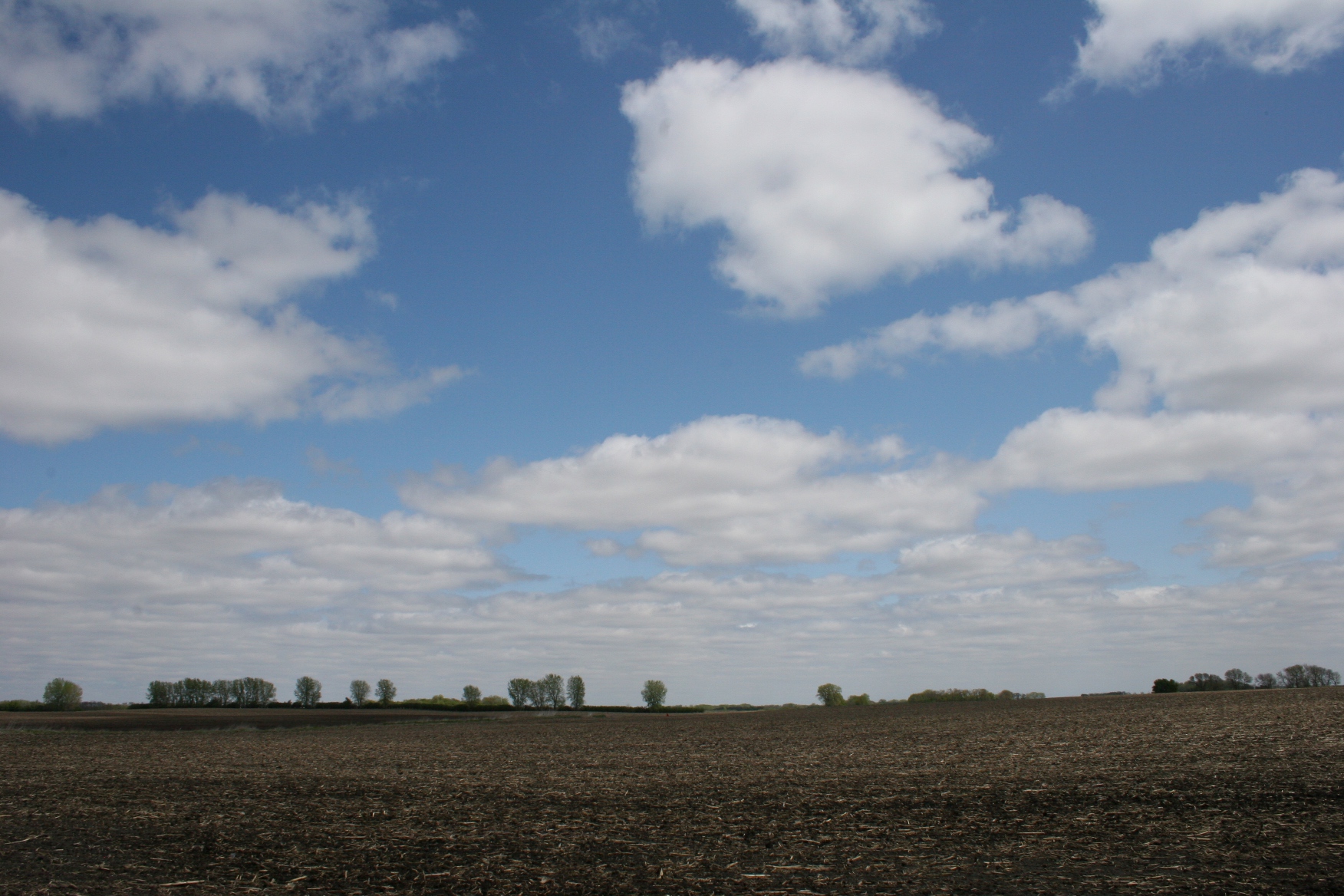
Rural rooted and grew me. From the once-flourishing community of Vesta to the crop and dairy farm across the Redwood River a mile south of town on the county road to Lucan, this prairie place shaped me as a person, a writer and a photographer. I am still “from” here, even though gone for more than 50 years now.
© Copyright 2026 Audrey Kletscher Helbling


There’s no place like home. 😉
You are right about that. Home will always be home.
Thank you for a wonderful photo essay about Vesta.
When I was in high school (in Redwood Falls), Vesta was a near-mythical tiny spot on the prairie. When the kids from Vesta joined us in high school, I was relieved from being the “new kid,” since I only joined the tiny RF crew in 5th grade.
(Population in RF was pretty stable back then — at least there were FEW incoming people. Seems that’s still pretty true; population there has been pretty stable for the past 50 years. It looks like Vesta’s population has been shrinking by about 1% a year in recent decades.)
Thanks, again.
Glad to take you back to Redwood County. That’s interesting population info, but not surprising.
Attending junior high in Redwood as a kid from Vesta was really difficult. We were looked down upon. So much meanness. I do not have fond memories of my time in the Redwood Falls school system.
Sorry to hear about your experiences in RF. I don’t remember who they were, but I do recall a couple buddies from Vesta when I was in high school. One, in my faulty memory, was a tall girl and the other was a guy, large enough to be on the football team when I was. (I’d have to dig out from somewhere my RF yearbook and look at pictures and names to come up with more information.)
It sounds like you had a good experience at the RF school and I’m glad for that.
Attending junior high anywhere is difficult for all of us — not just RF. That doesn’t minimize your bad memories. It means you’re not alone.
That is so true, Ken. Junior high is a challenging age.
Nicely written piece about the area that shaped who you are. It’s good never to forget one’s roots.
Thank you, Sue. Our roots grow us.
Thanks Audrey for sharing and taking me down memory lane. your old neighbor, Jolene Goblish
How wonderful to hear from you, Jolene, after all these years. Vesta has certainly changed. But we still have the memories.
I appreciated the Grain Belt beer sign! When I was a youngster, my patents and I spent many two week at the vacations at the family farm near Seaforth and not far from Vesta. When I got older, my Dad and I would go to the local tavern in Seaforth. I bought a Grain Belt beer glass as a souvenir; I still have it!
Charles Ziegler
Thank you for sharing your memories from the Seaforth area. I can understand why you like the Grain Belt signage. Good to hear from you!
So much sweet nostalgia in this post Audrey. Thanks for showing us where you’re from, what it meant to you, and how it has changed.
Now readers will better understand what shapes me and my work. Glad you enjoyed this post.
how wonderful, that you have so many memories of growing up in Vesta. it sounds like such a great place to live, in a more innocent time, in this friendly town of hardworking and genuine people. it must feel bittersweet to see it so changed but your memories will never leave. i love the picture of the old house and the new house behind you on the horizon, you must have been so excited! was that you in the picture?
That’s my sister Lanae standing on the front steps. We were excited to move into a new house, because it was bigger and because it had a BATHROOM. Growing up on a farm outside of Vesta was an excellent place to grow up. The community helped shape me as did the prairie land and the farm.
what a treasure the picture is!
Yes!
It is a sad tale for Vesta and for many other small, rural communities. I just read about Milroy losing its school and then decisions on how to use the building. Not too long ago I was speaking to 2nd graders on a tour of a one room school at End O’Line Park in Currie. I told them the school had closed in the 1960s and of course, one 2nd grader asked why. I had to do a quick explanation of population decline so I said, think of how 75 years ago there would be six families with four or more children on each mile stretch of road. Now there may be only one family with two children there on that same road. I don’t know if my demographics were absolutely correct, but they got it. Way fewer children and so no more one room school. I hope Vesta can keep what it has.
Your explanation to those second graders was spot on I think. I, too, hope Vesta can keep what remains.
Are you acquainted with the “Wandermore in Minnesota” project? They featured Vesta in this 2025 Facebook post, along with many photos: https://www.facebook.com/share/p/1EbvhviJjF/
Their posts typically draw lots of comments and memories; perhaps you’ll recognize some of the people who comment there!
They reposted the Vesta set this year: https://www.facebook.com/share/p/1Bd9ouAkbK/
I think some edits were made, based on comments made on the original post.
I have heard of Wandermore. I’m not on FB, but will ask my husband (who is) to check this out. Thank you.
It sounds like a wonderful place to grow up, Audrey. 🥰💞🥰
It was!