UNTIL MY ELDEST ALERTED me around noon today, I was unaware that March 15 marks a notable day. At least for me and the millions of others worldwide who suffer from long COVID. Today is International Long COVID Awareness Day.
I’ve been living with long COVID for more than two years now. And in that time-frame, I’ve attempted to raise awareness about this debilitating chronic condition. I will continue to do so, because it’s important for others to understand. With understanding comes compassion and support.
My lengthy list of symptoms began after I contracted COVID in January 2023. I never self-tested positive for the virus. But that is not necessary to get a long COVID diagnosis. My primary care doctor and specialists ruled out any other medical reason for my varied symptoms. The connection to COVID was clear even to me, someone not particularly medically-inclined.
Today I am mostly fine, although I still struggle with residual issues, especially in the sensory area. It took six months of vestibular rehab therapy and lots of hard work to get me to a better place. During much of 2023, I thought I would never reclaim my life. I have.
IT TOOK A TEAM
But I didn’t do it alone. First, I credit Dr. Todd Sykora at Allina Health, Faribault, for not giving up on me, for showing great compassion and care, admitting that he didn’t have the answers. His concern for my health ran, still runs, deep. His decision to refer me to physical therapy saved my life.
At Courage Kenny Rehabilitation Institute in Faribault, I met physical therapist Ryan Iverson who, among other areas, specializes in vestibular issues. He was the perfect fit for me and the symptoms I was experiencing. To hear him say that my symptoms were like those of someone suffering a traumatic brain injury was validating. And then the hard work began, week after week for six months. Like my primary care doctor, Ryan showed great compassion and care.
SHOW COMPASSION & CARE BECAUSE LONG COVID IS REAL
If I want to make any point here, it’s that individuals living with long COVID need the compassion, care and understanding of family and friends. What we face is real. Difficult and debilitating. Without the support of my husband and eldest daughter, I could not have managed those first nine months of living with long COVID. They did a lot for me and always supported and encouraged. If my other two adult children lived in Minnesota, I know they would have offered the same.
Today I use my experiences to encourage a young man in my community who has been dealing with long COVID for 1.5 years. He’s had to drop out of college. He’s had to, on occasion, use a wheelchair. He struggles with fatigue and brain fog and much more. I referred him to my therapist, Ryan, and he’s making progress. I also stay connected with this young man’s mom. I recognize that she needs support, too.
Thank you for reading this post. That shows you care and want to learn more about long COVID. Please support those who suffer from this chronic condition by, first, acknowledging their challenges and then encouraging them.
#
IF YOU DEAL with long COVID (what are your symptoms?) or know someone who has this chronic condition, please share your thoughts. How are you managing or supporting? What do you want people to know? Let’s, together, raise awareness.
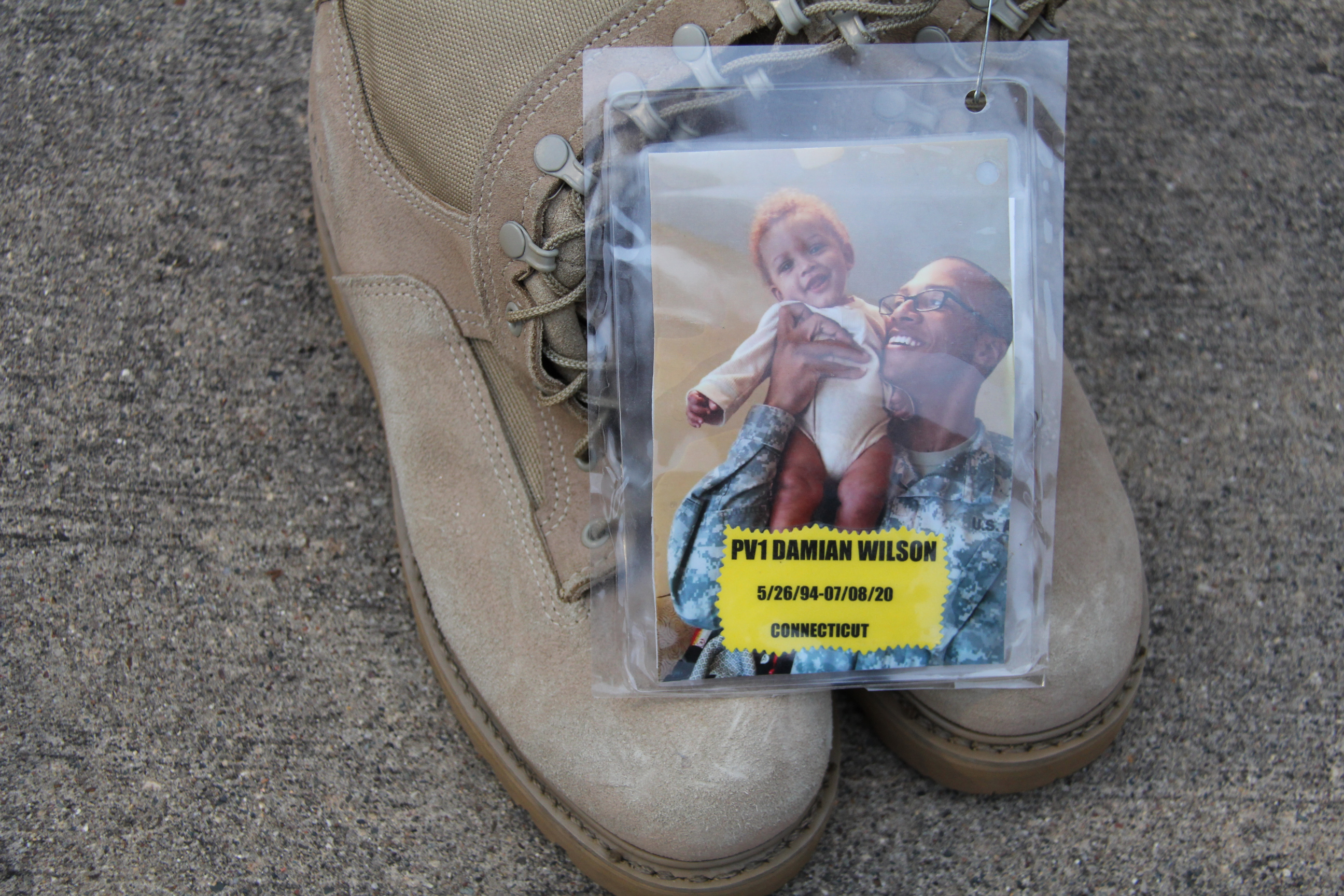
Each pair of boots displayed at the vigil represents a veteran who lost his/her life to suicide. Here, PV1 Damian Wilson of Connecticut. (Minnesota Prairie Roots copyrighted photo November 2024)
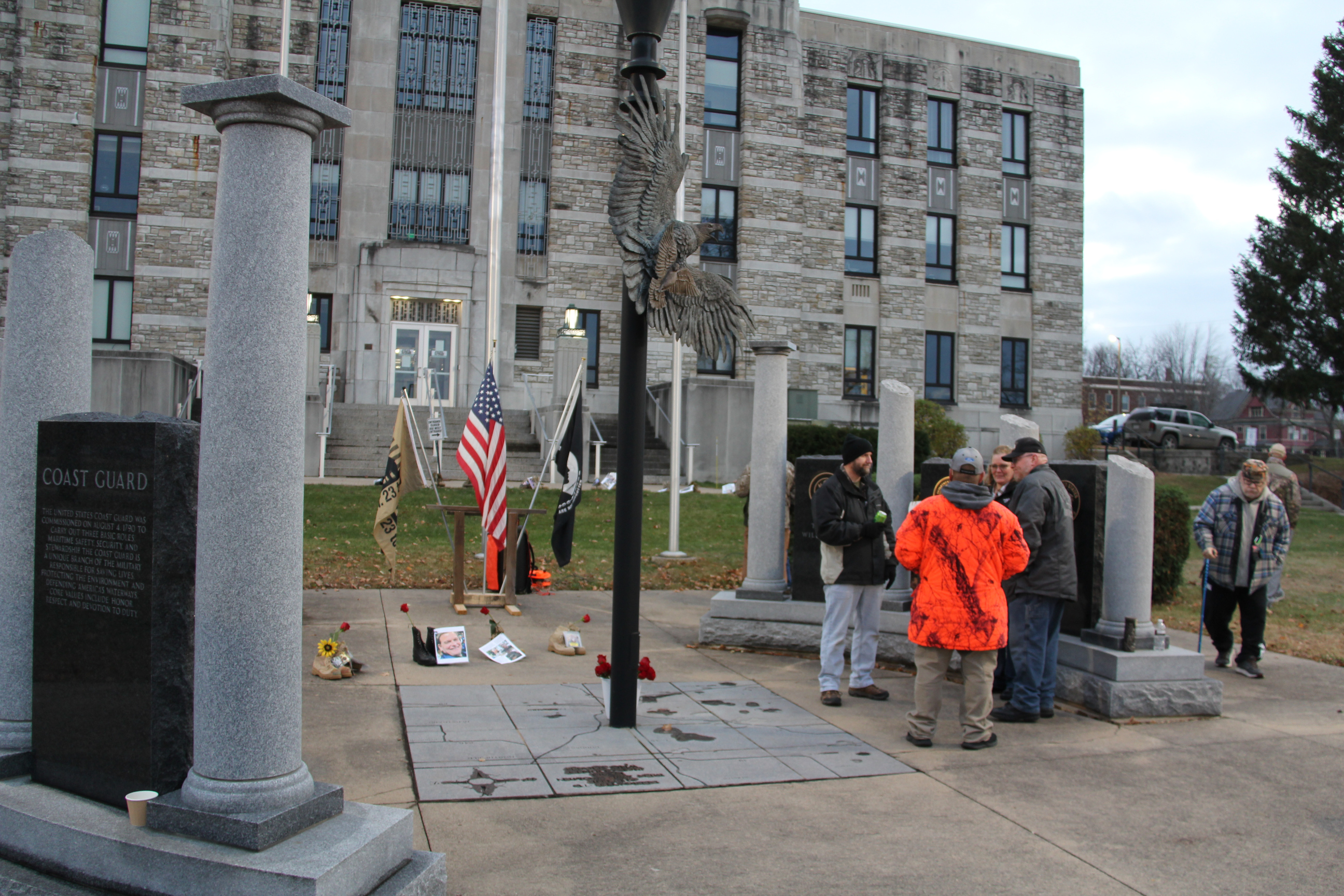
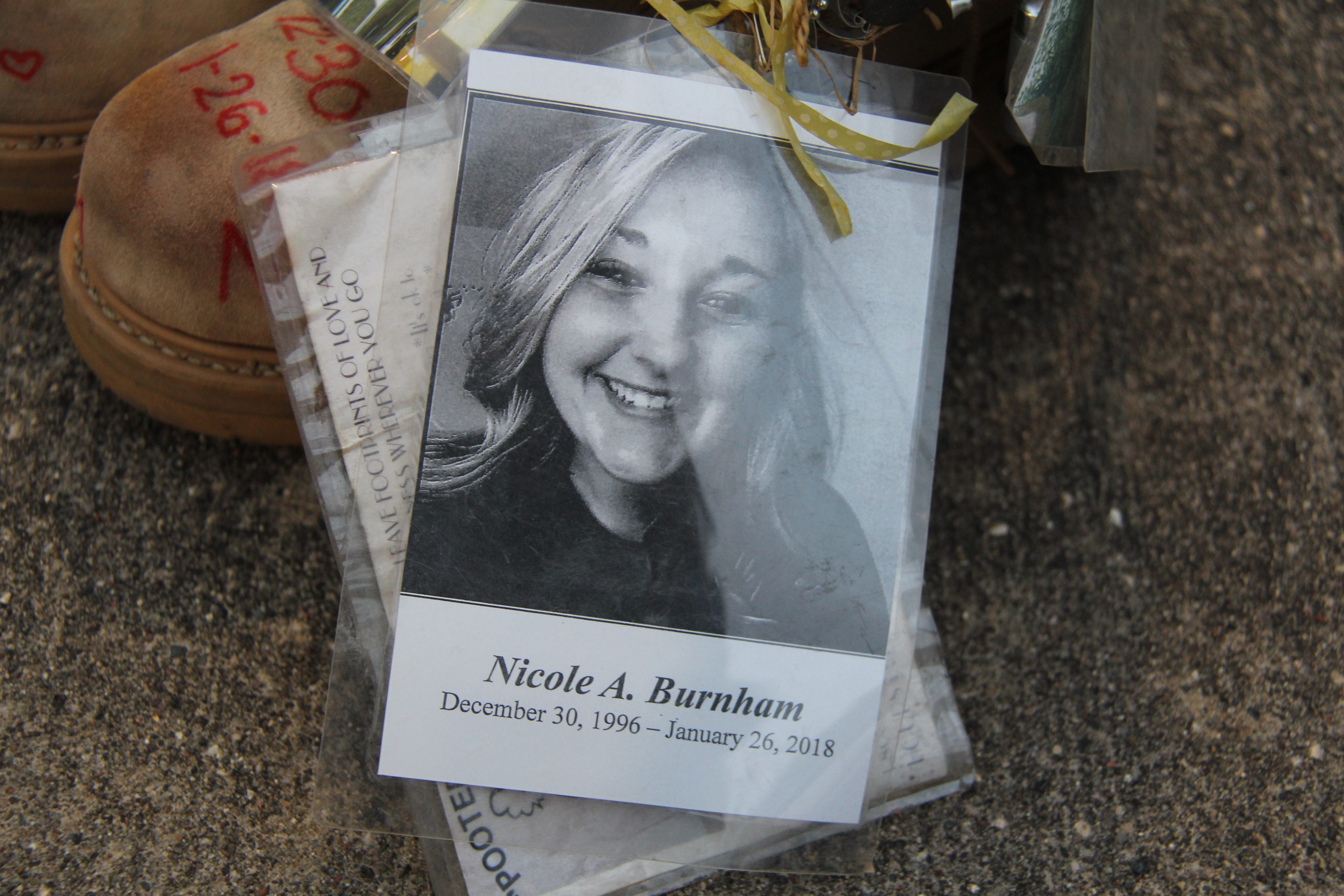
CODY, DAMIAN, NICOLE…and 20 others. Twenty-three military veterans recognized, honored, remembered during a 23-hour vigil beginning at noon Sunday and ending at 11 a.m. Monday. Twenty-three, because 22 veterans and one active military duty member, on average, lose their lives via suicide in this country every single day. The average age is 59 ½. Twenty-three because the veterans’ support group Operation: 23 to 0, southern Minnesota chapter, organized this event at the Rice County courthouse in Faribault.
At the vigil late Sunday afternoon, supporters and those holding vigil gather. Boots edge the veterans’ memorial and the courthouse steps in the background. (Minnesota Prairie Roots copyrighted photo November 2024)
That organization aims to reduce the number of deaths by suicide via providing a network of support and by raising awareness. As the daughter of a Korean War veteran who suffered from post traumatic stress disorder, I fully understand the need, the cause. This resonates with me on a personal level.
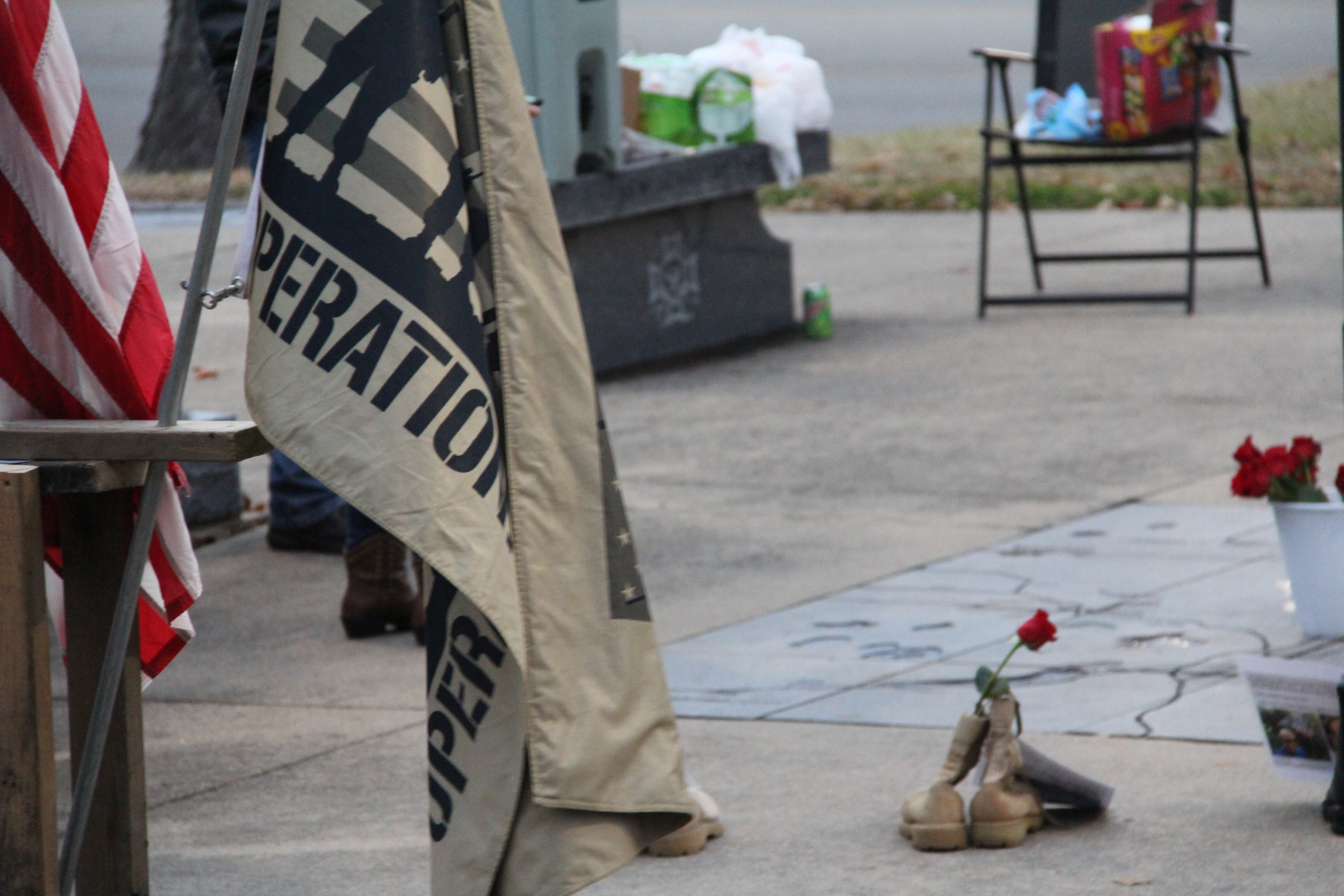
The Operation: 23 to 0 flag flew beside the American flag. (Minnesota Prairie Roots copyrighted photo November 2024)
A bucket of roses, with roses placed in each deceased veteran’s boots, sits at the vigil. (Minnesota Prairie Roots copyrighted photo November 2024)
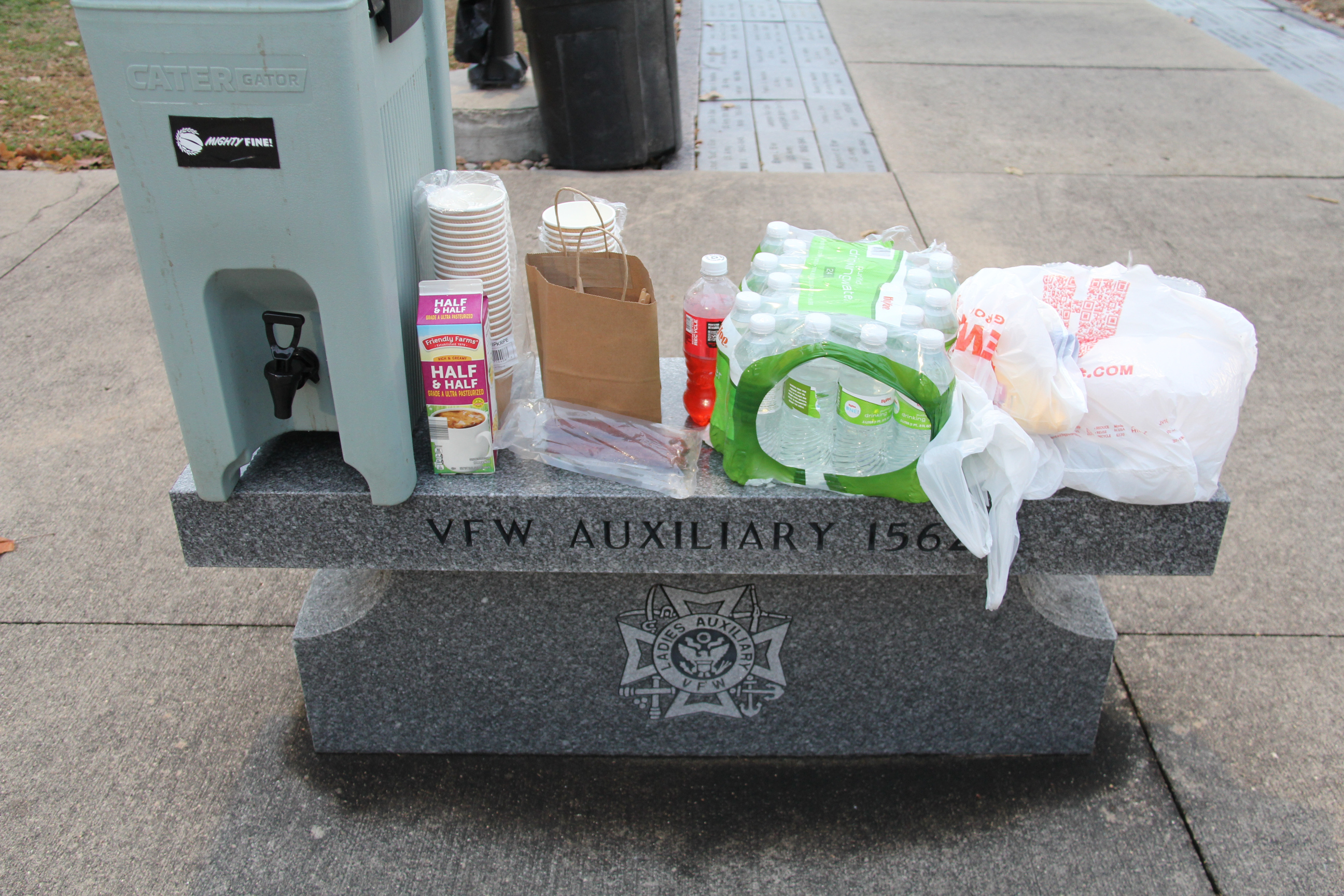
Donated food and beverages for those holding vigil. (Minnesota Prairie Roots copyrighted photo November 2024)
Because of that and because I care, I stopped by late Sunday afternoon to pay my respects and to show my support for Operation: 23 to 0 and for the veterans holding vigil. Those included Kirk Mansfield of Faribault, whom I’ve come to know through the years as an incredibly caring and compassionate individual dedicated to helping veterans. Mansfield is quick to point out that this is a team effort, that it takes a whole network of people, including the American Legion family, to make a difference.
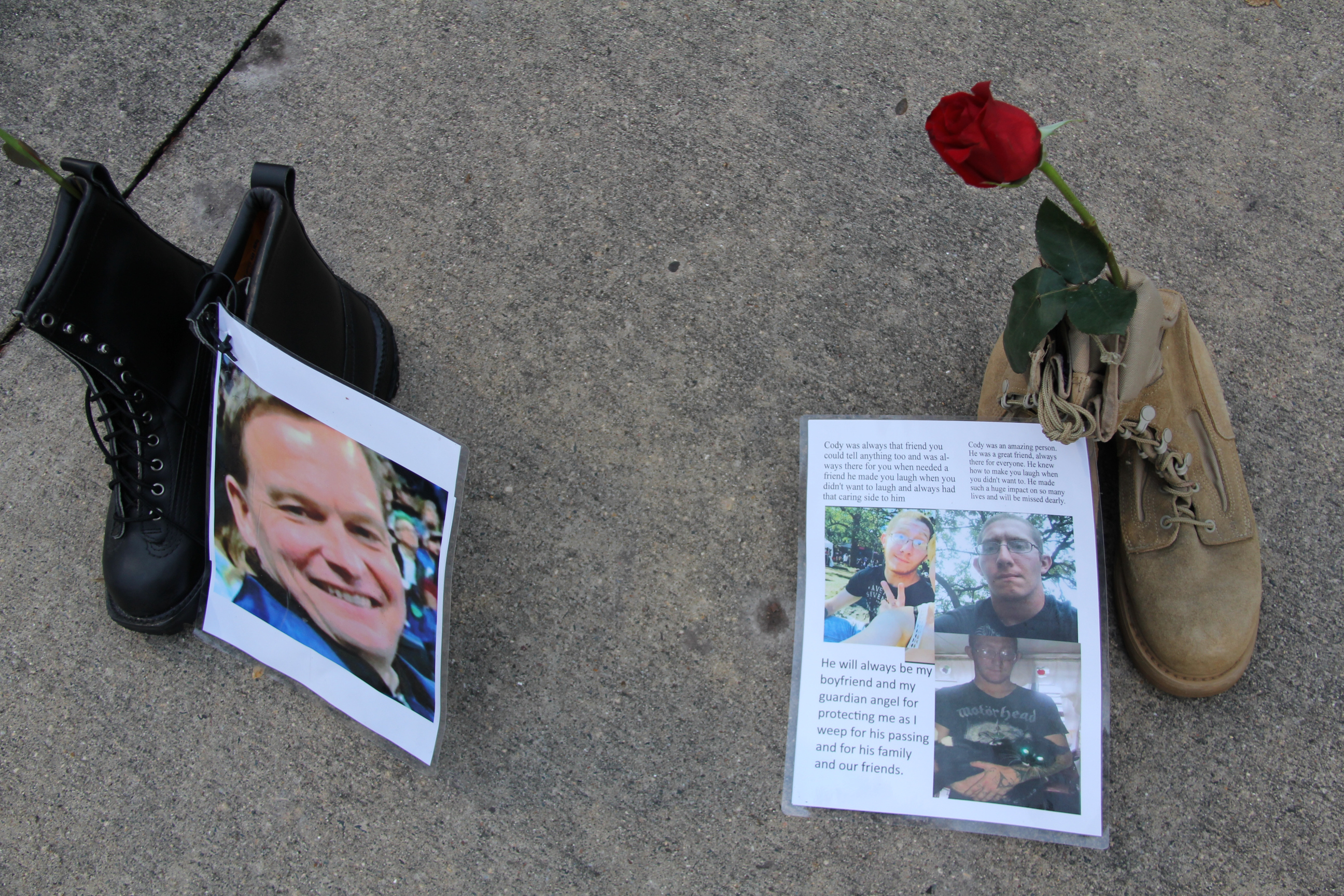
The photos, the stories, the boots, the messages…personalize the loss. (Minnesota Prairie Roots copyrighted photo November 2024)
Images and words identify veterans who died via suicide, who are missed deeply, who were recognized. (Minnesota Prairie Roots copyrighted photo November 2024)
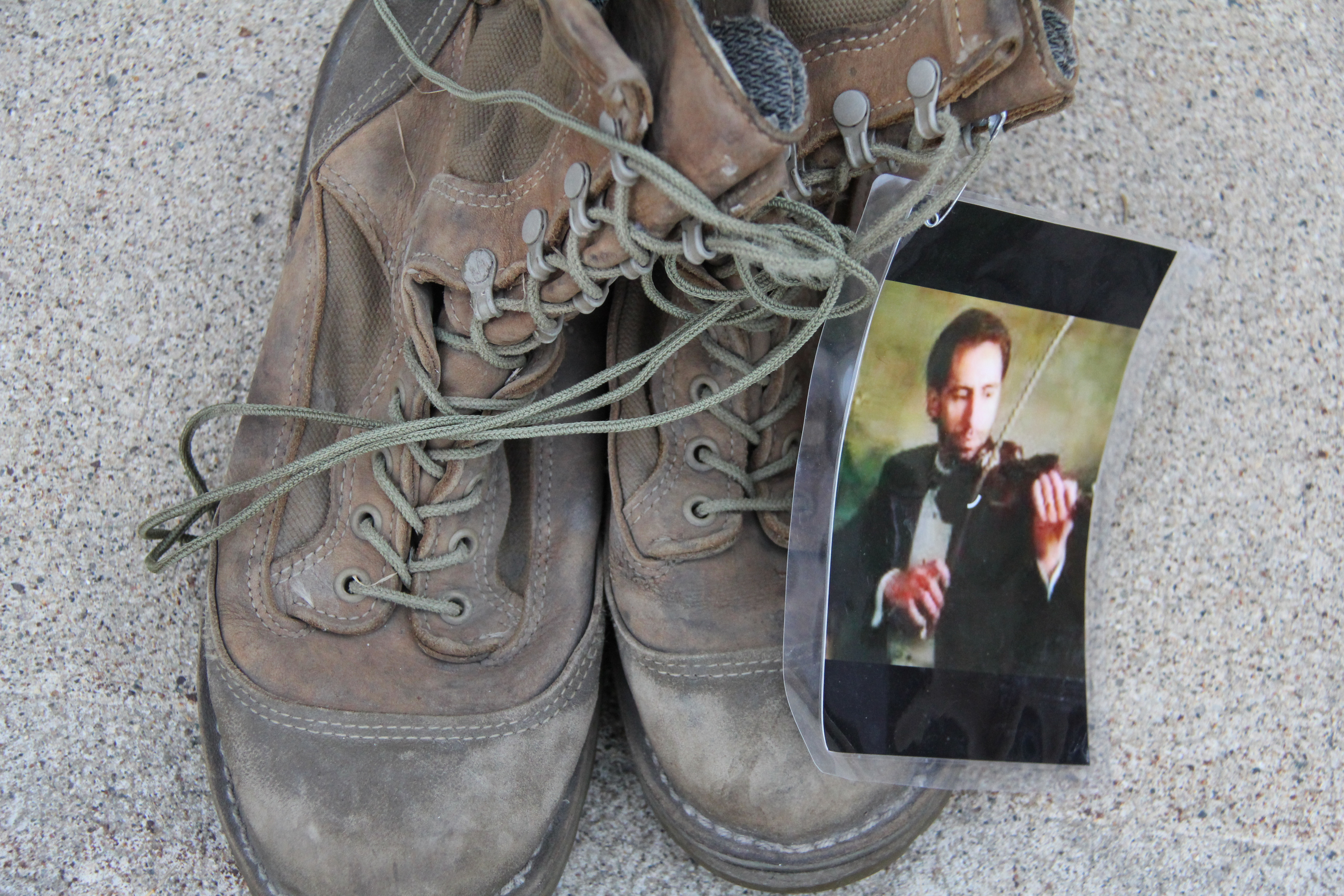
He was not only a soldier, but a violinist. (Minnesota Prairie Roots copyrighted photo November 2024)
He shared stories of a struggling young veteran in Iowa who needed a place to live, of a pregnant woman who lost her partner (a veteran) to suicide and who brought her now young daughter to the vigil in Faribault. He mentioned, too, a young veteran he was expecting later. Someone who is struggling.
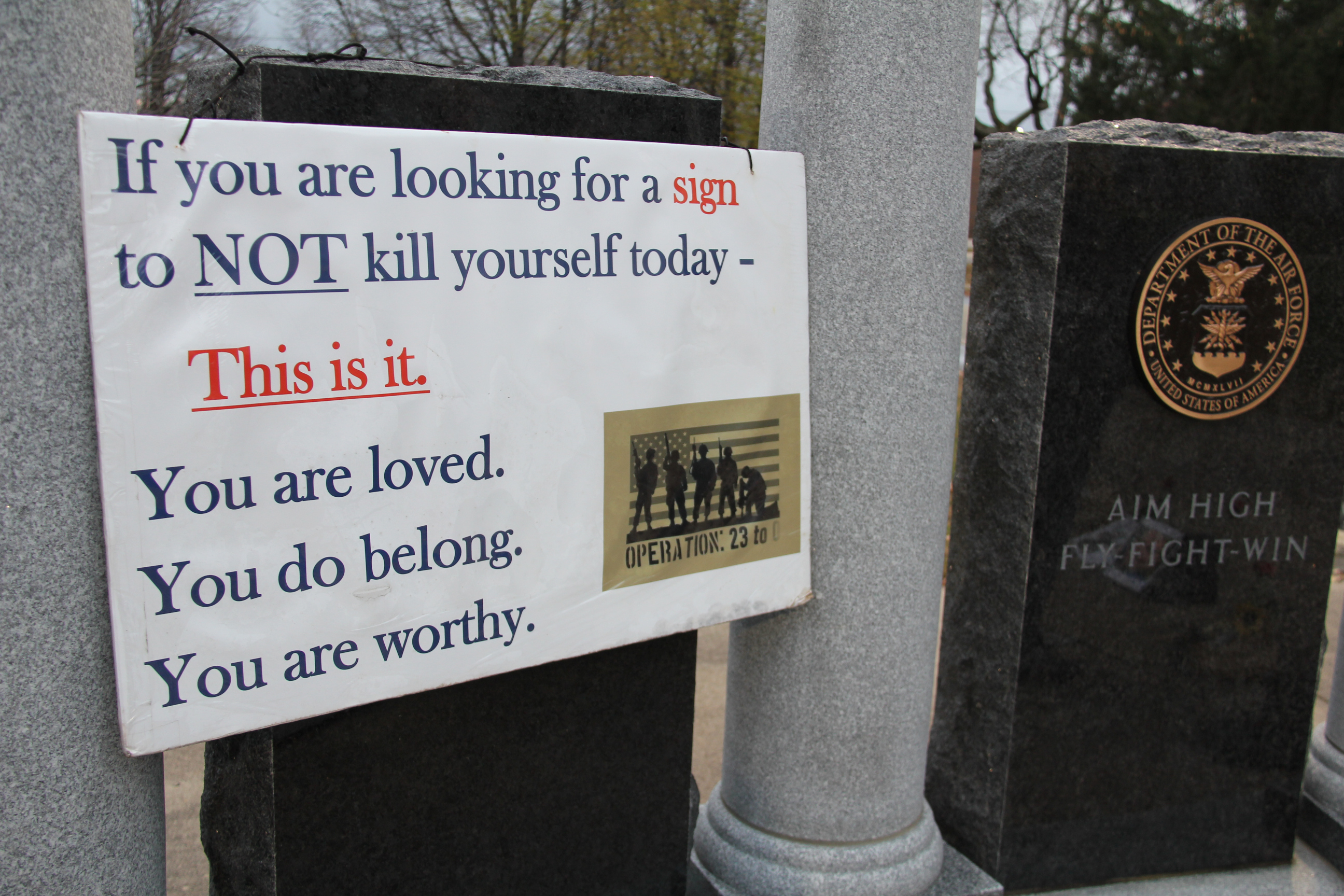
Anyone who stopped by the vigil could see this message, that they are valued. They matter. (Minnesota Prairie Roots copyrighted photo November 2024)
As I stood next to Kirk, the cold November wind sweeping up the hill, chilling me, and darkness descending, I saw the light of hope. That comes across not only in this vigil, but also in a message posted between stones honoring branches of the military. The poster reads: “If you are looking for a sign to NOT kill yourself today—This is it. You are loved. You do belong. You are worthy.” What a powerful message of hope.
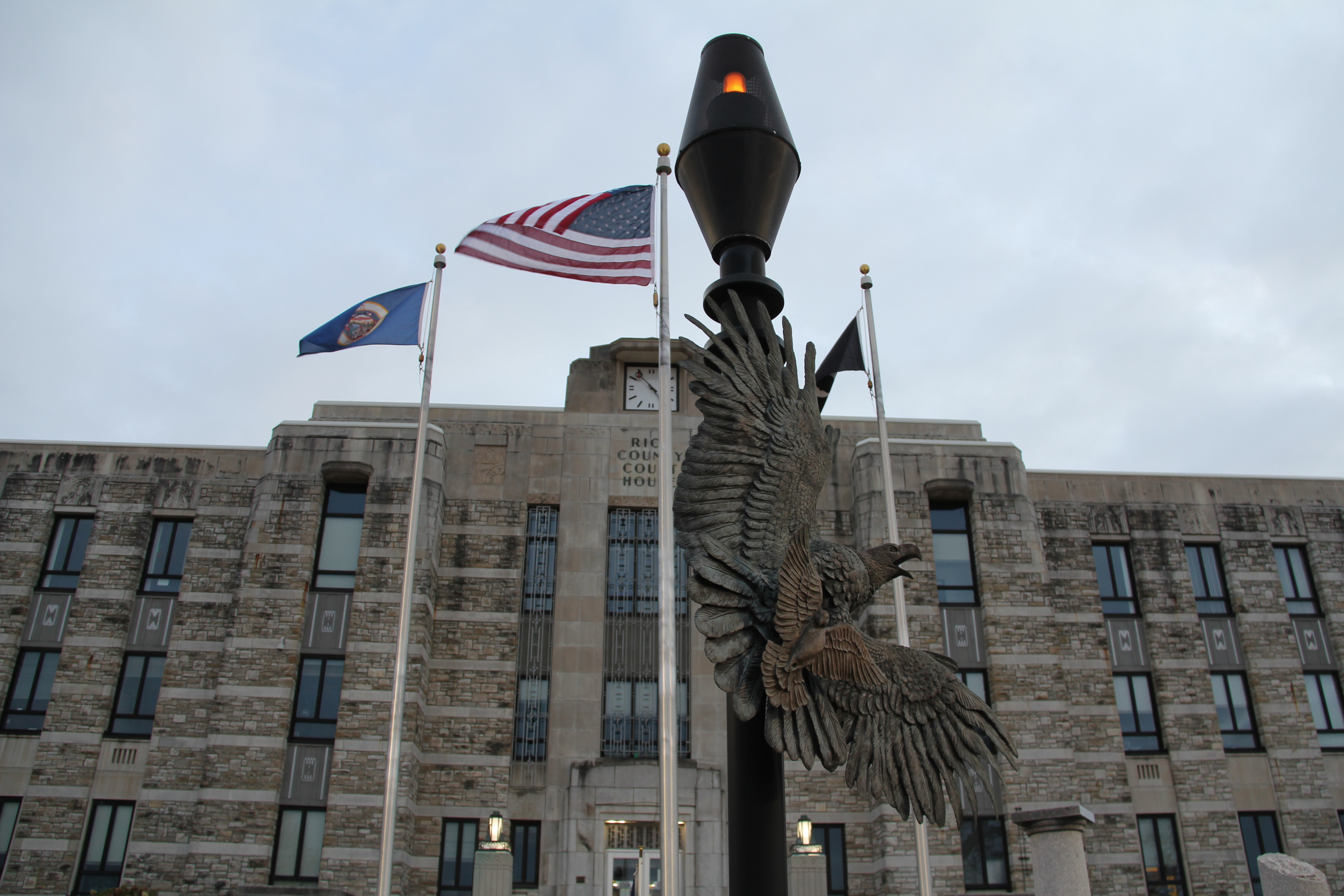
An eagle and eternal flame center the Rice County Veterans’ Memorial by the Rice County courthouse. (Minnesota Prairie Roots copyrighted photo November 2024)
On this Veterans Day, when we honor all who served our country in the military, those caring words matter. They matter because people (whether veterans or not) are struggling. Perhaps struggling with finances, relationships, mental health or any myriad of issues that create feelings of hopelessness.
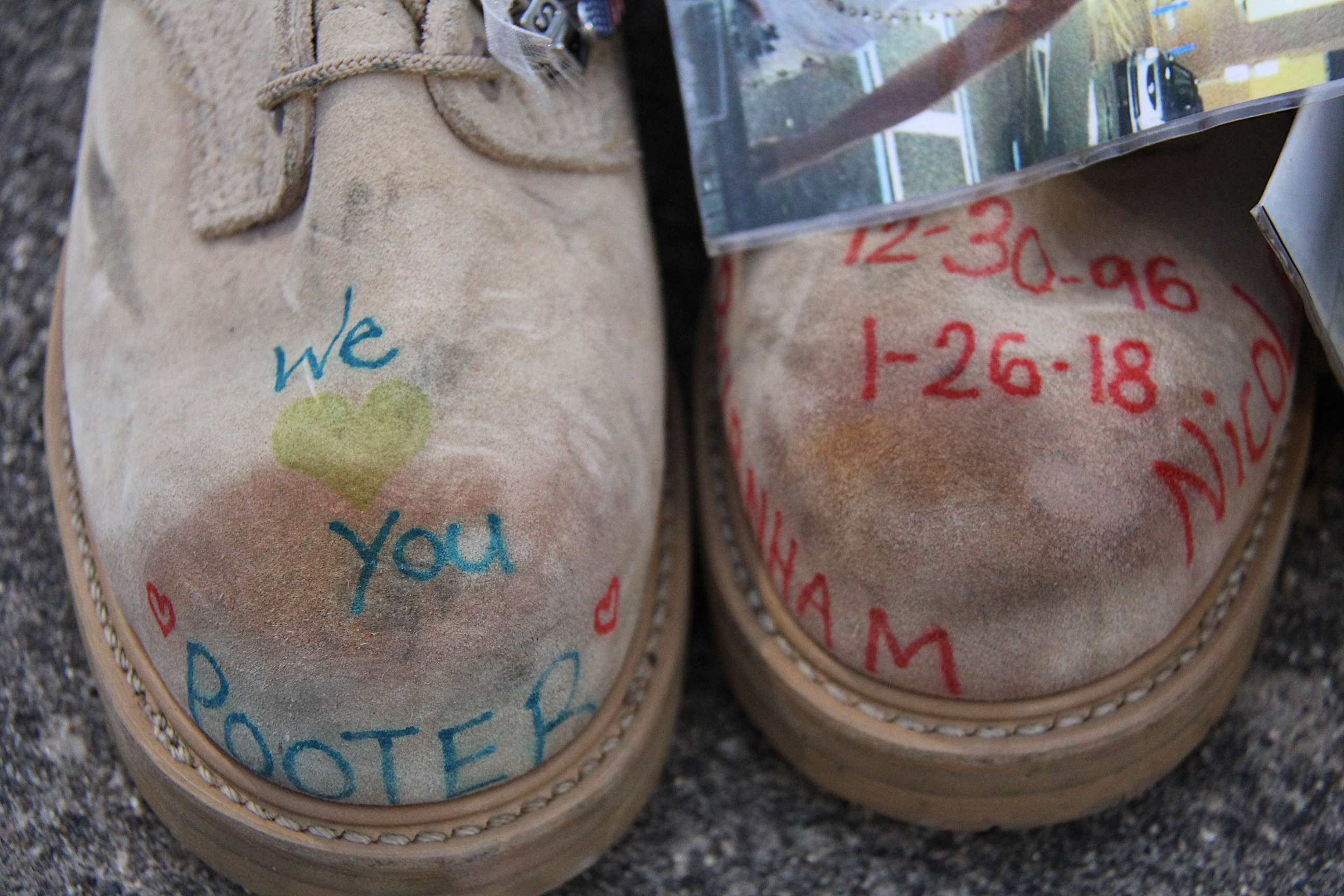
Loving messages on a veterans’ boot. (Minnesota Prairie Roots copyrighted photo November 2024)
Flags, boots, roses, all honor the veterans who died via suicide. (Minnesota Prairie Roots copyrighted photo November 2024)
Love and grief on a pair of boots. (Minnesota Prairie Roots copyrighted photo November 2024)
Each pair of boots placed at the Rice County Veterans Memorial or at the foot of the courthouse steps represents someone who loved and was loved, but who now is among the twenty-three.
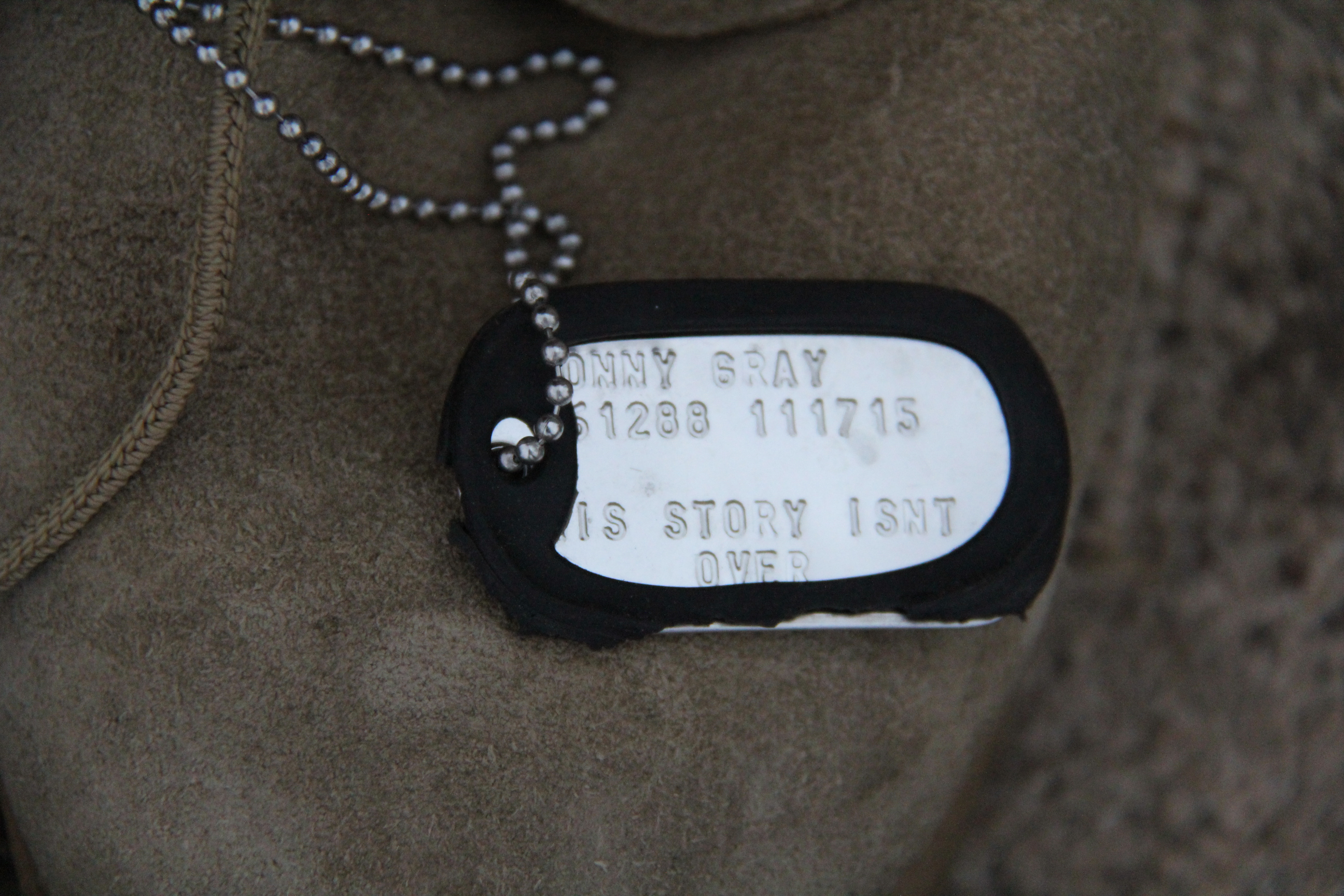
I really like this message spotted on a dog tag on a veteran’s boot. “His story isn’t over.” (Minnesota Prairie Roots copyrighted photo November 2024)
Operation: 23 to 0 is dedicated to being there. To listening. To supporting. To networking. To doing. To raising awareness. I see that. And I am grateful.
#
FYI: If you or someone you love is feeling hopeless, know that someone wants to help you. Talk to a friend, family member, professional. Call or text the 988 Suicide and Crisis Lifeline. Learn more about Operation: 23 to 0, which is based in Stillwater and has three chapters in Minnesota. You are loved.
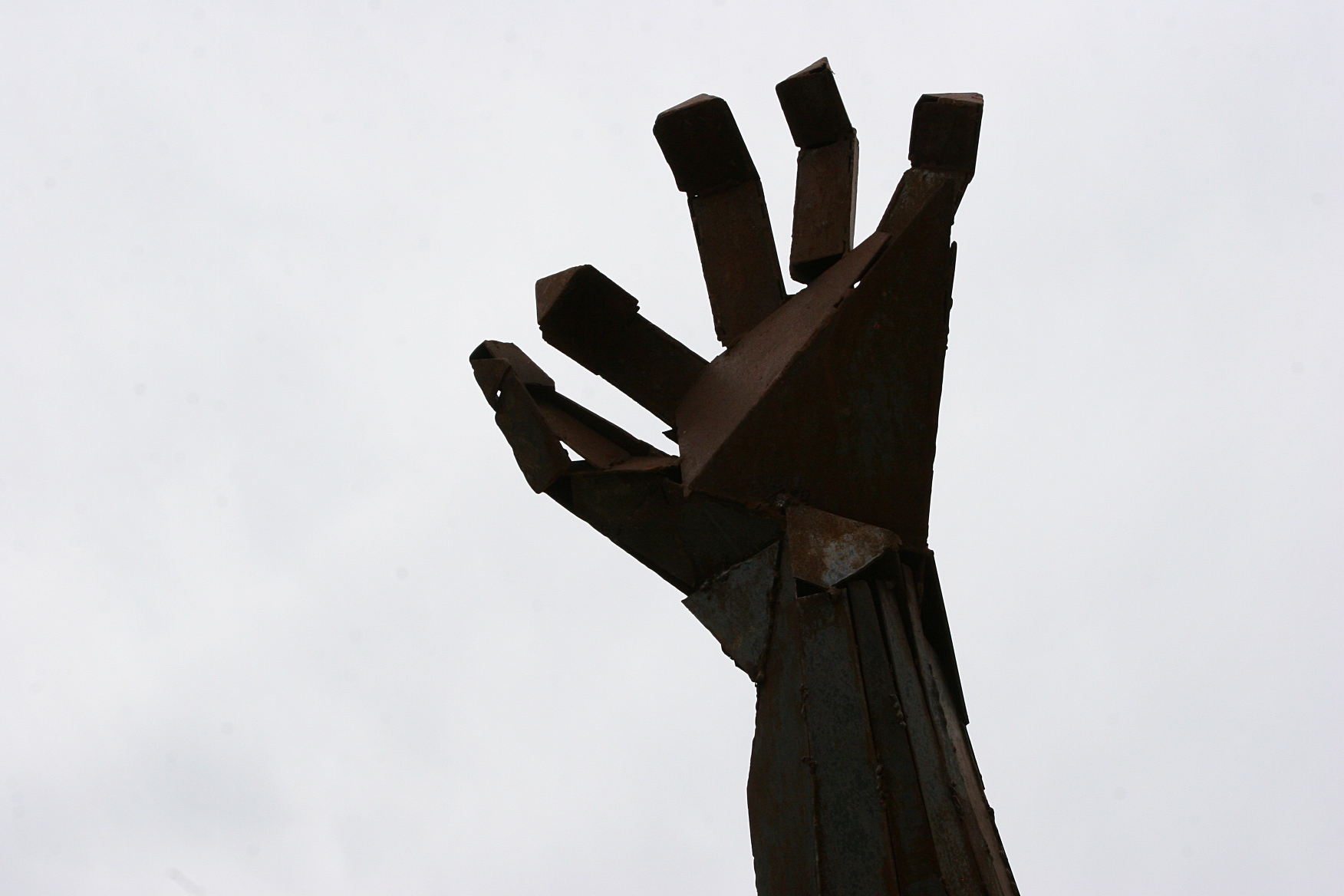
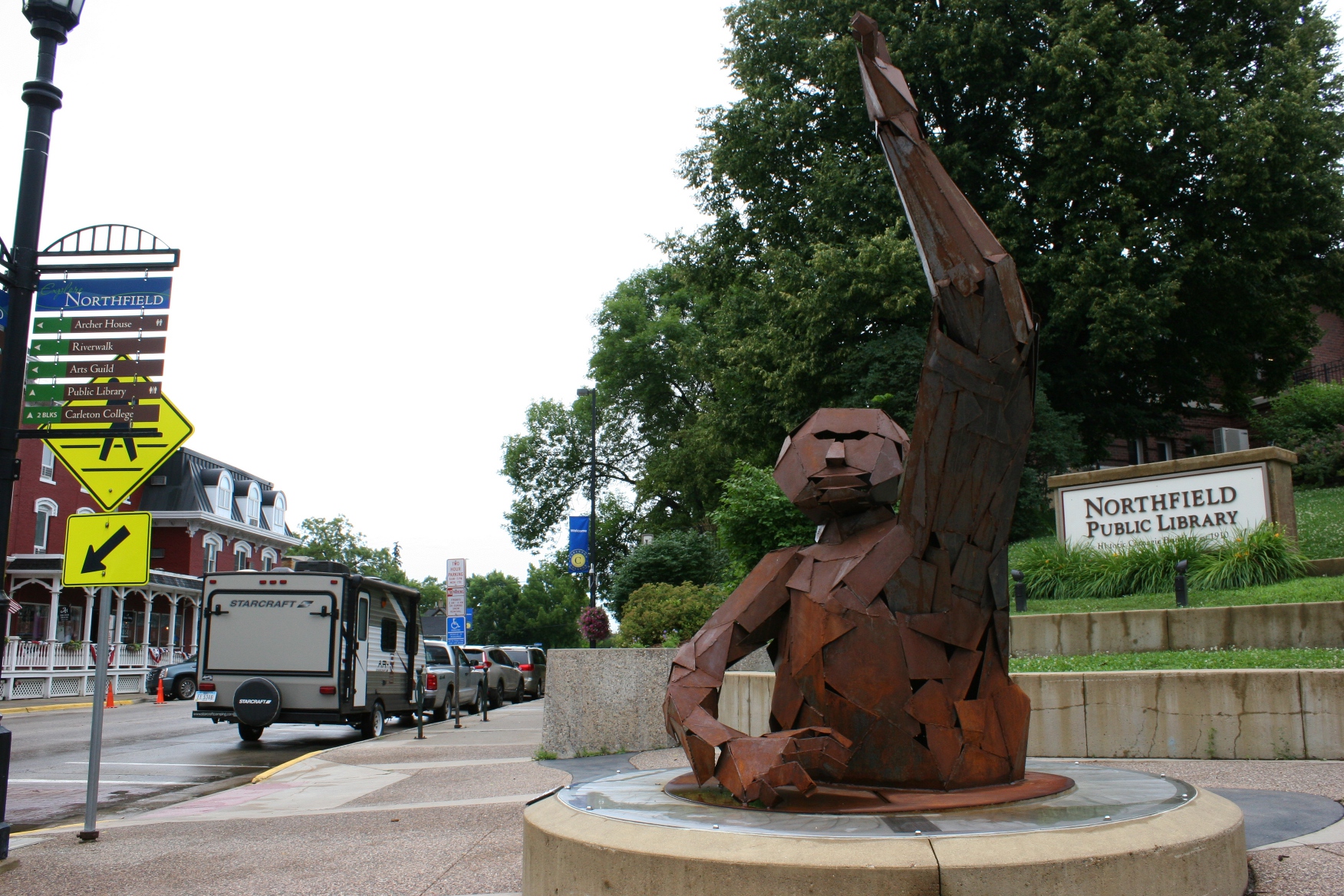
A hand reaches skyward in a mental health themed sculpture that once graced a street corner outside the Northfield, Minnesota, Public Library. (Minnesota Prairie Roots copyrighted file photo 2019)
WHEN HE HEARD ME rant for the umpteenth time about “people just don’t get it, they don’t understand,” he advised, “Then you need to educate them.”
He, my husband of 40 years, is right. Venting to Randy about offensive terminology and uninformed/misinformed comments and attitudes about mental illness does nothing other than temporarily ease my frustrations. Speaking out, writing, based on my observations and experiences, can make a difference. So write about my concerns I will, with the disclaimer that I am not a medical professional.
I photographed this shirt at an event at the Northfield Public Library. This message refers to the struggles with mental illness. (Minnesota Prairie Roots copyrighted file photo September 2019)
WORDS MATTER
Today—on the heels of recent offensive lyrics by Beyonce’—seems the right time to share what’s bothered me for way too long. The pop singer used the derogatory term, “spaz/spazzin,” in her new release, “Heated.” Although she was referencing spastic diplegia, a form of cerebral palsy causing motor impairments in limbs, and not mental health, the analogy fits. Her word choice proved offensive to people who are disabled. And rightly so. To her credit, Beyonce’ acknowledged her unintentional slur and is changing the lyrics. Just like Lizzo, who used the same wordage not all that long ago.
For the millions who each day bravely face mental health challenges and for those who love them, everyday careless language can hurt. Words like crazy, insane, nuts, it’s all in their head, off their rocker, out of his/her mind…are hurtful. As hurtful as the lyrics sung by Beyonce’ and Lizzo.
Recently, while reading a Good Morning America Book Club selection published in 2021, I came across this phrase: “the usual terrible but addictive schizophrenic medley.” In the context of this fictional story, the character was not talking about anything mental health related, but rather about what she was seeing on Instagram. I stopped reading and considered how insulting those words, especially to someone diagnosed with schizophrenia. I doubt the author intended to offend. But she did.
Buttons previously available for the taking at the Northfield library. (Minnesota Prairie Roots copyrighted file photo)
IF YOU HAD…
Now you might say I’m being overly-sensitive. But consider if you, or someone you loved, was diagnosed with cancer, diabetes, whatever, and uncaring words (which I can’t even think of) were tossed out there. It’s no different for those diagnosed with bi-polar, schizophrenia, depression, anxiety, post traumatic stress disorder…
I’m thankful individuals undergoing cancer treatment and/or who have survived cancer, for example, are not subjected to negative/offending words and behavior, but rather are supported with encouragement, fundraisers, even hot dishes delivered to their homes. That type of care and attitude should be a model for how all of us treat individuals dealing with a mental health crisis and their families. We should respond with equal love, compassion, care and understanding. And tangible support.
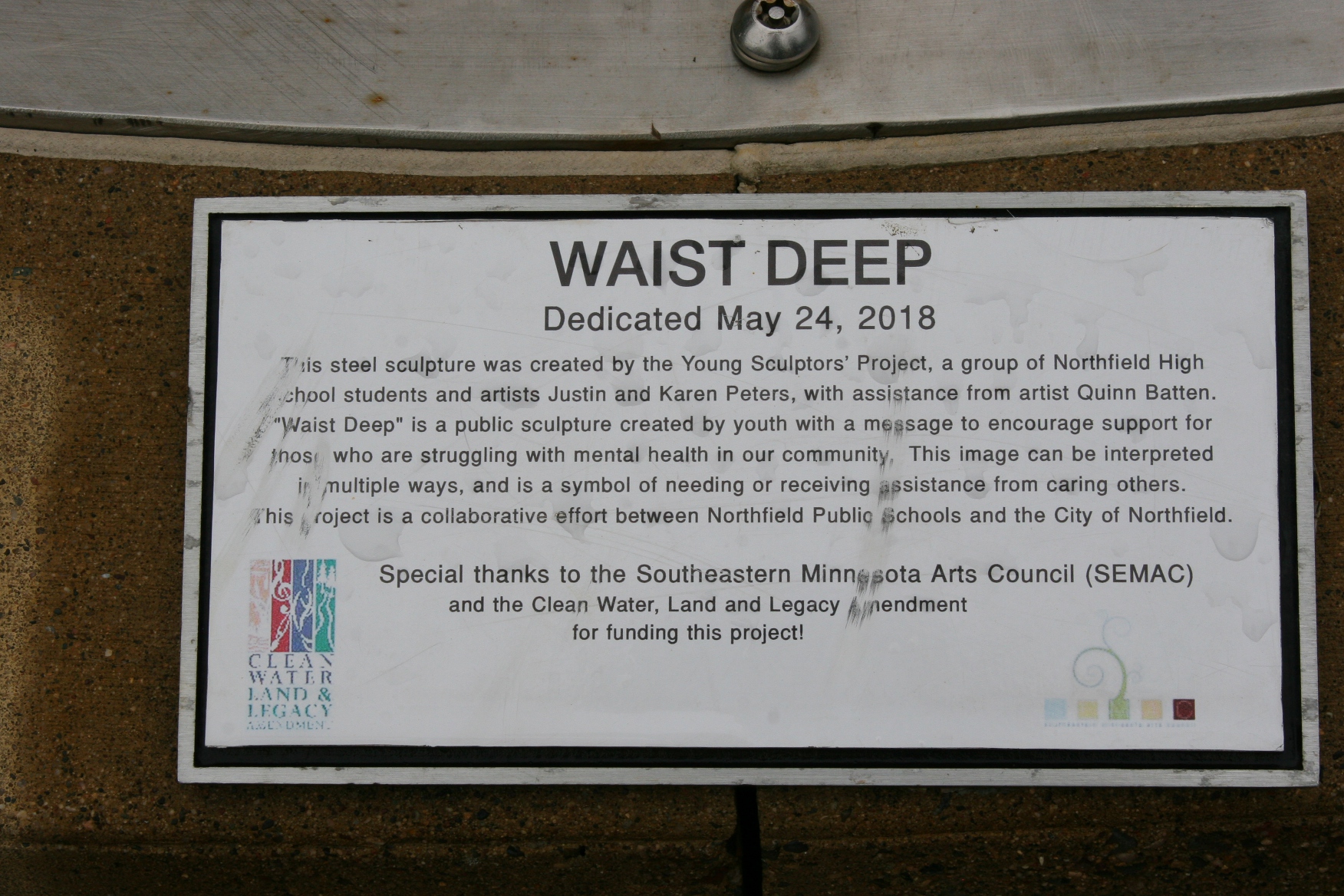
A sign explains the story behind the “Waist Deep” sculpture in Northfield. (Minnesota Prairie Roots file photo September 2019)
CHANGING ATTITUDES, BUT MORE IS NEEDED
I recognize attitudes toward mental health are changing, that, as a whole, we are growing more informed, finally beginning to reduce the stigma of brain disorders. But much work remains. Individuals in a mental health crisis should have immediate access to care. Busy, understaffed emergency rooms are often the first-line treatment option. I don’t know of a single doctor who would send a person experiencing a heart attack home. Individuals in a mental health crisis, the equivalent of a heart attack, deserve the same immediate life-saving care. Yet the wait to see a psychiatrist often exceeds six weeks, at least here in greater Minnesota. That’s unacceptable.
There’s a need for more mental healthcare professionals and in-patient treatment and recovery centers. There’s a need for more funding, more research. Insurance companies should not determine care/medications or refuse to fully cover mental healthcare expenses.
This sculpture, once located outside the Northfield library, is called “Waist Deep” and addresses mental illness. (Minnesota Prairie Roots copyrighted file photo 2019)
IT STARTS WITH EACH OF US
At a grassroots level—that’s each of us individually—more compassion, support, understanding are needed. A few years ago I walked into a southwestern Minnesota brewery and spotted a man sporting a jacket advertising a neighboring brewery. Imprinted on the back was an image of a straitjacket. I could not believe what I was seeing, especially after also reading the offensive name of the brewery. Later I looked online to read the brewery’s list of “Crazy Good Beer” with words like manic, catatonic, lobotomy, kookaloo… in the craft beer names. Simply writing this makes my blood pressure rise. I wanted to rip that jacket right off that beer drinker, so strong was my anger in that moment. Imagine the uproar, for example, if a brewery used words like chemo or radiation in its beer names or used an IV drip as its logo. Somehow a straitjacket is OK? Not from my perspective.
Imagine, too, if you have gone through cancer treatment and someone said you will be fine now that you’ve completed treatment. In the back of your mind, you recognize that the cancer could return despite the treatment. It’s no different for someone with a serious mental illness. Drugs work for awhile and then they don’t. Medications and therapy help manage symptoms, but there is no cure. Symptoms can return. Relapses, crises, happen.
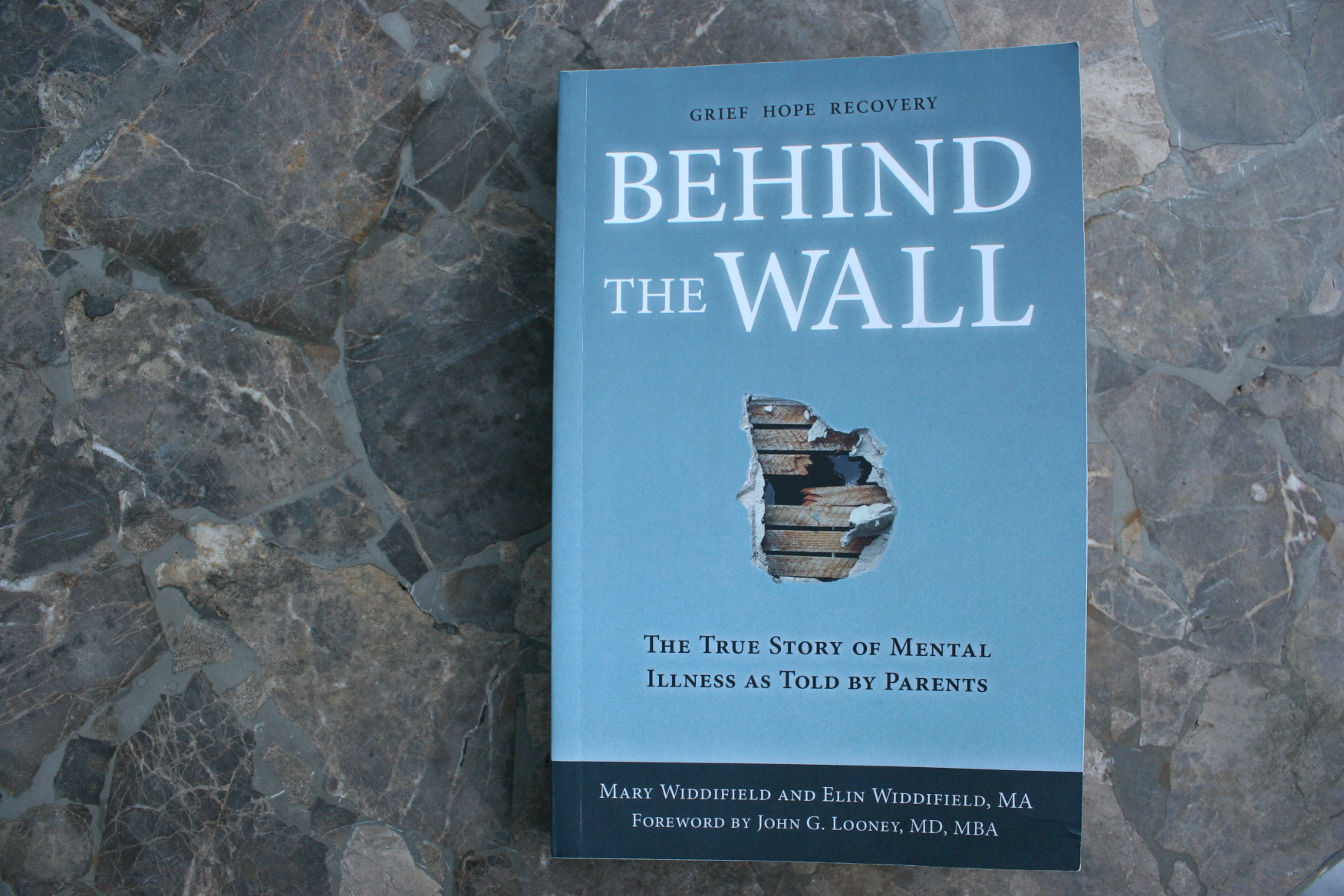
I highly recommend this book, among many I’ve read on the topic of mental illness. (Minnesota Prairie Roots copyrighted file photo)
GRATITUDE & RESOURCES
I appreciate every single person who has made a concerted effort to understand mental health, mental illness specifically. I appreciate organizations like the National Alliance on Mental Illness, which works tirelessly to support individuals and their families who face mental health challenges. I appreciate NAMI’s advocacy work and education. I appreciate mental healthcare professionals. And, most of all, I admire those individuals who deal with mental illness—whether depression, anxiety, post traumatic stress disorder, schizophrenia, bi-polar… They are among the strongest people I know and they deserve, yes, deserve, our love, compassion, understanding, support and respect.
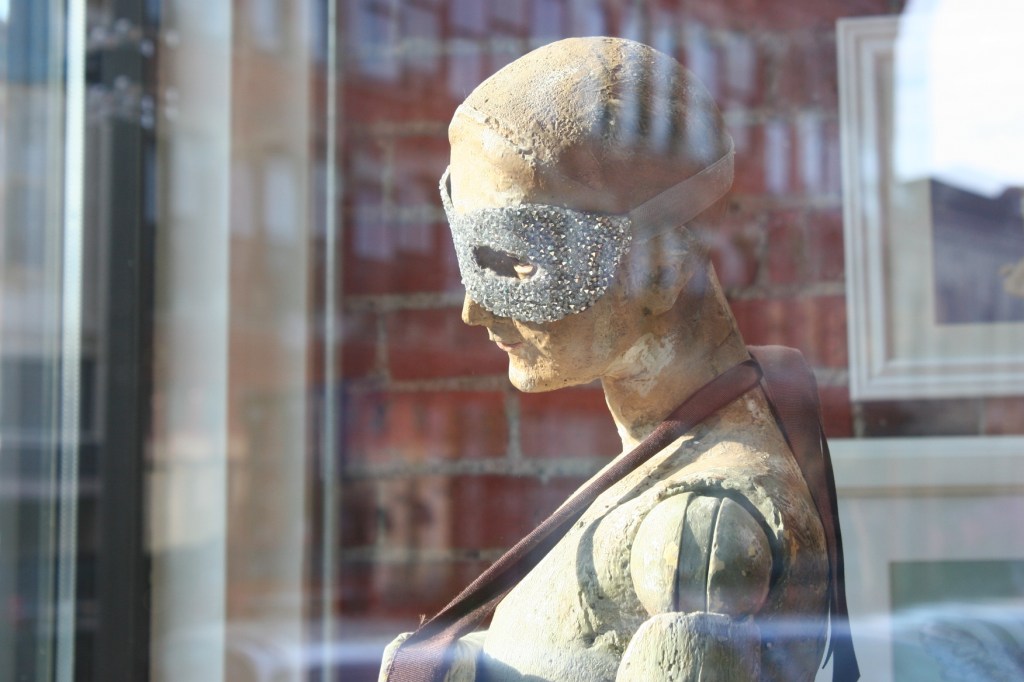
Slowly we are beginning to remove the stigma that masks mental illness. Minnesota Prairie Roots file photo 2018.
FOR WEEKS, WE’D PRAYED for Lila*. I had no idea why she needed prayers. But it didn’t matter, pray we would as a church family for this friend who’d moved to another state.
A few weeks later, Lila’s husband returned, alone to Minnesota, to lead a local fundraiser. That morning he stepped up to the microphone after worship services and told us about Lila. She was hospitalized, undergoing treatment for severe depression and anxiety. I could almost hear the silent gasp. That took courage, I thought to myself.
I told Henry* the same when I later hugged him, expressed my concern and offered encouragement. He admitted to struggling with his decision to go public. But we agreed that the stigma surrounding mental health is beginning to lift, that talking about mental health issues is important and necessary. For Henry, a retired educator, his openness about Lila proved a freeing, teachable moment.
We all have much to learn on the topic, including me. Kicking depression is not a matter of simply willing yourself to feel better, to just get over whatever someone thinks you need to get over. It’s much deeper than that. Overcoming anxiety is not as simple as jumping into the deep end of a swimming pool and expecting someone to stay afloat.
I admire Henry’s decision to speak up. Likewise, I appreciate that my pastor publicly acknowledges his struggles with depression. That’s a first for me, to hear a pastor talk from the pulpit about personal mental health challenges. He’s young, of a generation seemingly more open to discussing mental health issues. The more we talk about mental illness, the better for those suffering and for loved ones and others trying to help.
Still, talk only goes so far. Waits can be long to see a mental health professional here in greater Minnesota. If you were having a heart attack, you wouldn’t be told to wait six weeks. If you had cancer, you wouldn’t be told to wait for treatment. A mental health crisis is no less important.
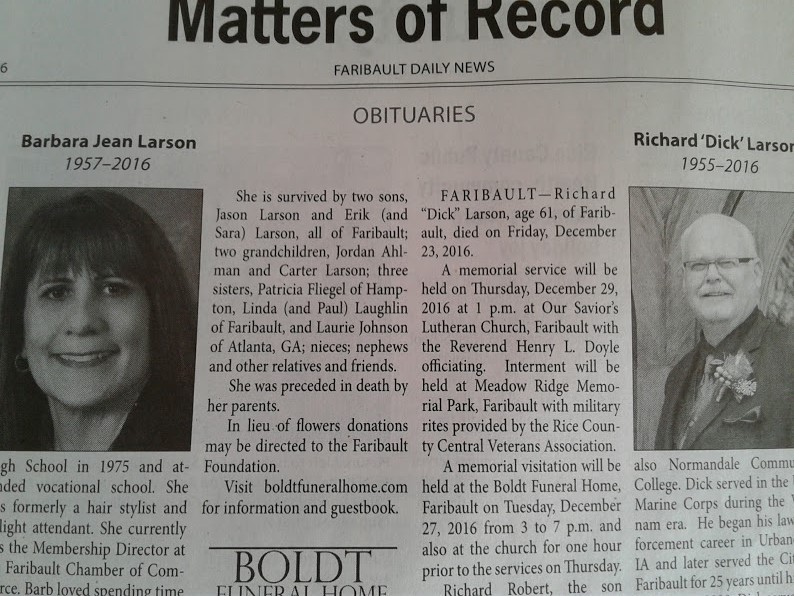
Twice in recent years I’ve stood in a snaking line at a Faribault funeral home to comfort the families of young men who committed suicide. I struggled to find the right words. I expect their loved ones struggle with the what ifs, survivor’s guilt, regrets, but, most of all, an unfathomable pain. Some grieving families are choosing now to go public in obituaries about their loved one’s struggles with depression or other mental health issues. That takes a lot of courage. We often read about a deceased person’s long and courageous battle with cancer. Battles with mental illness are no less courageous. I’m thankful to see this shift in thinking, to see people like Henry step up to a microphone and speak about mental illness.
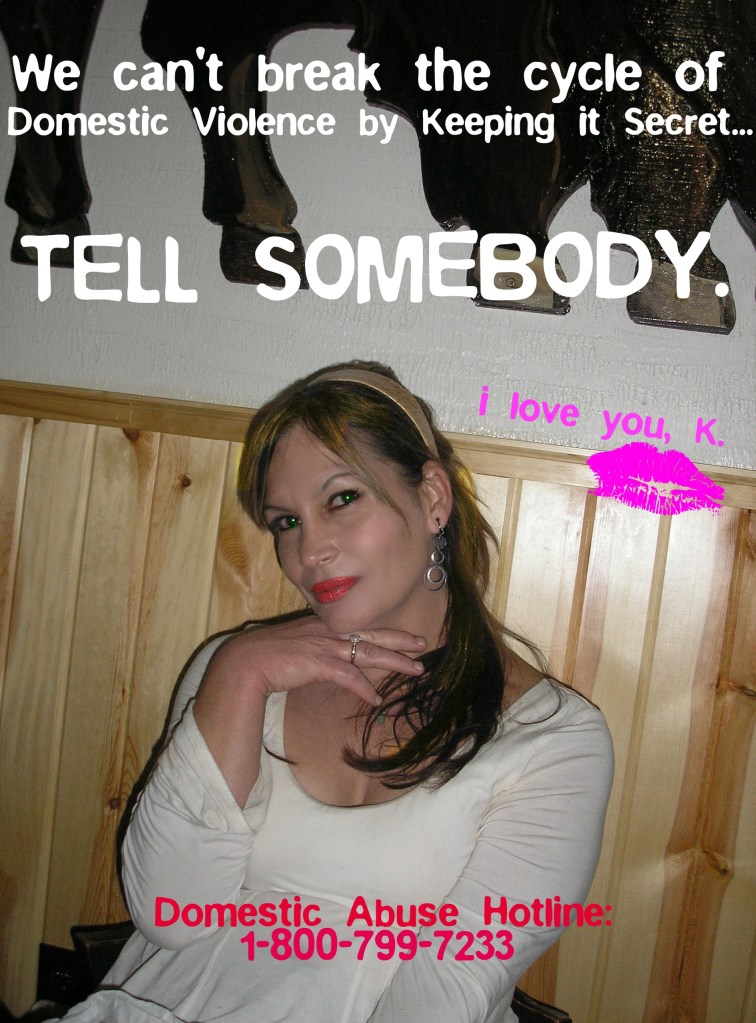
This photo graphic comes from the website of Kim Sisto-Robinson, a Duluth woman who has made it her mission to be the voice of her deceased sister, Kay (shown in this photo), by speaking out on domestic violence. Kay was shot to death by her estranged husband in May 2010. Kim writes at myinnerchick.com with a deeply personal and powerful voice.
And we are a community on the cusp of an opportunity to learn, to make a difference. No one wants education to come at such great cost. But we must find a way to deal with this, heal and create change. Women need to be protected via a system that does not fail them. Mental health services need to be more available in our area. It’s not acceptable that such a shortage of mental health workers exists here that individuals must wait weeks to see a provider. Or choose the ER. Or nothing. Or something unacceptable.
We as individuals need to begin to understand and openly acknowledge issues that are all too often avoided. We need open dialogue—an opportunity to vent, share ideas and formulate solutions.
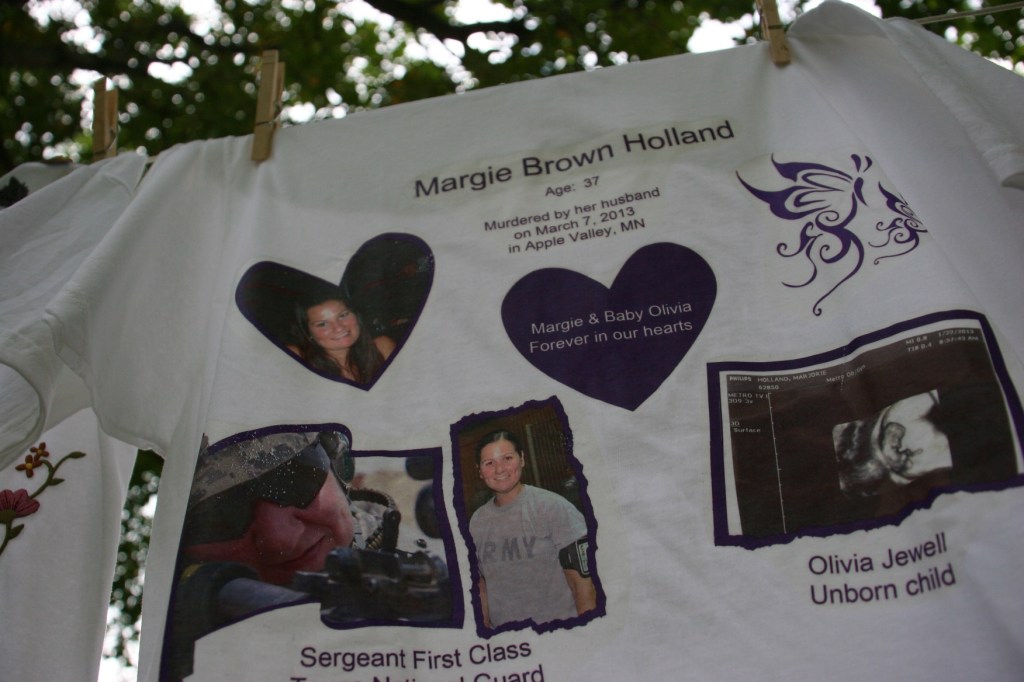
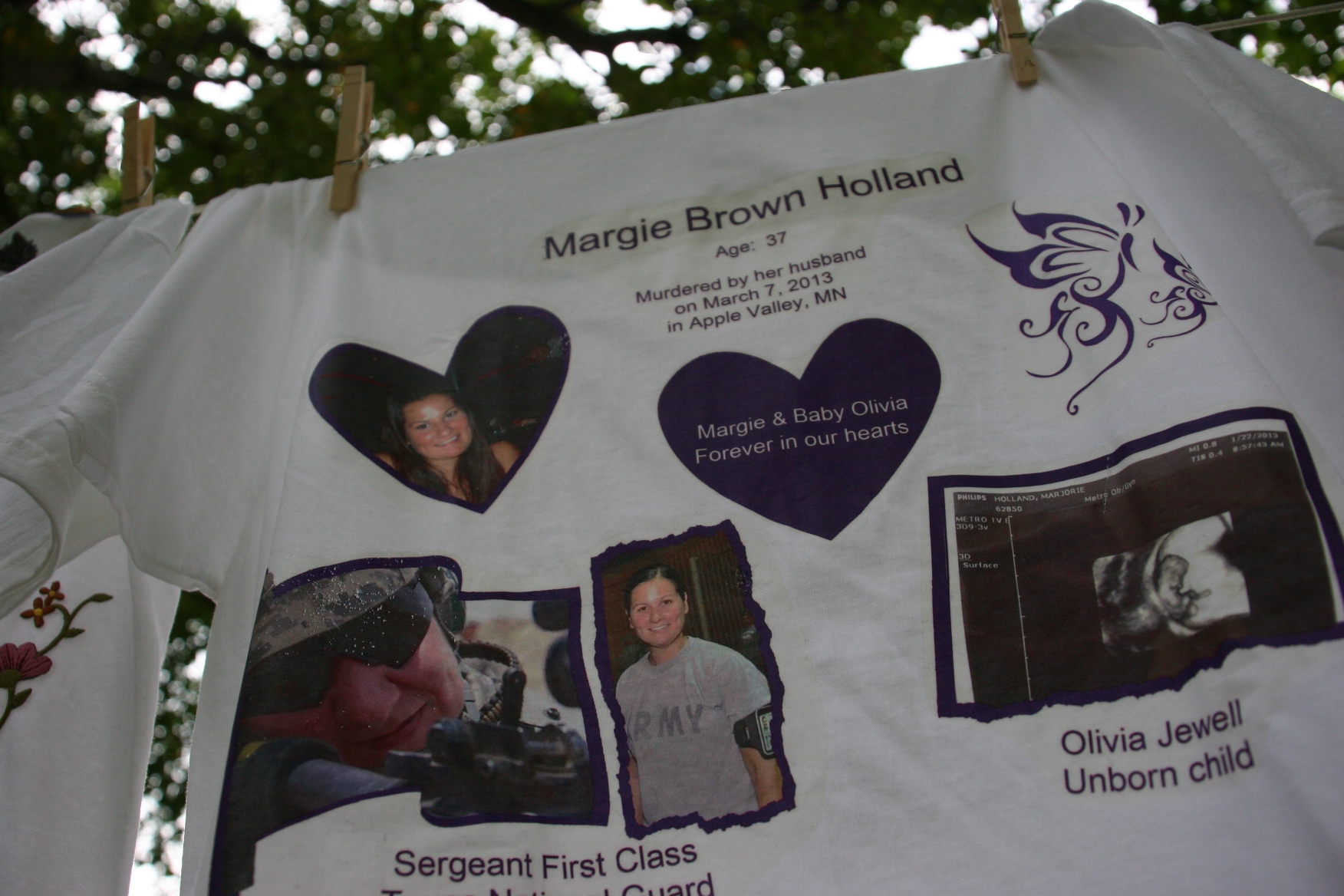
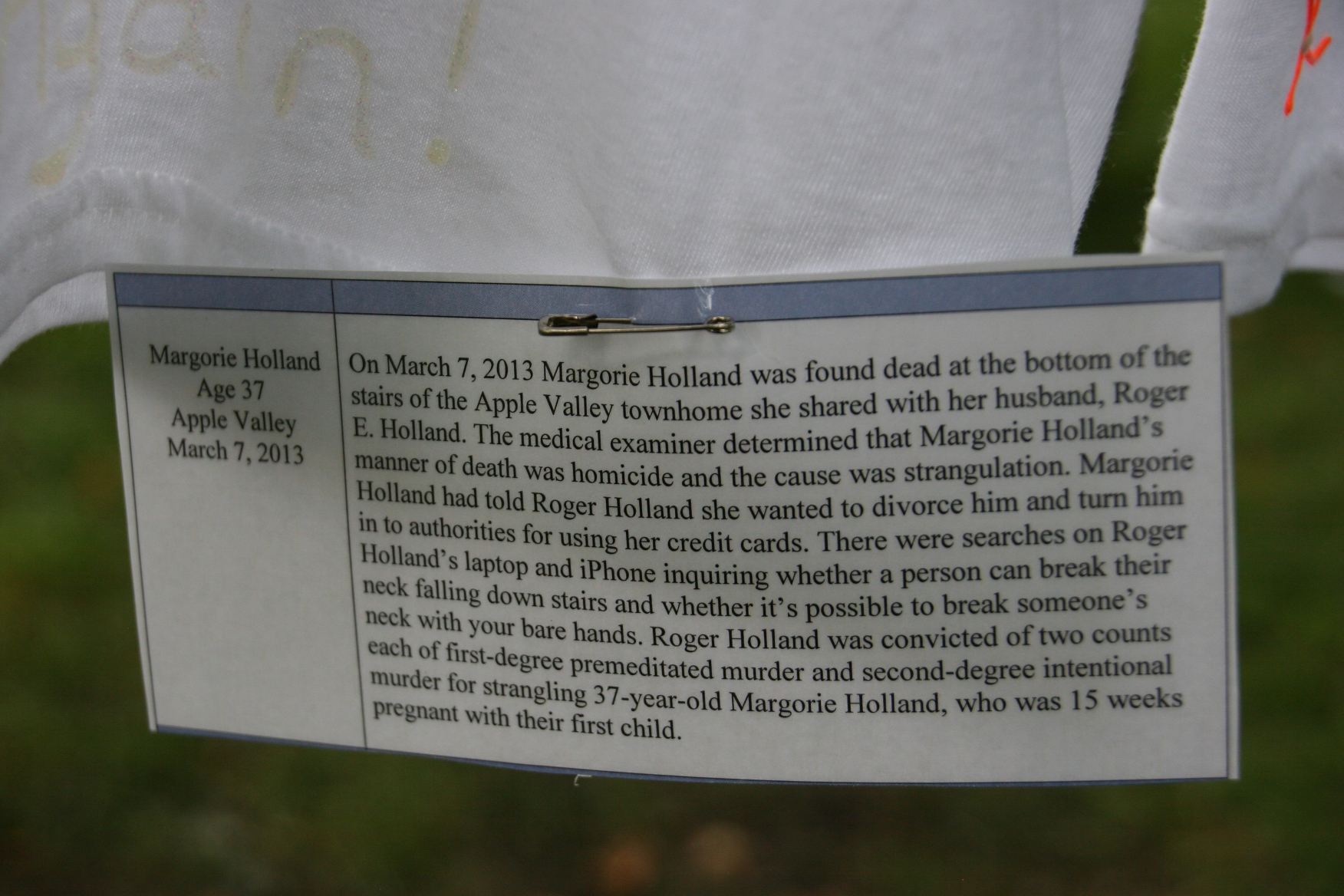
Faribault native Margie Brown Holland and her unborn daughter, Olivia, were honored in The Clothesline Project in Owatonna in July 2015. Margie was murdered by her husband in March 2013. Margie’s dad once lived across the street from me.
I am beyond pleased. Those of you who read my blog regularly know that I have written often about domestic violence and abuse. It’s an important topic to me because many friends and family have been affected both directly and indirectly by both.
Nothing is ever black-and-white simple. Already, anger and frustration have been expressed in comments published online on the Daily News website. That’s OK. People are talking. We all need also to make a conscious effort to listen, to educate ourselves and then do what we can to make a difference. We each have a voice. We need to stop looking the other way, pretending domestic violence and mental health issues don’t exist. They do. No matter your social, economic, educational or professional status.
Just last week four squad cars and an ambulance parked near my home early one morning while law enforcement dealt with a suicide threat in my neighborhood.
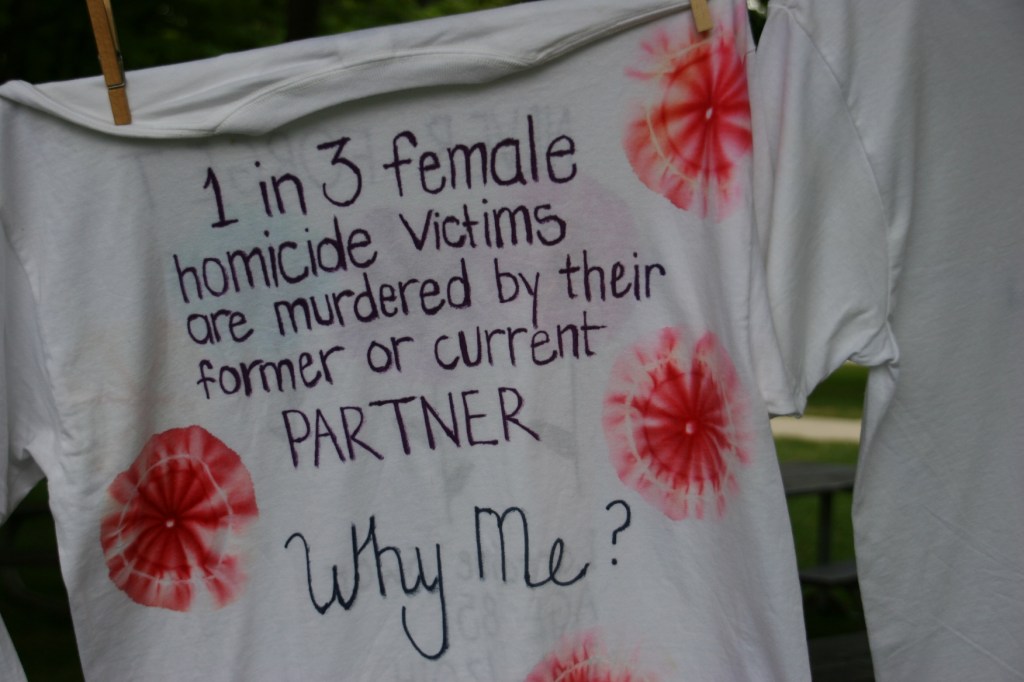
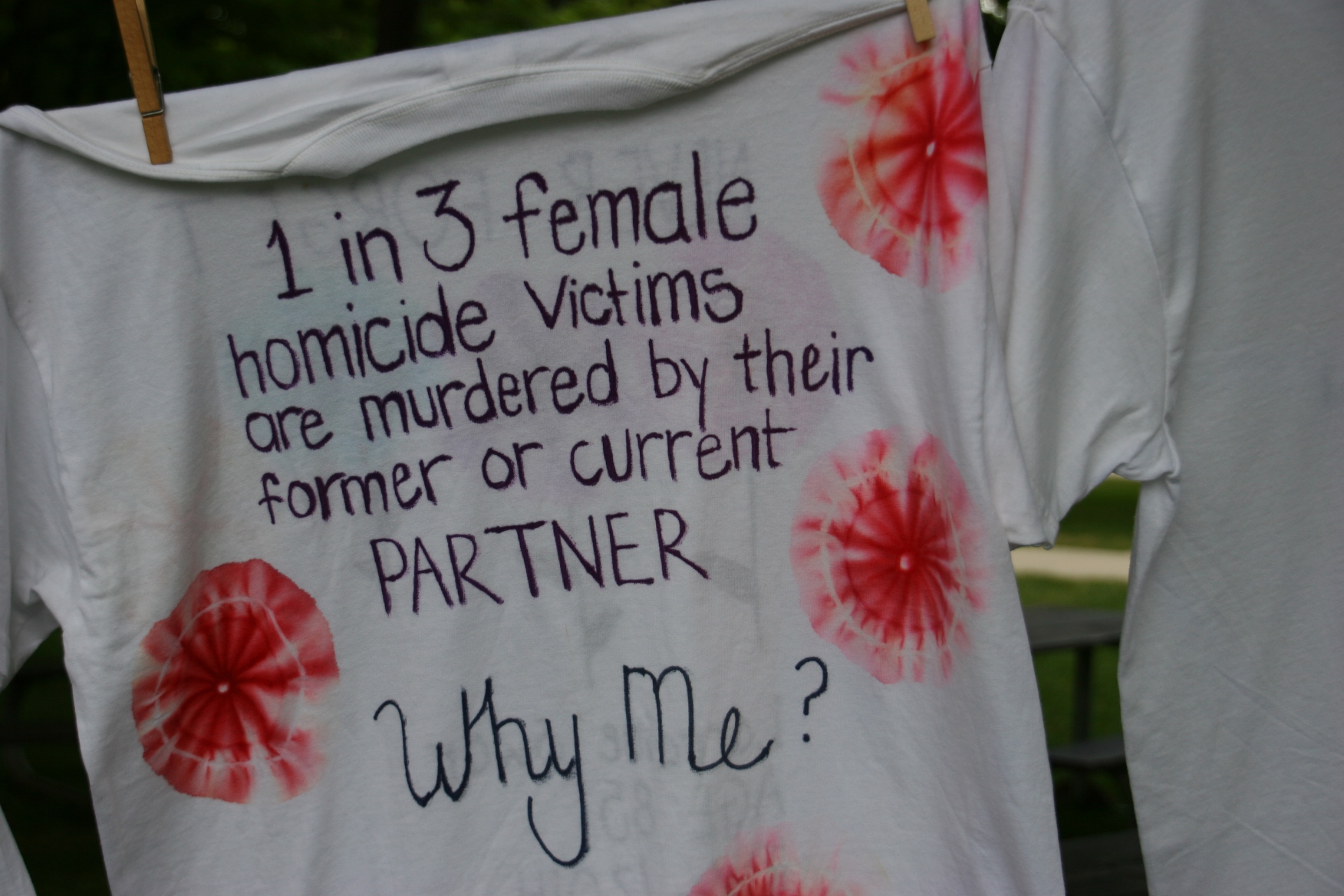
Statistics on a The Clothesline Project t-shirt from the Minnesota Coaltition for Battered Women, photographed in July 2015 in Owatonna. Minnesota Prairie Roots file photo.
My HOPE stone, painted by a great niece. Minnesota Prairie Roots file photo.
We already have a great resource with HOPE Center, which offers healing, outreach, prevention and education related to domestic violence. (Call the 24-hour safe-line at 800-607-2330.) That includes Rice County Blueprint for Safety, a collaborative inter-agency victim-centered response to domestic violence-related crimes.
We also have the South Central Mobile Crisis Team which responds on-site to help individuals experiencing a mental health crisis. I was unaware of this until the recently-published newspaper articles. I’d suggest increasing awareness via clinics, churches, schools…
Now we, individually, need also to reflect and ask, “What can I do?”
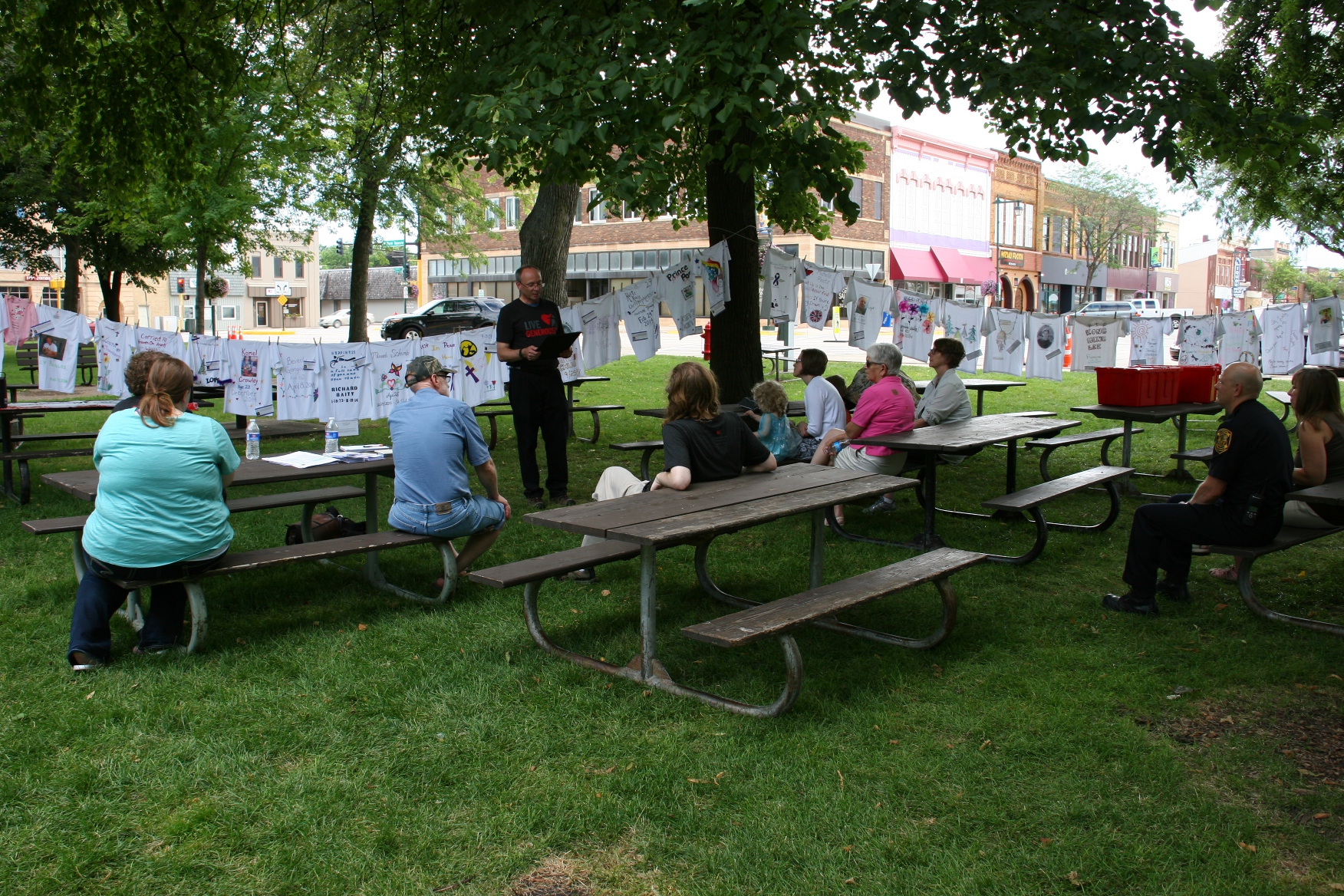
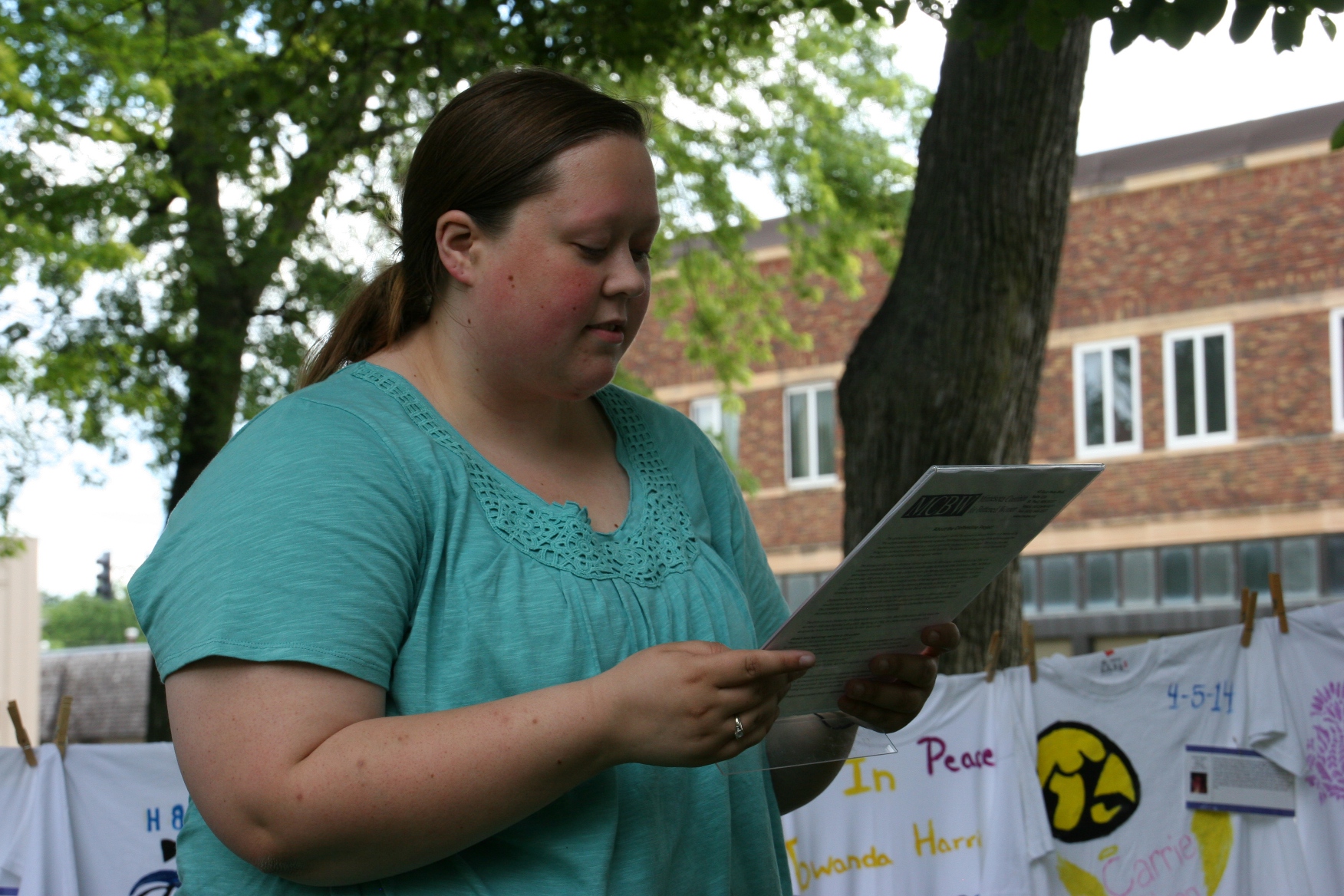
The Rev. Kirk Griebel spoke to the group, read a mayoral proclamation and led a prayer.
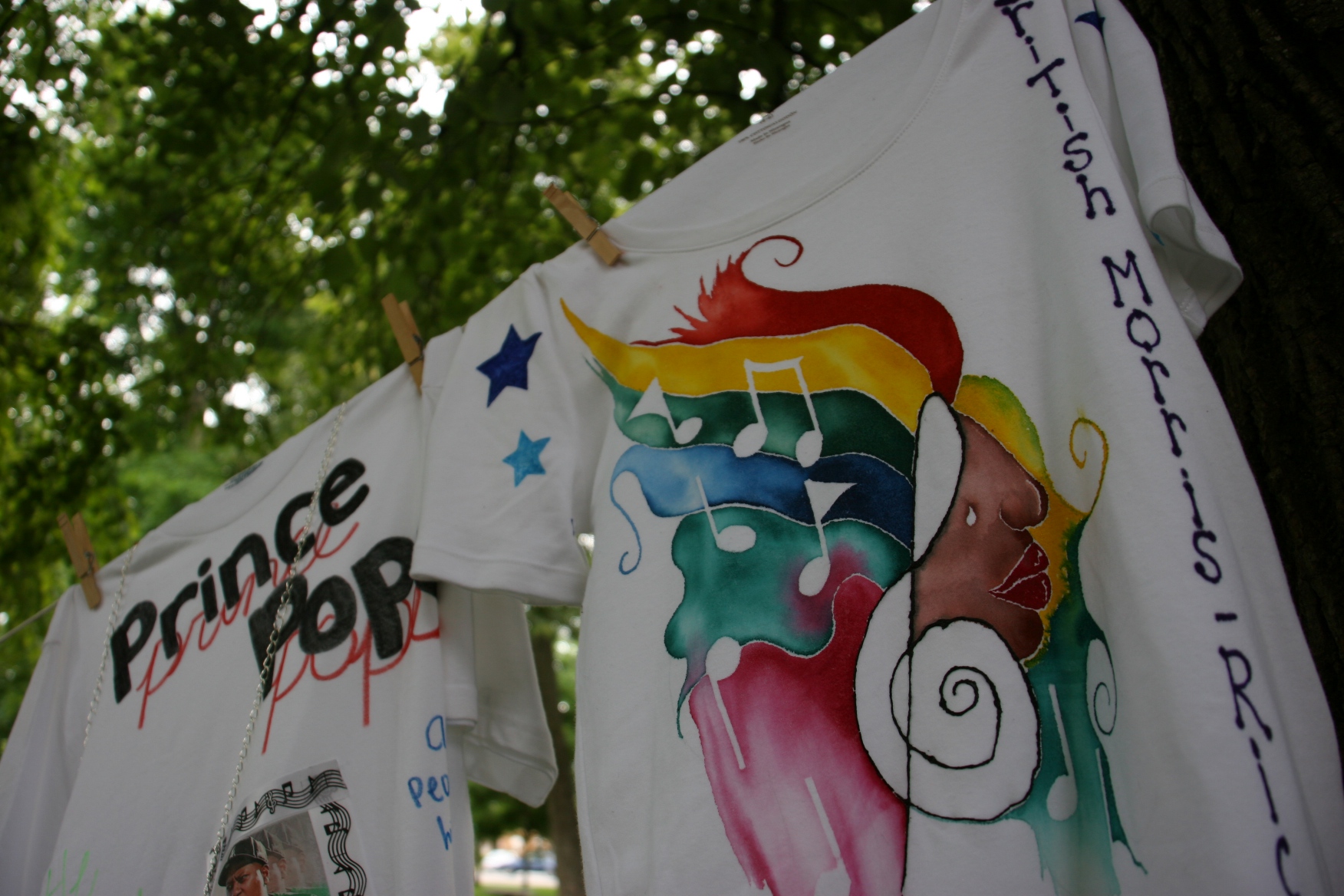
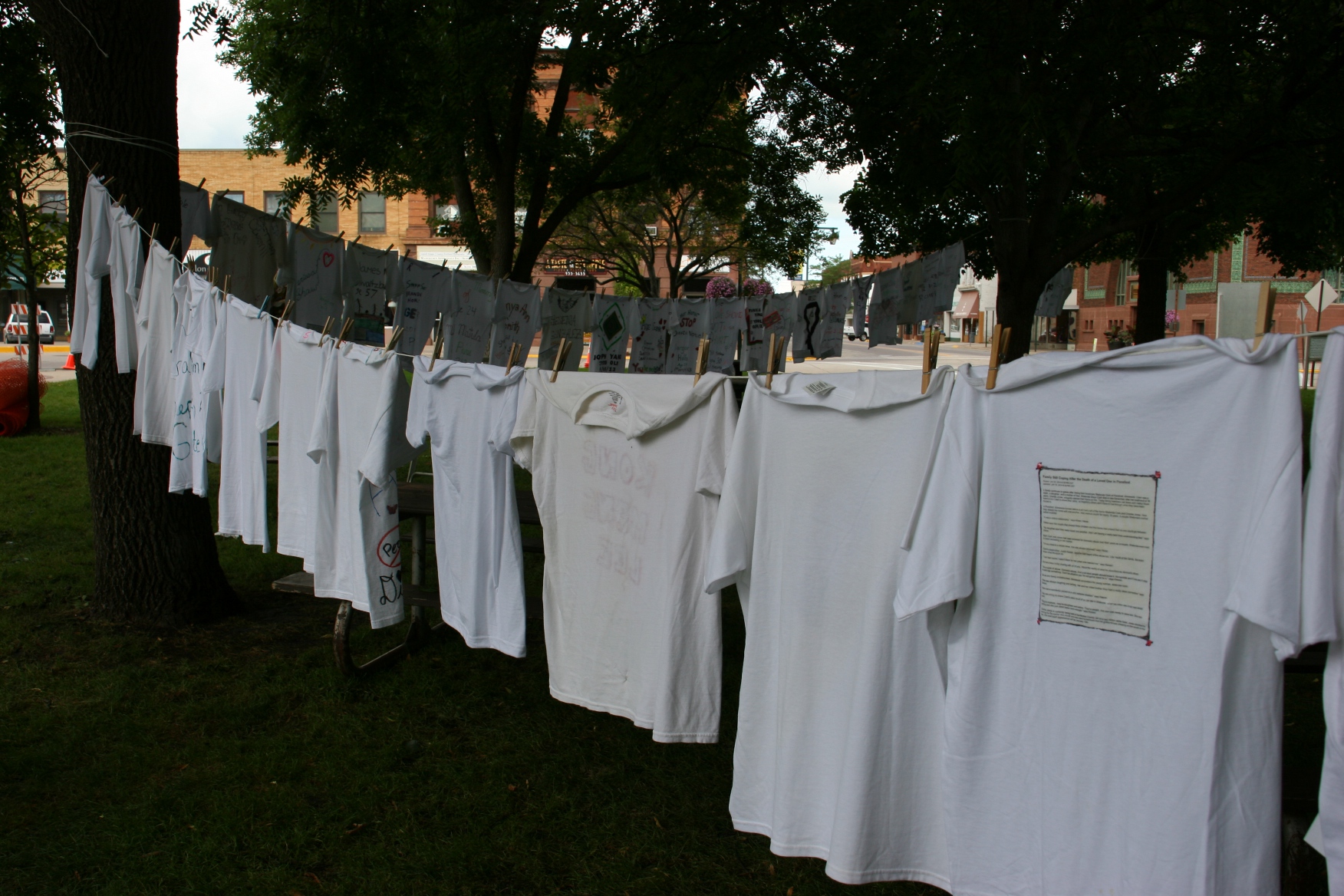
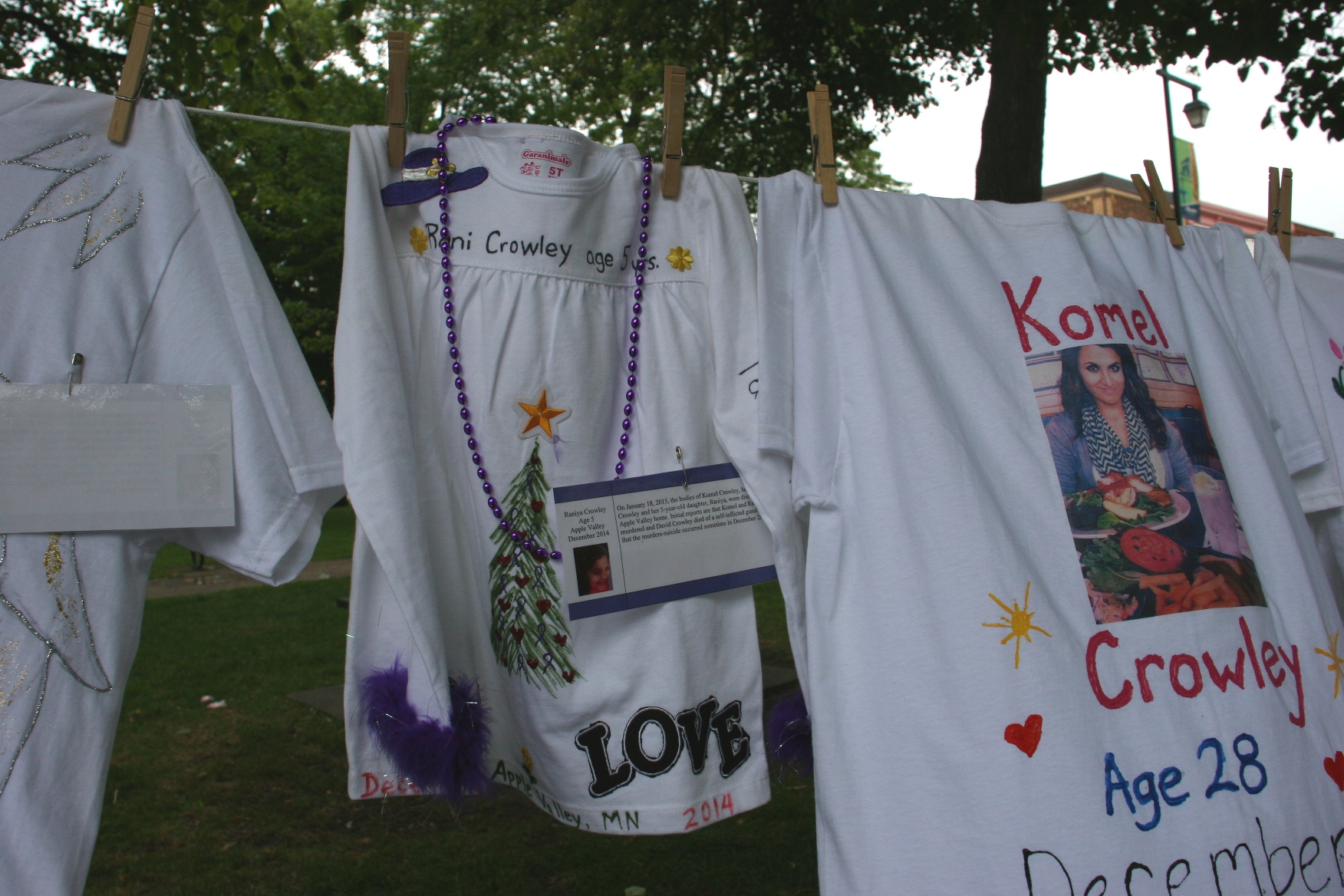
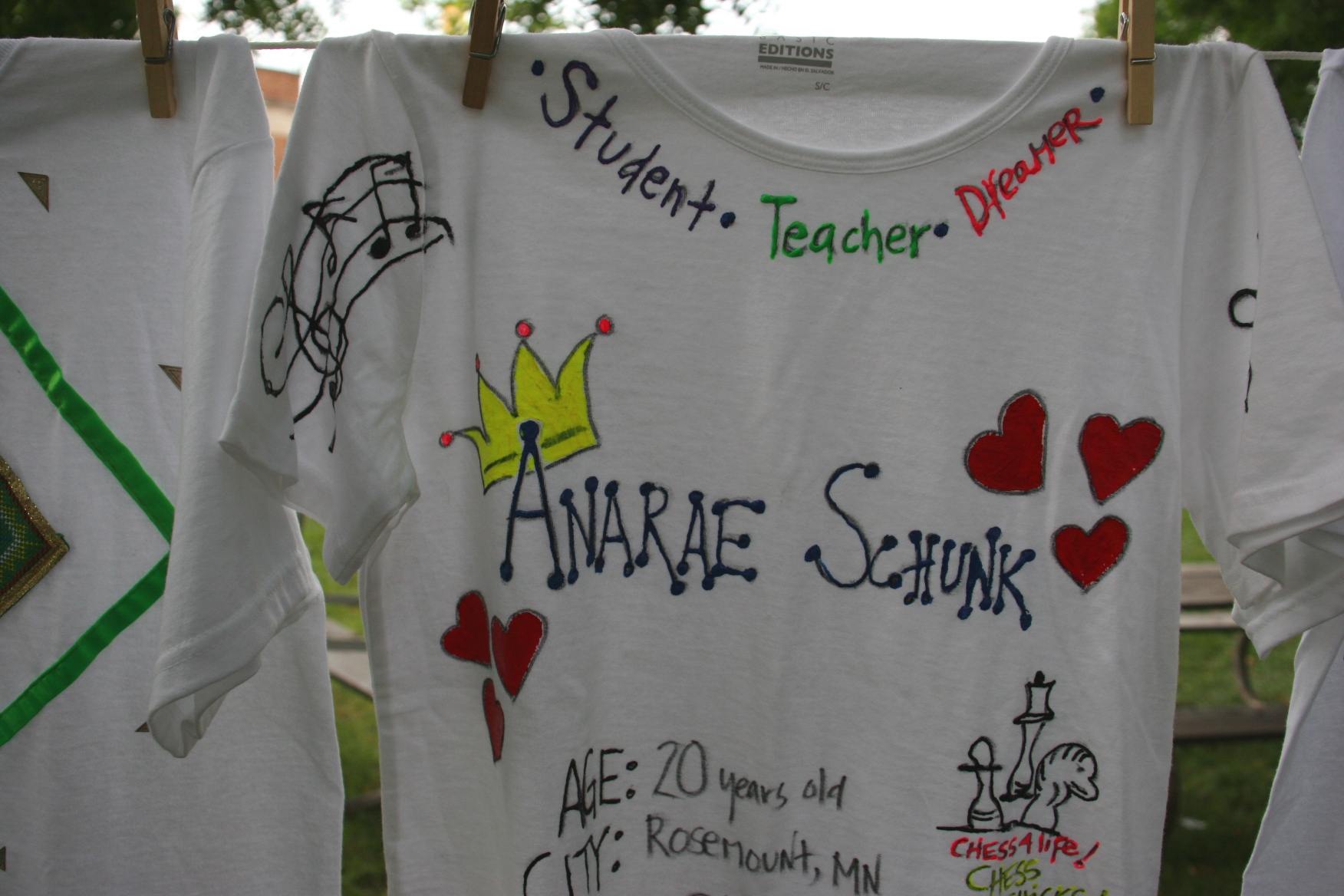
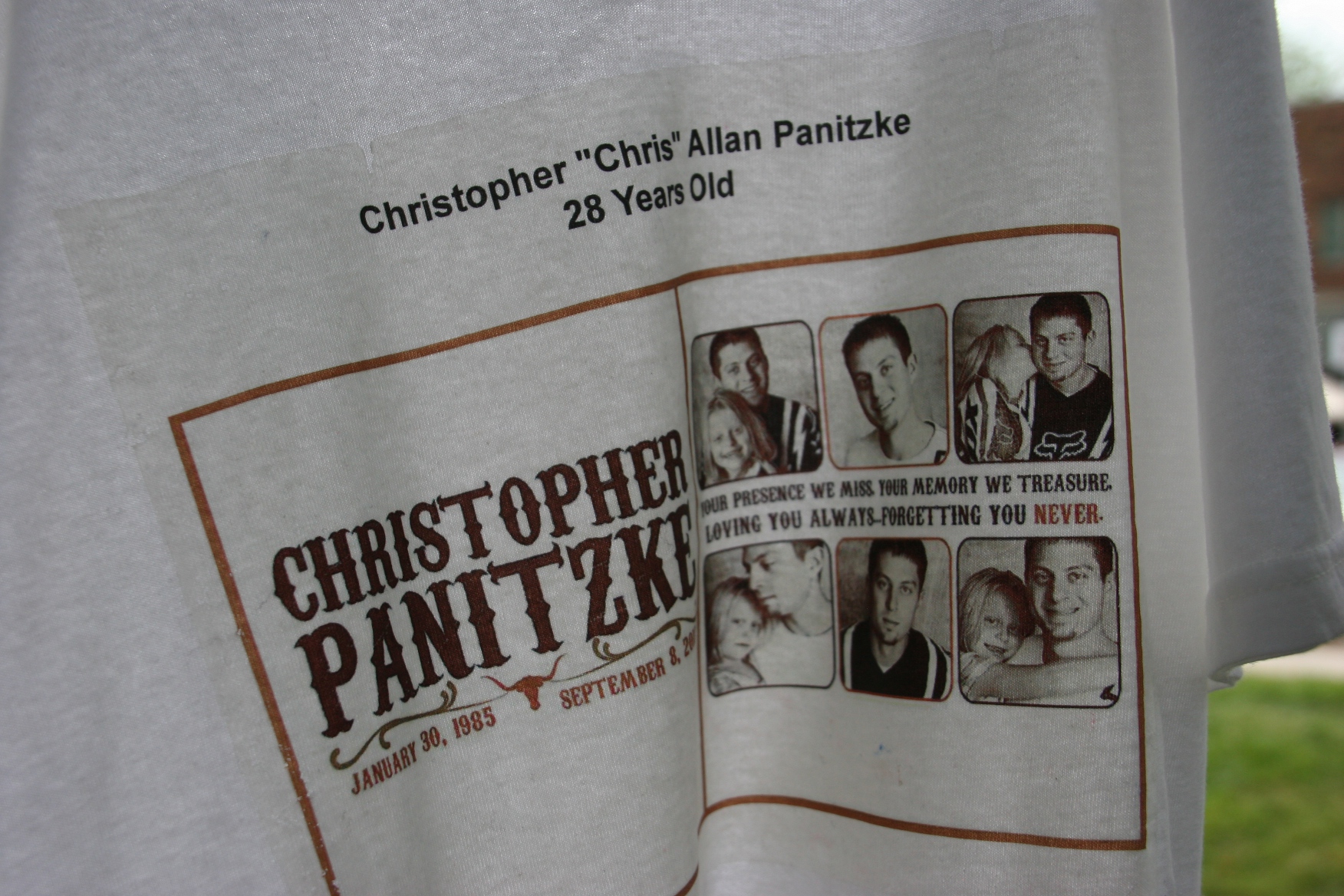
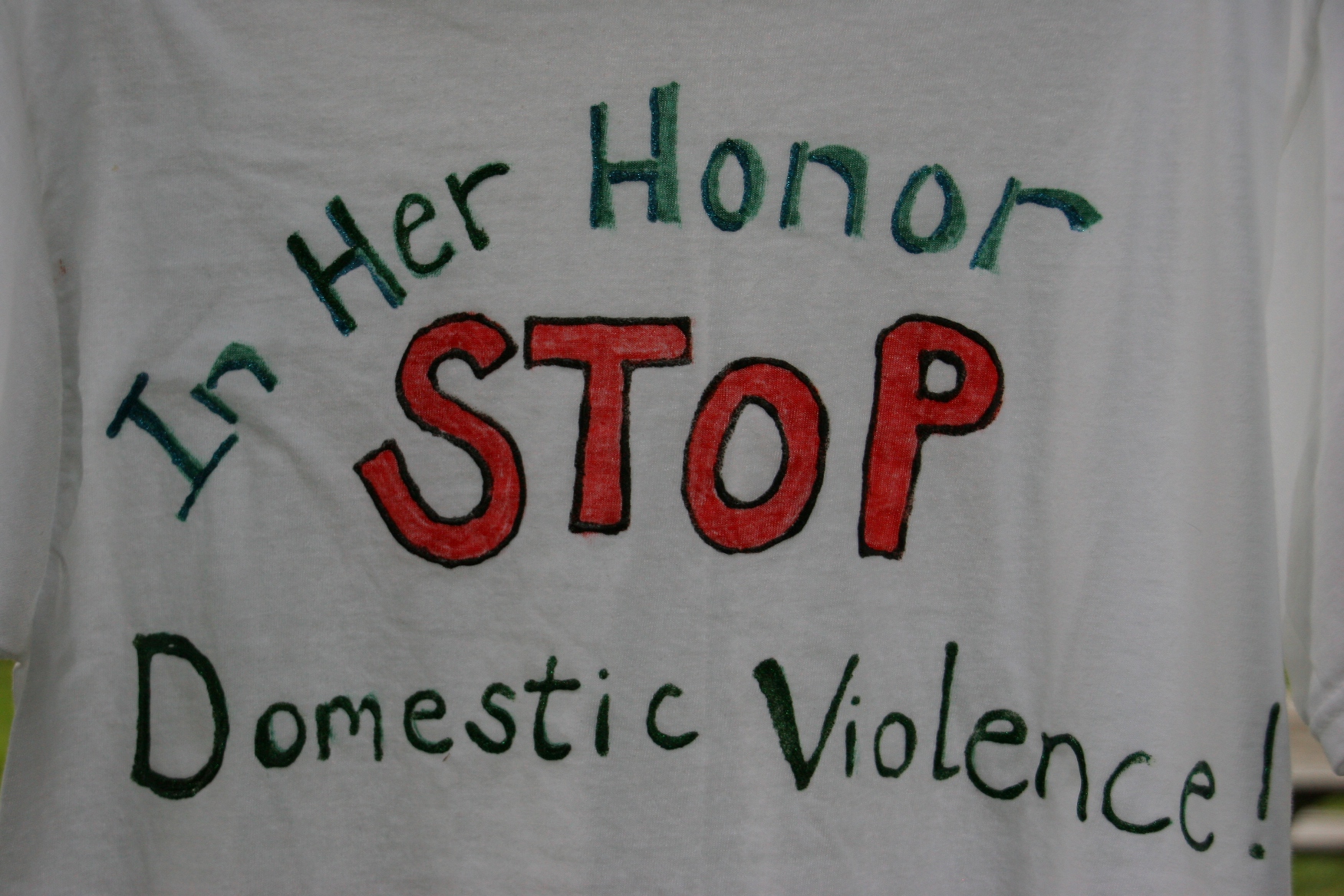
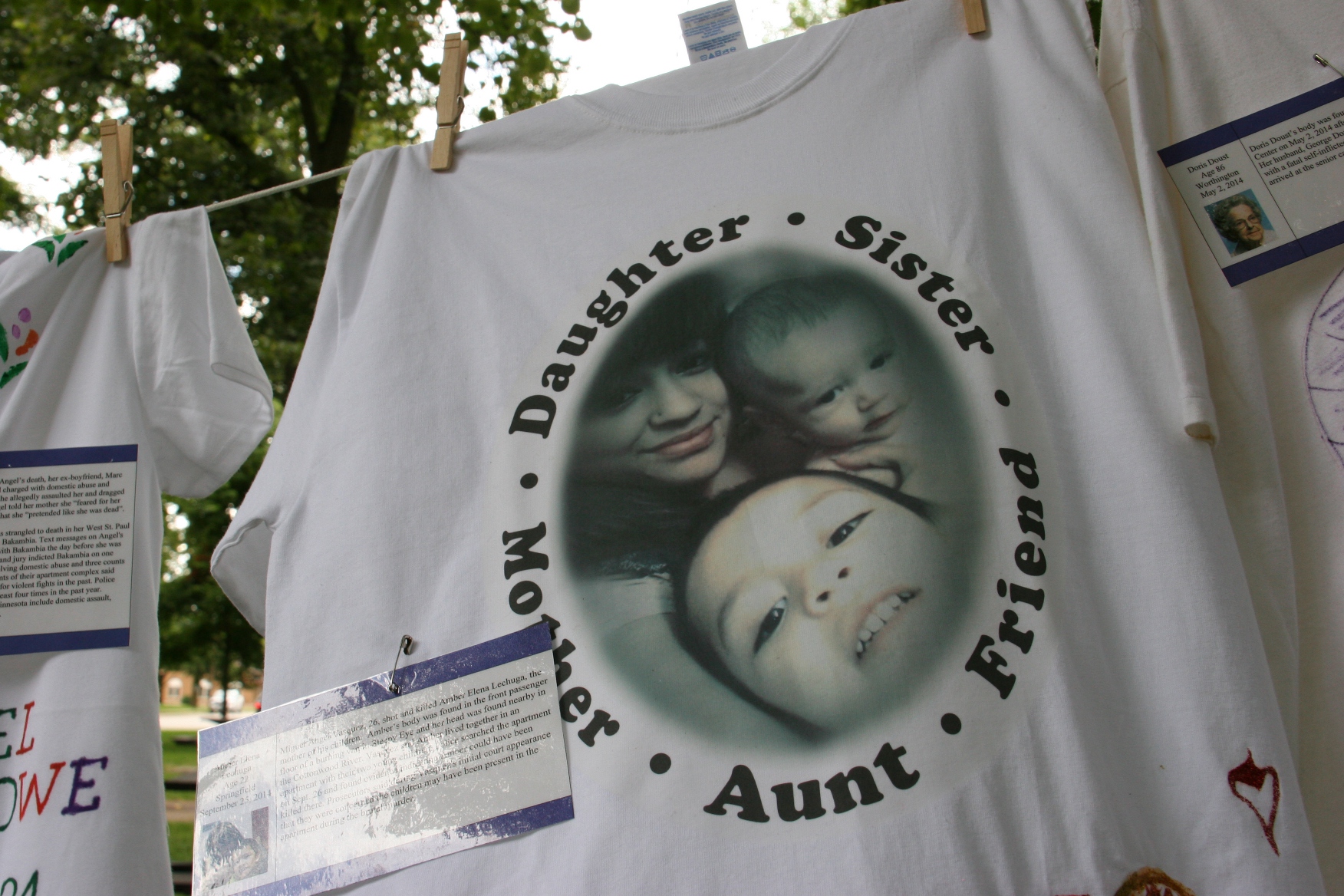
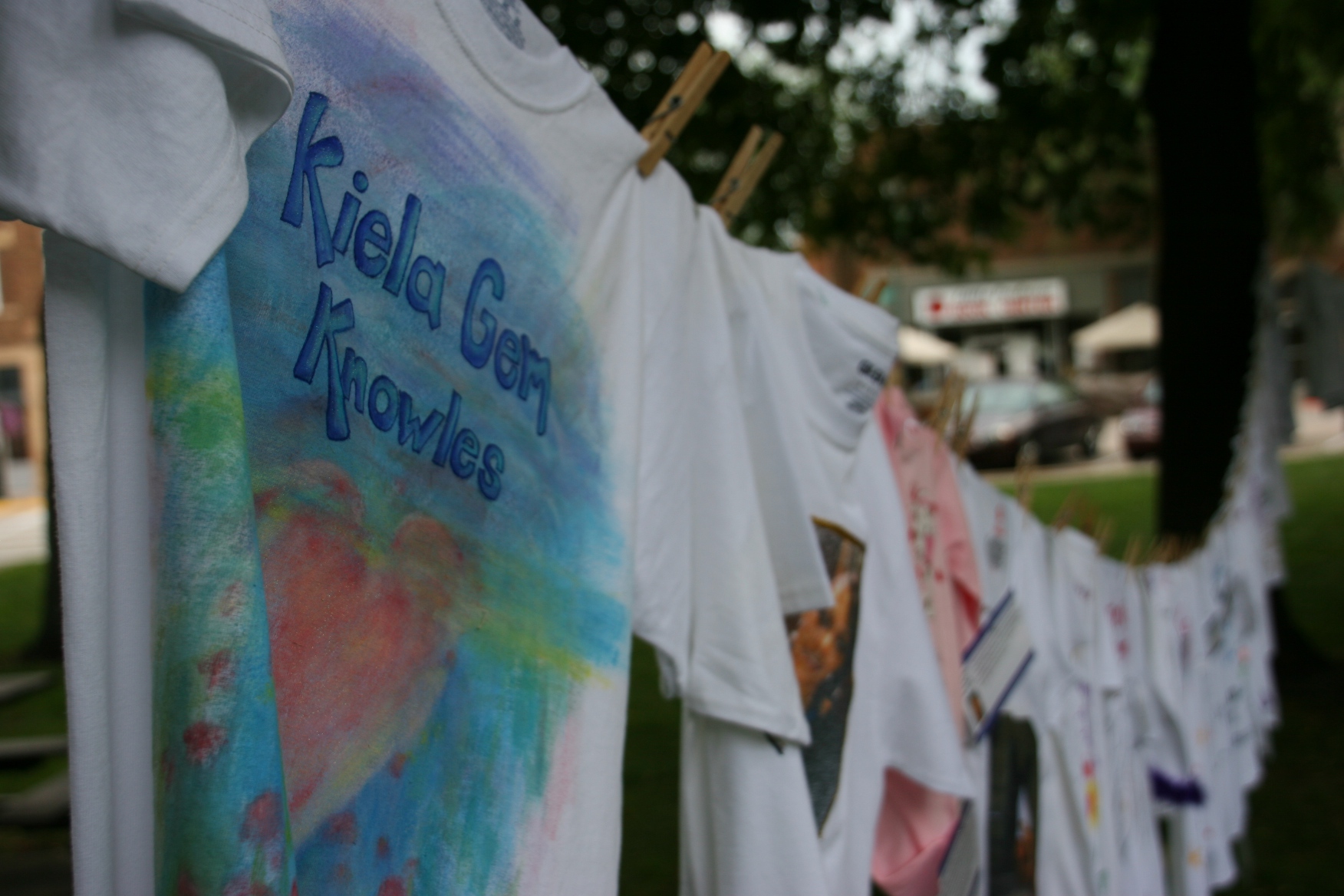
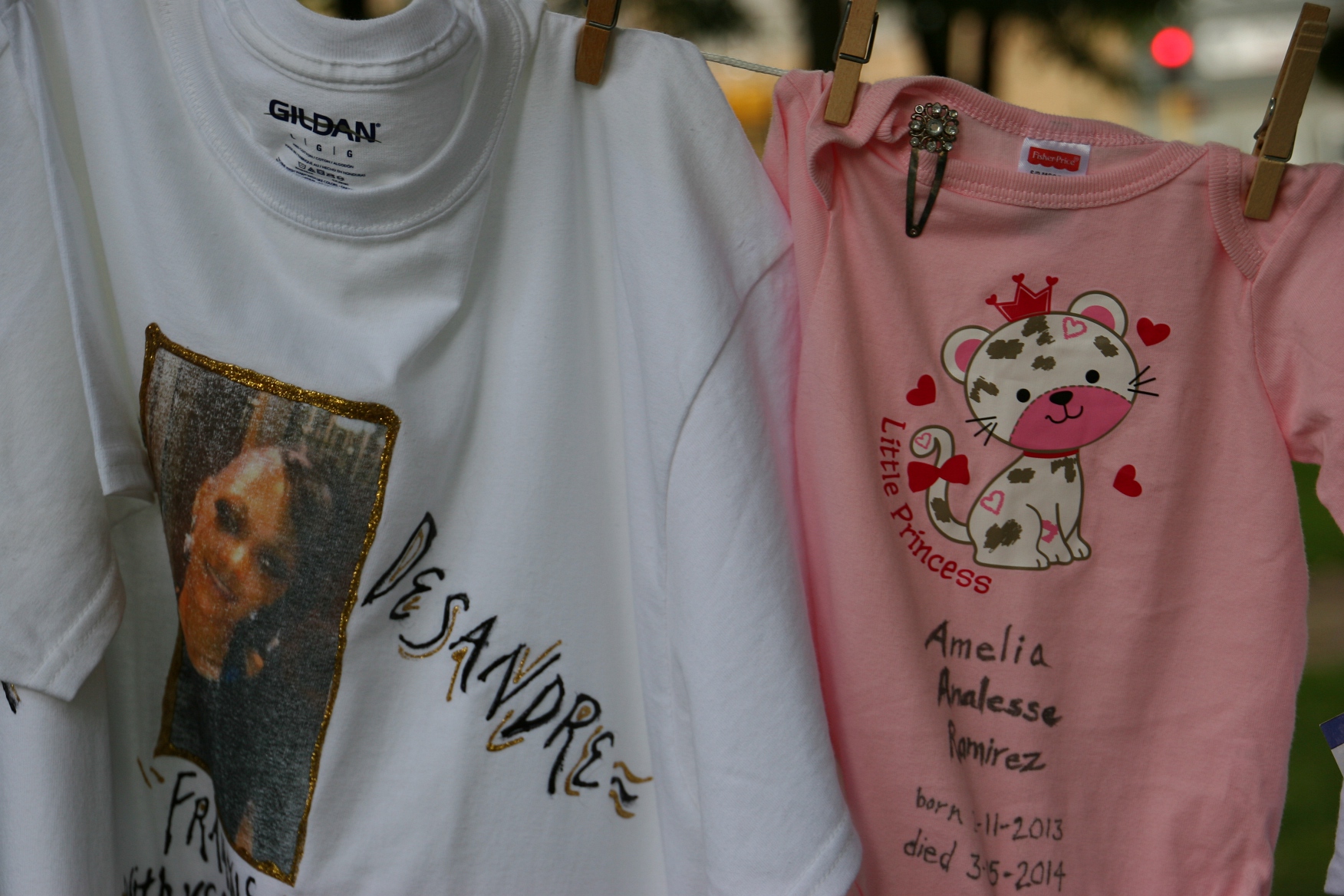
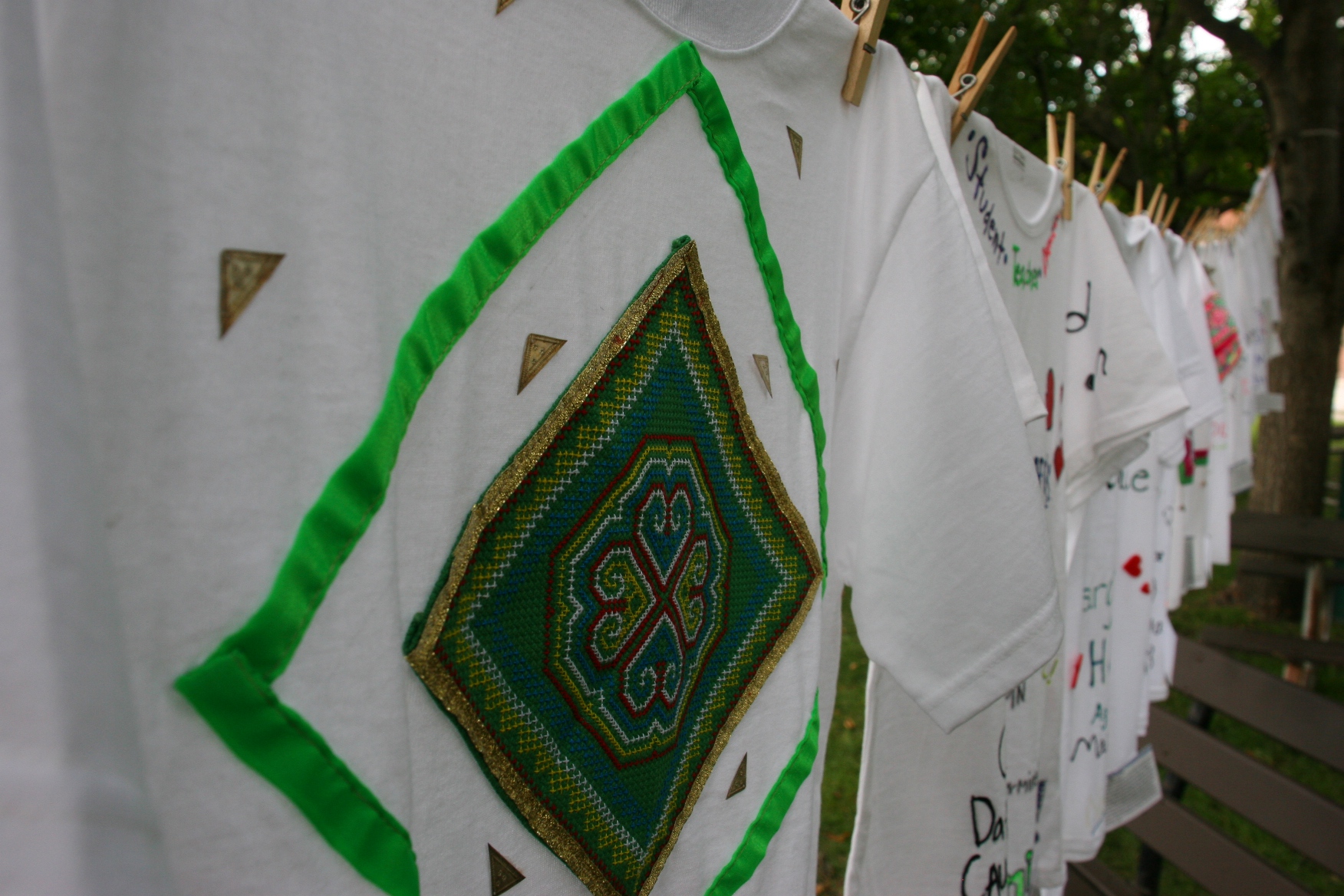
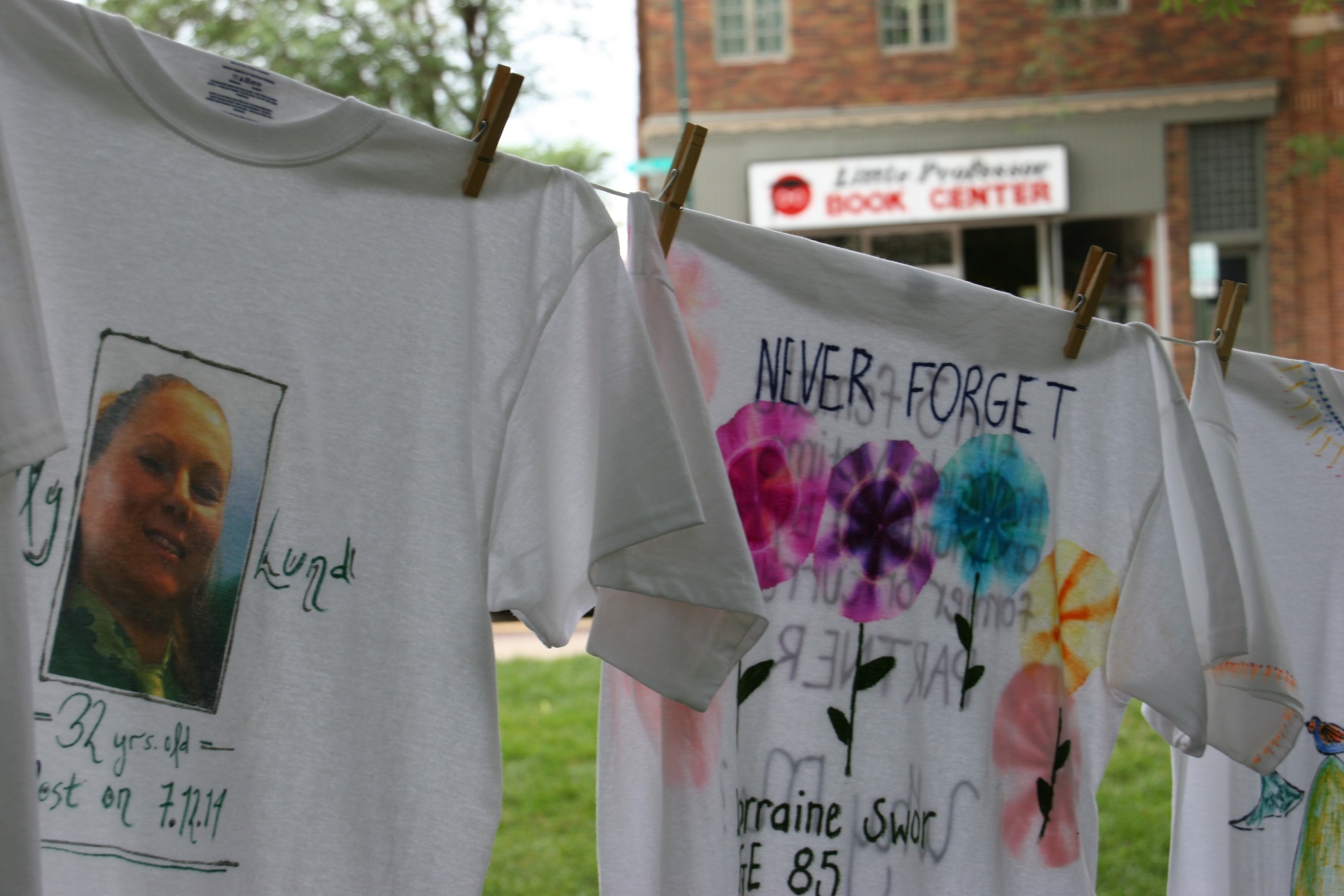
The t-shirts, strung on clotheslines between trees, are “a powerful and safe witness to those who have lost their lives through domestic violence,” the Rev. Kirk Griebel said.
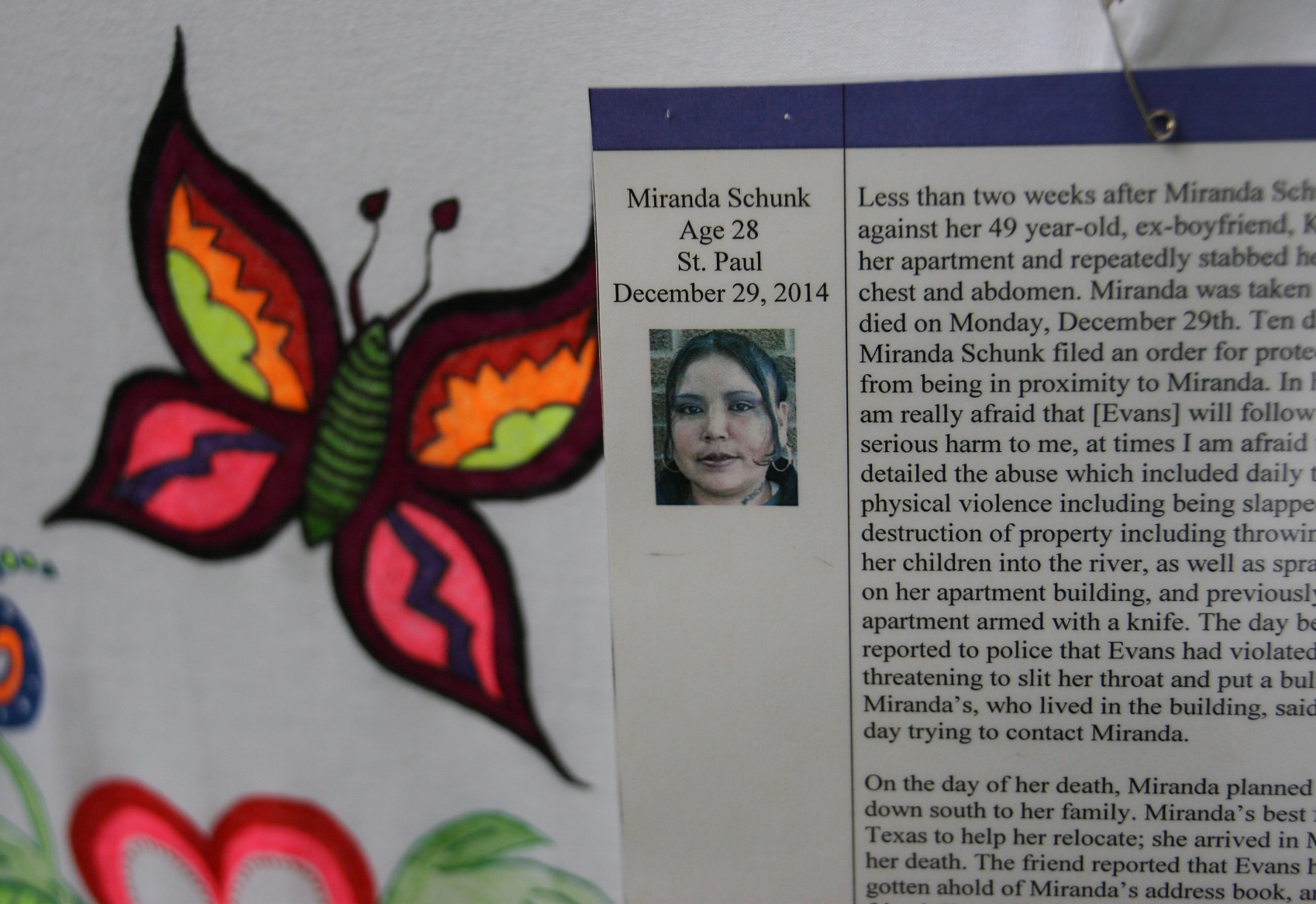
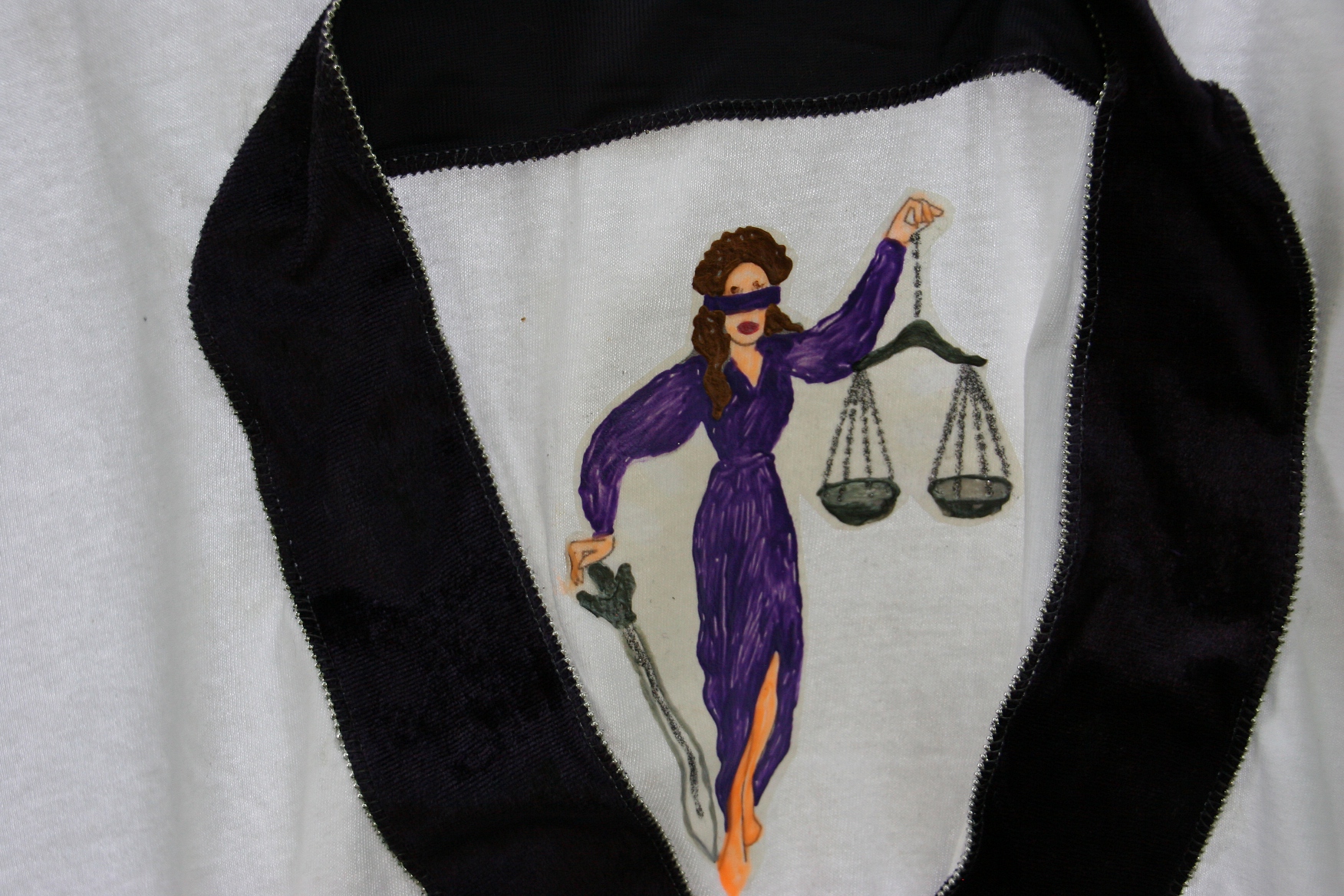
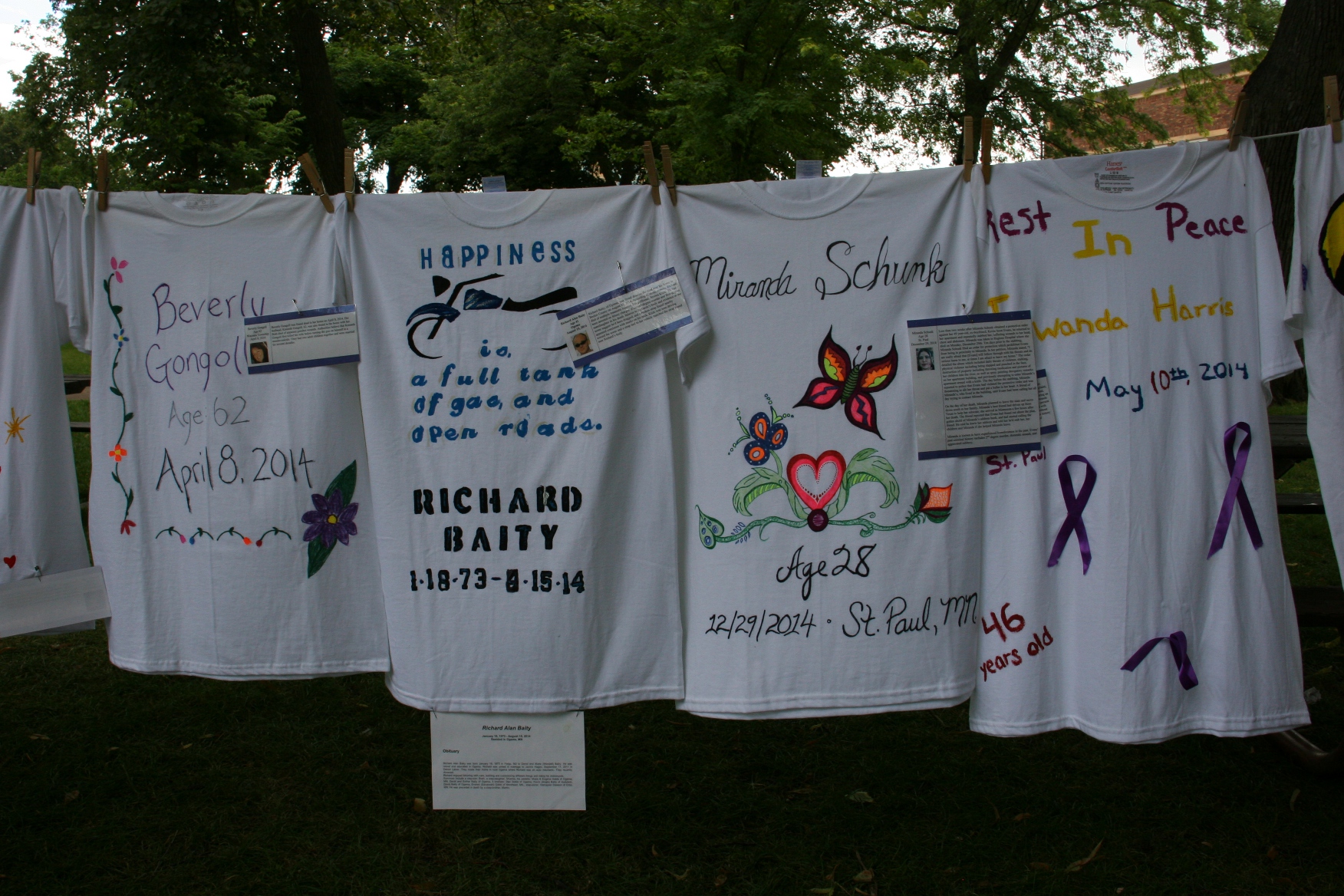
He is right. To see those shirts with names and art emblazoned thereon, to read dates and details and the horrors of the victims’ deaths makes a visually powerful statement. Domestic violence becomes up close and personal.
So personal for me that I noted two shirts honoring Margie Brown Holland and her unborn daughter, Oliva, murdered by Margie’s husband. Margie’s dad once lived across the street from me in Faribault.
I recognized so many names from media reports—Raniya and Komel Crowley, dead at the hands of their father/husband: Anarae Schunk; Christopher Panitzke…
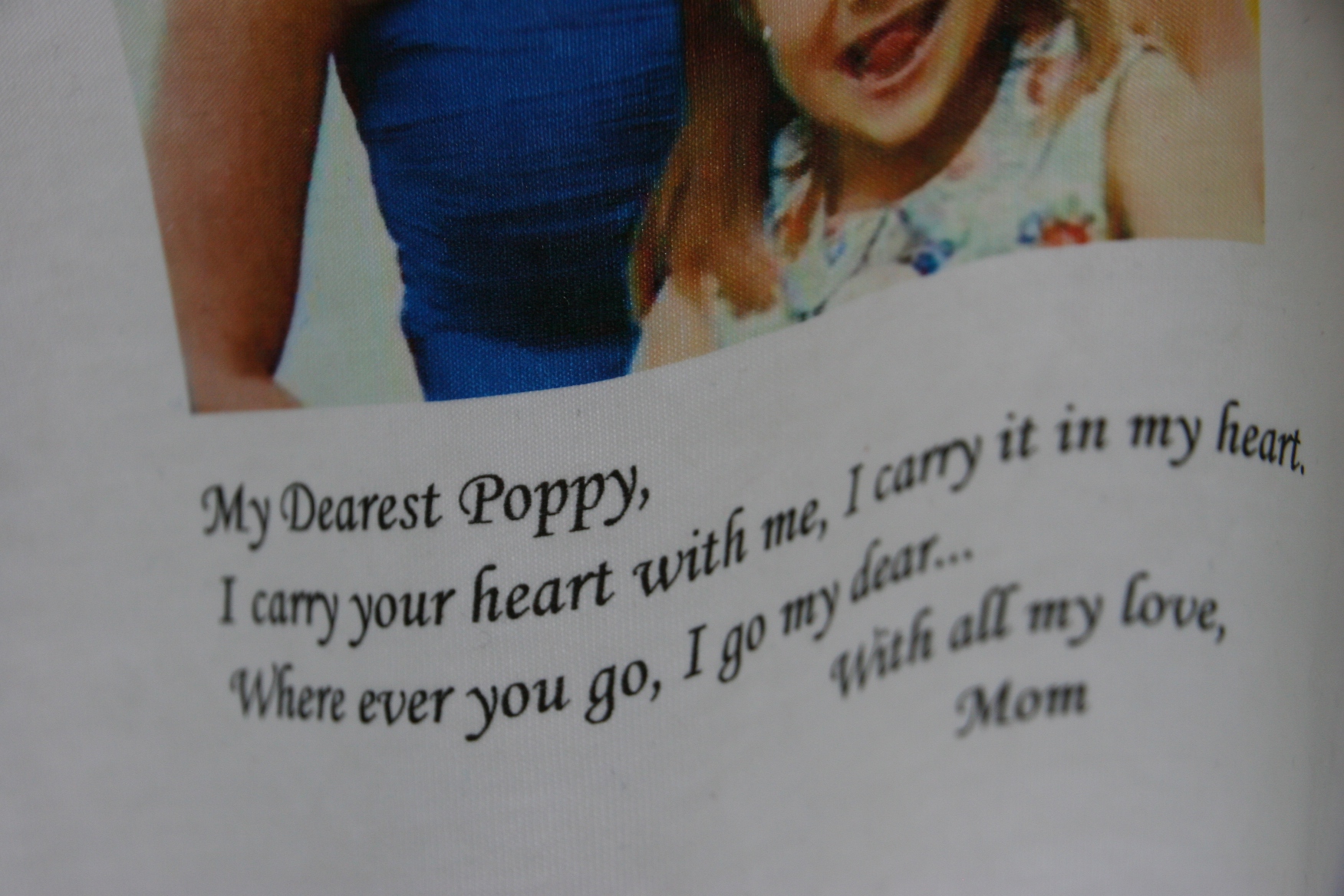
Words of love and grief and hope that touch the soul for the lives lost for those forever changed by the violence.
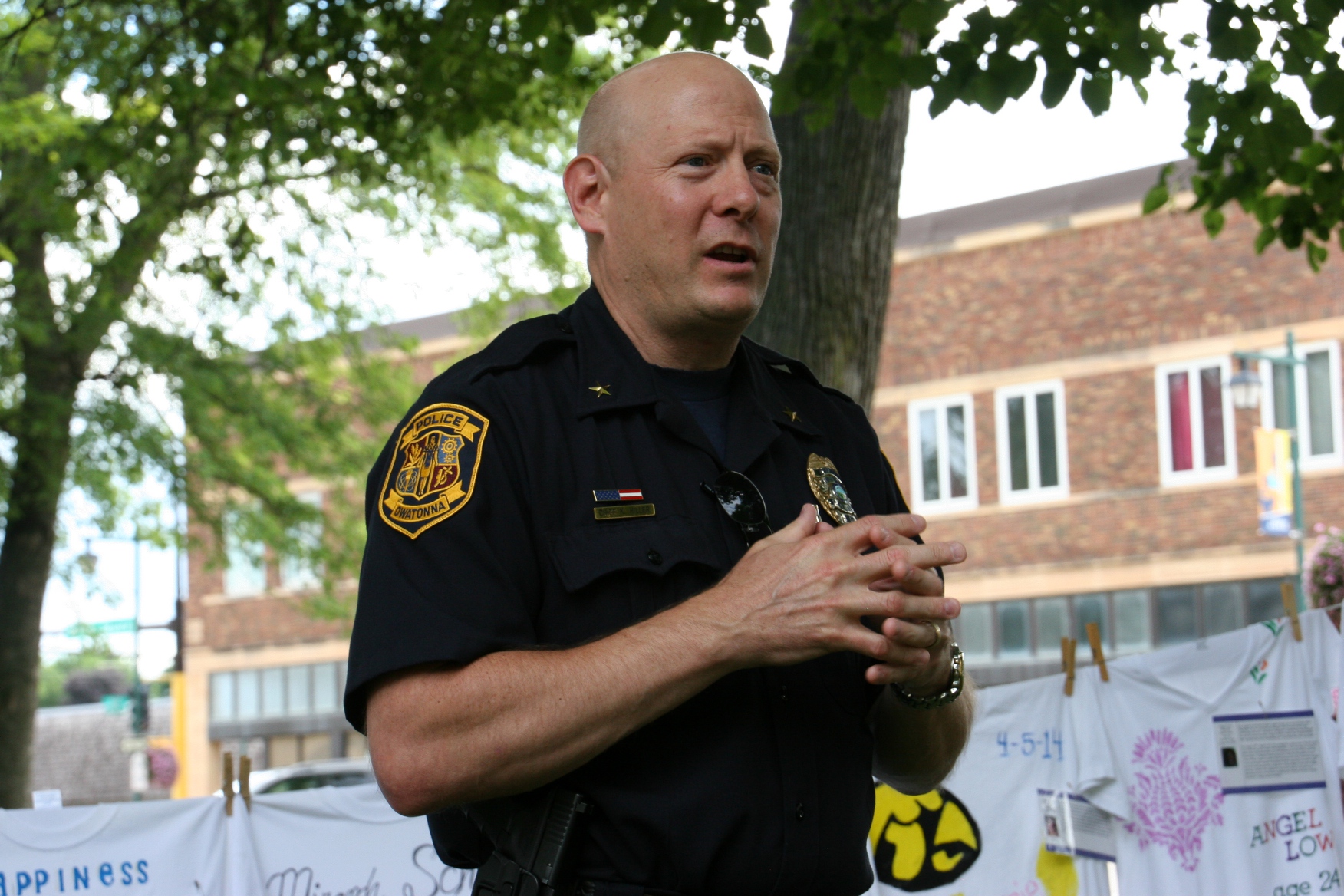
Owatonna Police Chief Keith Hiller addresses the topic of domestic violence. “I will continue to pray,” he said, “that we don’t lose anyone else (to domestic violence) in our beautiful community of Owatonna.”
To hear Owatonna Police Chief Keith Hiller’s plea to “break the silence,” to understand that domestic violence is a community-wide problem is a statement worth repeating. In 2014, his department responded to 184 calls of aggravated and other assaults, many involving domestic violence. He confirmed that in the field of law enforcement, more officers are killed while responding to domestic violence calls than any other type. Family dynamics, weapons, chemical dependency and mental health issues are often involved in these heated situations, he explained.
In a particularly chilling comment, Chief Hiller noted that in cases of strangulation, a matter of seconds may determine whether a victim survives or a t-shirt would be hung on the clothesline. Life and death in the hands of an abuser. Seconds.
The police chief called for awareness and prevention, of working together. On Sunday afternoon in Owatonna, 60 t-shirts bannered that message in a deeply personal and powerful way.
BONUS PHOTOS:
Laci Brune, sexual assault coordinator for the Crisis Resource Center of Steele County, reads the names of those who died as a result of domestic violence in Minnesota in 2014. She told attendees that, on average, a woman will leave her abuser seven or eight times before she finally leaves for good.
Details on a t-shirt honoring Nancy A. Sullivan, 57, of Shoreview, who died on June 4, 2013. These words are written on her shirt: “Safety is a basic human right!”
FYI: If you are in a relationship that doesn’t feel right, it probably isn’t. If your gut is telling you something is wrong, trust your instincts. If words and behavior differ, if red flags are popping up, if you feel like your partner may be lying or using you, believe yourself, not him/her.
Domestic abuse is about control and manipulation. It can take the forms of physical (including sexual), mental, emotional, financial and spiritual abuse.
If you are in immediate danger, call 911. Have a safe plan to leave. When you leave an abuser, it is the most dangerous time for you.
IF YOU ARE PART OF A FAITH community, what is your church doing to raise awareness and help victims, survivors and families/friends of those involved in domestic violence/abuse?
Nothing? Something?
I hadn’t considered this in depth until reading an article, Aiming for AWARENESS, CARING RESPONSE—Domestic violence task force to hold spring training sessions, in the March issue of Reporter, the official newspaper of The Lutheran Church, Missouri Synod.
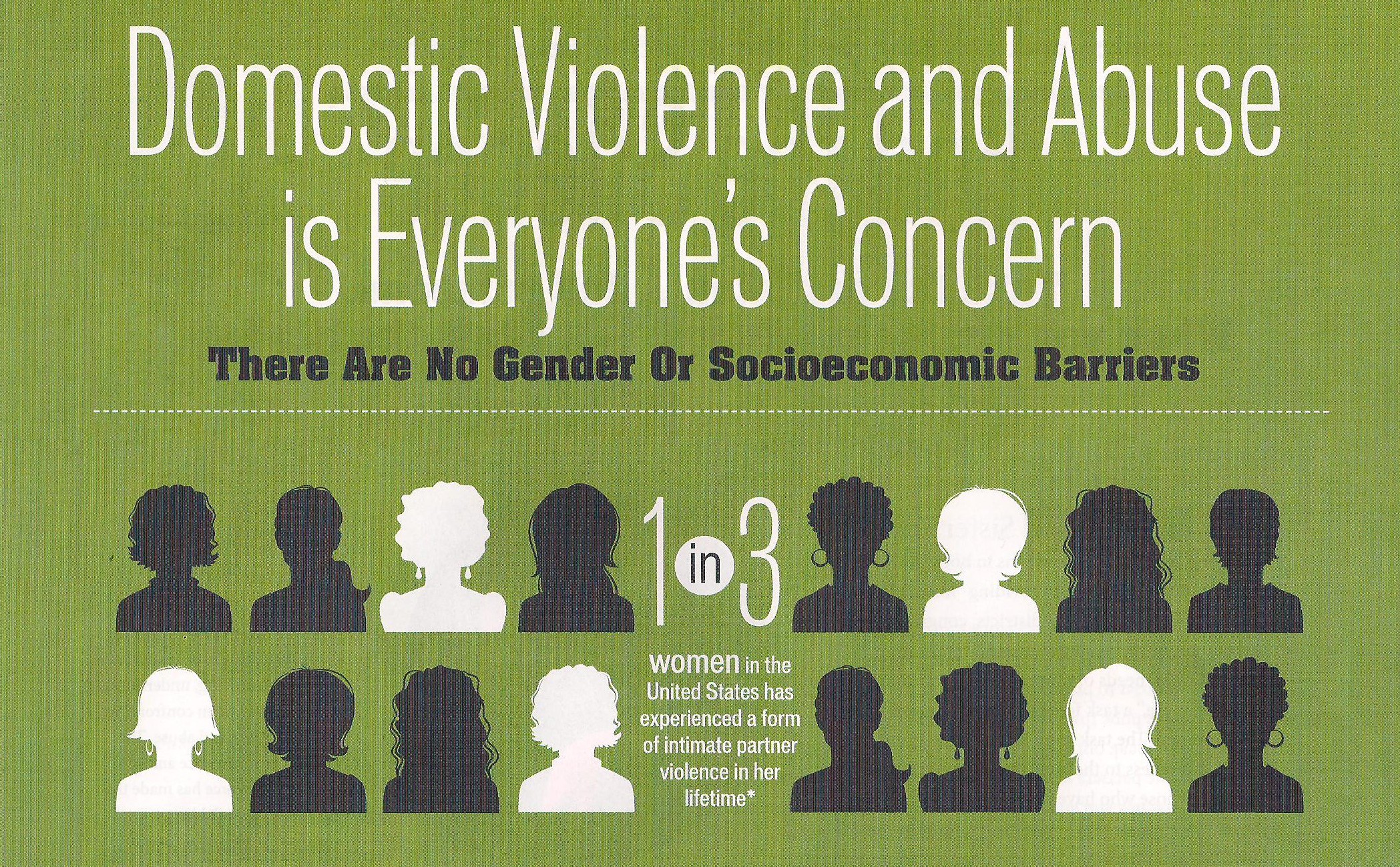
A snippet of the domestic violence poster published by the Lutheran Church, Missouri Synod.
Additionally, the paper includes an insert, Domestic Violence and Abuse is Everyone’s Concern—There Are No Gender Or Socioeconomic Barriers, for posting in churches.
I am pleased to see the LCMS working on this issue which has been so much in the public eye in recent months. It’s important that clergy, parish nurses and other church workers understand domestic abuse and learn how to assist by listening, by offering help, hope and referrals, and by educating parishioners.
I’ve read conflicting data on the number of women who experience domestic violence. Some sources say one in three. Others one in six. Whatever the correct number, one is one too many. (Note here that I am well aware that men are also victims. But, since the majority are women, that is the reference I am using in this post.)
Among people I am connected to, either directly or indirectly, 10 women have been/are being abused. Two of them were murdered by the men who supposedly loved them.
As LCMS Domestic Violence and Child Abuse Task Force Chair Kim Schave says, “Domestic violence and abuse can happen to anyone.”
Don’t think it can’t.
And let’s remember the secondary victims—children, parents, siblings, friends… They, too, need support, encouragement and healing.
The faith-based Salvation Army South Africa’s recent campaign, WHY IS IT SO HARD TO SEE BLACK AND BLUE, utilizing a photo of that infamous black and blue striped (or gold and white striped depending on what you see) dress is brilliant. A subtext published in the Cape Times newspaper stated, “The only illusion is if you think it was her choice.”
While I still cannot see a black and blue dress, the message is absolutely clear to me. We all need to start seeing domestic abuse in all its forms. Sometimes the abuse is visible. Often it is not. Emotional abuse (lies, manipulation, controlling behavior, etc.) is even more common than physical abuse. Domestic abuse can also take the form of spiritual abuse.
We need to understand that these women are not to blame for the abuse inflicted upon them. We need to understand that they are being manipulated/controlled/brainwashed. We need to understand that “love” and mind control are powerful. We need to understand that we cannot simply swoop in and “rescue” them.
Knowledge is power.
What have you learned about domestic abuse in recent months with the spotlight shining on the issue? What are you doing with that knowledge? If you are part of a faith community, what is your church doing, if anything? Do you know a survivor of domestic abuse or someone currently in an abusive situation (no names or identifying details, please)? Let’s hear your voice and insights.











 Minnesota Prairie Roots
Recent Comments