Minnesota Prairie Roots

Writing and photography by Audrey Kletscher Helbling

Carleton art exhibit zeroes in on guns, nuclear disarmament & nonviolence November 11, 2025

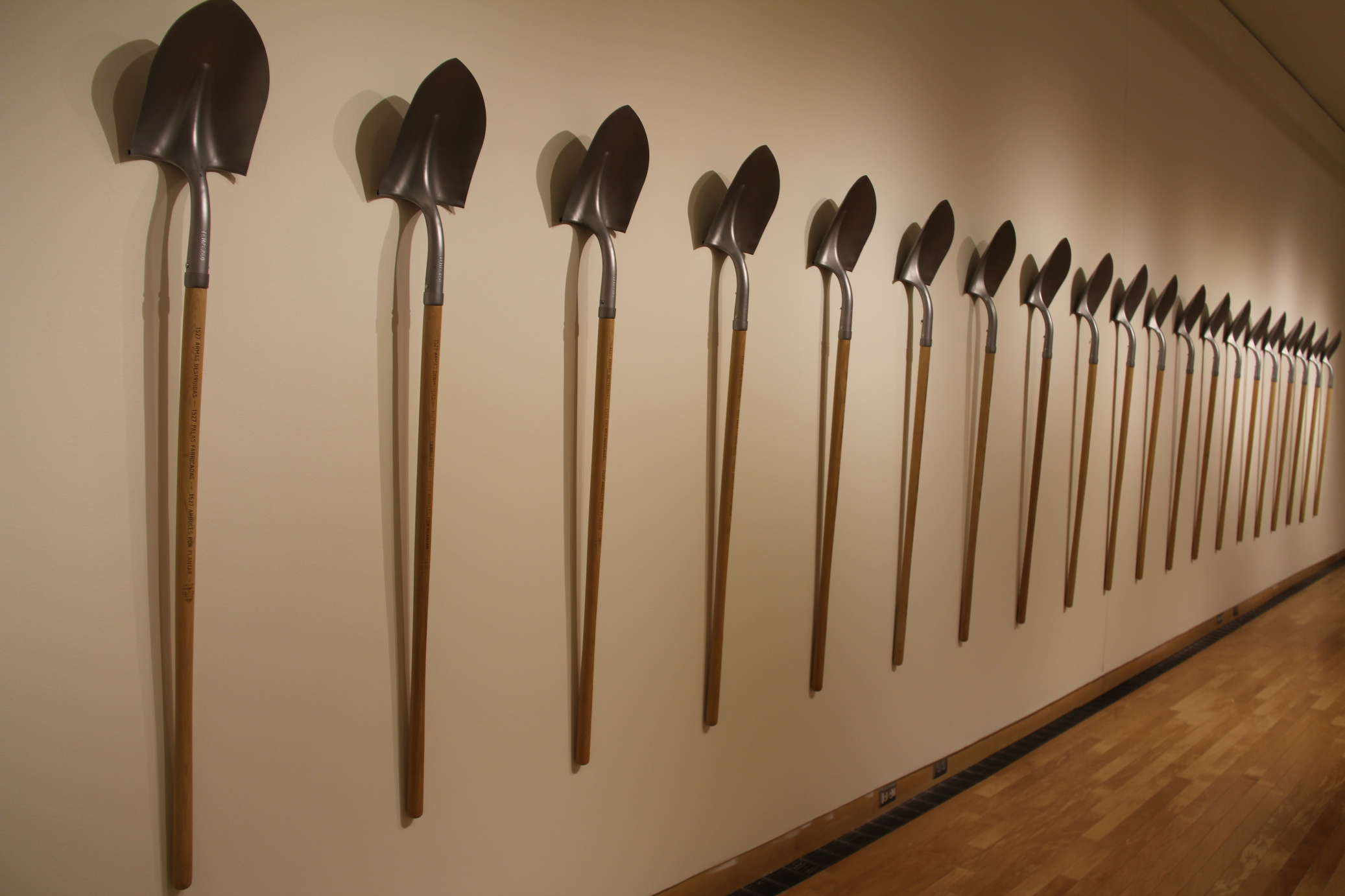
These shovels were crafted from melted guns and are part of an exhibit, “Ahimsa,” at Carleton College. (Minnesota Prairie Roots copyrighted photo October 2025)

INSIDE A GALLERY at a noted liberal arts college in a small southern Minnesota city, 20 identical shovels hang, evenly-spaced, along a beige wall. That may not seem impressive, until you read the story behind these tools.

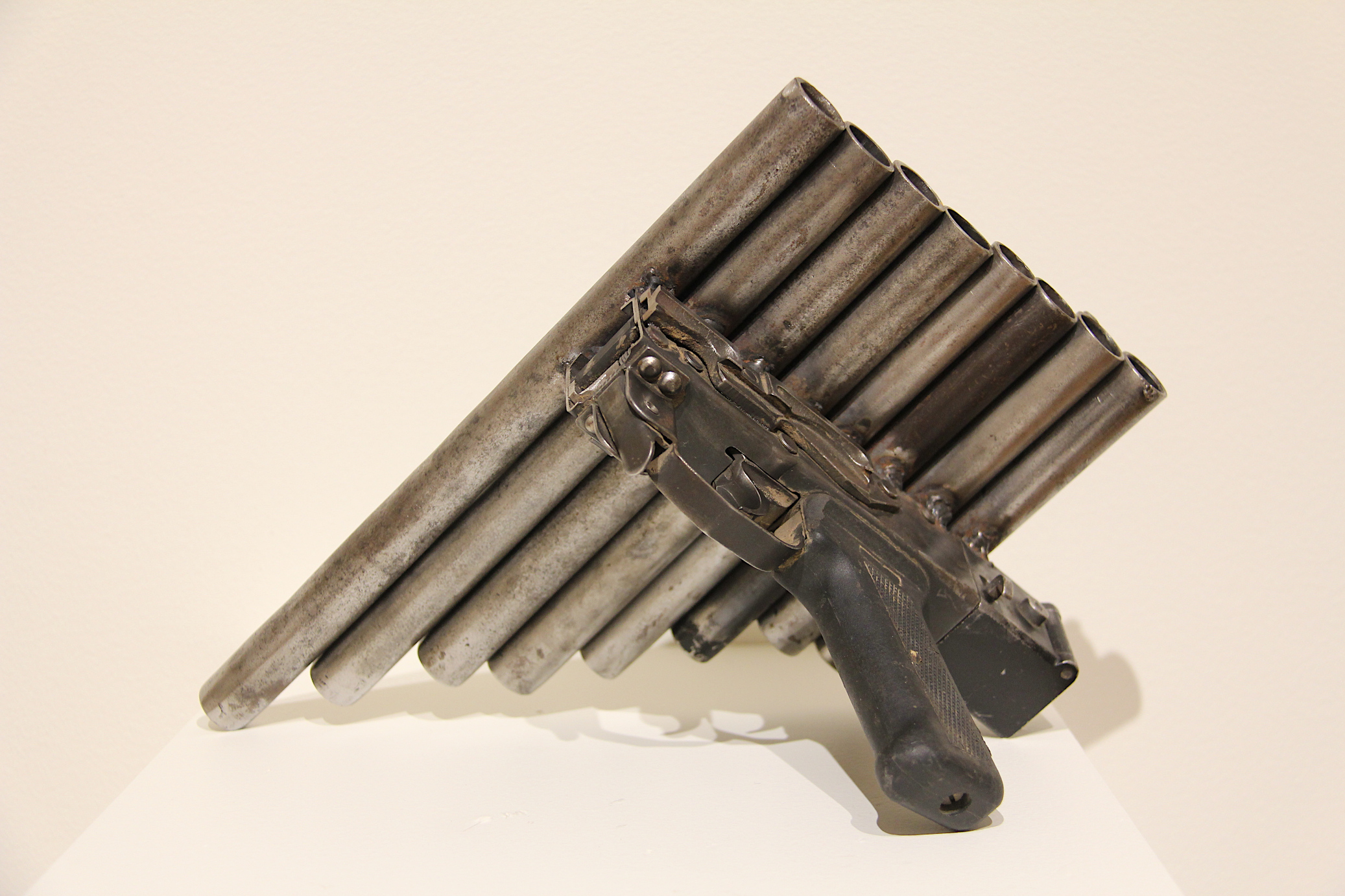
Pedro Reyes used surrendered and melted guns to create not only shovels, but also this “Disarm Pan Flute,” a playable instrument. (Minnesota Prairie Roots copyrighted photo October 2025)

These shovels were crafted from 1,527 guns surrendered in Culiacán, Mexico. Guns that were melted and made into 1,527 shovels used to plant 1,527 trees, including one at the corner of Union Street and Fourth Street East on the campus of Carleton College in Northfield.

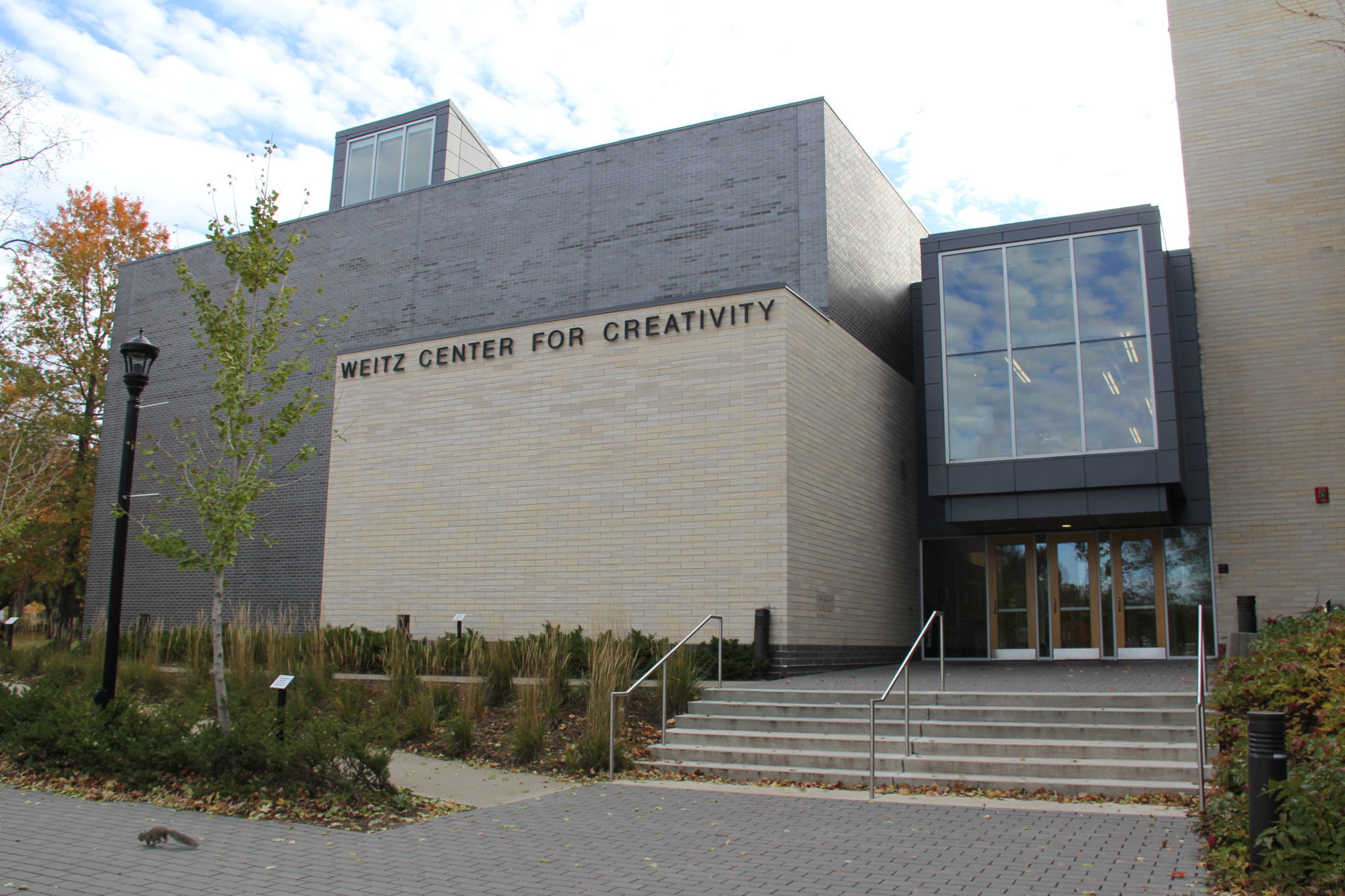
The exhibit is showcased in two galleries inside the Weitz Center for Creativity. (Minnesota Prairie Roots copyrighted photo October 2025)

Recently I stopped at this college campus to tour “Ahimsa,” an exhibition by Mexican artist Pedro Reyes in the galleries at The Perlman Teaching Museum inside the Weitz Center for Creativity. “Ahimsa” is a Sankritt word meaning “nonviolence.” That focuses this thought-provoking exhibit filling two gallery spaces.

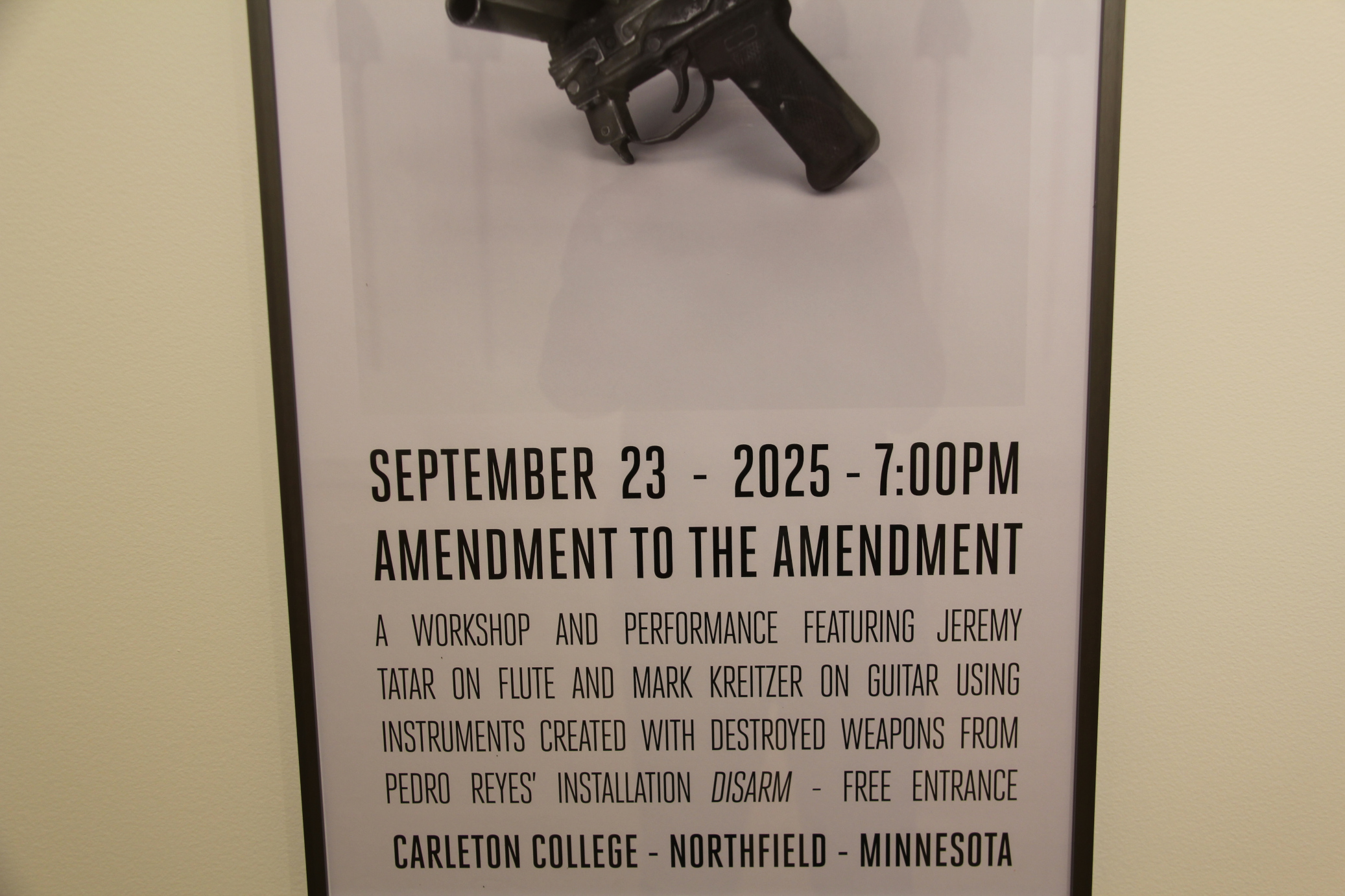
A wall of posters promoting Pedro Reyes’ exhibition shown around the world include this one from Northfield. His shows feature engaging events. (Minnesota Prairie Roots copyrighted photo October 2025)

With gun violence so prevalent in America, including right here in Minnesota with the political assassination of Minnesota House Speaker Emerita Melissa Hortman and her husband, Mark, in June and the deadly August mass shooting at Annunciation Catholic Church in south Minneapolis, I found Reyes’ exhibit profoundly relevant. I couldn’t help but think of the two Annunciation School children who were killed and the 27 other students and adults who were injured during morning Mass. Since then, voices have risen, loud and vocal, against gun violence. But thus far, nothing has changed, although discussion is ongoing with Minnesota Governor Tim Walz hosting town halls around the state on the topic.

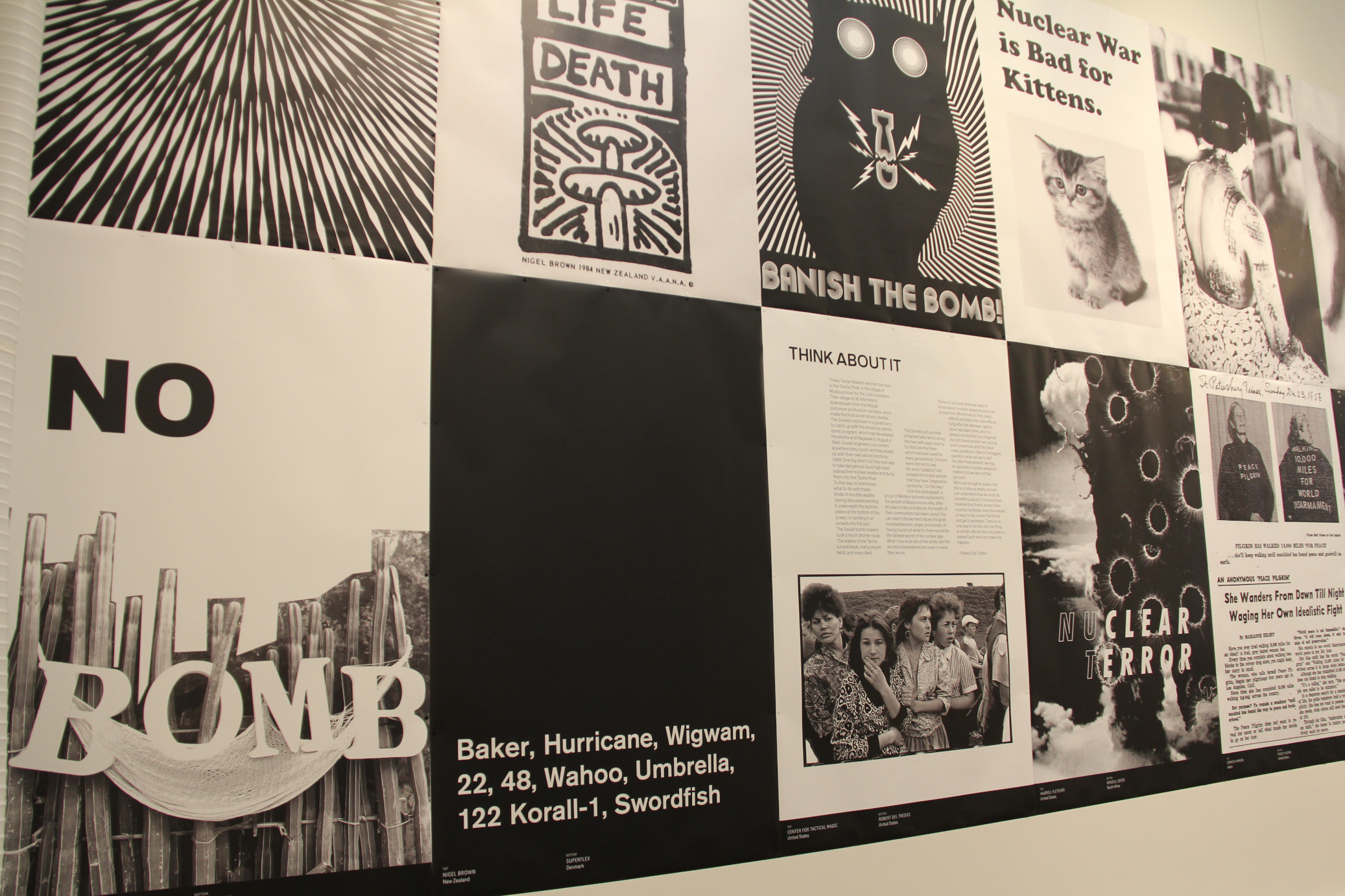
One gallery wall features posters created for “Artists Against the Bomb” by artists from around the world. (Minnesota Prairie Roots copyrighted photo October 2025)

The voice of this Mexican artist is among those rising. Upon entering the gallery, I read this: …Ahimsa reminds us that silence is complicity…

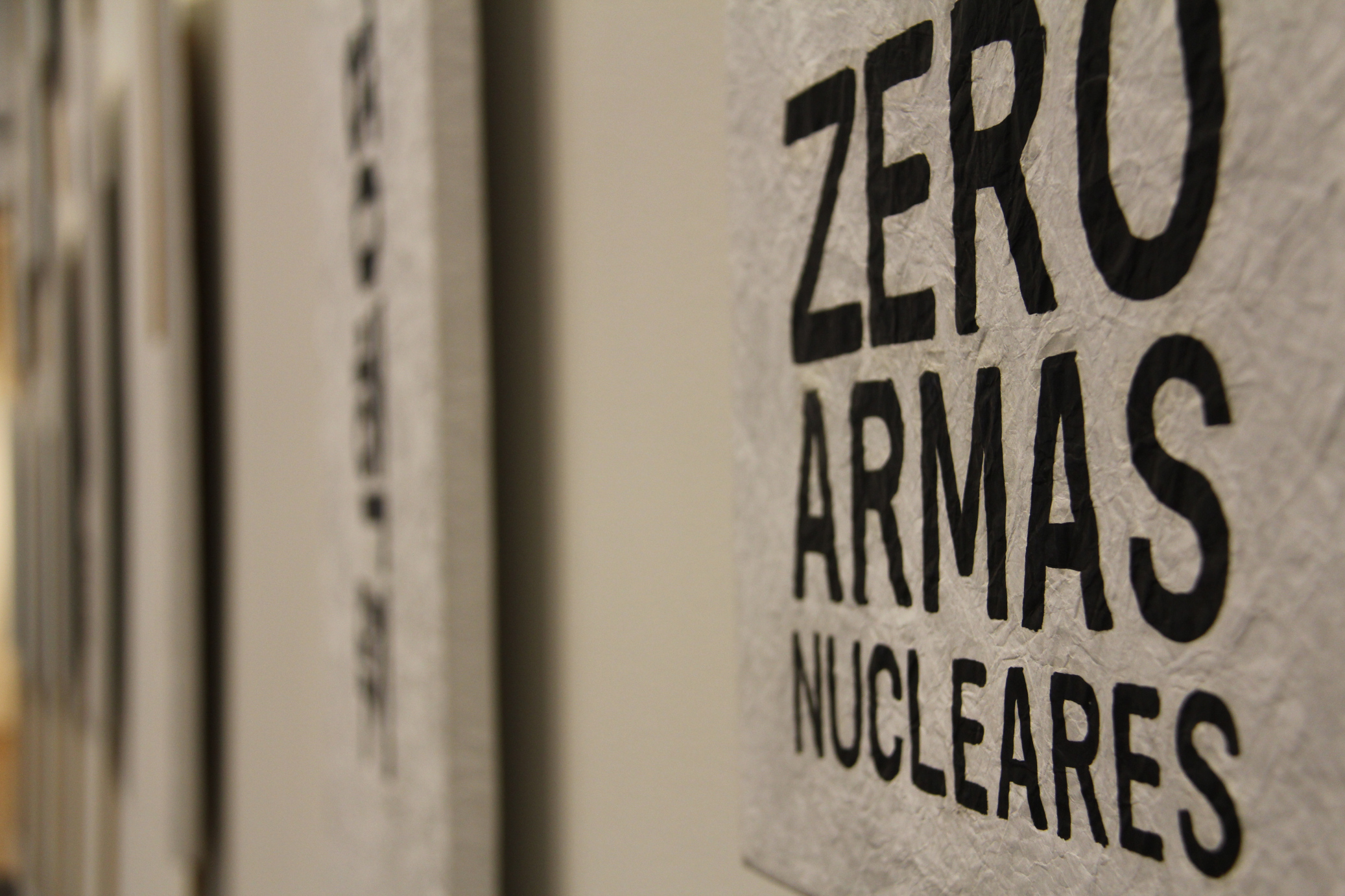
A closeup of a protest banner. A wall is covered with these signs in multiple languages with graphic symbols inspired by the conceptual element of zero. These are done in oil painting on Tyvek. (Minnesota Prairie Roots copyrighted photo October 2025)

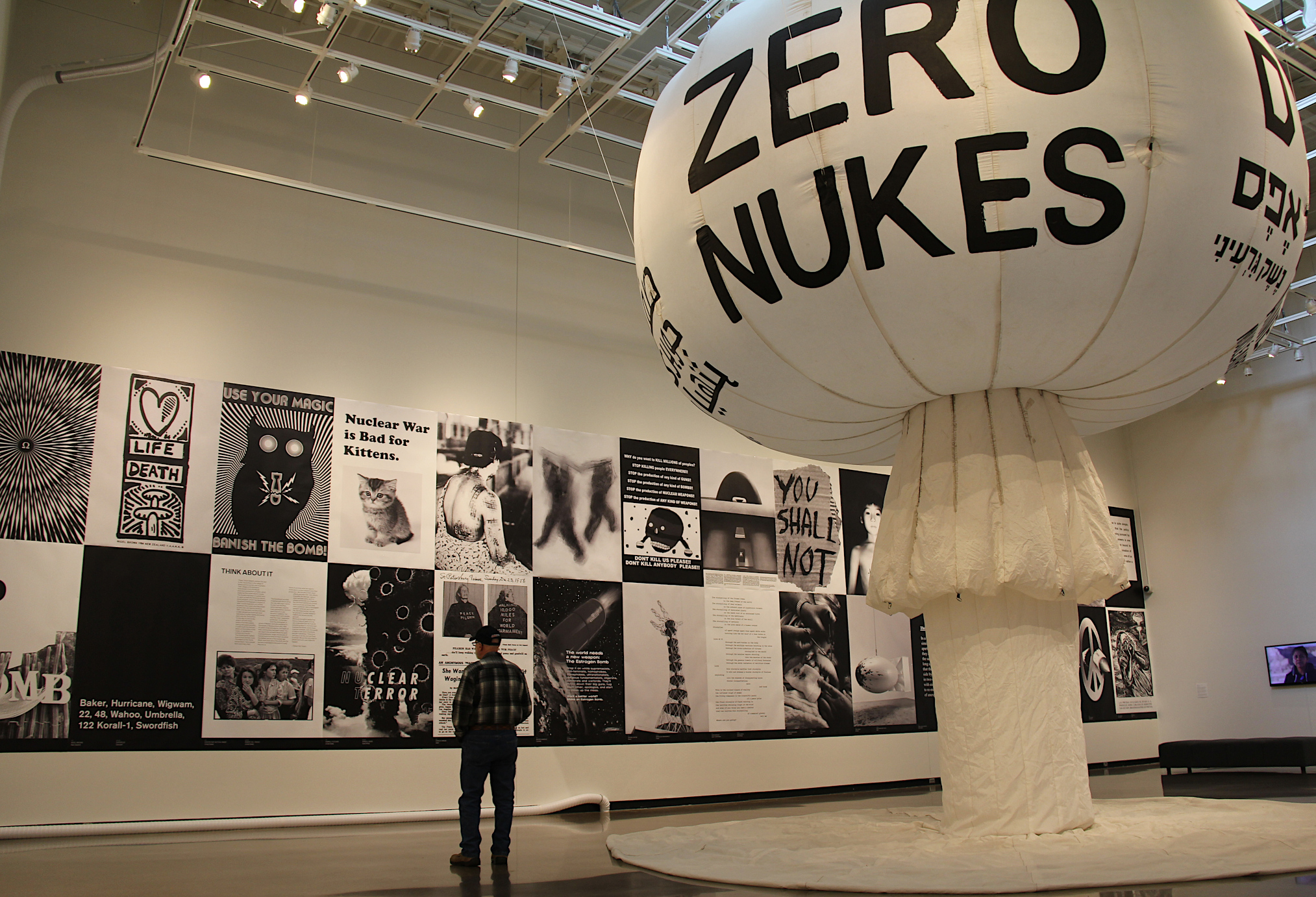
Reyes speaks out against more than gun violence in his exhibition. He also advocates for nuclear disarmament, another timely topic. And he does that in an artistically-mammoth way via a towering inflatable that overwhelms the high-ceilinged Braucher Gallery. Exactly the effect Reyes wants to make in his piece titled “Zero Nukes.”

The massive nuclear mushroom cloud centers the nuclear disarmament part of the exhibit. (Minnesota Prairie Roots copyrighted photo October 2025)

I felt minimal, small, dwarfed by the mushroom cloud upon which ZERO NUCLEAR WEAPONS is printed in eight languages.

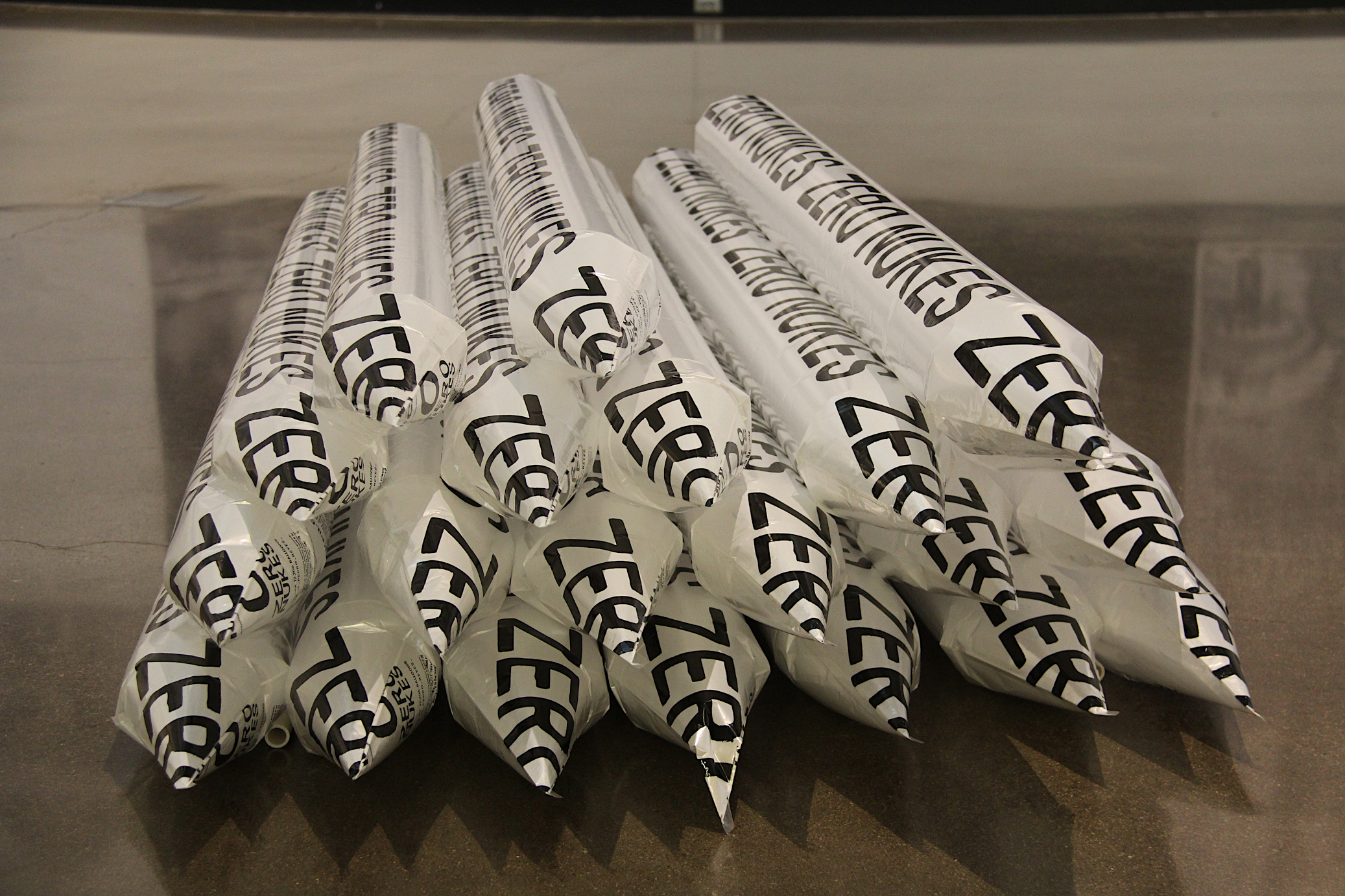
Inflatable warheads are part of the art installation. (Minnesota Prairie Roots copyrighted photo October 2025)
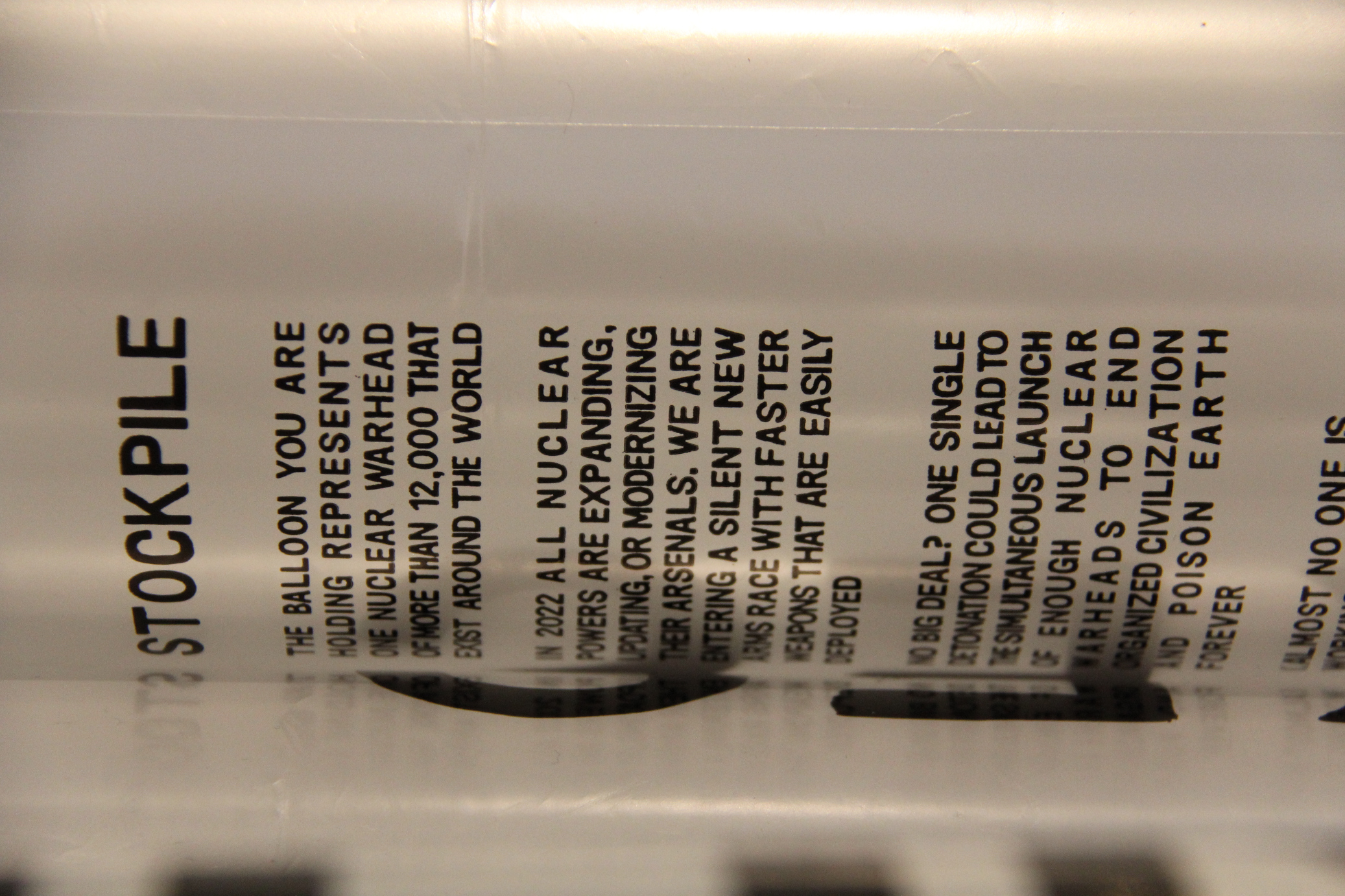
A closeup of the message printed on the inflatable warheads. (Minnesota Prairie Roots copyrighted photo October 2025)
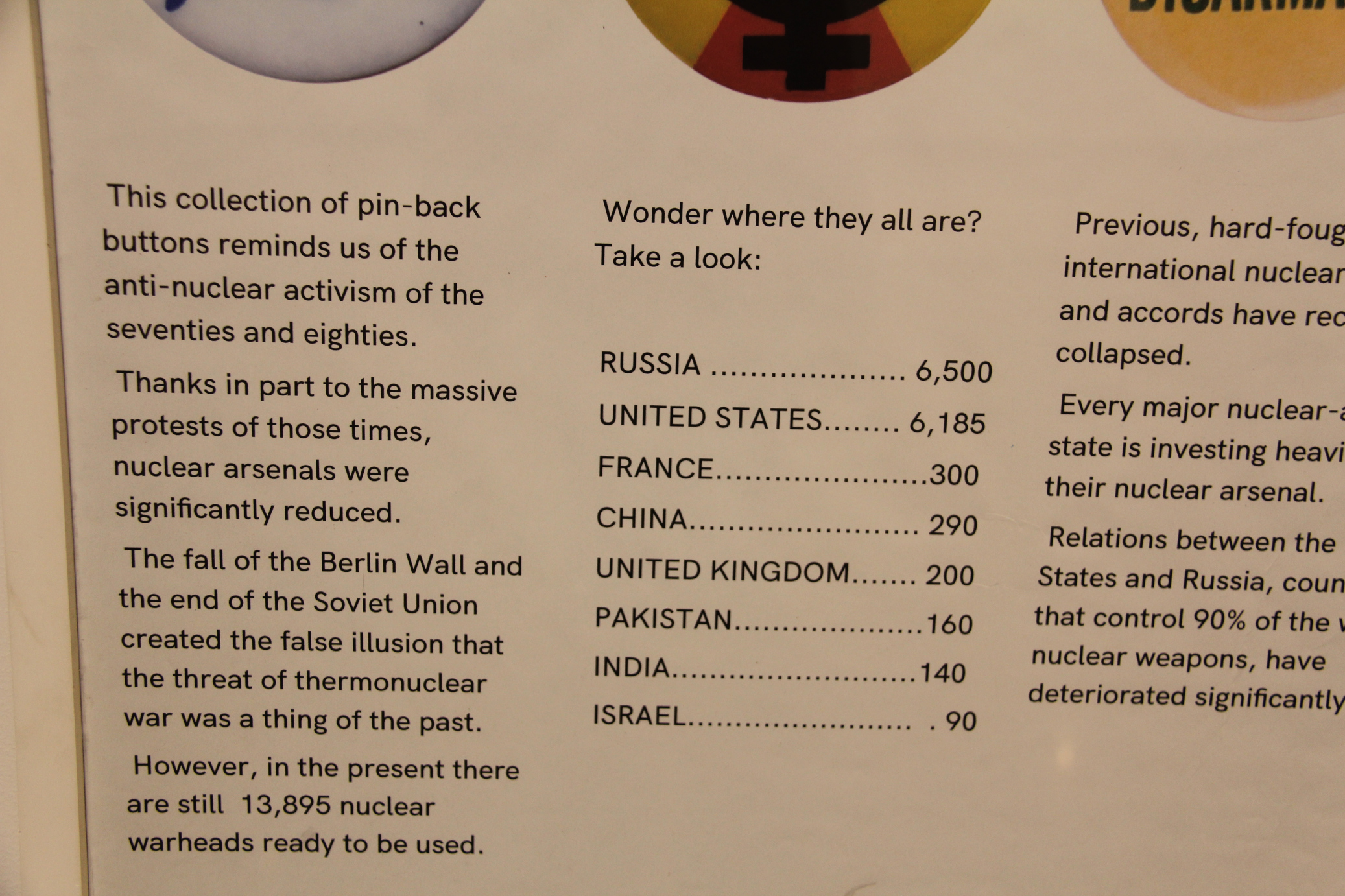
Nuclear warhead info and stats. Surprising. (Minnesota Prairie Roots copyrighted photo October 2025)

Nearby, a stockpile of inflatable nuclear warheads lies, another strong visual representing the nearly 14,000 nuclear warheads at the ready around the world. The statistics, cited as part of this display, are sobering, surprising (to me) and revealing.

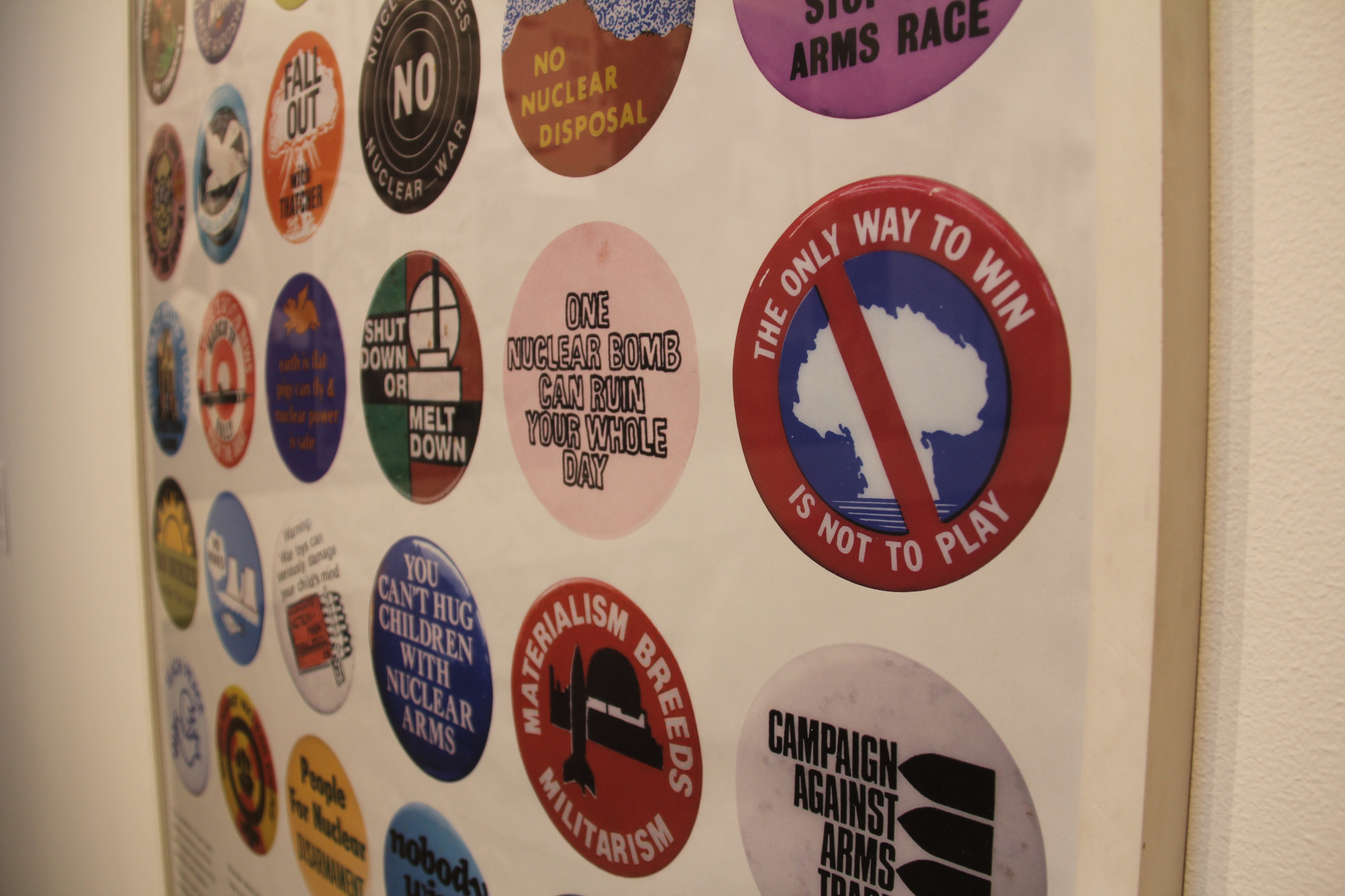
One section of the exhibit features images of buttons protesting nuclear weapons. (Minnesota Prairie Roots copyrighted photo October 2025)
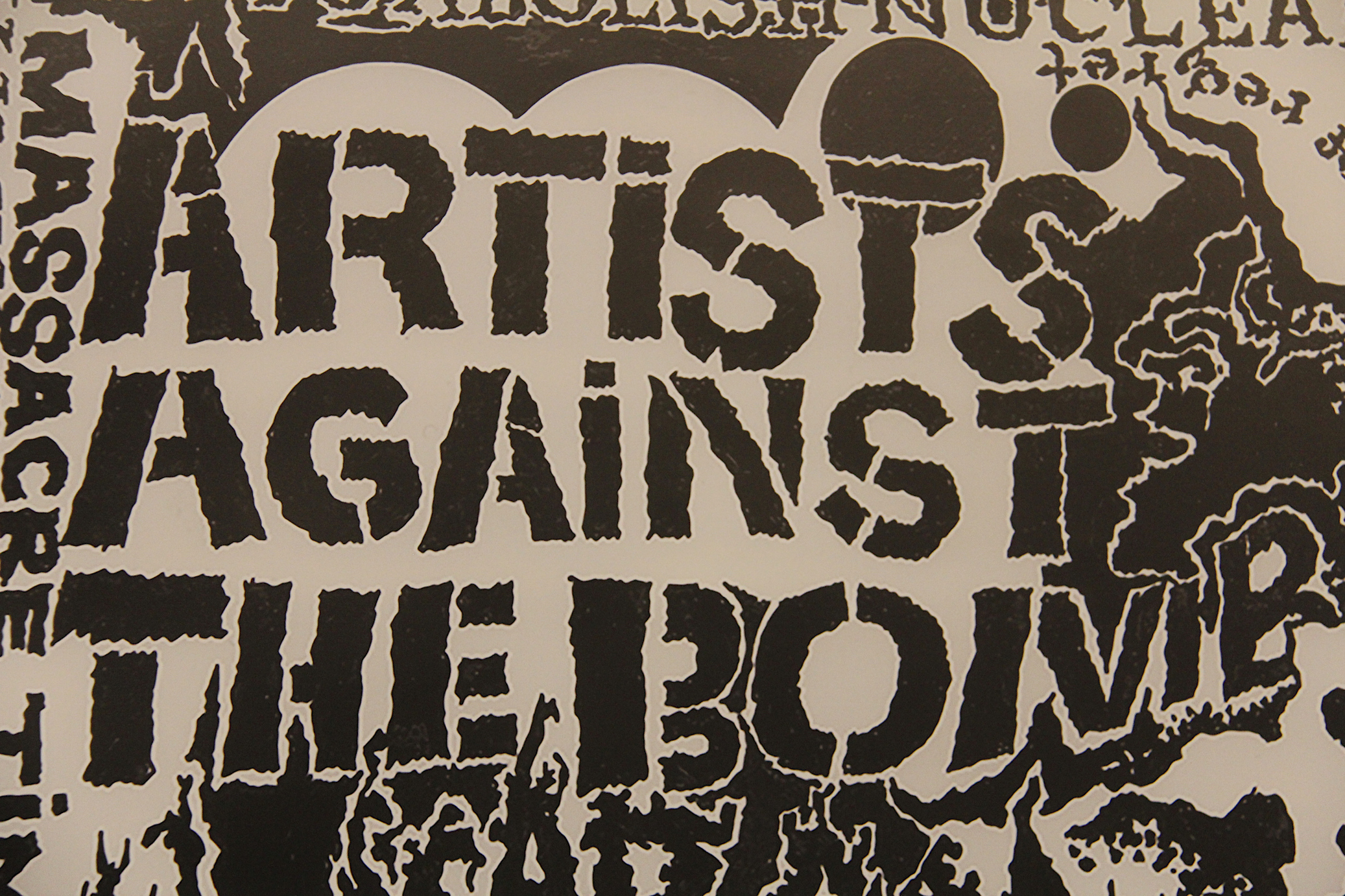
One entire wall showcases the works of “Artists Against the Bomb. (Minnesota Prairie Roots copyrighted photo October 2025)
An overview of the campaign for nuclear disarmament shows the inflatable mushroom cloud, “Zero Nuclear Weapons” protest banners and a wall of protest posters, far right. (Minnesota Prairie Roots copyrighted photo October 2025)

Reyes, in his exhibit, shows us how art can be used to inform, educate, raise awareness, spark community conversation and action. He shows us via posters, buttons, sculptures, videos, inflatables and words how we can rise in protest against gun violence and nuclear weapons.

At its end, the poet asks, “Where are you going?” (Minnesota Prairie Roots copyrighted photo October 2025)

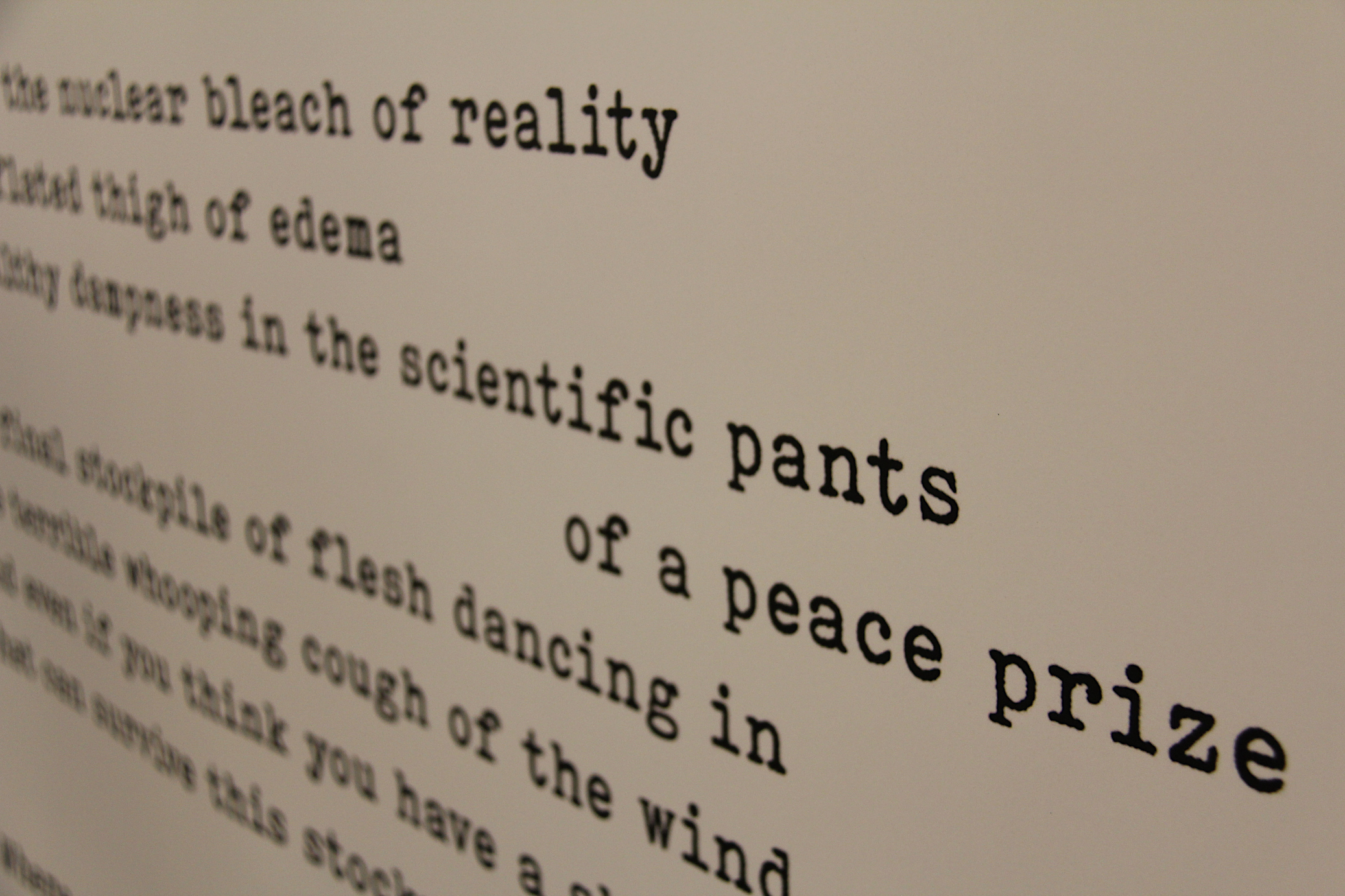
In the end we must ask ourselves the singular question posed in a poem on the protest poster wall: Where are you going? That’s in the event of nuclear war or similarly in the case of a mass shooting. I long ago stopped believing that the 1960s advice to duck and cover beneath a school desk would save me.

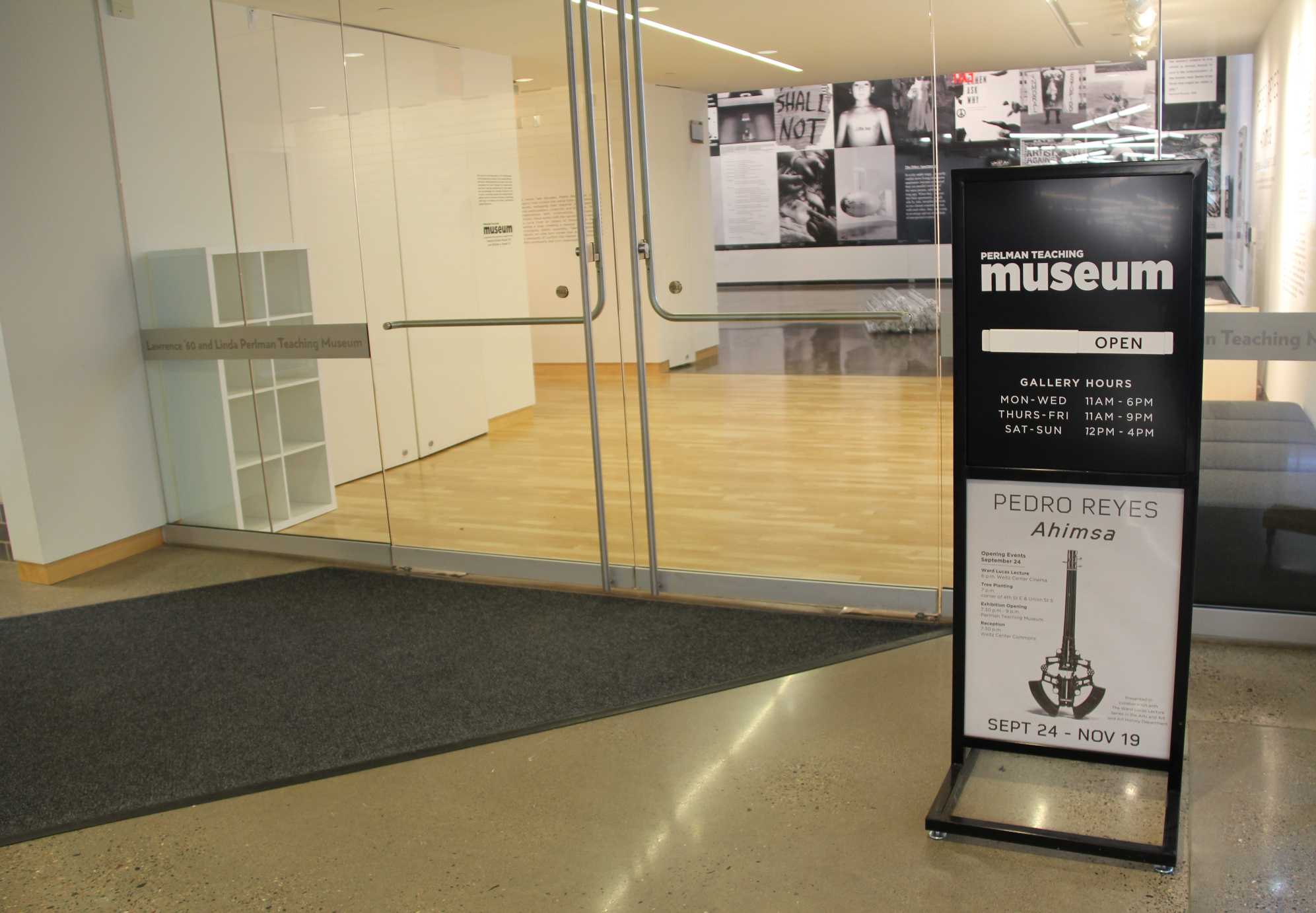
Open these glass doors and walk into the gallery showing Pedro Reyes’ “Ahimsa.” (Minnesota Prairie Roots copyrighted photo October 2025)

FYI: “Ahimsa” by Pedro Reyes is free and open to the public daily inside the Weitz Center for Creativity, 320 Third Street East, Northfield, until November 19. Hours vary. Click here for more information.

This exhibit was photographed with permission.

© Copyright 2025 Audrey Kletscher Helbling
 

Cosmic places & happenings in southern Minnesota February 26, 2025

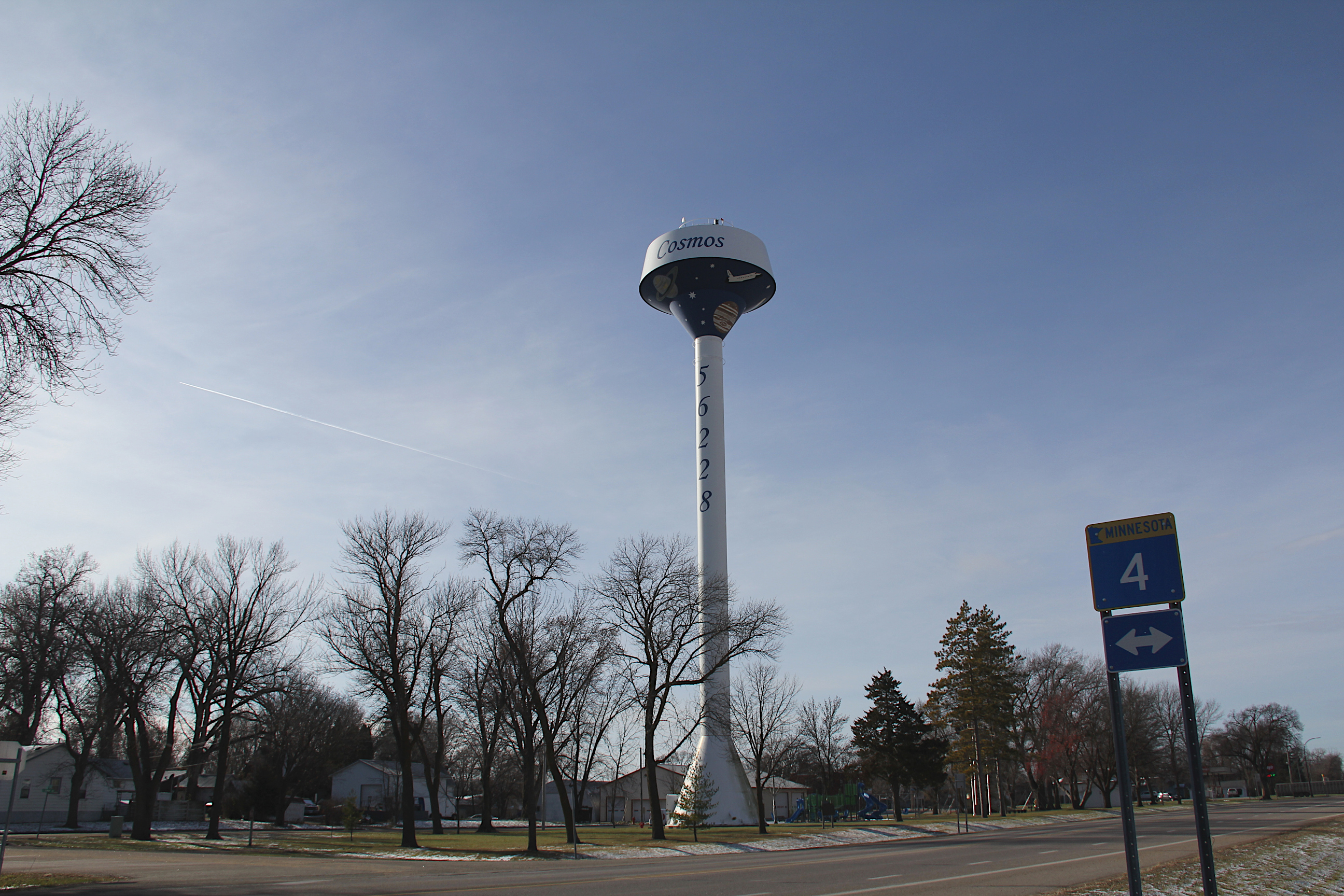
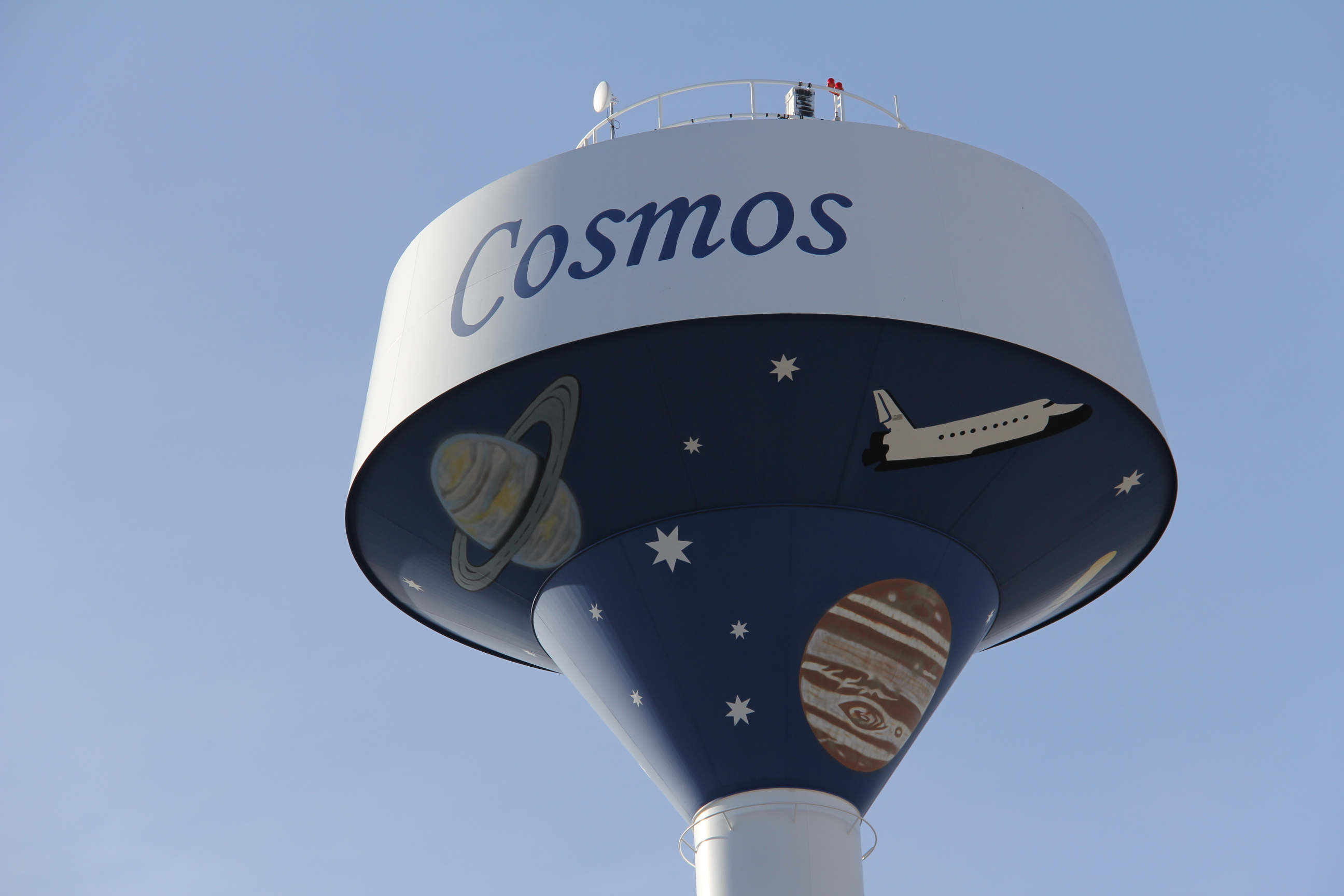
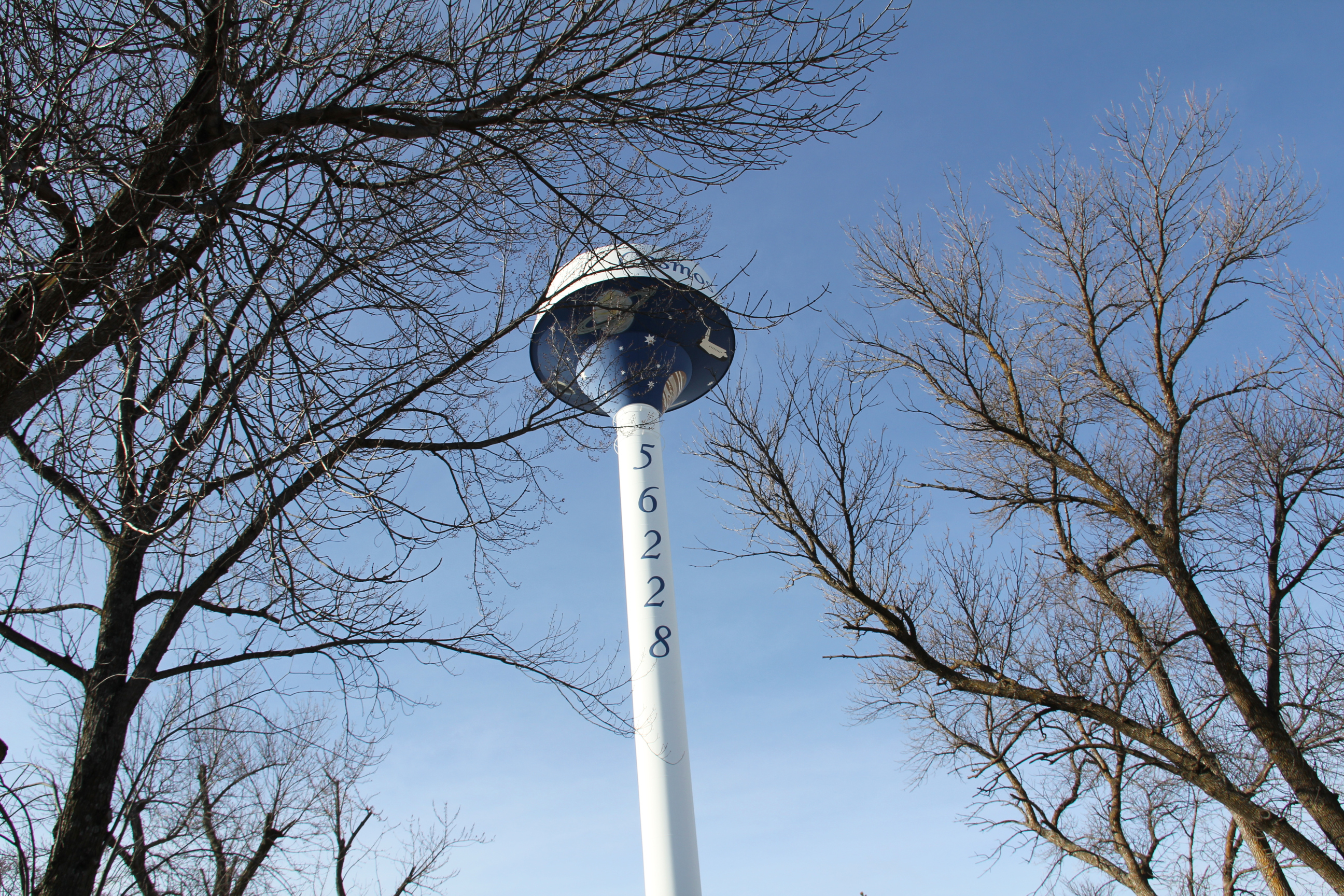
An artistic interpretation of the night sky painted on the underside of the water tower in Cosmos, Minnesota. (Minnesota Prairie Roots copyrighted photo November 2024)

THE NIGHT SKY HOLDS a vastness that makes me feel small. It’s mysterious and dark and, in some ways, intimidating. Yet, it possesses an alluring beauty that draws me to gaze heavenward. To imagine. To delight. To stand in awe of its infinity.

Fascination with the night sky seems universal. Kids, like my kindergartner grandson and, years ago, my own son, fixated on the solar system and all the night sky encompasses. I, too, find it interesting, although not to the degree of learning everything I can about the expanse above me.

Rather, if I learn of a newsworthy event in the night sky, I may step out after dark to look. Right now, that’s a seven-unit “planet parade” of Mercury, Venus, Jupiter, Mars and Saturn visible to the naked eye after sunset and Uranus and Neptune visible via a visual aid.

My first view of the space-themed water tower in Cosmos. The town is located at the intersections of Minnesota State Highways 4 and 7. (Minnesota Prairie Roots copyrighted photo November 2024)

All of this reminds me of a cosmic discovery I made this past fall while on the back roads to Morris in far western Minnesota. In the small town of Cosmos, population around 500, in southwestern Meeker County, I discovered a unique space-themed water tower and community event, the Cosmos Space Festival.

The underbelly of the Cosmos water tower is themed to space. (Minnesota Prairie Roots copyrighted photo November 2024)

With a town name like Cosmos (originally called Nelson), it should come as no surprise that the community would build on the Greek word meaning “order and harmony.” The cosmic focus makes this place along Minnesota State Highways 7 and 4 stand out among all the other little towns in this part of the state. When I spotted the water tower with a space shuttle, planets, stars and more painted on its underbelly, I immediately wanted to stop and photograph this work of art, this town identifier.

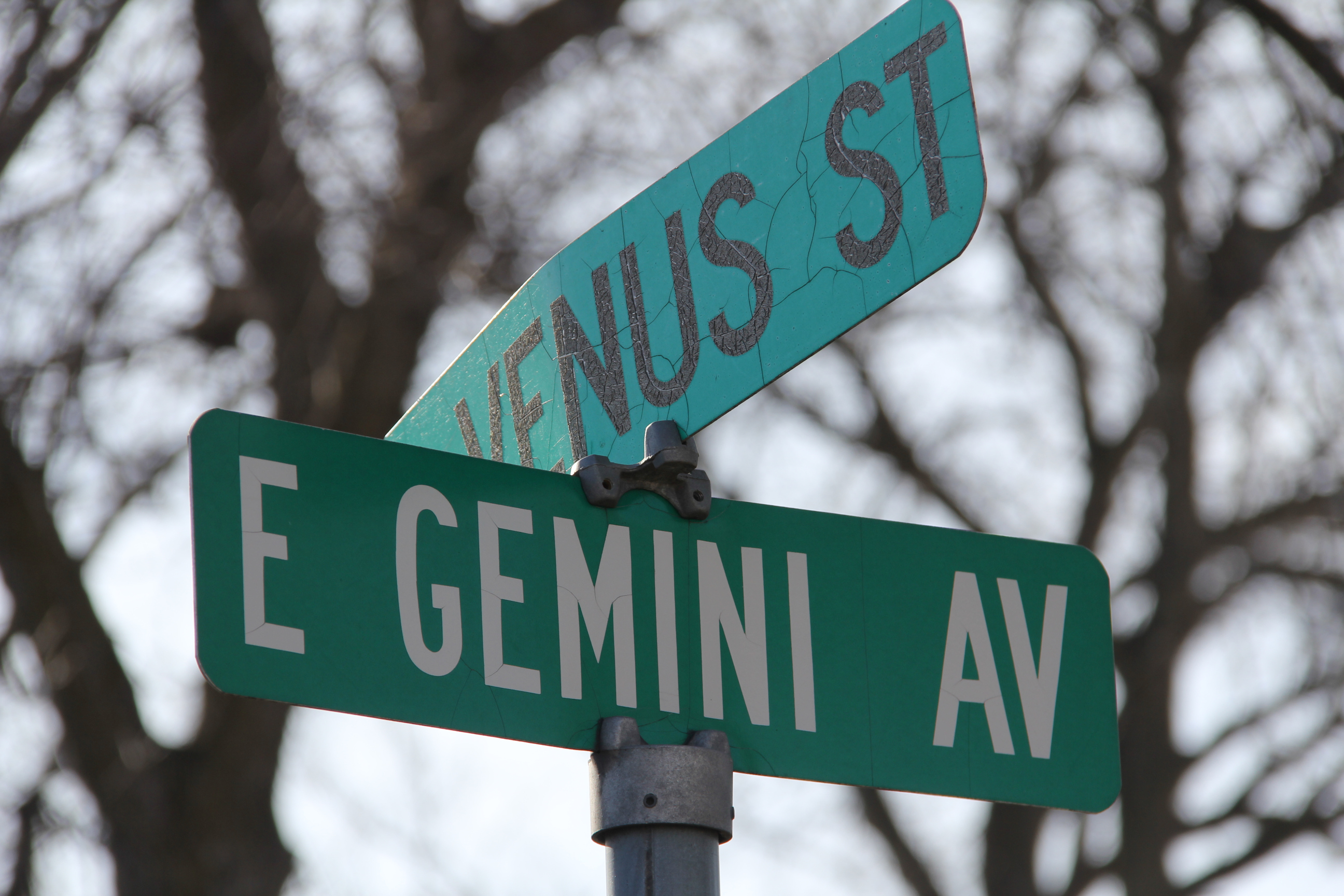
You’ll find cosmic street names in Cosmos. (Minnesota Prairie Roots copyrighted photo November 2024)

In the process, I discovered that all the streets are named after planets and constellations and that the town celebrates the Cosmos Space Festival annually on the third weekend of July. That started in 1969 as a celebration of man’s (Neil Armstrong and Buzz Aldrin in Apollo 11) first moon landing. I’m old enough to have watched that monumental moment in history on a black-and-white television.

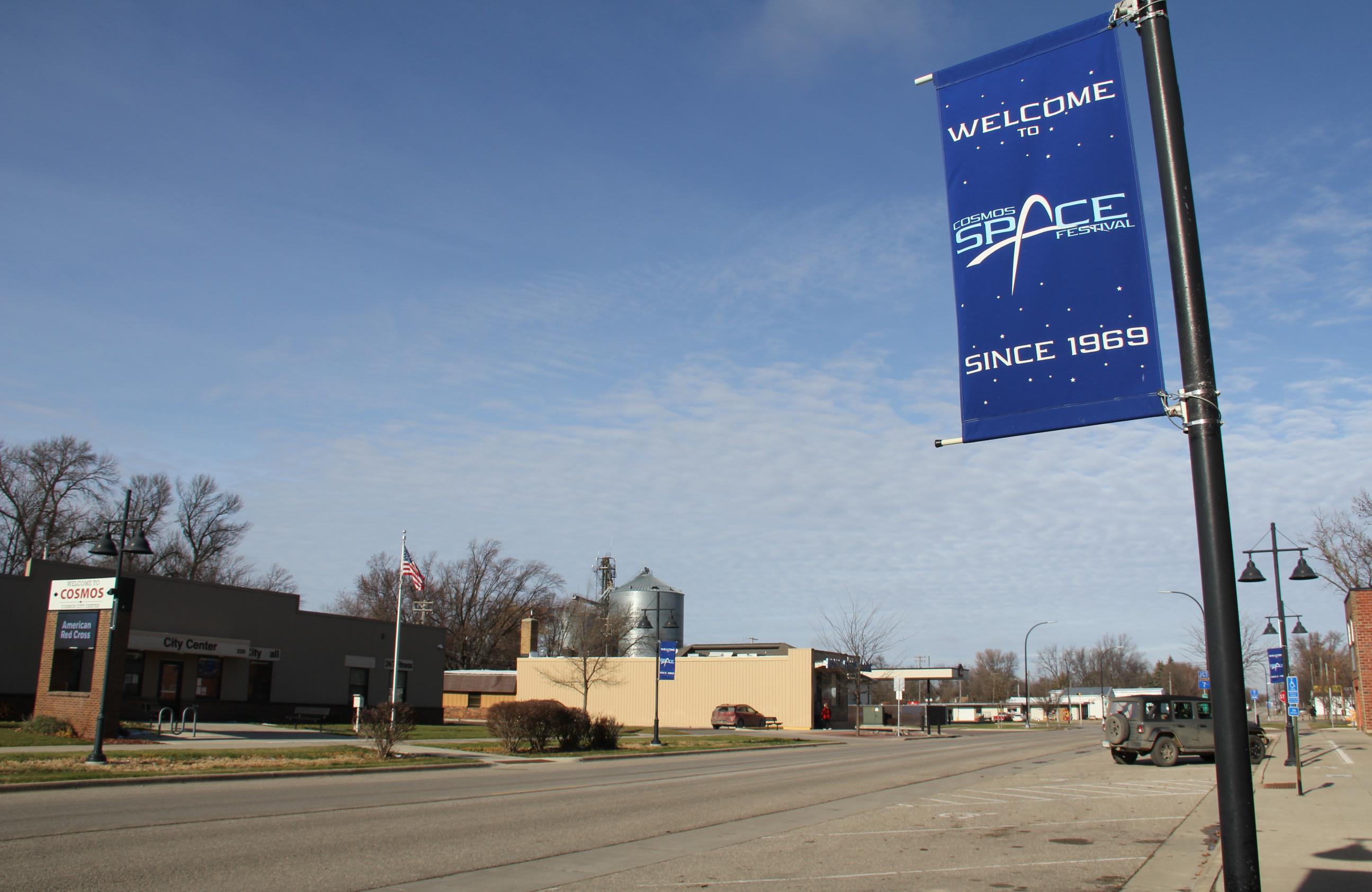
Cosmos Space Festival banners hang throughout the downtown, shown here. (Minnesota Prairie Roots copyrighted photo November 2024)

The Cosmos space fest has been going strong ever since, marking its 57th year on July 17-20, 2025. The festival features your usual small town celebration activities like street dances, softball tournaments, city-wide garage sales, a hog roast, pedal tractor pull, pony rides, beer garden, fireworks, parade and much more. That includes the crowning of fest royalty—Little Miss Universe and Man on the Moon. Gotta love those cosmic titles.

And you gotta love how kids (and adults) get excited about the night sky. Locally, River Bend Nature Center is hosting its annual Minnesota Starwatch Party from 8-10 p.m. on Thursday, March 27, with retired meteorologist, amateur astronomer, stargazing columnist and author Mike Lynch. I attended the starwatch party with my husband and son many years ago. Lynch brings telescopes and vast knowledge, so this is a hands-on educational program.

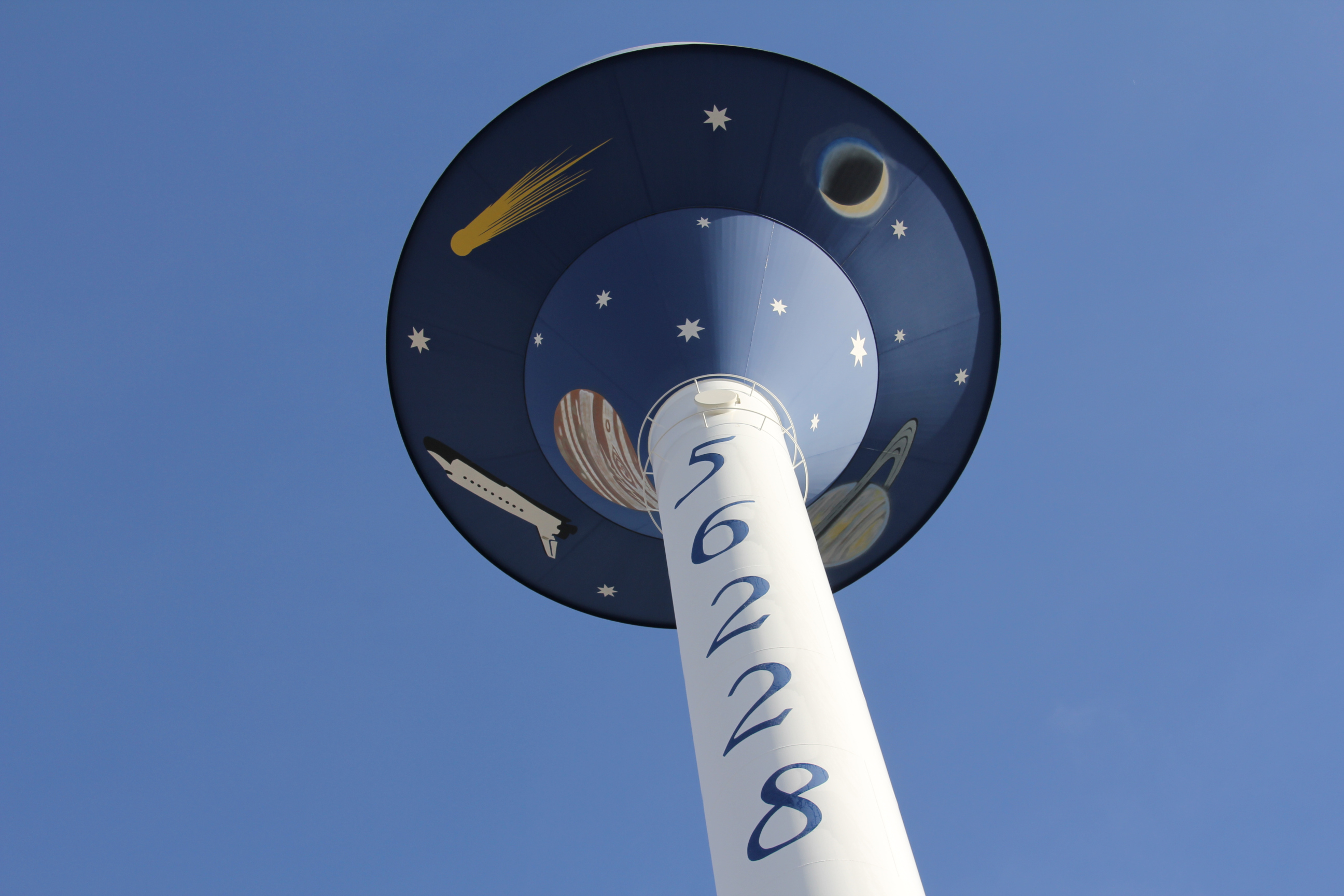
The memorable water tower in Cosmos, zip code 56228. (Minnesota Prairie Roots copyrighted photo November 2024)

Another opportunity to view the night sky through telescopes happens more frequently, from 8-10 p.m. the first Friday of every month inside and outside Goodsell Observatory on the campus of Carleton College in neighboring Northfield. I’ve been to this free monthly activity twice, again years ago with my husband and son. The next open house is on Friday, March 7. But only if the night sky is clear for viewing.

The Cosmos water tower is among the best I’ve seen. It’s interesting, unique, artsy and makes this small Minnesota town stand out. (Minnesota Prairie Roots copyrighted photo November 2024)

Whatever your interest level in the night sky, it’s fascinating. Vast. Dark. The subject of poetry and song and science. And above all, it’s a cosmic wonder, whether viewed from Cosmos, Faribault, Northfield or your little place in the big wide universe.

© Copyright 2025 Audrey Kletscher Helbling
 

Waiting for the solar eclipse in Minnesota April 7, 2024

The moon rises while the sun sets. (Minnesota Prairie Roots copyrighted file photo)

SUN. EARTH. SKY. MOON.

Monday, April 8, marks the date of much hype, intense interest and eyes focused skyward for an afternoon solar eclipse. Here in Minnesota, we will witness a partial eclipse with the moon covering about 75 percent of the sun around 2 pm.

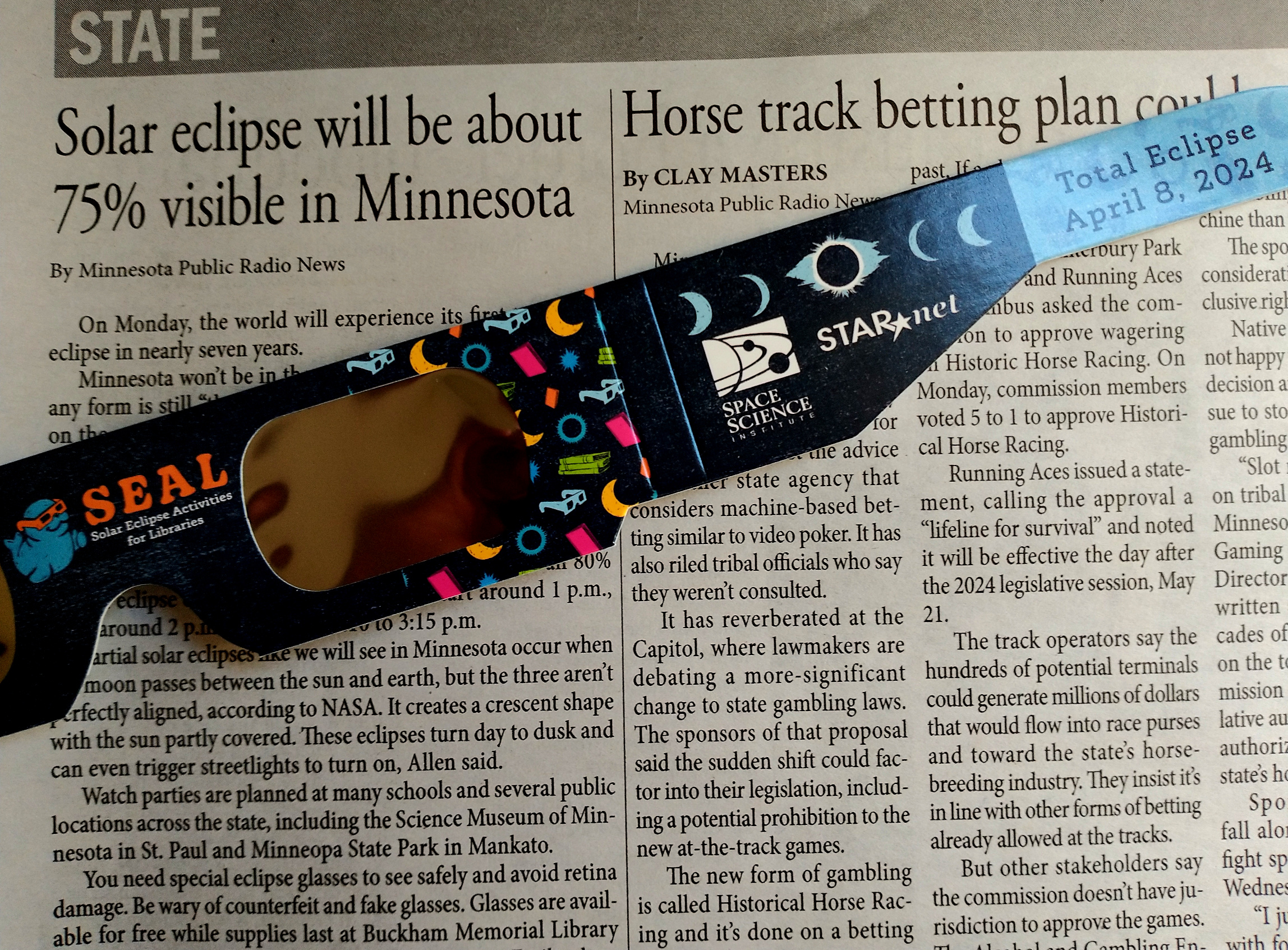
Solar eclipse glasses overlay a Minnesota Public Radio News article published in the Faribault Daily News. (Minnesota Prairie Roots copyrighted photo April 2024)

But…the weather forecast is for cloudy skies, meaning disappointment for many in Minnesota who hope to view the solar event through special eye wear. I picked up free eclipse glasses at my local library. So I’m set, just in case the cloud cover lifts.

Carleton College in nearby Northfield is also set to celebrate at Goodsell Observatory, where small telescopes will be placed outside the building for solar viewing beginning at noon. That is if the weather cooperates. (Check the website for updates.) The event is open to the public.

The total solar eclipse will cut a diagonal across the country from Texas through Indiana to New York and beyond. (Minnesota Prairie Roots copyrighted photo April 2024)

No matter, I expect to notice visible changes in daylight as the moon passes between the sun and earth from 12:45-3:15 pm in Minnesota.

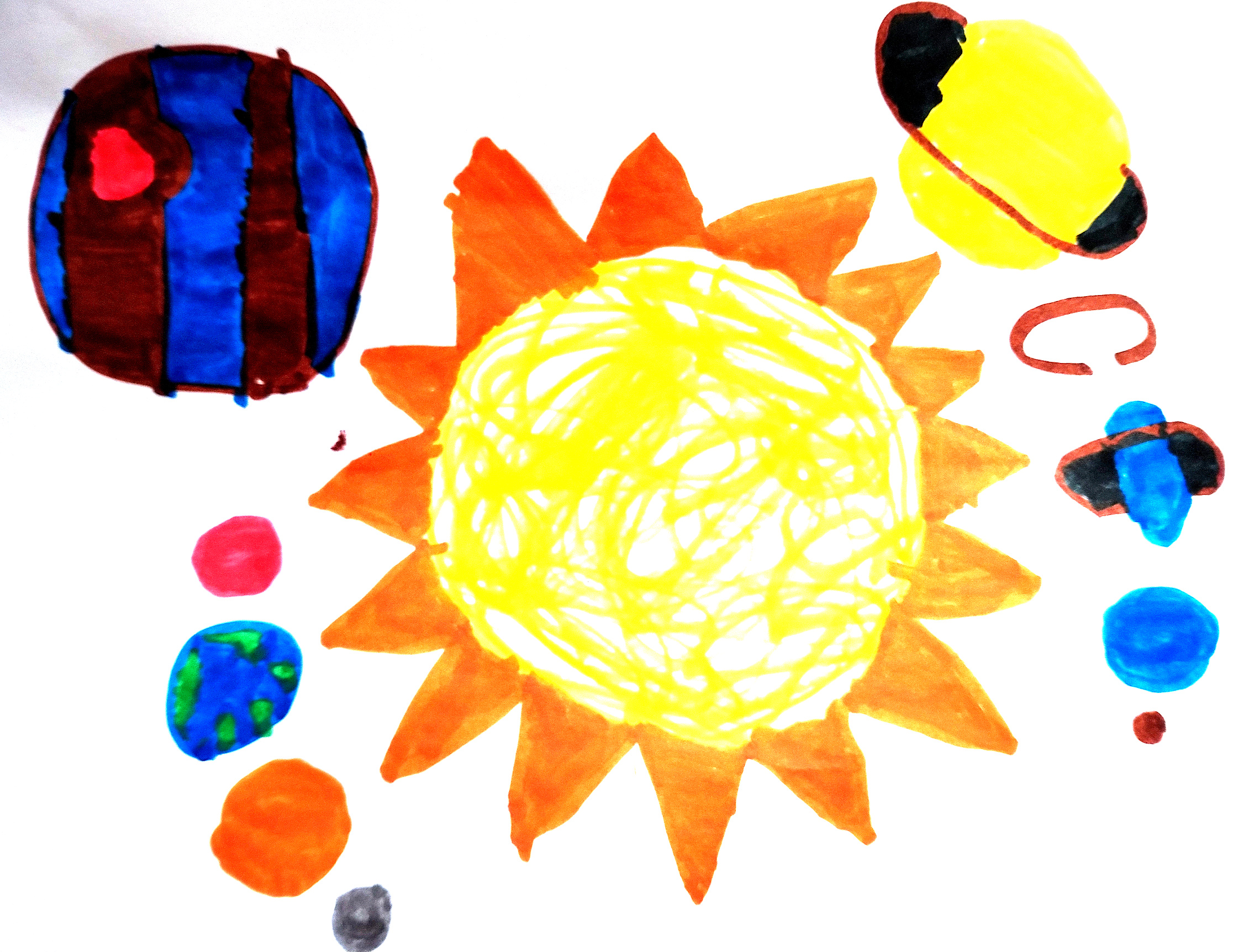
Isaac’s solar system art, created several months before he turned five. (Minnesota Prairie Roots edited photo April 2024)

A half hour to the north of my southern Minnesota home, my 5-year-old grandson Isaac likely will be all-a-chatter about the eclipse. He can rattle off facts about the solar system with the knowledge of an expert. Plus he loves art and has created enough solar system drawings to fill a gallery or at least plaster my refrigerator. I expect many other kids share his excitement. And that is a good thing—anytime kids (and adults) get excited about science.

© Copyright 2024 Audrey Kletscher Helbling

 

A look back at the 1918 pandemic in Northfield & similarities to today July 14, 2021

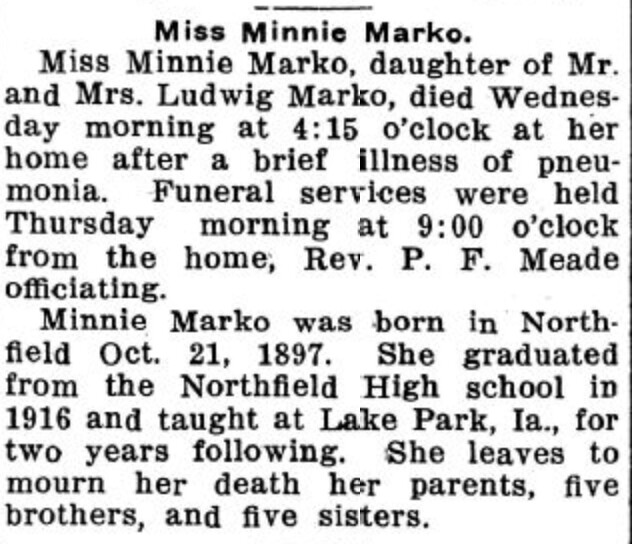
Minnie’s obit, published in the Northfield News. Source: Timeline on NHS website.

FIRST DEATH BY INFLUENZA

Minnie Marko died at her home after a brief illness of pneumonia, according to her obituary published in the November 15, 1918, issue of the Northfield News.

The death of the 21-year-old is just one of many topics in a timeline, “1918-1920 Influenza in Northfield, Minnesota.” Three Carleton College students worked with the Northfield Historical Society to create the timeline in 2020.

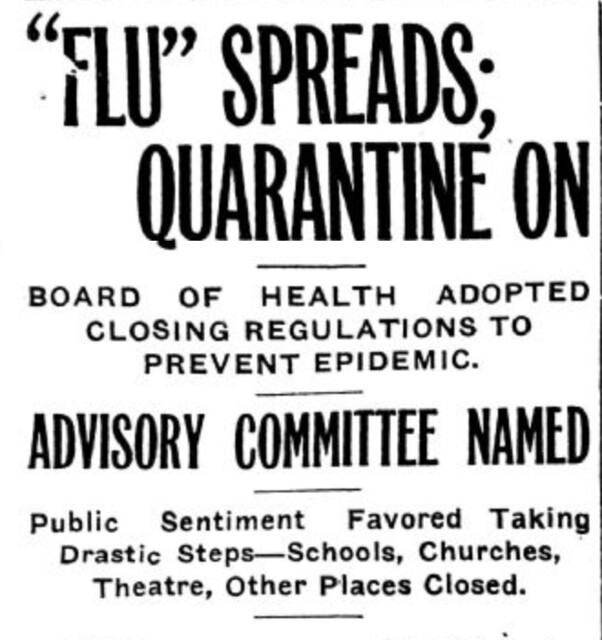
Headlines in the November 15, 1918, Northfield News. Source: Timeline on NHS website.

It’s an interesting read, showing the striking similarities between the Spanish flu and the COVID-19 pandemics. Thanks to Northfield writer and photographer Margit Johnson for featuring the research in a recent post on her blog, Elevation99. I recommend you read Margit’s post and then follow the link to the timeline.

I did just that, scanning headlines like these:

IT’S UP TO YOU TO FIGHT THE FLU (10/25/1918)

FOUR STUDENTS AT ST. OLAF DIE DUE TO INFLUENZA (11/21/1918)

NO CHRISTMAS CHURCH SERVICE IN NORTHFIELD (12/22/1918)

COLLEGES RETURN, WITH RESTRICTIONS (1/1919)

BELOVED CARLETON PROFESSOR FRED B. HILL DIES OF INFLUENZA (1/29/1919)

As I read the headlines and the brief summaries that followed, I considered how quickly information, and misinformation, spreads today. I considered how public health officials then, and now, recognized the seriousness of the virus and took efforts to stop the spread of the virus. The State Board of Public Health forbade public funerals and ordered wearing of gauze masks on streets and in public buildings in November 1918. Sound familiar?

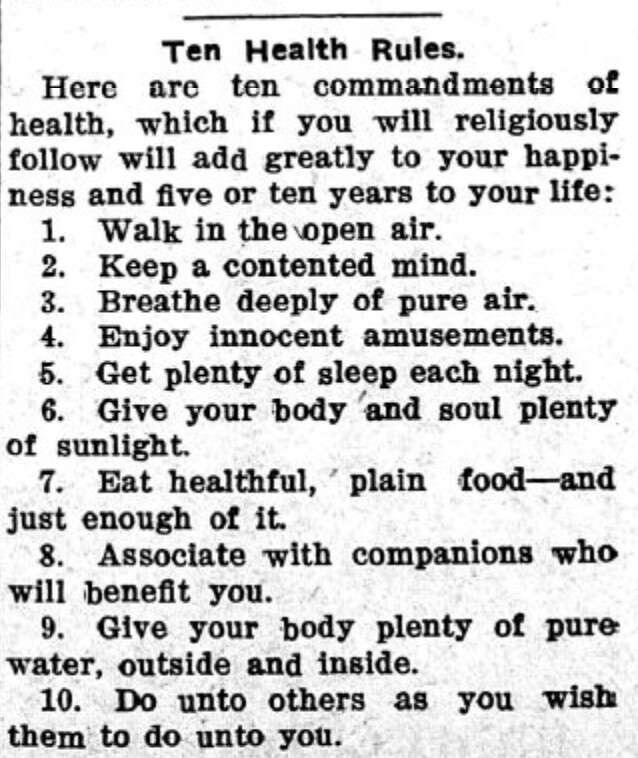
Health Rules published in the February 13, 1920, Northfield News. Source: Timeline on NHS website.

But perhaps the timeline entry that struck me most personally was this item in a list of Ten Health Rules published in the February 13, 1920, Northfield News:

10. Do unto others as you wish them to do unto you.

Think about that as it relates to COVID-19. Just like in 1918, our choices today affect more than ourselves. Before COVID numbers dropped in our country due to vaccinations, too many people refused to wear masks (and to wear them properly over mouth AND nose). And now people are refusing vaccination for reasons ranging from political to distrust of the vaccine (and thus of science) to believing the virus won’t make them seriously sick or kill them. It can and it does.

History tells us to expect a resurgence of the virus if such me-centered attitudes and behaviors prevail. As in 1918, the message that bears repeating is this: This is not just about us individually. This is about all of us. About caring for one another. About understanding that our choices affect the health, and thus the lives, of others.

People are still getting sick and dying from COVID-19. That’s especially true in states with low vaccination rates. Missouri, for example, has the most aggressive Delta variant outbreak, according to recent media reports. In Minnesota, Crow Wing and Cass Counties (in the heart of lake and cabin country) are experiencing a noticeable increase in COVID cases. All of this concerns health officials. And it should concern us, too, especially those who are not vaccinated, whether by choice or because they are too young for vaccination. This virus can mutate, as it did into the highly-contagious Delta variant, putting people at an even higher risk of serious illness and death.

The grief of those losing loved ones today is no less than the family of Minnie Marko, 21, who died in 1918 in Northfield. Minnie didn’t have the option of a vaccine. We do.

#

FYI: I’d encourage you to read my June 11 post about a 46-year-old Minot, N.D., man who regretted not getting vaccinated. Rob Tersteeg died of COVID. His dying wish was that his journey with this “vicious virus” would convince others to get vaccinated. He made his wife promise to get their kids vaccinated. His family grieves, just like Minnie’s.

© Copyright 2021 Audrey Kletscher Helbling
 

The choice is ours November 10, 2020

Filed under: Uncategorized — Audrey Kletscher Helbling @ 5:00 AM
Tags: , , , , , , , , , ,
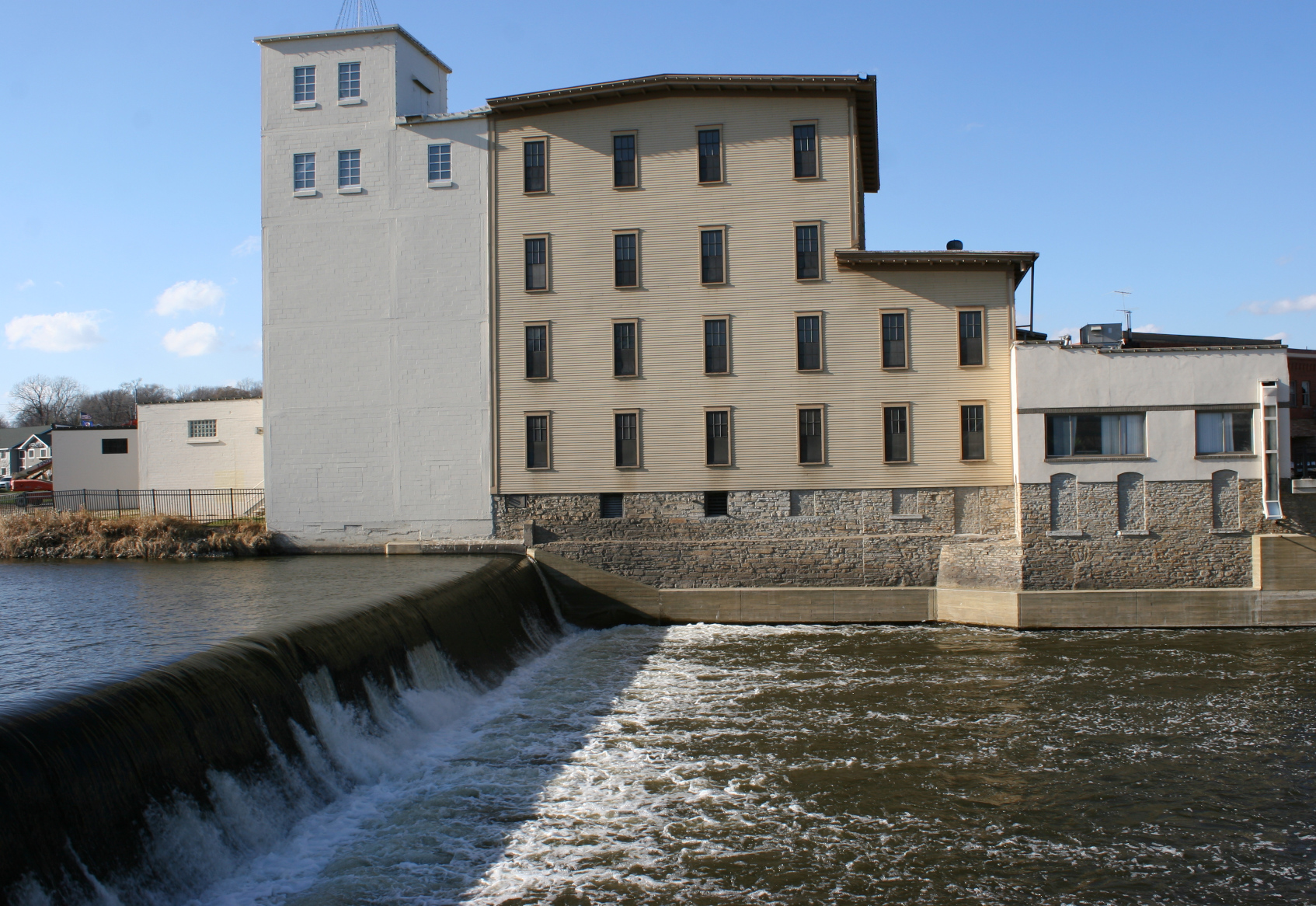
The historic Ames Mill sits along the banks of the Cannon River in downtown Northfield. Malt-O-Meal hot cereals are made in the mill. You can often smell the scent of cereal wafting through this southern Minnesota community.

THE CITY OF NORTHFIELD, about a 20-minute drive northeast of my Faribault home, has long-rated as one of my favorite Minnesota communities. For many reasons.

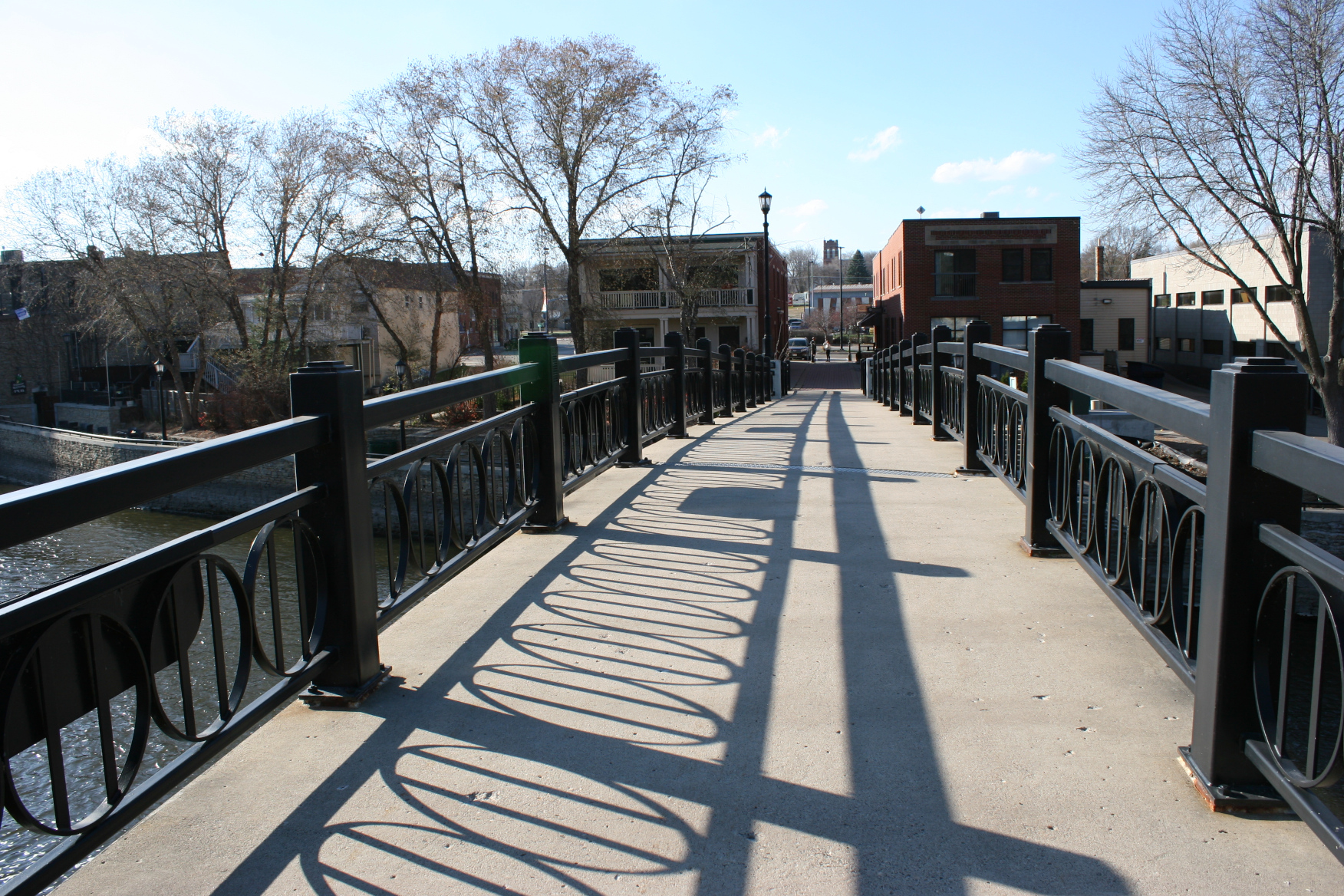
Crossing the pedestrian bridge over the Cannon River in downtown Northfield.

It’s situated along the banks of the Cannon River, making for a picturesque setting.

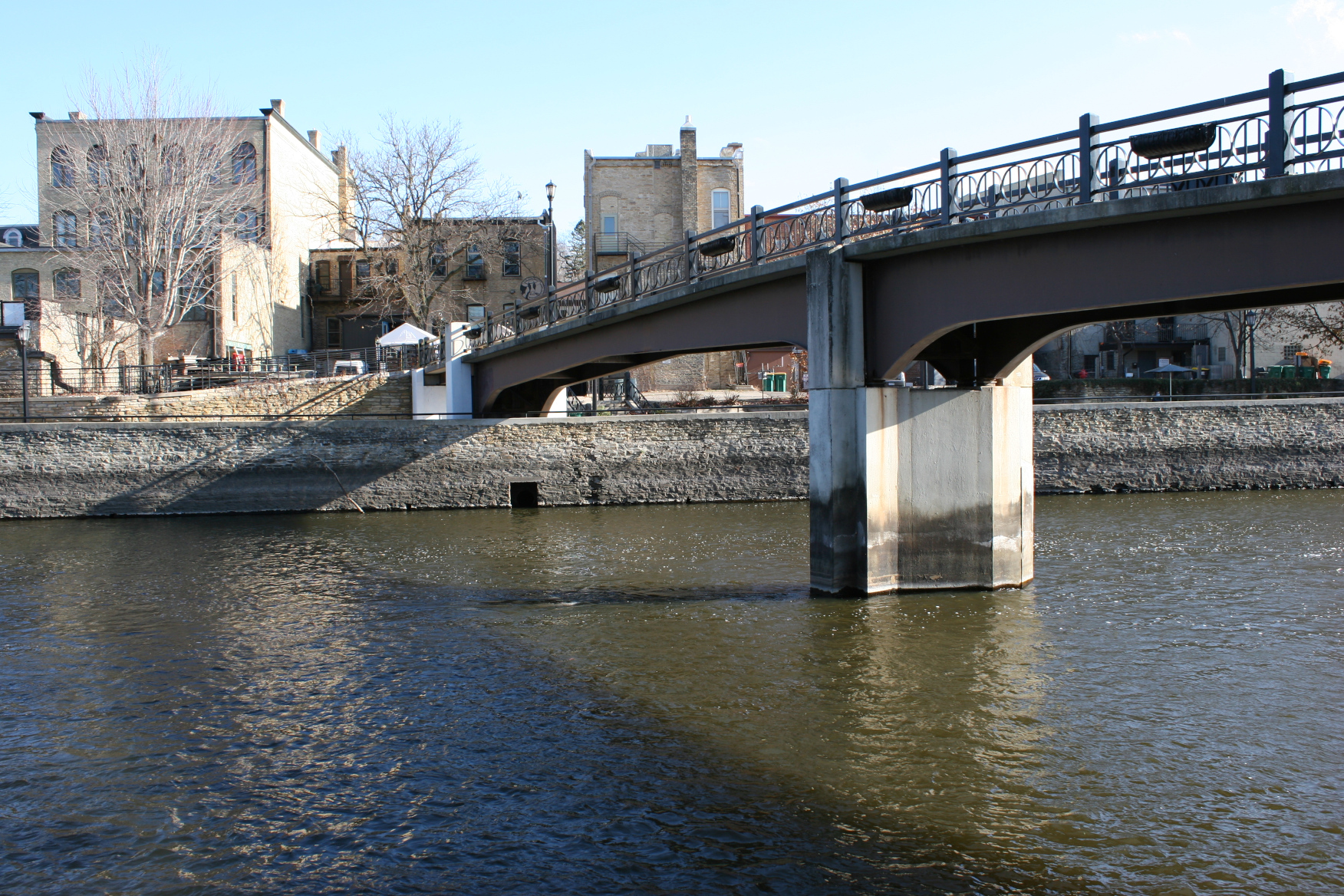
Standing along a river walk, I photographed the pedestrian bridge in downtown Northfield.
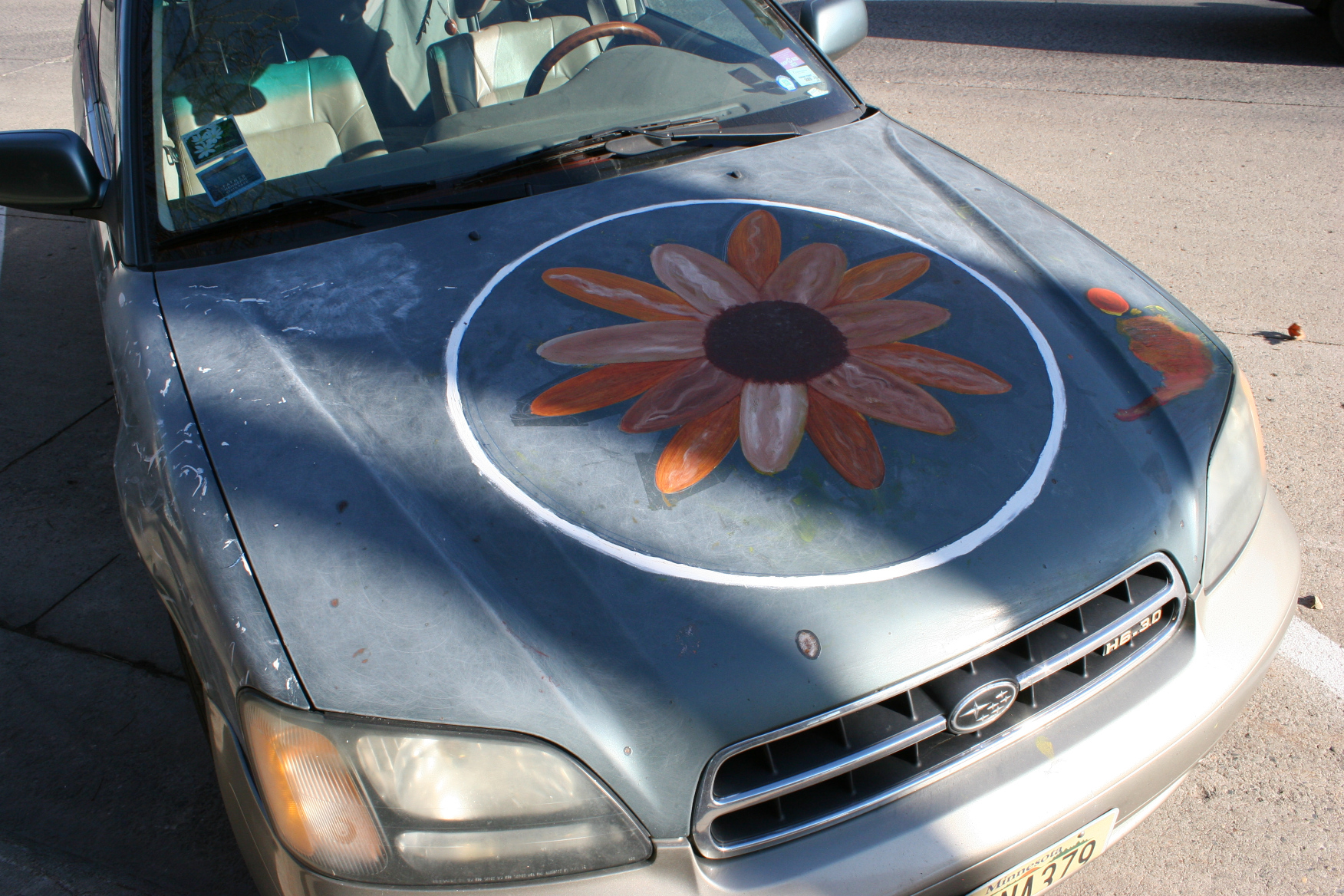
I spotted this art on the hood of a car parked along Division Street near Bridge Square.
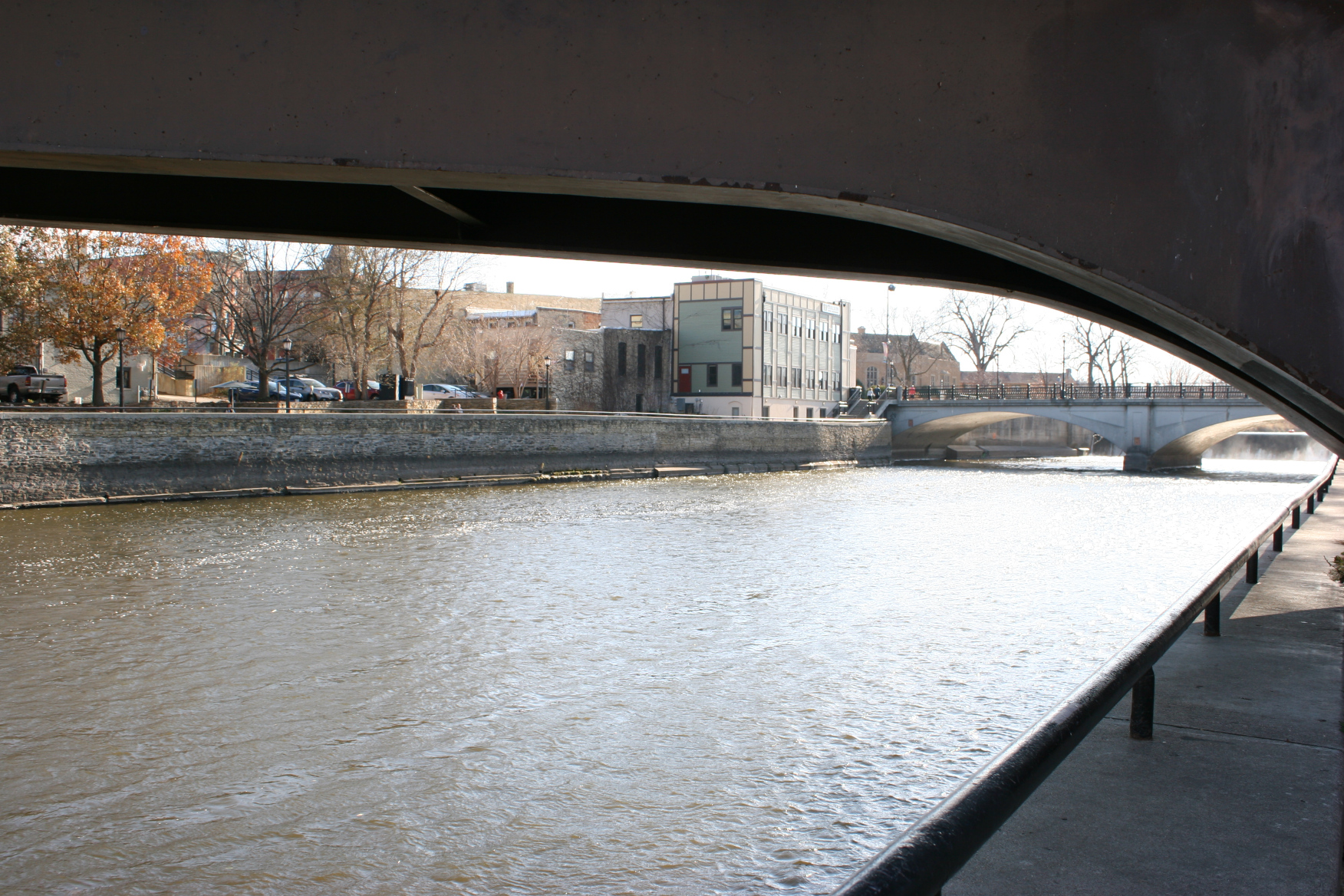
From the river walk, nearly under the pedestrian bridge, I photographed the Cannon River and distant buildings.

Homegrown businesses fill the historic downtown, which edges the river. Here you’ll still find an independent bookstore plus antique shops, boutiques, restaurants, an arts center, the public library and much more.

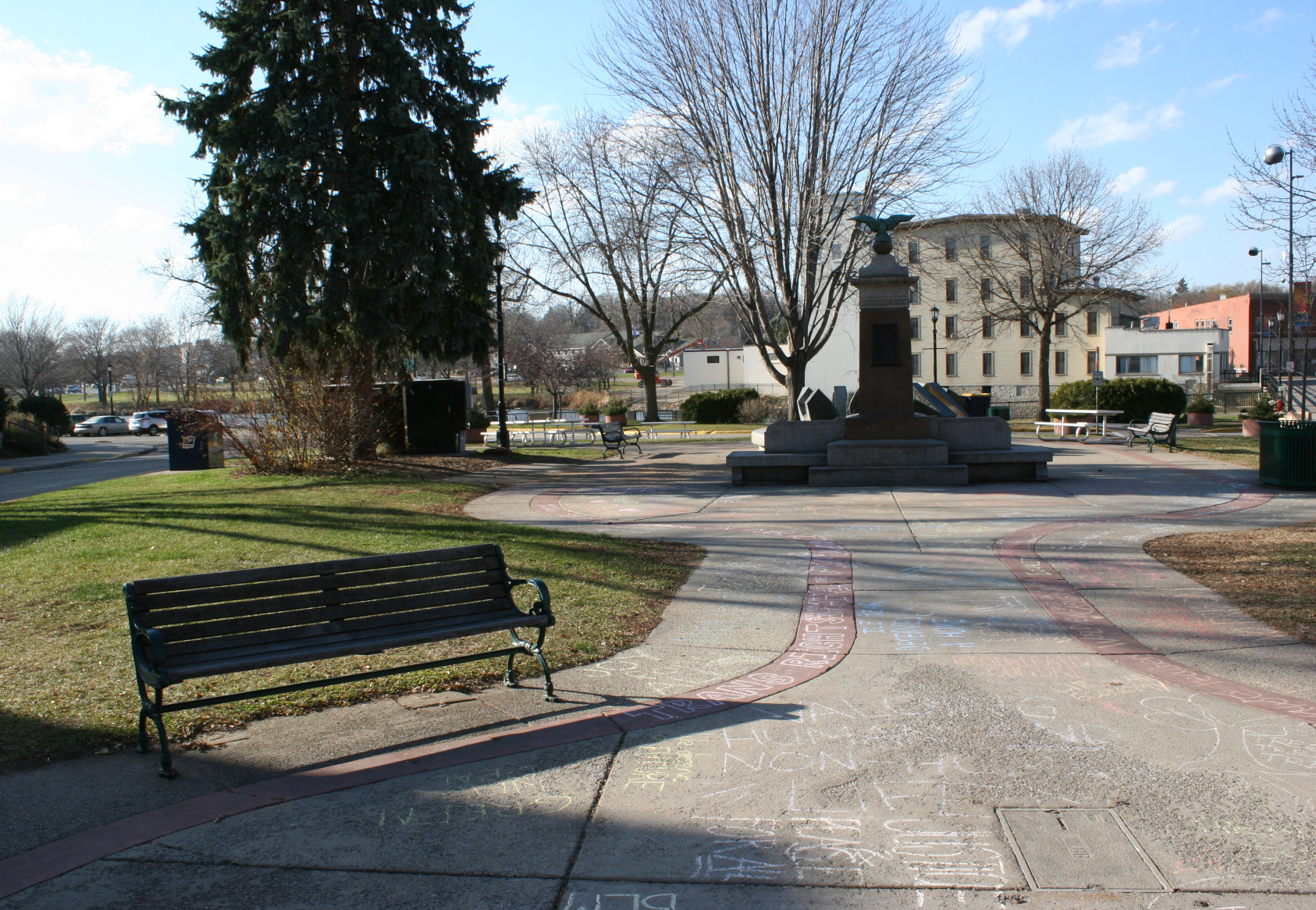
Bridge Square, Northfield’s downtown community gathering spot often chalked with messages.

And, in the heart of Northfield’s business district you’ll also find a community gathering spot. Bridge Square. Here you can buy popcorn from a vintage wagon in the summer, take the kids or grandkids to visit Santa during the holiday season. You can rest here on a bench and engage in conversation. Watch the river flow by or the water fall over the fountain sculpture or the nearby dam.

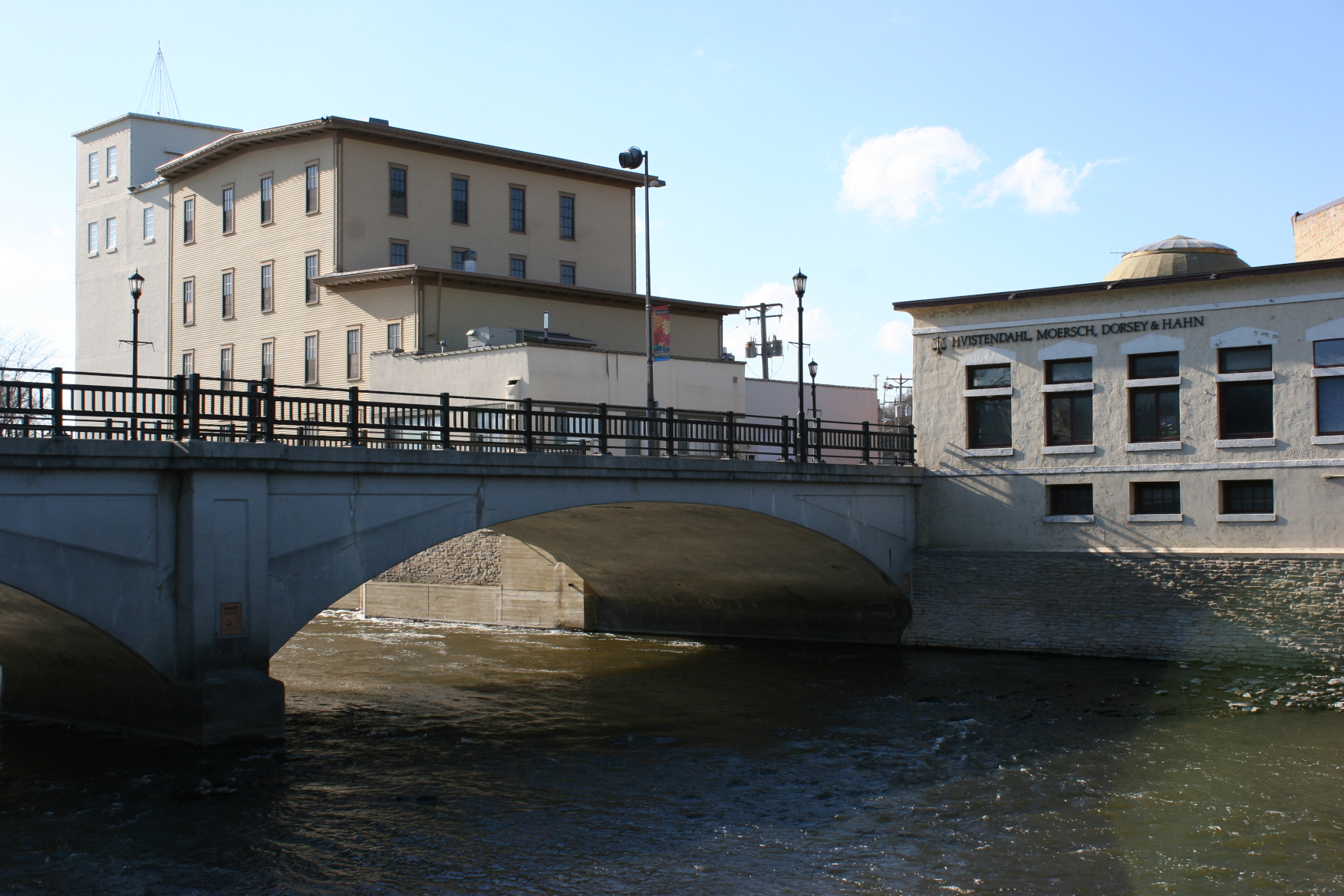
This motor vehicle bridge lies next to the Ames Mill, across the river from Bridge Square.

But Bridge Square is so much more than a Norman Rockwell-like place to meet, gather and relax. It’s also a spot where opinions are expressed. Students from St. Olaf and Carleton, two noted private liberal arts colleges based in Northfield, use this space to gather and voice their concerns. And, even though I may not always agree with their views, I appreciate that they share them. To see young people concerned enough about an issue to publicly express their thoughts gives me hope.

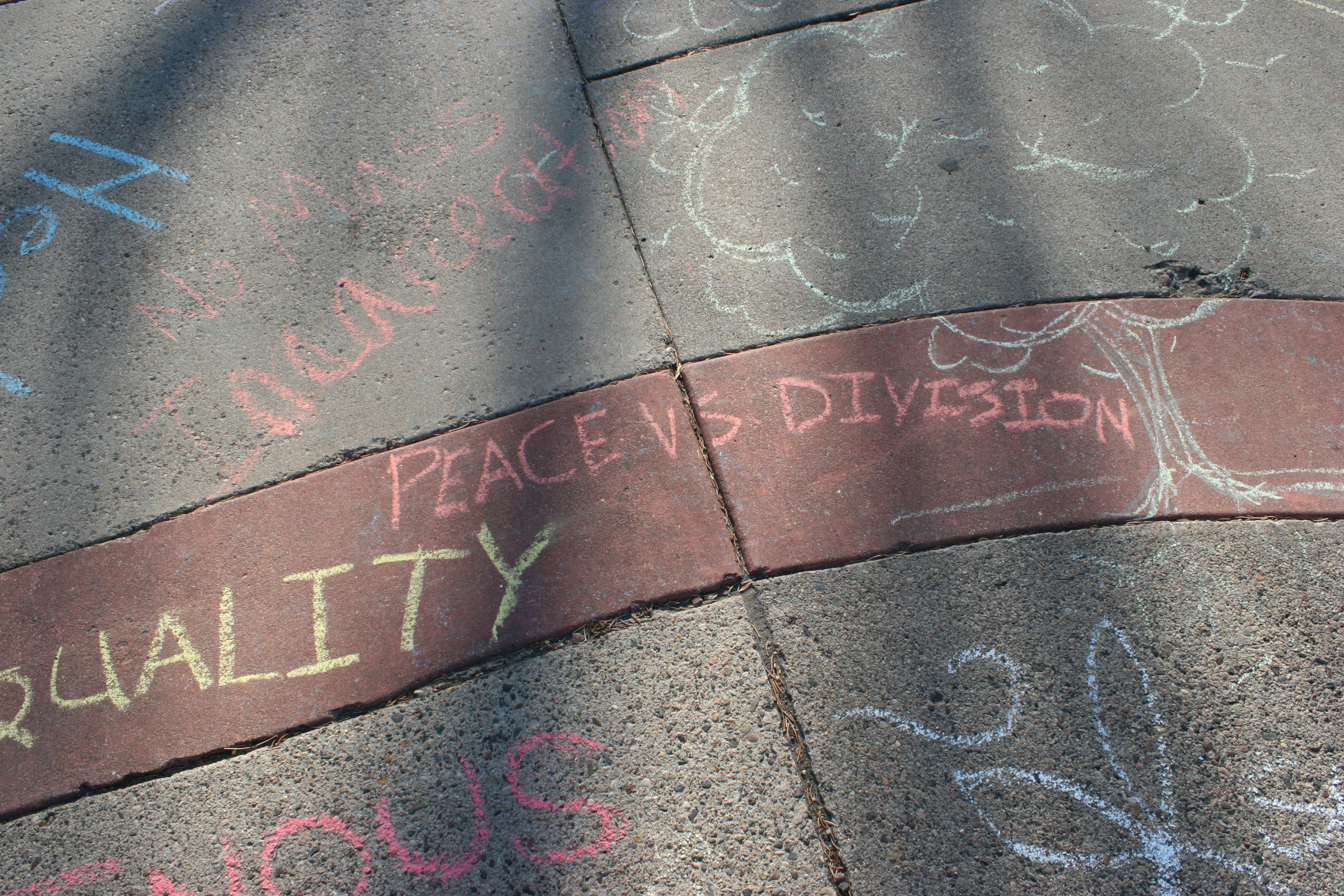
Among the many messages, peace vs division.

For the first time in a long time, I feel hope. Out of all the chalked messages I read on Sunday while at Bridge Square, I found one that really spoke to me. Peace vs division. Oh, how we need that. Peace. Not division.

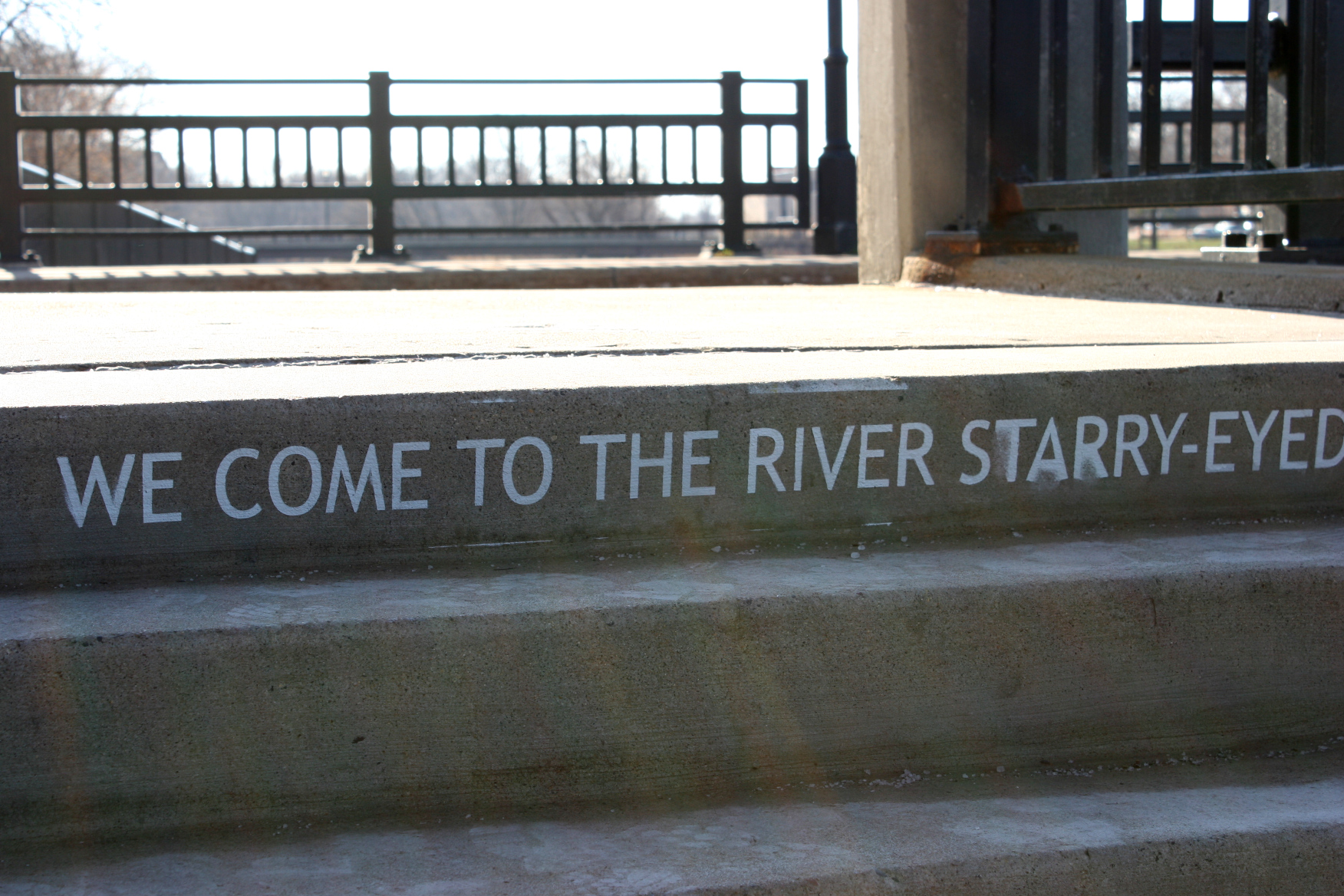
A message printed on a step leading to the river walk. You’ll also find poems imprinted into sidewalks in downtown Northfield.

That stop at Northfield’s town square, with so many issues printed in chalk on cement, could easily have overwhelmed me. I could have despaired at all the problems that need fixing. But rather, I choose to see this as an acknowledgment of concerns. Of the possibilities. Of the solutions. Of choices which can bring peace rather than division.

© Copyright 2020 Audrey Kletscher Helbling
 

Connecting with nature at Carleton College August 19, 2019

Filed under: Uncategorized — Audrey Kletscher Helbling @ 5:00 AM
Tags: , , , , , , , , ,


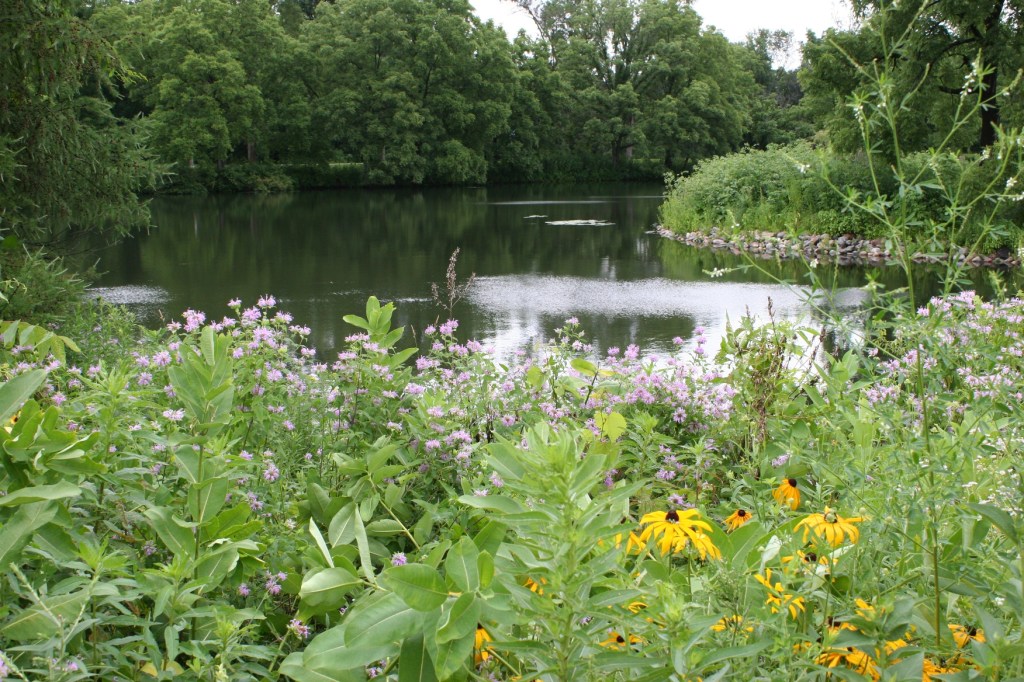
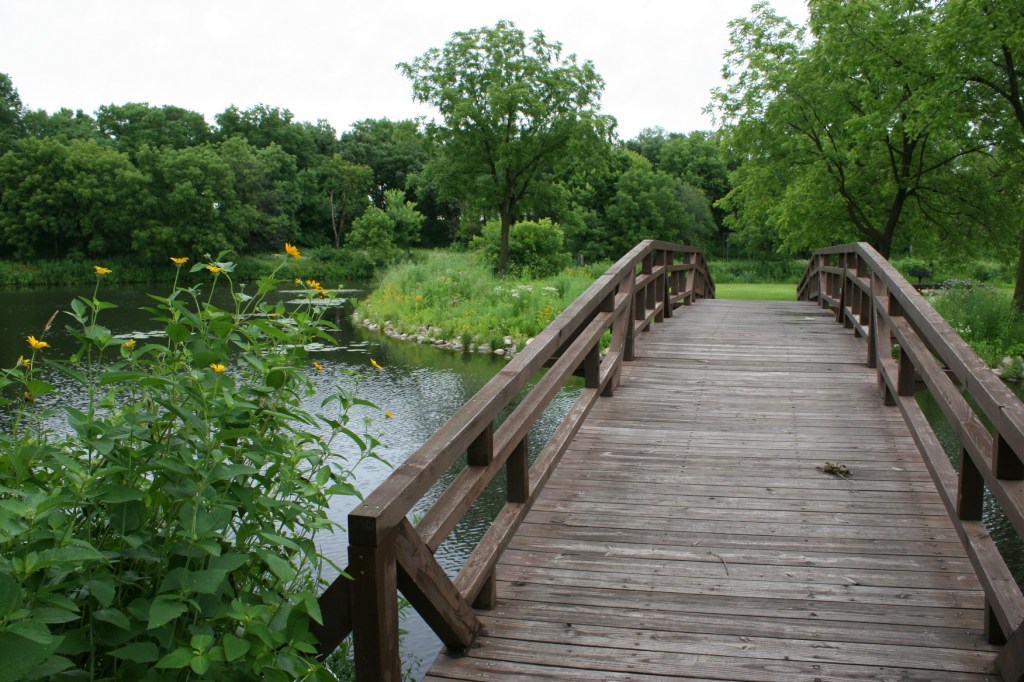
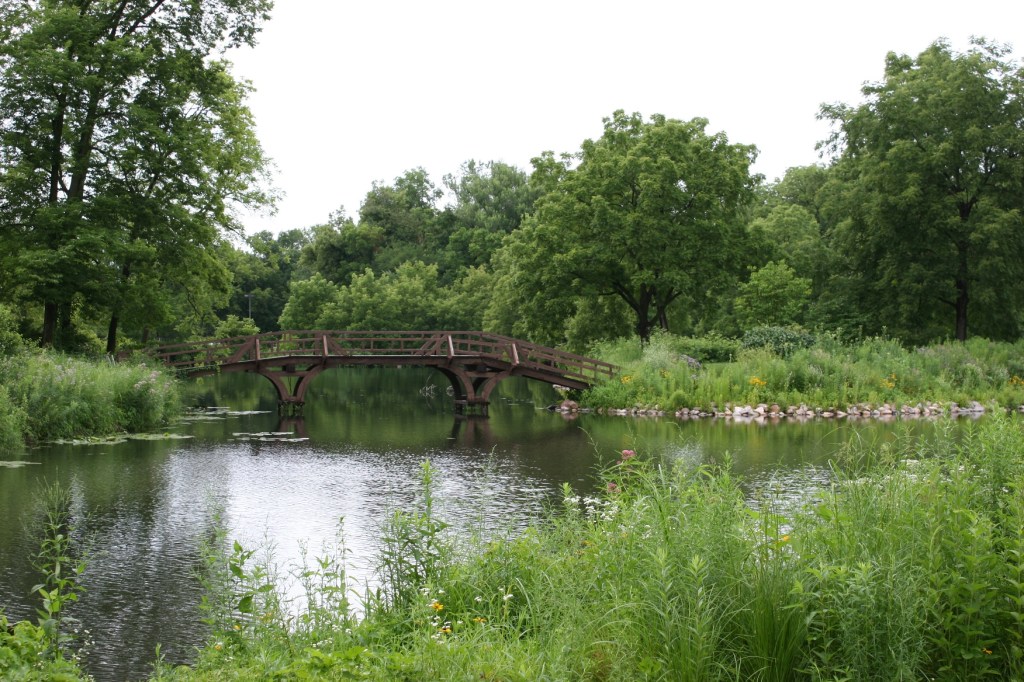
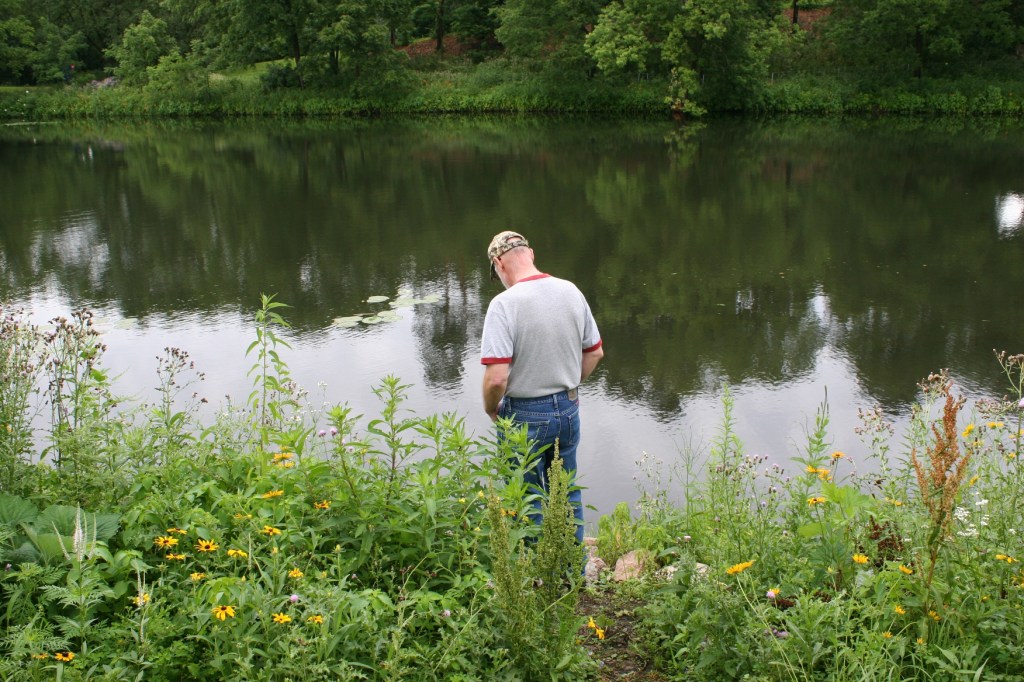
TO WALK HERE, among wildflowers lining water’s edge, is to find peace. And these days I crave peace, a short escape from the challenges of life. Nature offers that quiet, that solitude, that ability to forget reality for awhile.


On a recent Saturday, Randy and I followed a trail into a nature area at Carleton College in Northfield. I thought how lovely to attend college here, to have this natural space available on the edge of campus. A place for students to retreat, to recharge, to reboot.


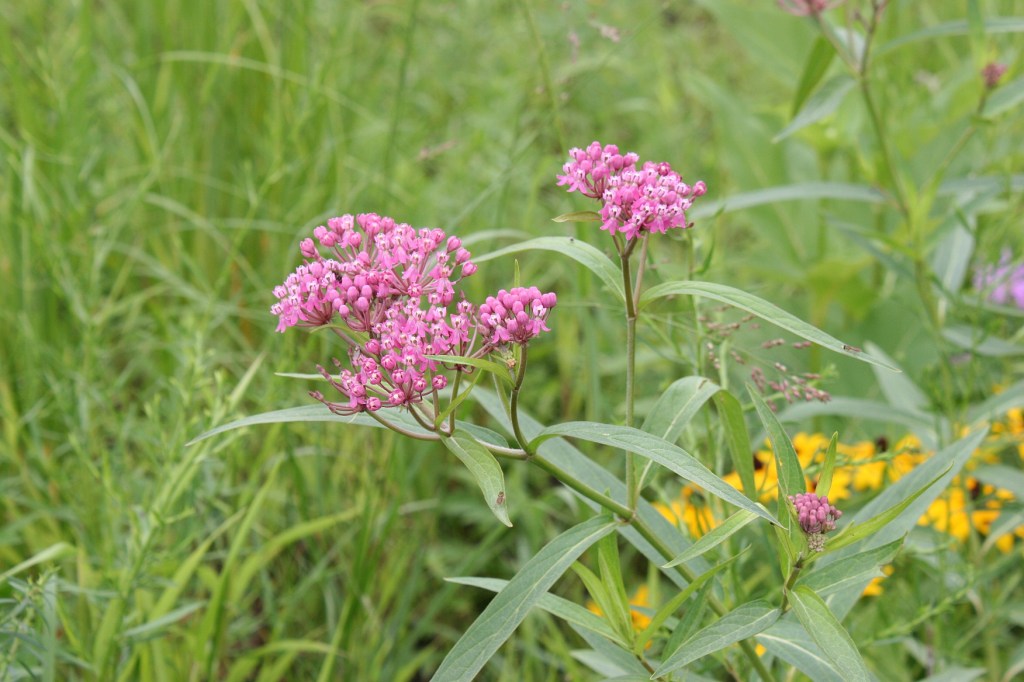
On this day, I retreated, focusing my attention (and camera) on vivid and pastel petals,


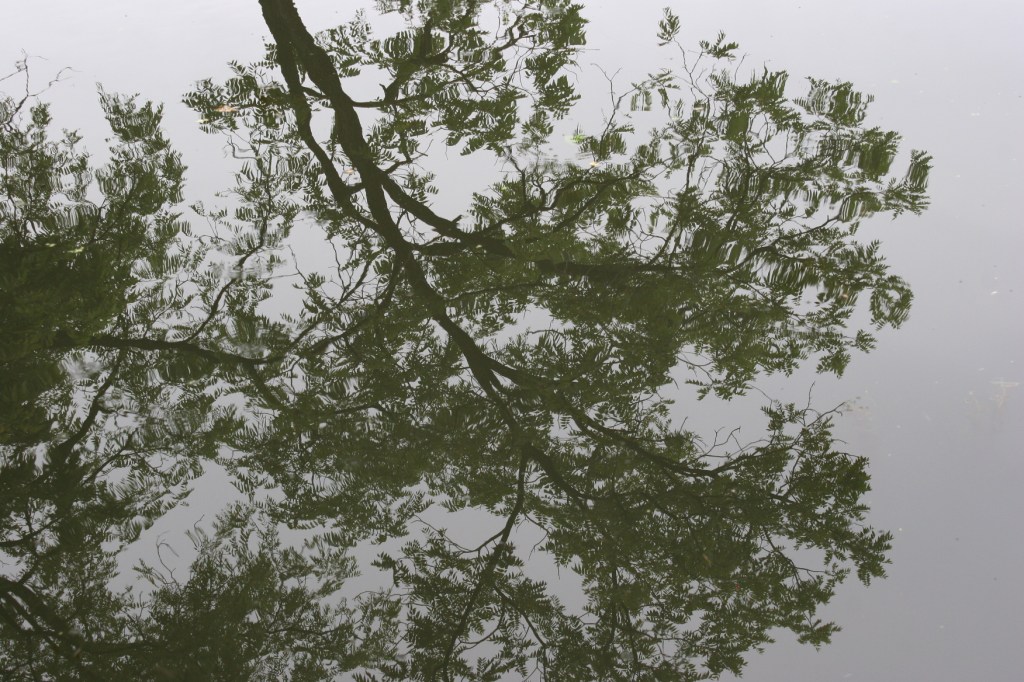
reflections on water,


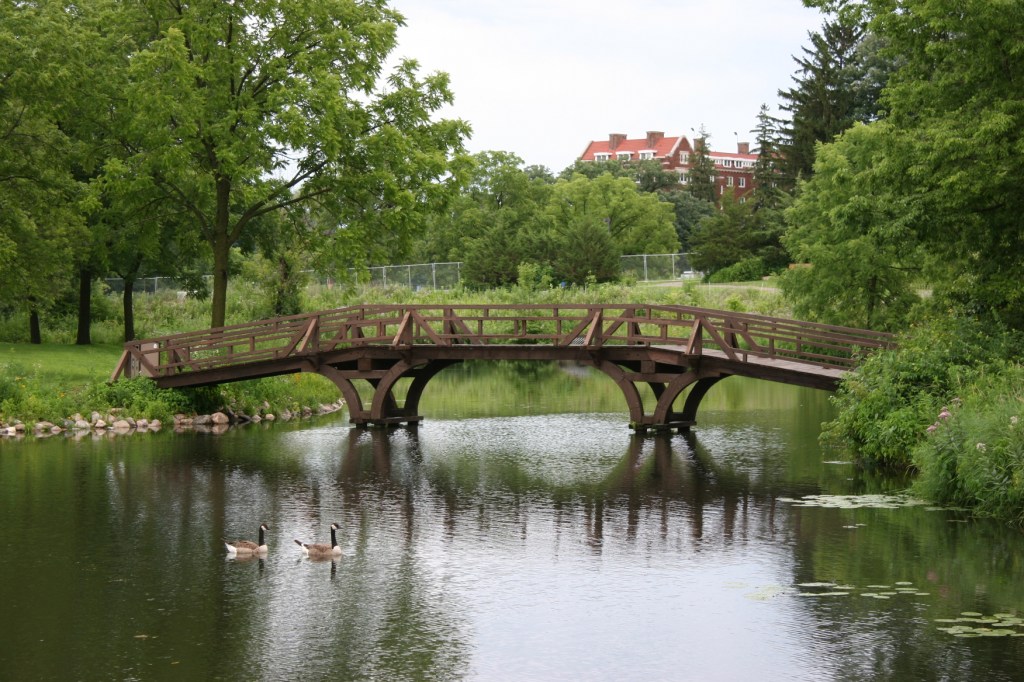
the arc of bridges


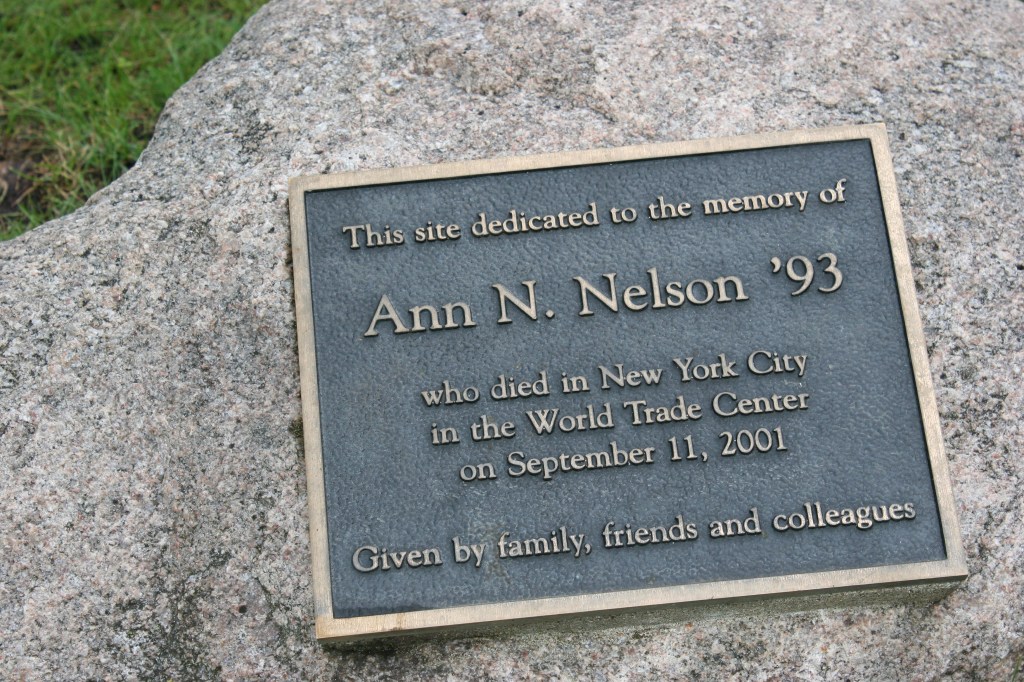
and then, the unexpected—a memorial to Carleton alum Ann N. Nelson who died during the 9/11 terrorist attacks on the World Trade Center. A second Carleton alum, Joe McDonald, also died there.


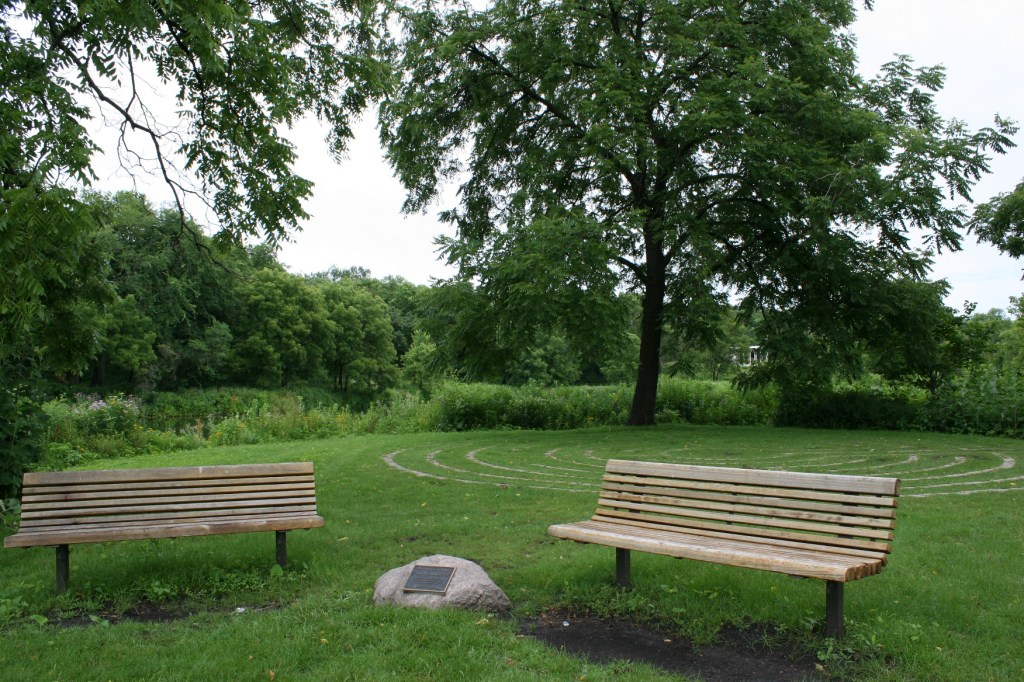
The memorial stone placed between benches next to a labyrinth drew my thoughts away momentarily to that awful day in our nation’s history. And I considered the pain and the horror of it all and how, even in this peaceful place, one cannot fully-escape the difficult realities of life.


THOUGHTS?

© Copyright 2019 Audrey Kletscher Helbling
 

In which I discover the art treasures of St. Olaf and Carleton Colleges April 20, 2015

SOMETIMES I FEEL like I am missing out on a whole big wide world of art.

Not because art is absent here in outstate Minnesota. It isn’t. Recent years have seen a renewed effort to bring the arts—visual and performing—to communities like mine outside the Twin Cities metro area. Faribault has the Paradise Center for the Arts. Neighboring Owatonna, Northfield and Waseca also have art centers. Even the community of Zumbrota, population around 3,400, has the thriving Crossings at Carnegie.

So there are plenty of opportunities to engage in the arts at a local and regional level without venturing into Minneapolis or St. Paul, which I really prefer to avoid given my aversion for traffic congestion and big cities in general.

Despite an abundance of wonderful local art, I was still missing that segment of art created by renowned artists or by artists outside of Minnesota.

That is until I recently realized that I can see that type of art, too, right in my backyard.

In the center of this display space outside the Flaten Art Museum is a poster for the "Selma to Montgomery" exhibit on the Civil Rights Movement.

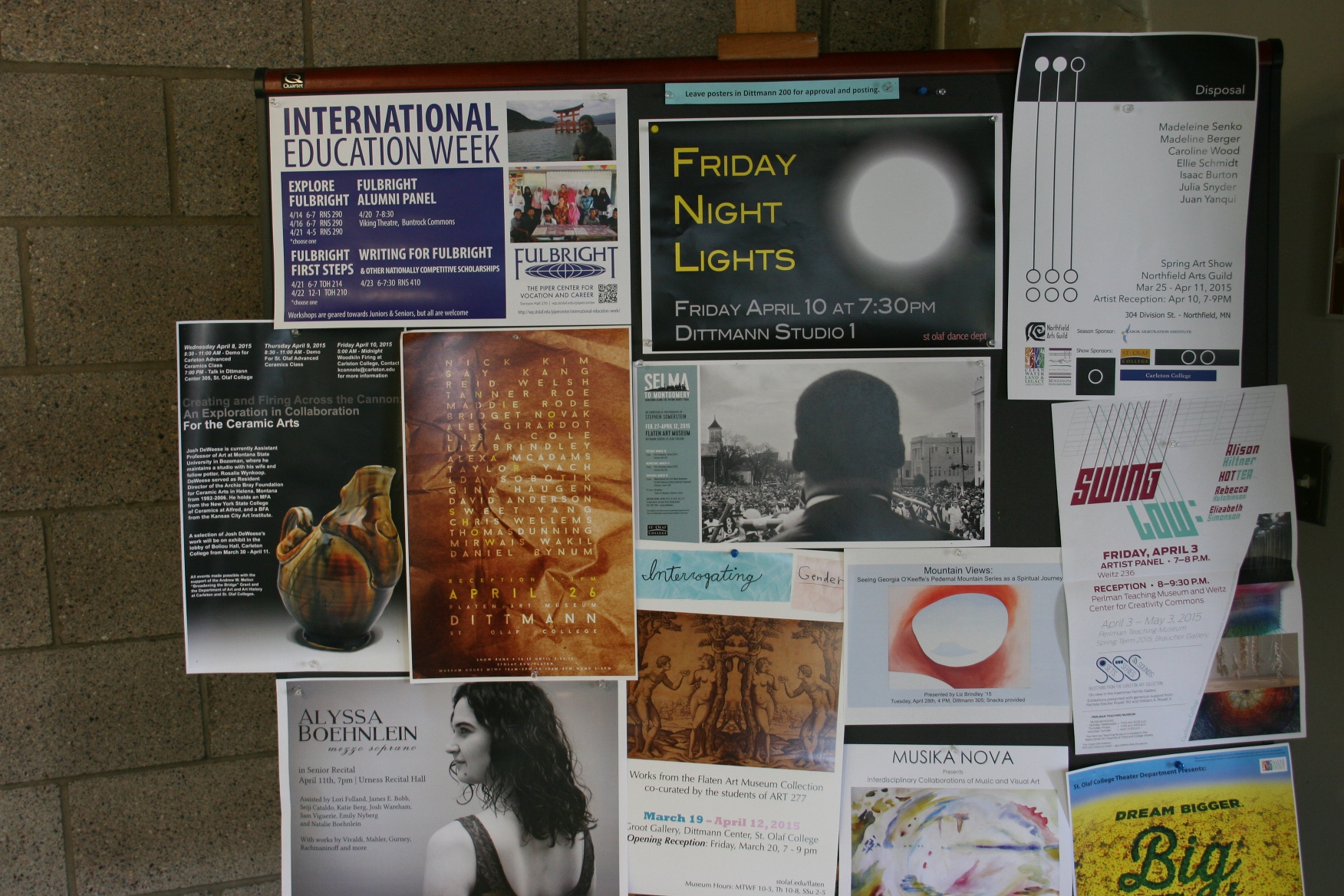
Promotional posters posted in the Dittman Art Center at St. Olaf College show the wide variety of artistic offerings.

Two colleges in Northfield, a 22-minute drive from my Faribault home, both sometimes showcase notable art from their collections in exhibits that are open to the public. They also bring in outside artists and traveling exhibits. Entrance to Carleton’s Perlman Teaching Museum and St. Olaf’s Flaten Art Museum is free. No cost and no traffic are a winning combination for me.

Items from St. Olaf's art collection were displayed in the recent "Interrogating Genders" exhibit.

Items from St. Olaf’s art collection were displayed in the recent “Interrogating Gender” exhibit.

Together, these two prestigious private colleges hold more than 6,500 paintings, fine art prints, photographs, sculptures and more in their collections.

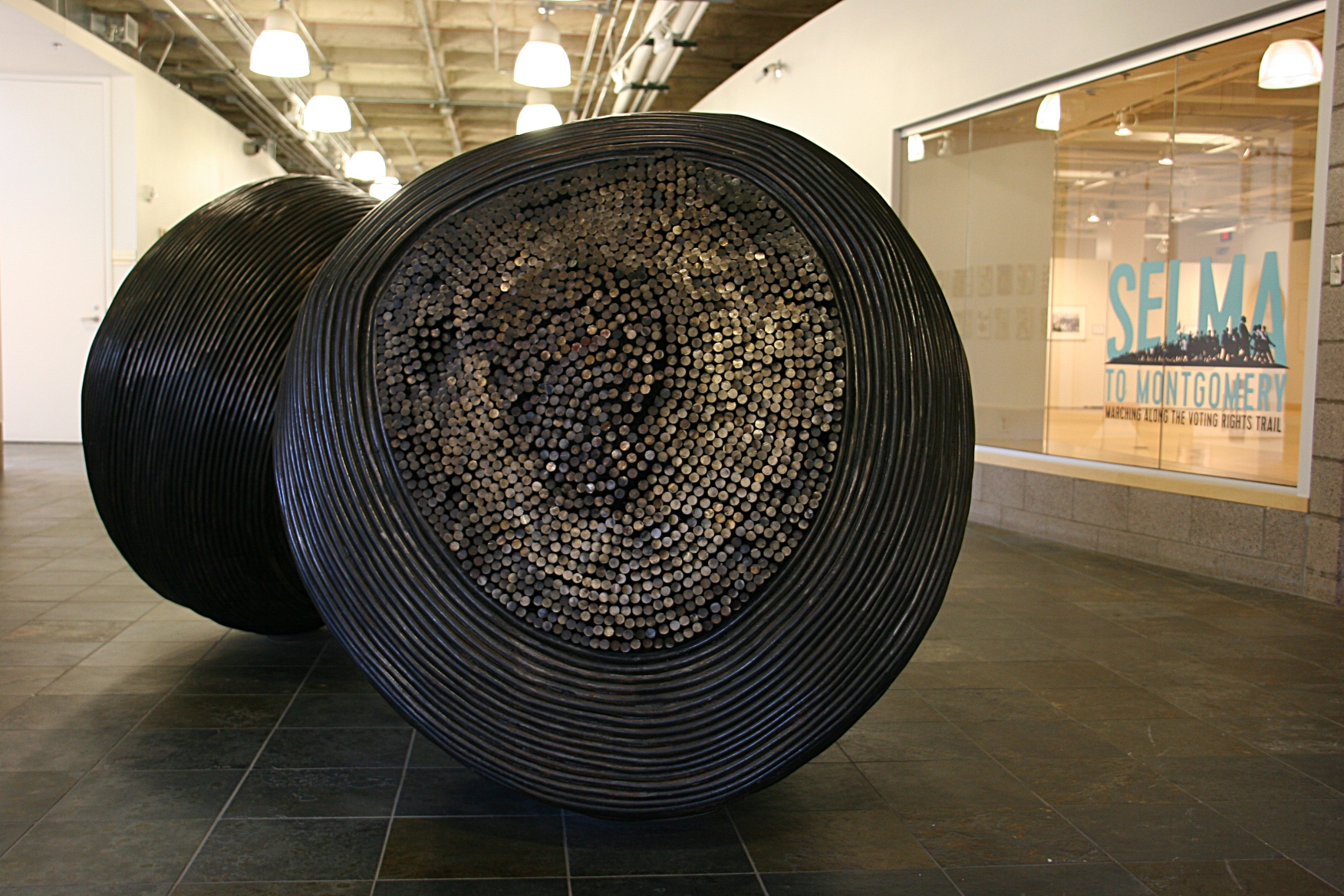
Entering the Flaten Art Museum Atrium, I encountered this mega sculpture just outside the "Selma" exhibit.

Entering the Flaten Art Museum Atrium, I encountered this mega sculpture just outside the “Selma” exhibit.

I discovered Carleton’s gallery space about 18 months ago and St. Olaf’s just recently, when I arrived at the college atop the hill to view Selma to Montgomery: Marching Along the Voting Rights Trail, an exhibition of Stephen Somerstein’s photos.

Walking across the hall from one museum space to another, I found Michon Weeks' "Wheel Within Wheel (#1-44) paintings hung along the atrium wall. The acrylic on paper on wood panel is a visual inventory of items in her Northfield garage.

Walking across the hall from one museum space to another, I found Michon Weeks’ “Wheel Within a Wheel (#1-44) paintings hung along the atrium wall. The acrylic on wood panel paintings are a visual inventory of items in her Northfield garage.

After studying Somerstein’s remarkable images, I strode across the hall to see the Interrogating Gender exhibit, since closed.

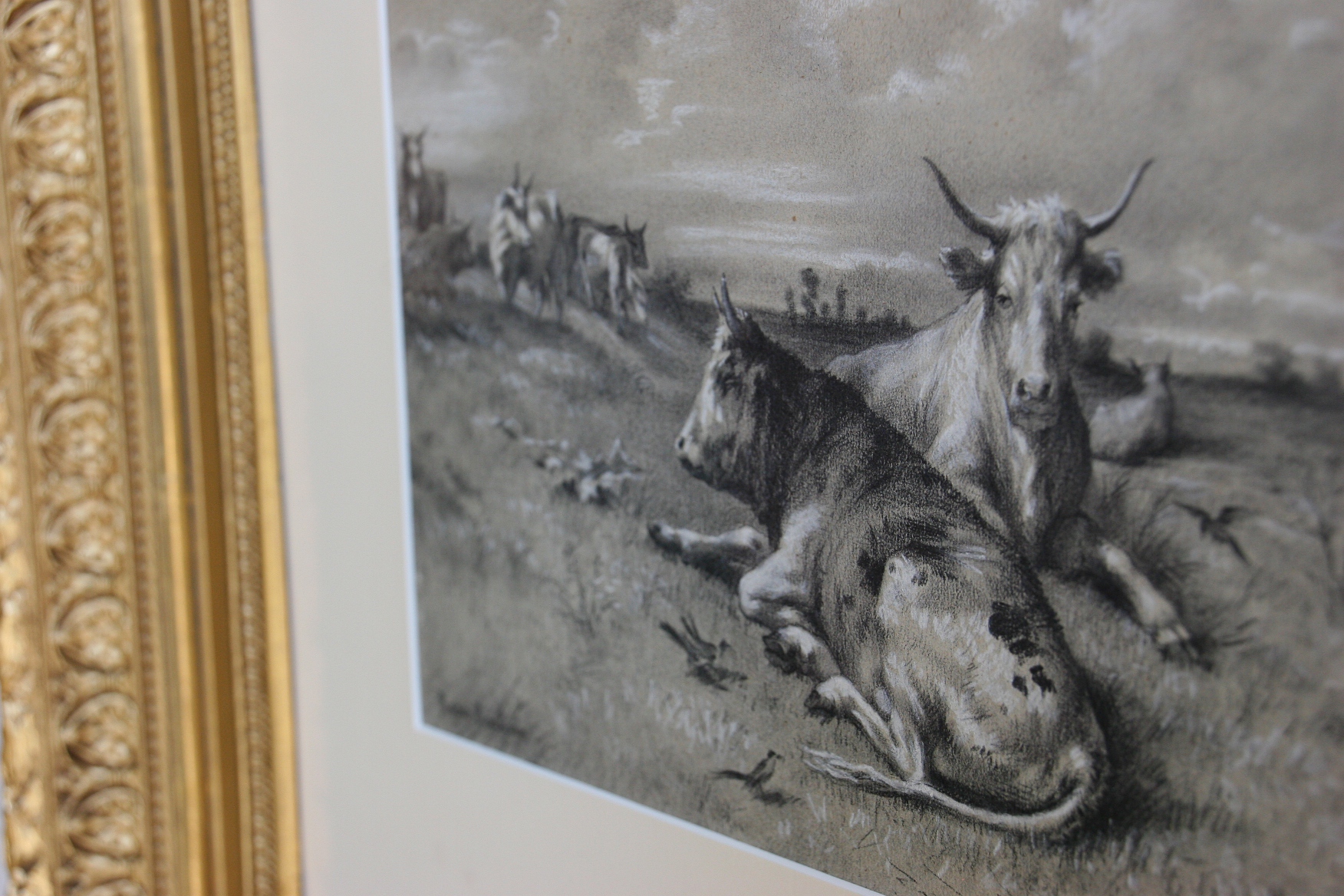
Rosa Bonheur's "Cows in Pasture."

Rosa Bonheur’s “Cows in Pasture.”

The 16th Century "Madonna and Child, an oil painting on panel by Adriaen Isenbrandt of Belgium.

The 16th Century “Madonna and Child” by Adriaen Isenbrandt of Belgium.

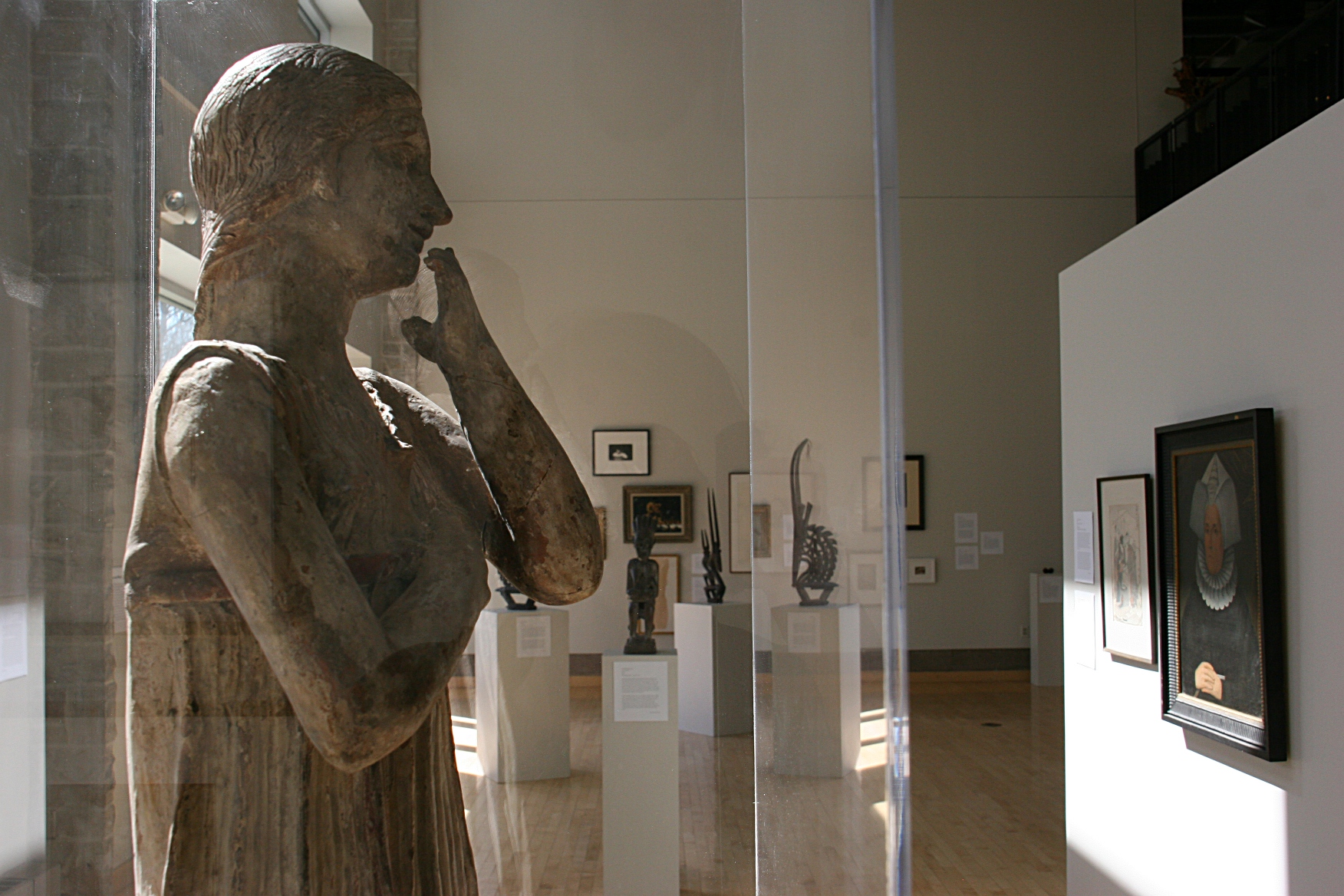
The angle at which I photographed "Archaic Greek Statue of a Woman" makes it appear as if the Italian terra cotta sculpture is studying the art on display.

The angle at which I photographed “Archaic Greek Statue of a Woman” makes it appear as if the Italian terra cotta sculpture is studying the art on display.

There I marveled in getting close up to photographs taken by Andy Warhol. Yes, the Andy Warhol. I stood in reverent awe before a 16th Century oil painting on panel of Madonna and Child by Adriaen Isenbrandt. I enjoyed art from Africa and Italy and the Cows in Pasture pencil on paper by Rosa Bonheur.

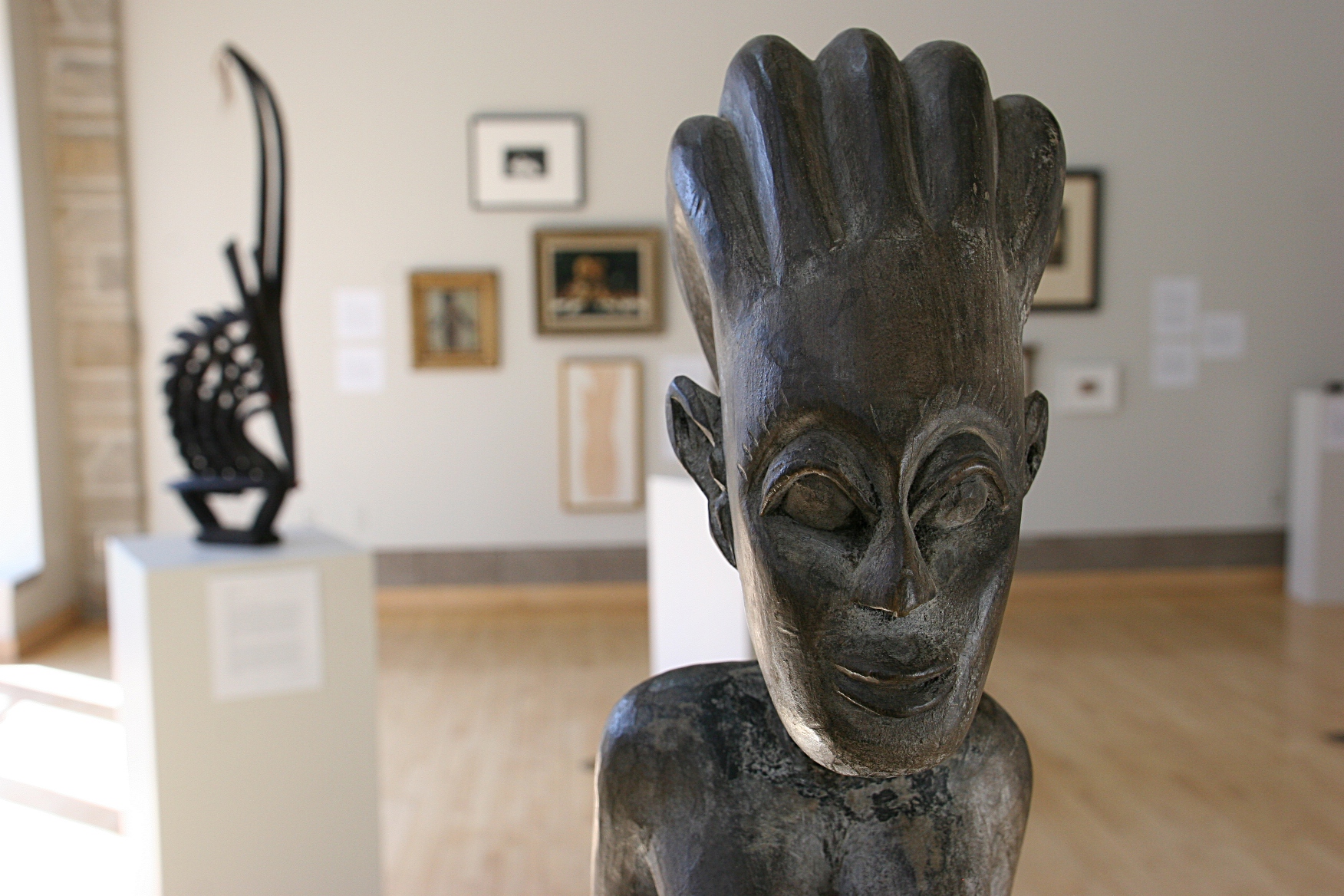
A wood sculpture from Africa, artist unknown, and titled "Seated Maternity Figure."

A wood sculpture from Africa, artist unknown, and titled “Seated Maternity Figure.”

I could have reached out and touched the art, except I didn’t. It was that comfortably accessible and intimate. I didn’t have that feeling I often get in galleries of “be careful and don’t touch,” although I was aware of cameras on the premise.

My husband peruses the art.

My husband peruses the art.

I only wish I’d realized years ago that I could simply walk onto these college campuses and view art by well-known and other artists and students, too.

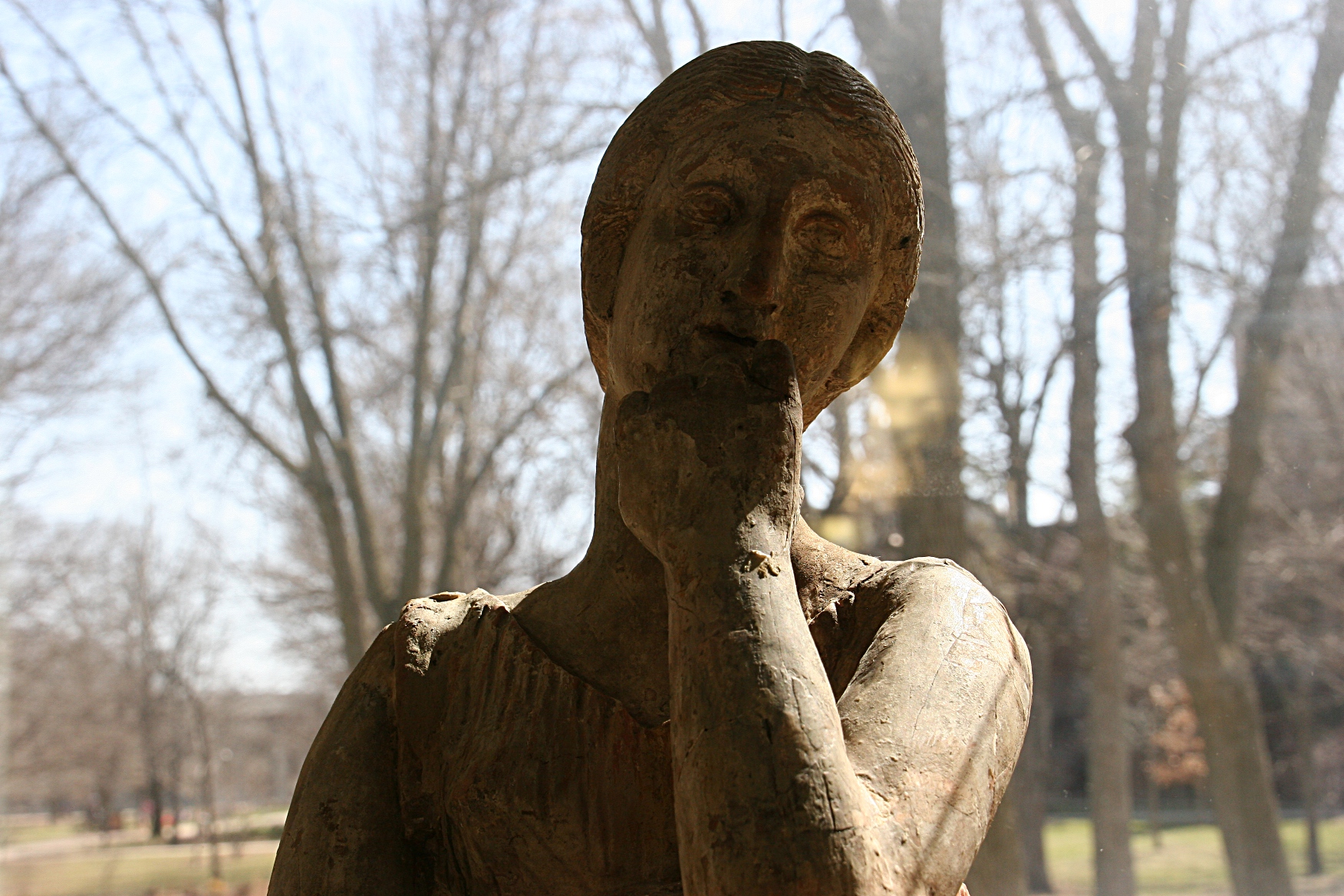
I got down low to photograph the Greek woman sculpture encased in glass.

I got down low to photograph the Greek woman sculpture encased in glass.

Now that I know, I’ll be back.

FYI: All of the exhibits mentioned in this post are no longer showing. Both colleges will be featuring a Senior Art Show in their exhibit spaces.

Please check back for a story and photos of the Selma to Montgomery exhibit.

© Copyright 2015 Audrey Kletscher Helbling
 

Hello, God, it’s me March 1, 2014

Filed under: Uncategorized — Audrey Kletscher Helbling @ 11:02 AM
Tags: , , , , , , , , ,

NEVER UNDERESTIMATE the power of prayer. Never.

Prayer provides a powerful personal portal to God. Consider that connection as immediate as a text message or a phone call away.

The thing about God, you won’t get his voice mail. He’s always listening. Twenty-four seven. He is, after all, our heavenly Father. And what parent wouldn’t love to hear from his/her child on a daily basis? Love works that way.

Yet, just like an earthly father, God doesn’t always give us what we want. Prayer doesn’t work that way. God responds in ways that he deems best. He really is a lot smarter than us.

Oftentimes that’s hard for someone like me, who desires to be in control and possesses minimal patience, to accept. I want the issue resolved yesterday, the direction given immediately, the prayer answered right now exactly as I prayed it.

I imagine God wonders sometimes if I will ever learn. I’m trying, God.

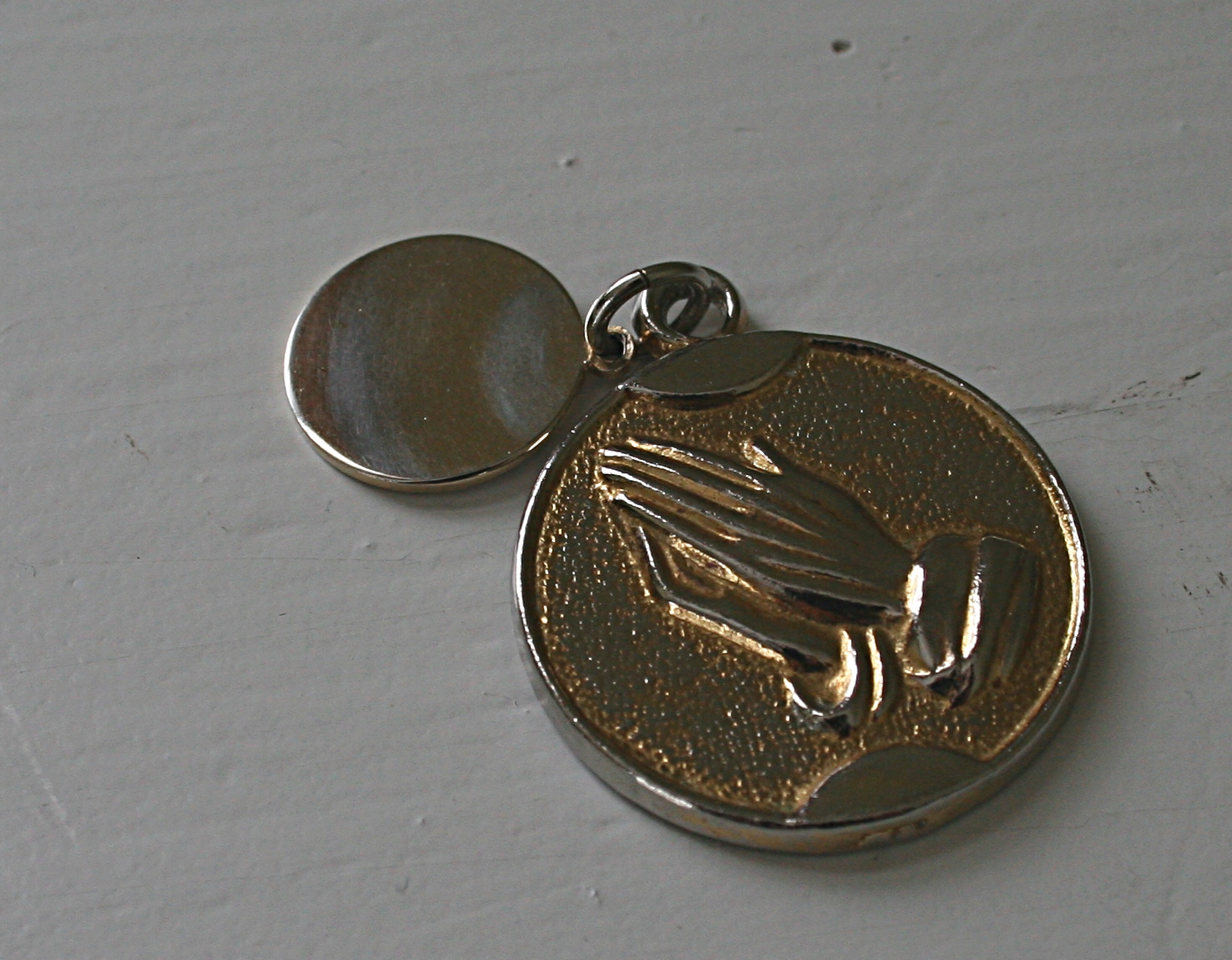
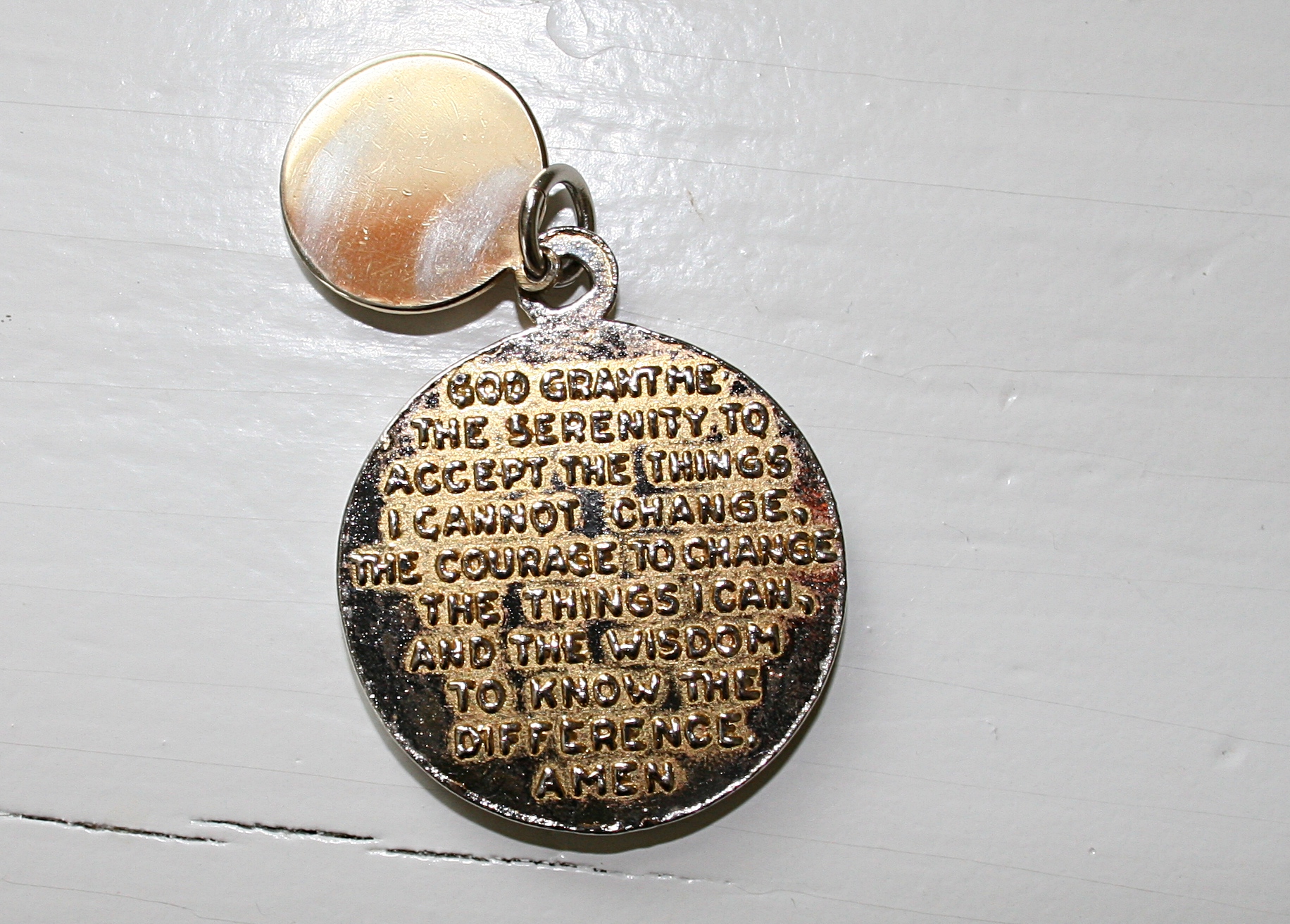
Prayer necklace

Recently I began carrying a medallion in my pocket to remind me of the need to always be prayerful. It’s really a necklace, minus the chain, a piece of jewelry I received during my childhood. I don’t recall who gifted this to me, but I’ve had it for nearly 50 years.

On the front side is an image of praying hands, on the back this inspirational prayer:

God, grant me the serenity to accept the things I cannot change, the courage to change the things I can, and the wisdom to know the difference. Amen.

Prayer necklace back

You likely know this as the Serenity Prayer adopted by Alcoholics Anonymous. I am not an alcoholic. But I am in need of serenity in my life. I tend to worry and stress about issues. Ask my husband.

I recognize that flaw. So this silver dollar sized medallion slipped inside my jean pocket reminds me daily that God is in control. This doesn’t mean I should sit idly and do nothing about certain situations. God doesn’t expect that. But rather, he needs me to understand that he is the one walking beside me through my days.

Oftentimes these days, I find myself sliding my right hand into my pocket, my fingertips brushing the outline of those prayerful hands, the imprint of the raised letters. A sense of peace fills me as my lips whisper a silent prayer.

Another window shows Jesus praying in the Garden of Gethsemane.

Even Jesus prayed, here in the Garden of Gethsemane. Minnesota Prairie Roots file photo.

DEAR READERS, please join me today in praying for the families and friends of three Carleton College students who died in a car crash Friday afternoon at Minnesota Highway 3 and Dakota County Road 47 just outside of Northfield, three miles from campus.

The trio were killed and two other students seriously injured when their car apparently went out of control on an icy and snowy roadway and was broadsided by a semi, according to news reports.

Dead are James Adams of St. Paul, Minnesota; Michael Goodgame of Westport, Connecticut; and Paxton Harvieux of Stillwater, Minnesota. Hospitalized in stable condition in the Twin Cities are Conor Eckert of Seattle, Washington, and Will Sparks of Evanston, Illinois.

I cannot imagine the depth of grief felt by the families, friends, the Carleton College community and the community of Northfield.

A vigil is being held at 11 a.m. today at Skinner Memorial Chapel on the college campus with counseling staff and chaplains available. (Click here to read a message from the president and dean of students at Carleton.)

Please pray for peace, comfort and healing. Prayer provides a powerful personal portal to God. At all times, in all circumstances.

© Copyright 2014 Audrey Kletscher Helbling
 

Exploring art inside the Weitz Center for Creativity at Carleton College December 5, 2013

MY EXPOSURE TO PROFESSIONAL ART as a youth could be categorized as minimal. There were no visits to art galleries, no attending theatrical performances, no concerts outside of school walls.

Yet, I did not feel deprived, for art surrounded me in blazing prairie sunsets, an inky sky dotted with an infinity of stars, road ditches graced with wild roses, tall grass bending in the wind, the symphony of a howling blizzard, the crunch of boots on hard-packed snow, the orchestra of pulsating milking machines and munching cows and the radio voices of ‘CCO.
To this day, I credit my rural southwestern Minnesota upbringing for shaping me as a writer and photographer. There, on the stark prairie, within the confines of a close and loving family living off the land, I learned to appreciate the details in the landscape and life itself.

Today, I no longer live on my beloved prairie. And I have immediate access to the arts within my own community of Faribault and nearby. You won’t find me, except on rare occasions, aiming for the Twin Cities to view art. I am not a city girl.

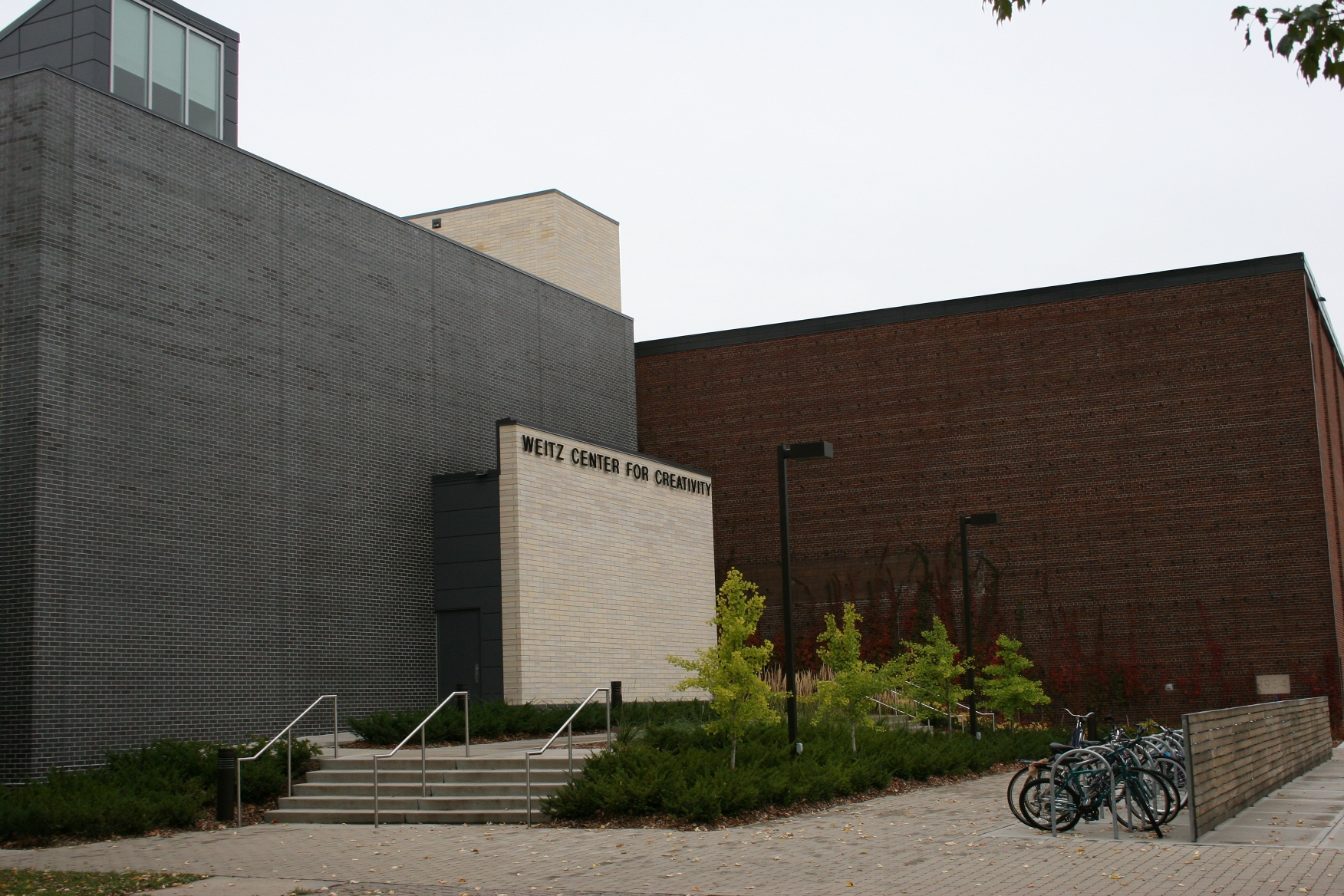
The Weitz Center for Creativity at Third and College Streets in Northfield, Minnesota.

The Weitz Center for Creativity at Third and College Streets in Northfield, Minnesota.

In late October, I discovered Weitz Center for Creativity, “a center for creativity and collaboration in the liberal arts,” on the campus of Carleton College in neighboring Northfield. The center is housed in the historic former and repurposed Northfield high school and middle school and in 30,000 additional square feet of new construction.

Near the entrance to the Weitz Center Commons area.

Near the entrance to the Weitz Center Commons area. (Photographed in October.)

The complex offers such creative spaces as a theater, dance studios, a technology resource center (the Gage/Bauer IdeaLab), a teaching museum, galleries and more.

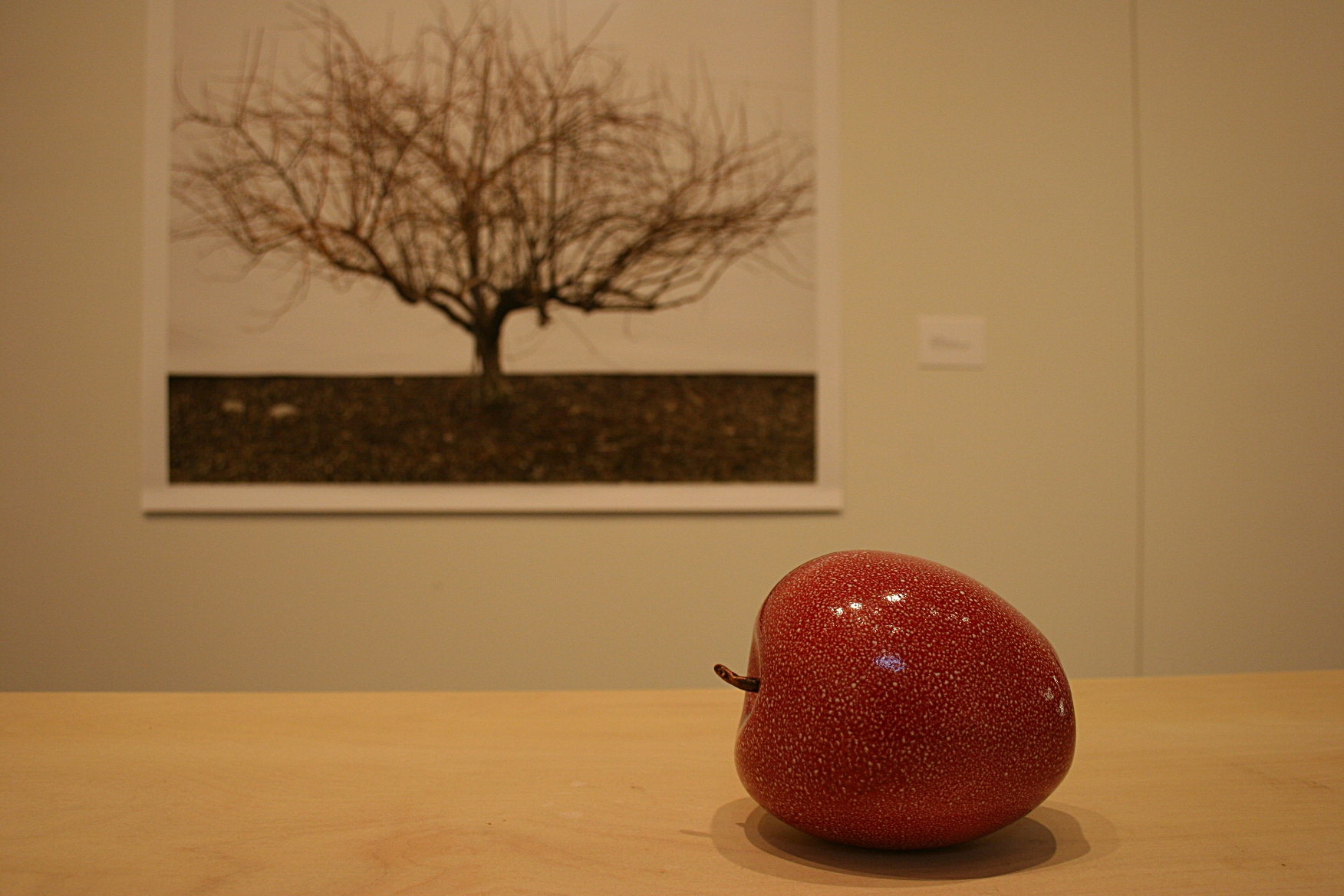
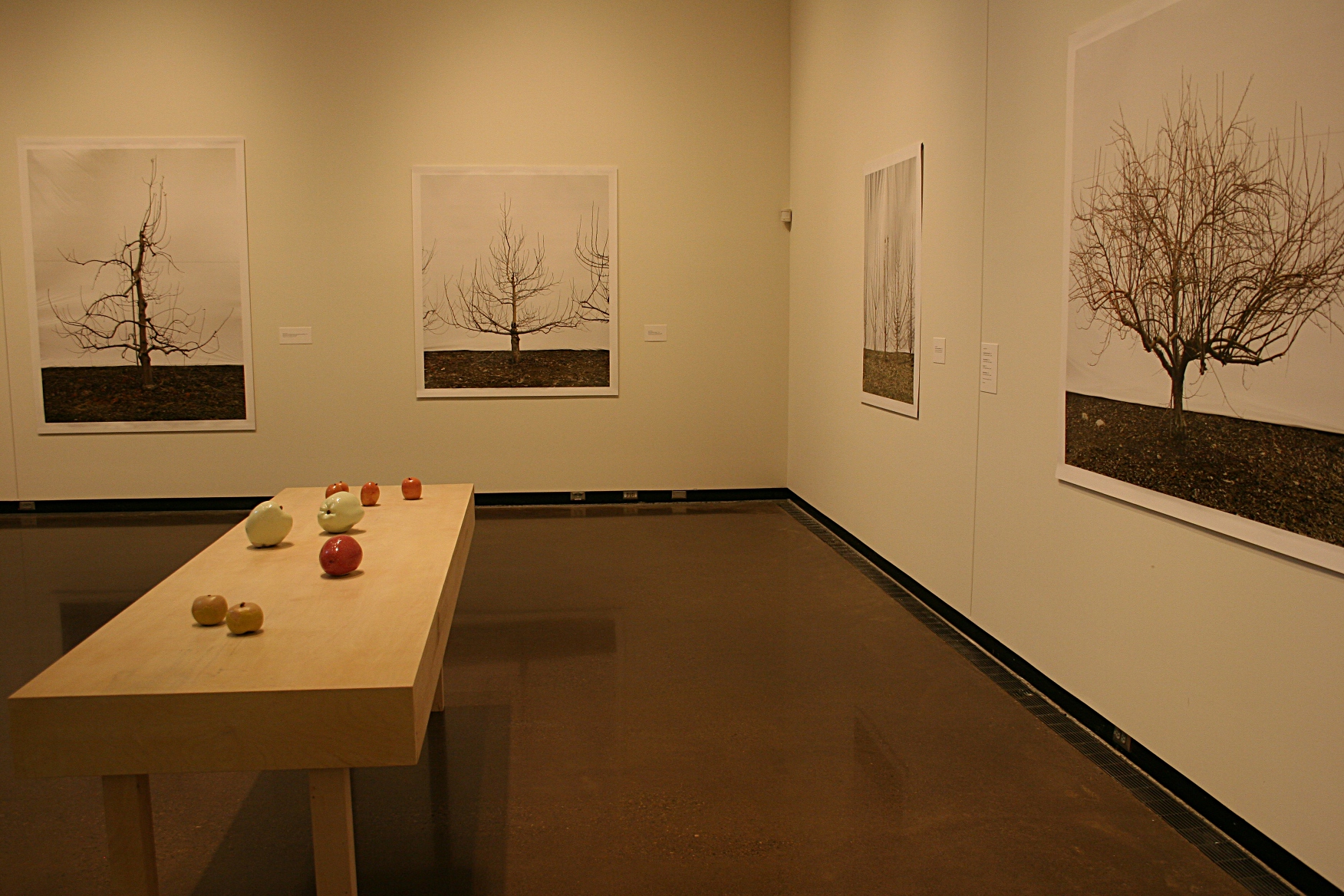
From Jessica Rath's "take me to the apple breeder" exhibit, a porcelain apple and an apple tree photograph.

From Jessica Rath’s “take me to the apple breeder” exhibit, a porcelain apple and an apple tree photograph.

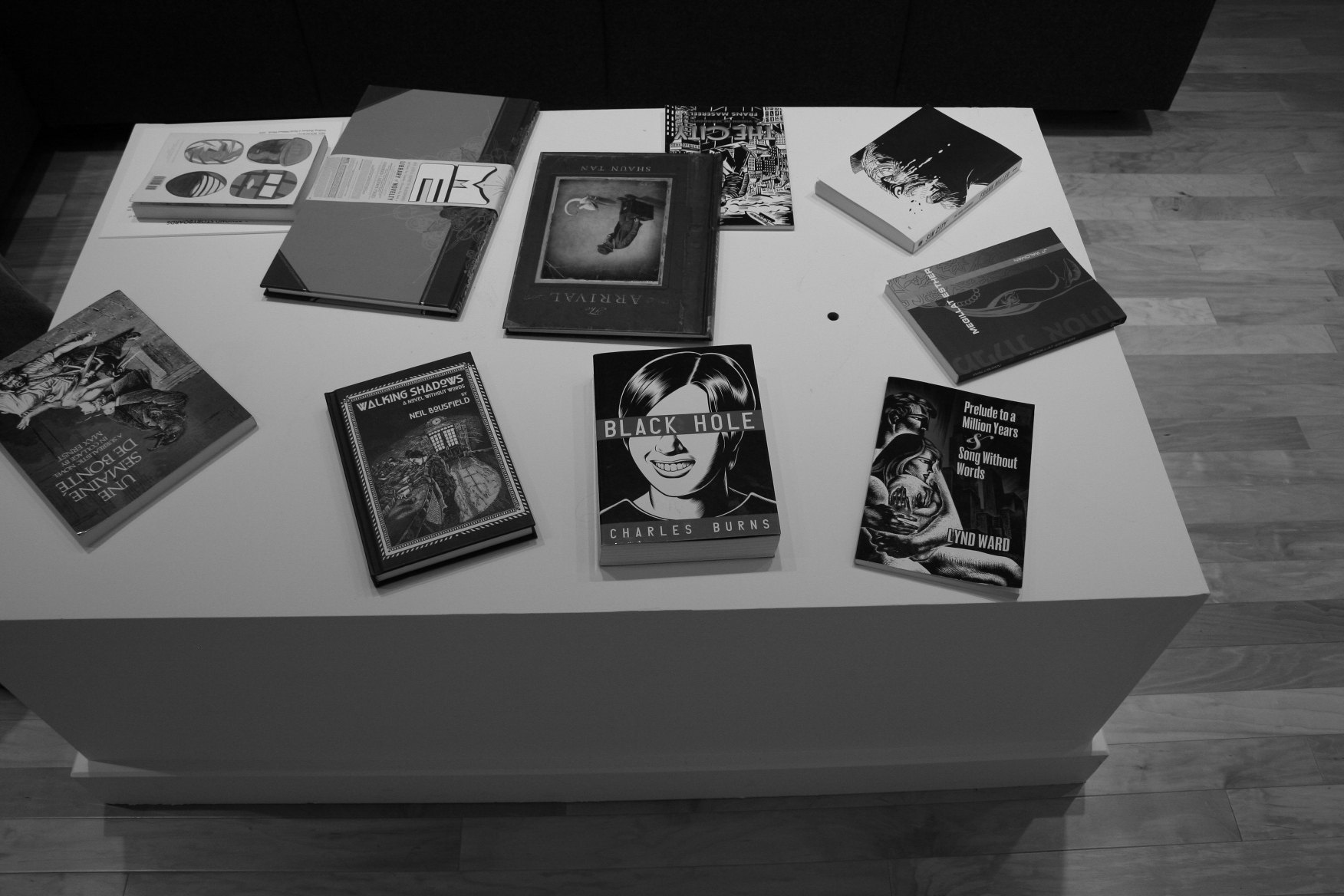
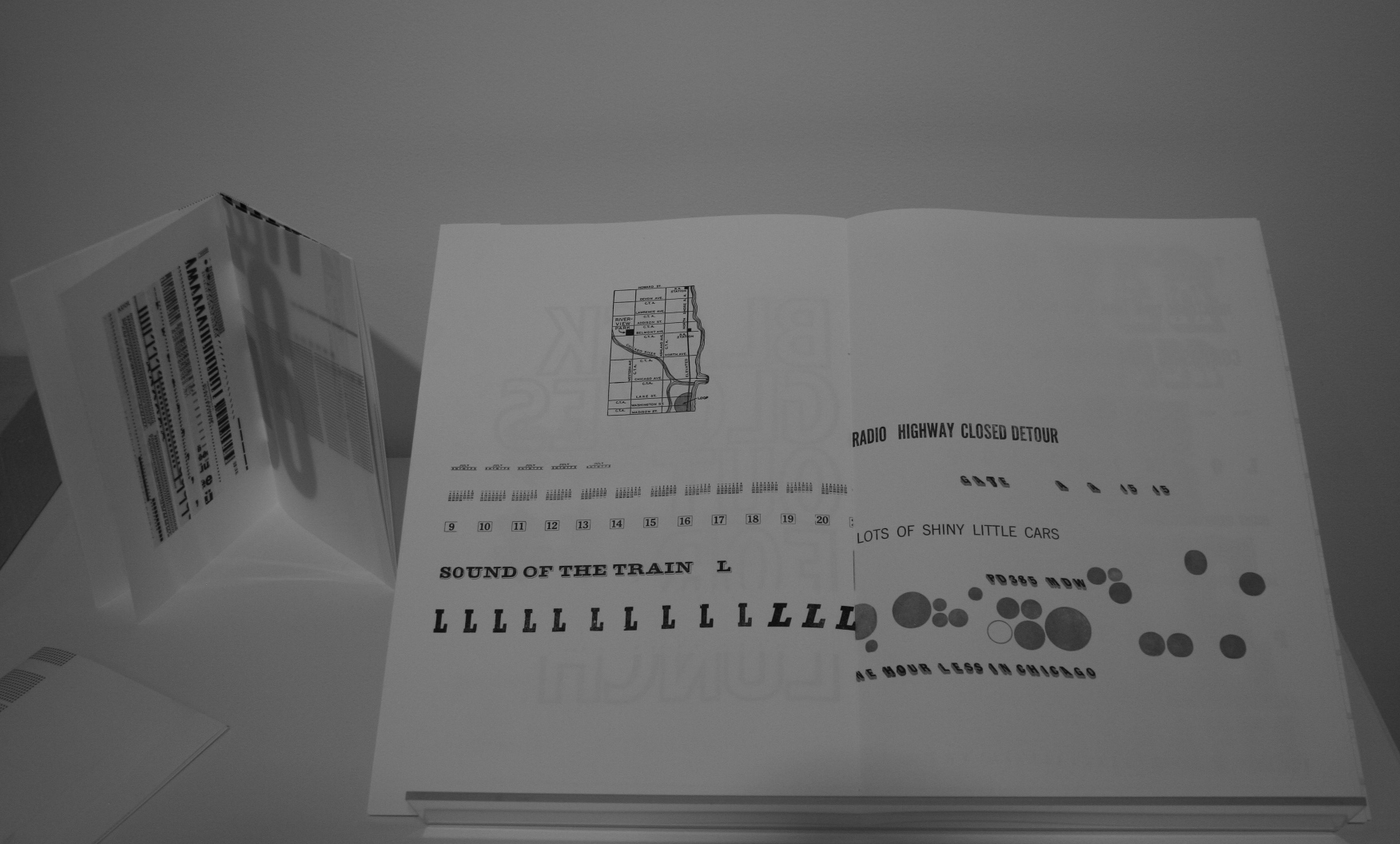
The Perlman Teaching Museum and galleries there drew me to view “Single Species Translations,” which included Jessica Rath’s “take me to the apple breeder” and Laura Cooper’s “Opuntia,” and “The Intersection Between Book, Film, and Visual Narrative.” The exhibits have since closed. But “Lifeloggers: Chronicling the Everyday,” opens January 17 and runs through March 12, 2014. The exhibit will feature the works of a dozen artists.

And here’s the really sweet deal. Admission to the Perlman Teaching Museum (and galleries) is free. Hours are 11 a.m. – 6 p.m. Monday – Wednesday, 11 a.m. – 9 p.m. Thursday and Friday, and noon to 4 p.m. Saturday and Sunday. Note that the museum is open only during Carleton’s academic term, although closed during breaks and during the summer.

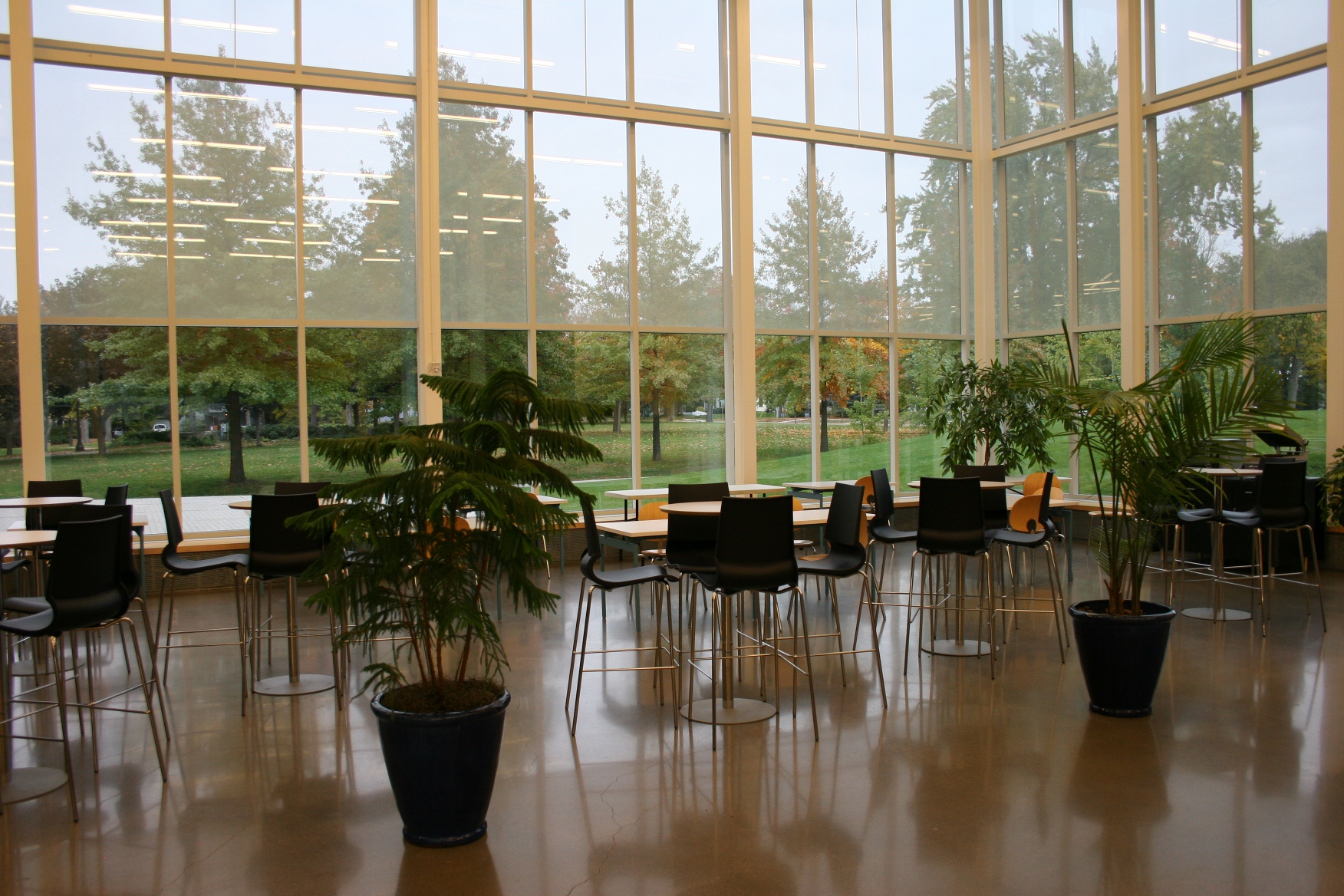
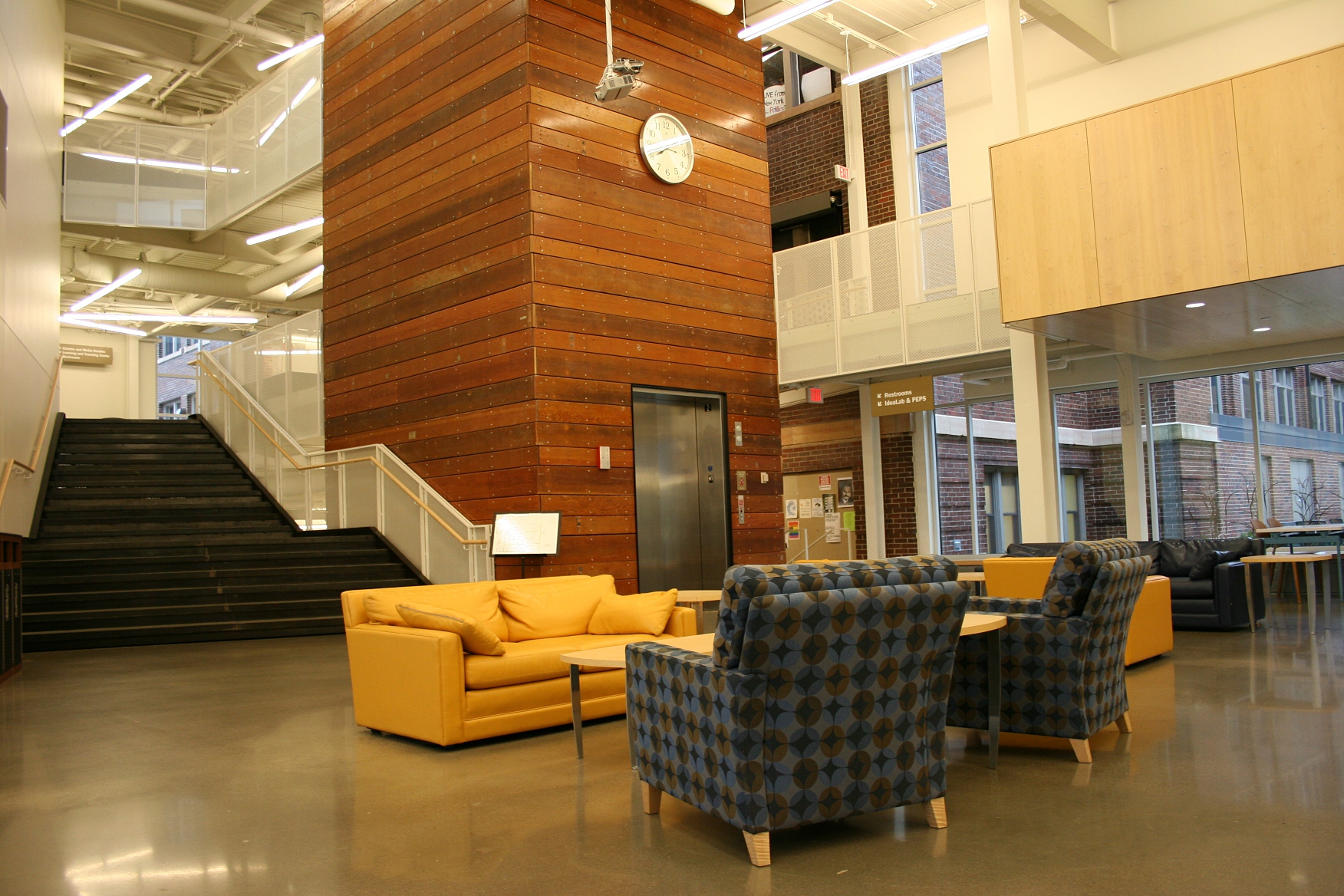
Connecting indoors and out in a section of the Commons.

Connecting indoors and out in a section of the Commons.

My first impression of the Weitz Center for Creativity was one of visual appreciation for the modern, clean lines and minimalistic setting. I love the walls of windows, the pots of pines and palms and other plants interspersed among clusters of tables and chairs in a space that visually connects to the outdoors.

Cozy spots for conversation in the Commons.

Cozy spots for conversation in the Commons.

I appreciate, too, the cozy settings of living room furniture that invite conversation and create a sense of intimacy in the spacious, open Commons area.

A snippet of Jessica Rath's exhibit shows porcelain apple sculptures and photos of apple trees in the Braucher Gallery.

A snippet of Jessica Rath’s exhibit shows porcelain apple sculptures and photos of apple trees in the Braucher Gallery.

Entering the gallery, I noted the gleaming starkness of the space, an excellent backdrop to showcase exhibits. I know this is the gallery norm. But, since I did not grow up visiting galleries, I am still struck each time by this visual impact of a clean slate. Light and shadows and mood play upon art here.

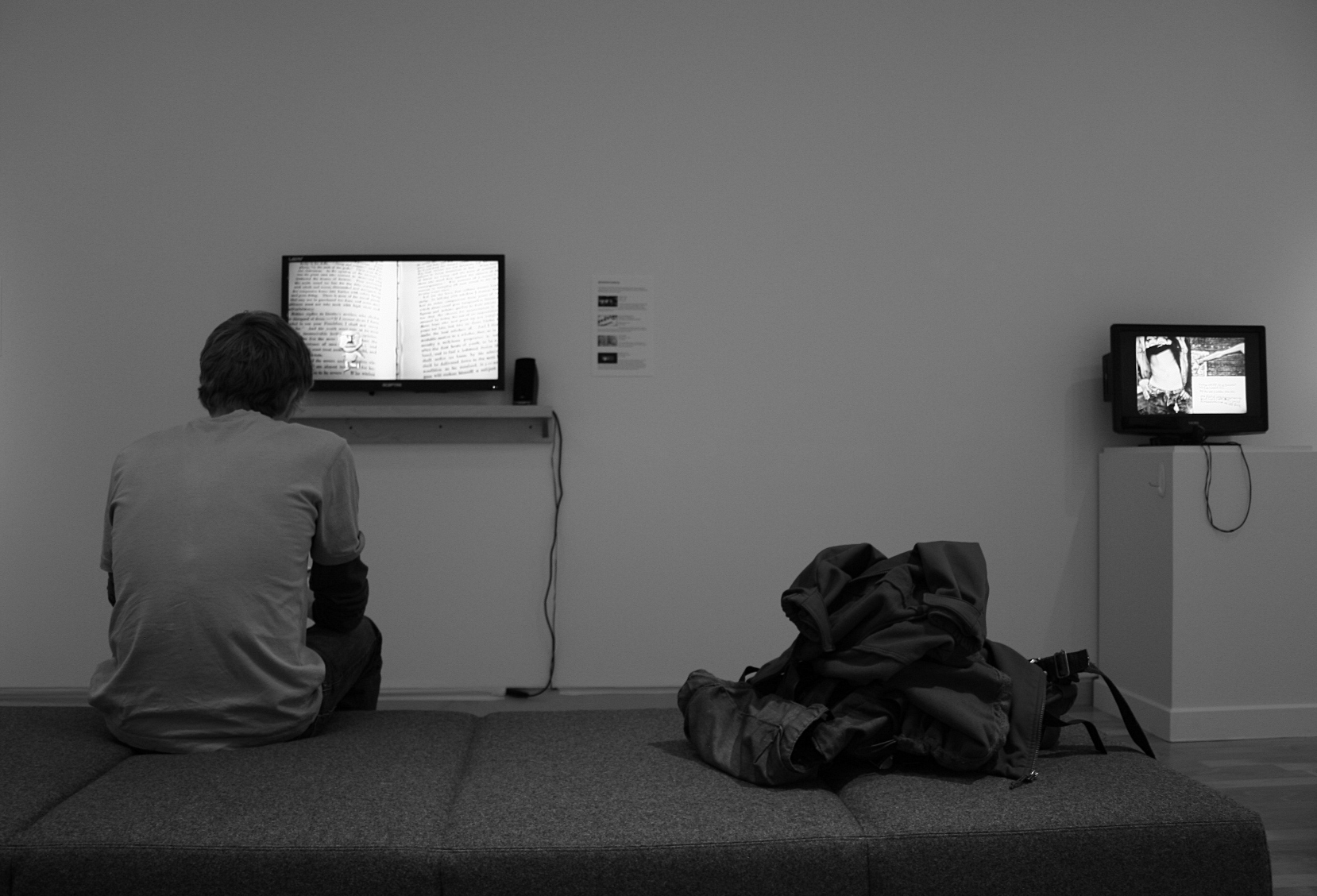
A student studies a portion of "The Intersection Between Book, Film, and Visual Narrative" in the Kaemmer Family Gallery.

A student studies a portion of “The Intersection Between Book, Film, and Visual Narrative” in the Kaemmer Family Gallery.

I won’t pretend to understand and enjoy every exhibit I view. We each bring our personalities and experiences and tastes to a gallery and those influence our reactions.

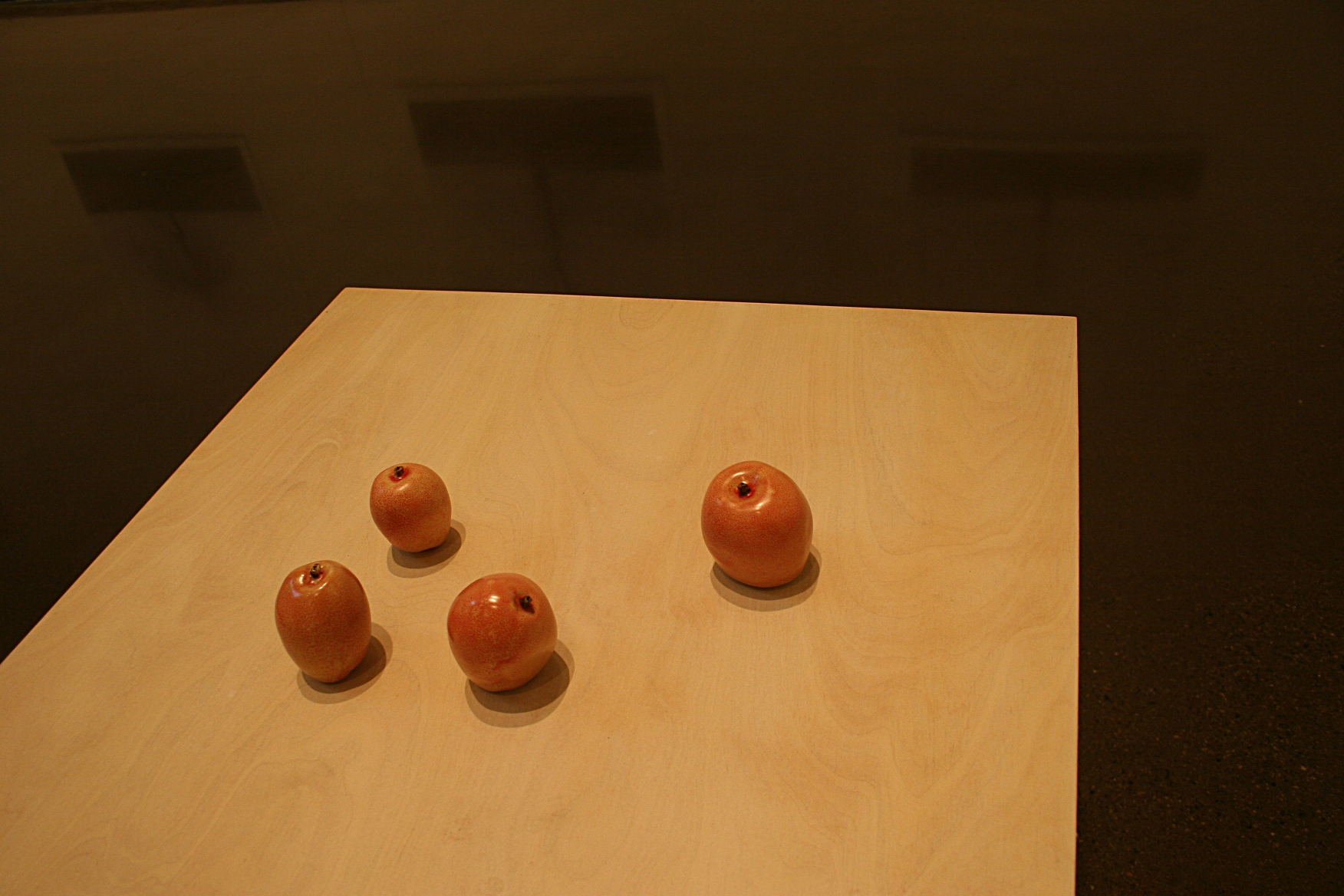
I love the simplicity of the apples positioned on the table in Rath's exhibit and how the shadows angle onto the tabletop.

I love the simplicity of the apples positioned on the table in Rath’s exhibit and how the shadows play upon the tabletop.

More tabletop art, to be picked up and paged through by gallery visitors.

More tabletop art, to be picked up and paged through by gallery visitors.

More print to appreciate.

Additional print and creativity to appreciate.

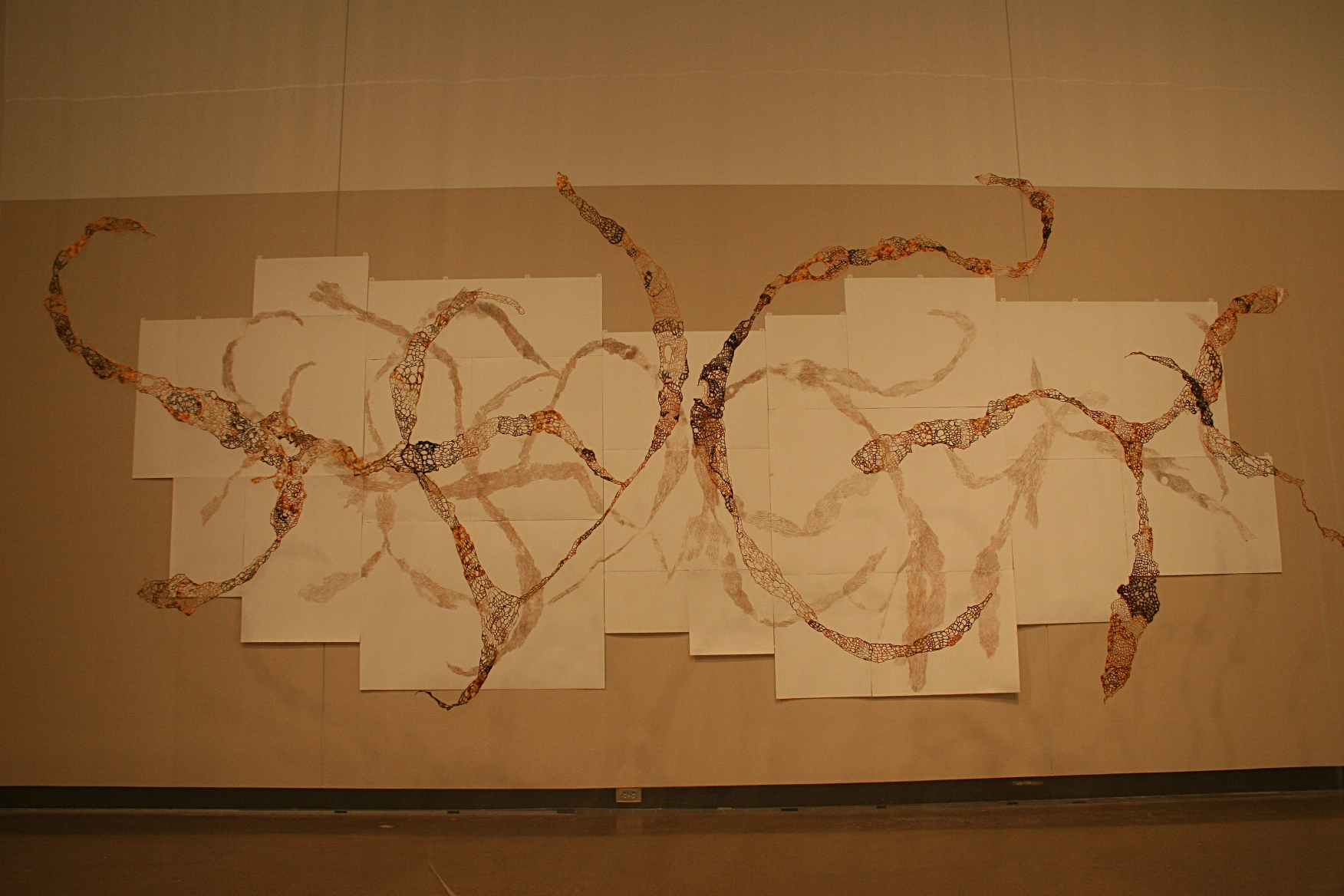
A wall-size artistic interpretation of Opuntia by Laura Cooper.

A wall-size artistic interpretation of Opuntia by Laura Cooper.

While I could relate to apples and books, I couldn’t connect to the exhibit on Opuntia, a type of cactus. Cacti, except for a few grown as houseplants, are mostly foreign to me.

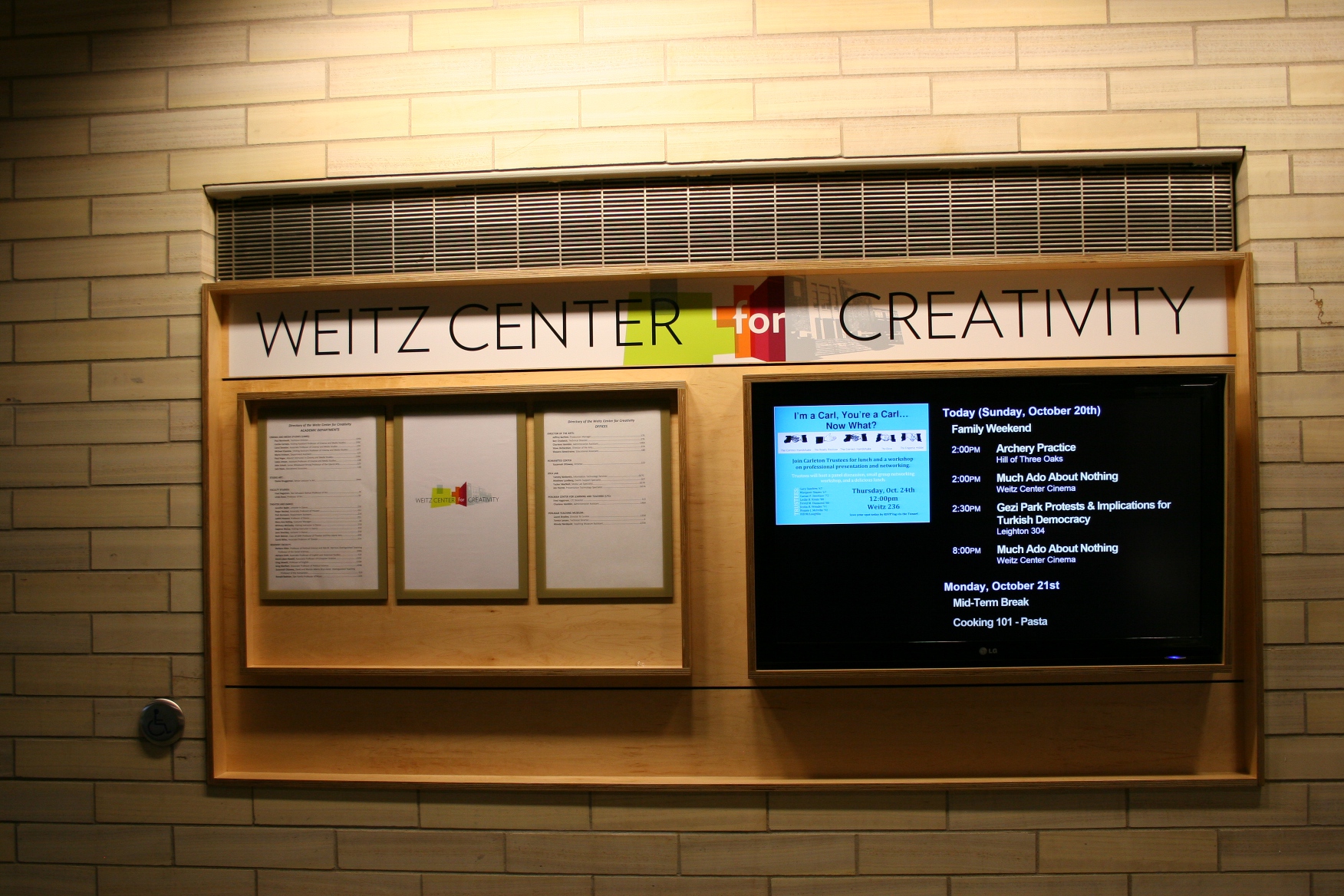
This signage greets visitors upon entering the Weitz Center for Creativity.

Just inside the doors of the Weitz Center for Creativity.

Yet, I learned. And that, too, is part of the arts experience.

© Copyright 2013 Audrey Kletscher Helbling