Minnesota Prairie Roots

Writing and photography by Audrey Kletscher Helbling

“Chick Days,” hatcheries & memories from rural Minnesota April 3, 2024

My friend Joy’s chickens. (Minnesota Prairie Roots copyrighted file photo)

I’M NO CHICKEN farmer. I’m not even particularly fond of roaming chickens (ducks or geese). But this time of year on “Chick Days,” I feel nostalgic, remembering the delivery of newly-hatched chicks. They arrived on my southwestern Minnesota childhood farm via the U.S. Postal Service, cheeping raucously and, I’m certain, desiring to escape their cardboard boxes.

A snippet of a promo for “Chick Days” at a local business.

Today, chicks still ship via mail, but need to be picked up at the post office or at a local supplier on “Chick Days.” That may be at a farm store, a grain elevator, a feed store…

A boarded up hatchery in southwestern Minnesota. (Minnesota Prairie Roots copyrighted file photo)

Gone are the days when chick hatcheries were found in many farming communities. But this is not Mayberry anymore. Rural America has changed significantly since I was growing up in the 1960s and 1970s with businesses now shuttered, buildings vacated.

A 1950s or 1960s era greeting card from a hatchery in Minneota, Minnesota. (Minnesota Prairie Roots copyrighted photo April 2024)

But, if you look closely enough, dig deep enough, ghosts of those businesses remain, including chick hatcheries. Among the vintage greeting cards my mom saved (she saved everything), I found a holiday card from Dr. Kerr’s Hatchery. That was in Minneota; that’s Minnesota minus the “s.”

Minneota sits on the prairie northwest of Marshall in Lyon County. This small town is perhaps best-known as the home of the late Bill Holm, noted writer and English professor at Southwest Minnesota State University. Among his work, Boxelder Bug Variations, a collection of poetry and essays about, yes, boxelder bugs. Minneota celebrates Boxelder Bug Days annually.

But it doesn’t celebrate chicks, as far as I know, or the hatchery with the unusual name of “Dr. Kerr’s Hatchery.” There’s a story behind that moniker. I just don’t know what that may be.
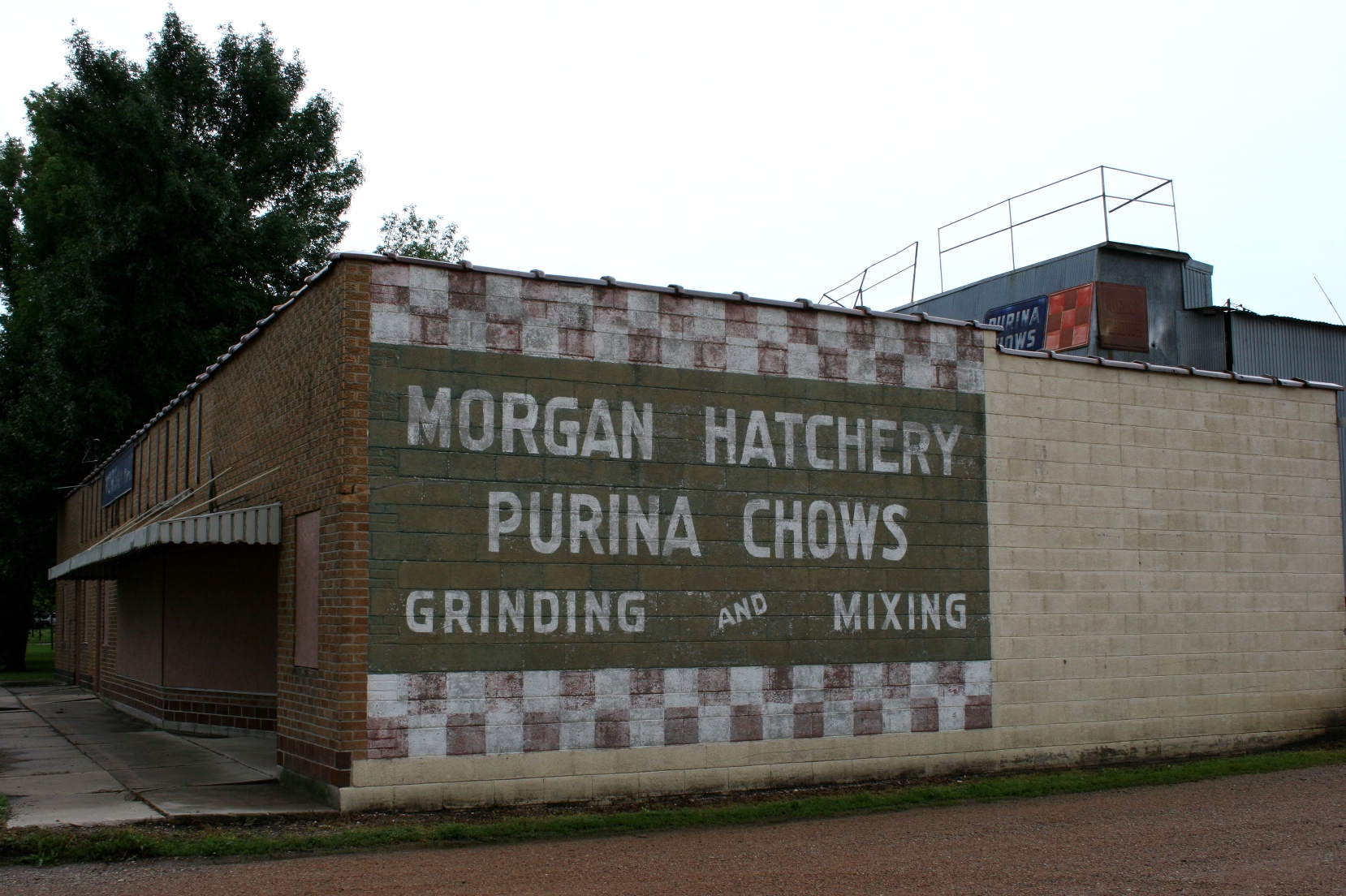
Signage is a reminder that this building once housed a hatchery in Morgan. (Minnesota Prairie Roots copyrighted file photo)

I do know, though, that Morgan, 60 miles to the east of Minneota, also had a hatchery, aptly named Morgan Hatchery. I photographed the exterior of the former hatchery and feed store in 2013 while en route to my hometown of Vesta.
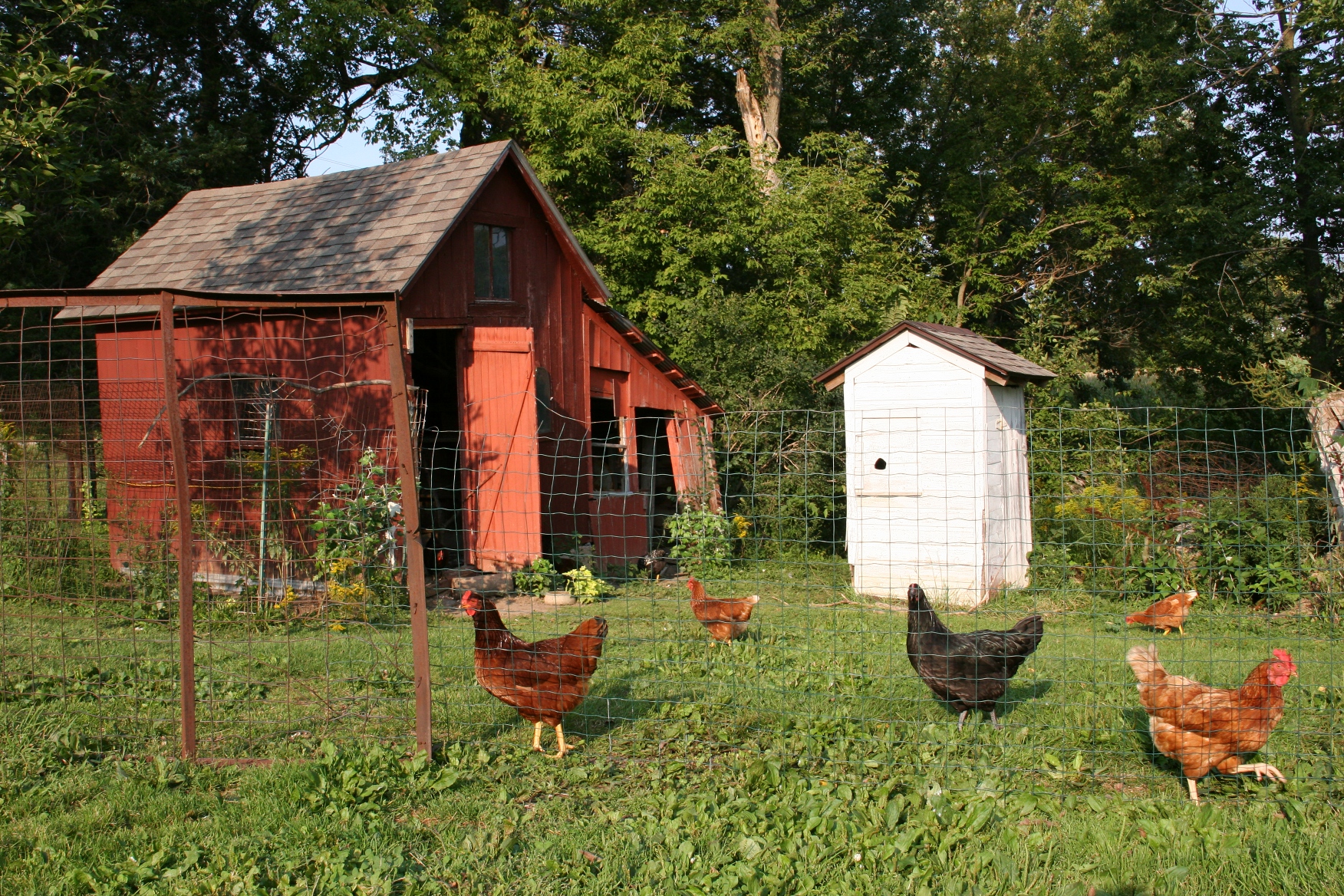
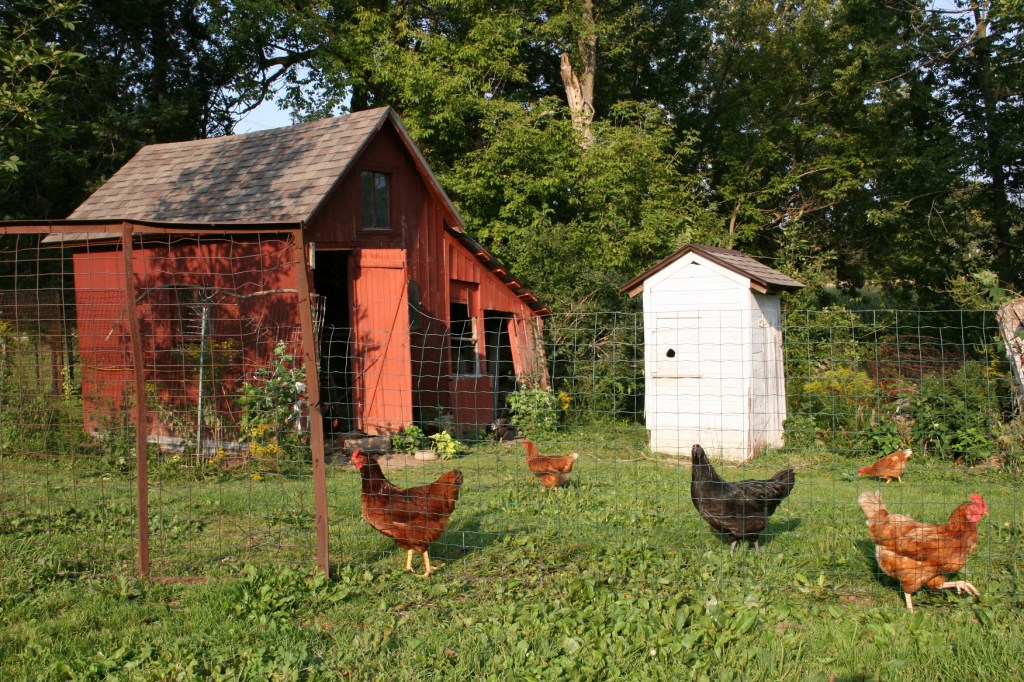
Chickens are fenced next to the red chicken coop on Joy’s rural acreage. Sometimes they also roam free around the yard. (Minnesota Prairie Roots copyrighted file photo)

Thoughts of home take me back to those chicks delivered by the mailman, as we called letter carriers back in the day. After retrieving the box (es) of chicks from aside the roadside mailbox, Mom released them into the chicken coop. There they clustered around shallow water dishes under the warmth of heat lamps. I don’t recall many details other than the fluffy fowl feathering all too soon. For me, the chicks’ transition toward adulthood quickly ended my adoration.

A fenced rooster at my nephew and niece’s rural acreage. (Minnesota Prairie Roots copyrighted file photo)

There’s a reason I dislike being in close proximity to chickens: pecking hens and a vicious rooster. Gathering eggs from angry hens as a young girl proved an unpleasant chore. And avoiding a mean rooster proved impossible. One day Dad had enough of the rooster attacking his children. He grabbed an ax and that quickly ended the hostile encounters. I still hold trauma from that rooster. But I’ve gotten better about being around chickens. However, if I even pick up on a hint of meanness, I flee.
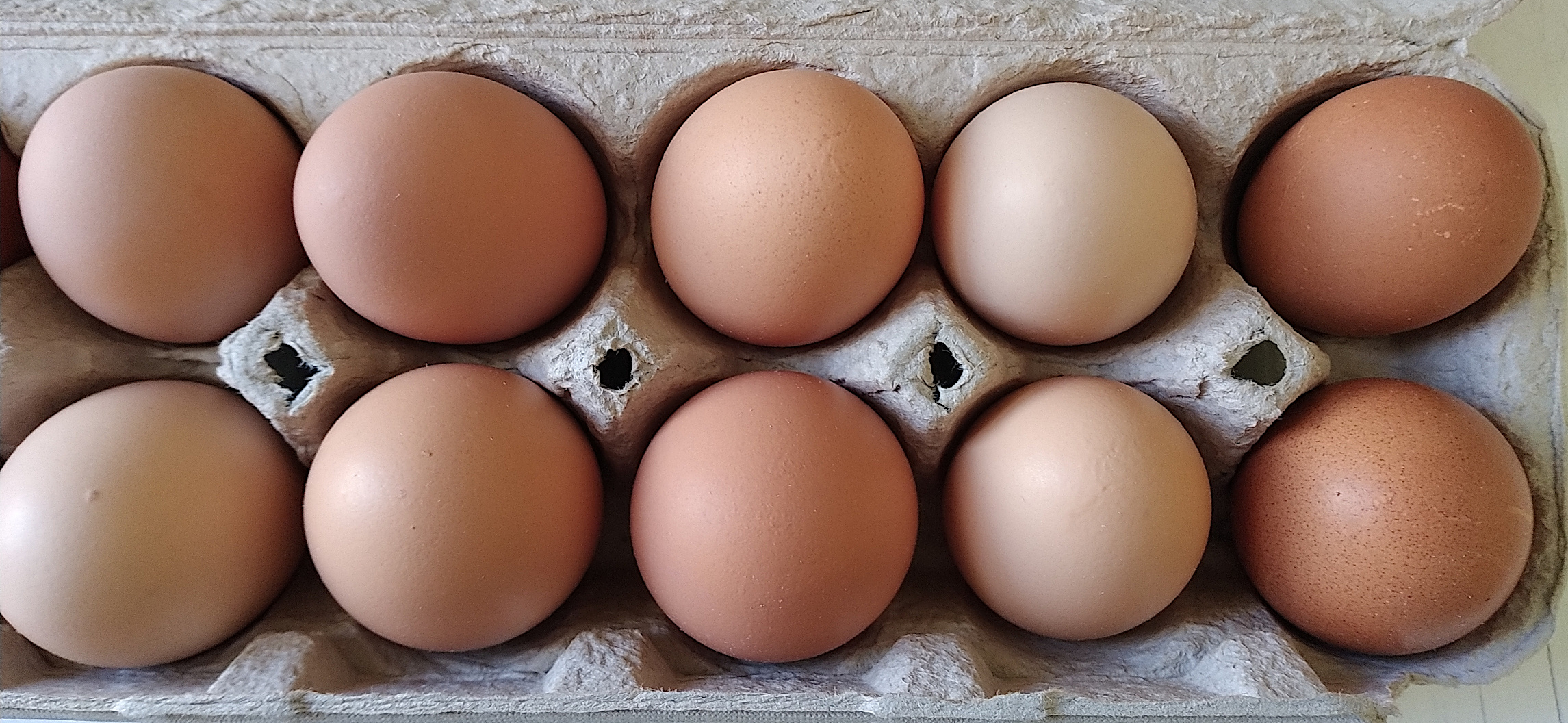
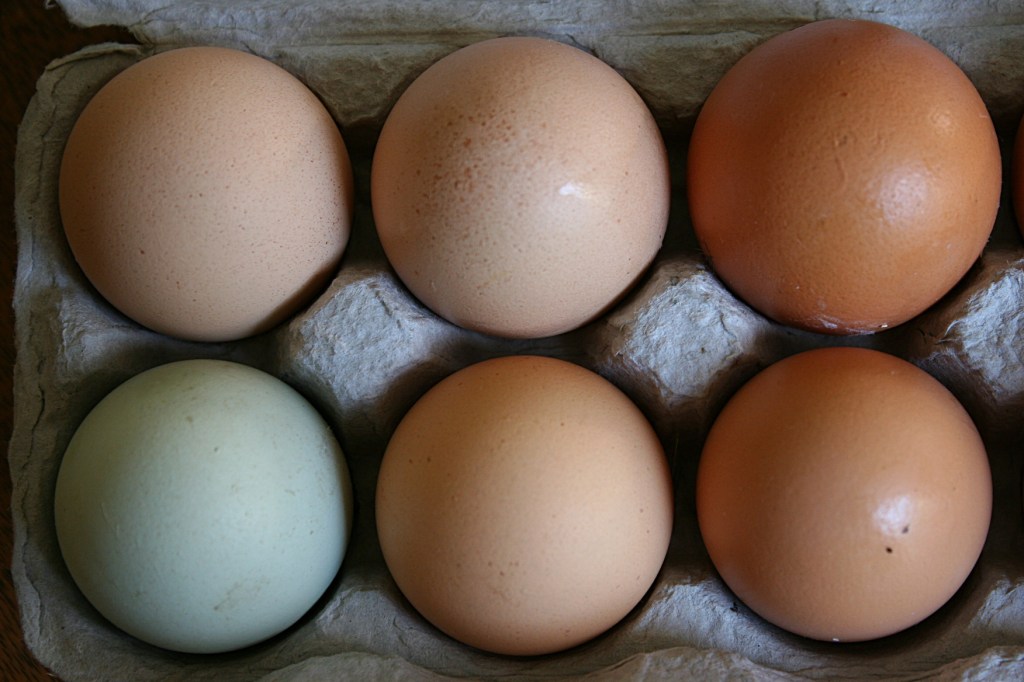
Farm fresh eggs from Nancy and Loren’s chickens. (Minnesota Prairie Roots copyrighted photo April 2024)
The difference in eggs, with the yolk from a store-bought mass-produced egg on the left and a farm fresh egg on the right. (Minnesota Prairie Roots copyrighted photo April 2024)

Given my history, I’ll never own chickens. But I eat chicken. And I eat eggs. I especially like farm fresh eggs from free-range chickens. The dark orangish-yellow yolk hue, the taste, are superior to mass-produced eggs.

A maturing chick. (Minnesota Prairie Roots copyrighted file photo)

And I still think chicks are cute, even if they quickly morph into feathered birds I’d rather not be around.

© Copyright 2024 Audrey Kletscher Helbling


Minnesota cultural consultant & author to talk about chickens in the bus & more February 13, 2024

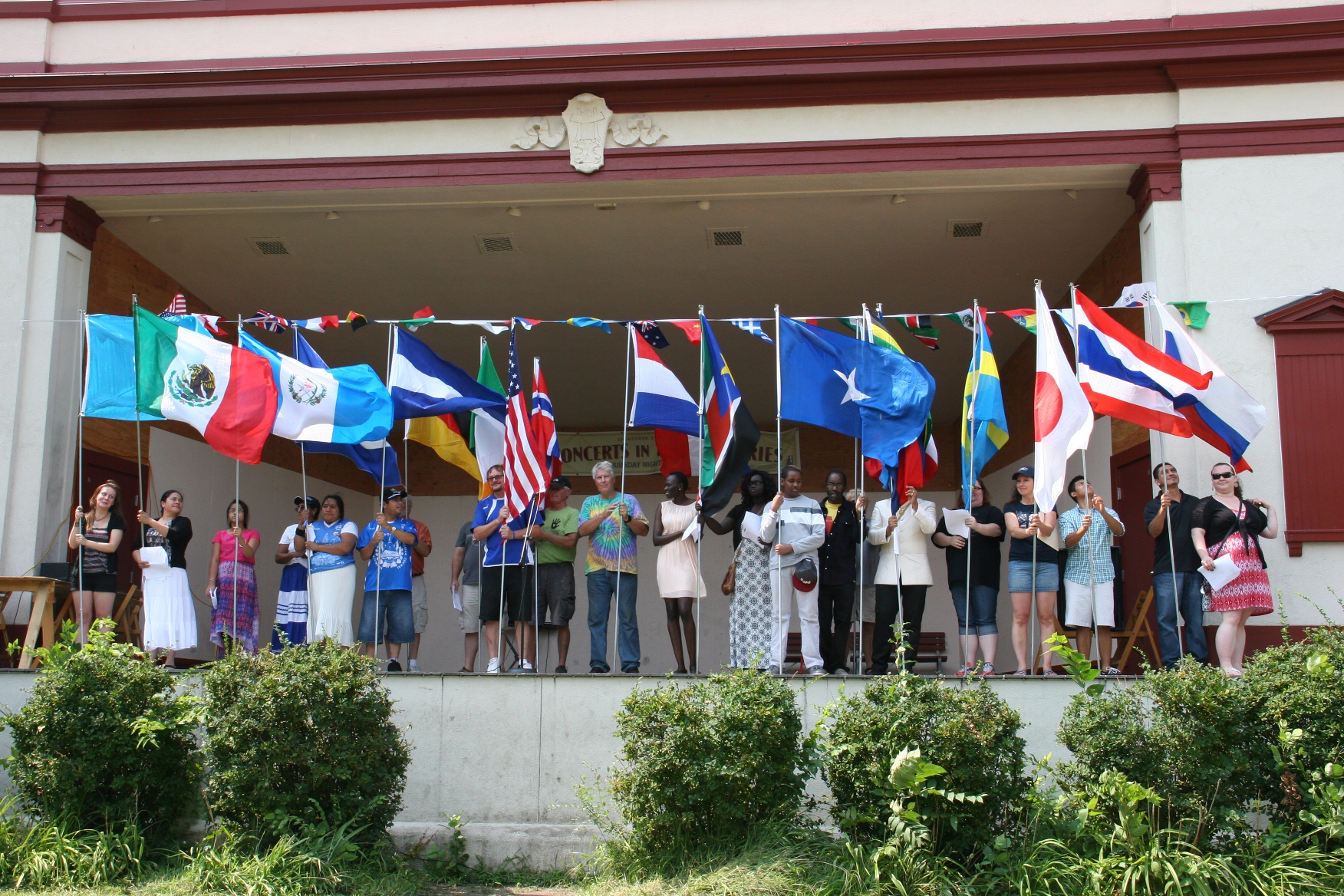
A flag ceremony, representing the country of origins of many peoples who call Faribault home, was part of the 2015 International Festival Faribault. Joseph Mbele is shown just to the right of center in this photo, dressed in black with a yellow and red shirt. (Minnesota Prairie Roots copyrighted file photo August 2015)

I FIRST MET JOSEPH L. MBELE in 2015 at the International Festival Faribault. The author, cultural consultant and professor of English at St. Olaf College in Northfield was representing his native Tanzania during this fest celebrating the cultural diversity of my community. Then late last year I talked to Mbele again, when he was selling his latest book, Chickens in the Bus: More Thoughts on Cultural Differences, at a local holiday church bazaar. He is engaging, soft-spoken, knowledgeable and just an overall kind and gentle soul.

Author Joseph L. Mbele with two of his three books, photographed at the 2015 International Festival Faribault. (Minnesota Prairie Roots copyrighted file photo August 2015)

This Thursday evening, February 15, the writer and expert on cultural differences returns to Faribault for a literary event at Books on Central, a recently-opened used bookstore operated by the Rice County Area United Way. Mbele will share stories, offer cultural insights and lead an interactive discussion. The event begins at 6 pm at the bookshop, 227 Central Avenue North.

This image shows the cultural diversity of Faribault. This photo was taken at a downtown car show in 2015. (Minnesota Prairie Roots copyrighted file photo July 2015)

That he is appearing at a business along Faribault’s Central Avenue is meaningful in itself. Many Somali residents live in second floor apartments here in the heart of our downtown business district. Other of our newest immigrants have opened restaurants and shops along the avenue and side streets, making for a diverse downtown. But it was their presence here that stirred up complaints and controversy a few years back, and likely still does, although those are not as loudly vocalized as previously.

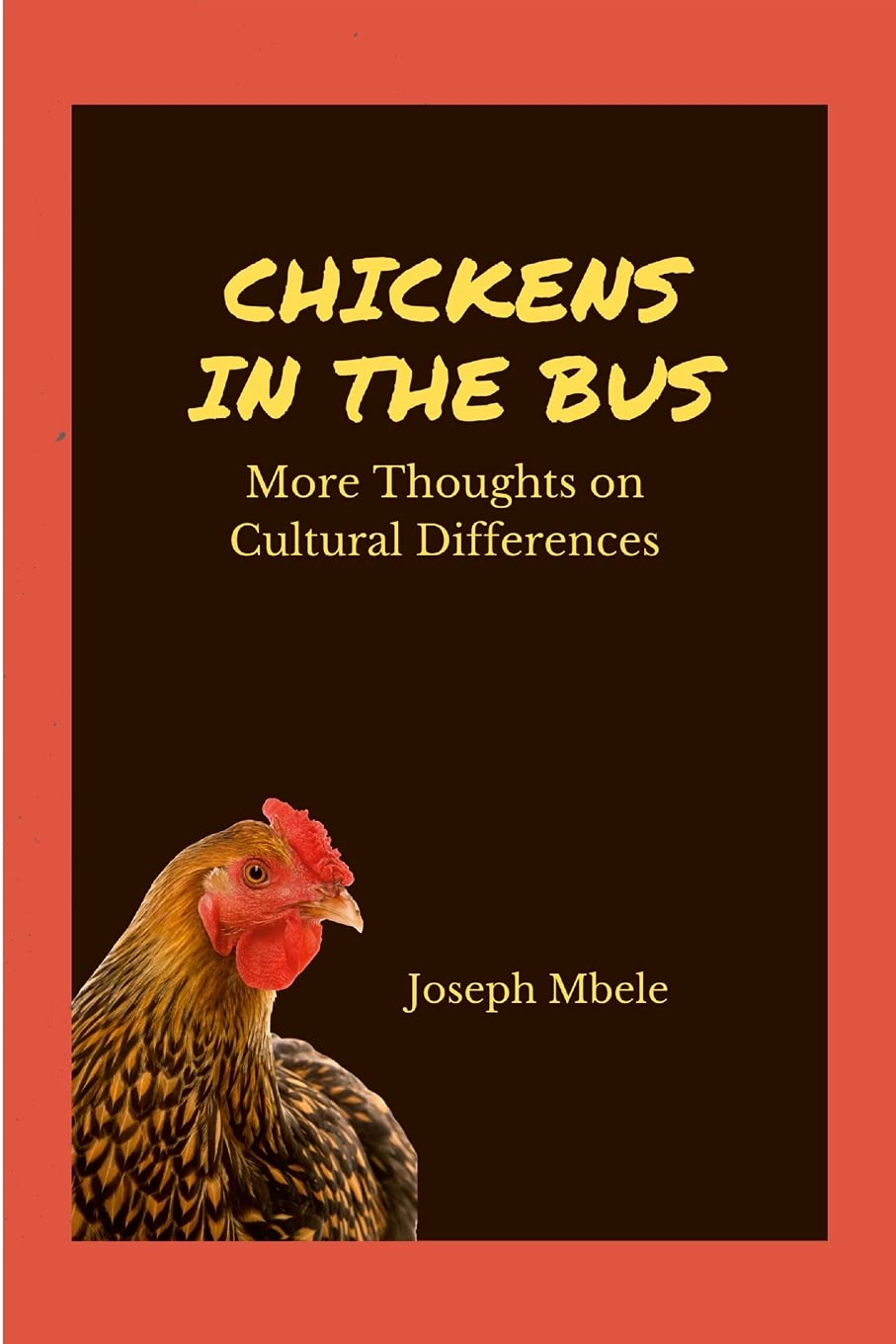
Mbele’s latest book, published in 2021. (Cover image sourced online)

In Chickens in the Bus, Mbele terms this “the sidewalk issue.” Business owners expressed concerns about Somali men congregating outside, blocking sidewalks, scaring customers away, Mbele writes. His words are not new to me. I’d heard them, too, from business owners and from local residents. People were, they said, afraid to come downtown. I’ve never feared walking along Central Avenue past groups of Somali men. What people don’t understand, they all too often fear.

To Mbele’s credit, he has worked hard to inform, to enlighten, to listen, to help bridge cultural divides. He spoke to Faribault business owners. He spoke to members of the Somali community. He’s also spoken publicly at libraries and elsewhere. I appreciate his efforts.

At the core of “the sidewalk issue” are cultural differences, according to this native Tanzanian who specializes in teaching folklore at Northfield’s St. Olaf College. Somalians come from an oral culture, one that relies on social gatherings to share news, Mbele writes. “…Somali gatherings in downtown Faribault are the Somali newsstands,” he told local business owners and includes in his book. That’s so down-to-earth understandable.

Mbele’s slim volume, Chickens in the Bus, which I purchased at the November 2023 holiday market, is an excellent primer for anyone desiring to learn more about cultural differences. This author and cultural consultant highlights how those differences can both challenge communities, but also present opportunities in an ever-increasingly connected world that is decidedly global. He writes in a way that is peaceful and soothing and seeks to create harmony.

A rooster, photographed at a rural Faribault farm and used here for illustration only. (Minnesota Prairie Roots copyrighted file photo May 2018)

I learned a lot about “African Time” and “American Time,” about native-born Africans who do not view themselves as black or as “people of colour” (vs African Americans who do), about chickens in the bus, and much more. In Africa, Mbele writes, someone may carry a chicken onto a bus, a gift from a rural villager.

His newest book, a sequel to Africans and Americans: Embracing Cultural Differences, proved an easy and informative read, one that enlightened me about my newest neighbors. They enrich Faribault with their culture, bringing their food, language, dress, customs and more. I will never travel to Africa. So I am the richer for the Africans who now call southern Minnesota home, who bring their culture into my community, to me.

© Copyright 2024 Audrey Kletscher Helbling
 

Joy pitches farm fresh eggs June 17, 2016

Filed under: Uncategorized — Audrey Kletscher Helbling @ 5:00 AM
Tags: , , , ,

Eggs


WHEN MY FRIEND JOY, whose name matches her joyful personality, approached me after church last Sunday about buying farm fresh eggs, I hesitated. I didn’t really need eggs. And if I did, I could buy them at the grocery store for half the $2 price Joy was charging.


Chickens, coop


But I bought the eggs anyway, because, well, Joy is a persuasive saleswoman. She touted the better taste, the yellower yolks, the free-range aspect of her primarily bug-eating and grass-munching chickens, and the reduction in her cholesterol from daily consumption of her chickens’ eggs. Sold. Yes, please, I’ll take a dozen.


Chickens, black chicken


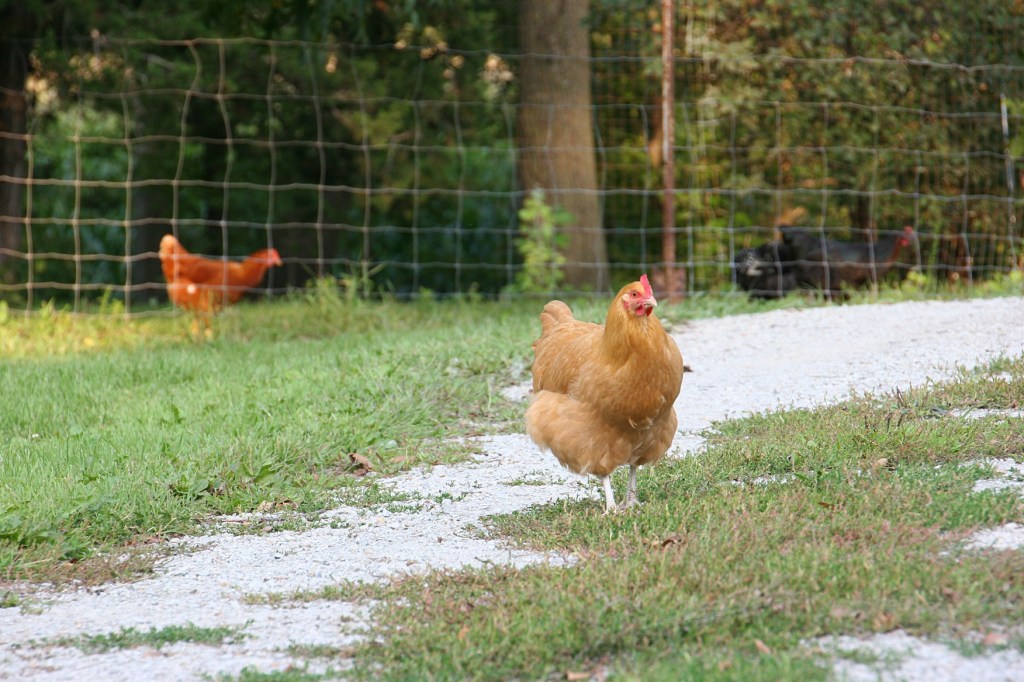
I have yet to try the eggs, which come from varieties like Rock Island and Buff. I am certain Joy spoke the truth in her sales pitch. She’s no snake oil salesman. I can already predict what will follow. The farm fresh eggs will taste so great that I will no longer be able to eat mass-produced eggs packaged for mass public consumption.


Chickens, buff colored chicken


How about you? Have you eaten and noticed a difference between eggs direct from a small farm vs. those sold by major egg companies?

© Copyright 2016 Audrey Kletscher Helbling


Facing the fowl September 22, 2015

Filed under: Uncategorized — Audrey Kletscher Helbling @ 5:01 AM
Tags: , , ,

MY MOM PAUSED in our conversation. She wondered if she was hearing me right. I had just stated that I thought the chickens beautiful. Not all chickens. But these chickens.


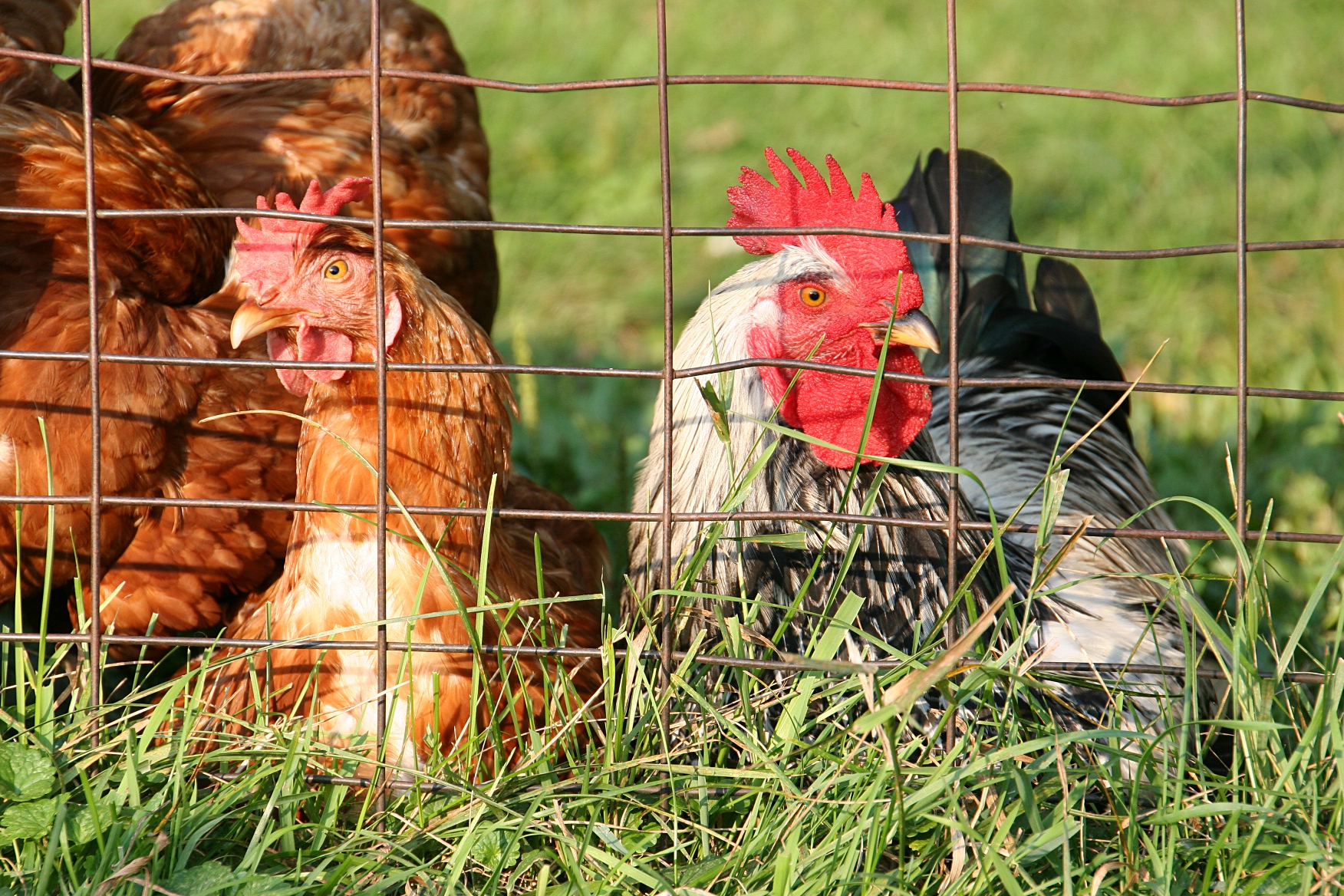
Chickens, rooster


She had reason to question my observation. Ever since I was tormented and pecked at and chased by a rooster while growing up on our Minnesota farm, I have disliked chickens. I am afraid of them, of their flapping wings and sharp beaks and talons.


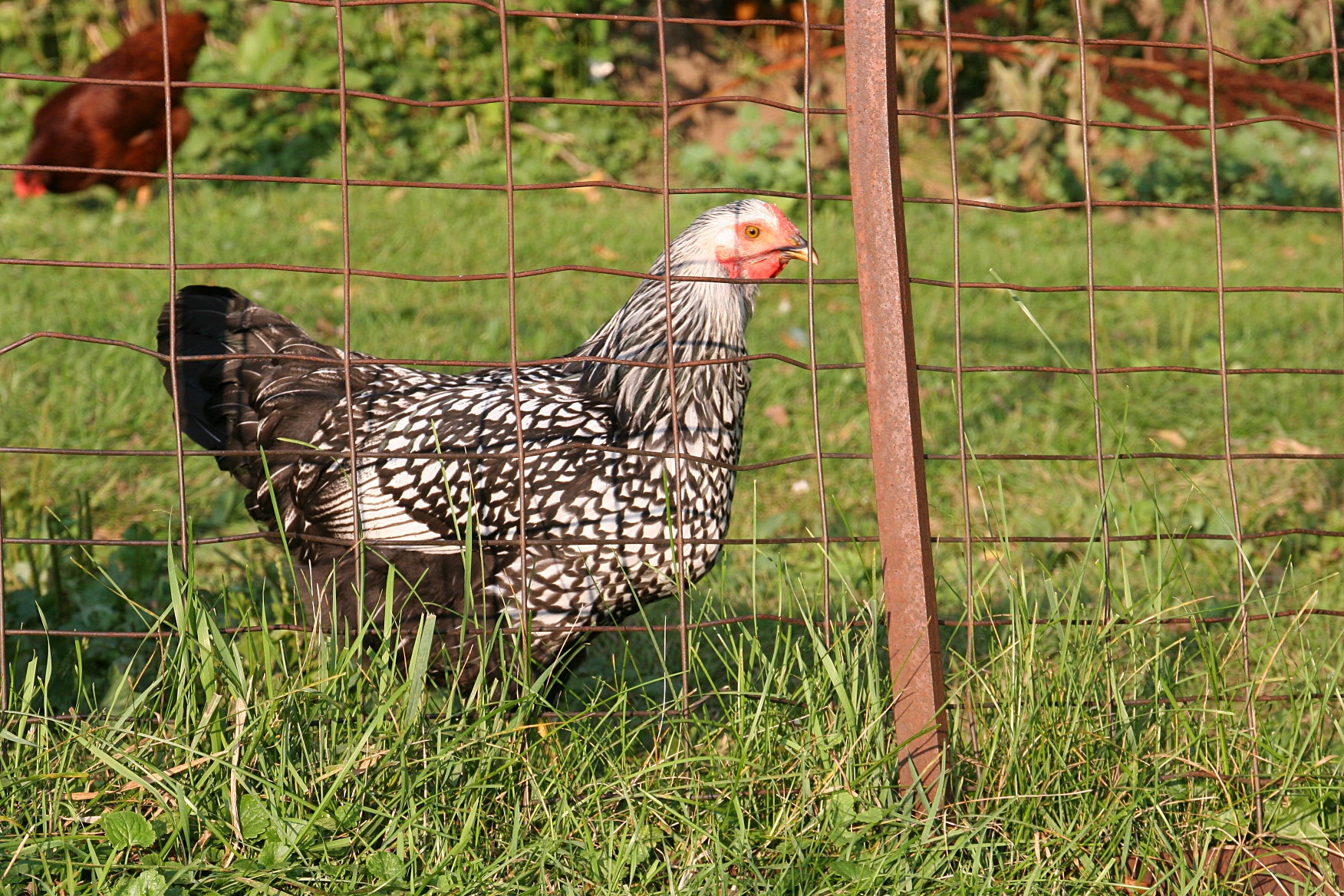
Chickens, patterned chicken


But these chickens were different. They are not plain white. And the rooster did not chase me.


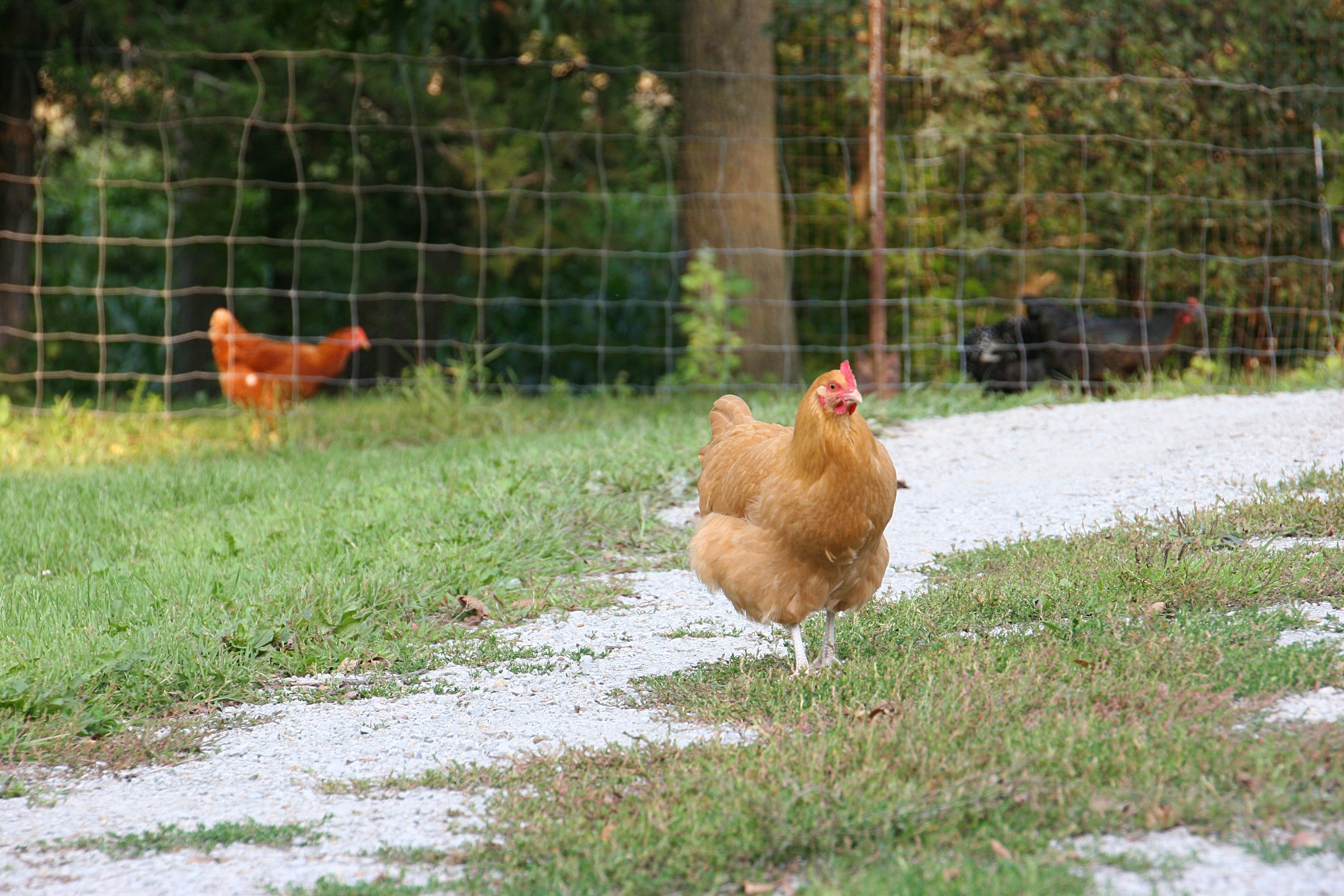
Chickens, buff colored chicken


I was able to stand within feet of uncaged multi-colored fowl and appreciate their beauty. Sheen of blue in black feathers. Patterns of black and white. A beautiful buff. Chickens that were actually cute, if a chicken can be truly cute.


Chickens, black chicken


Even I surprised myself. I was not terrified. I did not scamper away. I drew the line, though, at cuddling the chickens belonging to friends Steve and Joy. Or at being inside a shed with a hen, gentle as she might appear. My trust is not quite that secure.


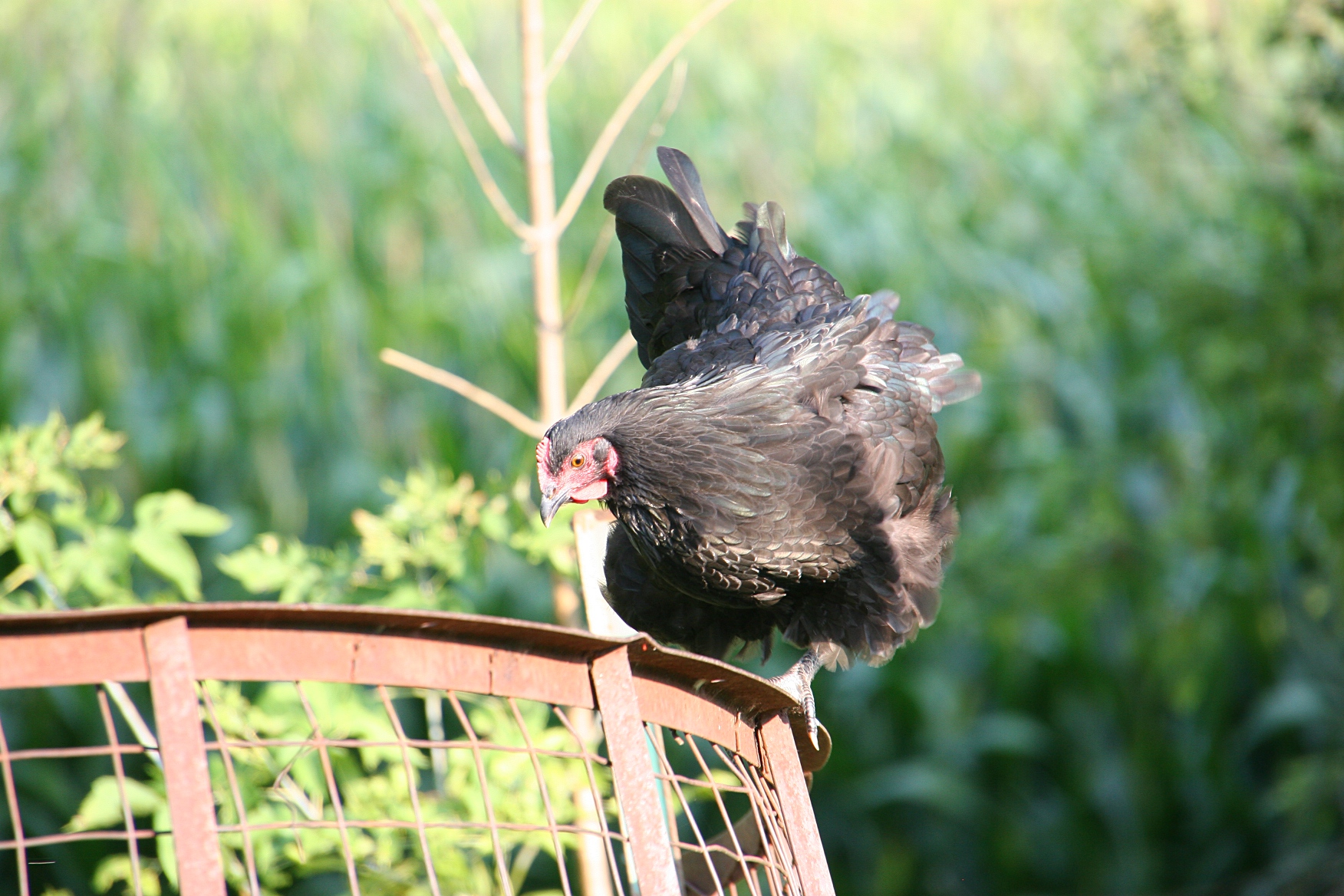
Chickens, flying chicken


And when a chicken flew onto a fence top, I ended the photo session. She was flapping a little too close for my comfort. I have memories of unhappy hens in the chicken coop who did not like their eggs stolen.


Chickens, coop


I will never really like chickens. But I am at least beginning to tolerate them. The pretty ones.

HOW ABOUT YOU? What’s your experience with chickens?

FYI: I first observed my friends’ chickens when they were running around the yard. I did not have my camera with me. But when I visited again, I had my camera. These images were taken then.

© Copyright 2015 Audrey Kletscher Helbling