Minnesota Prairie Roots

Writing and photography by Audrey Kletscher Helbling

Hail St. Mary’s of Melrose June 26, 2011

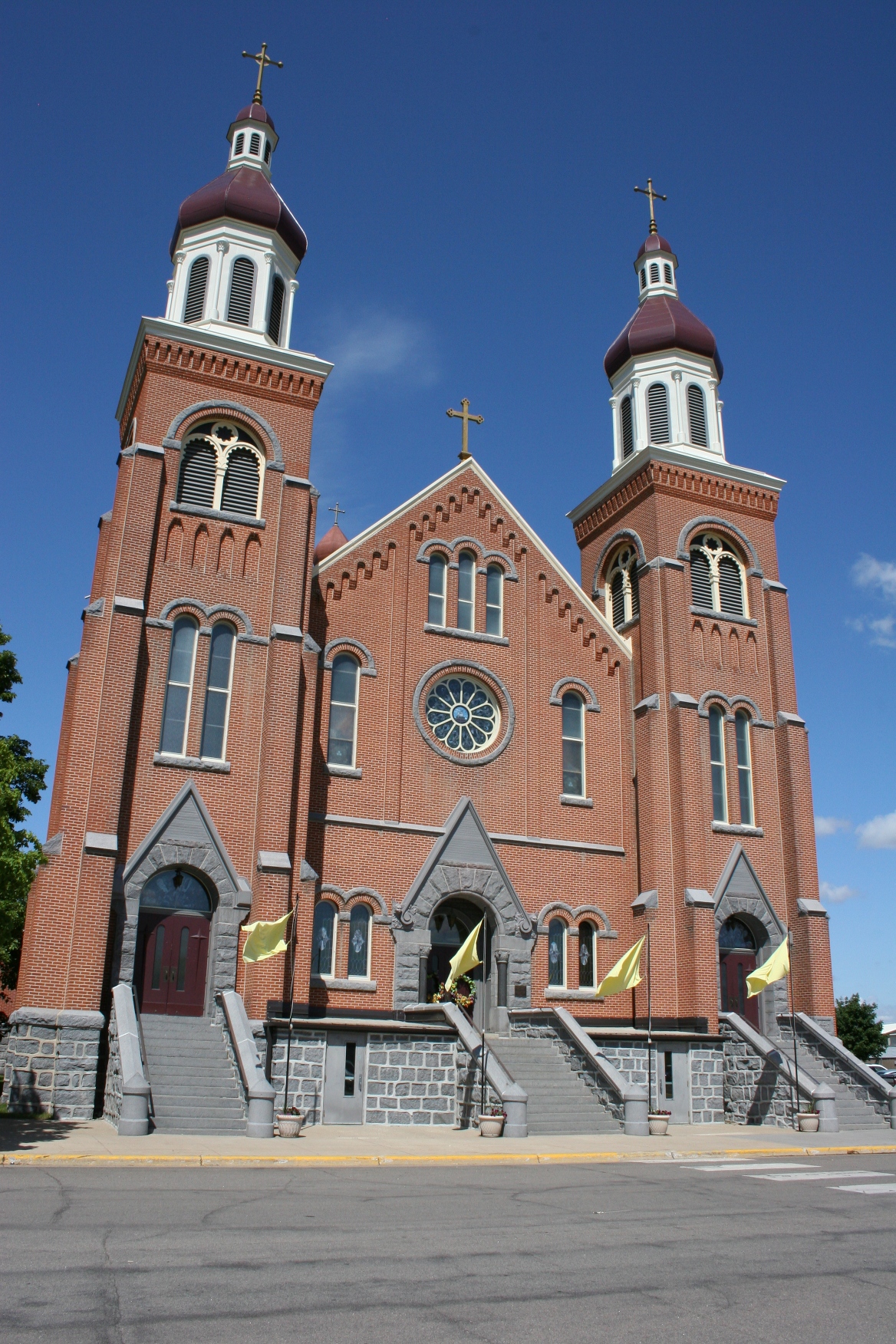
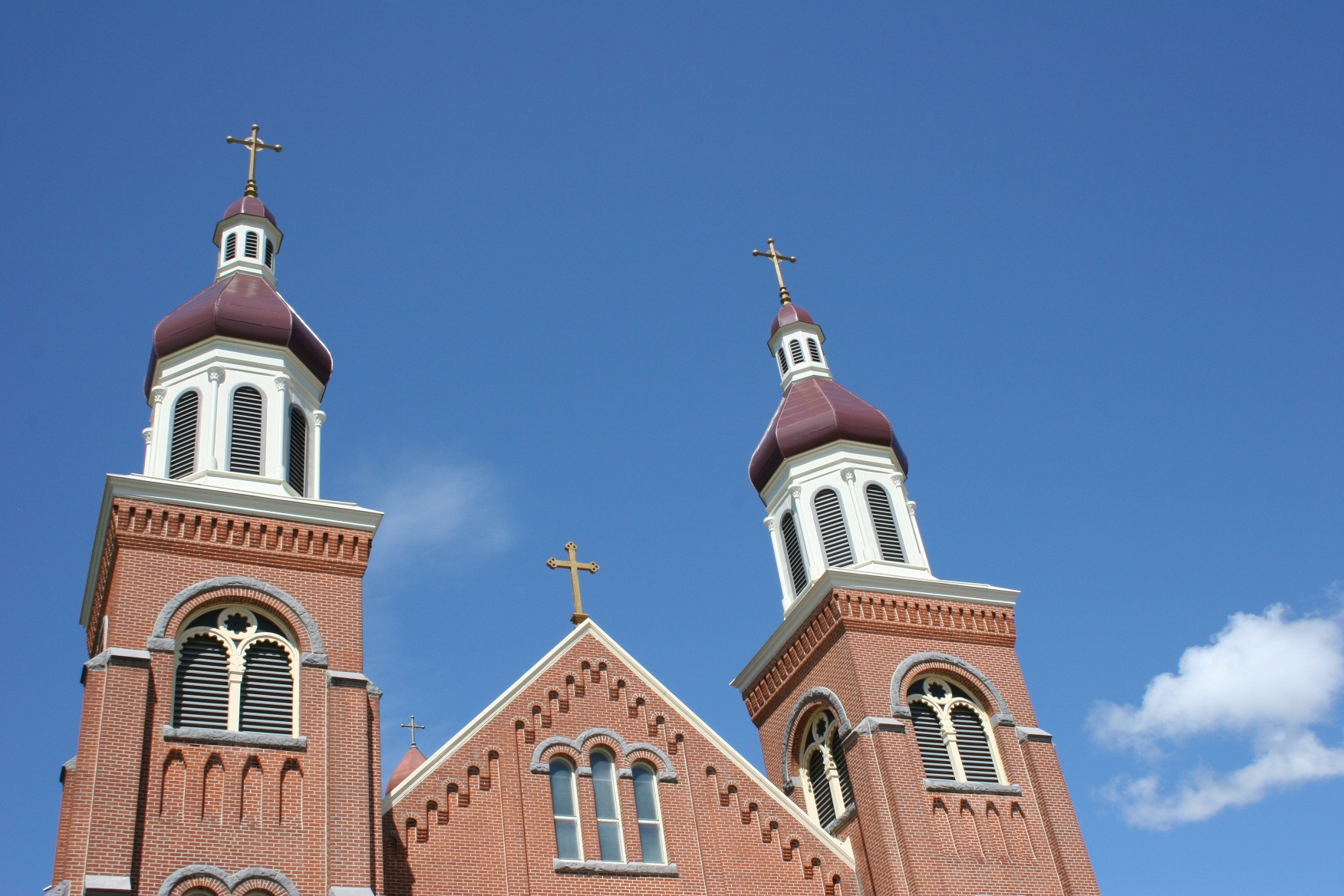
The steeples of St. Mary's Catholic Church of Melrose.

I STOOD THERE. Just stood there. For minutes, taking in the glorious splendor before me.

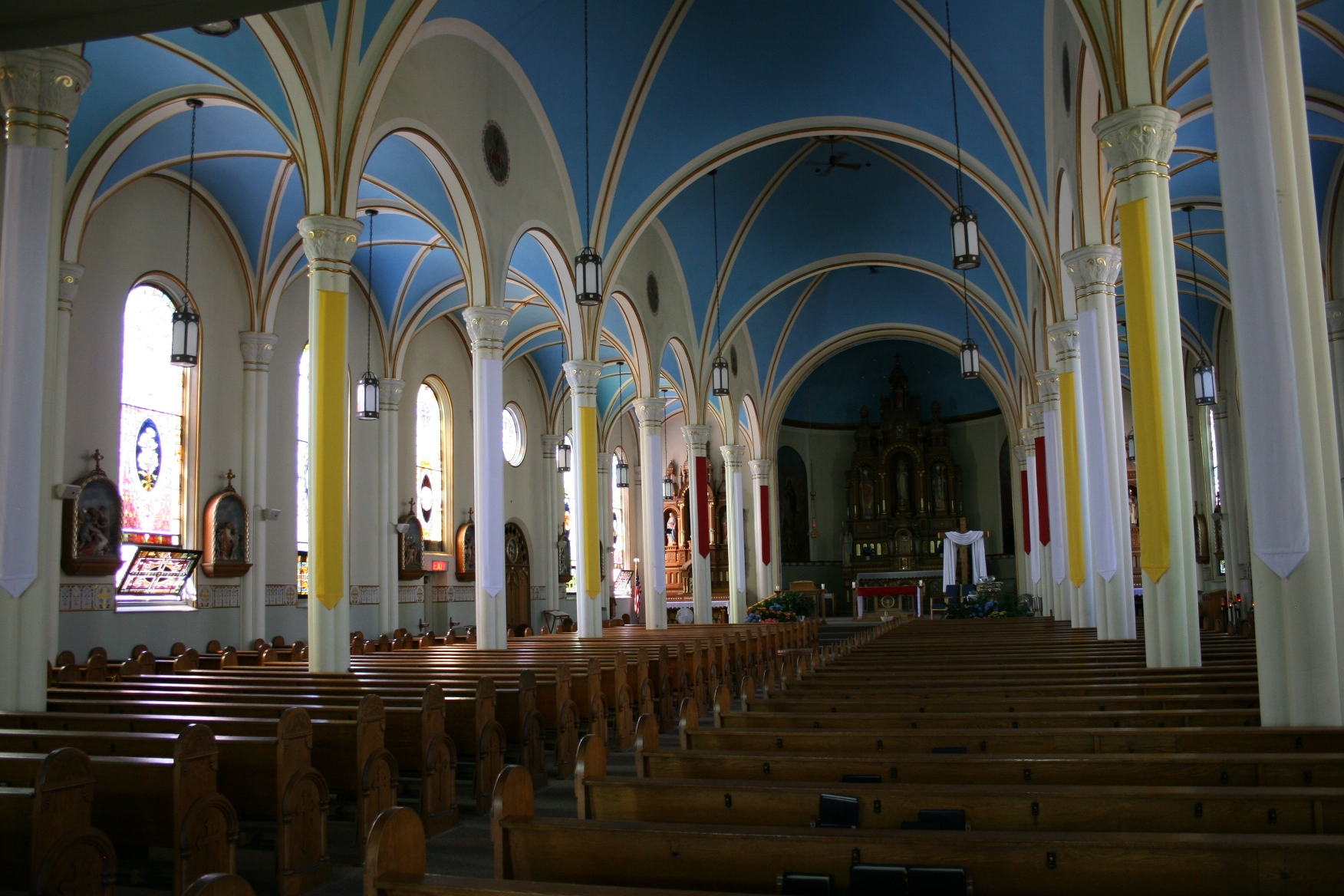
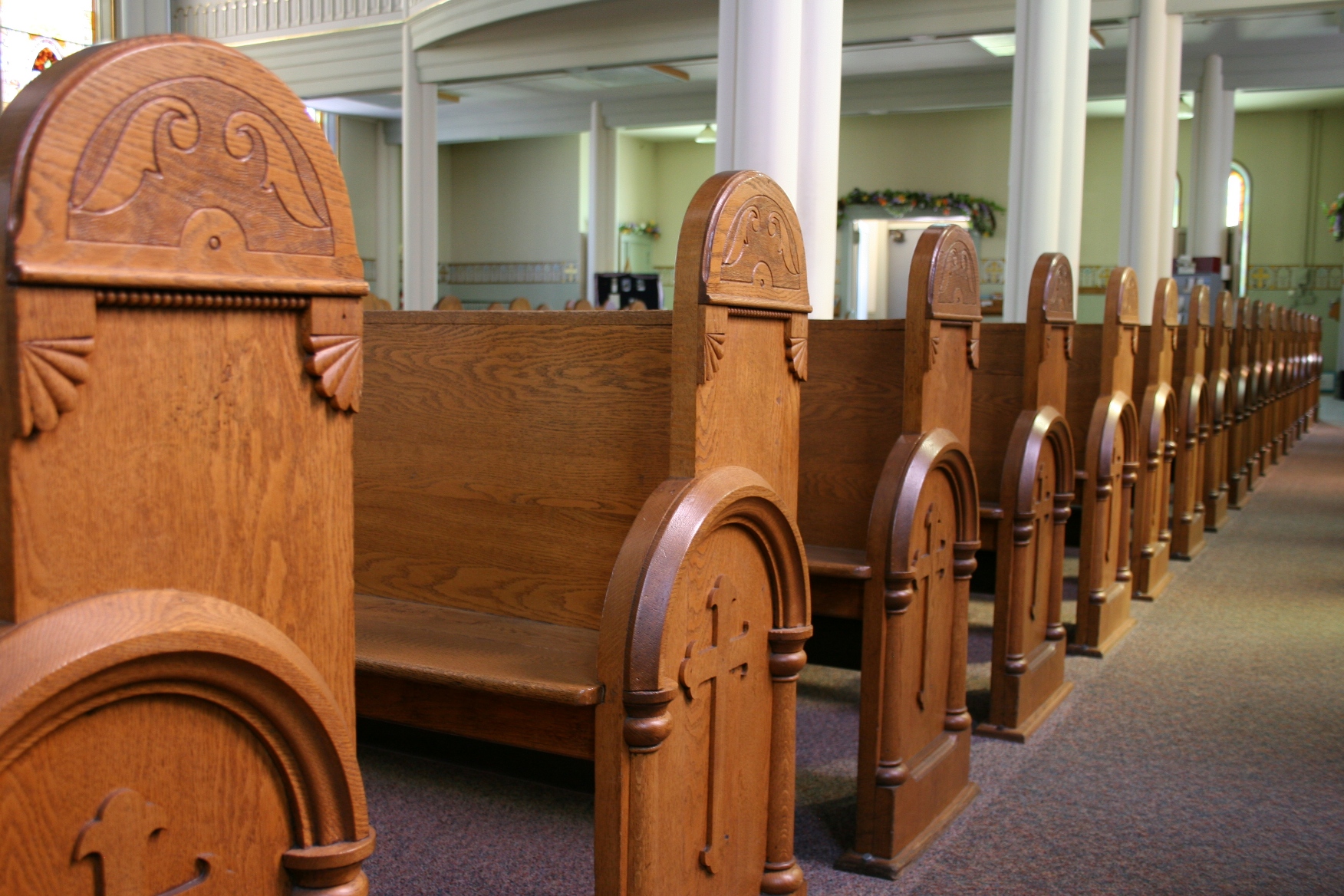
The cornflower blue of the arched ceiling. The pillars. Pews—endless carved pews stretching from the fonts of holy water to the steps leading to the altar.

A view from the back of St. Mary's Catholic Church looking toward the main altar.

I didn't even try to count the hand-carved pews that grace this church. But they are many.

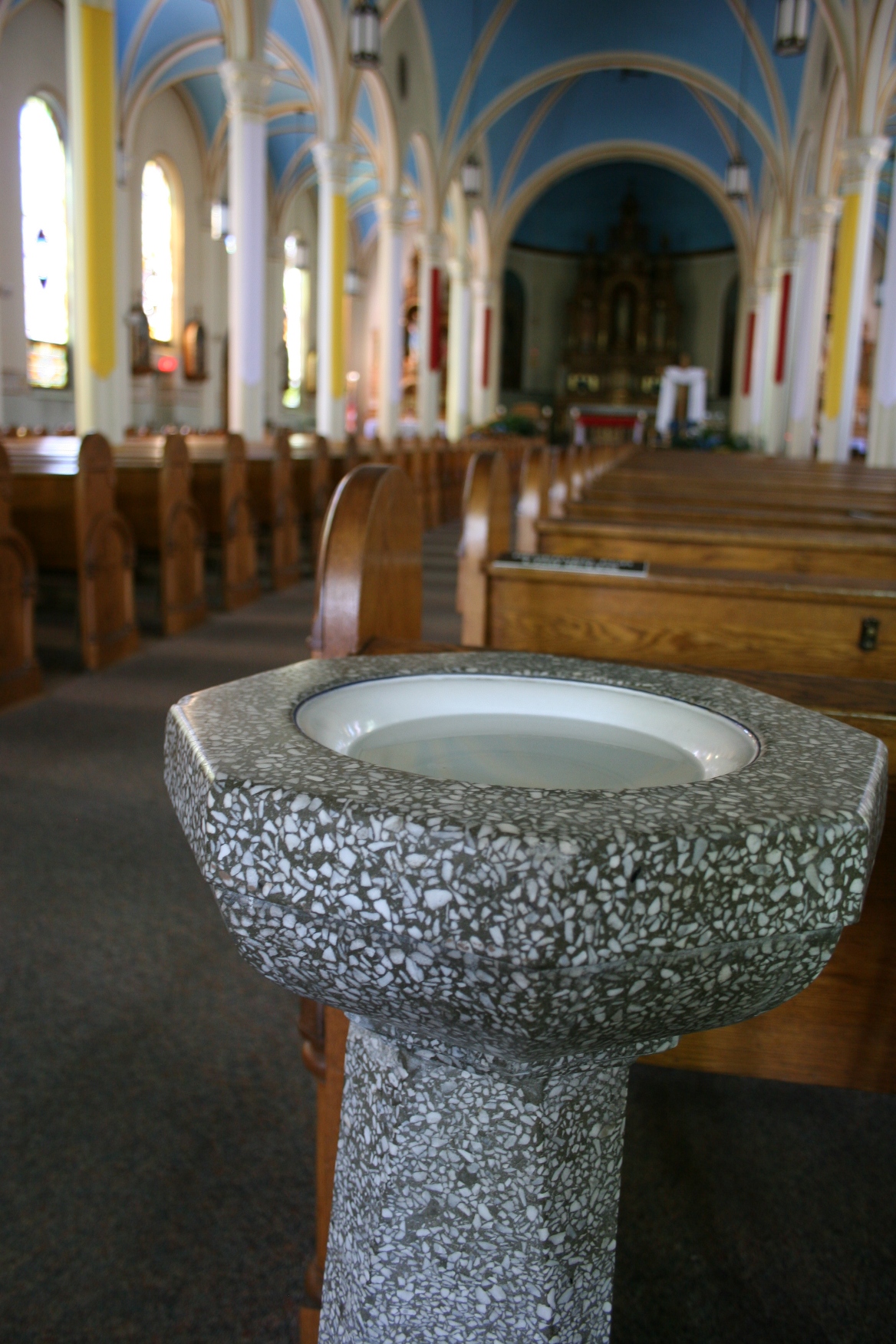
A stone font holding holy water at the back of the church.

Such beauty. Such holiness. Such wonderment.

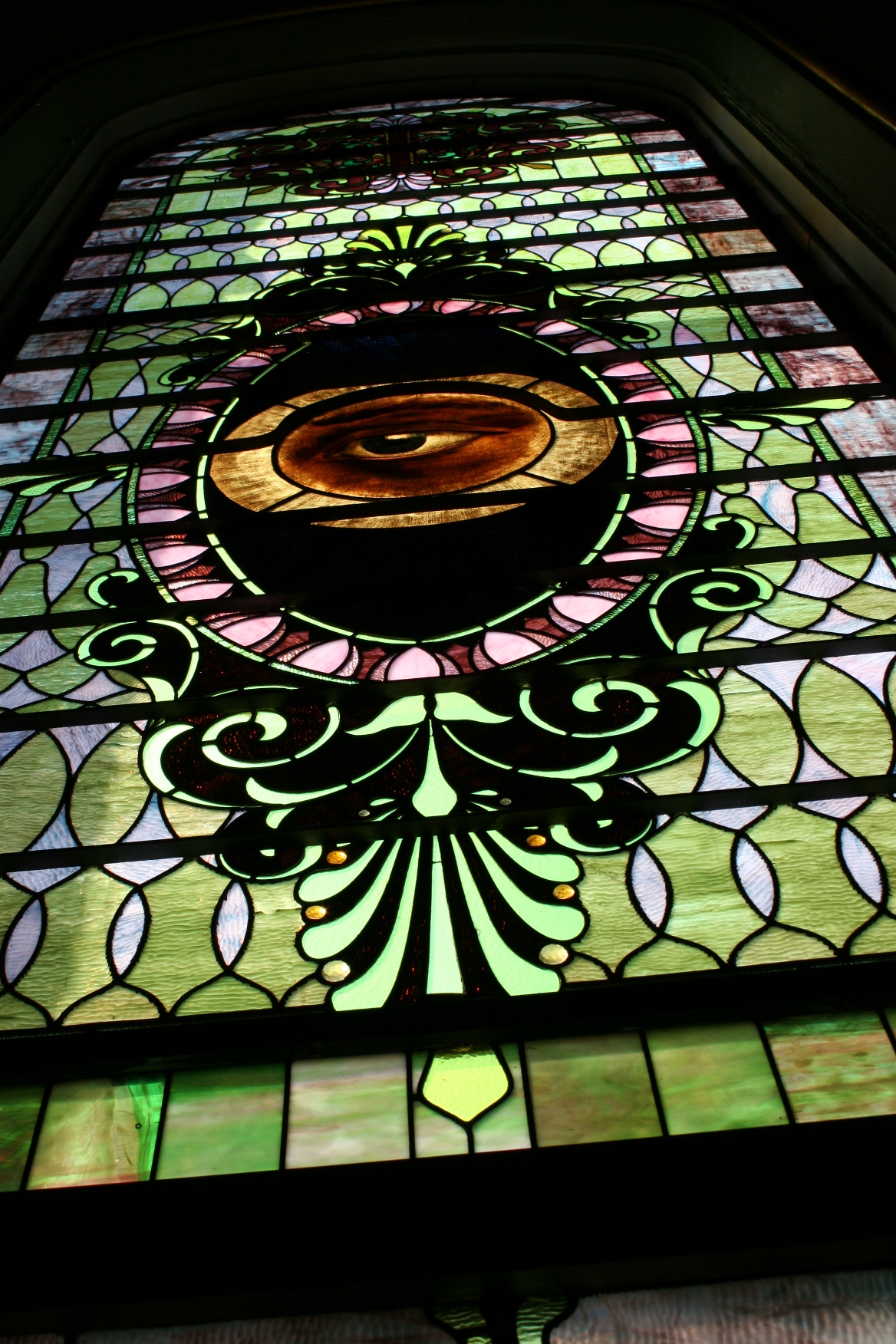
Opulent, stained glass windows bedecking the sanctuary like jewels on a crown.

One of too many stained glass windows to count.

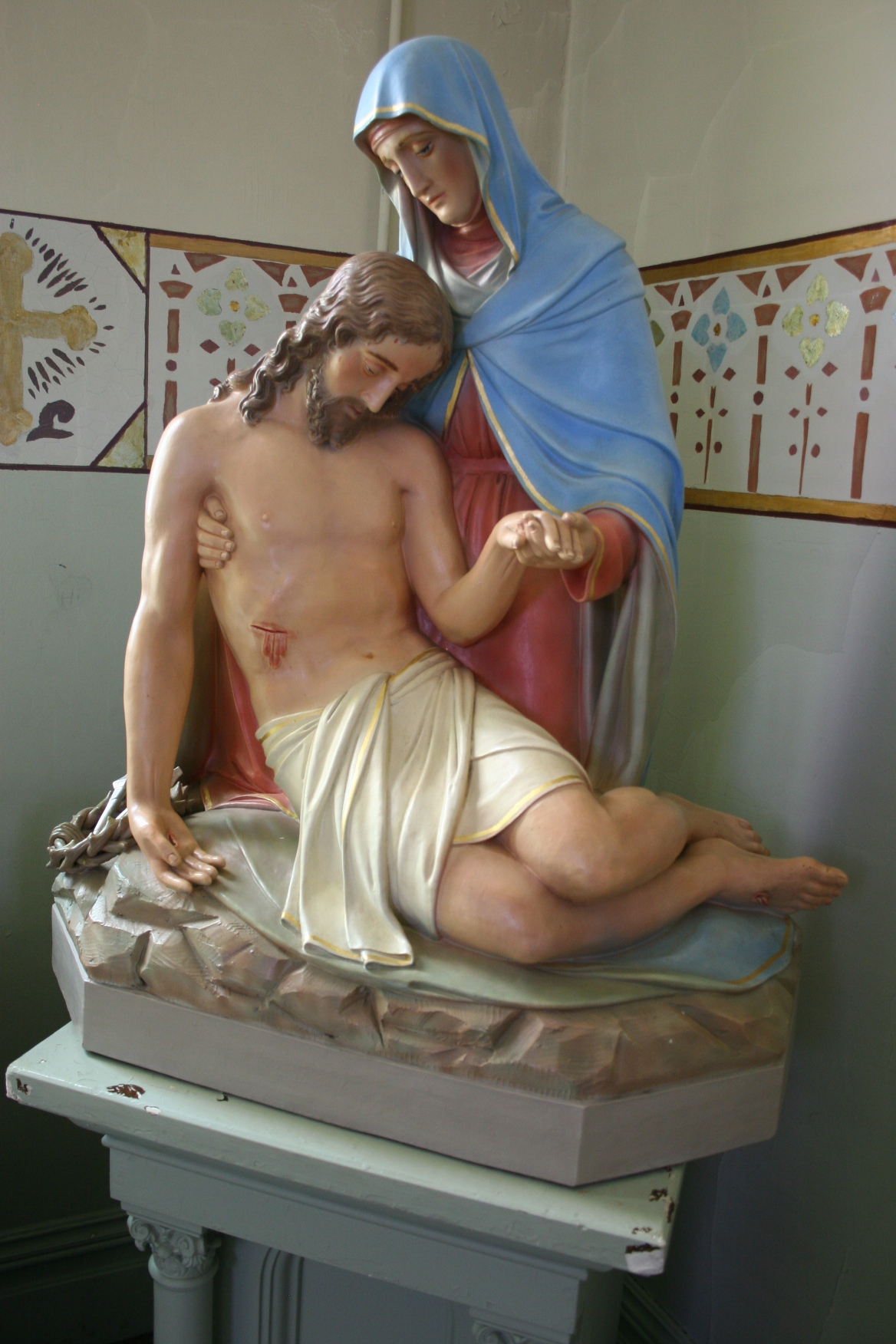
Statues fit for the finest of museums.

This statue of Jesus and Mary sits at the back of the church.

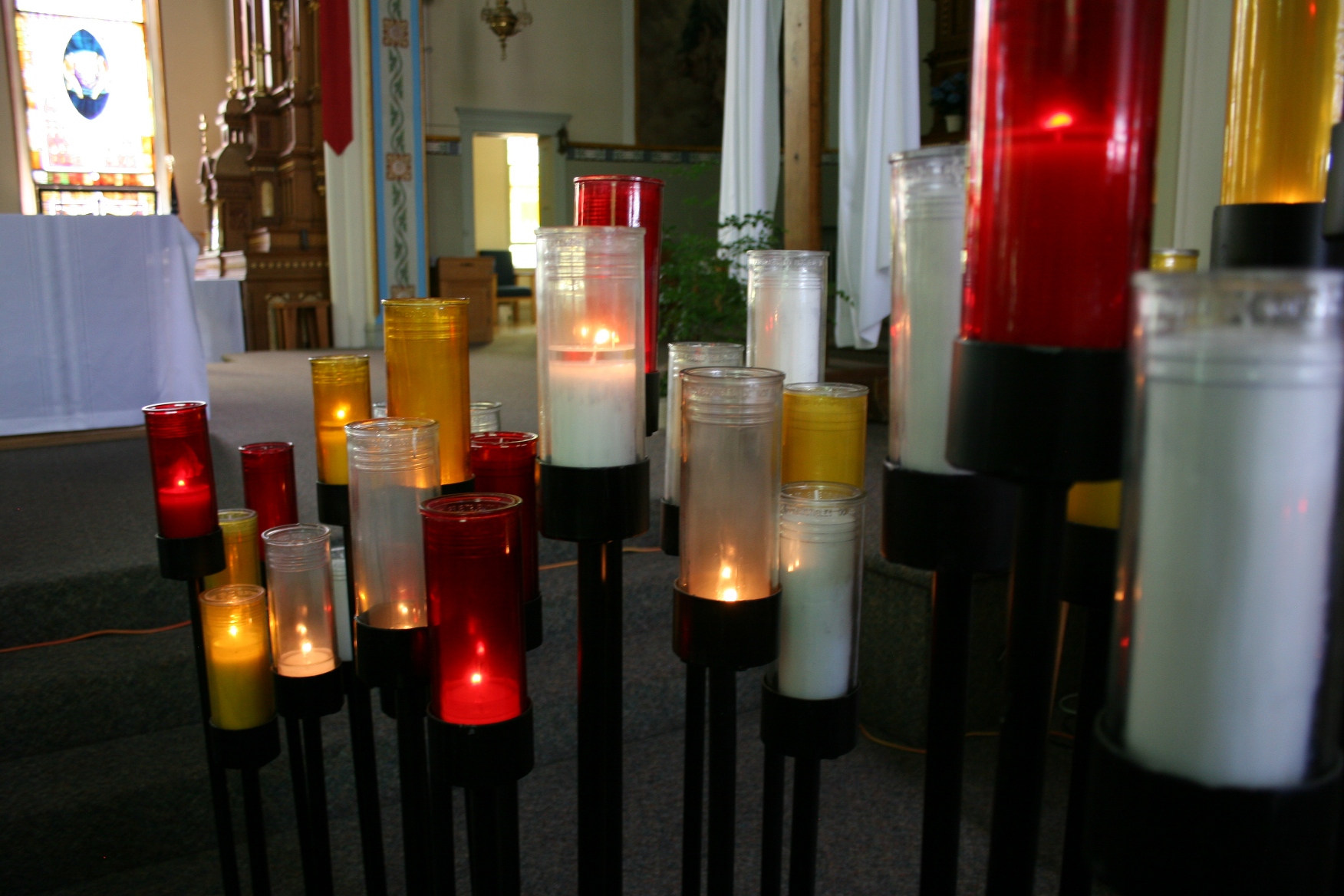
And then I moved, not sure which direction to go, wondering how I could possibly see every detail. Prayerful hands. Flickering candles. The frayed ends of the bell pull. Gold-leaf stenciled crosses. Worn wood. Angels in flight above the altar.

Clustered candles of prayer at St. Mary's.

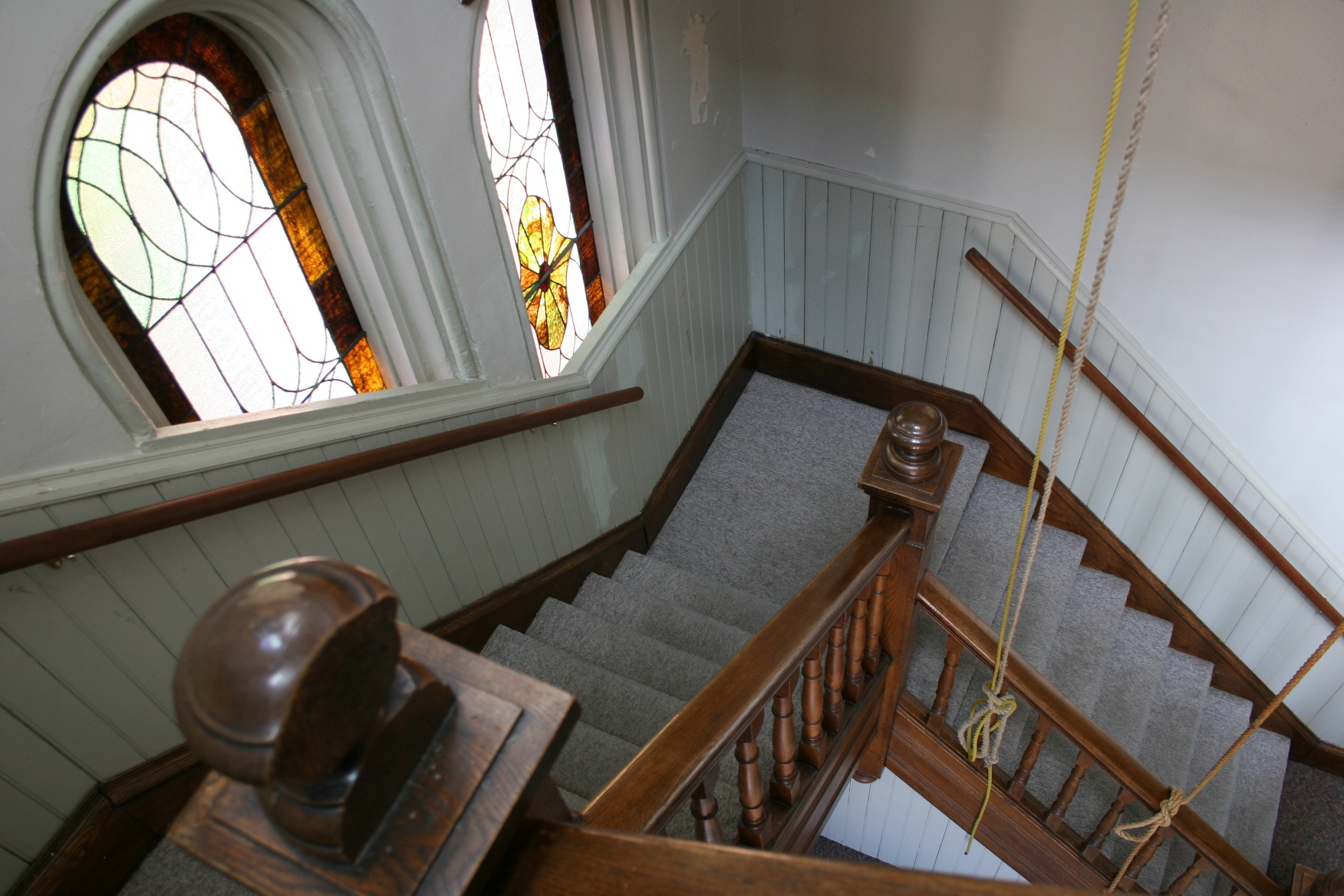
Bell ropes dangle by the balcony stairway. Two stairways lead to the balcony.

A gold-leafed stenciled cross borders a side wall of the sanctuary.

My eyes swept across the Church of St. Mary’s, or St. Mary’s Catholic Church of Melrose. Choose the moniker you prefer.

The name and the denomination of this 1898 church mattered not to me. I cared only for the heavenly feel of this holy place.

How could I not be impressed by this multi-steepled house of worship next to the turkey plant and soaring above the landscape 100 miles northwest of the Twin Cities?

How many times, if you travel Interstate 94 in central Minnesota, have you noticed those steeples while zipping by Melrose, but never taken the time to drive into town? Placed on the National Register of Historic Places in 1993, this Catholic church is worth a stop if you appreciate craftsmanship, art, history and reverent beauty beyond belief.

The church rises above the land, defining Melrose.

The 113-year-old building was constructed by the parishioners of St. Boniface and renamed St. Mary’s when St. Boniface and St. Patrick’s parishes merged in 1958.

History runs deep here. You will see it in the hitching post out front, smell it in the incense, hear it in the creak of steps leading to the locked balcony.

And if you listen closely, you can almost hear the whispered prayers of those who have come here on bended knees to lift up their sorrows to the Lord.

#

I COULD NOT POSSIBLY share my many photos of St. Mary’s with you in one blog post. Please check back for more images in a future post.

© Copyright 2011 Audrey Kletscher Helbling


Presenting Leonardo da Vinci’s The Last Supper at a Minnesota church April 19, 2011

The parking lot at St. John's United Church of Christ, Wheeling Township, is nearly full 20 minutes before the congregation's annual performance of The Last Supper Drama.

AS THE FINAL wisps of daylight dissipate into darkness, the church windows glow with the subtle warmth of welcome on this Palm Sunday evening.

Inside, worshippers are already gathering in the tightly-knit pews, eyes focused on the long table before them.

As I wait, seated in a pew tucked under the rim of the balcony, I study the stained glass windows, the suspended ceiling lights where lady bugs cling, the golden cross high above the altar.

Then, shortly after 8 p.m., after the hymn and the invitation and recitation of The Lord’s Prayer, the drama begins unfolding—for the 49th consecutive year.

St. John’s United Church of Christ, Wheeling Township, is presenting its annual The Last Supper Drama.

The Rev. Lora Sturm provides brief historical background on Leonardo da Vinci’s The Last Supper painting, the visual basis for the evening’s drama.

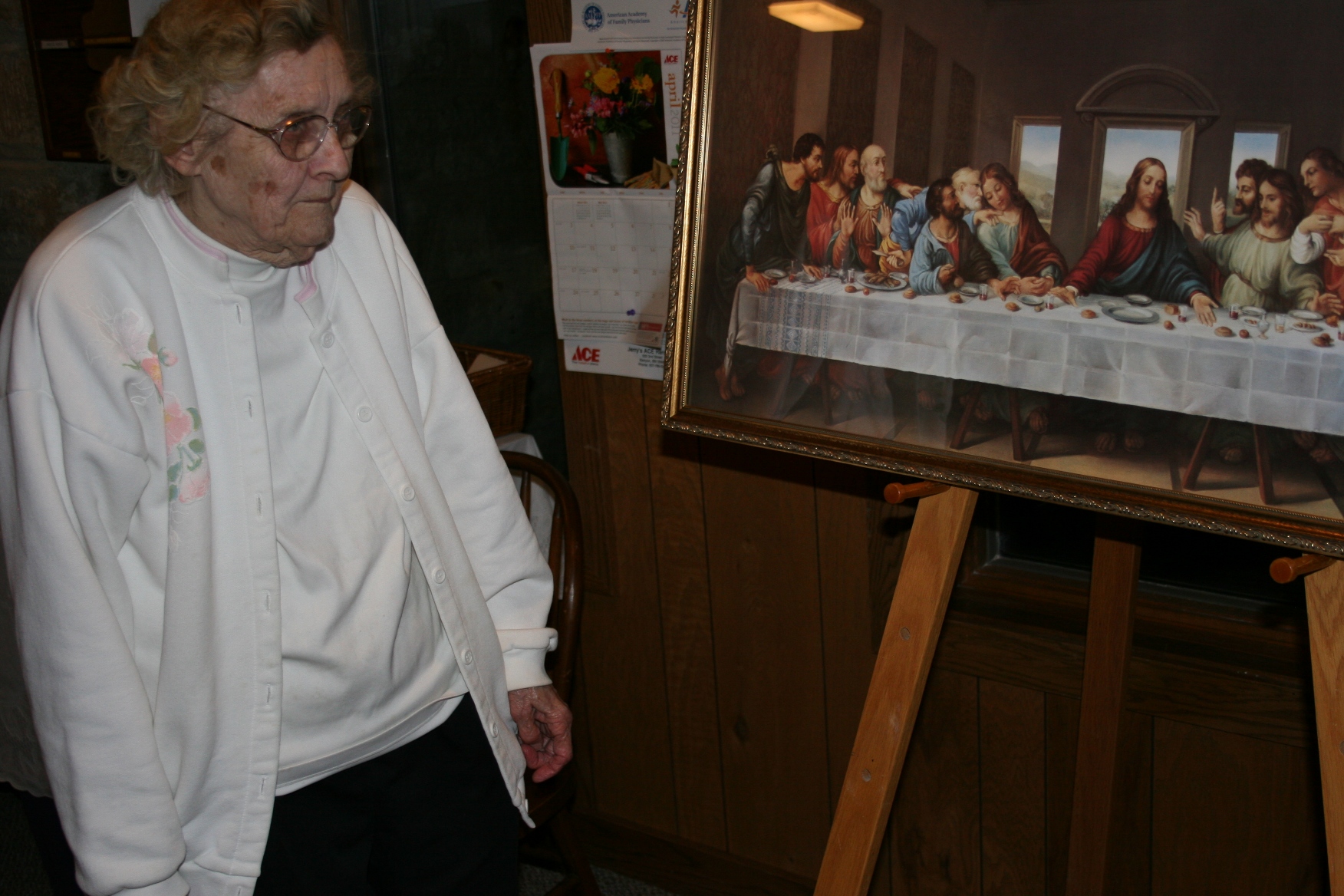
Leonardo da Vinci's painting of The Last Supper inspired the dramatic presentation at St. John's. This print was donated to the church in memory of Arnold Keller.

And then the lights fade, slowly, until a spotlight shines only on the cross. Soon that light and the organ light are extinguished, plunging the sanctuary into near darkness save for the remnants of daylight filtering through the stained glass windows.

A quiet reverence, a sense of anticipation, falls upon the congregation in the moments of silence and darkness before the actors begin filing into the church. Small clusters of men, seemingly engaged in conversation, without words to be heard, walk toward the table set with bread and a chalice and a bag of silver, although I am not sure whether the betrayal money was there initially or was carried in by Judas, the betrayer.

In darkness, these actors, these 12 disciples, pose themselves, replicating the positions da Vinci painted into his famous The Last Supper painting. But no one plays the role of Jesus, represented instead by an empty chair draped in white cloth.

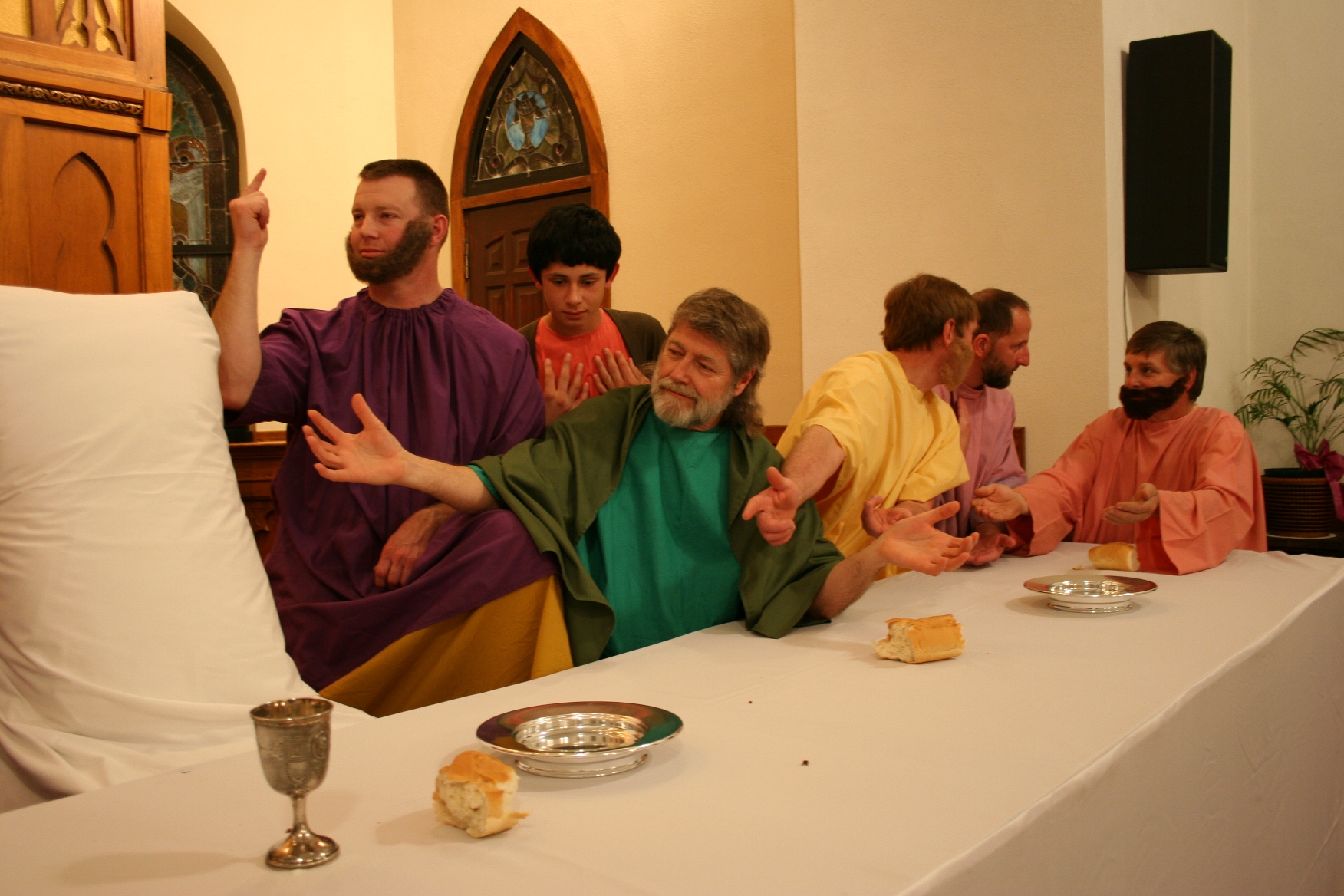
The actors position themselves to replicate da Vinci's The Last Supper, except for Jesus, who is represented by the empty white chair in the middle of the table setting.

When the lights flick on, the frozen scene catches me off guard, even though I’ve previously seen the performance. The stillness fills me with a certain sense of peace, yet uneasiness.

I know what is coming. Words from Scripture that will tell of Jesus’ forthcoming death. The accusation that one of the 12 will betray Christ. It is the moment da Vinci depicts in his art—that moment when the disciples learn that one of them will give up their Lord to death.

Yet, in this script penned by a St. John’s pastor, Walter Rasche, 49 years ago, it is the depth of faithfulness that causes me to pause and look inside. Would I be so faithful as to become a martyr, to die, like the disciples, by stoning or crucifixion or beheading?

In their monologues, each disciple speaks honestly of his struggles, his lack of faithfulness, his travels to preach the gospel, and, then, the blessed words of a better and more abundant life found in following Christ.

The actors freeze as they role-play the disciples.

Five of the six disciples sitting to Jesus right with Christ represented by the empty white chair.

The disciple/actors to Christ's left, including first-time actor, 13-year-old Kyle Keller, the youngest cast member.

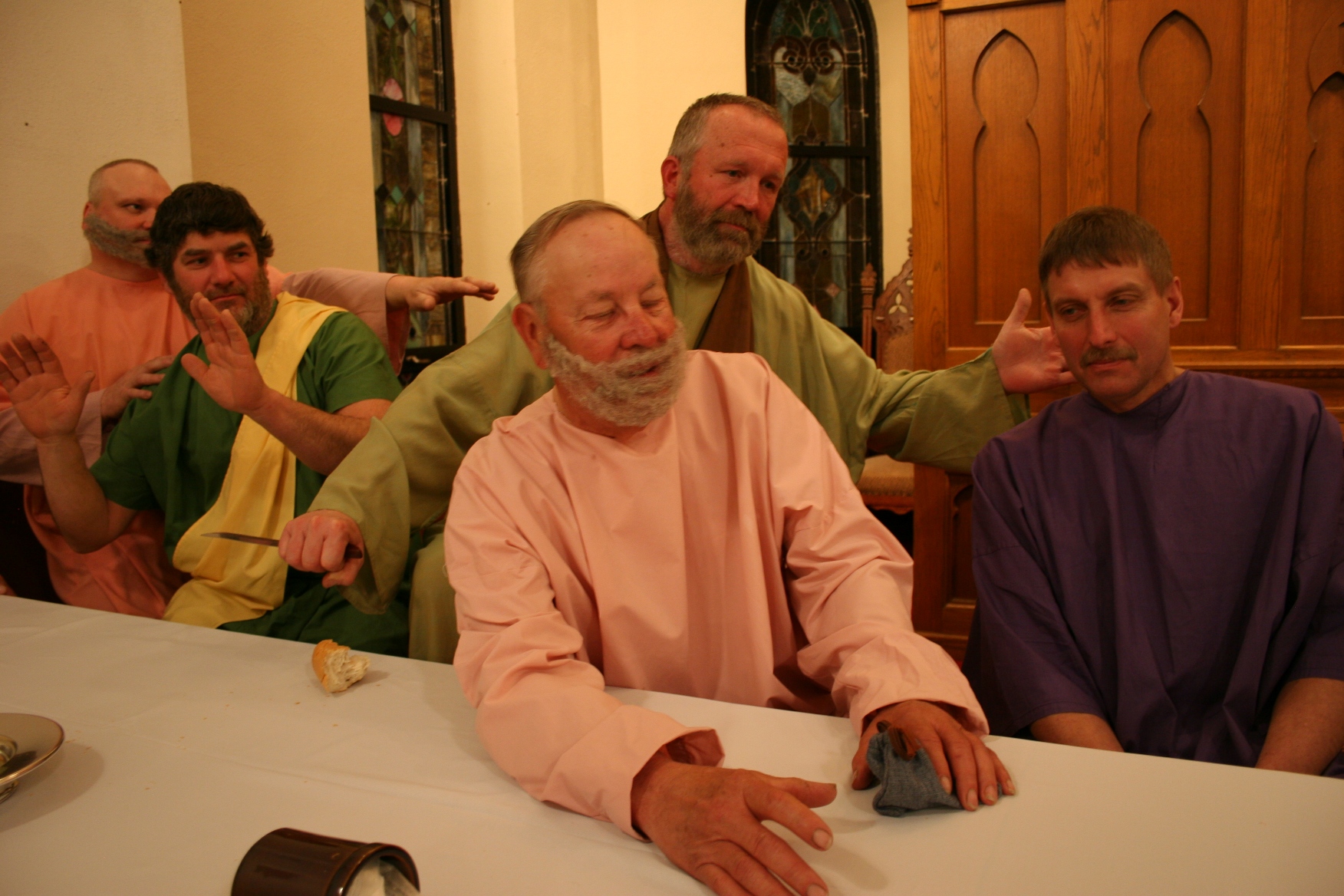
Judas’ words—that he regrets betraying Christ with a kiss, turning him over to the authorities for 30 pieces of silver—sting.

Judas, front, betrays Jesus with a kiss and 30 pieces of silver.

But the pastor’s prayer afterward encourages and uplifts me: “…hear your voice calling us to follow you…you call us to simply follow…”

And then her benediction blesses me with peace: “The Lord bless thee and keep thee…”

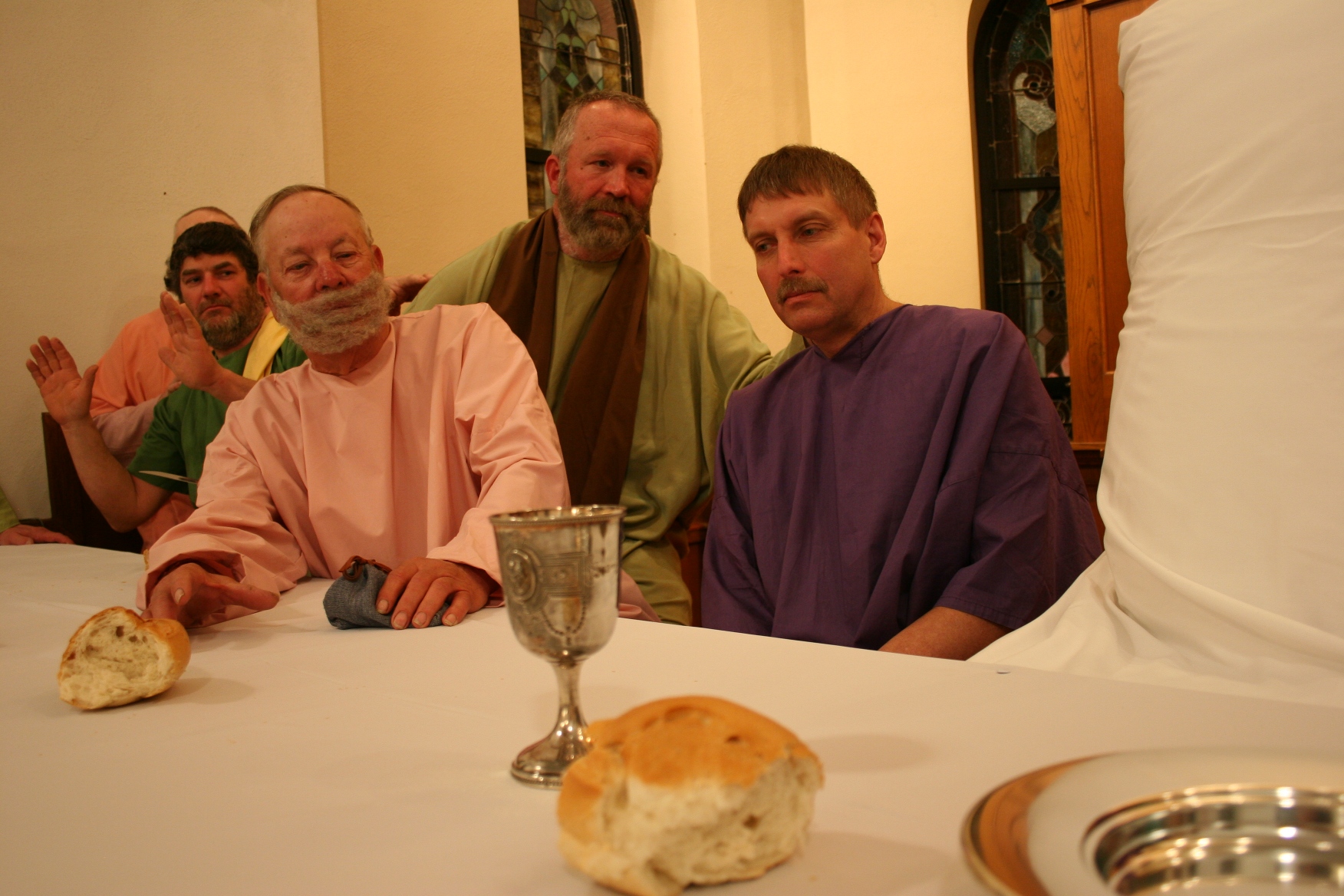
As the actors exit, as the worshipers file out of the sanctuary, I linger, waiting for the opportunity to shoot photos, which weren’t allowed during the performance. The men return, pose at the table, some of them telling me how they watched this drama as boys and now role-play as men.

This year a boy-becoming-a-man, 13-year-old Kyle Keller, plays the part of Philip, standing behind his father, Keith, who has assumed the role of Matthew. The seventh grader is the youngest participant ever in the St. John’s re-enactment. He was talked into playing the part, but says now that he’ll be back.

With two casts, the actors (most of them) return every other year to assume the same character roles. Some travel from the Twin Cities back to this, their home church near Nerstrand Big Woods State Park. They speak and gesture like seasoned actors, some growing beards for the occasion, others sporting fake, glued-on facial hair. Sharon Meyer jokes that she has the shaver charging at home, ready to shave off her dairy farmer husband’s beard. Alan Meyer has played the part of Andrew in the evening’s performance.

Occasionally, a new cast member like Kyle is recruited. He’s the grandson of Elsie Keller, who stands after the service next to a print of The Last Supper angled onto an easel in the church narthex. The Keller family gave the print to the church in memory of Elsie’s husband, Arnold, who died in 1999. On Palm Sunday the print is moved from its usual spot in the fellowship hall to this place of honor.

Elsie Keller, 85, stands next to The Last Supper painting given to St. John's in honor of her husband, Arnold.

The evening takes on special significance for this 85-year-old as she watches Thomas and thinks of her husband. Arnold played Thomas in the debut performance at St. John’s and continued with that role for many decades thereafter. Elsie, who was baptized, confirmed and married at St. John’s, as was her husband, hasn’t missed a single performance of The Last Supper Drama.

Her son, Craig Keller, the church organist, tells me that the drama originally was staged on a Wednesday during Lent. At one time there were two evening performances and even an afternoon presentation with the windows covered in black plastic to block out the light.

On this evening, some half-dozen church pews remain empty and I wonder why this place is not packed with a standing-room only crowd.

I’ve been deeply impressed with so many facets of the drama—by the level of commitment within this country congregation to continue a nearly 50-year tradition, by the professionalism of the actors, by the words they’ve shared that make the painting and Scripture and apostles come to life and, certainly, by the actors’ ability to freeze without barely an eye blink or a twitch. How do they do it?

The congregation's original chalice is used each year in the drama.

"Take eat, this is my body..." bread on the table during The Last Supper Drama.

FYI: Next year plan to attend the 50th presentation of The Last Supper at 8 p.m. on Palm Sunday. St. John’s United Church of Christ, Wheeling Township, is located about a 15-minute drive east of Faribault on Minnesota Highway 60 and then north on Rice County Road 24. At this point, I expect organizers may add activities to commemorate the 2012 anniversary production.

Credit goes to the following for their parts in presenting this year’ production: directors Shirley Little and Kelly Dahl; co-director Pauline Wiegrefe; organist Craig Keller; narrator Don Katra; prompter Steve Wille; lighting, Ben Heil; greeters Steve and Deb Wille; the youth fellowship ushers; the church council coffee hour servers; pastor Lora Sturm; and actors Alan Meyer, Grant Meese, Craig Mueller, Kyle Keller, Todd Lien, Thad Monroe, Keith Keller, Doug Spike, Marty Budde, Brian Little, Randy Tatge and Paul Meyer.

Thank you all for this exceptional gift during Holy Week.

© Copyright 2011 Audrey Kletscher Helbling
 

Stitches of love April 6, 2011

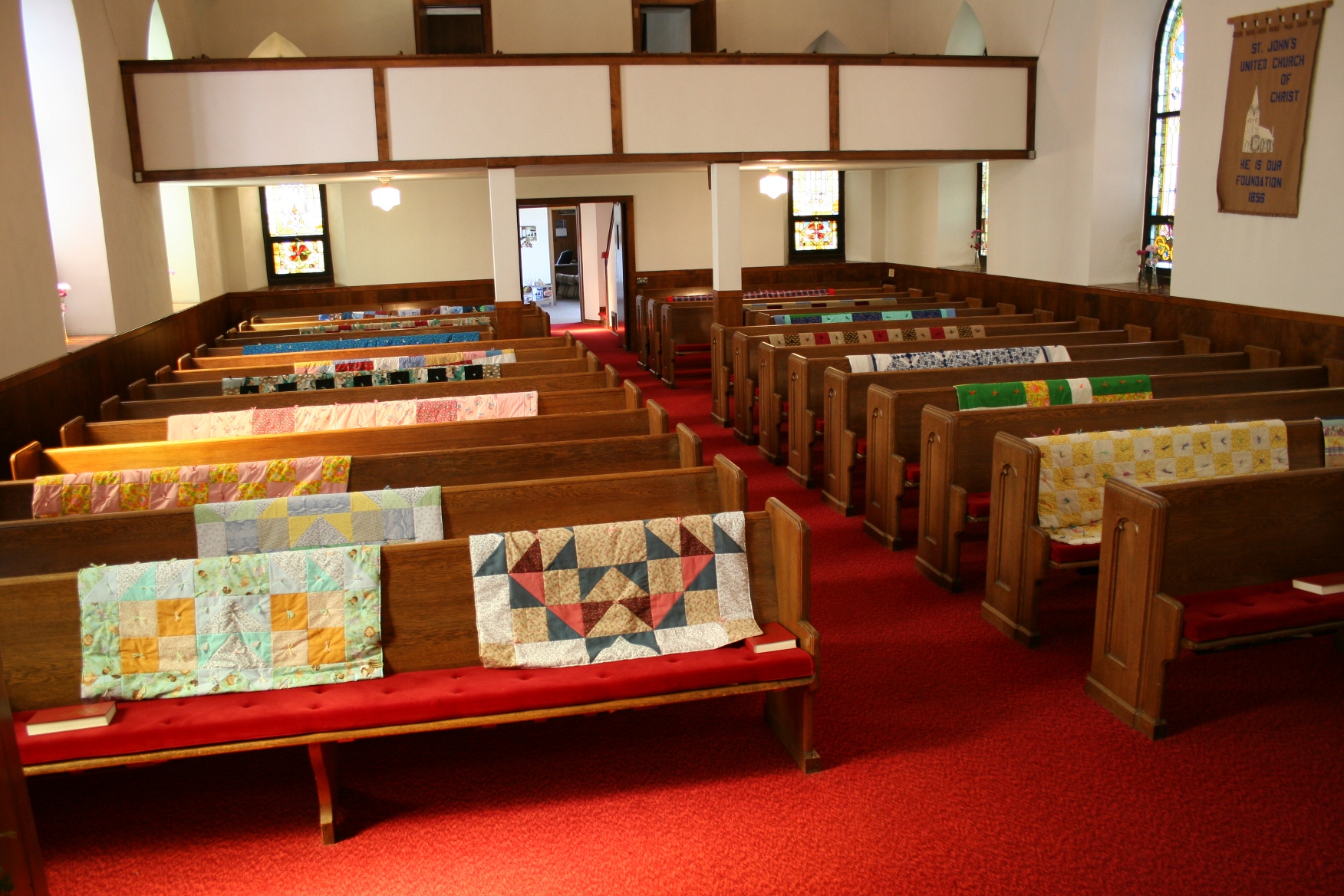
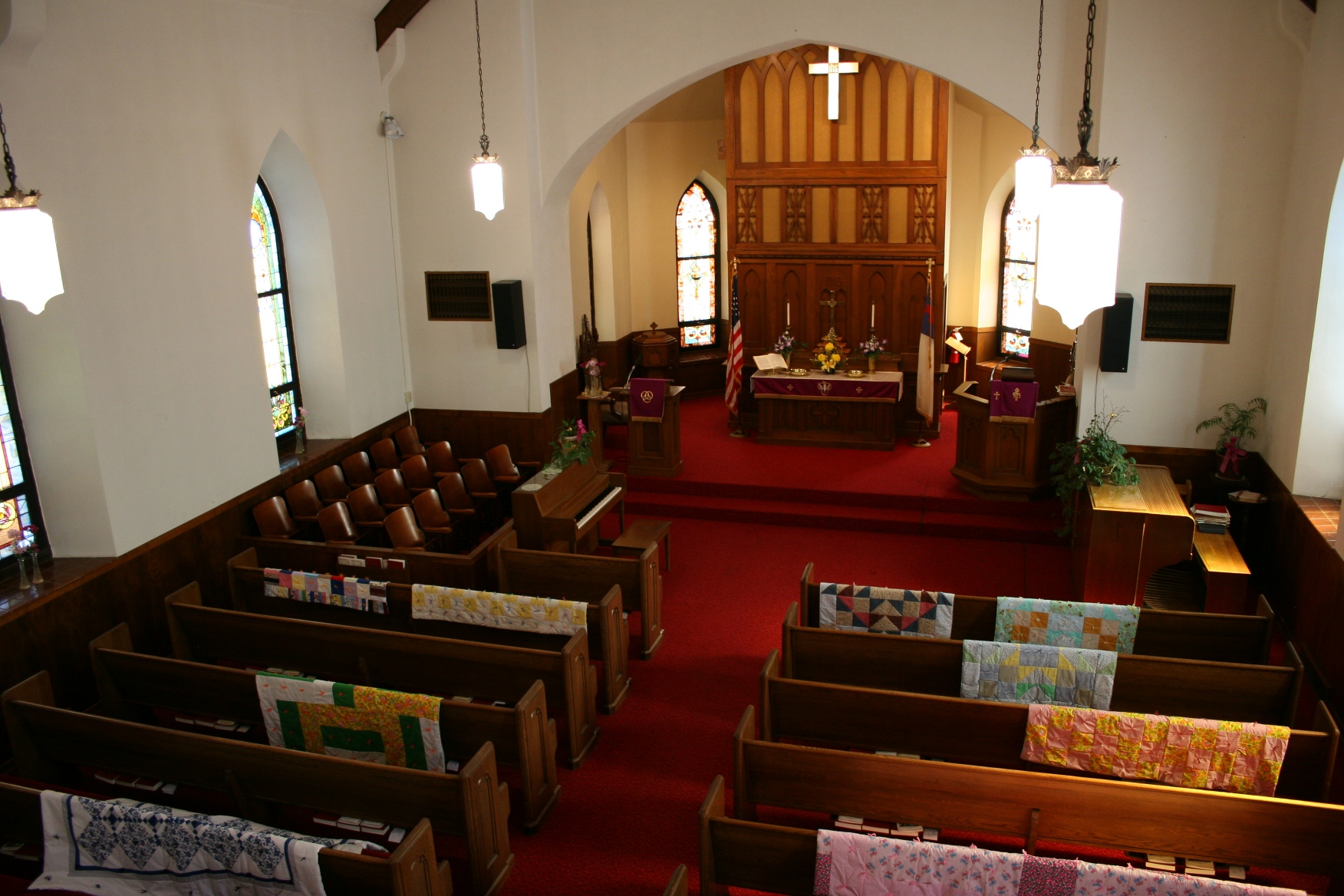
Handmade quilts drape across pews at St. John's United Church of Christ.

INSIDE THE LIMESTONE CHURCH, patchwork quilts drape across the backs of pews, spilling onto cushy red seat cushions.

Only hours earlier during the Sunday morning church service, worshippers settled onto the quilts handmade by St. John’s United Church of Christ members.

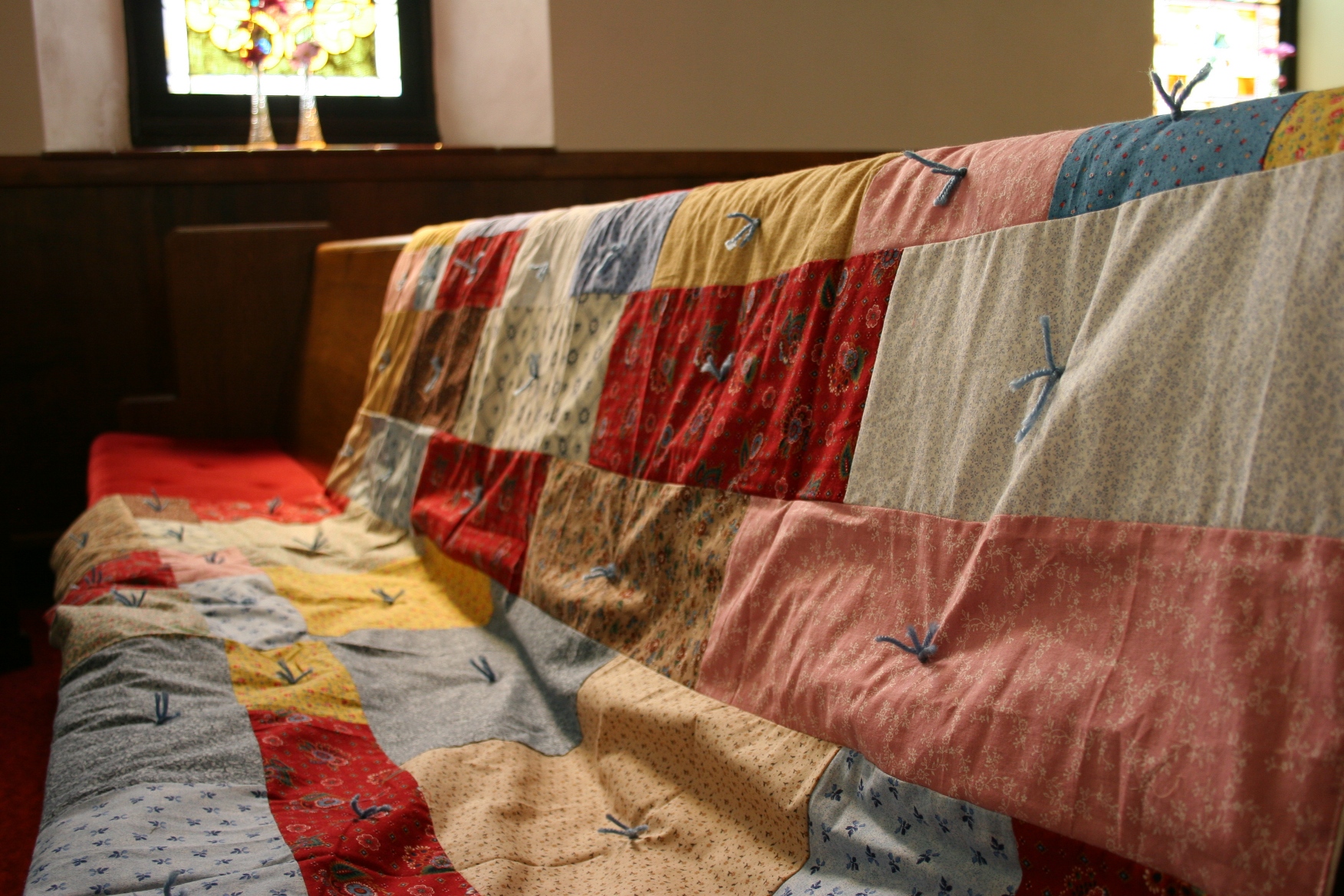
On a Saturday in February, members of the Women’s Guild, and a few husbands, gathered at this country church in Wheeling Township in southeastern Rice County to stuff the quilts with batting, add backings and tie together the layers with snippets of yarn.


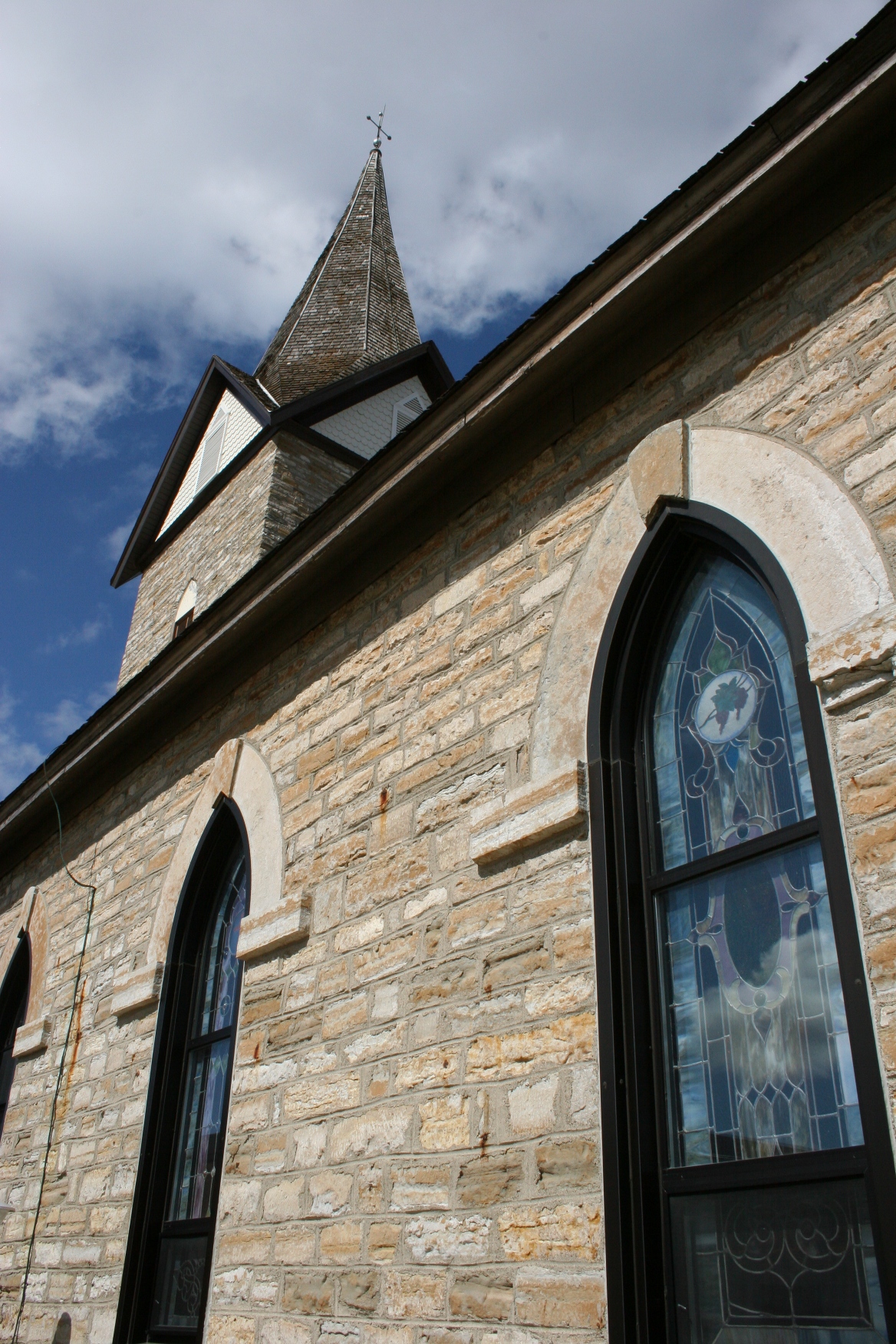
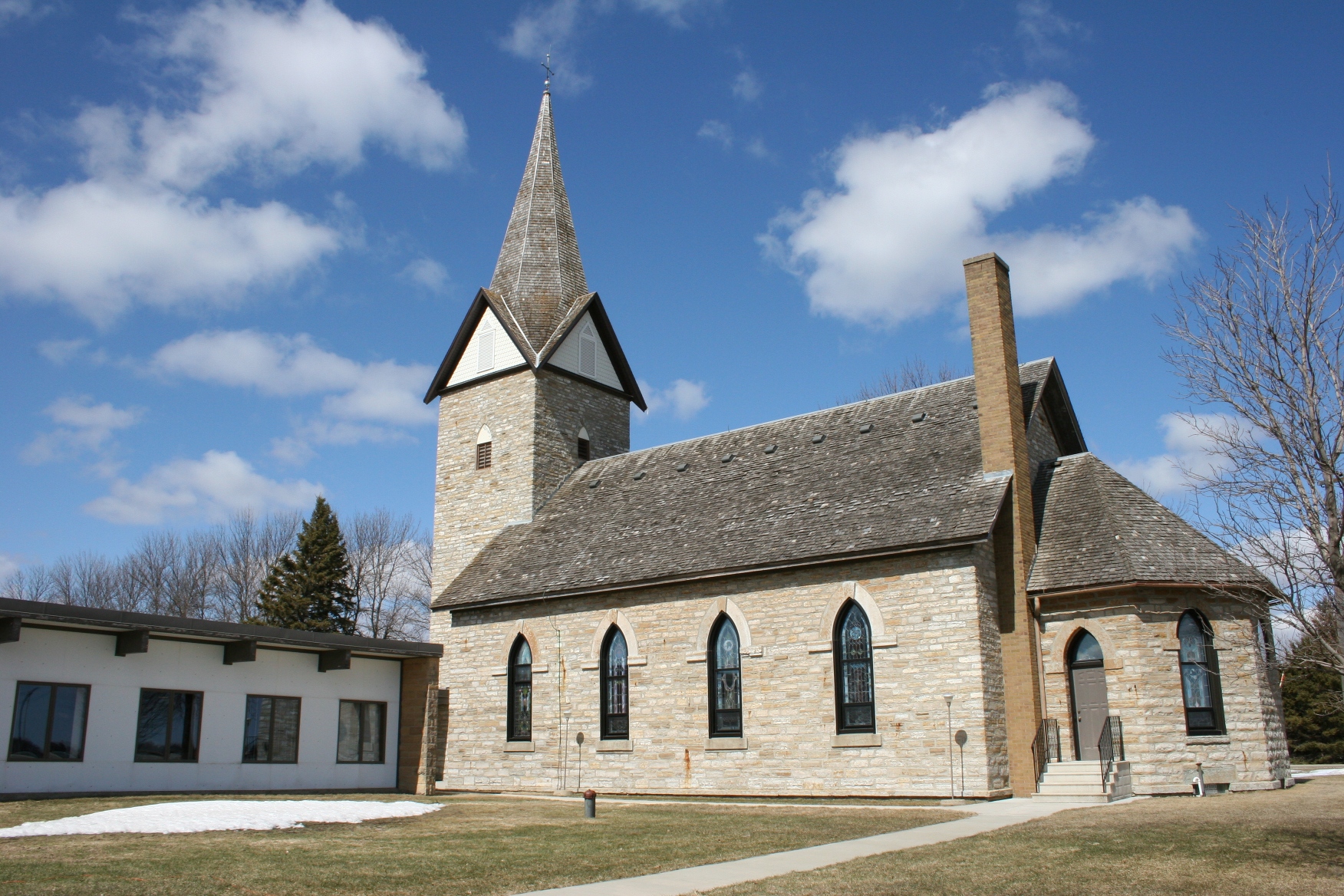
St. John's old stone church has been in continuous use for more than 150 years. German settlers founded the congregation in 1856.

This year, according to church member and quilter Kim Keller, the quilters made 13 baby quilts and 13 big quilts.

The handmade blankets will go to graduating high school seniors—two at St. John’s this spring—and to missions, mostly local.


One of the many handmade quilts that will be given away.

As I perused the quilts, I considered the devotion of those who piece together the swatches of fabric, tie together the layers and knot the strands of yarn. These quilts represent gifts that touch the recipients physically, but, more importantly, emotionally and perhaps spiritually.

Stroke the fabric and you can almost feel the love stitched into each quilt.

That these blankets are then displayed for worshippers to see, and sit upon, adds another dimension to the project. As I photographed the quilts, as the sun streamed through the church’s restored stained glass windows, I thought of the blessings received by both the givers and the receivers. Joy that comes in selfless giving. Joy that comes in knowing someone cares enough about you and your needs to stitch a quilt.

“It is more blessed to give than to receive.” Acts 20:35

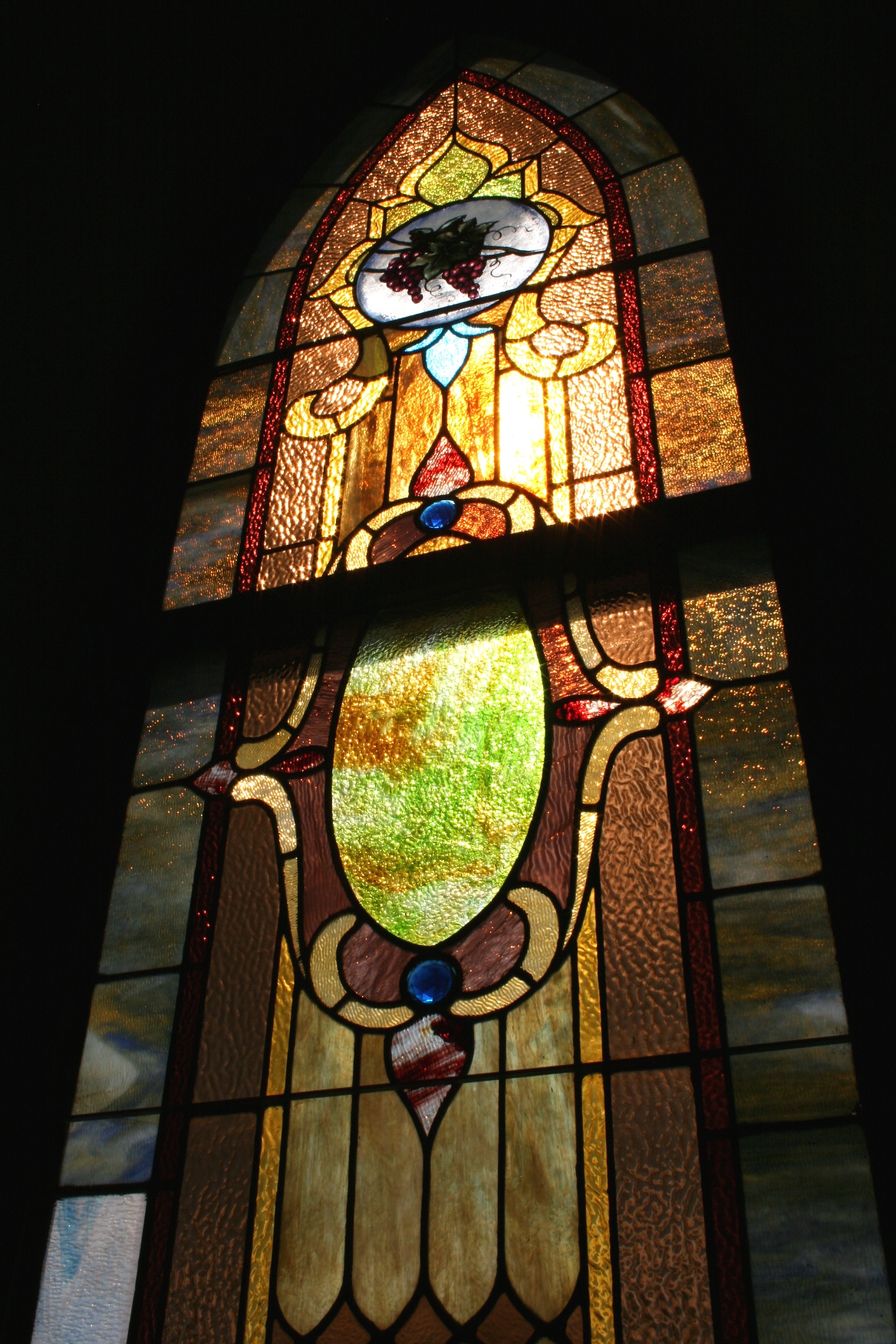
The stained glass windows at St. John's were restored between 2004 - 2006 at a cost of more than $30,000.


A view from the St. John's balcony of the church interior and the quilts.

TEN MILES AWAY in Faribault, about a dozen women at my church, Trinity Lutheran, meet every Wednesday morning from September through May to finish quilts that are donated to those in need. Seamstresses sew the quilt tops at home and then bring them, along with the backings, to church where the Trinity Quilters add the batting and then tie together the layers with yarn.

For 60-plus years now, the women of Trinity have been stitching quilts. “It’s a mission project,”  says long-time quilter Betty Gudknecht. “I want to help other people. You want to do things for the Lord because you want to do it (not because you’re paid).”

With that spirit of giving and serving, the Trinity quilters make about 200 quilts annually. They donate them to places like Minnesota Teen Challenge, the Orphan Grain Train, the Red Cross, Burdens to Blessings, Lutheran World Relief, Lutheran Association of Missionaries and Pilots, and to others in need. Trinity’s graduating high school seniors also receive quilts.

This week the Trinity Quilters are auctioning off three quilts in a silent auction that ends mid-morning on Sunday, April 10. They need the auction money to purchase batting for their 60 x 80-inch quilts. A single roll of recently-purchased cotton batting, which will make 16 quilts, cost $90, and that was at 50 percent off.

In the past, the quilters have gotten creative, using old blankets, mattress pads and even the outsides of electric blankets, as “batting.” They still plan to use those resources, but would also like to use the softer, purchased cotton batting.

While the quilt-makers sometimes buy fabric, most often it is donated.

If you’re interested in bidding on one of the quilts at Trinity Lutheran Church—and I’m sorry, I don’t have photos of the quilts—get your bids in this week.

Cash donations are also being accepted to help the quilters purchase batting.

“It is more blessed to give than to receive.”


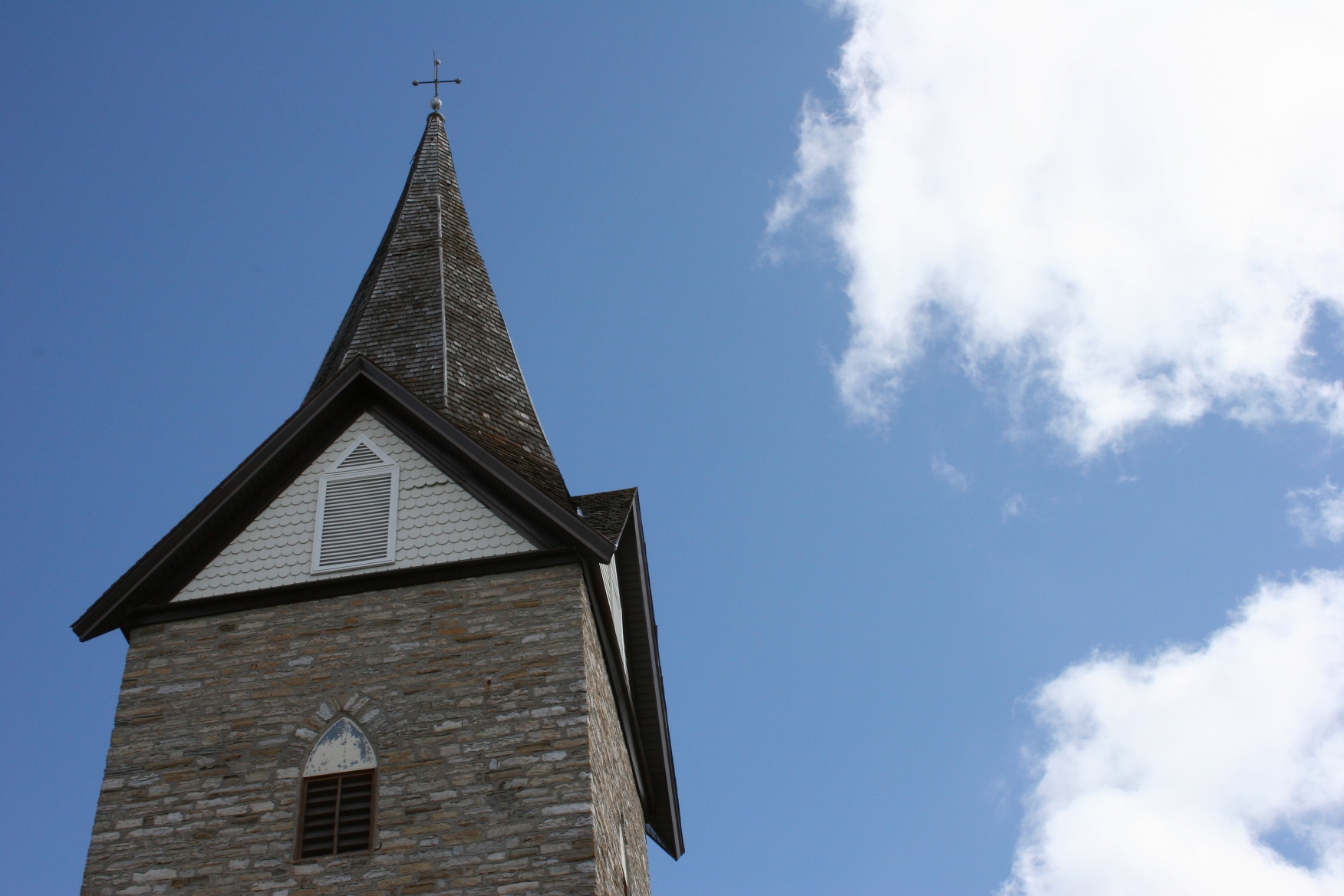
The steeple of St. John's United Church of Christ, Wheeling Township, Rice County, Minnesota.

© Copyright 2011 Audrey Kletscher Helbling
 

Grassroots dining: Church dinners are the best March 28, 2011

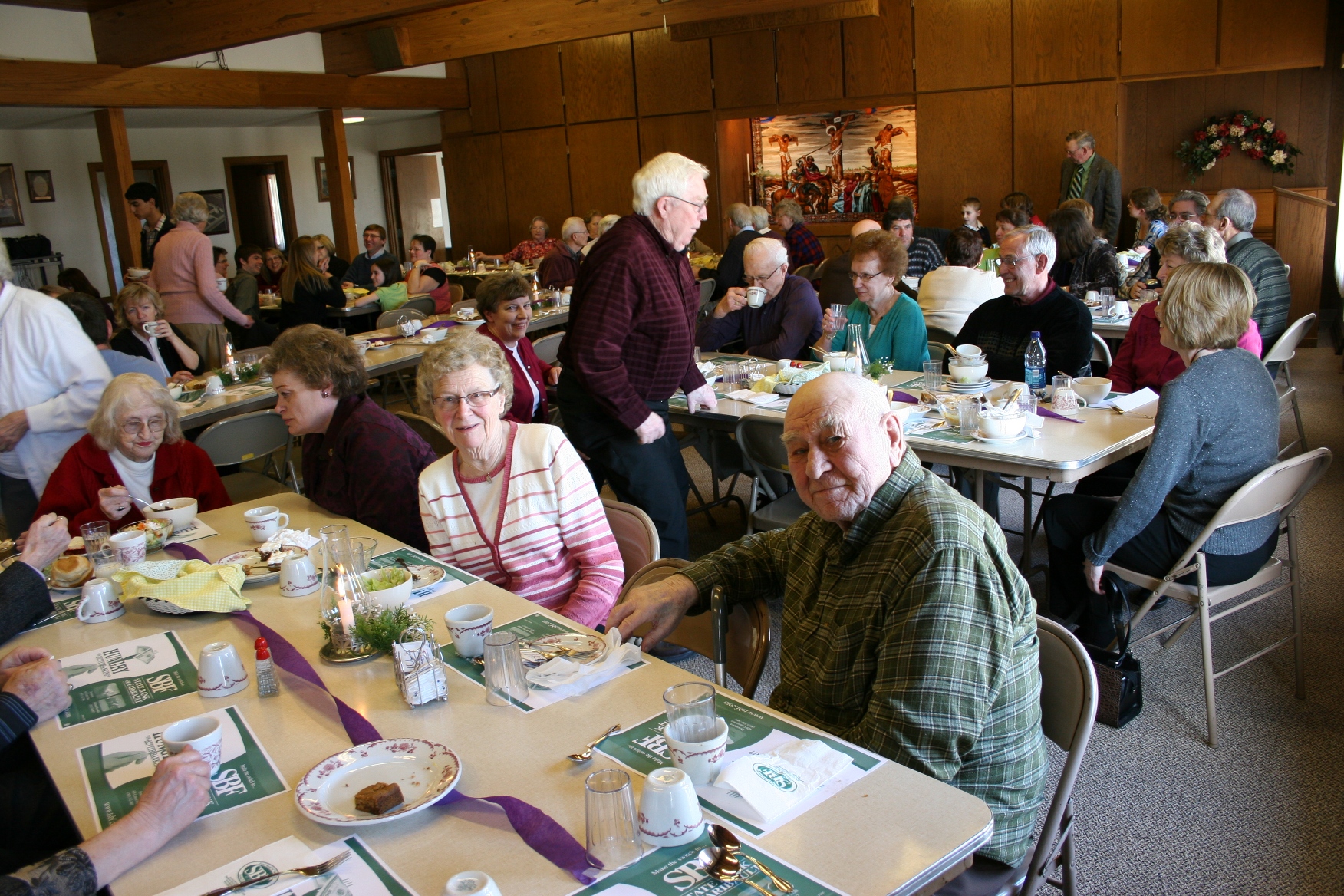
GIVEN A CHOICE of eating at a church dinner or dining at a restaurant, I’ll choose the holy place. I appreciate the good home cooking and fellowship that comprise church dinners.

So Sunday my husband and I headed to St. John’s United Church of Christ in Wheeling Township, about a 15-minute drive from Faribault, for a Lenten Soup Luncheon.


St. John's United Church of Christ is northeast of Faribault about two miles off State Highway 60 on Rice County Road 24 near Nerstrand Big Woods State Park.

As soon as I stepped inside the fellowship hall attached to the old stone church and saw the spread, I regretted that I’d snacked on a doughnut at my church only an hour earlier.

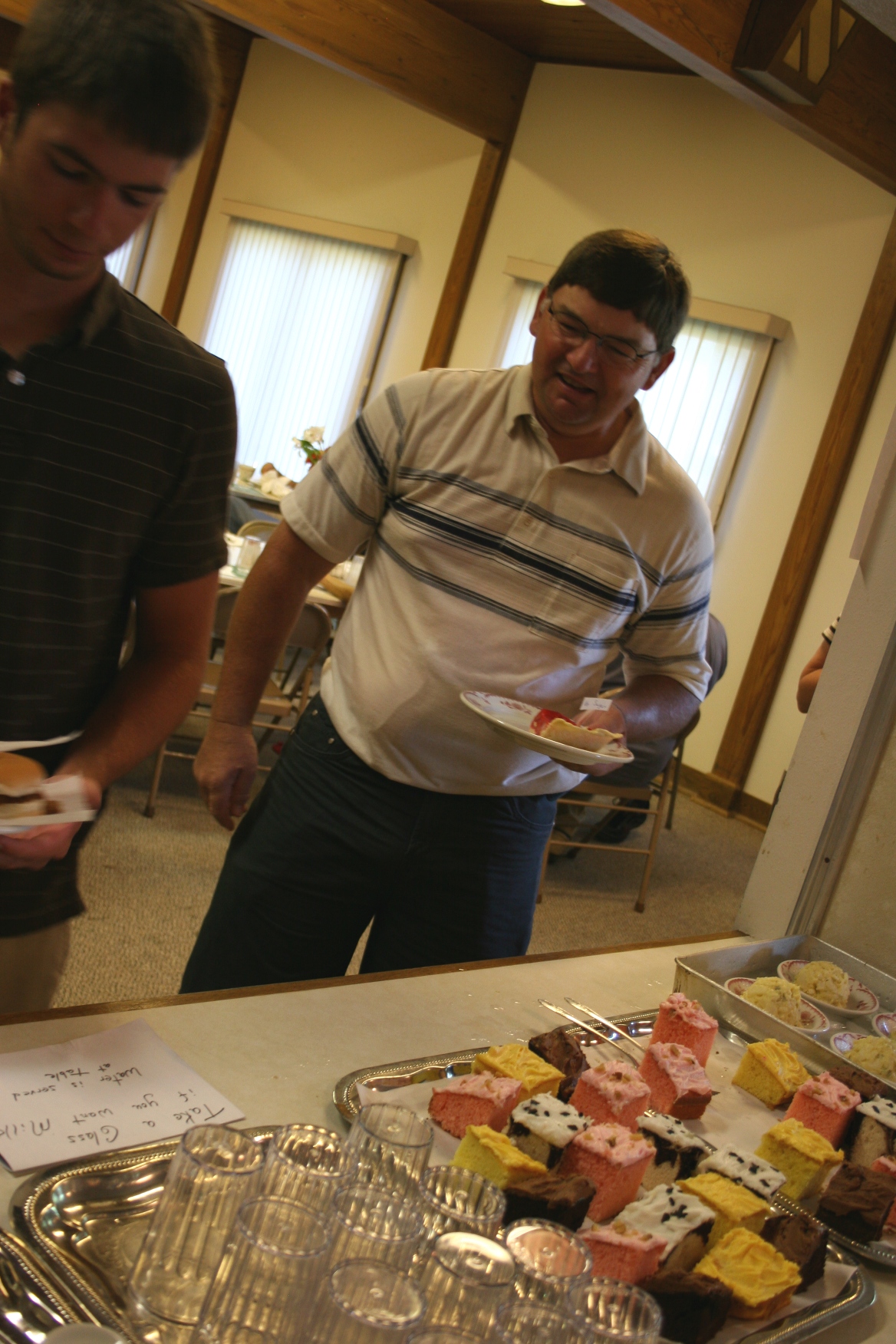
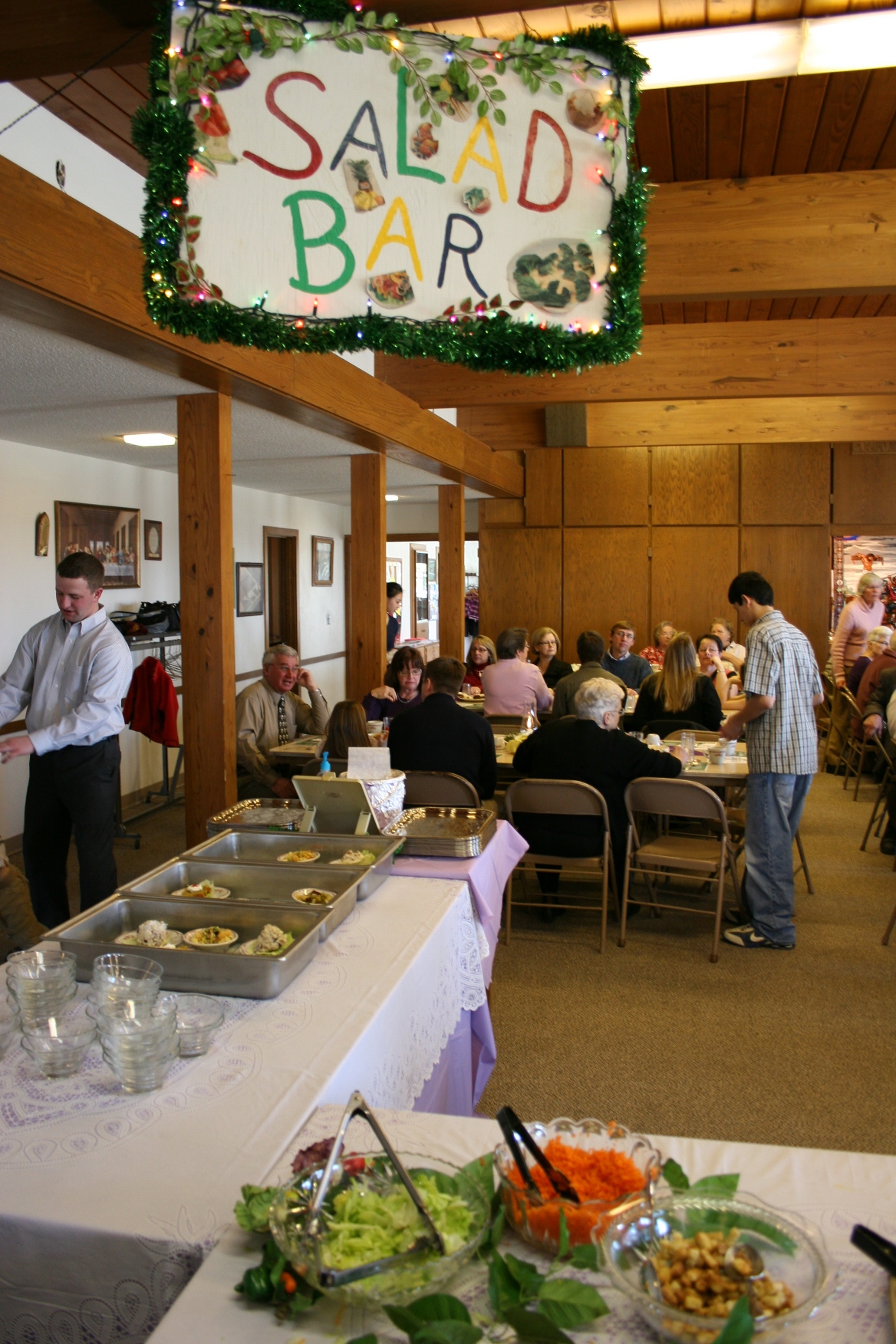
This luncheon offered soups, salads, sandwiches and bars. A regular smorgasbord with nine salad and three soup options and, well, I didn’t count the varieties of bars but suffice to say any chocolate lover would have been happy.


Some of the bars offered for dessert. I tried the bar with the marshmallow topping on the back left.

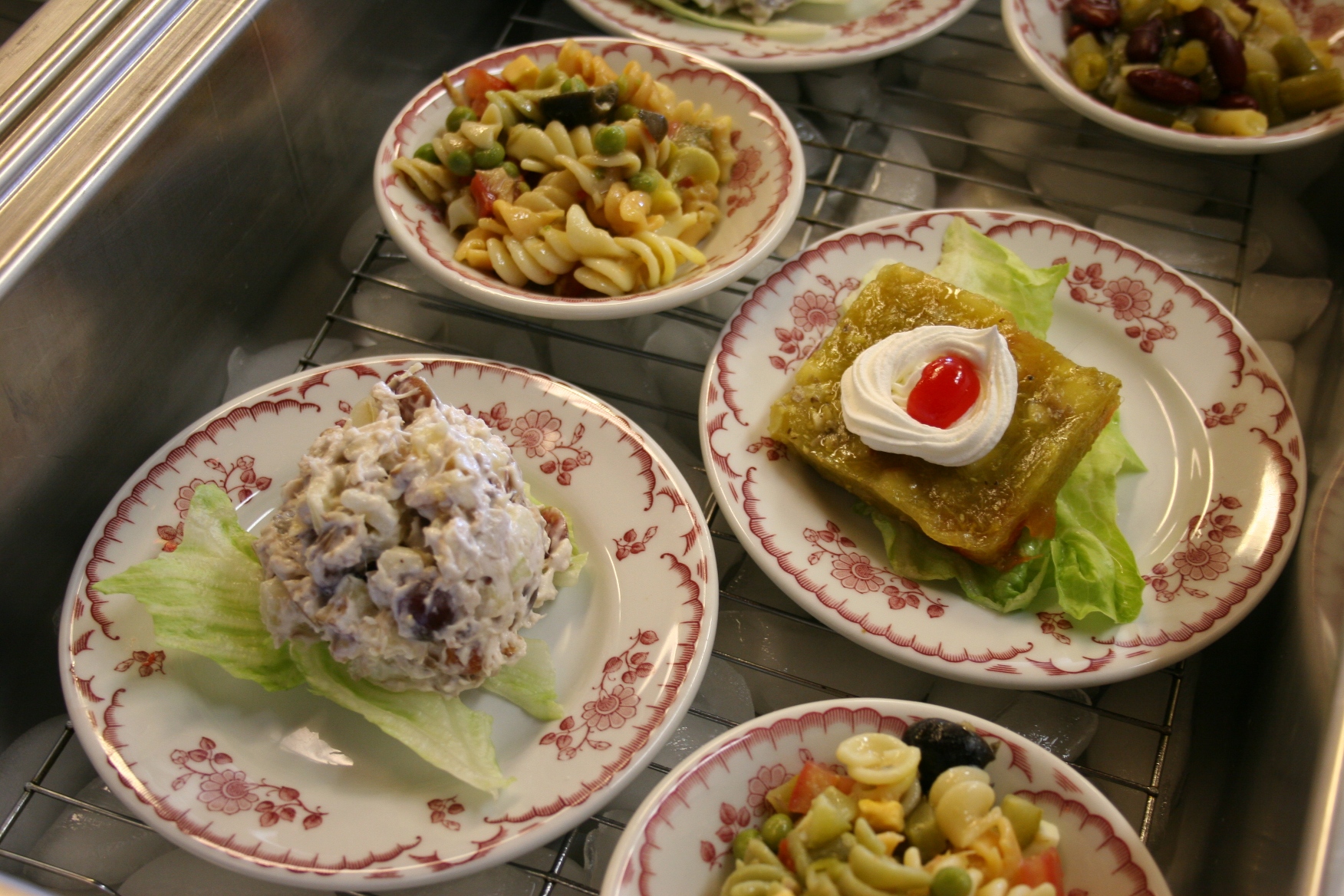
Salads like tuna pasta, tangy rhubarb squares and 3-bean, and the spinach-strawberry I chose, awaited diners who could select plated salads and/or build their own.


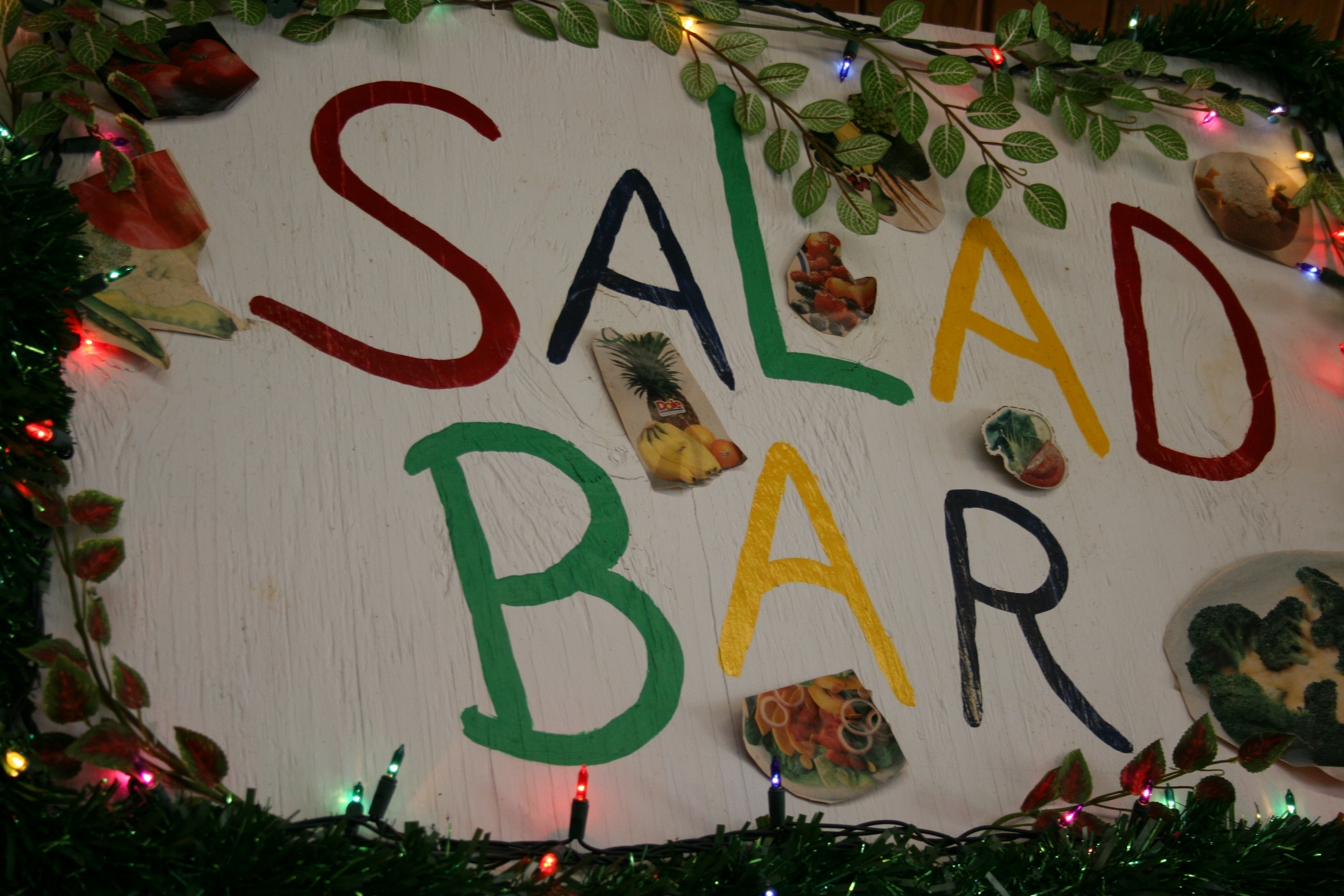
Even the salad bar sign grabbed my attention. How cute and eye-catching and kitschy.

The plated and build-your-own salad bar fills two tables in the dining hall.

A few of the salad bar choices, including a tangy rhubarb square on the right in this photo.

After I’d selected my salad and placed it on a fancy silver tray, I headed to the kitchen where cooks were ladling potato-bacon chowder, hamburger vegetable soup and chicken noodle with dumpling soup from large roasting pans into hefty bowls.


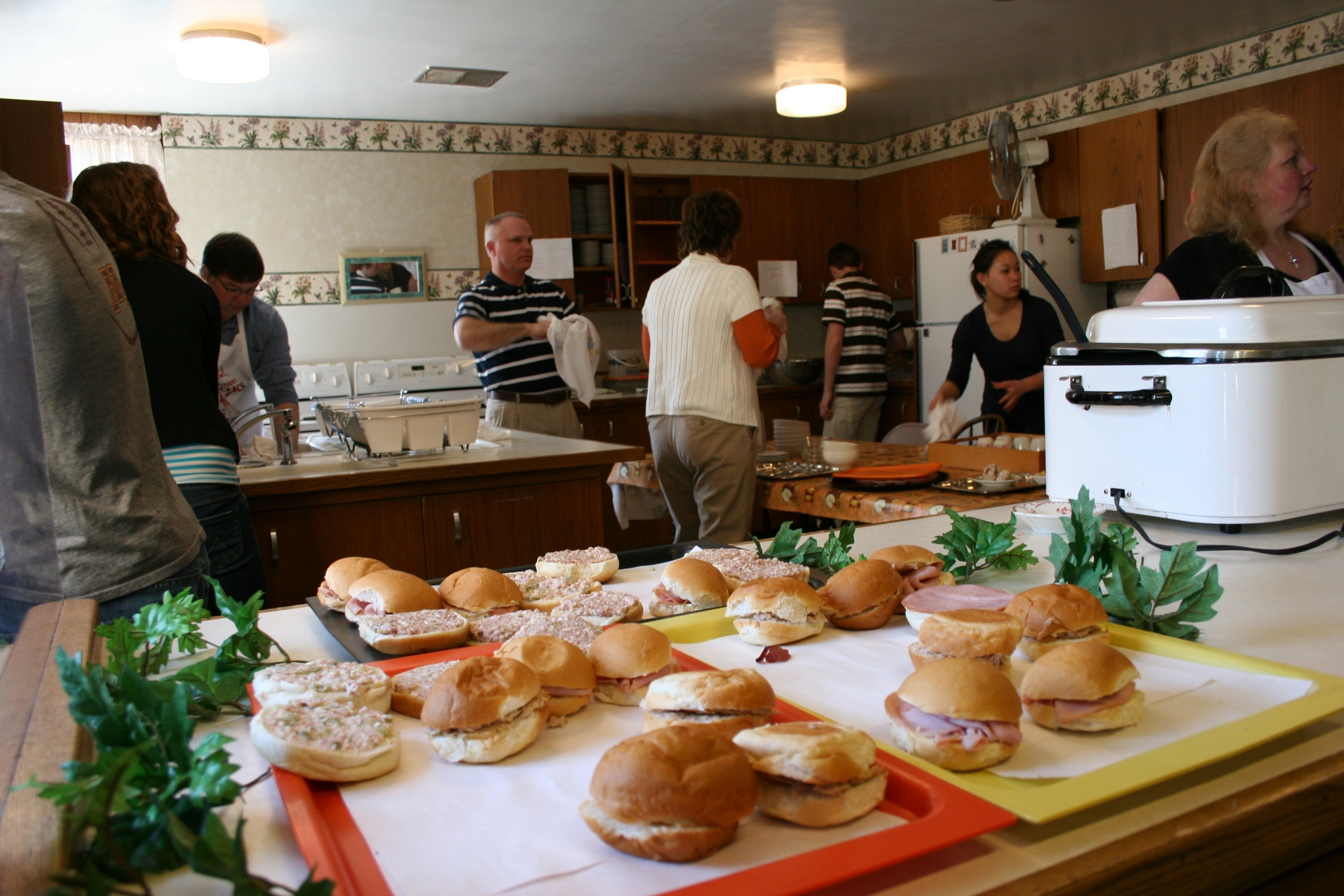
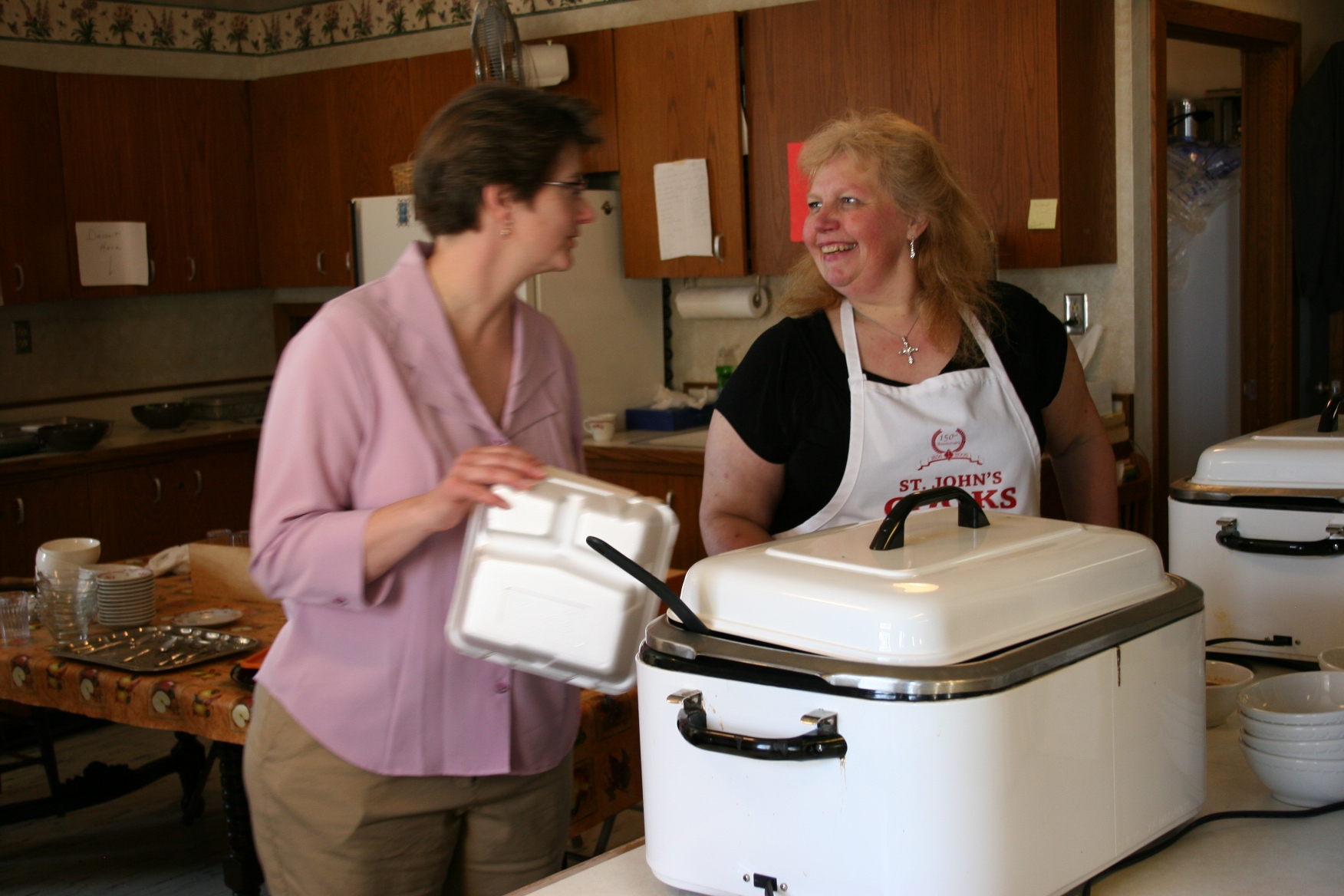
The busy-as-a-beehive kitchen crew at St. John's United Church of Christ.

Volunteers were ready with roasters full of soups in the kitchen.

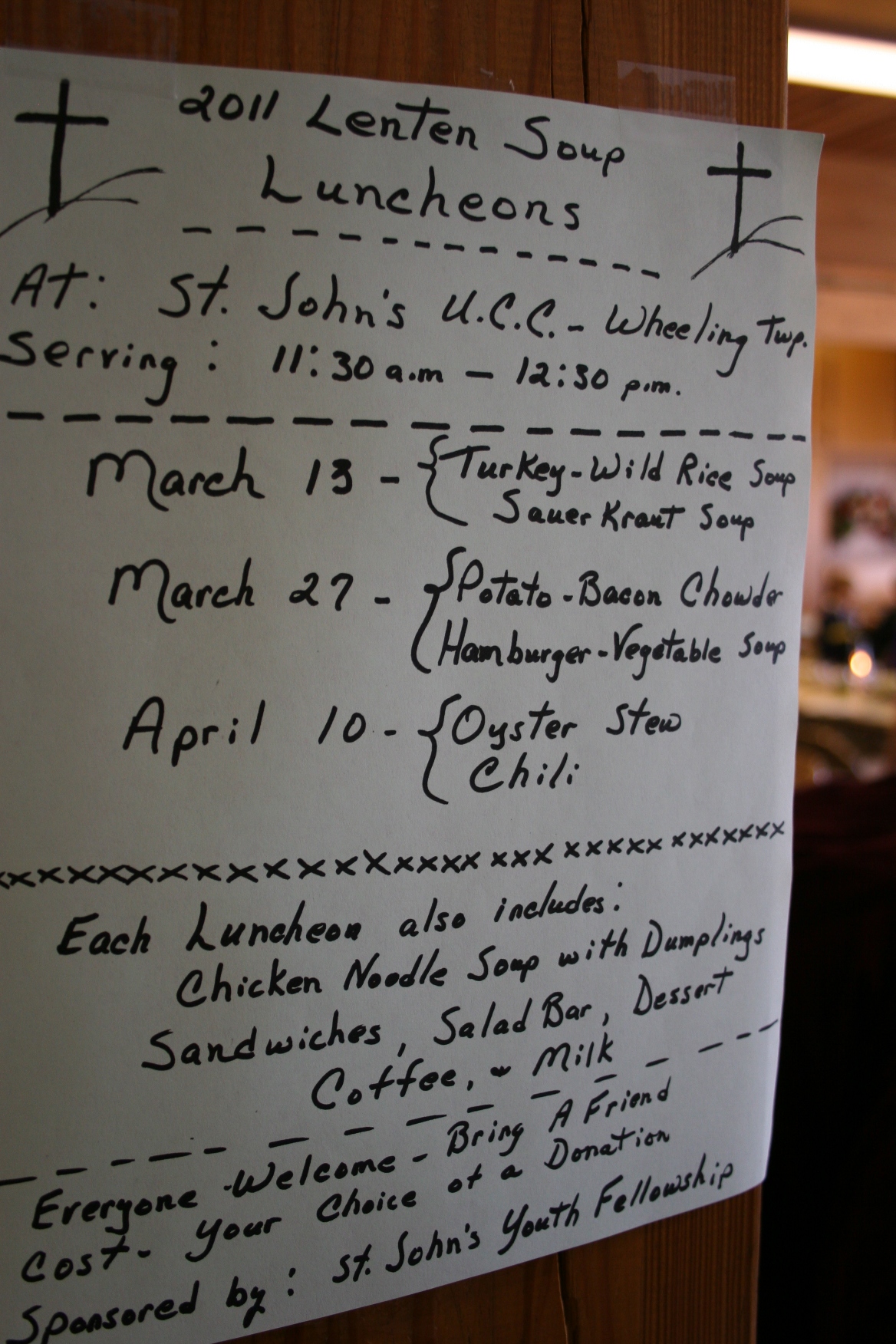
I started with the potato and eventually sampled the other two. The creamy and savory potato was my hands-down favorite, although I also appreciated the spicy kick to the hamburger veggie. I’ve never been big on chicken noodle soup or dumplings. The chicken soup is served at every Lenten Soup Luncheon the church hosts. Oyster stew and chili will be the other featured soups at the last luncheon from 11:30 a.m. – 12:30 p.m. on Sunday, April 10.


The Lenten Soup Luncheon sign posted by the kitchen. The final luncheon is from 11:30 a.m. - 12:30 p.m. on Sunday, April 10.

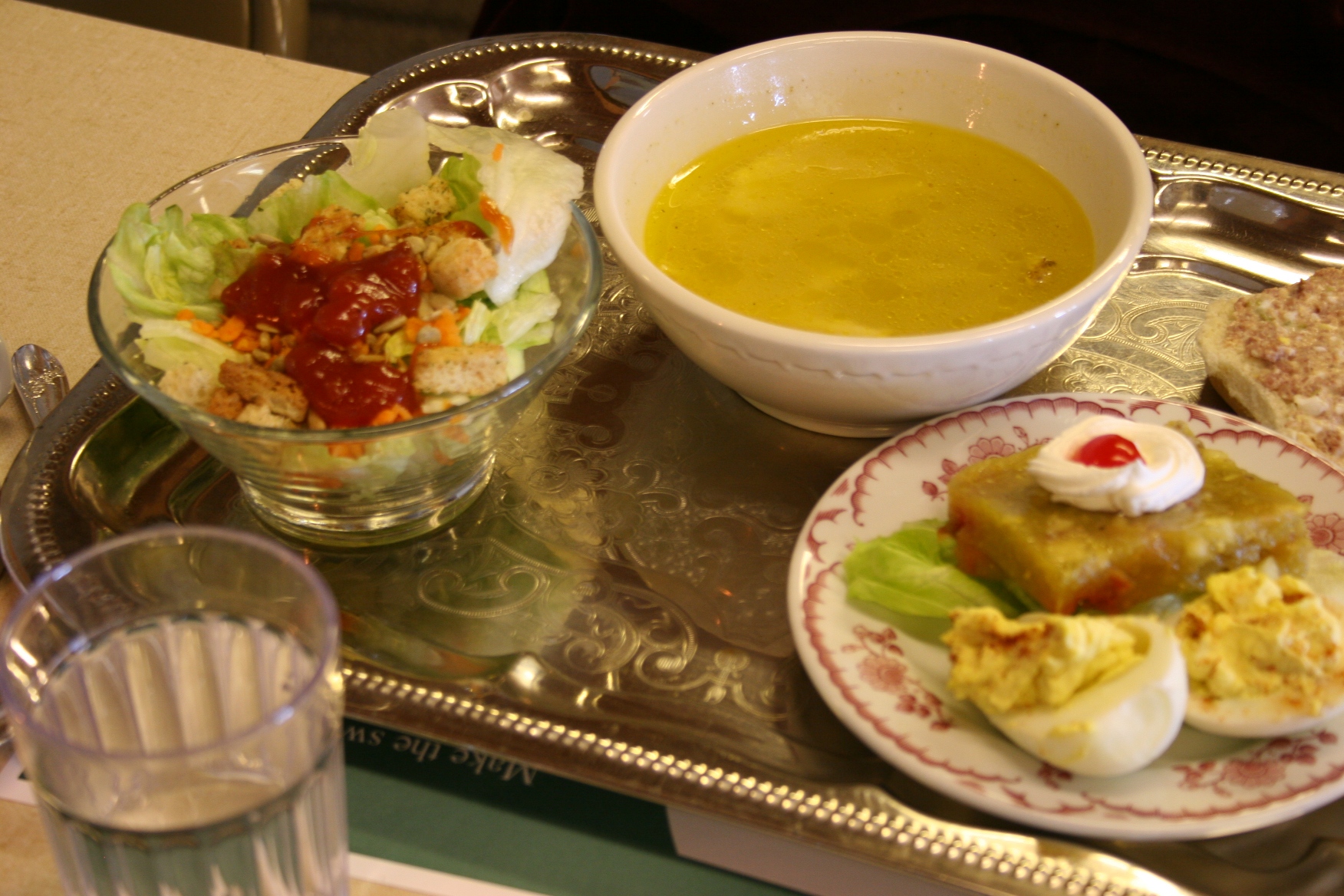
A diner's tray (not mine) that includes a bowl of chicken noodle soup with dumplings.

Church dinners are all about food and fellowship. I scored an invitation to visit a farm with a robotic milking operation while visiting with church members at my table.

Of course, no church dinner is complete without bread, so diners were offered an array of sandwiches. I inquired about the ground concoction on an open-faced sandwich, was told it was bologna and pickles, paused, thought, and picked it up. And you know, for someone who doesn’t really care for bologna, I liked the spread.


Plenty of sandwich choices like ham, tuna and, yes, even ground bologna and pickles were offered.

Except for lutefisk, I’ve never tasted a church dinner I didn’t like.

I notice and appreciate details like the lovely floral dishware. My husband and I learned that once you carry your food to your table on the fancy silver tray, you're supposed to take your plates and bowls off the tray and servers will pick it up for others to use. We even had big, hefty soup spoons for eating our soups. Now that impressed me.


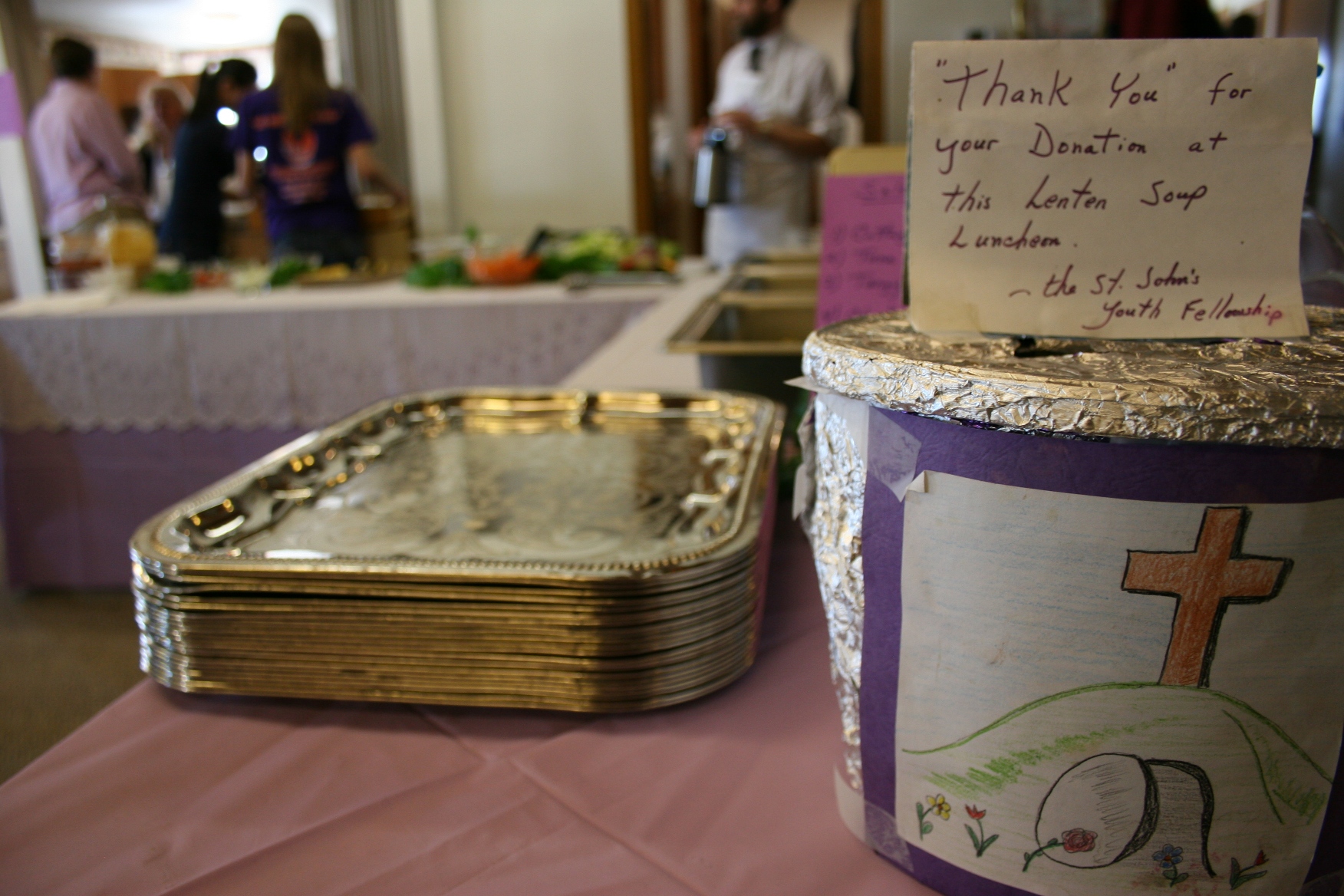
There's no specific cost for the St. John's Lenten Soup Luncheon, which benefits the youth fellowship group, helping members finance mission trips and more. Cost for the meal is whatever you choose to donate. Just drop your money in the bucket before picking up a fancy silver tray at the salad bar.

FYI: Click here for more information about St. John’s United Church of Christ, 19086 Jacobs Avenue, located near Nerstrand Big Woods State Park, rural Faribault. Watch for a future post featuring photos of the church interior and exterior.

PLEASE SUBMIT A COMMENT and tell me about a church dinner you enjoy and why.

© Copyright 2011 Audrey Kletscher Helbling
 

A glorious sunset at St. John the Baptist Church March 27, 2011

THAT I APPRECIATE country churches should come as no surprise to those of you who’ve followed Minnesota Prairie Roots. I value their beauty, architecture, history, reverence and connection to the land and its people.

Therefore, I photograph these rural sanctuaries whenever possible. If a church door is unlocked, I’ll take you inside for a photographic tour. If not, you’ll at least see the exterior.

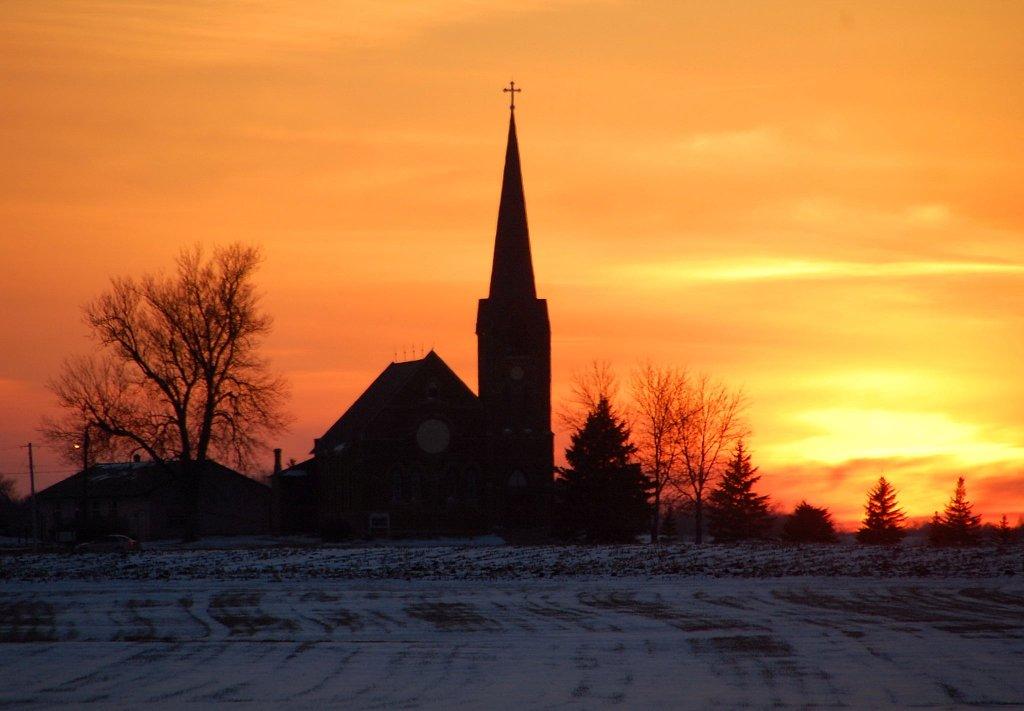
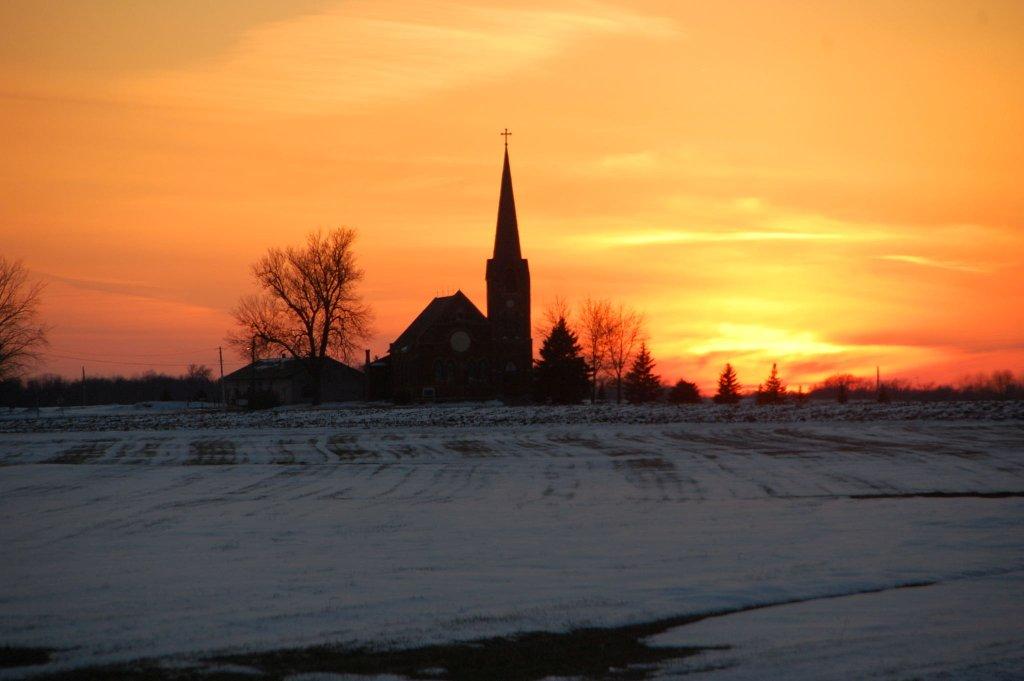
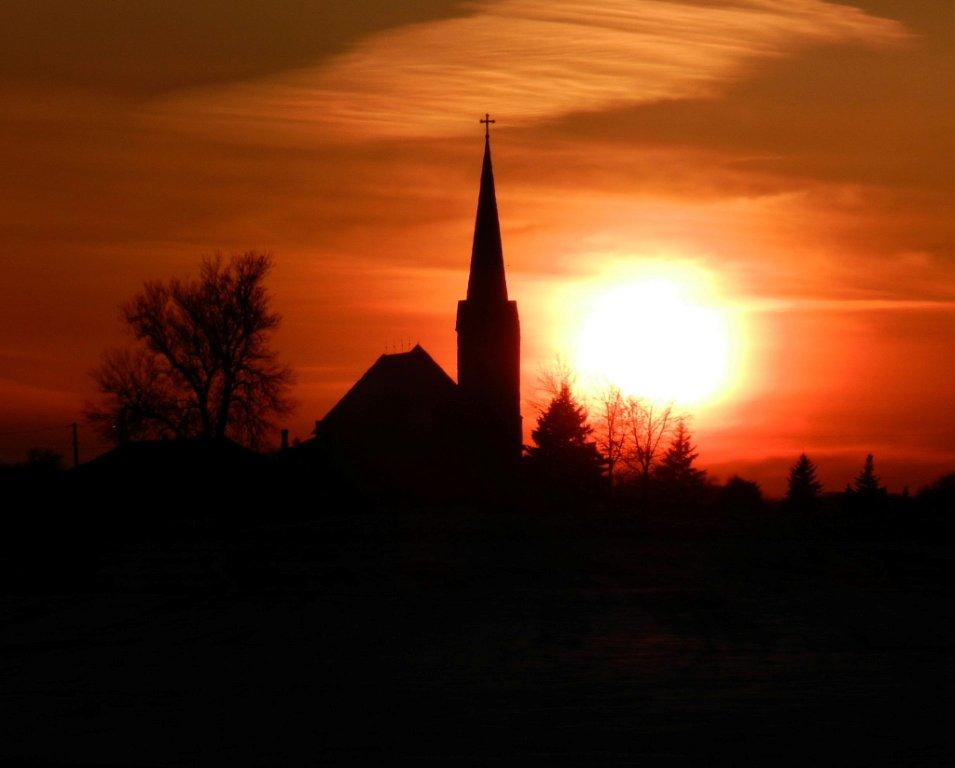
Others, like rural Carver resident Harriet Traxler, share my interest in photography and all things country. So when Harriet emailed images of a local rural church, St. John the Baptist Catholic Church in Faxon Township some four miles northwest of Belle Plaine, I asked if I could share her photos with you.

Because I struggled to pick my favorite of the four, shot around sunset on Friday, I’m publishing three of Harriet’s photos.

I hope you’ll agree with me that even on a cold Minnesota March day, these gorgeous photos warm the heart, and the soul.


Built around 1870, St. John the Baptist Catholic Church still holds Sunday Masses and has many young parishioners.

In the summer, the church is surrounded by cornfields.

The sun sets the sky on fire behind St. John the Baptist Catholic Church, rural Belle Plaine, Minnesota.

FYI: Harriet has published a series of barn books featuring barn and other rural images from her native Sibley County, Minnesota. To view her work, click here. Some of Harriet’s work will be featured in the spring issue of Minnesota Moments magazine.

© Text copyright 2011 Audrey Kletscher Helbling
© Photos copyright 2011 Harriet Traxler


Dancing the Irish jig at St. Patrick March 17, 2011

I’M NOT IRISH, not one cell of me. But I am the niece of an Irishman from Northern Ireland who married in to our German family. Does that count for anything on St. Patrick’s Day?

Despite the fact that I’m not Irish and I don’t celebrate St. Paddy’s day, in the spirit of the day, I’m posting these images of a lovely old building I discovered in 2009 while photographing a veterans’ memorial in Shieldsville for a magazine feature story.

Shieldsville is a tiny community along Minnesota Highway 21 west of Faribault. But it’s more than just a pause in the road. This town lays claim as Minnesota’s first organized Irish settlement, dating back to 1855.

If not for my fondness for meandering, I never would have discovered this quaint circa 1910 parish hall belonging to, ta-da, the Church of St. Patrick.


The old parish hall at the Church of St. Patrick, Shieldsville, is now used primarily for storage.

‘Tonight the parishioners of St. Patrick, and others who wish to be Irish, will gather across the street from the old parish hall in the new parish hall. There they’ll dance an Irish jig. They’ll feast on mulligan stew and Irish soda bread. And they’ll drink green beer in a toast to their ancestors.

Happy St. Patrick’s Day!


Sign above the parish hall door.


The front entry to St. Patrick's Parish Hall, photographed in 2009.

© Copyright 2011 Audrey Kletscher Helbling
 

A super soup competition March 14, 2011

AT HIS DAY JOB, Steve sells cars. On the side, he raises chickens on his small Minnesota acreage. He’d like to add a few pigs and cows, but he’s not versed in raising those critters.

He’s an expert gardener, though, who cans his produce. He appreciates the taste of home-grown vegetables and those farm-raised chickens.

Steve also loves to cook.

Sunday night I met Steve and sampled some of his cooking at Cannon Valley Lutheran High School’s first-ever “Soup-er Bowl” in Morristown. Loaded with hefty chunks of chicken, thick homemade noodles, carrots, celery, onion and garlic, Steve’s creamy chicken noodle soup earned him a second place finish among the 10 soups entered in the cooking competition. He deserved it. I don’t typically like chicken noodle soup, but I loved Steve’s.

I asked for the secret to the cream base. A stick of butter and half-and-half combined with the juices of his home-grown chicken, additional chicken stock, bay leaves and other spices created a savory broth. By the way, Steve appears to be the kind of guy who would rather share cooking tips than keep them secret.

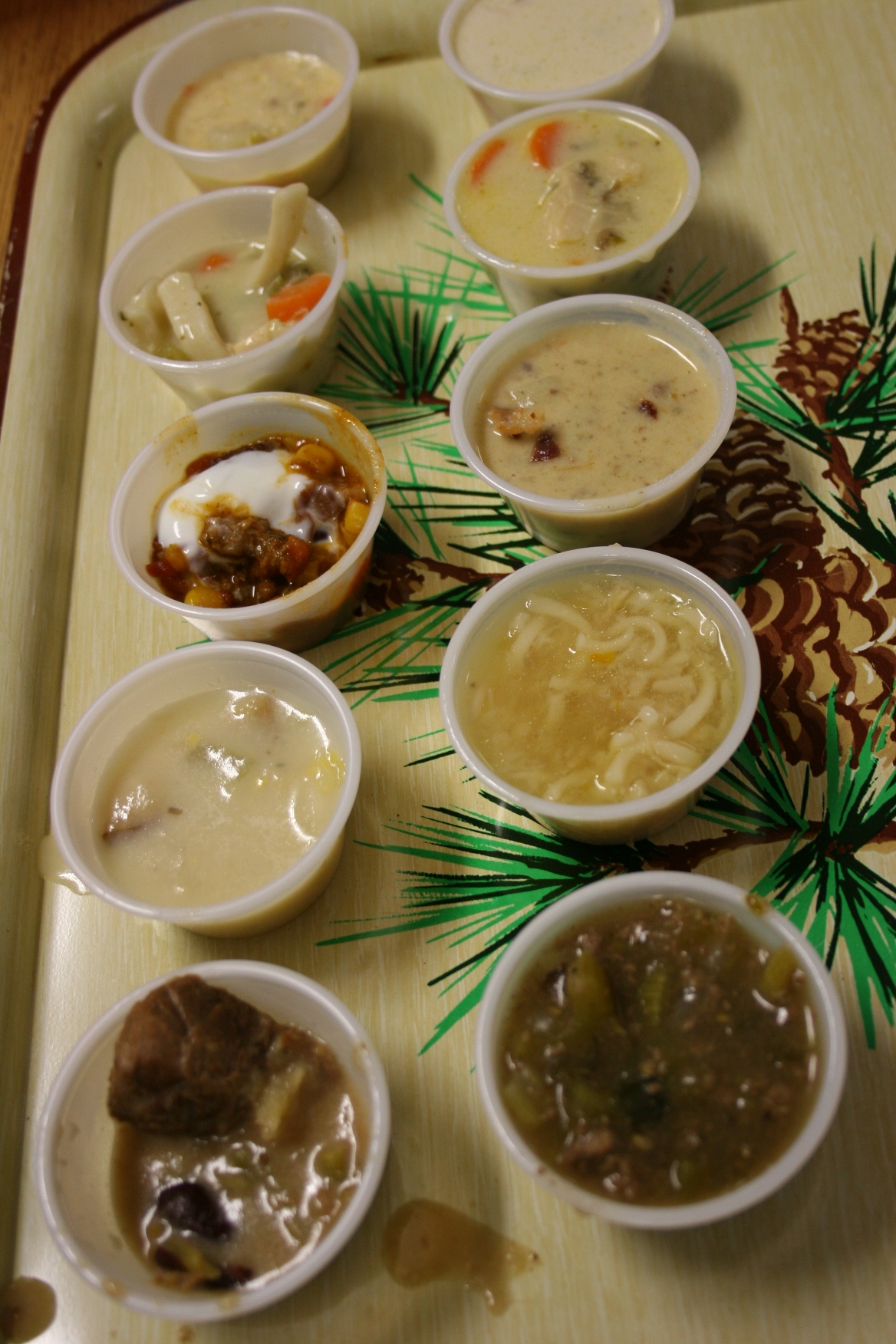
Steve's chicken noodle soup is in the top left corner of this photo. The winning soup, taco chili, is next to it on the right. The other soups here are corn chowder, Mulligan stew and (I think) cheeseburger.

I don’t know how the other nine competing cooks—except the youngest cook, eighth grader Louis—felt about revealing their recipes. Louis left the recipe for his fiery green chili on a table for diners to pick up. Let me tell you, when I tasted his chili laced with hot jalapenos, I gulped lemonade.

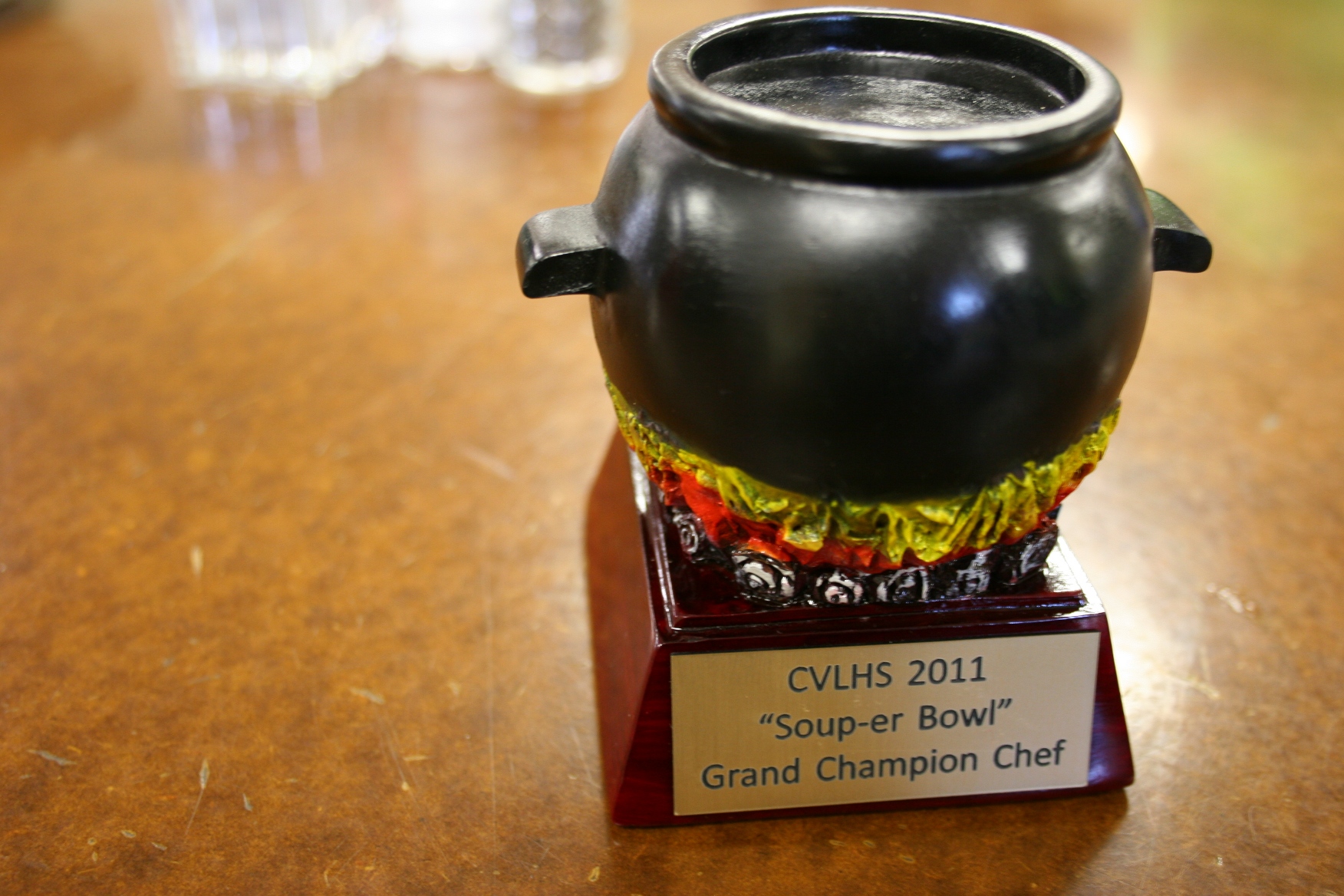
Taco chili won the 2011 “Soup-er Bowl” trophy from among entries like Mulligan stew, cheesy wild rice, corn chowder, ultimate cheeseburger, a second chicken noodle soup and Steve’s chicken noodle soup.

The "Soup-er Bowl" trophy, awarded this year for the taco chili.

This whole idea of a “Soup-er Bowl” was the brainchild of my friend Mike, who volunteers as CVLHS acting development director. Mike is one of those guys who is always giving back to the community. He remains a strong supporter of the Lutheran high school even though his eldest son graduated from there several years ago.

Wanting to connect the congregations that are part of an association supporting CVLHS, Mike came up with the soup competition. Last weekend five of the member churches held local contests with the two top winners from each church advancing to yesterday’s finale.

Soup and chili samples were placed onto vintage metal trays for each diner.

Unfortunately, I was out of town last weekend, or I would have entered a soup. Mike has already invited me to participate next year. But after tasting all of the excellent soups and chilis on Sunday, I’m hesitant to vie against so many great cooks. I might simply remain a taster.

I love soups. Each year for the past seven, my sister Lanae has hosted an autumn soup party at her Waseca home. While she doesn’t award a trophy for the best soup, the winners are really us, the invited guests. Last year we could choose from 17 homemade soups spread out on tables in her and husband Dale’s garage. Click here to read all about her 2010 soup party.

When I heard about the CVLHS “Soup-er Bowl” gathering, I wasn’t about to miss an opportunity to eat soup and support the school. For $5, diners got small samplings of each soup or chili, breads and sweet treats, along with beverages.

The party was not only a fundraiser for the school but, more importantly, an evening of fellowship, organizer Mike said.

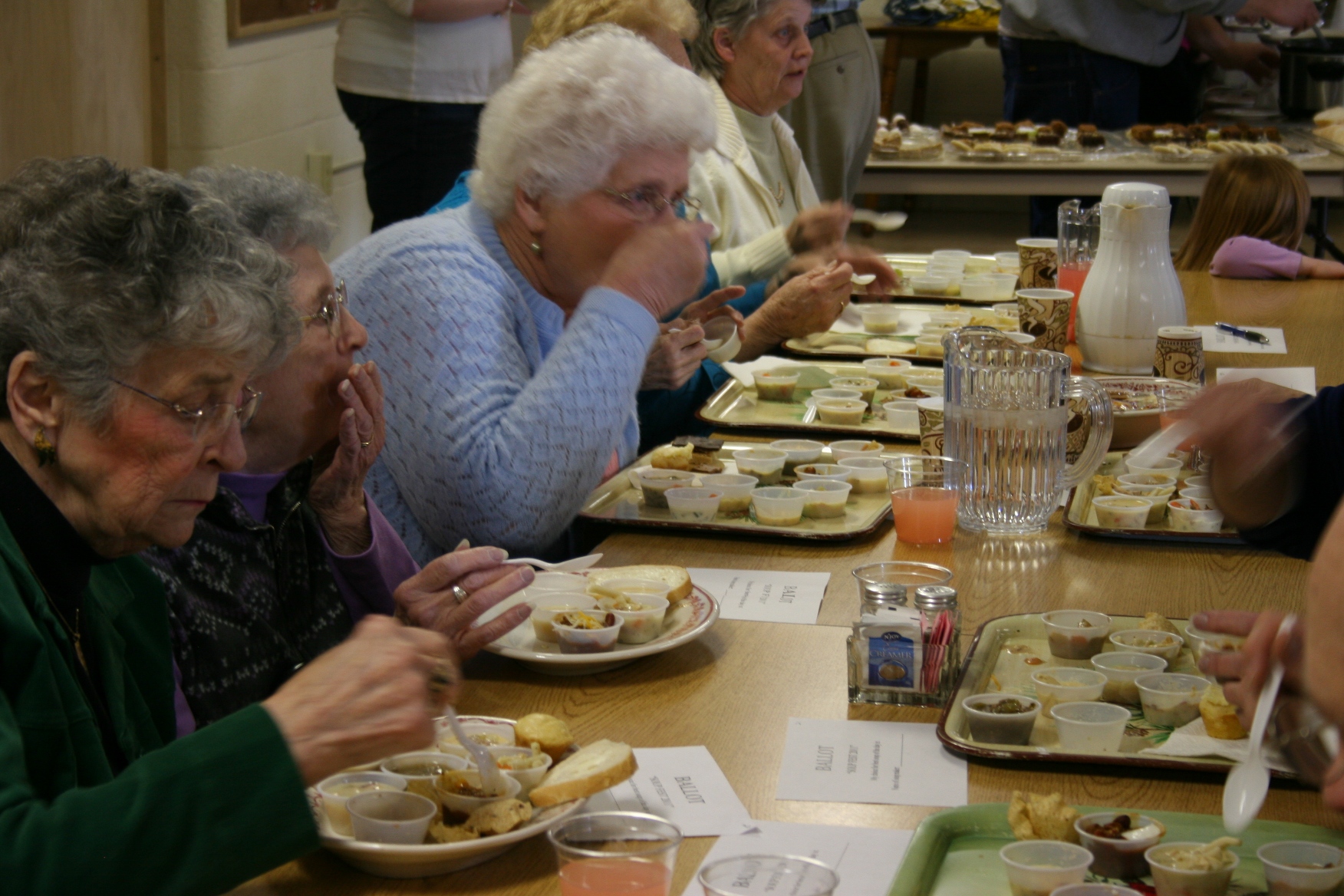
Diners packed tables in the Bethlehem Lutheran Church fellowship hall to taste 10 soups and chilis and then vote for their favorite at the CVLHS "Soup-er Bowl" party.

He’s right. I met car salesman/chicken farmer/chef Steve when I sat at the same table as him. Now my name is on Steve’s list to contact when his chickens are ready for butchering next summer. I can already taste that delicious chicken noodle soup…

By the time I went through the line, the vintage trays had all been used, so seven soups and chilis were crammed onto an oval plate. I later picked up the remaining three to sample. My sister also uses vintage trays at her party.

HERE’S THE RECIPE for Green Chili from eighth grader Louis:

Green Chili

Brown hamburger. Separate hamburger from juice and let juice sit.

Sauté celery, white and green onions, jalapenos, cilantro, green peppers, black pepper and hamburger juice.

Put hamburger and vegetables in pan and add green tomatoes and stir until finished.

NOTE: Louis did not list specific ingredient amounts, so I guess you need to figure that out for yourself.

© Copyright 2011 Audrey Kletscher Helbling
 

Nettie January 31, 2011

Filed under: Uncategorized — Audrey Kletscher Helbling @ 11:48 AM
Tags: , , , , , , , ,

I WANTED TO BELIEVE HER—that her husband died eight months ago in a car accident, that she has cancer, that she has two teens at home, that she believed God led her to my church.

But I didn’t quite know what to think of the woman who walked into Trinity Lutheran Church between services Sunday morning. She was dressed nicely, although her light-weight coat didn’t seem warm enough for winter weather. Her fingers felt ice-cold as she extended her hand to shake mine and introduced herself as Nettie.

I offered her some coffee and orange juice, some doughnuts.

She declined and, instead, through lips lined with plum lipstick that matched her scarf, asked to speak with a pastor.

While my husband went to find a pastor, Nettie volunteered her story. I hadn’t probed, hadn’t asked, she simply told me about her dead husband, her cancer, the kids back home in Minneapolis, her need for money, the direction from God.

She spoke politely, warmly and with ease, her voice smooth as honey. I could easily imagine her praising God in a southern Baptist church choir.

All the while she spoke, I wondered. Was she telling the truth?

Had she really gone to the Salvation Army and the Red Cross and had those organizations turned down her requests for help?

Had she really, as she told me, just hopped in her car that morning and started driving, ending up in Faribault, at my church?

About that time, the pastor arrived and I introduced the two. They walked to a quiet area of the narthex, to talk, and, I could see, to pray.

A short while later Nettie walked out the door, into the cold.

I knew she hadn’t gotten the money she requested.

Today, more than 24 hours later, the entire scene replays in my mind. Should I have asked more questions? Could I, should I, have done more for Nettie?

Was she being truthful?

Did I fail Nettie?

And why am I so bothered by this encounter?

© Copyright 2011 Audrey Kletscher Helbling
 

Minnesota Prairie Roots’ top 10 posts for 2010 December 31, 2010

WHAT WERE THE MOST-VIEWED Minnesota Prairie Roots posts during 2010?

Surprisingly, three of the posts which are in the top five this year were also in the top five last year.

But I’m going to keep you in suspense about those posts as we count down, beginning with the 10th most-viewed post in 2010.

10) “Inspired by Dr. Seuss: My sister’s fat cat,” a Dr. Seuss-type poem published along with three photos of my sister’s cat came in at number 10 with 392 views.

My sister's fat cat, Sable.

9) Whenever I write about old churches, I’m almost guaranteed that my readership that day will soar. So I was not surprised to learn that “Inside the 1894 Valley Grove Church” ranks as my ninth most popular post for 2010 with 411 views. In this story, I take readers inside the historic hilltop country church near Nerstrand.

Simplistic Norwegian style inside the 1894 Valley Grove Church, as viewed from the balcony.

8.) I have no idea why “Saturday ‘steals’ (deals)” held so much interest for Minnesota Prairie Roots readers. Maybe the 447 viewers who clicked on this story are avid garage-salers, just like me, looking for a deal.

The "new" Toshiba TV my husband got for free at a church rummage sale.

7) Like churches, barns bring lots of readers to Minnesota Prairie Roots. In “I love old barns,” I show readers the barn where I labored as a child—feeding cows, scooping manure, bedding straw and more. This post got 484 views.

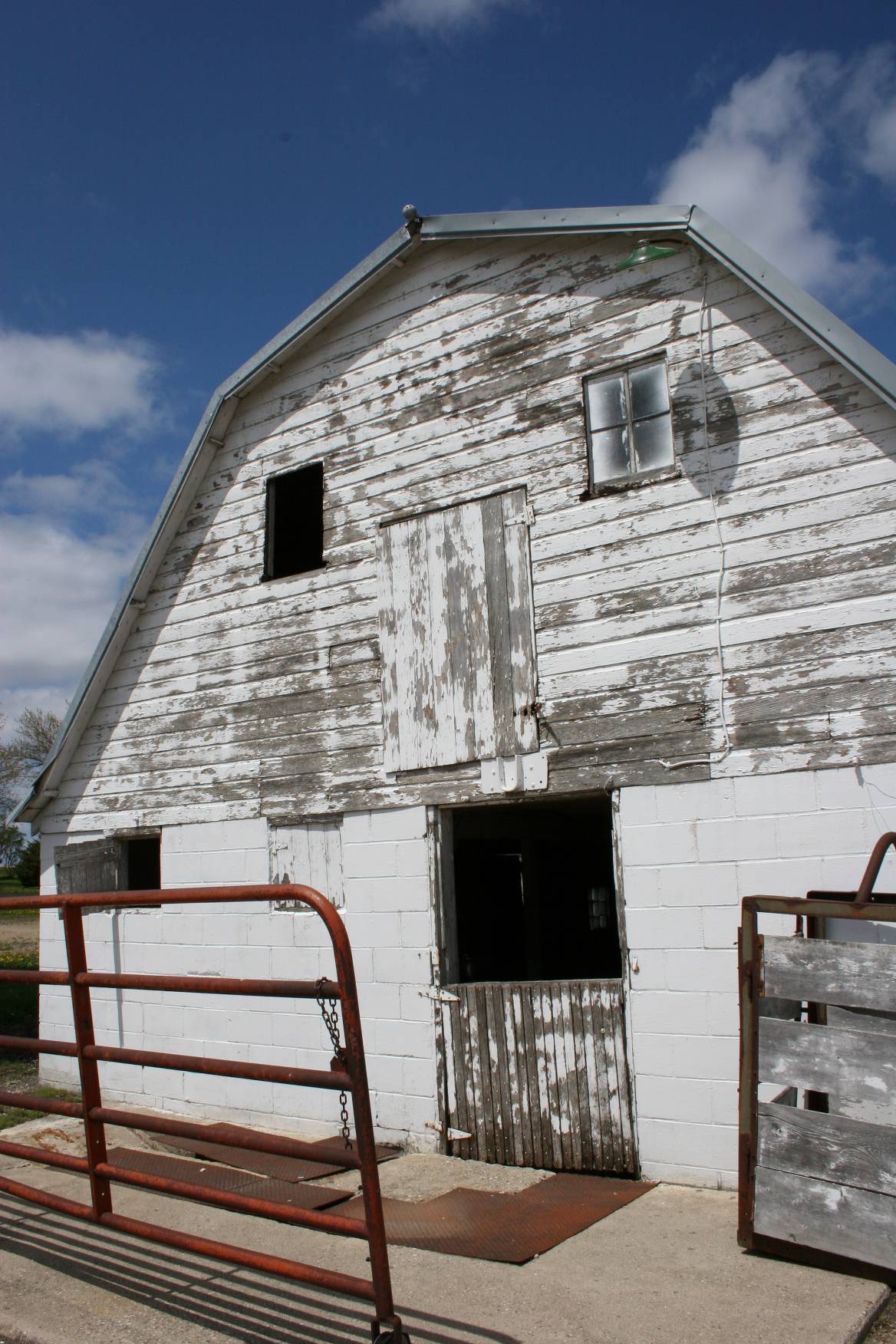
The early 1950s barn on the Redwood County dairy farm where I grew up is no longer used.

6) When floods ravaged southern Minnesota this fall, I was there, photographing the disaster and interviewing survivors. My “Flooding in Faribault” post (among numerous flood stories) got 519 views.

A roadway arrow on flooded Second Avenue N.W. by the Faribault Foods office directs motorists into North Alexander Park.

5) “Henna tattoos and body art by a “gypsy woman,” which was the fourth most popular in 2009, fell a notch to fifth place in 2010. I still cannot figure out why this story about a henna tattoo artist at the Kenyon Rose Fest has drawn so much interest, with 530 views in 2010.

Henna art at the Kenyon Rose Fest

4) “An autumn drive in Rice County, Minnesota” attracted 549 views as I took readers on a Sunday afternoon drive through the countryside. Local tourism officials, take note. I’ve done my share to draw attention to the Faribault area.

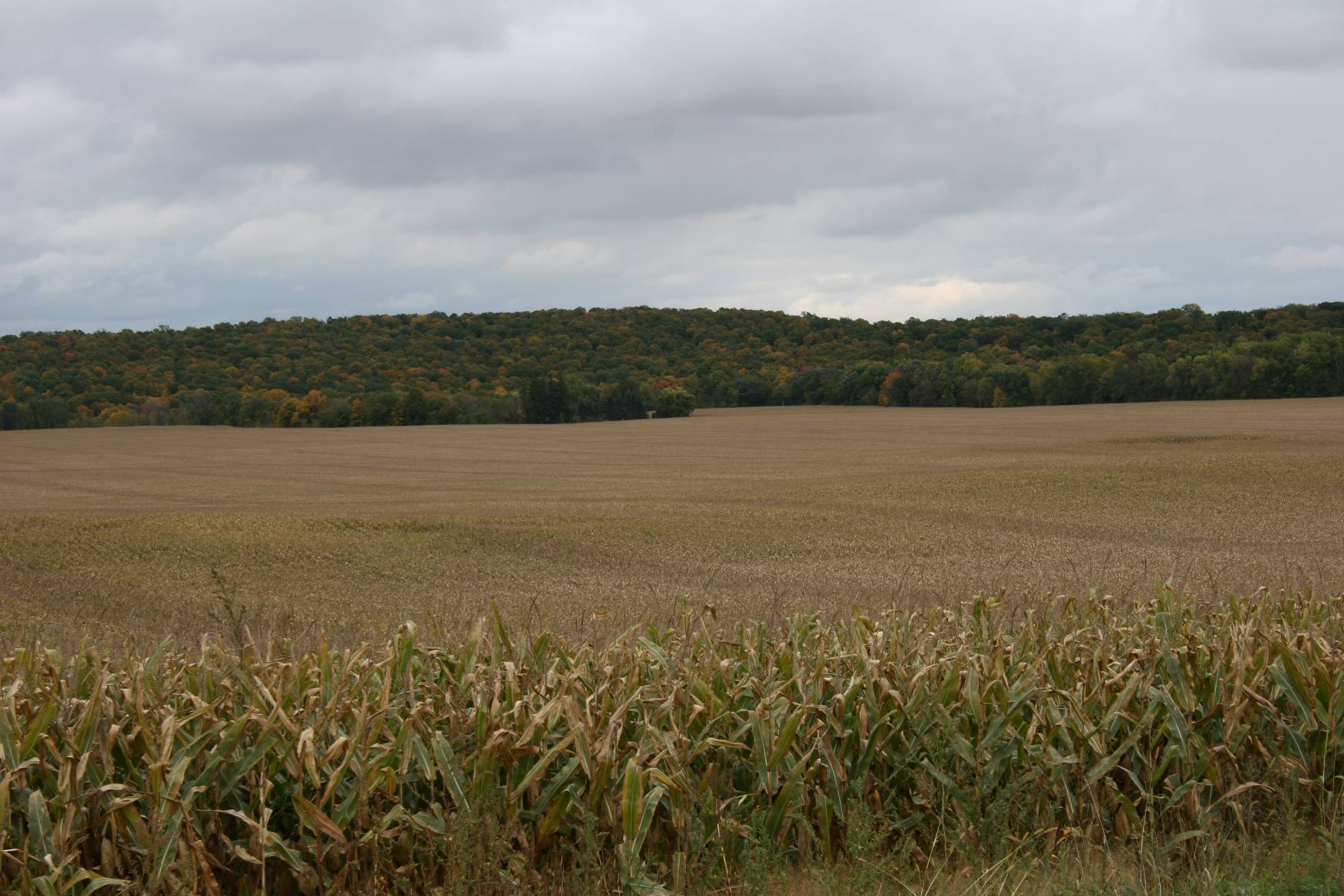
A corn field ripens against a back drop of trees.

3) “Preserving the past at Immanuel, Courtland, MN.,” which was the most- read post last year, slipped to third in 2010 with 623 views. In this story, I take readers inside the home congregation of my maternal forefathers.

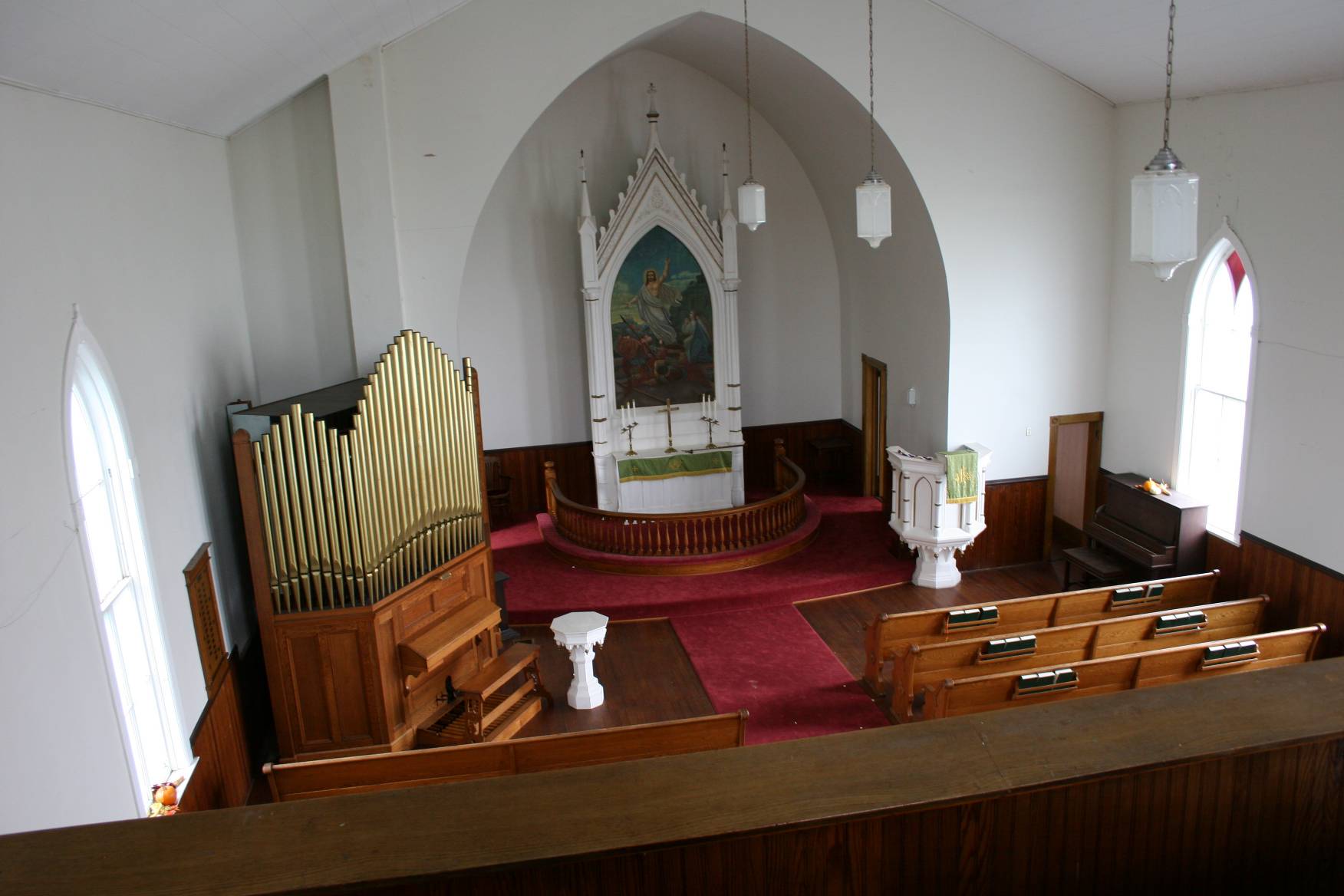
A view of Immanuel from the church balcony.

2) The second-place ranking of  “In praise of preserving country churches” does not surprise me as this post was featured on the homepage of WordPress.com on July 10. The Freshly Presssed selection garnered a record number of blog visitors, 1,052, on a single day. This post had 1,304 views in 2010.

An altar painting was transported to Moland Lutheran Church south of Kenyon by horse-drawn wagon from Faribault in 1893.

1) Finally. Number uno, the most viewed post during 2010 was written on November 5, 2009, following a presentation at Faribault High School. “Rachel’s Challenge: Start a chain reaction of kindness,” about the 1999 Columbine High School massacre, got 1,702 views. Last year, this was also one of my most popular stories, coming in at number five.

Rachel Scott, who died at Columbine, and the inspiration for Rachel's Challenge.

I wish I could explain the reasons behind the top 10 rankings. Some I can. I’ve noticed that certain topics—like churches and barns—really interest readers. But henna tattoos and fat cats? Figure that out.

IF YOU MISSED ANY of these most-viewed posts, click on the highlighted titles/words, which will link you to the stories.

DISCLAIMER: These are unscientific results given I simply pulled stats from my administrative page but did not factor in how long, for example, a post has been on Minnesota Prairie Roots. That can skew numbers. However, I am confident the above summary is fairly accurate.

CHECK BACK FOR MY PERSONAL favorite posts of the year.

© Copyright 2010 Audrey Kletscher Helbling


Boosting my photography confidence December 9, 2010
WE ALL LIKE to win.

My husband once won a trip to the Bahamas.

A few years ago I won a bag of groceries.

I’ve also placed in several photo contests during the past decade—a few times at the local nature center and once in a nation-wide competition sponsored by a life insurance company. That first place national win earned me $100.

Every time one of my photos wins an honor, my confidence soars. While I feel quite confident as a writer, I’ve always had some insecurities about my photography skills. I’m a writer first and the photography simply evolved as a sideline necessity.

Today, after years of practice, I can unequivocally state that I enjoy photography. Yet, the doubt still lingers. Are my photos good enough and does anyone like them?

Apparently the folks at Thrivent Financial for Lutherans liked the photo I submitted for a 2011 wall calendar competition. My image of an old cross-topped fence surrounding the Urland Lutheran Church Cemetery in rural Cannon Falls now graces the October page of the Thrivent “Connecting with the Cross” calendar.

 

My winning image of the church cemetery fence. The calendar photo has been slightly cropped and darkened.

“We looked for unique and inspiring images, and yours was one of them,” Tim Schwan, vice president of Church and Community Engagement wrote in a congratulatory form letter I received. “We received more than 300 submissions. Among many high-quality contenders, yours stood out.”

Now if those words aren’t validating, I don’t know what would be. While I may not be as technically savvy as some/many photographers, I do possess an eye for detail that allows me to find and compose good pictures.

Interestingly enough, I did not shoot my winning fence image specifically to enter this contest. In fact, I was unaware of the Thrivent photo calendar competition when I took the picture in late March while on a Sunday afternoon drive with my husband in the Sogn Valley area of southeastern Minnesota. We both love old country churches. So when we came upon Urland Lutheran, we stopped, walked the church grounds and I started clicking.


Urland Lutheran Church, rural Cannon Falls

Country churches offer so many photo ops along with lots of beauty and history.

Urland Lutheran Church dates back to 1871 and is named after Urland in the Sognefjord area of Norway, home to many of the families that formed the rural Cannon Falls congregation. Names like Ole and Ragna on church cemetery tombstones point to the strong Norwegian heritage.


Ole is a common name on markers in the Urland cemetery.

Another Ole tombstone at the Urland Lutheran Church Cemetery points to the congregation's Norwegian heritage.

Behind every photo lies a story. And that’s the story behind my winning calendar image.


A close-up side view of Urland Lutheran. Unfortunately the church was locked when we were there.

I DON’T KNOW the stories behind the other 11 calendar page photos. But all portray a cross, as required by contest guidelines. Among the more unusual photos—crossed icicles, a cross-shaped thorn, and children holding quilts and standing in a cross formation inside a church sanctuary.

I’m hopeful that Thrivent will publish the winning images and information about each photo on the company’s website.

The other photo contest winners are Cindy Carlson of Northfield, MN; Jyll Malotky of Prior Lake, MN; Fred Von Ruden of Owatonna, MN; Roy Christell of Lake Saint Louis, MO; Martin Lohrmann of Philadelphia, PA; Walt Timm of Jefferson City, MO; Lynn Radtke of Blaine, MN; Chris Denning of Helena, MT; Carla Gauthier of Saginaw, MI; Susan Ryan of Chicago, IL; and Anitra Frazier of Dolton, IL.

Now, if you’re wondering how you can get one of these calendars, well, you must be a Thrivent member.

Sorry.

AS A SIDE NOTE, many years ago my daughter Miranda placed in a Thrivent Kids’ Club calendar contest. She drew a picture of alligators flying kites on the beach. I think she won for the very same reason I did. Her creation stood out as unique.

© Copyright 2010 Audrey Kletscher Helbling