Minnesota Prairie Roots

Writing and photography by Audrey Kletscher Helbling

Celebrating lutefisk, lefse & all things Norwegian at the Old Trondhjem Church May 23, 2012

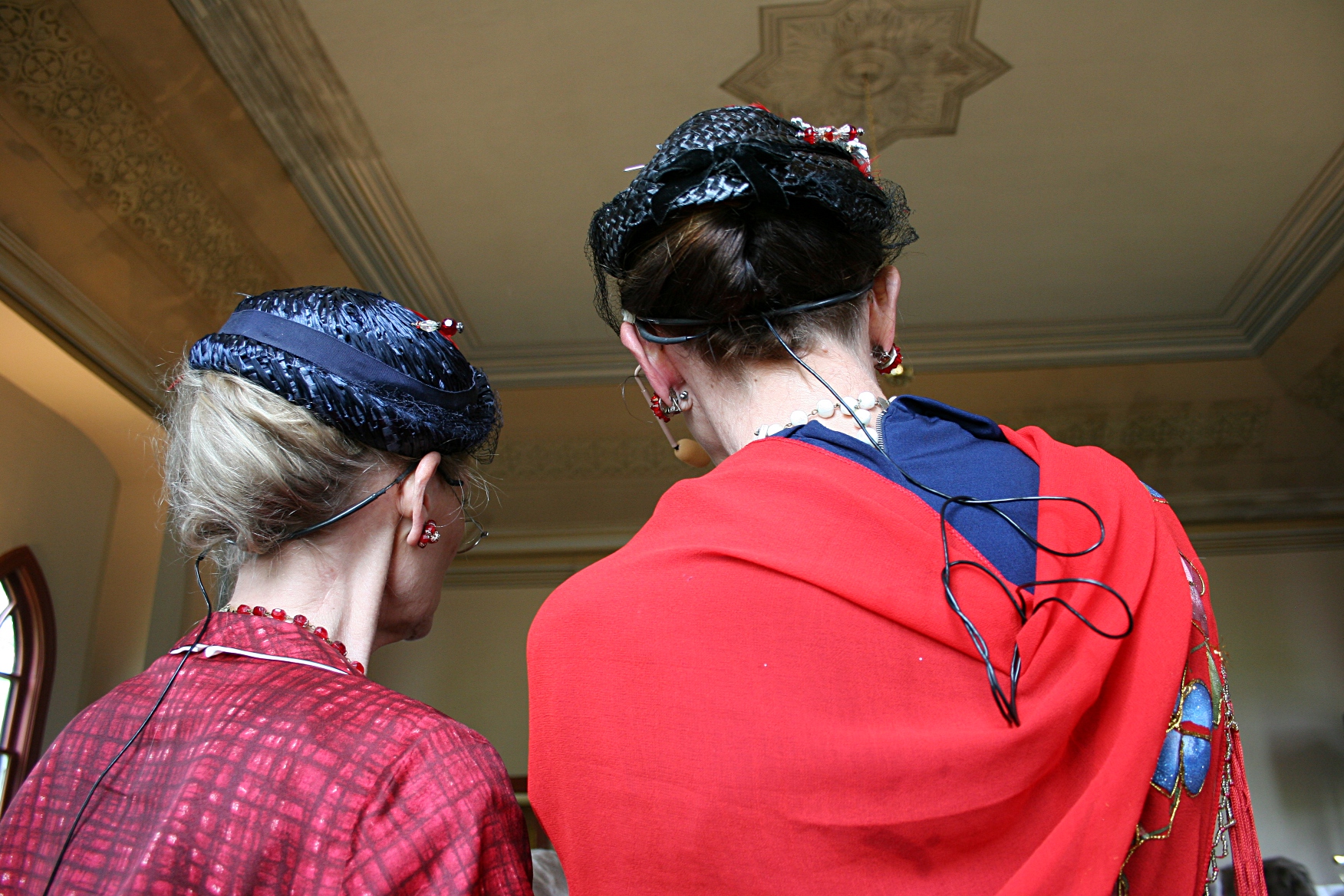
Tina & Lena, waiting to perform at Historic Trondhjem Church, rural Lonsdale, Minnesota.

DID YOU HEAR about Ole and Lena’s recent home improvement project?

“We carpeted the bathroom,” says Lena. “We loved it so much we ran it (the carpet) all the way to the house.”

Now, I can appreciate a joke like that. I grew up in a farmhouse without a bathroom, meaning my family used an outhouse.

But when it comes to lutefisk, I’m not quite as informed, being 100 percent German and all.

However, Tina, a full-blooded Norwegian, certainly knows her traditional Norwegian foods. “Lutefisk,” she claims, “is the piece of cod that passes all understanding.”

I’ve eaten lutefisk (cod soaked in lye) once and, excuse me all you Norwegian readers, but I agree with Tina’s assessment.

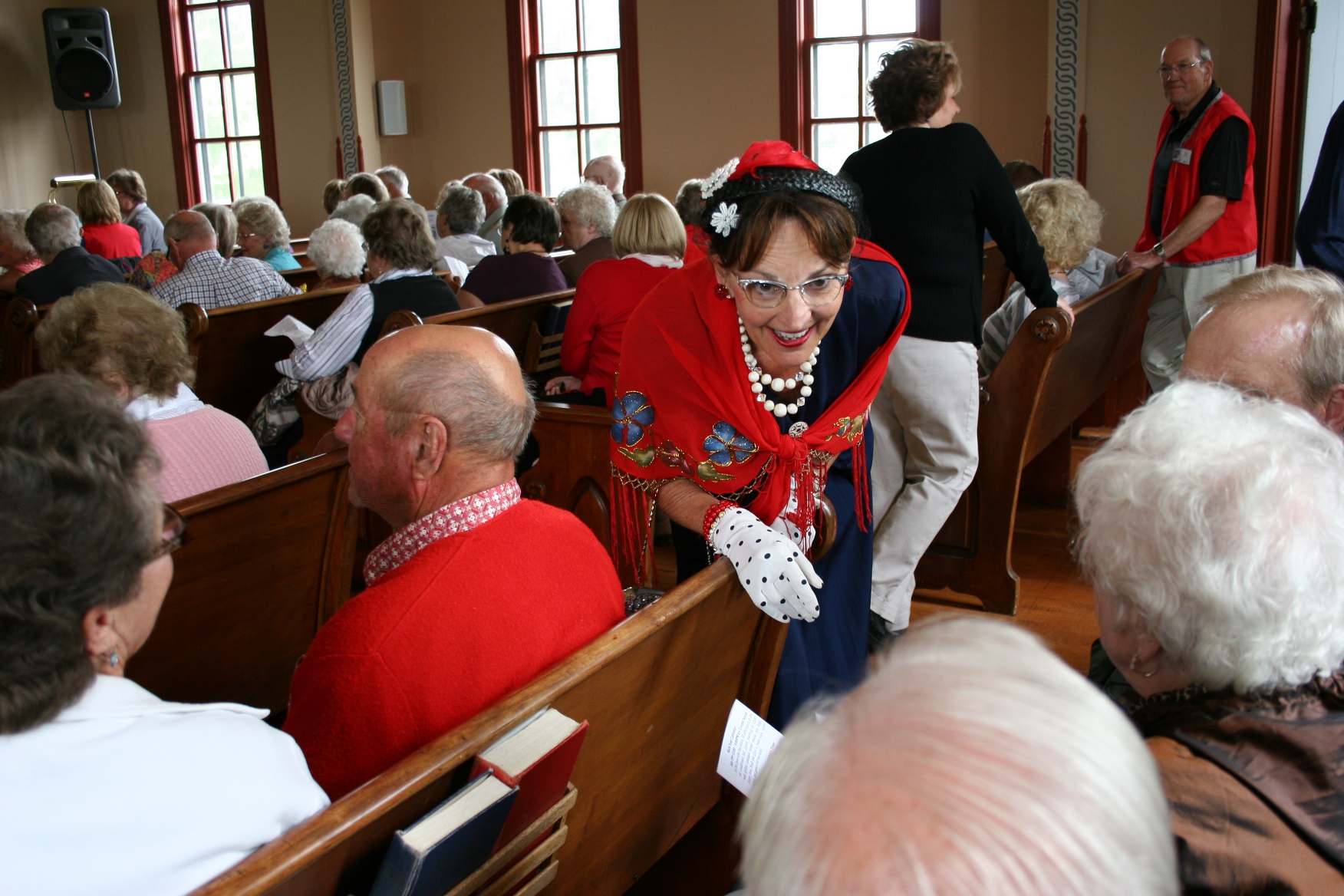
Lena, aka Annette Hustad, chats with audience members before the performance.

Lutefisk, lefse, hotdish and more were the subjects of jokes and songs shared Sunday afternoon by the comedic duo of Tina & Lena during a Syttende Mai Celebration at the Historic Trondhjem Church. As Tina & Lena sang in their version of “This Land Is Your Land,” Trondhjem land would be “east of Lonsdale, southwest of Webster, west of 35.”

Rebuilt in 1899 with parts of the 1878 church, the second Trondhjem Church sits atop a 100-foot high hill. Listed on the National Register of Historic Sites in Minnesota, this Norwegian church has walls constructed with 24 corners, supposedly to brace it against the strong winds. The building is an architectural mix of Greek Revival and Gothic Revival with elements of the Norwegian stave church. Old Trondhjem is opened for special occasions as the congregation built a new church just up the road in 1988.

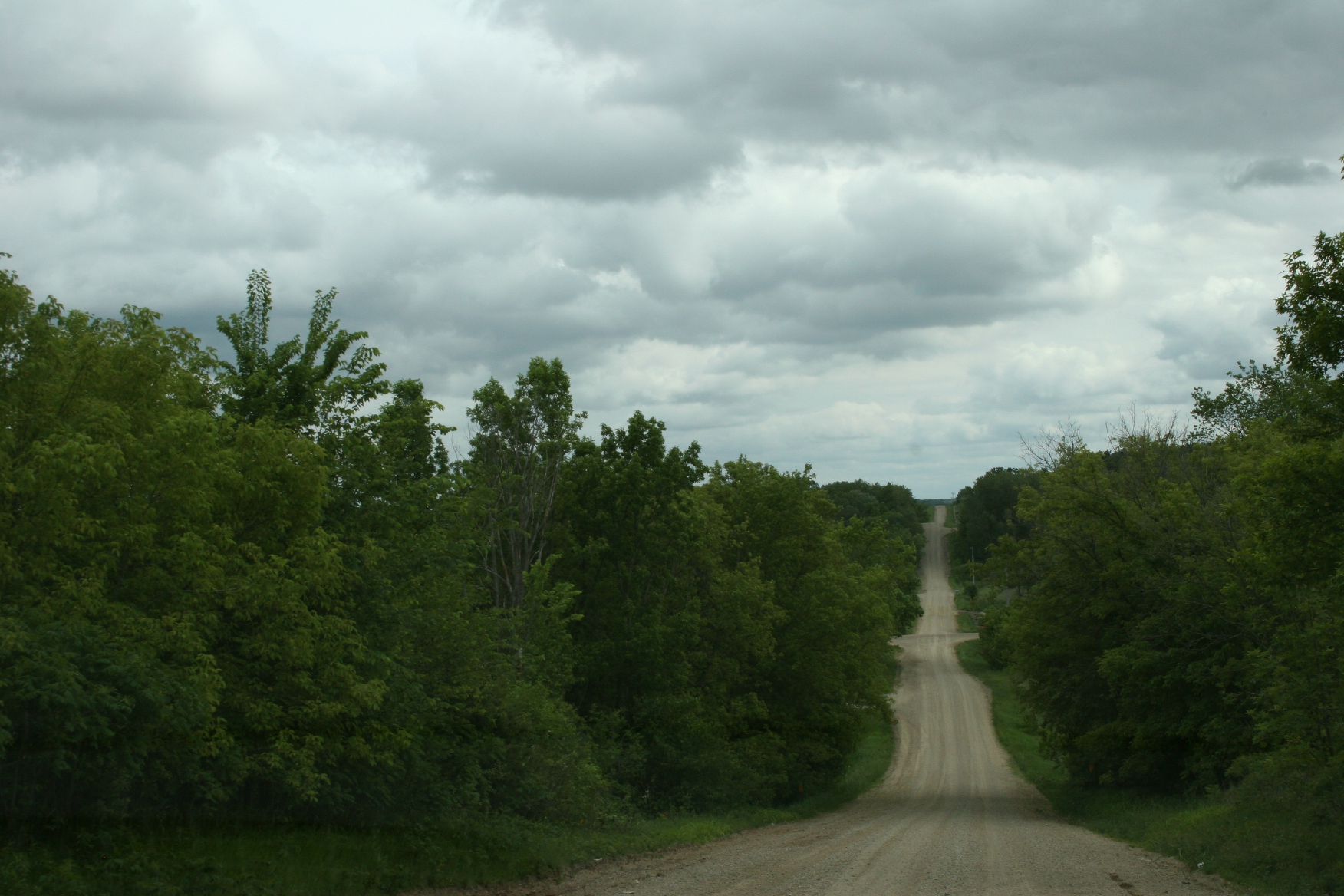
Driving down the gravel road just south of the Historic Trondhjem Church. The Trondhjem community includes the townships of Wheatland, Webster, Erin and Forest.

And I would add that the 1899 historic wood frame Trondhjem church is anchored atop a windy, very windy, hill just off Minnesota State Highway 19 and along a gravel road that dips and rises like the rolling waves of a stormy sea. I expect the immigrants who arrived here from Trondhjem, Norway, in the 1860s and 1870s experienced stormy seas before settling among the rolling hills and woods so much like the Motherland.

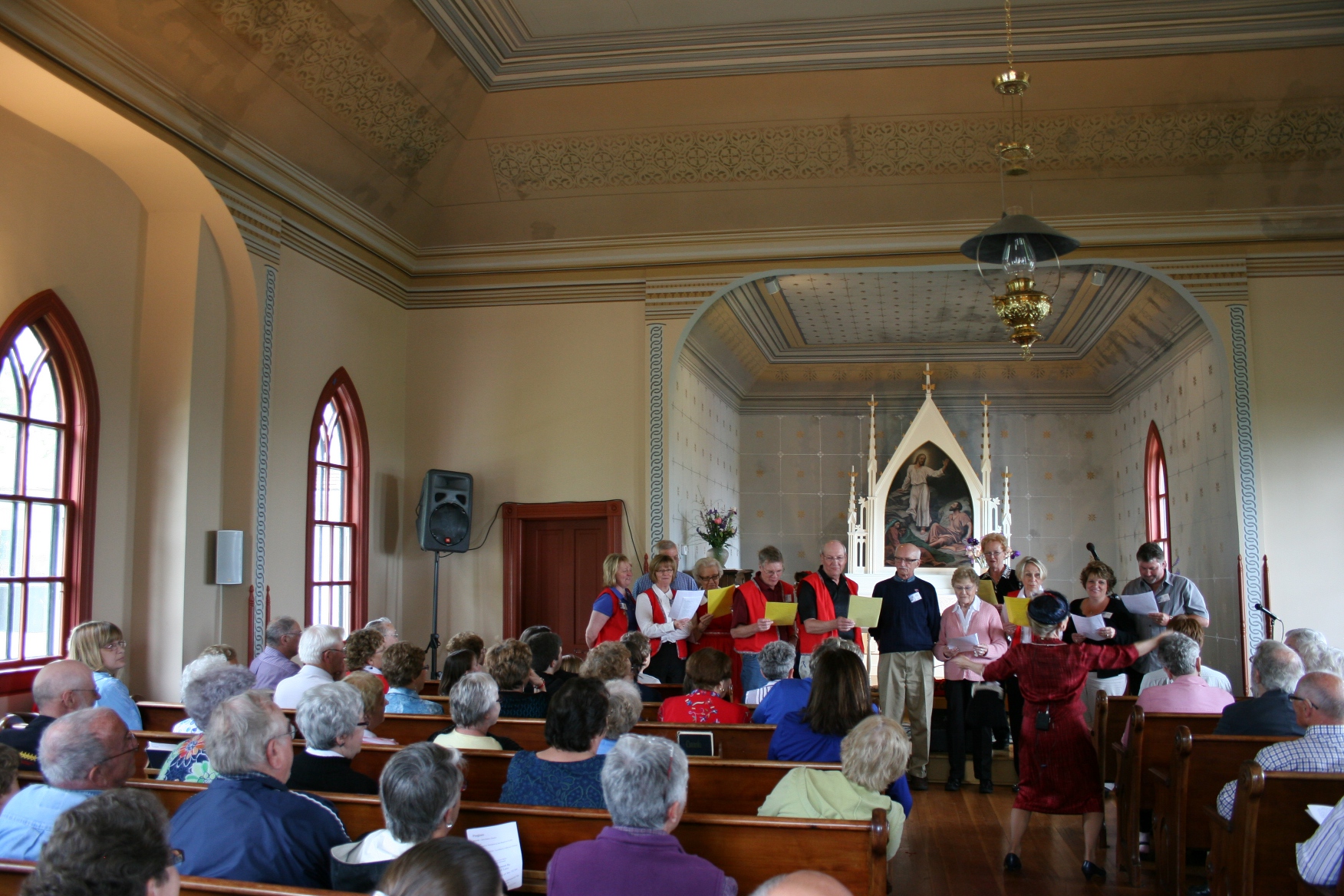
During restoration of the church, a pressed metal cover on the ceiling was removed to reveal original plaster with stenciling. As you can see, the church is bathed in light from the many windows, even on a rainy day.

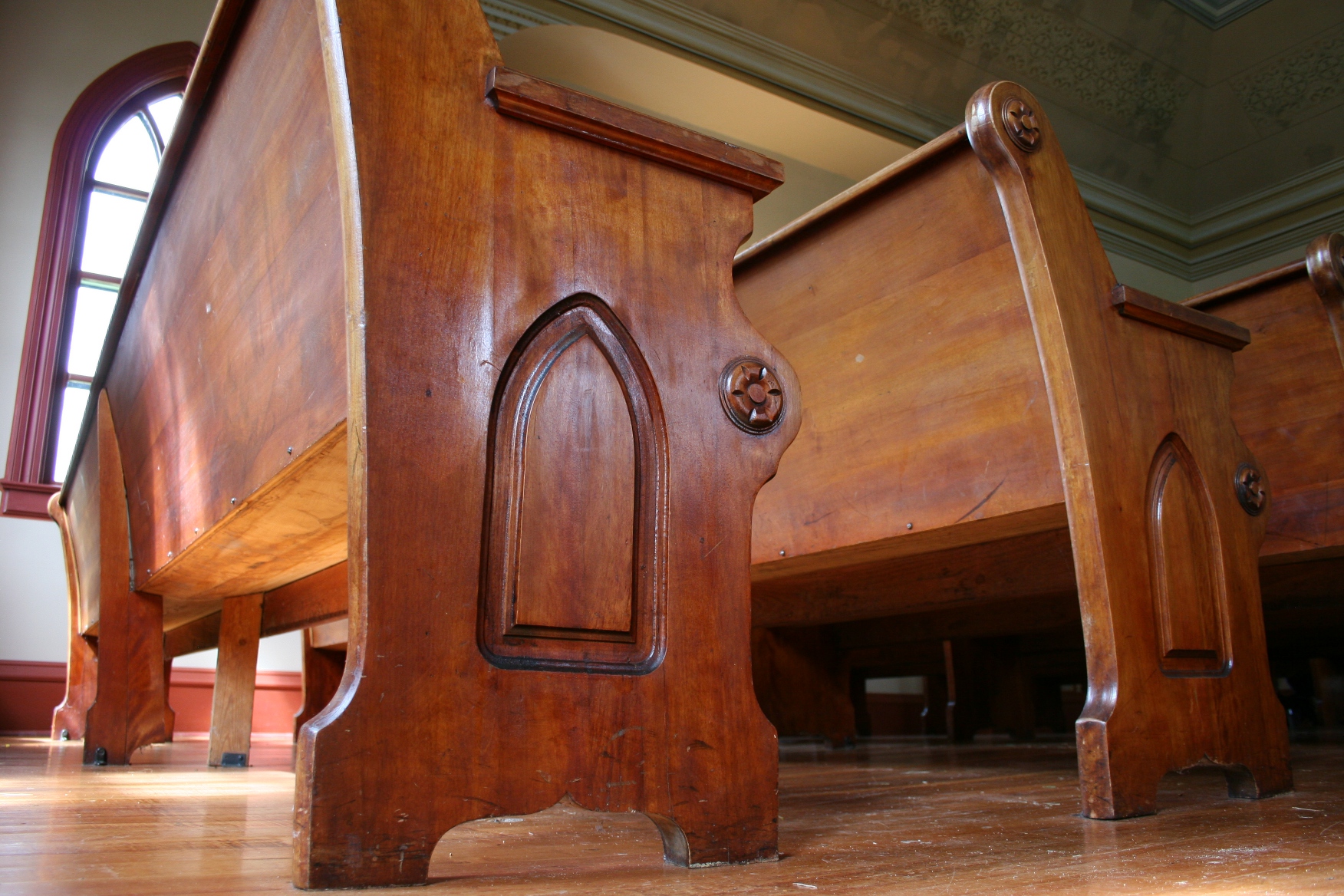
Beautiful pews and the original pine floor grace the sanctuary.

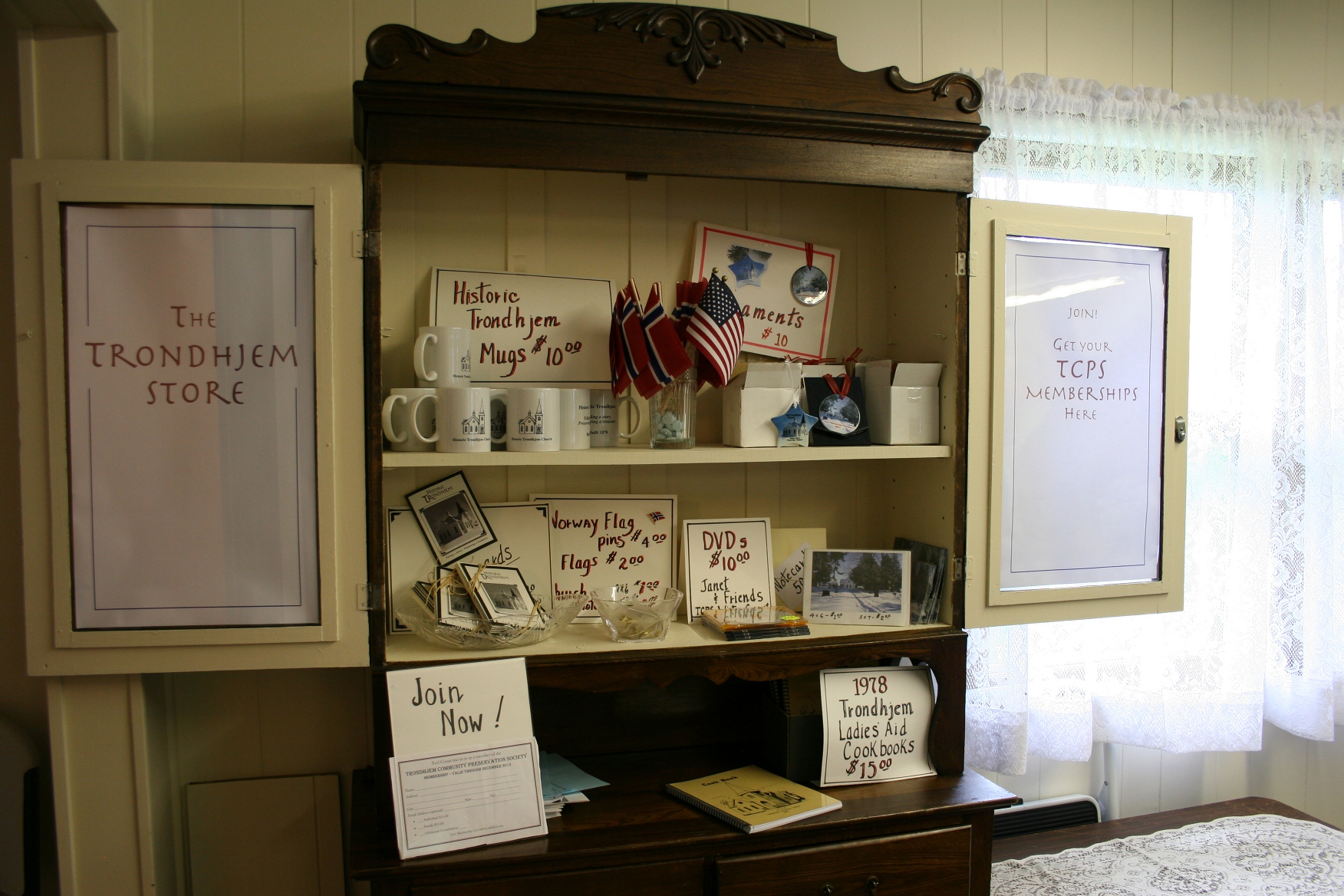
The quaint Trondhjem store is tucked into a cupboard in a corner of the fellowship hall, which also includes a mini museum of historical items, photos and artifacts from the Trondhjem area.

That Norwegian heritage and the history of this place, this Trondhjem in Minnesota, brought about 120 people together on Norwegian Constitution Day for the annual meeting of The Trondhjem Preservation Society and that entertainment by Tina & Lena, who have been on the road for 28 years, performing in 20 states.

Their motto seems to be this: “It is bad to suppress laughter because otherwise it goes down and spreads to your hips.”

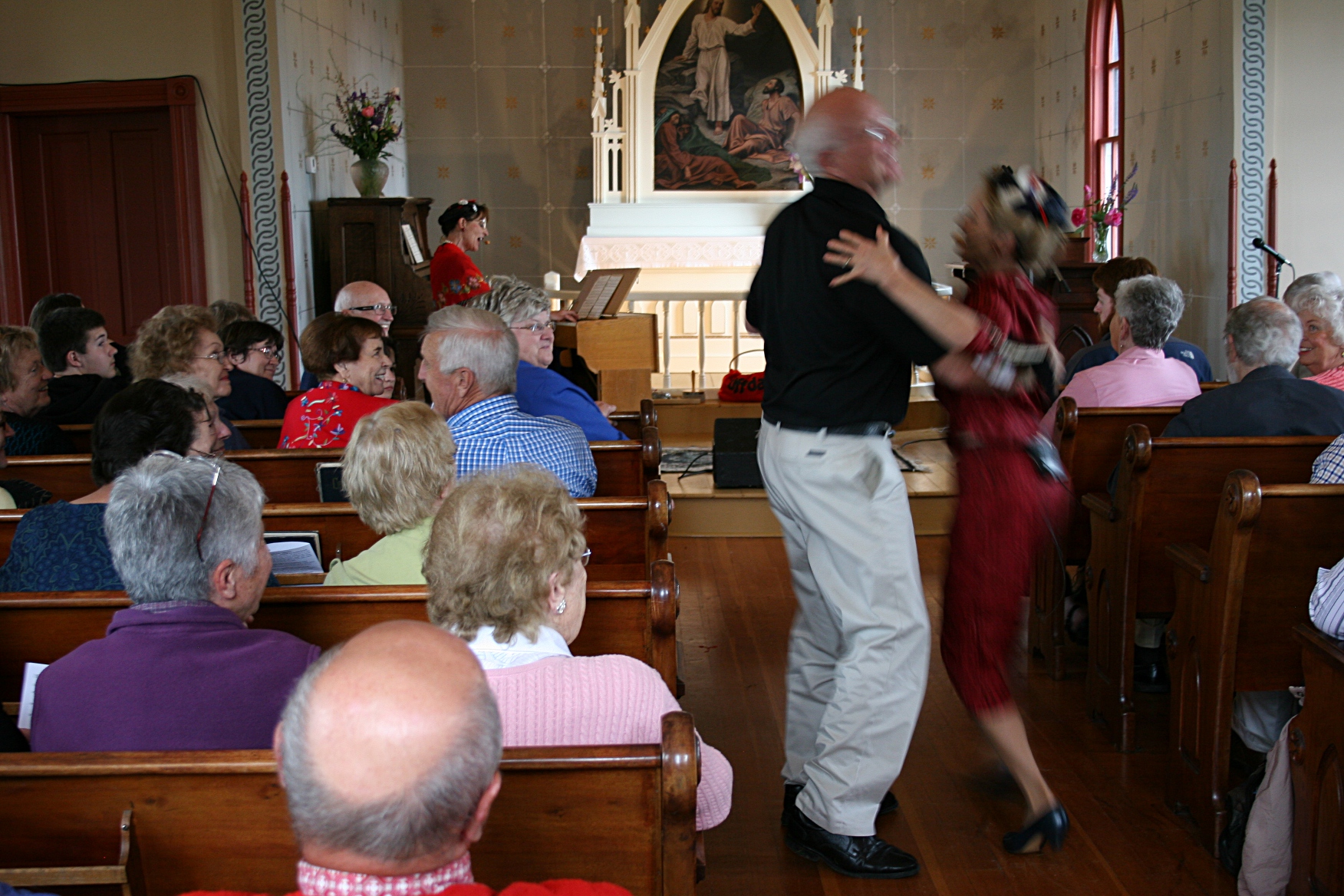
Tina pulls an audience member into the aisle for an impromptu dance.

Tina directs members of the Trondhjem Community Preservation Society/The Hotdish Hallelujah Chorus.

There was no chance in, well, you know where that Tina & Lena could suppress the laughter of the Trondhjem audience. The long-time friends rocked the church with laughter and song and dance, personalizing their performance to the location. They engaged the audience—singling out individuals for attention, pulling two men into the church aisle to dance and even calling upon Preservation Society members to sing in “The Hotdish Hallelujah Chorus.”

Tina & Lena, who in real life are Sue Edwards of Alexandria and Annette Hustad of Glenwood, sang in the church choir while growing up in Canby in southwestern Minnesota. Just knowing they are from my native prairie endears them to me.

But it is their ability to slip into the roles of Norwegian women—lilting accents and all—and tell good, clean jokes appropriate for all and spin stories and sing and dance and interact with others that endears them to so many. These women, with energy and enthusiasm, exude absolute passion for making people laugh.

And what Minnesotan wouldn’t laugh at this Tina & Lena joke: “Oh, we love hotdish. Hotdish is a wonderful Minnesota food that melts into your Jell-O and runs into your buns.” (For you non-Minnesotans out there, “hotdish” is the same as “casserole.”)

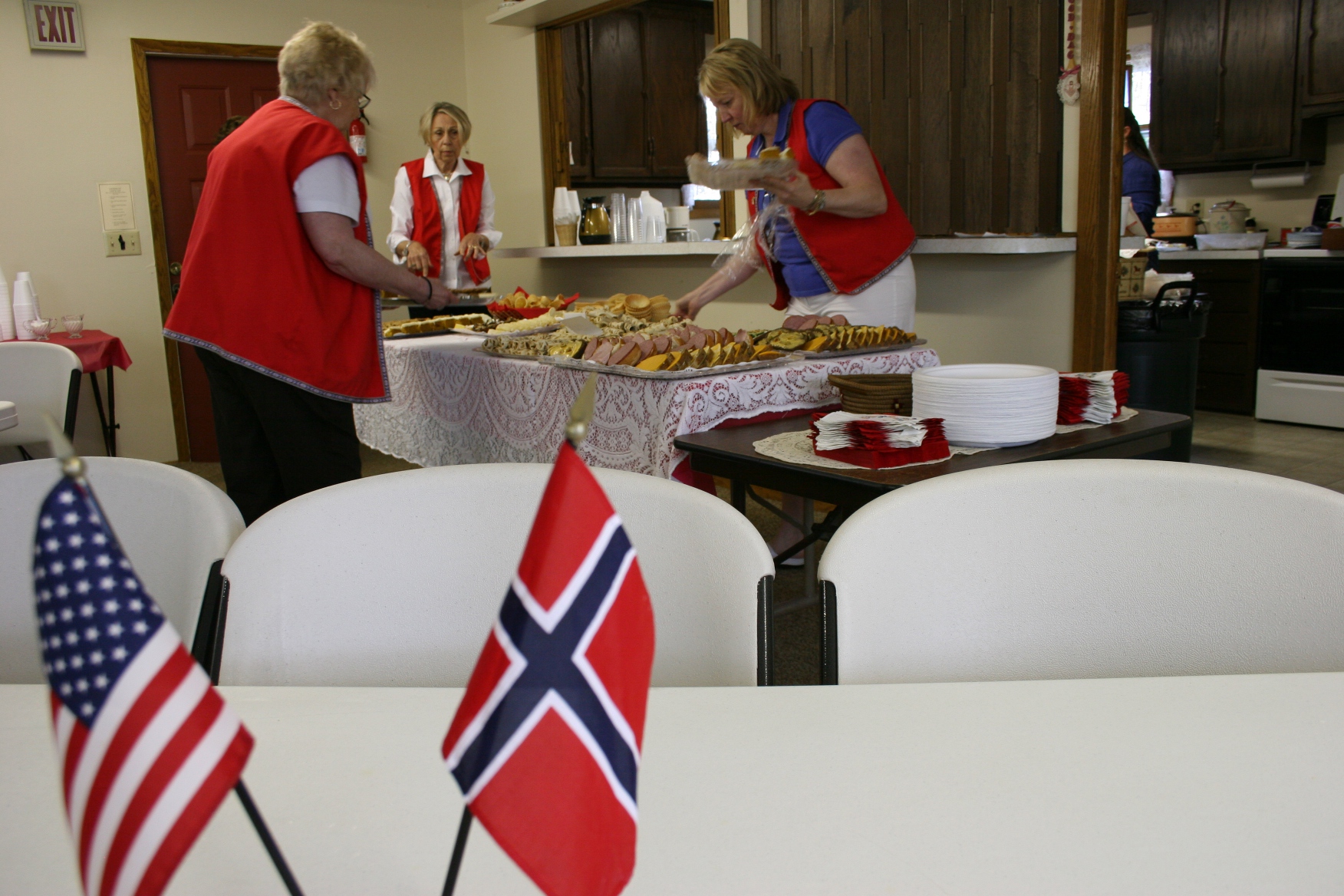
The church/preservation society ladies lay out a delectable spread of Norwegian goodies.

Just a few of the treats in the Norwegian buffet. That’s lefse on the right.

No hotdish, Jell-O or buns were served during the fellowship hour following the performance and annual meeting. But scrumptious Norwegian treats—none of which I can identify by name (except lefse) because, remember, I am German—were laid out on tables in the social hall.

Let me tell you, these descendants of Norwegian immigrants have not forgotten the baking traditions of the homeland.

Trondhjem pastor, the Rev. Howard White, had it right when he earlier prayerfully thanked God for the gifts of memory, laughter, tradition, heritage and new beginnings.

Amen and amen.

FYI: To learn more about Old Trondhjem, Historic Trondhjem Church and the Trondhjem Community Preservation Society, click here.

For more info about Tina & Lena, click here.

© Copyright 2012 Audrey Kletscher Helbling


Ten months after the storm, a rural Minnesota congregation returns “home” May 4, 2012

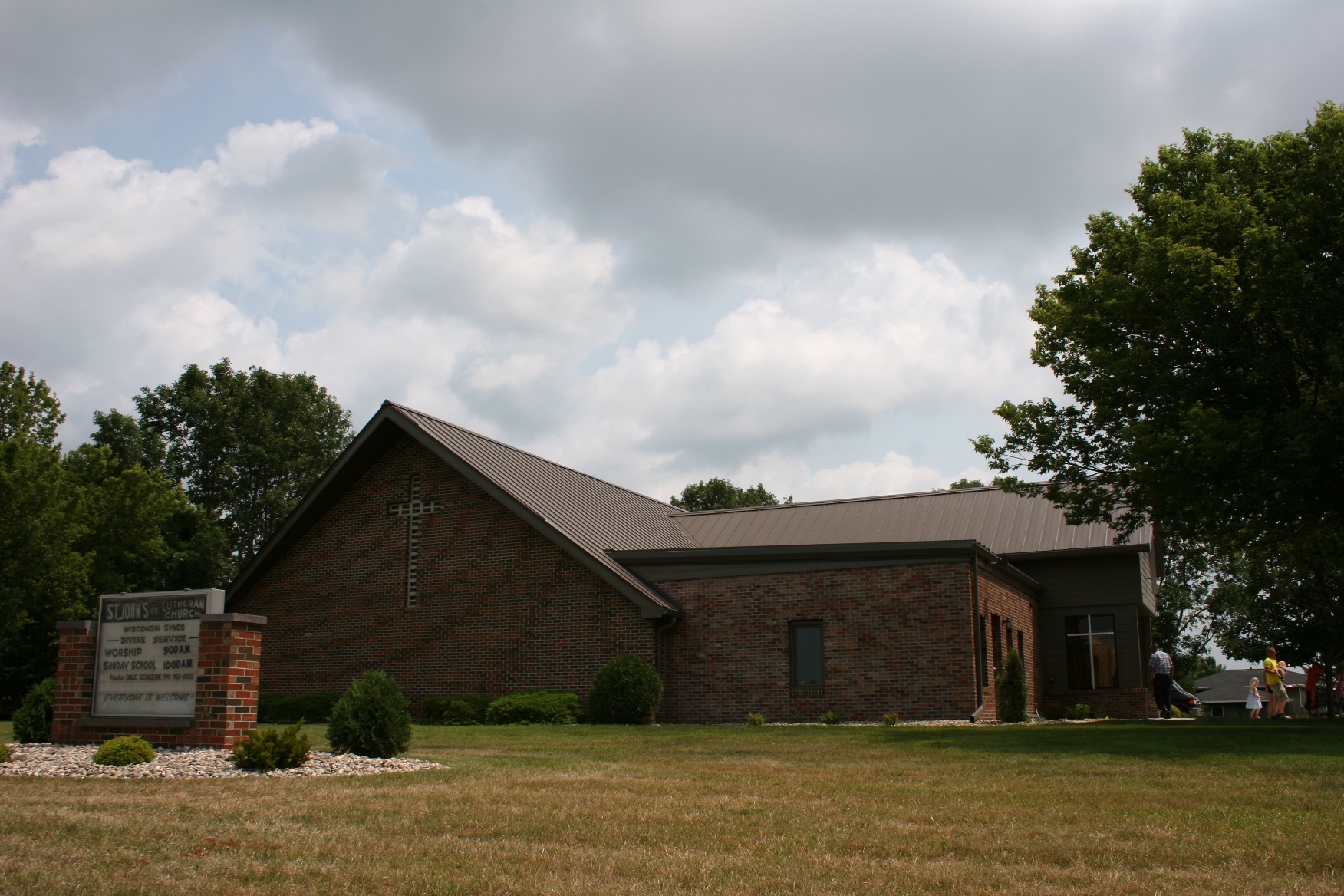
St. John’s Evangelical Lutheran Church in Vesta, hours after a July 1, 2011, storm ripped half the roof from the sanctuary. Photo courtesy of Brian Kletscher.

“There is no place like home. We cannot wait to be back in our own church.”

And so, 10 months after a powerful July 1, 2011, storm packing winds of 90 – 100 mph ripped half the roof from St. John’s Evangelical Lutheran Church in my hometown of Vesta in southwestern Minnesota, congregants will worship for the first time in their rebuilt sanctuary this Sunday morning.

I expect many of St. John’s 323 baptized members feel exactly as my uncle, Milan Stage, does—simply happy to return to the comfortable familiarity of their home church.

Since the storm, parishioners have worshiped at their sister congregation in neighboring Echo. Says long-time St. John’s member Karen Lemcke, “We thank Peace Lutheran of Echo for allowing us to join their services for all of this time. It was enjoyable to be in fellowship with them but still nice to be back in our church.”

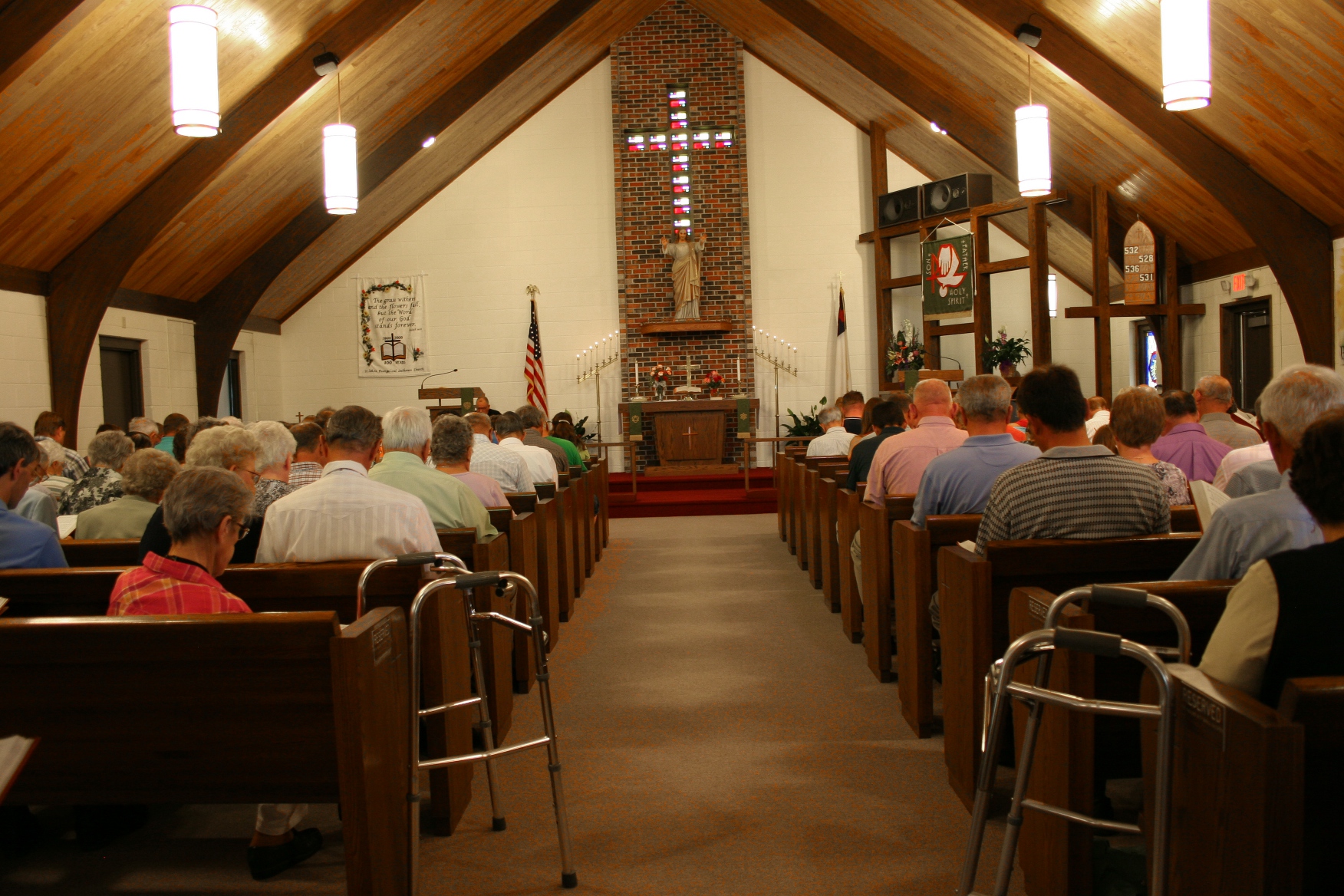
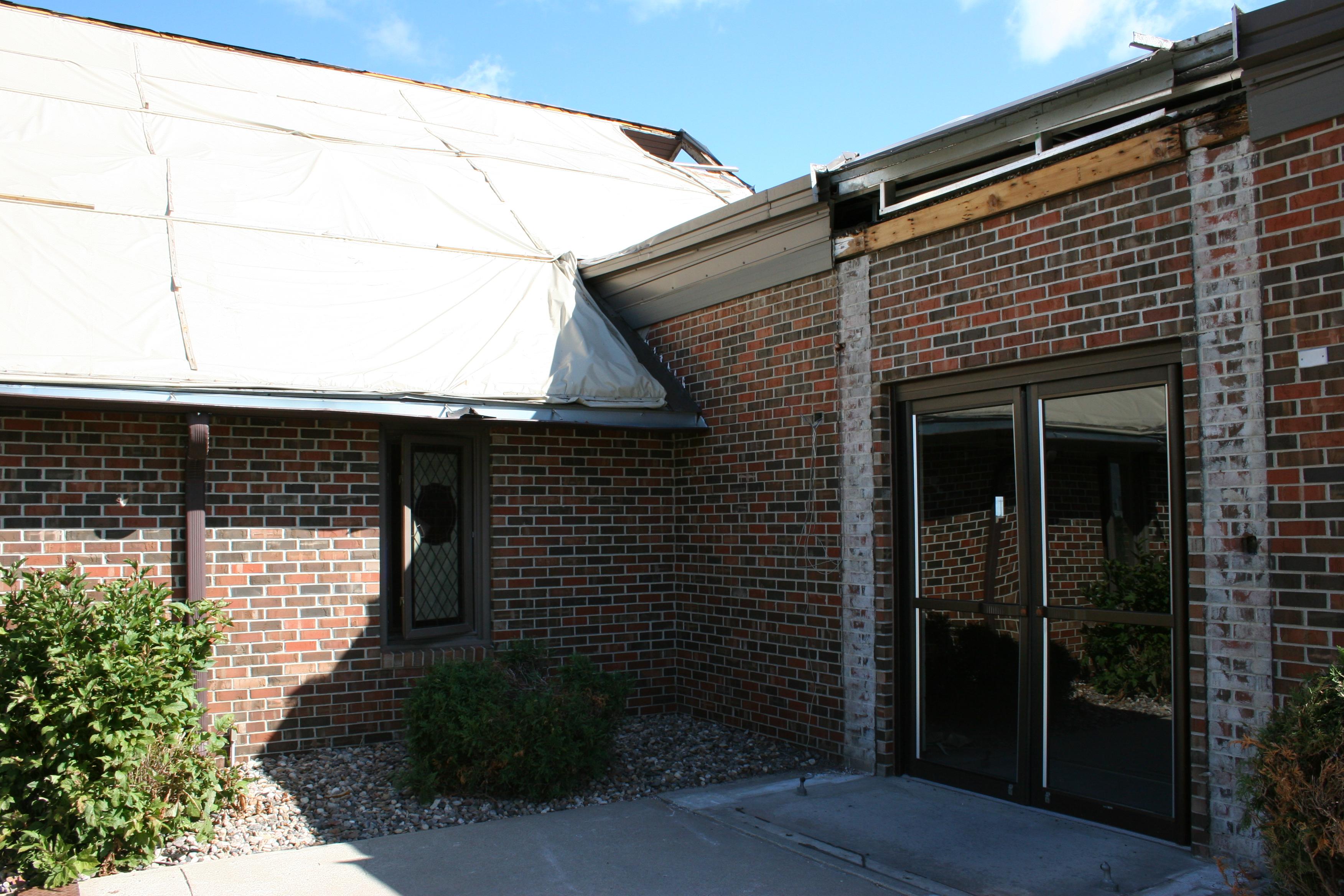
Inside St. John’s sanctuary in September, I listened to the wind flap the tarp that covered the damaged roof.

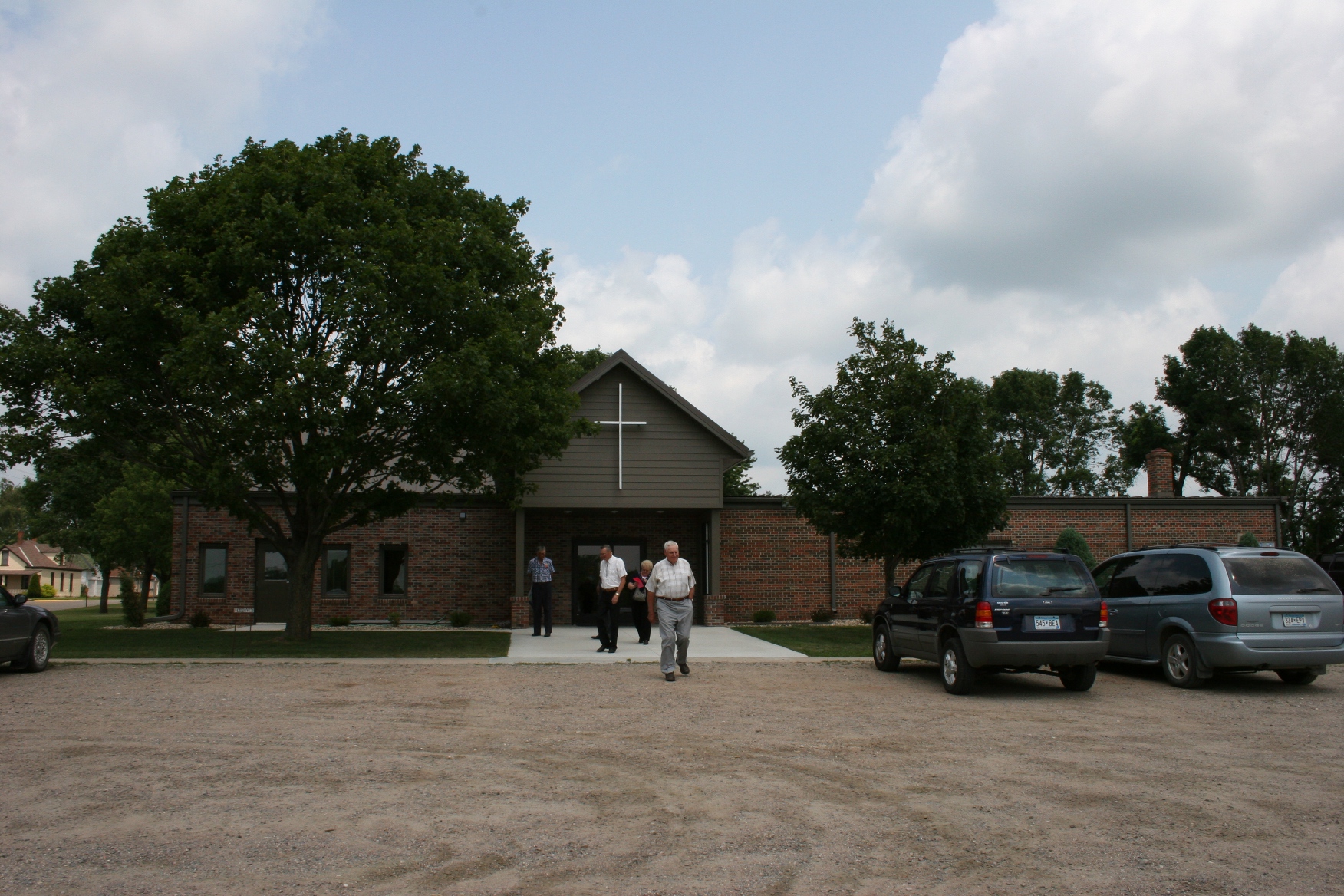
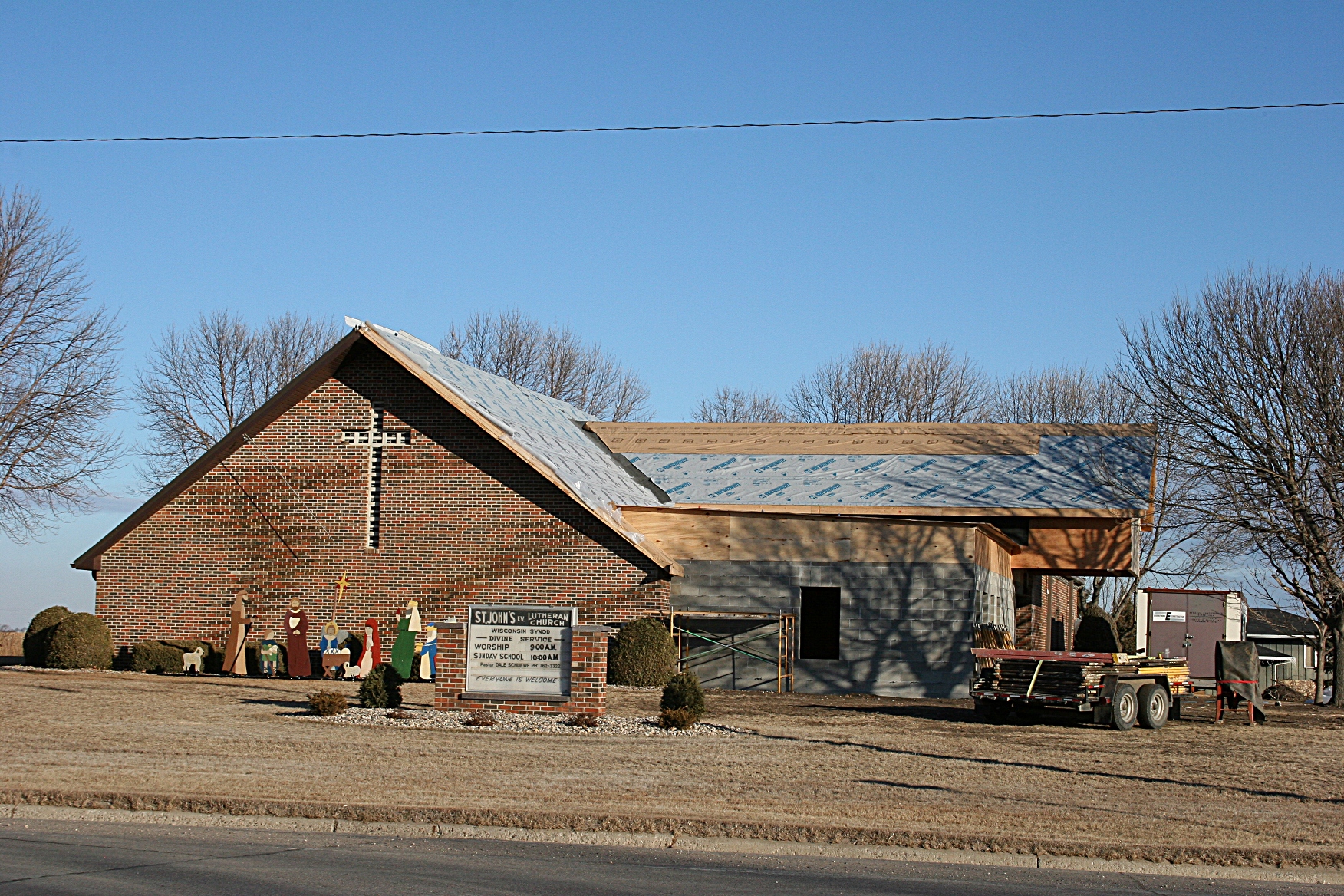
When worshipers arrive at St. John’s Sunday morning, they will enter through a new south-facing 20 x 40-foot addition which includes a handicap accessible bathroom, storage room and study area/office for the pastor.

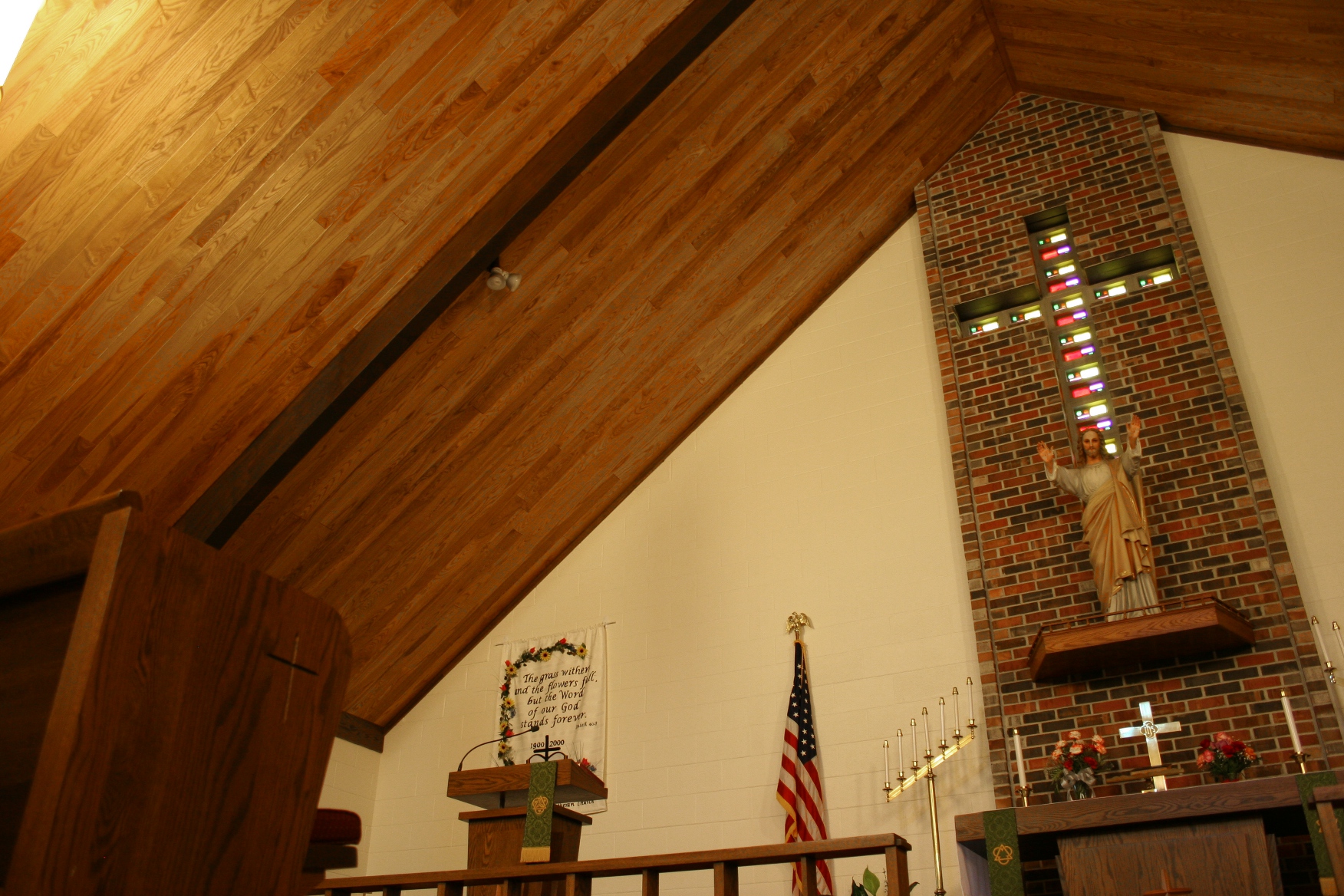
And above them a new south roof—the portion ripped off by the winds—and a new exterior steel roof cover the sanctuary refurbished with new ceiling planking and hanging lights.

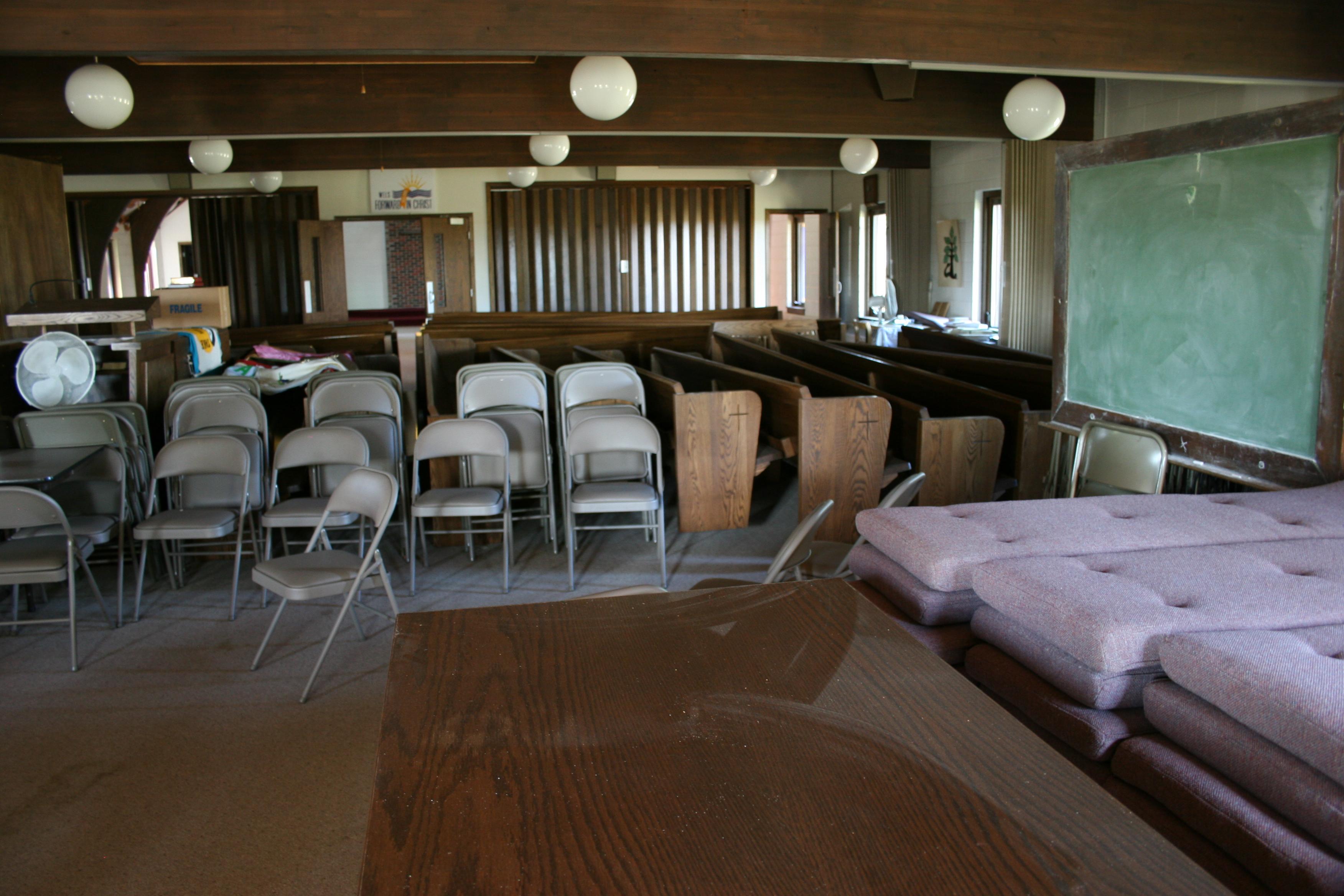
The pews and other items from the church were moved into the undamaged social hall after the storm.

They’ll walk on new carpeting and settle onto new pew cushions to hear the sermon delivered by a former St. John’s pastor, the Rev. Randy Bader, Mission Advancement Director of Great Plains Lutheran High School in Watertown, S.D.  Says Rev. Bader, in part:

I am planning on using the Holy Spirit-inspired words of Isaiah as the basis for the sermon. It includes these words: “For My thoughts are not your thoughts, neither are your ways My ways,” declares the Lord. “As the heavens are higher than the earth, so are My ways higher than your ways and My thoughts than your thoughts.”

We may wonder why our gracious God would allow such a dangerous and difficult situation to touch the lives of His people as it did on that July day last summer. So often we do not understand. But the truth is, we don’t have to understand. Jesus has a purpose for everything that he allows to happen to us, and His ultimate purpose is to bless and save us. 

…Trust Him. His love is the constant, in, and even through, challenging circumstances.

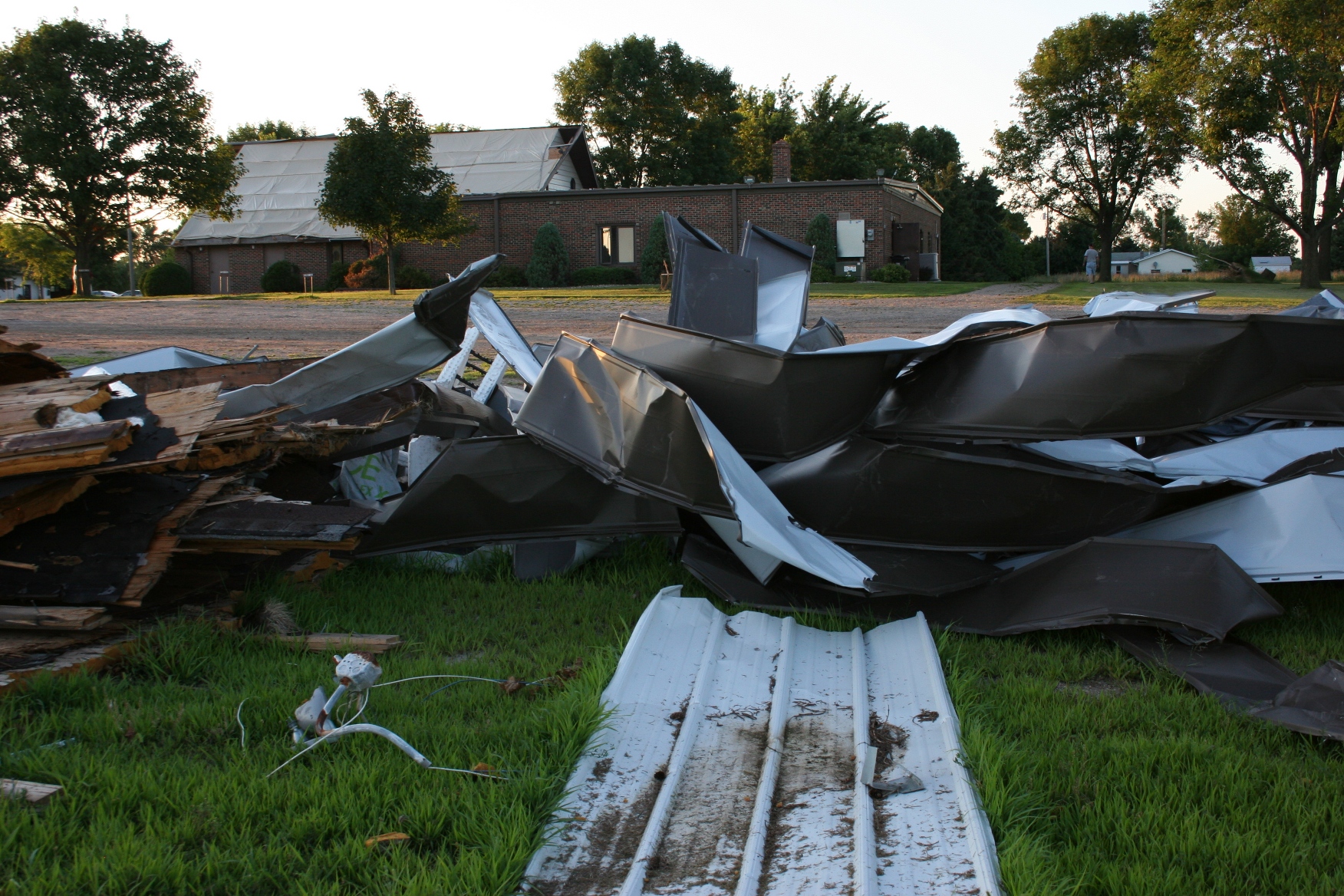
A debris pile on the edge of the church parking lot includes pieces of steel from the roof and brick from the bell tower. Photo taken in September 2011.

Under construction in March, a pastor’s office, bathroom and storage room were added to the south side of the early 1970s era church.

St. John’s members like my 80-year-old mom, especially, welcome the reopening of the church. It’s much easier for her to drive across town to worship services and other functions than to drive or catch a ride the eight miles to Peace Lutheran in Echo. I’m thankful for family members who’ve taken my mom to church services.

During the 10 months since the storm ravaged Vesta and the surrounding area, I’ve kept tabs on St. John’s, checking in most visits back to my hometown to see how the reconstruction was progressing. This, after all, is the church where I was married 30 years ago this May 15. It is the church where my family mourned the loss of our father, maternal grandfather, paternal grandmother and many other loved ones. We celebrated family weddings here and attended confirmations and worshiped here on Sunday mornings and on Christmas Eve.

The old saying goes that a church is not a building. That adage holds true if you consider the essence of a congregation.

But, there is much to be said for a physical structure, for the memories it holds, for the comfort it gives in familiarity. Boards and walls and details in construction and décor connect us to our past, to emotions and to loved ones. A place represents, if anything, a tangible legacy of faith.

And in a farming town like Vesta, population 330, a church building also serves as a place to gather, to swap rain gauge totals and crop reports, to exchange family news, to embrace each other in sorrow and in joy, to welcome the newest residents with baptism banners, to grieve the loss of neighbors and friends and family. A church building represents community within a community, the very soul of small town life.

© Copyright 2012 Audrey Kletscher Helbling


Hop into church on Easter April 6, 2012

Filed under: Uncategorized — Audrey Kletscher Helbling @ 6:57 AM
Tags: , , , , ,

TYPICALLY, JUNK MAIL I receive goes directly from my mailbox into the recycling bin without even a read-through.

But the message and graphic on this piece of mail paused me to stop, read the words and actually flip the oversized postcard to the other side.

Now why did this mass mailing capture my momentary attention?

The short, off-the-wall powerful message popped right out at me. And, the image, well, who doesn’t savor a chocolate Easter bunny?

Connecting the bitten-off-tail bunny with the chosen message seems creative genius to me, the perfect pairing of art and words.

Now I don’t know who, specifically, is the creative mind behind this postcard. But the mailing comes from CANVAS Church in Northfield.

I won’t be attending or joining CANVAS Church. I already have a church home. But I applaud this congregation for reaching out to the masses with an impressionable message that might just bring people in the doors for Easter morning worship.

As an added Easter worship incentive, CANVAS is offering free individual or family photos by a professional photographer.

There you go. Creative marketing and gimmicks to draw in worshipers. Not a new concept. But certainly one that made me stop to read a piece of junk mail before tossing it into the recycling bin.

© Text copyright 2012 Audrey Kletscher Helbling


The Last Supper Drama begins Holy Week at a rural Minnesota church April 3, 2012

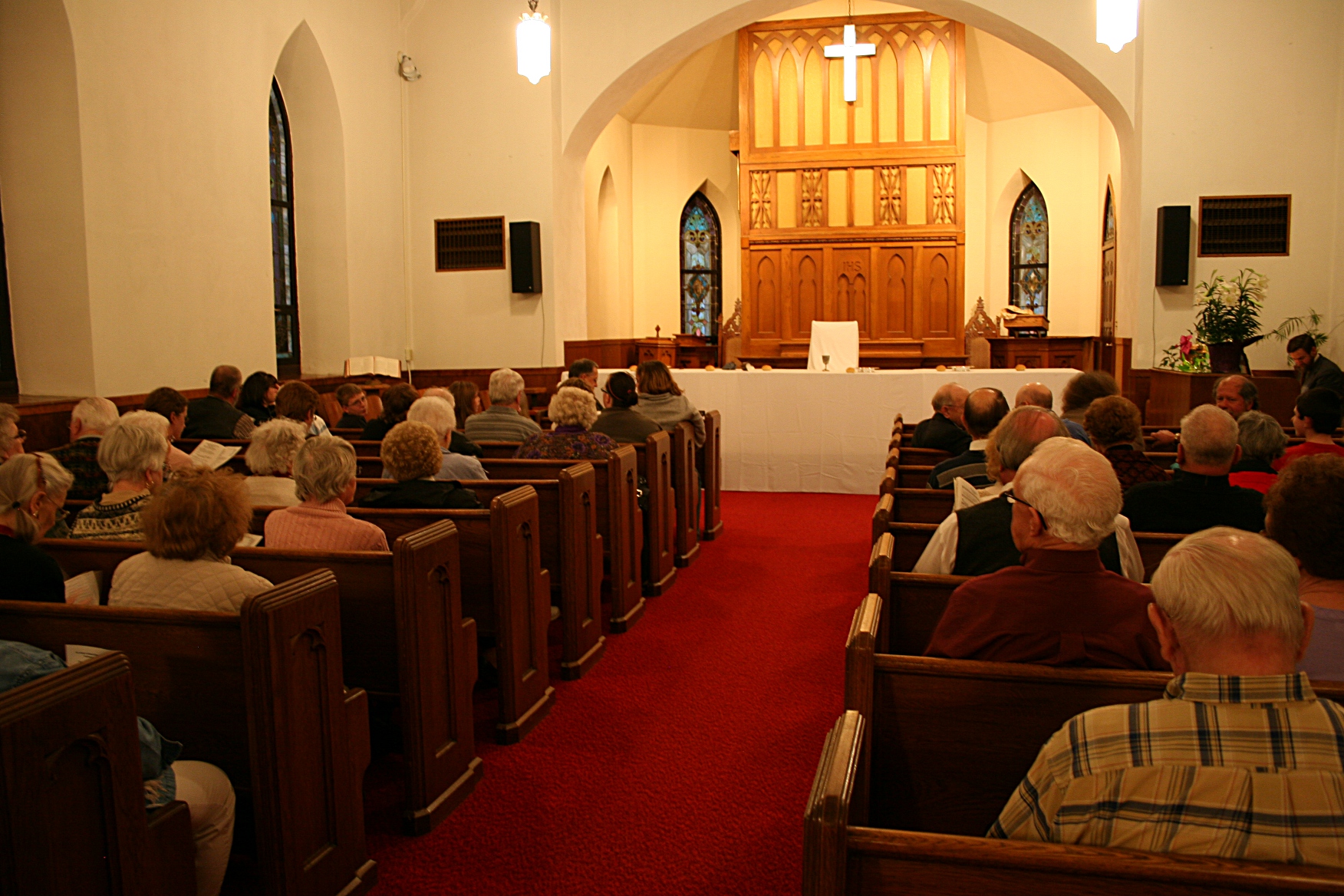
St. John's 50th presentation of The Last Supper Drama in the sanctuary with the actors positioned just as the disciples are in Leonardo da Vinci's painting. However, in the drama, an empty chair represents Christ.

THOUSANDS OF MILES from Milan, Italy, in the flat farm fields of Rice County in southeastern Minnesota, Leonardo da Vinci has left his mark on a small congregation.

For 50 consecutive years, St. John’s United Church of Christ, Wheeling Township, has presented The Last Supper Drama, a theatrical interpretation of the master artist’s most famous painting created in 1495 as a mural in an Italian monastery.

The rural Faribault church was nearly full for the golden anniversary of The Last Supper Drama.

Palm Sunday evening I joined a sanctuary full of worshipers to view the drama which inspires and moves for its touching, personal account of Christ’s last meal with his 12 disciples. In the script written so many years ago by a former St. John’s pastor, each of Jesus’ followers speaks of his personal relationship to the Lord.

In the reverent near-darkness of this late 1800s limestone church, the cast, in loud, clear, animated voices and with gestures fine-tuned by years of practice and presenting, truly bring to life da Vinci’s painting. They speak of their failures and deaths, of their love for Christ.

“Be not faithless, but believing,” advises doubting Thomas, played this evening by Thad Monroe.

Claims Don Katra as Matthew: “My life really began when I met and followed Him.”

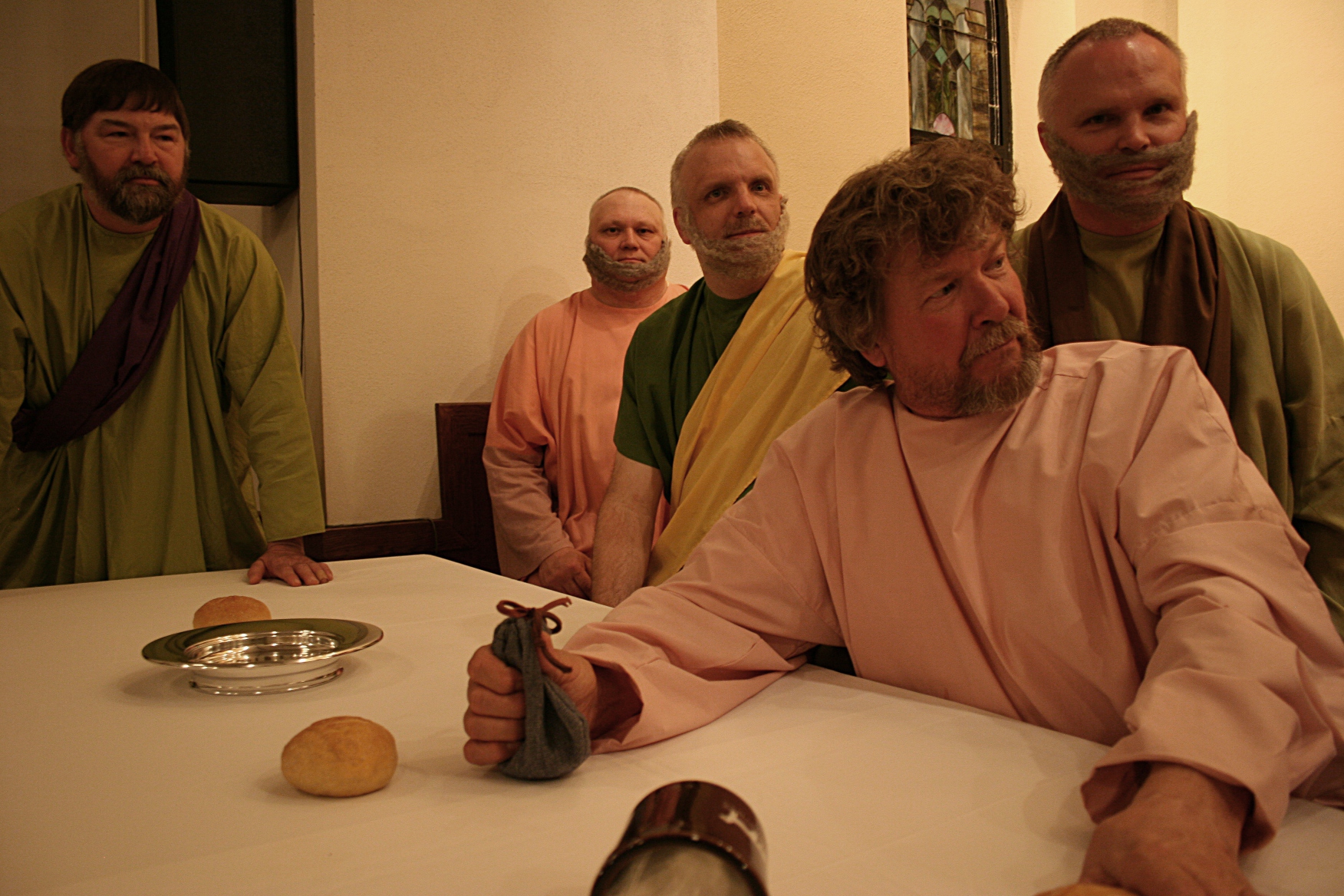
Most of the actors are shown here as they pose for photos after the performance.

Judas grips the bag of silver, his reward for betraying Christ.

Even Gordie Wiegrefe as Judas the betrayer, admits, “It was too late. They wouldn’t take the silver back. I failed my Lord.”

The moment when Christ announces that one of his disciples will betray him is the precise moment da Vinci captures in his painting. In St. John’s performance, the defining moment of betrayal comes when Judas slams a jingling bag of 30 pieces of silver onto the table.

Later, after the drama concludes, St. John’s Pastor Lora Sturm tells worshipers, “Let us feel the light of His love as we enter the darkness of this Holy Week.”

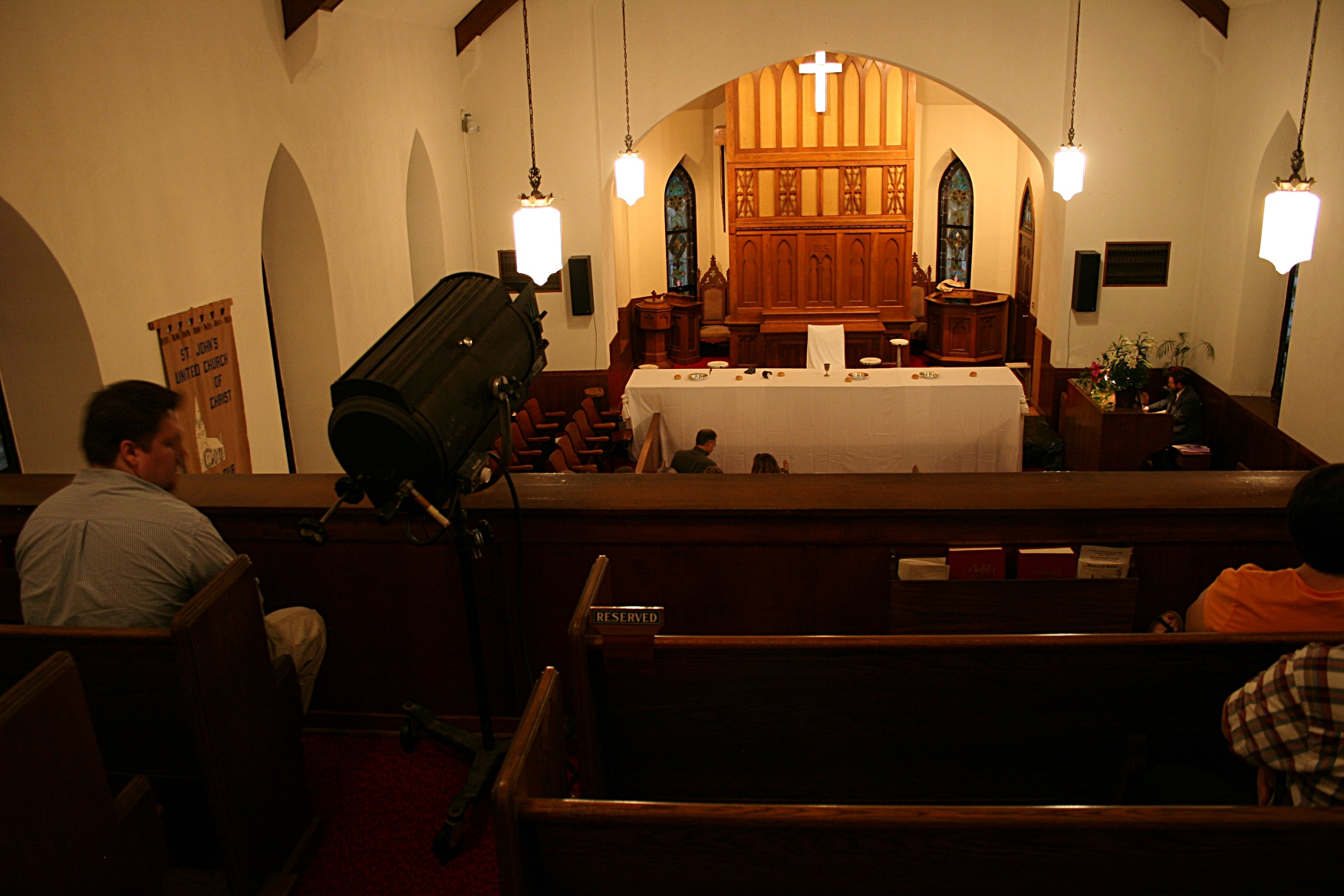
A view from the balcony before the drama begins shows the spotlight to the left and The Last Supper table below. The actors enter, spotlighted in the dark church, to take their seats at the table. There they "freeze" in place to mimic Leonardo da Vinci's painting.

That message resonates as a spotlight first illuminates a cross suspended above the altar in the dark sanctuary, then moves down to an empty chair representing Christ and finally pans out to shine upon all 12 disciples. It is how the drama opens and ends, impressing upon attendees the darkness of Holy Week which concludes on Sunday in the glorious light of the resurrected Lord.

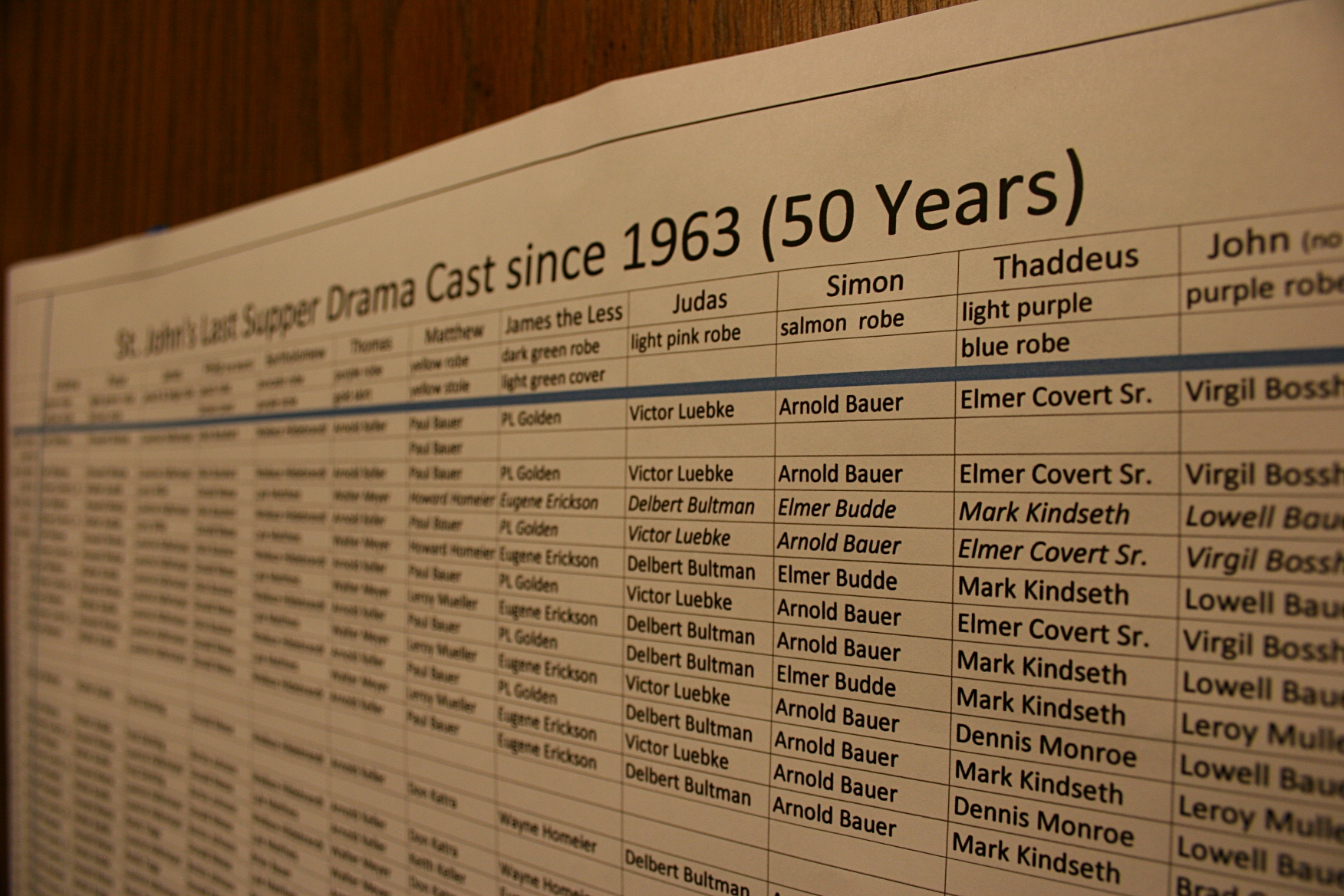
Spreadsheets on display Sunday evening listed those involved in the St. John's drama through-out its 50-year run.

FOLLOWING SUNDAY’S 50th anniversary performance, special recognition was given to those who have been part of St. John’s The Last Supper Drama. Original 1963 cast members Wallace Hildebrandt and Luverne Hafemeyer stood up to applause.

Other 50-year history trivia includes:

  • Seventy individuals have participated in the drama since 1963.
  • The role of John has been played by 10 actors.
  • The youngest actor was Kyle Keller who in 2011 assumed the role of Philip.
  • The oldest cast member was Kyle’s grandpa, Arnold Keller, who was 76 years old when he last acted in 1997.
  • Nine individuals have performed 20 or more times in the St. John’s drama.

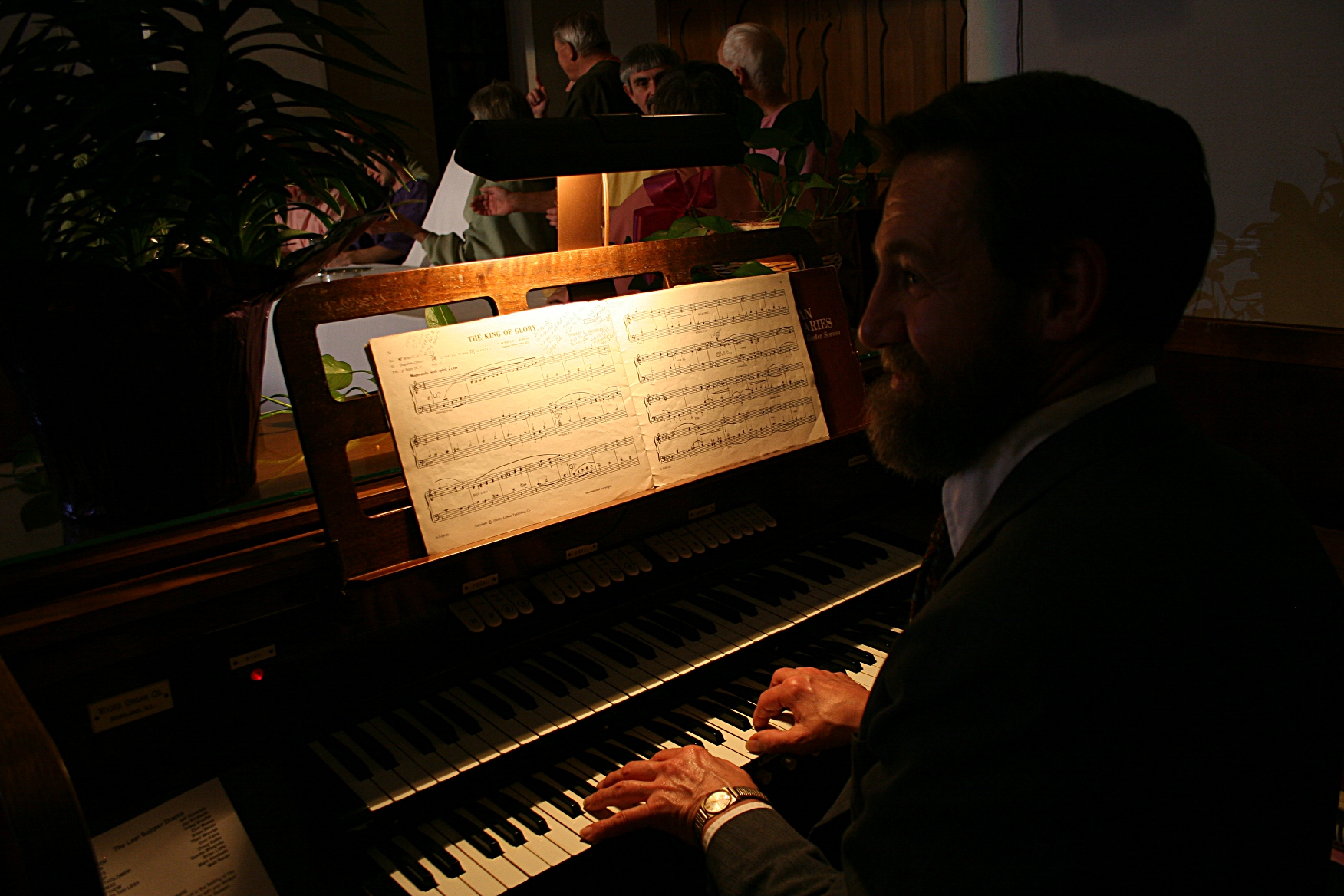
Craig Keller has been the long-time drama organist, playing the same music every year. The script and music remain unchanged in 50 years. Craig's father, Arnold, was an original cast member.

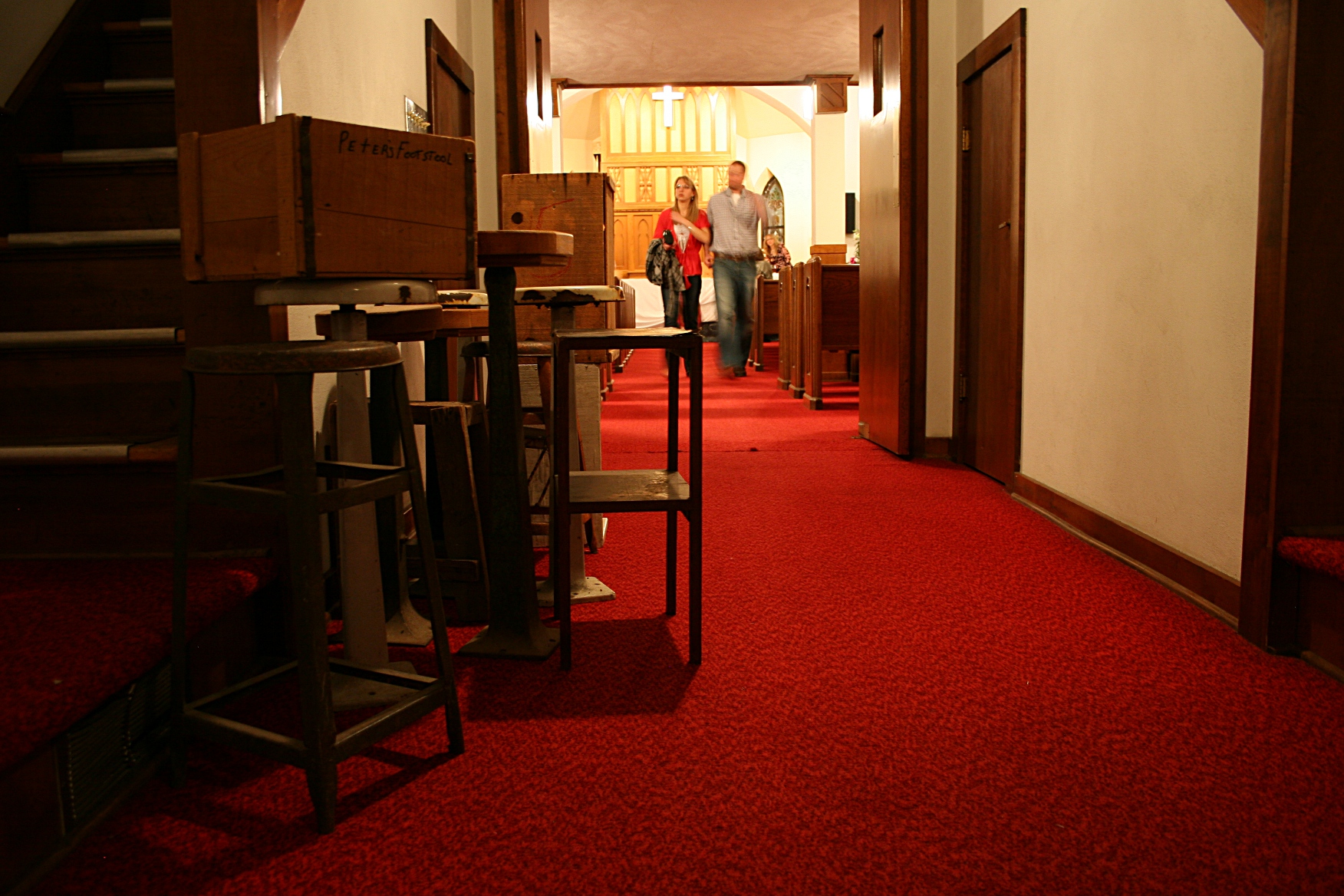
After the performance the cast took their stools and footrests out of the church, grouping them together (left) in the sanctuary entry. Later they carried the seats into a balcony storage area. Each stool is labeled with a disciple's name. They are the original stools, first used 50 years ago.

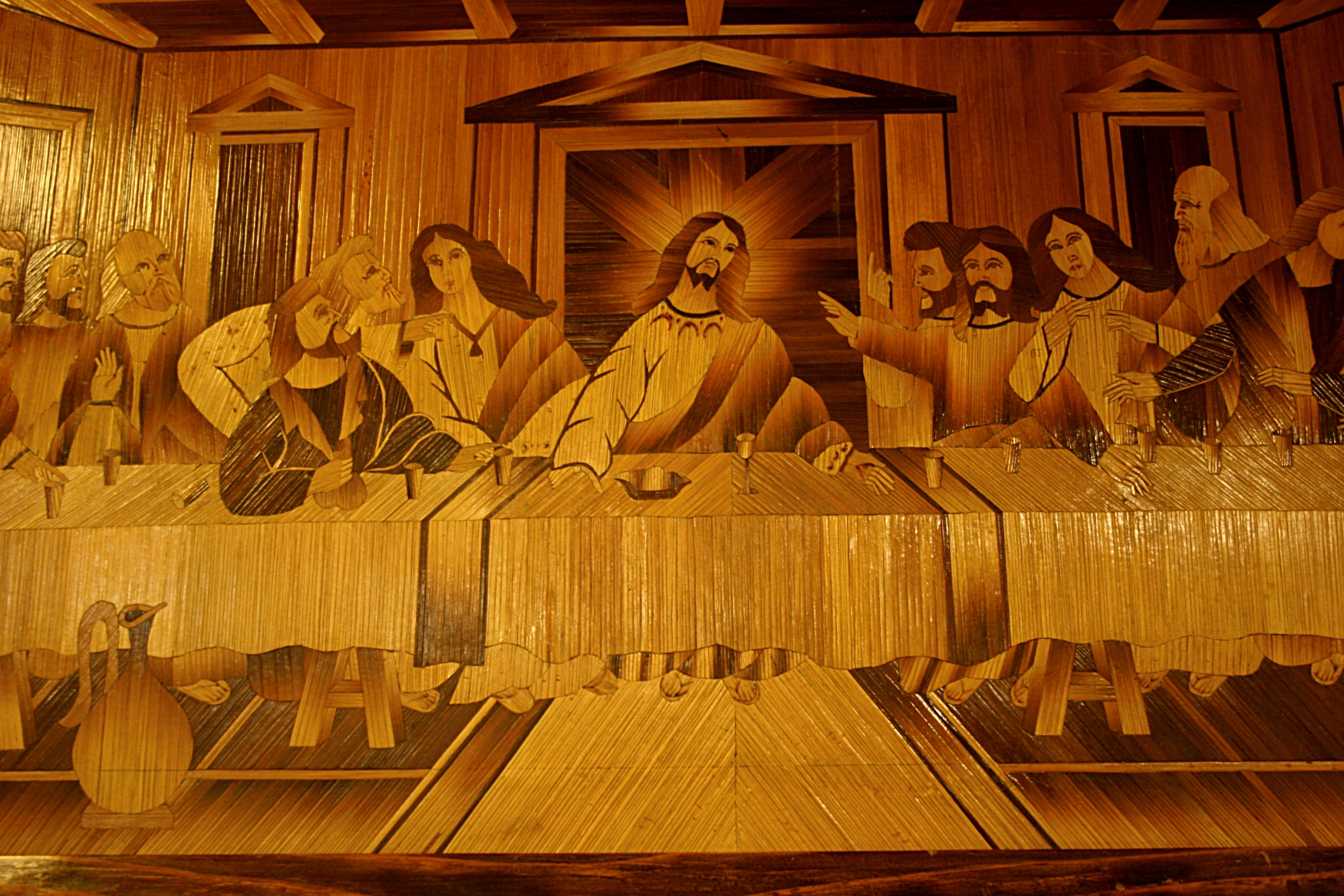
This artistic rendition of The Last Supper hangs in the St. John's Fellowship Hall.

After the performance, folks gathered in the social hall for cookies and beverages.

A tray of cookies awaits audience members and performers.

TO READ A PREVIOUS POST I wrote about the 2011 drama, click here.

© Copyright 2012 Audrey Kletscher Helbling


St. Patrick’s Day at one of Minnesota’s oldest Irish Catholic parishes March 15, 2012

Filed under: Uncategorized — Audrey Kletscher Helbling @ 8:05 AM
Tags: , , , , , , ,

A sign on the old St. Patrick's Parish Hall, circa 1910, photographed several years ago.

SOME MIGHT CALL it the luck of the Irish that St. Patrick’s Church—Shieldsville, has persevered through two devastating fires.

Or perhaps St. Patrick’s, one of Minnesota’s first Irish Catholic parishes, established in 1856 in rural Rice County, could be considered unlucky given those two inferno-inducing lightning strikes upon church buildings nearly 100 years apart.

Bad luck or good luck, these strong Irish Catholics have withstood the tests of their faith, rebuilding after fires in 1888 and in 2002.

The congregation's newest church and fellowship hall, built in 2004 after lightning presumably struck and burned the previous sanctuary to the ground in 2002. The Brazil-Dudley Fellowship Hall, linked to the new church, is the site for the annual St. Patrick's Day meal.

This weekend they’ll celebrate their heritage and patron saint namesake at the annual St. Patrick’s Day Celebration, going strong at 18 years. Beginning with an 11 a.m. Mass, the Irish, and even those who aren’t, will gather to worship.

Starting at noon, congregants and guests will meet in the social hall for the annual St. Patrick’s Day lunch of Mulligan Stew, coleslaw, Irish soda bread, buns and dessert. All homemade.

For those over 21, “Irish libations” will be available. I assume that means green beer and not Irish whiskey.

No reservations are needed to dine with the Irish and no fee has been set for the meal. Give a free-will offering.

While I’ve never dined at the St. Patrick’s Day lunch, this may be the year to imbibe. I’m talking food here, not beer, although I could possibly be persuaded to swig an ale. I’ve been to enough church dinners to know that you’ll find some of the best and tastiest homemade food in parish halls.

For those of you who enjoy Irish music, the Twin Cities-based band, Reverse Cowboy, will present its interpretation of traditional and contemporary Irish music during a 1 p.m. – 3 p.m. concert.

The circa 1910 parish hall, photographed several years ago, once served as the social hub of Shieldsville. Folks congregated here for Saturday night dances, card parties hosted by the Ladies' Rosary Society, St. Patrick's Day plays, an annual chicken dinner and bazaar, and for other events. Confirmation classes were also taught here and grain was once stored in this building. When St. Patrick's 1882 stone church burned to the ground in 2002, parishioners gathered here for worship services.

WHAT ARE YOUR PLANS, if any, for celebrating St. Patrick’s Day?

Click here for more information about St. Patrick’s Church—Shieldsville. 

Situated along Minnesota State Highway 21 about 10 miles northwest of Faribault, Shieldsville is not an incorporated city, but rather a township. It was one of Minnesota’s first Irish settlements. St. Patrick’s Church is located at 7525 Dodd Road. To learn more about Irish history in Minnesota, click here. 

As long as we’re talking Irish history here, historians consider Jessenland Township north of Henderson in rural Sibley County to be Minnesota’s first Irish agrarian settlement. You’ll find St. Thomas Catholic Church here, built in 1870 and on the National Register of Historic Places. The first church was built in 1855. Click here to read more about the Irish in Minnesota and specifically those who settled in Jessenland.

© Copyright 2012 Audrey Kletscher Helbling


I may not read music, but… January 29, 2012

GROWING UP, I ALWAYS wanted to play the piano. But I never had the opportunity, although one Christmas I received a toy accordion that temporarily satisfied my yearning to create music.

There was neither money nor space for a piano within the budget constraints of a poor farm family or within the walls of a cramped southwestern Minnesota farmhouse.

And so the years passed without music.

During junior high school I struggled through required music classes, once fake-playing the ukulele at a Christmas concert because the music teacher failed to recognize that I could not read musical notes.

In high school when so many classmates were joining band, I was not among them. Remember that money issue? Still there.

A few years later my younger siblings were allowed to join band—one sister choosing the flute, the other the clarinet. The brothers focused on sports. For awhile I tried to play my sister’s flute, without much success.

During college, a friend allowed me to strum her guitar. The strings bit into my fingertips so I quickly lost interest.

Years later when I had children, I was determined they would have the musical opportunities I never had. I started them on a mini toy organ. Later, the eldest tried playing my sister’s flute for awhile, then quit. The second daughter borrowed my youngest sister’s clarinet, sticking with band lessons for several years. My son had no interest in an instrument until recently, when he inquired about playing the guitar. He’s meeting with a family member soon to try out guitar-playing.

I tell you all of this because of a recent musical opportunity that came my way. It’s ironic really, given my inability to play any type of instrument or, in fact, read a single musical note. If you put a song sheet in front of me right now, I’d stare at it like I was reading Greek.

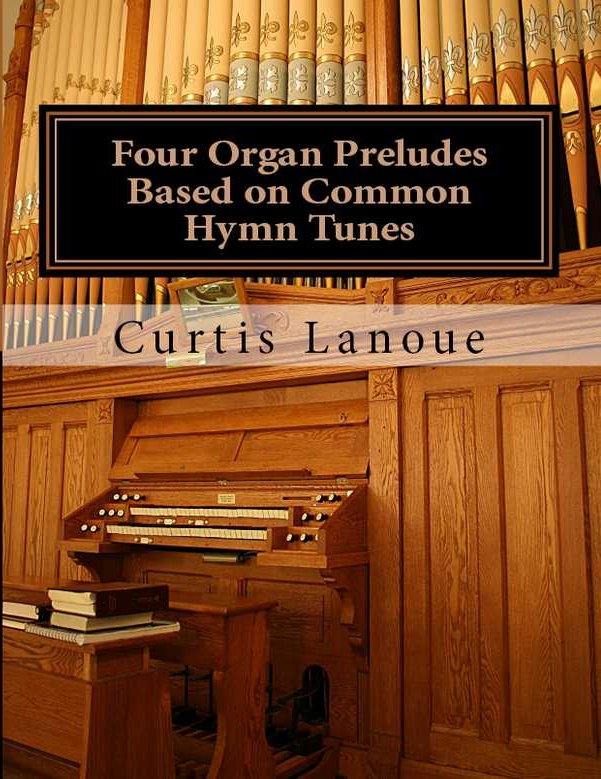
But composer Curtis Lanoue, also an elementary music teacher and the director of music at Lord of Life Lutheran Church in Miami, found the music in my soul. Seeking a cover photo for his 29-page Four Organ Preludes Based on Common Hymn Tunes book, Lanoue did an online image search and discovered my photo of the old pipe organ at Immanuel Lutheran Church, rural Courtland, Minnesota, the congregational home of my maternal forefathers.

“As you can imagine, there were a ton of (image) results,” Lanoue says. “Most of them were those flowery European organs in the cathedrals. That didn’t go too well with the style of the music. Somehow through the eye strain of looking through hundreds of photos, I found yours. It’s not surprising my eye was drawn to it as I was raised in a Midwest Lutheran church.”

Once I received a copy of this musician’s recently self-published book, I understood why he selected my photo of Immanuel’s organ that was built in 1895 by Vogelpohl and Spaeth Organ Company of New Ulm at a cost of $1,500.

It’s the perfect fit for Lanoue’s preludes based on the definitively Lutheran hymn, “A Mighty Fortress,” and on “Amazing Grace,” “Out of the Depths I Cry to Thee,” and “From Heaven Above to Earth I Come.”

As I flip through these compositions written by a musician with degrees in jazz performance and studio jazz writing and experience as a working organist since age 16, I can only smile at the contrast between his vast musical knowledge and talent and my musical illiteracy.

FYI: You can purchase Four Organ Preludes Based on Common Hymn Tunes for $9.99 by clicking on this link: https://www.createspace.com/3734555

Disclaimer: I am expecting payment for use of my cover image and have received a free copy of Lanoue’s book. This post, however, has been written solely at my discretion.

A rear photo shot of Immanuel Lutheran Church, Courtland, looking up to the balcony (where the 1895 pipe organ is located) and toward the spacious fellowship hall.

The beautiful pipes on Immanuel's organ.

JUST BECAUSE I THOUGHT it important to include, here’s some additional information about Immanuel’s organ, as shared by Immanuel’s pastor, Wayne Bernau:

The 1895 organ was renovated in 1988 at a cost of $25,000.

When Immanuel built a new church in 2007, Rollie Rutz and crew from Rutz Organ Company in Morristown (about 10 miles from my Faribault home), helped move the organ from the old church into the balcony of the new sanctuary.

A set of chimes was added to the organ in 2007.

Immanuel’s organ is today valued at around $200,000.

Says Pastor Bernau: “With the balcony constructed the way it is and the excellent acoustics for music in our new church, I believe the organ sounds better now, maybe twice as good, as it ever did in our 1881 building.”

I’ve heard the organ played in Immanuel and I agree. The acoustics in the new house of worship truly showcase the sounds of this 117-year-old organ played each Sunday by Lisa (Bode) Fischer, the daughter of my mom’s first cousin and a descendant of the Bode family members who helped found this rural congregation in the Minnesota River Valley more than a century ago.

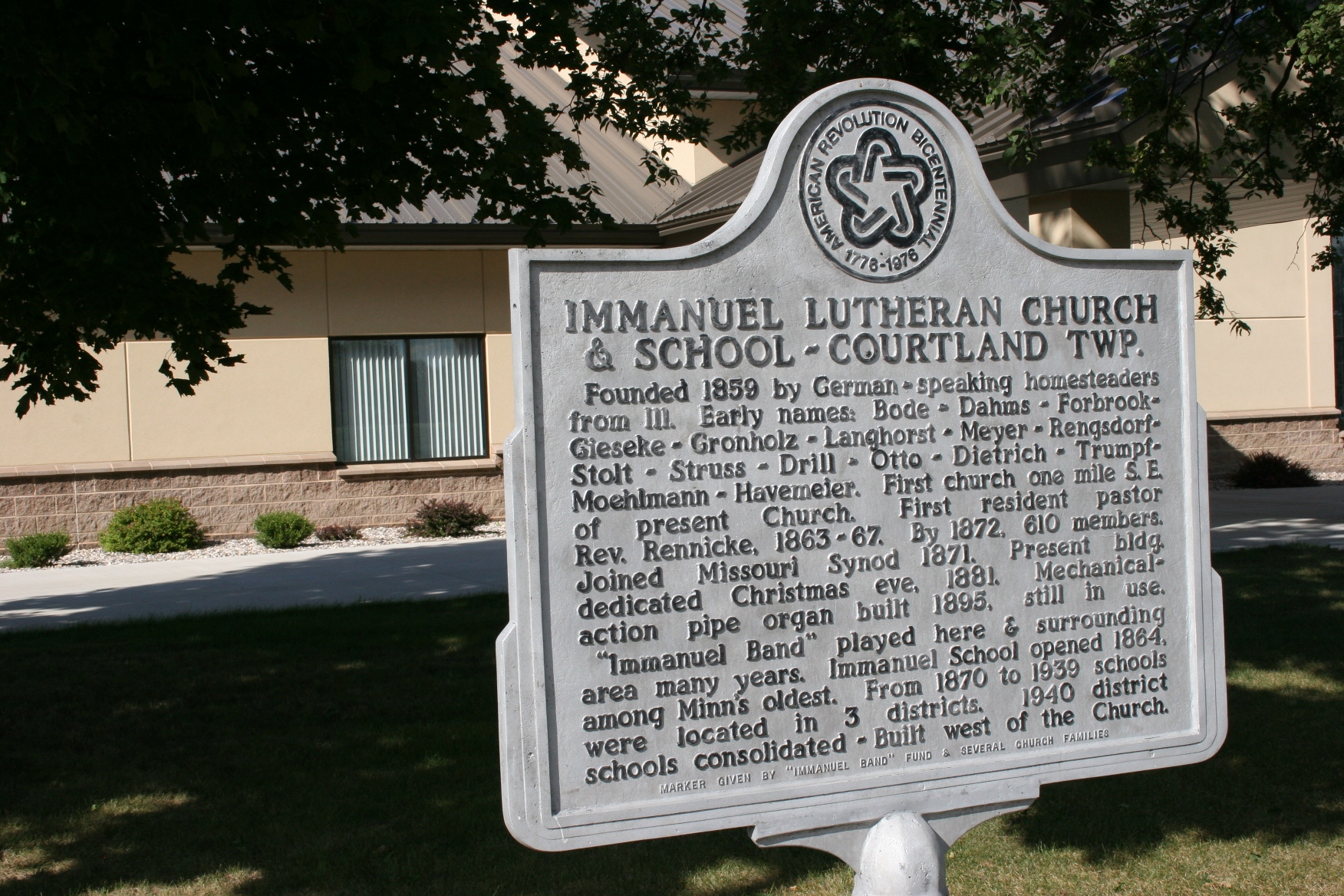
A historical sign outside of Immanuel Lutheran Church, east of Courtland, Minnesota.

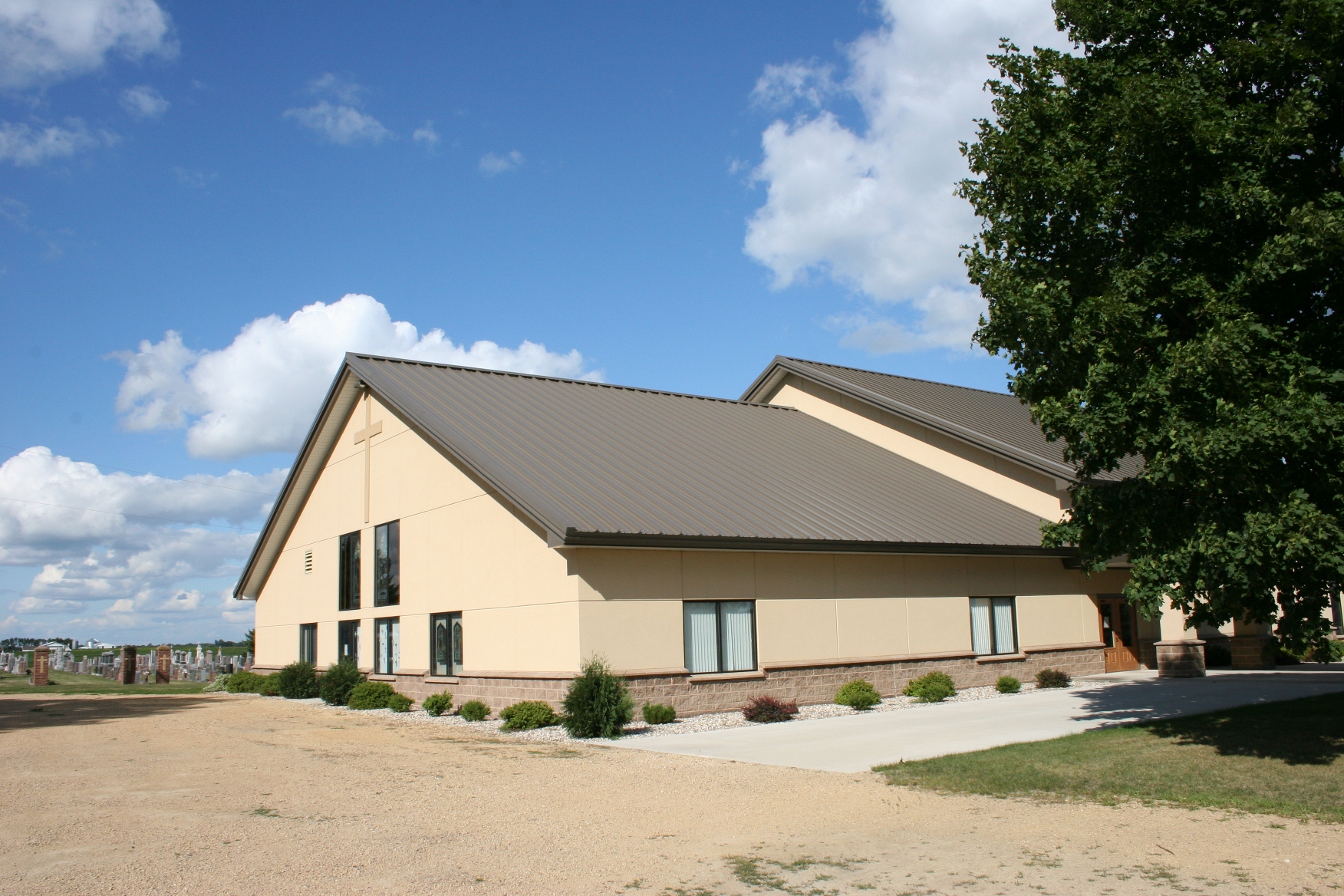
This photo, taken in September, shows primarily Immanuel's social hall and the adjacent cemetery where many of my Bode forefathers are buried.

A view of Immanuel's sanctuary from the balcony. The pews, the chancel furnishings and the stained glass windows from the old church were incorporated into the new church.

© Copyright 2012 Audrey Kletscher Helbling


Rebuilding a rural Minnesota church January 1, 2012

St. John's Lutheran Church in Vesta, hours after a July 1 "series of downbursts" with winds of 90 - 100 mph ripped half of the south roof off. Photo courtesy of Brian Kletscher.

FOR SIX MONTHS NOW, since strong winds ripped half the roof from St. John’s Lutheran Church in my hometown of Vesta, the congregation has been without a permanent place to worship.

The southern half of the roof was ripped off by high winds and toppled onto the bell tower, which has since been removed. It was attached to the sides of the entry, as seen in this image from September.

Inside the sanctuary I listened to the wind flap the tarp that covered the damaged roof in September.

The pews and other items from the church were moved into the undamaged social hall.

Ponder that for a moment. If you are a church-going person, how would you be impacted by the temporary closure of your church building?

Here’s how St. John’s members have dealt with the situation: They are worshipping at their sister congregation, Peace Lutheran in Echo, about 10 miles away. They are holding Sunday School classes in the Vesta Community Hall. They are rebuilding and expanding St. John’s.

Repairs and building expansion are underway at St. John's in this photo taken on December 23.

The south side church expansion includes an office, handicapped accessible bathroom and an enlarged narthex, according to my mom, who attends St. John's.

Like the strong prairie people they are, St. John’s folks are adapting. They are helping one another, offering rides to those who can’t/don’t wish to drive to Echo, especially during the winter months.

Yet, this absence of their church within their community can’t always be easy. Imagine losing a loved one who attended St. John’s, whose death could not be mourned in the comfort of familiar surroundings. The same goes for celebrating baptisms and weddings.

In a small town like Vesta, population around 330, a church knits people and lives together into a community of care. That still exists. But, without a building, it takes extra effort to maintain that closeness.

For those who call St. John’s home and for those of us who grew up in this congregation, the reopening of these church doors cannot come soon enough.

Will “soon” be Easter?

© Copyright 2011 Audrey Kletscher Helbling

 

In praise of old, familiar Christmas hymns December 25, 2011

The doll representing the Christ Child during the Trinity Lutheran Sunday School program on December 17.

FOR THE FIRST TIME in as long as I can remember, I missed Christmas Eve worship services. We were traveling home from a family gathering in southwestern Minnesota.

So this morning, back in Faribault, my husband, eldest daughter, son and I attended Christmas Day services at Trinity Lutheran Church in Faribault.

While a morning worship service doesn’t hold quite the mood-setting anticipation of worshiping on Christmas Eve with candles glowing soft and white holiday lights sparkling bright in the fading daylight and kids restless with excitement, I appreciated the contentment of singing old, familiar hymns on Christmas morning.

From the opening “Oh, Come, All Ye Faithful” to the recessional “Joy to the World,” and many songs in between, I was reminded of all those childhood Christmas Eve worship services at St. John’s Lutheran in Vesta.

Dad hurried to finish the milking early so we could get to church, to participate in the Sunday School program and sing the same old, familiar hymns we sang today: “Hark! The Herald Angels Sing,” “It Came Upon a Midnight Clear,” “From Heaven Above to Earth I Come,” and “Angels We Have Heard on High.”

Although we didn’t sing “Silent Night, Holy Night” this morning, we listened to a teenage girl coo a sweet, lovely rendition. And we heard another teen strum “What Child Is This?” on his guitar.

It was a lovely service of praise, voices uplifted in the joyful comfort of aged hymns to celebrate Christ’s birth.

From my family to yours, we wish you a most blessed Christmas.

© Copyright 2011 Audrey Kletscher Helbling

 

Reaching “the nations” November 21, 2011

I STILL REMEMBER the derogatory label, even after all these years. “Gooks,” he called them. I lashed back, defending the Asian families who fled their war torn countries to start new lives in America in the late 1970s and early 1980s.

“Didn’t your great grandparents immigrate here?” I asked, trying to control my emotions as I confronted the Faribault man who spit out the venomous word. But I knew, even as I spoke, that I could not quell his hatred.

Now, nearly 30 years later, I hear similar disparaging terms directed toward Somalis and Sudanese and, yes, Hispanics, too.

Don’t we ever learn?

These thoughts, of anything I could have considered, passed through my mind yesterday afternoon as I photographed Hmong families participating in a “Let the People Praise!” mission event at my Faribault church, Trinity Lutheran.

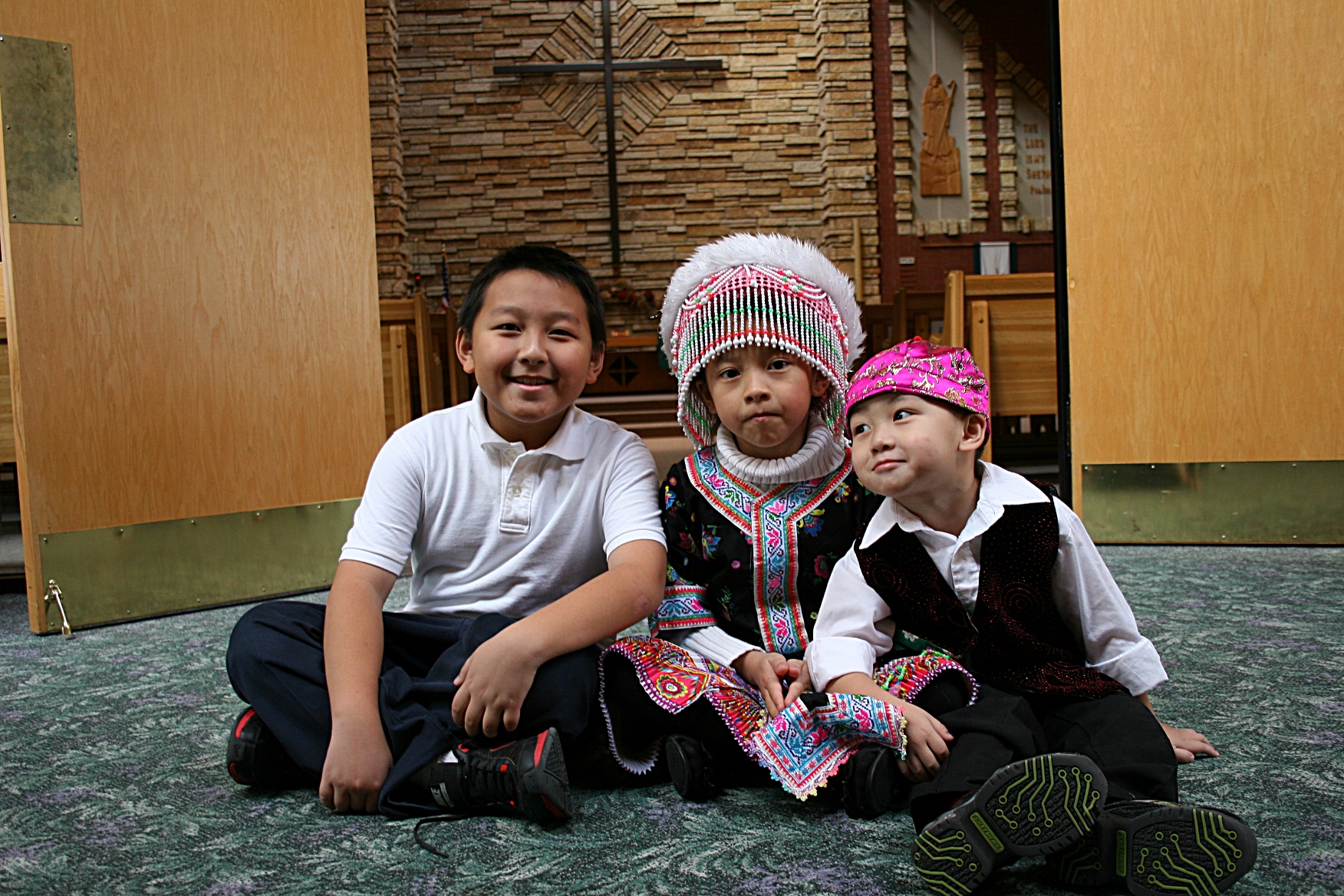
Deacon Johnny Vang of New Life Lutheran Church, Robbinsdale, with his wife Tina and children, Leviticus, 10, Cecilia, 7, and Christian, 4.

I could forgive the man who nearly three decades prior had spoken with such ignorance. But I could not forget.

The organizers and participants in Sunday’s mission gathering wouldn’t expect my thoughts to wander back to that previous unwelcoming American attitude toward Southeast Asians. But I am honest and this post would not be mine if I ignored that unsettling flashback.

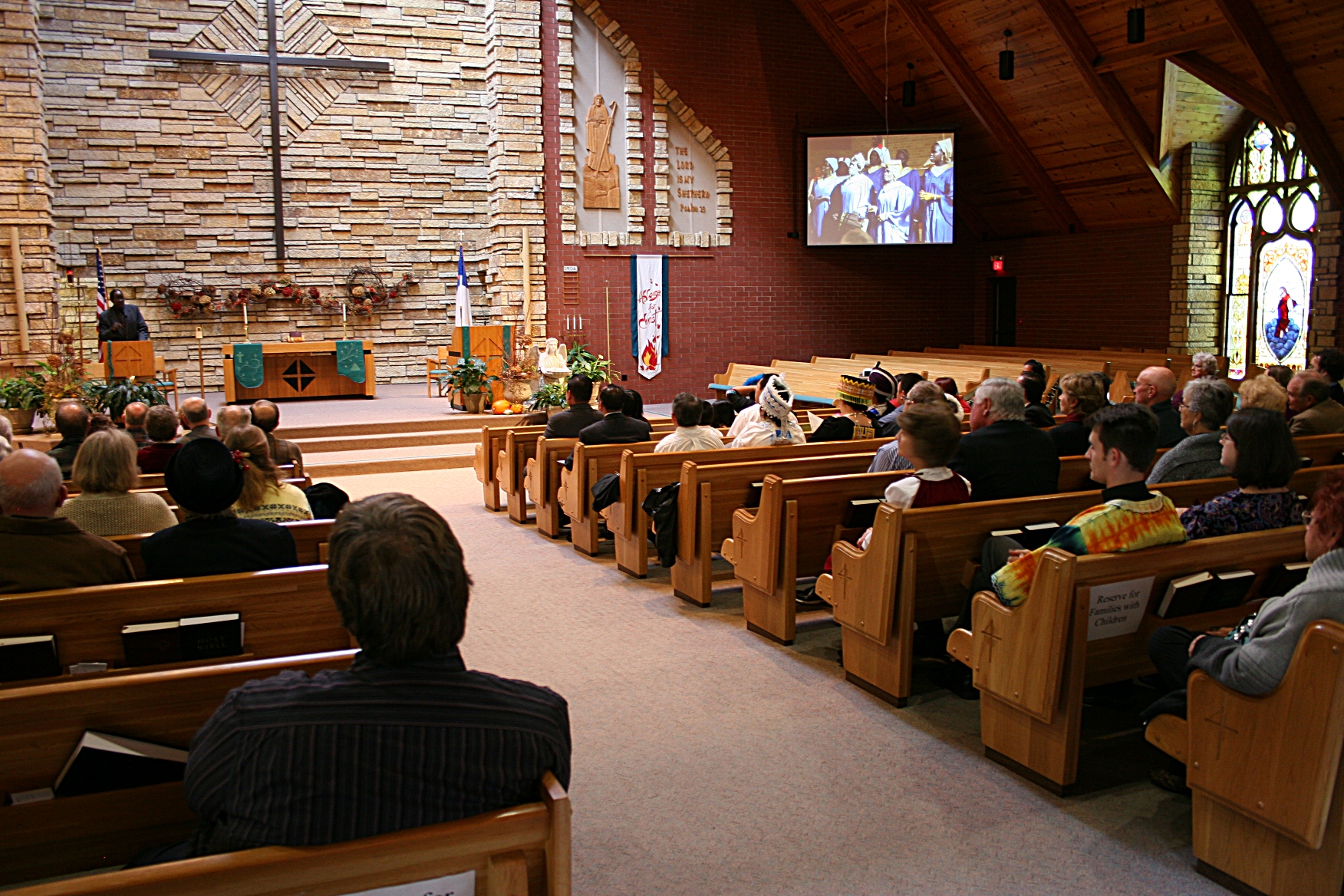
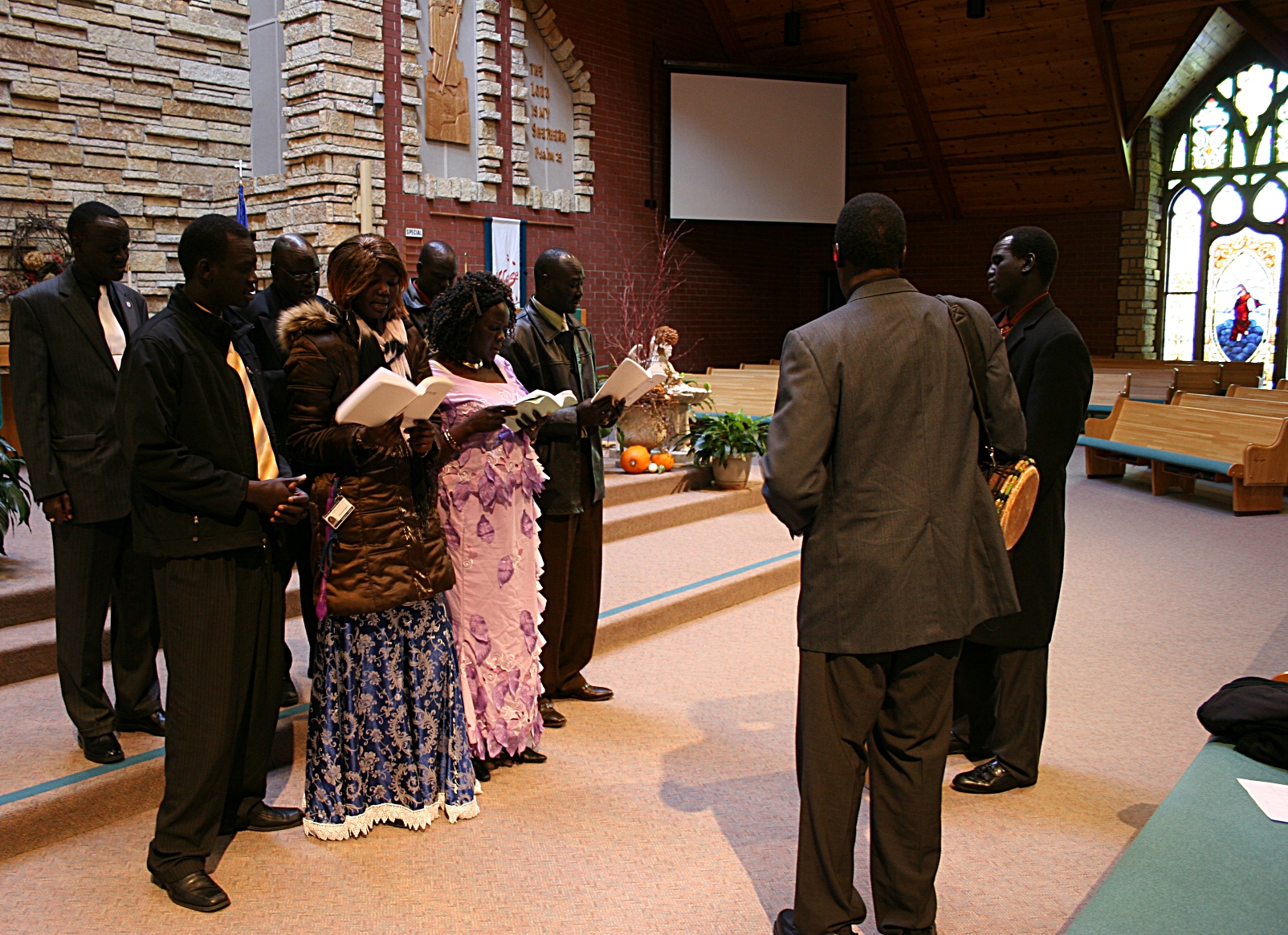
With that historic frame of reference, I could only admire the faith and fortitude of the men and women who stood before me in the sanctuary singing in the Hmong choir, speaking of their mission outreach to Southeast Asia and in Minnesota, specifically in Robbinsdale and the east side of St. Paul.

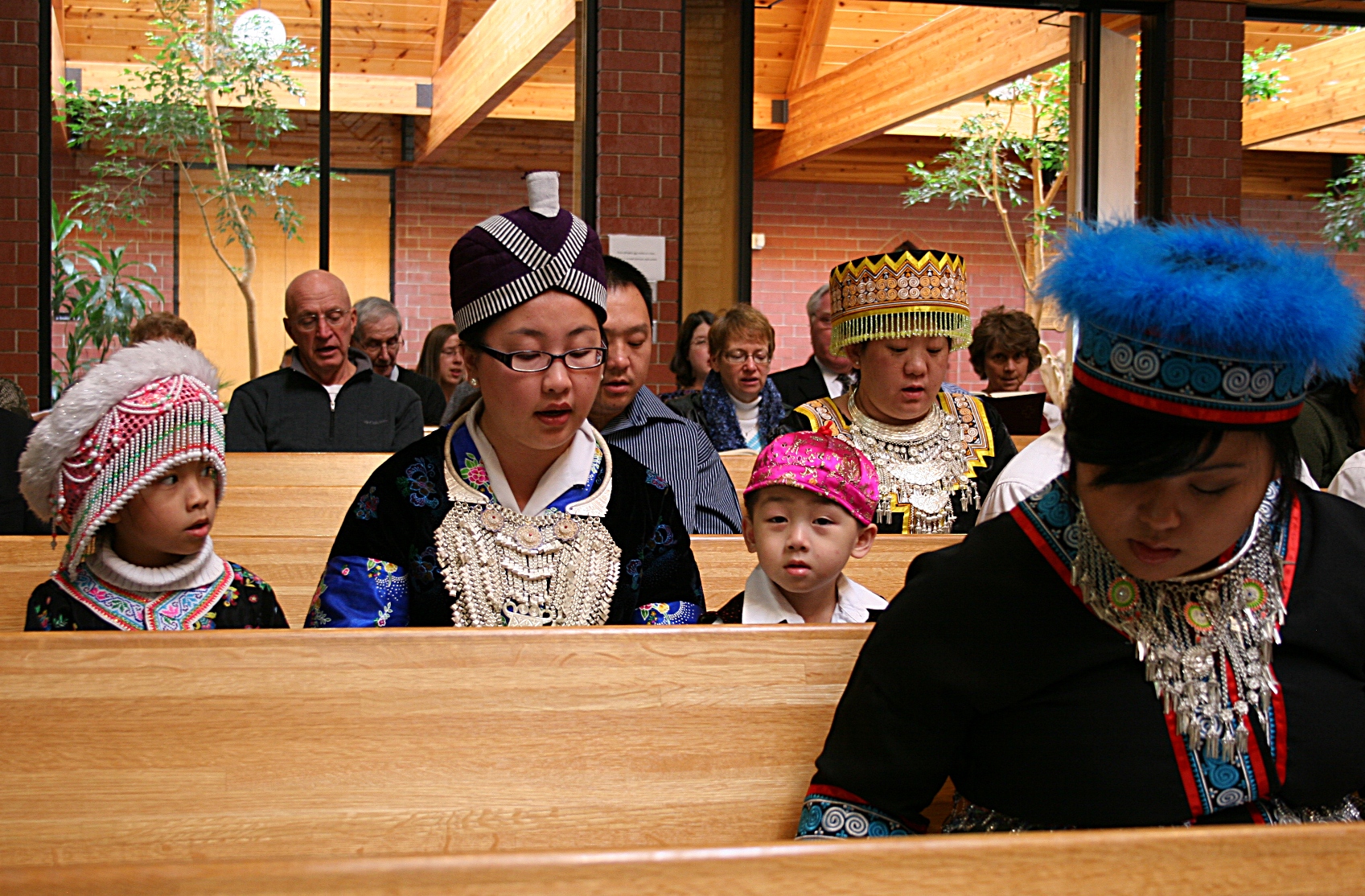
Members of the Hmong choir wore colorful, ethnic costumes.

The congregation, including individuals from the Hmong community, sang at Sunday's mission celebration.

Churches initially embraced Cambodian and Laotian refugees in the years following the divisive and turbulent Vietnam War. I remember, during my first newspaper reporting job out of college in 1978, writing about a Southeast Asian family resettling to the small Minnesota town of Gaylord. I don’t recall details now, but the compassionate sponsorship of this family by a local church made an impression on me.

That care and love triumph over the hateful words and attitudes of the past.

It pleased me to listen to those involved in the Hmong Lutheran Ministry speak of mission trips to the Communist countries of Laos and Vietnam and to Cambodia and Thailand. The “Communist” part certainly doesn’t please me, but the Christian outreach does.

“They are hungry for the gospel and they want to be saved,” a Hmong deacon told us.

My favorite photo of the day shows the Vang children, Leviticus, Cecilia and Christian on the floor in the narthex, the church doors into the sanctuary flung wide open. This symbolizes to me the doors that are being opened to Christianity through mission work here in Minnesota and in Southeast Asia.

Later the Rev. David Seabaugh of Bethel Lutheran Church in St. Paul, home to a Liberian ministry, used nearly the same words: “The Liberian people are hungry for the gospel.”

I considered then how complacent I’ve sometimes become in my Christian faith, even in my free access to the bible, and in my personal outreach.

I needed to hear this Scripture from I Chronicles 16: 24:

Declare his glory among the nations, his marvelous deeds among all peoples.

God doesn’t care if we’re black or white or yellow, or even Lutheran for that matter, or where we live. He considers us “the nations.”

Today, just like 100 years ago when the Germans and Italians and Swedes and Norwegians and so many others immigrated to America, “the nations” are still arriving on our doorstep.

Are you welcoming them?

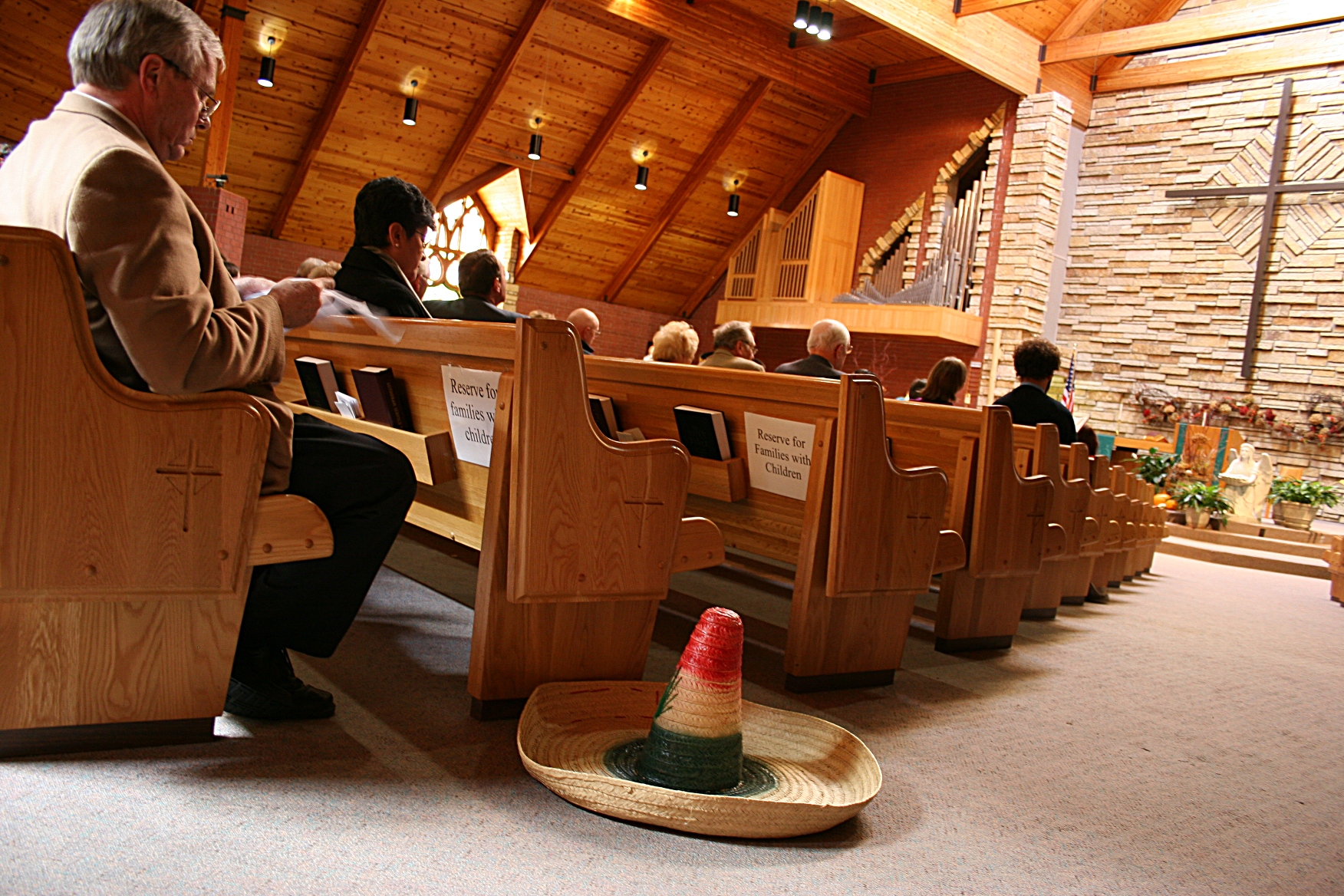
A sombrero rests in the side aisle prior to a musical performance by Hispanic children from the Le Sueur and Henderson areas.

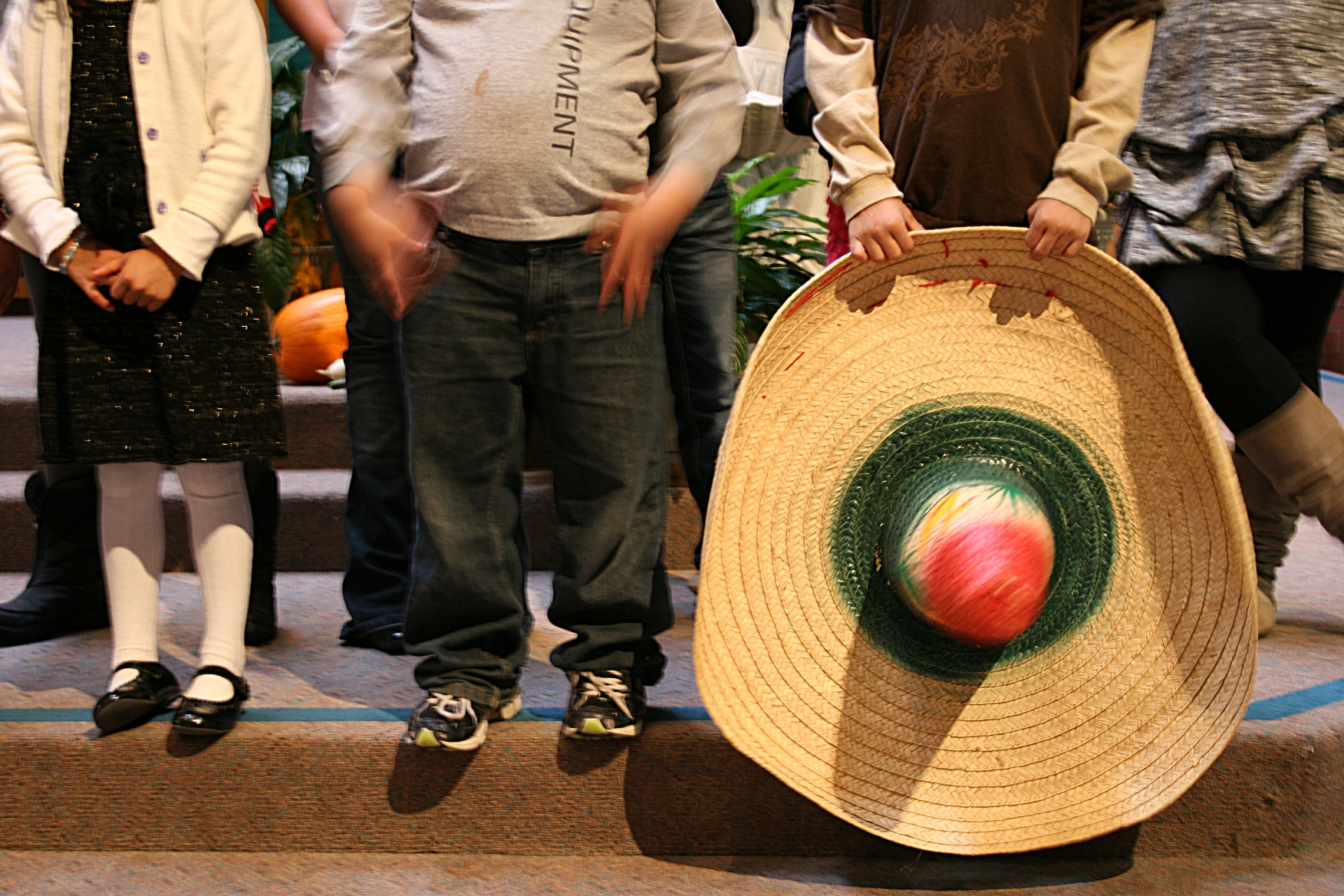
Members of the Hispanic children's choir perform.

A representative of the Sudanese ministry spoke at the mission gathering. "Before, we suffer a lot," he said, calling it "God' s plan" that the Sudanese came to America and to Minnesota.

A musical performance by the Sudanese.

Copyright 2011 Audrey Kletscher Helbling
 

Celebrating Reformation Sunday October 30, 2011

The steeple of Vista Evangelical Lutheran Church near New Richland, not to be confused with St. John's Lutheran Church in Vesta, with an "e" and located in Redwood County.

I’M LUTHERAN.

No, I don’t drink coffee in the church basement; only rarely anywhere. No, I don’t eat lutefisk. No, I don’t especially like red Jell-O.

Yes, I eat hotdish. Yes, I studied Luther’s Small Catechism. Yes, I’m proud of my German Lutheran heritage.

And, yes, today I sang “A Mighty Fortress is Our God.”

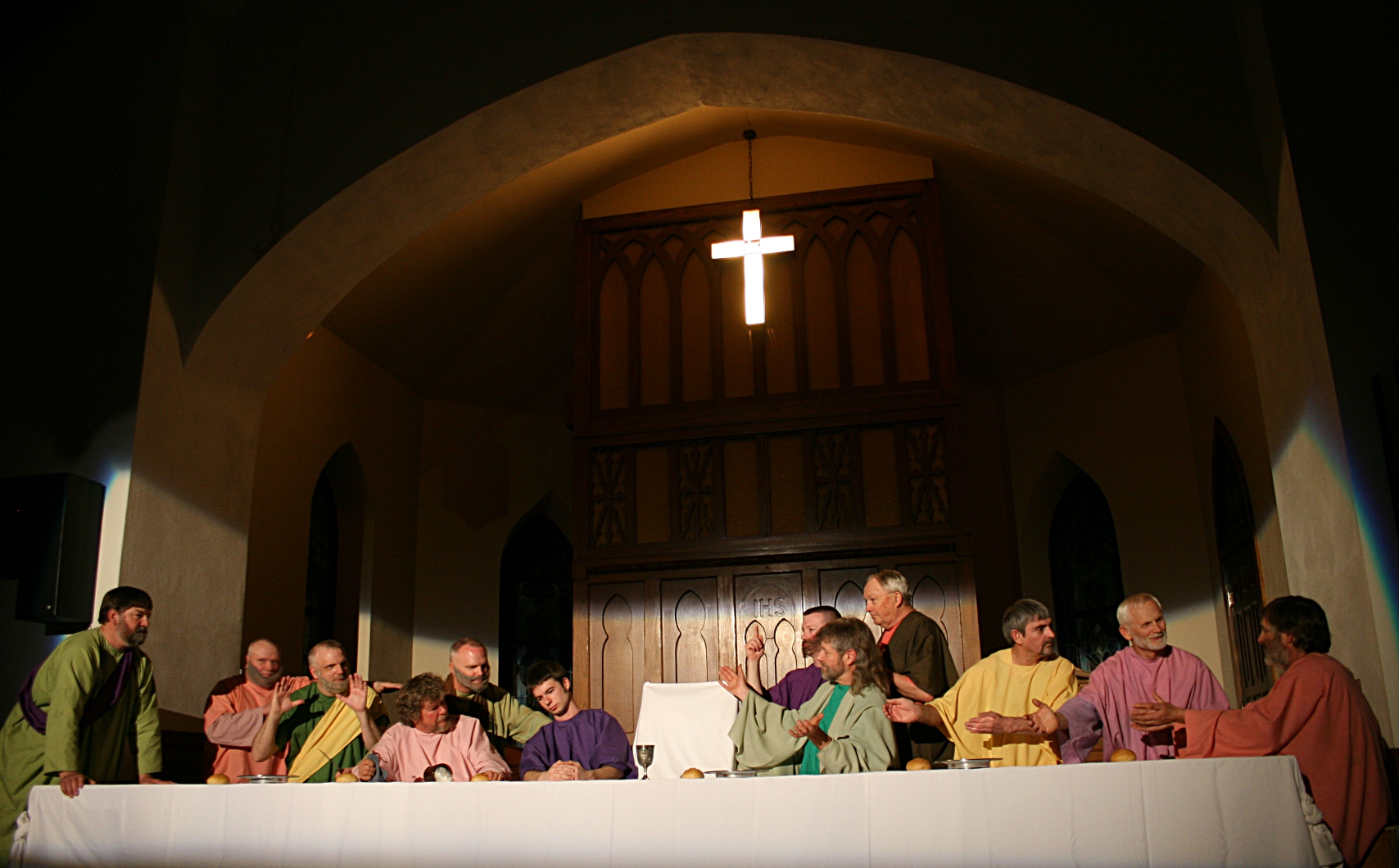
Today marks Reformation Sunday, that Sunday when all good Lutherans commemorate the Reformation led by Martin Luther.

I’m going to let you in on a little secret here. When I was a wee girl attending St. John’s Lutheran Church in Vesta, memorizing the Ten Commandments and all the parts of the Catechism, I was confused by Martin Luther and Martin Luther King Jr. It took me awhile to realize the teacher and pastor weren’t talking about the same man.

There, got that out of the way. So back to today and church services…

We sang all those wonderful old hymns like “A Mighty Fortress,” “Just As I Am” (which always reminds me of Billy Graham), “The Church’s One Foundation,” “Take My Life and Let It Be” and “When the Roll is Called Up Yonder” (which was unfamiliar to me, but apparently is a tent revival song).

I take comfort in singing those hymns of old, so deep and rich and soul-connecting. Accompanied by string instruments and a piano during this morning’s worship service at Trinity Lutheran Church in Faribault, the words seemed almost poetic. Lovely. Just lovely to sing.

And the pastor’s words were reaffirming as he preached that the Reformation is about “God’s amazing grace in Jesus Christ,” a message that has been around since the days of Adam and Eve, way before Martin Luther.

Reformist Luther, he said, “chose to follow the Scriptures,” that salvation comes through Christ and not by anything we can do.

And in the middle of that sermon, the preacher said something that surprised me, coming from a Lutheran pastor and all. “We’re not talking denominations, but the way to salvation. It comes through Jesus Christ alone.”

The salvation part didn’t surprise me; it was the “denominations” part.

But I was glad to hear it said out loud in church because—even though I’m a deeply-rooted Lutheran—I know there won’t be any signs in heaven directing Lutherans one way, Catholics another, Methodists that direction…

I would do well to always remember the words of the old hymn:

Just as I am without one plea

But that Thy blood was shed for me.

And that Thou bidd’st me come to Thee

O Lamb of God, I come! I come!

© Copyright 2011 Audrey Kletscher Helbling