Minnesota Prairie Roots

Writing and photography by Audrey Kletscher Helbling

Vespers & Christmas at Valley Grove December 6, 2025

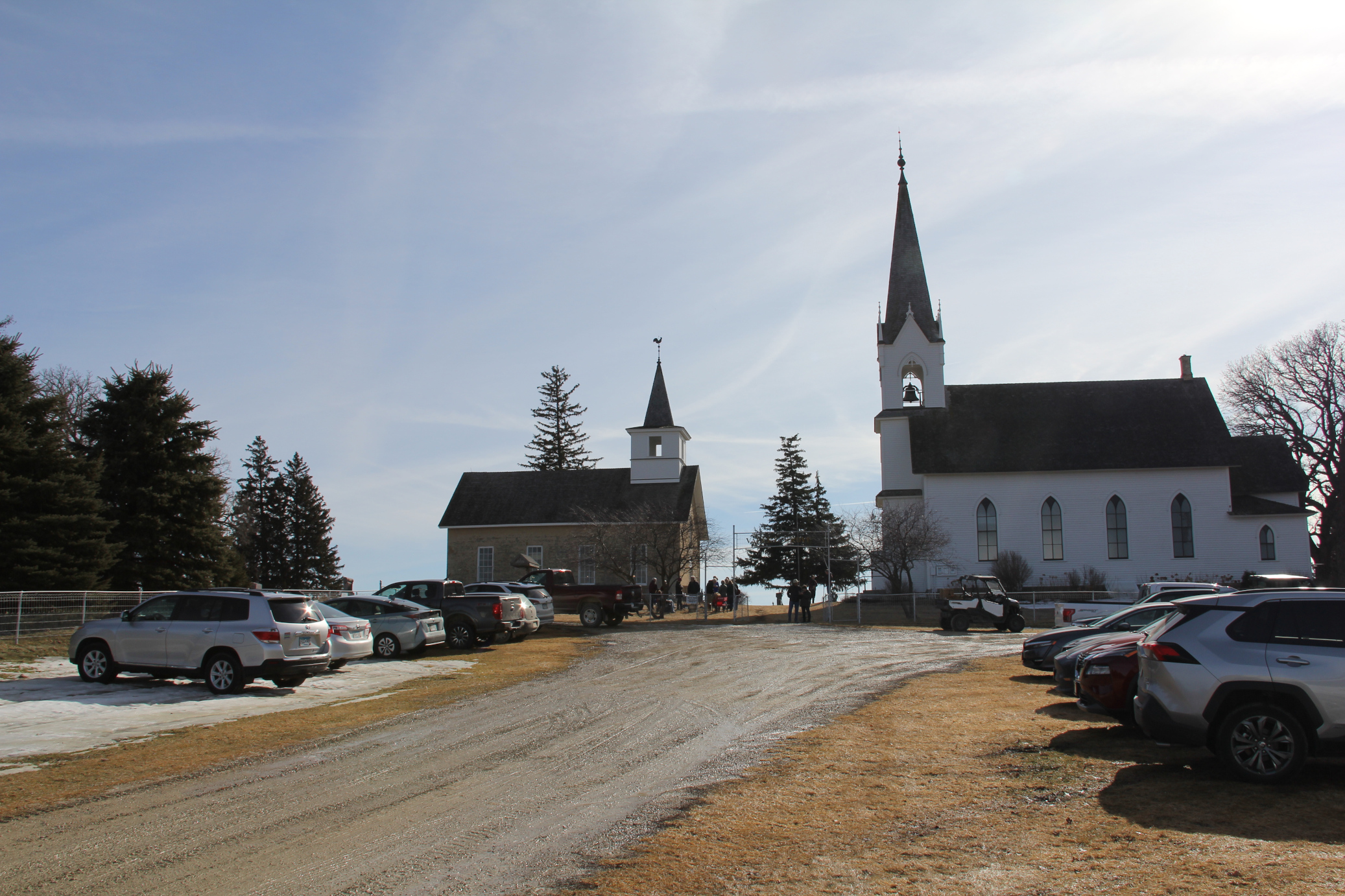
The Valley Grove churches photographed in October. (Minnesota Prairie Roots copyrighted file photo October 2025)

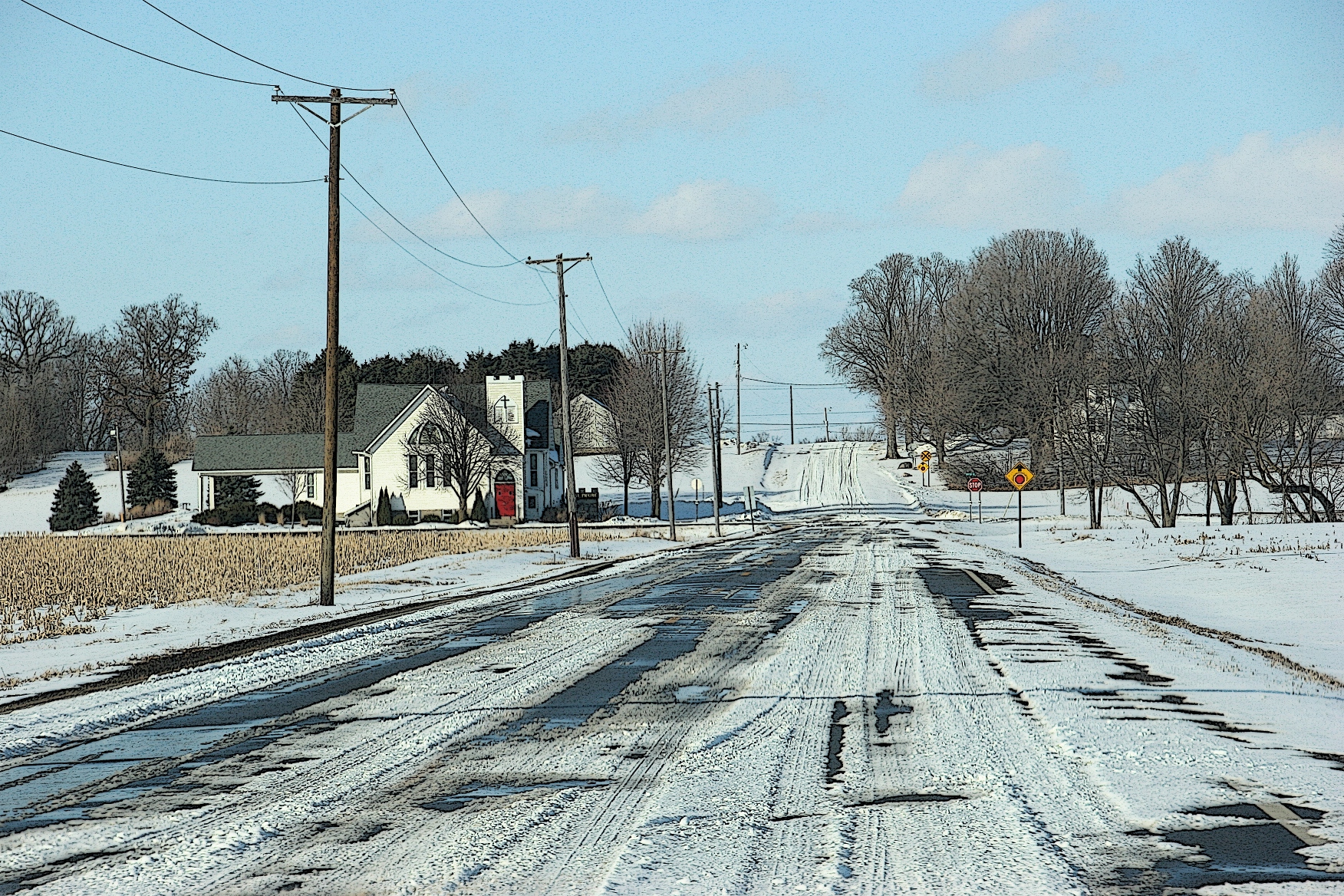
OVERLOOKING THE COUNTRYSIDE high atop a hill in northeastern Rice County, two historic Norwegian immigrant churches sit, a testament to the faith and fortitude of those who settled in this area of southern Minnesota.

And each December, thanks to the efforts of the Valley Grove Preservation Society, the faith legacy of those long ago Norwegian settlers continues. This Sunday, December 7, at 4:30 pm, a vespers service of music, stories, poetry and scripture will be held in the 1894 wood-frame Valley Grove church with the soaring steeple. Just across the yard stands the older limestone church, used now as a gathering space rather than as a sanctuary.

Inside the wood-frame church during the Valley Grove Country Social. (Minnesota Prairie Roots copyrighted file photo)

Weeks later, on Christmas Eve, the wood-frame church will once again host guests for music at 9:45 pm followed by a traditional candlelight service at 10 pm.

I’ve been to Valley Grove countless times, mostly in autumn and never in December. It’s a beautiful spot. Peaceful, too. And I expect with the recent snowfalls, this rural setting near Nerstrand will prove even more picturesque. Ideal for contemplation, for worship, for reflection and for remembering the faith of forefathers.

© Copyright 2025 Audrey Kletscher Helbling
 

“Love your neighbor,” Part I from Northfield November 17, 2025

Photographed many years ago in downtown Faribault. (Minnesota Prairie Roots copyrighted file photo used here for illustration only)

MY SUNDAY BEGAN as most Sundays do with morning worship at my church. The sermon highlighted sections of Mark 12, which includes this verse: Love your neighbor as yourself. That would theme the rest of my day.

Hours later I found myself gathered with others for the annual Rice County Salvation Army Red Kettle Campaign Kickoff. Again, the focus was on neighbors, specifically helping our neighbors in need.

Shortly after that event, Randy and I were on the road to neighboring Northfield for a 5 pm candlelight prayer vigil at Bridge Square. That, too, was about loving our neighbors. This time the gathering focused on supporting the family of Adan Nunez Gonzalez, a 41-year-old father of four snatched by masked Immigration and Customs Enforcement agents at gunpoint on November 11 in a residential neighborhood of Northfield. That incident has sparked outrage in this southern Minnesota college town and beyond.

Several family members and others witnessed Nunez Gonzalez being pulled from the passenger side of a vehicle while he was arriving at a job site along Washington Street. He’s a painter, originally from Mexico, with reportedly no criminal record who has been living in the US for 11 years. The entire incident was captured on video by his teenage son, called to the scene, and has been widely-circulated on social media. Nunez Gonzalez is now being held in the Kandiyohi County Jail. That county is among eight in Minnesota assisting with various aspects of ICE enforcement efforts. My county of Rice is not among them.

Attendees gather at Bridge Square as the candlelight prayer vigil is about to begin. (Minnesota Prairie Roots copyrighted photo November 2025)

HEAVY, YET HOPEFUL, HEARTS

The mood at Sunday’s prayer vigil felt heavy, yet hopeful, as some 200 of us gathered in the town square for this event organized by the Northfield faith community. As the sun set, as the nearby Cannon River roared over the dam, candles were distributed, lit and the crowd pressed together around a monument honoring Civil War soldiers. In late September, football players from Carleton College, blocks away, met here to turn the eagle atop the monument toward their college after defeating across-town rival St. Olaf College. It’s an annual celebratory tradition for the winning team.

Bridge Square has long been a community gathering spot, a place to celebrate, to peacefully protest, to meet one another for local events.

On this mid-November evening, it felt right and necessary to be here. To pray. To sing. To hear scripture quoted. To contemplate the gravity of ICE actions that have traumatized, torn families apart, instilled fear in communities across the country, raised the ire and concerns of many Americans like me who care about our neighbors and how they are being unjustly treated. Taken by armed, masked ICE agents and Border Patrol. Confined. Deported. Without due process of law.

Clergy gather before the start of the prayer vigil. (Minnesota Prairie Roots copyrighted photo November 2025)

A COMMUNITY RESPONDS

I felt the unity of a community determined to raise their voices and to take action. Northfielders have fed the family of their detained neighbor, organized activities for his children, started a GoFundMe to cover legal and other expenses, emailed support, expressed outrage and much more.

Love your neighbor as yourself was emphasized by clergy leading the vigil. One after another they stepped up to the mic, the first pastor leading us in The Lord’s Prayer. One referenced the biblical parable of the mustard seed and how we are to plant seeds of hope, faith, advocacy that will grow sturdy and strong among us. Another spoke of Jesus and his family fleeing to Egypt after his birth following threats from King Herod to find and kill all first-born males. It was fitting.

Another view of the crowd, not all of it, but a section of the attendees. (Minnesota Prairie Roots copyrighted photo November 2025)

A BIBLICAL DIRECTIVE

And then there was the well-known scripture from Matthew 25 in which Jesus asks us to care for one another—when hungry or thirsty, in need of clothing, when sick and in prison. It is as strong a directive as any in the bible to love our neighbors and to show that love in kind, caring and compassionate action.

The 25-minute Sunday evening prayer vigil closed with singing of “This Little Light of Mine.” Voices rose clear and strong in the darkness, arms stretched high, each hand grasping a single candle. A light. Many candles shining lights of support, hope, protest, resistance, outrage and more in a community that cares deeply about its neighbors.

#

NOTE: Please check back for a second “Love your neighbor” post, this one on the Salvation Army Red Kettle Campaign Kickoff. Also, note that the vigil images in this post were taken with my smartphone, thus the quality is not great compared with pix I would have taken with my 35 mm Canon. I left that at home, opting to be in the moment.

© Copyright 2025 Audrey Kletscher Helbling
 

Clearly I needed to write about homelessness & housing insecurity in Faribault…read on August 6, 2025

This poster inside Trinity Lutheran Church shows an architectural drawing of Ridgeview Heights and a Vacation Bible School mission fundraising goal for the housing project. (Minnesota Prairie Roots copyrighted photo August 2025)

ON MY WAY TO SUNDAY MORNING church services, I missed an opportunity to live my faith. Reflecting on that moment, I’m still uncertain what I could have done. But the guilt I feel about doing nothing at the time remains.

Let me set the scene. While driving to church, Randy and I dropped off some mail downtown. Up the hill from the post office, I noticed a parked car crammed with stuff. Someone clearly lived out of the vehicle, one I’ve previously seen. Then my eyes shifted to the adjacent street corner and an individual, cocooned in a bright gold blanket, sleeping atop a bench. And then we turned the corner.

“I should take a picture,” I told Randy, my mind already creating a story that would enlighten others about homelessness in Faribault. But then I quickly realized that taking a photo wouldn’t be particularly kind. And so we continued on to church.

Still, I couldn’t shake the image of that person stretched atop a bench along Central Avenue. I wondered about his story, why and how he found himself without a home. And I considered how vulnerable and exposed I would feel sleeping like that in a public place. Those thoughts followed me into church.

HOUSING FOR THE HOMELESS”

When I stepped inside the sanctuary, I immediately noticed a “Housing for the Homeless” poster near the organ. There are coincidences and then there are what I term “God moments.” And this, in my mind, was clearly divine. I’ve seen enough of these occurrences in my life to distinguish the two. God was assuredly nudging me to write on the topic of homelessness and housing insecurity in my community.

That sign in church was a promotional for the chosen mission of this year’s Vacation Bible School, which started that very evening at Trinity. Participants are donating their monetary gifts to Ridgeview Heights, an accessible, sustainable housing community to be built in downtown Faribault just blocks from the slumbering man on the bench. The VBS fundraising goal is $500.

That $500 may seem inconsequential considering the $2.5 million project cost. But every dollar helps in constructing the two buildings aimed at housing families with children, including those experiencing homelessness. Two of the eight units will serve as free emergency shelters and the other six will be market rate workforce units.

A COMMUNITY ACTS

The Community Action Center, which works collaboratively to alleviate hunger, homelessness and poverty among individuals and families in the community, is the lead on Ridgeview Heights. With an in-kind land donation from the city of Faribault, two grants, gifts, community donations and financing, the CAC is able to break ground at 4 p.m. today, August 6, for the much-needed two and three-bedroom units.

So first I saw the sleeping man, then the poster. And then came the sermon…with a directive that congregations ought to think, plan and act in ways that bless people. The guest pastor encouraged us not to think less of ourselves, but to think of ourselves less (a loose quote from C.S. Lewis). In other words, turn the focus outward on the community rather than inward to the church’s needs. The VBS kids will be doing exactly that this week with their “Housing for the Homeless” mission focus.

A FAMILY THAT CARES

Now you may think my story ends here. But it doesn’t. On July 28, I received a mass email about an upcoming Helbling family reunion. Organizers are changing things up this year by raffling items made by family members. One of several ways to qualify for a raffle entry is via a $5 charitable donation. All donations will go to the Community Action Center in Faribault with a dollar-for-dollar match from my eldest niece’s employer.

Truly, I was meant to write this story. I may have bypassed the man sleeping on the bench. But I got the message, loud and clear, that I needed to write about homelessness and housing insecurity in Faribault. I’ve seen the tents pitched along the river, beside train tracks, behind evergreen trees, next to a park. I’ve seen the homeless in the library, sleeping in the Central Park bandshell, biking and walking about town, including past my house. I am aware of the long waiting list for emergency shelter. Even if I failed to “do” something, I can raise awareness through my writing. And by doing that, perhaps I am helping in some small way to bless my community, including the man sleeping on a bench in the heart of downtown Faribault on a Sunday morning.

© Copyright 2025 Audrey Kletscher Helbling

 

The powerful messages delivered during the funeral of Minnesota lawmaker Melissa Hortman & her husband, Mark June 28, 2025

(Minnesota Prairie Roots copyrighted file photo)

I RUSHED HOME from the grocery store late Saturday morning to watch the live broadcast of the funerals of Melissa and Mark Hortman, shot to death in their Minnesota home two weeks ago during an apparent politically-motivated assassination. Melissa was Minnesota’s Speaker of the House, a respected politician, but, more importantly, a beloved wife, mother, daughter, friend, neighbor and more. Much more.

The private service at the Basilica of Saint Mary in Minneapolis revealed the professional and personal sides of the Hortmans with stories shared during eulogies after the Catholic Mass. Laughter rang through the massive church, filling the spaces between grief.

I jotted down 3 ½ pages of notes, not only to share information with you, but also because I focus better, retain more, by doing that. It’s also the reporter in me emerging.

HERE FOR EACH OTHER IN OUR GRIEF

So what stood out? A lot.

First, it was a recognition that we are all grieving. Individually. Collectively, as a state. “Nothing conveys love and support more than presence,” presiding pastor, Father Daniel Griffith, told those packing the pews. That included former President Joe Biden and former Vice President Kamala Harris, sitting in the front row next to Minnesota Governor Tim Walz and Gwen Walz. The Hortmans’ adult children, Colin and Sophie, and other family sat just across the aisle.

LIGHT & HOPE IN DARKNESS

The remarkable strength of Colin and Sophie continues to stand out. Rev. Griffith noted the courage and grace of the two, saying they are “a source of light and hope in the darkness.” In a message earlier released to the public, the siblings called for each of us to make our communities better for someone else. Plant a tree. Pet a dog. Stand up for justice and peace. And more.

GROUND ZERO” FOR CHANGE

Father Griffith, with permission of the Hortman family, spoke candidly. The nation, he said, is “in need of deep healing.” He referred to Minnesota as a past “ground zero” for racial injustice in the 2020 killing of George Floyd and now for political violence and extremism in the murders of the Hortmans and the shootings of Senator John Hoffman and his wife, Yvette, on the same morning. The Hoffmans are recovering, John still hospitalized. Minnesota, Griffith said, can now be the “ground zero” for restoration, justice and healing. If we work together. And strongly decry injustice and violence.

“Peace & Love,” an acrylic painting by Angelina Dornquast exhibited at the Paradise Center for the Arts, Faribault. (Minnesota Prairie Roots copyrighted file photo October 2024)

LET THERE BE PEACE

Words like hope, goodness and kindness were repeated often during the lengthy service. Likewise justice and peace. The gospel reading of The Beatitudes from Matthew 5 seemed especially fitting: Blessed are those who mourn…blessed are the merciful…blessed are the peacemakers…

Peace. Father Griffith shared that Melissa’s mother found a worn copy of the prayer of St. Francis of Assisi in her daughter’s purse. I expect it’s familiar to most of you. Lord make me an instrument of your peace… Colin later read that prayer, a moment I found profoundly moving. In his grief, he had the composure to share those powerful words of where there is hatred, let me sow love… I can only imagine how proud his parents would have been.

DOING GOOD

Governor Walz said Melissa’s goal in life was “to get as much good done for as many people as possible.” He pointed to her legislative efforts that resulted in fewer kids living in poverty, safe and secure housing for Minnesotans and more trees. She loved trees and gardening. Earlier, the priest referenced much the same, calling service and community the Hortmans’ guiding lights.

LAUGHTER IN STORIES

But it was close family friend and former co-worker (at the Legal Aid Society of Minneapolis), Robin Ann Williams, who brought laughter to the Basilica with her personal stories. She shared about a call from Melissa to help choose a paint color for her kitchen. When Williams arrived, she found all the paint samples were shades of beige. The kitchen is still beige. The kitchen centered gatherings, like the “Gourmet Supper Club” dinners with law school friends. Mark Hortman’s sour dough bread was better than his home-brewed beer, she said. Laughter erupted often, especially when she held up a souvenir photo placard of vice presidential candidate, Minnesota Governor Tim Walz, which Melissa brought home for her friend from the national DFL convention.

Photographed in downtown Faribault. (Minnesota Prairie Roots file photo August 2019)

JOY & MORE ARE POSSIBLE

On this Saturday, the funeral was not about politics, though. It was about coming together to celebrate the Hortmans, to honor their memories, to reflect on their public and private lives, to collectively grieve. The day prior, some 7,500 people converged on the Minnesota State Capitol to pay their respects as the couple and their dog, Gilbert, lay in state.

“We are buried in sorrow right now,” family friend Williams said, adding that joy will come.

I have to believe it will, if we begin to follow the advice of the Hortman children, the prayer of St. Francis of Assisi, the teachings of The Beatitudes and the directive of Father Griffith to work together for restoration, justice and healing.

© Copyright 2025 Audrey Kletscher Helbling
 

Growing up with 21 siblings in rural Minnesota, a memoir June 10, 2025

This book is also packed with candid and posed photos of the Miller family, adding to the text. (Book cover sourced online)

THIS COULD BE MY STORY or that of any other Baby Boomer who grew up in rural southern Minnesota. With one primary exception. None of us had 21 siblings. Yes, twenty-one. I had only five—three brothers and two sisters.

But Helen Miller had seven brothers and 14 sisters, all single births, all born to the same parents, Lucille and Alvin Miller of rural Waseca, over a span on 26 years. She’s chronicled the family’s life in a self-published memoir, 21 Siblings—Cheaper by the Two Dozen.

I happened upon this book, printed in 2018, after visiting the Waseca County History Center and seeing an exhibit about this unusually large family. I knew then that I needed to read this story by Helen, 13th in line. She’s just a bit older than me. I expected my farm upbringing during the late 50s through the 60s and into the early 70s would be similar in many ways. I was right.

WHITE RICE & PANCAKES

This book proved a stroll down memory lane. I remember meals of mostly meat and potatoes with a side vegetable given that was the preferred meal of my farmer father. He, like Alvin Miller, was quite content to eat those basics and didn’t care for any deviations. Large gardens were the norm, no matter family size. Lucille Miller canned fruits and vegetables, just like my mom, except a whole lot more. And, when food supplies ran low, both our mothers cooked a meal of white rice and cinnamon. I detested that and to this day still don’t like plain white rice.

I also do not much like pancakes, although I have no particular reason to explain that dislike. Helen Miller should. She writes of the family receiving boxes and boxes of pancake mix following a railroad accident. Except they didn’t get the pancake mix until months later…when weevils had infested the food. The Millers simply sifted out the bugs, prepared and ate the pancakes. They weren’t about to turn down free food.

Specific stories like these point to the challenges of feeding a mega family, even with their own garden produce, chicken, pork and eggs. With that many people to feed and to shelter, you can only imagine the logistics of running the household. Older siblings were responsible for younger siblings. Everyone pitched in with chores. They shared a lot—clothes, shoes, a singular cup for drinking water (same as my family), rooms, a love of music and a strong faith.

This shows part of the Miller family exhibit at the Waseca County History Center. (Minnesota Prairie Roots copyrighted file photo May 2025)

THE IMPORTANCE OF FAITH

The Millers’ Catholic faith centered their lives. Lutheranism centered mine. Faith carried the Millers through an especially tragic event—the deaths of their aunt, Irene Miller Zimmerman, and her six young children in 1959. An unseen train broadsided their station wagon just blocks from Sacred Heart School, the same school Helen and her siblings attended. She writes: It was under this veil of grief that I grew up a rather serious child. She was only four years old.

Amid the difficult moments, Helen documents light-hearted moments, too. One in particular caused me to burst into laughter. As a seven-year-old, Helen went to Confession for the first time, thinking she had not broken any of the Ten Commandments. But she had to confess something to the priest. Helen admitted to disobeying her parents twice, having false gods twice and then, and here’s the kicker, committing adultery three or four times. Now there’s nothing funny about that sin. But when an elementary-aged girl confesses to something she clearly doesn’t understand, well, I wonder how that priest kept from laughing aloud. He didn’t laugh, or correct her, according to Helen, who twice confessed to breaking the Sixth Commandment.

SEWING, FISHING & A WHOLE LOT OF PATIENCE

Story after story reveals a childhood upbringing that many times mimicked my own. Like Helen, I learned to sew because, if I wanted new clothes as a teen, I needed to stitch them. I babysat children for fifty cents an hour, just like Helen. I fished, occasionally, with my family. But the Millers fished often, usually at their rustic cabin along Reeds Lake a short drive from their farm. Vacations and dining out were not part of our youthful experiences. The list of similarities goes on and on among the many differences.

I can never fully relate to having 21 siblings. But this rural Waseca family managed and, by all accounts, well. With a whole lot of organization, love, strength and patience. And, Helen notes, with an eternally optimistic and patient mother. Just like my mom.

© Copyright 2025 Audrey Kletscher Helbling

 

The boy who would be pope May 12, 2025

Filed under: Uncategorized — Audrey Kletscher Helbling @ 6:00 AM
Tags: , , , , , ,
A sculpture in a southern Minnesota Catholic church shows Mary holding the hand of Jesus. (Minnesota Prairie Roots copyrighted file photo)

AS A KID, he set up an ironing board as an impromptu altar and made his two brothers attend Mass in their southside Chicago home. They teased, “You’re going to be Pope.” And today Robert “Bob” Prevost is just that, Pope Leo XIV.

I love that story, among the many reported since Prevost was selected by a Conclave of Cardinals to lead the Roman Catholic Church. He is the 267th pope and the first American elected to that powerful position.

From everything I’ve read and heard in media reports, he seems a good choice. His brothers say he will address tough issues (like immigration) and will bring people together. I’ve heard the words “building bridges” used often when referencing Pope Leo XIV. I am hopeful this man, who speaks five languages and who spent most of his church service in Peru, can use his global experiences and perspectives to make a positive difference in the world.

Oh, how we need a leader like him, described as humble, intelligent, calm, a good listener, unafraid to criticize, to be a voice of reason.

Can he be our President?

© Copyright 2025 Audrey Kletscher Helbling
 

From southern Minnesota: Reflecting on “the people’s pope” April 23, 2025

Faribault artist Kate Langlais painted this acrylic portrait of Pope Francis, displayed at the Paradise Center for the Arts, Faribault, in 2022. (Minnesota Prairie Roots copyrighted file photo March 2022)

HER COMMENT SUMMARIZES what many Catholics and others are likely thinking this week as they mourn the passing of Pope Francis on Easter Monday. Dorothy Storch writes this on the Facebook page of the Church of St. Patrick, Shieldsville. a rural southern Minnesota church near me: “Our Pope of peace and mercy, kindness and love. A man of God.”

A side and rear view of St. Wenceslaus Catholic Church, New Prague. (Minnesota Prairie Roots copyrighted file photo)

Perhaps that could be written about previous popes and other faith leaders. But not always. And not with the depth of admiration for Pope Francis, often termed “The people’s pope.” He changed things up in the Catholic church, opening minds and hearts and relating to people in a way that made him seem more like one of us.

Mass, about to begin at the Basilica of Saint Stanislaus Kostka in Winona. (Minnesota Prairie Roots copyrighted file photo)

A posting on the Facebook page of the Church of St. Dominic, 16 miles to the northeast of Shieldsville in Northfield, explains: “His life was a shining example of humility, compassion, and servant leadership. Pope Francis reminded us through both word and action what it means to care for the poor, to welcome the outcast, and to live simply with a heart open to God. He walked closely with the people, always pointing toward mercy by living our faith with the same grace and humility.”

Loving words from the Bible in the heart of downtown Faribault. (Minnesota Prairie Roots copyrighted file photo)

Even though I am not of the Catholic faith, I’ve heard, read and seen enough media reports about Pope Francis to understand that he was, indeed, a compassionate man of both words and actions. Words, especially when you are a faith leader, require positive action. Pope Francis visited inmates, embraced those with disabilities, met with migrants, washed feet and much more. Washing someone’s feet is truly an act of humility and service.

“Faysel,” who fled the war in Somalia. Kate Langlais created this portrait for an “I Am Minnesota” project featuring our state’s newest immigrants. (Minnesota Prairie Roots copyrighted file photo)

Pope Francis advocated for migrants, immigrants, refugees and others, calling for compassion and care. Born Jorge Mario Bergoglio to Italian immigrants in Argentina, this first pope of the Americas understood the plight of immigrants and other marginalized populations. He wasn’t afraid to speak up, to take a stand for what he thought was right, what Jesus would have him, and all of us, say and do. He gave voice to the voiceless, to those silenced by power, policies, politics and life-altering destructive actions. He built bridges, not walls.

Children of many ethnicities are part of the Mary statue in Mary’s Garden at St. Wenceslaus Catholic Church, New Prague. (Minnesota Prairie Roots copyrighted file photo)

In acknowledging the passing of Pope Francis, a post on the New Prague, Minnesota, Catholic Community Facebook page calls him “a figure who has left an indelible mark on the Catholic Church and the world.” I agree with that assessment of a man who cared deeply about people, and about the environment. We could all learn from this thoughtful pope who intentionally took the papal name of Francis from Saint Francis of Assisi, a man of faith focused on poverty, peace and protecting the earth.

I expect Pope Francis would have laughed at these solar popes (not of him) which I photographed many years ago at LARK Toys in Kellogg, Minnesota. Minnesota Prairie Roots copyrighted file photo)

I love how Pope Francis loved. And I love how he loved to laugh. In 2024, he invited comedians from around the world to the Vatican, underscoring the importance of laughter, recognizing its healing power. I recently watched a video clip of him kissing an infant dressed in papal garb along a parade route. A member of his security team brought the baby girl to the pope riding in his Pope Mobile. His broad smile said it all. Pope Francis didn’t find the costumed infant to be disrespectful of him, but rather a reason to laugh. I need to laugh more. We all need to laugh more.

“Peace and Love,” an acrylic portrait by Angelina Dornquast. Photographed in an exhibit at the Paradise Center for the Arts, Faribault. (Minnesota Prairie Roots copyrighted file photo October 2024)

What a legacy Pope Francis leaves. It is my hope that the next pope selected by the conclave of cardinals will continue in the path of humility, compassion and kindness. I want Dorothy Storch from St. Patrick’s in rural southern Minnesota to describe the new pope as “our Pope of peace and mercy, kindness and love,” just as she did Jorge Mario Bergoglio, the son of immigrants. He who humbly served with compassionate words and actions, becoming a much-beloved and respected world faith leader.

Love at a past student art show at the Paradise Center for the Arts. (Minnesota Prairie Roots copyrighted file photo)

May Pope Francis, now lying inside a simple wooden coffin, rest in peace at the Basilica of Saint Mary Major, which sits in an area of Rome heavily-populated by immigrants. With his coffin and burial choices, “the people’s pope” makes a strong statement even in death about living with grace, humility and compassion, loving all, always.

© Copyright 2025 Audrey Kletscher Helbling

 

Easter thoughts, Easter blessings April 20, 2025

Filed under: Uncategorized — Audrey Kletscher Helbling @ 6:00 AM

Tags: , , , , ,
This stained glass window of the women at Jesus’ empty tomb rises above the altar at Holden Lutheran Church, rural Kenyon, Minnesota. (Minnesota Prairie Roots copyrighted file photo)

EASTER SUNDAY MARKS a day of celebration among Christians as we rejoice in the resurrection of Jesus and the promise of eternal life.

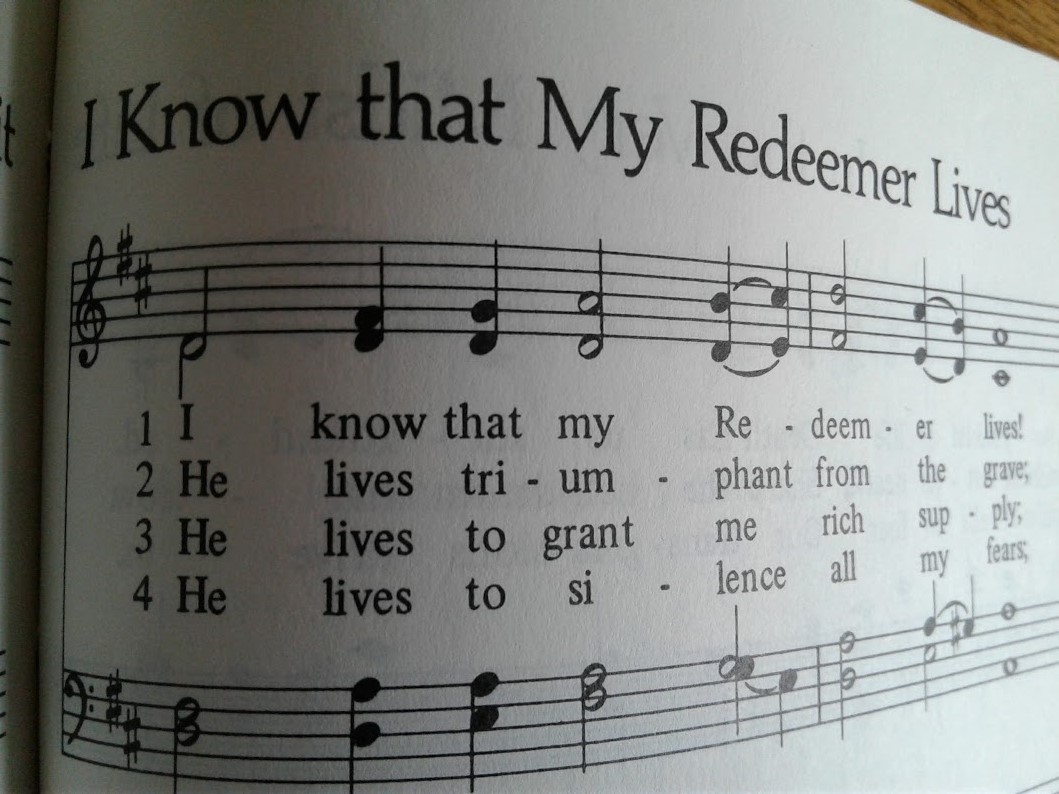
My favorite Easter hymn. (Minnesota Prairie Roots copyrighted file photo)

It is a day of joyful song, of prayerful gratitude, of alleluias.

Eggs dyed with my mom many years ago. (Minnesota Prairie Roots copyrighted file photo)

It is a day, too, to gather with family over brunch or a ham dinner. It is a day to find Easter baskets and hidden eggs.

It is a day of memories made and memories remembered. It is a day of missing those loved ones no longer with us, but loving on those who are near or far.

The risen Lord centers the trio of stained glass windows above the altar at Trinity Lutheran Church, Wanamingo. (Minnesota Prairie Roots copyrighted file photo)

It is a day when the sun rises on a struggling world, where hope is needed now more than ever.

Have a blessed and joy-filled Easter, dear friends!

© Copyright 2025 Audrey Kletscher Helbling

 

My Easter week message to you April 17, 2025

Filed under: Uncategorized — Audrey Kletscher Helbling @ 6:00 AM
Tags: , , , , , , , , , , , , ,
“Believe” by Mackenzie Miner, a then eighth grader at Faribault Middle School, was exhibited at a past student art show at the Paradise Center for the Arts. (Minnesota Prairie Roots copyrighted file photo)

DURING THE PAST SEVERAL DAYS, I’ve thought a lot about how to craft an Easter message about living my Christian faith against the backdrop of what’s happening in our country today. It’s tough, really tough, to feel positive and joyful. But I must believe that things will get better. Eventually.

Palm branches. (Minnesota Prairie Roots copyrighted file photo)

Rather than dwell on the totality of everything negative, I decided to focus on messages I heard during a Palm Sunday worship service at my eldest daughter’s Lakeville church. Randy and I were there for a pancake breakfast fundraiser and then to listen to our grandchildren sing. We—kids and adults alike—sang the traditional processional hymn, “All Glory, Laud and Honor,” as we waved palm branches. It was an uplifting, praise-filled, reverent experience, reminding me of Jesus’ triumphant entry into Jerusalem among a joyful crowd waving palm branches and shouting, “Hosanna!” Jesus rode in on a donkey, symbolic of his humility and humanity. Days later, the people would turn on Jesus and he would die an agonizing death upon a cross.

A stained glass window inside Holden Lutheran Church, rural Kenyon, Minnesota, depicts Jesus’ crucifixion. (Minnesota Prairie Roots copyrighted file photo)

That journey to the cross, followed by the resurrection of Jesus on Easter morning, started on Palm Sunday, the beginning of Holy Week and a time of reflection. The service at St. John’s started with a blessing of the palms. That blessing set the tone for worship, at least for me. The palm branches we held represented celebration, justice and comfort. These are the words that most resonated with me: Bless these protest palms, O God of Justice…may they make us bold and brave to stand up against injustice.

The unsheltered, photographed in downtown Madison, Wisconsin, in June 2018 near the state capitol. (Minnesota Prairie Roots copyrighted file photo)

So, as I stood at the back of the church, I waved my palm frond high like a protest sign, thoughts of injustices racing through my mind. I’ve done some protesting lately with my words. I felt encouraged and empowered to stand bold and brave against injustices. Jesus did. He called people out. He got mad. He chastised. He advocated for and helped those who suffered the most. The outcasts. The lonely. The poor and hungry. He showed compassion and love. He provided. He forgave.

A portion of a quote by John Lewis posted in the window of a Dundas, MN., home. (Minnesota Prairie Roots copyrighted file photo)

Remember the once popular WWJD/What Would Jesus Do slogan? I think Jesus would be more than a little ticked off about the injustices today, how people are treating one another, how those in positions of leadership are abusing their power. Jesus did, after all, overturn the tables in the temple when it became a noisy marketplace for greedy vendors focused on making money rather than allowing people easy access inside for spiritual reasons.

Posted on the exterior of the Congregational Church of Faribault United Church of Christ. (Minnesota Prairie Roots copyrighted file photo)

I’d like to think that Jesus wants every single one of us to be bold and brave in our words and actions. It’s easy enough to sit quietly and do nothing. Just pretend all is well with everyone when, in reality, it’s not. People are struggling. In relationships. With unexpected and unnecessary job loss. Financially. Mentally. In ways I would never have thought possible in this country—suppression, oppression, ongoing discrimination, intimidation, imprisonment… Injustices run rampant.

A loving message posted along a bike trail in Madison, WI. (Minnesota Prairie Roots copyrighted file photo)

We each have the power to do something about those injustices. Volunteer. Encourage. Donate money to charitable organizations or to individuals in and outside your circle who may need a little extra help right now. Smile. Be respectful. Extend small acts of kindness. Simply be a kind, decent, compassionate and loving person.

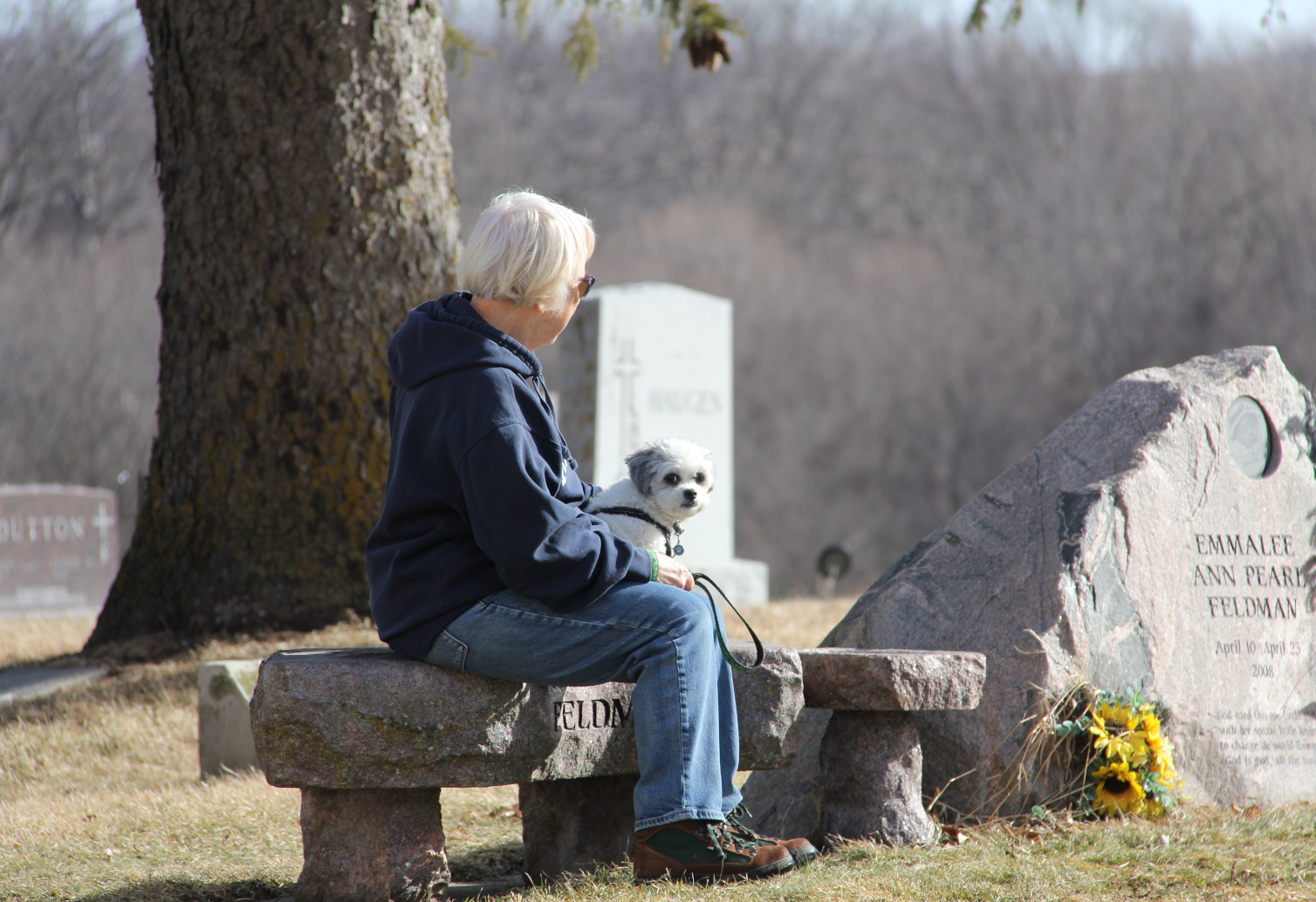
A message on a tombstone at Valley Grove Cemetery, rural Nerstrand. (Minnesota Prairie Roots copyrighted file photo)

But also don’t hesitate to be bold and brave to stand up against injustice, to wave your protest palm branch high, then higher still.

© Copyright 2025 Audrey Kletscher Helbling
 

An African spiritual plus my thoughts during Black History Month February 3, 2025

This Nigerian-themed quilt art was created years ago by my friend Susan. The art reflects to me the joy of an African spiritual. The fabric came from Nigeria, where Susan’s father-in-law served as a Lutheran missionary. (Minnesota Prairie Roots copyrighted file photo)

THE SONG WAS UNEXPECTED during Sunday morning worship at the conservative Lutheran church I attend in Faribault. But it was fitting for the day and for my feelings, which have leaned deeply into discouragement recently.

The African American spiritual, “There Is a Balm in Gilead,” proved a temporary balm for my soul. The old school word “balm” holds a healing connotation. The song’s refrain encourages: There is a balm in Gilead to make the wounded whole. There is a balm in Gilead to heal the sin-sick soul.
As I sang the refrain, I wondered, what or where is Gilead? Later research revealed that, during Old Testament days, Gilead was a mountainous region east of the Jordan River and an important source of medicinal herbs. That makes sense as it relates to the lyrics.
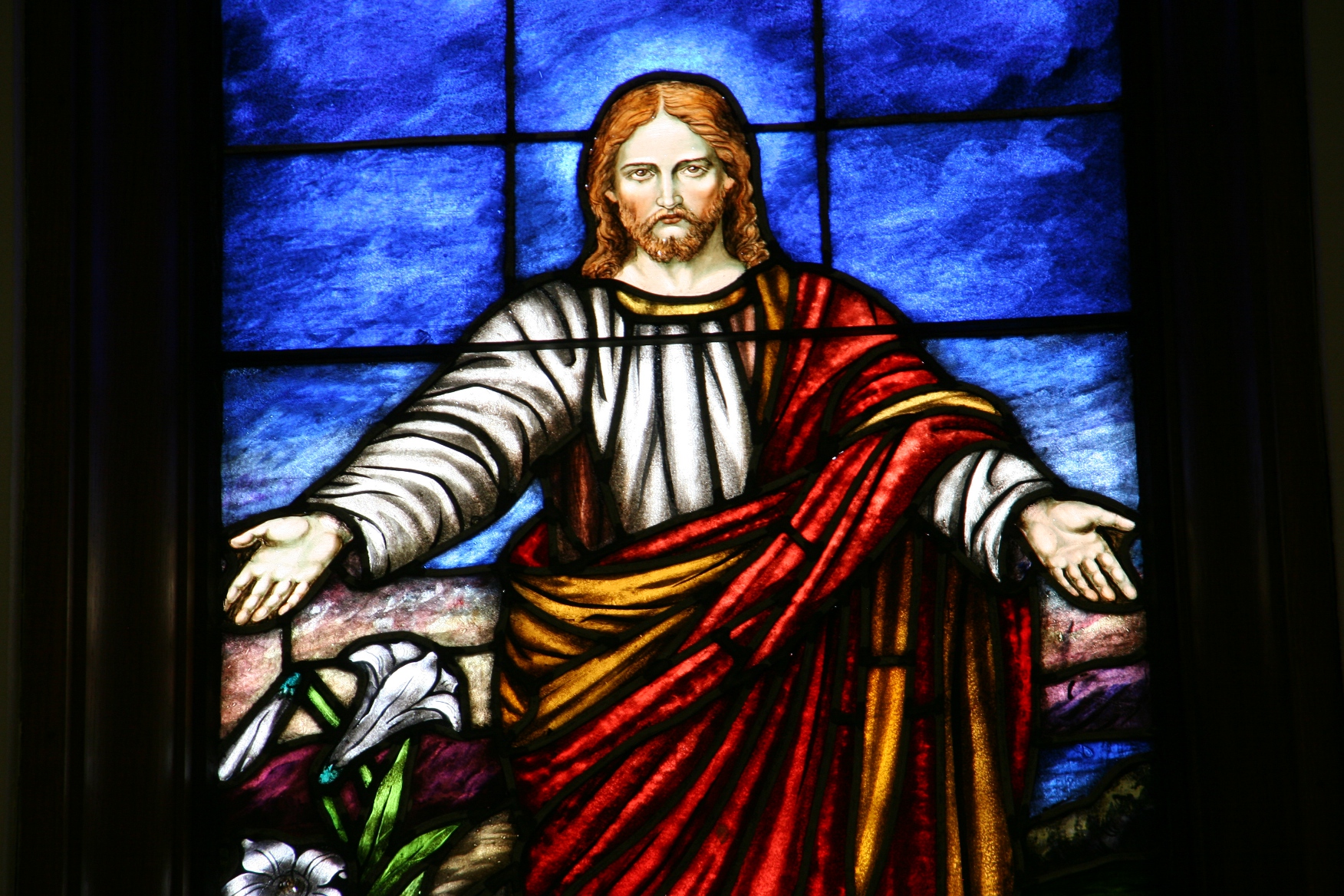
Christ’s face in a stained glass window in the sanctuary of my church, Trinity Lutheran, Faribault. (Minnesota Prairie Roots copyrighted file photo)

In the New Testament, “balm of Gilead” refers not to an herb which heals physically, but to Jesus through whom spiritual healing comes. That also makes sense as it relates to lyrics of the song printed on page 749 of the Lutheran Service Book.
Events of recent weeks in this country have me feeling apprehensive, unsettled, worried, in need of a healing balm. I know I am not alone in these feelings as we face economic challenges, upheaval, chaos and uncertainties on endless levels. Each day seems to bring something of new concern. No matter where you stand politically or spiritually, you have to feel the tension and uncertainties in this country.

A snippet of a photo by Stephen Somerstein from the exhibit, “Selma to Montgomery: Marching Along the Voting Rights Trail,” which I saw at St. Olaf College in Northfield, Minnesota, in 2015. (Minnesota Prairie Roots copyrighted file photo)

On Sunday, as I sang the African American spiritual, I allowed myself to be swept into the healing words of hope and comfort. It was not lost on me that, sitting on the end of my pew, was a family of mixed race—an African American father, White mother and three biracial children, one a darling baby boy of ten months. I thought of my own newborn grandson, who is mixed race. What does the future hold for these two little boys? Will they face challenges simply because of their skin color? I’d like to think not. But…

And I thought, too, of the new calendar month of February, in which we celebrate Black History Month, focusing on Black history, culture and education. I reflect on slavery, on Civil Rights leaders, on racial disparities, diversity, equity and inclusion, wondering how I, personally, can educate myself and make a difference.

A message left by a visitor to the Selma exhibit at St. Olaf College. It’s so applicable to today. (Minnesota Prairie Roots copyrighted file photo)

It truly does start with each of us standing up for what is good and right and decent and not going along with what we know in our hearts, minds and souls to be wrong. And then, maybe then, we’ll find our balm in Gilead.

© Copyright 2025 Audrey Kletscher Helbling