“Flying Snow Owl” woodcarving by Lakeville artist Mike Stoecklein. (Minnesota Prairie Roots copyrighted photo March 2022)
THE RANGE OF CREATIVITY in southern Minnesota continues to impress me. Take the art of Kate Langlais of Faribault and of Mike Stoecklein from Lakeville. They create decidedly different art. But they share the commonality of incredible creative talent.
“Pope Francis,” an acrylic portrait by Faribault artist Kate Langlais. (Minnesota Prairie Roots copyrighted photo March 2022)
Recently I viewed exhibits by both in separate galleries at Faribault’s Paradise Center for the Arts. I continue to feel deep gratitude for this arts center in my community. We need art—whether literary, visual or performing—to feed our spirits and souls, just as much as we need food to feed our bodies.
“Grey Tree Frog” woodcarving by Mike Stoecklein. (Minnesota Prairie Roots copyrighted photo March 2022)
A walk-about viewing the work of Kate and Mike reaffirms the importance of art in my life. Mike’s nature-focused pieces, especially his woodcarvings, take me into the woods. To observe an array of owls. To spot a tree frog, the elusive frog I’ve always wanted to see but haven’t. His landscape paintings also connect me to place. (He paints the occasional portrait, too.)
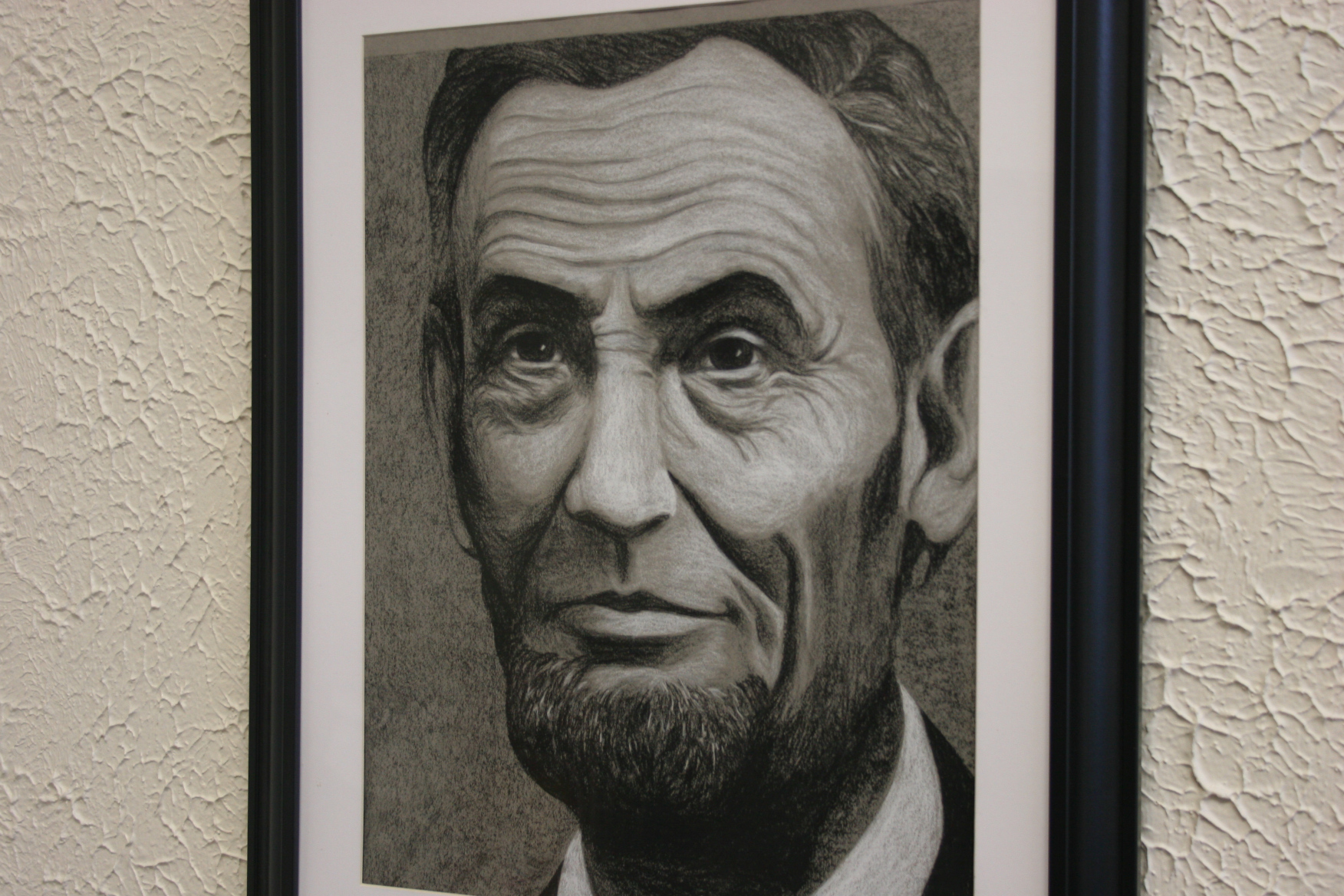
A portrait of Abraham Lincoln by Kate Langlais. (Minnesota Prairie Roots copyrighted photo March 2022)
Kate’s Paradise exhibit is portrait-strong, her specialty, although she also paints landscapes. When I study the faces she’s recreated, I feel a connection, too. Kate has an ability to convey emotions and personality. Generosity. Kindness. Strength. Love. Compassion.
Mike Stoecklein’s “Eagle Owl” woodcarving. In his artist statement, he writes: “I create for myself, and if others enjoy it, then that’s even better…” Owls are a favorite subject of this artist. (Minnesota Prairie Roots copyrighted photo March 2022)
I encourage you to stop by the Paradise galleries—Mary Welke (a Minneapolis artist) and Summer Heselton (a junior at Bethlehem Academy) also have art displayed—this weekend or next. All four shows close on March 19. Also head upstairs to the annual All Area Student Show, which runs until April 9. I’ll feature a post on that soon.
Paradise hours are from noon-5 pm Wednesday, Thursday and Friday and noon-2 pm Saturday. The Paradise, located at 321 Central Avenue North in historic downtown Faribault, also opens for evening concerts, theatrical productions and other events.
TELL ME: Do you have a go-to arts center in your community? Why do you value the arts? Let’s hear.
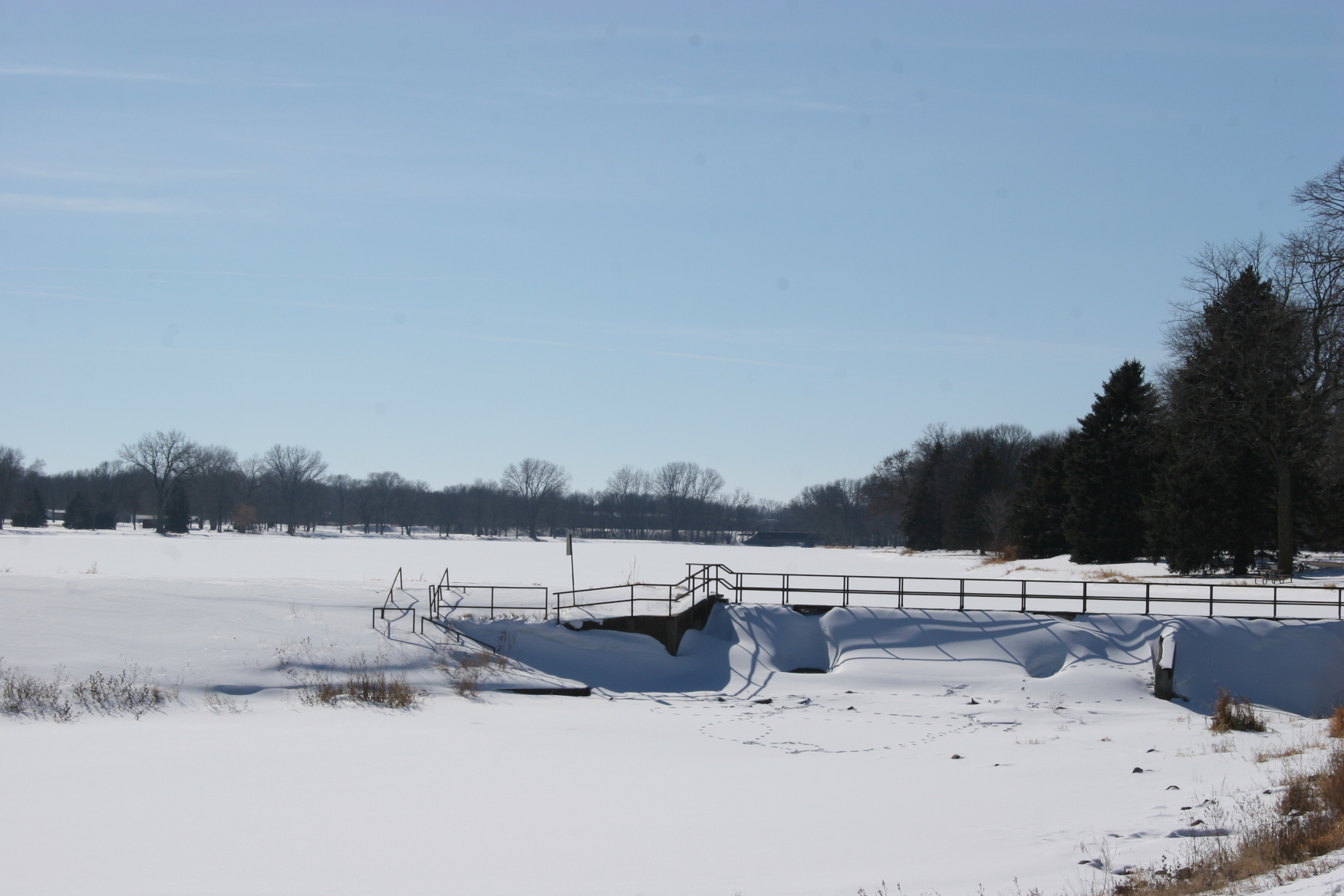
A wide view of the frozen Cannon River and dam adjacent to the Rice County Fairgrounds. (Minnesota Prairie Roots copyrighted photo March 2022)
THE SHIFT IN SEASONS seems subtle. But it’s there. In the lengthening of days. In brilliant sunshine that cuts through snowbanks, streams of water flowing and puddling. Iced rivers, too, are beginning to thaw.
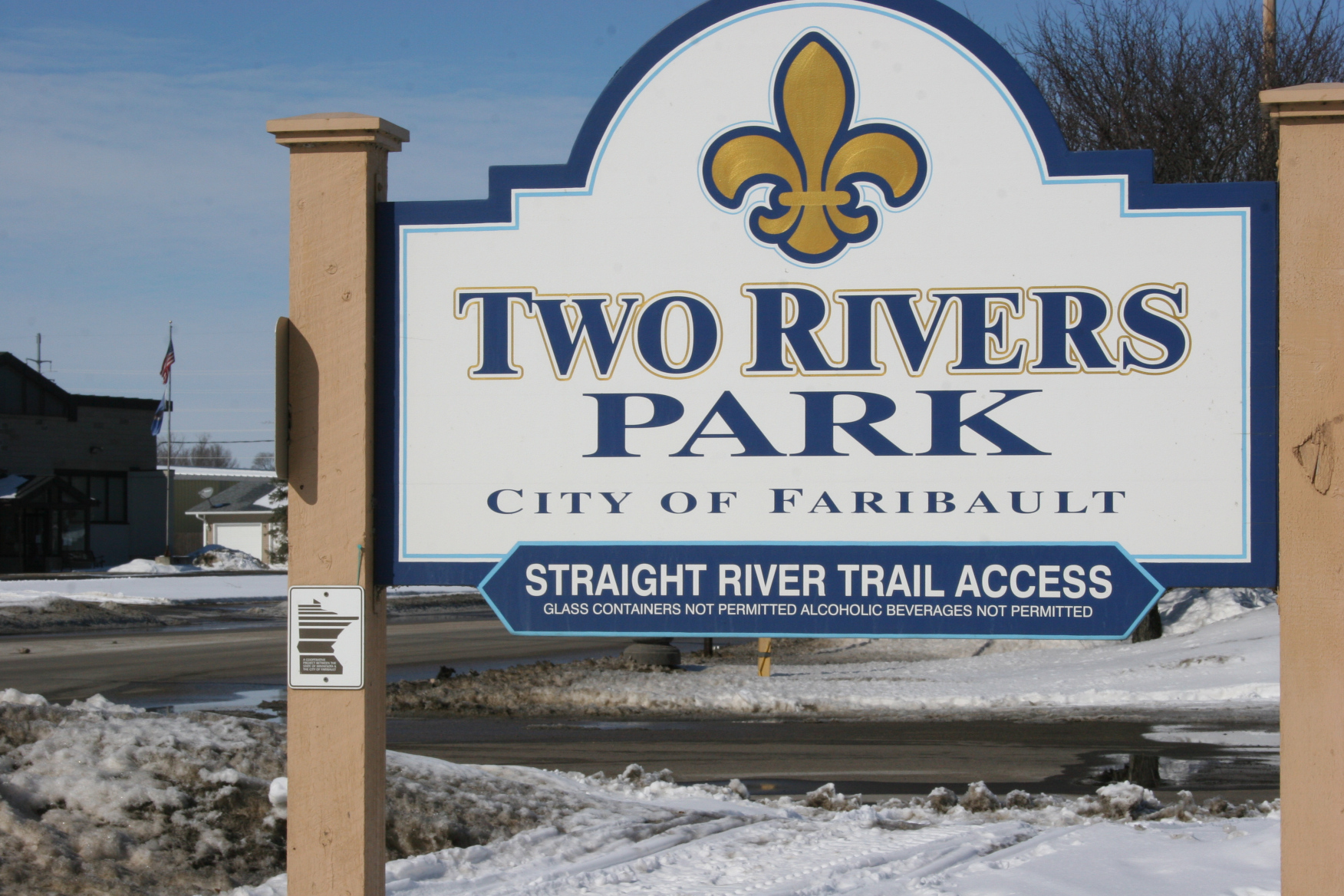
Signage marks this park just off Second Avenue on Faribault’s north side. (Minnesota Prairie Roots copyrighted photo March 2022)
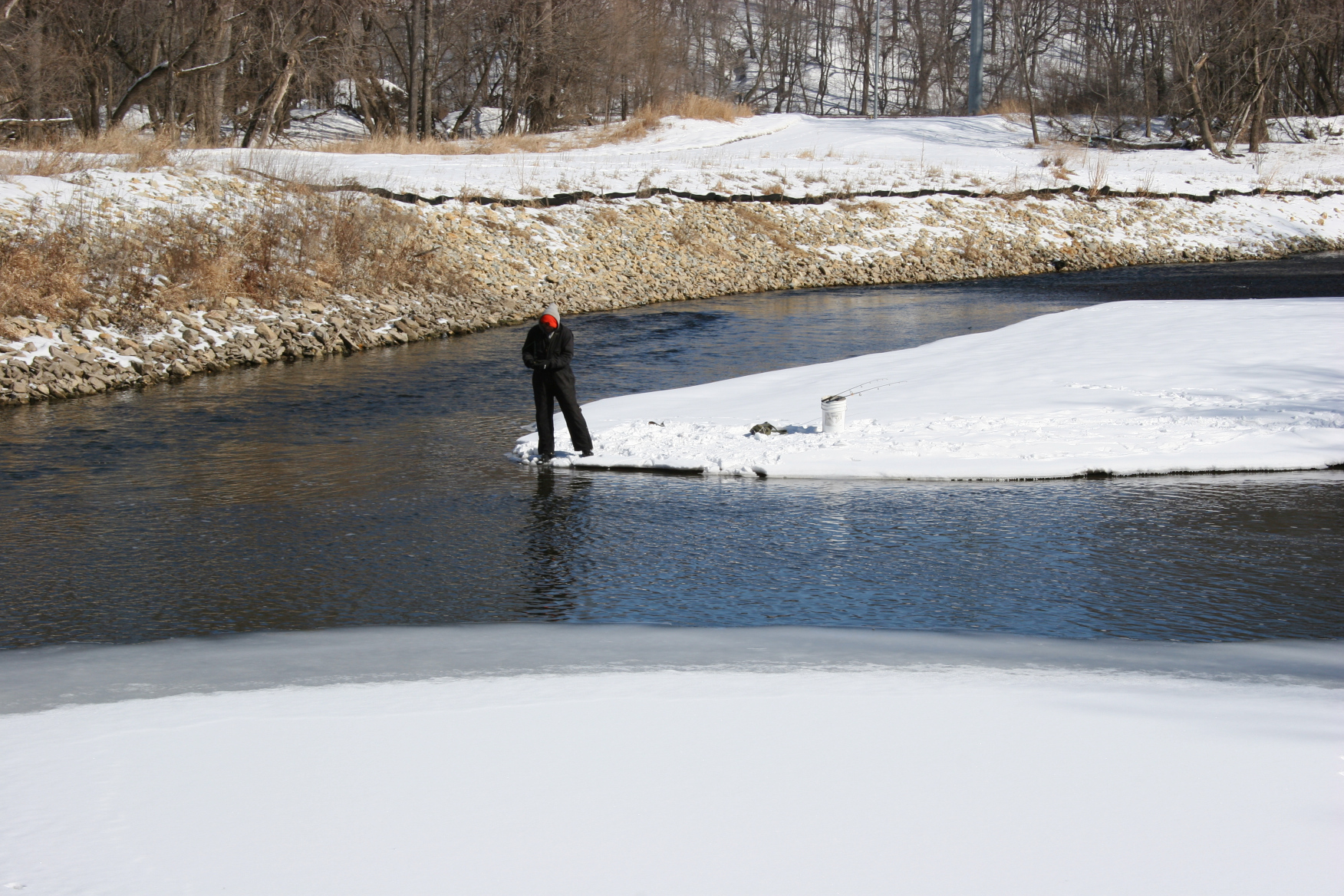
Fishing where the Cannon and Straight Rivers meet in Faribault. (Minnesota Prairie Roots copyrighted photo March 2022)
At the convergence of the Straight and Cannon Rivers, an angler fishes in the open water. His orange stocking cap covered by his hooded sweatshirt layered beneath black coveralls jolt color into an otherwise muted landscape. Randy and I watch as he reels in a large fish, then unhooks and plops it onto the snow. A northern, Randy guesses. We watch for awhile, content to see the river flow, sun glinting upon the surface.
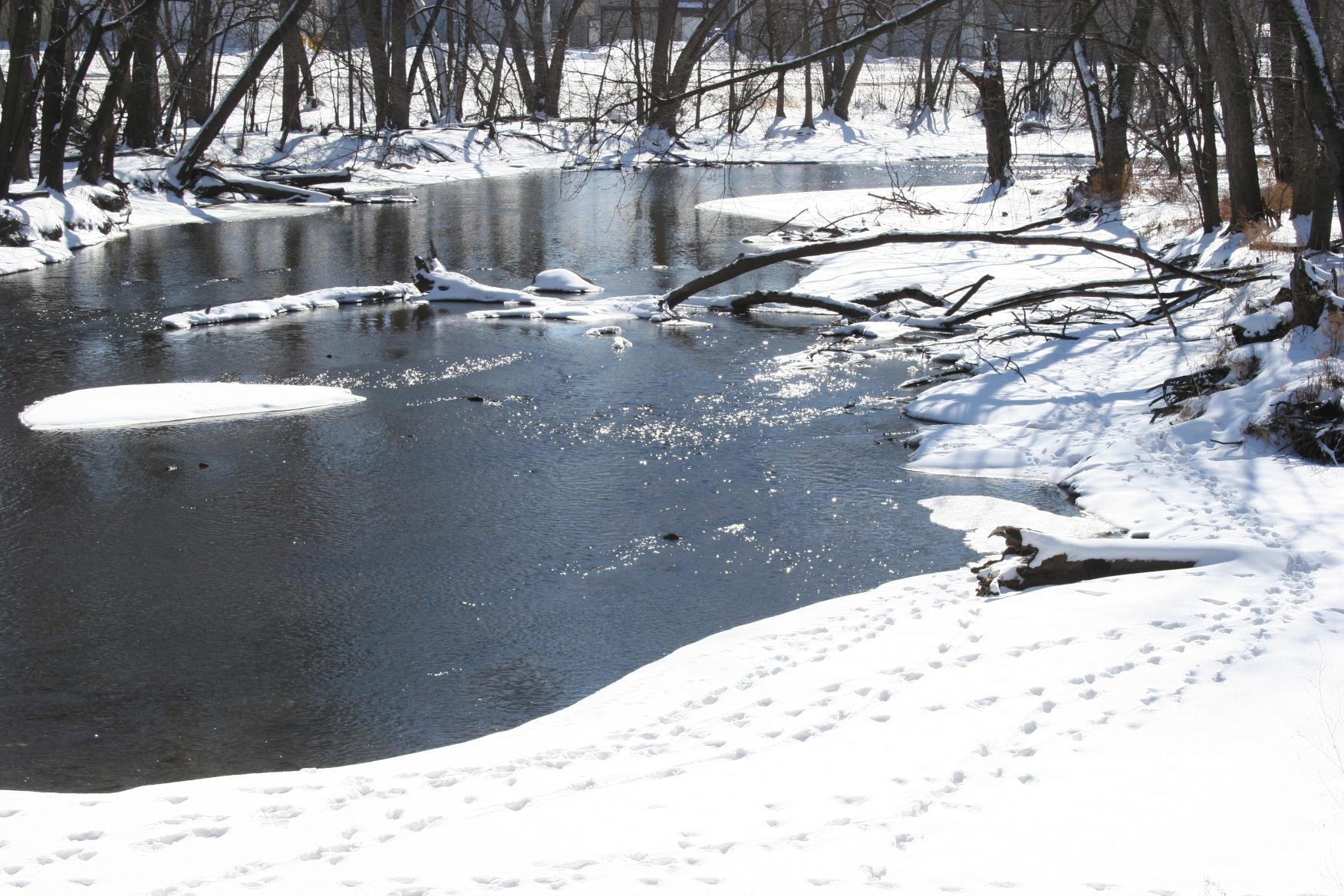
The beautiful open Cannon River at Two Rivers Park. (Minnesota Prairie Roots copyrighted photo March 2022)
We make our way back to the parking lot, after I pause to photograph the mostly open river sweeping between snowy woods. There’s sometime serene about such a scene. Peaceful, even as traffic drones by on nearby Second Avenue.
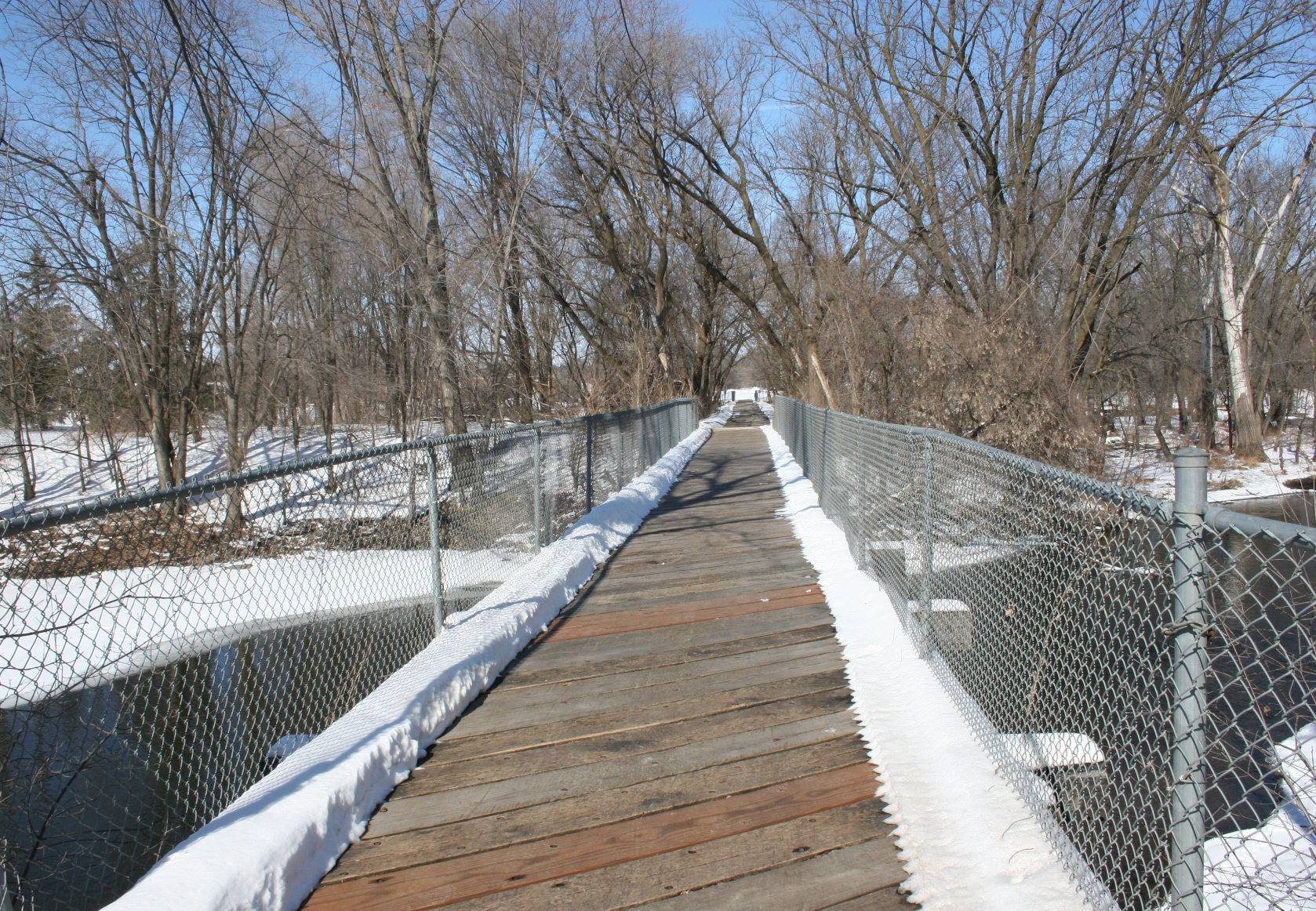
Pedestrian bridge over the river. (Minnesota Prairie Roots copyrighted photo March 2022)
On the trail, we cross bridges constructed of uneven angled boards that always trip me. I pause to peer into the river.
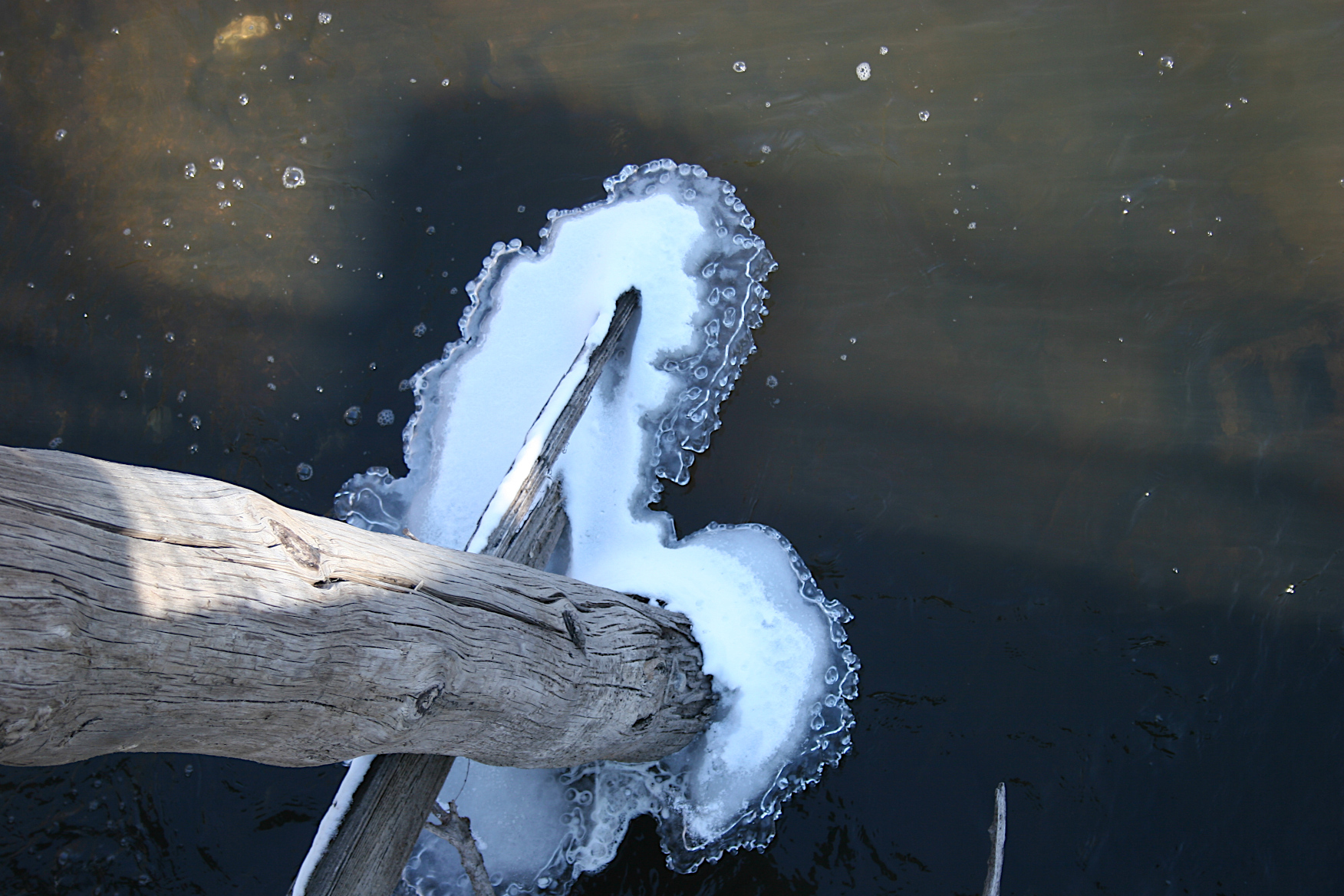
Ice rings a pedestrian bridge support post in the otherwise open river. (Minnesota Prairie Roots copyrighted photo March 2022)
Birdsong, a sure auditory sign of spring’s approach, resounds as I lean over the bridge railing to see the open water below. Both hint of winter’s retreat.
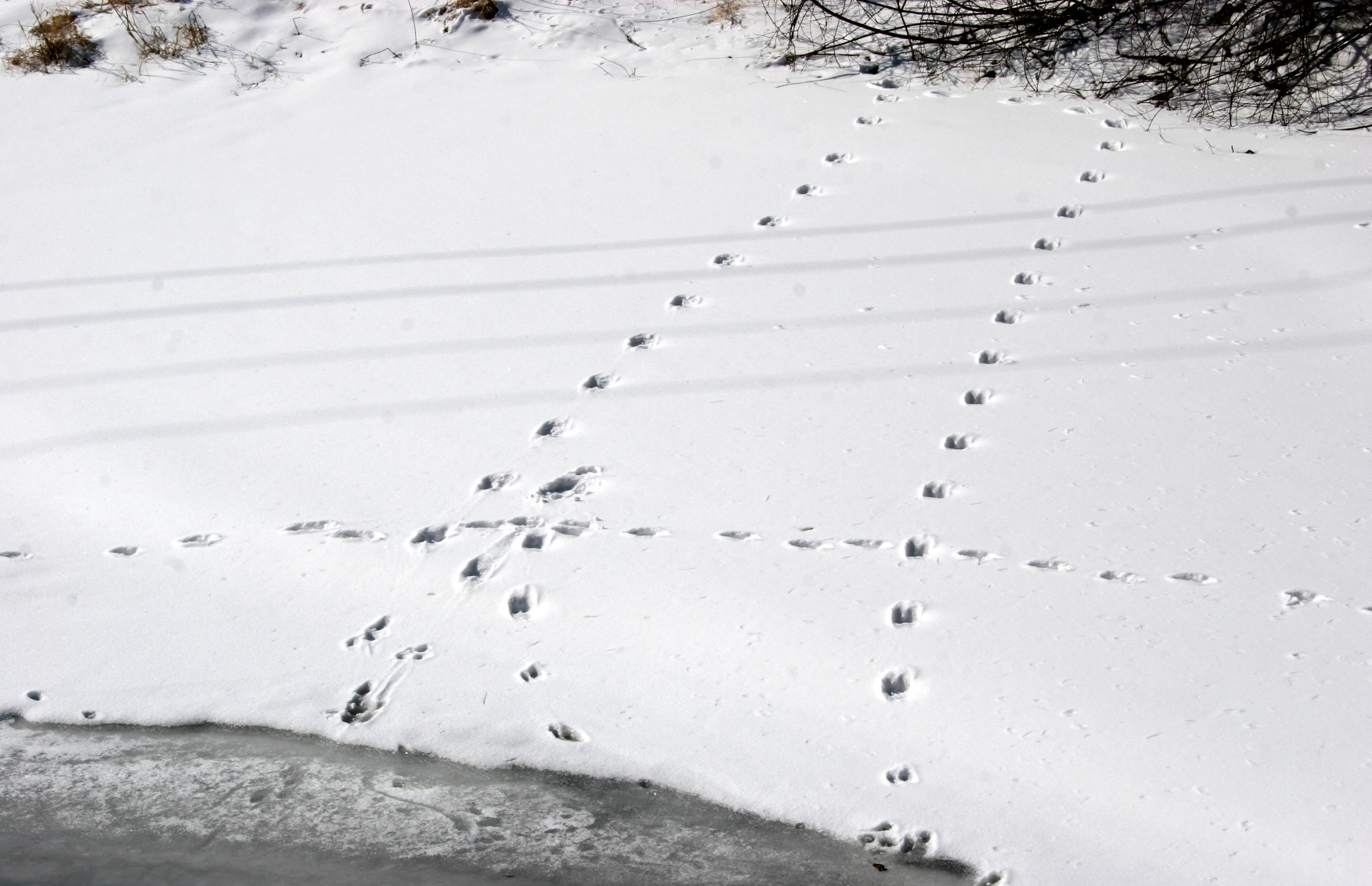
Animal tracks remind me of tic-tac-toe. (Minnesota Prairie Roots copyrighted photo March 2022)
Far below I observe animal tracks crossing the snow in a tic-tac-toe pattern leading to water’s icy edge.
Following the Straight River Trailalongside the former vegetable canning company. (Minnesota Prairie Roots copyrighted photo March 2022)
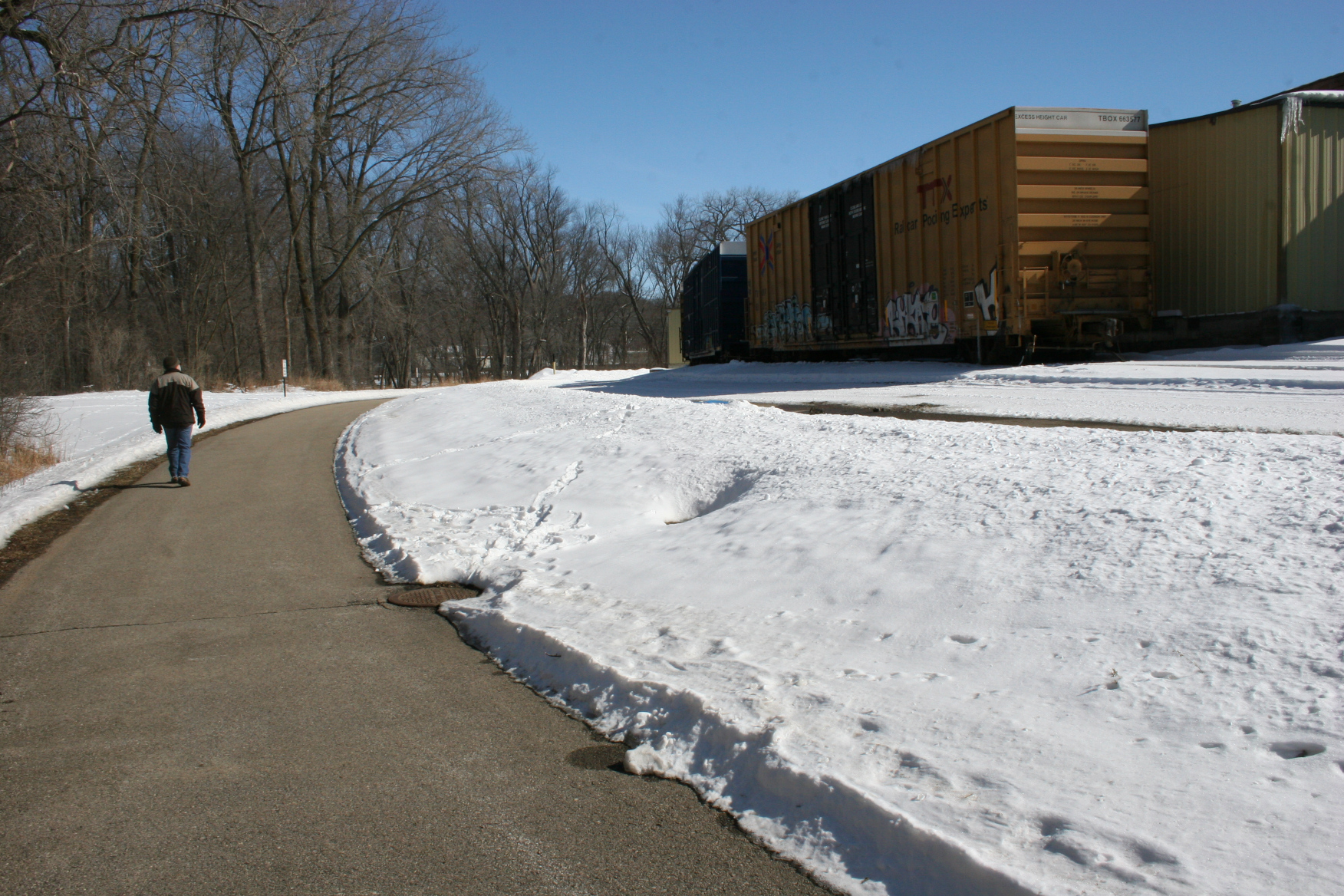
Curving along the path near the former Faribault Foods canning company, stationary boxcars sidle against the building.
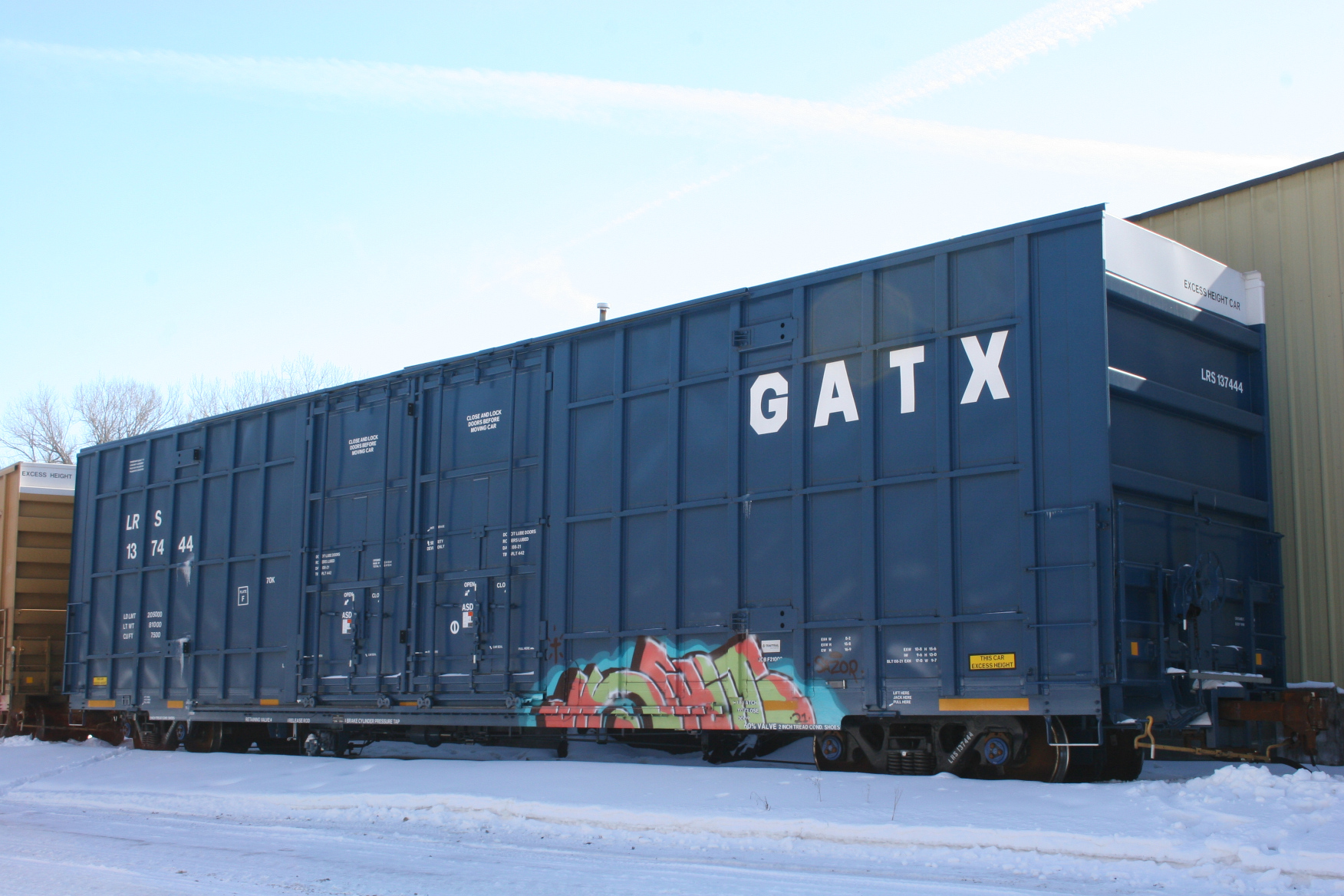
Boxcar graffiti. (Minnesota Prairie Roots copyrighted photo March 2022)
Graffiti colors the boxcar canvases.
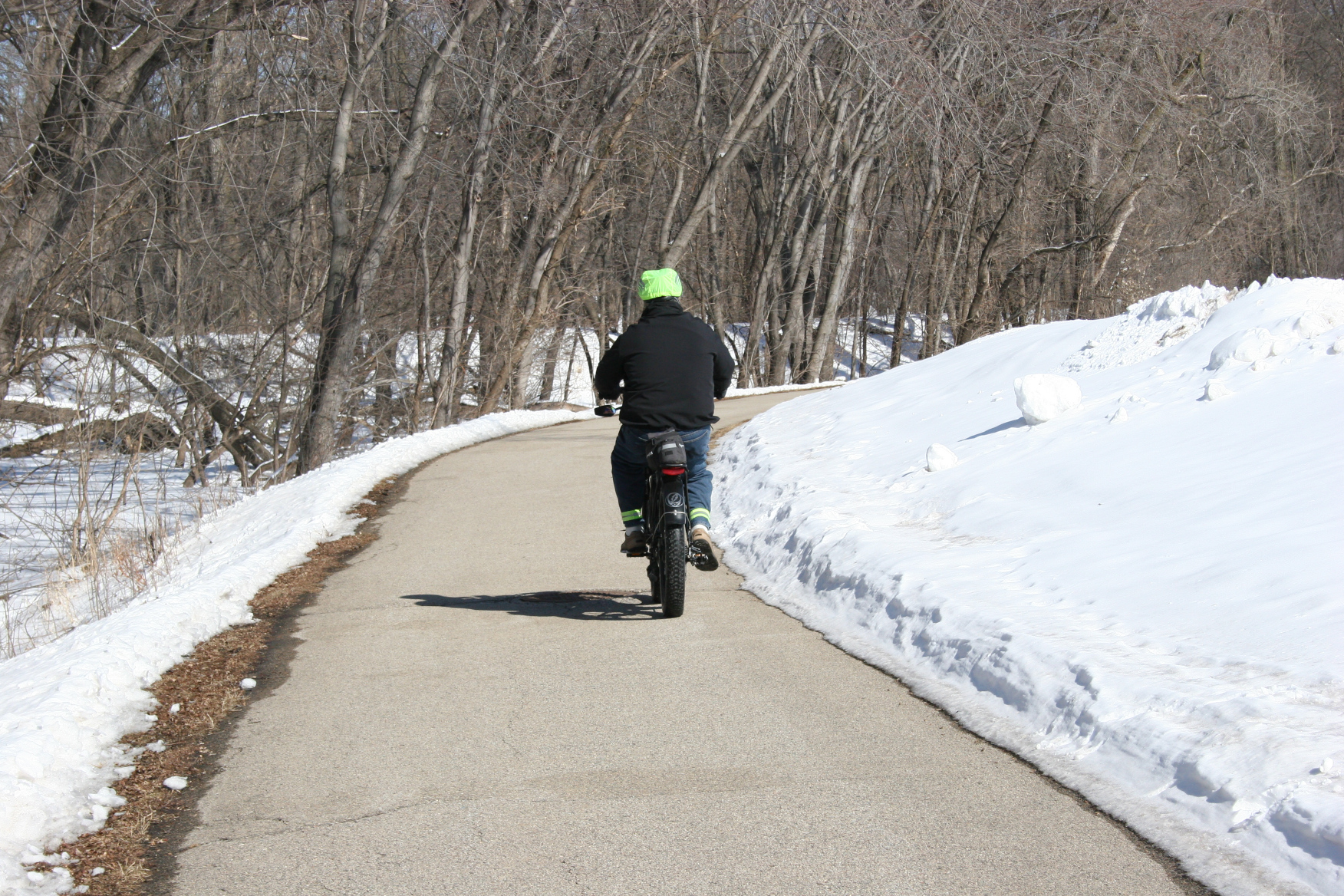
Biking the Straight River Trail in March. (Minnesota Prairie Roots copyrighted photo March 2022)
We walk for awhile, then retrace our steps. Randy warns of an approaching cyclist and we step to the right of the trail in single file. “Hi, Randy,” the guy on the fat tire bike shouts as he zooms past. We look at each other. His identity remains a mystery.
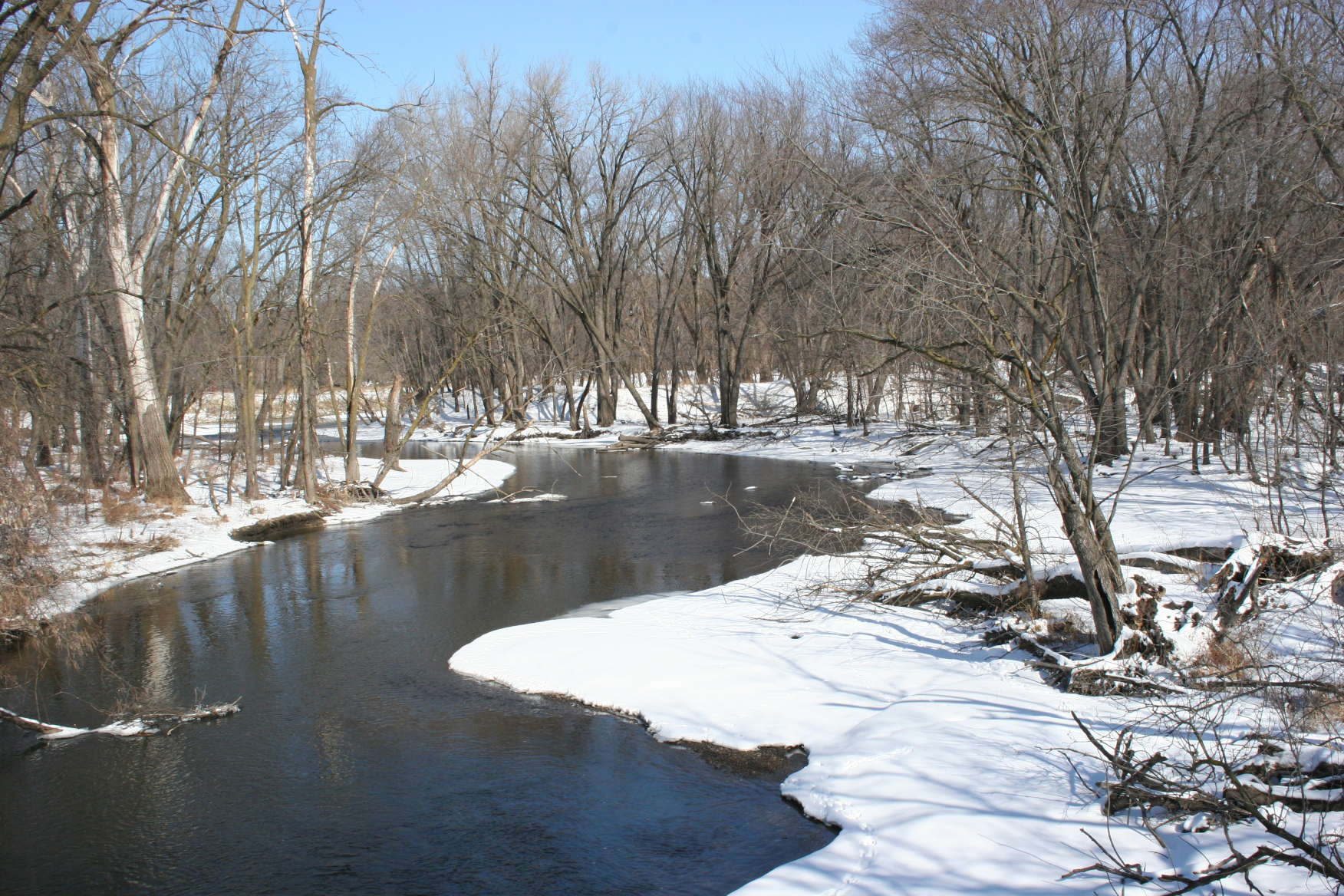
The scenic Cannon River snakes toward the Straight River. (Minnesota Prairie Roots copyrighted photo March 2022)
Back on the bridges, I pause again to view the Cannon River snaking across the landscape like a pencil path following a maze. More photographs.
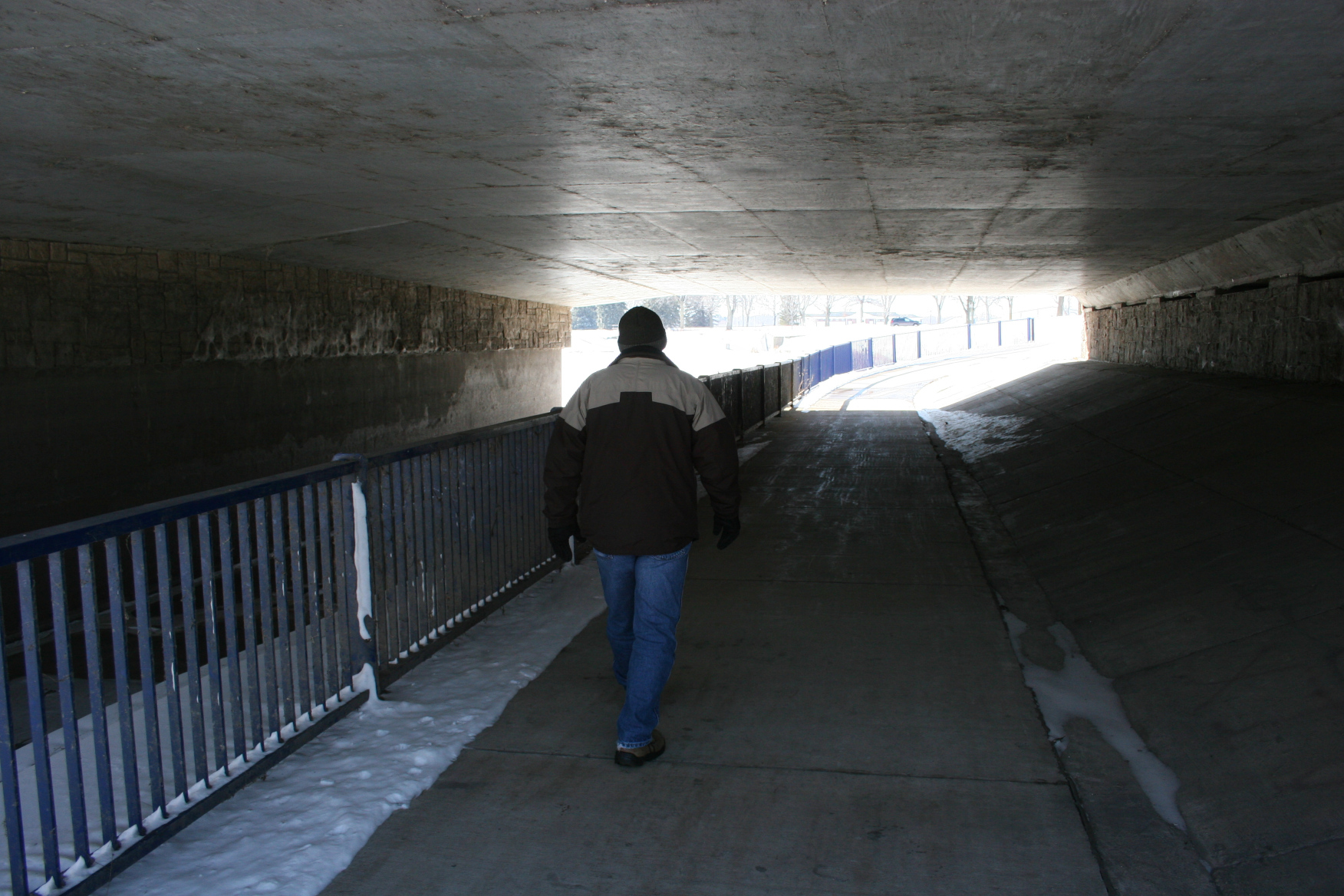
Randy follows the tunnel under Second Avenue toward North Alexander Park. (Minnesota Prairie Roots copyrighted photo March 2022)
Before heading home, we divert briefly toward North Alexander Park, taking the tunnel under the Second Avenue bridge where, on the other side, the scene opens wide to the frozen, snow-layered river. In warm weather, anglers fish here, below the dam in open water.
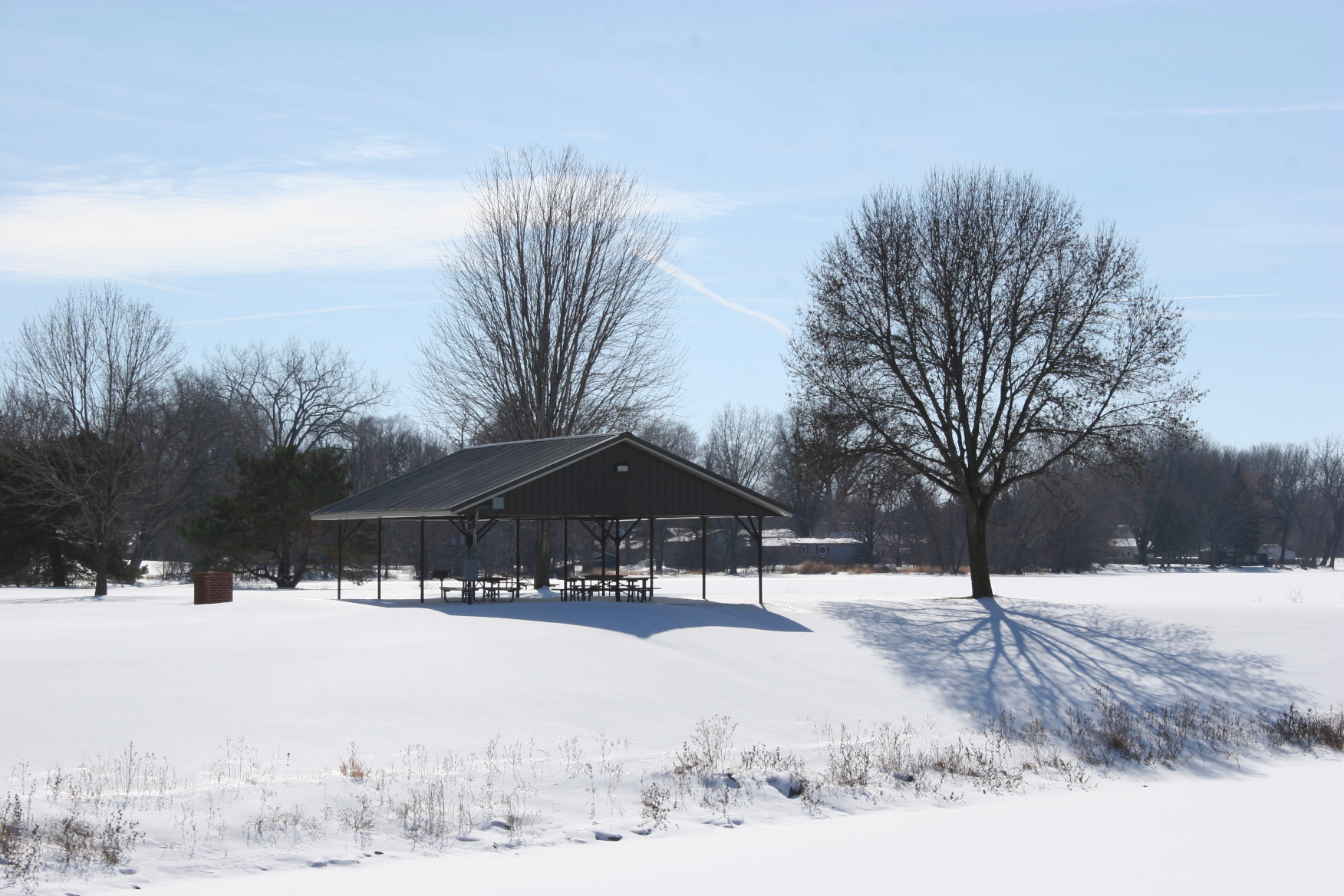
Picnic shelter at Father Slevin Park by the Cannon River. (Minnesota Prairie Roots copyrighted photo March 2022)
Now the place is mostly vacant, just like the riverside picnic shelter.
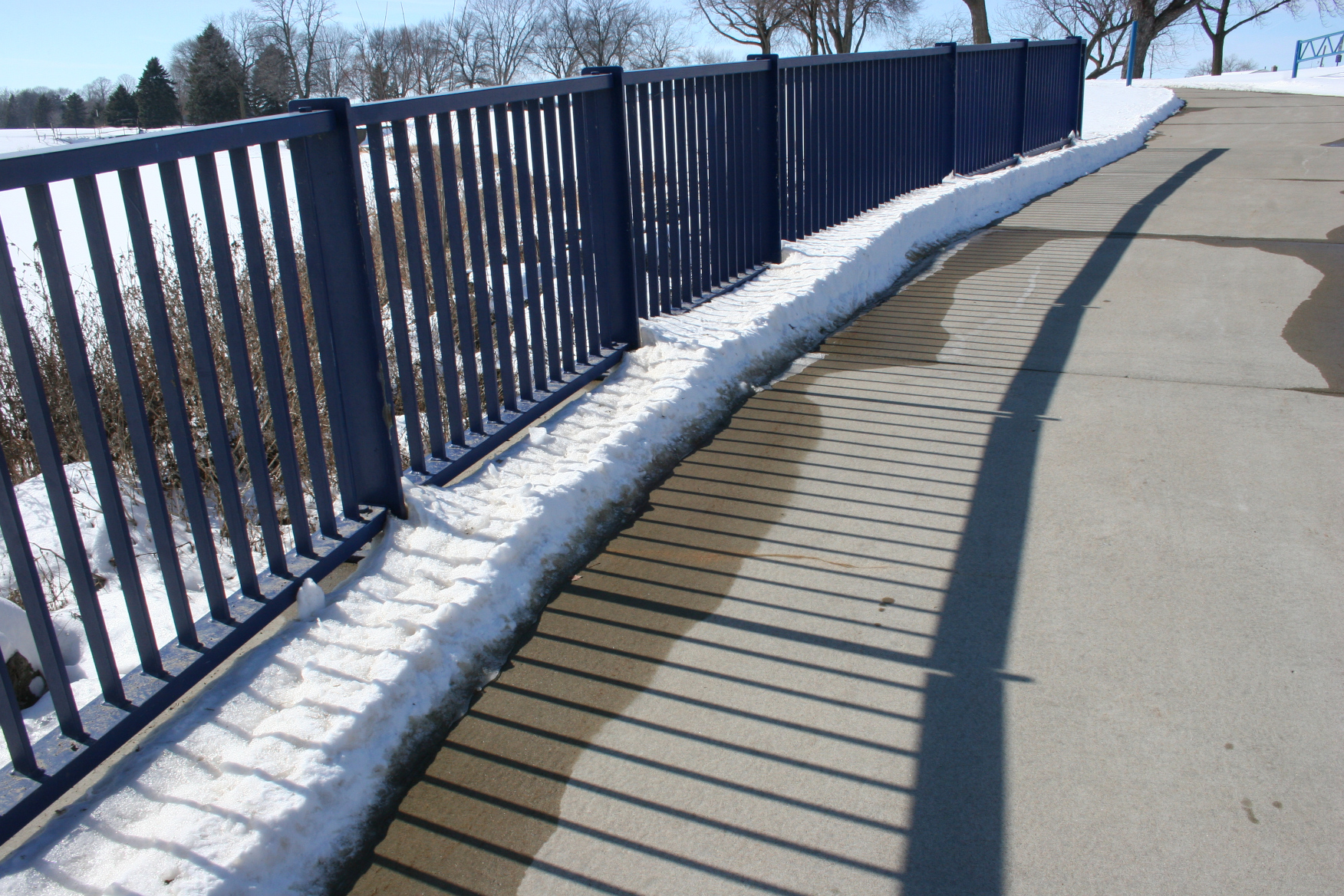
Shadowing of the trailside fence outside the tunnel. (Minnesota Prairie Roots copyrighted photo March 2022)
By now we are cold, ready to conclude our afternoon jaunt. As I stride downhill toward the tunnel, I notice shadows of fence slats spaced upon the concrete. Art to my eyes. I stop, photograph the fence and fence shadows as they arc. Even in this moment, I see signs of spring along the river, beneath the blue sky.
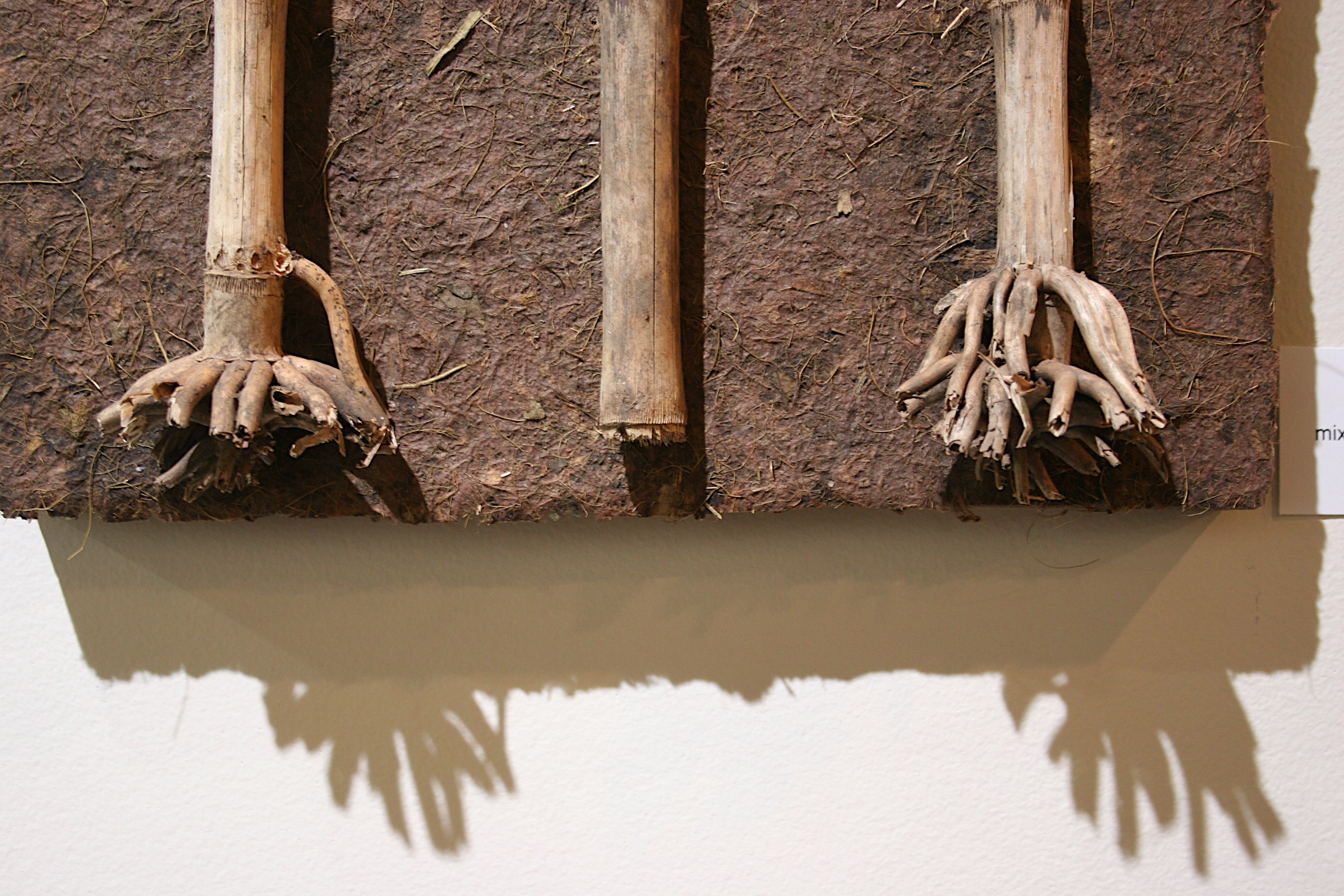
The lower portion of “Roots” shadows on the gallery wall. These are dry corn roots. (Minnesota Prairie Roots copyrighted photo March 2022)
Welke’s mixed media art is unlike any I’ve ever seen. It resonates with me, reconnecting me to my southwestern Minnesota prairie roots. To the farm. To the land. The place that shaped me as a person, writer and photographer.
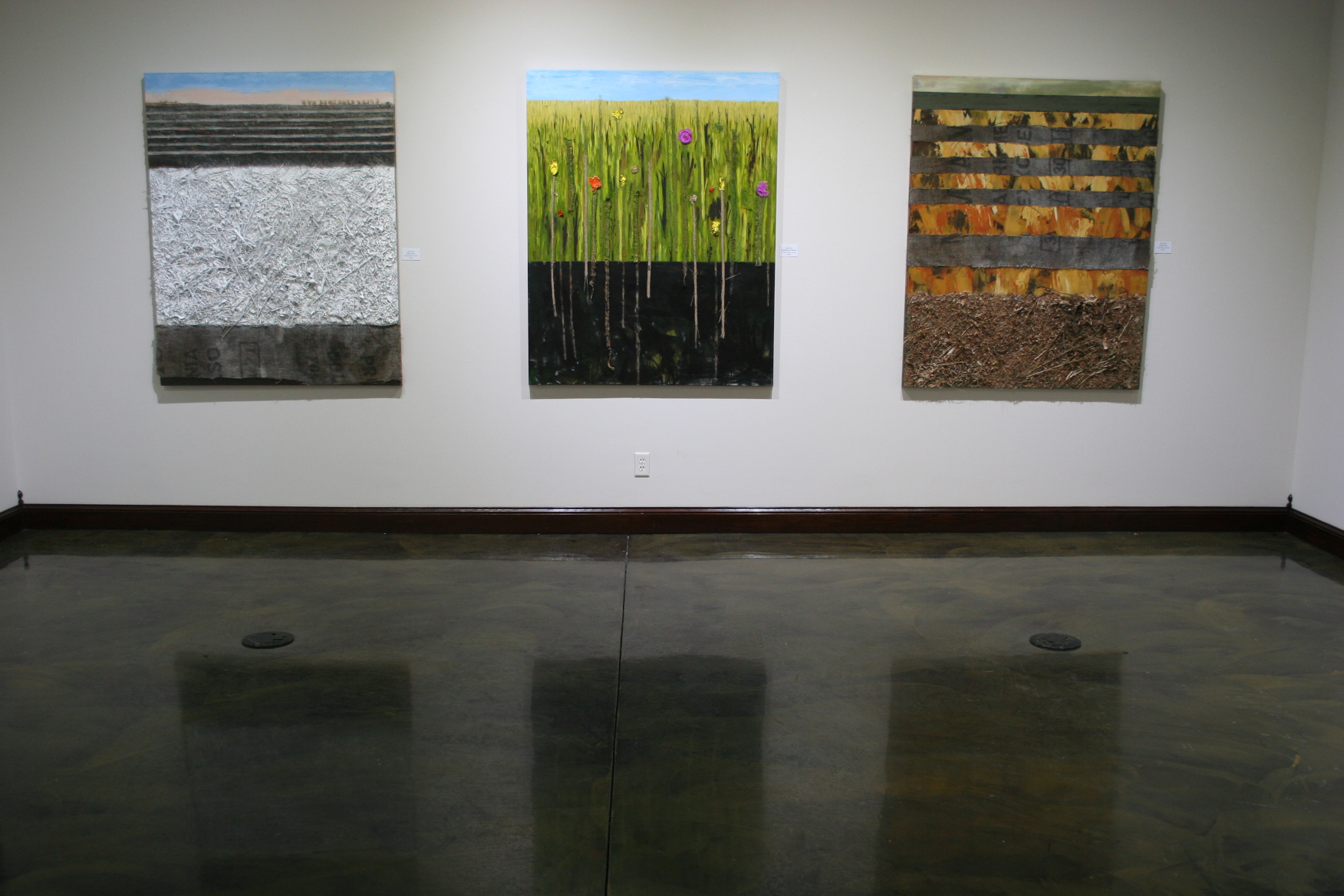
Nature inspires Mary Welke as seen in these oversized mixed media art pieces. (Minnesota Prairie Roots copyrighted photo March 2022)
That I experienced such a strong emotional reaction is a credit to this artist, who grew up near the Mississippi River in northeast Minneapolis. Her childhood exploration of river and fields and time with her grandmother in a sprawling vegetable garden instilled an early appreciation of nature, which inspires her art.
“Autumn Yield” by Mary Welke. (Minnesota Prairie Roots copyrighted photo March 2022)
Understanding that background explains how this urban resident came to create “Field and Farmland,” a project funded by a 2020 Minnesota State Arts Board Artist Initiative Grant. She also did her homework—visiting, researching and documenting the prairie and meeting with farmers. The result is art reflecting the prairie, prescribed burns and farmland restoration.
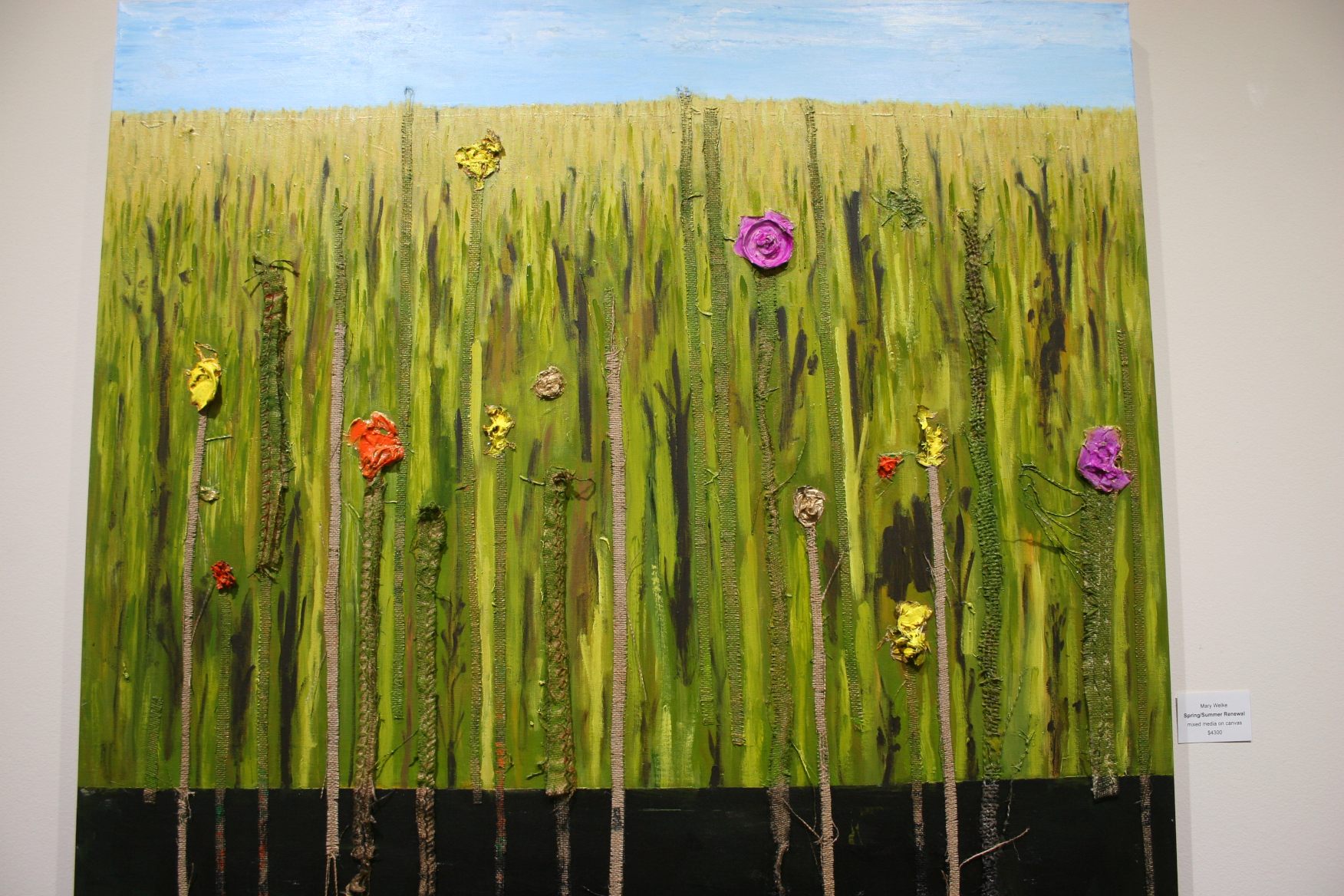
“Spring/Summer Renewal” by Mary Welke. (Minnesota Prairie Roots copyrighted photo March 2022)
The incorporation of organic materials like soil, corn roots and leaves, other crop residue and more drew me into Welke’s art. I felt as if I was back on the farm, watching my dad turn the rich black soil toward the sun for spring planting. I felt, too, like I was walking the rows of a harvested corn field, the scent of autumn lingering in the prairie wind.
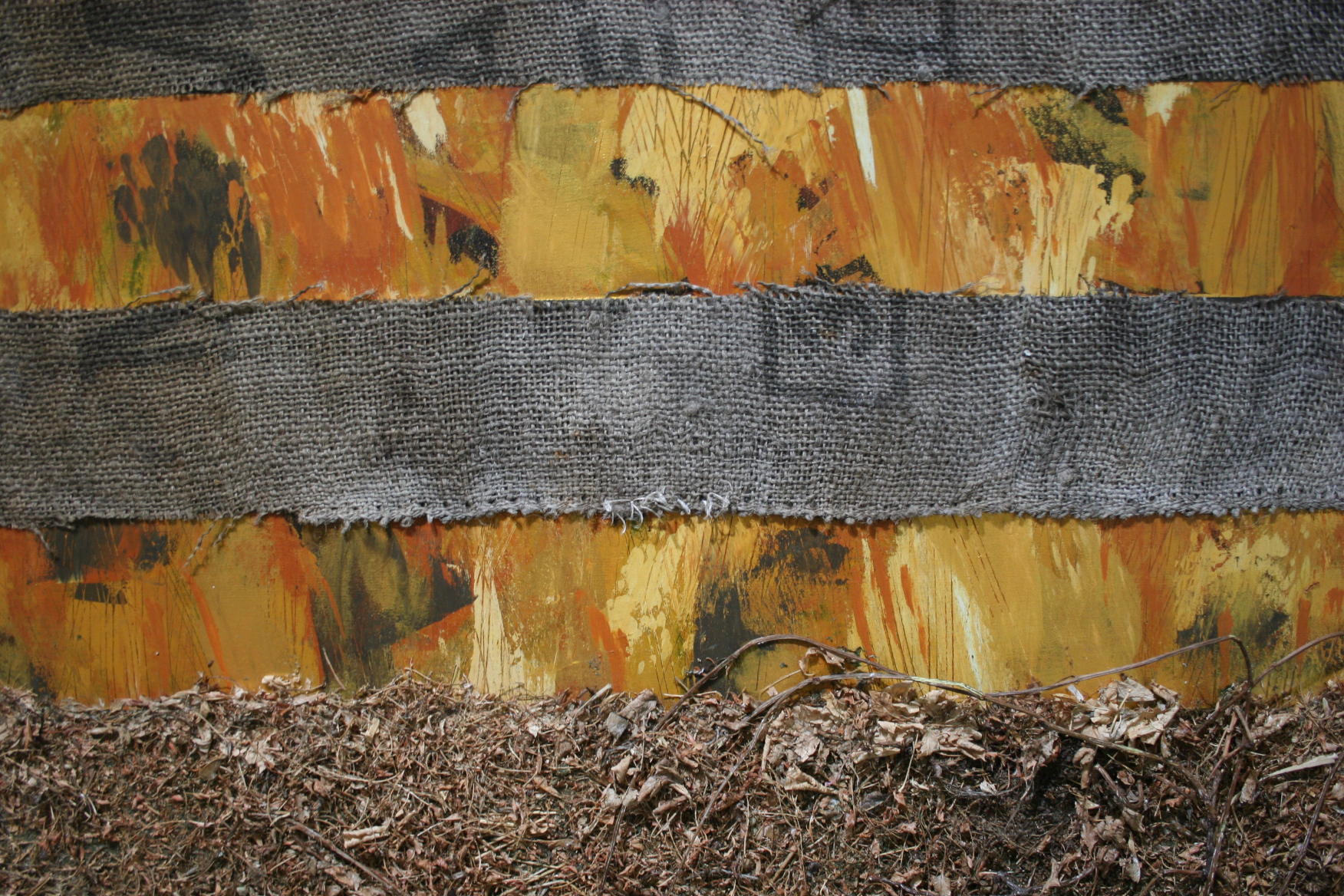
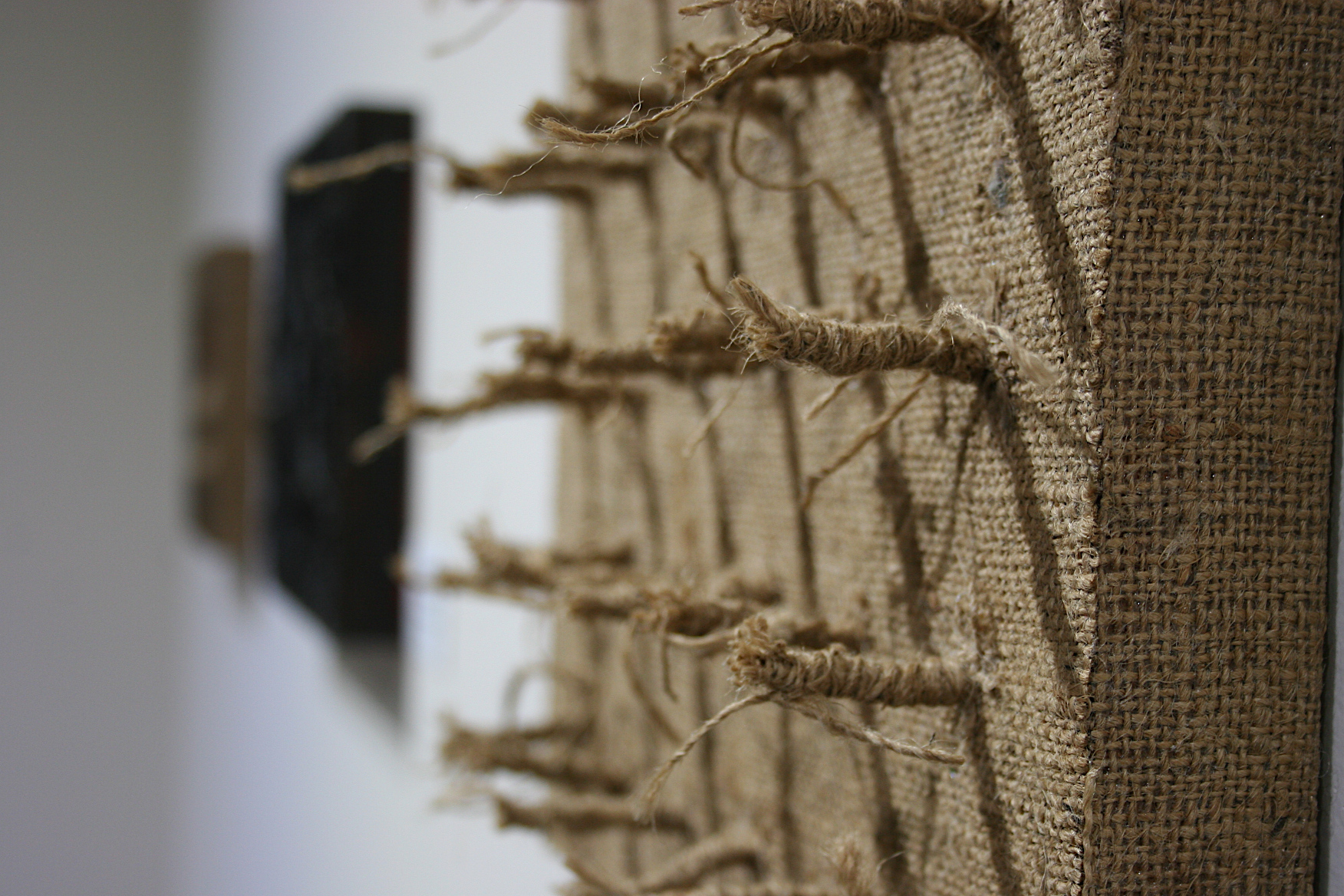
I didn’t note the title of this art featuring burlap and twine. (Minnesota Prairie Roots copyrighted photo March 2022)
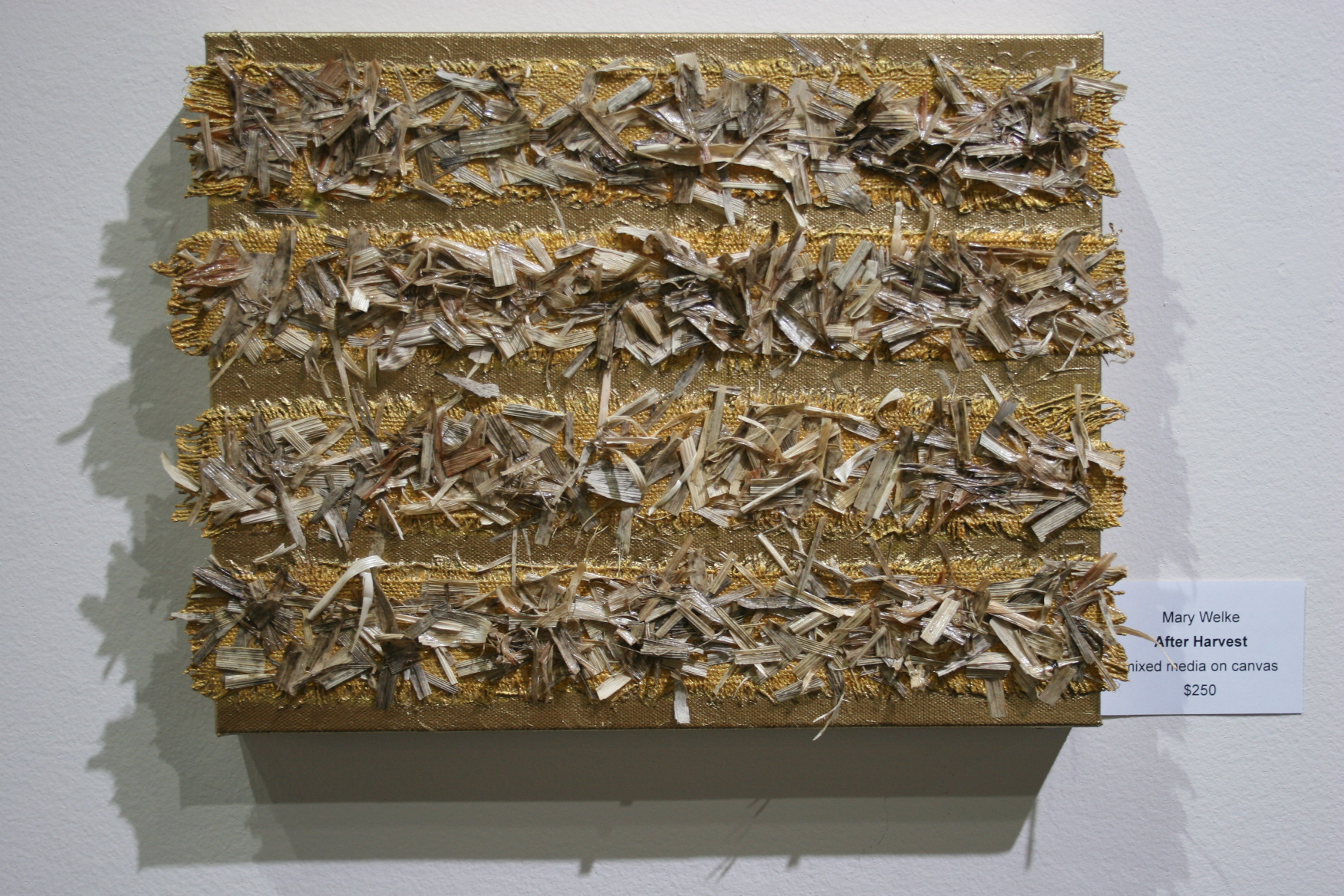
So much texture in “After Harvest” by Mary Welke. (Minnesota Prairie Roots copyrighted photo March 2022)
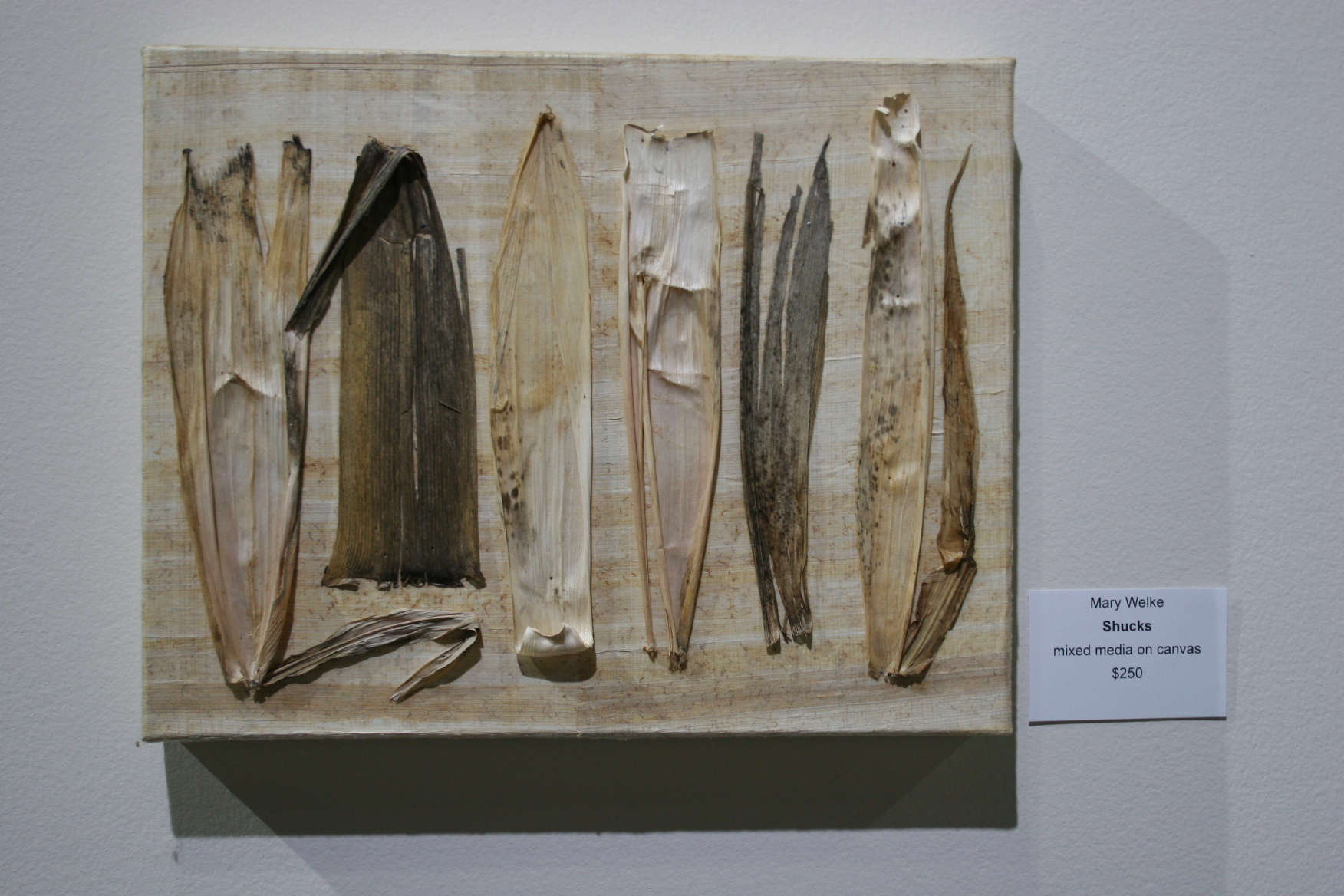
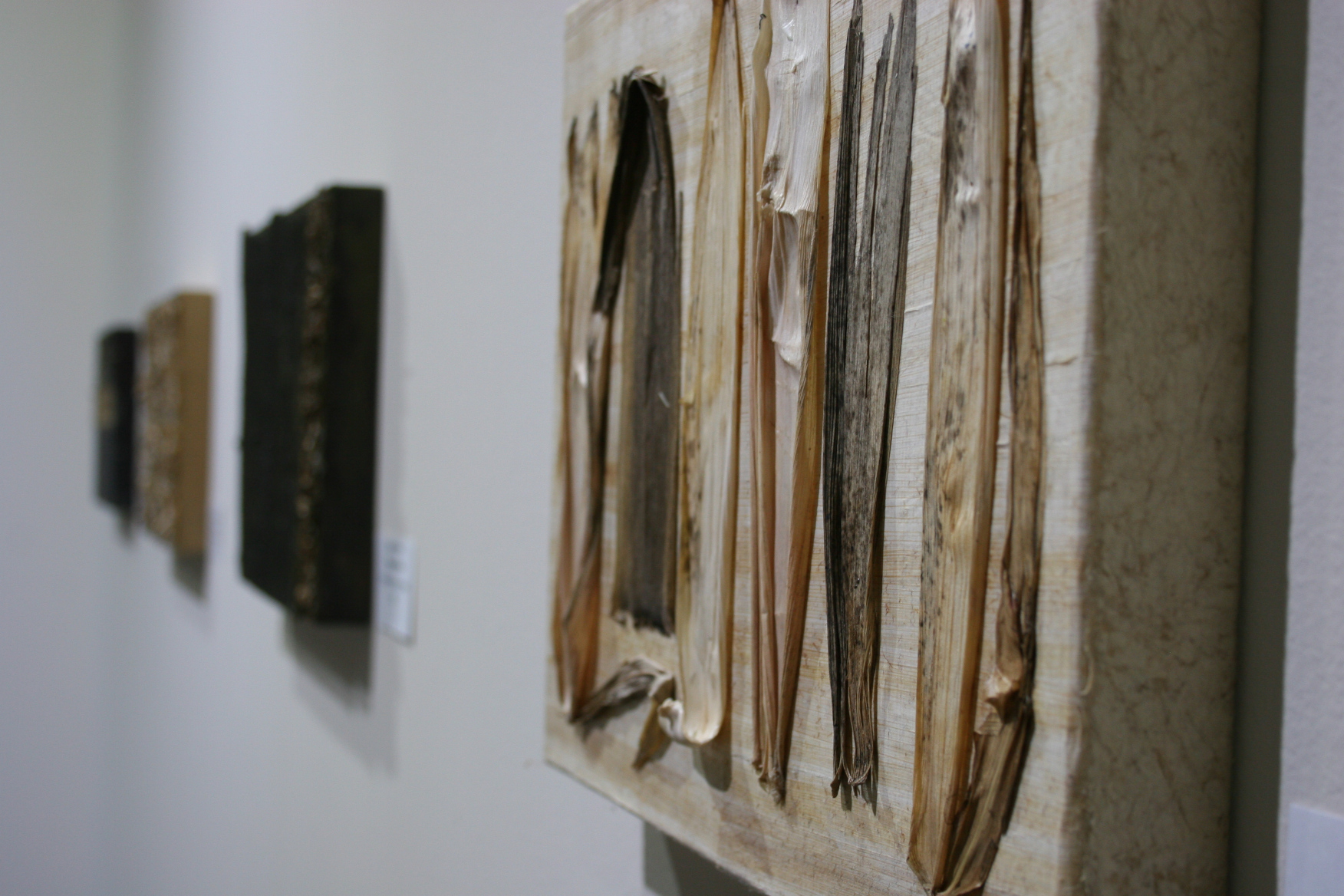
Corn husks up close in Mary Welke’s “Shucks.” (Minnesota Prairie Roots copyrighted photo March 2022)
Welke’s art is layered. Textured. It holds not only a visual depth, but a depth of connection to the land, to farming.
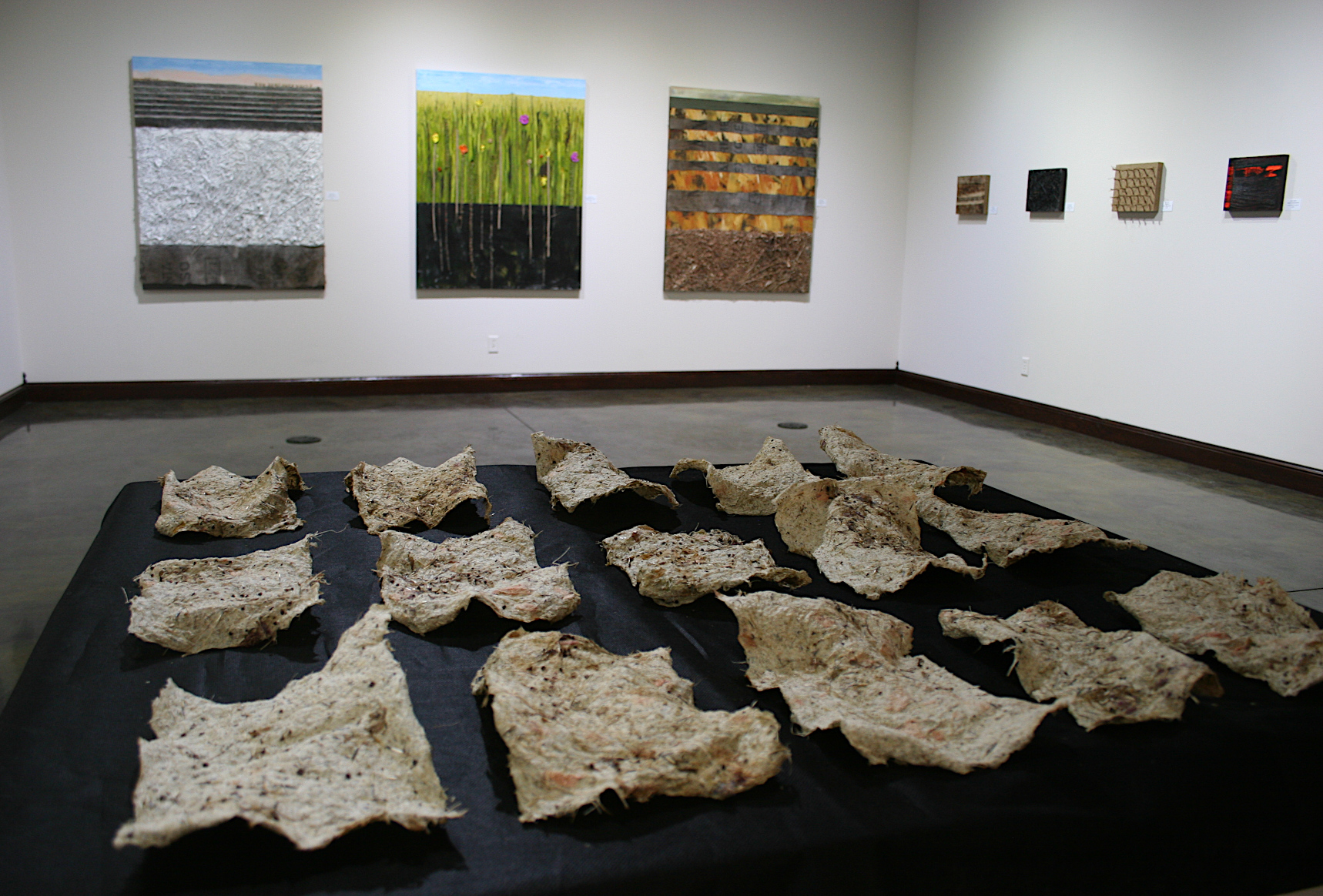
Mary Welke’s “Topographical Prairie Lands” scattered across a black surface. (Minnesota Prairie Roots copyrighted photo March 2022)
This is what I love about art. The ability to relate. To stand in a gallery and contemplate. Remember. Appreciate. And, with Welke’s work, especially, to feel rooted in the land.
#
NOTE: Please check back for more posts on other exhibits currently at the Paradise Centerfor the Arts.Artists Mary Welke, Kate Langlais, Michael Stoecklein and Summer Heselton will participate in a Visual Artists Talk at 6:30 pm on Thursday, March 10. See the Paradise Center for the Arts Facebook page for more info. The art of all four will be on display at the Paradise through March 19.
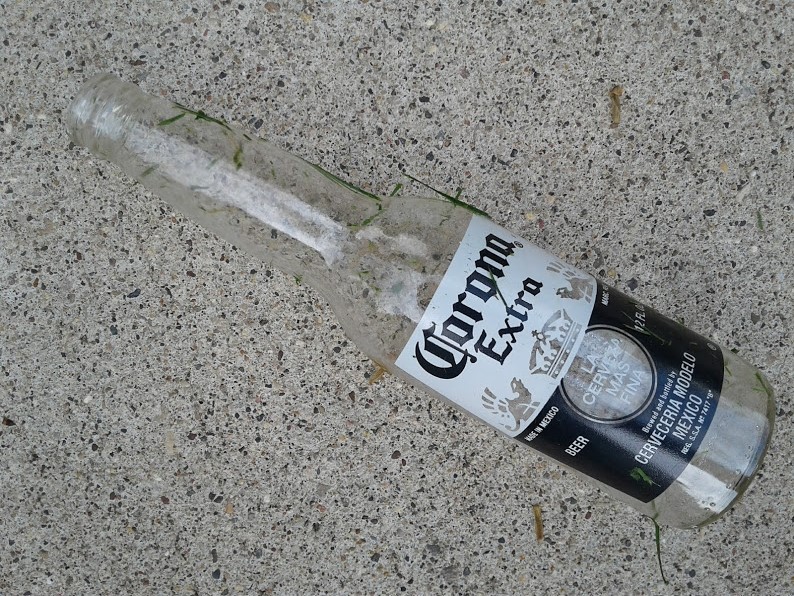
Lying on the sidewalk in front of my house, a beer bottle, one of many that land there, on the boulevard and in the yard. (Minnesota Prairie Roots copyrighted file photo 2017)
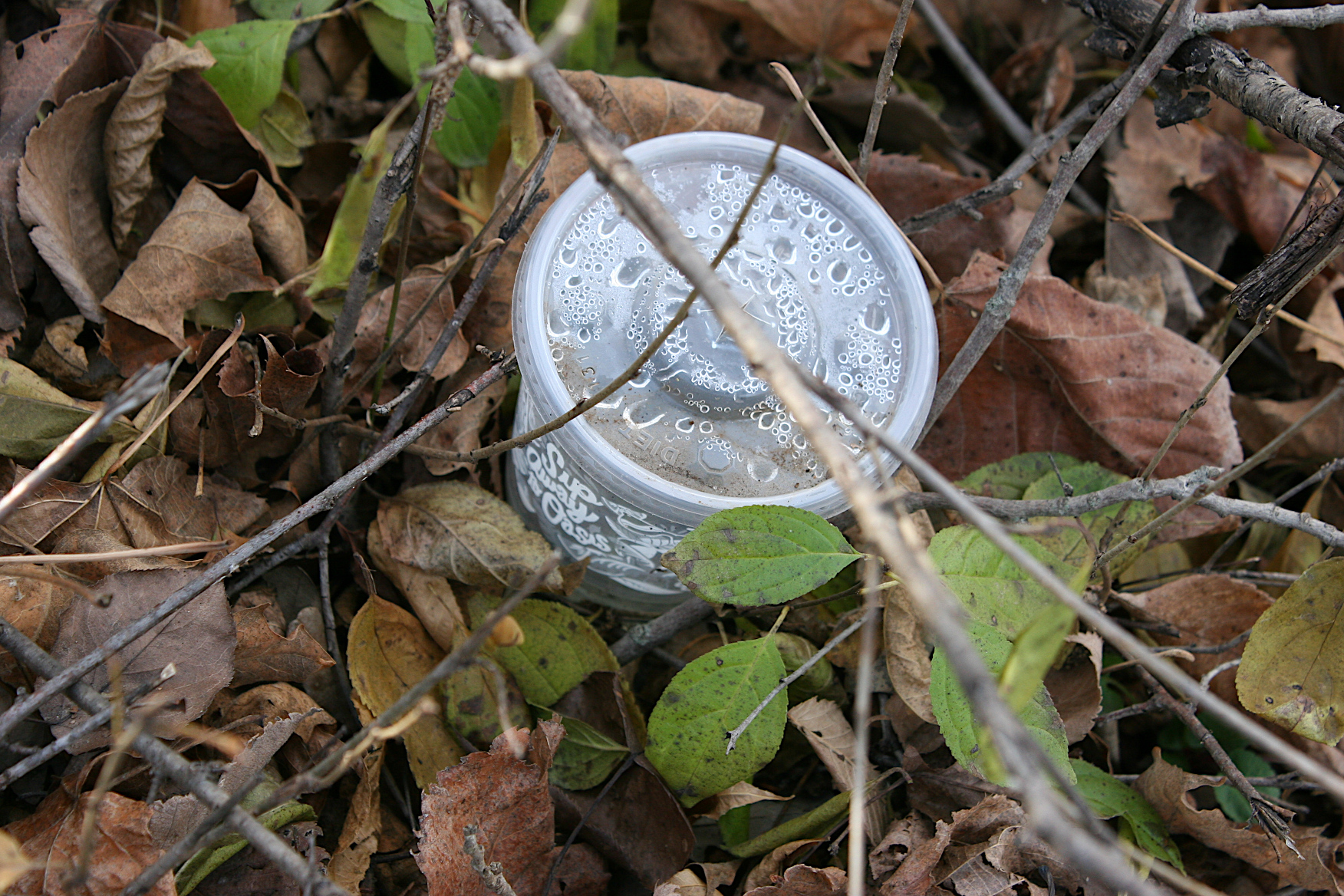
LIVING ALONG A BUSY STREET means more than dealing with noisy traffic. It also means dealing with litter. Tossed beer bottles and cans. Fast food bags and containers. Lots of those. Even a tire, which rolled off a vehicle and slammed into the side of our house, just missing the gas meter many years ago. And this winter, a stop sign propelled into the yard after a car went out of control on the icy street, jumped the curb and took out the sign.
Litter photographed several months ago at River Bend Nature Center in Faribault. (Minnesota Prairie Roots copyrighted photo November 2021)
It bugs me when people litter. The phrase “Don’t be a litterbug” comes to mind. If you’re of a certain age, you perhaps remember that 1960s anti-littering ad campaign. Lady Bird Johnson (First Lady to President Lyndon B. Johnson) championed efforts to stop littering and to limit billboards visually littering our roadways.
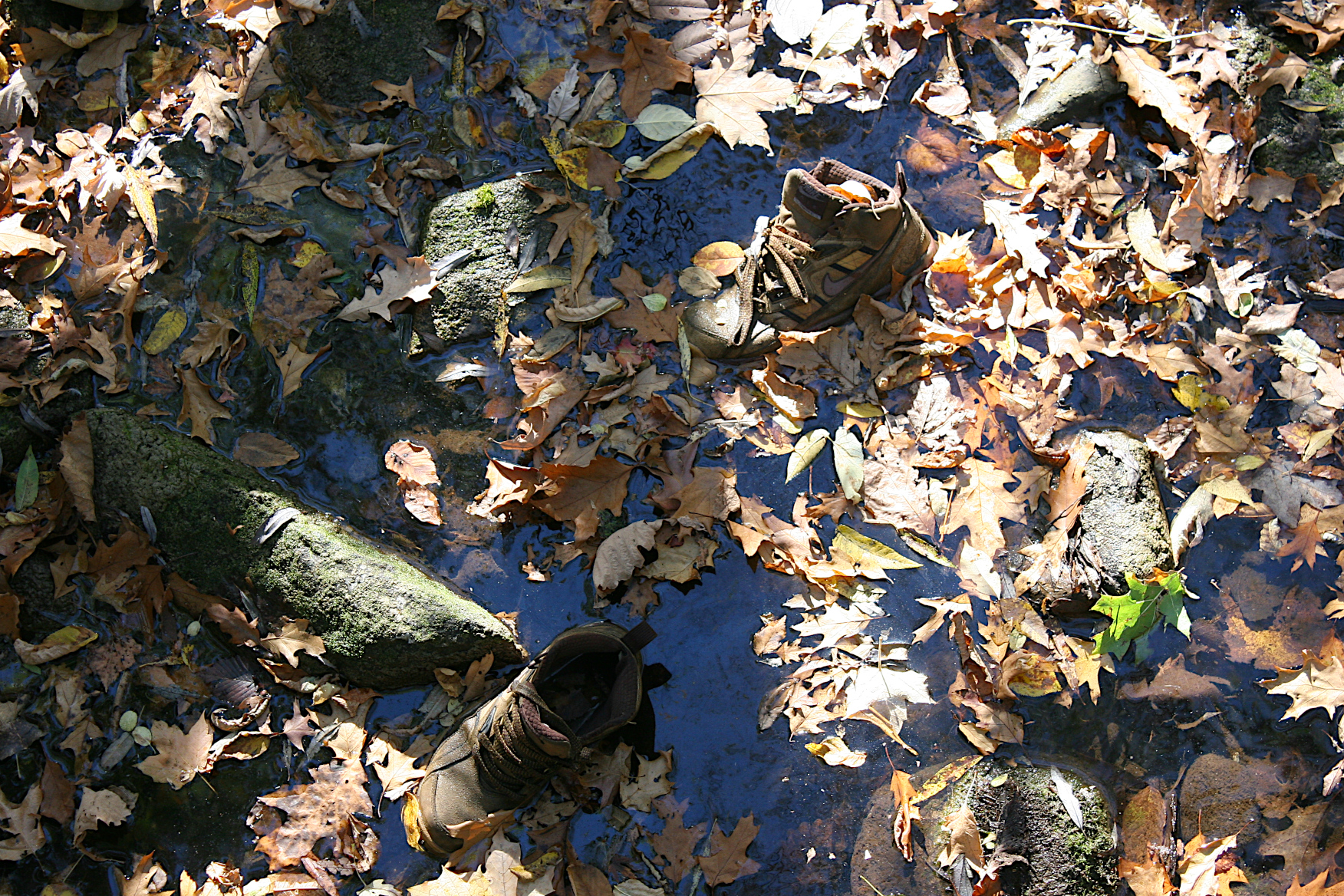
Hiking boots, tossed into the creek at Falls Creek County Park, rural Faribault. (Minnesota Prairie Roots copyrighted file photo October 2021)
As a teen, I once picked up litter from road ditches in my home county of Redwood. Employed through a southwestern Minnesota summertime program for low income families, I joined three other girls in working for the county highway department. One day we were tasked with collecting litter. Now decades later I recall only two of the many items we gathered from ditches—a dirty diaper and a torn up love letter. During our noon lunch break, we pieced together that letter. I wish I recalled the words written on that lined notebook paper. But I only remember how entertained we were.
Sometimes balls roll down the hill and into our yard, never to be retrieved by children, but by me. (Minnesota Prairie Roots copyrighted file photo 2017)
Thankfully we’ve come a long ways in eliminating litter—although I still see plenty—and in reducing trash sent to the landfill. Recycling helps. My eldest daughter and her husband even participate in organic recycling. In this program offered through their south metro county, they save food scraps, tissues, napkins and more which can be recycled. Yes, it’s extra work. But I applaud this additional effort to limit what goes into our landfills.
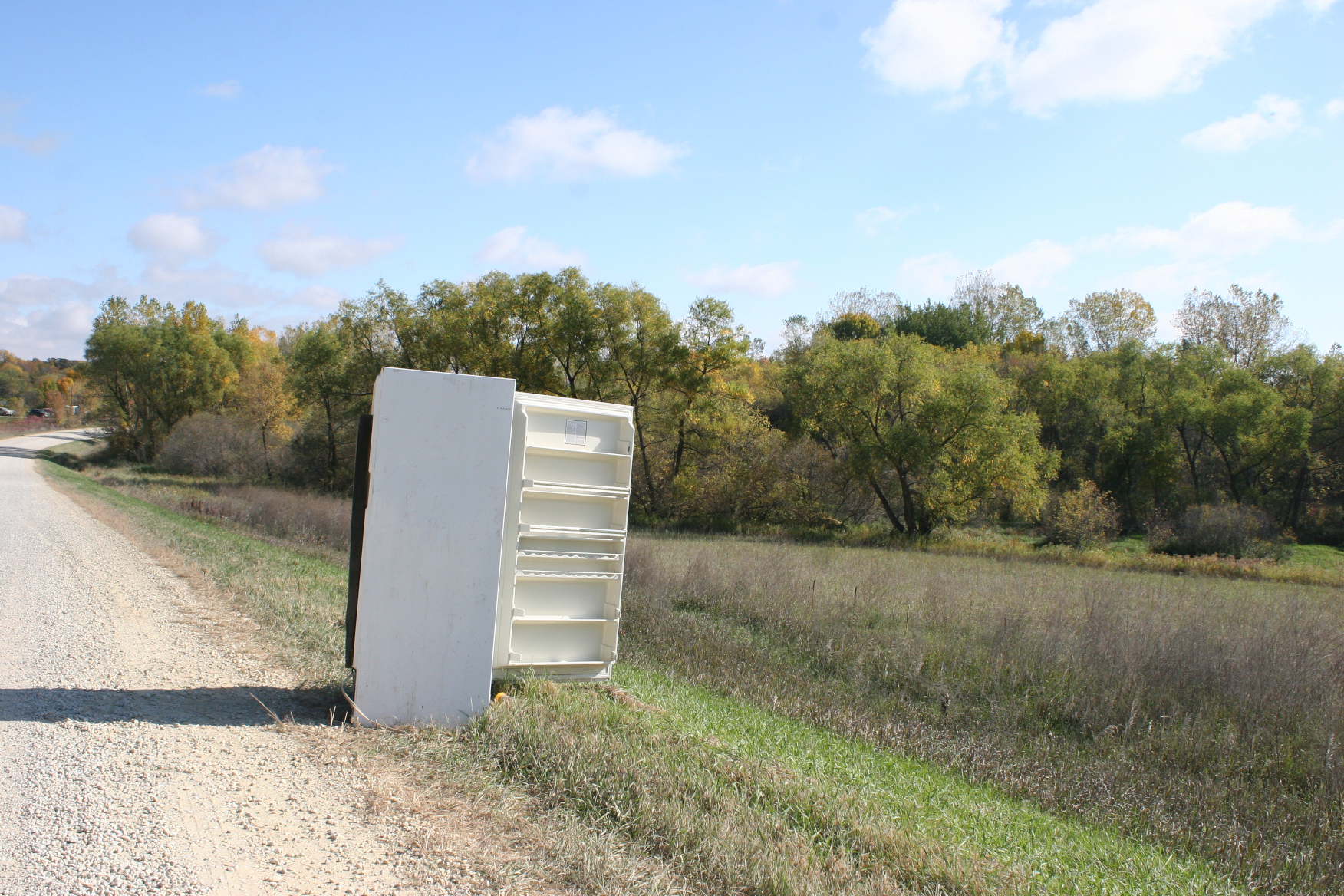
I photographed this abandoned refrigerator on the shoulder of a gravel road just outside Faribault last fall. (Minnesota Prairie Roots copyrighted file photo October 2021)
Of all the littering, other than in my own yard, I’m particularly bothered by the dumping of appliances, mattresses and furniture into ditches and along roadways. I recognize getting rid of these unwanted items can prove costly. Some cities host annual community clean-up days to collect items like these. And maybe that’s the solution because not everyone can afford disposal. Make the disposal easy, convenient and free, or low cost.
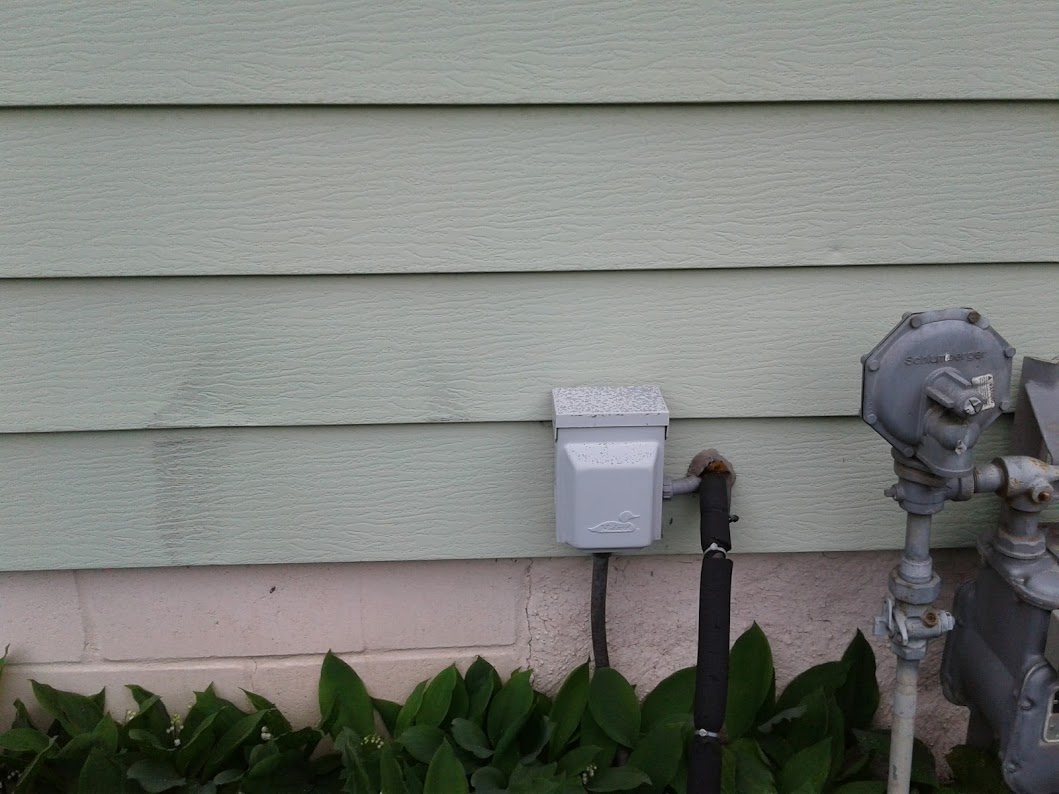
To the left in this image, you can see the black tire mark on the siding from a tire that came off a vehicle and rolled down the hill, slamming into our house. (Minnesota Prairie Roots copyrighted file photo)
Therein lies a benefit of living along a busy street. Whenever Randy and I want to get rid of something, because we’ve upgraded or no longer need the item, we set it curbside tagged with a FREE sign. And each time, someone stops to claim our discards. Swing set. Recliner. Lamp. End table. Headboard and frame. Bookshelf. And more items that I’m not recalling. Sure, maybe we could have sold these things, but we didn’t want the hassle. And, if someone needed what we no longer needed, then we were happy to give it away.
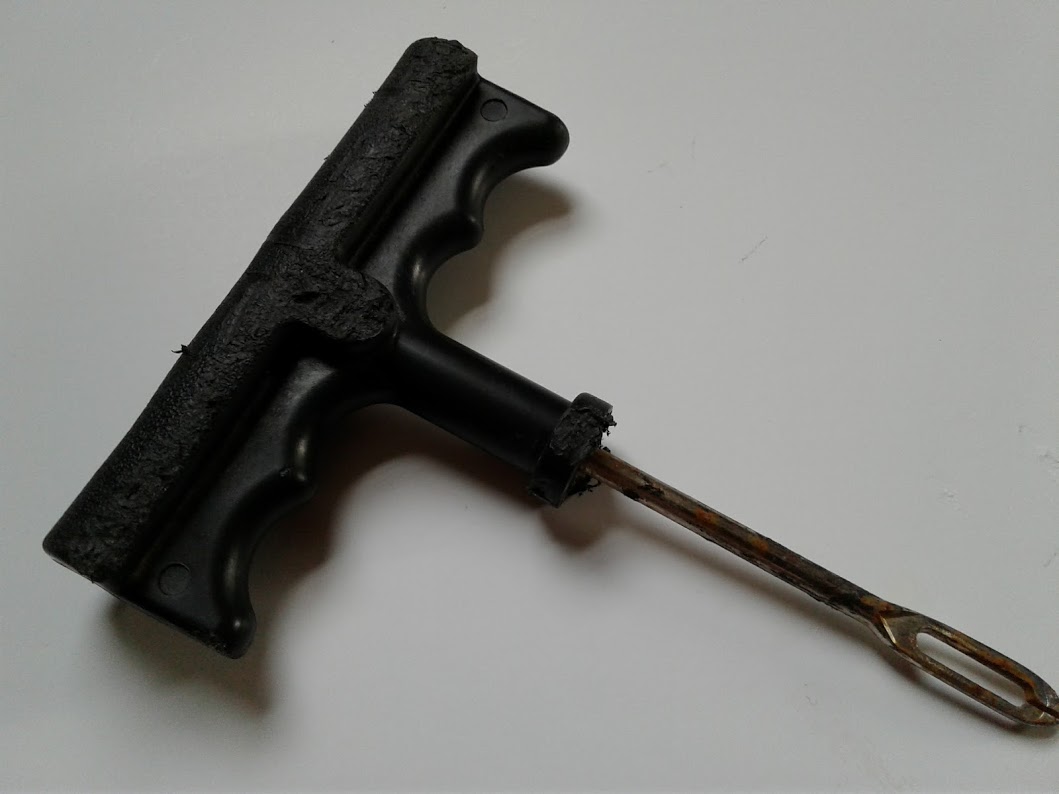
I found this tire repair tool in a street corner flowerbed by our house. (Minnesota Prairie Roots copyrighted file photo 2017)
But please, dear people, who pass by our house either on foot or by vehicle, we don’t need your litter.
TELL ME: What litter/discards/trash bother you in particular? What especially unusual items have you seen tossed in a ditch, onto a sidewalk, along the road, at a nature center…? Do you recycle and, if yes, what?
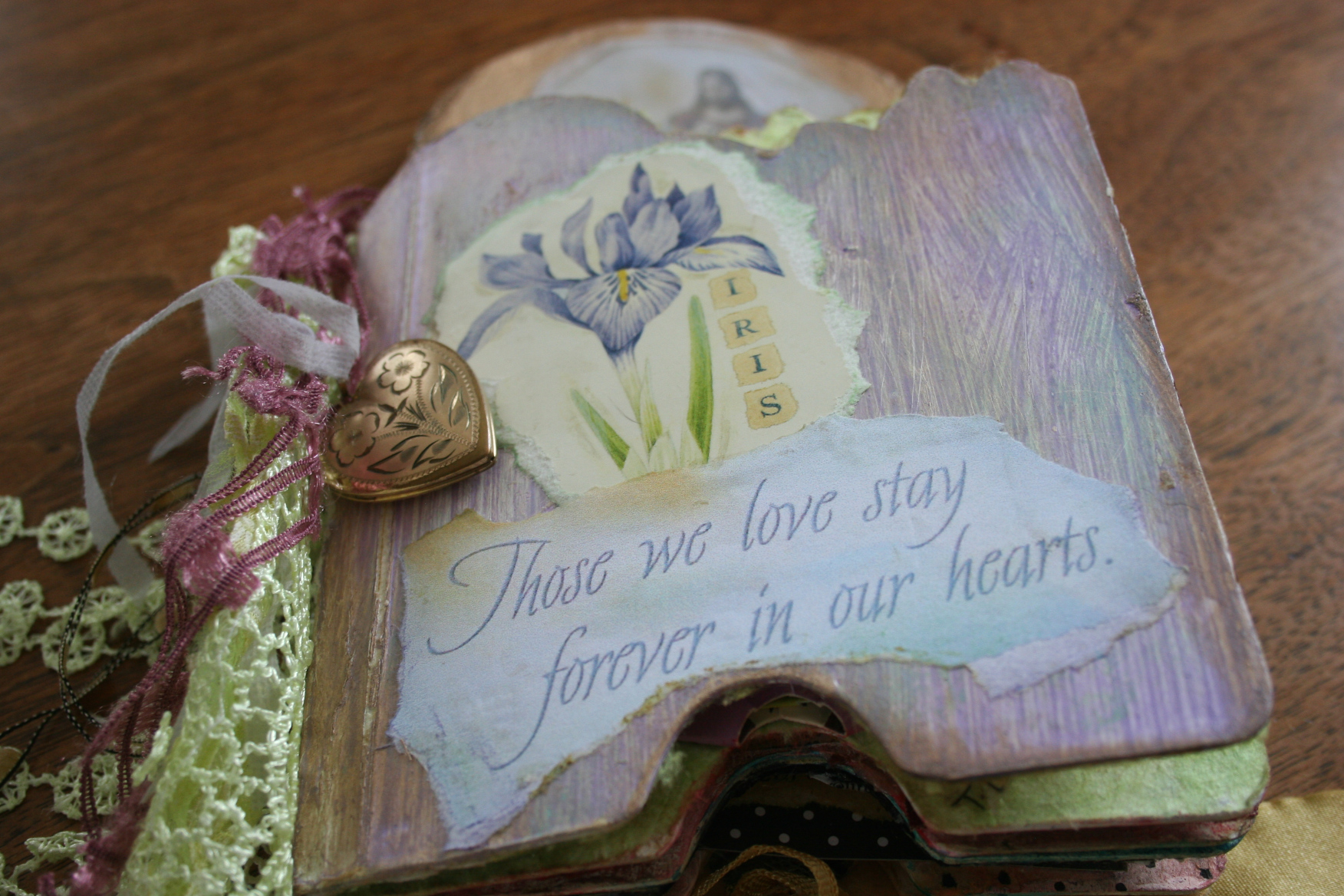
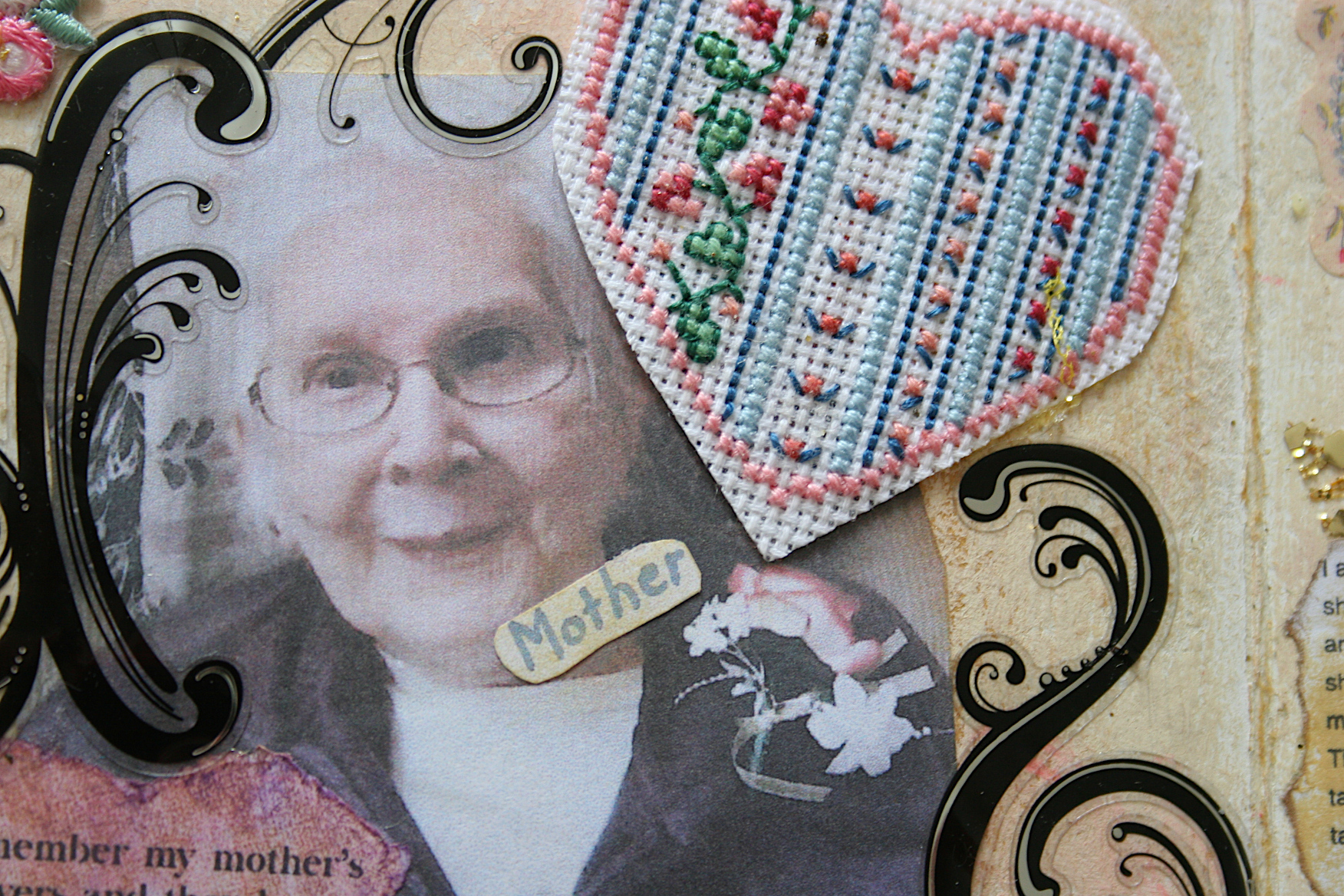
The book cover features a loving quote and my mom’s favorite flower, the iris. To the left, along the spine, is an empty locket for me to place pictures inside. (Minnesota Prairie Roots copyrighted photo February 2022)
THOSEWE LOVE stay forever in our hearts.
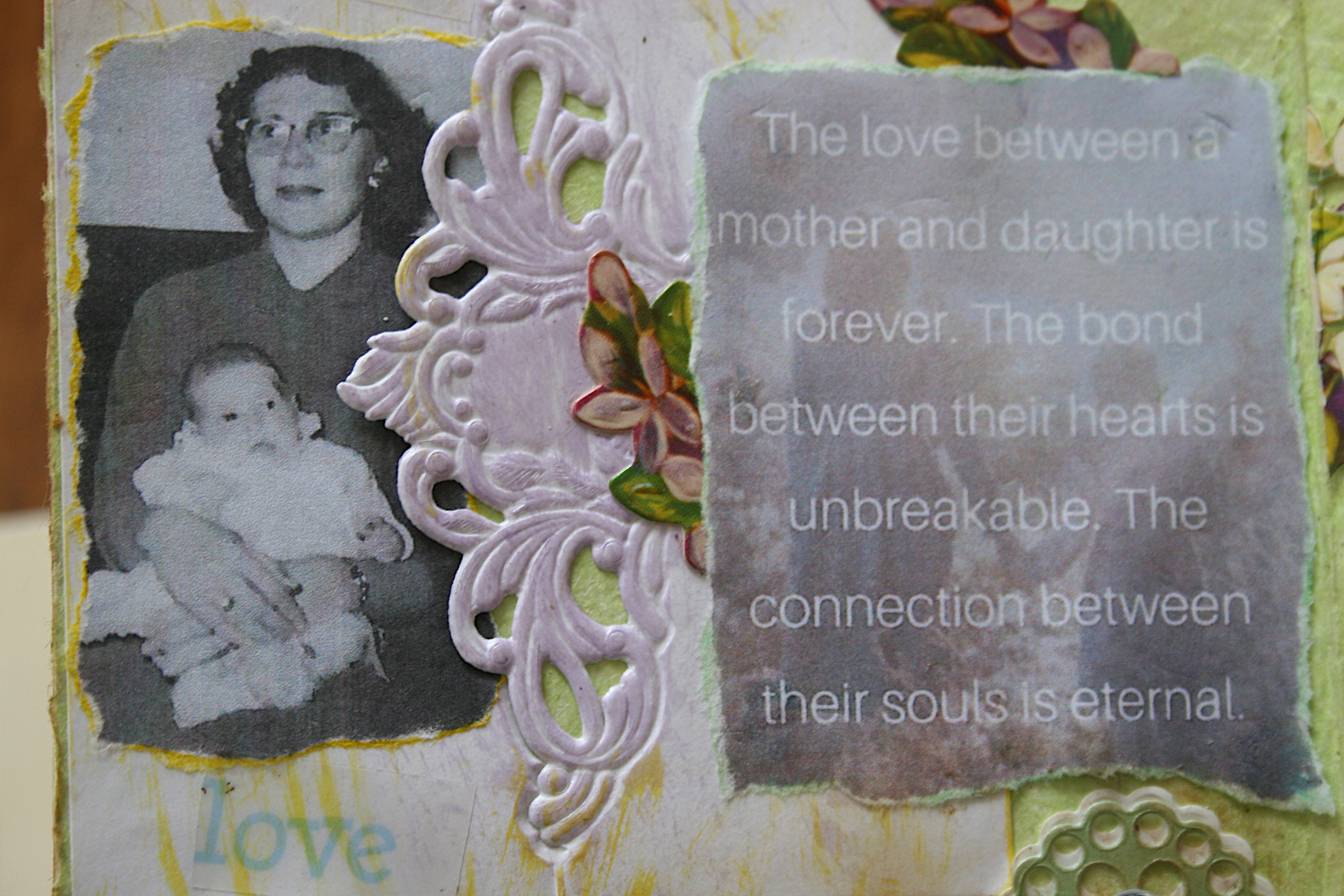
The first page features a photocopied photo of my mom holding newborn me. I have only a few photos from my early childhood, this one my most treasured. (Minnesota Prairie Roots copyrighted photo February 2022)
What beautiful, meaningful and heartfelt words. That message titles a 10-page mini altered book crafted by my dear friend Kathleen upon the recent death of my mom. The book arrived unexpectedly from Kathleen’s secluded cabin studio in Idaho on a February morning, when I most needed it.
Kathleen includes this photocopied picture of my mom on her last Mother’s Day in 2021 and posted on the Parkview Nursing Home Facebook page. (Minnesota Prairie Roots copyrighted photo February 2022)
I settled into a comfy chair, paging through the book as tears fell. Soon I was sobbing.
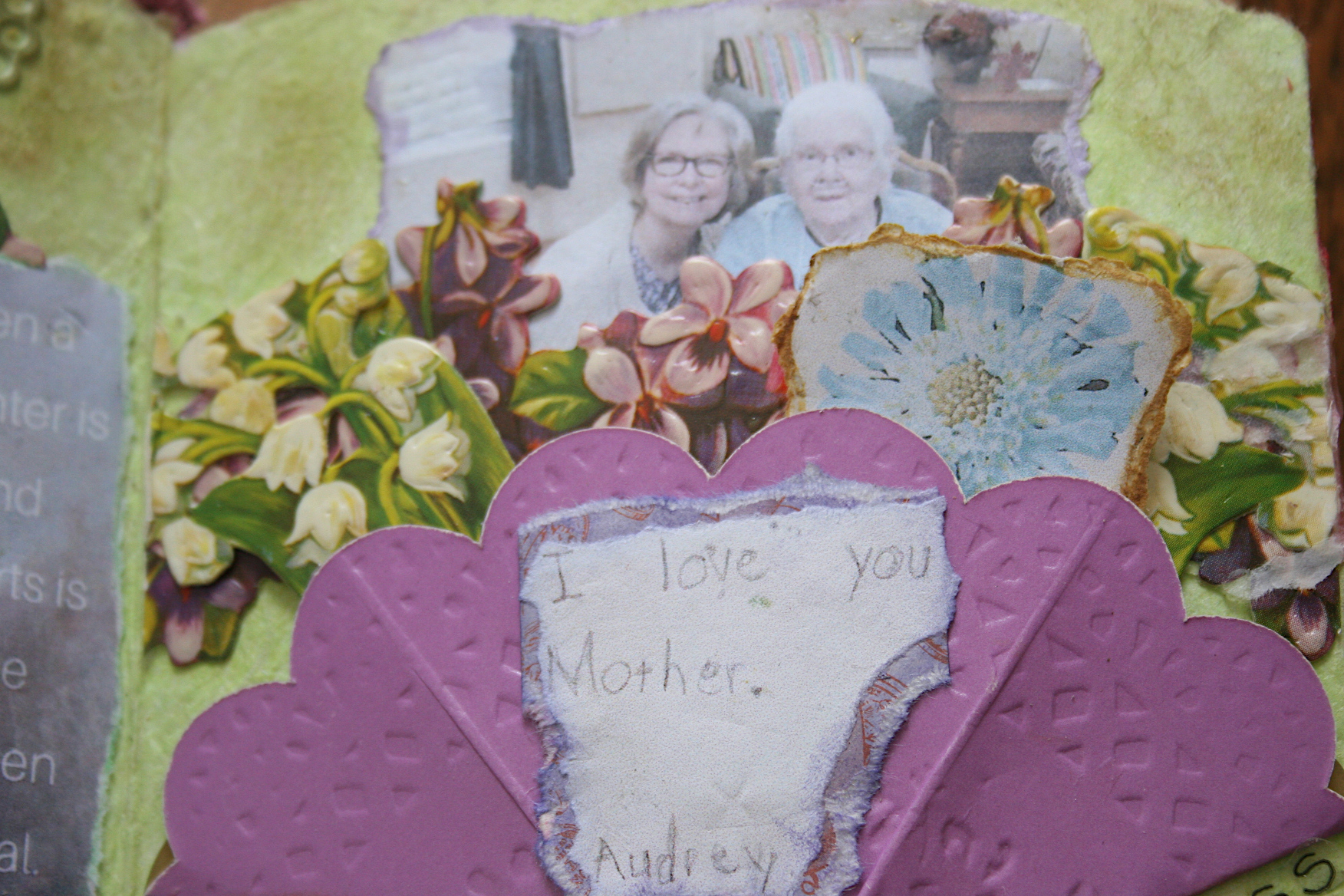
Me with my mom in a photo taken several years ago. The words are in my printing, from a Mother’s Day card I made for Mom as a young child. The blue flower tucked into the lavender pocket graced the front of that card.(Minnesota Prairie Roots copyrighted photo February 2022)
Kathleen, using carefully selected photos pulled from my blog, inspirational quotes and poems, recycled materials and more, created a book reflecting my mom. From Mom’s faith to her love of irises to our mother-daughter bond to her rural background and more, this book lovingly honors my mother.
It is a treasure, an absolute treasure, now cherished.
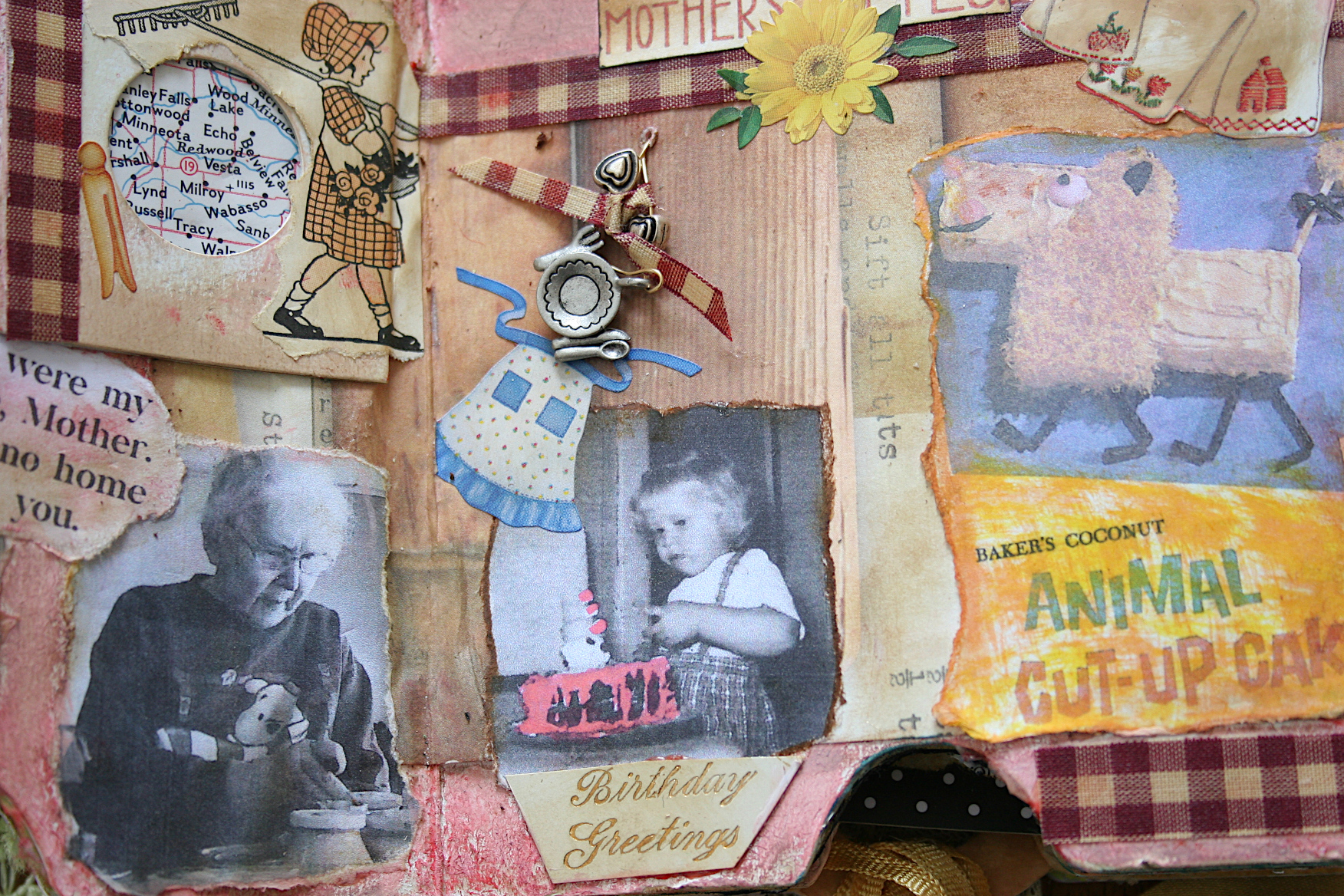
This is a special memory of my mom. On our birthdays, she baked a homemade chocolate cake and then crafted it into an animal shape following instructions in the “Animal Cut-Up Cake” booklet. We chose which animal we wanted. (Minnesota Prairie Roots copyrighted photo February 2022)
My long-time friend, once the children’s librarian in Faribault, never met Mom. But you’d never realize that by seeing this visual memoir. That’s a tribute to Kathleen, a kind, caring and compassionate soul who truly listens, whose empathy runs deep, whose heart overflows with goodness and love.
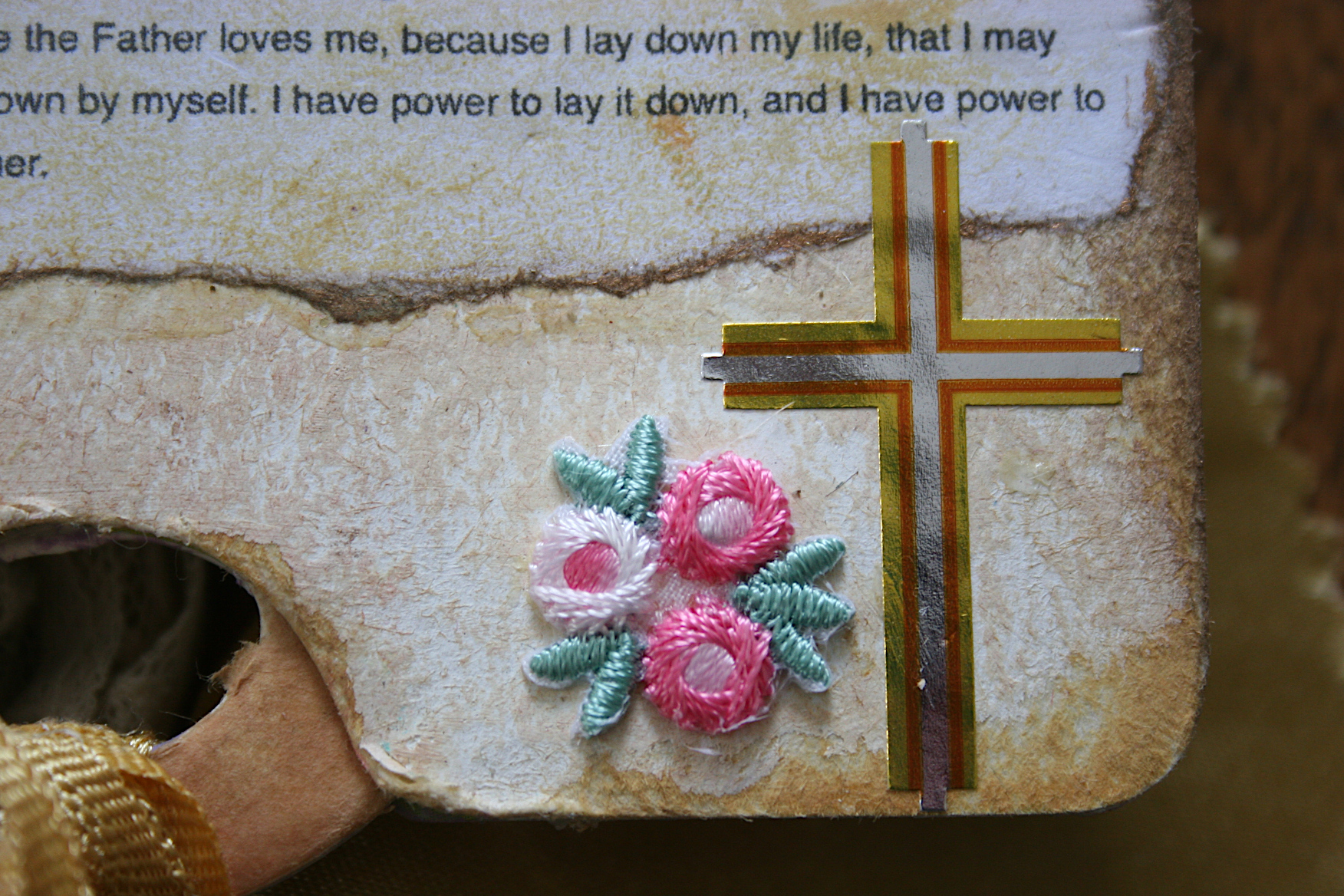
A cross hugging a corner of the last page represents Mom’s strong faith. (Minnesota Prairie Roots copyrighted photo February 2022)
Kathleen has read my blog posts about Mom through the years. She’s viewed the photos I’ve posted (and some I sent to her), from past until recently. She understood the essence of my mother—her strong faith, her farm background, her love of family, her compassion for others, and more.
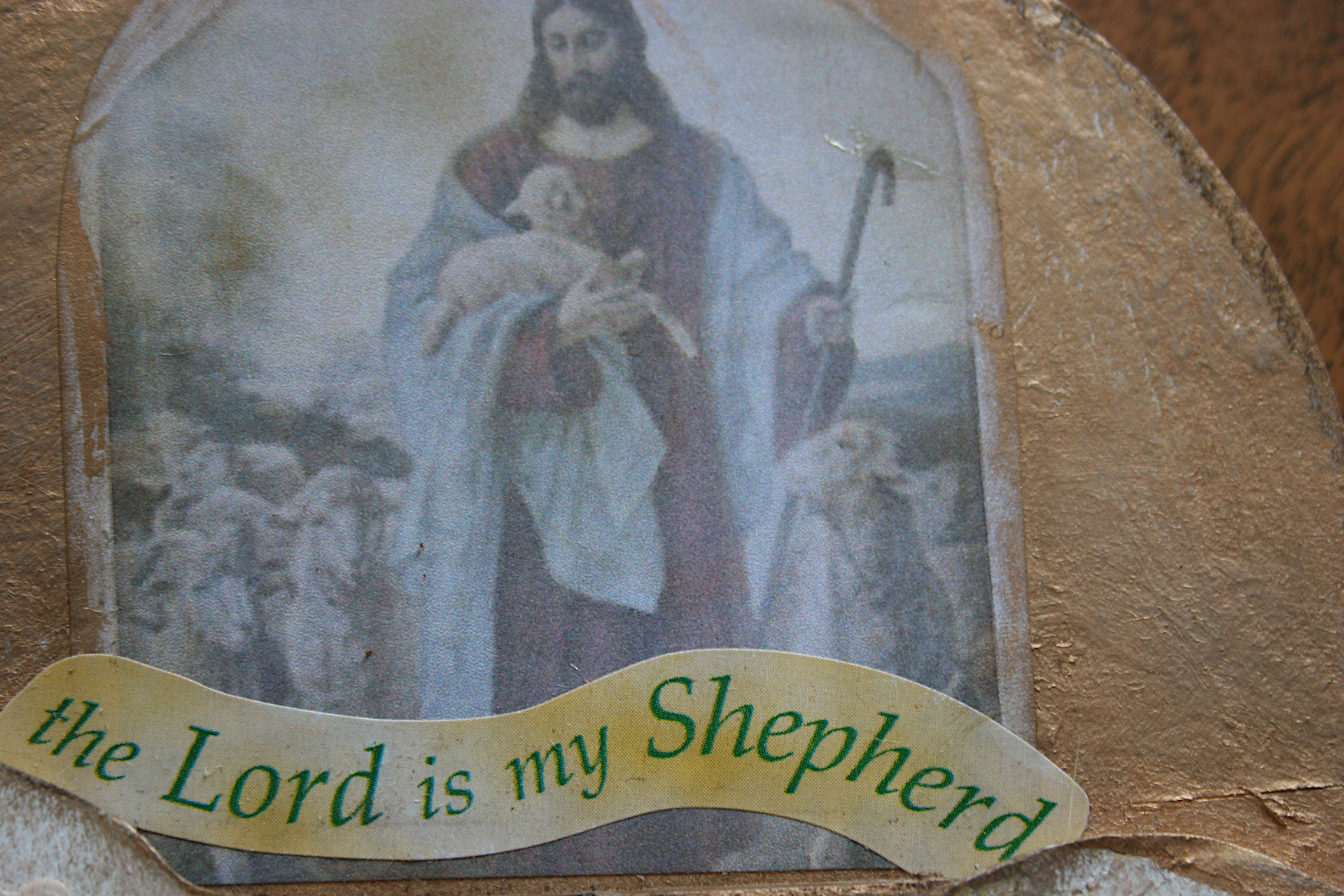
The book includes a copy of a photo I took of Mom’s “The Good Shepherd” framed print, a 1954 wedding gift to my parents from Dad’s Uncle Walter Arndt. (Minnesota Prairie Roots copyrighted photo February 2022)
No detail went unnoticed by my friend in creating this work of art. In a mini-bottle attached to the book, “Amazing Grace” labels a music scroll. That was among three hymns sung at Mom’s funeral. Polka dotted ribbon and paper frame two family photos, matching the polka dotted blanket covering my Mom’s lap and the polka dots decorating her great grandson’s birthday cake in two images. A swatch of gold lace mimics the frame of my mom’s “The Good Shepherd” print which now hangs on my dining room wall. Kathleen incorporated selected “good shepherd” verses from John 10 (read at the funeral) into the book along with a photo of that cherished print.
Two pages are devoted to the grandmother-grandchild relationship, featured in this copied photo of my three children taken in 2015. (Minnesota Prairie Roots copyrighted photo February 2022)
Words cannot fully convey my gratitude to Kathleen for crafting this keepsake. It is, for me, a love-filled book to be shared with my children and grandchildren. Sweet memories of my mom, their grandmother and great grandmother. My three now-grown children are connected to Kathleen also, my daughters once working as library pages and attending teen events under her supervision and my son as a young boy asking her to find space-themed and other books for him.
Kathleen left Faribault years ago with her dear husband, Justin. But we remain deeply connected. Connected via our shared love of words and writing and reading and poetry and libraries. Connected via our shared values and genuine compassion for others. Connected via her connection to my children as they were growing, developing. And now that has extended to the next generation. Geographically, we are distanced from one another. But our friendship remains rooted, strong, enduring. Miles matter not.
And when Those we love stay forever in our hearts arrived from 1,400 miles away, I felt as if Kathleen had stopped by to give me a hug. Such are my loving thoughts upon embracing this comforting keepsake crafted by my dear dear friend.
#
NOTE: Several years back, Kathleen created an altered (much larger) book all about me. It tells my life story. As with the book about my mom, Kathleen tapped into my blog for images and information. My friend, even without that resource, knows me well. That book, too, is a treasure, deeply cherished.
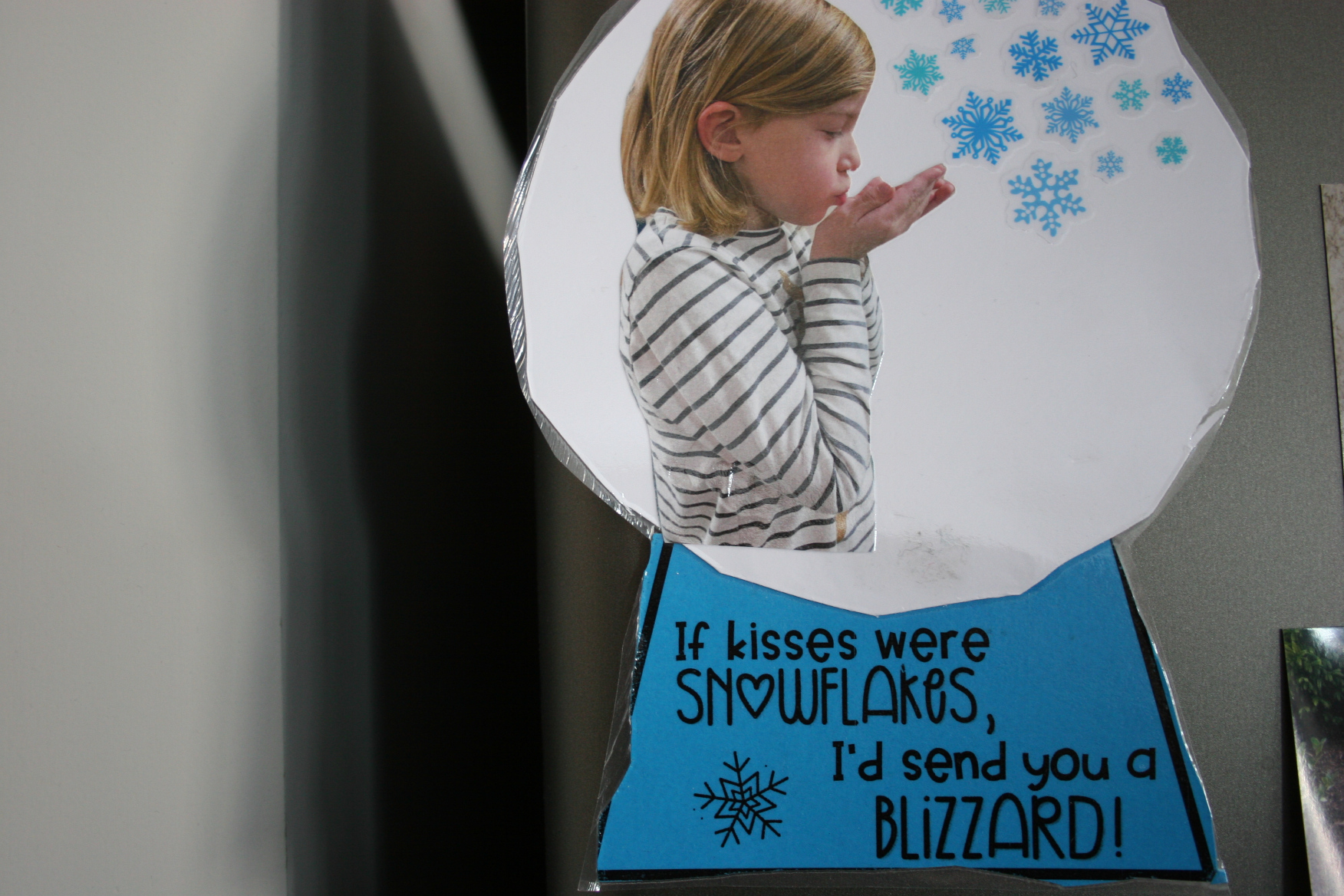
Love this art of my granddaughter on my eldest daughter and son-in-law’s fridge.(Minnesota Prairie Roots copyrighted photo February 2022)
IF YOU’RE LIKE ME, your refrigerator functions as more than a food storage unit. Mine also functions as an art gallery, a photo gallery, a place to post notices and information.
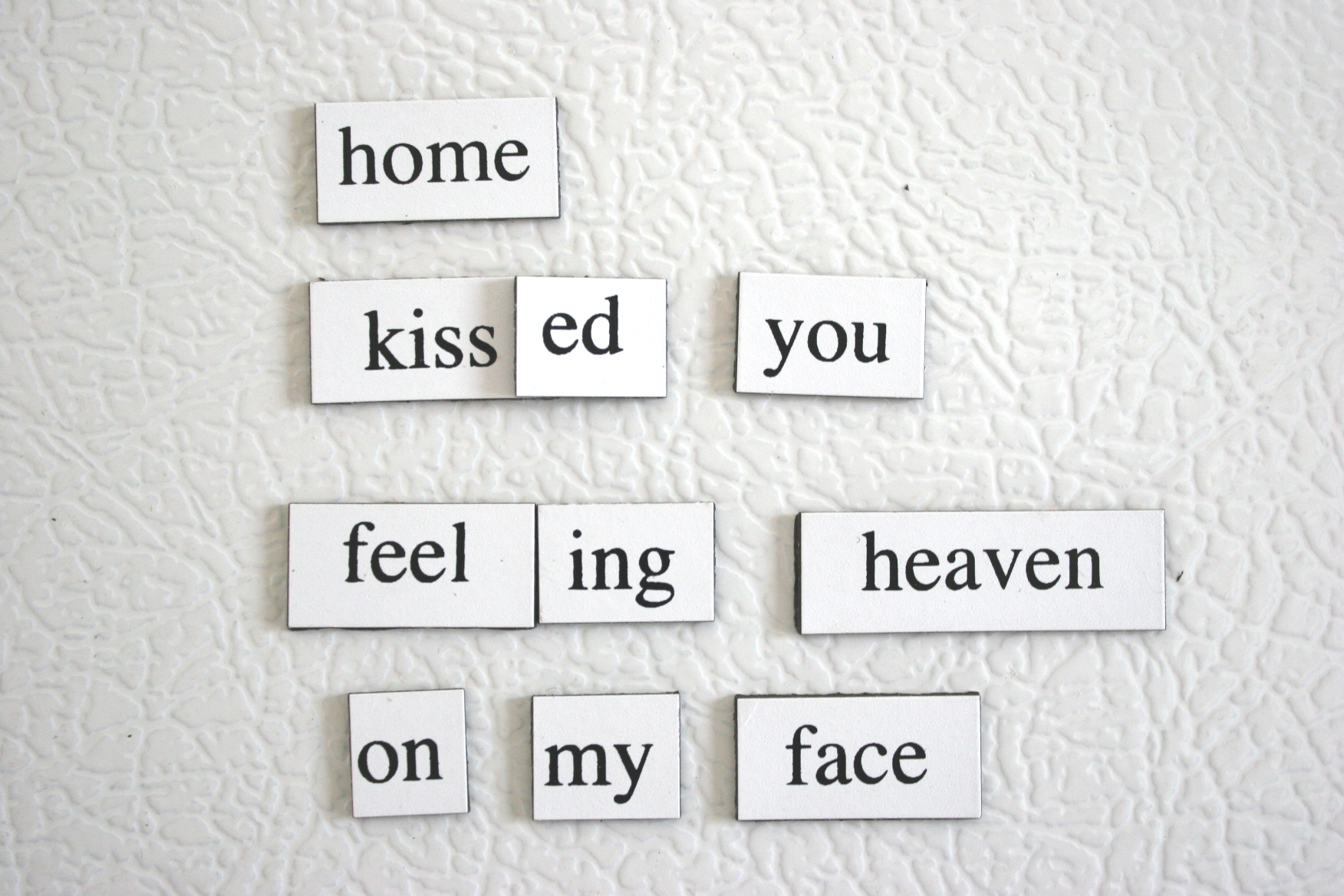
One of several poems I’ve crafted with magnetic words on my refrigerator. (Minnesota Prairie Roots copyrighted file photo)
On my fridge door, you’ll currently see six family photos, an inspirational quote, a clipped poem from my mom’s collection and two short poems I crafted from magnetic words.
Looking for clues in the “Gangster’s Gold” Mailbox Mystery now available (along with other mysteries) on Etsy at Orange Guy Games. (Minnesota Prairie Roots copyrighted file photo November 2021)
Shift to the not-so-publicly-visible side and you’ll find an assortment of newspaper clippings (including my pastor’s column about mental health), the “We Remember Them” poem, a recycling calendar, two certificates for completing the Cannon Falls Library Mailbox Mysteries, an email about details for staying at the lake cabin…
And then, clipped under a sheaf of papers is a City of Faribault newsletter, Snow Season—HELPFUL TIPS & INFORMATION. Nine snow/winter-related stories fill both sides of the standard sheet of paper. Yes, there’s a lot to remember when you live in a state of winter for perhaps six months (or more, depending).
The articles are titled:
Parking Restrictions & Snow Emergencies
Pushing Snow into Streets is Prohibited
Help Keep Fire Hydrants Cleared from Snow
Clear Sidewalks of Snow and Ice
Avoid Frozen Water Pipes
Proper Mailbox Installation will Help Keep it Upright this Winter
Shoveling Driveway Openings
Children Stay Clear of the Street
Keep Trash & Recycling Bins Out of the Street
Best to keep vehicles off streets during or after a snowfall or risk a ticket and/or towing. ((Minnesota Prairie Roots copyrighted file photo October 2020)
So basically keep your vehicles (during snow emergencies), garbage cans, snow and kids off streets.
Clear fire hydrants near your home because, you know, if firefighters need to dig out a hydrant, your house could burn down.
Remove snow and ice from sidewalks so pedestrians (especially letter carriers) don’t slip and fall and break a bone. And as long as we’re talking mailboxes, shovel the snow away from them. If a snowplow hits your curbside mailbox (note, you must have it properly installed), call the city.
Don’t blame the city if your water pipes freeze. They’ve advised you to insulate them and take other precautions to prevent freezing.
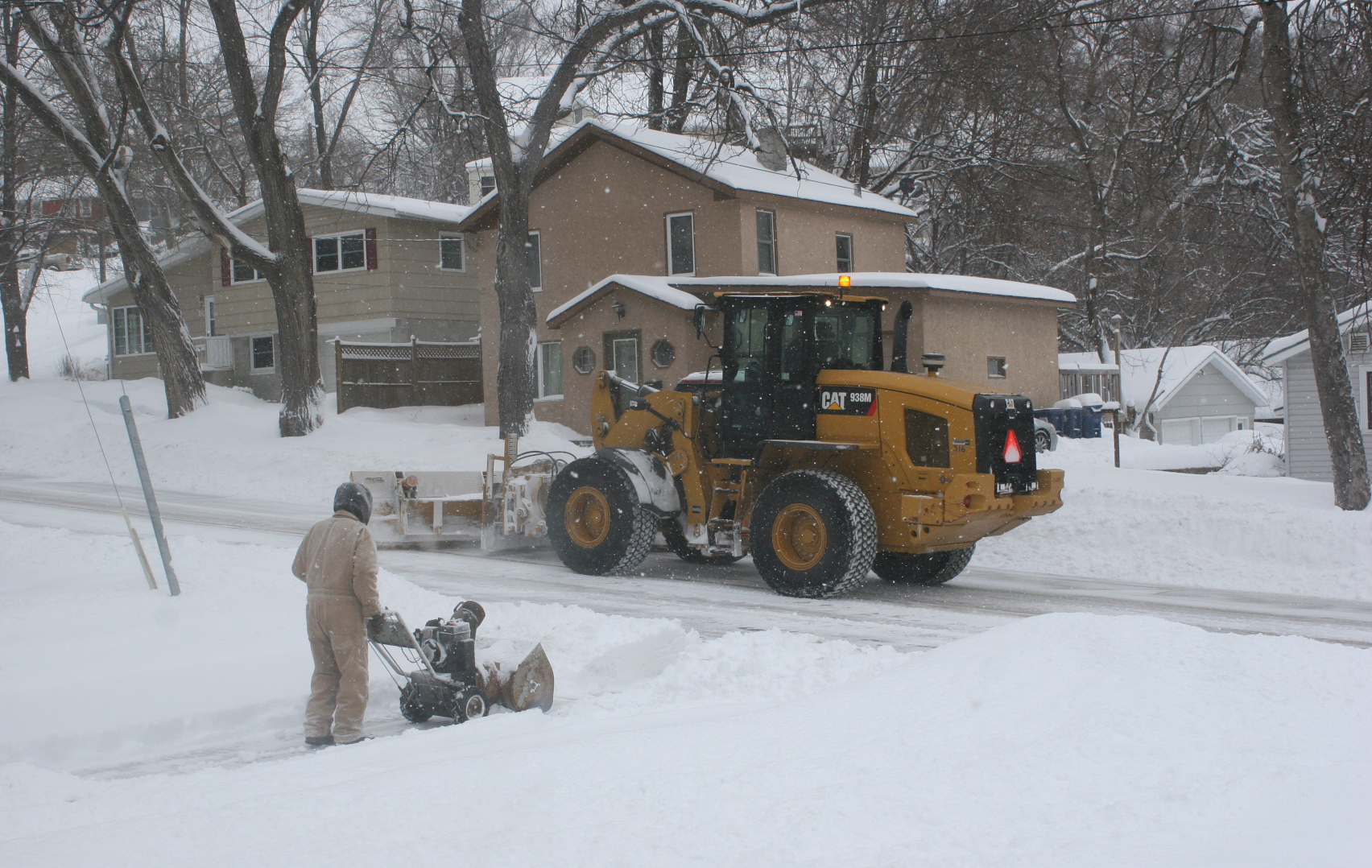
As any Minnesotan knows, the worst thing is to have the driveway all cleared and then the snowplow plows the end shut with a ridge of snow. Here Randy waits for the plow to finish clearing the street. (Minnesota Prairie Roots copyrighted file photo February 2020)
Also, do not blame city snowplow drivers for plowing snow across the end of your driveway within minutes of your having opened your driveway. That one’s really tough to take. Too many times the plow arrives shortly after all snow has been removed from driveway’s end. Then it’s back to shoveling or blowing, mean-spirited words unheard over the scrape of plow blade upon asphalt.
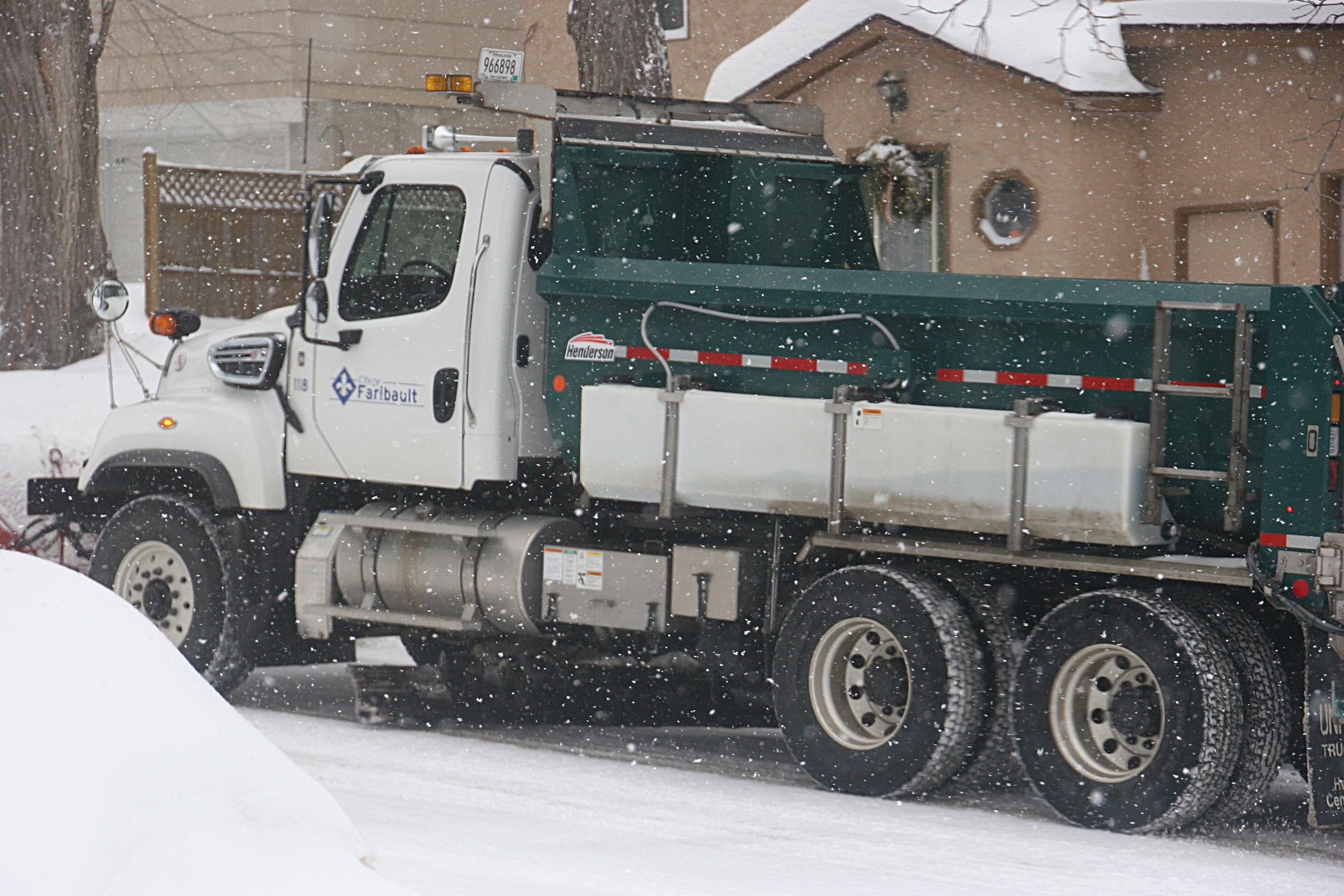
I’m grateful for the City of Faribault drivers who clear our streets in winter. (Minnesota Prairie Roots copyrighted file photo October 2020)
The city is, after all, grateful for your cooperation as noted in this sentence of gratitude:
Thank you very much for your assistance and patience in getting through another Minnesota winter and plowing season.
You’re welcome, City of Faribault. My words, not theirs.
#
TELL ME: What’s on your fridge? Anything snow/winter-related?
Randy follows the trail along the Cannon River in North Alexander Park, Faribault. (Minnesota Prairie Roots copyrighted photo February 2022)
BEFORE TUESDAY TEMPS ROSE to around 40 here in southern Minnesota, there was the cold. Brutal cold. Mornings of minus below zero. Strong winds making the outdoors feel even colder.
Late Sunday morning, when the temperature hovered in the 20s with a brisk wind, Randy and I followed the paved trail bordering the Cannon River in North Alexander Park. It’s a favorite Faribault walking path.
River (left), tree and trail. (Minnesota Prairie Roots copyrighted photo February 2022)
The river draws me here. I find waterways soothing, calming, quieting to the spirit, even when frozen.
I also appreciate how this particular path wends around trees and along the river. The curving trail invites a leisurely, poetic pace, a time for reflection, a time to slow down and delight in the natural world without distractions.
Little distracted us, except the trumpeting of two Trumpeter Swans gracefully flying high overhead as we exited the van to begin our walk. Absent were the usual crowds of waterfowl frequenting the river in Minnesota’s other seasons.
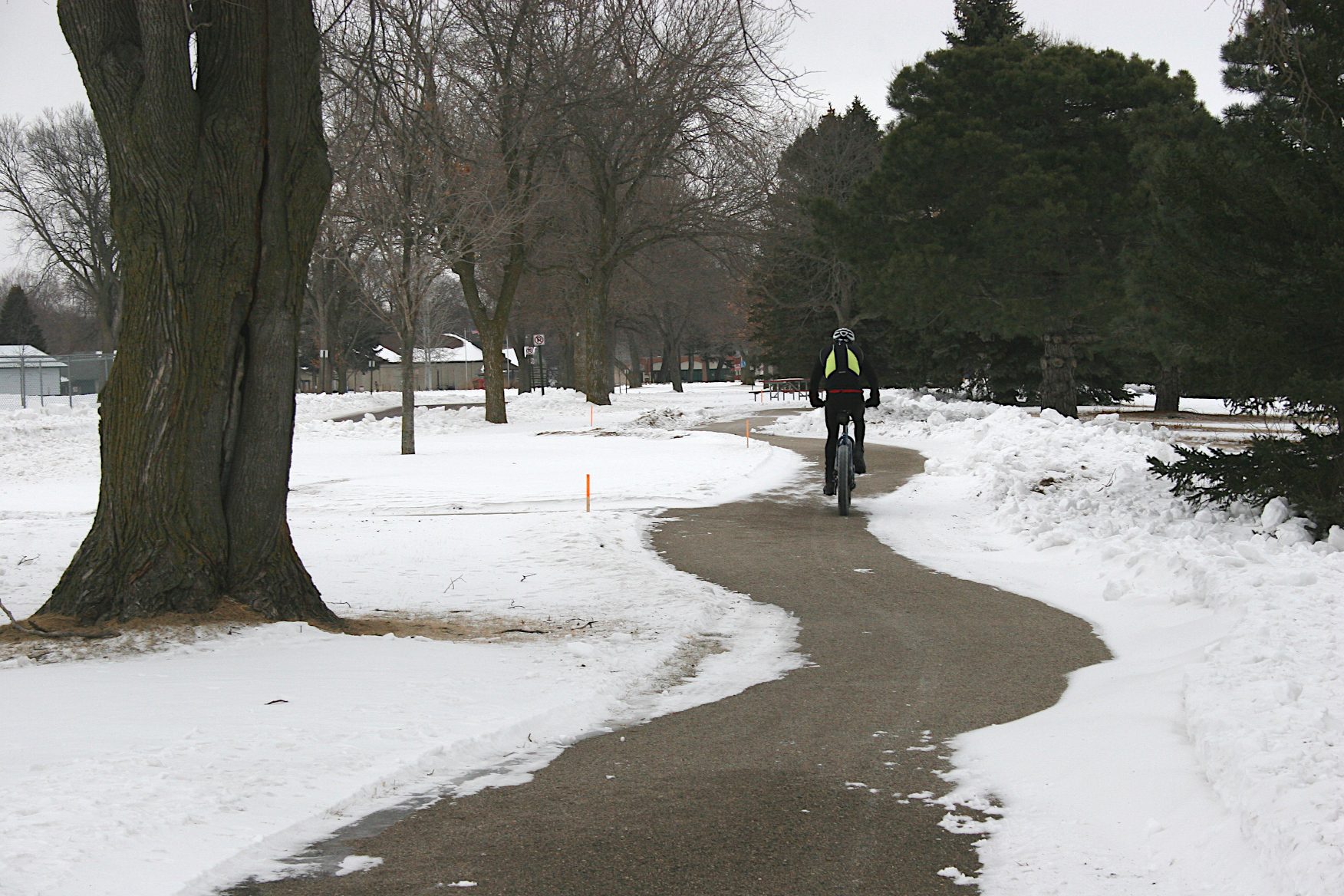
Biking the riverside trail on a fat tire bike. (Minnesota Prairie Roots copyrighted photo February 2022)
We encountered only one other person—a biker zooming on a fat tire bike.
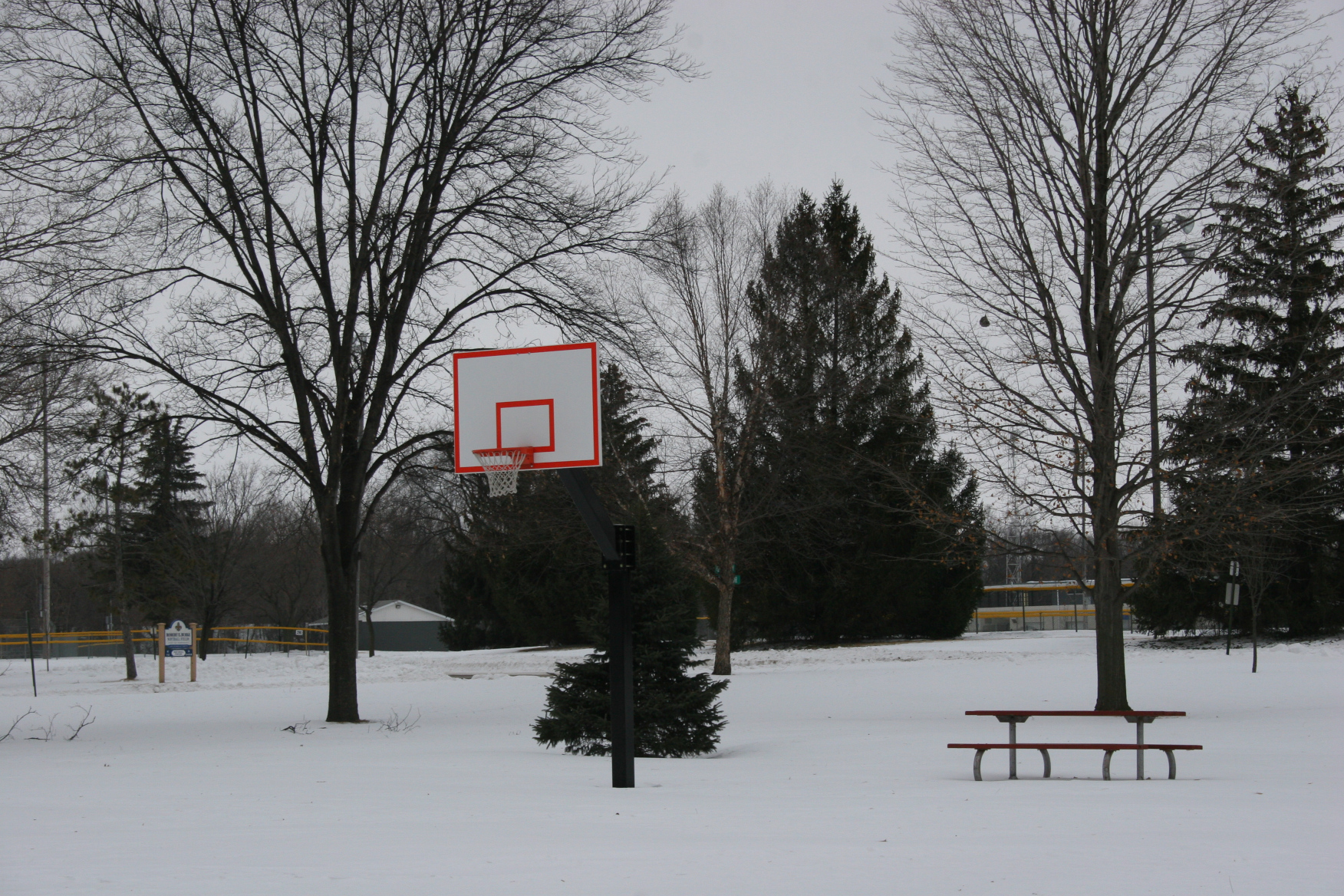
A spot of color at the basketball court. (Minnesota Prairie Roots copyrighted photo February 2022)
It was the winter landscape which focused my attention. The whiteness of it all. The absence of color in a mostly grey and black-and-white world. Only the bold orange outlines on basketball rims and backboards jolted color into the scene. In the summer, young people cram these courts, dribbling and jumping and dunking and scoring points. Raucous play among youth, wonderful to witness.
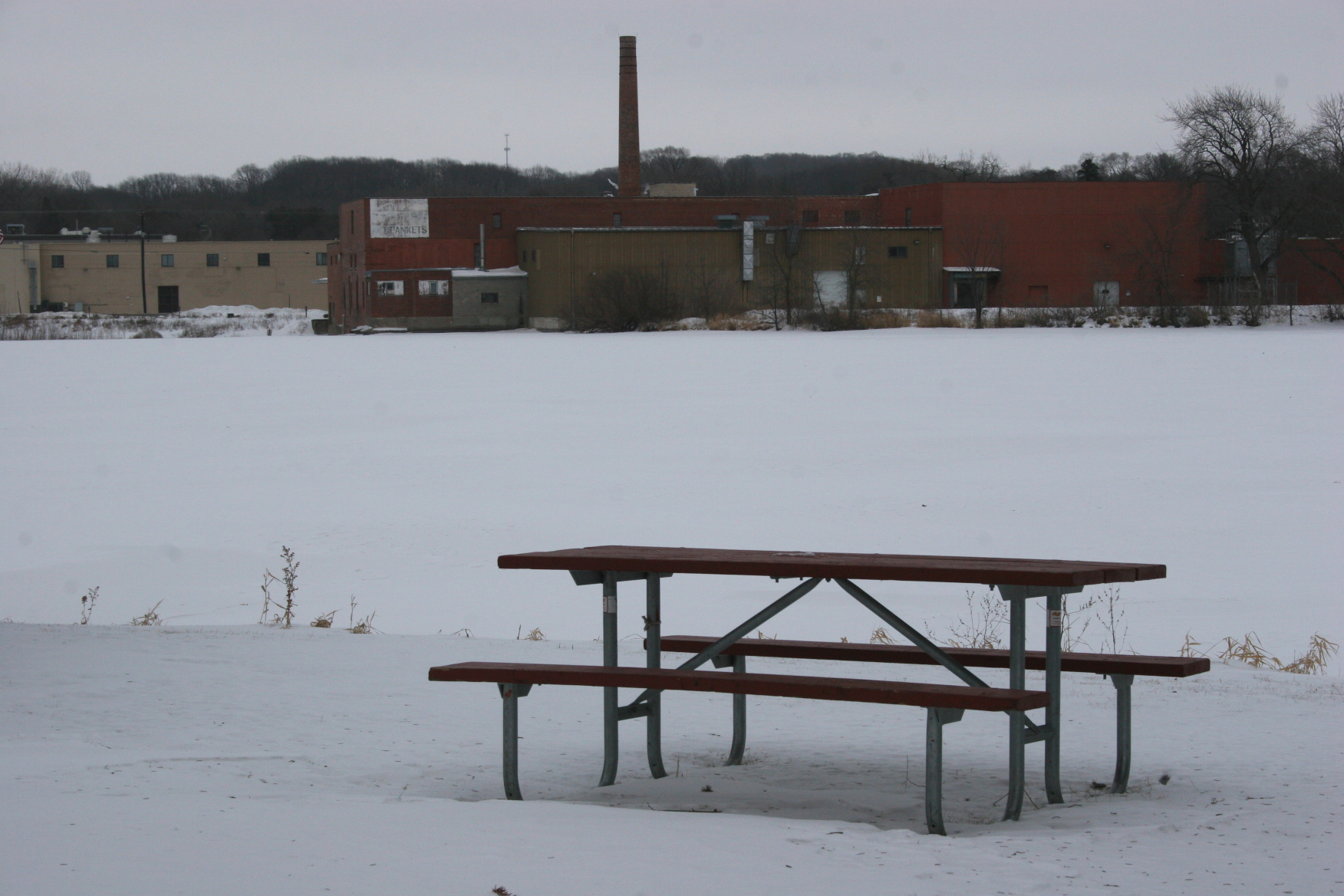
A riverside picnic table remains, even in winter. In the background is the Faribault Woolen Mill, across the Cannon River. (Minnesota Prairie Roots copyrighted photo February 2022)
On this February morning, summer lingers in memories of those pick-up basketball games, riverside picnics and following this trail in flip flops under leafy canopies of green.
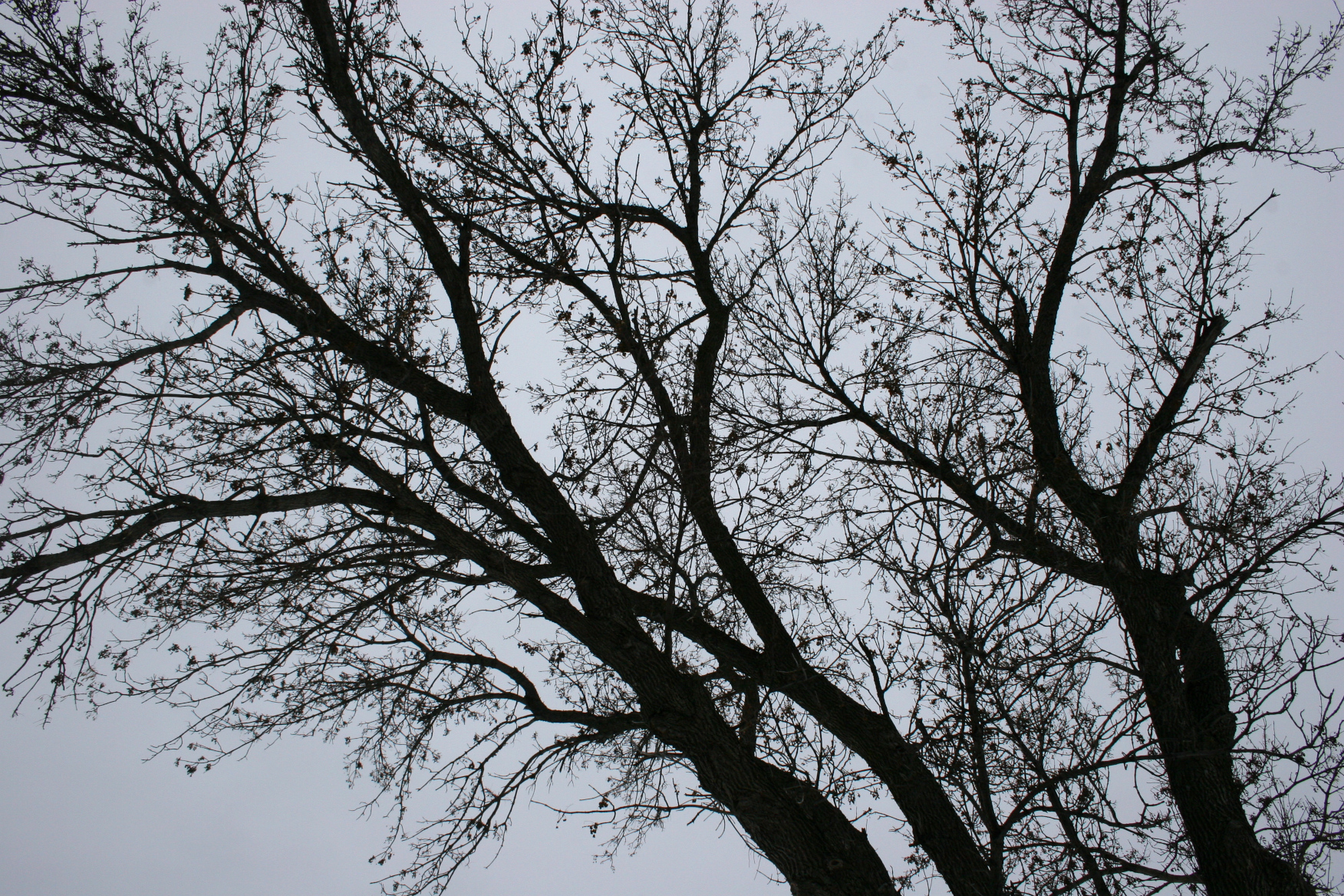
I find bared branches particularly beautiful. (Minnesota Prairie Roots copyrighted photo February 2022)
Today the branches bare themselves to winter. Naked, exposed, vulnerable.
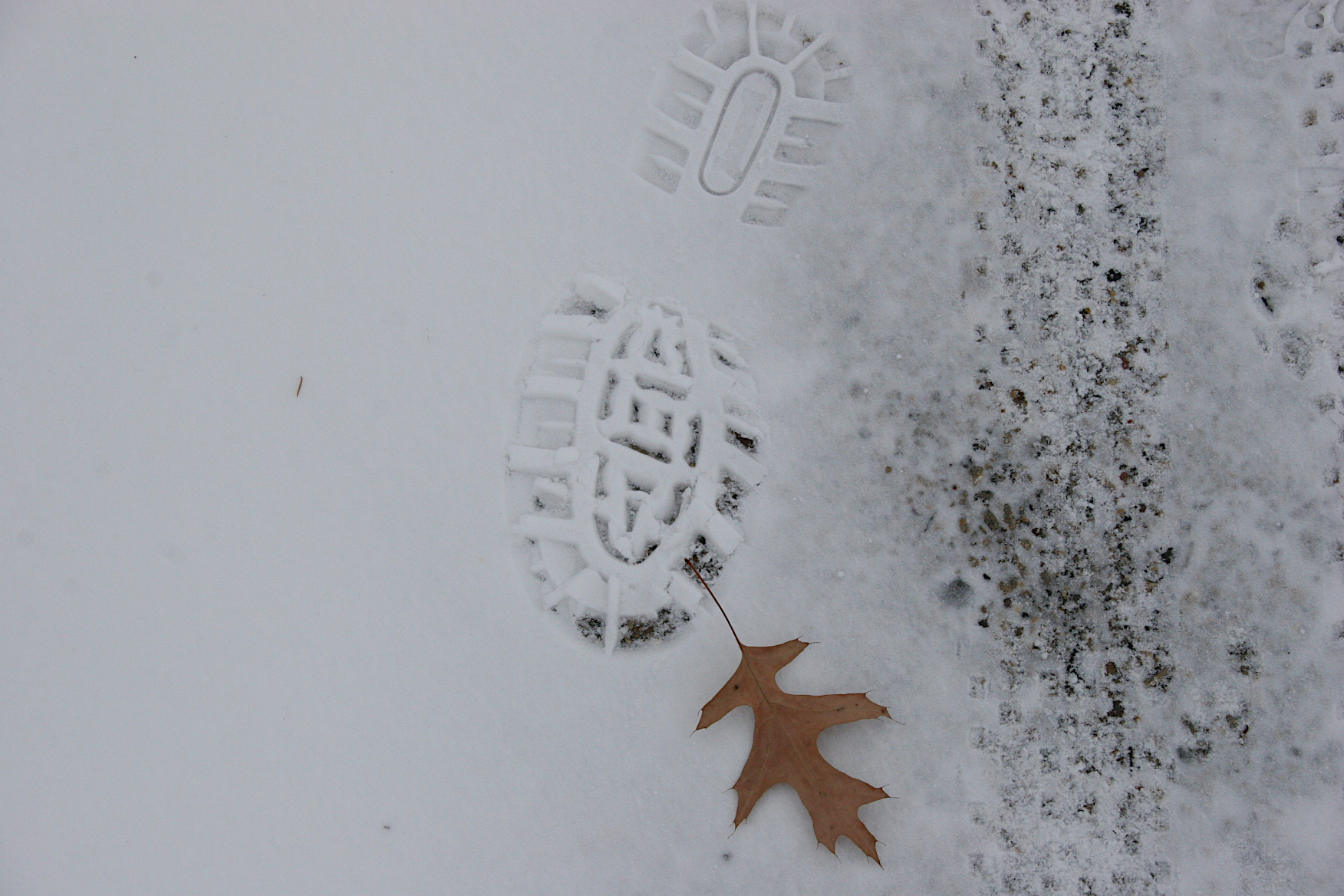
Details in boot print, tire track and oak leaf. (Minnesota Prairie Roots copyrighted photo February 2022)
I notice in the snow, next to the imprint of a boot and a bike tire track, a lone oak leaf. In any other season, I might miss this. But not now. Not in the depth of winter.
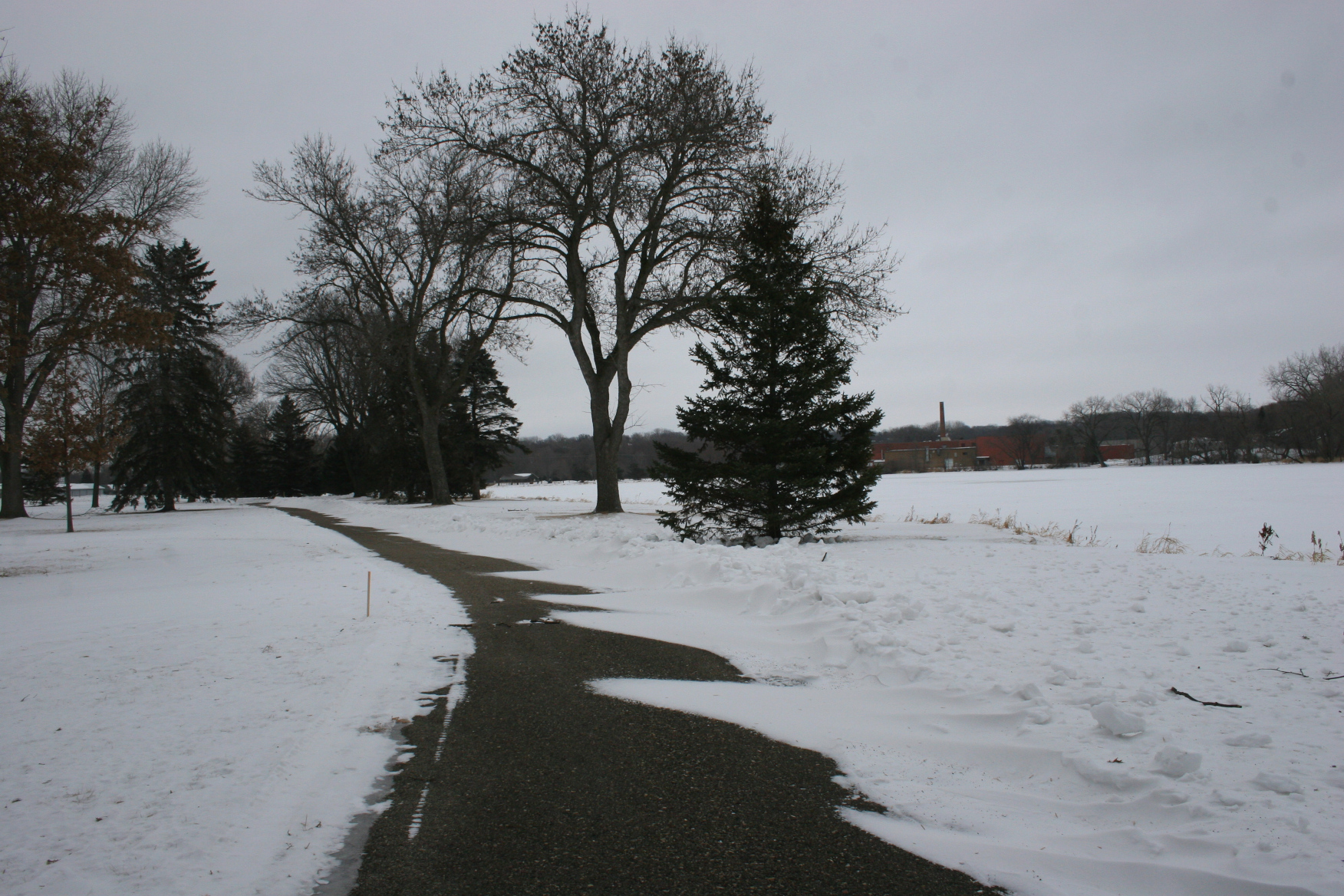
Finger drifts creep onto trail’s edge. In the distance to the right sits the Faribault Woolen Mill. (Minnesota Prairie Roots copyrighted photo February 2022)
I notice, too, finger drifts along trail’s edge. Creeping. Stretching. Wind-blown fingers of snow that may be perceived as threatening. Or artsy. I choose artsy.
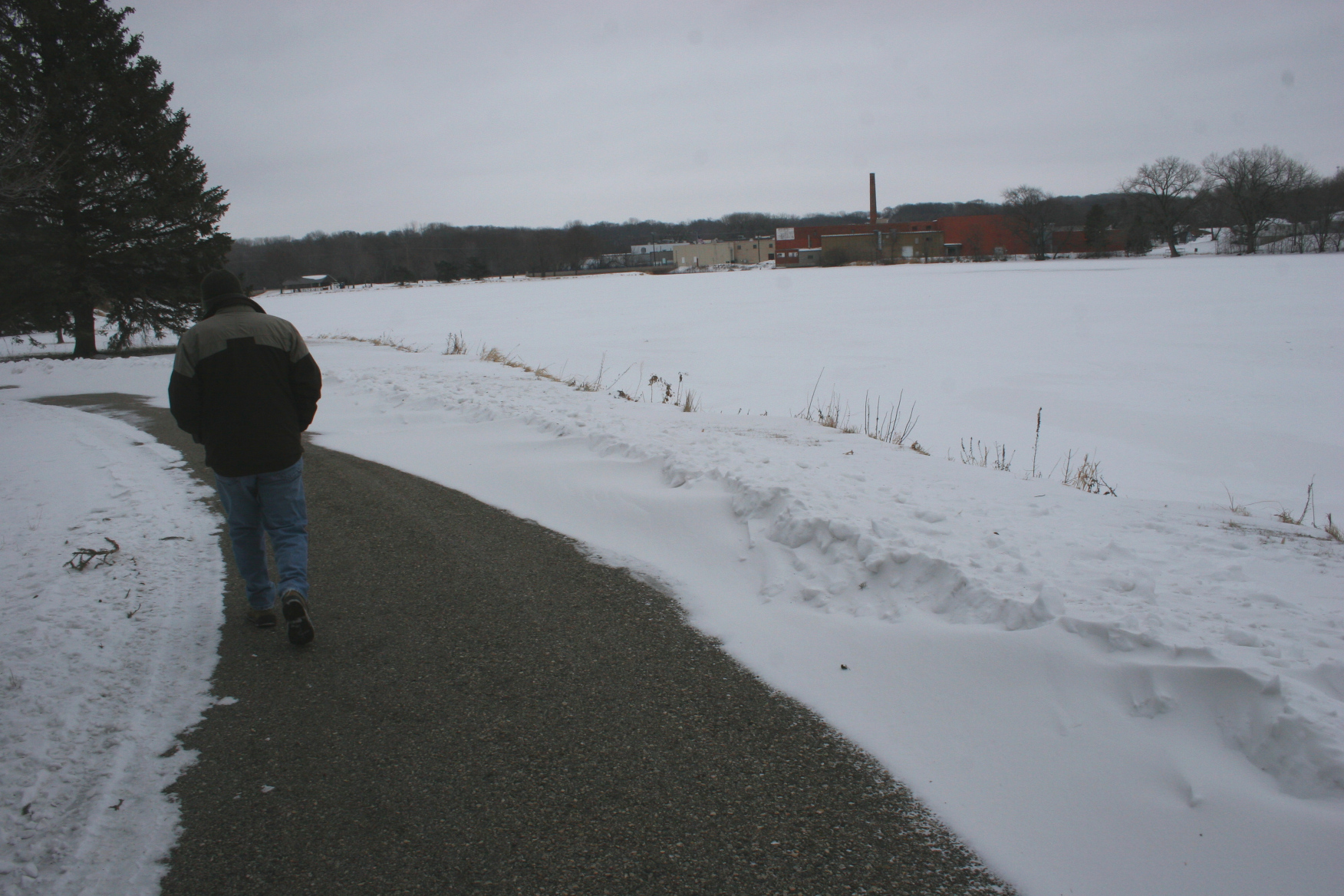
Randy heads back toward the van, along the riverside trail, the woolen mill in distant view across the Cannon River. (Minnesota Prairie Roots copyrighted photo February 2022)
Across the river, I see the Faribault Woolen Mill, weaver of wool (and wool blend) blankets, throws, scarves and much more since 1865. The mill is widely-admired, respected for its quality products. Craftsmanship at its finest. As Randy and I retrace our steps, this time leaning into a strong wind, I would welcome a locally-woven wool scarf wrapped around my neck for warmth.
Soon we reach the van, climb inside the wind-sheltered space and head toward the park exit. It is then Randy spots a large bird overhead, following the river. An eagle, we determine, based on wing span, flight and river route. It’s too high for our aging eyes to fully verify identity. But we’ve seen eagles here before and that is enough. Enough to end our Sunday morning winter walk with the wonderment we always feel in watching this majestic bird tracing the Cannon River.
#
TELL ME: If you live in a cold climate state, do you bundle up and head outdoors for recreational activities? Where do you go? What do you do?
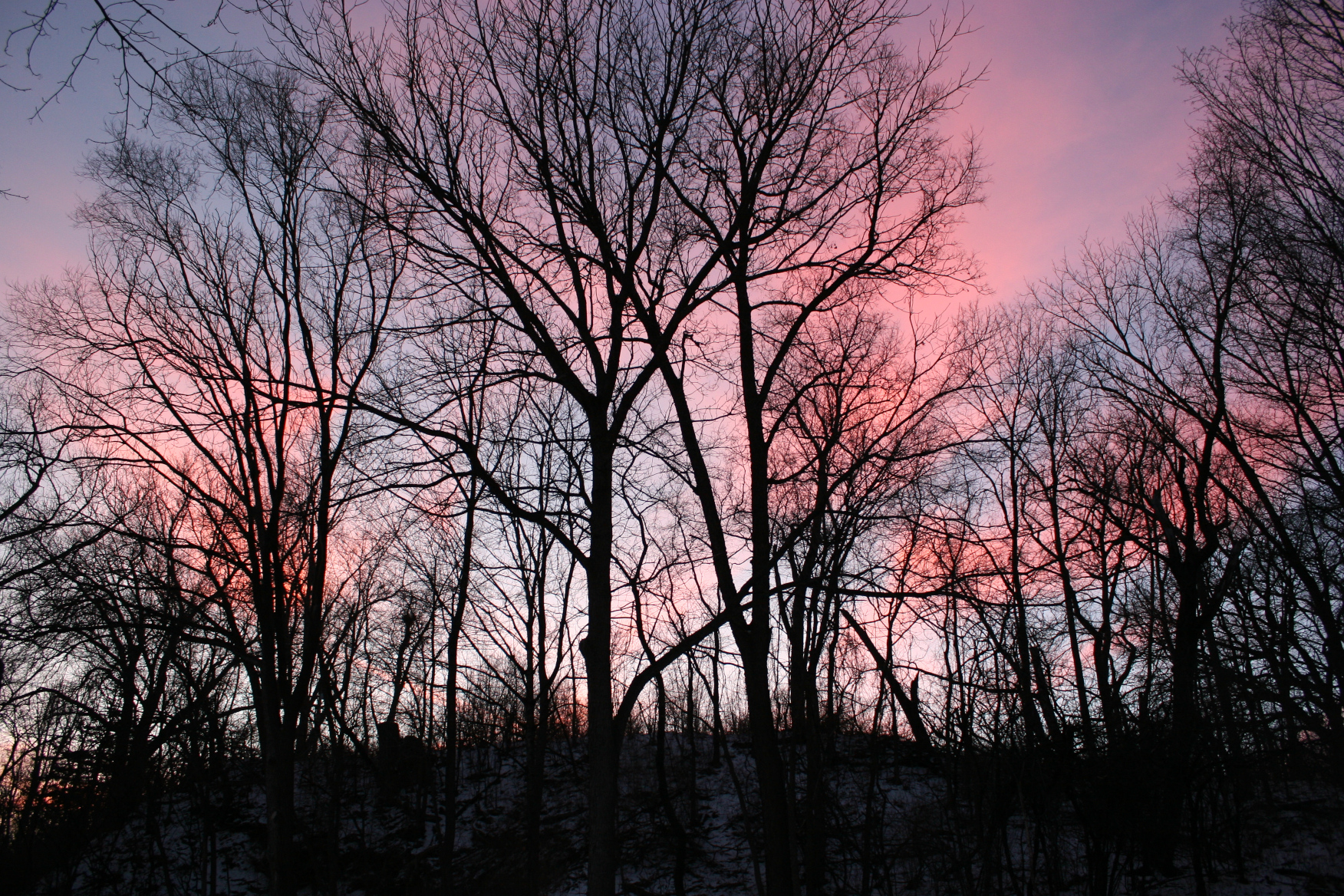
Sunset as seen on the hillside behind my Faribault home. (Minnesota Prairie Roots copyrighted photo January 2022)
WINTER HOLDS STARK BEAUTY not seen in any other season. Sometimes seeing that takes extra effort, though, when thoughts center on Minnesota’s brutal cold and snow and ice.
(Minnesota Prairie Roots copyrighted photo January 2022)
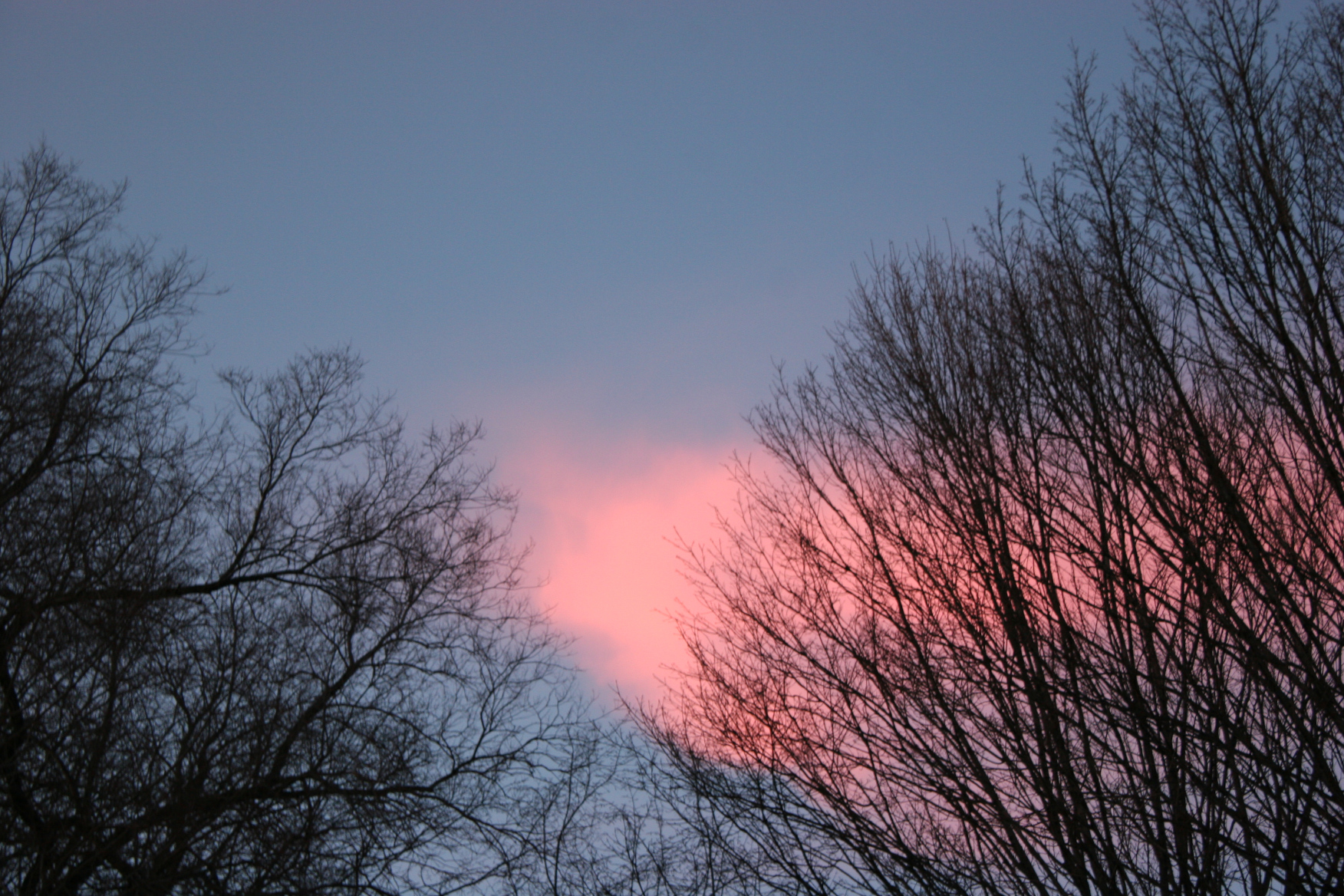
Yet, many days—often in the morning and as the day closes—winter paints loveliness into the landscape. Upon the sky.
(Minnesota Prairie Roots copyrighted photo January 2022)
I live in the valley with a view to the east. When the sun rises, hues of golden yellow and rosy pink sometimes brush upon the heavens. Beautiful to behold. Occasionally Randy will text after arriving at work and alert me to the morning’s artistic arrival. I appreciate his thoughtfulness.
(Minnesota Prairie Roots copyrighted photo January 2022)
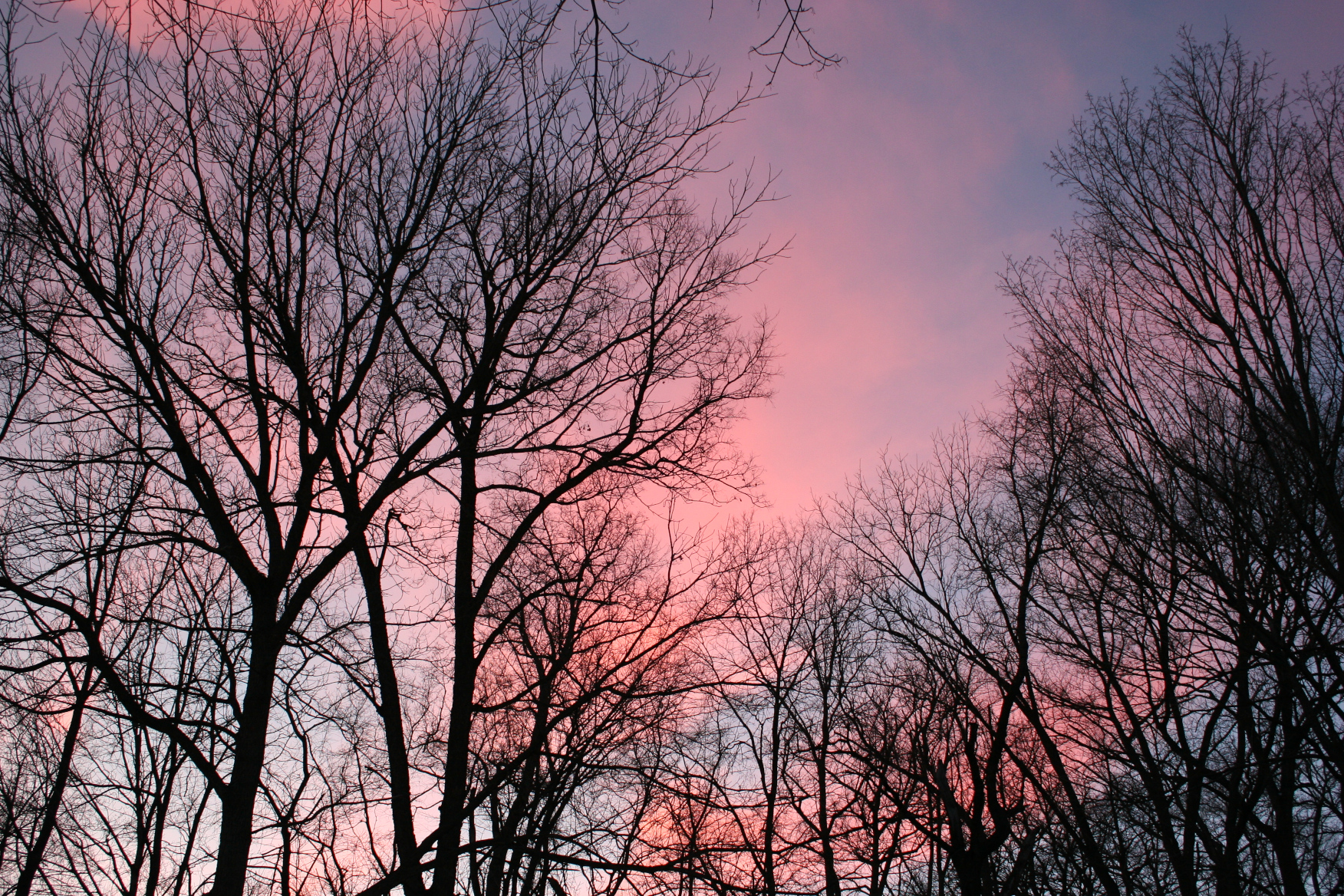
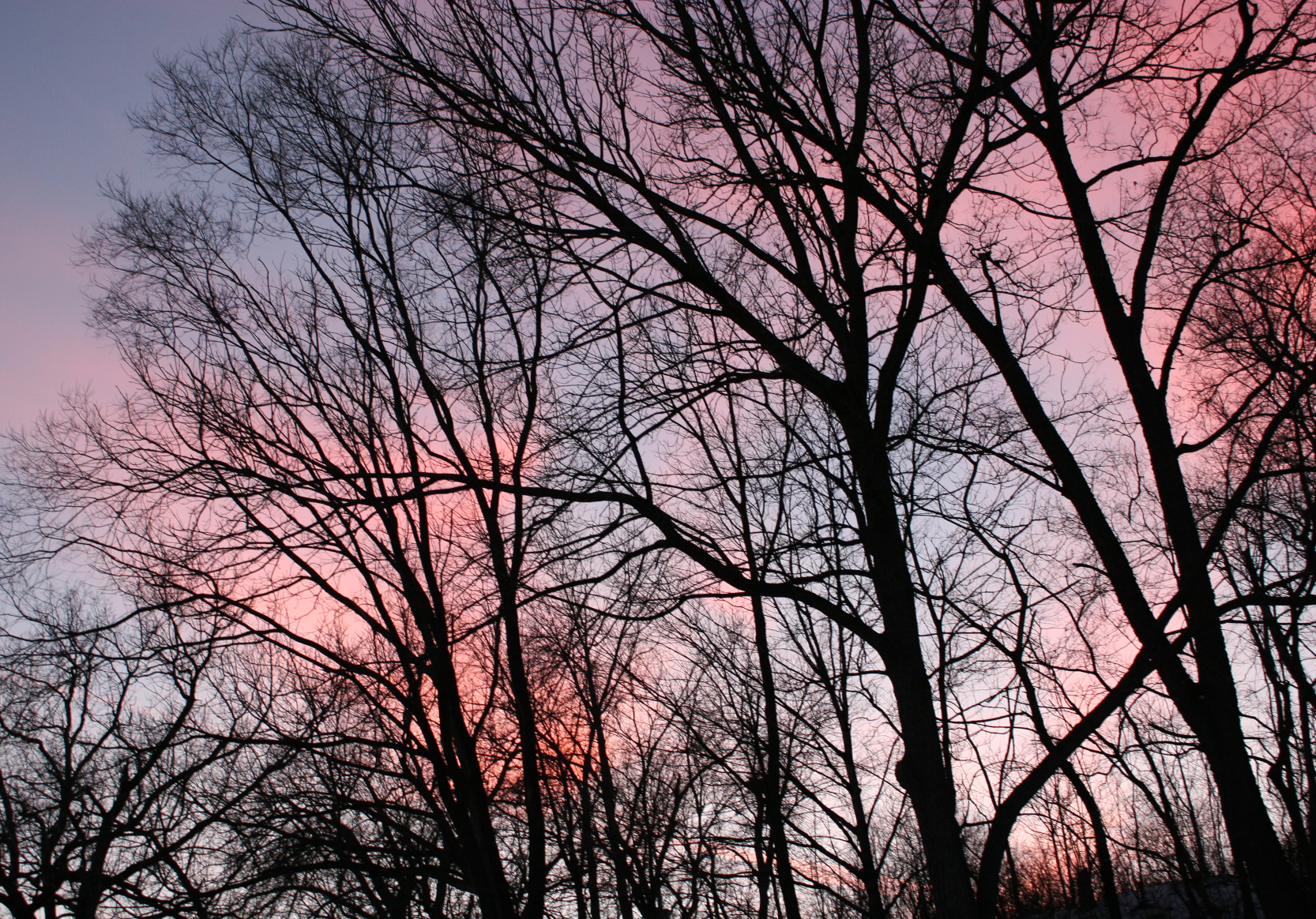
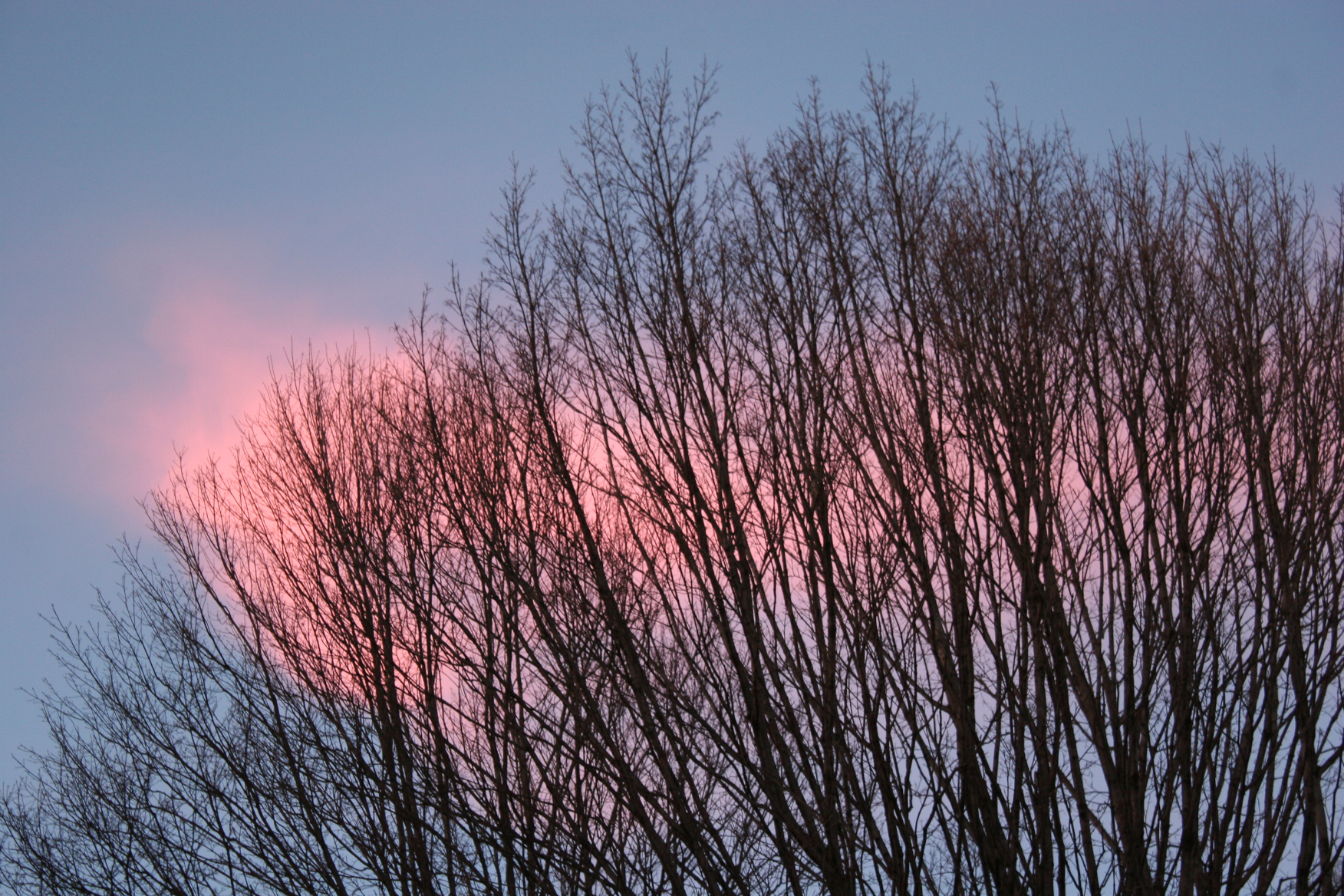
In late afternoon, pressing toward evening when I am preparing supper, I find myself drawn to the south kitchen window. There I shift my eyes slightly right to the tree-covered hillside behind our home. There I behold bare black branches against a backdrop pink sky. The loveliness of it all, the contrast of dark and light, delights me. Oh, how lovely the dusk of day.
(Minnesota Prairie Roots copyrighted photo January 2022)
Yes, even in the deep of winter, nature shows her creative side. Coloring the sky. Reminding me that in every single day beauty exists, even when it sometimes seems elusive.
(Minnesota Prairie Roots copyrighted photo January 2022)
TELL ME: What brings beauty into your natural world in February?
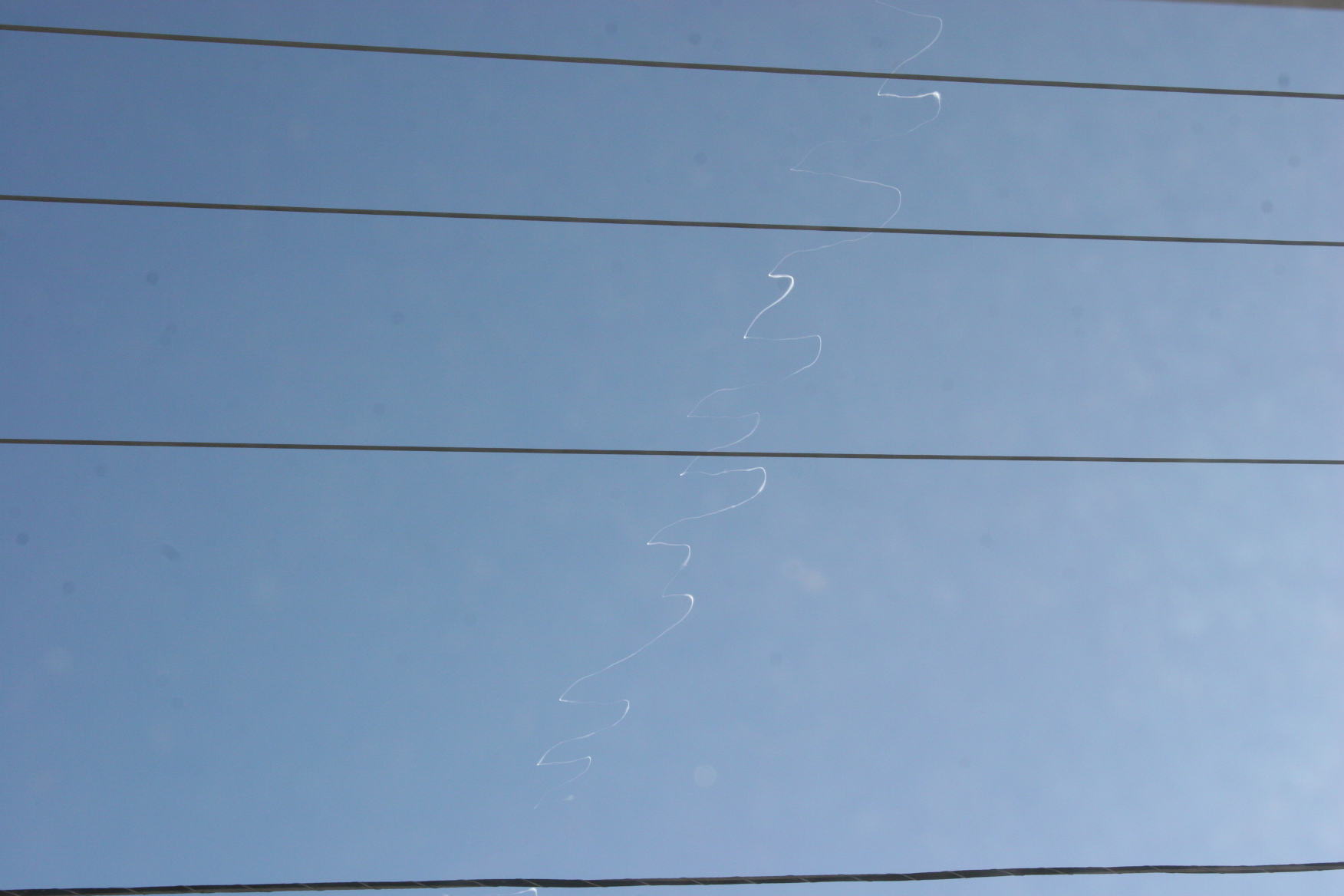
Squiggles in the morning sky. (Minnesota Prairie Roots copyrighted photo January 2022)
SEVERAL WEEKS AGO, on a brutally cold Minnesota winter morning when tires on roadways sound like boots crunching glass, when breathing in outdoor air almost hurts, when brilliant sunshine deceives, I noticed a strange sight in the sky. An endless skinny squiggle.
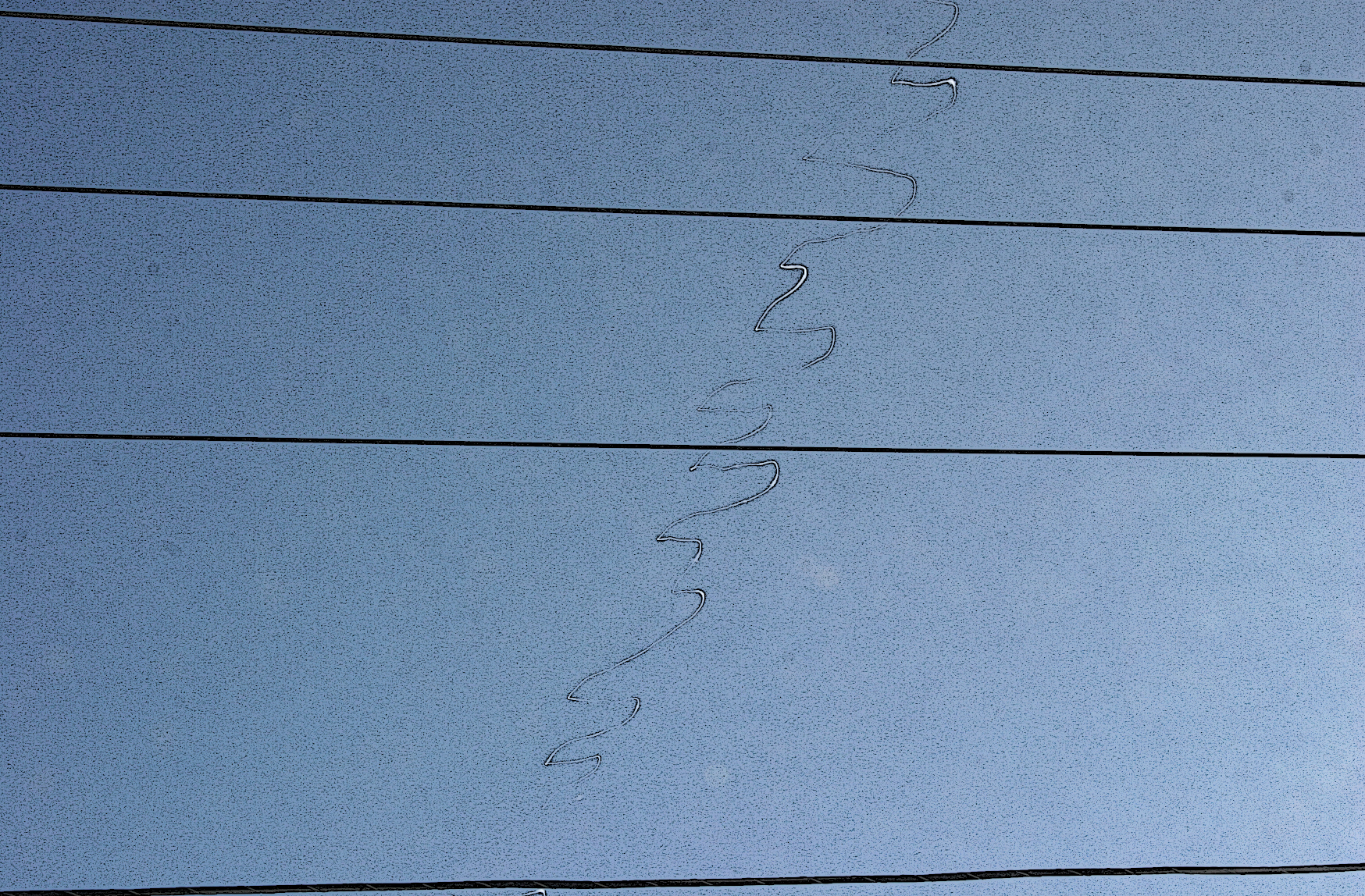
Alarmed, I wondered at the contrail resembling the attempts of a preschooler free-styling the letter “S.” Was this thin white line revealing an out-of-control aircraft about to crash? It’s interesting where the mind wanders when knowledge lacks. I will be the first to admit I don’t understand much about airplanes. I still don’t understand the physics of flight, not that I’ve even tried to educate myself. It simply does not interest me.
An edited version of the original photo to better show the squiggles. (Minnesota Prairie Roots copyrighted photo January 2022)
With questions racing through my mind, I grabbed my camera to document the scene through my front picture window. Yes, utility wires and dirty glass distracted, but I held no desire to step into the frigid cold to take photos.
Upon discussing the skinny squiggles with Randy many hours later, he suggested the cold, stillness and other “just right” atmospheric weather conditions caused those skinny contrail squiggles. Right? Wrong? What do you think (or know)? I’m listening.
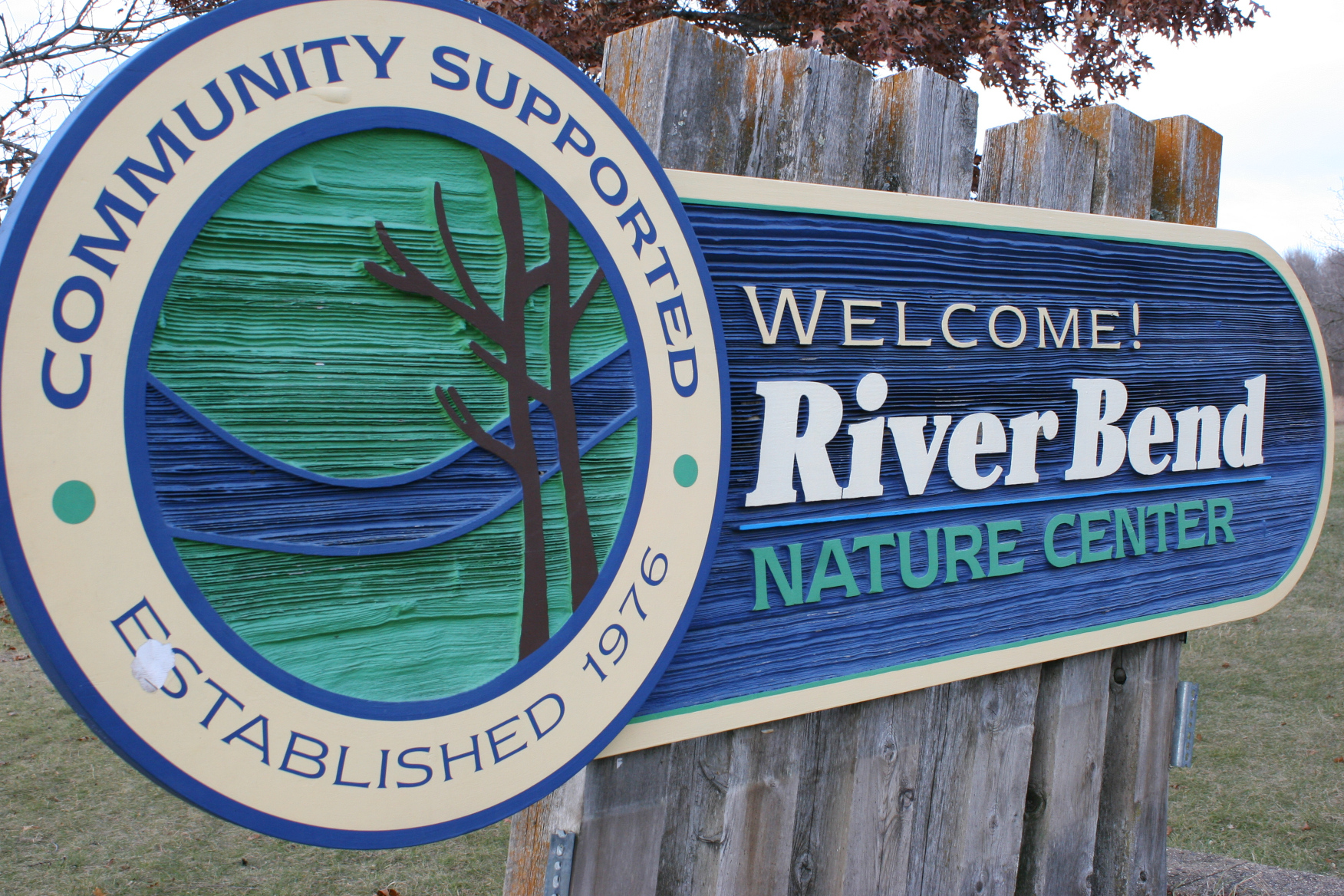
This sign stands near River Bend Nature Center’s interpretative center. (Minnesota Prairie Roots copyrighted file photo November 2021)
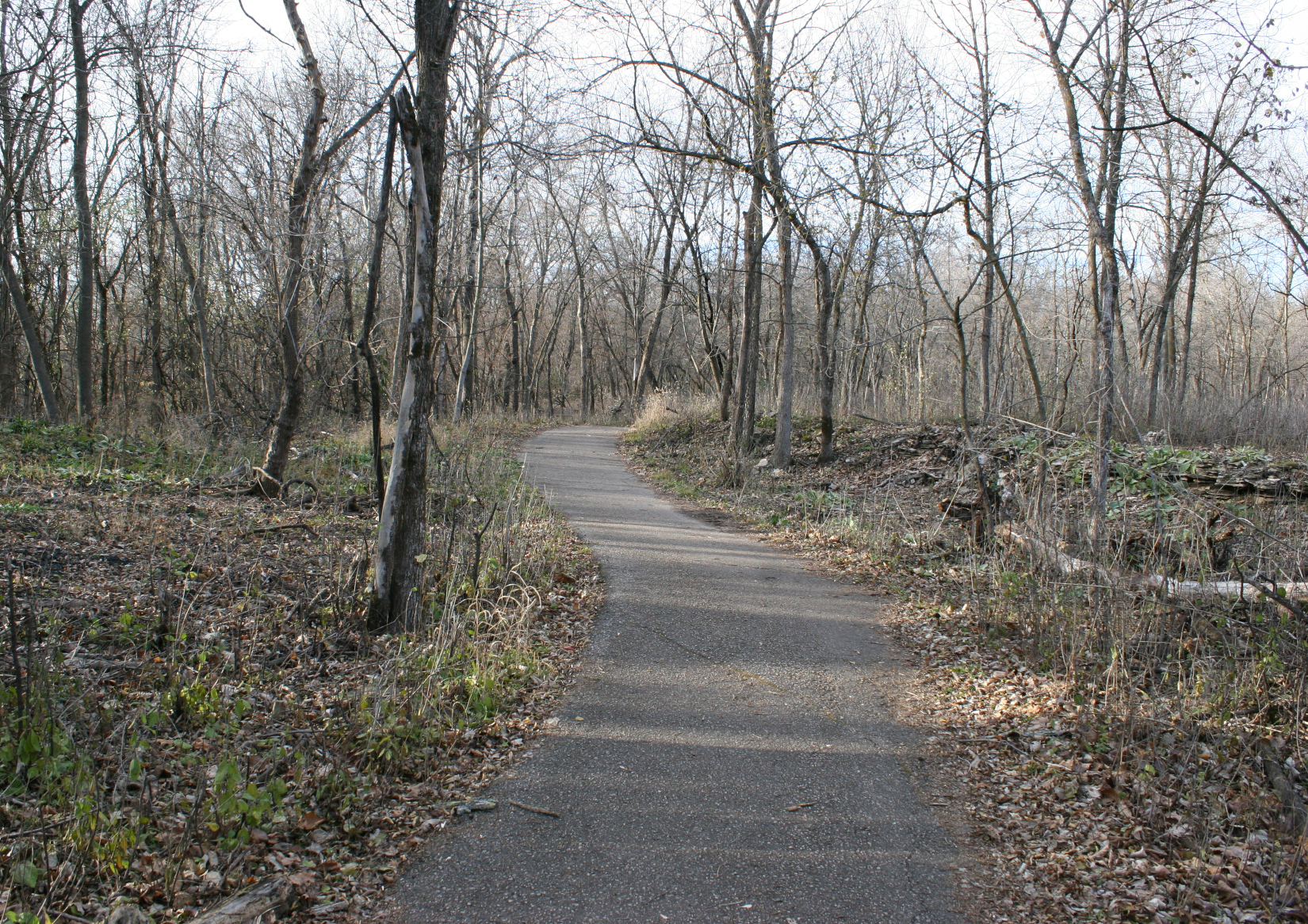
MONTHS AGO,BEFORE SNOW FELL and the season officially transitioned to winter, I followed a paved trail into the woods at River Bend Nature Center and then a grassy path to a wetlands overlook.
River Bend, on Faribault’s east side, rates as a favorite outdoor destination. That November day I embraced the lingering remnants of autumn, now overtaken by the cold and snow of winter.
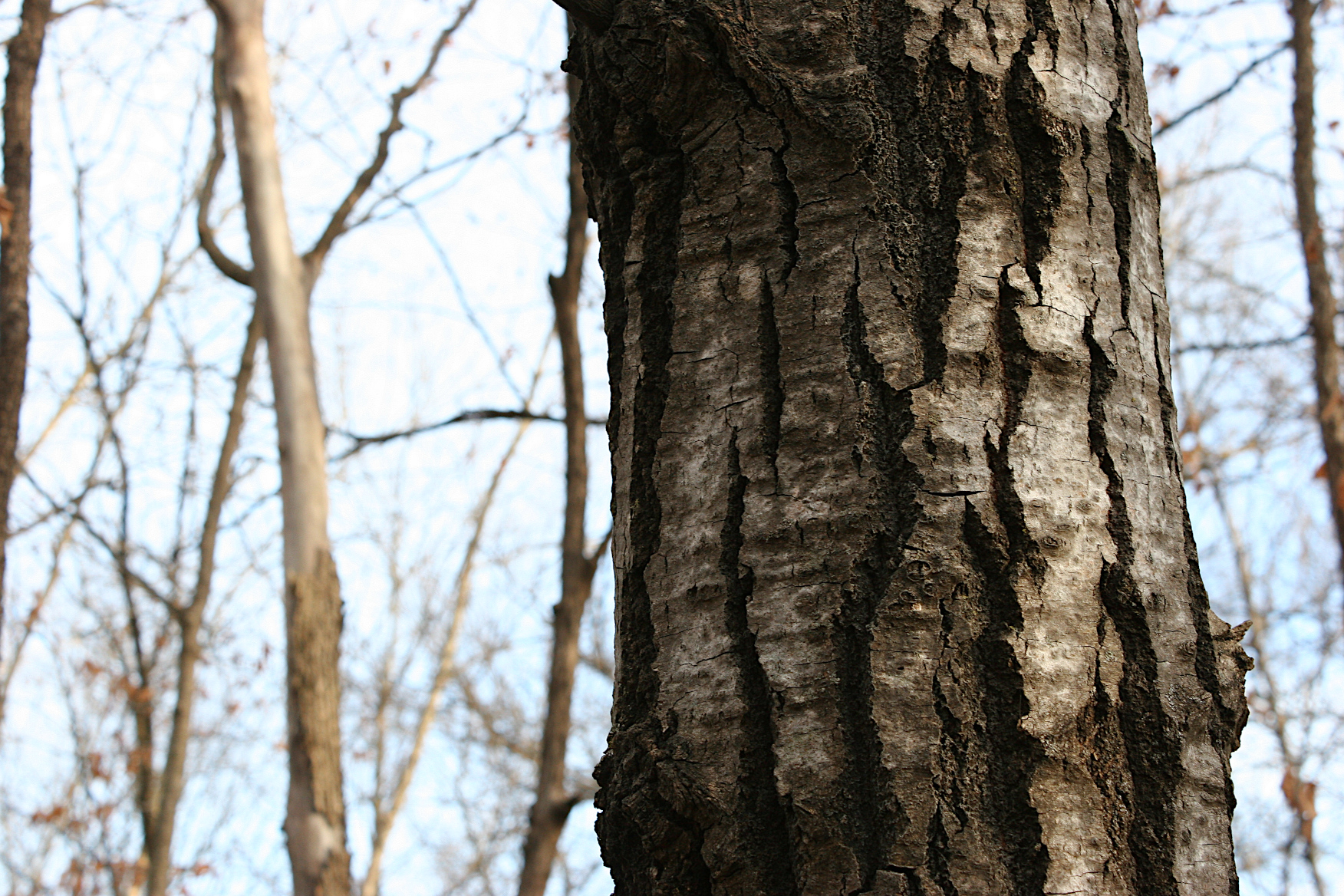
Rugged bark draws my eye as I hike. (Minnesota Prairie Roots copyrighted file photo November 2021)
Even in the muted hues of autumn’s end, beauty exists.
But, for me, taking in the evolving landscape stretches beyond simply seeing that which unfolds before me. It’s also about looking back. To my childhood on the southwestern Minnesota prairie.
One of many wooded trails in River Bend. (Minnesota Prairie Roots copyrighted file photo November 2021)
When I hike the wooded trails of River Bend, I see my younger self riding my bike through the grove back on the farm. Except the bike was a horse, not a bike. I grew up in the era of TV Westerns—of “Rawhide” and “Bonanza.”
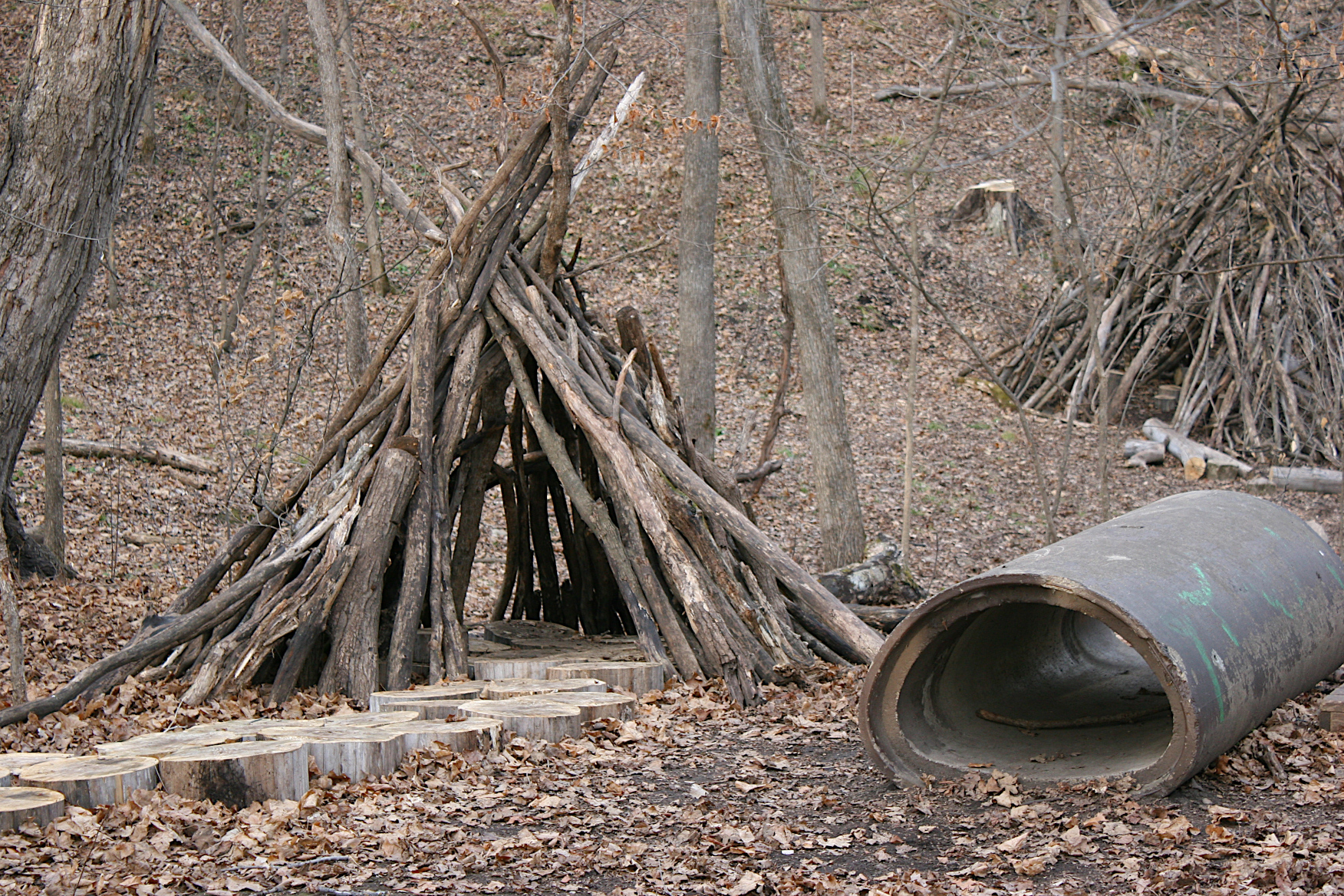
The kids’ play area at River Bend. (Minnesota Prairie Roots copyrighted file photo November 2021)
Fallen branches at River Bend angled into a shelter resemble those built by me and my siblings. We also constructed buildings by looping baler twine around tree trunks. And we crafted a house, too, from discarded wire fencing. Oh, the imaginations of farm kids let loose in the grove.
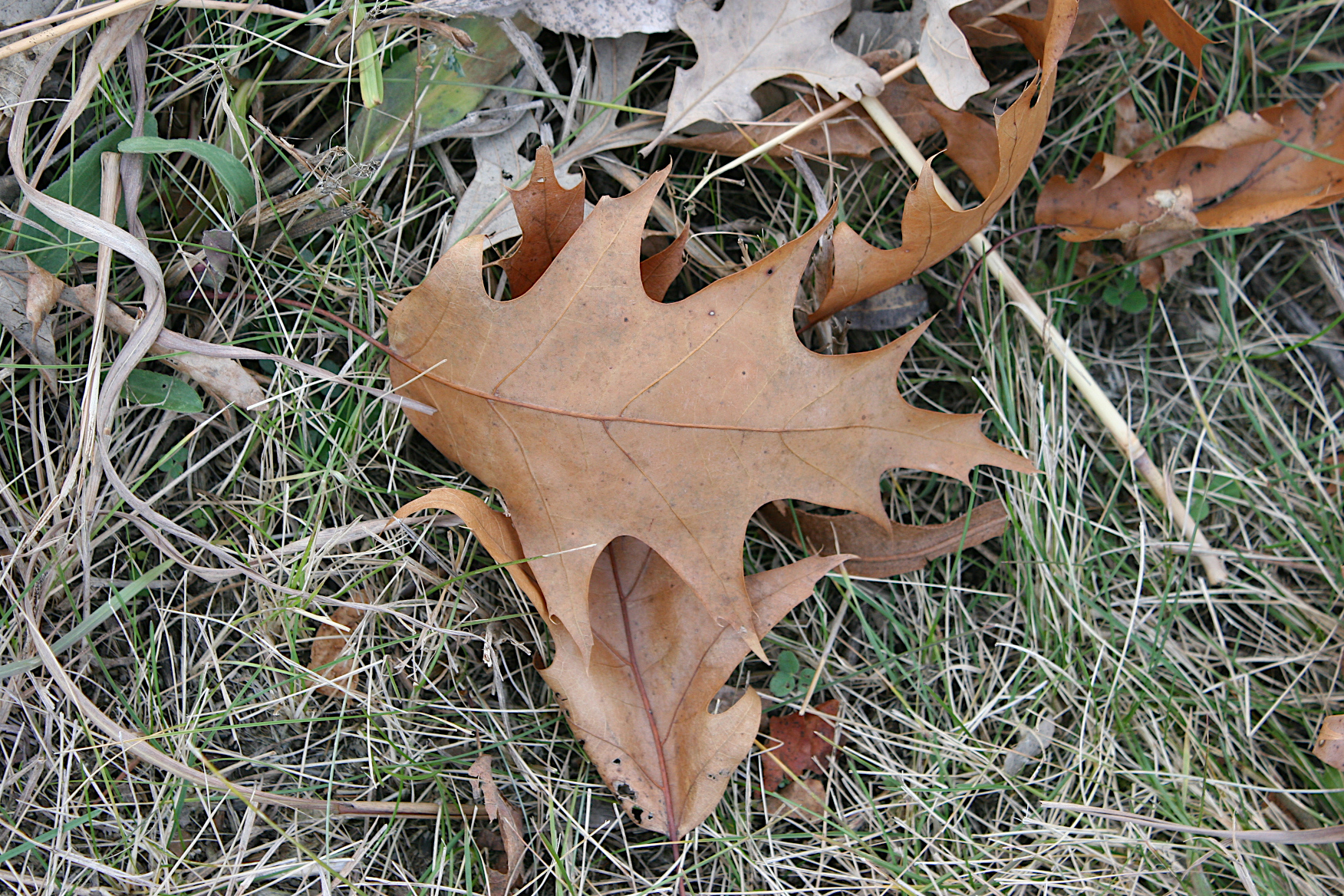
Dried oak leaves. (Minnesota Prairie Roots copyrighted file photo November 2021)
Dried leaves scattered in the woods bring more memories. Each autumn, I gathered fallen leaves into piles, then dropped the leaves into lines. Walls. Constructing leaf houses filled many a recess at Vesta Elementary School. And many an autumn day for my siblings and me.
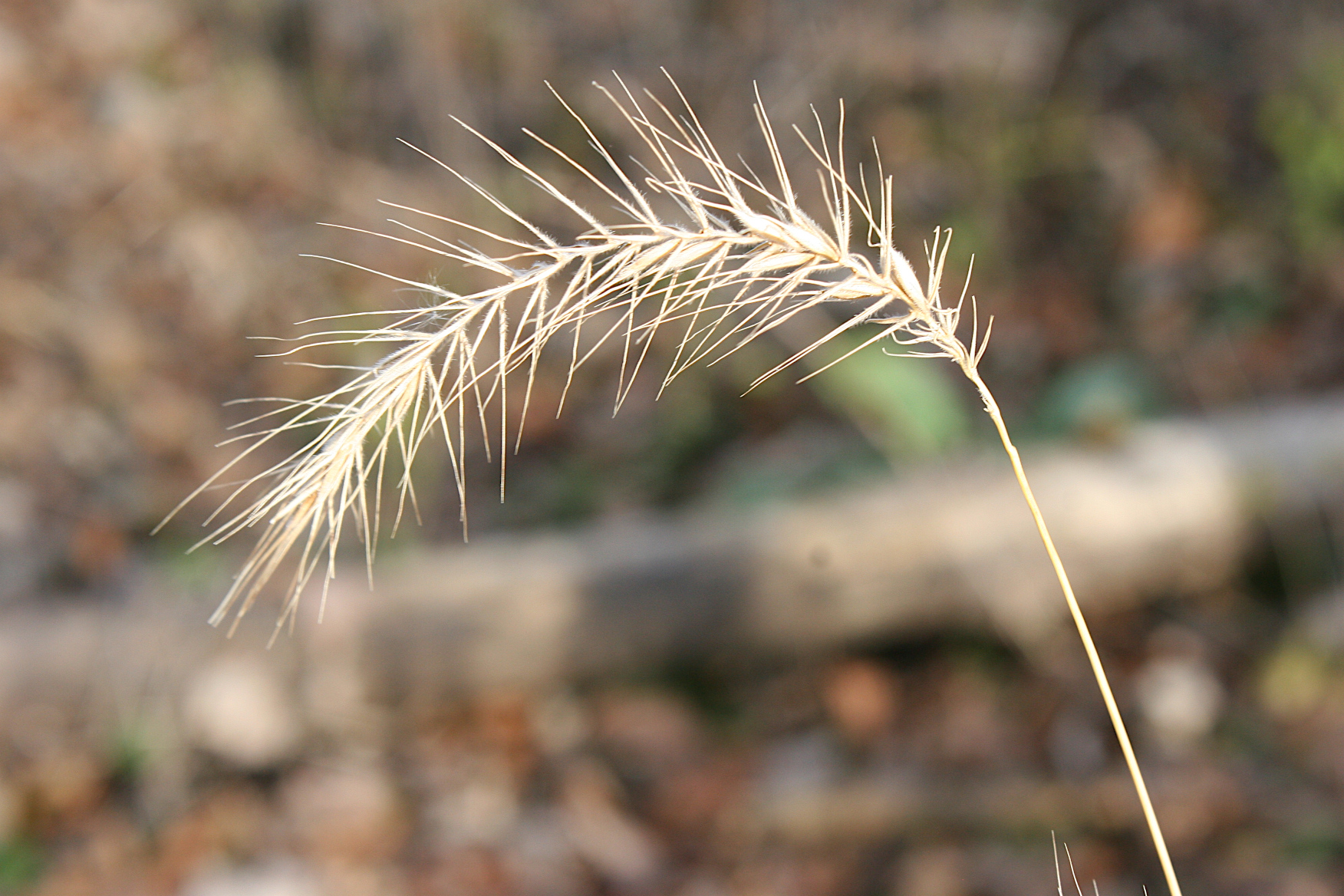
A single dried grass stem holds simple beauty. (Minnesota Prairie Roots copyrighted file photo November 2021)
I recall, too, hiding in tall grass between the granary and the south grove. When I scan the prairie expanse of River Bend, I imagine myself vanishing. Hiding from brothers with cap guns holstered at their sides. Yes, I owned a cap gun, too, and wore a straw cowgirl hat, although we called them cowboy hats back then.
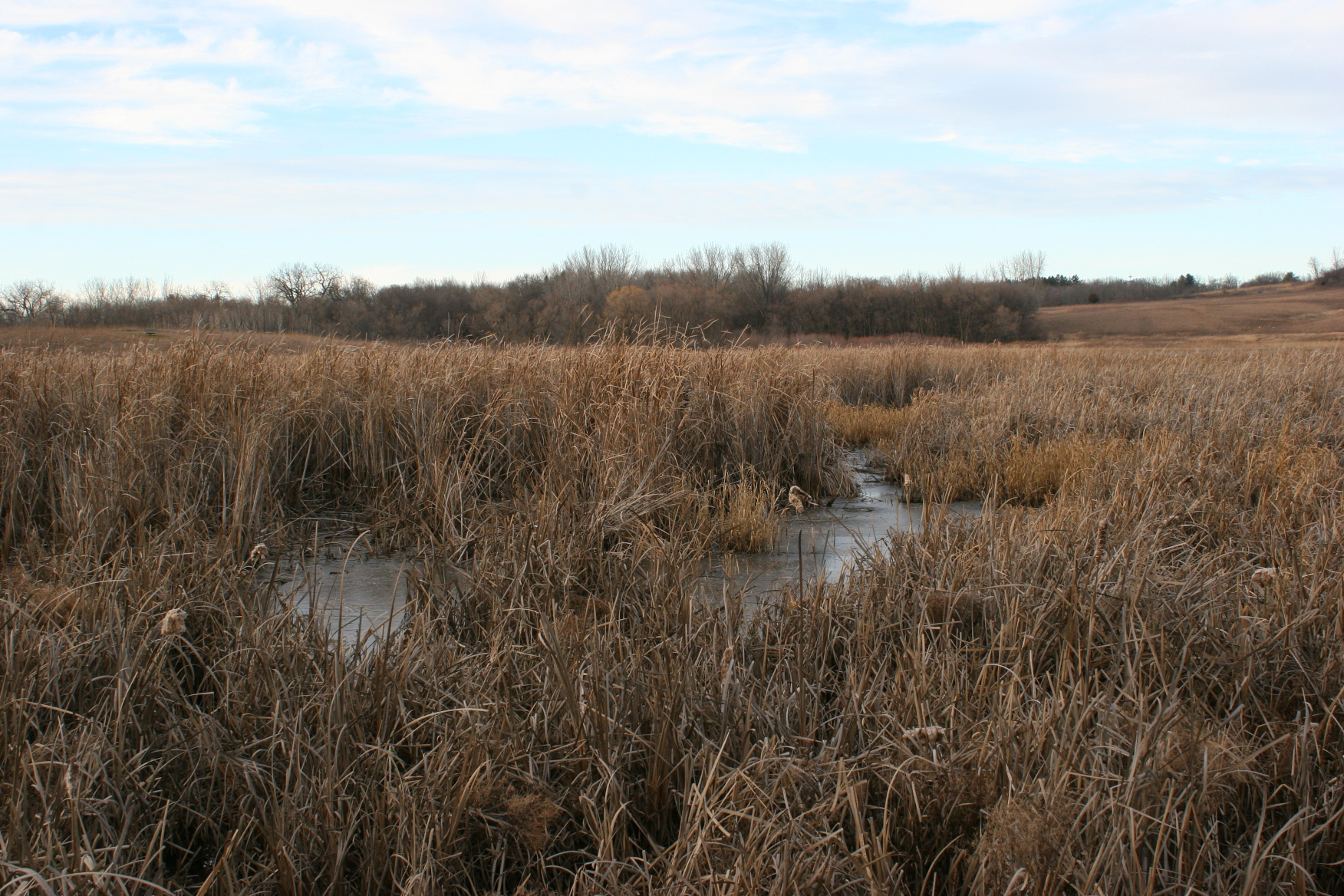
The wetlands on prairie’s edge. (Minnesota Prairie Roots copyrighted file photo November 2021)
My father owned a gun, which he used once a year to hunt for pheasants in the slough hole (as we redundantly termed the slough on our farm). When I look across the wetlands at River Bend, I think of the one time my oldest brother and I accompanied Dad to the low lying pothole to hunt for pheasants. I don’t recall whether that hunt was successful. Eventually, Dad drained the slough to add more tillable acreage. I often wonder about the sensibilities of draining prairie potholes and how that affected the land. The undrained wetlands of River Bend are mostly dry in this drought year.
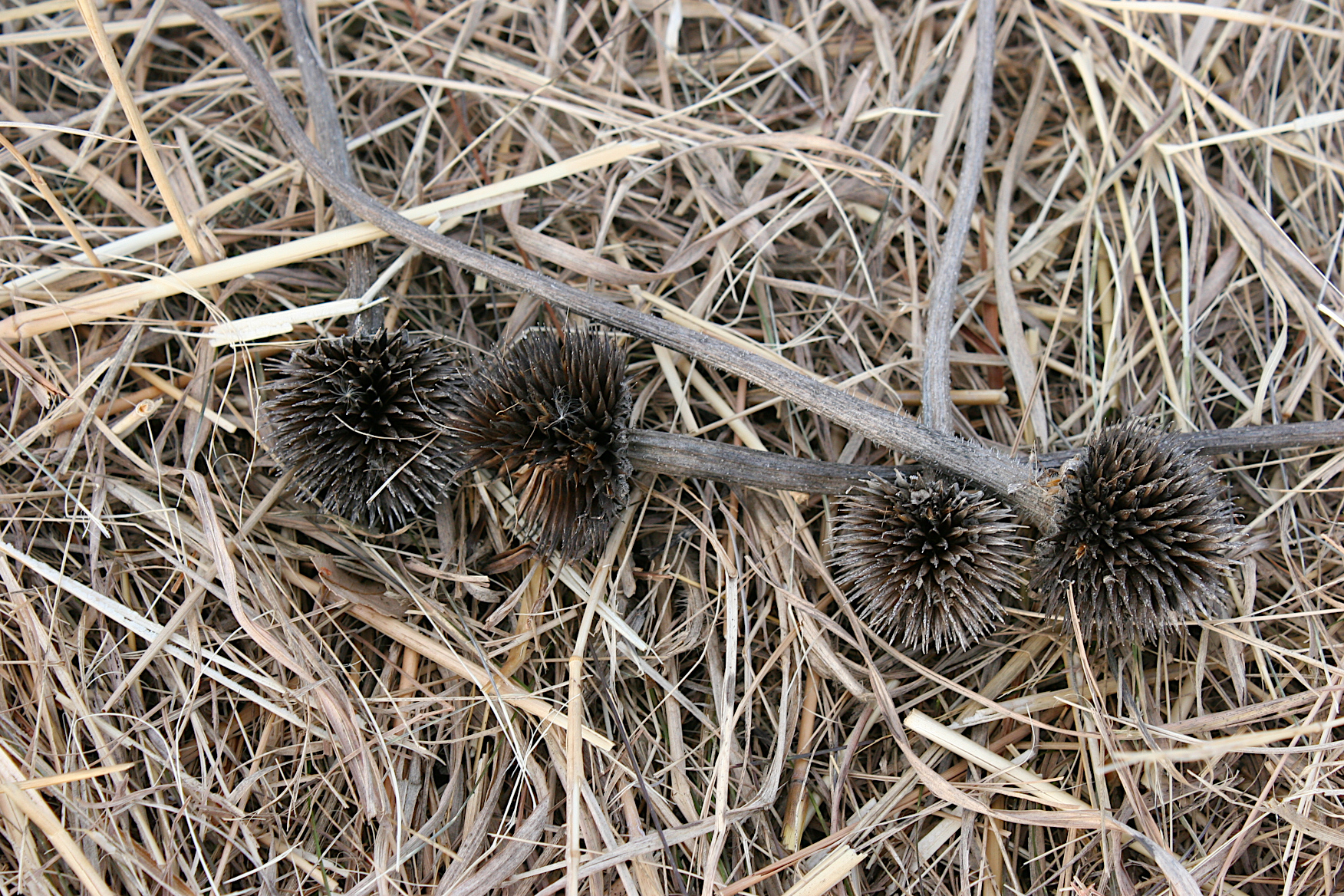
While walking the prairie, I spotted dried seedheads. Coneflower seeds lying atop the grass, where they will eventually reseed. Nature recycling.
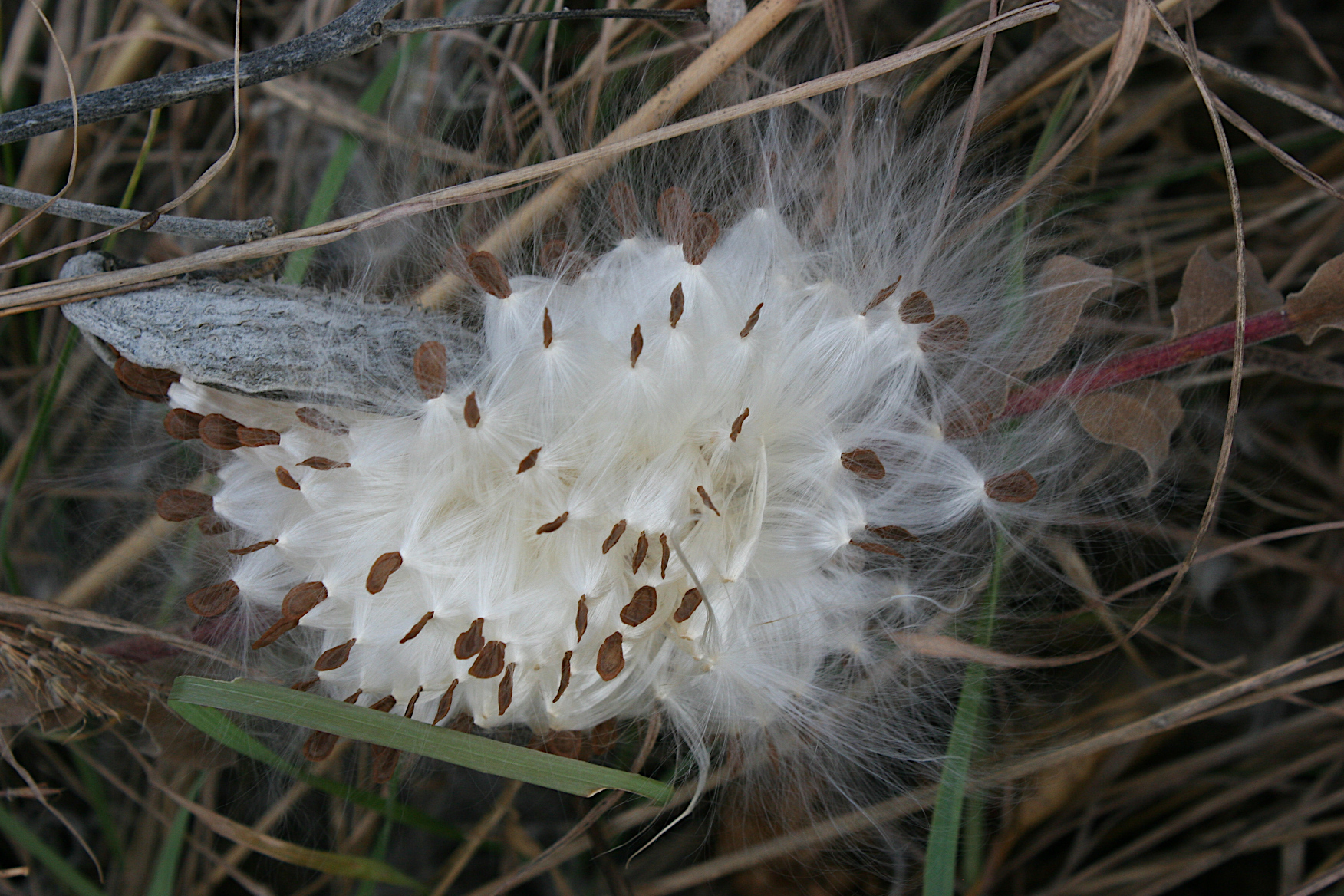
Milkweed pods, too, flourish in River Bend’s prairieland. Back on the farm, I pulled milkweeds from soybean fields. “Walking beans” is the correct term. Walking between soybean rows pulling unwanted weeds—especially cockleburs and thistles. Only detasseling corn ranks as worse. I’ll walk beans or shovel manure any day (and I did plenty of that) over corn detasseling on a hot and humid July day.
A dried milkweed pod burst open on the prairie. (Minnesota Prairie Roots copyrighted file photo November 2021)
Those dried milkweeds at River Bend bring one final memory. And it is a Christmas memory. One year I crafted a Christmas ornament for my Aunt Rachel from a milkweed pod and a discarded holiday card. (My mom saved everything.) I cut out an elfin girl dressed in a glittery red suit, her face framed by a pointy hood. Then I taped the cut-out to a toothpick and stuck the impish child into the downy snow of an open milkweed pod. Beautiful.
These are the childhood memories sparked by my November walk through River Bend Nature Center. I feel grateful for this sprawling natural space, for the peace it brings me as I follow trails into the present. And into the past.










 Minnesota Prairie Roots
Recent Comments