Minnesota Prairie Roots

Writing and photography by Audrey Kletscher Helbling

Minnesota’s church dinner season underway August 2, 2013

Filed under: Uncategorized — Audrey Kletscher Helbling @ 6:00 AM
Tags: , , , , , , , , ,

TIS THE SEASON of church dinners.

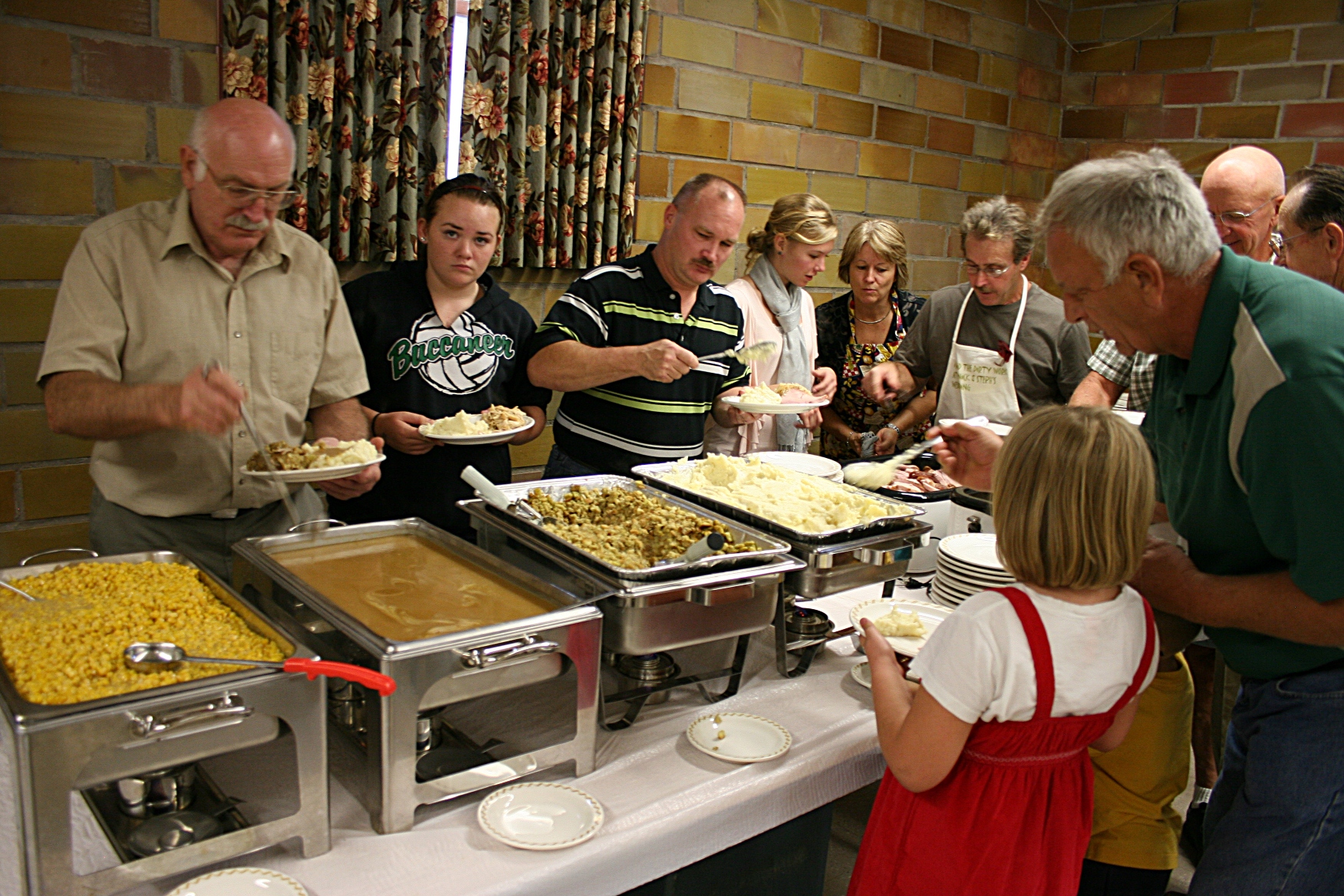
Diners dish up at last year's fall dinner at Trinity Lutheran Church, North Morristown.

Diners dish up at the 2011 dinner at Trinity Lutheran Church, North Morristown.

Although I’ve never partaken in the one at The Church of the Nativity in Cleveland, I’ve attended plenty of others in southern Minnesota. Church dinner food is typically homemade, the draw for me, along with the fellowship.

If I wasn’t already busy this Sunday, August 4, I’d head west to Cleveland, which sits along State Highway 99 six miles east of St. Peter, to this Catholic church dinner and festival.

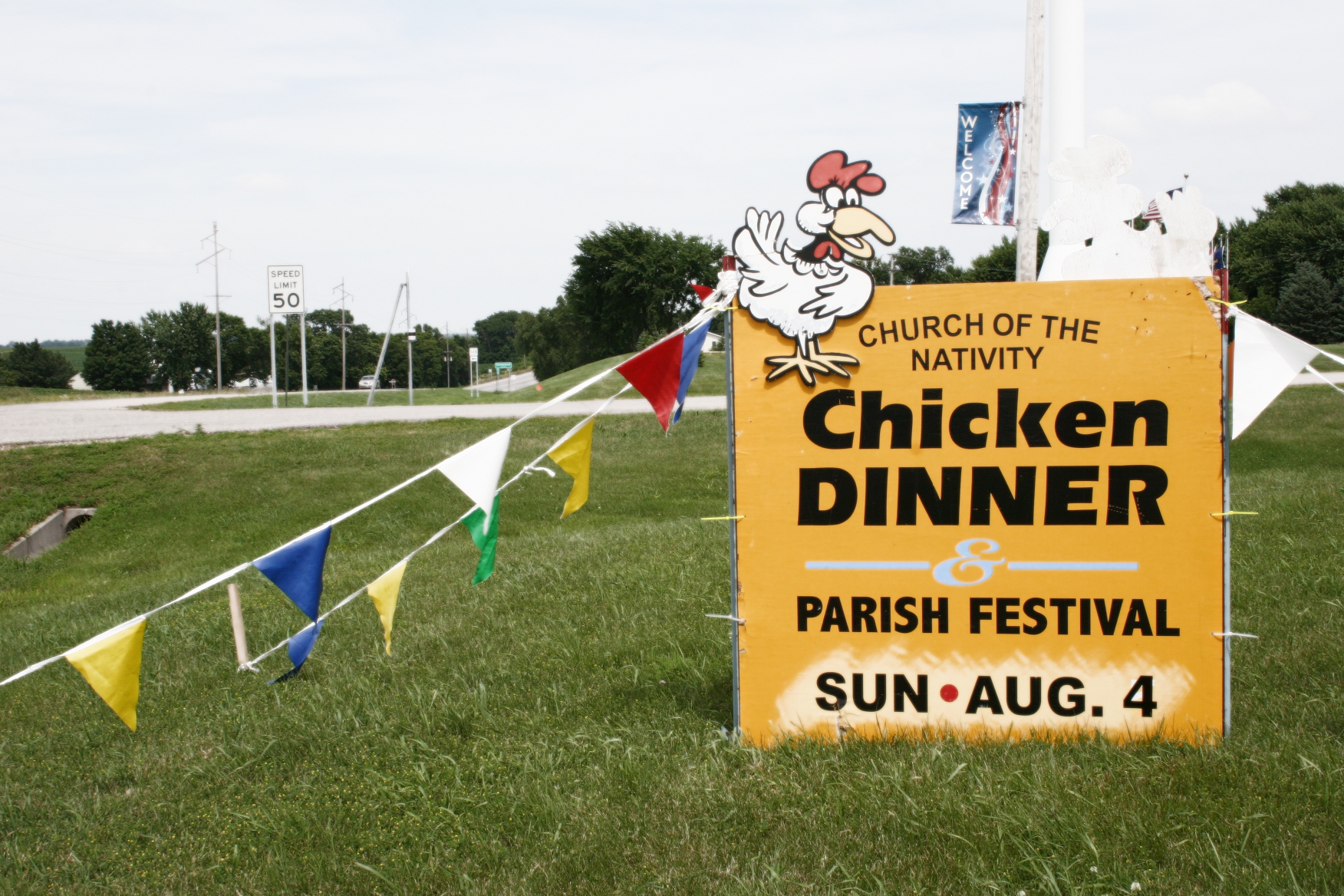
The beautiful chicken dinner sign I spotted along Minnesota Highway 99 on the edge of Cleveland.

The beautiful chicken dinner sign I spotted along Minnesota Highway 99 on the edge of Cleveland.

Since I can’t review the food, I’ll award these dinner promoters five stars for creative and eye-catching roadside signage.

To learn more about the dinner, I checked out the church website (click here) where the meal is tagged as “Men’s Chicken Dinner & Parish Festival.” Now I’m certain women and children are welcome. I assume the “men’s dinner” means the men are cooking the advertised “fabulous broasted chicken.”

In addition, baked potatoes, creamy cucumbers, baked beans, pie and beverages will be served. Homemade pie. The best.

Food will be served from 10 a.m. – 1 p.m.

Mass starts at 8:30 a.m.

My meal at last year's Trinity dinner, minus the bread and cranberries. I had cake for dessert, too.

My food plated at the annual Trinity North Morristown church dinner.

Besides food, the festival offers your usual games, beer garden (this was an initial surprise for me, a Lutheran, to discover beer at a church event) and silent auction. The Church of the Nativity also has an antique car show and a coffee bar, neither of which I’ve seen at a parish fest.

Next year this event is going on my list of must-attend church festivals.

FYI: I’d recommend attending these three church dinners:

Click here to read about the Veseli Ho-Down, Most Holy Trinity’s annual parish festival and dinner. This event is held in late August. Great food, music, games and more.

Click here to read about the annual church dinner at Trinity Lutheran Church, rural North Morristown. The dinner is served in mid-October in the church basement. Excellent, excellent food.

Click here to read about the Strawberry Festival held each June at Moland Lutheran Church, rural Kenyon.

Also, check out the website, Church Cuisine of Minnesota, for stories and photos of other church dinners.

HAVE YOU ATTENDED an outstanding church dinner and/or festival? if so please share in a comment to this post.

© Copyright 2013 Audrey Kletscher Helbling


Walnut Grove offers a kid-friendly festival at annual “Little House” celebration July 17, 2013

Pioneer prairie attire is the dress code of the day for all ages.

Pioneer prairie attire is the dress code of the day for all ages.

THE FAMILY FESTIVAL in Walnut Grove is exactly what you would expect—an event filled with family-friendly activities during the community’s annual celebration of Laura Ingalls Wilder’s Little House books. Arts and crafts. Book signings. Pony rides. Laura and Nellie Look-A-Like Contests. Entertainment.

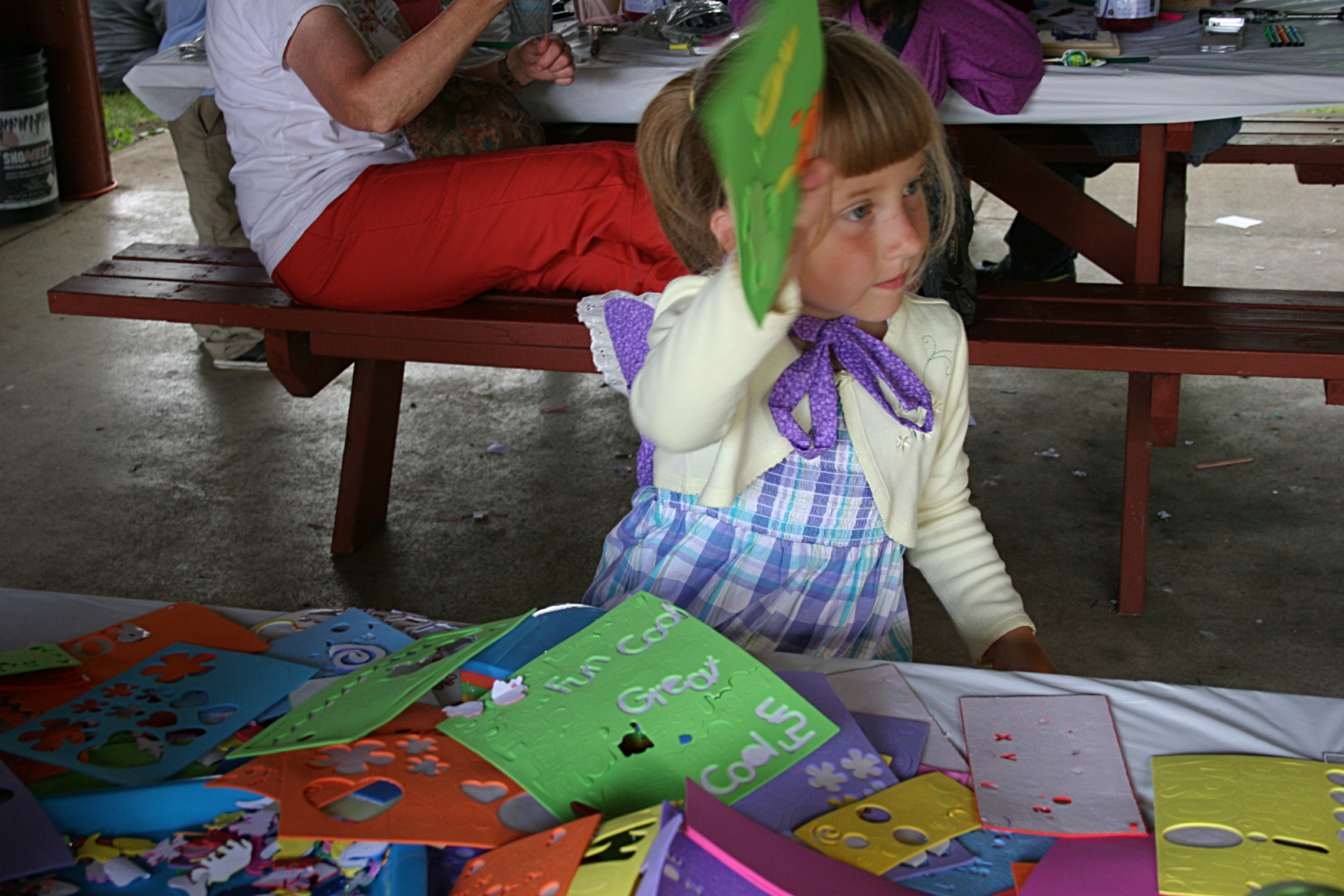
Showing Mom her art.

Showing Mom her art.

Tagging along with my 9-year-old niece, who traveled to southwestern Minnesota with her parents from Grand Forks, North Dakota, for the weekend event, I delighted in all this small town offers to families via the festival. Lots of busy and happy kids here. I’ve forgotten, though, just how quickly elementary aged youth can dart from one activity to the next.

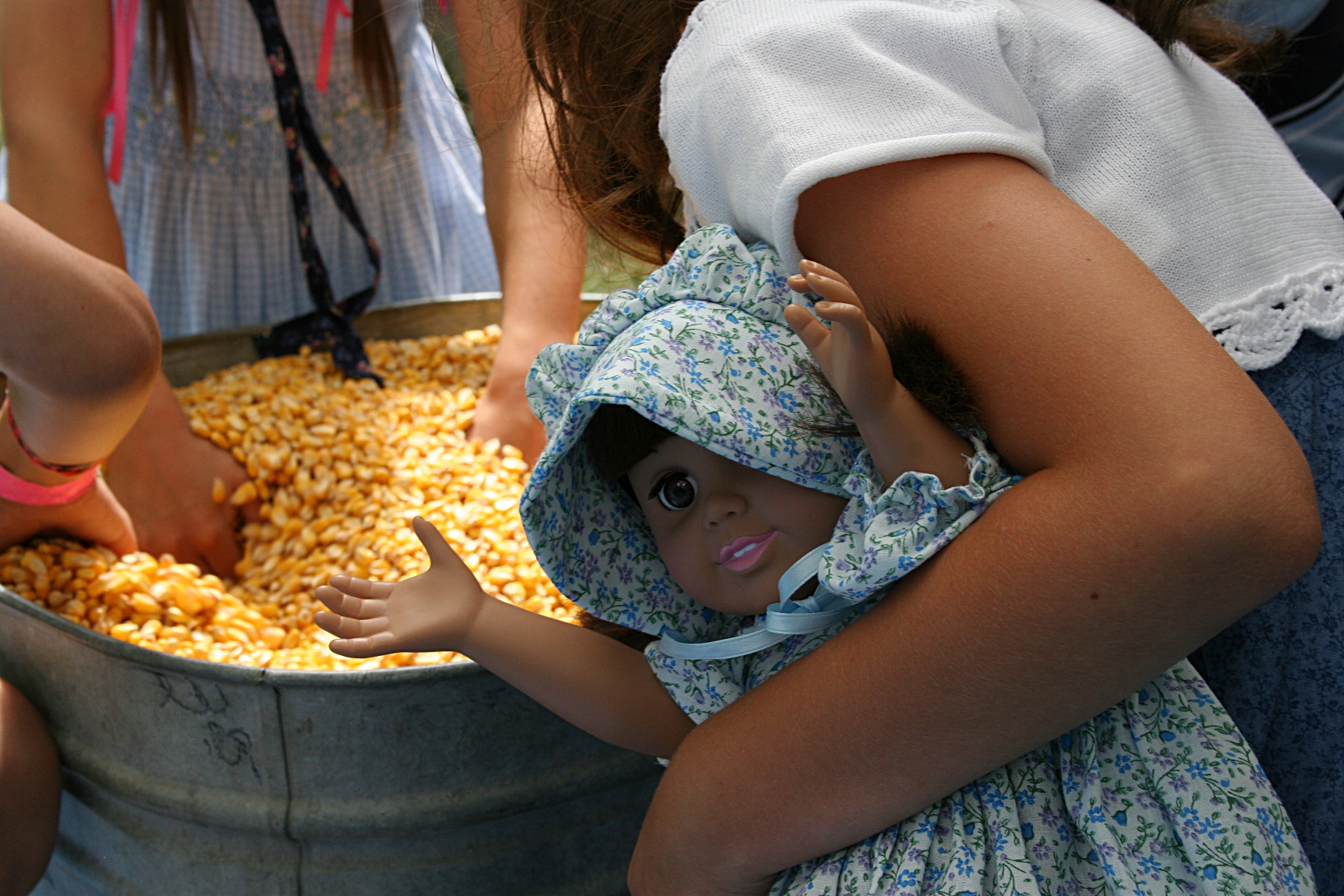
My niece keeps a tight grip on her Laura doll while sifting through corn.

My niece keeps a tight grip on her Laura doll while sifting through corn.

And Beth did just that, with me there to hold her camera and Gatorade, but, thankfully, not her Laura doll, while I also juggled my 35 mm Canon DSLR camera and an over-sized bag. It’s not easy taking photos with your hands full and a mobile niece to watch. I shot at least a few frames one-handed.

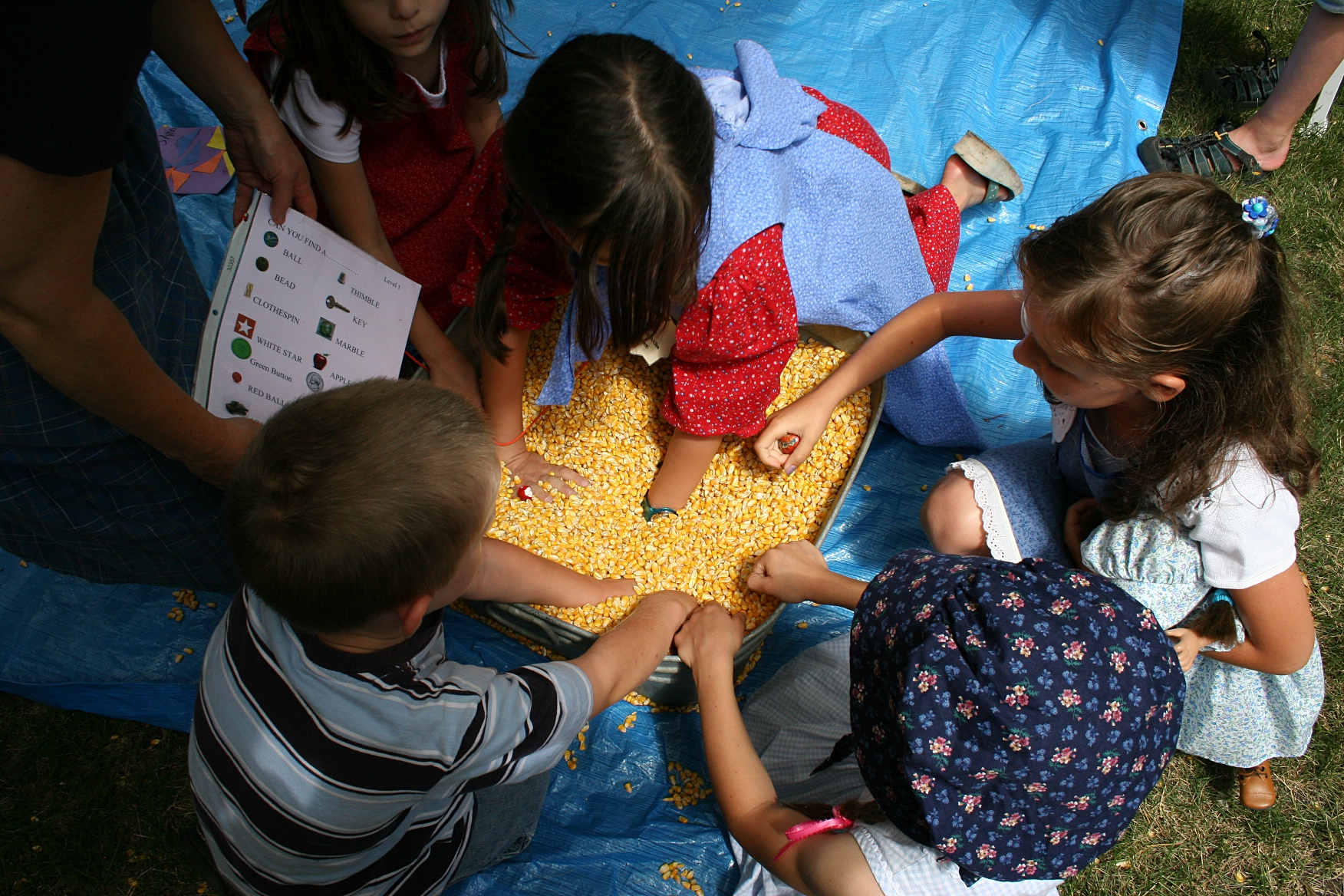
Kids, including my niece, right, dig for objects in a tub of corn.

Kids, including my niece, right, dig for objects in a tub of corn.

I managed while observing Beth sift through tubs of corn and soybeans to find hidden objects and then weave among craft stands that held her interest, but not for long. She fingered merchandise at one booth then zoomed to another.

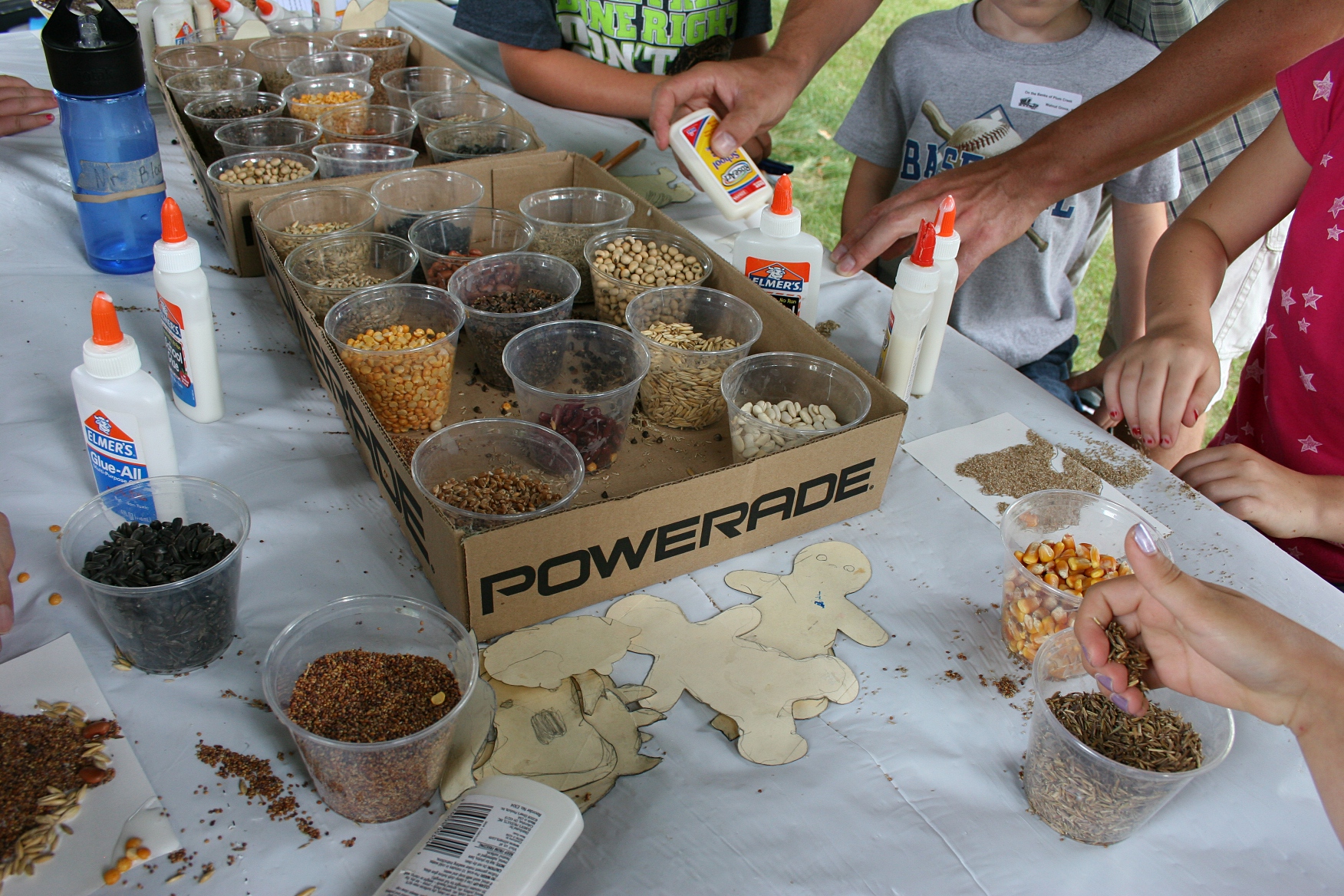
Creating seed art.

Creating seed art.

Earlier she’d created seed art, a craft I remember from my elementary school art days, days in which my teacher read the entire Little House book series to me and my classmates through the course of a school year. I attended school in Vesta, only 25 miles north of Walnut Grove, practically in the backyard of Plum Creek. To this day, the Little House books, and Wilder’s descriptive writing of the prairie landscape (she was the “eyes” for her blind sister, Mary) in the Minnesota-set volumes, remain among my favorite books. I once even penned a poem, “Prairie Sisters,” about my connection to the Little House books and the Ingalls sisters. (See poem at the end of this post.)

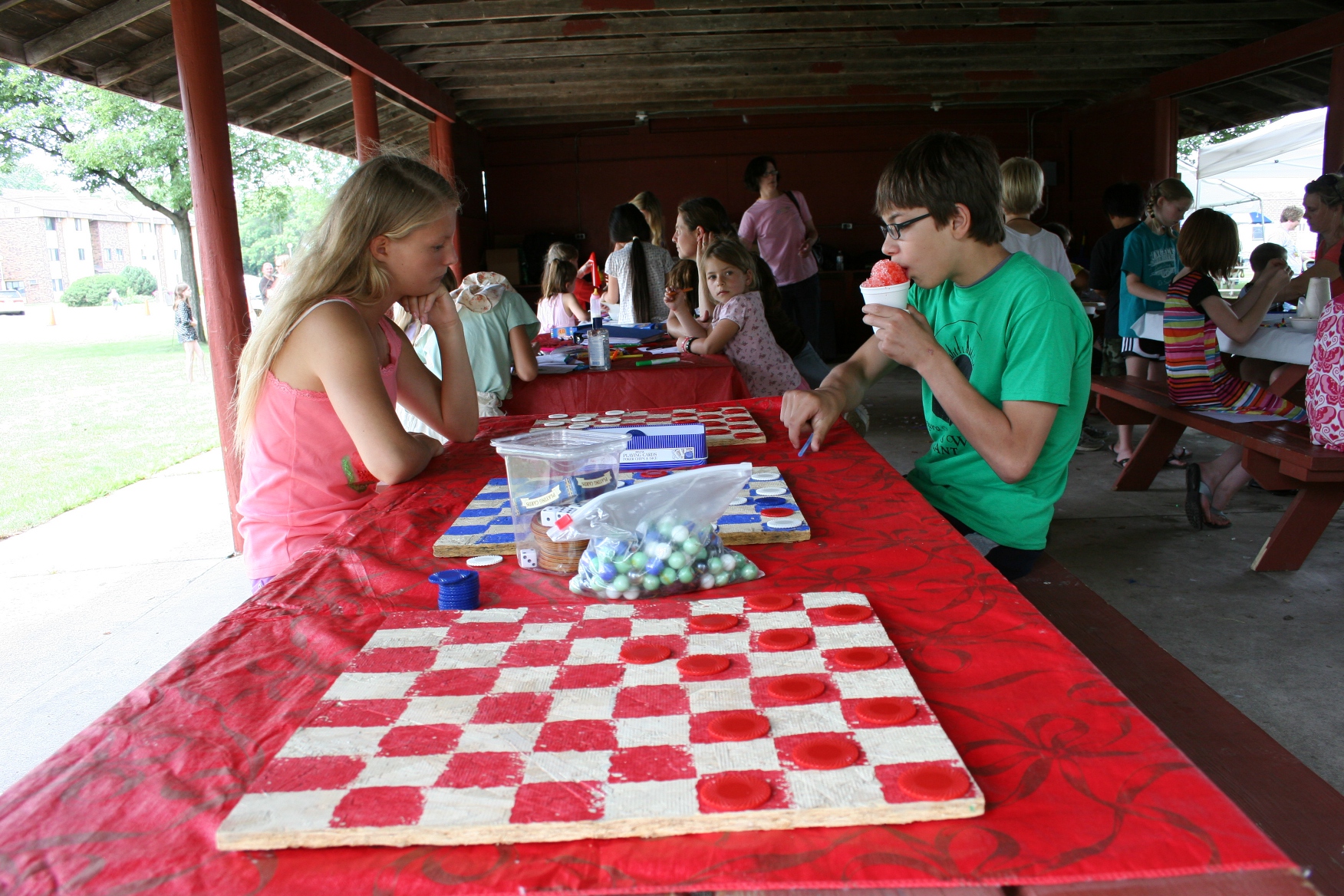
Most of the kids' activities are centered in the park shelter.

Most of the kids’ activities are centered in the park shelter.

But back to that Family Festival in Walnut Grove. Before my arrival, my niece punched a horse design onto leather at one of the many activity stations centered in and near a shelter at the city park. This festival is definitely a hands-on experience any kid, and parent, can appreciate.

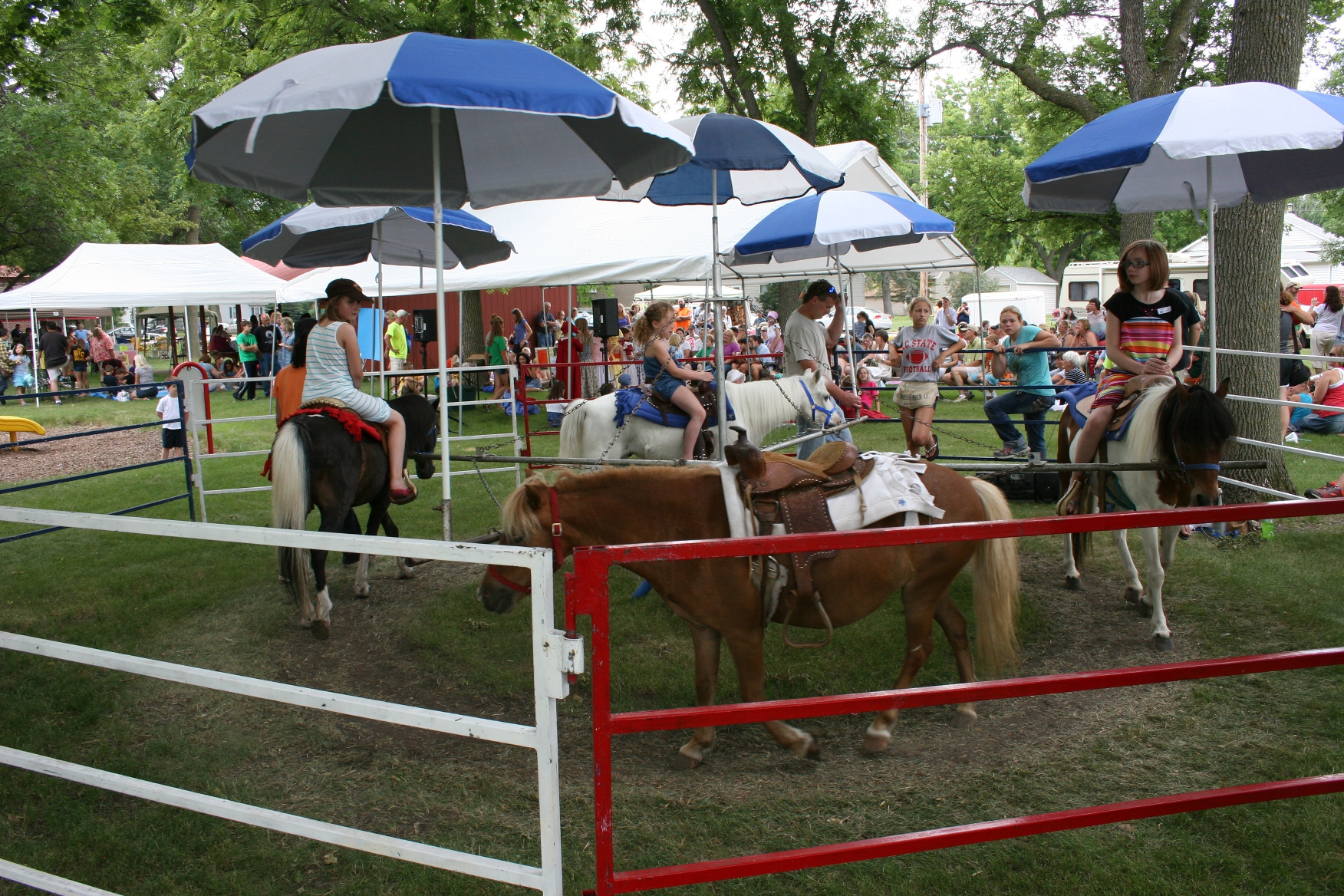
The pony ride.

The pony ride.

I hoped Beth would ride a pony at the pony ride, but she didn’t follow my hint while under my supervision, opting instead to participate in the Laura Look-A-Like Contest. (You can read about that competition by clicking here.) And that was OK.

All of you parents and grandparents out there with children who are Little House fans, you have two more weekends to wend your way to Walnut Grove for a variety of activities, including the Family Festival from 11 a.m. – 6 p.m. Saturday, July 20 and 27, in the one-block square city park.

BONUS PHOTOS:

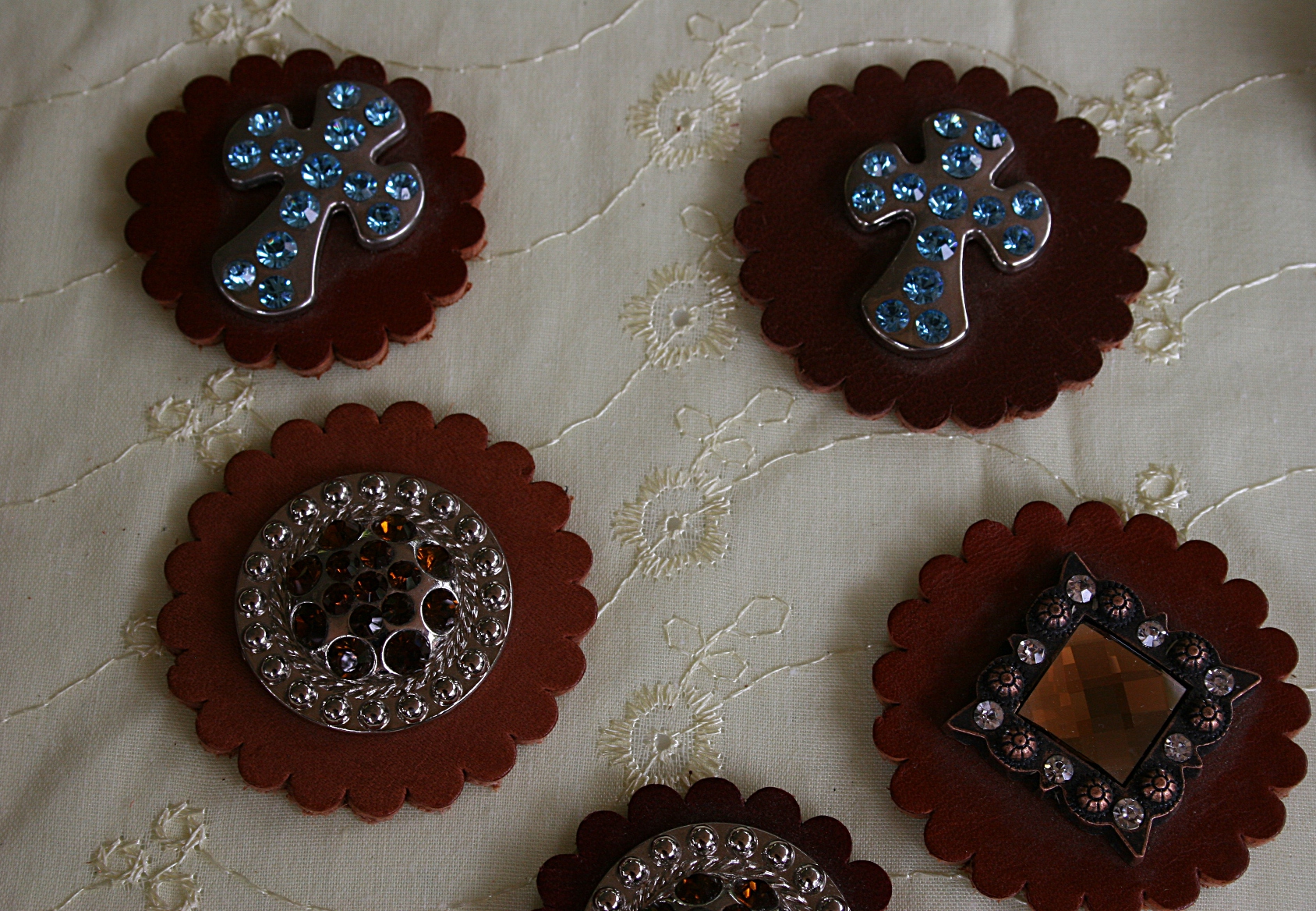
Leather art.

Leather art.

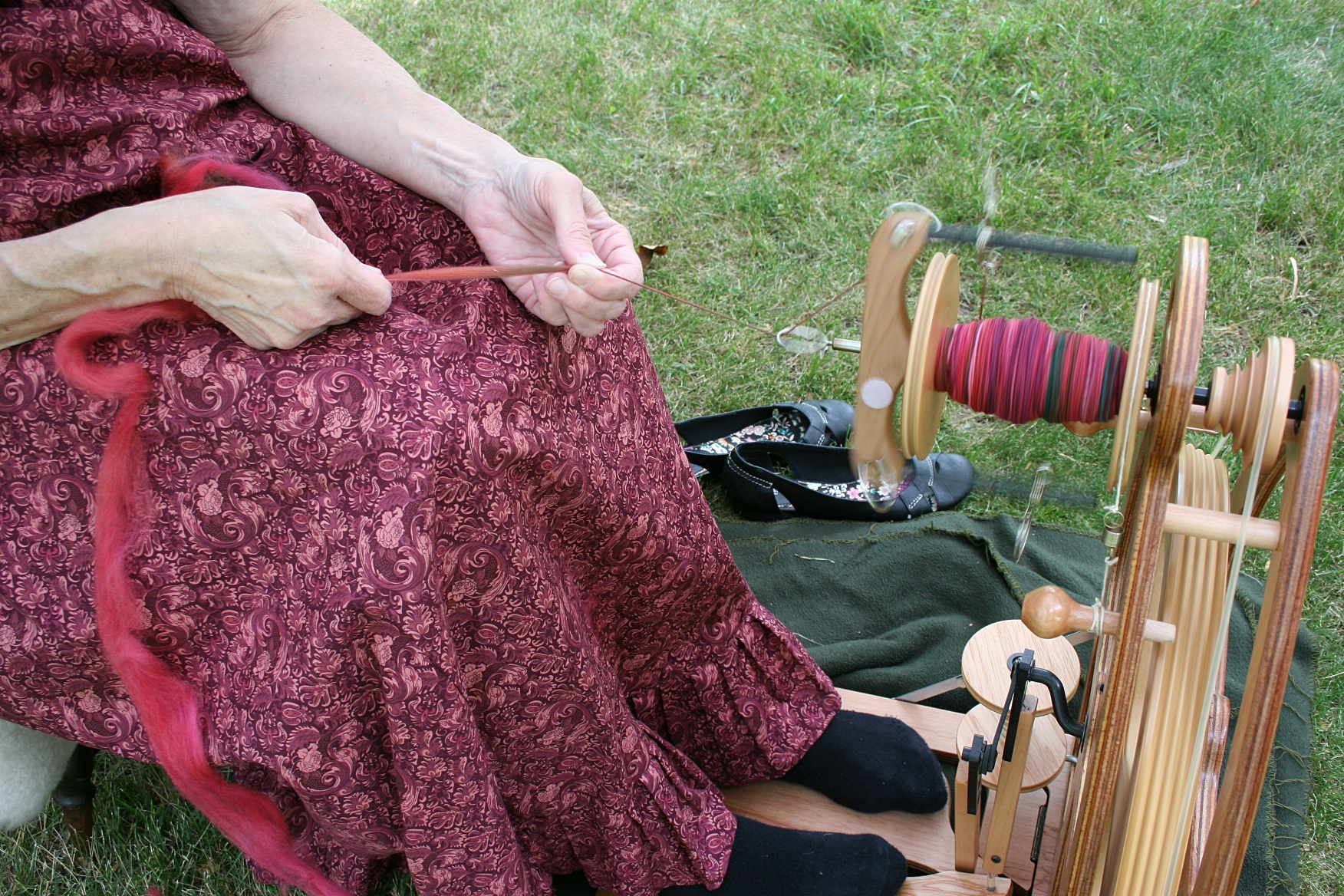
Craft demonstrations, like spinning, are part of the festivities.

Craft demonstrations, like spinning, are part of the festivities.

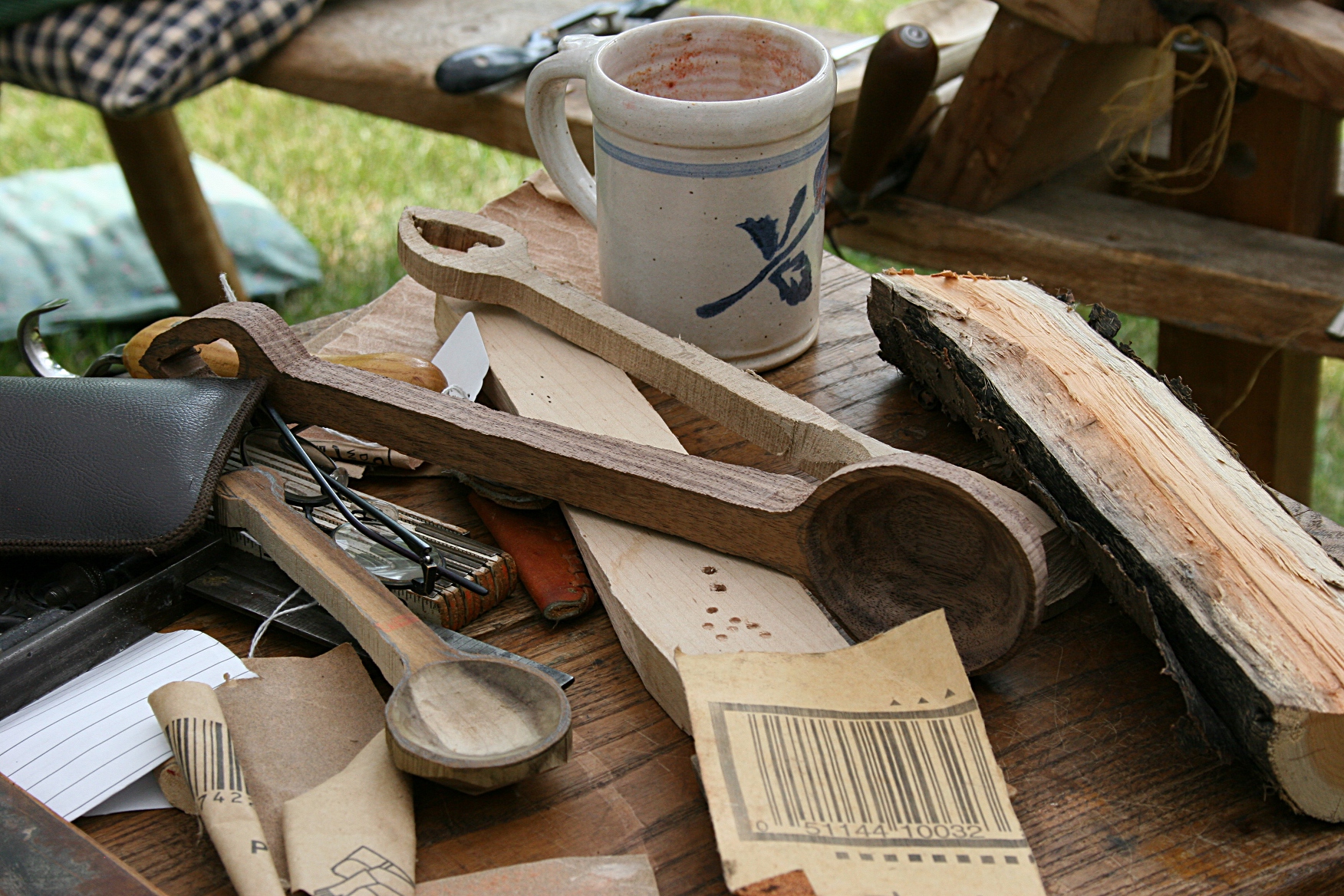
Tools and materials for crafting beautiful wooden spoons.

Tools and materials for crafting beautiful wooden spoons.

FYI: Click here to learn more about Little House themed events in Walnut Grove during the next two weekends.

AND HERE’S MY PROMISED POEM, published in 2000 in Poetic Strokes, A Regional Anthology of Poetry from Southeastern Minnesota:

Prairie Sisters

Laura and Mary splashed their way into my heart
as my fourth grade teacher waded into Plum Creek.
I felt the words sliding across my bare feet,
sticking to me like bloodsuckers between toes.

Prairie sisters, Laura and Mary, and me,
children of the wind and sky, we three.
The words swept me away from the brick walls
of school and of desks in orderly rows.

Across the rich, black soil, heavy with a farmer’s dream,
to Walnut Grove, twenty-five miles south and west,
I joined my prairie sisters on the banks of Plum Creek,
at home with the sweet scent of dark earth.

Together we turned the pages of our lives,
each day a new chapter, a new adventure.
Nellie Oleson, grasshoppers by the millions,
fire wheels and blinding, closed-in blizzards.

Years apart, yet years so close.
Prairie sisters, Laura and Mary, and me.
Rooted to a land that reaches into the soul,
bound forever by words in a book.

© Copyright 2013 Audrey Kletscher Helbling


Photographing the midway at Dam Days in Morristown June 1, 2013

SET ALONG THE CANNON RIVER in Rice County, Morristown, population around 1,000, bills itself as “The Best Little Town by a Dam Site!”

And this weekend, this southeastern Minnesota community celebrates its annual Dam Days, which continue through tomorrow. It’s one of the first summer celebrations in the area, an event that typically draws large crowds, especially for the Friday evening parade.

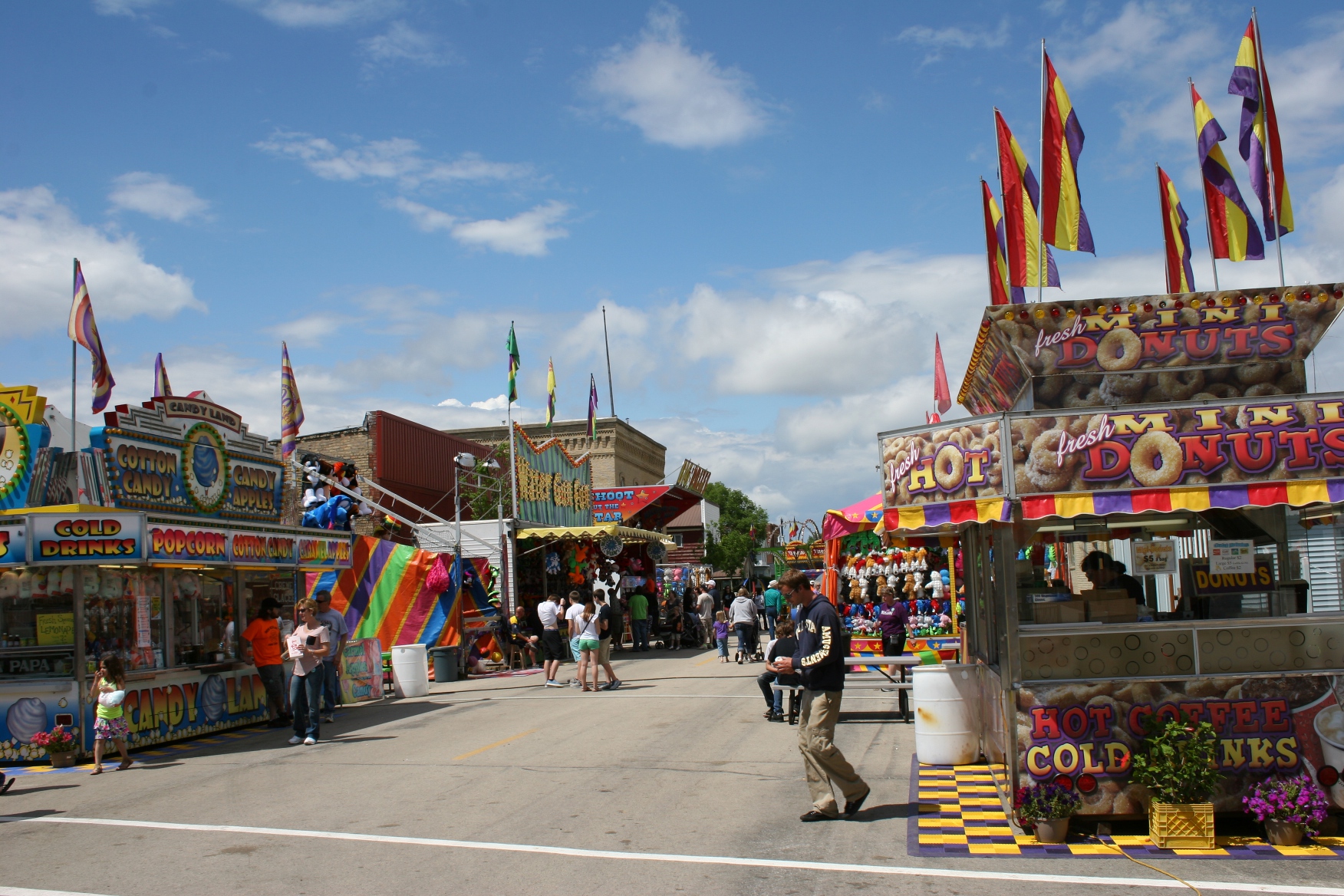
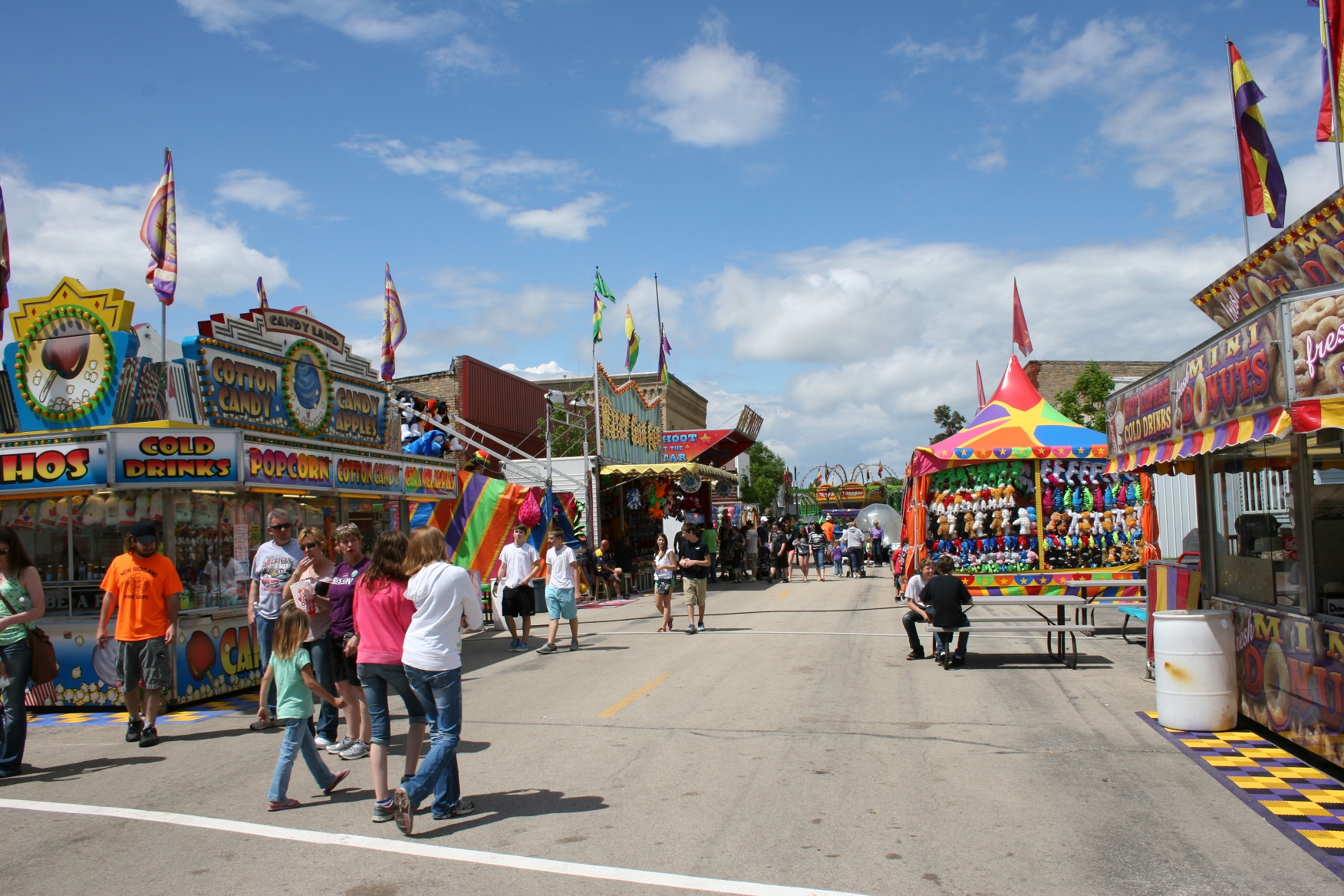
The compact Midway in downtown Morristown.

The compact midway in downtown Morristown.

I’ve never attended the parade, but Saturday afternoon my husband and I toured the historic grist mill and schoolhouse and also took in the carnival and kids’ tractor pull.

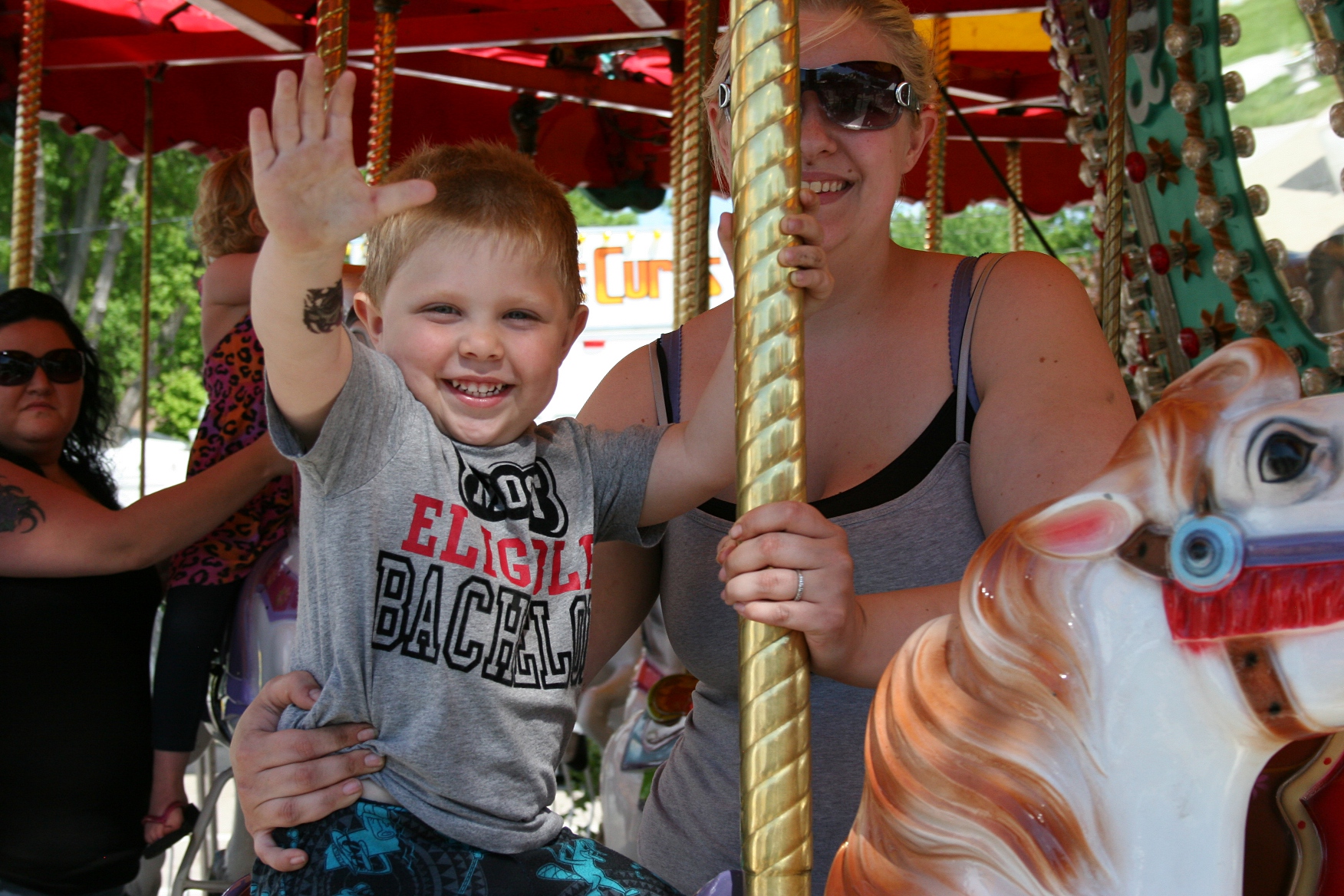
Dakota waves to his dad who is photographing his little boy's ride on the merry-go-round.

Dakota waves to his dad who is photographing his little boy’s ride on the merry-go-round.

As always, I found an abundance of photo ops. Today I’ll show you the midway. Oh, my gosh, a carnival is a photographer’s playground with colorful characters, happy kids, young love, and just so much to take in.

Enjoy.

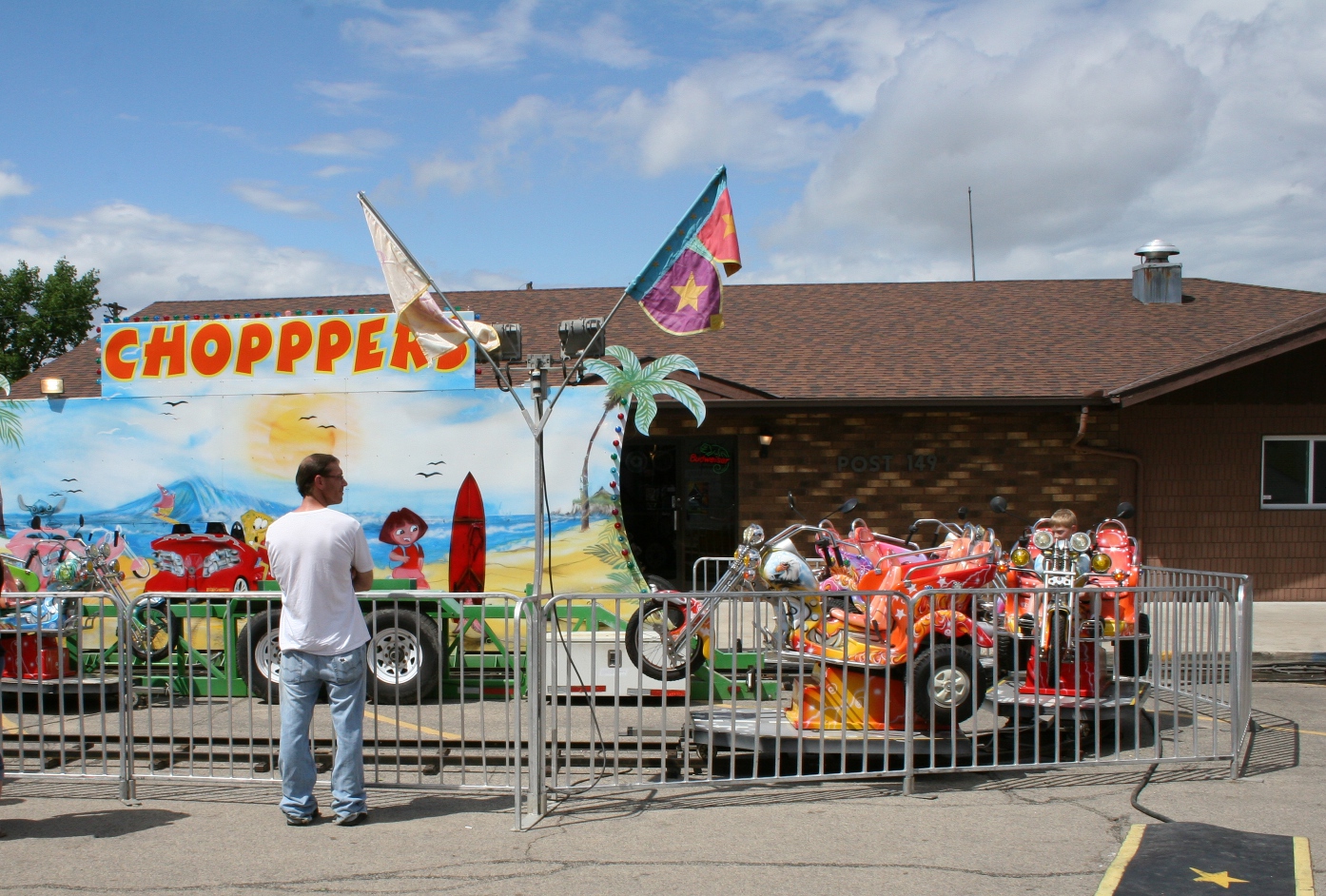
In front of the local Legion, the choppers.

In front of the local Legion, the choppers.

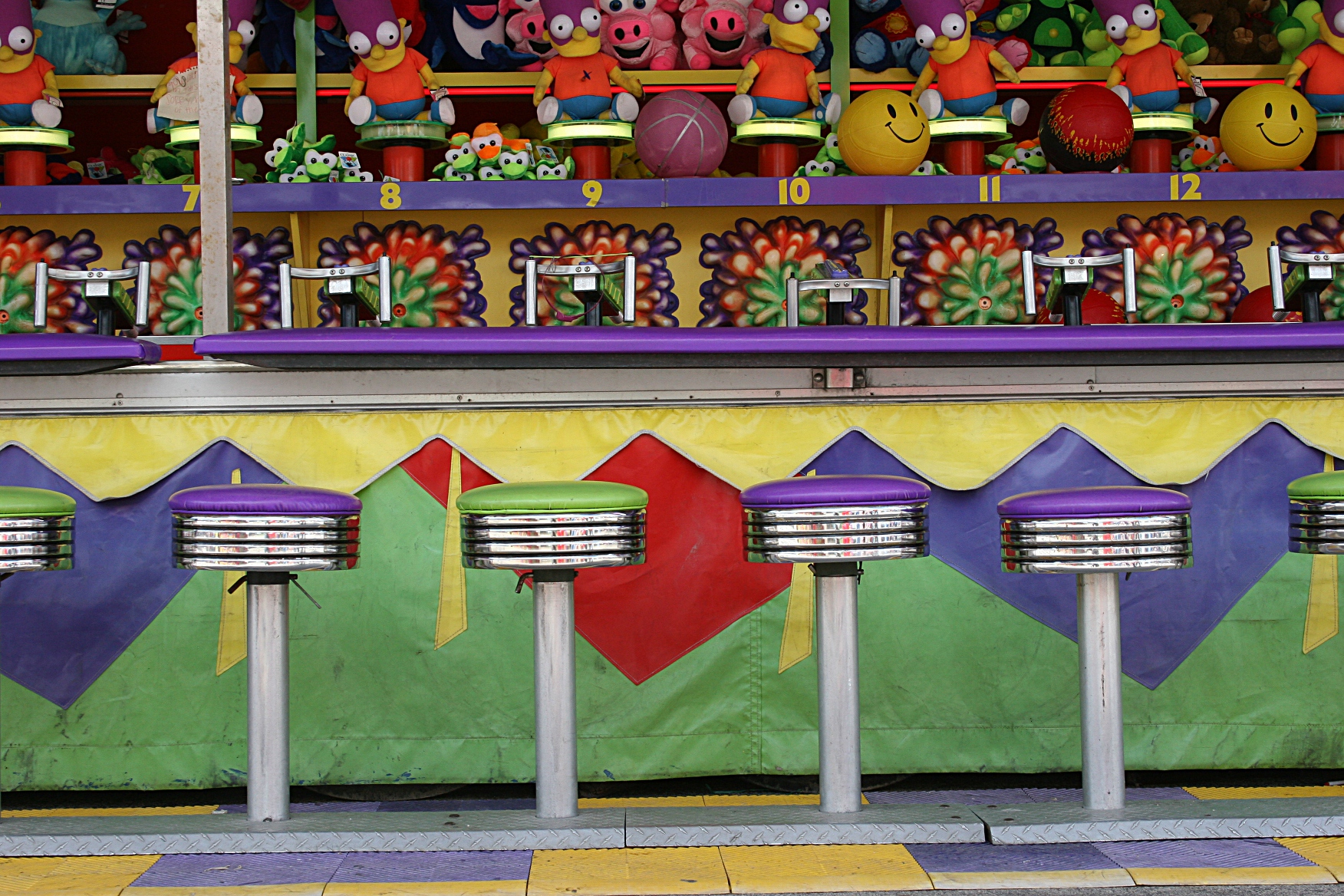
The coveted prizes hang high.

The coveted prizes hang high.

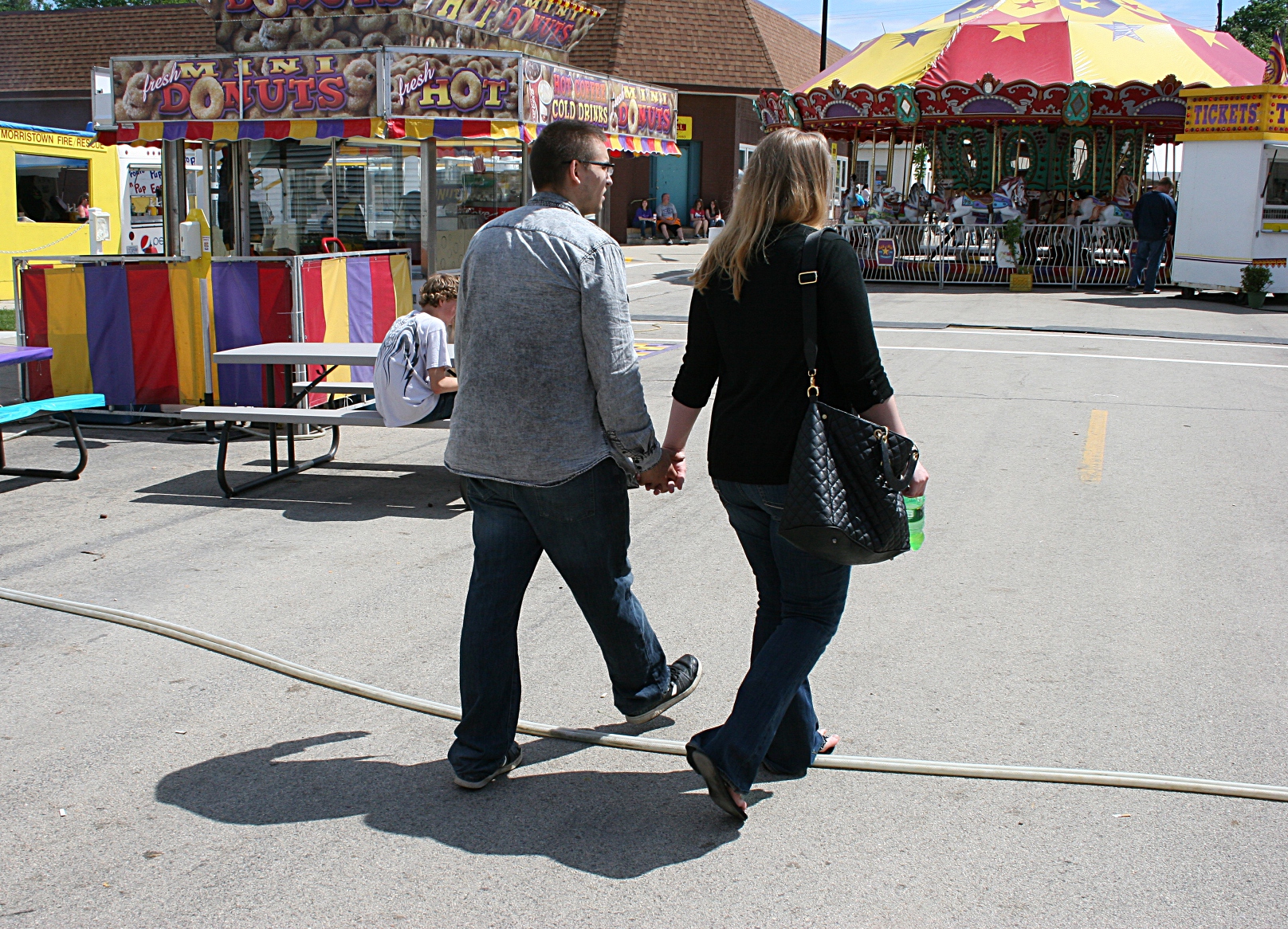
Young love. No other words needed.

Young love. No other words needed.

A riot of color.

A riot of color.

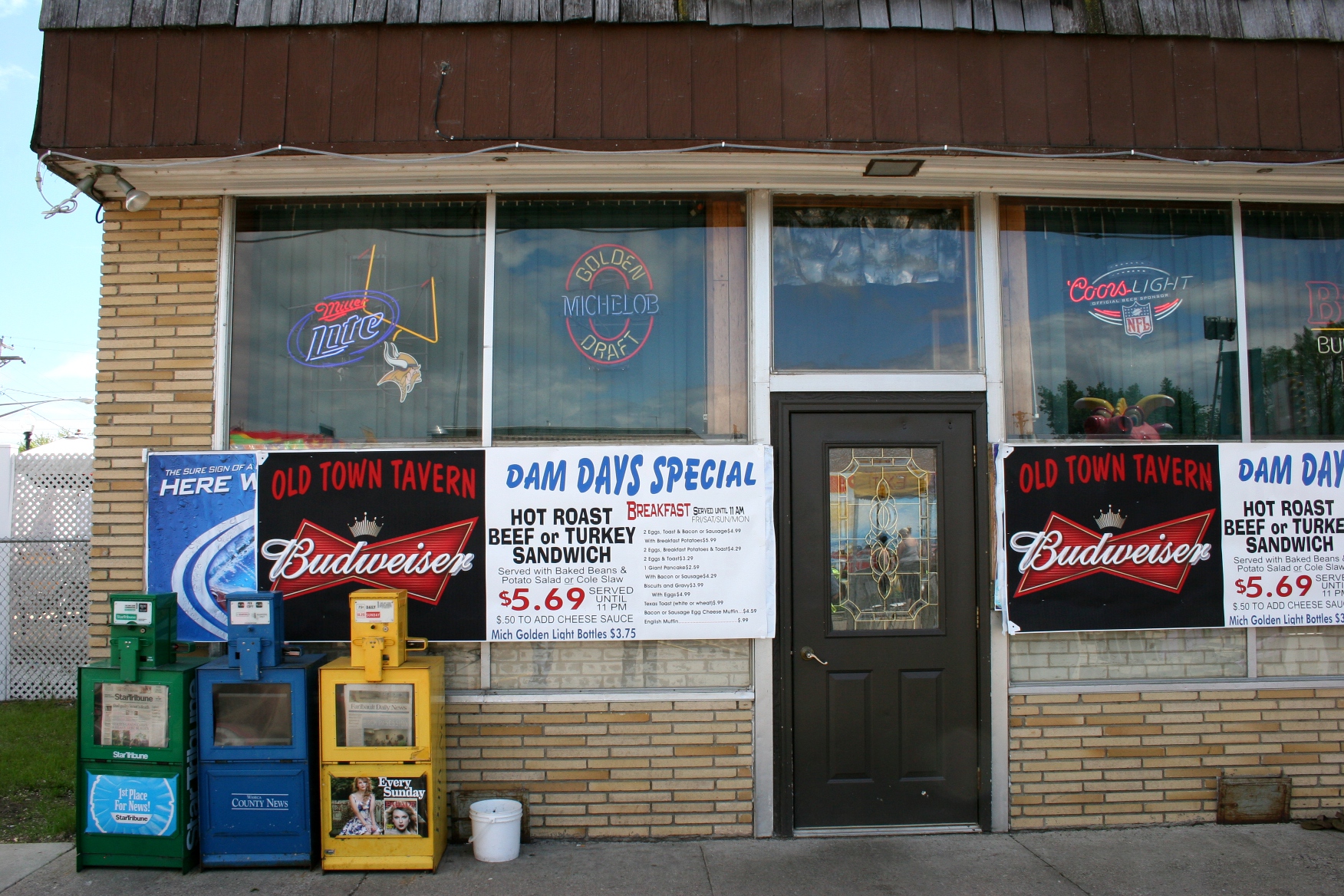
The Old Town Tavern advertises its Dam Days specials. Great place to eat.

The Old Town Tavern advertises its Dam Days specials. Great place to eat.

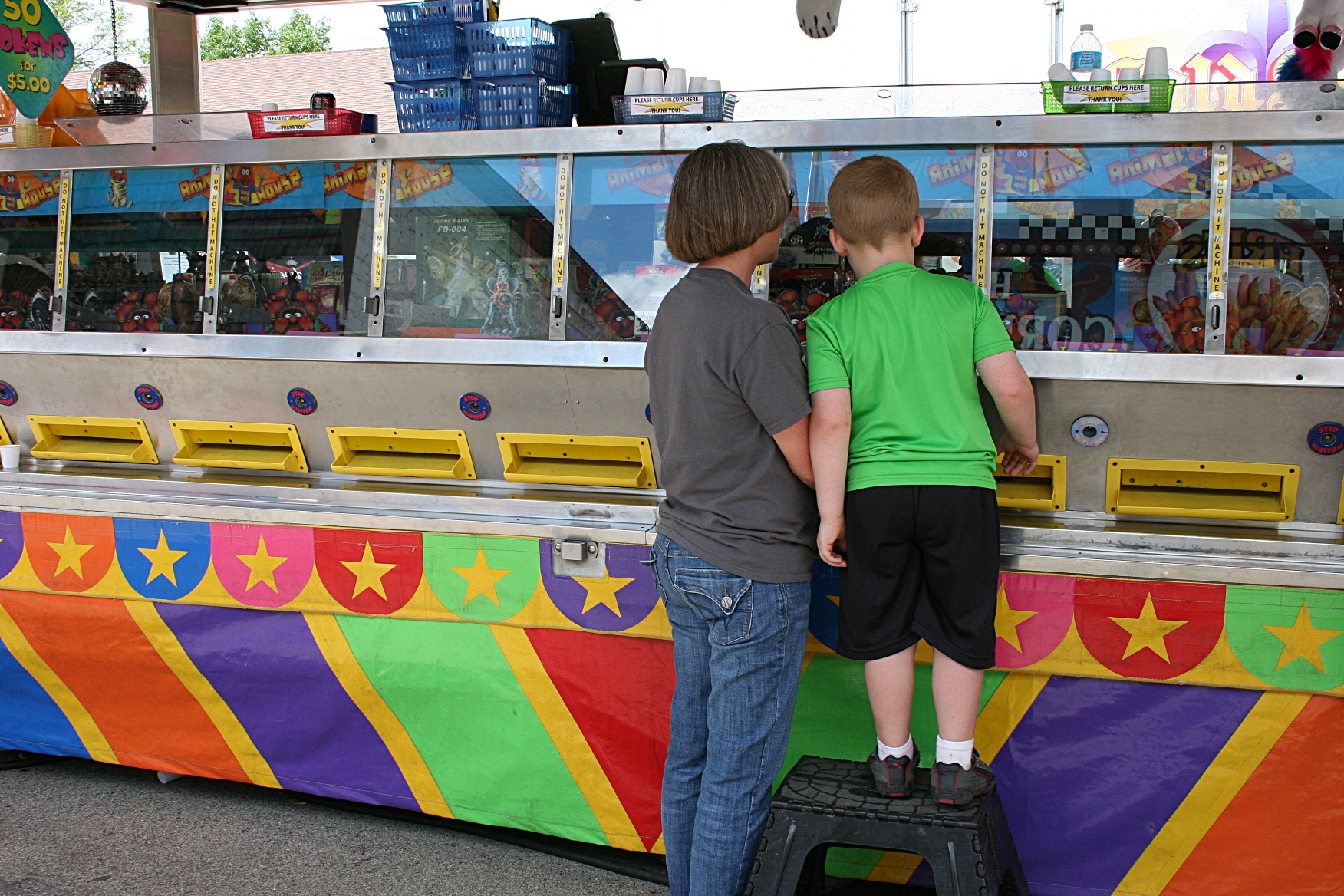
Trying to win a prize.

Trying to win a prize.

One of the healthier food choices.

One of the healthier food choices.

Walking (or falling) in the water balls.

Walking (or falling) in the water balls.

A slow afternoon on the Midway...

A slow afternoon on the midway…at the Dizzy Dragons ride, originating in Faribault.

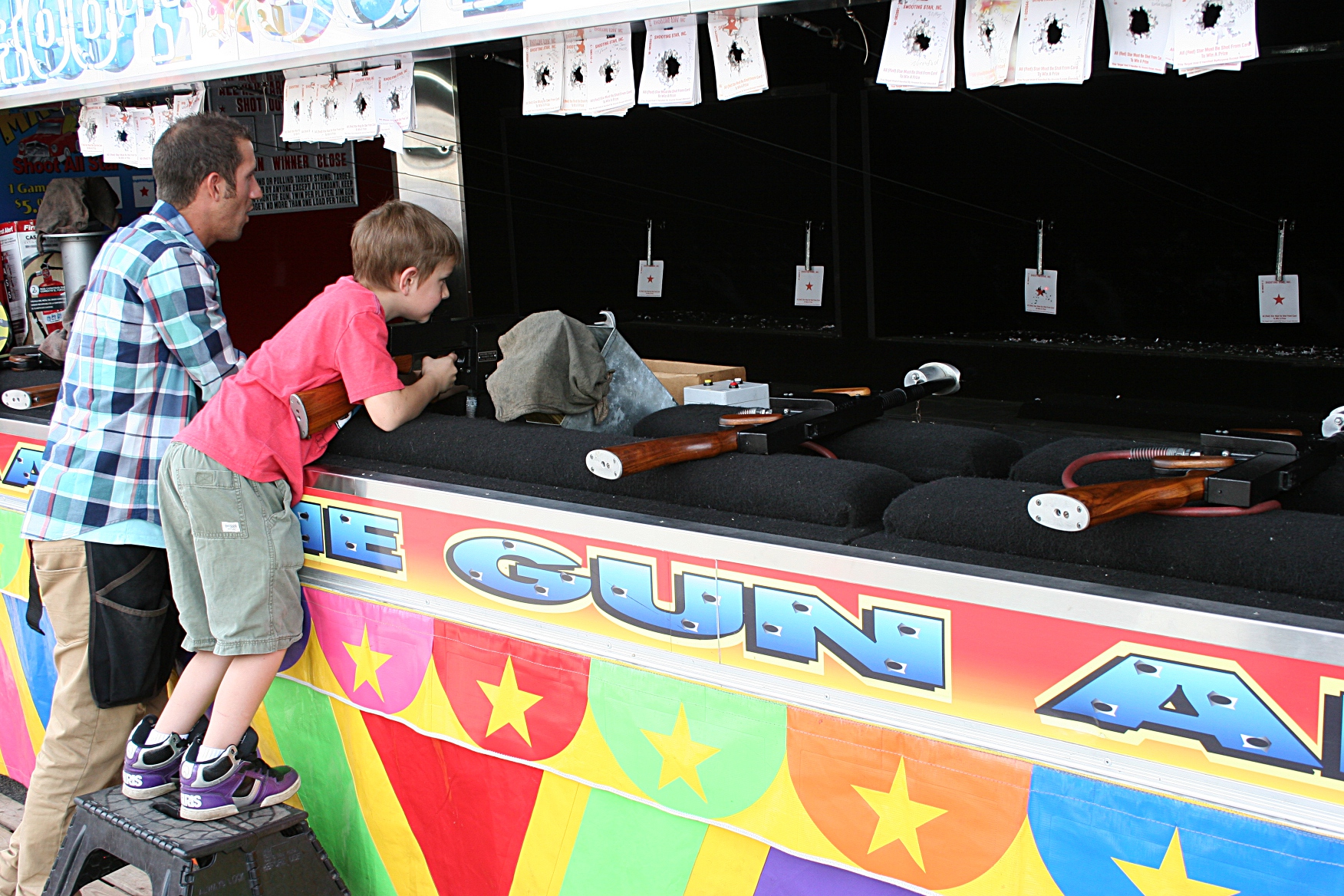
Shooting to win.

Shooting to win.

One final look at the Midway.

One final look at the carnival.

If you want to experience a small town celebration, head over to Morristown, located about 10 miles west of Faribault on Minnesota State Highway 60, tomorrow. Click here to read the entire list of events happening on Sunday.

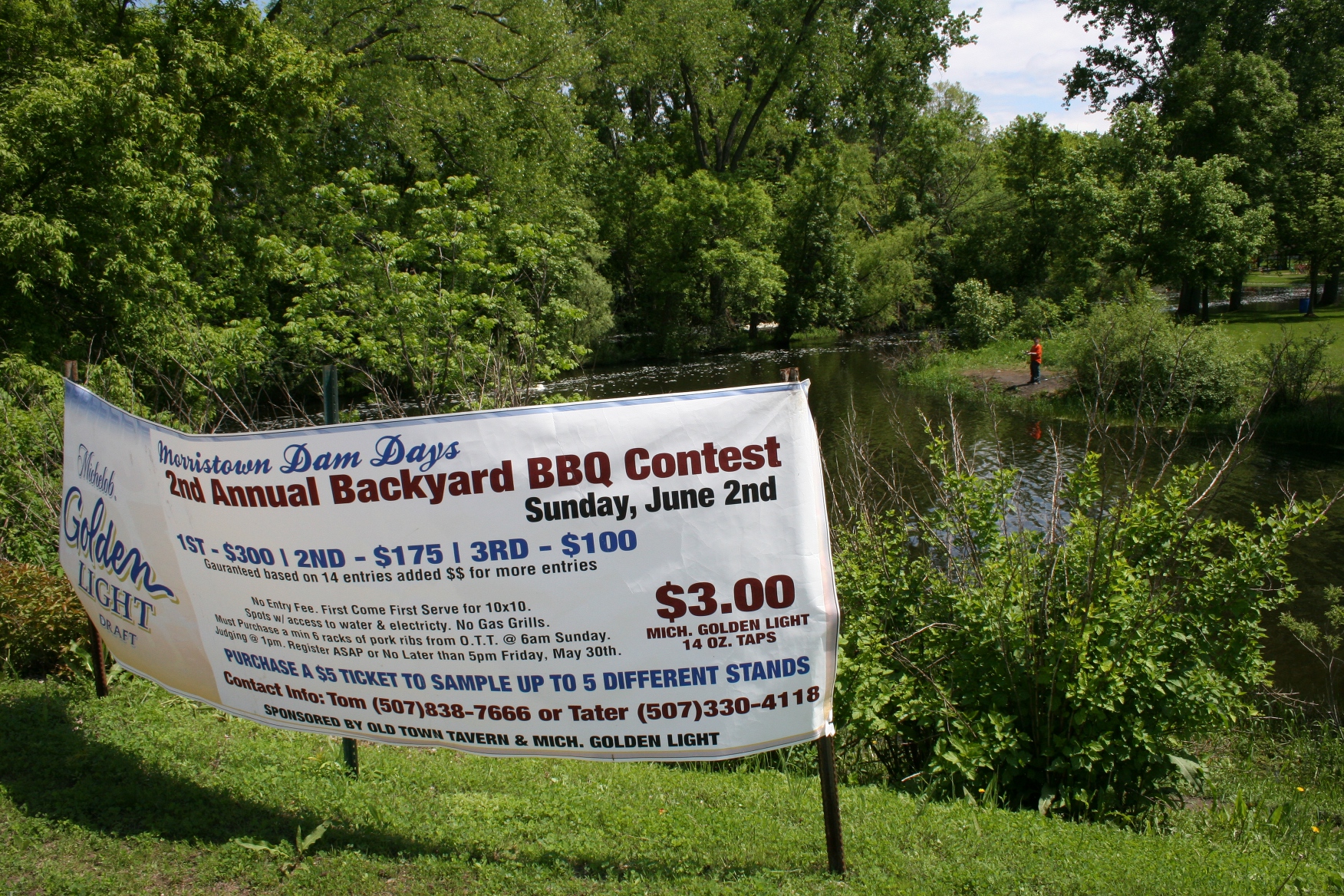
Among Sunday events is the 2nd annual Amateur Backyard BBQ Contest, beginning at 1 p.m. in the park by the river. You can sample five BBQed items for $5.

Among Sunday events is the 2nd annual Amateur Backyard BBQ Contest, beginning at 1 p.m. in the park by the river. You can sample five BBQed items for $5.

CHECK BACK FOR MORE POSTS from the Morristown Mill, the old schoolhouse and the kids’ tractor pull.

© Copyright 2013 Audrey Kletscher Helbling


In which I learn a lot about the James-Younger Gang bank raid in Northfield September 3, 2012

CHRISTIAN HAKALA WEAVES the story of the bank robbery with the skills of a seasoned storyteller, his voice rising as the tension mounts, his hands gesturing, his eyes locking with those of a rapt audience.
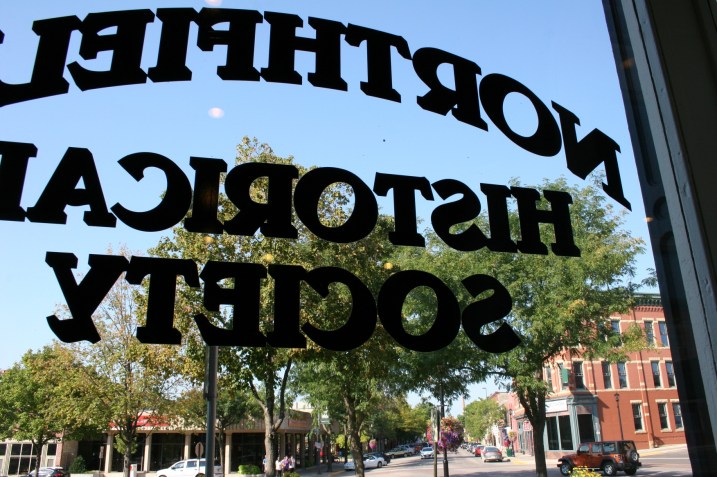
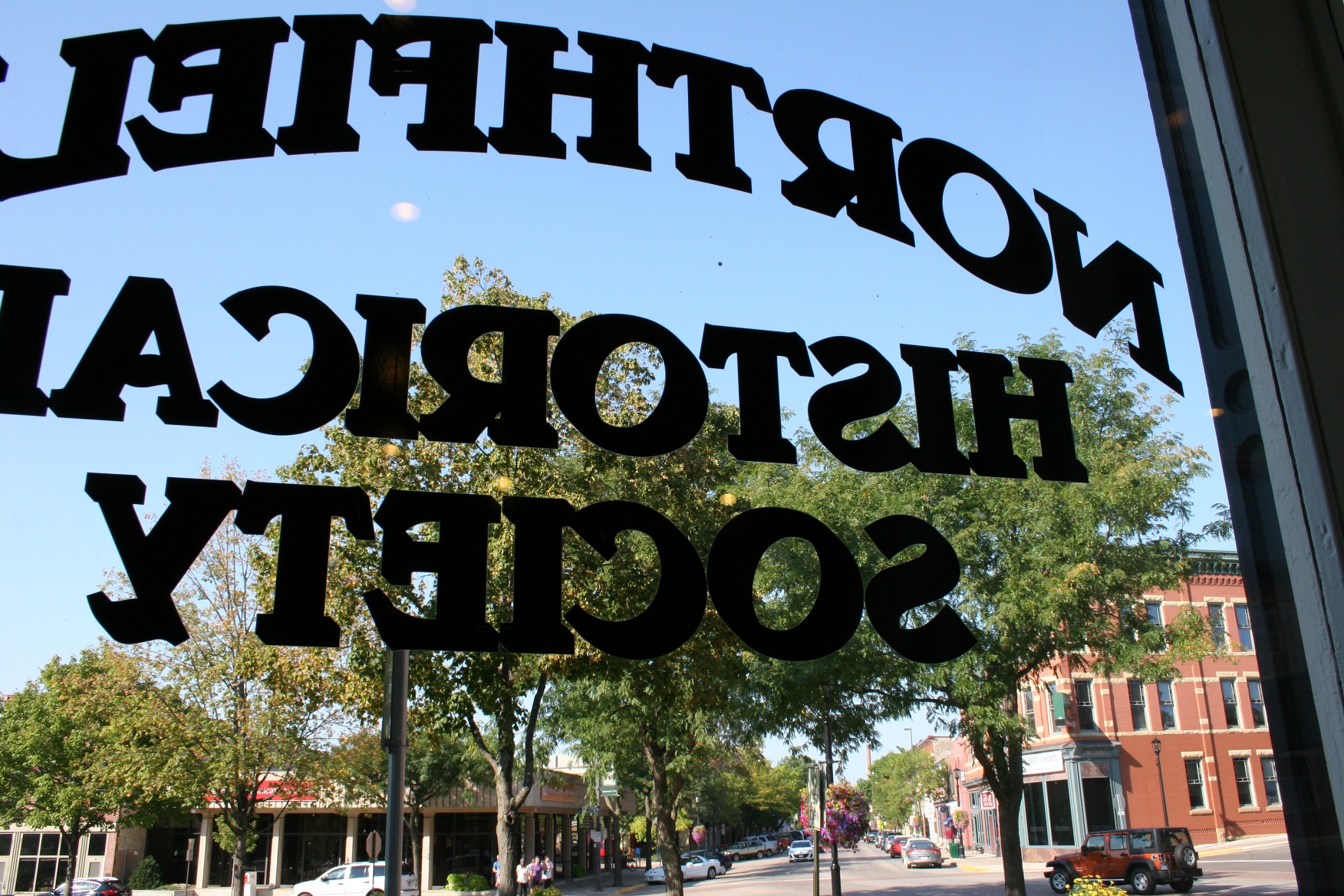
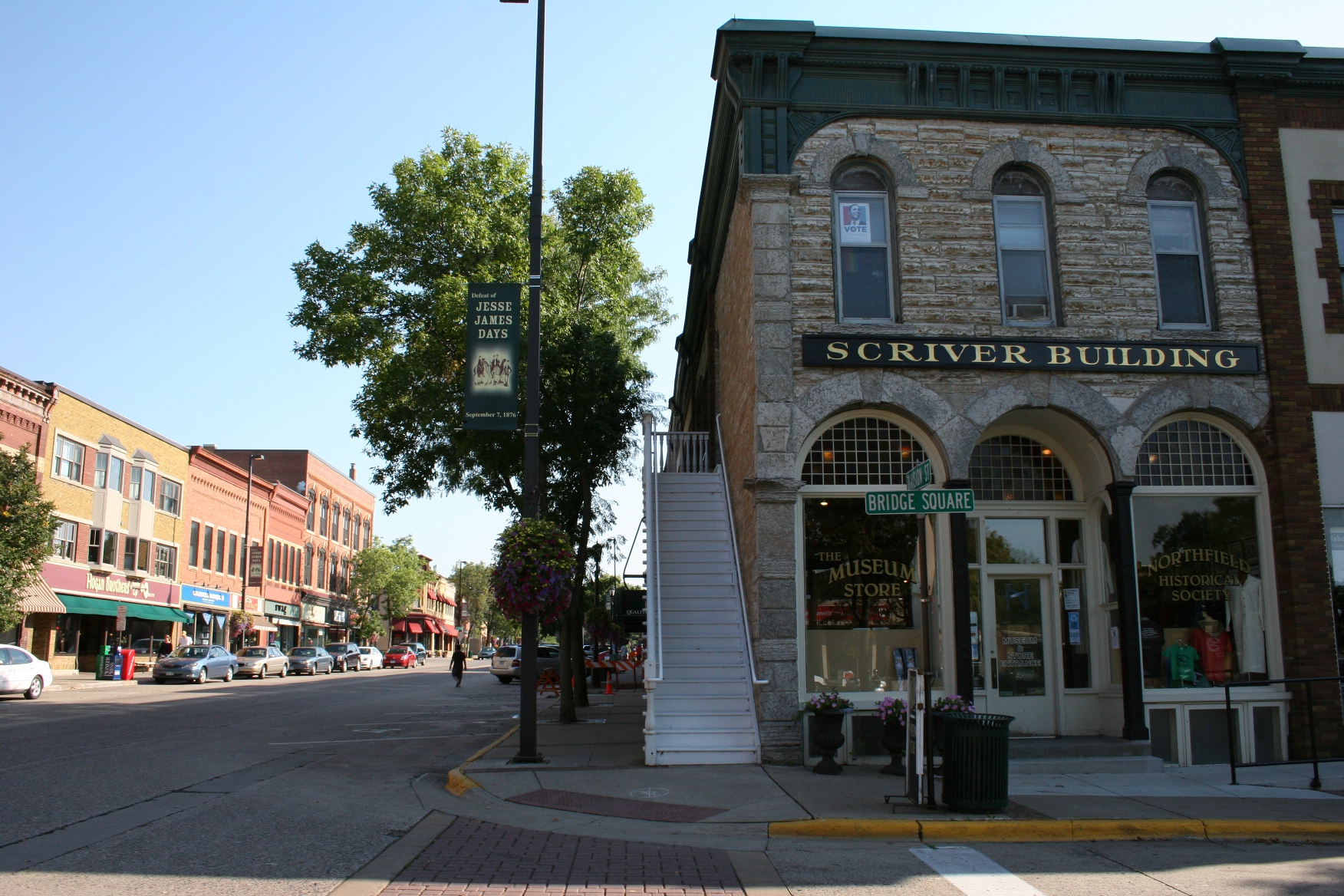
Looking through a front window of the Northfield Historical Society museum toward Division Street.

It is Sunday afternoon and I am with a small group touring the Northfield Historical Society. I have come here with my husband to view the temporary U.S.-Dakota War of 1862 exhibit as it relates to Rice County.
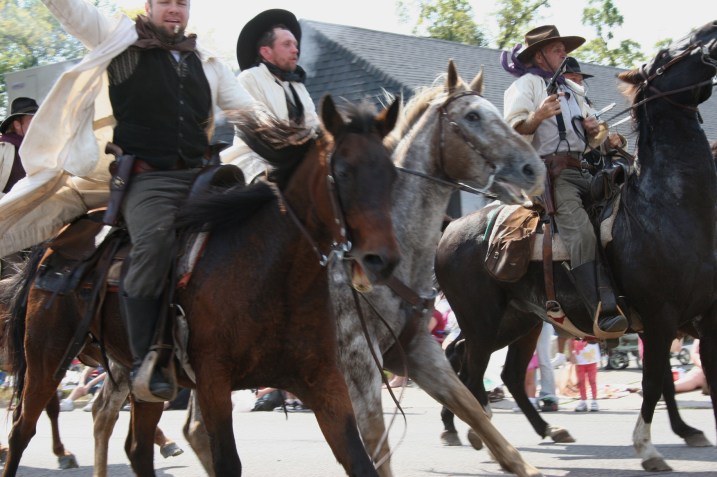
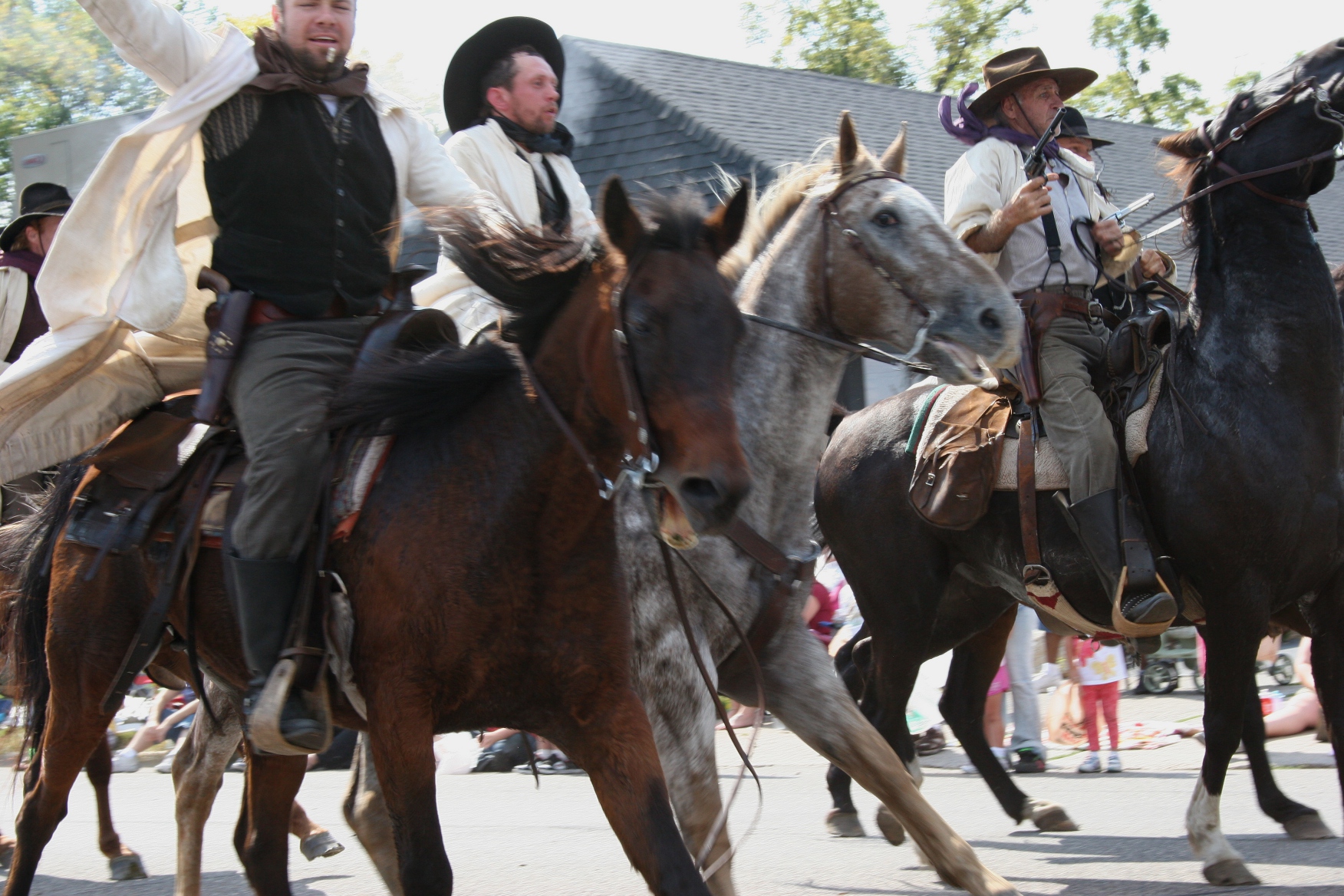
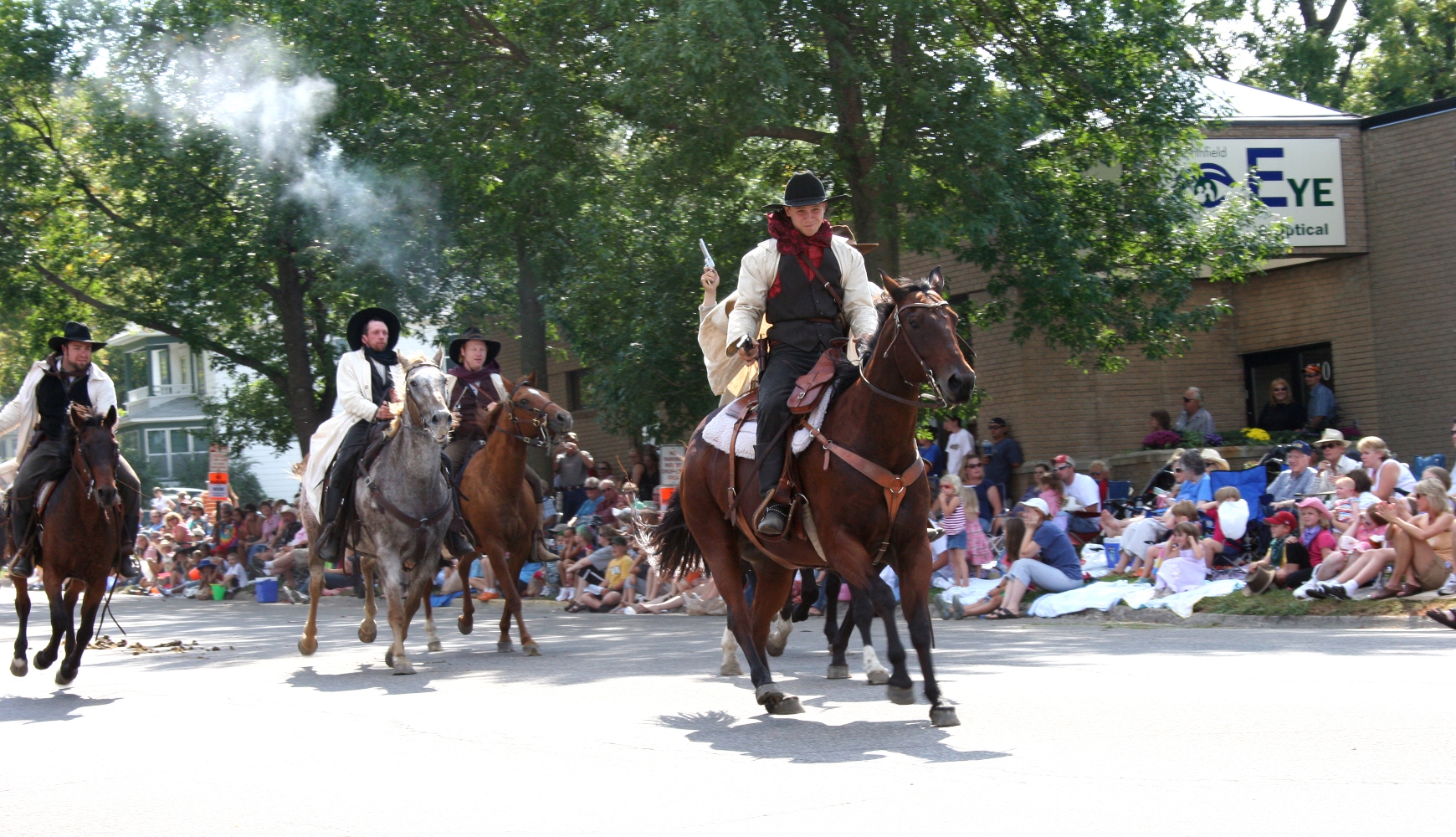
The James-Younger Gang re-enactors riding in The Defeat of Jesse James Days parade perhaps five years ago.

But I find myself, instead, captivated by Hakala’s intriguing play-by-play account of the James-Younger Gang bank robbery of September 7, 1876, as he leads us through the historical society and into the bank. I am embarrassed to admit that I’ve never visited this museum, site of perhaps the most historic bank robbery in U.S. history, even though I live only 15 miles away and once worked briefly as a newspaper reporter in this town.

This week some 100,000 visitors, according to Hakala, are expected in Northfield for the annual Defeat of Jesse James Days celebration September 5-9.
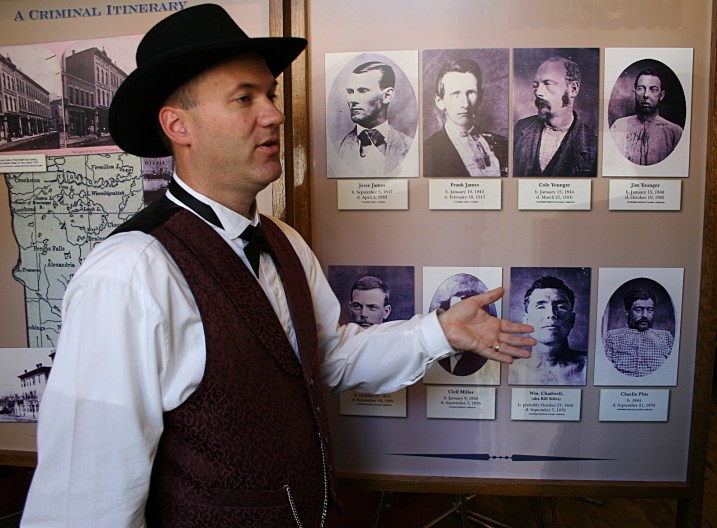
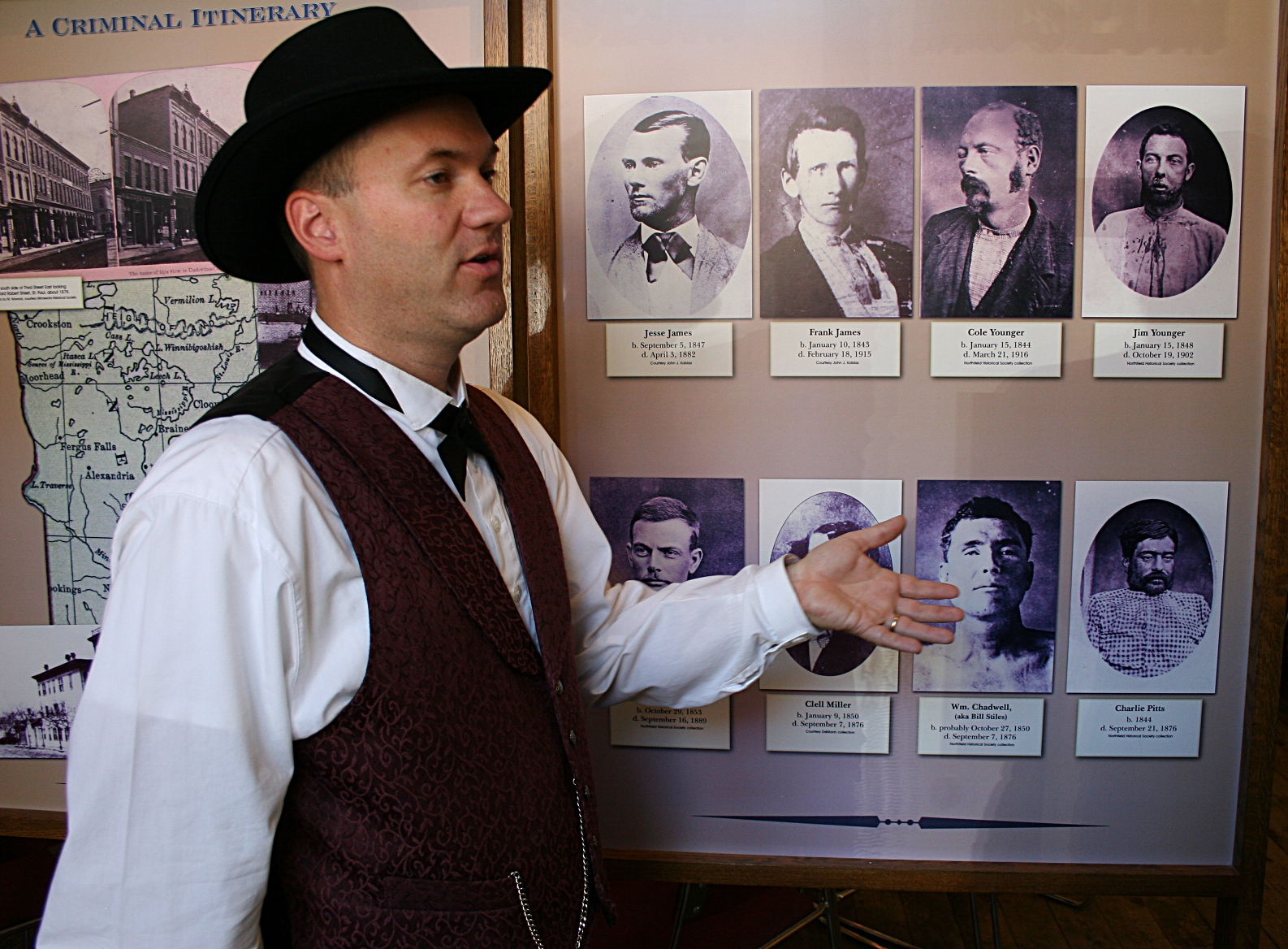
Christian Hakala talks about gang members involved in the Northfield bank raid, pictured to his left: Frank and Jesse James; Cole, Bob and Jim Younger; Clell Miller; William Chadwell; and Charlie Pitts.

The former history teacher, and now a fund raiser at Carleton College in Northfield, serves on the historical society board, volunteers as a tour guide and role plays a townsperson in the annual re-enactments of the bank robbery. His knowledge of the crime is precise, right down to the minute on the original bank clock, stopped at 1:50 p.m., the time of the deadly and unsuccessful robbery.
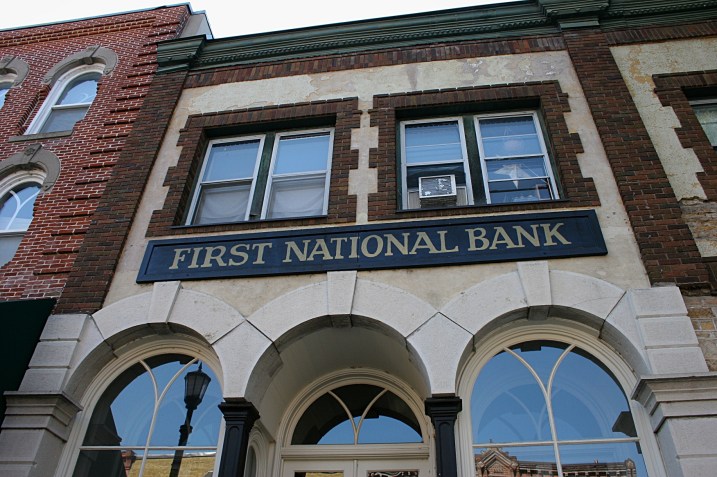
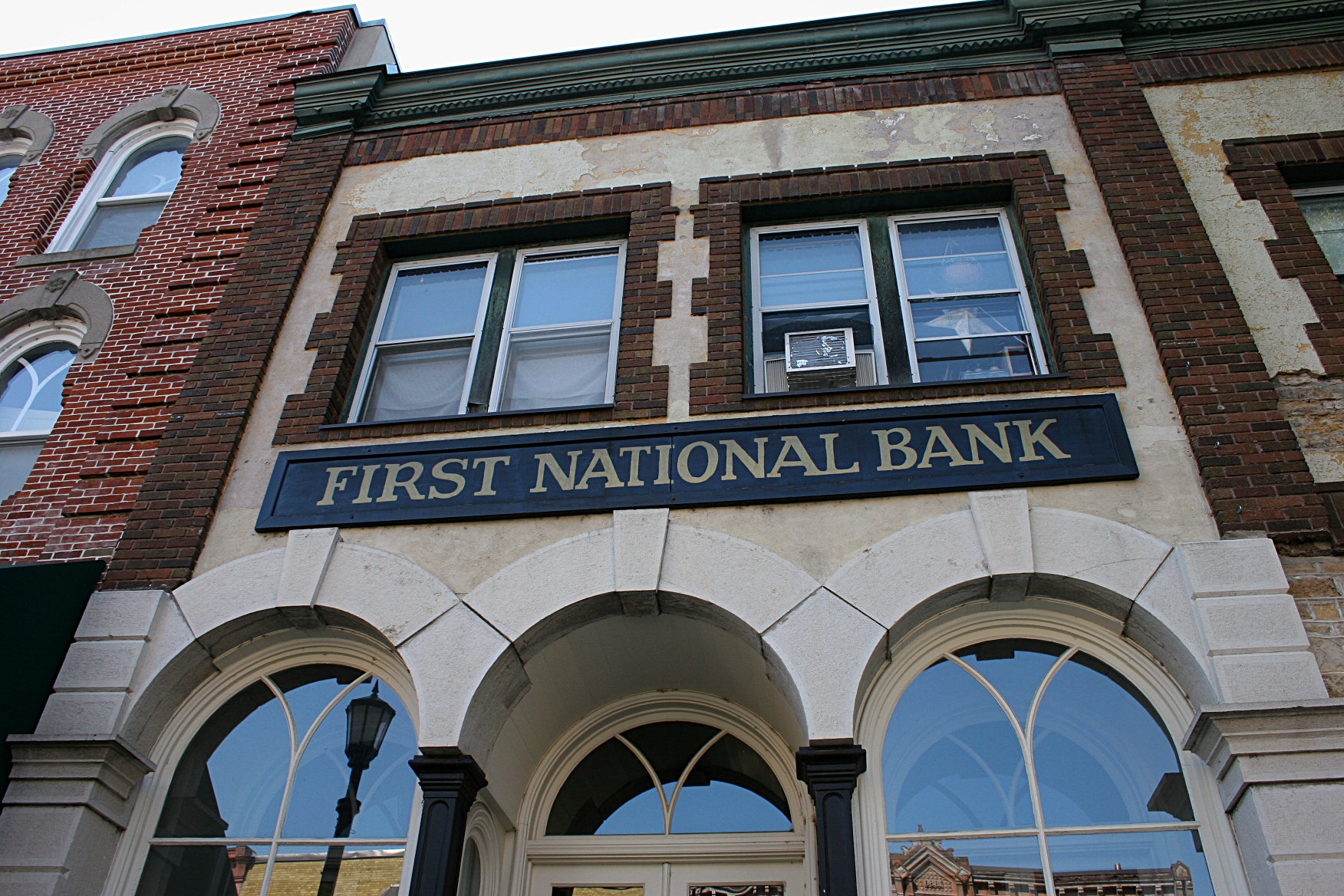
The front of the original First National Bank of Northfield. I didn’t photograph the entire building as the sidewalk in front of the bank was torn up and blocked for installation of sidewalk poetry.

It was all over in seven minutes with four shot dead, including acting cashier Joseph Lee Heywood who refused to allow the robbers into the vault; Swedish immigrant Nicolaus Gustafson; and outlaws Clell Miller and William Chadwell.
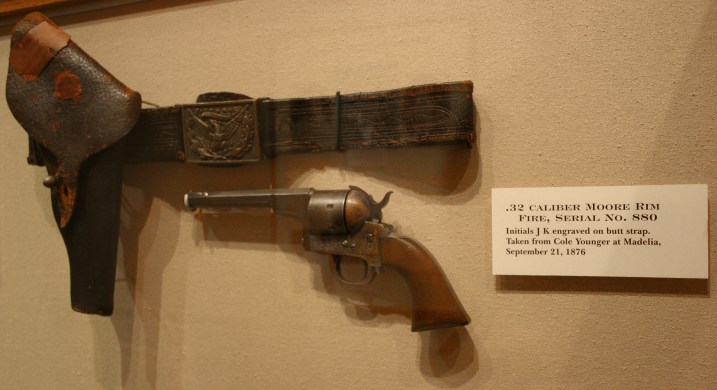
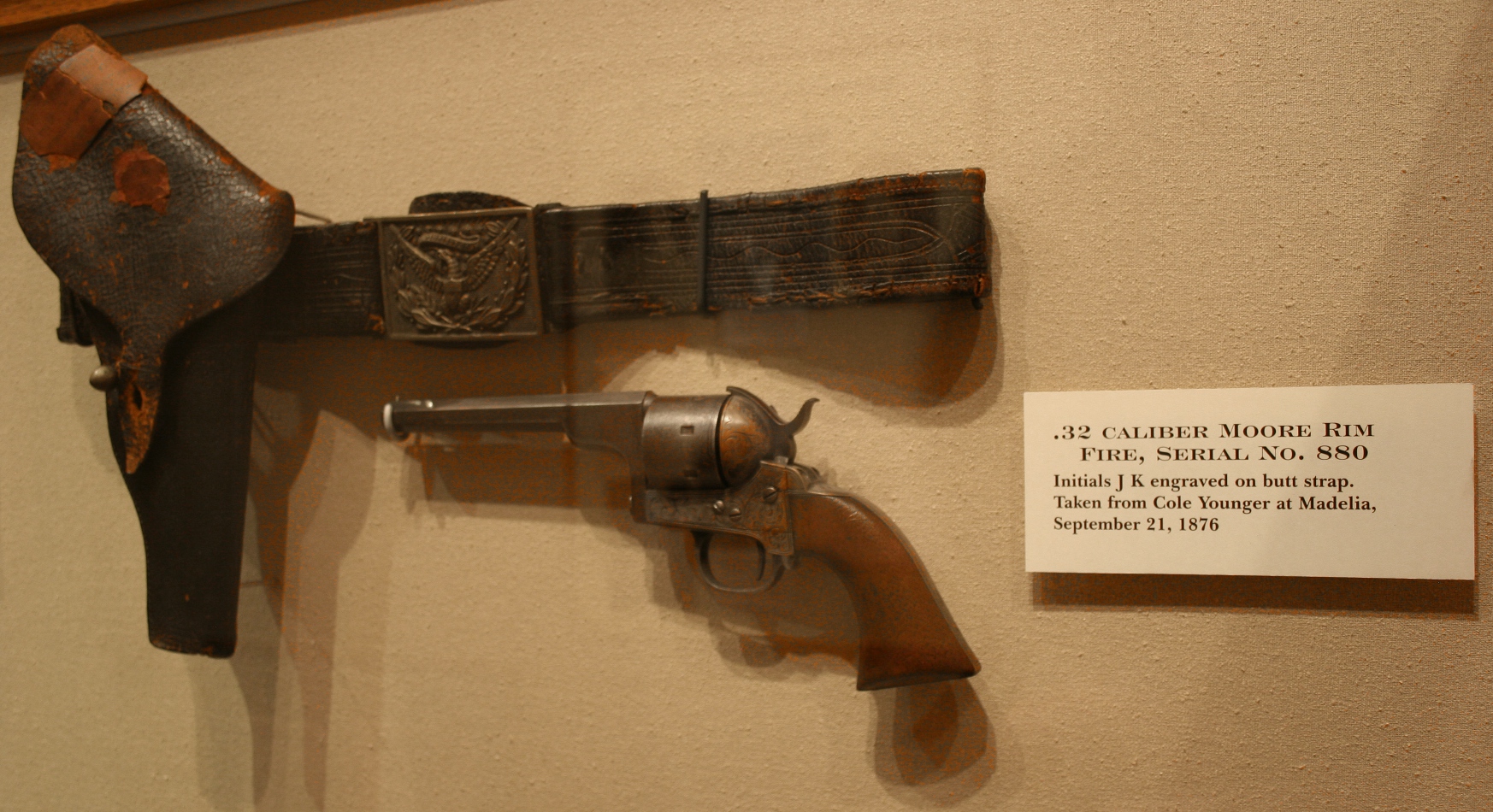
The gun confiscated from Cole Younger when he was captured two weeks later near Madelia. I shot this glass-encased weapon in available light, without a tripod and without flash, meaning quality is not there in this image.

Not until the end of the tour does Hakala reveal that efforts are currently underway to exhume and determine if the presumed body of gangster Miller, buried in his home state of Missouri, truly is Miller.

Hakala explains: Then-medical student Henry Wheeler, who shot Miller from an upper story level of a building across the street from the bank, dug Miller from his grave and shipped the body from Northfield to his Michigan medical school for dissection and study. Later, Wheeler would return the supposed body of Miller to his family in Missouri. But, as the story goes, Wheeler kept a skeleton, purported to possibly be Miller, in a closet of his Grand Forks, N.D., medical practice office. That skeleton is today owned by a private collector.

The Miller family, Hakala says, is cooperating in proposed plans to positively identify the body buried in Missouri via forensic testing. The body was badly decomposed and thus not identifiable by the time it was received by the Miller family for burial.

Wheeler’s actions, Hakala further says, would not have been all that unusual for the time period with a likely attitude of “I killed the guy. He’s mine.”

This recent development simply adds to the mystery and drama and varying versions of events and details which have long accompanied the James-Younger bank raid in Northfield. Hakala, a northeastern Minnesota native who has also lived and taught in Missouri, knows how perspectives and stories differ based on source locations.

Yet, Hakala assures that the minute-by-minute account he relates of the actual bank robbery is based on the eyewitness testimony of a bookkeeper, collaborated by a teller who also witnessed part of the hold-up.

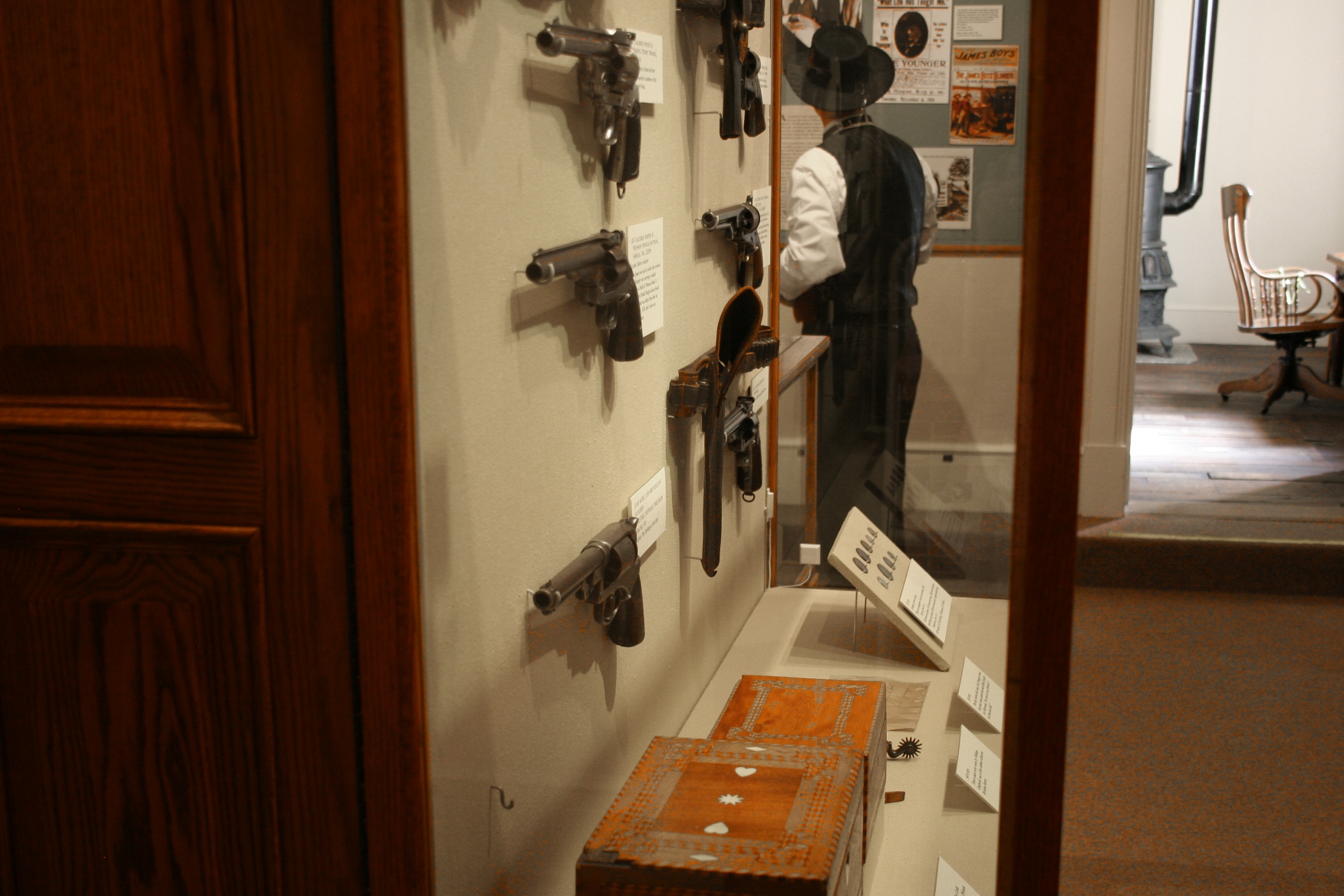
The only portion of the original bank you’ll see in this post is to the right in the background, caught when I was photographing this display case in the adjoining museum space which is in a separate building.

I can’t possibly share with you here the entire scenario Hakala presented in his tour on Sunday. Nor can I show you images, because photography is not allowed inside the original First National Bank of Northfield. But I can tell you that walking upon the very same rough floor boards trod by outlaws with a 10-year history of successful raids on trains and in banks, eying the massive black vault (closed, but unlocked at the time of the crime) and seeing blood stains on the bank ledger makes an impression.
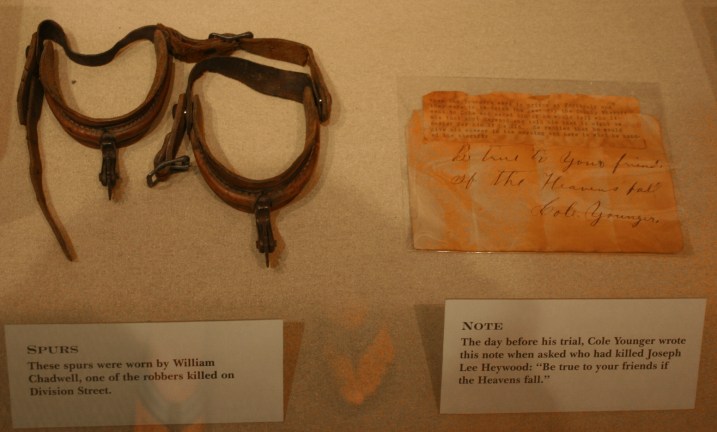
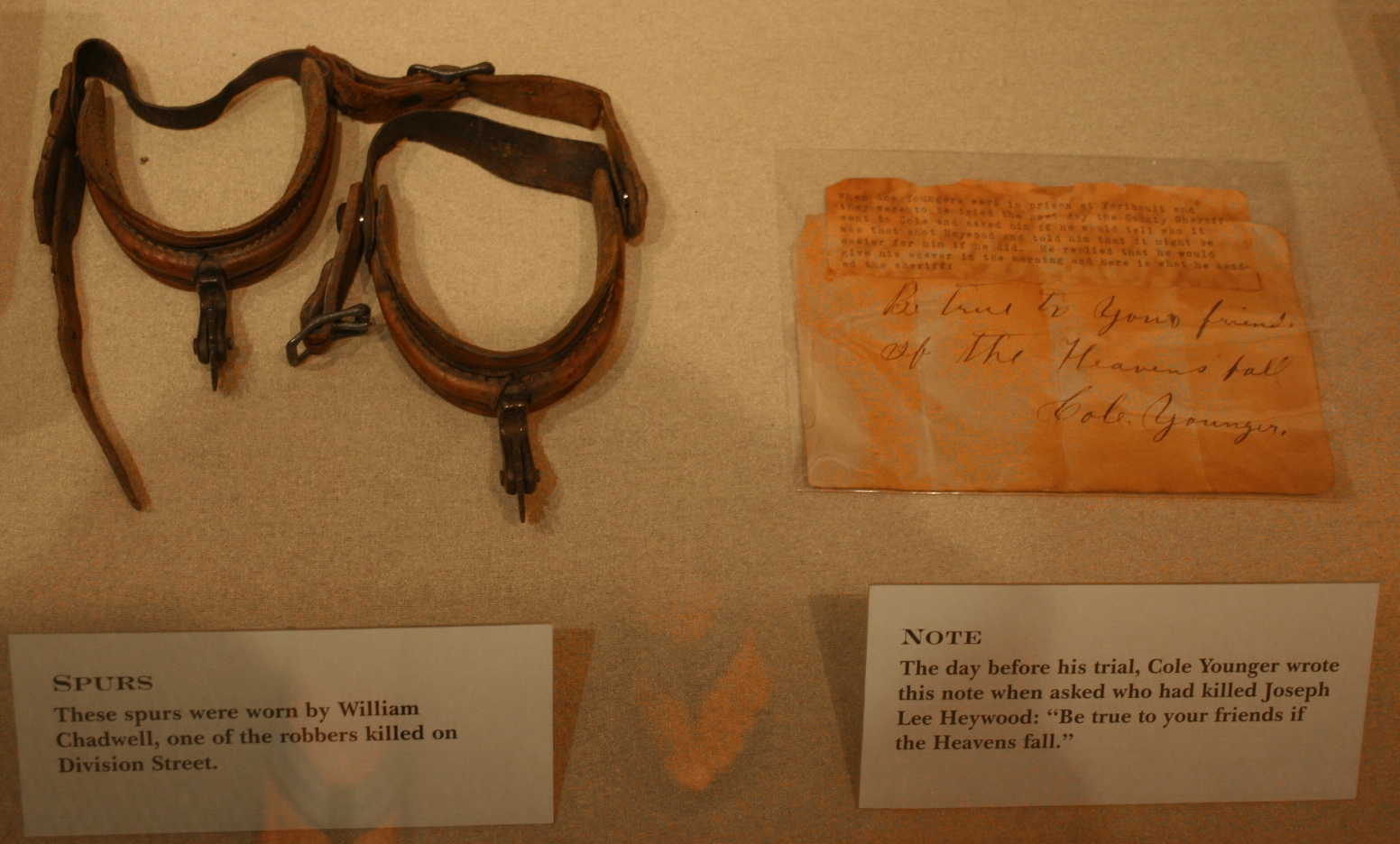
These two items in a display case caught my attention. On the right is a note written by Cole Younger the day before his trial. When asked who killed Joseph Lee Heywood, he answered. “Be true to your friends if the Heavens fall.” In other words, he wasn’t telling. To the left are spurs worn by outlaw William Chadwell, who was shot and killed on Division Street during the raid.

However, here are some select pieces of information presented by Hakala which I find particularly interesting:

  • Jesse and Frank James’ father was a Baptist minister.
  • The James-Younger Gang invented the “stick ’em up” bank hold-up, conducting the first bank raid during daylight business hours, in which no war was going on, in Northfield.
  • One theory surmises that the James-Younger Gang was trying to get back at the Union by robbing banks.
  • In following with that anti-Union theory, Hakala notes that Union General and post Civil War provisional governor of Mississippi Adelbert Ames was a member of the Northfield family—coincidentally Jesse Ames and sons—which owned the local Ames (flour) Mill. Adelbert’s father-in-law was Benjamin Butler, a Union general much-despised by Southerners. This could explain why the gang targeted Northfield since the Ames’ family had money in the First National Bank.
  • While there was $15,000 in the Northfield bank vault, the outlaws made off with only $26.70 in cash, and not from the vault, which was protected by hero/cashier Heywood.
  • The unarmed Heywood was shot out of frustration and “cold-blooded meanness” (Hakala’s words, not mine). He was also slit across the throat, just enough to scare him, and pistol-whipped.
  • Northfield townspeople were throwing cast iron skillets, tossing bricks and aiming birdshot at the trapped gang members as they tried to ride away from the narrow canyon-like street setting in Northfield.
  • A posse of some 1,000 people formed to track down the gang.  The three Younger brothers were shot and captured in a gun battle at Hanska Slough near Madelia. Charlie Pitts was killed there. Frank and Jesse James escaped to Missouri.
  • Jesse James was killed by a friend and fellow gang member, Robert Ford, in 1882 for the reward money.
  • Postcards featuring photos of the dead outlaws, Clell Miller and William Chadwell, were sold to the public after their bodies were taken to a professional photography studio in Northfield and photographed.
  • It is written into a lease on an apartment across the street from the original First National Bank that re-enactors can use the apartment each year for bank raid re-enactments. An actor is stationed in the upper level room to portray medical student Henry Wheeler shooting, and killing, Clell Miller.
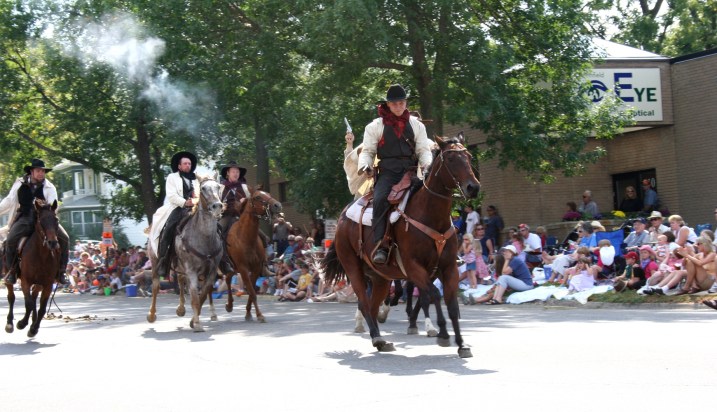
Another shot of the James-Younger Gang re-enactors riding in The Defeat of Jesse James Days parade several years ago.

If you wish to witness the seven-minute bank raid re-enactment, this is the week to do so. Performers will shrug into their long linen dusters, tuck their sidearms in place, saddle up and shoot it out at the Northfield Historical Society Bank Site & Museum, 408 Division Street in downtown Northfield.

Re-enactments are set for 6 and 7 p.m. Friday, September 7—the actual date of the robbery—and at 11 a.m. and 1, 3 and 5 p.m. on Saturday and at 11 a.m. and 12:30 p.m. on Sunday.
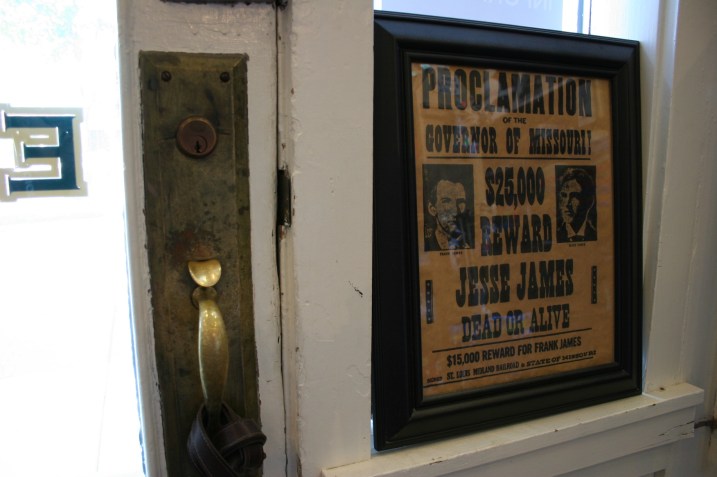
A copy of a wanted poster posted next to the front door of the museum.

For a complete listing of The Defeat of Jesse James Days activities, click here.

For more information about the bank site and museum, click here.
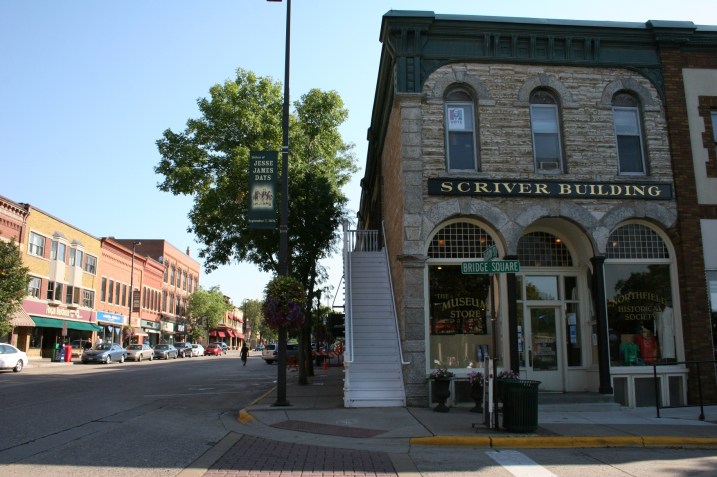
The front of the museum. If you look underneath the white steps, you’ll find three holes ringed in black, supposedly bullet holes made during the raid. It’s conjecture with nothing proven, according to Christian Hakala, who has his doubts about the holes being made by bullets. That’s Division Street on the left.
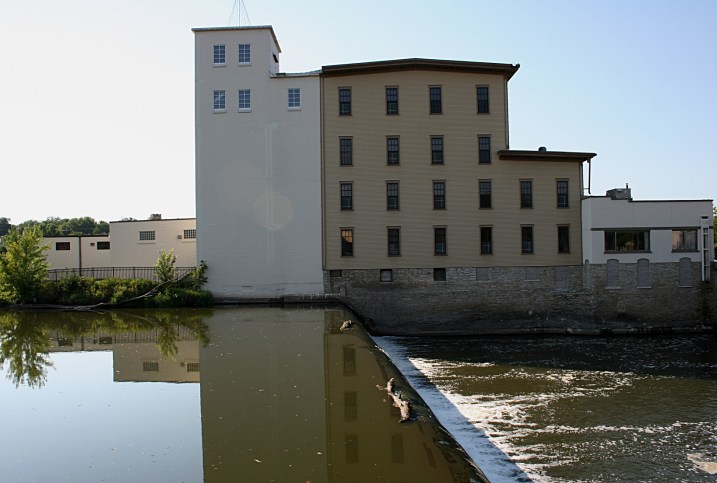
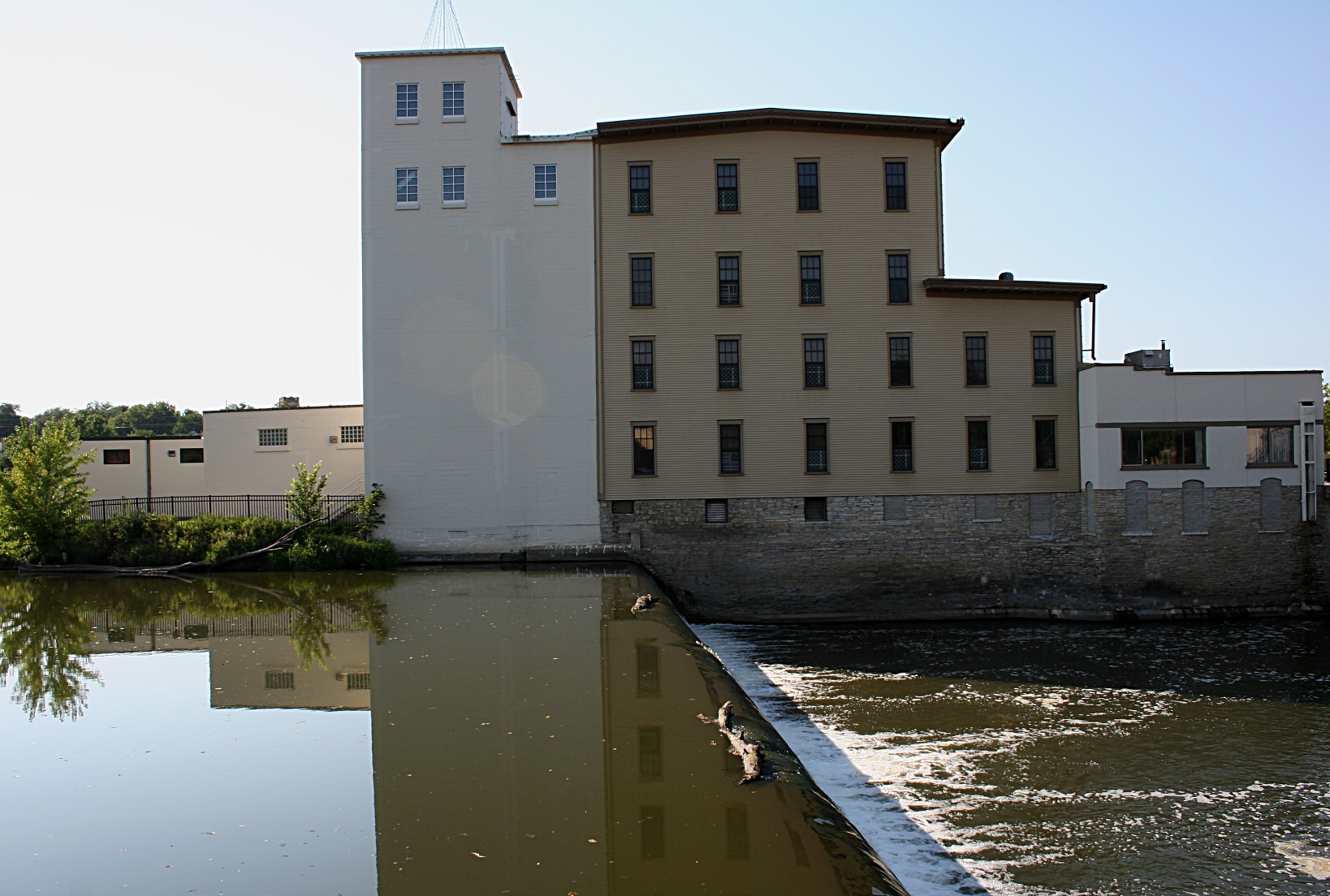
The original Ames Mill, once owned by Jesse Ames and sons, and today owned by Malt-O-Meal. It’s located around the corner and across the river from the bank. The company’s hot cereal is made here in the old flour mill.

© Copyright 2012 Audrey Kletscher Helbling


Faribault Festival offers opportunity to bridge differences & connect August 23, 2012

Filed under: Uncategorized — Audrey Kletscher Helbling @ 7:15 AM
Tags: , , , , , , , ,

TODAY I’D LIKE TO EXTEND an invitation to you. Pull out your calendars right now and add this event to your schedule: International Festival Faribault, 10 a.m. – 4 p.m. on Saturday, August 25, Central Park.

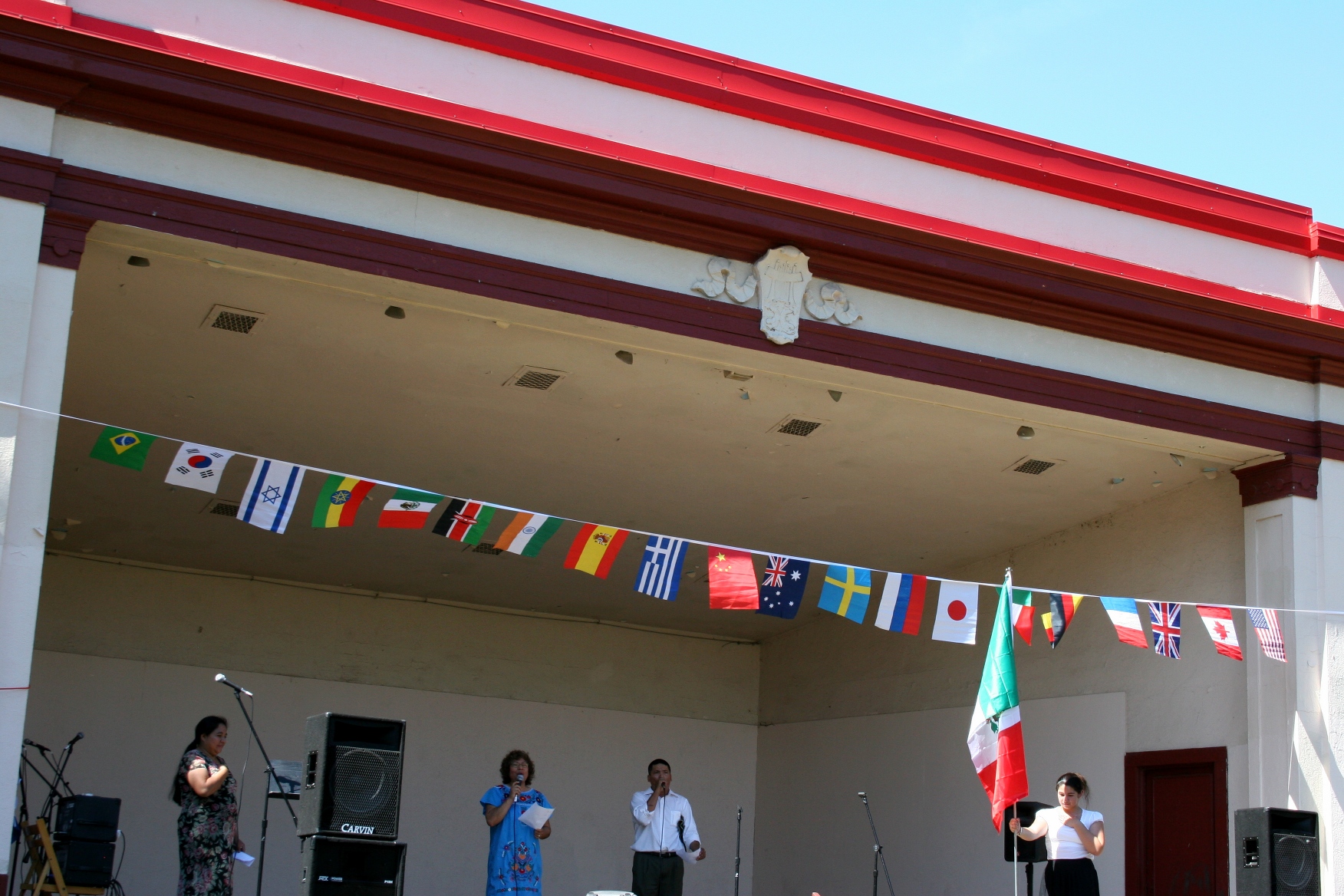
Several Latinos lead in singing of Mexico’s national anthem last September during the International Festival Faribault at Faribault’s Central Park. The flags strung across the band shell represent the countries featured at the fest. This weekend’s celebration marks the seventh such international fest in Faribault.
There. Done. Right?

The scramble for candy after the pinata is broken at last year’s festival. Kids of all races participated with no concern for skin color or cultural differences. So refreshing to see.

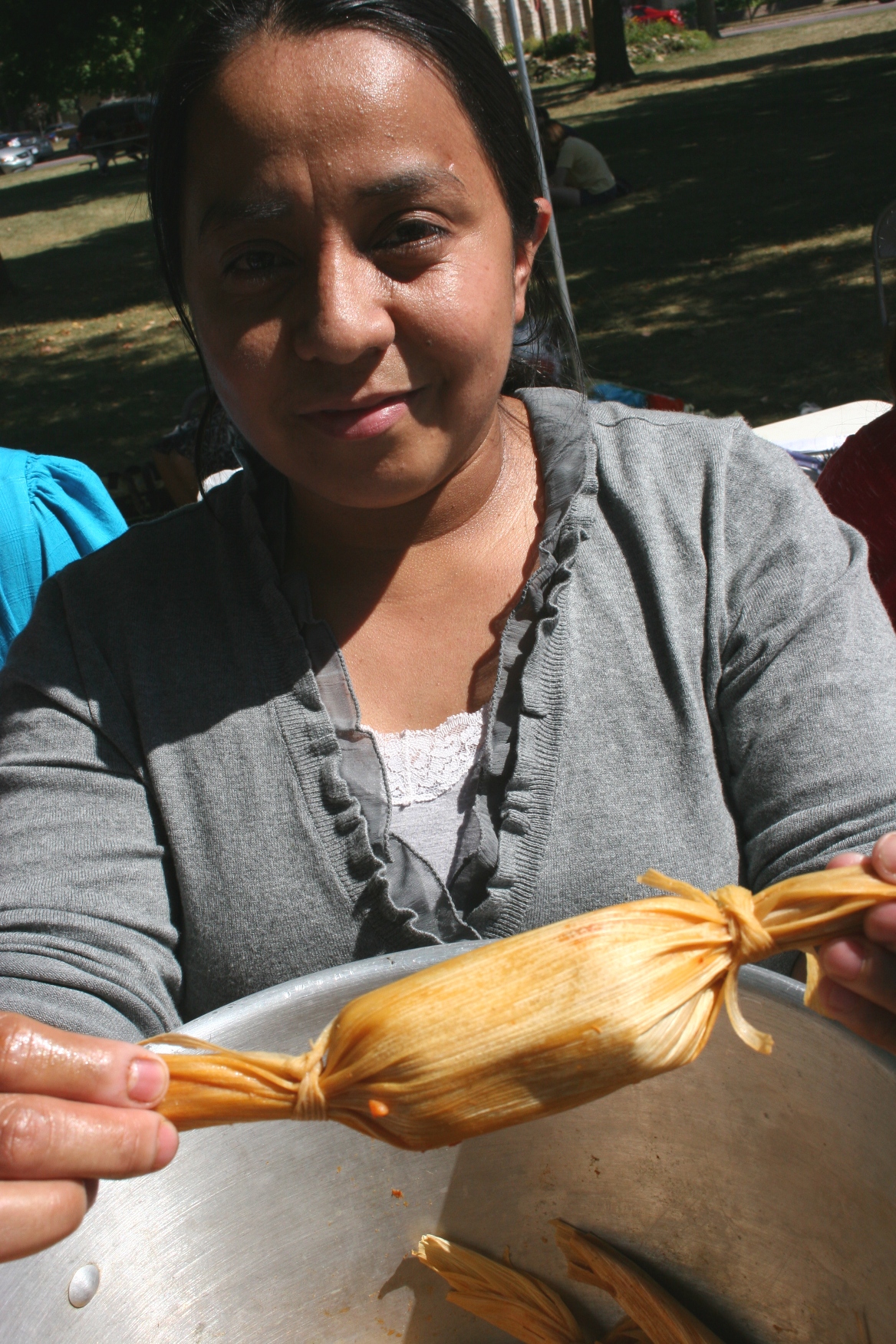
Served at the 2011 fest: Guatemalan chuchitos– chicken, corn and salsa wrapped in a corn husk. You’ll find vendors offering a variety of authentic international foods.

OK, why do I think it’s important for you to attend this festival which features multicultural entertainment, arts and crafts vendors, authentic international cuisine, kids’ activities, a silent auction and more?

Simple. We as a community need to meet each other, to connect on a personal level, to understand each other if we are ever to overcome the very obvious cultural differences which divide us.

I met then 16-year-old Riyaam, an Owatonna High School student, at last year’s festival. She spoke openly about the prejudice at OHS and a white student’s single comment, “Somalis don’t belong here,” which led to racial clashes and tension. OHS has since instituted a policy of “you fight, you’re out.” It broke my heart to listen to Riyaam.

You know what I’m talking about, the differences in skin color and language, in culture and in dress.

There’s way too much suspicion and mistrust, cautiousness and prejudice toward the minorities living and working in Faribault. I’ve heard the derogatory comments about the Somali men who hang out on downtown street corners, the Hispanics who commit all the crimes, the immigrants who take away our jobs, the people who don’t speak English.

Seriously, these Somali men live downtown and the sidewalk is their yard.

“Mexicans,” and I’ve heard that word spit out of too many mean mouths, do not commit all the crimes in our community. Do you know any Hispanics personally? I do. They are probably the most family-oriented individuals I’ve ever met and we could learn a lot from them about the importance they place on loving and caring for one another.

And about those Somalis and/or Sudanese who supposedly steal our jobs—I expect most of us would not want to work the factory jobs they work. I mean no offense to the places which employ them, like the local turkey plant. But if we are honest with ourselves, we’ll admit that we likely never would work at these physically-demanding and not always pleasant jobs.

As for speaking English, have you, as an adult, tried learning a new language? Now attempt learning a new language in a foreign country. Not so easy. Think back to a few generations before you. I bet your great grandparents didn’t speak English. Even my own mother’s first language was German, not English.

The other evening while shopping at a local Big Box retailer, I witnessed how difficult it was for a Hispanic woman to communicate due to her limited English. I almost got on my cell phone to call my second daughter who works as a Spanish medical interpreter in eastern Wisconsin to ask her to interpret.

Did you know that, according to the 2010 U.S. Census, 17.4 percent of Faribault’s 23,352 residents have a language other than English spoken at home? Stats show 9.4 percent of our city’s residents are foreign-born.

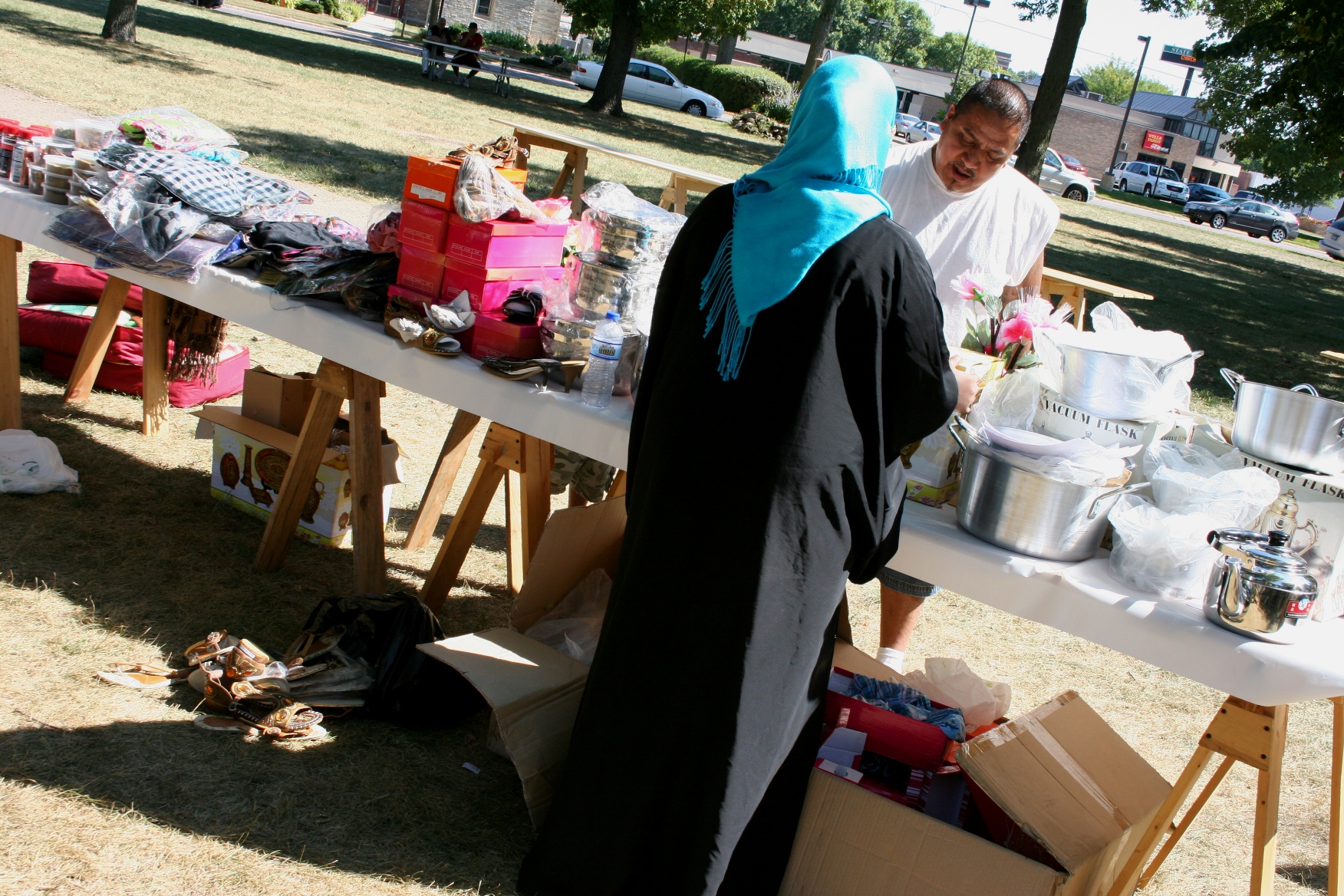
Vendors, like Riyaam, peddled their wares at the 2011 festival.

Instead of criticizing those who speak and dress and live differently than the majority of us, let’s begin to understand them. Mostly, I think, our misconceptions, our prejudices, are based on fear. We fear what we don’t understand.

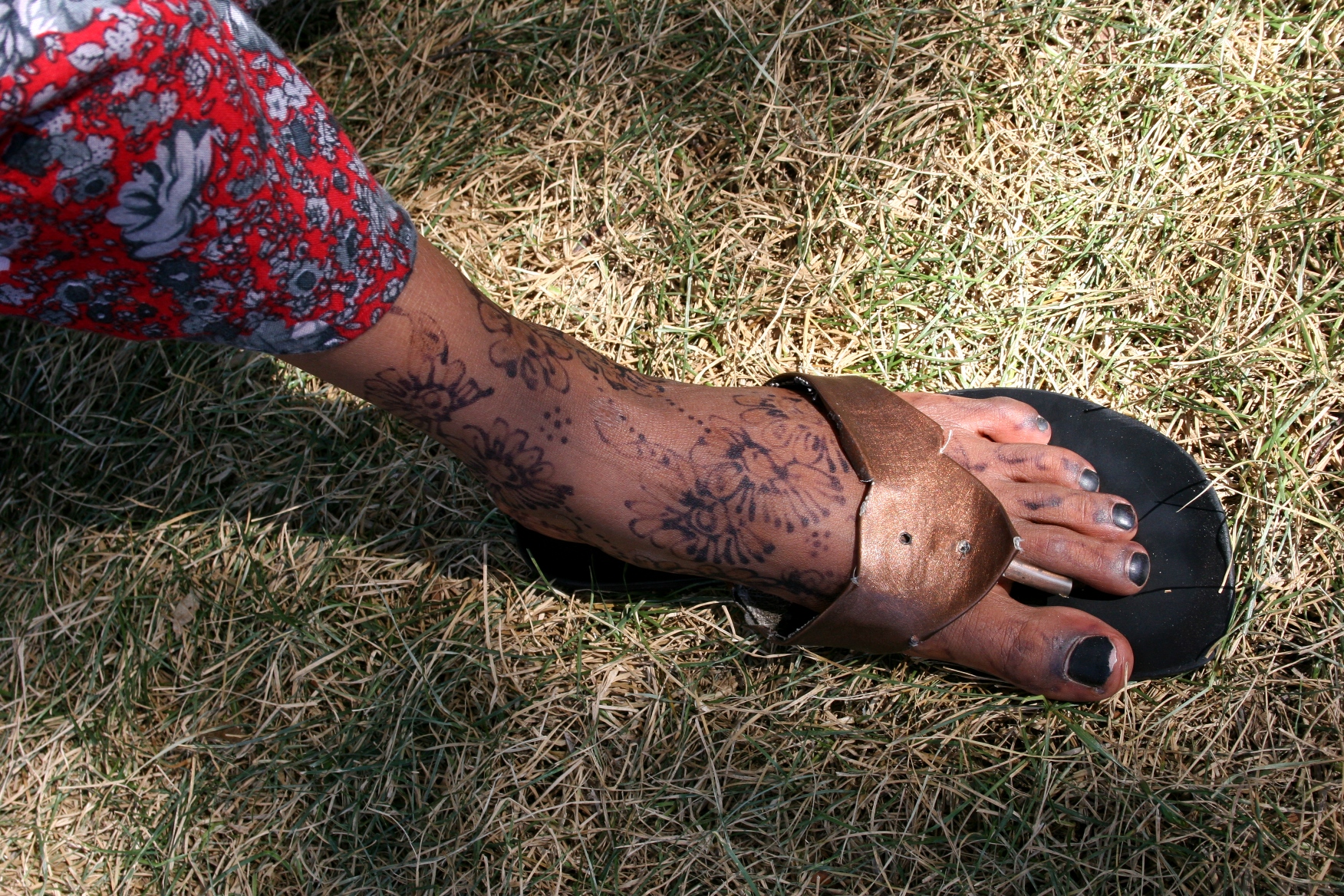
A young girl’s henna stained foot, photographed at the 2011 fest.

International Festival Faribault offers a common, public ground—a city park—on which to meet the minority individuals who call our community home. They are here to stay. Let’s get to know them. Engage in conversation. Show them you care, that you’re genuinely interested in learning more about them and their cultures. Once you’ve connected on a personal level, you will begin to view them as individuals and not by the color of their skin, the clothing they wear, the language they speak…

Xafsa, age 5, photographed at the 2011 festival.

FYI: Click here to link to the International Festival Faribault website.

While this post is directed specifically at the residents of my community, its content can apply to many communities. You’re all invited to Faribault for International Festival Faribault, no matter your community or country of origin. And just to be clear, many Faribault residents and organizations embrace the minorities who call our southeastern Minnesota city home. I in no way intend to mislead you into thinking we are all a bunch of bigots living here. However, neither am I going to hide the fact that obvious prejudices exist and are very much a concern in Faribault.

Click here to link to the post I wrote about last year’s International Festival Faribault.

© Copyright 2012 Audrey Kletscher Helbling