Minnesota Prairie Roots

Writing and photography by Audrey Kletscher Helbling

A tribute to Simon & Garfunkel coming to Faribault November 10, 2025

(Image courtesy of the Cathedral Concert Series)

WHEN I WRITE about music, it’s not with any expertise. I can’t read a single musical note. I can’t carry a tune. But I do know when I like a song. And most of my “likes” hearken to my youth, when music boomed from the radio. Or, in the case of Simon & Garfunkel, flowed.

Fast forward more than 50 years to a 7 pm Friday, November 14, concert at the historic Cathedral of Our Merciful Saviour, 515 Second Avenue Northwest in Faribault. Vocalists Barb Piper and Pauline Jennings will present “Feeling Groovy: A Simon & Garfunkel Tribute with a Twist.” The “twist” is that the vocalists are women, not men. But four men, Craig Wasner, Mike Legvold, Mike Graebner and Steve Jennings, back the pair.

From my favorites “The Sound of Silence” and “Bridge over Troubled Water” to many more, this group performs a lengthy list of Simon & Garfunkel songs in addition to some Paul Simon favorites. I’ve never heard this tribute band, but I’ve been told, and read, that they are outstanding. Or, in 1960s and early 1970s lingo, I might say they are cool, groovy, far out.

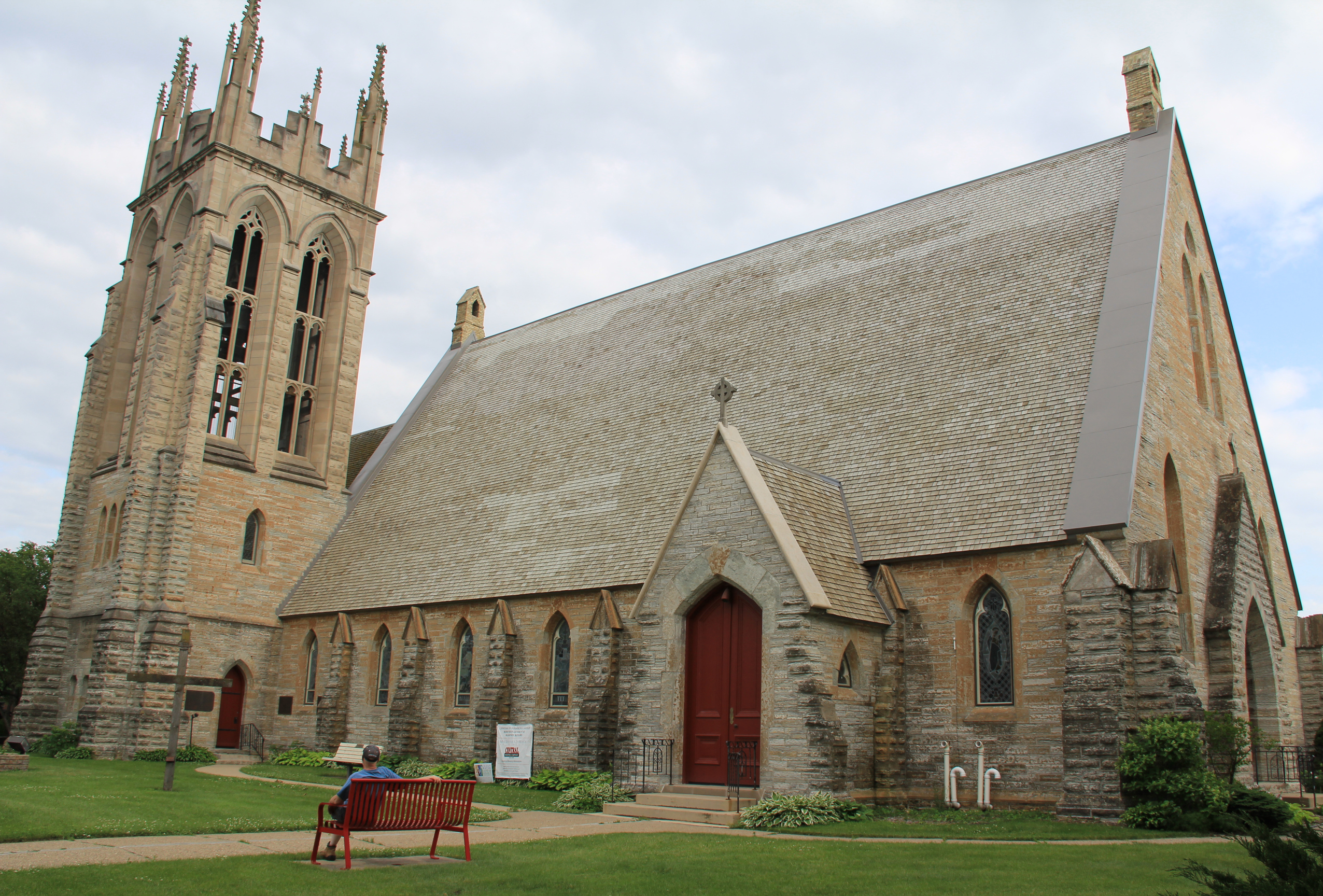
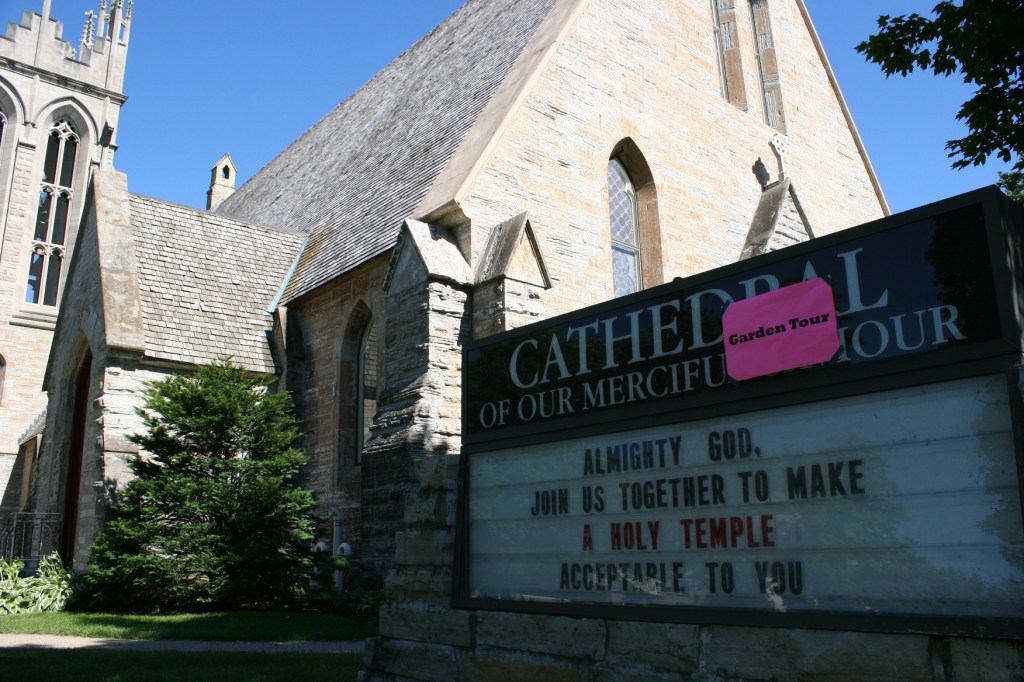
The Cathedral of Our Merciful Saviour. (Minnesota Prairie Roots copyrighted photo 2024)

The Feeling Groovy tribute to Paul Simon & Art Garfunkel is part of the Cathedral Concert Series. While the concerts are free, donations are welcomed for the Cathedral Preservation Fund. The massive stone cathedral, built between 1862 and 1869, is on the National Register of Historic Places. Bishop Henry Whipple, prominent in local and state history for his outreach to Indigenous Peoples, led the church at the time.

It’s a beautiful structure. And the acoustics inside the massive sanctuary are perfect for a concert that also features audience participation. I expect when Barb Piper and Pauline Jennings step up to sing, the audience will feel immersed in the lyrics and in the groovy sound of music, not of silence.

© Copyright 2025 Audrey Kletscher Helbling


An Irish blessing for you on St. Patrick’s Day March 17, 2025

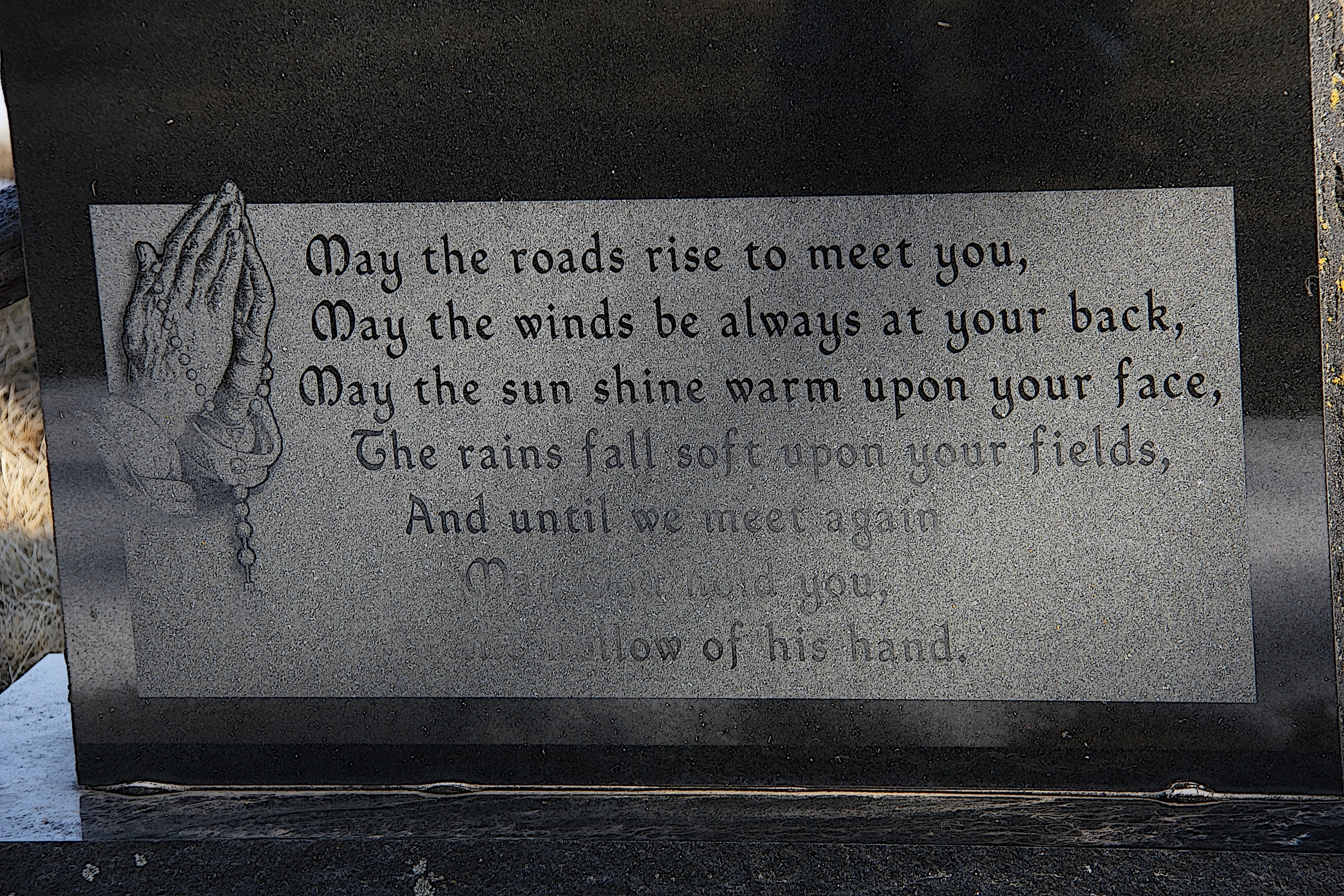
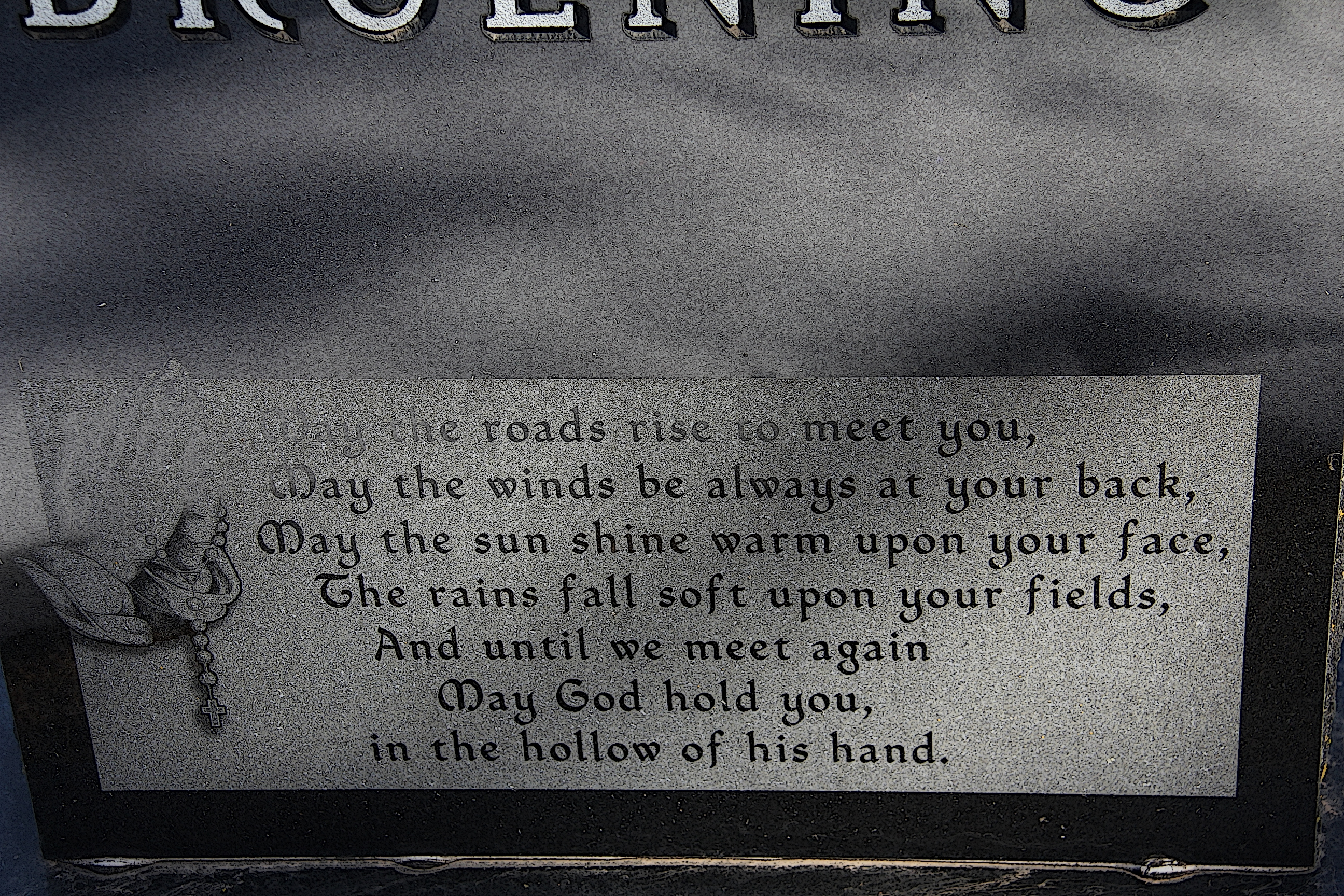
Engraved on a tombstone at Corpus Christi Cemetery. (Minnesota Prairie Roots copyrighted file photo March 2025)

THE SUN SHADOWED the tombstone, making photographing the words thereon a challenge no matter which way I angled my body and camera. So in the end, I settled on two images to share an Irish blessing with you on this, St. Patrick’s Day.

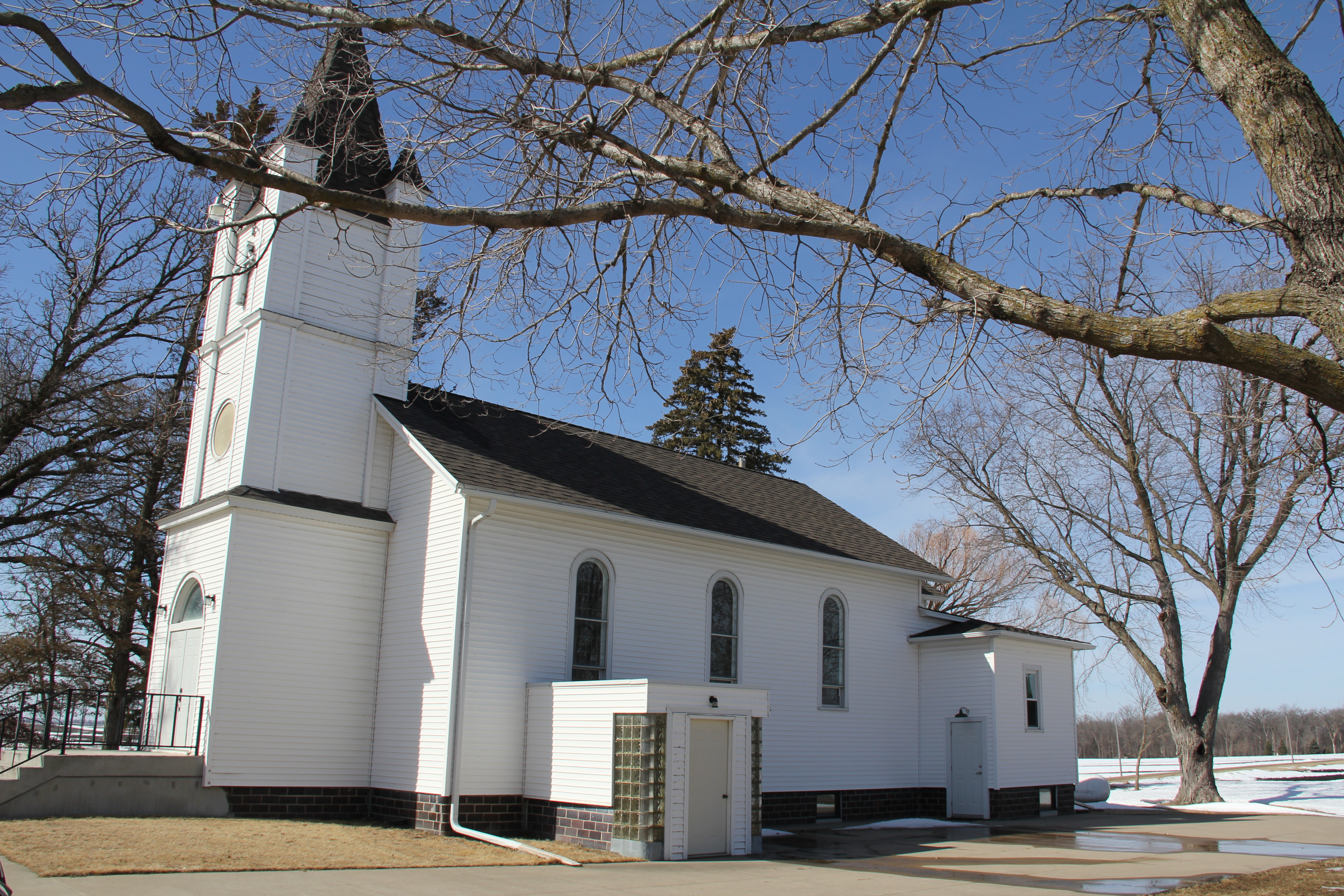
Corpus Christi Catholic Church, Deerfield Township. (Minnesota Prairie Roots copyrighted photo March 2025)

I found this gravestone blessing in the cemetery of Corpus Christi Catholic Church, a shuttered country church in Deerfield Township, rural Steele County, Minnesota. The 1856 church closed in 2016, when it merged with Christ the King Catholic Church in nearby Medford. It opens now for special occasions and is clearly much beloved by those who once worshiped here.

Another view of the Irish blessing with the bottom lines more visible. (Minnesota Prairie Roots copyrighted photo March 2025)

As I wandered among tombstones in the partially snow-covered cemetery, reading names and inscriptions a week before St. Patrick’s Day, I happened upon the familiar Irish blessing. I love the strong visuals the words create. The road. The sun. The fields. I can almost feel the road beneath my feet, the warm sun on my face, the soft rain on my skin, the wind at my back. The hand of God holding me securely.

While the blessing in this context is one of seeing a departed loved one again in heaven, the words fit the living, too. When we say goodbye to family and friends, especially those we won’t see for awhile, our love carries us until the next time we meet.

The message in this Irish blessing is so uplifting, so encouraging, so caring. Gentle words. Loving words. Words that carry us through the days of our lives, whether sunny or rainy. Always hopeful.

Blessed be your St. Patrick’s Day and every day thereafter…until we meet again.

© Copyright 2025 Audrey Kletscher Helbling


An historic connection between Faribault and Benson January 22, 2025

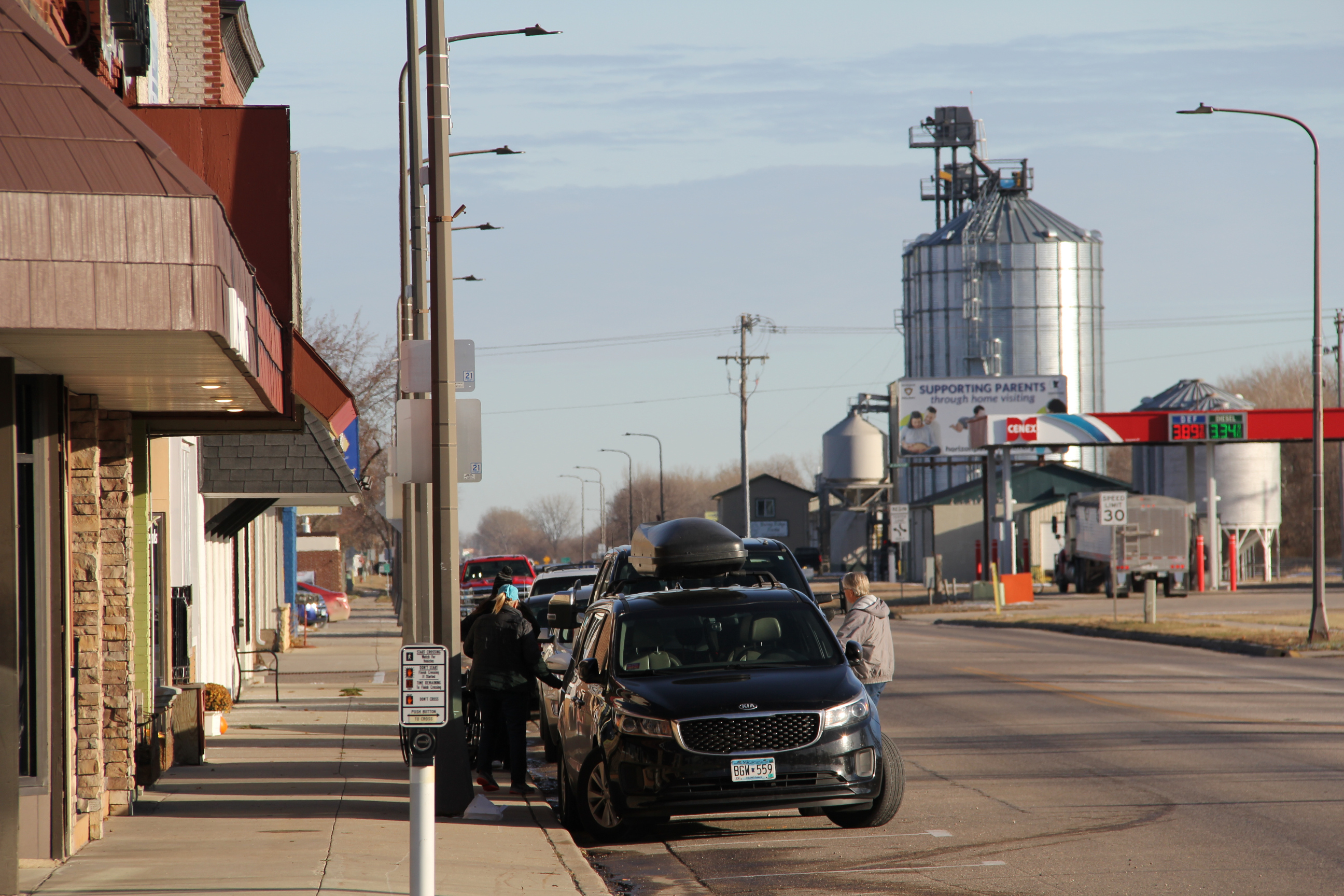
A scene from downtown Benson, Minnesota. (Minnesota Prairie Roots copyrighted file photo November 2024)

SOME 170 MILES separate my community of Faribault from Benson, a small agricultural community in west central Minnesota near the South Dakota border. At first glance, it seems the two share little in common. But they do, a discovery I made following a brief stop in Benson in late November.

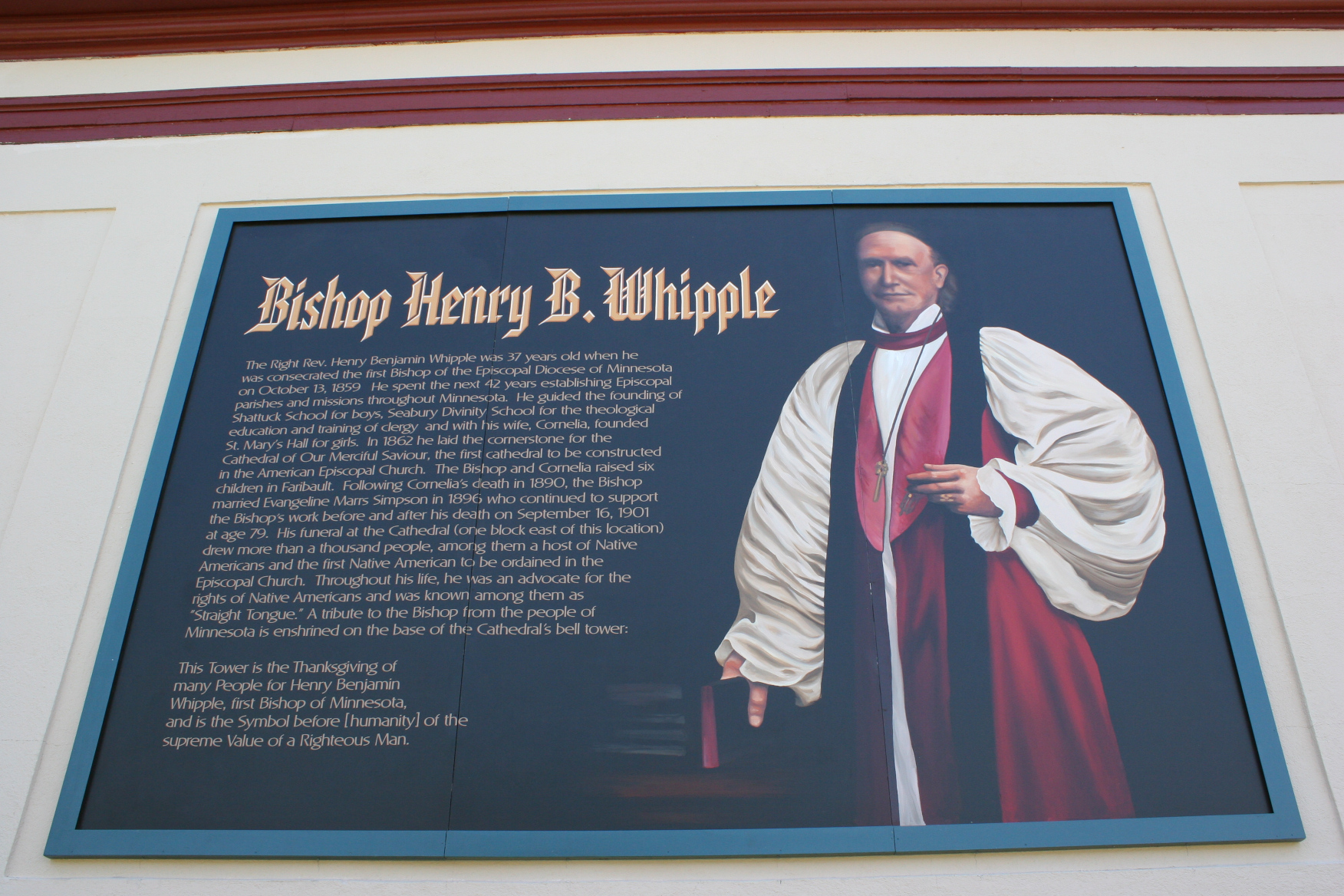
Bishop Henry Whipple, featured in a mural on the bandshell at Faribault’s Central Park, across the street from the Cathedral of Our Merciful Saviour. (Minnesota Prairie Roots copyrighted file photo)

Bishop Henry Whipple, the long ago Episcopal bishop of Minnesota, links Faribault and Benson. Whipple, a missionary based in Faribault, traveled around the Minnesota frontier in the early years of statehood in an effort to spread the Christian faith. That included visits to Benson where, in 1879, Christ Episcopal Church was built for $1,650 by local carpenters. Whipple visited occasionally to lead services and confirm new members.

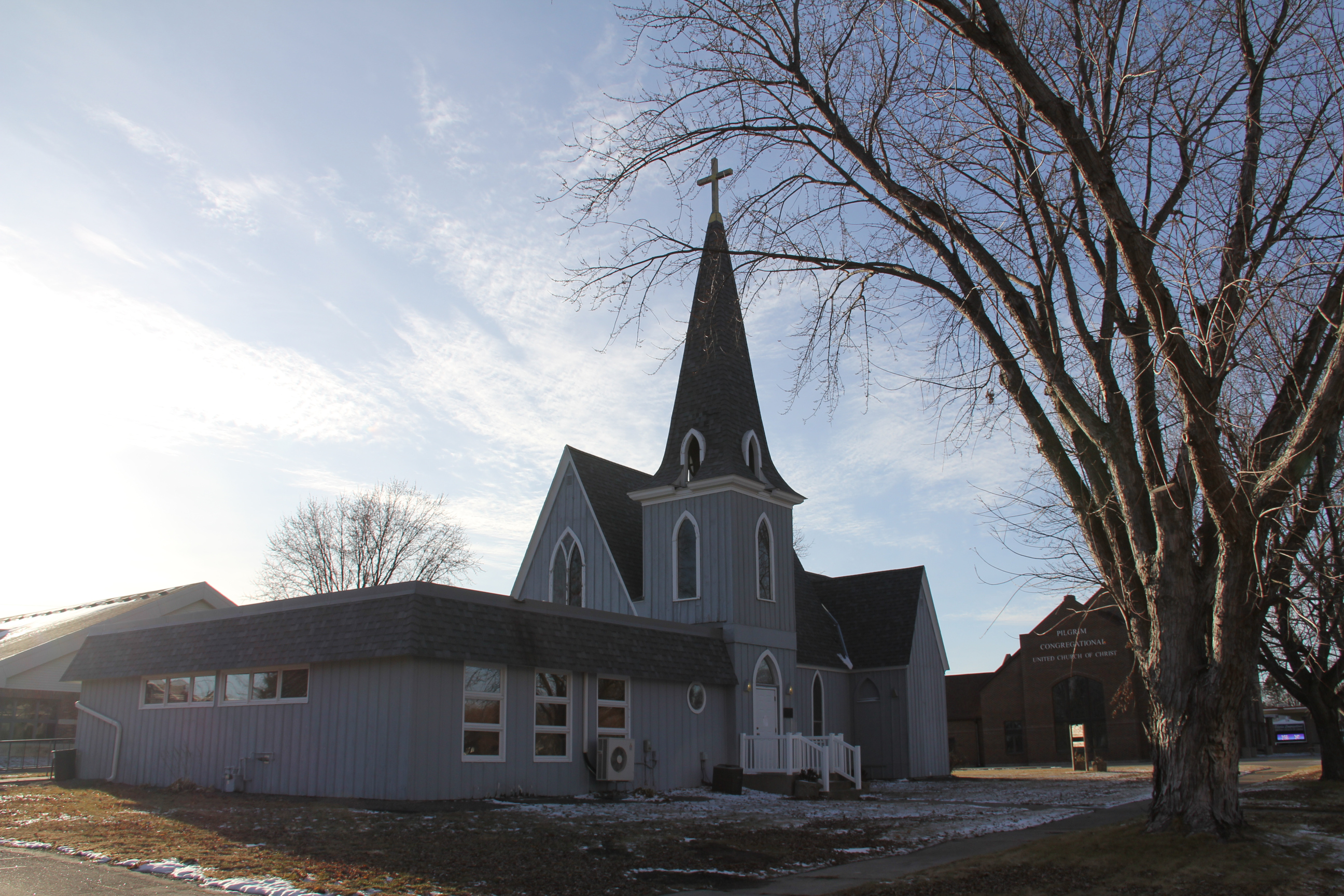
Christ Episcopal Church, Benson. (Minnesota Prairie Roots copyrighted photo November 2024)

That early Gothic Revival style church with gray board and batten siding caught my eye during a brief drive around Benson’s downtown core. More accurately, the seven-story Parkview Manor apartment across the street from the church initially grabbed my attention. The 55-unit high-rise looks very much out of place in this prairie town. It dwarfs residential houses and the historic church. Typically grain elevators and church steeples mark small town skylines, not a towering 1967 apartment complex.

Parkview Manor, where the church was once located. (Minnesota Prairie Roots copyrighted photo November 2024)

Christ Episcopal Church once sat on the apartment land, but was moved across the street after the Housing and Redevelopment Authority bought the property in 1966. At some point the church, founded by English and Yankees (as New Englanders were once termed), closed due to dwindling membership. Today the building serves as the Swift County Drop In Center, “a safe haven for adults to go to experience life free of stigma.” I think Bishop Whipple would have liked that, knowing the former church serves as a gathering place, a safe spot to just be.

The church sits in a residential neighborhood near downtown. (Minnesota Prairie Roots copyrighted photo November 2024)

Some day I’d like to tour the aged church, which was added to the National Register of Historic Places in 1985. Perhaps I would feel the presence of Benson’s early settlers, hear the words of comfort, peace, hope and unity preached by Bishop Whipple.

While Whipple is primarily viewed as a man who befriended Indigenous Peoples, he was also part of the long ago mindset to assimilate and “civilize” them. That’s a side not often discussed when talking about a man, a missionary who shared his biblical teachings while also compassionately advocating for Native Americans. Whipple is highly-revered in Faribault, where he is buried beneath the Cathedral of Our Merciful Saviour, an historic cathedral worthy of visiting, too.

The Cathedral of Our Merciful Saviour, Faribault. (Minnesota Prairie Roots copyrighted file photo July 2024)

The immense Faribault cathedral differs vastly from the unassuming small church in Benson. Yet, history and a missionary link the two. To uncover that connection simply because I noticed an out-of-place apartment high-rise and then the old steepled church across the street reveals just how small this world really is if only we pause to notice, then uncover the connections.

© Copyright 2025 Audrey Kletscher Helbling


Driving through the southern Minnesota countryside on an autumn day October 16, 2024

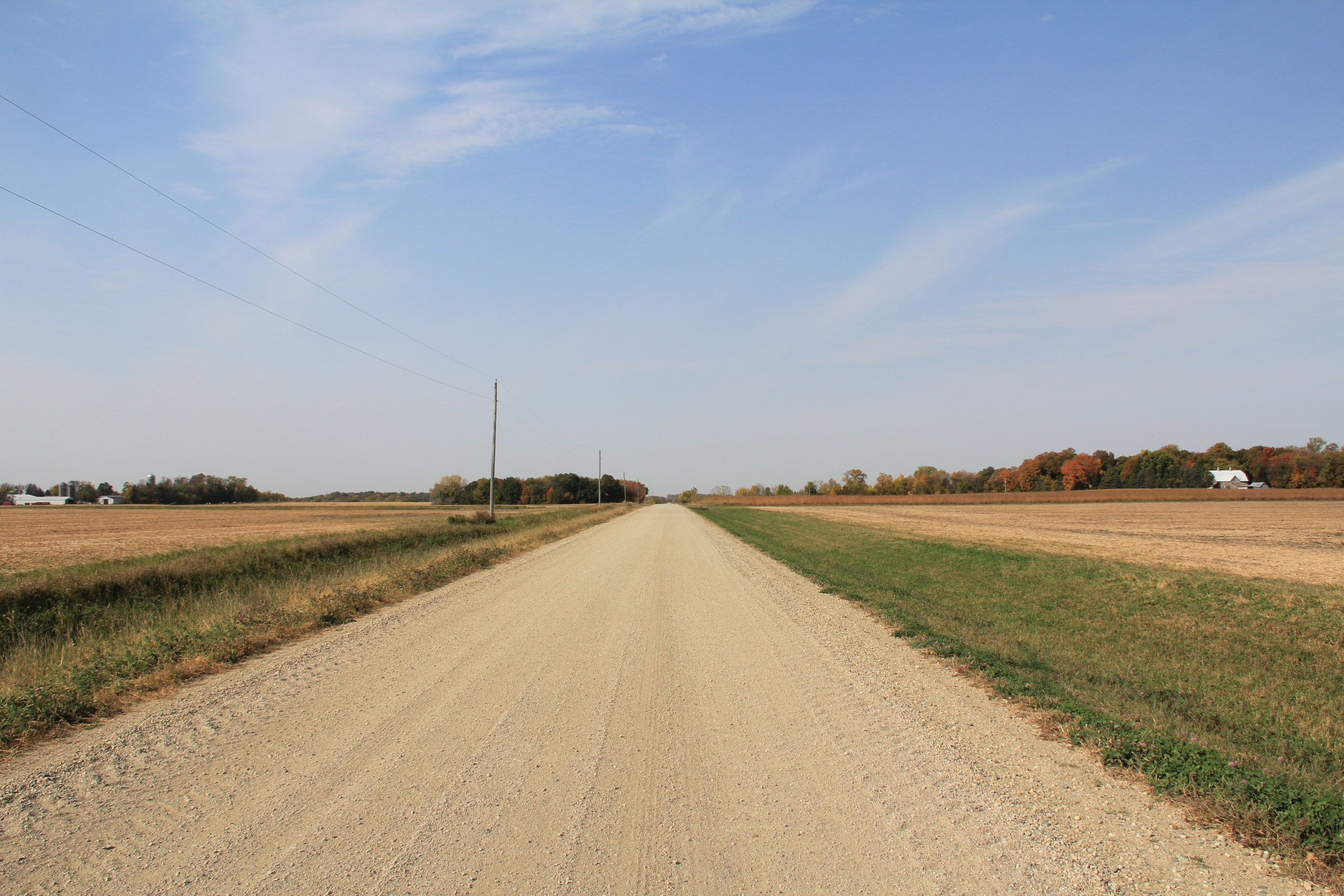
We followed roads west of Faribault toward the Kilkenny and Montgomery areas. I gave up trying to keep track of where we were. (Minnesota Prairie Roots copyrighted photo October 2024)

THE WHEELS KICKED UP DUST as our van moved along back gravel roads in Rice and Le Sueur counties on a recent weekday. Randy and I were on a fall color drive that took us past cornfields and farm sites, past woods and wetlands, past trees blazing orange and those still green.

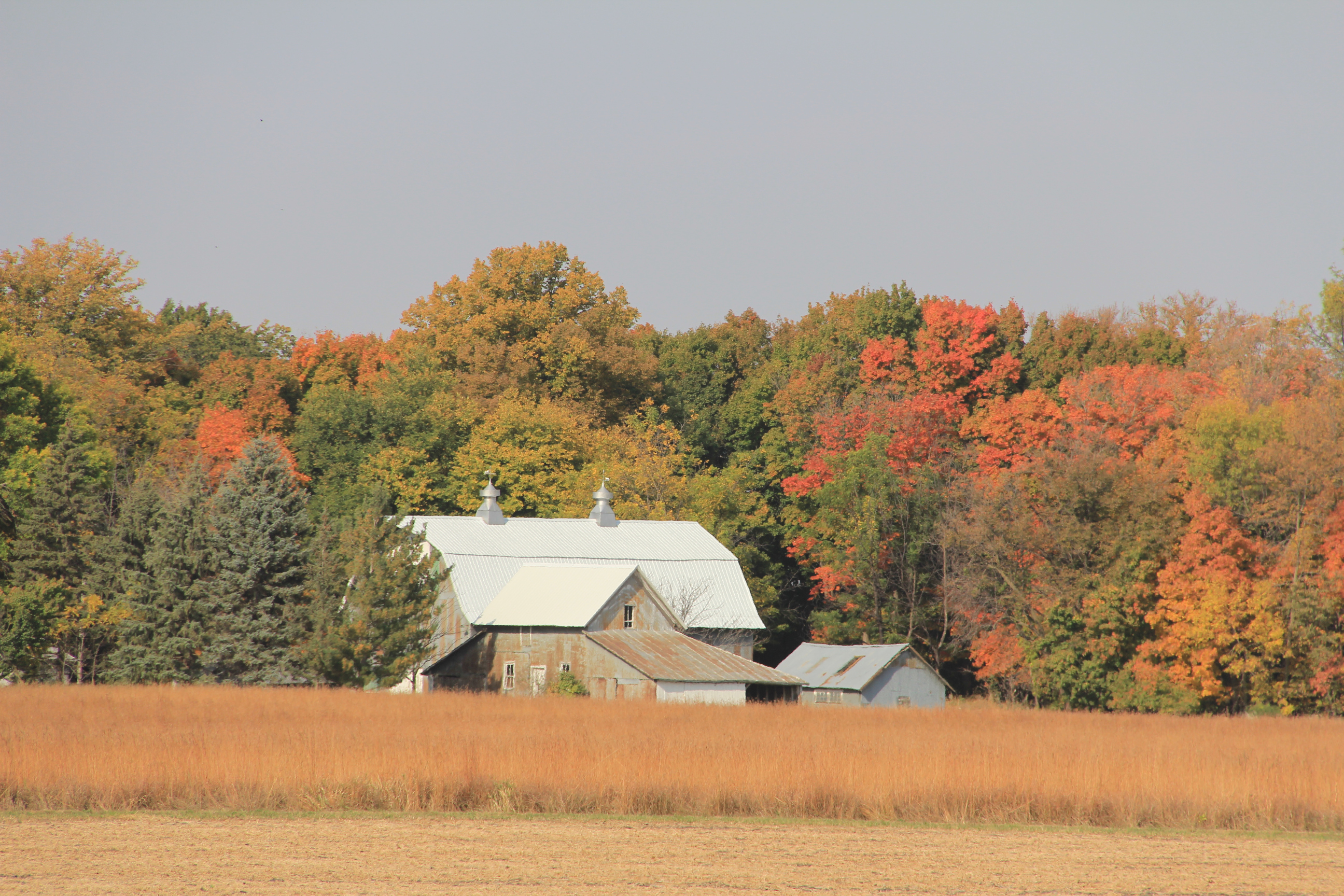
This farm site sits along Leroy Avenue, just off 160th St. W. between Shieldsville and Kilkenny. (Minnesota Prairie Roots copyrighted photo October 2024)

As we wound our way along winding roads and along straight grids west of Faribault, I felt what I always feel this time of year—a longing for the land. In this season of harvest, this season of leaves coloring the landscape, I yearn to connect with the soil, the earth, the agrarian heritage that roots me.

Corn awaits harvesting. (Minnesota Prairie Roots copyrighted photo October 2024)

I miss the land. I miss the roar of combines harvesting corn and soybeans, golden grain spilling into wagons or trucks. I miss the distinct, indescribable scent of autumn rising from fields. I miss all of it. A country drive in October helps ease the heartache of one who grew up on a farm, but left it fifty years ago.

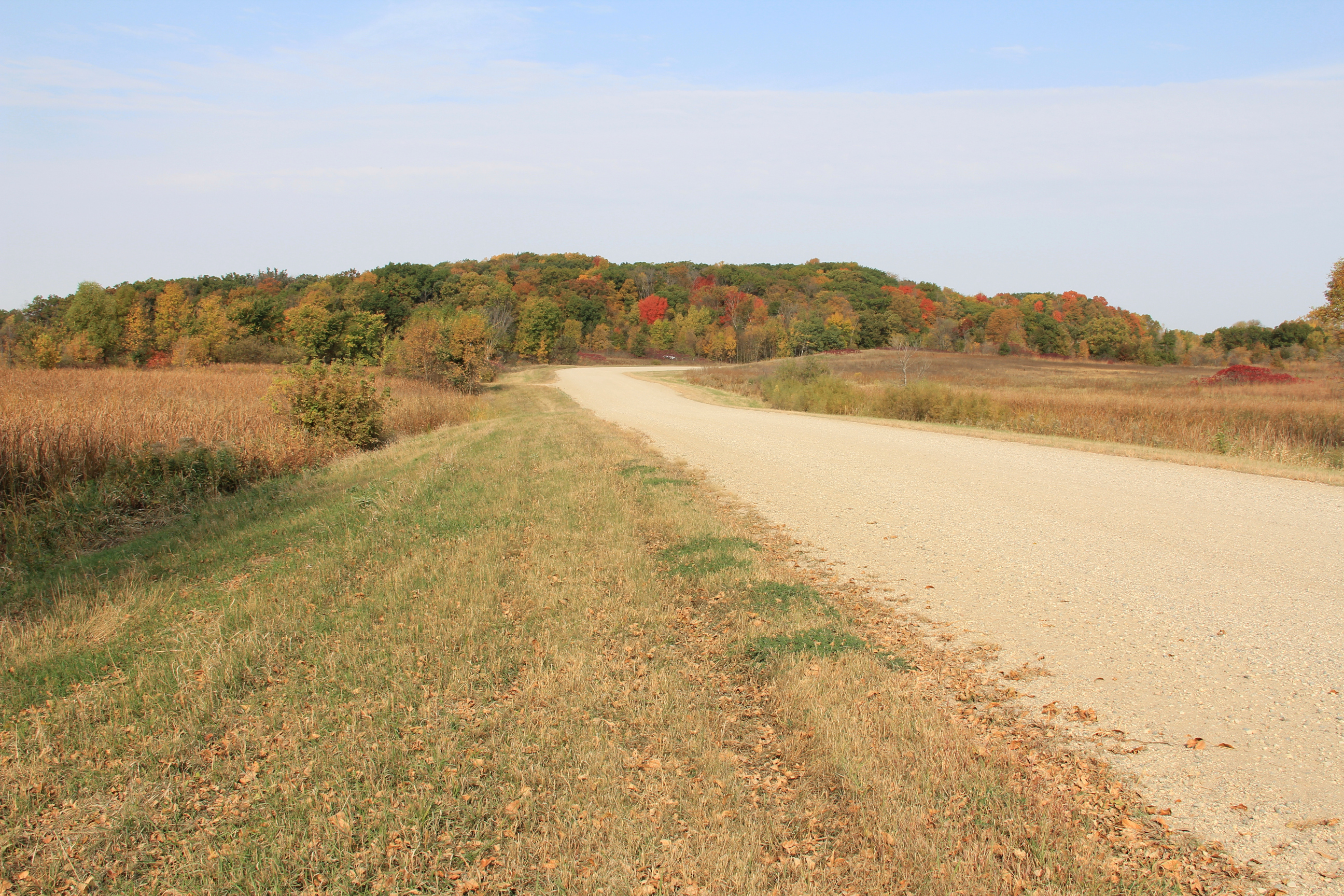
This curving gravel road took us past wooded hillsides and a wetlands restoration area. (Minnesota Prairie Roots copyrighted photo October 2024)

This is the time of year, whether you’re rural, small town or city-raised, to take a drive into the countryside. Off paved roads. Onto gravel routes.

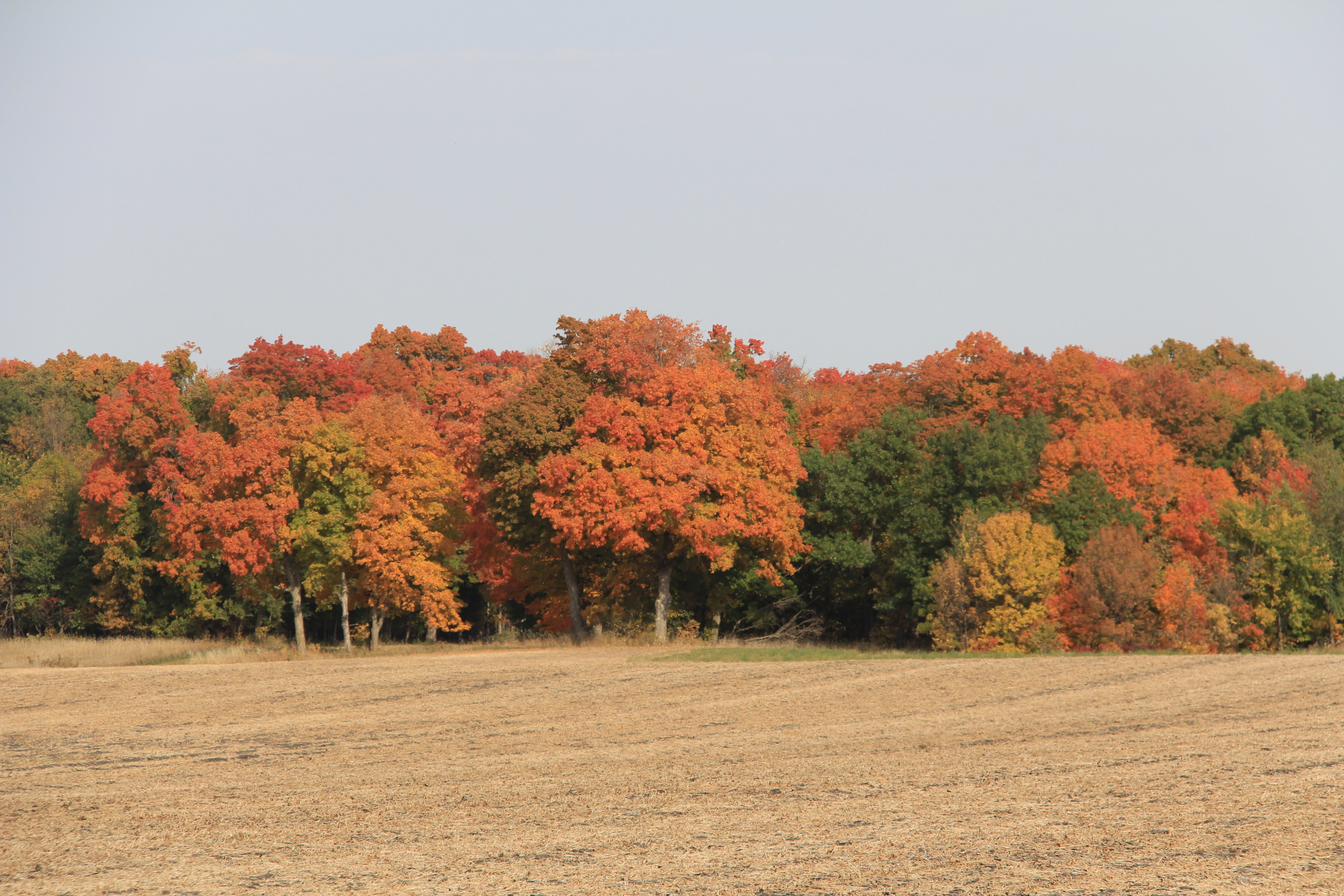
Some treelines were vivid with color, others not. (Minnesota Prairie Roots copyrighted photo October 2024)
I am always drawn to barns rising above the landscape. (Minnesota Prairie Roots copyrighted photo October 2024)
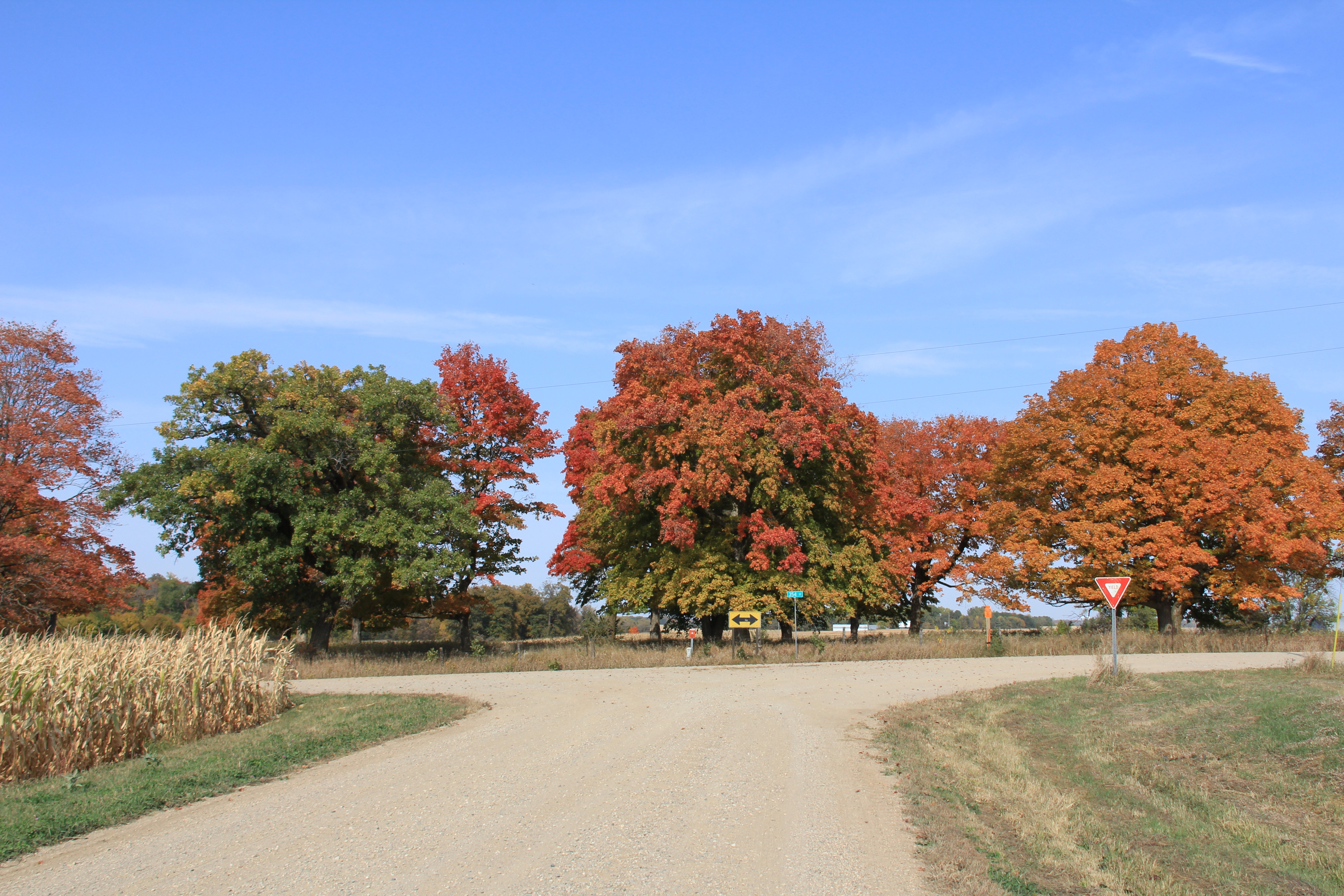
A rural intersection ablaze in color. (Minnesota Prairie Roots copyrighted photo October 2024)

Gravel forces a slower pace, offers opportunities to stop and appreciate that which unfolds before you. On this drive, it was the coloring of trees, just beginning, aged farm sites back-dropped by woods or surrounded by fields. Just being here in the rural-ness honored my past, filled my soul.

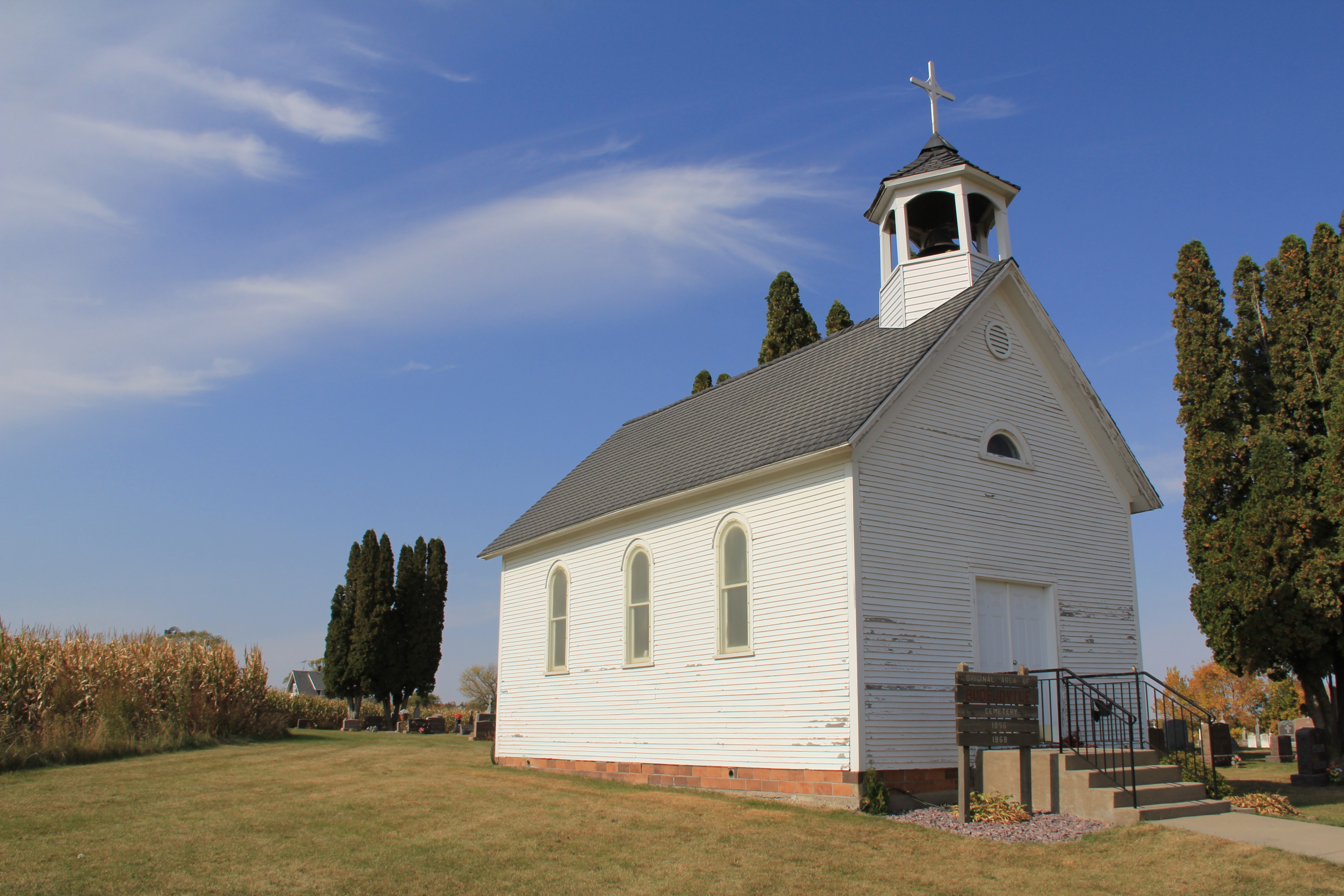
A Czech church and cemetery west of Montgomery. (Minnesota Prairie Roots copyrighted photo October 2024)

And then we paused at an historic country church nestled among cornfields near Montgomery. We walked the expansive cemetery. As I meandered and took photos, I heard the wind rustling the dried corn leaves, a comforting sound in the silence of the land.

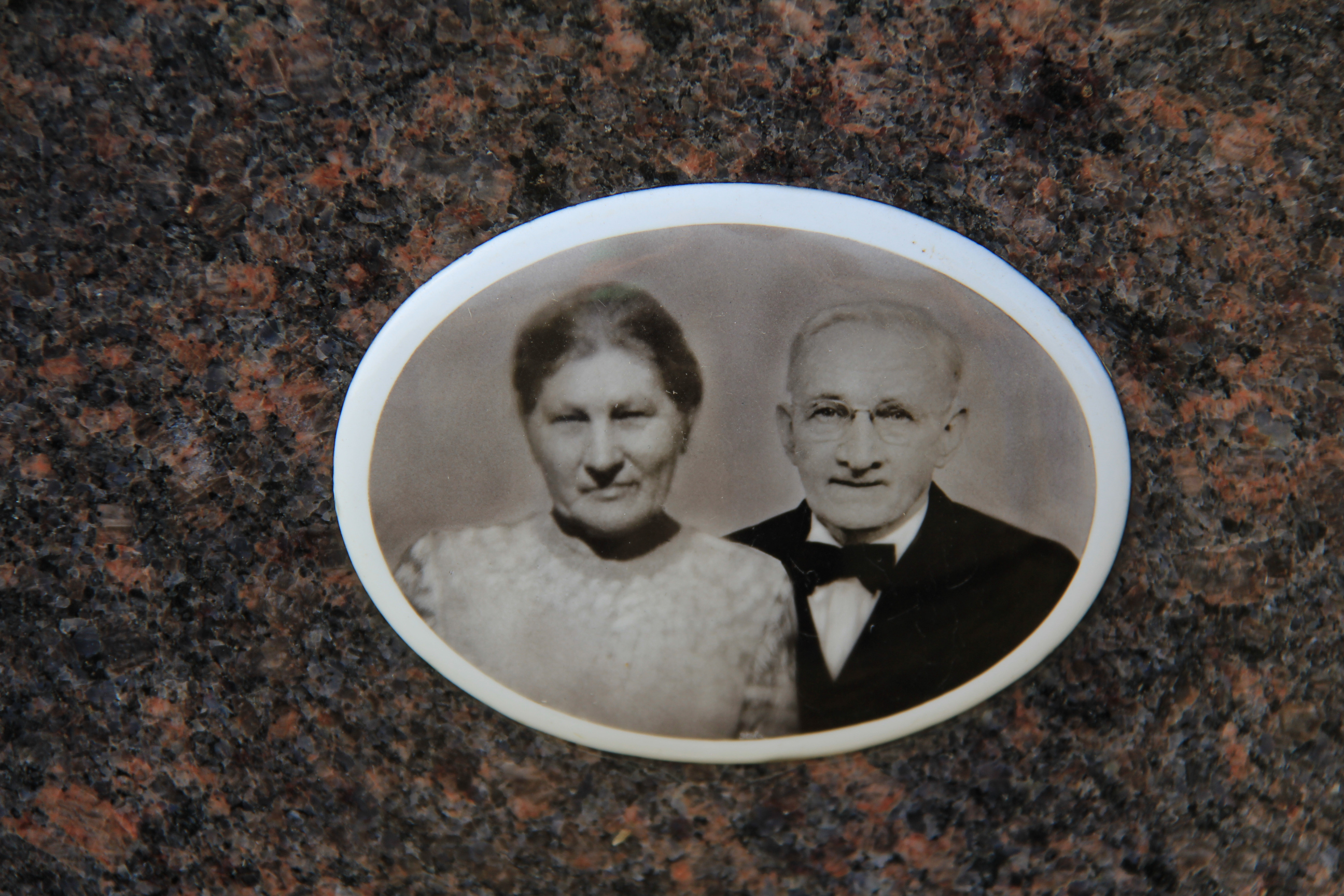
Anna and John Frolik are among the early settlers buried at Budejovice. They were born in 1886 and 1887. Their photos adorn their tombstone. (Minnesota Prairie Roots copyrighted photo October 2024)

I wondered about the Czech immigrants who settled in the area, built Budejovice Church in 1868. What were their heartaches, their stories, their hopes and dreams? I expect they longed for the Old Country, for the familiarity of home, for the loved ones an ocean away.

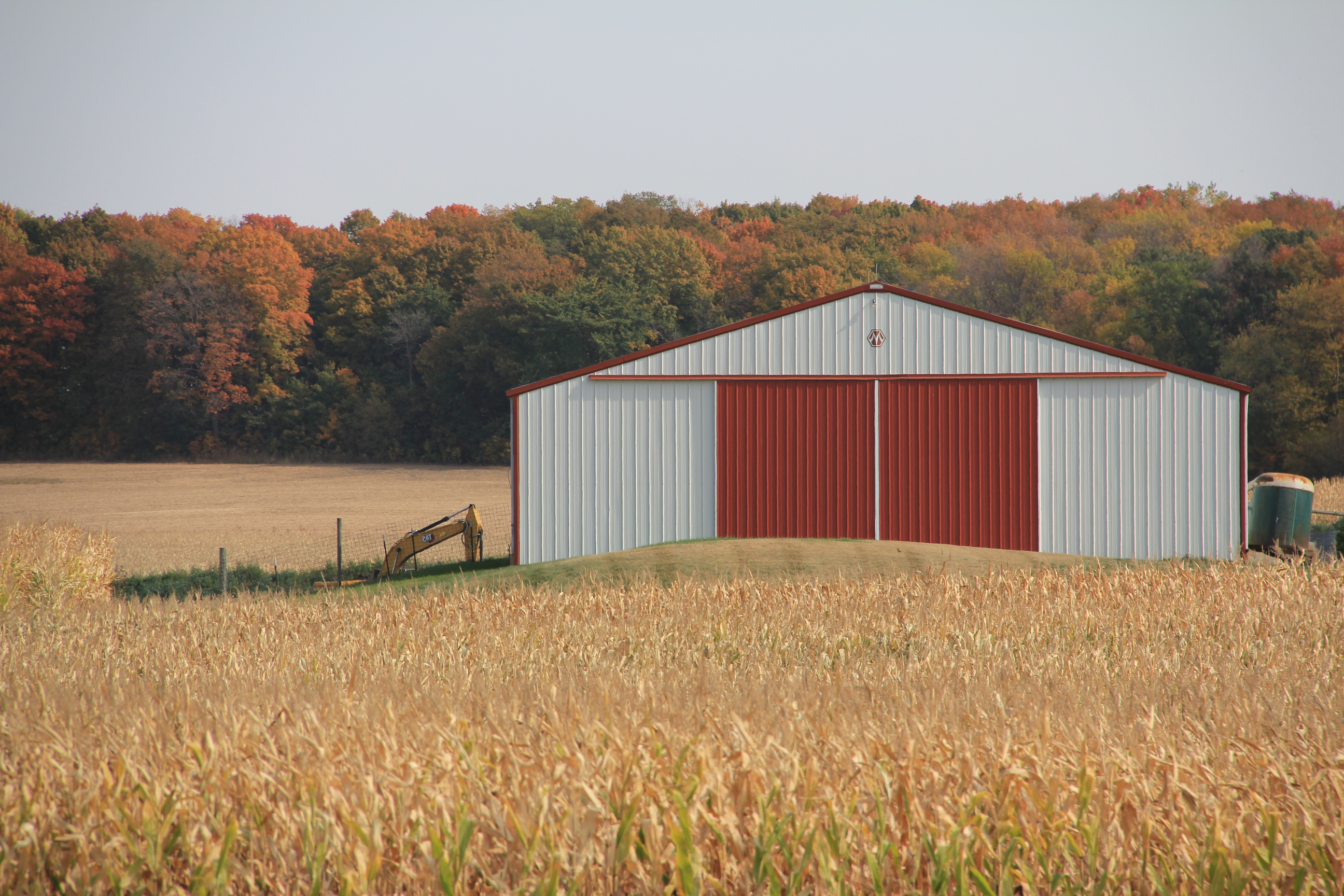
This machine shed, surrounded by cornfields, sits just across the gravel road from the church and cemetery. (Minnesota Prairie Roots copyrighted photo October 2024)

Such thoughts filter through my mind whenever I am among the souls of the departed, my soles touching the land under which they lie buried. I don’t feel sadness as much as a sense of respect for those who came before me, who forged a new life in Minnesota with grit, determination and a whole lot of fortitude.

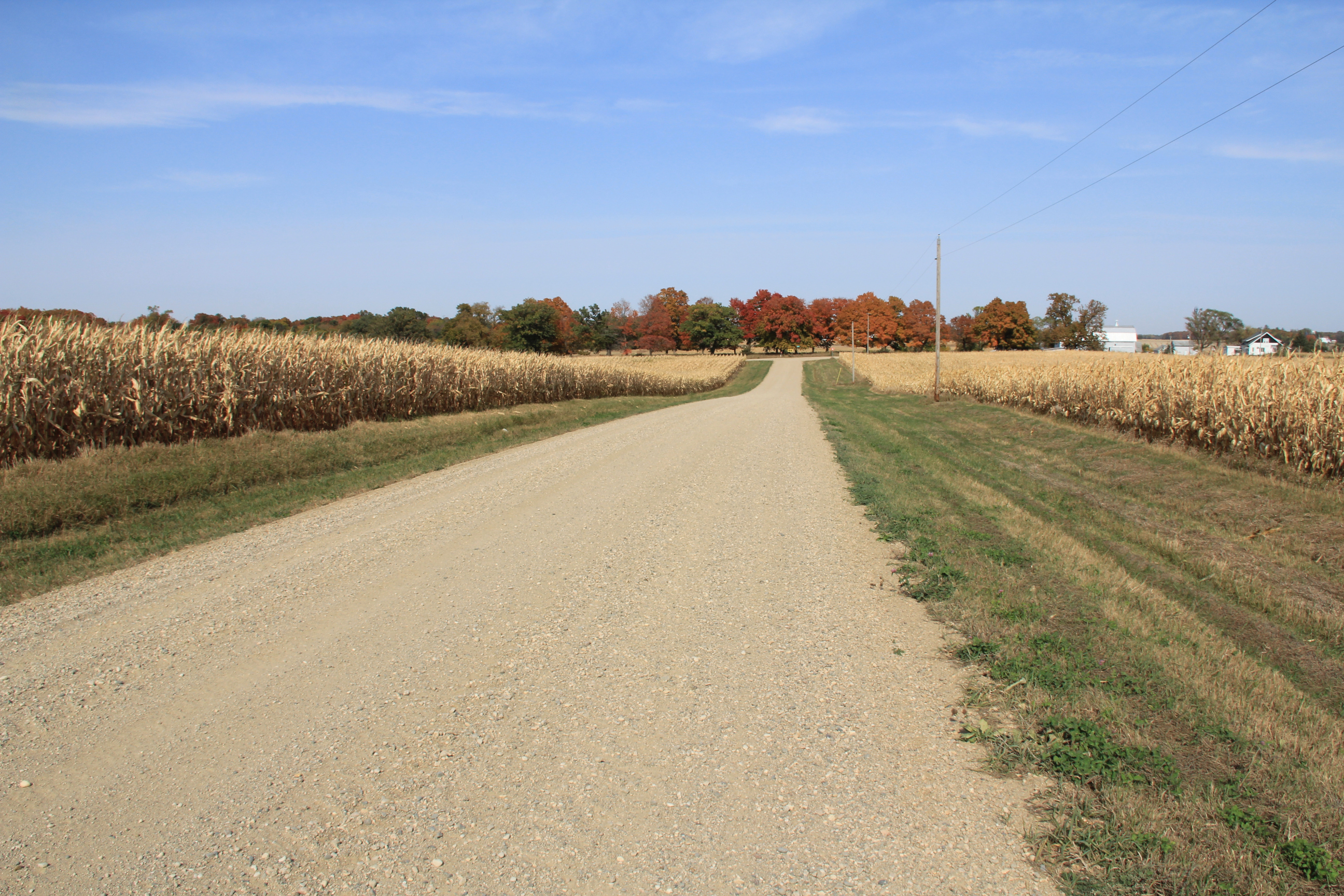
Cornfields flank a gravel road leading to a colorful treeline. (Minnesota Prairie Roots copyrighted photo October 2024)

Driving the countryside in autumn evokes not only nostalgia and reflection, but also a sense of time passing. Leaves turn color. Crops morph to golden hues, ready for harvest, or already harvested. And dust rises from the land, carried on the wind, coating our van. Miles and miles and miles of gravel roads behind us, we arrive home. I’m exhausted. My shoes are covered in dust. But I feel content. Replenished. I needed this, this country drive that was about much more than viewing fall colors. It was also about filling my soul.

© Copyright 2024 Audrey Kletscher Helbling


Prayer ribbons at the Cathedral July 16, 2024

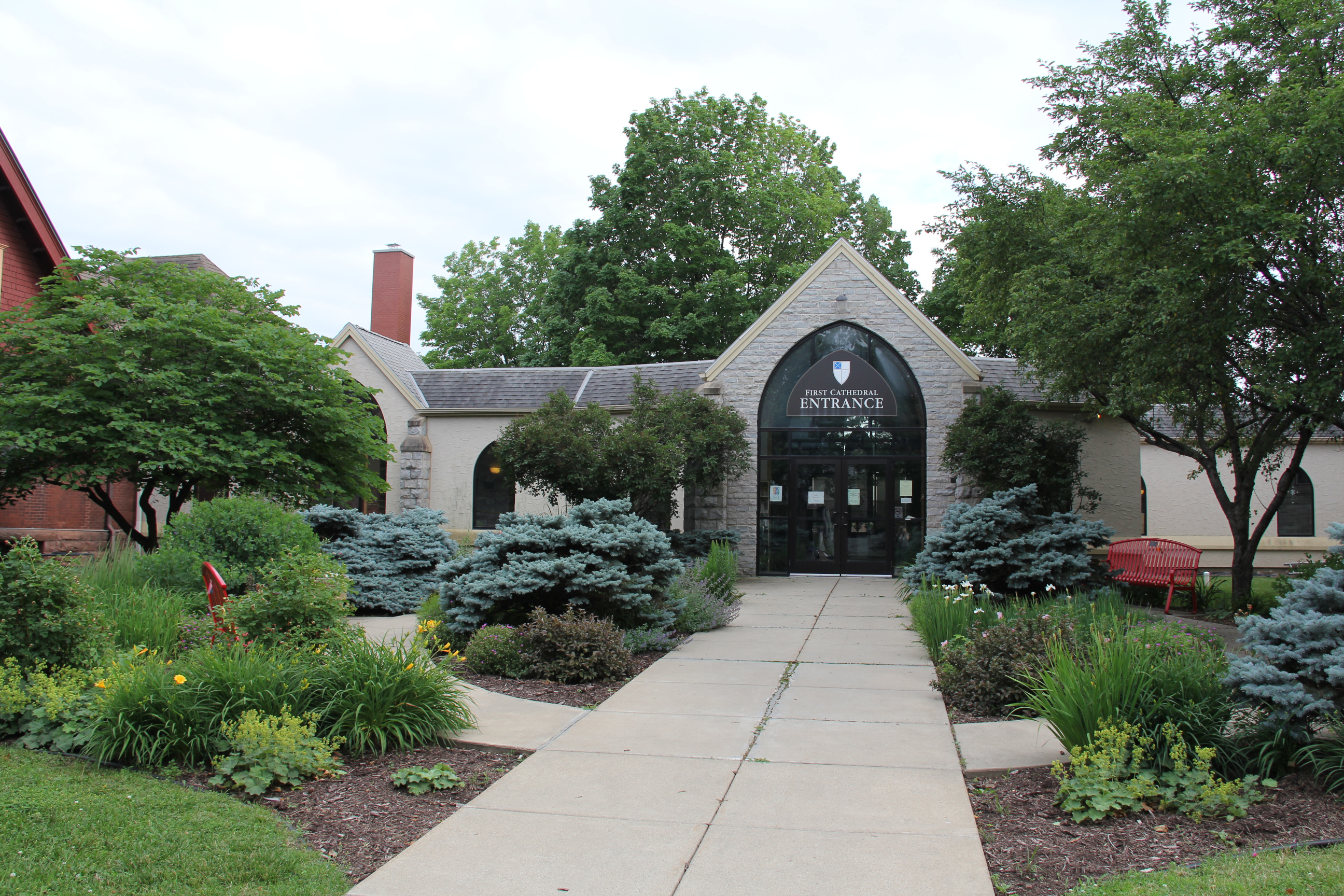
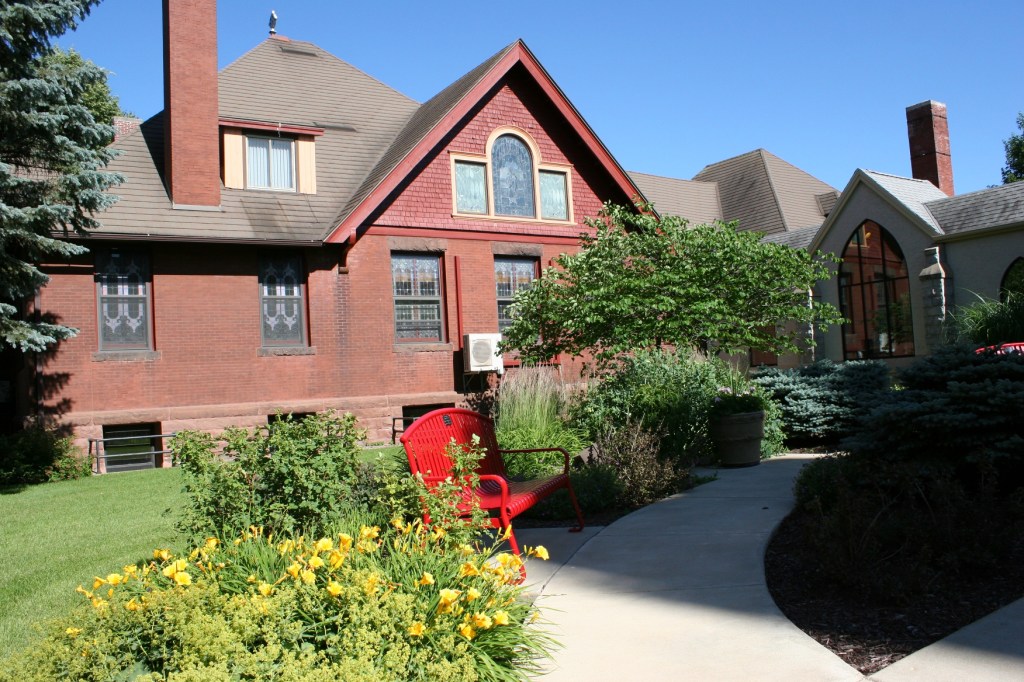
A garden graces a side entry to The Cathedral of Our Merciful Saviour in Faribault. (Minnesota Prairie Roots copyrighted photo June 2024)

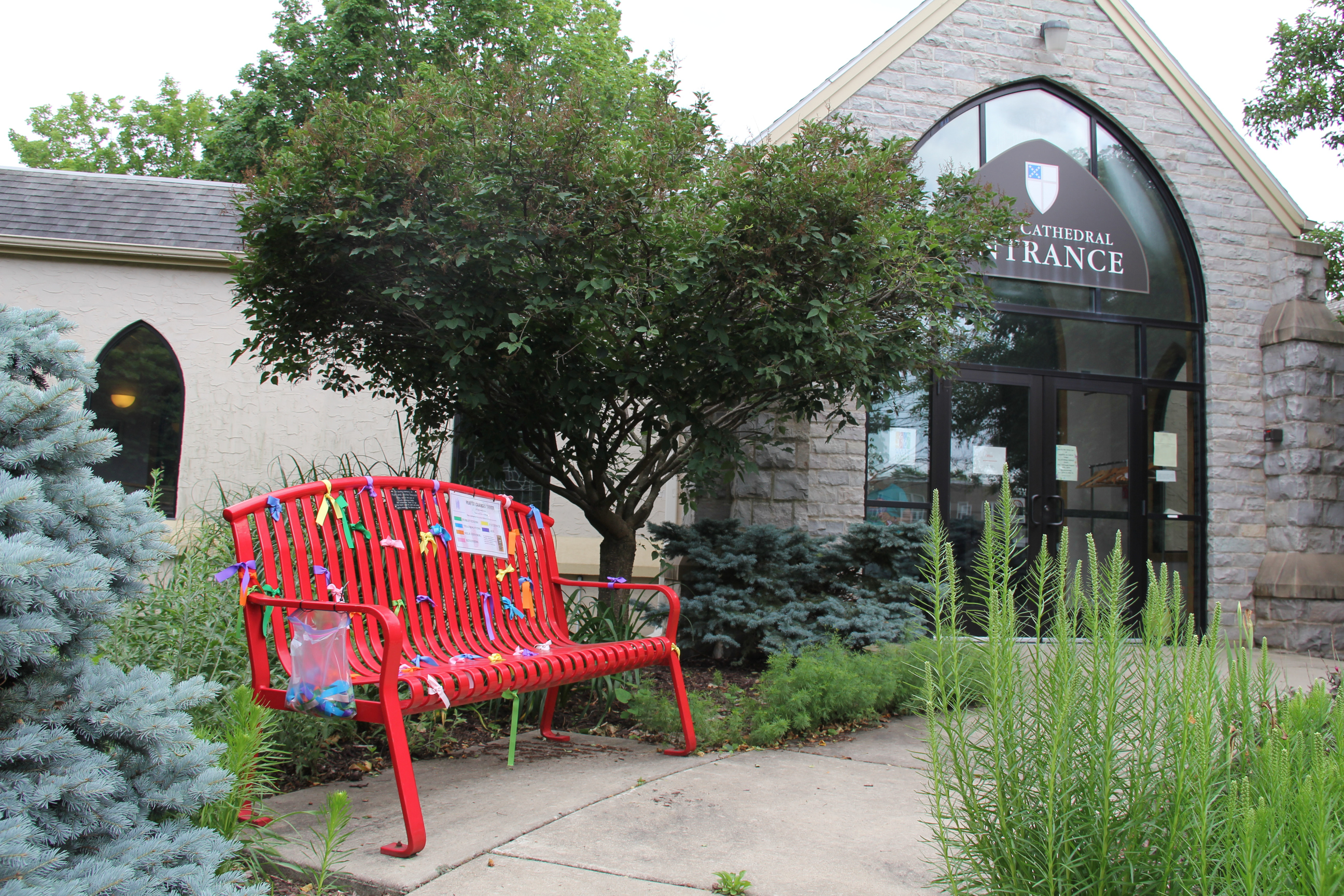
AMONG THE FLOWERS, trees and shrubbery fronting a side entry to the space that connects church to guild house, three red benches nestle. Bold. Vibrant. Statement pieces in a garden at The Cathedral of Our Merciful Saviour.

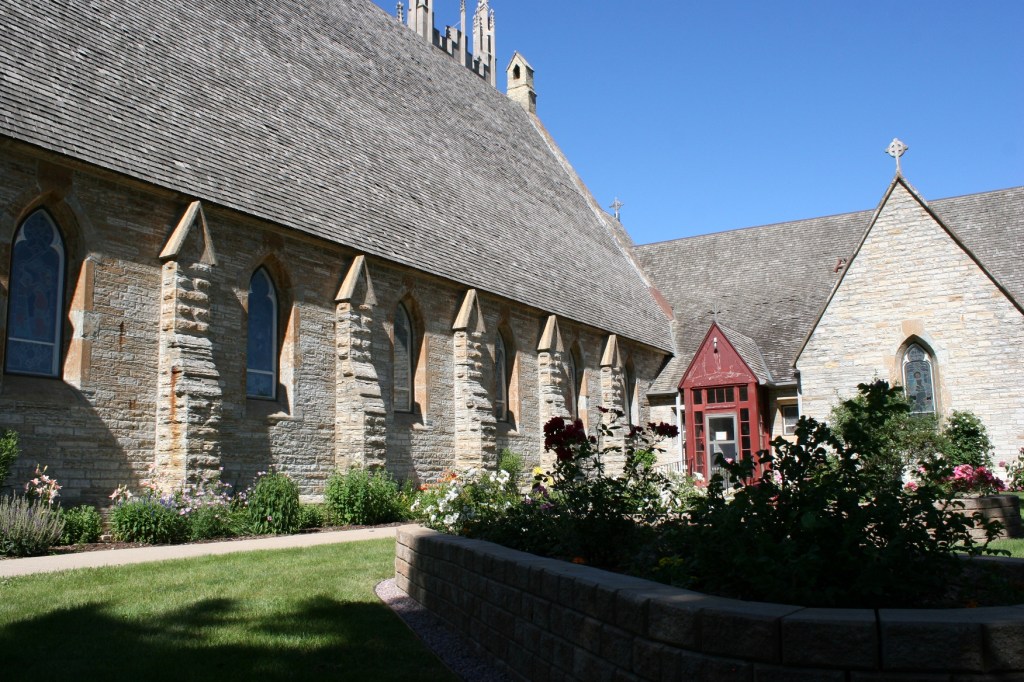
Construction on the original part of the Cathedral began in 1862 and was completed in 1869. It is listed on the National Register of Historic Places. (Minnesota Prairie Roots copyrighted photo June 2024)

But those benches outside the massive limestone church towering above the landscape along Second Avenue across from Central Park in Faribault serve as more than a place to rest. They are a place for prayers.

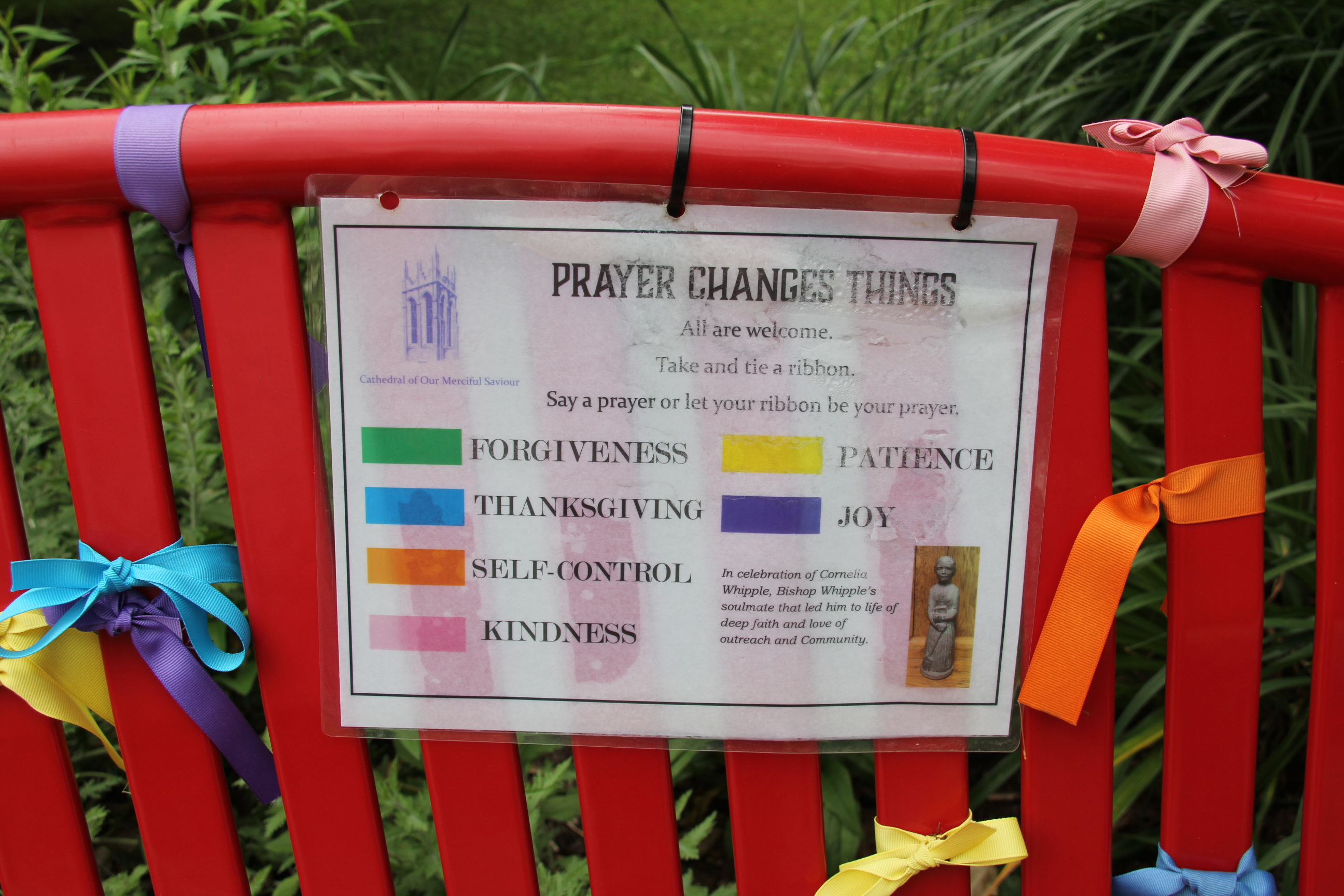
Prayer ribbon instructions posted on a bench. (Minnesota Prairie Roots copyrighted photo June 2024)

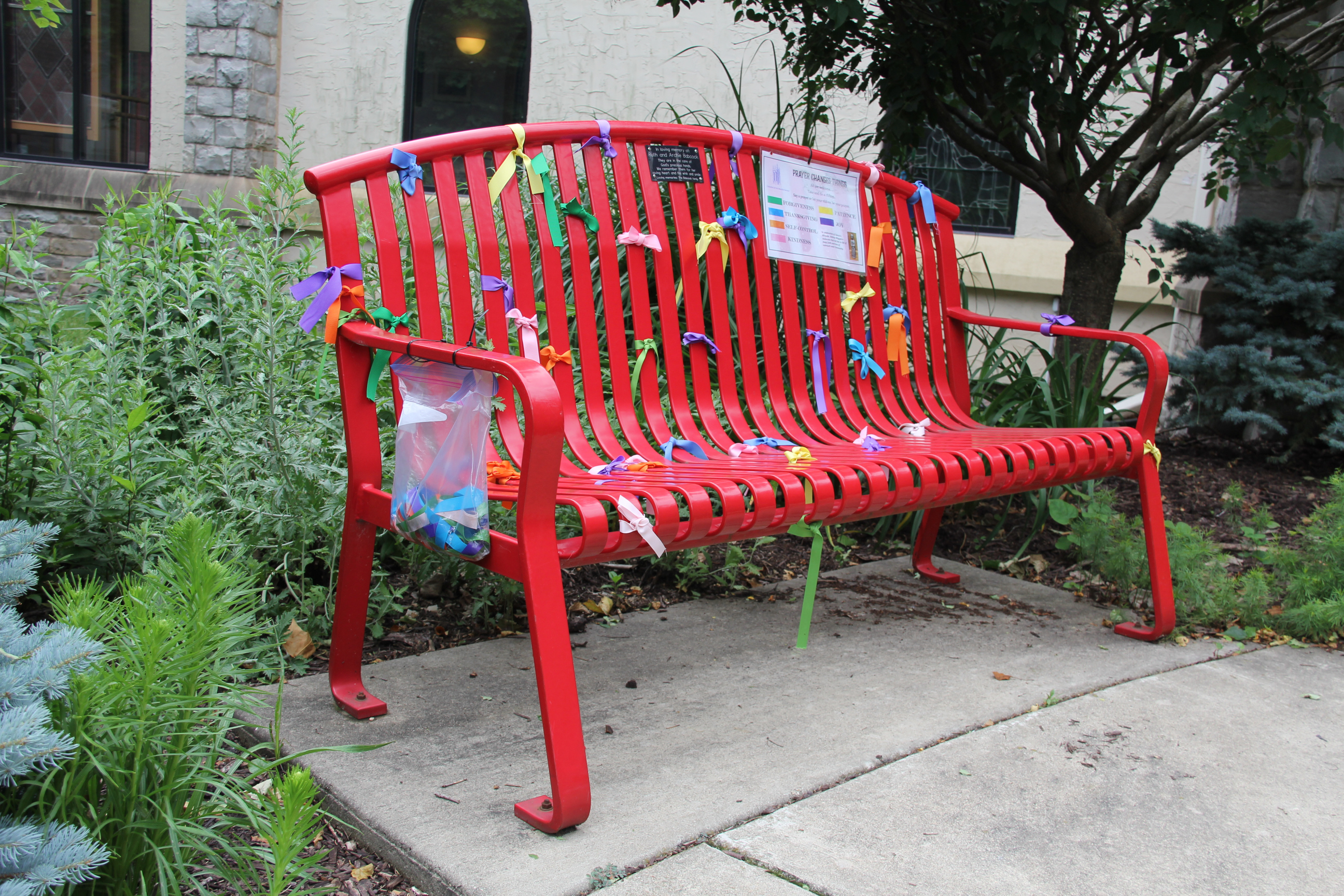
Ribbons, representing prayers, are tied to the slatted benches. A sign explains: PRAYER CHANGES THINGS. All are welcome. Take and tie a ribbon. Say a prayer or let your ribbon be your prayer.

Choose a ribbon from the bag. (Minnesota Prairie Roots copyrighted photo June 2024)

What a creative idea. A Ziploc bag of multi-colored ribbons hangs on one of the benches. Each hue represents a different prayer. Green for forgiveness. Blue for thanksgiving. Orange for self-control. Pink for kindness. Yellow for patience. Purple for joy.

One of the three garden benches is covered with prayer ribbons. (Minnesota Prairie Roots copyrighted photo June 2024)

These prompts prove soul-searching. Too often prayers focus on needs/wants/desires, not tough topics like forgiveness and self-control. And how often we forget to express gratitude and joy in prayer.

Ribbons representing prayers of joy, kindness and self-control. (Minnesota Prairie Roots copyrighted photo June 2024)

To be reminded of these traits, these feelings, these thoughts can only make us kinder, gentler, better people.

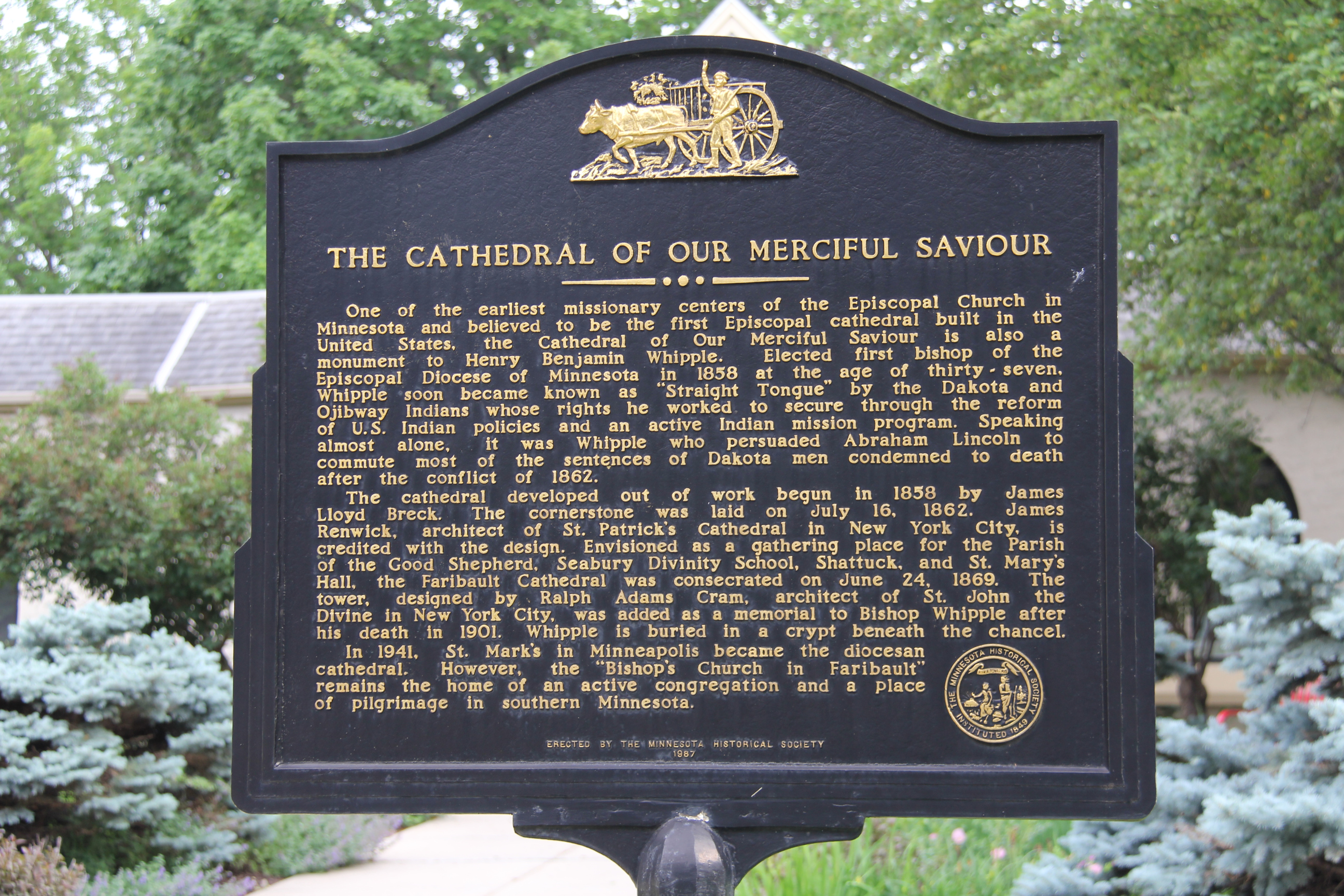
A historical marker at the Cathedral summarizes its history. (Minnesota Prairie Roots copyrighted photo June 2024)
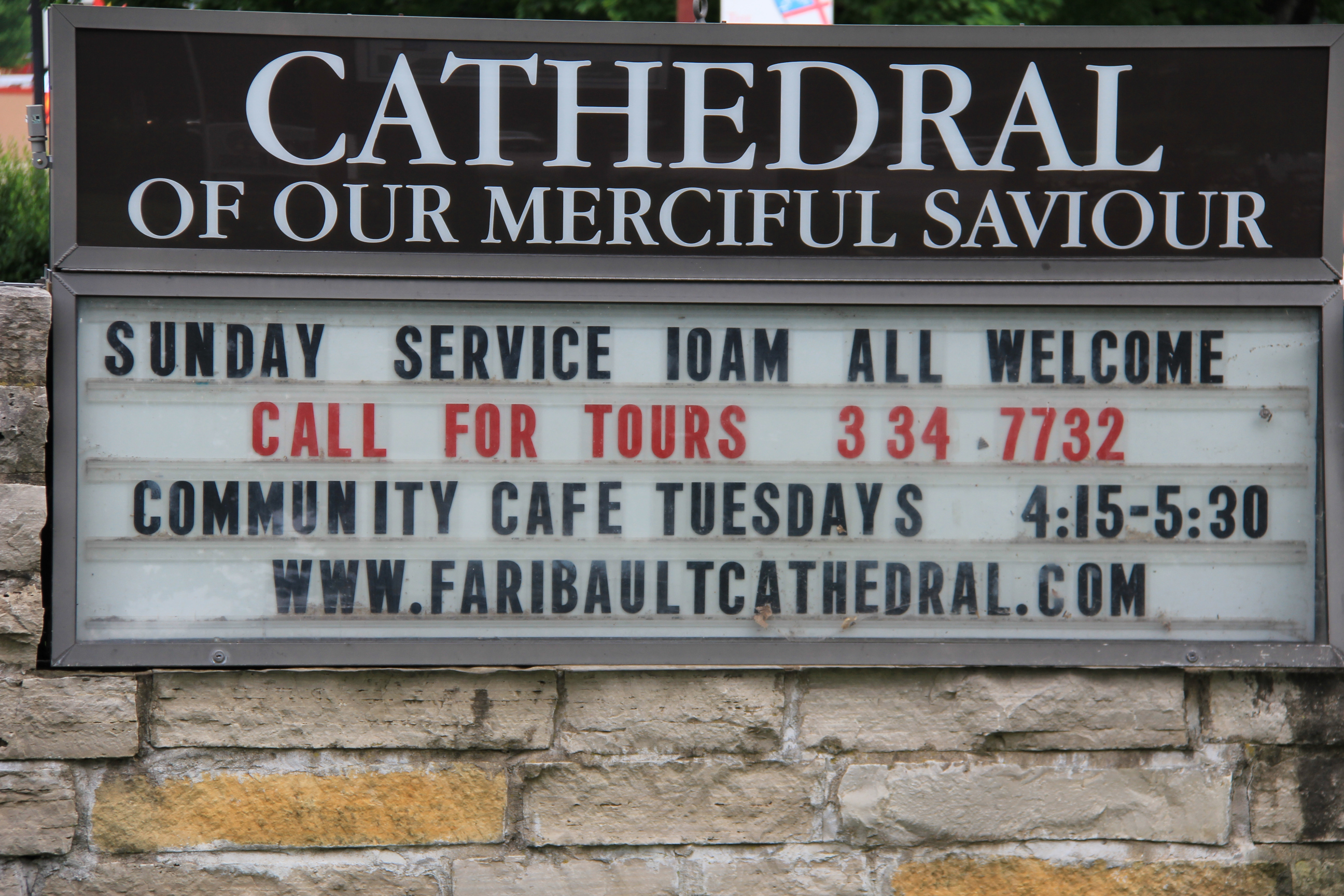
The Cathedral sign lists community connections. (Minnesota Prairie Roots copyrighted photo June 2024)

That follows a guiding principle of the Cathedral as a place “where history meets heart.” The Cathedral, since it’s founding in the mid-1800s, has long centered on community. Bishop Henry Whipple befriended the Dakota people and many more. Today the church still opens its doors—as the site of the Community Cafe (serving free meals weekly to the community), as a venue for free concerts, as a historic site to tour, as an active participant in Faribault’s annual Heritage Days celebration, as a location for Red Cross blood drives…

Ribbons representing patience, thanksgiving and joy. (Minnesota Prairie Roots copyrighted photo June 2024)

And now this seemingly small, yet powerful thing, this beckoning to ponder and place prayers upon public benches. Prayer changes things. Just as a faith family can, when thoughts and ideas expand into actions. Actions that embrace community, providing a welcoming place to gather, to celebrate, to contemplate life.

An inviting entry garden…with prayer beribboned benches. (Minnesota Prairie Roots copyrighted photo June 2024)

We all hold the capacity to forgive, to thank, to control our thoughts, words and behavior, to practice kindness, to exercise patience, to express joy. If tying a ribbon to a red bench encourages self-reflection and positive change, then that is a good thing. We can always be better, do better, live better, in ways that improve our lives and the lives of those around us.

© Copyright 2024 Audrey Kletscher Helbling


Picnicking at historic Christdala Swedish Lutheran Church August 16, 2020

On the backroads in Rice County, heading northwest of Faribault.


IN MINNESOTA, WE LOVE our summers. And that has a lot to do with our long winter season of too much cold, too much darkness and too much being cooped up inside. Factor in COVID-19, and summer days are even more beloved.

This summer, especially, Randy and I often pack sandwiches, fruit and whatever else for a weekend picnic lunch. It gets us out of the house/town and into nature, exactly what we need when so few options exist for escaping anywhere these days.

On a recent Sunday we contemplated our choices and decided to head to Cannon Falls, a lovely river town about a 40-minute drive northeast of Faribault. But, as we backed out of the driveway and looked to the east, we saw storm clouds building. Change of plans.


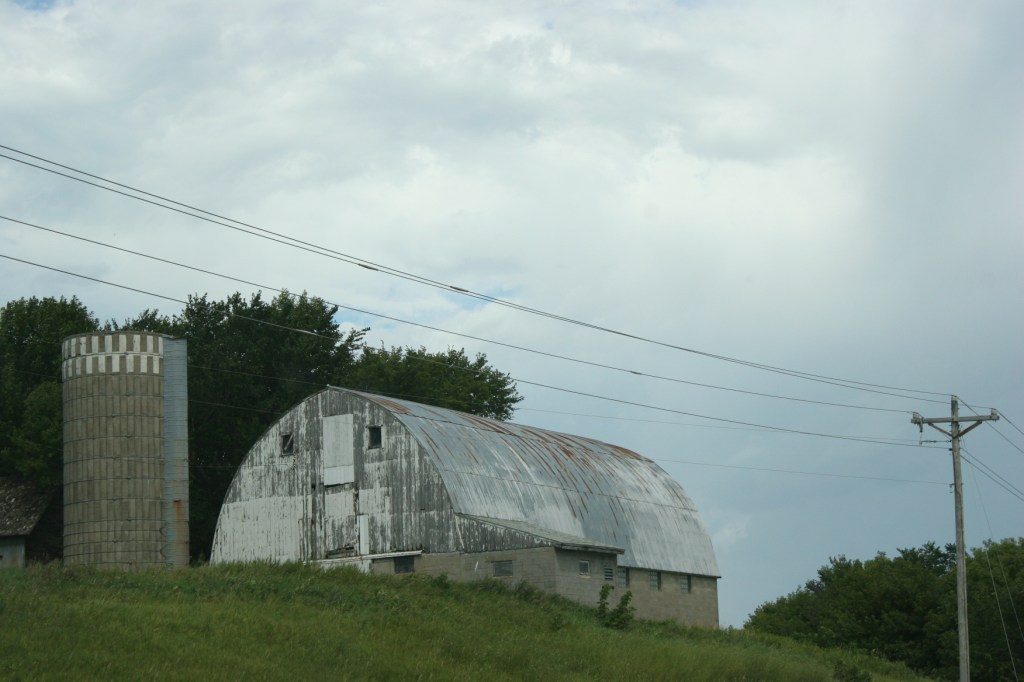
One of my favorite rural sightings: aged barns. This one is near Circle Lake.


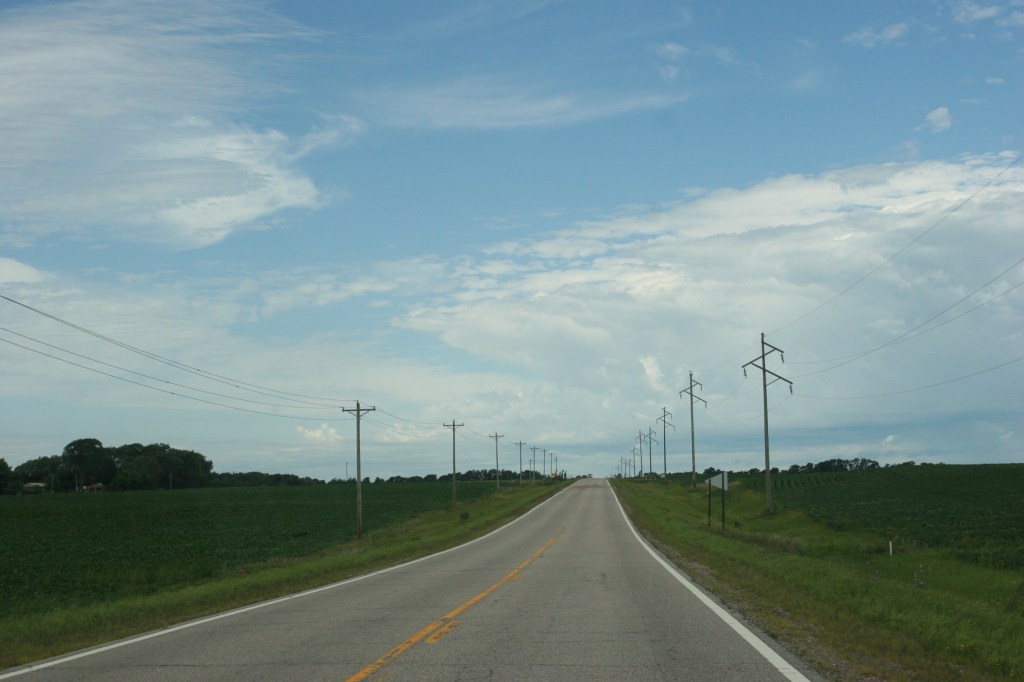
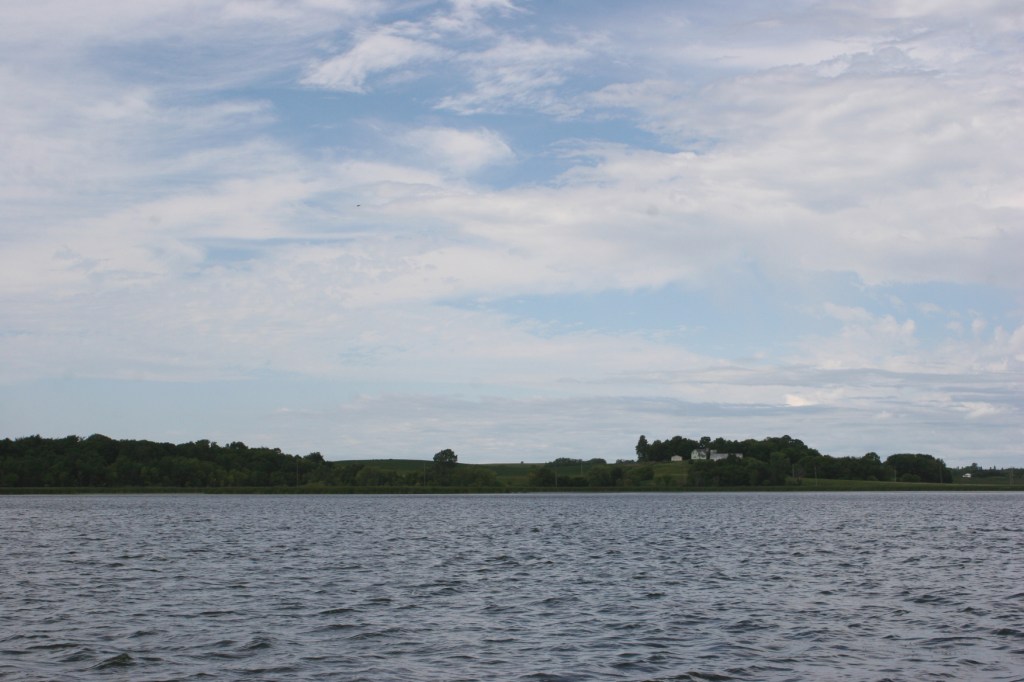
Instead, we drove northwest, with the intention of picnicking at Circle Lake near Millersburg. A much shorter drive on a day of unsettled weather and possible afternoon storms. As farm-raised kids, Randy and I always delight in traveling rural roads—paved and gravel—to reach our destination. On our way to the lake, I observed acres and acres of cornfields, far exceeding soybeans. Not uncommon.


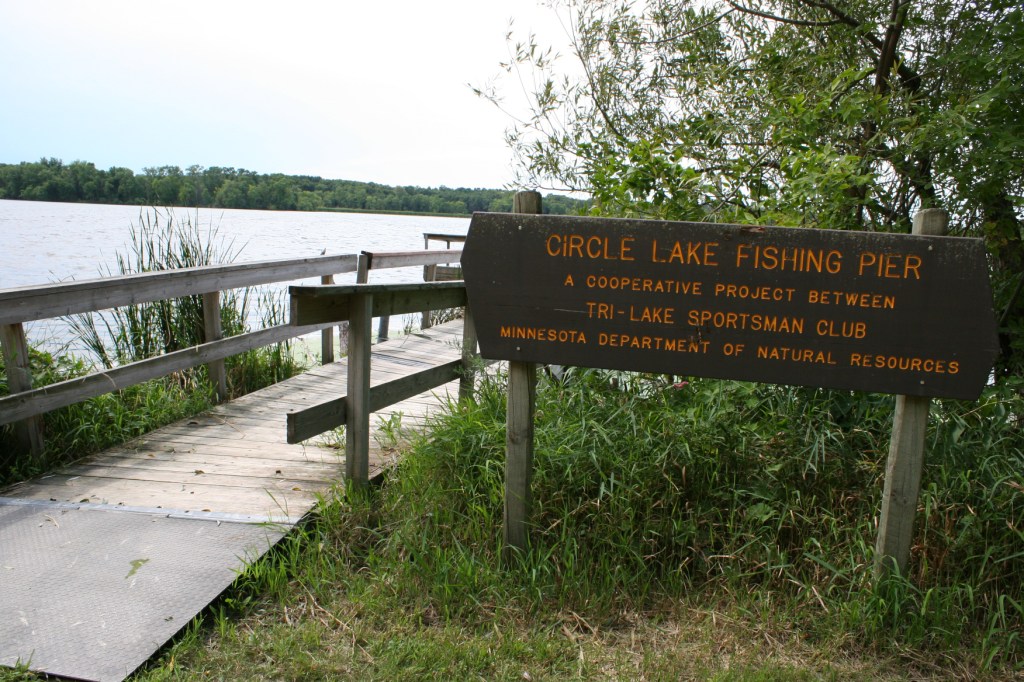
The sign marking Circle Lake’s public pier.


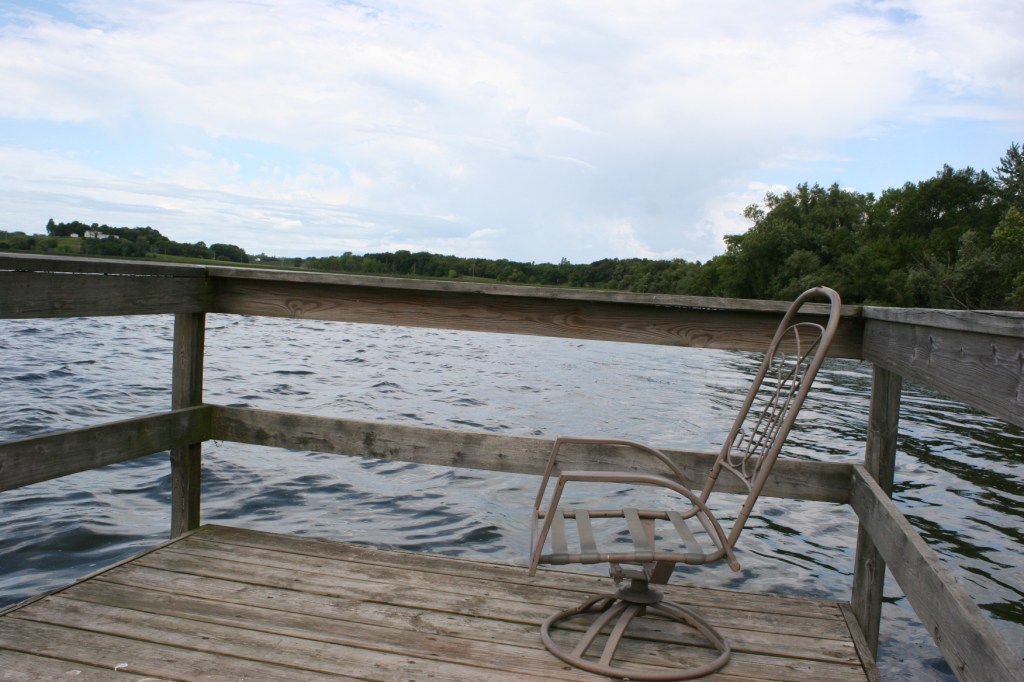
No comfortable place to sit here…


A view across the lake of the surrounding countryside.


Randy missed the lake turn, backed up on the county road and then proceeded down a gravel road toward the public access point on Circle Lake. To our dismay, we saw no picnic tables either at the boat launch site or the adjoining patch of green space. A bit farther, though, we spotted a public fishing pier and decided to eat our lunch there.


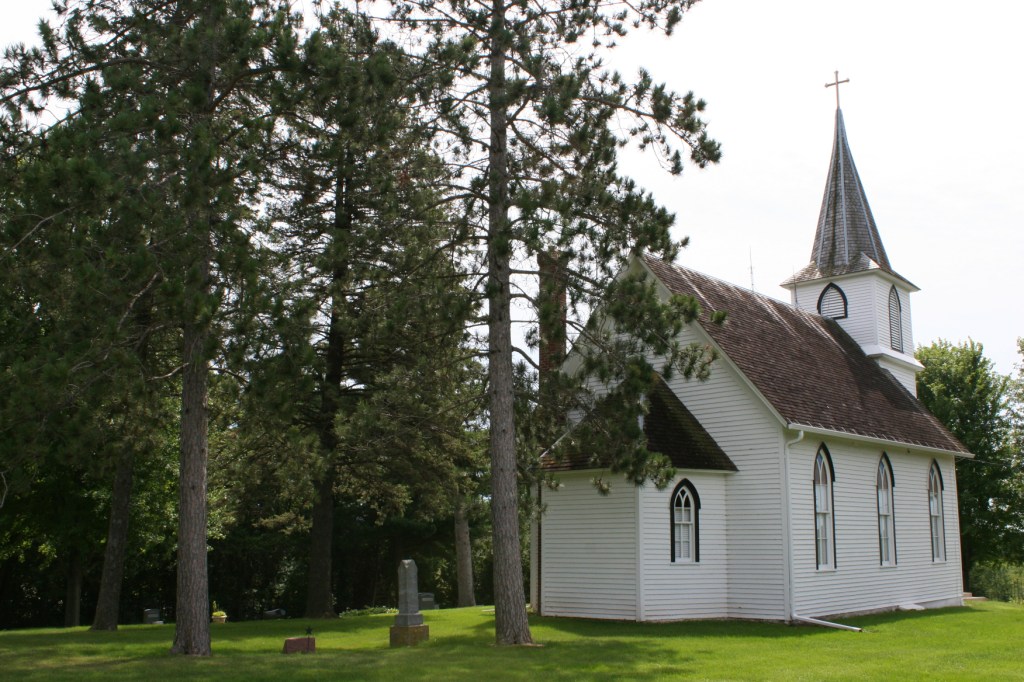
Christdala Swedish Lutheran Church, rural Millersburg. This congregation is no longer active with the church open only for special services and events.


Except, upon exiting the van, the stench and sight of stagnant green lake water, a floating dead fish and an obviously neglected dock caused us to, once again, change plans. I suggested we drive to Christdala Swedish Lutheran Church, a nearby historic church set atop a hill overlooking the countryside. We could, I suggested, sit and eat on the front steps.


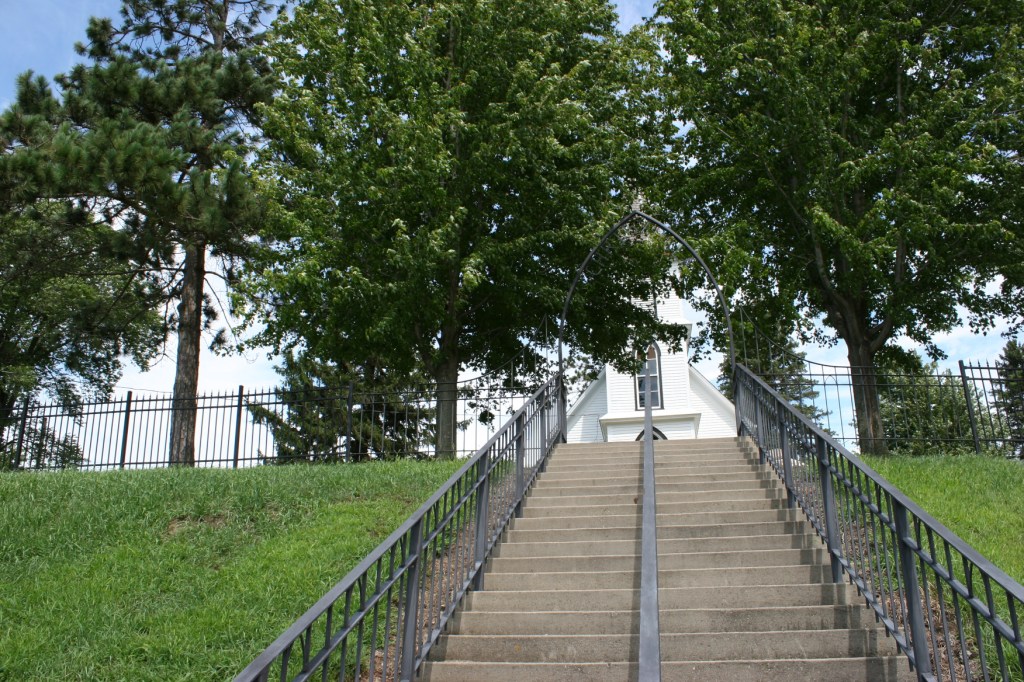
A long flight of steps lead up to Christdala.


And that’s exactly what we did, after we climbed a flight of steep steps and passed under an arch leading into the fenced church property. We turned our backs to the sun, settled onto the cement steps and pulled our sandwiches and other food from the cooler. It’s the first time I’ve picnicked next to a graveyard.


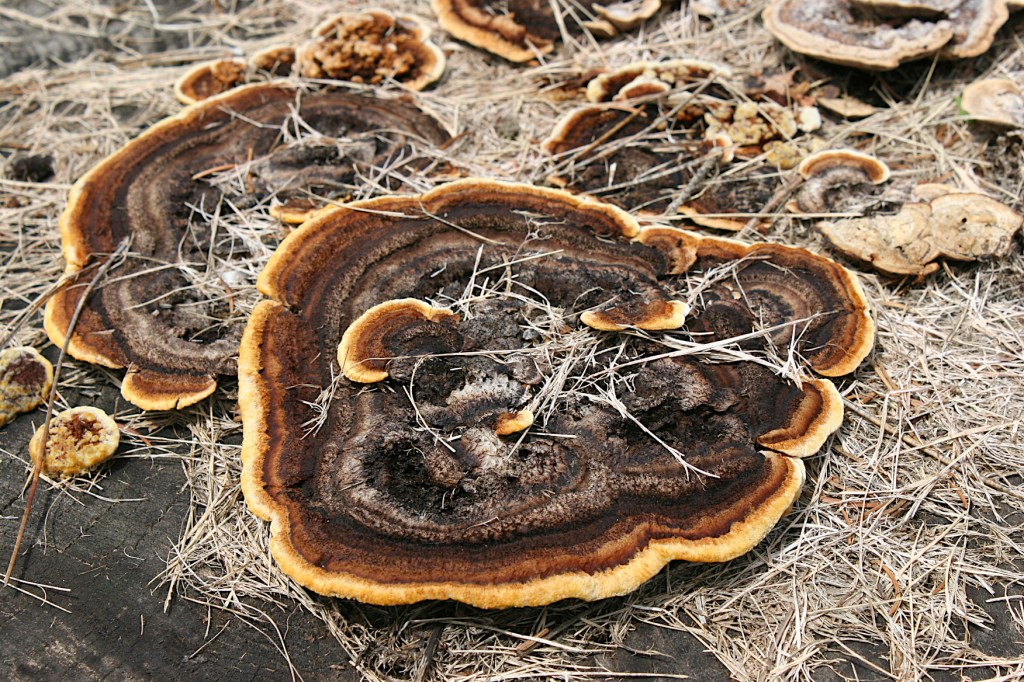
Near Minnie’s gravestone, I photographed this interesting fungi on a stump.


As we ate, we talked. About Minnie’s gravestone, in our direct line of vision. She died at age 23. Like too many who lost their lives prematurely so long ago, pre-modern medicine.


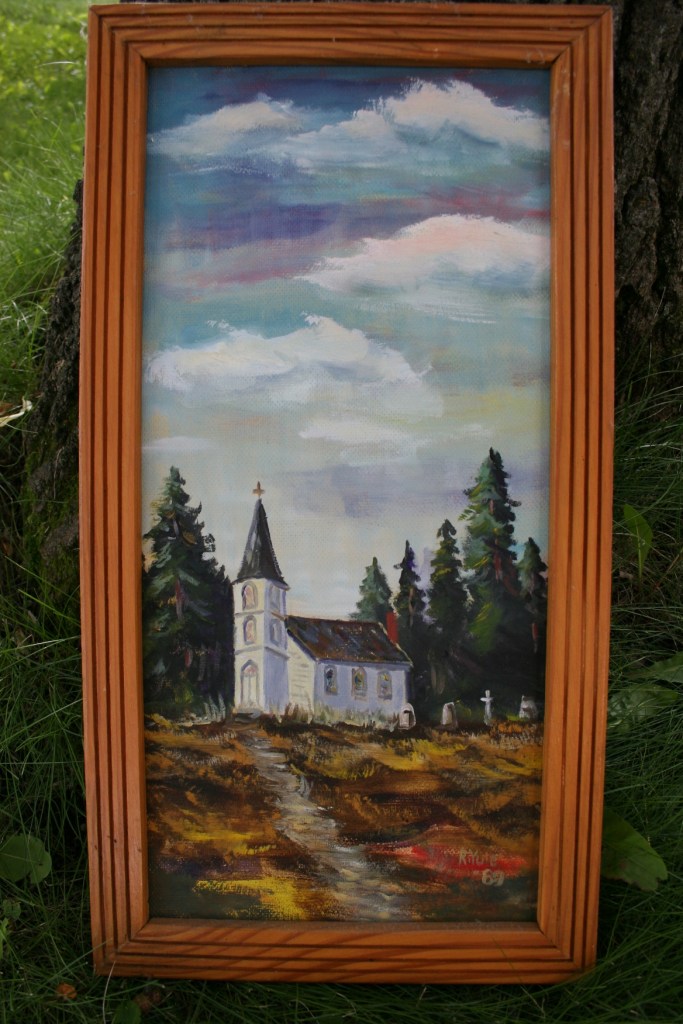
Christdala Swedish Lutheran Church painted in 1969 by Faribault artist Rhody Yule. Minnesota Prairie Roots file photo.


We talked about our friend Rhody Yule, who showed select original religious-themed paintings here in September 2010. He gifted his 1969 painting of Christdala to the church on that Sunday afternoon. I organized the outdoor exhibit and a more extensive gallery show months later at the Paradise Center for the Arts in Faribault. Randy and I shared how much we liked Rhody, an artist we met while on a Sunday afternoon drive two years prior. He quickly became a good friend, someone we delighted in for his gentle spirit of kindness and deep faith. A true joy.


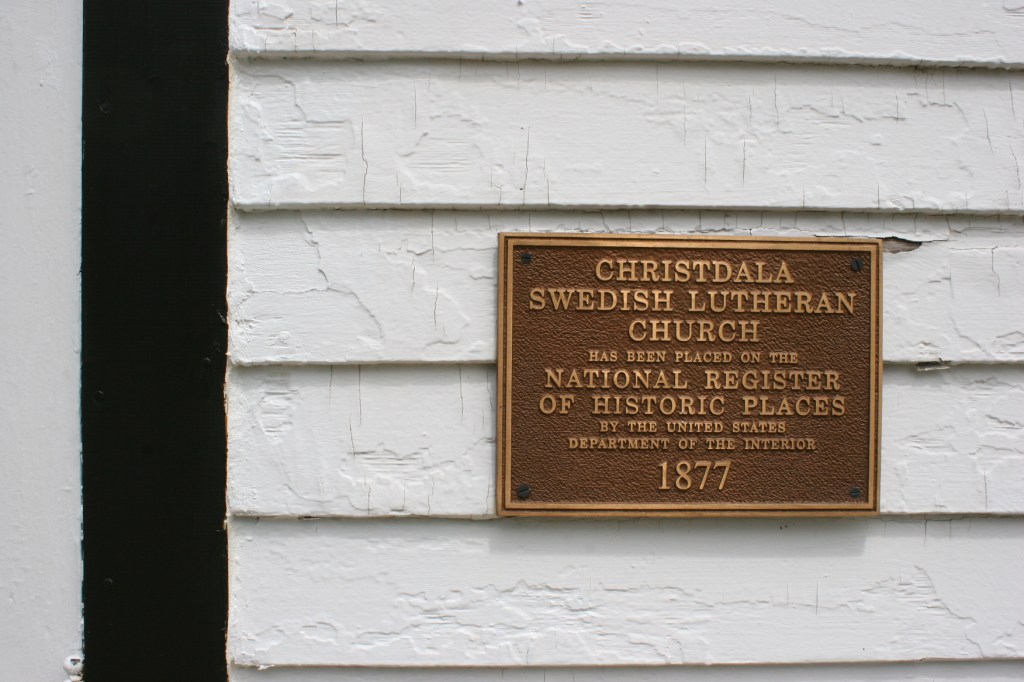
Posted next to the front door.


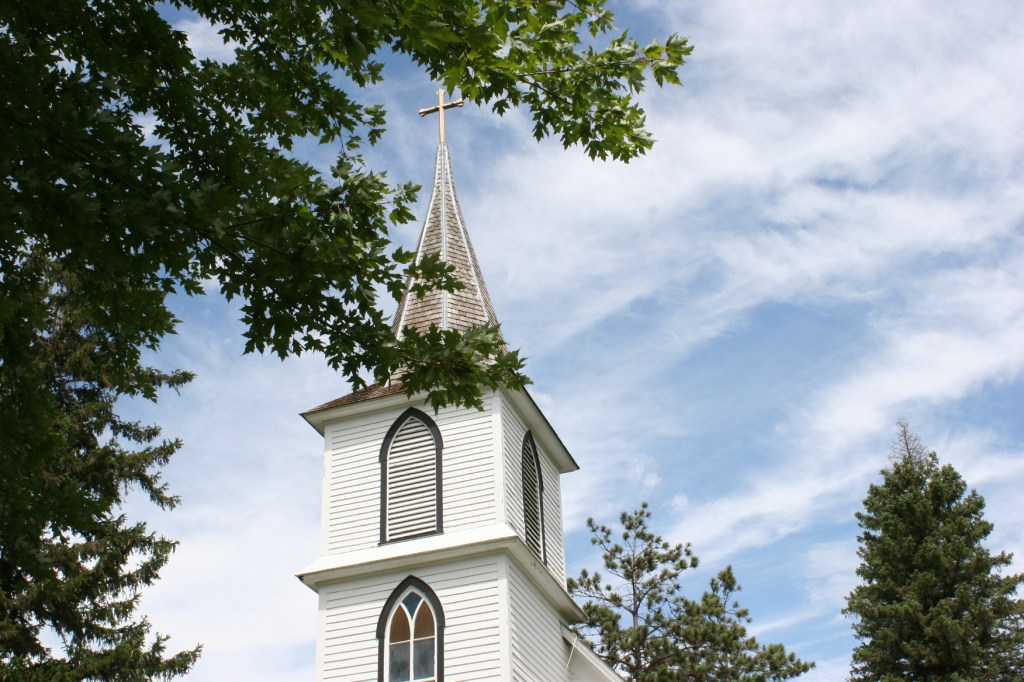
The steeple rises high above the treetops.


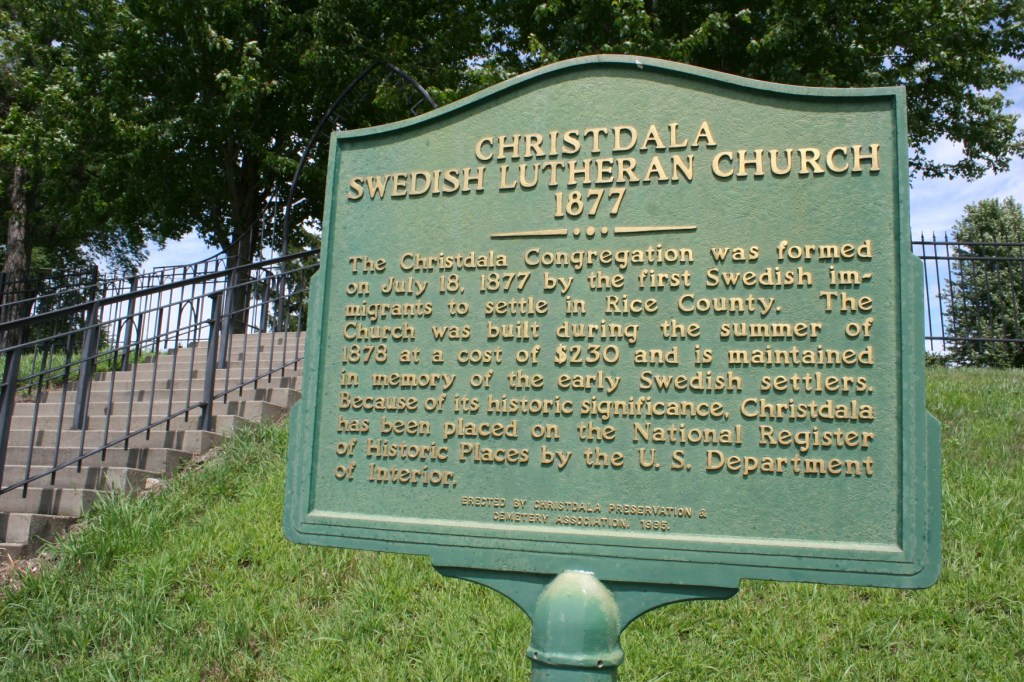
A summary of church history is posted next to the parking area at the bottom of the hill.


We noticed paint scrapings on the ground, indicating the 1877 church was recently repainted. It’s on the National Register of Historic Places, significant because the first Swedish settlers in Rice County founded this congregation, built this church.


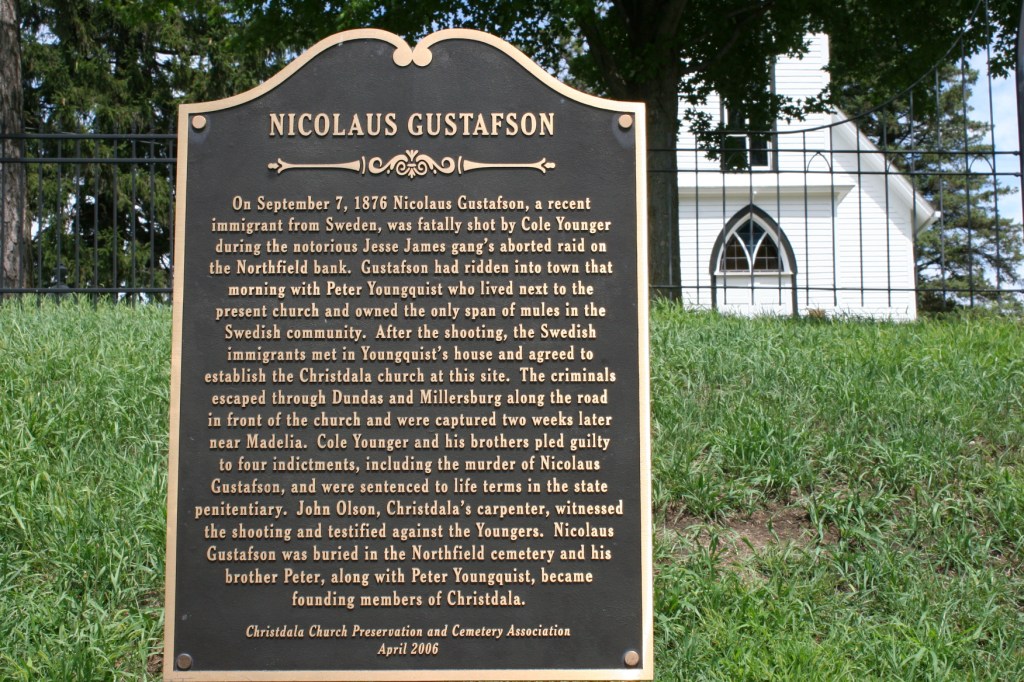
Another marker nearby honors Swedish immigrant Nicolaus Gustafson.


One of those immigrants, Nicolaus Gustafson, was fatally shot by Cole Younger in the attempted raid of the first National Bank in nearby Northfield in 1876.


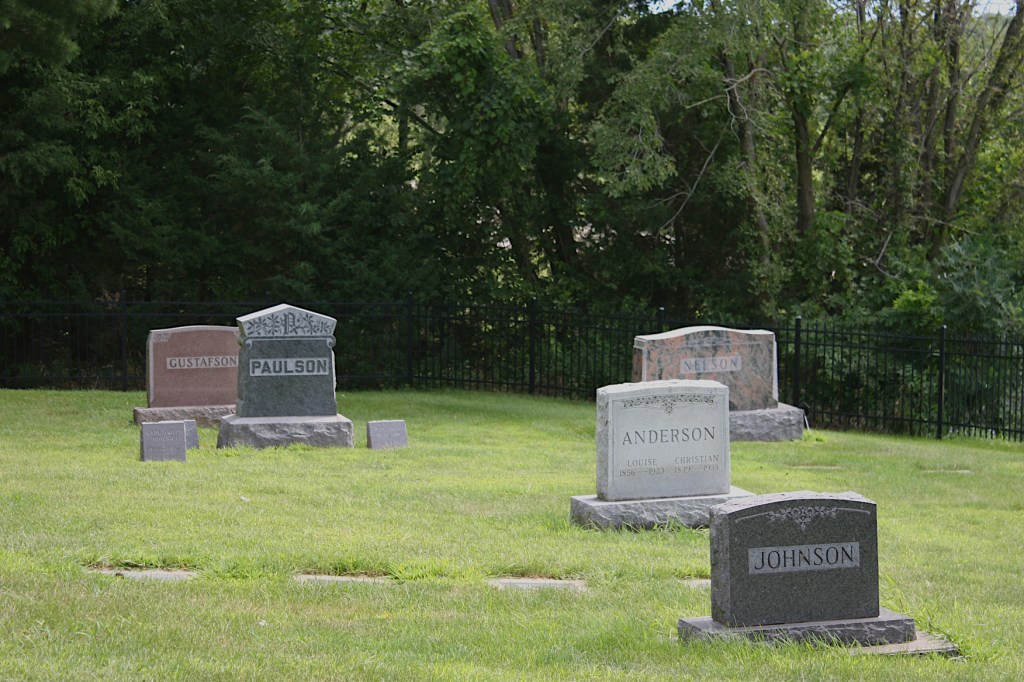
Just a sampling of the Swedish names on gravestones at Christdala.


There’s so much history and heritage here in names like Johnson, Anderson, Paulson, Gustafson, Nelson…the “son” of Swedish ancestry.


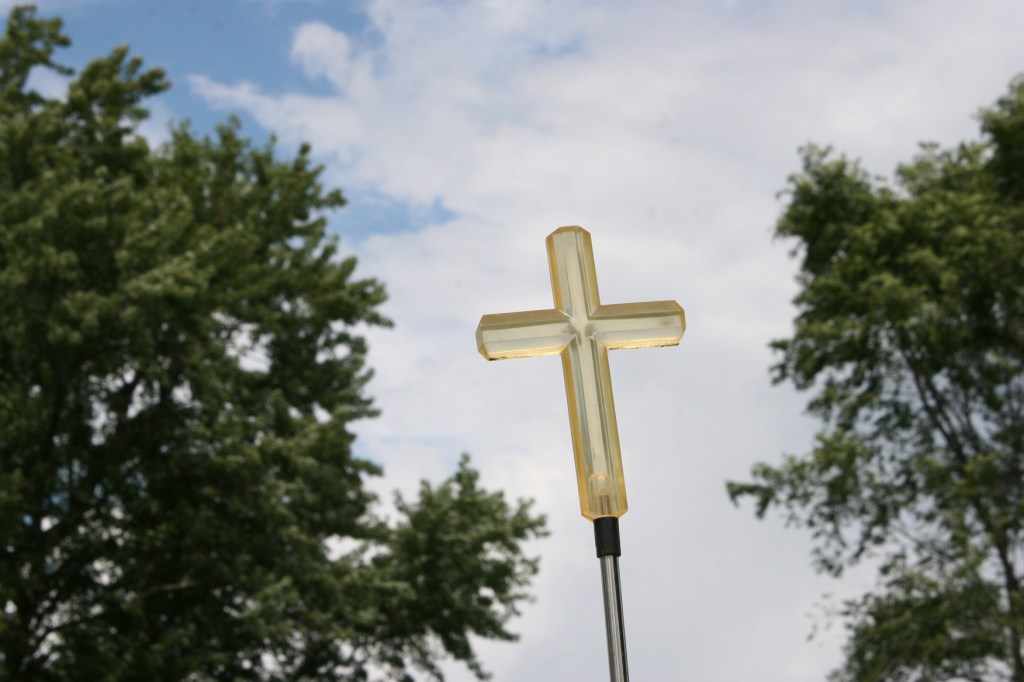
I spotted this probably glow-in-the-dark cross near a gravesite.


The graveyard surrounds Christdala church.


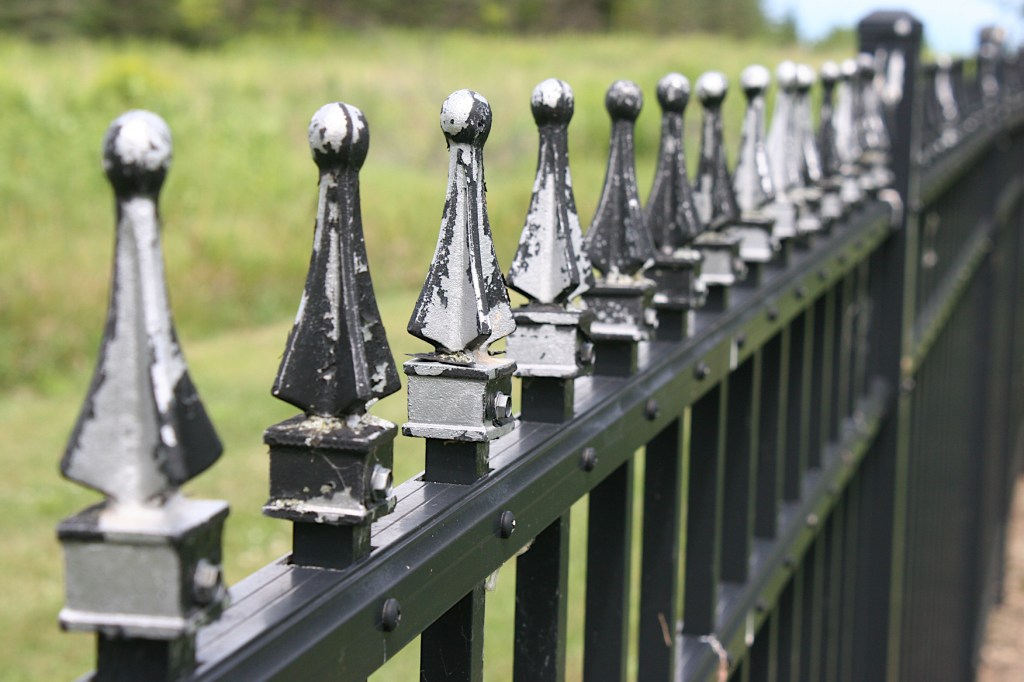
A wrought iron fence encloses the entire property.


We meandered through the graveyard separately. I didn’t recall the wrought iron fencing or the graveyard expansion with plenty of open space for future burials. It’s a lovely and peaceful spot behind the church, away from busy enough Rice County Road 1.


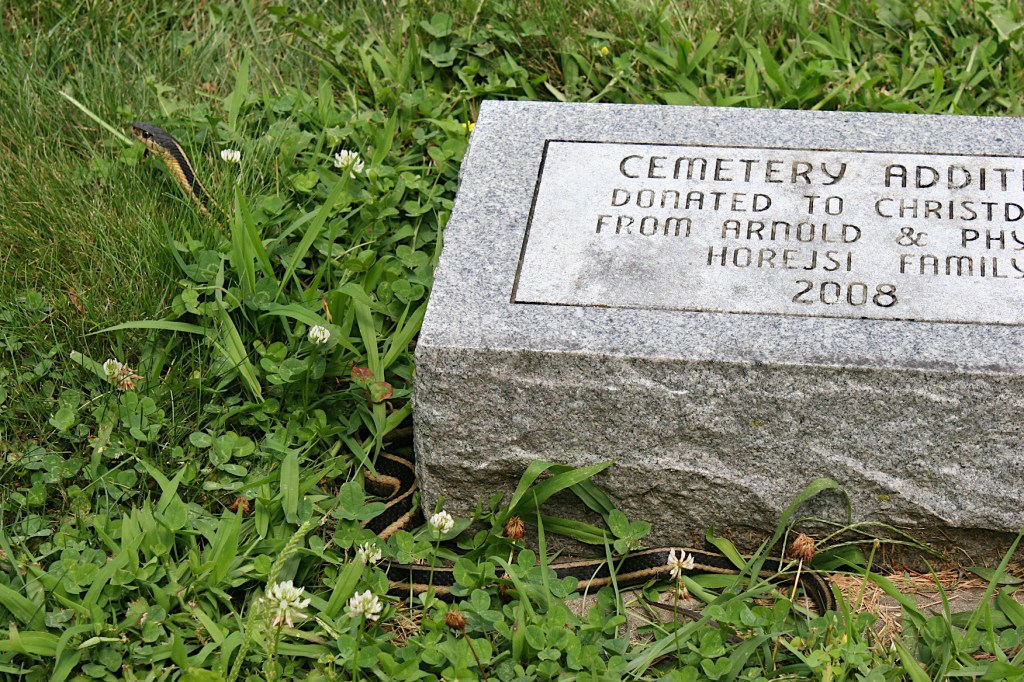
Randy saw this snake before me, but didn’t tell me. He knows I intensely dislike snakes. He suggested I move in for a closer photo. Nope, won’t get any nearer.


Randy directed me to a small stone marking the additional graveyard space as a 2008 donation from Arnold and Phyllis Horejsi. Arnold, 91, died on March 23 with services delayed until August 18 and burial at Christdala at a later date. I walked over to the marker, commenting on the many small holes that pock the land. And then, as I focused my camera lens on the stone, I noticed the garter snake. Striped. Too long. Head up. Tongue flicking.

That was it. I was done touring this cemetery, especially after I saw a second snake nearby. My mind fixated on snakes slithering over my feet and I couldn’t help but think of the biblical reference in Genesis to Satan as a snake. I wanted out, away, gone.


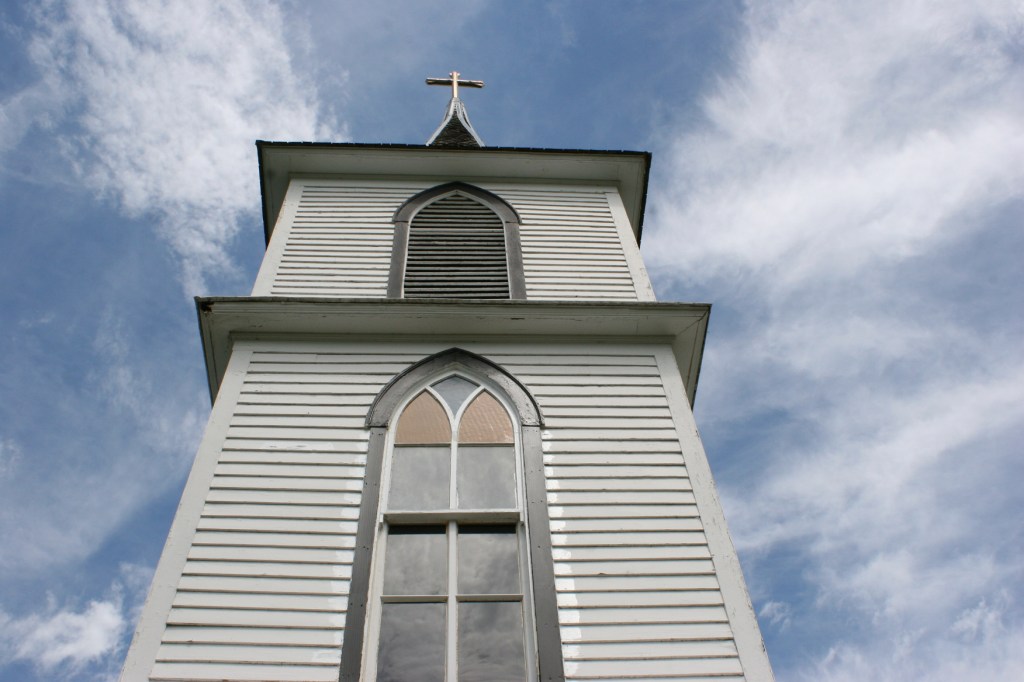
A heavenward view of Christdala.


And so I waited near the front steps for Randy to finish his graveyard tour. I aimed my camera lens skyward, away from the ground and slithering snakes. High toward the steeple. To the cross.


© Copyright 2020 Audrey Kletscher Helbling


Preserving Trondhjem, a Minnesota country church February 25, 2019


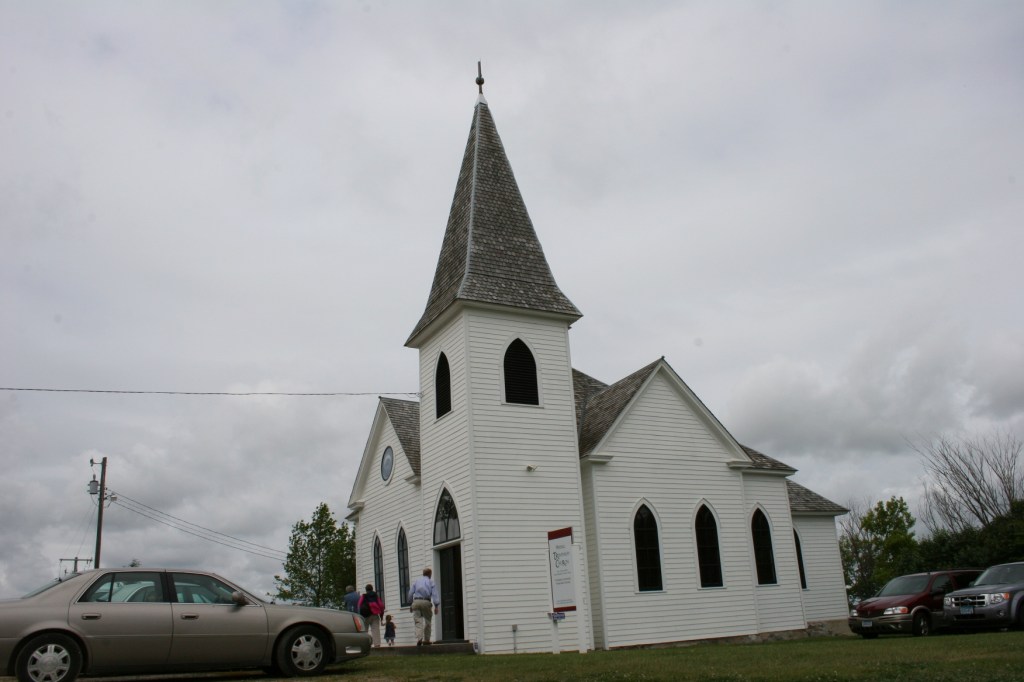
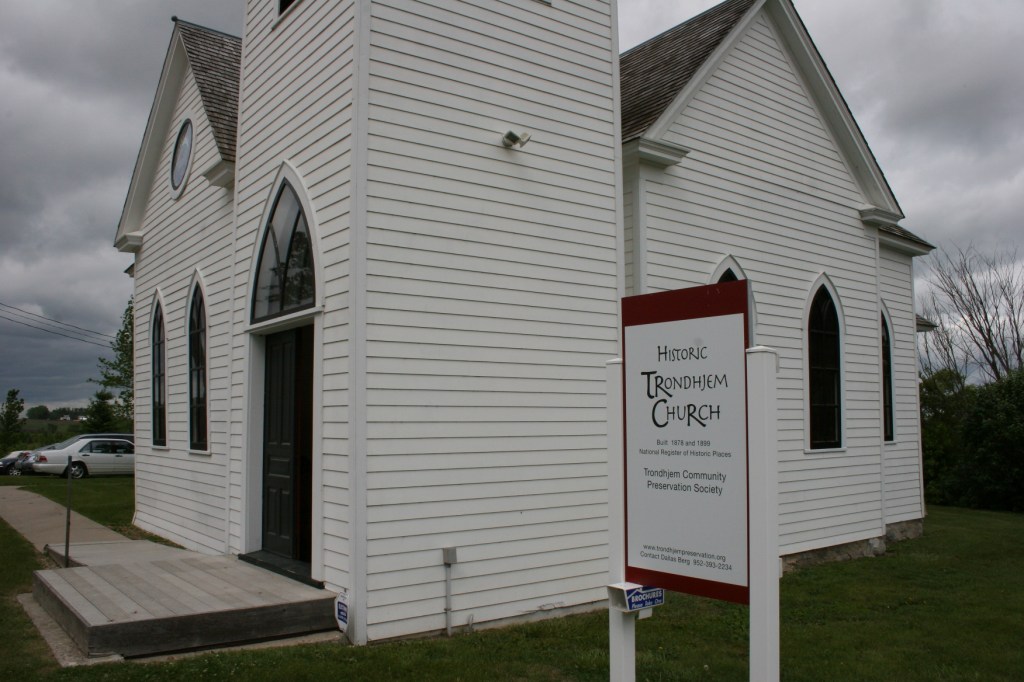
Completed in the fall of 1899, the Historic Trondhjem Church sits atop a 100-foot high hill near Lonsdale. Listed on the National Register of Historic Sites in Minnesota, this Norwegian church has walls constructed with 24 corners to brace it against the wind. Minnesota Prairie Roots file photo.


HOW SACRED THESE PLACES. These country churches. These structures built long ago as gathering places for the faithful.

Country churches, at one time, centered worship and social life in rural areas. Their importance in family and community histories continues. Not so much as active entities, although some still are, but as places preserved. Places of value for their connections to family roots, their history, their art, their stories.


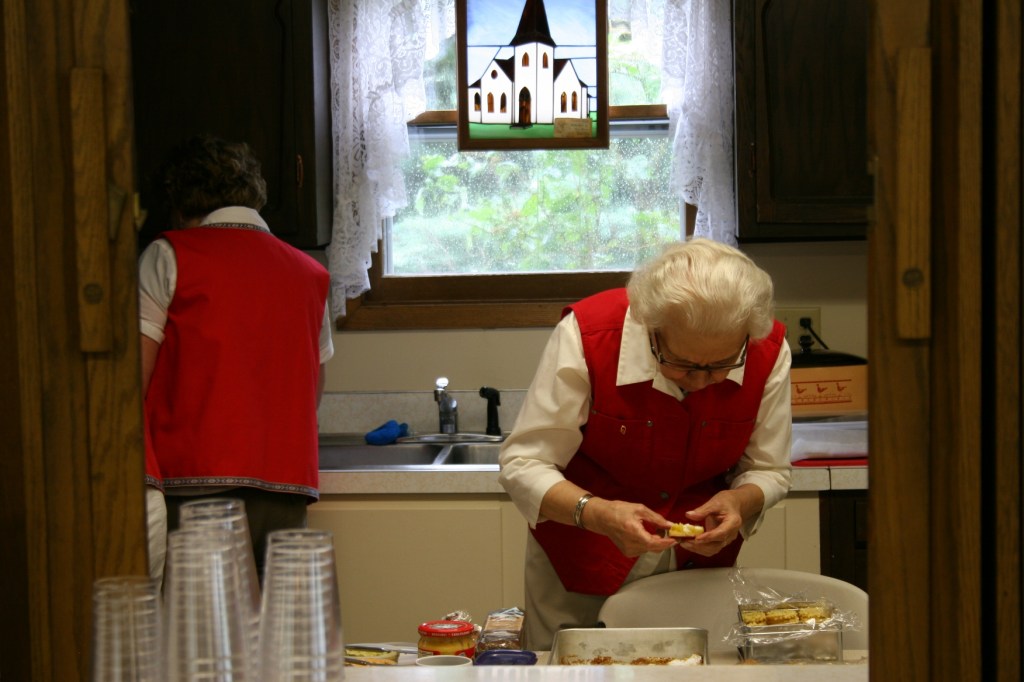
Volunteers prepare a luncheon at Trondhjem. Minnesota Prairie Roots file photo.


Because I’m drawn to the simplicity and beauty of country churches, I’ve toured many in mostly southern Minnesota. I’ve also attended socials and festivals at many. There’s nothing like the cooking and baking of church folks who welcome guests into basements and fellowship halls.


Historic Trondhjem Church. Minnesota Prairie Roots file photo.


Among the churches I’ve visited is the Historic Trondhjem Church in rural Lonsdale. While years have passed since I attended an event at this hilltop church and museum, I remain appreciative of this Norwegian landmark. And I remain on Trondhjem’s mailing list.


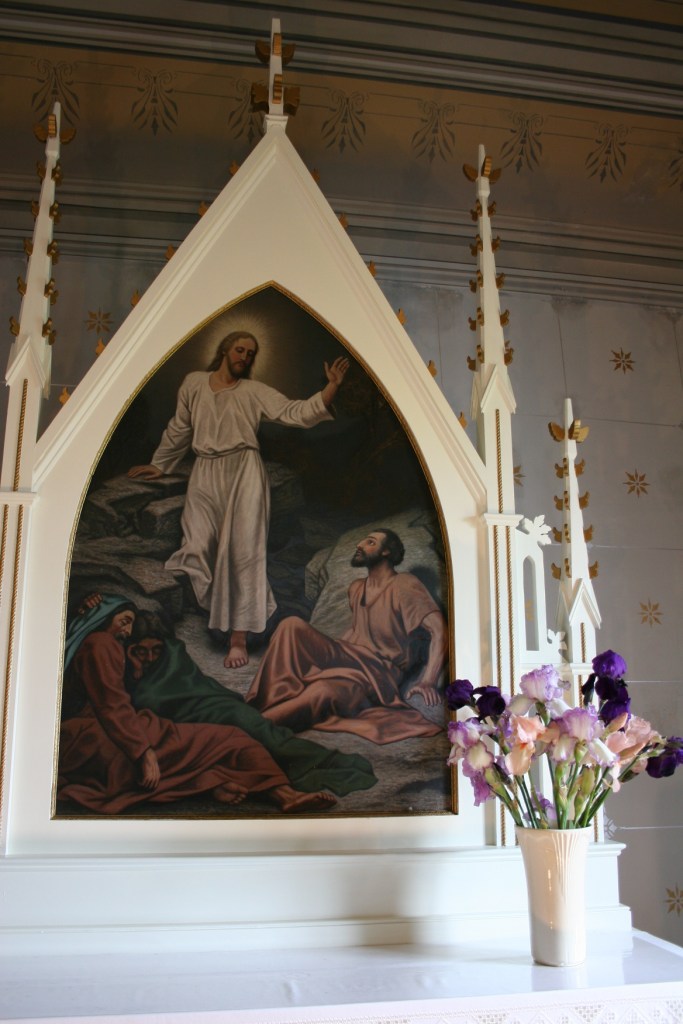
Some of the grant monies will fund preservation of the altar painting. Minnesota Prairie Roots file photo.


Recently a letter arrived from the Trondhjem Community Preservation Society Board about a matching grant of up to $15,000 from the Margaret A. Cargill Foundation. Through a program titled “Engaging Artists and Communities to Preserve Nordic Heritage Churches,” the preservation group hopes to fund several repair and restoration projects. Those include painting the exterior of the 1899 building, preserving the original altar painting of Christ in Gethsemane by Marcus Holm, replicating the front stair entry and restoring the “Eye of God” window.


Members of the Trondhjem Community Preservation Society/The Hallelujah Chorus sing at an event several years ago. Minnesota Prairie Roots file photo.


That’s a lengthy list of projects. But if I know people like I think I do, they will step forward by the March 31, 2019, deadline with enough monies to match that $15,000 grant administered through Partners for Sacred Places.

If you are interested in donating to the preservation and restoration project at this rural Minnesota church, please send your gift to:

TCPS

P.O. Box 259

Lonsdale, MN. 55046


TELL ME: Have you supported a similar project? Let’s hear.

© Copyright 2019 Audrey Kletscher Helbling


Beyond filling bellies at a Faribault “soup kitchen” June 28, 2016

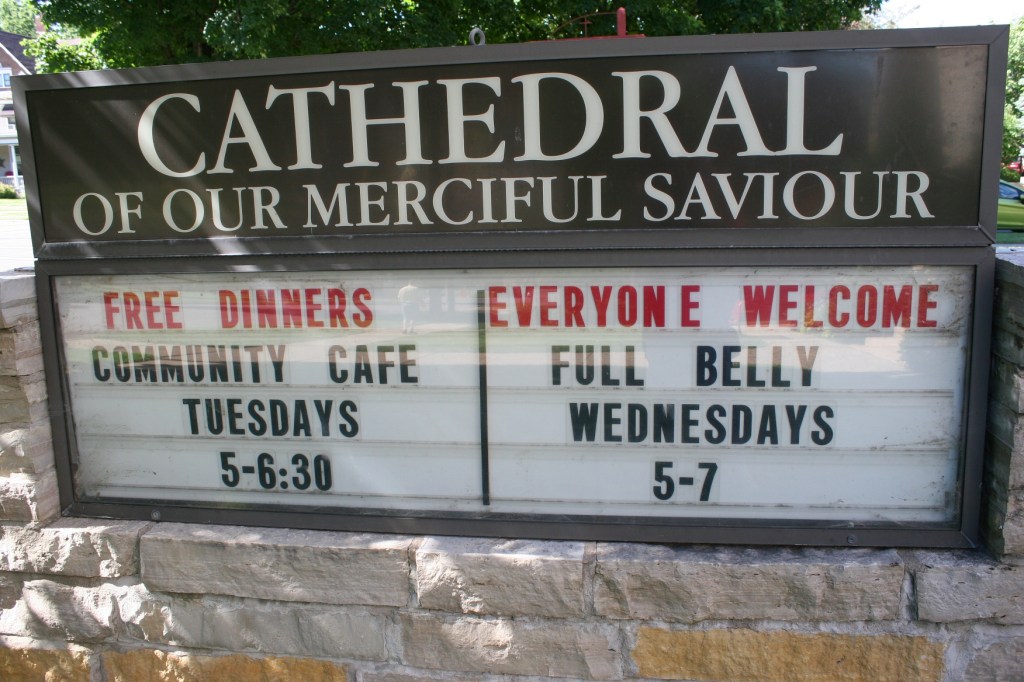
A sign in front of the church advertises the free meals served here twice a week.

A sign in front of the church advertises the free meals served here twice a week.

FOR DONNA STROHKIRCH, finding funding for Full Belly based out of Faribault’s Cathedral of Our Merciful Saviour is an ongoing effort. Feeding the 60 -70 people who come for the non-profit’s free meals on a Wednesday evening costs about $100.

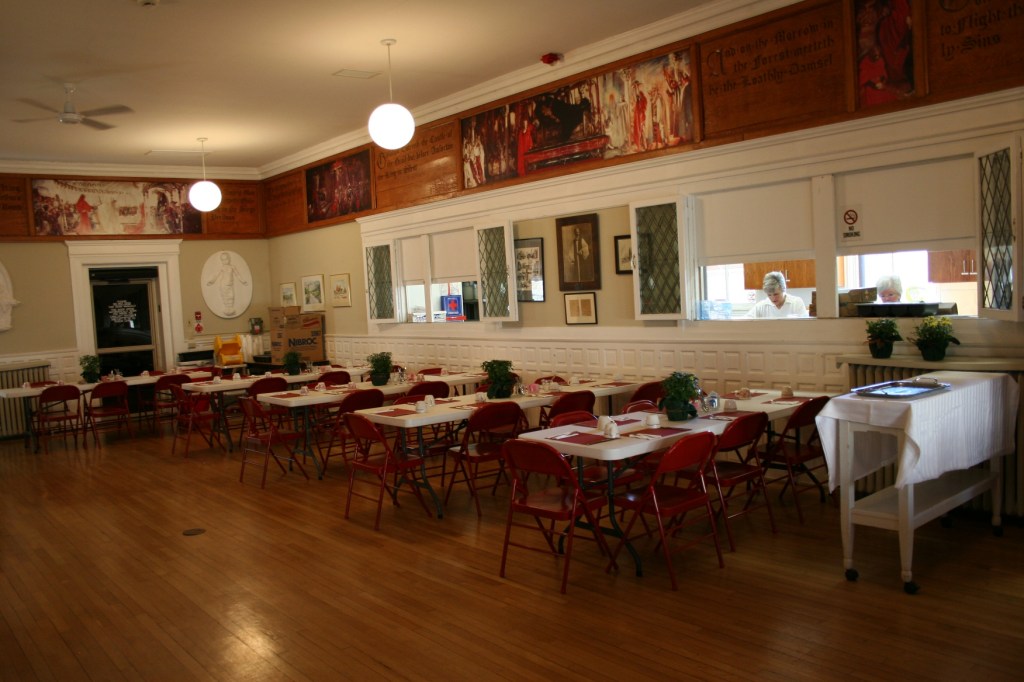
The Guild House dining room and kitchen. Minnesota Prairie Roots file photo.

The Guild House dining room and kitchen. Minnesota Prairie Roots file photo from an unrelated event.

It is, says Donna—meal planner, shopper, cook, greeter and so much more—a miracle that the kitchen continues to operate. She’s already had to trim back from serving three meals weekly to just once a week. And even though she’s dipped into her Social Security income to provide for those in need, this seventy-something woman remains prayerfully optimistic. God always provides, she says. With a smile.

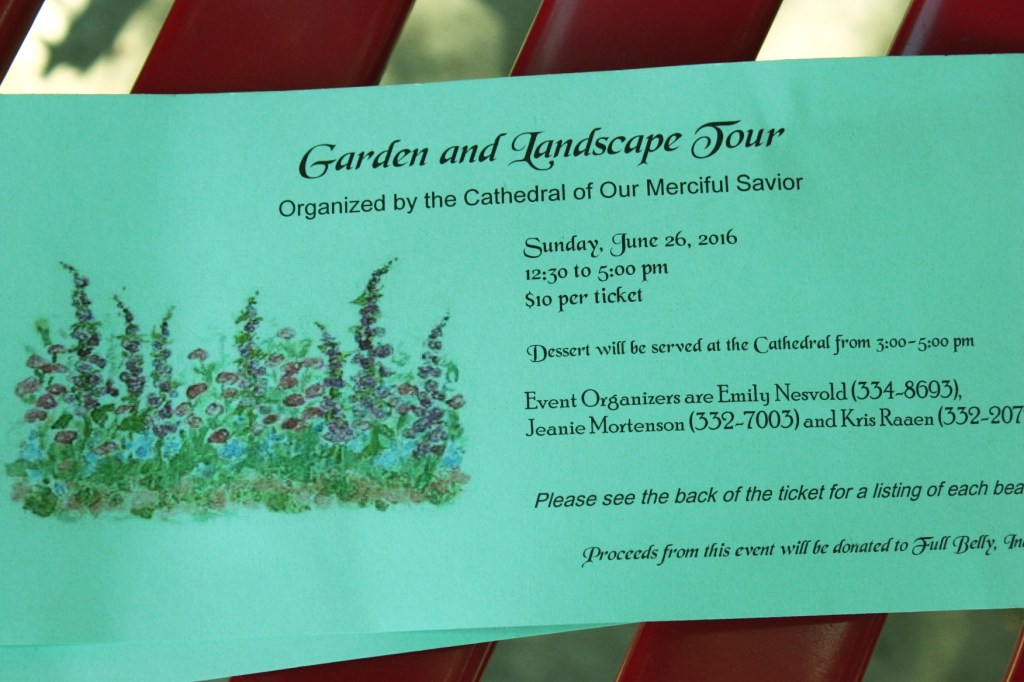
The beautifully-designed tickets, complete with directions to the gardens on the back.

The beautifully-designed tickets, complete with directions to the gardens on the back.

Sunday afternoon, Full Belly benefited from a Cathedral-organized Garden and Landscape Tour. I talked with Donna about her meal ministry after touring six Faribault area gardens on a brilliantly sunny and beautiful summer afternoon in southern Minnesota.

The Cathedral of Our Merciful Saviour is the first Episcopal church in the U.S. to be built as a cathedral. Construction began in 1862 and was completed in 1869.

The Cathedral of Our Merciful Saviour is the first Episcopal church in the U.S. to be built as a cathedral. Construction began in 1862 and was completed in 1869. It attracts lots of visitors interested in this historic building.

Inside the air conditioned space connecting the Cathedral and Guild House, Donna answered my questions between welcoming guests to a dessert table. “It’s always been my mission to have a soup kitchen,” she says, referencing the extensive poverty she witnessed in Alaska before moving to Minnesota three years ago. Shortly thereafter, with the support of family, she started Fully Belly. It’s truly a family affair with a daughter-in-law, grandkids and several unpaid volunteers assisting Donna.

Beautiful gardens, complete with benches, grace the area that connects the cathedral to the Guild House.

Beautiful gardens, complete with benches, grace the area that connects the Cathedral to the historic Guild House, left.

They serve full, well-balanced meals, not just soup, to anyone in need. Most diners are elderly, living on fixed incomes. “Food is me,” says Donna, who comes with a broad background in the food profession. “Love and food kind of go together.”

Lovely lilies in a side garden remind me of

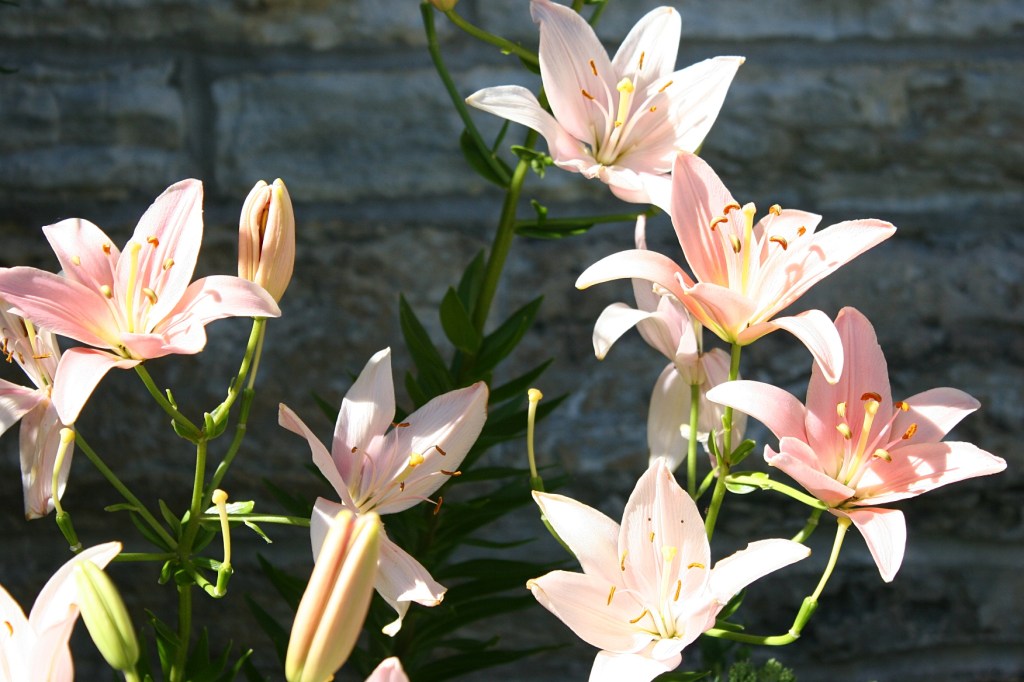
Lovely lilies in a Cathedral side garden remind me of Matthew 6:28, “Consider the lilies of the field, how they grow. They don’t toil, neither do they spin.”

It’s clear from our brief conversation that Donna’s purpose extends beyond filling empty bellies. “It’s my mission from God to help people. I’ve always taken care of people,” she says. Full Belly also provides much-needed fellowship. It is that social aspect, that showing love to others, that food for the soul, which fuels Donna’s passion for feeding others a free meal once a week. She mingles with her dinner guests, talks to them, makes them feel welcome.

Flowers grow alongside the Cathedral and Guild House and in expansive beds.

Flowers grow alongside the Cathedral and Guild House and in expansive beds.

Donna is clearly passionate about feeding the hungry in the Faribault community. And then she mentioned one more thing: She’s always wanted to go on a mission trip. But she lacks money for such a trip and she’s dealing with health issues. Yet, she seems determined. I expect, as she has with Full Belly, that Donna will find a way to finance a mission trip, fulfilling what she views as her life’s mission—to help people.

FYI: Click here to learn more about Full Belly, including information on how you can support this meal ministry. Full Belly serves a free meal from 5 p.m. – 7 p.m. Wednesday evenings at the Cathedral Guild House, behind the church (515 Second Avenue Northwest) near downtown Faribault.

The Community Cathedral Cafe also serves free meals at the Cathedral Guild House from 5 p.m. – 6:30 p.m. Tuesdays.

Check back as I take you to the gardens featured on the Fully Belly fundraiser garden tour.

© Copyright 2016 Audrey Kletscher Helbling
 

Part I: Inside Holden, an historic Norwegian Lutheran church in rural Minnesota March 31, 2016

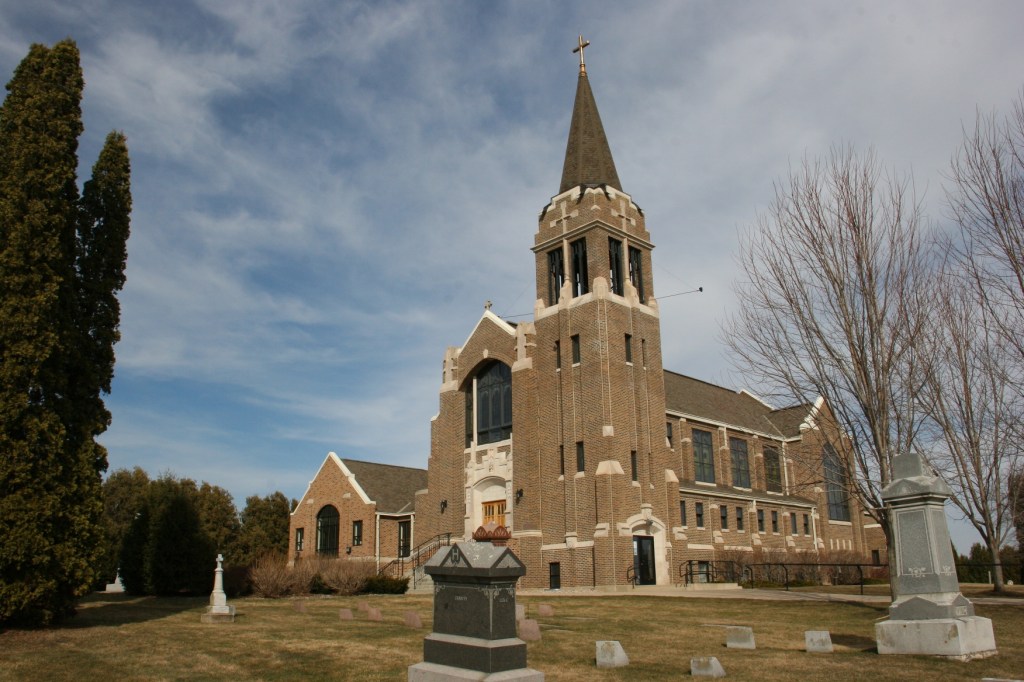
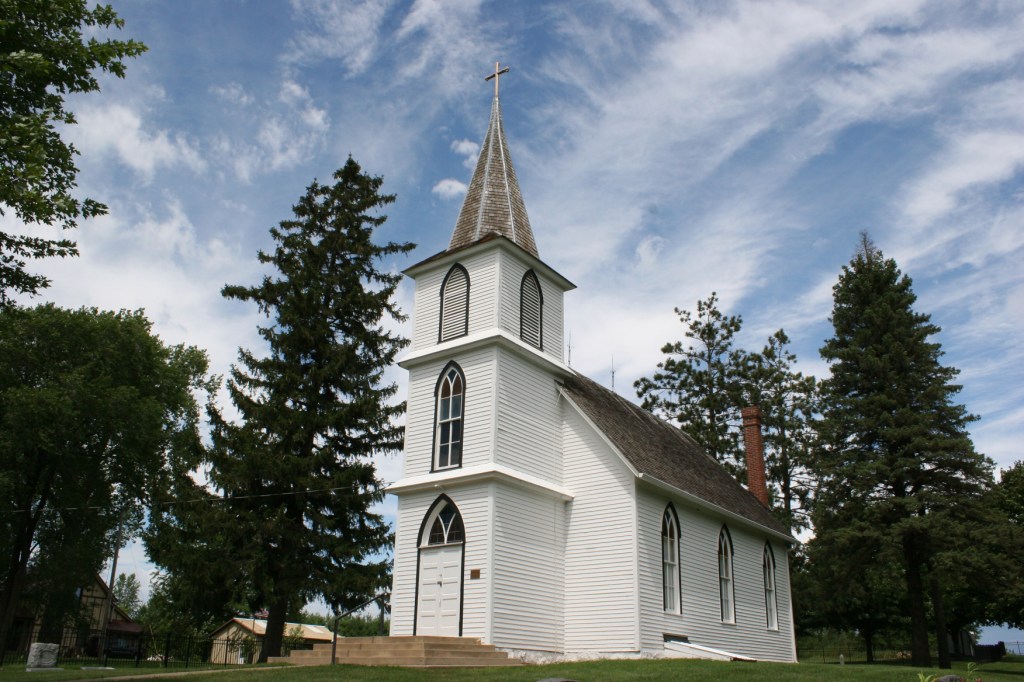
Holden Lutheran Church, rural Kenyon, Minnesota.

Holden Lutheran Church, rural Kenyon, Minnesota.

THE LAST TIME I STOPPED at Holden Lutheran Church, rural Kenyon, the heavy oak doors to the sanctuary were closed and Sunday morning worship underway. Not wanting to intrude in the middle of the service, my husband and I instead wandered the cemetery, vowing to return.

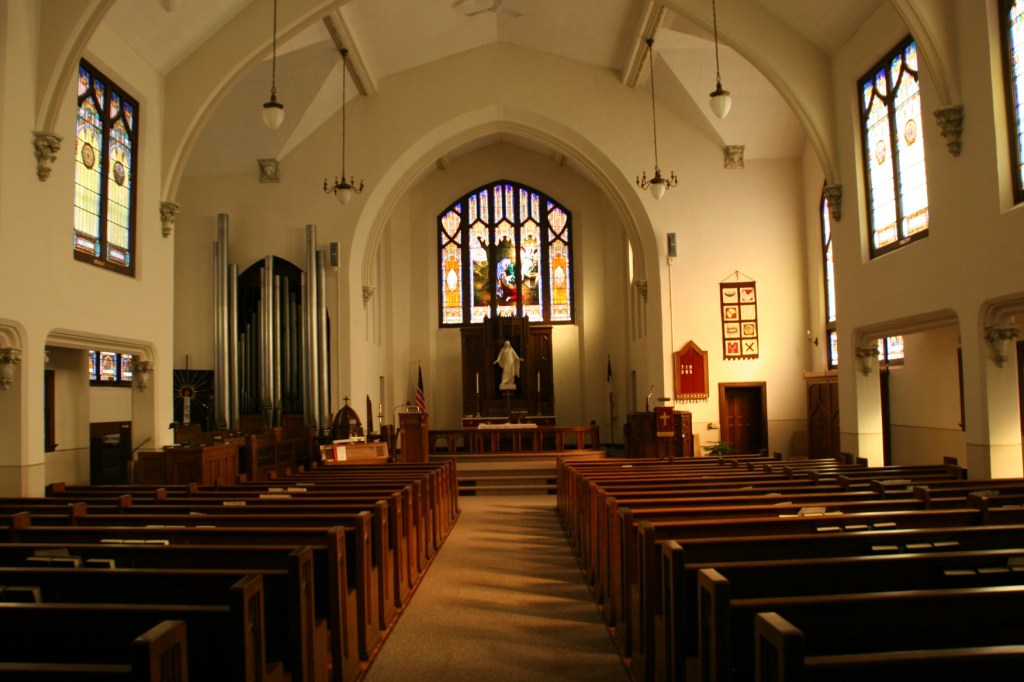
The beautiful sanctuary of Holden Lutheran Church.

The beautiful sanctuary of Holden Lutheran Church.

Several weeks ago we did, on a Saturday afternoon, en route home from Wanamingo to Faribault along the back roads rather than the more direct Minnesota State Highway 60. Goodhue County Road 30 led us right by this landmark Norwegian brick church standing high and solid among farm fields and farm sites.

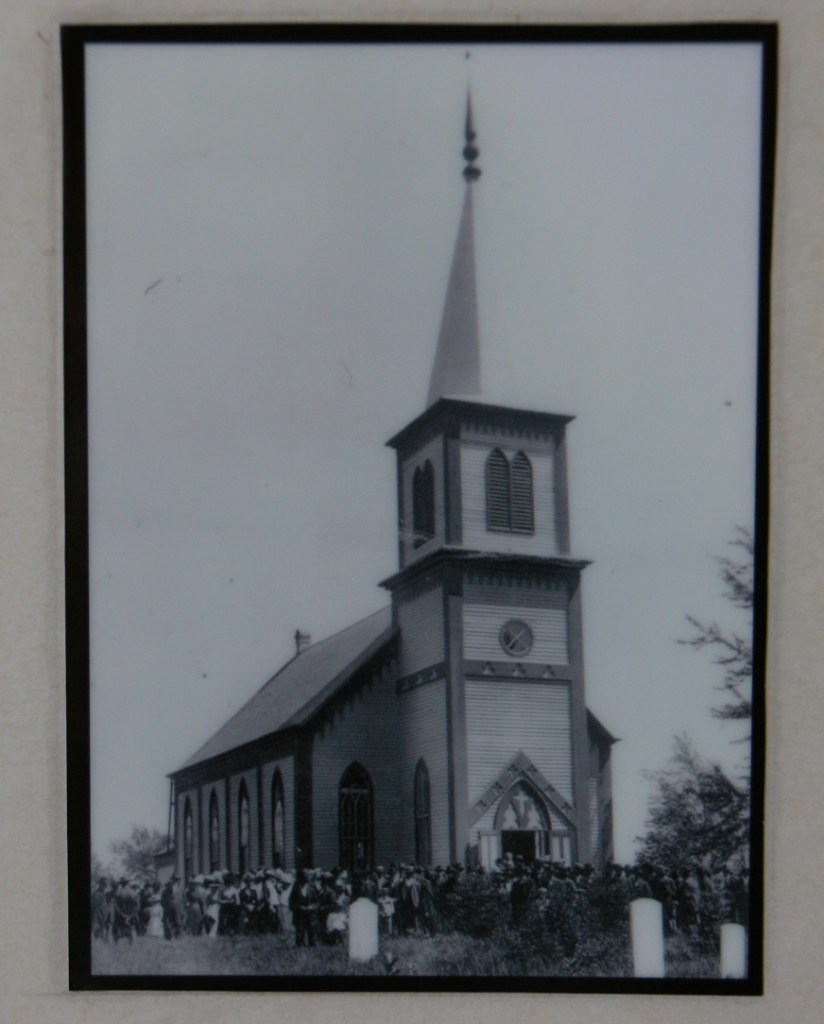
A photo of the "old church" is posted in the present church.

A photo of the “old church,” built in 1871, is posted in the present church.

With my rural roots and deep appreciation for country churches, I was excited to tour this church built in 1924. The congregation was established in 1856. Previously, members worshiped (for 53 years) in a standard wood-frame country church.

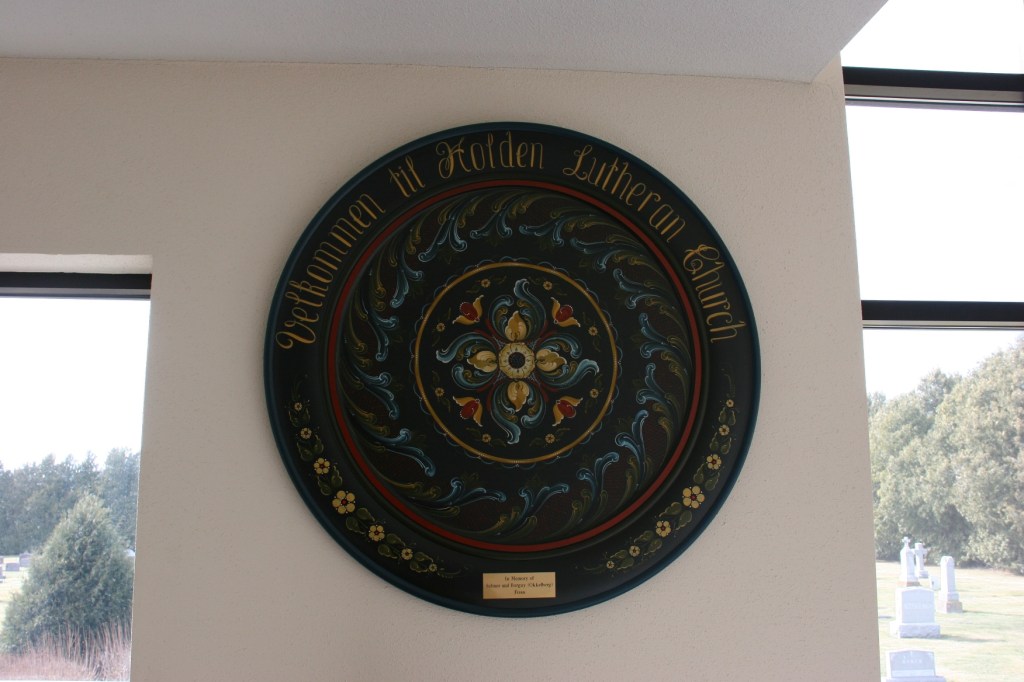
Holden's Norwegian heritage is reflected in this rosemaling art hung in the narthex.

Holden’s Norwegian heritage is reflected in this rosemaling art hung in the narthex.

This congregation is especially notable for its strong Norwegian heritage tracing back to Telemarken, Norway, specifically the village of Holden. From thence comes the name.

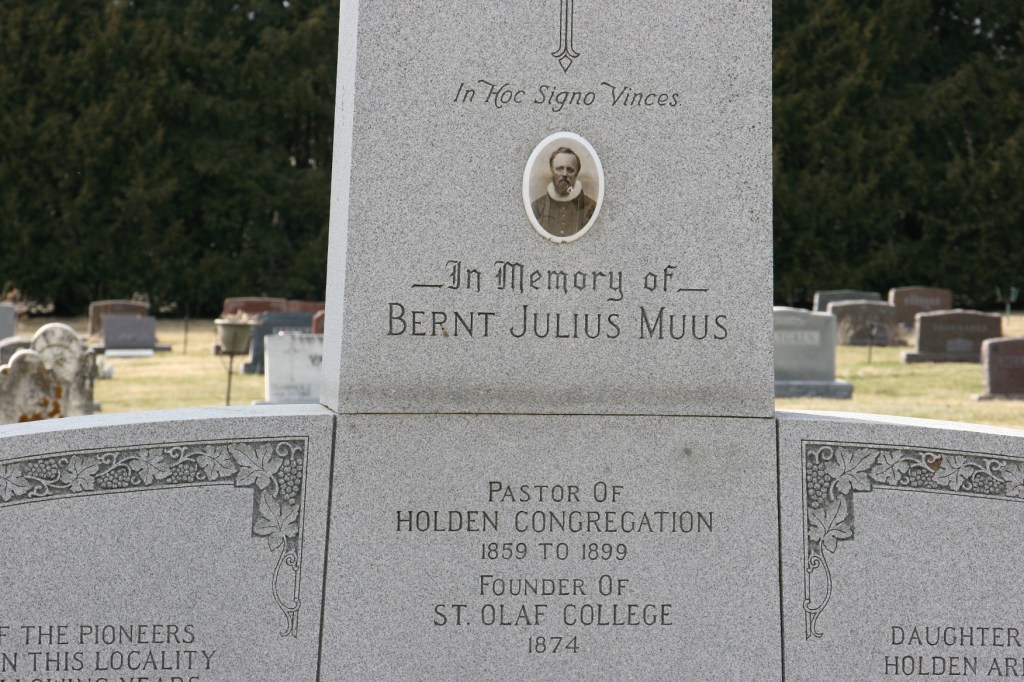
This memorial to the Rev. Bernt Muus was built in

This memorial to the Rev. Bernt Muus was unveiled in May 1937. It is dedicated “In gratitude to God who enabled the pioneers to establish His church in this community…and to the pioneers for building upon Jesus Christ and His Word.”

Holden Lutheran is also notable for its connections to Luther College in Decorah, Iowa, and to St. Olaf College in Northfield, Minnesota. A memorial on the church grounds honors Holden’s first pastor, Bernt Julius Muus, who founded St. Olaf and helped to found Luther. He shepherded Holden for 40 years.

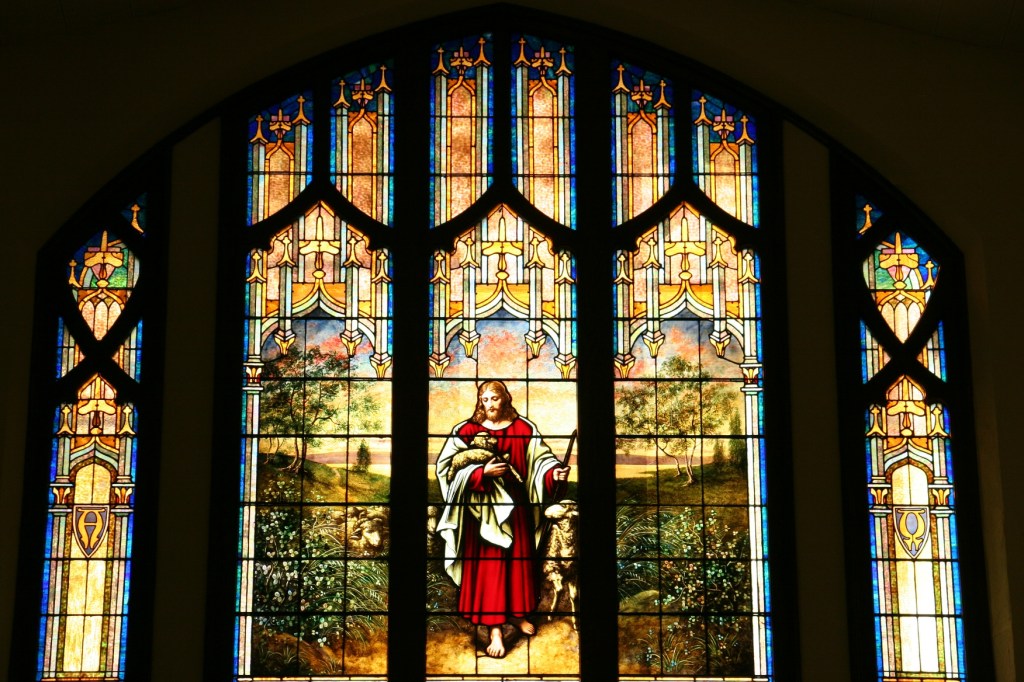
Stained glass windows fill the sanctuary, including this one in the balcony.

Stained glass windows fill the sanctuary, including this one in the balcony.

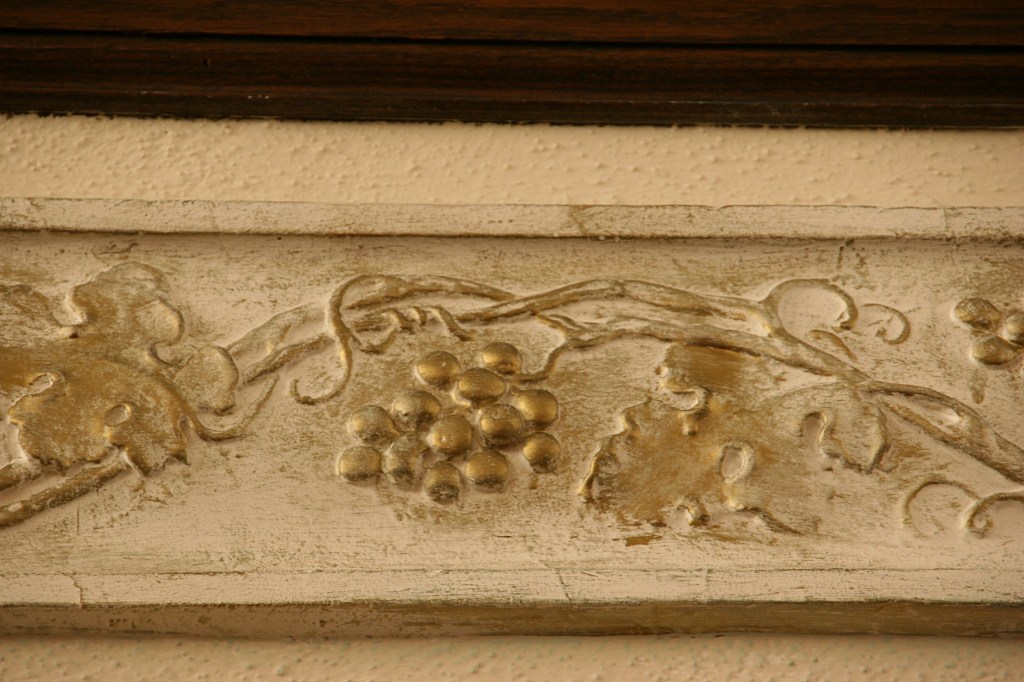
Grapes carved into wood along the balcony.

Grapes carved into wood along the balcony.

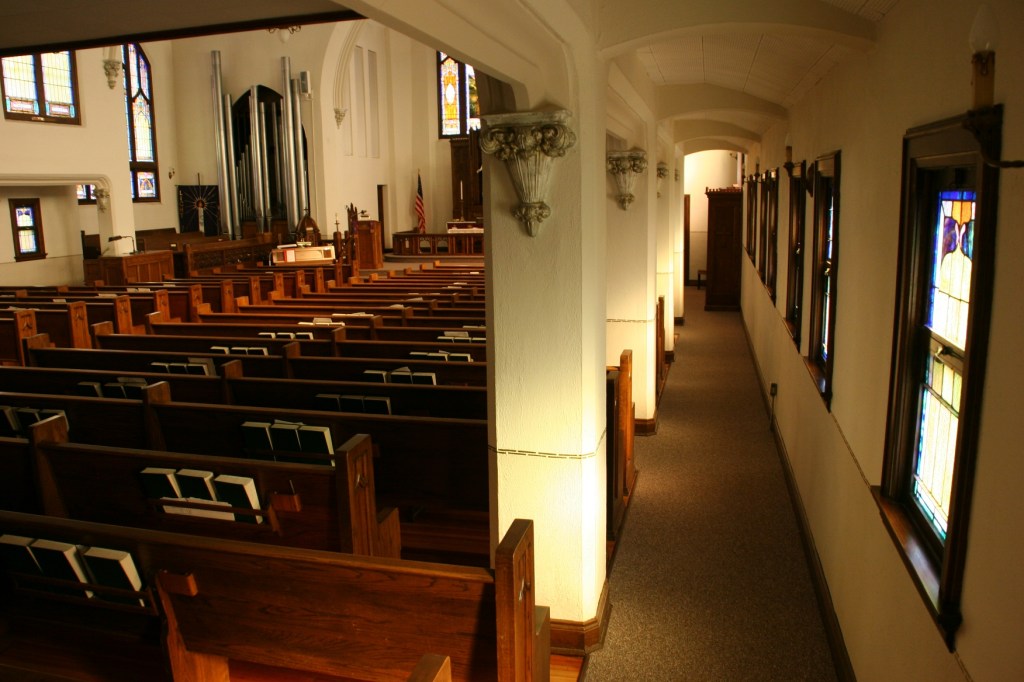
A view of a sanctuary side aisle showcases the craftsmanship of this church.

A view of a sanctuary side aisle showcases the craftsmanship of this church.

This is a place of deep history and heritage reflected in craftsmanship and artifacts within the church building.

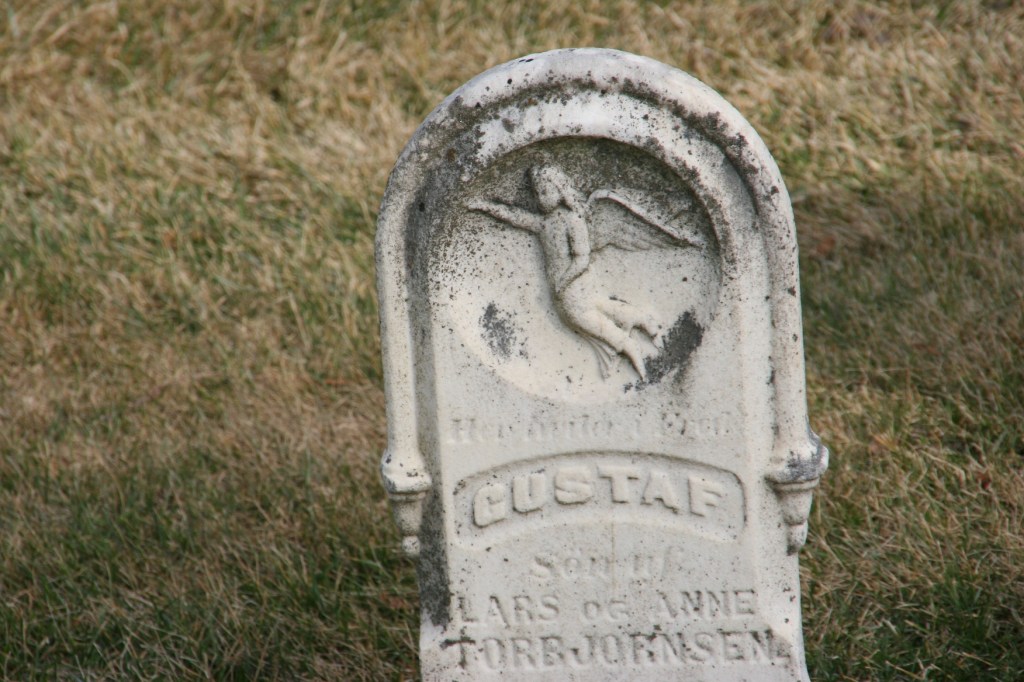
A gravestone in the old part of the cemetery surrounding the church.

A gravestone in the old part of the cemetery.

And in names—like Gustaf, Tollef, Ole—chiseled in to stone in the graveyard.

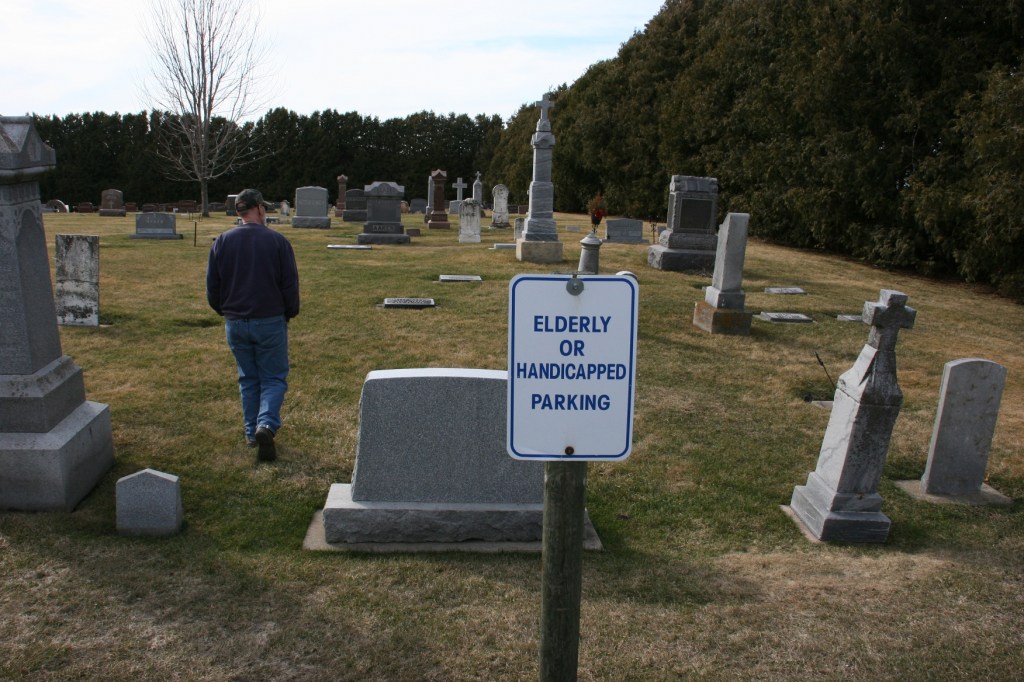
I trail Randy from the back church parking lot into another section of the cemetery.

I trail Randy from the back church parking lot into another section of the cemetery.

Here in this rural place, the wind blows steady on a sunny spring-like March afternoon. I meander with my husband among the gravestones, noting a weathered holiday wreath on one. And then, as I step back and back and back to photograph this massive church in its entirety, I skirt a mound of fresh earth. Not that long ago, mourners gathered here, like the Norwegian speaking settlers 160 years prior, to grieve and to bury a loved one.

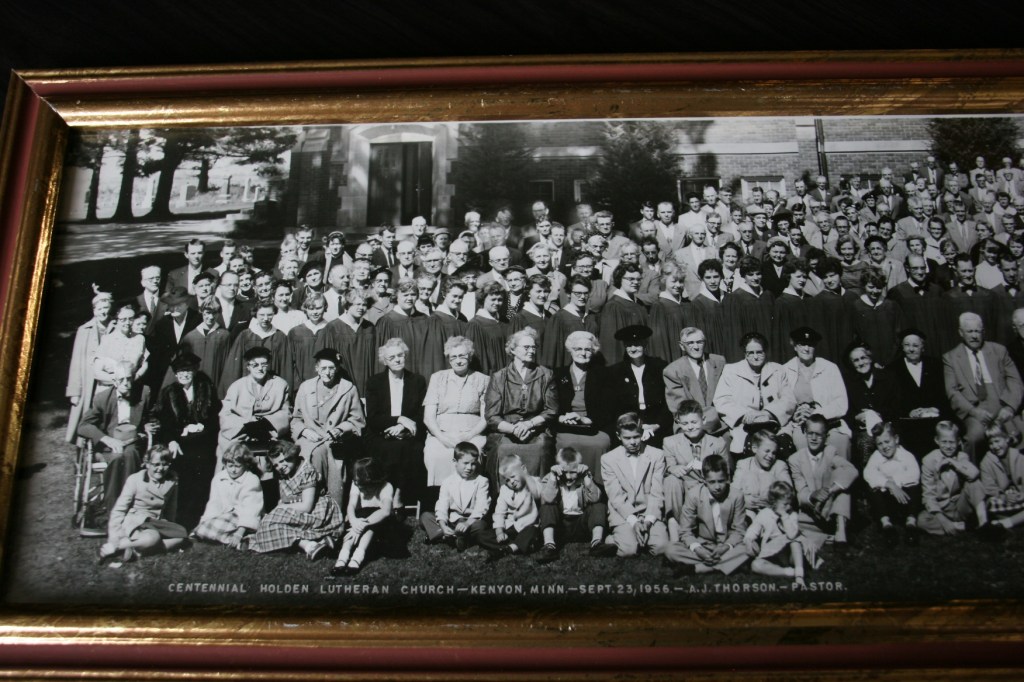
In the church basement, I found and photographed a portion of the church centennial photo.

In the church basement, I found and photographed a portion of the church centennial photo.

Time imprints upon generations in the cycle of life.

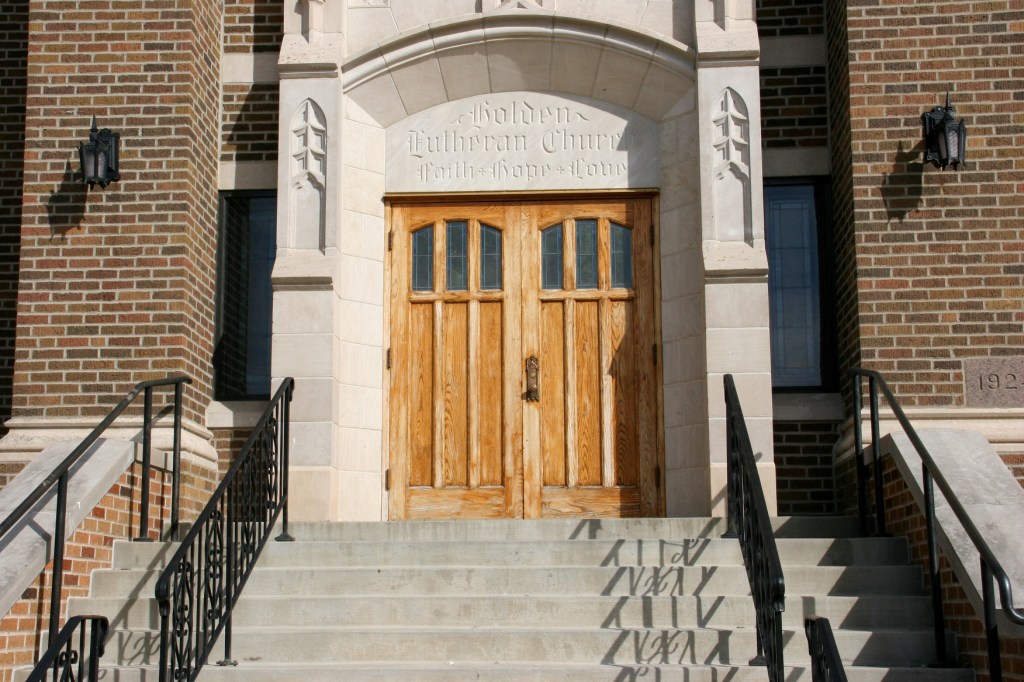
The front entry to Holden Lutheran is stunning. Faith, hope and love are chiseled above the oak doors.

The front entry to Holden Lutheran is stunning. Faith, hope and love are chiseled above the oak doors.

Through these church doors, below the far-reaching steeple tipped with a cross, the faithful have gathered here to worship God, to exchange vows, to baptize children, to mourn the dead. And in late autumn to dine on roast beef, pulsa, lefse, rommegrot and fruit soup at the annual All Saints Dinner celebrating Holden’s Norwegian heritage.

FYI: Check back tomorrow for more photos from Holden Lutheran Church.

© Copyright 2016 Audrey Kletscher Helbling
 

One woman’s promise to God January 6, 2015

The Chapel of the Good Shepherd.

The Chapel of the Good Shepherd.

IT STANDS STATELY and tall on the campus of Shattuck-St. Mary’s School in Faribault. The Chapel of the Good Shepherd, or, to be exact, the Eunice Shumway Memorial Chapel of the Good Shepherd.

Inside the historic sanctuary, the pews face the aisle rather than the altar.

Inside the historic sanctuary, the pews face the aisle rather than the altar.

Eunice’s mother, Augusta Shumway, pledged $20,000 to build the chapel. After construction began in June 1871, Augusta lost nearly everything in the Great Chicago Fire of October 1871. Despite her loss, Augusta fulfilled her promise, sending $15,000 in insurance payments to Bishop Henry Whipple. She later donated more monies to the school.
Looking up at the altar and the stunning stained glass windows above it.
Looking up at the altar and the stunning stained glass windows above it.

The bishop quoted his friend Augusta in his book, Lights and Shadows of a Long Episcopate: Being Reminiscences and Recollections of the Right Reverend Henry Benjamin Whipple:

“Bishop, I promised God to build the chapel in memory of my daughter. I owe but one debt, and that is to God. I have collected enough of insurance money to complete the building, and here it is.”

Two behind-the-altar windows up close.

Two behind-the-altar windows up close.

Wrote the bishop: It was a noble instance of woman’s faith.

Whipple summarizes well the intentions of Augusta, who only a dozen years earlier lost her 13-month-old daughter.

The bell tower spire is a Shattuck landmark.

The bell tower spire is a Shattuck landmark.

What faith. What hope. What generosity.

BONUS PHOTOS:

The arched wooden front doors present an impressive entry.

The arched wooden front doors present an impressive entry.

The exterior is tastefully and simply decorated for the holidays.

The exterior is tastefully and simply decorated for the holidays.

Outside the front door. The church is on the National Register of Historic Places.

Outside the front door. The church is on the National Register of Historic Places.

Just inside the doors, a creche.

Just inside the doors, a creche.

A close-up of the Holy Family shows Joseph viewing the Christ Child.

A close-up of the Holy Family shows Joseph viewing the Christ Child.

On a wall inside the entry.

On a wall inside the entry.

Beautiful stained glass above the exterior entry doors.

Beautiful stained glass above the exterior entry doors.

© Copyright 2015 Audrey Kletscher Helbling