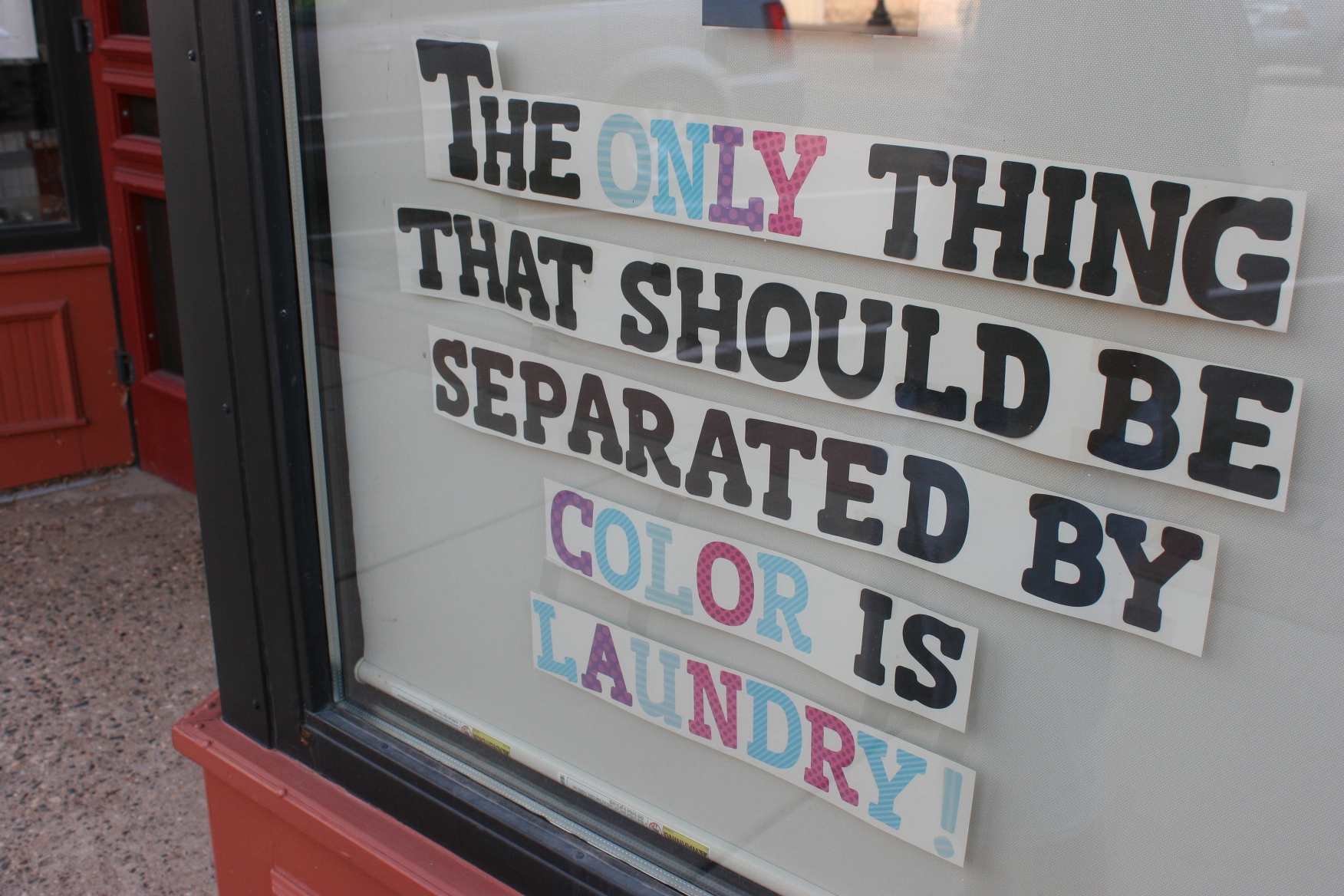
Photographed in August 2018 in a storefront window of a business in downtown Faribault, Minnesota. (Minnesota Prairie Roots file photo 2018)
AS A WHITE WOMAN and writer living in rural Minnesota, writing on the topic of Juneteenth isn’t easy or comfortable. Yet, it’s important for me to do so, to publicly recognize the federal holiday commemorating the emancipation of enslaved African Americans.
Why? Simply put, I care. I care that African Americans were treated with such disrespect, that they were “owned,” for no one should “own” anyone. Yet, these men, women and children were owned, used and abused by White slave owners who worked them, controlled them, imprisoned them, built our country’s early economy on their hardworking backs.
Artist Susan Griebel crafted this quilted art from fabric her mother-in-law, Margaret Griebel, acquired in Africa. Margaret’s husband served as a missionary in Nigeria. (Minnesota Prairie Roots copyrighted file photo)
I don’t pretend to be any sort of expert on slavery. But the very thought of it shakes me to the core. I can only imagine the emotions felt by those whose ancestors worked in servitude—in cotton and tobacco fields, in homes, in barns, on vast plantations…
One of many hearts incorporated into a sculpture, “Spreading the Love” by Geralyn Thelen and Dale Lewis, located in downtown Northfield, Minnesota. (Minnesota Prairie Roots copyrighted file photo 2022)
Beyond reflecting on this date in history, I’ve tried to educate myself by reading, a skill most slaves were denied. Reading, whether stories written by reliable media, nonfiction or even fiction rooted in history, opens my mind to understanding. And with understanding comes compassion and an unwillingness to remain silent.
Too many times during my 60-plus years of life I’ve seen (think Confederate flags) and heard the animosities expressed toward people of color. And while this doesn’t apply specifically to Black people and slavery, I will speak up if someone starts bashing our local immigrant population with false claims and other unkind words. I fully recognize that, because my skin is colorless, my life is likely easier without preconceived ideas/prejudices/denied opportunities.
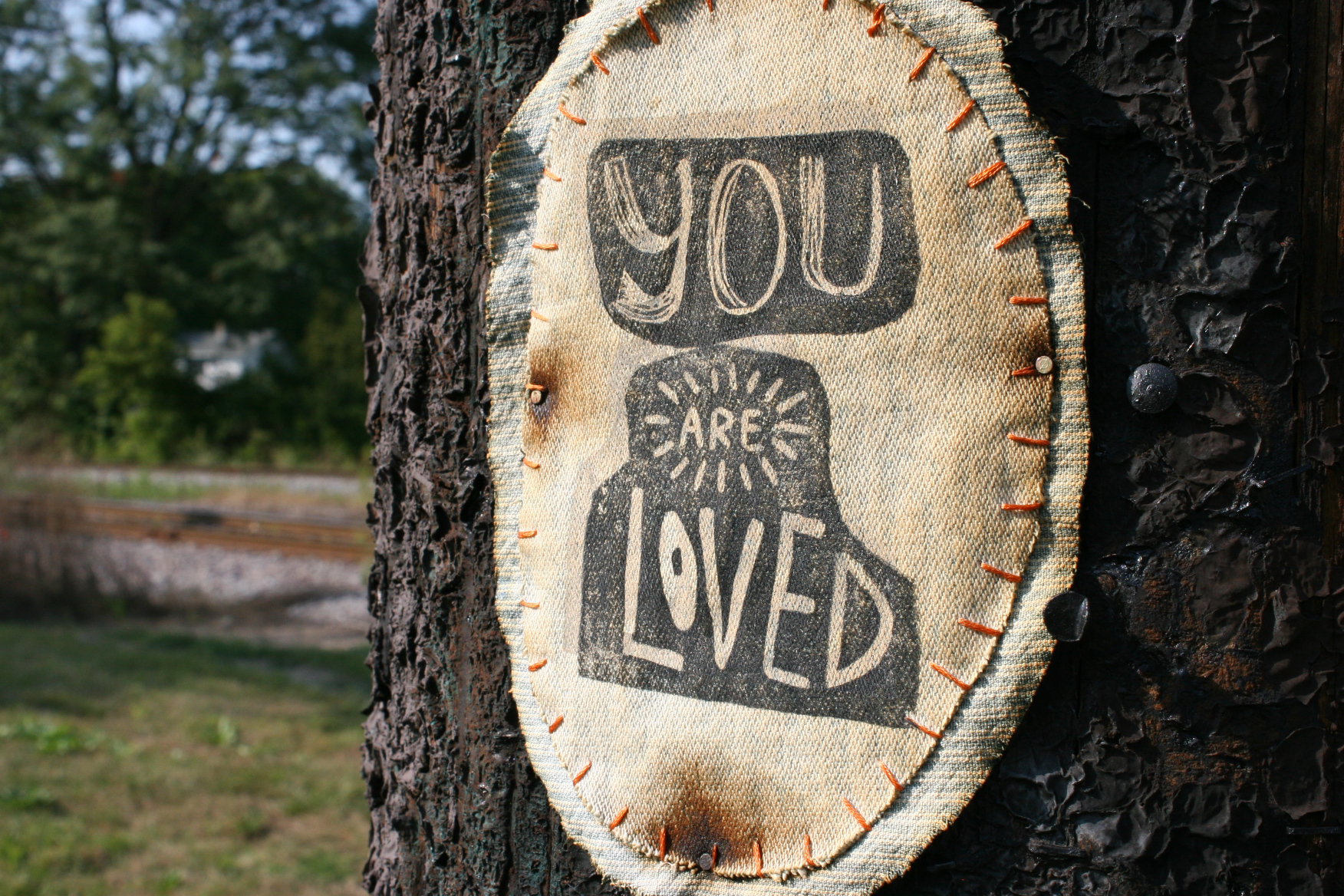
Love this uplifting message posted along a recreational trail in the Atwood Neighborhood of Madison, Wisconsin. (Minnesota Prairie Roots copyrighted file photo)
I appreciate that thoughts in this country are shifting, that we as a people are acknowledging past wrongs, that we’re trying. On the flip side, I see, too, hatred rising in ways I would never have imagined possible.
I admit that I grew up in a household where my father occasionally used the “n” word. It hurts to write that. The “n” word was part of his rural vocabulary, of the time, of growing up among others just like him. White. I grew up similarly, totally surrounded by those of Scandinavian, German, Polish, Irish and other descent, none with roots in Africa.
But I moved away, grew my knowledge and experiences, grew my exposure to new ideas and people and places. I’ve also gained insights into the challenges Blacks face from a biracial son-in-law. Today I live in a diverse neighborhood of Americans who are White, Latino, African…and I’m thankful for that. They carry, in their family histories, struggles and joys, the imprints of those who came before them. Today I honor those African Americans in Texas who 156 years ago first celebrated their freedom from slavery with “Jubilee Day” on June 19, 1866. And I honor all those slaves forced into lives not of their choosing, without freedom, but determined to be free.
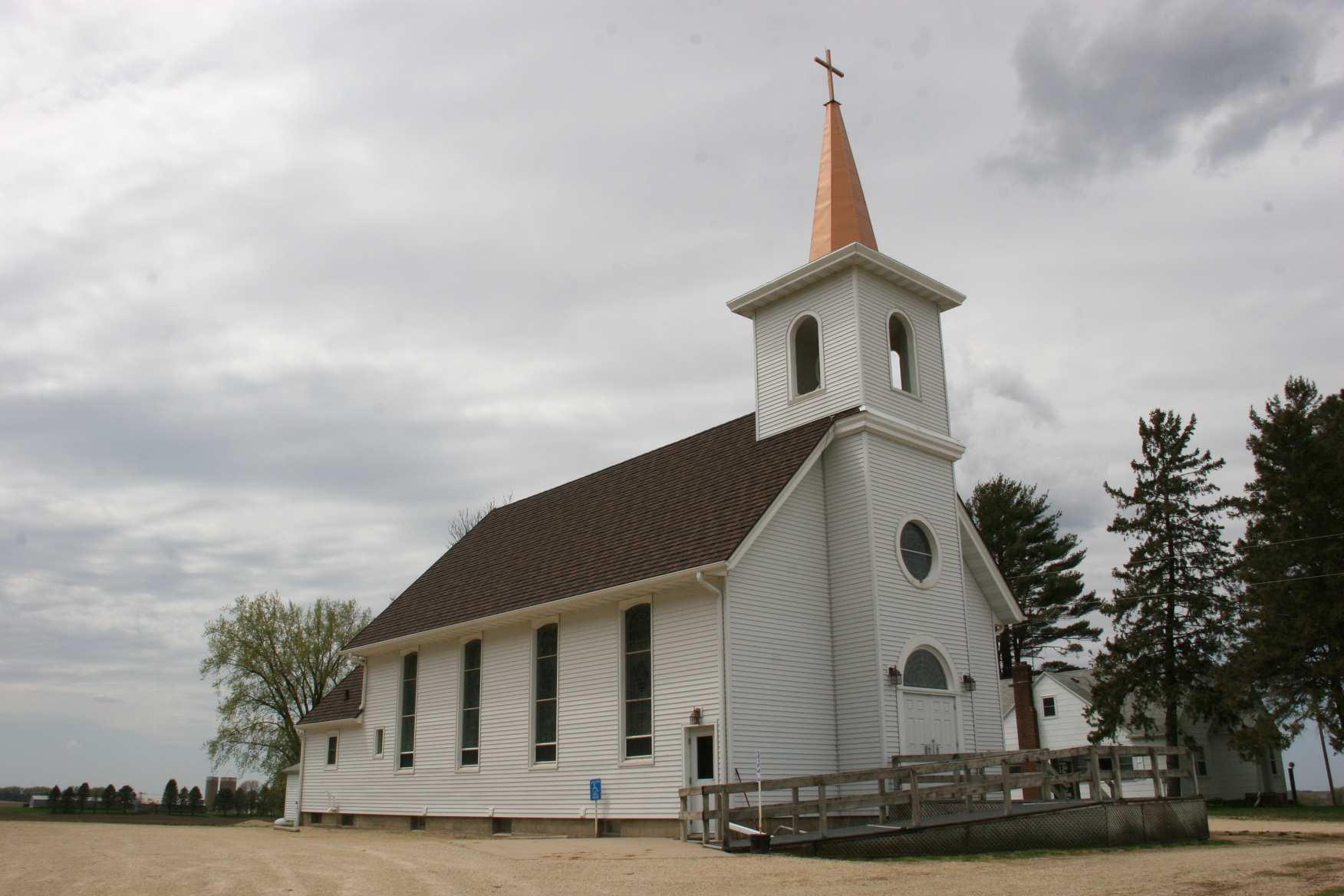
Immanuel Lutheran Church, Potsdam. (Minnesota Prairie Roots copyrighted photo May 2022)
NO MATTER HOW MANY country churches I discover, how many adjoining cemeteries I meander, my interest in these sacred places never wanes.
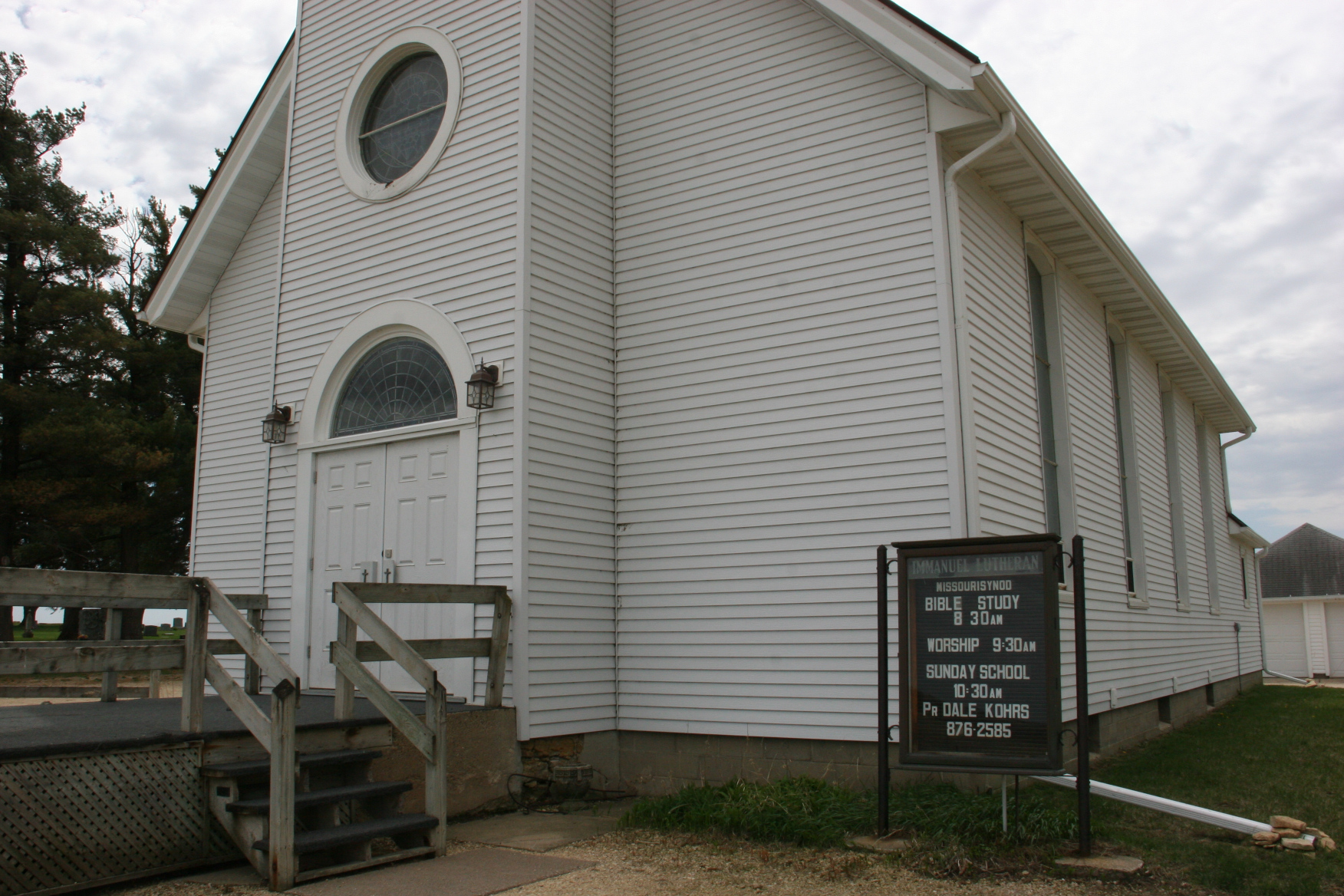
Detailed signage provides basic info about Immanuel Lutheran. (Minnesota Prairie Roots copyrighted photo May 2022)
On a recent day trip in southeastern Minnesota, Randy and I found Immanuel Lutheran Church of Potsdam, an unincorporated community close to Elgin. We bypassed it initially, then turned around to explore the church grounds along Minnesota State Highway 247.
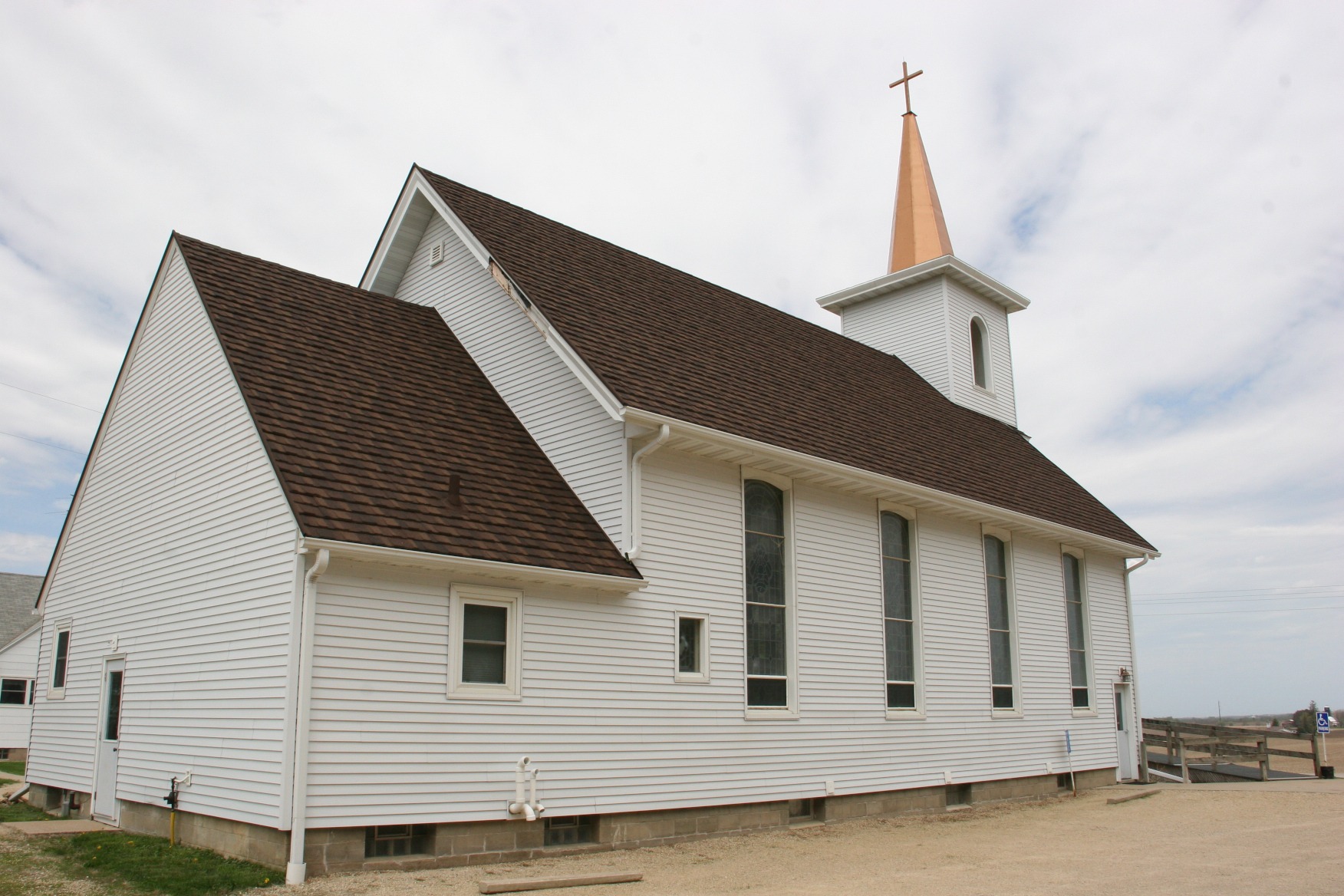
A back and side view of Immanuel. (Minnesota Prairie Roots copyrighted photo May 2022)
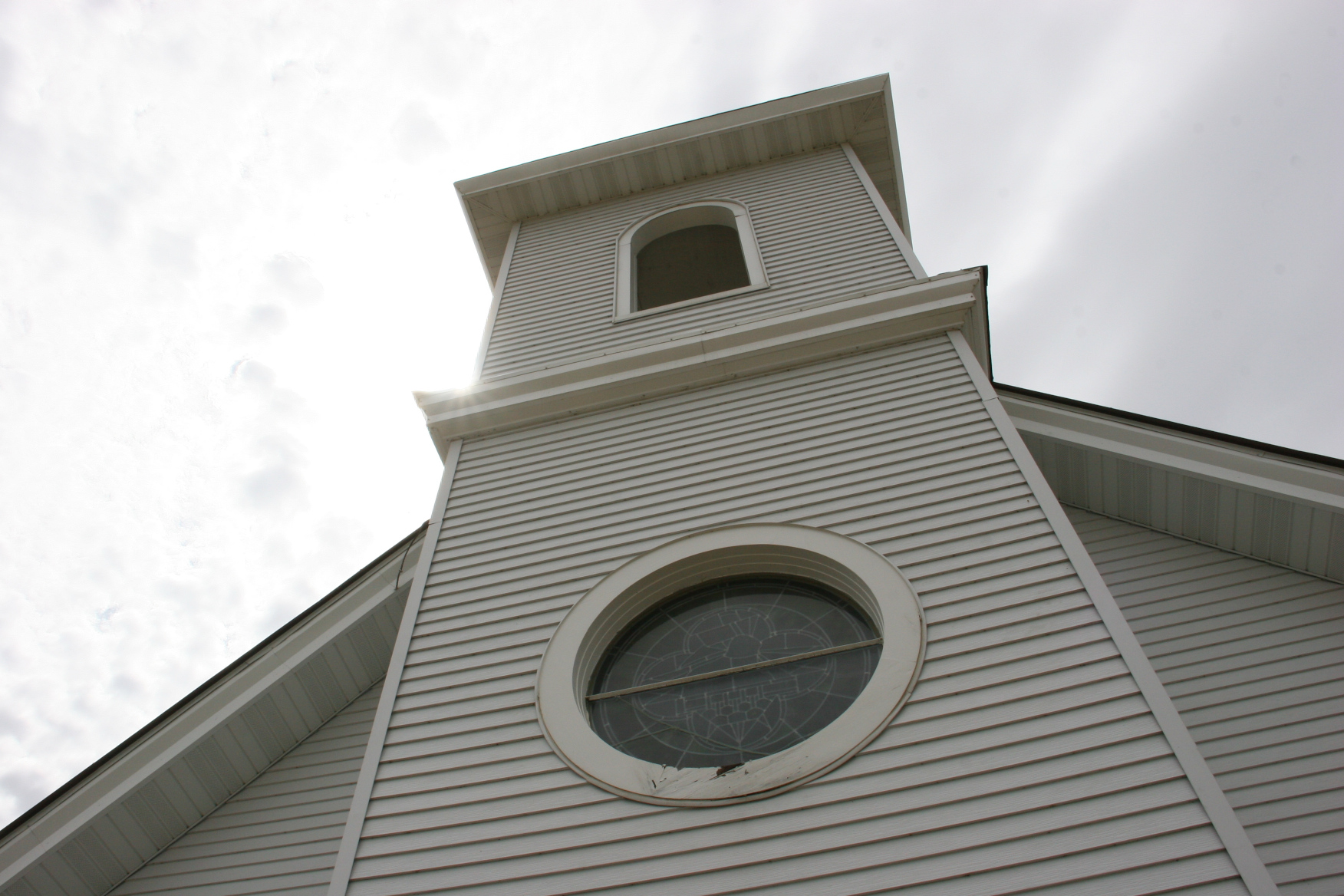
Immanuel fits the bucolic image of a rural church—constructed of wood painted white, cross-topped steeple, bell snugged inside tower, stained glass windows running the length of the sanctuary.
Looking up toward the bell tower. (Minnesota Prairie Roots copyrighted photo May 2022)
This church is especially well-maintained, not always the case in rural houses of worship with often dwindling congregations.
The locked front doors. (Minnesota Prairie Roots copyrighted photo May 2022)
I longed to get inside this Missouri Synod Lutheran Church, to view the sanctuary, to settle into a pew, to see the art therein, to experience the peace such a place holds. But, as I expected, the front doors were locked.
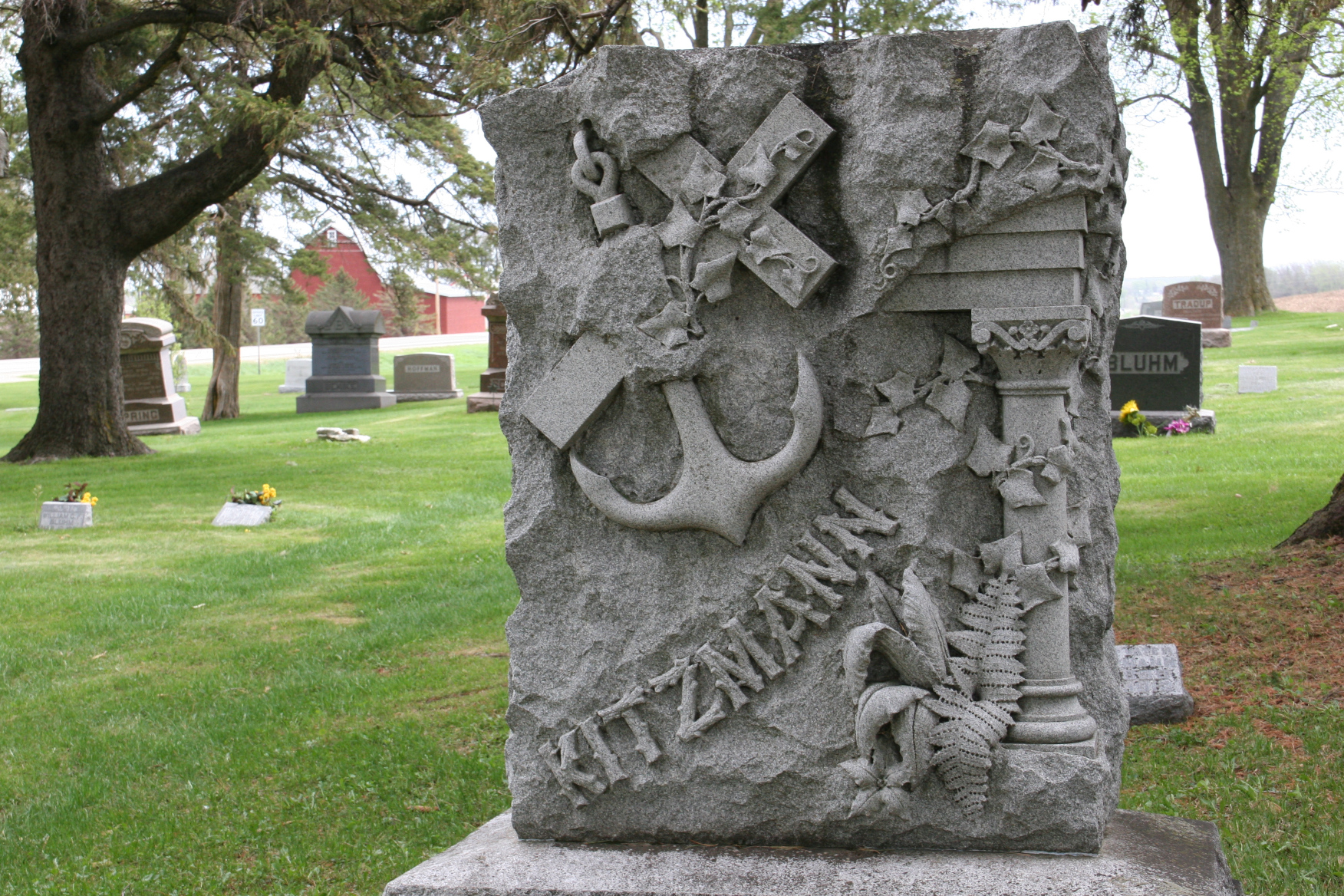
Across the highway, a red barn. In the cemetery, gray stones. (Minnesota Prairie Roots copyrighted photo May 2022)
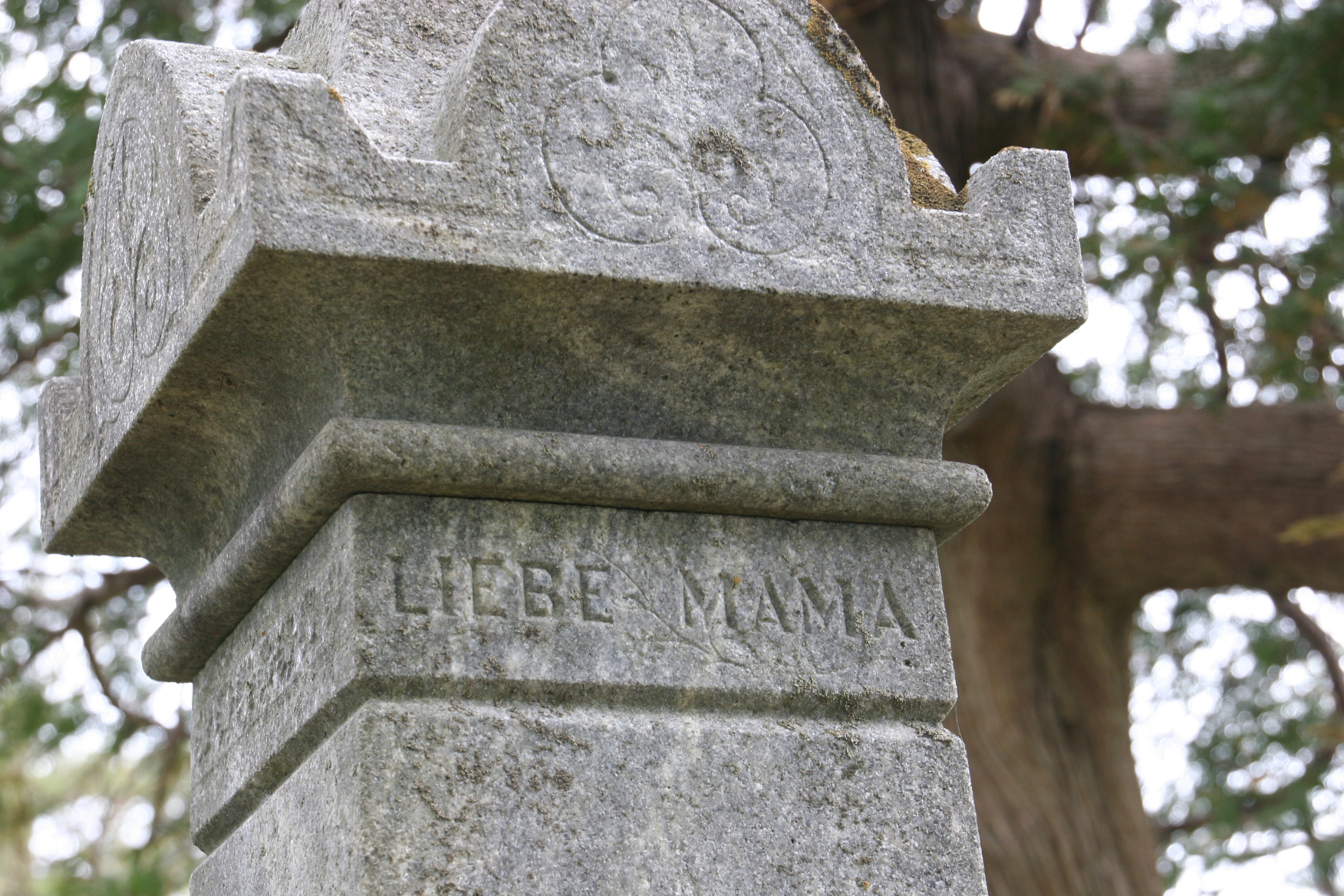
The German word “LIEBE” means love, found on a gravestone. (Minnesota Prairie Roots copyrighted photo May 2022)
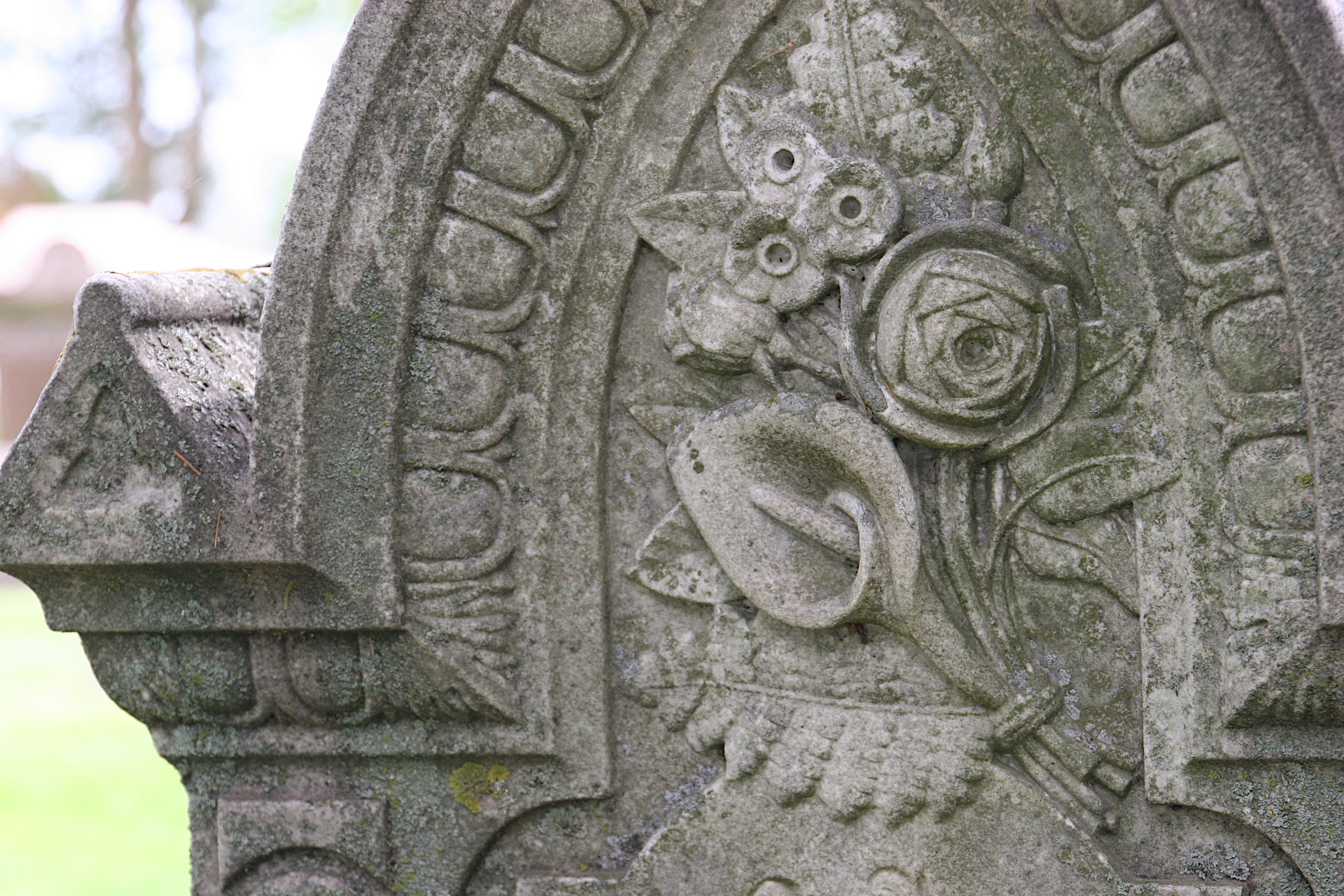
Beautiful flower art on an aged gravestone. (Minnesota Prairie Roots copyrighted photo May 2022)
So instead, I walked around the exterior, studying the details, bracing myself against the strong wind sweeping across this hilltop location. In the distance, twin silos rose on a farm site. Across the highway, a red barn contrasted with the gray of tombstones lodged under pines.
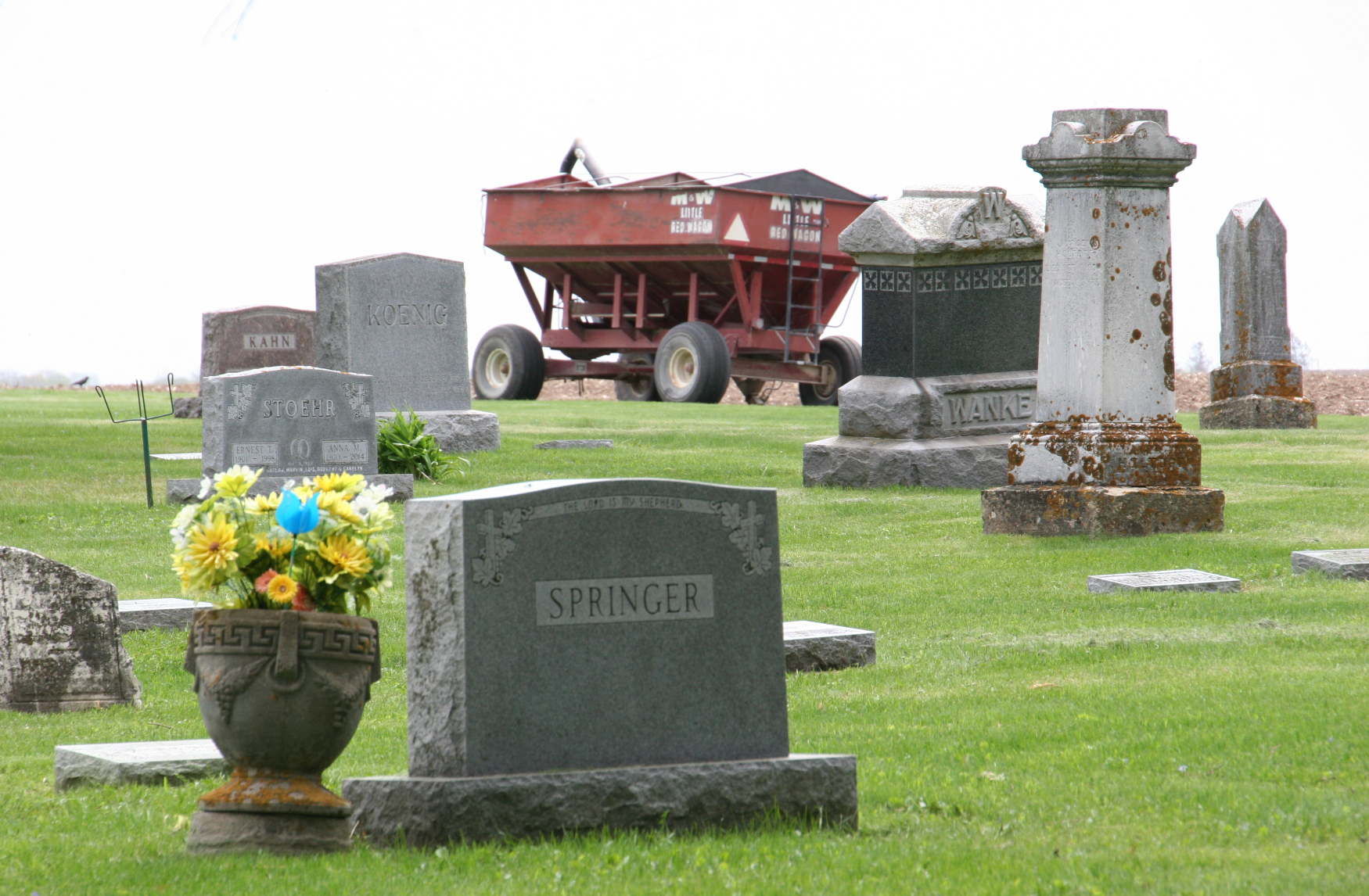
This is very much a farming area as noted by a farm wagon parked next to the cemetery on this Saturday and by the surrounding fields and farm sites. (Minnesota Prairie Roots copyrighted photo May 2022)
We briefly walked the cemetery, marveling at the early birth dates of some buried here—born in 1823, died in 1877. Clearly there are stories here of journeys across the ocean to America, then more travel westward to this land, this Minnesota. I expect those stories hold hardship and loss and struggles and, also, incredible strength, determination and resilience.
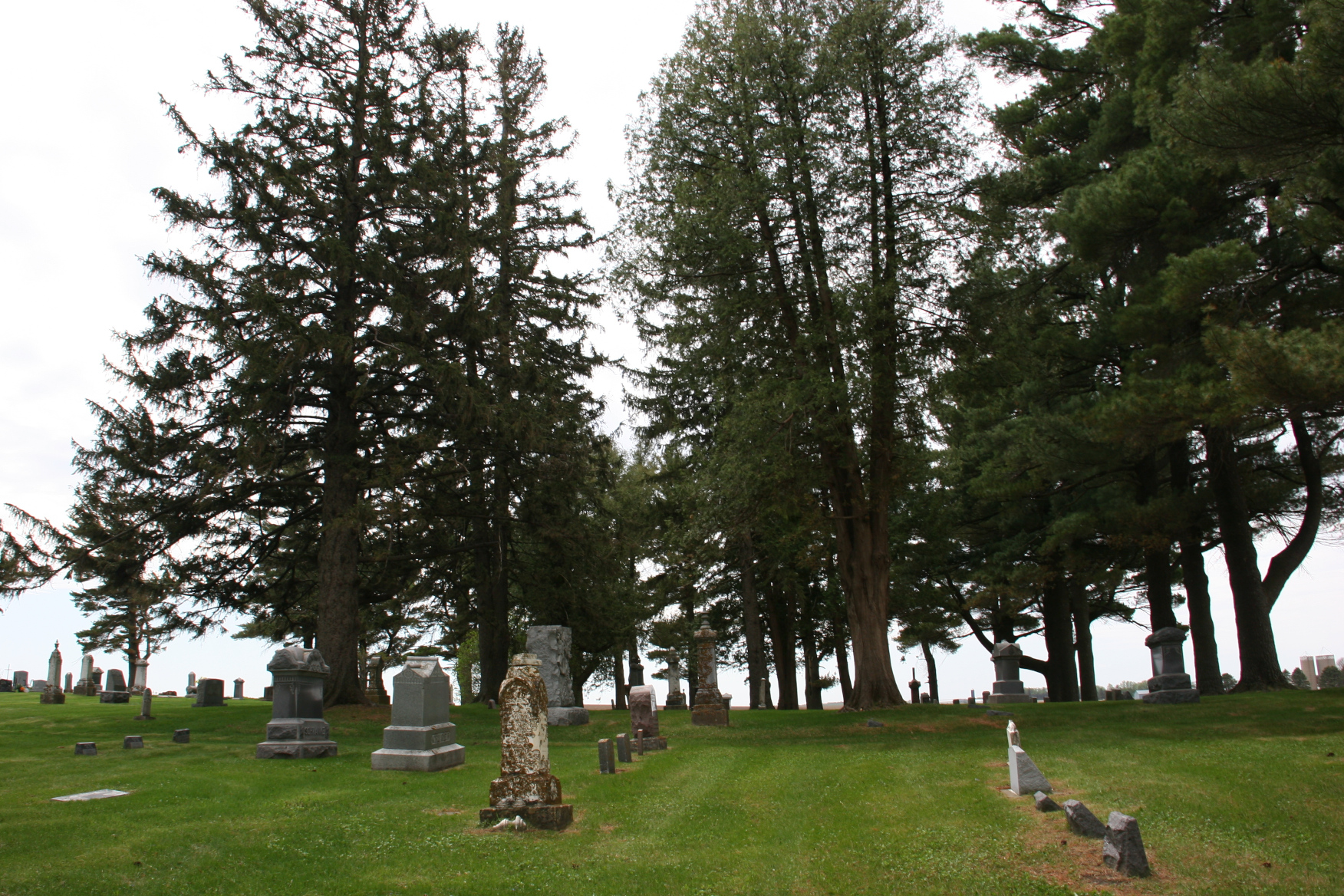
Pines tower over the cemetery. (Minnesota Prairie Roots copyrighted photo May 2022)
I claim no personal connection to anyone here. Yet, I feel a kinship in ancestors who left the Old Country. I feel, too, a kinship of faith. For it was faith which sustained many who left families an ocean away to forge a new life. Here they settled, built a church, planted pines. Here they gathered to celebrate and mourn. To pray and praise and plant hope upon the land.
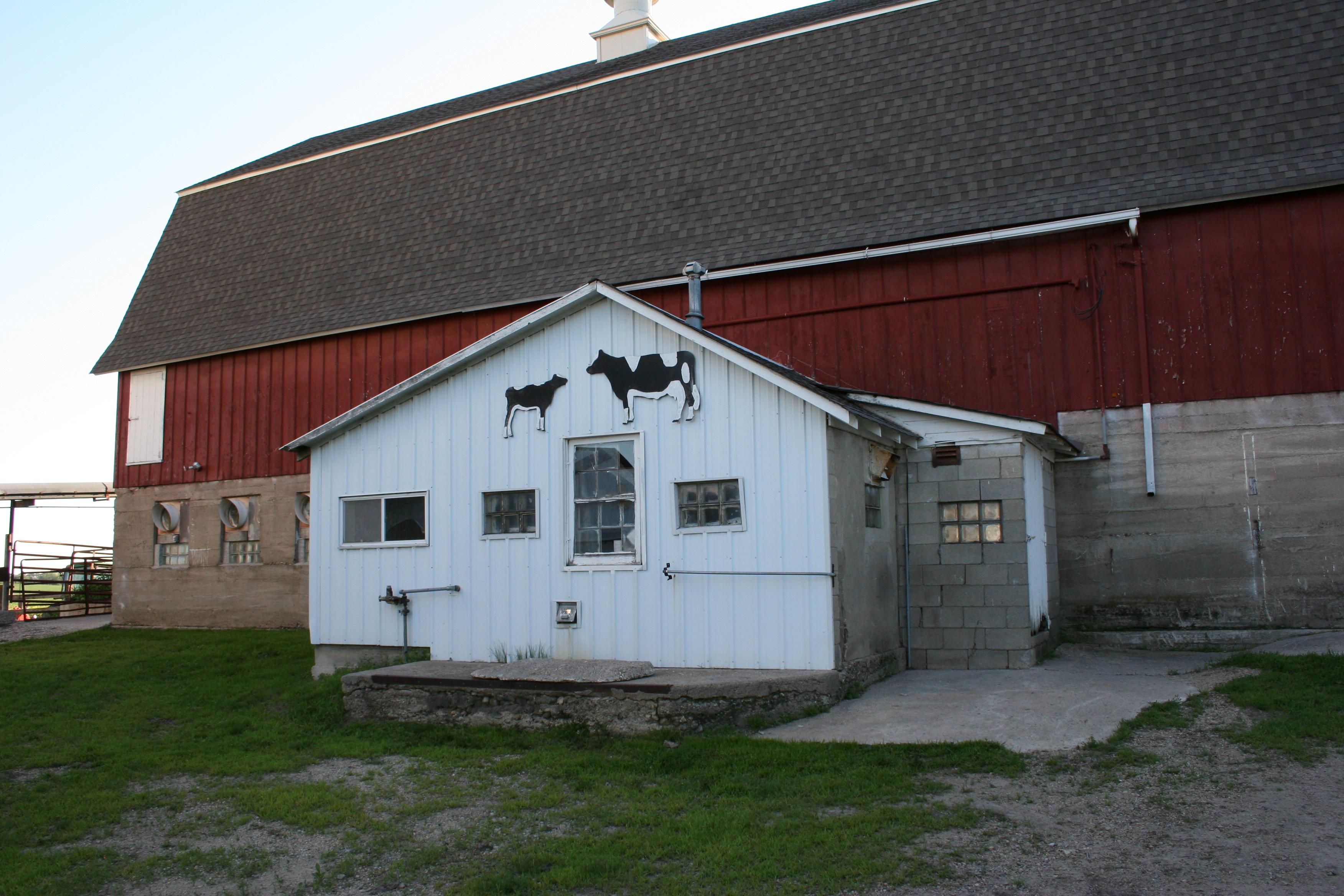
Holstein cow art adorns the milkhouse on the barn of friends in rural Dundas (near Northfield). These farmers once milked Holsteins. (Minnesota Prairie Roots copyrighted file photo September 2011)
NOW BILLED AS“A Classic American River Town” by the local tourism office, Northfield fits that description. This southern Minnesota community, where the James-Younger gang was defeated in 1876, hugs the Cannon River. The historic downtown is filled with mostly home-grown shops and eateries. And, as cliché as it sounds, Northfield is quaint and charming.
I love Northfield. If the cost of houses in 1984 had not been significantly higher than in neighboring Faribault, Randy and I would be living there. Instead, Randy has commuted from Faribault to Northfield to work as an automotive machinist for too many decades. But such is life and we’re happy to call Faribault home.
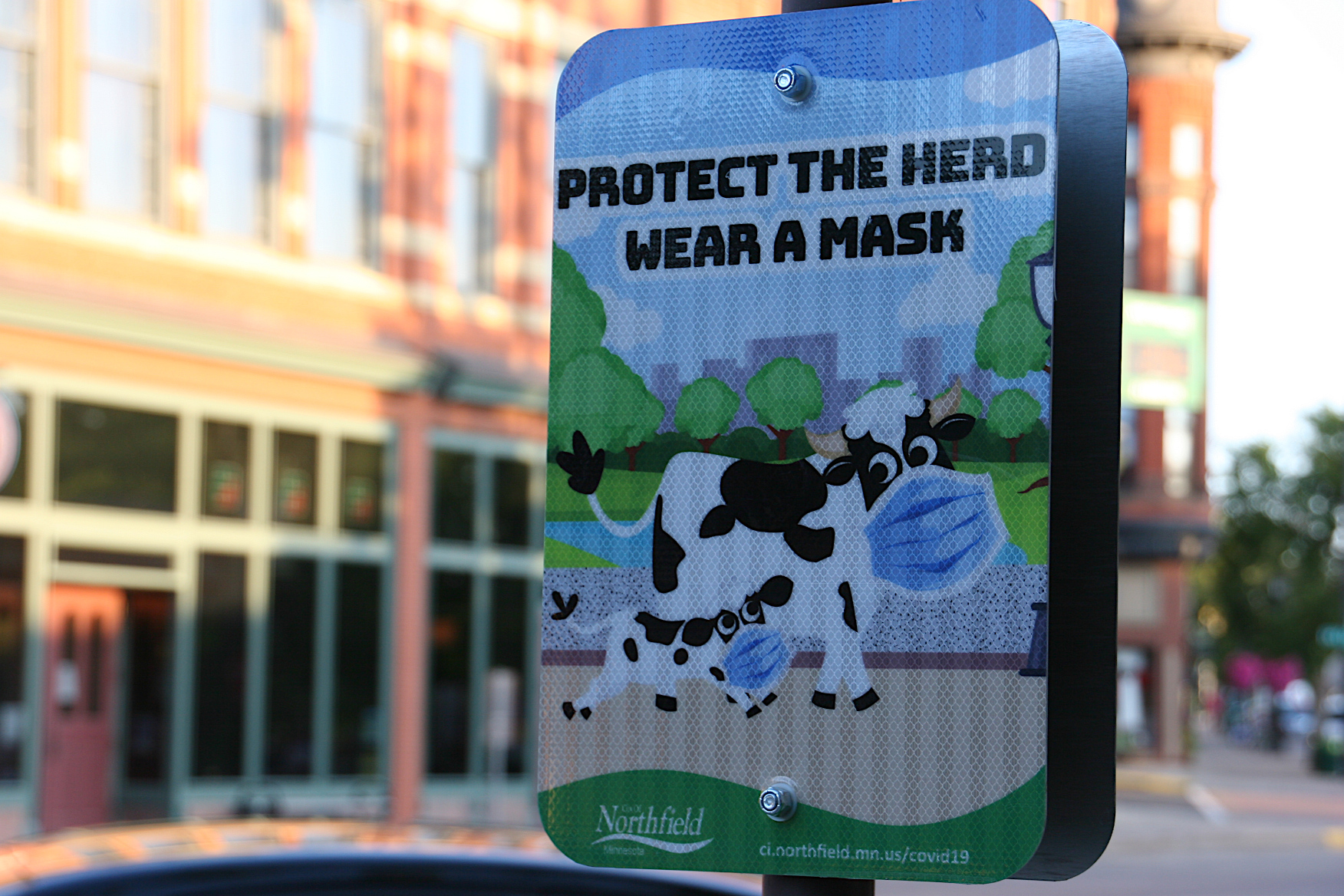
“Protect the herd” plays off the city’s “Cows, Colleges & Contentment” slogan. (Minnesota Prairie Roots copyrighted file photo 2020)
But back to Northfield. There was a time when this city actively tagged its community with the phrase “Cows, Colleges & Contentment.” That slogan still graces some signage. I observed a cow-themed sign encouraging masking early in the pandemic. “Protect the herd” focused the message from the City of Northfield. I thought that incredibly powerful and catchy. You know, we’re all in this together type attitude. Care about one another.
I understand how “contentment” fits this community. And colleges, too, as Northfield is home to St. Olaf and Carleton colleges.
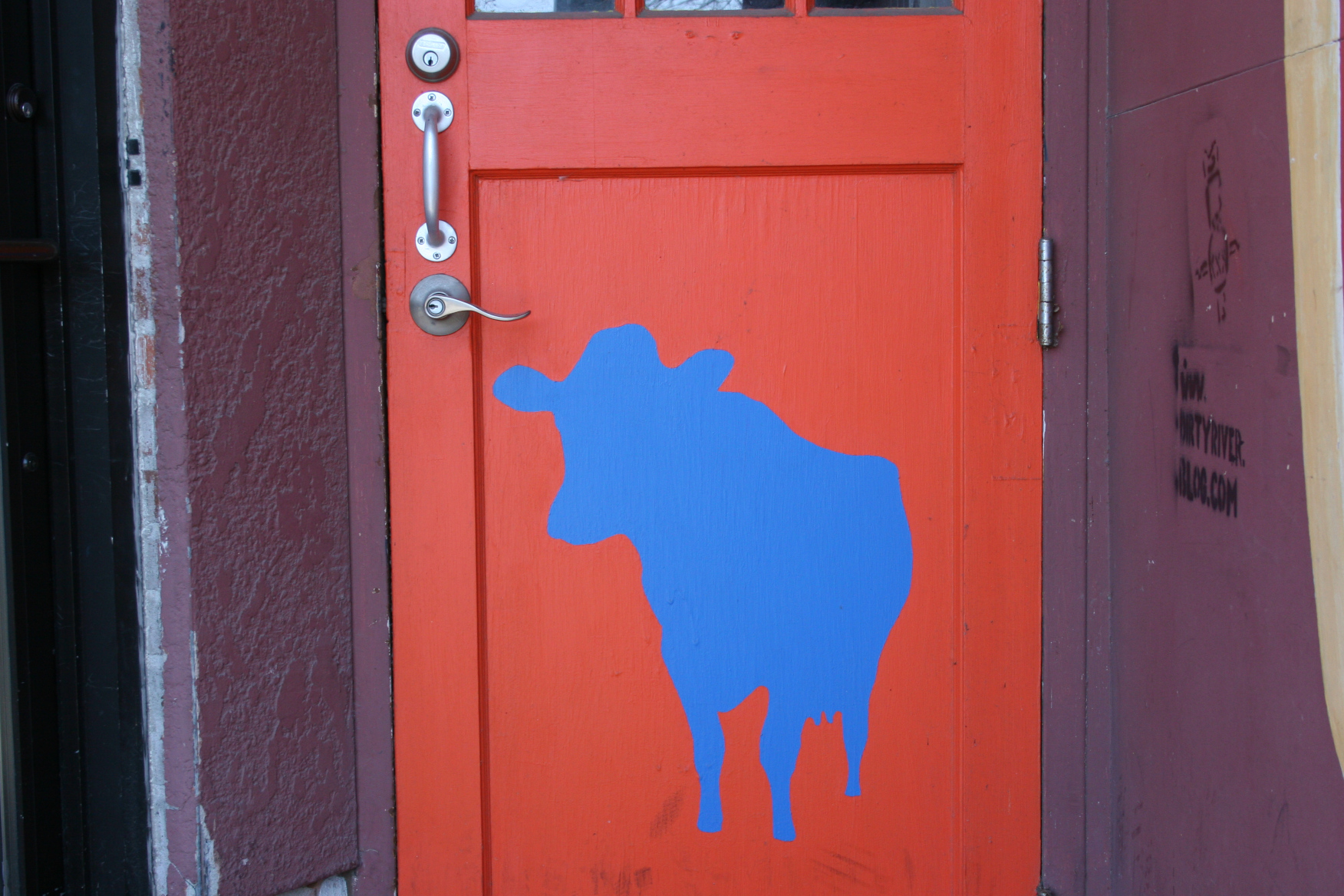
The blue cow I spotted recently in downtown Northfield. (Minnesota Prairie Roots copyrighted photo 2022)
But I didn’t quite get the “cows” part until I found an explanation on the Visit Northfield website. In summary, in the late 1890s, a local farmer/newspaper editor suggested Northfield could attract businesses by focusing on breeding of Holstein cows. That eventually happened with 5,532 Holstein dairy cattle and 261 breeders in the area by 1916, a Northfield Holstein Club and the moniker, “Holstein Capital of America,” attached to Northfield. The aforementioned colleges also established Holstein herds. I encourage you to read the full story about the Northfield cows by clicking here.
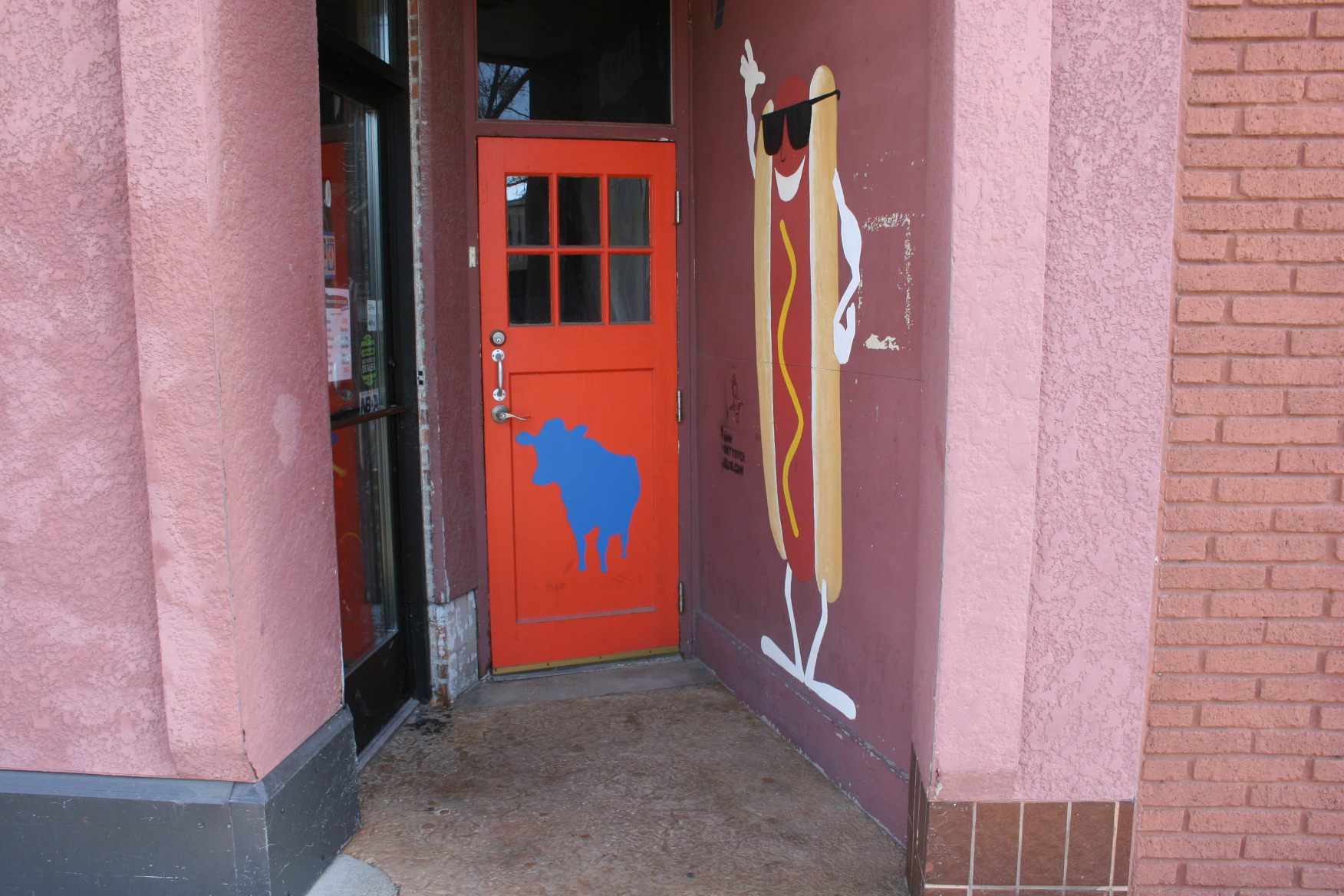
Downtown Bicycles’ blue cow image. Now, what’s with the hot dog? (Minnesota Prairie Roots copyrighted photo 2022)
On a recent walk through downtown Northfield, I didn’t see any Holsteins. But I happened upon a blue cow painted on an orange door. The cow graphic marks Downtown Bicycles, 321 Division Street. Seeing that cow brought to mind the “Cows, Colleges & Contentment” theme, which led me to uncover the story behind the bovines of Northfield.
The birth of Christ depicted at St. Michael’s Catholic Church, Buckman, Minnesota. This is my husband’s home church. (Minnesota Prairie Roots file photo September 2020)
STAINED GLASS ART graces many a church. Most often that art depicts the history of Jesus’ birth, death and resurrection.
This stained glass window inside the Mother of Good Counsel Votive Chapel at The Shrine of Our Lady of Guadalupe, La Crosse, Wisconsin, depicts Mary and Jesus. I often think of Mary during Holy Week and how great her loss in losing her son. (Minnesota Prairie Roots copyrighted file photo 2015)
So it’s fitting that this week, Holy Week, I share some images from my archives of beautiful stained glass windows discovered in my wanderings. As a woman of faith, an art appreciator and one who values churches, I am drawn to this art form.
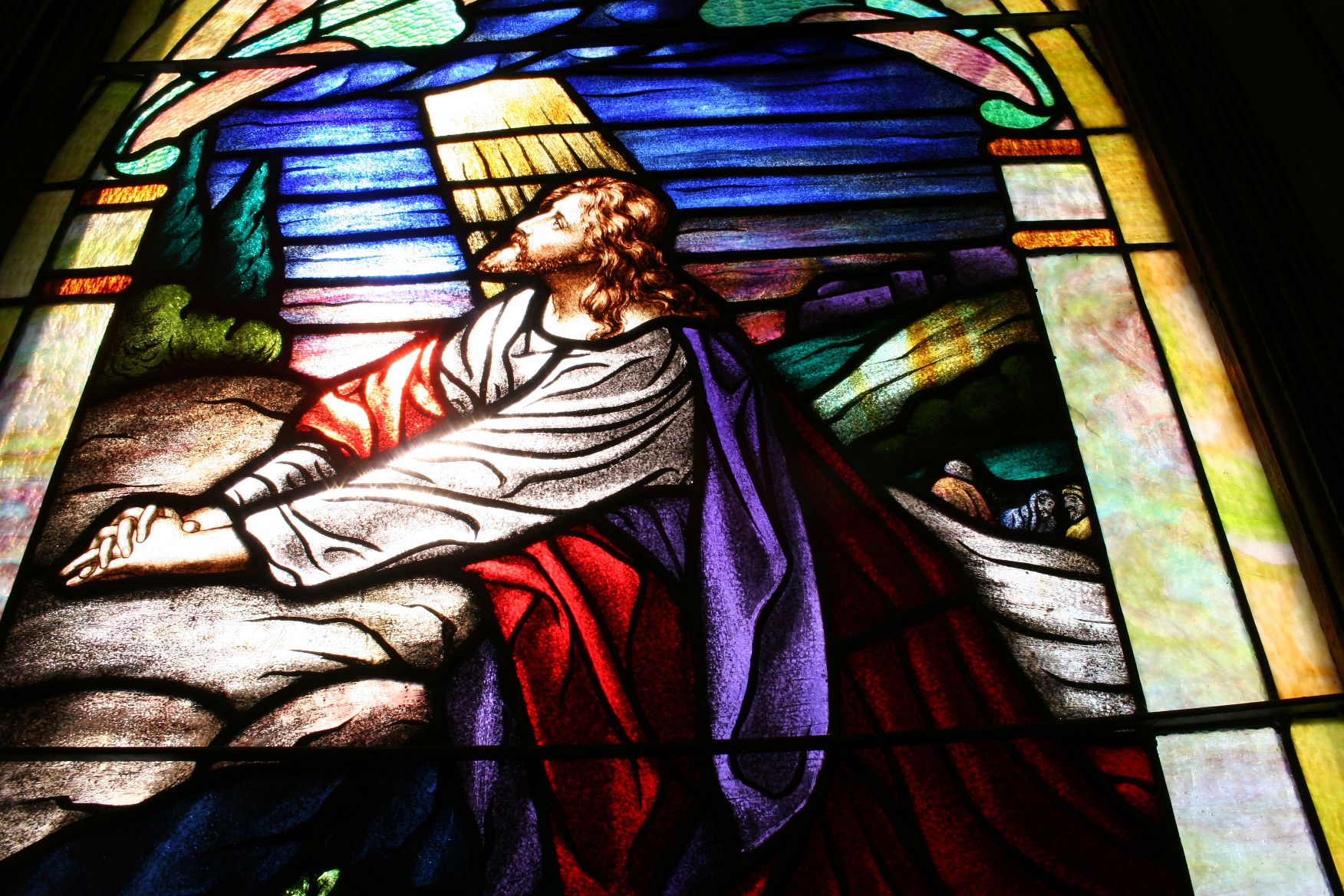
Jesus prays in the Garden of Gethsemane. Stained glass window in the sanctuary of Vang Lutheran Church, rural Dennison, Minnesota. (Minnesota Prairie Roots copyrighted file photo 2014)
My husband, Randy, has dabbled in stained glass art and I know from watching him that creating this art takes time, patience, skill and dedication. He took a stained glass class locally decades ago, has crafted several sun catchers and also repaired aged windows at our church, Trinity Lutheran in Faribault. I hope that when he retires, he can more fully embrace this art form.
Jesus carries his cross to Golgotha. Stained glass at St. Michael’s Catholic Church, Buckman. (Minnesota Prairie Roots copyrighted file photo September 2020)
That sidebar aside, I feel such gratitude to those long ago craftsmen who labored to create stained glass windows for churches. Such windows enhance worship, infusing a sanctuary with beauty and a visual telling of biblical stories. Like the birth of Jesus. The agony of his suffering, death and glorious resurrection.
Like illustrations in a book, the art of stained glass adds to the words, opens our eyes to better see that which we hear and read.
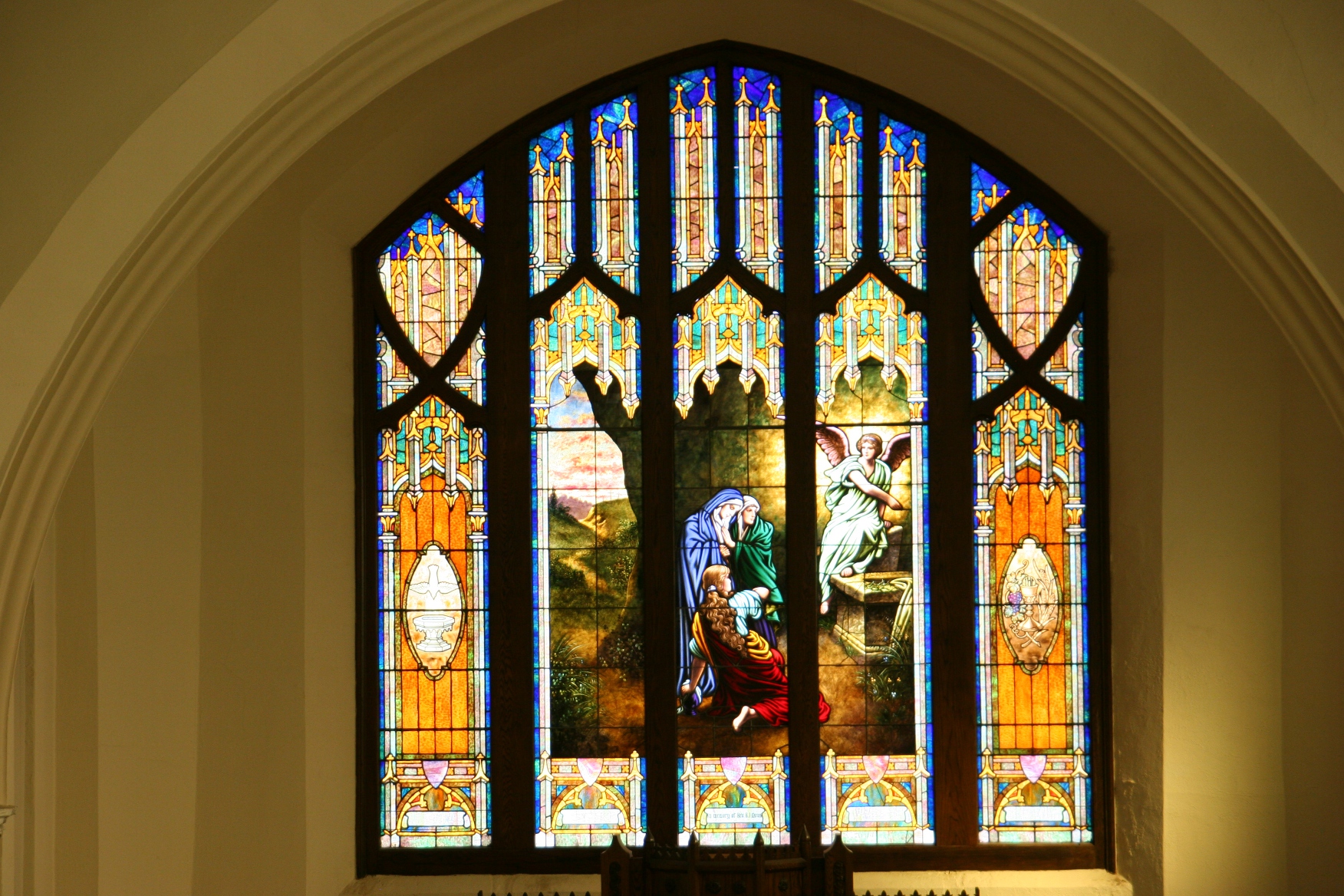
This stained glass window of the women and angel at Jesus’ empty tomb rises above the altar at Holden Lutheran Church, rural Kenyon, Minnesota. (Minnesota Prairie Roots copyrighted file photo 2016)
Art adds a depth to my understanding and to my faith.
This shows a snippet of the center stained glass window in a trio above the altar at Trinity Lutheran Church, Wanamingo, Minnesota. This section shows Jesus risen from the dead. (Minnesota Prairie Roots copyrighted file photo 2016)
As we near the end of Holy Week, please take time to reflect on the stained glass art here or within your own community.
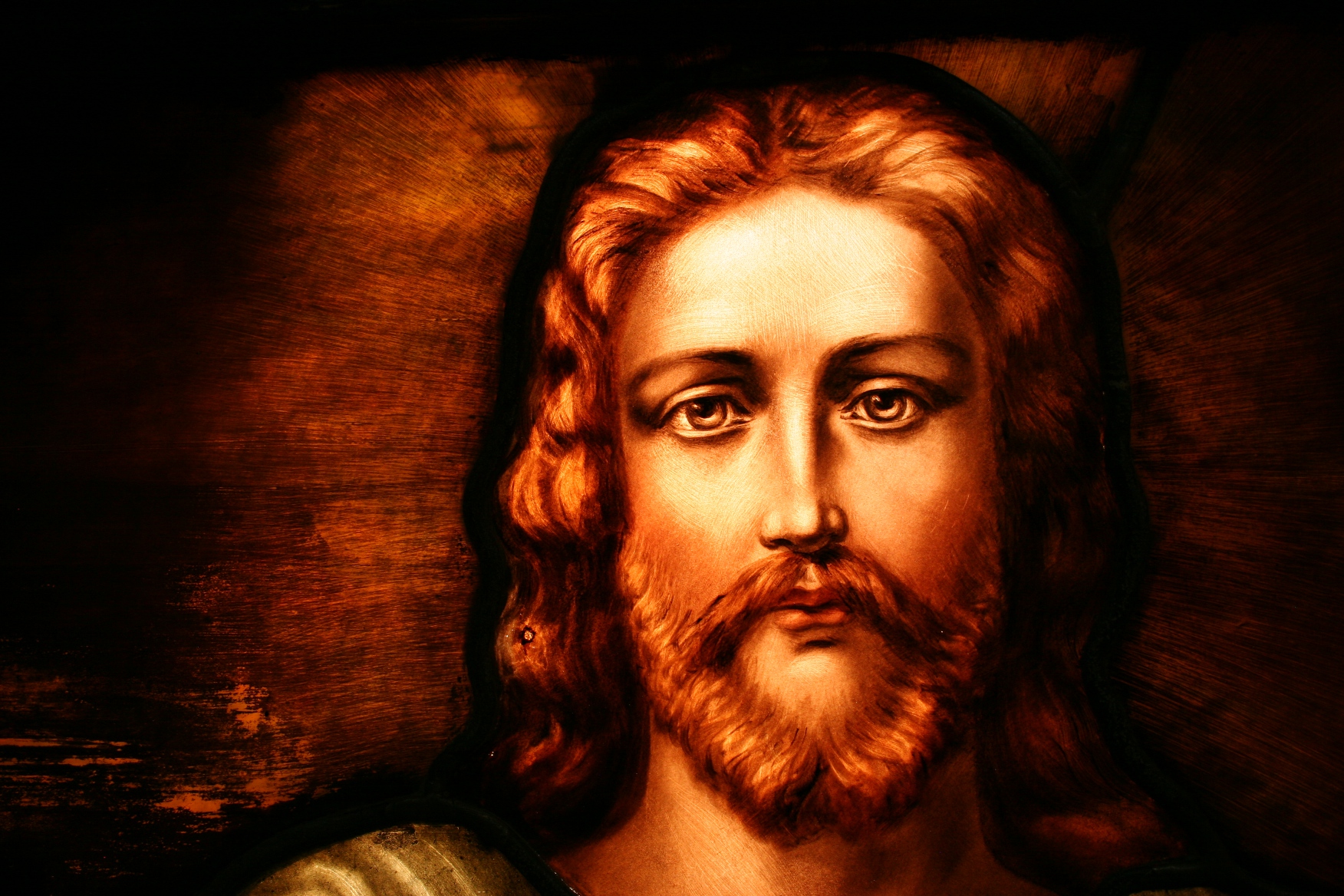
A photo of Christ’s face from a stained glass window in my church, Trinity Lutheran, Faribault. (Minnesota Prairie Roots copyrighted file photo 2012)
And may this art bless you as it has me. Have a joyful and blessed Easter!
Her efforts will certainly enlighten and expand our knowledge of the African Americans who helped shape (and continue to shape) this place, this southeastern Minnesota.
The cemetery at Valley Grove sidles near the two historic Norwegian churches. (Minnesota Prairie Roots copyrighted photo March 2022)
A TIME EXISTED when I avoided cemeteries. I didn’t like the thought of being among the dead. It creeped me out. The thought of bodies beneath the ground. Bones. Nightmarish thoughts fueled by imagination. Long ago I left those dark fears behind, accepting the reality of death. That came with maturity, a deepening of my faith and the deaths of many loved ones.
Art and heritage and faith and lives remembered. (Minnesota Prairie Roots copyrighted photo March 2022)
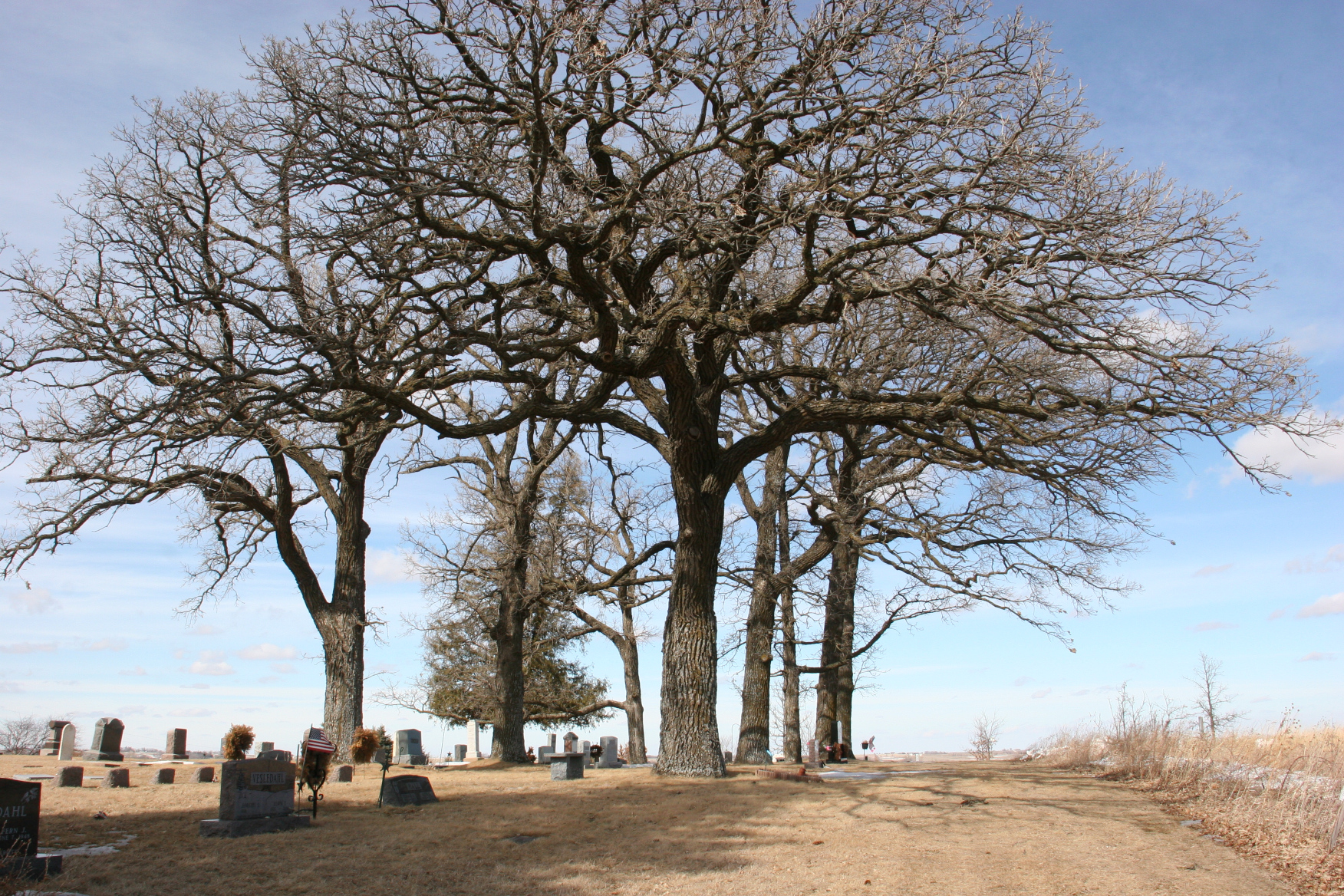
Oaks edge the cemetery and a road along it. (Minnesota Prairie Roots copyrighted photo March 2022)
Graveyards are more than a final resting place, as we so nicely phrase it, for loved ones. Graveyards are also places to grieve and remember. They are also places of history, heritage and art, often sited in the most peaceful of settings. Valley Grove checks off all those items on that place list.
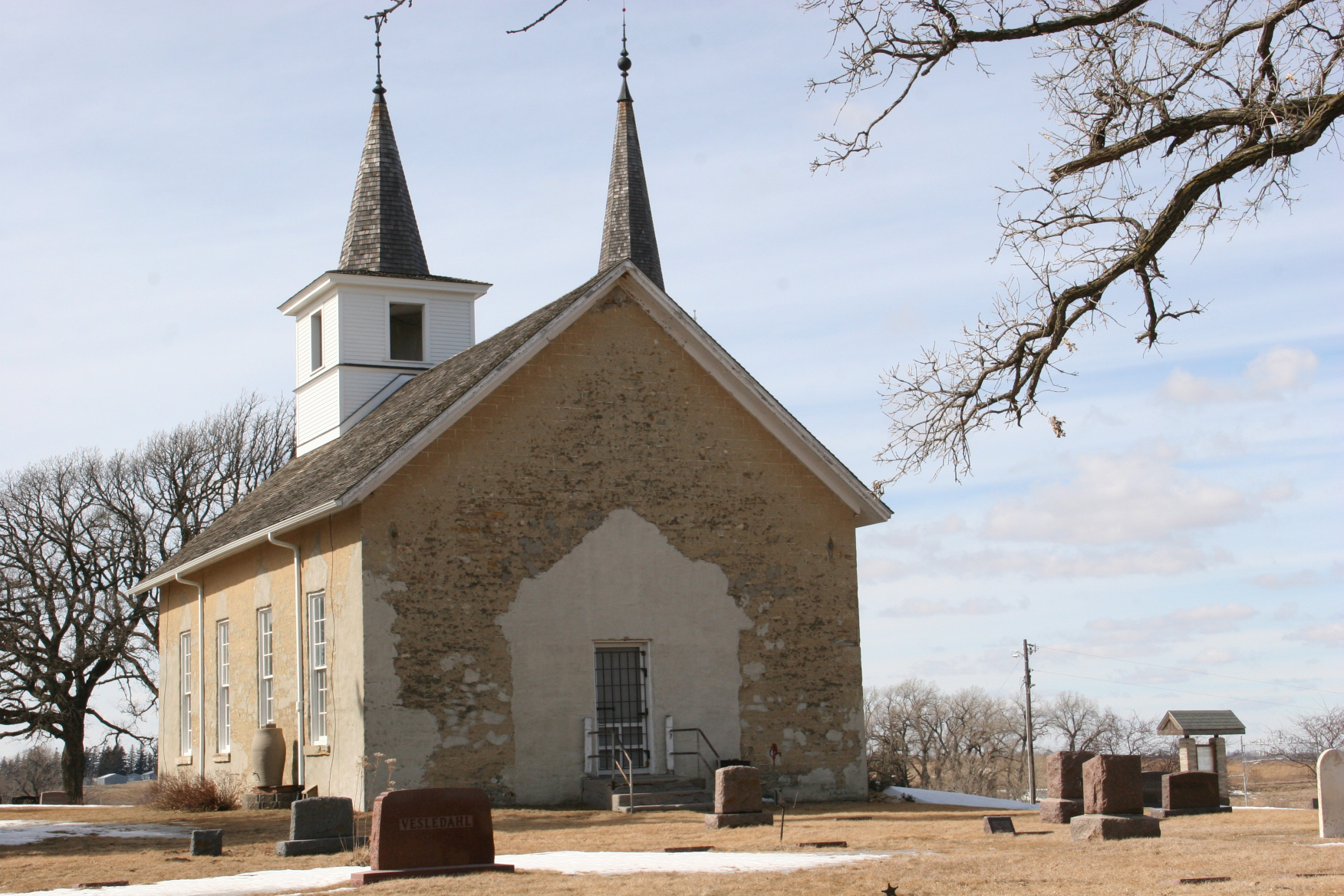
The cemetery surrounds three sides of the 1862 stone church. (Minnesota Prairie Roots copyrighted photo March 2022)
I’ve explored many other country cemeteries, wandering among the tombstones, wondering about the people buried there. Why did they die so young? What were they like? What were their occupations? What made them happy? Who misses them?
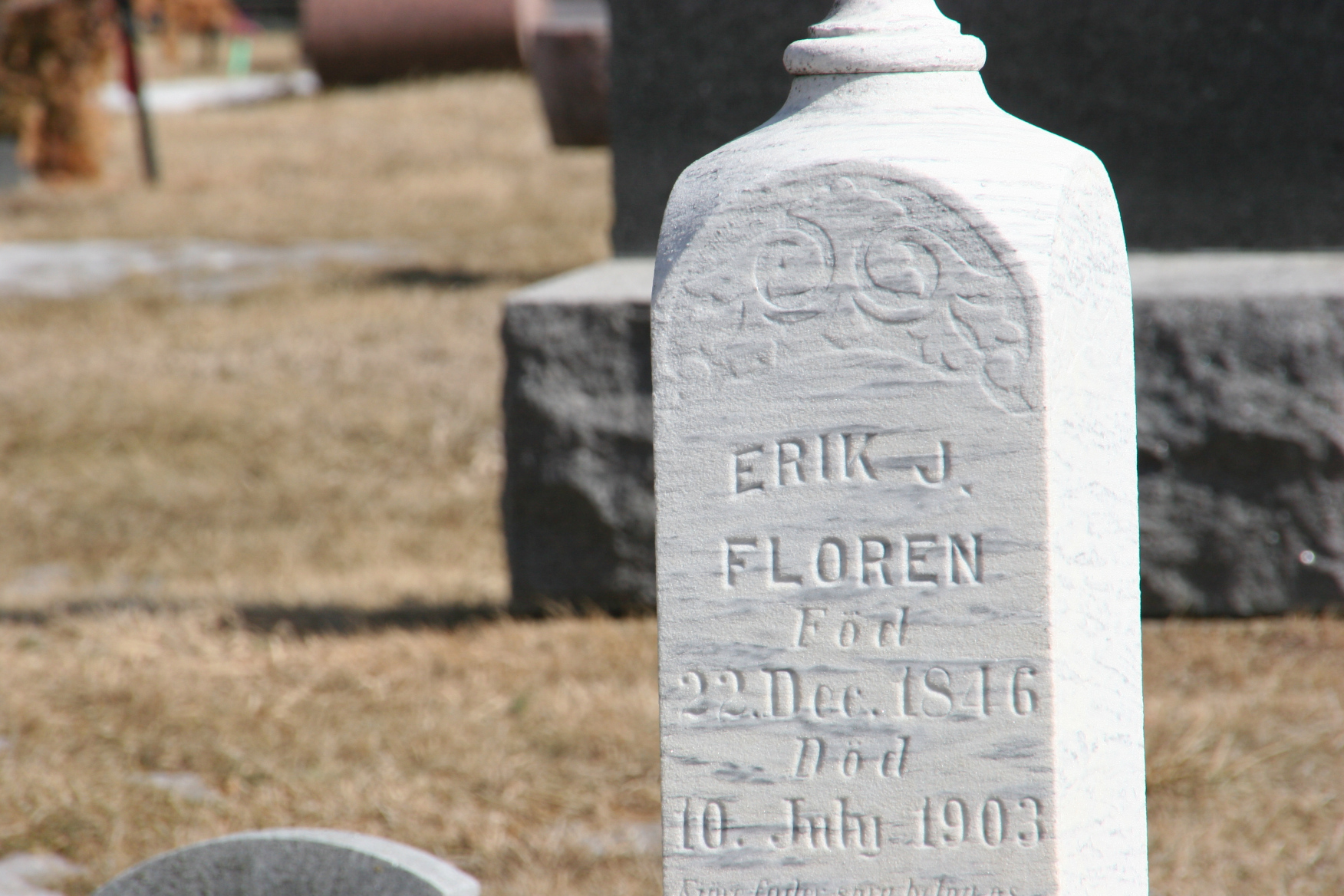
Erik Floren’s tombstone. (Minnesota Prairie Roots copyrighted photo March 2022)
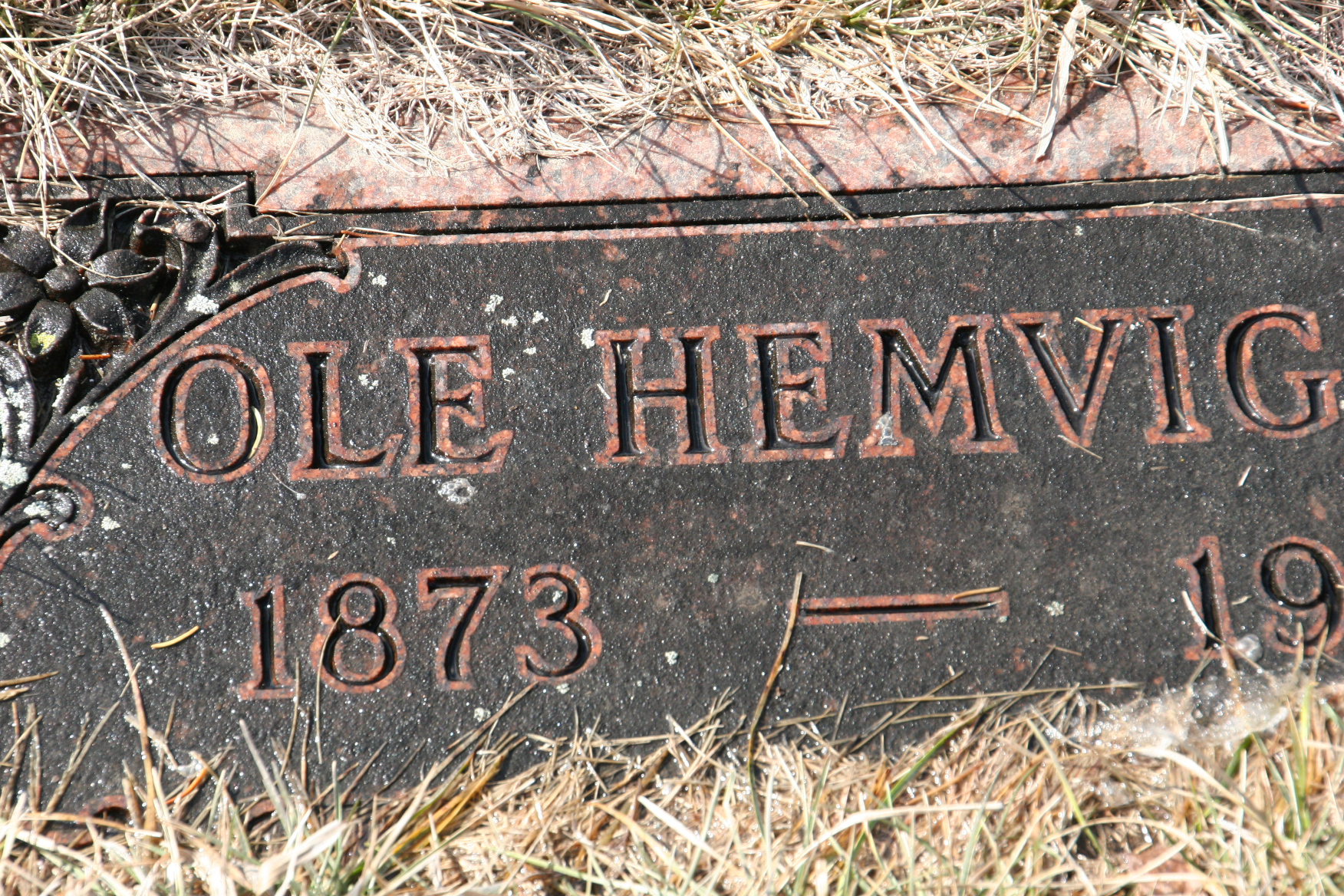
The in-ground marker of Ole Hemvig. (Minnesota Prairie Roots copyrighted photo March 2022)
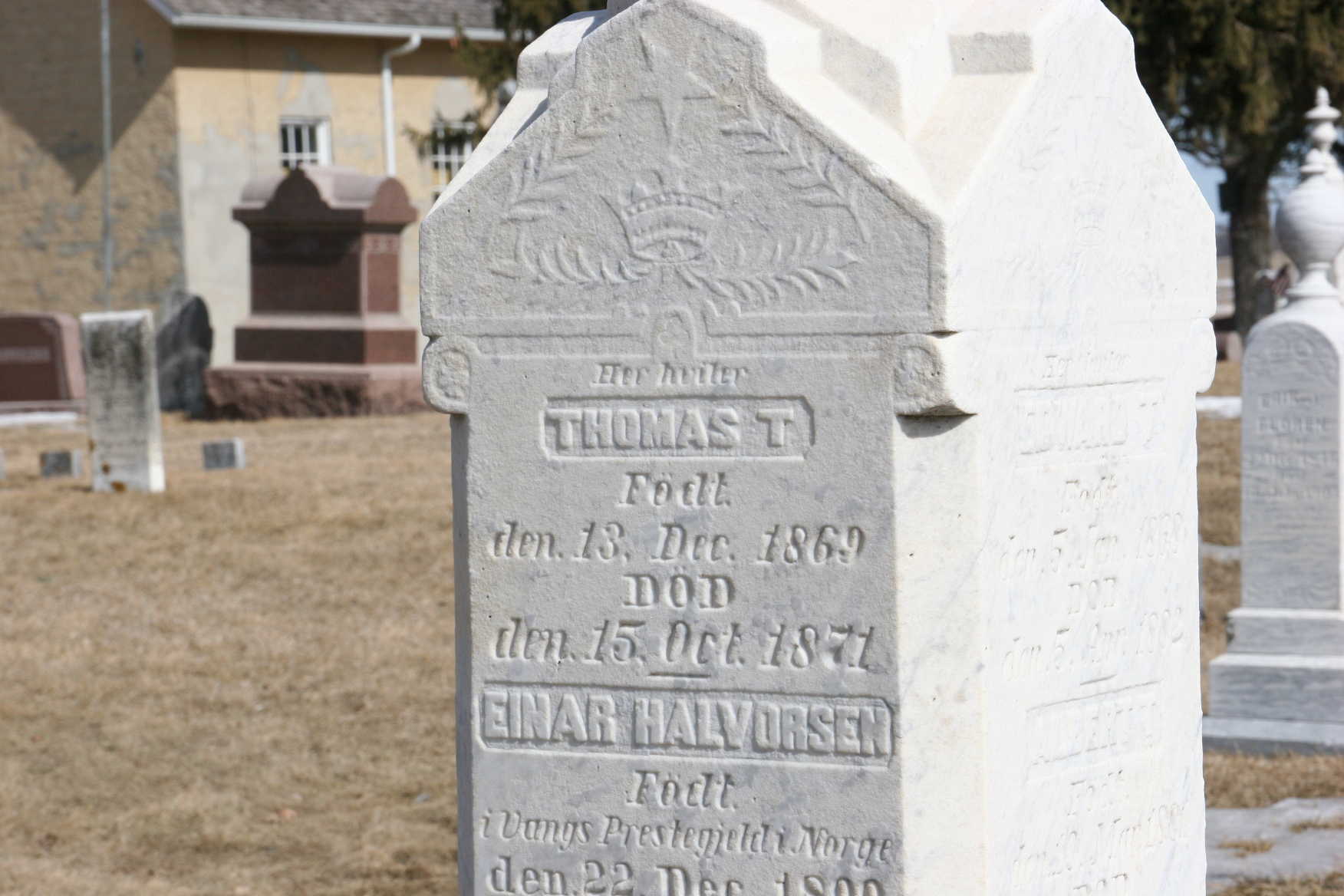
Honoring Thomas and Einar Halvorsen. (Minnesota Prairie Roots copyrighted file photo March 2022)
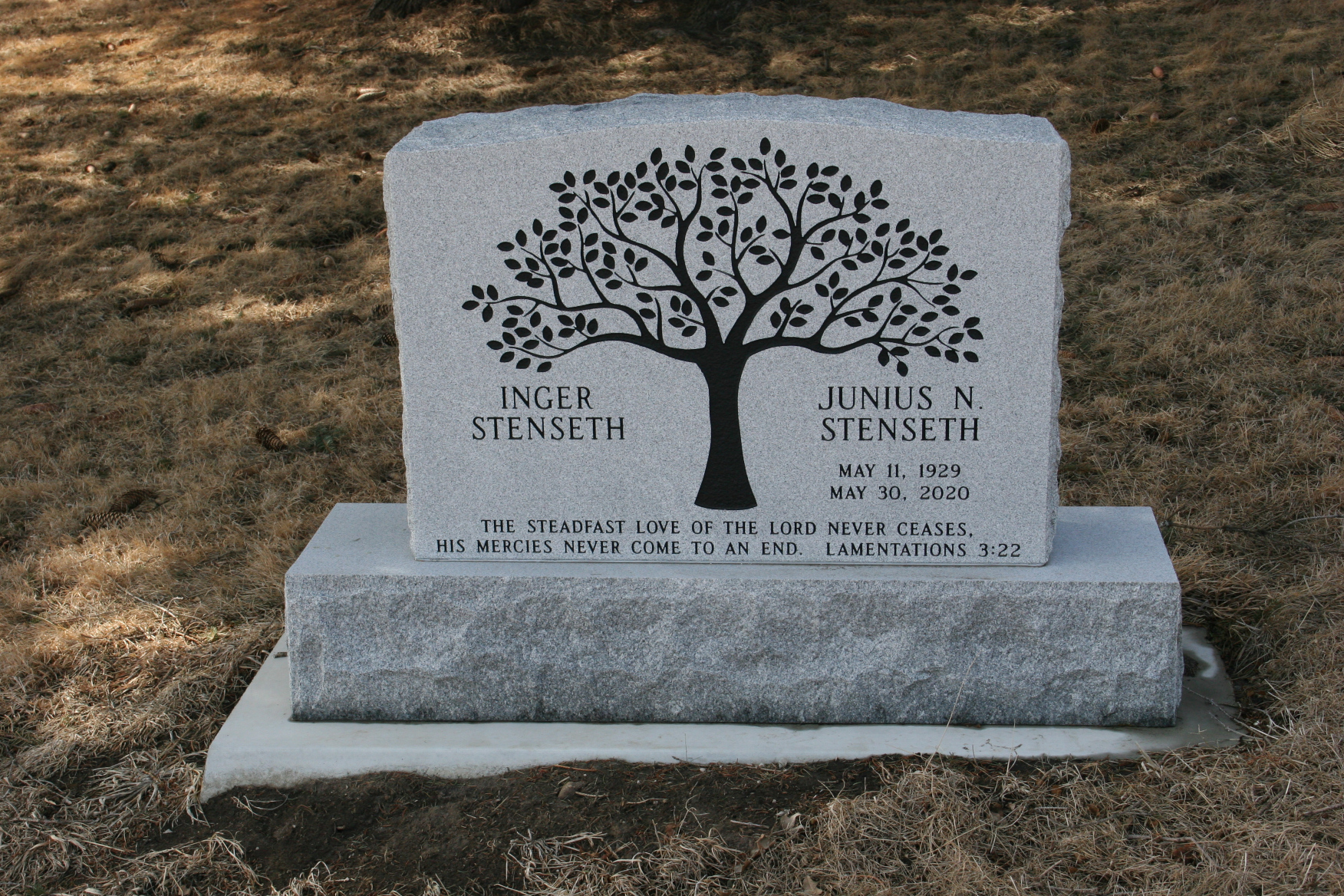
Tombstone engravings reveal bits and pieces of life stories. Sometimes of heritage. At Valley Grove, many names reference a Norwegian heritage. Ole. Erik. Einar. Inger. Junius. I doubt I’ve ever found so many “Oles” buried in a Minnesota cemetery. That’s not unexpected given the Norwegian immigrants who settled here and built the two churches which still stand. Older stone inscriptions are sometimes written in the Mother Tongue. German I can occasionally decipher. Norwegian, not.
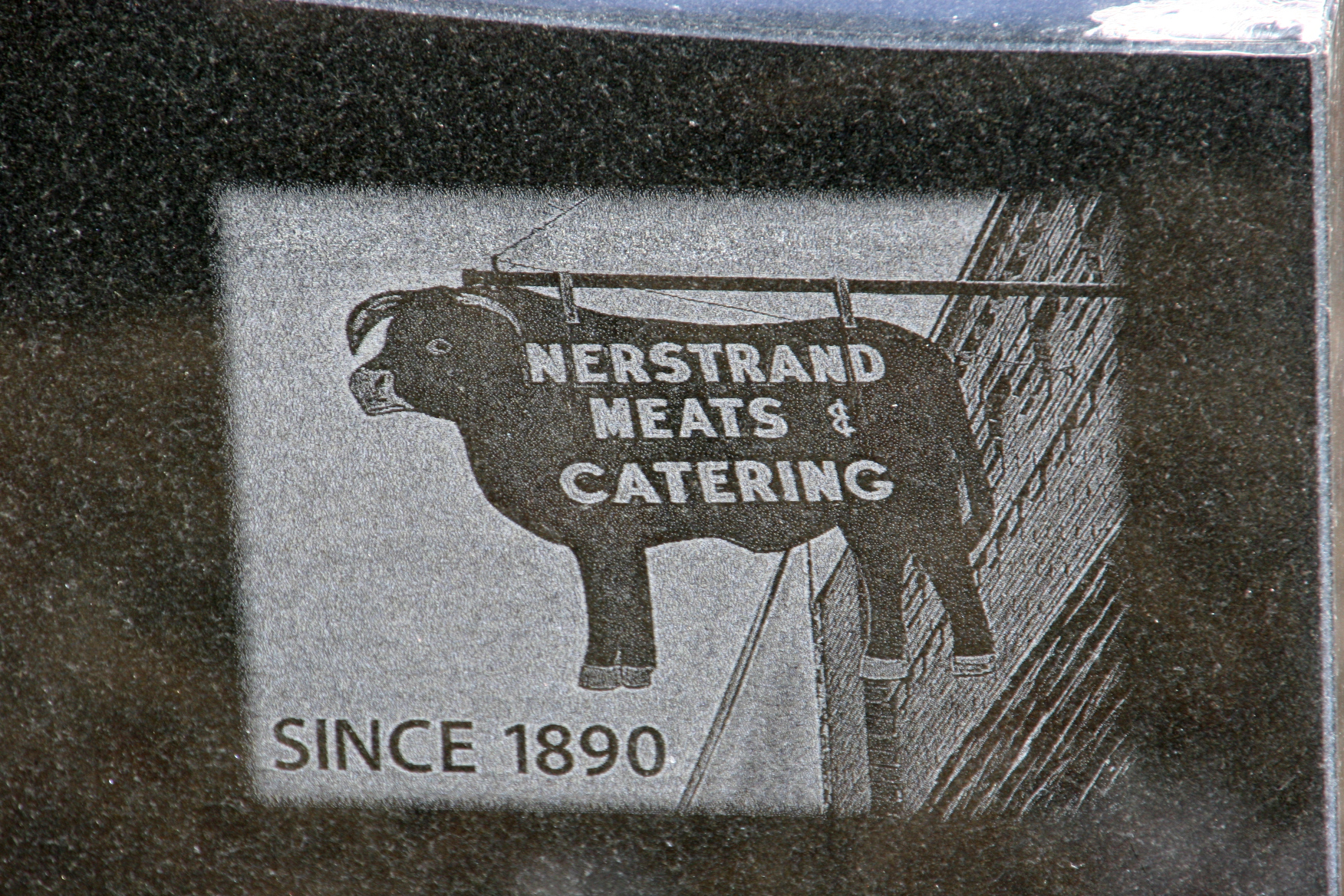
On Clyde Heggedahl’s tombstone. (Minnesota Prairie Roots copyrighted photo March 2022)
Through the years, the art of grave markers has evolved to more elaborate artwork that tells a story. For example, at Valley Grove an image of Nerstrand Meats & Catering decorates the stone of Clyde Heggedahl of that long-standing business co-owned with his wife, Mary. He died in 2016. At the meat market.
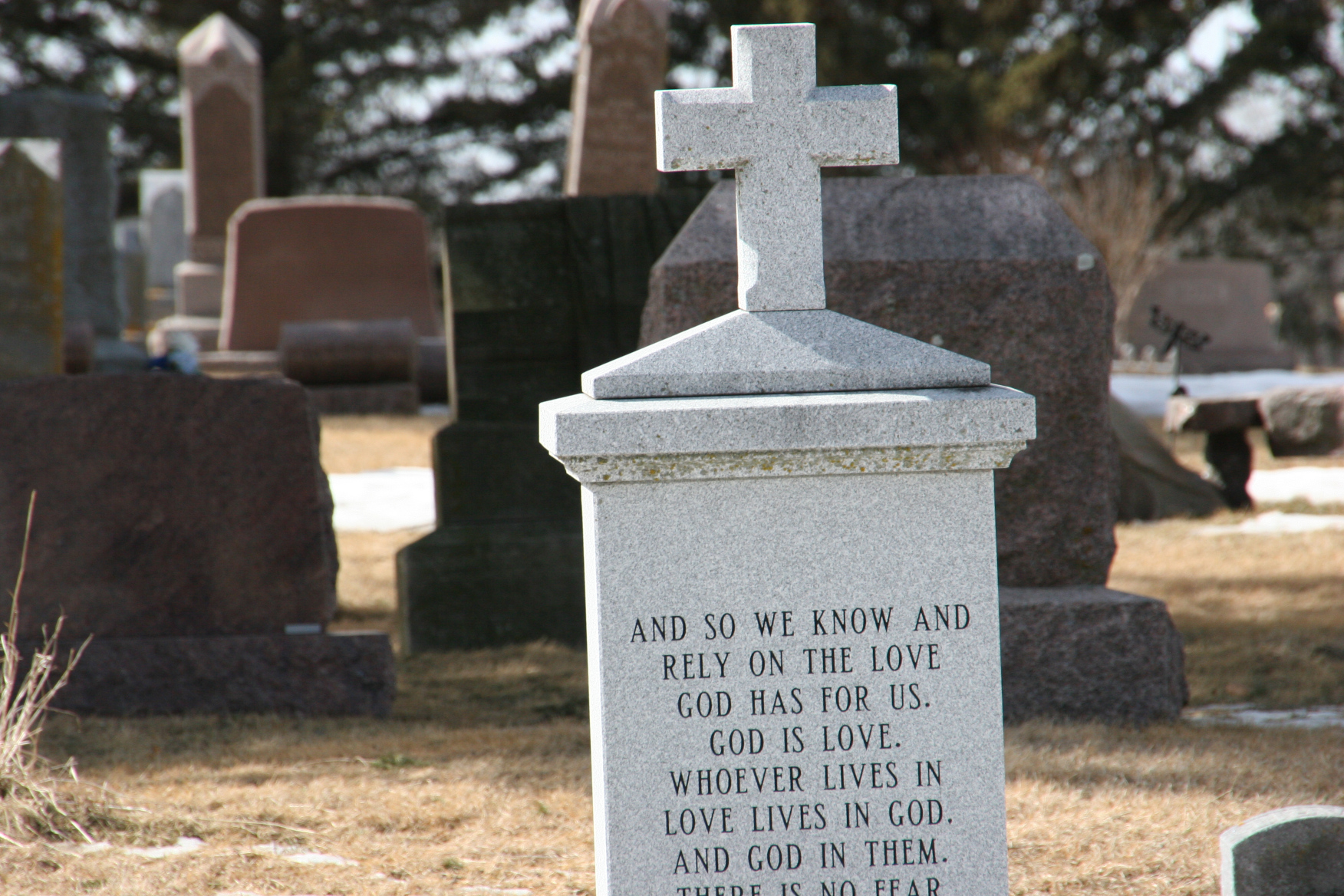
A faith and love-filled message. (Minnesota Prairie Roots copyrighted photo March 2022)
Bible verses and inspirational messages grace gravestones, too, offering insights and comfort. Sharing hope and faith. Love.
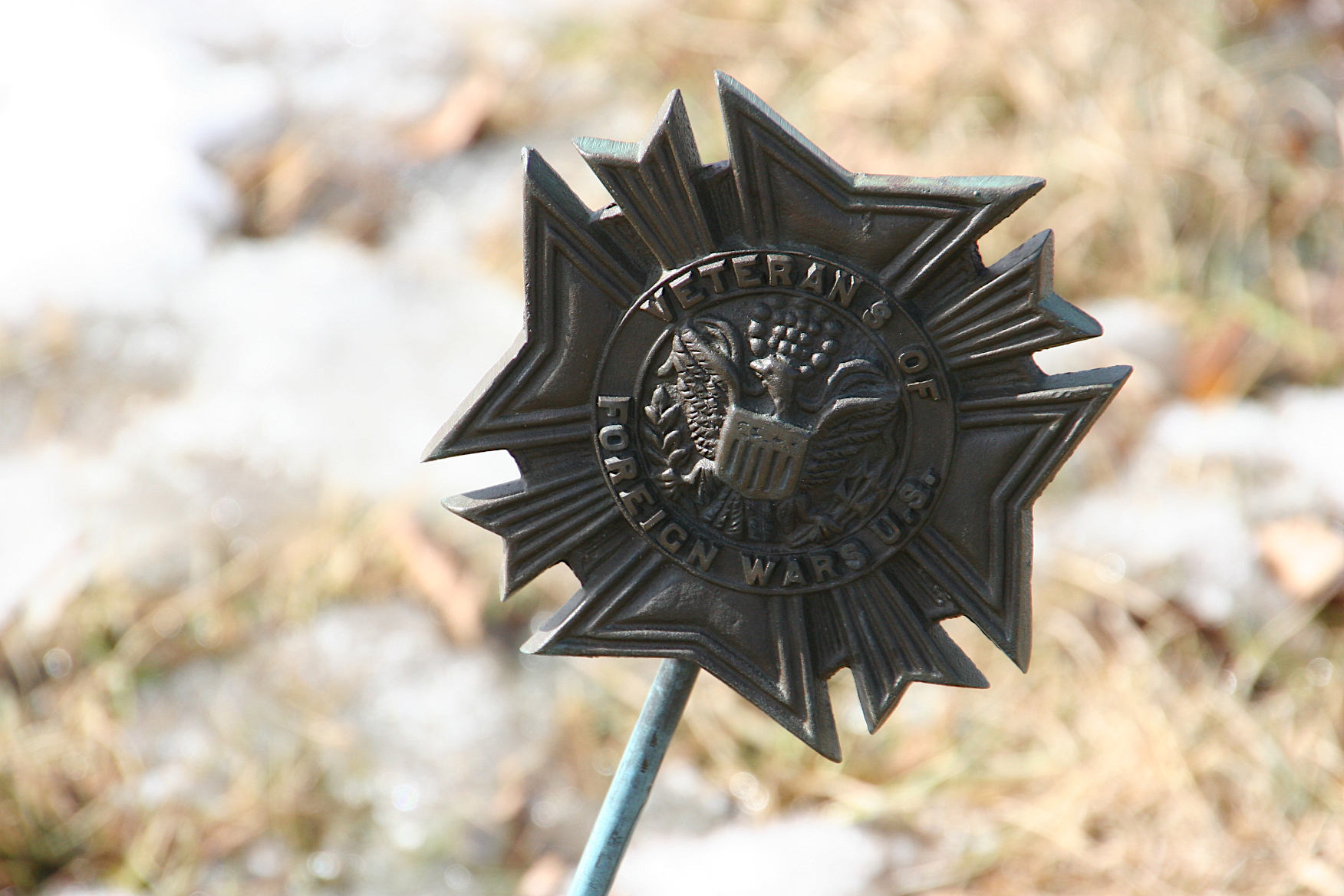
A special marker for a veteran’s grave. (Minnesota Prairie Roots copyrighted photo March 2022)
I often pause at burial spots marked by military markers. As the daughter of a Korean War veteran, I hold honor in my heart for those who have served. I recognize the sacrifices, whether given through death on the battlefield or the life-long challenges faced by too many of our veterans. That included my father, who died in 2003. Dad received his purple heart 47 years after he was wounded in Korea. War forever wounded his spirit; he battled Post Traumatic Stress Disorder. I am thankful veterans’ graves are flagged with honor.
The old stone church and cemetery at Valley Grove. (Minnesota Prairie Roots copyrighted photo March 2022)
There’s simply lots to observe and contemplate while meandering among tombstones. I always do so with respect, for these grounds feel almost sacred. At Valley Grove, a certain serenity envelopes me in this peaceful hilltop setting among oaks and prairie.
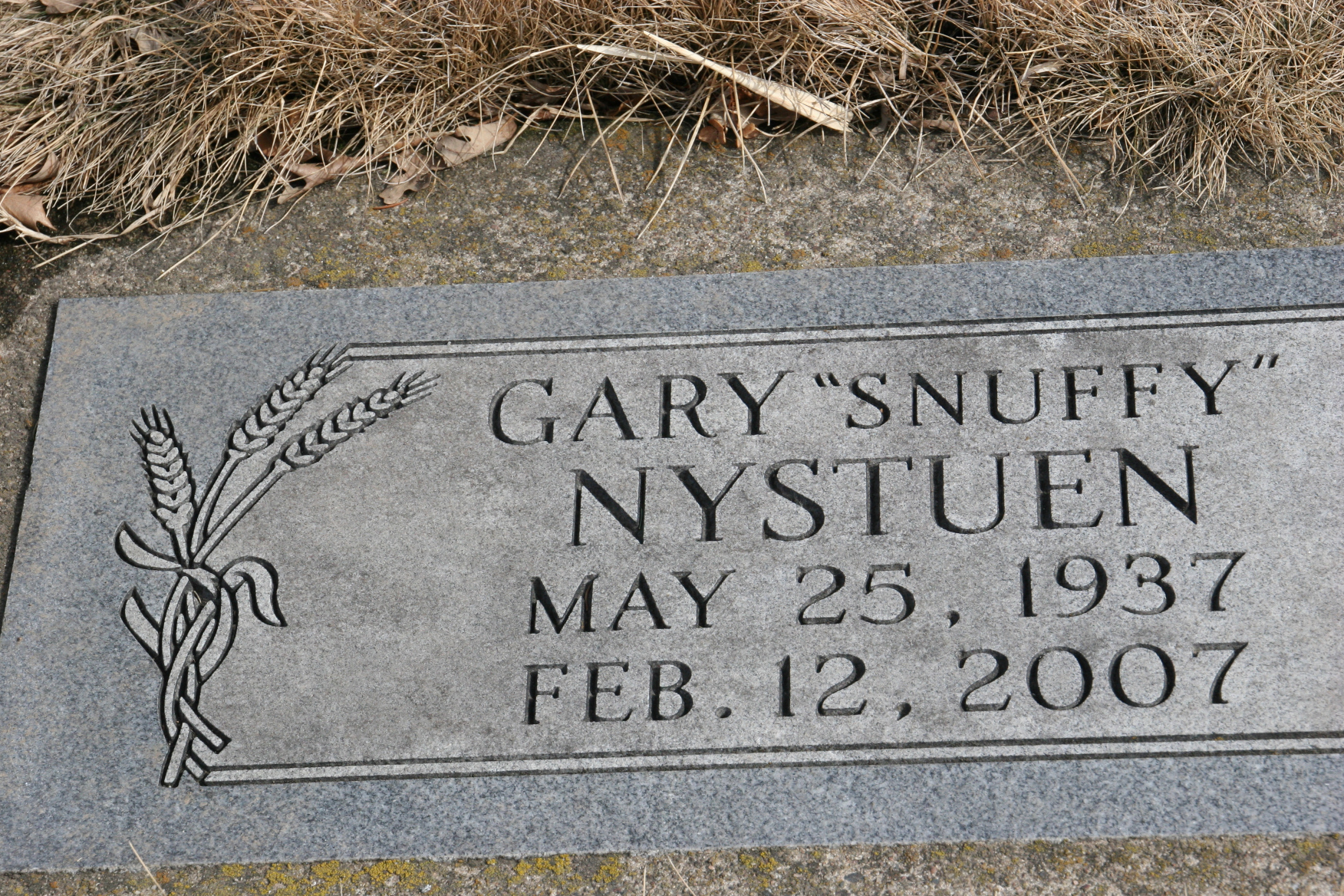
What’s the story behind the “Snuffy” nickname? (Minnesota Prairie Roots copyrighted photo March 2022)
Although those buried here were unknown to me in life, I’ve come to know them a bit in death. The countless “Oles.” The young and the old. They were all cherished. Loved. Part of the family of humanity. They mattered. And their stories matter.
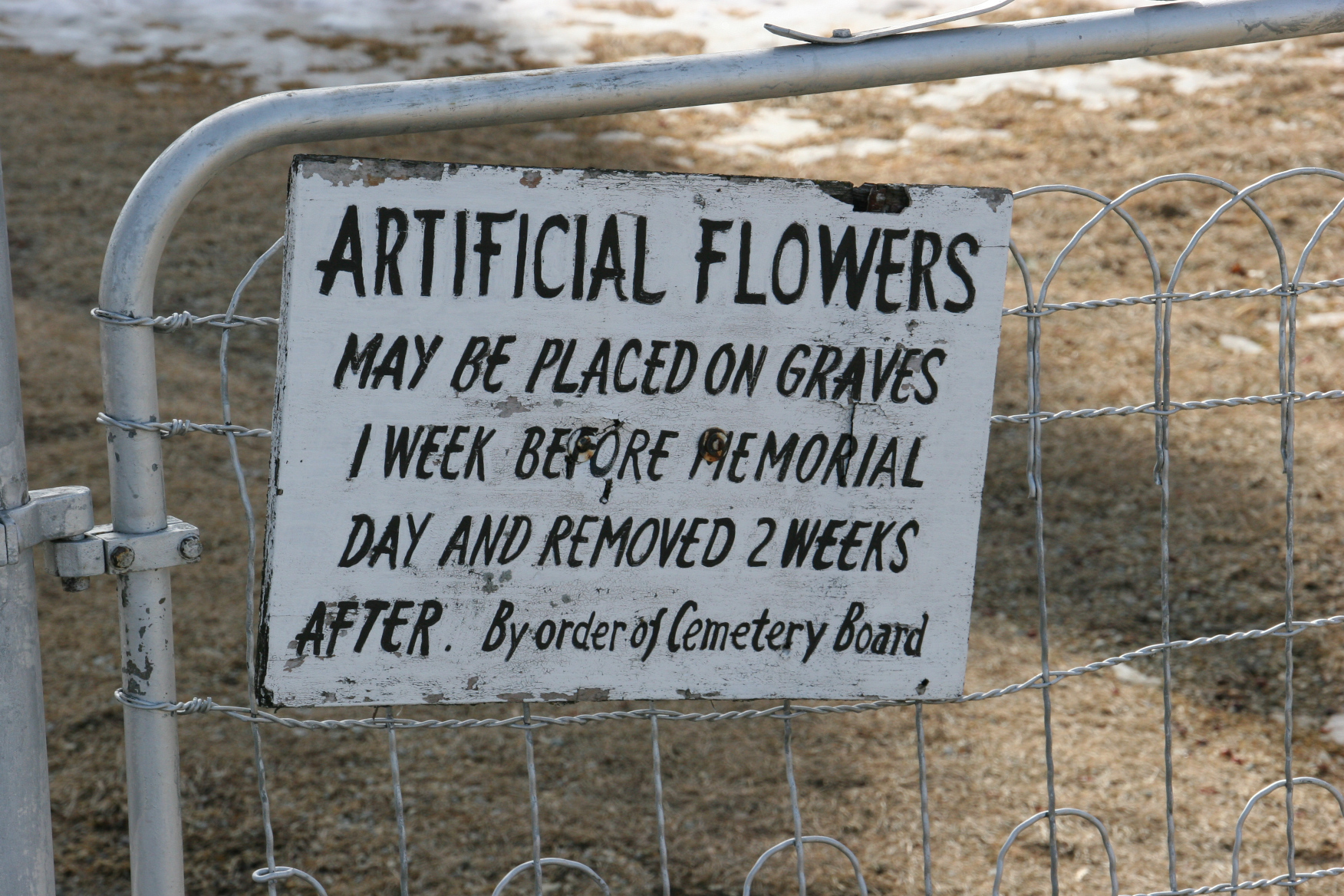
Posted on the gated entry to Valley Grove. (Minnesota Prairie Roots copyrighted photo March 2022)
TELL ME: Do you explore cemeteries and, if you do, why?
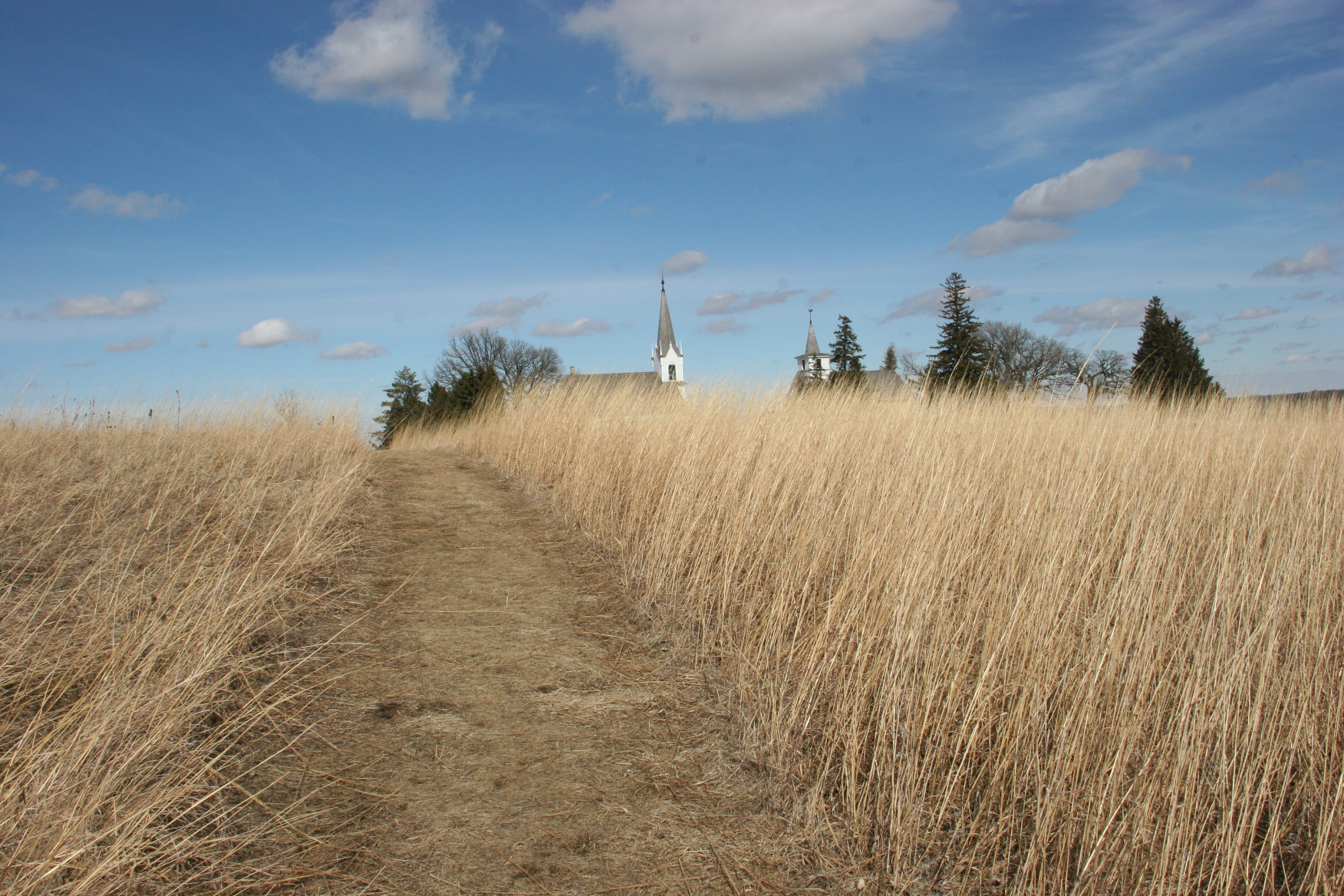
Valley Grove churches rise over the hill as I follow the prairie path back to the church grounds. (Minnesota Prairie Roots copyrighted photo March 2022)
ATOP THIS HILL, here on the edge of the Big Woods among acres of fields near Nerstrand, I hear the whispers. Wrapping around the two historic churches. Rising from the cemetery. Sweeping through the tall prairie grasses.
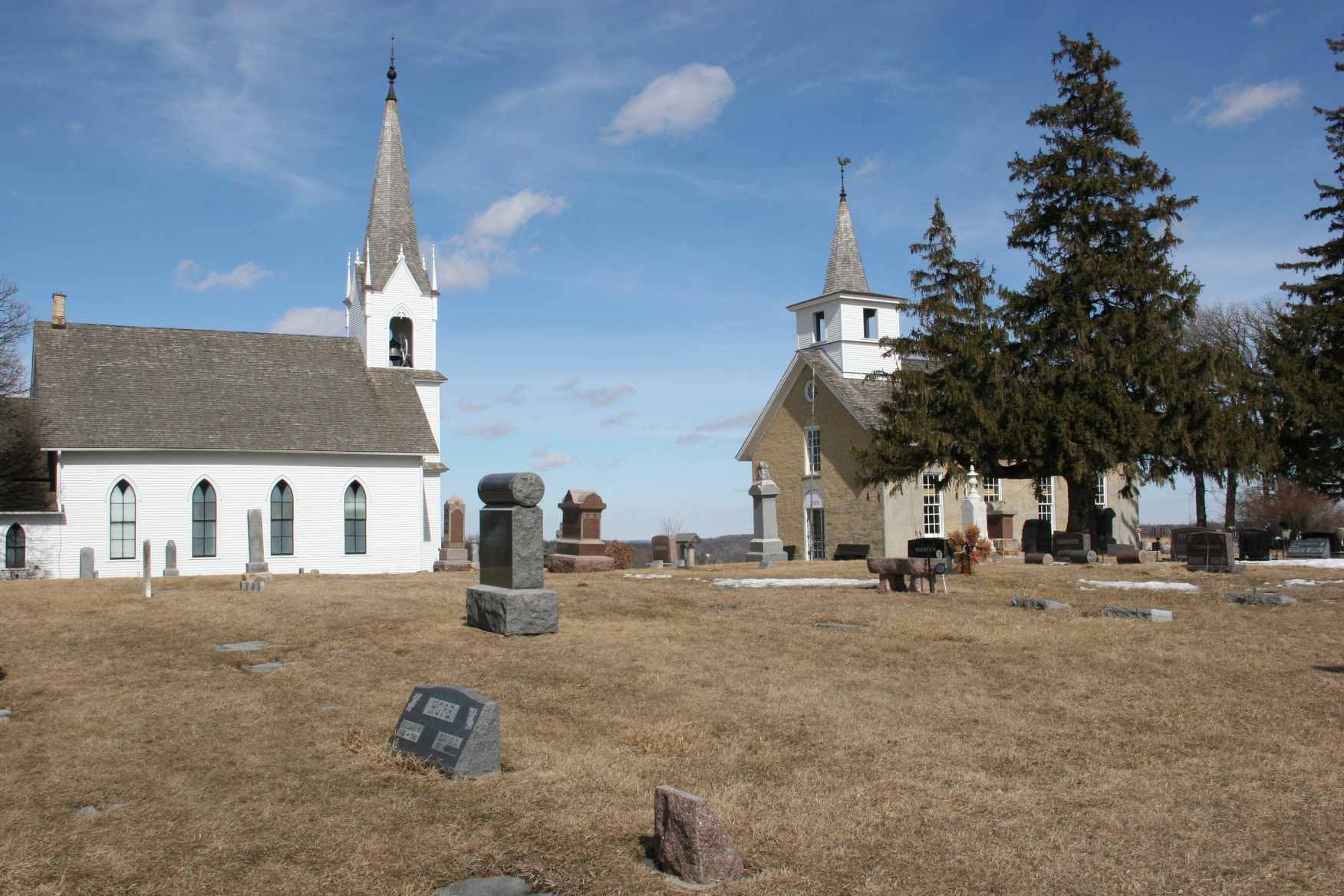
The cemetery sits next to the churches, then rings the old stone church. (Minnesota Prairie Roots copyrighted photo March 2022)
This is Valley Grove, overlooking the countryside, the place where Norwegian immigrants came. Here they crafted their first church from stone in 1862, then built a second, of wood, in 1894. Both still stand.
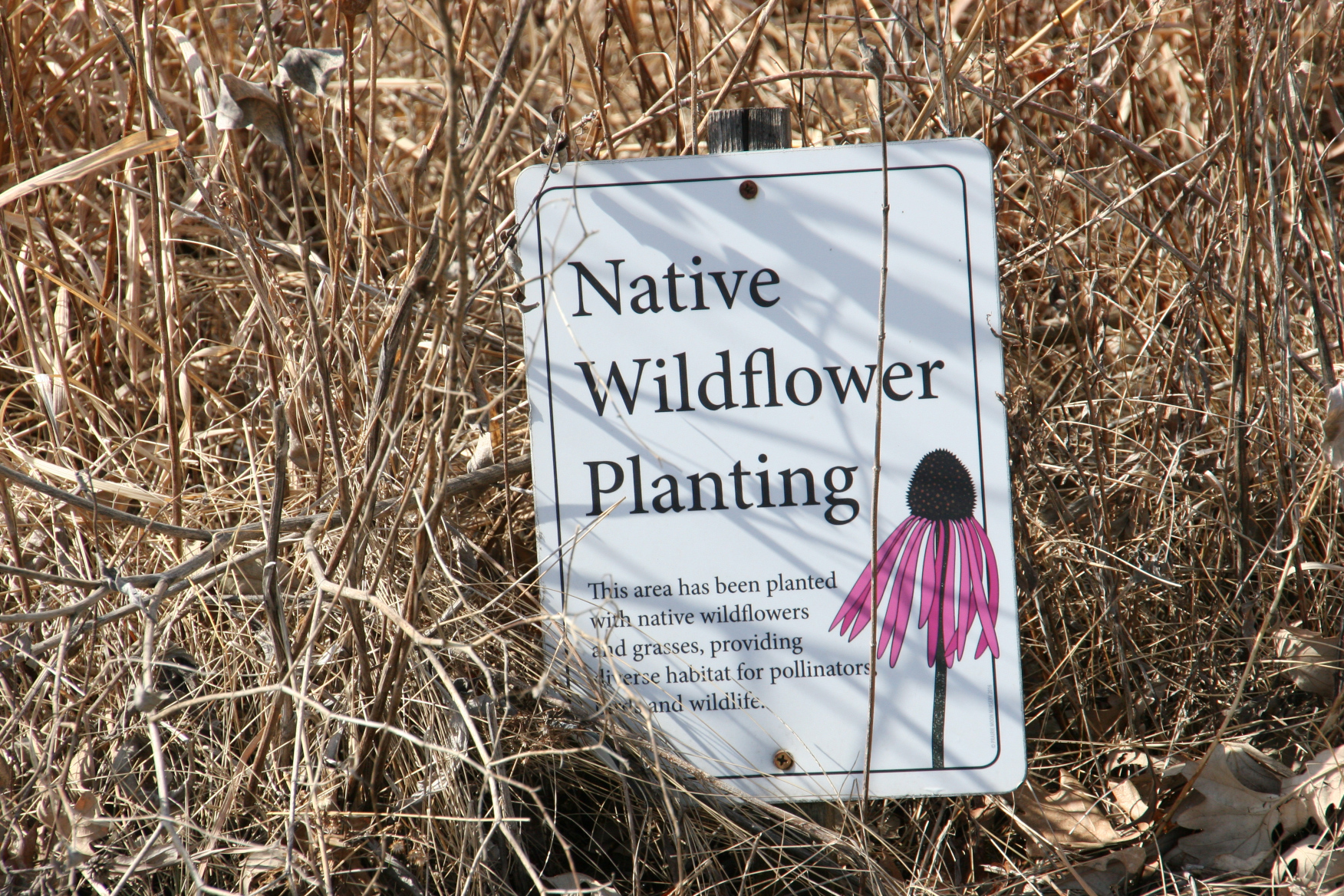
The Valley Grove Preservation Society cares about the land, too, with restoration and preservation. (Minnesota Prairie Roots copyrighted photo March 2022)
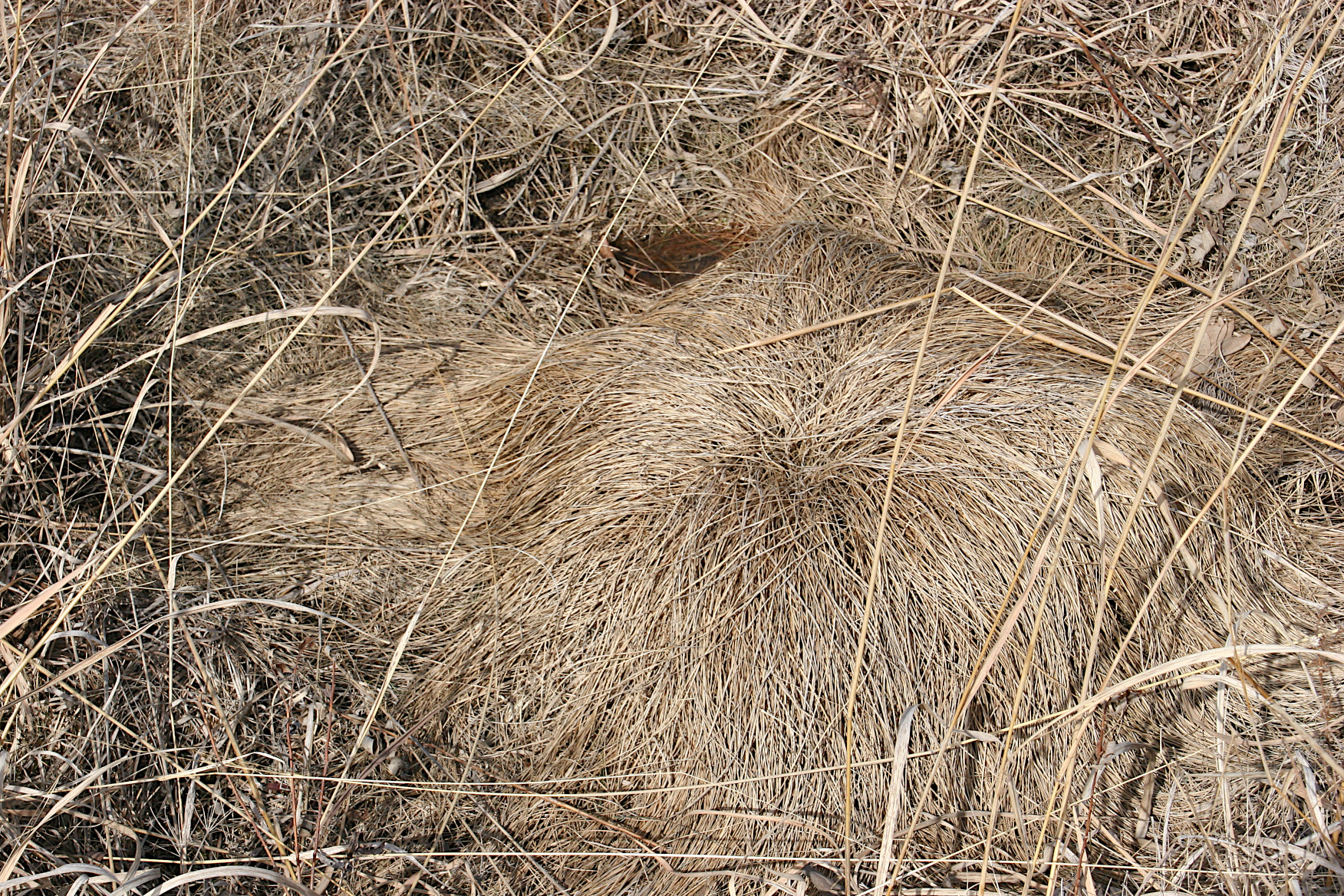
I spotted swirls of prairie grass alongside a trail. (Minnesota Prairie Roots copyrighted photo March 2022)
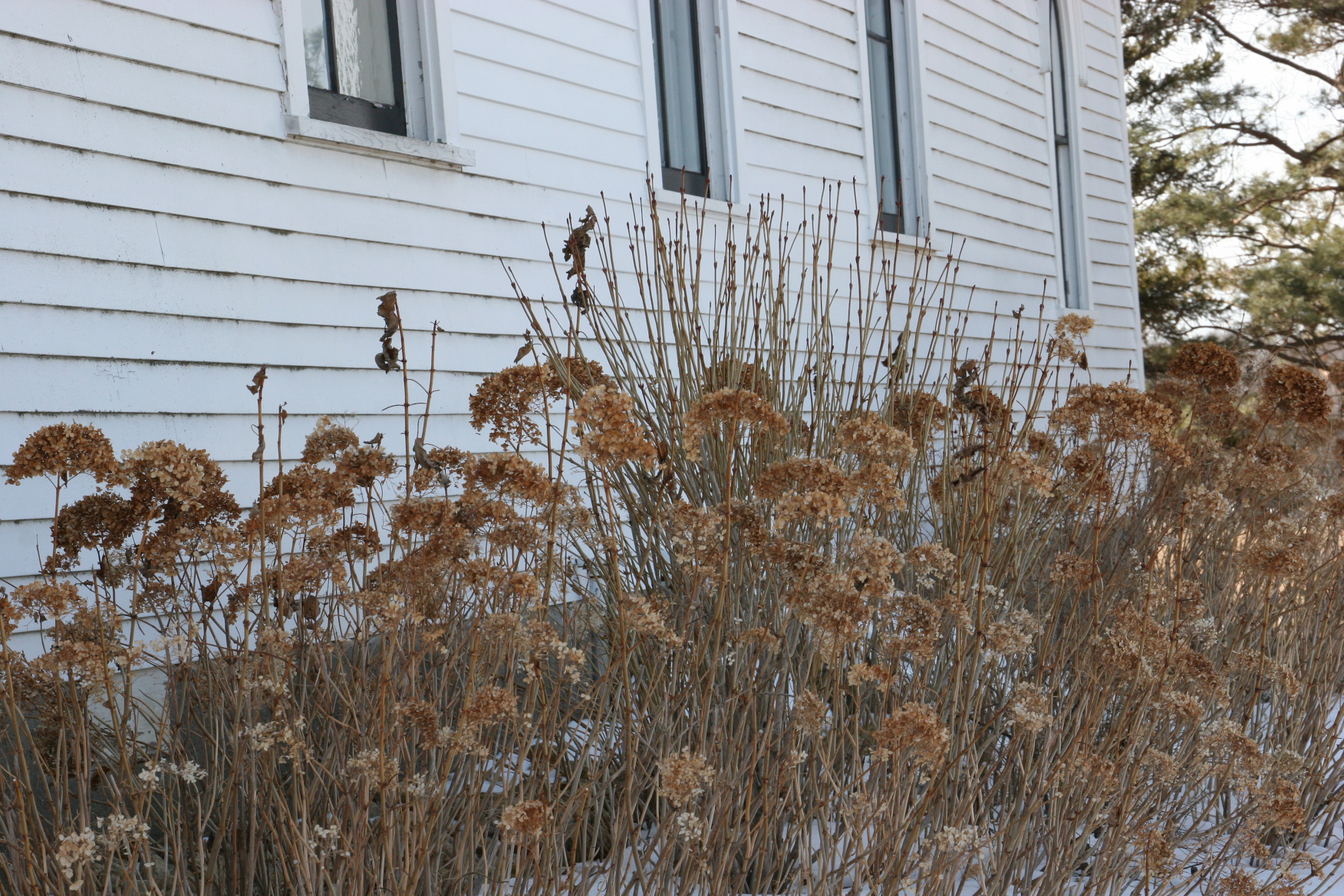
Dried hydrangea alongside the wooden church. (Minnesota Prairie Roots copyrighted photo March 2022)
The churches, cemetery and surrounding 50 acres are today owned, preserved and managed by the Valley Grove Preservation Society. They are a favorite nearby rural destination for me. I appreciate the natural beauty, the history, the country quiet and more. Even the wind.
A view from the parking lot, outside the fenced grounds. (Minnesota Prairie Roots copyrighted photo March 2022)
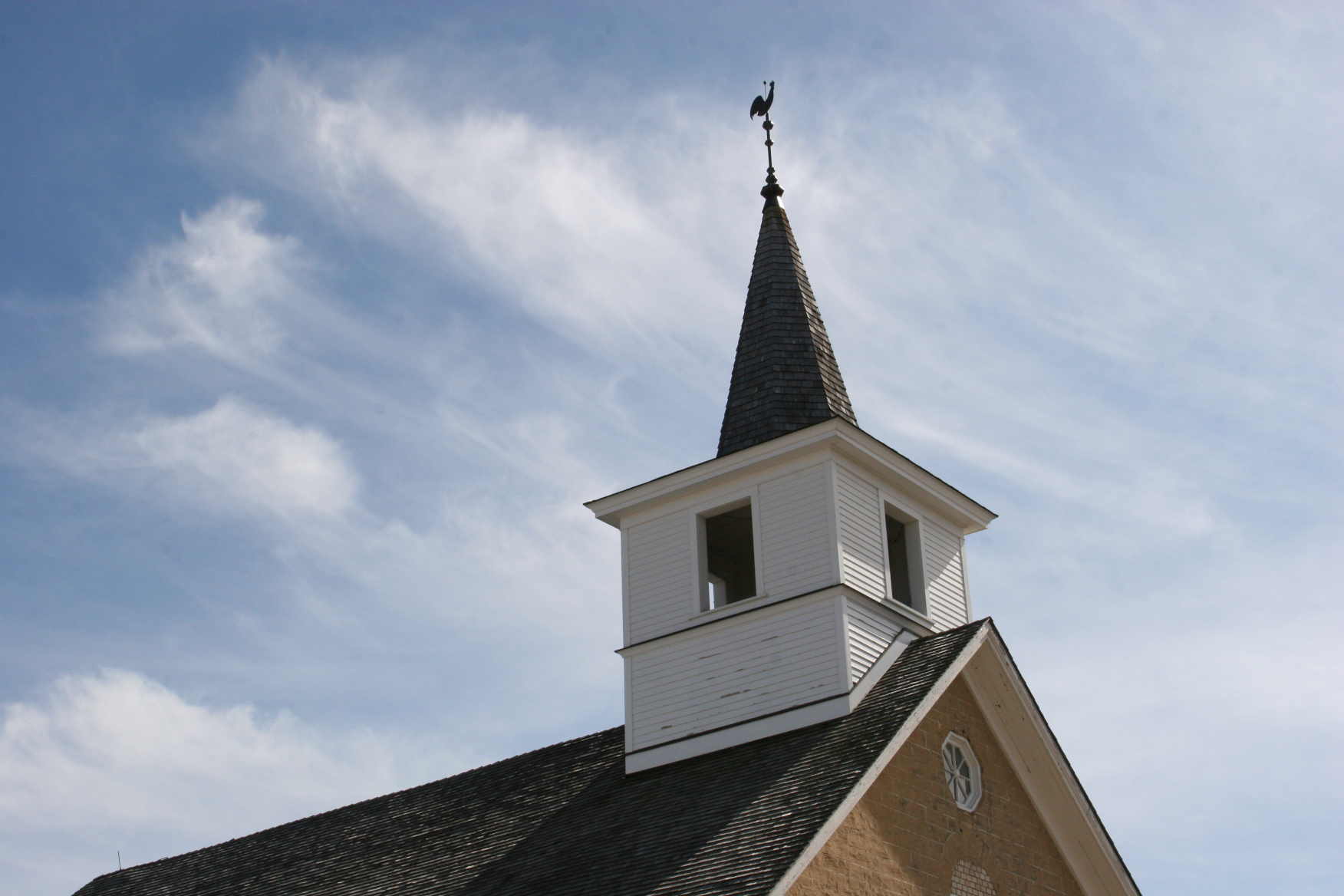
Atop the steeple of the old stone church. (Minnesota Prairie Roots copyrighted photo March 2022)
I value the rural-ness. On this afternoon, the shrill crow of a rooster, the sharp crack of gunshots and the barks of two dogs running loose broke the silence. In the context of location, the sounds fit. Not that I like gunshots echoing or strange canines circling me. But they did no harm as I continued along the stomped, sometimes soggy grass trail back toward the Valley Grove Cemetery and churches.
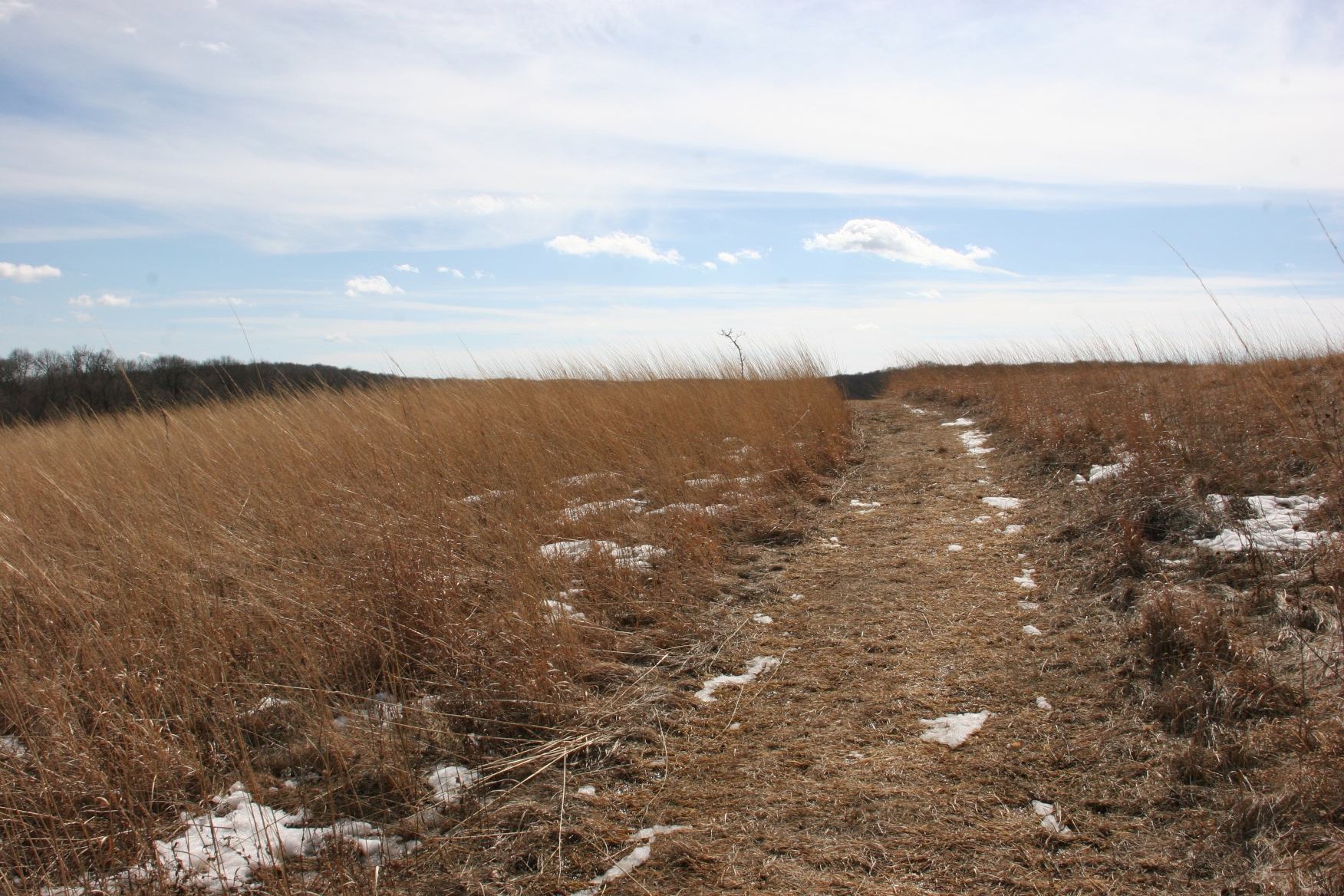
Land and sky define the prairie path. (Minnesota Prairie Roots copyrighted photo March 2022)
When following the prairie paths under a wide sky, I hear whispers of the past. Of wheels creaking under the weight of wagons crammed with an immigrant family’s belongings. Of a young mother bent over her baby, singing a soothing song from the Old Country. Of a weary farmer sighing after a long day of breaking the land.
The roofline and steeple of the simple 1862 stone church rise above the rural landscape. (Minnesota Prairie Roots copyrighted photo March 2022)
If this place could speak, it would whisper the stories of all those Norwegian immigrants who settled in and around Valley Grove and then gathered on this hilltop location to worship, socialize, celebrate, mourn.
The 1894 church closeup. (Minnesota Prairie Roots copyrighted photo March 2022)
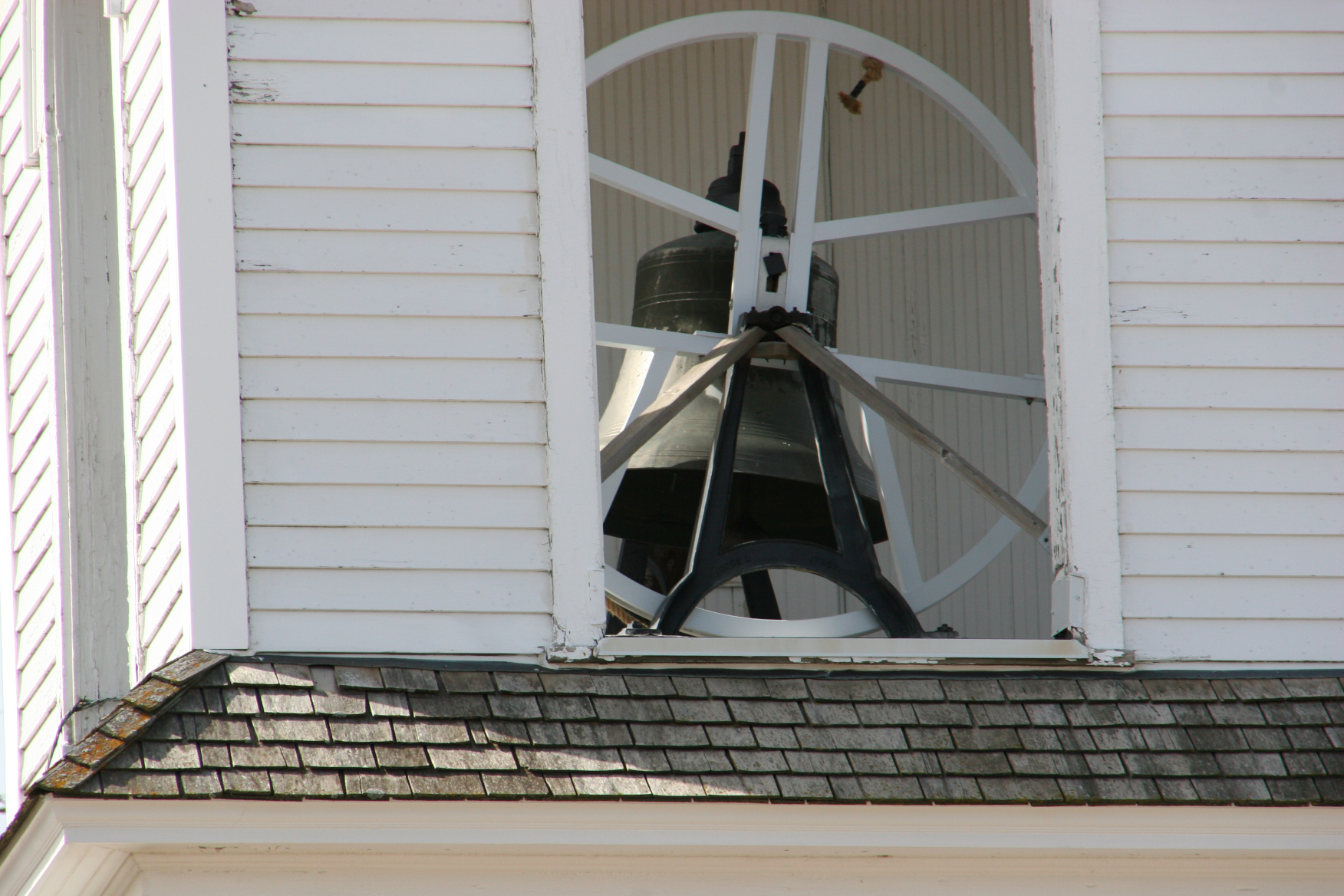
The bell in the wooden church still rings for special occasions. (Minnesota Prairie Roots copyrighted photo March 2022)
On this winter day, the church doors are locked. But I’ve been inside both buildings. They are basic. Simple. Mostly unadorned. The wooden church is still used today for special worship services like weddings. The old stone church serves primarily as a social gathering room. Both are well preserved. Valued.
In the foreground, the back of the old stone church, which sits near the wooden church. (Minnesota Prairie Roots copyrighted photo March 2022)
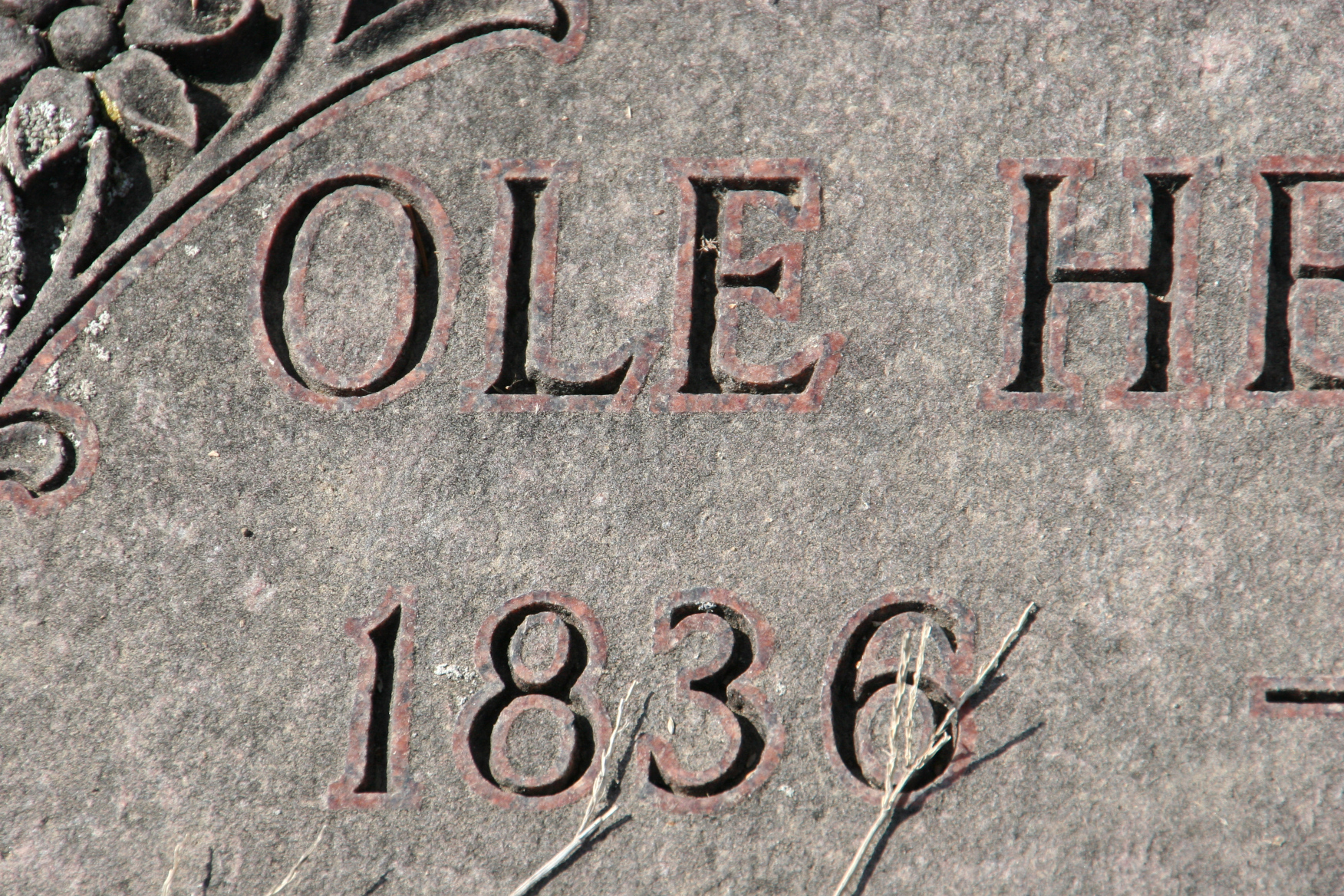
One of many Oles buried at Valley Grove. (Minnesota Prairie Roots copyrighted photo March 2022)
Much art already exists at Valley Grove, within the cemetery. I consider tombstones to be works of art, documentations of lives. The stone markers are many, from aged to recent. Names engraved thereon reflect the primarily Norwegian heritage. Ole. Erik. Einar. Inger. If these tombstones among the oaks could speak, oh, the stories they would tell. Of life in the Old Country. And of life in the New World, of this place, this Valley Grove.
FYI: Please check back for a post about the Valley Grove Cemetery.
I pulled stories from a family history book for a family history trivia contest at a 2017 Helbling reunion. (Minnesota Prairie Roots copyrighted file photo 2017)
YESTERDAY I PULLED A SPIRAL-BOUND family genealogy book from an upstairs closet. Compiled in 1993 by my sister-in-law Vivian, the book details the families of Alfred Helbling and Rosa Schaner Knoll Helbling. For someone like me who married into the Helbling family, it takes effort to understand the information therein, especially with second marriages (due to deaths) and stepchildren.
A stone building in southern Wisconsin, used for illustration only. (Minnesota Prairie Roots file photo)
But I’m clear on one fact—the Helbling ancestors are considered “Germans from Russia.” As the family tree shows, the Helblings trace their roots back to Wingen, Alsace in the Rhine River Plain. Like many Germans, they left their homeland for Russia when Russian Czarina Catherine the Great (a former German princess) promised free farmland and more to immigrants. My husband Randy’s great great great great grandfather and his family were among the founding fathers of the Catholic colony of Speier in 1809. That’s in the southern area of current day Ukraine near the Black Sea port city of Odessa.
So now you understand why I pulled that family genealogy book from the closet. The unfolding invasion of Ukraine (including in Odessa) resonates with me in a way that is personal. This land, now under attack by the Russian military, was once home to the Helbling family. They arrived in this area with hopes and dreams.
As often happens in history, leadership and policies change. That prompted Randy’s great grandparents, Russian-born Valentine and Emina Helbling, to emigrate to the U.S. from Russia. They arrived in Mandan, North Dakota in May 1893. Accompanying them were their three sons, including 5-year-old Alfred, Randy’s grandpa.
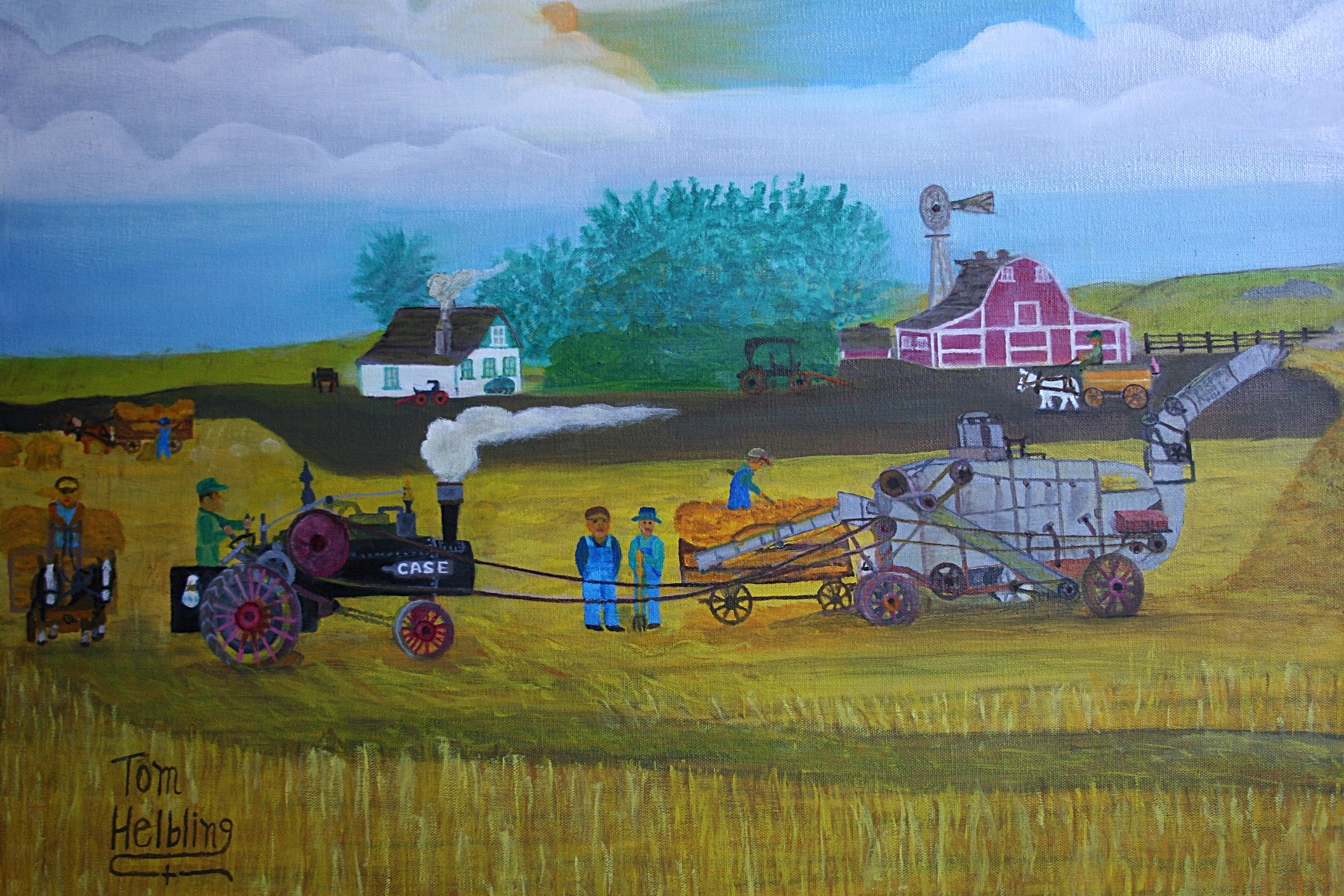
“Threshing on the home place, rural St. Anthony, North Dakota,” a painting by my father-in-law. Thomas Helbling. (Minnesota Prairie Roots copyrighted file photo)
I’m always amazed at the generational closeness of my husband to his family’s homeland. Mine is a generation farther removed (from Germany). In 1898, Valentine and Emina homesteaded a claim near St. Anthony south of Mandan. That young boy who traversed the ocean from Russia with his parents would also farm there as would Randy’s father, Tom. When Randy was seven, his family uprooted and moved to central Minnesota.
As I consider all of this family history, I wonder at the dreams and challenges. To leave your home country behind, understanding you would never return, takes fortitude. I can only imagine the fortitude Ukrainians must tap in to today as they face a Russian invasion.
Early in his marriage, Alfred Helbling faced an unspeakable loss—the tragic death of his first wife. Katherine, 27, apparently lost her balance, fell into a well and died while retrieving a container of milk stored inside.
Artwork created by Gracie for a 2018 student art show at the Paradise Center for the Arts, Faribault. (Minnesota Prairie Roots file photo March 2018)
Today people are dying in Ukraine, a country that suddenly doesn’t seem all that far away. An ocean and some 5,200 miles separate this land from Minnesota. But when I page through the spiral-bound genealogy of the Helbling family, I feel much closer. Closer in a way that causes me to feel emotional. Upset. Concerned. Worried about not only the future of Ukraine, but also of this world.
SAY THEIR NAMES NORTHFIELD INTERVENTION #32 chalk art activism at Bridge Square, Northfield. (Minnesota Prairie Roots copyrighted photo February 2022)
SUNDAY PROVED ENLIGHTENING, educational and reflective. And that’s a good thing because ongoing learning often makes us more informed, compassionate and caring individuals.
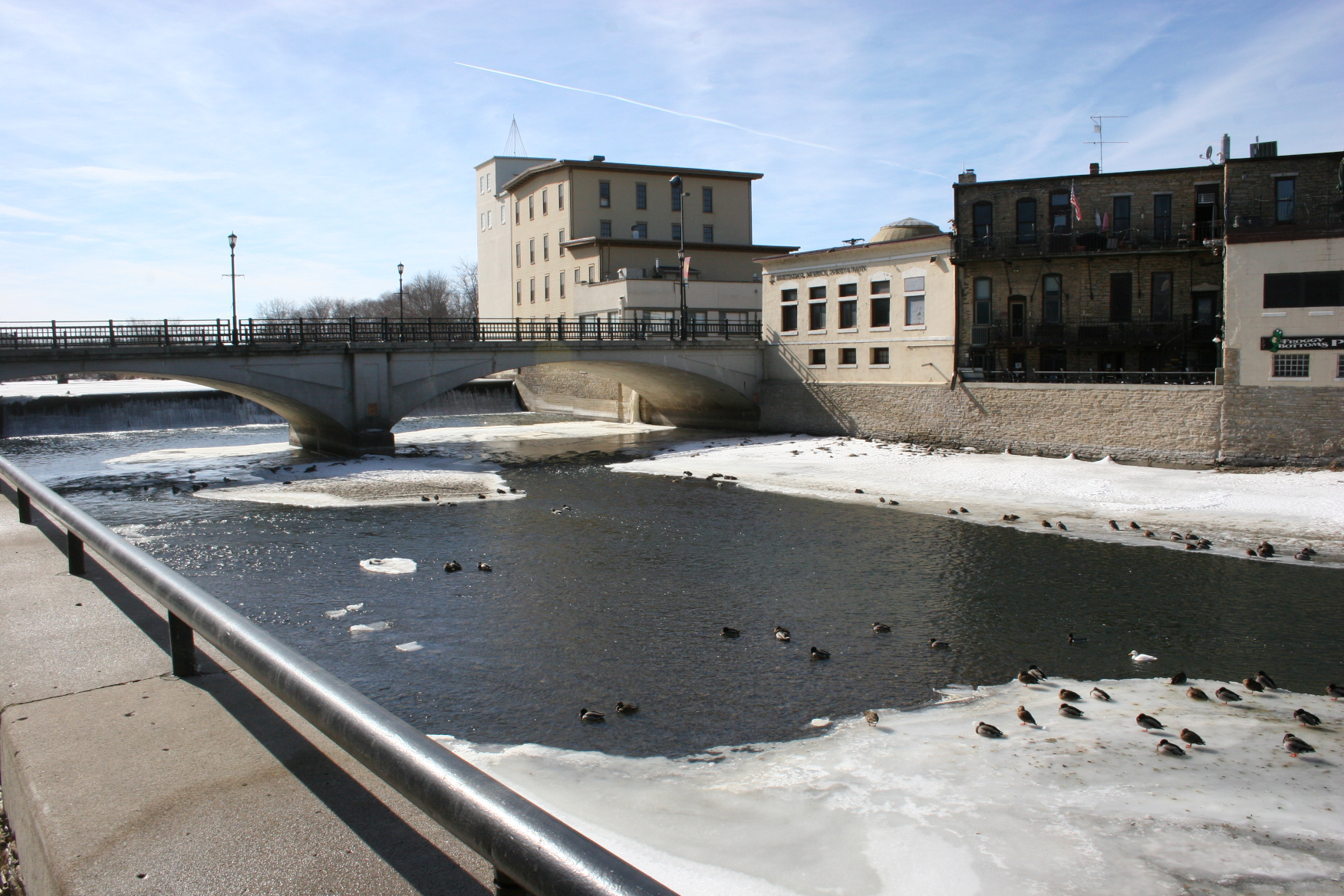
The scene from the Riverwalk along the Cannon River in downtown Northfield Sunday afternoon. (Minnesota Prairie Roots copyrighted photo February 2022)
The focus of my learning was not intentional, but rather a coming together of several elements. That began with a decision to follow the Riverwalk in Northfield on a rare February afternoon of sunshine and warmth in southern Minnesota. At 40-plus degrees, it was simply too nice to stay indoors. Northfield, only about a 25-minute drive, is a beautiful progressive river town, home to St. Olaf and Carleton Colleges, a thriving downtown historic business district, an active arts scene and more, including community activism.
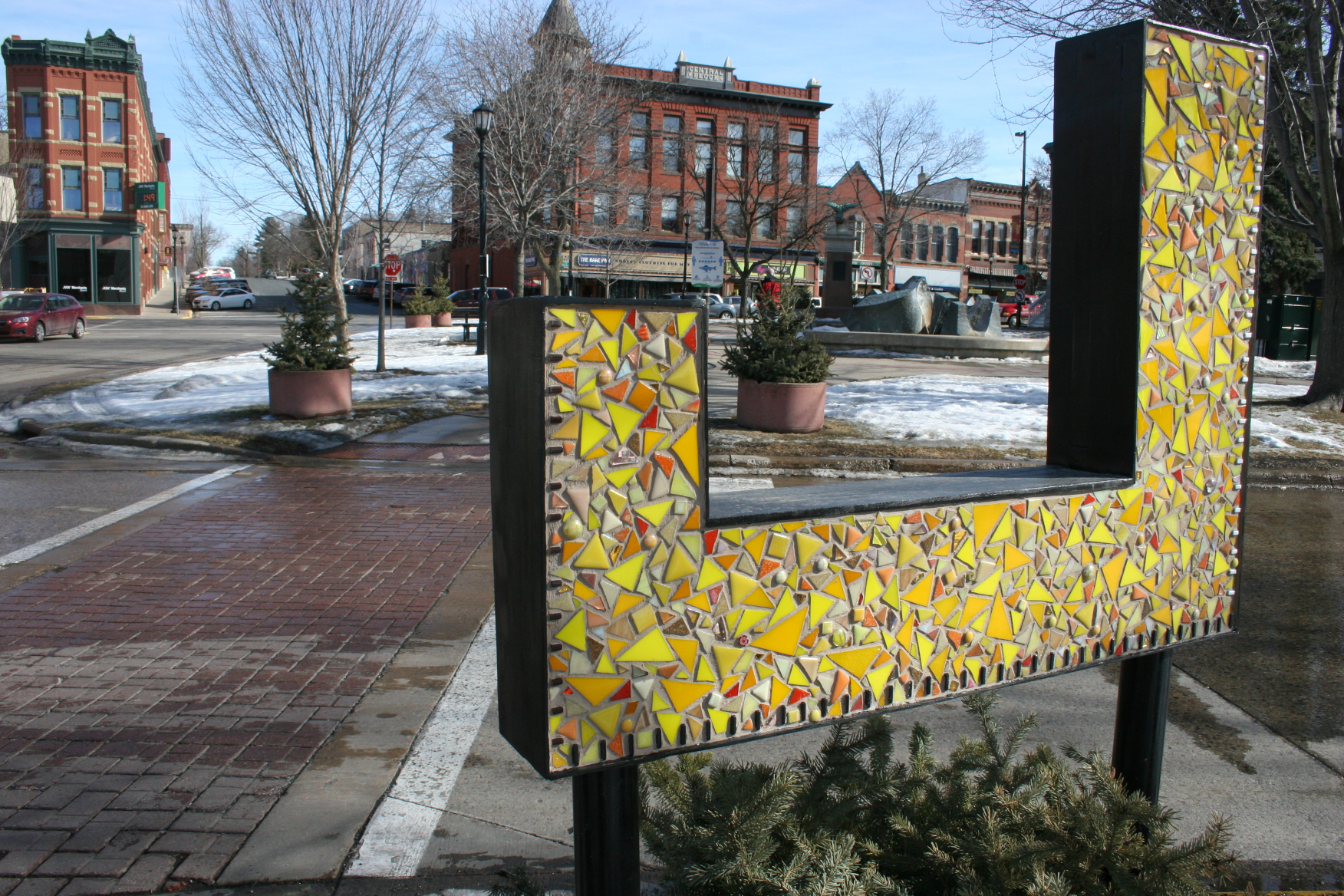
Bridge Square with its monument and fountain, framed by a mosaic.Minnesota Prairie Roots copyrighted photo February 2022)
A statement by the artist activists. (Minnesota Prairie Roots copyrighted photo February 2022)
Spread out before the Civil War Monument, Black Lives Matter message and names. (Minnesota Prairie Roots copyrighted photo February 2022)
On this Sunday, activism and engagement focused my initial attention as Randy and I exited the van across from Bridge Square, a mini middle-of-the-downtown park next to the Cannon River. As I pulled my camera strap over my neck, I noticed a group of young people chalking the sidewalk leading to and around the Civil War Monument and center fountain. I decided in that moment not to photograph them writing their messages as part of SAY THEIR NAMES INTERVENTION #32. I remembered the controversy over such chalk art at Bridge Square. I believe the City of Northfield enacted an ordinance banning the chalking of the public space, although I could not confirm that information online.
From the SAY THEIR NAMES NORTHFIELD Facebook page: “In honor of Amir Locke and many other Black persons killed by police.” (Minnesota Prairie Roots copyrighted photo February 2022)
Later, after we walked along the river and then along Division Street, we paused to read the messages printed by SAY THEIR NAMES NORTHFIELD participants who had now left the square. As in previous “interventions,” their words repeated that BLACK LIVES MATTER. All too familiar names were chalked onto the cement—George Floyd, Breonna Taylor, Philando Castile, Jamar Clark, Daunte Wright… And new to the list, Amir Locke.
Too many names… (Minnesota Prairie Roots copyrighted photo February 2022)
As I photographed the names and messages, I felt an overwhelming sense of sadness at the injustices, the fact that this is 2022 and we are still grappling with racism and social injustice and many other issues related to race.
Promo for “The Summer of Soul.” (Photo credit: “Summer of Soul” Facebook page)
That evening, the same response repeated as I watched filmmaker Ahmir “Questlove” Thompson’s newly-released documentary “The Summer of Soul (…Or, When the Revolution Could Not Be Televised)” on ABC. The film documents the Harlem Cultural Festival which brought some 300,000-plus people together in Harlem in the summer of 1969 for six concerts over six weeks. Stevie Wonder, Nina Simone, Gladys Knight and the Pips, and other mostly Black musicians performed before a primarily Black crowd. The film, interspersed with concert footage and follow-up interviews with those who participated or attended, is a remarkable historic documentation of not only the music, but also of Black people, their culture, their connections in the community of Harlem and also the issues they faced in 1969. Issues which remain today.
I was especially moved by the joyful performance of “Aquarius/Let the Sunshine In” by Fifth Dimension, complete with audience participation and by the singing of “Take My Hand, Precious Lord,” Martin Luther King Jr’s favorite hymn sung at his funeral. All were performed against a stage backdrop collage of vibrant squares, rectangles and L shapes. (I’d love to have a poster of that artsy 1969 graphic.)
I felt a mix of sadness and concern that here we are, 53 years later, and just now this film footage has been released. Woodstock, the Apollo moon landing and more overshadowed the Harlem Cultural Festival in 1969. I appreciate the release of this film nominated for a 2022 Academy Award for Best Documentary Feature and a 2022 Grammy Award for Best Music Film. It’s important I watched it for, among many reasons, the insights and perspectives gained.
A must-read book of historical fiction.
Before “The Summer of Soul” aired on TV Sunday evening, I’d begun reading Under the Tulip Tree, a historical novel by Michelle Shocklee set in Nashville following the stock market crash of 1929. Only a third into the book, I found it fitting of my unexpected Sunday focus on Black lives The main character is a young White writer interviewing a former slave. And, yes, although fictional, real-life stories weave into the book.
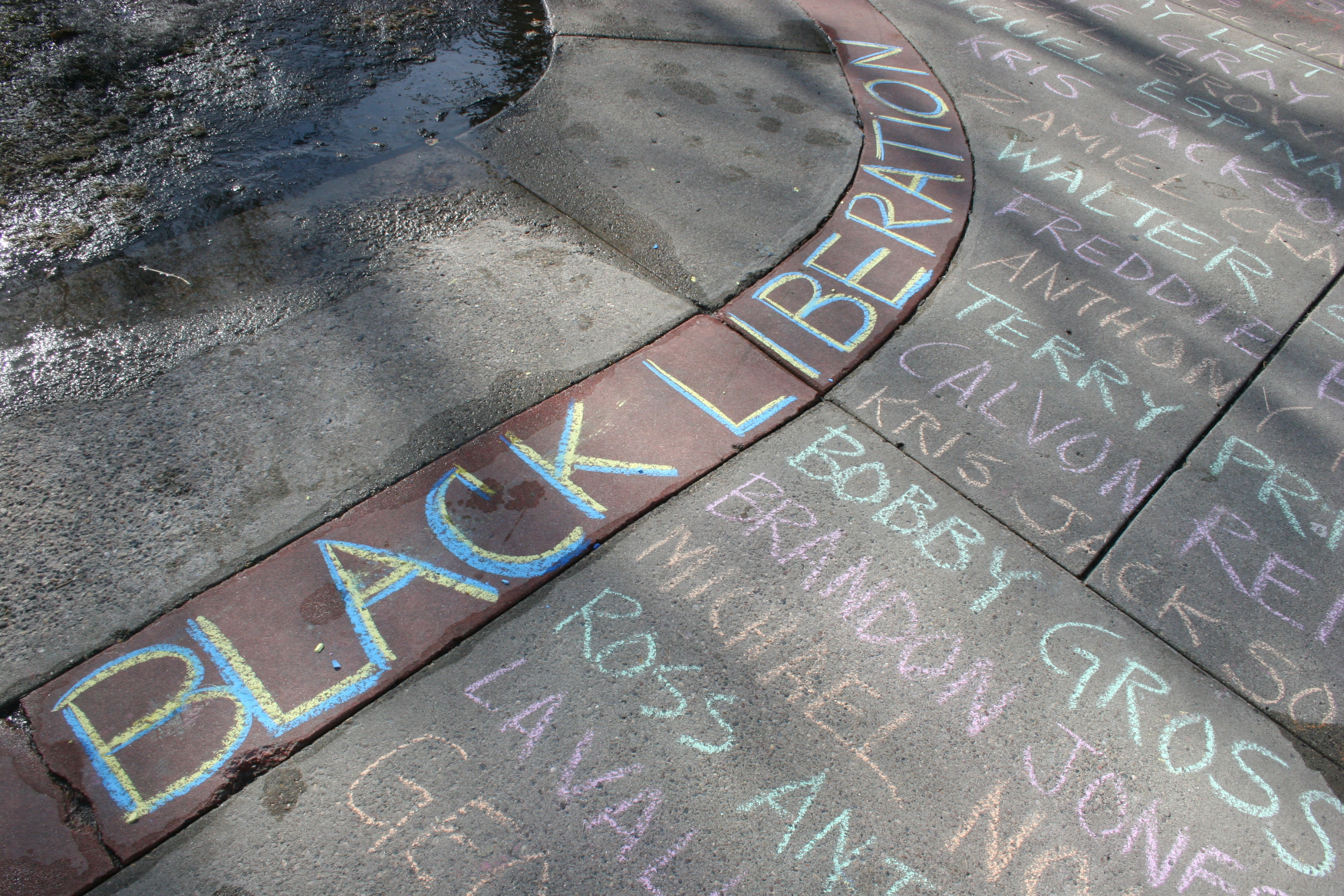
BROWN LIVES FOR BLACK LIBERATION is the message leading to the list of names. (Minnesota Prairie Roots copyrighted photo February 2022)
I feel grateful for all the elements—chalk art, a documentary and a book—which came together on a February Sunday in Minnesota to educate and enlighten me about many aspects of Black lives. To learn is to grow in understanding and compassion.
FYI: Activism and art will theme an event on Thursday, March 3, offered through St. John’s Women, a Northfield-based group in its fourth year of sponsoring “Courageous Conversations” via monthly speakers and book studies. Carleton College Professor Cecilia Cornejo, an artist and also leader of the local SAY THEIR NAMES group, will talk about “Anti-Racism Activism Through Community-Engaged Art” at 7 pm via Zoom. Click here for more information.
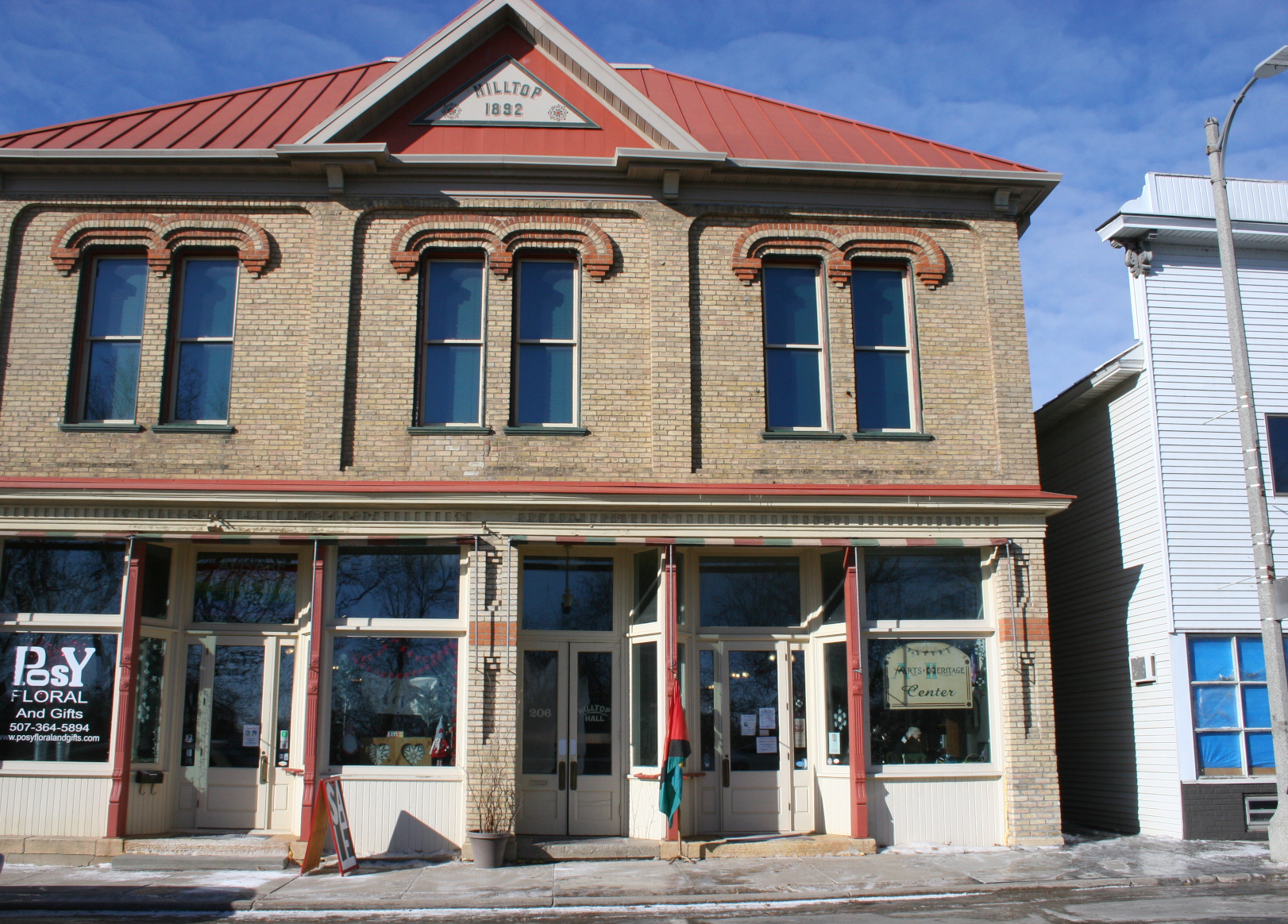
The historic Hilltop Hall houses The Arts & Heritage Center of Montgomery on the right and Posy Floral & Gifts, left. (Minnesota Prairie Roots copyrighted photo February 2022)
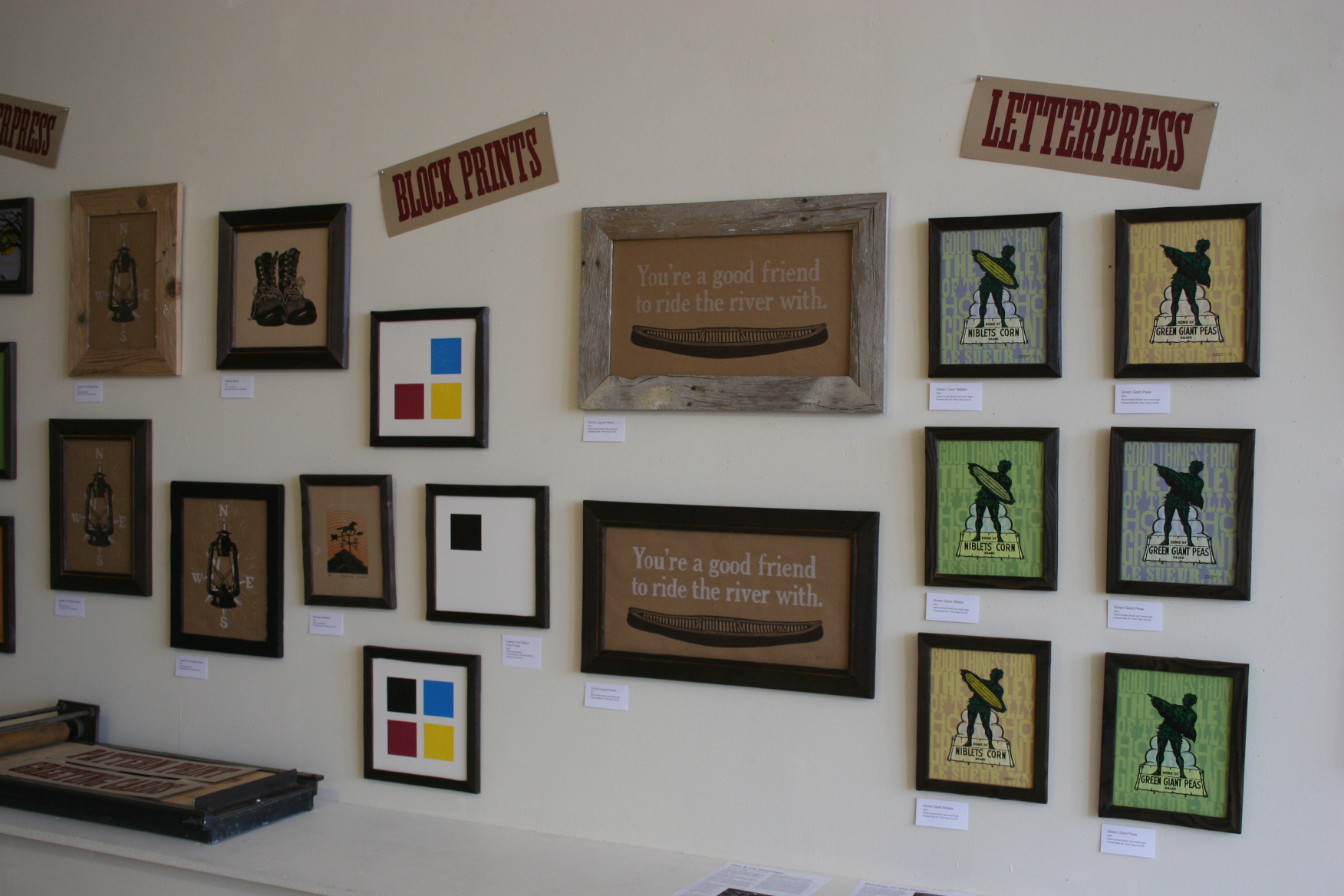
Inside the center, Kotasek’s prints plaster walls. (Minnesota Prairie Roots copyrighted photo February 2022)
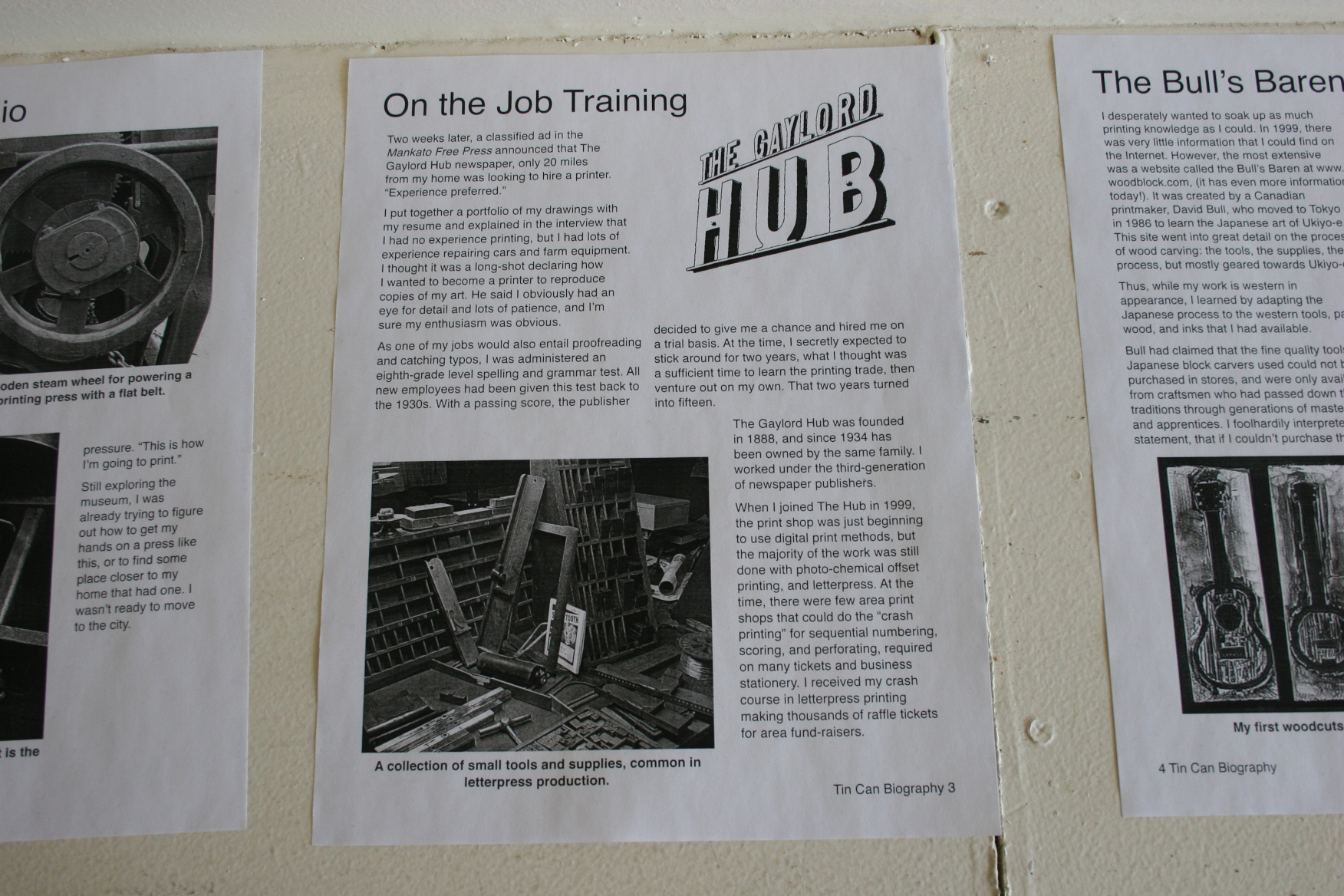
The artist includes some background info about himself, this sheet focused on his time at The Gaylord Hub. (Minnesota Prairie Roots copyrighted photo February 2022)
As a journalist and an art lover especially appreciative of letterpress printing, I delighted in this exhibit of an art now in revival. Not only that, I hold a connection to Kotasek. We both worked at The Gaylord Hub, me as my first newspaper reporting job straight out of college in 1978 and he as an apprentice printer there in 1999. We learned under the mentorship of Jim Deis, then editor and publisher of the generational family-owned newspaper. I’ve never met Kotasek, yet I feel linked via The Hub.
This shows the steps in creating a multi-hued print. (Minnesota Prairie Roots copyrighted photo February 2022)
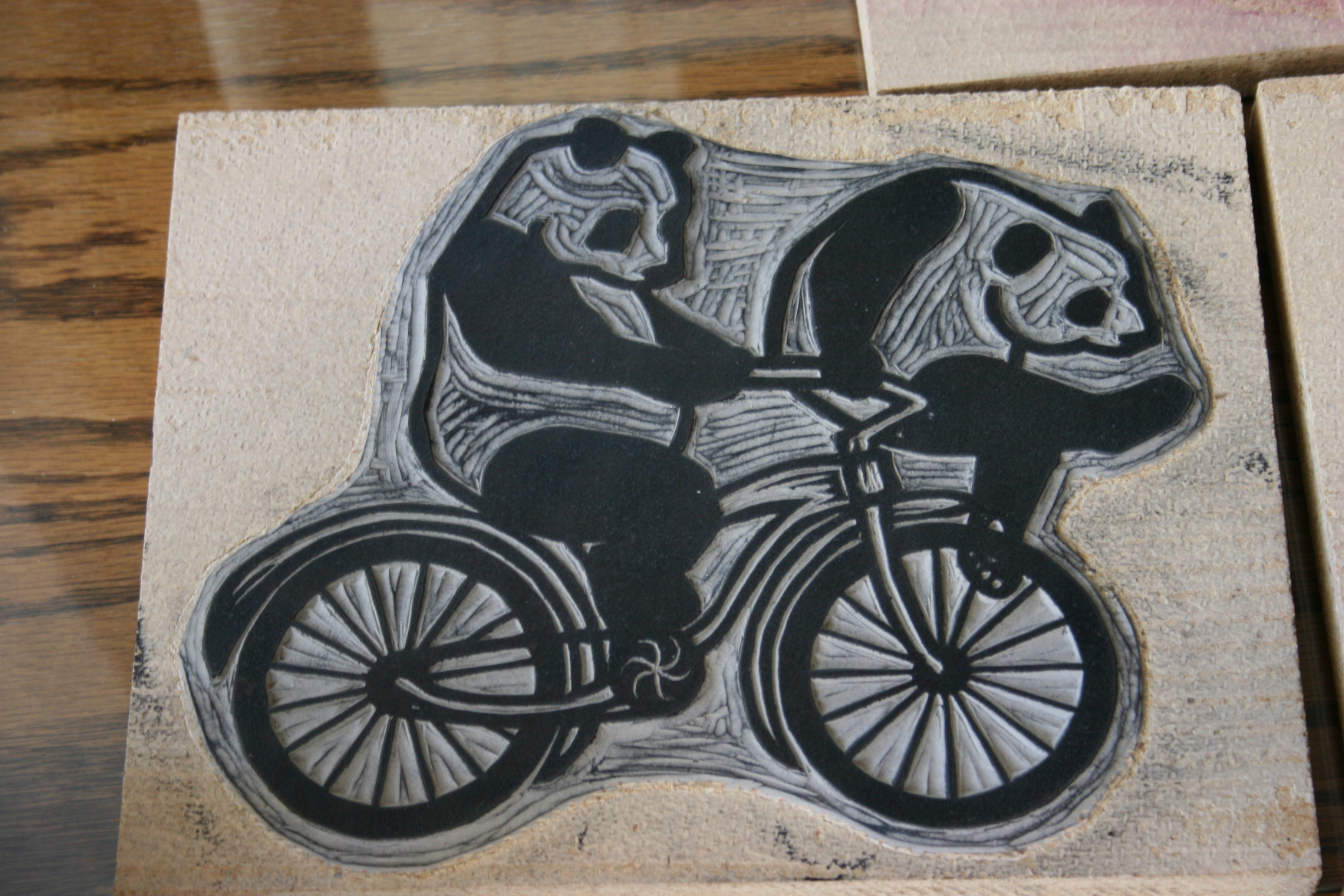
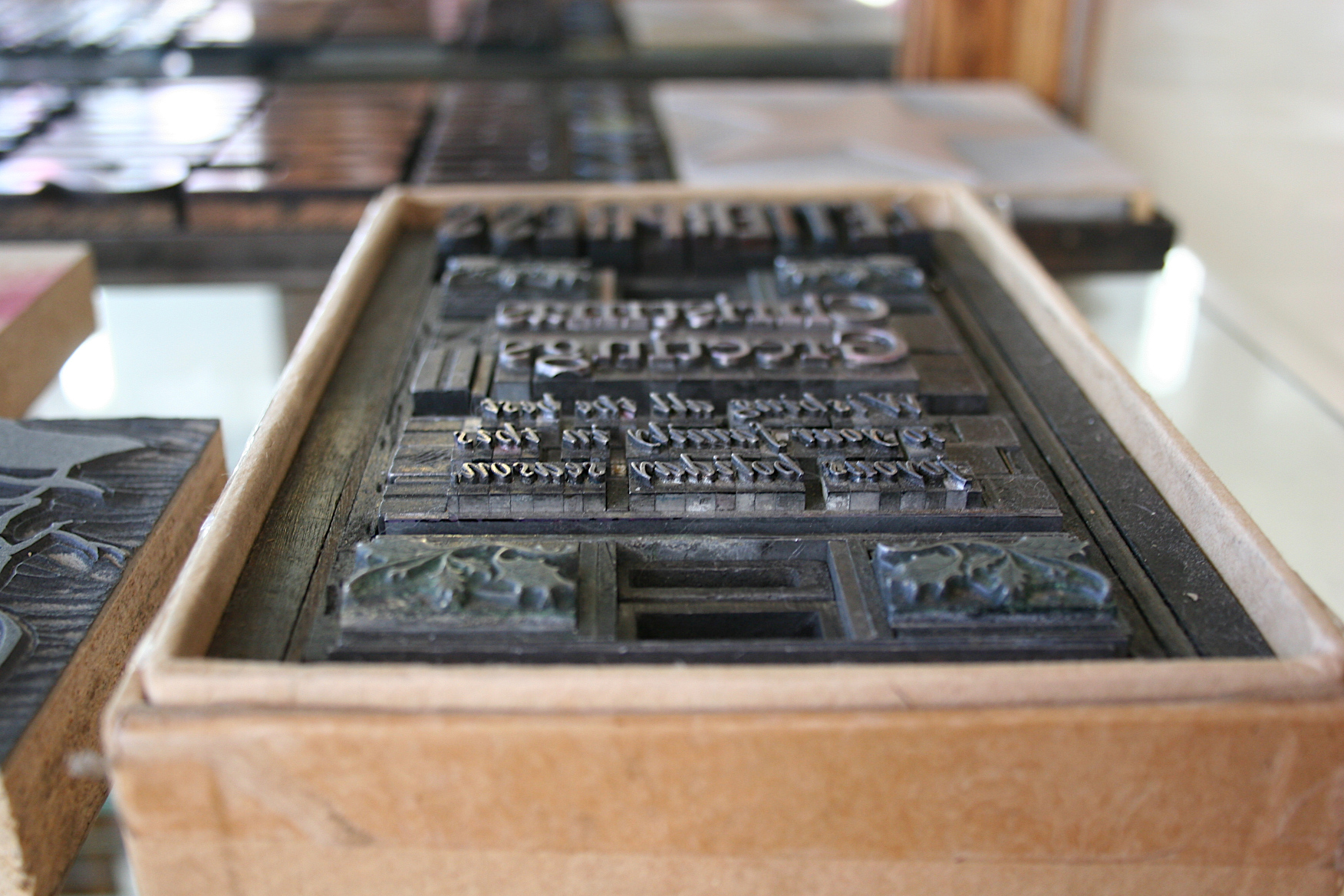
To view his art is to gain an appreciation for a past printing process. In letterpress printing, movable raised wood or lead letters/type are pieced together in a frame, then secured before inking onto paper via a printing press. That’s a simplistic explanation. If multiple ink colors are required, the process is layered, longer, more labor intensive. Likewise, art carved from linoleum or wood blocks goes through a similar process in creating fine art prints, gig posters and more.
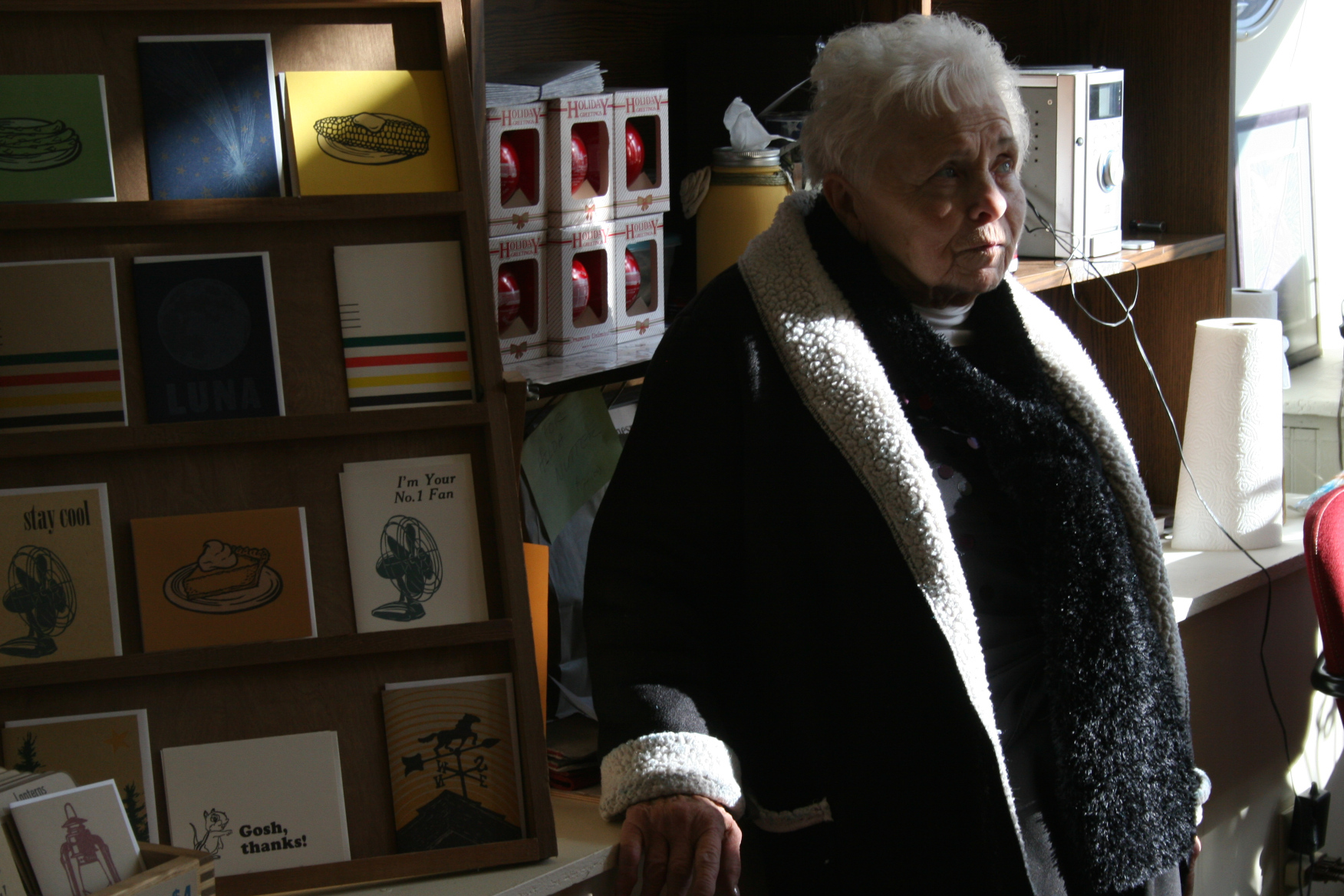
Volunteer JoAnn Petricka with Kotasek’s prints to the left. (Minnesota Prairie Roots copyrighted photo February 2022)
When I entered the narrow room which houses The Arts & Heritage Center in the small southern Minnesota community of Montgomery and saw Kotasek’s letterpress art, memories rushed back. Memories of the strong scent of ink, the clacking of noisy printing presses, scenes of printers Dale and Bucky laboring in stained printers’ aprons, me trying to hear phone conversations with sources. Me pounding out news stories on an aged manual typewriter against the backdrop of all that noise.
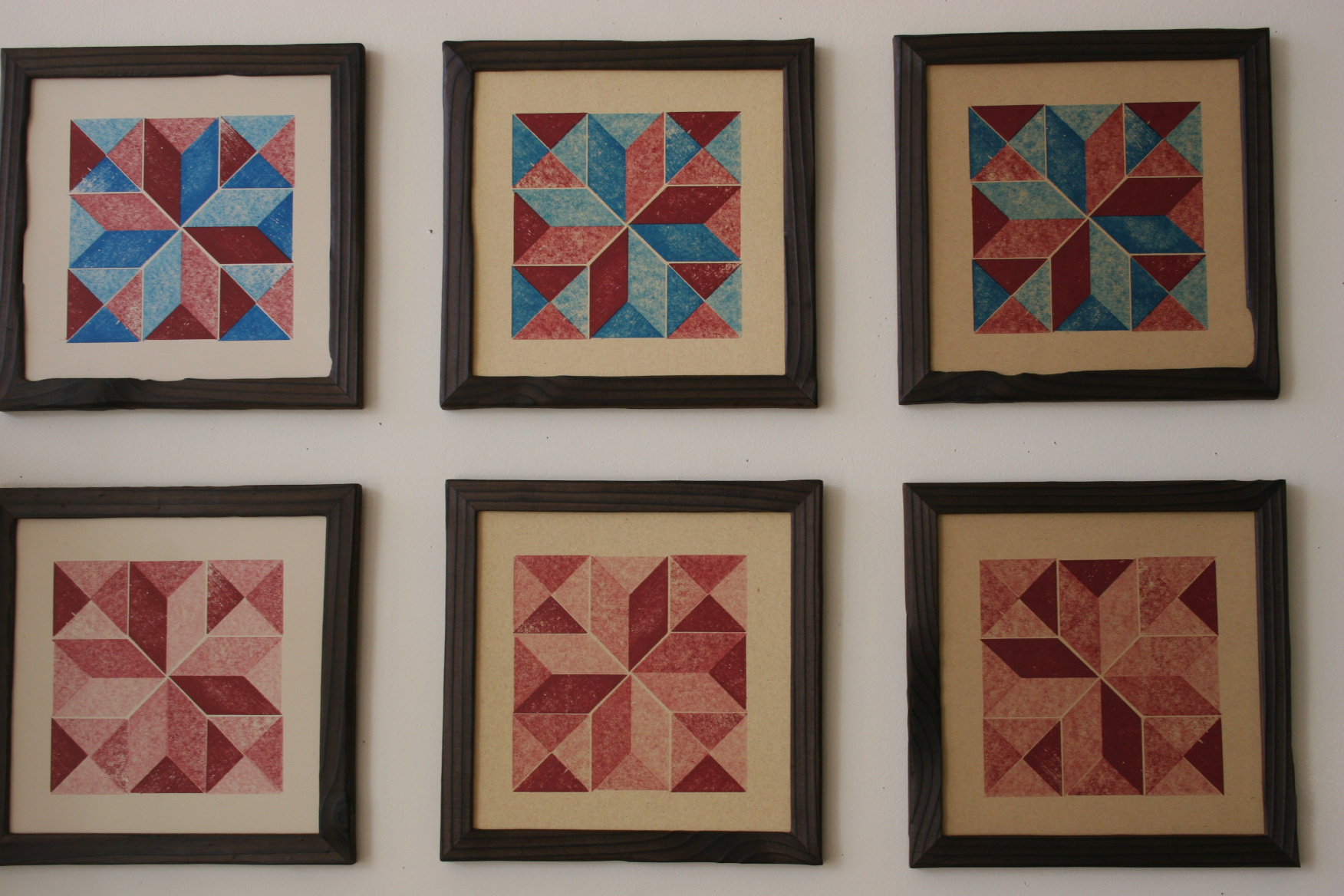
Hand-carved blocks were used to create this art titled “Eight-Pointed Star.” (Minnesota Prairie Roots copyrighted photo February 2022)
But on this February morning, quiet prevailed as I studied the work of this craftsman, this visual artist. Letterpress is both craft and art.
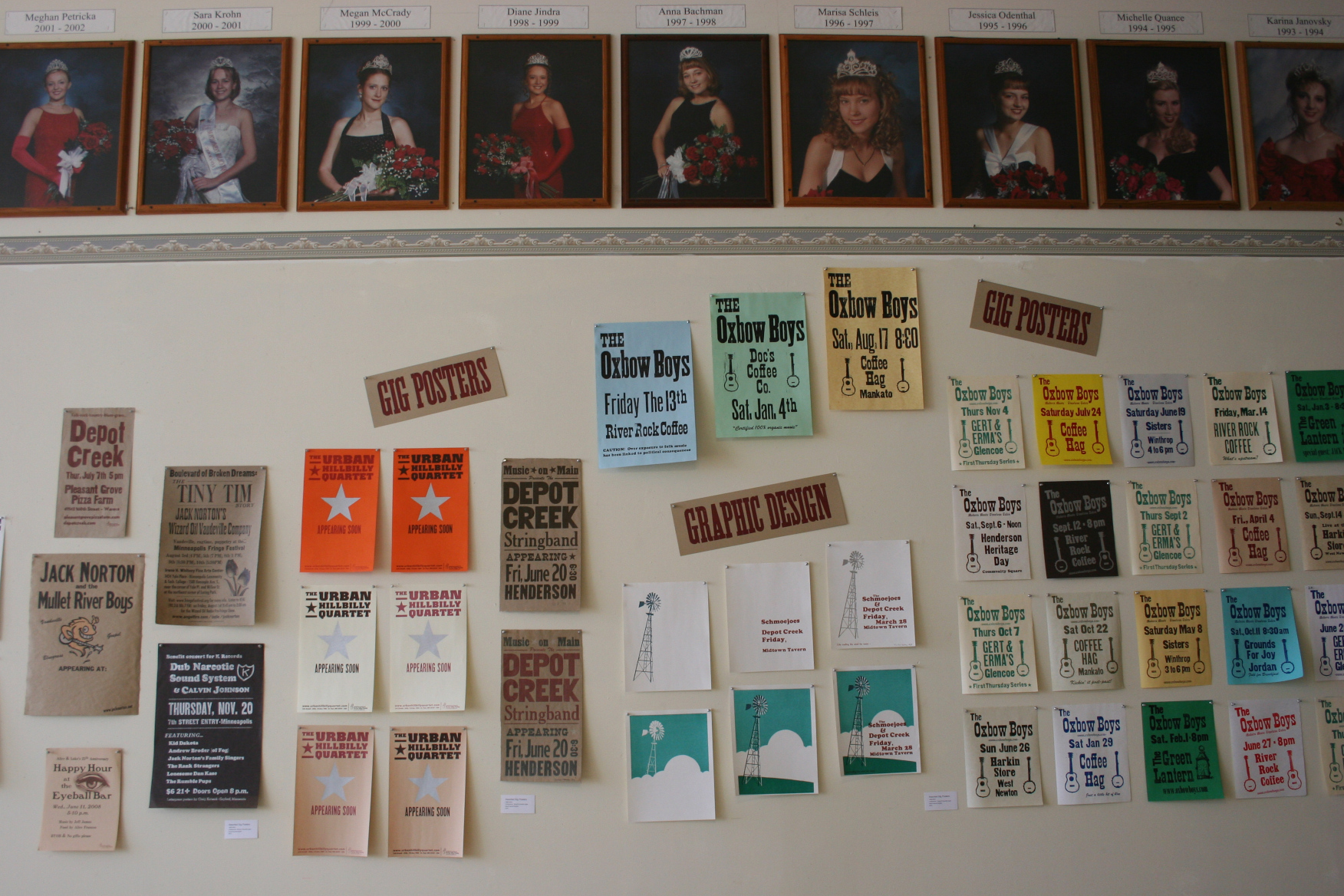
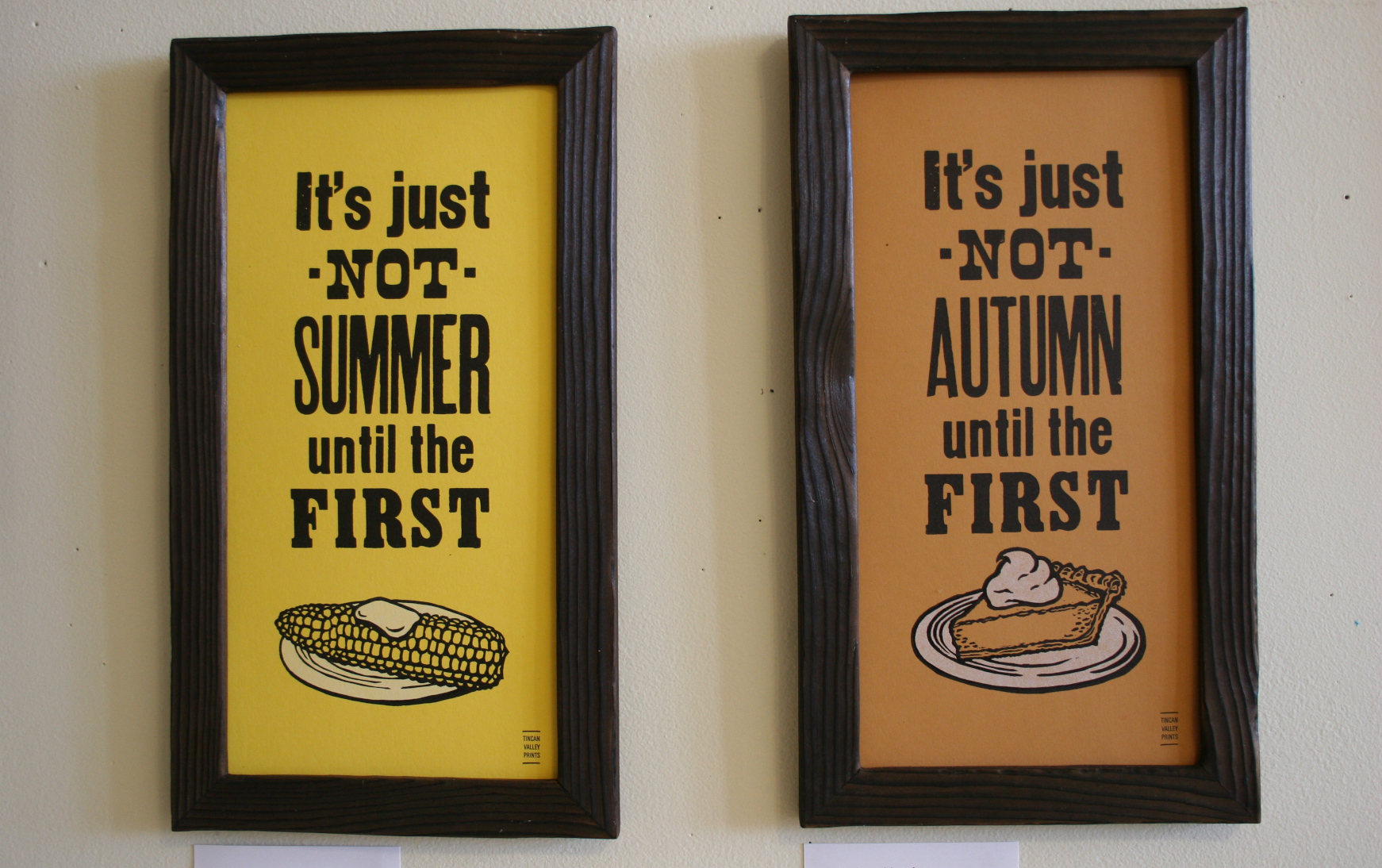
Kolacky Days queens in framed photos over prints from Tin Can Valley Printing. (Minnesota Prairie Roots copyrighted photo February 2022)
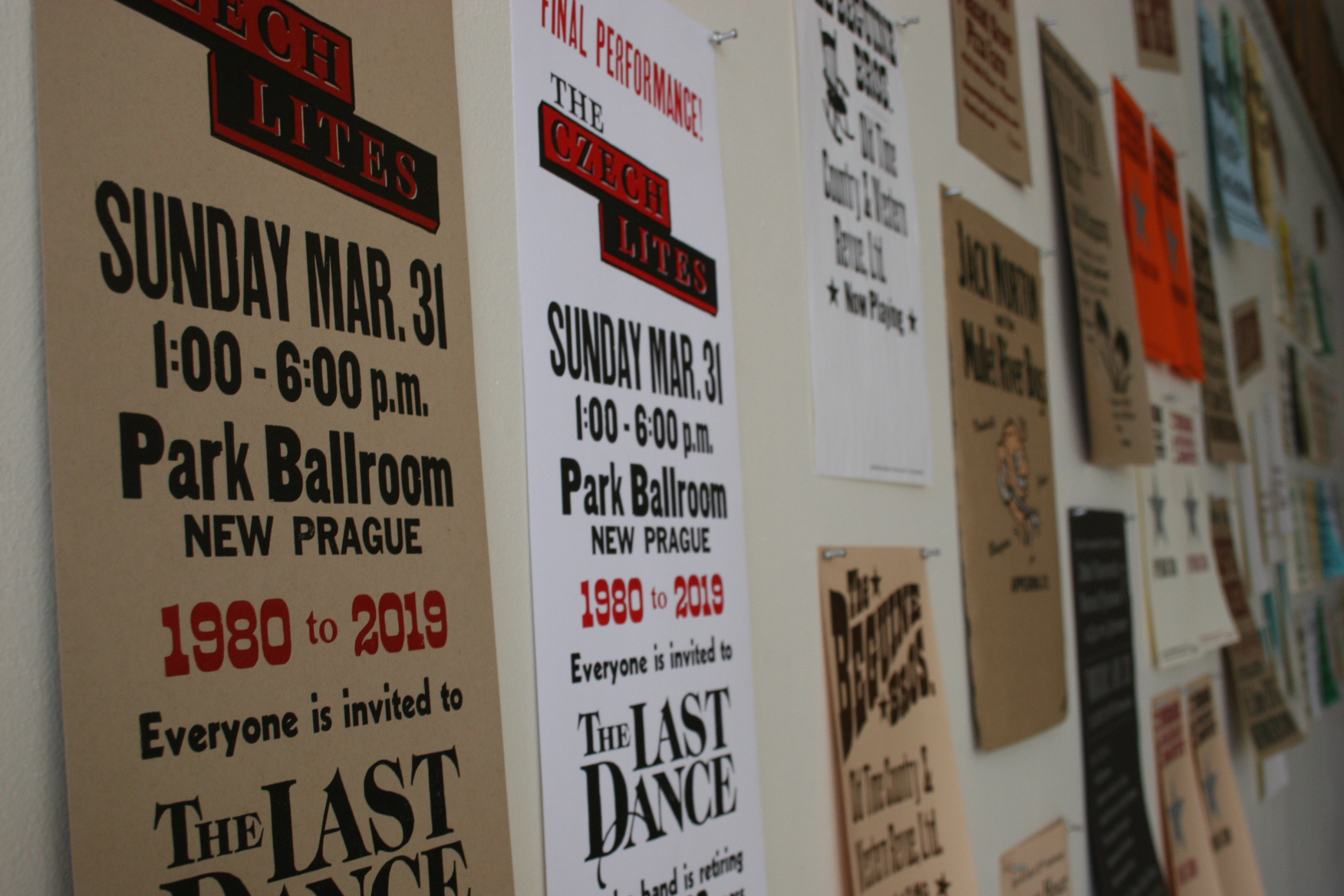
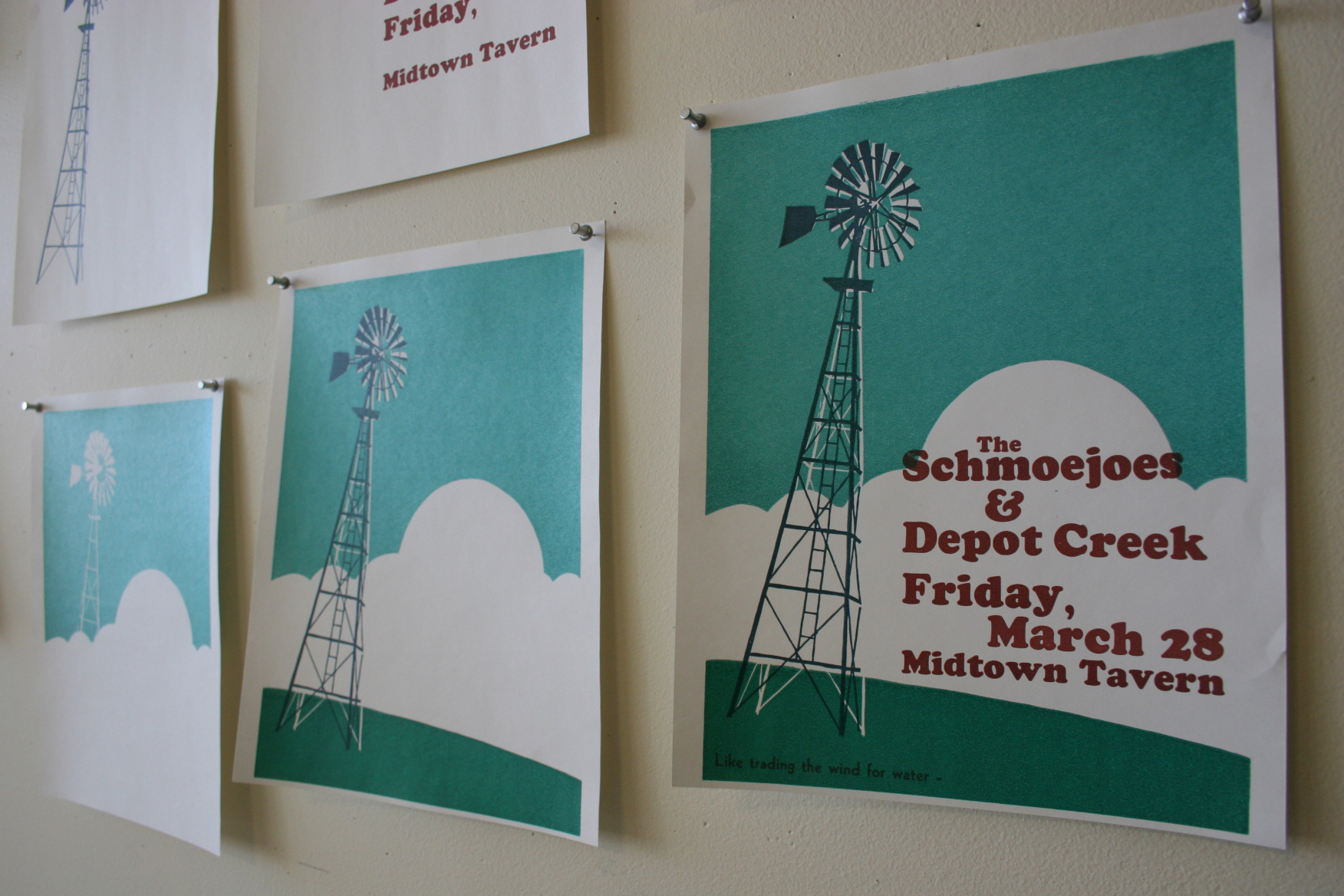
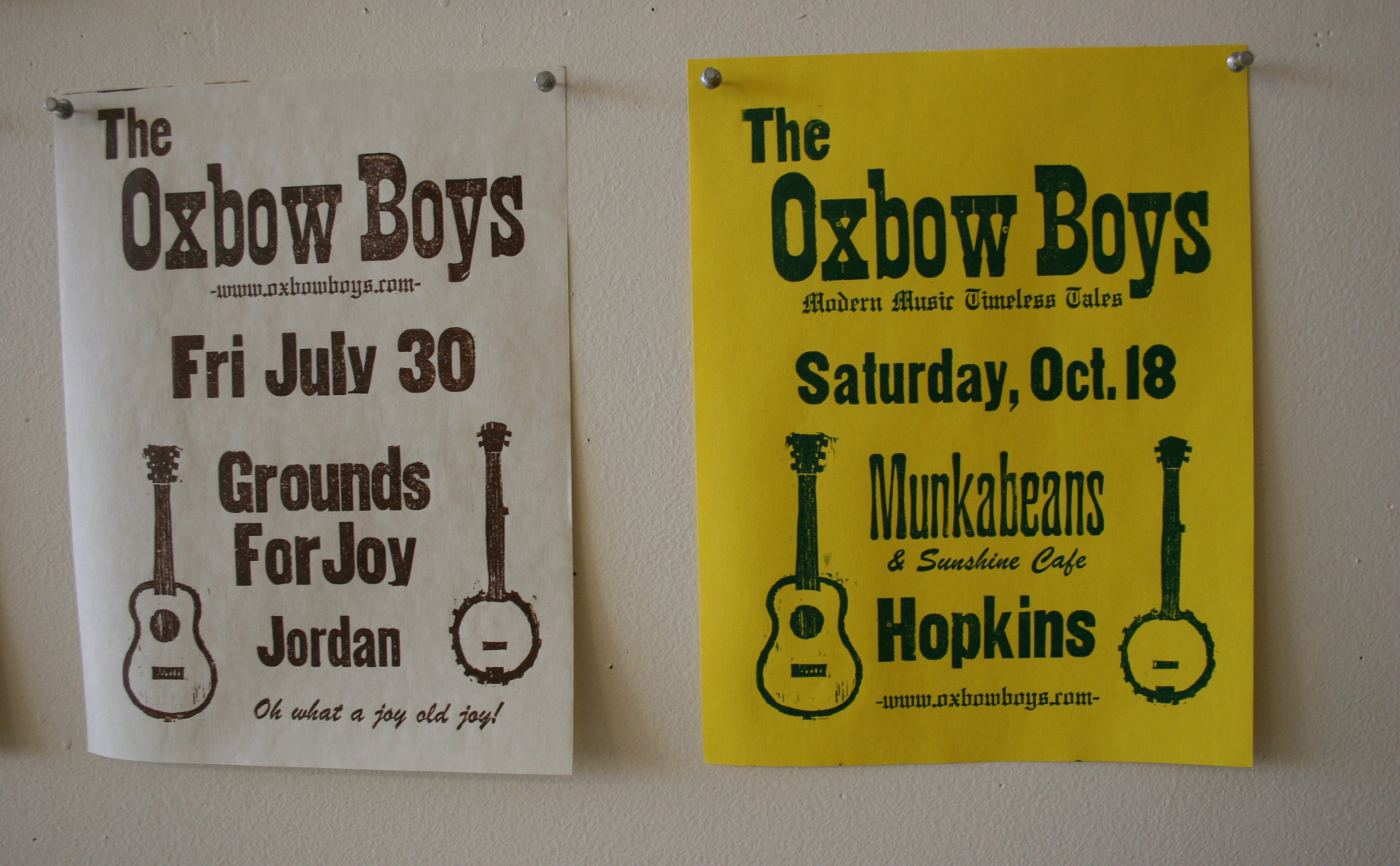
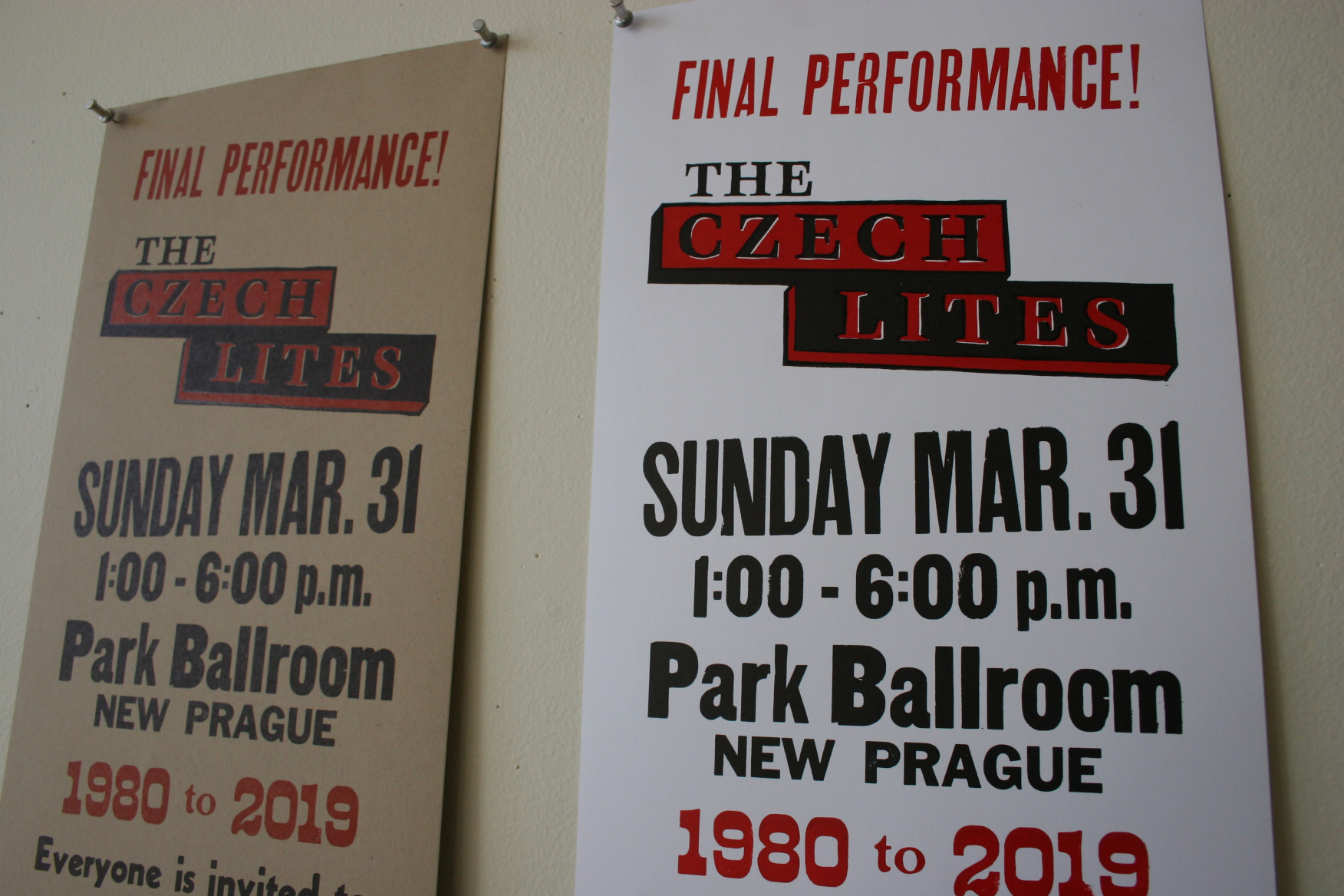
One of his specialties is creating posters for musical gigs. (Minnesota Prairie Roots copyrighted photo February 2022)
Beneath professional portraits of Kolacky Days queens, which ring this room near the ceiling, hang examples of Kotasek’s assorted creations. Gig posters for musical groups (including his own Oxbow Boys band). Fine art prints created with hard-carved blocks. A mix of letterpress and block. And on a shelf, a box of his popular letterpress greeting cards. Another display holds his $10 numbered prints.
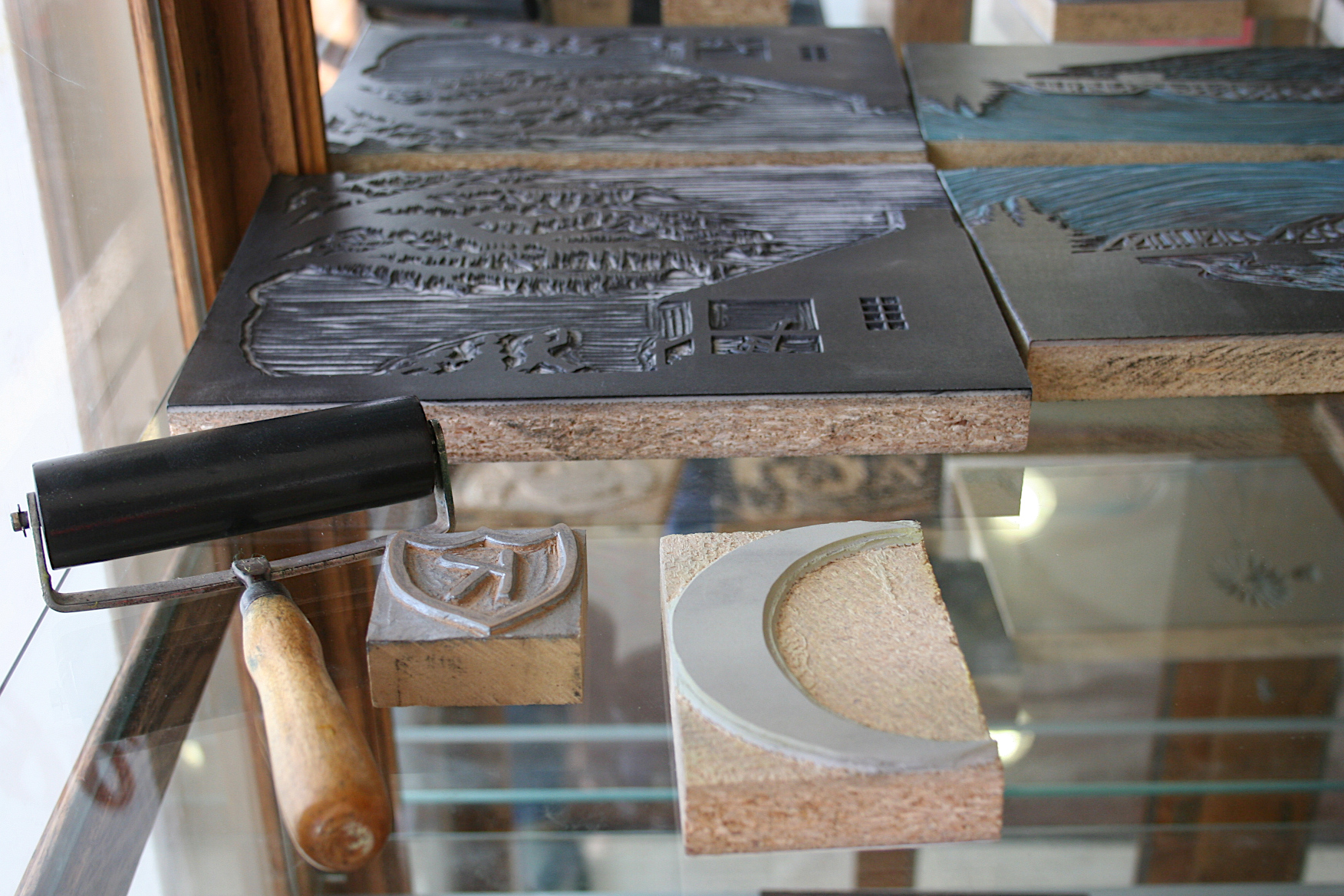
A hand-carved block for printing. (Minnesota Prairie Roots copyrighted photo February 2022)
I feel such an appreciation for Kotasek. His love for the letterpress craft shows in his printing skills, his creativity. To get clear, crisp prints takes patience, practice, time, effort. But before that comes the visualization, the creativity, the ability to bring many elements together in hands-on work.
Type in a tray. (Minnesota Prairie Roots copyrighted photo February 2022)
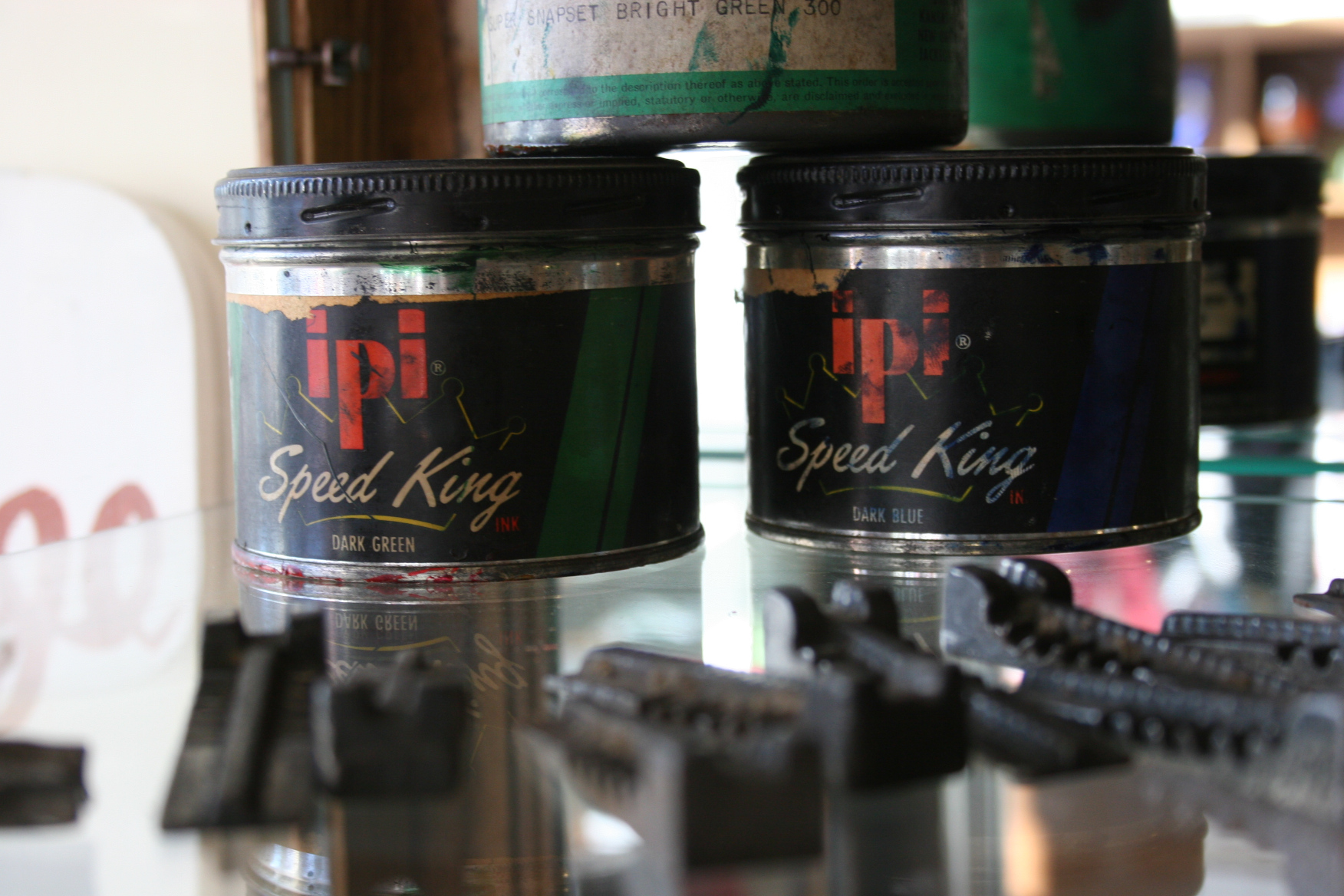
Cans of ink to color his art. (Minnesota Prairie Roots copyrighted photo February 2022)
Roller and carved blocks to print. (Minnesota Prairie Roots copyrighted photo February 2022)
A tall enclosed cabinet holds some of Kotasek’s tools of the craft. Letters. Rollers. Ink. Wood-cuts. All offer a glimpse into this artist’s world. He’s gathered abandoned, about-to-be-scrapped printing presses and other printing tools from small town newspapers in Minnesota and set up shop in a renovated granary on the family farm just outside Le Sueur. His studio overlooks the valley, home of the Jolly Green Giant associated with Minnesota Valley Canning Company, later Green Giant.
Kotasek has created numerous Green Giant prints. (Minnesota Prairie Roots copyrighted photo February 2022)
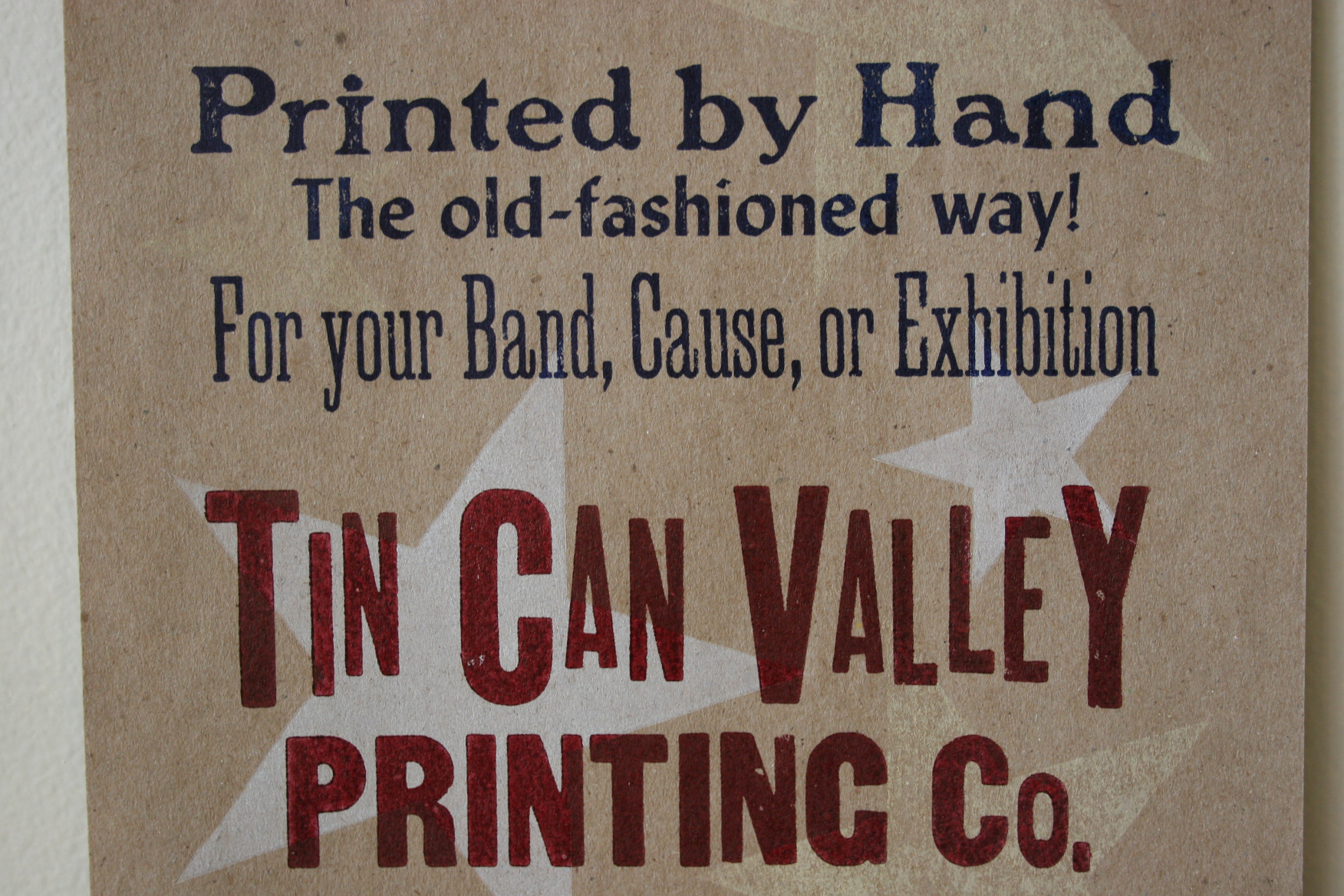
Kotasek pays homage to the vegetable canning company in the name of his printing business, Tin Can Valley Printing. On his website, he offers several explanations, one referencing a farmer who fed discarded canned vegetables to his pigs from damaged cans. As the story goes, the pig farmer tossed those empty tin cans into a ravine. During a massive flood of the Minnesota River Valley in 1965, the cans reportedly floated into town, causing an array of issues. The name Tin Can Valley stuck. I like the historic reference, the memorable moniker.
Featured art includes Jolly Green Giant prints, right. (Minnesota Prairie Roots copyrighted photo February 2022)
More food art prints. (Minnesota Prairie Roots copyrighted photo February 2022)
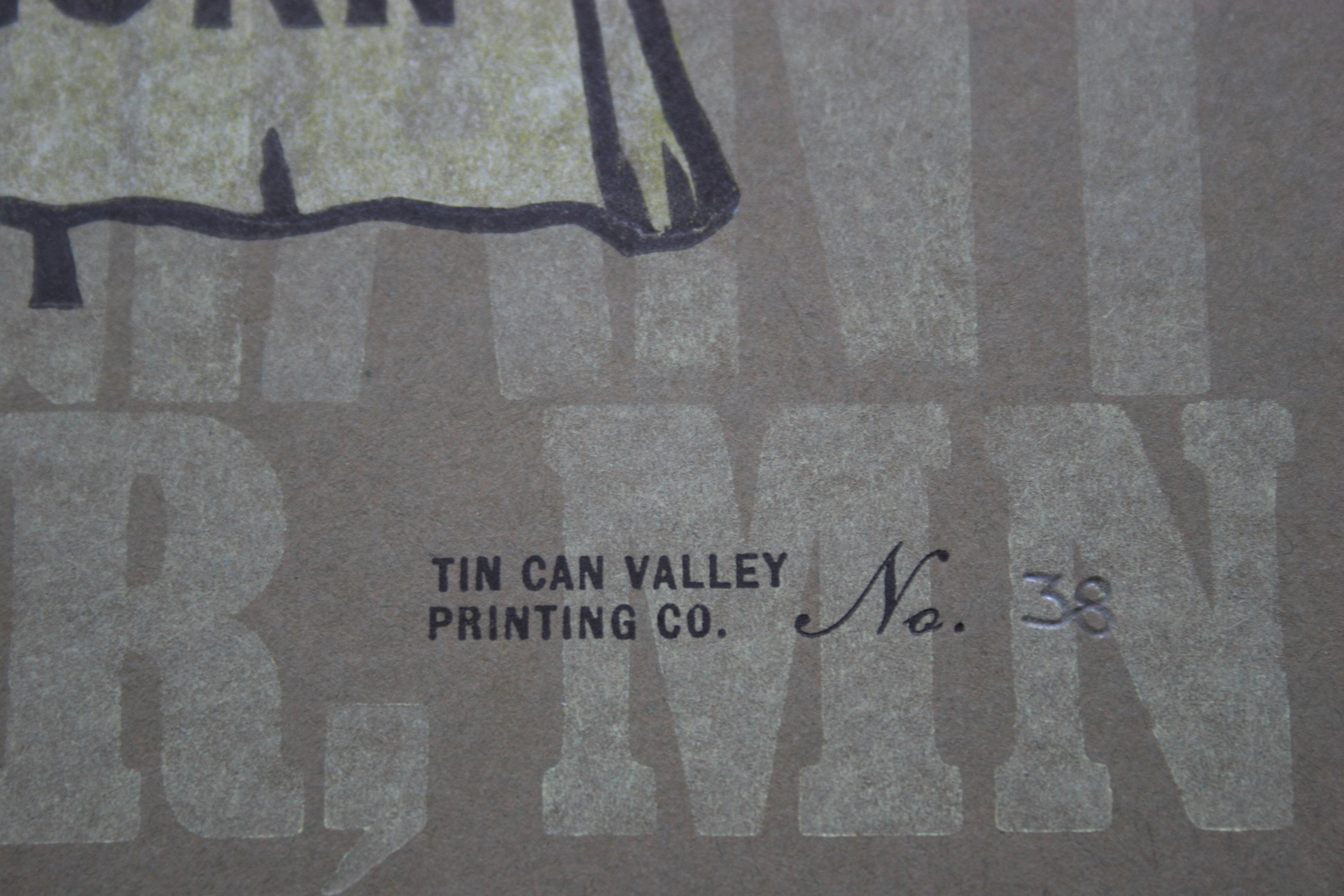
In the corner of my “Niblets of Corn Sign” print. (Minnesota Prairie Roots copyrighted photo February 2022)
I found myself drawn to Kotasek’s Green Giant-themed prints. I purchased No. 38 of his 2019 “Niblets Corn Sign” 8 x 10 card stock print. It’s a reproduction of a metal sign that once marked the Green Giant canning factory in Le Sueur. The four-color print, crafted from wood type and hand-carved wood and linoleum blocks, features the legendary Green Giant hefting a massive ear of sweetcorn. The image is iconic rural Minnesota.
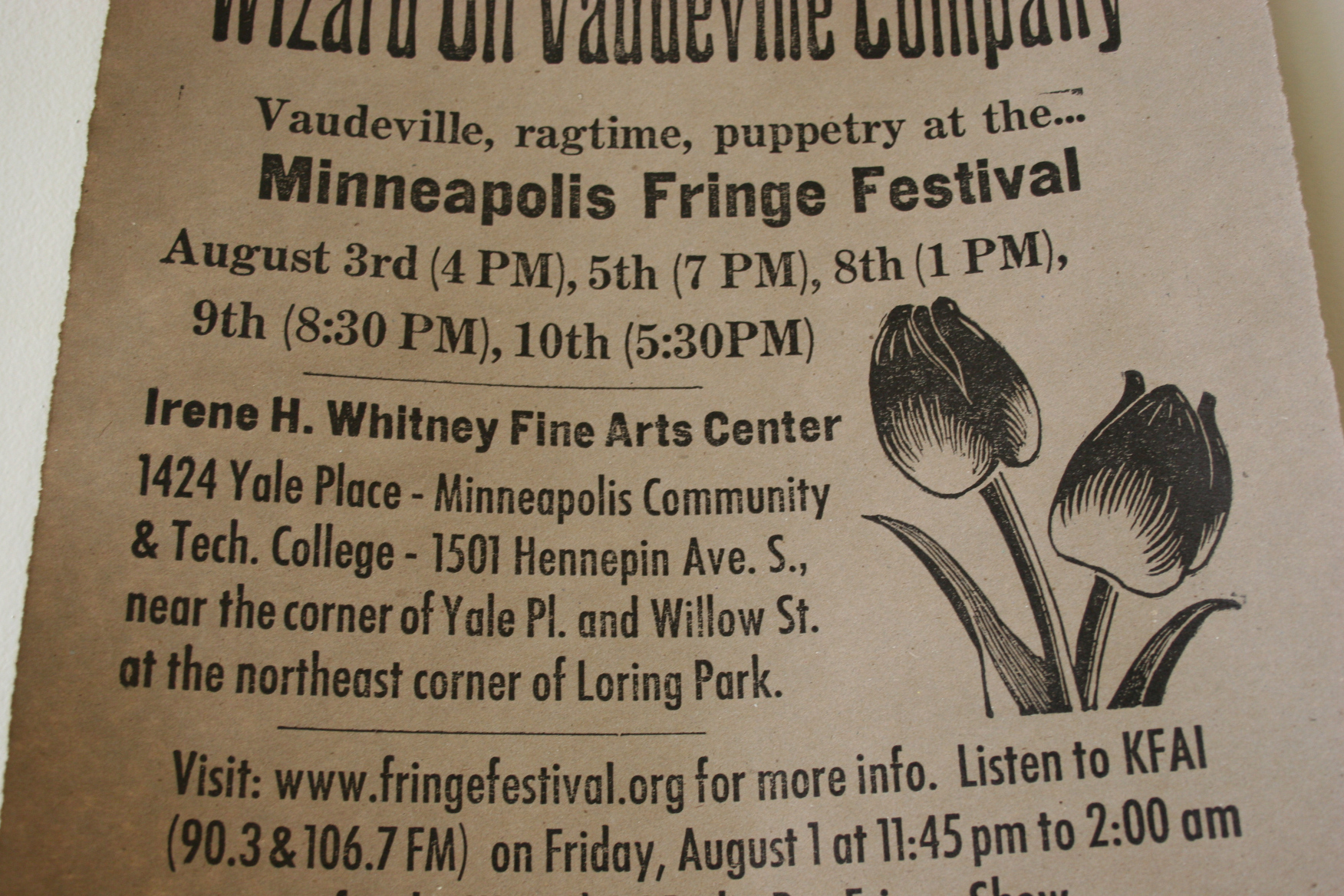
This particular poster has an old style newspaper vibe. (Minnesota Prairie Roots copyrighted photo February 2022)
Kotasek represents in many ways the past of newspapers in Minnesota. Early editors printed their papers with letterpress. They also served their communities as print shops. When I worked at The Gaylord Hub, farm auction bills flew off the aged printing presses. Kotasek remembers the endless fundraiser raffle tickets he printed while learning the printing trade.
A poster fitting for the Czech farming community of Montgomery. (Minnesota Prairie Roots copyrighted photo February 2022)
If you’re interested in meeting Kotasek, visit The Arts & Heritage Center of Montgomery, 206 First Street North, between 9 am – noon on Saturday, February 26, during an artist’s reception. The center is open limited hours: from 2-5 pm Thursdays and Fridays and from 9 am-noon on Saturdays. The show closes February 26.
While in Montgomery, be sure to check out the shops (gift, floral, quilt, thrift, drugstore…) and stop at Franke’s Bakery for a sweet treat. You’ll find kolacky there in this self-proclaimed “Kolacky Capital of the World.” The town is also home to Montgomery Brewing and Pizzeria 201 (a popular local eatery with curbside pick-up only currently). I encourage you to check destination hours in advance of a visit to avoid disappointment. Also notice the historic architecture, the photo tributes to veterans and the town mural (across from the bakery). Montgomery rates as one of my favorite area small towns…because of The Arts & Heritage Center and more.





























 Minnesota Prairie Roots
Recent Comments