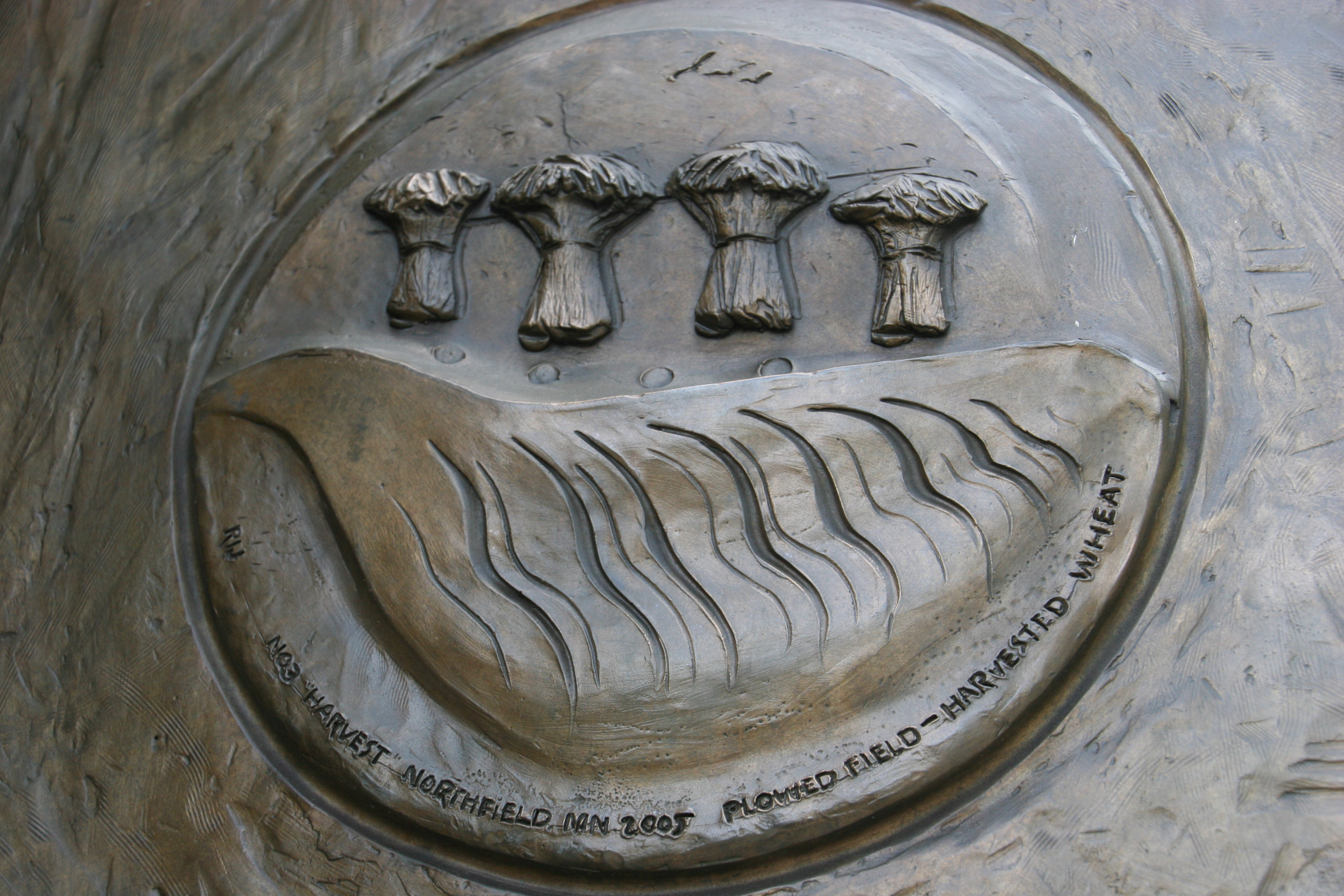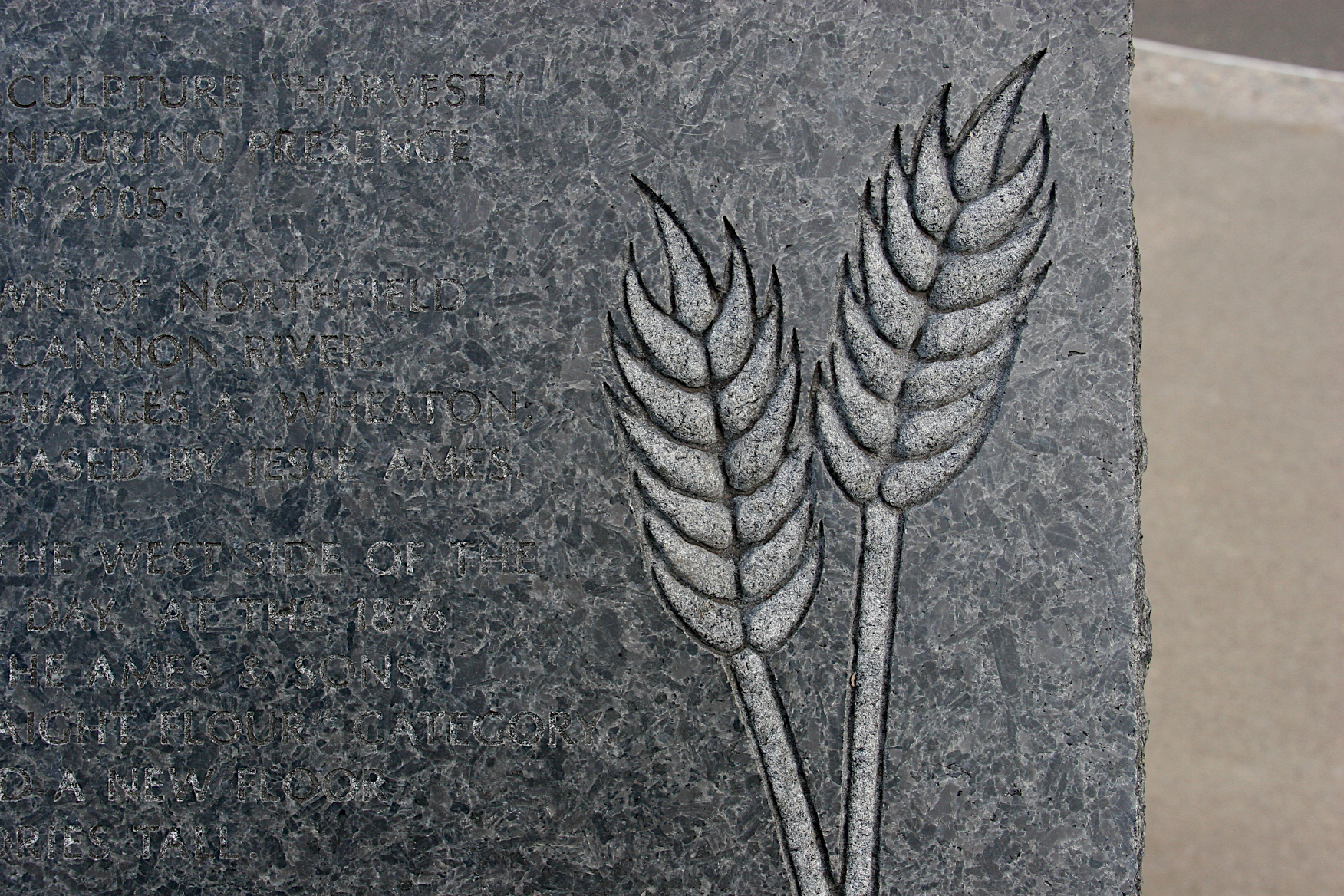
An overview of Bridge Square looking toward Division Street. (Minnesota Prairie Roots copyrighted photo August 2022)
BRIDGE SQUARE IN THE HEART of historic downtown Northfield holds a yesteryear appeal as a long-time community gathering spot along the Cannon River. Today its purpose remains as relevant as ever. I’ve observed festivals and concerts here, focused events like Earth Day and the Riverwalk Market Fair, read poetry here, heard music, watched college students chalk messages onto concrete. Individuals, too, pause here to enjoy the fountain sculpture and other art, to picnic, to simply embrace this beautiful spot.
A banner in downtown Northfield promotes the community’s annual celebration. (Minnesota Prairie Roots copyrighted photo August 2022)
This park centers Northfield, home to many home-grown shops and eateries and best-known perhaps for the September 7, 1876, attempted robbery of the First National Bank by the James-Younger Gang. This week Northfield honors the long ago townspeople and a heroic bank cashier who stood up to the outlaws. The town will buzz with activities and people, all here to celebrate Defeat of Jesse James Days. That runs September 7-11.
Weeks before this event I was in Northfield, first touring the Northfield Cemetery to view the gravesites of bank employee Joseph Lee Heywood and Swedish immigrant Nicolaus Gustafson, both shot and killed by the outlaws. Gustafson, at the time of the raid, was vending vegetables in, I believe, current day Bridge Square. The First National Bank is located around the corner.
The popcorn wagon has set up in Bridge Square since the 1970s. (Minnesota Prairie Roots copyrighted photo August 2022)
Popcorn boxes lined up in the wagon. (Minnesota Prairie Roots copyrighted photo August 2022)
The popcorn wagon brings back memories of Vern’s Popcorn Stand in my hometown of Vesta. (Minnesota Prairie Roots copyrighted photo August 2022)
My focus on that afternoon was not on the historic robbery, but rather on Bridge Square. I noticed first the 1918 popcorn wagon which is open from mid-May to mid-September and operated by FiftyNorth, the local center for seniors. It was closed when I was there. But I could imagine the sound of popping kernels, the scent, the taste of buttery popcorn scooped into boxes. There’s something about a popcorn stand that hearkens to bygone days.
“How much for that doggie in the window?” (Minnesota Prairie Roots copyrighted photo August 2022)
And there’s something about an old-time barbershop such as Bridge Square Barbers with a barbershop pole and then, bonus, a doggie in the window. I spotted the dog lying on a fleece bed in a corner. Seemingly content, only lifting his head when I approached for a close-up photo.
Love this barbershop dog photographed through the window. (Minnesota Prairie Roots copyrighted photo August 2022)
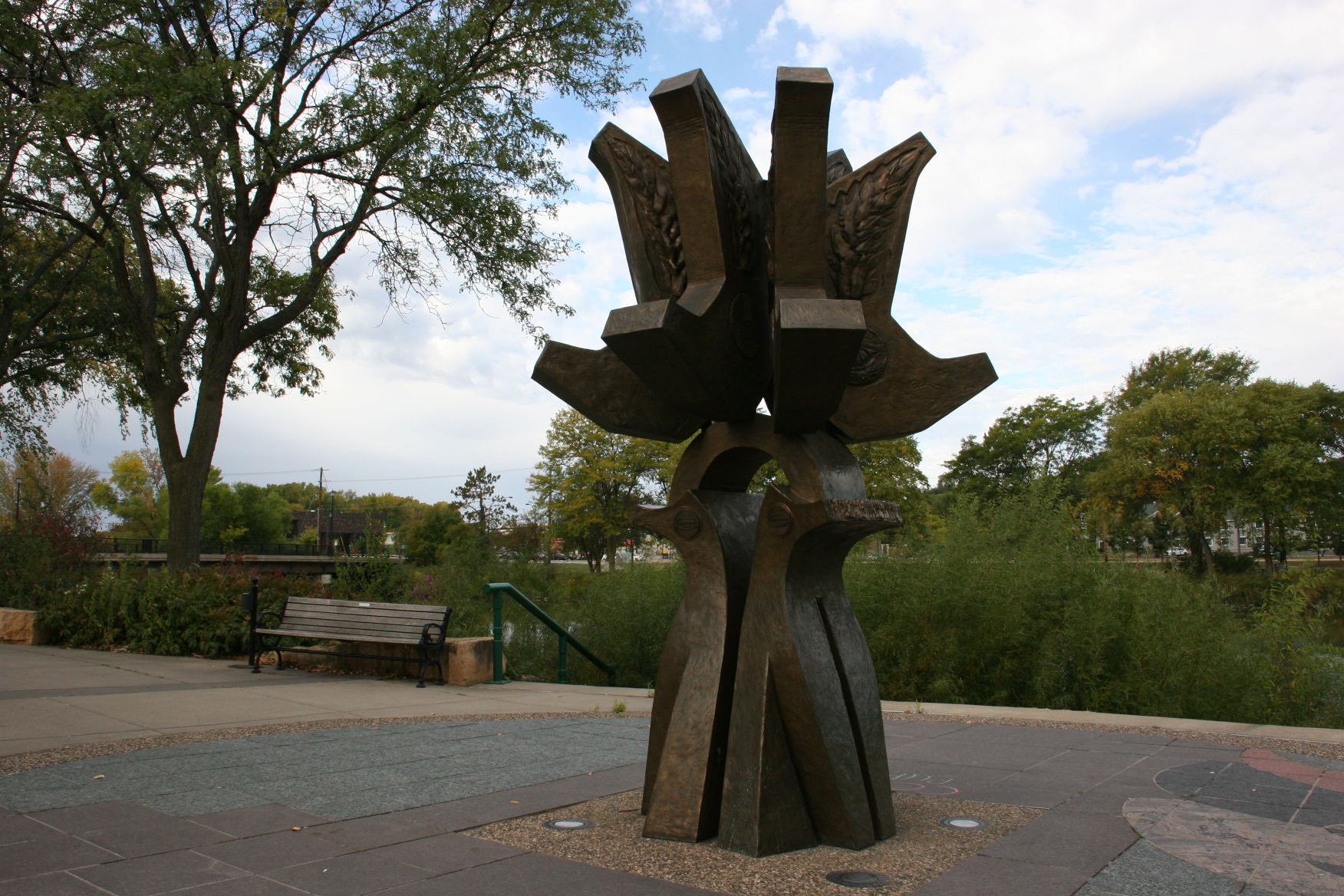
Beautiful flowers circle an art installation in Bridge Square near the Cannon River. (Minnesota Prairie Roots copyrighted photo August 2022)
I also took in the art of Bridge Square. Northfield is big on the arts with an Artists on Main Street program, sidewalk poetry and other art installations in addition to the performing arts.
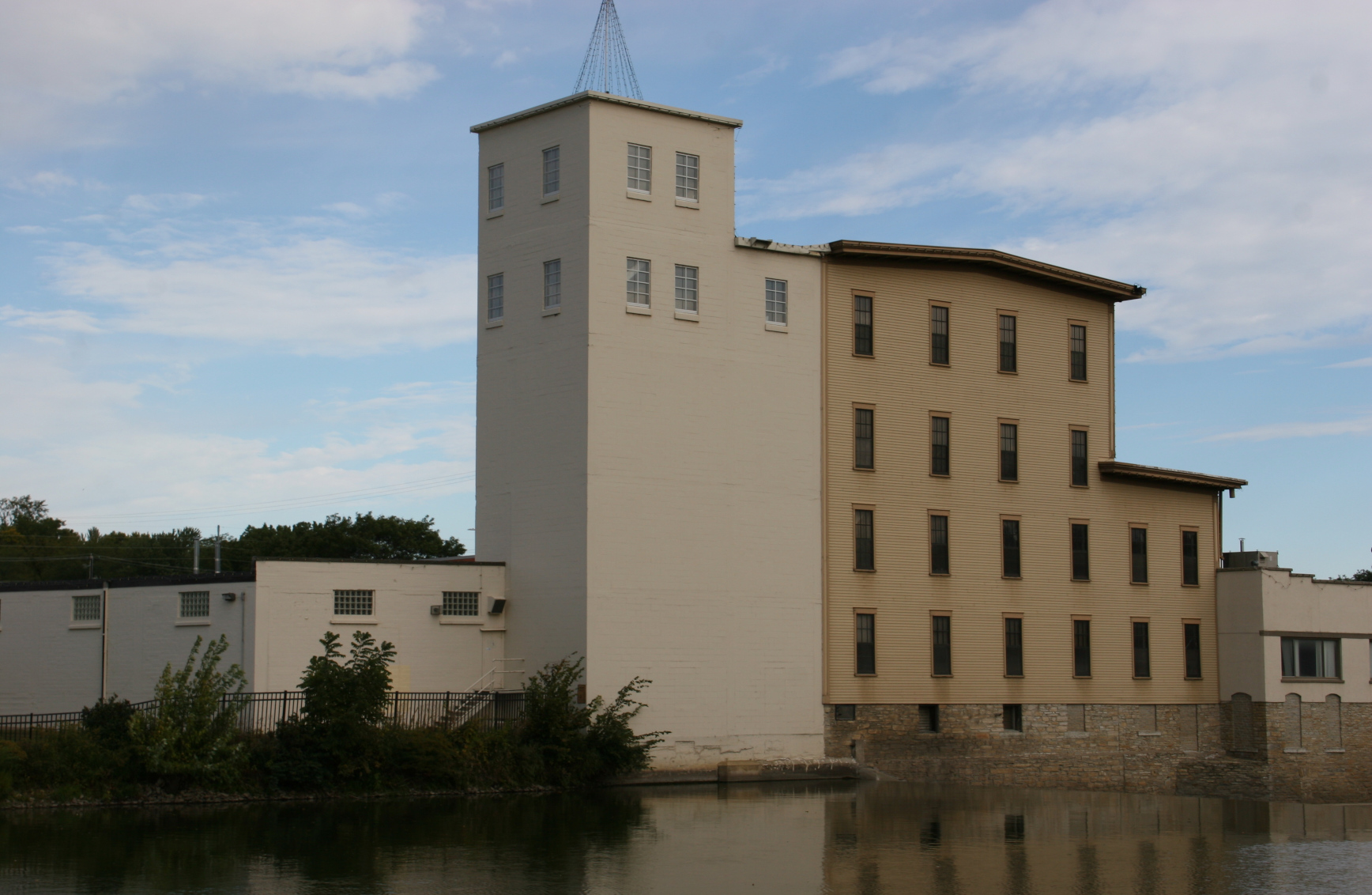
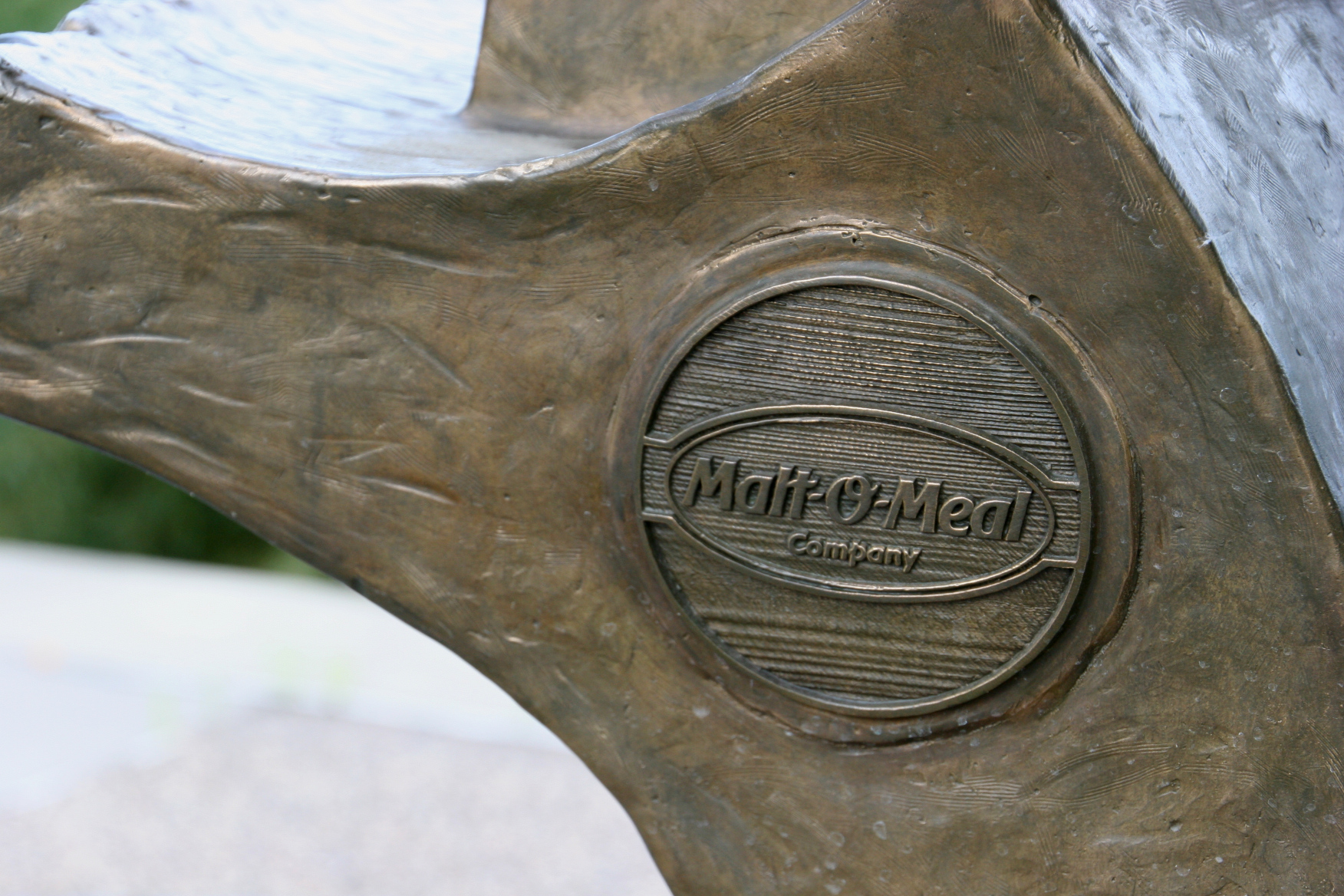
The historic Ames Mill sits along the Cannon River. Originally a flour mill, the mill later was used to produce Malt-O-Meal hot cereals and is today owned by Post Consumer Brands. (Minnesota Prairie Roots copyrighted photo August 2022)
And then there’s the history. Aged buildings like the riverside Ames Mill. The river running through is a real asset to the downtown, especially with a river walk behind buildings hugging Division Street.
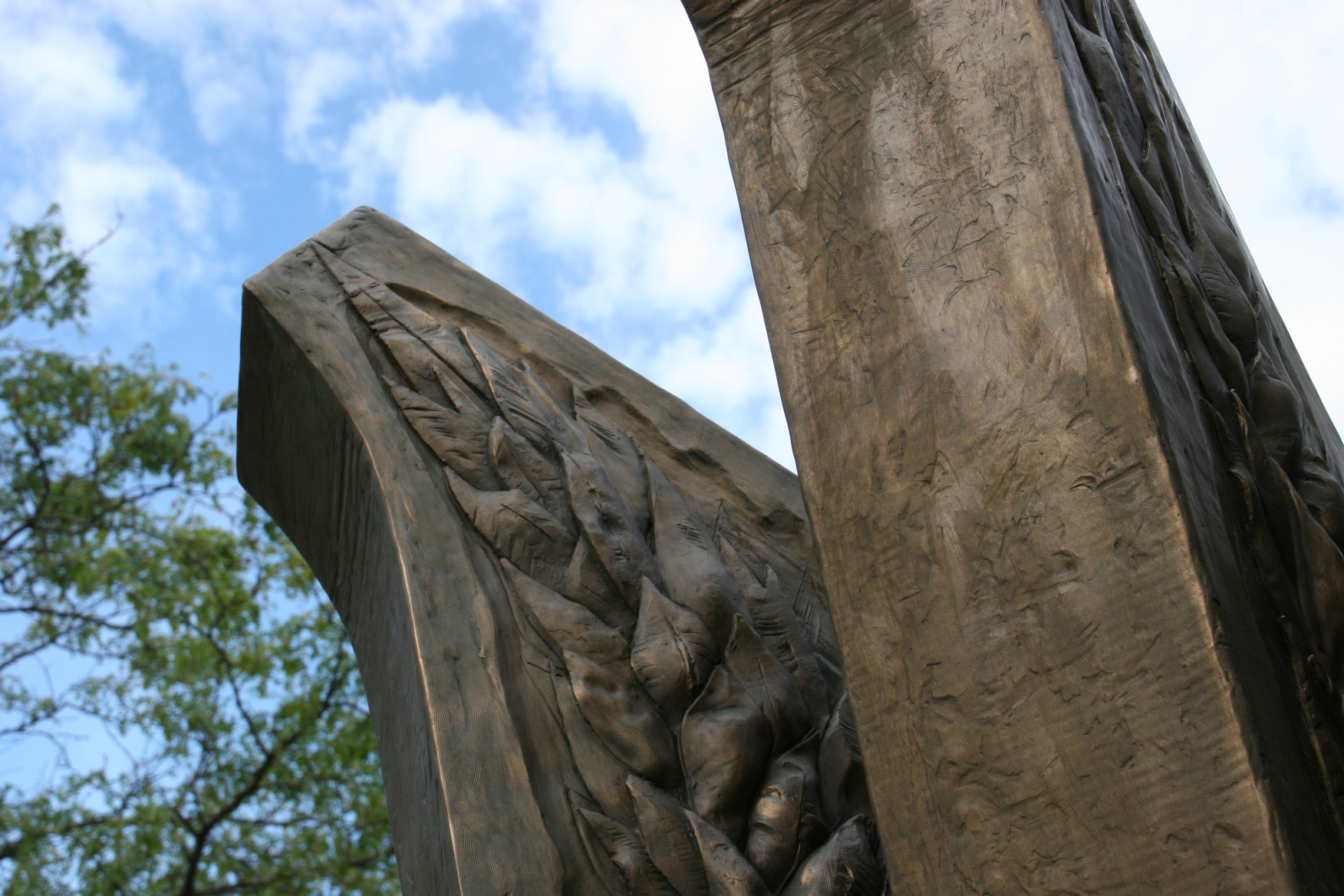
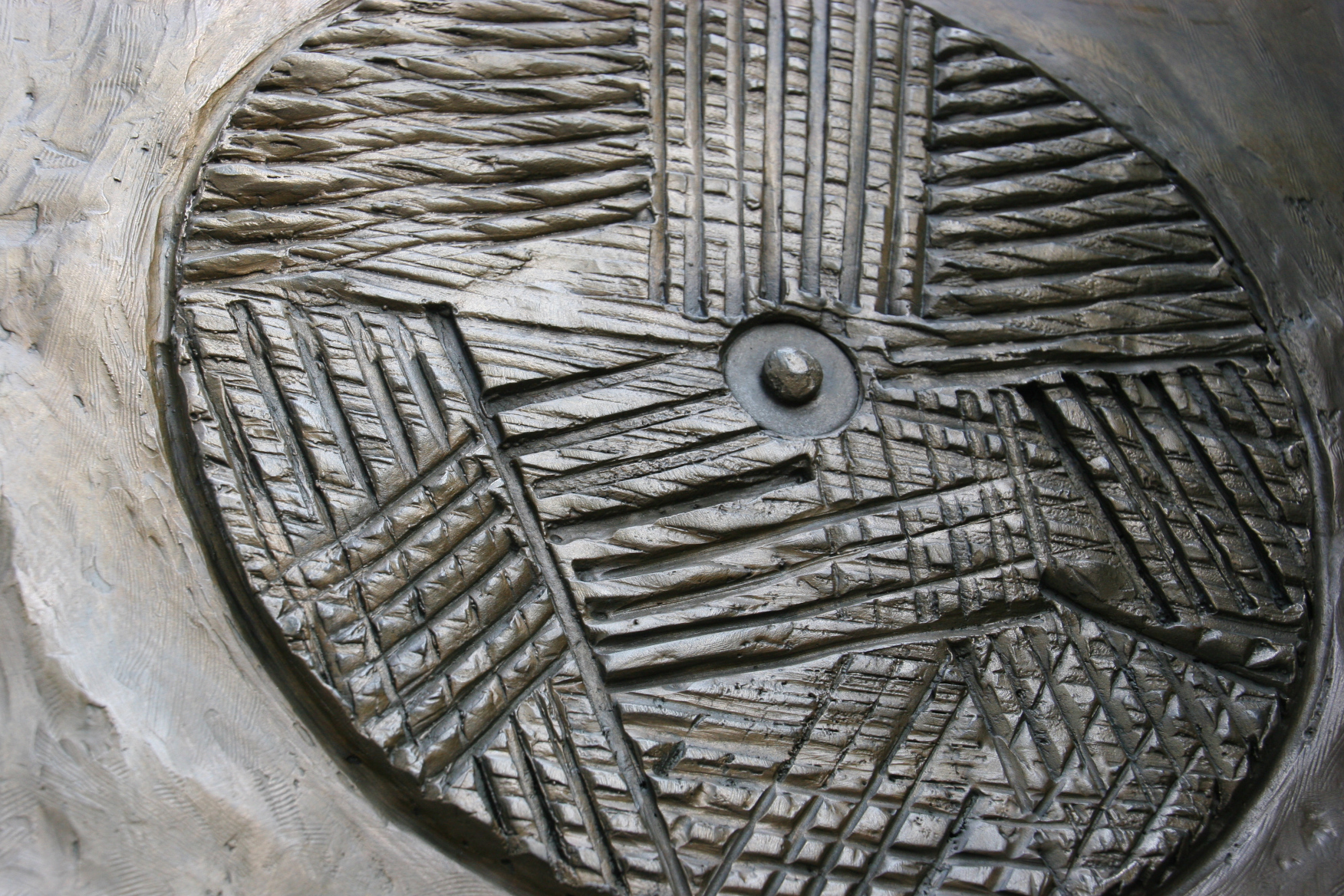
Detailed top of the art installation. (Minnesota Prairie Roots copyrighted photo August 2022)
At the heart of all of it is Bridge Square—a place which melds history and art, land and sky and river, commerce and individuality. Most importantly, the village square brings peoples together to converse, to celebrate, to honor, to discuss, to disagree, to buy popcorn from the popcorn wagon, to simply be.
Bird in flight in the Bridge Square sculpture. (Minnesota Prairie Roots copyrighted photo August 2022)
TELL ME: Does your community have an outdoor gathering spot like Bridge Square?
Posted on the First National Bank in Northfield, now the Northfield Historical Society. (Minnesota Prairie Roots copyrighted photo August 2022)
IF NOT FOR A QUICK-THINKING bank cashier and determined townspeople, things could have ended much differently for the community of Northfield on September 7, 1876, when the James-Younger Gang rode into town intent on robbing the First National Bank.
This is where it all happened. The bank is along Division Street in historic downtown Northfield near Bridge Square. (Minnesota Prairie Roots copyrighted photo August 2022)
Markers ring supposed bullet holes on the building exterior. (Minnesota Prairie Roots copyrighted photo August 2022)
The James-Younger Gang re-enactors riding in the Defeat of Jesse James Days parade. (Minnesota Prairie Roots copyrighted file photo)
That brave employee, Joseph Lee Heywood, stood up to the robbers who demanded cash from the bank vault. In the end, he lost his life, shot in the head. Likewise, Swedish immigrant Nicolaus Gustafson, unable to understand the outlaws’ commands to get off the street, was shot in the head and died four days later. Outlaws Clell Miller and William Chadwell, (also known as William Stiles) died, too, in the ensuing chaos as they attempted to escape.
A t-shirt displayed in the front window of the Northfield Historical Society (Minnesota Prairie Roots copyrighted photo August 2022)
Townspeople reacted to the bank raid by throwing skillets and bricks and aiming birdshot at the would-be robbers fleeing on horseback through the narrow streets of this river town. Their efforts, along with those of Heywood, effectively ended a long string of bank and train robberies across the country. The three Younger brothers were shot and captured in a gun battle near Madelia while Frank and Jesse James escaped to Missouri.
The Northfield Historical Society entrance by Bridge Square. (Minnesota Prairie Roots copyrighted photo August 2022)
That’s the summary backstory of “The Most Famous Bank Robbery in American History” as tagged by the Northfield Historical Society based in the bank building and with a permanent exhibit, “The James-Younger Gang Bank Raid.” I toured the exhibit in 2012 and highly-recommend it to learn the full story behind this event.
Posted just outside the NHS entrance. (Minnesota Prairie Roots copyrighted photo August 2022)
A toy horse is part of the front window display at the NHS. (Minnesota Prairie Roots copyrighted photo August 2022)
One of the many events during Defeat of Jesse James Days. (Minnesota Prairie Roots copyrighted photo August 2022)
This historic happening focuses Defeat of Jesse James Days, beginning Wednesday in Northfield. I’ve attended that, too, but mostly stay away given it’s one of the biggest community celebrations in Minnesota, meaning crowds. Honoring Heywood and the brave townspeople of 1876, the September 7-11 event includes a long list of activities like the popular bank raid re-enactments, an Outlaw Run, car and craft shows, an art festival, a rodeo, tractor and truck pulls, a parade and much more. Annually the Joseph Lee Heywood Distinguished Service Award is “given to a Northfield citizen who exemplifies a commitment to public service, which Heywood lived.”
This sign on a building marks the Northfield Cemetery. (Minnesota Prairie Roots copyrighted photo August 2022)
In the midst of all this, I’d suggest a visit to a place away from the crowds. The Northfield Cemetery. Here Joseph Lee Heywood and Nicolaus Gustafson lie buried. A few weeks ago I sought out their graves given my interest and my desire to honor these two men who lost their lives during the failed bank raid.
Joseph Lee Heywood‘s gravesite. (Minnesota Prairie Roots copyrighted photo August 2022)
A portraitof Joseph Lee Heywood is posted in the Northfield Historical Society window. Although I’m not certain, I believe the other images are of his wife and daughter. He remarried after Mattie died. (Minnesota Prairie Roots copyrighted photo August 2022)
Heywood’s marker up close. (Minnesota Prairie Roots copyrighted photo August 2022)
The bank cashier’s burial spot is decidedly prominent, his grave marker rising high within a squared off space. Mattie Buffum Heywood, who died in May 1873 at the age of 34, is buried by her 39-year-old husband.
A surprisingly new marker marks the grave of Nicolaus Gustafson. (Minnesota Prairie Roots copyrighted photo August 2022)
Finding Nicolaus Gustafson’s grave took effort. Eventually I found it near the cemetery entrance next to the chain link fence along busy Division Street South. I expected an aged tombstone like Heywood’s, not the more modern granite marker with the postscript inscription, A SWEDISH IMMIGRANT SHOT BY ROBBERS. Gutafson, who had just turned 30, arrived in Northfield from neighboring Millersburg on the day of the robbery to sell produce with another Swedish immigrant. He was buried in Northfield because the Swedes did not yet have a church or cemetery. In 1994, the good people of Northfield installed the gravestone gracing his final resting spot. A historic marker at Christdala Church also honors Gustafson.
This marker in front of Christdala Church, rural Millersburg, honors Nicolaus Gustafson. (Minnesota Prairie Roots copyrighted file photo 2020)
In all of this, there is something to be said for the strength of those who are now part of our history. Their actions, whether intentional or not, determined outcomes. For communities. For families. For the future. How many lives were saved because of Joseph Lee Heywood, because of those determined Northfielders, even because of a Swedish immigrant rushing to a street corner?
The Milk Shakes booth has a decidedly rural theme with Holstein cow art. (Minnesota Prairie Roots copyrighted photo September 2022)
AS A WRITER AND PHOTOGRAPHER, I view life through a creative lens. That means, even at a farm-themed event like the Rice County Steam and Gas Engines Show, I notice the artsy side.
Dancing in the music shed to the band Steam Machine Friday afternoon.(Minnesota Prairie Roots copyrighted photo September 2022)
I attended the show in rural Dundas on Friday. While most attendees focus on the field of tractors, the multiple ag-related demonstrations, the flea market and more, I also focus on creative details within the all of it. Like hand-lettered signage, handcrafted items, music, and, yes, even the couple dancing to bluegrass tunes performed by Steam Machine.
Flea market attendees try out a vendor’s yard chairs. (Minnesota Prairie Roots copyrighted photo September 2022)
The arts, whether literary, visual or performing, enhance our lives, bringing joy, comfort, diversion, entertainment, introspection and much more.
Cute crocheted animals by Kay Dudley. (Minnesota Prairie Roots copyrighted photo September 2022)
I value the talents of those who create. I create with words and with my camera. Put a paintbrush or crochet hook in my hand and I would be hard-pressed to make anything worthy of notice. But, gosh, do I admire creatives like Kay Dudley of Faribault who brought her crocheted animals to the flea market. Likewise, I admire the skill of the woodworker who built the sturdy yard chairs for sale.
Hand-embroidered linens. (Minnesota Prairie Roots copyrighted photo September 2022)
On the other end of the show grounds, I found more to appreciate in the 1912 farmhouse. Embroidered linens displayed in the kitchen caught my eye. I know how to embroider, although decades have passed since I picked up a needle, embroidery floss and a hoop to stitch a design into cloth. I really ought to resume that craft.
A vintage doll nestles in a quilt. (Minnesota Prairie Roots copyrighted photo September 2022)
In another room of the farmhouse, a doll laid upon a quilt, reminding me of my paternal grandmother who stitched endless quilts for her family, me included. I was quite the seamstress as a teen, sewing many of my clothes and dresses for Grandma, too. She could quilt, but she couldn’t make her own clothes. I always found that interesting. I haven’t touched my sewing machine in years.
An original painting of a country schoolhouse. (Minnesota Prairie Roots copyrighted photo September 2022)
I was especially interested in the original painting of a rural schoolhouse scene propped on a table in the farmhouse. The vintage art, scored at a Goodwill store for $5, is exactly the type of art I collect.
David Terry hand-carved a 1920 threshing scene displayed inside a large case in the music building. This is just a portion of his work. (Minnesota Prairie Roots copyrighted photo September 2022)
In my collection is a North Dakota threshing scene painted by my father-in-law and among my most treasured pieces of original art. So when I saw a hand-carved threshing scene displayed in the music building at the Rice County Steam and Gas Engines Show, I was reminded of Tom’s painting. I display it this time of year atop the entertainment center in my living room.
A handmade sign identifies the owner of a vintage John Deere tractor. (Minnesota Prairie Roots copyrighted photo September 2022)
Original paintings and other original art, including signs, always draw my appreciation. There’s just something about a handcrafted sign that makes me pause, take notice, remember. From signage on tractors to signage on buildings to signage among the food vendors, I noticed the creativity.
Loved this hand-drawn art posted by the food service window of El Tacazo Mexican Delights. (Minnesota Prairie Roots copyrighted photo September 2022)
Every piece of art I spotted added to my enjoyment of this southern Minnesota farm-themed show. Certainly I value the ag and history aspects of this event. But I value, too, the creativity.
An anvil-shaped sign fittingly marks the Blacksmith Shop where attendees can watch blacksmiths at work. (Minnesota Prairie Roots copyrighted photo September 2022)
Photo cut-outs just inside the entrance. (Minnesota Prairie Roots copyrighted photo September 2022)
BARELY INSIDE THE GATES of the Rice County Steam & Gas Engines Show mid Friday morning, I boarded a train. It was an unexpected ride, this double loop around the tracks while straddling a slightly swaying model train car. I thought these free train rides were only for kids. Not so, the crew assured me.
The model train carries all ages. (Minnesota Prairie Roots copyrighted photo September 2022)
On a train car, a mini Massey-Harris the featured tractor. (Minnesota Prairie Roots copyrighted photo September 2022)
Riding the rails. Kids must be accompanied by an adult. (Minnesota Prairie Roots copyrighted photo September 2022)
When I disembarked, a preschooler sandwiched between two adults for his turn on the rails.
Photographed on a tractor, show stickers. (Minnesota Prairie Roots copyrighted photo September 2022)
What a fun way to begin my four hours at the show, which continues through Sunday at the event grounds south of Dundas, which is south of Northfield. This 47th annual gathering is about “Preserving a Bit of Yesterday for Tomorrow.” And that’s exactly what you will find here. Old. Aged. Vintage. Snapshots into the past. Farming as it was done back in the day. Agriculture/farming/rural life center the show.
Massey-Harris tractors all in a row. (Minnesota Prairie Roots copyrighted photo September 2022)
Conversation while leaning on a John Deere. (Minnesota Prairie Roots copyrighted photo September 2022)
A tractor made by Cockshutt and marketed by Gambles. (Minnesota Prairie Roots copyrighted photo September 2022)
Vintage tractors are the focus with a field of tractors on display. This year’s featured brand is Massey-Harris. But brands ranging from the well-known John Deere, Allis Chalmers, International Harvester…to the rare Gambles line the grassy grounds.
The threshing crew. (Minnesota Prairie Roots copyrighted photo September 2022)
Other farm machinery is also on-site, including a threshing machine, typically threshing oats, but under repair during my visit.
The blacksmith at work. (Minnesota Prairie Roots copyrighted photo September 2022)
There’s simply so much to see here, so much equipment to take in, so many demonstrations to watch. I observed blacksmithing and sorghum pressing. There’s also syrup making, corn shelling, flour milling, lumber sawing… Not all were up and running yet Friday morning.
The 1912 farmhouse. (Minnesota Prairie Roots copyrighted photo September 2022)
Sorghum towers in a field. (Minnesota Prairie Roots copyrighted photo September 2022)
Delicious cookies made with sorghum. (Minnesota Prairie Roots copyrighted photo September 2022)
While demonstrations are a major draw, so are the aged farm buildings moved onto the grounds. Inside the 1912 Drentlaw farmhouse, my friend Ruth served cookies made with sorghum.
Pressing sorghum. (Minnesota Prairie Roots copyrighted photo September 2022)
Across the way, two men fed sorghum stalks into a press, liquid streaming into a bucket.
A massive stove defines the farmhouse kitchen. (Minnesota Prairie Roots copyrighted photo September 2022)
As I walked upon the wood floors of the farmhouse, I felt immersed in the past. A wood-burning stove anchors the small kitchen where a water dipper rests in an enamelware bowl in the sink. Embroidered dish towels drape a drying rack.
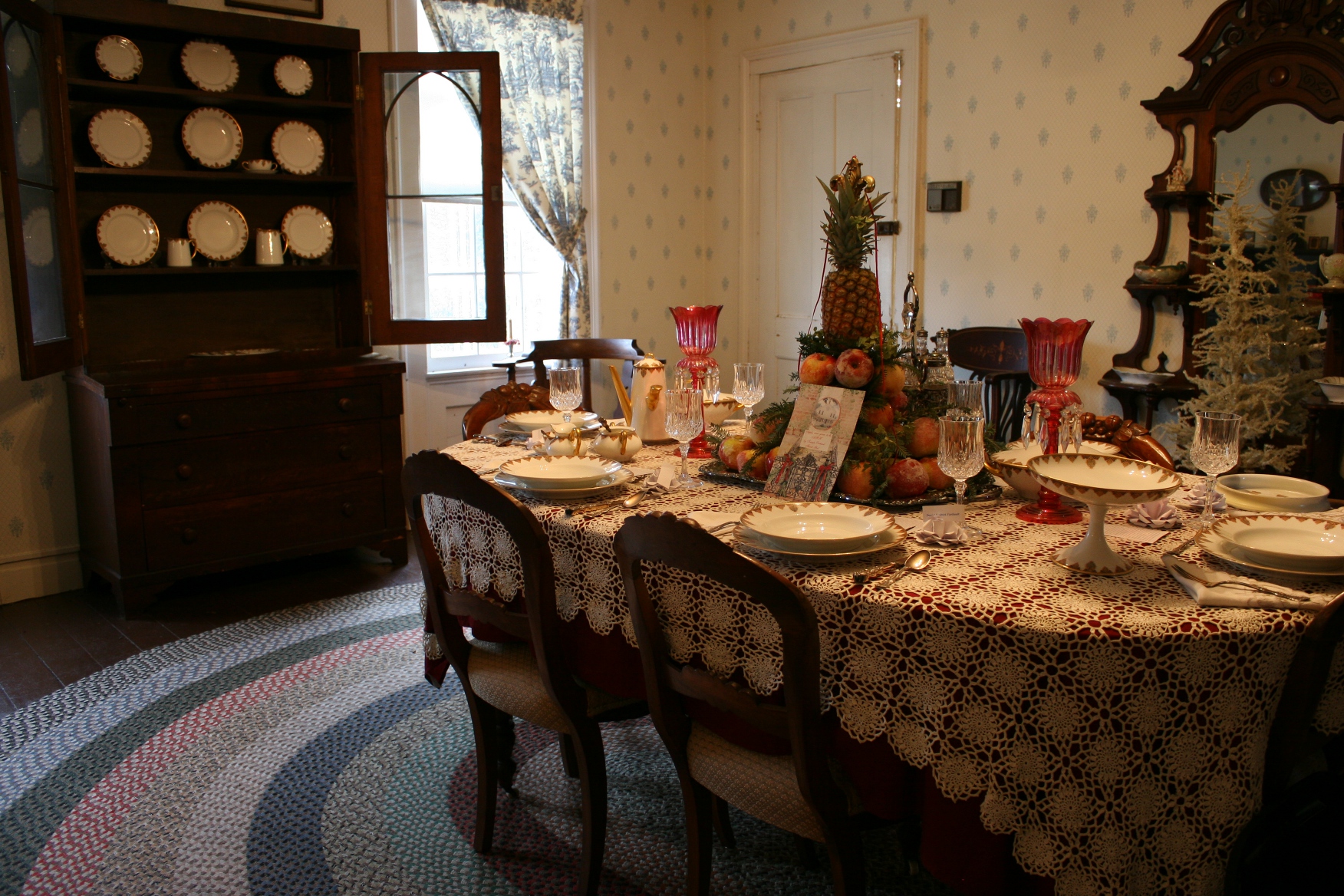
The dining room table set for guests. (Minnesota Prairie Roots copyrighted photo September 2022)
In the dining room, with fine china set upon a lace-covered table, the morning breeze billowed lace curtains.
Rounding the corn crib… (Minnesota Prairie Roots copyrighted photo September 2022)
Outside the main house sits a summer kitchen with a corn crib and granary nearby. Replicating a farm site of yesteryear seems a goal. As a farm girl, I appreciate these efforts to preserve a bit of yesterday. Our Minnesota agrarian history needs to be shared at events like this which connect all ages to a way of life that is quickly vanishing.
My oddest find at this year’s flea market. (Minnesota Prairie Roots copyrighted photo September 2022)
Even the flea market connects attendees to the past where old stuff mixes with crafts and an assortment of other merchandise. Every time here, I challenge myself to find oddities, weird whatever that makes me do a double take. This year’s vendors did not disappoint me.
A burger basket from the Northfield Knights of Columbus. (Minnesota Prairie Roots copyrighted photo September 2022)
Nor did the food. Vendors offer an assortment of tasty food and beverages ranging from burgers and fries to Mexican food, milkshakes, lemonade, kettle corn, mini donuts and more. It’s all about food and conversation and watching the daily tractor parade at noon while seated at a picnic table in the Food Pavilion.
One of three musicians in the band Steam Machine performs Friday afternoon. (Minnesota Prairie Roots copyrighted photo September 2022)
Over in the poleshed style music building, I listened to the bluegrass band Steam Machine. A couple danced across the cement floor, nearby hay racks piled with oats bundles. I photographed, then attempted to cool down after too much time in the heat and humidity.
A gigantic ear of corn made of milk jugs. (Minnesota Prairie Roots copyrighted photo September 2022)
A poster promotes the 2023 Credit River show. (Minnesota Prairie Roots copyrighted photo September 2022)
I love how so many people care about our agricultural history. That includes the guys from the Credit River Antique Tractor Club who were selling raffle tickets for a 1952 Ford 8N tractor. Their annual show is set for July 14-16, 2023, in rural New Prague.
Teaching the younger generation about tractors. (Minnesota Prairie Roots copyrighted photo September 2022)
The Rice County folks will be back, too, in 2023, “Preserving a Bit of Yesterday for Tomorrow.” There will be a tractor parade, a Kids Pedal Pull, demonstrations, tractors galore and, oh, so much more at the Labor Day weekend show. Even train rides…
Signage marks an entry to Wapacuta Park near my Faribault home. (Minnesota Prairie Roots copyrighted photo September 2022)
FOR 38 YEARS I’VE LIVED in the same house, “the Swanson house,” along Willow Street in Faribault. Just below Wapacuta Park, blocks from the home of town founder Alexander Faribault. Wednesday evening I learned information about the park up the hill, about my neighborhood, which left me feeling unsettled and troubled, but newly-informed.
This shows just a small section of Wapacuta Park, shelter in the distance. (Minnesota Prairie Roots copyrighted photo September 2022)
The park atop the hill, according to Susan Garwood, executive director of the Rice County Historical Society, was used by the Wahpekute, one of the seven “Council Fires” of the Dakota Nation, for honoring their dead. Not for final burial of their loved ones in this place which now houses a picnic shelter, playground, disc golf course and basketball courts, but rather for the construction of scaffolding to temporarily hold the deceased. Letters and other documents verify the placement of the scaffolding in Wapacuta (incorrectly spelled) Park.
I had no idea. No idea at all that this hilltop land held such importance in the lives, and deaths, of these Indigenous Peoples who called Rice County home long before French Canadians and others settled here.
Peace Park, where Wahpekute were buried, is located near Buckham Memorial Library in the background. (Minnesota Prairie Roots copyrighted photo September 2022)
The monument in Peace Park honors those who served in WW II. There is no mention that this slice of land is a Wahpekute burial site. (Minnesota Prairie Roots copyrighted photo September 2022)
The WW II monument at Peace Park. That’s Willow Street running aside the park. The area across the road is being cleared for apartments and senior housing. (Minnesota Prairie Roots copyrighted photo September 2022)
But Garwood shared even more unknown-to-me information. After a year, the bodies of the Wahpekute were removed from the scaffolding to a nearby burial spot. That’s the current day Peace Park, located near the intersection of Minnesota State Highway 60, Division Street and Willow Street by Buckham Memorial Library. The site, she said, is considered a cemetery, confirmed many decades ago by the discovery of bones wrapped in bark and hide. There were 14 burial mounds and sacred sites in the county, according to Garwood, who said this is closely-guarded information known to historians.
To learn all of this proved enlightening and left me wondering how many others are unaware. And what can be done to raise awareness and respect? Garwood asked the same question during her public presentation on “The Indigenous History of the land that is now Rice County, Minnesota.” She was the first presenter in a new endeavor, the Faribault Diversity Coalition Speaker Series, which will introduce those who call/called Faribault home through these monthly speaking events at the Paradise Center for the Arts.
This was part of an outdoor art installment at Bridge Square during Northfield’s Earth Day celebration. (Minnesota Prairie Roots copyrighted file photo April 2022)
Near the end of her hour-plus-long talk followed by questions and comments, Garwood encouraged attendees to remember and acknowledge the Wahpekute, who are still here. She referenced a Land Acknowledgment Statement and “Eagle Relatives” sculpture now in place in neighboring Northfield. She also mentioned efforts underway to honor the culture, history and places of the Wahpekute in Faribault. She encouraged all of us to become informed, to educate ourselves, to listen to the stories of Indigenous Peoples.
These first peoples lived in harmony with nature, with the land, Garwood noted. Life changed when fur traders came to the area and a dependency grew as the Wahpekute traded for goods that would make their lives easier. The US-Dakota War of 1862, centered to the west in Redwood, Renville and Brown counties, brought more change, including the loss of life, land and relocation for Indigenous Peoples. That aspect of Garwood’s talk was familiar to me given I grew up in Redwood County.
This sculpture of Alexander Faribault with a Dakota trading partner stands in Faribault’s Heritage Park near the Straight River. Faribault artist Ivan Whillock created this artwork gracing the Bea Duncan Memorial Fountain. (Minnesota Prairie Roots copyrighted file photo)
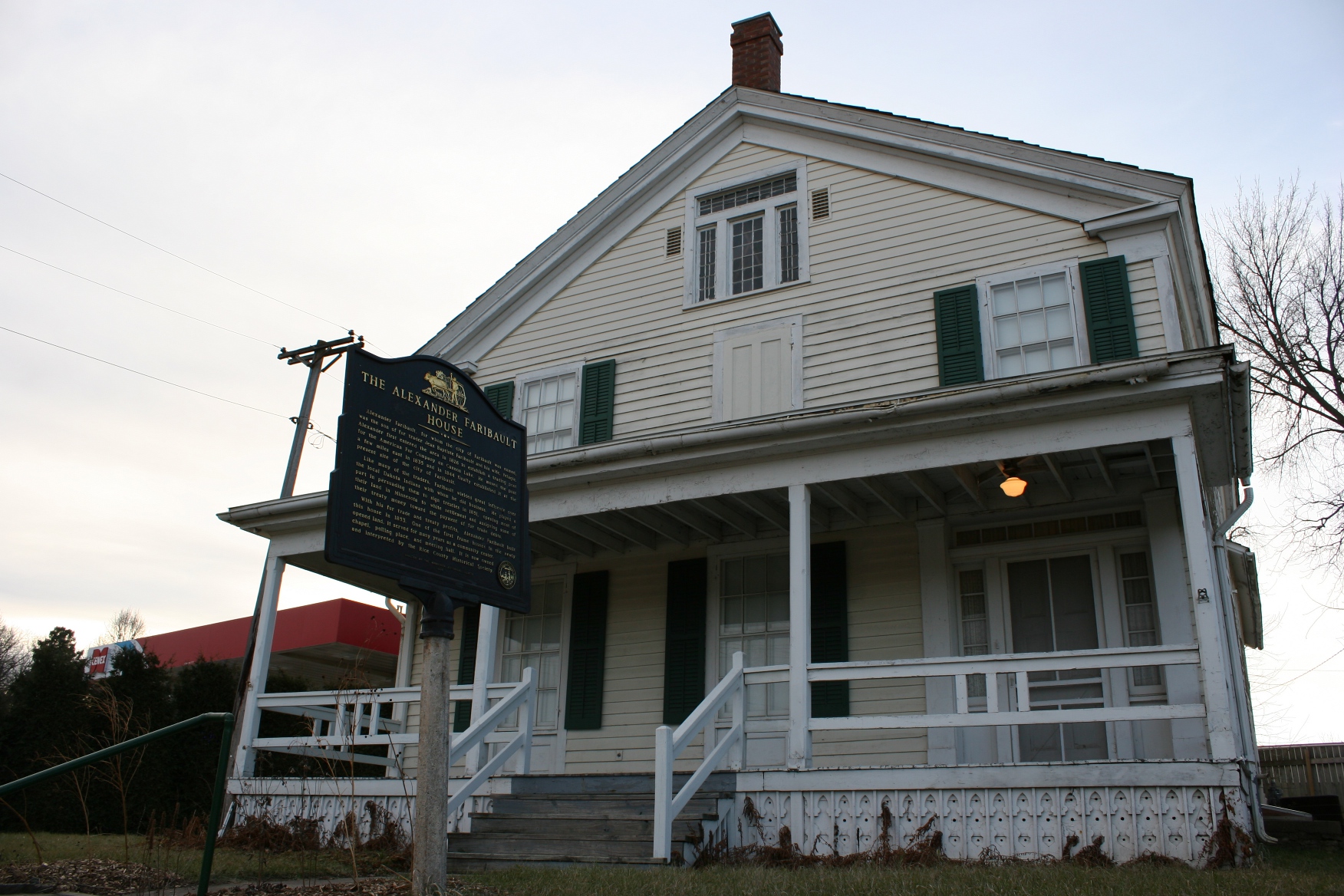
Peace Park is located at a major Faribault intersection. The Alexander Faribault house can be seen in the background, just to the right of the red-roofed gas canopies at the local co-op and behind the hedge row. (Minnesota Prairie Roots copyrighted photo September 2022)
Garwood focused primarily on the Wahpekute, the first people of Rice County, the “Shooters Among the Leaves.” They were, she said, hunters and gatherers who did not work the land but rather moved from place to place to find food, to sustain themselves. Every lake in the county was home to a Wahpekute village, she said. Rivers, too. Teepee Tonka Park along the banks of the Straight River in Faribault was among their riverside homes. Not far from Peace Park. Not far from Wapacuta Park. Near my home.
The event promotional created by Jeff Jarvis of West Cedar Studio.
MY COMMUNITY WILL CELEBRATE a rich history of brewing this weekend at the Fleck’s Travaganza!, an event honoring Fleckenstein Brewery. The brewery, opened in 1856 and producing assorted beverages for 108 years (until 1964) in two locations along the Straight River bluffs in Faribault, has long garnered local interest.
A historical themed bench outsidethe RCHS summarizes the Fleckenstein family’s brewery history in Faribault. (Minnesota Prairie Roots copyrighted photo July 2022)
Cheers to Fleck’s beer. This photo is featured on a bench outside the RCHS. (Minnesota Prairie Roots copyrighted photo July 2022)
Even more history on a bench by the RCHS. (Minnesota Prairie Roots copyrighted photo July 2022)
The 1946 Fleck’s delivery truck, pre-restoration, in the July 2016 Faribault Car Cruise Night. (Minnesota Prairie Roots copyrighted file photo 2016)
But this weekend all eyes will focus on a restored 1946 Fleckenstein Brewery delivery truck. That truck will lead a parade of vehicles through Faribault (click on link for the route) beginning at 5:30 pm Friday at the RCHS. The parade follows major routes through town, including past my house on Willow Street, and ends along Central Avenue for the Faribault Car Cruise Night.
A building in Faribault’s downtown historic district bears the Fleckenstein name. I took this photo, featured several years ago on the cover of the Faribault tourism magazine, during the July 2016 Car Cruise Night. (Minnesota Prairie Roots copyrighted file photo)
The beer delivery truck will also be parked along Central Avenue on Sunday morning during an invitation only RCHS event for volunteers.
The bank exhibit will be open Friday evening during the Car Cruise in the heart of historic downtown Faribault and also from 9 am – noon Saturday. Just across the street from the bank, a mural features the brewery.
This shows a section of the park, which includes a playground, picnic area and shelter and a river overlook. (Minnesota Prairie Roots copyrighted file photo May 2022)
Faribault artist Rhody Yule created this oil painting of the Fleckenstein Brewery in 1976. The building, and the brewery, no longer exist. The 20-foot Fleck’s beer bottle on the right side of the painting sat near the brewery entrance. Children often had their pictures taken here when their parents took a brewery tour. (Minnesota Prairie Roots copyrighted file photo January 2011)
At 1 pm, “Fleckenstein Brewery, a History” will be presented by collector and historian Schmidt at the RCHS. Special guest is Al Fleckenstein. Following that, at 3 pm, Schmidt leads a tour of the Fleckenstein Brewery ruins site on the campus of Shattuck-St. Mary’s School. Attendance is limited to 50 for the packaged, ticketed events with reservations via the RCHS highly-recommended. Cost for both is $20.
Stacked inside the RCHS Harvest and Heritage Halls are these crates from Fleckenstein Brewing. (Minnesota Prairie Roots copyrighted photo October 2015)
If you want to take home a bit of memorabilia, a commemorative bottle of grape pop is available for $5. Specially-made by Spring Grove Beverages in southeastern Minnesota, the soda comes with an original Fleck’s grape pop cap attached. Proceeds from the soda sales benefit the historical society.
I found this Fleck’s beer bottle at LB Antiques in Jordan in February 2017. (Minnesota Prairie Roots copyrighted file photo)
Now, the only thing missing—and this comes from someone who appreciates and enjoys craft beers—is Faribault-brewed craft beer. Perhaps some day…
The picturesque Faribault Mill along the Cannon River in Faribault. (Minnesota Prairie Roots copyrighted photo August 2022)
THE RIVERS RUN THROUGH, the Cannon and the Straight converging on Faribault’s north side at Two Rivers Park.
A view of the Cannon River looking west while standing on the walkway over the dam next to Father Slevin Park. (Minnesota Prairie Roots copyrighted photo August 2022)
The history, the founding of my southeastern Minnesota community is channeled through these waterways. In the history of the Dakota who first called this place home. In the history of the fur traders, including town founder Alexander Faribault, who settled along and traveled the rivers. In the history of flour mills and sawmills and the renowned Faribault Woolen Mill, established in 1865.
There’s a buffer of plants along the shores of the Cannon in Faribault. (Minnesota Prairie Roots copyrighted photo August 2022)
Whenever I walk the Northern Link Trail in North Alexander Park along the Cannon River Reservoir, I pause to view the 1892 Faribault Mill. Often I photograph this iconic brick building aside the appropriately-named Woolen Mill Dam. I appreciate this long-standing business, still operating today, weaving fine woolen blankets and more that have garnered national respect for quality craftsmanship.
Ghost signs on the Faribault Mill along the Cannon River. (Minnesota Prairie Roots copyrighted photo August 2022)
Ghost signs on the building’s exterior remind me of this mill’s long history here, along the river, by the dam.
There’s a notable absence of water at this dam on the Cannon River in Faribault. (Minnesota Prairie Roots copyrighted photo August 2022)
A grassy patch away, a second dam manages river flow next to Father Slevin Park. But when I last visited the area on August 7, I saw bare concrete with only a trickle of water leaking through boards at that smaller dam. Rather than rushing water defining this place, stagnant ponding water defines it.
The drying river bed and stagnant water below the dam. (Minnesota Prairie Roots copyrighted photo August 2022)
I observed green algae and litter on the water’s surface. I observed exposed rocks and plants growing where water should flow. All are evidence of the drought conditions we are experiencing here in southern Minnesota. We’ve had some rain since I paused beside the dam. But not enough to totally compensate for the lack of moisture.
Fishing in the Cannon River at Father Slevin Park near the Woolen Mill Dam. (Minnesota Prairie Roots copyrighted photo August 2022)
Typically, anglers frequent the river banks below this particular dam. But not now. Not in this summer of drought. These dry weather conditions plague so many locations across the country and world as the effects of climate change continue. One need only look to the West, to the decades of drought, the wildfires and the ever-growing tensions over water to understand the crisis.
I’ve seen more grasshoppers this year than in recent years, including this one among plants on the Cannon River bank. (Minnesota Prairie Roots copyrighted photo August 2022)
Locally, low river levels visually remind me that we are not untouched by evolving weather patterns. There was a time when I held a heightened awareness of weather as my farmer father looked to the sky, waiting for rain clouds to open, to drench his corn and soybean fields. I remember the summer of 1976 when he purchased boxcar loads of hay from Montana to feed our livestock. Worry defined that summer.
I spotted this buoy tucked next to a corner of the dam, hugging the shore above the dam. (Minnesota Prairie Roots copyrighted photo August 2022)
And now worry edges into my thoughts as I observe the stillness. No sound of rushing water. No sight of rushing water. Only the exposed concrete dam and the stagnant water pooling below.
Following the Wahpekuta Trail (albeit incorrectly spelled) at Sakatah Lake State Park, rural Waterville, Minnesota. (Minnesota Prairie Roots copyrighted photo June 2022)
IF I WAS TO CLIMB the hill behind my house through the tangle of weeds, wildflowers and woods, I would reach Wapacuta Park. But it’s easier to take the street and then the mowed hillside to this Faribault city park.
Years ago, this was the go-to spot for our family—for the kids to zoom down the towering slide and scale the massive rock in the summer and to slide down the sledding hill in the winter. Today it’s a place to occasionally take the grandkids to play on the updated playground.
My research shows this sign at Sakatah Lake State Park should be spelled differently, as Wahpehkute. (Minnesota Prairie Roots copyrighted photo June 2022)
A posted map of the park. (Minnesota Prairie Roots copyrighted photo June 2022)
To the west, along Minnesota State Highway 60 between Faribault and Waterville, Sakatah Lake State Park also reflects the Dakota influence in its name. The native Dakota called the land thereon Sakatah or “singing hills” in their native language.
Native peoples sourced water directly from the Sakatah lakes, unlike here via a water pump. (Minnesota Prairie Roots copyrighted photo June 2022)
The Sakatah Singing Hills State Trail runs through the park for three miles. That trail spans 39 miles from Faribault to Mankato, another Dakota-sourced name correctly spelled Mahkato, meaning “greenish blue earth.” Mankato is the site of the largest mass execution in US history with 38 Dakota hung on December 26, 1862, after the US-Dakota War of 1862. It is a horrible atrocity in our state’s history and one which, to this day, remains unknown to too many Minnesotans.
Southern Minnesota lakes are typically polluted/green, not sky-tinted. Here the fishing pier at Sakatah State Park is inaccessible, not linked to land, due to excessive ice damage last winter. (Minnesota Prairie Roots copyrighted photo June 2022)
We are a state with many location names tracing back to the Dakota—Mankato, Wabasha, Wabasso, Sleepy Eye, Winona, Winnebago… Even the name Minnesota comes from the Dakota Mnisota, meaning “sky-tinted waters” and referencing the Minnesota River.
I saw several motorboats on the lake at Sakatah. (Minnesota Prairie Roots copyrighted photo June 2022)
On a mid-June visit to Sakatah Lake State Park, rural Waterville, I thought about the Dakota who lived on this land, including at a village on the point separating Upper Sakatah and Lower Sakatah Lakes. I imagined the Wahpekute gliding across the lakes in canoes, angling for fish in these waters.
Mushrooms cling to a tree in the woods. (Minnesota Prairie Roots copyrighted photo June 2022)
Then, as I followed the Wahpekuta Trail, I wondered about hunting and berry picking and perhaps mushroom gathering in the denseness of woods.
The Sakatah campgrounds fill quickly, like many Minnesota state parks. (Minnesota Prairie Roots copyrighted photo June 2022)
And, instead of campers in these trees, I imagined tipis.
We have much to learn as we follow the trails of history.(Minnesota Prairie Roots copyrighted photo June 2022)
I have much to learn about the Wahpekute. But at least I hold basic knowledge of their early presence here, of their importance in the history of this place I call home.
The Tin Woman sculpture from Lockerby Sheet Metal lies outside the log cabin at the Rice County Historical Society in Faribault where she will be placed. (Minnesota Prairie Roots copyrighted photo July 2022)
WHENEVER I THINK of a tin man, I think of three specifics: The Tin Man from The Wizard of Oz, The Tin Man and his family in Faribault, and the absence of a heart.
This Lockerby Sheet Metal Tin Man awaits reassembly outside the county museum. (Minnesota Prairie Roots copyrighted photo July 2022)
In the classic tale by L. Frank Baum, The Tin Man is in need of a heart, or love. The Scarecrow needs a brain. And the Lion needs courage.
The family includes a baby in a buggy. (Minnesota Prairie Roots copyrighted photo July 2022)
Now you can take away whatever you want from Baum’s book, for there are, indeed, many take-aways. But the basics of love, knowledge and courage stick all the way along The Yellow Brick Road to The Emerald City.
The Tin Woman, up close with her vivid red lips. (Minnesota Prairie Roots copyrighted photo July 2022)
I wish I didn’t believe this to be true. But too often these days I see heartless Tin Man after heartless Tin Man (you may also insert “woman” here) following a narrow pathway of self-focus with no regard for others. There’s no self-awareness of how actions, words, decisions hurt others. Or perhaps, more accurately, there’s no care for how others are affected by what we say or do. That can apply in business, in politics, in relationships, in friendships, in families…
The family even has a dog. (Minnesota Prairie Roots copyrighted photo July 2022)
Sometimes I feel like our collective hearts are missing or atrophying and we really ought to work harder at being kinder, more caring, more considerate, more loving. Better people. Period.
The Tin Man and Woman stand outside Lockerby Sheet Metal in September 2010, when the Straight River flooded. That event devastated the business. (Minnesota Prairie Roots copyrighted file photo September 2010)
That leads me to The Tin Man and his family in Faribault. A few weeks ago I photographed them at the Rice County Historical Society, where they’ve been hanging out for awhile. Originally, their home was at Lockerby Sheet Metal, which closed abruptly in October 2018 after 110 years in business in Faribault. I’m thankful this family found a new home at the RCHS. They are local icons.
A sign on the Rice County Historical Society states its goal. (Minnesota Prairie Roots copyrighted photo July 2022)
Keeping this family together, recognizing their collective value, says something about the heart of a community. Locals care about The Tin Man and family from an historic, artistic and business perspective. And, perhaps, also from a love perspective. These creations of Lockerby Sheet Metal can visually represent community love. Yes, that’s the marketing, creative and hopeful side of me writing.
This knight metal art sculpture from Lockerby Sheet Metal stands inside the RCHS entry. (Minnesota Prairie Roots copyrighted file photo)
Even as I believe too much heartlessness exists in today’s world, I also believe that we are capable of growing our love for one another, of strengthening our hearts. Rather than follow a self-focused narrow Yellow Brick Road, we can pause, stop, consider. Pause. Stop. Consider. When we recognize how our words and actions affect others, then we no longer rattle around like a Tin Man (or Woman) without a heart.
A lovely lavender car drew my interest against a backdrop of historic buildings in downtown Faribault.(Minnesota Prairie Roots copyrighted photo July 2022)
ON A JULY EVENING, as the descending sun shone along the tops of historic buildings in downtown Faribault, I paused to take in the scene before me.
Although signage indicated only registered vehicles could park along Central, other vehicles were parked there. (Minnesota Prairie Roots copyrighted photo July 2022)
Checking out the vehicles parked along four blocks of Central Avenue. (Minnesota Prairie Roots copyrighted file photo July 2022)
Vehicles outside the Signature Bar & Grill, a popular downtown dining and drinking spot. (Minnesota Prairie Roots copyrighted photo July 2022)
Among the street-side food vendors, El Jefe, outside its downtown restaurant. (Minnesota Prairie Roots copyrighted photo July 2022)
Others visited in groups or stopped to purchase food from food trucks or from a downtown restaurant.
Faribault’s Car Cruise Nights continue to draw crowds to Central Avenue. (Minnesota Prairie Roots copyrighted photo July 2022)
I felt the energy, the pulse of people moving, of togetherness. I observed the mingling of cultures, of ages. I sensed a spirit of community which comes in a gathering of people on a lovely summer evening in southern Minnesota. It felt good to be part of this scene.
Vehicles began leaving as the car show wound down. (Minnesota Prairie Roots copyrighted photo July 2022)
I arrived close to 8 pm, nearing the end of an event which began hours earlier with a car cruise around area lakes. Yet, I still found plenty of cars, trucks and motorcycles to appreciate. Some old, others new.
I consider hood ornaments, whether original or added, to be works of art. (Minnesota Prairie Roots copyrighted photo July 2022)
My approach to Car Cruise Night is not defined by my interest in cars. Rather, it’s defined by art, by my photographic perspective. By my creativity.
I always peer inside vehicles to see what unusual things I’ll discover, here a Smurf theme. (Minnesota Prairie Roots copyrighted photo July 2022)
I always see lots of dice dangling inside vehicles. (Minnesota Prairie Roots copyrighted photo July 2022)
A quilt covers a seat in an old truck. (Minnesota Prairie Roots copyrighted photo July 2022)
I focus on details. Dice. Hood ornaments. Stickers. The gleam of wax-shined chrome. A Smurf. A patchwork quilt covering a truck seat. So much to take in.
A bold, jewel-toned truck drew my eye. (Minnesota Prairie Roots copyrighted photo July 2022)
Like a Dreamsicle. (Minnesota Prairie Roots copyrighted photo July 2022)
I appreciate, too, the colors. Some bold. Others as dreamy as a Dreamsicle.
Faribault’s downtown historic district is one of the largest in Minnesota. (Minnesota Prairie Roots copyrighted photo July 2022)
Banners identifying Faribault’s Historic District include a vintage photo. (Minnesota Prairie Roots copyrighted photo July 2022)
Flashback to yesteryear in this vintage vehicle. (Minnesota Prairie Roots copyrighted photo July 2022)
And then my eyes shift to the setting. Central Avenue, lined with aged buildings of extraordinary architecture, creates an historic feel, adding to the experience of Car Cruise Night. As I watched an open air vintage car head north along the avenue, it was easy to imagine bygone years.
Not all vehicles are old. These sports cars were part of the cruise, parked near Cardboard Vault. (Minnesota Prairie Roots copyrighted photo July 2022)
At street level, I see long-time businesses like the Signature Bar & Grill and Burkhartzmeyer Shoes and many new businesses like Good Day Coffee, El Jefe, Cardboard Vault and more, including the many shops opened by immigrants who now call Faribault home. Today’s diversity of ownership reminds me of yesteryear, when immigrants settled here, opened shoe and furniture factories, brewed beer, ran general stores, set up barber chairs and much more in a town settling and growing.
An historic building is reflected on the shiny chrome of a motorcycle parked along Central for Car Cruise Night. (Minnesota Prairie Roots copyrighted photo July 2022)
Faribault remains a place of settlement and growth. And a place where, on a Friday evening, I glimpse history in buildings and vehicles. I see, too, the essence of community in this cohesive coming together on a lovely summer evening in July.
FYI: Faribault’s next car show is scheduled for 6-9 PM Friday, August 12, during the Blue Collar BBQ Festival at Teepee Tonka Park on the east side along the Straight River.
Please check back for more photos from the July 15 Car Cruise Night I attended in historic downtown Faribault.
Recent Comments