Minnesota Prairie Roots

Writing and photography by Audrey Kletscher Helbling

Celebrating immigrants in a children’s picture book by Faith Ringgold April 16, 2026

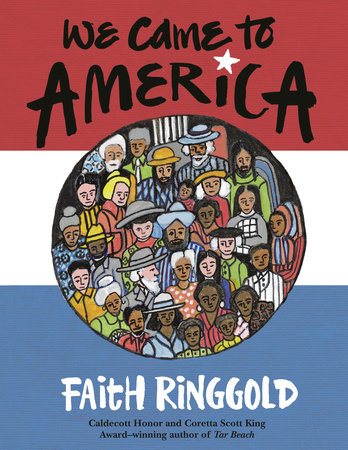
(Book cover sourced online)

TEN YEARS AGO, award-winning African American author and artist Faith Ringgold (1930-2024) published We Came to America. I find this children’s picture book especially relatable to today as ongoing federal immigration enforcement continues in this country.

I wish everyone who rails against immigrants would read this book to remind themselves of their roots. Unless Native American, every single one of us can trace our ancestral roots to a place other than the United States of America.

Ringgold celebrates the diversity of this country in this colorful, celebratory book featuring a diversity of peoples. She honors the music, food, culture, stories, dance and more of those who resettled here. She recognizes the reasons—injustice, fear and pain—many came.

MADE AMERICA GREAT

This author even uses the words “made America great,” not in a political context, but to celebrate how diversity enriches America.

“We came to America/Every color, race and religion/From every country in the world,” she writes in a poetic refrain.

LOVING THIS BOOK

I love this book. It’s simple. Easy to read. Joyful. Accurate. Timeless. Appropriate for all ages, including adults, especially adults.

I love that the author, born and raised in Harlem, was part of the Black Arts Movement and an activist who worked tirelessly for civil rights and social justice. Ringgold is best known for her story quilts.

PEACE, FREEDOM, JUSTICE

She dedicates her picture book about immigrants to all the children who come to America: “May we welcome them and inspire them to sustain a love and dedication to peace, freedom, and justice for all.” Reread those words: Peace. Freedom. Justice for all. Ringgold was 86 when she wrote those words, created the art for We Came to America.

I wonder how Ringgold would feel about the threats to democracy and personal freedom and about the injustices occurring in this country today? I expect she would use her creative voice to rise up, resist and remind all of us that we are valued, that together we are America. All of us, no matter our color, our race, our religion. And no matter our roots.

TELL ME: Have you read We Came to America or any of Faith Ringgold’s books? Or have you seen her art exhibited? I’d like to hear your thoughts on her work and/or that of other creatives like her.

© Copyright 2026 Audrey Kletscher Helbling


Able to breathe again April 21, 2021

Filed under: Uncategorized — Audrey Kletscher Helbling @ 2:02 PM
Tags: , , , , , , , , , ,

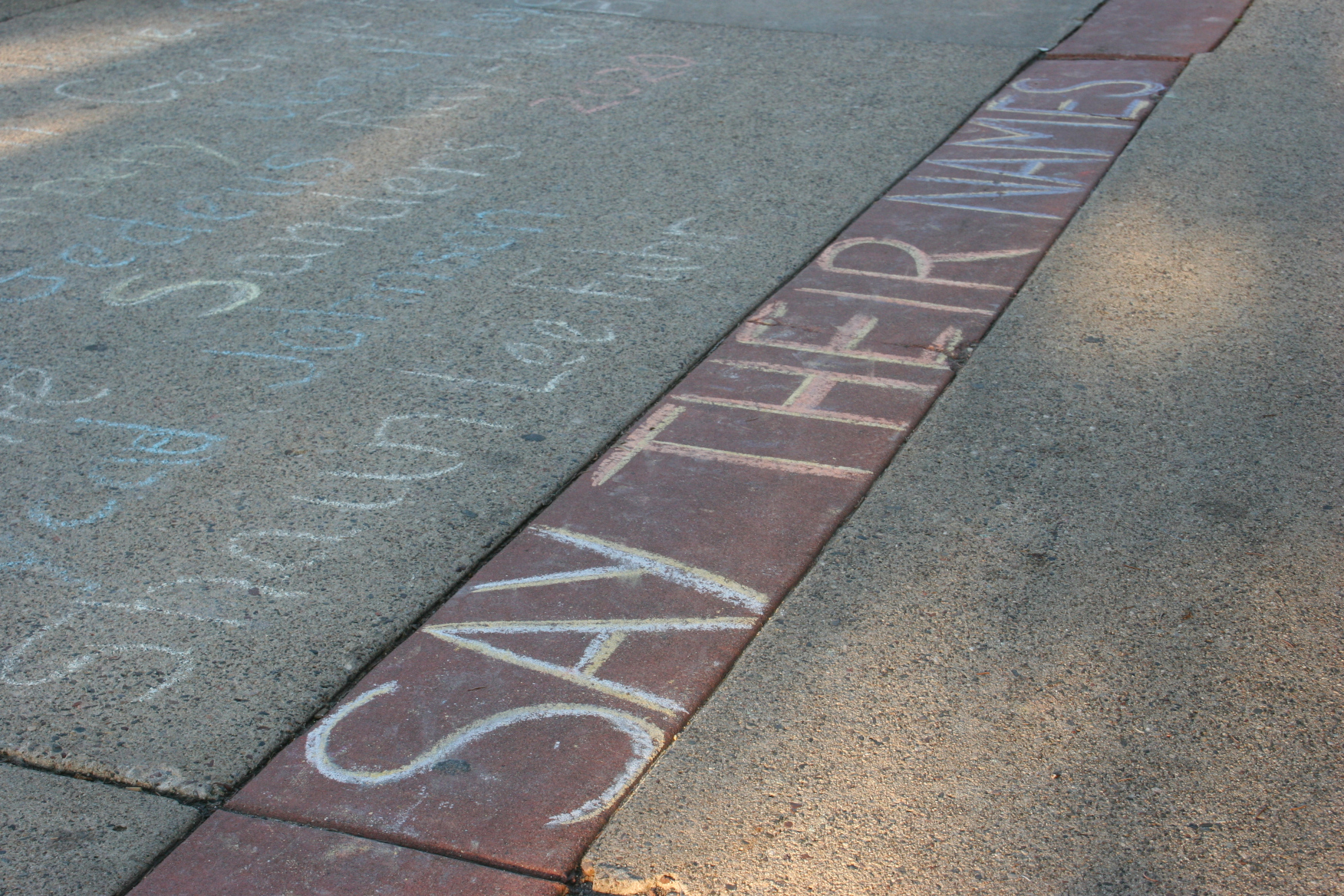
A message chalked in Bridge Square in Northfield carries a repeated phrase as young Black people continue to die at the hands of police. Minnesota Prairie Roots file photo August 2020.

WHEN MY ELDEST DAUGHTER texted at 2:31 pm Tuesday that a verdict had been reached in the Derek Chauvin trial, I replied with one simple word. What?

That the jury could reach a verdict in such a short time—about 10 hours—following weeks of testimony likely meant that the former Minneapolis police officer would be found guilty of killing George Floyd on May 25, 2020, in Minneapolis by pressing his knee on Floyd’s neck for 9 minutes and 29 seconds.

I immediately switched on the TV to await reading of the verdict by Judge Peter Cahill. As I waited and watched news coverage, I felt a sense of hope. Hope that this would end in a conviction. Hope that, finally, there would be accountability in the death of a Black man at the hands of police.

I’d watched the Chauvin trial off-and-on. I heard the words of the bystanders who witnessed Floyd’s death, who pleaded with police officers to give him medical attention. Who asked Chauvin to remove his knee from Floyd’s neck. Who chose to pause and care and document and attempt to save another human being’s life. They felt hopeless, helpless, traumatized, according to their sworn testimony. I listened, too, to police officers testify against one of their own. And I heard Floyd’s loved ones and medical experts speak. Listening to testimony left me at times feeling exhausted and heart-broken.

So when the guilty of all three counts—second-degree murder, third-degree murder and second-degree manslaughter—came down yesterday, I felt relief. Finally.

I watched Chauvin as the verdict was read. His eyes darted from side-to-side. I wondered what he was thinking in that moment and the moments following—when his bail was revoked, he was handcuffed and led away to wait in a Minnesota prison for his sentencing in eight weeks.

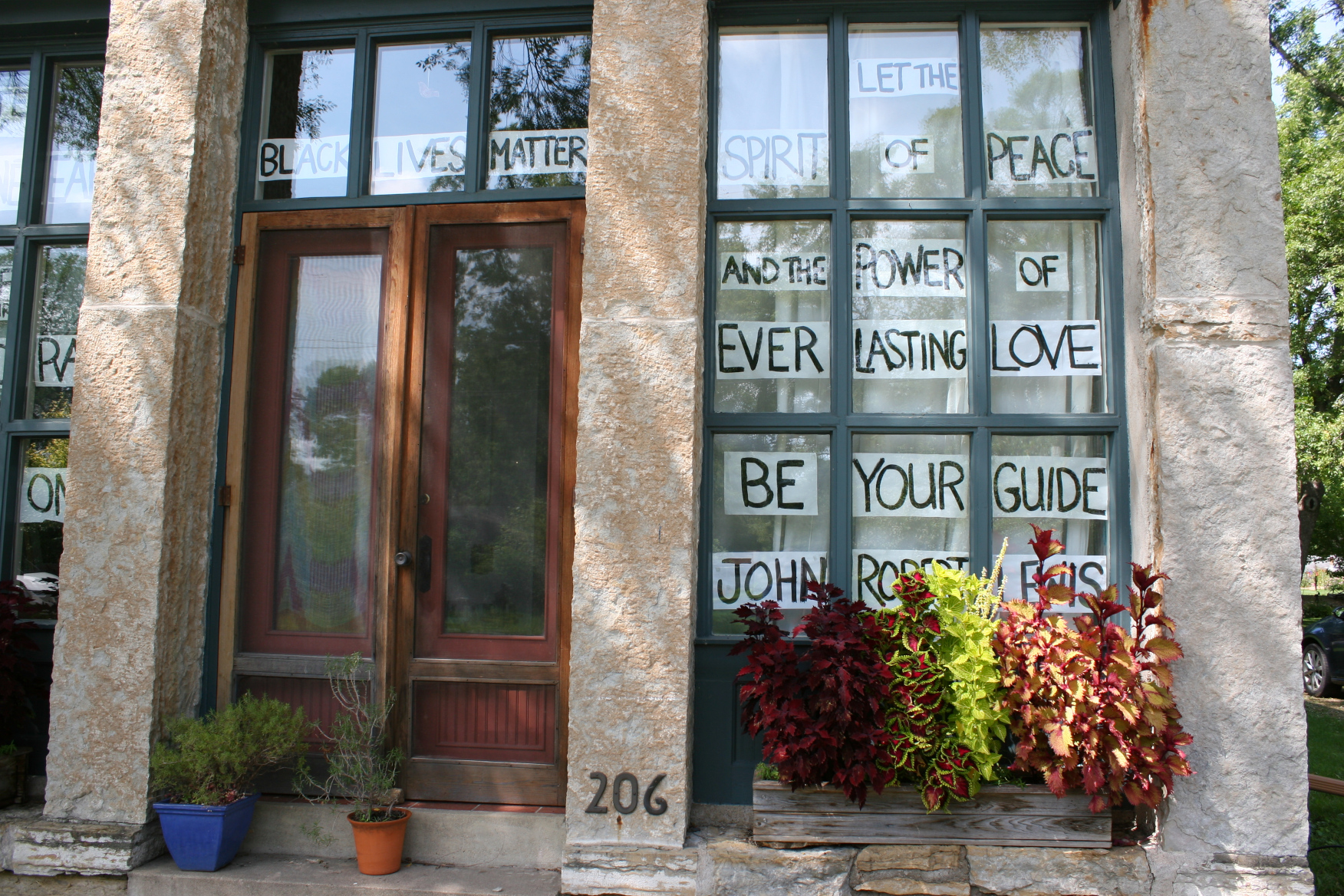
Messages on a house in small town Dundas, Minnesota. Minnesota Prairie Roots file photo August 2020.

But mostly, I wondered how the Floyd family felt. Later they would speak at a news conference led by Civil Rights activist Al Sharpton and Civil Rights attorney Ben Crump. Said Sharpton: “This gives us the energy to fight on.” And Crump: “America, let’s frame this moment as a moment where we are finally getting close to living up to our Declaration of Independence…that all men are created equally…with certain unalienable rights like life and liberty and the pursuit of happiness.”

My mind focused on this single word: life. George Floyd needlessly lost his life on May 25 at the corner of 38th Street and Chicago Avenue in south Minneapolis, a place now known as George Floyd Square.

In the 11 months since, his family has focused on attaining justice in the death of their brother/cousin/uncle/father and on effecting change. They have done that with grace, poise, eloquence, prayer and passion. George’s brother, Philonise Floyd, has stepped up as the family spokesman. At Tuesday’s news conference, these words, especially, resonated with me: “Today we are able to breathe again.” That comment by Philonise linked directly to George Floyd’s plea to police officers as he lay face down on the pavement dying. “I can’t breathe.”

A photo and comment posted at the “Selma to Montgomery: Marching Along the Voting Rights Trail” exhibit at St. Olaf College in Northfield in 2015. Minnesota Prairie Roots file photo 2015.

Much work remains to be done. Tuesday’s verdict marks an important step in accountability and a move toward justice and equality. It’s easy to type that. It’s harder to live it. To speak up. To take action. To care. And we need to care, whether we live along a rural gravel road, in a small town, in the heart of a big city or anywhere in between.

FYI: I’d encourage you to read posts by two Minnesota bloggers whom I respect and follow and who share their thoughts on the Derek Chauvin verdict. Click here to read Margit Johnson’s post, “Endings and Beginnings,” and Kathleen Cassen Mickelson’s “Guilty. Guilty. Guilty.”

© Copyright 2021 Audrey Kletscher Helbling


And the winner is… October 3, 2020

Graphic from Minnesota Library Association

POWERFUL AND EMPOWERING.

Those two words describe the winner of the first-ever Minnesota Author Project: Communities Create Award announced Thursday during the Minnesota Library Association’s annual conference.

Justice Makes a Difference—The Story of Miss Freedom Fighter, Esquire by Artika Tyner and Jacklyn M. Milton won the award. And it’s a well-deserved honor bestowed on the 16-page book themed on making a difference in this world. Illustrators Jeremy Norton and Janos Orban also deserve credit for exceptional art.

The book tells the story of Justice and her grandmother, who teaches her granddaughter about her value. “…don’t let someone tell you that you’re too young to make a difference.” And then she goes on to cite numerous individuals who have made a difference, like Ida B. Wells, a journalist who advanced racial equality through her writing.

“Words are powerful,” Grandma tells Justice. “They can be used in powerful ways to do good or to do harm.”

And so the storyline goes with the authors weaving historical figures into the heart of their message—that we each hold within us the power to effect change, to help others, to make a difference. Individuals like Shirley Chisholm, the first African American woman to run for U.S. President, or attorney Charles Hamilton Houston, who worked to end segregation in schools. Or Justice.

This book is as fitting today as 60-plus years ago, which says something. We still need to hear the message that what we say and do, or what we don’t say or don’t do, matters.

I’d encourage you to read this award-winning book penned by Tyner, an educator, civil rights attorney and founder of Planting People Growing Justice Leadership Institute, and Milton, an educator and community advocate. Proceeds from the book will support educational programming at Planting People, an organization seeking to plant seeds of social change via education, training and community outreach.

By reading this book, I learned more about individuals who cared and led and worked hard for change. Brief bios on those six leaders who inspired Justice end this powerful and empowering book.

#

SIX BOOKS COMPETED for the Minnesota Author Projects: Communities Create Award, including one in which my poem, “Life at Forty Degrees,” published. Although our collection of poetry, Legacies: Poetic Living Wills, did not win, I am honored to have been in the group of six books selected as award finalists.

Congratulations to all five finalists and to the winner, Justice Makes a Difference. Because yes, it does. And, yes she can.

#

SPECIAL THANKS to Northfield Poet Laureate Rob Hardy for submitting the collection of poems by 16 Rice County poets to this competition. He is an enthusiastic and much-appreciated poet and ambassador for poets and our poetry. I appreciate you, Rob.

© Copyright 2020 Audrey Kletscher Helbling