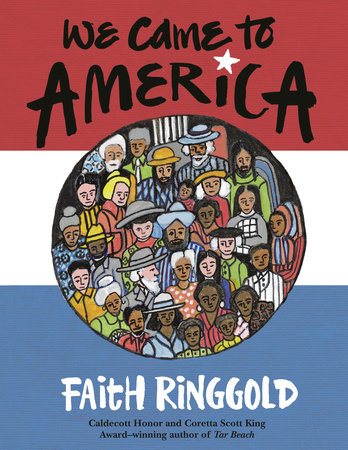
I wish everyone who rails against immigrants would read this book to remind themselves of their roots. Unless Native American, every single one of us can trace our ancestral roots to a place other than the United States of America.
Ringgold celebrates the diversity of this country in this colorful, celebratory book featuring a diversity of peoples. She honors the music, food, culture, stories, dance and more of those who resettled here. She recognizes the reasons—injustice, fear and pain—many came.
MADE AMERICA GREAT
This author even uses the words “made America great,” not in a political context, but to celebrate how diversity enriches America.
“We came to America/Every color, race and religion/From every country in the world,” she writes in a poetic refrain.
LOVING THIS BOOK
I love this book. It’s simple. Easy to read. Joyful. Accurate. Timeless. Appropriate for all ages, including adults, especially adults.
I love that the author, born and raised in Harlem, was part of the Black Arts Movement and an activist who worked tirelessly for civil rights and social justice. Ringgold is best known for her story quilts.
PEACE, FREEDOM, JUSTICE
She dedicates her picture book about immigrants to all the children who come to America: “May we welcome them and inspire them to sustain a love and dedication to peace, freedom, and justice for all.” Reread those words: Peace. Freedom. Justice for all. Ringgold was 86 when she wrote those words, created the art for We Came to America.
I wonder how Ringgold would feel about the threats to democracy and personal freedom and about the injustices occurring in this country today? I expect she would use her creative voice to rise up, resist and remind all of us that we are valued, that together we are America. All of us, no matter our color, our race, our religion. And no matter our roots.
TELL ME: Have you read We Came to America or any of Faith Ringgold’s books? Or have you seen her art exhibited? I’d like to hear your thoughts on her work and/or that of other creatives like her.
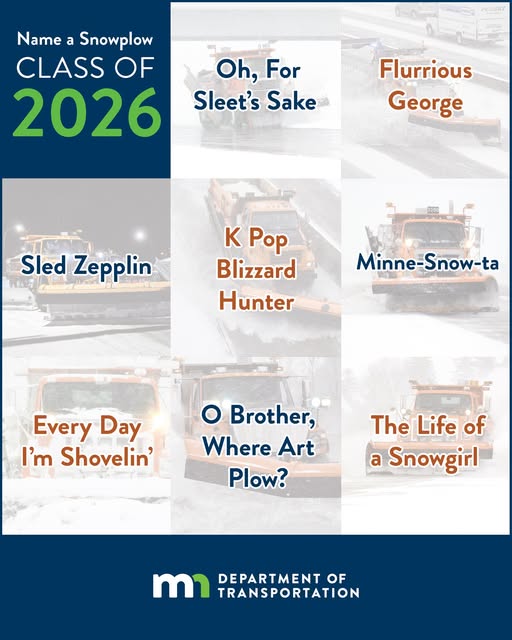
Winning names in the 2025-2026 Minnesota Department of Transportation Name a Snowplow contest. (Graphic credit: MnDOT)
MINNESOTA WINTERS can get long. So long that many of our older residents flee to Arizona or Florida, becoming snowbirds for a few months before returning here in the spring. They don’t have to worry about shoveling or plowing snow or navigating snowy roads.
But for those of us who live here year-round, winter requires stamina and distractions to endure the snow, ice, cold and darkness that hallmarks Minnesota winters. In recent years, the Minnesota Department of Transportation has provided an entertaining diversion from winter in its annual Name A Snowplow Contest.
Recently, the winning names in the sixth annual competition were announced, demonstrating once again the creativity of those who came up with monikers for snowplows in each of MnDOT’s eight districts. It’s a process to get there from submissions, to selection of finalists, to voting. This year nearly 19,000 people voted, with “Oh, For Sleet’s Sake” as the top vote-getter. Gotta love that wintry version of “Oh, for Pete’s sake!”
As a creative myself, I’m always surprised by the names, most of them a play on phrases, a song, a pop culture whatever. You really do have to be up on your current musicians and such. I am the first to admit that I am not.
My mom holds Curious George. (Minnesota Prairie Roots copyrighted file photo March 2021)
But “Flurrious George,” the name picked for District 6 in southeastern Minnesota with headquarters in Rochester (my district), is rooted in a name familiar to me. It’s based on the mischievous monkey in the Curious George children’s picture books. You know, the monkey who messes with The Man in the Yellow Hat.
Yet, this snowplow name stretches beyond a monkey and a man to a personal memory. Of my mom. In the final years of her life, when COVID-19 kept me from seeing her in a long-term care center 2 ½ hours from my home, Mom developed an attachment to Curious George. She couldn’t get enough of this monkey’s antics. She loved to watch Curious George cartoons on DVDs stacked in her room. Mom was so fixated on the story that a staff member, on her own time, shopped for a stuffed toy Curious George for her. She clutched that monkey like a toddler’s security blanket.
I don’t know what happened to Mom’s Curious George. I wish I had the plush monkey she cradled on her lap, touched with her fingers. It would connect me tangibly to my loving mother, who died four years ago in January 2022.
I’ve never really cried over losing Mom. I just haven’t. Until today. As I was writing this post about a snowplow named “Flurrious George,” I remembered photographing Mom holding Curious George when I visited her in March 2021. I hadn’t seen her in a year due to COVID visitor restrictions. I clicked on the story I wrote five years ago. I read. I scrolled. And I cried.
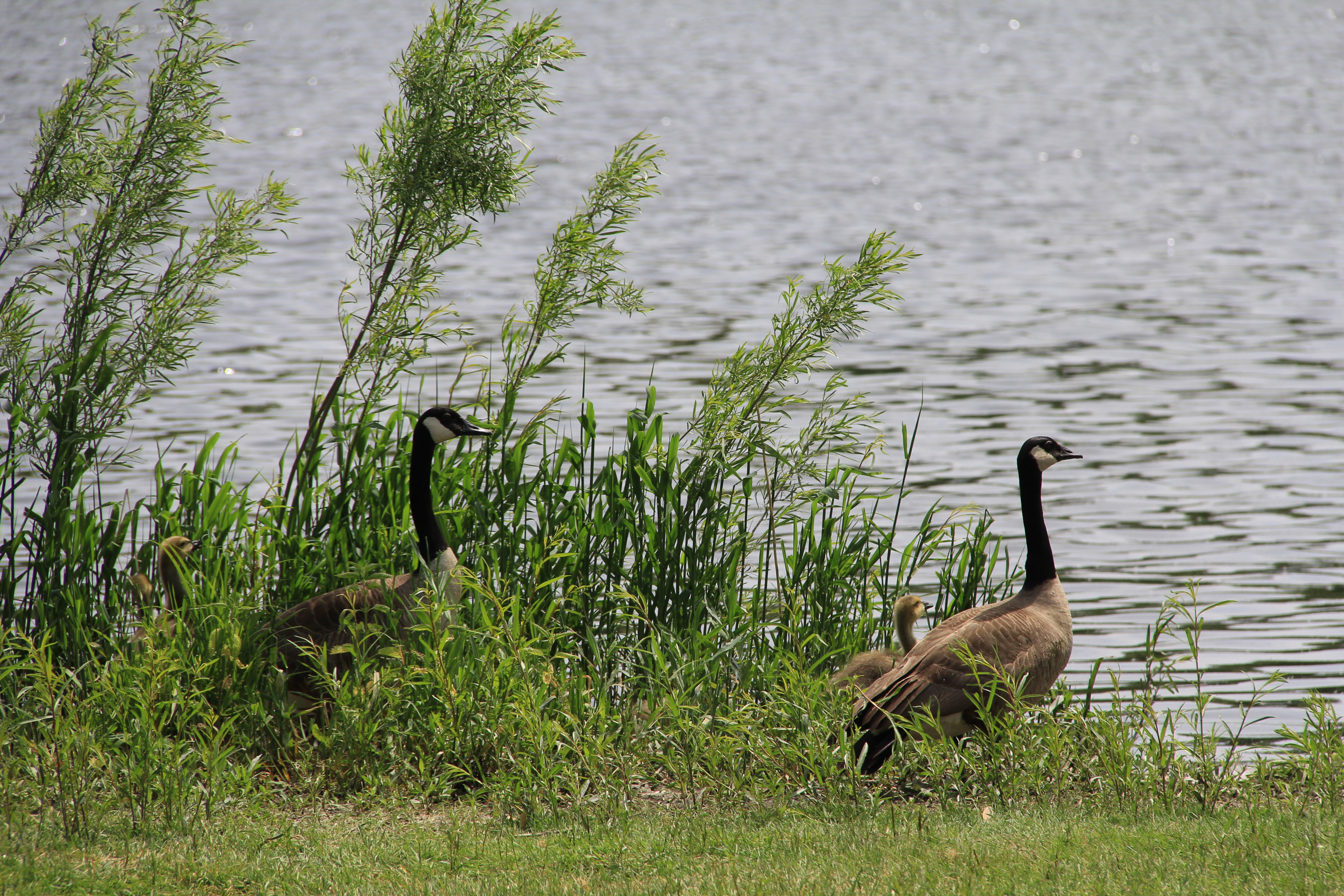
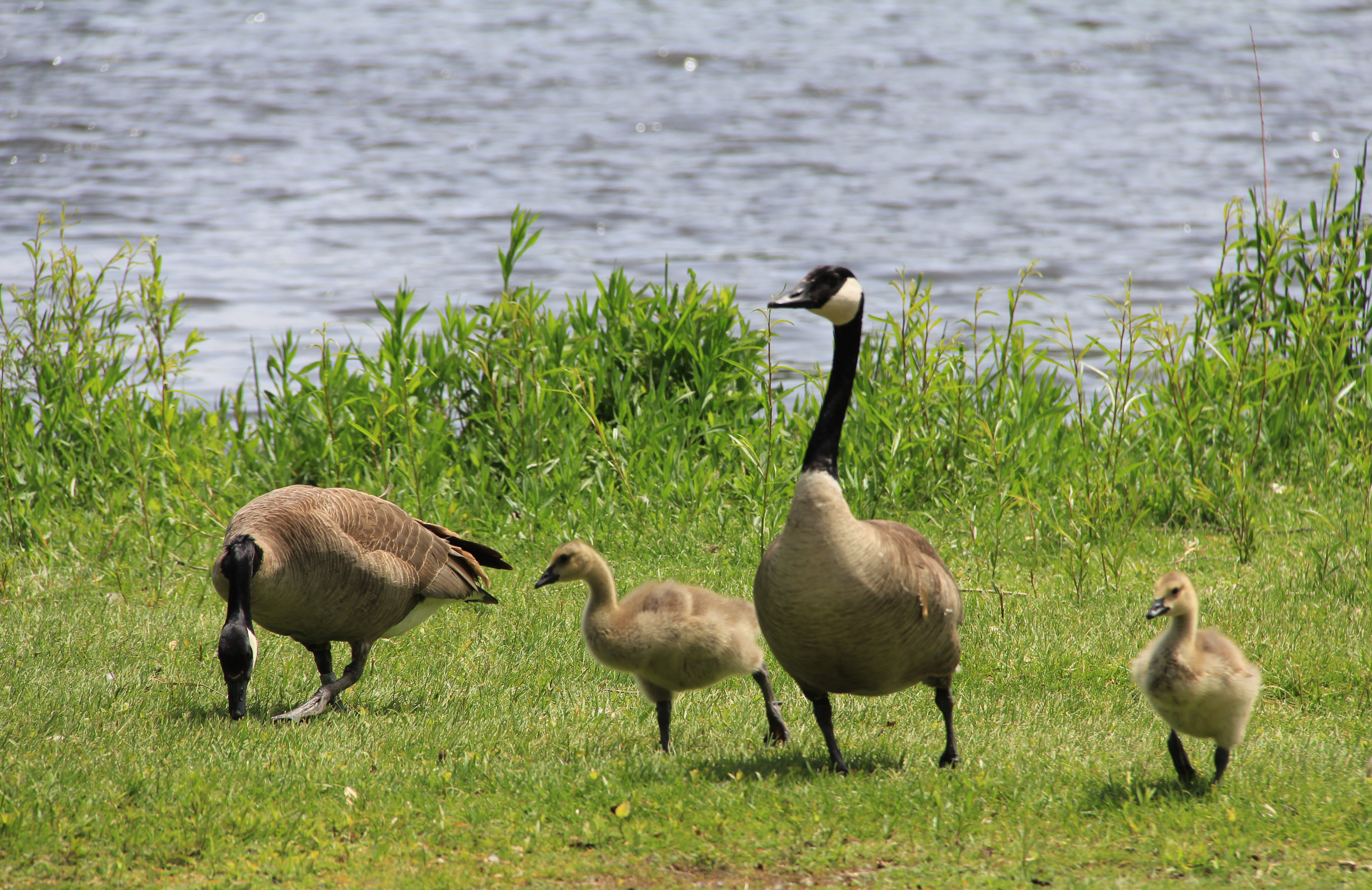
A family of Canada geese emerge from the grass growing along the Cannon River in Faribault. (Minnesota Prairie Roots copyrighted photo May 2023)
EACH SPRING I ANTICIPATE the appearance of newborn ducks and geese in the wild. There’s something about these waterfowl that appeals to me. Perhaps it’s the cuteness factor. Or maybe it’s the reassurance that, despite the ever-changing chaotic world, some things remain constant. Eggs hatch. Ducklings and goslings emerge. And the cycle of life continues.
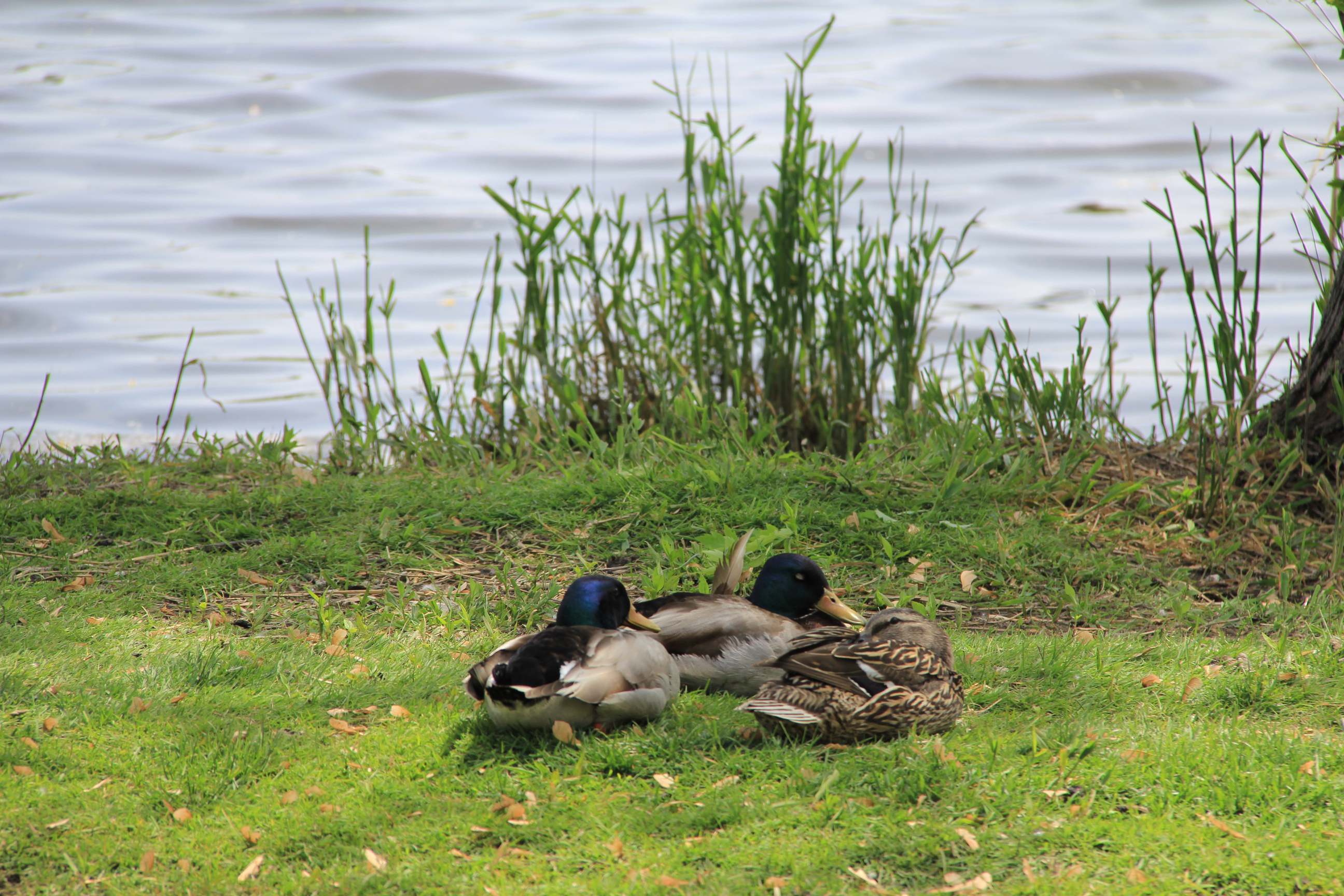
I spotted adult mallard ducks, including these drakes and hen, but no ducklings. (Minnesota Prairie Roots copyrighted photo May 2023)
This year I was a bit late getting down to North Alexander Park in Faribault, a prime viewing spot along the Cannon River for an adaptation of Robert McCloskey’s children’s picture book, Make Way for Ducklings. The book won the Caldecott Medal in 1941 and is a beloved classic about a duck family in Boston.
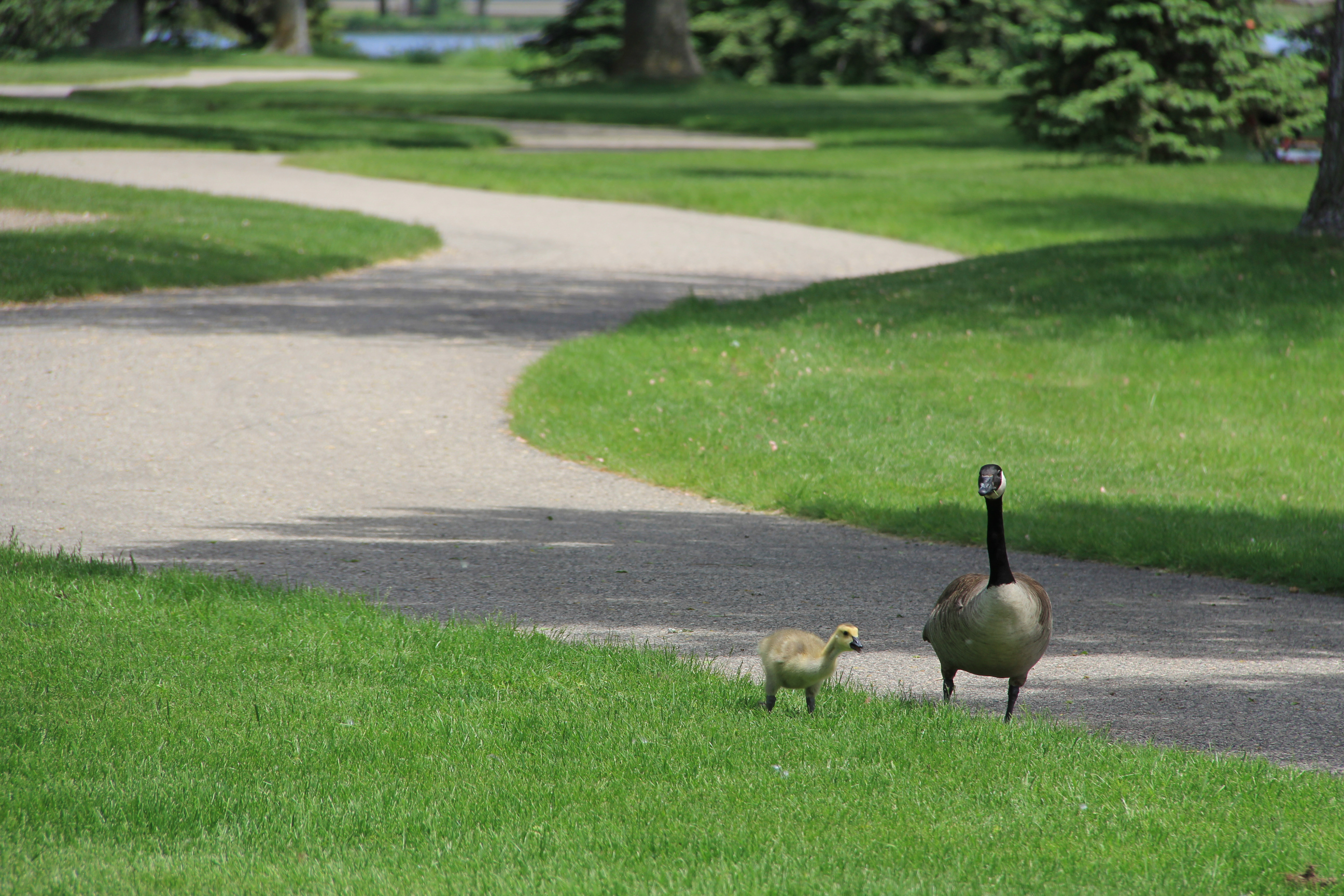
Parent and baby gosling along the recreational trail in Faribault’s North Alexander Park. (Minnesota Prairie Roots copyrighted photo May 2023)
On the recent day I went duck and goose hunting with my camera here in Minnesota, far from Boston, I found only goslings. No ducklings. I approached with caution. I’ve learned from experience that Canada geese are aggressively protective of their young. I already hold childhood trauma from enduring vicious rooster attacks. I don’t need to add to that.
I kept my distance from the goose family, relying on my telephoto lens to take me closer. (Minnesota Prairie Roots copyrighted photo May 2023)
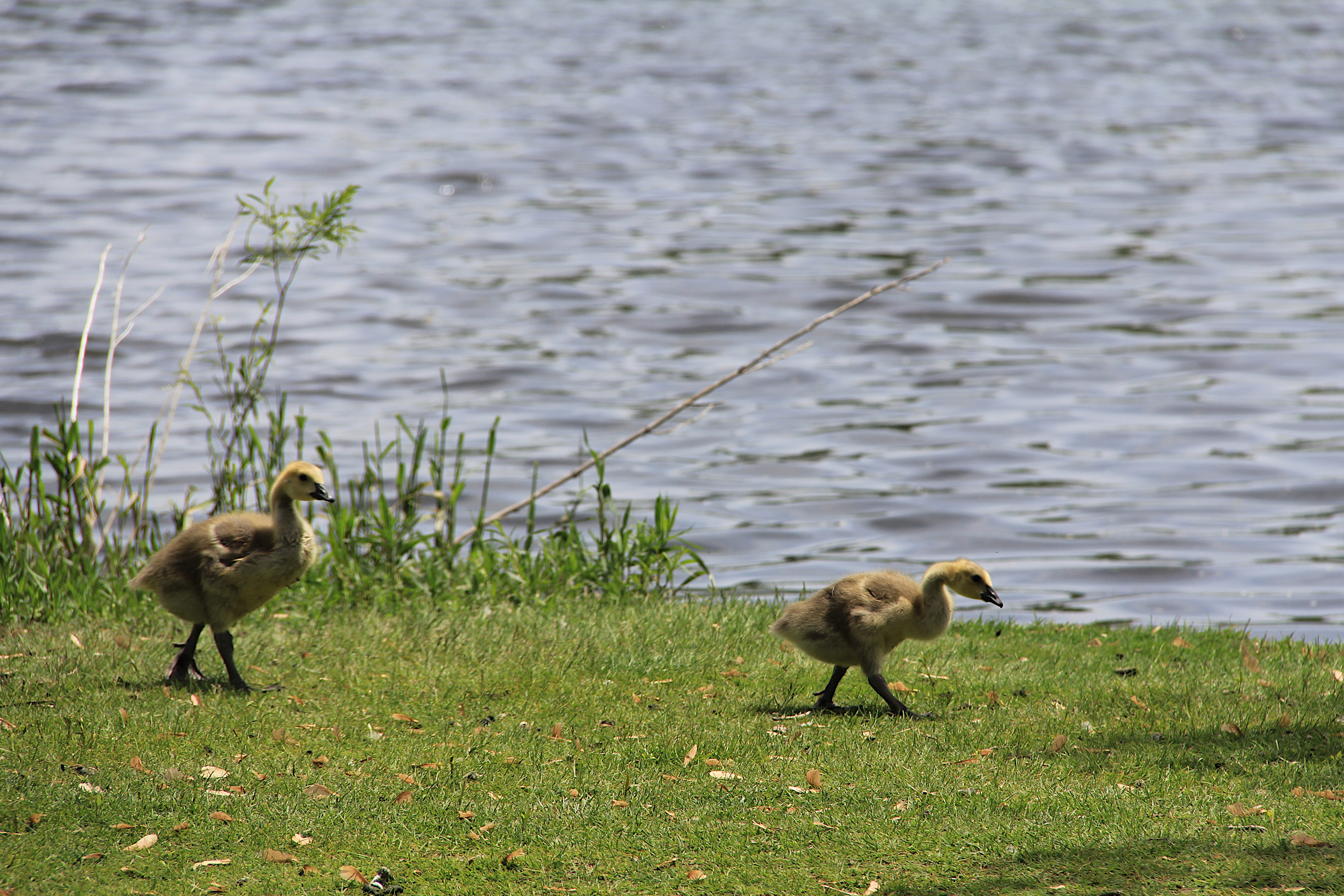
And so I watched and focused, thankful for my zoom lens which allowed getting close to the geese without getting close. The young ones appeared to be at teenage stage, rather than vulnerable baby stage. Thus my trust of even the youngest rated zero.
Determined goslings assert their independence. (Minnesota Prairie Roots copyrighted photo May 2023)
I was fully aware that the geese were aware of my presence. People occasionally toss bread to waterfowl here (something I wish they wouldn’t do), so they may have expected a hand-out. Not from me. I was simply there to observe and document while dodging excrement, one of the hazards of stepping into a Robert McCloskey scene.
Despite the caution, despite the need to watch my step, I will continue to delight in this annual rite of spring which draws me to the banks of the Cannon River in southern Minnesota. Far from Boston.
Somalians are very much a part of the Faribault community, photographed here at a Downtown Car Cruise Night. (Minnesota Prairie Roots copyrighted file photo)
For a community like mine, with a sizable Somali population, this book proves a natural draw. I always appreciate learning more about my new Faribault neighbors from the east African country of Somalia. The more we know about each other, the more comfortable and connected we feel. Disconnect and conflict often arise from lack of knowledge, fear of the unknown and differences. Differences in dress, food, language, culture, faith.
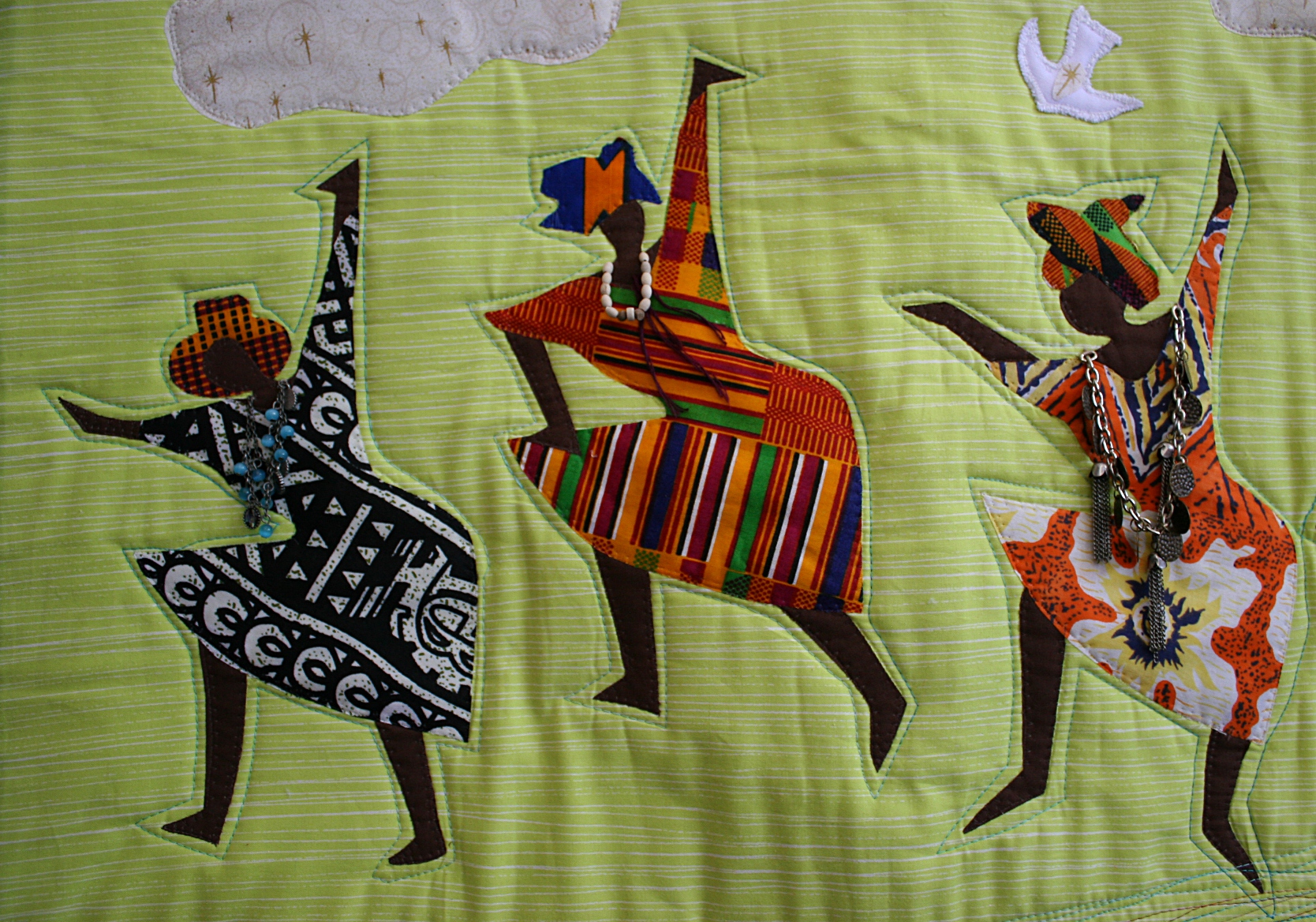
Nigerian-themed quilt art by my friend Susan Griebel. The fabric is from the collection of her mother-in-law, Margaret Griebel. Margaret’s husband was a Lutheran missionary in Nigeria, where the family lived. (Minnesota Prairie Roots copyrighted file photo)
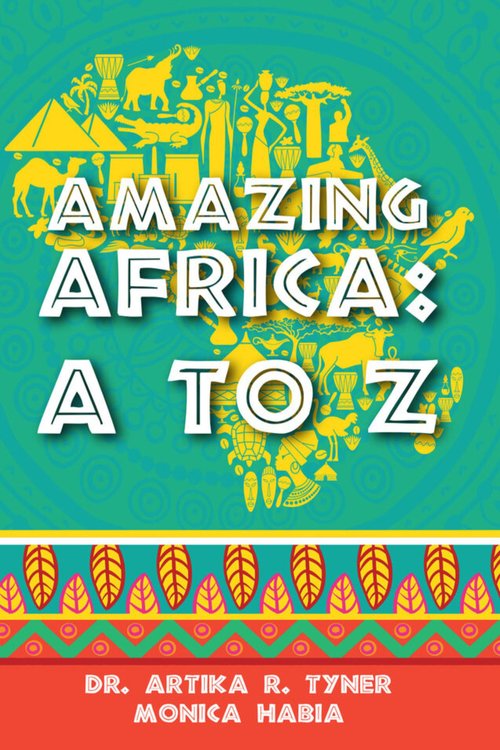
This book bridges differences via facts and art that carries a signature African style of intense patterns and colors. With every new bit of information, with every turn of the page, I feel more and more connected to this continent of 54 countries. For example, the word hospitality, chosen to represent the letter “H” in this alphabet book, strikes me as exactly what I hope for in Faribault. Africans believe no one is an island; rather everyone is part of the community, the text reads in part. Two clasped hands visually reinforce that belief.
Lul Abdi shows off beautiful wood crafts from Kenya and Somalia at a past International Festival Faribault (Minnesota Prairie Roots copyrighted file photo)
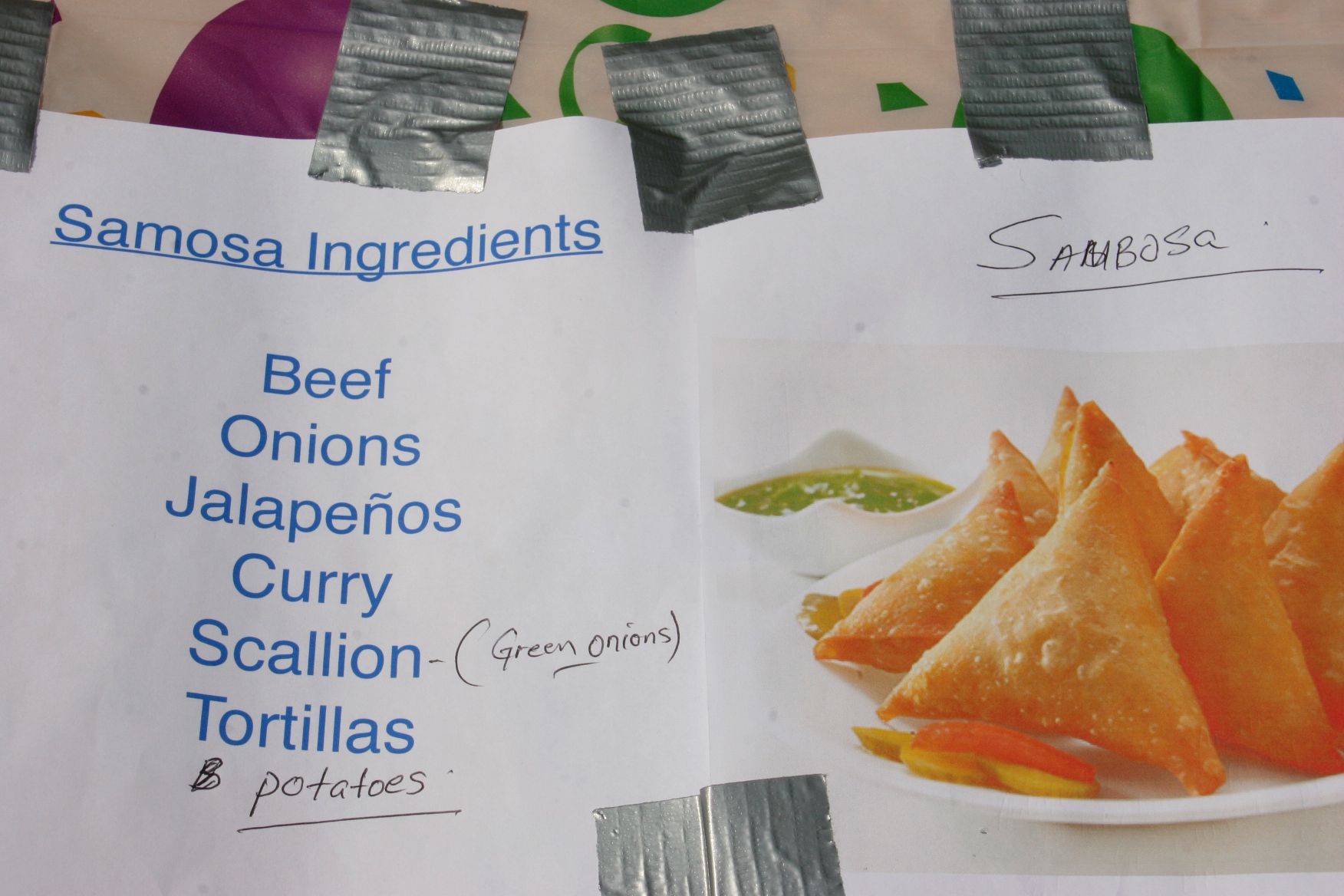
Events like the Faribault Diversity Coalition’s summer International Festival Faribault and now occasional public talks by immigrants and others are ways we join hands and grow community. I’ve seen the art of my neighbors from Africa. I’ve heard the music, tasted the sambusa, admired colorful clothing… Faribault’s newest residents add a depth and richness to my southern Minnesota city.
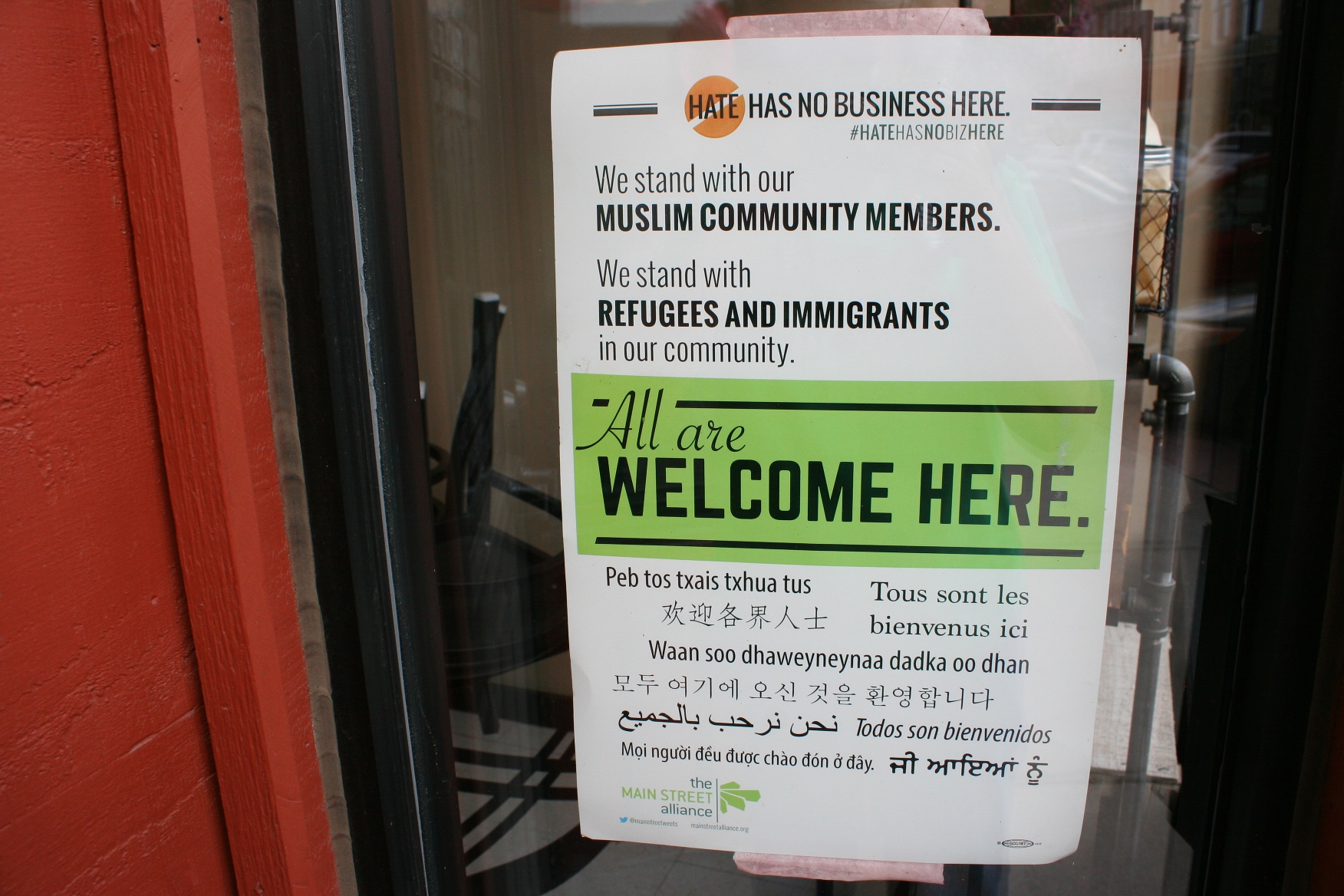
A sign posted in a downtown Faribault business storefront window several years ago. (Minnesota Prairie Roots copyrighted file photo)
Consider African proverbs, chosen in Amazing Africa: A to Z to represent the letter “P.” These wise sayings span cultures. The authors include this powerful Swahili proverb, among several, at the end of the book: “Unity is strength, division is weakness.” If only we all read and take those words to heart. I firmly believe that we, as individuals and as community, need to be here for one another. We truly are stronger when not divided.
A sign lists Somali food sold at a past International Festival Faribault. (Minnesota Prairie Roots copyrighted file photo)
As I read of 1,000 languages spoken throughout Africa, I think of the Somalians now living in my community. Many have overcome war, poverty and other unimaginable challenges to settle in Minnesota. And now they must also overcome language barriers and resentment. If only we would all pause for a moment and remember that, for most of us Minnesotans, English was not the native tongue of our immigrant forefathers. Mine spoke German. Others spoke Norwegian, French, Dutch…
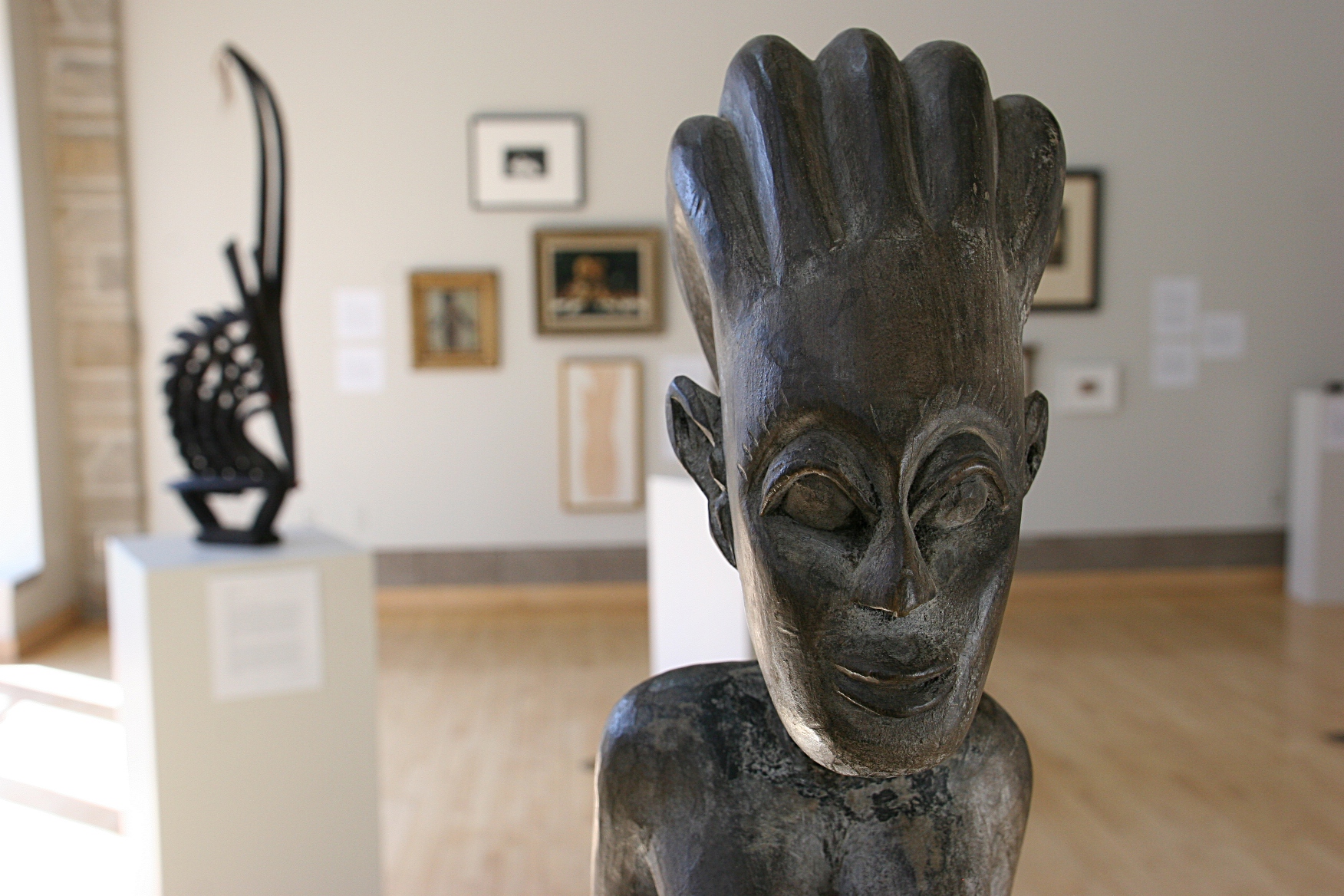
A wood sculpture from Africa, artist unknown, and titled “Seated Maternity Figure.” Exhibited at St. Olaf College, Northfield, in 2015. (Minnesota Prairie Roots copyrighted file photo April 2015)
I certainly can’t pronounce all of the words published in this book about Africa. Words like Uhuru, Yamoussoukro, Ugali and more. But I can appreciate the beauty of language, the way these words speak the rhythm of the continent of Africa.
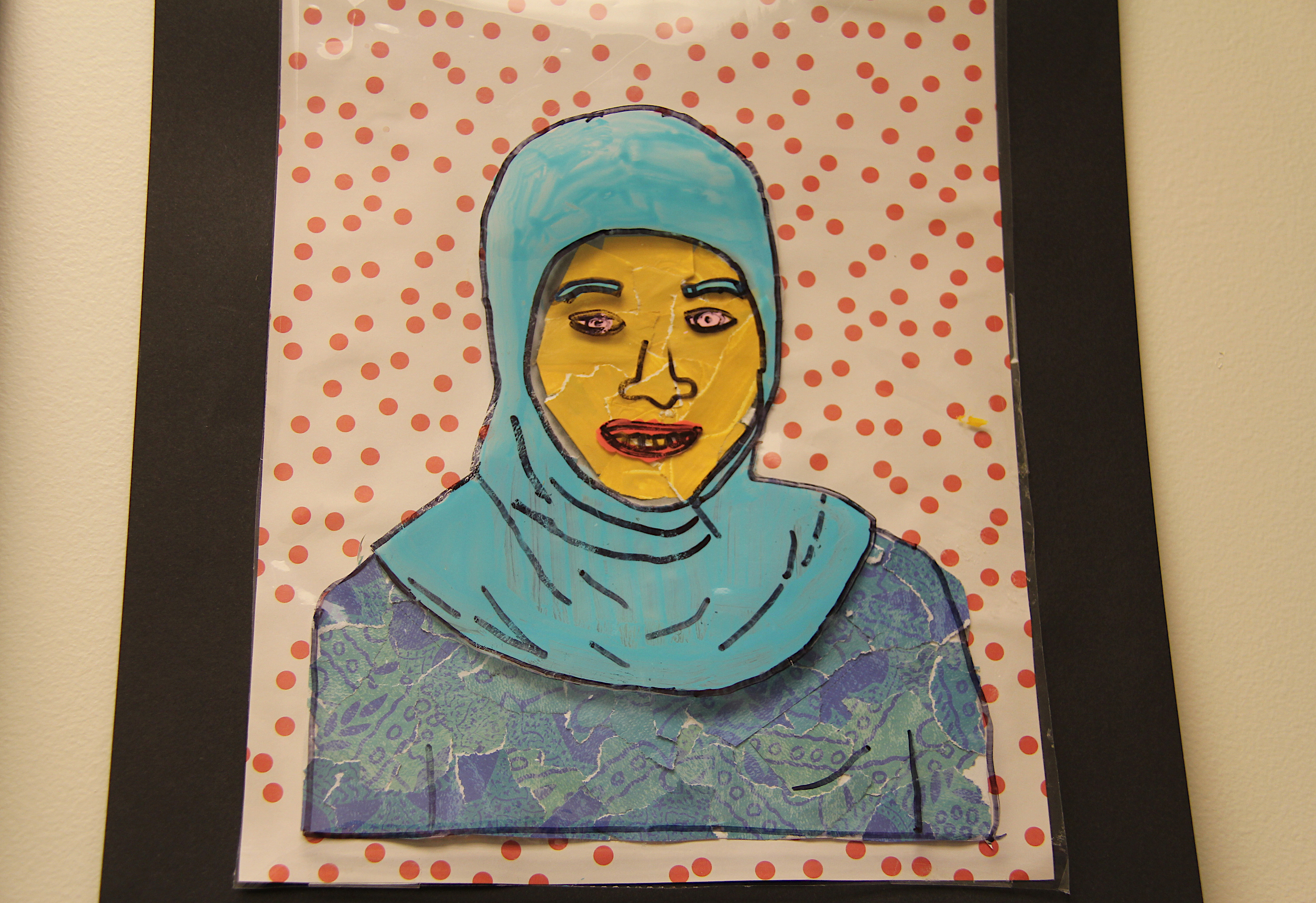
Bisa Butler inspired art created by fourth grader Ilwad and exhibited at a Student Art Show in Faribault. Butler is an award-winning African American textile artist. (Minnesota Prairie Roots copyrighted file photo March 2023)
Africa is the story of slavery, of dancing, of the world’s largest waterfall, of greatness, of so much richness and depth. You’ll find that, see that, read that in Amazing Africa: A to Z.
FYI: Dr. Artika Tyner, co-author of this book (and many others) and also a motivational speaker, educator and attorney, will speak on her journey towards justice from 6-7 pm Tuesday, May 16, at Buckham Memorial Library, Faribault. She is part of the Southeastern Libraries Cooperating 2023 Minnesota Author Tour. In her work, she focuses on racial and economic justice and social change. Tyner founded the nonprofit, Planting People Growing Justice Leadership Institute.
I previously reviewed Tyner’s children’s book, Justice Makes a Difference—The Story of Miss Freedom Fighter, Esquire. To read that book review, click here.







Recent Comments