Minnesota Prairie Roots

Writing and photography by Audrey Kletscher Helbling

Celebrating poetry during April, National Poetry Month April 3, 2025

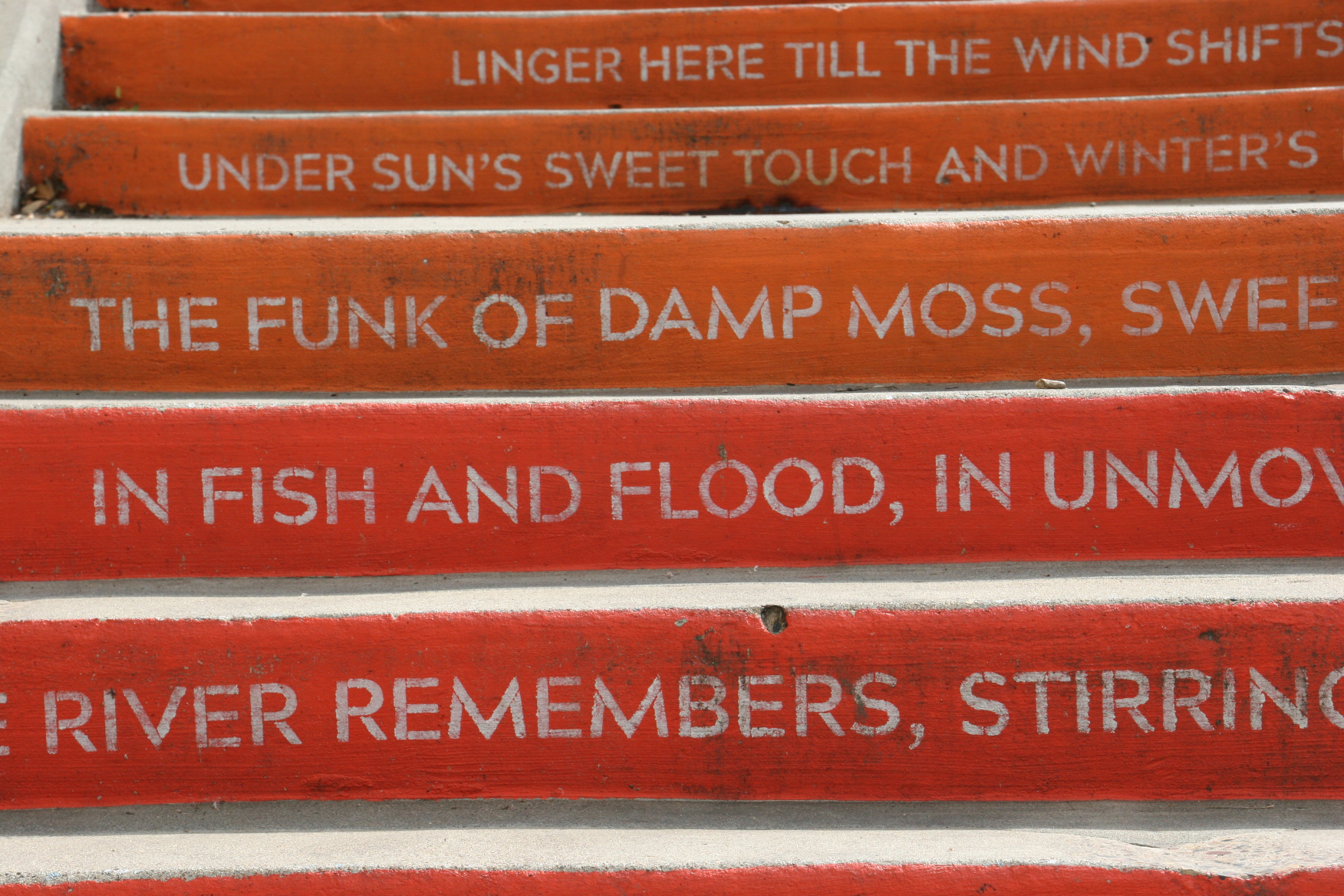
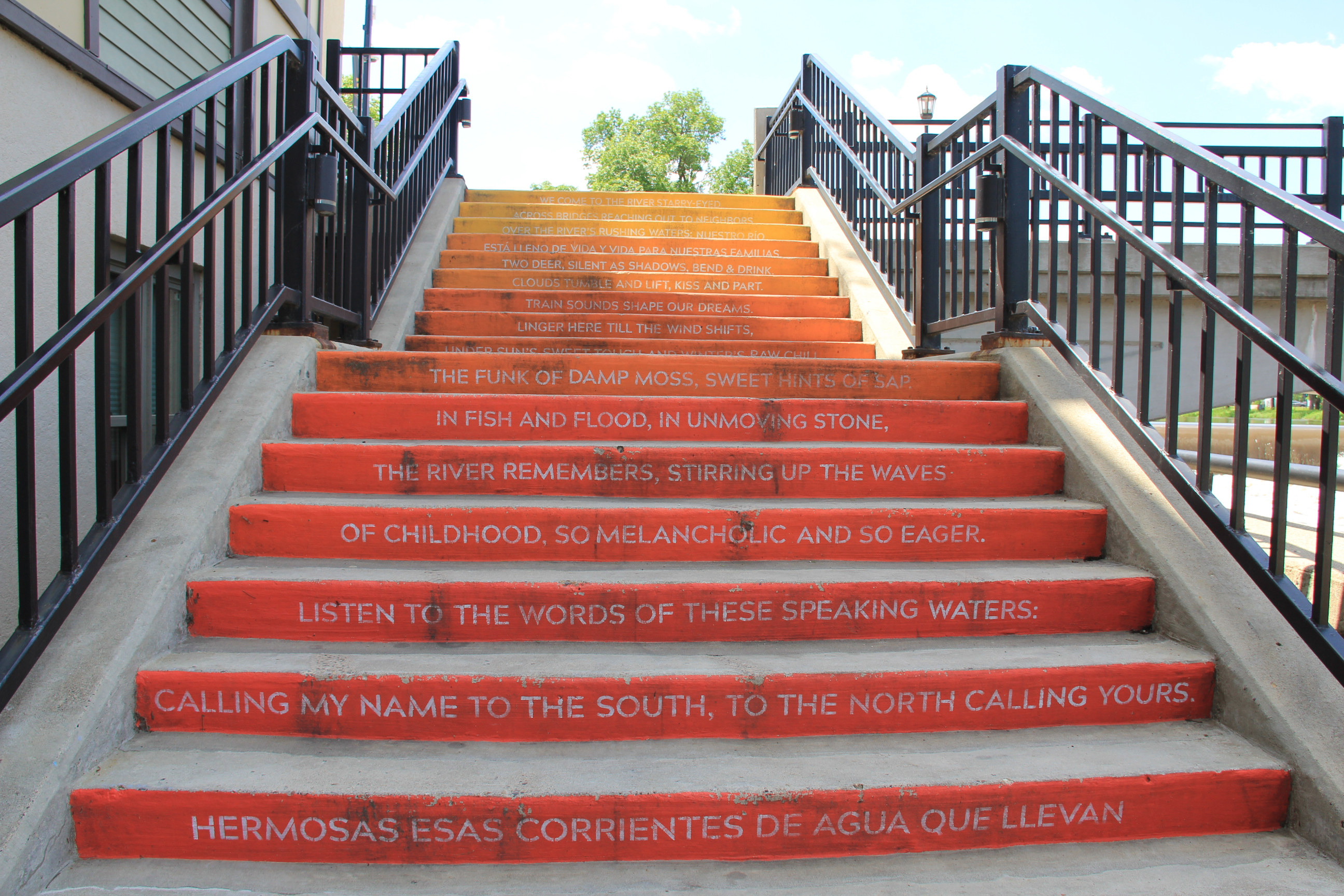
The Riverwalk Steps Poem alongside the Cannon River in the heart of downtown Northfield. (Minnesota Prairie Roots copyrighted file photo)

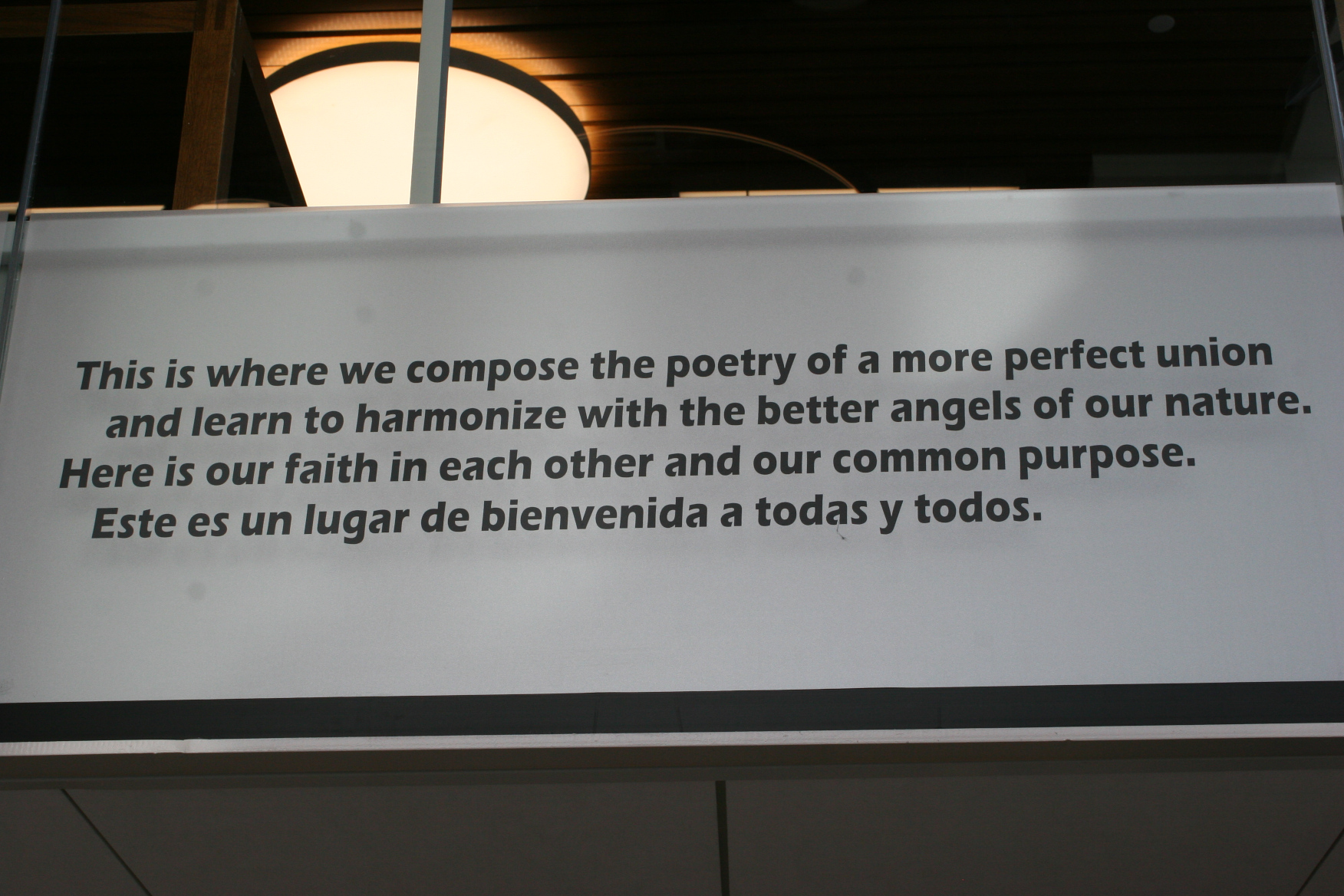
I FEEL FORTUNATE to live in an area of Minnesota which values poetry. Some 20 minutes away in Northfield, poems imprint upon concrete throughout the city as part of the long-time Sidewalk Poetry Project. Along the Riverwalk, a poem descends steps. In the public library, a poem graces the atrium.
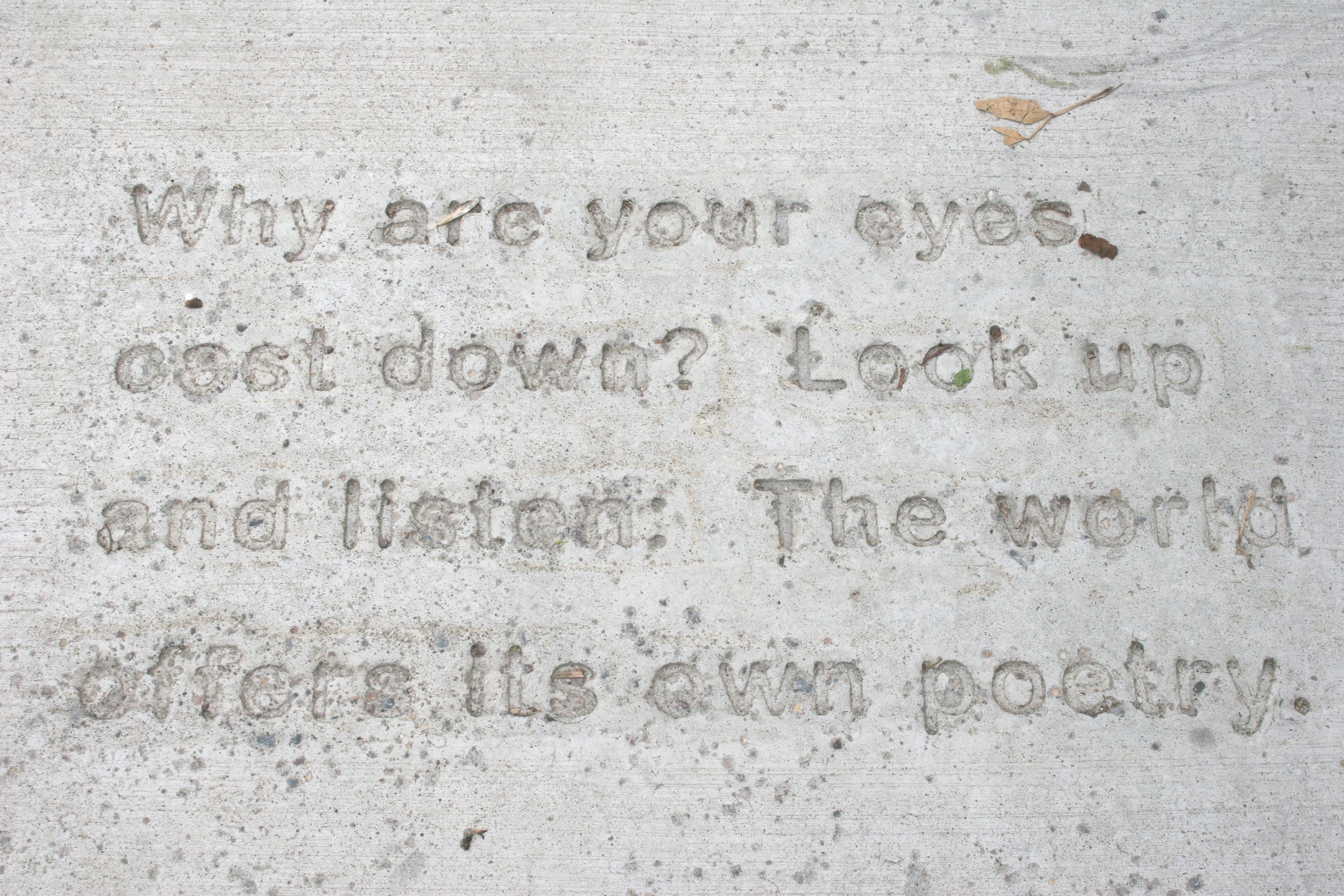
Sidewalk poetry in downtown Northfield carries a powerful message. (Minnesota Prairie Roots copyrighted file photo)

But that’s not all in Northfield. This city of some 21,000 has a poet laureate, currently Russ Boyington, who fosters poetry, organizes and publicizes poetry events, and leads an especially active community of wordsmiths. These are published poets, serious about the craft.
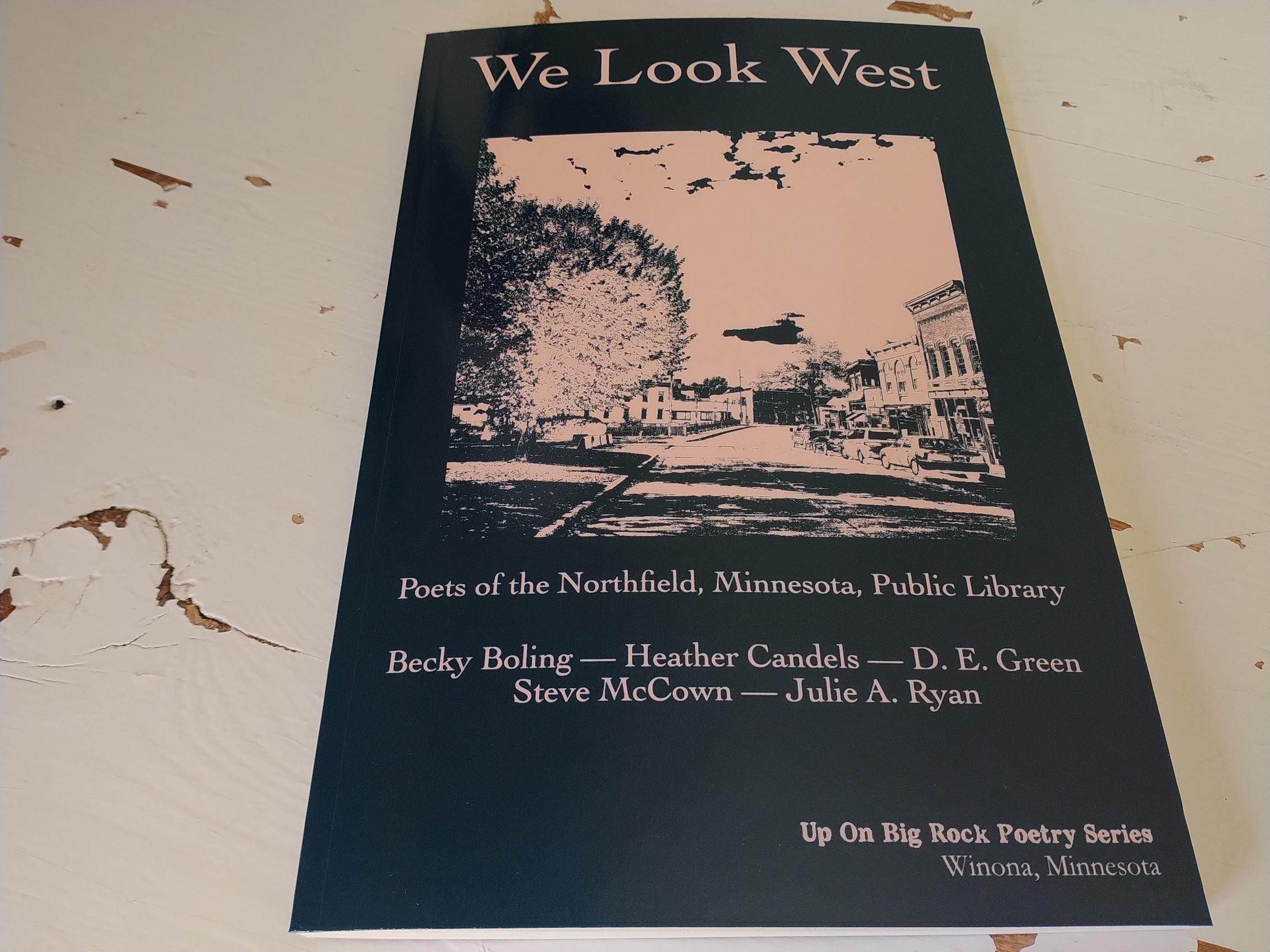
This anthology published in 2024. (Minnesota Prairie Roots copyrighted file photo)

Five seasoned Northfield poets recently collaborated to publish a collection of their work in We Look West. Even if you think you don’t like poetry, you will find something in this anthology which resonates. These poets take the reader through the seasons of life with humorous, sad, nostalgic, reflective and introspective poems. This anthology is especially fitting for anyone closer to the sunset, than the sunrise, of life.

A serene country scene just north of Lamberton in southern Redwood County on the southwestern Minnesota prairie. (Minnesota Prairie Roots copyrighted file photo)

April, National Poetry Month, marks a time to celebrate poets like those in Northfield and beyond. In my own community of Faribault, we have an especially gifted poet, Larry Gavin, a retired high school English teacher and writer. He’s published five collections of his work. Larry writes with a strong sense of place, his poems reflective of his love of nature, of the outdoors. A deep love of the prairie—he attended college, then lived and worked for a while in my native southwestern Minnesota—connects me to this remarkable poet. Plus, Larry has the rich voice of a poet, which makes listening to him read his poems aloud an immersive, joyful experience.
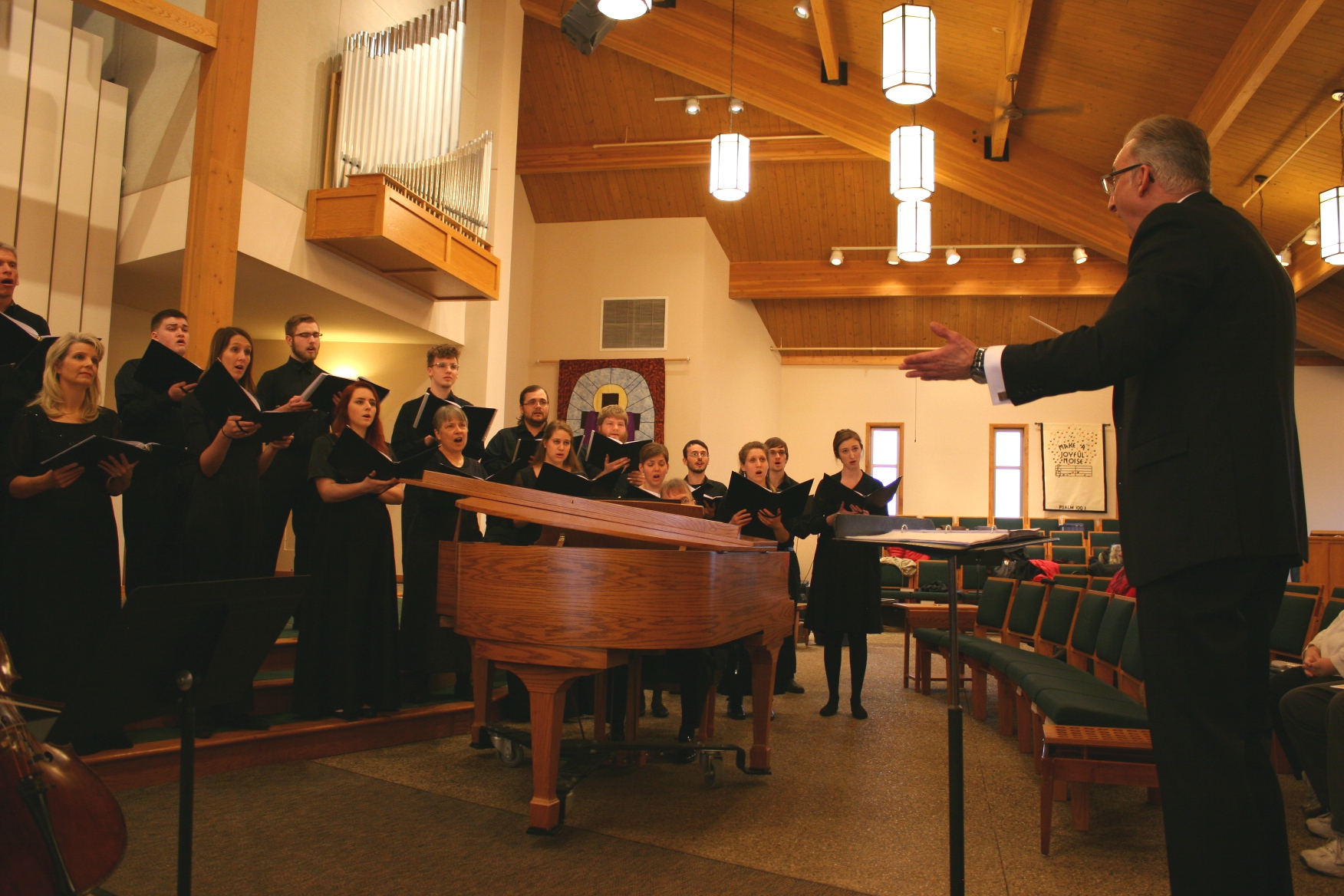
A chamber choir, directed by composer David Kassler, performs artsongs written from poems in 2017, mine included. (Minnesota Prairie Roots copyrighted file photo)

I, too, write poetry and am a widely-published poet, although certainly not as much as many other Minnesota poets. From anthologies to a museum, from the Mankato Poetry Walk & Ride to poet-artist collaborations, billboards and more, my poems have been out there in the public sector. Perhaps the most memorable moment came when a chamber choir performed my poem, “The Farmer’s Song,” during two concerts in Rochester in 2017. David Kassler composed the music for the artsongs.
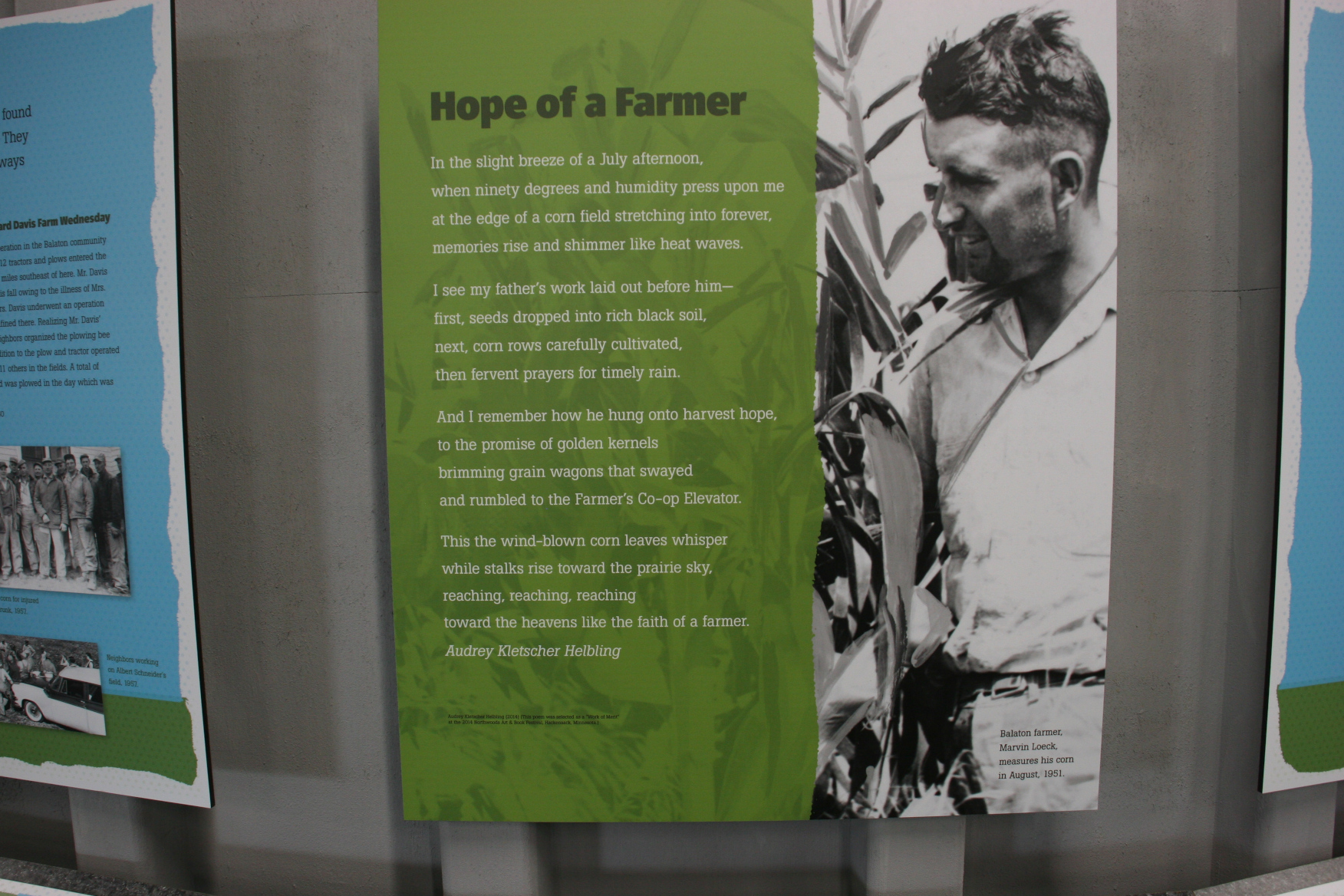
Two of my rural-themed poems are included in an exhibit, “Making Lyon County Home,” at the Lyon County Historical Society Museum in Marshall. (Minnesota Prairie Roots copyrighted file photo)

Poetry has, I think, often gotten a bad rap for being stuffy, difficult, too intellectual and unrelatable. And perhaps it was all of those at one time. Butt that’s not my poetry. And that’s not the poetry of Larry Gavin or of the five We Look West Northfield poets or most poets today. The poetry I read, write and appreciate is absolutely understandable, rich in imagery and rhythm, down-to-earth connective.
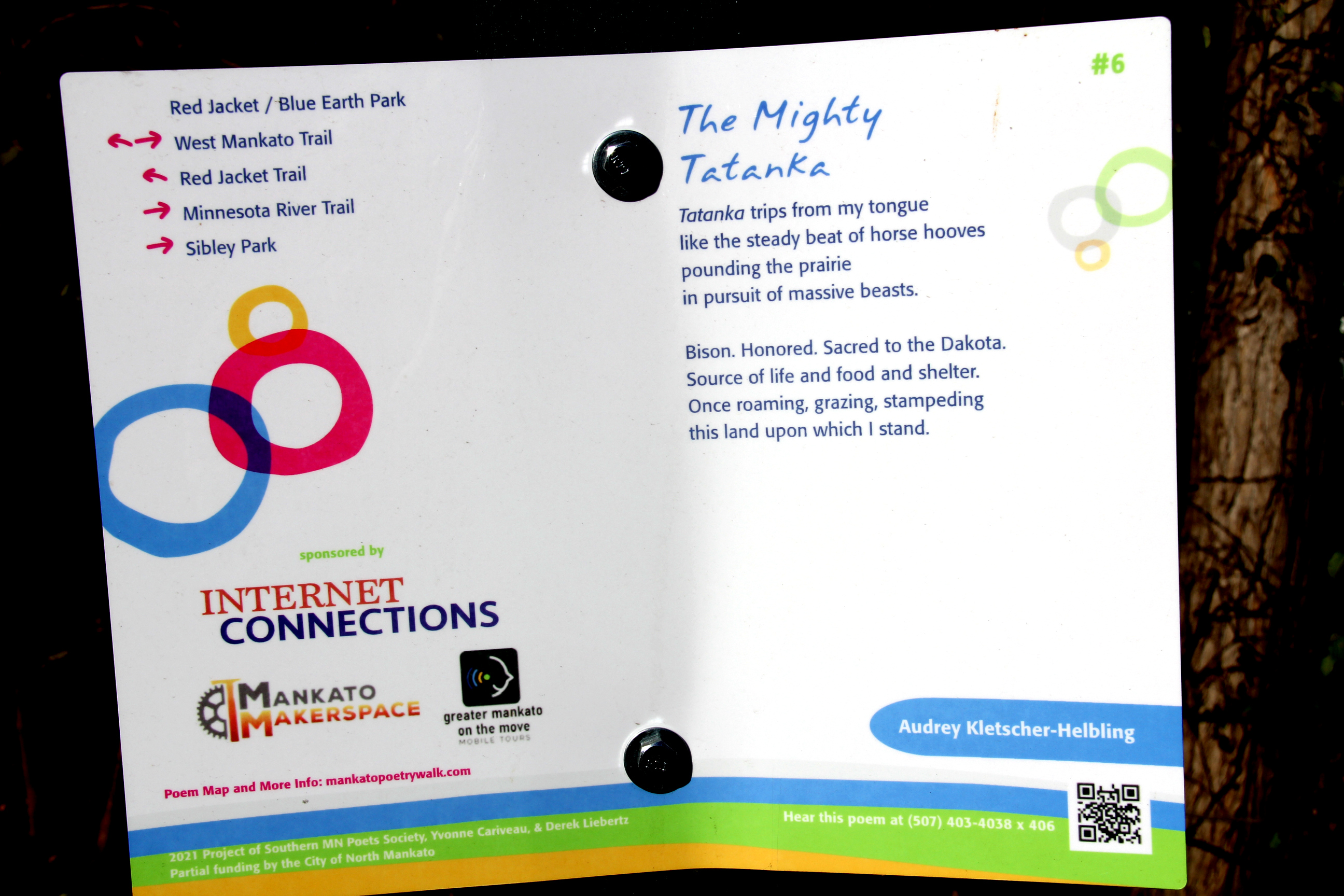
My most recent poem selected for the Mankato Poetry Walk & Ride. Poets must follow character and line limits in writing these poems. This is a competitive process. (Minnesota Prairie Roots copyrighted file photo)

When I write poetry, I visualize an idea, a place, a scene, a memory, an emotion, then start typing. The words flow, or sometimes not. Penning poetry is perhaps one of the most difficult forms of writing. Every word must count. Every word must fit the rhythm, the nuances of the poem in a uniquely creative way.
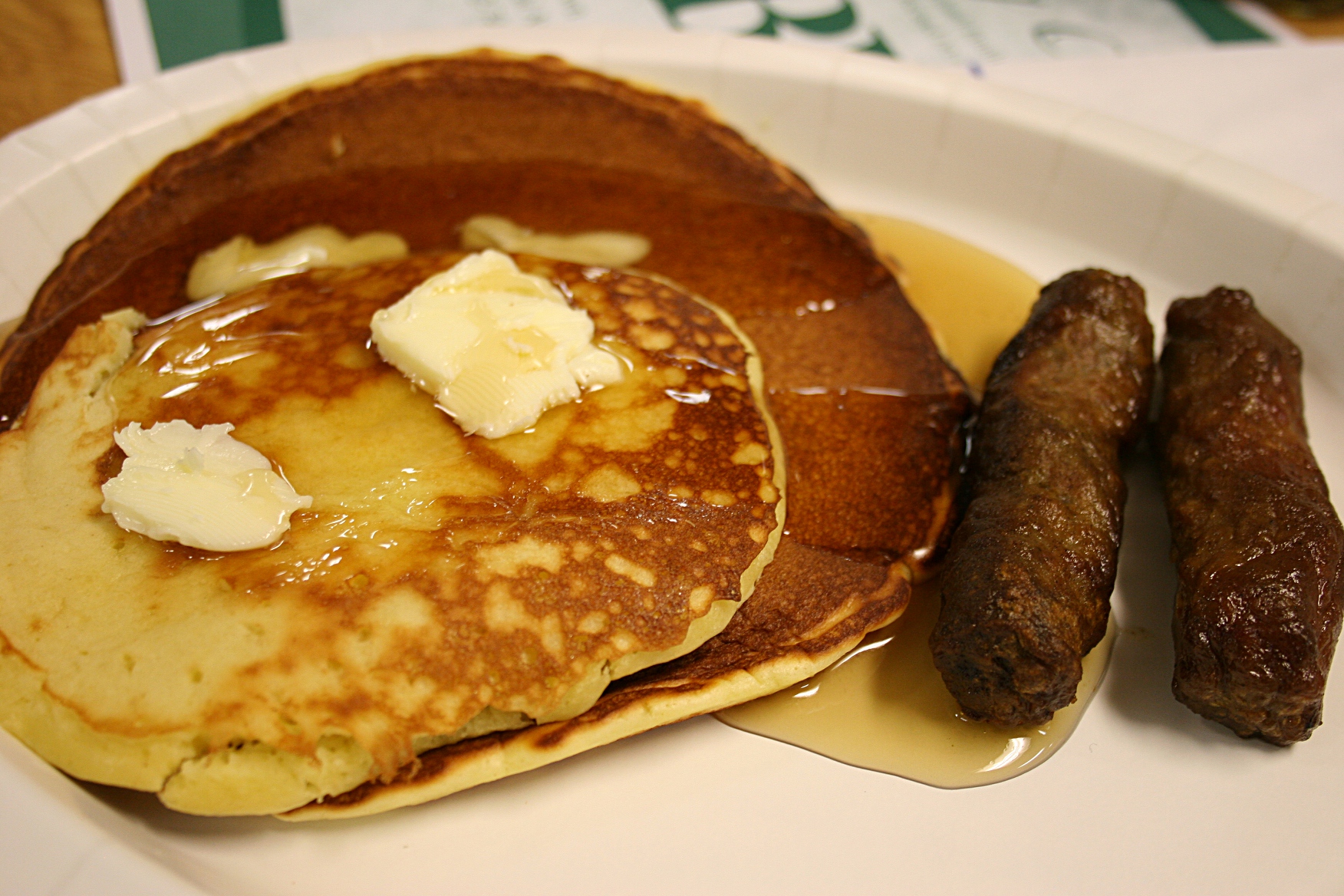
Not the pancakes Grandpa made, but the pancakes and sausages made at the annual Faribault Lions Club Pancake Breakfast. (Minnesota Prairie Roots copyrighted file photo)

One of my most recent poems, “Pancakes with Grandpa,” was inspired by an exchange between my husband, Randy, and our grandson Isaac, then four. It was printed in Talking Stick 32—Twist in the Road, an anthology published in 2023 by northern Minnesota based Jackpine Writers’ Bloc. It’s a competitive process to get writing—poetry, fiction and creative nonfiction—in this collection.

So, in celebration of National Poetry Month, here’s my pancake poem, penned by a poet who doesn’t particularly like pancakes.

Pancakes with Grandpa

Batter pours onto the hot griddle,

liquid gold spreading into molten circles

molded by the goldsmith.

The collectors eye the coveted coins

that form, bubble, solidify

in the heat of the electric forge.

Appetite fuels imagination

as Grandpa’s coins fire

into golden brown pancakes.

Piled onto a plate, peanut butter spread,

syrup flowing and a nature lesson

in maple tree tapping.

The four-year-old forks the orbs.

“Peanut butter pancakes make me happy!”

he enthuses to the beaming craftsman.

© Copyright 2025 Audrey Kletscher Helbling


Spotlight shines on Minnesota, specifically Mankato (once my home) August 23, 2024

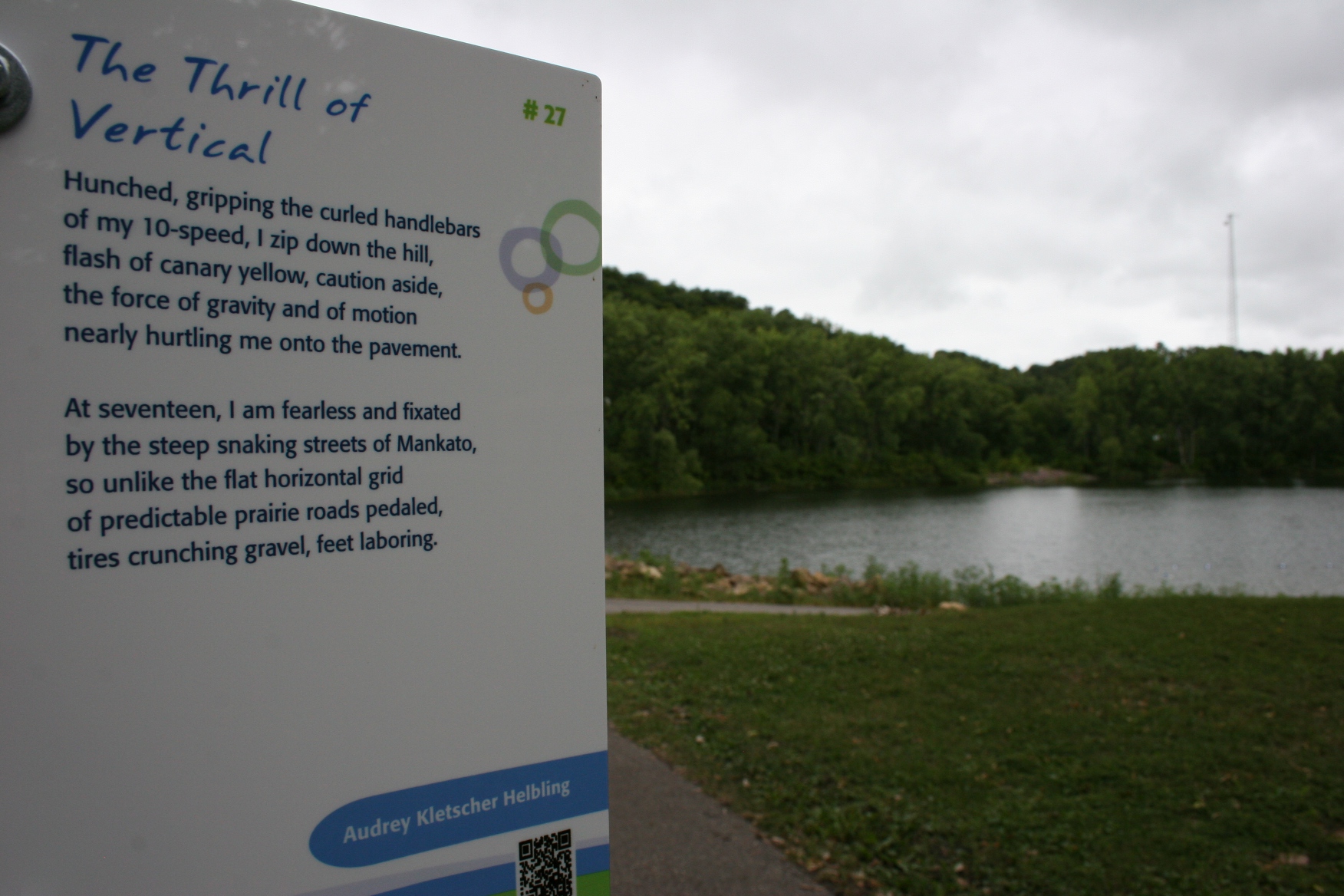
“The Thrill of Vertical,” posted on a sign in Spring Lake Park as part of the 2013 Mankato Poetry Walk & Ride, was inspired by my college years in Mankato. (Minnesota Prairie Roots copyrighted file photo 2013)

I ARRIVED IN MANKATO with a canary yellow 10-speed bike, a simple orange backpack, my Sears portable manual typewriter, a clock radio, a quilt stitched by Grandma Ida and a suitcase filled with clothes. The year was 1974, the beginning of my freshman year at Bethany Lutheran College, high atop a hill in this southern Minnesota city.

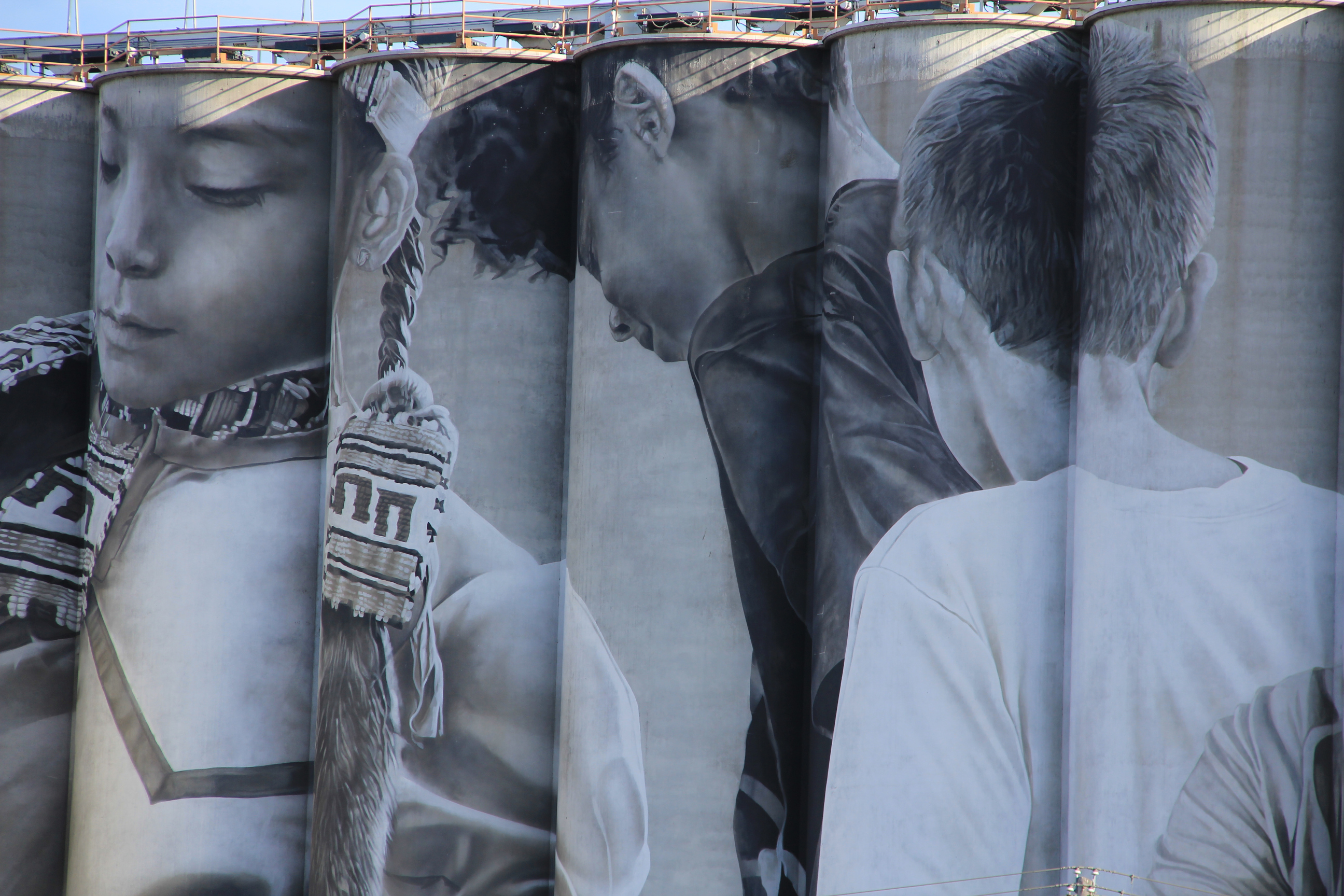
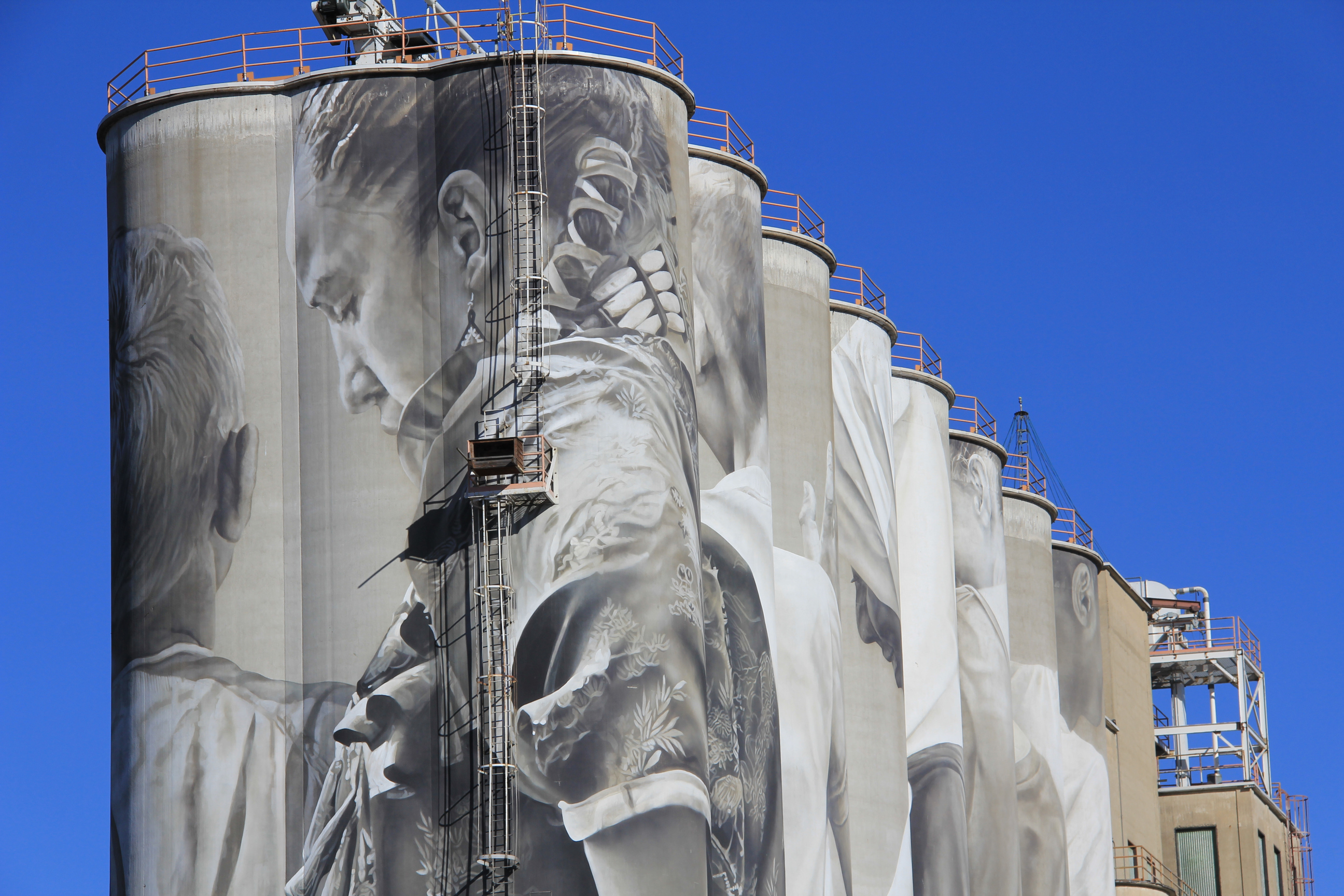
The Ardent Mills grain silos, a massive public art project, dominate the skyline along the Minnesota River in the heart of Mankato. The art depicts the diversity of the area. (Minnesota Prairie Roots copyrighted photo November 2023)

I was only 17, nervous, but ready to leave my childhood farm home some 85 miles to the west. I met my roommate, Rhonda, a beautiful high school cheerleader from western Wisconsin. She was well-traveled, outgoing, vastly different than me, quiet and shy. And she had a stereo for our cozy fourth floor corner dorm room. We were set. Despite our differences, we got along splendidly.

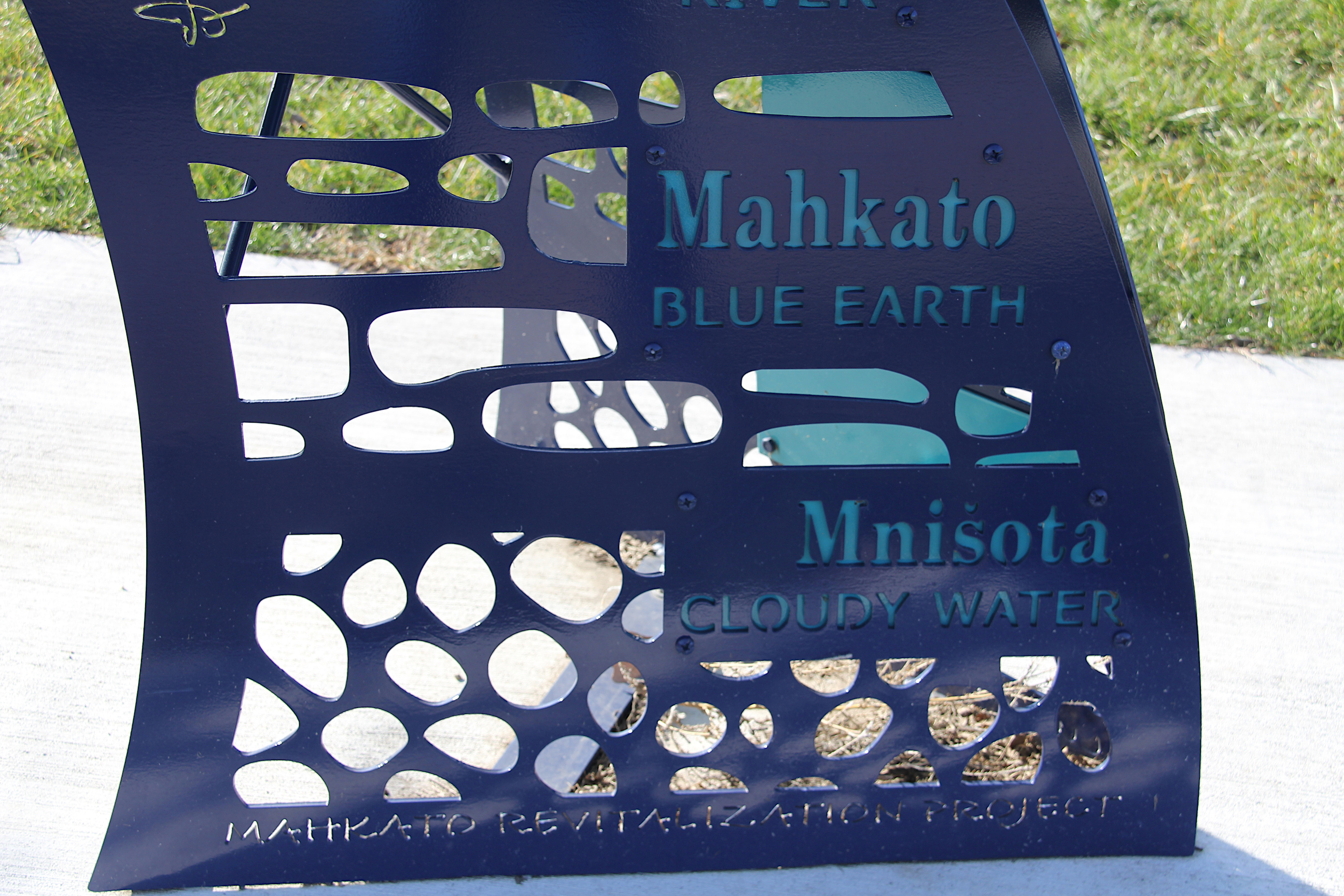
This shows the base of a place sculpture along the Minnesota River in Riverfront Park. The words for Mankato and Minnesota are written in the Dakota language and translated. (Minnesota Prairie Roots copyrighted photo November 2023)

As I settled into the big city (Mankato’s current population numbers around 45,000), big for me when you come from a town of 362, I began to feel at home. Not only on campus, but also in the community. Happy Chef became a go-to destination for conversation and for warm loaves of bread glazed with powdered sugar frosting. A Christian coffee house also drew me off campus. I wasn’t in to the bar scene.

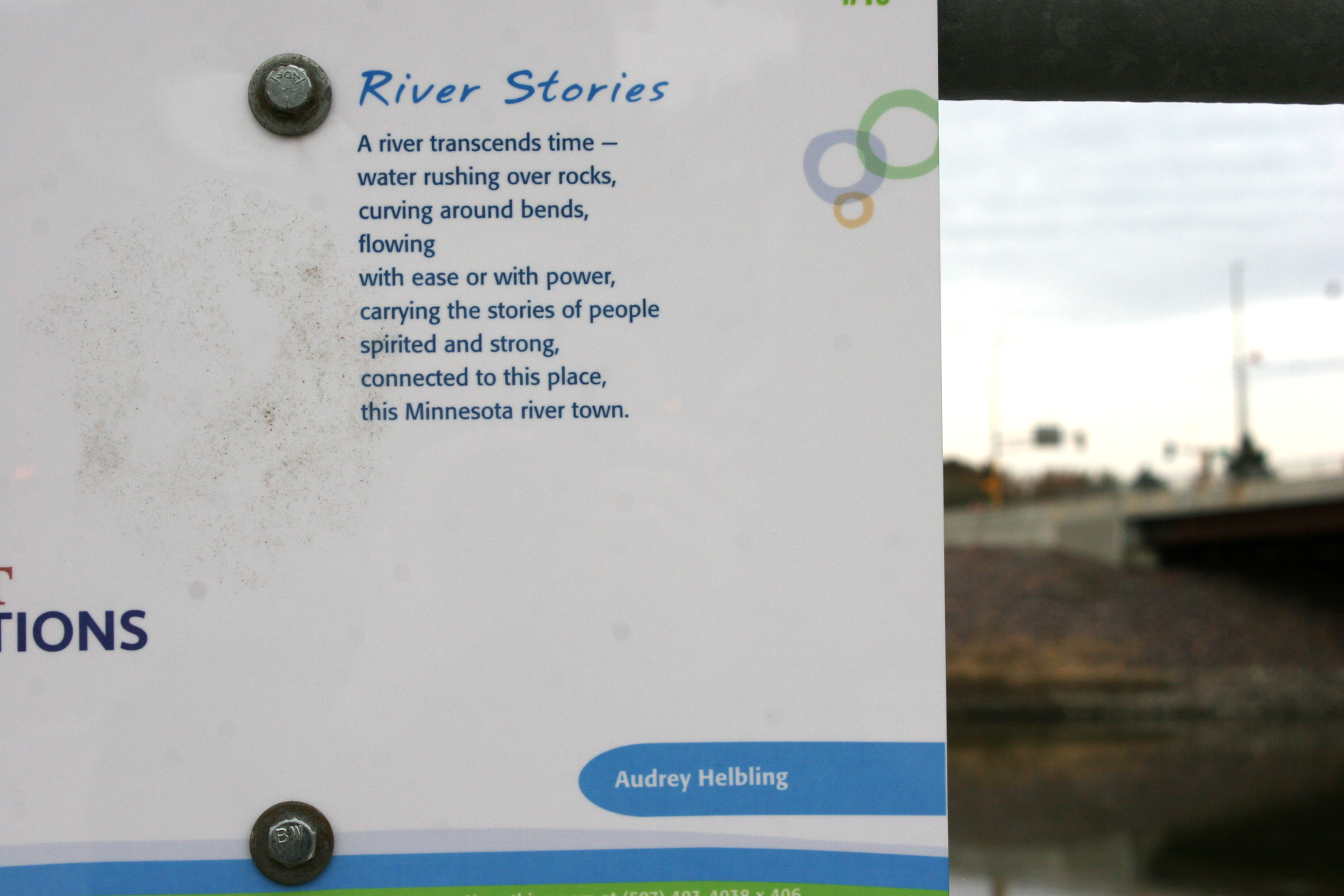
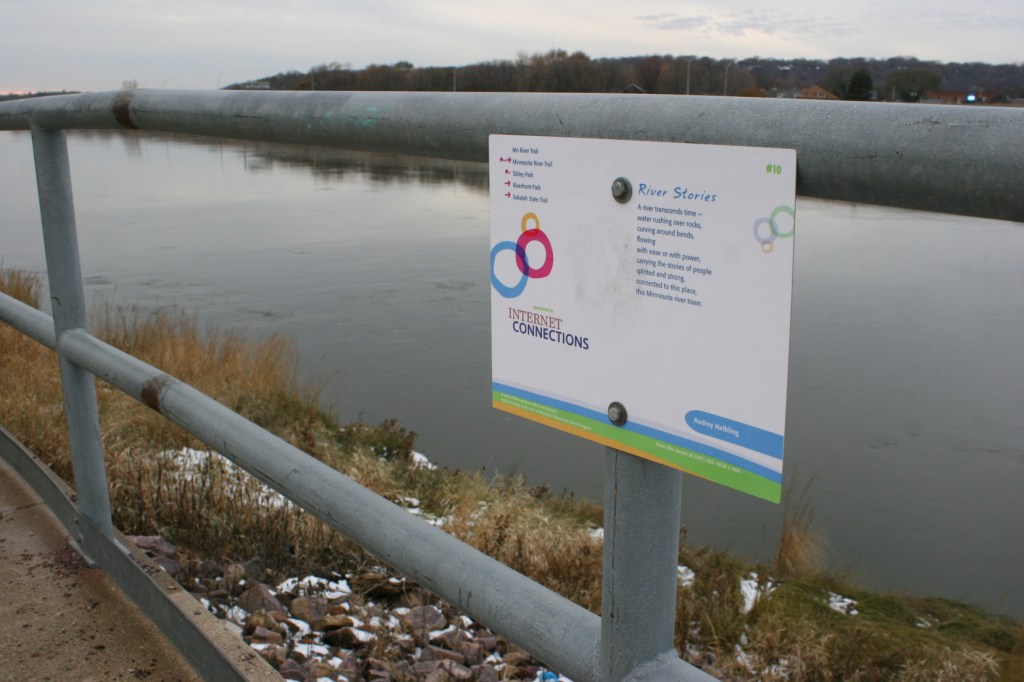
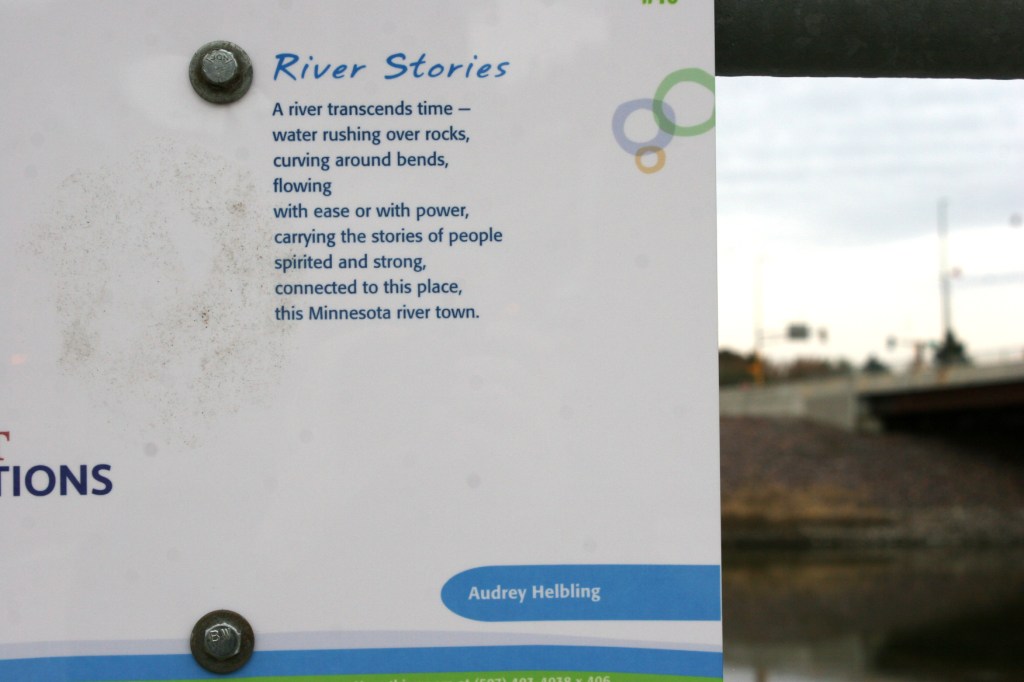
My poem, “River Stories,” highlights the Minnesota River, which winds through Mankato. It was posted along the river as part of the 2019 Mankato Poetry Walk & Ride. (Minnesota Prairie Roots copyrighted file photo 2019)

For nearly four years, Mankato became my home away from home. The place that grew me educationally and as a person. I earned an associate of arts degree from Bethany, then only a two-year college, before moving on to Minnesota State University, Mankato, to study journalism. I worked at the college newspaper, “The Reporter.” In the winter of 1978, I earned a mass communications degree with an emphasis in news/editorial. Soon thereafter, I started my career as a newspaper reporter and photographer. Years later I returned to work for “The Mankato Free Press,” heading up the paper’s St. James-based news bureau (me living and working from my apartment long before working remotely became a thing).

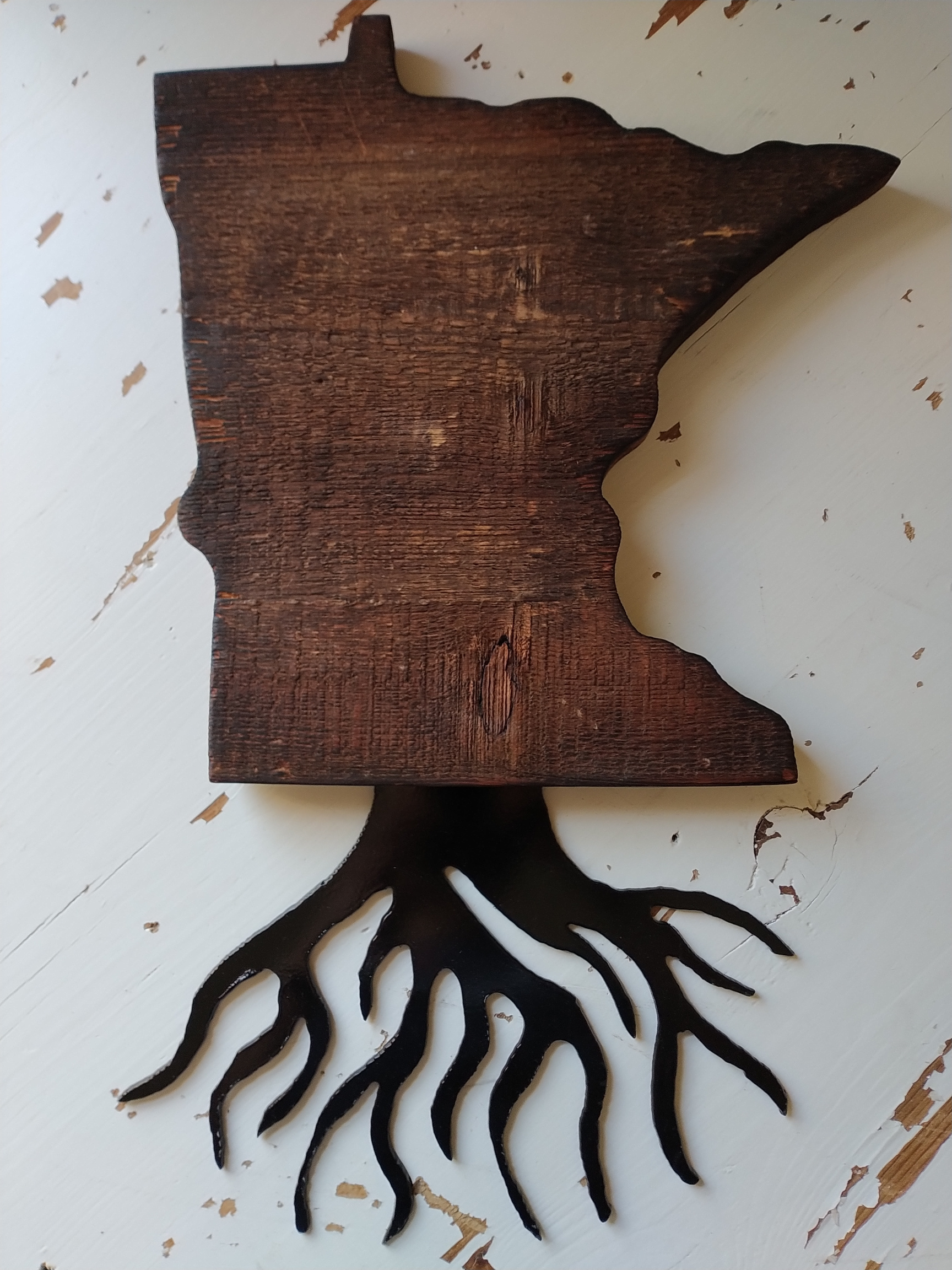
I am rooted in Minnesota. This art hangs in my home office. (Minnesota Prairie Roots copyrighted file photo)

Why am I sharing this with you today? Because of Minnesota Governor Tim Walz, now the vice presidential candidate on the DFL ticket. He lived in Mankato, where he worked as a social studies teacher and football coach at Mankato West High School. Walz, likely unfamiliar to most Americans up until recently, has put our state, specifically Mankato, on the map. As a life-long Minnesotan, I am proud to see my state, considered by many to be fly-over land, in the spotlight. No matter your political leanings, such publicity is good for Minnesota.

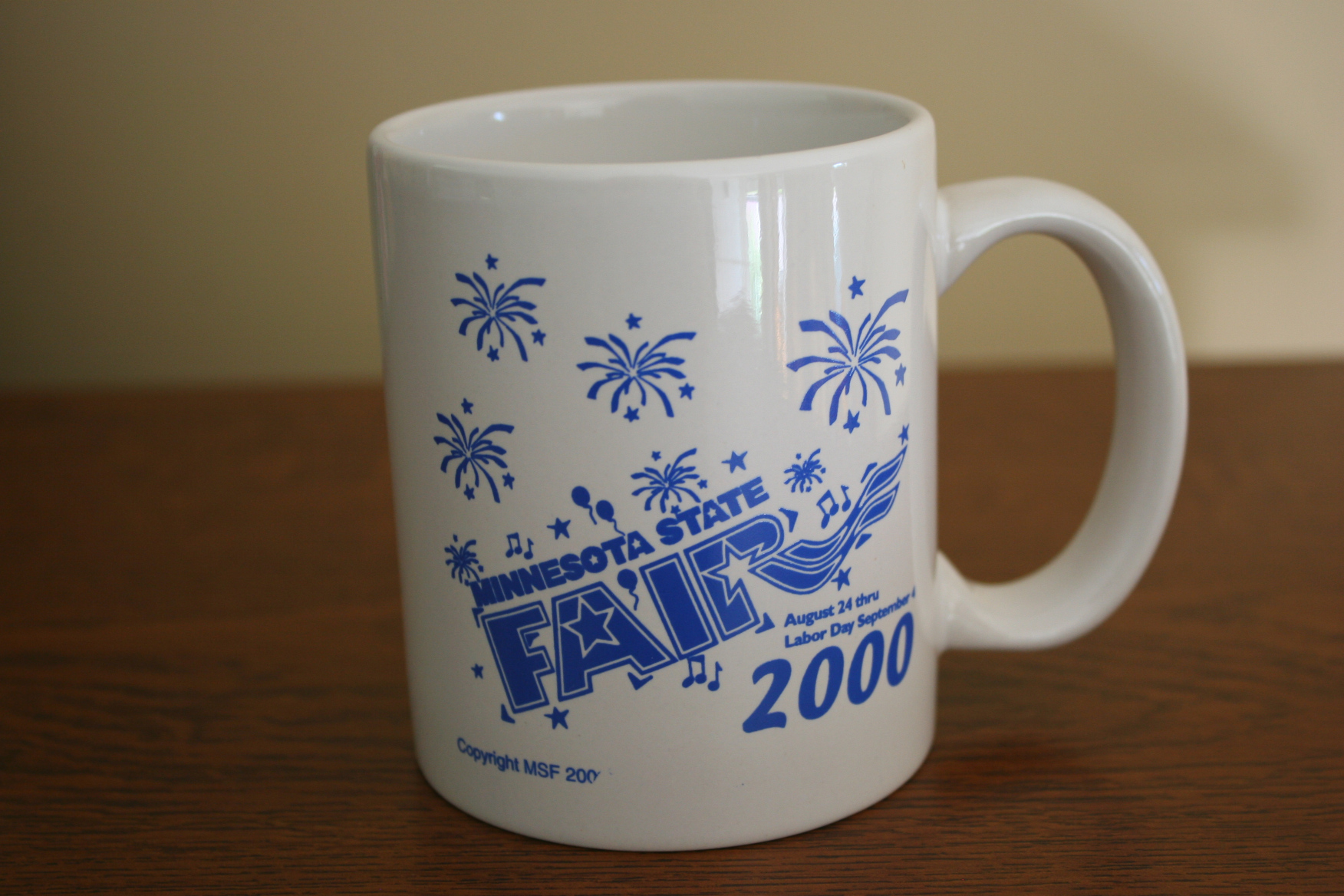
I’ve only attended the Minnesota State Fair a few times in my life. This mug came from my father-in-law’s collection. The State Fair started yesterday. (Minnesota Prairie Roots copyrighted file photo)

Like Walz, flannel shirts hang in my closet. I am wearing one as I write on this cool August morning. Flannel truly is a Minnesota thing, no matter political affiliations. We like our hotdishes (not “casseroles”) and the Minnesota State Fair (although not me; too many people), our cabins Up North. We claim musicians Bob Dylan and Prince, the Coen Brothers (of “Fargo” movie fame) and other notables like vice presidents Hubert Humphrey and Walter Mondale.

The grain silos are a massive work of public art. (Minnesota Prairie Roots copyrighted photo November 2023)

I cannot imagine living elsewhere, even if I don’t especially like the frigid cold and snow of a Minnesota winter. I loved winter as a Redwood County farm girl. Minnesota is home. I live 40 miles northeast of Mankato, a city originally inhabited by the Dakota. Mankato is a river town, a college town, a regional shopping hub, a community with a rich (but not always “good”) history. It is home to many creatives. I’ve been part of that with poetry showcased on signs through the Mankato Poetry Walk and Ride.

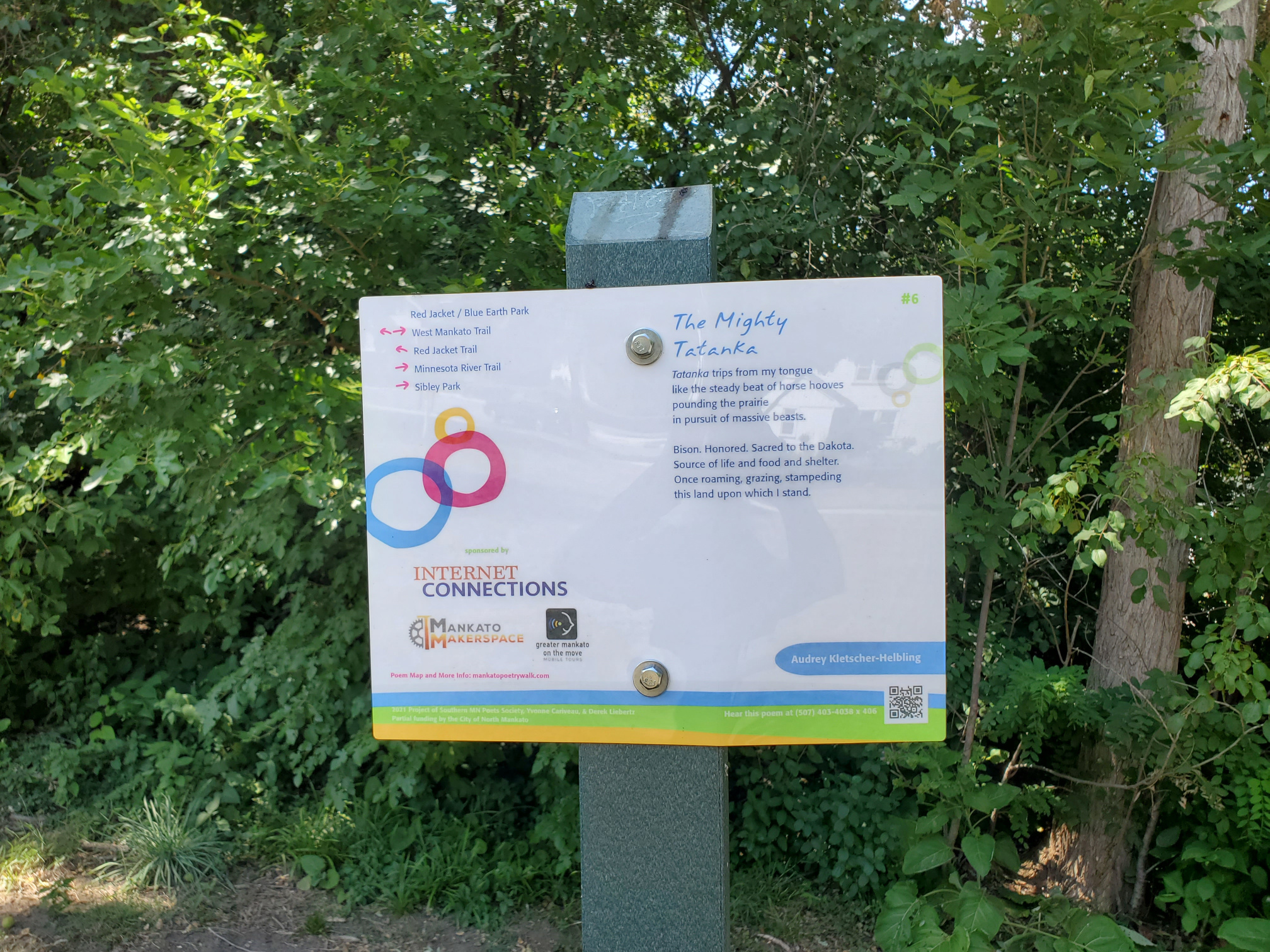
My latest poem, “The Mighty Tatanka,” posted along the West Mankato Trail near West Mankato High School. (Minnesota Prairie Roots copyrighted photo November 2023)

My connection with, and appreciation of, Mankato all started in that fourth floor dorm room with a roommate who was nothing like me. Despite our differences, we connected, forged a strong friendship, together grew and matured. We were on the cusp of our lives. Young. Open to new ideas and learning. The future held endless possibilities. For me, the 17-year-old with the canary yellow bike. And for Rhonda with her stereo system.

© Copyright 2024 Audrey Kletscher Helbling
 

Celebrating poetry in southern Minnesota during National Poetry Month April 17, 2024

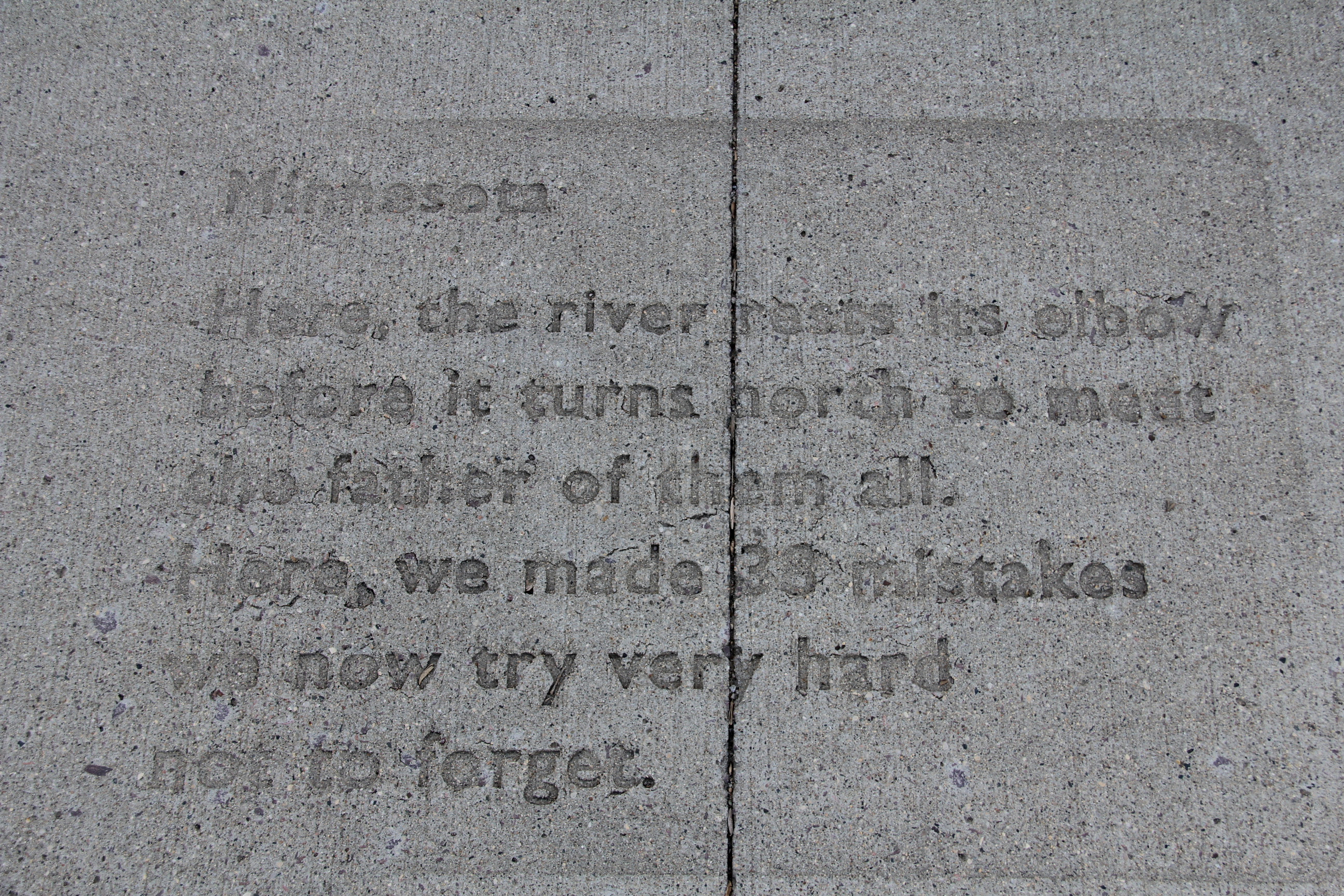
Sidewalk poetry in downtown Northfield, Minnesota. (Minnesota Prairie Roots copyrighted file photo 2014)

Mention poetry and many people likely stop listening. In a way, I understand. To their ears, they hear the stuffy, rhyming, difficult poems of yesteryear. The poems that made no sense to many of us. The poems that had to be read as part of a high school English class.

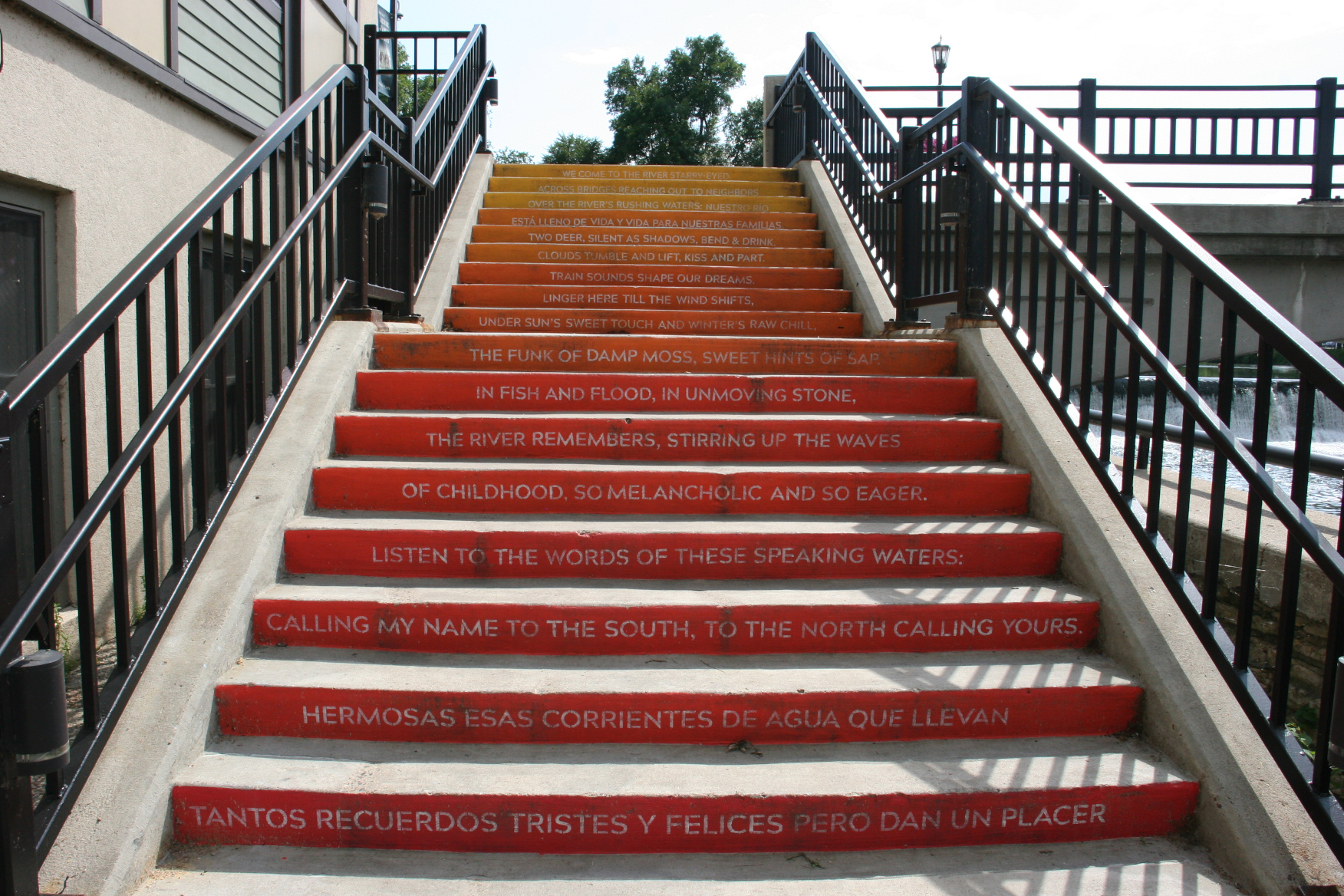
A close-up of lines in the poem steps along the River Walk in downtown Northfield. (Minnesota Prairie Roots copyrighted file photo 2022)

While I’m not privy to how poetry is taught today, I do recognize that it’s, overall, much more approachable, at least in Minnesota. We are home to a talented array of poets with their writing published not only in anthologies and literary journals, but also presented in widely-accessible, public ways.

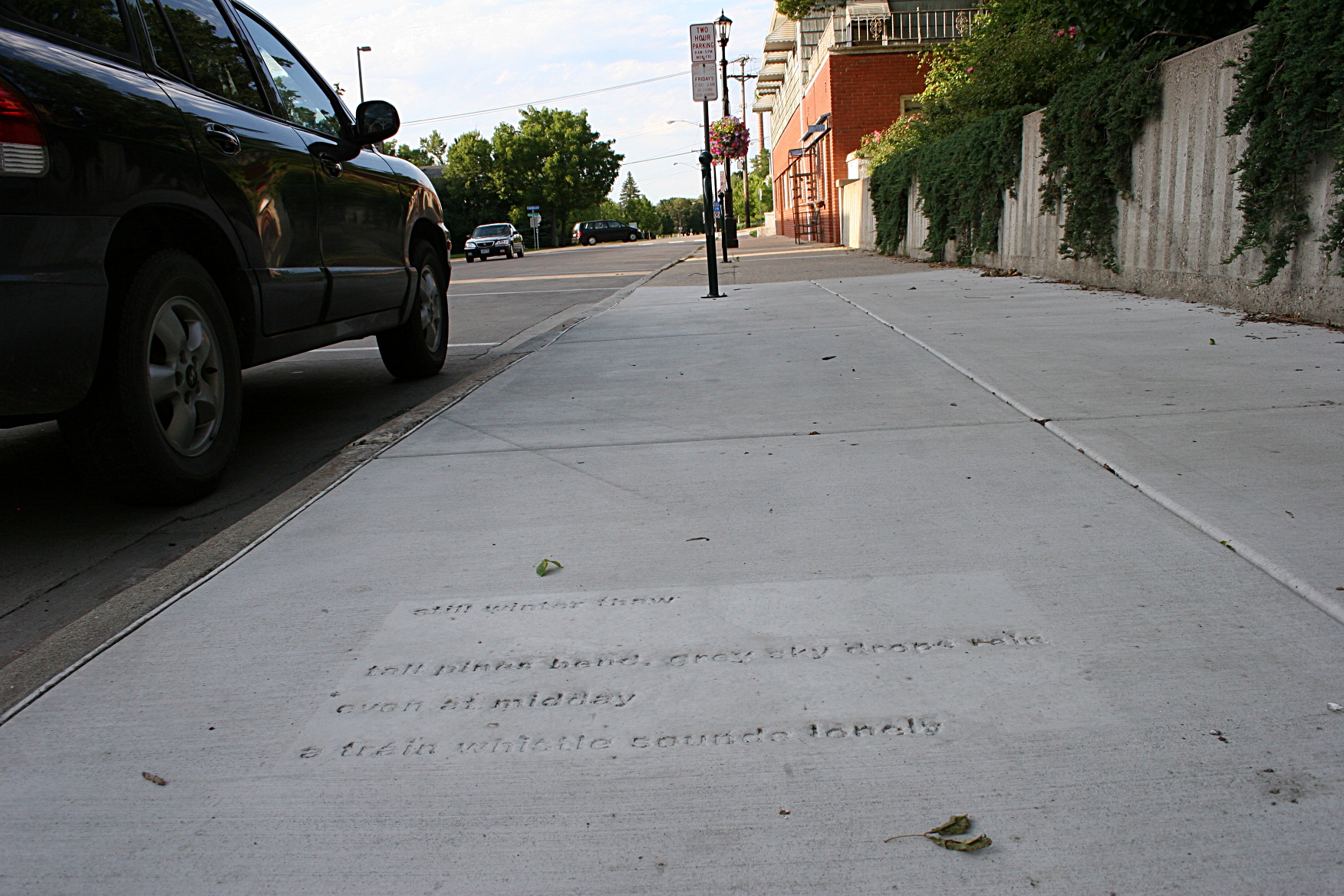
A poem by Patrick Ganey is stamped into the sidewalk near the Northfield Public Library: still winter thaw/tall pines bend, grey sky drops rain/even at midday/a train whistle sounds lonely (Minnesota Prairie Roots copyrighted file photo)

Nearby Northfield, for example, prints poetry into sidewalks. In 2011, the Arts and Culture Commission launched Sidewalk Poetry. Through that annual competition, selected poems are stamped into sidewalks in the historic downtown, along routes to schools and in residential neighborhoods. I always enjoy walking in downtown Northfield and pausing to read poetry. As a poet myself, I appreciate how much this community values this literary art.

This month, National Poetry Month, and into May, Northfield-based nonprofit Rice County Neighbors United is offering “Poem in a Bag.” Submitted original and favorite poems were printed, rolled and placed in poetry boxes (not bags) set out at select Northfield businesses and at the Northfield Public Library. Poems are printed in both English and Spanish and paired with original art by local artists. What a fun idea, to give away poems, perhaps reaching people who would not otherwise read poetry. I’ve submitted several poems for this project.

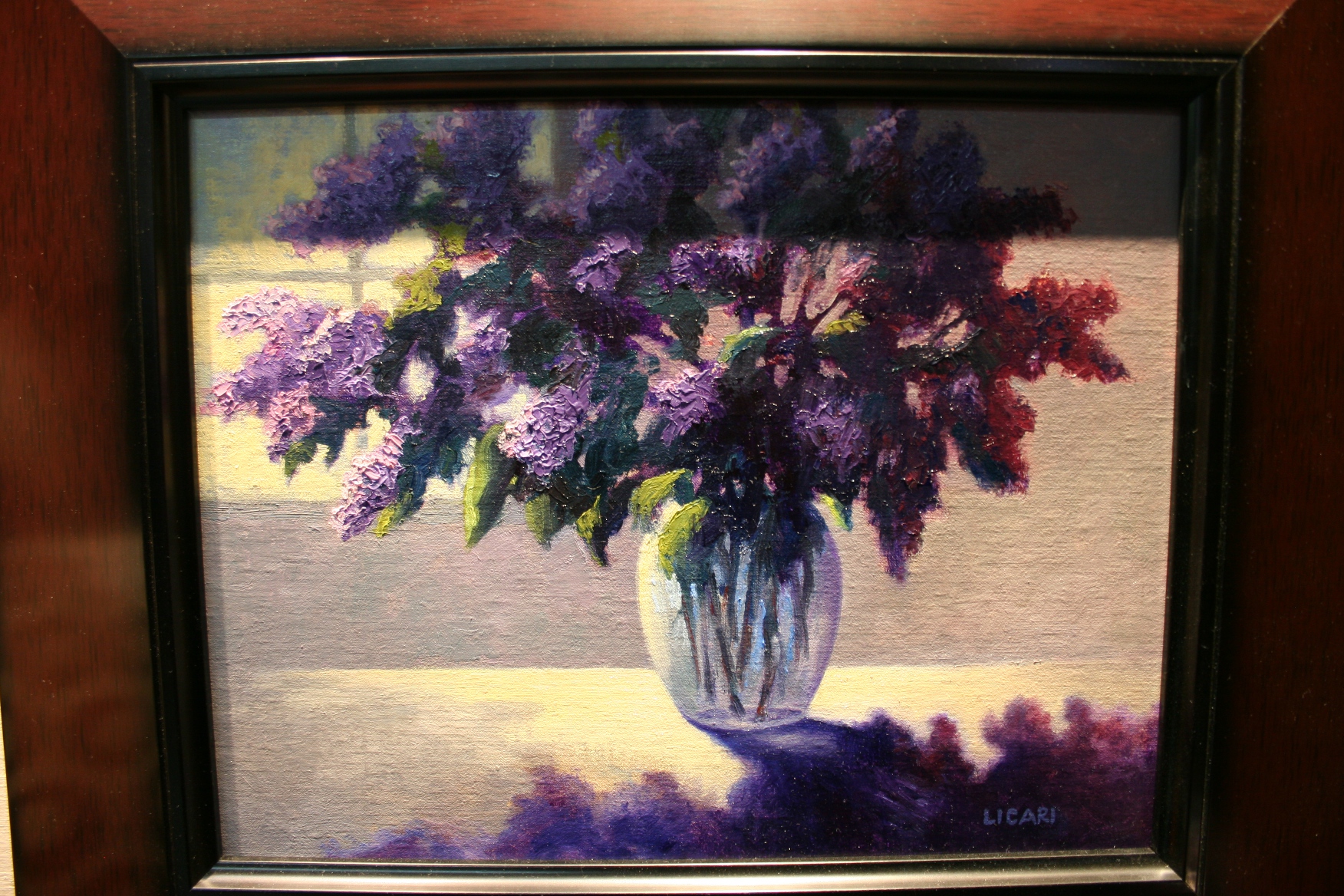
My poem, “Lilacs,” inspired “Lilacs on a Table,” an oil on linen painting by Jeanne Licari. This was part of an poet-artist collaborative exhibit at Crossings at Carnegie in Zumbrota ten years ago. Today my poem is part of Northfield’s “Poem in a Bag.” (Minnesota Prairie Roots copyrighted file photo April 2014)

For the first time this year, FiftyNorth, Northfield’s center for active aging, is featuring a poet-artist collaboration, “Echoes & Shadows,” in its gallery. The event runs until May 3. Artists created art inspired by original poems. I’ve participated in collabs like this in Zumbrota and found them to be particularly interesting—to see how poems are visually interpreted.

A portion of a poem by Rob Hardy, former Northfield Poet laureate, in the Northfield Library atrium. (Minnesota Prairie Roots copyrighted file photo)

At the Northfield Public Library, Open Mic Poetry is held monthly in the atrium for poets to share their writing with an appreciative audience. The next event is at 6:30 pm Wednesday, May 8.

Poem steps in Northfield along the River Walk. (Minnesota Prairie Roots copyrighted file photo 2022)

Northfield also has a poet laureate actively promoting poetry and poetry events within the community. A new laureate will soon be named to replace past laureate Rob Hardy and current interim co-poet laureates Becky Boling and D.E. Green.

This new anthology features the poetry of five Northfield poets. (Minnesota Prairie Roots copyrighted photo April 2024)

Next month the Northfield library hosts two poetry readings. Local poets Scott Lowery and Leslie Schultz will read at 6:30 pm Tuesday, May 7. And at 7 pm on Thursday, May 16, the Poets of the Northfield, Minnesota, Public Library, will read from and sign We Look West. The just-published 116-page anthology is part of the Up On Big Rock Poetry Series from Winona-based Shipwreckt Books Publishing Company.

This sidewalk poem in Mankato’s Riverfront Park references the mass hanging of 38 Dakota (plus two) in December 1862 in Mankato. (Minnesota Prairie Roots copyrighted file photo November 2023)

I also have two other recently-released poetry books to read: Broad Wings, Long Legs, A Rookery of Heron Poems in which Minnesota writers (including Larry Gavin of Faribault and many other recognizable poets) contemplate a regional icon, and Songs, Blood Deep by Poet Laureate of Minnesota, Gwen Nell Westerman of Mankato. Westerman is Minnesota’s first Native poet laureate and teaches English, humanities and creative writing at Minnesota State University, Mankato, my alma mater.

My poem, posted along the West Mankato Trail. (Minnesota Prairie Roots edited & copyrighted photo November 2023)

Mankato is a community rich in poetry. I’ve found poems stamped into concrete at Riverfront Park as part of WordWalk. But it’s a project of the Southern MN Poets Society which really puts poetry out in the community. Through the Mankato Poetry Walk & Ride, winning poems are printed on signs and posted along walking and biking trails in Mankato and North Mankato. My poems have been included perhaps half a dozen times—I’ve lost count—with one, “The Mighty Tatanka,” a poem about bison, currently displayed along a trail in West Mankato.

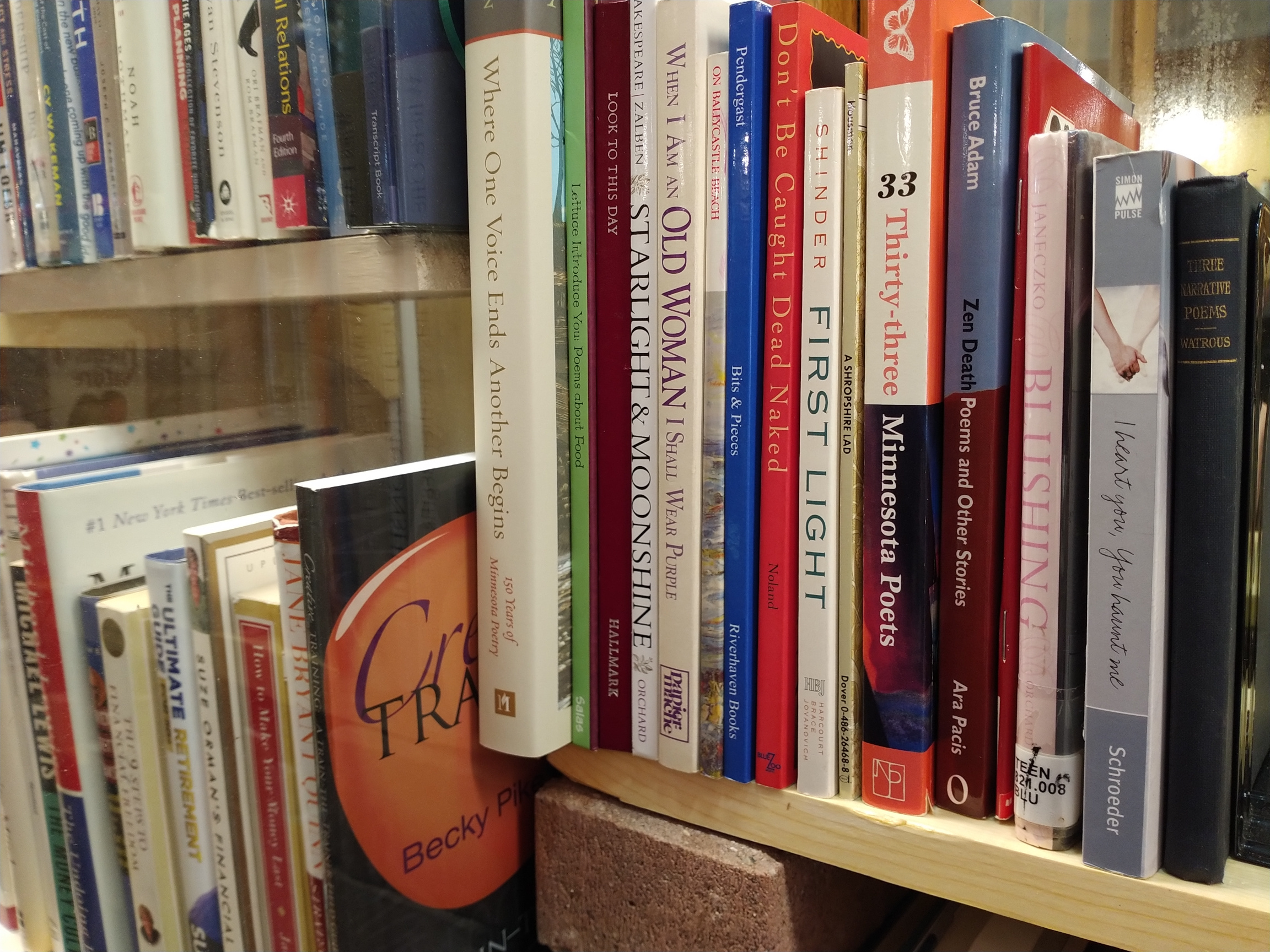
A sampling of poetry books, right, for sale at Books on Central in Faribault. (Minnesota Prairie Roots copyrighted photo April 2024)

Poetry is seemingly everywhere these days, unconfined to the space between book covers. Yet poems printed upon paper remain the primary place to find poetry. I recently picked up a stash of poetry books from my local library. I also perused poetry offerings at Books on Central, a Rice County Area United Way bookshop selling used books in downtown Faribault. In Northfield, independent bookseller Content Bookstore not only sells poetry books, but regularly hosts book signing events with writers, including poets.

An especially thought-provoking poem in Northfield’s Sidewalk Poetry project. (Minnesota Prairie Roots copyrighted file photo August 2020)

How we access poetry has certainly changed over the years. It is my hope that, even if you think you don’t like poetry, you open your mind to this creative art form. There’s much to be learned about nature, about ourselves, about life through the carefully-selected, sparse words of gifted poets, many of whom call Minnesota home.

FYI: Please check back for a more in-depth look at “Poem in a Bag” and reviews of poetry anthologies referenced in this post. Now, tell me, do you read poetry, have a favorite poem?

© Copyright 2024 Audrey Kletscher Helbling
 

Bison: History, cultural importance, a film & a poem October 12, 2023

Minneopa State Park near Mankato is home to 30-40 bison fenced on 325 acres of primarily prairie. (Minnesota Prairie Roots copyrighted file photo 2019)

THEY ARE MASSIVE BEASTS, once roaming the American Great Plains by the millions. They are bison, also called buffalo, today numbering some 370,000 in North America. Most are raised as livestock. But some 31,000, or eight percent, are part of conservation herds, including right here in Minnesota. Such herds are designed to protect wild bison and preserve their genetic diversity.

Interpretive signage about bison overlooks the prairie at Minneopa State Park. (Minnesota Prairie Roots copyrighted file photo 2019)

An upcoming documentary, “The American Buffalo—A Story of Resilience” by awarding-winning filmmaker Ken Burns, and my own recently posted poem about bison prompted my renewed interest in this animal. Burns’ 4-hour film airs in two parts, at 7 pm on Monday, October 16, and on Tuesday, October 17, on PBS. His documentary traces the history of bison, their importance in Native peoples’ lives and culture, their near extinction, and efforts to bring them back.

Bison up close while driving through Minneopa State Park. (Minnesota Prairie Roots copyrighted file photo 2019)

My connection to bison began decades ago with childhood visits to Ramsey Park (in Redwood Falls), now also more appropriately called Cansayapi Park. Cansayapi in the Dakota language means “where they marked the trees red,” the traditional Minnesota River valley homeland of the Dakota. The Lower Sioux Indian Community is located near nearby Morton with an enrolled membership of 930 of the Mdewakanton Band of the Dakota.

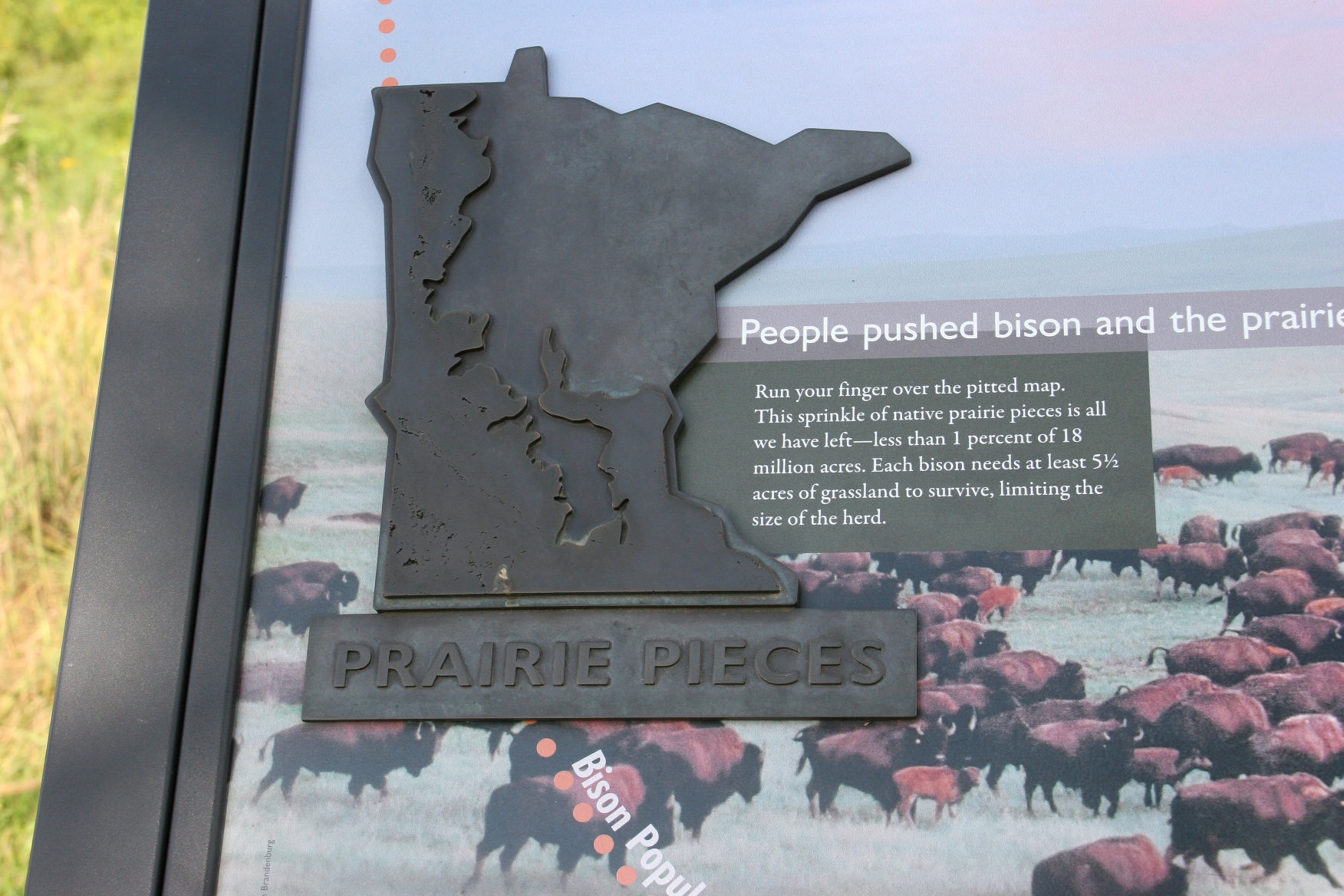
A map, posted in Minneopa State Park, shows the prairie and historic bison territory in Minnesota. (Minnesota Prairie Roots copyrighted file photo 2019)

Given the region’s rich Native heritage, the presence of a small group of bison in the Ramsey Park Zoo seems fitting. I recall rushing to see the buffalo there, both excited and intimidated by their massive hulk. Today I’m not so much afraid as respectful of their size and their importance in Indigenous Peoples’ culture.

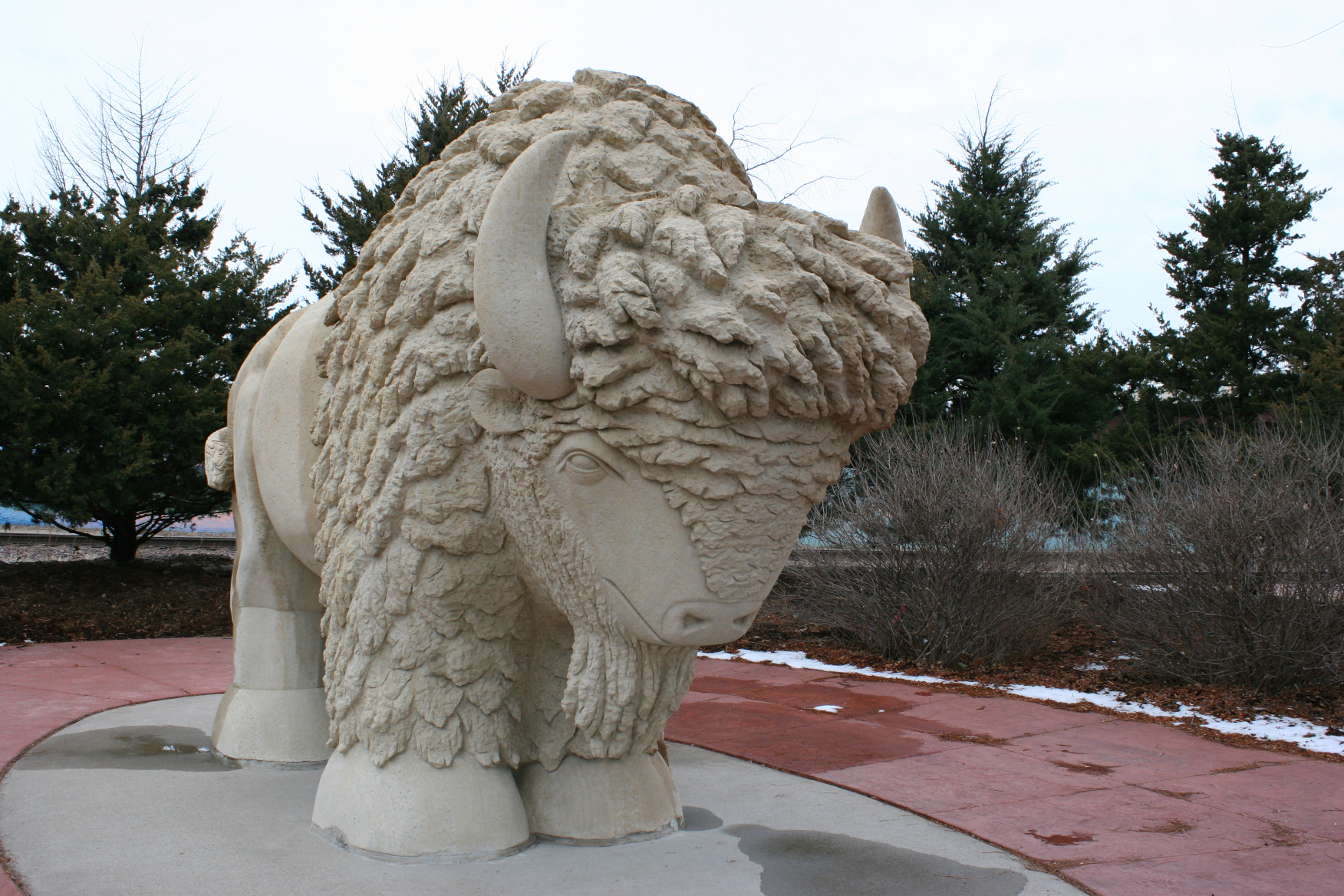
A sculpture of White Buffalo Calf Woman, part of Indigenous culture, displayed at the 2011 Mankato City Art Walking Sculpture Tour. Artwork by Lee Leuning and Sherri Treeby. (Minnesota Prairie Roots copyrighted file photo 2011 by Audrey Kletscher Helbling)

One need only look back in history to see how invaluable bison were to these original inhabitants of the prairie, the plains. Bison provided food, shelter, clothing and more to Indigenous Peoples. They also held spiritual and cultural significance. Bison were considered kin, respected by those who respected Mother Earth.

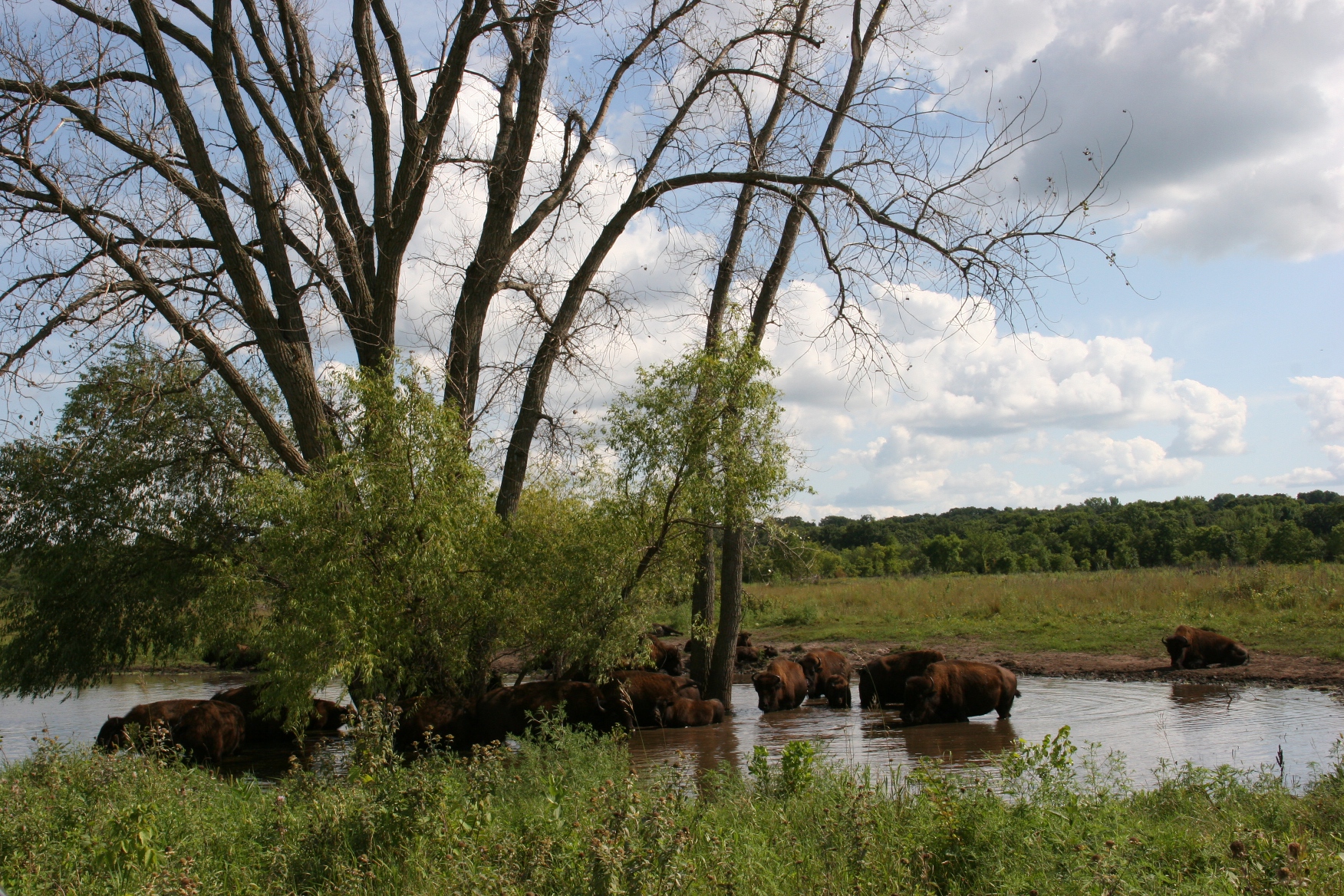
Bison at Minneopa State Park watering hole. (Minnesota Prairie Roots copyrighted file photo 2019)

And then the white man came in the 1800s, overtaking the land, nearly driving bison to extinction as they hunted and slaughtered the animal primarily for their hides.

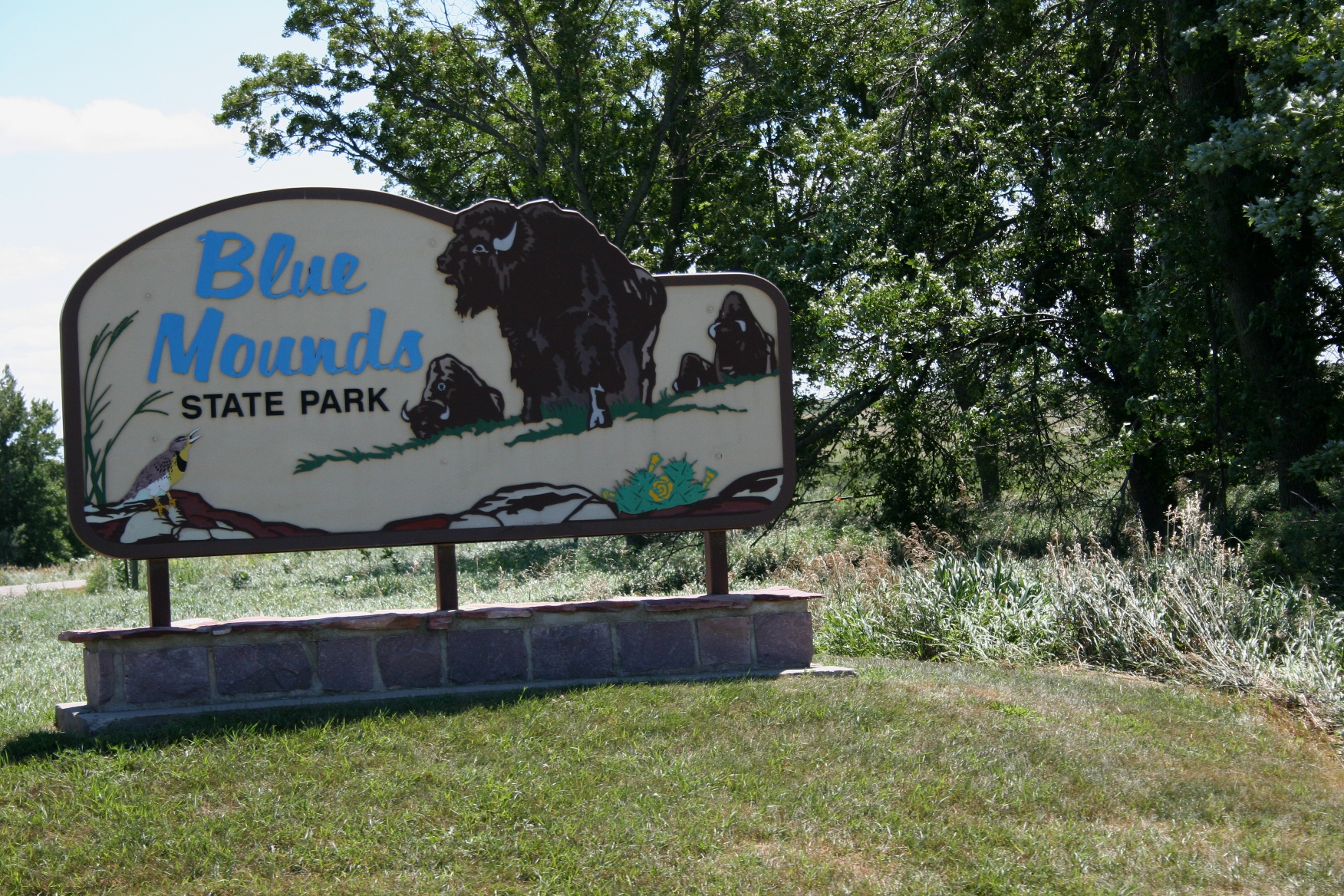
Blue Mounds State Park in rural Rock County, Minnesota, is home to 80-90 bison, although I did not see them when I visited the park in 2013. (Minnesota Prairie Roots copyrighted file photo 2013)

And so the story of bison is not only one of past atrocities in American history, but also one of personal history for me with those fenced bison in Minnesota’s largest municipal park, known as “The Little Yellowstone of Minnesota” for its beautiful natural topography seemingly like Yellowstone National Park. Yellowstone, the one in Wyoming, is home to nearly 6,000 bison.

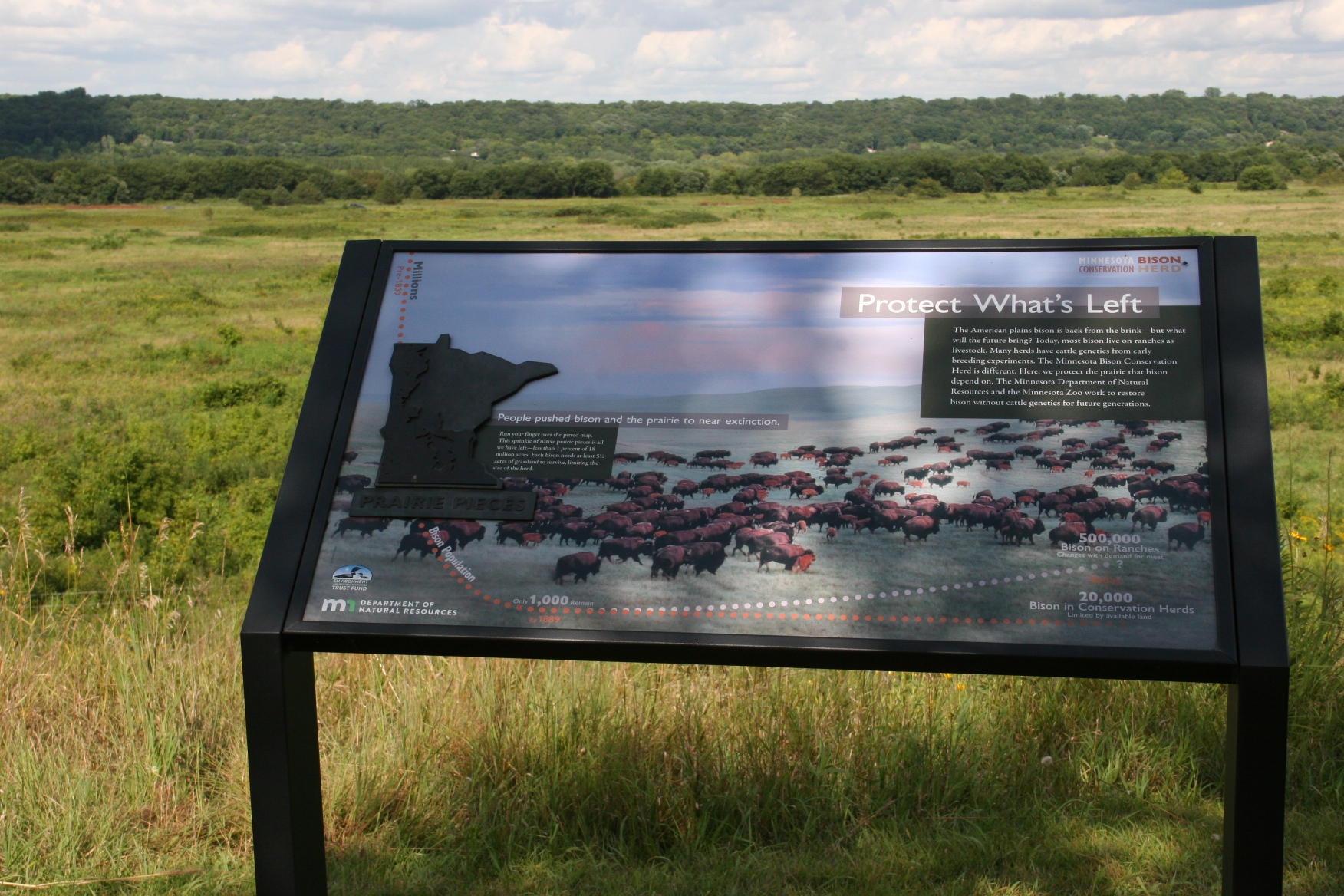
A sign along the prairie’s edge at Minneopa State Park informs about bison in Minnesota. (Minnesota Prairie Roots copyrighted file photo 2019)

In my youth, I didn’t understand the importance of bison in Native culture. I simply delighted in seeing them in the zoo at then Alexander Ramsey Park in my native Redwood County. Neither did I recognize how offensive the name of the park I loved as a child—Alexander Ramsey Park. Alexander Ramsey served as our first territorial governor and then as the second state governor of Minnesota during the US-Dakota War of 1862. He offered a bounty to anyone who killed a Dakota person and called for Indigenous Peoples to be driven out of Minnesota.

This 67-ton Kasota limestone sculpture stands in Reconciliation Park in Mankato. It symbolizes the spiritual survival of the Dakota People and honors the area’s Dakota heritage. The park is the site of the largest mass hanging in U.S. history. (Minnesota Prairie Roots copyrighted file photo 2019)

With that backstory and an understanding of a period in Minnesota history marked by hatred and injustices, I paid homage to bison in a poem now gracing a sign in Mankato. Mahkato, a Dakota word which means “blue earth,” was the site of the largest mass execution in the United States on December 26, 1862. Thirty-eight Dakota, sentenced to death in sham trials for their roles in the US-Dakota War, were hung in Mankato.

My poem posted along a recreational trail in Mankato. (Photo credit: Kay Herbst Helms)

I wanted to honor the original inhabitants of Mahkato, the bison, the Native culture, the land. And so I wrote “The Mighty Tatanka,” using the Dakota word for bison. My poem was selected for inclusion in the Mankato Poetry Walk & Ride and is posted on a sign in West Mankato.

The Mighty Tatanka

Tatanka trips from my tongue
like the steady beat of horse hooves
pounding the prairie
in pursuit of massive beasts.

Bison. Honored. Sacred to the Dakota.
Source of life and food and shelter.
Once roaming, grazing, stampeding
this land upon which I stand.

While my poem is succinct, limited by wordage requirements in the poetry competition, I’d like to think “The Mighty Tatanka” is powerful. It holds not only the rhythm of carefully selected words, but a story. A story of bison, of Indigenous Peoples, of a way of life, of a culture. It holds, too, honor for the land and of those who first inhabited, and respected, it.

#

FYI: My poem is posted on a sign along the West Mankato Trail near the intersection of Owatonna Street and Blue Earth and Sylvia Streets in West Mankato. You can listen to me read my poem by calling 507-403-4038 and entering 406.

Noted Minnesota wildlife photographer Jim Brandenberg’s (right in video) work, including this image of bison, is featured in a gallery bearing his name in Luverne, near Blue Mounds State Park. (Minnesota Prairie Roots copyrighted file photo 2013)

To see Minnesota Bison Conservation Herd bison in Minnesota, visit Minneopa State Park near Mankato, Blue Mounds State Park near Luverne, the Minnesota Zoological Garden, Oxbow Park & Zollman Zoo by Byron, and Spring Lake Park Reserve Bison Prairie in Dakota County.

© Copyright 2023 Audrey Kletscher Helbling


Public poetry in Mankato & I’m in, again November 15, 2019

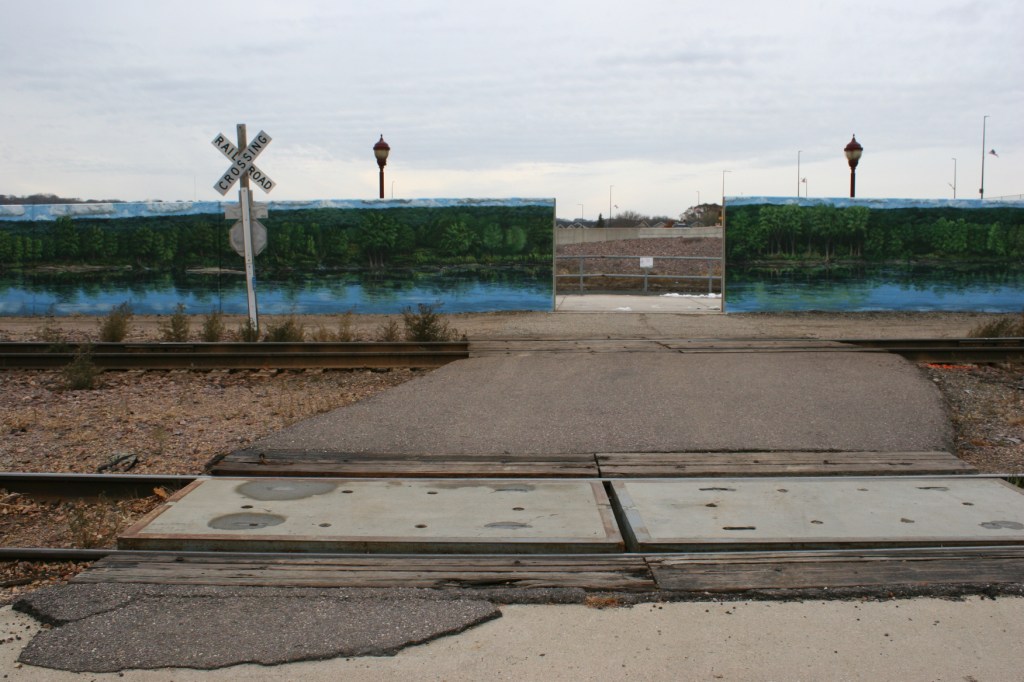
That’s my poem, viewed through the opening in the flood wall in downtown Mankato, Minnesota.


ALONG A BUSY STREET in the heart of downtown Mankato near Reconciliation Park, across a duo set of train tracks and then through an opening in a flood wall mural, you’ll find a work of literary art. Mine. A poem, River Stories.


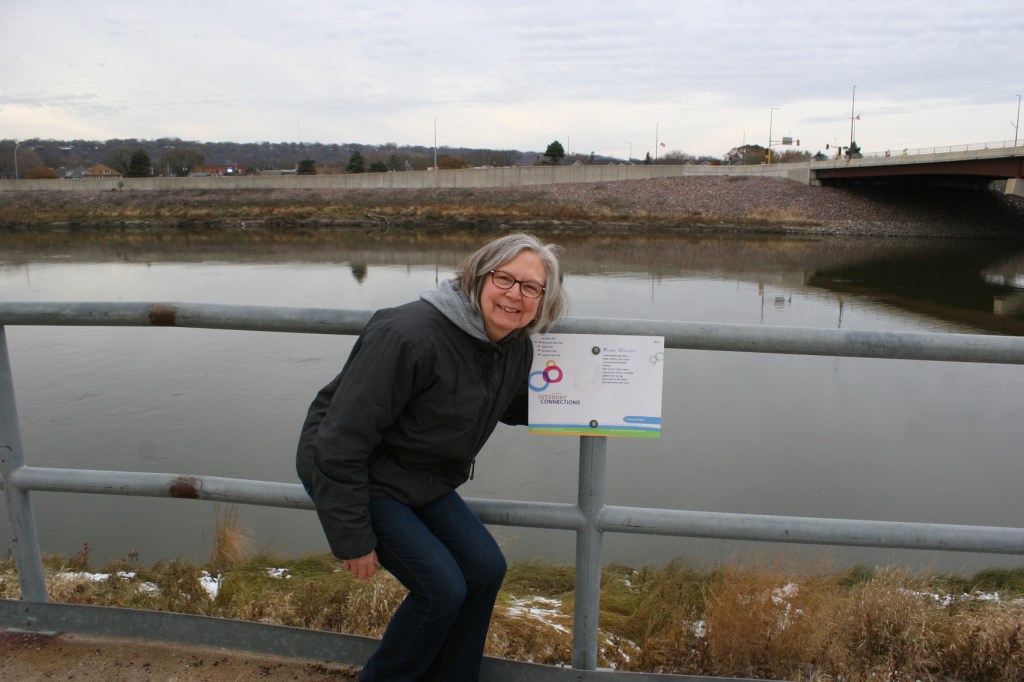
Me, next to my posted poem, River Stories. Photo by Randy Helbling
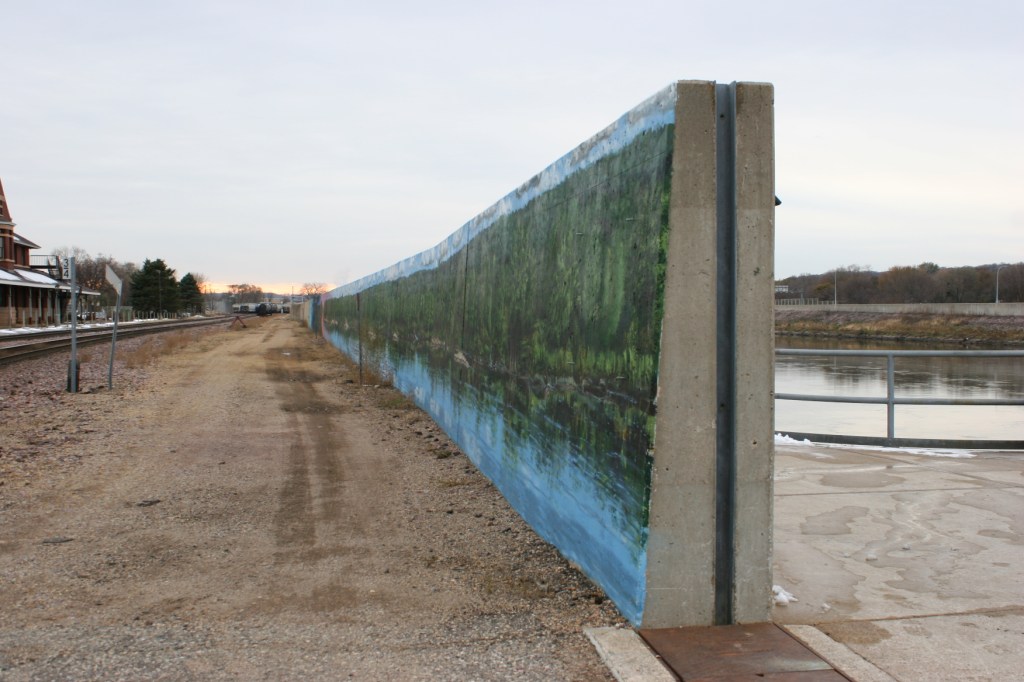


Photographed from the opening in the flood wall, the mural showcases the Minnesota River, to the right.


My poem was recently selected for inclusion in the Mankato Poetry Walk & Ride, a public art project that now boasts 41 poems posted on signs throughout Greater Mankato. This, my fifth poem picked in recent years for the project, will be displayed for the next two years at the site along the Minnesota River Trail hugging the river. I am honored to share my poetry in such an accessible way via this ongoing effort of the Southern Minnesota Poets Society.


To hear River Stories, call 507-403-4038 and enter 406 when prompted. (That’s not me reading.)


This 67-ton Kasota stone sculpture stands in Reconciliation Park. It symbolizes the spiritual survival of the Dakota People and honors the area’s Dakota heritage. The park is the site of the largest mass execution in U.S. history. The U.S. government tried and hung 38 Dakota here following the U.S.-Dakota Conflict of 1862. The location of my poem near this park seems fitting as part of the city’s river stories.


The Mankato Poetry Walk & Ride is a competitive process which challenges Minnesota poets to pen poems of no more than 18 lines with a limit of 40 characters per line. River Stories is short at only nine lines. Just like crafting copy for children’s books, creating poetry is among the most challenging of writing disciplines. Every word must prove its worth. Poetry has made me a stronger and better writer.


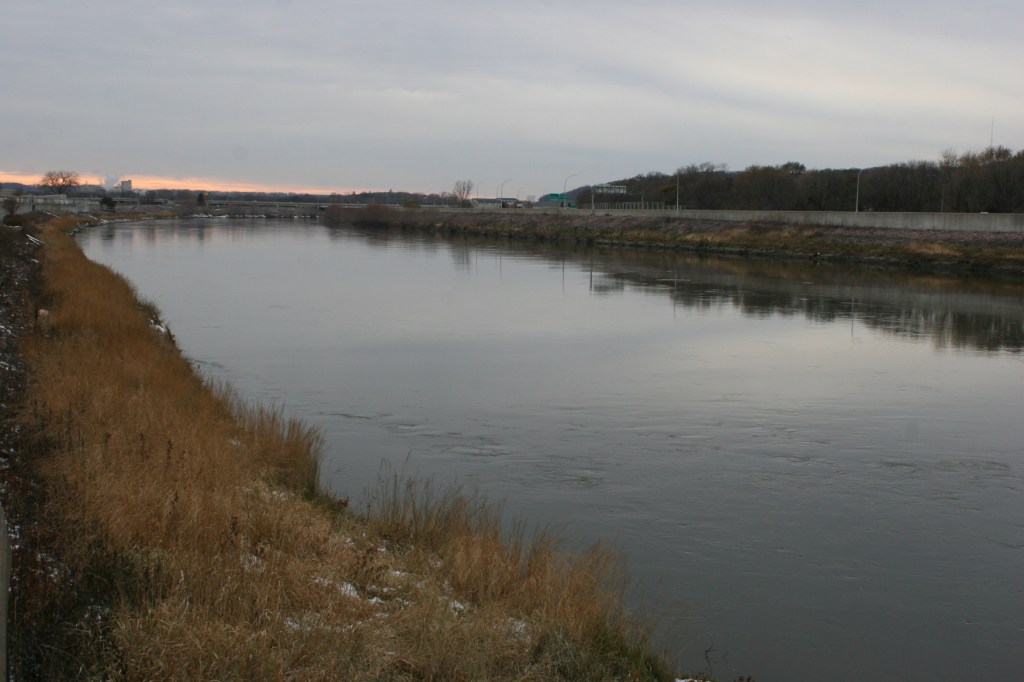
The Minnesota River, which runs through Mankato, inspired River Stories.


In writing poetry, I often reflect on my past and on a strong sense of place. Rural. My previous Mankato Poetry Walk & Ride poems include Cornfield Memories, Off to Mankato “to get an education”, The Thrill of Vertical and Bandwagon.

© Copyright 2019 Audrey Kletscher Helbling