Minnesota Prairie Roots

Writing and photography by Audrey Kletscher Helbling

Commentary: No longer free to speak, to… April 11, 2025

Ten years ago I photographed this polaroid picture and comment at an exhibit on voting rights at St. Olaf College in Northfield. This seems applicable to today. (Minnesota Prairie Roots copyrighted file photo 2015)

IN THE 1970s, students at my alma mater, Minnesota State University, Mankato, protested the Vietnam War. Today MSU students are protesting the detainment of an international student and the revocation of visas for five others who attend this southern Minnesota college where I studied journalism.

US Immigration and Customs Enforcement (ICE) has also detained a student from Riverland Community College in Austin, Minnesota, and from the University of Minnesota in the Twin Cities. Other international students from colleges across the state have also had their visas revoked. The same is happening at college campuses throughout the country. Students snatched off the street, from their apartments, by ICE. Pffff, gone, just like that with no explanation and no initial access to their friends, families and legal assistance. This does not sound like the United States of America I’ve called home my entire life.

I’m not privy to specifics on why particular international students were targeted. But I have read and heard enough reliable media reports to recognize that these are likely not individuals committing terrible crimes, if any crime. In most cases they have done nothing more than voice their opinions whether at a protest or via social media. College campuses have always been a place for students to speak up, to exercise freedom of speech, to be heard. To protest.

Secretary of State Marco Rubio has labeled students with revoked visas as “lunatics.” Really? Name-calling doesn’t impress me. Nor do actions to intimidate, instill fear and silence voices.

I photographed this inside my local public library, not recently, but not all that long ago. (Minnesota Prairie Roots copyrighted file photo)

I’m grateful that student journalists at The Reporter, the Mankato State student newspaper where I worked while in college, are aggressively covering this issue. In particular, I reference the article “SCARED TO LEAVE MY HOUSE’—Mavericks react to ICE-detained student, what’s being done by Emma Johnson. She interviews international students who, for their own protection, chose to remain anonymous. It’s chilling to read their words. Words of fear. Words of disbelief and disappointment in a country where they once felt safe and free. The place where they chose to pursue their education, jumping through all the necessary legal hoops to do so. And now they fear speaking up and are asking their American classmates and others to do so for them. So I am.

We’ve always been a nation that welcomed international students. (Minnesota Prairie Roots copyrighted file photo)

MSU students, staff and community members have rallied to support their international community and to voice their opposition to ICE’s action. In neighboring Albert Lea, where the MSU student is being held in the Freeborn County Jail, a crowd gathered on Thursday to protest ICE action against international students. Of course, not everyone agrees with the protesters and it is their choice to disagree. They can. They are not international students here on visas.

I should note that the sheriffs in Freeborn County and four other Minnesota counties—Cass, Crow Wing, Itasca and Jackson—this week signed agreements to cooperate with ICE.

I photographed this sign on an American Legion post building in a small southeastern Minnesota community. It’s a reminder that veterans have fought for our freedom, including freedom of speech, and that we have always been a welcoming country. (Minnesota Prairie Roots copyrighted file photo)

These are troubling times. In my life-time, this has always been a nation where we’ve been able to freely express ourselves, where that freedom has been valued. We can agree to disagree. Respectfully. Without name-calling. Without the fear of suppression, retaliation and/or imprisonment. But I see that changing. Daily. And that, my friends, is cause for deep concern.

#

NOTE: I welcome respectful conversation. That said, this is my personal blog and I moderate and screen all comments.

© Copyright 2025 Audrey Kletscher Helbling


Spotlight shines on Minnesota, specifically Mankato (once my home) August 23, 2024

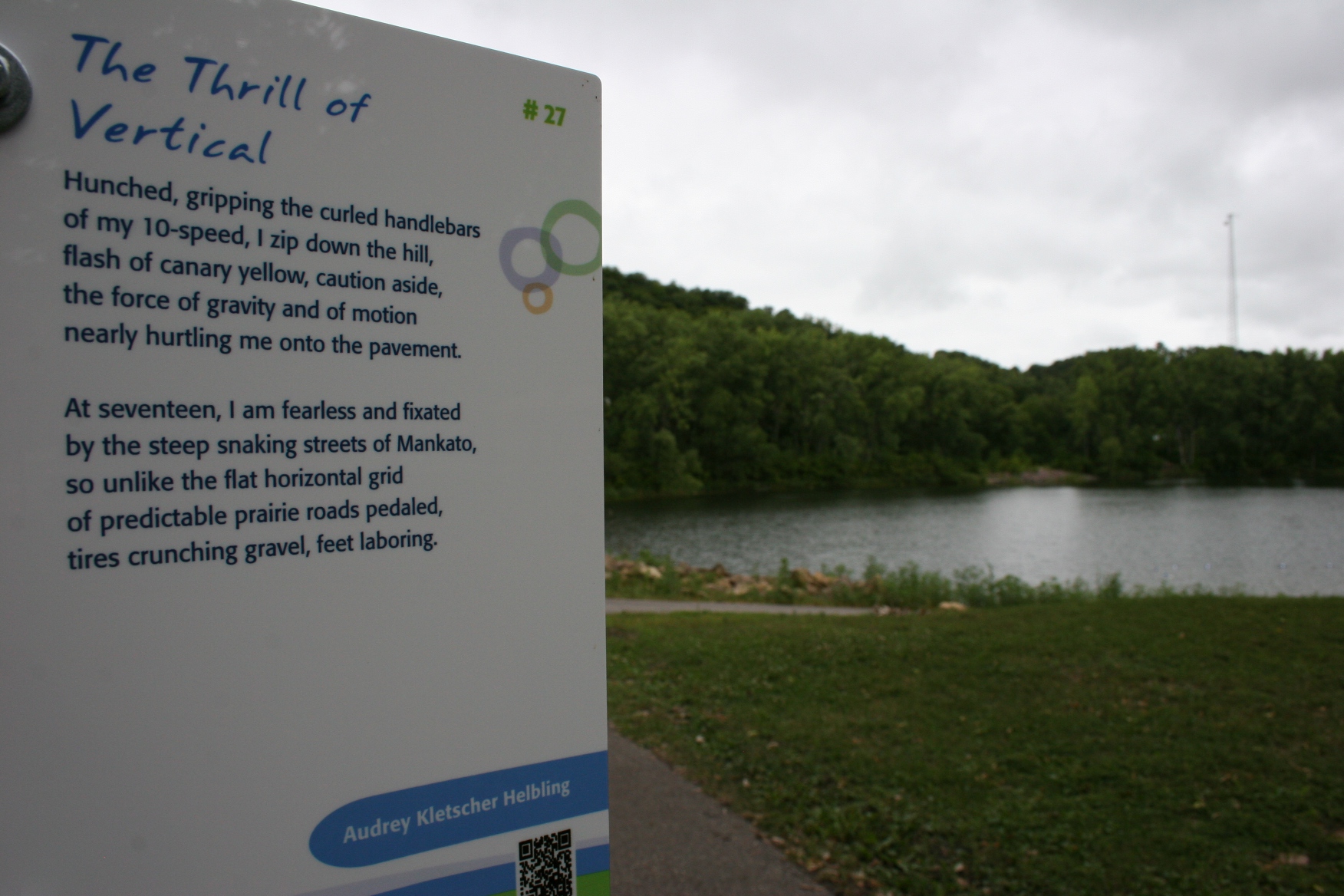
“The Thrill of Vertical,” posted on a sign in Spring Lake Park as part of the 2013 Mankato Poetry Walk & Ride, was inspired by my college years in Mankato. (Minnesota Prairie Roots copyrighted file photo 2013)

I ARRIVED IN MANKATO with a canary yellow 10-speed bike, a simple orange backpack, my Sears portable manual typewriter, a clock radio, a quilt stitched by Grandma Ida and a suitcase filled with clothes. The year was 1974, the beginning of my freshman year at Bethany Lutheran College, high atop a hill in this southern Minnesota city.
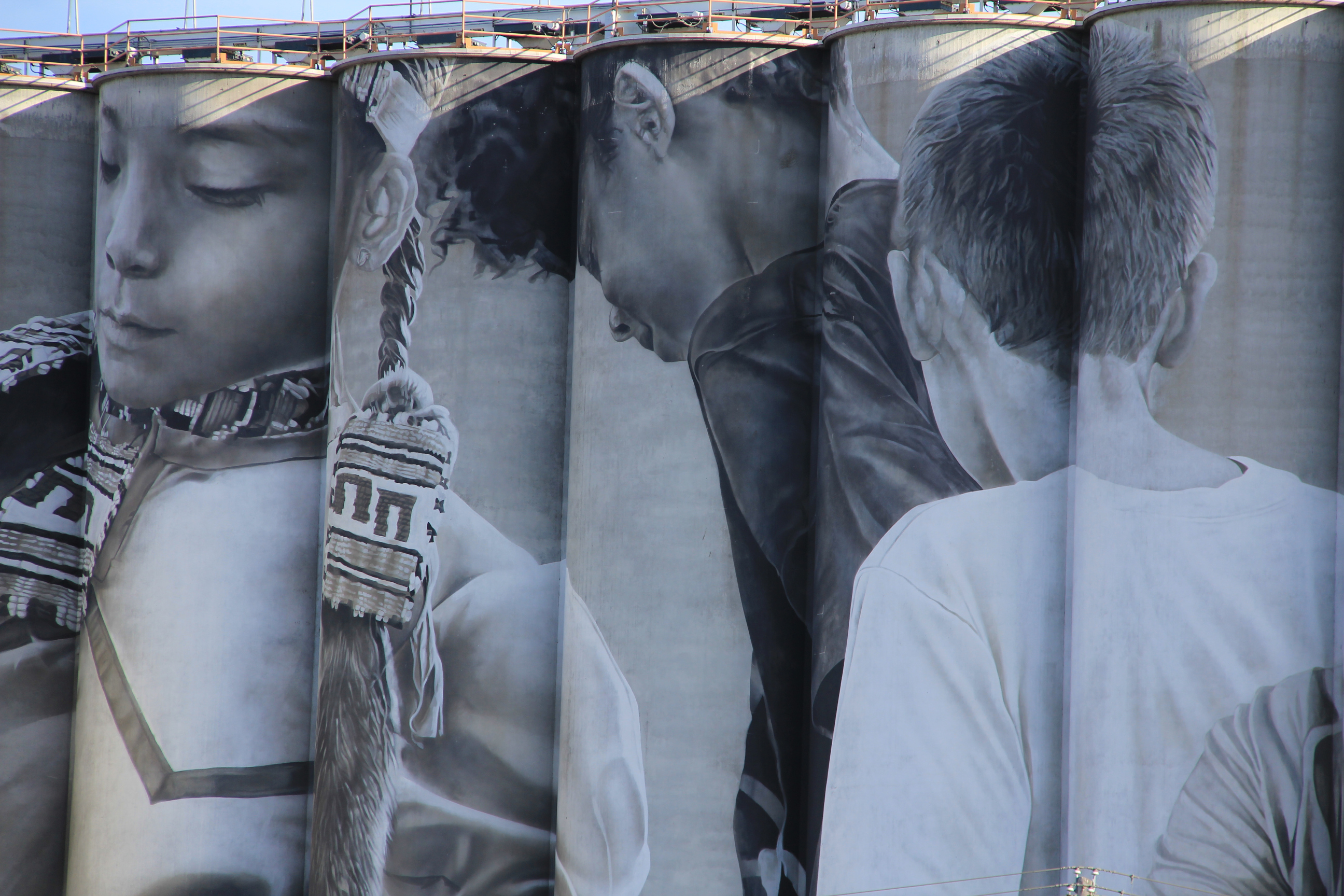
The Ardent Mills grain silos, a massive public art project, dominate the skyline along the Minnesota River in the heart of Mankato. The art depicts the diversity of the area. (Minnesota Prairie Roots copyrighted photo November 2023)

I was only 17, nervous, but ready to leave my childhood farm home some 85 miles to the west. I met my roommate, Rhonda, a beautiful high school cheerleader from western Wisconsin. She was well-traveled, outgoing, vastly different than me, quiet and shy. And she had a stereo for our cozy fourth floor corner dorm room. We were set. Despite our differences, we got along splendidly.
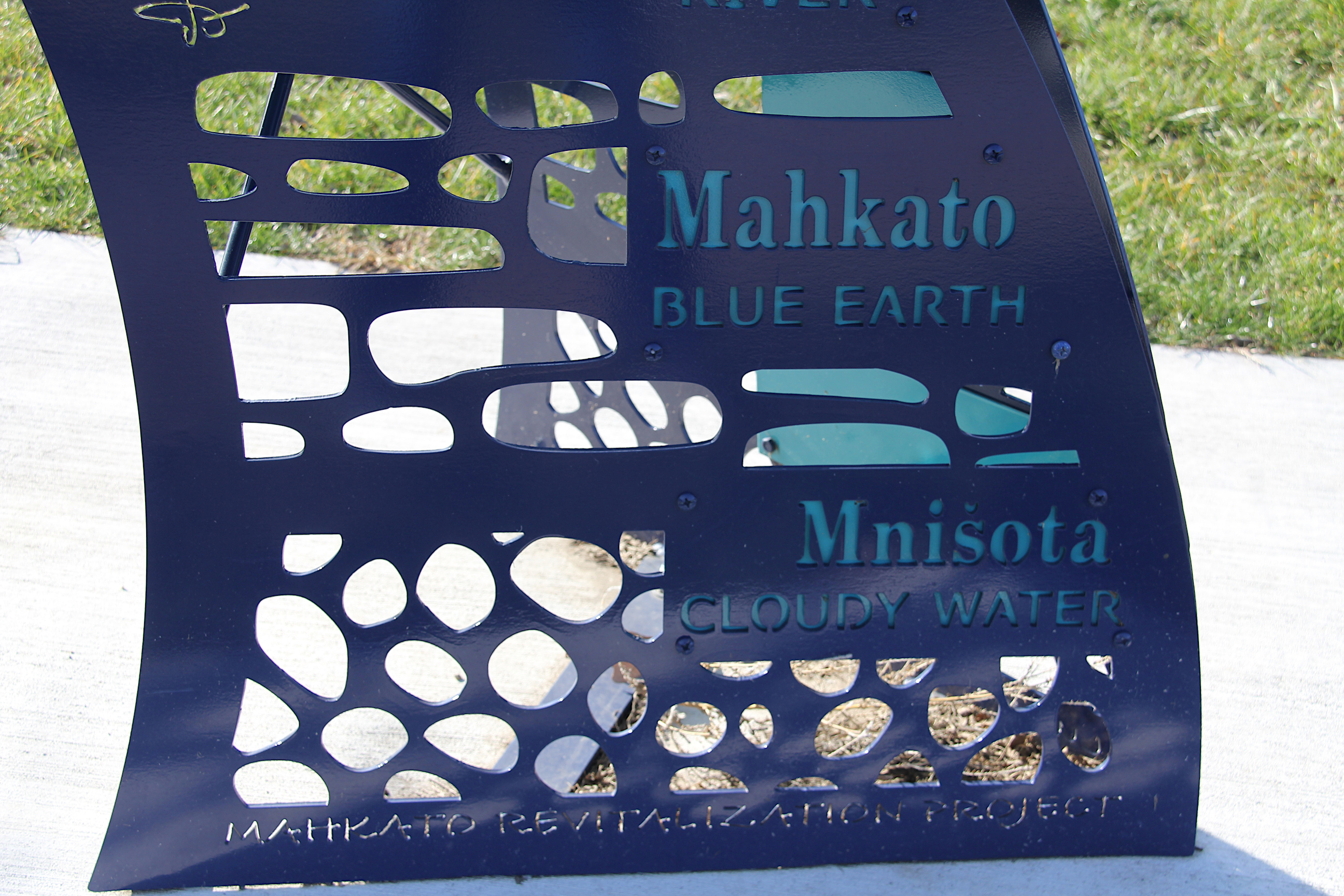
This shows the base of a place sculpture along the Minnesota River in Riverfront Park. The words for Mankato and Minnesota are written in the Dakota language and translated. (Minnesota Prairie Roots copyrighted photo November 2023)

As I settled into the big city (Mankato’s current population numbers around 45,000), big for me when you come from a town of 362, I began to feel at home. Not only on campus, but also in the community. Happy Chef became a go-to destination for conversation and for warm loaves of bread glazed with powdered sugar frosting. A Christian coffee house also drew me off campus. I wasn’t in to the bar scene.
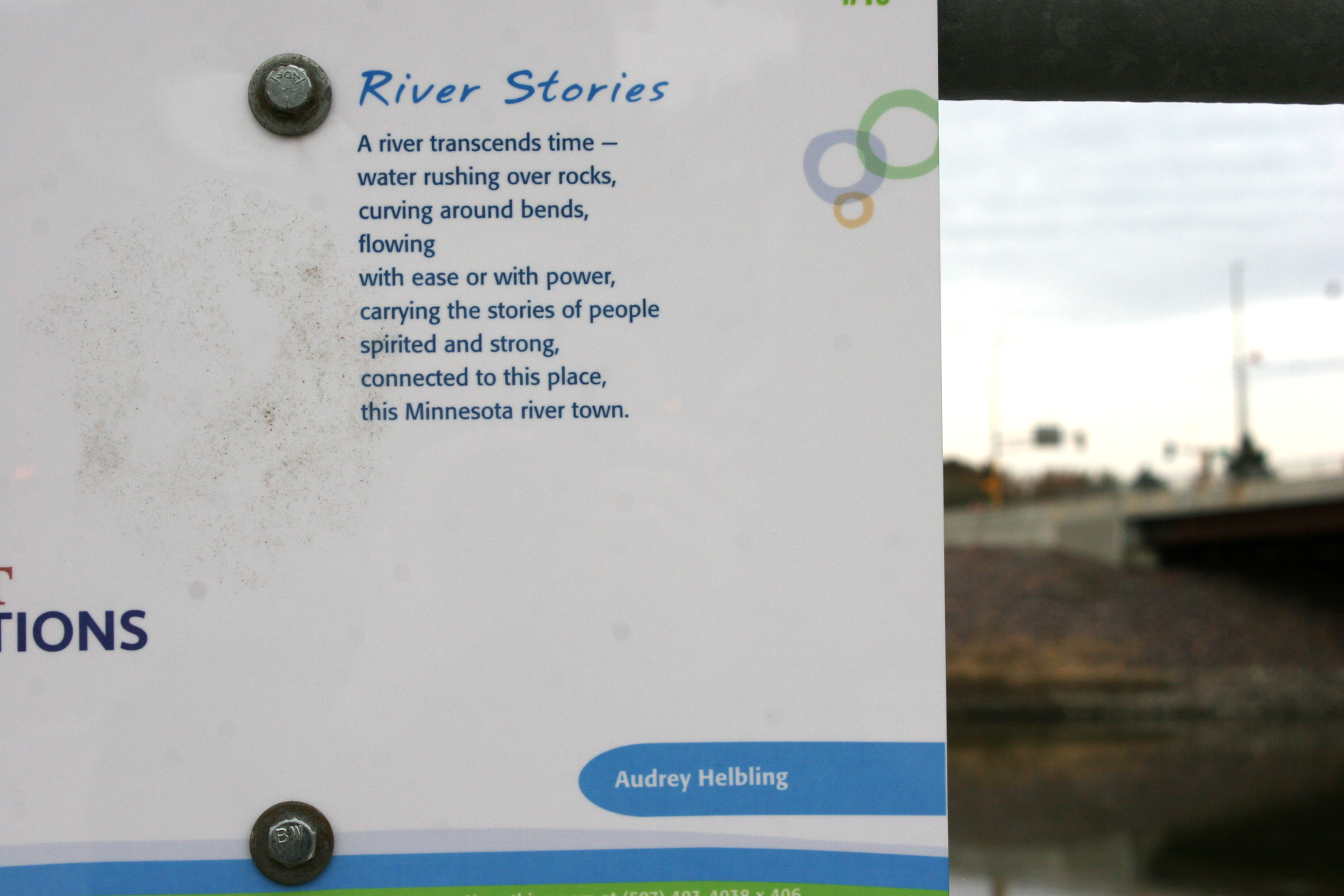
My poem, “River Stories,” highlights the Minnesota River, which winds through Mankato. It was posted along the river as part of the 2019 Mankato Poetry Walk & Ride. (Minnesota Prairie Roots copyrighted file photo 2019)

For nearly four years, Mankato became my home away from home. The place that grew me educationally and as a person. I earned an associate of arts degree from Bethany, then only a two-year college, before moving on to Minnesota State University, Mankato, to study journalism. I worked at the college newspaper, “The Reporter.” In the winter of 1978, I earned a mass communications degree with an emphasis in news/editorial. Soon thereafter, I started my career as a newspaper reporter and photographer. Years later I returned to work for “The Mankato Free Press,” heading up the paper’s St. James-based news bureau (me living and working from my apartment long before working remotely became a thing).
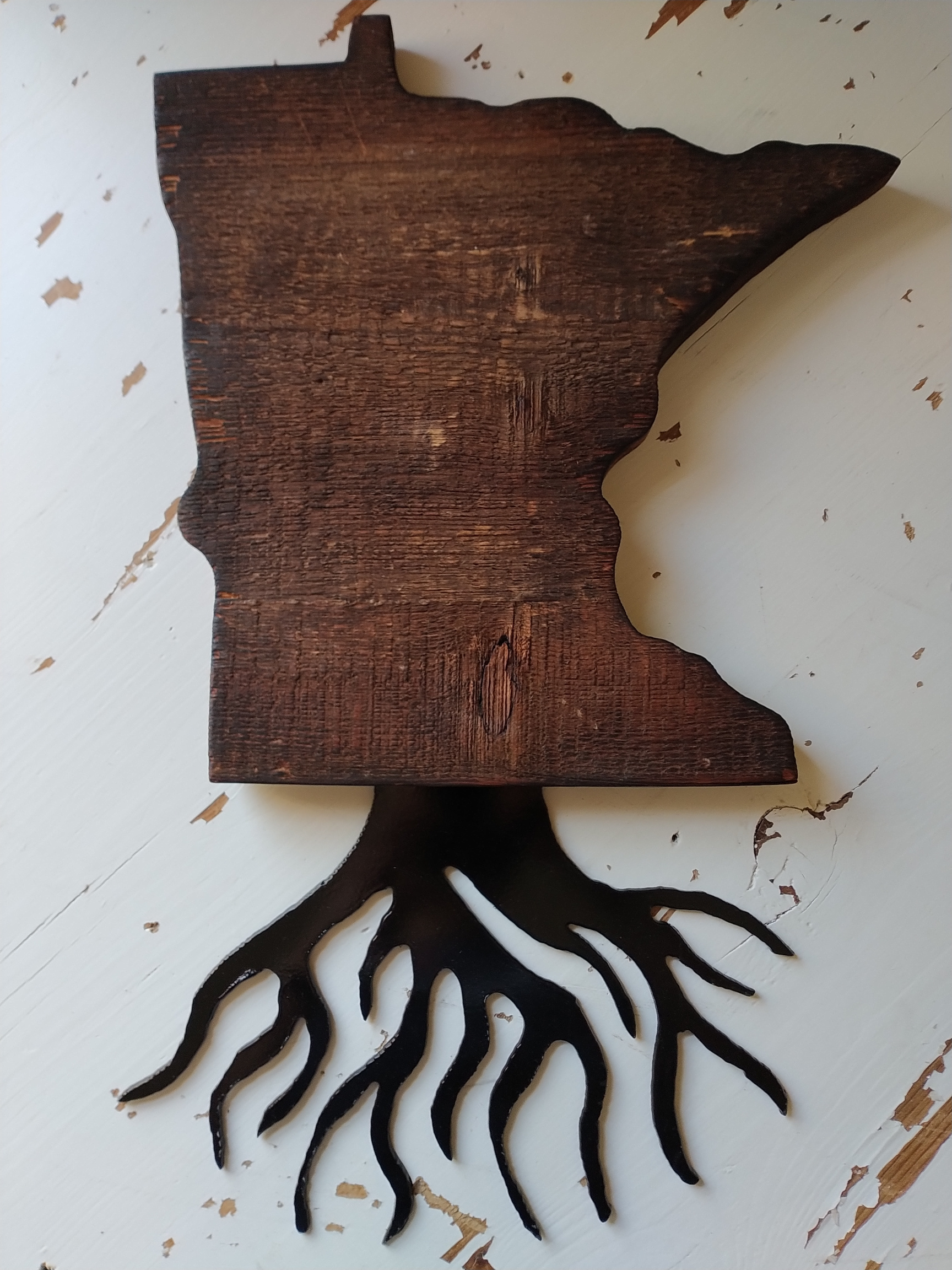
I am rooted in Minnesota. This art hangs in my home office. (Minnesota Prairie Roots copyrighted file photo)

Why am I sharing this with you today? Because of Minnesota Governor Tim Walz, now the vice presidential candidate on the DFL ticket. He lived in Mankato, where he worked as a social studies teacher and football coach at Mankato West High School. Walz, likely unfamiliar to most Americans up until recently, has put our state, specifically Mankato, on the map. As a life-long Minnesotan, I am proud to see my state, considered by many to be fly-over land, in the spotlight. No matter your political leanings, such publicity is good for Minnesota.
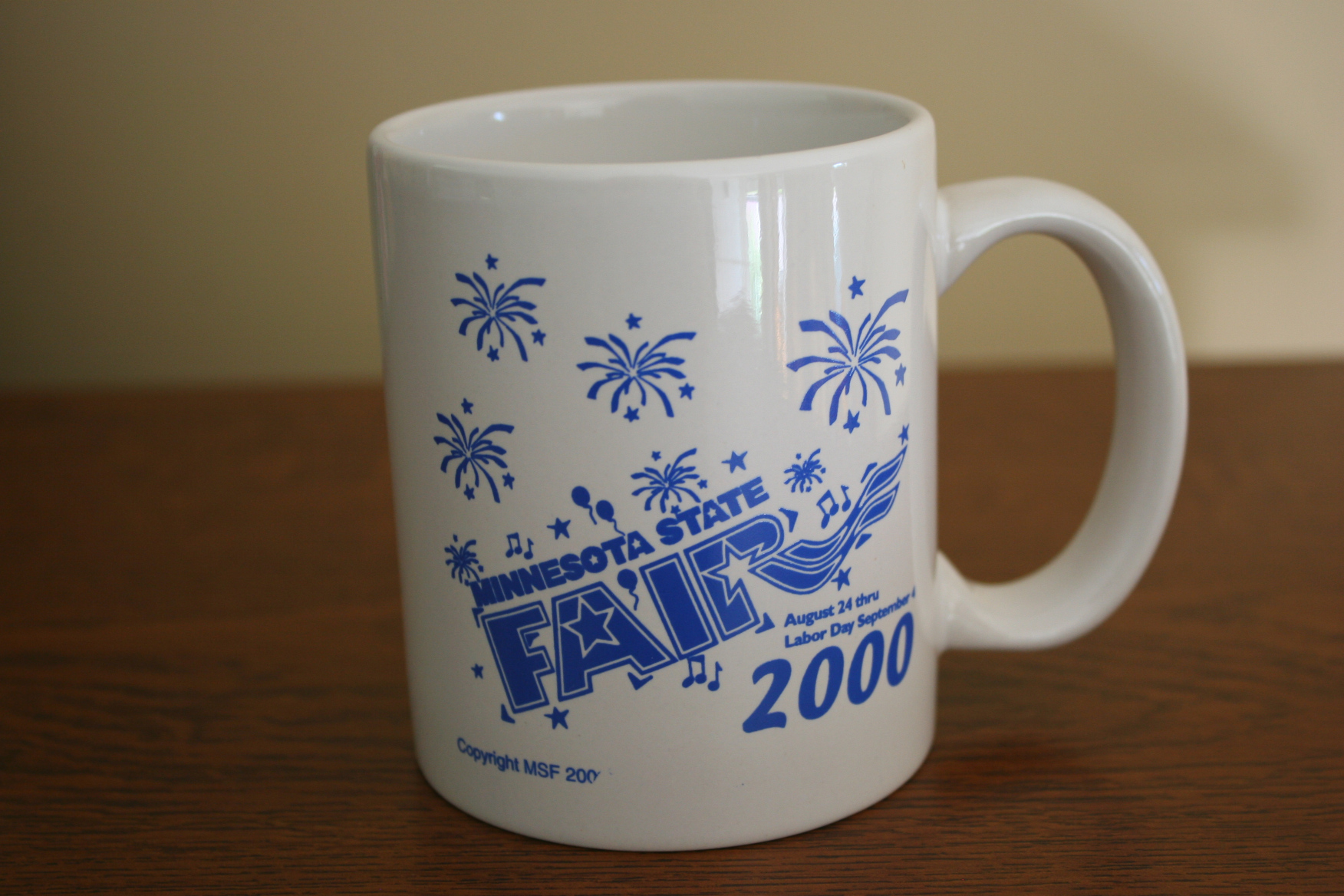
I’ve only attended the Minnesota State Fair a few times in my life. This mug came from my father-in-law’s collection. The State Fair started yesterday. (Minnesota Prairie Roots copyrighted file photo)

Like Walz, flannel shirts hang in my closet. I am wearing one as I write on this cool August morning. Flannel truly is a Minnesota thing, no matter political affiliations. We like our hotdishes (not “casseroles”) and the Minnesota State Fair (although not me; too many people), our cabins Up North. We claim musicians Bob Dylan and Prince, the Coen Brothers (of “Fargo” movie fame) and other notables like vice presidents Hubert Humphrey and Walter Mondale.
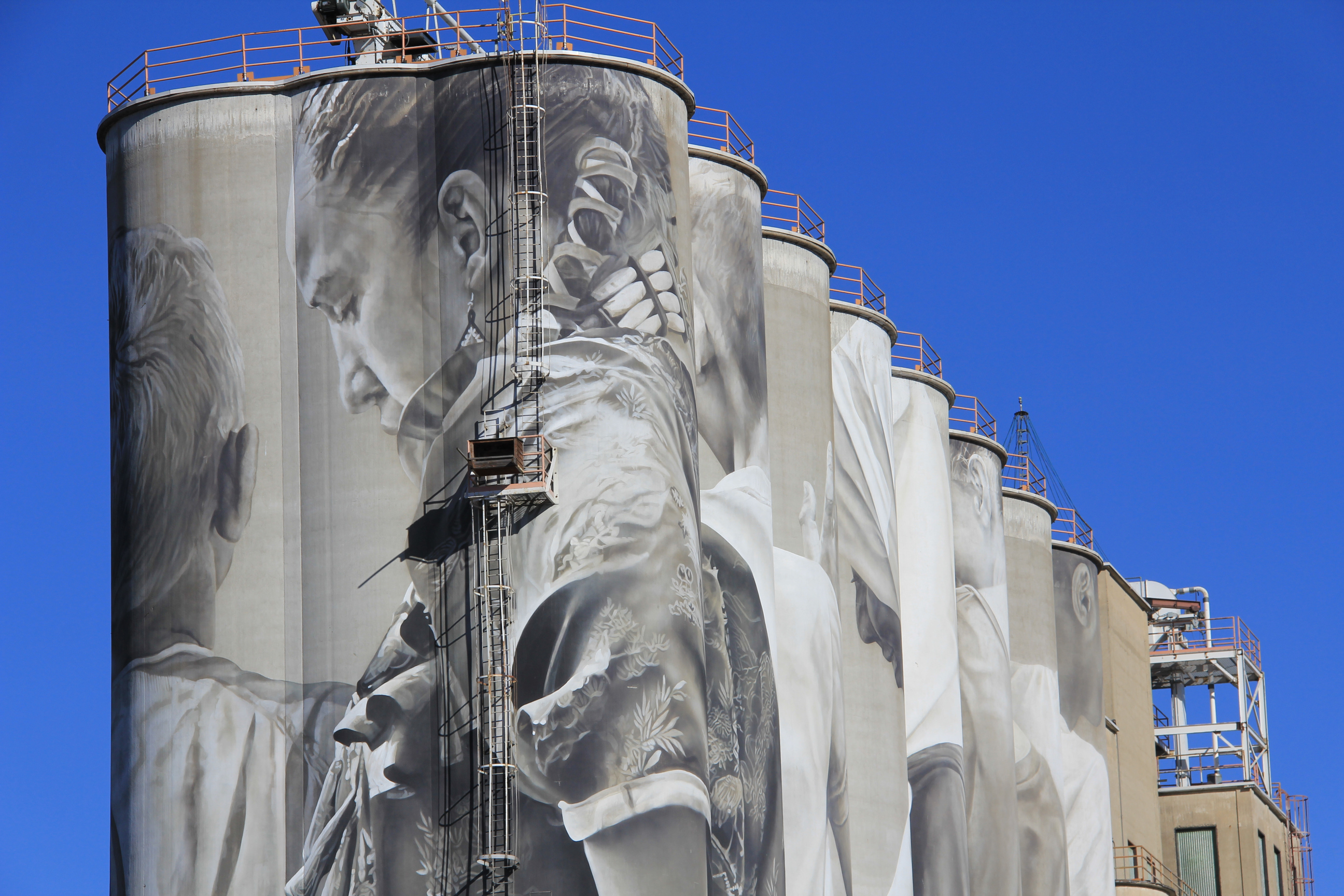
The grain silos are a massive work of public art. (Minnesota Prairie Roots copyrighted photo November 2023)

I cannot imagine living elsewhere, even if I don’t especially like the frigid cold and snow of a Minnesota winter. I loved winter as a Redwood County farm girl. Minnesota is home. I live 40 miles northeast of Mankato, a city originally inhabited by the Dakota. Mankato is a river town, a college town, a regional shopping hub, a community with a rich (but not always “good”) history. It is home to many creatives. I’ve been part of that with poetry showcased on signs through the Mankato Poetry Walk and Ride.

My latest poem, “The Mighty Tatanka,” posted along the West Mankato Trail near West Mankato High School. (Minnesota Prairie Roots copyrighted photo November 2023)

My connection with, and appreciation of, Mankato all started in that fourth floor dorm room with a roommate who was nothing like me. Despite our differences, we connected, forged a strong friendship, together grew and matured. We were on the cusp of our lives. Young. Open to new ideas and learning. The future held endless possibilities. For me, the 17-year-old with the canary yellow bike. And for Rhonda with her stereo system.

© Copyright 2024 Audrey Kletscher Helbling


Old school journalism & lessons learned June 22, 2021

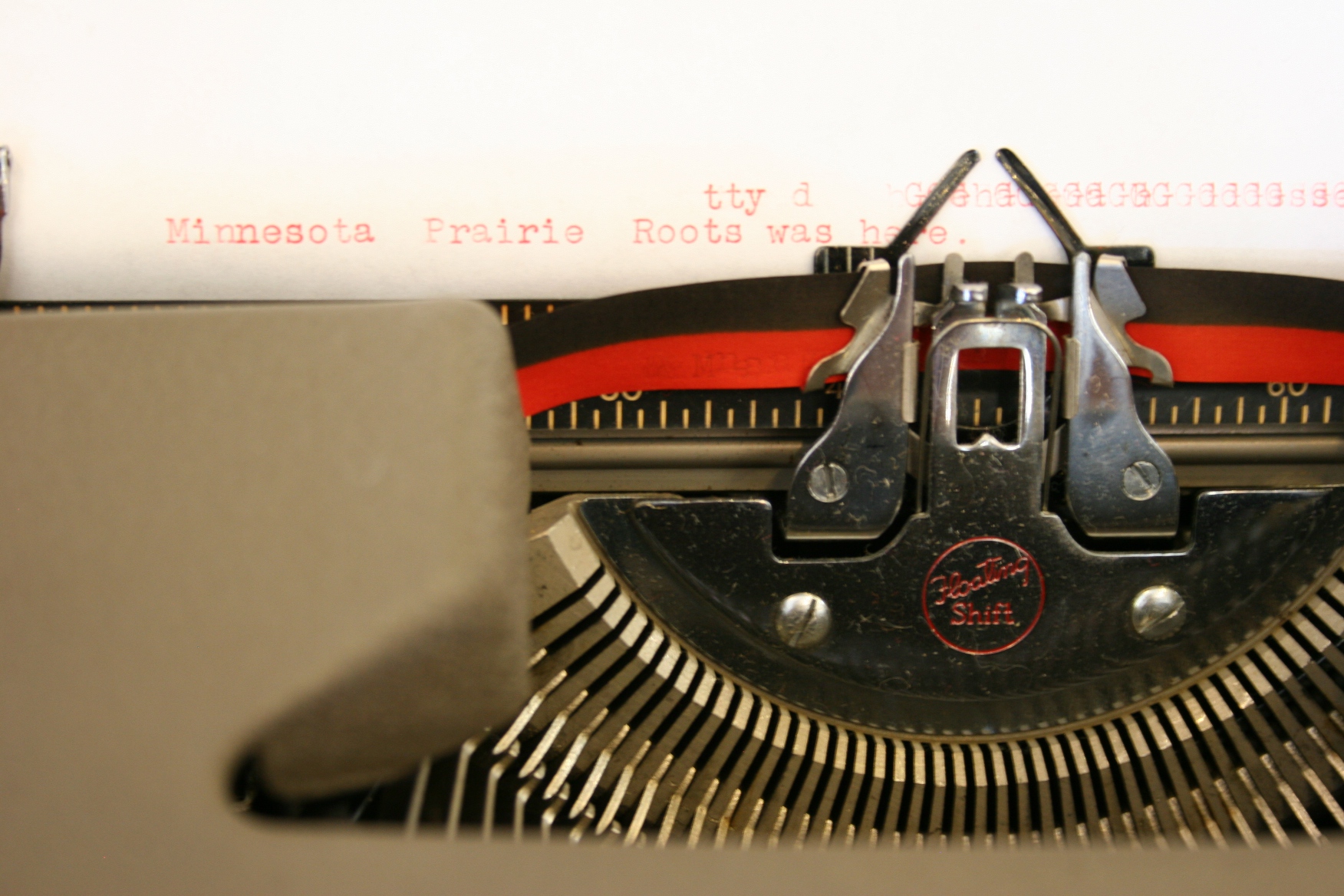
In journalism school and early in my journalism career, I typed stories on a manual typewriter similar to this. MN Prairie Roots file photo.

IN A WINDOWLESS ROOM of Armstrong Hall on the campus of Mankato State University, I pounded out a fictional obituary on a manual typewriter.

The year was 1976. And I was learning the basics of newspaper reporting. Lesson number one: Always spell a person’s name correctly. Never assume. Ask for the spelling. There is no reporting sin worse than misspelling a name. I remembered that during my first reporting job out of college when I interviewed Dayle. Not Dale.

I learned from two of the best—Robert O. Shipman and Gladys B. Olson. They were old school journalists, determined to teach Woodward and Bernstein-hyped students how to gather facts and report with truth, accuracy and integrity. They taught the basics—how to write a strong lede, how to infuse interest into feature stories, how to get the story right…

But beyond that, they cared. Deeply. They cared about the roles newspapers play in communities. To report hard news. To share human interest stories. To inform. To keep tabs on government and schools and other groups entrusted with public monies and policies. To share and express opinions on the editorial page, considered the heart of a community newspaper. To publish obituaries. And much more.

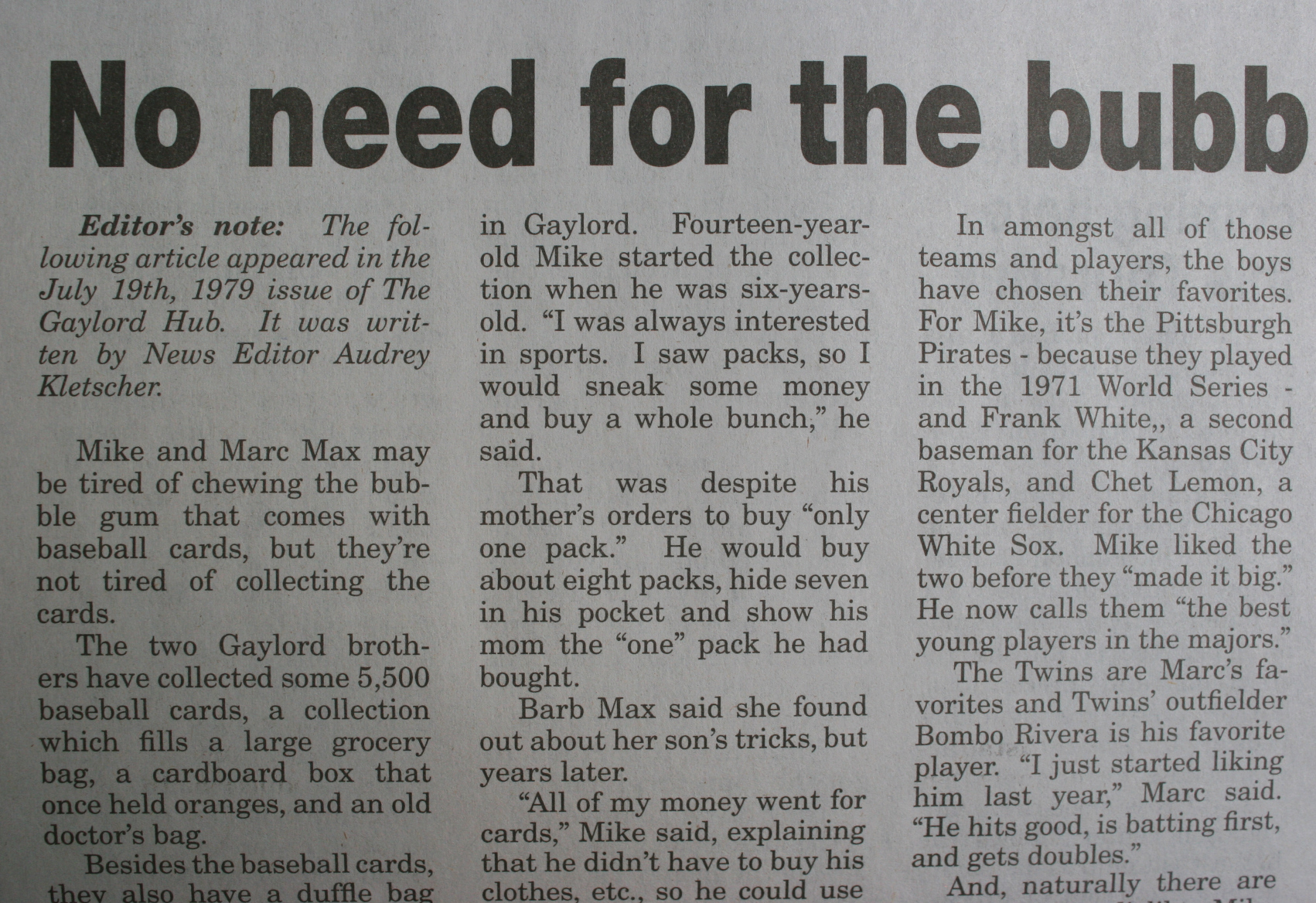
A section of a feature I wrote about Mike Max, now a sports anchor at WCCO TV. MN Prairie Roots file photo.

All these decades later, I remember those lessons learned from Shipman, Olson and others who taught mass communication classes at what is today known as Minnesota State University, Mankato. I graduated in March 1978 and shortly thereafter started working as a newspaper reporter at a small town weekly, The Gaylord Hub. My career would also take me to full-time reporting jobs in Sleepy Eye, Mankato and Owatonna, and to a short-term assignment in Northfield with freelance work also tossed in the mix.

Through the years, I’ve maintained my passion for writing and grown my passion for photography. Even while raising three children, with minimal time to write. Yet, I’ve had no desire to return to the long and odd hours of working for a newspaper at low pay with the stress and pressure of deadlines and a public that criticizes more than values the free press.

Much has changed since I typed a fictional obit in Armstrong Hall on a manual typewriter. For one, technology. Two: Newspapers charge to publish obits. I still struggle with that change. But I understand given the declines in ad revenue. Three: Attitudes. The easily flung accusation of “fake news” simply angers me as does constant criticism of responsible media. “Don’t kill the messenger,” I advise those who target the media for reporting “only bad news.”

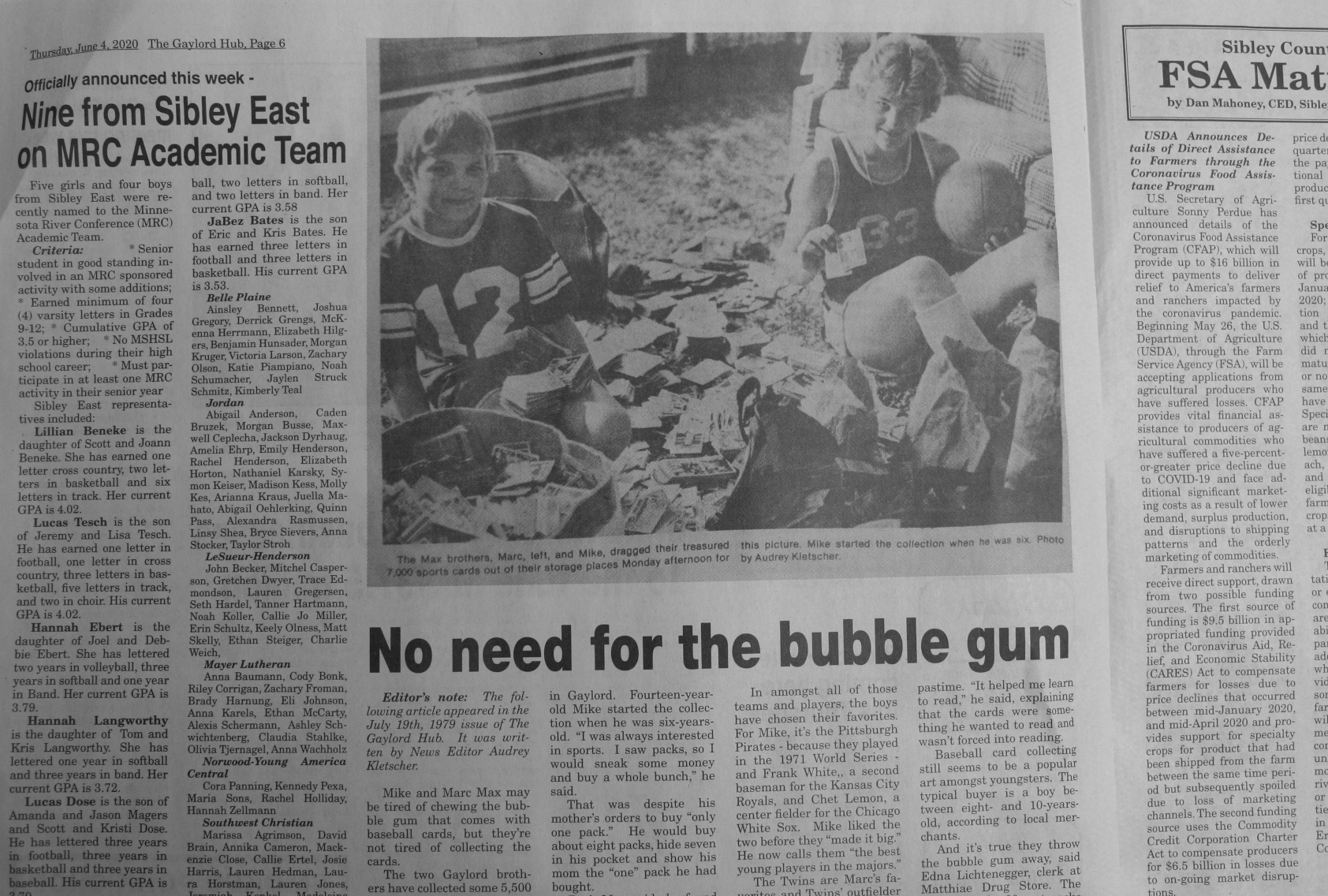
A feature I wrote in 1979 republished in the June 4, 2020, issue of The Gaylord Hub. MN Prairie Roots file photo.

I wonder what Professors Shipman and Olson would teach students today. I expect they’d still focus on the basics. On accuracy and integrity and spelling names correctly.

While writing this post, I wanted to assure I spelled their names right, which led me to search online. It was then that I discovered some interesting facts about Olson, a petite spitfire of a woman. Shortly before she turned four, Gladys and her infant brother were orphaned as a result of the 1918-1919 flu pandemic. Their parents died within 24 hours of each other, among more than 8,000 North Dakotans who died of influenza in 1919. The siblings were raised by their paternal grandparents. I wish I’d known this when Olson taught me how to become a good, decent and fair newspaper reporter.

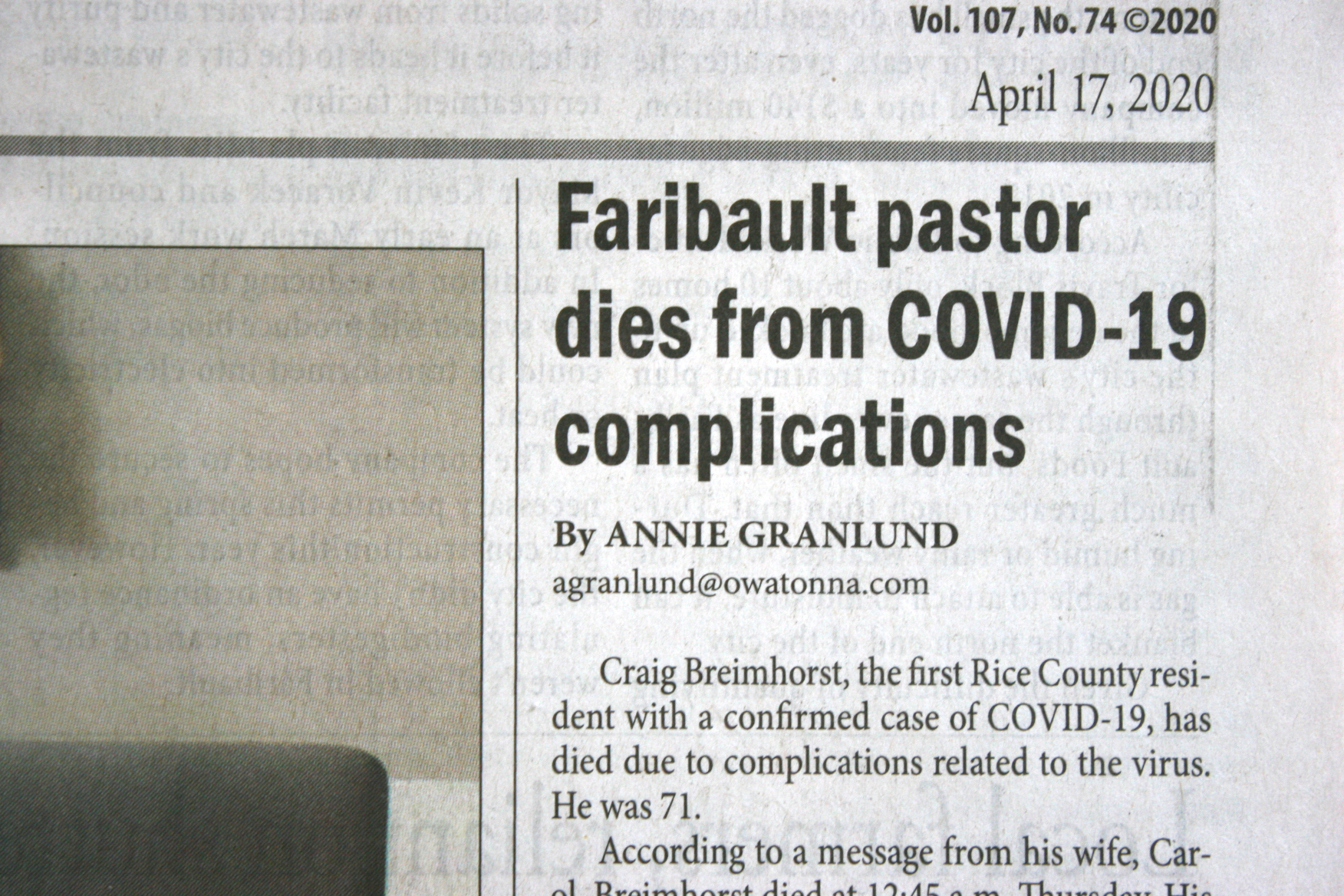
From the front page of the Faribault Daily News. MN Prairie Roots file photo 2020.

Today, as I read Olson’s 2016 obit, I understand her backstory, what shaped her strength and resilience and kindness. The list of her accomplishments beyond journalism professor emphasizes service to others. She lived to age 101. That she died only four years before the COVID-19 pandemic is not lost on me. I’m thankful she didn’t have to endure another pandemic. I’m also thankful that she, and Robert Shipman, taught me old school journalism style. To write with fairness, integrity and accuracy. And to value the role of newspapers in a democracy.

© Copyright 2021 Audrey Kletscher Helbling


At the WordWalk: Why I won’t eat tuna June 28, 2011

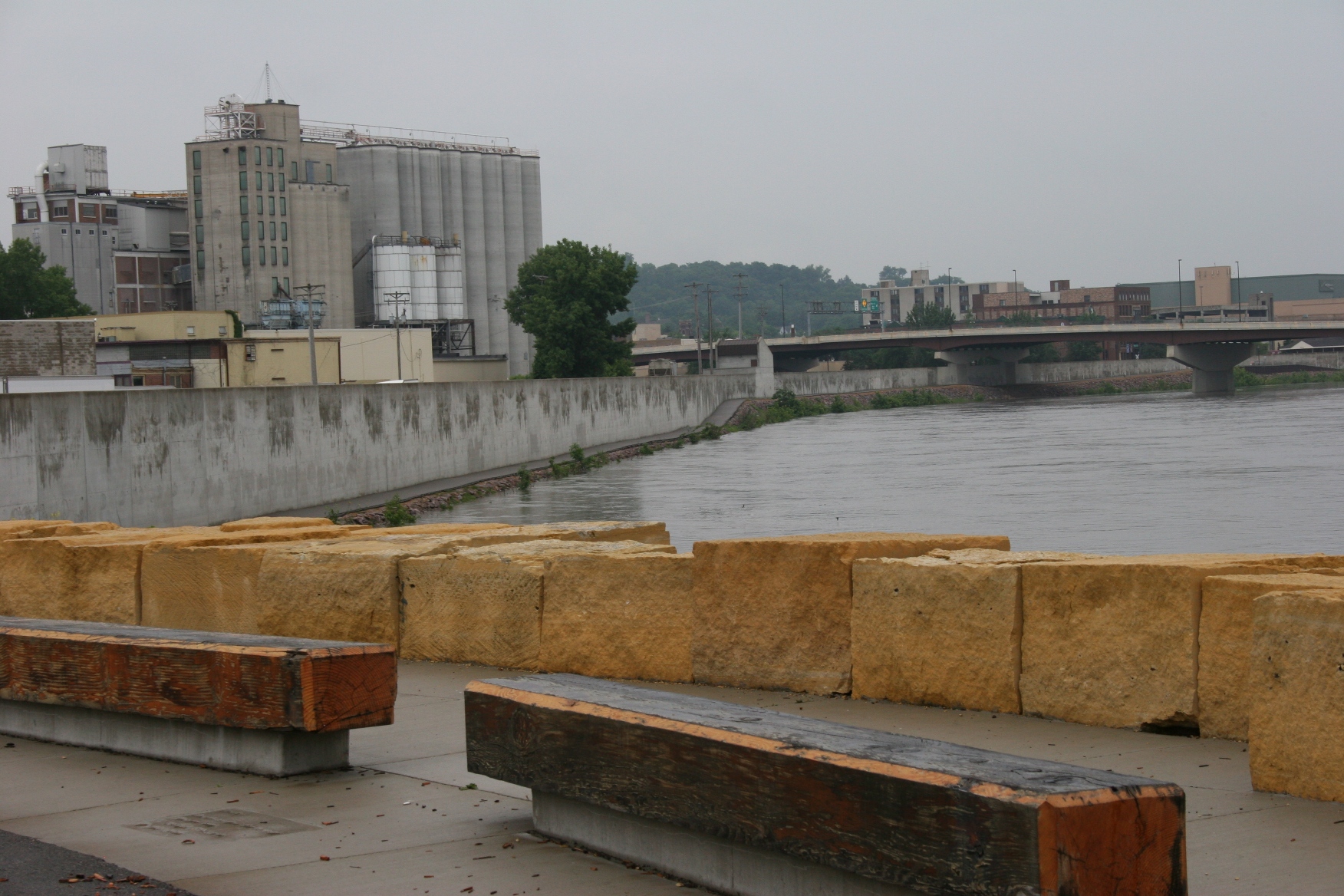
A view of the Minnesota River as seen from Riverfront Park, looking toward downtown Mankato.

THE MANKATO PARK SEEMS, in many ways, an ideal setting for poetry.

The usually playful Minnesota River bumps against the land here, acting on this Saturday afternoon like a willful, unruly child.

On the other side of Riverfront Park, across the tracks, historic buildings stand like forlorn children, neglected, waiting for someone to care.

Overhead, moody skies pout.

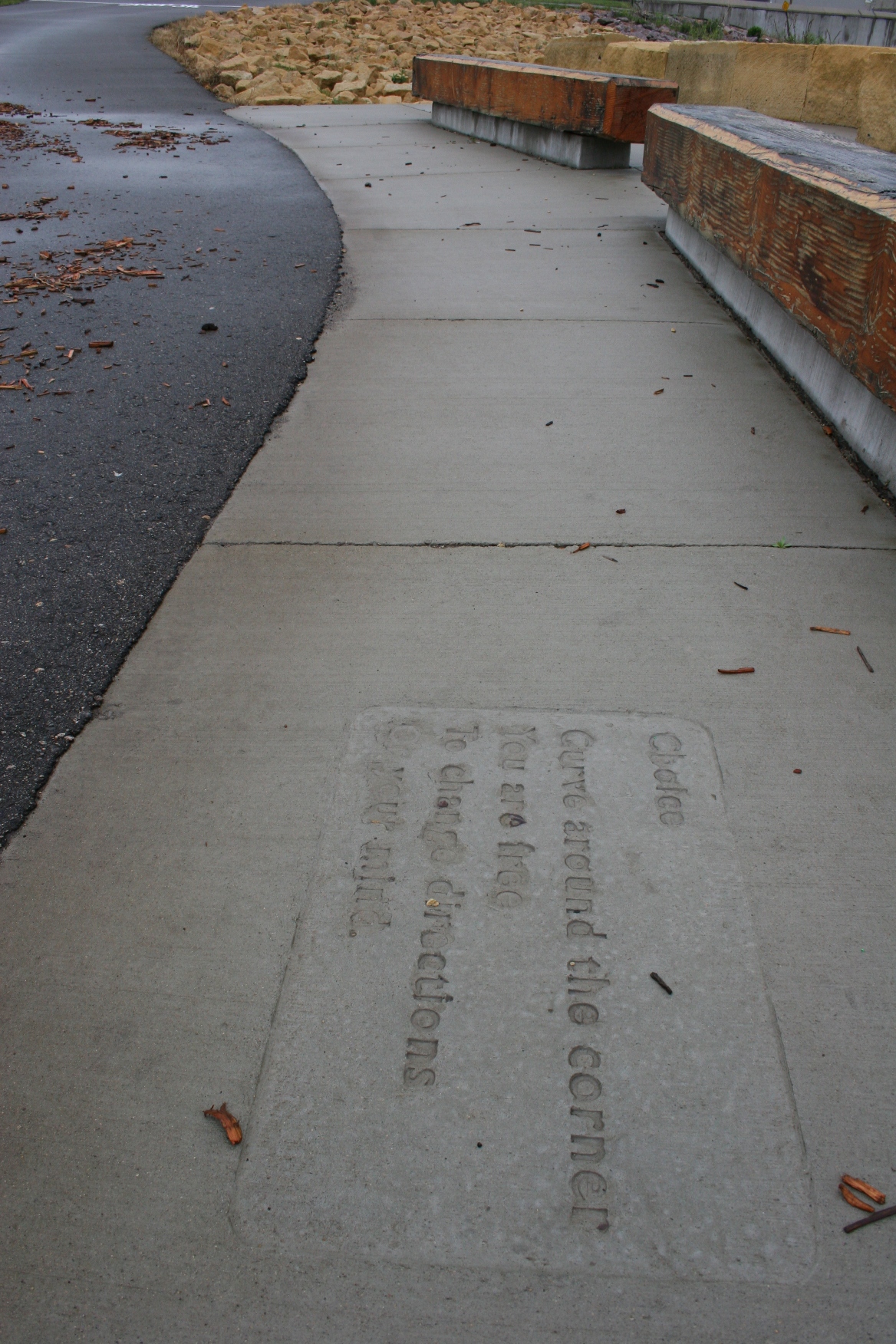
I have come here at this late afternoon hour to read the poetry imprinted upon cement. Occasionally the sky spits rain at me as I follow the gray sidewalk which mimics the gray day.

"Curve around the corner/You are free/To change directions/Or your mind," reads this poem by Marlys Neufeld of Hanska.

I read:

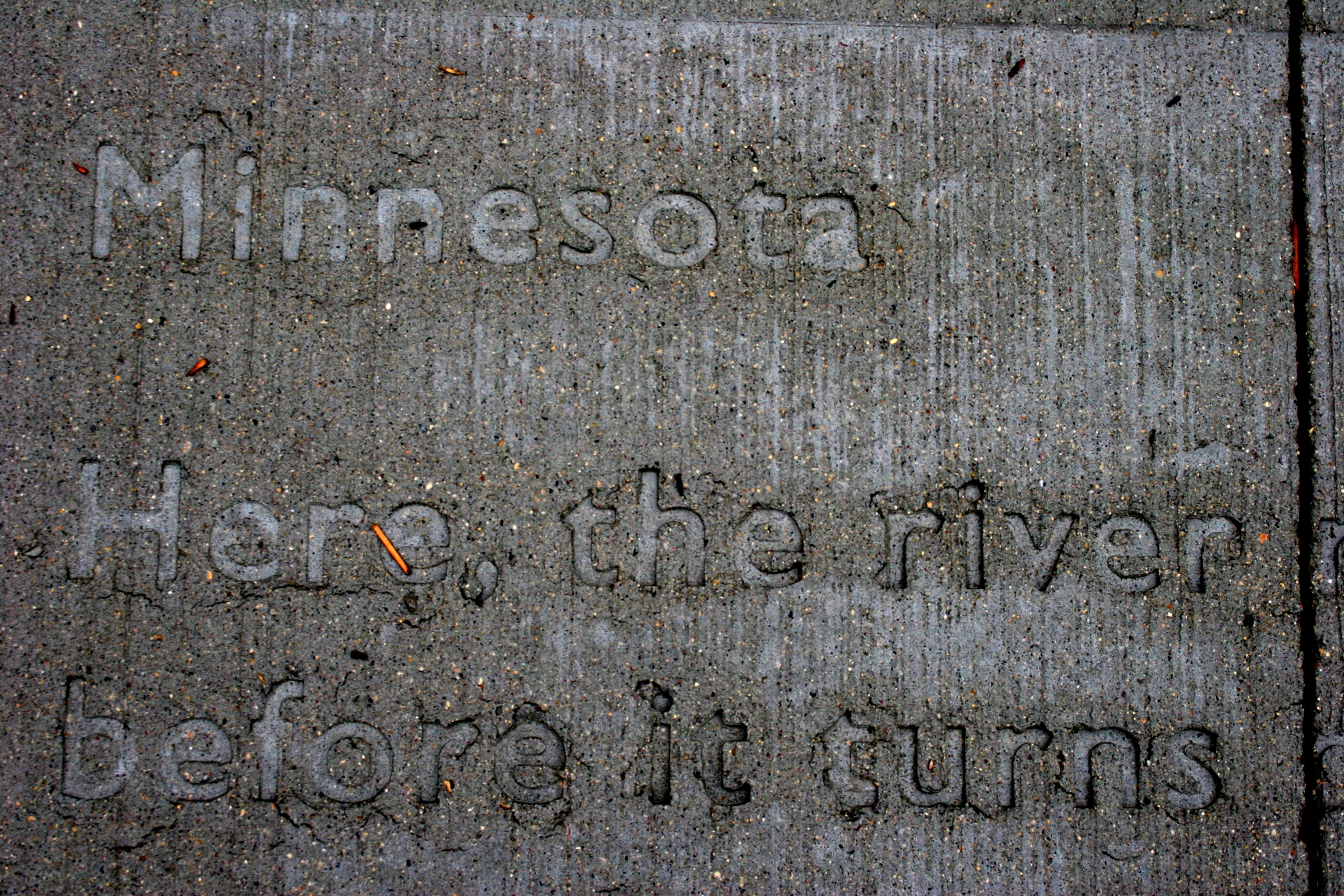
Minnesota

Here, the river rests its elbow

before it turns north to meet

the father of them all.

Here we made 38 mistakes

we now try very hard

not to forget.

A snippet of the poem, "Minnesota." I've edited this image so that you can better read the words. The poems are, unfortunately, a bit difficult to read because of a lack of color contrast between the letters and the cement.

The poem by Ikars Sarma of Mankato refers to the hanging of 38 Dakota here on December 26, 1862. A heavy thought to match the heaviness of the sky, the raging of the river, the anger that still simmers over this shameful moment in this city’s history.

I move on.

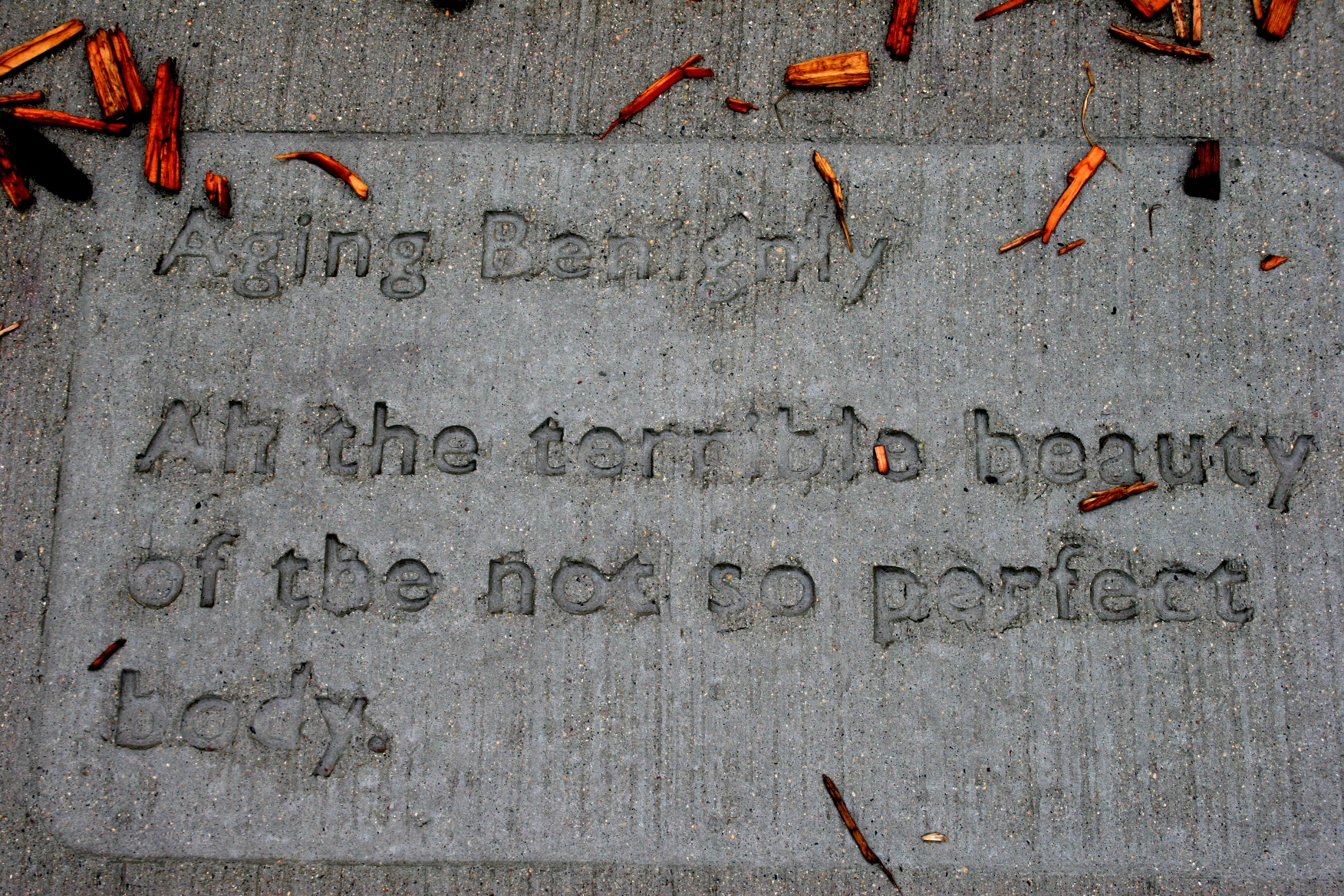
Susan Stevens Chambers of Good Thunder writes:

Aging Benignly

Ah the terrible beauty

of the not so perfect

body.

In this edited photo, read Susan Stevens Chambers' poem about aging.

Nearby kids scramble up a rock wall as I struggle to lift my aging bones from the sidewalk where I have bent close to read and photograph Chambers’ poem.

Then I laugh at the words penned by Mankato resident Yvonne Cariveau:

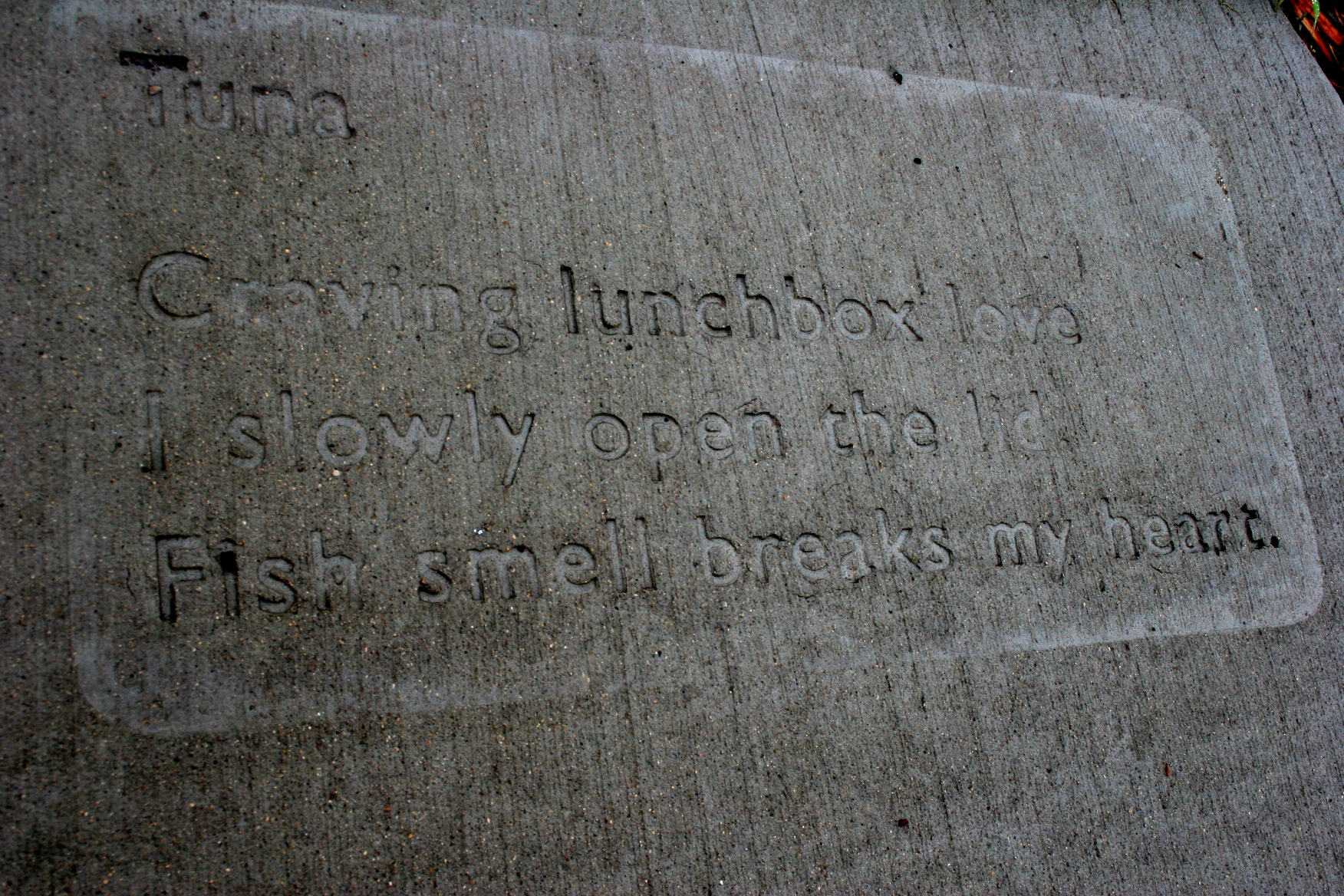
Tuna

Craving lunchbox love

I slowly open the lid.

Fish smell breaks my heart.

The poem that causes me to remember all the tuna I ate during my last two years of college.

Exactly. I ate too much tuna in this college town between 1976 and 1978. I could write my own poem about cramming tuna sandwiches while cranking out stories at the Mankato State University (I still can’t call it Minnesota State University, Mankato) student newspaper, The Reporter.

Deadlines and words.

Words and deadlines.

Tuna. Words. Deadlines.

Cariveau’s writing reminds me of those years so long ago when I was young and only beginning my journey into the poetry of life.

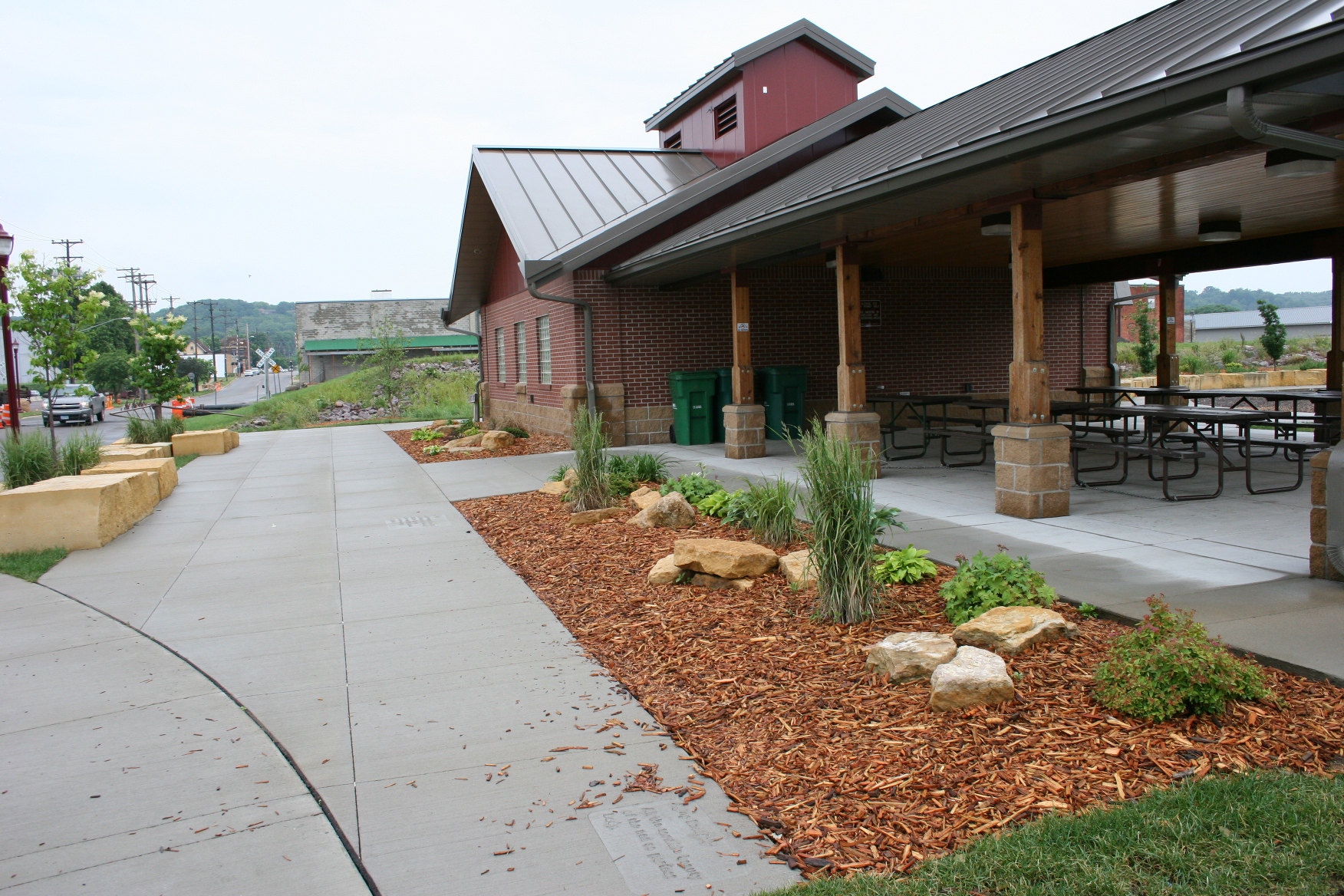
WordWalk poems are imprinted on the sidewalk circling this restroom/shelter facility at Riverfront Park in Mankato.

FOR MORE INFORMATION about Mankato’s public sidewalk poetry, WordWalk, click here and here. At least two other Minnesota cities, of which I am aware, have sidewalk poetry: St. Paul and now Northfield.

WHAT’S YOUR OPINION on sidewalk poetry? Do you like it, or not? Would you like to see more such public poetry in Minnesota communities? Why or why not?

© Copyright 2011 Audrey Kletscher Helbling