Minnesota Prairie Roots

Writing and photography by Audrey Kletscher Helbling

“Love Story” revisited April 30, 2014

Filed under: Uncategorized — Audrey Kletscher Helbling @ 6:00 AM
Tags: , , , , , , , , ,
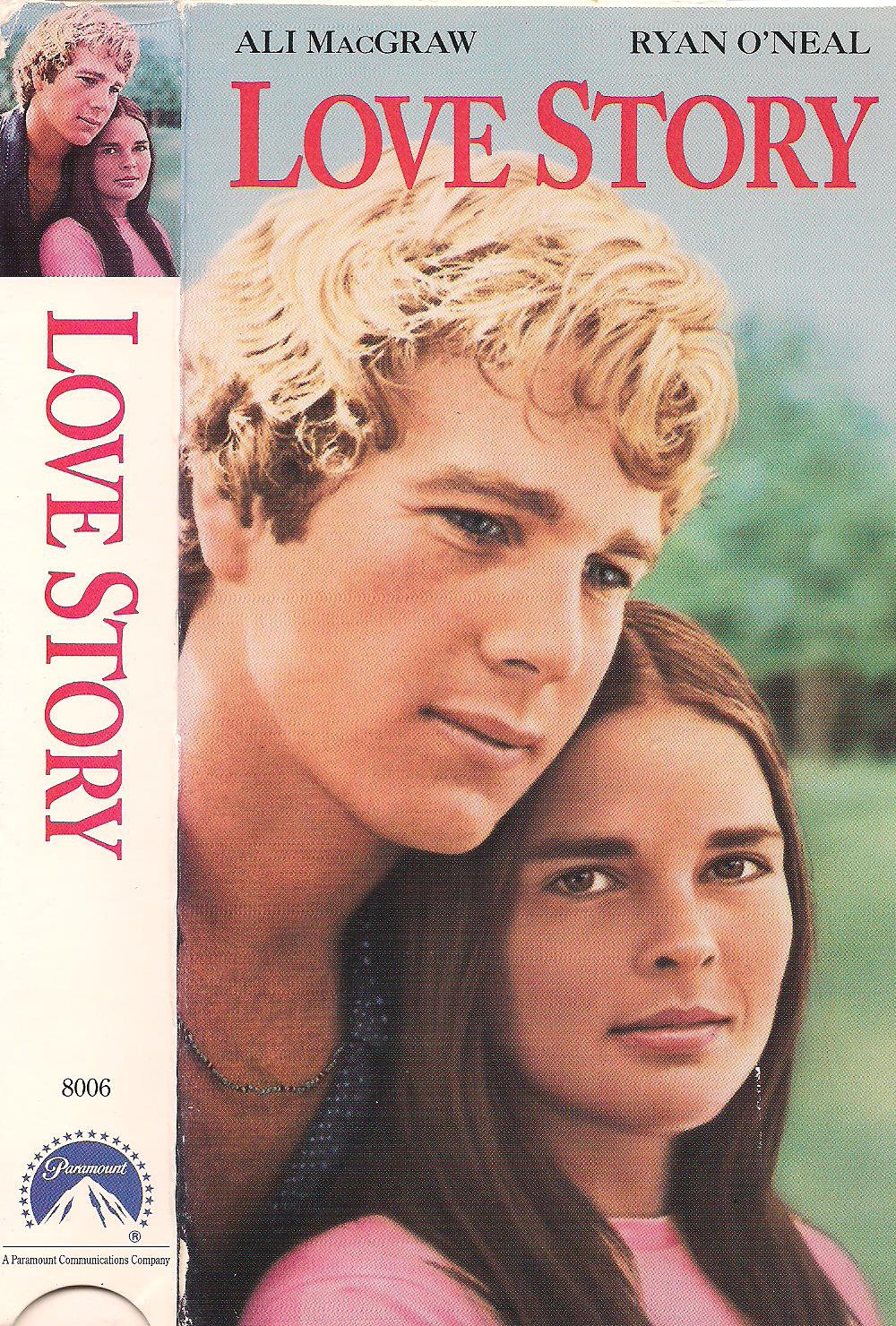
I now own a VHS copy of Love Story, purchased from the discard shelf at my local library.

I now own a VHS copy of Love Story, purchased from the discard shelf at my local library.

“Love means never having to say you’re sorry.”

FORTY-FOUR YEARS AGO, with the release of the film Love Story, those words quickly became a part of pop culture. They rolled off the lips of adolescents like me, a then high school freshman, who could fall easily, blissfully in love with the latest movie star featured in Tiger Beat magazine.

Now, four-plus decades later, I don’t quite believe the “love means” phrase spoken twice in the award-winning Paramount Pictures flick starring Ryan O’Neal and Ali MacGraw. Love does mean asking for forgiveness when you’ve wronged a loved one.

Despite that change in perspective, I still rank Love Story by writer Erich Segal as one of my all-time favorite movies. The plot, on the surface, seems hopelessly simple: Wealthy Harvard student Oliver Barrett IV falls in love with Jennifer Cavelleri, a Radcliffe student from a working-class family. Oliver’s father disapproves of Jenny and a rift develops between father and son. Eventually, Jenny dies of leukemia.

As a dreamy-eyed teen, I failed to see beyond the surface plot. But there’s so much more depth to this film than a romantic story that ends tragically. It just took decades, and numerous times viewing this movie, to figure that out. I had to get past the relationship between Oliver and Jenny, past my sadness over Jenny’s death, to understand.

So the last time I watched Love Story, just weeks ago, I really listened to the dialogue.

“I never see his face,” Oliver says of his father.

“Does he wear a mask?” Jenny asks.

“In a way,” Oliver replies.

That brief exchange speaks volumes to the stiff and formal relationship between Oliver and his father. The elder Barrett expects much of his son. But he does not expect him to marry below his social class.

“I mean she’s not some crazy hippie,” Oliver says of Jenny. I laugh when I hear that now. “Hippie” sounds so dated. But in 1970, when Love Story hit the big screen, rebellious, anti-establishment, free-loving, independent-thinking young people were, indeed, pegged as hippies.

“If you marry her now, I’ll not give you the time of day,” Oliver Barrett III tells his son.

So the line is drawn in the sand. Oliver chooses love over money and marries Jenny, even says in his wedding vows, “I give you my love, more precious than money.”

At this point in the movie, I nearly stand up and cheer, if not for my sadness over the broken relationship between father and son. Life is too short to sever ties with loved ones over differing opinions and expectations. Life is too short to choose money over love.

Surprisingly, I have not wept this time while watching Love Story. I wonder why. Perhaps it is because my approach to the film has been more analytical than emotional. I am also seeing, for the first time, two love stories (or lack thereof)—one between a man and a woman and the other between a father and son.

And I have been caught up in noticing the details—the rotary dial phone, the over-sized dark eyeglasses, the mini-skirts—that denote this as a 1970 film. I am taking in the beautiful winter scenery; the instrumental theme music, the lyrics “How do I begin to tell the story of my love,” replaying in my mind; and the one word in the film, “preppie,” that still irritates me after four decades.

I am regretting, too, that I no longer have the black and white poster of Ryan O’Neal and Ali MacGraw that once hung above my bed, in the lime green room with the candy stripe carpeting.

CLICK HERE TO READ how Love Story connects to a shop in Neenah, Wisconsin.

© Copyright 2014 Audrey Kletscher Helbling


In praise of Northern Prairie Culture: How Fargo of You April 16, 2014

This water tower is located in West Fargo, an area of shopping malls, restaurants, Big Box stores, hotels, etc.

This water tower is located in West Fargo, an area of shopping malls, restaurants, Big Box stores, hotels, etc. Minnesota Prairie Roots file photo.

TWO DAYS AFTER I FINISHED reading Marc de Celle’s book, How Fargo of You, a 10-episode mini series, Fargo, debuted (yesterday) on FX television. Excellent. Timing is everything.

I receive my TV reception from a rooftop antenna, so there will be no watching Fargo for me. Rather I have to rely on synopses and reviews posted online. The series plays off the Coen brothers’ (native Minnesotans Joel and Ethan) 1996 award-winning film by the same name. (Click here to read my review of that movie.) The Coens are two of the executive producers for this new show penned by Noah Hawley and featuring Oscar winning actor Billy Bob Thornton.

The VHS cover of the movie Fargo.

The VHS cover of the movie Fargo.

You can expect dark comedy, crime, stereotypes and that noted, albeit not fully accurate, Fargo accent. About half of the Fargo series is set in fictionalized Bemidji, Minnesota. Since I haven’t seen the new series, I can’t accurately review it.

Marc de Celle's book cover

But I can talk about de Celle’s book. He’s also written a follow-up, Close Encounters of the Fargo Kind, which I’ve yet to read. This is a compilation of others’ stories rather than simply his own.

In summary, de Celle, who moved with his family in 2005 from Phoenix to Fargo, writes about his personal “How Fargo of You” experiences in his first book. That’s the tag line he’s attached to unfamiliar and unexpected positive experiences in his new home.

He’s not a Fargo native, his closest ties to the region in his Wisconsin native wife and her best friend, Melody, who lives in Fargo. That friend initially drew the family to Fargo for a visit. So de Celle views this area of the country with a perspective of someone unaccustomed to, as he defines it, Northern Prairie Culture. And, yes, that includes Minnesota.

The famous woodchipper from the movie, Fargo, is a focal point in the Visitors Center. Other film memorabilia is also on display.

The famous woodchipper from the movie Fargo is a focal point in the Fargo Visitors Center. Other film memorabilia is also on display. Minnesota Prairie Roots file photo.

Unlike the film and TV series, this writer promises: “No goofy accents. No murderers on the loose. No weird plot twists. Just real Fargo.”

And that’s exactly what you’ll read in de Celle’s first book—a compilation of all that is good about Fargo folks, and those living within several hundred miles of this North Dakota/Minnesota border town.

Shortly after the de Celle family arrives in their new community just outside of Fargo, they encounter their first Fargo moment in teenagers helping unload their belongings. And the neighbor-helping-neighbor stories and overall niceties of the region’s people just continue from there.

From the pump and then pay at the gas station, to the shared story of a Minnesota farmer assisting college students with a flat tire and the farmer’s wife then preparing a little lunch to motorist merging courtesy to homemade rhubarb pie served at a rural restaurant where a stranger picks up the tab for a cashless de Celle to Fargo residents’ efforts to save their community from the flooding Red River and more, you will read stories that warm your heart.

A scene from November in downtown Fargo.

A scene from downtown Fargo. Minnesota Prairie Roots file photo.

This is truly a feel-good book, one which makes you thankful, for the most part, to live in this region of the U.S.

De Celle does note, though, the environmental realities in Fargo’s harsh winters, the flat landscape and the strong and endless wind. I especially laughed at his fly-clinging-to-the-windshield wind story given my son spent his first year of college at  North Dakota State University on Fargo’s particularly windy north side.

In February 2013, I received this text from my then 19-year-old: “This cheap Walmart hat stands zero chance against the Fargo wind.” He then proceeded to order a Russian military surplus fur cap online to replace the mass-manufactured stocking cap.

While at NDSU, my son worked and volunteered in the Technology Incubator as part of an Entrepreneurial Scholarship. He is walking away from two major scholarships at NDSU to attend Tufts University.

The NDSU Technology Incubator referenced in de Celle’s book. Minnesota Prairie Roots file photo.

After that first year, the son left NDSU and now attends college in Boston, where the climate is less challenging and his current university a better fit. While in Fargo, he worked at the NDSU Technology Incubator, which de Celle describes in his book as “the hippest looking building this side of Minneapolis.”

I’ll agree that the modern architecture looks pretty sleek situated next to open fields where the wind does, indeed, blow with determined fierceness.

A view of the 300 block on North Broadway, including signage for the Fargo Theatre, built in 1926 as a cinema and vaudeville theatre. The theatre is on the National Register of Historic Places and serves as a venue for independent and foreign films, concerts, plays and more.

A view of the 300 block on North Broadway in downtown Fargo, including signage for the Fargo Theatre, built in 1926 as a cinema and vaudeville theatre. The theatre is on the National Register of Historic Places and serves as a venue for independent and foreign films, concerts, plays and more. Minnesota Prairie Roots file photo.

In the time shortly before my son moved to North Dakota and in the nine months thereafter, I got to know Fargo somewhat. It is the charming downtown, with its mostly old buildings, which most endears me to this community. And the people. They were, as de Celle has found, always kind and friendly.

He does expose, though, one issue—that of a workforce he terms as “the most overqualified, underpaid, competent and ethical” in the U.S. “Underpaid” jumps out at me, when really “overqualified, competent and ethical” should.

Then de Celle balances this with his summation that the majority of folks in Fargo value relationships over stuff. That apparently partially explains why people choose to live in Fargo when they could earn more money elsewhere doing the same job.

Now that’s my kind of place, my kind of people.

The landscape: flat and into forever.

The landscape: flat and into forever in the Fargo area. Minnesota Prairie Roots file photo.

But I’m going to be honest here. Even though I grew up on the southwestern Minnesota prairie, which I thought to be about as flat and open sky country as exists, I found the landscape of Fargo even flatter, the wind more fierce, the environment harsher.

Every visit to Fargo, I felt unsettled. Like my son before me, I doubt I could last more than a winter in North Dakota. Rather, I live across the border nearly 300 miles to the south and east, still within Northern Prairie Culture in a state known for “Minnesota Nice.” Probably a lot, I’ve concluded, like “How Fargo of You” nice.

Disclaimer: Author Marc de Celle purchased one of my photos for usage on his website and gave me complimentary copies of his two books. That, however, did not influence my decision to write this review or the content therein.

© Copyright 2014 Audrey Kletscher Helbling

 

How are the fish biting on Central? December 10, 2013

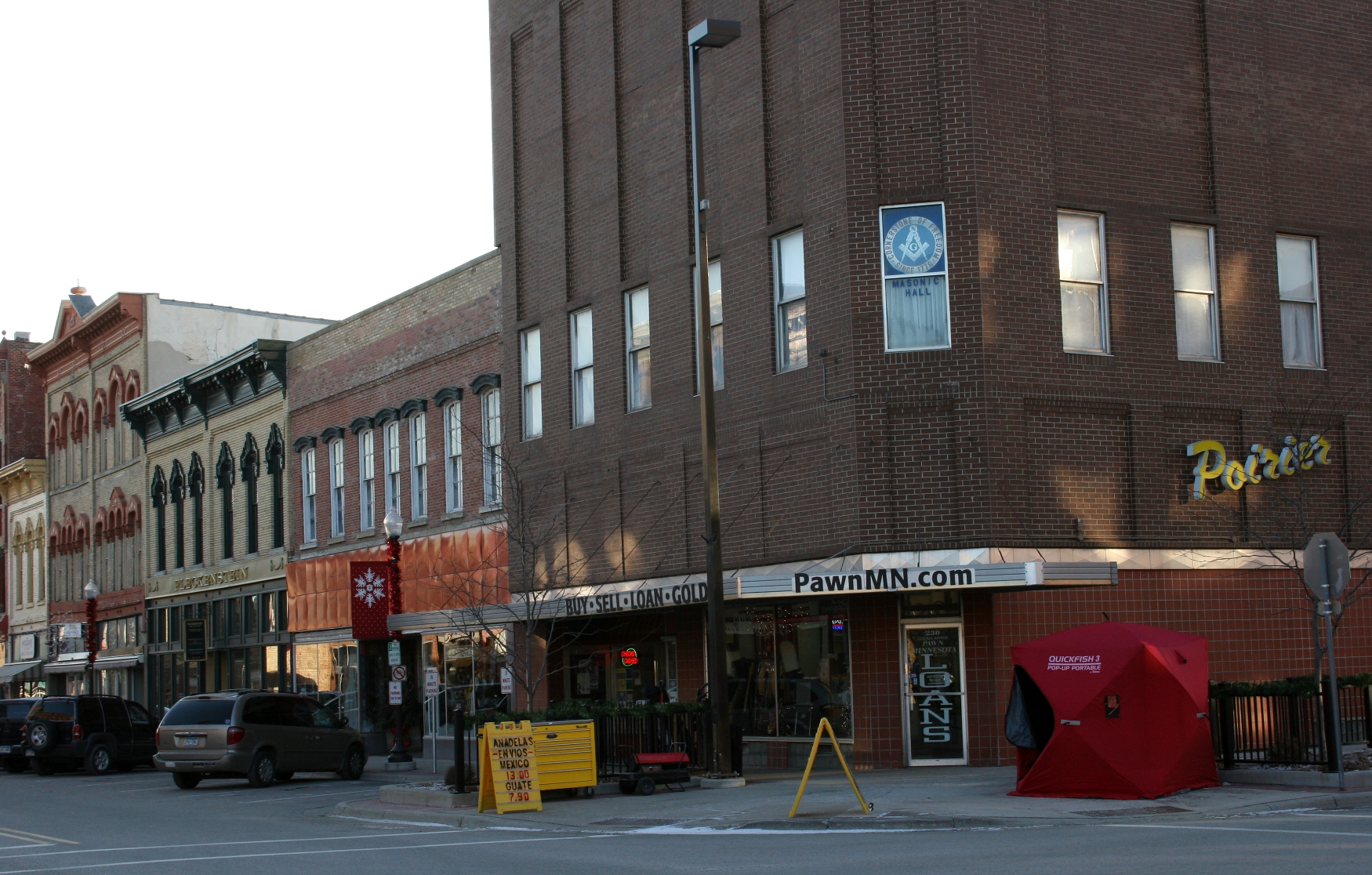
Pawn Minnesota often displays merchandise, including this fish house, outside its downtown Faribault store.

Pawn Minnesota often displays merchandise, like the red fish house, outside its downtown Faribault store.

IT’S NOT EVERY DAY you spot a fish house positioned on a street corner in an historic business district.

But then this is the “Land of 10,000 Lakes” and home to lots of fishing enthusiasts who can’t wait for lakes to freeze thick enough for ice fishing. Yes, in Minnesota we do walk and drive onto frozen lakes to fish.

Outdoor merchandising...

Outdoor seasonal merchandising…

That said, Pawn Minnesota likely grabbed the attention of shoppers with the Quickfish 3 pop-up portable fish house set up outside the business at 230 Central Avenue in downtown Faribault Saturday afternoon.

To make this even more noteworthy, the pawn shop is housed in the former Poirier Drug Store featured in the 1993 movie Grumpy Old Men. In that film, co-stars and ice fishermen Walter Matthau and Jack Lemmon visit the then old-fashioned pharmacy.

In an ironic twist, the now-closed Dandelet Jewelry across the street was converted into a pawn shop for the movie. And now there’s a real pawn shop in what was once the drugstore.

If this sounds a bit confusing, consider also that Matthau and Lemmon ice fished in Grumpy Old Men. Thus the fish house erected outside the former drugstore seems especially fitting.

Minnesota weather appropriate merchandise outside the pawn shop.

Minnesota weather appropriate merchandise showcased in historic downtown Faribault.

That’s how my thoughts wandered when I spied that fish house on the corner with two snowblowers parked next to it. Now if you tell me the fish are biting there…

FYI: If you think my brain cells are frozen, then click here to read about the annual Grumpy Old Men Festival set for February in Wabasha. The fest includes, among other activities, an ice fishing contest and an “Ice shacks n’ Plaid Parade.”

© Copyright 2013 Audrey Kletscher Helbling


The truths in “The Help” December 1, 2011

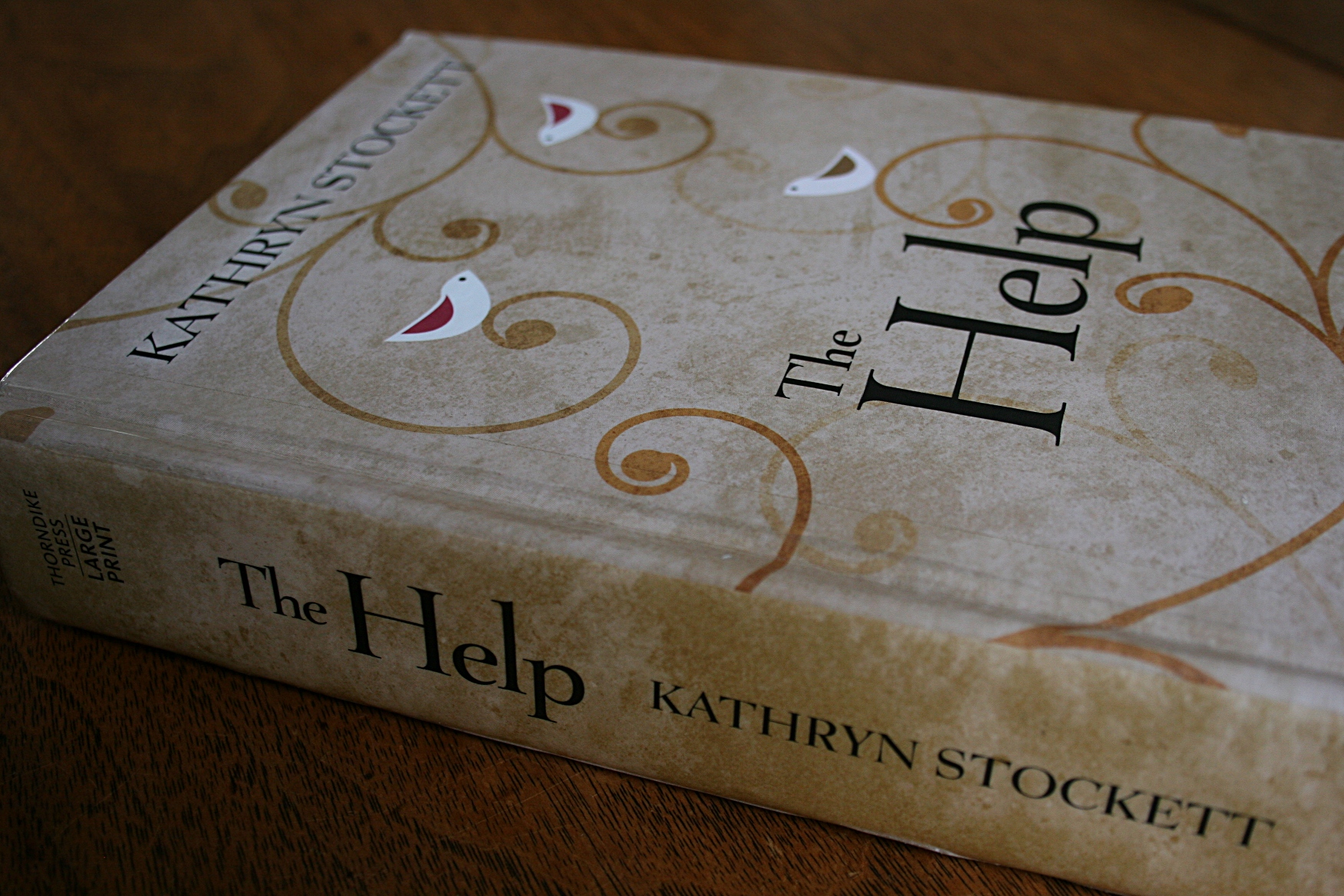
The large print version of The Help.

THREE MONTHS AGO I reviewed “The Help,” a movie based on the New York Times bestseller by Kathryn Stockett. (Read that review by clicking here.)

I wrote then:

In a nutshell, “The Help” tells the story of black women working as maids in upper class Southern white households during the 1960s.

It is that and more. So much more.

Yesterday I stole away 10 minutes to finish the final chapter of The Help. My opinion of the book rates as high as my opinion of the movie. Everyone ought to read this novel and see this movie.

Why?

Although a work of fiction, this book speaks the truth.

Let me show you. While reading The Help, I jotted three page numbers onto a scrap of paper, noting passages that especially struck me.

In chapter 17, from the perspective of Minny, a “colored” maid, are these thoughts:

But truth is, I don’t’ care that much about voting. I don’t care about eating at a counter with white people. What I care about is, if in ten years, a white lady will call my girls dirty and accuse them of stealing the silver.

Consider those words. Do attitudes of “stealing the silver” still linger today?

Near the end of the book, in chapter 34, I came across this line:

Please, Minny, I think. Please, take this chance to get out.

Aibileen wishes this as she speaks on the phone with her friend Minny, who has hunkered down in a gas station after fleeing her abusive husband. Minny finally finds the courage to leave Leroy.

Personal courage, in my summation, is a reoccurring theme in The Help—courage to speak up, courage to be true to yourself, courage to escape abuse.

I would like to see copies of The Help placed in every women’s shelter, given to every victim of domestic abuse, handed to every woman trying to muster the courage to flee an abusive relationship. Stockett’s writing on the topic is that powerful, that motivating, that moving.

Profound, strong words of encouragement for anyone who's been abused, known someone who's been or is being abused, or is currently in an abusive relationship.

Finally, a few pages later I found this passage, a favorite line from the movie and repeated in the book by Mae Mobley, the little girl in maid Aibileen’s care:

“You is kind,” she say, “you is smart. You is important.”

Aibileen ingrained that phrase in Mae Mobley, a child mostly ignored by her mother.

How often do we tell our children, “You is kind. You is smart. You is important” and really, truly, mean it?

IF YOU’VE READ The Help, what nuggets did you glean from this book? What themes or passages made a lasting impression on you?

© Copyright 2011 Audrey Kletscher Helbling


Five stars for “The Help” August 31, 2011

ABOUT ONCE EVERY two years, I see a movie in a theater. Maybe three times a year, I’ll rent a movie from a video store. Occasionally I’ll watch one on television.

I tell you this because I’m no movie expert, critic or star-struck Hollywood fan. A movie needs to hold promise as an excellent film before I’ll spend a dime, or my time, watching it.

“Sweet Land,” based on the book by Bemidji writer Will Weaver, and the classic 1970s “Love Story” are among my all-time favorite movies.

Now you can add “The Help,” based on the #1 New York Times bestseller by Kathryn Stockett, to that list.

I have yet to read the book. In fact, I hadn’t heard of Stockett’s novel until several days ago. Yes, I sometimes live with my head buried in the sand.

The movie version of the book might help more than a few viewers pull their heads from the sand. In a nutshell, “The Help” tells the story of black women working as maids in upper class Southern white households during the 1960s.

As a native Minnesotan who has never even traveled into the deep South, my impressions of Southern history are based mostly on books, stories, photos and films. Whether “The Help” gets it right, I’m uncertain. But, sadly, I expect what I viewed on the big screen depicts historical reality.

I don’t want to spoil the plot for you, so I’ll simplify the storyline: “The Help” focuses on one young woman’s efforts to reveal the stories of the maids who serve those rich, white Southern women in Jackson, Mississippi. Skeeter, an aspiring writer, does that by interviewing the black women—first, Aibileen, and next, Minny—and then writing a book.

The writer angle, certainly, is a familiar one to me given I’ve been a writer for decades. But the whole “hiring of help in the household” is mostly foreign, except for the time during my high school years when I cleaned house every Saturday for a family in my hometown of Vesta. I was well-treated, well-paid for then, and simply happy to have a job—even if I had to scrub the toilet, wax the linoleum and wipe the bottoms of the legs on the kitchen chairs, all while the teenaged son slept upstairs.

My experience as a maid/cleaning girl can’t compare, not by any stretch, to that of the black women portrayed in “The Help.” They are treated more like slaves, as second-class citizens, as human beings without rights.

Especially troubling for me are the scenes involving bathroom usage—blacks prohibited from using the same bathrooms as whites.

I cried when one of the main characters, the maid Aibileen, spoke of her son’s death and how the white women continued playing bridge like nothing had happened.

Aibileen also repeats, through the course of the movie, this line which stands out for me among all the others: “You is kind. You is smart. You is important.”

After the movie, which is a lengthy 2 ¼ hours, my husband and I and others in the theater sat through the credits. Typically we would leave as soon as the movie ended. But “The Help” calls for sitting in quiet contemplation in a darkened theater, pondering the story and hoping, hoping, that life for blacks in the South today does not at all resemble life there in the 1960s.

HAVE YOU SEEN “The Help” or read the book? If you have, please share your thoughts. I’d like to hear your opinion, positive or negative, on the movie and/or book.

© Copyright 2011 Audrey Kletscher Helbling