Minnesota Prairie Roots

Writing and photography by Audrey Kletscher Helbling

Part II: Life as an orphan in Owatonna December 20, 2011

The main building at the orphanage, built in 1886, housed offices, a reception room, chapel/auditorium, boys' cottage, living quarters for employees, a sewing room, attic and linen storage. This main portion today serves as the Owatonna city administration building.

THE TOWERING BRICK building with the enchanting turret represents no fairy tale. Not at all.

Within the confines of this place and the outlying cottages, some 12,000 – 15,000 children spent their formative childhood and teenage years institutionalized in the Minnesota State Public School for Dependent and Neglected Children. They were the orphaned, the abused, the abandoned, the unwanted.
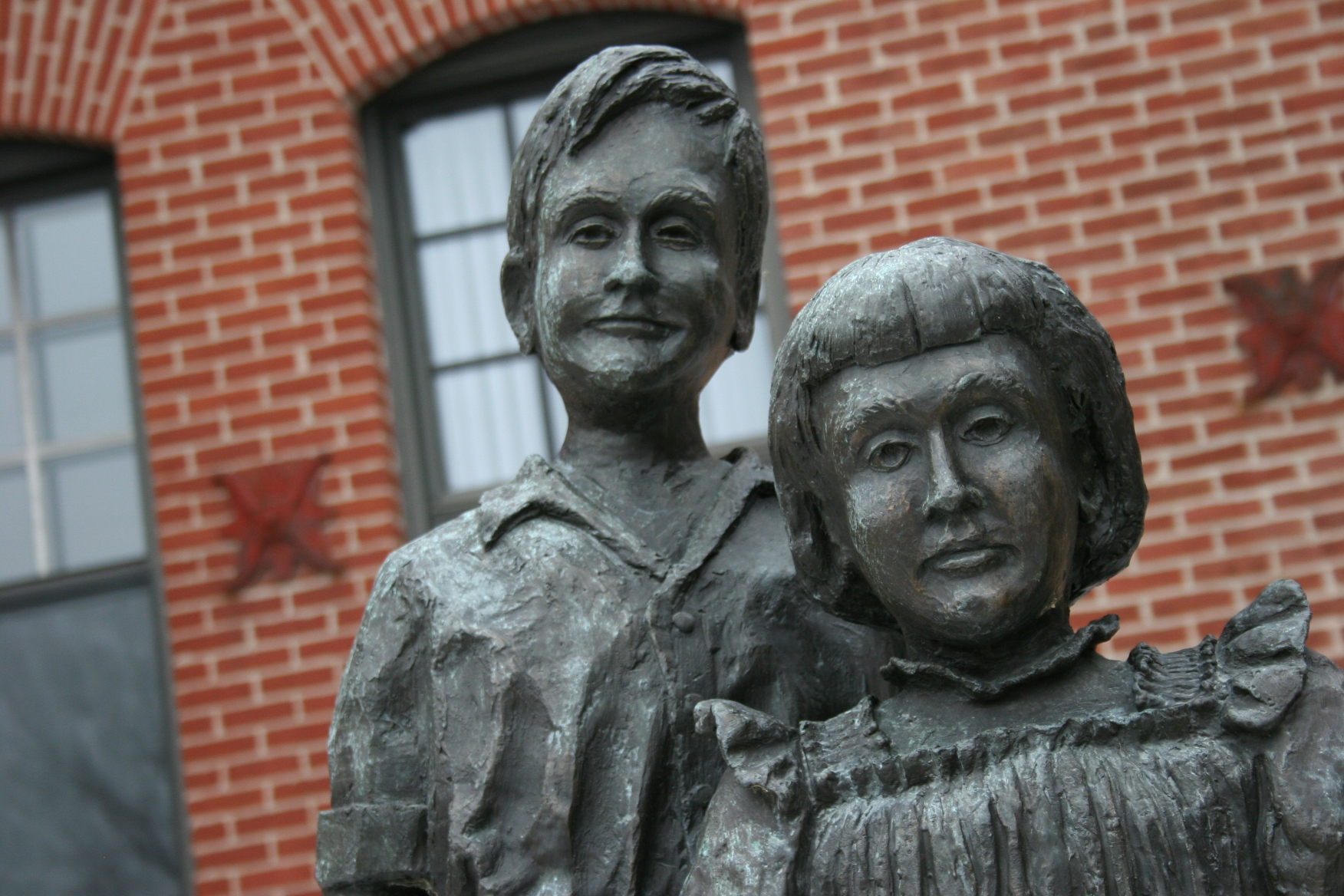
The "State School Kids" memorial stands in front of the main building and was dedicated in 1993.

Information in a brochure I picked up on a recent visit to this 1886- 1945 orphanage in Owatonna reads:

Such children became wards of the state and, in most instances, all parental rights were cancelled. Parents did not always realize they were relinquishing all rights to their children when they signed the State School commitment papers. Some parents returned to try to regain custody of their children and were refused.

Can you imagine?
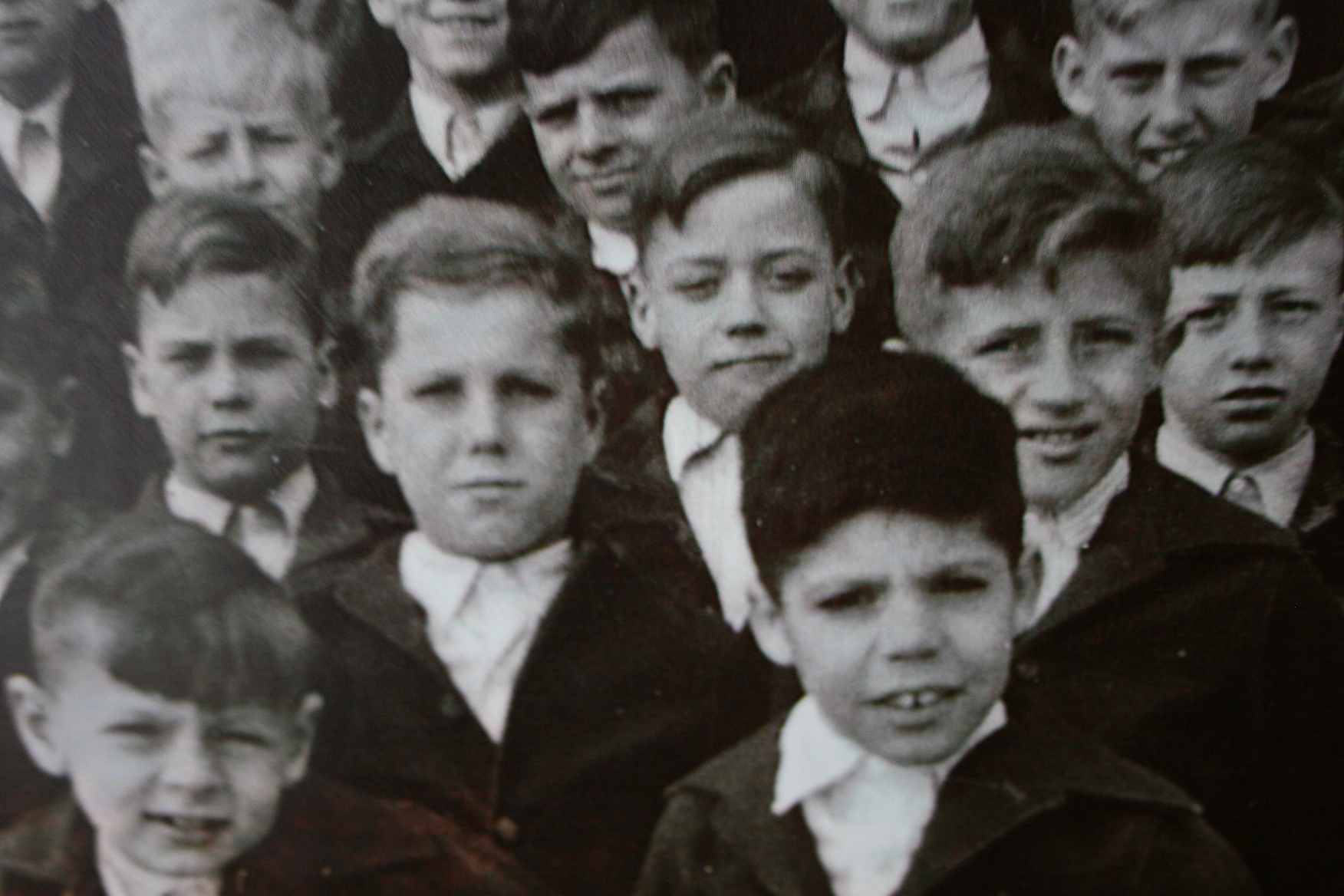
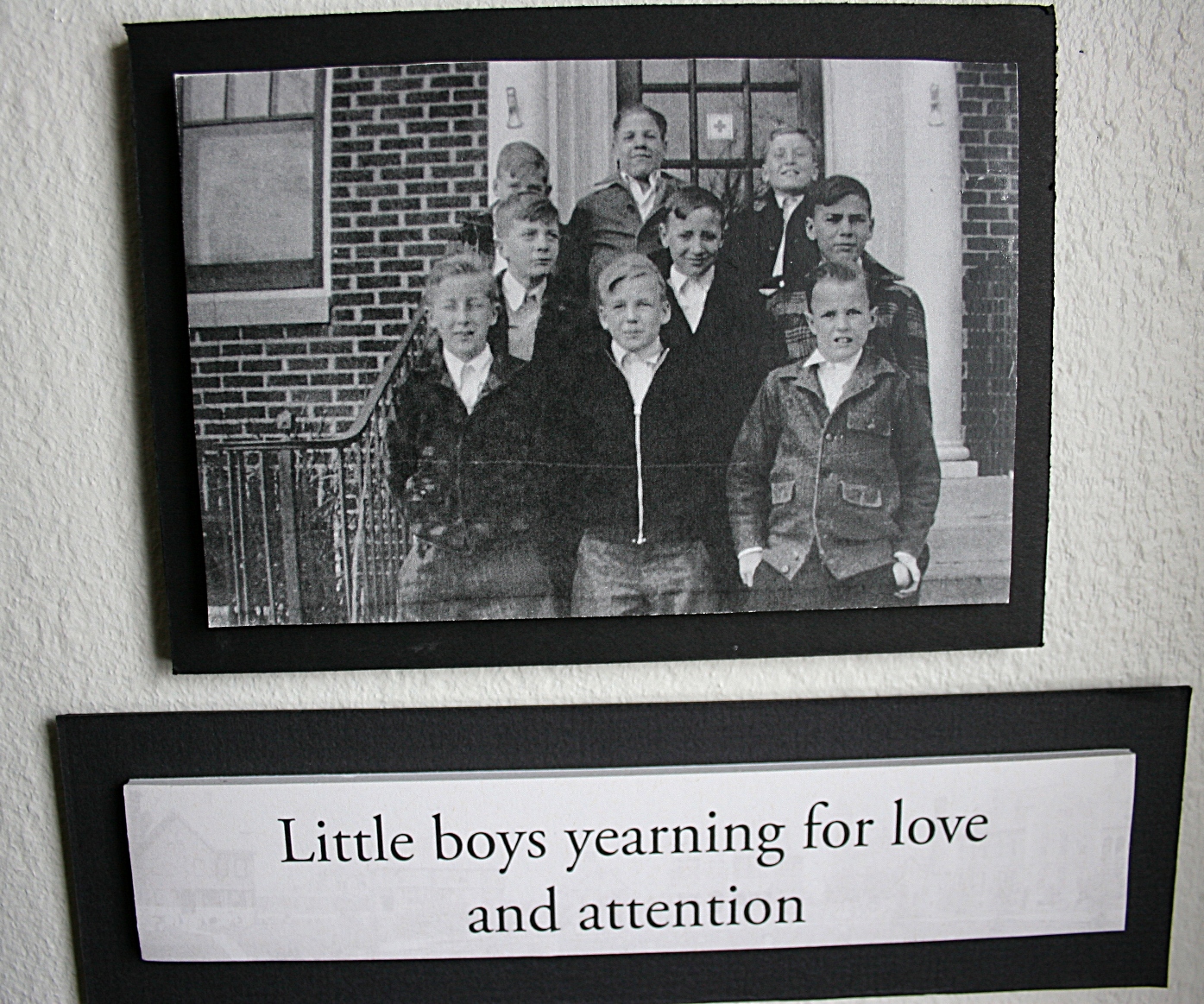
Residents of Cottage 11, which housed boys ages 6 - 13, pose for a photo now on exhibit at the museum.

While some children adjusted to living within the strict regiment and rules of the school, many did not. You will hear and read their tragic memories when you visit the orphanage museum. Be forewarned: These stories are difficult to hear.
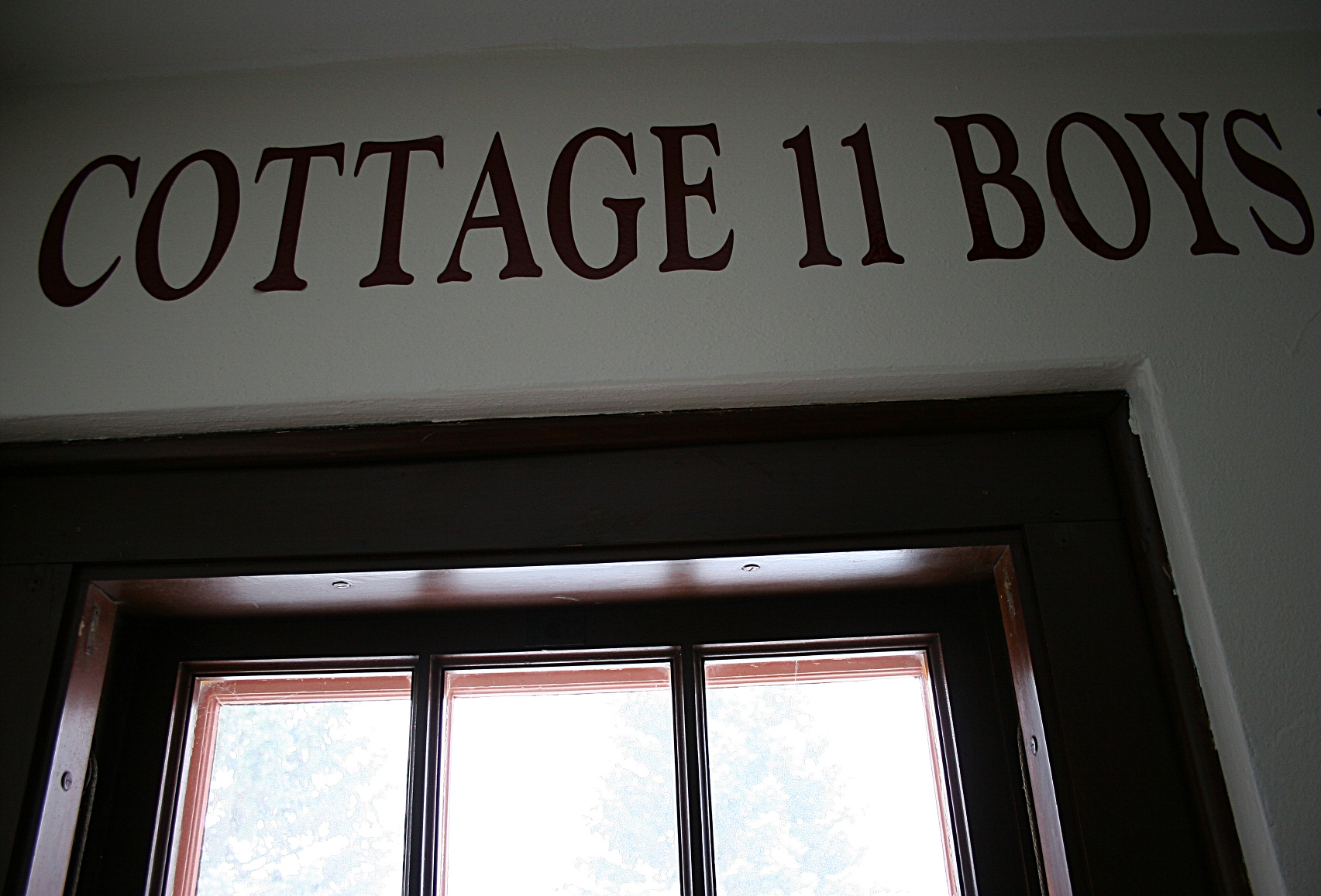
A room in cottage 11 features the photos and memories of the boys who lived there.
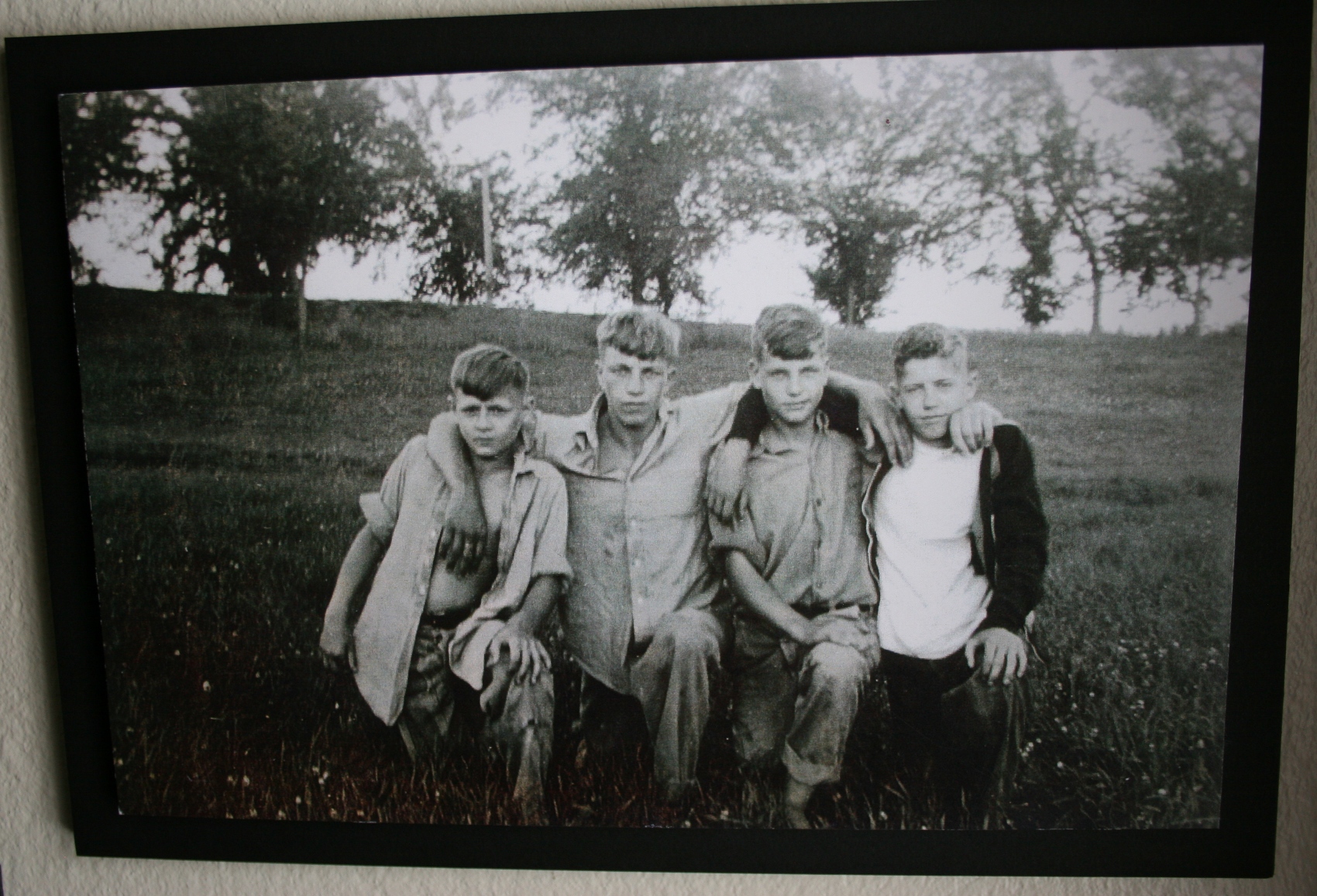
Cottage 11 residents
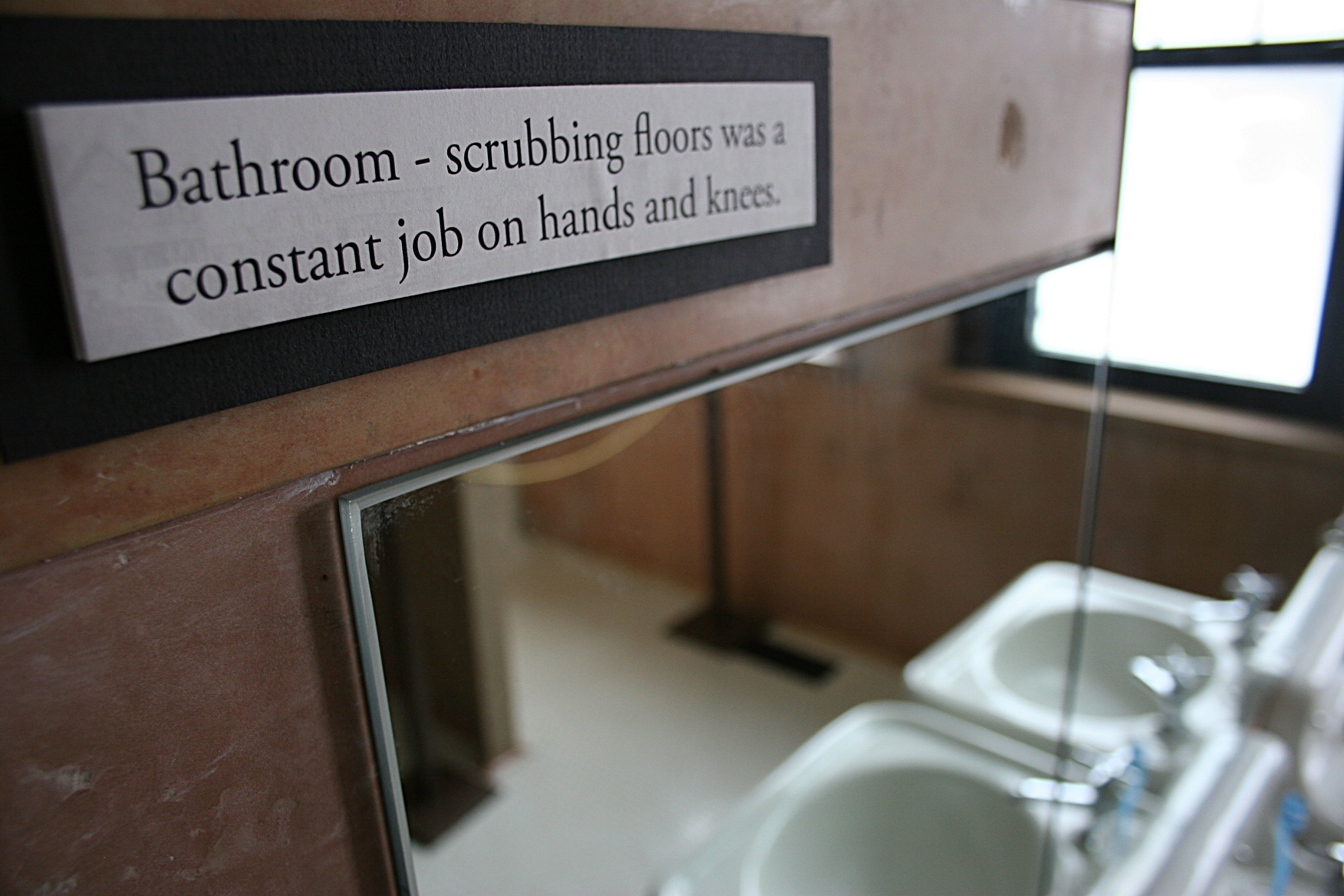
The boys remember scrubbing floors throughout the cottage, including in the bathroom..
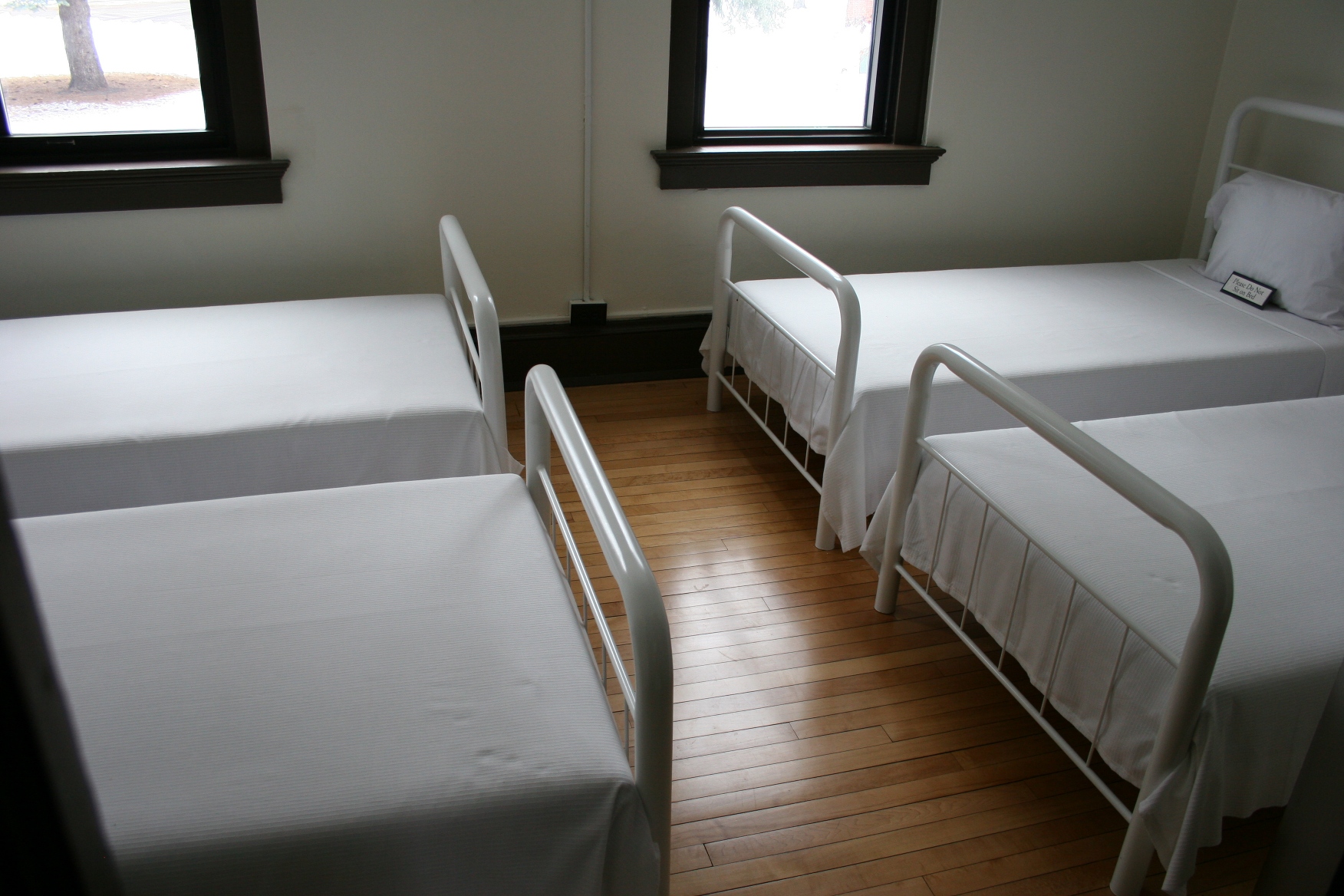
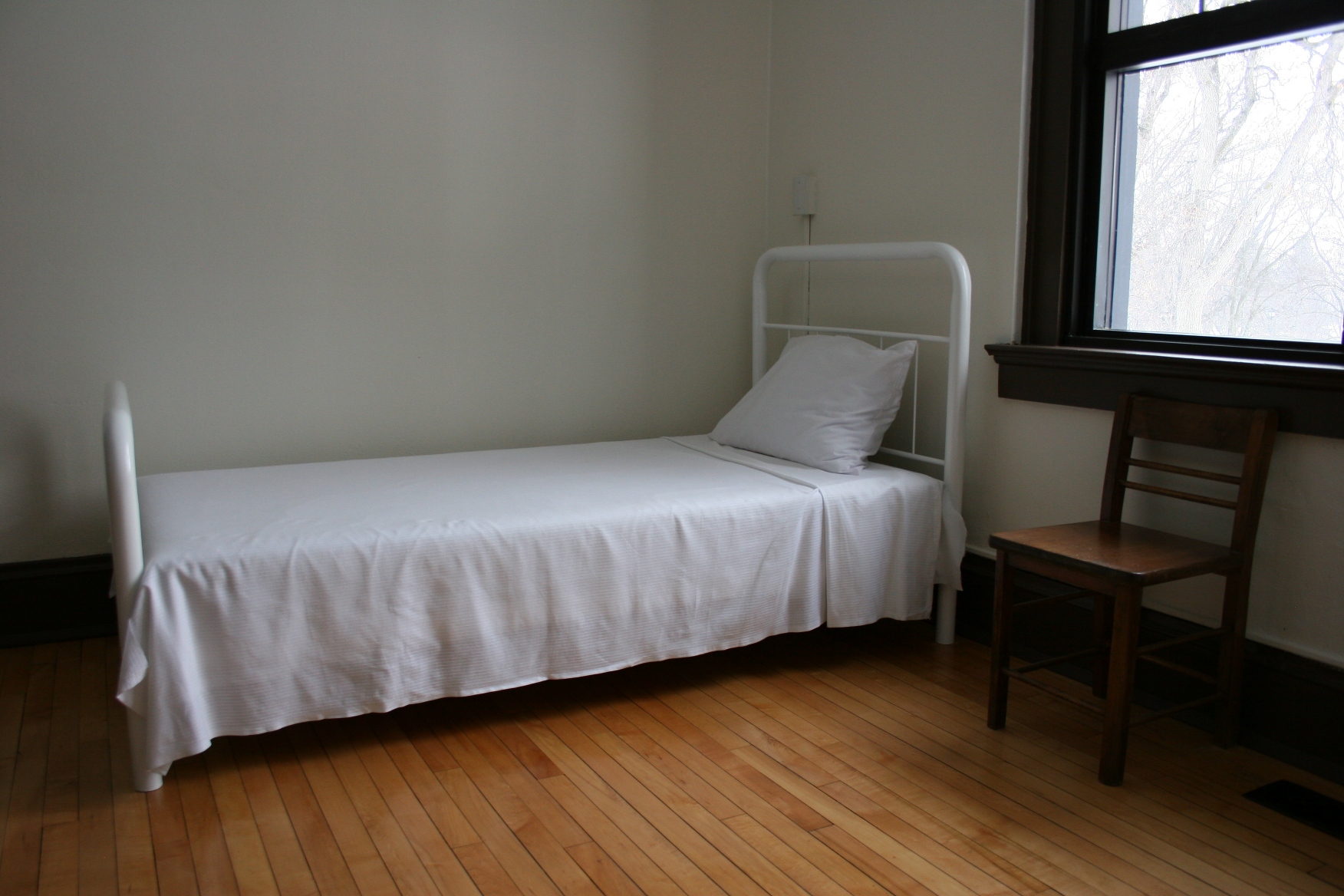
Beds were packed tight into sparse bedrooms in the cottage.

I’ve read several books written by former “state schoolers,” as they were called. Harvey Ronglien, who was the motivator behind the museum and the orphan’s memorial, wrote A Boy from C11, Case #9164, A Memoir. Peter Razor wrote While the Locust Slept, winner of a Minnesota Book Award. I read both books, as well as Crackers & Milk by Arlene Nelson, many years ago and still can’t shake the haunting memories of neglect and abuse and struggle.

Particularly troubling are the reports of abusive, neglectful and unloving matrons. Equally disturbing are the stories of children who were indentured to farm families and then treated like slaves.
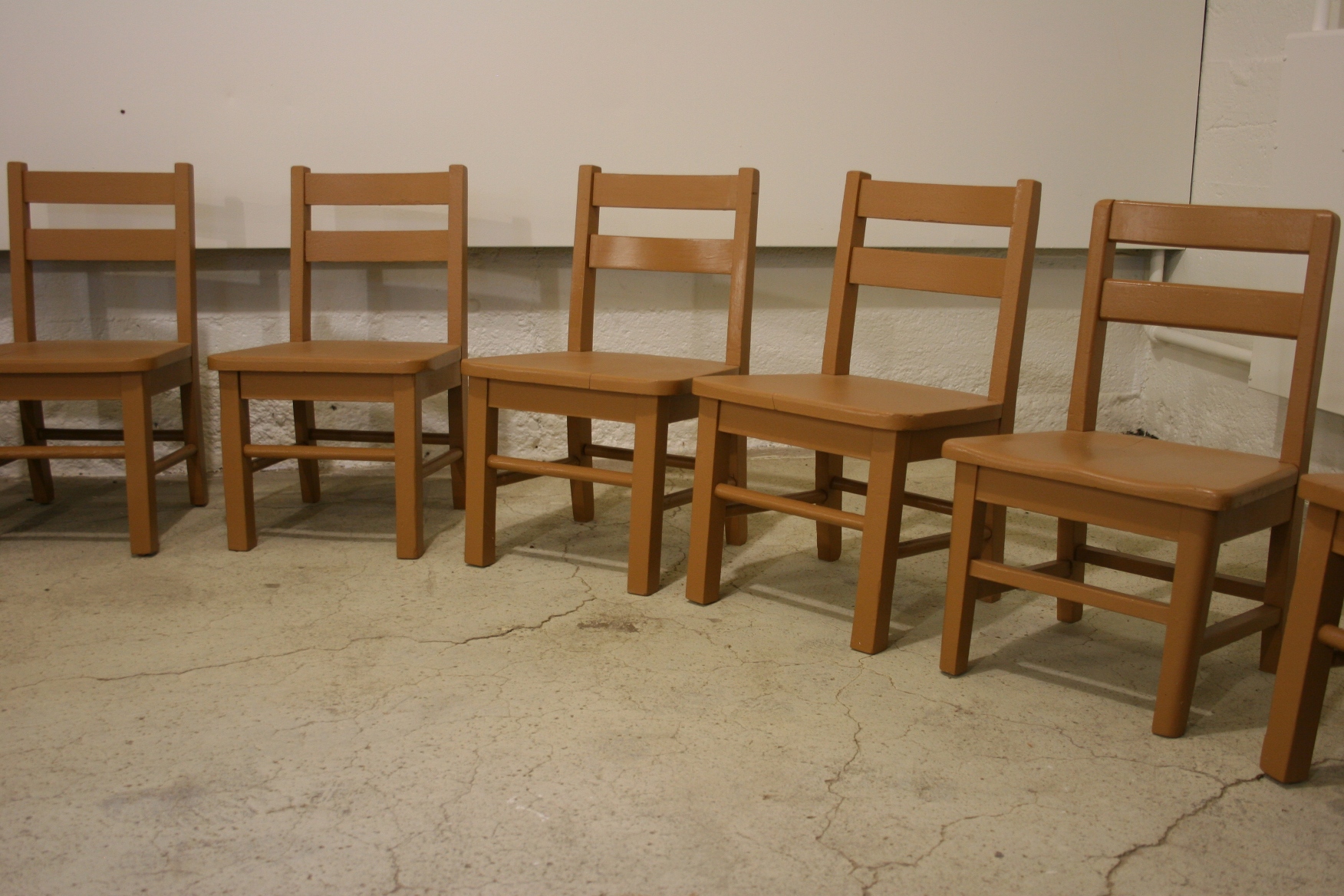
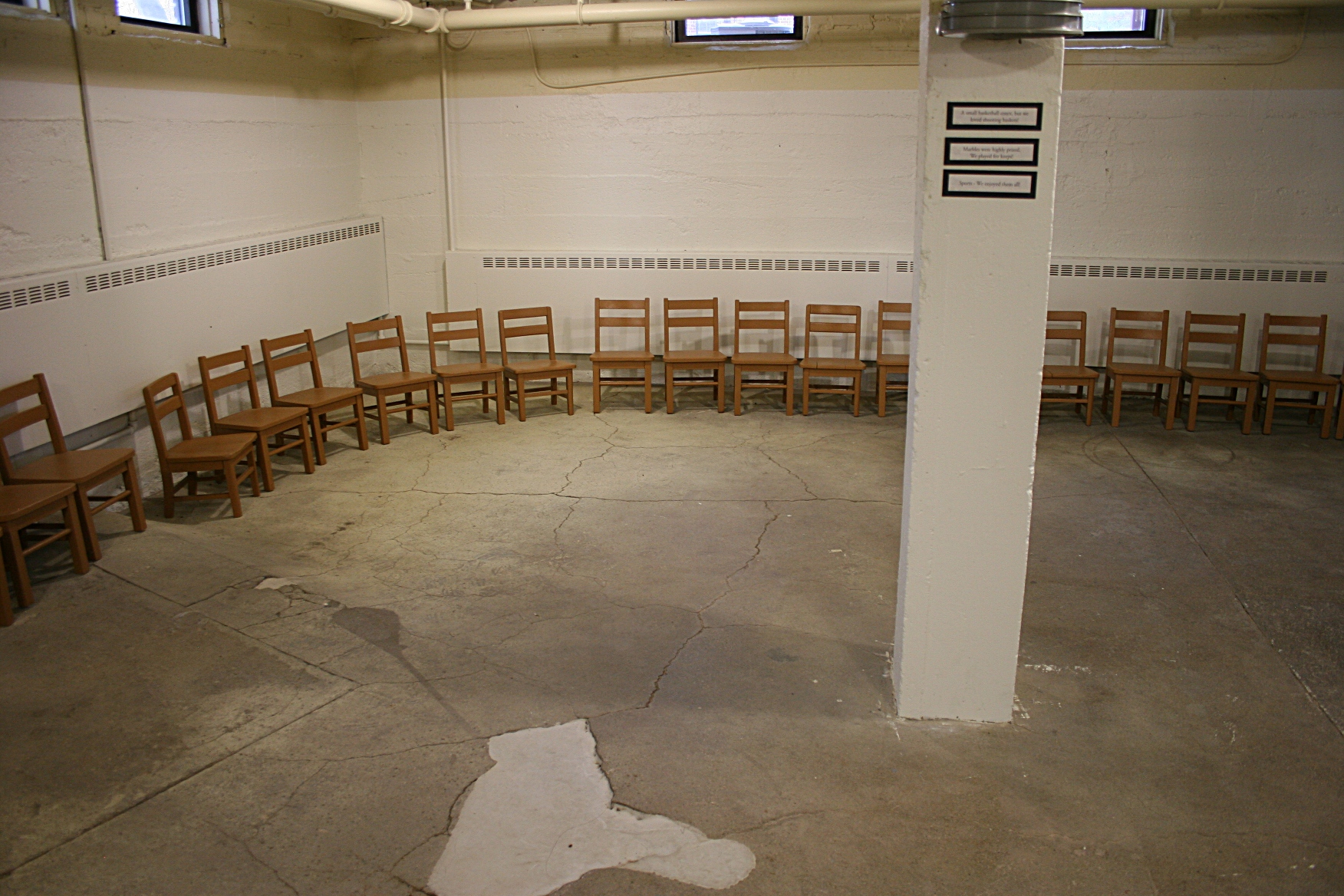
Each boy was assigned to a chair in the basement and could not leave the Cottage 11 basement without permission. This was a method used to keep order and control over the children.

Within the confines of the basement, the boys played with marbles, puzzles, checkers and other toys.
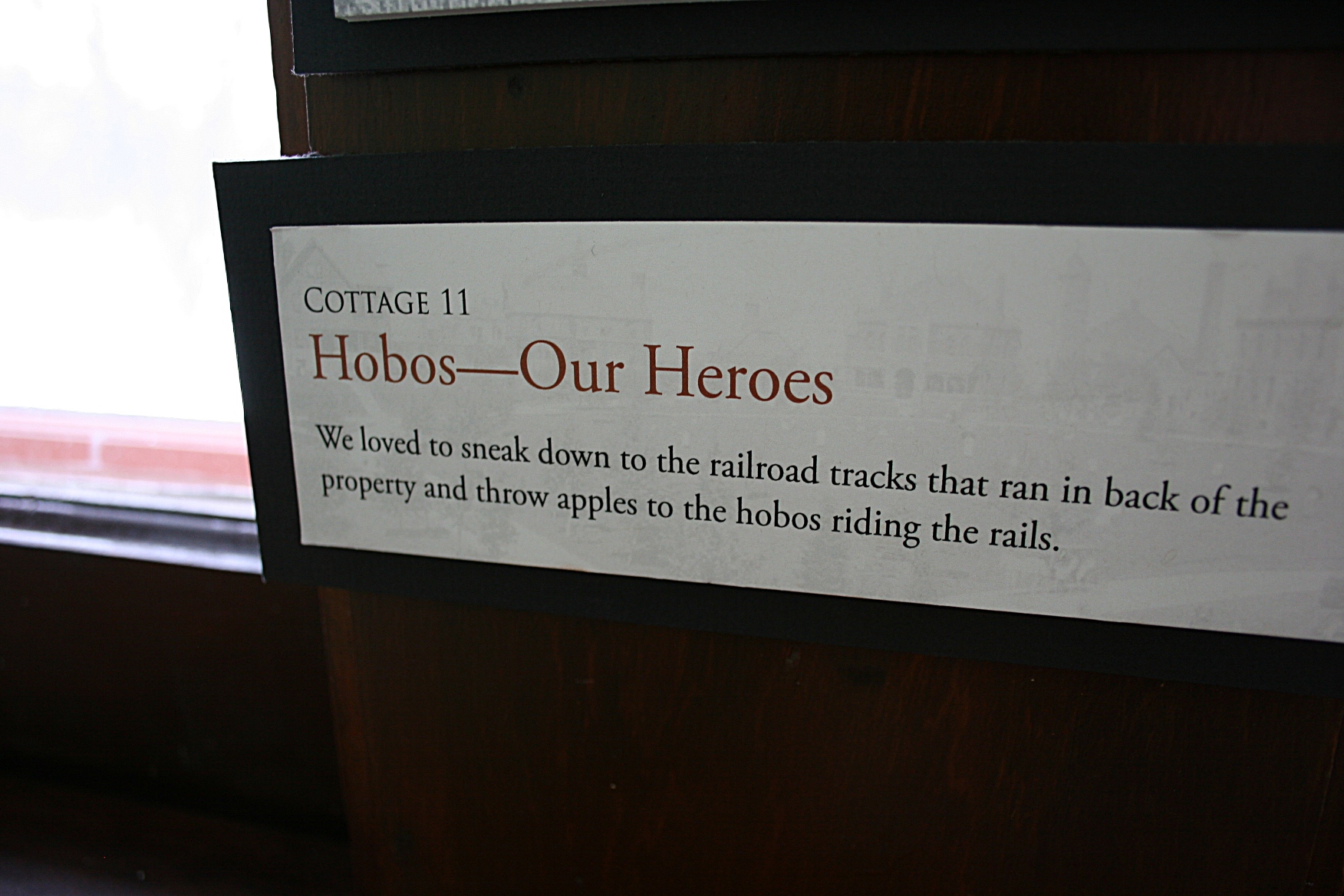
A sign on a stairway landing tells visitors about the boys' dreams of escaping via rail and of their admiration for hobos. Some boys did hop trains and ran away.
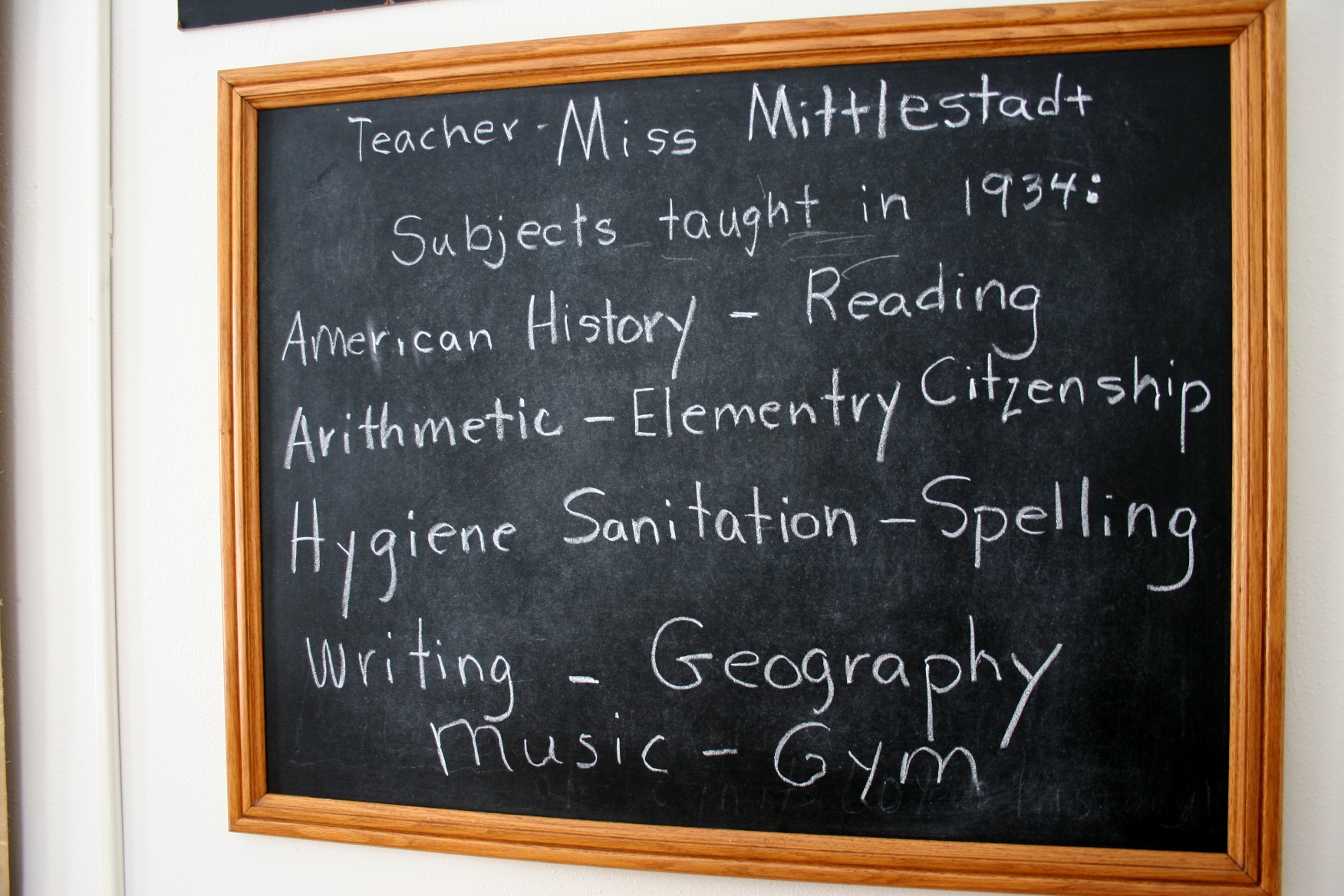
Children were educated through the eighth grade, with some selected during the early years to attend Owatonna High School. In later years, all students were allowed to attend high school.

If you’ve never visited the Minnesota State Public School Orphanage Museum, I’d encourage you to do so.

This exists as part of our state’s history. We need to know and understand life here.

Considering the thousands of children who lived in the orphanage during its 60-year span, I expect many Minnesotans are still carrying the emotional scars whether directly or indirectly passed through the generations.

IF YOU LIVED in the orphanage or have a family member who did, I’d like to hear from you. What’s your story? Good or bad.
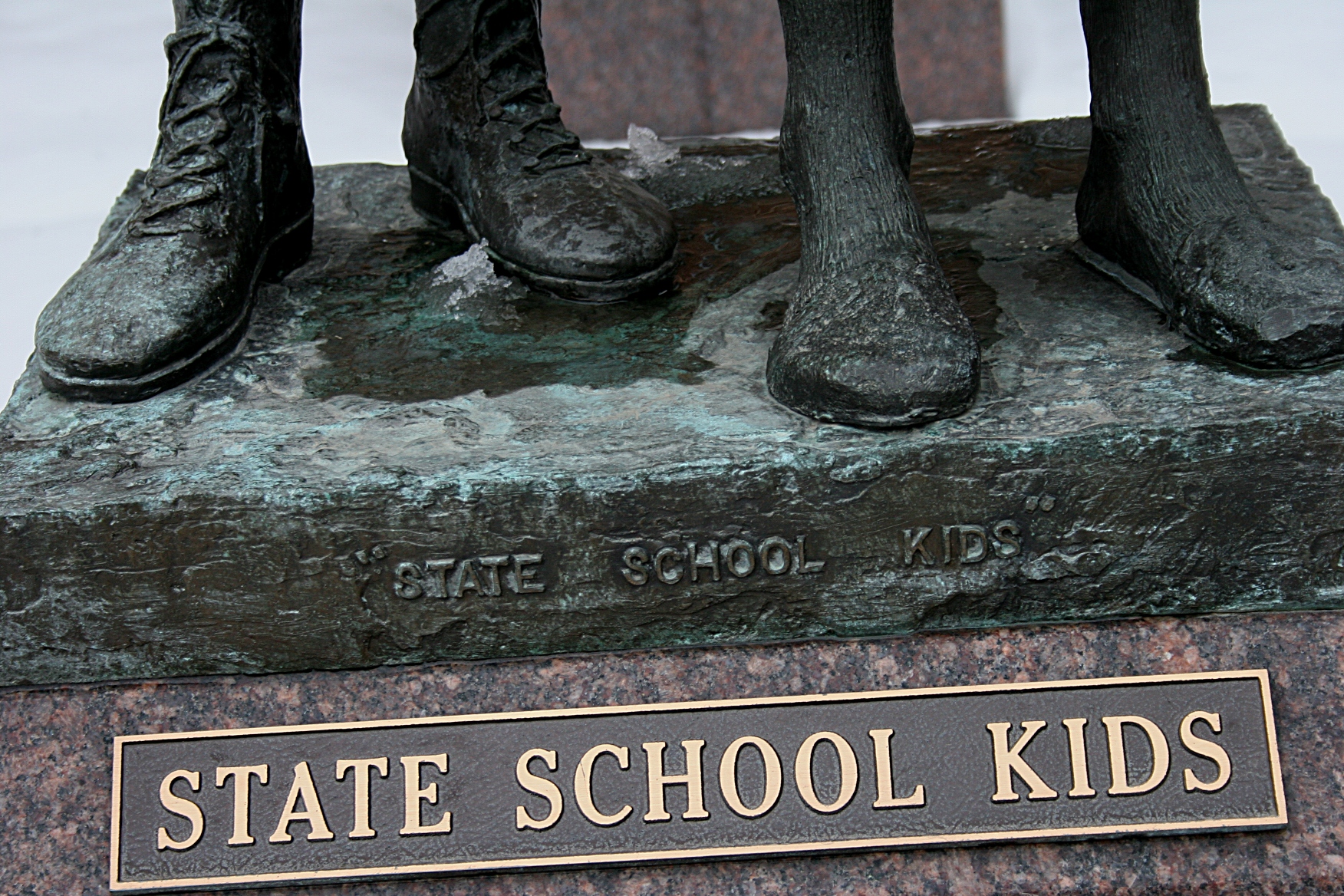
The feet of the children in the memorial statue on the orphanage grounds.

CLICK HERE to read a previous blog post I published about Christmas in the orphanage.

© Copyright 2011 Audrey Kletscher Helbling


In Owatonna: Stories of an orphan’s Christmas December 19, 2011

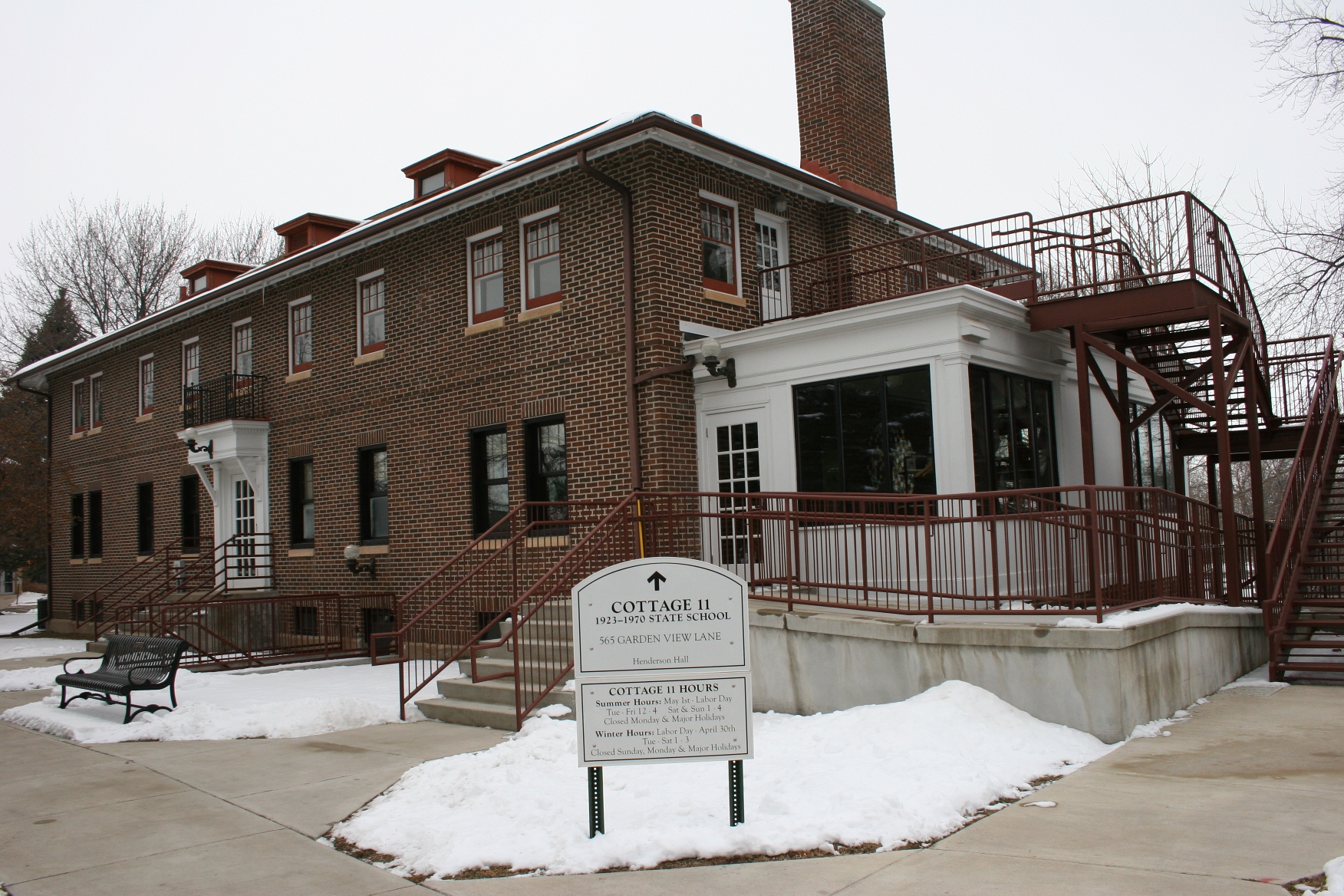
Cottage 11, built in 1923, as one of 16 cottages at the former Minnesota State Public School for Dependent and Neglected Children. Designed to house 25 boys ages 6 - 13, this cottage typically was home to 30 - 35 youth.

AS WE HURRY ACROSS the hilltop campus toward Cottage 11 at the former Minnesota State Public School for Dependent and Neglected Children, the raw wind slapping our cheeks, Silvan Durben advises us to refrain from jumping on the beds.

He’s a character, that Silvan, energetic and flamboyant and passionate. And truthful. This director of art at the Owatonna Arts Center, which is housed in the main building of the former orphanage, shares a tidbit of truth. The children who once lived here weren’t allowed to sleep on their pillows. So if my husband and I slid the for-show-only pillows off the beds and onto the floor, we’d have it right.

The boys' bedrooms are stark, devoid of anything homey. This small room slept three.

With that piece of information imparted, Silvan unlocks the door into Cottage 11, today preserved as part of the Minnesota State Public School Orphanage Museum complex in Owatonna.

Within these walls, which housed boys ages 6 – 13 from 1923 – 1945 in the state school orphanage, we will learn more of the unsettling truths during a self-guided tour. Typically, the cottage is staffed, but on this Sunday afternoon it is not and Silvan has allowed us inside, on our own, to explore. He trusts us, he says, and I am grateful for this opportunity to wander.

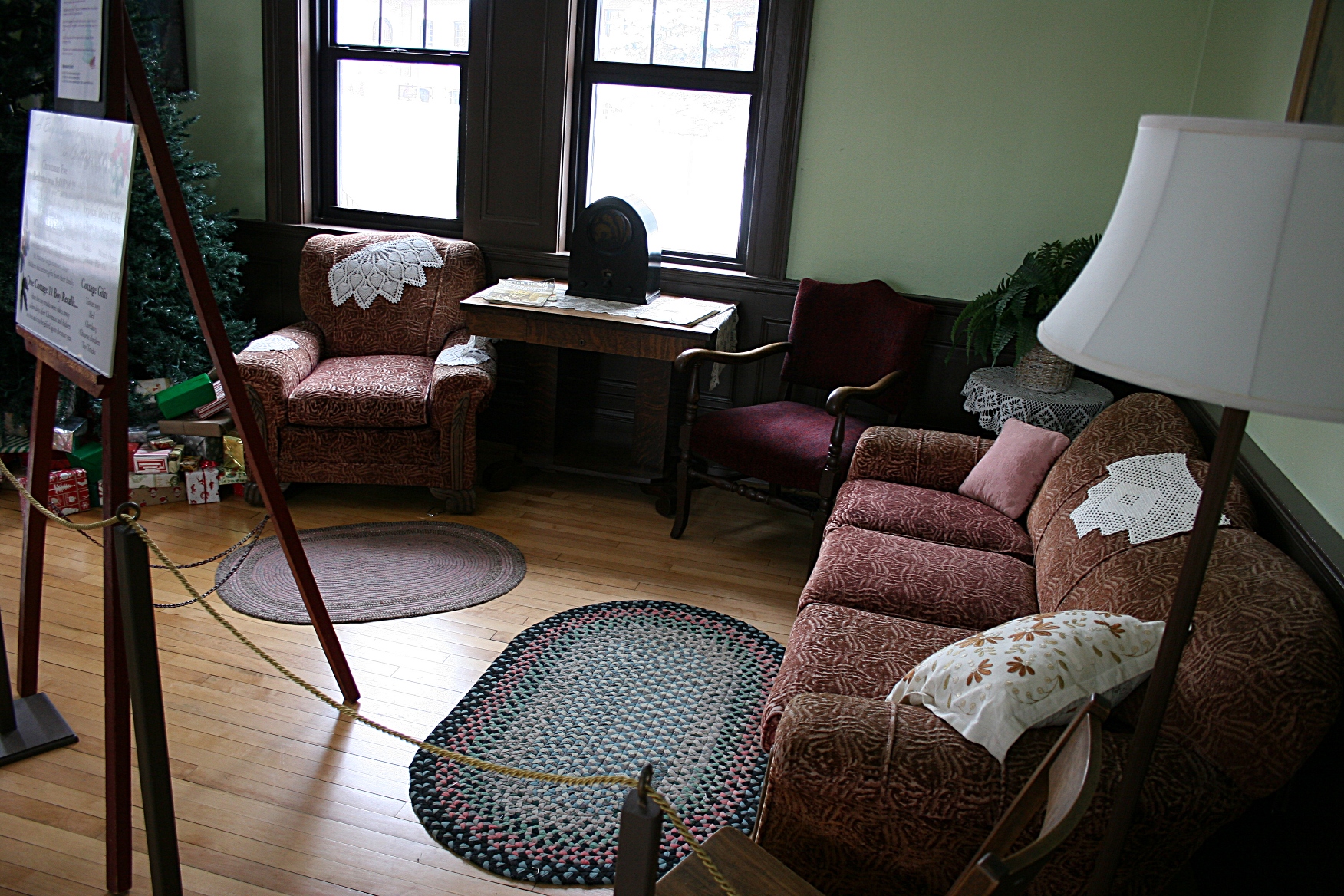
Entering a now-enclosed porch that serves as a gift shop and then stepping into the adjoining living room, I am surprised that I feel, initially, impressed by my surroundings. Visually, I am pleased by the natural light flooding this room through the abundant windows, by the dark woodwork, by the fireplace, by the narrow wood-slat floor, by the cozy cluster of vintage furniture grouped near the Christmas tree surrounded by piles of presents.

But looks, as I immediately learn, can be deceiving.

The living room was off limits to the boys except on special occasions.

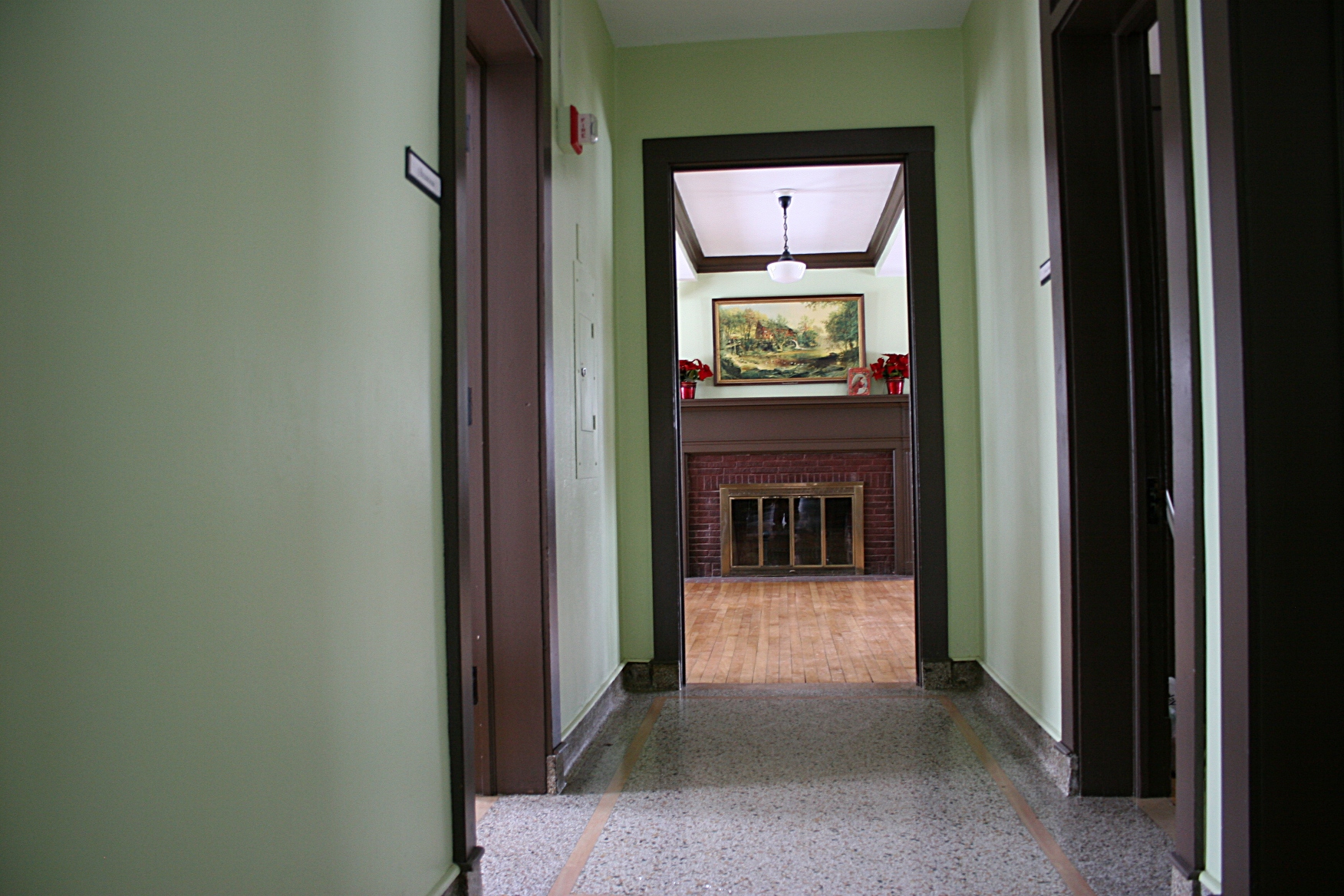
A view from the hallway looking toward the living room fireplace. Each week the boys polished the floor and furniture in this forbidden space. They also scrubbed floors throughout the cottage.

The posted words of the orphan boys reveal the truth:

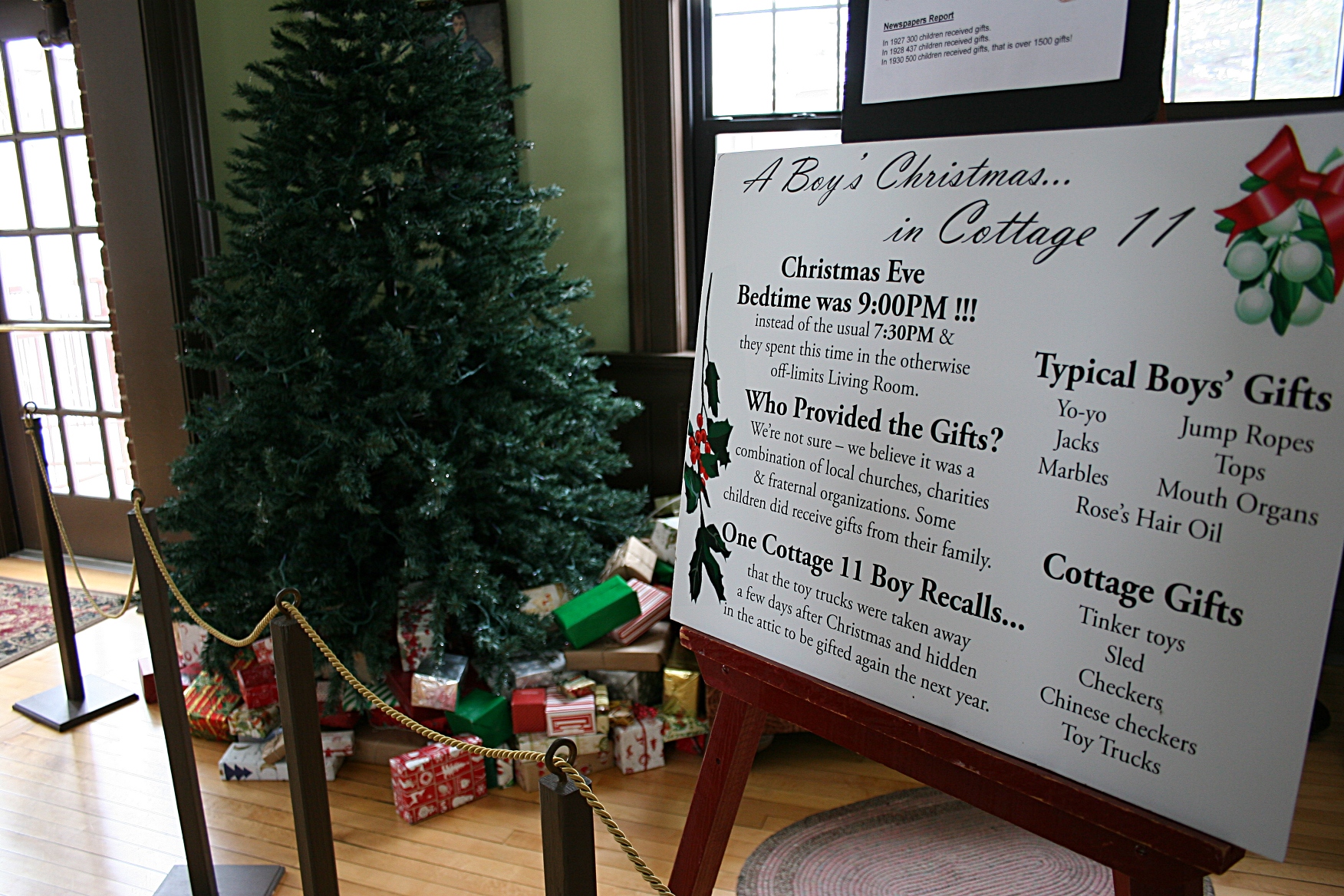
…the toy trucks were taken away a few days after Christmas and hidden in the attic to be gifted again the next year.—Cottage 11 Boy

The truth revealed about Christmas from the memories of the Cottage 11 boys.

And the lovely living room? Apparently just for show, too, except on special occasions like Christmas Eve when the boys gathered here around the tree and were allowed to stay up past their usual 7:30 p.m. bedtime until 9 p.m.

Christmas brought but a moment of happiness to these children who otherwise lived under rigid rules and the domination of mostly uncaring matrons. (Arguably, some of these children may have lived equally difficult, or worse, lives had they remained in their previous circumstances/environments.)

Some happy Christmas memories from the boys.

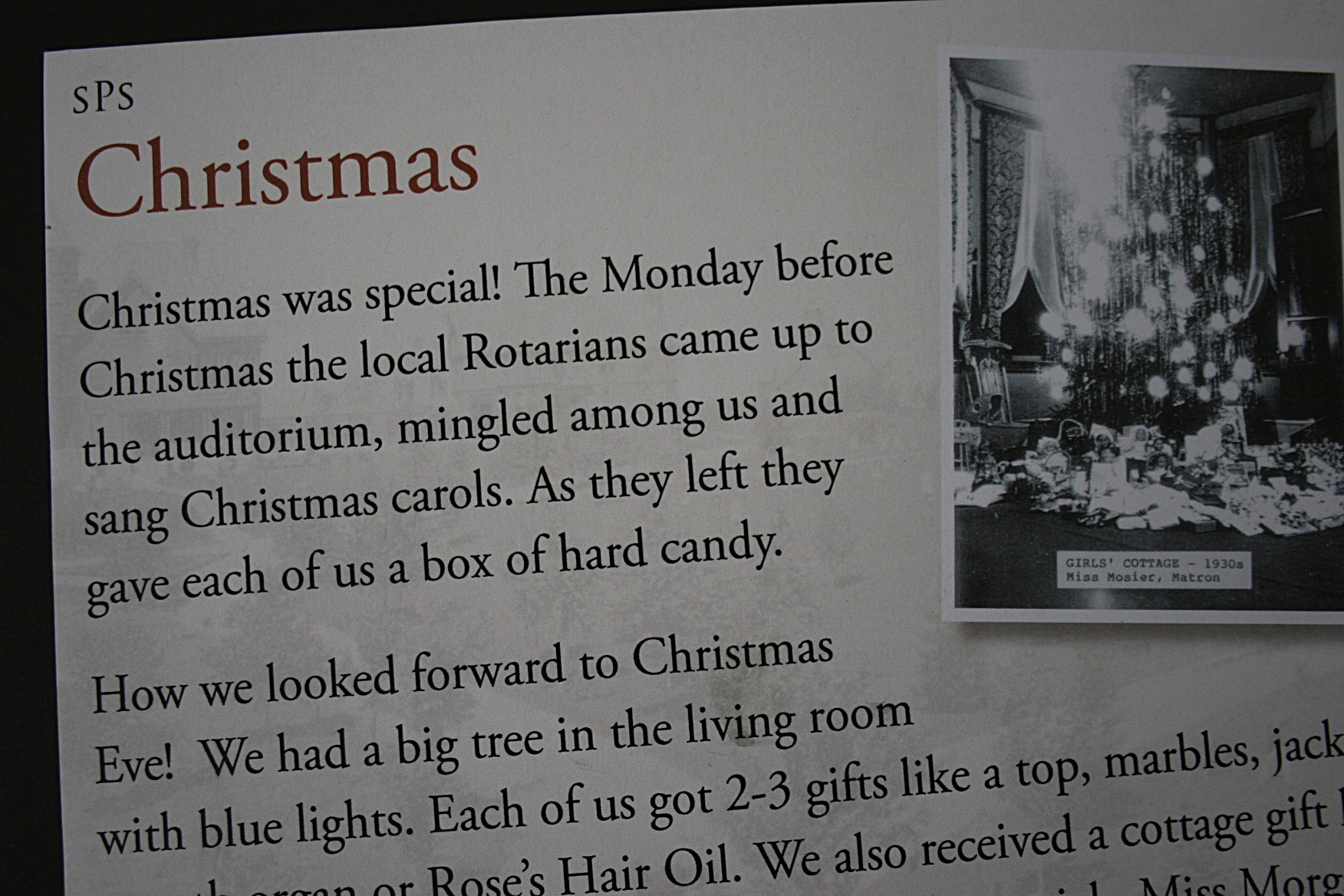
Christmas brought the local Rotarians into the school auditorium to sing carols and pass out boxes of hard candy. Christmas brought several gifts—perhaps Tinker Toys, or marbles or puzzles—for each child.

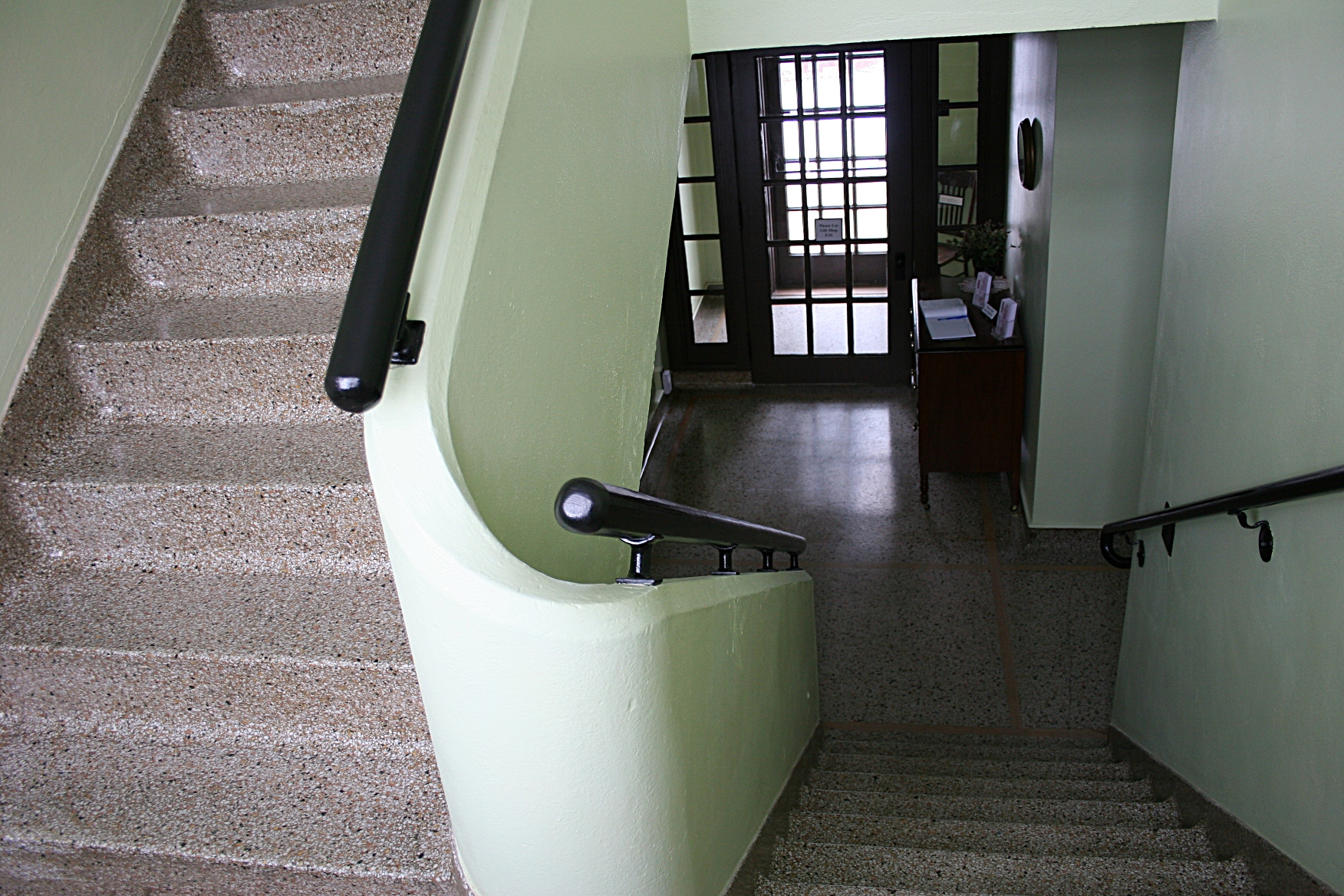
The stairway between the first and second floors and a shot of the cottage's front door at the bottom of the frame. The boys were never allowed to use the front door. They entered and exited through the basement.

I cannot even begin to fathom living here under unforgiving discipline, sleeping in stark bedrooms crammed with kids, missing out on the love of family.

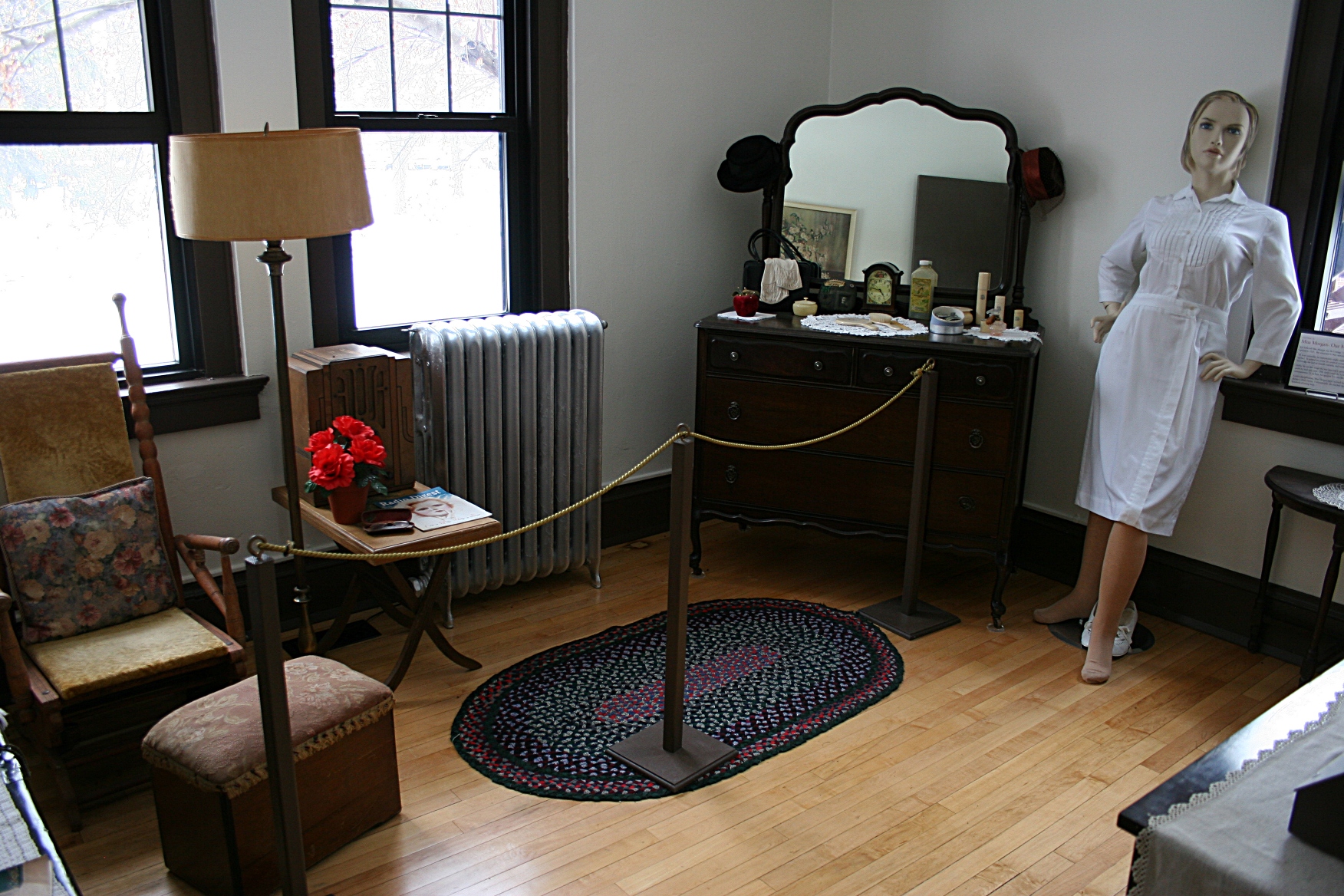
Unlike the mother image she was expected to portray, Miss Morgan (the matron) could be hard and cruel. Only rarely could she be kind and compassionate.

As I meander through the rooms peering at the black-and-white photos of mostly unsmiling boys and reading about their fears of scoldings and spankings and of scrubbing floors on their hands and knees and being confined primarily to the basement, my heart hurts. Truly.

You can see it in the boys' faces, the desperate need to be loved.

On signage titled “The Basement,” I read of  the prevailing authoritarian attitude:

Permission was always required to leave the basement.

Each boy was assigned a chair in the basement. "The chair kept order and accountability" to the matron.

Listening to a recording of a man who as a boy had his head slammed into a wall for prematurely removing a tie and cuffing a matron, I can still hear the hurt in his voice.

I can almost feel the pain experienced by cottage resident Arlend “Buzz” Wilson who slipped and scalded himself with hot water while scrubbing the basement steps. He ended up hospitalized for his burns.

In the first floor matron's quarters, a young boy was placed in the rocking chair to the left and his head slammed into the wall for disobedience. He removed his tie too soon and cuffed the matron.

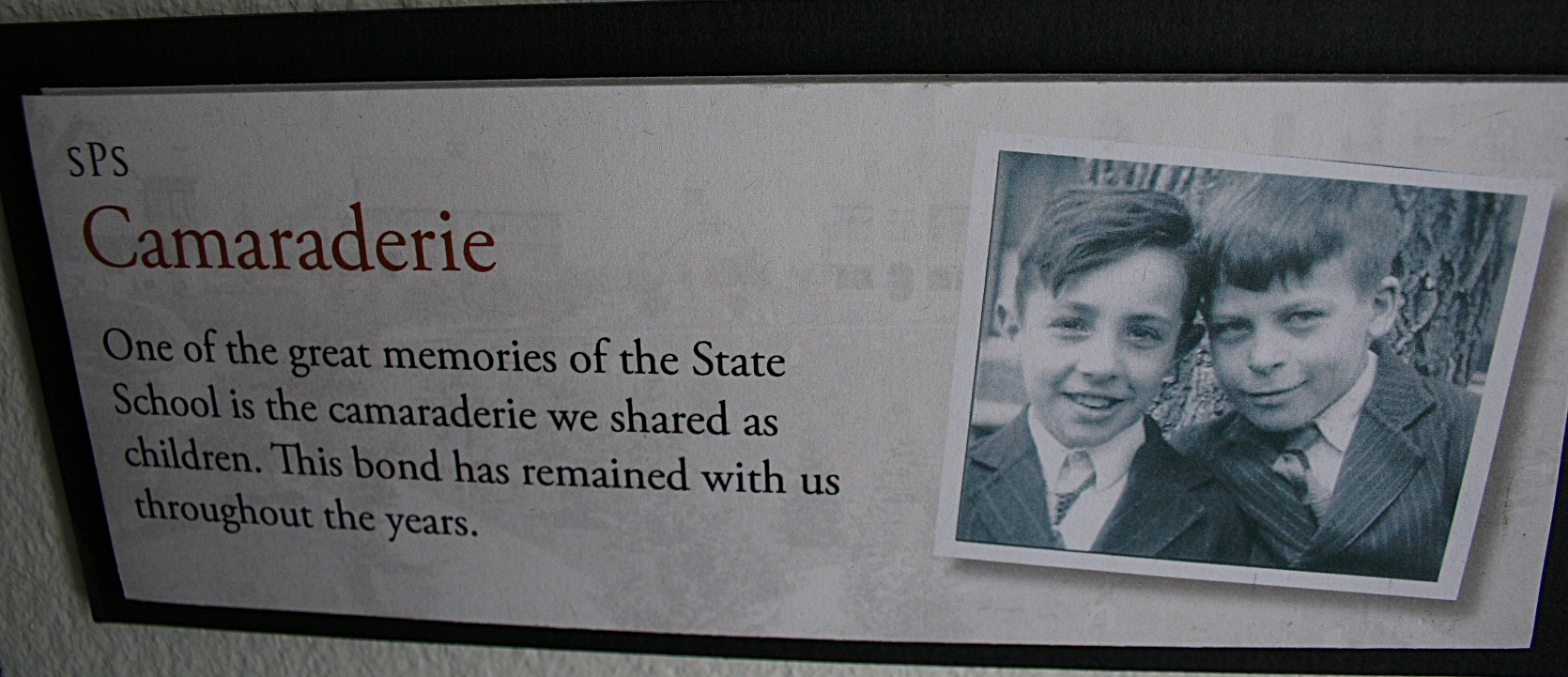
But for all the awful stories shared here, occasionally glimmers of hope slip through—of boys who admired hobos and hopped the nearby train to escape and of “Wednesday Night at the Movies,” when movies were shown in the school auditorium. Those “brought great joy to us children.”

And then, the single gem I found among all the stones:

FYI: Cottage 11 is open from1 p.m. – 3 p.m. Tuesday – Sunday. However, I advise calling in advance (507-774-7369) as it was not open when we arrived on a Sunday afternoon. Hours at the main museum, 540 West Hills Circle, Owatonna, are from 8 a.m. – 5 p.m. Monday – Friday and from 1 p.m. – 5 p.m. on weekends. I have previously toured the museum, but did not do so again on this most recent visit.

PLEASE CHECK BACK for additional photos of Cottage 11.

© Copyright 2011 Audrey Kletscher Helbling
 

Pigs and poetry May 14, 2011

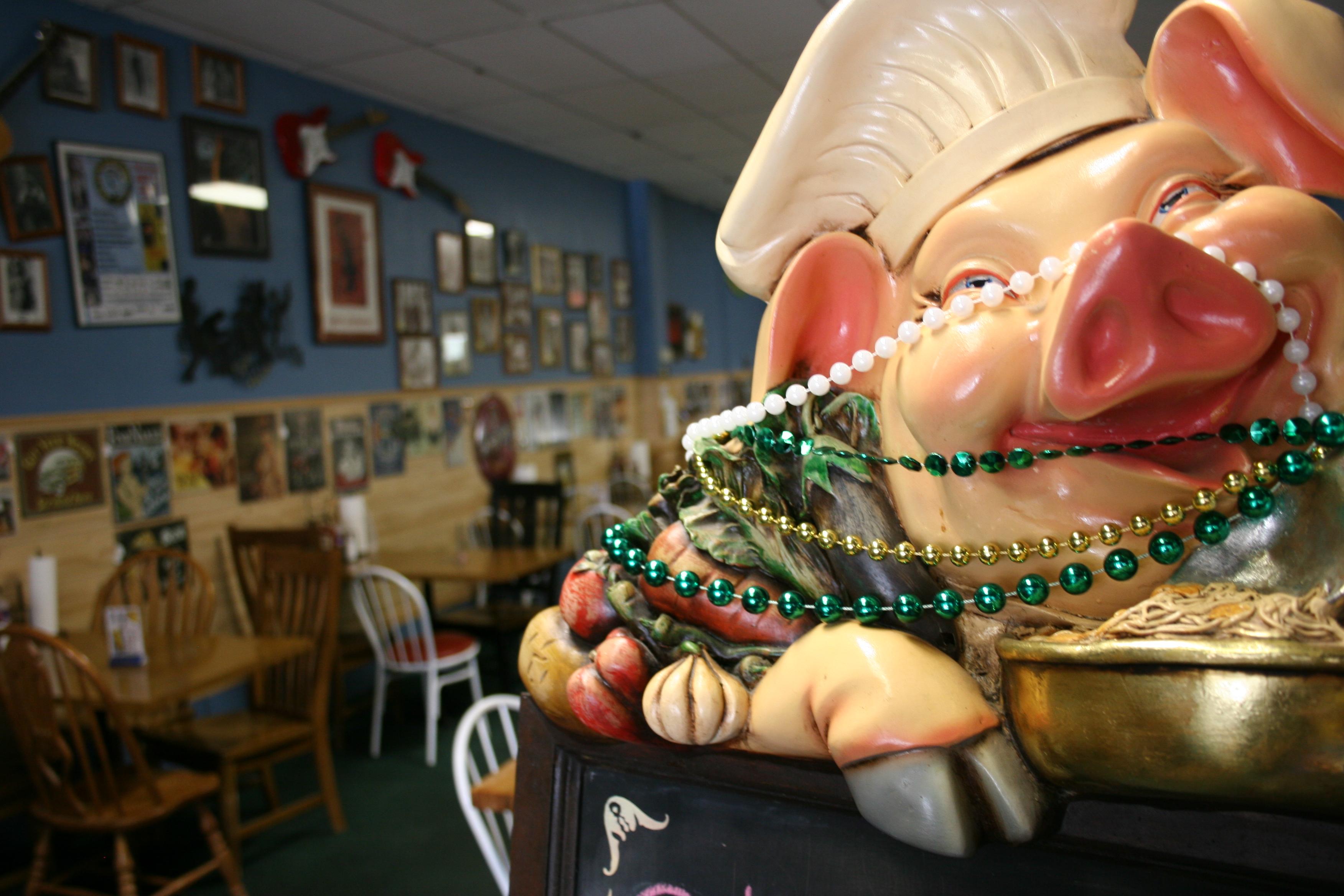
This pig greets diners at Piggy Blue's Bar-B-Que in Austin, Minnesota. This image is posted here for pig illustration purposes only, not because it's specifically related to the following story.

IN A WEEK, my sister-in-law is moving from Minot, North Dakota, to Missouri. In August, my brother-in-law, an Air Force man, will join her and their young son.

She’s leaving early to seed the garden, plant the orchard and ponder the purchase of pigs. This has always been Jamie’s dream, to own a country acreage where she can grow fruits and vegetables and raise an Old McDonald variety of animals.

Chickens, rabbits, goats and a pig or two comprise her animal acquisition list.

But about those pigs…I overheard a man advising her last Saturday to “hold off” on the pigs for awhile. He didn’t give a reason, only suggested she wait.

Her husband, Neil, although supportive of his wife’s plan, also has reservations about the swine. If Jamie wants a pig, Neil says he can shoot one. He would be right. The Missouri Department of Conservation advises residents to “shoot ’em on sight” in an online article about the problem of feral pigs running rampant.

Thankfully we do not have a wild pig problem in Minnesota. Our problem would be an overabundance of deer.

But we do have a book of pig poetry featuring 133 pig poems penned by 103 poets like Robert Bly, Louise Erdrich and Bill Holm. Red Dragonfly Press, a solely poetry not-for-profit literary organization based in Red Wing, published Low Down and Coming On: A Feast of Delicious and Dangerous Poems About Pigs. James P. Lenfestey edited the 232-page anthology printed last October.

Tomorrow (May 15) several of the pig penning poets, including Lenfestey, will read from the book at a “Pig Gig” slated for 2 p.m. at the Litchfield Opera House in Litchfield.

Now if my sister-in-law wasn’t preoccupied with packing for Missouri, I’d propose she check out this pig gig for pig pointers prior to purchasing pigs.

© Text and Piggy Blue’s photo copyright 2011 Audrey Kletscher Helbling
 

Faribault’s famous (formerly forgotten) flier May 4, 2011

LAST WEEK DALE “RED” JACKSON joined aviators Elizabeth Wall Strohfus, Charles Lindbergh and some 150 others in the Minnesota Aviation Hall of Fame.

If you’re like me, you are surprised to hear that our state has a hall of fame for aviators. I only recently learned that when Jackson was about to be inducted.

So who are Jackson and Strohfus and what qualifies them for an aviation honor?

They are two famous aviators with roots in my community of Faribault. Strohfus, who was inducted into the hall of fame in 2000, was a member of the Women’s Air Force Service Pilots during World War II. She taught instrument flying to male cadets and later ferried B-17 and AT-6 warbirds around the country, according to the Minnesota Aviation Hall of Fame website. Today she is a noted speaker.

As  for Jackson, he was a stunt pilot and barnstormer during the late 1920s and early 1930s. In July 1929, Jackson and St. Louis flyer Forrest O’Brine circled the city of St. Louis for some 420 hours, refueling 48 times in flight. That broke an aerial endurance record. Later they remained in flight for 647 hours (27 days), setting their second record.

On January 6, 1932, at the age of 25, Jackson was killed while stunt flying over Miami. Nicknamed the “Flying Fool,” Jackson had apparently been warned not to try stunts in the tiny Curtiss Teal amphibian he was piloting on that fateful day. As he tried to straighten the plane after a loop and dive, a wing tore off. Jackson died in the wreckage, reportedly with one hand hooked into the ripcord of his parachute.

When Jackson’s body arrived in Faribault by train from St. Louis, where an earlier memorial service had been held, an estimated 3,000 people gathered at the Rock Island Depot, according to a January 11, 1932, article in The Faribault Daily News.

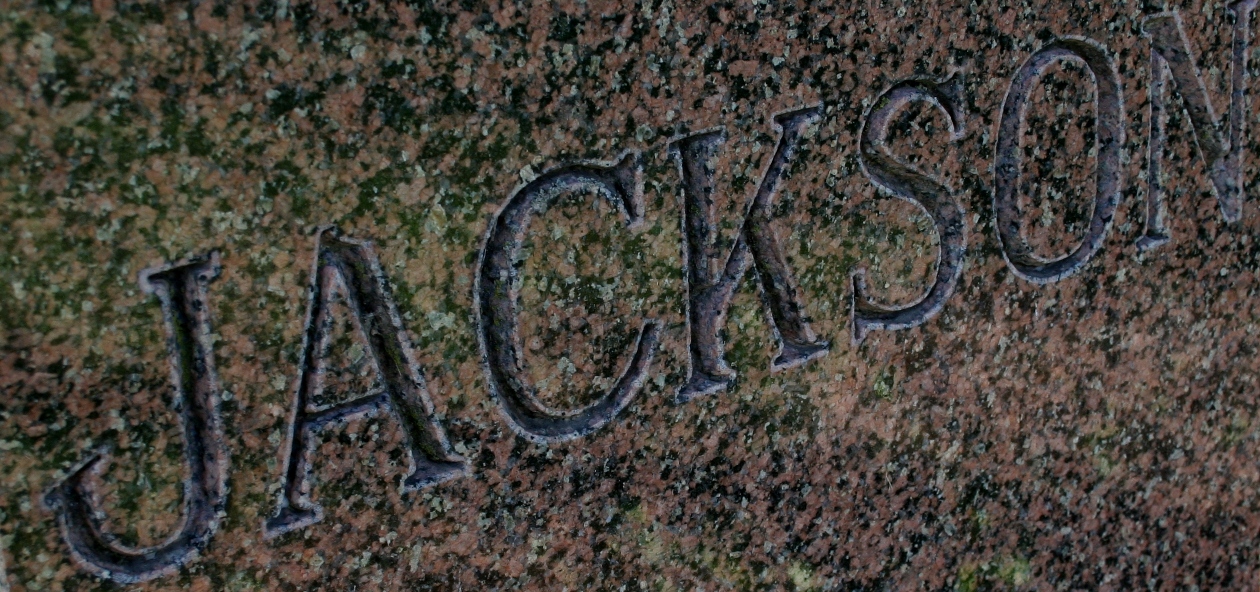
Jackson is the single word on a tombstone marking the Jackson family graves in Section K, Lot 61, at Maple Lawn Cemetery in Faribault.

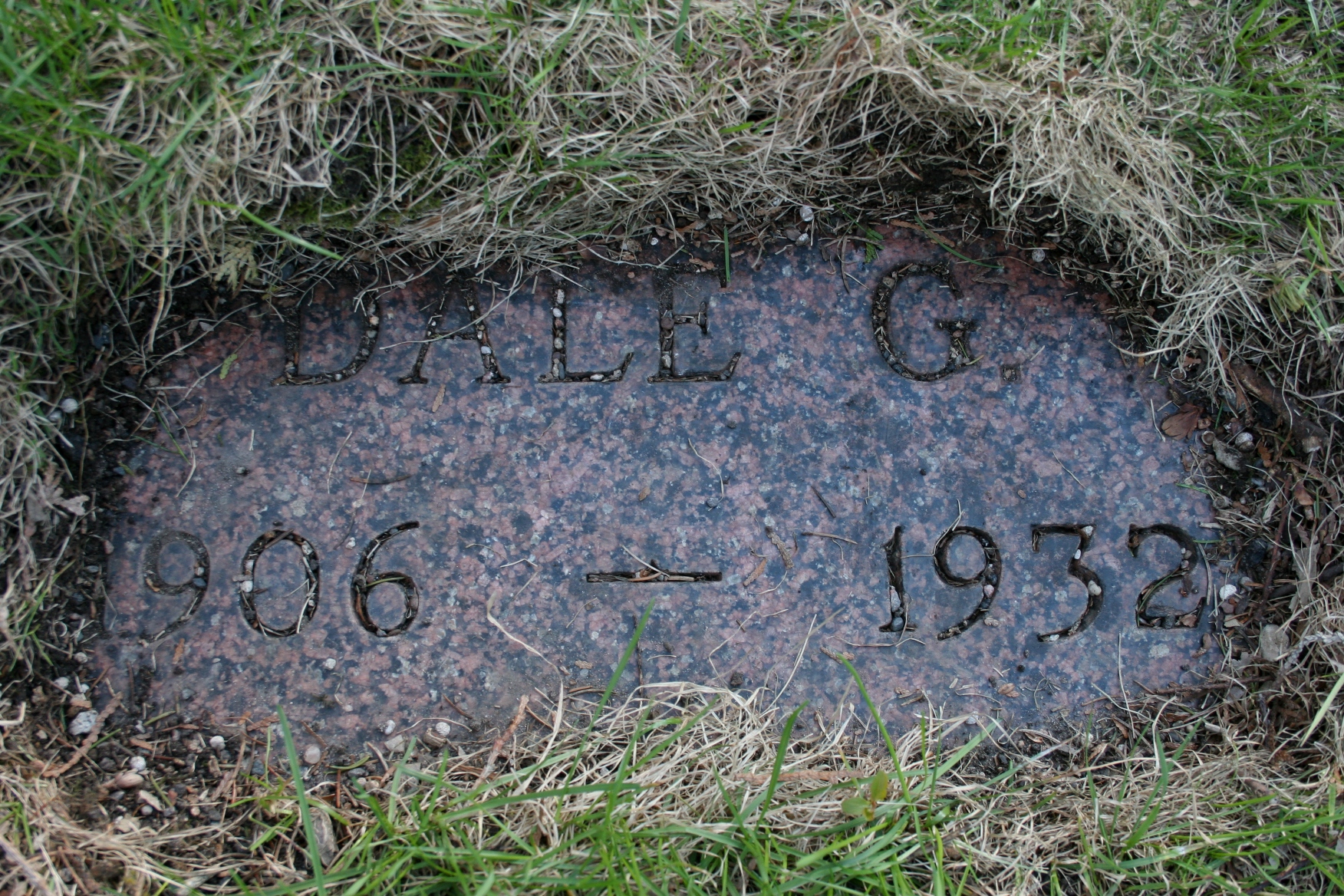
I nearly missed this in-ground marker for Dale Jackson, which lies about 12 feet from the family gravestone. I had to pull back the grass to reveal his first name and middle initial.

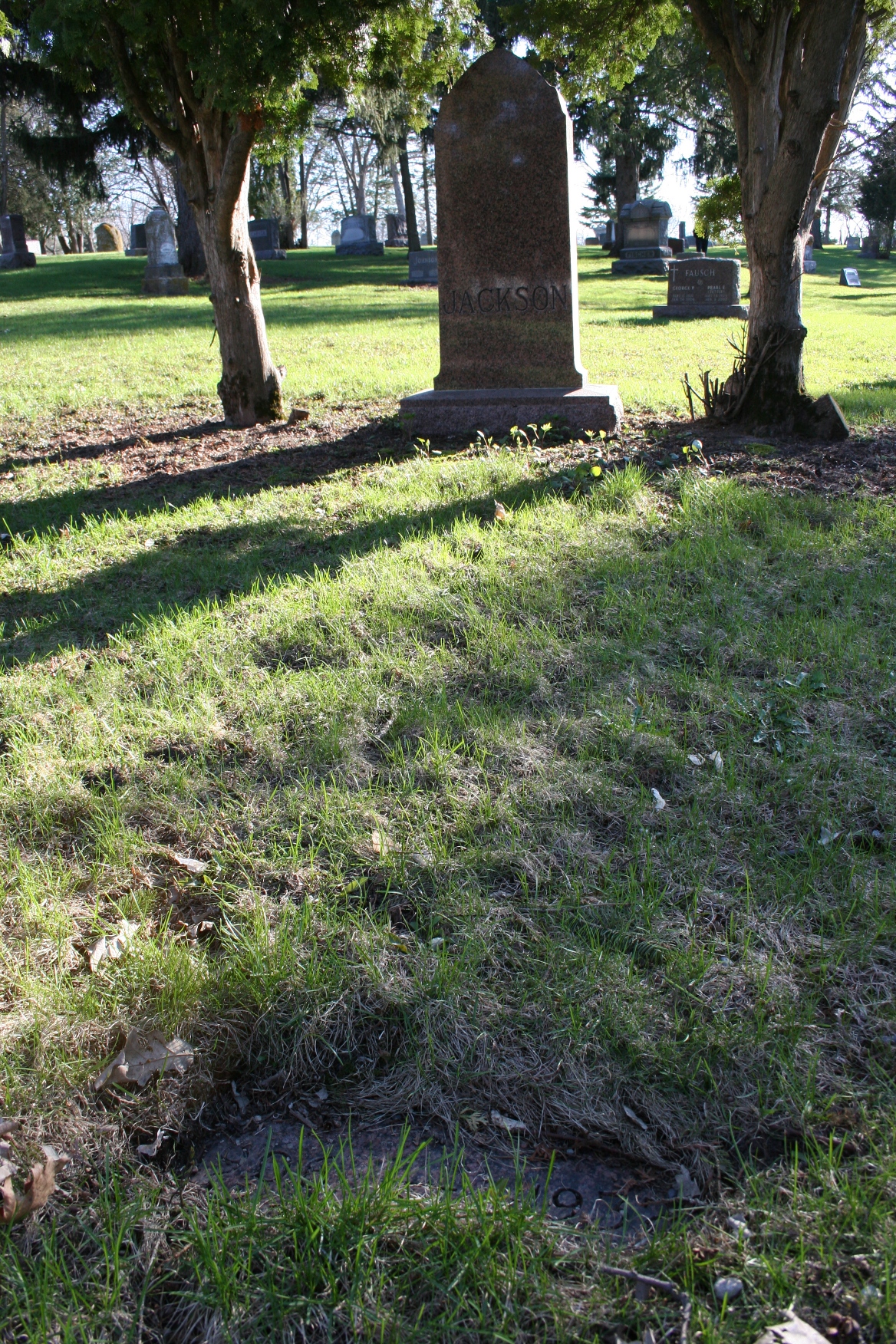
Dale Jackson's marker lies flush to the ground about a dozen feet from the Jackson family marker, between two cedar trees. I had expected a more opulent and noticeable gravesite.

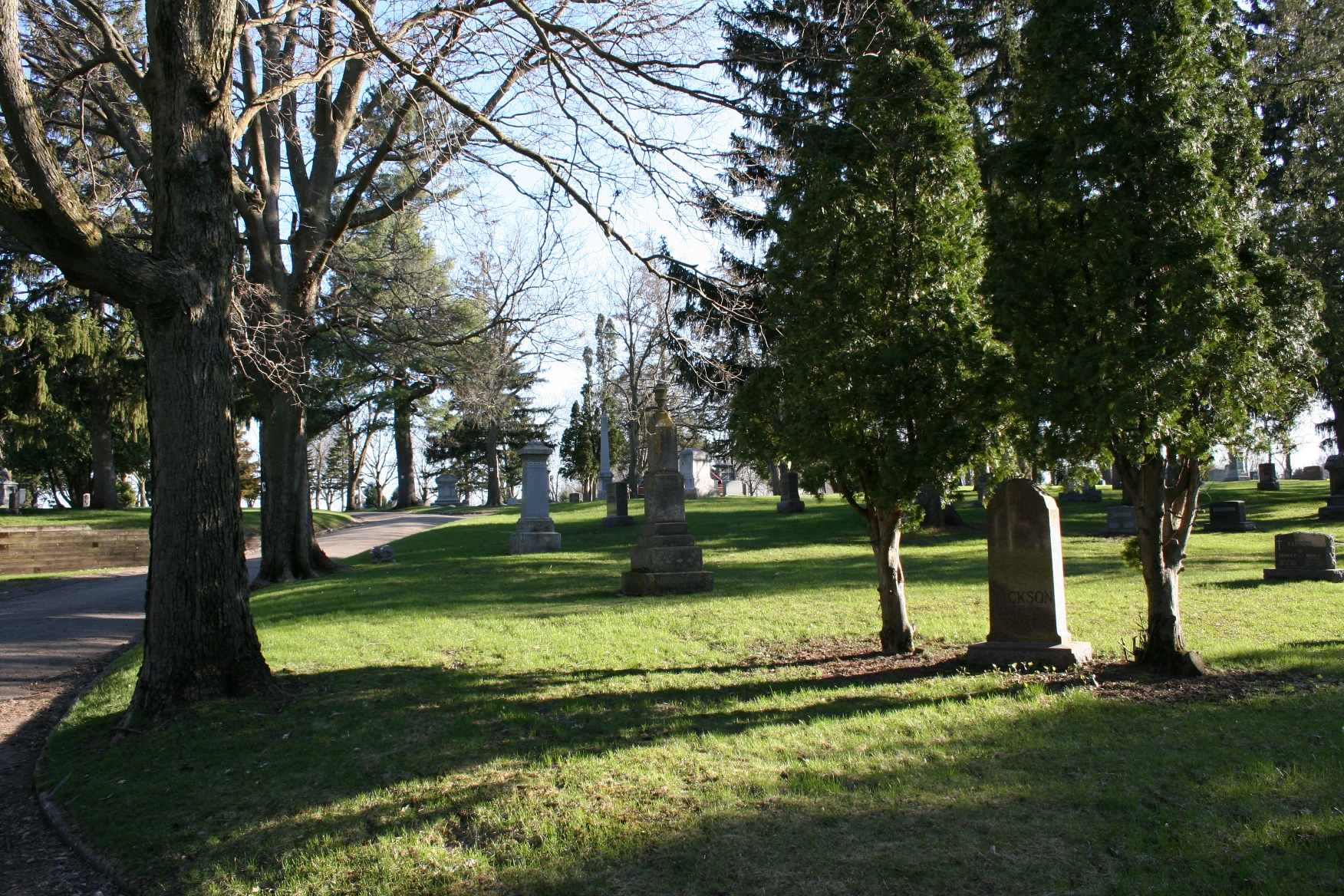
Dale Jackson is buried here along with his parents, Henry and Josephine, and his wife, Selma. The Jackson family headstone stands between the two cedar trees to the right in this photo.

Given Jackson’s national and international notoriety in the aviation world, I wondered why I had never heard of him before last week. He was born in Iowa, moved here with his family and graduated from Faribault High School.  Faribault has not, as far as I am aware, shone the spotlight on this daring stunt pilot since his barnstorming days and untimely, sudden death.

Why?

I think he would be worthy of more than a marker, half covered with grass, in Maple Lawn Cemetery. I’m thinking tourism possibilities here.

For now, his Minnesota remembrance comes via that Minnesota Aviation Hall of Fame induction last weekend. That’s a good start.

I wondered where this museum of sorts is located. After substantial googling, I discovered that an actual museum doesn’t exist. Rather the hall of fame consists of plaques honoring the inductees. Those hang in a secure section of the Duluth International Airport in an area inaccessible to the general public. Huh?

But that’s not all. Once a terminal renovation is completed at the Duluth airport in 2012, the plaques will need to be moved.

The Albert Lea City Council, in a motion passed in late January, has expressed an interest in bringing the Minnesota Aviation Hall of Fame to its community. No commitment. Just an interest right now.

In the meantime, if you want to check out aviators like Faribault’s Flying Fool, Dale “Red” Jackson, who have made it into the Minnesota Aviation Hall of Fame, you best do that online or visit Maple Lawn Cemetery.

© Copyright 2011 Audrey Kletscher Helbling
 

A country school preserved in Millersburg October 3, 2010

MY HUSBAND THRILLS in talking about the coyotes at Chimney Butte School.

You have to admit that just the name of the rural North Dakota school, which Randy attended for 14 months in the 1960s, draws you in to listen.

His tale is short. One day Randy and his classmates couldn’t go outside for recess because of coyotes in the schoolyard. That’s it. Yet, the story deserves telling. How many men in their early 50s attended a country school? Furthermore, how many of those students encountered coyotes on a school day?

Preserving such memories is important. So is preserving the actual school building. Last Sunday I stepped inside a one-room Minnesota country school that has been restored and transformed into a museum. That’s nothing new, really. Old schoolhouses have also become township halls, private residences and businesses, although some have been abandoned and simply fallen into heaps of rotting wood.

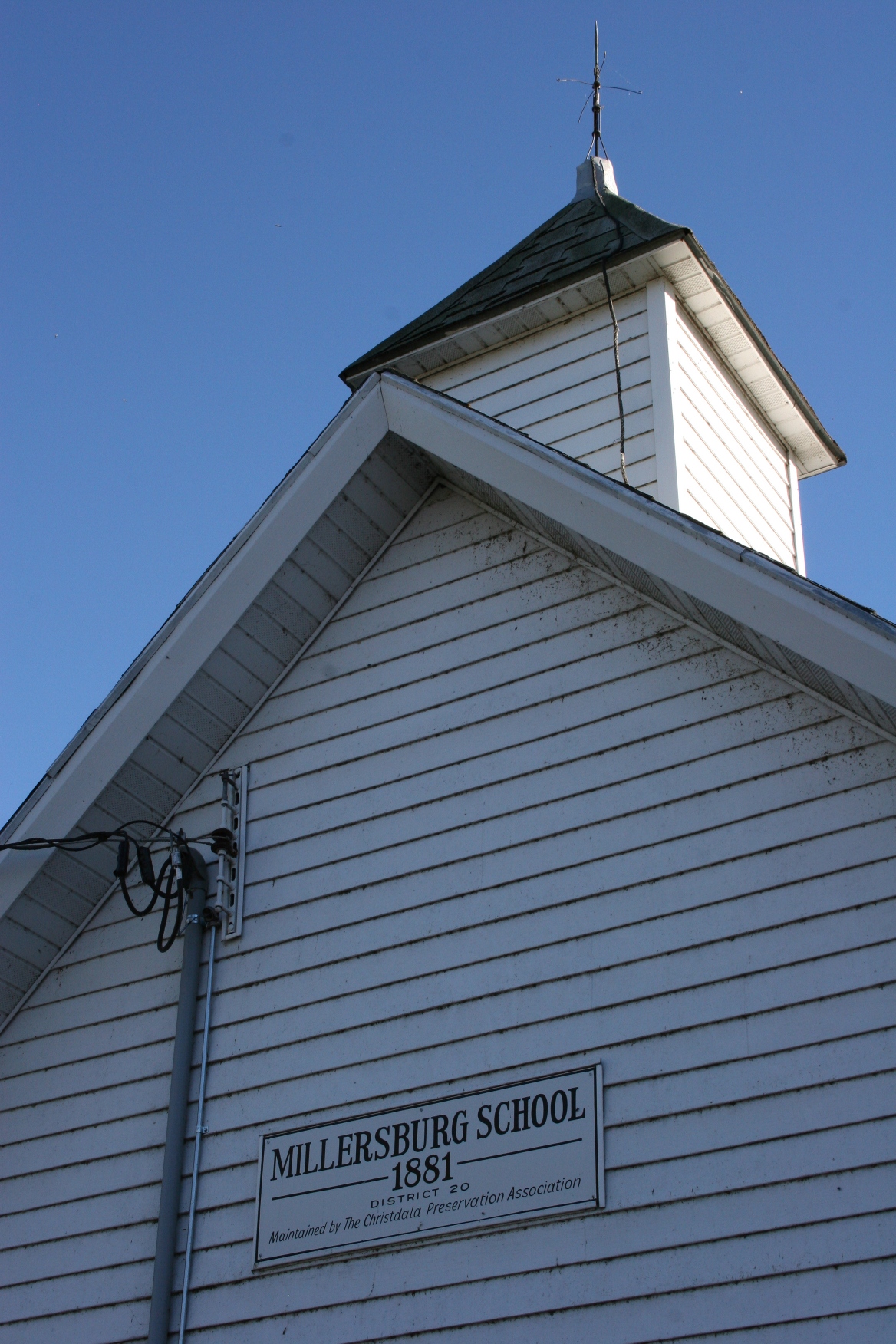
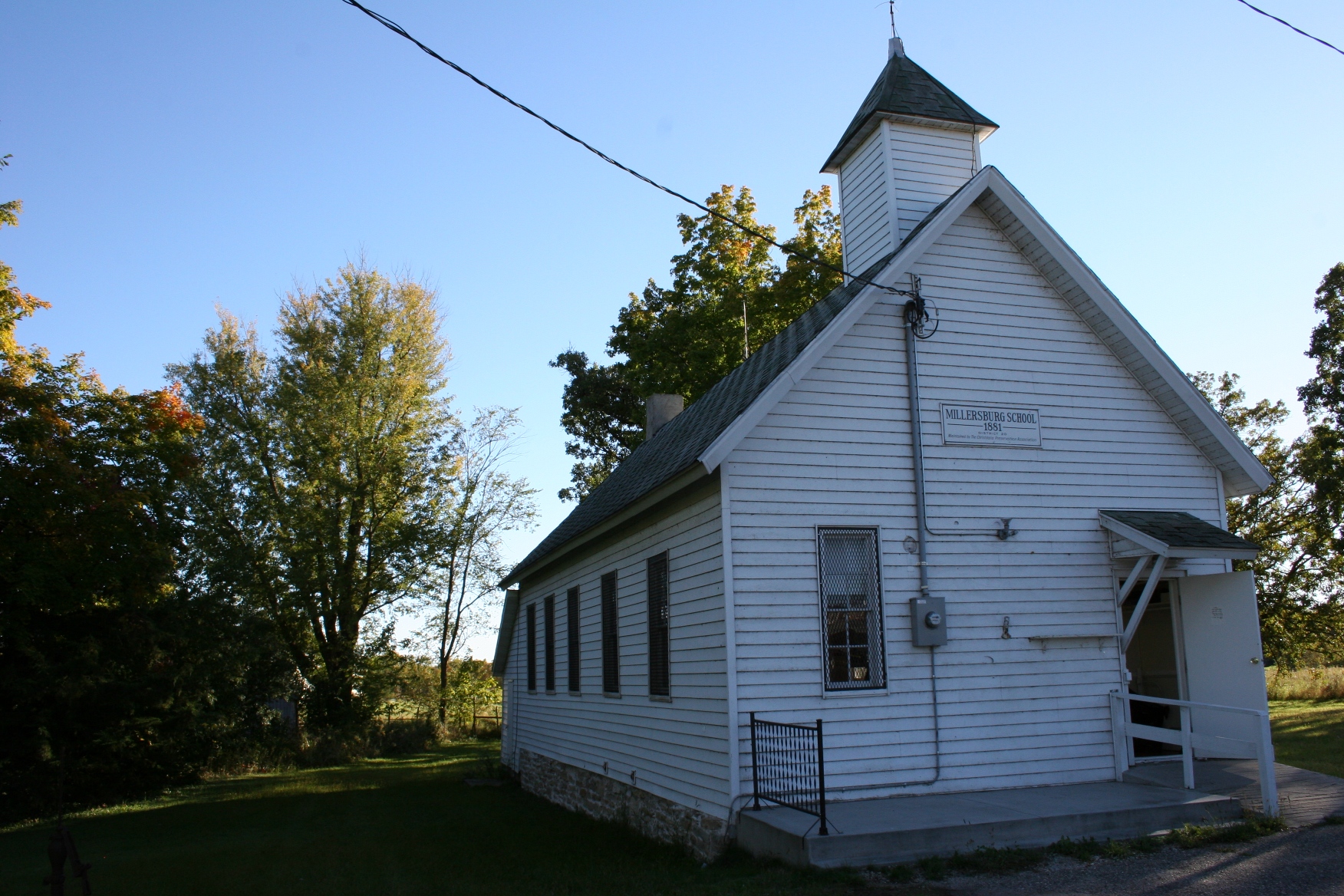
Members of The Christdala Preservation Association are assuring that doesn’t happen to the District 20 Millersburg School in rural Rice County. The association has acquired the former schoolhouse and is transitioning it into a museum for the Millersburg community.

The 1881 Millersburg School is now a museum.

The old country school sits across the road from Boonie's restaurant and bar along Rice County Road 1.

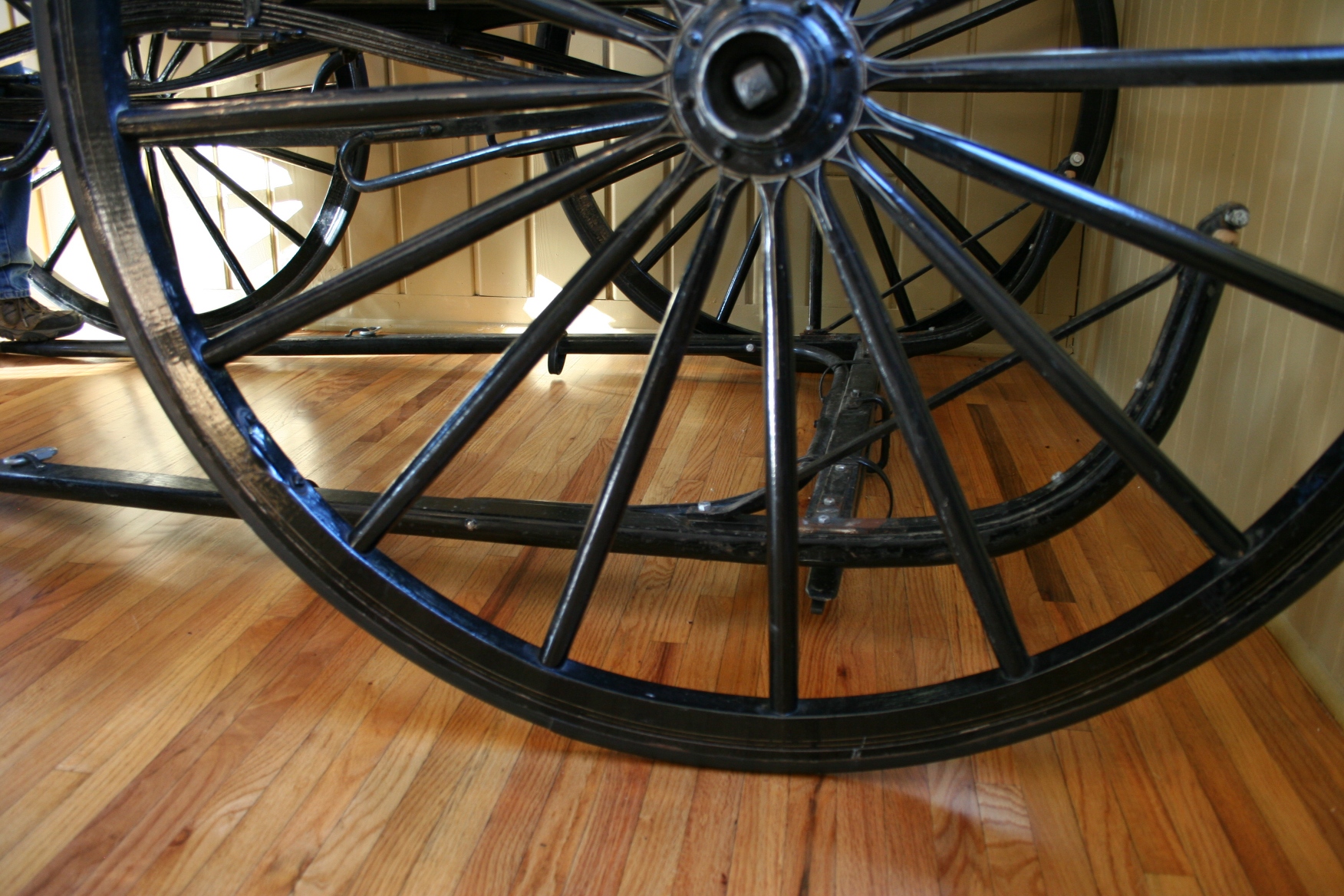
Inside I discovered records and artifacts from the school and nearby Christdala Evangelical Swedish Lutheran Church, historic photos, an old buggy, military memorabilia and more.

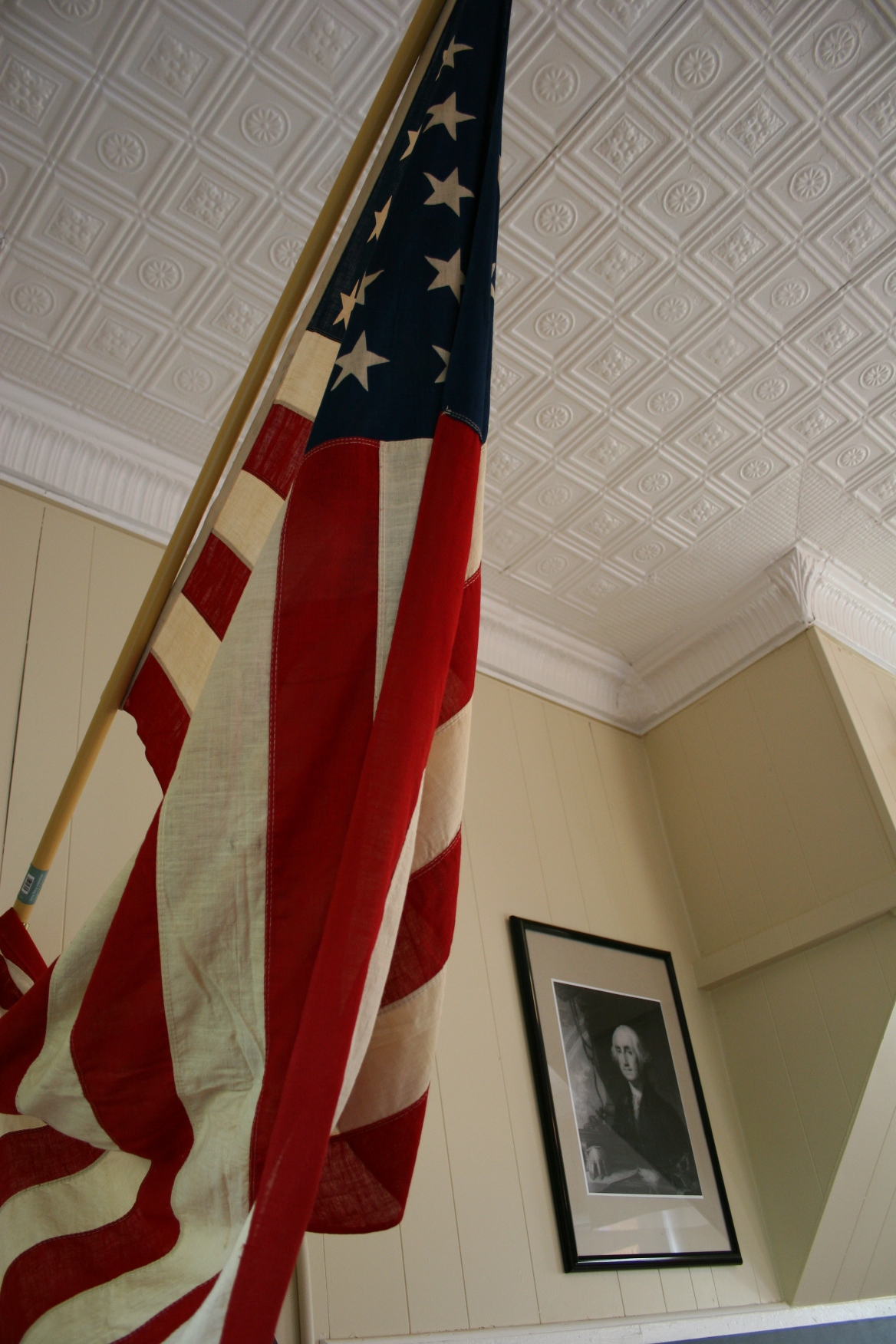
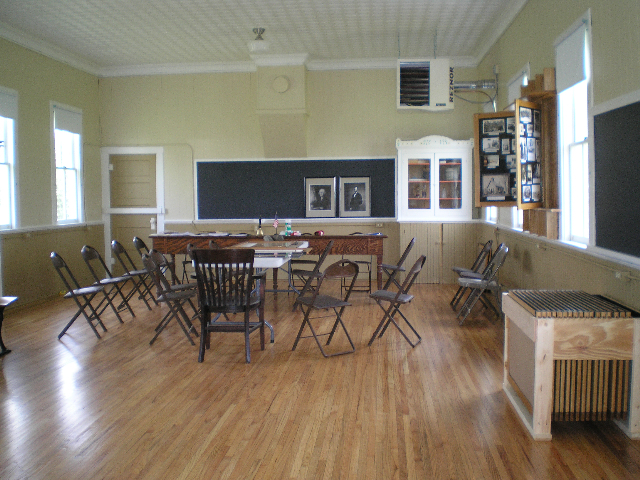
Mostly, though, I appreciated the care taken to restore the building. Gleaming wood floors made me want to push back the tables and chairs and host a square dance. These preservationists paid attention to detail, right down to the American flag and portrait of George Washington.

As this museum evolves, I expect, hope, that the preservation association will open the doors on a regular basis to the public. And I expect, hope, that those who gather there will exchange stories about their days in a country school, coyotes or not.

The refurbished wood floor shines under the wheels of an 1887 Michigan Buggy Company buggy which was taken apart and reassembled inside the schoolhouse museum.

At the front of the schoolroom hangs the American flag and a Presidential portrait below the period ceiling.

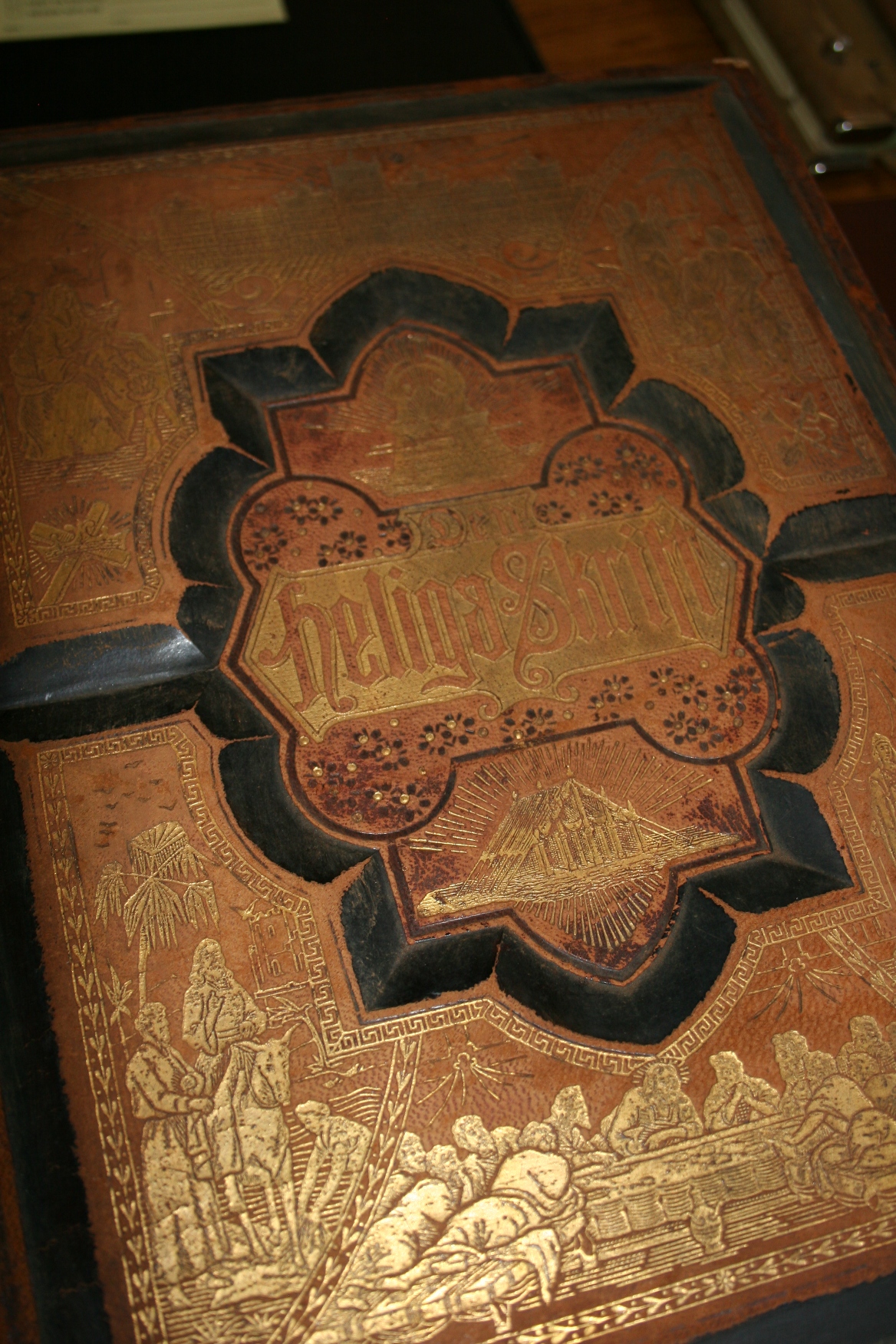
The 1889 Swedish bible used in worship services at Christdala Evangelical Swedish Lutheran Church, located just down the road from the school.

A page from the 1889 Swedish bible.

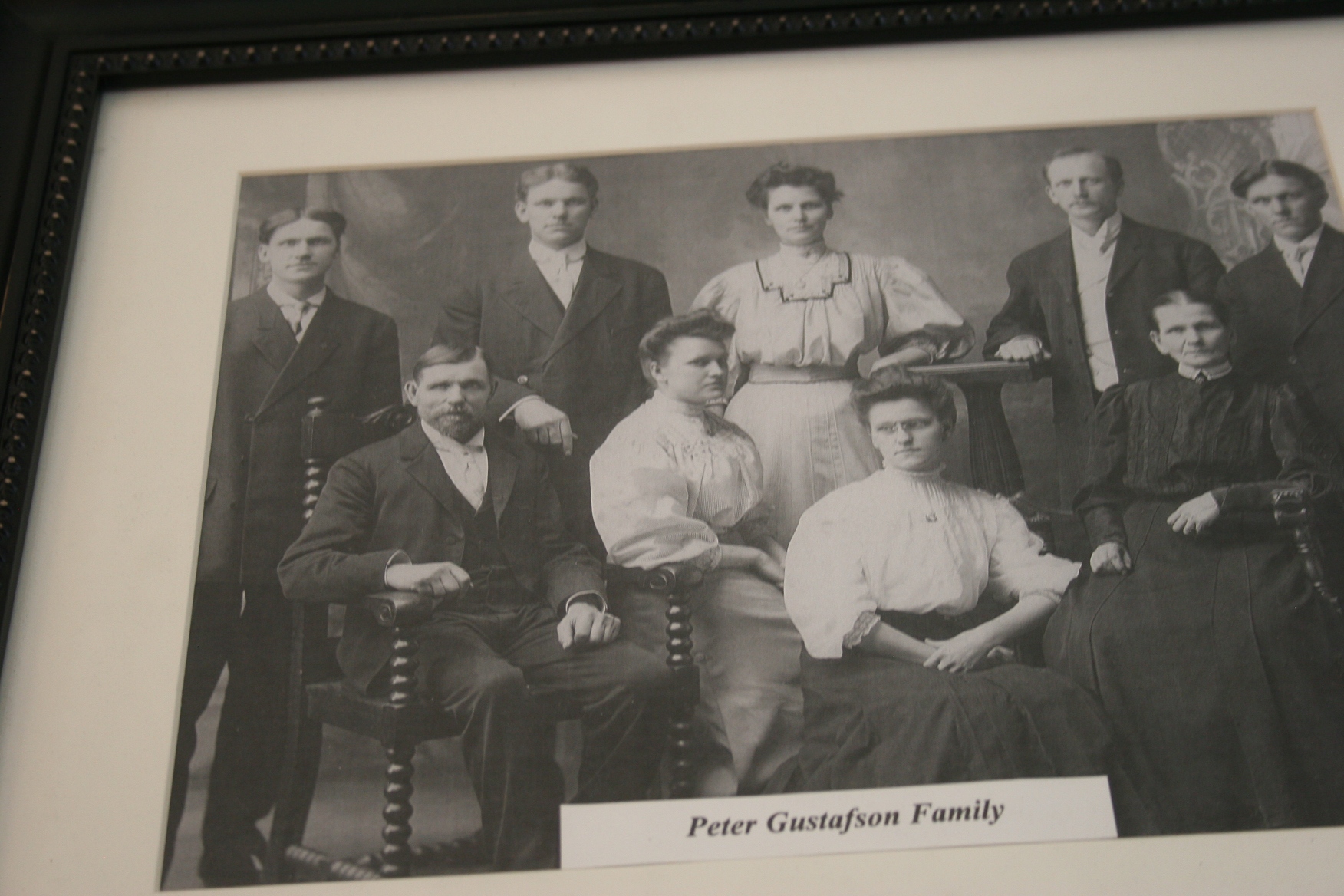
Among the museum photos is this portrait of the Peter Gustafson family. Peter was among the founding members of Christdala. He was also the brother of Nicolaus Gustafson who was murdered by outlaw Cole Younger during an attempted 1876 bank raid in nearby Northfield. At the time of Nicolaus' death, the Millersburg Swedish community had no church or cemetery. Nicolaus' untimely death prompted the Swedes to form Christdala. Peter Gustafson's 18-year-old twin son, Eugene, died tragically in March 1905 when a log rolled forward on a wagon and crushed him. This information is published in The History of the Christdala Evangelical Swedish Lutheran Church of Millersburg, Minnesota, written by B. Wayne Quist.

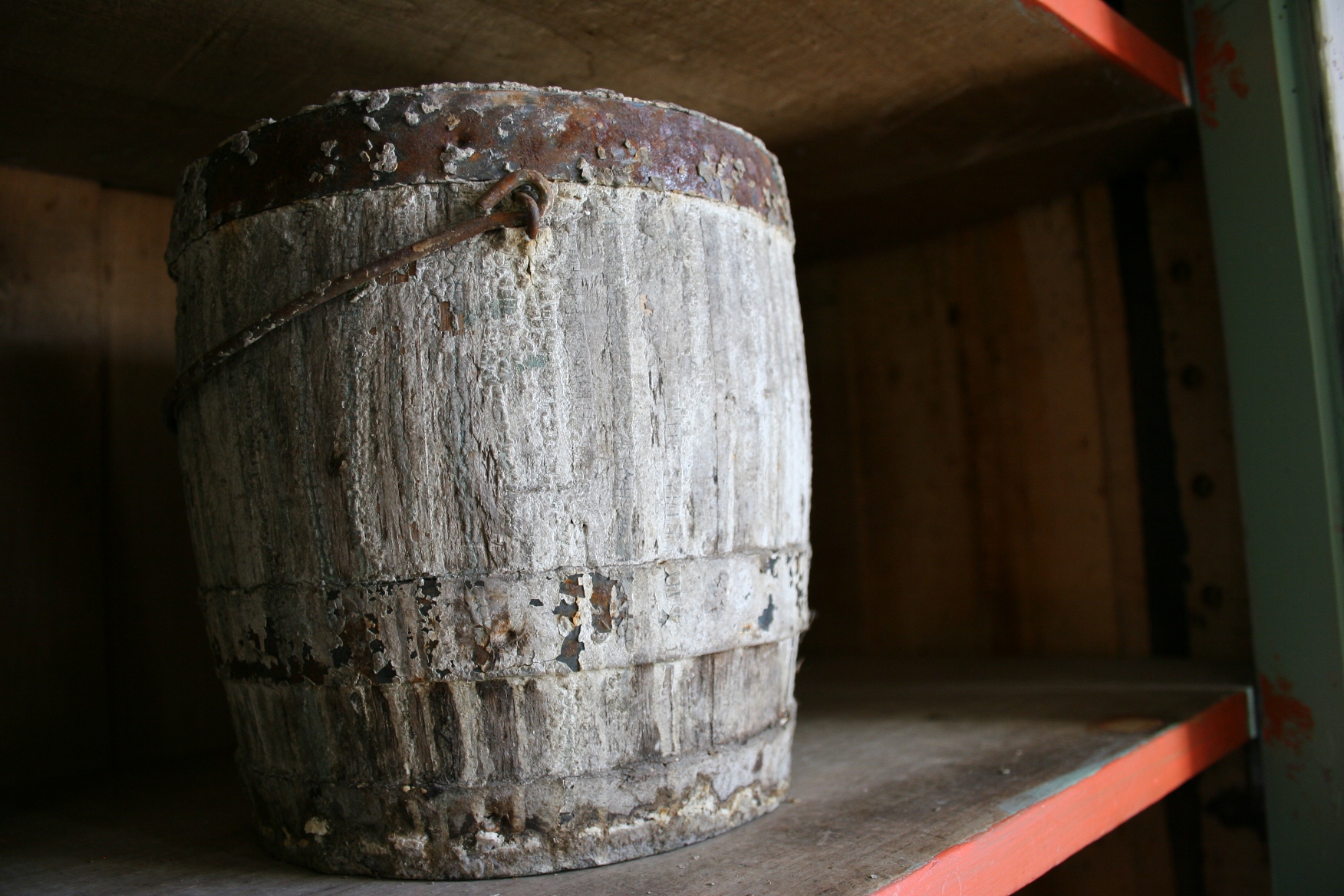
An old wooden pail rests inside a simple cupboard in a corner of the schoolhouse.

I spied this old piano stool tucked under a table. A museum visitor pulled the stool out and suggested perhaps naughty students sat on it in a corner.

Of all the historic photos I viewed in the museum, this one is my favorite. It's clear the boys really don't want to be there, with their mom's arms draped around them. But she appears to be a strong, determined woman.

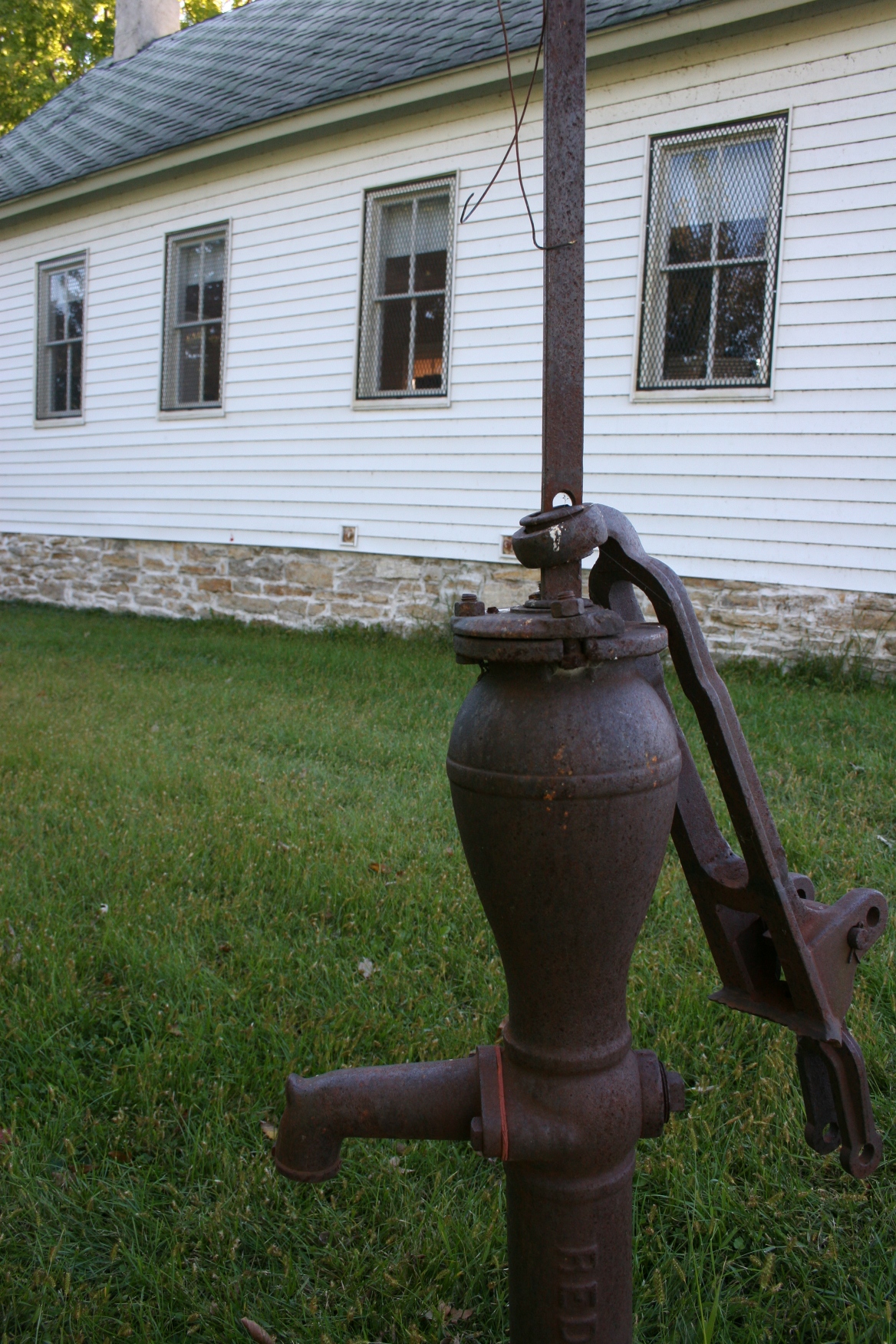
How many stories could this old water pump, next to the school, tell?

© Copyright 2010 Audrey Kletscher Helbling

 

Visit Christdala Church for worship, art and a history tied to outlaws September 25, 2010

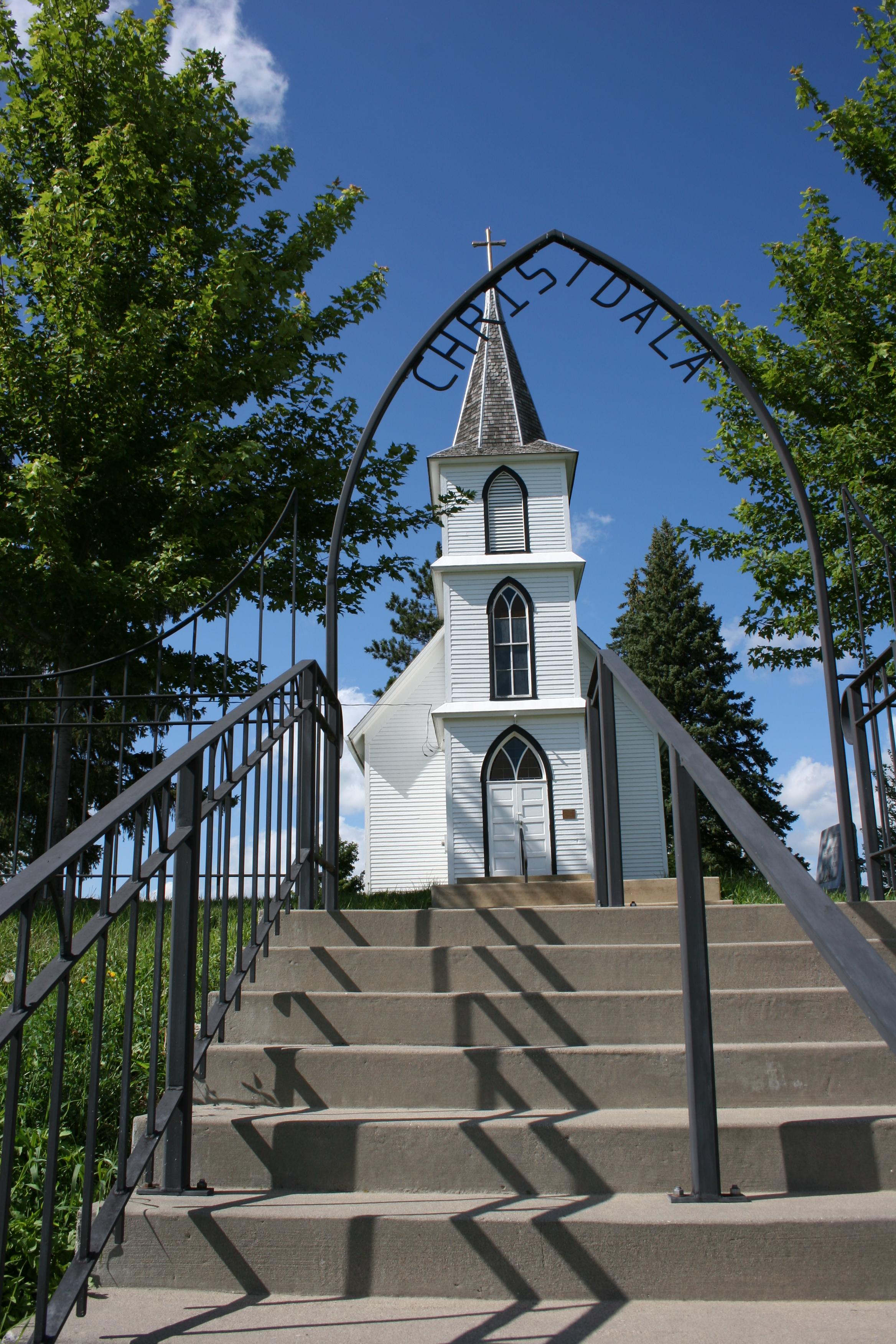
Steps lead from Rice County Road 1 to Christdala Swedish Lutheran Church.

I DOUBT ANY OTHER MINNESOTA church can claim roots in a notorious attempted bank robbery. But Christdala Evangelical Swedish Lutheran Church of rural Millersburg can.

The long-dissolved congregation traces its origins back to the September 7, 1876, attempted robbery of the First National Bank in nearby Northfield. During that failed crime, Nicolaus Gustafson, a Swedish immigrant from Millersburg, was shot point blank in the head by outlaw Cole Younger. He died four days later and was buried in Northfield because the Millersburg Swedish community didn’t have a graveyard, or a church.

The evening of the bank robbery, the Swedish immigrants met to talk about constructing a church and soon thereafter built Christdala.

This Sunday, September 26, the Christdala Church Preservation and Cemetery Association will open the doors to this historic church which sits high atop a hill overlooking Circle Lake just west of Millersburg along Rice County Road 1. On this roadway that passes by the 1878 country church, the James-Younger Gang fled after the botched Northfield raid.

The doors to Christdala, which is on the National Register of Historic Places.

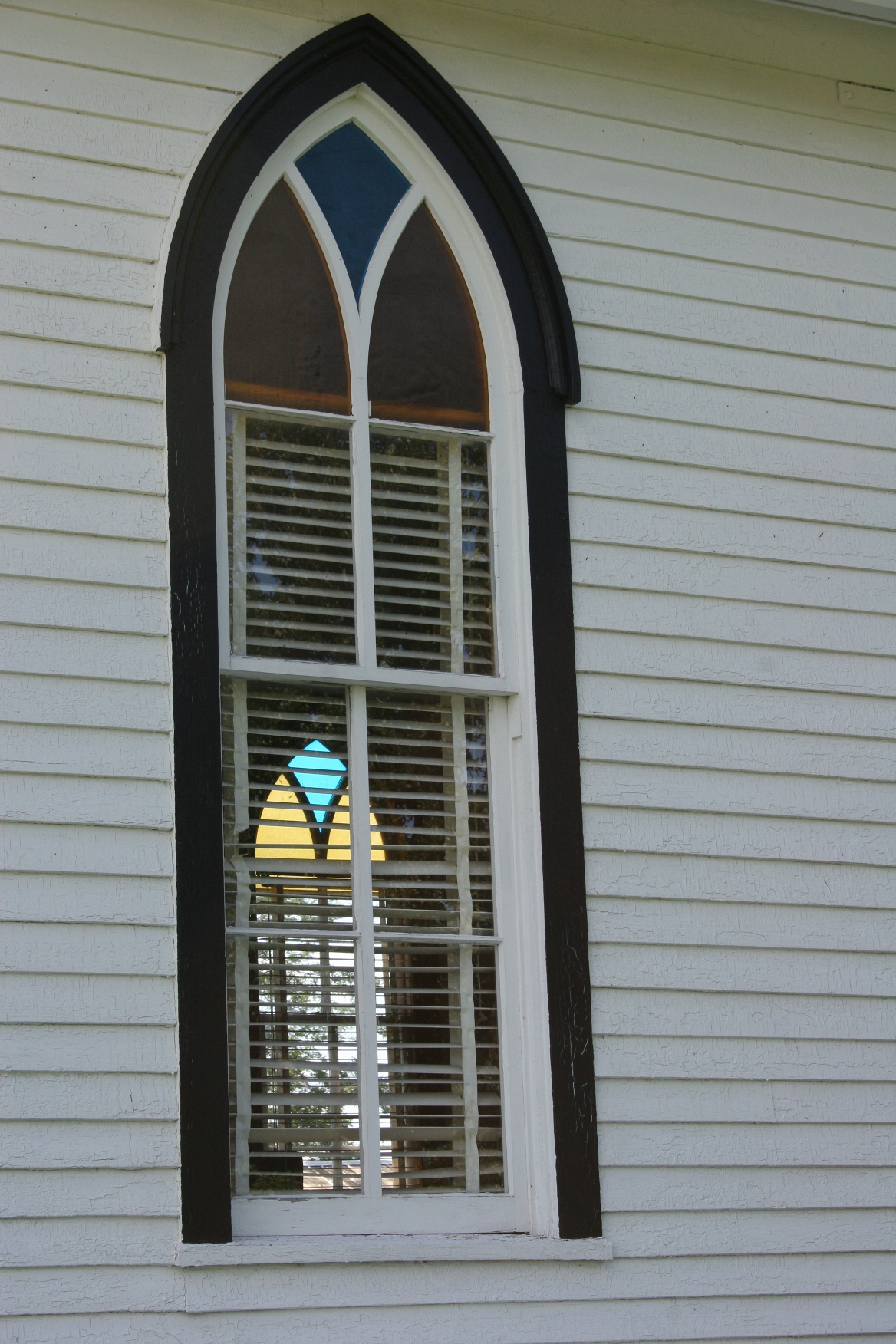
I’ll be there Sunday for the 2 p.m. fall worship service led by the Rev. Ralph Baumgartner, pastor of Galilee Evangelical Lutheran Church in Roseville, who has family ties to Christdala. I’m anxious to get inside this sanctuary, which I’ve only viewed through the slats of Venetian blinds while photographing the locked building on a Sunday afternoon in July.

I've only peered through the blinds into the sanctuary.

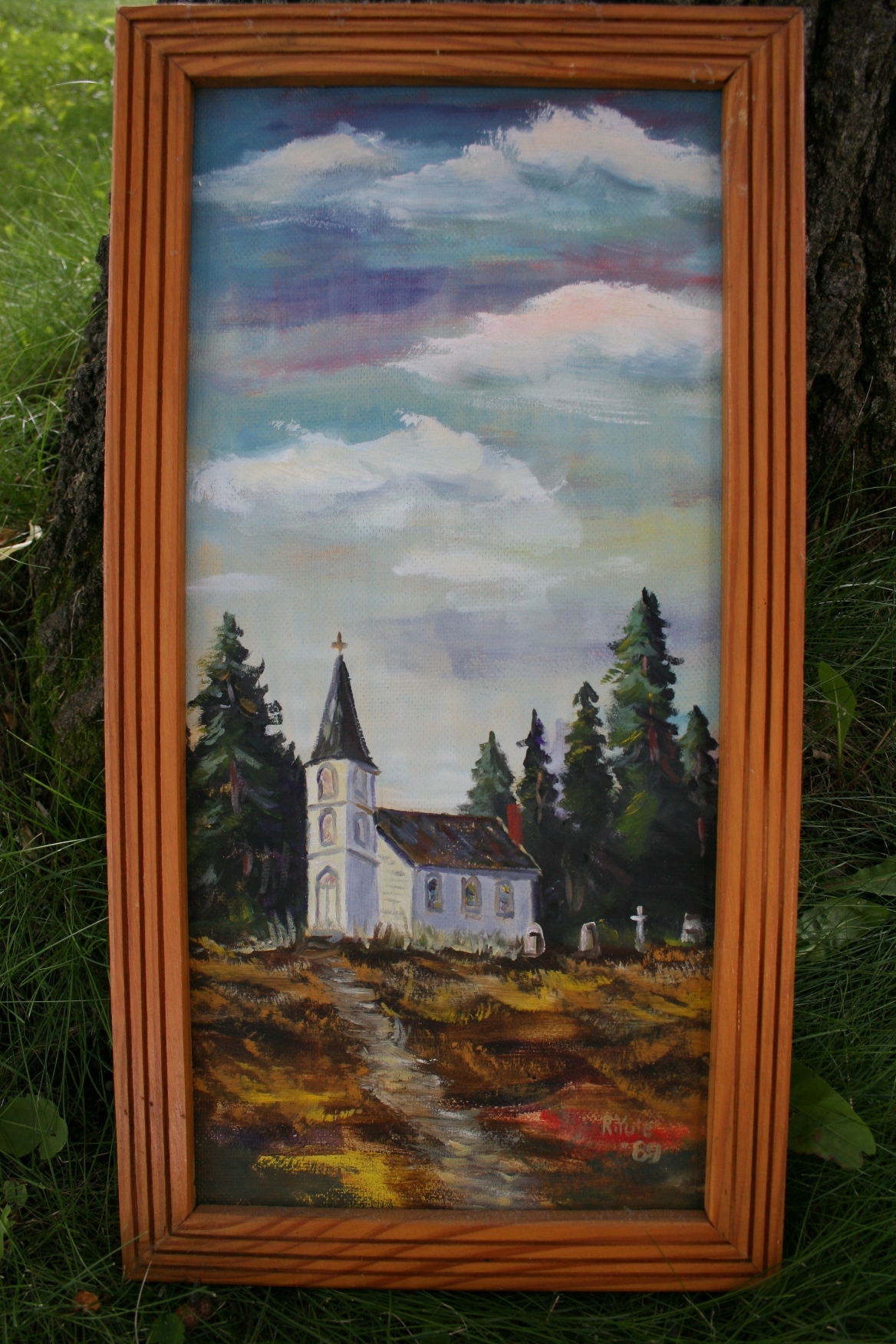
This Sunday I’ll arrive well before worshipers and the curious and the families with a connection to Christdala. I’ll arrive with a van full of paintings by my 92-year-old artist friend, Rhody Yule of Faribault. Rhody, who has been creating art for 76 years, did an oil painting of the church in 1969. He’s showing that piece and eight other religious-themed works at Christdala’s open house.

He’ll talk a bit. I’ll talk a bit. But mostly, we welcome visitors to pause and study the paintings, to feel the emotions painted into the faces of the disciples, of Christ, of a woman in reverent prayer. Rhody paints with a heart of faith reflected in his art.

Christdala Swedish Lutheran Church painted in 1969 by Rhody Yule.

A snippet of Rhody Yule's painting, one of nine he will show at Christdala.

Christdala visitors can also pick up a copy of God’s Angry Man—The Incredible Journey of Private Joe Haan by B.Wayne Quist. The newly-released book tells the true, powerful life story of Haan (Quist’s uncle), who grew up in an Owatonna orphanage and who served in Patton’s Third Army during WW II. Quist, a member of the Christdala Preservation Association, will donate profits from Sunday’s book sales to Christdala.

Copies of the fall issue of Minnesota Moments magazine, featuring my photo essay on country churches, will also be on sale with a portion of the proceeds benefiting the church.

B. Wayne Quist will sell copies of his latest book, God's Angry Man.

Before and after the worship service, visitors can tour the 1881 Millersburg School, which the Christdala preservation group has refurbished and is transitioning into a community museum. Exhibits include church and school records, photos, military medals and records, Indian artifacts, an old doctor’s buggy and more. Faribault genealogist and preservation member John Dalby will be at the schoolhouse to answer questions.

The Millersburg School has been refurbished and will feature exhibits tied to local history.

Sunday promises to be an interesting day for those who gather at Christdala. It will be a day of history and of art, of worship, of thoughtful remembrances at gravesites, of families reuniting and of others simply coming together on this spot, this Christdala, this “Christ’s Valley,” here where the outlaws once escaped on their galloping horses.

A side view of the 1878 Christdala Swedish Lutheran Church.

© Copyright 2010 Audrey Kletscher Helbling
Book cover image courtesy of B. Wayne Quist and schoolhouse image courtesy of John Dalby.