Sunrise on Horseshoe Lake in the central Minnesota lakes region. (Minnesota Prairie Roots copyrighted file photo)
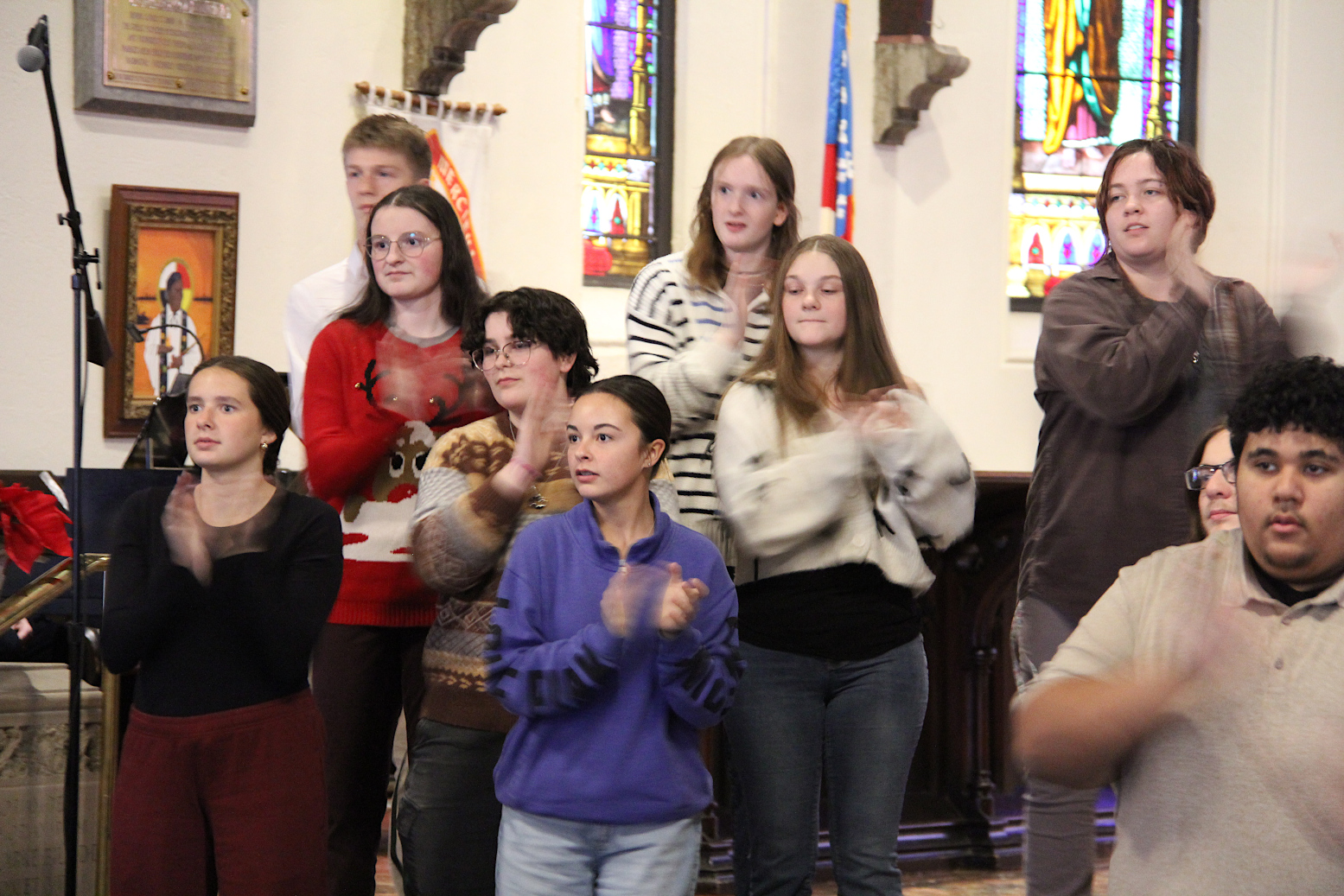
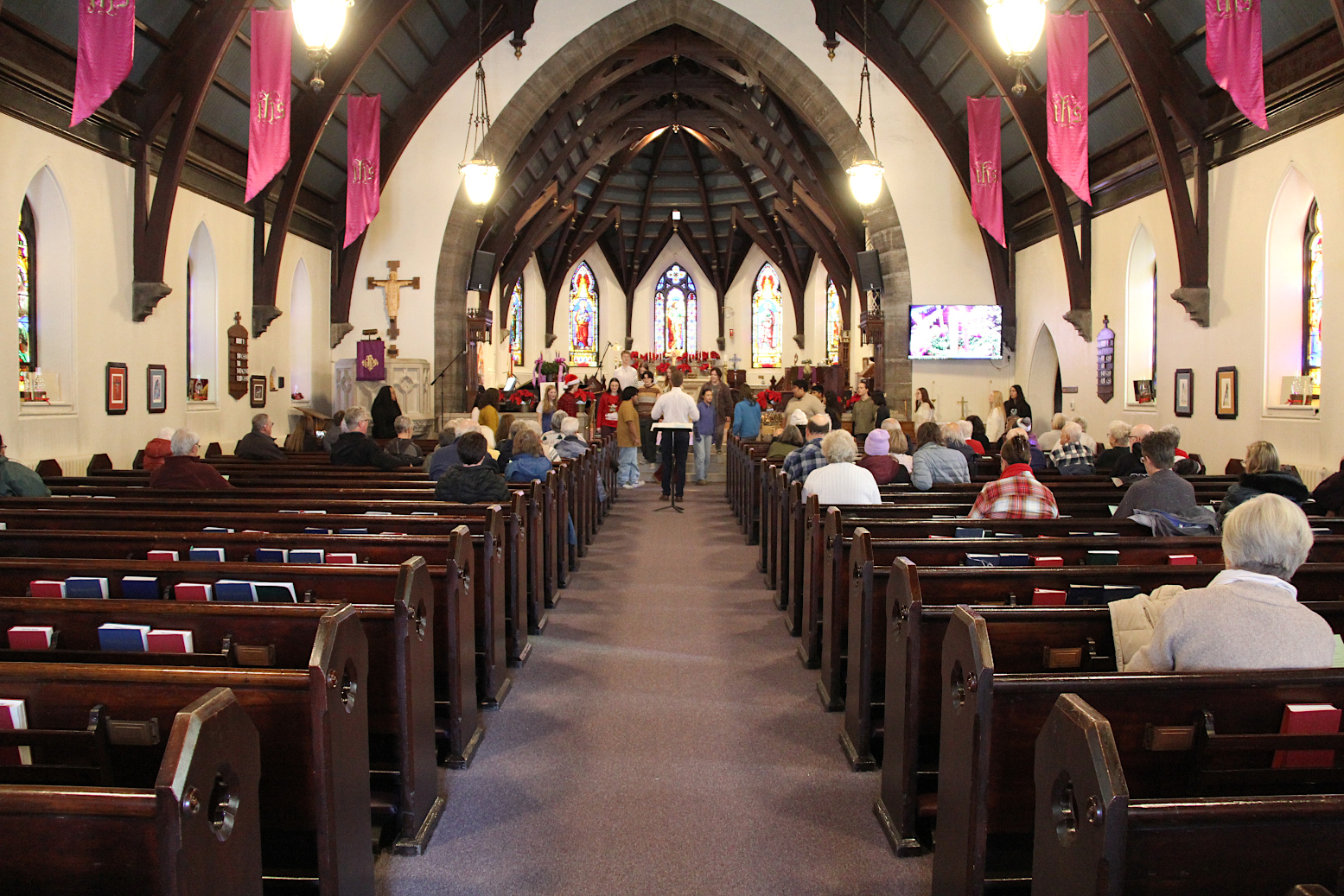
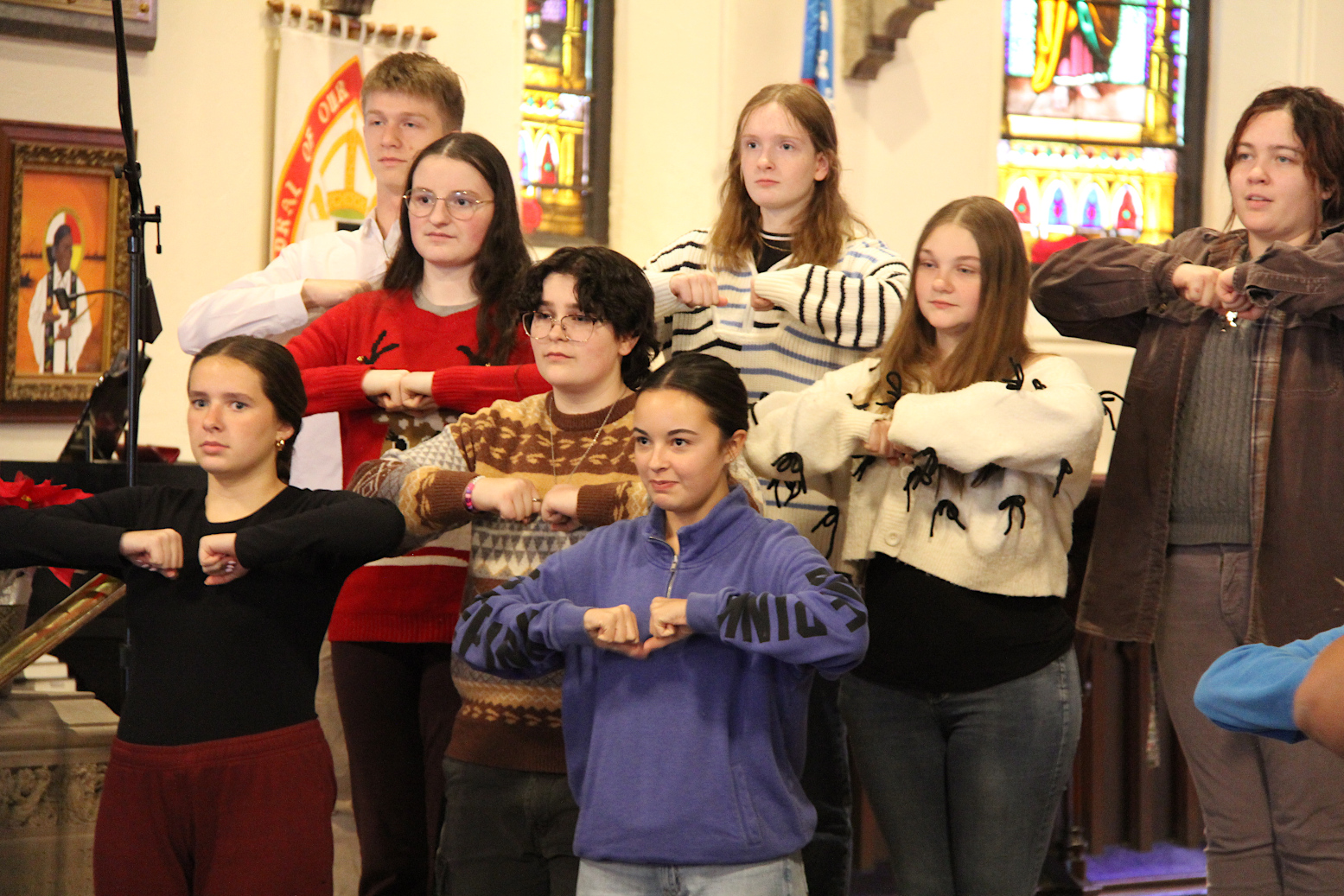
I ATTENDED A CONCERT at my church, Trinity Lutheran, Friday evening. Students from Concordia Academy in Roseville kicked off their spring break “Walk in the Light Tour” to Nashville with their first stop here in Faribault.
What a talented group of high school musicians who sang with joy, energy and depth. From spirituals to traditional worship to blessing songs and more, they performed in the light of faith.
One song in particular, “Thither Will I Go” by composer Tom Trenney, resonated with me. It’s based on a poem, “Light Looked Down,” by Laurence Housman (1865-1959). Although this poem was written long ago, the words are timeless.
The short three-line poem centers on light and darkness, war and peace, and hatred and love.
As I sat listening to these young people, my mind wandered to the No Kings Day protests today. “Thither Will I Go” would be a great protest song. As protesters, we shine light, peace and love.
I’d like those who criticize us, who question our reasons for protesting, who claim we are paid (we are not), who shout profanities at us, call us stupid and more, to consider the words written long ago by Laurence Housman. As protesters, we choose light over darkness, peace over war, love over hatred.
Thither will we go.
Where there is darkness, let there be light. Where there is war, let there be peace. Where there is hatred, let there be love.
FAITH COMMUNITIES are especially busy this time of year as they prepare for the celebration of Christ’s resurrection. Mid-week Lenten services, Friday night fish fries, Palm Sunday and the beginning of Holy Week all usher in Easter morning.
Locally, you’ll find not only the usual, but also a few unique happenings at several area churches. First up, Little Prairie United Methodist Church, rural Dundas, hosts its annual Fish Dinner from 3-8 p.m. Friday, March 27. The meal features fried or baked fish, baked potatoes, salad bar and pie. Tickets must be purchased in advance. Take-out is available. Click here for details.
Also on Friday evening, the Concordia Academy Choir, based at the Christian high school in Roseville, presents an hour-long concert of inspiring music for all ages beginning at 7 p.m. at Trinity Lutheran Church in Faribault. A free will offering will be taken.
Saturday, March 28, brings more activity to Trinity with the Trinity Radio Rumble beginning at 2 p.m. in the Faribault Lutheran School gym, connected to the church. The event, a fundraiser for the congregation’s radio ministry, features family-friendly, live professional wrestling. Click here for more info and to purchase discounted tickets in advance.
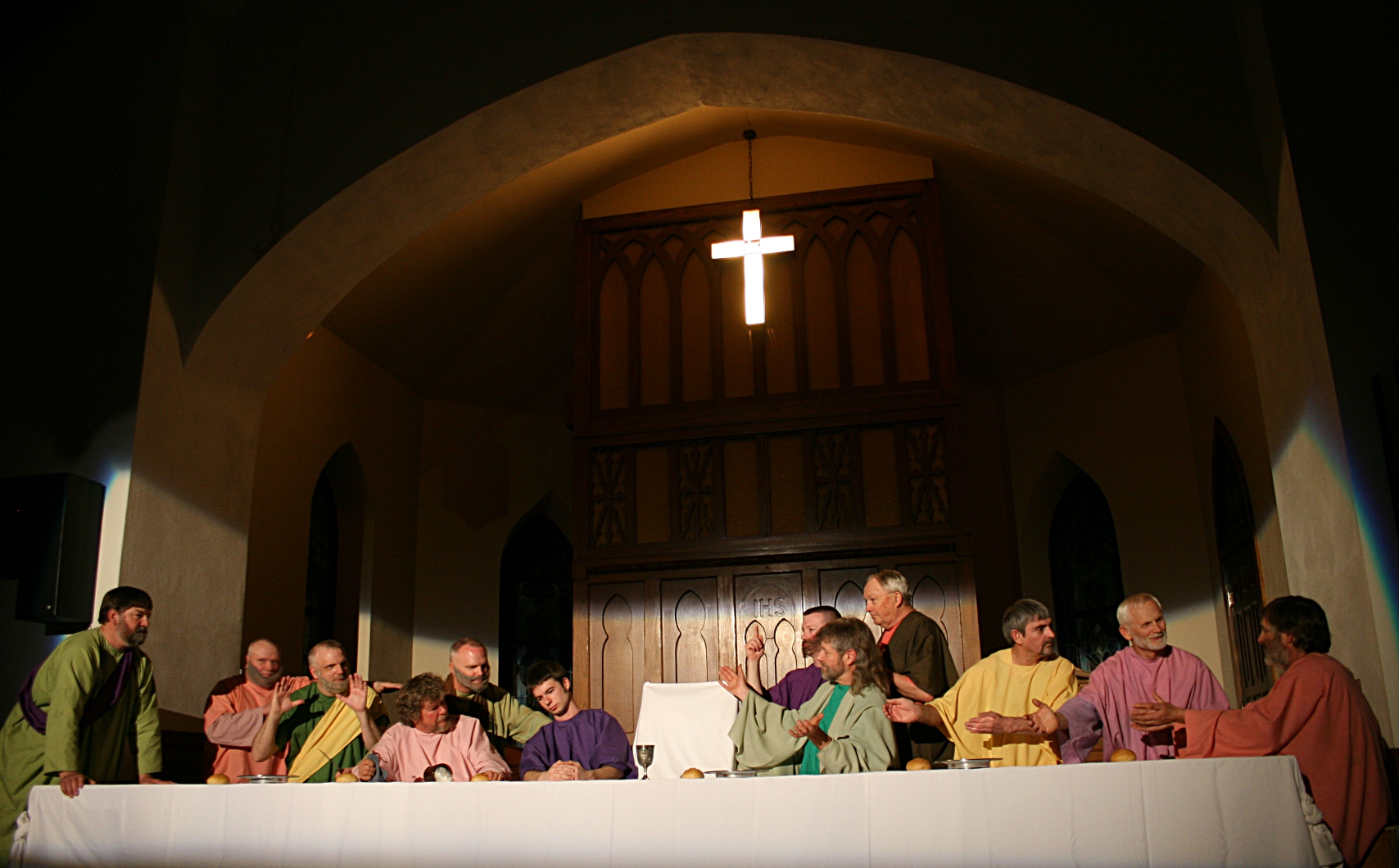
St. John’s 50th presentation of The Last Supper Drama in the sanctuary. (Minnesota Prairie Roots copyrighted file photo)
On Sunday, March 29, The Last Supper Drama comes to St. John’s United Church of Christ, Wheeling Township. The drama in the rural Faribault church has been a Palm Sunday tradition for more than 60 years. Performed in the darkness of the sanctuary by 12 actors role-playing the disciples, the drama begins at 8 p.m. Each disciple speaks individually, explaining his relationship to Christ. Refreshments follow the free performance, which will also be live-streamed on Facebook and YouTube.
So whether you like fish, music, wrestling and/or drama, you’ll find all four in faith communities in the Faribault area this coming weekend.
WHETHER YOU LIKE country or Celtic, you’ll find music o’plenty in Faribault on the evening of Friday, March 13.
Just days before St. Patrick’s Day, metro-based Bonnie Drunken Lad takes the stage at the Paradise Center for the Arts for a performance beginning at 7:30 pm. The five-person Irish folk band will play traditional and modern Celtic, sea shanties and pub songs. Their music is sure to get you in a dancing-with-leprechauns, Irish frame of mind.
If you can’t catch the band in Faribault, you can also hear them at Charlie’s Restaurant and Irish Pub/Water Street Inn Ballroom in Stillwater from 11 am-2 pm Saturday, March 14. They’re among a line-up of musical groups playing at a St. Practice Day event. On March 17, Bonnie Drunken Lad will be back at the Stillwater location from 2-5 pm for a music-filled St. Patrick’s Day celebration.
Another option to hear these Irish musicians is from 4-6 pm Saturday, March 14, at Kip’s Irish Pub & Restaurant in St. Louis Park.
BLOCKS AWAY from Bonnie Drunken Lad’s show at the Paradise, a local four-piece country band will perform a free concert at the historic Cathedral of Our Merciful Saviour from 7-9 pm Friday, March 13.
The Old Country Boys sing with an authentic twang about daily life, love and hardship. Expect to hear songs by the likes of Merle Haggard, Waylon Jennings, Johnny Cash, George Jones, Hank Williams Sr. and Jr., Charlie Daniels, and Alabama, among others.
Although the concert is free, donations are accepted for Cathedral preservation. This event is part of the Faribault Cathedral Concert Series.
Interestingly enough, last March Bonnie Drunken Lad played at the Cathedral as part of the concert series. Now that I think about it, I’m pretty certain I attended that concert.
I’ve heard the Old Country Boys/Brothers, purveyors of old (not new) country music, play many times in Faribault, at Christ Lutheran Church’s weekly summer wood-fired pizza-concert night, Holy Smoke!
Now, on a Friday evening in mid-March, both groups will be back in Faribault performing country and Celtic music o’plenty at pre-St. Patrick’s Day concerts.
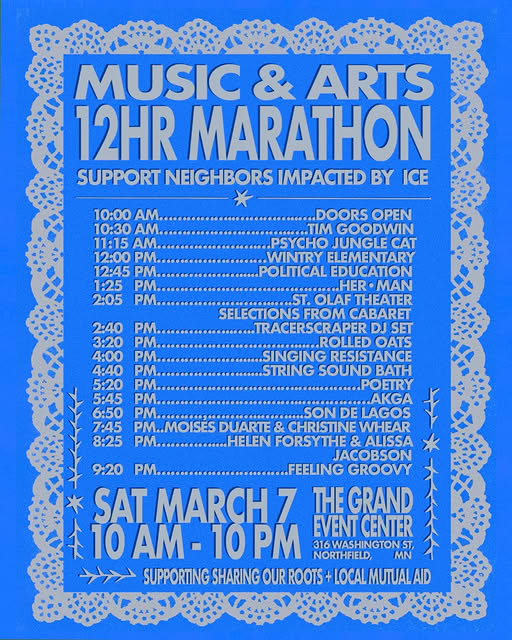
(Promo sourced from The Grand Event Center Facebook page)
THE GOOD FOLKS of Northfield, Minnesota, are organizing again to help their neighbors. This time it’s via a 12-hour Mutual Aid Marathon from 10 am-10 pm Saturday, March 7, at The Grand Event Center in this college town south of the Twin Cities.
Proceeds from the fundraiser will go to organizations—such as Sharing Our Roots and Northfield Community Action Center—providing mutual aid to those in the community impacted by federal immigration enforcement.
Doors open at 10 am at the event center, 316 Washington Street, just a block off Division Street in the heart of this historic downtown. Suggested donation at the door is $10.
From 10 until noon, attendees can enjoy a breakfast with 30 percent of entree sales going to organizations doing vital work in the community. Likewise, profits from a “pay what you can” appetizer buffet, which starts at 4 pm, will also be donated.
Event planners promise a full day and evening of live music, performances, poetry, political education, and powerful speakers. See the event poster promo above for a complete schedule.
Organizers are calling upon the public to: Bring friends. Bring family. Bring your appetite and your solidarity. Come for a while or stay for the entire marathon.
As I see it, the Mutual Aid Marathon is all about neighbors helping neighbors, which is the very definition of a loving and caring community.
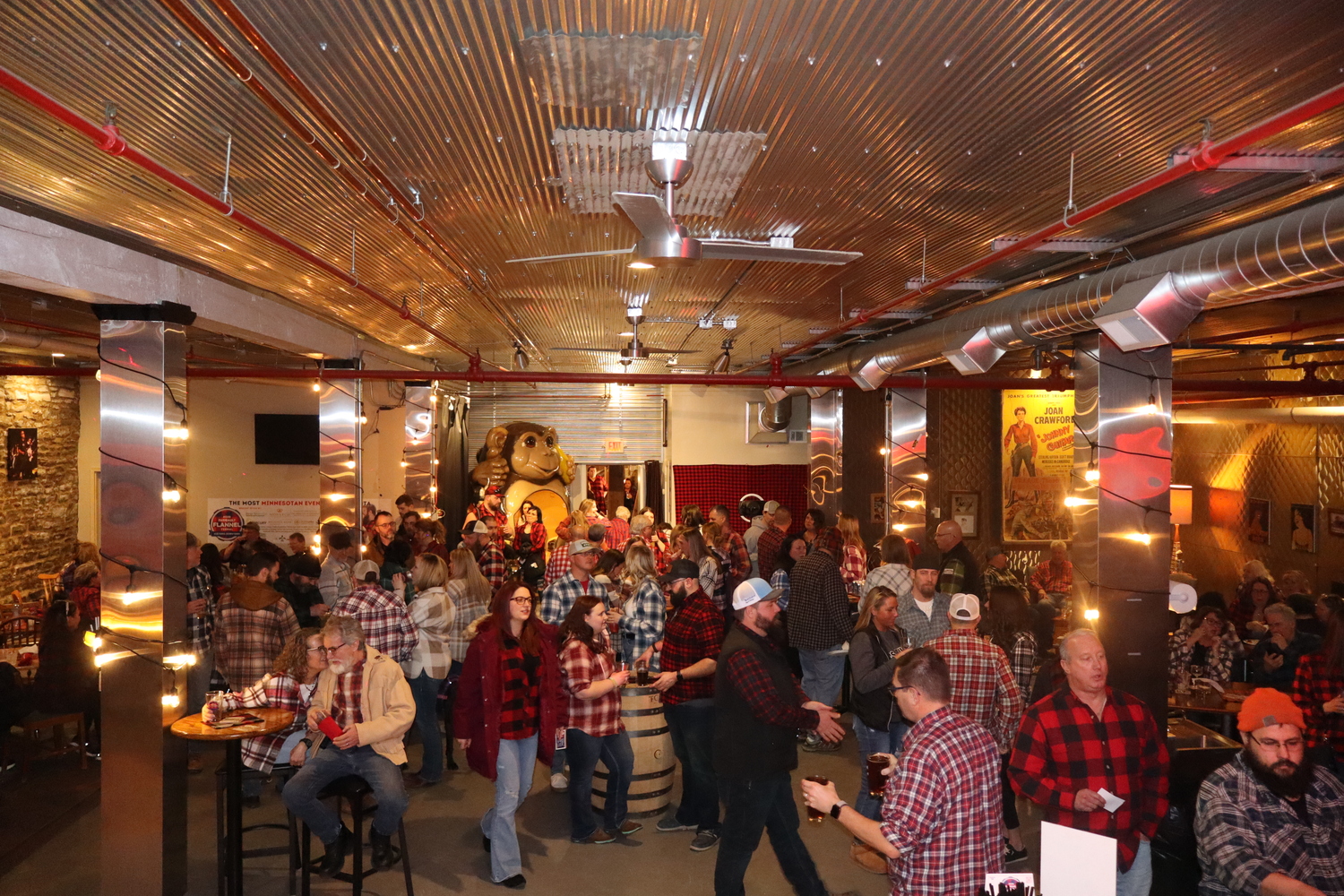
Attendees at a past Faribault Flannel Formal cozy inside a non-working amusement ride inside Corks & Pints. (Photo credit: Faribault Area Chamber of Commerce & Tourism)
Voted as the Best Dressed Lumber Jack in 2025. (Photo credit: Faribault Area Chamber of Commerce & Tourism)
The dress code calls not for formal wear, but rather for flannel, preferably buffalo plaid red and black. That’s my kind of winter attire. Attendees can even participate in Lumber Jack and Jane costume contests, which call for creativity in flannel wear. Beards will also be judged to find “the best,” whatever fits that definition.
Chicken Wild Rice Hotdish, an example of the hotdish you may find at the Faribault Flannel Formal. (Minnesota Prairie Roots copyrighted file photo)
This promises to be a Minnesotan event through and through with activities like a Hotdish Showdown. Note, I wrote hotdish, which is the Minnesota word for casserole. Locals will cook up their favorite hotdishes to be judged and sampled.
The influence of legendary lumberjack Paul Bunyan—who may or may not have eaten hotdish, but who certainly wore buffalo plaid flannel—will be noticeable. There will be axe throwing in a special trailer, a Beaver Toss (that would be stuffed beavers), bag toss and hammerschlagen (driving nails into a stump). Fun stuff to show off precision skills and perhaps a bit of brawn.
Inside the lower level of Corks & Pints, which connects to the distillery. (Photo credit: Faribault Area Chamber of Commerce & Tourism)
No event is complete without music. Minneapolis rock cover band Robos headlines the stage. Those who purchase $75 VIP experience tickets for early admittance at 3 p.m. can also exclusively enjoy the music of Wayne & the Boys, a one-man band performing the music of Wayne Wagner, inducted into the Legends of South Dakota Country Music Hall of Fame. VIP perks also include a swag bag, two complimentary drink tickets, voting power and access to exclusive hideouts.
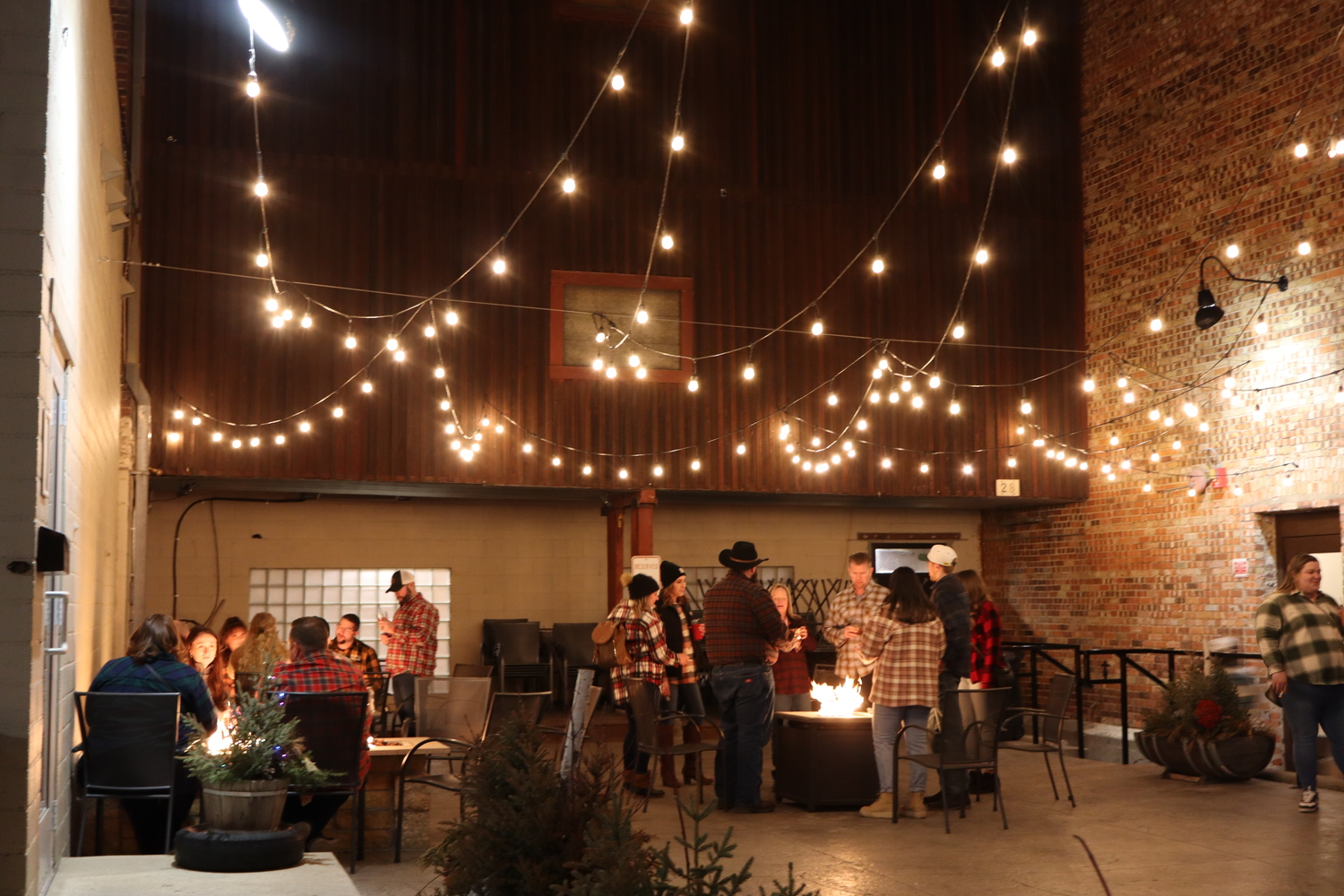
Flannel attendees gather on the patio between the distillery and Corks & Pints. (Photo credit: Faribault Area Chamber of Commerce & Tourism)
Whether you go VIP or opt for a $25 general admission experience, the Faribault Flannel Formal is sure to be a true Minnesotan experience, especially with all that plaid flannel. You can even experience Minnesota winter by stepping outside to order a drink at the Sleigh Bar (new this year) and then warm up in a heated tent, followed perhaps by a conversation about the weather. We like to talk weather here in Minnesota.
You may even overhear phrases like “You betcha.” Or “That’s different.” Or “It could be worse.”
But mostly, I expect you will hear friendly conversations, lots of laughter, maybe an ice fishing tale or three, and praise for Minnesota, this place we love. Even in the deep of winter. (Mostly.)
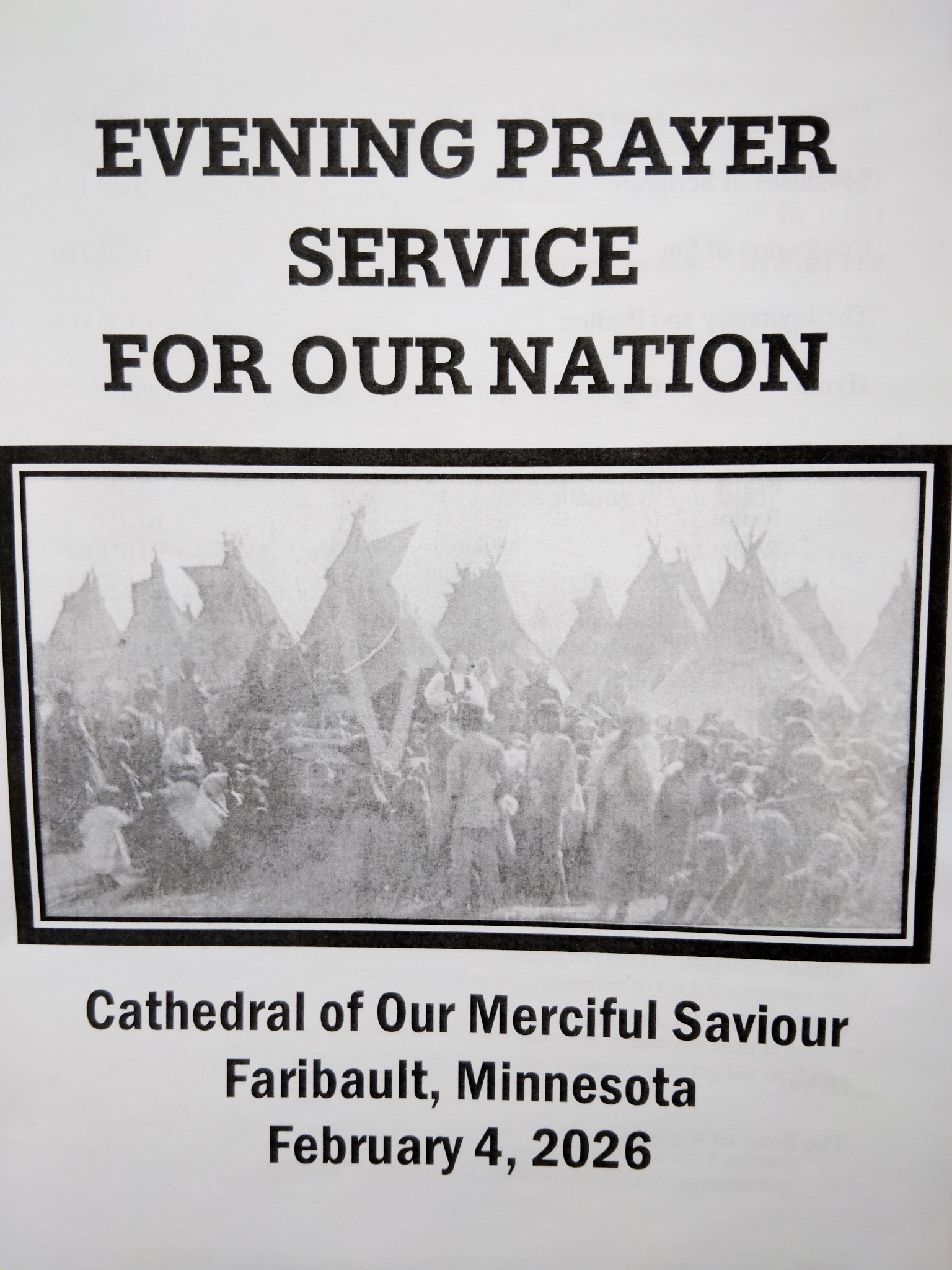
The service program cover featured an historic photo of Native Americans incarcerated at Ft. Snelling following the U.S.-Dakota War of 1862 prior to their deportation from Minnesota. (Minnesota Prairie Roots copyrighted photo February 2026)
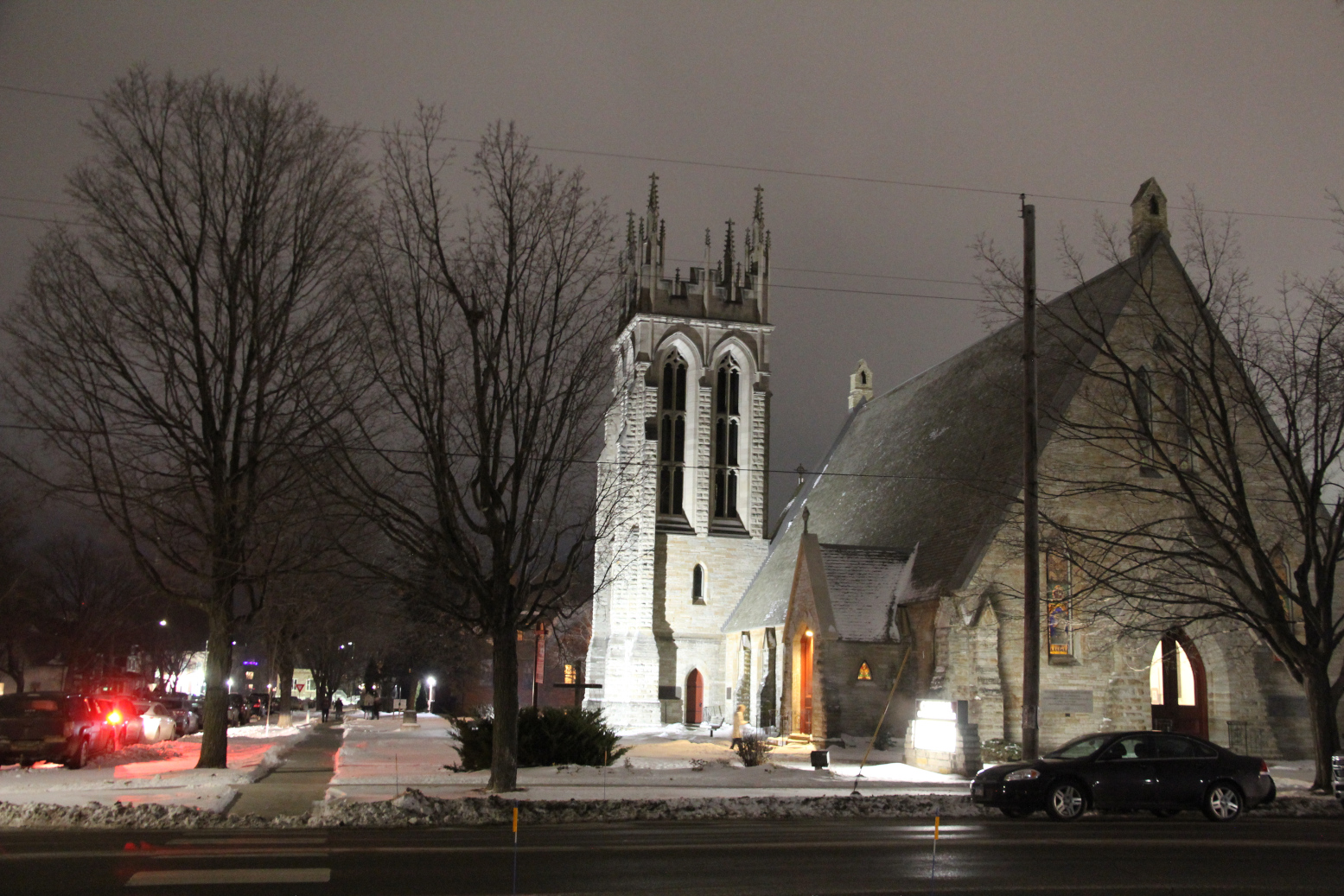
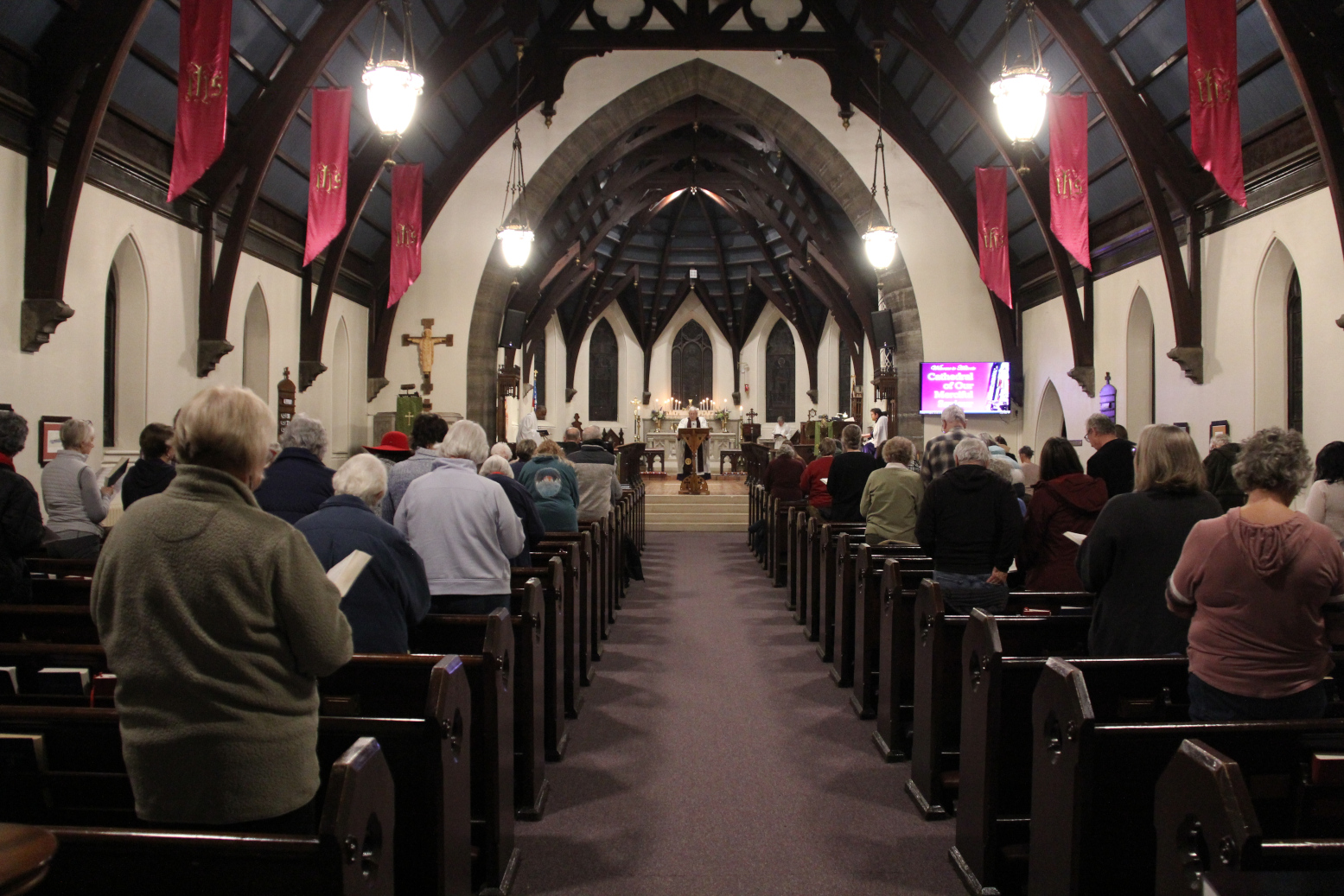
WE GATHERED. On a day when I learned that a friend, an American citizen, was recently racially-profiled and stopped by ICE. On a day when I learned that ICE vehicles have been parked in my neighborhood. On a day when several Minnesota children were released from federal detainment in Texas. On a day when the border czar announced the draw-down of 700 federal agents (out of 3,000) in Minnesota. On this early February day, 75 of us gathered for an “Evening Prayer Service for Our Nation” at the Cathedral of Our Merciful Saviour in Faribault, Bishop Henry Whipple’s church.
The prayer service was open to anyone who wanted to attend in a church I’ve always considered especially welcoming and focused on serving community. (Minnesota Prairie Roots copyrighted photo February 2026)
I needed this service of prayer, scripture, Psalms, reflection and hymns to quiet my troubled spirit. But I needed, too, to hold space, to sit and stand and sing and pray in community, in support of anyone—especially our immigrant and refugee neighbors—illegally stopped, taken and/or detained by ICE.
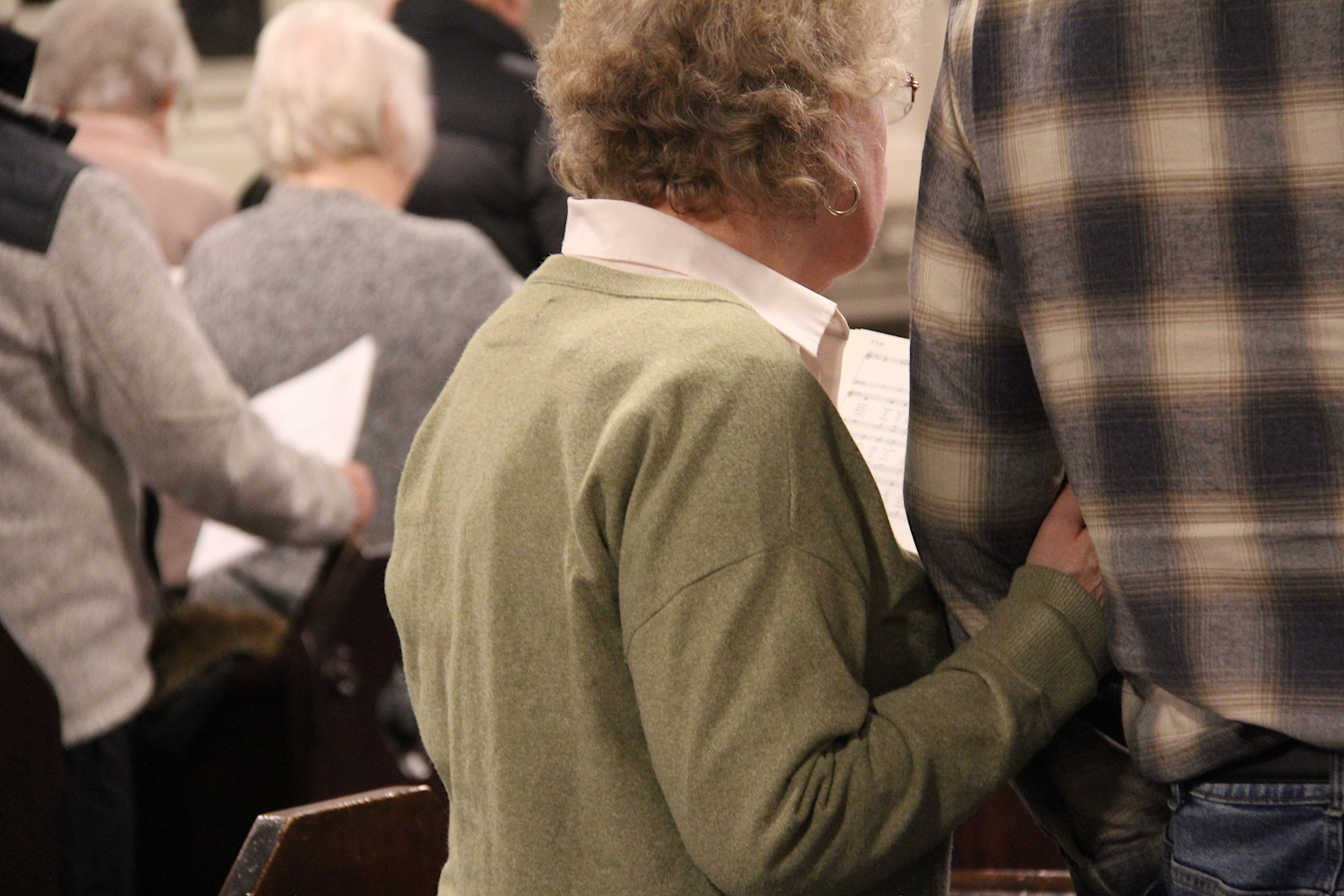
A couple leans on one another during the service. (Minnesota Prairie Roots copyrighted photo February 2026)
This was not a protest service. Rather, this was a reflective, prayerful, unifying, worshipful coming together of people in my community who care deeply about their neighbors and about this nation.
People arrive for the 7 pm service inside the Cathedral of Our Merciful Saviour, Faribault. (Minnesota Prairie Roots copyrighted photo February 2026)
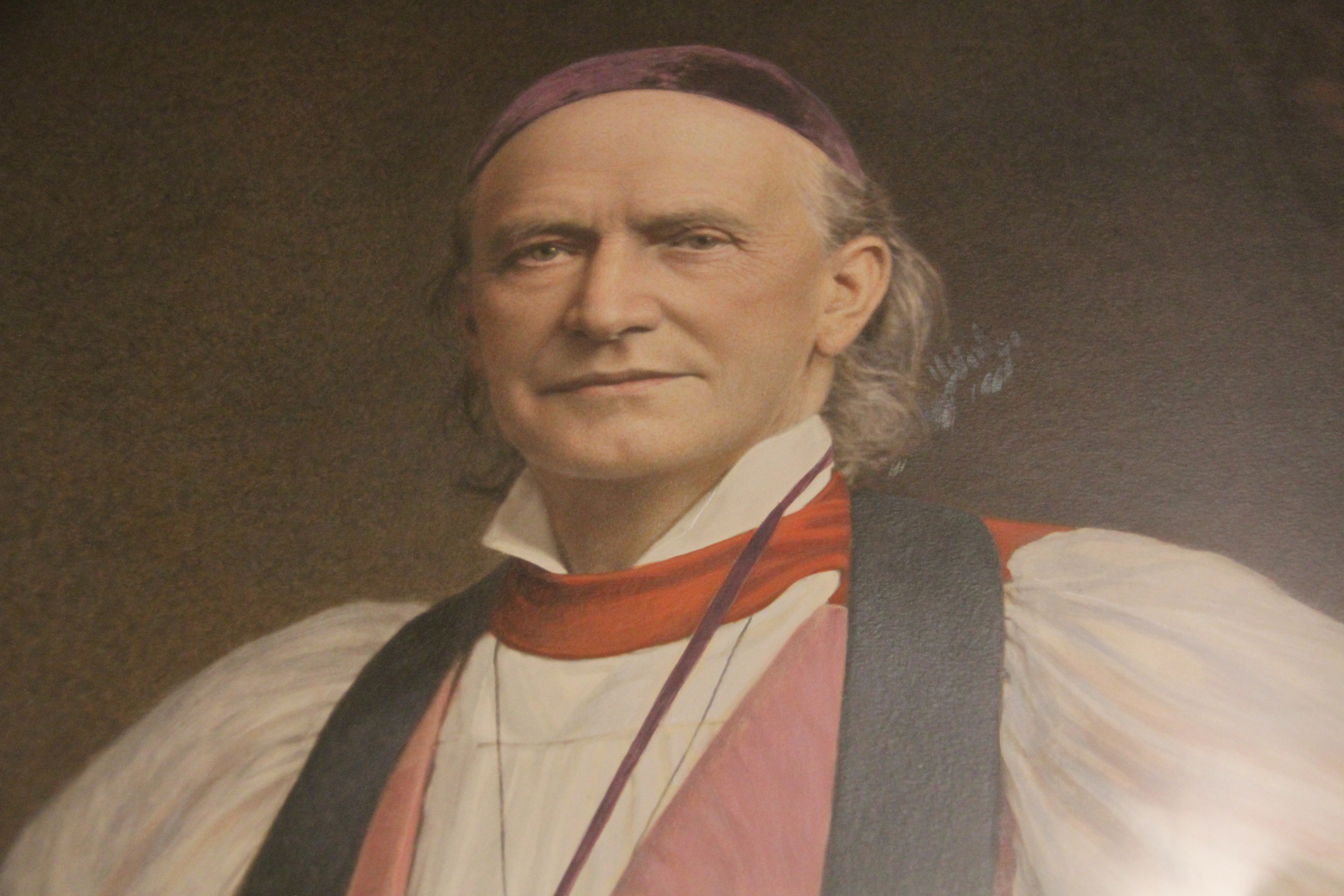
The Rev. James Zotalis welcomed attendees to the event held inside the massive Episcopal cathedral completed in 1869 under the leadership of Bishop Whipple. “Welcome to the Whipple building,” Zotalis said in opening his short homily. “This is the real Whipple building.”
Gathered inside the cathedral for the prayer service. (Minnesota Prairie Roots copyrighted photo February 2026)
He contrasted the beautiful church to the stark seven-story Whipple Federal Building 50 miles to the north that bears the good bishop’s name and which is now a temporary detention center for those detained by ICE in Minnesota. Conditions inside have been described as “inhumane” by officials who have visited the facility.
A portrait of Bishop Henry Whipple hanging inside the cathedral. (Minnesota Prairie Roots copyrighted photo February 2026)
The cathedral, Zotalis said, is a place of love and peace, its ministry modeled after that of Bishop Whipple and his first wife, Cornelia. Arriving here from Chicago in 1859, the couple had already served in dangerous areas of that city, connecting with people in tangible, helpful ways, much like we see Minnesotans stepping up and helping others today.
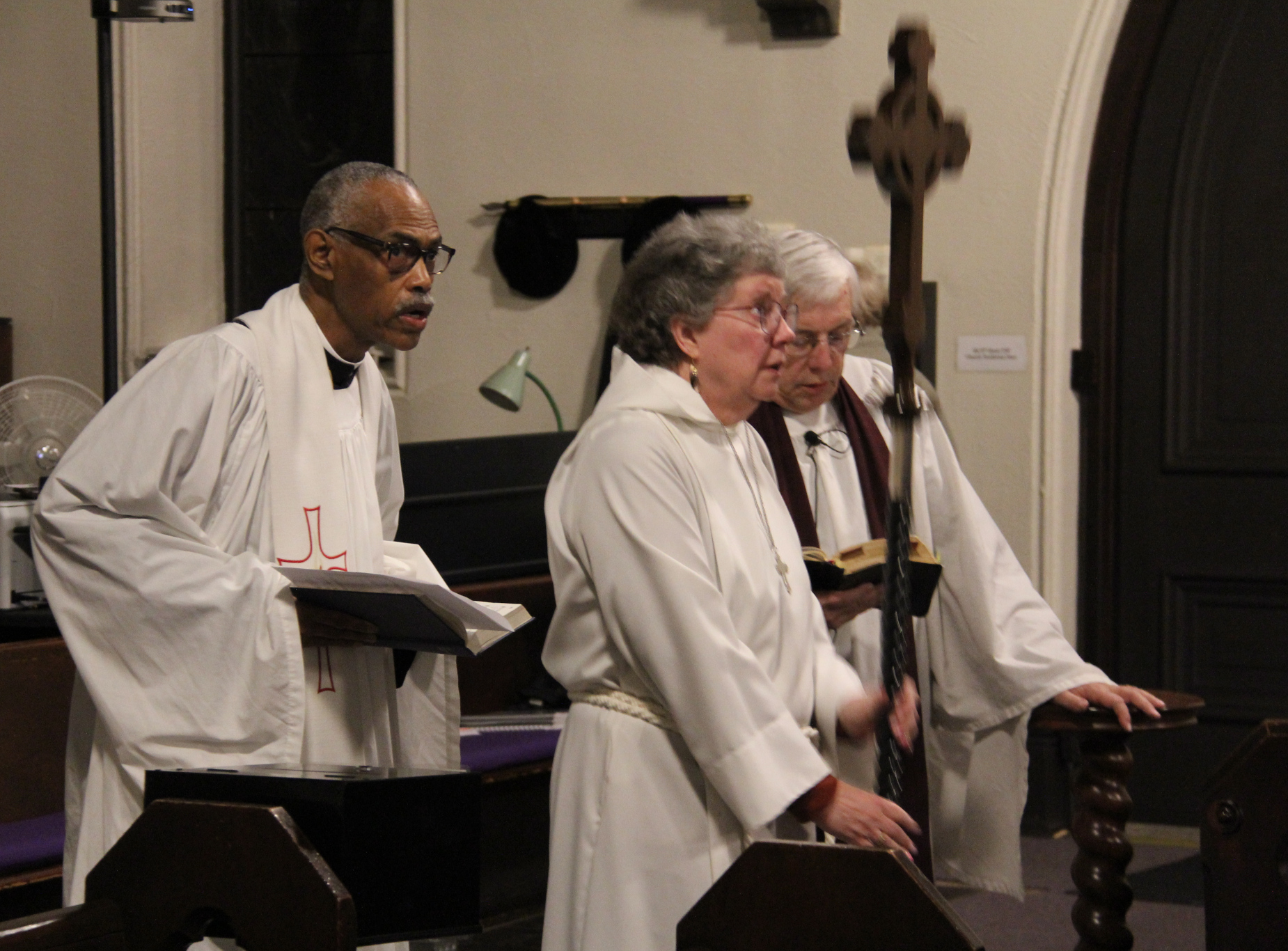
The Rev. Henry Doyle, left, a church member, and the Rev. James Zotalis, right, start the service with a processional. (Minnesota Prairie Roots copyrighted photo February 2026)
With a repeated directive to “always say no to evil,” Zotalis said Minnesotans have done just that since the invasion of our state by masked federal agents two months ago. He listed specifics: bringing food to people afraid to leave their homes, providing rides, offering free legal aid and peacefully protesting.
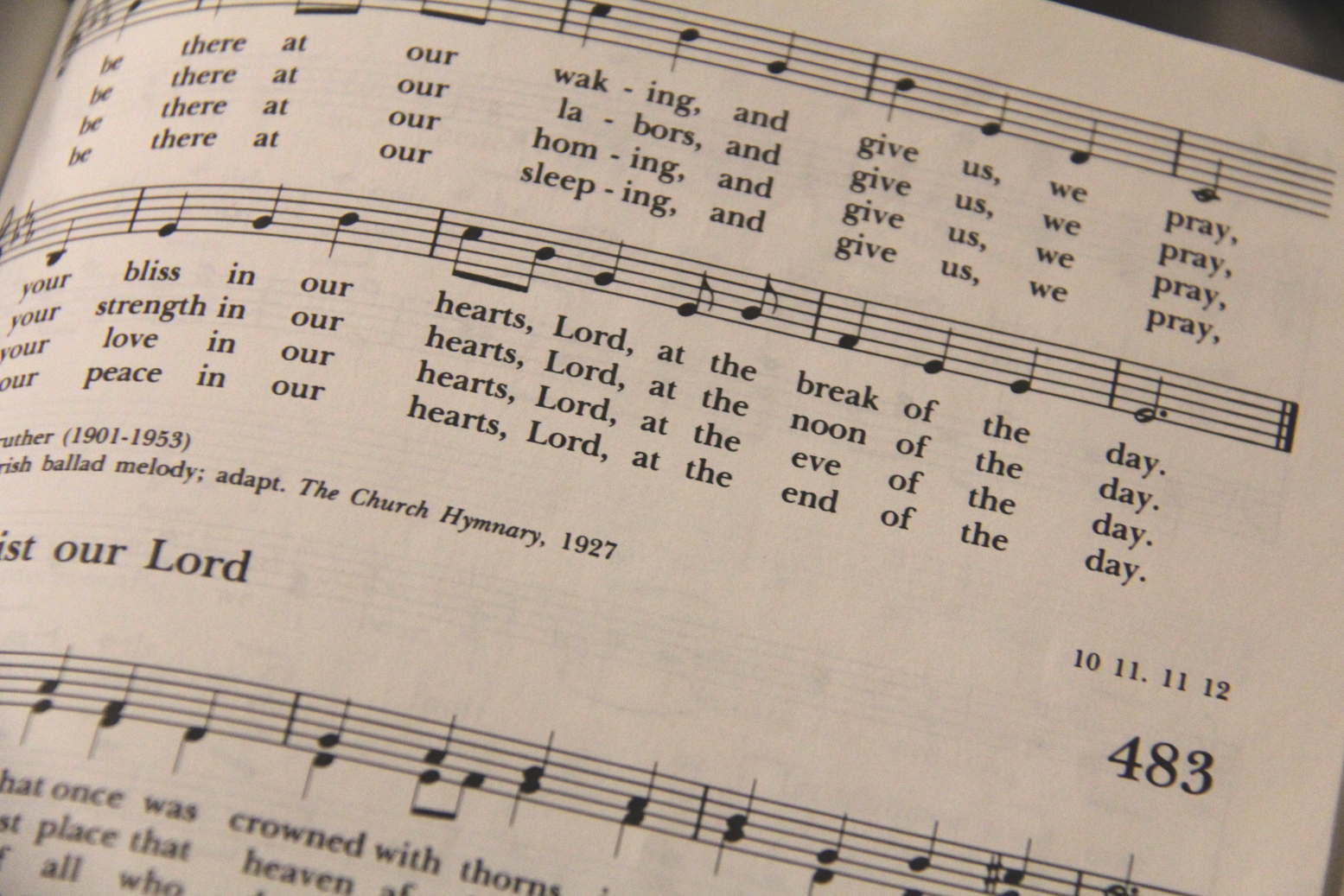
Among the many hymns we sang was #482, “Lord of all hopefulness.” (Minnesota Prairie Roots copyrighted photo February 2026)
“Love your neighbor as yourself” was emphasized often in love-themed Scripture readings (Luke 10:27, I Corinthians 13:13, I John 4:11) during the Wednesday evening service. Like the good people of Minnesota today, Bishop Whipple showed that love long ago in his ministry to the Dakota people locally, across the state and during their imprisonment after the U.S.-Dakota War of 1862 at Fort Snelling, where the Whipple Federal Building is located. Whipple faced death threats for those who opposed his compassionate work with Native Americans.
Death. In a time of remembrance during Wednesday’s service, attendees could speak the names of “deceased and alive during this time of tragedy and strife.” I spoke first: “Renee Good.” Then another voice: “Alex Pretti.” And then an attendee read the names of 32 individuals who died in ICE detention in 2025. Thirty-two.
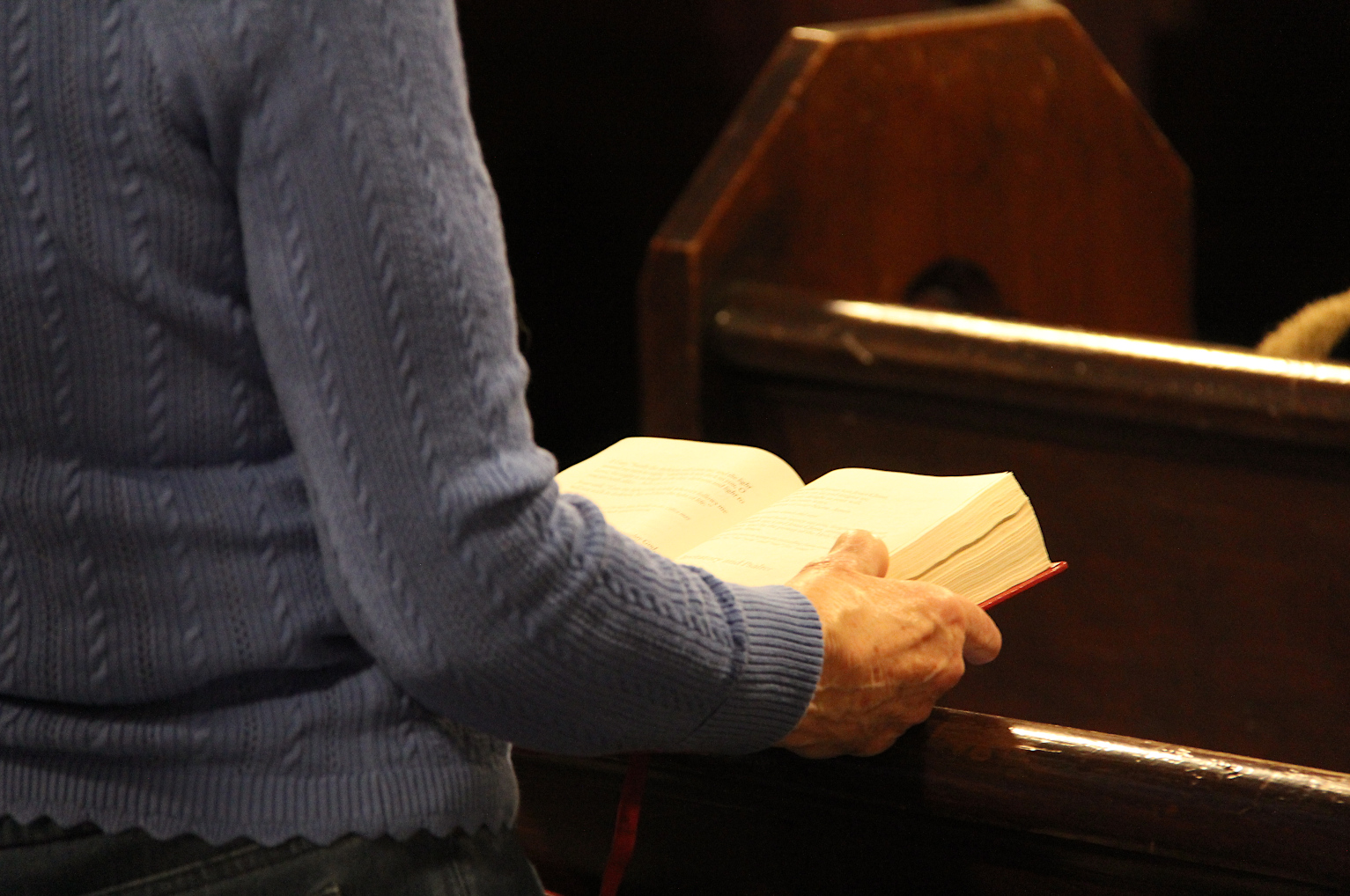
A woman holds a prayer book used often during the service. (Minnesota Prairie Roots copyrighted photo February 2026)
Many times my emotions verged on tears. As we asked, “Lord, keep this nation under your care.” As we sang “America the Beautiful.” As we prayed a Collect for Peace. As I thought of Jesus, who also lived in troubled times and who served with love and compassion.
Theme words of love, compassion, mercy and neighbor threaded throughout the service led by the reverends Zotalis and Henry Doyle. I could feel those words. And I could feel, too, the collective sense that we all needed this evening of prayer, scripture, Psalms, reflection and hymns to quiet our troubled spirits.
A hope medallion gifted to me by my friend Beth Ann many years ago. (Minnesota Prairie Roots copyrighted file photo)
IN THE MIDST of the invasion of Minnesota, not just Minneapolis, by armed masked badge-less federal agents who are violently detaining and taking people, even fatally shooting them, I am trying to find hope.
And that comes to me in big and small ways. Never underestimate the power of your voice, the power of your compassionate words and actions no matter who you are, where you live.
In the speeches of legislators in Washington, DC, on Wednesday, I heard praise for the strength of Minnesotans. I heard concern for our country and our democracy. And I listened to Minnesota Senators Amy Klobuchar and Tina Smith boldly, loudly call for this federal invasion to stop. That’s me paraphrasing their messages. To hear them say they’ve never felt more proud of Minnesotans brought me to tears.
A hope stone that sits on my desk. (Minnesota Prairie Roots copyrighted file photo)
THE WORDS OF A POET & A MUSICIAN
Then there are the words printed on a card that arrived in my mailbox from a blog reader, who has countless times sent me uplifting notes, cards and more simply because she is a kind, compassionate, caring person. On the front of that card were these lines from poet Emily Dickinson: Hope is the thing with feathers/that perches in the soul/and sings the tune without the words/and never stops at all. Roxy has followed my blog long enough to know that “hope” is one of my favorite words.
And then there are the words penned and sung by Bruce Springsteen in “Streets of Minneapolis.” Springsteen doesn’t hold back in his just-released anti-ICE protest song. …Against smoke and rubber bullets/By the dawn’s early light/Citizens stood for justice/Their voices ringing through the night… He specifically references the whistles and phones the people of Minneapolis (and throughout Minnesota) have used to alert people to ICE’s presence and to document their actions. He unleashes strong words against ICE and federal government leaders and officials. Several people sent me links to that song because they knew I would appreciate the lyrics, the ways in which creatives can powerfully protest.
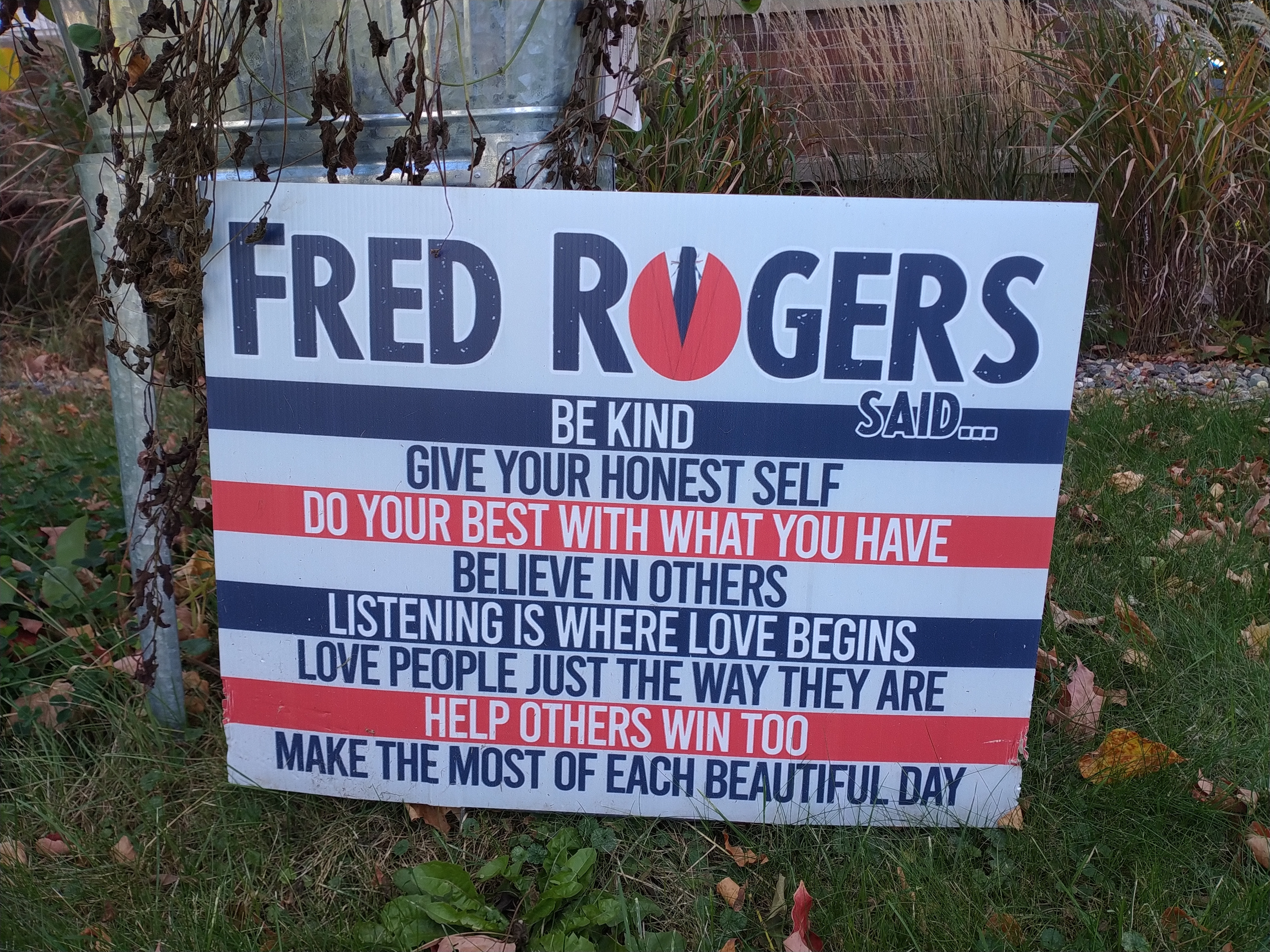
Words from Mr. Rogers in a front yard in the small town of Nerstrand, Minnesota. (Minnesota Prairie Roots copyrighted file photo)
SO MANY HELPERS
Another blogger friend has uplifted me many times in recent weeks by sharing about protests, vigils and more in Ann Arbor, Michigan, where she lives. It helps to know that Beth and others across the country and world are lifting up Minnesotans, protesting wherever they live, fighting for what is moral and right.
Ruth, a blogger friend from Pittsburgh, is knitting red “Melt the ICE” hats using a design from the 1940s. Norwegians knit and wore the pointed, tasseled hats to visually protest against Nazi occupation of their country. Proceeds from pattern sales will go to immigrant agencies to help those impacted by the actions of ICE. Ruth and other knitters are using their talents to protest, to help.
Mr. Rogers would be proud of all the helpers.
Closer to home, while walking Wednesday morning inside a soccer dome, I shared with several people about protesting and ways to help immigrant families locally. Others in my circle have donated money, via my direction, to a local food shelf and also to one in the south metro. Volunteers are delivering food to people afraid to leave their homes because of ICE. Minnesotans all across the state are stepping up to help their neighbors.
All of this gives me hope. Hope perches. Hope sings. Hope never stops.
A section of the Faribault High School Choir performs Thursday at the Cathedral of Our Merciful Saviour. (Minnesota Prairie Roots copyrighted photo December 2025)
AS THEY SANG, I felt my spirits rise, moved by the rhythm of “Resilience” and its empowering lyrics.
The acoustics inside this massive, historic cathedral make it a favorite spot for musicians, like the FHS Choir, to perform. Here Choir Master Ben Beaupre directs the students. (Minnesota Prairie Roots copyrighted photo December 2025)
This upbeat music, these words, were exactly what I needed to hear Thursday afternoon inside the Cathedral of Our Merciful Saviour as the Faribault High School Choir performed a holiday concert.
Resilience, we are strong; shoulder to shoulder keep movin’ on…stand up…yes, we can…
The beat of that song composed by Minnesotan Abbie Betinis and the message it carries…,well, it fit the day. It was a day when I awakened to a vivid nightmare running rampant through my mind. A dream of ICE agents in a black sedan converging on a community and chasing people out of a building. Gathering them, taking them away and me photographing and screaming at ICE to show some compassion and humanity.
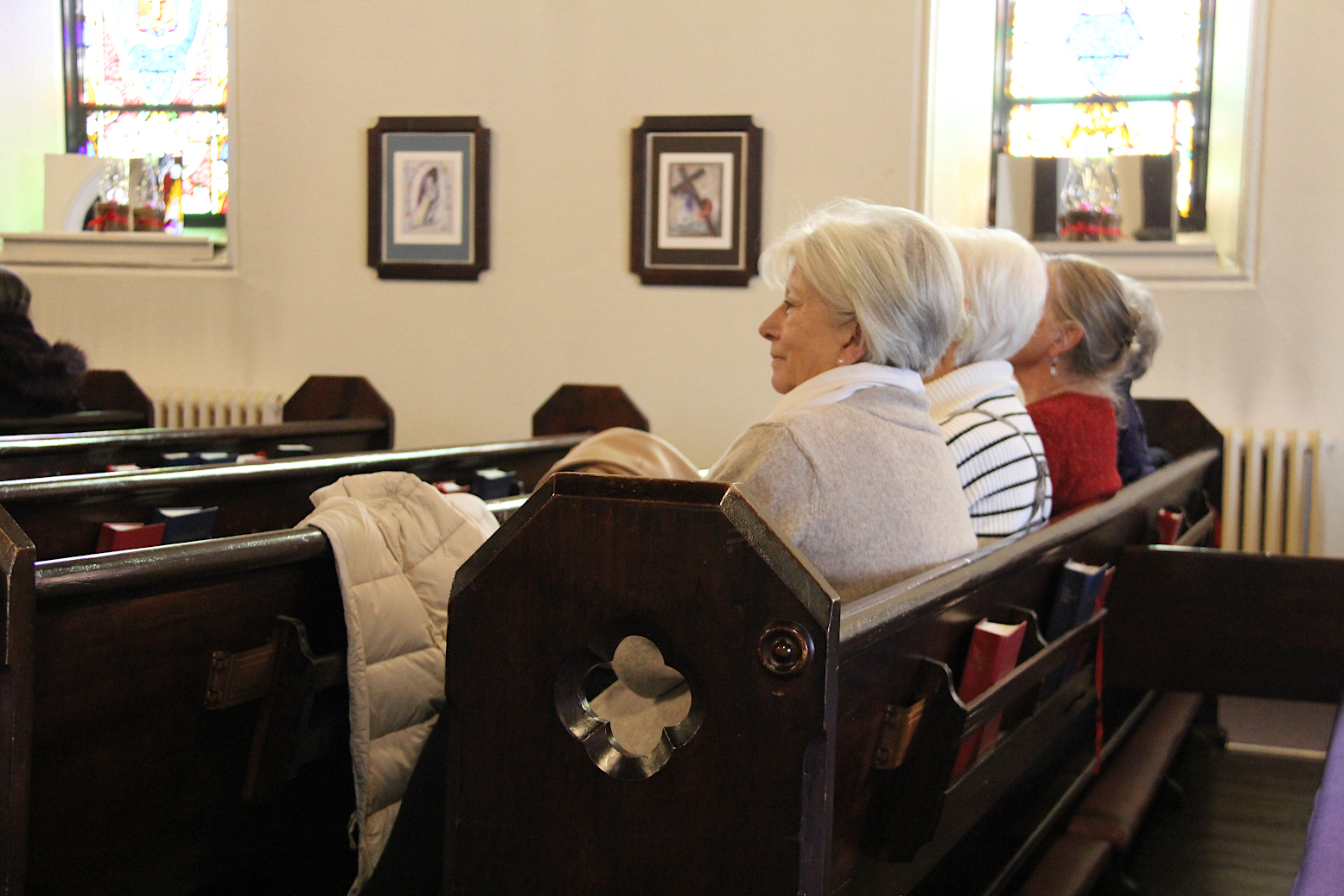
An appreciative audience listens to the students sing. (Minnesota Prairie Roots copyrighted photo December 2025)
I needed to hear “Resilience,” written by a musician who has taught at nearby St. Olaf College and elsewhere and published the Justice Choir Songbook.
One of several stained glass windows, gifted by the Dakota to the Cathedral, backdrops Christmas decorations set on a sill. (Minnesota Prairie Roots copyrighted photo December 2025)
As I watched and listened to the teens perform inside the historic Cathedral, I thought of the Native Americans who long ago worshiped here, befriended by Bishop Henry Whipple. They were not always welcome in this community. But inside the walls of this massive cathedral, they found a place of acceptance.
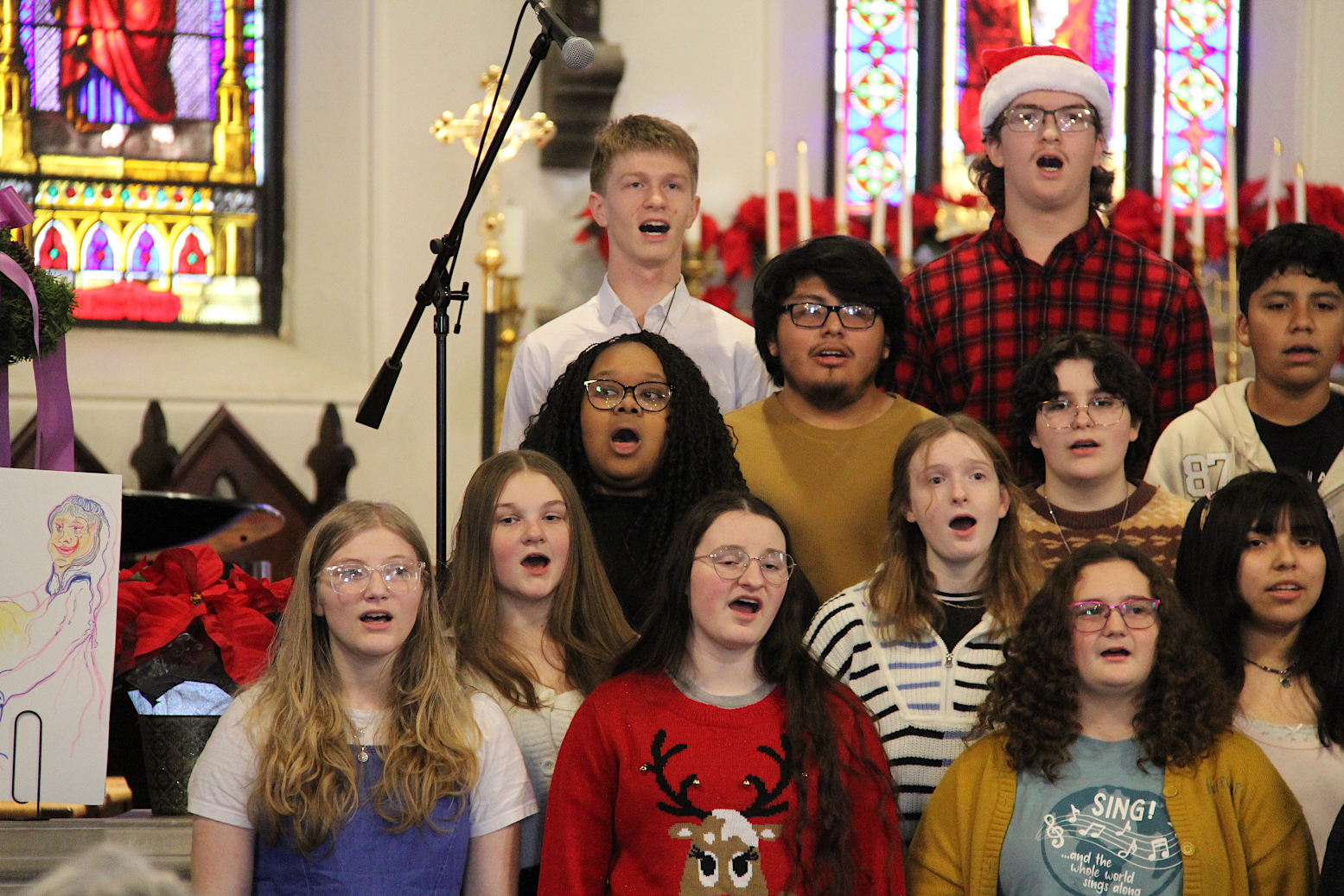
The students sang with power and joy. (Minnesota Prairie Roots copyrighted photo December 2025)
And then I thought of those young people standing before me, strong in voice, delivering a message that didn’t sound at all like a Christmas song on the surface. But really, it was. Shoulder to shoulder keep movin’ on… The song felt joyful. Uplifting. Moving. Inspirational.
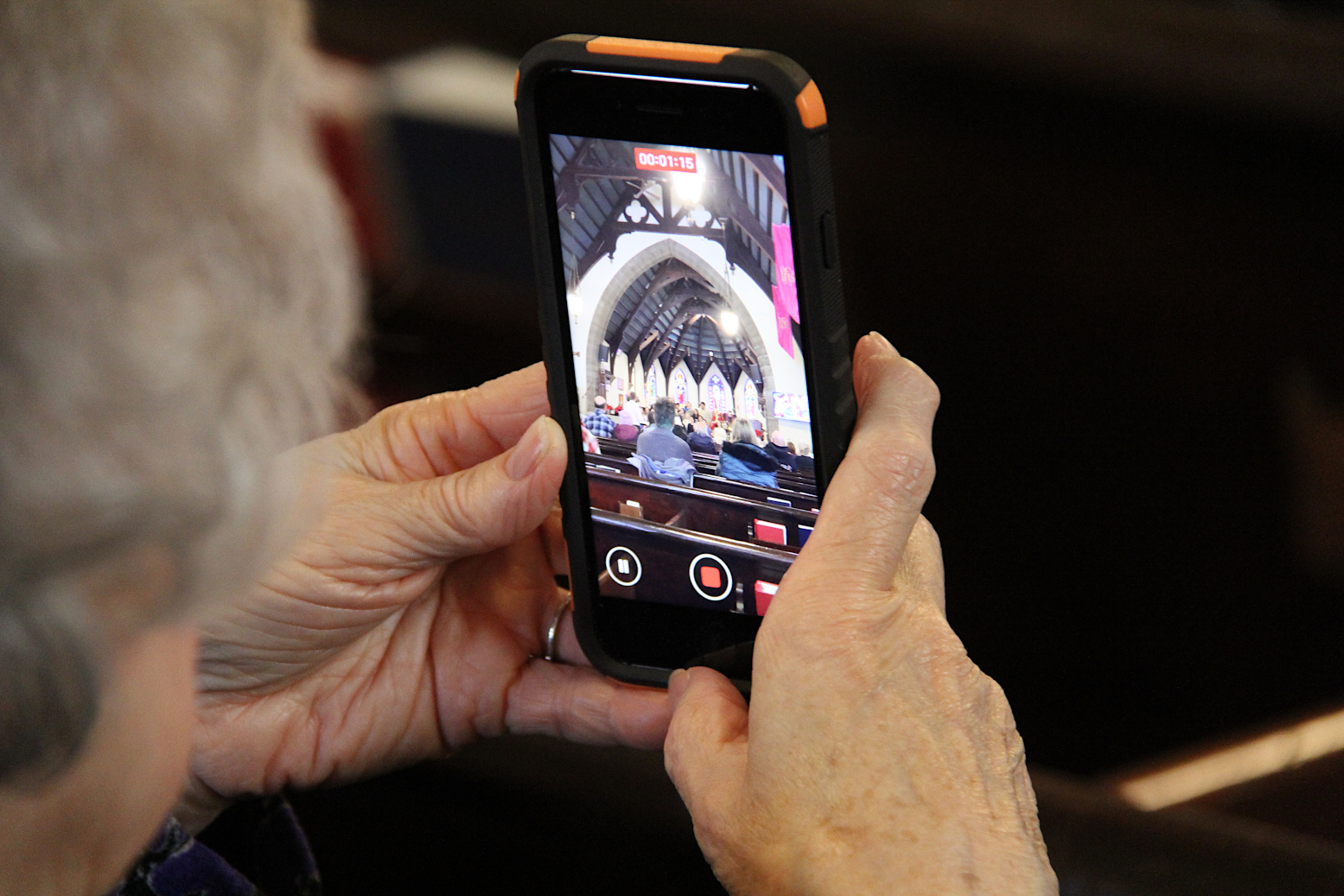
One of many audience members I spotted recording the concert. (Minnesota Prairie Roots copyrighted photo December 2025)
In a selection of songs about light, a Norwegian dala horse, decking the halls, a silent night and more, “Resilience” stood out. I suggested to the students afterwards that they should stand downtown along Central Avenue and sing of strength, resilience and standing shoulder to shoulder. I told them how much they had uplifted me, how much I appreciated and needed to hear that song. And one young man said he was glad he brought me joy via their music.
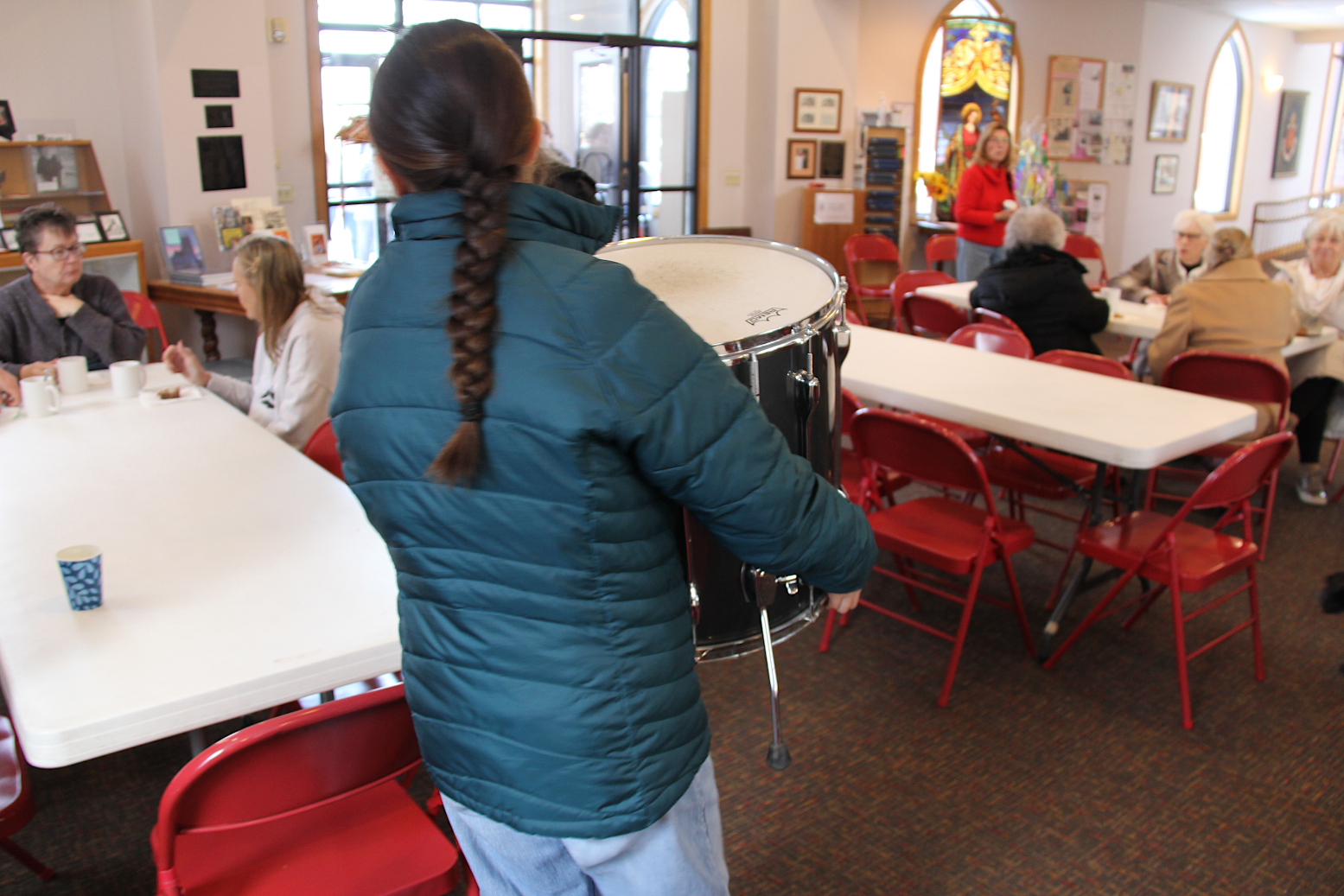
A student carries her drum through the reception space and then outside to a waiting school bus. (Minnesota Prairie Roots copyrighted photo December 2025)
After those conversations over lemonade and sweet treats, I headed home via Central Avenue. Between stops at a gaming store and a used bookshop, I popped into a corner business run by Somali Americans. Inspired by those high school musicians and deeply troubled by the hateful words directed by our president toward Somalis in Minnesota, I walked into the shop packed with colorful merchandise. “I just want to tell you how happy I am that you are here, that you are in our community,” I said. “I’m sorry for everything that’s happening.” My emotions rose. My voice cracked. Tears edged my eyes.
Then the Somali American man reached out and hugged me. He thanked me, told me it was OK, as did a woman sitting nearby. It was not my intention to cry. But everything just bubbled out. The worry. The concern. The injustice. The sorrow I feel over these Minnesotans being singled out and attacked, told they are “garbage” and are not wanted in this country. They who either fled a war-torn country or were born here and are working hard, like the two Somalis I met, to make a living and home in America.
Strength in actions. (Minnesota Prairie Roots copyrighted photo December 2025)
I left that shop feeling the strength of my neighbors. Resilience, we are strong; shoulder to shoulder keep movin’ on…stand up…yes, we can…
The Winterfest logo banners a vintage pickup truck during the 2017 Winterfest Parade of Lights. (Minnesota Prairie Roots copyrighted file photo 2017)
WITH SOME SEVEN INCHES of snow on the ground and freezing temps, Winterfest in Faribault this week will actually look and feel like winter. So I’ll dig out the long johns, wool socks, winter boots, stocking cap, scarf, new Thinsulate fingerless mittens/gloves and warm parka to take in the festivities.
The first event is not actually part of the official Winterfest schedule, but is still a local kick off to the holidays. The Cathedral of Our Merciful Saviour hosts the Faribault High School Choir at a free concert of holiday classics and traditional carols at 1:30 pm on Thursday, December 4.
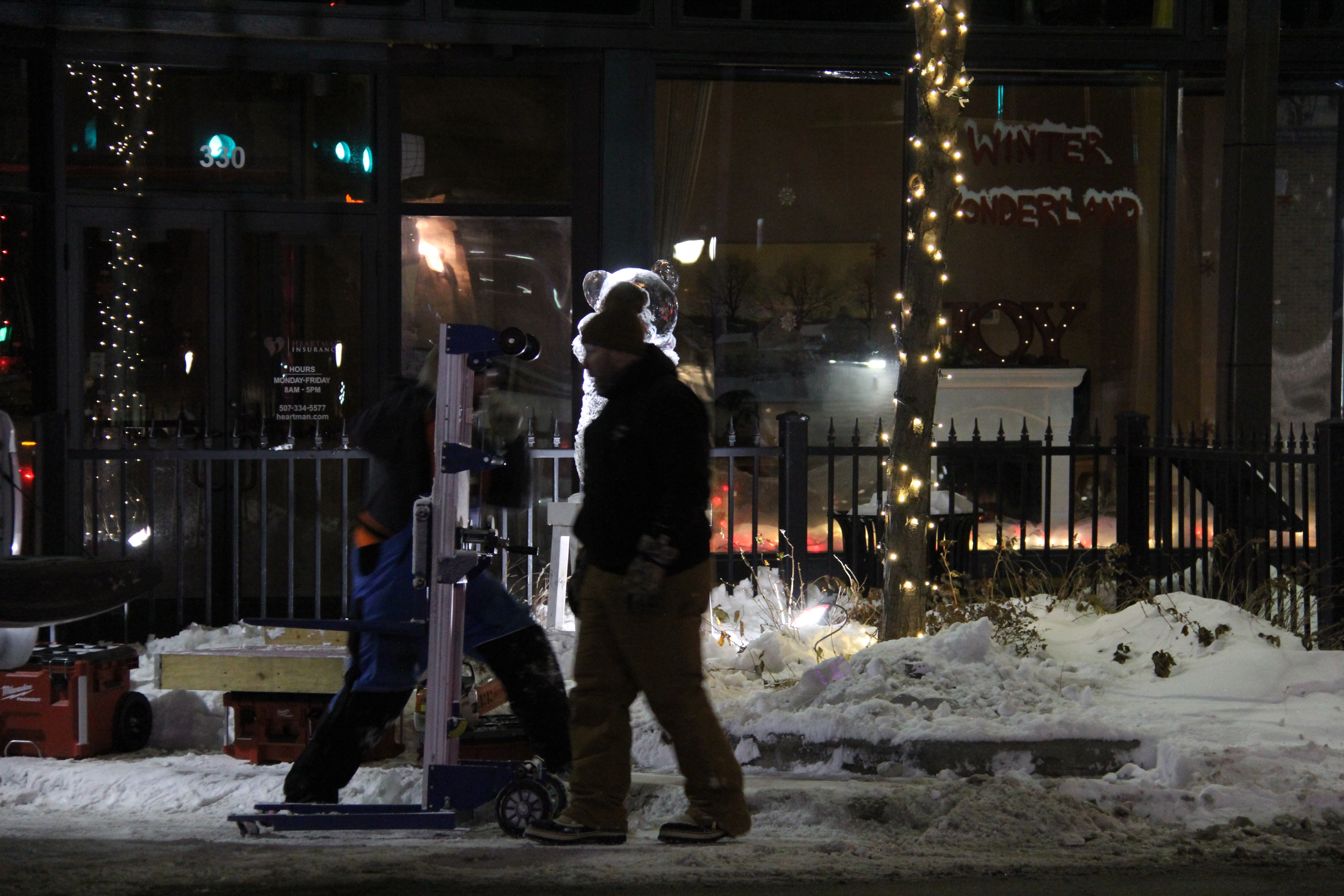
Ice carvers wrap up their work carving a teddy bear during the 2022 Winterfest. (Minnesota Prairie Roots copyrighted file photo December 2022)
Things really get moving later Thursday with Hometown Holidays activities centered at Buckham Center. From 5-7 pm, there will be horse-drawn carriage rides through the historic downtown, ice sculpture carving, a Buckham West Pop-Up Shoppe, music and lots for the kids to do, including crafts, a bounce house, and visits with Santa and Mrs. Claus. Voting also happens for the best Christmas window display in the downtown window decorating contest.
A Grinch tops a Christmas tree in the 2024 Winterfest Adopt-a-Tree Christmas tree give-away to those in need. (Minnesota Prairie Roots copyrighted file photo 2024)
Friday, December 5, brings another fun evening of events from 5:30-7:30 pm, this time at the new Viaduct Park along the Straight River. Activities include tree and park lighting, visits and photos with The Grinch, student dance and musical performances, and more carriage rides. Complimentary popcorn and hot chocolate will also be available.
Chris Delesha of Delesha’s Woods sells his handcrafted art at the 2024 Legion market. (Minnesota Prairie Roots copyrighted file photo December 2024)
Saturday, December 6, promises a day jam-packed with things to do. That starts with a 10 am-3 pm Christmas Market at the Faribault American Legion. Also at 10 am, the Paradise Center for the Arts offers art created by more than 30 area artists during its Holly Days Sale. The sale will be open until 7:30 pm Saturday and continues during December. At 11 am and within walking distance of the Legion and arts center, 10,000 Drops Distillers hosts its annual Craft Spirits Holiday Bazaar until 4 pm (and again on Saturday, December 13).
In between all of the Christmas markets, Faribault Harley Davidson is hosting a Little Biker Santa Party from 11 am-2 pm geared toward the little people. There’s a coloring contest, photos with Santa and other activities, plus mac n cheese, while supplies last. The Harley shop is collecting non-perishable food items at the event for the St. Vincent de Paul food shelf.
The Alexander Faribault House dining room set for the holidays during the 2017 Christmas open house. (Minnesota Prairie Roots copyrighted file photo December 2017)
Just as the Craft Spirits Holiday Bazaar ends, the nearby Alexander Faribault house opens to the public from 4-6 pm for an 1850s French-Canadian style Christmas. Town founder Alexander Faribault and his wife, Mary Elizabeth, lived in this house now owned by the Rice County Historical Society. The RCHS hosts the free Christmas open house annually during Winterfest.
As Saturday progresses, so do Winterfest activities with an Ugly Sweater Run/Walk beginning at 4:30 pm at Viaduct Park. Participants will follow city recreational trails in this first ever run/walk during Winterfest.
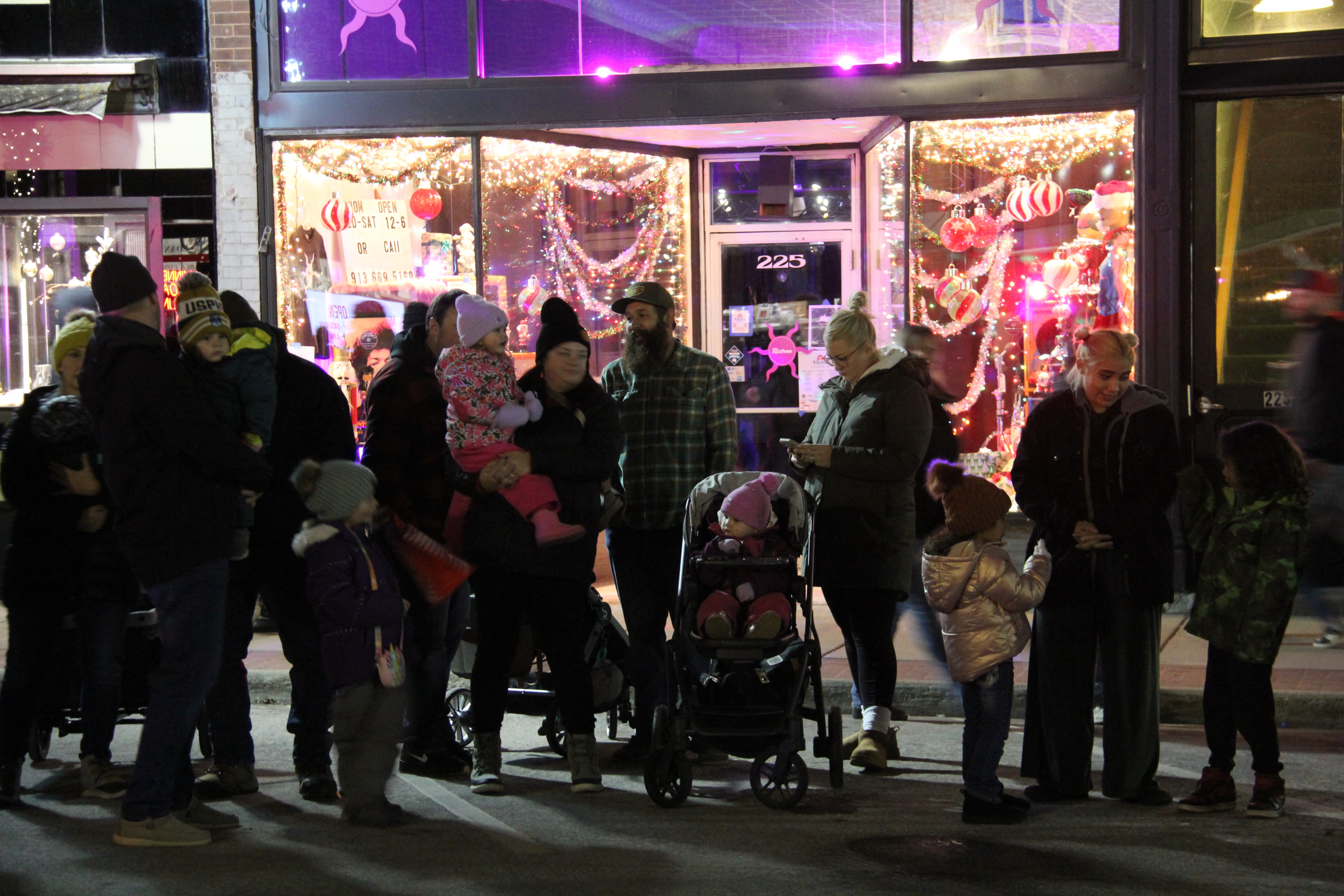
A crowd waits along Central Avenue for the Parade of Lightsto start in 2024. (Minnesota Prairie Roots copyrighted file photo December 2024)
Then, at 5:30 pm, the highlight of Winterfest for most, the Parade of Lights, begins, heading south along Central Avenue from Sixth Street Northwest to Division Street. Fireworks at Viaduct Park follow the parade. The direction of the parade route and the timing of the fireworks have both changed from previous years. Parking is also banned along Central Avenue, which pleases me greatly.
Capping off Winterfest is a street dance with music by Saint Suburbia at Crooked Pint (by Viaduct Park) from 6-10 pm. Amenities include a heated tent, an outdoor bar and burn barrels.
There you go. Join Faribault in welcoming winter in a big way this week via Winterfest.
PBS did a documentary on the Edmund Fitzgerald. (Minnesota Prairie Roots copyrighted file photo 2014)
SHORTLY BEFORE 8 THIS MORNING, I listened to “The Wreck of the Edmund Fitzgerald” by Gordon Lightfoot pulse from my radio. It was an auditory reminder that today marks the 50th anniversary of the sinking of that freightliner on November 10, 1975, in Lake Superior some 17 miles from Whitefish Point, Michigan.
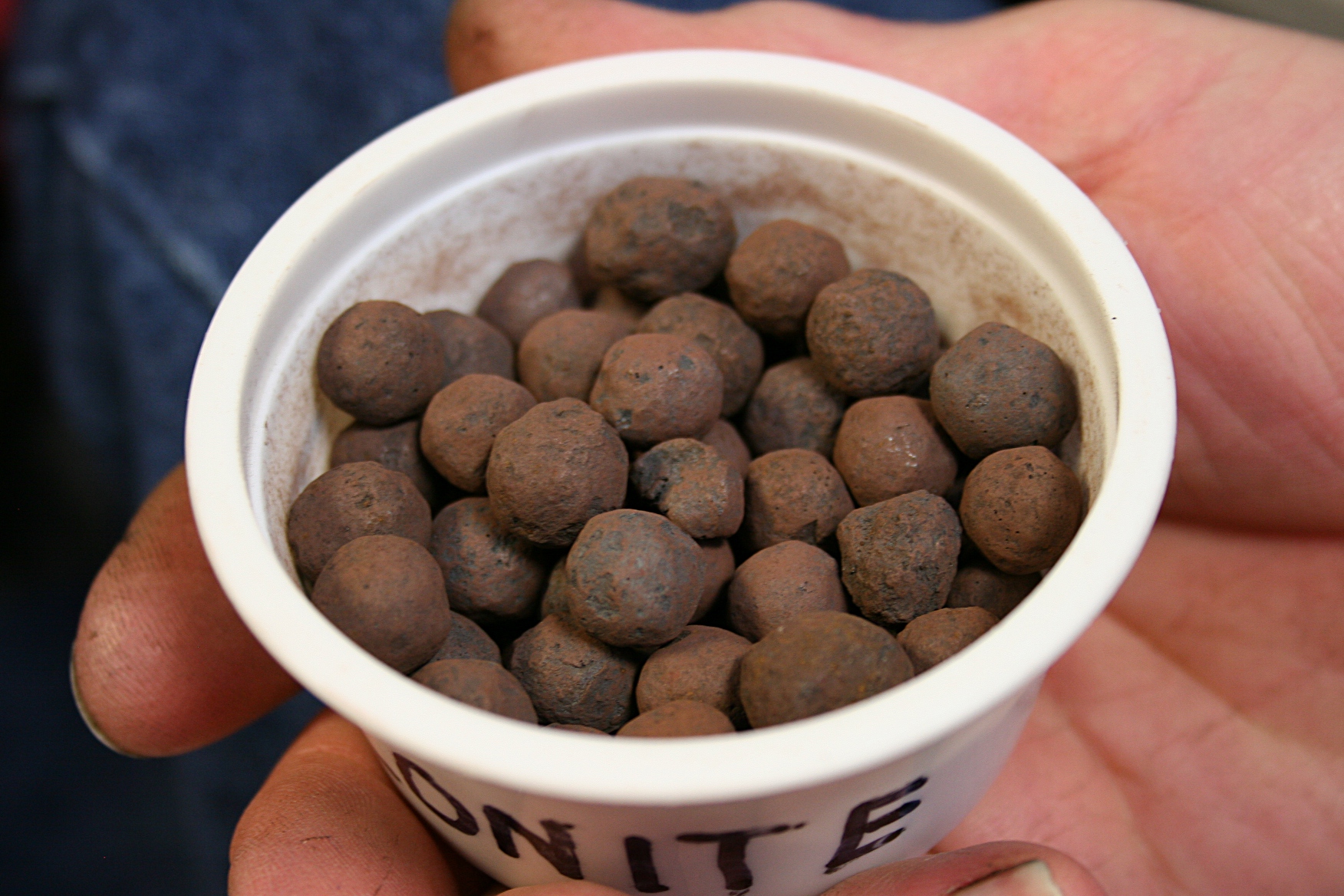
Some 26,000 tons of taconite pellets, like these, filled the cargo holds of The Edmund Fitzgerald as it journeyed across Lake Superior on November 9 and 10, 1975. (Minnesota Prairie Roots copyrighted file photo 2014)
This shipwreck holds great interest in Minnesota as the Edmund typically left loaded with taconite from Silver Bay, on the Minnesota side of Lake Superior, headed for the steel mills of Detroit and Toledo. But on this last fateful trip, the Edmund departed from Superior, Wisconsin, aiming for Detroit.
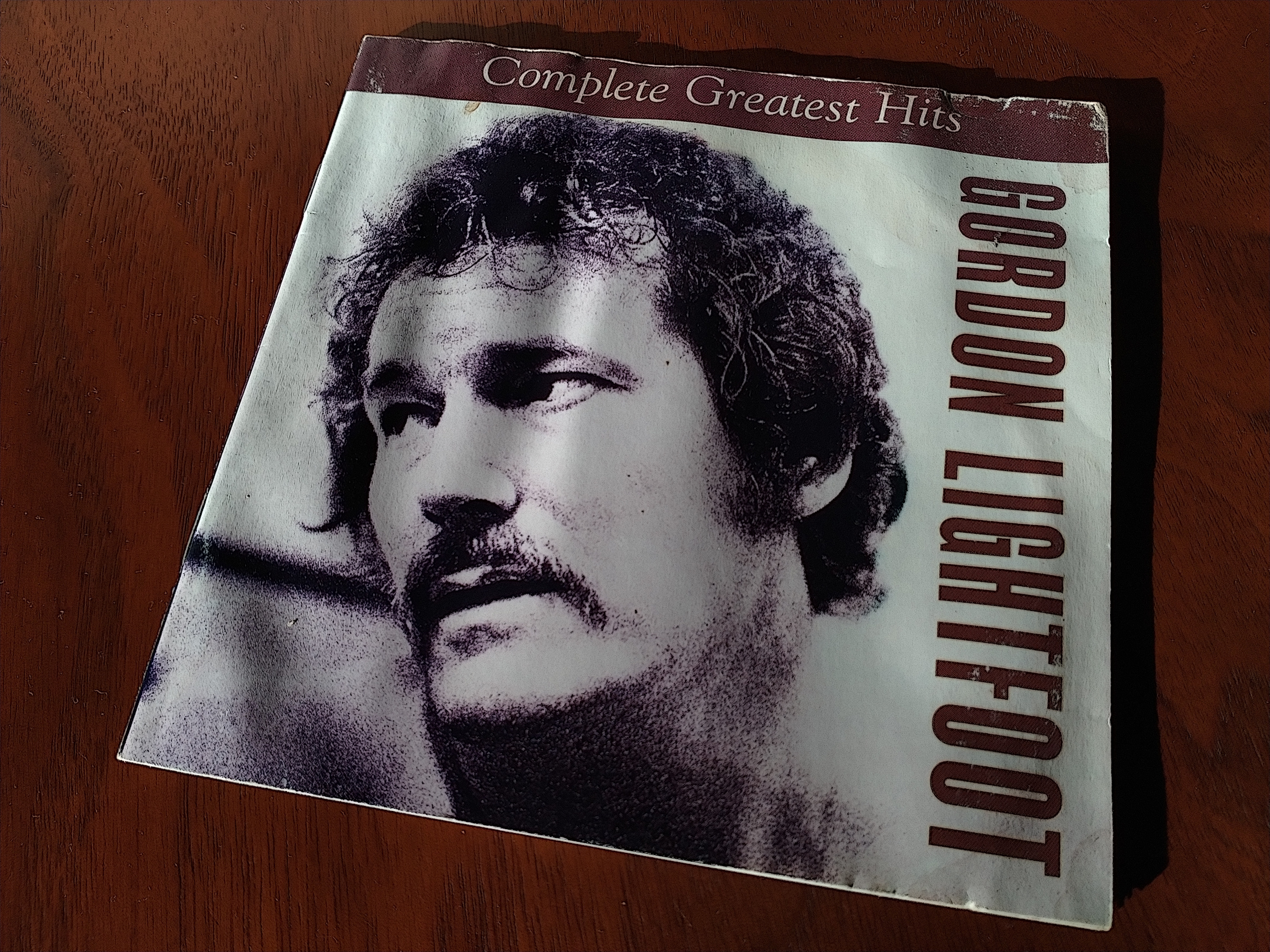
My husband’s copy of Gordon Lightfoot’s greatest hits, which includes “The Wreck of the Edmund Fitzgerald.” (Minnesota Prairie Roots copyrighted file photo)
The ship sank in the gale force raging winds and waves of a November storm claiming the lives of all twenty-nine aboard. That tragedy has been forever immortalized in Lightfoot’s 1976 ballad.
Here in Minnesota, the 50th anniversary focus today happens at the Split Rock Lighthouse Historic Site located along the shore of Lake Superior southwest of Silver Bay, which is north of Duluth and Superior. The Annual Memorial Beacon Lighting ceremony, beginning at 4 pm, is sold out.
For those able to secure tickets, the Minnesota ceremony is sure to be emotional as the names of the twenty-nine crew members are read aloud to the tolling of a ship’s bell. Lighting of the lighthouse beacon follows with the light shining for two hours.
Many years have passed since I’ve visited the lighthouse. Decades have passed since I first heard Gordon Lightfoot’s ode to the Edmund Fitzgerald as a young adult. Despite the passage of time, this tragic story remains imprinted on my mind, as it does the collective memories of Minnesotans old enough to remember this November 10, 1975, tragedy on Lake Superior.
FYI: I’ve previously written about the Edmund Fitzgerald. That includes a 2014 blog post about a presentation at the Rice County Historical Society by a diver who explored the wreck of the freightliner. Click here to read that story. The presentation coincided with the opening of the play, “Ten November,” at the Paradise Center for the Arts in Faribault. Click here to read an introspective pieceI also wrote.


















 Minnesota Prairie Roots
Thither will we go March 28, 2026
Tags: "Light Looked Down", "Thither Will I Go", commentary, concert, Faribault, Laurence Housman, light, Minnesota, music, No Kings Day protest, opinion, poem, protesting, song, Tom Trenney
I ATTENDED A CONCERT at my church, Trinity Lutheran, Friday evening. Students from Concordia Academy in Roseville kicked off their spring break “Walk in the Light Tour” to Nashville with their first stop here in Faribault.
What a talented group of high school musicians who sang with joy, energy and depth. From spirituals to traditional worship to blessing songs and more, they performed in the light of faith.
One song in particular, “Thither Will I Go” by composer Tom Trenney, resonated with me. It’s based on a poem, “Light Looked Down,” by Laurence Housman (1865-1959). Although this poem was written long ago, the words are timeless.
The short three-line poem centers on light and darkness, war and peace, and hatred and love.
As I sat listening to these young people, my mind wandered to the No Kings Day protests today. “Thither Will I Go” would be a great protest song. As protesters, we shine light, peace and love.
I’d like those who criticize us, who question our reasons for protesting, who claim we are paid (we are not), who shout profanities at us, call us stupid and more, to consider the words written long ago by Laurence Housman. As protesters, we choose light over darkness, peace over war, love over hatred.
Thither will we go.
Where there is darkness, let there be light. Where there is war, let there be peace. Where there is hatred, let there be love.
© Copyright 2026 Audrey Kletscher Helbling