Minnesota Prairie Roots

Writing and photography by Audrey Kletscher Helbling

Two Minnesota towns July 27, 2017

Fields and sky envelope a farm building just west of Wabasso in my native Redwood County. Minnesota Prairie Roots file photo 2015.


I GREW UP ON THE PRAIRIE, a place of earth and sky and wind. Land and sky stretch into forever there, broken only by farm sites and the grain elevators and water towers that define small towns.


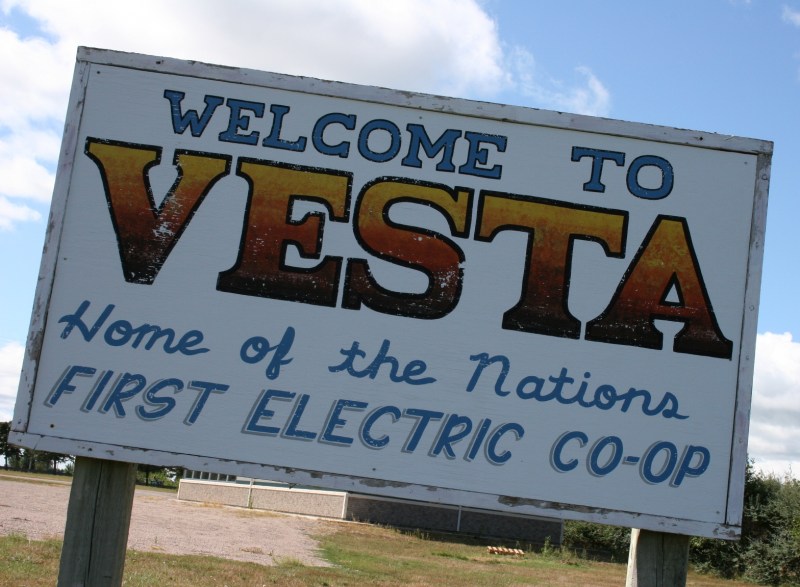
Along Minnesota Highway 19, this sign once marked my hometown. That sign has since been replaced. Minnesota Prairie Roots file photo.


My hometown of Vesta in Redwood County once bustled with businesses—a lumberyard, feed mill, hardware stores, grocers, cafes, a blacksmith… Now the one-block center of town is mostly empty, vacant lots replacing wood-frame buildings that once housed local shops. Time, economics and abandonment rotted the structures into decay and eventual collapse or demolition.


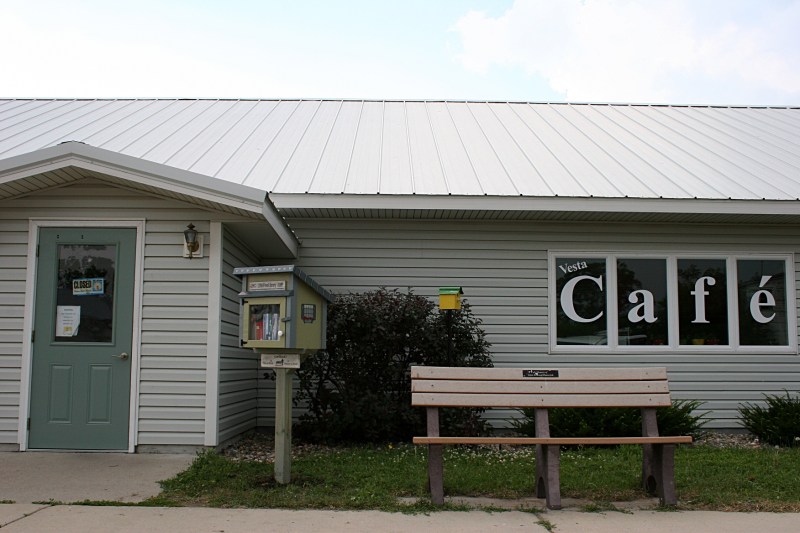
One of the few businesses remaining downtown, the Vesta Cafe. Minnesota Prairie Roots file photo.


Why do I tell you all of this? The back story of my prairie hometown, where buildings were built mostly of wood rather than brick or stone, led me to a deep respect and appreciation for communities that have retained buildings of yesteryear. Cities like Cannon Falls, founded in 1854. By comparison, Vesta was founded in 1900.


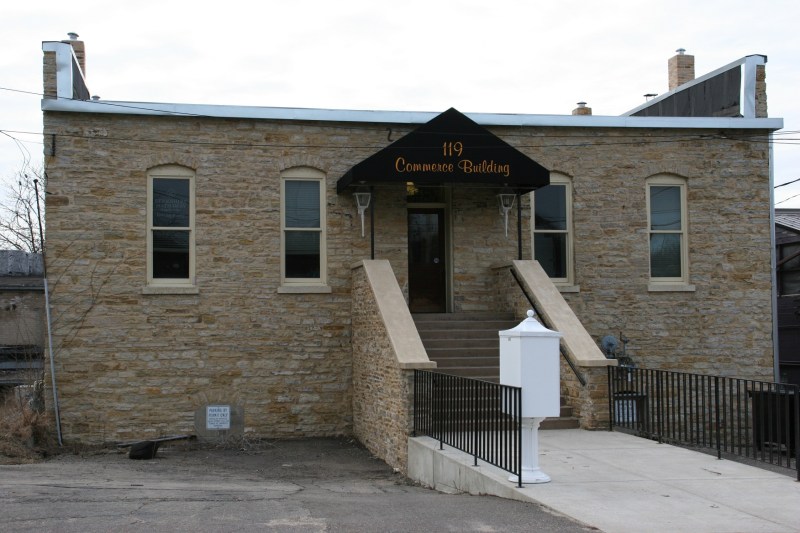
The rear of an historic stone building in the heart of downtown Cannon Falls. Minnesota Prairie Roots file photo March 2017.


Cannon Falls still has a thriving downtown landmarked by 29 properties in a Commercial Historic District. It’s population of around 4,000 and location between Rochester and the metro contrast sharply with Vesta’s population of 300 in the much more rural southwestern corner of Minnesota.


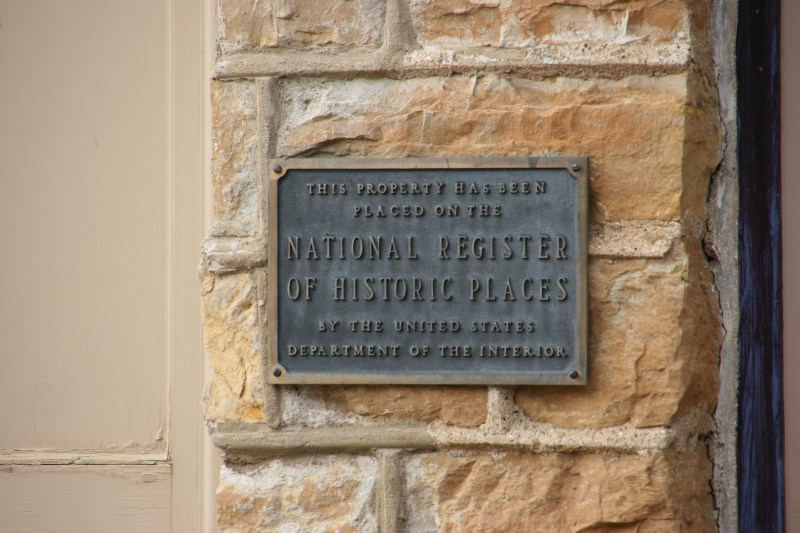
This sign marks the aged former Firemen’s Hall, now the Cannon Falls Museum, pictured below. Minnesota Prairie Roots file photo March 2017.


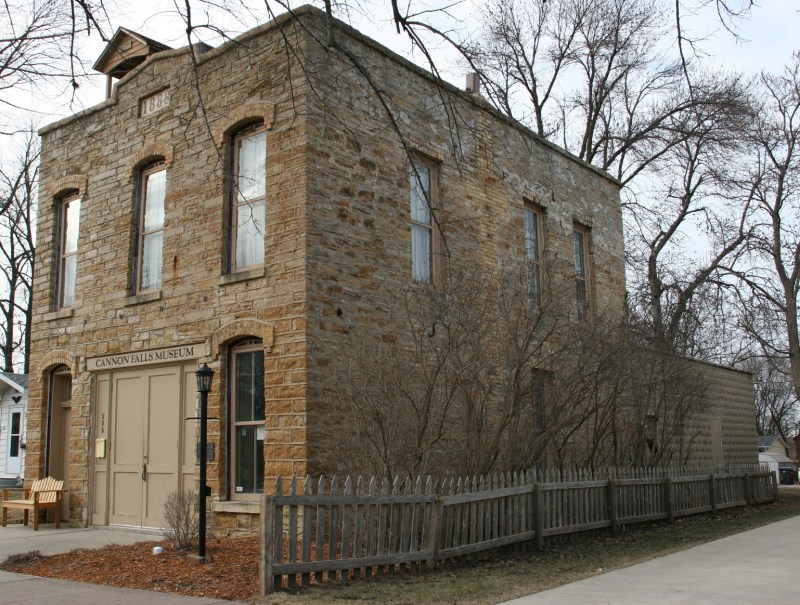
The Cannon Falls Museum. Minnesota Prairie Roots file photo March 2017.


Drive through Cannon Falls neighborhoods and you will see history still standing. In Vesta, history comes in photos and memories. It’s sad really. But that is reality.


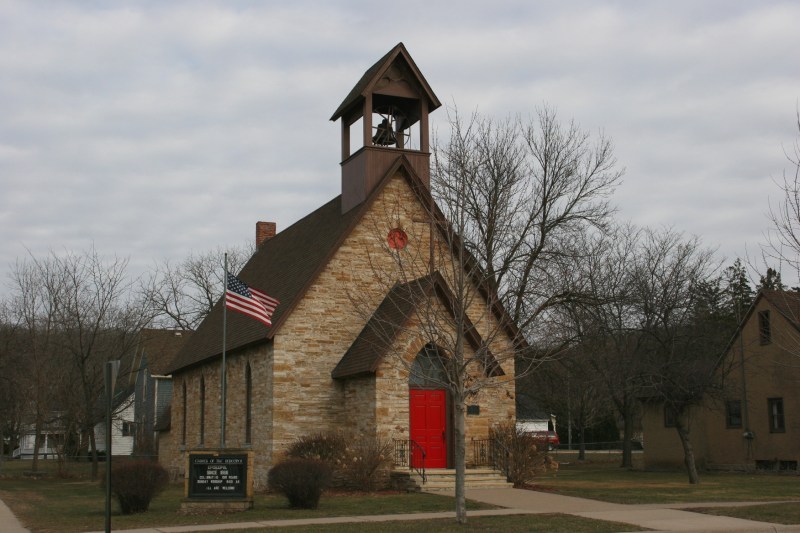
The Church of the Redeemer, an Episcopal congregation founded in Cannon Falls in 1866. Minnesota Prairie Roots file photo March 2017.


Because I grew up without solid stone buildings in a place that unsettles many for its breadth of sky and land, I am drawn to stone structures. They portray a strength and permanency that defies time and change. Yet I expect both masons and carpenters shared the same dreams of a better life, of prosperity and success.


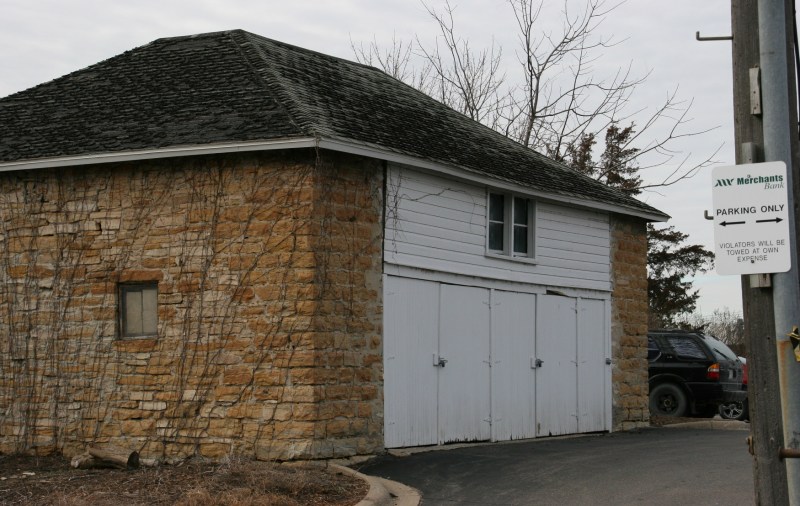
Another lovely stone building photographed behind downtown Cannon Falls buildings. Minnesota Prairie Roots file photo March 2017.


That’s the underlying truth. Even if the buildings and businesses in my hometown have mostly vanished, the ground upon which they stood represents something. The land remains—the same earth upon which early settlers planted their boots and stood with hope in their hearts.

© Copyright 2017 Audrey Kletscher Helbling


Noticing details at Faribault’s historic woolen mill February 23, 2017

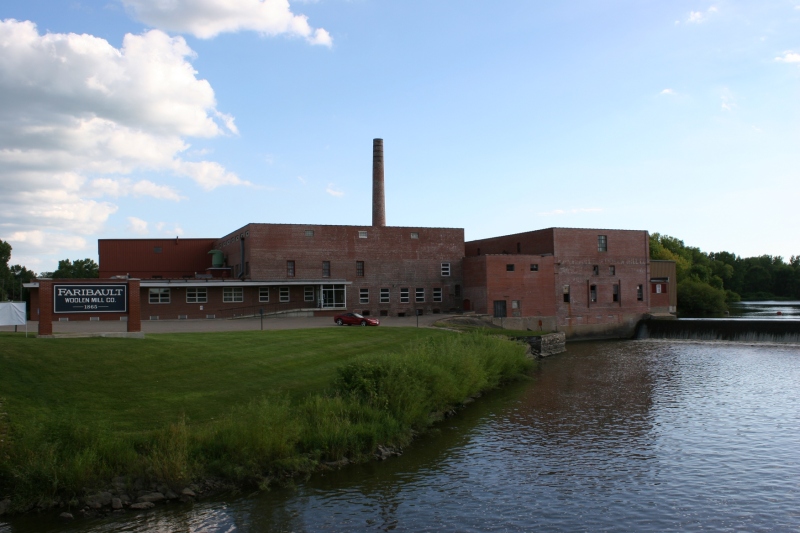
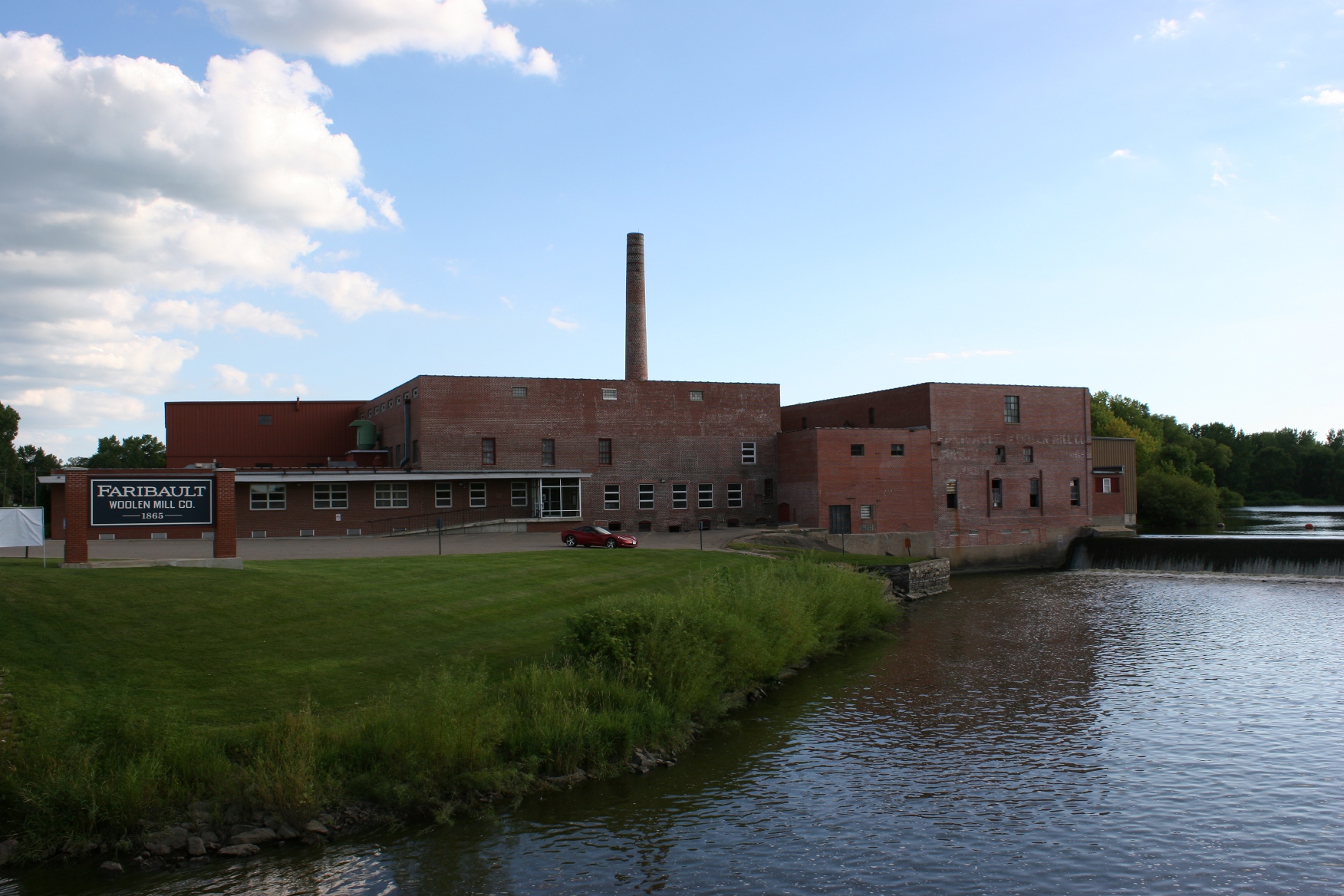
The Faribault Woolen Mill sits on the bank of the Cannon River.

The Faribault Woolen Mill sits on the bank of the Cannon River. Minnesota Prairie Roots file photo.

SNUGGED ALONG THE BANKS of the Cannon River in Faribault, the 150-year-old Faribault Woolen Mill stands as a noted local landmark and a nationally-recognized producer and purveyor of high quality wool blankets and more.

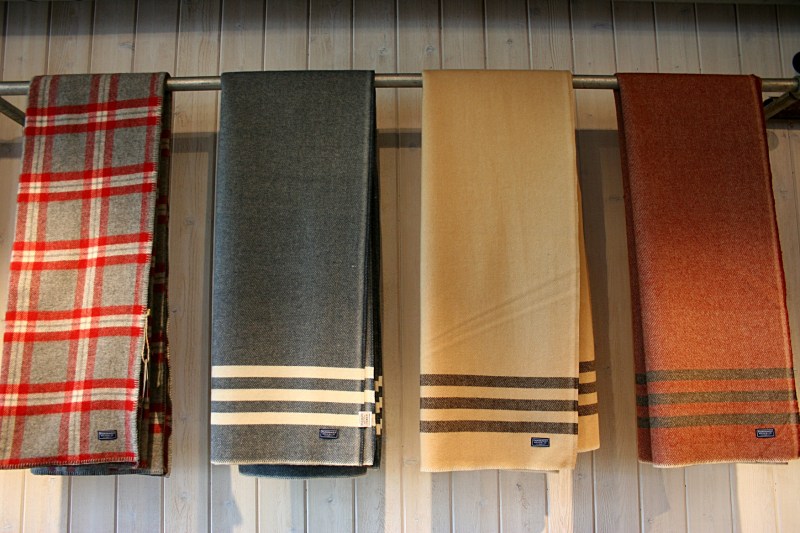
Faribault Woolen Mill blankets/throws are artfully hung on a simple pipe.

Faribault Woolen Mill blankets/throws are artfully hung on a simple pipe. Minnesota Prairie Roots file photo.

In recent years, with the acquisition of the briefly-closed mill by successful and marketing savvy Minnesota businessmen, the mill has experienced growth and significant national exposure. Many times I’ve picked up a magazine to see the mill’s products featured.

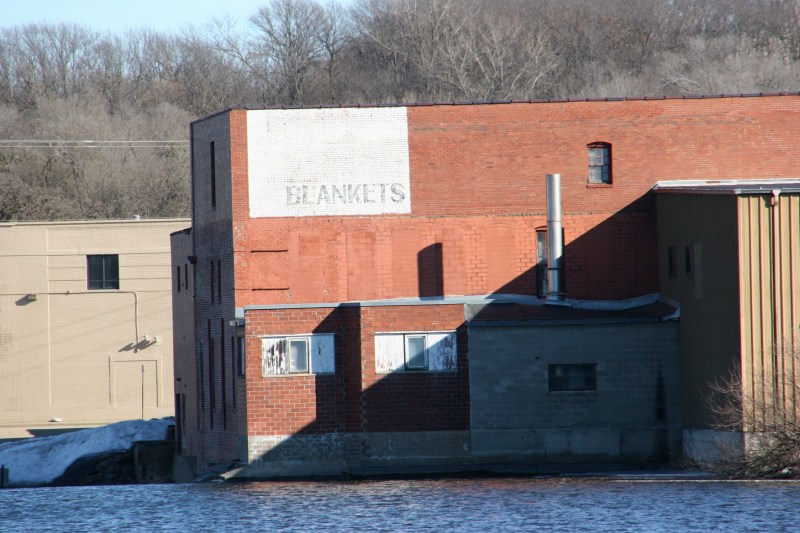
In the upper left corner of the mill, the sign unnoticed by me until several days ago.

In the upper left corner of the mill, the sign unnoticed by me until several days ago.

What I’d not noticed until recently was a faded sign along the back side of the historic mill, the side visible from North Alexander Park. My view of the mill complex is typically the public side motorists see while driving by on Second Avenue.

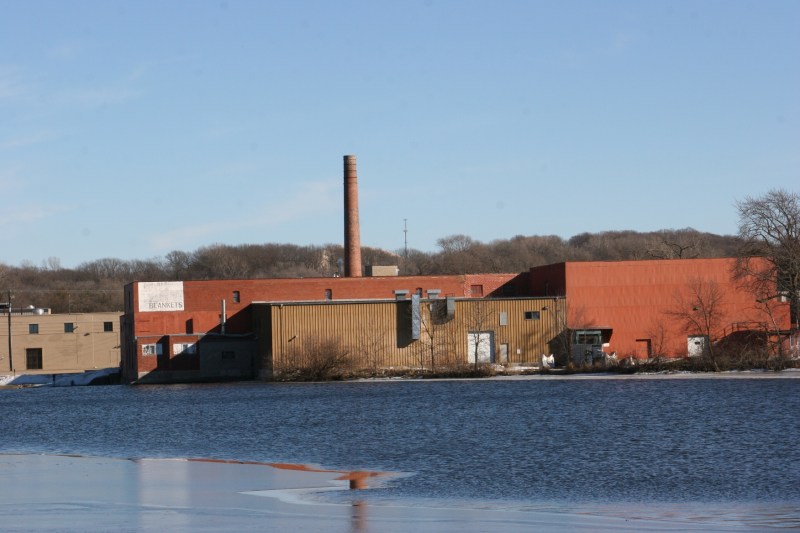
The back of the mill as photographed from the North Link Trail. The mill is on the National Register of Historic Places. Several years ago the city of Faribault received a $300,000 Minnesota Historical Cultural Heritage grant for rehab of the smokestack.

The back of the mill as photographed from the North Link Trail. The mill is on the National Register of Historic Places. Several years ago the city of Faribault received a $300,000 Minnesota Historical Cultural Heritage grant for rehab of the smokestack.

But this time I was walking, following the North Link Trail that runs through the park and is part of a city-wide recreational trails system. I paused to appreciate the inky blue waters of the Cannon on a brilliantly sunny afternoon when my gaze drifted to the mill. There I focused on white sign advertising BLANKETS. Faded, indiscernible lettering hovered over that key word.

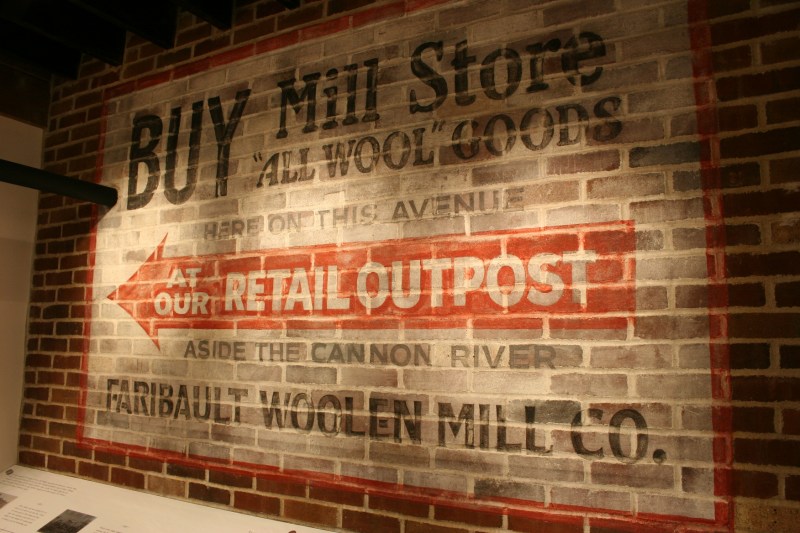
A replica of an original sign is now in the Woolen Mill's historic display area.

A replica of an original sign is now in the Woolen Mill’s historic display area. Minnesota Prairie Roots file photo.

I wondered how, in my 35 years living in the area, I failed to notice the vintage signage. Sometimes familiarity of place creates a lack of visual awareness. We become so accustomed to our usual surroundings that we fail to truly see. And to appreciate.

TELL ME: Have you ever felt the same upon discovering something (what?) in your community that’s been there forever but you didn’t see?

© Copyright 2017 Audrey Kletscher Helbling
 

Road trip stories: Impressions of Barcelona, New York, not Spain August 12, 2016

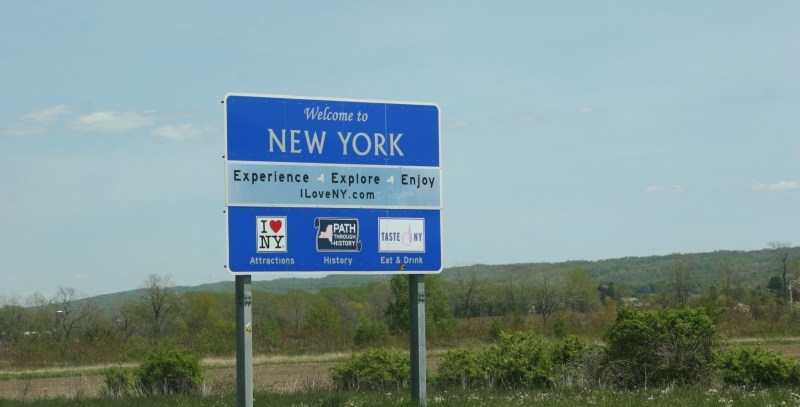
Barcelona is located along Lake Erie just off Interstate 90 near the New York/Pennsylvania border.

Barcelona is located along Lake Erie just off Interstate 90 near the New York/Pennsylvania border.

MY FIRST IMPRESSION OF BARCELONA, a hamlet located within the town of Westfield, New York, was not a good one.

I had to pee. Bad. The van also needed gas. So it was a good time to pull off Interstate 90 in the southwestern corner of New York. I practically flew out the van at the Citgo station, only to stop abruptly at the front door. A sign banned anyone but customers from the restrooms. My facial muscles involuntarily scowled. Welcome to Barcelona.

When my travel weary mind finally clicked that, yes, I was a paying customer, I walked inside. I didn’t know I was being watched. But the clerk advised that, yes, she had seen my reaction. And, yes, I could use the bathroom.

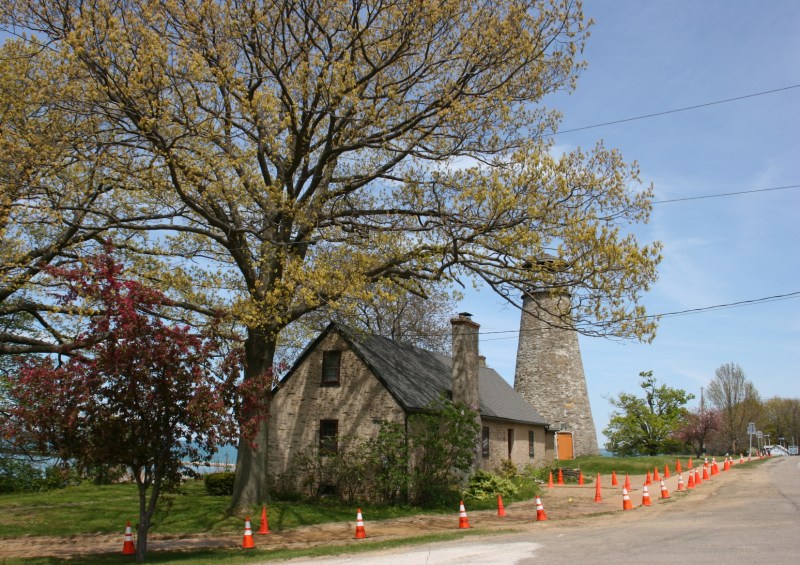
Cones blocking a freshly-poured concrete sidewalk blocked me from getting too close to the Portland Harbor Lighthouse and keeper's house.

Cones rimming sidewalk construction blocked me from getting too close to the 40-foot high Portland Harbor Lighthouse and keeper’s house.

Once I got over that, I noticed the beautiful old lighthouse across the street. (I’m speculating that many lighthouse lovers travel here and then need to use the service station restrooms.) Being a landlocked southern Minnesotan, I find lighthouses a bit of a novelty. However, there would be no getting inside this 1829 lighthouse constructed of native fieldstone. Decommissioned in 1860, the Portland Harbor lighthouse and accompanying keeper’s house became private property.

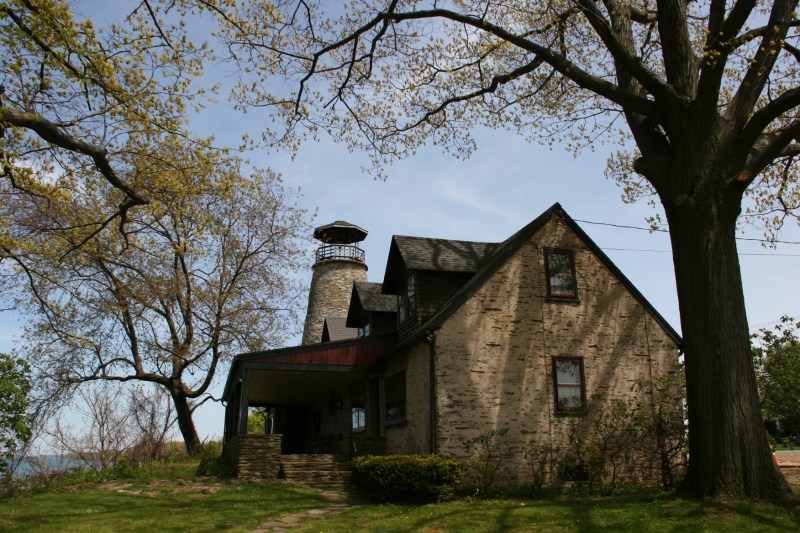
I moved closer to the lighthouse keeper's house, until I realized this was private property.

Another angle, from the side, of the lighthouse keeper’s house.

Upon researching this National Register of Historic Places landmark later, I learned that the lighthouse was the first public building in the U.S. illuminated by natural gas.

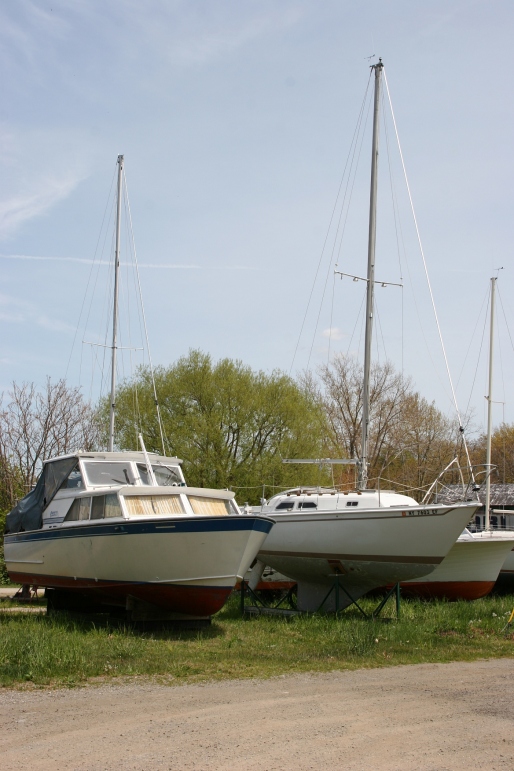
Boats parked near the lake.

Boats parked near the lake.

I wasn’t about to leave Barcelona, though, without at least seeing Lake Erie. If it was Lake Erie. At that point, well into our second day of a long road trip from Minnesota to Massachusetts, I wasn’t even sure what state we were in. And my Great Lakes geography is lacking. I know the locations of Lake Superior and Lake Michigan. The other Greats, not so much.

It was a lovely day to be on the beach of Lake Erie.

It was a lovely day to be on the beach of Lake Erie.

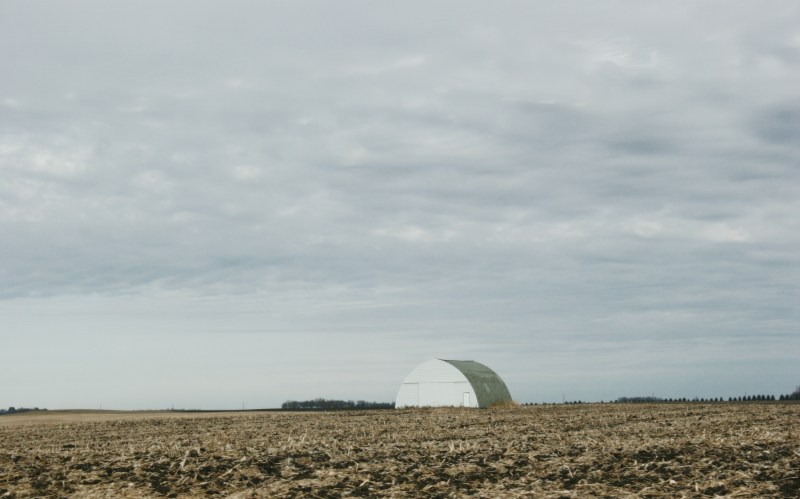
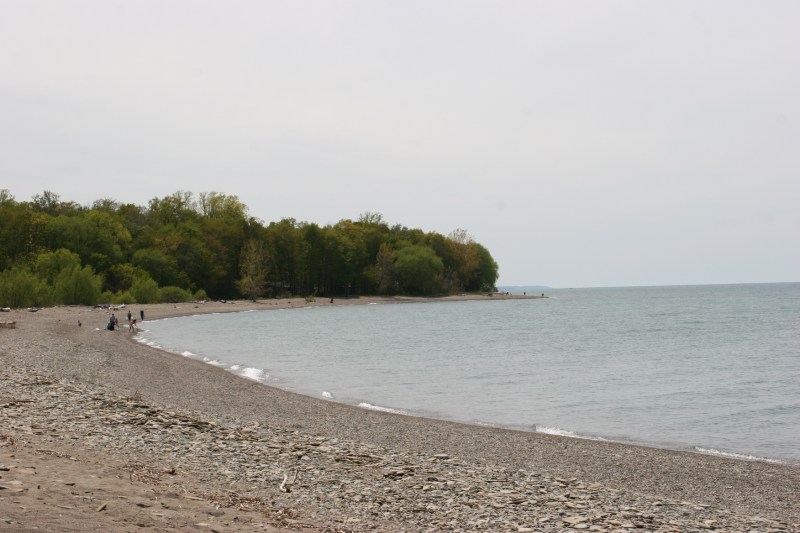
Just blocks from the gas station, my husband and I found a public access to Lake Erie. I am always impressed by the immensity of the Great Lakes, how sky and water blend into an infinity of blue, how distinct horizontal lines divide land and water and sky, how such a vast body of water can appear calm one day, threatening the next.

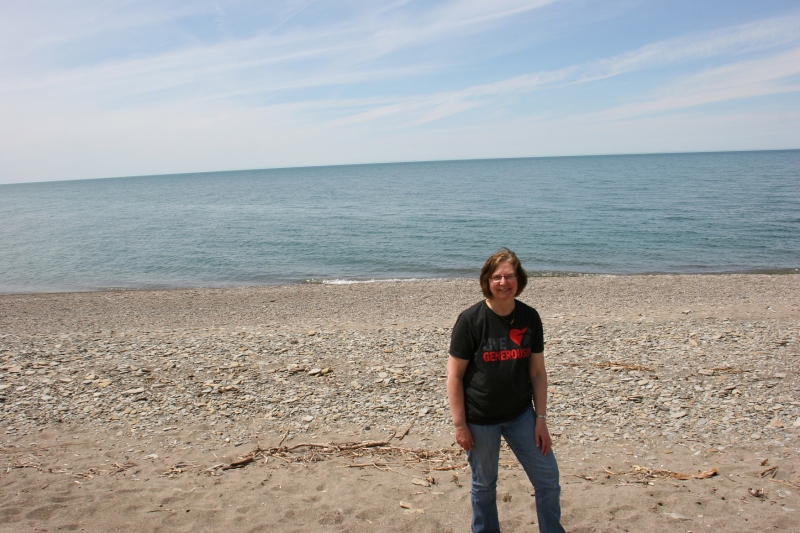
My husband obliged my request for a photo of me on the shores of Lake Erie.

My husband obliged my request for a photo of me on the shores of Lake Erie.

I scooped my hand into the cold water, plucked silken smooth stones from the beach, posed for a photo to prove I’d been here, in Barcelona.

© Copyright 2016 Audrey Kletscher Helbling
 

Murals & a myth at an historic mercantile in Weaver February 18, 2016

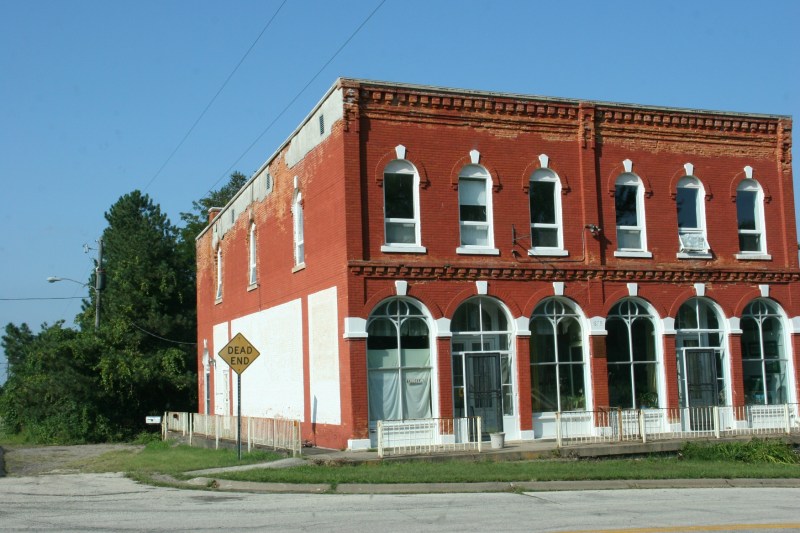
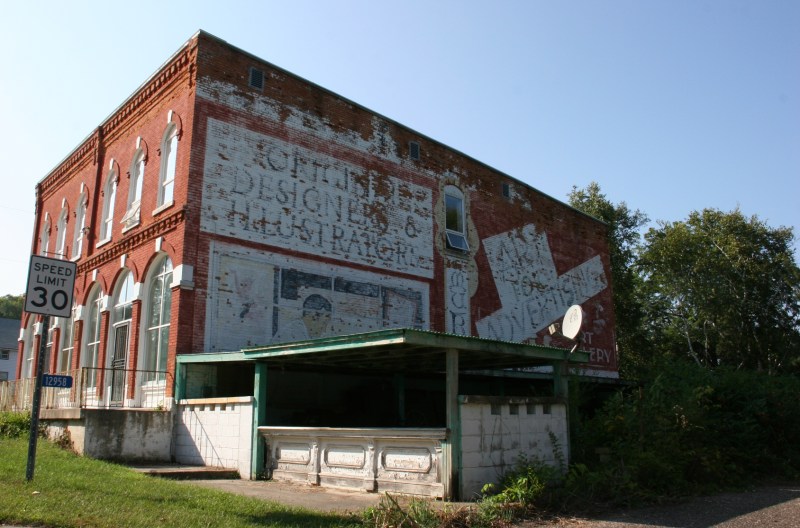
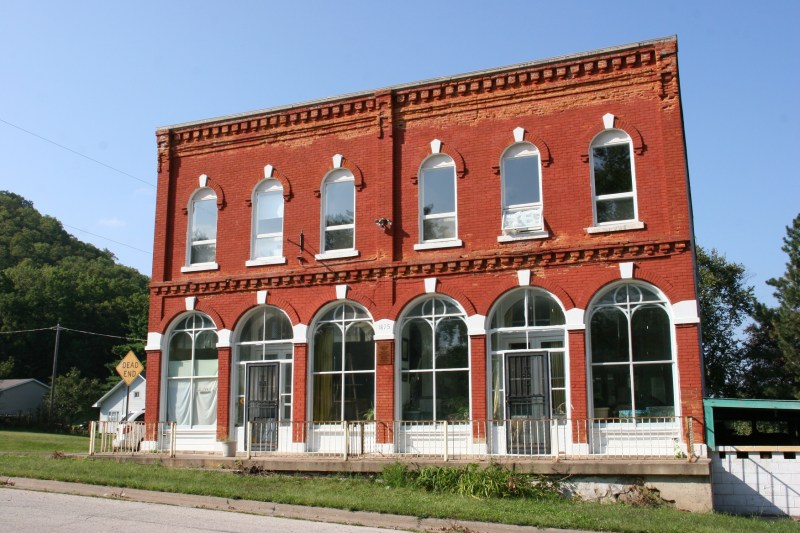
The historic former Weaver Mercantile Buiilding, once home to Noble Studio & Gallery.

The historic former Weaver Mercantile Building, once home to Noble Studio & Gallery.

AGED BUILDINGS, like one in Weaver just off U.S. Highway 61 in southeastern Minnesota, intrigue me. Initially, the architecture and photographic opportunities draw me in. But then I start thinking about the history and the stories.

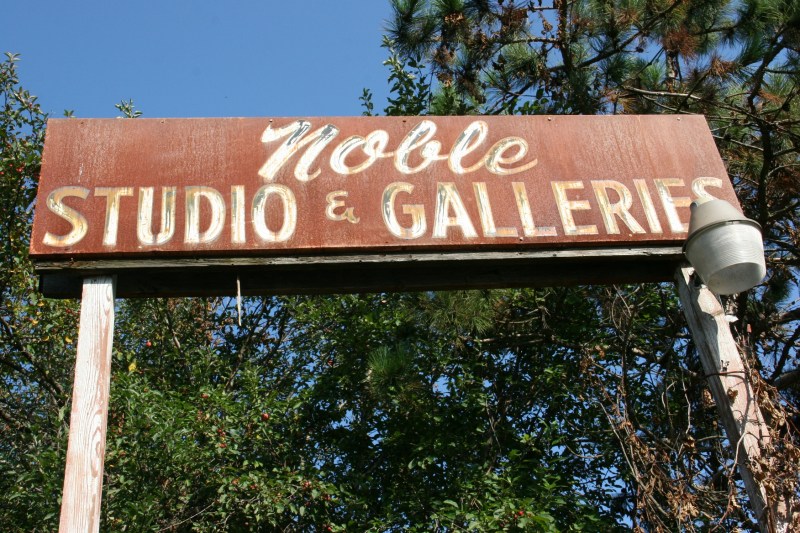
Carl and Marie Noble opened Noble Studio & Gallery here in 1955.

Carl and Marie Noble opened Noble Studio & Galleries here in 1955.

As luck would have it, a local was jogging down the street toward the former Weaver Mercantile when I happened upon the historic building during an early September get-away. She tipped me off that the building last housed an art gallery. Signage confirmed that. The current owner, she added, lives on the second floor.

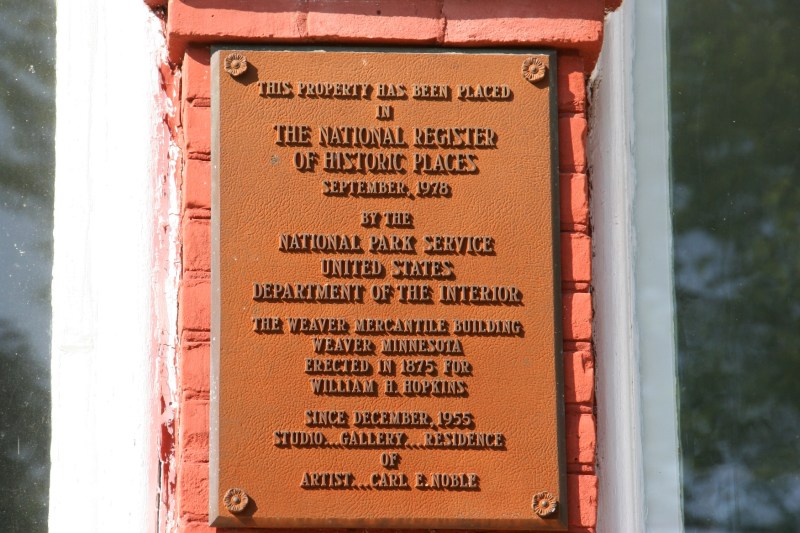
Historic designation came six years after Carl Noble's death.

Historic designation came six years after Carl Noble’s death.

The young woman also expressed her dream of someday transforming the place into a winery. She and her husband, she said, make wine from black caps growing wild on the hillside behind their Weaver home. Then she continued on her run through this unincorporated village of some 50 residents and I continued my exterior photographic exploration of this building listed on the National Register of Historic Places. According to the 1978 nomination for historic designation, the building is a “well-preserved example of commercial architecture in the Mississippi River Valley.” Hardware, groceries and dry goods were once sold in the first floor of Weaver Mercantile while furniture was sold on the upper floor. Additionally, the building housed the Weaver Post Office for many years.

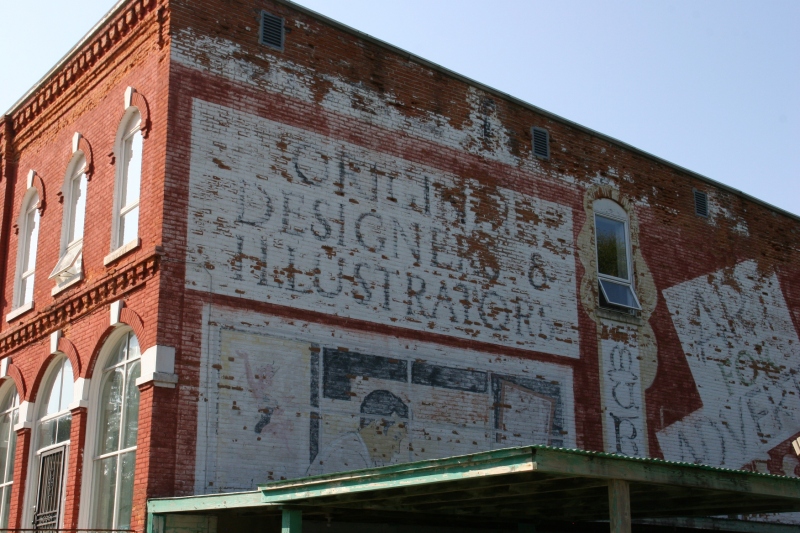
A mural on the east side of the building denotes this as an artist's haven. Cannot you decipher the first word for me?

A mural on the east side of the building denotes this as an artist’s haven. Can you decipher the first word in the top portion, left?

Wanting to know more, I continued my internet search. In 1955, artist Carl E. Noble claimed this place as Noble Studio & Galleries (his home, studio and gallery). He died in 1972. An obituary for his widow, Marie Noble, who died 11 years ago, yielded the most information.

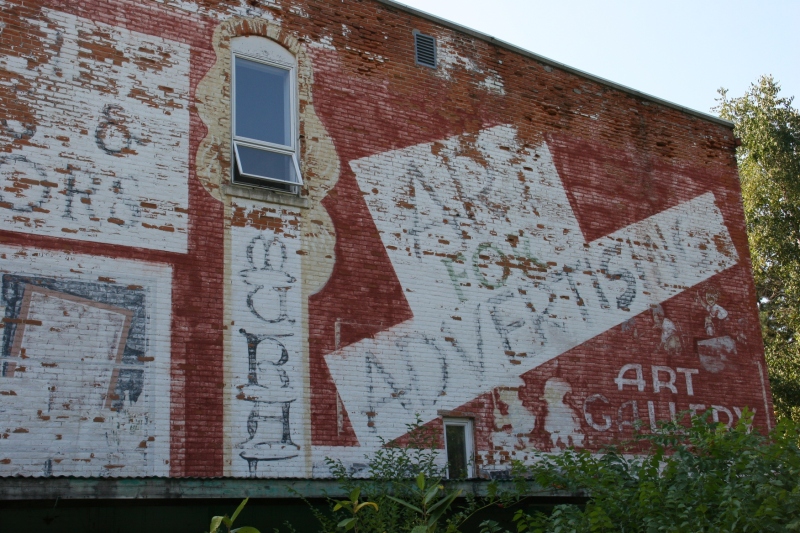
More signage toward the back of the building.

More signage toward the back of the building promotes Noble’s art.

Carl was, by the few accounts I found, an artist for the Federal Art Project of the Work Projects Administration in 1938. His name is listed among photos of FAP art in the Archives of American Art at the Smithsonian Institution.

Another view of Carl and Marie Noble's studio and galleries.

Another view of Carl and Marie Noble’s studio and galleries.

A muralist, cartoonist, illustrator and portrait artist, Carl Noble reportedly studied under Norman Rockwell (according to his wife Marie’s obit). I’ve been unable to verify that via a second source. However, the Nobles lived for awhile in Boston; Rockwell made his home in Stockbridge, MA.

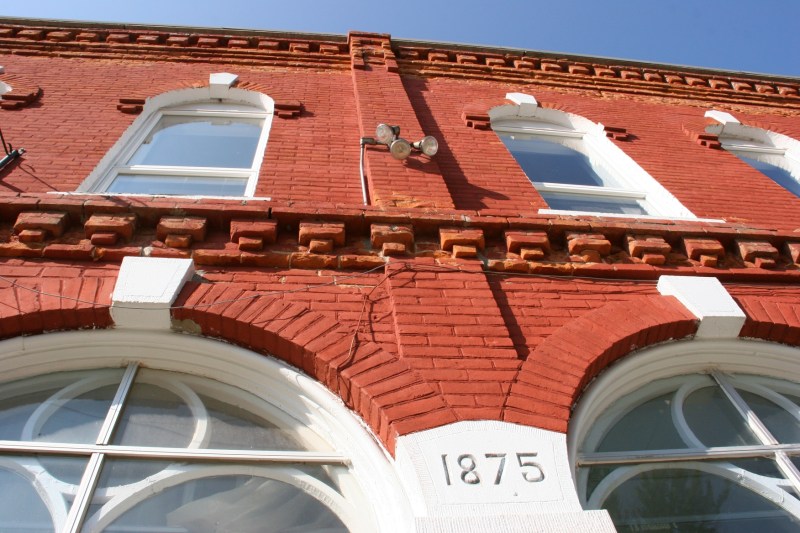
The building was constructed in 1875 and opened as Weaver Mercantile.

The building was constructed in 1875 and opened as Weaver Mercantile.

I discovered that Carl painted six oil on canvas murals for Fire House, Southside Hose Co. No. 2 in Hempstead, New York, in 1938. The artwork depicts the history of local firefighting. Other than that, I’ve been unable to find other information of his WPA art or work at Noble Studio & Galleries. The former gallery itself, though, apparently showcases Carl’s murals on interior walls. If only I could have gotten inside to see and photograph his artwork.

One can only imagine the fun times here as guests enjoyed Marie's hospitality.

One can only imagine the fun times here as guests enjoyed Marie’s hospitality.

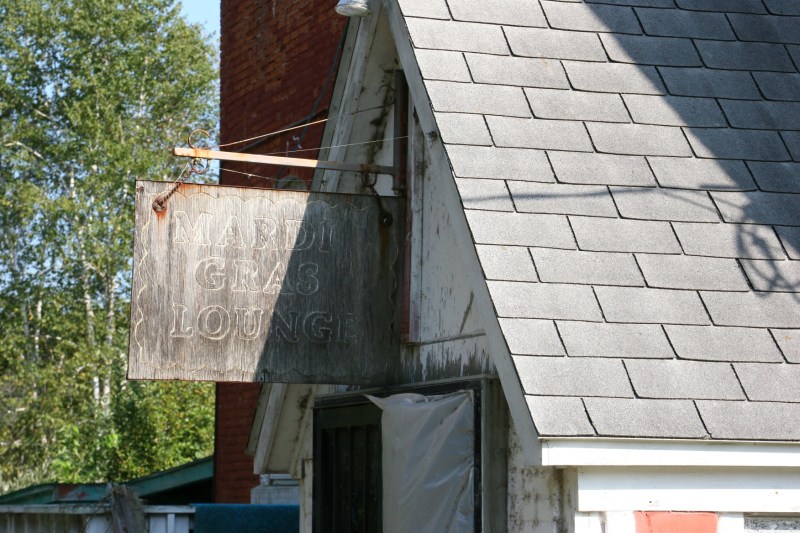
After her husband’s death in 1972, Marie opened a Bed & Breakfast in their home with a party area in the basement. That would explain the faded Mardi Gras Lounge sign above a back entry.

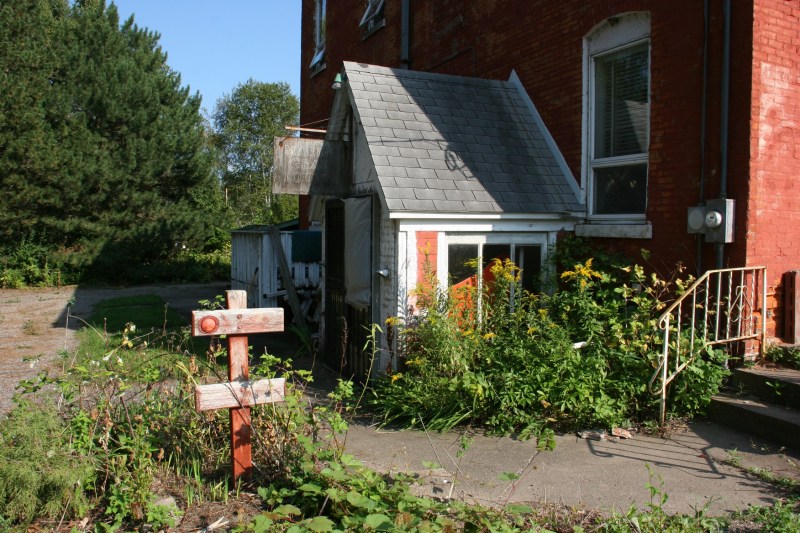
An overview of the Mardi Gras entry at the back of the building.

An overview of the Mardi Gras entry at the back of the building.

Marie reportedly regaled guests with stories, including that Jesse James robbed the Mercantile on his way to robbing the First National Bank in Northfield, Minnesota. Not believing everything I read, I contacted Mark Lee Gardner, noted historian, writer and musician on the western experience. He penned a book, Shot All to Hell: Jesse James, the Northfield Raid, and the Wild West’s Greatest Escape. He confirmed what I suspected. The story of the Weaver robbery is just that, a story.

Here’s Gardner’s response to my inquiry:

I’m afraid the story of Jesse robbing the building in Weaver, Minnesota, isn’t true. The Northfield Raid, as well as the known movements of the James-Younger gang, was heavily reported in the Minnesota newspapers at the time, and if they had been connected with a robbery in Weaver, it should appear in those papers. I never came across any mention of Weaver in my research. The other problem is that the gang didn’t go through Weaver on its way to Northfield. They are documented as having come from the west and south of Northfield.

…There are lots of Jesse James stories out there, and most of them are from someone’s imagination.

My first view of the former Weaver Mercantile and Noble Studio & Galleries.

My first view of the former Weaver Mercantile and Noble Studio & Galleries.

Still, none of this diminishes my appreciation for the Italianate style building in Weaver and my interest in the artists (Marie’s obit notes that she created many lovely paintings) who once lived and created therein.

The village of Weaver is located along U.S. Highway 61 north of Winona in Wabasha County.

The village of Weaver is located along U.S. Highway 61 north of Winona in Wabasha County.

IF YOU KNOW ANYTHING MORE about Carl and Marie Noble, their gallery and art or about the history of the building, I’d like to hear.

© Copyright 2015 Audrey Kletscher Helbling
 

In Winona, Part II: A Prairie School Style office building at J.R. Watkins Co. January 7, 2016

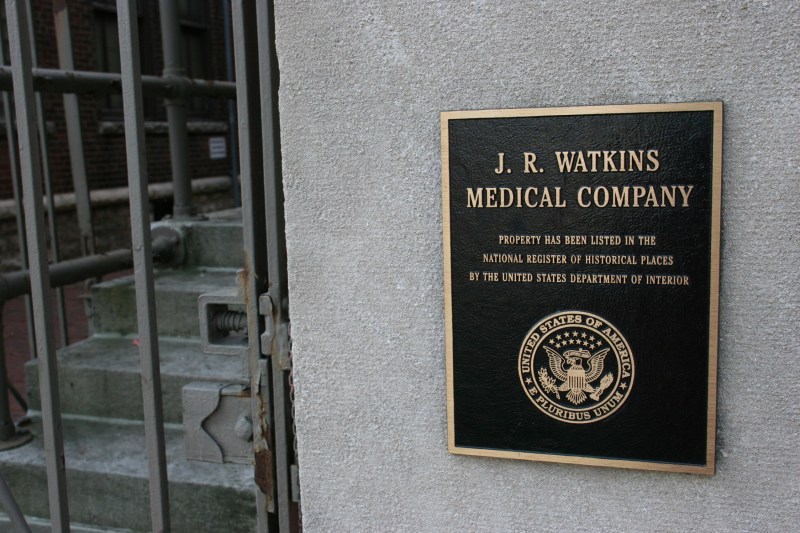
The JR Watkins complex of buildings is on the National Register of Historic Places as noted by this marker.

The J.R. Watkins complex of buildings is on the National Register of Historic Places as noted by this marker.

AH, TO WORK in such a splendid place of marble and gold and Tiffany stained glass windows.

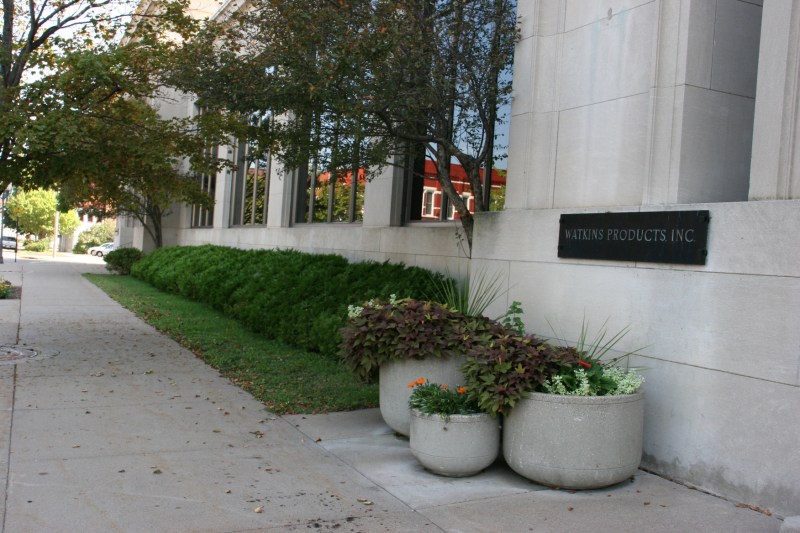
Greenery outside the Watkins' office building.

Greenery outside the Watkins’ office building.

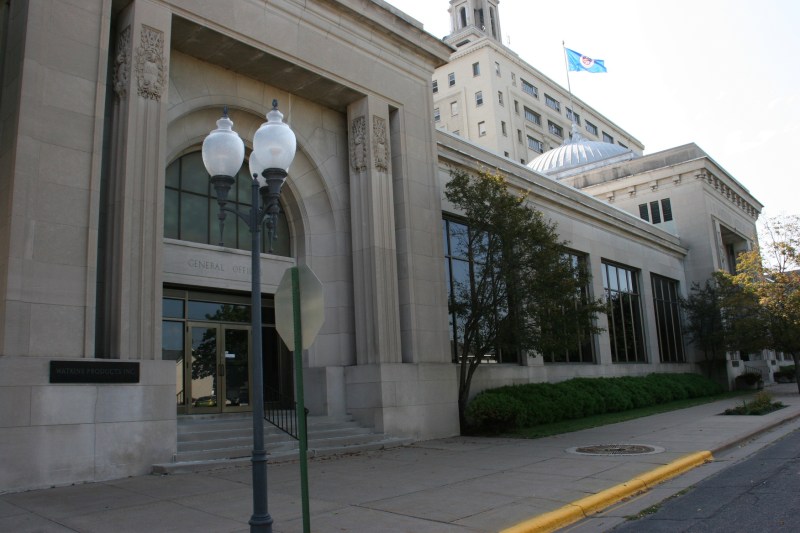
That’s the setting for employees at J.R. Watkins, a Winona company that sells health remedies, baking products and much more; it’s especially known for its vanilla. Office workers labor inside a monumental building designed by noted Prairie School style architect George W. Maher of Chicago.

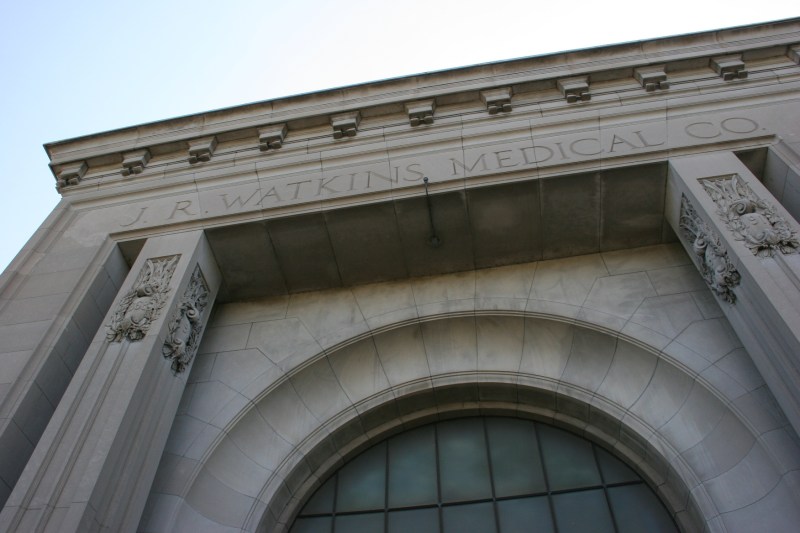
Chiseled above the main entry into the administrative building.

Chiseled above an entry into the administrative building.

The sprawling building features a 70-foot high rotunda dome coated with 24-carat gold leaf.

The sprawling building features a 70-foot high rotunda dome coated with 24-carat gold leaf.

On a September visit to this Mississippi River community, I toured the 1912 office building which anchors a corner on the edge of downtown. It’s an unexpected gem, this stone structure that resembles a government building or art museum rather than the headquarters of a business.

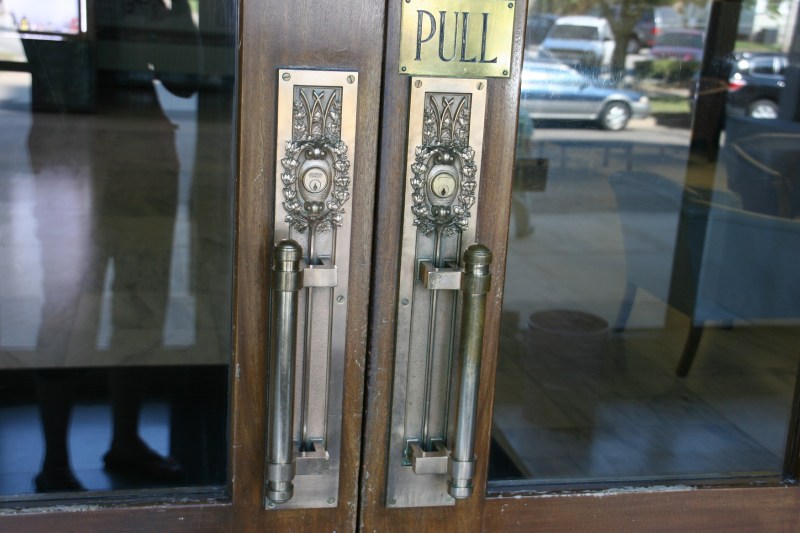
Even the door handles are exquisite.

Even the door handles are exquisite.

My husband and I couldn’t just walk inside. Rather, we phoned for access and then signed in.

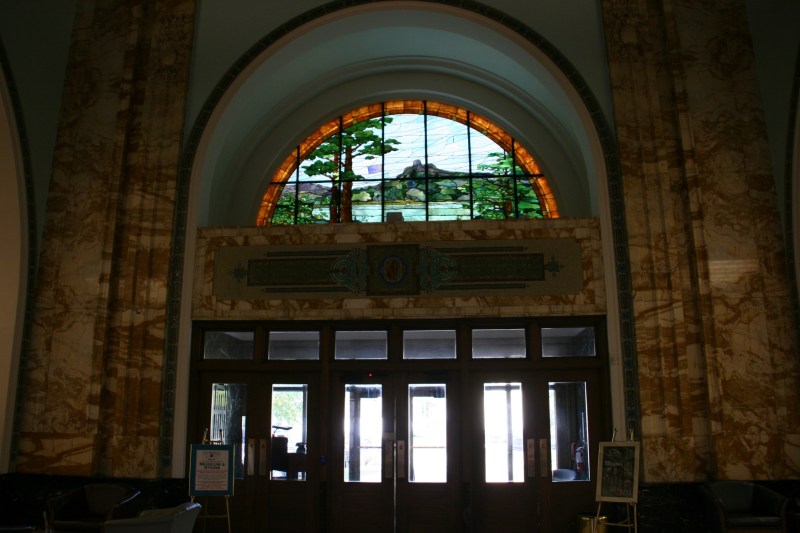
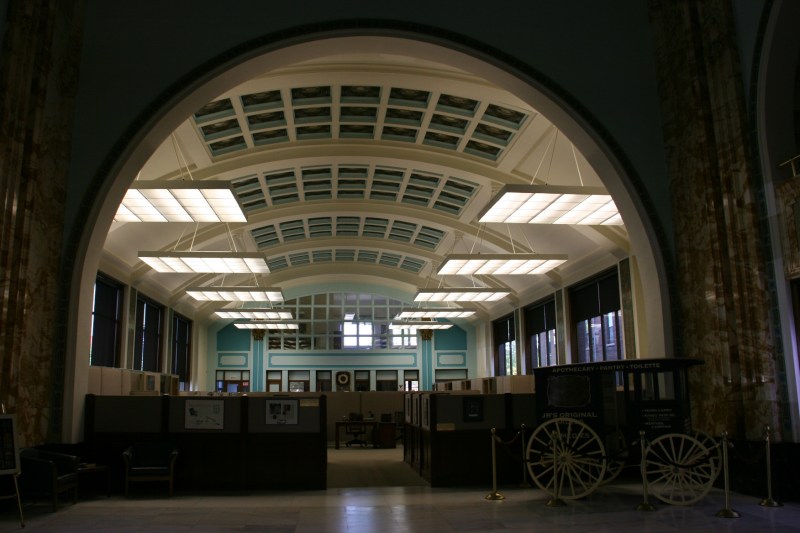
Inside, looking toward the front doors.

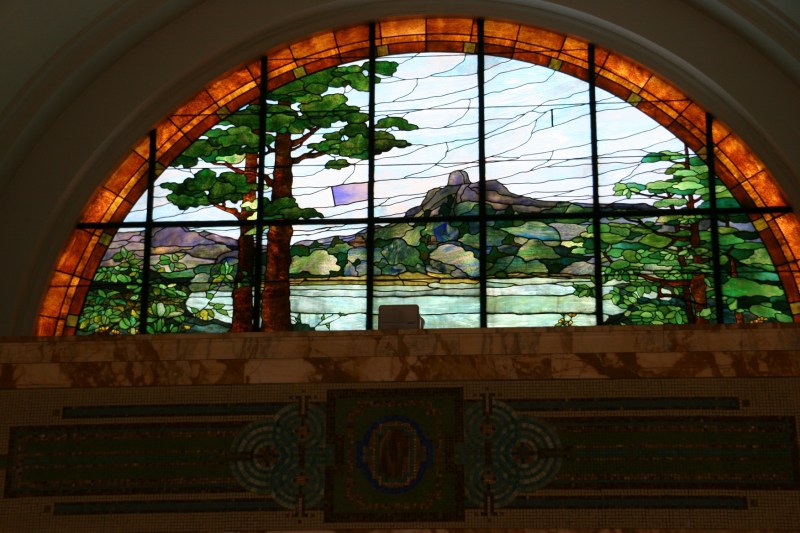
Inside, looking toward the front doors and the Tiffany stained glass window featuring a rendition of Sugar Loaf.

The Sugar Loaf window up close.

The Sugar Loaf window up close.

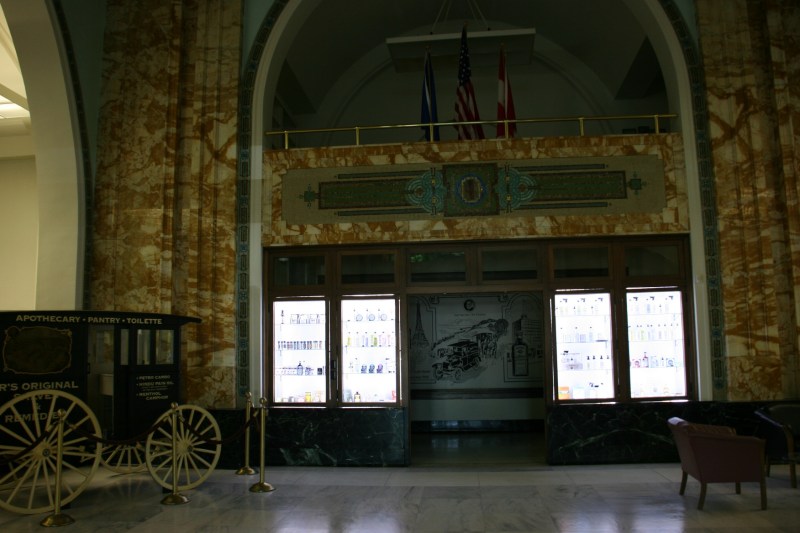
Looking toward a mini-museum display of Watkins items, including the Watkins wagon.

Looking toward a mini-museum display of Watkins items, including a Watkins wagon.

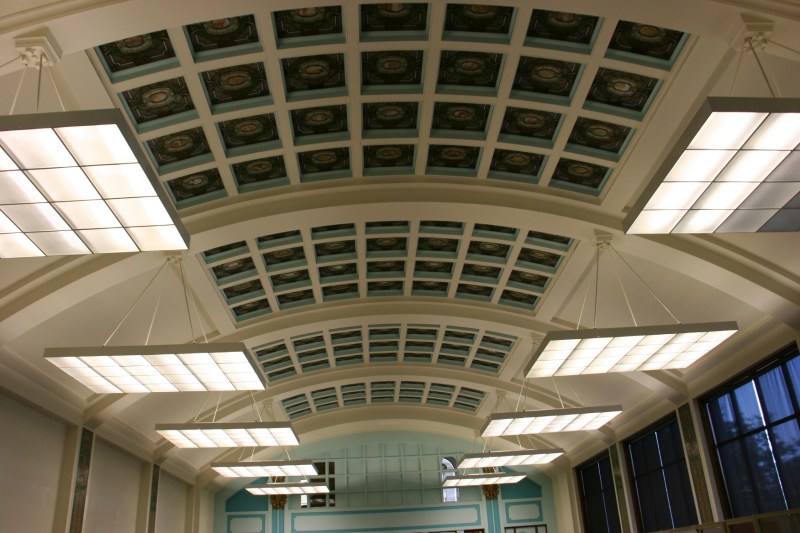
The building features 224 stained glass skylights.

The building features 224 stained glass skylights.

Skylights up close.

Skylights up close.

And, as you would expect, the space we were allowed to explore was limited to the main lobby area. Still, this was enough to impress as I gazed upon marble walls, the stained glass skylights (of which there are 224) and the custom-made Tiffany stained glass window (there are three) featuring Winona’s noted bluff landmark, Sugar Loaf. Because the windows are covered on the exterior to protect them, they are not quite as impressive as they could be. Still, you can’t leave this building without thinking, wow.

FYI: Check back tomorrow for a post on the Winona National Bank building.

© Copyright 2015 Audrey Kletscher Helbling
 

Touring Minnesota’s “other” basilica, St. Stan’s in Winona September 24, 2015

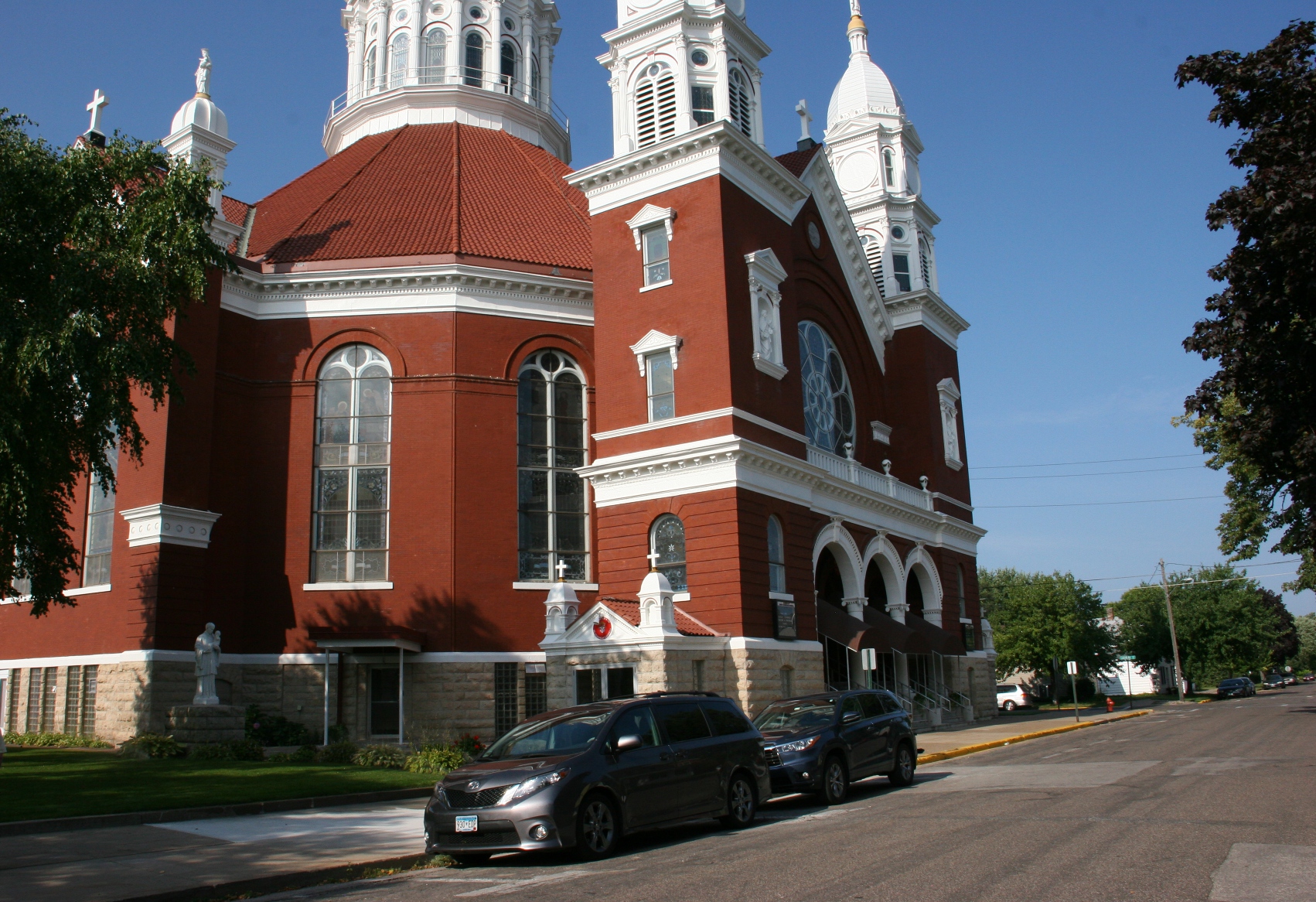
The Basilica of Saint

The Basilica of Saint Stanislaus Kostka, named after a popular saint from Poland, is so massive I could not get the entire basilica in a photo. It’s located at 625 East Fourth Street in Winona, Minnesota.

UNOFFICIALLY, PARISHIONERS CALL the basilica St. Stan’s. I like that. It seems fitting in an age when the current pope, Pope Francis, has connected in an everyday sort of way with the faithful, Catholic or not.

I am Lutheran. But denominational affiliation matters not when touring a beautiful house of worship. Or appreciating a man who oversees with a blessed sense of ordinariness. Several weeks ago my husband, a Catholic turned Lutheran, and I visited the Basilica of Saint Stanislaus Kostka, aka St. Stan’s, in Winona. Touring churches interests us from multiple perspectives.

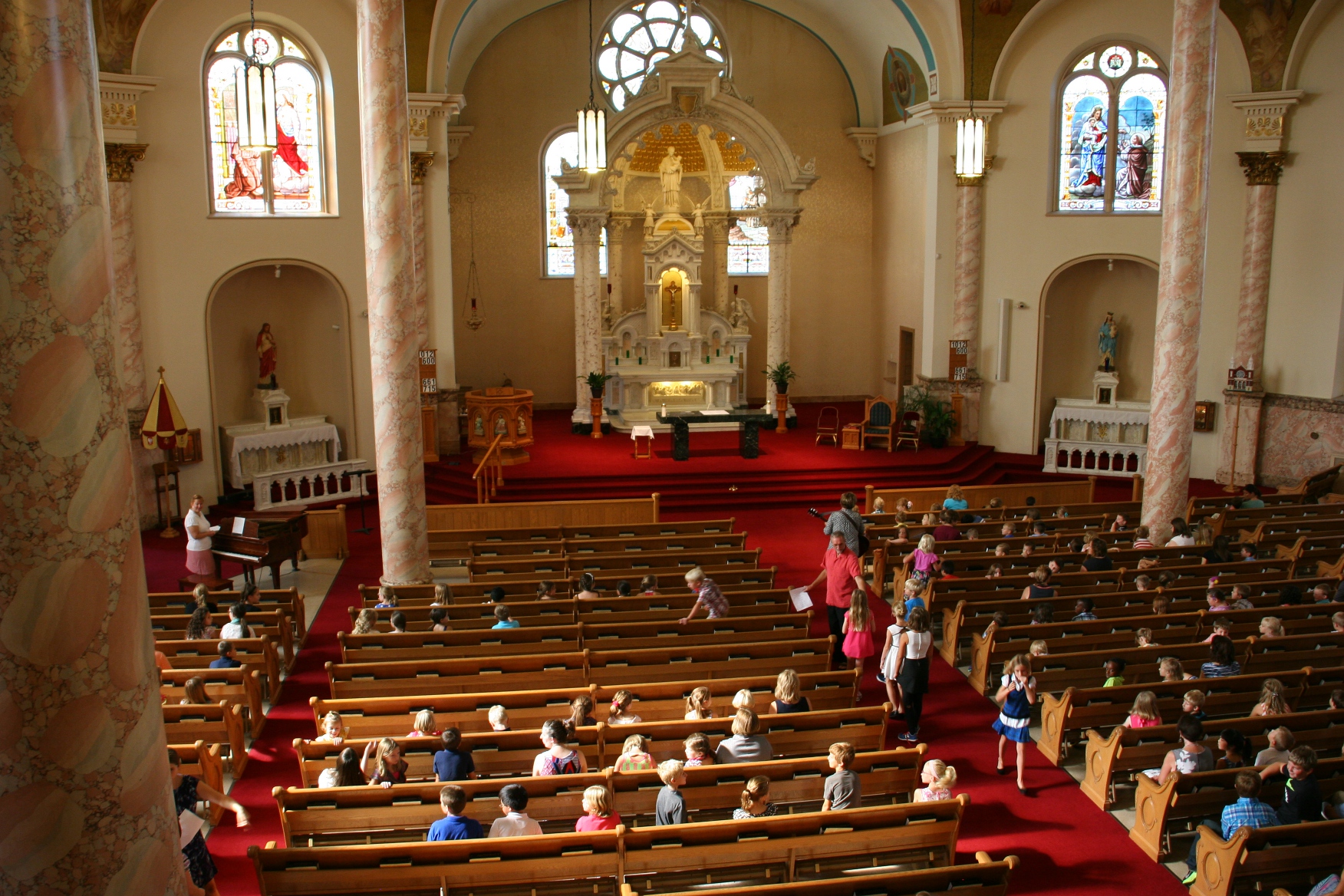
Students from the basilica's school file in for morning Mass.

Students file in for morning Mass.

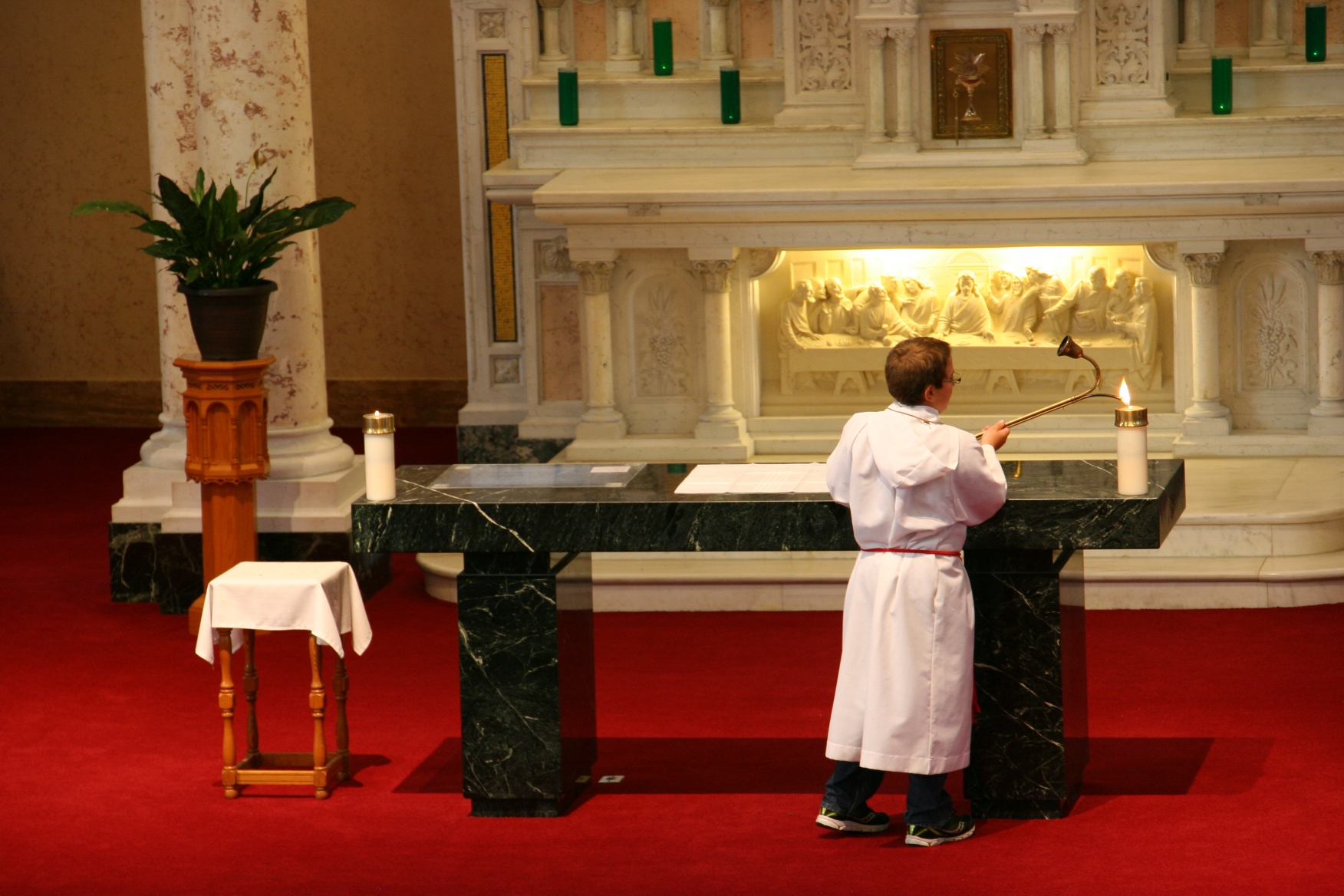
An altar boy prepares for Mass.

An altar boy prepares for Mass.

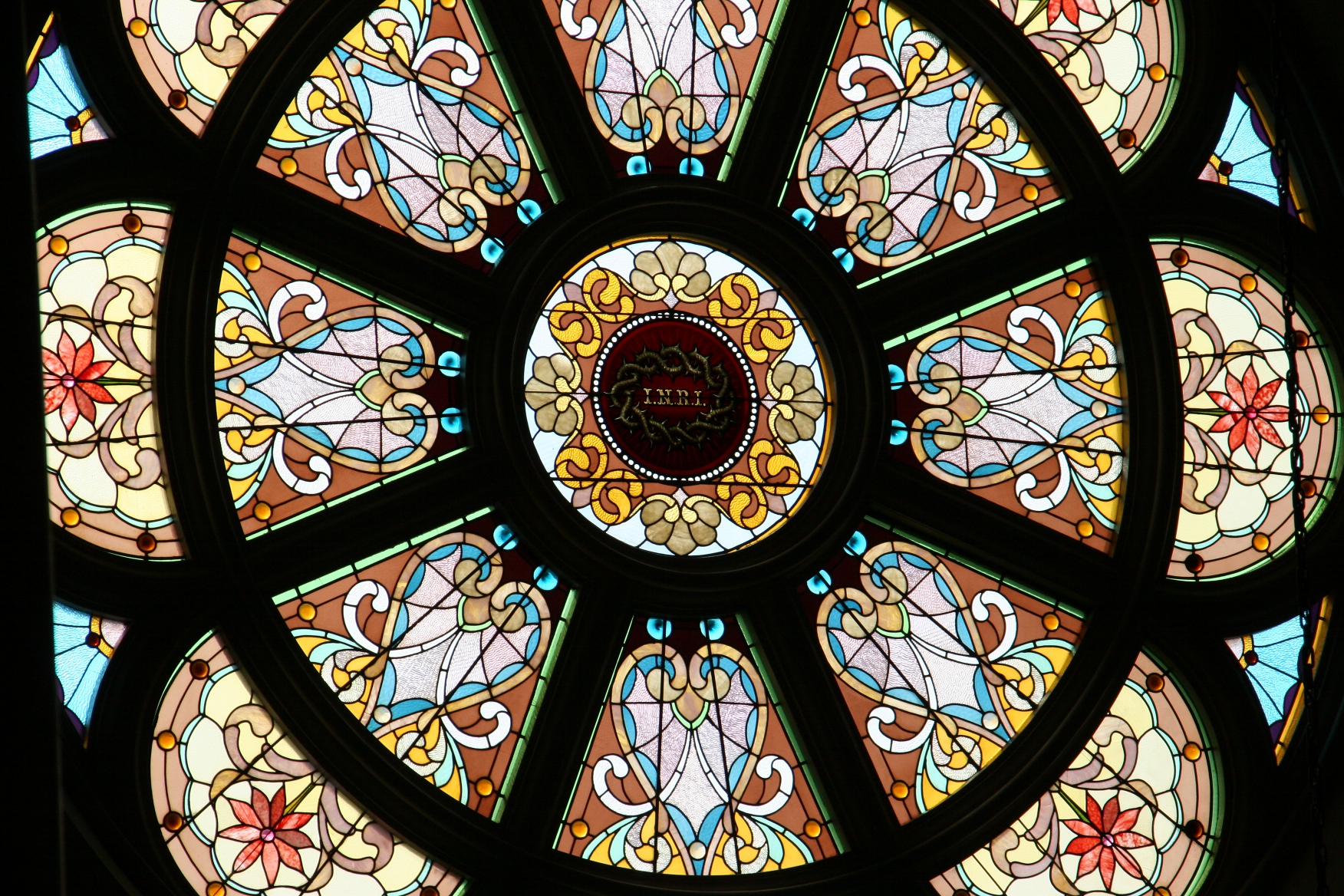
The stained glass windows are incredible in their sacred symbolism and beauty.

The stained glass windows are incredible in their sacred symbolism and beauty.

We arrived at St. Stan’s shortly before a children’s Mass, leaving us to observe from the balcony the reverent holiness of an altar boy lighting a candle, the filing of elementary students into pews, the light of a sultry summer morning filtering through stained glass windows.

Beautiful morning light filters through stained glass onto the curving balcony railing.

Lovely morning light filters through stained glass onto the curved balcony railing.

A statue is tucked into a corner below stations of the cross.

A statue is tucked into a corner below stations of the cross.

The paintings inside the dome are exquisite in their detailed beauty.

The paintings inside the dome are exquisite in their detail.

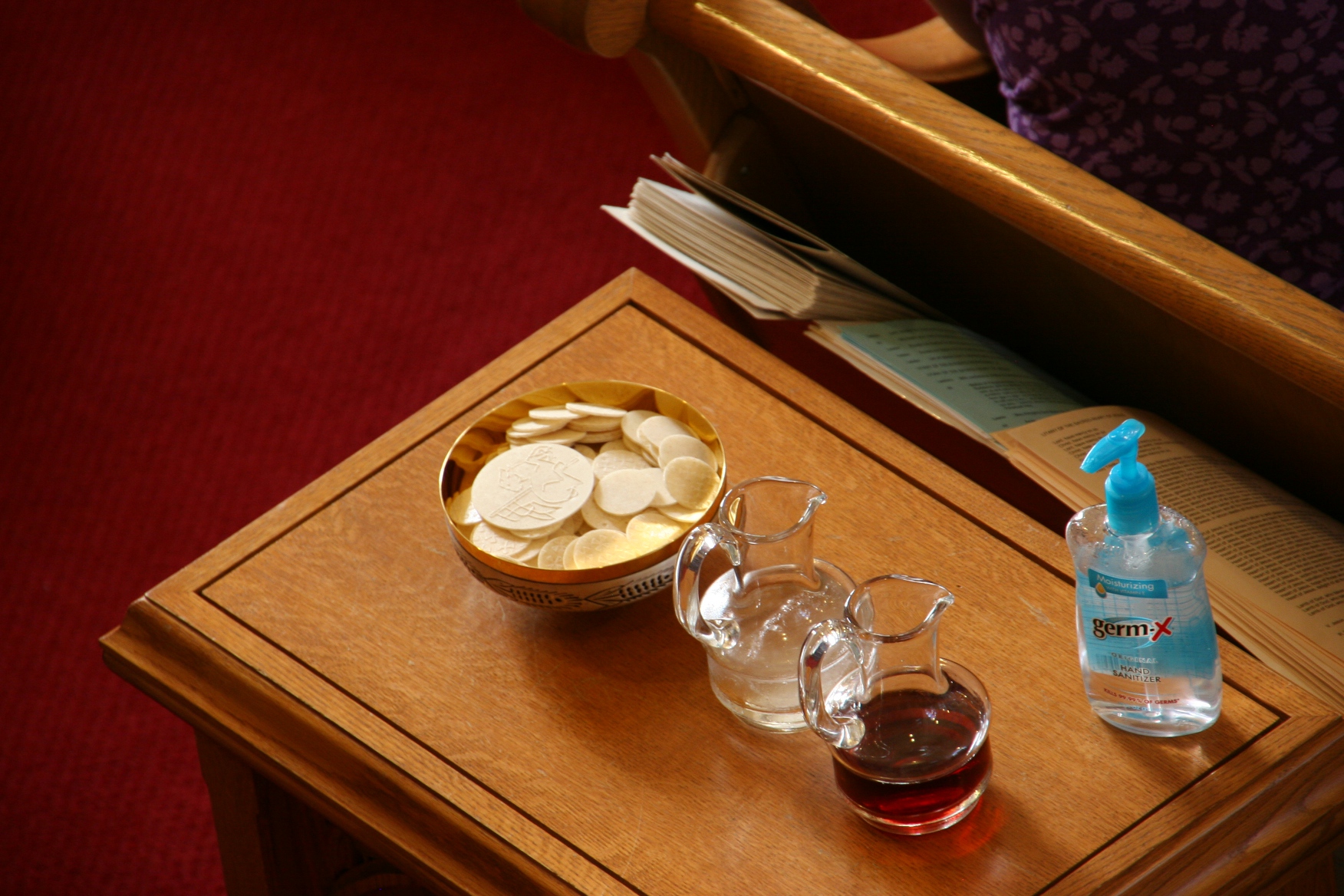
The bread and the wine before it is carried to the front of the sanctuary.

The bread and the wine before they are carried to the front of the sanctuary.

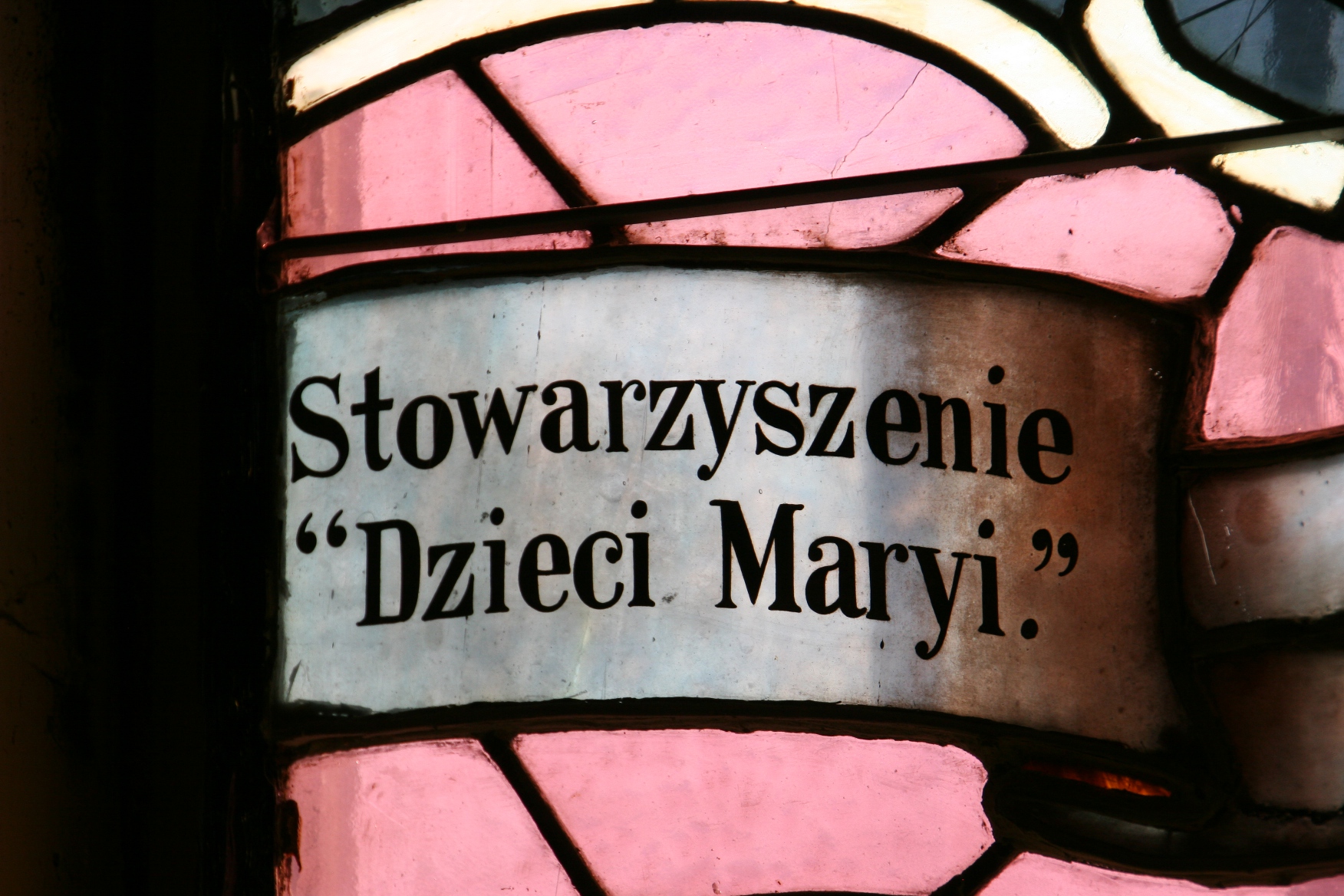
Polish words on a stained glass window translate to

Polish words on a stained glass window translate, according to Google translate, to “”Association of the Children of Mary.”

I stood there in awe, swinging my camera lens toward marble pillars and stained glass, statues and crucifixes, curving wood and paintings, Communion wafers and words in Polish.

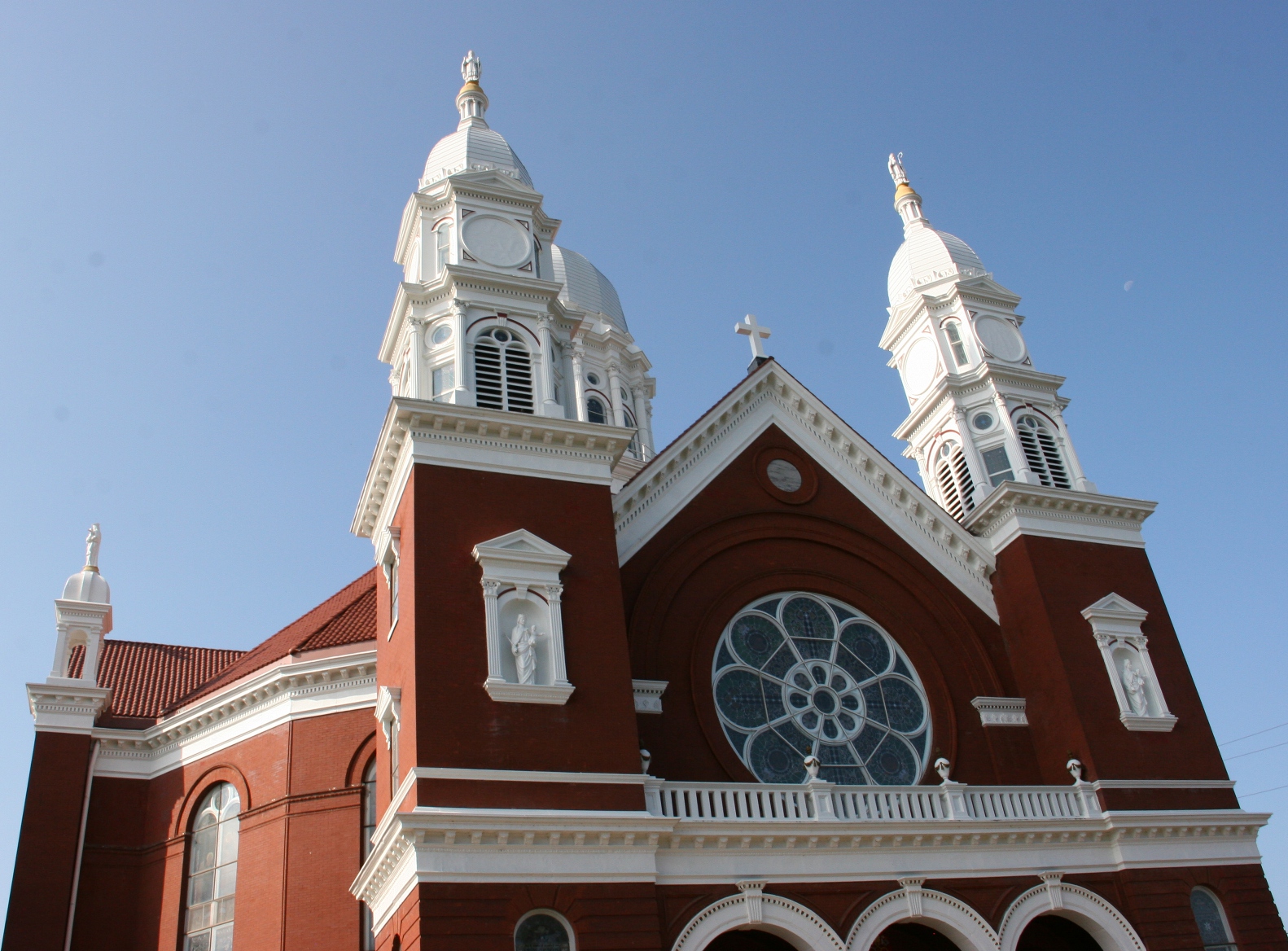
The upper portion of the basilica at its main entry.

The upper portion of the basilica at its main entry.

This is a church of Polish immigrants. Built in 1894 – 1895 of brick and stone in Romansque style (in the form of a Greek cross) by the Winona architectural firm of Charles G. Maybury & Son, the basilica is on the National Register of Historic Places.

With its designation as a basilica, St. Stan's also received a crest symbolic of important events in its history. Click here to learn about the crest.

With its designation as a basilica, St. Stan’s also received a crest symbolic of important events in its history. Click here to learn about the crest.

Not knowing the difference between a regular Catholic church and a basilica, I learned from online research that a basilica has received special privileges from the pope. St. Stan’s rates as a minor basilica , the 70th in the U.S. and only one of two in Minnesota. (The other is the Basilica of Saint Mary in downtown Minneapolis.) The title ties to the extraordinary architectural quality of the building and to the congregation’s significant Polish heritage, according to a 2011 press release from the Roman Catholic Diocese of Winona announcing the designation by the Vatican.

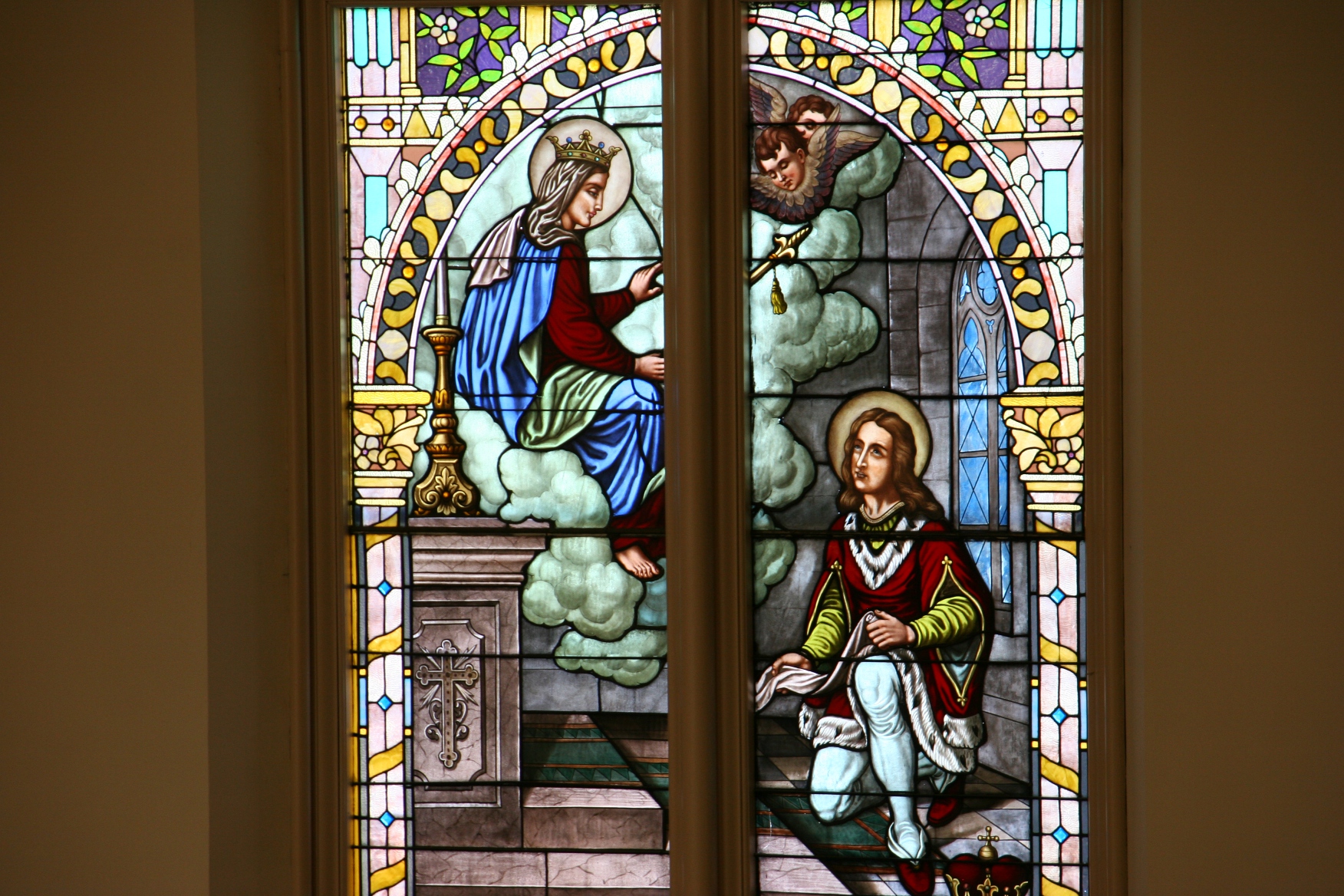
I'm certain the scenes in each stained glass window hold religious significance.

The stained glass windows truly are religious works of art.

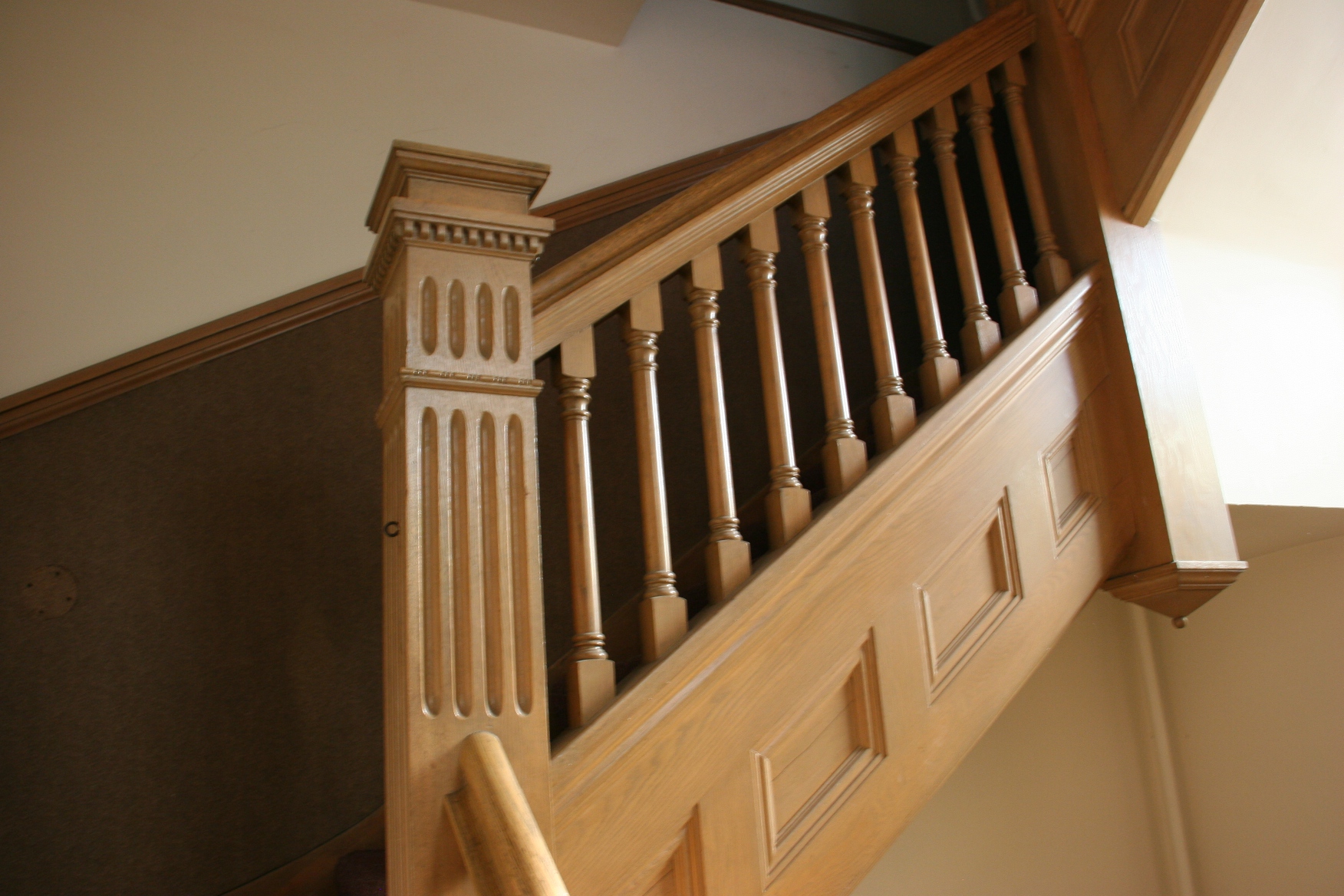
The stairway to the balcony features incredible craftsmanship.

The stairway to the balcony features incredible craftsmanship.

Massive marble pillars impress.

Massive marble pillars impress.

Terminology and privileges aside, this is one impressive house of worship. It’s artful and splendid. Reverent and meaningful. Personal, yet powerful in its sheer size.

I expect many a worshiper has found comfort in these stained glass windows.

I expect many a worshiper has found comfort in these stained glass windows.

This massive place holds generations of family history. Imagine the sins confessed and forgiven here, the blessings bestowed, the holy water sprinkled, the families who’ve grieved and celebrated within the walls of St. Stan’s.

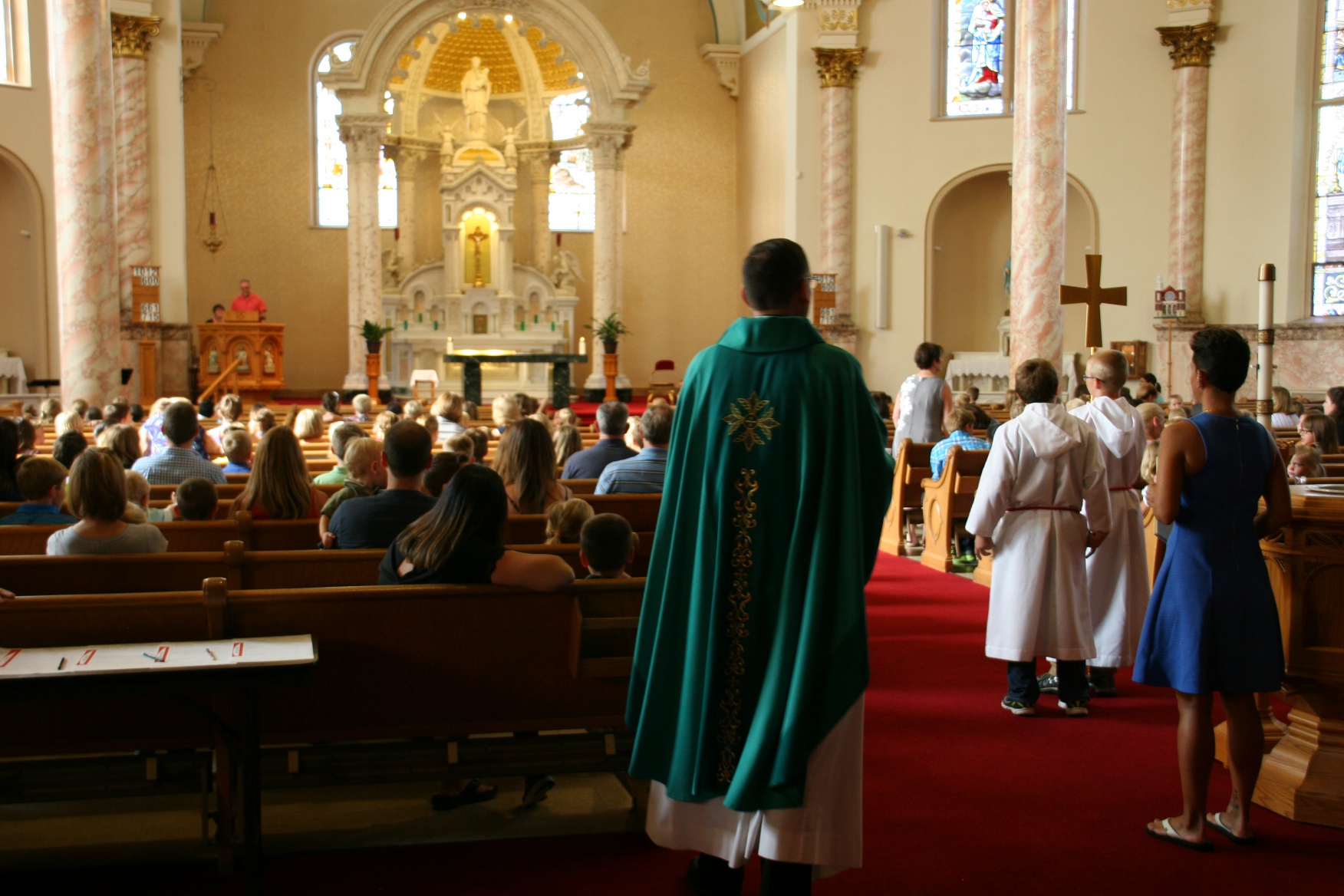
The priest is about to proceed up the aisle to begin Mass.

The priest is about to proceed up the aisle to begin Mass.

To witness the next generation in worship on a Friday morning in God’s house reaffirms for me that the faith of our fathers remains strong. Just like this aged basilica in the Mississippi River town of Winona.

BONUS PHOTOS of the exterior:

A back view of St. Stan's.

A back view of St. Stan’s.

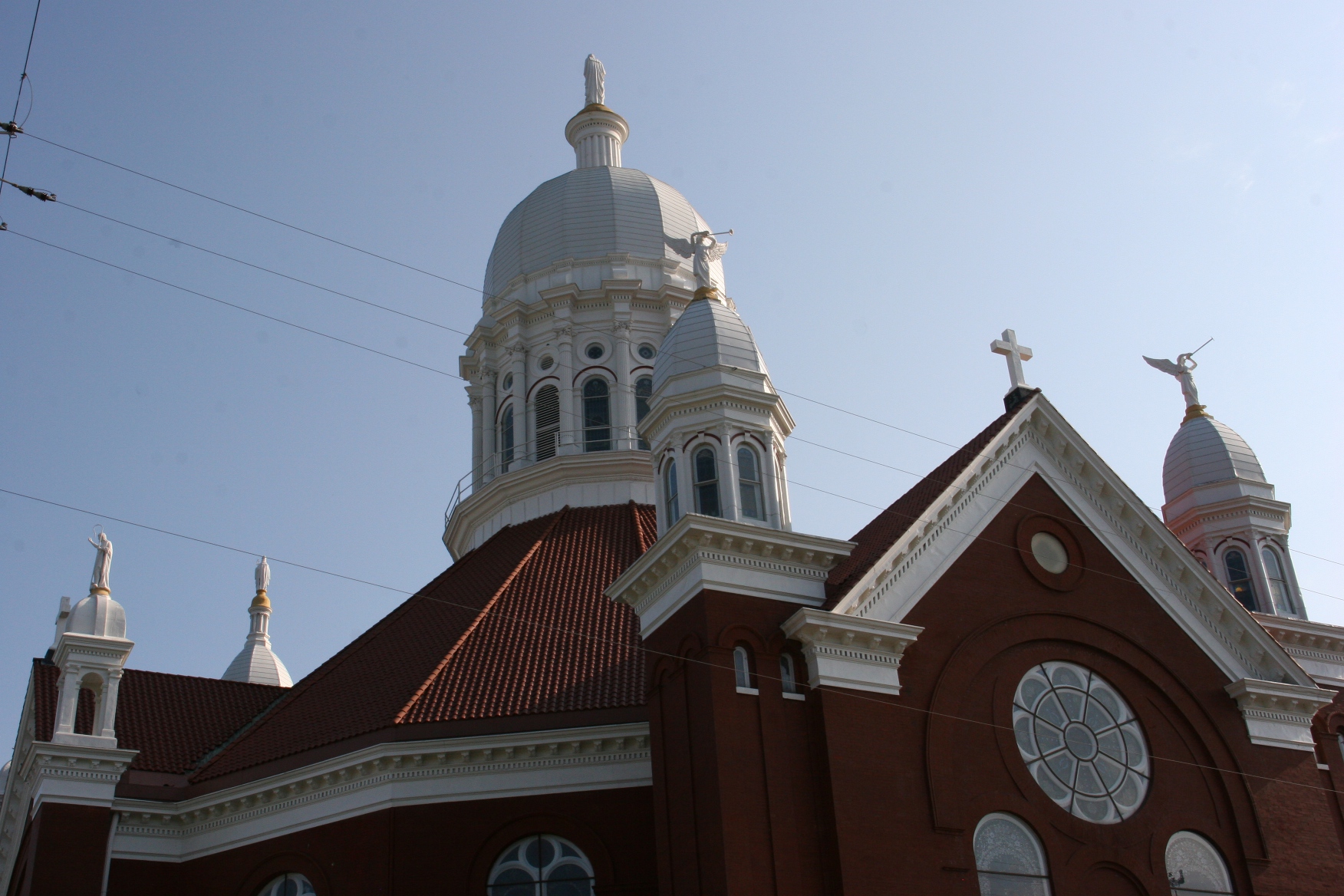
Angel art atop a tower.

Angel art atop a tower.

Roof details.

Roof details.

The main entrance.

The main entrance.

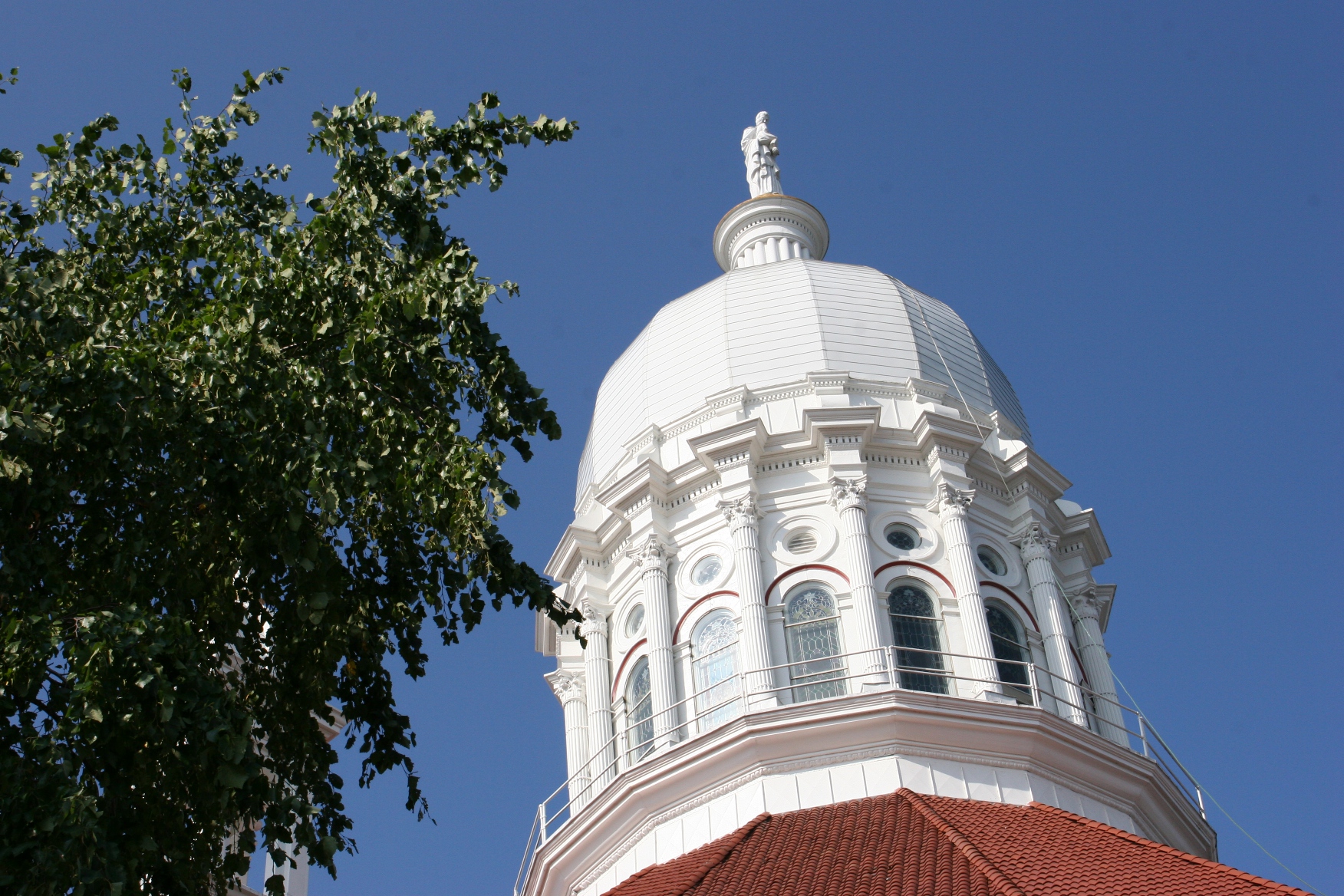
And the landmark dome.

And the landmark dome.

© Copyright 2015 Audrey Kletscher Helbling
 

Faribault Woolen Mill celebrates 150th anniversary August 13, 2015

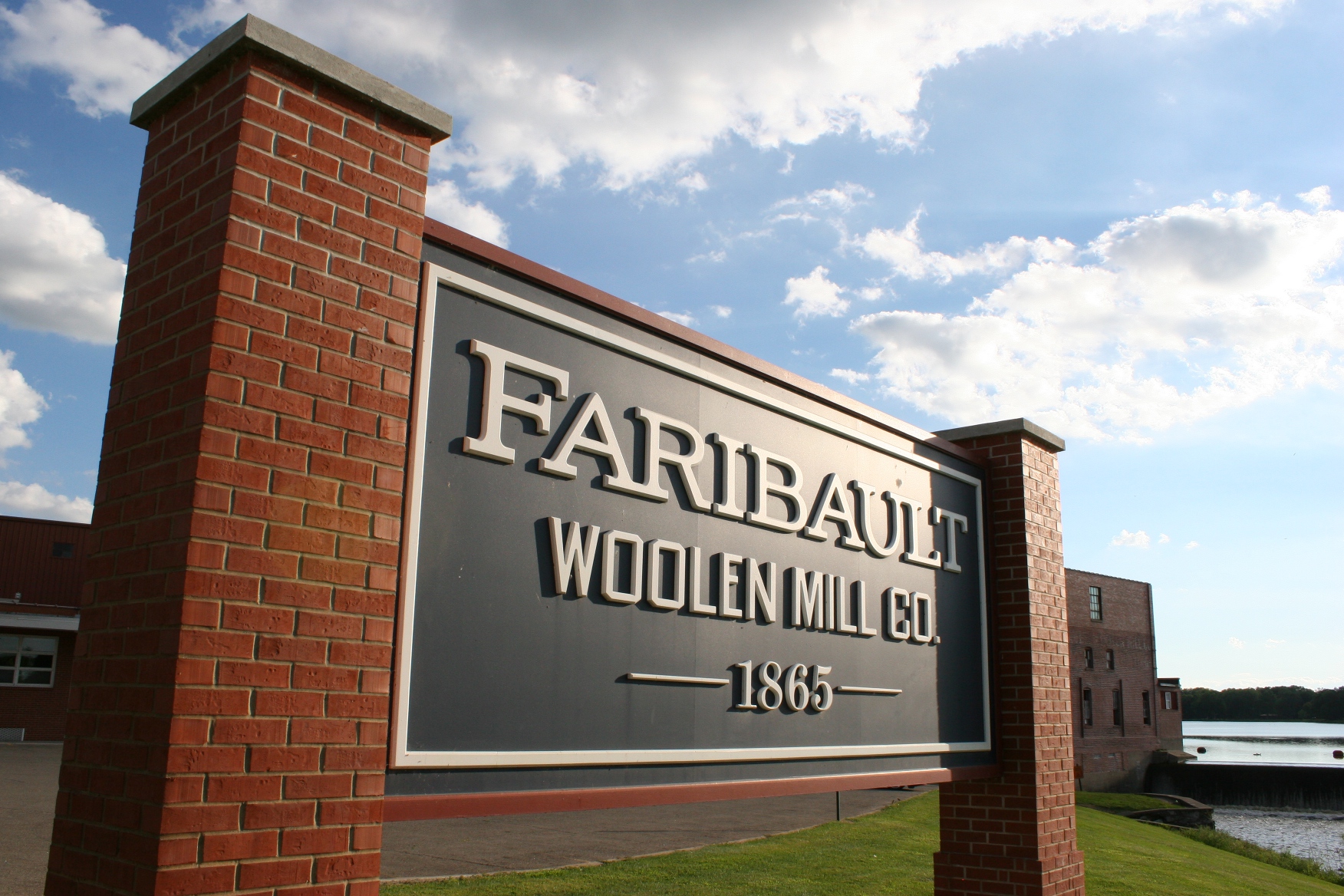
This sign marks The Faribault Woolen Mill, which sits along the banks of the Cannon River in Faribault, Minnesota.

This sign marks the Faribault Woolen Mill, which sits along the banks of the Cannon River in Faribault, Minnesota.

STASHED IN MY BEDROOM CLOSET are two blankets from the Faribault Woolen Mill—one a baby blanket in muted pink and aqua, the other a full-sized pink blanket. Both were gifts from a neighbor who once worked in the mill’s retail store.

A label on a Faribault Woolen Mill blanket I own.

A label on a Faribault Woolen Mill blanket I own.

I expect in many homes throughout my community, locally-loomed blankets, throws, scarves and more cover beds, warm laps and wrap around necks on the coldest of Minnesota winter days and nights.

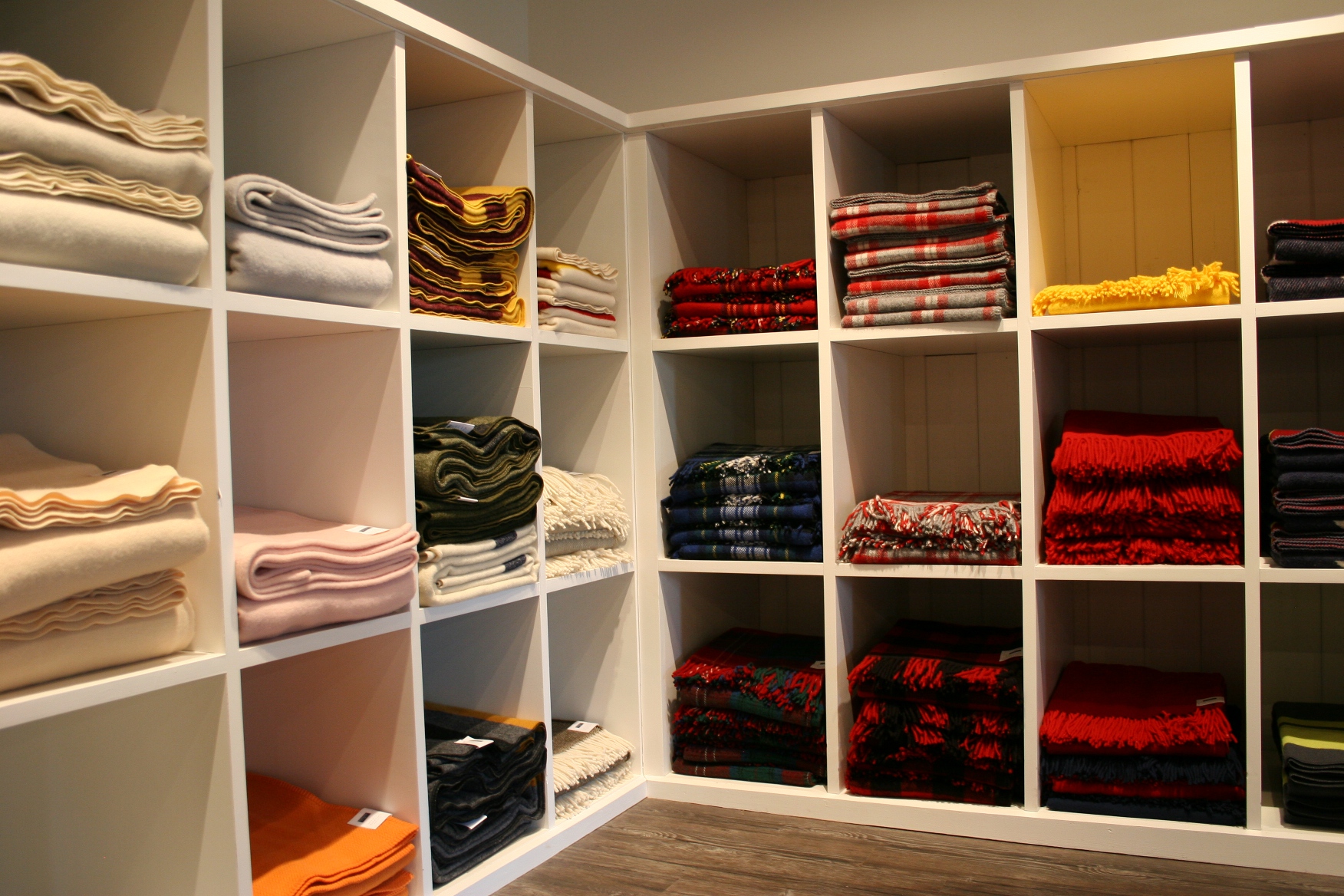
Crisp white cubbies, ever so perfect for showing off blankets/throws.

Crisp white cubbies, ever so perfect for showing off blankets/throws at the Faribault Woolen Mill retail store. Minnesota Prairie Roots file photo June 2012.

While the temperature isn’t exactly wool-worthy here in southern Minnesota in mid-August, autumn is tinging our days with cool nights and the subtlest of color changes in foliage. We realize that summer is waning and, once again, we’ll soon pull out the wool and the flannel.

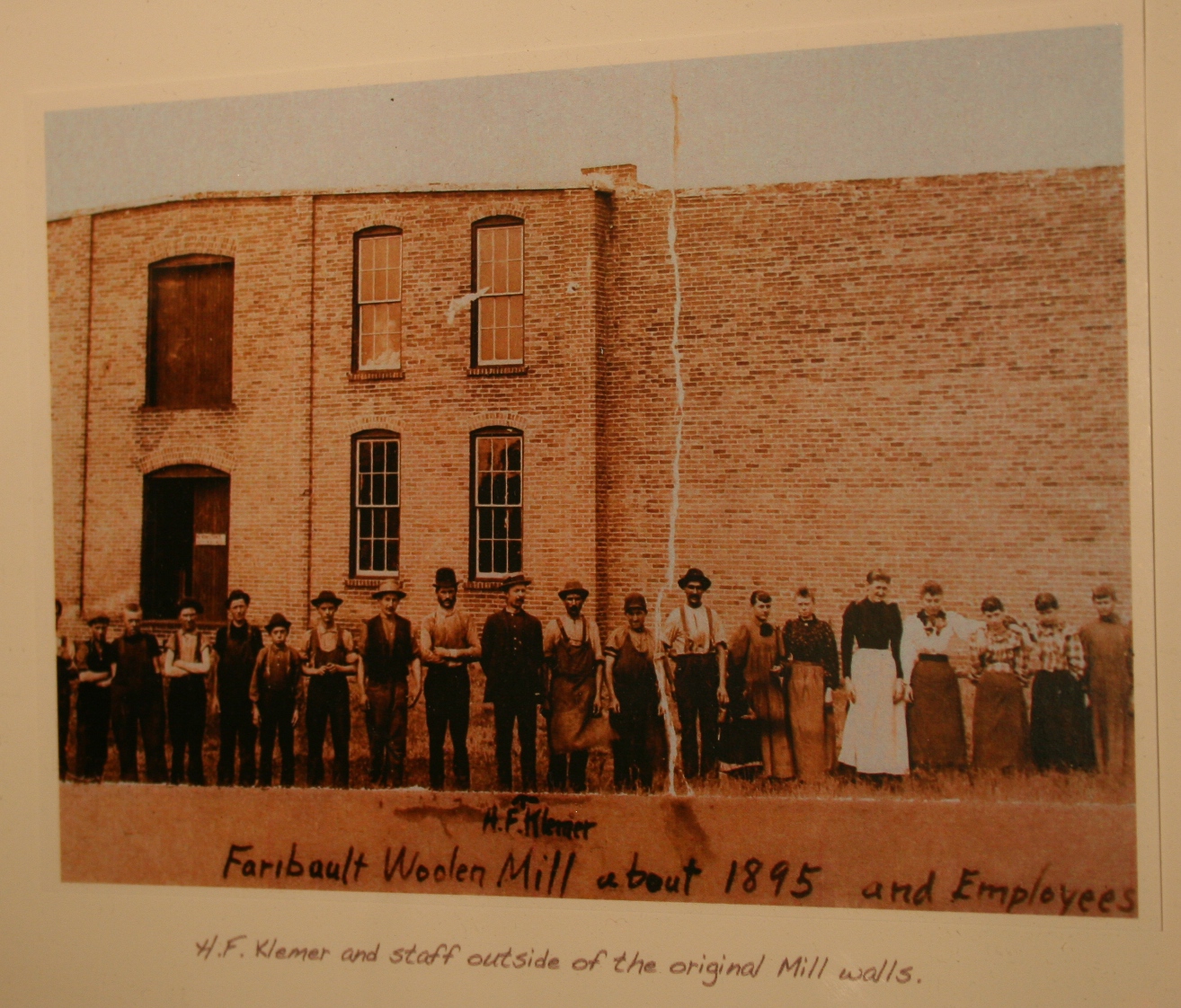
An historic photo from the mill, among those showcased in a mini wall of Woolen Mill history.

An historic photo from the mill is among those showcased in a mini wall of Woolen Mill history inside the retail store. Minnesota Prairie Roots file photo 2012.

This Saturday the Faribault Woolen Mill is pulling out its collection of locally-loomed products to sell in the 150th Marketplace, all in celebration of the mill’s 150th anniversary. Among Marketplace merchandise are the mill’s new 2015 line and special anniversary items, including a limited edition reissue of the 1949 plaid stadium blanket, Faribo Pak-A-Robe. The blanket comes in a carrying case that converts to a seat pad.

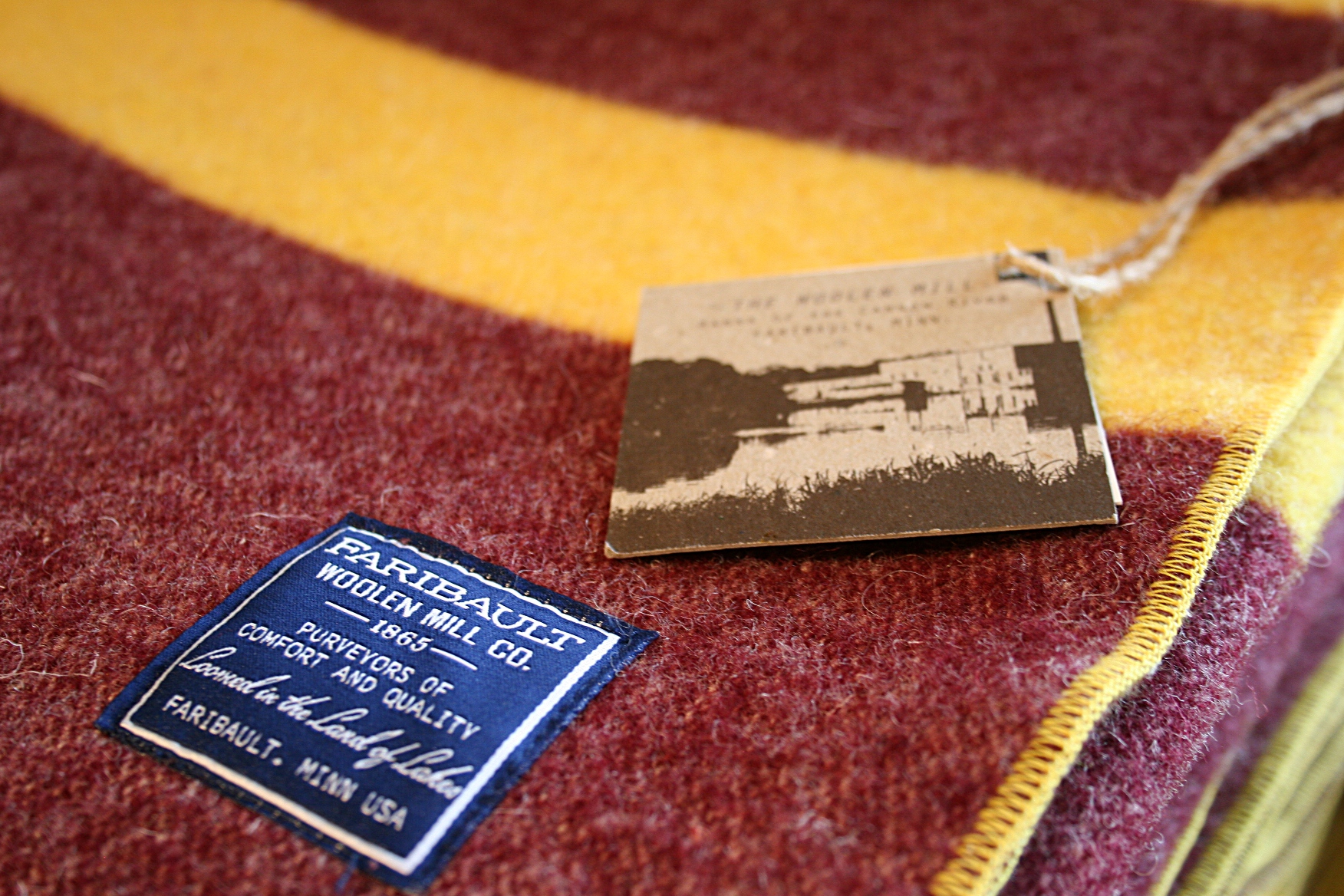
The mill's products are labeled as "Loomed in the Land of Lakes" by "Purveyors of Comfort and Quality." Minnesota Prairie Roots file photo 2012.

The mill’s products are labeled as “Loomed in the Land of Lakes” by “Purveyors of Comfort and Quality.” Minnesota Prairie Roots file photo 2012.

I’ve been to enough Woolen Mill sales to know the outdoor Marketplace will be crowded with those who appreciate the mill’s authentic products. Made in America and craftsmanship appeal to folks. And that’s a good thing for the mill, founded in 1865. One hundred fifty years. That says something about tenacity. This business, which provided blankets for American troops during both World Wars, supplied blankets to airlines in the early 1970s, and, from the late 60s to early 90s, produced more than half of the blankets made each year in the U.S., has survived the ebbs and flows of the economy.

The Faribault Woolen Mill sits on the bank of the Cannon River.

The Faribault Woolen Mill sits on the bank of the Cannon River.

Yet, despite world-wide business success, the Faribault Woolen Mill almost didn’t make it to its sesquicentennial. The mill was shuttered in 2009 due to financial problems. Two years later Minnesota businessmen and cousins, Chuck and Paul Mooty, purchased the mill, revived it and the rest is history.

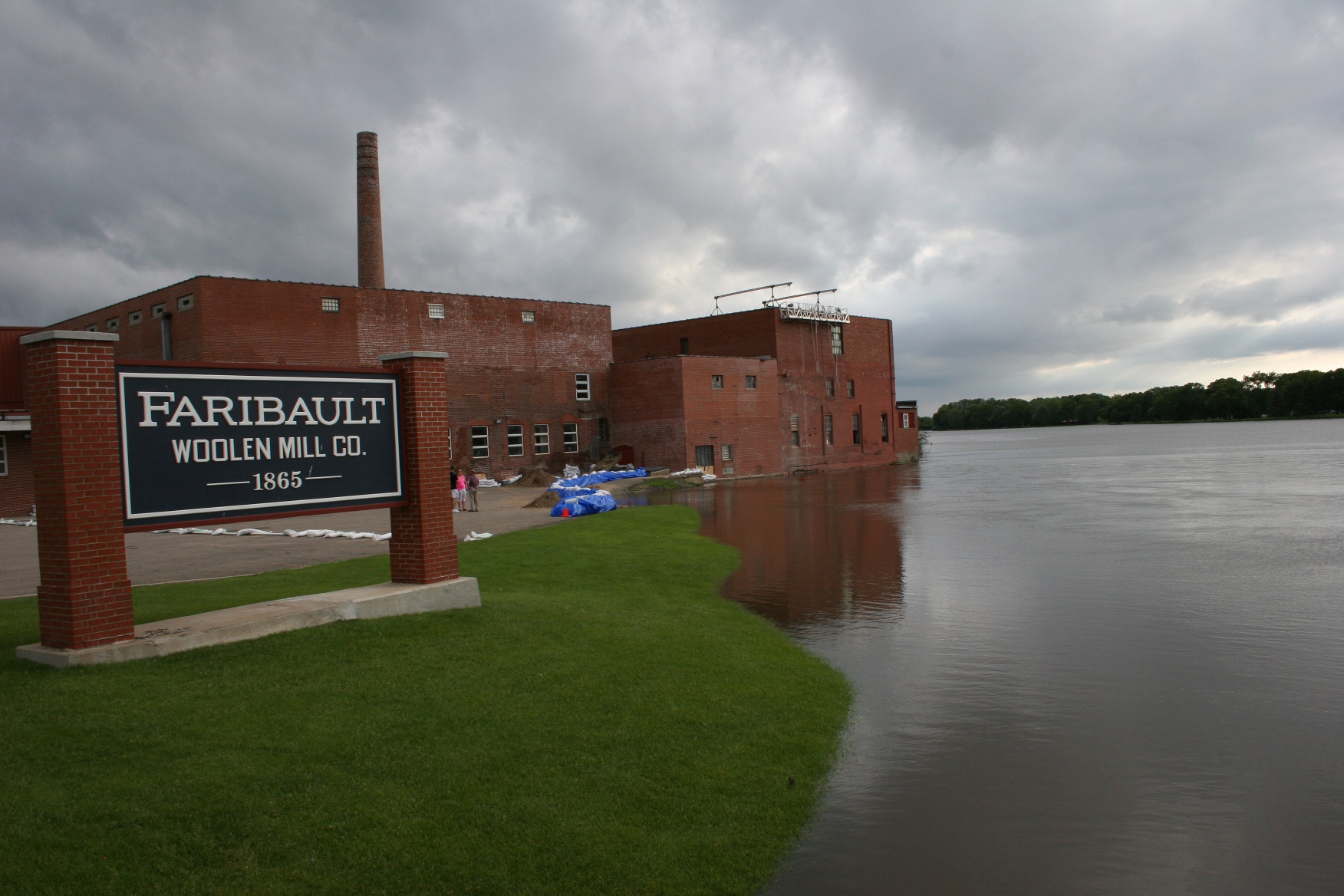
Sandbags protect the Faribault Woolen Mill from the rising Cannon River.

Sandbags protect the Faribault Woolen Mill from the rising Cannon River in June 2014. Minnesota Prairie Roots file photo.

The mill was also threatened twice in recent years by flooding of the Cannon River.

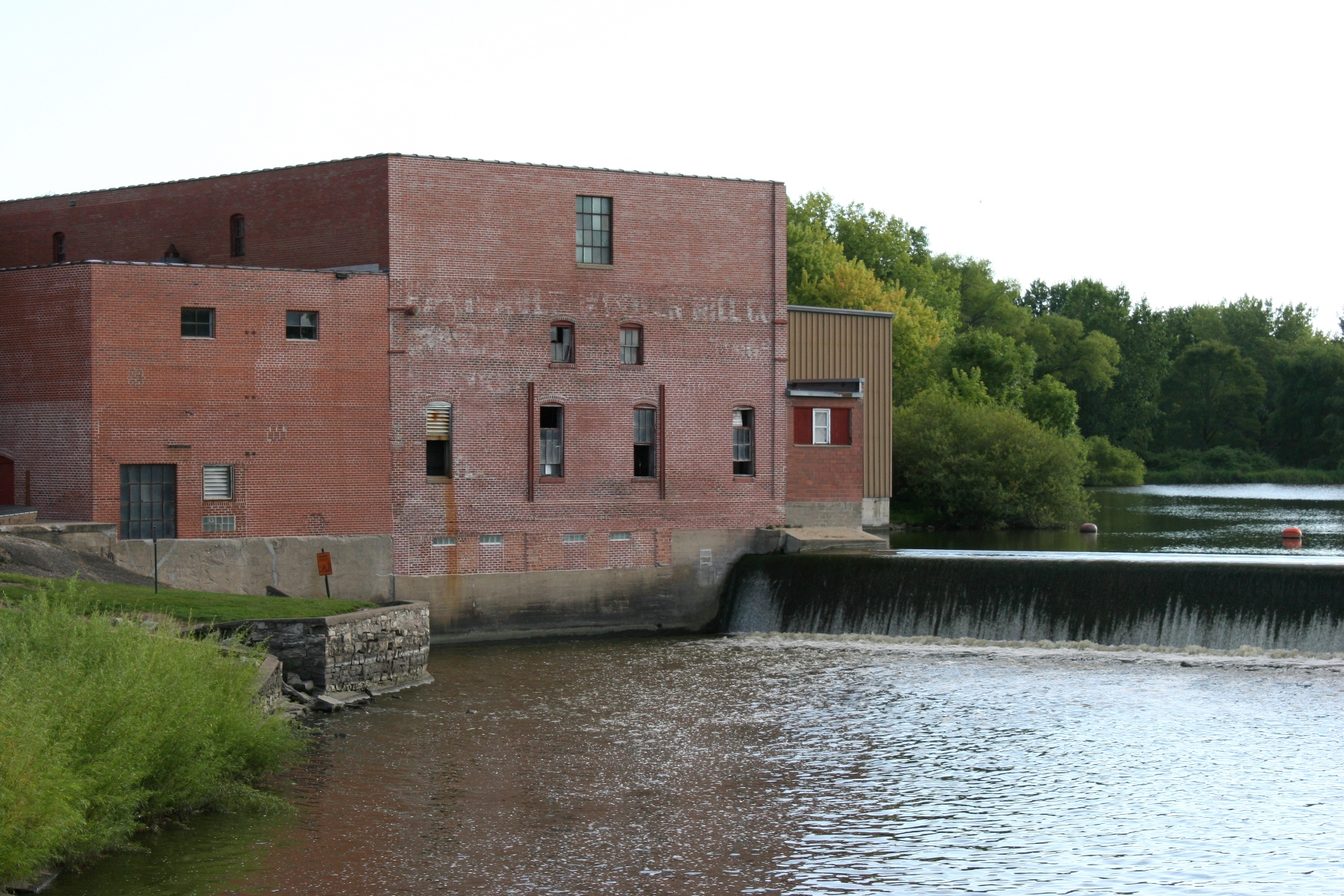
Faint Faribault Woolen Mill lettering remains on the old section of the mill complex.

Faint Faribault Woolen Mill lettering remains on the old section of the mill complex.

For my community, the mill is an important tourism draw and an equally important part of Faribault’s history. The mill, the oldest manufacturing entity in Minnesota, is on the National Register of Historic Places. But it’s likely not the aged building as much as the fine craftsmanship of mill products that brings shoppers here looking for quality and American authenticity.

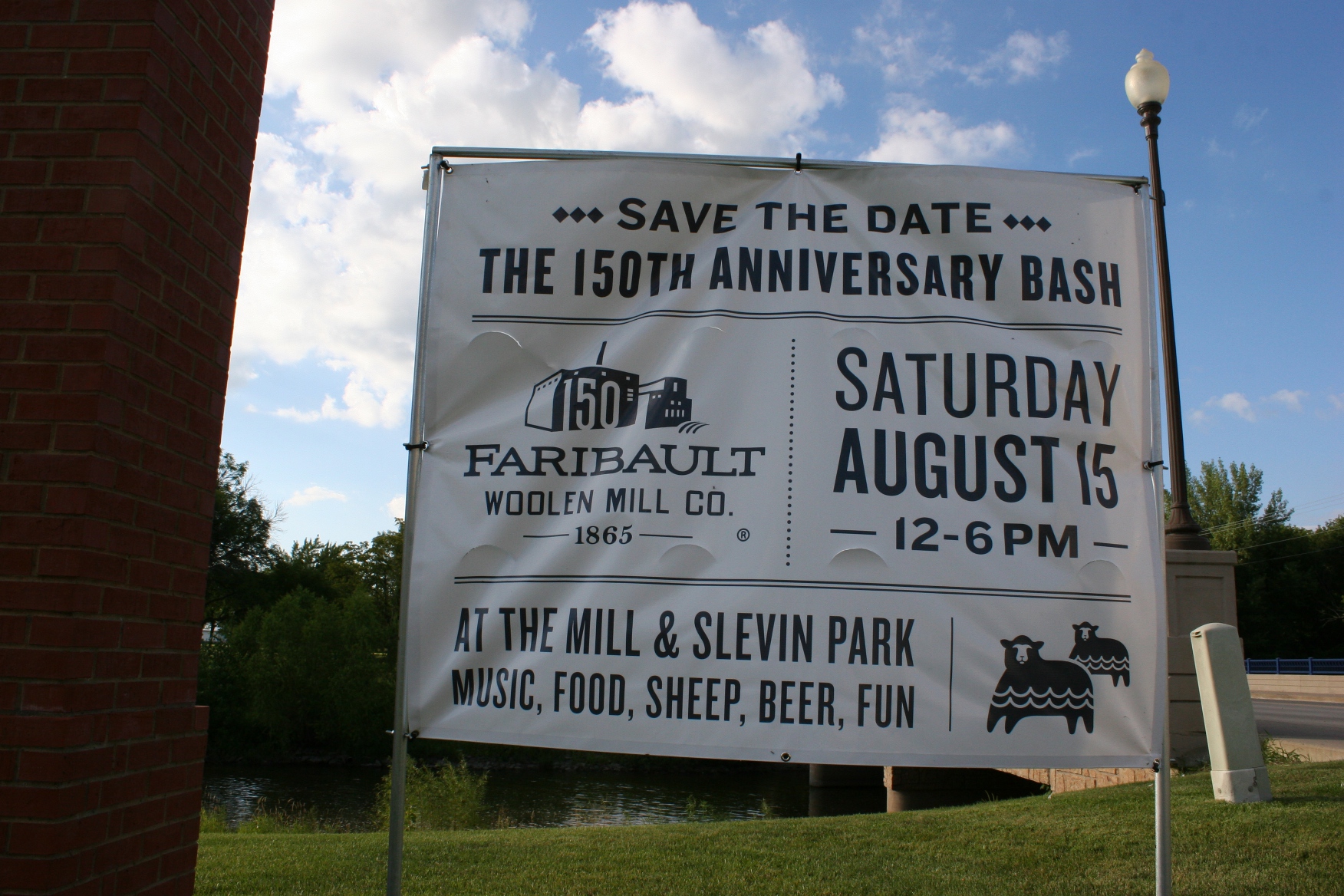
This sign outside the mill advertises Saturday's 150th anniversary festivities.

This sign outside the mill advertises Saturday’s 150th anniversary bash.

Saturday’s celebration will provide a great opportunity for all of Faribault to showcase itself, starting with food vendors at the mill’s outdoor anniversary celebration along the banks of the Cannon River. I’m happy to see a line-up of locals—The Cheese Cave, Uncle B’s Last Chance BBQ Shack, Bashers Bar & Grill/J & J Bowling Center, Lyons Meats and F-Town Brewing. Several other vendors from the Twin Cities metro will be there, too, with brats, cheesecake, coffee and ice cream.

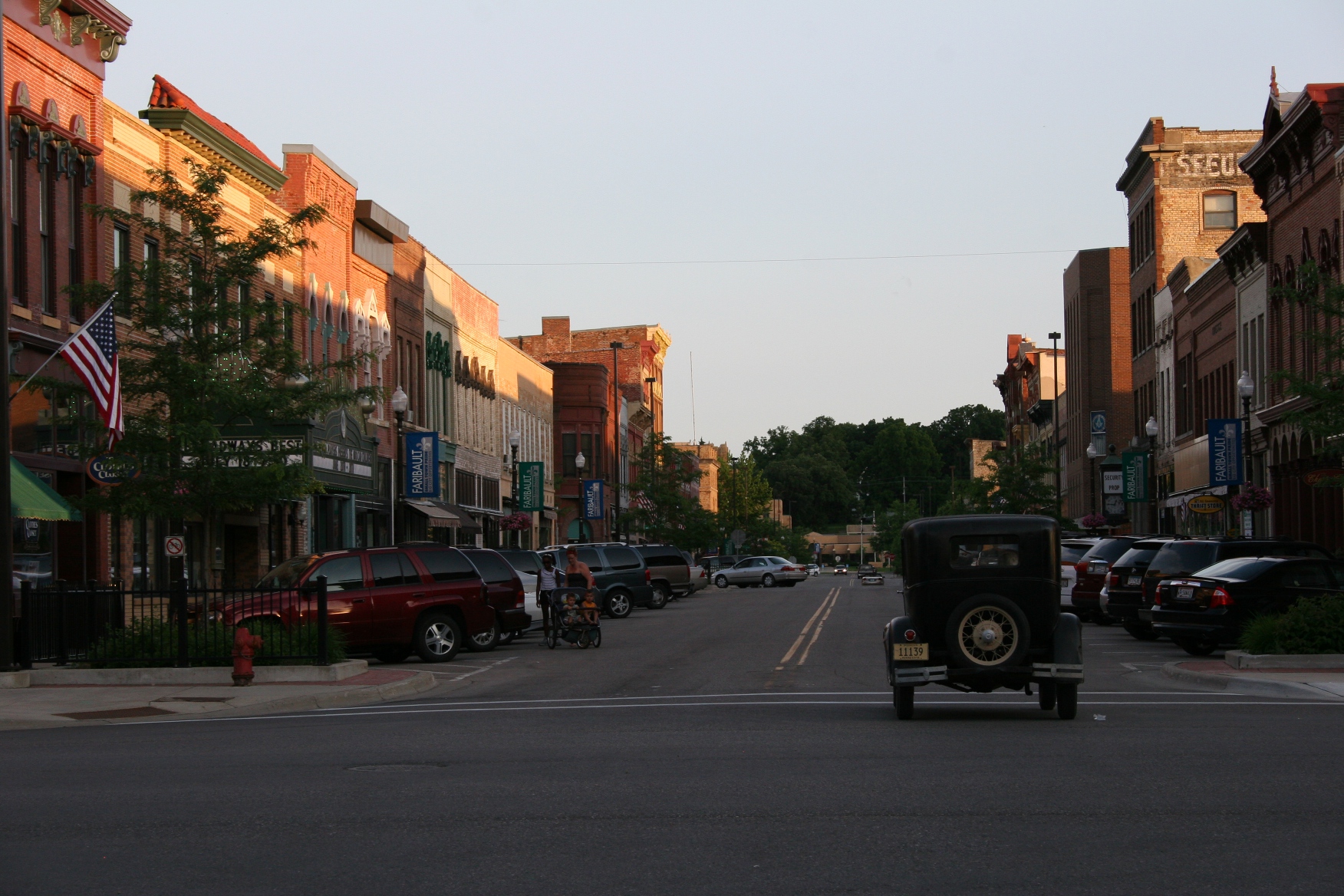
Leaving the show and driving southbound on Central Avenue through historic downtown Faribault.

A section of Faribault’s historic downtown, along Central Avenue. Minnesota Prairie Roots file photo 2014.

I hope visitors will also follow Second Avenue from the mill to Fourth Street and then to Central Avenue to check out our historic downtown and all the local shops. (Click here for a list of downtown shops and their locations.) Located near downtown at 739 Willow Street, Annie Belle Creations crafts Faribault Woolen Mill blankets into capes, coats and other clothing. Owner Lu Ann Heyer started in 1989 as a designer of stuffed animals for the Faribault Woolen Mill.

Pasture land near the park for these grazing sheep. Note their wool clinging to the fence.

Sheep graze near Blue Mounds State Park in southwestern Minnesota. Minnesota Prairie Roots file photo used for illustration purposes only.

Back at the mill and Father Slevin Park, there’ll be plenty to do. “The Running of the Sheep,” an event which is exactly as its name suggests, happens at 1 p.m. Other attractions include a petting zoo, games, raffles and more. Between 3 p.m. – 6 p.m. the folk/roots/indie rock group The Pines will perform as will Abracadabra,  a group of musicians who have traveled with the likes of Bob Dylan and The Beach Boys.

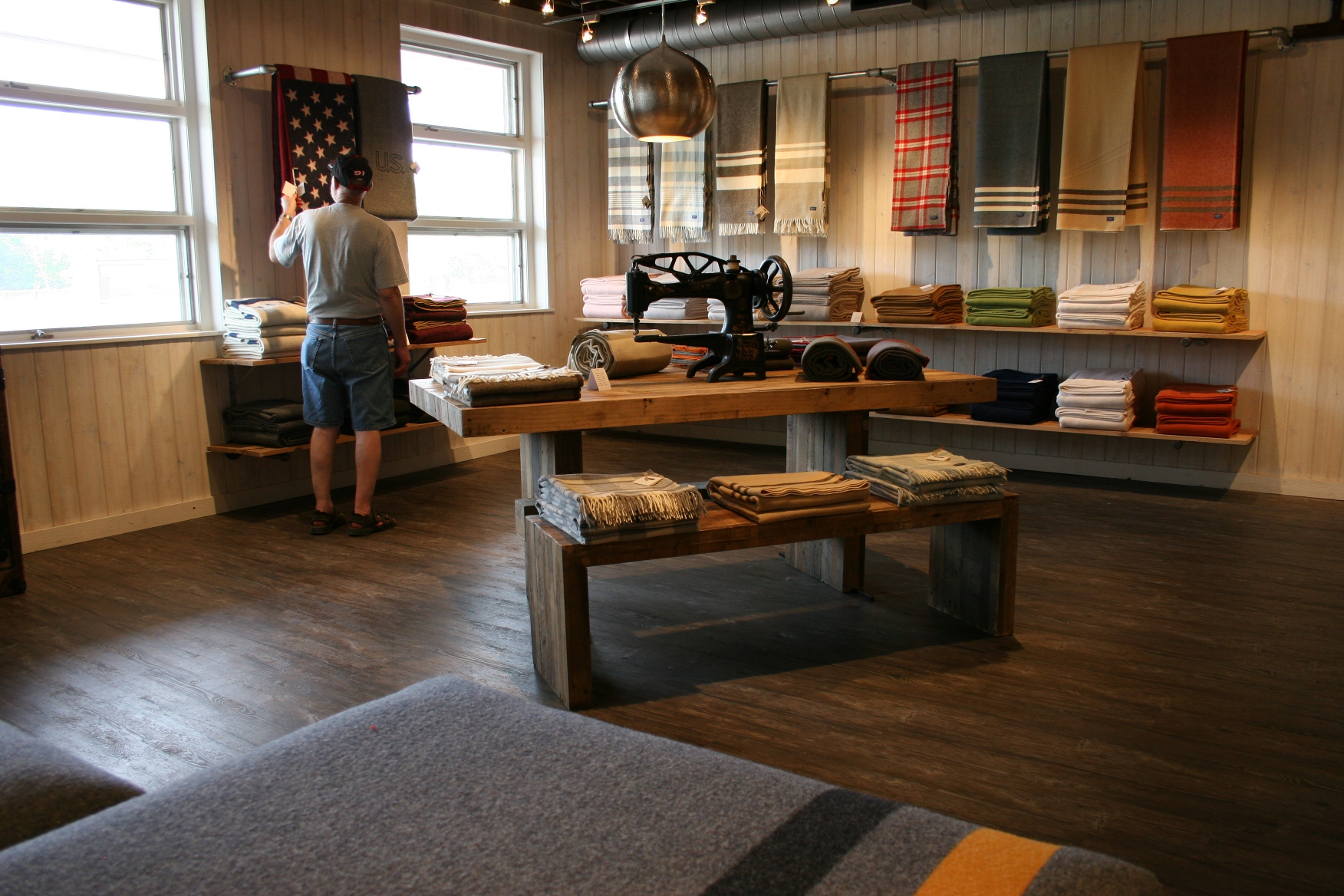
Perusing merchandise at the recently reopened Faribault Woolen Mill retail store.

A view inside the Faribault Woolen Mill retail store shortly after it opened under new ownership in 2012. Minnesota Prairie Roots file photo.

Visitors are encouraged to bring blankets to spread on the lawn while enjoying festivities. I expect Faribault Woolen Mill blankets, in particular, would be appreciated. You can even share your Faribault Woolen Mill blanket stories online at Memory Mill.

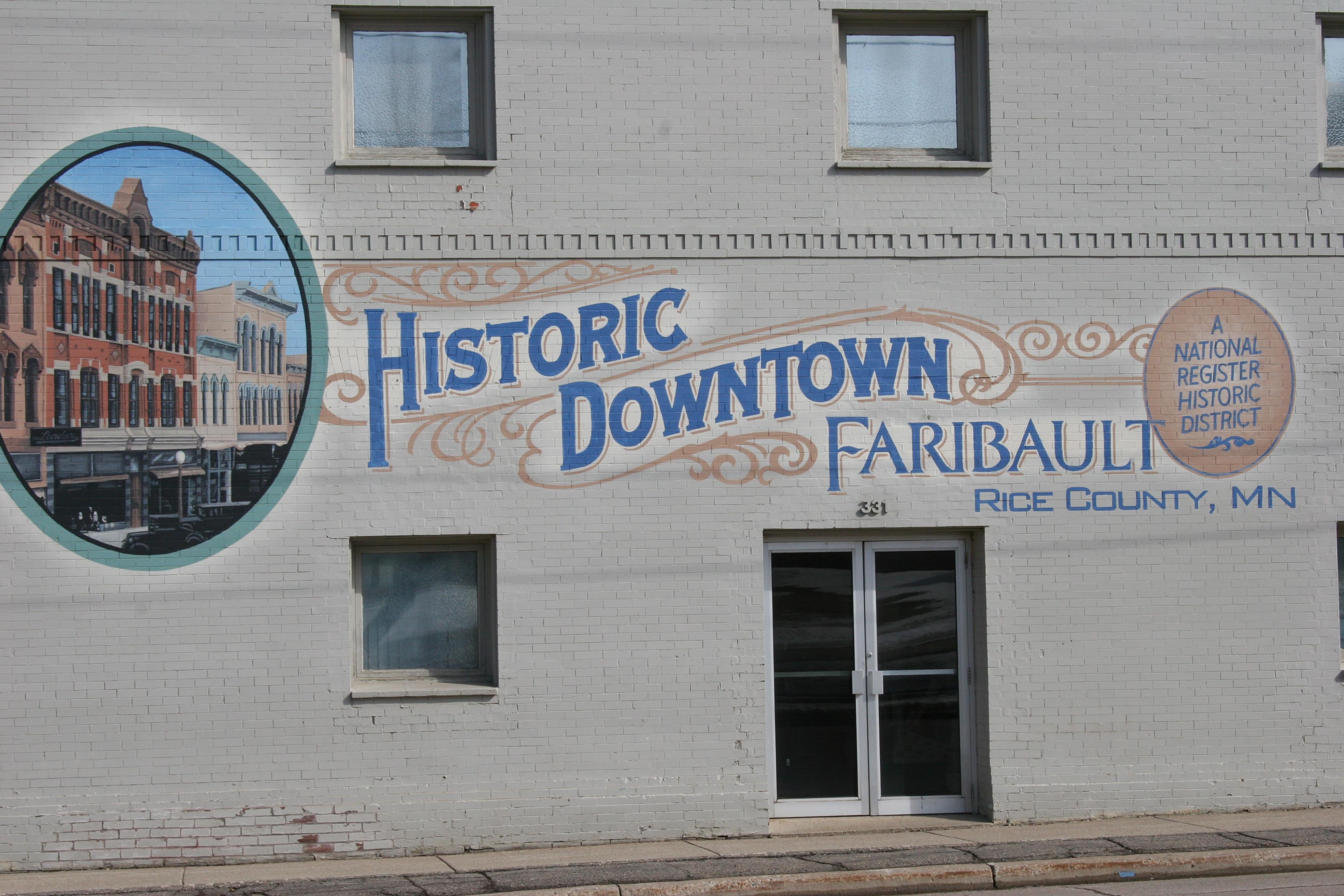
A mural, one of several in the downtown area, promotes historic Faribault.

A mural, one of several in the downtown area, promotes Faribault’s downtown as a National Register Historic District. Minnesota Prairie Roots file photo.

If you’ve never been to Faribault, come early, before the mill party, to poke around town. We’re just a short drive down Interstate 35 from the Twin Cities. Then at noon, join the mill as its celebration begins and continues for six hours.

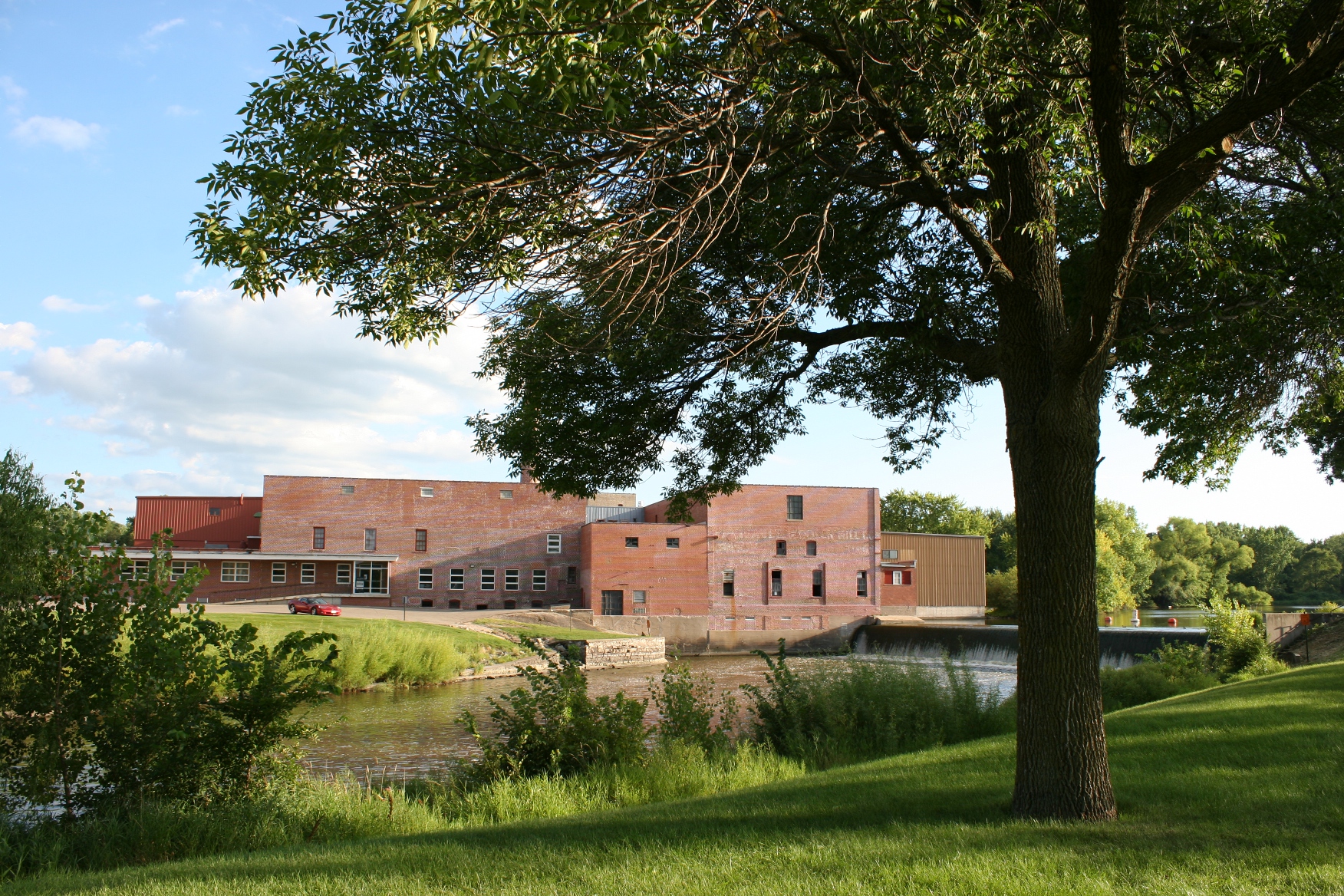
A view of the Faribault Woolen Mill from Father Slevin Park across the Cannon River.

A view of the Faribault Woolen Mill from Father Slevin Park across the Cannon River.

FYI: The Faribault Woolen Mill is located at 1500 Northwest Second Avenue, near the Rice County Fairgrounds and the Rice County Historical Society Museum. The mill’s retail store will be closed on Friday and Saturday, with merchandise sold in the special anniversary Marketplace on Saturday.

Faribault Woolen Mill blankets/throws are artfully hung on a simple pipe.

Faribault Woolen Mill blankets/throws are artfully hung on a simple pipe in the retail store. Minnesota Prairie Roots file photo 2012.

Small group tours of the mill are offered at 11 a.m. and 1 p.m. on Thursdays. Note that these fill quickly and that you should schedule in advance.

© Copyright 2015 Audrey Kletscher Helbling
 

Part IV: Touring the legendary Surf Ballroom in Clear Lake, Iowa June 4, 2015

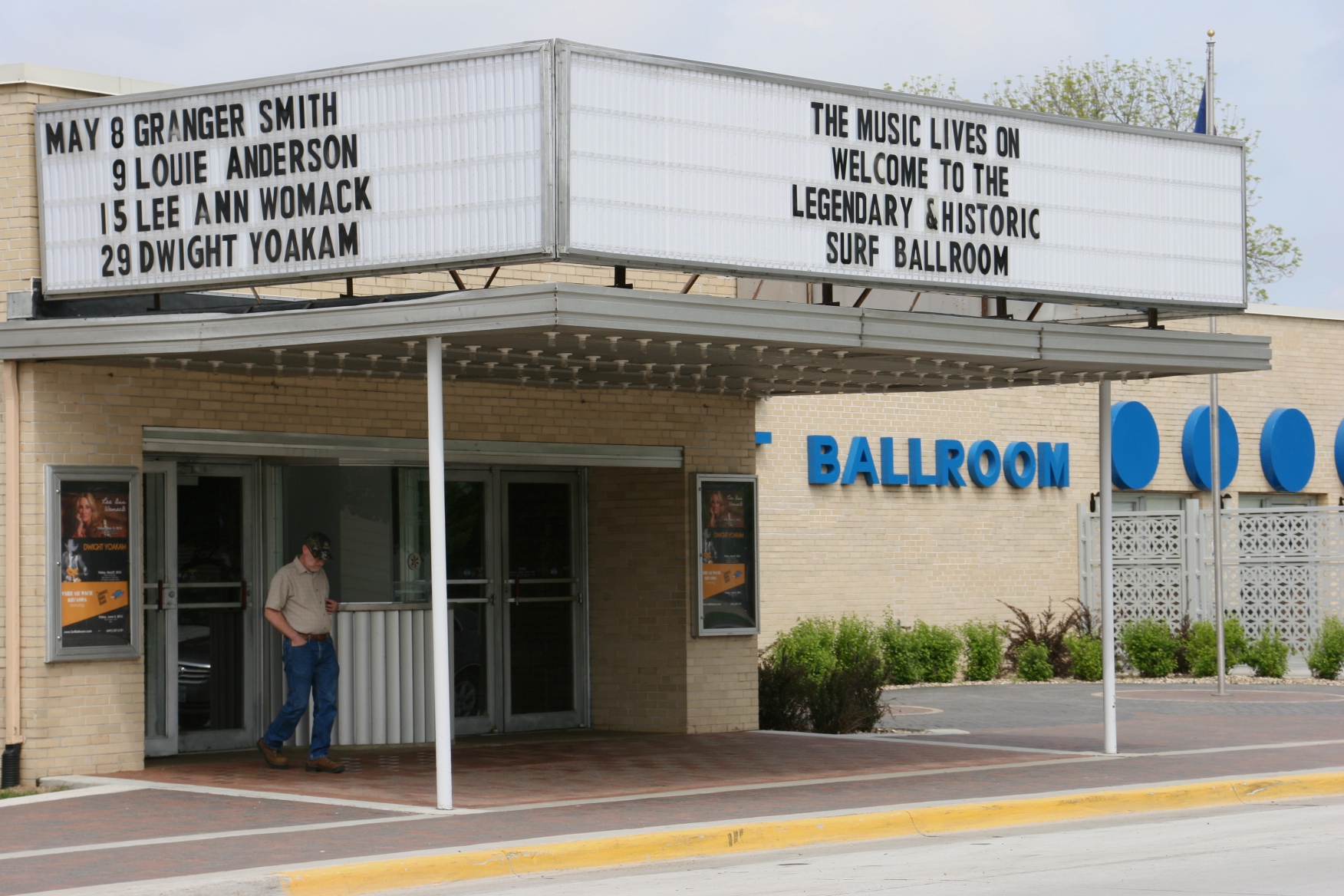
My husband exits the historic Surf Ballroom.

My husband exits the historic Surf Ballroom.

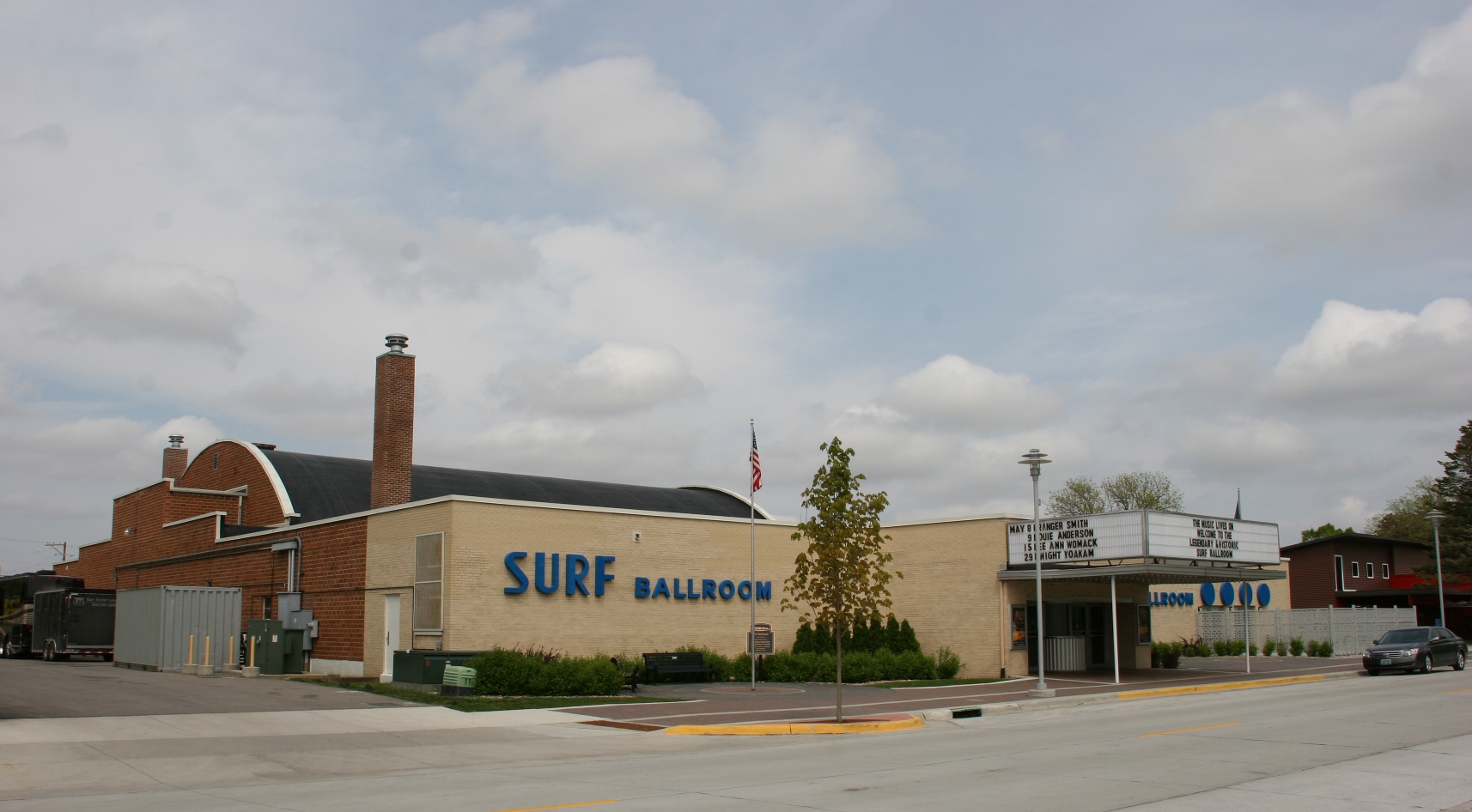
WHEN I MENTIONED to a friend that my husband and I were going on an overnight get-away to Clear Lake, Iowa, he immediately asked if we were touring the Surf Ballroom. We were.

A broad view of this massive ballroom which seats 2,100.

A broad view of this massive ballroom which seats 2,100.

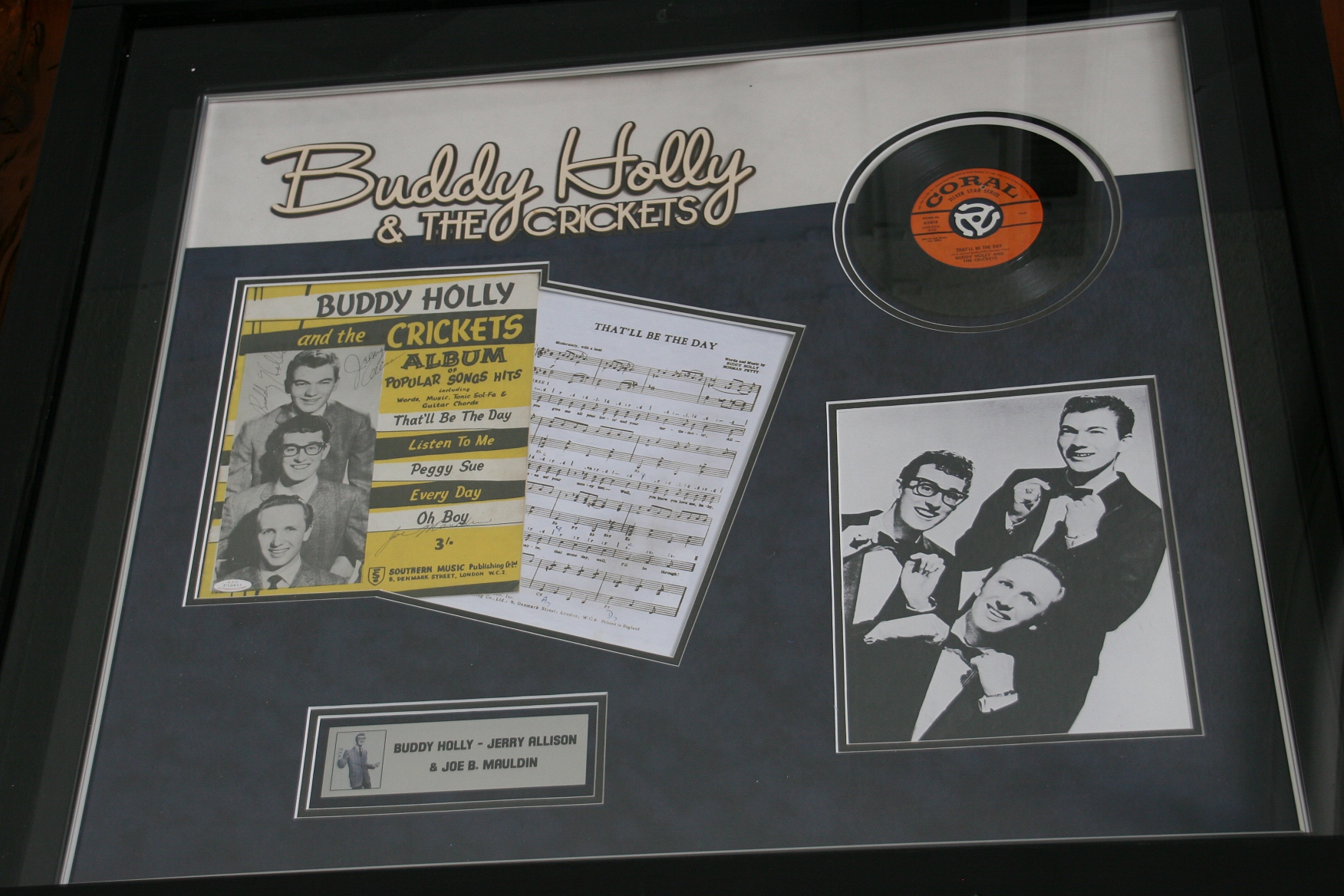
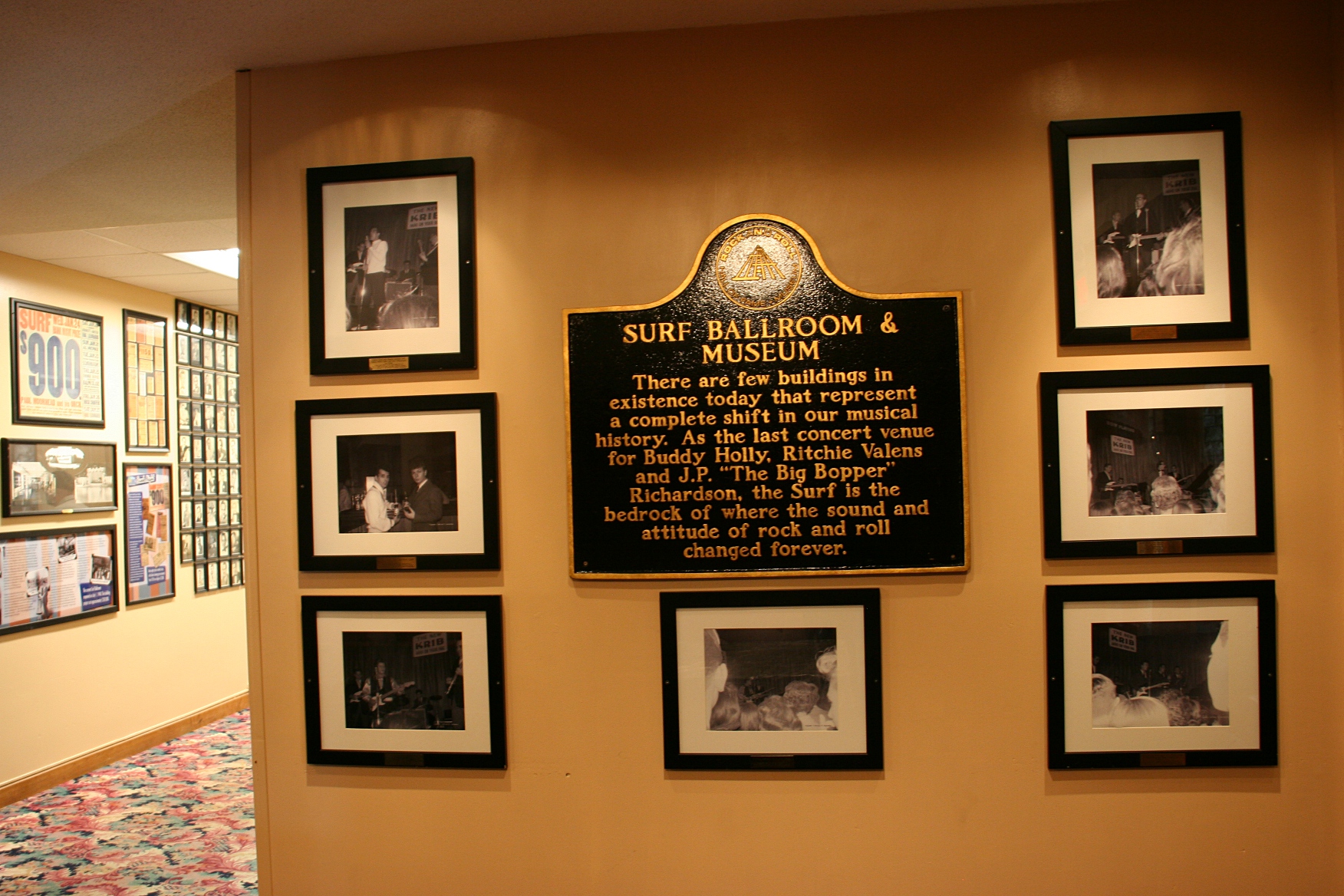
The Surf is the focus for many visitors to this north central Iowa community. It wasn’t our main reason for traveling here. But we knew we couldn’t visit Clear Lake without seeing the famous Surf, site of Buddy Holly’s final Winter Dance Party performance before he, Ritchie Valens and J.P. “The Big Bopper” Richardson died in a February 3, 1959, plane crash along with the pilot.

This display references "American Pie."

This display references “American Pie.”

It was, writes Don McLean in his song, American Pie, “the day the music died.”

Another tribute to the Surf's most memorable performed, rock n roll legend Buddy Holly.

Another tribute to the Surf’s most memorable performer, rock n roll legend Buddy Holly.

Now I’m not much of a music history person, nor a person with musical talent. I can’t read a note. I don’t have a particularly good singing voice. I typically cannot tell you who sings what and even had to ask my husband, before our arrival at the Surf, what songs Buddy Holly sang. He cited Peggy Sue and That’ll Be the Day.

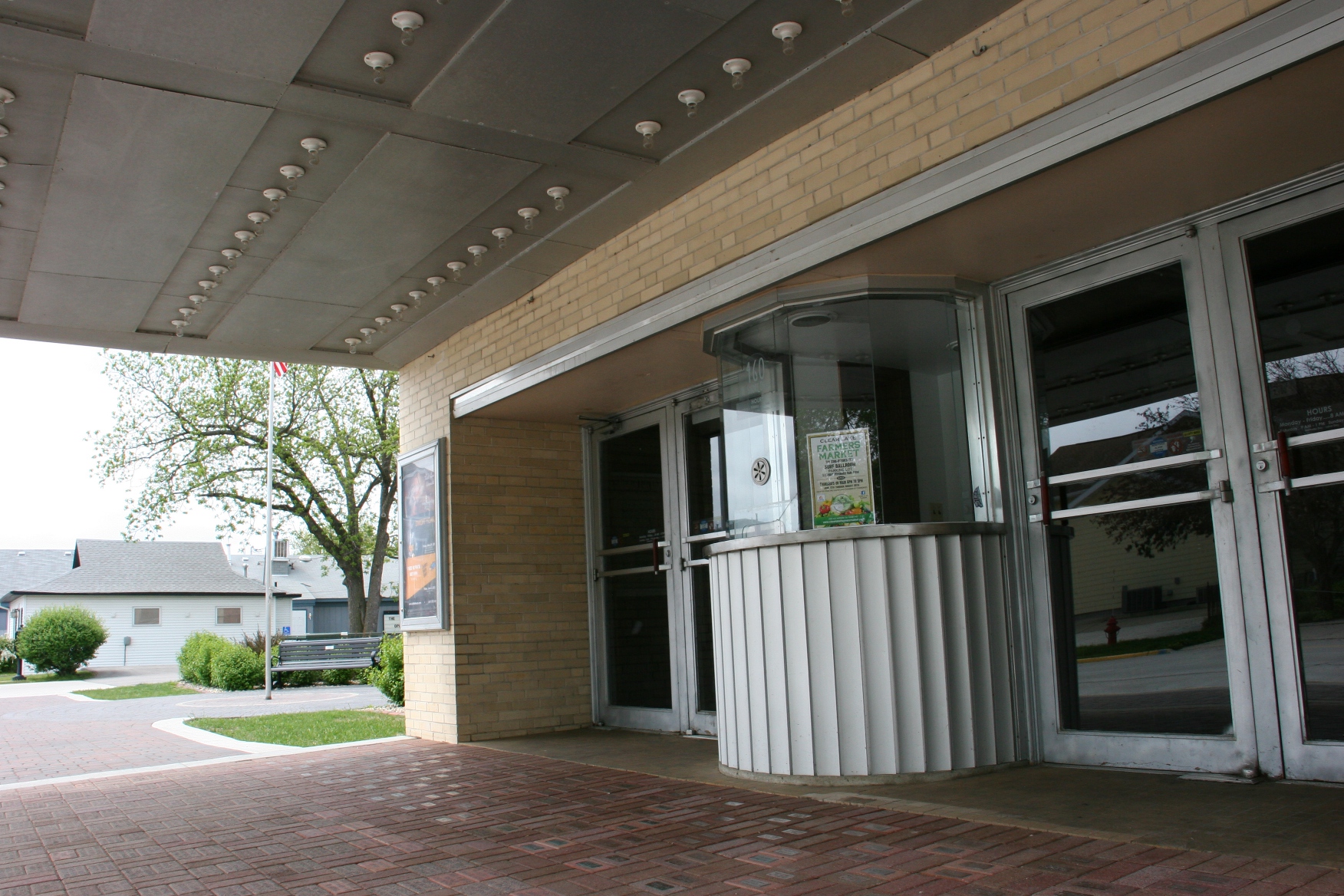
The exterior ticket booth.

The exterior ticket booth.

Looking toward the interior lobby doors.

Looking toward the outside, this interior set of lobby doors are hefty and heavy. To the right is the original coat check area, not shown in this image.

This sign summarizes the importance of the Surf.

This sign summarizes the importance of the Surf.

Yet, even for someone like me who is rather musically illiterate, the Surf proved an interesting place. Built in 1948, the current ballroom (the first burned down) is on the National Register of Historic Places. And rightly so. From the exterior ticket booth to the heavy doors that lead into the dark lobby, where you can check your coat, the Surf holds that feel of yesteryear. It’s difficult to explain. But you feel that sense of entering a different world from a bygone era the minute you step inside. As if you’ve left Iowa. And today.

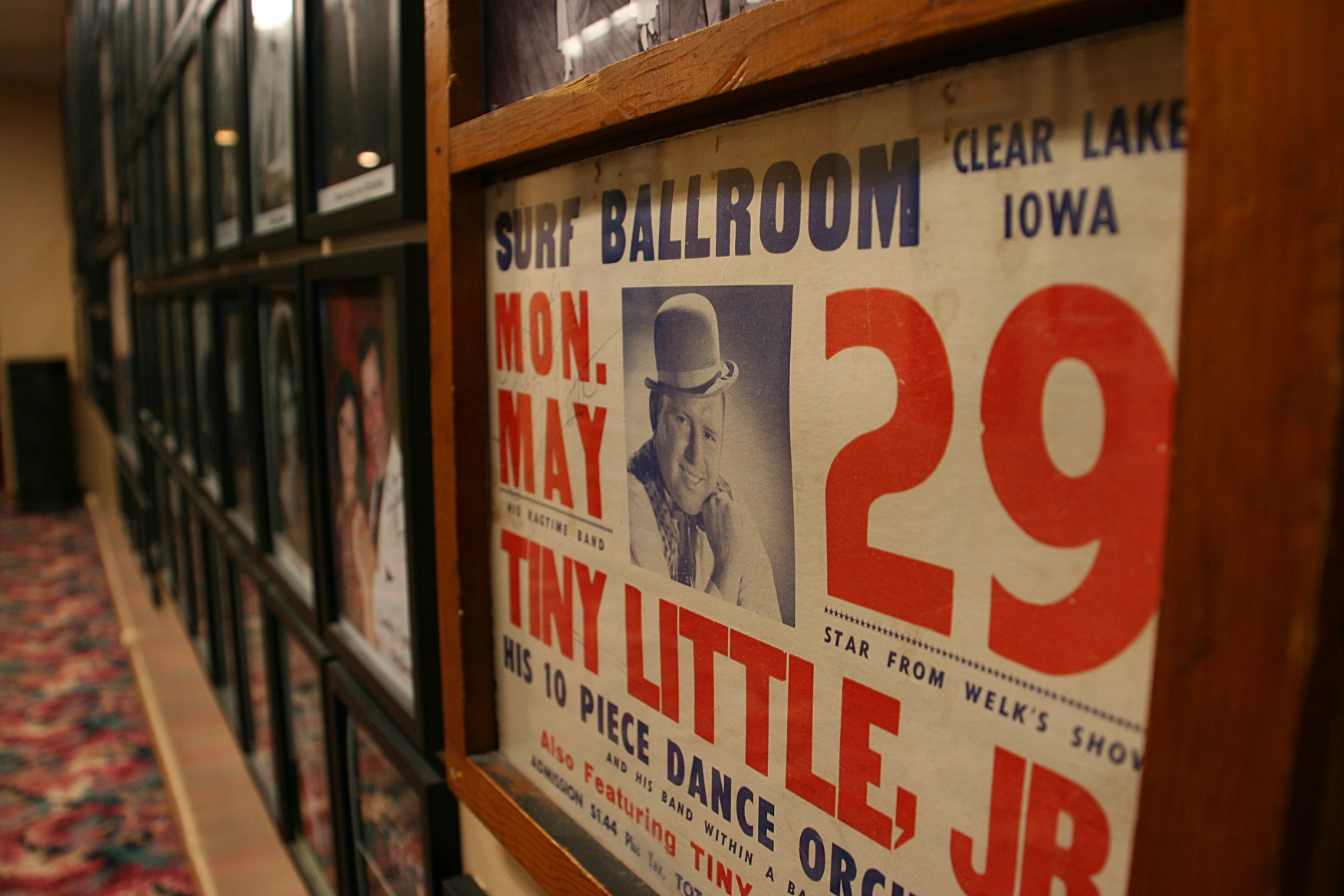
Just a sampling of those who have played the Surf.

Just a sampling of those who have played the Surf.

More historic memorabilia of Surf concerts.

More historic memorabilia of Surf concerts.

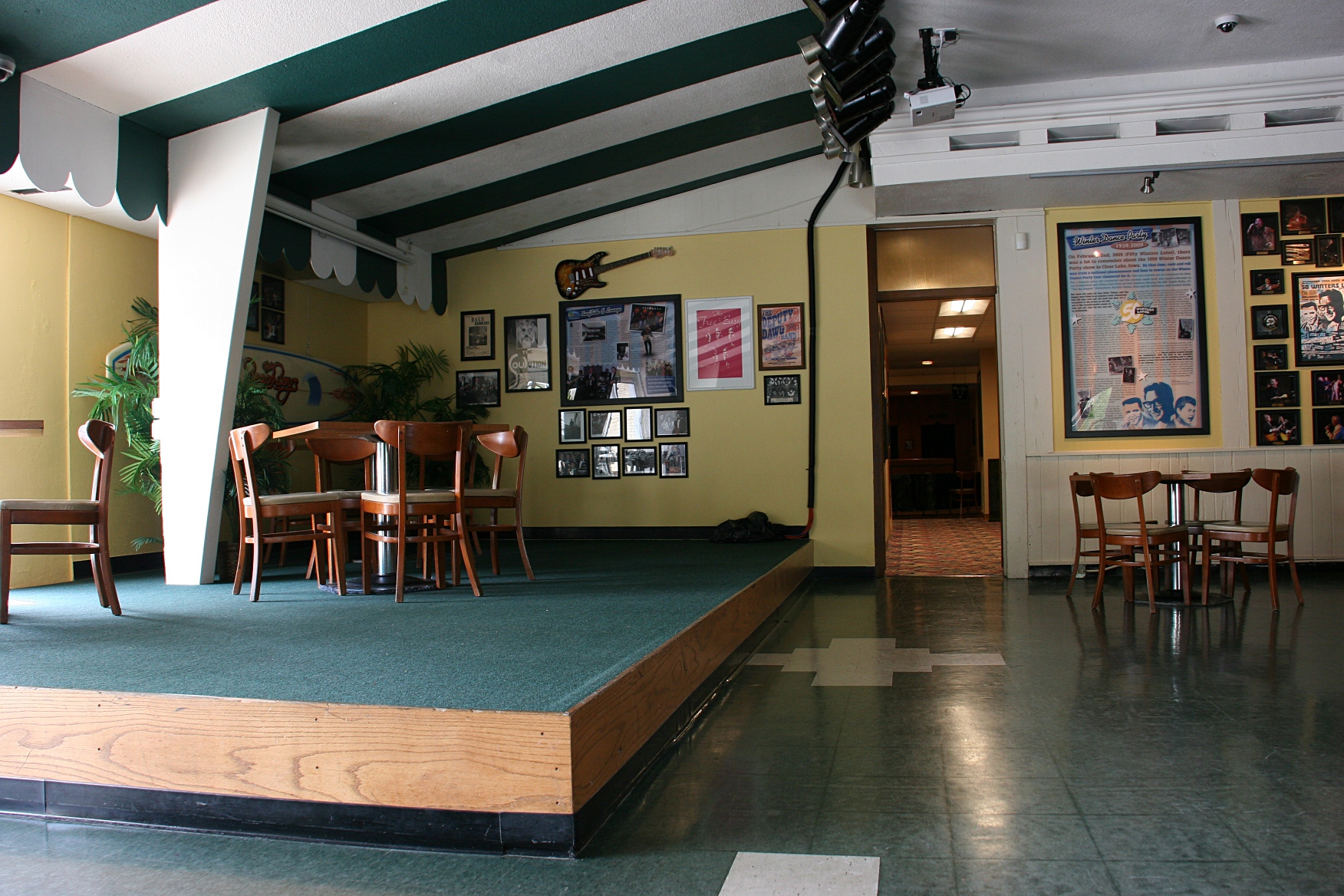
The lounge area features a stage, bar and lots more memorabilia.

The lounge area features a stage, bar and lots more memorabilia.

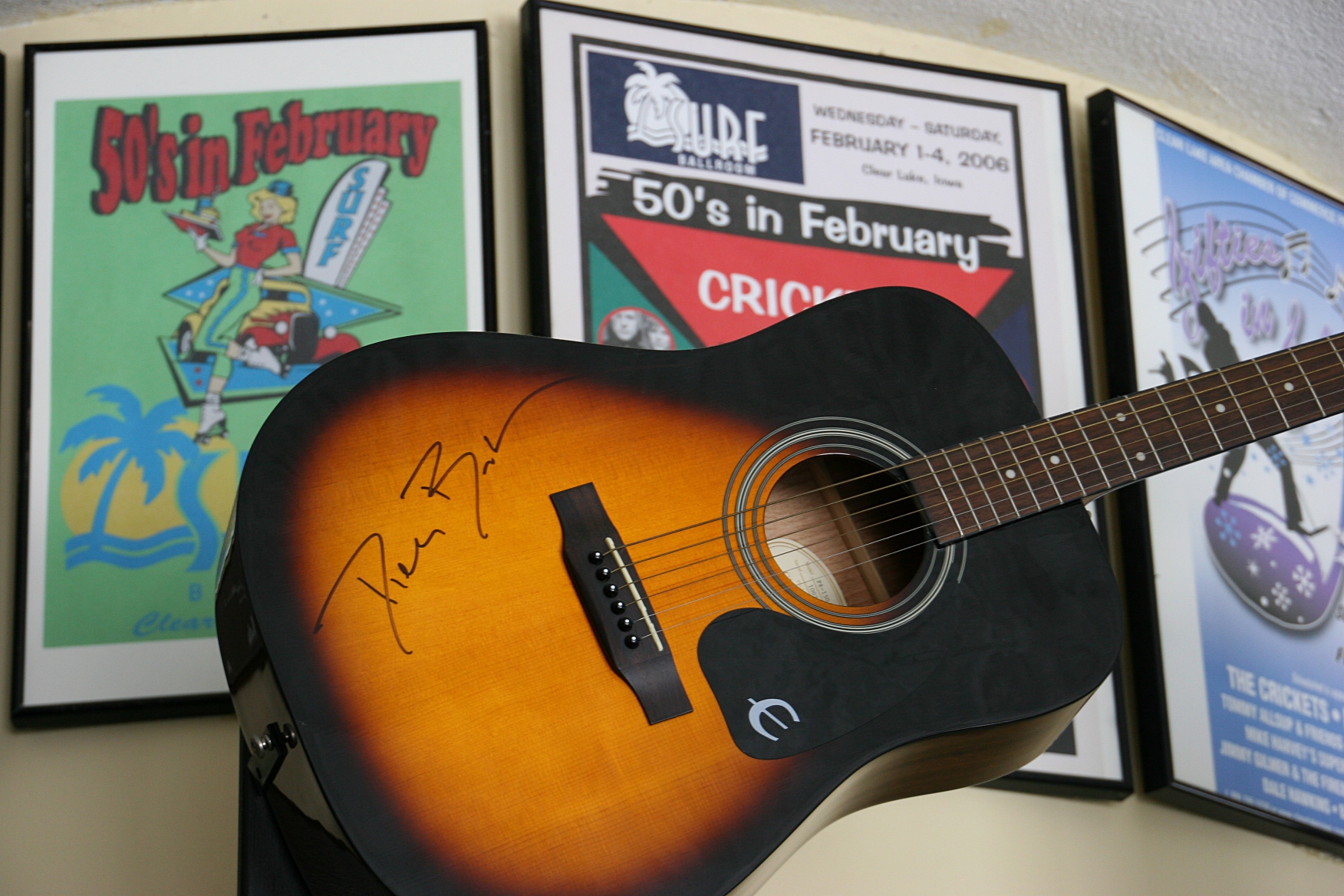
You'll spot numerous signed guitars on display.

You’ll spot numerous signed guitars on display.

Here you’ll discover a hallway museum of musicians’ photos, posters and history. And inside the lounge you’ll see stars’ guitars and more photos and other tributes to those who have performed here. If a musician’s picture is displayed, then he/she’s played/been here.

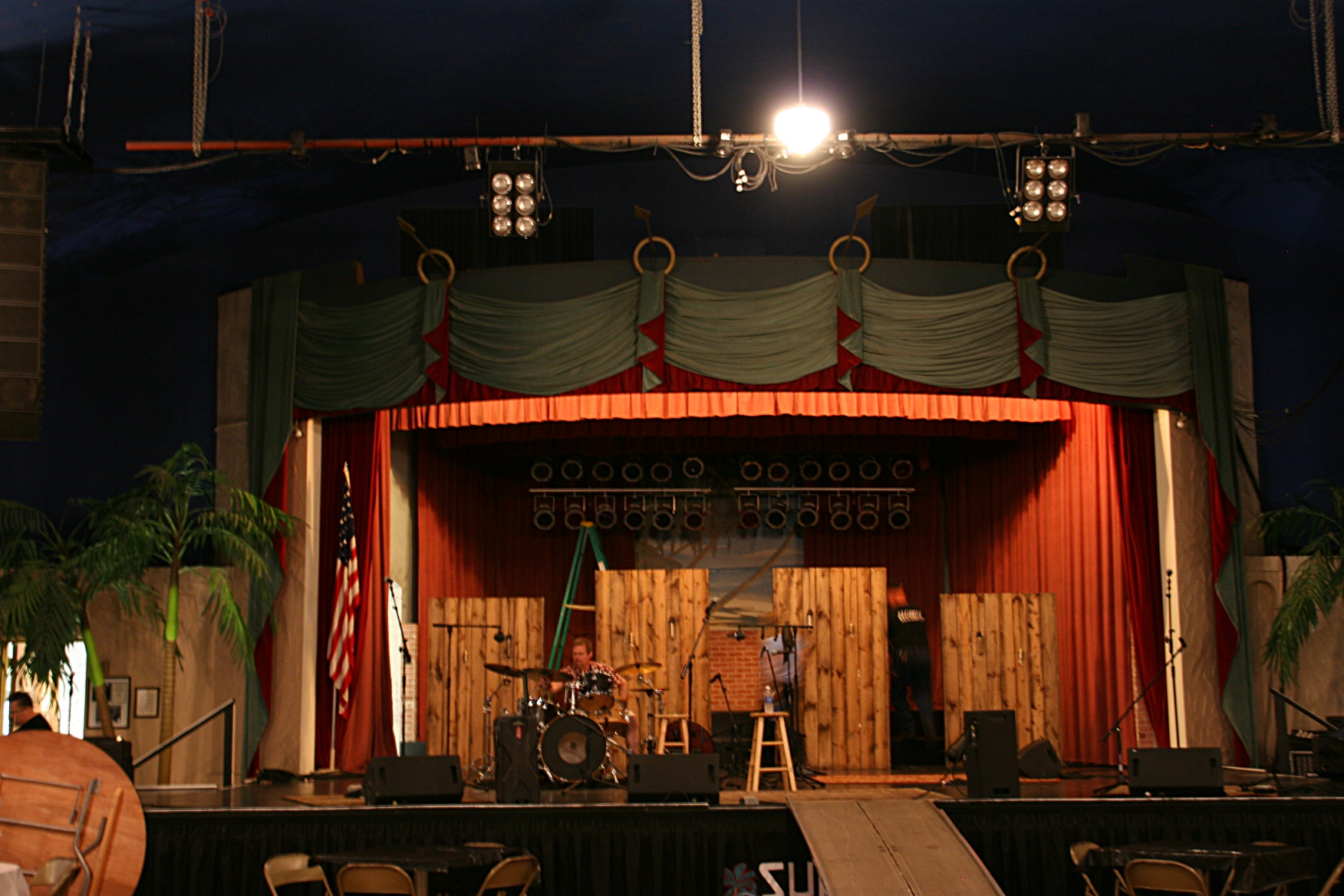
The ballroom stage.

The ballroom stage.

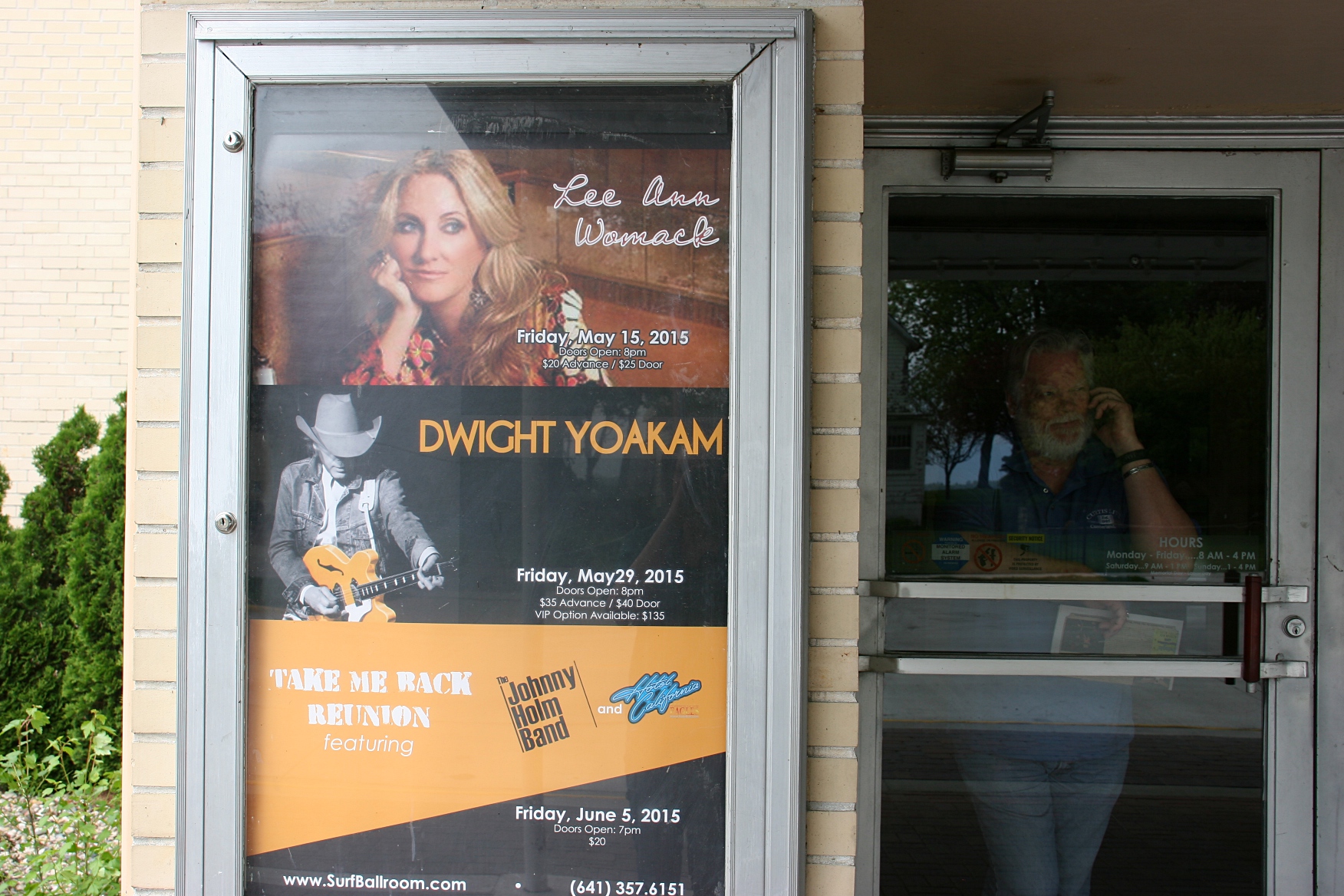
On the Friday afternoon we arrived at the Surf, we almost didn’t make it into the actual ballroom. Black curtains were pulled across two entrances and marked by “closed” signs. I peeked through the curtains to see musicians for Lee Ann Womack setting up inside. I failed to notice on the Surf website that the dance floor occasionally closes if a concert is scheduled. So be forewarned: Check the Surf calendar. Even better, call ahead.

But then, as luck would have it, Mark, who’s been working Surf security since 1978 and clearly loves this place and his job, parted the curtains and invited us inside with the admonition to keep our distance from the stage. He’d overheard our disappointment and said, “Since you drove a long ways…” We’d traveled only 85 miles. But another couple had driven nearly four hours from Omaha.

In the back are layers of booths, all original.

In the back are layers of booths, all original, and beach-themed murals.

Portraits

Portraits of Ritchie Valens, left, Buddy Holly and J.P. Richardson hang inside the ballroom.

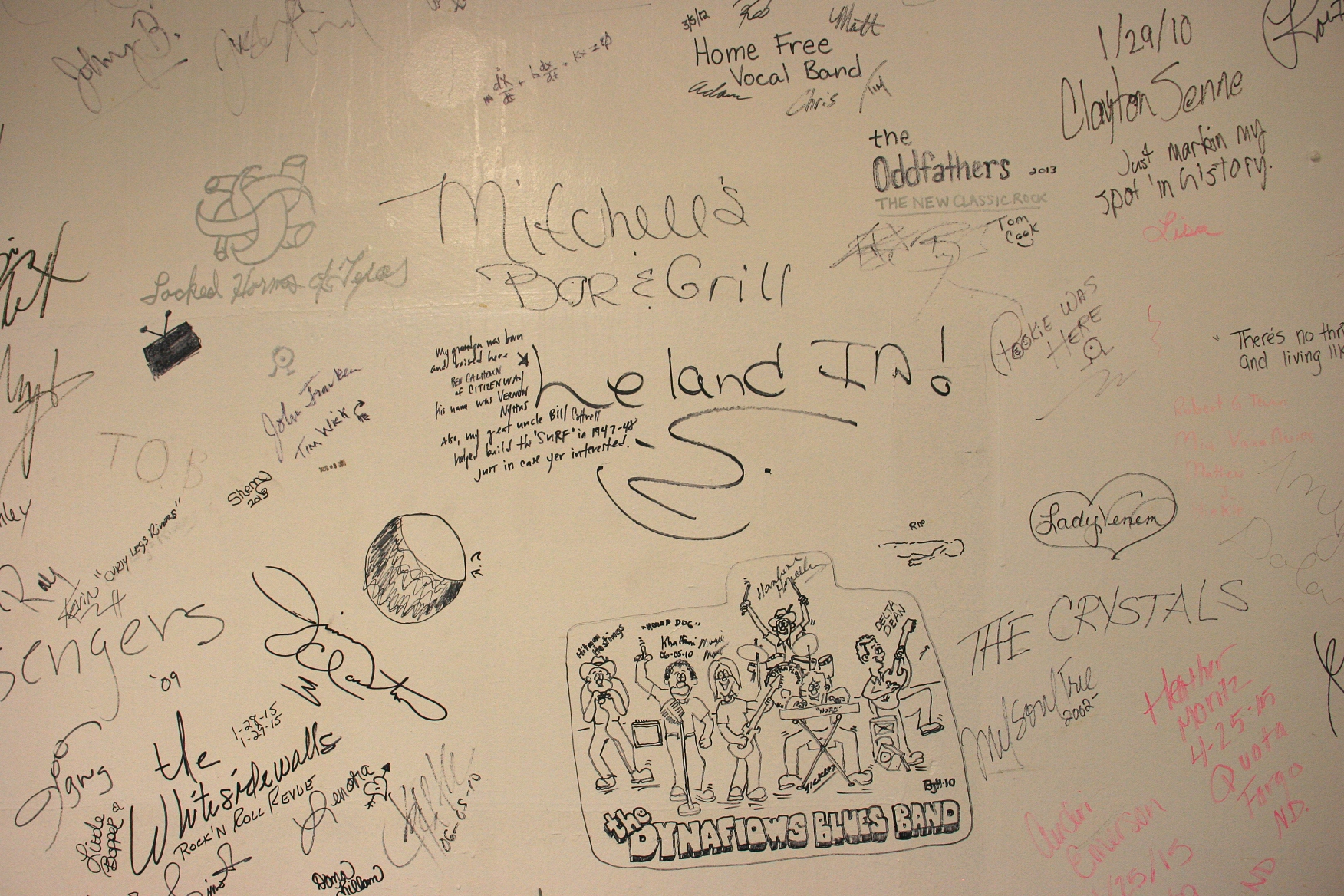
Signatures...

Signatures…

He led us onto the original maple floor dance floor, pointed us to the original booths (where I slid into one; it’s a tight squeeze), noted the beach themed décor (it is, afterall, the Surf), took us into a small room where musicians and others have signed the walls…

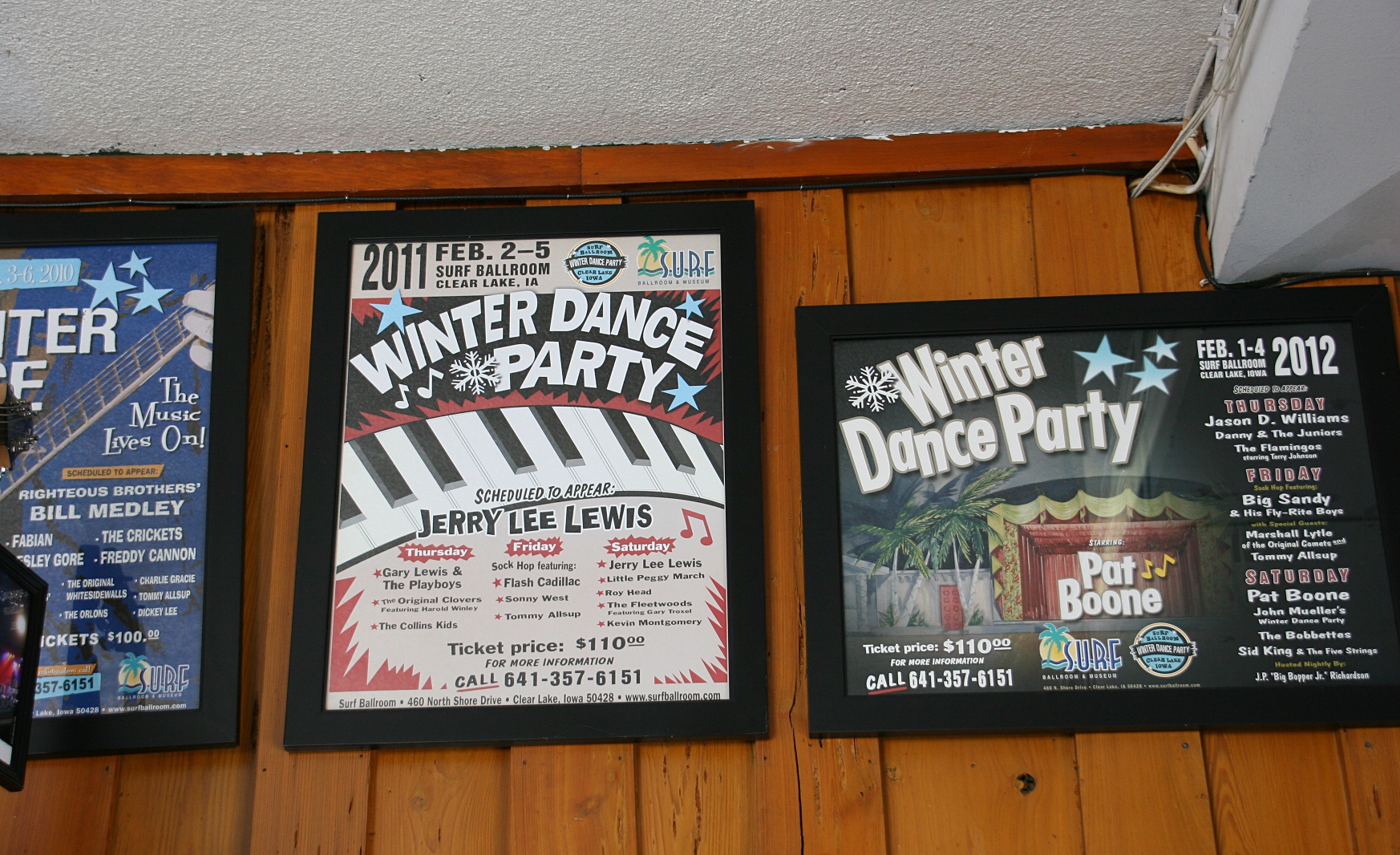
Each February, the Surf still hosts a Winter Dance Party.

Each February, the Surf still hosts a Winter Dance Party.

I wished I could have lingered longer in the ballroom, asked Mark to switch on more lights for better photos. But I didn’t press my luck. If not for his graciousness, I would have remained on the other side of those black curtains.

BONUS PHOTOS:

Shortly before our visit,

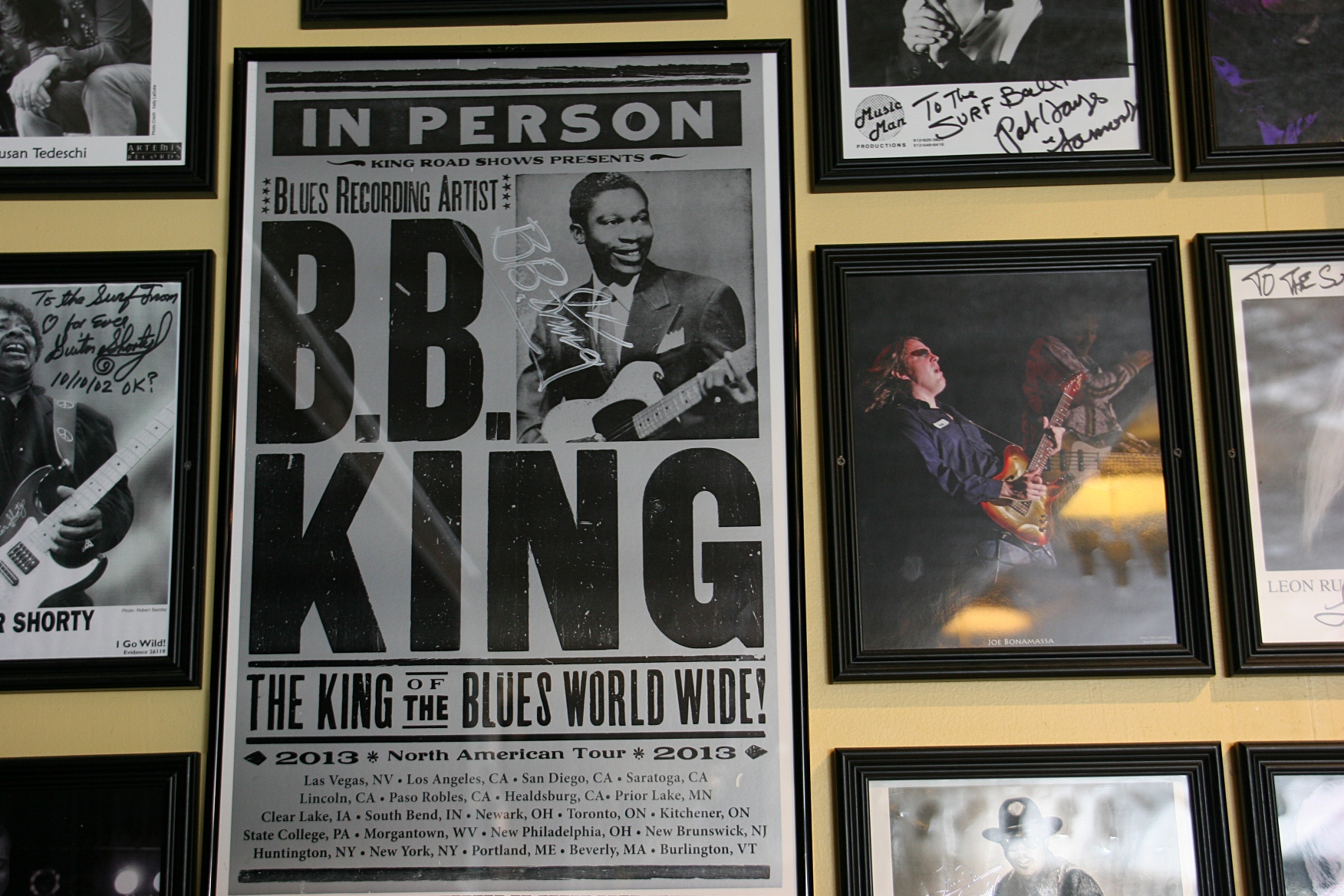
The day before our visit, the king of blues died. B.B. King’s promotional poster hangs in the lounge.

Lee Ann Womack's band was setting up on the afternoon of our visit.

Lee Ann Womack’s band was setting up on the afternoon of our visit. This was snapped just outside the front entry doors.

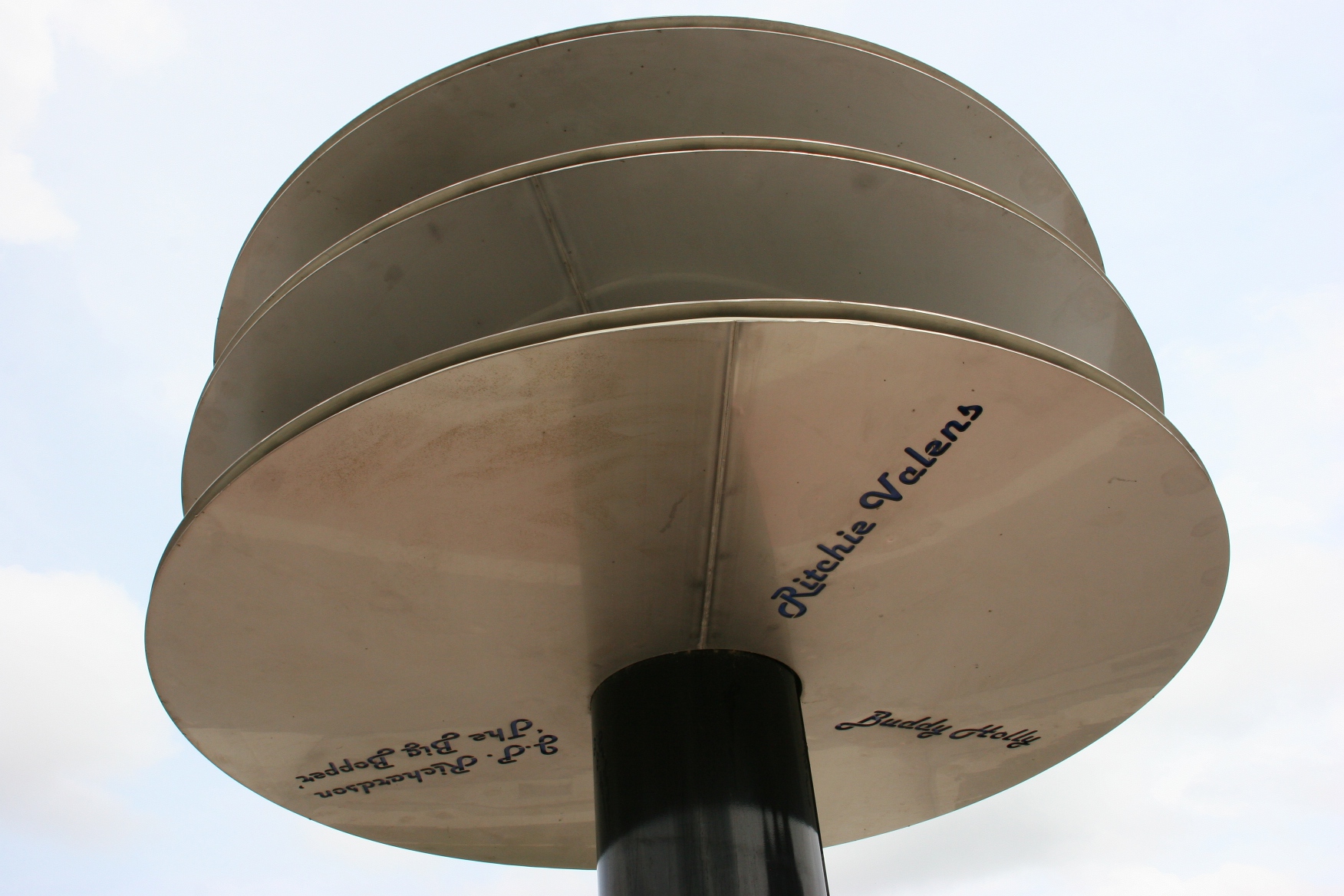
About a block away, this outdoor sculpture at Three Stars Plaza honors Holly, Valens and Richardson.

About a block away, this outdoor turntable/album sculpture at Three Stars Plaza honors Holly, Valens and Richardson. You can also visit the plane crash site about five miles from town. Because of rainy weather, we did not go there.

FYI: Please check back next week for the three remaining installments in this series of seven posts from Clear Lake, Iowa.

© Copyright 2015 Audrey Kletscher Helbling
 

One woman’s promise to God January 6, 2015

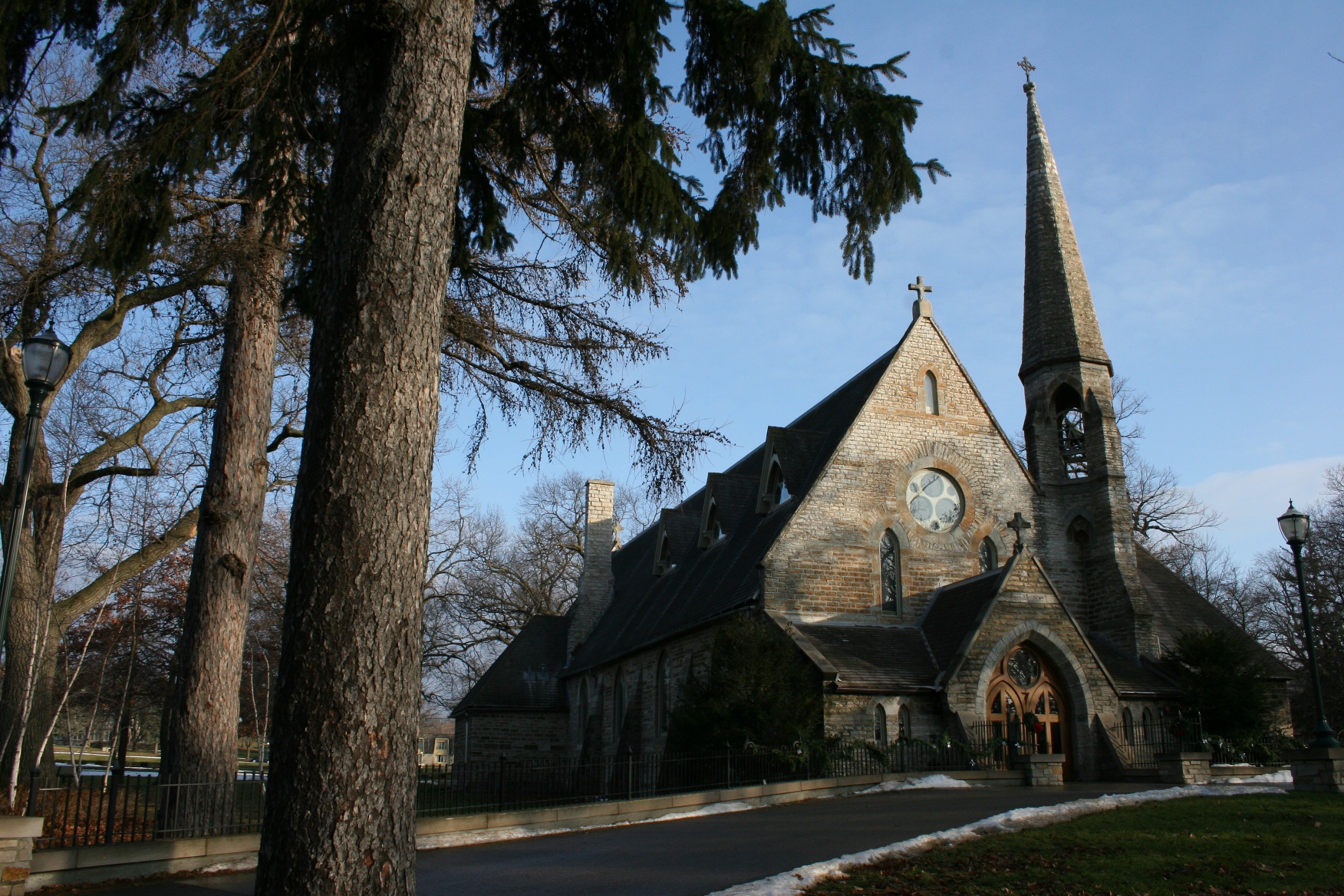
The Chapel of the Good Shepherd.

The Chapel of the Good Shepherd.

IT STANDS STATELY and tall on the campus of Shattuck-St. Mary’s School in Faribault. The Chapel of the Good Shepherd, or, to be exact, the Eunice Shumway Memorial Chapel of the Good Shepherd.

Inside the historic sanctuary, the pews face the aisle rather than the altar.

Inside the historic sanctuary, the pews face the aisle rather than the altar.

Eunice’s mother, Augusta Shumway, pledged $20,000 to build the chapel. After construction began in June 1871, Augusta lost nearly everything in the Great Chicago Fire of October 1871. Despite her loss, Augusta fulfilled her promise, sending $15,000 in insurance payments to Bishop Henry Whipple. She later donated more monies to the school.

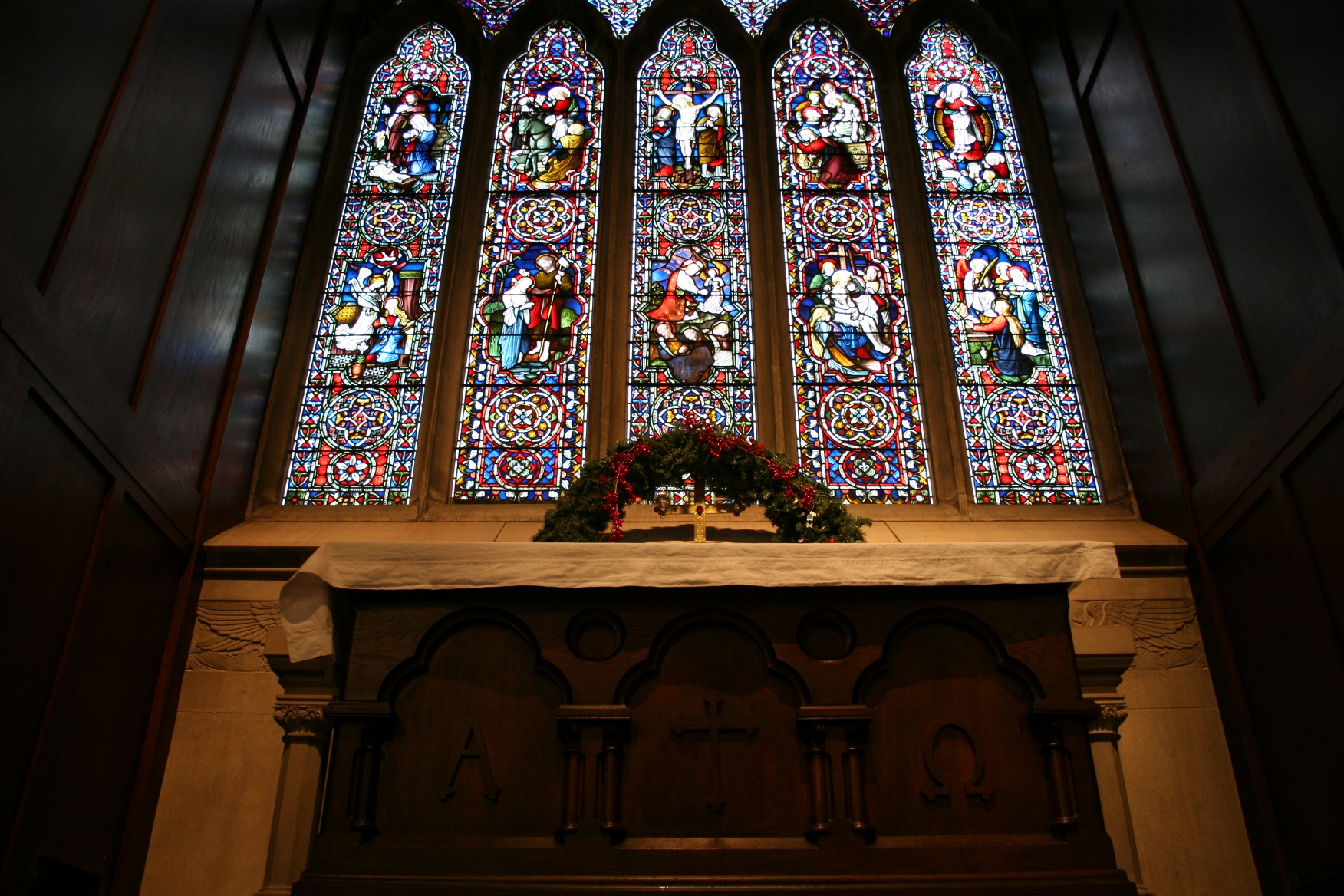
Looking up at the altar and the stunning stained glass windows above it.

Looking up at the altar and the stunning stained glass windows above it.

The bishop quoted his friend Augusta in his book, Lights and Shadows of a Long Episcopate: Being Reminiscences and Recollections of the Right Reverend Henry Benjamin Whipple:

“Bishop, I promised God to build the chapel in memory of my daughter. I owe but one debt, and that is to God. I have collected enough of insurance money to complete the building, and here it is.”

Two behind-the-altar windows up close.

Two behind-the-altar windows up close.

Wrote the bishop: It was a noble instance of woman’s faith.

Whipple summarizes well the intentions of Augusta, who only a dozen years earlier lost her 13-month-old daughter.

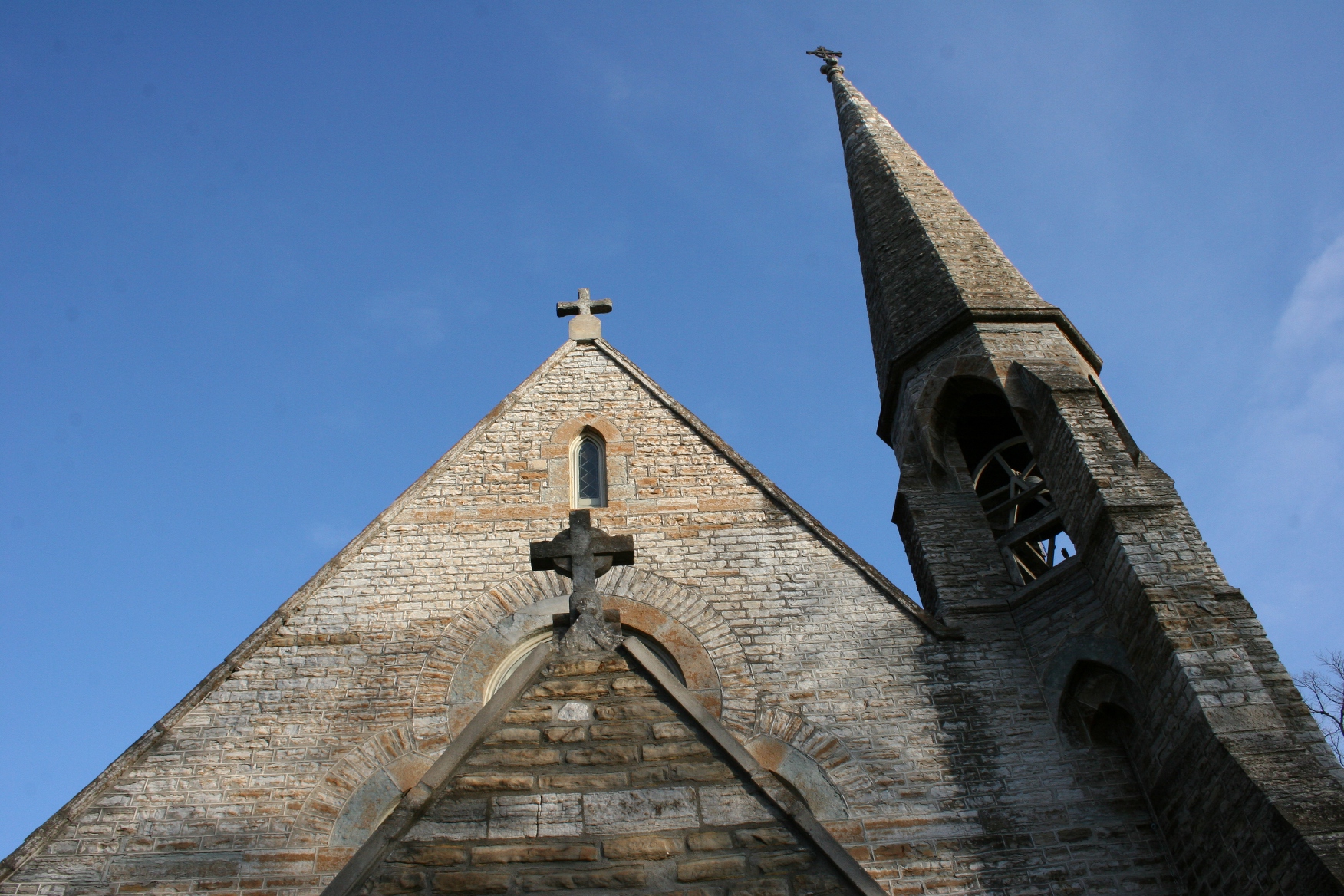
The bell tower spire is a Shattuck landmark.

The bell tower spire is a Shattuck landmark.

What faith. What hope. What generosity.

BONUS PHOTOS:

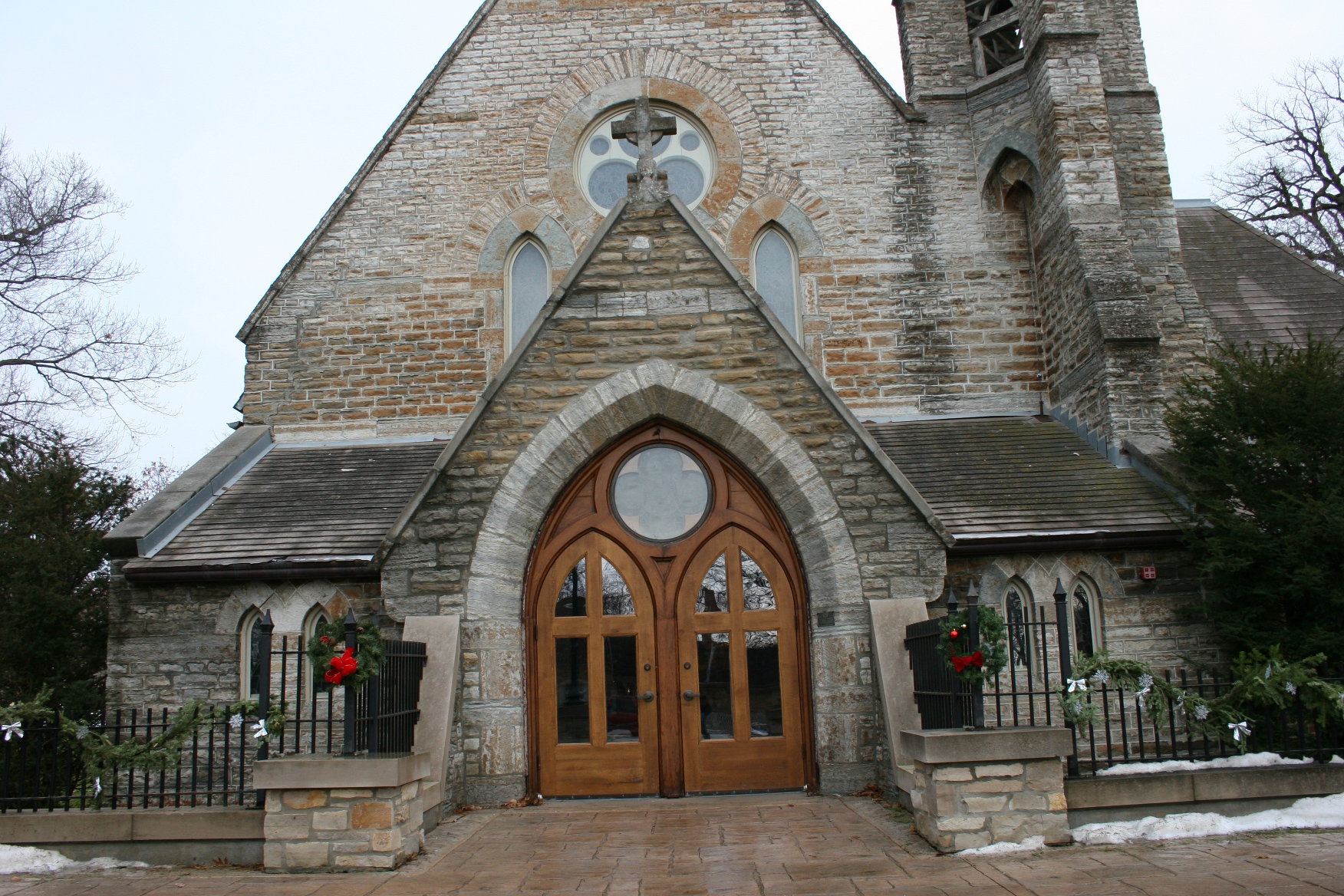
The arched wooden front doors present an impressive entry.

The arched wooden front doors present an impressive entry.

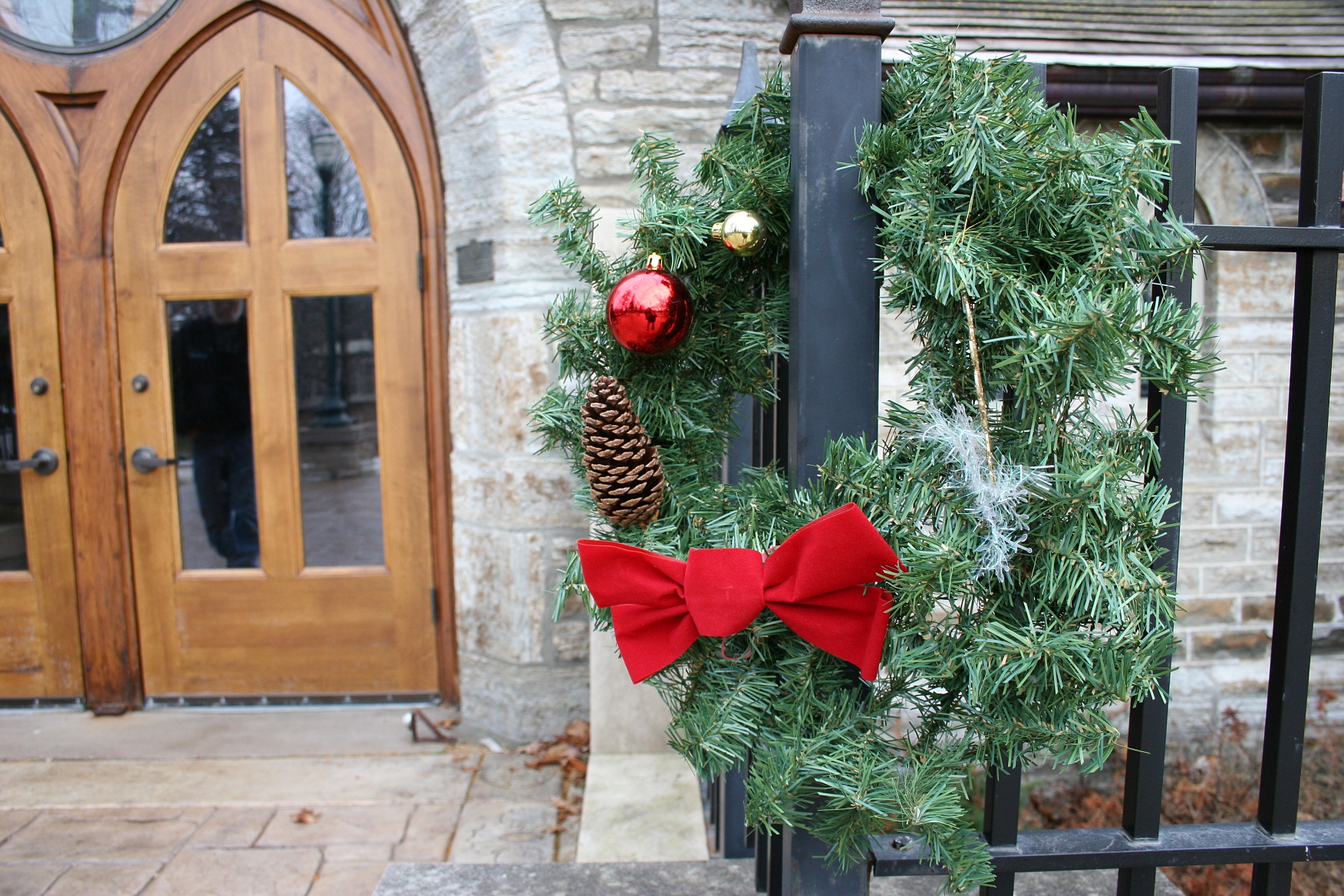
The exterior is tastefully and simply decorated for the holidays.

The exterior is tastefully and simply decorated for the holidays.

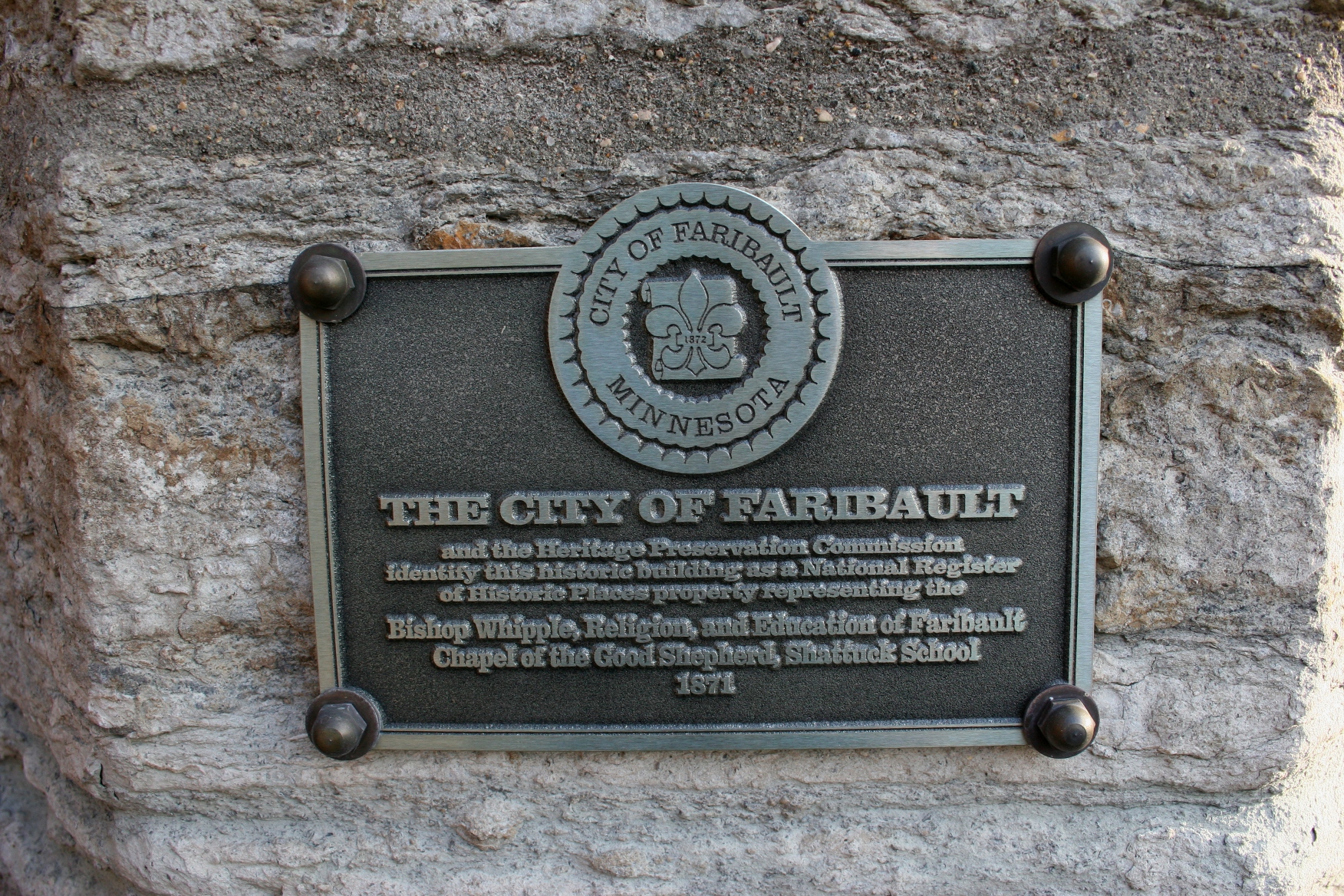
Outside the front door. The church is on the National Register of Historic Places.

Outside the front door. The church is on the National Register of Historic Places.

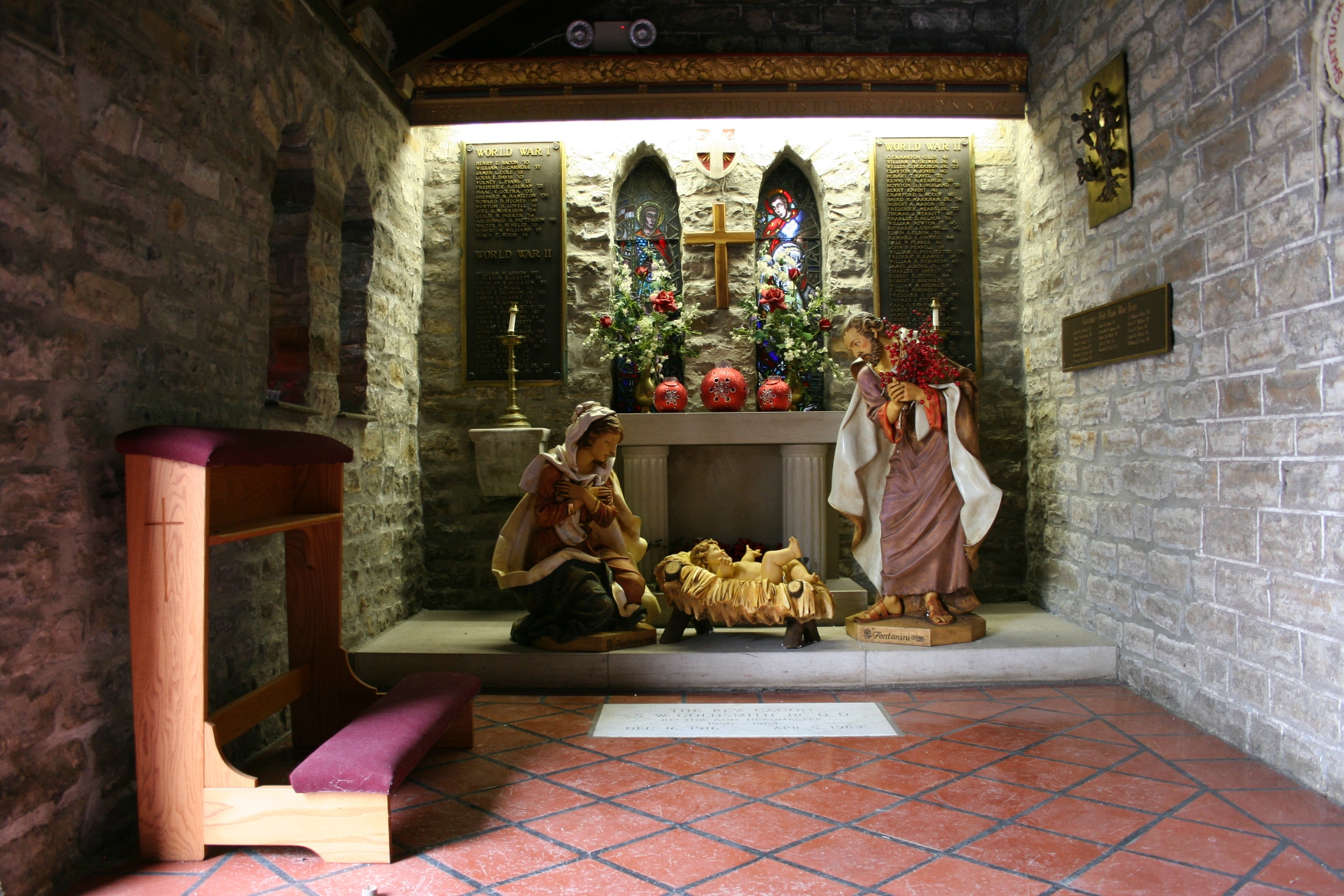
Just inside the doors, a creche.

Just inside the doors, a creche.

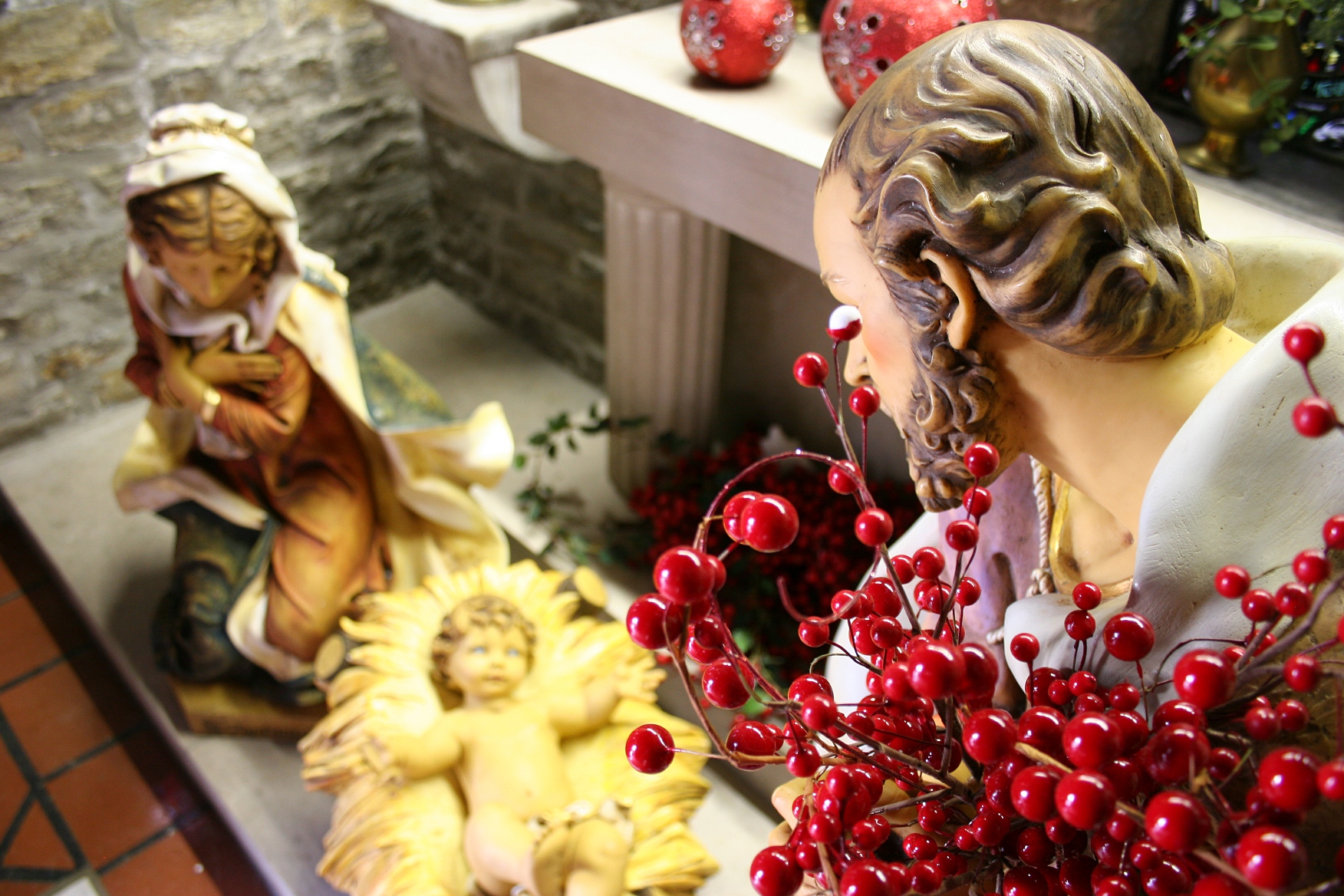
A close-up of the Holy Family shows Joseph viewing the Christ Child.

A close-up of the Holy Family shows Joseph viewing the Christ Child.

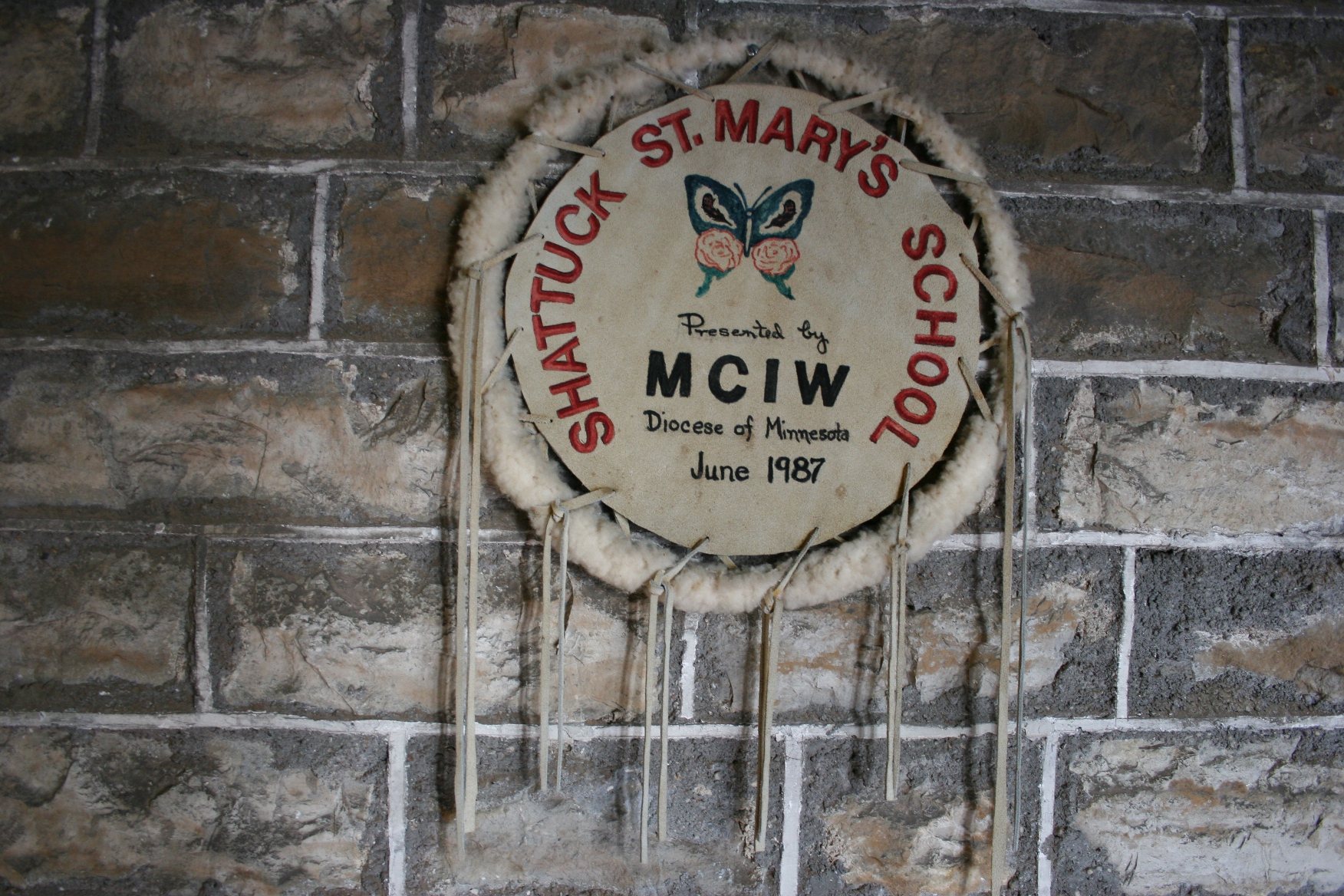
On a wall inside the entry.

On a wall inside the entry.

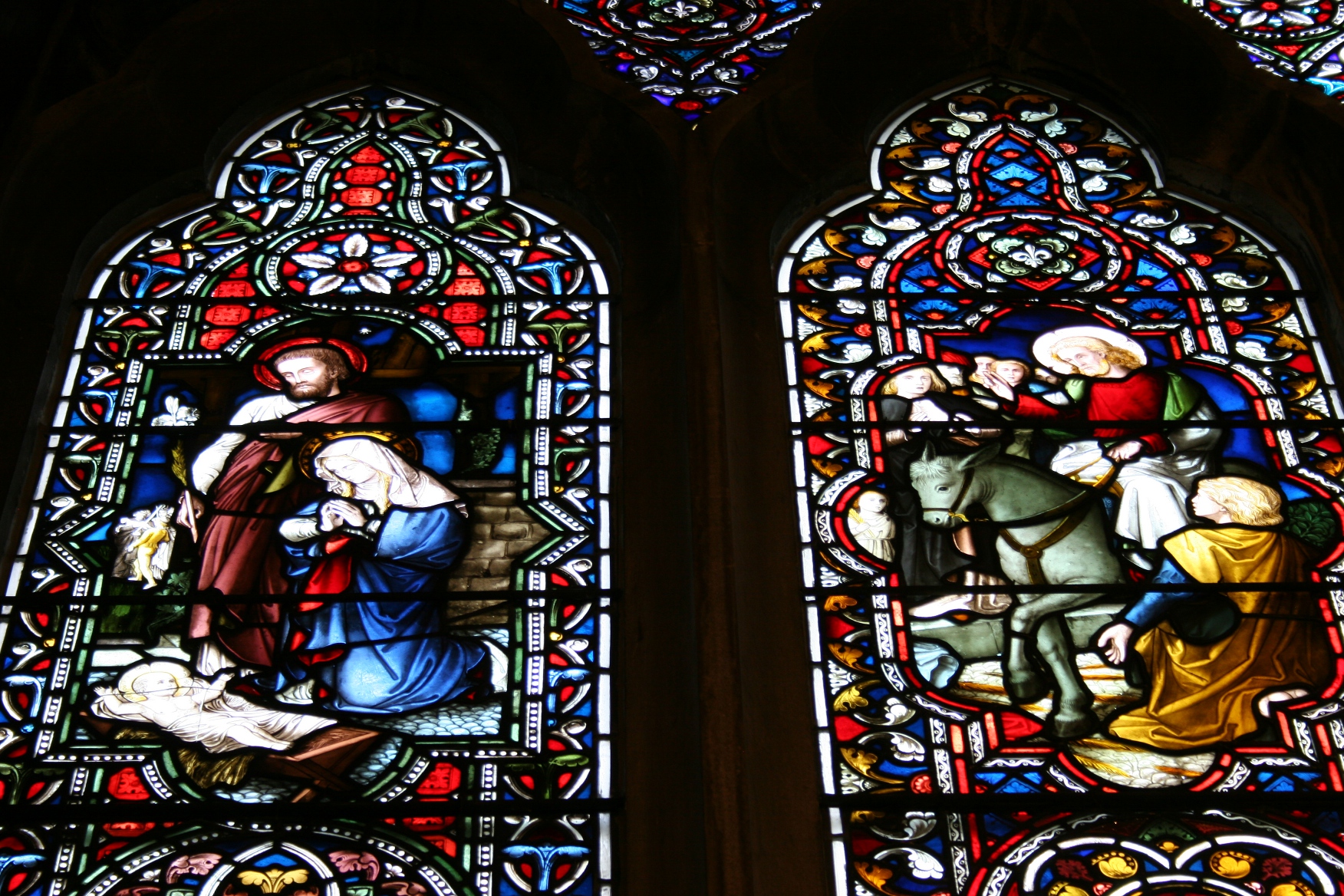
Beautiful stained glass above the exterior entry doors.

Beautiful stained glass above the exterior entry doors.

© Copyright 2015 Audrey Kletscher Helbling
 

The Inn opens in historic building at Shattuck-St. Mary’s December 17, 2014

An arch frames Shattuck-St. Mary's School in Faribault, Minnesota.

An arch frames Shattuck-St. Mary’s School in Faribault, Minnesota. Minnesota Prairie Roots file photo.

FOR SOME FORTY YEARS the oldest building on the campus of Shattuck-St. Mary’s, a prestigious private college prep school on Faribault’s east side, stood empty.

BUILT: The original part of the building was constructed in 1871 as the library for Seabury Divinity School. When the school relocated, the building was sold to Shattuck School and a small wing was added to the east. The building became Phelps Cottage, serving as a boys' dormitory. Photo courtesy of Shattuck-St. Mary's School.

YESTERDAY: The original part of this building was constructed in 1871 as the library for Seabury Divinity School. When the divinity school relocated, the building was sold to Shattuck School and a small wing was added to the east. The building became Phelps Cottage, serving as a boys’ dormitory. Photo courtesy of Shattuck-St. Mary’s School.

The Inn at Shattuck St. Mary's, a conference/retreat center and hotel, opened on Friday.

TODAY: The Inn at Shattuck St. Mary’s, a conference/retreat center, banquet/reception facility and hotel, opened on Friday.

But, on Friday, the stunning stone and stuccoed building, with a section dating back to 1871 and edging a wooded ravine, opened to the public as The Inn at Shattuck-St. Mary’s.

The front desk and lobby presents an inviting welcome.

The front desk and lobby present an inviting welcome.

Saturday afternoon I toured The Inn during the school’s annual Campus Christmas Walk and spoke briefly with David Connelly (former manager of an Owatonna restaurant), who’s genuinely excited to take on the challenge of managing what he terms “a historically modern retreat get-away.”

One of several guest rooms open during the public tour.

One of several guest rooms, with modern, clean lines, open during the public tour

That seems an accurate description for this one-time library, then boys’ dormitory and infirmary now transformed via renovation and an approximate 10,000 square foot addition into a complex with 12 guest rooms, meeting/conference rooms and banquet/reception space. The Inn includes a full catering kitchen. It also serves as a retreat center for the Episcopal Church in Minnesota, which partnered with Shattuck on the project.

Old flows into new as shown here at The Inn entry.

Old flows into new as shown here at The Inn entry.

From the exterior, The Inn, vacated in the early 1970s (except for feral cats), presents a timeless European style that fits this aged campus. Arched windows and steep, peaked roofs and stone prevail.

Detailed close-up of the old portion of the building flowing into new.

Detailed close-up of the oldest portion of the building.

In the early 1920s, a wing was enlarged and covered with stucco. It became the Phelps Infirmary. The infirmary opened just in time for an outbreak of scarlet fever. Photo courtesy of Shattuck-St. Mary's School.

In the early 1920s, a wing was enlarged and covered with stucco. It became the Phelps Infirmary. The infirmary opened just in time for an outbreak of scarlet fever. It remained open into the early 1970s. Phelps was last used in 2006 as a Halloween haunted house. Photo courtesy of Shattuck-St. Mary’s School.

It’s a beautiful structure which seamlessly blends old with new, as it should given the oldest section is listed on the National Register of Historic Places.

Church style windows add Old World charm to this guest room in the old part of The Inn.

Church style windows add Old World charm to this guest room in the oldest part of The Inn.

The original staircase.

The original staircase.

The breakfast area, just off a conference room and the lobby.

The breakfast area, just off a conference room and the lobby, has a definitive modern feel.

Inside you will find, as Manager Connelly says, a thoroughly modern facility with all of the amenities you would expect. Touches of the past remain, though, in sections of exposed stone, in those arched windows and in the original stairway from main to second floor, although I suspect that the wood was not painted white back in the day.

A maze of hallways, some featuring stone, lead to guest rooms.

A maze of hallways, some featuring stone, lead to guest rooms.

Hallways wind to guest rooms in a deliberate way that definitely makes this place feel more inn-like than hotel.

Decor throughout The Inn features earthy shades of green and brown.

Decor throughout The Inn features soothing earthy shades of green and brown.

Muted green and brown hues complement the natural setting of The Inn on the wooded west edge of the campus.

In a sectioned off meeting space, windows showcase the woods.

In a sectioned off meeting space, windows showcase the woods.

Banks of floor-to-ceiling windows in the meeting/reception spaces and a spacious woods-side deck and patio showcase the outdoors.

The opening of The Inn seems a smart move on Shattuck’s part. Many couples are married in the historic The Chapel of the Good Shepherd, just a short walk away. Parents from all over the world visit their children at the school. And top-notch hockey teams (think NHL feeder school) draw out-of-town fans to games.

The lobby and entry, simply and beautifully decorated for the holiday.

The lobby and entry, simply and beautifully decorated for the holidays.

On opening day Friday, The Inn guest rooms were three-fourths full, Manager Connelly says. And on Saturday, during the Campus Christmas Walk, visitors seemed duly impressed with the newest old addition to Faribault’s lodging and banquet/meeting facility options.

A touch of Christmas outside the front entry.

A touch of Christmas class outside the front entry.

FYI: Click here for more information on The Inn at Shattuck-St. Mary’s. Room rates range from $110 – $150 Sunday – Thursday and from $140 – $180 on Fridays and Saturdays.

© Copyright 2014 Audrey Kletscher Helbling
Vintage photos are courtesy of Shattuck-St. Mary’s School and are published here with permission.