Minnesota Prairie Roots

Writing and photography by Audrey Kletscher Helbling

A note about distracted drivers April 2, 2013

Red means STOP, people.

Red means STOP.

DEAREST GUARDIAN ANGEL,

My apologies for the delay in sending this thank you note. But sometimes it takes awhile for these things to sink in, to understand the gravity of the situation and what may have been.

For me, it was my husband stating, “He could have taken any one of us out.”

That comment slapped me like a sub-zero January morning. Rarely does Randy express such a strong opinion.

But he was right to assess just how bad this could have been—had I not glimpsed the white pick-up truck from the corner of my eye and yelled for my husband to stop, just as our 1995 Chrysler Concorde entered the intersection.

They always say it happens in an instant. How true. The glimpse of white. The realization that the truck was not slowing to stop for the red light on the four-lane. The thought formulating into words. The warning spewed from my lips. The foot to brake. The truck whizzing past, never slowing. The driver, totally clueless.

You, dearest angel, I am convinced, were hovering at Minnesota Highways 60 and 21, one of the busiest intersections in Faribault, around 10:30 p.m. Thursday. There is no other explanation. I could easily have been looking the other way, not spoken soon enough. My husband could have delayed his reaction.

Had Randy not stopped when he did, the truck would have t-boned our car, a direct hit to the driver’s side. I don’t even want to think about the serious injuries that would have been inflicted upon my loved ones, including our 19-year-old son sitting behind his dad and just home from Fargo for Easter.

I do not go through life unnecessarily pondering the “what ifs.” But sometimes particular events stick with you for a few days as reminders of how life truly can change, just like that. I suppose this incident lingers even more given my future son-in-law’s car was totaled by a red light runner in St. Paul several months ago.

My family’s near-collision Thursday evening was reinforced two days later by two drivers, both distracted by cell phones, who pulled out in front of us. One driver stopped just in time. The other, a woman in a van, head bent either texting or dialing, paused at a stop sign and drove straight into our path, not even noticing our approaching van.

To be honest, it scares the hell out of me sometimes how distracted and clueless many drivers are today.

My apologies, dear guardian angel, for referencing my concern with that overused phrase. But sometimes even writers struggle to define stupidity.

Gratefully,
Audrey

© Copyright 2013 Audrey Kletscher Helbling


Fans spar in USA TODAY high school mascot competition March 16, 2013

A gym at Wabasso High School, home of the Rabbits. Minnesota Prairie Roots file photo.

A gym at Wabasso High School, home of the Rabbits and my alma mater. Minnesota Prairie Roots file photo used here simply to illustrate sports and not directly connected to the mascot competition.

I’M NOT SURPRISED, not at all, that a USA TODAY sponsored competition to find “the best” high school mascot in the nation has turned into a verbal sparring match between fans of the Winona (MN.) Winhawks and the Centralia (ILL.) Orphans.

The issue apparently started when USA TODAY’s online voting site crashed on Thursday, the final day of the competition.

From what I can gather, the Orphans held a strong lead early on with the Winhawks implementing a strategic last-minute game plan in an attempt to claim the Region 4 title.

Now these high school sports fans are accusing each other of poor sportsmanship, unfair voting tactics and more, while others are calling for a boycott of USA TODAY’s contest. As of Saturday morning, commenters had posted 546 comments on the Region 4 voting page, well beyond any other region. Region 6, the next closest with the top two mascots separated by less than 3,000 votes, had about half the comments.

Region 4 has also racked up the most votes at nearly 7.9 million, compared to the second nearest vote total of almost 4.5 million in Region 5. The vote and comment totals in Region 4 show you just how heated this competition has become between the Minnesota and Illinois teams.

I read only a sampling of the comments from each region, enough to surmise that codes of good sportsmanship have been replaced by name-calling and a whole lot of negativity, especially between Winhawks and Orphans supporters. I wonder if the USA TODAY high school sports staff wishes they’d never created this competition.

In a special announcement posted on the contest website, USA TODAY extended the voting period, which resumes at 3 p.m. ET Monday, March 18, and ends at 3 p.m. ET Wednesday, March 20.

That decision is not sitting well with Orphans fans, based on comments posted on the Region 4 voting page. Online stats show the Illinois team leading with 36.937 percent (4,071,313) and the Winhawks trailing with 34.436 percent (3,795,630) of the votes. Some Orphans supporters are accusing USA TODAY of changing the game rules because of complaints from Winhawks fans.

True or not, I don’t know. But here’s USA TODAY’s official stance.

Wow! When you all turn out to support your mascot, you can really bring the site to a crawl. Because we want to make sure that everyone who wants to vote can vote, we don’t want any technical difficulties to get in the way. So the regional round of the USA TODAY High School Sports’ Best Mascot competition will resume…

I expect the war of words will resume, too, on Monday.

Does any of this surprise you? Not me. Sadly.

Two thousand dollars and a national title are at stake here. But now, with all the controversy and unsportsmanlike conduct surrounding this contest, would you really want your mascot to win?

Thoughts?

Here are the current standings, top two in each region, as of Saturday:

Region 1:

  • Morse Shipbuilders of Bath, ME., 45.657 percent, 1,092,775 votes
  • Kingswood Oxford Wyverns of West Hartford, CT., 45.23 percent, 1,082,570 votes

Region 2:

  • Key Obezags of Annapolis, MD., 37.187 percent, 492,084 votes
  • Northampton Konkrete Kids of Northampton, PA., 21.007 percent, 277,976 votes

Region 3:

  • Key West Conchs of Key West, FL., 34.032 percent, 504,060 votes
  • St. Mary’s Episcopal School Turkeys of Memphis, TN., 33.462 percent, 495,609 votes

Region 4:

  • Centralia Orphans of Centralia, ILL., 36.937 percent, 4,071,313 votes
  • Winona Winhawks of Winona, MN., 34.436 percent, 3,795,630 votes

Region 5:

  • Pratt Greenbacks of Pratt, KS., 45.276 percent, 2,250,804 votes
  • Chinook Sugarbeeters of Chinook, MT., 44.677 percent, 2,221,011 votes

Region 6:

  • Carbon Dinos of Price, UT., 40.063 percent, 1,504,129 votes
  • Oregon Episcopal Aardvarks of Portland, OR., 39.987 percent, 1,501,267 votes

CLICK HERE AND HERE to read my first two posts on this contest. To vote in the USA TODAY “best” high school mascot competition, click here.

© Copyright 2013 Audrey Kletscher Helbling


Jolts of color: OK or not? January 23, 2013

Filed under: Uncategorized — Audrey Kletscher Helbling @ 7:52 AM
Tags: , , , , , ,

AS A 1970s ERA TEEN, I painted my basement bedroom a vivid lime green.

That vivid house in Lansing.

That vivid house in Lansing. Minnesota Prairie Roots file photo.

Would I paint my house that psychedelic hue? No. But someone in Lansing, north of Austin, did as seen in this photograph I shot several years ago. Would you dare brush this green onto your abode?

In 2009, the owner of Los 3 Reyes Bakery painted his rented building in a vivid green shade that some neighboring business owners deemed unsuitable for historic downtown Faribault. The objectors approached Mariano Perez and asked him to repaint his bakery exterior. When he told them he couldn’t afford to repaint a building he’d just painted, they pooled their money to buy paint.

Now you might think that was a kind gesture. I don’t see it that way. To this day I wonder why Perez was shoehorned (or whatever word you want to use) into changing his building color to a softer gray-green. At the time, I interviewed Perez and he told me the bright green represented a “happy color” common in his native Mexico and his culture. Click here to read my interview with Perez, who no longer owns the bakery.

That bakery story came rushing back today as I sorted through photo files searching for bright-colored buildings I’ve photographed through the years. I intended to publish a post that would add a jolt of color to a wintry January day in Minnesota.

But then I started thinking about that bakery and about why buildings are painted the colors they are and if we have any right to tell a property owner what color he/she can/can’t paint a building.

Perhaps a color is chosen based on personal preferences. Remember that lime green bedroom of mine? I doubt my mom really liked the color, but she didn’t demand I paint the walls pink.

The NAPA store in Fergus Falls.

The NAPA store in Fergus Falls. Minnesota Prairie Roots file photo.

Perhaps a color connects to the identity of a business as in NAPA Auto Parts’ signature blue and gold. My husband works for NAPA and he will tell you just how much I dislike that strong, strong blue. Dislike is a toned-down version of my actual opinion. You can bet that you won’t miss a NAPA store in Any Town, USA. And that’s exactly as the company intends.

Perhaps a color relates to culture as in the case of the Mexican bakery.

Whatever the reasons, I view paint color as mostly a matter of personal choice.

However, I will agree that, in certain contexts, color guidelines are necessary to retain the character of a historic district. That was the argument in the bakery situation and for months the subject of debate among locals and the Faribault Heritage Preservation Commission. I can’t even honestly tell you what they finally decided. Bakery owner Perez was not, at the time, violating any type of guidelines.

What are your thoughts on building colors?

Just to get the conversation going, here are several more examples of colorful buildings I’ve photographed in recent years.

Dad's Good Stuff in New Richland

Dad’s Good Stuff in New Richland. Minnesota Prairie Roots file photo.

I grew up on a dairy farm and the color of the Calf Fiend in Redwood Falls reminds me of calves, but not in a positive way.

I grew up on a dairy farm and the color of the Calf Fiend in Redwood Falls reminds me of calves, but not in a positive way. Minnesota Prairie Roots file photo.

It's the trim on this building in Kenyon that caught my eye.

It’s the trim on this building in Kenyon that caught my eye. Minnesota Prairie Roots file photo.

The City Limits in Sleepy Eye

The City Limits in Sleepy Eye. Minnesota Prairie Roots file photo.

© Copyright 2013 Audrey Kletscher Helbling


In honor of Dr. Martin Luther King, Jr., I have a dream for my Minnesota community January 21, 2013

I HAVE A DREAM for my community of Faribault, Minnesota.
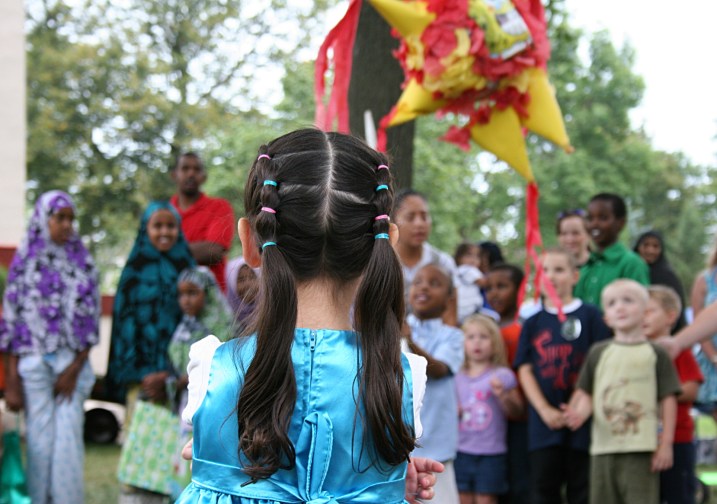
A little girl stands on the opposite side of the group of children waiting to swing at the pinata.

Skin color matters not during this pinata breaking at the International Festival Faribault held in August 2012.

And that dream is for those who live here to see beyond differences in skin color, language, culture and religion.

That same little boy who was so intently focused on the musician.

One of my favorite portraits from the 2012 International Festival Faribault.

I dream that someday my neighbors, and I use that term in the general sense of the word, will recognize that we are, no matter our differences, each human beings who deserve respect.
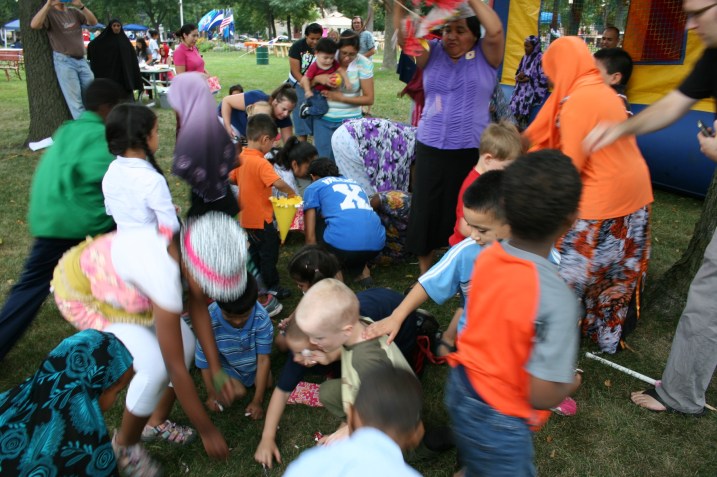
The scramble for candy once one of three pinatas is broken.

No barriers here as Faribault kids scramble for candy at the 2012 International Festival Faribault,

I dream that someday prejudice will vanish.

The ever-changing/growing diversity of Faribault High School as seen in this post commencement gathering outside the school.

The ever-growing diversity of Faribault High School as seen in this post 2012 commencement gathering outside the school.

I dream that long-time residents will begin to understand the difficulties local minorities—Somalis, Sudanese, Latinos and others—face in assimilating into a new culture, a new community, a new way of life.
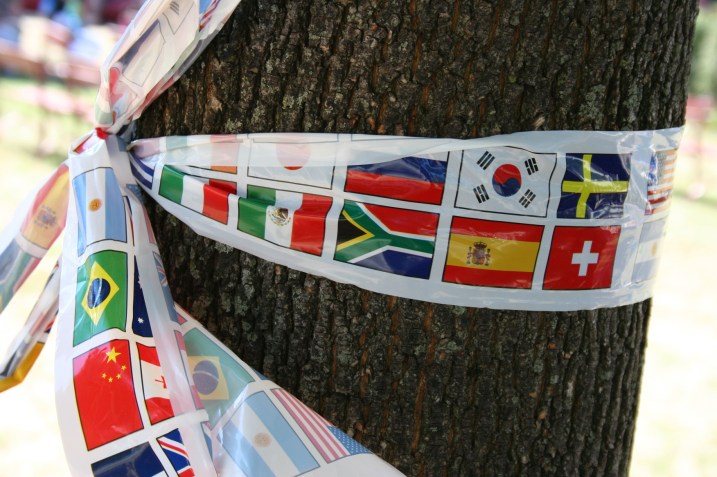
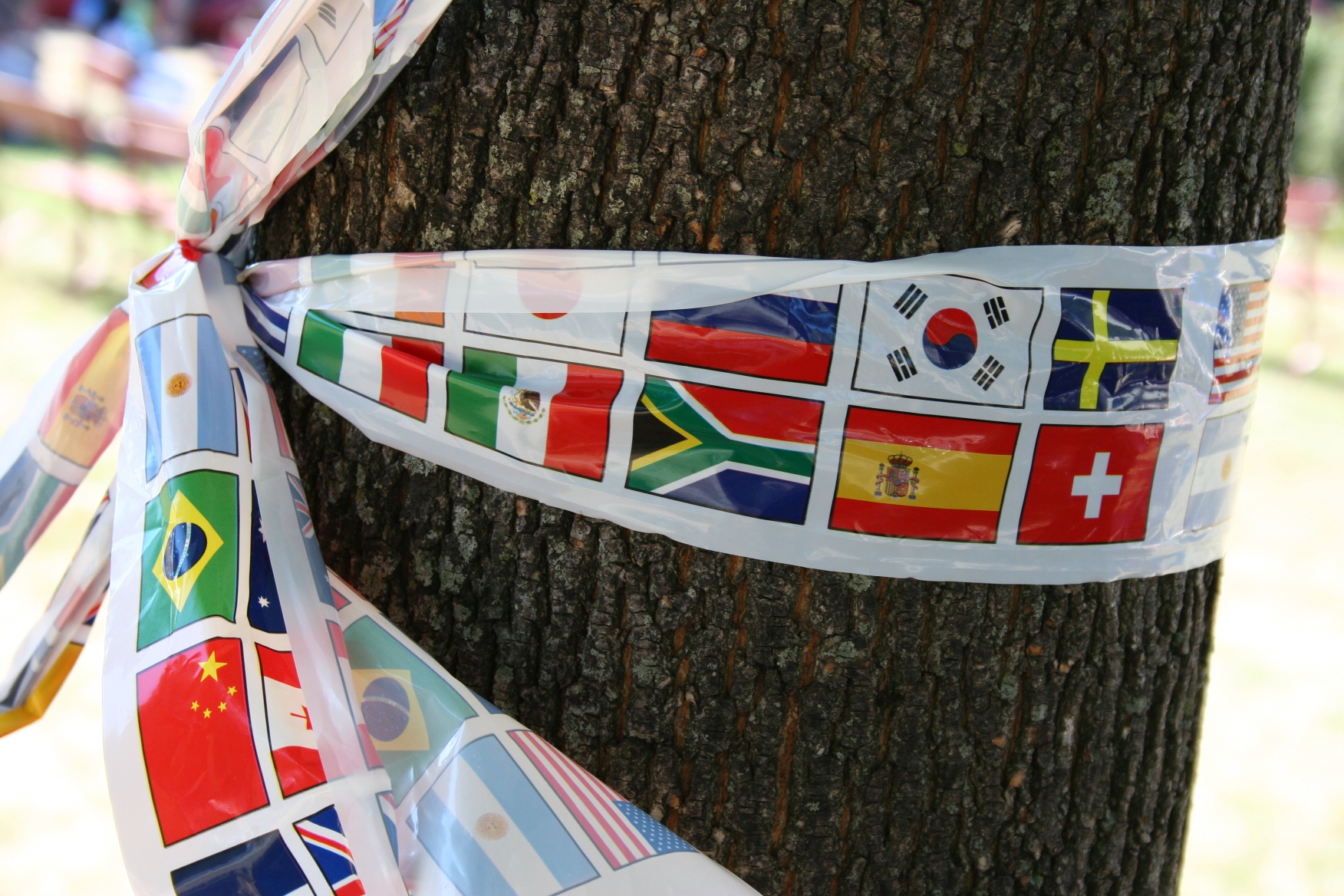
International flag ribbons were tied to trees in Central Park during the 2011 International Festival..

International flag ribbons were tied to trees in Central Park during the 2011 International Festival..

I dream the descendants of immigrants will remember that their forefathers were once newcomers to this land.

Friends, Nimo Abdi, a sophomore at Faribault High School, left, and Nasteho Farah, a senior.

Friends and Faribault residents, Nimo Abdi and Nasteho Farah, photographed at the International Festival Faribault 2012.

I dream that someday I will speak with a young Somali high school student and the words she shares will not be words of heartbreaking prejudice.
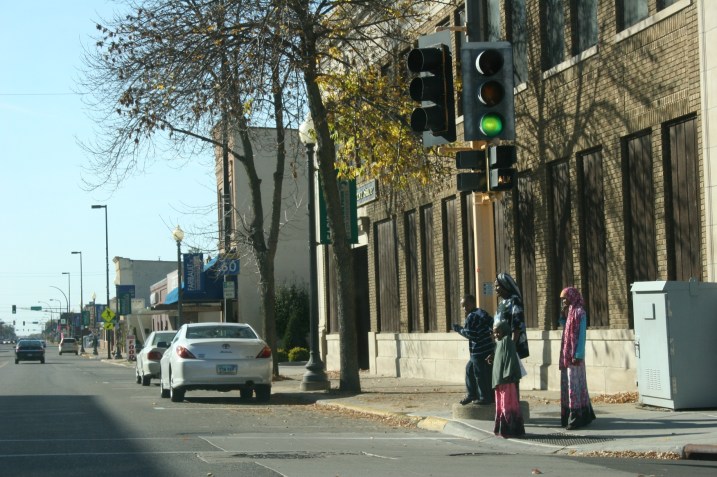
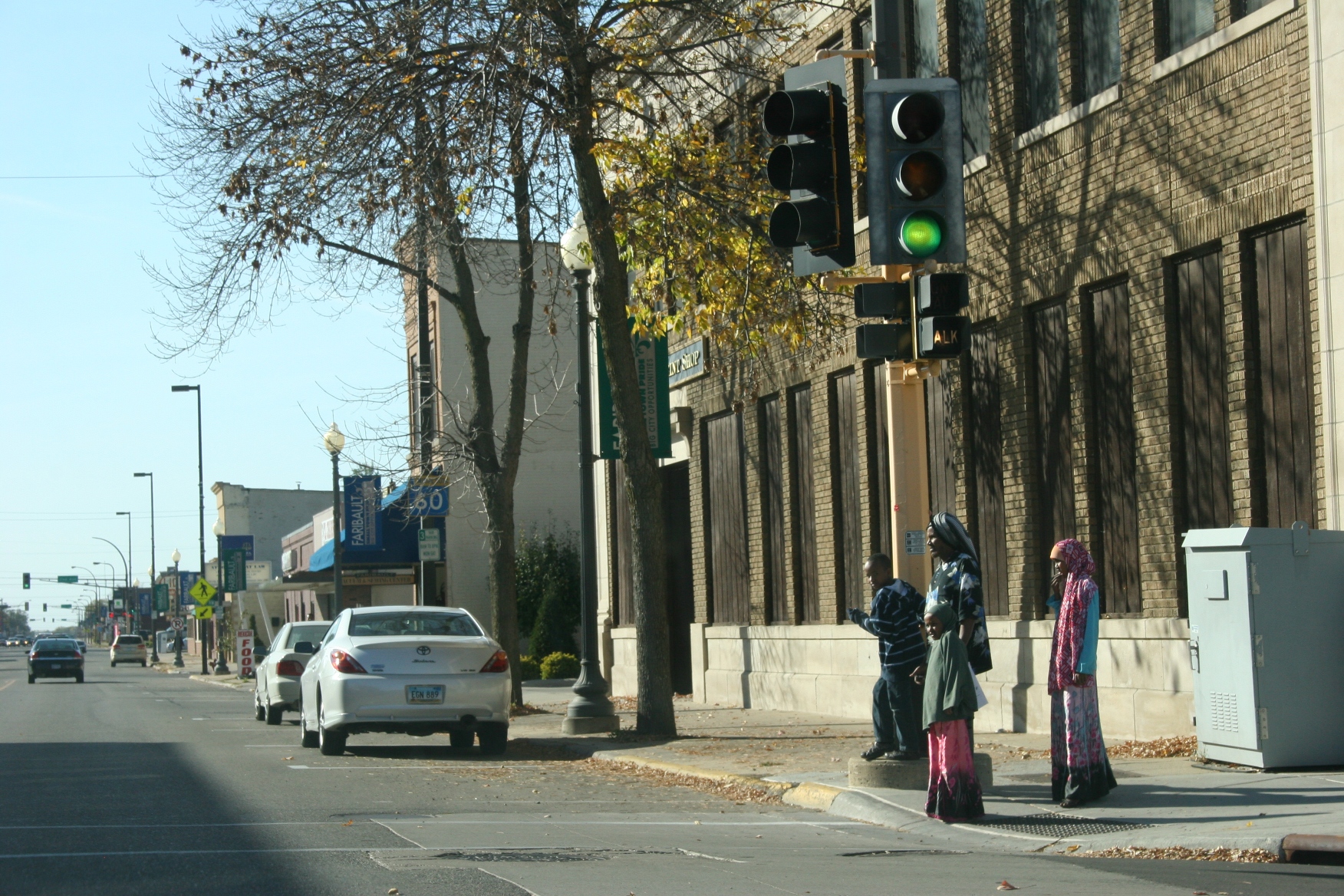
In this file photo, a Somali family waits to cross a downtown Faribault street.

In this file photo, a Somali family waits to cross a downtown Faribault street.

I dream that locals will stop fearing the Somali men who gather on downtown street corners, the street-level front porches of their Central Avenue apartments.
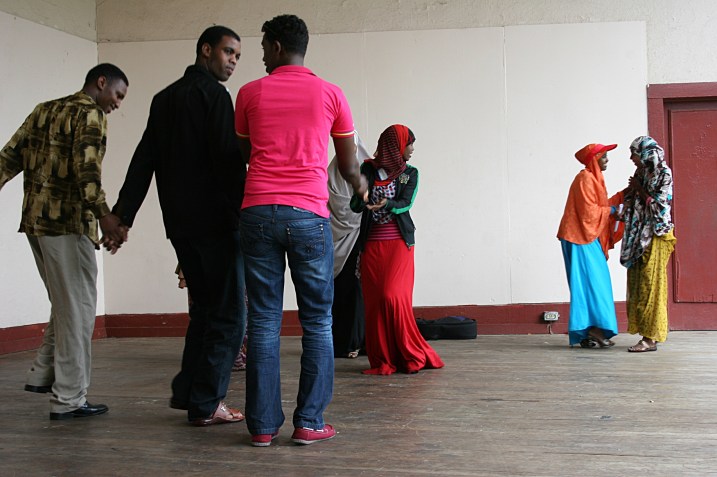
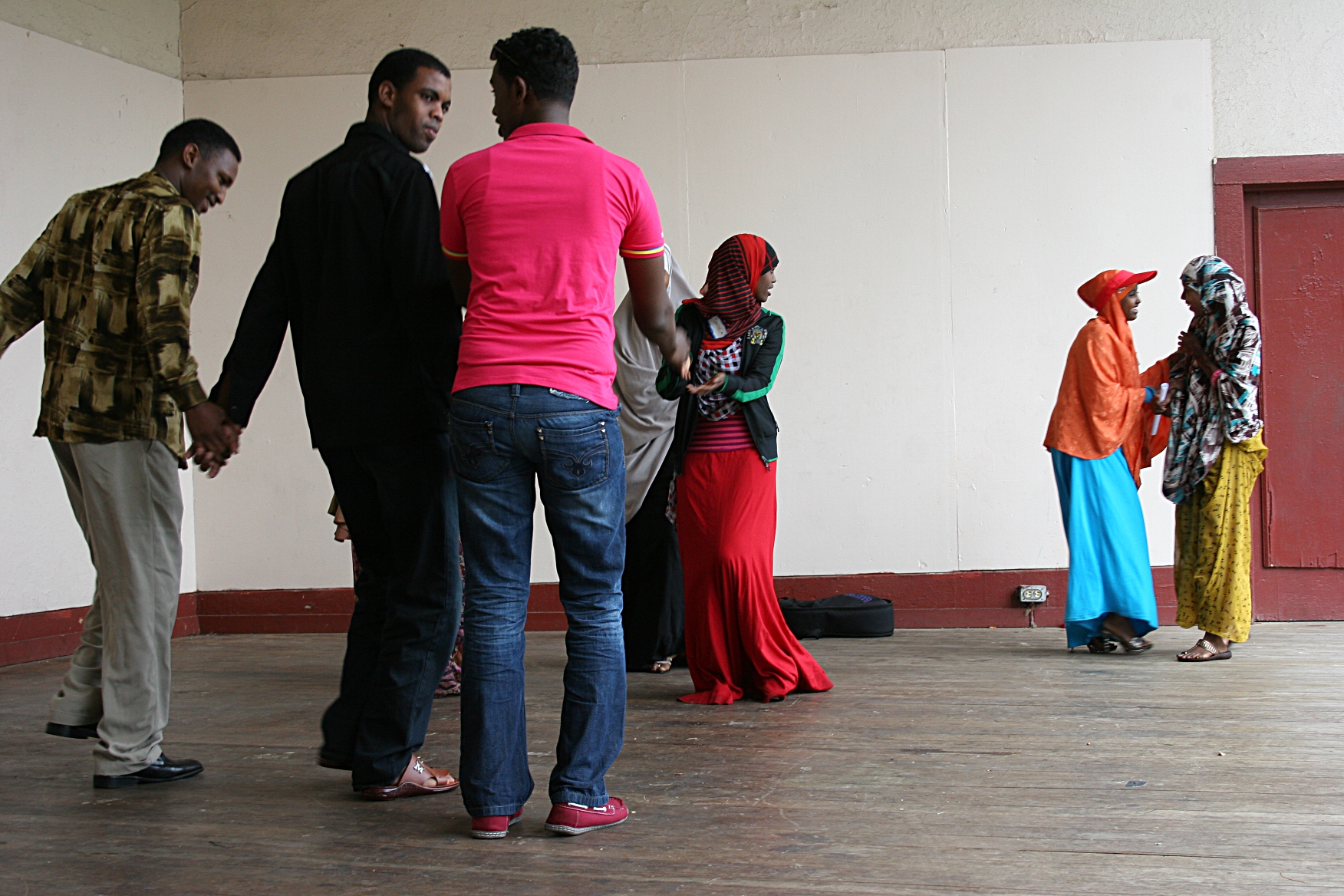
A group of young Somali dancers perform on the band shell stage during the festival.

A group of young Somali dancers perform on the band shell stage during the 2012 International Festival Faribault.

I dream that the minority population will no longer be lumped together into the category of those who commit the most crimes within my community.
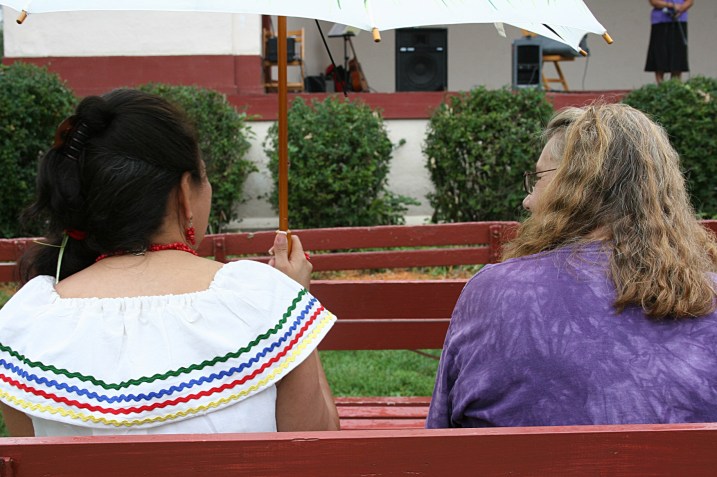
Conversation and connecting..., no other words necessary.

Conversation and connecting…, no other words necessary.

I dream that all of us, no matter our color, can begin to connect on a personal level. For when that happens, the barriers begin to fall, the differences slip away, and the prejudices vanish.

#

I DON’T WANT TO LEAVE you with the impression that Faribault residents are a bunch of racists. We are not. But to claim that we are all accepting of one another, to deny that bigotry exists, would be inaccurate. I’ve heard all too many negative stories and comments, even from friends and acquaintances, about our minority population.

Faribault is an ever-changing community of diversity. One need only drive or walk about town to see that.  While 75 percent of our population is white, according to the 2010 U.S. Census, Hispanics or Latinos comprise 13 percent and black or African Americans seven percent of our residents.

We can form all sorts of committees, outreach and other groups to ease newcomers into Faribault, to advocate understanding and acceptance. These are necessary and commendable efforts. Yet, if we as individuals do not open our hearts, and that applies both to long-time residents and immigrants, nothing truly changes. We need to connect on a personal basis. For in shaking a hand, greeting one another by name, engaging in conversation, we begin to view each other as individuals, then as friends.

I am not so naive as to believe any of this will come easily or quickly. Change begins with something as simple as a smile, holding a door open, a kind word, an unwillingness to hear a prejudicial comment and then let it slide…
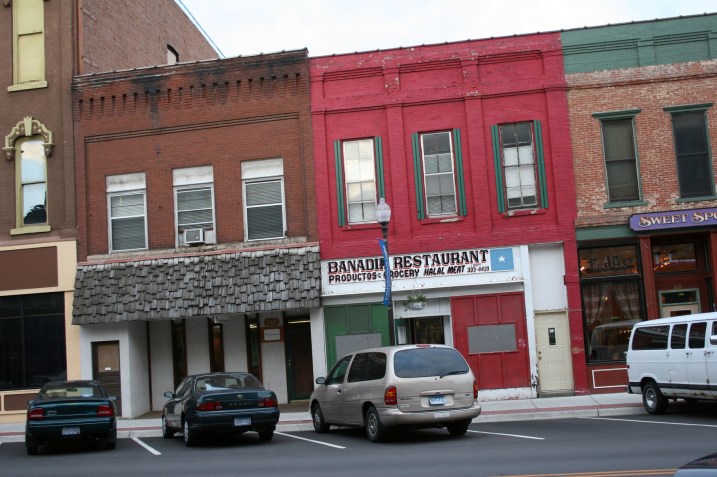
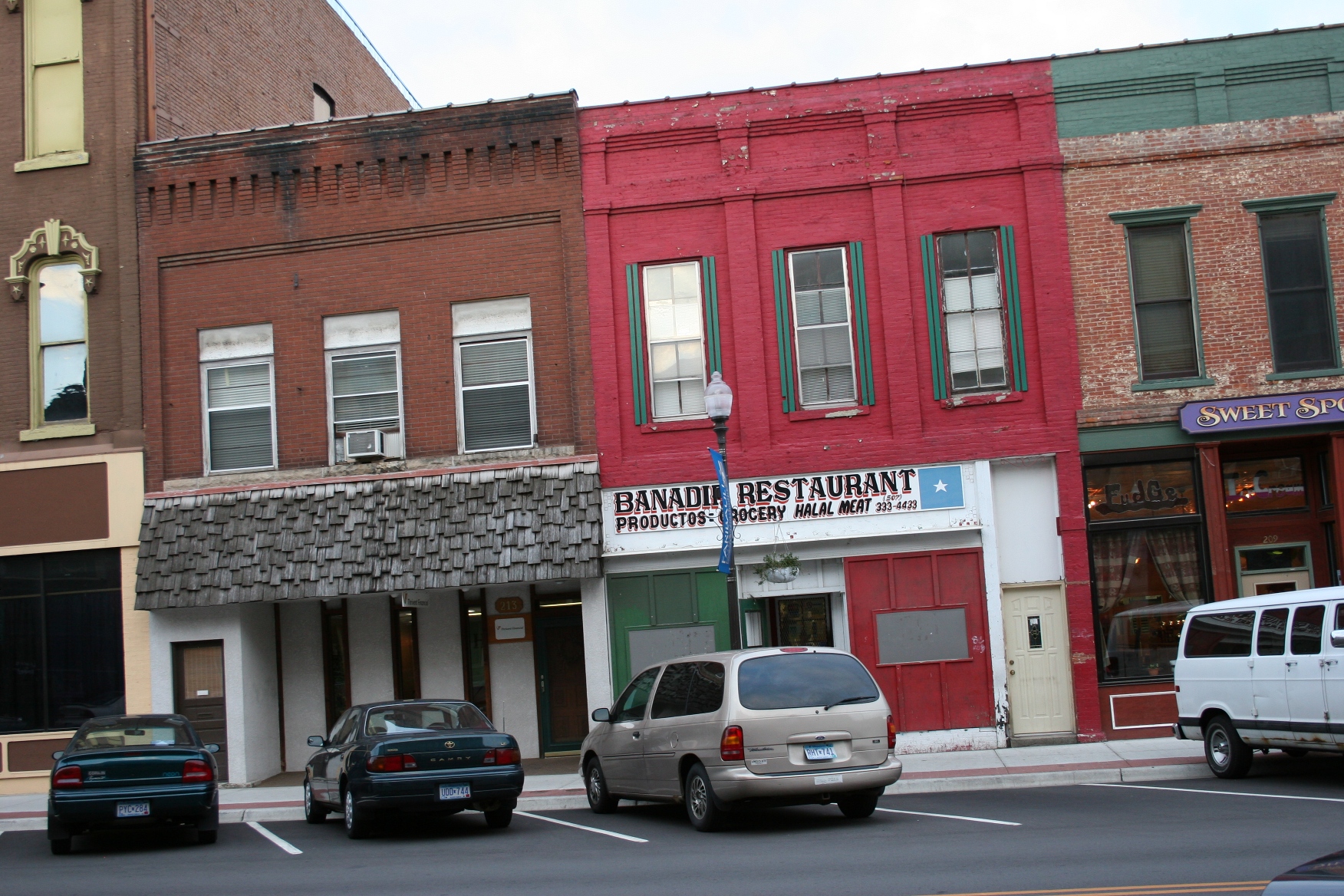
Downtown Faribault businesses include Banadir Restaurant, a Somali restaurant.

Downtown Faribault businesses include Banadir Restaurant, a Somali restaurant.

We can choose to support the ethnic businesses which are making our community a more diverse and interesting place to shop and dine. I’d like to see minorities actively and visibly involved/represented in the Chamber of Commerce and Faribault Main Street program. How about a campaign to showcase ethnic businesses to locals and visitors?
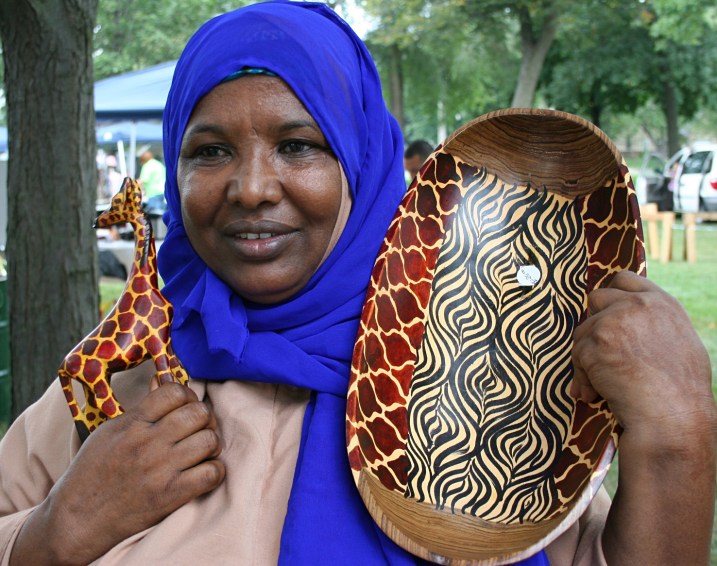
Lul Abdi shows off beautiful wood crafts from Kenya and Somalia.

Lul Abdi shows off beautiful art from Kenya and Somalia at the 2012 International Festival Faribault.

Perhaps our local arts center could connect with minority groups, integrating them into the arts scene via gallery showings, classes, diverse cultural events and the sale of their art in the arts center gift shop.

Ethnic musicians could be featured during the weekly Faribault Parks and Recreation Department summer band concerts in Central Park.

The Faribault Farmers’ Market could invite minorities to vend their ethnic art, crafts and food. The relaxed atmosphere of the Farmers’ Market offers an especially neighborly environment in which to connect people and cultures on a personal level.

My ideas are nothing novel. Perhaps some have already been tried, are in the works or are on the table…

#

CERTAINLY EFFORTS ARE being made to reach out to our newest residents, although one of the most valuable assets, The Welcome Center, closed several years ago due to lack of funding. Somali Community Services reaches the Somali population, at least.

A newly-formed group, Faribault’s Task Force on Cultural Diversity, has brought community leaders (including clergy, business representatives, healthcare and law enforcement professionals and others) together to address diversity-related concerns. I contacted Mayor John Jasinski, who is spearheading this committee, for an update, but have not yet received a response.
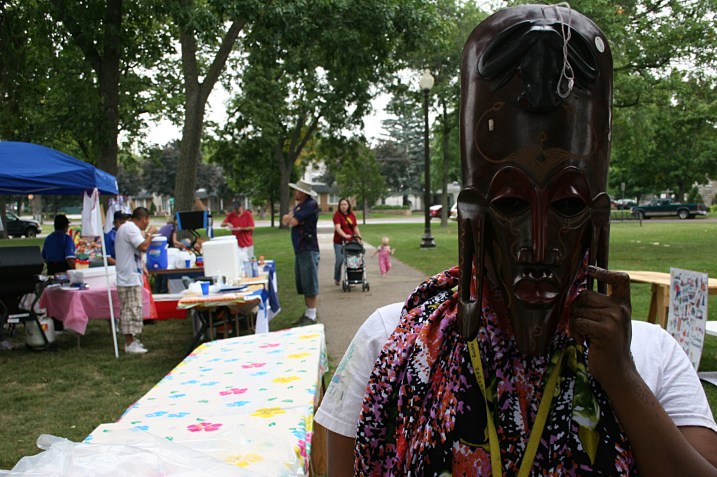
A woman, without my prompting, took this mask from the table manned by Bashir Omar and Asher Ali and asked me to photograph her.

Without prompting, this woman took this mask from a table manned by Bashir Omar and Asher Ali and asked me to photograph her during the 2012 International Festival Faribault.

The nonprofit International Festival Faribault organizes an annual outdoor fest aiming “to promote understanding between diverse cultures within Faribault, uniting the community with music, dance, ethnic foods and merchandise.”

HealthFinders Collaborative, which began with a healthcare clinic for the underinsured and uninsured in rural Dundas, recently opened an additional center in downtown Faribault.

St. Vincent de Paul Center offers financial assistance, food, clothing and other basic necessities to those in need.

Ten Faribault churches have joined to create the Community Cathedral Cafe, serving a free meal from 5 p.m. – 6:30 p.m. each Tuesday at the Cathedral of Our Merciful Saviour.

Divine Mercy Catholic Church has a Hispanic Ministry Program that includes, among many other aspects, annual summer masses at two Faribault trailer parks.

Within Our Savior’s Lutheran Church, Nile Our Savior’s, a Sudanese congregation, holds Sunday afternoon worship services at 1 p.m in the Nuer language.

Buckham Memorial Library offers a free online language program (Mango Languages) with 40 foreign languages and 12 English as a Second Language courses.

This list certainly is not all-encompassing. Our schools are reaching out, too, through nonprofits like Children’s Dental Services. I expect many individuals, whether via one-on-one tutoring, donations or other gifts are also assisting Faribault’s minority population.

Yet, more can be done. And it starts with each of us, in our hearts, on a personal level.

*NOTE: Some of the organizations listed above are not geared specifically toward assisting local minorities, but rather toward anyone in need, no matter their ethnicity.

#
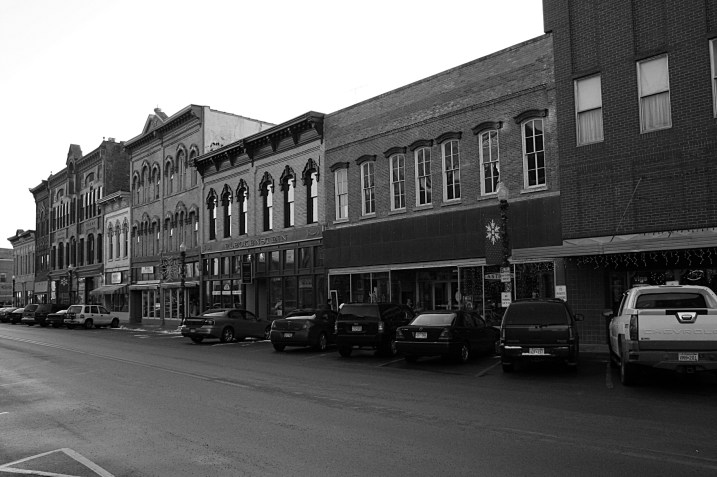
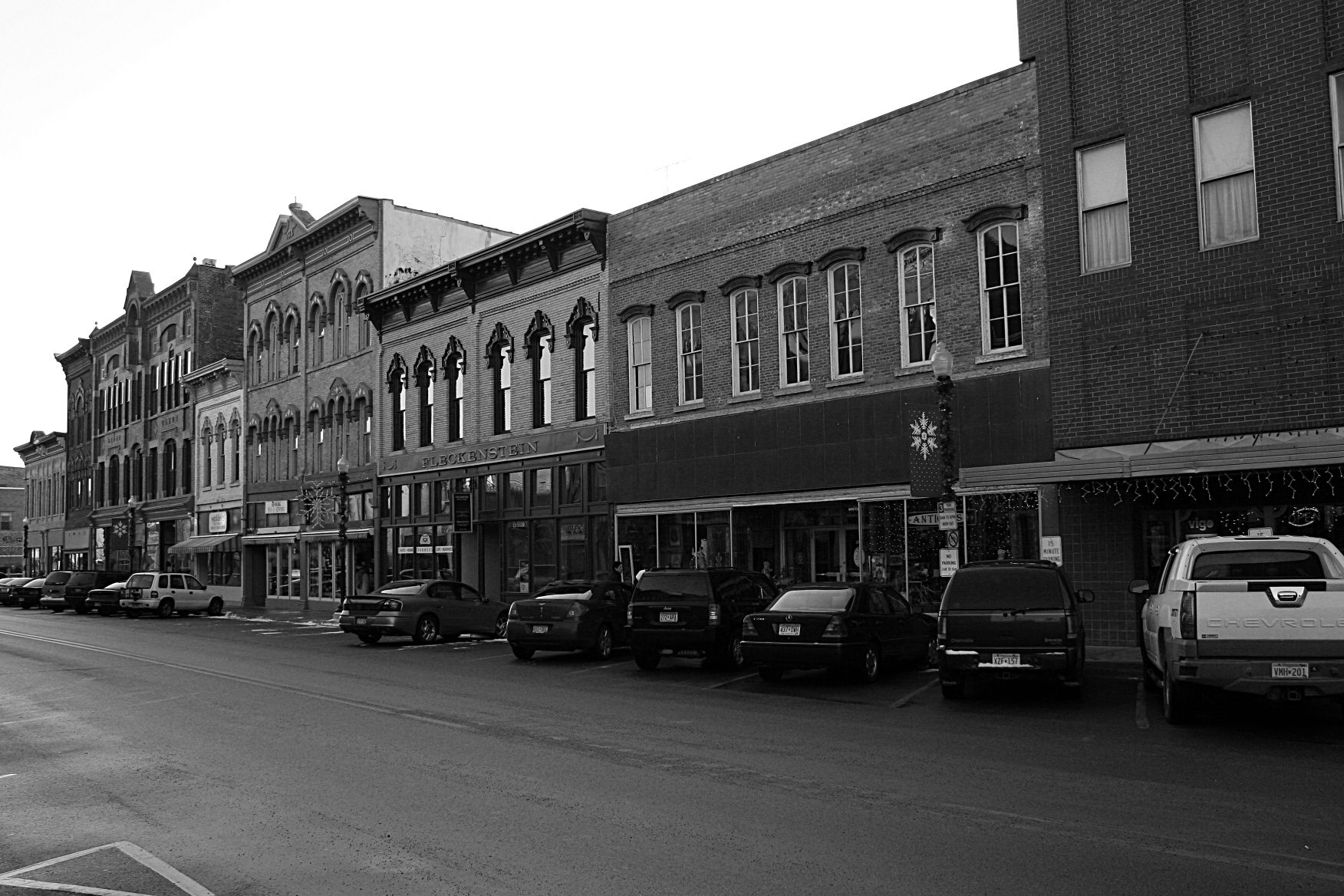
Historic buildings along Central Avenue.

Historic buildings along Central Avenue in downtown Faribault, Minnesota Prairie Roots file photo.

IN CELEBRATION of Dr. Martin Luther King, Jr.’s birthday and his “I have a dream” speech, I’d like to hear:  What is your dream for your community?

And what are your thoughts on anything I’ve presented in this post.

© Copyright 2013 Audrey Kletscher Helbling


And how did I like that classical music concert? December 30, 2012

A FEW WEEKS AGO, my husband phoned from work. He’d just won two tickets to the Trans-Siberian Orchestra concert at the Xcel Energy Center, compliments of Power 96, KQCL, a Faribault radio station. (Some of you may remember this from a previous post.)

Oh, my gosh, was I excited. I love classical music.

But as apparently everyone on this earth knows, except me, the Trans-Siberian Orchestra is a rock band. Who would have thought with a name like that?

So I figured I may as well confess my lack of musical knowledge, which I did in a December 12 post. For those of you who have not read that first amusing story, click here for a good laugh.

Secondly, you should know that I have not attended a rock concert in perhaps 30 years, the last one being a performance by The Moody Blues at the old St. Paul Civic Center.

Just sayin’ that I’m not exactly a music expert.

A view of the stage in the background and performers in the foreground elevated onto tiny platforms. I apologize for the horrible images, but DSLR cameras are not allowed into a concert venue and I don't own a compact camera. This image and the second were taken with my cell phone.

A view of the stage in the background and performers in the foreground elevated onto tiny platforms. I apologize for the horrible images, but DSLR cameras were not allowed into the concert venue and I don’t own a compact camera. This image and the second were taken with my cell phone. You can only imagine how many times I repeated, “I wish I had my camera.”

So what did I think of “The Lost Christmas Eve” concert by the Trans-Siberian Orchestra? In all honesty, I was more impressed by the light and pyrotechnics show than by the music or the storyline.

I know. I know. Those of you who really, really love the Trans-Siberian Orchestra will wonder, “What the heck? Did she attend the same concert as me?”

Apparently I prefer my music quiet, as in the outstanding “O Come, All Ye Faithful” solo by one of the band members versus the drum banging, steel guitar blazing mashed sound of a song I can’t even understand. I found it interesting that the reverent solo I most enjoyed received the loudest and longest audience applause of the concert.

Yes, there were a lot of gray hairs attending the show, along with a mix of other ages. Just sayin’, we may have favored Led Zepplin in our days (that would be you, Chuck, our concert neighbor), but now some of us wear ear plugs to rock concerts. My husband and I are raising our hands here. I bet the woman from Prior Lake sitting behind us wished she had brought hers, too.

Again, a bad photo, but at least it gives you some idea of the amazing light show and fabulous showmanship of this concert.

Again, a bad photo, but at least it gives you some idea of the amazing light show and fabulous showmanship of this concert.

For awhile there, until my eyes and brain adjusted, I also wondered if I should have brought sunglasses. Those strobe lights were pretty intense. But, once I settled in, I was enamored by the light show and the fire. The flames were so high and intense that the heat wafted to the back of the auditorium where we were seated.

About those seats…we were directly facing the stage; the location could not have been better. But who planned the width of these seats and the leg room? Honestly, I felt wedged into my chair and worried about knocking our large-sized $9.25 shared beer from the cup holder.

I worried, too, a bit about the performers who were elevated onto tiny towering platforms both on-stage and near our end of the concert venue. I bet they really felt the heat when fiery jets flamed near them. That was pretty cool even if it was hot. Got that?

All in all, my husband and I reached this conclusion: The Trans-Siberian Orchestra presented a good concert. Our tickets were free. We were happy.

But would we pay to see this group perform again? Probably not.

© Copyright 2012 Audrey Kletscher Helbling


The educating & healing continue 150 years after The U.S.-Dakota War December 28, 2012

STUDYING MINNESOTA HISTORY decades ago, I learned about “The Sioux Uprising of 1862” and even wrote a term paper on the topic bearing that title.

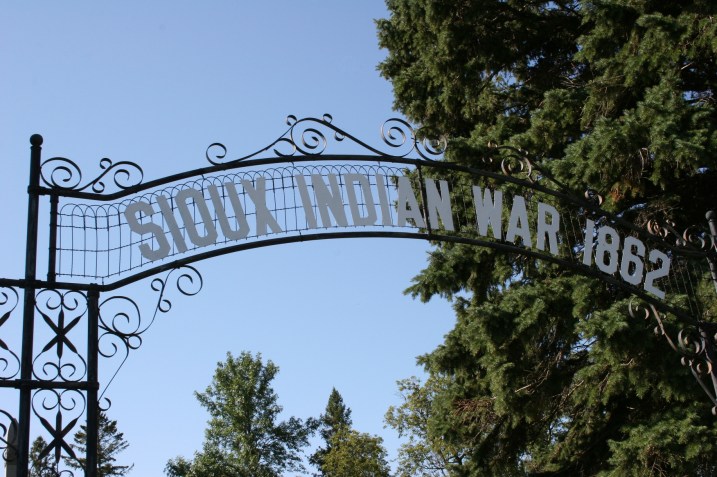
This archway leads to the Wood Lake State Monument, on the site of the battle which ended the U.S.-Dakota Conflict of 1862.

This archway leads to the Wood Lake State Monument, on the site of the battle which ended the U.S.-Dakota Conflict of 1862.

I thought nothing negative of that word, Sioux, which translates to “snake.” The Ojibway, once enemies of the Dakota, gave the tribe that name. I did not know; it was the word I was taught.

That I even studied “The U.S.-Dakota War of 1862,” the proper terminology for the six-week war fought primarily in my native southwestern Minnesota 150 years ago, seems remarkable. So many in Minnesota never knew of this conflict in our state’s history.

I don’t pretend to know every detail of the war between the Dakota and the white settlers and soldiers. But I do remember that I grew up with a fear of “Indians,” reinforced by the television westerns especially popular during my formative years and by the history lessons delivered about The Sioux Uprising of 1862, as it was then called.

Those classroom lessons were decidedly one-sided: The whites were the good guys, the Indians the bad guys. That line of thinking was wrong, oh, so wrong. I realize that now, having reached that conclusion decades ago.

The maltreatment of the Dakota by greedy traders, broken treaty promises, starvation, efforts to convert and transform the Dakota people into Christian farmers, expulsion from their homeland and more contributed to the war.

Yet, even the Dakota disagreed about the need to wage this battle. Some helped settlers escape to safety while others plundered and killed. My own maternal forefathers fled the New Ulm area to St. Peter, making this war a part of my personal family history.

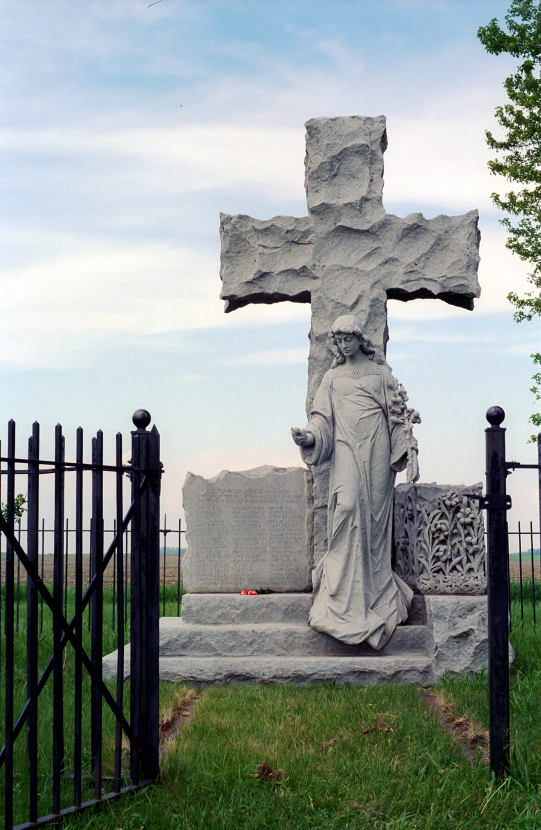
The Milford State Monument along Brown County Road 29 west of New Ulm commemorates the deaths of 52 settlers who were killed in the area. Located along the eastern edge of the Lower Sioux Reservation, Milford had the highest war death rate of any single township.

The Milford State Monument along Brown County Road 29 west of New Ulm commemorates the deaths of 52 settlers who were killed in the area. Located along the eastern edge of the Lower Sioux Reservation, Milford had the highest war death rate of any single township.

While I carry no ill will toward the Dakota, I will tell you, unequivocally, that feelings still run deep in southwestern Minnesota. I am also honest enough to admit that perhaps I would feel differently if my family members had been massacred or if I was of Dakota, instead of German, heritage.

Although time can heal, it doesn’t always. Misconceptions and misguided expectations, even after 150 years, exist on multiple sides of the issue. I won’t delve into that here, but I do think the healing is still ongoing, forgiveness (on both sides) still not attained.

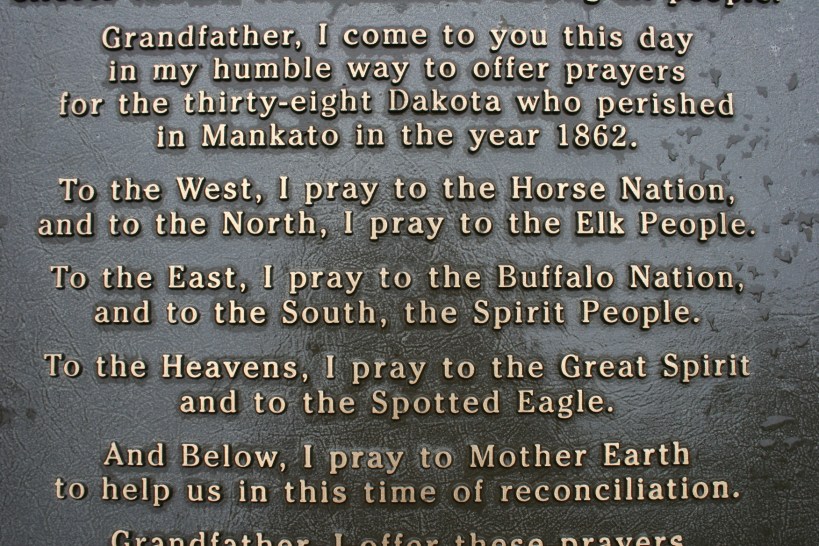
Words on a marker in Reconciliation Park in Mankato where 38 Dakota were hung on Dec. 26, 1862.

Words on a marker in Reconciliation Park in Mankato where 38 Dakota were hung on Dec. 26, 1862. On Wednesday, a new Dakota 38 Memorial was dedicated listing the names of the 38 men who died here. This file photo was taken of an existing plaque in the park.

In a ceremony in Mankato on Wednesday marking the 150th anniversary of the hanging of 38 Dakota, Mayor Eric Anderson proclaimed this the year of “forgiveness and understanding.”

The Dakota also called upon all to “forgive everyone everything.” Those words will be engraved into Kasota stone benches to be installed next summer at the site of the new Dakota 38 Memorial dedicated in Reconciliation Park on Wednesday.

Strides toward understanding and forgiveness, and education, can perhaps finally heal the still festering wounds of this long ago war.

TO VIEW PHOTOS from the event in Mankato on Wednesday, click to link here to Minnesota Public Radio.

TELL ME, ESPECIALLY if you grew up in Minnesota, did you study The U.S.-Dakota War of 1862? Also, are Minnesota students today being taught about this war?

© Copyright 2012 Audrey Kletscher Helbling


Not again, please, not again December 14, 2012

Filed under: Uncategorized — Audrey Kletscher Helbling @ 4:54 PM

Tags: , , , ,

I SWITCHED ON THE TELEVISION this afternoon, mail in hand, to read a few Christmas cards before continuing on with my day of catch-up around the house and wrapping gifts.

“20 children, six adults dead at Sandy Hook Elementary School in Ct.” or some such words flashed across the bottom of the screen as a reporter detailed the latest mass execution in America.

My aunt’s holiday letter fell from my hands. I read not a single cheery greeting, but instead dumped the pile of remaining unopened mail onto the dining room table and sobbed.

How can this be?

Again.

© Copyright 2012 Audrey Kletscher Helbling


Happiness equals family and friendship December 3, 2012

Filed under: Uncategorized — Audrey Kletscher Helbling @ 8:58 AM
Tags: , , , , ,

SINCE I’VE TOUCHED on two hot button topics—defective shingles and dogs in grocery carts—the past two posts, I’m focusing this morning on the positive.

Good Monday morning to you. It’s 50 degrees here in southeastern Minnesota at 7 a.m. On December 3. Love it.

Didn’t love the thick fog so much Sunday morning traveling back from north of the Twin Cities metro after spending the night with my husband’s oldest sister and her husband. But we sure did enjoy the “alone” time with them for a post Thanksgiving dinner.

Thanksgiving Day dinner 2011 at my house with a small part of my family and extended family.

Thanksgiving Day dinner 2011 with my family and a small part of my extended family. File photo.

Typically when we gather with Randy’s family, it’s a whole mass of people with minimal time for one-on-one visiting. And as nieces and nephews marry and start families, the visits with extended family have become less frequent and we’ve now moved from an annual Christmas get together to a summer-time reunion. That’s fine by me as it’s one less place to be during the holiday season.

Anyway, our eldest daughter and her boyfriend also joined the four of us for Saturday evening’s meal of turkey and the trimmings. It’s the first time we’ve seen them since Marc moved in October from California to St. Paul. My mom asks me all the time, “How does Marc like Minnesota?”

I can now report that he seems to like it just fine. (Of course, he has not experienced a “real” Minnesota winter yet.) He commutes 12 minutes via the downtown St. Paul skyway system and one outdoor block to his place of employment.

Thanks to my friend, Mandy, we delivered an artificial Christmas tree to Marc for his St. Paul apartment. I sent a mass email to about a dozen friends last week asking if anyone had a tree they no longer needed and Mandy responded. Such great friends we have.

Speaking of friends, here’s one of the things I love about a town like Faribault, which, by my standards, is not a small town, but which by Twin Cities metro standards likely would be considered small-town. Yesterday while shopping at one of two local grocery stores, I encountered three friends. Yes, it takes awhile to get the cart filled when you “have to stop and visit.” But I wouldn’t have it any other way.

A shipped-in, store-bought strawberry can never match the taste of a fresh Minnesota berry, like those pictured here in this file photo of Straight River Farm berries.

Not the strawberries from Roger’s farm, but elsewhere. File photo.

Finally, and this is not meant to make anyone feel sorrowful. But a 79-year-old friend died on Friday. He had a myriad of health issues and his wife died only in May. They were a great Christian couple. We were especially close to Roger. He was always so kind and good to our family, giving us strawberries, sweetcorn and other produce he grew on his rural Faribault acreage.

But more than that, Roger embraced our family with a genuine and caring warmth. Several times Roger invited Randy and me out on a Sunday evening to play pegs and, I can’t remember the name of the game. We would play, but mostly listen to Roger tell his jokes and stories. He loved to tell jokes and stories.

We would laugh, and then laugh some more.

And when the game ended, Roger’s wife, Delores, would dish up the homemade ice cream Roger had made.

It is the seemingly simple things in life—like dinner with extended family and friendship—which make me happy. Life is good on this Monday morning in December.

WHAT MAKES YOU HAPPY on this Monday morning?

© Copyright 2012 Audrey Kletscher Helbling
 

Forget shopping in North Dakota on a Sunday morning November 25, 2012

A sign along a city street welcomes us to Fargo, North Dakota, from Moorhead, Minnesota, just across the Red River.

LET’S PRETEND FOR A MOMENT that you are me. You’ve traveled nearly 300 miles from southeastern Minnesota to Fargo, North Dakota, with your husband to visit your son at North Dakota State University in mid-October.

Your son needs basic supplies like laundry detergent and deodorizing powder to sprinkle into his smelly athletic shoes. He also needs long-sleeved shirts, sweaters, socks and a warm scarf to wrap around his neck. Winter, after all, is waiting on flat and windy Fargo’s doorstep.

Being the nice parent that you are, you offer to take your boy shopping. And even though your son detests shopping, he agrees. He is no dummy. He would rather spend Mom and Dad’s money than his own.

So you plan a shopping trip to Target in West Fargo for 10 a.m. Sunday because that will allow the teen to sleep in. Afterward you’ll grab lunch around 11 a.m., then proceed to J.C. Penney (you checked online and Penneys does not open until noon) and leave town by 1 p.m. That is the plan. You have 300 miles to drive yet today.

But the entire plan is tossed out the window when you arrive at Target around 10:30 a.m. Sunday to find the doors locked. This big box retailer does not open until noon.

You suggest heading to Walmart. Your son gets on his smart phone, which he’s recently purchased quite successfully without your assistance or money, thank you. The three of you are soon winding your way around West Fargo, aiming for the discount retailer many love to hate.

Pulling into the parking lot, you notice that the place appears mostly deserted of cars and certainly of customers. As you draw nearer to the front doors, you spot signs stationed at the entrances:

The sign posted in front of the West Fargo Walmart on a Sunday morning.

OK, then.

Now what? Change of plans. Again.

Time to proceed with Plan C, which would be to check if Moorhead, Minnesota, just across the Red River, has a Target. It does. So you aim west for the border, driving five-plus miles, burning up gas because you don’t have time to wait for North Dakota’s stores to open.

You arrive at the Minnesota Target to find the parking lot packed with vehicles bearing mostly North Dakota license plates.

If only you had known about the Sunday morning shopping ban in NoDak, you would have planned differently and squeezed in a Saturday evening shopping outing. You would not be a now unhappy and grumpy Fargo visitor.

But you’ve heard/read nothing of this Blue Law (which you can read about in detail by clicking here)…

How are you supposed to know this stuff? You live in southeastern Minnesota.

And why is such a seemingly antiquated law still on the books?

FYI: I DID NOT REALIZE until I later spoke with a friend, a Minnesotan who grew up in North Dakota and whose son lives and works in Fargo, that the Blue Law not all that long ago prohibited retailers from any Sunday sales. So I suppose I should consider it progress that North Dakota retailers can now open their doors at noon on Sunday.

Secondly, this same friend told me that North Dakota has a five percent sales tax on clothing, of which I was unaware. The trip back across the river to the Target store in Moorhead thus saved us some tax dollars. However, according to information I found online, some North Dakota legislators want to repeal that tax. You can read about those efforts by some Fargo Democrats by clicking here.

Finally, can anyone explain the origin of the Blue Law in North Dakota? I expect it dates back to Sunday as a day of rest, as the Lord’s Day. I respect that and hope that most would choose worship over shopping. Yet, times have changed and church services are held on Saturdays too and, well, you know…

© Copyright 2012 Audrey Kletscher Helbling


Too much pink? October 27, 2012

ENOUGH PINK ALREADY.

Northeastern Minnesota writer Ada Igoe, who blogs at “Of Woods and Words,” writes this week about all the pink out there during this, Breast Cancer Awareness Month.

While I don’t agree with everything she says in her “Rage Against the Pink” post, I agree that this whole “pink” thing is being overdone and has become too commercialized. Just like the right amount of salt can flavor a dish, too much salt can ruin it.

In a row of green and yellow Olivers, I spotted this pink one at the Rice County Steam & Gas Engines Show earlier this fall. I have no reason to doubt the genuineness of this tractor owner in calling attention to the fight against breast cancer.

How do we separate those who truly are genuine in their pinkness as opposed to those simply out to perhaps earn a buck or get some media attention for whatever they are selling or promoting?

Ada raises issues like that in her thoughtful piece. I’m not going to steal and repeat all this blogger wrote. Rather, I will point you directly to the source, so click here.

And just for the record:

  • My mother is a breast cancer survivor.
  • My uncle, Dr. Robert M. Bowman, created Femara, a hormone therapy drug used to treat breast cancer in post-menopausal women.
  • A dear friend is currently being treated for breast cancer.
  • Last evening I waited in line for one hour and 15 minutes to comfort friends and their daughter who lost their youngest daughter/sister to colon cancer after two courageous years of battling the disease. Stacey was only 39.
  • Sometimes it’s genuinely easy to separate those who mean well by emphasizing pink from those who have other than the best intentions. Absolutely, this pink tractor showcases one family’s personal story and does not seek to commercialize or gain anything financially from using the color pink.

    WHAT ARE YOUR THOUGHTS on the use of pink to promote breast cancer awareness? Overkill? Just right? Let’s hear.