Minnesota Prairie Roots

Writing and photography by Audrey Kletscher Helbling
Happiness equals family and friendship December 3, 2012

Filed under: Uncategorized — Audrey Kletscher Helbling @ 8:58 AM
Tags: , , , , ,

SINCE I’VE TOUCHED on two hot button topics—defective shingles and dogs in grocery carts—the past two posts, I’m focusing this morning on the positive.

Good Monday morning to you. It’s 50 degrees here in southeastern Minnesota at 7 a.m. On December 3. Love it.

Didn’t love the thick fog so much Sunday morning traveling back from north of the Twin Cities metro after spending the night with my husband’s oldest sister and her husband. But we sure did enjoy the “alone” time with them for a post Thanksgiving dinner.

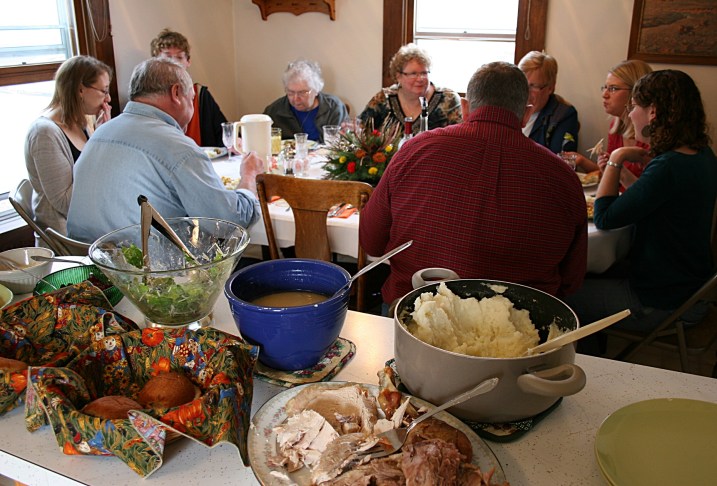
Thanksgiving Day dinner 2011 at my house with a small part of my family and extended family.

Thanksgiving Day dinner 2011 with my family and a small part of my extended family. File photo.

Typically when we gather with Randy’s family, it’s a whole mass of people with minimal time for one-on-one visiting. And as nieces and nephews marry and start families, the visits with extended family have become less frequent and we’ve now moved from an annual Christmas get together to a summer-time reunion. That’s fine by me as it’s one less place to be during the holiday season.

Anyway, our eldest daughter and her boyfriend also joined the four of us for Saturday evening’s meal of turkey and the trimmings. It’s the first time we’ve seen them since Marc moved in October from California to St. Paul. My mom asks me all the time, “How does Marc like Minnesota?”

I can now report that he seems to like it just fine. (Of course, he has not experienced a “real” Minnesota winter yet.) He commutes 12 minutes via the downtown St. Paul skyway system and one outdoor block to his place of employment.

Thanks to my friend, Mandy, we delivered an artificial Christmas tree to Marc for his St. Paul apartment. I sent a mass email to about a dozen friends last week asking if anyone had a tree they no longer needed and Mandy responded. Such great friends we have.

Speaking of friends, here’s one of the things I love about a town like Faribault, which, by my standards, is not a small town, but which by Twin Cities metro standards likely would be considered small-town. Yesterday while shopping at one of two local grocery stores, I encountered three friends. Yes, it takes awhile to get the cart filled when you “have to stop and visit.” But I wouldn’t have it any other way.

A shipped-in, store-bought strawberry can never match the taste of a fresh Minnesota berry, like those pictured here in this file photo of Straight River Farm berries.

Not the strawberries from Roger’s farm, but elsewhere. File photo.

Finally, and this is not meant to make anyone feel sorrowful. But a 79-year-old friend died on Friday. He had a myriad of health issues and his wife died only in May. They were a great Christian couple. We were especially close to Roger. He was always so kind and good to our family, giving us strawberries, sweetcorn and other produce he grew on his rural Faribault acreage.

But more than that, Roger embraced our family with a genuine and caring warmth. Several times Roger invited Randy and me out on a Sunday evening to play pegs and, I can’t remember the name of the game. We would play, but mostly listen to Roger tell his jokes and stories. He loved to tell jokes and stories.

We would laugh, and then laugh some more.

And when the game ended, Roger’s wife, Delores, would dish up the homemade ice cream Roger had made.

It is the seemingly simple things in life—like dinner with extended family and friendship—which make me happy. Life is good on this Monday morning in December.

WHAT MAKES YOU HAPPY on this Monday morning?

© Copyright 2012 Audrey Kletscher Helbling

 

Forget shopping in North Dakota on a Sunday morning November 25, 2012

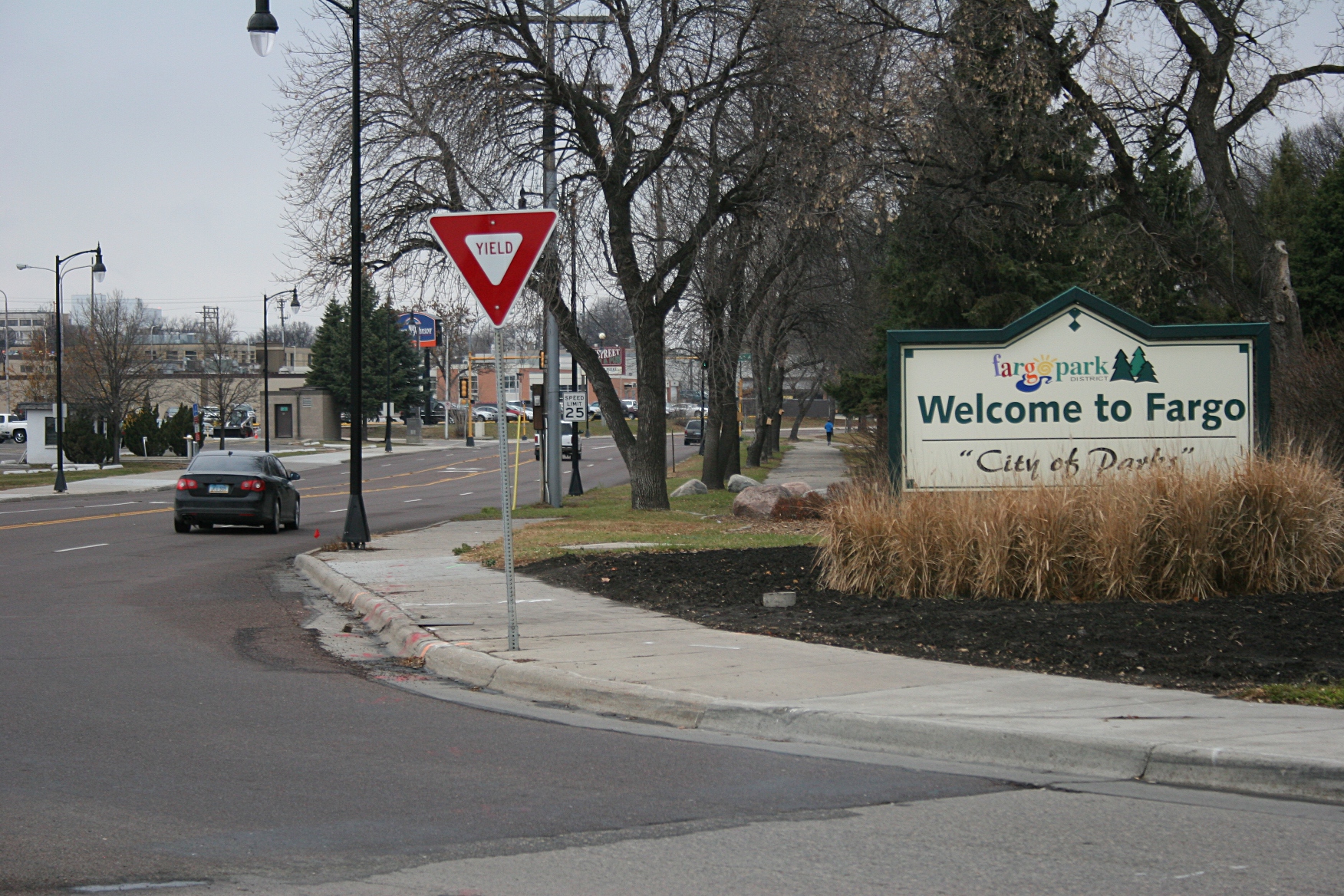
A sign along a city street welcomes us to Fargo, North Dakota, from Moorhead, Minnesota, just across the Red River.

LET’S PRETEND FOR A MOMENT that you are me. You’ve traveled nearly 300 miles from southeastern Minnesota to Fargo, North Dakota, with your husband to visit your son at North Dakota State University in mid-October.

Your son needs basic supplies like laundry detergent and deodorizing powder to sprinkle into his smelly athletic shoes. He also needs long-sleeved shirts, sweaters, socks and a warm scarf to wrap around his neck. Winter, after all, is waiting on flat and windy Fargo’s doorstep.

Being the nice parent that you are, you offer to take your boy shopping. And even though your son detests shopping, he agrees. He is no dummy. He would rather spend Mom and Dad’s money than his own.

So you plan a shopping trip to Target in West Fargo for 10 a.m. Sunday because that will allow the teen to sleep in. Afterward you’ll grab lunch around 11 a.m., then proceed to J.C. Penney (you checked online and Penneys does not open until noon) and leave town by 1 p.m. That is the plan. You have 300 miles to drive yet today.

But the entire plan is tossed out the window when you arrive at Target around 10:30 a.m. Sunday to find the doors locked. This big box retailer does not open until noon.

You suggest heading to Walmart. Your son gets on his smart phone, which he’s recently purchased quite successfully without your assistance or money, thank you. The three of you are soon winding your way around West Fargo, aiming for the discount retailer many love to hate.

Pulling into the parking lot, you notice that the place appears mostly deserted of cars and certainly of customers. As you draw nearer to the front doors, you spot signs stationed at the entrances:

The sign posted in front of the West Fargo Walmart on a Sunday morning.

OK, then.

Now what? Change of plans. Again.

Time to proceed with Plan C, which would be to check if Moorhead, Minnesota, just across the Red River, has a Target. It does. So you aim west for the border, driving five-plus miles, burning up gas because you don’t have time to wait for North Dakota’s stores to open.

You arrive at the Minnesota Target to find the parking lot packed with vehicles bearing mostly North Dakota license plates.

If only you had known about the Sunday morning shopping ban in NoDak, you would have planned differently and squeezed in a Saturday evening shopping outing. You would not be a now unhappy and grumpy Fargo visitor.

But you’ve heard/read nothing of this Blue Law (which you can read about in detail by clicking here)…

How are you supposed to know this stuff? You live in southeastern Minnesota.

And why is such a seemingly antiquated law still on the books?

FYI: I DID NOT REALIZE until I later spoke with a friend, a Minnesotan who grew up in North Dakota and whose son lives and works in Fargo, that the Blue Law not all that long ago prohibited retailers from any Sunday sales. So I suppose I should consider it progress that North Dakota retailers can now open their doors at noon on Sunday.

Secondly, this same friend told me that North Dakota has a five percent sales tax on clothing, of which I was unaware. The trip back across the river to the Target store in Moorhead thus saved us some tax dollars. However, according to information I found online, some North Dakota legislators want to repeal that tax. You can read about those efforts by some Fargo Democrats by clicking here.

Finally, can anyone explain the origin of the Blue Law in North Dakota? I expect it dates back to Sunday as a day of rest, as the Lord’s Day. I respect that and hope that most would choose worship over shopping. Yet, times have changed and church services are held on Saturdays too and, well, you know…

© Copyright 2012 Audrey Kletscher Helbling
 

Too much pink? October 27, 2012

ENOUGH PINK ALREADY.

Northeastern Minnesota writer Ada Igoe, who blogs at “Of Woods and Words,” writes this week about all the pink out there during this, Breast Cancer Awareness Month.

While I don’t agree with everything she says in her “Rage Against the Pink” post, I agree that this whole “pink” thing is being overdone and has become too commercialized. Just like the right amount of salt can flavor a dish, too much salt can ruin it.

In a row of green and yellow Olivers, I spotted this pink one at the Rice County Steam & Gas Engines Show earlier this fall. I have no reason to doubt the genuineness of this tractor owner in calling attention to the fight against breast cancer.

How do we separate those who truly are genuine in their pinkness as opposed to those simply out to perhaps earn a buck or get some media attention for whatever they are selling or promoting?

Ada raises issues like that in her thoughtful piece. I’m not going to steal and repeat all this blogger wrote. Rather, I will point you directly to the source, so click here.

And just for the record:

  • My mother is a breast cancer survivor.
  • My uncle, Dr. Robert M. Bowman, created Femara, a hormone therapy drug used to treat breast cancer in post-menopausal women.
  • A dear friend is currently being treated for breast cancer.
  • Last evening I waited in line for one hour and 15 minutes to comfort friends and their daughter who lost their youngest daughter/sister to colon cancer after two courageous years of battling the disease. Stacey was only 39.
  • Sometimes it’s genuinely easy to separate those who mean well by emphasizing pink from those who have other than the best intentions. Absolutely, this pink tractor showcases one family’s personal story and does not seek to commercialize or gain anything financially from using the color pink.

    WHAT ARE YOUR THOUGHTS on the use of pink to promote breast cancer awareness? Overkill? Just right? Let’s hear.


My opinion of Fargo, the film not the city, & a television series October 2, 2012

Filed under: Uncategorized — Audrey Kletscher Helbling @ 9:02 AM
Tags: , , , , , , , , ,

SO THEN, THERE, I watched that there Fargo movie just like I promised ya I would, albeit that promise was made, and this review written, months ago. Ya betcha.

But timing is everything. This past week the Academy Award winning writers of Fargo, native Minnesotans Joel and Ethan Coen, announced plans to executive produce an hour-long series for FX television loosely-based on Fargo. Perfect. Time to pull this review out of my draft box, update and publish it.

Since I don’t get FX, relying instead on a roof antenna to deliver several channels of programming to the single 1990s television in our house, I doubt I will ever view the new Fargo series. I have no idea what writer Noah Hawley, or the Coens, have planned for the small screen adaptation.

But, if the team can produce a show similar to the 1990s television series Northern Exposure, set in Alaska, I’d consider it a success. Honestly, I loved that geographic-centric show with strong local characters and could see the same premise working for Fargo.

That update given, let’s return to my opinion of the original Fargo film. To get you back on track, I’ll repeat the intro to this post:

So, then, there, I watched that there Fargo movie just like I promised ya I would, albeit that promise was made, and this review written, months ago. Ya betcha.

Honestly, people, I cannot write like I’m some northwoods hick. This is not how I talk either. Nor is this how Minnesotans or North Dakotans speak, although occasionally a “ja/ya” or “you bet” may slip into our conversations.

After watching the Coen brothers’ 1996 award-winning film for the second time, because I’ve visited the city of Fargo thrice already this year with the son now attending North Dakota State University, my negative opinion of the language in the movie has broadened. Now not only do I dislike the inaccurate accents and word usage, but I don’t like the bad language either. I apparently had forgotten about all the crude language written into the script.

Apparently I had also forgotten that seven—and I think I got that count right—characters are murdered. That’s a lot of bloodshed.

So what do I consider the film’s notable accuracies in depicting Minnesota?

The Coen brothers, who are native Minnesotans, got it right with the snowy highway scene, the scraping ice from the windshield, the buffet and the eggs for breakfast, the car needing a jump start and this weather phrase: “Gotta front comin’ in.”

But here’s what I really appreciate in Fargo: One of the main characters is a strong woman, Brainerd (Minnesota) Police Chief Marge Gunderson. She is gutsy and determined and she is married to an artist. That the Coens would write that key part for a woman impresses me, because, even in 2012, I am quite certain the number of women who head up police departments in Minnesota and North Dakota is relatively small.

I also like this line by Gunderson, spoken at the end of the movie as she ponders the loss of life, all because of money: “There’s more to life than a little money, you know. Don’tcha know that?”

That statement is enough to redeem the movie for me.

But I’m still wondering why this film was titled Fargo. Sure, the opening scene takes place in Fargo. But that’s it. From there on in, it’s set in Minnesota. I suppose Brainerd doesn’t have the same ringing appeal or instant identity as Fargo.

And then I’m a bit confused by the discrepancies between the opening—which states that the events depicted in the film took place in Minnesota in 1987—and the afterward, in which viewers are told the film is based on incidents but not a true story. Which is it?

IF YOU’VE SEEN the movie Fargo, what’s your opinion of it?  Do you think it accurately depicts Minnesota and/or Minnesotans? Would you have chosen a different name for the film?

What do you think of plans for a television spin-off of Fargo? What type of content would you like to see in that proposed series? Would you watch it?

CLICK HERE to read a previous post I wrote about a woodchipper and movie memorabilia from the Fargo film on exhibit at the Fargo-Moorhead Visitors Center.

© Copyright 2012 Audrey Kletscher Helbling


Meet Bob, the opinionated farmer from Madelia September 10, 2012

Filed under: Uncategorized — Audrey Kletscher Helbling @ 6:46 AM
Tags: , , , , , , ,

I met Bob Michniewicz  and his wife, Judy, selling their woodcrafts at the recent Rice County Steam and Gas Engine Show. He wouldn’t allow me to photograph his art, except for a single sign and a single cow, not wanting others to steal his ideas. However, a few other crafts got into the photo when Bob obliged my request for a portrait.

OCCASIONALLY YOU MEET a character, and you know it just looking at the person, before lips even part to utter a single syllable.

I knew, just knew, Bob Michniewicz was a character when I saw him and his set-up at the Rice County Steam and Gas Engine Show in rural Dundas. With kitschy wooden lawn ornaments—you know the kind—and wind chimes and eye-catching messages defining his space, Bob was bound to be interesting.

Just look at the poster Bob leaned front and center against a support post for the tent under which he and his wife of 50 years, Judy, were peddling their wares.

Bob was gauging interest in this sign with plans to print it on vinyl and sell it should interest run high.

Naturally, I asked Bob about that message. Seems he’s a bit worked up about all the non-farm folks moving onto farms in his area and then complaining about noise or smell or dust and such from working farms.

“Farmers were here first,” he emphasizes. And that, in this retired farmer’s opinion, should settle any matters of dispute.

All around him, Bob views the ever-changing rural Minnesota landscape. Within a three-mile radius of his farm (the home place) 3 ½ miles from Madelia, only four farmers remain. The rest are people living on the building sites.

Therein, according to Bob, lies the problem. “People don’t know where farm stuff comes from.” I’m not sure I understand what he means, but I think I do and Bob doesn’t allow me to interrupt this rather one-sided conversation.

Bob just steamrolls forward, asking if I know that potatoes in stores are sprayed to keep them from sprouting. (I don’t know this and check later to see if Bob, who is a gardener, is right, and apparently he is, although I’m not saying all potato growers, all stores, follow this practice.)

He looks me directly in the eye and says: “Next time you eat mashed potatoes, you may as well take a shot glass of Round-up with a beer chaser.”

Like I said, Bob’s a character, and an outspoken one at that.

Bob certainly possesses a sense of humor, as seen in this bovine lawn art.

© Copyright 2012 Audrey Kletscher Helbling

 

Yearning for respect & equality, “no matter what color you are” August 26, 2012

I HAVE PHOTOGRAPHED them from a distance, their long skirts swaying as they walk across Central Park toward me.

Now the young women are standing before me and I am confused for a moment until Nasteho Farah tells me she wants to look her best and asks me to photograph them again.

Friends, Nimo Abdi, a sophomore at Faribault High School, left, and Nasteho Farah, a senior.

I agree as I already envision the portrait possibilities—the expressive brown eyes, the warm skin tone, the way Nimo Abdi leans toward her friend, her hijab brushing Nasteho’s cheek. They are beautiful young women and I take only one shot, knowing I’ve captured a memorable portrait.

I love this image of  a fest performer and her single audience member for the message it portrays– the one on one connection that helps us understand one another, no matter our culture or skin color.

These Faribault High School students are among those participating in the International Festival Faribault on Saturday, an event designed to connect cultures through music, arts and crafts, kids’ activities, international cuisine, education and, on a personal level, conversation.

That same little boy who was so intently focused on the musician performing in the band shell.

After I photograph the friends, we talk about their experiences living in Faribault. And what Nasteho shares with me so upsets me that I apologize to her for the utter disrespect shown to her and her friend, who stands silently listening.

The native of Kenya, a Faribault resident for five years and prior to that a resident of Rochester, Owatonna and Waseca, says she is criticized for the scarf she wears, for her culture, for her…

“They assume I’m a terrorist.”

Her words temporarily stun me and I can feel my jaw drop.

She doesn’t define “they” specifically, but says the insults, the prejudice, happens randomly—in school, in the streets, even at work.

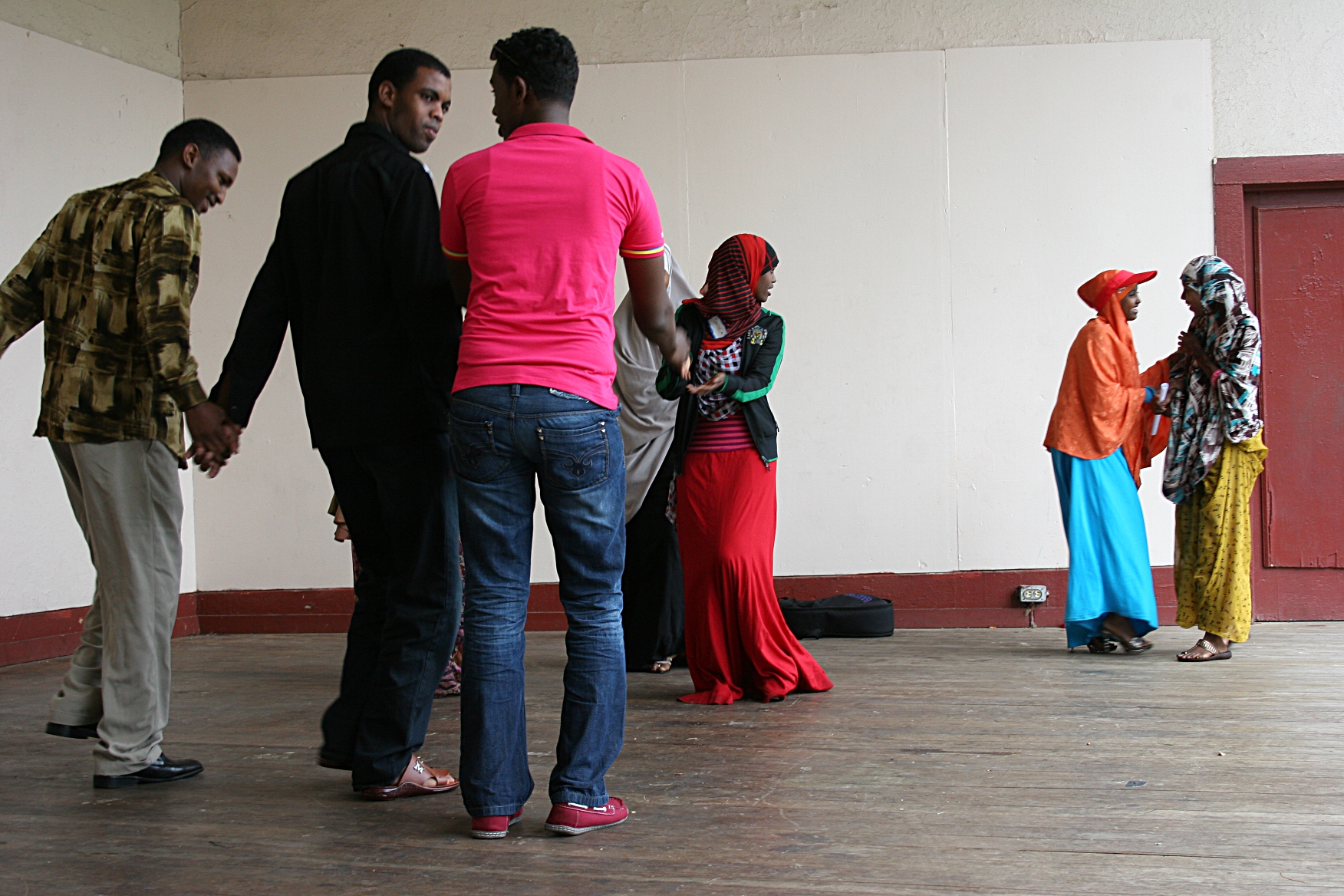
A group of young Somali dancers perform on the band shell stage during the festival.

When I ask for examples, Nasteho mentions the middle-aged man who comes through the drive-through at McDonalds in Faribault where she works. He tells her she should stop wearing her head scarf. She’s talked to her manager about it and he’s been supportive. For now, she mostly tries to ignore the customer’s spiteful comments.

When she walks into other businesses, like the grocery store, she feels the stares. When driving, she’s been flipped off.

“There is no respect for Somalis,” Nasteho assesses.

Yet, she doesn’t seem visibly angry, choosing instead to speak up or to take the position that those who choose to attack her or her culture do not know her or understand her.

I admire Nasteho’s positive attitude. She tells me she didn’t experience prejudice living in Rochester—a larger and more diverse community—but that it’s been much harder in a smaller town like Faribault. She was too young to remember what life was like in Owatonna or Waseca.

Faribault High School seniors Shukri Aden, left, and Khadra Muhumed.

Faribault High School students Shukri Aden and Khadra Muhumed, who are volunteering with STOPS, Students Together Offering Peer Support, at the International Festival, have also been subjected to hurtful comments from those who tell them to go back to their own country or that they smell.

“I try to talk to them,” says Shukri, who has lived in Faribault for seven years, since she came to the U.S. at age 12.

She wants everyone “to be equal no matter what color you are…to get to know each other.”

Lul Abdi shows off beautiful wood crafts from Kenya and Somalia for sale at the fest.

And this FHS senior has dreams—of going to college to become a nurse and then returning to Somali to help those in need.

On this Saturday, at this International Festival, the words of these young Somali women evoke mixed emotions within me. I am saddened by those in my community who fail to see beyond the scarves, the culture, the skin color, the language.

Mother and daughter check out the artwork from Kenya and Somalia.

These women are not terrorists. They are someone’s daughters. They are high school students. They live here, work here, shop here, worship here.

Despite the clear prejudice which angers me, I feel hope. These young women possess a maturity and poise beyond their teenage years. They yearn for understanding, for respect, for the personal connections that define them as individuals.

And on this Saturday afternoon they are trying, through their volunteerism at the International Festival Faribault, to, as Nasteho says, “bring everybody together.”

A mother’s love and care, the same in any language, any culture, any skin color.

CHECK BACK FOR A FUTURE post with photos from the seventh annual International Festival Faribault. Thank you to the organizers and participants in this festival who are trying to connect cultures, to make Faribault a better place to live, no matter your culture, skin color or country of origin.

© Copyright 2012 Audrey Kletscher Helbling

 

Faribault Festival offers opportunity to bridge differences & connect August 23, 2012

Filed under: Uncategorized — Audrey Kletscher Helbling @ 7:15 AM
Tags: , , , , , , , ,

TODAY I’D LIKE TO EXTEND an invitation to you. Pull out your calendars right now and add this event to your schedule: International Festival Faribault, 10 a.m. – 4 p.m. on Saturday, August 25, Central Park.

Several Latinos lead in singing of Mexico’s national anthem last September during the International Festival Faribault at Faribault’s Central Park. The flags strung across the band shell represent the countries featured at the fest. This weekend’s celebration marks the seventh such international fest in Faribault.

There. Done. Right?

The scramble for candy after the pinata is broken at last year’s festival. Kids of all races participated with no concern for skin color or cultural differences. So refreshing to see.

Served at the 2011 fest: Guatemalan chuchitos– chicken, corn and salsa wrapped in a corn husk. You’ll find vendors offering a variety of authentic international foods.

OK, why do I think it’s important for you to attend this festival which features multicultural entertainment, arts and crafts vendors, authentic international cuisine, kids’ activities, a silent auction and more?

Simple. We as a community need to meet each other, to connect on a personal level, to understand each other if we are ever to overcome the very obvious cultural differences which divide us.

I met then 16-year-old Riyaam, an Owatonna High School student, at last year’s festival. She spoke openly about the prejudice at OHS and a white student’s single comment, “Somalis don’t belong here,” which led to racial clashes and tension. OHS has since instituted a policy of “you fight, you’re out.” It broke my heart to listen to Riyaam.

You know what I’m talking about, the differences in skin color and language, in culture and in dress.

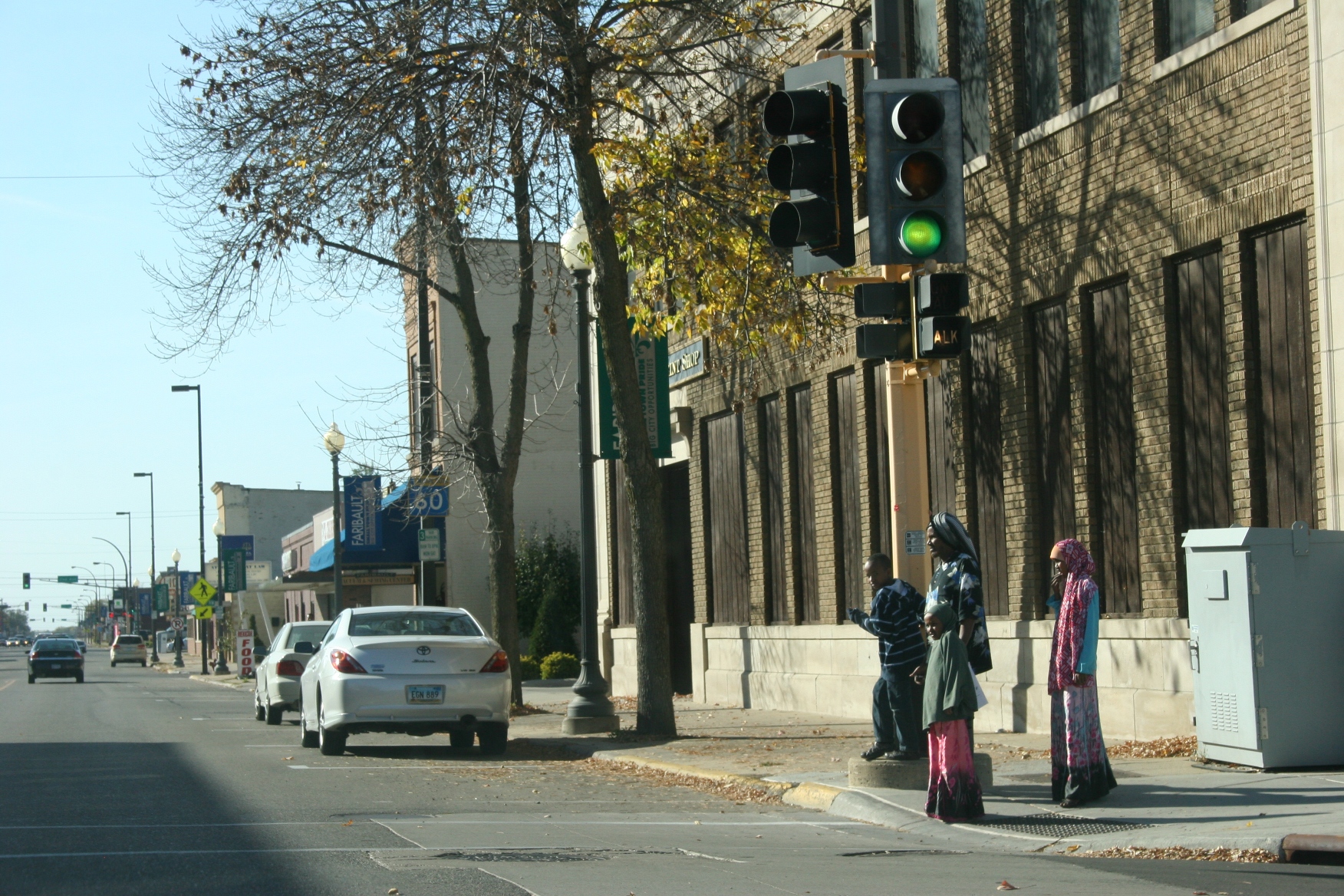
There’s way too much suspicion and mistrust, cautiousness and prejudice toward the minorities living and working in Faribault. I’ve heard the derogatory comments about the Somali men who hang out on downtown street corners, the Hispanics who commit all the crimes, the immigrants who take away our jobs, the people who don’t speak English.

Seriously, these Somali men live downtown and the sidewalk is their yard.

“Mexicans,” and I’ve heard that word spit out of too many mean mouths, do not commit all the crimes in our community. Do you know any Hispanics personally? I do. They are probably the most family-oriented individuals I’ve ever met and we could learn a lot from them about the importance they place on loving and caring for one another.

And about those Somalis and/or Sudanese who supposedly steal our jobs—I expect most of us would not want to work the factory jobs they work. I mean no offense to the places which employ them, like the local turkey plant. But if we are honest with ourselves, we’ll admit that we likely never would work at these physically-demanding and not always pleasant jobs.

As for speaking English, have you, as an adult, tried learning a new language? Now attempt learning a new language in a foreign country. Not so easy. Think back to a few generations before you. I bet your great grandparents didn’t speak English. Even my own mother’s first language was German, not English.

The other evening while shopping at a local Big Box retailer, I witnessed how difficult it was for a Hispanic woman to communicate due to her limited English. I almost got on my cell phone to call my second daughter who works as a Spanish medical interpreter in eastern Wisconsin to ask her to interpret.

Did you know that, according to the 2010 U.S. Census, 17.4 percent of Faribault’s 23,352 residents have a language other than English spoken at home? Stats show 9.4 percent of our city’s residents are foreign-born.

Vendors, like Riyaam, peddled their wares at the 2011 festival.

Instead of criticizing those who speak and dress and live differently than the majority of us, let’s begin to understand them. Mostly, I think, our misconceptions, our prejudices, are based on fear. We fear what we don’t understand.

A young girl’s henna stained foot, photographed at the 2011 fest.

International Festival Faribault offers a common, public ground—a city park—on which to meet the minority individuals who call our community home. They are here to stay. Let’s get to know them. Engage in conversation. Show them you care, that you’re genuinely interested in learning more about them and their cultures. Once you’ve connected on a personal level, you will begin to view them as individuals and not by the color of their skin, the clothing they wear, the language they speak…

Xafsa, age 5, photographed at the 2011 festival.

FYI: Click here to link to the International Festival Faribault website.

While this post is directed specifically at the residents of my community, its content can apply to many communities. You’re all invited to Faribault for International Festival Faribault, no matter your community or country of origin. And just to be clear, many Faribault residents and organizations embrace the minorities who call our southeastern Minnesota city home. I in no way intend to mislead you into thinking we are all a bunch of bigots living here. However, neither am I going to hide the fact that obvious prejudices exist and are very much a concern in Faribault.

Click here to link to the post I wrote about last year’s International Festival Faribault.

© Copyright 2012 Audrey Kletscher Helbling
 

Oh, the interesting topics you’ll find in small town newspapers…of bullets, burgers & babies… August 14, 2012

Filed under: Uncategorized — Audrey Kletscher Helbling @ 6:51 AM
Tags: , , , , , ,

SMALL TOWN NEWSPAPERS make for some interesting reading. Stories can get downright personal and to the point.

For example, I found a gem last week online at The Redwood Falls Gazette, a twice-a-week newspaper published in Redwood County in southwestern Minnesota. It’s the newspaper I grew up reading.

The Redwood Falls Gazette editor Troy Krause, right, interviews Todd Bol, co-founder of the Little Free Library in Vesta in early July. Bol gave a LFL to my hometown and installed it at the Vesta Cafe.

In the “Backward Glance” section of the newspaper, under 1987—25 years ago, this tidbit of information was published:

In the listings of the Redwood County 4-H county fair champions, Troy Krause of the Loyal Scotties was overall grand champion in flower gardens, while Kelly Zwaschka of the Vesta Vikings won champion child development.

(Note: Troy is editor of the Redwood Gazette, while wife Kelly gave birth to their seventh child, Gideon, this week. Congrats from the Gazette staff!)

How’s that for a birth announcement? Obviously Kelly’s interest in child development, even as a 4-Her, was a clear indicator of her future. As for Todd, I believe flower gardening could be connected to creativity/writing.

You’ll also find a brief about a game warden, shot through the head in 1937 by another game warden who mistook him for a bear. That’s listed in the 50 years ago section of “Backward Glances.” So, yes, apparently Merle Shields survived the incident as he was celebrating his 20th year as a Redwood County game warden in 1962. (BTW, since writing this post, I discovered that The Gazette has upgraded its website and the “Backward Glance” I reference here cannot be found, or I couldn’t find it.)

The third piece of interest was published in last week’s The Gaylord Hub, where I worked for two years as a news reporter and photographer right out of college. Avery Grochow, past president of The Gaylord Chamber of Commerce, penned a letter to the editor which I am certain is the current coffee shop talk of Gaylord.

I’ll summarize parts of his lengthy, six-paragraph letter and quote directly when needed. Grochow begins:

We, as the chamber board, are constantly trying to do our best for our community and are constantly being criticized by some for our decisions.

Apparently locals were grumbling about the food—who supplied it and how it tasted—at the community’s annual Eggstravaganza summer festival. New volunteers, replaced Dewey (whoever that is; my words here, not Avery’s), who “wanted a year off from all the arguments.” They stepped up and worked through a new bidding process for the supplies, awarding the bid to the lowest bidder.

Grochow continues:

We have had comments both ways about the supplying of hamburger. Some have criticized us in the past because the hamburger was too spicy, that they would rather have plain burgers, and we are now being criticized that we are having plain burgers and not spiced burgers.

No matter what we do as volunteers and directors for the Chamber, we can’t please everyone…We did what we thought was fair to everyone by taking bids on everything and stand by our decision.

Now, just imagine how difficult it must have been for Grochow to write this letter. Not an easy thing to do when you live in a small town like Gaylord where everyone’s lives are intertwined.

I give Grochow credit for having the guts to publicly voice his opinion in print. He doesn’t just vent, though. He offers a solution. And therein lies the point best taken by those who read his letter.

…if anyone has better ideas for us, we still are short of directors and could use all the help we can get to make our Chamber even more successful. We also have openings on the board so you can be part of the decision making, instead of just always making bad comments because you don’t like what we did. Remember, we, as the Chamber Board of Directors, are just volunteers trying to make Gaylord a better place to live and hopefully to have a great celebration.

Those closing remarks are words we could all heed because I expect you, like me, are guilty of occasional grumbling and complaining.


What is this world coming to? July 20, 2012

Filed under: Uncategorized — Audrey Kletscher Helbling @ 9:17 PM
Tags: , , , , , , , ,

THE QUESTION LINGERS on the edge of my brain, nearly tumbling in words onto my tongue, over my lips and out my mouth.

What is this world coming to?

Do you ever ponder that very same question, asking today why a 24-year-old would open fire in a Colorado movie theater killing a dozen and injuring some 60 more? Why? What drives a person to such violence, to take the lives of other human beings who are simply out for an evening of entertainment?

Why, on July 10, did a father in River Falls, Wisconsin, kill his three young daughters? To get back at/punish/hurt his ex-wife?

Why do two young girls vanish, poof, just like that, while riding their bikes in a small Iowa town?

What is this world coming to?

About two blocks away from this anniversary party in south Minneapolis, a crime scene was unfolding late last Sunday morning.

Why, last Sunday, when my family drove to south Minneapolis for a 50th wedding anniversary party, did we turn off Lyndale Avenue and a block away encounter a multitude of police cars and yellow crime scene tape and a TV news crew arriving? We continued on our way wondering what was unfolding as we greeted family, sipped lemonade and slipped into folding chairs in the festive, fenced in backyard just down the street and around the corner.

When my middle brother arrived a bit later, he noted that officers were posed with weapons drawn. Were any of us in danger as we drove past the scene?

What is this world coming to?

Why are children, the most innocent of victims, being shot and killed in Minneapolis on such a regular basis that this horrible crime no longer surprises us?

Have we become immune to violence and the essence of evil which drives it?

What is this world coming to?

When will the killing stop?

© Copyright 2012 Audrey Kletscher Helbling

 

Discussing the economy and jobs at a Faribault thrift store June 5, 2012

Filed under: Uncategorized — Audrey Kletscher Helbling @ 8:03 AM
Tags: , , , , , , , ,

“THE ECONOMY WILL only get worse and this time it will be world-wide,” he warns, he being an unemployed, former military man.

“But I think things are getting better,” I counter. “I’ve seen more jobs openings posted in the paper, more houses selling.”

He disagrees, says he has military friends in Europe. Times are tough there and only getting worse.

I am surprised by the doom-and-gloom economic forecast delivered by this 50-something-year-old job seeker during a brief conversation at The Clothes Closet, a used clothing store in downtown Faribault. I don’t know him, but he’s squeezed past me several times, carrying clothing from the back of the store to the check-out counter.

Finally, I can no longer contain my curiosity and comment, “You’re sure buying a lot of clothes.”

“I’m looking for a job,” he says, then begins spilling his story like we are long-time friends.

He can’t make ends meet on his military pension, although he’s grateful for that income, he says. So he’s looking for a job in security, maybe with the border patrol. He’ll travel soon to Corpus Christi in search of work that pays more than $9 an hour.

His 15-year-old daughter, who has been living with her mother, is coming with him. He’s relieved to no longer be paying $900 in monthly child support to a woman he says did not spend the money on their daughter. He seems genuinely happy to have his girl back.

But he’s not so cheerful about the process of applying for a job. “It’s not like it used to be where you can walk in and sell yourself,” he says. He doesn’t like the online resume job-screening process, preferring instead the personal one-on-one contact with a potential employer.

He looks like the type of fellow who could, face-to-face, easily sell himself as a security guard. Ex-military. Big guy. I expect he appears intimidating and authoritative in a uniform.

But for now, for this day, he is an unemployed and worried American buying clothes at a second-hand clothing store in Minnesota.

I was searching in my files for an image to illustrate this post. This particular photo has nothing to do with the man I engaged in conversation or the thrift store where we talked or even his job search. Yet, I consider it fitting for this story, and here’s why. To me, this shot from Main Street in tiny Norwalk exhibits this southwestern Wisconsin community’s optimism. Against the backdrop of weathered and shuttered buildings stand two symbols of optimism: those gorgeous hanging baskets and the American flag. Norwalk, along the Elroy-Sparta Bike Trail, calls itself “The Black Squirrel Capital of the World.”

WHAT’S YOUR OPINION on the economy? Is is improving or, as the ex-military man predicts, going to get considerably worse here and world-wide by this fall?

According to “employment situation” information released by the U.S. Bureau of Labor Statistics on June 1, “the unemployment rate (for May) was essentially unchanged at 8.2 percent.” Currently, 12.7 million people are unemployed. The unemployment rate for adult men is 7.8 percent. To read the full report, click here.

ARE YOU LOOKING for a job? Share your experience by submitting a comment. How do you feel about the online job application process used by most businesses?

© Copyright 2012 Audrey Kletscher Helbling