Minnesota Prairie Roots

Writing and photography by Audrey Kletscher Helbling

What is this world coming to? July 20, 2012

Filed under: Uncategorized — Audrey Kletscher Helbling @ 9:17 PM
Tags: , , , , , , , ,

THE QUESTION LINGERS on the edge of my brain, nearly tumbling in words onto my tongue, over my lips and out my mouth.

What is this world coming to?

Do you ever ponder that very same question, asking today why a 24-year-old would open fire in a Colorado movie theater killing a dozen and injuring some 60 more? Why? What drives a person to such violence, to take the lives of other human beings who are simply out for an evening of entertainment?

Why, on July 10, did a father in River Falls, Wisconsin, kill his three young daughters? To get back at/punish/hurt his ex-wife?

Why do two young girls vanish, poof, just like that, while riding their bikes in a small Iowa town?

What is this world coming to?

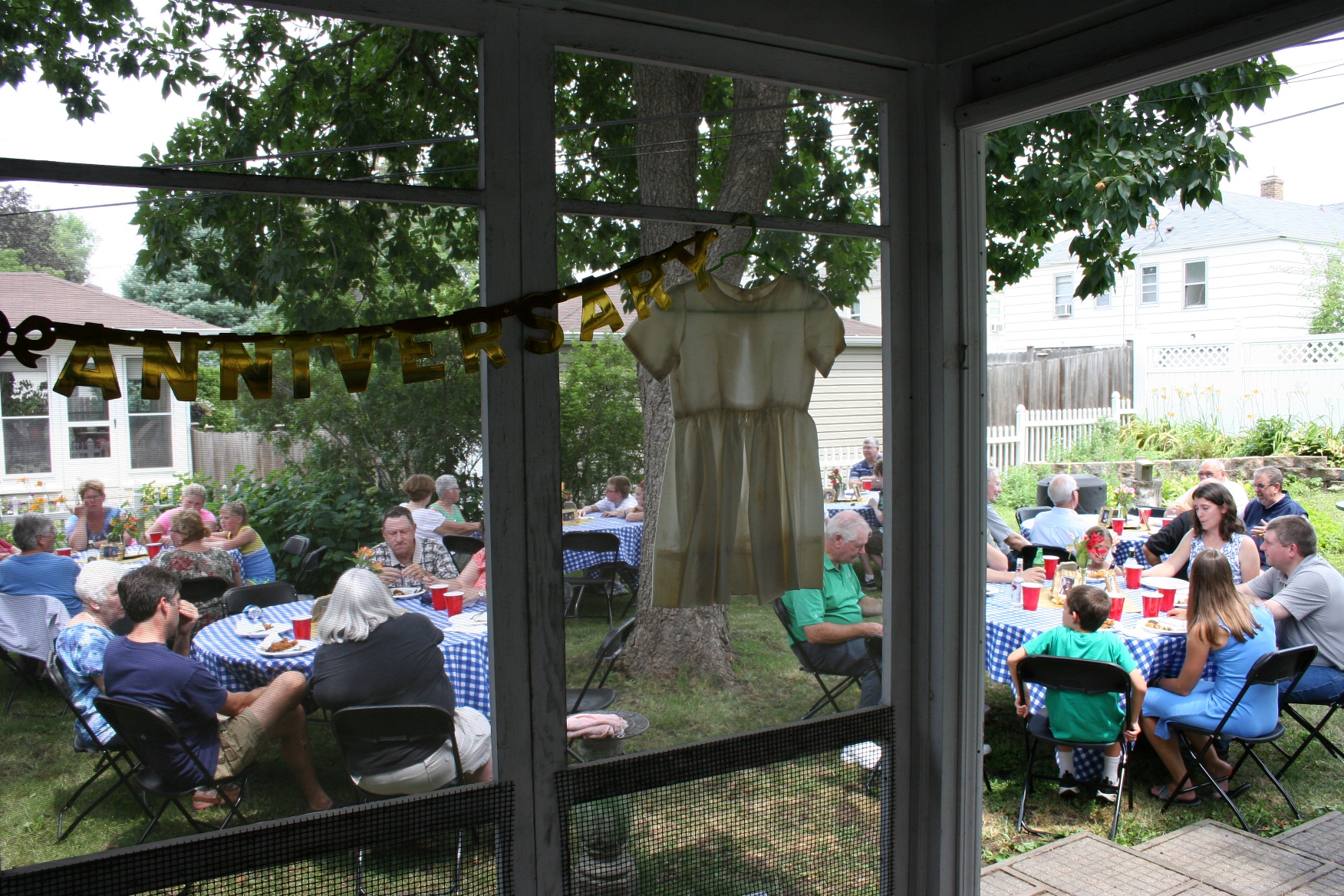
About two blocks away from this anniversary party in south Minneapolis, a crime scene was unfolding late last Sunday morning.

Why, last Sunday, when my family drove to south Minneapolis for a 50th wedding anniversary party, did we turn off Lyndale Avenue and a block away encounter a multitude of police cars and yellow crime scene tape and a TV news crew arriving? We continued on our way wondering what was unfolding as we greeted family, sipped lemonade and slipped into folding chairs in the festive, fenced in backyard just down the street and around the corner.

When my middle brother arrived a bit later, he noted that officers were posed with weapons drawn. Were any of us in danger as we drove past the scene?

What is this world coming to?

Why are children, the most innocent of victims, being shot and killed in Minneapolis on such a regular basis that this horrible crime no longer surprises us?

Have we become immune to violence and the essence of evil which drives it?

What is this world coming to?

When will the killing stop?

© Copyright 2012 Audrey Kletscher Helbling


Discussing the economy and jobs at a Faribault thrift store June 5, 2012

Filed under: Uncategorized — Audrey Kletscher Helbling @ 8:03 AM
Tags: , , , , , , , ,

“THE ECONOMY WILL only get worse and this time it will be world-wide,” he warns, he being an unemployed, former military man.

“But I think things are getting better,” I counter. “I’ve seen more jobs openings posted in the paper, more houses selling.”

He disagrees, says he has military friends in Europe. Times are tough there and only getting worse.

I am surprised by the doom-and-gloom economic forecast delivered by this 50-something-year-old job seeker during a brief conversation at The Clothes Closet, a used clothing store in downtown Faribault. I don’t know him, but he’s squeezed past me several times, carrying clothing from the back of the store to the check-out counter.

Finally, I can no longer contain my curiosity and comment, “You’re sure buying a lot of clothes.”

“I’m looking for a job,” he says, then begins spilling his story like we are long-time friends.

He can’t make ends meet on his military pension, although he’s grateful for that income, he says. So he’s looking for a job in security, maybe with the border patrol. He’ll travel soon to Corpus Christi in search of work that pays more than $9 an hour.

His 15-year-old daughter, who has been living with her mother, is coming with him. He’s relieved to no longer be paying $900 in monthly child support to a woman he says did not spend the money on their daughter. He seems genuinely happy to have his girl back.

But he’s not so cheerful about the process of applying for a job. “It’s not like it used to be where you can walk in and sell yourself,” he says. He doesn’t like the online resume job-screening process, preferring instead the personal one-on-one contact with a potential employer.

He looks like the type of fellow who could, face-to-face, easily sell himself as a security guard. Ex-military. Big guy. I expect he appears intimidating and authoritative in a uniform.

But for now, for this day, he is an unemployed and worried American buying clothes at a second-hand clothing store in Minnesota.

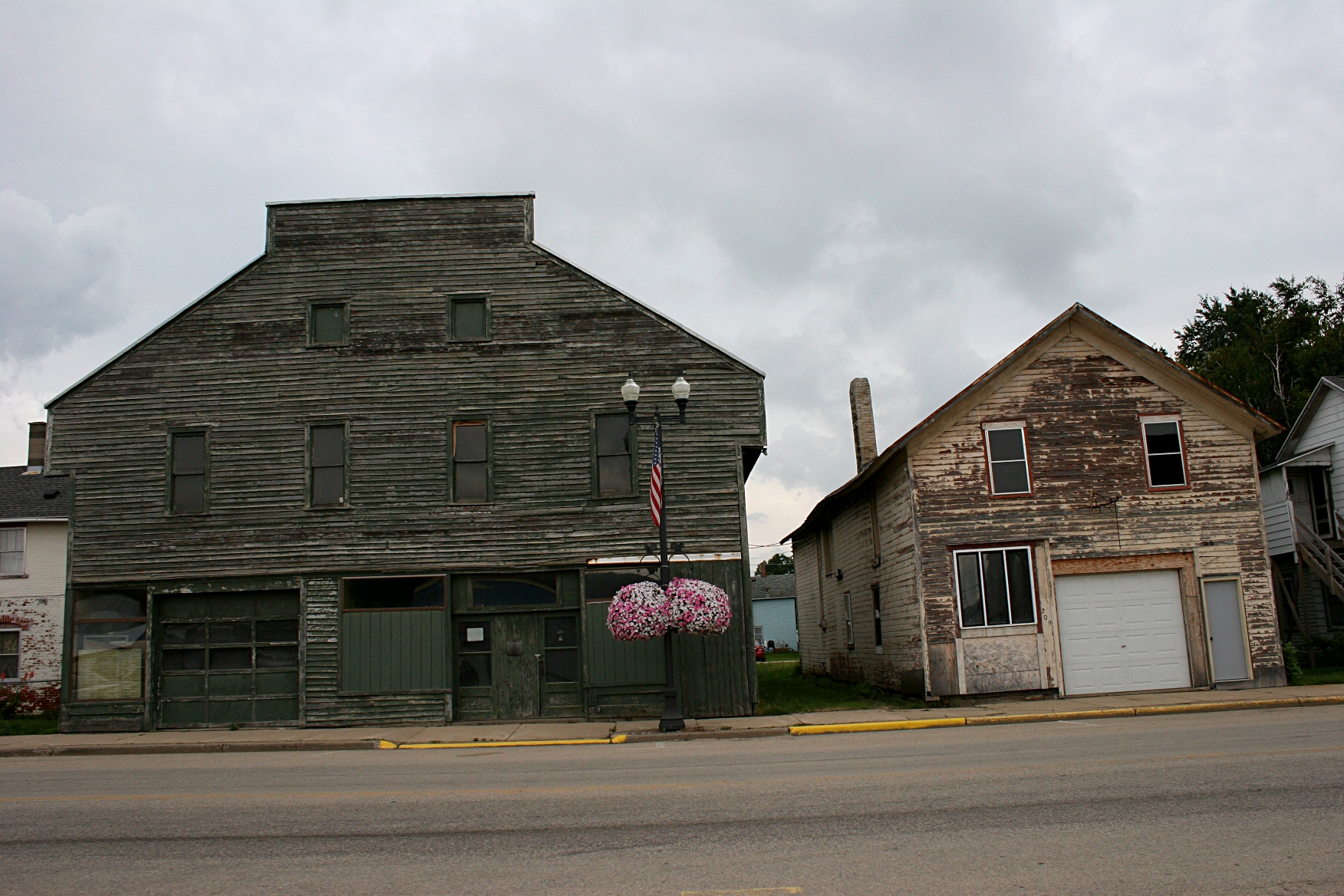
I was searching in my files for an image to illustrate this post. This particular photo has nothing to do with the man I engaged in conversation or the thrift store where we talked or even his job search. Yet, I consider it fitting for this story, and here’s why. To me, this shot from Main Street in tiny Norwalk exhibits this southwestern Wisconsin community’s optimism. Against the backdrop of weathered and shuttered buildings stand two symbols of optimism: those gorgeous hanging baskets and the American flag. Norwalk, along the Elroy-Sparta Bike Trail, calls itself “The Black Squirrel Capital of the World.”

WHAT’S YOUR OPINION on the economy? Is is improving or, as the ex-military man predicts, going to get considerably worse here and world-wide by this fall?

According to “employment situation” information released by the U.S. Bureau of Labor Statistics on June 1, “the unemployment rate (for May) was essentially unchanged at 8.2 percent.” Currently, 12.7 million people are unemployed. The unemployment rate for adult men is 7.8 percent. To read the full report, click here.

ARE YOU LOOKING for a job? Share your experience by submitting a comment. How do you feel about the online job application process used by most businesses?

© Copyright 2012 Audrey Kletscher Helbling

 

Thank you, Mr. Postmaster, for finally hearing the voice of rural America May 14, 2012

Filed under: Uncategorized — Audrey Kletscher Helbling @ 10:33 PM
Tags: , , , , , ,

FINALLY, AN IDEA that makes sense for continuing postal service in parts of rural America.

The United States Postal Service revealed a plan last week that could keep thousands of small-town post offices open by reducing hours. That’s certainly better than the alternative for places like Hope, Minnesota, an unincorporated community just off Interstate 35 south of Owatonna in Steele County. Last summer Hope’s 120 residents learned that their post office, like thousands of others across the country, likely would close in a cost-cutting measure.

Under a proposal, the Hope Post Office will remain open with daily window hours cut from eight to two.

Residents of Hope didn’t simply give up and accept their fate.  Instead, they circulated petitions and attended meetings and voiced their opinions and filed an appeal. To no avail. The postal service announced in April that the Hope Post Office would close. But now it appears the Postal Service has had a change of heart about closing thousands of small-town post offices nation-wide.

Postmaster General and CEO Patrick R. Donahoe said in part last week: “…we’ve listened to our customers in rural America and we’ve heard them loud and clear—they want to keep their post office open. We believe today’s announcement will serve our customers’ needs and allow us to achieve real savings to help the Postal Service return to long-term financial stability.”

So what does all that official talk mean? Some 13,000 post offices are now on “a preliminary list (for modified hours) that requires additional review, analysis, and verification and is subject to change.” Of those, 407 are located in Minnesota.

Well, the Postal Service is certainly covering all of its bases with that language, leaving room to tweak proposals and change plans/minds. I suppose one can never be too careful and cautious when one is a government entity. Meetings will be held in the affected communities to review options, which could take more than two years to implement.

Additional alternatives, according to the Postal Service, include mail delivery to affected customers via rural carrier or highway contract route; contracting with a local business for a village post office; and offering service from a nearby post office.

In a news release issued May 9, Postal Service Chief Operating Officer Megan Brennan says: “The post offices in rural America will remain open unless a community has a strong preference for one of the other options. We will not close any of these rural post offices without having provided a viable solution.”

Good.

The post office in Randolph is facing reduced hours, dropping from eight daily to four.

This certainly comes as welcome news to the folks in Hope and in many other Minnesota communities. In my region, post offices in Morristown, Warsaw, Kilkenny, Webster, Nerstrand, Dennison, Hampton, Castle Rock and Randolph are facing possible reduced hours.

My hometown of Vesta 120 miles to the west, along with nearby Wabasso, Wanda and Wood Lake, also made the modified hours list.

In every corner of Minnesota and hundreds of places in between, you’ll find those 407 small-town post offices where window service is likely to be trimmed. The Minnesota list fills slightly more than eight pages on a 260-page document that includes some 13,000 post offices across the U.S. To read that list, click here.

The Mantorville post office, where this photo was taken, is on the preliminary list of southeastern Minnesota post offices slated to have daily hours cut from eight to six.

It’s never a good thing, to reduce service in a small town. But closing the post offices would be worse.

I sometimes wonder if the decision-makers have ever set foot in these small towns, if they grasp the importance of a post office as an integral fiber in the fabric of community. Post offices are more than a place to pick up mail, to purchase stamps, to send a package. In these small towns, they are also community gathering places, a locale to exchange news, a spot to reach out to neighbors and a symbol of community identity.

I’ve witnessed, first-hand, how losing a school, a church, a business, can impact a rural community. In Vesta, for example, the town’s 330 residents can’t even buy a loaf of bread or a gallon of milk; they must travel some 20 miles for those staples. I remember when my hometown’s Main Street was lined with businesses, including a grocery store, two hardware stores and more.

Yes, times have changed. We are a more mobile society. We communicate via cell phones and e-mail and Facebook and other social media. But not everyone. In these small towns—the ones where the Postal Service initially considered shuttering post offices—many elderly residents don’t own computers, relying instead on old-fashioned mail delivery to pay bills and send letters and hear from loved ones. The post office is vital to their system of communication.

That the U.S. Postal Service finally heard the loud and clear voice of rural America, and perhaps understood that voice, pleases me as it should thousands of other Americans.

© Copyright 2012 Audrey Kletscher Helbling

 

Am I the only mom who thinks prom is ridiculously expensive? April 24, 2012

Filed under: Uncategorized — Audrey Kletscher Helbling @ 8:12 AM
Tags: , , , ,

HOW WOULD YOU react if you reached into your mailbox and pulled out a letter from the county attorney’s office addressed to the “parents of?”

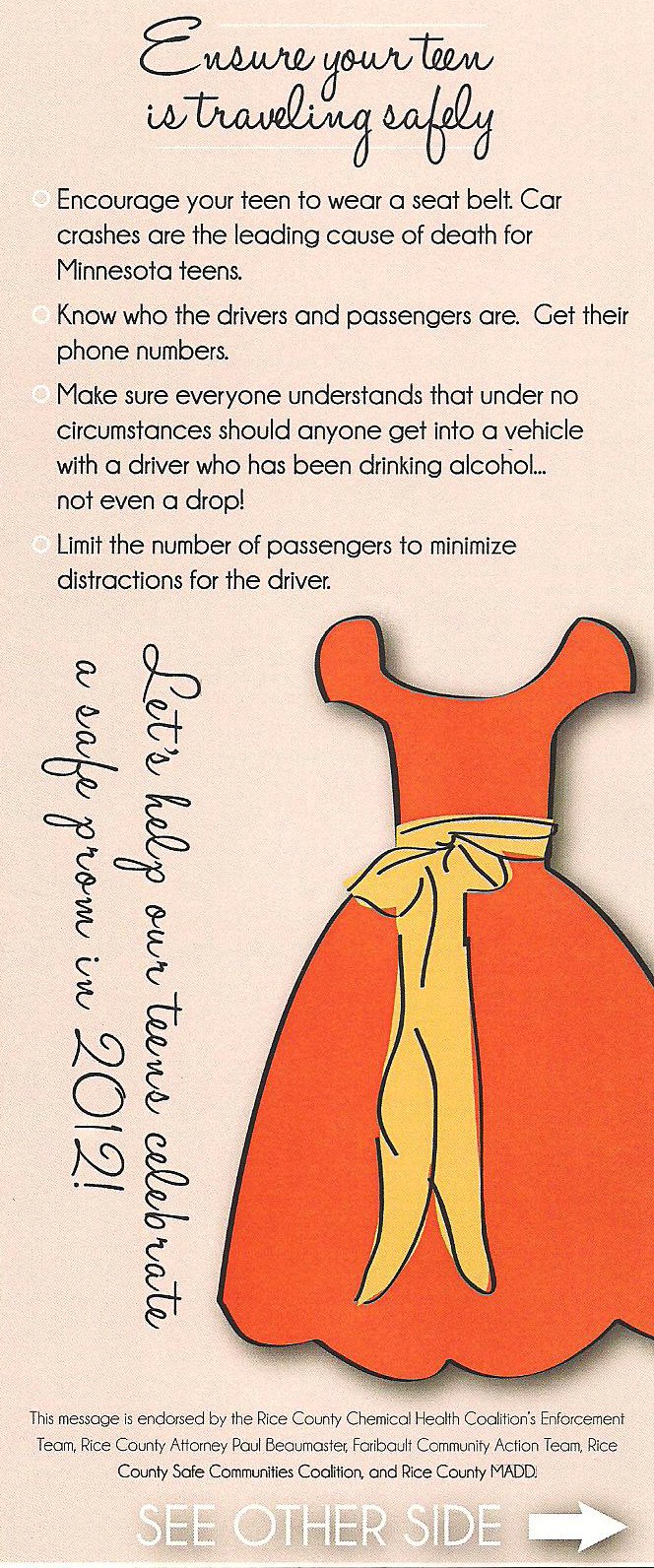
My heart skipped a beat last Thursday morning when I saw my son’s name on that official envelope. Turns out it was simply a mass mailing endorsed by the Rice County Chemical Health Coalition’s Enforcement Team, Rice County Attorney Paul Beaumaster, Faribault Community Action Team, Rice County Safe Communities Coalition and Rice County MADD.

But talk about momentarily scaring the heck out of me. Seriously.

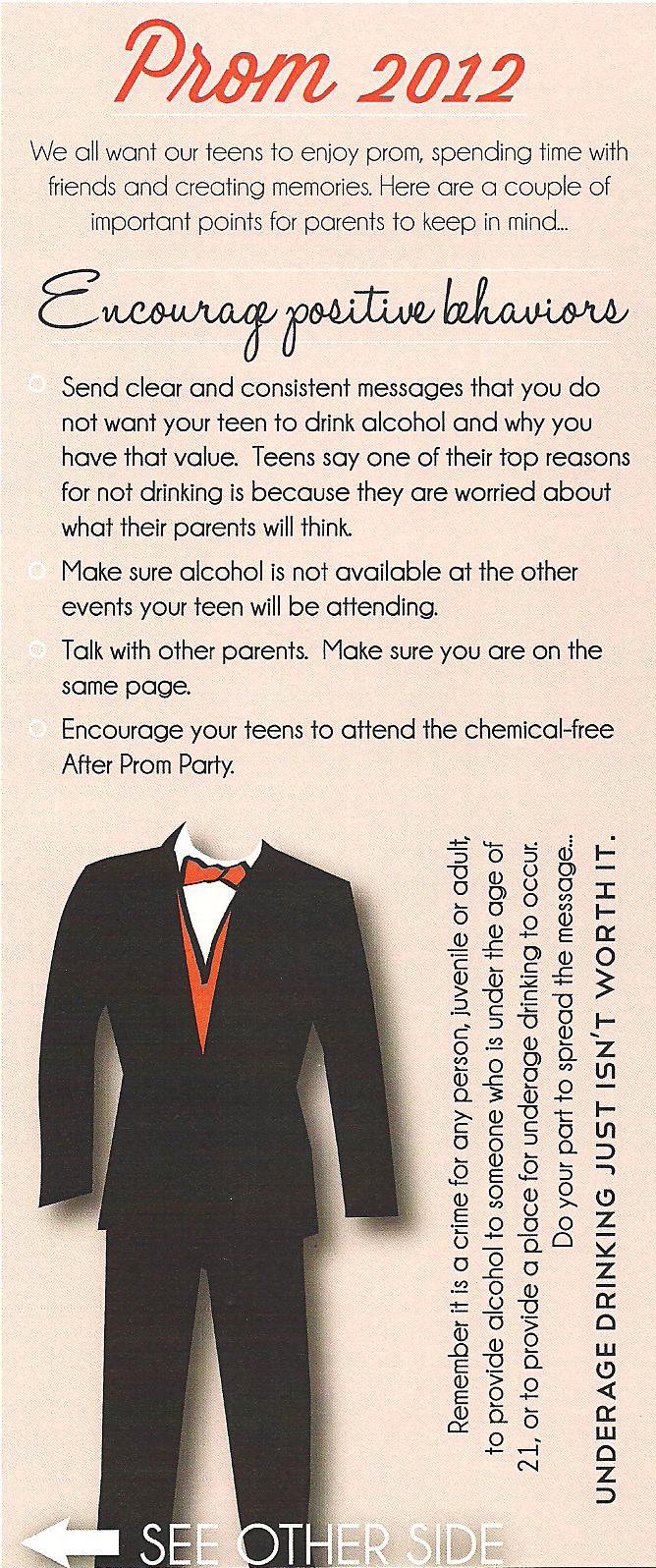
With prom approaching this Saturday at the local high school, these organizations and the county attorney wanted to remind parents and students about safety and legal issues related to driving and to alcohol use. Message received.

If scaring parents by mailing the flier in an official Rice County Attorney’s envelope was the intended result, then they achieved that with me. But I would have preferred delivery of this important information in a less intimidating manner.

Now about prom…, my son isn’t attending. I’m glad. Why? Prom has become so overblown in importance and expense to the point of ridiculousness.

I can’t understand spending hundreds of dollars on clothes, hair styling, photos, flowers, food and transportation for a formal high school dance.

At Faribault High School, the upfront cost to attend prom is $175/couple. That covers transportation to a European style nightclub in St. Paul, a dinner (I think, although it is not listed on the official itinerary) and a dance.

Add to that the dress/tux, shoes and all the other expenses and you’re looking at hundreds of dollars. For prom. For one night.

Is this affordable for parents and students, in this economy, in any economy? Are too many students being priced out of prom? Won’t many of these same students soon hope for college scholarships at senior awards ceremonies and later borrow thousands of dollars for college?

How can parents and students justify hefty prom expenditures? This mother can’t. And, yes, I am financially conservative. None of my three children ever attended their high school proms. Unlike some moms who would be absolutely devastated by this (and, believe me, I know one mom who was frantic when her daughter didn’t have a date months before prom), I was/am not.

How do you feel about the cost of prom and the importance placed upon it? What changes could be implemented to make prom more affordable for anyone who wants to attend? Is too much importance placed on prom? I’d like to hear your opinions and ideas.

And just to assure you that I’m not totally anti-prom, I like to see teens have fun and build memories from their high school days. But within reason.

And, I do see the economic benefits with all that money parents and students are pumping into prom.

© Text copyright 2012 Audrey Kletscher Helbling

Graphics were in the mailing my family received from the Rice County Attorney’s office.


Super Bowl ads: The babe I liked & the one I didn’t February 7, 2012

Filed under: Uncategorized — Audrey Kletscher Helbling @ 7:49 AM
Tags: , , , , , , ,

LET’S TALK ADVERTISING TODAY.

First off, how many of you watched the Super Bowl? How many of you were more interested in the commercials than in the big game?

I could care less about the game. But the ads interest me. I didn’t see all of them, but I caught enough to be unimpressed.

I’d give “the best” award to the Doritos ad where an adorable baby rockets to snatch a bag of snacks and then munches on the chips alongside a smiling grandma. The ad was cute, memorable and I got it. I don’t always understand the commercials.

Teleflora gets my “the worst” ad distinction for its pure sex-infused commercial featuring an alluring woman encouraging men to give flowers for Valentine’s Day. “Give and you shall receive,” she purrs. “She” happens to be famous Brazilian model Adriana Lima.

Seriously, Teleflora marketing people, do not insult women by airing ads like this.

Also, and this really, truly, absolutely bugs me. A few years ago we bailed out the auto makers. Yet, they have millions of dollars to spend on Super Bowl advertising. What gives here?

Speaking of car ads, I didn’t like the Hyundai ad with the cheetah attacking a man. It reminds me too much of those animal-pursuing-animal/survival-of-the-fittest television documentaries.

A snippet from the new jcp print ad. Bold, bright and hip, wouldn't you agree?

OK, now lest you think I’m oozing negativity today, let’s turn our attention to retailer jcp, which I know as Penneys. The department store is making big changes, most noticeable to me in the magazine style advertising insert tucked inside my local daily newspaper on Super Bowl Sunday.

Changes were inevitable with former Apple executive Ron Johnson now serving as the new jcp CEO. And might I add, changes were needed to update the image of a retailer that seems more suited to my 79-year-old mother, or me, than to my 20-something daughters. I don’t really ever hear my daughters talk about shopping at Penneys. Typically they gravitate toward the more hip Target.

But it’s obvious, from the print and television ads I’ve seen, that jcp is trying to draw a younger, hipper crowd. Their new ads are crisp, clean, bold, bright and packed with motion.

Even more important, the company is eliminating those continual sales promotion mailings. Finally.

Instead of the previous complicated, ongoing, ever-changing sales system, the company is switching to a “fair and square” approach of everyday lower prices, month-long values and first and third Friday mark-downs. It all still sounds a bit too complicated. But anything has to be better than the previous marketing strategy.

So there you have it—my take on the world of advertising on Super Bowl Sunday.

WHAT ARE YOUR THOUGHTS? Give me your input on the Super Bowl commercials and/or on jcp’s new approach to marketing and sales? I’d like to hear what you think, even if your take differs from mine.

© Copyright 2012 Audrey Kletscher Helbling


I refuse to be bullied January 14, 2012

Filed under: Uncategorized — Audrey Kletscher Helbling @ 6:20 PM
Tags: , ,

I’VE DEBATED, for several days, whether to write this post.

And I’ve decided, yes, I will just speak what’s on my mind because I refuse to be bullied, belittled or called names.

My mother taught me to nice, to be kind. If I disagree with someone, I should be respectful in voicing my opinion. I’ve tried to follow those guiding principles throughout my life, although at times I fail.

I was bullied as a child and pre-teen. As an adult, I don’t have to accept such behavior.

That brings me to two comments posted on my January 11 post, “Meet 10 Minnesota bloggers, a contest winner & more.” Click here to read that story.

Of all the posts I’ve written, I never imagined this piece would come under attack.

Here is the single sentence that prompted two readers to voice their opinions in a manner that I consider disrespectful:

I wanted to highlight bloggers without an agenda and who would fit our more conservative outstate readership.

I’ve since deleted that sentence because I understand how, if you’re a “liberal” purposely seeking out the word “conservative” and you take something out of context or shape it to your thinking, this could be totally misconstrued.

My use of the words “agenda” and “conservative” had nothing to do with political leanings of either the highlighted bloggers, the magazine or its readership.

Any writer understands that when you write for a publication, you need to know that publication and its content. That was the point I was attempting to make and, I admit, I could have written it more clearly, explained it better.

Yet, the rabid reaction from these two commenters caught me off guard.

Here are their separate responses, first from commenter #4:

Nice to know that “conservative” isn’t an agenda. Dogwhistle much? Or just believe in pandering to stereotypes of rural Minnesota?

And here are the words of commenter #5:

Wow. I mean, read that sentence slowly. Maybe aloud. Could you see what you did there? I know my 7th grade grammar teacher would have you up at the blackboard for that.

(Readers, please do not click on these commenters’ links; google them if you must.)

In my opinion, they could have made their points in a manner that was less mean-spirited and not so condescending.

I was tempted for a minute to censor their words or fire back with an equally vicious response. It was a fleeting thought. I gave them their voice, responded as kindly as I could and tried to let it go.

I don’t expect that everyone will always agree with me or like what I write. And, yes, I understand that sometimes something I compose may be taken the wrong way.

Then I thought back to all those years when I was bullied and came home from school crying.

This pair could not have known how their words triggered those childhood memories of bullying and name-calling and of a math teacher who called students to the blackboard only to belittle them. To this day, I do not like math.

And, to this day I do not like to be bullied, belittled or called names.

As an adult, I don’t have to accept such behavior, especially on this blog.

So you see, dear readers, something good has come from the negativity expressed earlier this week in my comments section. I have the opportunity to open up a discussion on the topic of bullying.

LET ME HEAR from you.

Were you bullied as a child or teen? If so, how did you and/or the adults in your life handle this and how were you impacted, short-term and long-term?

Have you been bullied as an adult? How have you handled such behavior?

What can be done to stop bullying?

#

NOW, JUST TO BALANCE this all out and show you how words can be used in a positive manner, I refer you to Bob Collins of Minnesota Public Radio. Click here and scroll to # 5 in the 5×8 section of his News Cut column to read his comments about Minnesota Prairie Roots and the Minnesota blogger story.

Then, click here to check out Iron Range writer, radio producer and college instructor Aaron J. Brown’s equally kind words regarding my work and the blogger feature.

I have great respect for these two writers. Enough said.

© Copyright 2012 Audrey Kletscher Helbling


Really, the unbeatable Vikings? And what about that stadium? January 12, 2012

Filed under: Uncategorized — Audrey Kletscher Helbling @ 7:34 AM
Tags: , , , , , , ,

WITH A CURRENT 3 – 13 regular season record, the Minnesota Vikings rate as anything but unbeatable. You know this. I know this.

So when my husband and I spotted this misplaced “unbeatable” signage posted above a rack of Vikings shirts at a major discount retailer in Faribault recently, we simply had to laugh at the clearly inaccurate message as it relates to the football team’s wins and losses.

Sometimes you have to find the humor in this whole Vikings fiasco. And I’m not talking just the season record here.

NOW THAT I’VE OPENED that topic to discussion, how do you feel about plans for a new Vikings stadium? Do you support a new stadium? Why or why not? If yes, where should the stadium be built and how should it be financed?

Stadium proposals are due in to Minnesota Governor Mark Dayton by 5 p.m. today. State legislators are then supposedly going to resolve the stadium issue during the upcoming legislative session. One can only hope.

Go ahead, submit a comment and tell them what you think.

Copyright 2012 Audrey Kletscher Helbling
Photo by Randy Helbling


The disturbing truths revealed in “Why I Left the Amish” December 13, 2011

ANY ILLUSION I’VE HELD of the Amish living Utopian existences has been shattered into a million shards after reading Why I Left the Amish: A Memoir.

Written by Saloma Miller Furlong, a woman raised in an Amish community in Ohio, this rates as one of the most disturbing books I’ve read given my preconceived notions about an idyllic Amish world.

Certainly, all Amish should not be pigeonholed by this single book.

Yet, the truths shared by Furlong cannot be ignored. The Amish, like none of us, live pastoral, simple, uncomplicated lives.

In Furlong’s situation, she lived a living hell. I can think of no other way to describe the horrific stories of abuse within her family shared in her memoir.

As I read her book, I began to understand how living within the confines of rigid rules and beliefs within a closed community can allow such abuse to continue without intervention.

According to Furlong:

Individuality is squelched in the name of “community.”

Women/girls are to be subservient to men/boys.

Obedience is demanded.

Rules rule.

Humbleness of spirit prevails and not always in a positive way.

Don’t get me wrong here. I am not condemning the Amish or their chosen beliefs or lifestyle. But I have, through Furlong’s memoir, come to understand how ideologies can keep the issues of abuse hidden and ignored deep within the community.

In Furlong’s case, she writes of the shame heaped upon her family by the Amish community aware of dysfunction within her family. Her father was mentally ill, her mother unwilling to protect her daughters, her brother abusive.

Her words hurt your heart. Simple as that.

Furlong writes:

“Our fear of Datt’s violence kept us trapped so that we could not even imagine freedom.”

Eventually that fear of violence also gave Furlong the courage to plan her escape and flee in 1977 at the age of 20.

But can you imagine how difficult that decision must have been, knowing this:

“It is a belief system that a child inherits, in which one believes one is damned if one leaves the Amish.”

FURLONG IS CURRENTLY co-writing a sequel, When We Were Young and She Was Amish, with her husband, David. After that initial escape, where Why I Left the Amish ends, Furlong was tracked by her family and the bishop and returned to her Amish community. Later she would flee for a second, and final, time.

Why I Left the Amish was published in 2011 by Michigan State University Press.

This is a must-read book, even if you’re not interested in the Amish. Furlong’s memoir addresses abuse and we can all learn from it, no matter our beliefs.

© Review text copyright 2011 Audrey Kletscher Helbling

 

Expecting better customer service December 9, 2011

Filed under: Uncategorized — Audrey Kletscher Helbling @ 8:55 AM
Tags: , , , , ,

EVERY FOUR TO SIX WEEKS, my husband and I make a major grocery shopping trip with a divide and conquer plan. It’s easier that way.

With two lists and two carts, we work the store. He handles most of the meat and fruit selection, the snack aisle and dairy products. I take the rest. The tag team approach gets us in and out of the store faster. Less time in the store, less money spent.

Wednesday evening, however, after all 68 items had been scanned, my husband slid a gift card through the payment system and our plan disintegrated. The computer locked up. We wouldn’t be leaving anytime soon.

I realize these things happen. But the manager, rather than deal with the situation in a calm, professional manner, became visibly and verbally flustered. His agitation only added to my frustration.

I didn’t need to hear that this lock-up has happened previously on this computer with gift cards. Fix the darned thing then, alright.

While we stood there, the check-out clerk and two other employees moved, unbagged, rescanned and repacked all 68 items at an adjacent check-out lane.

Meanwhile, the manager directed other shoppers away from the “bad” lane and simultaneously paged for assistance. He finally realized that flicking off the lane light would effectively steer shoppers away from the malfunctioning computer.

When the final grocery bill of $118.02 was rung up for the second time, I expected perhaps a discount or a gift card as a good will expression of apology. That didn’t happen. We were simply reminded, for about the umpteenth time, that this problem has previously occurred and that, had we waited for the frozen computer to be fixed, we would have stood there at least 10 minutes.

Like we weren’t anyway. Waiting for more than 10 minutes.

Let’s all repeat these two words together umpteen times: “Good customer service.”

SHOULD THE MANAGER have responded differently? Tell me about an experience with customer service–good, bad or otherwise. Just keep your comments family-friendly and libel-free.

© Copyright 2011 Audrey Kletscher Helbling

 

Appreciating Main Street December 6, 2011

Filed under: Uncategorized — Audrey Kletscher Helbling @ 8:01 AM

Tags: , , , , , , , ,

Entering Janesville from the west along old Highway 14, you'll see this grain bin signage welcoming you to town.

I REMEMBER YEARS ago driving through the heart of Janesville along well-traveled U.S. Highway 14 in southern Minnesota. The town of 2,100 teemed with traffic following this main east-west route.

Today, as motorists bypass Janesville along the four-lane highway completed in 2006, the town barely stirs on a Sunday afternoon. Certainly, I should have expected this change when I drove into Janesville several months ago. Yet, the stillness, the boarded up buildings, the quiet Main Street surprised me. It shouldn’t have. What other result should I expect when a major highway reroutes around a town?

Janesville's downtown business district on a Sunday afternoon in August.

I possess no stake in this community nor am I critical of the Highway 14 improvement. The fixes to this treacherous roadway were necessary for motorists’ safety. I wish all of Highway 14 across Minnesota was a four-lane route, especially the deadly stretch between Mankato and New Ulm.

But back to Janesville…I’d never turned off the highway into the downtown business district, never in all the years I’d passed through this community along the old Highway 14. I’m almost ashamed to write that. But Janesville was just one more town to slow me down in getting from one destination to another.

Therein lies part of the problem. We are all in too much of a hurry, way too much of a hurry.

We need to pause, to turn off the interstates and highways and drive onto Main Street in Small-Town, U.S.A., park our vehicles and walk. Look at the buildings. Peer in the windows. Admire the character of old buildings. Stroll into a business and make a purchase. Strike up a conversation with a local.

An antique store anchors a a downtown corner across from the elevator.

The entry to a radio and TV shop.

A jolt of color in downtown Janesville.

Lovely historic brick buildings grace the downtown. So much potential exists here.

I noticed this beautiful tile outside a former bank.

More potential in this building...

The past preserved in lettering on the side of this brick building.

The intersection at old Highway 14.

I encourage each of you, wherever you live, to take the time to appreciate the small towns in your region or the Main Street in your community.

If you live in a metropolitan area, consciously choose to drive out of the city and into a rural area and onto Main Street.

If you already live in a rural area, choose to appreciate what you have, to remain positive and upbeat about your local businesses.

I expect that if I was to drive into Janesville on a week day, I’d find a busier downtown than the one I discovered on a Sunday afternoon in August. I can’t judge a community by one visit, of that I’m sure. But I do know that I can choose to slow down, look and appreciate Main Street in Small-Town, U.S.A.

So can you.

The post office, a community meeting place in small towns like Janesville.

NOTE: All of these images were taken in downtown Janesville on a Sunday afternoon in August.

© Copyright 2011 Audrey Kletscher Helbling