Minnesota Prairie Roots

Writing and photography by Audrey Kletscher Helbling

The lists you don’t want to be on in Minnesota November 22, 2011

DO YOU KNOW someone critically-injured or killed in a motor vehicle accident who was not wearing a seat belt?

I do.

So when I picked up The Faribault Daily News and read this front page headline, “County on new motorist deaths list,” I was not pleased, not at all.

My county of Rice is already on the list of Minnesota’s 13 deadliest counties for impaired driving. (Click here to see that list.) Now we’re on that latest “State’s 20 counties with highest percentage of unbelted deaths” list, according to a recent study released by the Minnesota Department of Public Safety Office of Traffic Safety. (Click here to read that report.)

From 2008 – 2010, Rice County had 14 motor vehicle fatalities. Nine of those individuals, or 64 percent, were not wearing seat belts.

Ranking at the top of this list you don’t want to be on are rural Kanabec and Wadena counties, each with three fatalities, all three unbelted. Nearly every county on the list of 20 lies in a rural area.

A rural southwestern Minnesota highway.

Certainly, statistics do not tell the full story of these deaths. Many factors can contribute to losing your life in a motor vehicle accident. Yet, buckling up is the one simple action you can take to increase your chances of escaping death or severe injury in a crash. Common sense tells you if you’re not strapped in place, you’re most likely going to be ejected or partially-ejected from your vehicle during a serious accident.

Why would you risk traveling without buckling up?

I’d like to pose that question not only to my fellow residents in Rice County, but also to those living in Redwood County in rural southwestern Minnesota where I grew up.

Redwood County, with a population of only 16,059, ranked third on the unbelted fatalities list with five of the six individuals killed from 2008 – 2010 not buckled in.

Perhaps Minnesotans living in less-populated areas like Redwood County possess a false sense of security regarding travel on rural roads. I know that region of Minnesota well. You can sometimes drive forever without seeing another motorist. And seldom do I see a law enforcement vehicle. But that should not stop drivers and passengers from wearing seat belts.

As much as I detest the traffic congestion and often times crazy driving in the metro area, I know that I am statistically safer on Twin Cities highways than I am on rural roadways.

A rare, uncongested drive through Minneapolis.

That brings us back to Rice County in southeastern Minnesota along Interstate 35. I don’t consider my county—with a population of 63,034, the state’s 13th most populous county and an hour from downtown Minneapolis—to be rural although we certainly have plenty of farms and back roads.

Why are people failing to buckle up here? How does that relate to driving while impaired?

When a law enforcement officer stops a driver in Rice County for failure to wear a seat belt, does the officer ask why the motorist is not buckled in? Can that question legally be asked?

Recently, two Faribault High School students were ejected from a vehicle during a crash. The unbelted driver, a 17-year-old member of the FHS football team, suffered a neck injury and was released shortly after the accident, according to an article in The Faribault Daily News. His unbelted 16-year-old passenger was critically-injured.

I hope the two teens involved, and their families, will approach local school officials to use this as a teachable moment to promote seat belt usage. As parents of most teens will tell you, an experience shared by a peer can accomplish what all the lecturing in the world by a parent cannot.

Minnesota high schoolers interested in promoting seat belt usage can compete for a $1,000 prize in the “Buckle Up Teens! TV Commercial Challenge” contest sponsored by the state’s Office of Traffic Safety. Entry deadline for the 30-second TV public service announcement is April 16, 2012. (Click here for information about this competition.)

Realistically, I realize that no matter how hard we try collectively to increase seat belt usage in Minnesota to 100 percent via contests, education, laws, enforcement of laws and more, we’ll never reach perfection. But we’re getting close at 92 percent of Minnesotans now buckling up, according to the state Traffic Safety office.

Residents of Rice and Redwood counties, and all those other 18 counties on the state’s “unbelted fatalities list,” please buckle up. Honestly, I don’t like reading stories about traffic deaths that could have been prevented.

DO YOU BUCKLE UP every time you get into a motor vehicle? Why or why not? Share your personal reasons, your story.

© Copyright 2011 Audrey Kletscher Helbling


Turning 55 and fed up with healthcare costs September 7, 2011

Filed under: Uncategorized — Audrey Kletscher Helbling @ 7:04 AM
Tags: , , , , , ,

In 19 days I turn 55.

Recently I received my first birthday greeting, from my health insurance carrier, a well-known Minnesota-based company.

The message wasn’t all that nice.  In fact, I’d say it wasn’t at all thoughtful, not one bit, for a soon-to-be birthday celebrant. My three-month premium is increasing $151, from $878 to $1,029.

The whole correspondence made me so darn mad that I called my husband at work to see if I could still get on the company insurance plan. His employer was switching to a new insurance carrier to try and curb costs. He said he would check and get back to me.

So while he was asking, I was calling my insurer. I got through the first automated voice when my cell phone rang. (Did I mention that I hate those automated systems?) It was my husband calling back, and probably a good thing since at that moment I glanced at my insurance bill and saw the reason for the $151 premium increase:

REASON FOR RATE CHANGE—SUBSCRIBER OR SPOUSE AGE CHANGES

There it was in bold-faced, capitalized letters.

The bill could have included these bold-faced, uppercased letters to project some Minnesota Nice: HAPPY BIRTHDAY, AUDREY!

My husband shared a dismal message. Coverage through his employer would be $30 higher than my new monthly premium of $342.83. How do they come up with that 83 cents tacked on the end?

My husband’s news sent my anger level soaring off the charts. “What the blankety-blank (not my exact words, but I want to keep this post family-friendly) is going on?” I screeched.

“Welcome to Obama Care,” he said.

I have no idea if rising insurance premiums are related to changes in healthcare policies, but my spouse seems to think so. I didn’t follow healthcare reform because half most of the time I couldn’t understand it anyway. That’s not an excuse, simply the truth.

But I do know this: Way too much—well over $800 a month— of my family’s income is now going toward health insurance premiums for my husband and me, who turns 55 shortly after me. I have a $3,000 deductible and my spouse has a $2,400 deductible.

His employer has been paying about $90 of his monthly premium. Since I’m self-employed, well, every premium cent comes from my pocket.

We rarely visit the doctor because that costs us even more money.

Honestly, I am fed up with the rising cost of health insurance and healthcare and I don’t know what the heck to do about it.

I’ve even thought about dropping my insurance coverage. But I am smart enough to realize that at my age, that would not be a wise decision.

HOW ABOUT YOU? Are you fed up with the rising cost of health insurance premiums and overall healthcare costs? What are you doing to control/cut costs? Share your thoughts by submitting a comment. Feel free to speak your mind. Just use family-friendly language and keep your comments libel-free.

© Copyright 2011 Audrey Kletscher Helbling
 

Five stars for “The Help” August 31, 2011

ABOUT ONCE EVERY two years, I see a movie in a theater. Maybe three times a year, I’ll rent a movie from a video store. Occasionally I’ll watch one on television.

I tell you this because I’m no movie expert, critic or star-struck Hollywood fan. A movie needs to hold promise as an excellent film before I’ll spend a dime, or my time, watching it.

“Sweet Land,” based on the book by Bemidji writer Will Weaver, and the classic 1970s “Love Story” are among my all-time favorite movies.

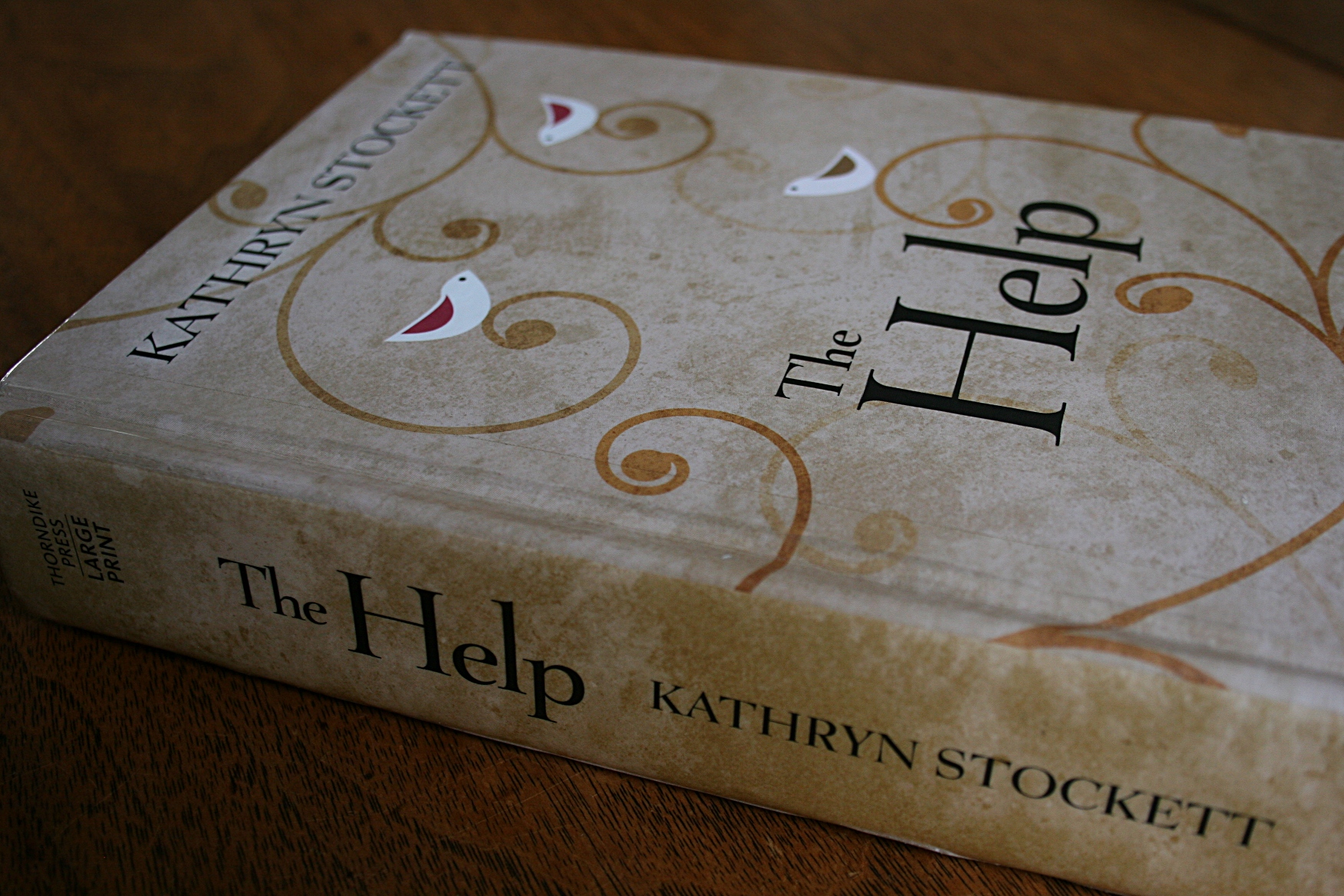
Now you can add “The Help,” based on the #1 New York Times bestseller by Kathryn Stockett, to that list.

I have yet to read the book. In fact, I hadn’t heard of Stockett’s novel until several days ago. Yes, I sometimes live with my head buried in the sand.

The movie version of the book might help more than a few viewers pull their heads from the sand. In a nutshell, “The Help” tells the story of black women working as maids in upper class Southern white households during the 1960s.

As a native Minnesotan who has never even traveled into the deep South, my impressions of Southern history are based mostly on books, stories, photos and films. Whether “The Help” gets it right, I’m uncertain. But, sadly, I expect what I viewed on the big screen depicts historical reality.

I don’t want to spoil the plot for you, so I’ll simplify the storyline: “The Help” focuses on one young woman’s efforts to reveal the stories of the maids who serve those rich, white Southern women in Jackson, Mississippi. Skeeter, an aspiring writer, does that by interviewing the black women—first, Aibileen, and next, Minny—and then writing a book.

The writer angle, certainly, is a familiar one to me given I’ve been a writer for decades. But the whole “hiring of help in the household” is mostly foreign, except for the time during my high school years when I cleaned house every Saturday for a family in my hometown of Vesta. I was well-treated, well-paid for then, and simply happy to have a job—even if I had to scrub the toilet, wax the linoleum and wipe the bottoms of the legs on the kitchen chairs, all while the teenaged son slept upstairs.

My experience as a maid/cleaning girl can’t compare, not by any stretch, to that of the black women portrayed in “The Help.” They are treated more like slaves, as second-class citizens, as human beings without rights.

Especially troubling for me are the scenes involving bathroom usage—blacks prohibited from using the same bathrooms as whites.

I cried when one of the main characters, the maid Aibileen, spoke of her son’s death and how the white women continued playing bridge like nothing had happened.

Aibileen also repeats, through the course of the movie, this line which stands out for me among all the others: “You is kind. You is smart. You is important.”

After the movie, which is a lengthy 2 ¼ hours, my husband and I and others in the theater sat through the credits. Typically we would leave as soon as the movie ended. But “The Help” calls for sitting in quiet contemplation in a darkened theater, pondering the story and hoping, hoping, that life for blacks in the South today does not at all resemble life there in the 1960s.

HAVE YOU SEEN “The Help” or read the book? If you have, please share your thoughts. I’d like to hear your opinion, positive or negative, on the movie and/or book.

© Copyright 2011 Audrey Kletscher Helbling


You call the $50,000 shot August 19, 2011

IF YOU ARE BITTEN by a bat that flies away, you should expect to undergo a series of rabies shots.

If you win $50,000 while assuming the identity of someone else, you should expect fall-out from your actions.

Right about now you’re likely wondering why I’m writing about bats and bills all in the same post. Well, both made the news in my community of Faribault this week. One has garnered national attention, the other not.

First, the bat bite, not because it’s less important than the $50,000, but because it’s easier to write about and no gray area exists. You get bitten by a bat that can’t be caught, like a 9-year-old Nerstrand boy did in his family’s barn recently, and you get rabies shots. Simple. Black-and-white.

But, if you potentially win $50,000 like 11-year-old Nick Nate Smith of Owatonna did last week by shooting a hockey puck from 89 feet into a 1.5-inch by 3.5 inch hole at a Faribault Hockey Association fundraiser, you’re talking an entirely different story.

On the surface, this would seem black-and-white. Accomplish the amazing feat, win the prize.

However, Nate isn’t Nick. And it was Nick, Nate’s identical twin, whose name was pulled for the chance to score the $50,000 by sinking the puck into that incredibly small space.

The problem, however, is that Nick wasn’t in the hockey arena when his name was drawn, so Nate stepped in for his brother, made the shot and supposedly won the $50,000.

That is until the Smith family admitted to event organizers that Nate had subbed for Nick.

Now a Reno, Nevada, insurance company for the puck-shot event is investigating, the $50,000 payment remains in limbo and the story of the amazing shot and the follow-up controversy has gone national.

In our house, we’ve discussed this whole $50,000 hockey puck debacle numerous times already. Opinions have varied from:

  • Just give the kid the $50,000.
  • Why did the Smiths tell them it was Nate?
  • He doesn’t deserve the $50,000. Nate isn’t Nick and the family wasn’t intially honest.
  • What if a friend had stepped in and taken the shot? Would they give him the money?

Can you guess which comment is mine?

You better believe that the second response, “Why did the Smiths tell them it was Nate?”, is not my statement and resulted in a lecture from me about honesty and how the family eventually would have gotten “caught.”

I don’t pretend to know every detail related to the hockey puck shot event. But I do know this much: Nate isn’t Nick.

NOW IT’S YOUR TURN to offer your opinion. Would you award the $50,000 to Nate Smith? Why or why not? Vote by submitting a comment.

IN A 24-HOUR unscientific online poll conducted by The Faribault Daily News, 63 percent of the 245 respondents said Nate Smith should get the $50,000. Thirty-two percent said he shouldn’t. And five percent checked “I don’t know.”

MEDIA FOCUS on the Smith story has been substantial. Click on the sources below to read some of the coverage.

CBS The Early Show

The Faribault Daily News:  the initial story published on August 12 and a follow-up story published on August 14

ABC News

National Public Radio

BY THE WAY, my comment is the third one: He doesn’t deserve the $50,000. Nate isn’t Nick and the family wasn’t intially honest. Choose to agree or disagree. It’s your shot.

© Copyright 2011 Audrey Kletscher Helbling


Words matter: Prejudice and acceptance in Faribault July 14, 2011

Filed under: Uncategorized — Audrey Kletscher Helbling @ 7:42 AM
Tags: , , , , , , , , , ,

Faribault is home to a sizable Hispanic population. This file photo was taken at a downtown Faribault Mexican bakery, which has since come under new ownership. The bakery was once at the center of a controversy over its exterior color and was repainted when some local businessmen donated money for a new paint job.

EVERY TIME I HEAR a derogatory comment about an ethnic group, I am still surprised. I don’t know why.

Perhaps the fact that this is 2011, and not 1960, factors into my belief that people have overcome their prejudices toward those with skin colors different than their own.

Then I hear a statement like this: “Willow Street is becoming a little fill in a Spanish word here.” I hadn’t heard the word before, which is why I can’t remember it. But I know for certain that it was unkind and derogatory and cutting toward the Hispanic population that lives in my community of Faribault, specifically along my street.

I couldn’t allow the slam to go unchallenged, especially since it was spoken just as I was about to enter, of all places, my church for Sunday morning worship.

In an immediate moment of incredible self control, I responded by telling this clearly prejudiced individual that there are “good whites” and “bad whites,” just like there are “good Hispanics” and “bad Hispanics.” I knew I had to keep my response simple so he would understand. I also told him that my Hispanic neighbors are “good neighbors.”

With those words tumbling off my tongue, I walked into the sanctuary, attempting to dismiss my anger and focus on an attitude of forgiveness.

I also consciously shifted my thoughts to an exchange I witnessed a day earlier. As a Somali mother walked into a Faribault grocery store with her adorable preschool-aged daughter, a Caucasian couple engaged the woman in conversation. They inquired about the little girl and asked her name.

“Amira,” the Somali mother answered and smiled.

“That means ‘princess,’” the man said and continued to share a story about another Amira he knew. All the while, the mother beamed. When they parted, he told the pair, “God bless you.”

I was trailing behind, thinking how my Aunt Dorothy has always called me her “Little Princess,” even now, today, when I am in my 50s. That endearing nickname has always made me feel so loved. Words can make such an impact.

As the Somali woman continued down the grocery store aisle with her daughter tagging behind, I blurted, “She’s so cute.”

The mother of the little princess turned and rewarded me with a smile, a universal human expression that bonds all humans no matter their skin color.

In this file photo, a Somali family waits to cross a downtown Faribault street.

CLICK HERE TO READ one of many posts I wrote related to the exterior colors of two ethnic restaurants in downtown Faribault. The color of the Mexican bakery, which has since changed hands, generated heated discussion within the community in 2009 and 2010.

© Copyright 2011 Audrey Kletscher Helbling

 

Why the discrepancies in AP class offerings? July 12, 2011

STATISTICS CERTAINLY DON’T tell the whole story when you’re reading a compilation of numbers. But neither do they lie.

That said, I’d like to direct you to a report by ProPublica, “an independent, non-profit newsroom that produces investigative journalism in the public interest.”

The topic of ProPublica’s investigation (click here to read), advanced placement class offerings in public schools, certainly interests me. I’ve often wondered why Faribault Senior High School, the school my children attended (and one still does) offers so few advanced placement classes. These college-level classes give students an opportunity to test for college credit upon course completion. That, in my parental opinion, equals academic challenges for students and money saved for those who pass the AP exams and continue on to college.

Faribault High offers four AP classes in physics, English literature and composition, calculus and psychology.

Now, compare that to neighboring Northfield and Owatonna, each about a 15-mile drive away. Northfield Senior High School students can choose from 14 AP classes. In Owatonna, the number is even higher at 20 courses.

The three high schools are similar in size: Faribault, 1,230 students; Owatonna, 1,595; and Northfield, 1,300. They are also located in similar-sized communities. However, anyone who lives in the area knows that Faribault is clearly a blue collar town and Northfield is white collar. I’m not sure about Owatonna, but I would peg it as more blue than white collar.

WHY IS THAT IMPORTANT?

A link may exist between educational opportunities at a school and local poverty levels, some conclude. I don’t necessarily buy into the whole “we have X number of students getting free and reduced government lunches therefore we are offering fewer AP classes because students won’t take the courses anyway” philosophy. That’s an all-too-easy excuse to explain away the lack of AP classes and/or low student enrollment or interest in those classes.

Rather, I think the number of AP classes has more to do with funding, priorities and how much a school pushes, or doesn’t push, these advanced courses.

So let’s take a look at some of those statistics. ProPublica lets you type in your school and even compare it with neighboring districts. (Note: The database only includes public schools with a student population of more than 3,000 in the 2009 – 2010 school year.)

At Faribault High, 28 percent of students get free/reduced price lunches, compared to only 13 percent in Northfield. In Owatonna, 21 percent of students get those lunches that are targeted for low income households.

The statistics show high school minority populations of 21 percent in Faribault, 15 percent in Owatonna and only 11 percent in Northfield.

So you get the picture: Mostly wealthier white kids attend high school in Northfield. Not so much in Faribault and Owatonna.

Therefore you would conclude, if you adhere to the whole poverty-educational opportunities theory, that Northfield should outshine Faribault and Owatonna in the area of Advanced Placement classes and enrollment.

You would be wrong.

Owatonna shines with 20 AP classes and 29 percent of their students taking at least one AP course.

Northfield isn’t far behind with 26 percent of  students taking at least one of the school’s 14 AP classes.

Faribault doesn’t even come close with just five percent of students enrolled in at least one of the only four Advanced Placement courses offered.

WHAT’S GOING ON HERE?

I’ve discussed AP and Post Secondary Enrollment Option classes with several FHS teachers at various times and received answers ranging from an administration that doesn’t make AP or PSEO a priority to staff that prefer not to have class content dictated by AP guidelines. Whether those conclusions are accurate, I don’t know.

But as a parent, I am frustrated. Why shouldn’t any child attending Faribault High have the same educational opportunities afforded students in nearby Owatonna or Northfield?

Faribault also falls below the state-wide average of nine AP classes per high school and 23 percent of Minnesota high school students taking an AP course.

I repeat: Only five percent of FHS students take at least one AP class, of which only four are offered in Faribault.

What’s going on here?

NOTE: Statistics listed on ProPublica come from a nation-wide survey by the U.S. Department of Education’s Office for Civil Rights.

THANKS TO Minnesota Public Radio’s Bob Collins for directing readers to ProPublica’s report in his Friday, July 1, News Cut column.

© Copyright 2011 Audrey Kletscher Helbling

 

An unlikely solution to the Minnesota government shutdown July 5, 2011

MY EXTENDED FAMILY likes to have fun, so we plotted this weekend to overthrow the Minnesota state government. Not to worry. We are all talk and no action.

But we definitely have ideas about who could run the state given the current legislature and governor can’t seem to handle the task of agreeing on a budget. That would be us. (Yes, the general feeling was a definite frustration with the current state government shutdown.)

Therefore, in a discussion that spiraled into hilarity, we overthrew the governor and put all of our people in place, most of us choosing to head up a state department based on our interests and experiences.

We also agreed that one of our first subversive, defiant acts would be to clamber onto the golden horses atop the state Capitol.

The golden horses and chariot atop the Minnesota State Capitol.

I’m heading up communications, a job I’m uncertain I can handle because I’ve been instructed to deliver only a positive spin on every bit of state government news.

The educators in the family were appointed to the Department of Education, the daycare provider to the Department of Health and Human Services. My eldest brother, by age default, became the new governor.

The outdoor-loving summer parks worker now manages the Department of Natural Resources. He’s always wanted to hunt alligators, so he’s bringing alligators to Minnesota.

Then the newly-appointed finance director, a family member pursuing an accounting degree, suggested that rather than return the alligators to Florida in the winter, we move them into the sewer system. We readily embraced that idea.

We didn’t debate the cost of an alligator hunting license.

But there may have been an unspoken agreement to lock current Minnesota Governor Mark Dayton and the legislators in a room with a contingent of angry, jaw-snapping alligators Minnesotans.

DISCLAIMER: The above story represents my version of the family political discussion and may not be representative of all family members. However, I am the Director of Communications here at Minnesota Prairie Roots. Therefore I am free to spin this story however I wish.

© Copyright 2011 Audrey Kletscher Helbling

 

This is what it means to be free

FOR THE PAST SEVERAL days, I’ve kept my eyes peeled for the perfect July Fourth image.

I thought that photo might come from my extended family’s annual July 4th weekend gathering or from the Roberds Lake Independence Day boat parade. Or perhaps I’d just see a patriotic display worthy of showcasing. Maybe a field of flags.

However, the photo I selected to best portray our nation’s birthday falls into none of these categories.

I chose this image, taken along Seventh Street in Faribault late Monday afternoon.

Let me explain.

This homeowner disagrees with a recent decision by the Faribault City Council to forgive a $72,000 water bill assessed to FWF Fund One, current owners of the Faribault Woolen Mills property. The woolen mill closed some time ago, leaving an original $120,000 unpaid water bill, which has since been paid down $48,000. Now new investors are working on purchasing the property and restarting the mill, thus prompting the request to forgive the remaining portion of the unpaid water bill. Read more about the issue by clicking onto this recent Faribault Daily News article.

Even though I happen to agree with the homeowner, I didn’t choose this as my favorite Independence Day photo for that reason.

This grassroots expression of an opinion represents to me the cornerstone of our nation: freedom.

As citizens of the United States, we are free to speak—to voice our ideas and opinions and concerns.

We needn’t be eloquent speakers or writers or members of city councils to express ourselves.

A simple handwritten sign posted on a tree along a busy street epitomizes freedom at its most basic, individual, level.

© Copyright 2011 Audrey Kletscher Helbling
 

A misplaced torch at a veterans’ memorial July 1, 2011

TYPICALLY, I WOULD NOT criticize a veterans’ memorial project. I respect those who have served our country and those who lead efforts to honor them via public memorials.

However, last week when I saw the latest addition to the in-progress Rice County Veterans Memorial Expansion Project at the county courthouse in Faribault, I could not believe what I was seeing.

There, guiding my eyes toward a center bronzed eagle and dove, was a flashing neon flame depicting “our never ending vigilance.”

The new, fake torch at the Rice County Veterans Memorial at the courthouse in Faribault. Here you see the wing tip of the bronzed eagle below the torch. I have not edited this image taken one evening last week.

My initial reaction has not changed since I stopped that night to closer inspect and photograph this neon torch better suited for a casino—anything but a veterans’ memorial.

As we all know, first impressions count. In this case, the neon flame certainly does not fit. This is supposed to be a place of reverence, of quiet meditation, of respectful honor for those who have served the United States of America. A fake, flickering fire does not portray that message of honor.

I am disappointed.

Prior to installation of this imitation torch, a fuel-fed torch burned near the historical Civil War statue which has long graced the courthouse lawn. Apparently that flame went out all too often, leading to its removal and installation of the Vegas style torch.

The long-standing Civil War statue sets a historical mood for the Rice County Veterans Memorial. I shot this image last fall.

To the right, in this unedited photo, you'll see a side view of the historical Civil War marker. In the center is the torch and the bronzed eagle and dove with flags and the courthouse in the background.

I could go on and on about how much I dislike this cheapening alternative, how it fails to fit the historical context of this place, the courthouse architecture or the long-standing Civil War marker. I won’t because I’ve said enough.

View my photos and tell me what you think. I’d like your opinion.

But even more, if you agree that this style of torch does not belong at a veterans’ memorial, offer a solution. I have none. Except to pull the plug.

Honorary pavers line sidewalks leading to the center of the Rice County Veterans Memorial in this image taken last fall.

© Copyright 2011 Audrey Kletscher Helbling

 

WARNING: Proposal would erode Minnesota’s Freedom to Breathe Act April 11, 2011

WARNING: Cigarettes are addictive.

WARNING: Tobacco smoke can harm your children.

WARNING: Cigarettes cause fatal lung disease.

WARNING: Cigarettes cause cancer.

WARNING: Cigarettes cause strokes and heart disease.

WARNING: Smoking during pregnancy can harm your baby.

WARNING: Smoking can kill you.

WARNING: Tobacco smoke causes fatal lung disease in nonsmokers.

WARNING: Quitting smoking now greatly reduces serious risks to your health.


I didn't need to search long or hard to find these cigarette butts. Two were tossed into one of my flowerbeds by a neighbor. I found the third in the street by my house.

Just as Minnesota legislators are considering proposed changes to the state’s Freedom to Breathe law, the U.S. Food and Drug Administration is finalizing plans to modify warnings on cigarette packaging and advertising.

Following requirements of The Family Smoking Prevention and Tobacco Control Act, the FDA has proposed that cigarette packaging and ads bear one of the above nine warnings along with a matching colorful graphic.

The shock value of the proposed graphics—like a toe-tagged corpse and a mother blowing smoke into her baby’s face—are an effort to make a powerful impact on the smoking public. Enough to make a smoker stop smoking.

The final graphics will be selected by June 22 and the warnings must be in place on all cigarette packages sold in the U.S. and in cigarette ads by October 2012.

As a nonsmoker, I’m all for this move to prevent, reduce or stop smoking.

However, I don’t support proposed legislation in Minnesota that would once again allow smoking in bars under specific conditions. Not that I frequent bars, but bars and restaurants are often interconnected, so this matters to me.

The plan basically would allow smoking in bars if a ventilation system is installed to remove the smoke. In bars connected to restaurants, the bar must be walled off with a door separating the bar and restaurant.

Come on. A door will not keep smoke from filtering into a restaurant. And I don’t know about you, but I don’t need smoke served with my meal.

I make no apologies for my strong stand against smoking and my intense dislike of cigarette smoke.

I’m also honest enough to admit that, in my youth, I tried tobacco products on several occasions, enough to realize smoking wasn’t for me.

My dad became addicted to cigarettes when he was in the military, serving on the front lines during the Korean Conflict. He preferred Camel cigarettes. Sometimes he also rolled his own.

My dad, a smoker for many years, first exposed me to cigarettes. Once he even let me puff on his Camel. Now before you start calling him an irresponsible parent, consider this.  He knew I’d cough and sputter and spit and never want to touch a cigarette again. He was right. Eventually he gave up smoking but never quit chewing snuff.

Although I never took up smoking, I was addicted to candy cigarettes as a kid. But candy cigarettes were as popular as Bazooka bubble gum back in the 1960s and no one thought anything of subtly encouraging kids to smoke via those chalky white sticks with the red tips.

As for the few Swisher cigars I smoked in my mid-20s, I offer no excuse except my ignorant, youthful stupidity. I bet many smokers who are now habitual tobacco users wish they’d never started.

If you’re a smoker and want to smoke in the privacy of your home, then go ahead. Just don’t invite me over because, physically, I can’t tolerate cigarette smoke.  I’ve had numerous bad experiences with cigarette smoke.

Back in the early 1980s, I worked for a southern Minnesota daily newspaper that allowed smoking in the office. I came home every night smelling like I’d been in a bar all day. My clothes reeked. My skin reeked. My hair reeked. I remember complaining, with several other nonsmokers in the office, about the smoking. Nothing changed, because the news editor smoked. She didn’t care. So what if the copy editor sat outside the conference room during the weekly staff meeting because he couldn’t tolerate the smoke? I wish I had joined him instead of breathing the toxic air. So what if the news editor should have been more considerate given the Minnesota Clean Indoor Air Act passed in 1975? None of that mattered.

My second worst experience with smoking occurred several years ago at a Winona hotel. The manager tried to pass off a smoking room as a nonsmoking room. The instant I walked into the room, I smelled cigarette smoke. The mobile air purifier that was running on high and the lack of a sign on the door stating that this was a nonsmoking room confirmed my suspicions. When I went to the front desk and demanded a nonsmoking room, the manager denied that he had given me a smoking room. I didn’t believe him. My nose and lungs don’t lie.

My other notable smoke experience also involves a hotel, this one at a southwestern Minnesota casino. I was there attending a cousin’s wedding reception. Although the hotel room my family booked was supposedly smoke-free, the odor of cigarette smoke filtered from the smoke-filled hotel lobby, halls and casino into our room. I barely slept that night because of the tightness in my chest caused by the smoke.

So, Minnesota legislators, listen up. Listen to representatives of The American Cancer Society, the American Heart Association, the American Lung Association and Clearway Minnesota, all of whom have been at the State Capitol opposing the proposed changes to Minnesota’s Freedom to Breathe Act.

Consider the 83.9 percent of adult Minnesotans (according to results of the 2010 Minnesota Adult Tobacco Survey) who do not smoke. Please keep our Freedom to Breathe Act intact and smoke-free.

© Copyright 2011 Audrey Kletscher Helbling