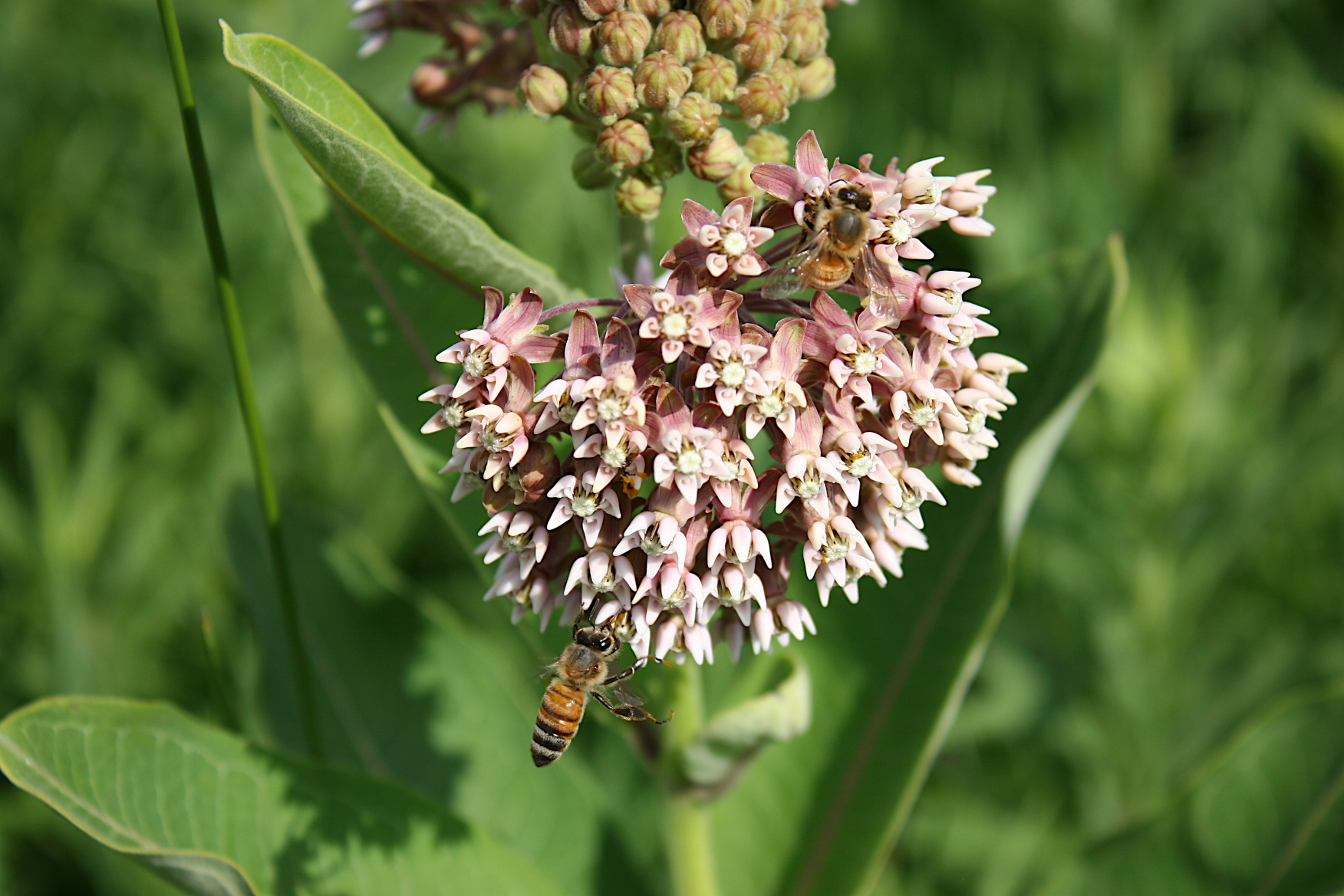
Bees feed on a milkweed flower at River Bend Nature Center, Faribault. Minnesota Prairie Roots copyrighted photo.
IN MY MESS OF FLOWERBEDS, which are anything but orderly, random milkweeds grow. Some sprouted in the lawn. Others simply popped up among the phlox and ferns and iris and greenery, seeds blown by the wind, dropping to the ground, rising now toward the sun.
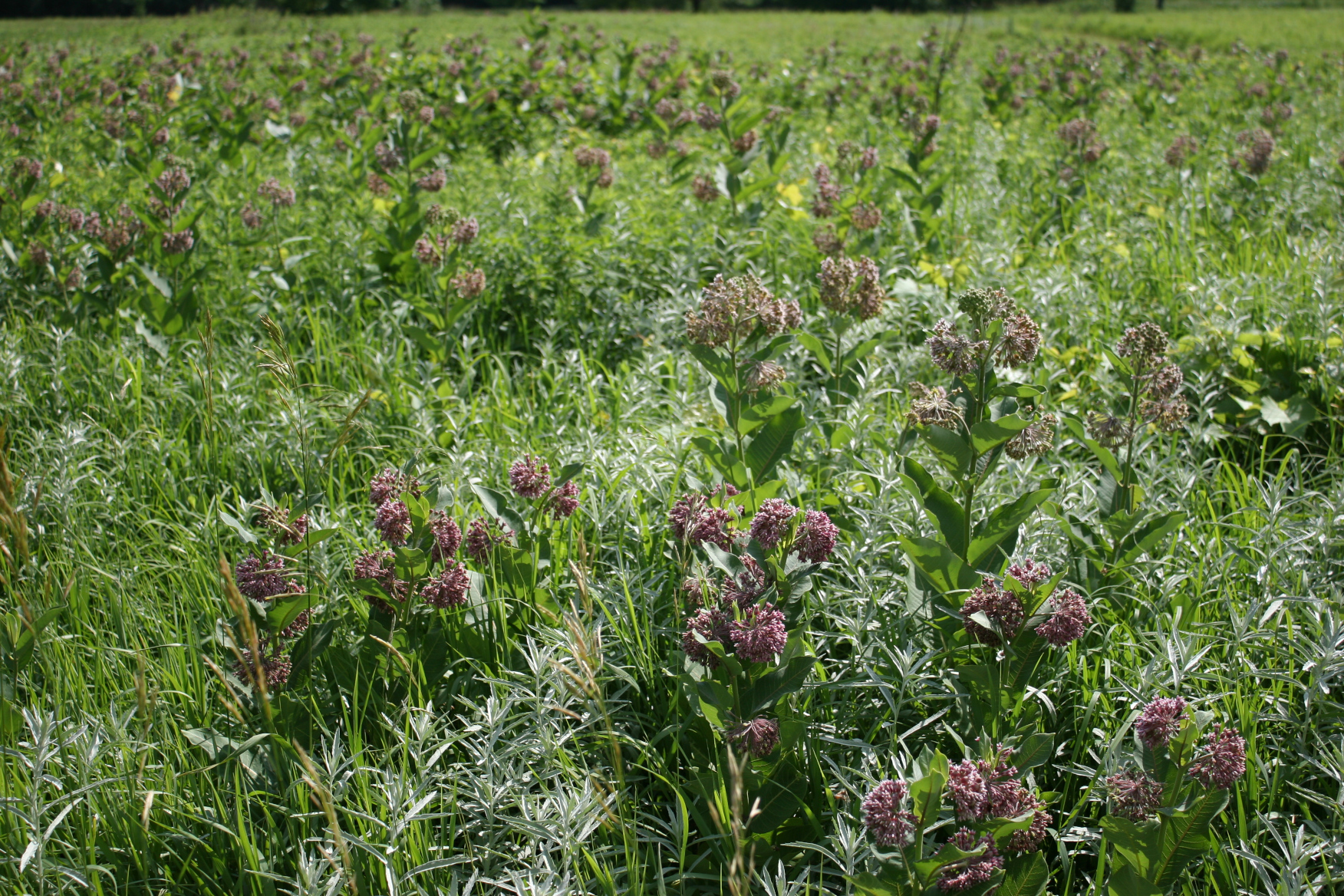
Milkweeds thrive on the prairie at River Bend. Minnesota Prairie Roots copyrighted photo.
Back in the days of my youth, I would have yanked these milkweeds from the soil under the direction of my farmer father. Remove those weeds from the corn and soybean fields. I know better now. Milkweed plants are essential to the monarch butterfly.
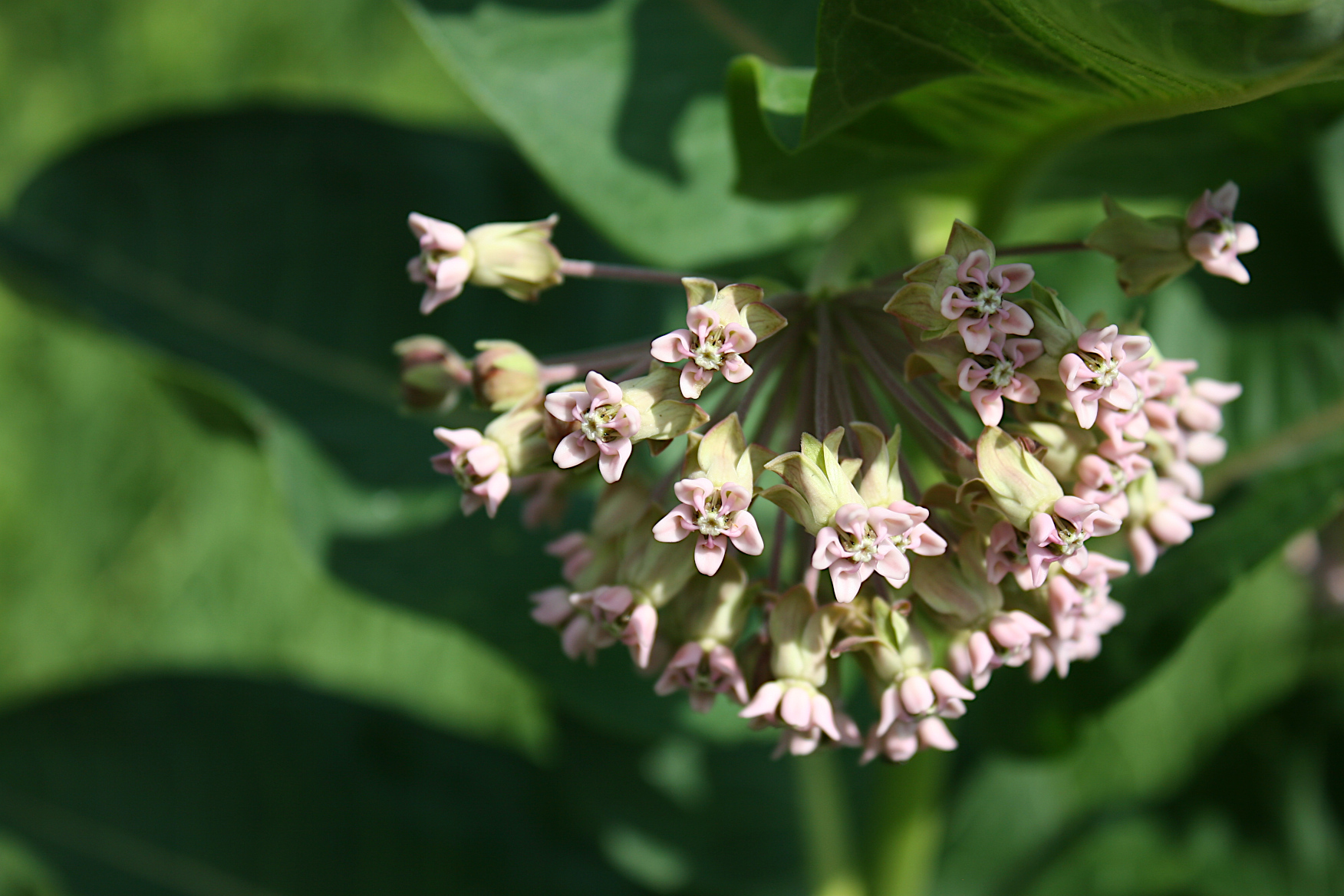
I love the dusty hue of the common milkweed. Minnesota Prairie Roots copyrighted photo.
The milkweed is the host plant for the monarch. They lay eggs on the leaves, the larvae then feeding on those leaves.
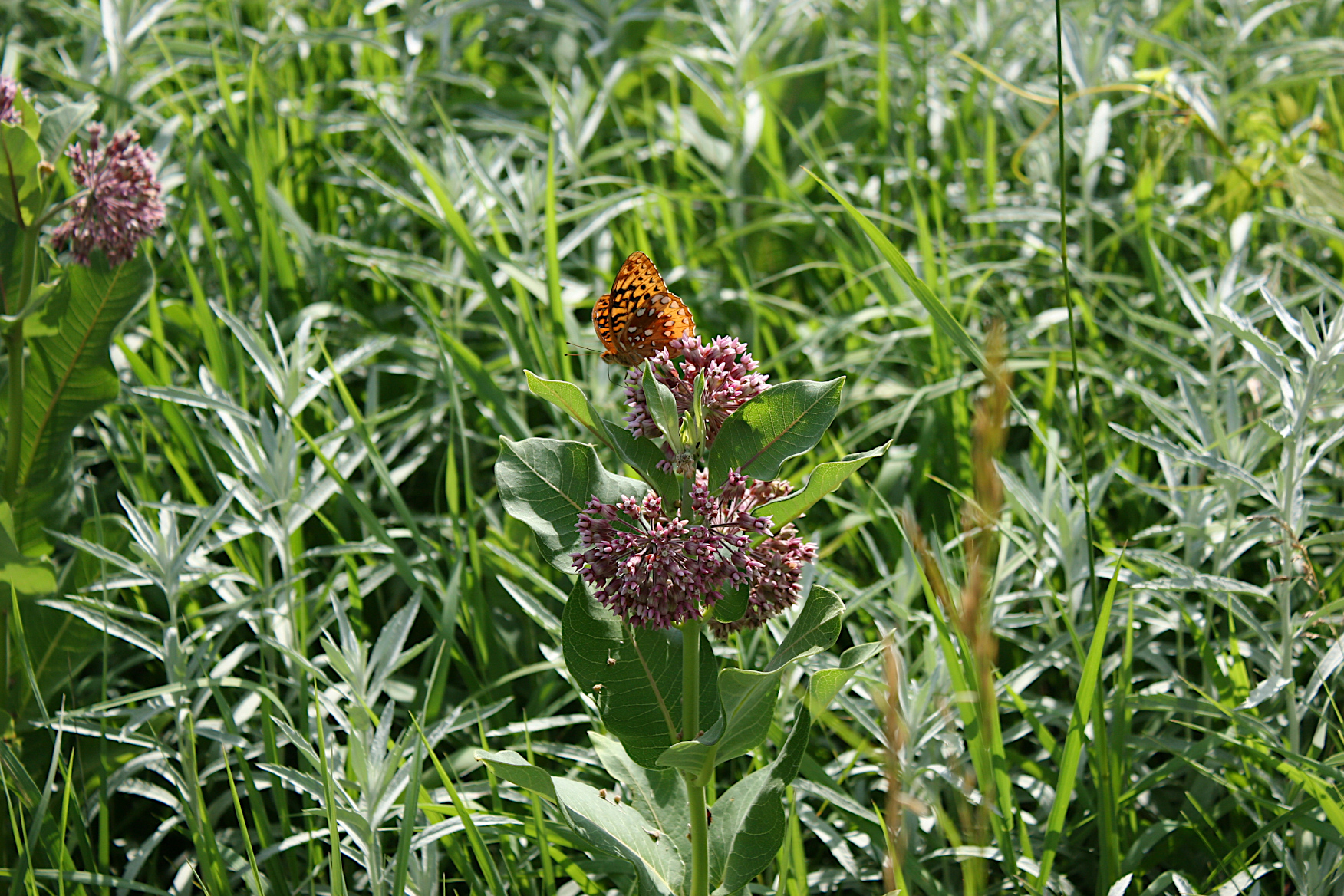
The milkweed attracts more than just monarchs. Minnesota Prairie Roots copyrighted photo.
Without milkweeds, the monarch would become extinct.
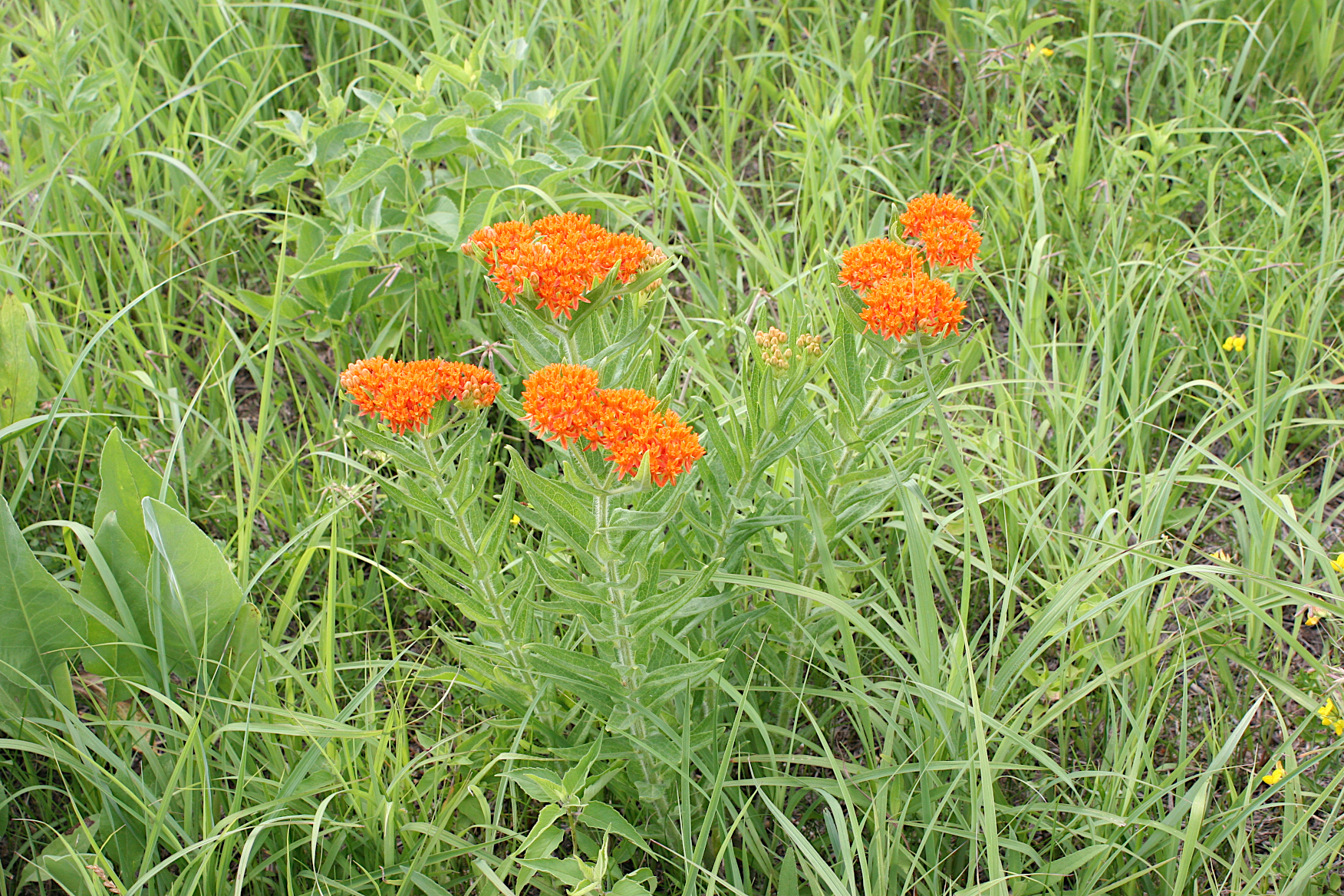
Butterfly milkweed, although much less abundant, also grows at River Bend. Minnesota Prairie Roots copyrighted photo.
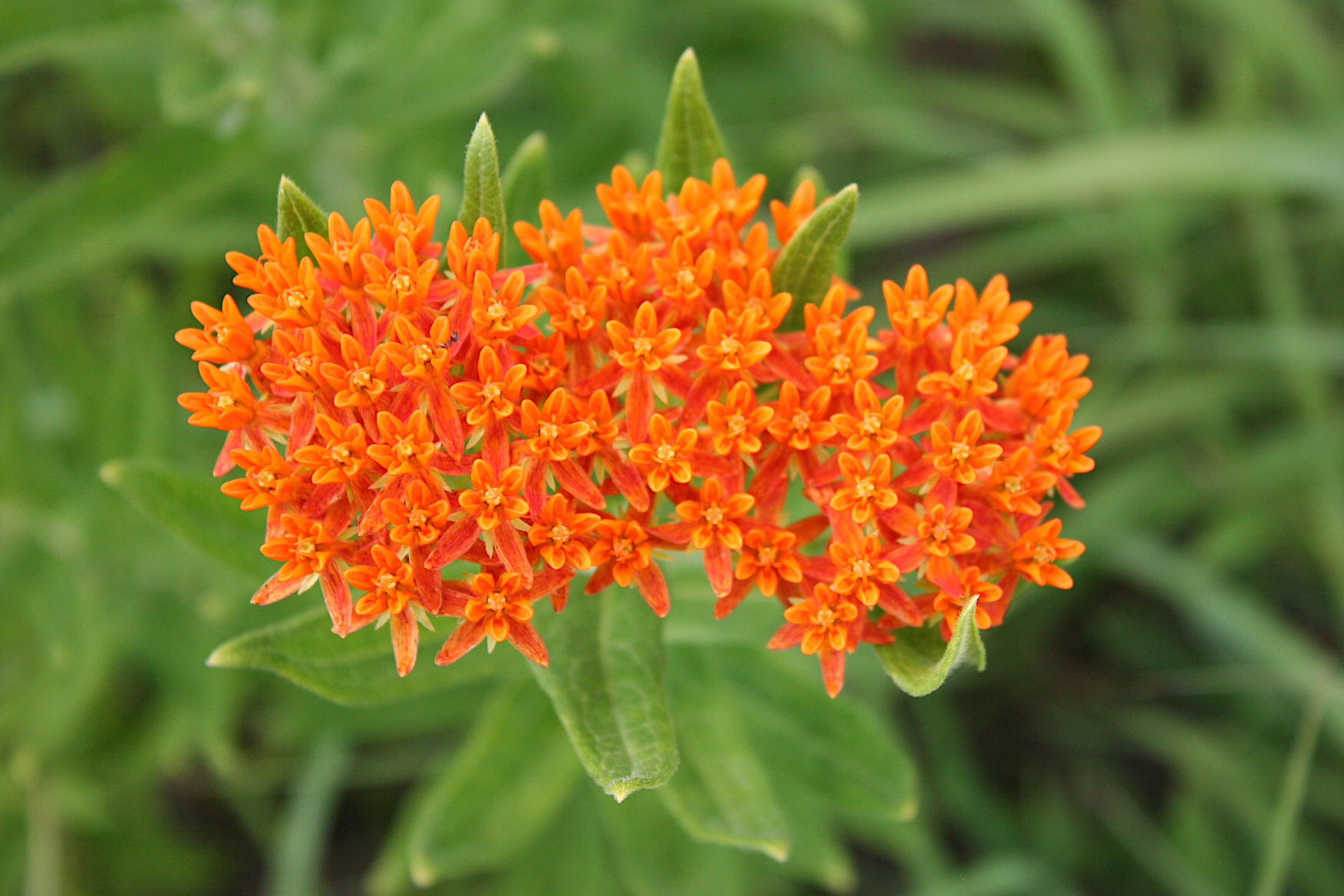
The exceedingly brilliant butterfly milkweed, up close. Minnesota Prairie Roots copyrighted photo.
I appreciate the value of this plant in the natural cycle, in sustaining the monarch butterfly population. This is but one example of how we are all intertwined. Every creature. One dependent on the other.
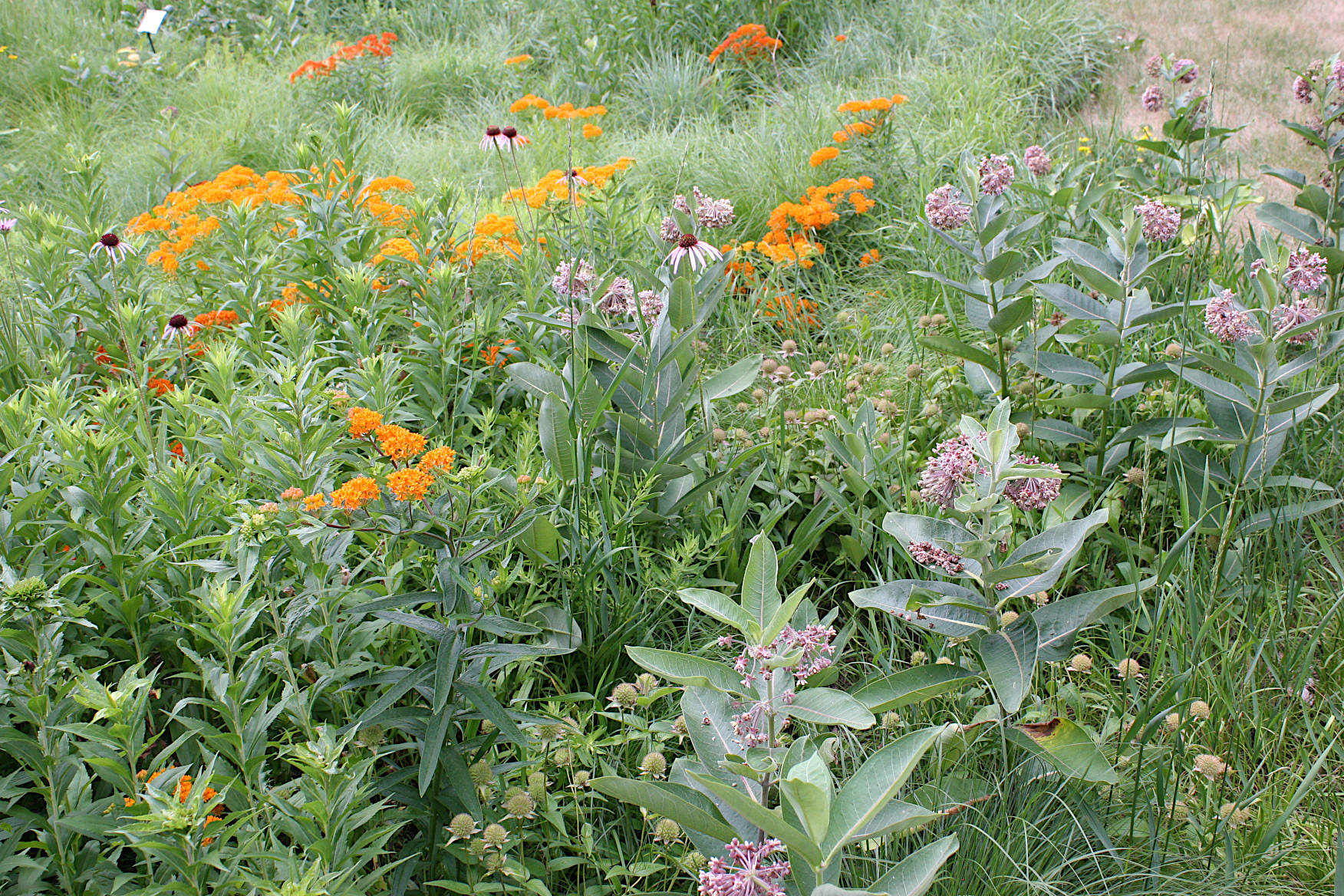
Milkweed and flowers flourish on the River Bend prairie. Minnesota Prairie Roots copyrighted photo.
I marvel at this intricate world God created. I love to watch a monarch butterfly flit through the air, settle on a blossom, drink its fill of nectar, then rise and fly. Delicate, yet sturdy. Dependent on milkweed and other flowers, yet free.
What a lovely and beautiful sight in a world where beauty is too often missed in the busyness of life, among all the weeds.
A jolt of color in the woods. Minnesota Prairie Roots photo June 2021.
Lacey flowers. Minnesota Prairie Roots photo June 2021.
I usually carry my camera while at River Bend. That causes me to really notice my surroundings. This most recent visit, I spotted an abundance of wildflowers. From woods to prairie, flowers thrive in the summer heat.
Minnesota Prairie Roots photo June 2021.
A plaque on a bench reminds hikers to take time to smell the flowers, although I didn’t dip my nose into any blossoms. Rather, I appreciated the simple beauty of color splashed in the otherwise green woods.
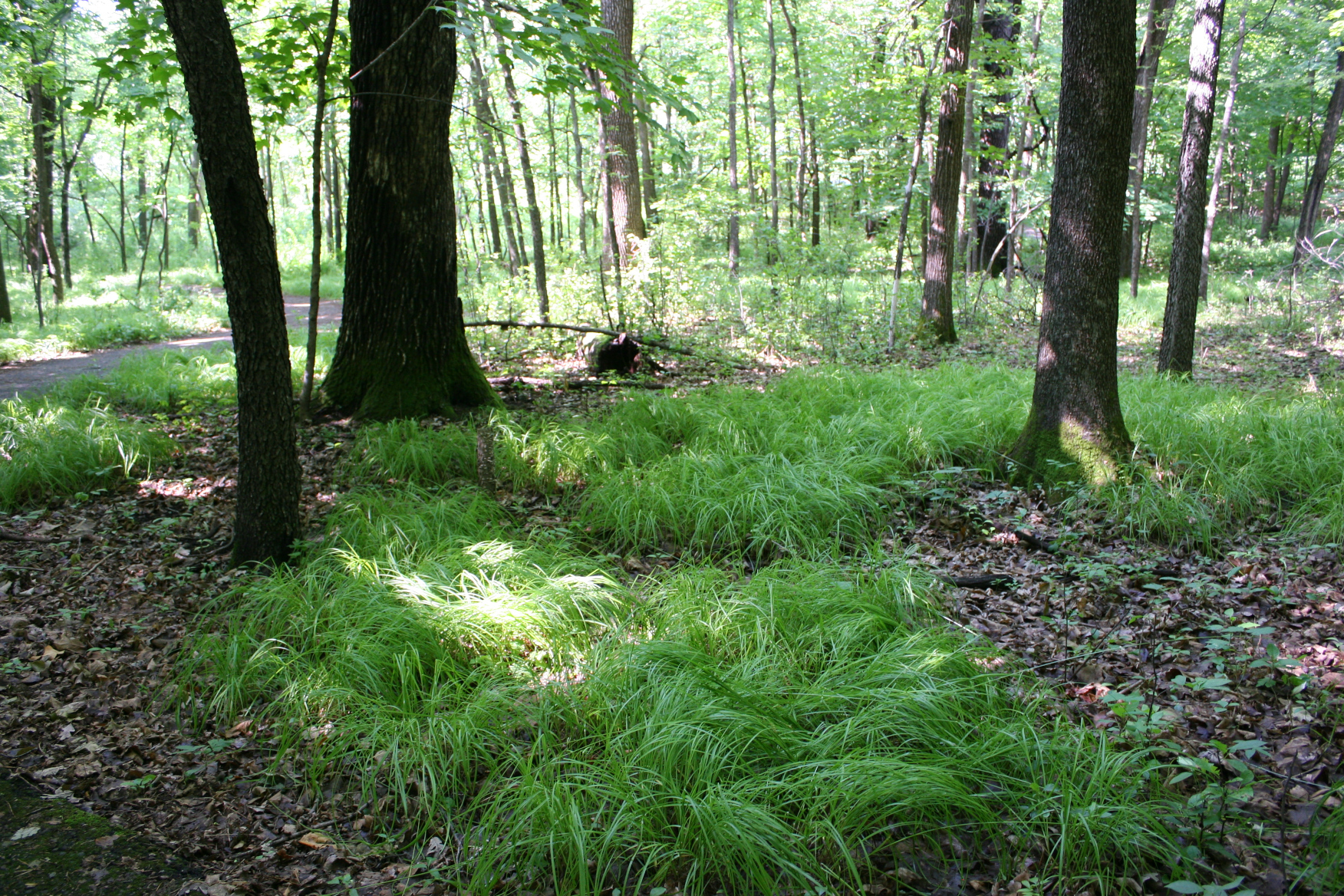
On the way to the Turtle Pond, I spotted this interesting grass. Minnesota Prairie Roots photo June 2021.
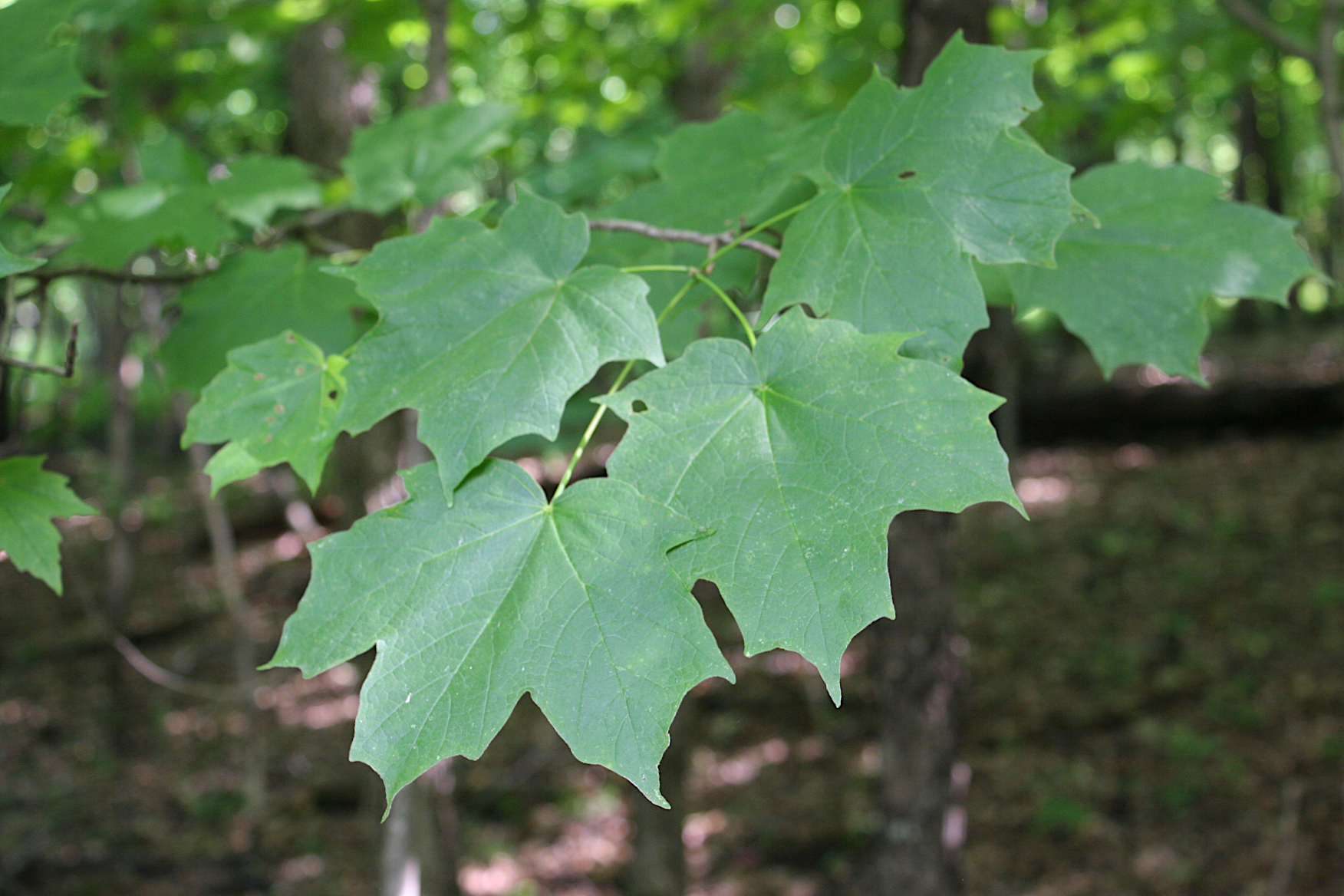
Maple leaves. Minnesota Prairie Roots photo June 2021.
Minnesota Prairie Roots photo June 2021.
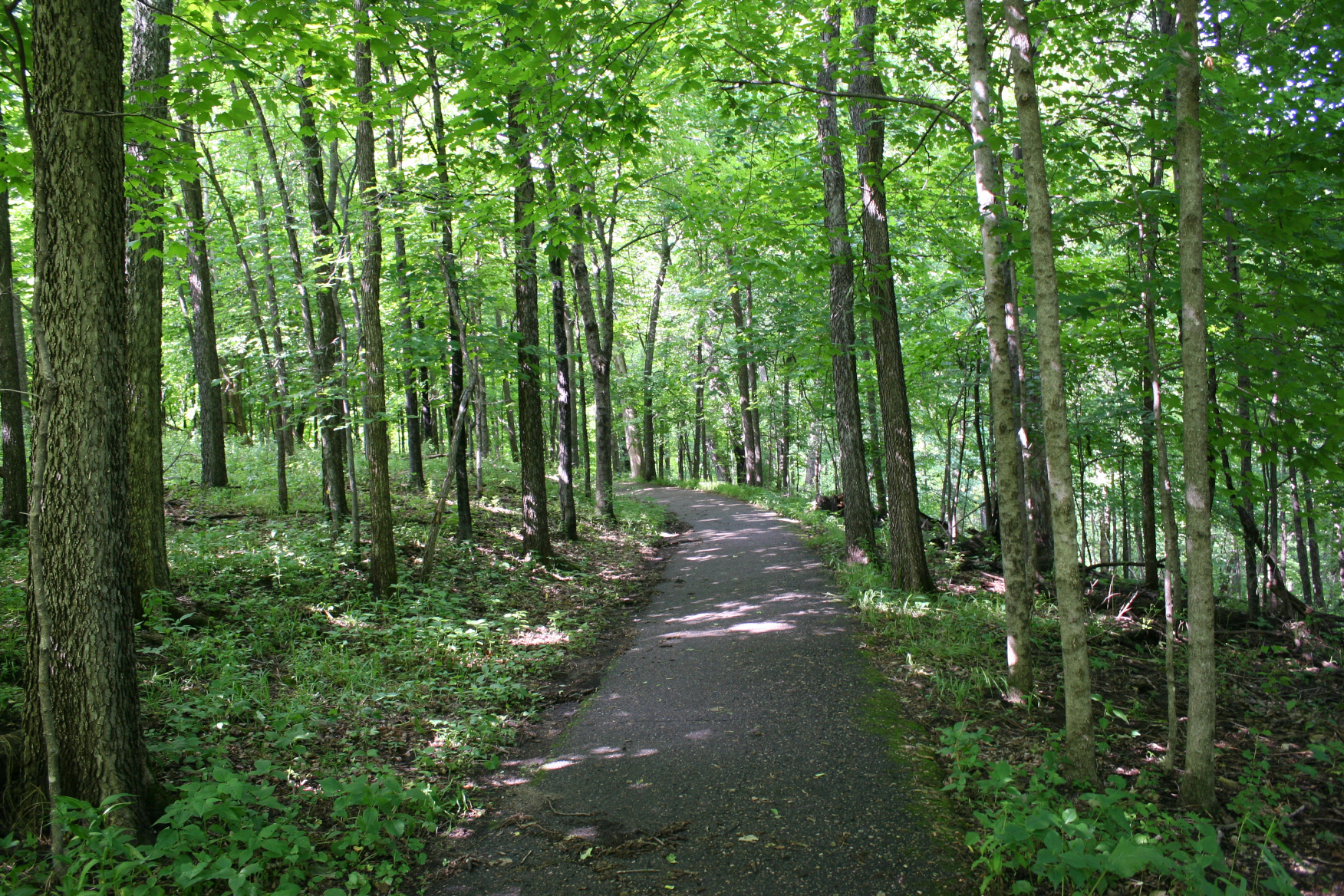
Even the greenery holds visual appeal in the rolling droop of grass, the lace of maple leaves, the woods that hug trails.
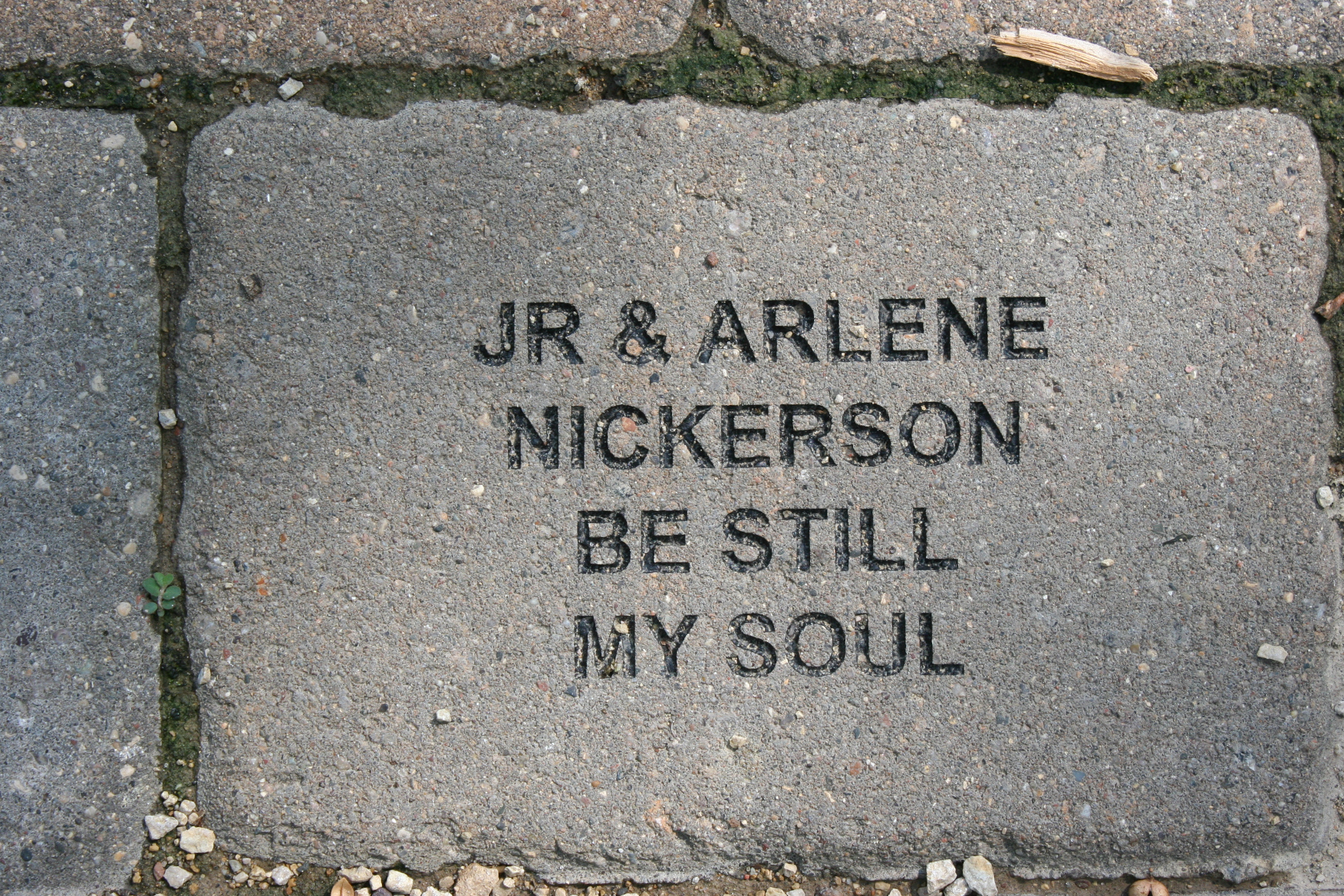
This paver in honor of my friend’s parents reminds me of Psalm 46:10. Minnesota Prairie Roots photo June 2021.
Messages on pavers at Honor Point, overlooking the Straight River, inspire. Be still. Pause. Appreciate.
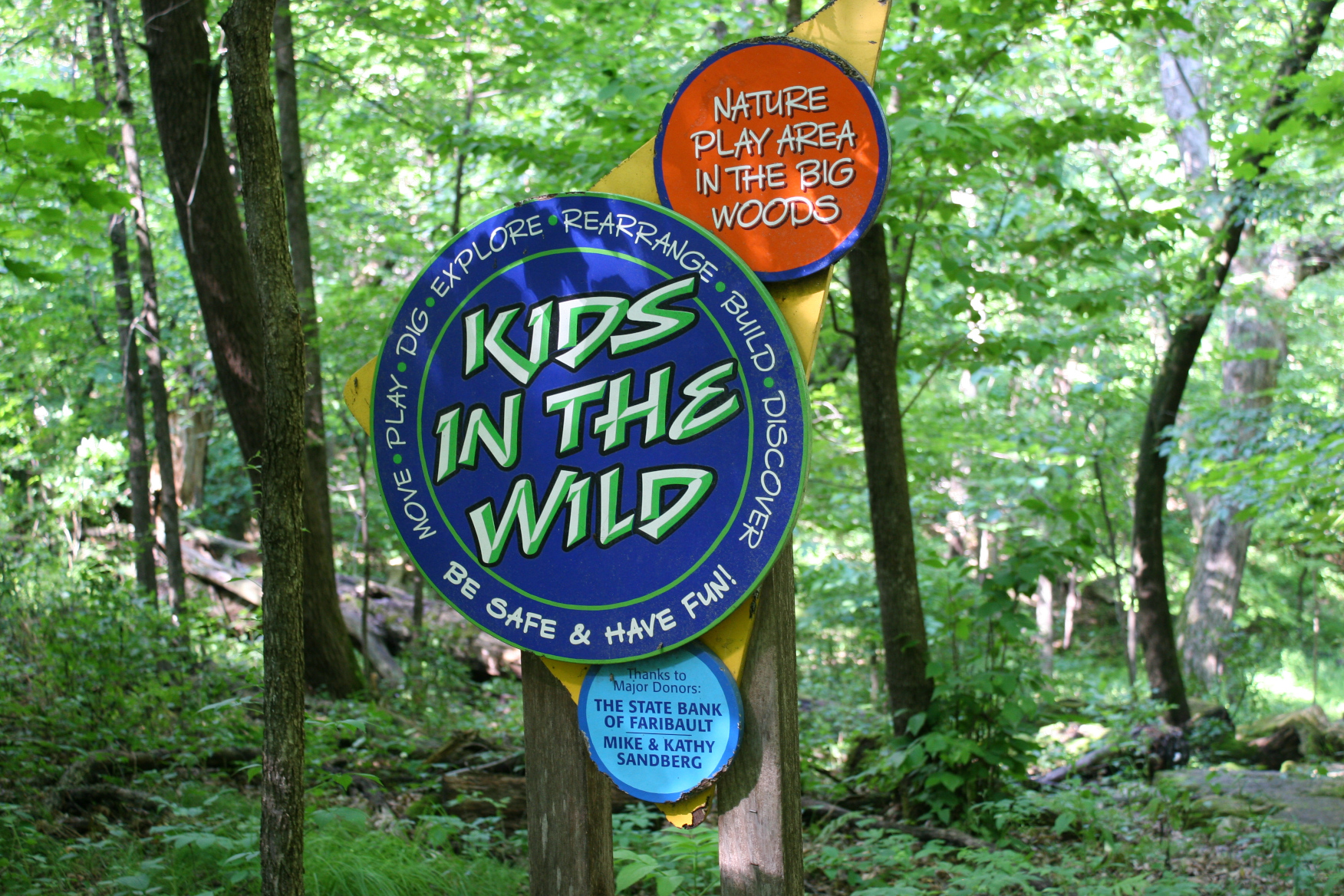
River Bend features a natural play space for kids in the woods. Minnesota Prairie Roots photo June 2021.
There’s something to be said for being still. Simply being. Listening. Connecting to the earth. Perhaps remembering how you felt as a child, exploring.
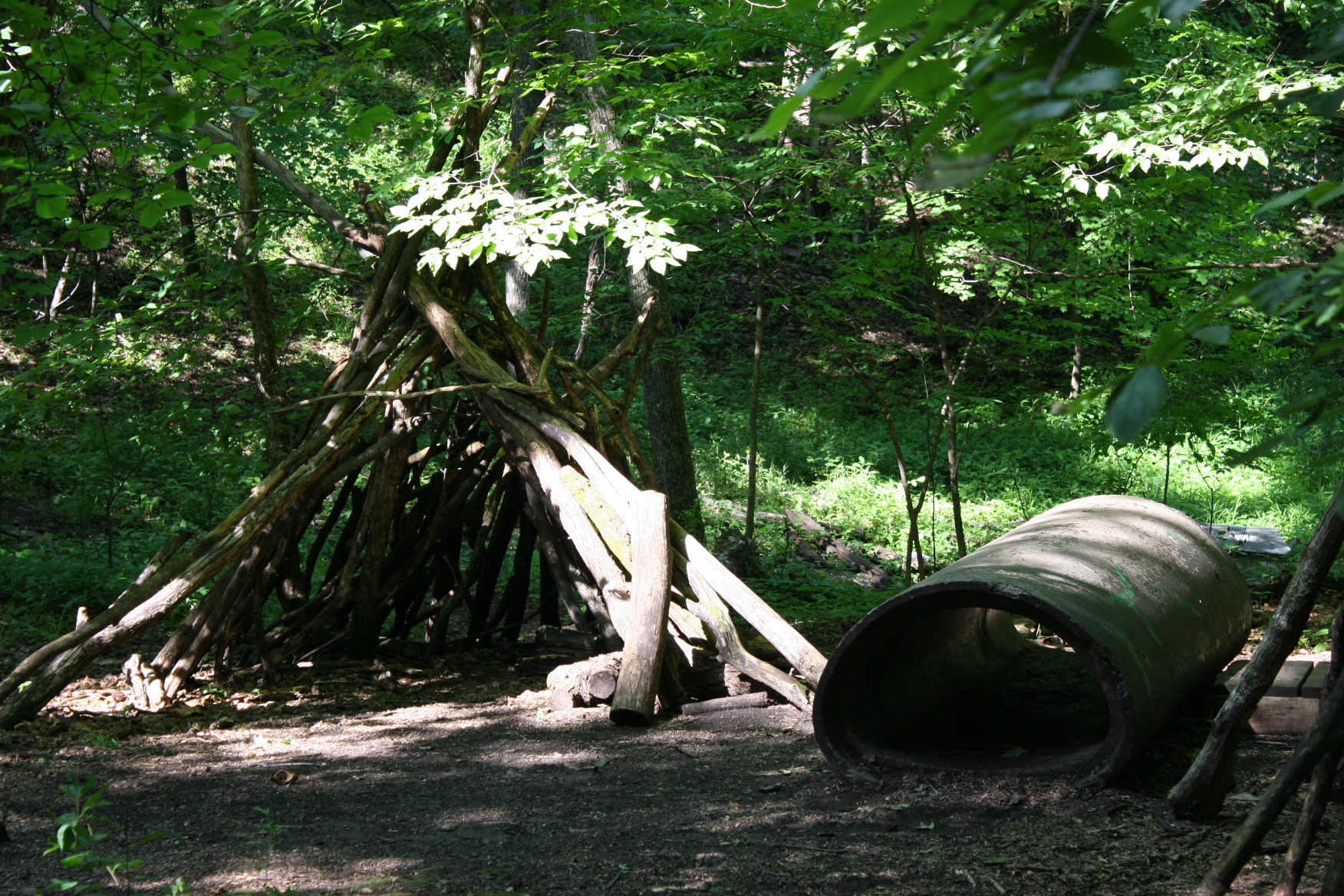
A fort and “tunnel” in the kids’ play area. Minnesota Prairie Roots photo June 2021.
In my youth, I “lived” outdoors, coming indoors only to eat and to sleep. With my siblings, we built forts in the grove, rode our bikes along dirt trails, hid in prairie grasses higher than us.
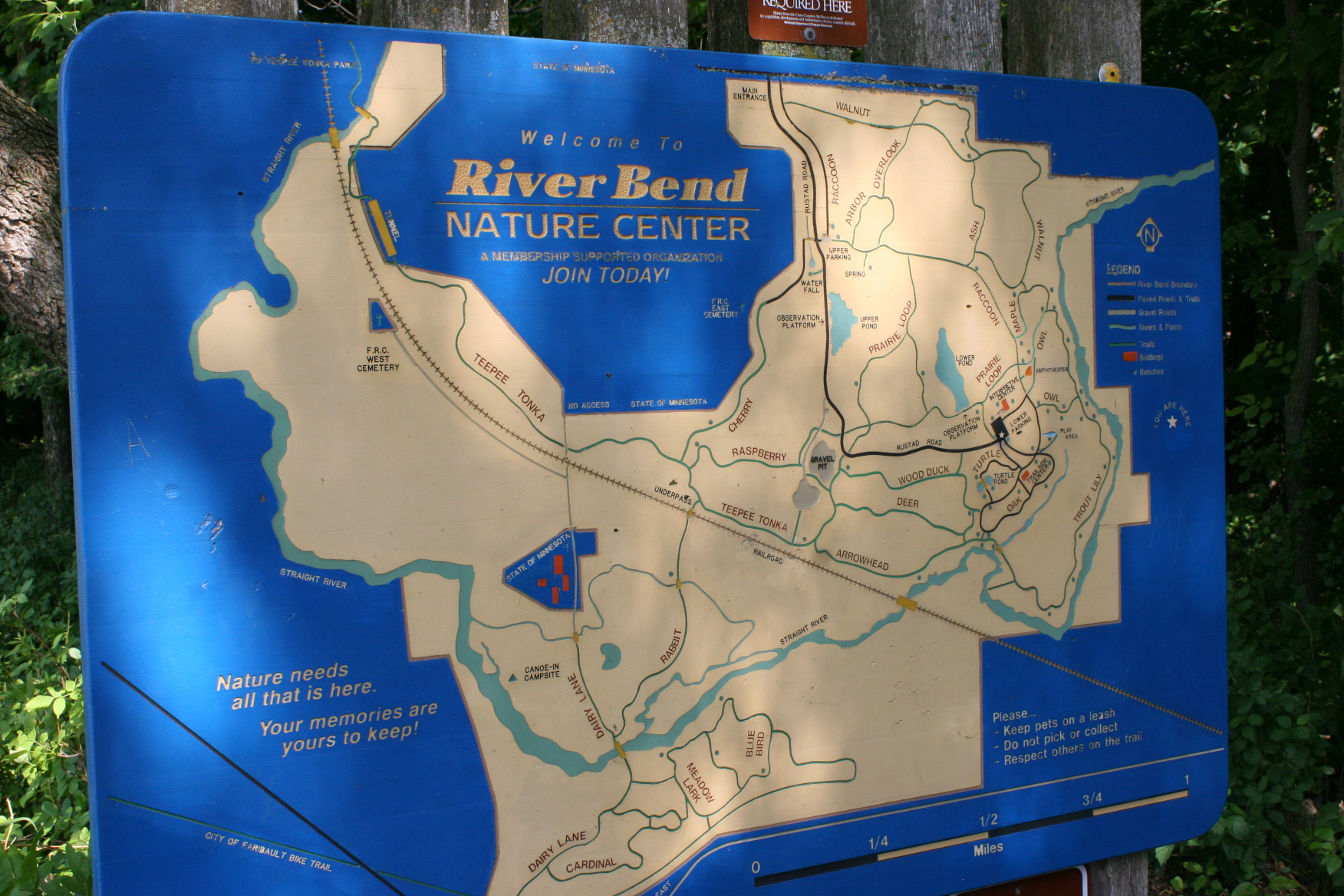
At the edge of the woods, a map details River Bend. Minnesota Prairie Roots photo June 2021.
I took time. Time to play in nature. To become part of it. To imagine. When I hike at River Bend, I reclaim that childhood joy.
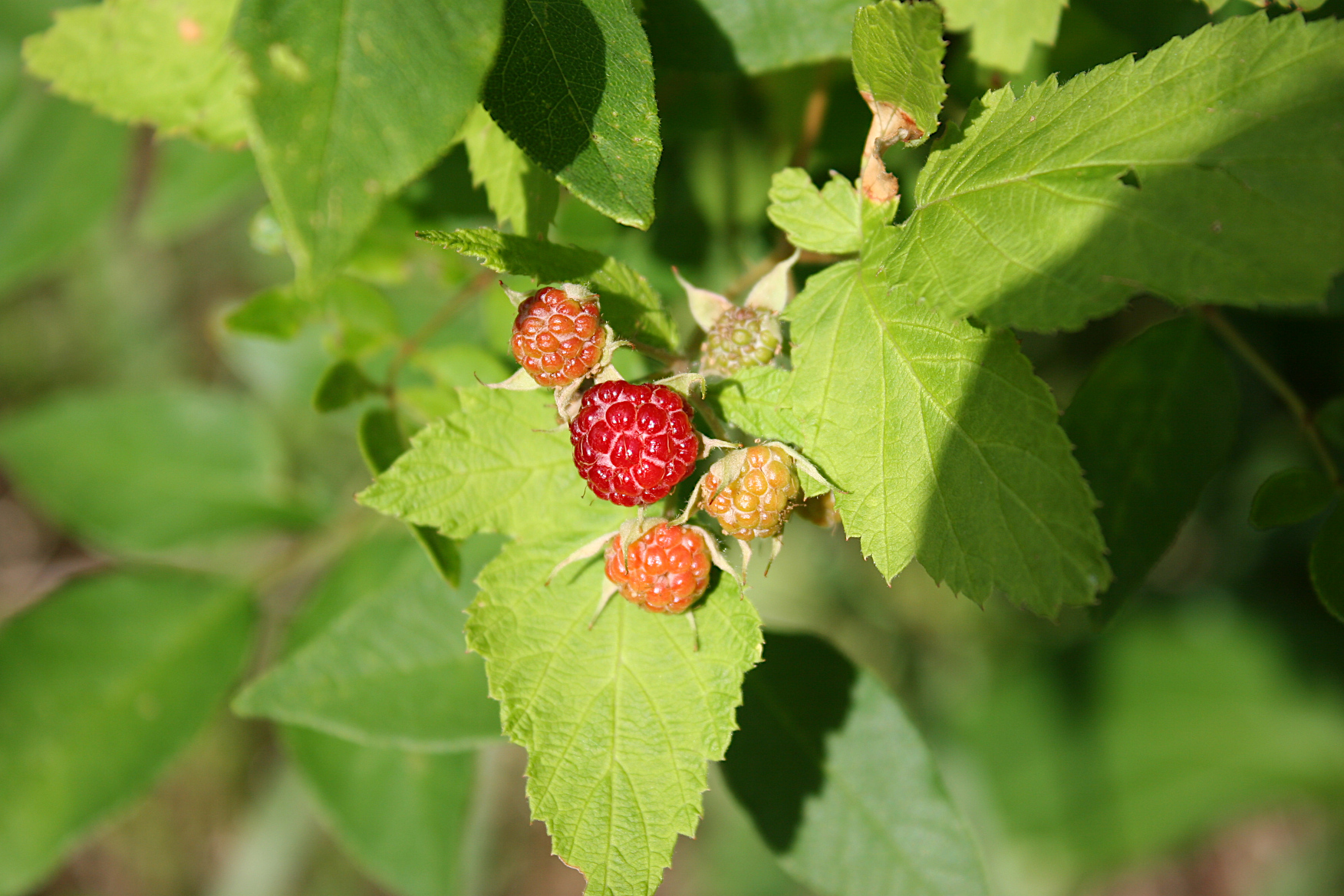
Wild raspberries edge the woods near the prairie. Minnesota Prairie Roots photo June2021.
I savor the moments. The sights. The tastes. The scents. The sounds. All that which defines the natural world.
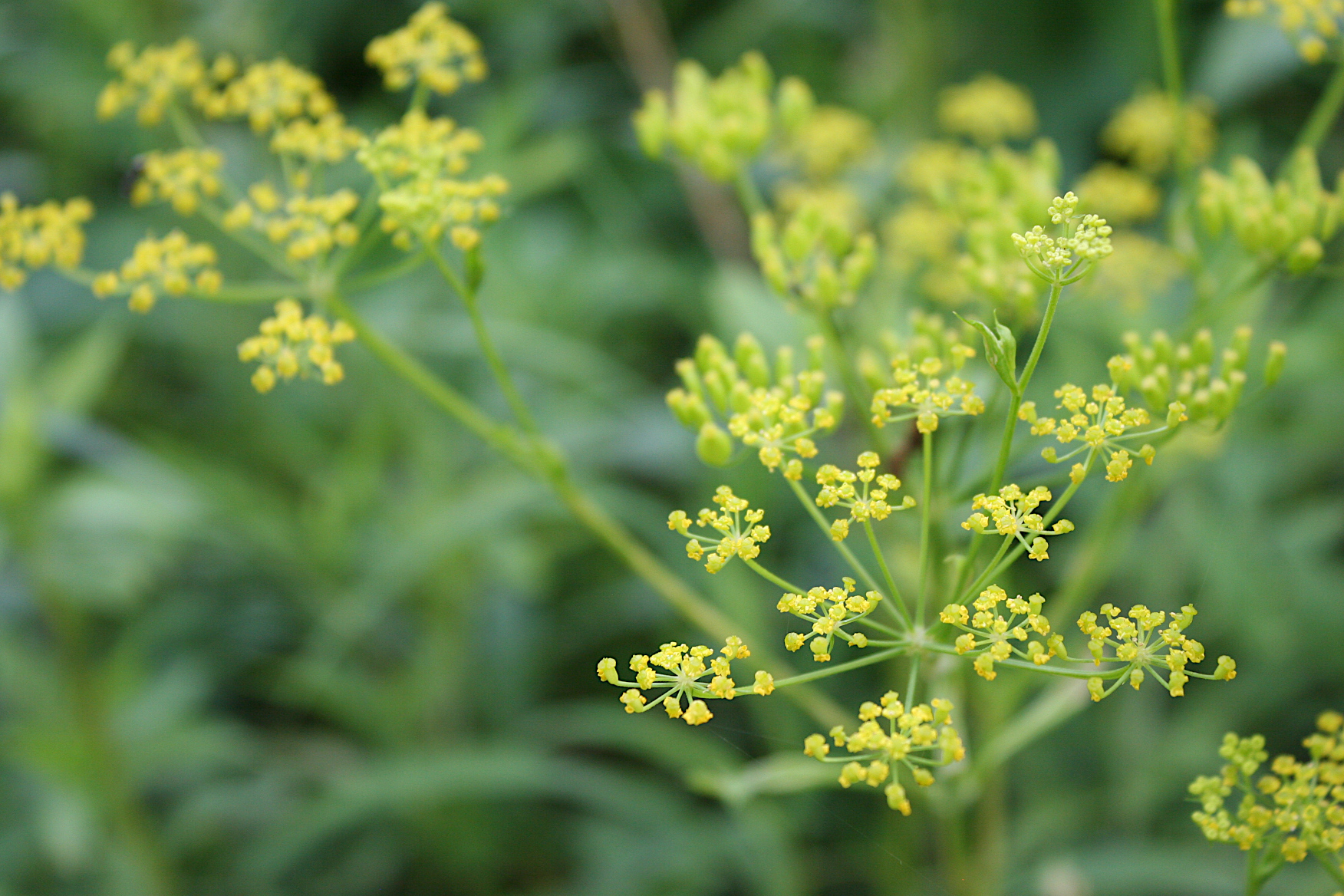
To be avoided: wild parsnip. Minnesota Prairie Roots photo June 2021.
WARNING: Stay away from this plant, wild parsnip. It looks a lot like dill and is growing alongside trails. Wild parsnip will burn your skin. Do NOT touch it.
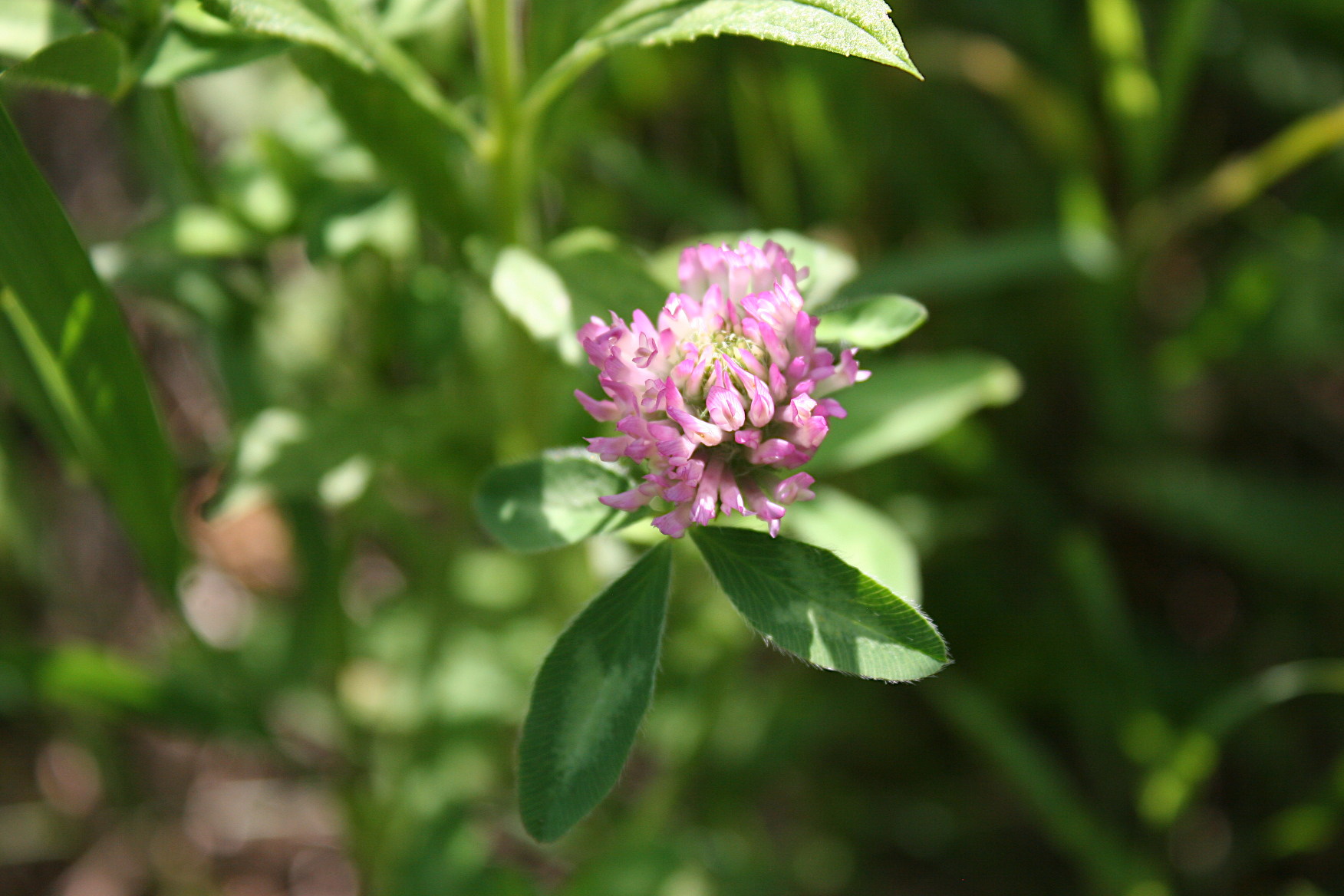
Clover grows in sun dappled spots in the woods by the prairie. Minnesota Prairie Roots photo June 2021.
PLEASE CHECK BACK for more photo rich posts from my recent visit to River Bend. Next, I’ll take you into the prairie.
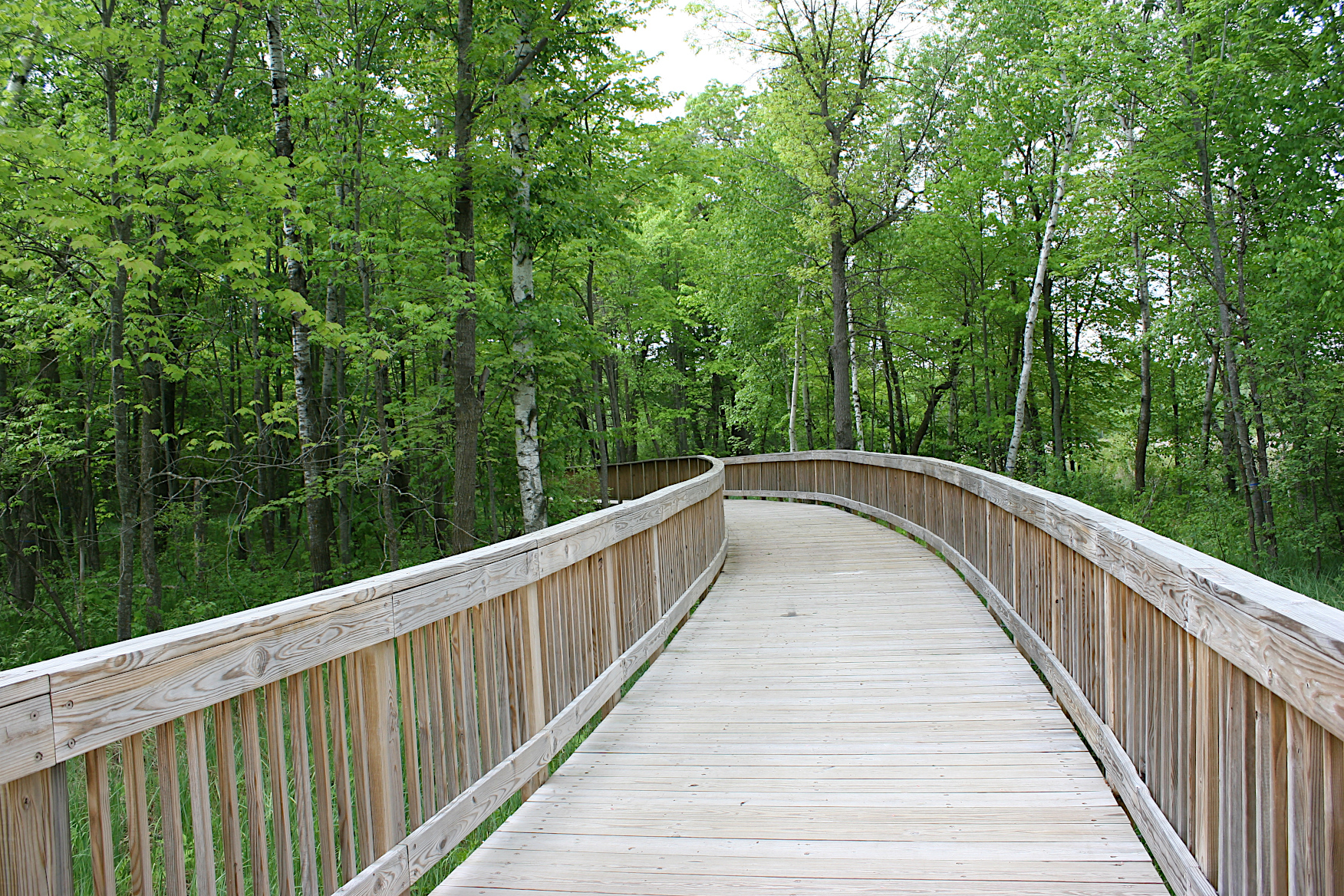
Into the woods via a boardwalk at Grams Regional Park, Zimmerman, Minnesota. Minnesota Prairie Roots copyrighted photo May 2021.
AFTER MULTIPLE VISITS to Grams Regional Park, Randy and I feel comfortably familiar with this 100-plus acre natural area. The Sherburne County park in Zimmerman has become a lunch-time stopping point on our way to a family lake cabin south of Crosslake.
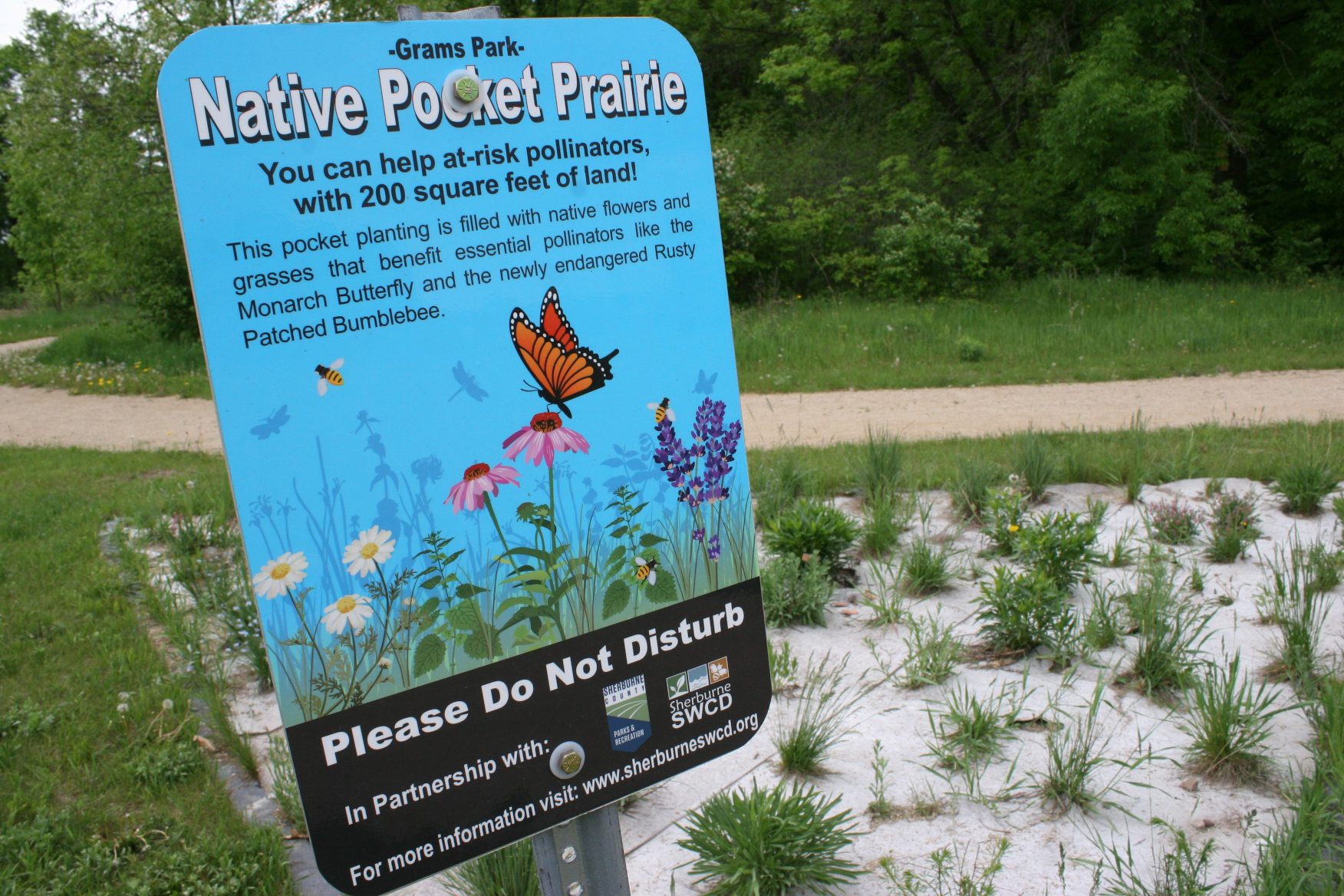
Flowers bloom in a Native Pocket Prairie Garden at Grams. Minnesota Prairie Roots copyrighted photo May 2021.
We exit US Highway 169 onto county road 4, drive a short way, then turn left and snake back to the park across the road from Lake Fremont. Here, among the oaks, we eat our picnic lunch before stretching our legs.
Into the woods at Grams Park. Minnesota Prairie Roots copyrighted photo May 2021.
The park features two miles of trails and boardwalks in a diverse landscape of open natural space, oak forest, tamarack bog and wetlands.
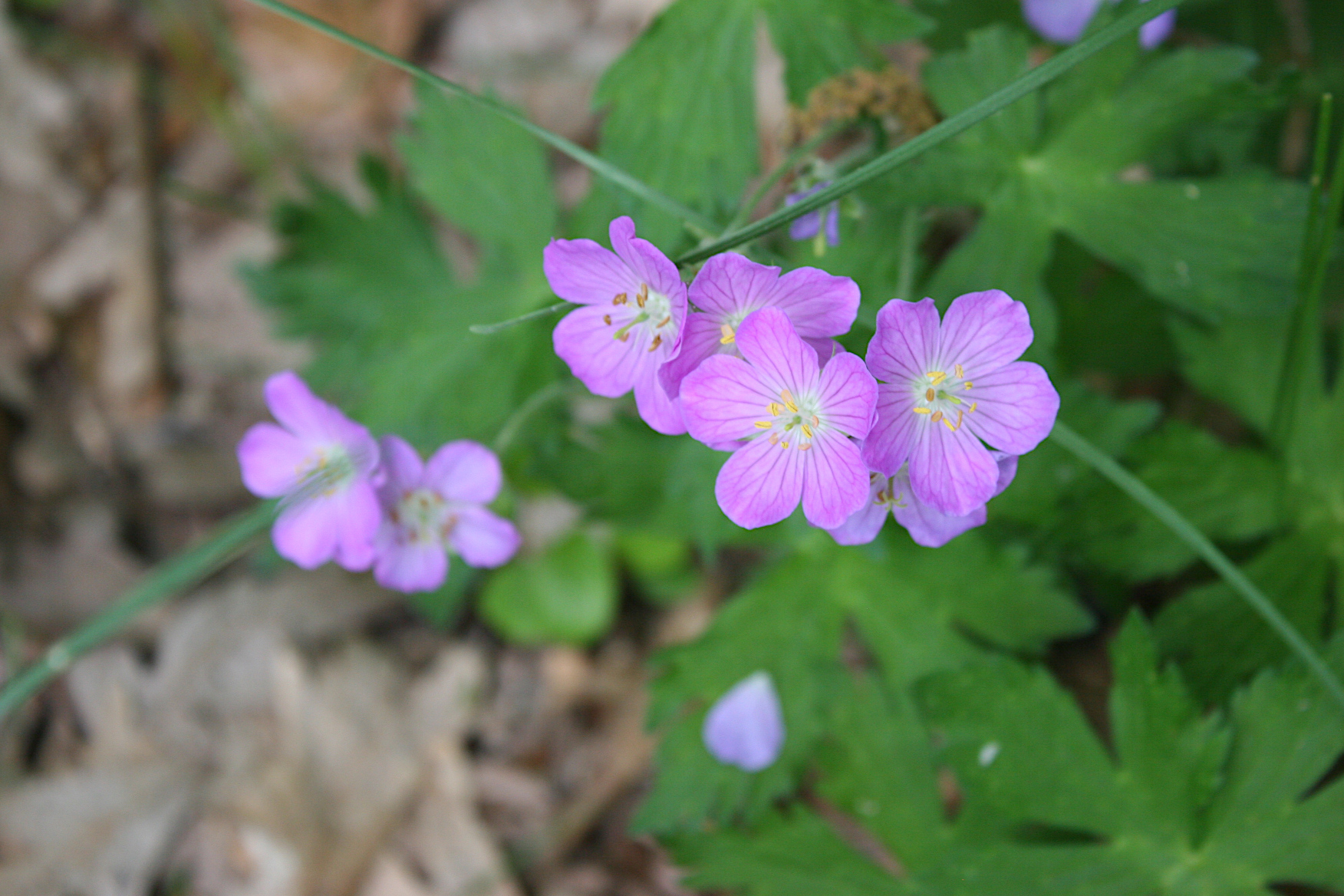
Wildflowers bloom in the woods in mid-May. Minnesota Prairie Roots copyrighted photo May 2021.
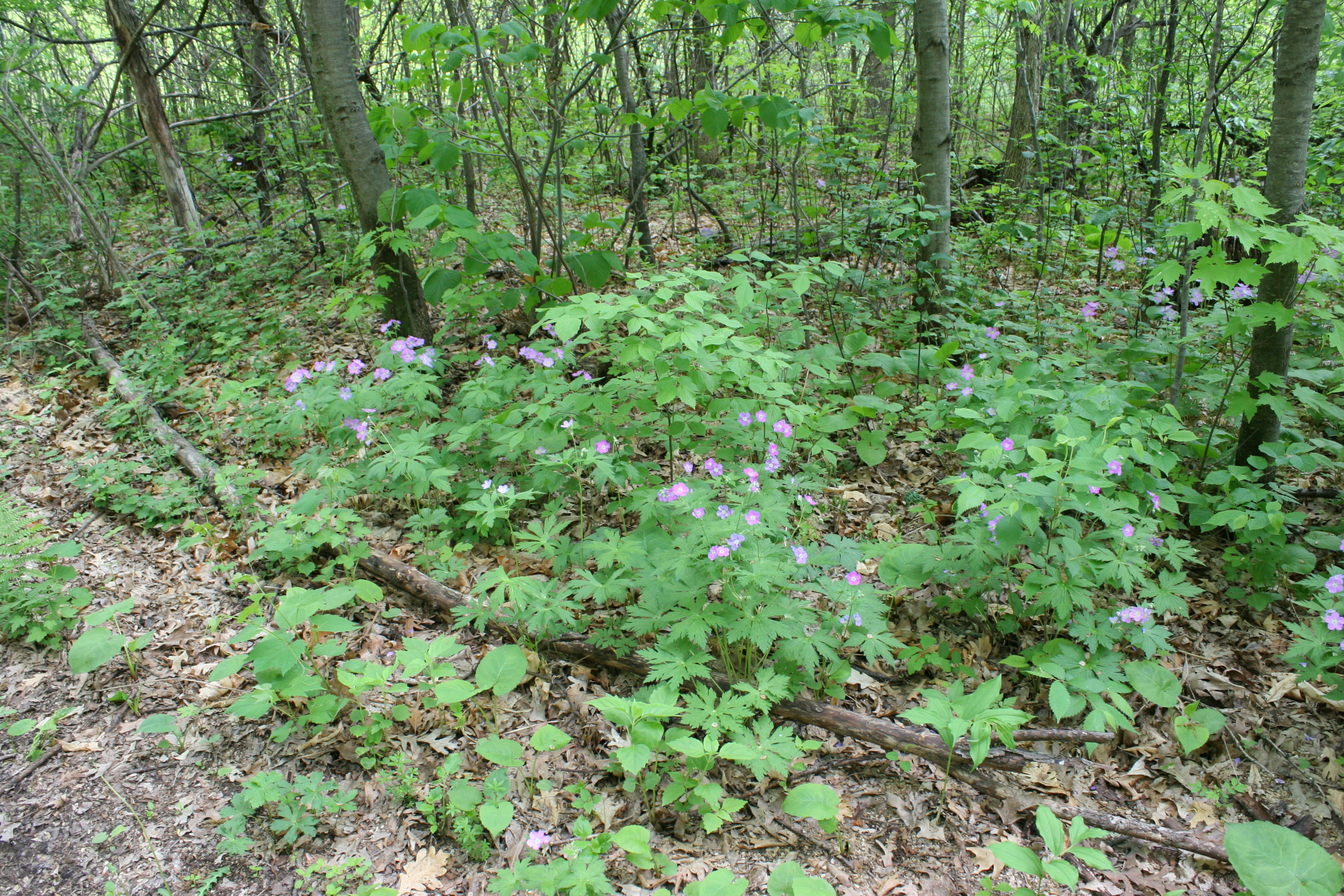
An overview of those same purple flowers. Minnesota Prairie Roots copyrighted photo May 2021.
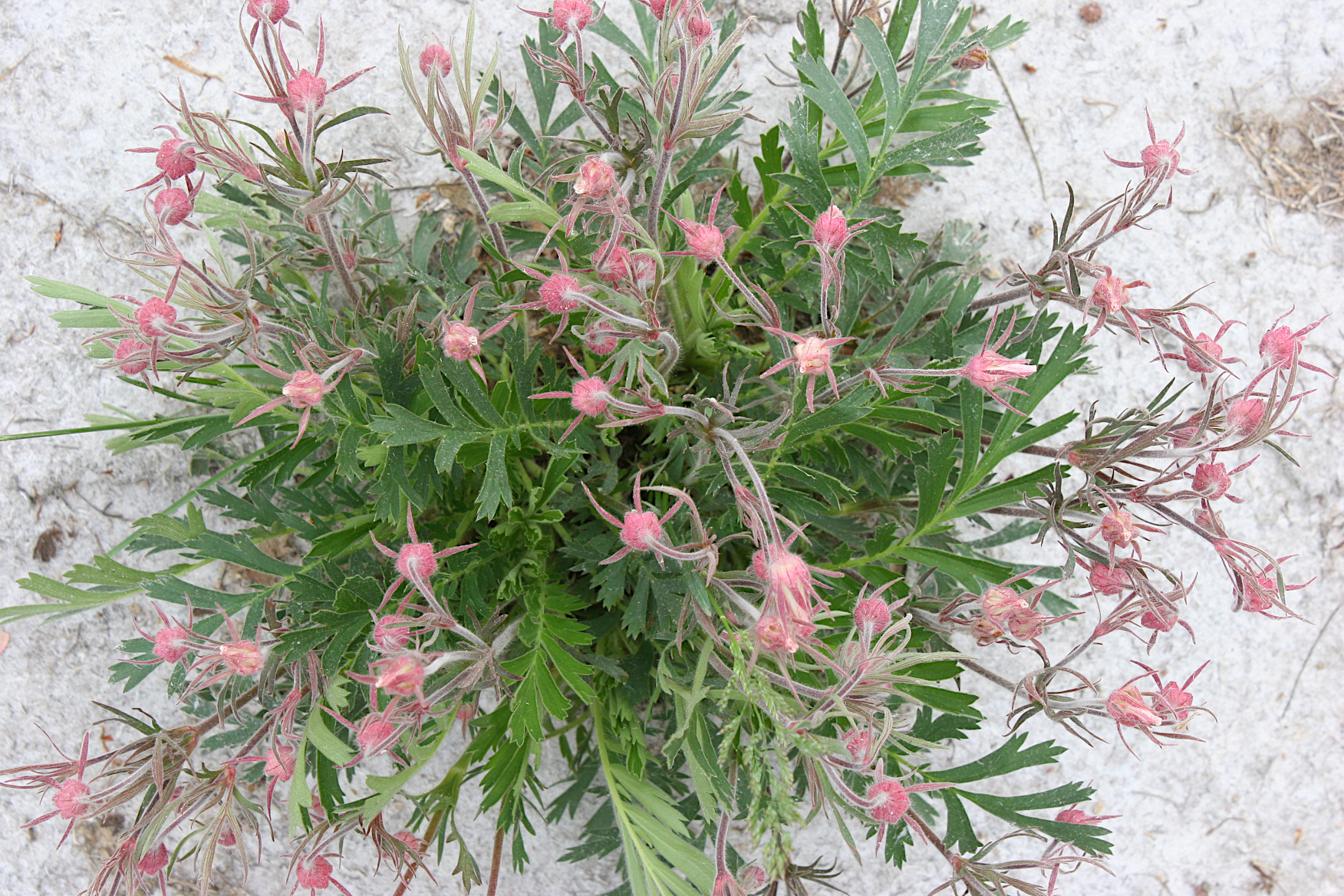
Flowering in the Native Pocket Prairie Garden. Minnesota Prairie Roots copyrighted photo May 2021.
We’ve enjoyed the wildflowers of spring, the wild raspberries of summer and the flaming hues of autumn here in this quiet natural setting.
I appreciate this aspect of the park. Minnesota Prairie Roots copyrighted photo May 2021.
Beautiful prairie flowers in the garden. Minnesota Prairie Roots copyrighted photo May 2021.
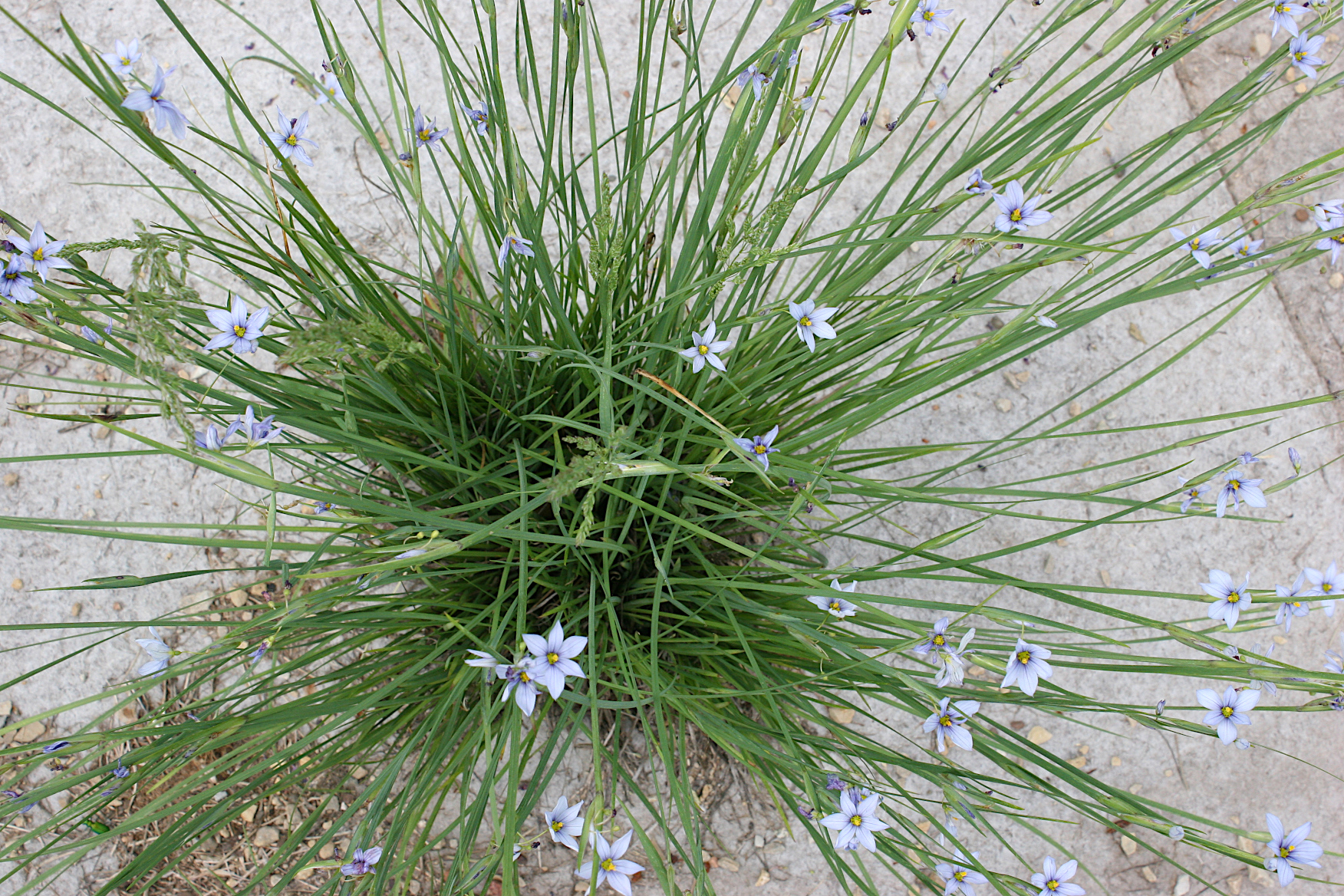
A flowering prairie grass in the prairie garden. Minnesota Prairie Roots copyrighted photo May 2021.
On our most recent stop in late May, we met a couple, Connie and Dale, lunching at the same picnic table we’d used prior to a hike through the park. It was a chance meeting which turned out to be a history lesson. Connie’s grandparents moved onto this land in 1919. She grew up here and eventually convinced her mother to sell the property to Sherburne County. The county, according to information on its website, acquired the park land from Howard and Marvel Grams in 2002.
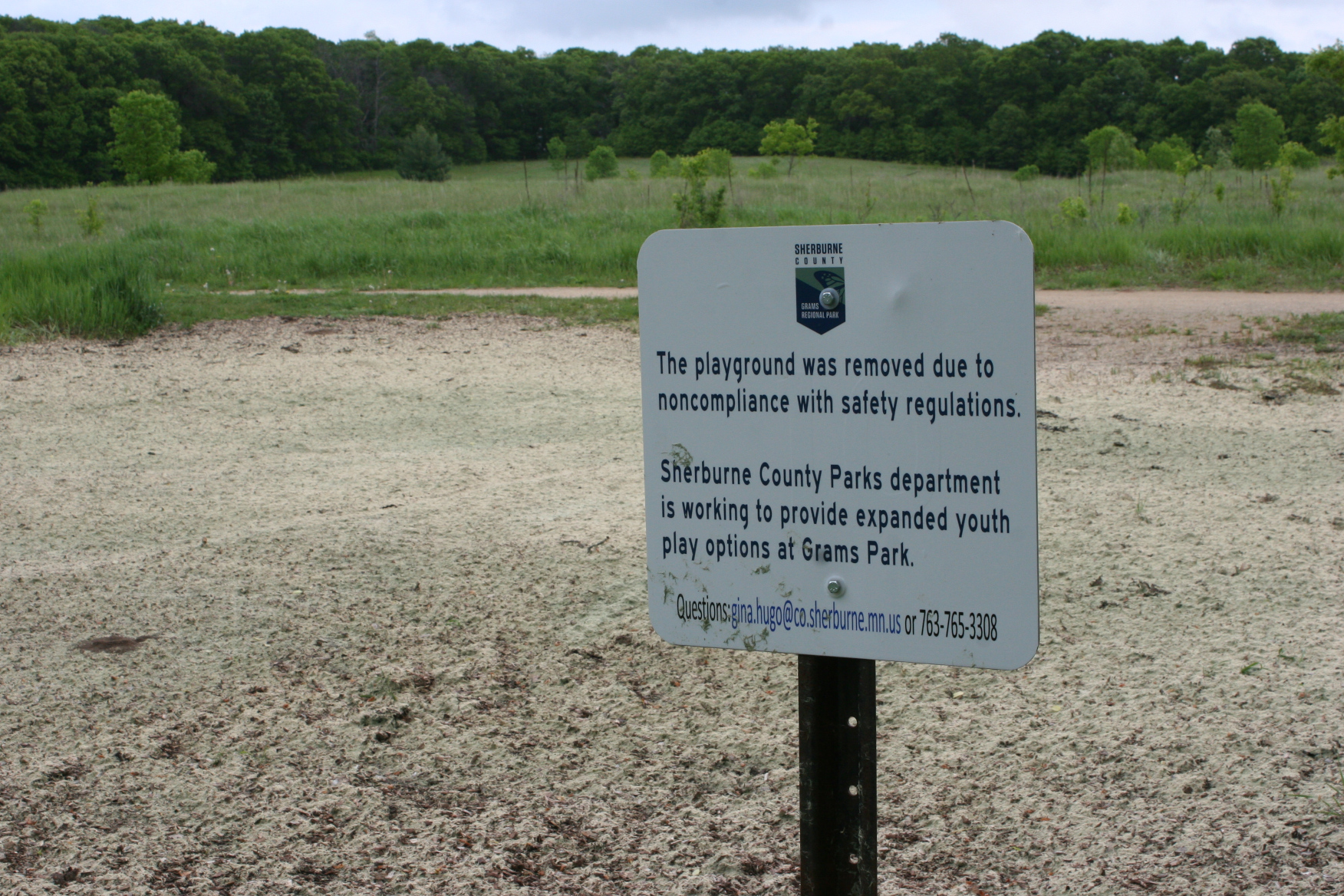
A work in progress at Grams Park. Minnesota Prairie Roots copyrighted photo May 2021.
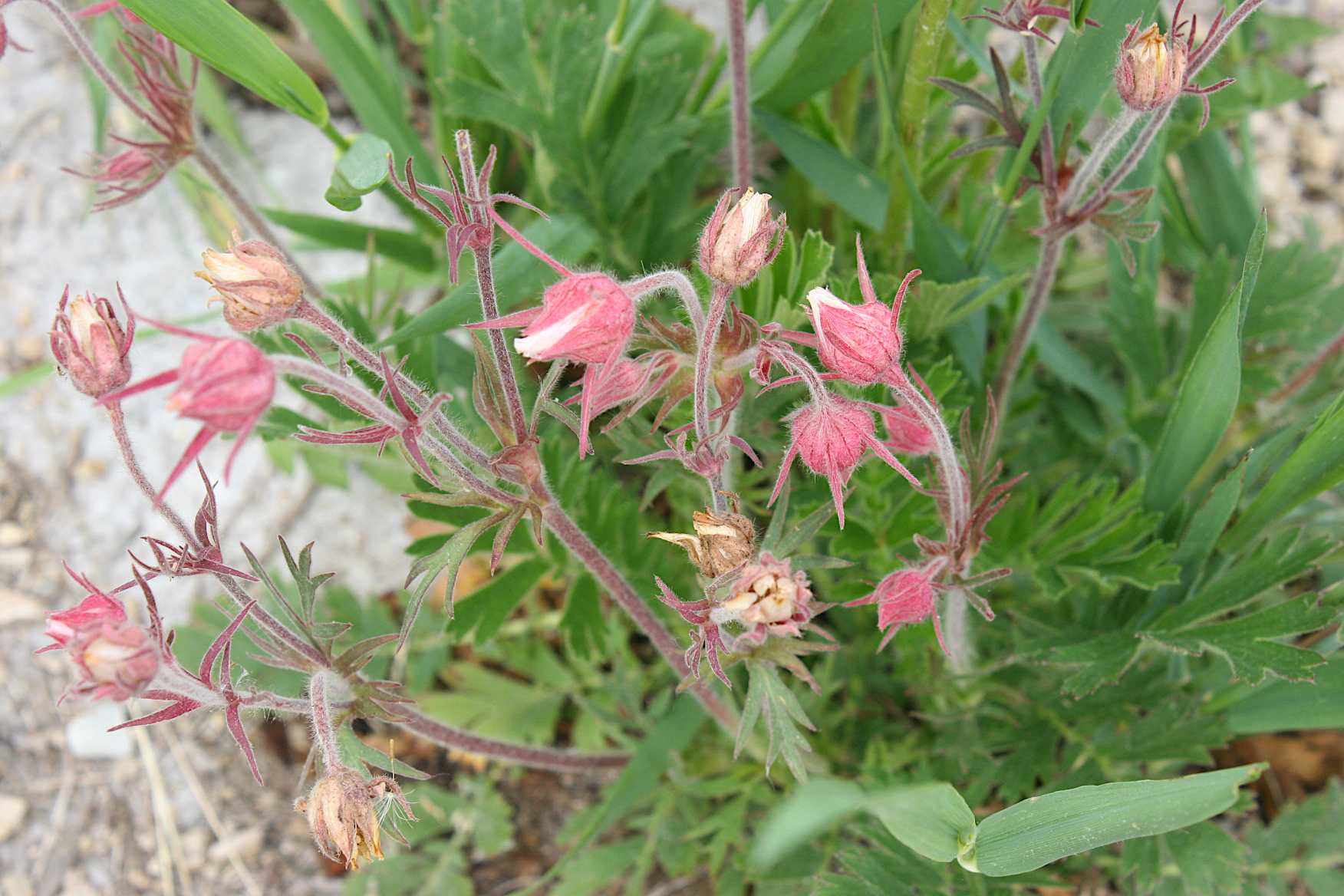
Spotted while walking in the park. Minnesota Prairie Roots copyrighted photo May 2021.
Photographed in an educational/play space for kids. Minnesota Prairie Roots copyrighted photo May 2021.
Had the property not been sold to the county, it would have become a housing development, Connie said. I could hear her gratitude that the Grams family legacy is one of a park and not of houses. I shared how much we enjoy this natural space.
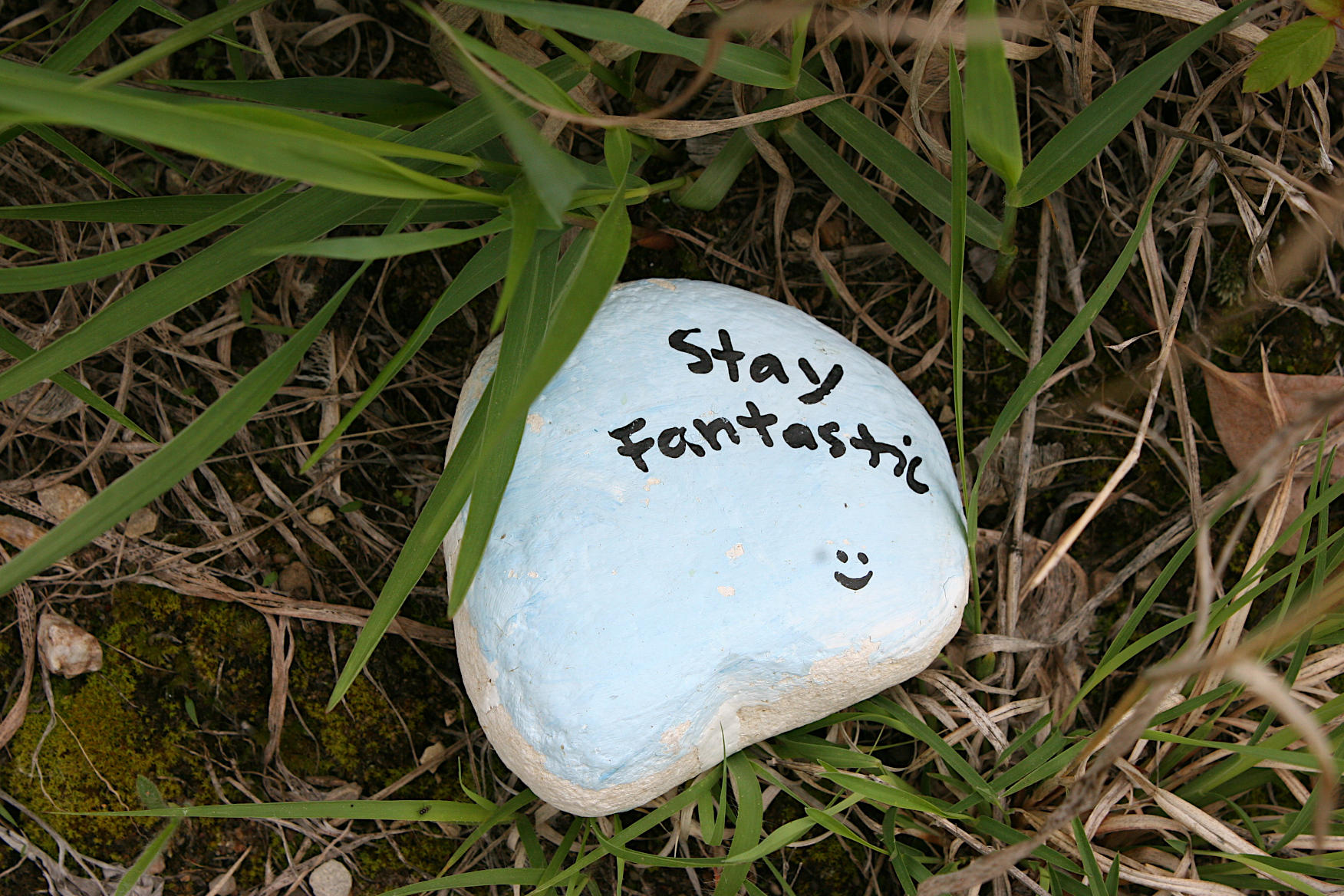
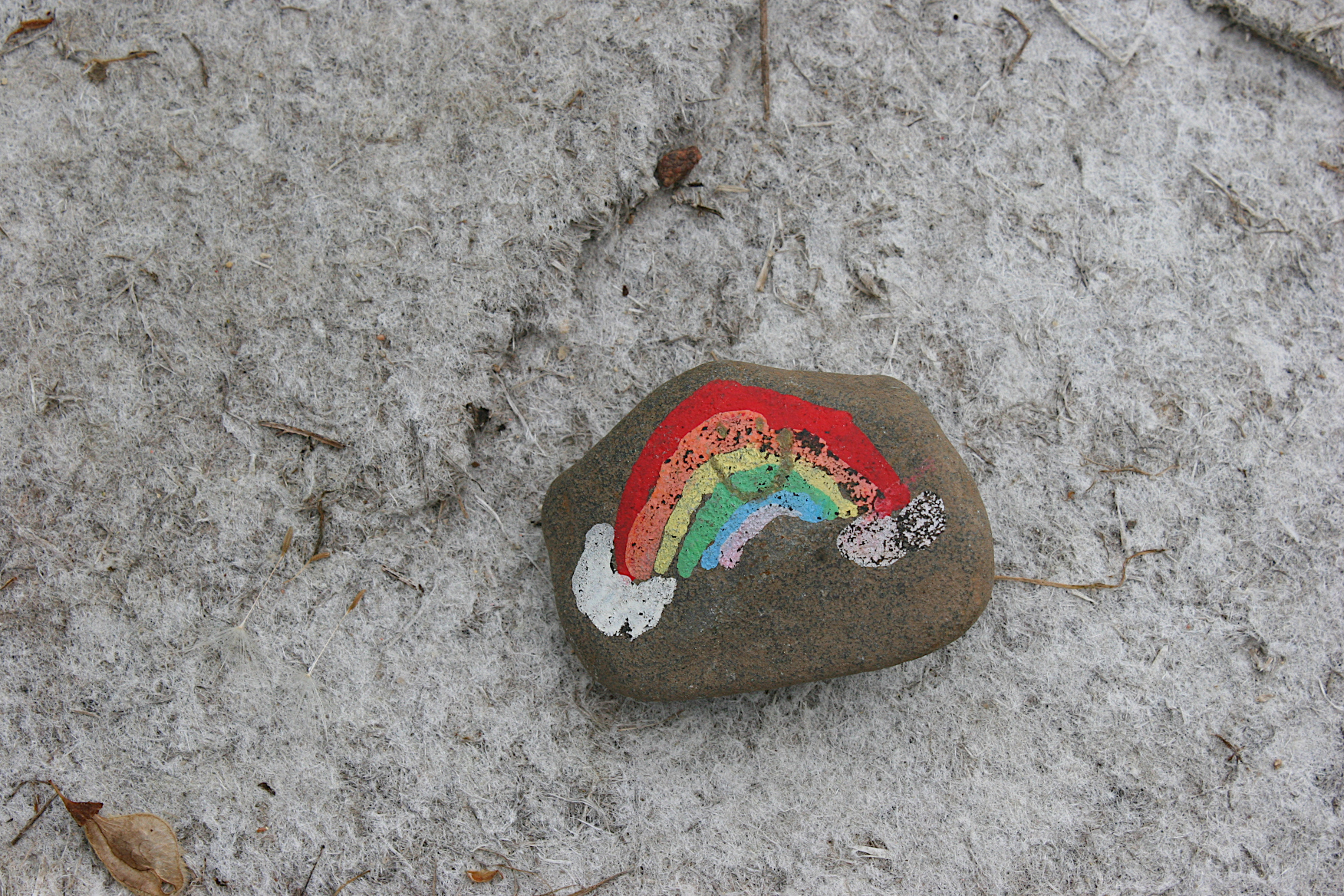
Another found, painted stone in the park. Love this. Minnesota Prairie Roots copyrighted photo May 2021.
Connie also pointed to a nearby 200-years-plus-old oak tree, now under study. I couldn’t help but think how an oak often symbolizes a family tree. The Grams family may have owned this land at one time and grew their family here. But now the branches have spread to include the broader family of those of us who appreciate this place among the oaks.
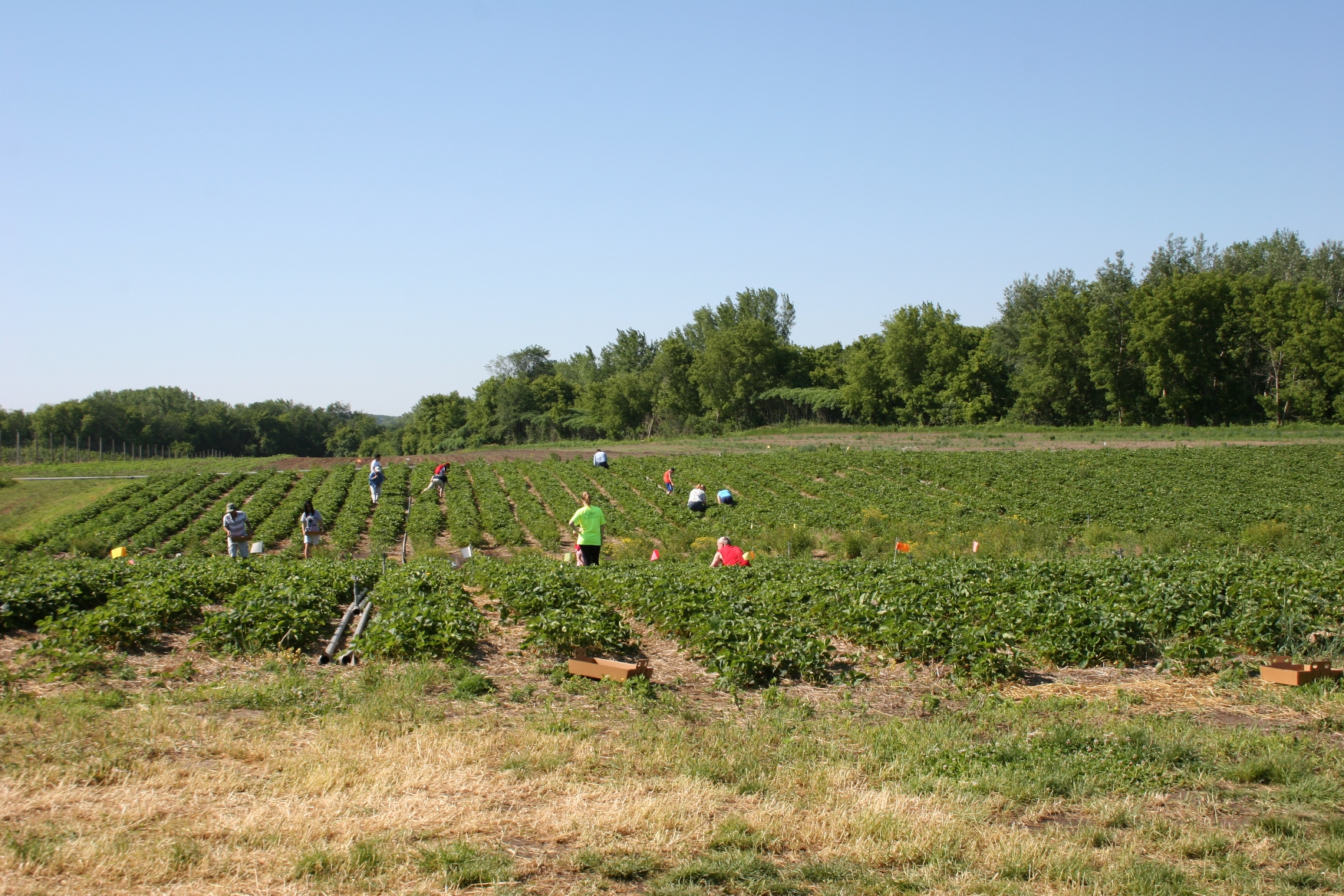
Picking berries at Straight River Farm on a Saturday morning in 2012. Minnesota Prairie Roots file photo.
JUNE PROMPTS MEMORIES of Junes past, when our then family of five headed south of Faribault to Straight River Farm to pick strawberries.
We made a game of it, seeing who could harvest the most berries. It added an element of fun as we collectively picked 20-plus pounds of sun-ripened strawberries.
Years have passed since the kids left home and Randy and I picked berries. But now our eldest daughter continues the family tradition by taking her two children to a berry patch. Together the three of them (the kids are two and five) recently picked close to four pounds. While that’s not a lot of strawberries, it’s not all about the quantity. It’s also about time outdoors. About being, and working, together. About learning that strawberries come from fields, not just the produce section at the grocery store.
My grandchildren are a second-generation removed from the land. I want them to understand the origin of their food and to appreciate that their maternal grandparents grew up on family dairy and crop farms. Agriculture is part of their heritage.
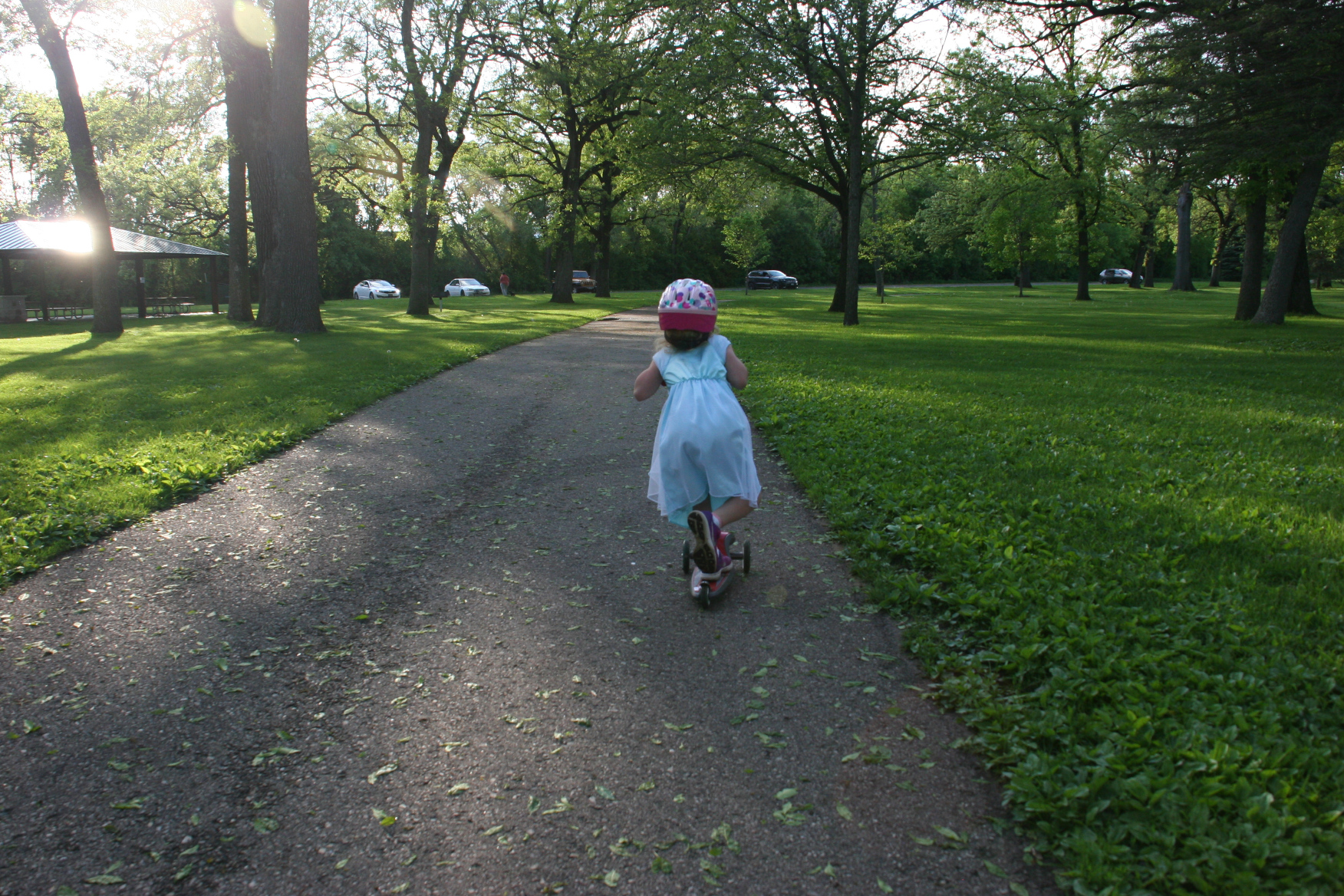
Our granddaughter zooms along on her scooter last year at North Alexander Park in Faribault. This past Saturday we shared a picnic lunch near the shelter in this image. Minnesota Prairie Roots file photo 2020.
As their grandmother, I hold a responsibility to continue that connection to the land. This past weekend, when Isabelle and Isaac stayed overnight, we enjoyed the stunning summer weather with lots of time outdoors. That’s one simple way to link to the land. We packed a picnic lunch, with the kids “helping” to make their own sandwiches. Then it was off to North Alexander Park, where they learned to side step goose poop on the paved trail before we finally found a picnic table in a goose-poop-free zone. (Note to City of Faribault: Please place more picnic tables in the park among all those shade trees.)
While eating our picnic lunch, being in nature spurred conversations, which prompted questions, observations and more. Grandma, how many oak trees are there in the world? Leave that grape on the ground; the ants will eat it. The airplane is in the blue sky. Oh, how I love viewing the world from the perspective of my grandchildren. Life is so uncomplicated and simple and joy-filled.
Randy and the grandkids follow the pine-edged driveway at a family member’s central Minnesota lake cabin last summer. This is one of my favorite photos from that time in the beautiful outdoors. Minnesota Prairie Roots file photo July 2020.
Later that day, Randy and I took the kids to Wapacuta Park near our home. Rather than follow the most direct path up a steep grassy hill, we diverted onto a narrow dirt path that winds through the woods and leads to a launching point for disc golf. The kids loved that brief adventure into the woods, where we found a broken park bench (Note to City of Faribault: Please repair or replace.) and art flush to the earth. Exposed tree roots and limestone provided insights into the natural world and local terrain.
Randy also posed the kids next to a gigantic boulder near the playground while I snapped photos with my cellphone. Our three adult children responded with enthusiasm to the texted images. Wow! It looks the same as 30 some years ago! It has barely eroded. Amber and I will have to climb it the next time we are in Faribault.
A second trip to Wapacuta the following afternoon led to a lesson about storms as thunder banged, rain fell and we hurried home. Not through the woods this time.
I love every moment with my grandchildren. The time making cut-out star cookies for an upcoming July Fourth celebration. The time in our backyard blowing up a bubble storm. The time at the playground. The time reading and laughing and building block towers and putting dresses on the same Little Mermaid dolls Izzy’s mom and aunt played with some 25-plus (or less) years ago. These are the moments which link generations, which grow family love, which I cherish.
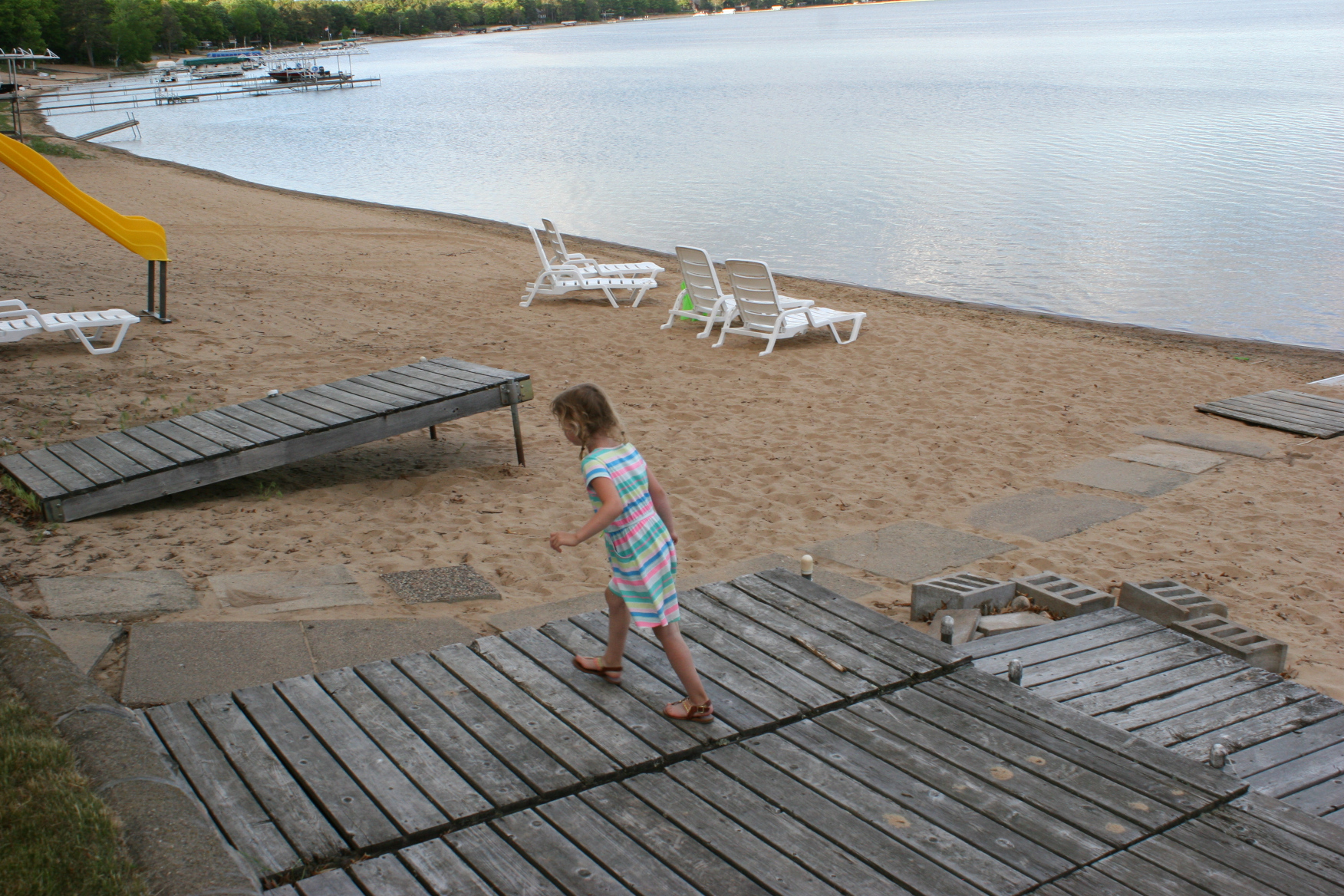
Isabelle by the beach. Minnesota Prairie Roots copyrighted photo May 2021.
SHE RACED BACK AND FORTH along the beach, arms outstretched.
“I’m flying,” she said. “To the moon and into the pink sky.”
My heart brimmed with infinite love as I watched, the moon a pale orb in a sunset sky tinged with streaks of pink. On the far earth below, my 5-year-old granddaughter ran, her imagination flying.
This singular scene defined a recent stay at a family member’s guest lake cabin in the central Minnesota lakes region. For Randy and me, it’s all about enjoying time with those we love most. Connecting. Building memories and bonds that we hope will last a life-time.
Shortly after that stay, Isabelle mailed a picture she’d drawn. It included a rainbow and characters from Frozen inside a pink shape. I thought it was the pink sky of Horseshoe Lake. She clarified that it was simply a pink path. But in my eyes, I see the pink sky.
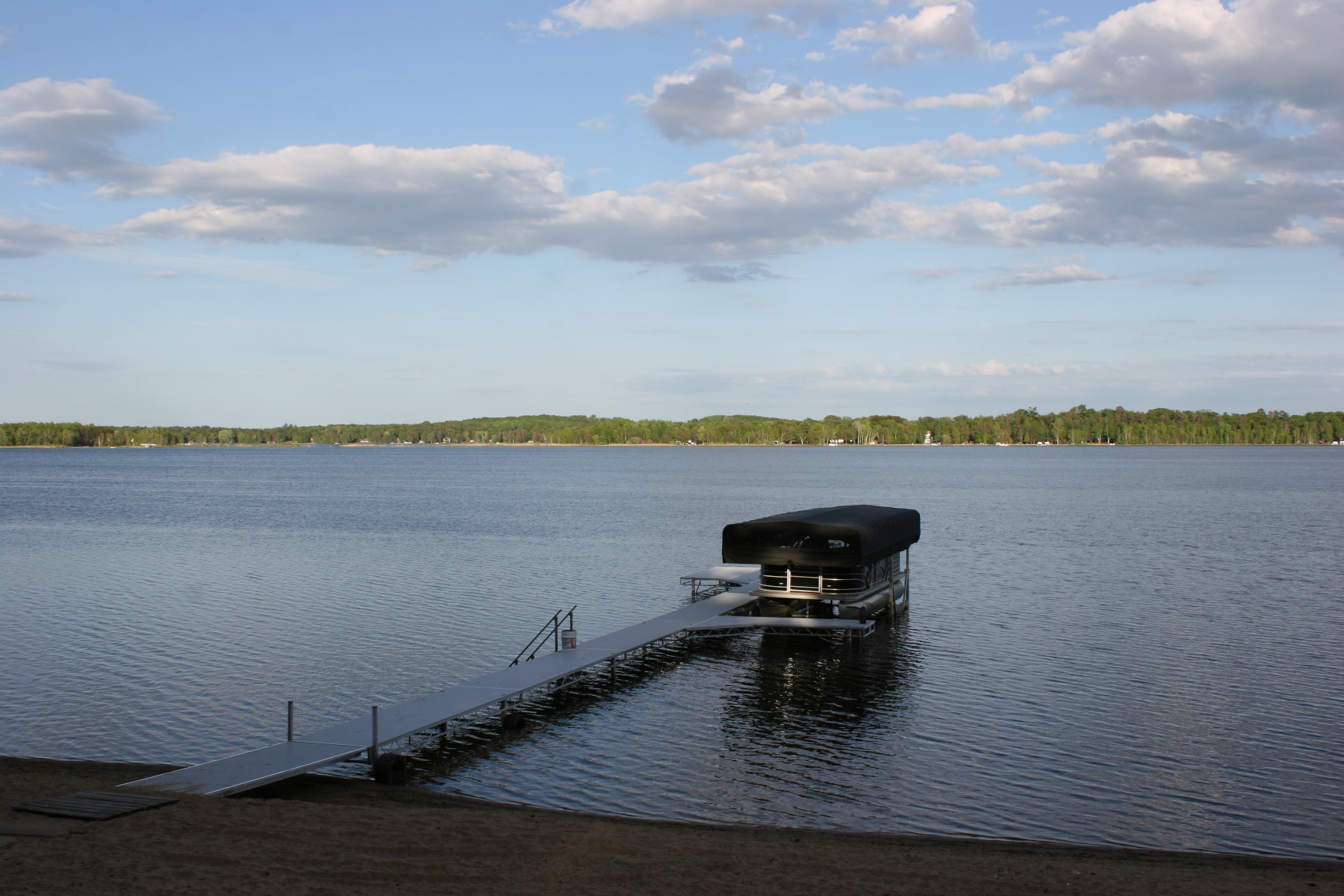
Horseshoe Lake. Minnesota Prairie Roots copyrighted photo May 2021.
Memories of days at the lake with our eldest daughter, our son-in-law and our two grandchildren continue to bring me joy. This stay I recruited Izzy to dry dishes while I washed. I also taught her to make s’mores. She counted and cracked graham crackers, then broke Hershey bars to fit. I expect she will assist me again next time we’re at the cabin.
We all sat around the campfire, Randy and Amber roasting marshmallows for s’mores. Sticky faces and fingers added to the memories.
One evening we shared bear stories, starting with Marc’s experience from a childhood camping trip. I added mine. And then Amber brought humor into the mix with her version of Goldilocks and the Three Bears. Randy tossed in bits about Smokey the Bear and the Hamm’s beer bear. At least the bear tales didn’t scare the grandkids.
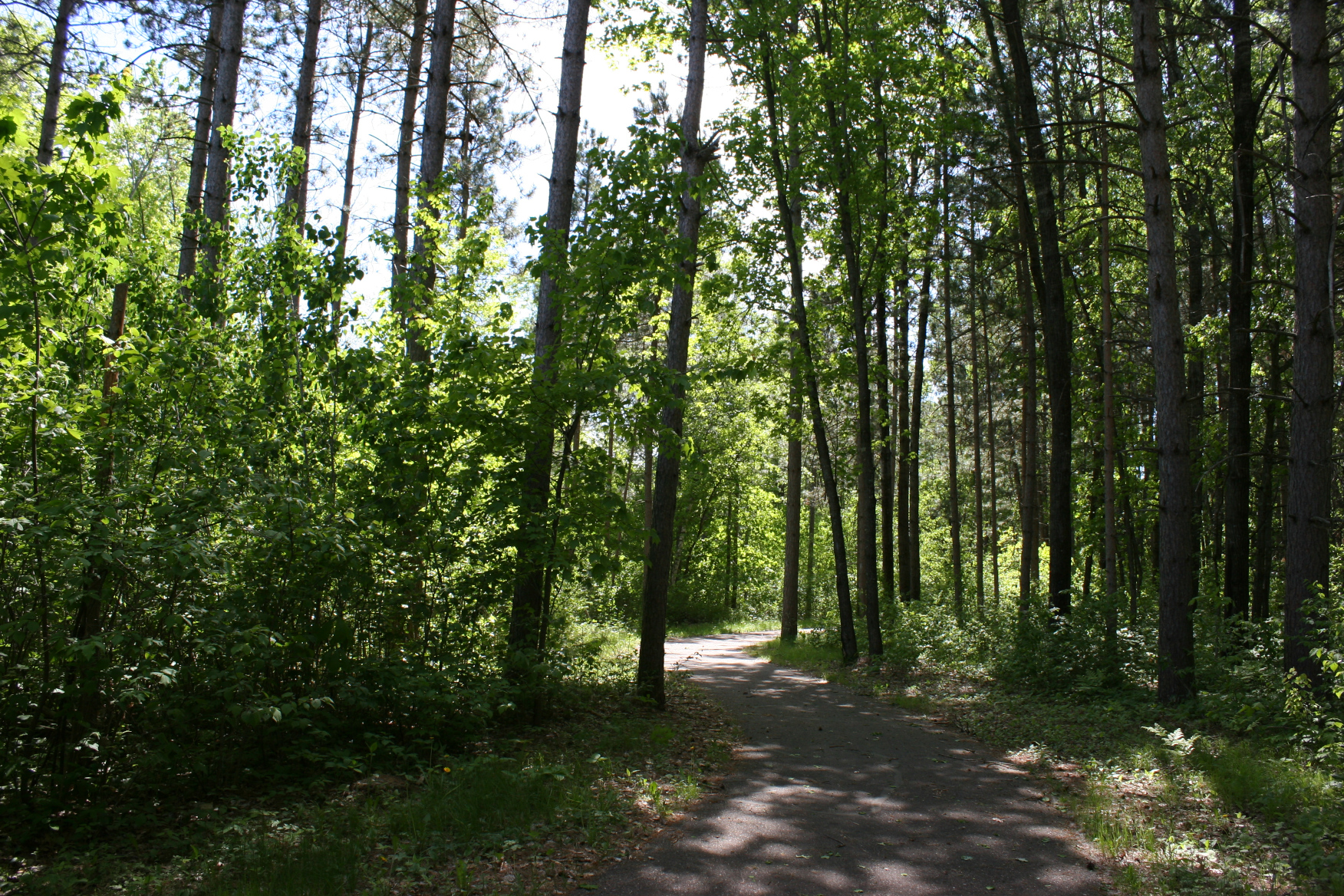
A trail winds through Mission Park near the cabin. Minnesota Prairie Roots copyrighted photo May 2021.
But masses of dragonflies bothered Izzy. Our cabin stay coincided with dragonflies and mayflies invading like a biblical plague. Isaac just walked right through them and didn’t notice when I plucked several dragonflies off him. Yellow jackpine pollen also clouded the air. Because of that, I kept my Canon 20-D mostly tucked inside my camera bag.
The lake temp at the time of our late May visit was still too cold for swimming. So we waded only. Randy fished, hooking a few fish too small to keep. Two warm and sunny days allowed for sunning on the beach for the adults and playing for the kids. Izzy opened Sand Pie Bakery on the afternoon her parents left for a brief jaunt into town. Oh, what fun to order an assortment of fruit pies crafted by Izzy and her brother.
Isaac and I grew closer as we interacted. He now clearly calls me Grandma in the strong voice of a 2 ½-year-old. He also learned to love sliding after we went to a playground in town. I felt exhausted just watching him run up steps, slide and repeat.
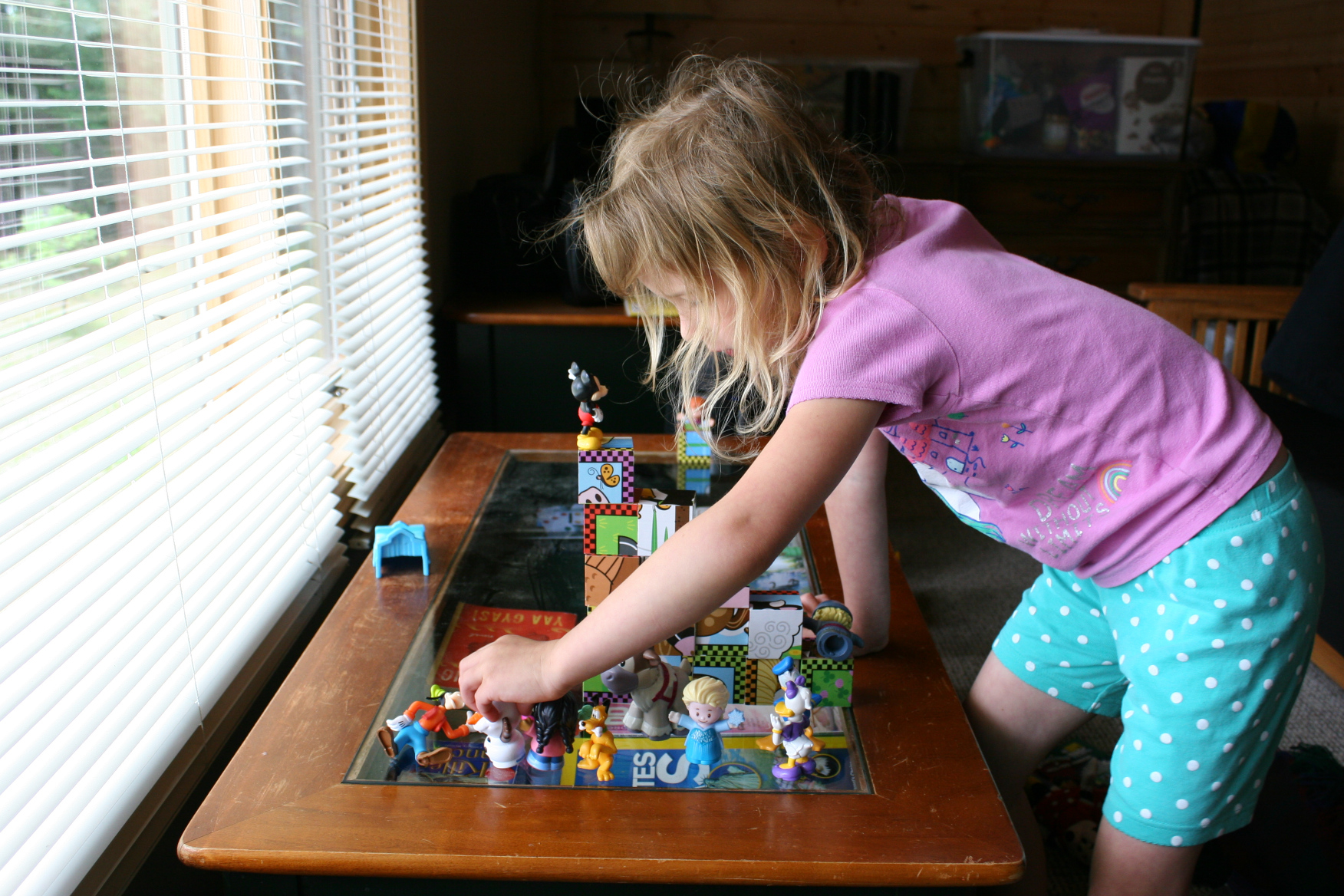
Izzy plays with figurines one morning at the cabin. Minnesota Prairie Roots copyrighted photo May 2021.
All of these family moments I hold precious. Time on the beach. Time inside the cabin—dining together, doing dishes, playing “school” with the kids. Time outside the cabin on nature walks—gathering treasures of stones, shells, pine cones. Watching loons near the dock. There’s nothing quite like viewing the natural world through the eyes of a child. Time outside the local ice cream shop, eating our treats as the afternoon sun and strong wind dripped ice cream onto our hands and the ground.
I cherish these memories. Every. Single. One. Some day perhaps my grown grandchildren will sit around a campfire and reminisce about cabin stays with Grandma and Grandpa. Stories of mayflies and dragonflies, of ice cream and sand pies, and of pink streaking the sky over Horseshoe Lake.
#
TOMY BROTHER-IN-LAW Jon and to my sister-in-law Rosie, thank you from the bottom of our hearts for opening your guest lake cabin to extended family. We feel incredibly blessed by your generosity, by our time at the lake and by the family moments we are sharing and the memories we are building.
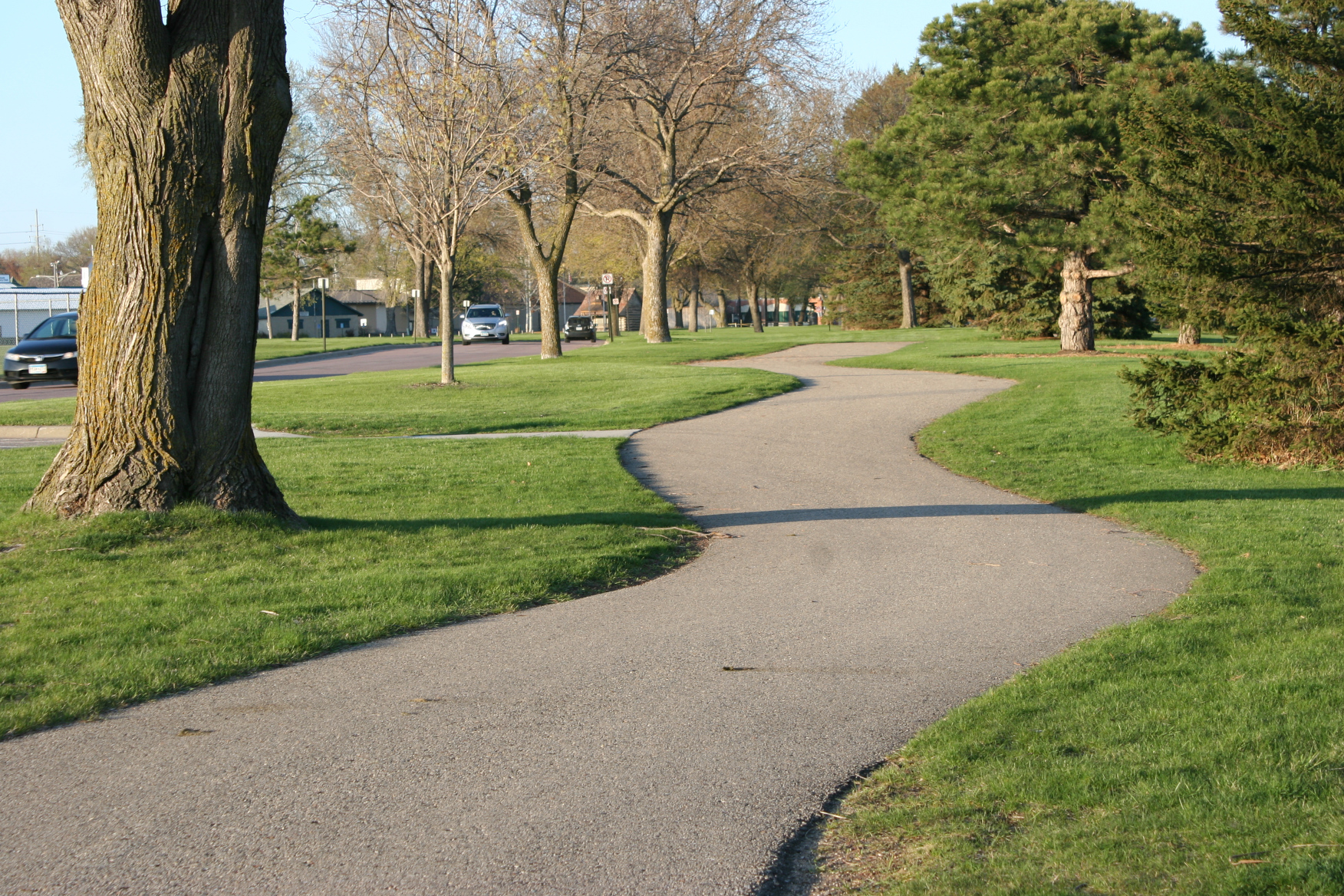
A section of the Northern Link Trail. Minnesota Prairie Roots copyrighted photo.
I love walking here in the evening, when the sun begins its golden descent. A paved path curves along the bank of the Cannon River.
A lopped evergreen along the trail. Minnesota Prairie Roots copyrighted photo.
I appreciate the gracefulness of the Northern Link Trail, how it winds around trees rather than tracing a straight line.
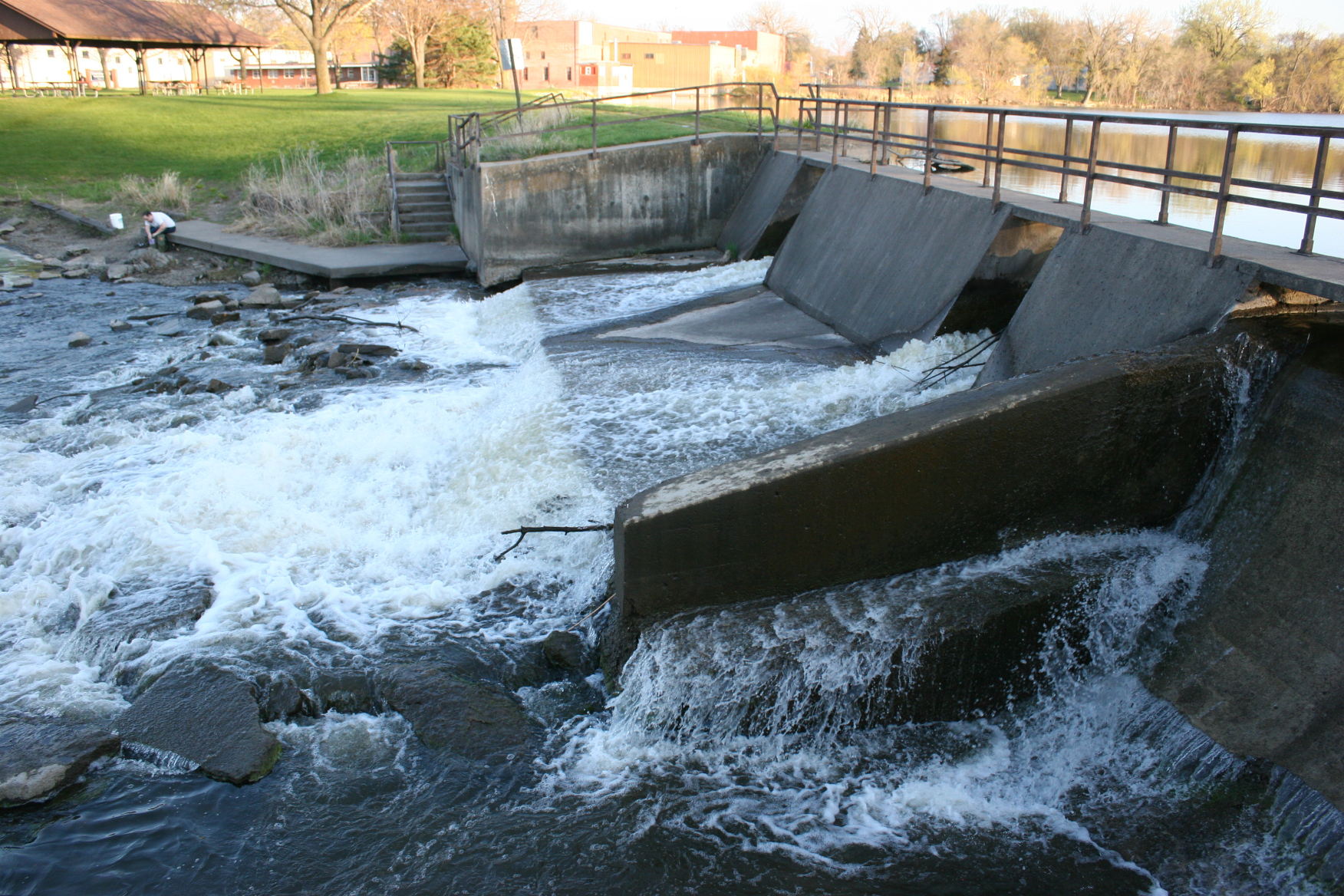
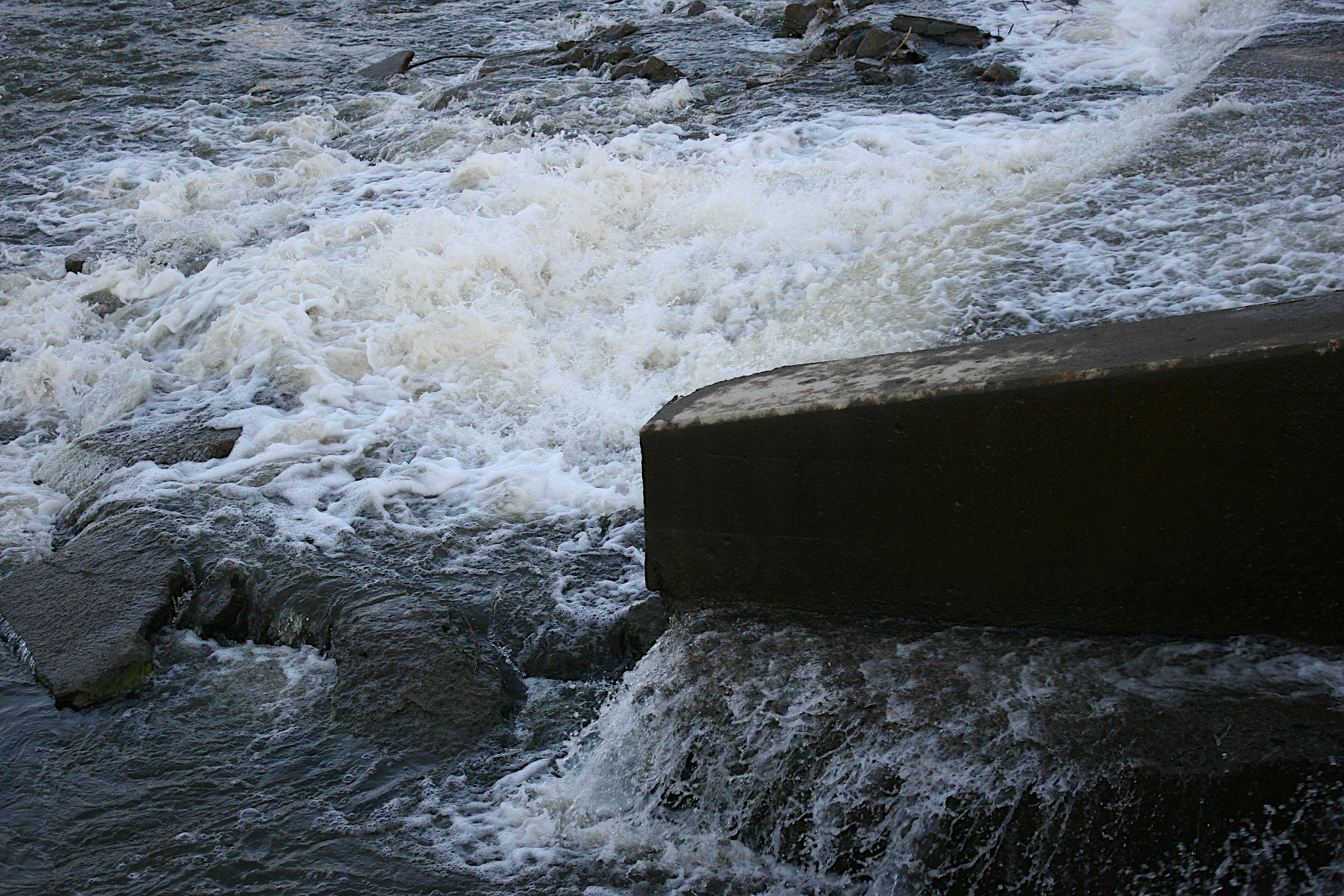
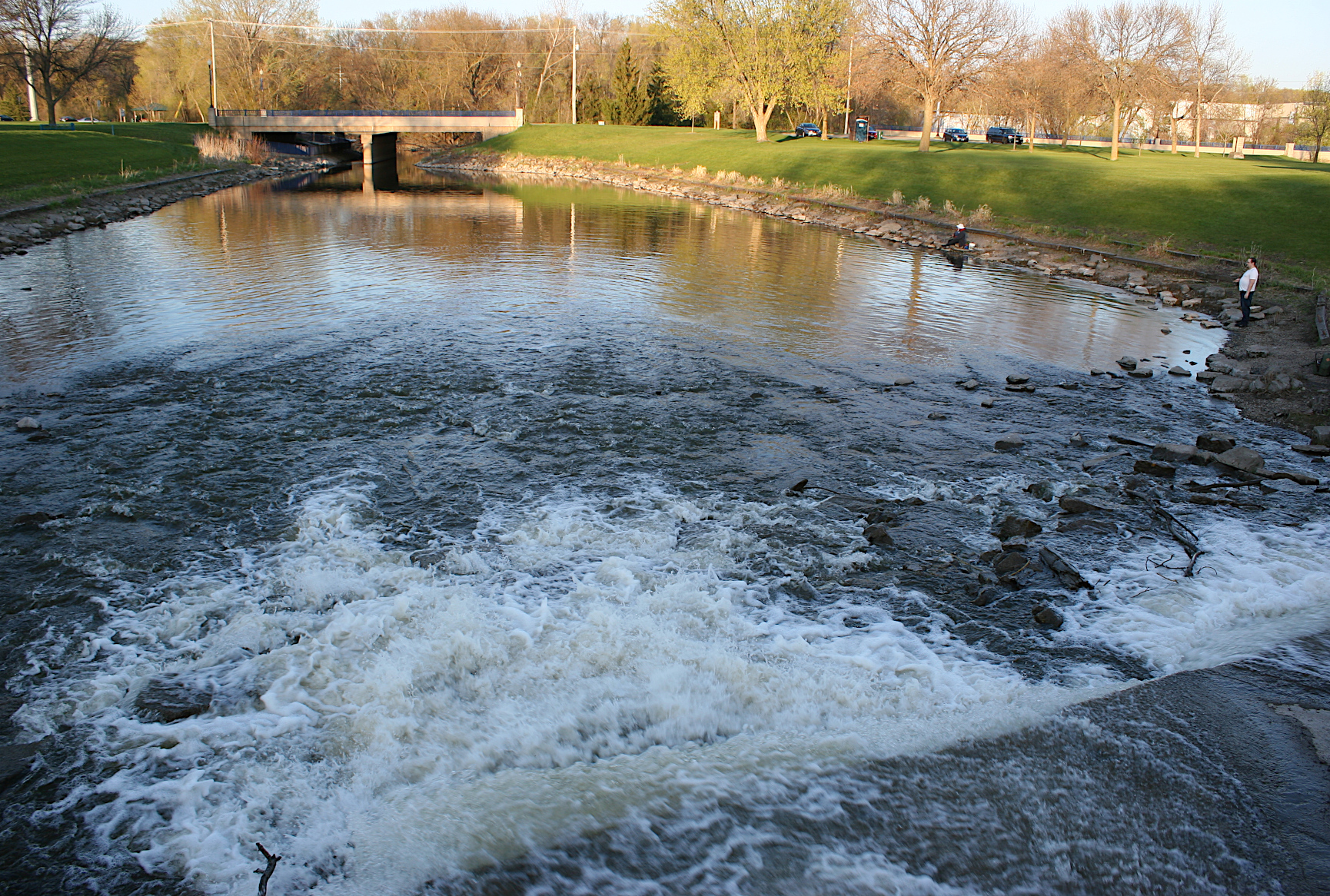
The Cannon River roars over the dam. Minnesota Prairie Roots copyrighted photo.
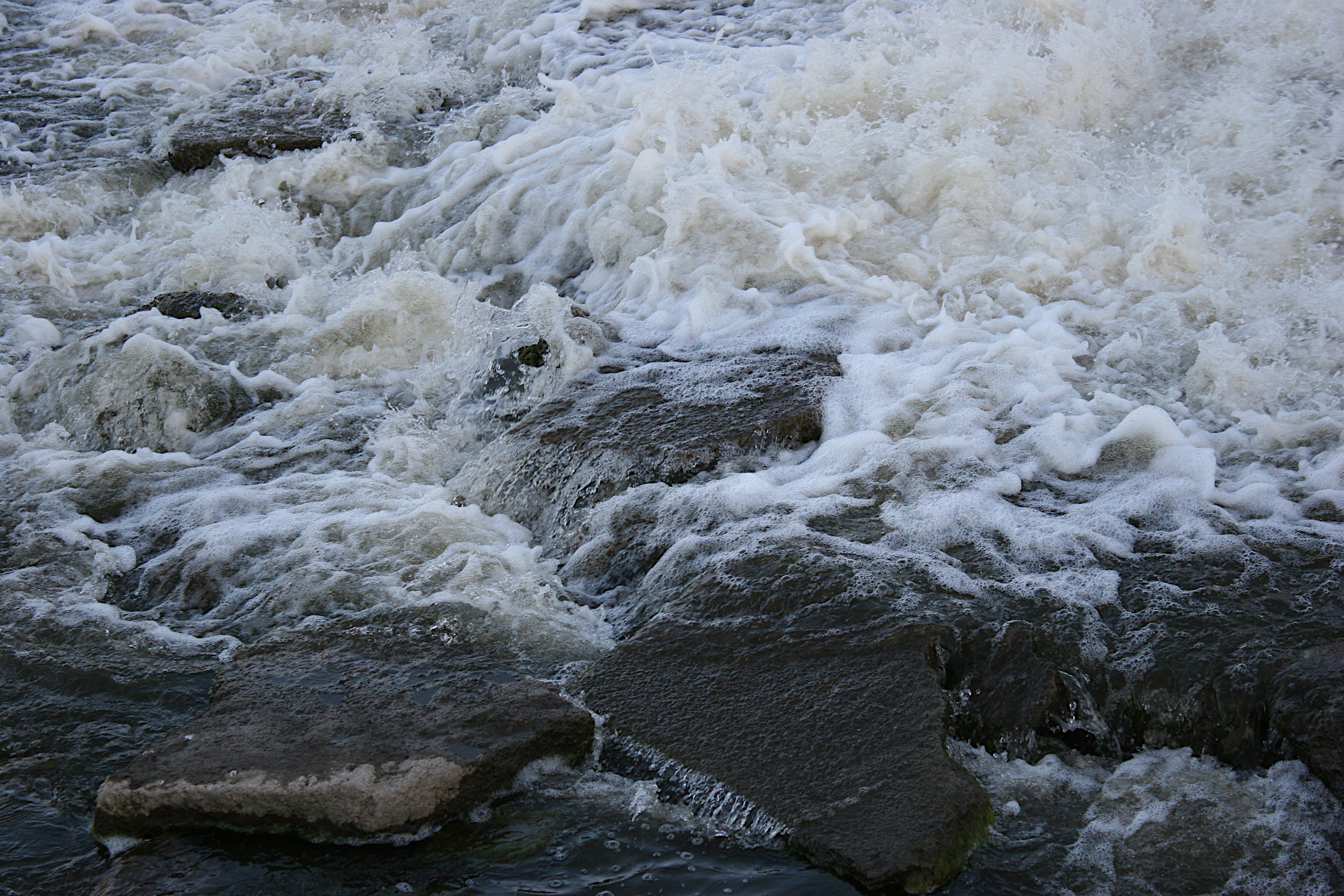
And I appreciate the power of the river roaring over the dam, over rocks. There’s something about churning water that mesmerizes me. The sound. The sight. The reminder that water, harnessed or unharnessed, is a powerful thing. It’s a bit terrifying.
A section of the dam walls the river. Minnesota Prairie Roots copyrighted photo.
Standing on the narrow dam walkway widens my perspective to include fishermen/women/children angling from the shoreline. This is a popular fishing spot, any time of year.
On the other side of the bridge and about a block away, the Cannon and Straight Rivers merge. Minnesota Prairie Roots copyrighted photo.
And then, if I look directly before me, I see the river flowing under the Second Avenue bridge. A short distance later the Cannon joins the Straight River at Twin Rivers Park.
I never tire of watching, and listening to, the river churn. Minnesota Prairie Roots copyrighted photo.
Graffiti on the Teepee Tonka Tunnel. Minnesota Prairie Roots copyrighted file photo May 2021.
SIX DAYS AGO I PUBLISHED a post, “From Faribault: When Graffiti Overtakes Nature & History,” which generated intense local interest. A Facebook group for people who grew up in Faribault linked to my post. And, no, this is not my hometown and I’m not on Facebook. But I have lived here for 39 years.
I appreciate the more than 1,500 views of that May 6 post. But I don’t appreciate some of the comments that followed. Let me explain.
The entry to the tunnel now covered with graffiti. Several years ago, the city installed lights inside the tunnel and painted over the graffiti. But the “art” is back. Minnesota Prairie Roots copyrighted file photo May 2021.
Initially, comments on my story about graffiti along the Teepee Tonka Trail leading into River Bend Nature Center, specifically inside an historic tunnel and on a footbridge over the Straight River, came from regular Minnesota Prairie Roots readers. They have no connection to my community. But I have an already established relationship with those readers, who comment often. So I approved their comments. Yes, I moderate replies to my posts.
Graffiti mars this footbridge across the Straight River along Teepee Tonka Trail. Minnesota Prairie Roots copyrighted photo May 2021.
PUSHING PAUSE ON COMMENTS
When comments began rolling in from those who followed the Facebook link, I pushed pause. I didn’t like much of what I was reading. The first comment, in fact, was threatening. I won’t give voice to those words here. But suffice to say that I felt uncomfortable with the message written by this anonymous individual.
Other writers used derogatory words to describe Faribault and the individuals creating graffiti. I may not like what these taggers are doing, but I also don’t like name-calling.
And I don’t like the negativity that all too often prevails about Faribault. Yes, people are entitled to their opinions. But it does no good to continually criticize. Every single community faces issues. Amplifying the negative rather than working toward improvement and resolution only perpetuates problems, or perceived problems.
The Straight River, as photographed from the footbridge along Teepee Tonka Trail. Minnesota Prairie Roots copyrighted photo May 2021.
THE POSITIVES OF FARIBAULT
Faribault is a place of incredible natural beauty from our many parks to the two rivers that run through to, yes, even that trail tracing to the tagged tunnel.
Faribault is a place where history matters, as evidenced in our downtown historic district, historic homes scattered throughout the city, aged churches, Shattuck-St. Mary’s School, Buckham Memorial Library and many more buildings. Even our viaduct. And the Central Park Bandshell. And the historic Faribault Woolen Mill. And, yes, even the 1937 Teepee Tonka Tunnel, hand dug by Works Progress Administration workers as a root cellar for the Minnesota School and Colony.
Faribault is a place of diversity. I welcome our immigrants, who often fled horrendous situations in their native countries. I value opportunities to learn more about their cultures and have always appreciated the work of The Faribault Diversity Coalition.
Faribault is a place of family and community connections. Although I am not rooted here by birth or upbringing, I see generations of families who have called Faribault home. And I wonder sometimes if that’s partially why negativity rises. Sometimes it takes leaving a place, and then returning, to appreciate its good qualities.
Faribault is a place of art. From the many downtown murals to the Tiffany stained glass windows in some historic buildings, to the Paradise Center for the Arts and more, we are a community filled with art and creatives. And, yes, that includes the graffiti artists. When I viewed their art, I couldn’t help but appreciate their talent. Not the content (especially the profanity) or the location of their art, but their skills as artists. If only their art could be channeled into something positive. Yes, perhaps that is a Pollyanna perspective.
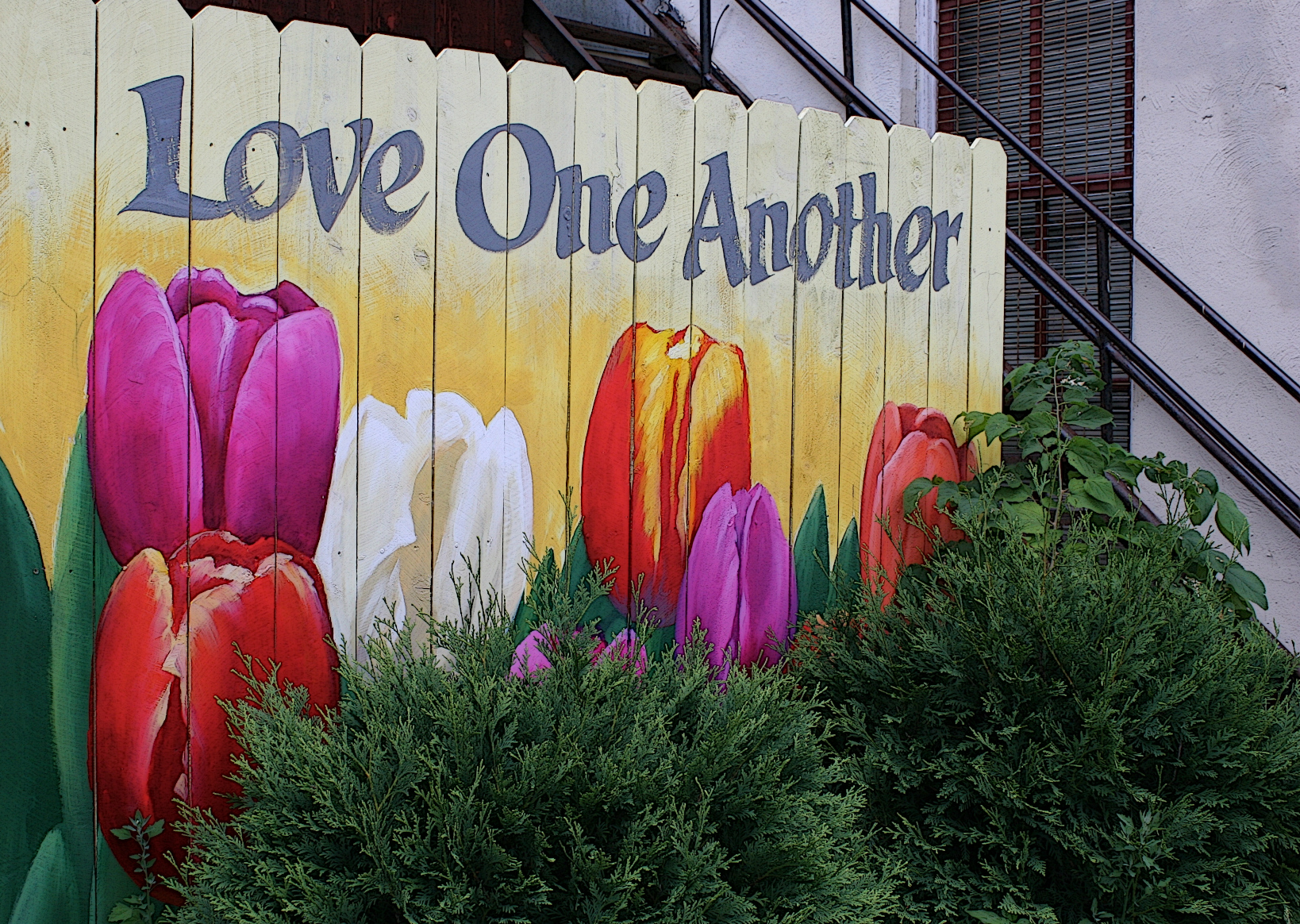
An especially bright spot in the heart of downtown Faribault is the Second Street Garden, a pocket garden with positive messages like this one. Minnesota Prairie Roots copyrighted file photo August 2019.
BEYOND WORDS
Some who commented on my initial blog post called for painting over the tunnel graffiti and one (a professional painter) offered to take on that task. That seems a good start, or restart as it’s been done before. Of course, that requires time, money (perhaps via a Community Pride Grant from the Faribault Foundation), effort and tenacity. But, as one individual commented, “This town could use a lot of TLC everywhere.” I don’t disagree.
It’s up to each of us to make that happen. To care. To act. To love. To go beyond words typed on a keyboard.
Note: I moderate all comments on my blog. Because this is my personal blog, I decide whether or not to publish comments.
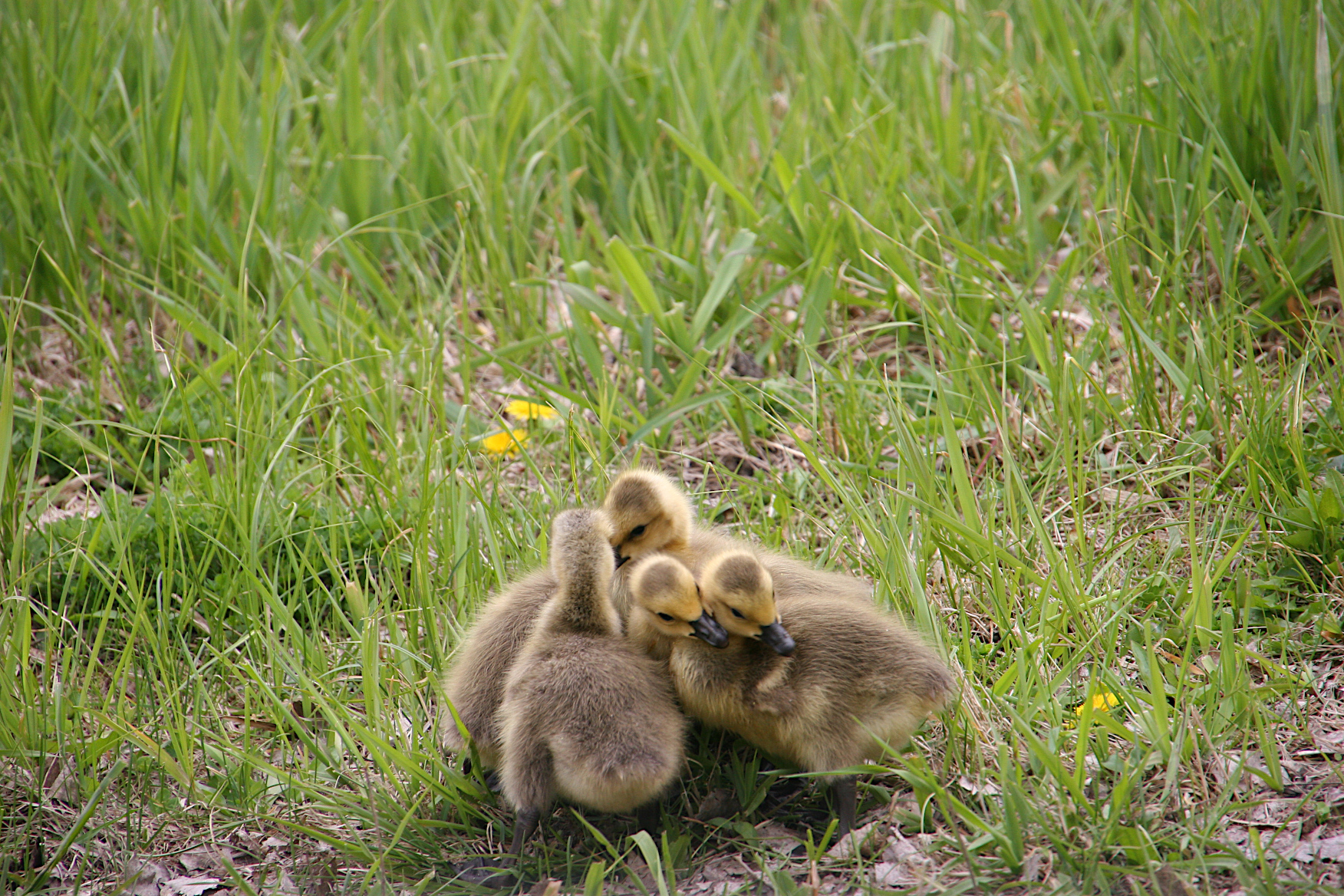
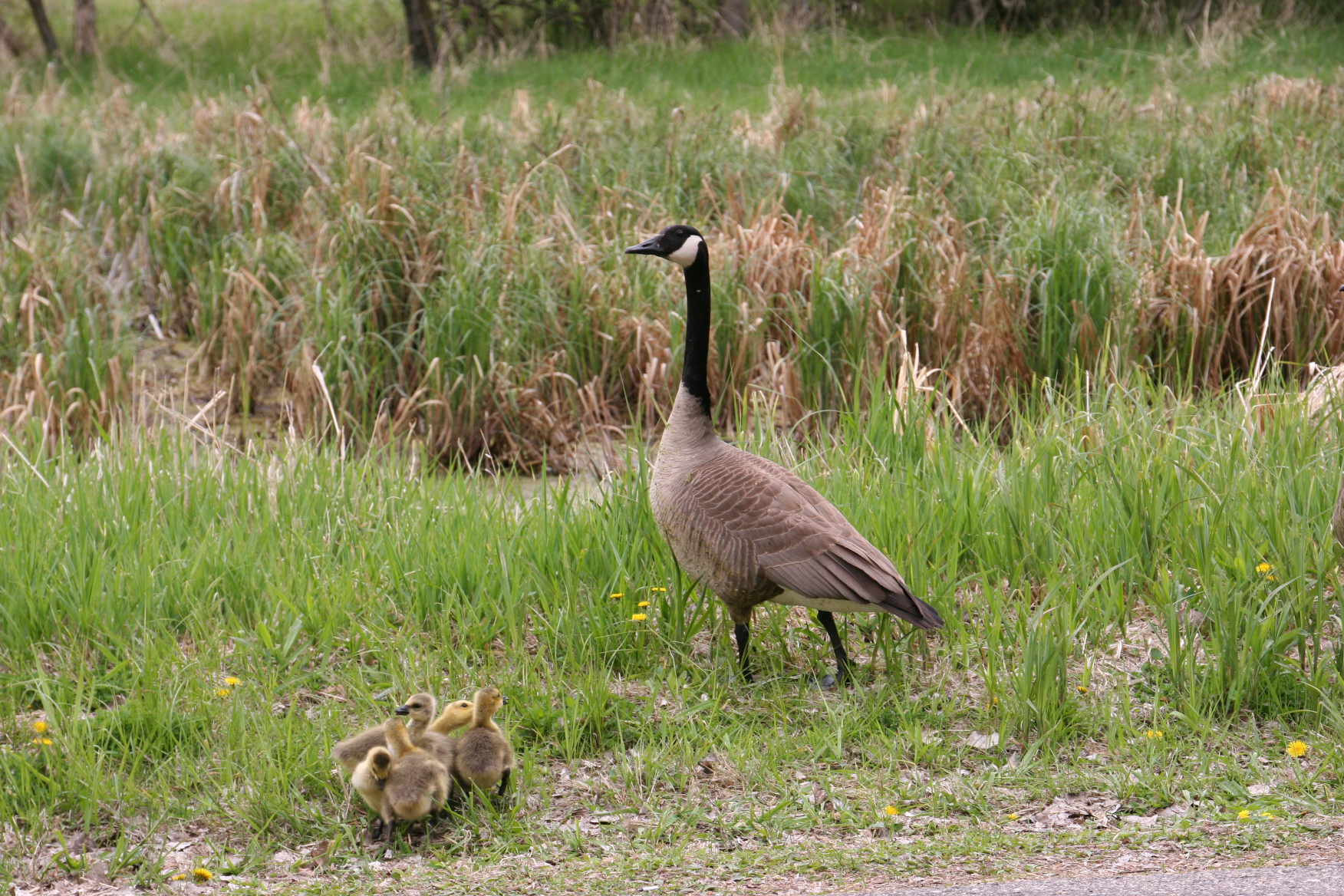
Goslings huddle near pond’s edge at the River Bend Nature Center in Faribault. Minnesota Prairie Roots copyrighted photo.
EVERY SPRING, I FIND myself drawn to pond or river’s edge to watch the goslings, the newborn offspring of Canadian geese navigating the shoreline and water.
Geese are fierce protectors of their young. Minnesota Prairie Roots copyrighted photo.
They are just so darned cute. Downy yellow. Sometimes huddling in a circle of sibling closeness.
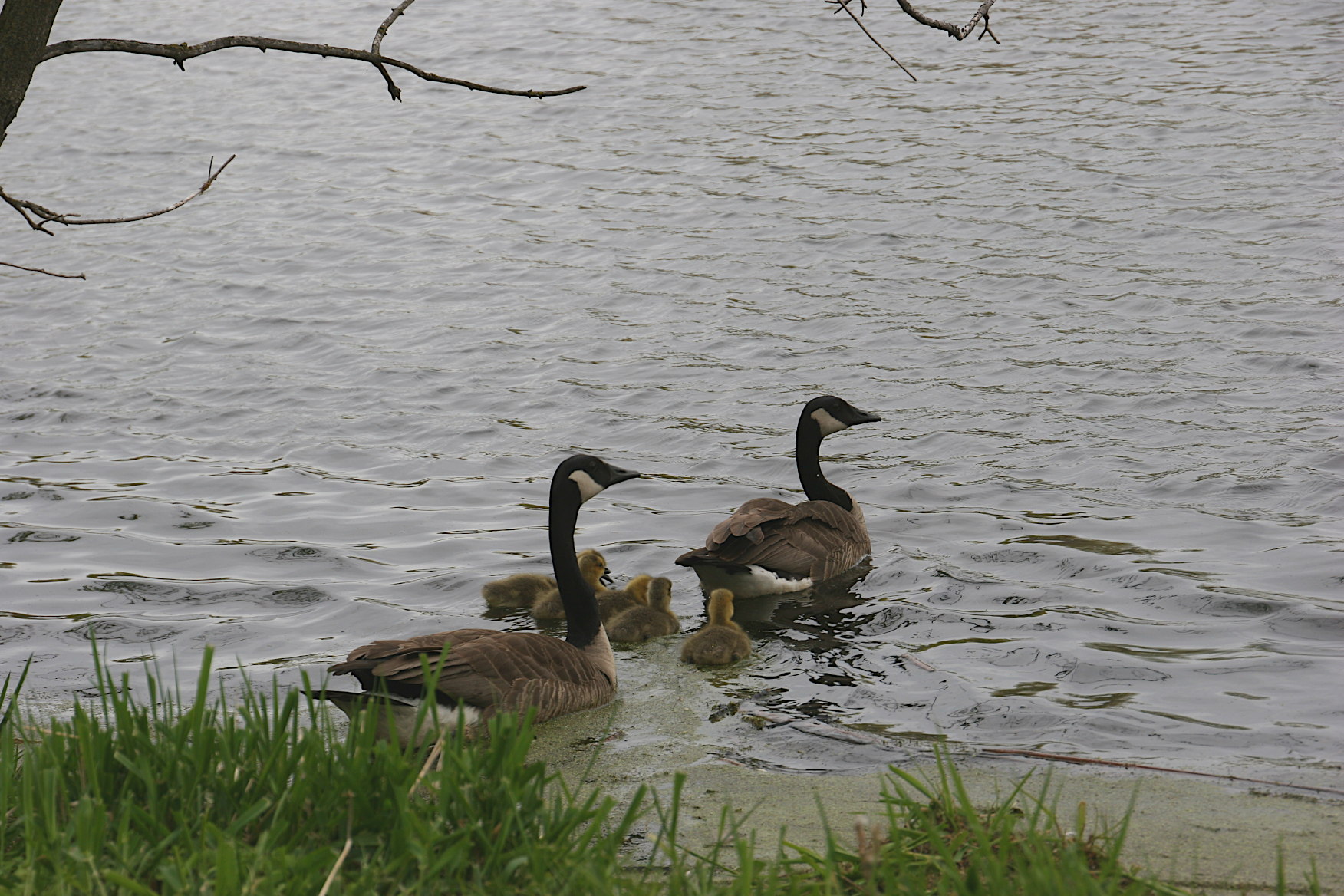
Swimming into the pond at River Bend. Minnesota Prairie Roots copyrighted photo.
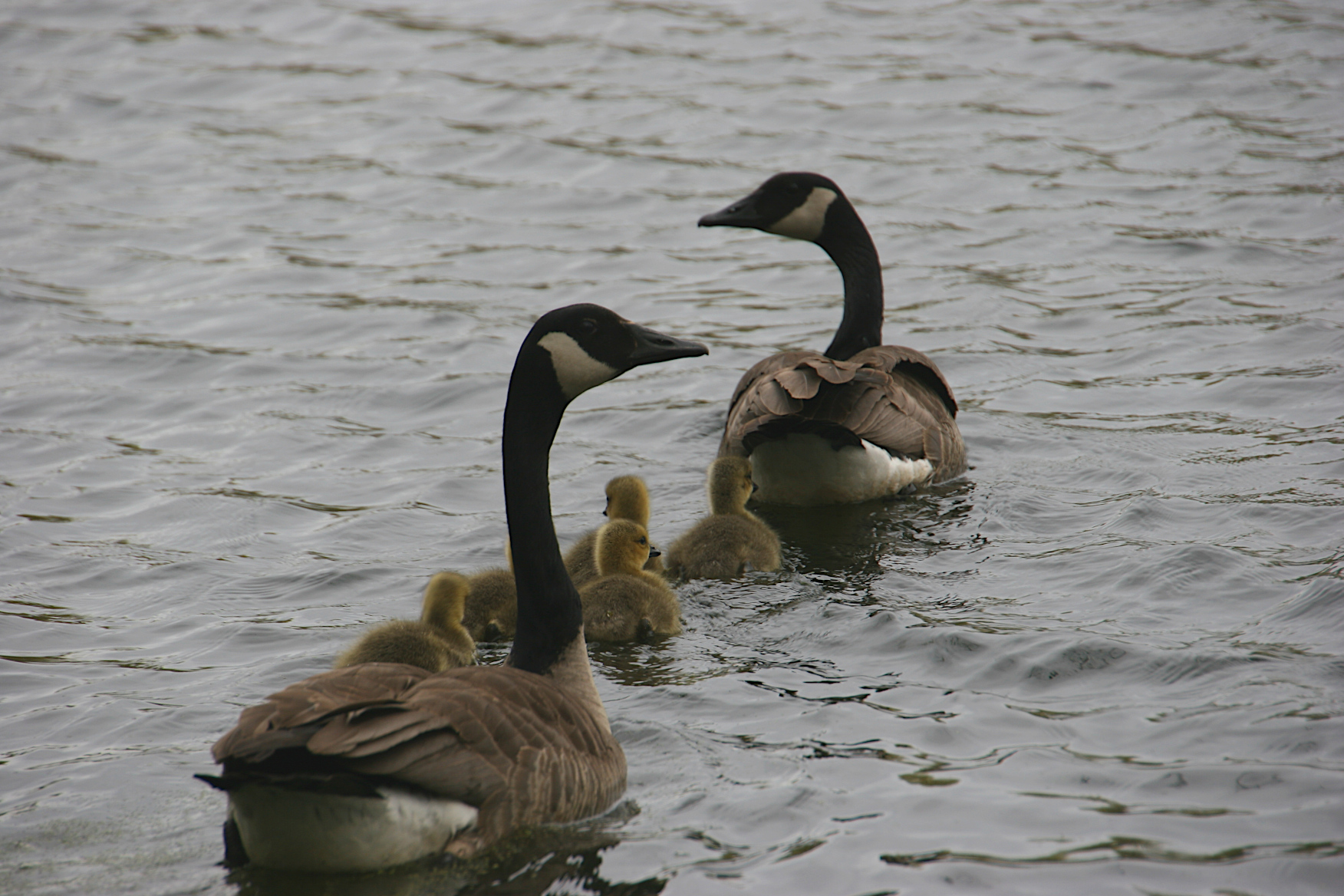
Still in the protective care of their parents. And, yes, geese can prove fierce when safeguarding their young. I steer clear of these young families, preferring to frame family photos from afar.
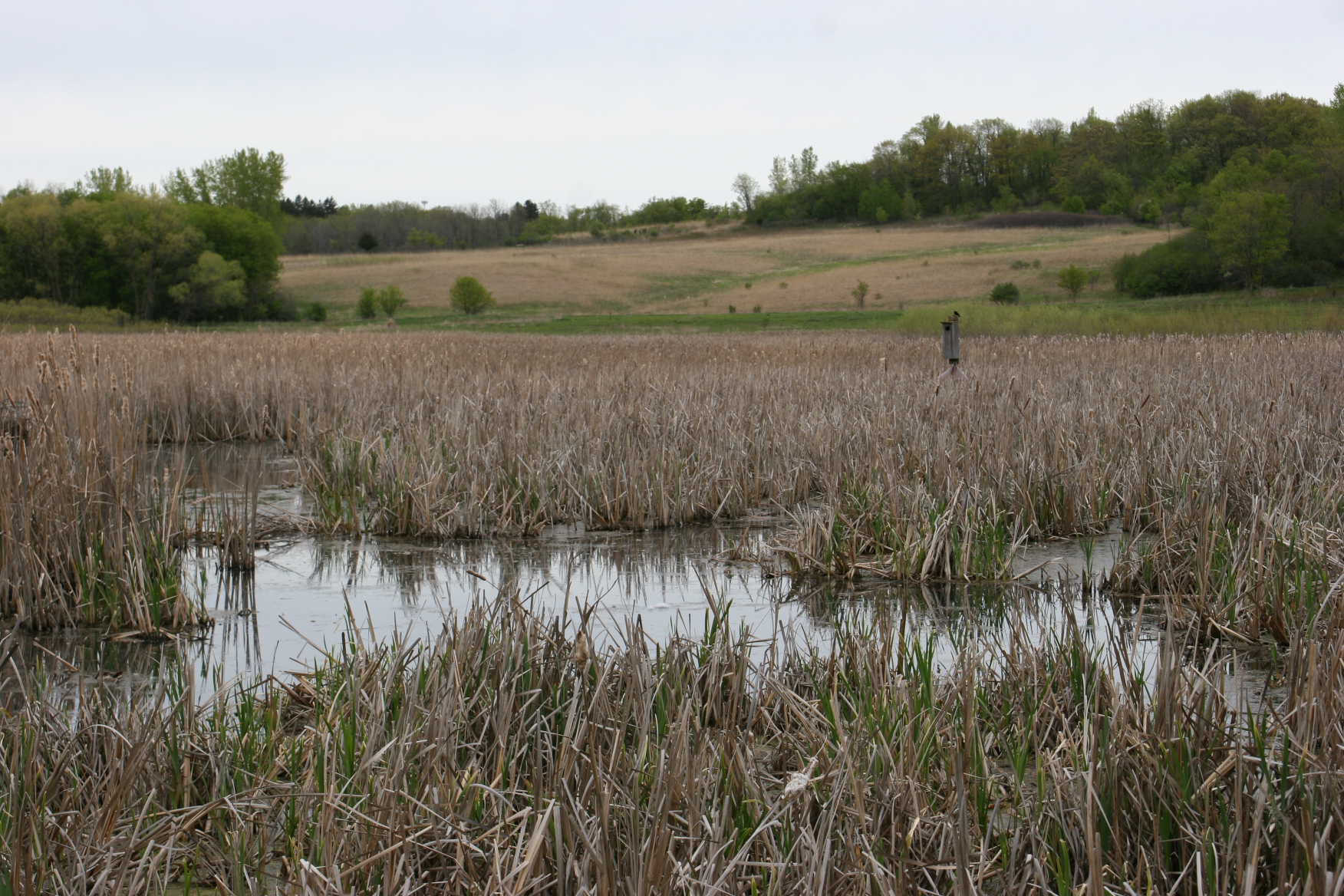
Prairie Pond at River Bend. Minnesota Prairie Roots copyrighted photo.
I love how the goslings are bookended in a protective line. Minnesota Prairie Roots copyrighted photo.
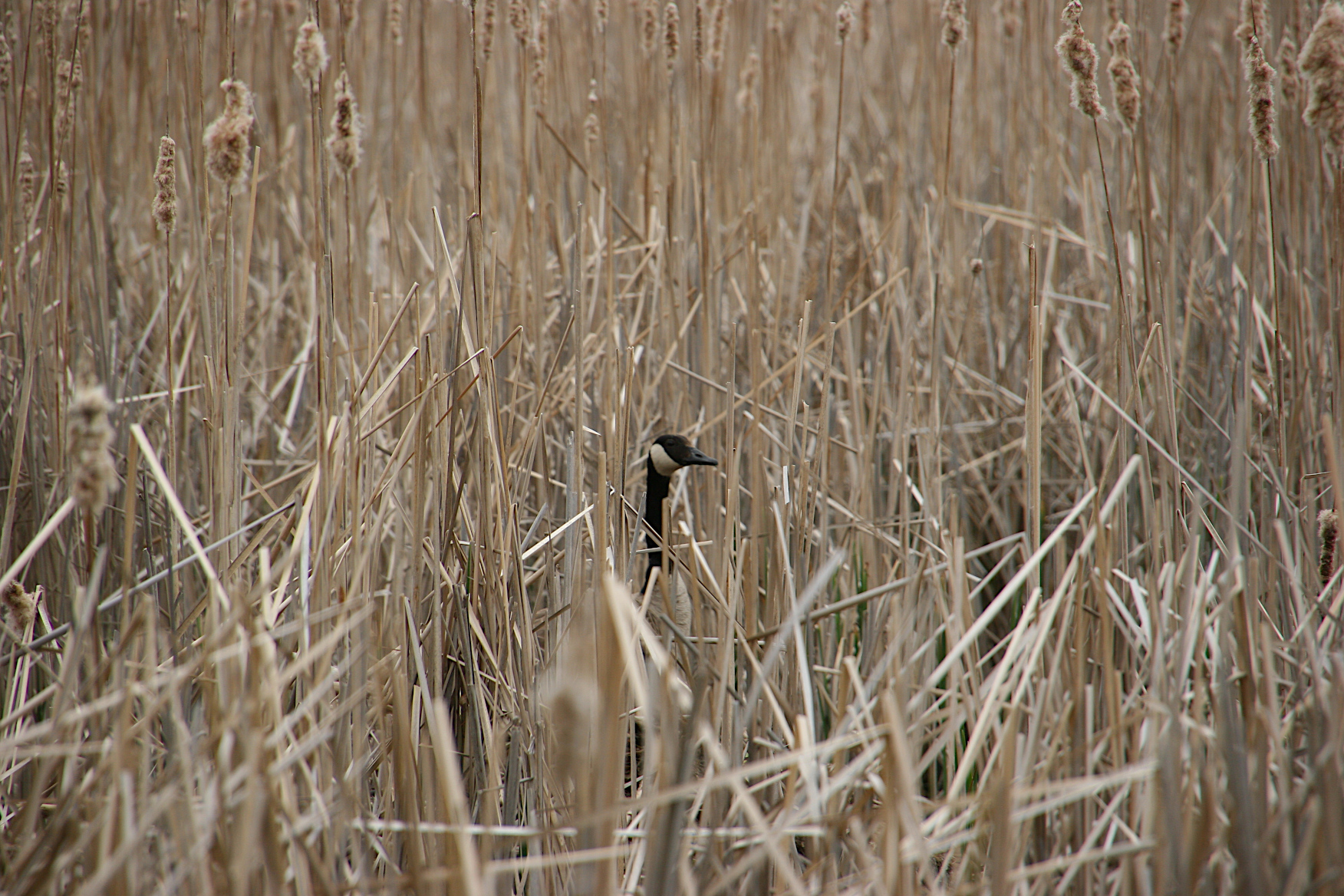
A goose is barely visible in the dried grasses of Prairie Pond. Minnesota Prairie Roots copyrighted photo.
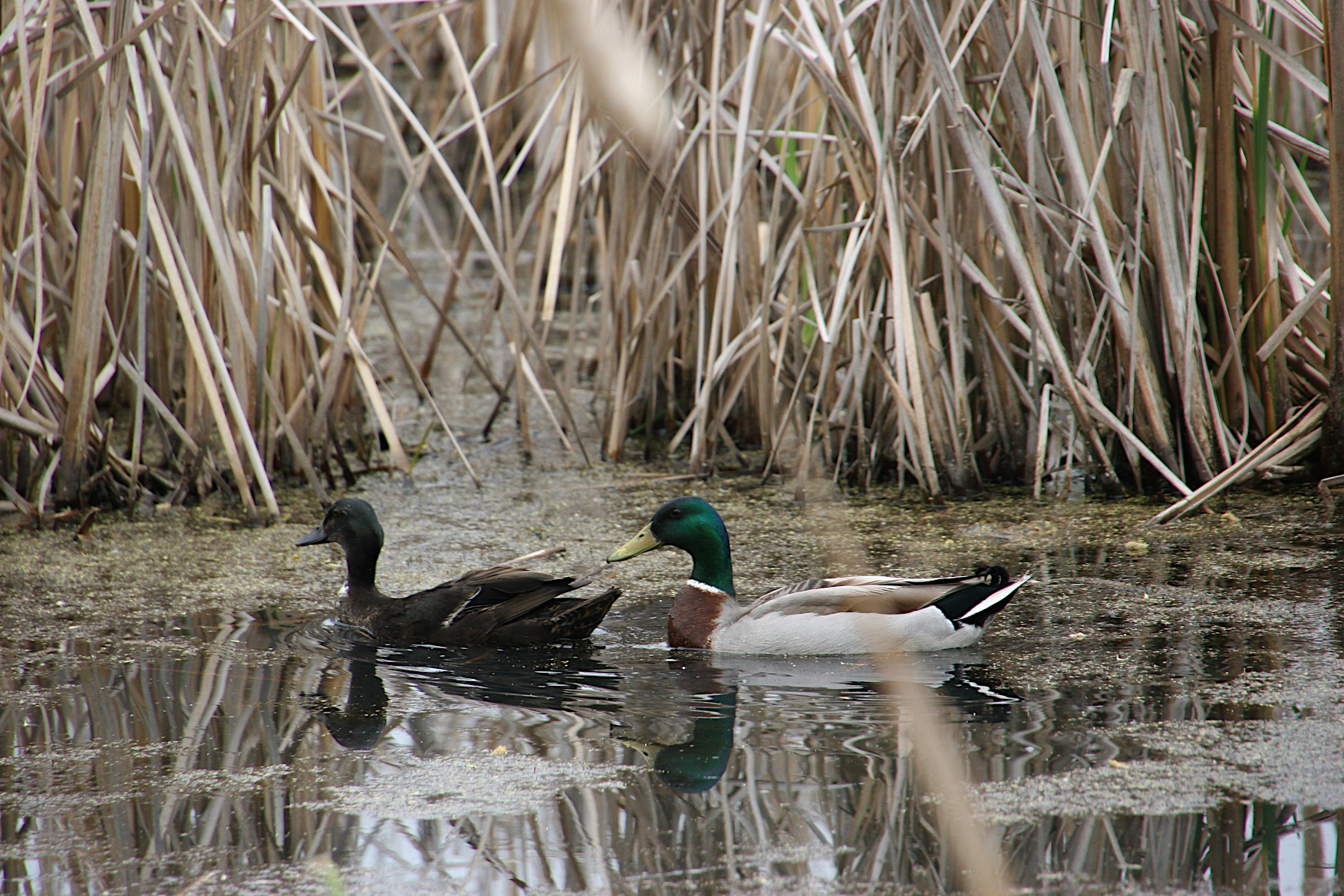
A duck pair in Prairie Pond. Minnesota Prairie Roots copyrighted photo.
While River Bend lies a long ways from McCloskey’s Boston Public Gardens pond setting, the universal appeal of ducklings spans the miles between Massachusetts and Minnesota.
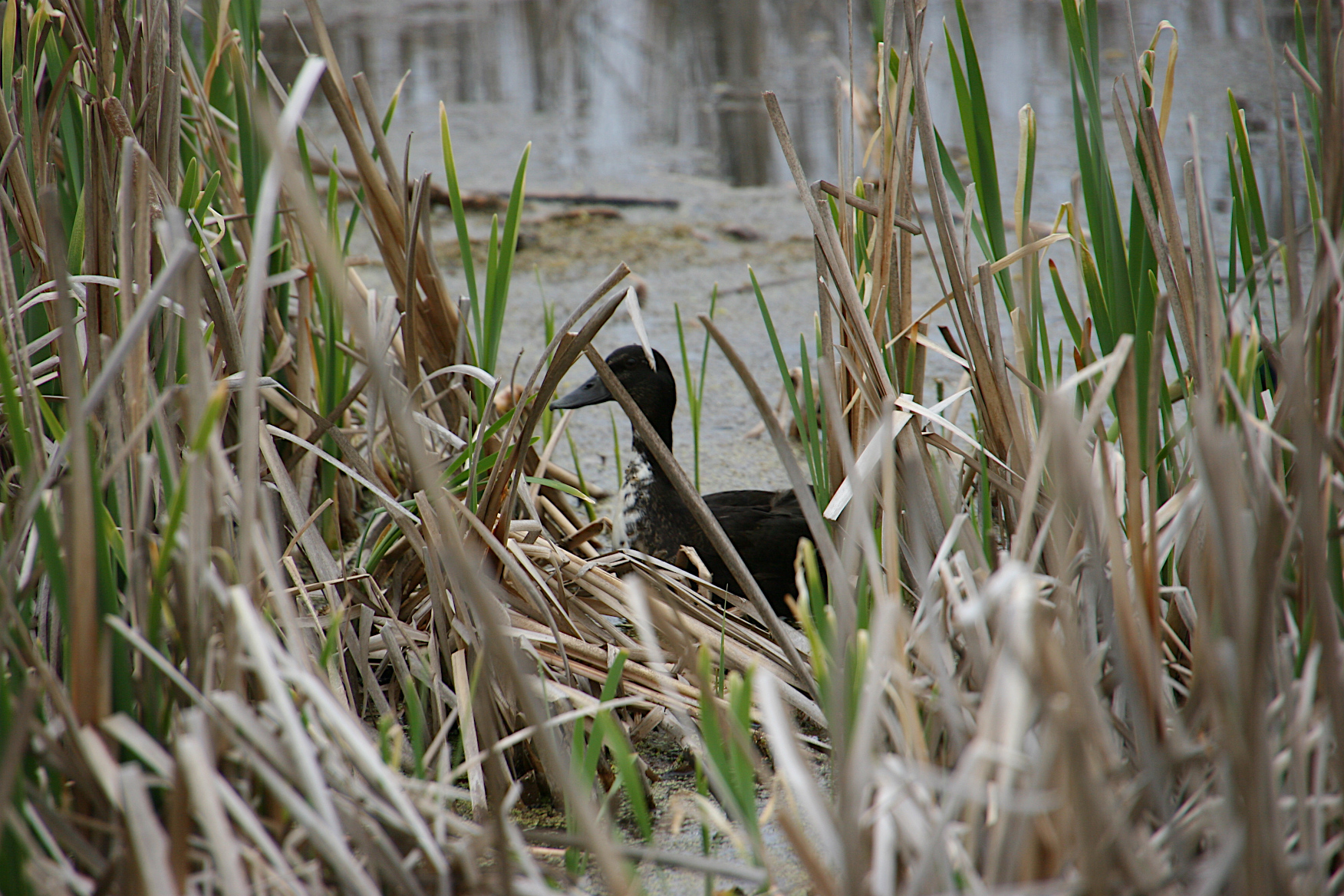
A duck emerges among the grasses in Prairie Pond. Minnesota Prairie Roots copyrighted photo.
Whether in a city, rural area or nature center, downy babies in the care of their parents create, at least for me, a sense that all is well in the world. That no matter the worldwide challenges—especially during a pandemic—no matter the community and personal challenges, the cycle of life continues.
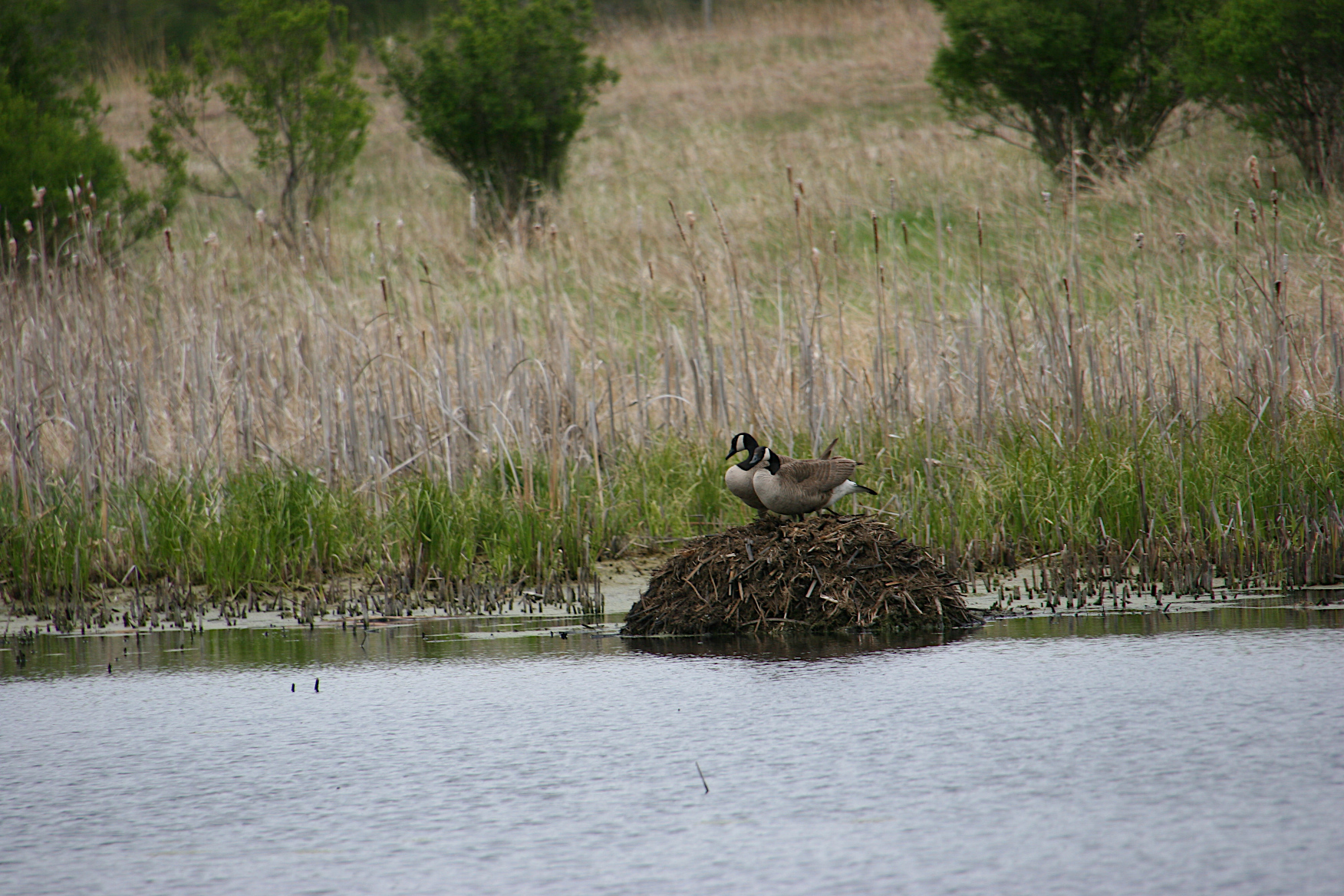
Geese nesting at River Bend. Minnesota Prairie Roots copyrighted photo.
Every spring I make way for ducklings and goslings, celebrating their arrival by documenting their arrival. With my camera. But even more, by framing them in my memory during this season of spring.
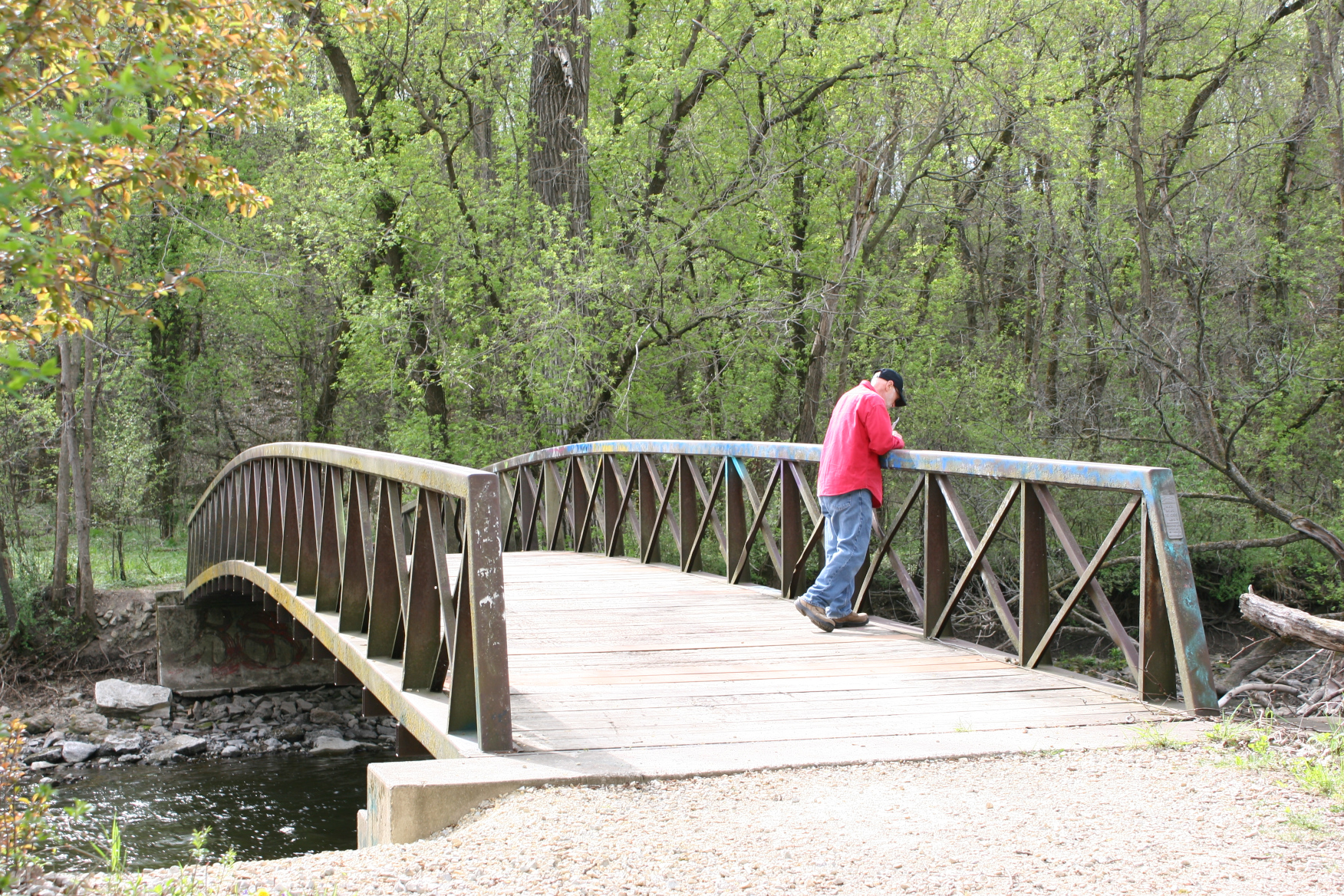
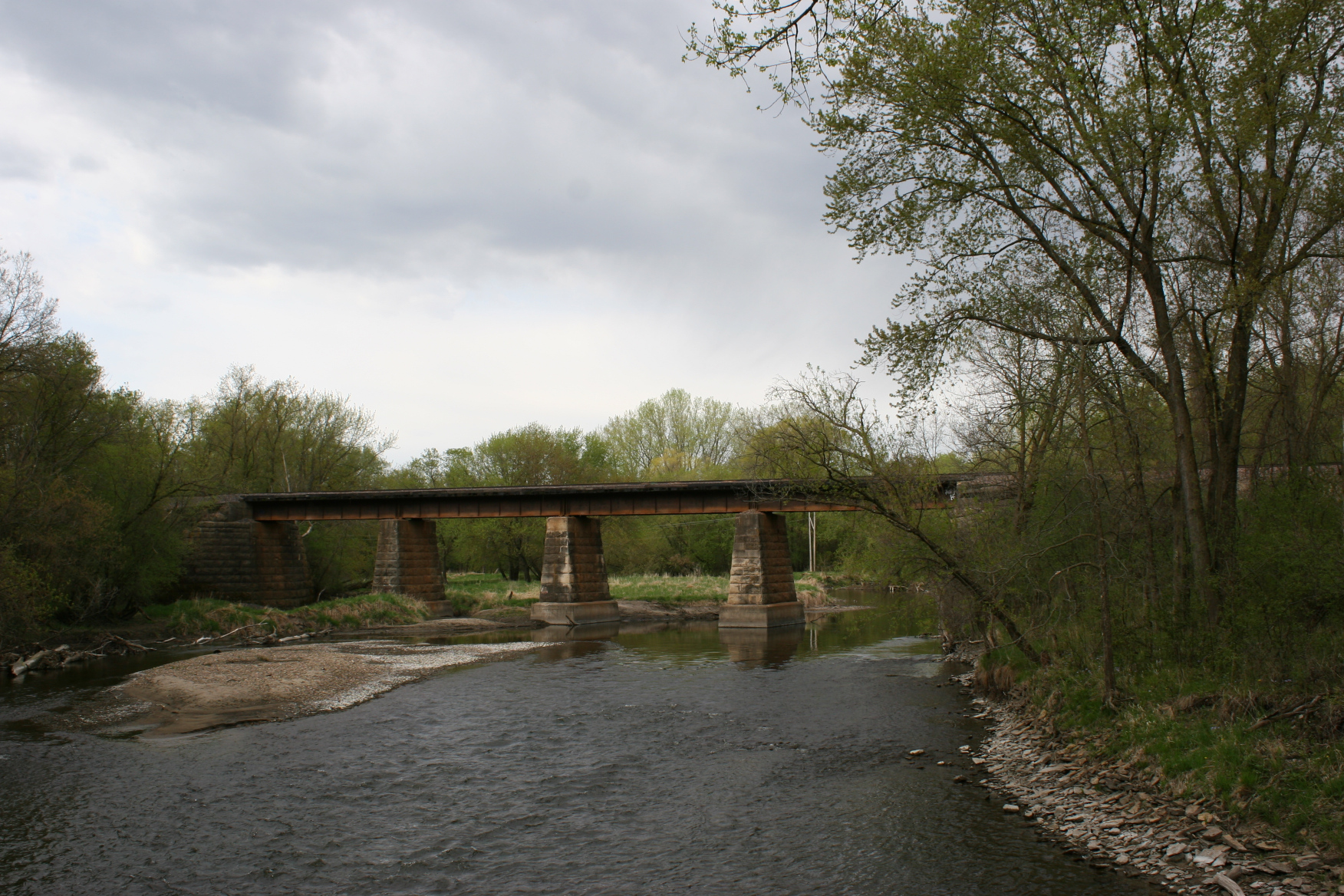
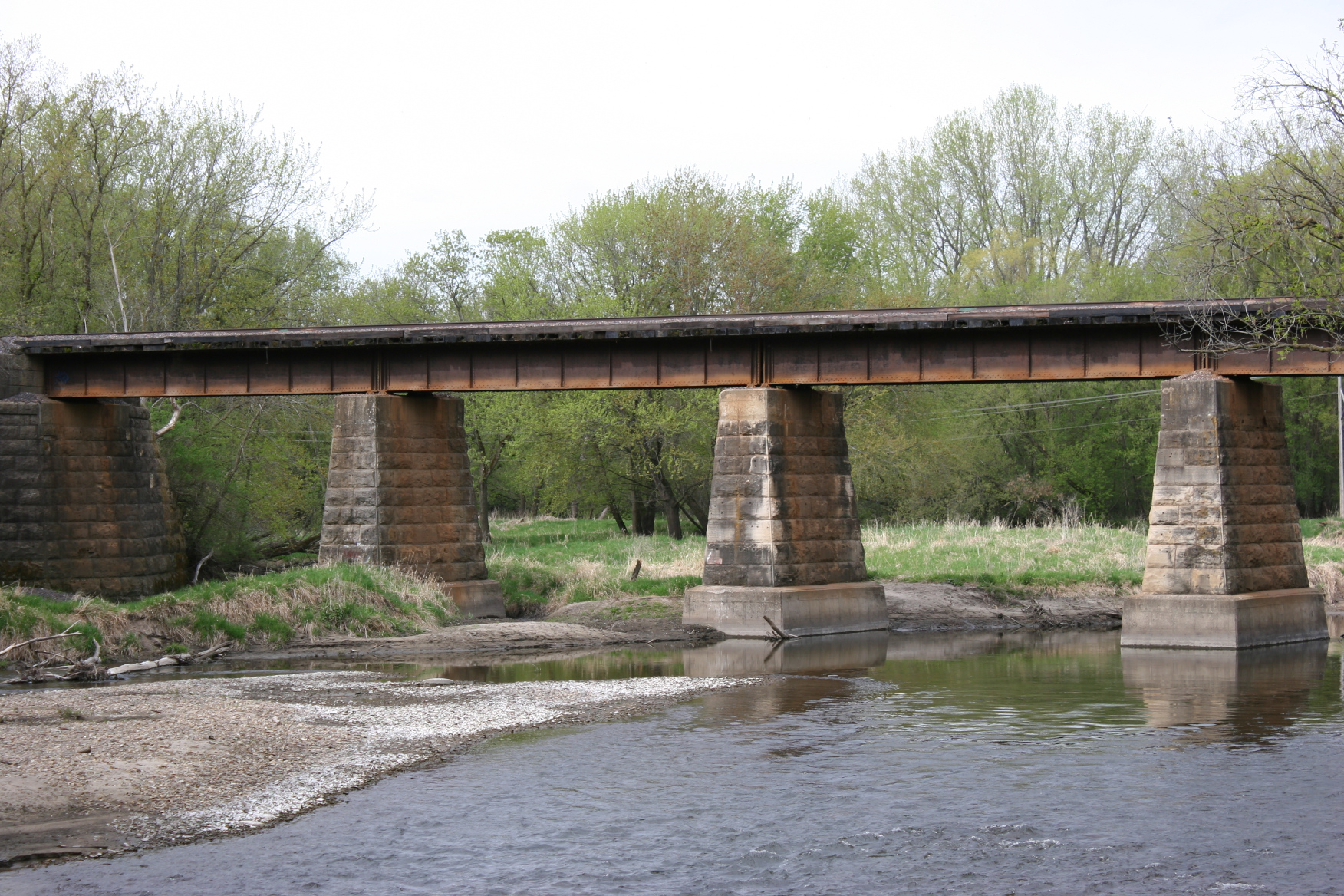
A view of the Straight River and the railroad bridge crossing it, photographed from the footbridge. Minnesota Prairie Roots copyrighted photo.
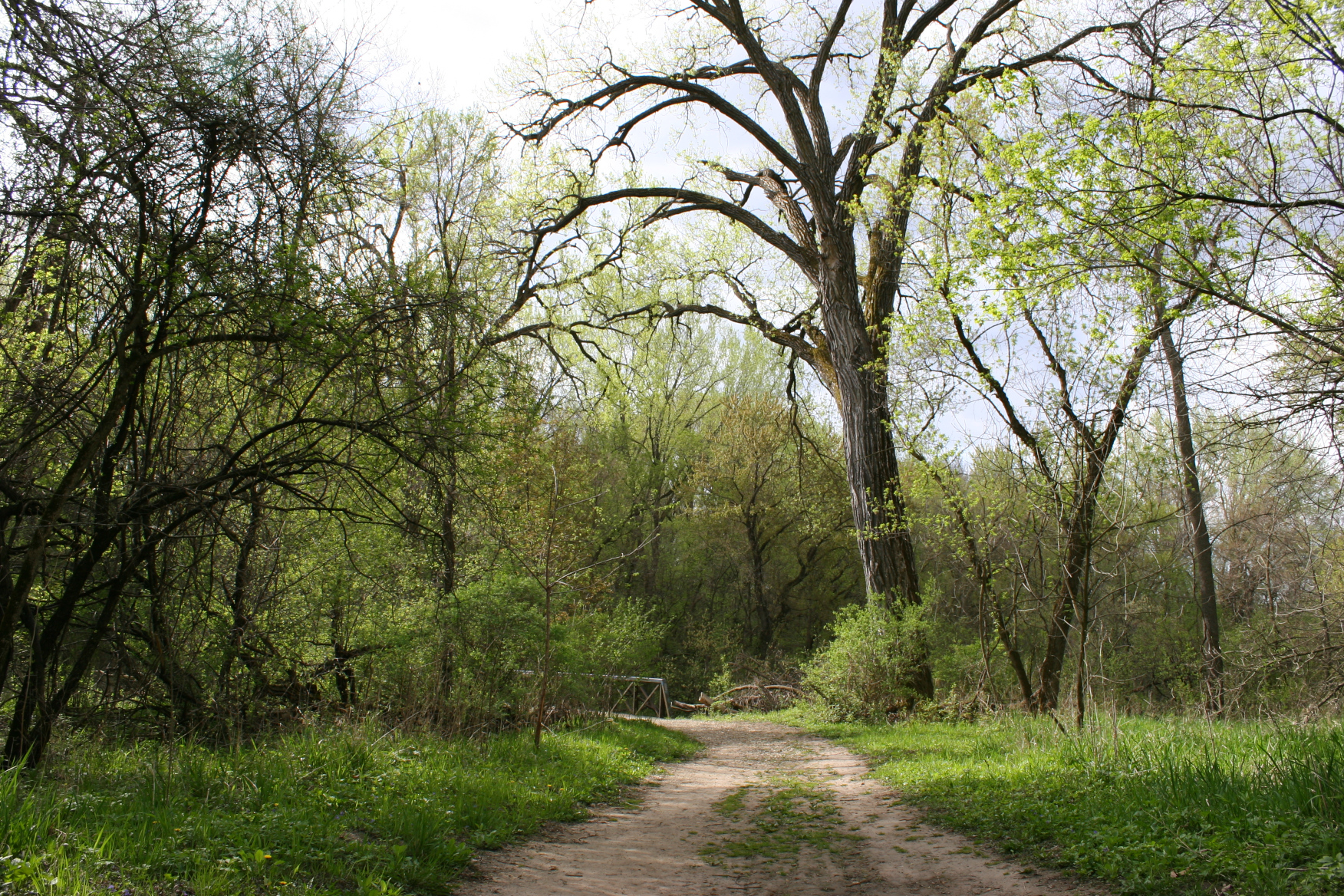
IF NOT FOR THE OFFENSIVE GRAFFITI, the natural setting would be particularly inviting. But obscene words and disturbing messages kept me from fully enjoying the trail leading from Faribault’s Teepee Tonka Park into River Bend Nature Center.
Along the trail from Teepee Tonka Park into River Bend Nature Center, I saw trees tagged with graffiti. Here I’m approaching the footbridge crossing the Straight River. Minnesota Prairie Roots copyrighted photo.
Even trees were tagged with paint. That’s a first.
Randy looks over the Straight River. Minnesota Prairie Roots copyrighted photo.
On the footbridge which spans the Straight River, I found the most disturbing of accusations—J**** killed my mother. That shifted my already on-alert mode to what the h*** is going on in these woods? I read derogatory comments about Faribault. And I thought, why do those who hate this community so much stay here?
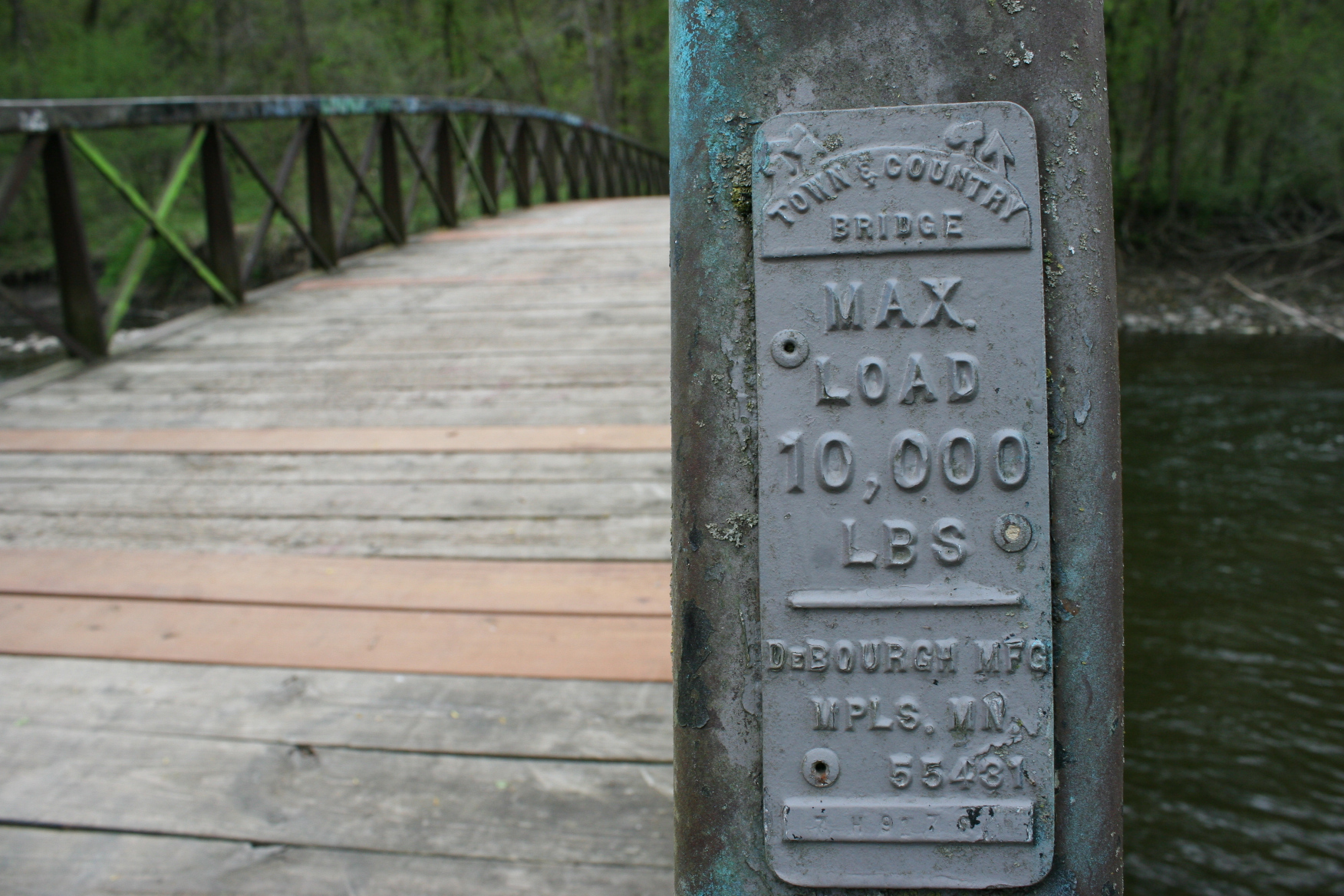
This marker on one end of the bridge remains unmarred. Minnesota Prairie Roots copyrighted photo.
I tried to overlook all that awful graffiti, but it was just too much to dismiss. I wouldn’t bring a child here, not one who can read anyway.
I expect there’s a story behind this beautiful railroad bridge over the Straight River. Minnesota Prairie Roots copyrighted photo.
Yet, there’s much to see and appreciate here, if you look beyond the tagging, the offensive messages. Nature and history intertwine, leaving me with more questions than answers.
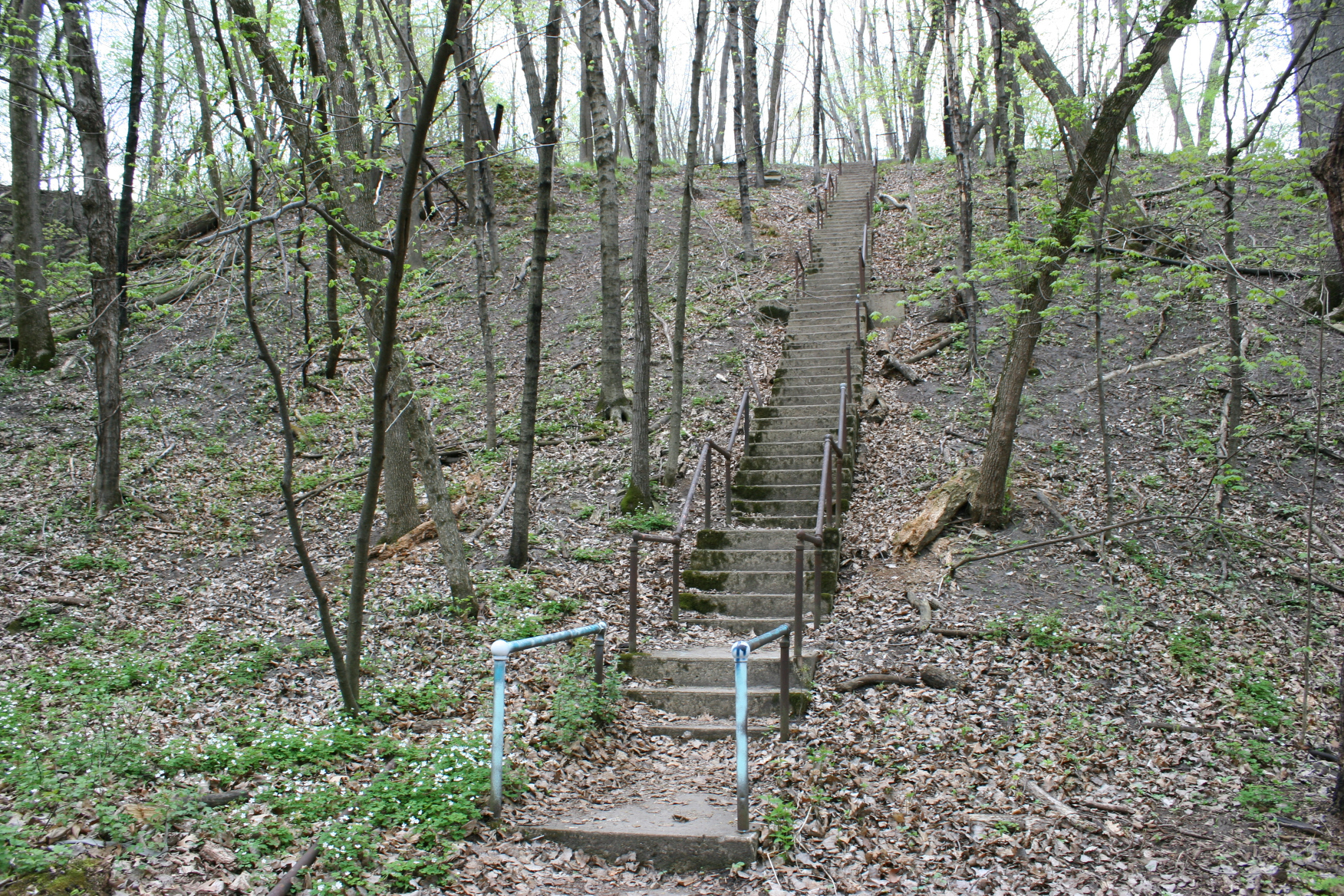
I felt tempted to climb these stairs, but didn’t have the energy. Minnesota Prairie Roots copyrighted photo.
A lengthy stairway climbs a hillside. Slabs of limestone and chunks of concrete—perhaps foundations of long ago buildings—cling to steep banks.
Graffiti mars the tunnel entrance. Minnesota Prairie Roots copyrighted photo.
And then there’s the tunnel. The 442-foot-long tunnel, which I refused to enter. One look at the graffiti at the entry, especially the rat art, and I knew, no way, would I walk through that former root cellar. So I photographed that space, editing out the obscenities (which proved nearly impossible).
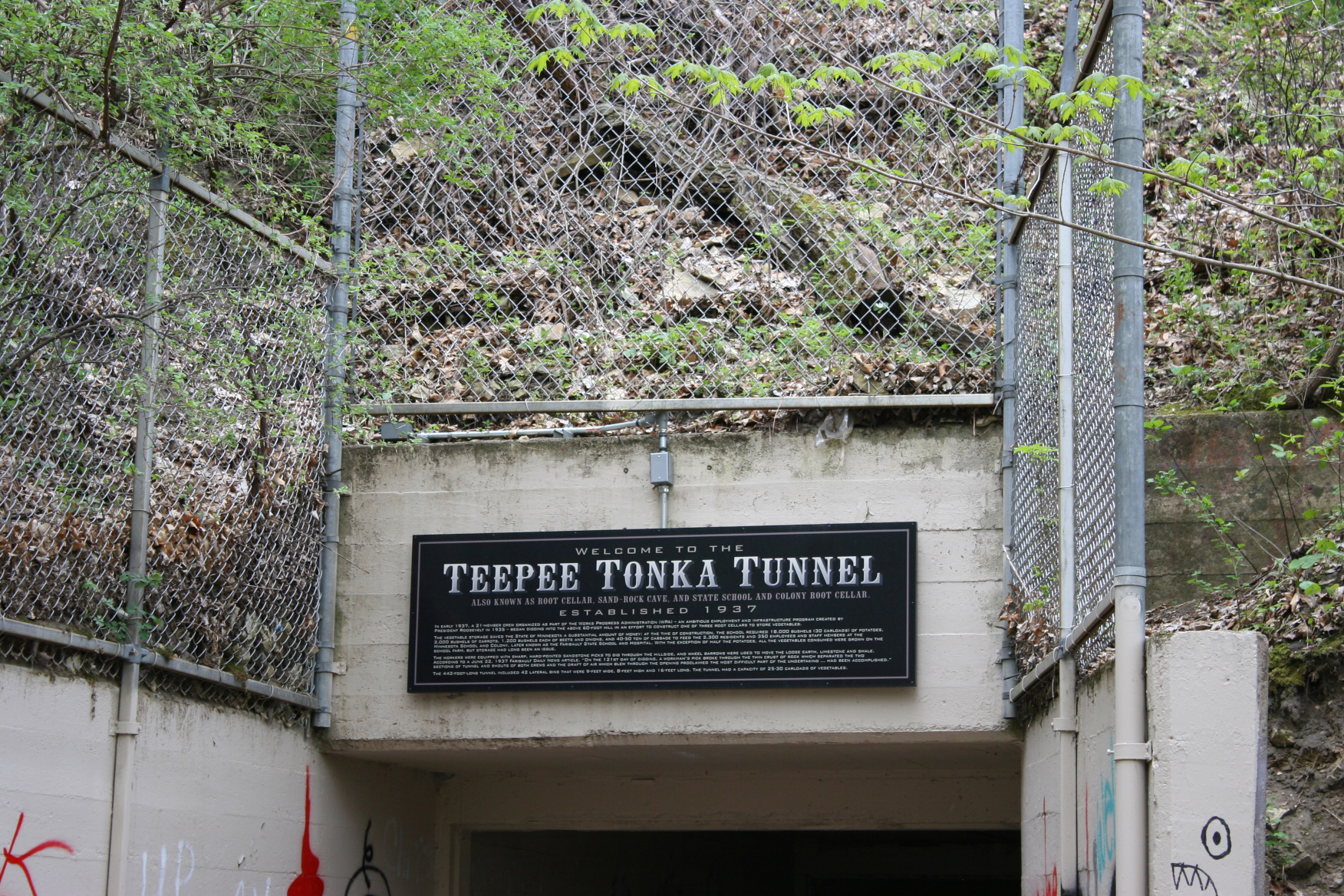
A sign above the tunnel details its history. Minnesota Prairie Roots copyrighted photo.
And I photographed the sign above, which summarizes the history of this 1937 Works Progress Administration project. Workers hand dug the tunnel with picks, hauling the dirt and rocks away with wheelbarrows. Once complete, the tunnel served as a root cellar for the Minnesota School and Colony (later known as The Faribault State School and Hospital). The Teepee Tonka Tunnel once held 25-30 carloads of vegetables to feed the 2,300 residents and 350 employees. Most of those potatoes, carrots, beets, onions and cabbage were grown on the school farm.
Another snippet of the tunnel graffiti. Minnesota Prairie Roots copyrighted photo.
Now the history, the hard work, the humanity were dishonored by those who use this as a canvas for words and art that shouldn’t be here.
Trees tower over the trail. Minnesota Prairie Roots copyrighted photo.
All of this saddened me as I retraced my steps, watched as a young man walked along the railroad tracks, backpack strapped on, county music blaring. This should be a place of peace. Not only noise-wise, but also mentally. I pictured picnic tables near a footbridge devoid of menacing messages. I pictured a beautiful natural setting where I could bring my grandchildren. But, in reality, I understood that those tables would only be defaced, maybe even burned.
The beautiful Straight River, which winds past Teepee Tonka Park and River Bend Nature Center. Minnesota Prairie Roots copyrighted photo.
This could be so much. A respite. Water and woods converging. River flowing with history. Images of men hard at work tunneling into a 60-foot high hill. I could envision all of that…the possibilities beyond that which I’d seen.
Spring wildflowers at Kaplan’s Woods. Minnesota Prairie Roots photo.
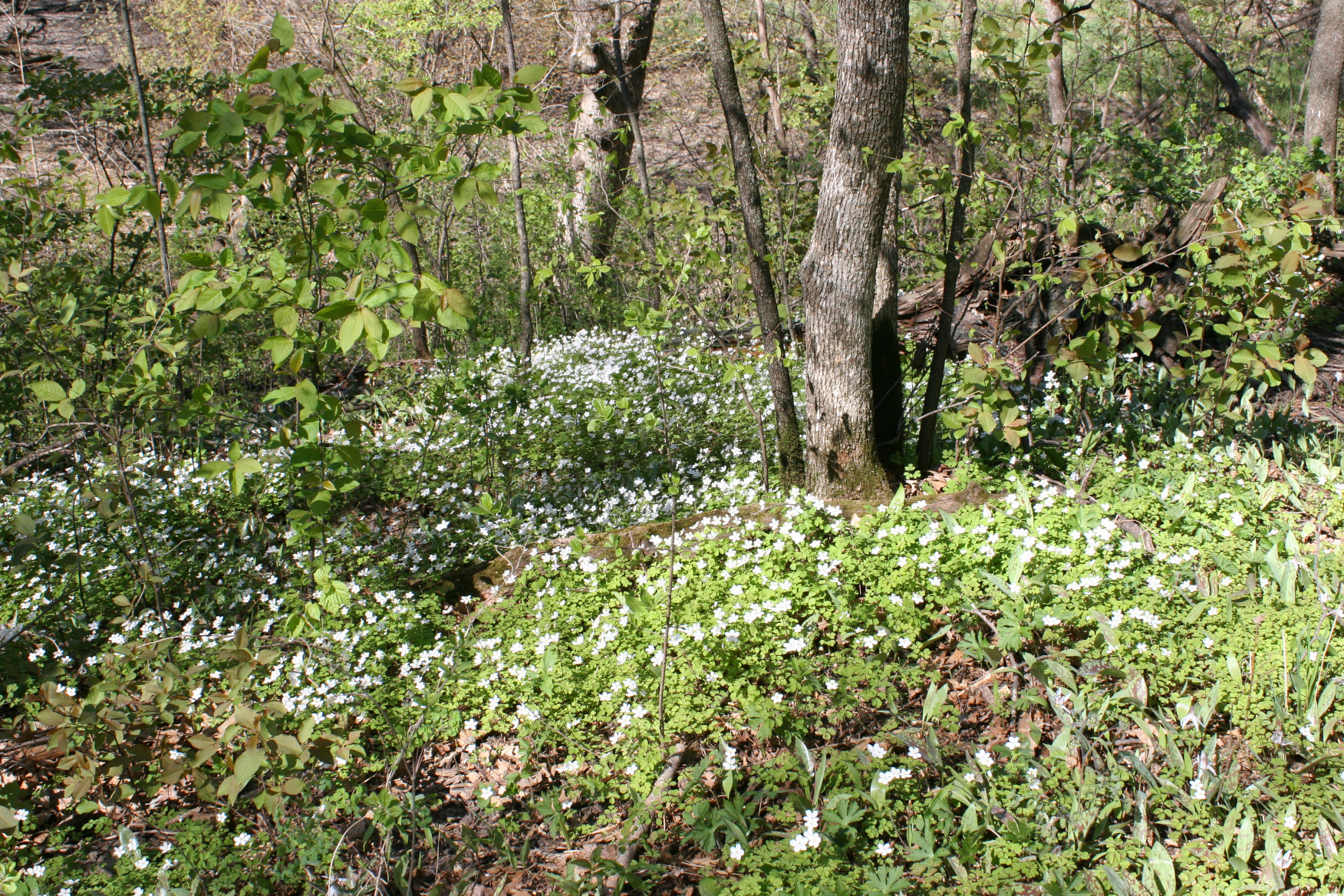
FLOWERS OF SPRING EMERGE in the woods. Among layers of dried leaves. Among fallen limbs. Sometimes blanketing hillsides.
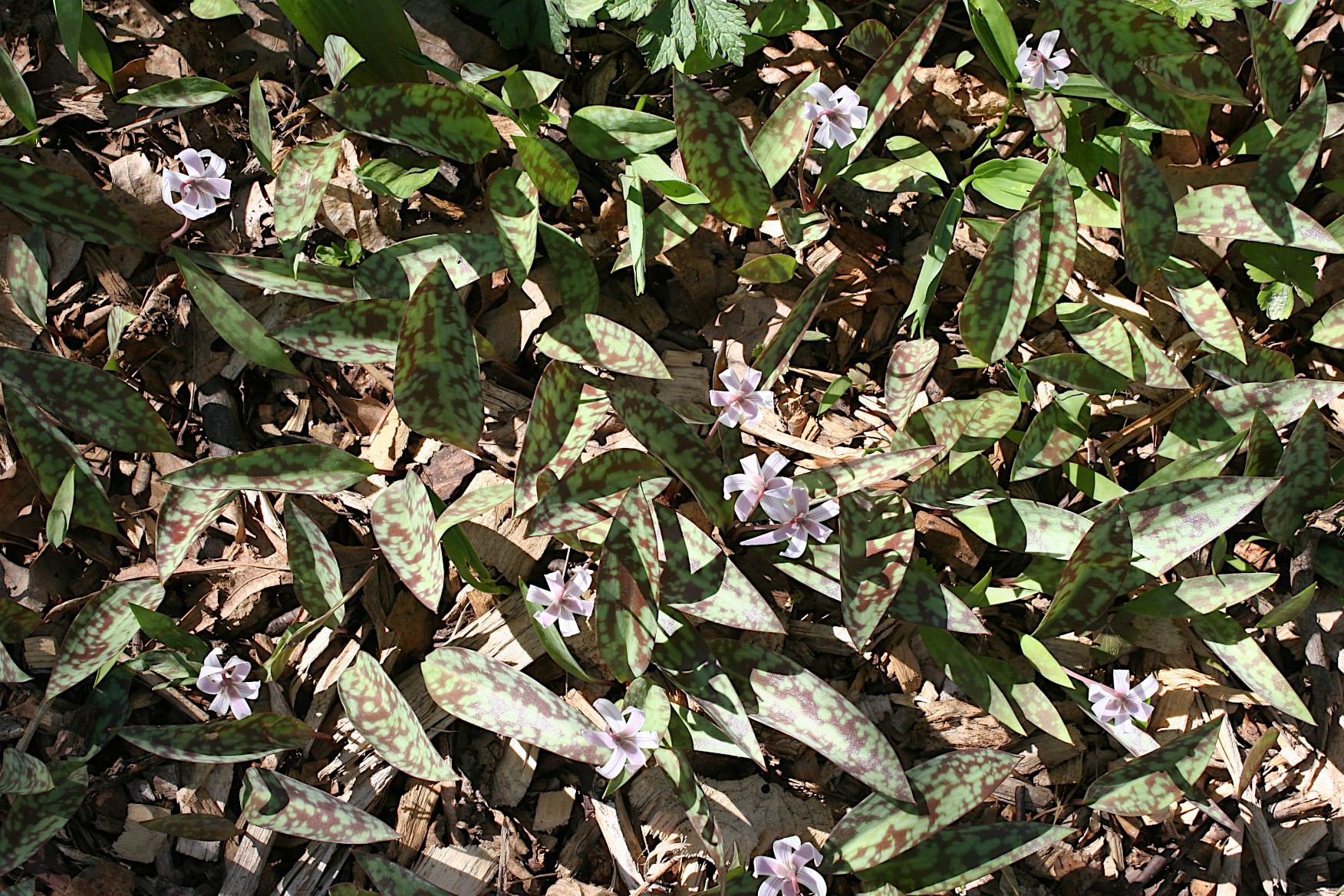
White trout lilies. Minnesota Prairie Roots photo.
A mass of white trout lilies in the woods. Minnesota Prairie Roots photo.
An unidentified, by me, wildflower cluster. Minnesota Prairie Roots photo.
Saturday morning, as Randy and I hiked through Kaplan’s Woods Park in Owatonna, I found myself searching the edges of the wood chip covered trails for wildflowers.
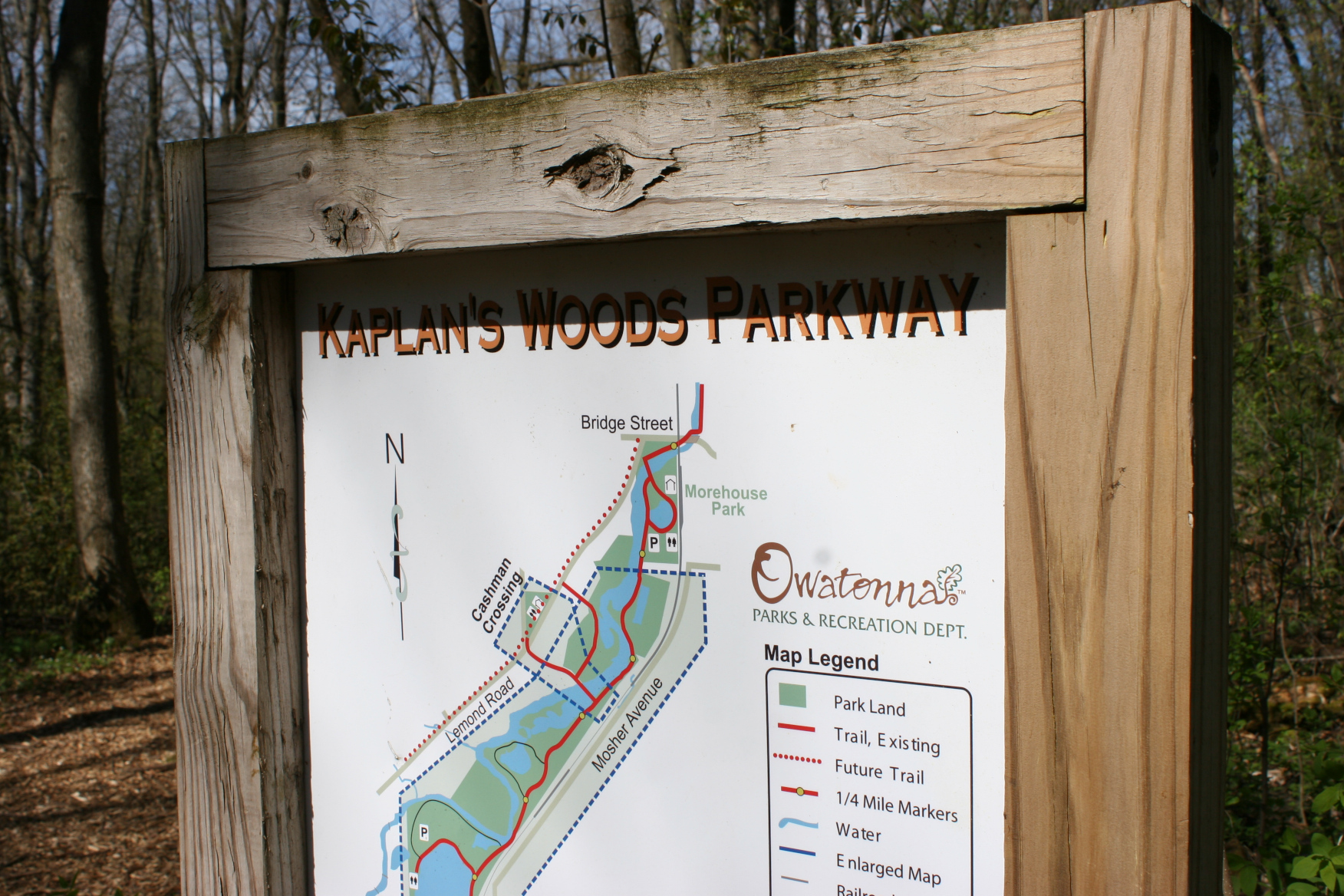
A sign inside the woods details the Parkway. Minnesota Prairie Roots photo.
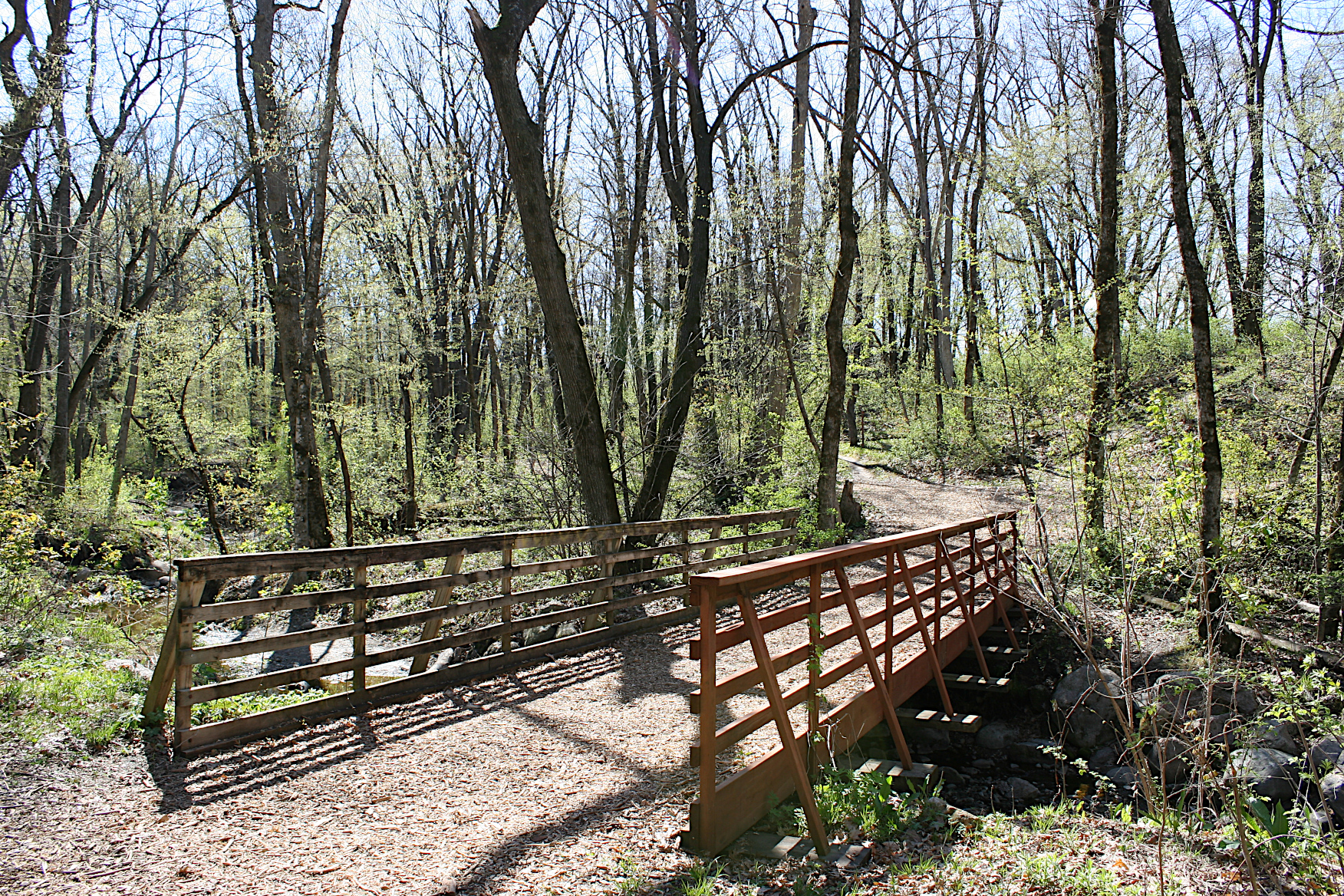
I love this foot bridge which crosses the creek and leads into the woods. Minnesota Prairie Roots photo.
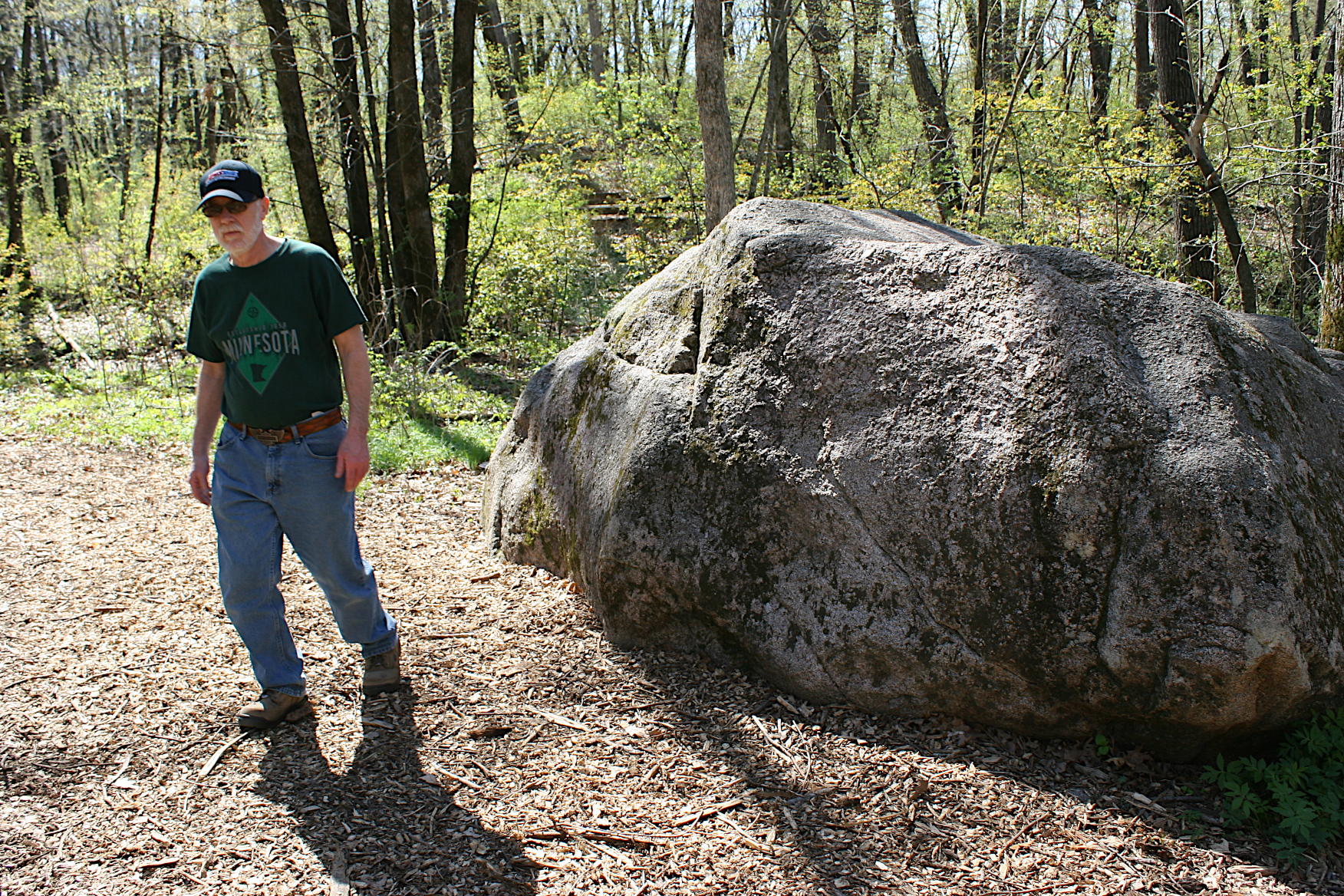
Near the creek, this solo boulder seems out of place in the woods. Minnesota Prairie Roots photo.
This time of year, especially, I crave flowers. They represent the shifting of seasons, of plant life erupting as the landscape transforms.
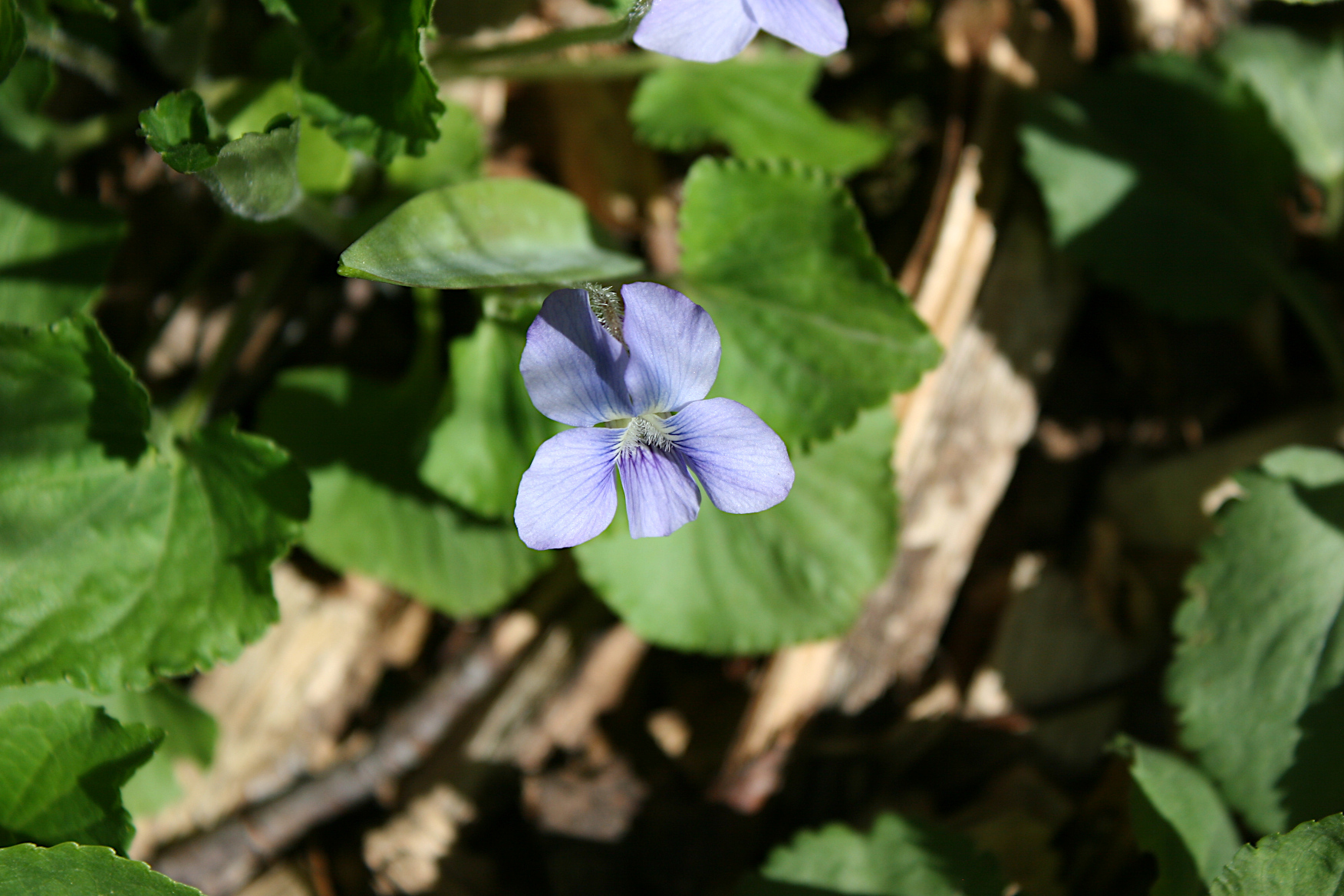
Dainty violets are among the spring wildflowers. Minnesota Prairie Roots photo.
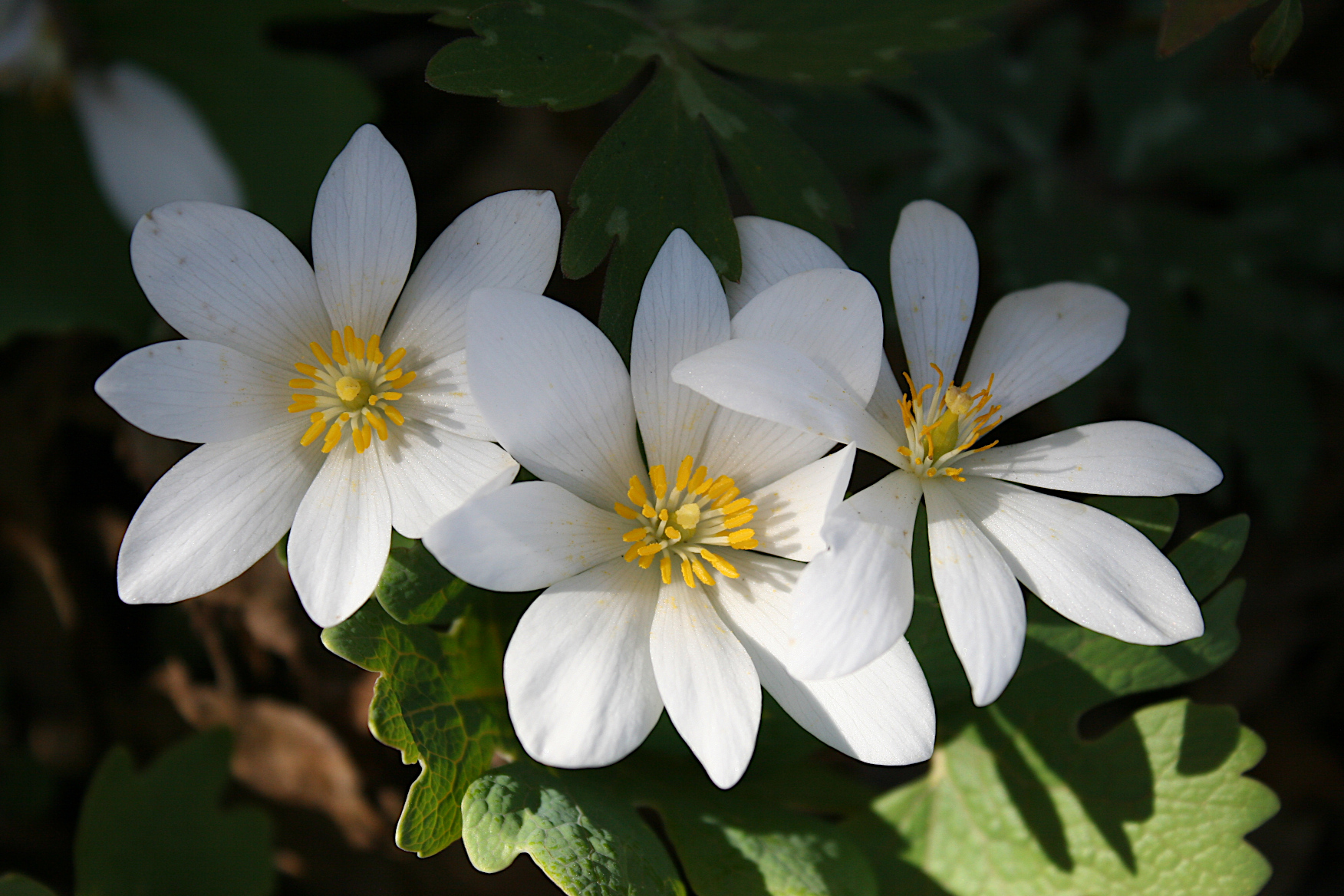
The largest of the wildflowers I saw. Can anyone identify these? Minnesota Prairie Roots photo.
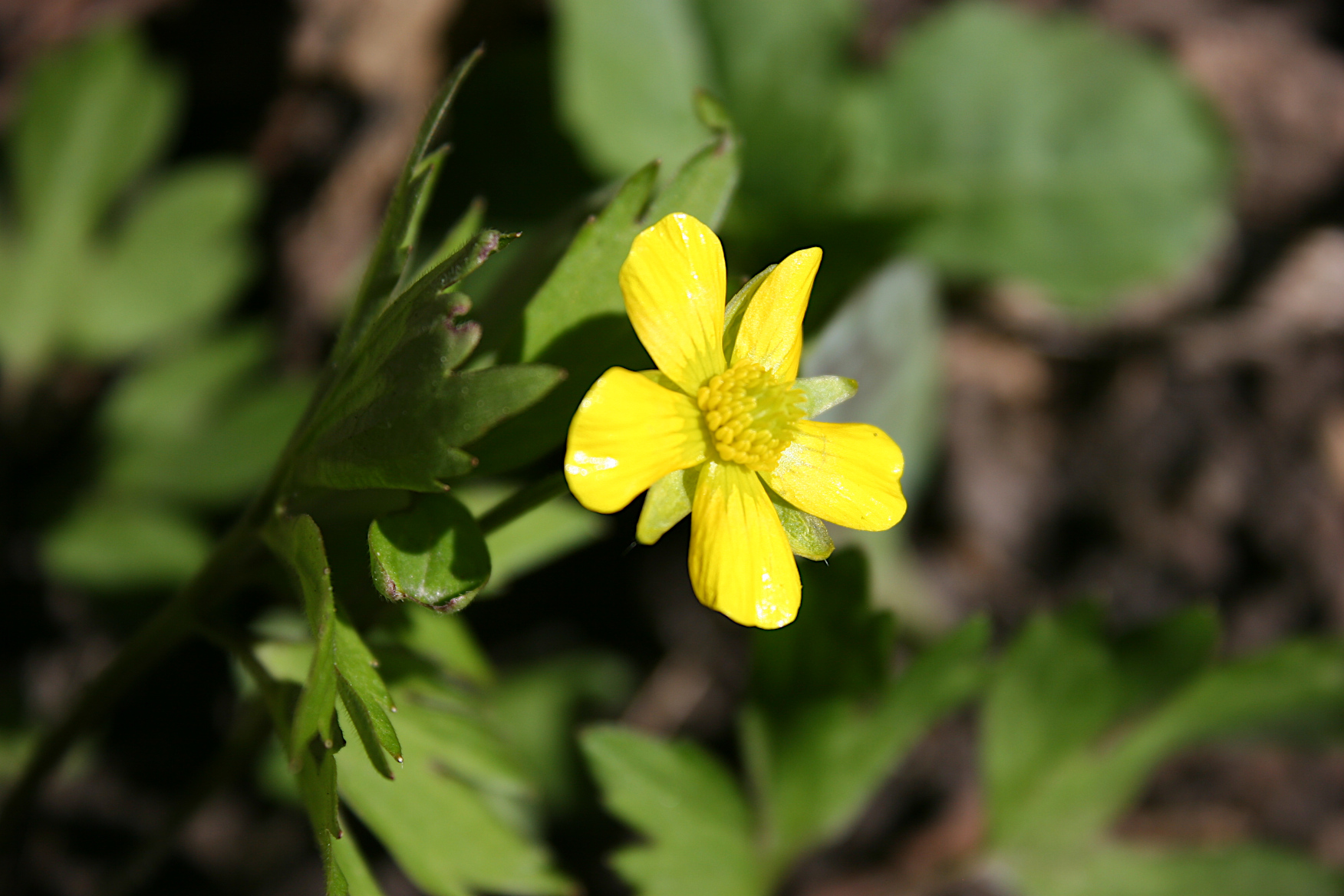
The brightest of the flowers I spotted, this one also unknown to me. Minnesota Prairie Roots photo.
Green begins to fill the woods, accented by bursts of violet and yellow and white hugging the earth. Low to the ground, easily missed if you focus only on the trail ahead.
Low water. Minnesota Prairie Roots photo.
We have walked Kaplan’s only a few times and this visit I noticed the low water level of the creek that winds through the woods.
I noticed also the noise of traffic from nearby Interstate 35. Motorists en route somewhere on an incredibly warm and sunny morning in southern Minnesota. I hope that at some point they paused to appreciate the day. The sun. The trees. Maybe even the wildflowers. And the brush strokes of green tinting the landscape.











 Minnesota Prairie Roots
Recent Comments