Minnesota Prairie Roots

Writing and photography by Audrey Kletscher Helbling

Inside the Owatonna orphanage museum: Heartbreaking stories and photos January 18, 2012

A telegram sent to an Owatonna orphanage in 1892 announcing the arrival of two sisters.

WESTERN UNION TELEGRAM, August 19, 1892:

Please meet Godman and two little waifs afternoon train.

It is an archaic word, that word “waif.” So I must page through my Webster’s New World Dictionary to confirm that I fully understand its meaning.

I read:

2 a person without home or friends; esp. a homeless child   3 a stray animal

The definition is mostly as I expect, except for the “stray animal” part.

It hurts my heart to read the telegram sent in 1892 to the Minnesota State Public School for Neglected and Dependent Children in Owatonna.

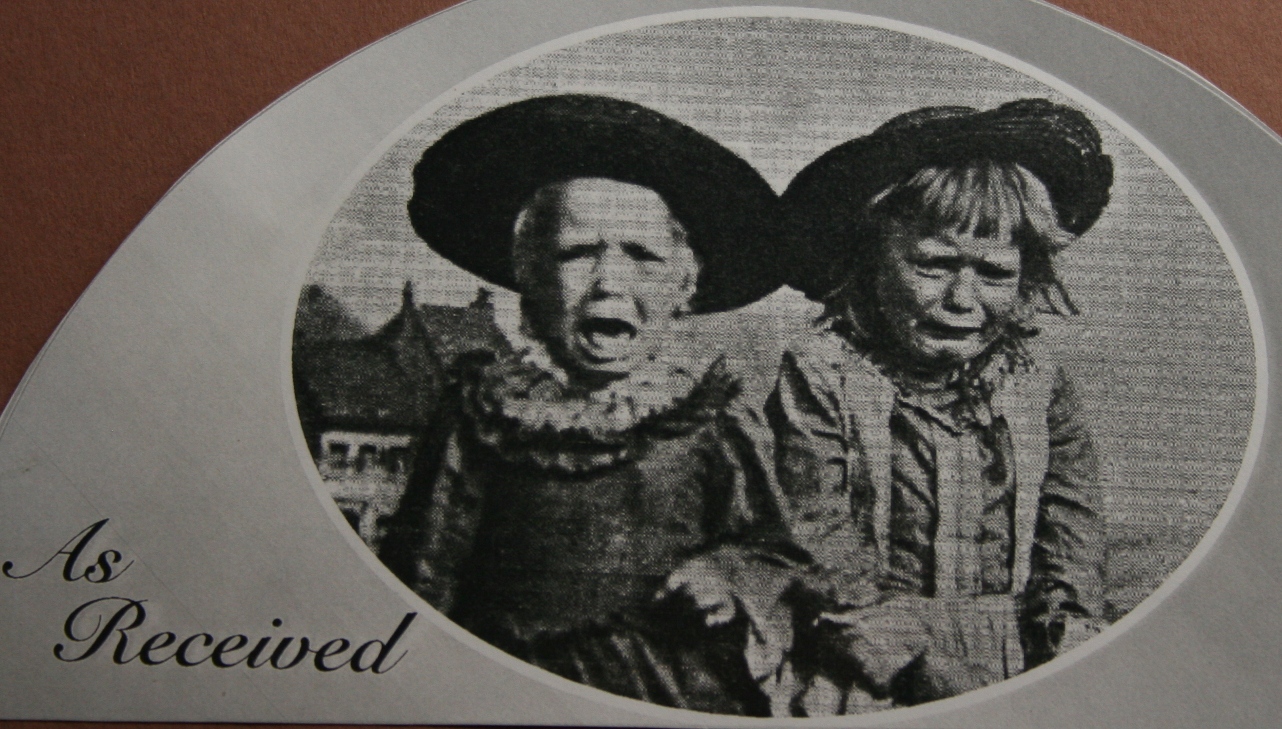
It hurts even more to view the photo of the “waifs,” sisters Mary and Clara, taken on the day they arrived. You can see the despair in their eyes, almost hear their wailing, feel their terror. If I could step back into time, to that day in August 1892, I would wrap those little girls in my arms and hold them and stroke their hair and give them all the love they never knew.

Sisters Mary and Clara, upon their arrival at the Minnesota State School.

Of all the documents and images displayed at the former school, now a museum, this one of the sisters sticks with me for the emotions it captures and evokes. I first saw the photo several years ago during an initial visit to the Minnesota State Public School Orphanage Museum. I have never forgotten it.

This past weekend I was back at the orphanage site to tour a new Owatonna Arts Center exhibit, “Where are the Children,” by Judy Saye-Willis. The Northfield artist taps into the location to pull together an introspective display about children with input from a variety of artists and a writer. I was especially impressed with the graphite drawings of children by Cambridge artist Marilyn M. Cuellar. (Note that Cuellar’s art pieces displayed in Owatonna are copies and not originals.)

The former state school dining area is now a beautiful public venue.

After perusing that exhibit, I walked toward the museum part of the building, through the former school dining room that today serves as a venue for wedding receptions, concerts and more. I hadn’t intended to go to the museum, but my husband had already wandered over there.

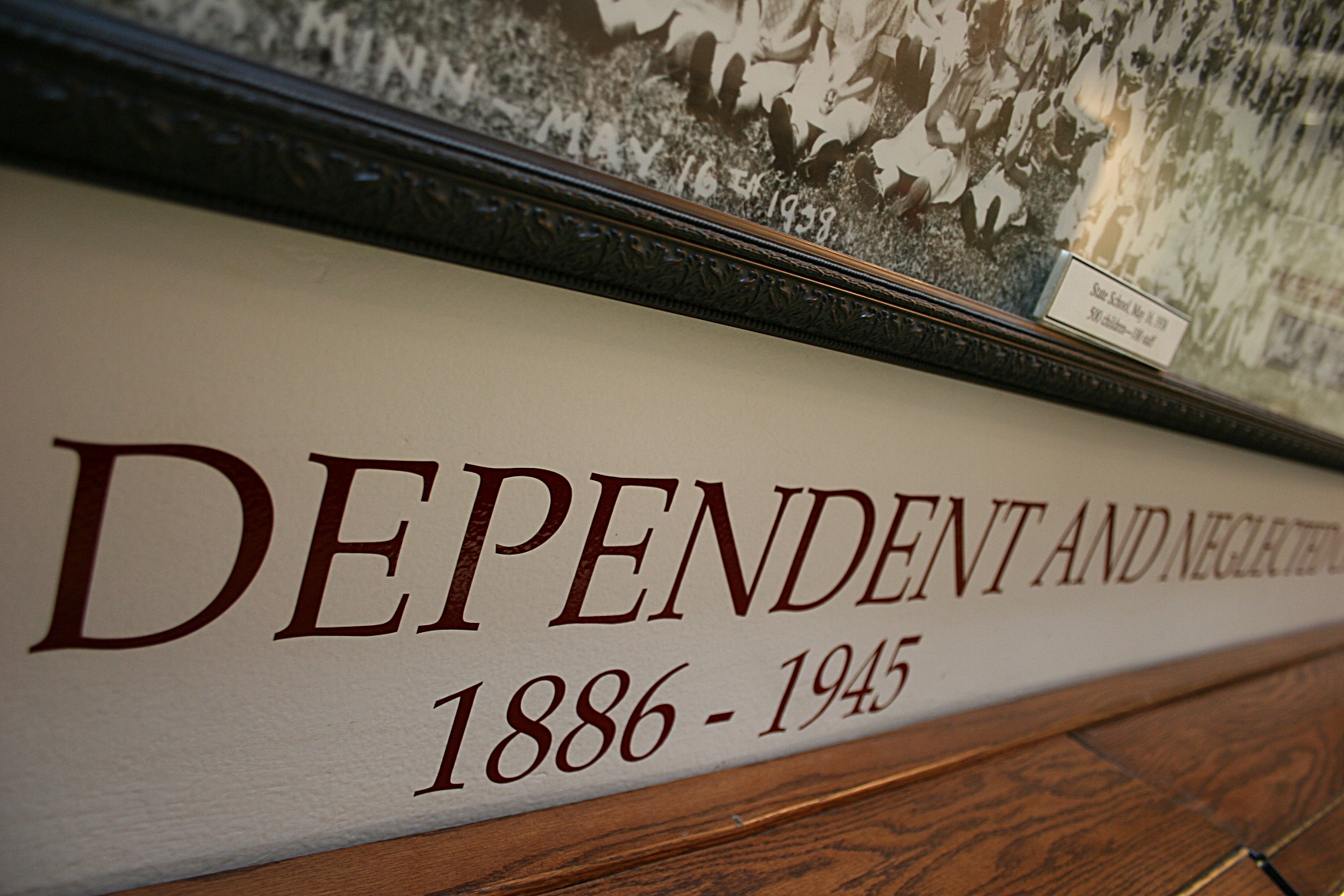
Signage under a state school photo in a section of the museum.

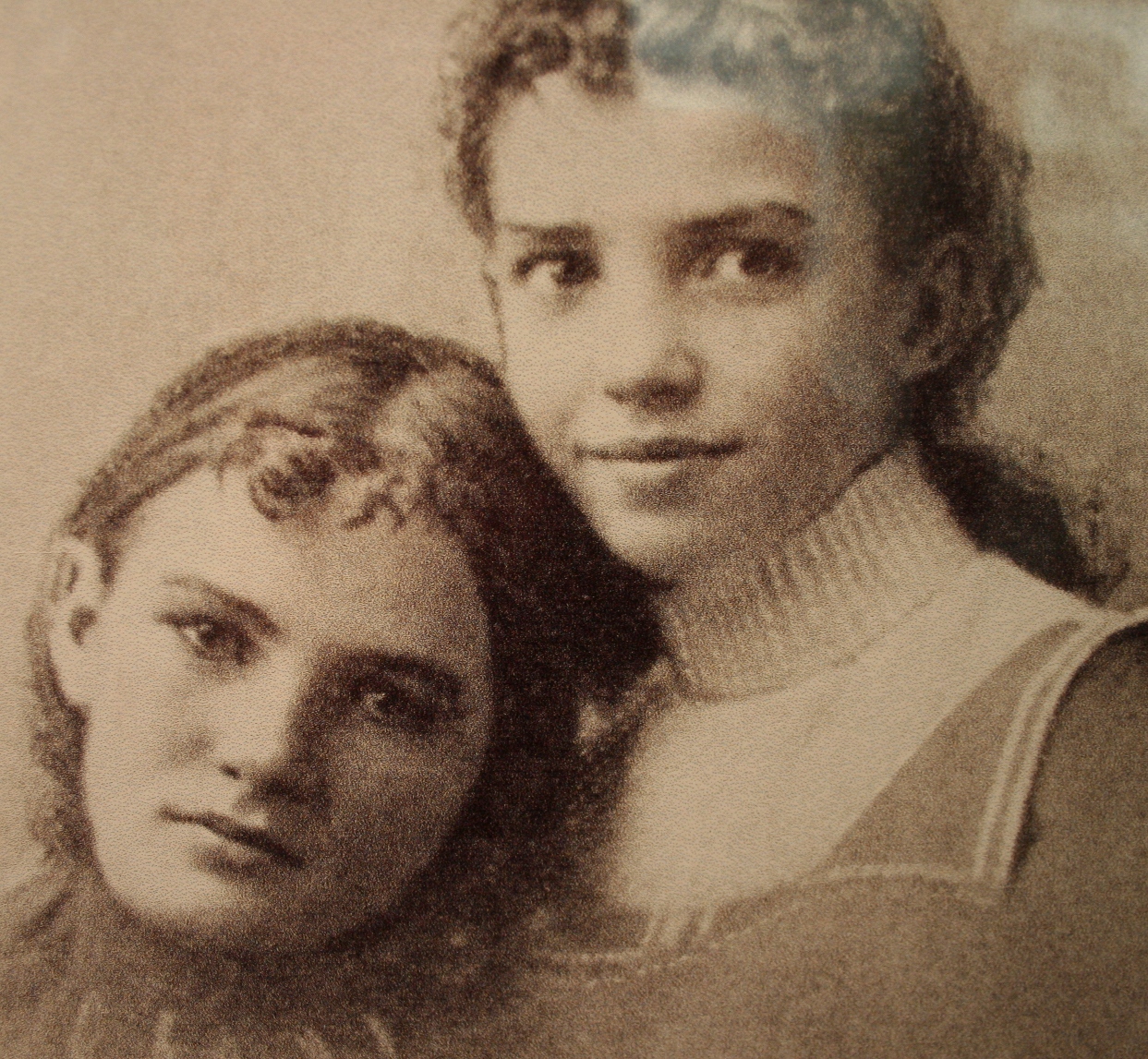
This visit I didn’t study each document and photo in depth. Rather, I swept through the U-shaped exhibit area, focusing on specific segments to photograph like the 1892 telegram and photos of the two sisters, including this one taken at a later date.

Mary and Clara, hardly recognizable as the same sisters who arrived in 1892.

I paused, though, to listen to a visitor talk to me privately about her father and an aunt who lived here. She spoke without a hint of bitterness, which surprised me given the negative experiences of many children who called this school home. Her father eventually was placed with a southern Minnesota farm family. In many instances, these families physically and emotionally abused the state schoolers. Her father, she said, was hit once, but never again.

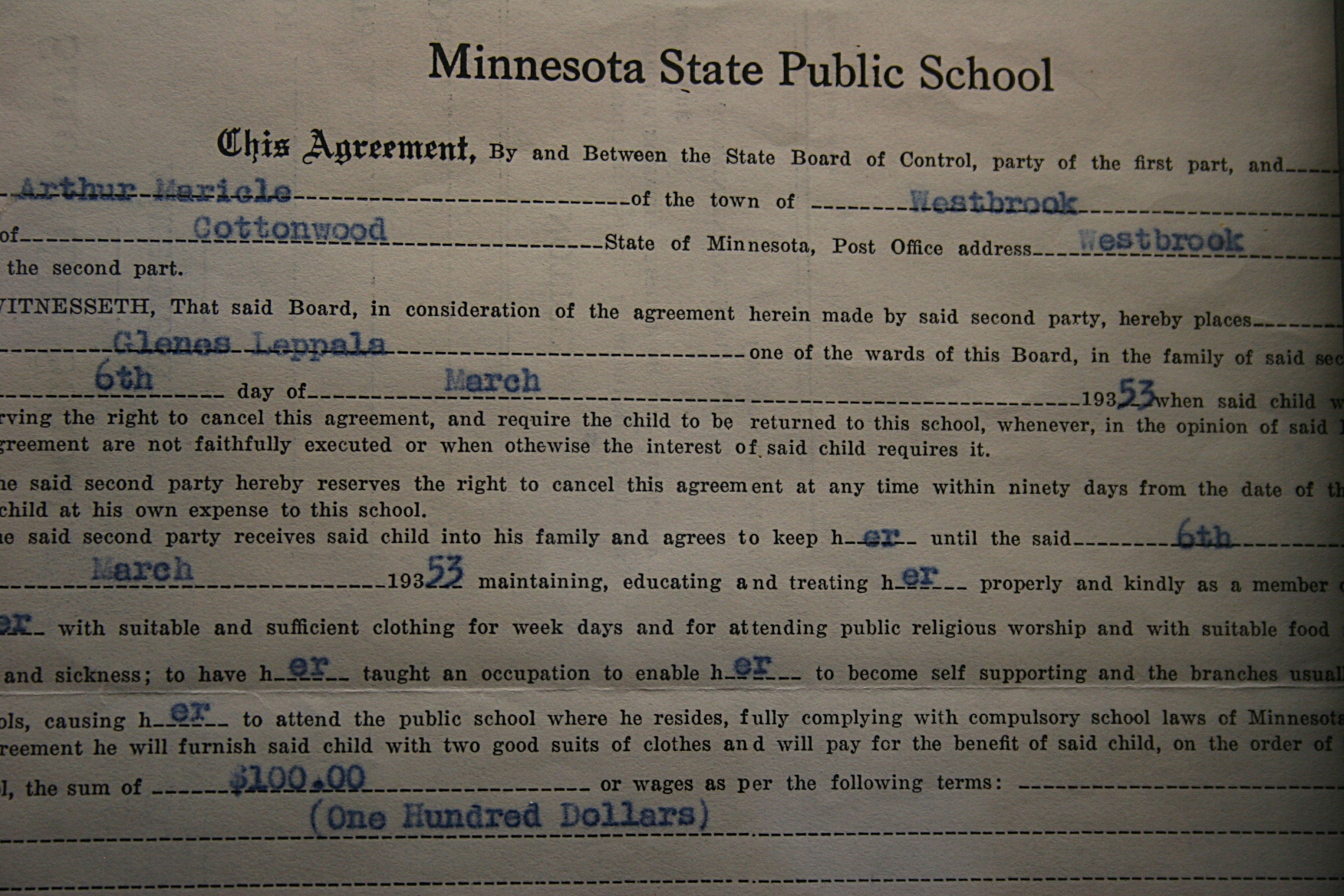
Contracts were signed between the school and families, typically farm families, allowing state schoolers to live with and work for these families. The families were to provide $100 in wages and two suits of clothing.

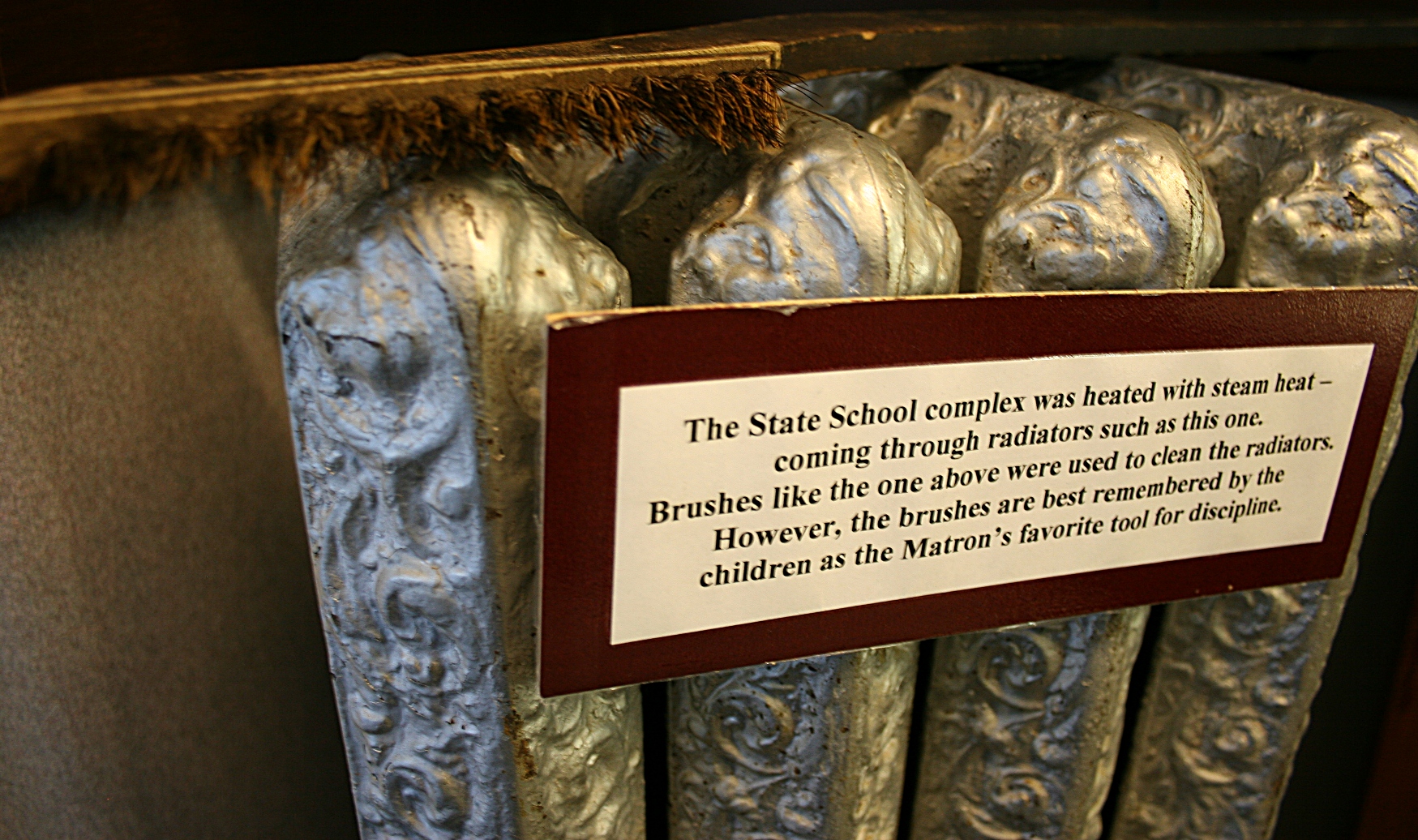
Later, I would photograph a radiator brush, “a Matron’s favorite tool for punishment,” according to the Fall 2010 issue of the museum newsletter, The Radiator Brush.

A dreaded radiator brush rests atop a radiator in the museum.

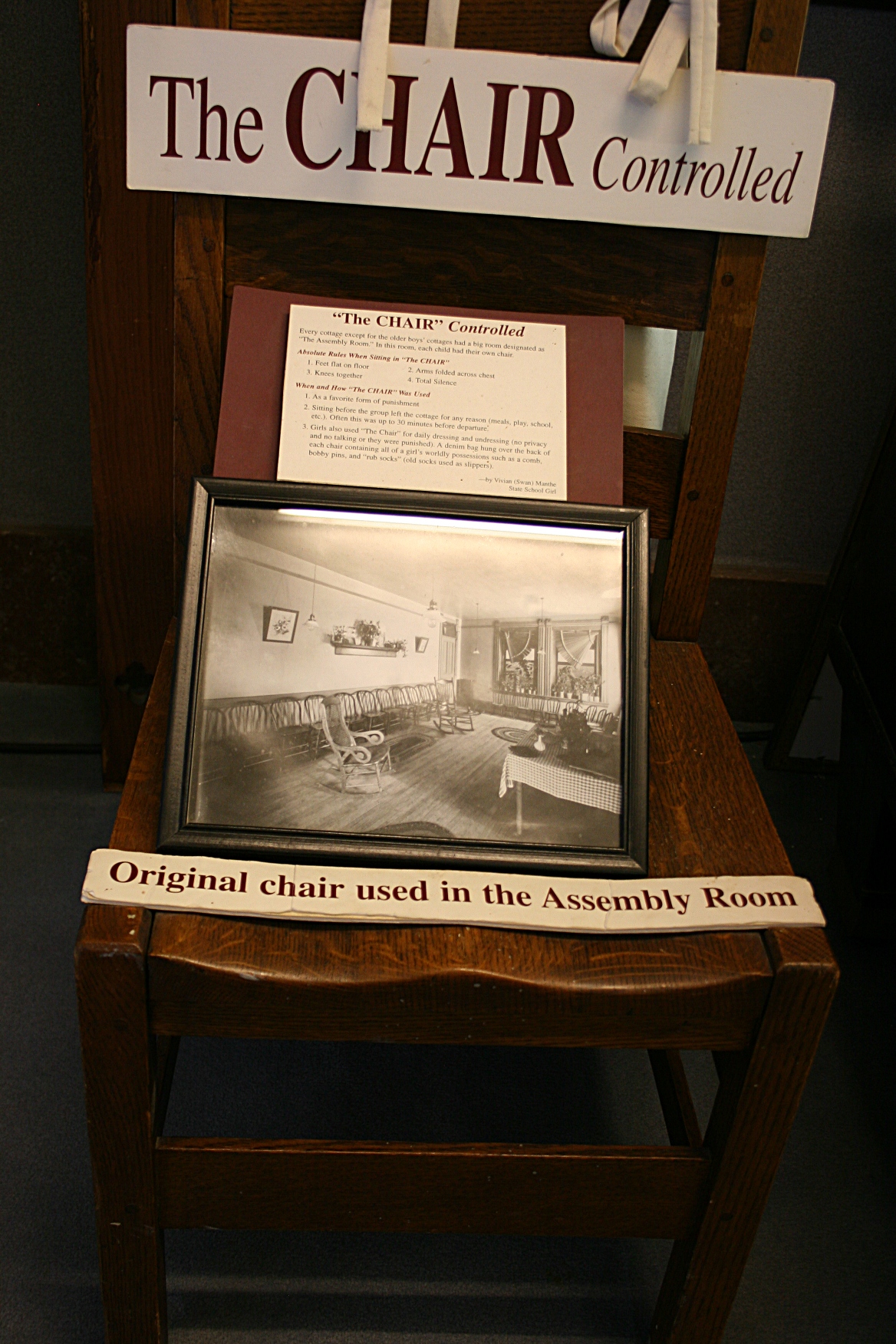
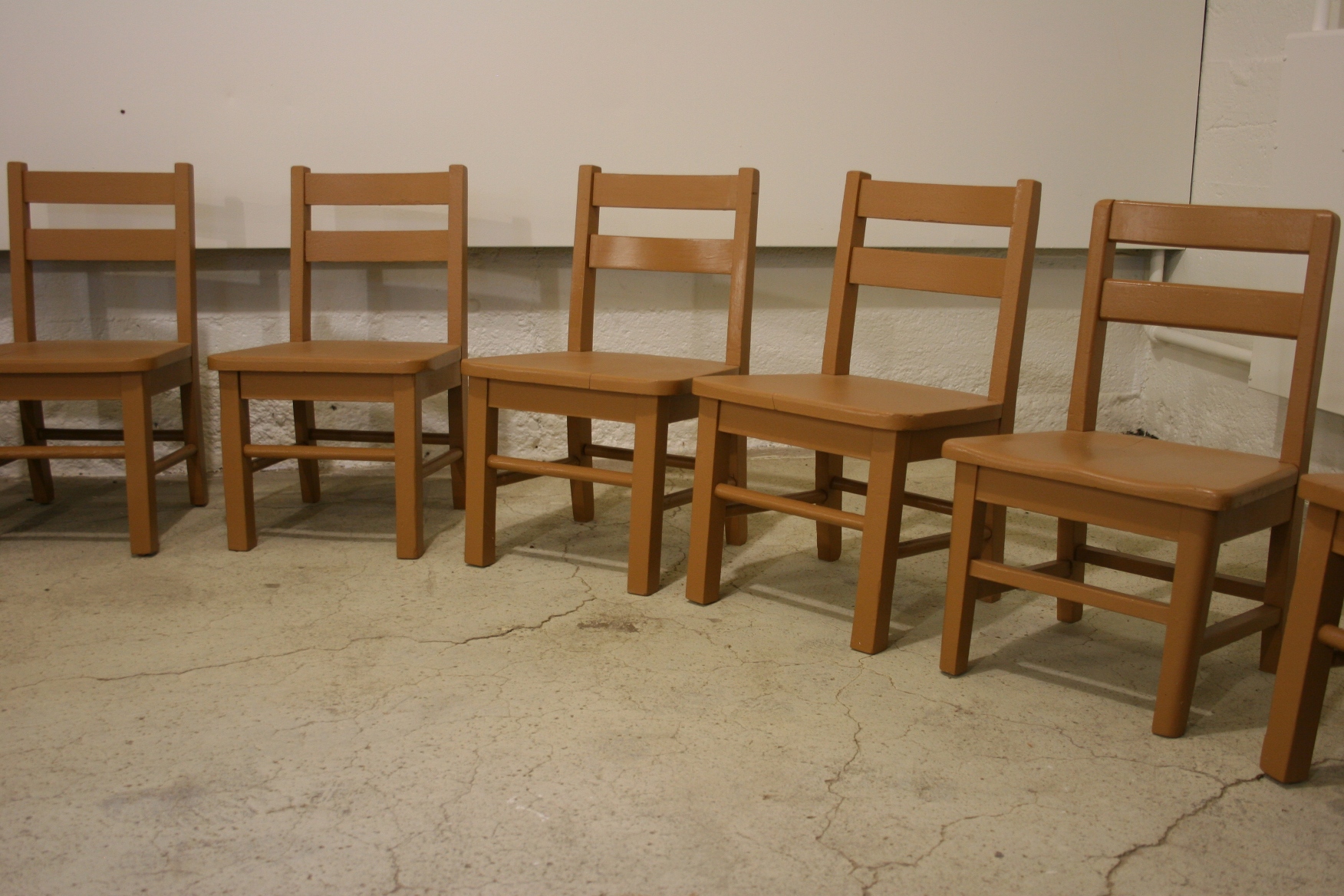
Next, I photographed “the chair,” also used to punish children.

Chairs like this one on display in the museum were used to control and punish children and keep them in their place.

I cannot imagine living here in this institution, separated from family.

Yet the school, despite its failings, offered for many children a better alternative than remaining in abusive and neglectful home settings too tragic to even fathom.

And so that is how sisters Mary and Clara, two little waifs who had been “the victims of extreme cruelty and neglect,” ended up on a train bound for the Minnesota Public School for Neglected and Dependent Children.

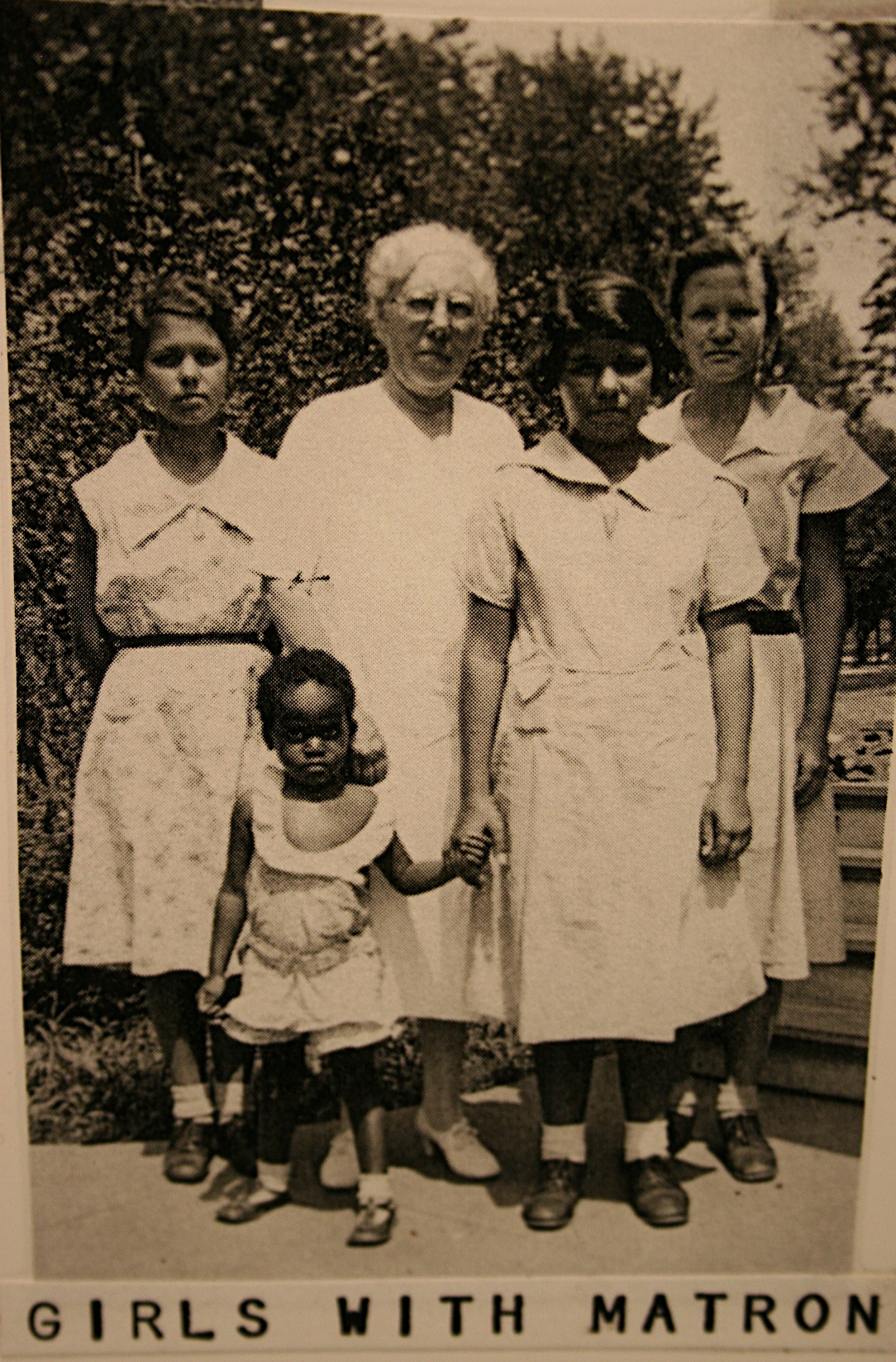
One of the photos on display in the museum of a matron and her girls.

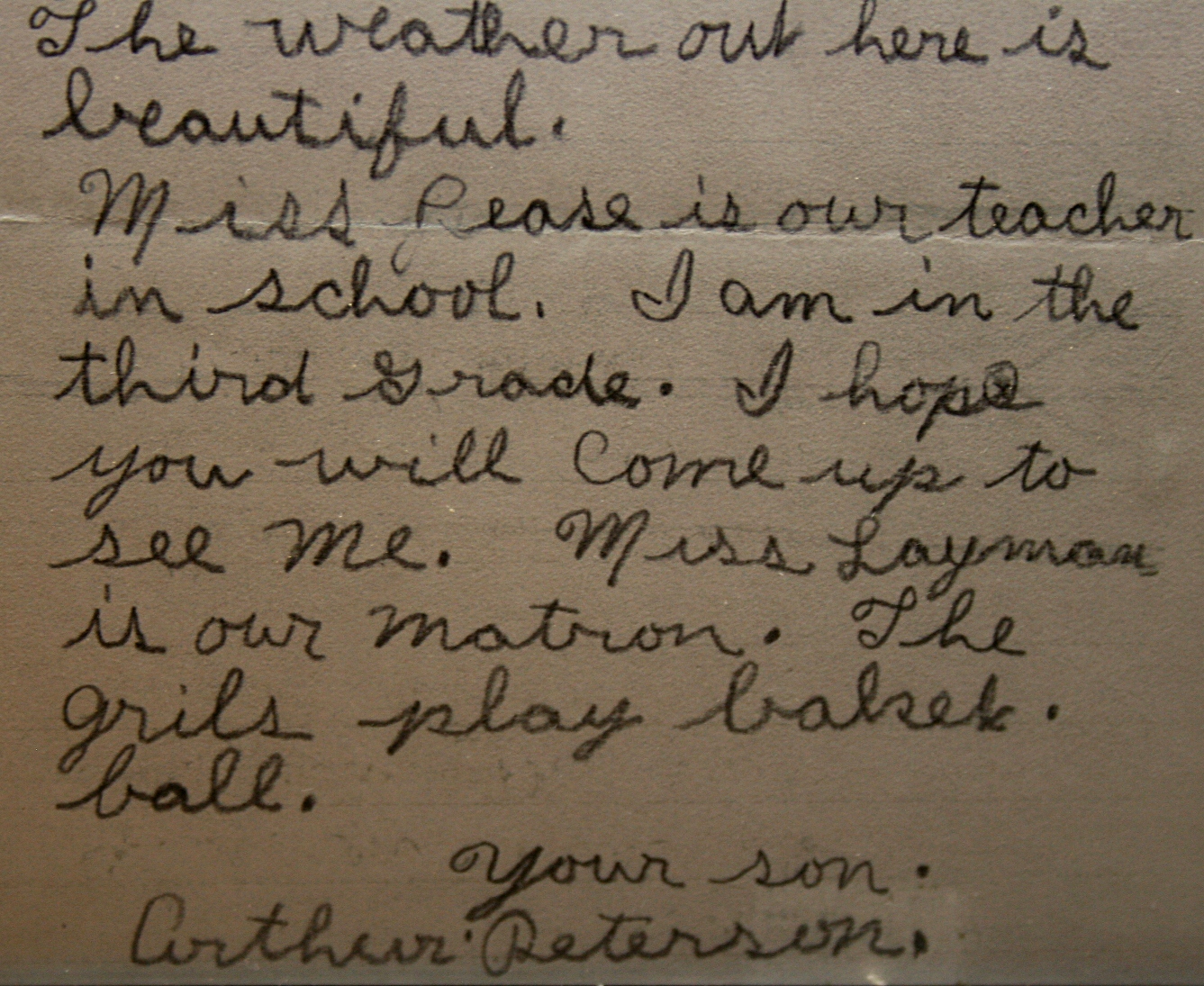
A snippet of a letter from third grader Arthur Peterson to his mother. You can almost hear the desperation in his words: "I hope you will come up to see me."

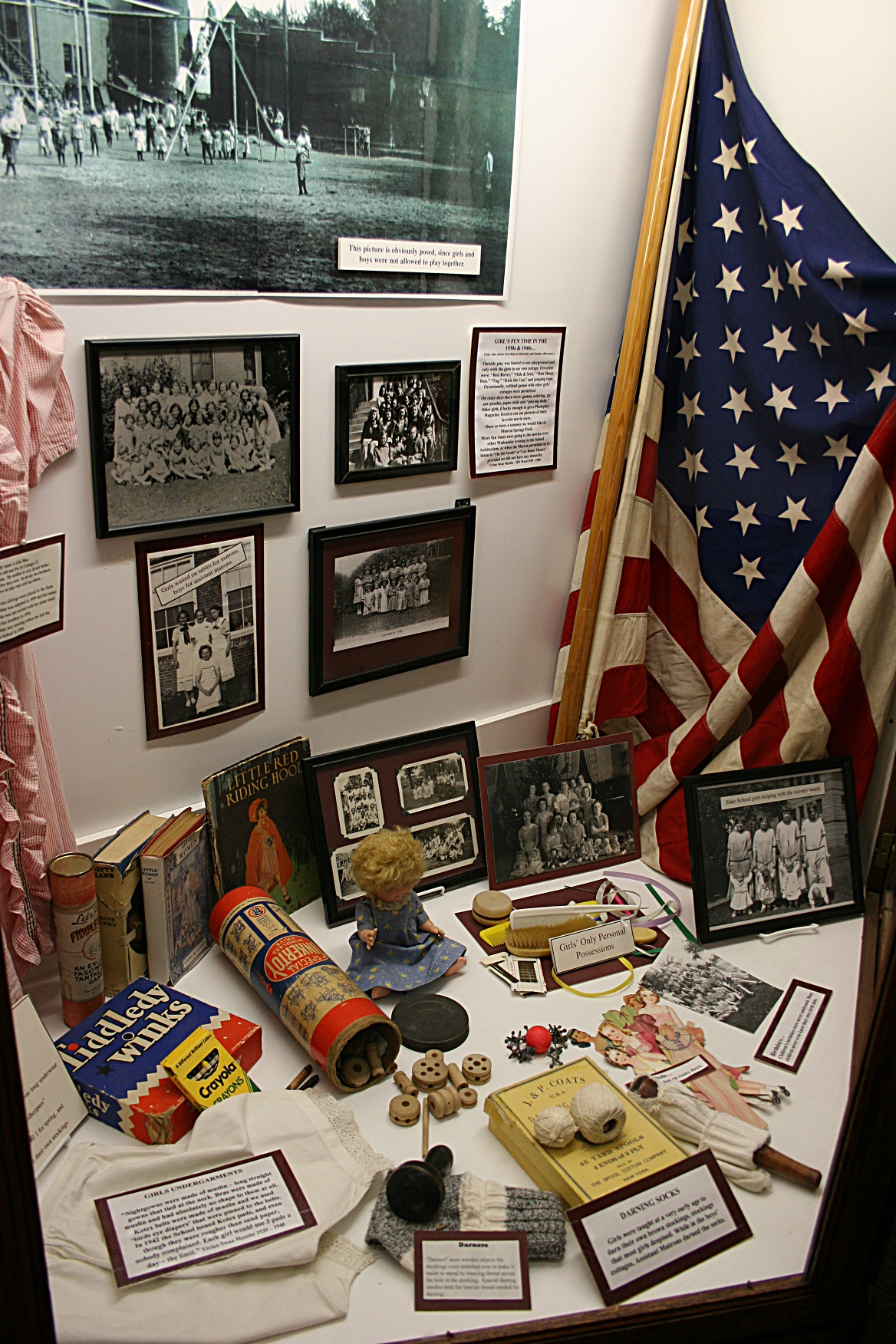
Museum exhibits, mostly in words and photos, but also artifacts, tell visitors about life at the state school.

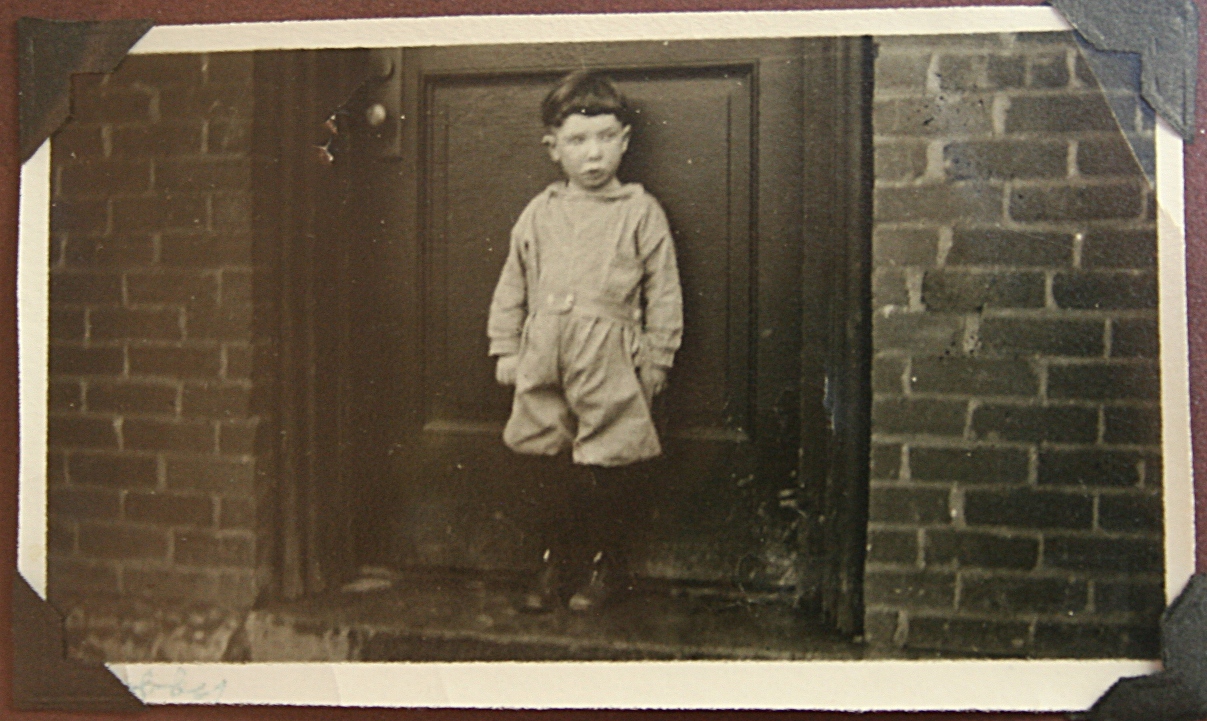
This photo of a little state school boy caught my eye. The museum's collection includes more than 1,100 original photos and an additional 150 reproductions. You can't help but be moved by such soulful images.

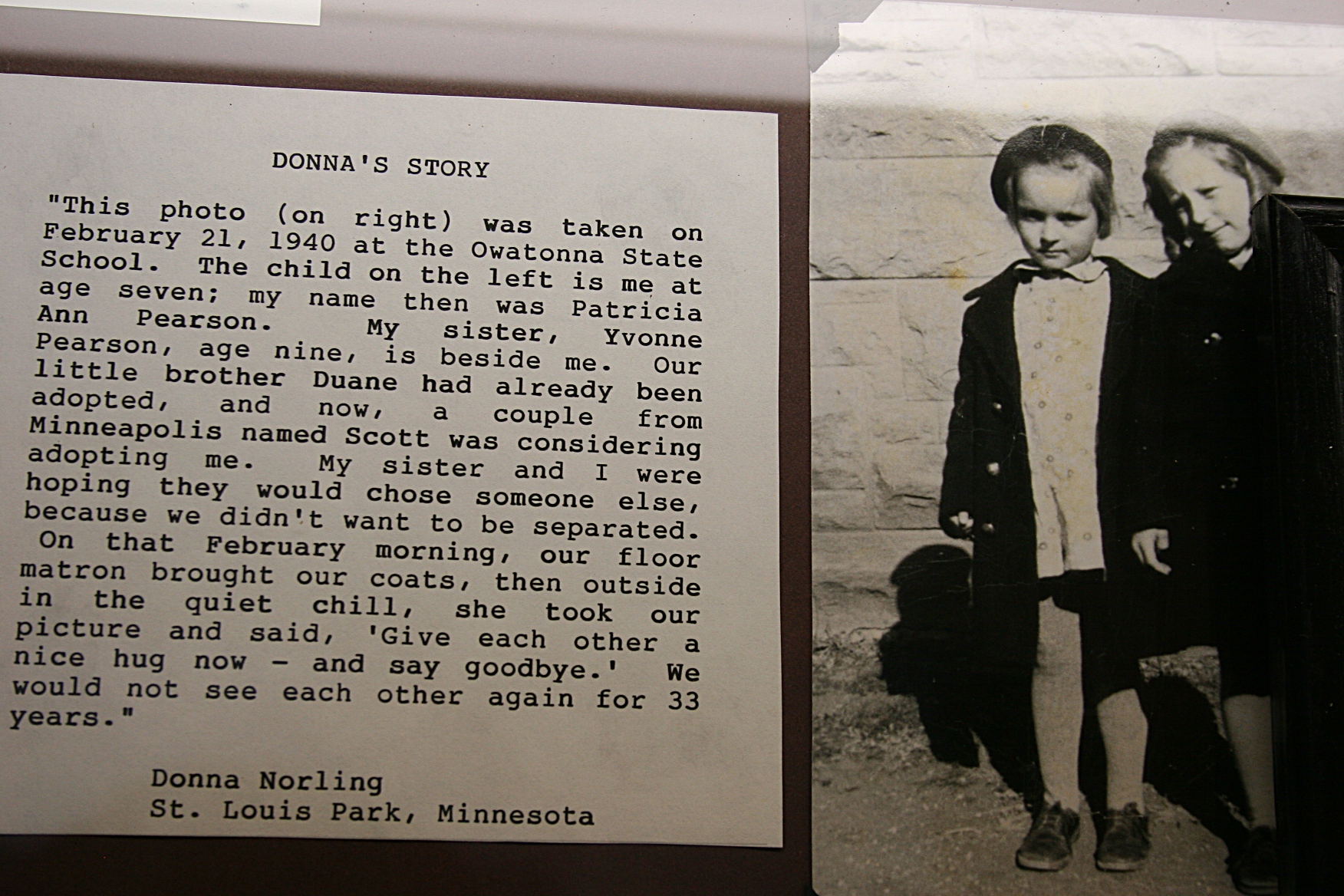
Patricia Ann Pearson, 7, left, and her sister, Yvonne, 9, on the day they were separated. They would not see each other for 33 years. Theirs is only one of thousands of heart-wrenching stories of separation.

FYI: From 1886-1945, nearly 11,000 orphaned, abused and/or abandoned children were sent to the Minnesota State Public School for Neglected and Dependent Children. Today visitors can tour the former school grounds, including a cottage and the cemetery. Click here to learn more about the museum. In 2011, an estimated 7,000 visitors toured the museum and Cottage 11.

Click here and then click here to read two previous blog posts I published about C-11.

© Copyright 2012 Audrey Kletscher Helbling


Part II: Life as an orphan in Owatonna December 20, 2011

The main building at the orphanage, built in 1886, housed offices, a reception room, chapel/auditorium, boys' cottage, living quarters for employees, a sewing room, attic and linen storage. This main portion today serves as the Owatonna city administration building.

THE TOWERING BRICK building with the enchanting turret represents no fairy tale. Not at all.

Within the confines of this place and the outlying cottages, some 12,000 – 15,000 children spent their formative childhood and teenage years institutionalized in the Minnesota State Public School for Dependent and Neglected Children. They were the orphaned, the abused, the abandoned, the unwanted.

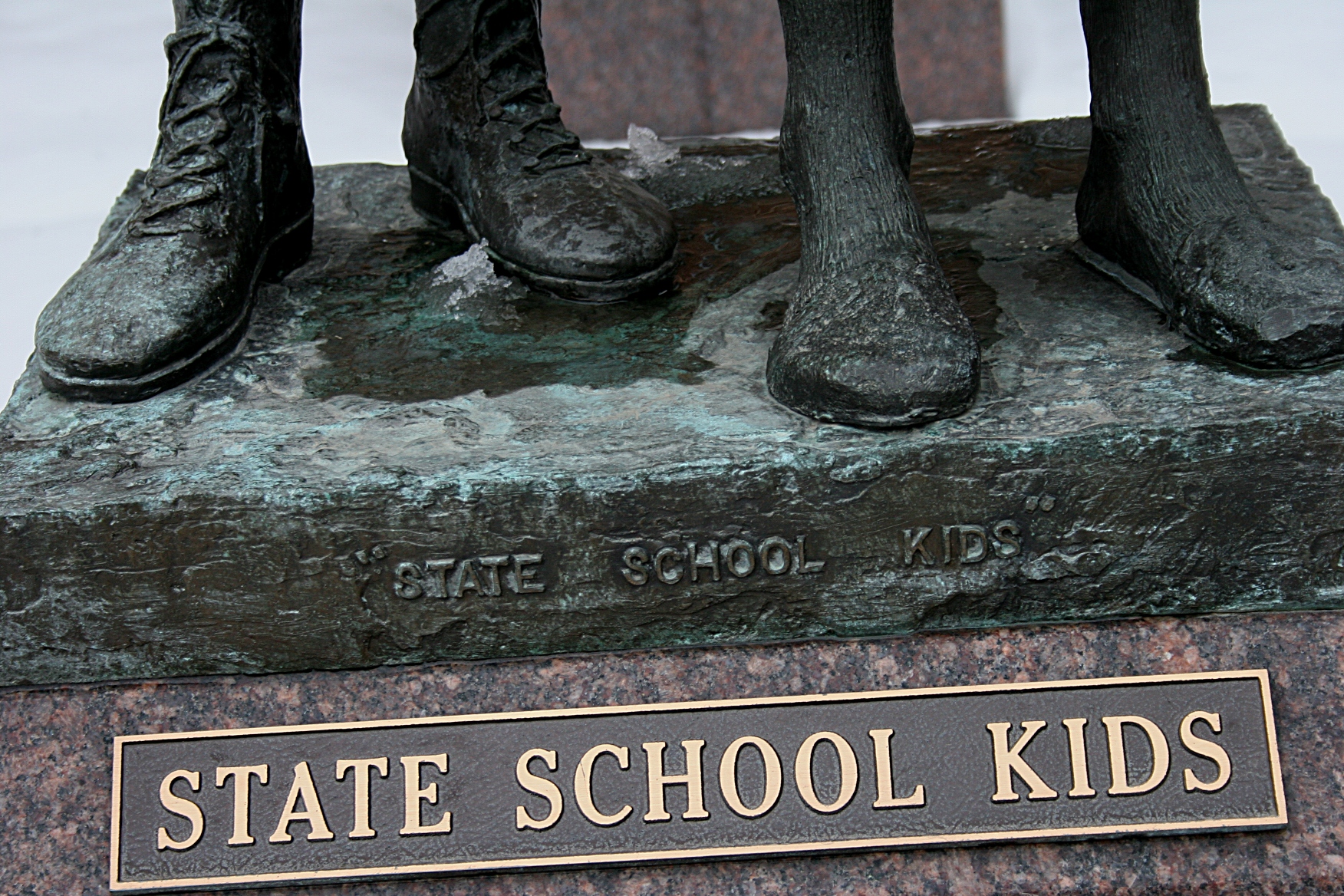
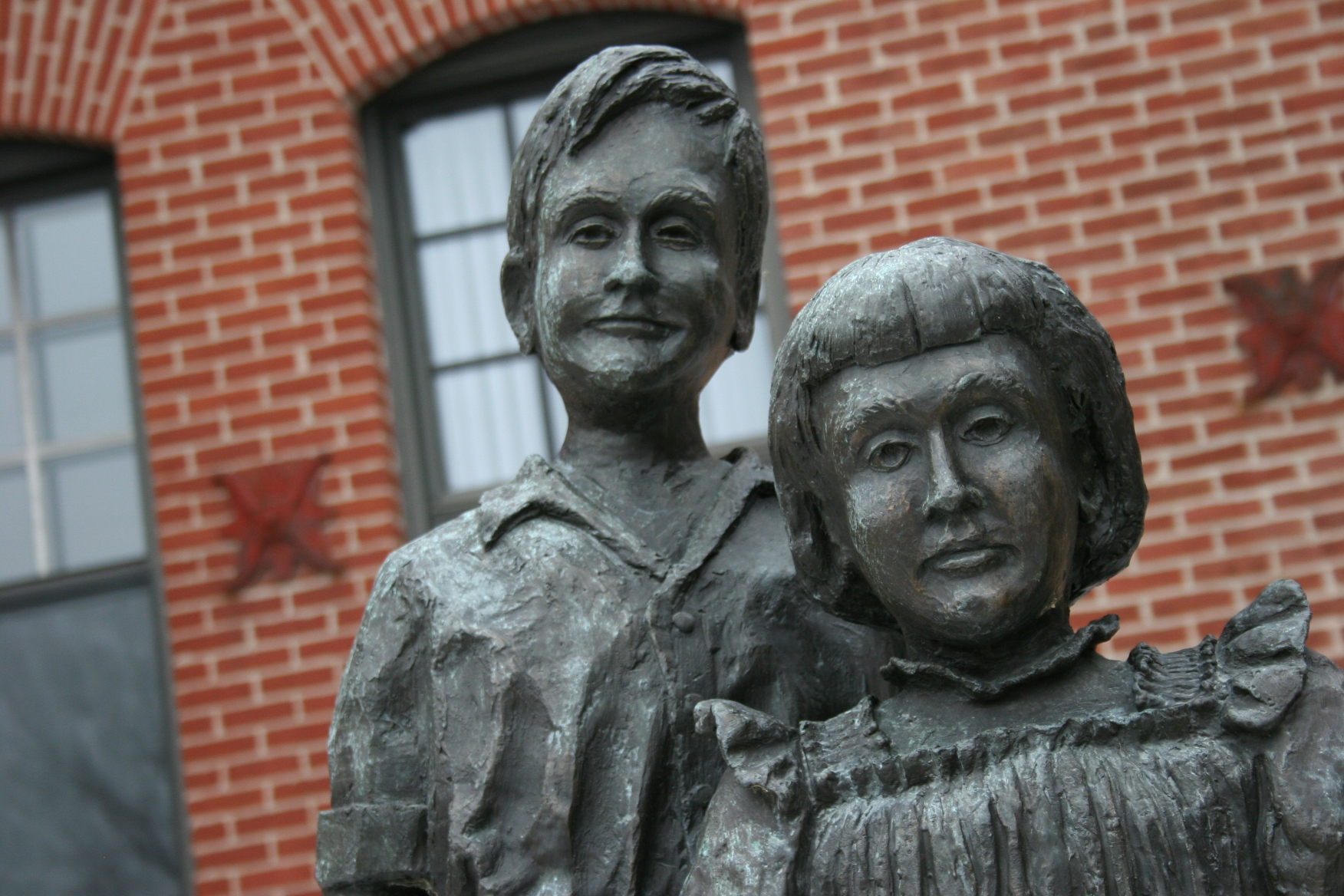
The "State School Kids" memorial stands in front of the main building and was dedicated in 1993.

Information in a brochure I picked up on a recent visit to this 1886- 1945 orphanage in Owatonna reads:

Such children became wards of the state and, in most instances, all parental rights were cancelled. Parents did not always realize they were relinquishing all rights to their children when they signed the State School commitment papers. Some parents returned to try to regain custody of their children and were refused.

Can you imagine?

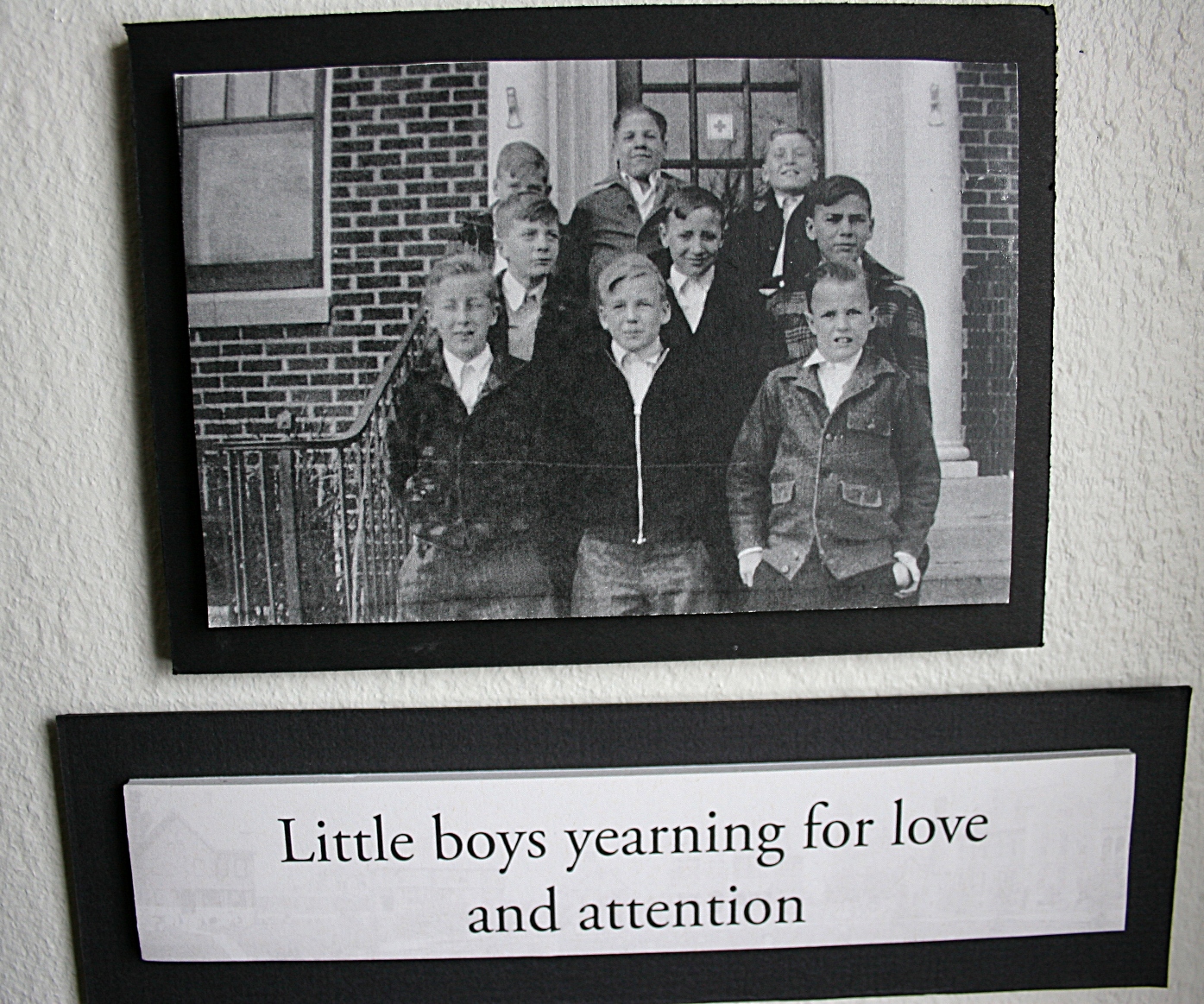
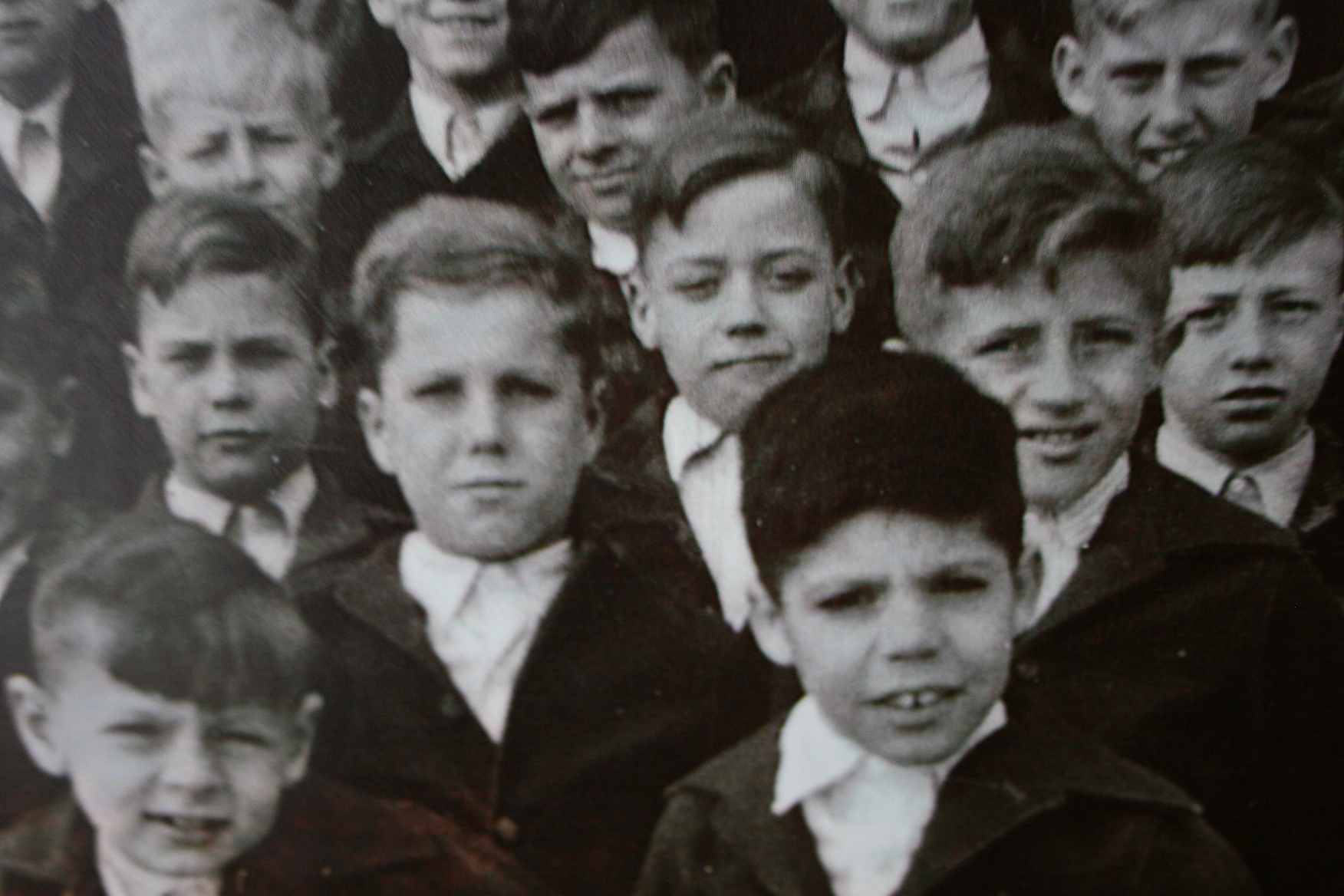
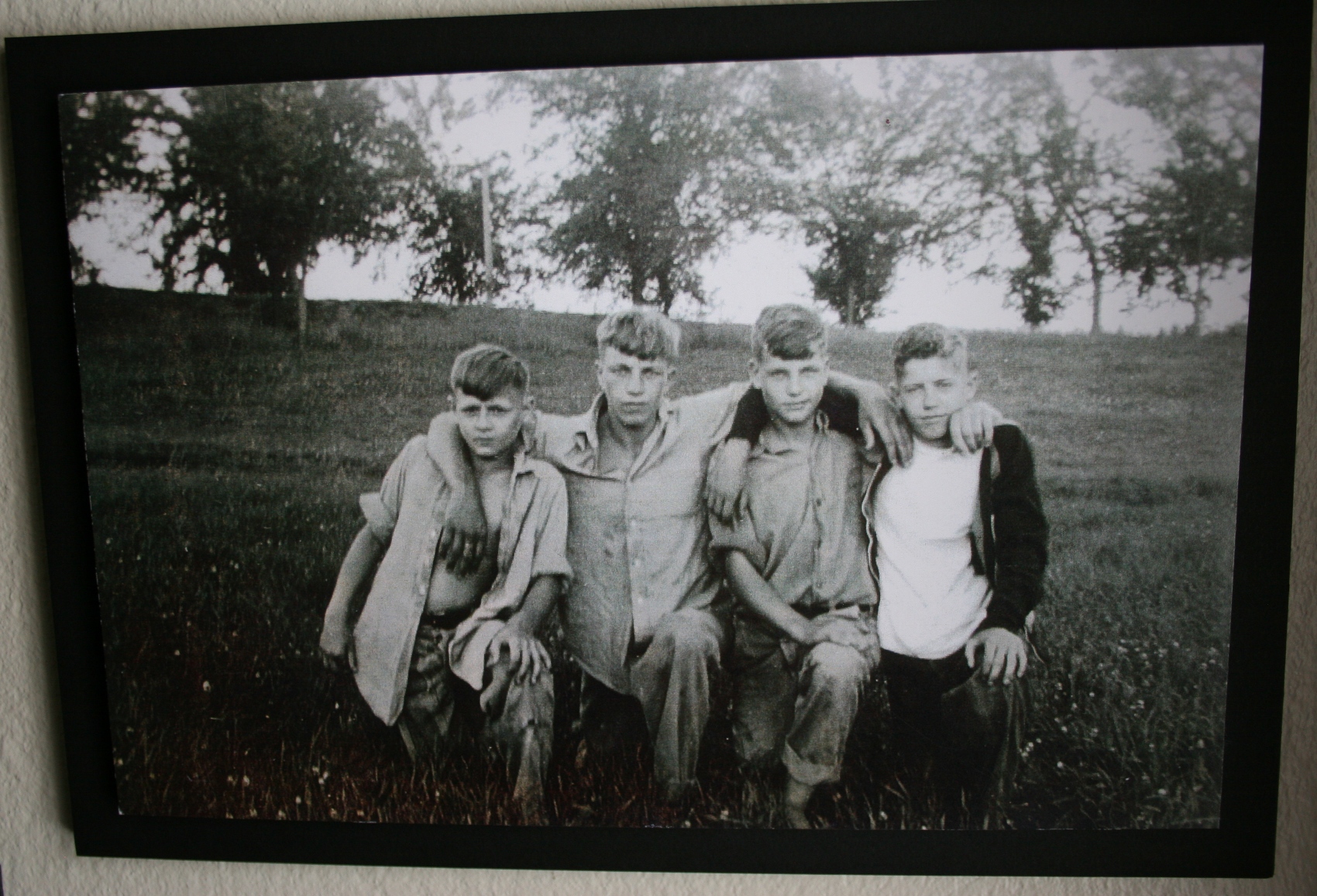
Residents of Cottage 11, which housed boys ages 6 - 13, pose for a photo now on exhibit at the museum.

While some children adjusted to living within the strict regiment and rules of the school, many did not. You will hear and read their tragic memories when you visit the orphanage museum. Be forewarned: These stories are difficult to hear.

A room in cottage 11 features the photos and memories of the boys who lived there.

Cottage 11 residents

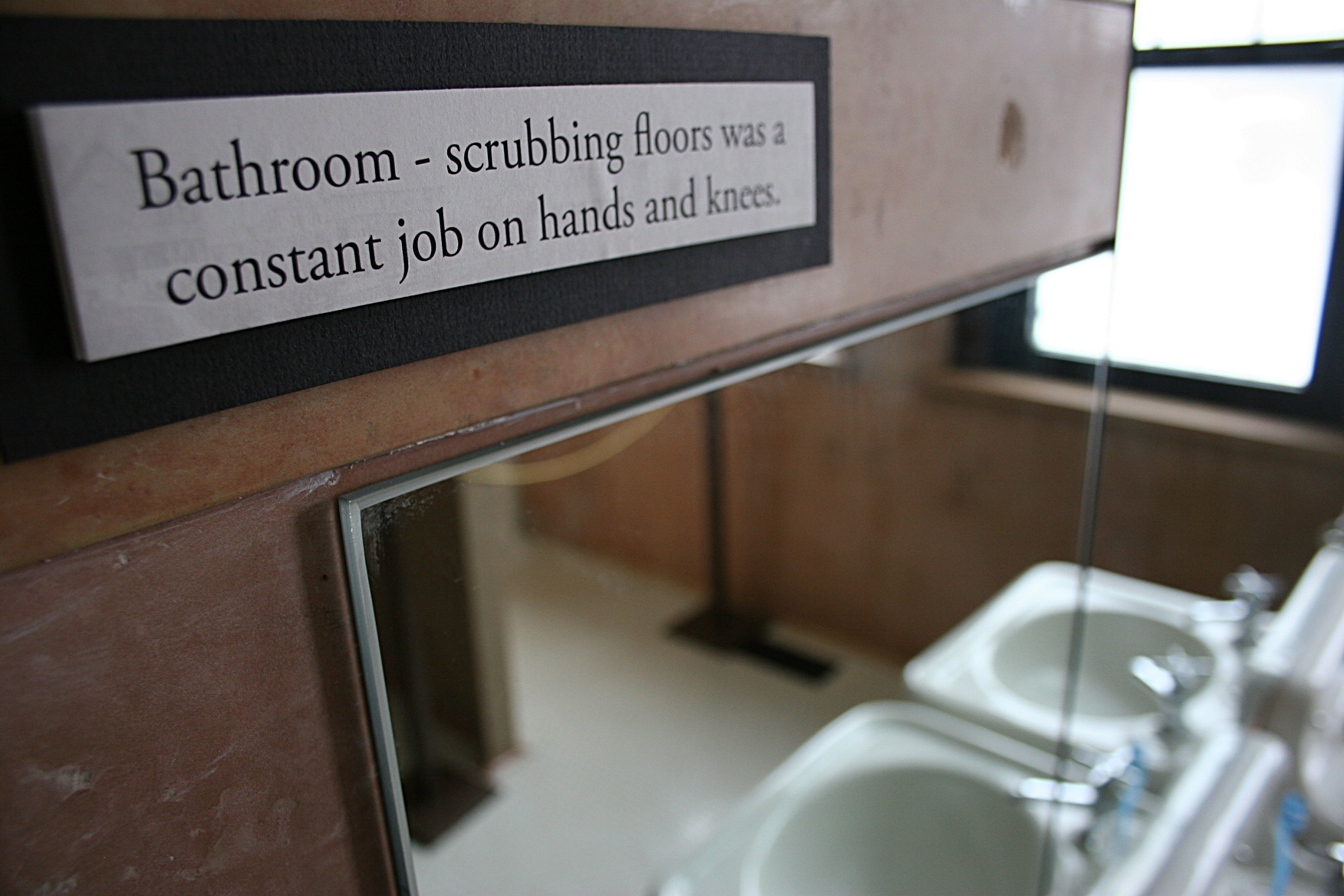
The boys remember scrubbing floors throughout the cottage, including in the bathroom..

Beds were packed tight into sparse bedrooms in the cottage.

I’ve read several books written by former “state schoolers,” as they were called. Harvey Ronglien, who was the motivator behind the museum and the orphan’s memorial, wrote A Boy from C11, Case #9164, A Memoir. Peter Razor wrote While the Locust Slept, winner of a Minnesota Book Award. I read both books, as well as Crackers & Milk by Arlene Nelson, many years ago and still can’t shake the haunting memories of neglect and abuse and struggle.

Particularly troubling are the reports of abusive, neglectful and unloving matrons. Equally disturbing are the stories of children who were indentured to farm families and then treated like slaves.

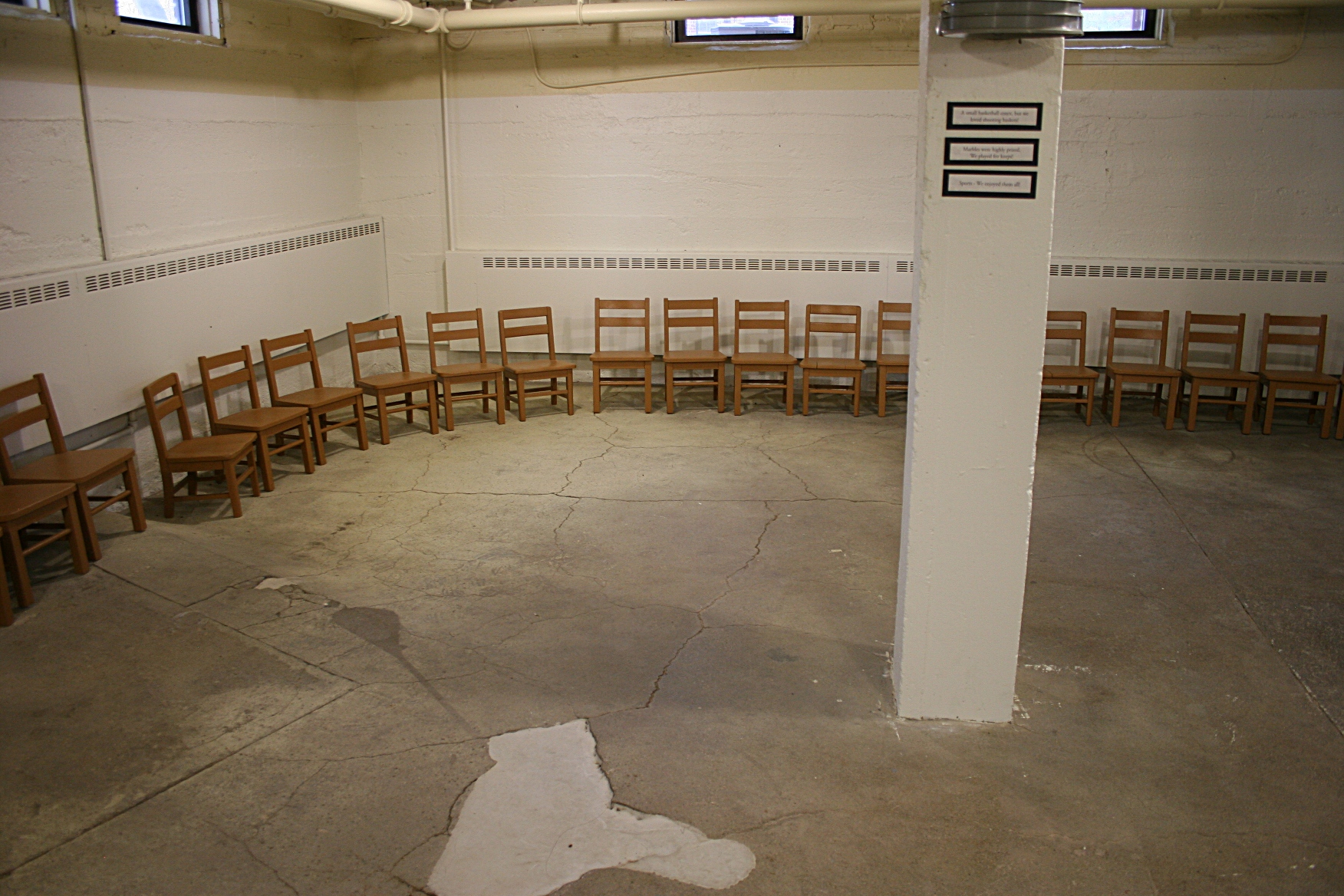
Each boy was assigned to a chair in the basement and could not leave the Cottage 11 basement without permission. This was a method used to keep order and control over the children.

Within the confines of the basement, the boys played with marbles, puzzles, checkers and other toys.

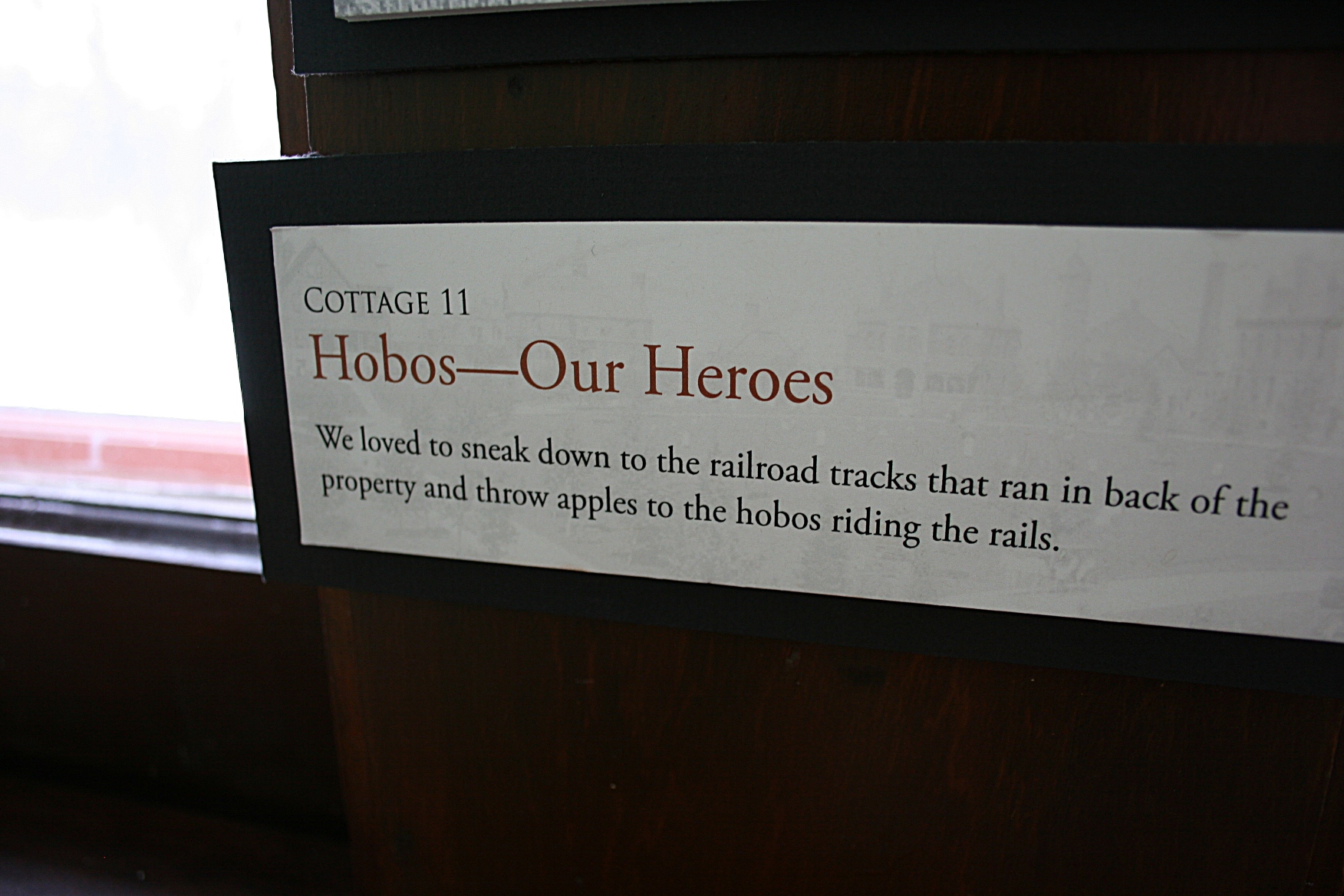
A sign on a stairway landing tells visitors about the boys' dreams of escaping via rail and of their admiration for hobos. Some boys did hop trains and ran away.

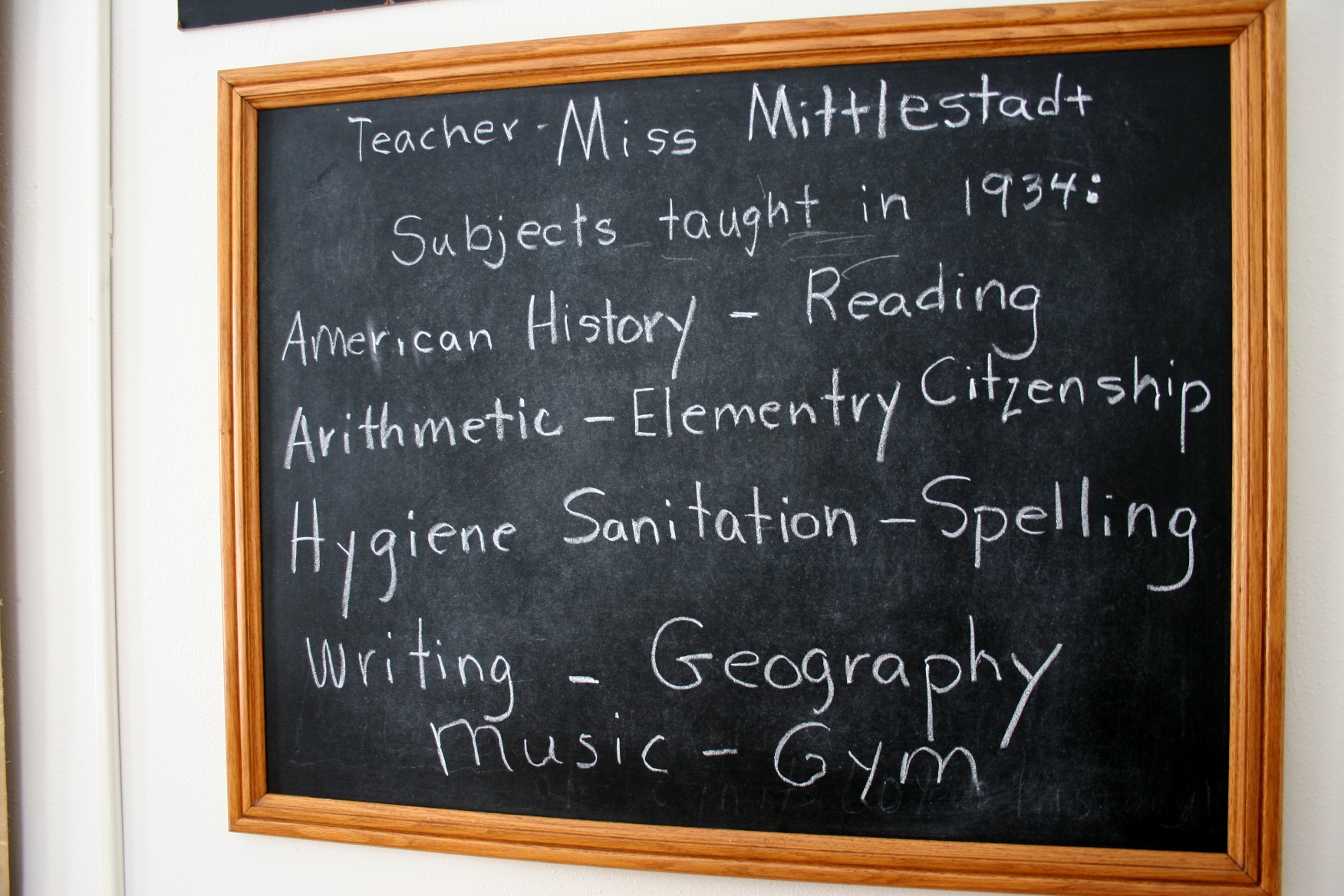
Children were educated through the eighth grade, with some selected during the early years to attend Owatonna High School. In later years, all students were allowed to attend high school.

If you’ve never visited the Minnesota State Public School Orphanage Museum, I’d encourage you to do so.

This exists as part of our state’s history. We need to know and understand life here.

Considering the thousands of children who lived in the orphanage during its 60-year span, I expect many Minnesotans are still carrying the emotional scars whether directly or indirectly passed through the generations.

IF YOU LIVED in the orphanage or have a family member who did, I’d like to hear from you. What’s your story? Good or bad.

The feet of the children in the memorial statue on the orphanage grounds.

CLICK HERE to read a previous blog post I published about Christmas in the orphanage.

© Copyright 2011 Audrey Kletscher Helbling
 

In Owatonna: Stories of an orphan’s Christmas December 19, 2011

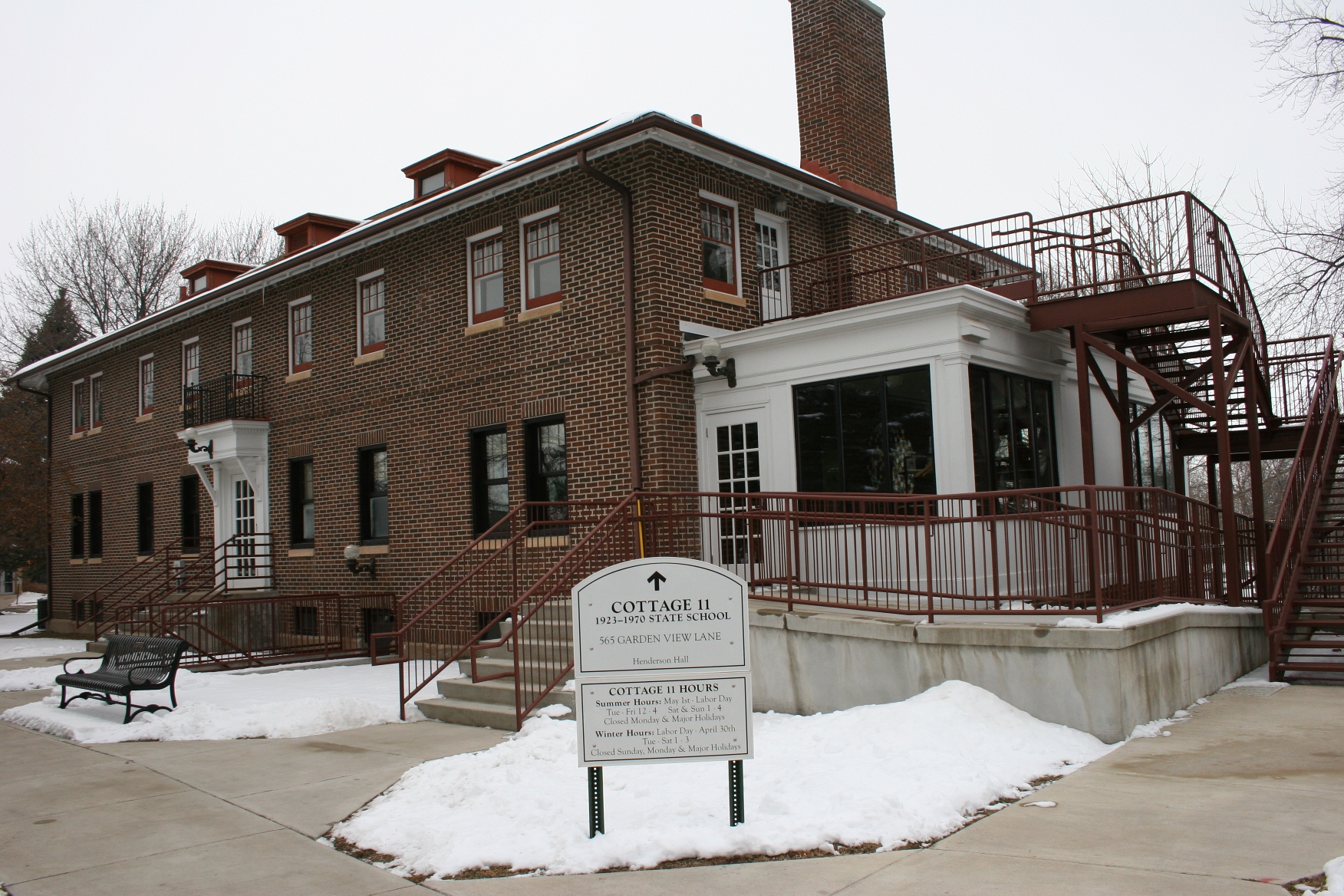
Cottage 11, built in 1923, as one of 16 cottages at the former Minnesota State Public School for Dependent and Neglected Children. Designed to house 25 boys ages 6 - 13, this cottage typically was home to 30 - 35 youth.

AS WE HURRY ACROSS the hilltop campus toward Cottage 11 at the former Minnesota State Public School for Dependent and Neglected Children, the raw wind slapping our cheeks, Silvan Durben advises us to refrain from jumping on the beds.

He’s a character, that Silvan, energetic and flamboyant and passionate. And truthful. This director of art at the Owatonna Arts Center, which is housed in the main building of the former orphanage, shares a tidbit of truth. The children who once lived here weren’t allowed to sleep on their pillows. So if my husband and I slid the for-show-only pillows off the beds and onto the floor, we’d have it right.

The boys' bedrooms are stark, devoid of anything homey. This small room slept three.

With that piece of information imparted, Silvan unlocks the door into Cottage 11, today preserved as part of the Minnesota State Public School Orphanage Museum complex in Owatonna.

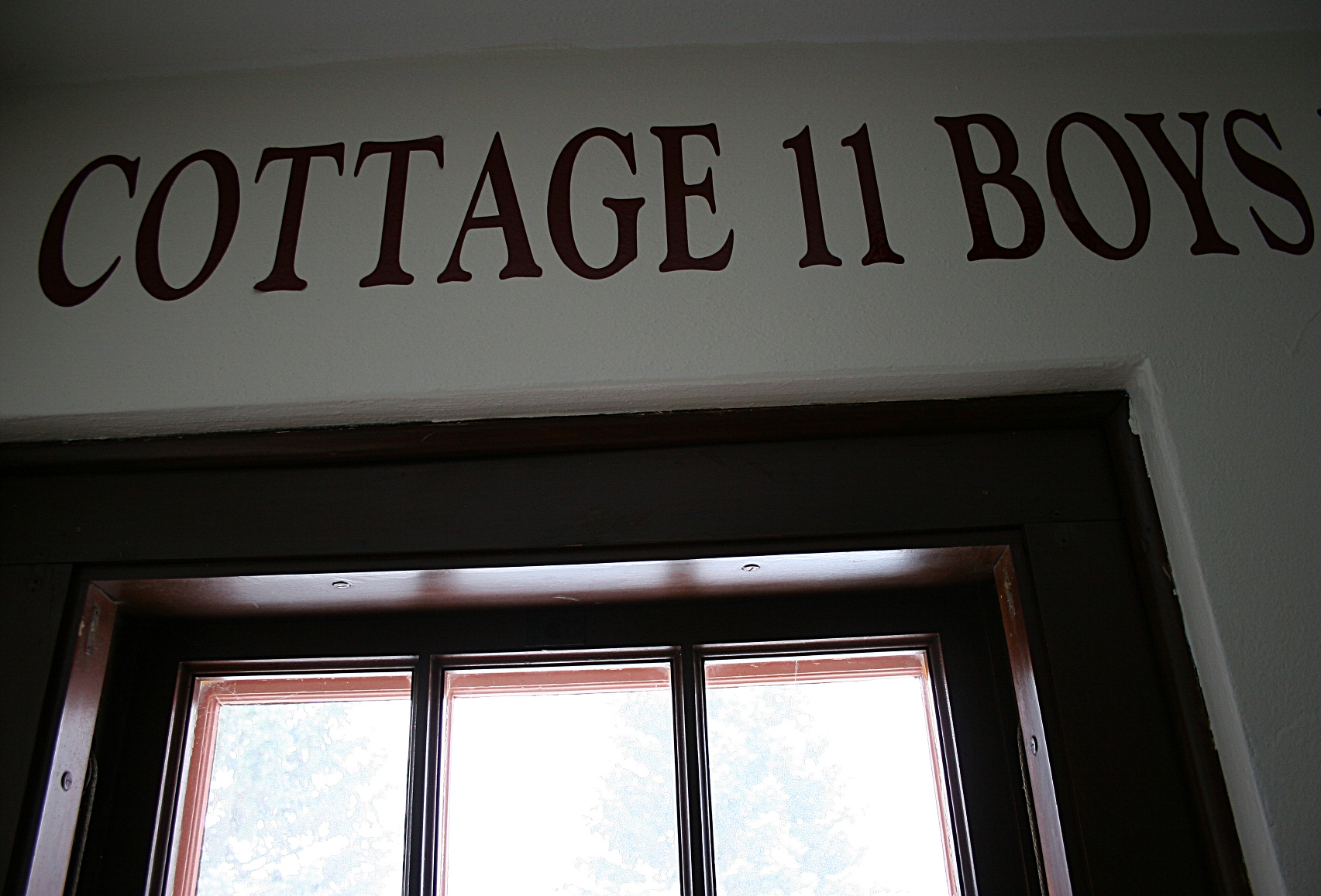
Within these walls, which housed boys ages 6 – 13 from 1923 – 1945 in the state school orphanage, we will learn more of the unsettling truths during a self-guided tour. Typically, the cottage is staffed, but on this Sunday afternoon it is not and Silvan has allowed us inside, on our own, to explore. He trusts us, he says, and I am grateful for this opportunity to wander.

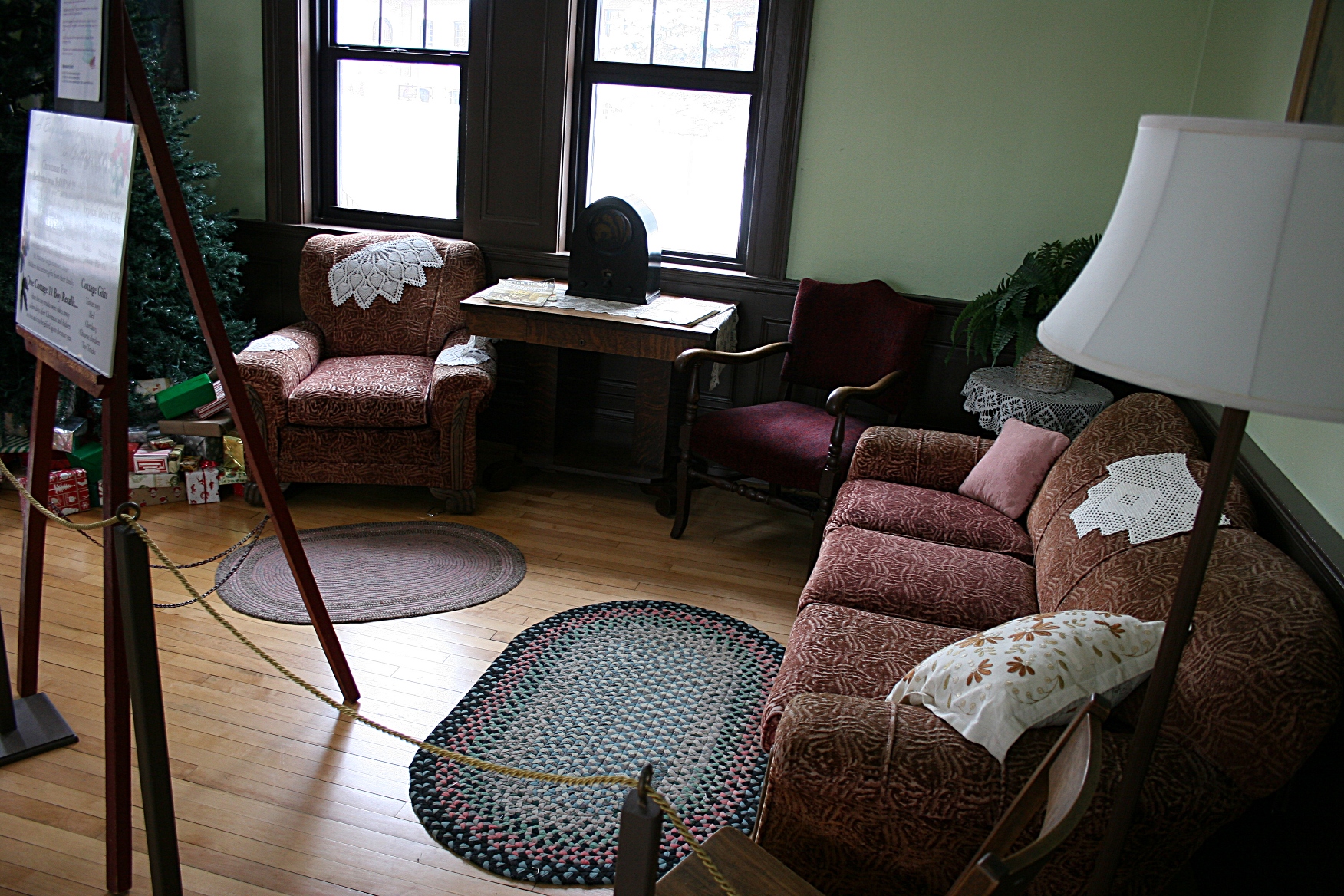
Entering a now-enclosed porch that serves as a gift shop and then stepping into the adjoining living room, I am surprised that I feel, initially, impressed by my surroundings. Visually, I am pleased by the natural light flooding this room through the abundant windows, by the dark woodwork, by the fireplace, by the narrow wood-slat floor, by the cozy cluster of vintage furniture grouped near the Christmas tree surrounded by piles of presents.

But looks, as I immediately learn, can be deceiving.

The living room was off limits to the boys except on special occasions.

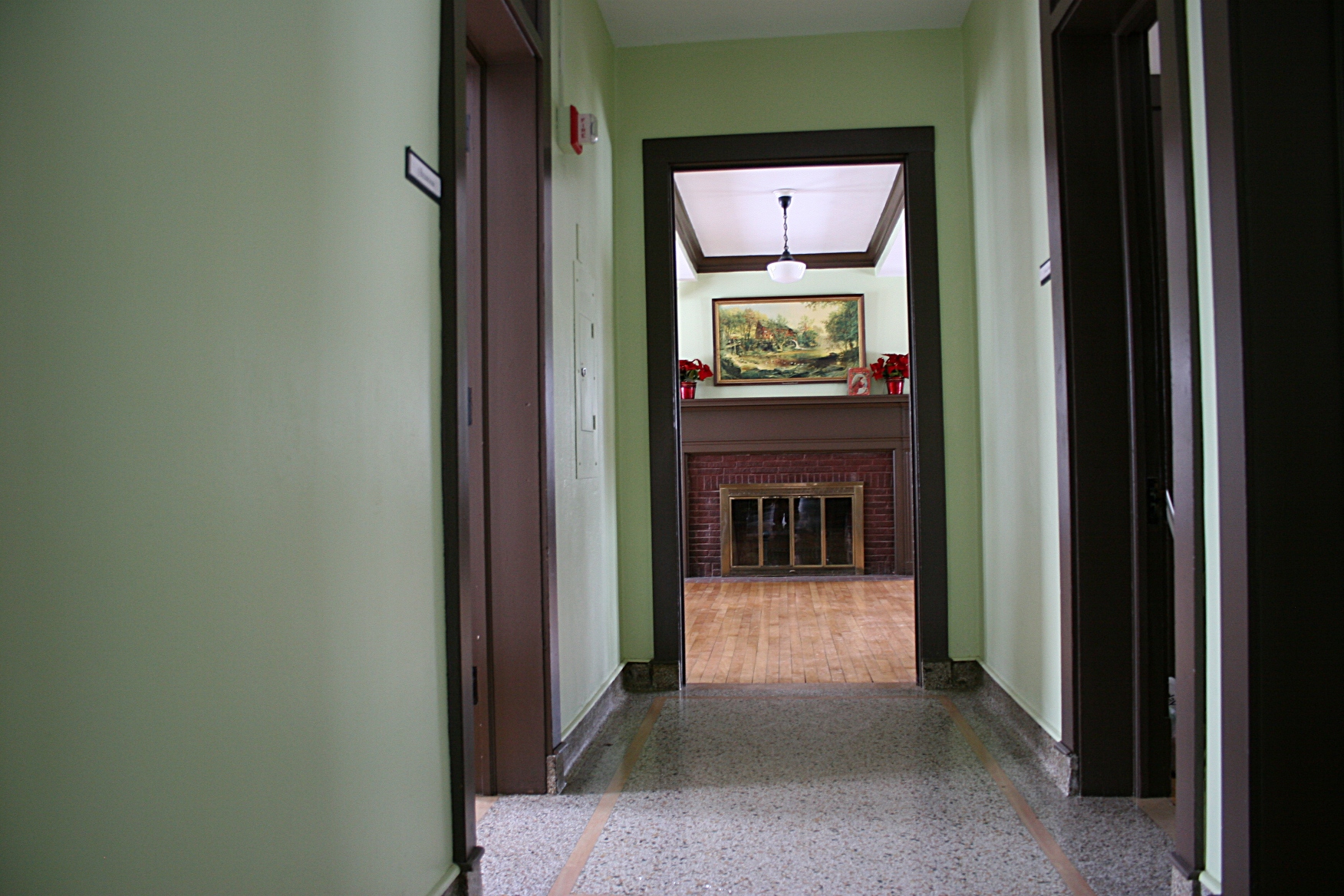
A view from the hallway looking toward the living room fireplace. Each week the boys polished the floor and furniture in this forbidden space. They also scrubbed floors throughout the cottage.

The posted words of the orphan boys reveal the truth:

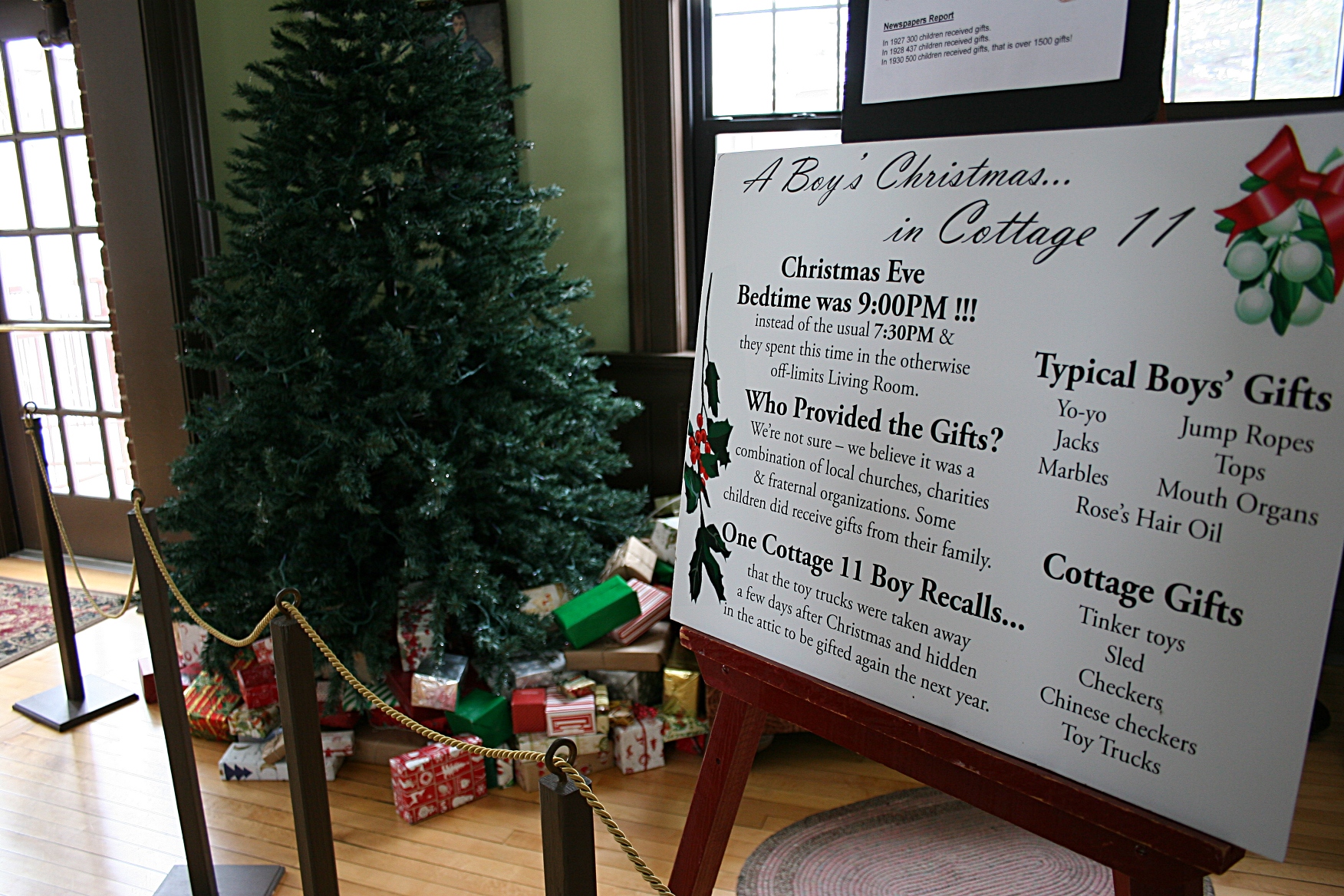
…the toy trucks were taken away a few days after Christmas and hidden in the attic to be gifted again the next year.—Cottage 11 Boy

The truth revealed about Christmas from the memories of the Cottage 11 boys.

And the lovely living room? Apparently just for show, too, except on special occasions like Christmas Eve when the boys gathered here around the tree and were allowed to stay up past their usual 7:30 p.m. bedtime until 9 p.m.

Christmas brought but a moment of happiness to these children who otherwise lived under rigid rules and the domination of mostly uncaring matrons. (Arguably, some of these children may have lived equally difficult, or worse, lives had they remained in their previous circumstances/environments.)

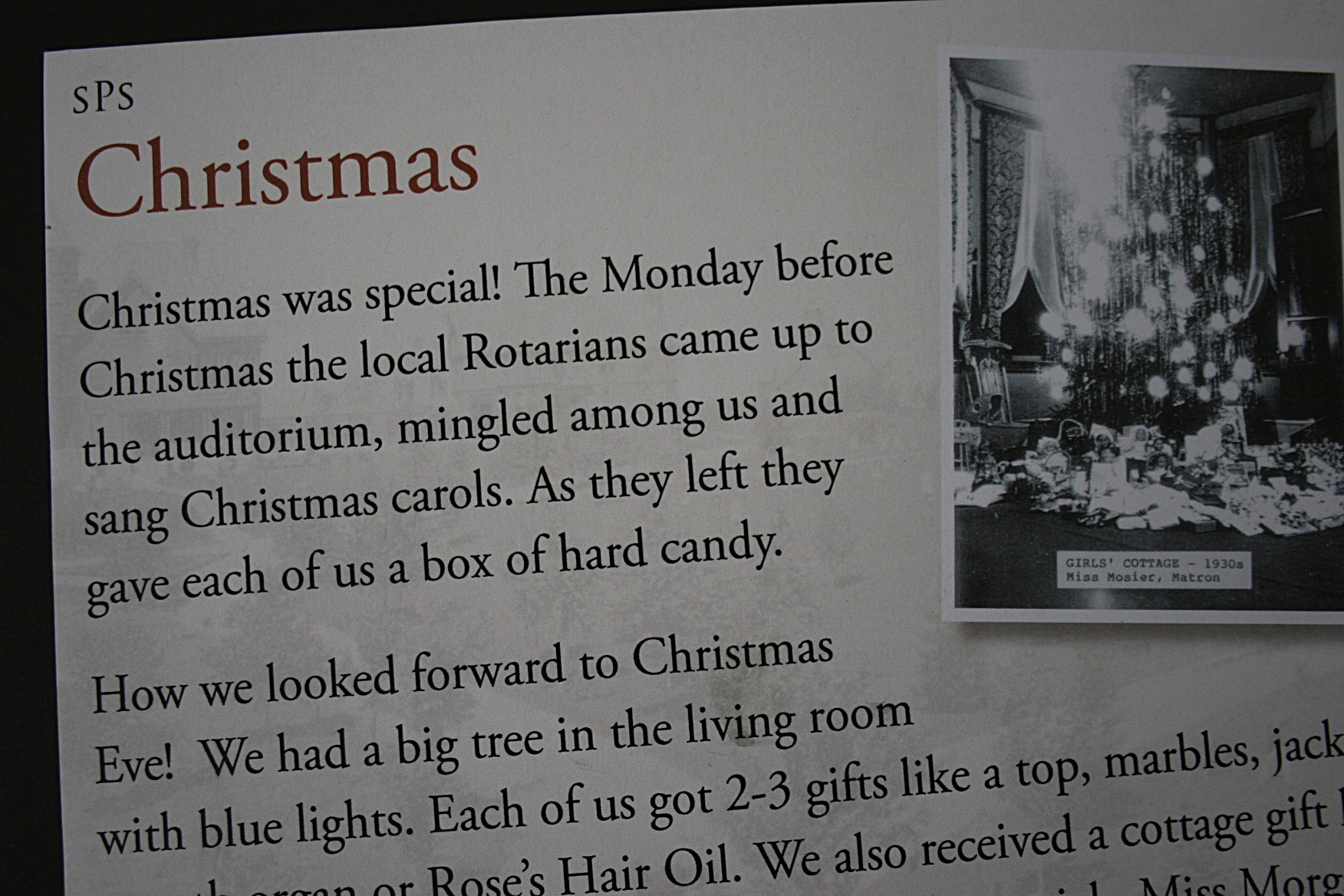
Some happy Christmas memories from the boys.

Christmas brought the local Rotarians into the school auditorium to sing carols and pass out boxes of hard candy. Christmas brought several gifts—perhaps Tinker Toys, or marbles or puzzles—for each child.

The stairway between the first and second floors and a shot of the cottage's front door at the bottom of the frame. The boys were never allowed to use the front door. They entered and exited through the basement.

I cannot even begin to fathom living here under unforgiving discipline, sleeping in stark bedrooms crammed with kids, missing out on the love of family.

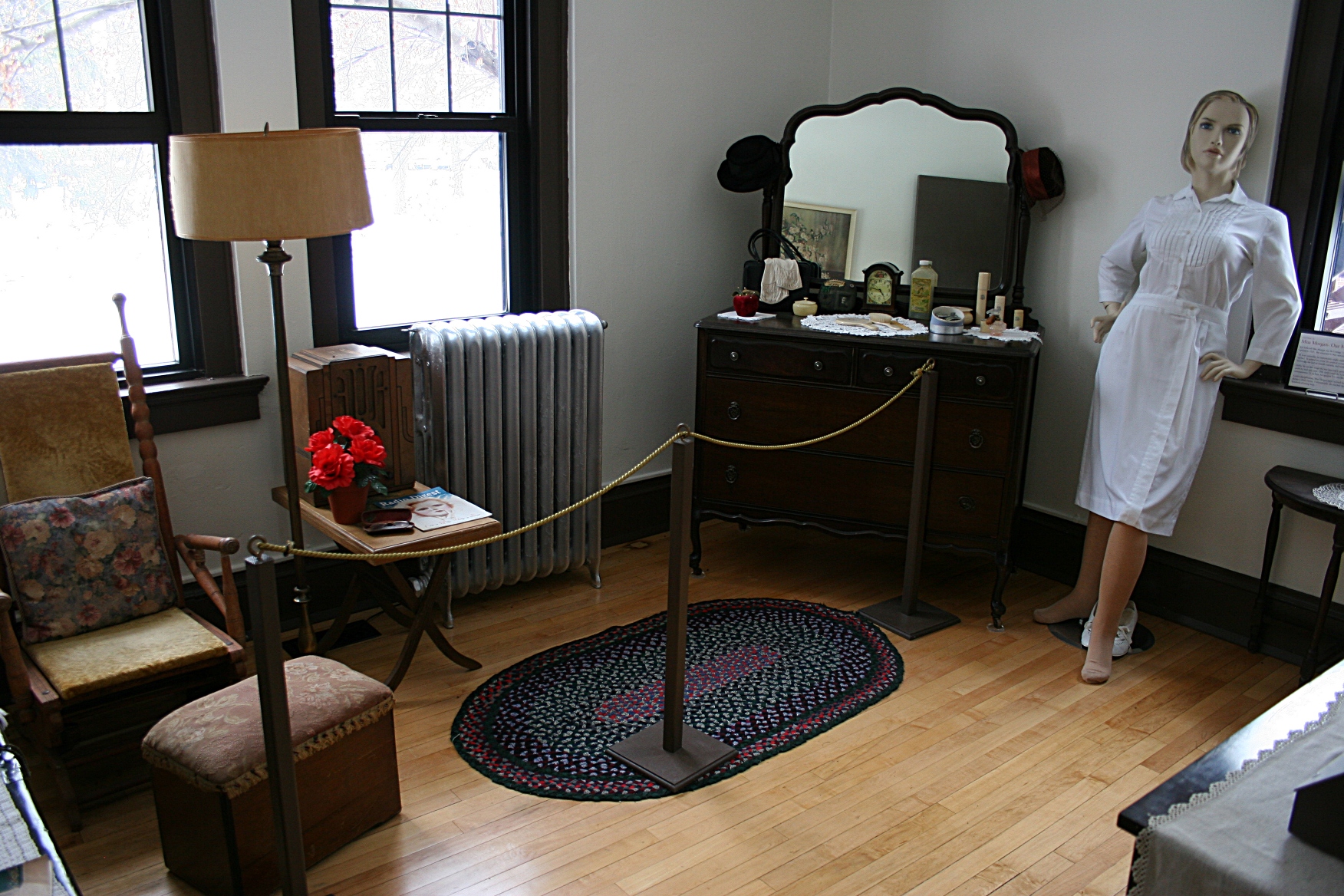
Unlike the mother image she was expected to portray, Miss Morgan (the matron) could be hard and cruel. Only rarely could she be kind and compassionate.

As I meander through the rooms peering at the black-and-white photos of mostly unsmiling boys and reading about their fears of scoldings and spankings and of scrubbing floors on their hands and knees and being confined primarily to the basement, my heart hurts. Truly.

You can see it in the boys' faces, the desperate need to be loved.

On signage titled “The Basement,” I read of  the prevailing authoritarian attitude:

Permission was always required to leave the basement.

Each boy was assigned a chair in the basement. "The chair kept order and accountability" to the matron.

Listening to a recording of a man who as a boy had his head slammed into a wall for prematurely removing a tie and cuffing a matron, I can still hear the hurt in his voice.

I can almost feel the pain experienced by cottage resident Arlend “Buzz” Wilson who slipped and scalded himself with hot water while scrubbing the basement steps. He ended up hospitalized for his burns.

In the first floor matron's quarters, a young boy was placed in the rocking chair to the left and his head slammed into the wall for disobedience. He removed his tie too soon and cuffed the matron.

But for all the awful stories shared here, occasionally glimmers of hope slip through—of boys who admired hobos and hopped the nearby train to escape and of “Wednesday Night at the Movies,” when movies were shown in the school auditorium. Those “brought great joy to us children.”

And then, the single gem I found among all the stones:

FYI: Cottage 11 is open from1 p.m. – 3 p.m. Tuesday – Sunday. However, I advise calling in advance (507-774-7369) as it was not open when we arrived on a Sunday afternoon. Hours at the main museum, 540 West Hills Circle, Owatonna, are from 8 a.m. – 5 p.m. Monday – Friday and from 1 p.m. – 5 p.m. on weekends. I have previously toured the museum, but did not do so again on this most recent visit.

PLEASE CHECK BACK for additional photos of Cottage 11.

© Copyright 2011 Audrey Kletscher Helbling


Beyond just a holiday art exhibit at the former Owatonna orphanage December 15, 2011

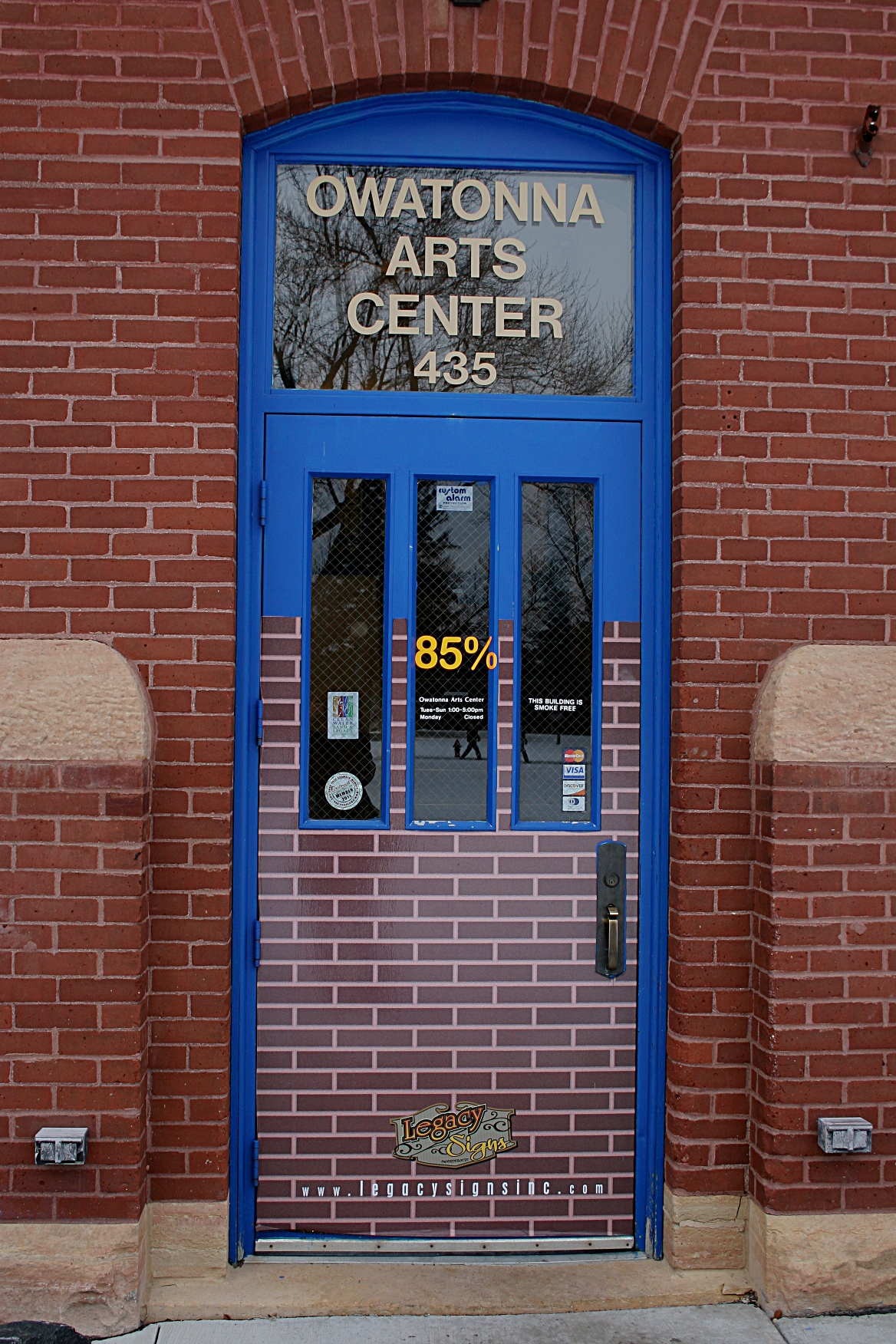
A door into the Owatonna Arts Center in southern Minnesota.

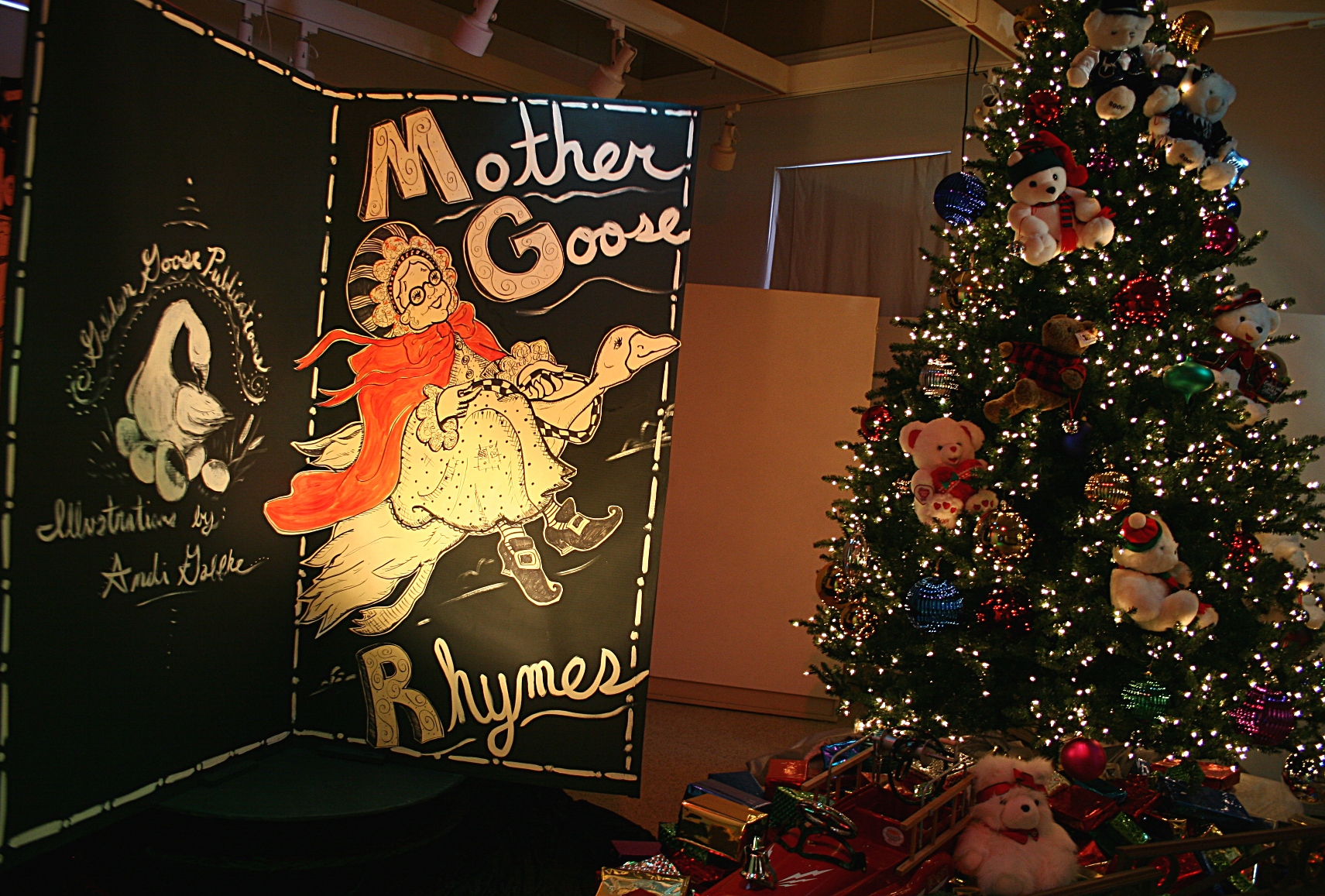
BEHIND THE BACK BLUE DOOR of the Owatonna Arts Center, housed in a former orphanage, past the guardian nutcracker, up the stairs and just to your left, you’ll discover a sprinkling of holiday magic and realism in “The Story Books of Christmas” exhibit.

As OAC Art Director Silvan Durben tells me, the exhibit doesn’t specifically emphasize Christmas books—although two are holiday-themed—but rather impresses the sharing of a storybook with a child and the warm memories that evokes.

You’ll experience that bonding over books in a rotating display of Mother Goose tales crafted onto cardboard and placed next to a Christmas tree embraced by teddy bears tucked among branches.

Who among us doesn’t remember with fondness the recitation of nursery rhymes?

Jack be nimble, Jack be quick, Jack jump over the candlestick.

Hickory, dickory, dock, the mouse ran up the clock. The clock struck one. The mouse ran down. Hickory, dickory, dock.

Or the story of the “Old Man in the Moon?”

It was not lost on me, though, that the orphaned children who once tread these floors did not experience the closeness of clutching a teddy bear or cuddling on a lap while listening to nursery rhymes as they drifted into sleep.

A rotating exhibit of several Mother Goose nursery rhymes.

A close-up of art in the Hickory, dickory, dock rhyme.

Many dreamed of escaping—and some did via rail—the drudgery and abuse at the former Minnesota State Public School for Dependent and Neglected Children.

That reality struck me as I viewed an over-sized silver jingle bell and the word “BELIEVE” punched into an equally-large golden ticket at The Polar Express display. In that children’s picture book by Chris Van Allsburg, a young boy boards a train to the North Pole as the story unfolds to reveal the magic of Christmas.

The large, magical silver bell in The Polar Express display.

Although I did not ask, I wonder if the creators of “The Story Books of Christmas” considered the double-meaning of selecting The Polar Express to highlight in this place where so many children wished for a ticket out.

I found the selection fitting, touching and sad. And a wee bit hopeful.

FYI: “The Story Books of Christmas” exhibit runs through December 29 at the OAC, 435 Garden View Lane. OAC hours are from1 p.m. – 5 p.m. Tuesday – Sunday, closed Mondays. The OAC will also be closed December 23 – 26.

The display highlighting the book, Nestor, the Long-Eared Christmas Donkey.

CHECK BACK for another blog post from the art center and for a photographic tour of Cottage 11, once home to orphaned boys.

© Copyright 2011 Audrey Kletscher Helbling
 

Diamonds & Guns October 21, 2011

SO, I’M GOING to assume you’ve heard of the hard rock band Guns N’ Roses, right?

How about Diamonds & Guns?

I thought so.

I ran across the combo yesterday while browsing the local newspaper, The Faribault Daily News. We’re talking rock here, just not music.

For four days this week, through Saturday, if you spend $1,500 or more at Paffrath Jewelers in Owatonna, you’ll get a Weatherby Upland 12 gauge pump shotgun.

Dole out $3,000 or more on a purchase and you get a Browning full Camo 12 gauge shotgun.

“When you get that special gift for the woman in your life you should get something too!” the ad for Paffrath Jewelers reads. It’s aimed at guys looking to buy a diamond engagement ring.

Apparently the future hunter husband types appreciate this incentive as the ad states the sale is “back by popular demand.”

If this sales approach works for Paffrath, and apparently it does, good for this family-owned business with three stores in Minnesota. The other two are in Willmar and Alexandria. I’m uncertain whether this promotion applies to all three stores or just the one in Owatonna, which, by the way, has a Cabela’s store, every outdoorsman’s shopping paradise.

“You better hurry,” the ad urges.

Guys, just a little word of advice here: If you buy a diamond engagement ring at Paffrath during this Diamonds & Guns sale, you might want to keep that gun incentive part to yourself.


A firefighter’s praise for “Ted from Owatonna” September 16, 2011

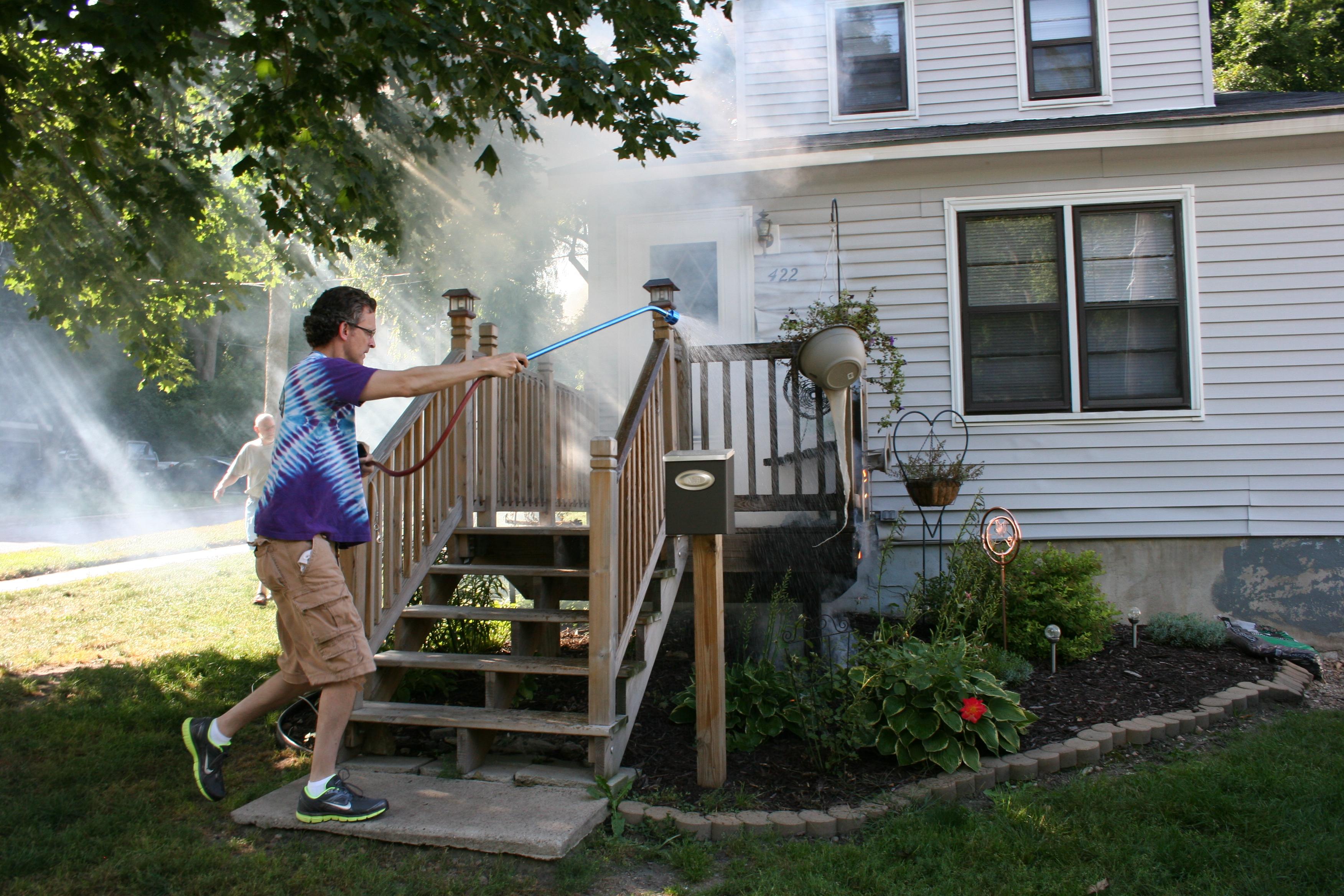
Ted Leon, initially known only as "Ted from Owatonna," extinguishes the fire on and under my neighbor's deck with water from a garden hose late Saturday afternoon. Ted was the first on the scene.

FIVE DAYS AFTER Ted Leon of Owatonna, the passerby who extinguished a deck fire at my neighbor’s house with water from a garden hose, I spoke to a Faribault firefighter who responded to the scene. As you recall, my initial post about Ted sparked a whirlwind of media coverage to find “Ted from Owatonna.”

I wanted to hear what professional Joel Hansen, whom I’ve personally known for years, thought of Ted’s actions. I was finally able to connect with Joel late Thursday morning; he had been off-duty for several days.

“What he did was very heroic, very courageous,” Joel says.

Ted ran onto the burning deck and banged on the front door to alert the Klocek family of the late Saturday afternoon fire before putting out the blaze himself. Kristin Klocek and her young daughter escaped through a side door into the garage.

“He went way and above what a normal person would do. I’m encouraged to see someone who got that involved,” Joel says, emphasizing that dialing 911 to get the fire department en route should be the first course of action in any fire. Ted’s wife, Kathe, made that call.

Joel praises Ted for stopping, getting that emergency call in via Kathe, focusing first on the safety of the residents, and then having the presence of mind to look for a garden hose to put out the fire.

“Life safety is first,” Joel says. “We want people to be safe.”

Ted, he says, seemed to be aware of his safety, to know what he was doing and to understand that he had options—like leaping over the deck railing—had that become necessary to escape the flames.

“I wouldn’t encourage someone to put themselves in harm’s way,” Joel says, “but I wouldn’t say I wouldn’t have done the same thing (as a passerby like Ted).”

In this photo you can see the scorched deck and how the heat of the fire melted the vinyl siding.

If Ted hadn’t extinguished the fire when he did, there would have been “substantially more damage” to the deck and home exterior before firefighters arrived, Joel says. The Kloceks live about six blocks from the fire station, mere minutes away. Damage to the home was limited to a partially-burned deck and wood chips underneath and to the front door and siding, which were warped due to the intense heat.

Statistics show that a fire doubles in size every three minutes, according to Joel.

BESIDES TED’S HEROISM, Joel and I talked in general about how people react to a fire. Some panic. Others call 911 and then leave. Some have no concern for personal safety… Then he mentioned “tunnel vision.”

I told Joel I was so focused on making sure my neighbors were safe and Ted was so focused on getting the blaze out (after he knew the family was aware of the fire) that we didn’t communicate. Joel wasn’t surprised.

Then he asked if I looked for traffic before crossing Tower Place as I ran toward my neighbor’s home during the fire. I did. I distinctly remember telling myself to stop and look for cars.

But I don’t recall hearing emergency sirens, although I watched two police cars and a fire truck race down Willow Street toward the scene. My husband assures me the sirens were blaring.

In contrast, I remember sidestepping a pile of dog poop in the Kloceks’ yard and reminding myself to avoid that patch of grass. I was barefoot.

I recall seeing a woman on her cell phone in the Kloceks’ side yard. I also recall a young man in the front yard, someone my husband later noted as a motorist who had pulled over in his truck and parked along Tower Place.

FOR NIGHTS AFTER THE FIRE, I didn’t sleep well. The first night I was twice awakened by emergency sirens. We live along an ambulance route, an arterial street through town, and I’ve become so accustomed to sirens that I often sleep right through them. But not Saturday night.

At 5:30 a.m . Sunday I awoke to the smell of smoke and flew out of bed to check if the fire at my neighbor’s house had rekindled. It hadn’t. Later I realized the smoke odor likely came from a smoldering campfire.

For days afterward I felt emotionally-drained. Talking with Joel on Thursday proved cathartic. He understood how my emotional involvement—knowing the family—affected my reactions at the fire. He understood my lingering thoughts and emotions even days afterward.

I shared with him that I have a new appreciation for how rapidly a fire can spread.

He’s heard it all—how people think a fire can never happen to them, how they intended to replace the batteries in a smoke detector…

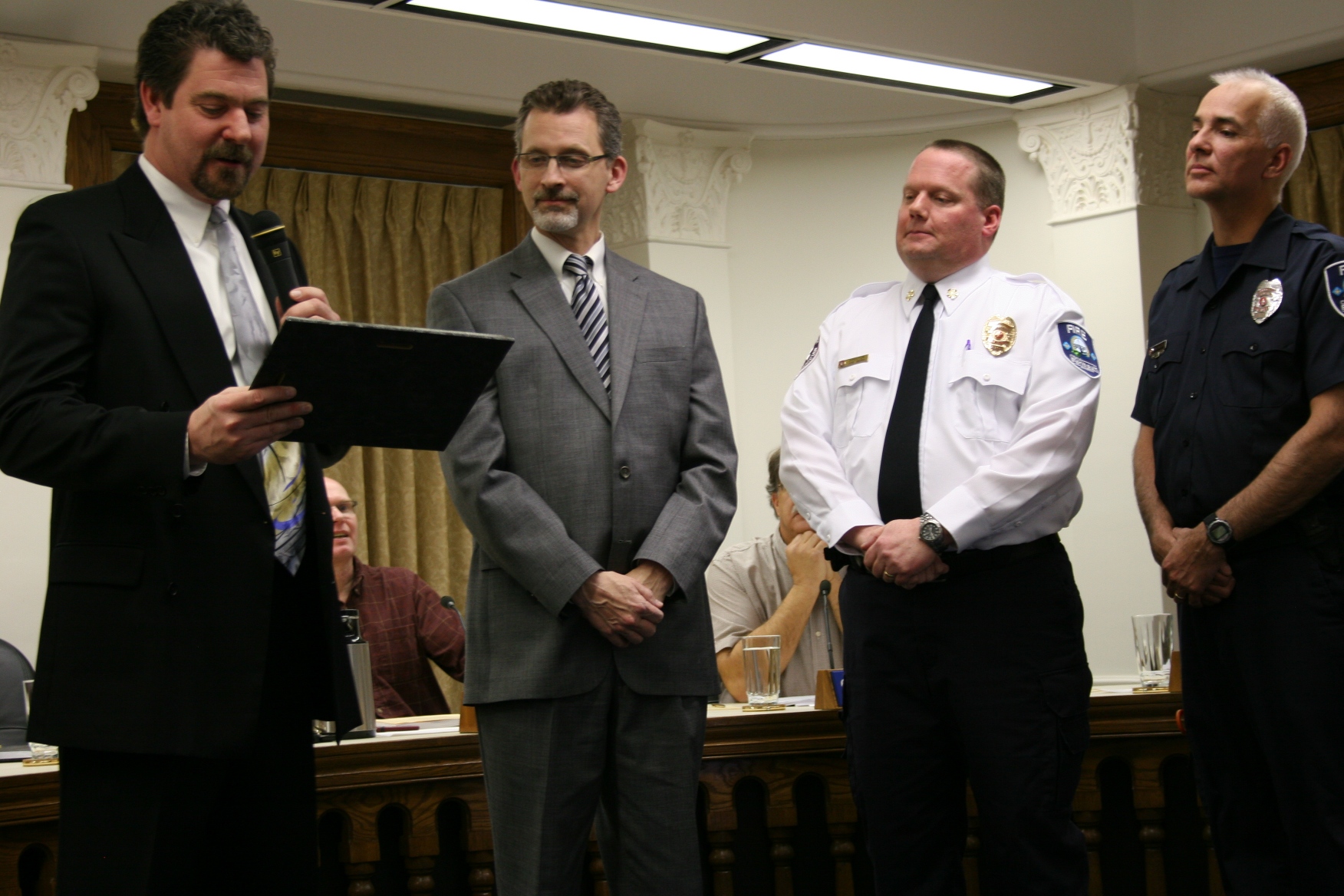
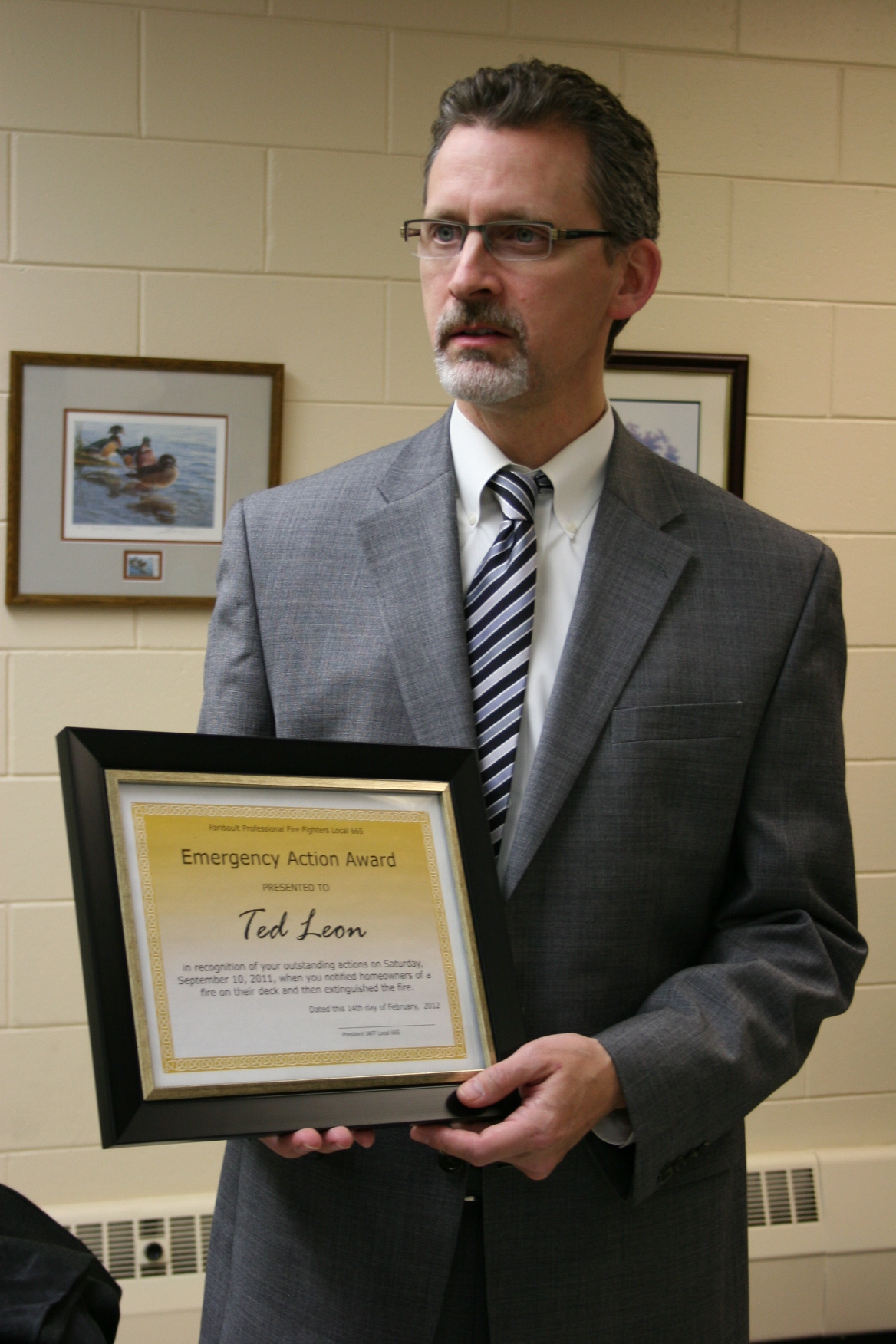
Before Joel and I ended our conversation, I asked him about an award for Ted. He can’t speak publicly about that possibility, he says, because such an honor would be routed through the local union (not the fire department) and that involves a specific process.

But you can read between the lines here. I fully expect Ted to be honored. And you can bet I’ll be there thanking him. Again.

CLICK HERE to read a story on today’s The Northfield News website about a fire just outside Dundas that sounds all too-recently familiar. The Thursday morning fire also involved a passerby, a garden hose and a cigarette.

CLICK HERE to read my first fire post.

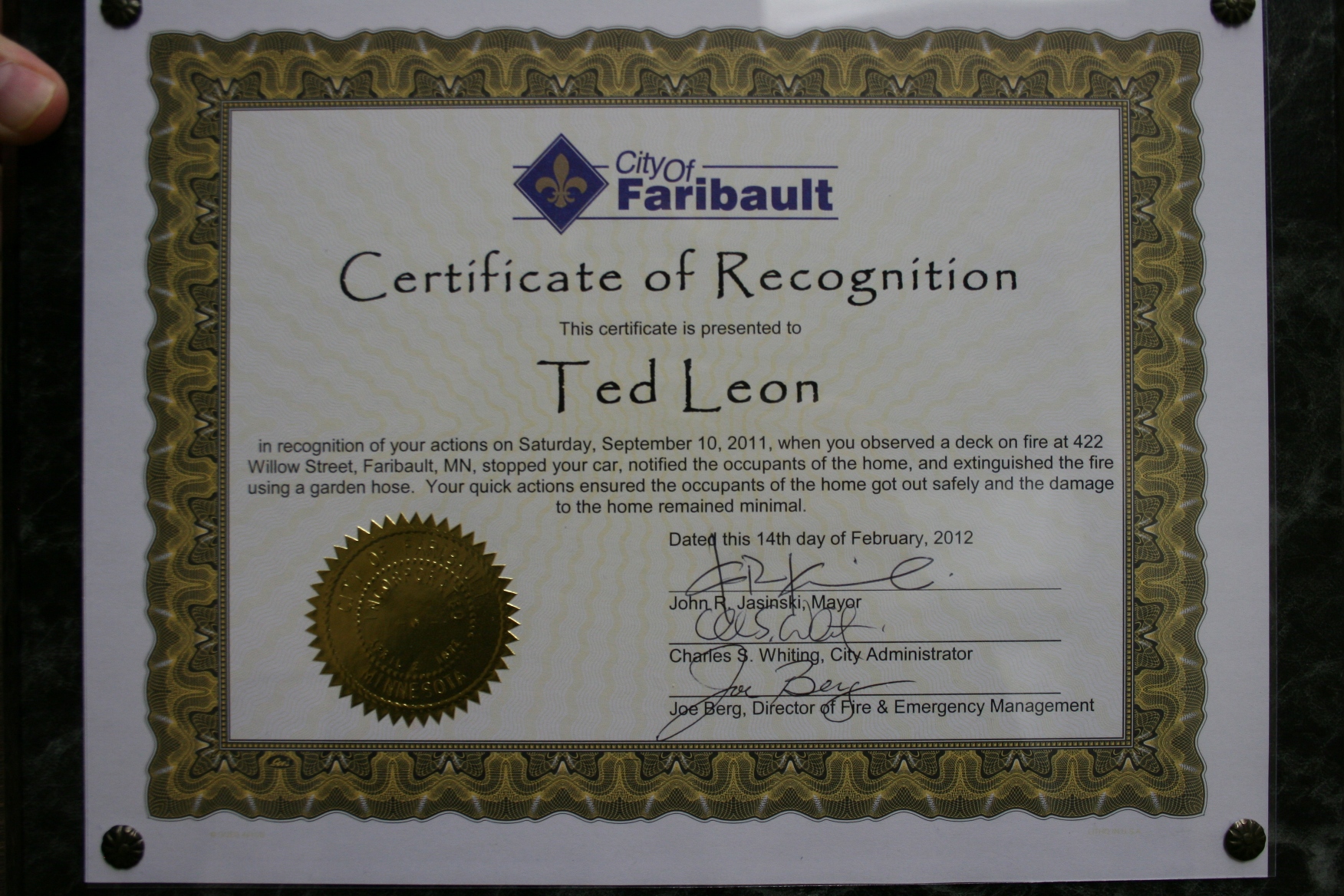
CLICK HERE to read my interview with Ted Leon, whom I’ve termed our “Willow Street neighborhood hero.”

© Copyright 2011 Audrey Kletscher Helbling
 

Found: Citizen firefighter Ted Leon from Owatonna September 13, 2011

Filed under: Uncategorized — Audrey Kletscher Helbling @ 4:07 AM
Tags: , , , , , , , , , ,

READERS, WE’VE FOUND “Ted from Owatonna,” the passerby who Saturday afternoon stopped to extinguish a quickly-spreading fire on my neighbor’s deck.

Thanks to the quick action of Ted Leon, 47, an attorney at Federated Insurance in Owatonna, Kristin and Kevin Klocek’s Faribault house was saved from what both Ted and I believe could have been a devastating fire. (Click here to read my first blog post about the fire.)

Up until late Monday afternoon, I did not know Ted’s last name because he identified himself only as “Ted from Owatonna” when he left the scene, telling me he had to get going. He told me that much only because I asked. He was the first to arrive at the fire, to grab a garden hose.

But before I get into details about Ted’s firefighting, let me first tell you how we found Ted. And I say “we” because this was a joint effort that initially involved my blogging about the fire, followed up by Minnesota Public Radio’s Bob Collins linking to my story in his News Cut column, Faribault Daily News Managing Editor Jaci Smith learning of my post via Collins’ post and then the Faribault newspaper and its sister paper, The Owatonna People’s Press, publishing a “Do you know this man?” community alert on their websites that included a photo I shot once the fire was under control.

This photo was posted on the newspaper websites in an effort to locate "Ted from Owatonna."

A friend of Ted’s saw the online photo and contacted the Owatonna paper with Ted’s name and number. This I learned from Jaci Smith, who had called me earlier Monday for permission to use my photos and to ask me about the whole event.

Early Monday evening Ted called me, before I had an opportunity to phone him.

So, how then did Ted end up on Willow Street in Faribault at the precise moment the smoldering fire flared up on Kevin and Kristin’s deck?

He, his wife Kathe and their three youngest sons were on their way from The Defeat of Jesse James Days re-enactment in Northfield to 4 p.m. Mass at Divine Mercy Catholic Church. They are not members of the Faribault parish—they attend Sacred Heart in Owatonna—but because Kathe was participating in a St. Paul bike ride Sunday morning, they opted to attend the Saturday afternoon service in Faribault en route home. Their Owatonna church does not have a Saturday Mass.

Kathe told her husband she knew how to get to Divine Mercy and, says Ted, “That put us right in the path of the fire.”

It was nearing 4 p.m. when the Leons were driving in the 400 block of Willow Street. “I looked to the right and saw the fire pretty much engulfing the front deck,” Ted recalls.

As his mind computed the situation, he didn’t quite believe what he was seeing until he realized, “Oh, my goodness, that thing is on fire.” He pulled over, asked Kathe to call 911. Concerned that a grill and propane tank might be involved (they weren’t), Ted told his family to remain inside their van while he raced toward the fire.

He remembers only, in those initial moments, being “really focused in” on the fire and worried that people were inside the house. Ted had reason for concern. Kristin and her daughter Kaylee were inside, unaware of the blaze. As Ted ran up the steps and onto the deck toward the front door, he felt the intense heat of the actively-spreading fire.

He pounded on the screen door, peered through the screen and saw a little girl with her back to him. He ripped the screen and pounded again on the interior door and hollered “Fire, get out!” (or something like that; he doesn’t recall his exact words) until she noticed him.

In this photo you can see how the heat of the fire melted the vinyl siding.

“Once I knew they were aware of the fire, I ran around the house looking for a hose,” Ted continues.

He found two hoses connected to a single water spigot and grabbed one. As he pulled the hose toward the burning deck and the burning wood chips below the deck, the hose jerked from his hand. It was too short. He ran back to the spigot, flipped a lever that sent water to the second hose and “said a prayer it would be long enough.”

It was. The fire responded quickly to the water.

Days after the fire, Ted seems humbly surprised at the media attention. “I didn’t feel like it was a big deal,” he says of his actions.

Anyone would have done what he did, Ted claims. “It was my turn (to help someone).”

I agree with Ted, to a point. I’m not sure I could have gone onto that deck with the actively spreading fire. I saw those intense flames when I arrived just as Ted was grabbing that second hose.

“It’s nice to be able to put your faith into practice and help someone,” this Good Samaritan says.

Later, while worshipping at Divine Mercy, he offered prayers of thanksgiving. His clothes reeked of smoke, he says, and his legs felt sunburned from the intense heat of the fire.

Ted doesn’t remember me several times screaming, “Kristin and Kevin, get out!” He was, as he says, totally focused on extinguishing the fire and making sure everyone was out of the house.

I remain convinced, and so does Ted, that the entire house soon would have been engulfed in flames had he not spotted the deck fire and taken immediate action.

While on the scene of the fire, I spoke with Faribault firefighter Joel Hansen, who was very much interested in finding “Ted from Owatonna” and possibly presenting him with an award for his actions.

I told Ted Monday evening that I would see him at the awards ceremony.

FYI, A LITTLE BACKGROUND if you have not yet read my first post: I was working in my home office Saturday afternoon when my 17-year-old son, who was sitting on the couch working on his laptop, heard a car horn, looked up and saw the fire directly across the street. “The neighbor’s house is on fire!” he shouted.

I grabbed my camera, which was right next to my desk and raced out the front door, not even stopping to slip on shoes. Because of my background as a former newspaper reporter and now a current freelance writer, it was simply a natural instinct for me to grab my camera.

My first concern was for the safety of my neighbors, not photographing the fire. By the time I got to the front yard, Ted was pulling the second hose toward the fire. At that point flames were shooting up from the wood chips and from the deck.

Because there was nothing I could do at this point to help Ted fight the fire, I remained focused on my neighbors getting out. I was unaware that Ted had already pounded on the door and that the family knew about the fire.

When Kristin and Kaylee rounded the corner of the house after exiting via a door into the garage, I comforted them and made sure they were OK. By then the fire was under control and nearly out. Only then did I begin photographing the scene. At one point I also spoke on the phone with Kristin’s husband. She had called him earlier, but I wanted to assure him that his family was alright and update him on the situation.

A smoldering cigarette butt under the deck has been indicated by fire officials as the likely, as-yet unofficial, cause of the fire.

FOR THE LOCAL news story by Jaci Smith, click here to an article in The Faribault Daily News.


TO READ BOB COLLINS News Cut column, click here and check his Monday morning 5×8 entry.

© Copyright 2011 Audrey Kletscher Helbling
 

The $50K decision and what we can all learn September 1, 2011

Filed under: Uncategorized — Audrey Kletscher Helbling @ 8:15 AM
Tags: , , , , , , , , , ,

ODDS ON PROMOTIONS made the right call Wednesday when it failed to award $50,000 to an 11-year-old Owatonna boy who sunk a hockey puck into a 1.5 by 3.5-inch hole during an August 11 charity hockey event in Faribault.
Nate Smith, who made the shot from 89 feet, wasn’t even supposed to be on the ice. It was his twin brother Nick’s name that was drawn to attempt the shot. But Nick had stepped outside the hockey arena, so Nate subbed for Nick.

Not until the next day did the Smith family reveal to officials that Nate, not Nick, sunk the puck.

That ignited a firestorm of controversy with the story going national. Should the Smiths get the $50,000?
The Reno, Nevada, group insuring the event ruled yesterday that because of legal and contractual issues, the Smiths will not get the $50,000.

That was the right decision, in my opinion, given Nate obviously is not Nick and, although the family told officials the truth the following day, they did not do so initially.

Yet, despite the decision, there are still winners in this story. Odds On Promotions is donating $20,000 in the brothers’ names to youth hockey programs in Owatonna—where the Smith boys play hockey—and in Faribault.

That’s a smart move on Odds On Promotions part. You can’t buy that kind of positive publicity for $20,000. Plus, the substantial gift will calm the ire of those who may disagree with the company’s decision.

The Smiths aren’t complete losers here either. Friday morning they’ll appear on “The Today Show,” according to an article in The Faribault Daily News. Shortly after Nate made the shot and the controversy started, the family was in New York making the talk show rounds.

In summary, we could all learn a lesson from this story about rules, honesty and compromise.

WHAT’S YOUR OPINION on the decision made by Odds On Promotions not to award the Smith family $50,000? Do you agree or disagree? Why or why not?


Vote to rebuild parks in four flooded Minnesota communities June 9, 2011

An aerial view of Hammond during the flash flood of September 2010. Photo courtesy of Michael Mann & Tina Marlowe.

FOR SOME TIME NOW, I’ve been committed to helping the folks of Hammond in southeastern Minnesota recover from a devastating September 2010 flood.

I’ve assisted in the best way I can—not physically—but with words and photos on this blog. We all possess talents and mine are not hanging sheetrock or swinging a hammer. I write. There is power in words.

Last October I brought you a series of stories and photos from Hammond and neighboring Zumbro Falls, where I interviewed several individuals and shot many photos showing the damage caused by the flooded Zumbro River. The women I spoke to shared heartbreaking stories. Yet, they remained strong. That impressed me.

I spoke to Tracy Yennie in Zumbro Falls several weeks after the flood damaged her home.

A gutted, flood-ravaged home in Zumbro Falls.

The exposed side of the restaurant/grocery, where a portion of a building once stood in Hammond. The building lies in a heap in the street.

I saw gutted homes and businesses, a child’s toy lying in a pile of discarded appliances. Truly, I could not fathom the personal loss of possessions and home.

In March I published a series of stories about Tina Marlowe and her family, who lost so much to the floodwaters in Hammond. Hers was one story of many that you will never hear. Some residents have decided not to return. Others await possible buy-outs or funding to repair their homes.

But beyond the individual losses, these towns have suffered as communities. They’ve lost gathering spots and places for their children to play. Parks need rebuilding. To do this, these communities need money.

Marlowe, who was recently elected to the Hammond City Council, has started the Hammond Park Flood Recovery Project and is accepting donations of monies, materials and labor to rebuild the recreational areas in her river hamlet.

Send donations to: City of Hammond Park Flood Recovery Project, 320 East Center Street, Hammond, MN. 55991. Click here to learn more about this effort.


Hammond's riverside park was all but destroyed by the flood. Marks on the shelter roof show how high the water rose. A baseball field next to the shelter, with a fence around it, is covered by receding floodwaters. Jenny Hoffman took this photo on September 25, 2010.

The bridge connecting east and west Hammond during the flood, which also overtook the town's park. Photo courtesy of Micheal Mann & Tina Marlowe.

AND NOW A 16-YEAR-OLD Zumbrota-Mazeppa High School student, Amy Schultz, has stepped up, leading the push to secure a $50,000 Pepsi Refresh Project grant that will repair flood-damaged parks in Zumbro Falls, Hammond, Pine Island and Owatonna.

Schultz tried for a grant earlier this year, focusing solely on Zumbro Falls and Hammond. Now she’s expanded her area, hoping that the inclusion of Pine Island and Owatonna will mean more votes. The top 10 projects, those with the most votes, get the $50,000.

Simple? Yes. Just vote by:

Voting continues through June. When I checked the ranking for this project on Wednesday morning, Schultz’s idea stood at number 27. Let’s blast that number into the top 10.

This high schooler is determined. Just read this information I found online, in news releases she sent to cities, Chambers of Commerce and elsewhere: “The local parks are part of the fabric that joins these picturesque river towns together. It is where families and friends come to play and visitors come to sit by the riverside all summer long. So many memories have been made here over the years and we need to restore them for current and future generations.”

Convincing words from a young woman who wants to make a difference in four Minnesota communities still recovering from the September 2010 flash floods.

Vote today and every day until the end of June for the “Rebuild Parks in Owatonna, Zumbro Falls, Pine Island and Hammond MN” project.

© Copyright 2011 Audrey Kletscher Helbling