Minnesota Prairie Roots

Writing and photography by Audrey Kletscher Helbling

Appreciating the Sunday afternoon drive June 29, 2013

Filed under: Uncategorized — Audrey Kletscher Helbling @ 6:30 AM
Tags: , , , , , , , ,
Checking out the crops near Moland Lutheran Church in Steele County, Minnesota.

Checking out the crops near Moland Lutheran Church in Steele County, Minnesota.

ONCE UPON A TIME, I thought Sunday afternoon drives were reserved for farmers checking out the crops or for old people with nothing more important to do.

In Merton Township, Steele County, Minnesota.

In Merton Township, Steele County, Minnesota.

No longer do I think that. I now welcome these day trips into the country for the solace, the beauty, the discovery, the photo ops, the joy of whiling away an afternoon with no specific destination.

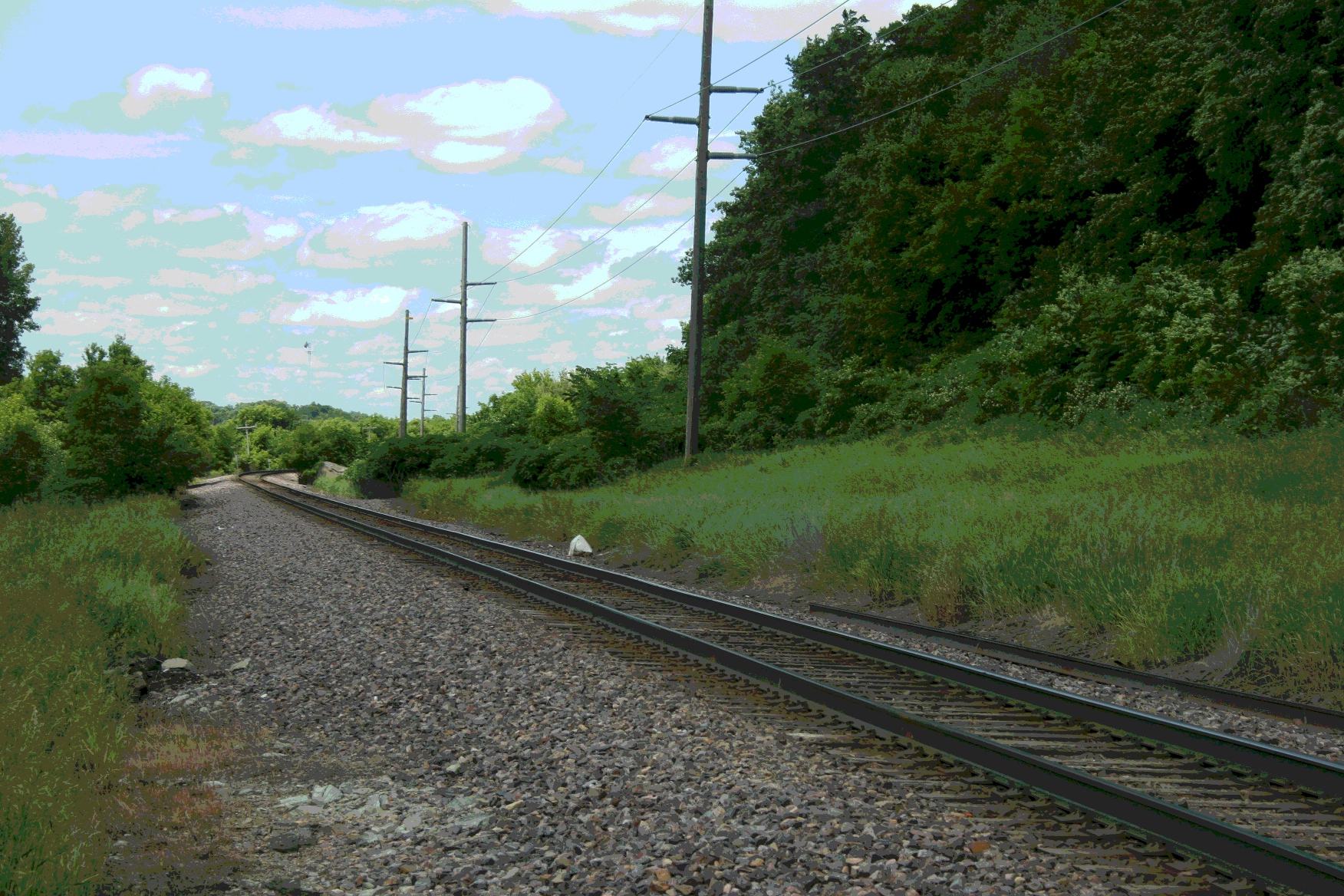
Along Rice County Road 21 south of Faribault.

Along Rice County Road 21 south of Faribault.

I love wide skies and open fields. I love old barns and gravel roads and cows grazing and tidy rows of corn. I love country.

Making hay, along old U.S. Highway 14 west of Owatonna.

Making hay, along old U.S. Highway 14 west of Owatonna.

In this crazy fast-paced world of scheduled activities and rare free time, such impromptu rural jaunts are to be embraced.

Near Clinton Falls in Steele County, Minnesota.

Near Clinton Falls in Steele County, Minnesota.

If you have not discovered the Sunday afternoon drive, you are missing out on one of life’s simplest and most soul satisfying pleasures.

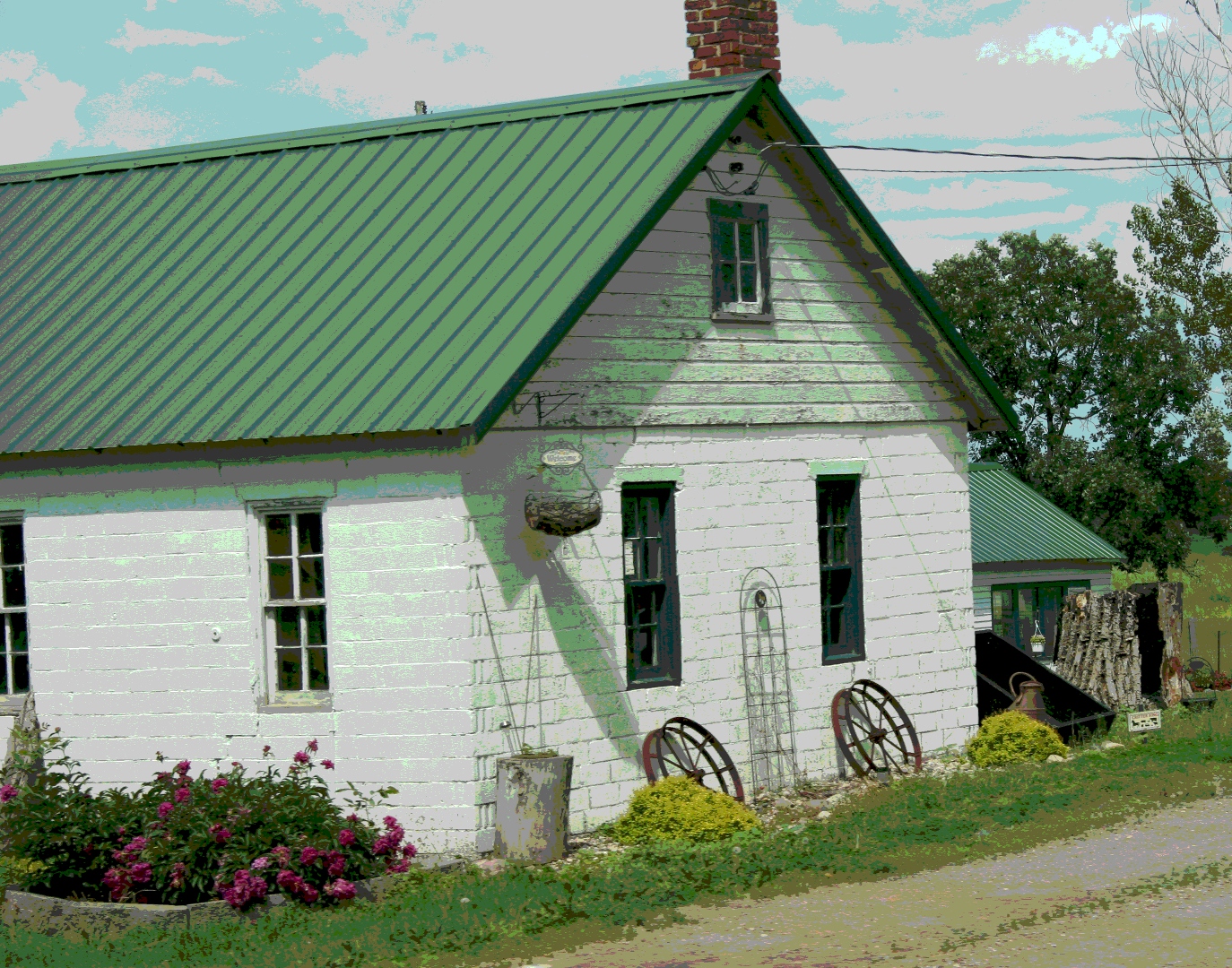
Northwest of Owatonna along Steele County Road 17.

Northwest of Owatonna along Steele County Road 17.

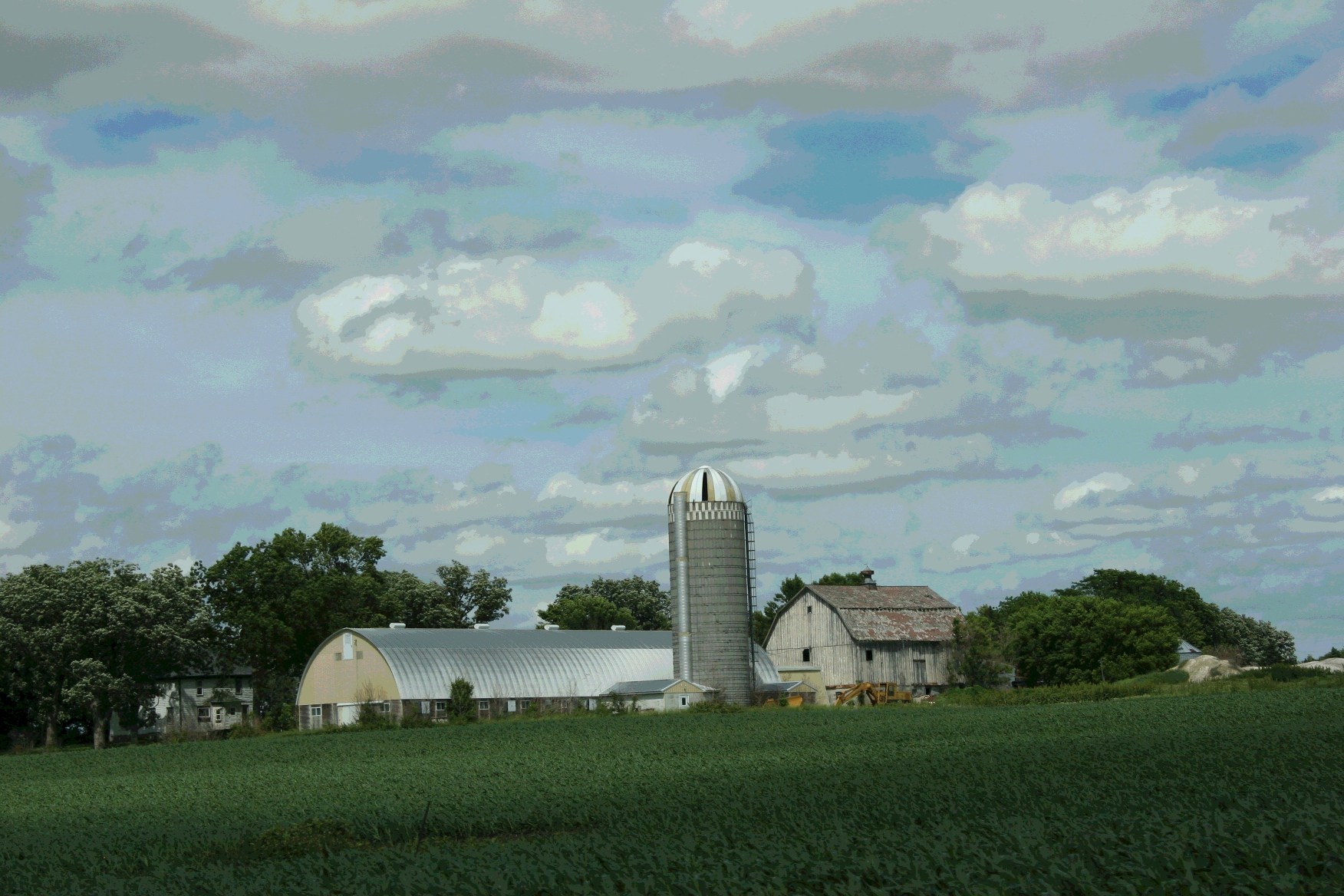
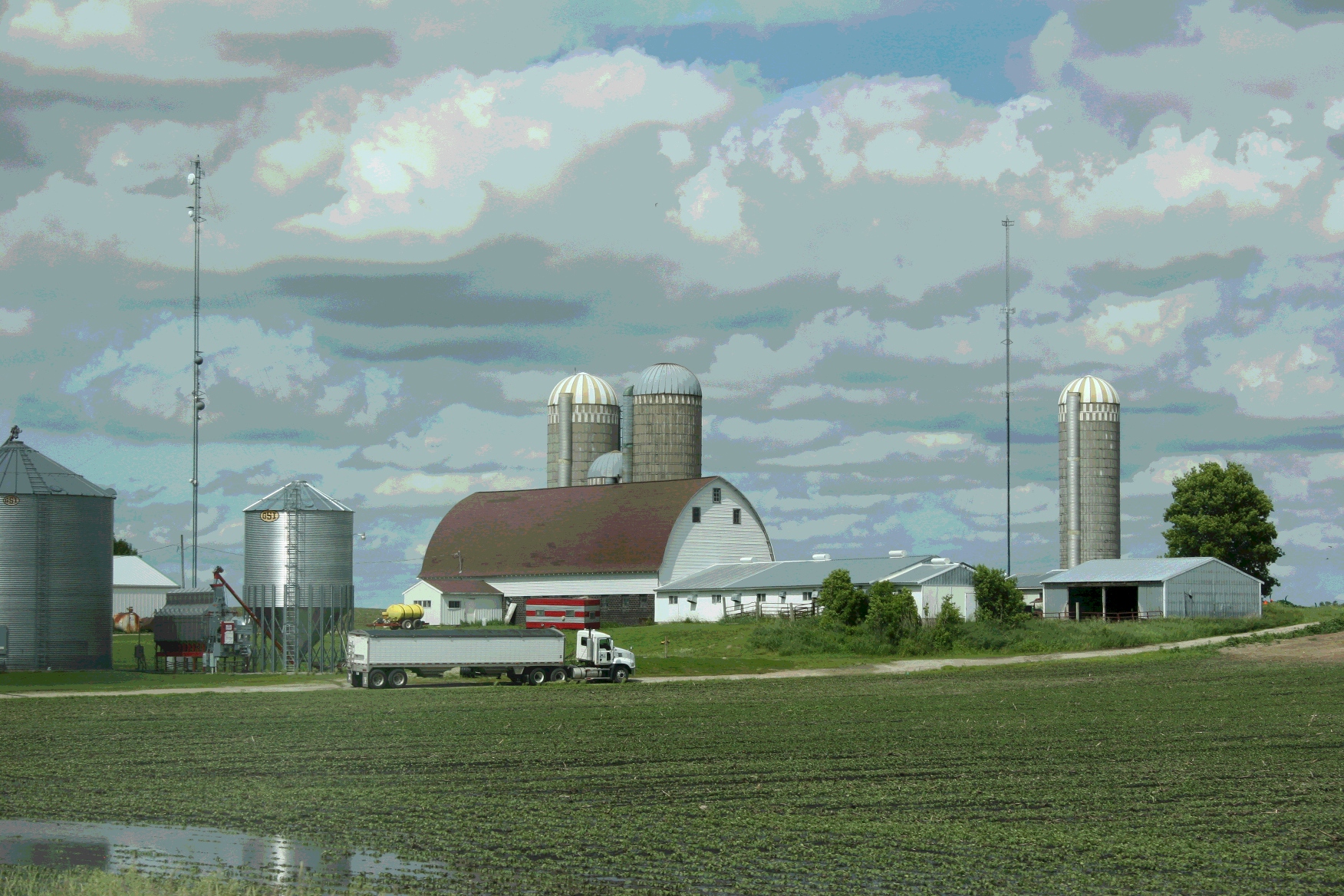
On a farm site west of Owatonna.

On a farm site west of Owatonna.

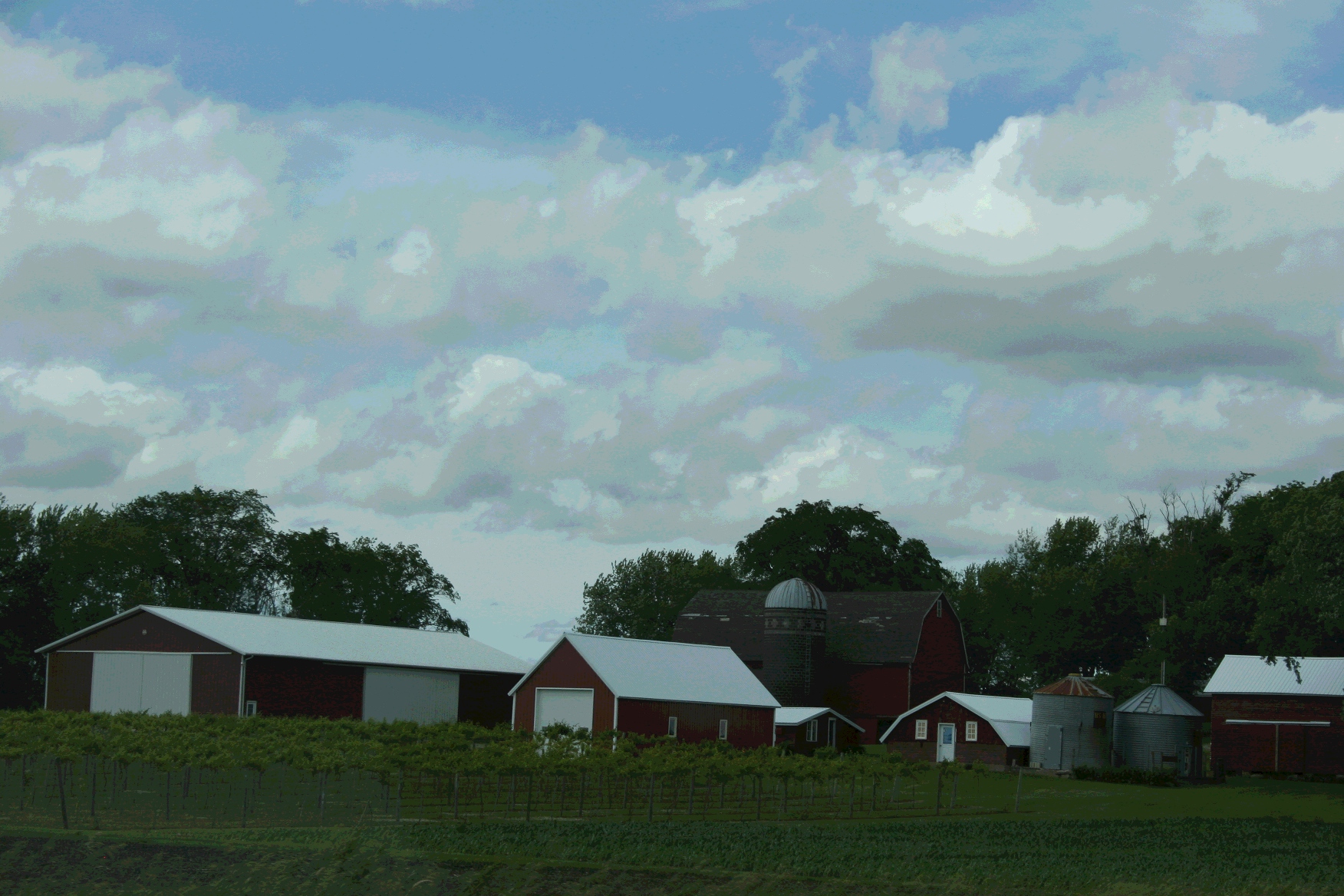
A vineyard along Steele County Road 17.

A vineyard along Steele County Road 17.

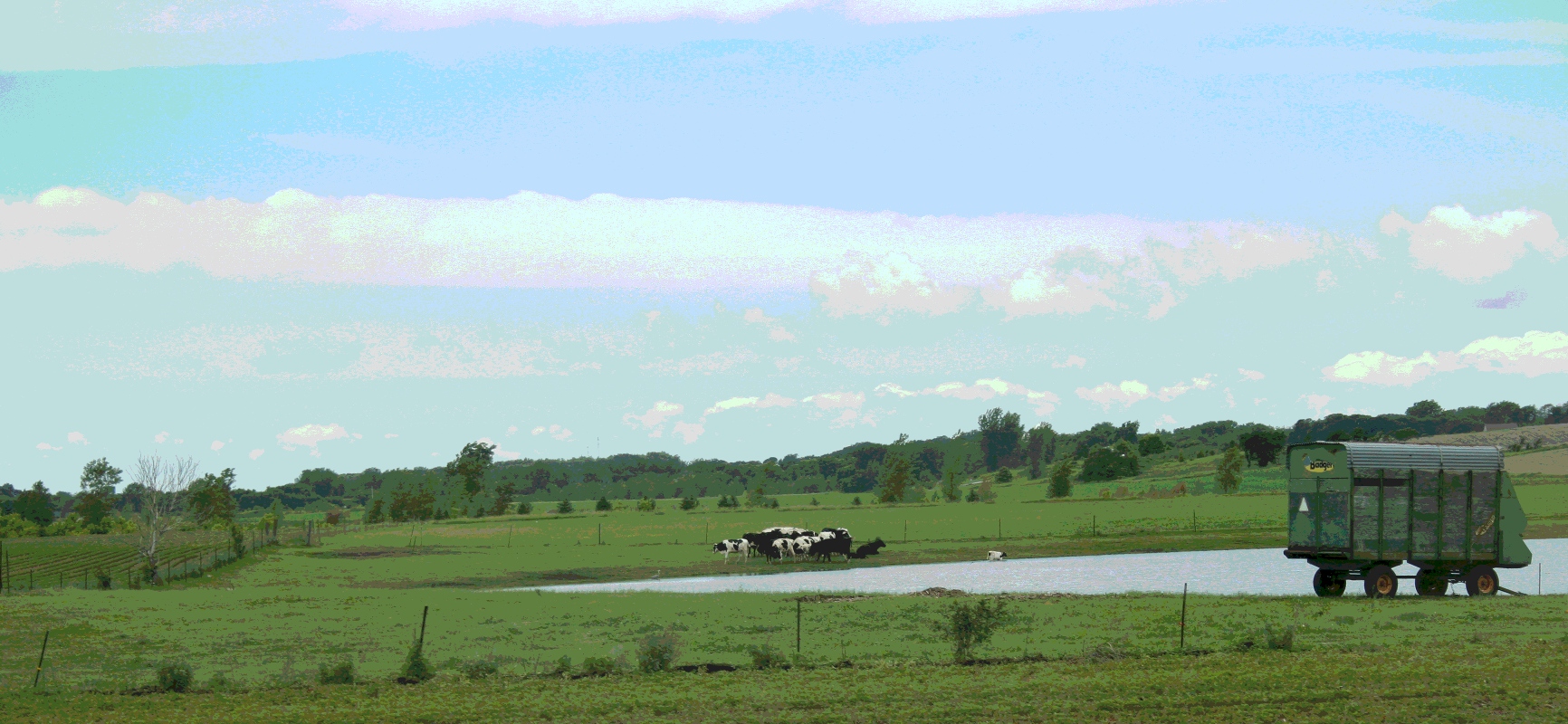
Southwest of Faribault.

Southwest of Faribault.

FYI: The edited photos featured here are from a recent Sunday afternoon drive south and east of Faribault and then west and north of Owatonna looping back to Faribault. All images were shot from the passenger seat of our van at highway speeds, or slightly under.

Copyright 2013 Audrey Kletscher Helbling


A wannabe dairy princess June 20, 2013

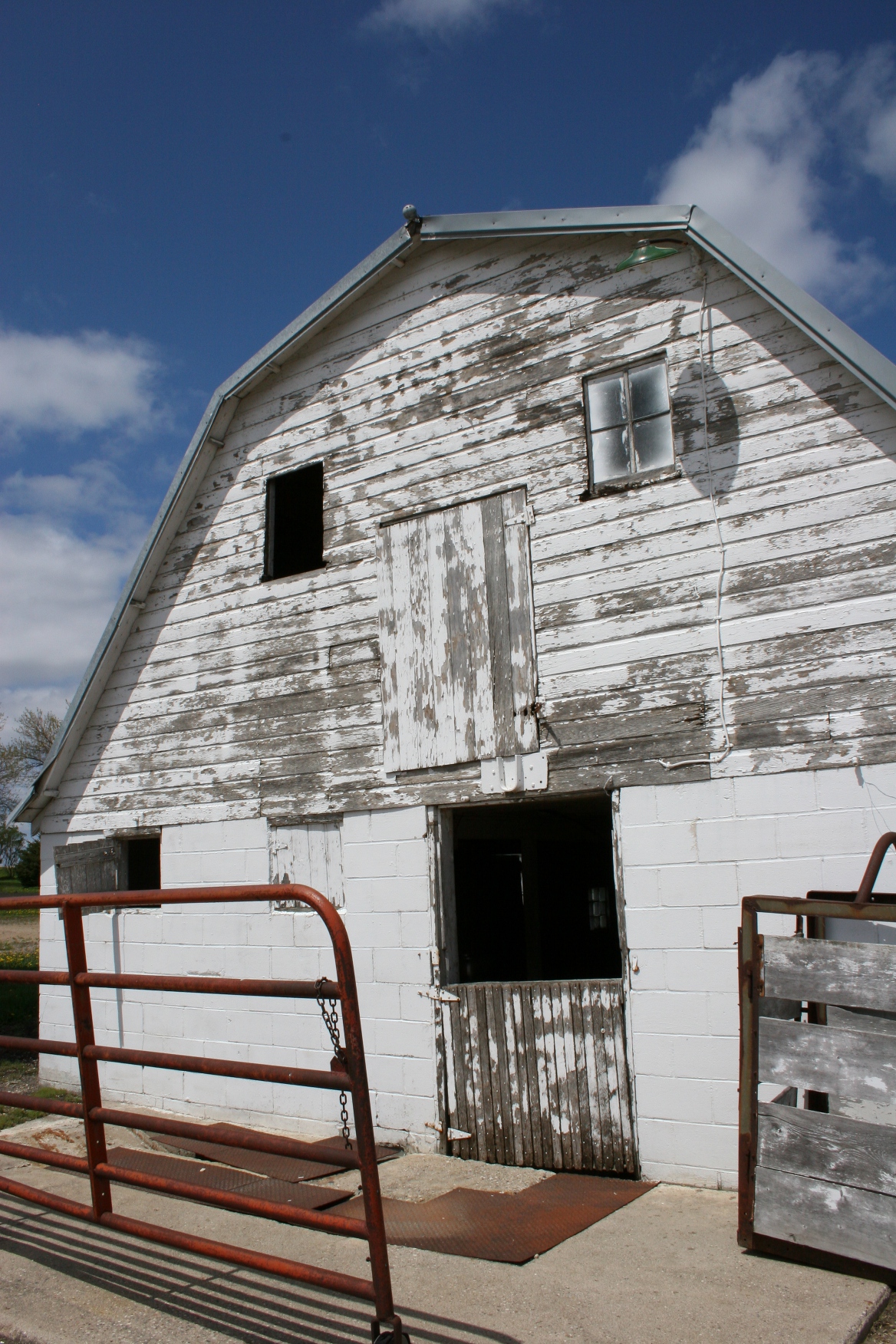
The barn where I labored alongside my father while growing up on the southwestern Minnesota prairie. File photo.

The barn where I labored alongside my father and siblings while growing up on the southwestern Minnesota prairie. File photo.

GROWING UP ON A MINNESOTA DAIRY FARM, I’ve always loved dairy products.

Fresh milk from our herd of Holsteins.

Butter and cheese from the bulk truck driver who picked up milk from our farm.

Singing Hills Coffee Shop's delicious maple bacon sundae.

One of my new favorite ice cream treats, a maple bacon sundae from Singing Hills Coffee Shop in Waterville. File photo.

Ice cream from the Schwans man. (My older brother often sneaked the tin can of vanilla ice cream from the freezer and climbed atop the haystack to eat his fill. He failed to remove his spoon, leaving damning evidence connecting him to the ice cream caper. I was too obedient to attempt such thievery.)

Sliced strawberries, cucumbers and Amablu Gorgonzola cheese added to Romaine lettuce made a perfect salad. I topped the salad with lemon poppyseed dressing.

Sliced strawberries, cucumbers and Amablu Gorgonzola cheese added to Romaine lettuce make a perfect salad. I topped the salad with lemon poppyseed dressing. File photo.

My cheese tastes have, thankfully, expanded beyond American and Velveeta, staples of my childhood. I especially favor the blue cheeses made and aged in sandstone caves right here in Faribault and sold under the names Amablu and St. Pete’s Select. If you like blue cheese, this is your cheese.

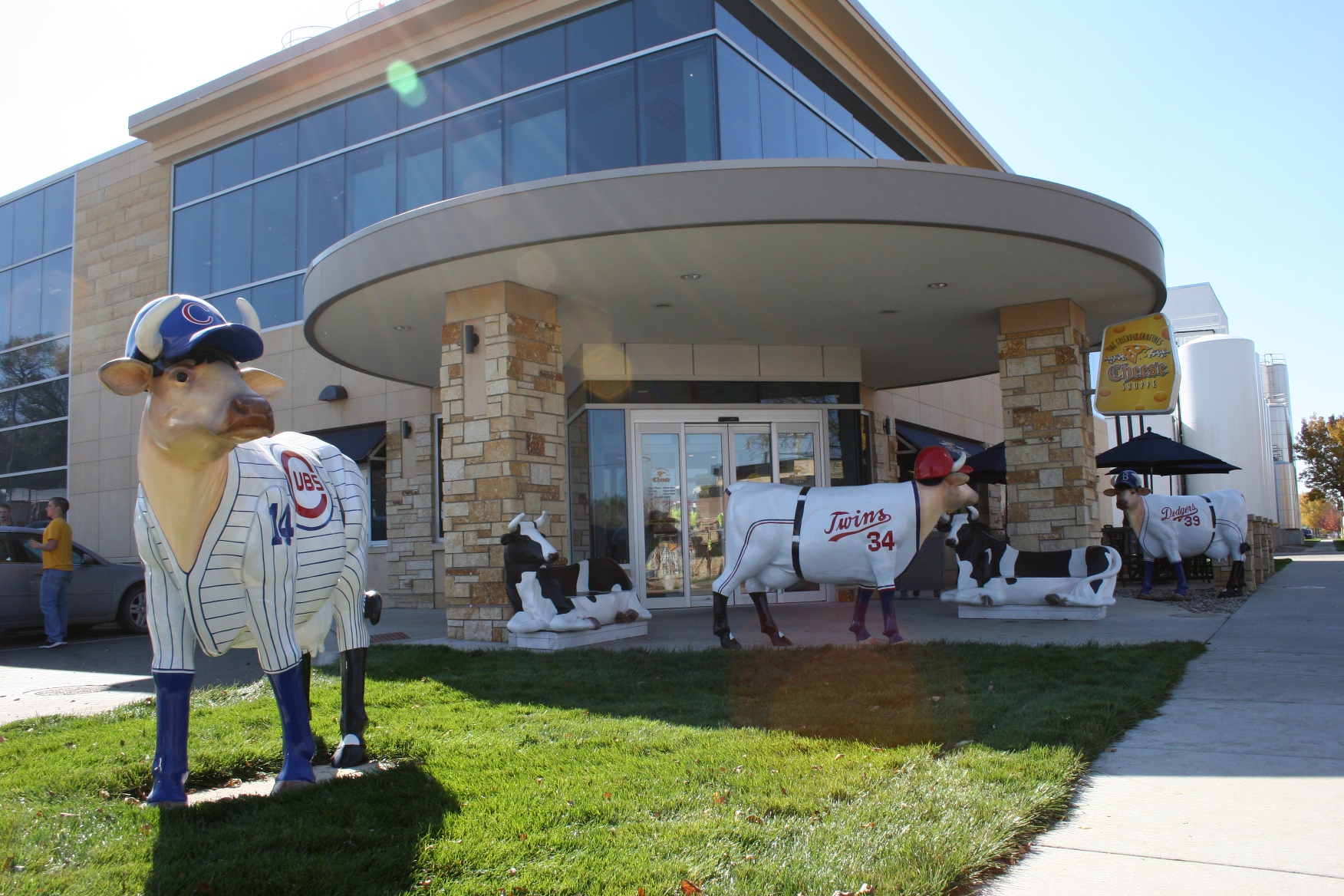
Cow sculptures outside The Friendly Confines Cheese Shoppe in LeSueur. File photo.

Cow sculptures outside The Friendly Confines Cheese Shoppe in LeSueur. File photo.

I bring up this topic of dairy products because June marks an annual celebration of all things dairy during “June Dairy Month.” This moniker is imprinted upon my brain. I once ran, albeit unsuccessfully, for Redwood County dairy princess.

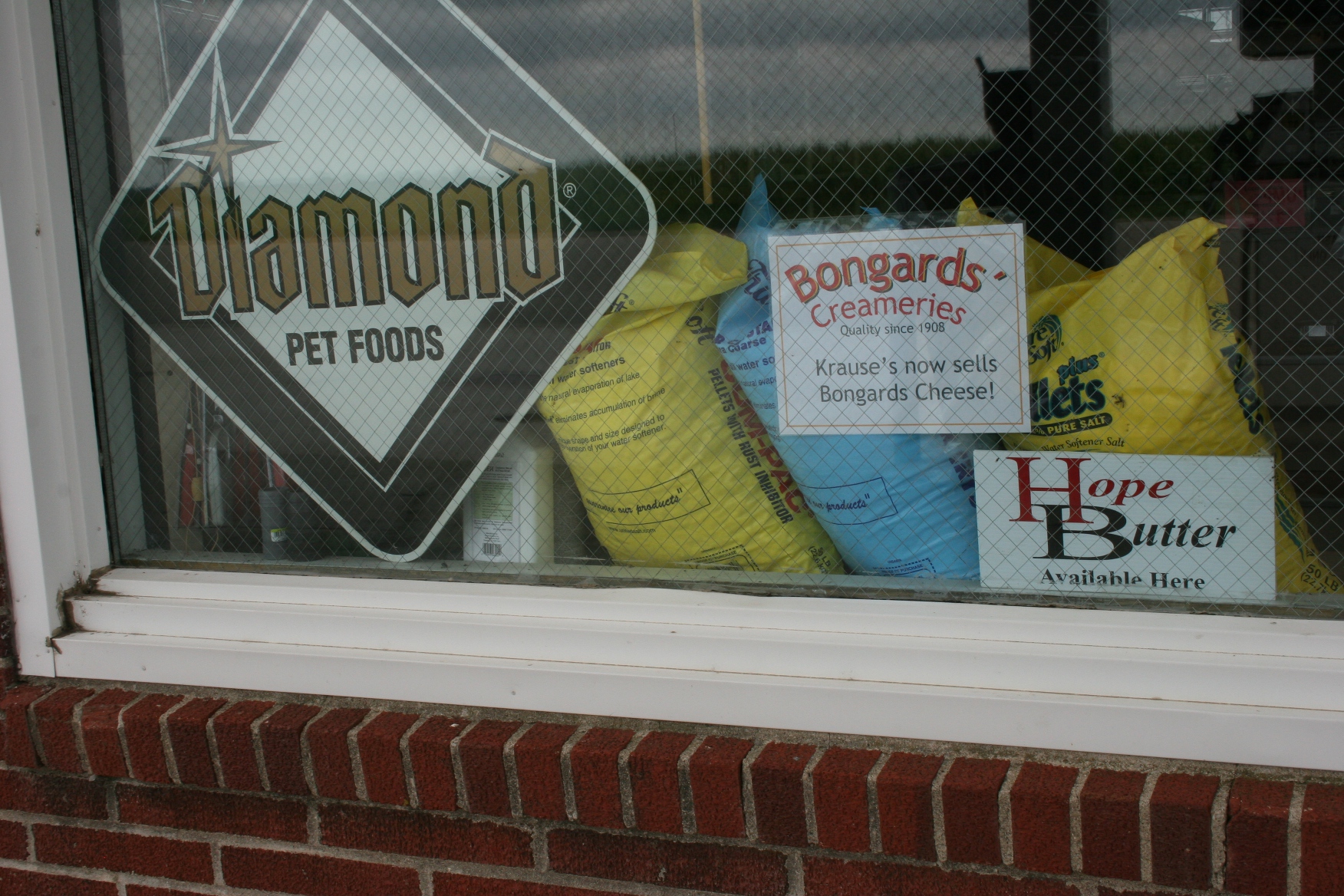
Krause Feeds & Supplies in Hope advertised the availability of Hope butter and Bongards cheese. File photo.

Krause Feeds & Supplies in Hope advertises the availability of Hope butter and Bongards cheese. File photo.

Steele County, to the south of my Rice County home, is apparently a big dairy county having at one time served as home to more than 20 creameries. One remains, in the unincorporated village of Hope, producing Hope Creamery butter in small batches. The creamy’s organic butter is especially popular in certain Twin Cities metro eateries.

Owatonna, the county seat, once claimed itself to be “The Butter Capital of the World.” That butter capital title will be the subject of an exhibit opening August 1 and running through November 10 at the Steele County History Center in Owatonna. The exhibit will feature the area’s rich dairy history to current day dairy farming in the county. Events will include a roundtable discussion on the dairy industry and, for the kids, butter making and a visit from a real calf.

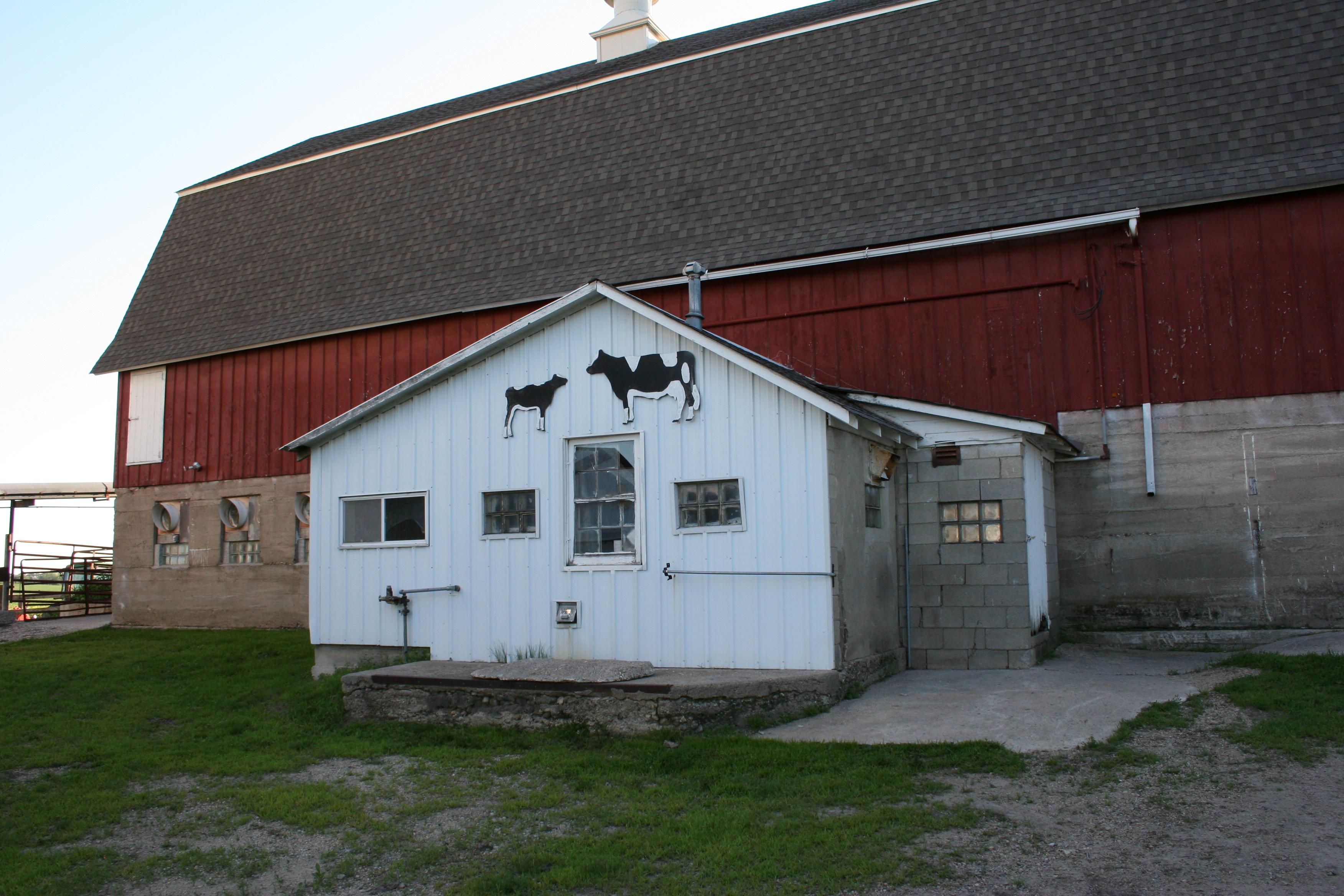
Notice the cow art on the milkhouse in this image taken this past summer.

Cow art on the milkhouse of my friends Deb and John, who once milked cows in rural Dundas. File photo.

Calves. I love calves. More than any aspect of farming, I loved feeding calves buckets of warm milk replacer or handfuls of pellets. I once named a calf Princess and she became my “pet,” as much as a farm animal can be a pet. Then my older brother—the one who ate ice cream when he wasn’t supposed to—told me one day that my calf had died. I raced upstairs to my bedroom and sobbed and sobbed. Turns out he made up the whole story of Princess’ early demise. She was very much alive.

The vibrant art of Faribault artist Julie Falker of JMF Studio.

The vibrant art of Faribault artist Julie Faklker of JMF Studio. File image.

And so, on this day when I consider June Dairy Month, my mind churns with thoughts of butter and ice cream, of calves and of the dairy princess crown I never wore.

FYI: Faribault area dairy farmers Ron and Diane Wegner are hosting “A Day on the Farm” from 11 a.m. – 2 p.m. this Saturday, June 22. Their farm is located just south of Faribault at 25156 Appleton Avenue. The event includes children’s activities, photos with a baby calf and free cheeseburgers, malts and milk. Event sponsors are the Rice County American Dairy Association and the Minnesota Beef Council. The Wegners’ daughter, Kaylee, is the current Rice County dairy princess.

The Redwood County American Dairy Association in my home county of Redwood in southwestern Minnesota is sponsoring a coloring contest for kids and a trivia contest for adults. Click here for details. 

© Copyright 2013 Audrey Kletscher Helbling


The power of light in photography May 7, 2013

“WAIT. DON’T GO,” I requested as he was about to pull away from a stop sign in Owatonna.

Through the drizzled windshield, my eye caught a flash of red letters against the backdrop of a moody blue grey sky.

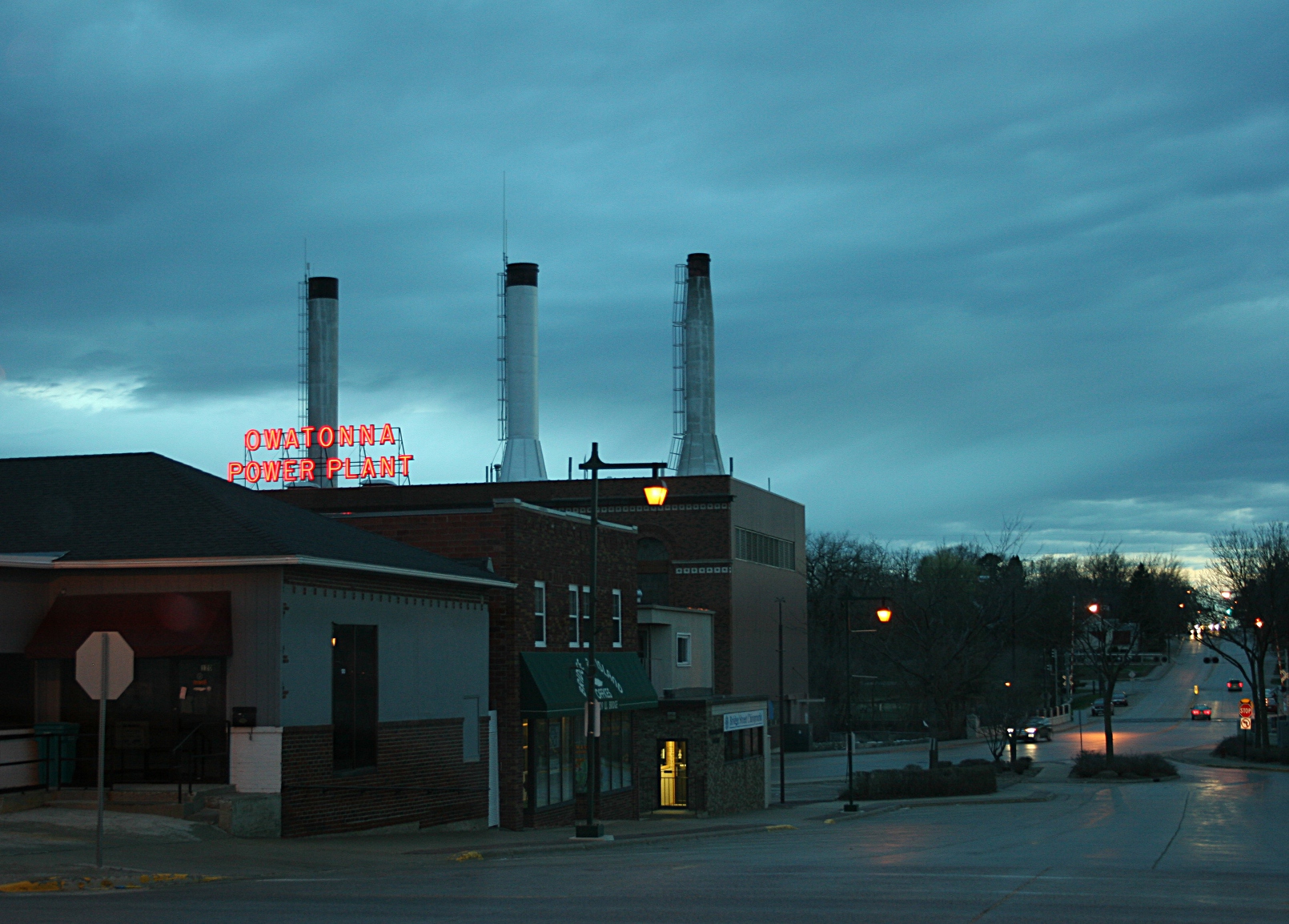
Shot Tuesday evening, April 30, in downtown Owatonna, Minnesota.

Shot Tuesday evening, April 30, in downtown Owatonna, Minnesota.

I wanted a photo of the dreamy scene—the bright signage atop the Owatonna Power Plant building, the warm glow of lantern street lights, flashes of taillights and headlights, the patch of light through a glass door, the reflection of light upon wet pavement.

In that precise moment, the frame unfolding before me was all about light, a gift to any photographer. There was no hesitating. Hesitation, for a photographer, equals regrets.

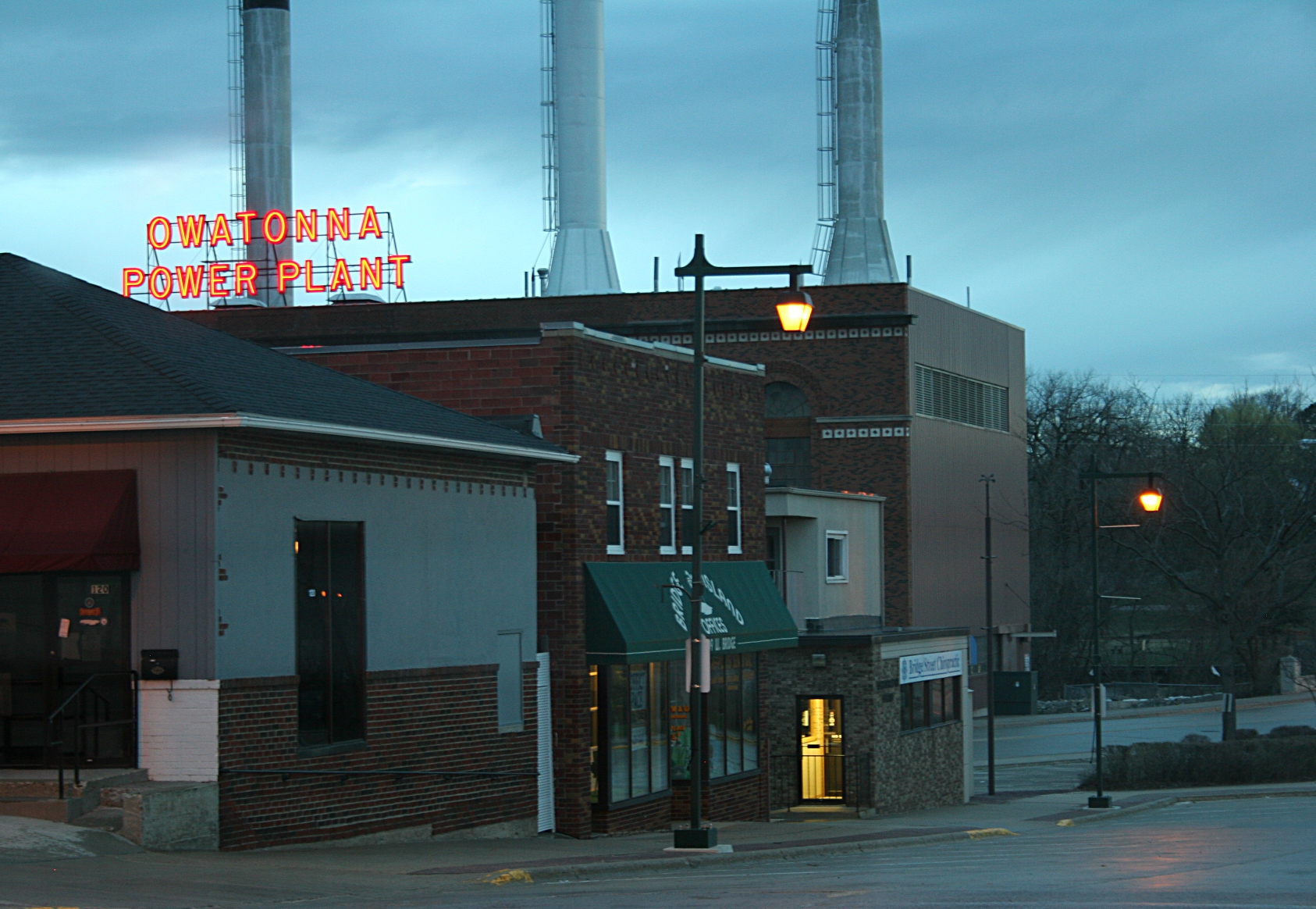
A closer shot of the 75-year-old signage.

A closer shot of the 75-year-old signage.

And so my husband, who understands, or at least pretends to understand, held foot to brake, flipped on the windshield wipers and allowed me to fire off several shots before continuing through the intersection.

Unexpected opportunities like this, to photograph an iconic landmark in remarkable light, are to be embraced.

FYI: The sign atop the Owatonna Power Plant recently underwent a transformation as the neon letters were replaced with LED technology. Also, as a result of damage caused by a September 2010 flood, the building has been repurposed into office space. The power plant has not been used as an energy source for years with Owatonna Public Utilities purchasing its electricity instead from Southern Minnesota Municipal Power Agency.

© Copyright 2013 Audrey Kletscher Helbling


An evening with Minnesota poet Todd Boss in Owatonna May 1, 2013

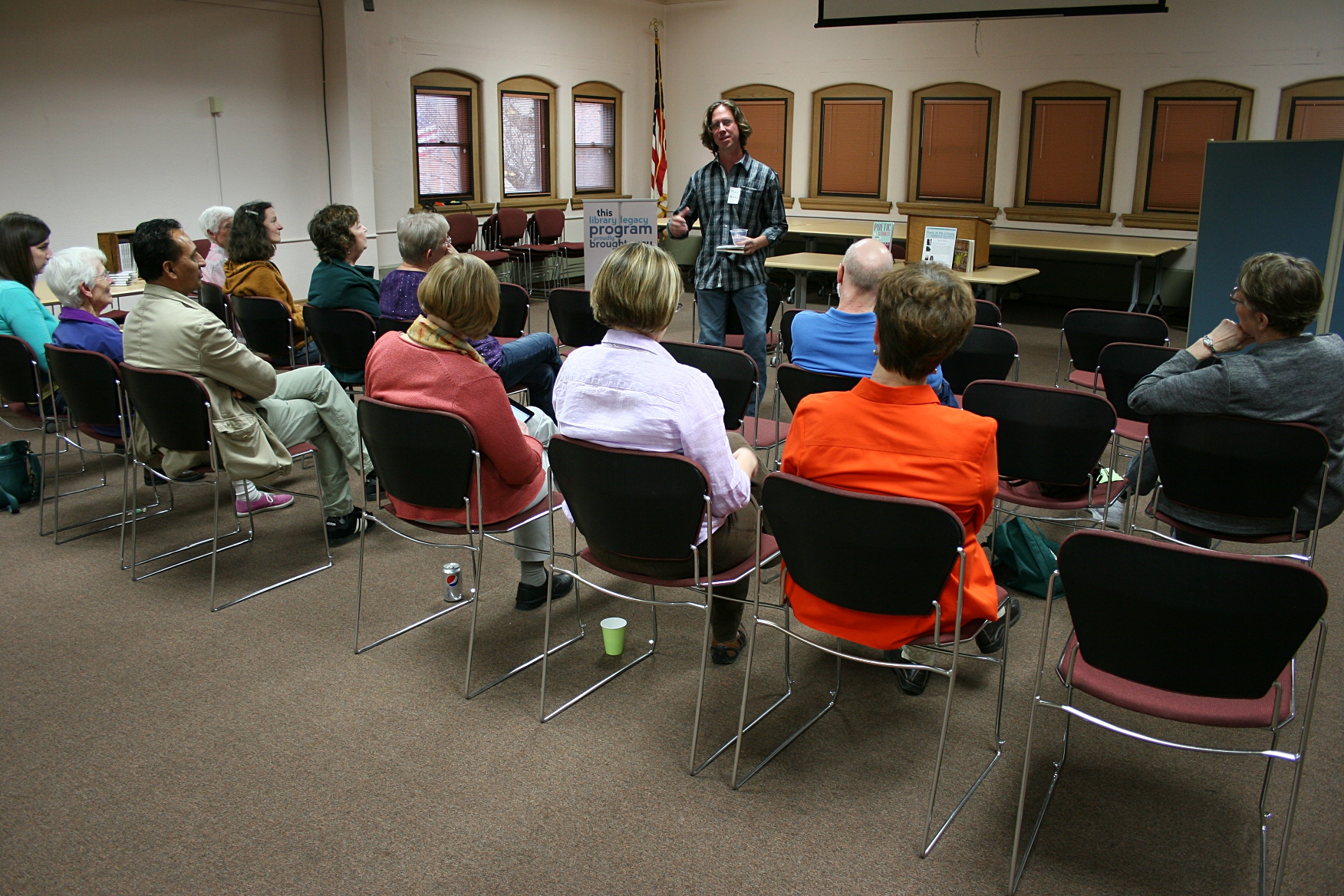
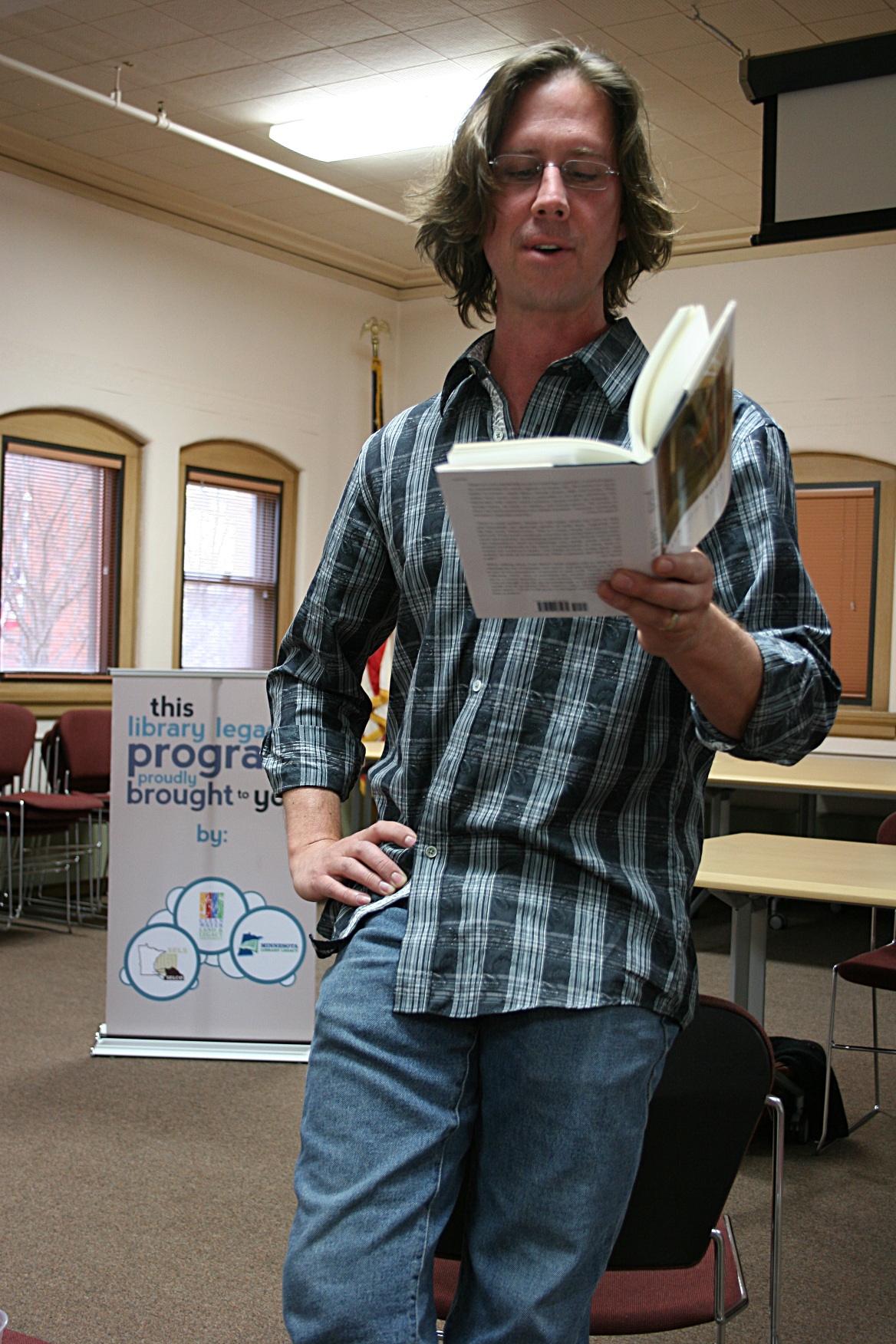
Todd Boss reads his poetry Tuesday evening at the Owatonna Public Library.

Todd Boss talks about poetry Tuesday evening at the Owatonna Public Library.

HE READS WITH THE CADENCE of a seasoned poet, with the ease of familiarity, written words fitting his voice like a comfortable pair of boots.

Which is exactly what award-winning St. Paul poet Todd Boss sported, along with faded jeans and a long-sleeved plaid shirt, to a “Poets at the Library Tour” event Tuesday evening at the Owatonna Public Library.

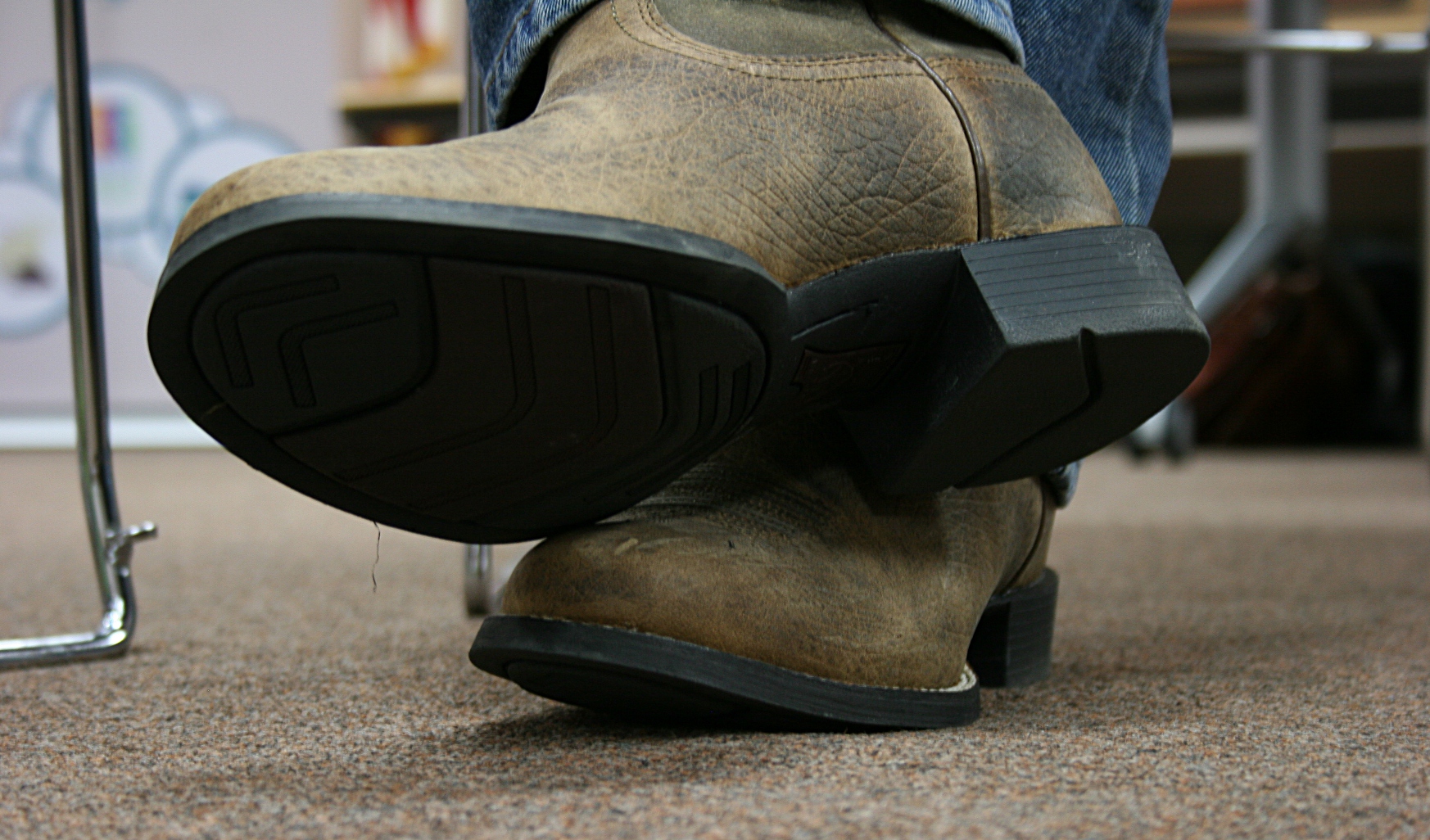
Todd Boss' boots.

Todd Boss’ boots.

Casual, laid back and unpretentious, Boss settled in to read from his poetry books, Yellowrocket and Pitch, Minnesota Book Award finalists in 2009 and 2013 respectively.

Before reading a poem set in Luckenbach, Texas, Boss shared that a woman from New York wants to include him in a dissertation she’s writing on cowboy poetry. He showed off his cowboy boots, then laughed. The audience laughed, too. While Boss often writes about his rural Wisconsin upbringing, he isn’t exactly a cowboy poet. Audience members agreed with Boss that Wisconsinites and Minnesotans live on farms, not ranches, defined by this poet as big open landscapes of earthy hues.

Later he referenced the New York perspective again: “My mother used to read a lot of poetry on the ranch.” Ranch. A carefully chosen word. Just like the words in his detailed and rhythm rich poems.

Reading from Pitch.

Reading from Pitch.

Boss read poetry about card playing, wood piles, his mother, an exchange with a check-out clerk at a Minneapolis food co-op, the 35W bridge collapse…

He revealed, too, that when he writes about his parents, he gives them the option of nixing those personal poems. They never have, a point audience members noted as respectful—of Boss in asking and of his parents in respecting his work.

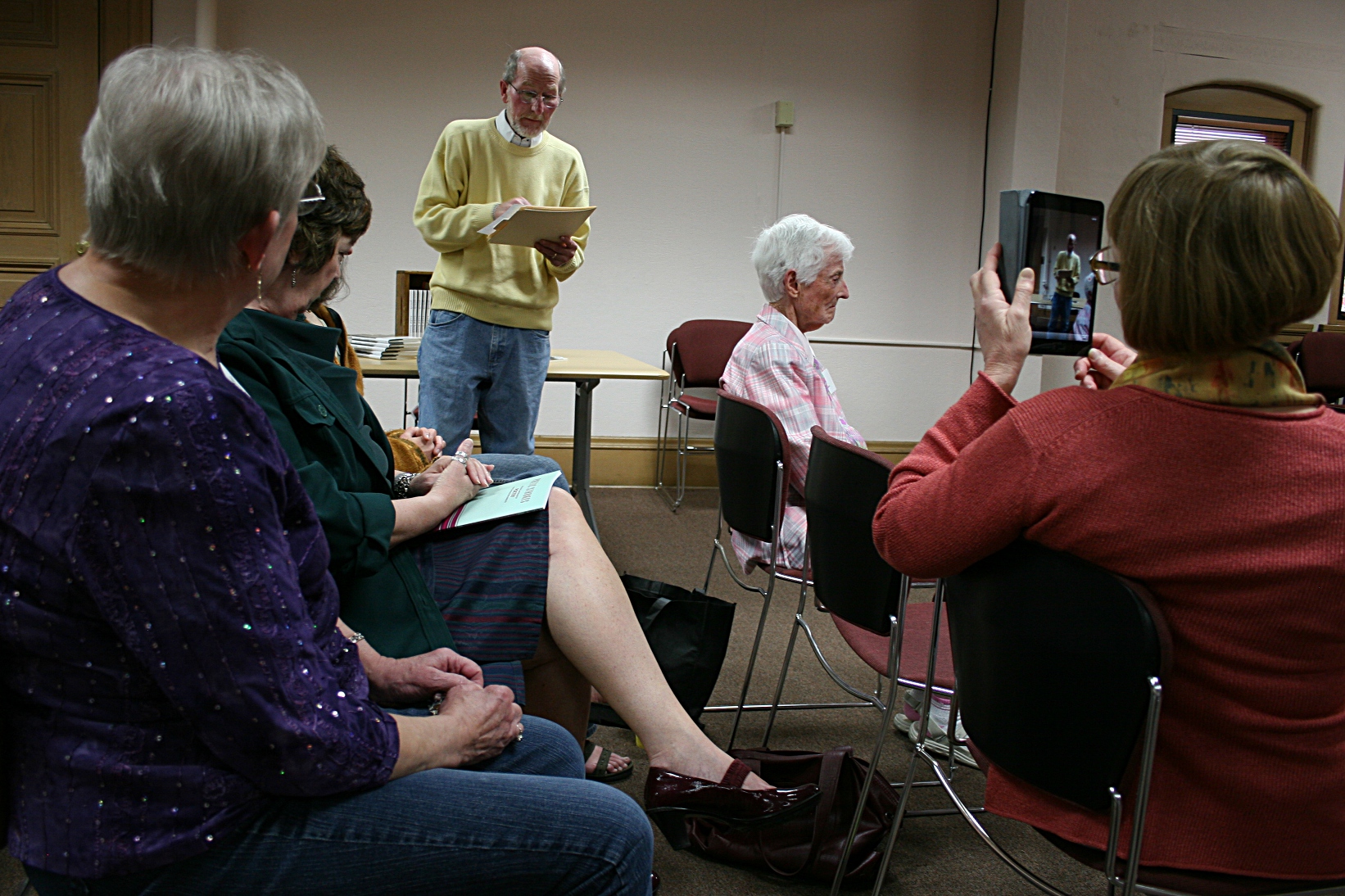
Audience members read their poetry prior to Boss' reading. Some audience members, like me, were honored at a "Meet and Greet the Poets" reception earlier for those published in Poetic Strokes 2013, a regional anthology of poetry published by Southeastern Libraries Cooperating.

Numerous audience members read their poetry prior to Boss’ reading. Some, like me, were honored at a “Meet and Greet the Poets” reception earlier for those published in Poetic Strokes 2013, A Regional Anthology of Poetry From Southeastern Minnesota. Southeastern Libraries Cooperating publishes the annual collection.

Boss is that kind of caring guy. After listening to audience members read poetry before his presentation, he thanked them, defining their readings as “a little bit like overhearing people’s prayers…things they’re worried about.”

He’s genuine and honest enough to admit that he doesn’t write every day, but that he should and that he’s sometimes lazy about writing.

And, yes, he actually earns a living writing poetry; touring the state and country reading poetry; collaborating on his grant-funded motionpoems; and, most recently, undertaking a public art project, an art/poetry installation on the five-year anniversary of the 35W bridge collapse.

He’s a farm boy from Wisconsin now living in the big city, but still strongly connected to his rural roots via his poetry.

If Tuesday’s event had been held at a ranch, instead of the third floor of a public library, audience members would have gathered around the campfire to hear Boss, cowboy boots resting on a chunk of wood, strumming his not-exactly-cowboy-poetry rhythmic poetry.

FYI: In addition to publishing two books of poetry, Boss works with animator/producer Angella Kassube on producing motionpoems, which “turn contemporary American poems into short films. To learn more about this grant-supported non-profit project, click here.

And click here to link to Todd Boss’ website.

© Copyright 2013 Audrey Kletscher Helbling


A Wisconsin school honors orphans via “The Orphan Bed Exhibit” April 25, 2013

The main building at the orphanage, built in 1886, housed offices, a reception room, chapel/auditorium, boys' cottage, living quarters for employees, a sewing room, attic and linen storage. This main portion today serves as the Owatonna city administration building.

The main building at the Owatonna orphanage, built in 1886, housed offices, a reception room, chapel/auditorium, boys’ cottage, living quarters for employees, a sewing room, attic and linen storage. This main portion today serves as the Owatonna city administration building. File photo from December 20, 2011, blog post.

THREE HUNDRED AND TWENTY miles from the Minnesota State Public School Orphanage Museum in Owatonna, a group of Lutheran school students in Hales Corners, Wisconsin, just southwest of Milwaukee, are honoring orphan children of the 1920s and 1930s.

The story of how this came to be involves me, a dedicated and creative middle school language arts teacher/musical theater director, and a bit of personal family history.

Several weeks ago, teacher Judy Lillquist, a native of Le Sueur, MN., who has lived in Wisconsin for 20-plus years, commented on a December 2011 blog post I published after a visit to the Owatonna museum. (Click here to read that story.)  She discovered my orphanage stories while researching for her school’s production of  Annie Jr. My posts included photos of simple orphans’ beds in a stark orphanage bedroom. (Click here to read my second orphanage post.)

The boys' bedrooms are stark, devoid of anything homey. This small room slept three.

This photo of an orphan’s bed inspired Lillquist to create “The Orphan Bed Exhibit.” The orphans were not allowed to sleep on their pillows; those were just for show. File photo.

Those orphan bed photos inspired Lillquist to work with her students in creating “The Orphan Bed Exhibit” which accompanies the school’s spring musical, Annie Jr., showing this Friday and Saturday at Hales Corners Lutheran Middle School.

Working with middle schoolers on a musical seems challenging enough. So I really have to admire Lillquist’s efforts to personally connect her students and audience members to the plight of actual orphans via “The Orphan Bed Exhibit.” The exhibit includes a synopsis of the inspiration behind the project.

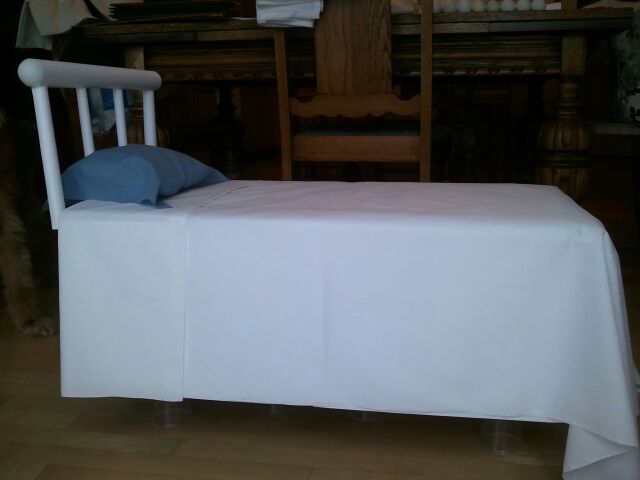
The orphan bed designed by Lillquist.

The orphan bed designed by Lillquist.

Using cardboard boxes, paper, tape, glue, clearance bed sheets and other everyday materials, Lillquist’s sixth graders built 20 orphan beds. Those attending the musical will see silent orphan statues (students), attired in tattered dresses, stationed next to those beds.

Beds were packed tight into sparse bedrooms in the cottage.

Beds were packed tight into sparse bedrooms in the Owatonna orphanage cottages. File photo.

The scene is meant to make a powerful impact. Lillquist explains:

In my research for the play, I began formulating an idea of somehow showing our audience how important it is for us to count our blessings. I for one am very thankful for a warm home and comfortable bed. It gives me a heavy heart knowing that the orphan children of those days were not so fortunate, my husband’s dear grandmother among them.

…The beds pay homage to the orphan boys and girls of the 1920s and 30s. Our plucky little orphan girls get to play that role for a little while. Some children played that role their entire lives. This is simply to honor their memory.

A photo of some of the school's residents on exhibit in Cottage 11, which housed boys ages 6 - 13.

An Owatonna school orphans photo displayed in Cottage 11, which housed boys ages 6 – 13.

For Lillquist’s family, this is personal as her husband’s grandmother and siblings were placed in a state orphanage after their mother died. Lillquist shares:

Once placed, she would wave across the lunchroom at her two brothers. When she was finally fortunate enough to be adopted, her new family decided one year to go back to the orphanage to adopt her sister. That was her birthday present. She was in her 80s when she told us this story.

She never saw her brothers again once she left the orphanage and she could not bear to tell us what eventually happened to her sister.

Can you imagine?

I expect “The Orphan Bed Exhibit,” combined with the theatrical performance of Annie Jr., will drive home the message Lillquist intends:

Our families are blessed and that’s the message of the exhibit.

FYI: Hales Corners Lutheran Middle School, 12300 West Janesville Road, Hales Corners, Wisconsin, presents “The Orphan Bed Exhibit” at 6:30 p.m. Friday, April 26, and at 12:30 p.m. Saturday, April 27. The curtain rises on Annie Jr. a half hour later.

Thank you to Hales Corners students, and especially to Lillquist, for their dedication to this project. I am honored to have been, in some small way, a part of this undertaking.

© Copyright 2013 Audrey Kletscher Helbling
“The Orphan Bed Exhibit” image courtesy of Judy Lillquist


Honoring Minnesota Civil War soldiers via history lessons & a puzzle January 25, 2013

Attendees, including Linda Karkhoff (whom you read about below) chat at a recent Cannon Valley Civil War Roundtable meeting in Faribault.

Attendees, including Linda Karkhoff (whom you will read about below) chat at a recent Cannon Valley Civil War Roundtable meeting in Faribault. And, yes, the guy on the right is wearing a Union cap. The display shows Karkhoff’s Civil War puzzle package.

MEMBERS OF THE CANNON VALLEY Civil War Roundtable, I’ve discovered, really know their history. They rattle off battlefields and battles, dates and names and other facts with convincing authority.

To be honest, I’m a bit intimidated by their knowledge. And I’ve told them so, even called them fanatics in a joking, but not unkind, way. That didn’t stop the club president from encouraging me to return to their monthly meetings. I’ve attended thrice during the past several years—when guest speakers’ topics especially interested me.

An 1840 Philadelphia Derringer, like the pistol used to assassinate President Abraham Lincoln.

An 1840 Philadelphia Derringer, like the pistol used to assassinate President Abraham Lincoln, belongs to an area collector of Lincoln memorabilia.

First-time around, I listened to an area collector talk about some of the pieces in his collection of Abraham Lincoln memorabilia. That was in 2009 and I posted about it here. He asked for anonymity given the value of his collection. I thought it wise to honor his request.

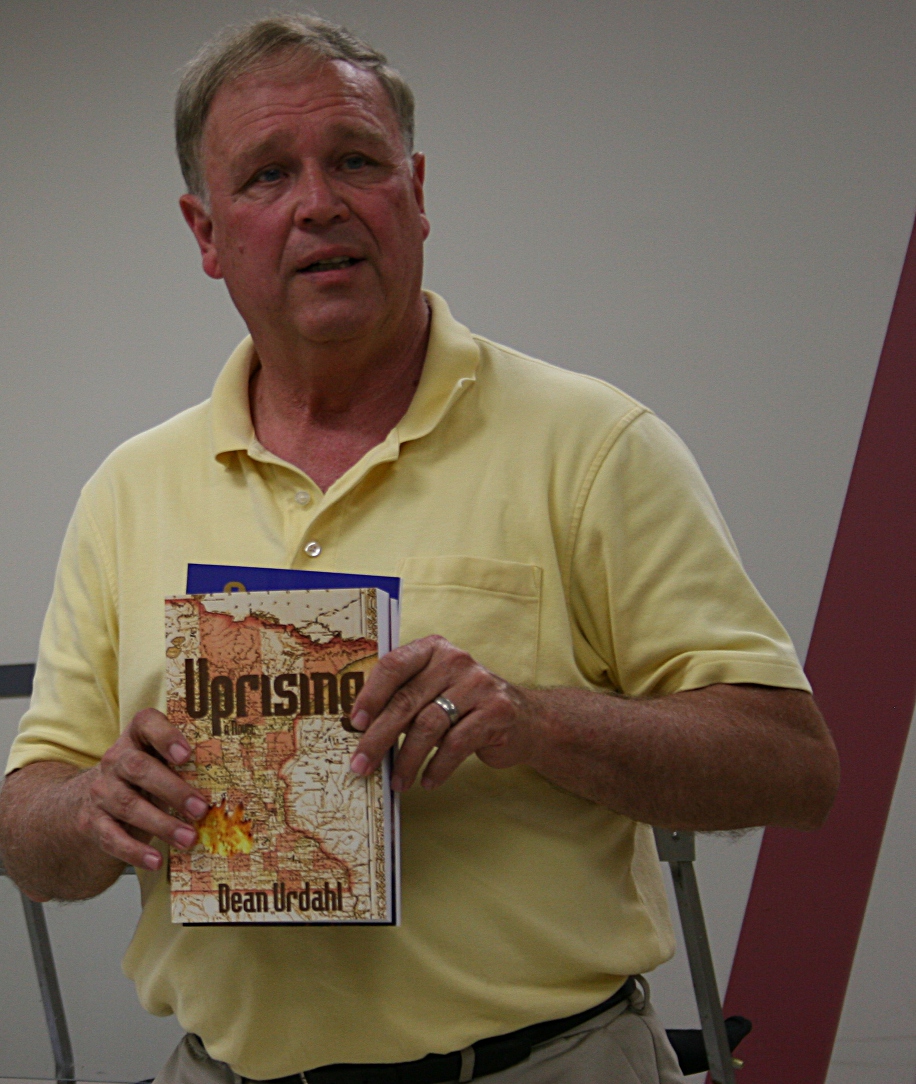
Dean Urdahl has written the trilogy of Uprising, Retribution and Pursuit.

Dean Urdahl has written the trilogy of Uprising, Retribution and Pursuit.

This past May, I heard Minnesota State Representative Dean Urdahl, a retired American history teacher, writer and co-chair of the Minnesota Civil War Commemoration Task Force, speak about the U.S. Dakota-War of 1862 and his trilogy of historical fiction novels. (Click here to read a post from that event.)

And just recently, educational consultant Quintin Pettigrew read excerpts from A Personal Narrative of Indian Massacres 1862, the diary of Lake Shetek Massacre survivor Lavina Eastlick. I’ve since acquired a copy of that survivor’s diary and will post about it at a later date.

Before Pettigrew took the floor at the recent Cannon Valley Civil War Roundtable meeting, Owatonna resident Linda Karkhoff spoke briefly about a Civil War related project she’s undertaken. She’s created a 550-piece limited edition (1,000) commemorative jigsaw puzzle honoring the 2nd Regiment, Minnesota Volunteer Infantry.

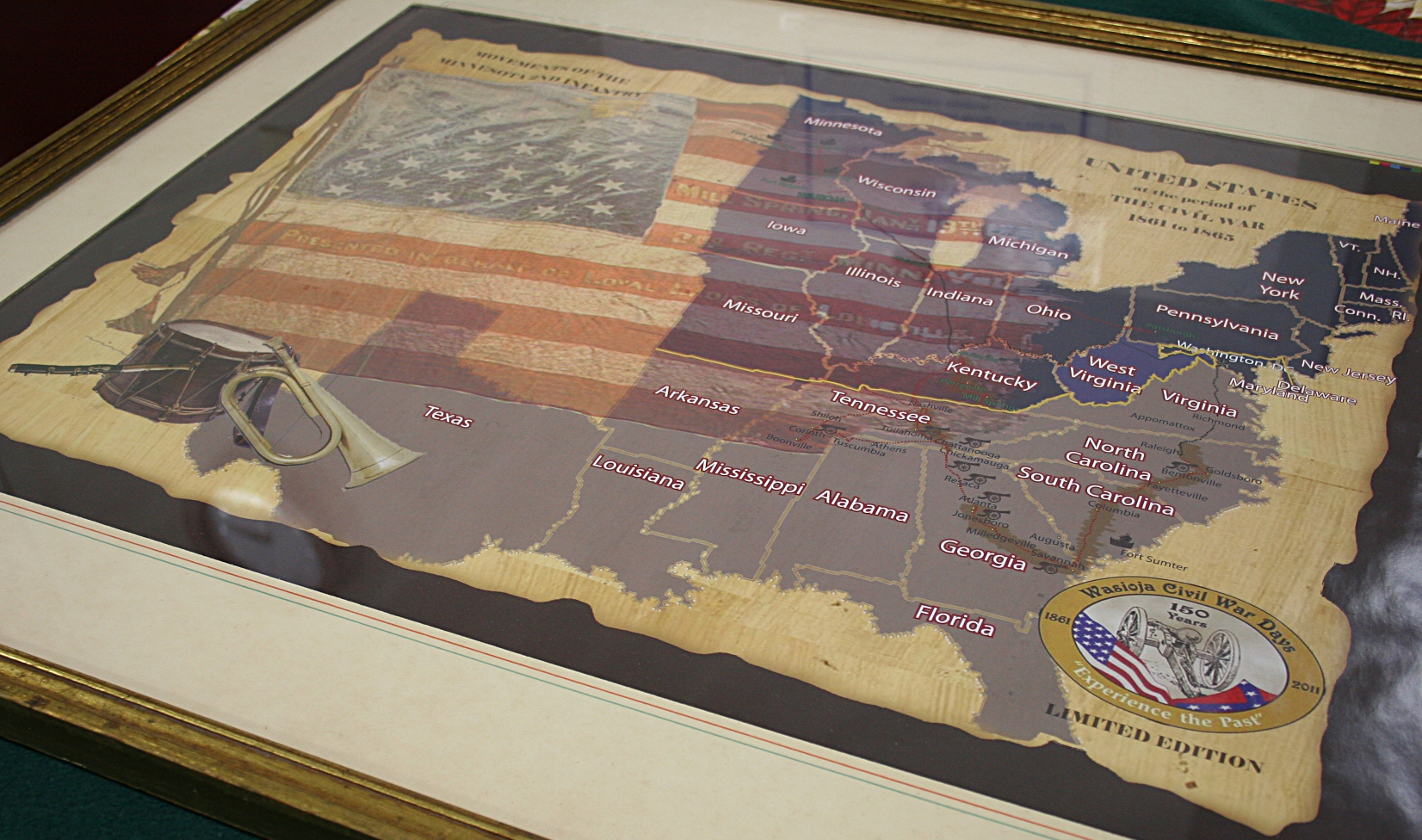
A close-up of the 2nd Minnesota Civil War puzzle, made to commemorate Wasioja Civil War Days.

The photo shows the design of the puzzle Linda Karkhoff created as a commemorative piece for Wasioja Civil War Days. The puzzle honors the 2nd Minnesota Regiment, comprised of soldiers from southeastern Minnsota. Just note that lighting conditions were not good and I could not avoid glare reflected on the framed piece.

The 18 x 24-inch puzzle features, along with a U.S. map tracking the movement of the 2nd Minnesota, an imprint of a flag given to the regiment by the Loyal Ladies of the Louisville Soldiers Association.

Intrigued, I found an online copy of a letter presented to the Minnesotans along with that flag. Nanette B. Smith, president of the Loyal Ladies wrote:

Louisville Ky Feb 17th 1862

To Col Van Cleve 2nd Minnesota Regt

Sir I transmit to you a Flag to be presented in the name of the Loyal Ladies of the Louisville Soldiers Association, to your Regiment, designed to commemorate the battle of Mill Spring 19th January, and as a testimonial of our appreciation of the participation of yourself and those under your command in the glorious victory of that day.

Each Regiment is equally entitled to like honor; but the gallant conduct of those who come from a distant State to unite in subduing our rebel invaders excite the warmest emotions of our hearts.

I offer to you our congratulations and my individual acknowledgements of the important service rendered to our State by your command.

Very Respectfully Nannette B. Smith Prest L.S.R.A.

Now puzzle designer Karkhoff, who is a carpenter by trade, did not read that letter to attendees at the Cannon Valley Civil War Roundtable meeting. But she did summarize that the Loyal Ladies’ flag was a thank you to the soldiers for pushing the Confederates out of Kentucky, thus saving Kentucky as a Union state.

She also shared that members of the 2nd Minnesota, comprised of soldiers from southeastern Minnesota, marched 6,000 miles—that’s walking—in four years. The unit’s drummer boy, she said, kept a diary, and survived the war. Such survival, she explained, was unheard of given drummer boys figurativley marched with targets on their backs.

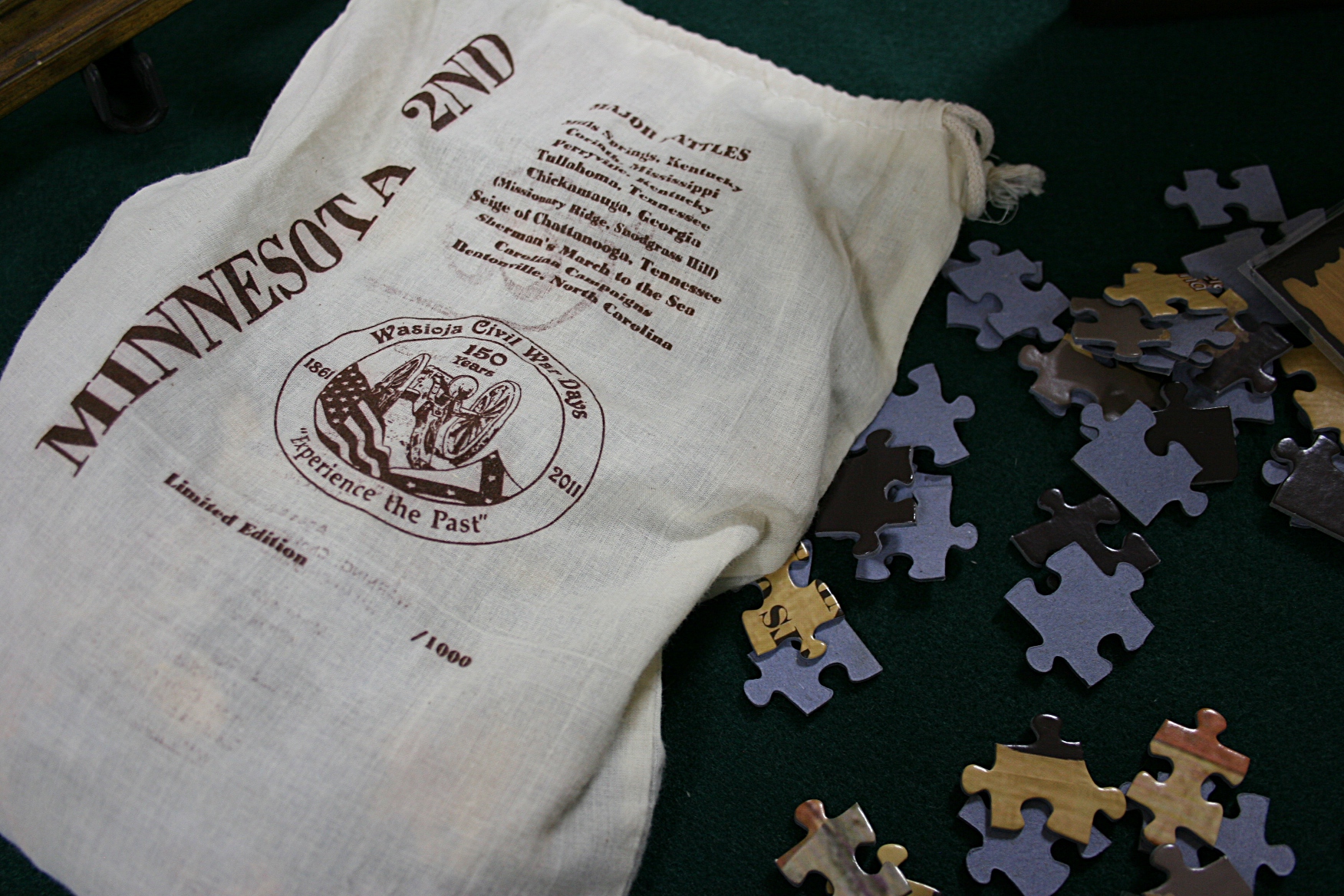
This cloth bag holds the puzzle pieces and informational sheets.

This cloth bag holds the puzzle pieces and informational sheets.

You’ll find more information about the 2nd Minnesota, life as a Civil War soldier and the puzzle itself on informational sheets tucked inside the cloth bag holding Karkhoff’s puzzle. Even the bag is significant, similar to what a Civil War soldier would have carried for his tobacco and writing utensils, Karkhoff said.

A history buff, Karkhoff came up with the puzzle idea after she and several traveling friends discovered a lack of commemorative puzzles specific to an area or site they visited. She eventually formed Puzzled@ LLC and designed the 2nd Regiment puzzle.

The puzzle, she said, teaches history and geography and encourages teamwork, making it both educational and fun.

Now I’m one of those people who doesn’t care for puzzles. I’m too easily frustrated, don’t have the patience and, well, would rather read or write than puzzle over a jigsaw.

But for those of you who enjoy puzzles and/or are Civil War fanatics, and I mean that in a kind way, check out Puzzled@ by clicking here.

Puzzles may be purchased directly from Karkhoff (contact info is on her website; tell her I sent you); at Little Professor Book Center or the Steele County History Center in Owatonna; or at the Rice County Historical Society or Paradise Center for the Arts in Faribault.

BONUS: An exhibit, “Minnesota and the Civil War,” opens March 2 at the Minnesota History Center in St. Paul. Click here to learn more about this.

© Copyright 2013 Audrey Kletscher Helbling


The old blacksmith is watching, just ask John July 20, 2012

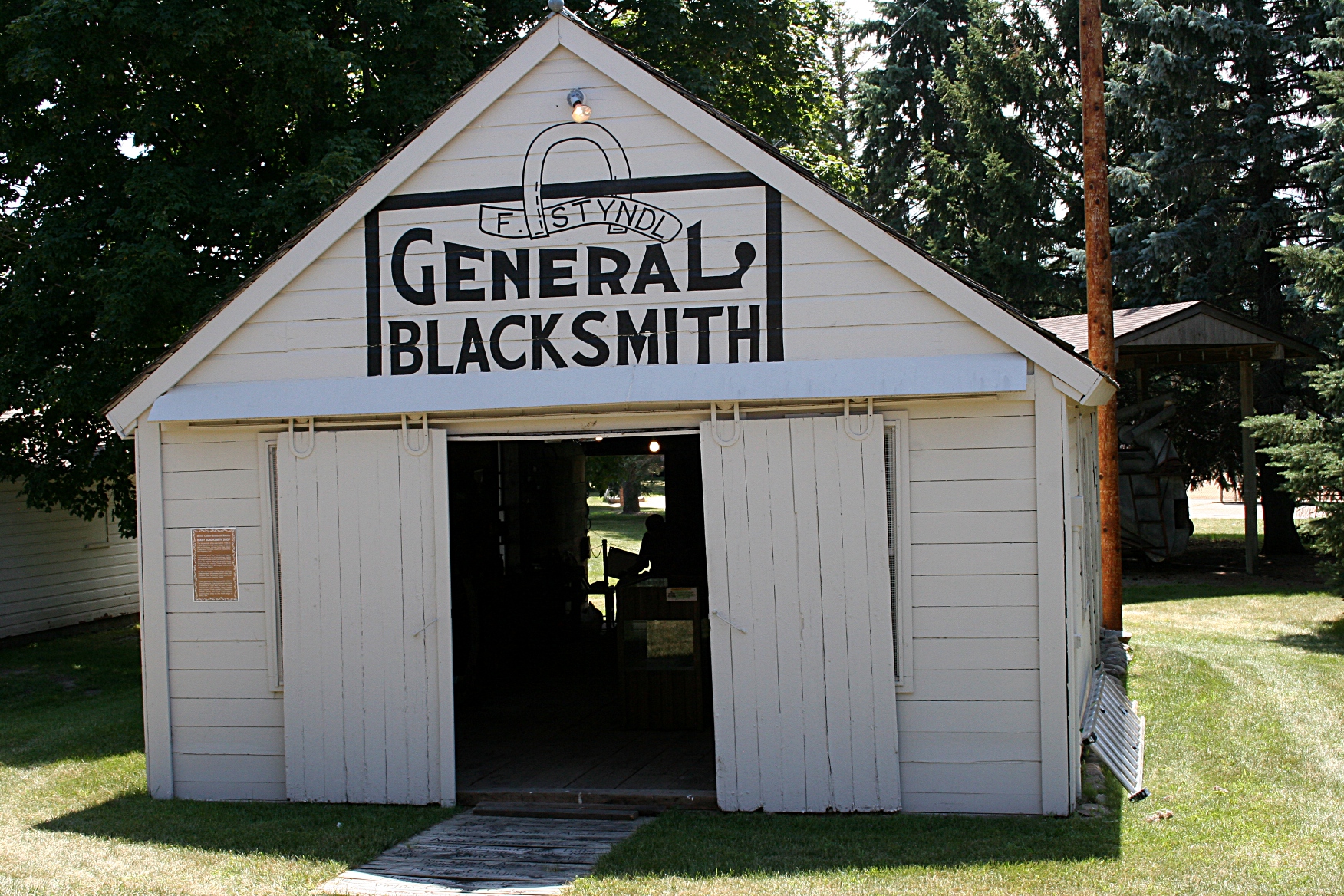
A sign tacked onto the blacksmith shop at the Village of Yesteryear in Owatonna reads: It reminds us of the “horse and buggy” days gone by. A lot of horseshoes, buggy and wagon wheels came in and out of the Bixby shop, as well as other blacksmith shops throughout the county. These shops were an essential part of all villages, towns and cities in the 1800’s.

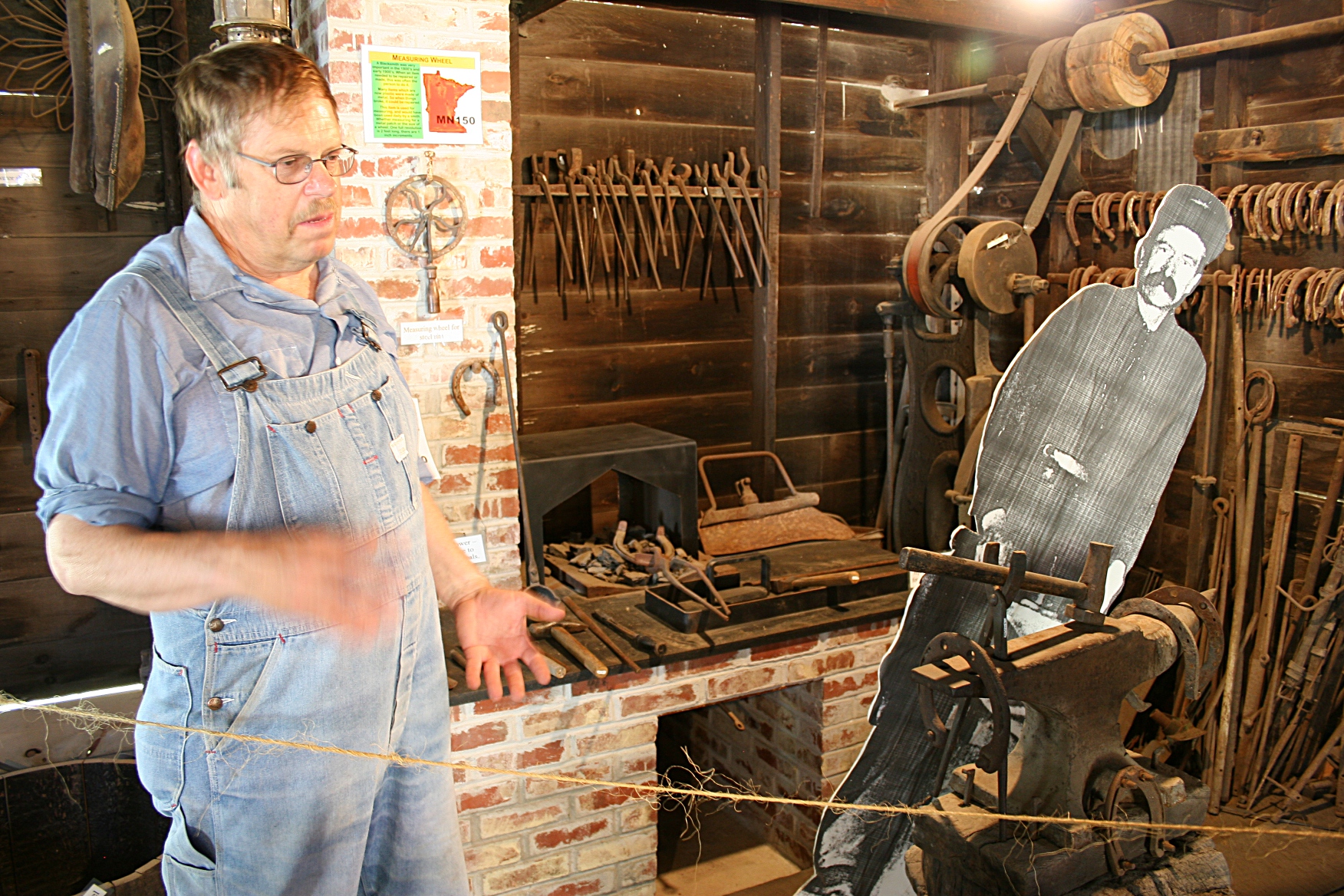
INSIDE THE OLD BLACKSMITH SHOP, John Styndl is reading the newspaper on a lazy summer Sunday afternoon. He has no intention of firing up the forge or picking up the tools to demonstrate how his great great grandfather, Frank Styndl, once pounded hot metal into useful equipment or shaped shoes for horses.

Instead, he takes pride in telling visitors about the blacksmith shop Frank built on his farm east of Bixby in 1896, ten years after the Styndl family immigrated to the U.S. from the Czech Republic. Frank worked as a blacksmith in the Old Country and then in his own shop in Steele County, Minnesota, until his death in 1931.

Today that blacksmith shop sits on the grounds of the Steele County Historical Society’s Village of Yesteryear in Owatonna which, on a recent Sunday, hosted an historical extravaganza. John was volunteering in the blacksmith shop when I entered through double sliding doors into a dark room illuminated by the blinding glare of a bare light bulb and sunlight filtering through doors.

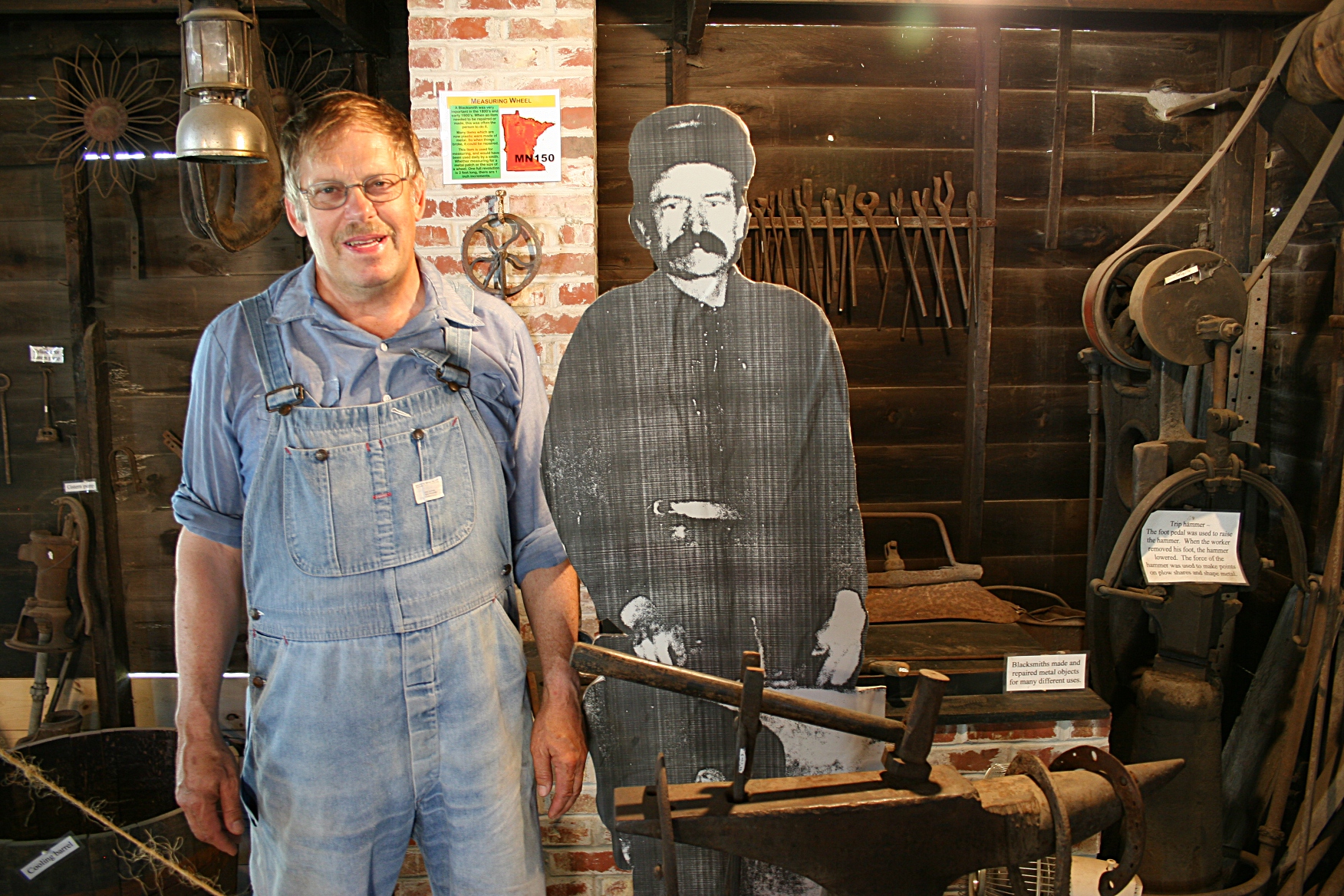
John in Frank’s blacksmith shop where, “all the equipment in the shop such as wheelbenders, drill presses, bench vises, foot grinders, files, hammers, tongs and other equipment were used by Frank.”

Rusty tools and horseshoes cling to the walls and a cut out, near life-sized photo of Frank leans next to an anvil draped with horseshoes as great great grandson John speaks about his interest and work in preserving the blacksmith shop.

He remembers biking past the abandoned blacksmith shop as a kid, asking his father about the faded signage on the building. His father and a great uncle did occasional blacksmithing, but nothing like that of three generations of the Styndls prior who earned their livelihoods as blacksmiths.

John dreamed of someday moving Frank’s shop to the Village of Yesteryear. Eventually that became a reality and, from 1991 – 1996, his family and neighbors worked to restore the building. He even found an old house chimney from the appropriate time period, knocked off the mortar and rebuilt the 240 bricks into a new chimney.

Family photo of John and Frank Styndl.

“I’m glad to be able to preserve it,” John says of F. Styndl’s blacksmith shop. He’ll tell you, though, that he gets a bit uneasy with Great Great Grandpa Frank’s likeness watching his every move.

About that time in our conversation, another visitor steps into the blacksmith shop and shares how he remembers, years ago, observing his local blacksmith, bent over, toiling in the heat of his shop. “He was always cranky,” he notes.

The three of us laugh and figure we’d be crabby, too, in such uncomfortable working conditions.

It is stories and remembrances like this which make a building like the old blacksmith shop more than just a structure occupying space at a site such as the Village of Yesteryear.

Stories connect buildings to people and to the past.

You need only take the time to pause and ask, to listen and to observe, if you are to understand the history that has molded lives and communities and is still shaping the future.

CLICK HERE TO READ a previous blog post about the Steele County Historical Society’s Extravaganza at the Village of Yesteryear. Then click here to read a second post on the event.

© Copyright 2012 Audrey Kletscher Helbling


Always obey Rule 99 & other historic reflections July 12, 2012

VISIT A PLACE like the Village of Yesteryear in Owatonna, especially during a celebration such as last weekend’s Steele County Historical Society Extravaganza, and you get an in-depth glimpse of life back in the day.

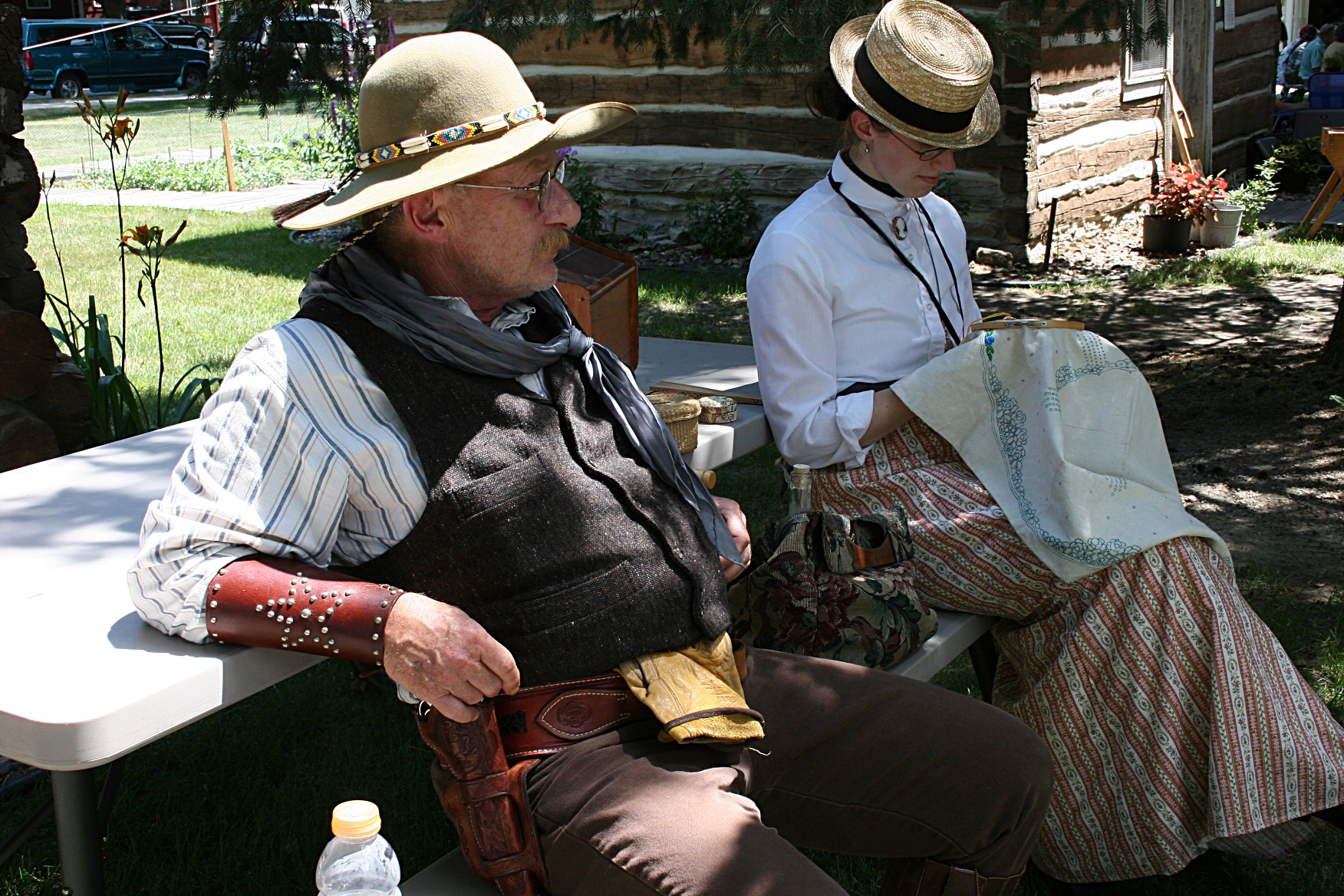
Dressed in period costumes, members of the Old West Regulators added a real-life element to the Extravaganza.

Guides, costumed reenactors and others, with their extensive historical knowledge, most assuredly add to the educational and entertainment value.

But, because it is impossible to speak with every one of them or to observe every activity or to read every informational sign, one must sometimes rely on simple observations to consider the historic stories and realities which define life years ago.

I therefore present these Extravaganza photos with basic information. Much more lies open to your interpretation, influenced perhaps by your experiences or the stories passed down from generation to generation within your family. That is your personal history. Take it. Remember it. Own it. Pass it along.

Memories of attending a one-room country school remain for many, including my 55-year-old husband. He attended Chimney Butte School in rural North Dakota and recalls the day students were kept indoors during recess because of coyotes roaming the schoolyard.

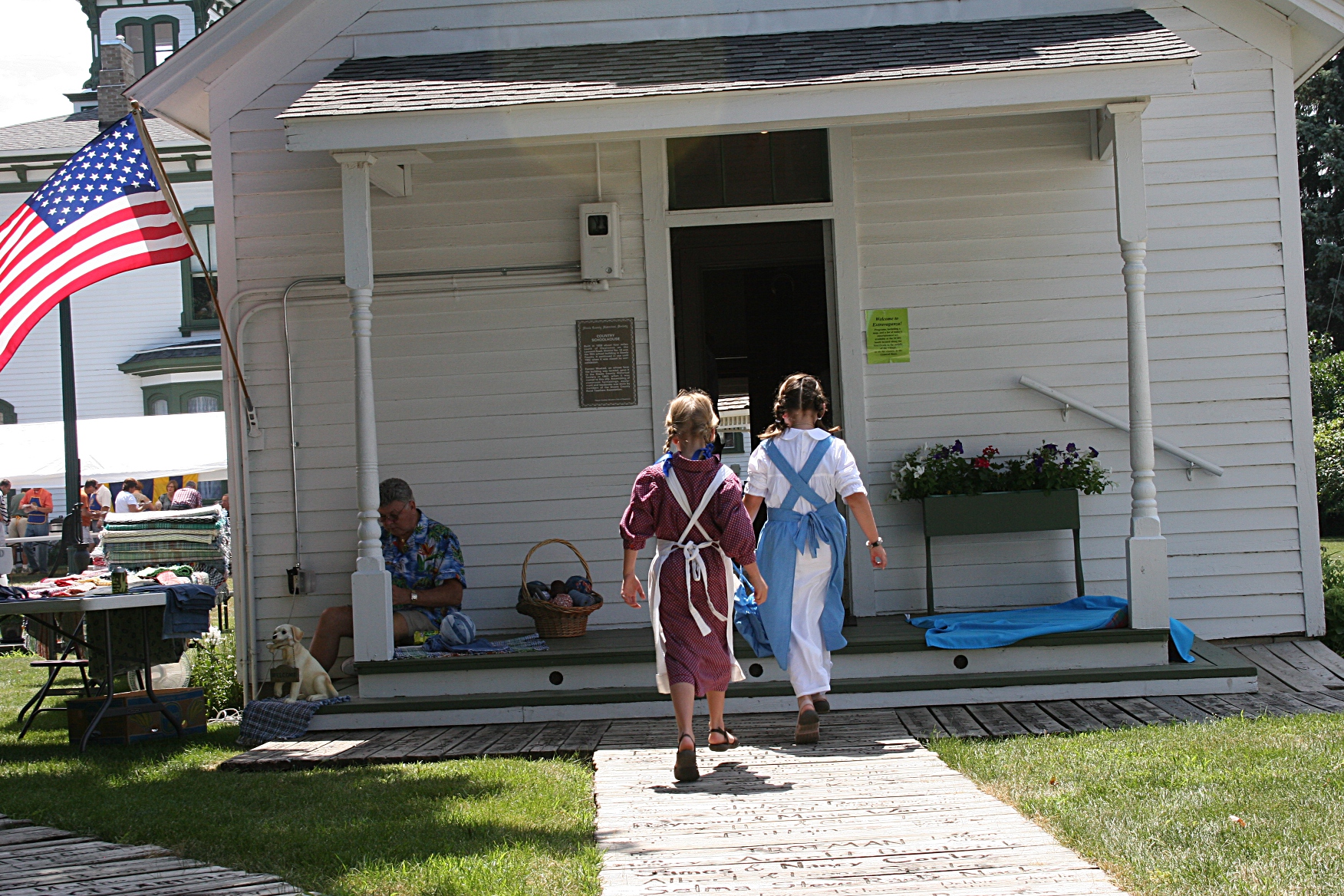
What memories does the District 14 country schoolhouse, pictured above, hold for those who were taught in this 1856 building four miles south of Owatonna until the school closed in 1962 due to consolidation?

Hollyhocks stand strong and sturdy outside that same schoolhouse at the Village of Yesteryear.

But for me, hollyhocks belong next to the milkhouse, an odd place for flowers, it would seem. Yet, on the southwestern Minnesota dairy and crop farm where I grew up, that was their spot, a splash of beauty perhaps more for my mother than for her farmer husband.

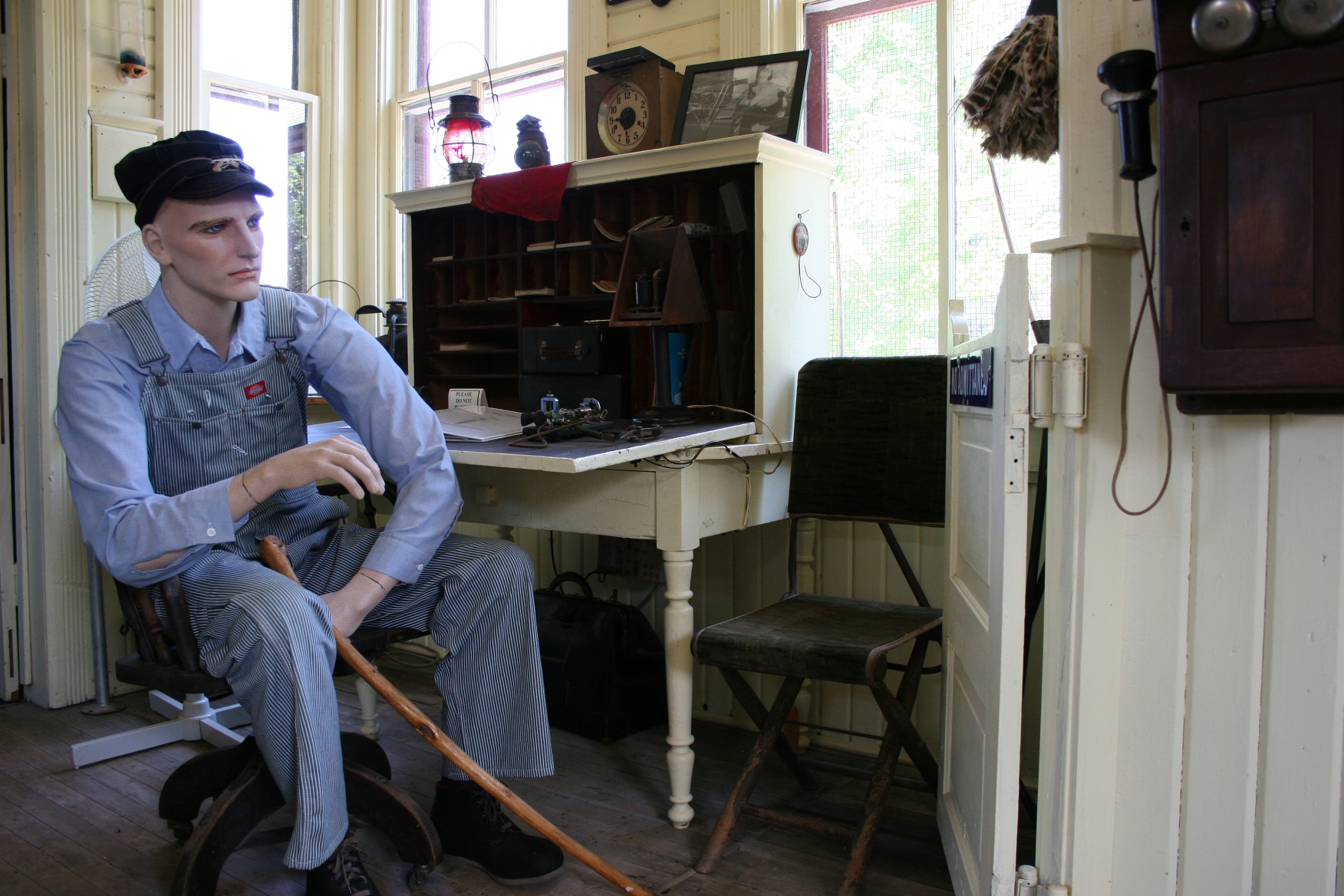
 A scene recreated in the 1866 Bixby railroad depot leaves you wondering about the railroad crew and passengers who waited here to board trains. Where were they going? And, for the passengers, why?

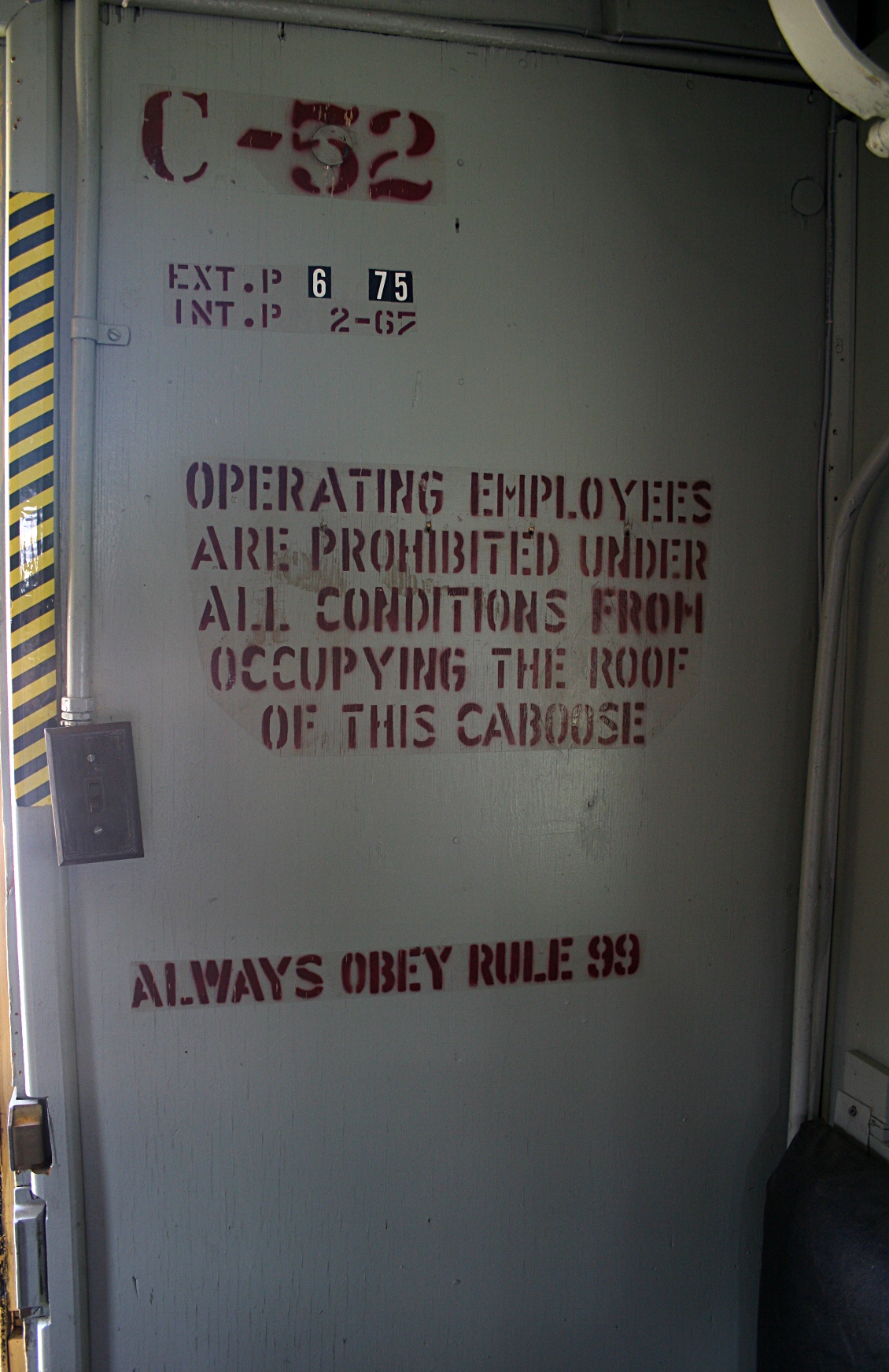
And then you see this sign inside an old caboose and completely forget about those passengers and question why the railroad employees climbed onto the roof of the caboose because they certainly must have or there would be no Rule 99.

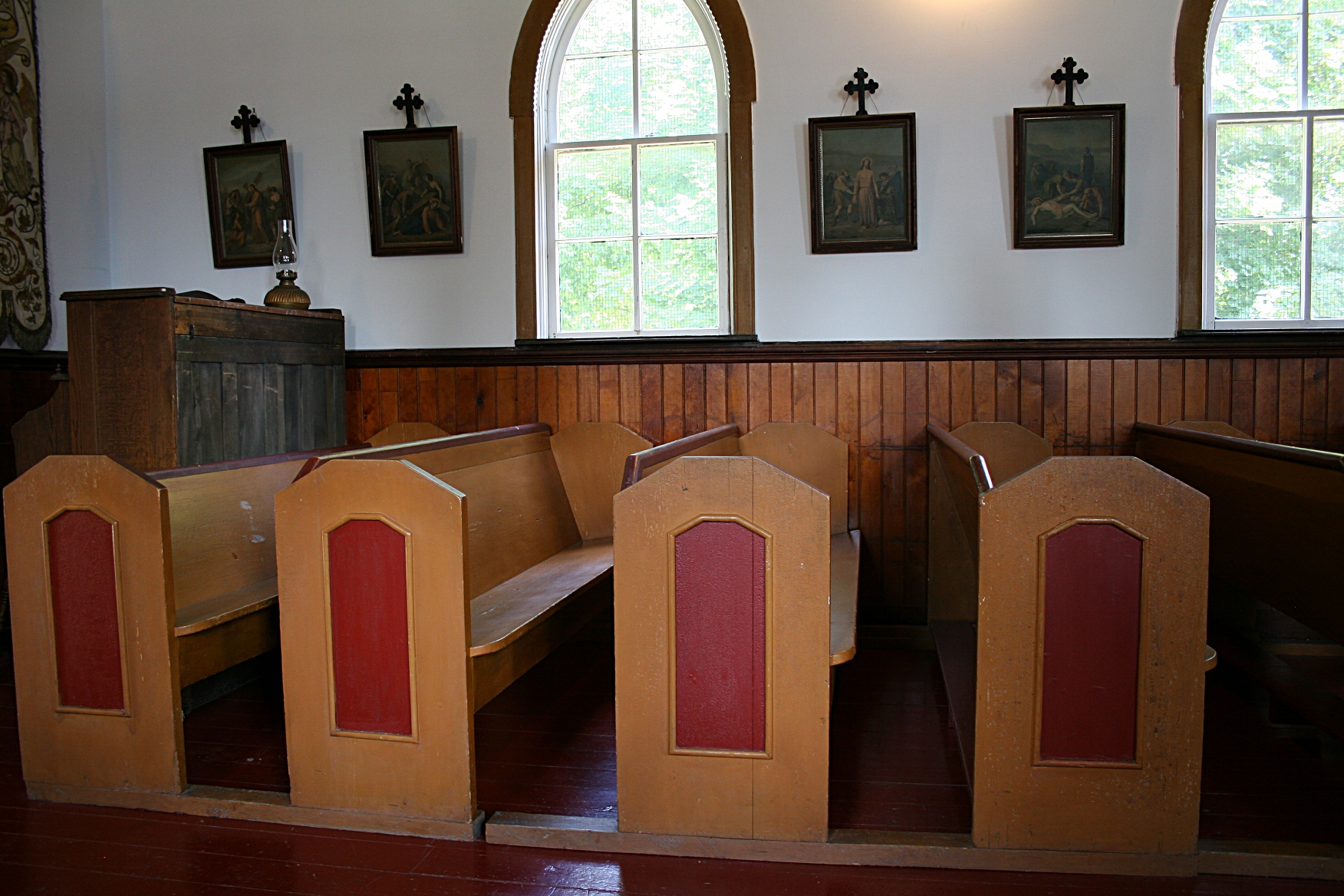
How many tears were shed, in joy and in sorrow, by those occupying these pews in the 1891 St. Wenceslaus Mission in Moravia Church built in 1891 in Moravia seven miles south of Owatonna? Who crafted these pews? And how did parishioners feel when their church closed in 1952?

Perhaps you could ask Tony Seykora, whose mother, Mary Meixner, attended St. Wenceslaus and whose daughter, Susan, was married here. He wasn’t sharing any stories on Sunday while touring his ancestral church at the Village of Yesteryear.

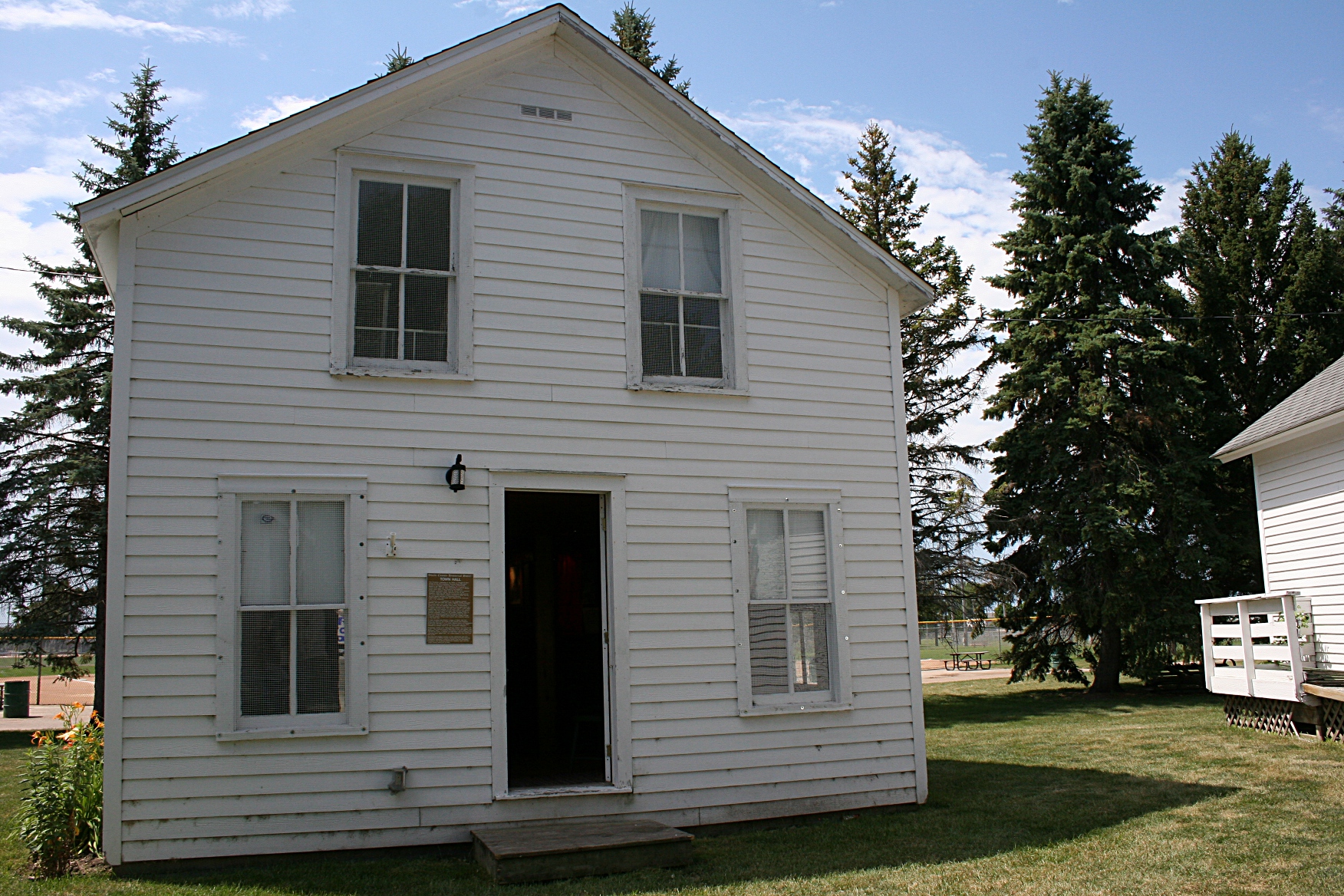
 Oh, the stories this old town hall, the Owatonna Town Hall built in the late 1850s, could tell about those who met here and shaped the future of the city.

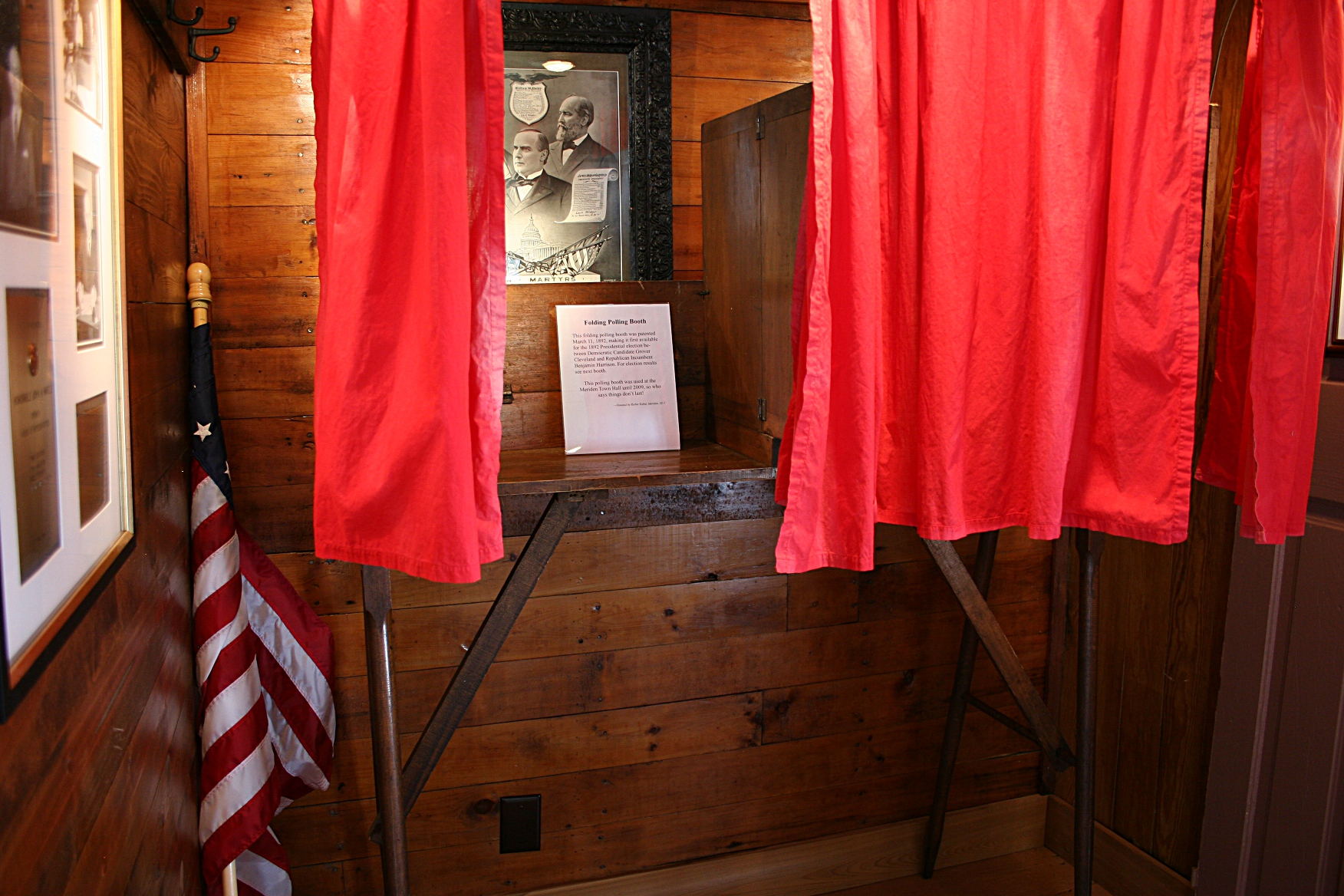
And if you could peek over their shoulders, would you to see how those in the Meriden area voted? This folding polling booth was patented in March of 1892 making it first available for the Presidential election that same year. The polling booth was used at the Meriden Town Hall until 2009. Until 2009, people.

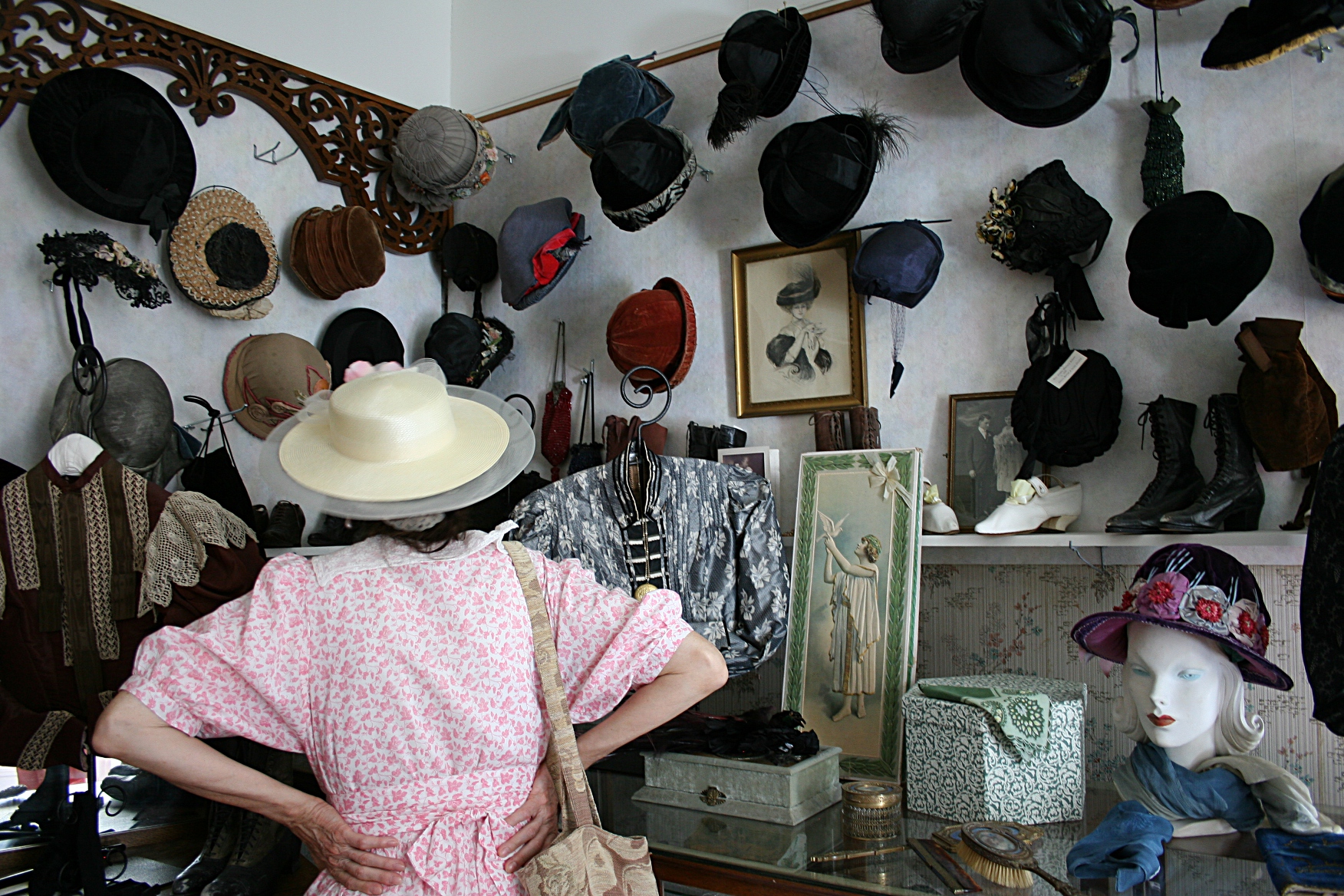
Who wore these hats displayed inside the historic 1868 Dunnell House, home of Minnesota legal scholar, educator and Congressman Mark Hill? Were they hats of mourning, hats of celebration, practical hats…?

A volunteer who works with the Blue Earth County Historical Society and the Betsy-Tacy Society in Mankato in decorating vintage hats studies the collection for ideas.

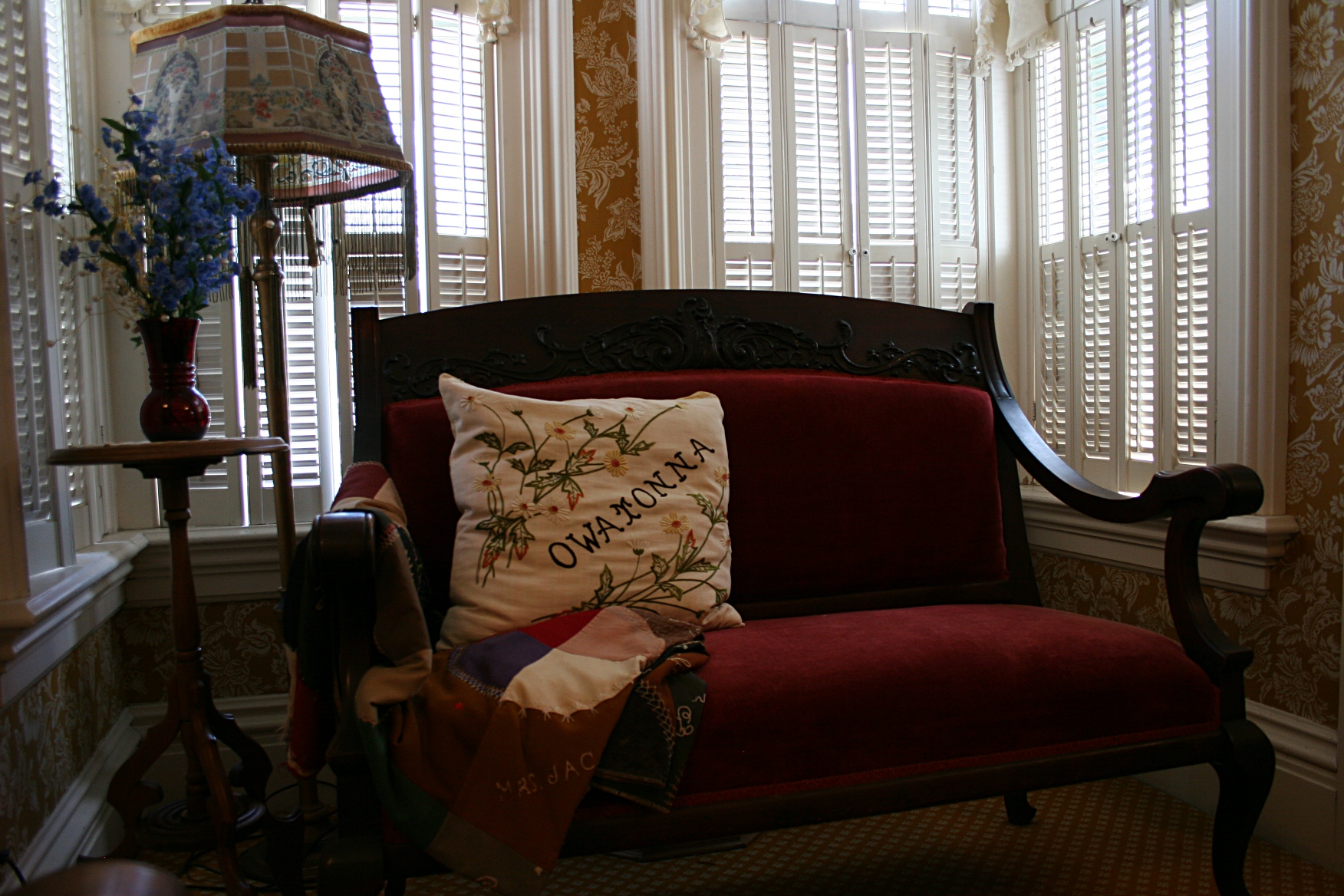
Also in the Dunnell House, a nook in the parlor offers a place for quiet conversation. Oh, to have been there, eavesdropping…the stories and secrets you may have heard about/from Congressman Hill and other legislators.

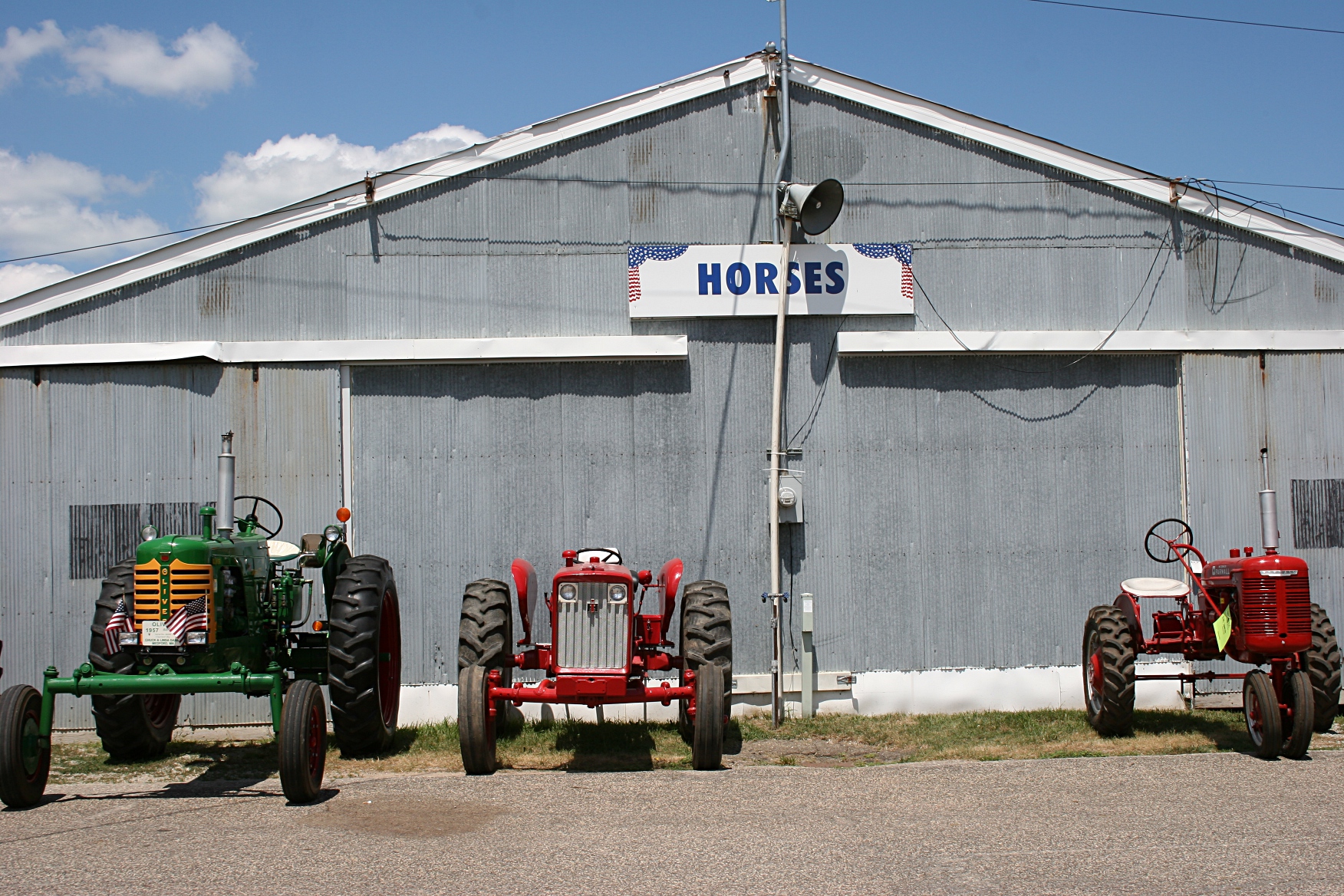
Horse power, but certainly not horses…these vintage tractors were parked next to the horse barn at the Steele County Fairgrounds. Surely they would speak of long, hard days on the farm, their wheels weighed down by the burdens of a farmer’s worries and the uncertainties that have always been a part of farming from the early days of Minnesota to current day Minnesota.

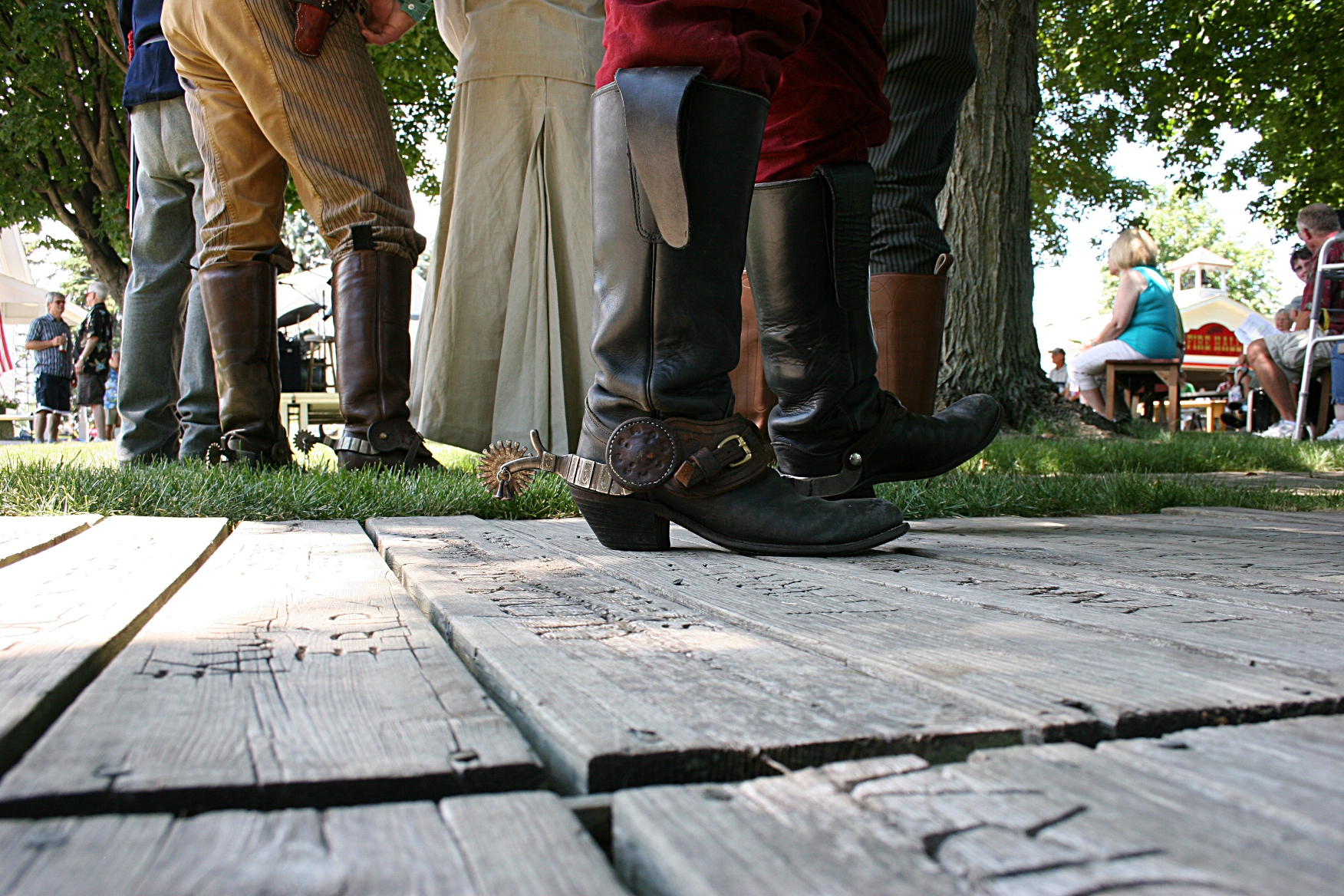
What is that saying? You haven’t walked a mile until you’ve walked in my shoes. Consider that, how challenging it would have been to walk in the boots/shoes of your ancestors for whom life presented so many daily challenges simply to survive.

FYI: To learn more about the Steele County Historical Society, click here.

CLICK HERE to read my first blog post about the Steele County Historical Society Extravaganza. Watch for one final, upcoming post.

© Copyright 2012 Audrey Kletscher Helbling


Steele County showcases history in a big way July 10, 2012

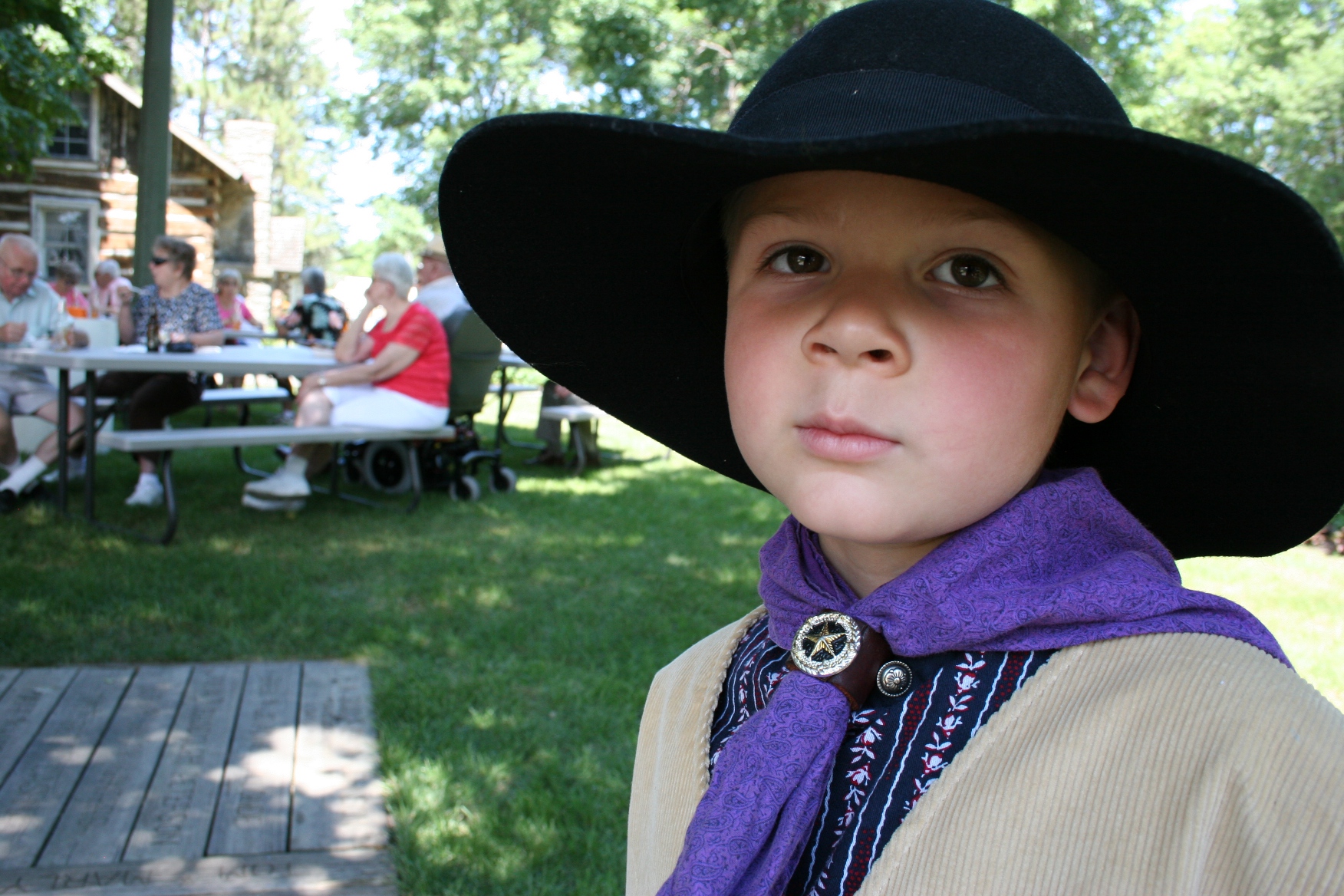
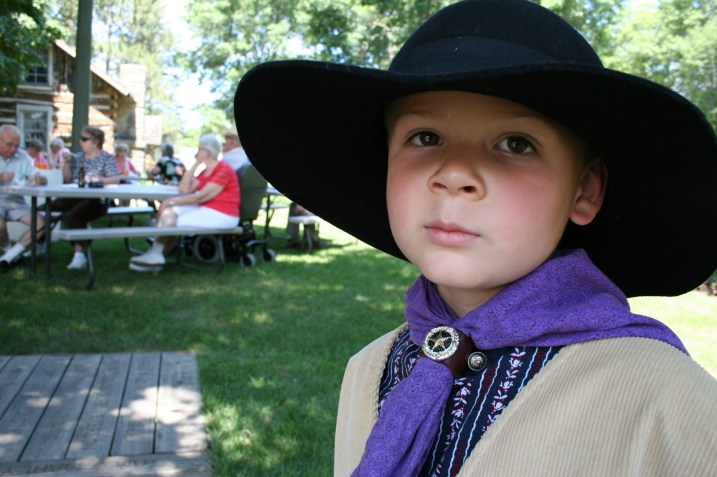
Five-year-old David of Faribault, aka Apache Shadow, was among costumed reenactors from the Old West Regulators.

WHEN THE STEELE COUNTY HISTORICAL SOCIETY in Owatonna throws an extravaganza, they put on a heckuva an event.

Late Sunday morning my husband Randy and I headed about 15 miles south on Interstate 35 to the Village of Yesteryear for the historical society’s 26th annual celebration of history. I cannot believe that I’ve never known about this extravaganza, which I’d recommend to anyone interested in a free family-friendly day of learning about the past.
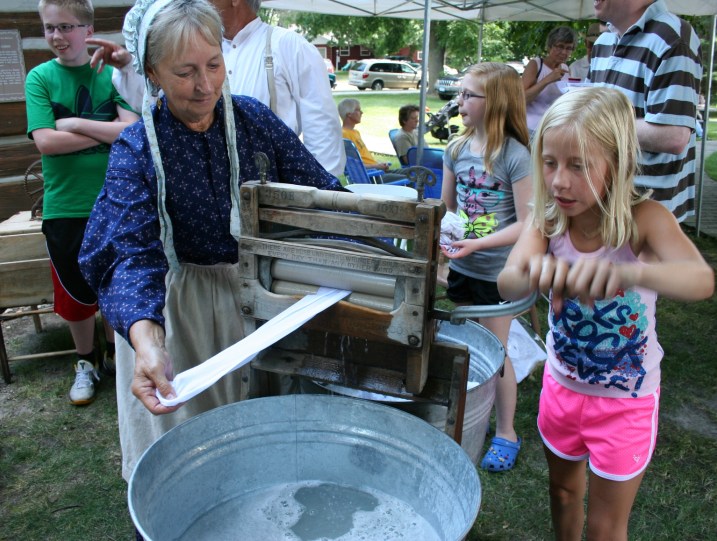
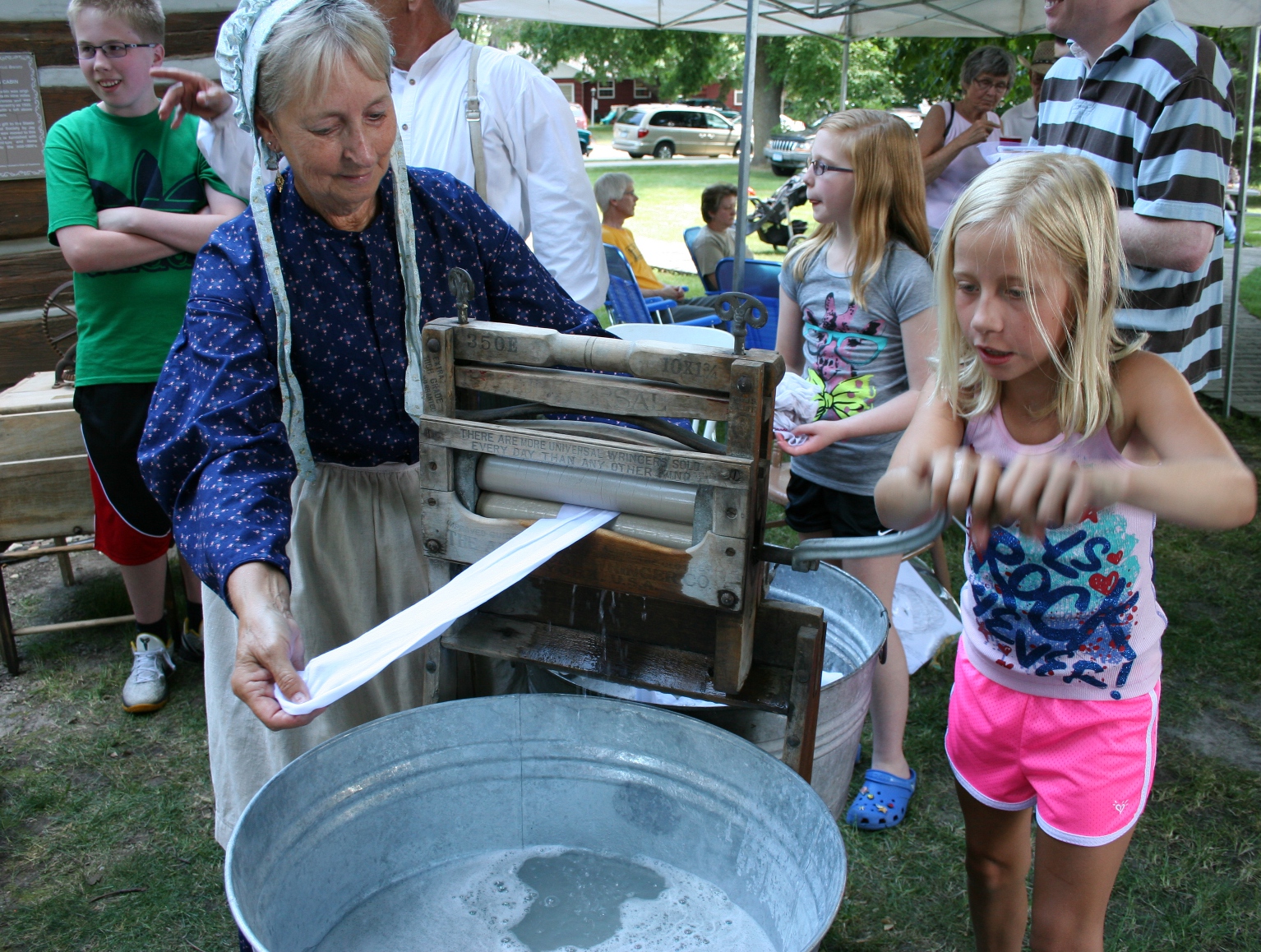
Kids, like Kennedy, right, were drawn to the water and the old-fashioned wringer.
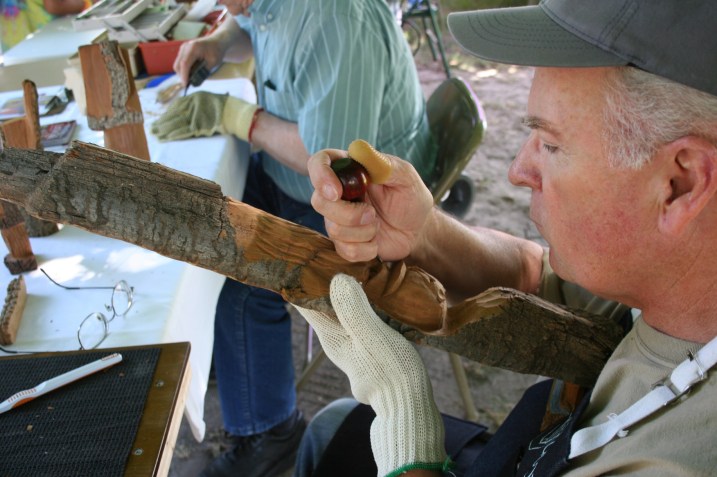
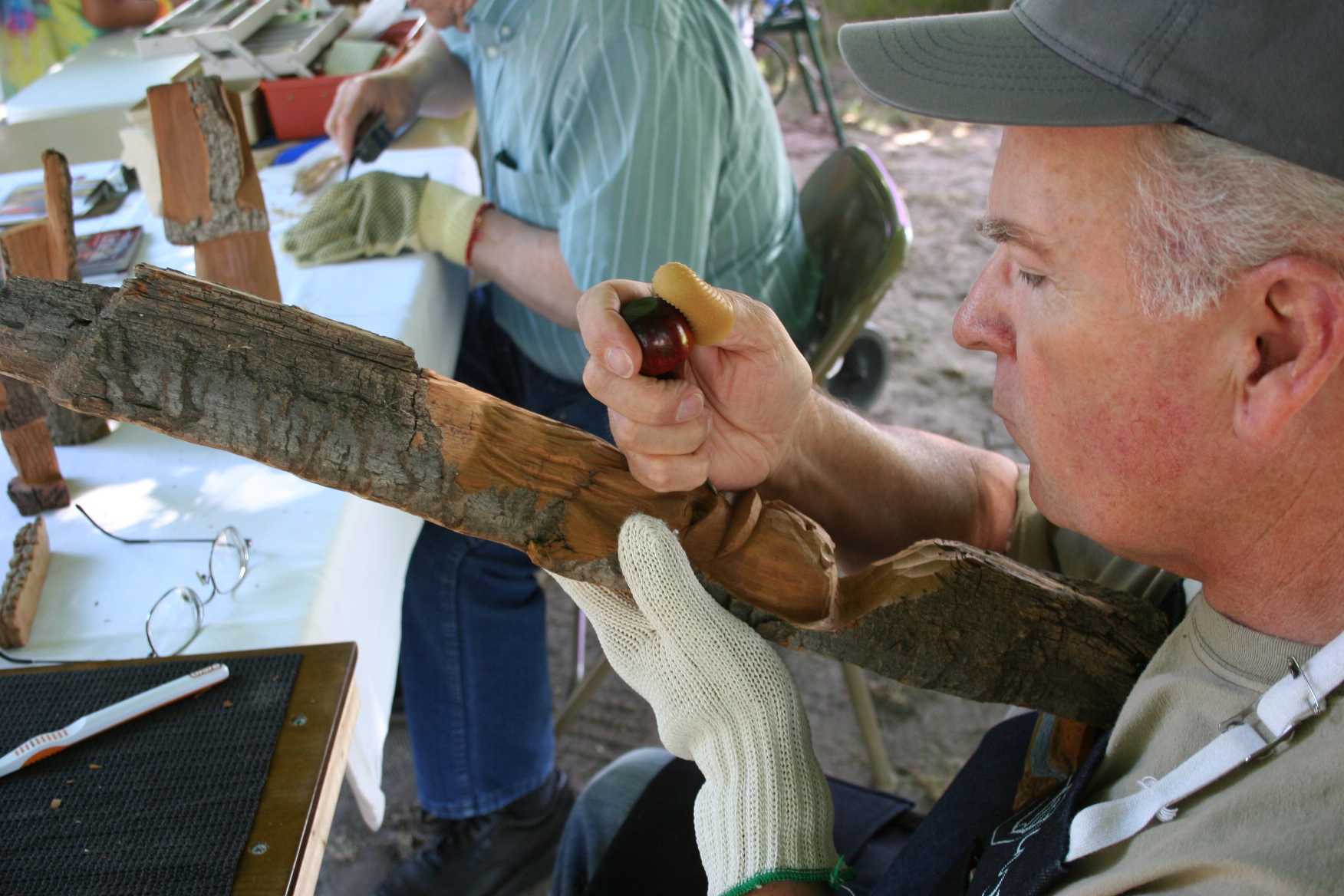
Owatonna resident Tom Gray carves a mountain man.

From hands-on demonstrations of rope making to washing clothes the old-fashioned way to printing on an aged press to carving wood and working with leather, and more, we observed an array of dedicated and passionate historians showcasing yesteryear.
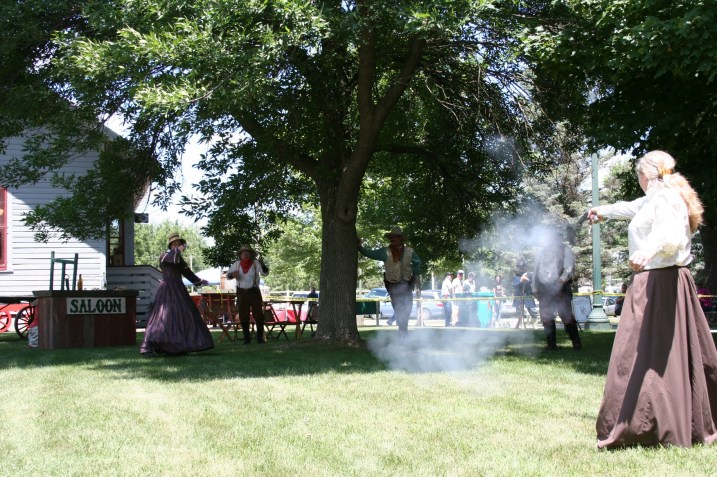
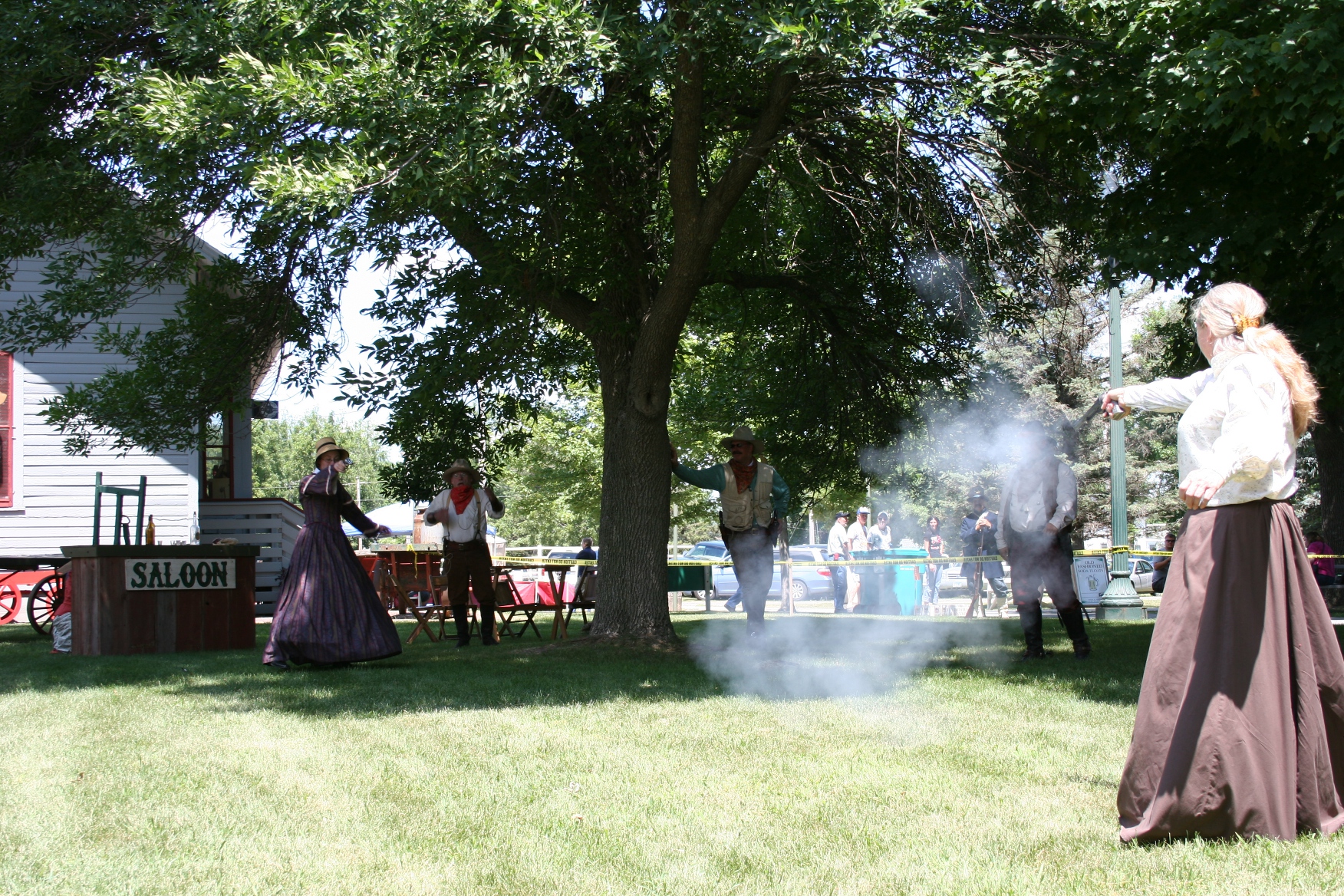
Two actresses shoot it out in a scenario presented by the Old West Regulators.

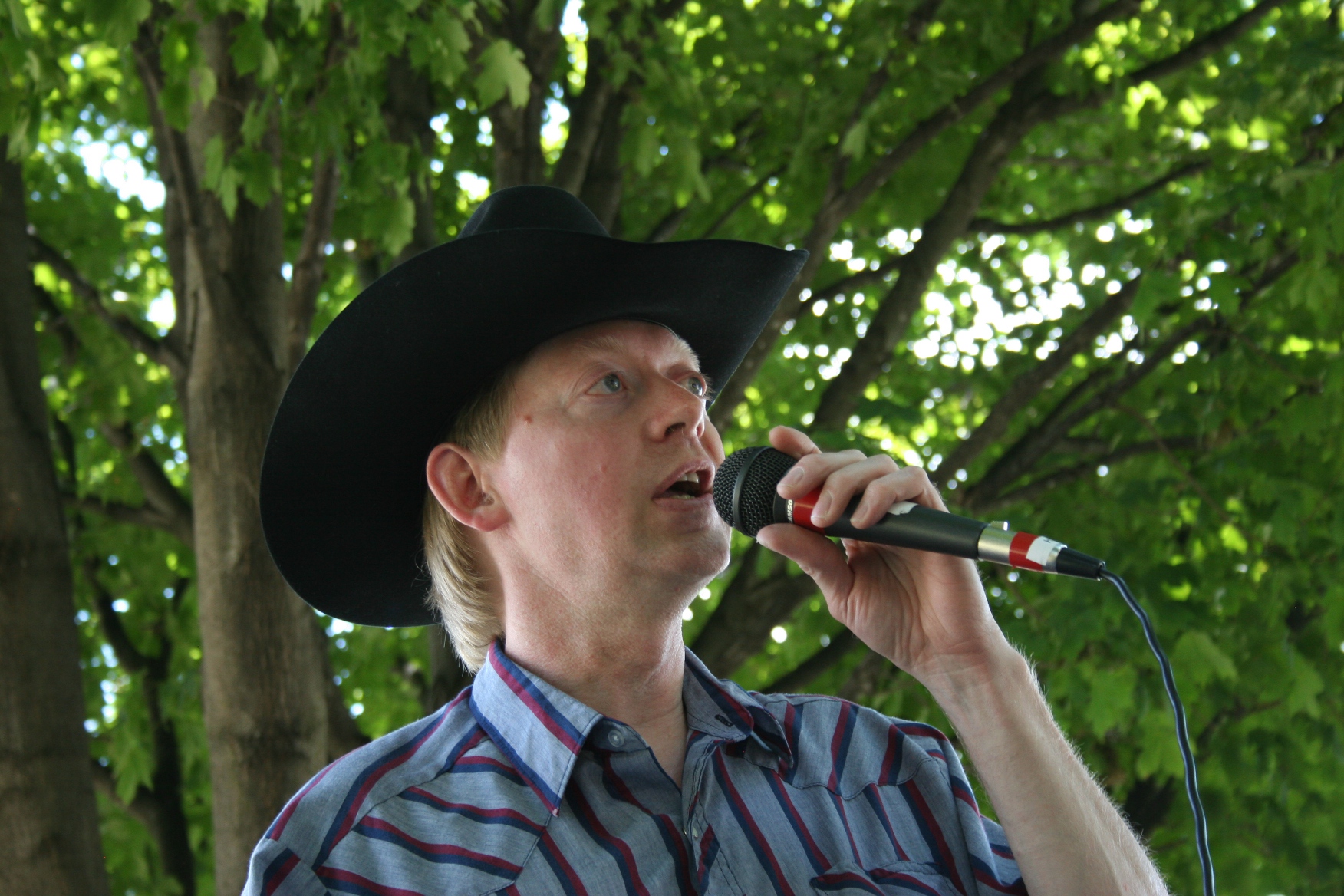
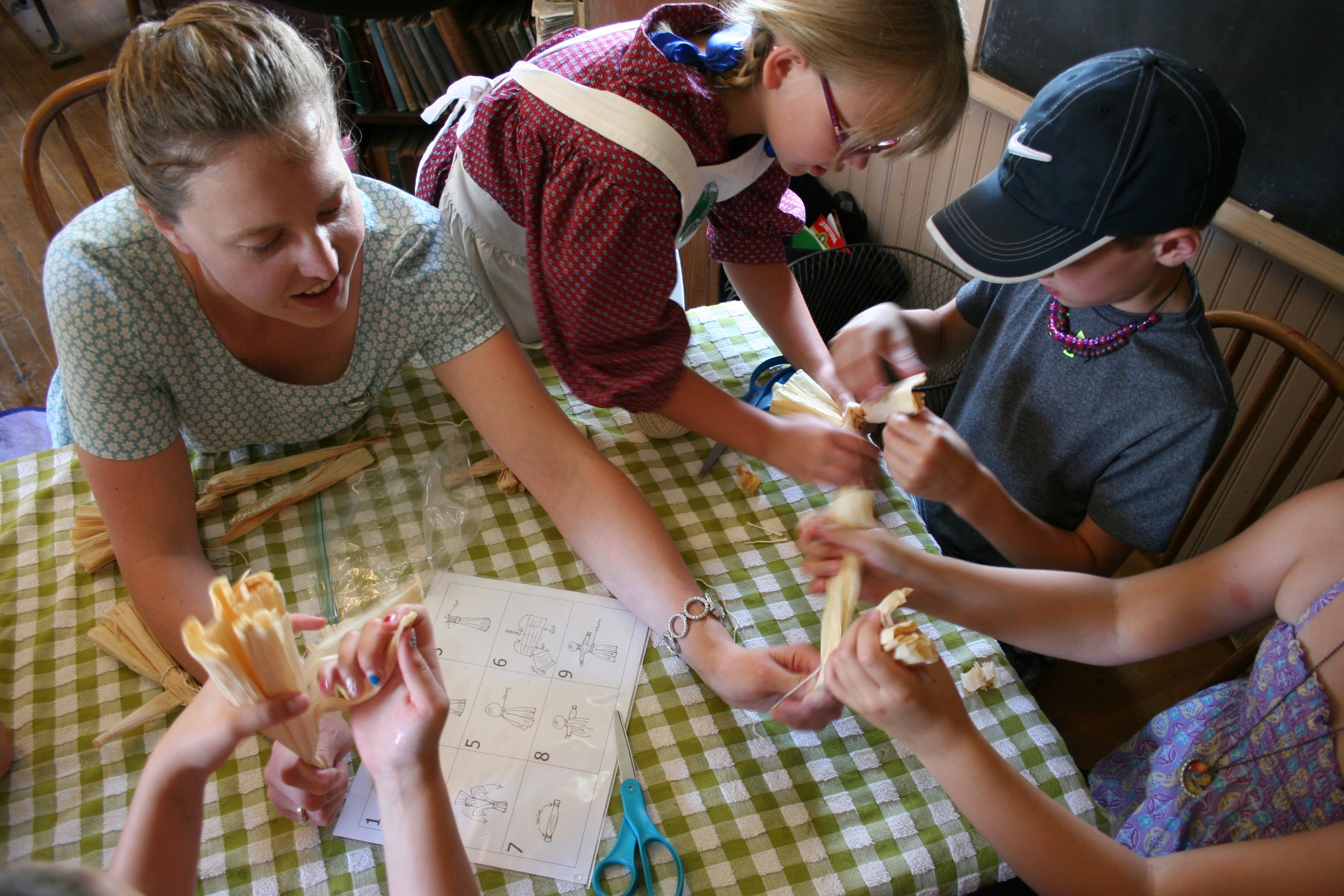
Add in costumed reenactors modeling period attire and shooting it out in mini dramas; a country singer crooning Hank Williams’ “Your Cheatin’ Heart;” kids circled around a table in an old country school crafting corn husk dolls; tractors snail-crawling toward the finish line in a slow tractor race; the tantalizing aroma of shredded pork sandwiches and the refreshing promise of icy root beer; 15 buildings, most of them vintage, plus a caboose to tour, and you have a full day.
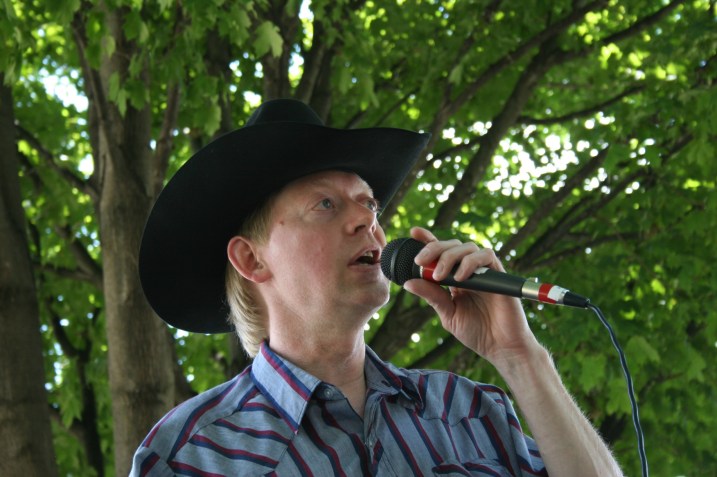
Dunnell Lenort, who has performed at the Grand Ole Opry and elsewhere, presented a selection of songs, including “I Fought the Law.” It was, he said, “for those who have been on the wrong side of the law.”
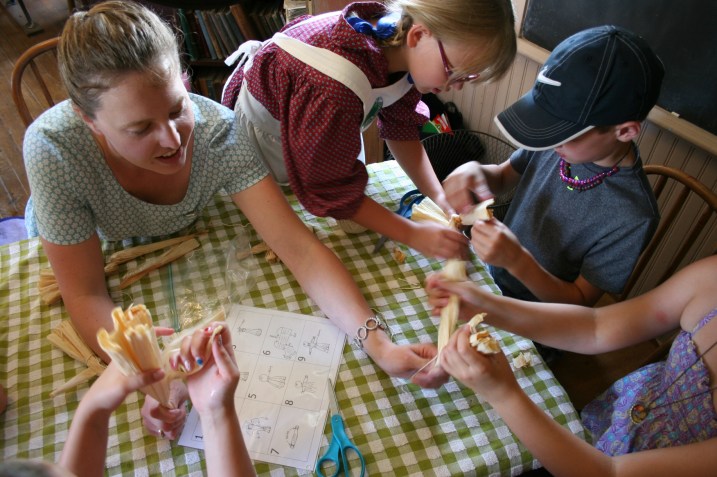
Kids learned how to make corn husk dolls inside the former District 14 country school, built in 1856 and located about four miles south of Owatonna along Lemond Road. The school was closed by consolidation in 1962.
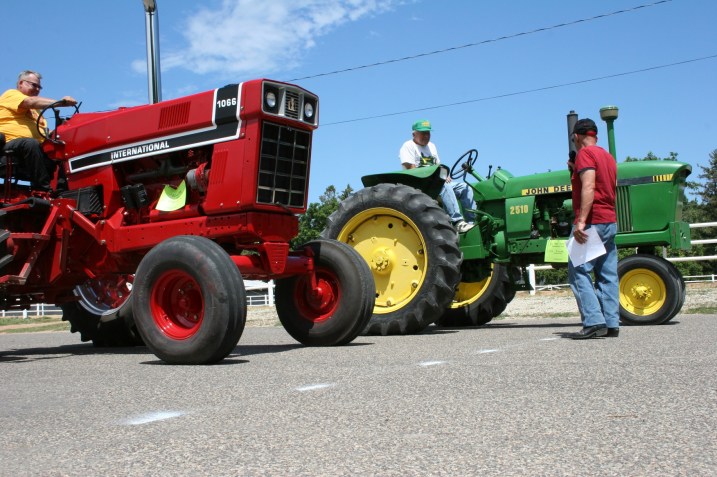
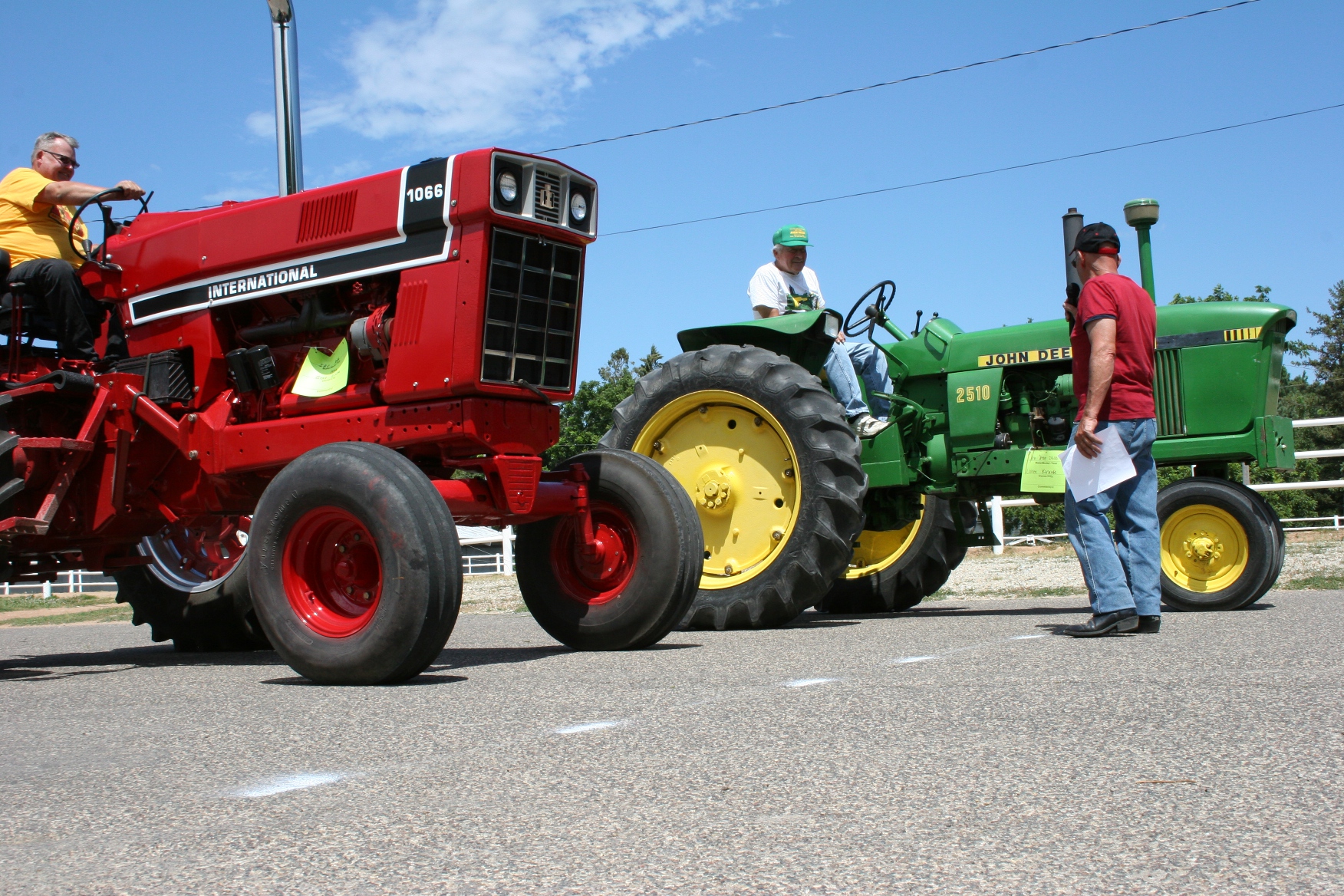
Lest you think the John Deere won this race, you would be wrong. The winner here was the tractor which drove the slowest along about a 50-foot stretch to the finish line in a slow tractor race.

Randy expected we would be there an hour; we left more than four hours later and could have stayed longer. We missed the vintage baseball game and other events.
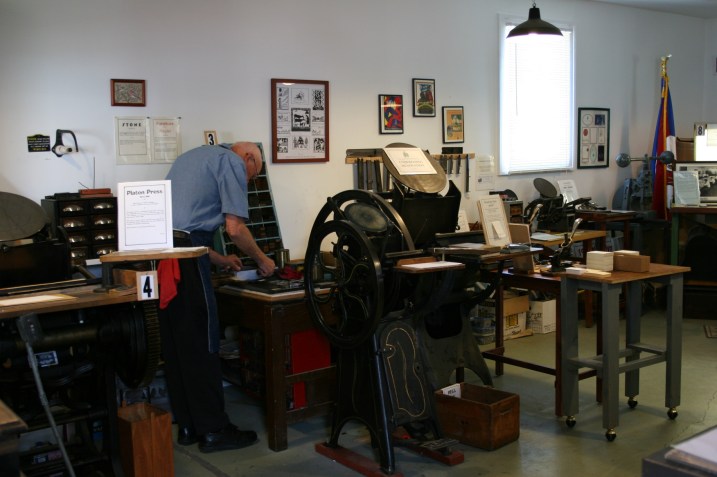
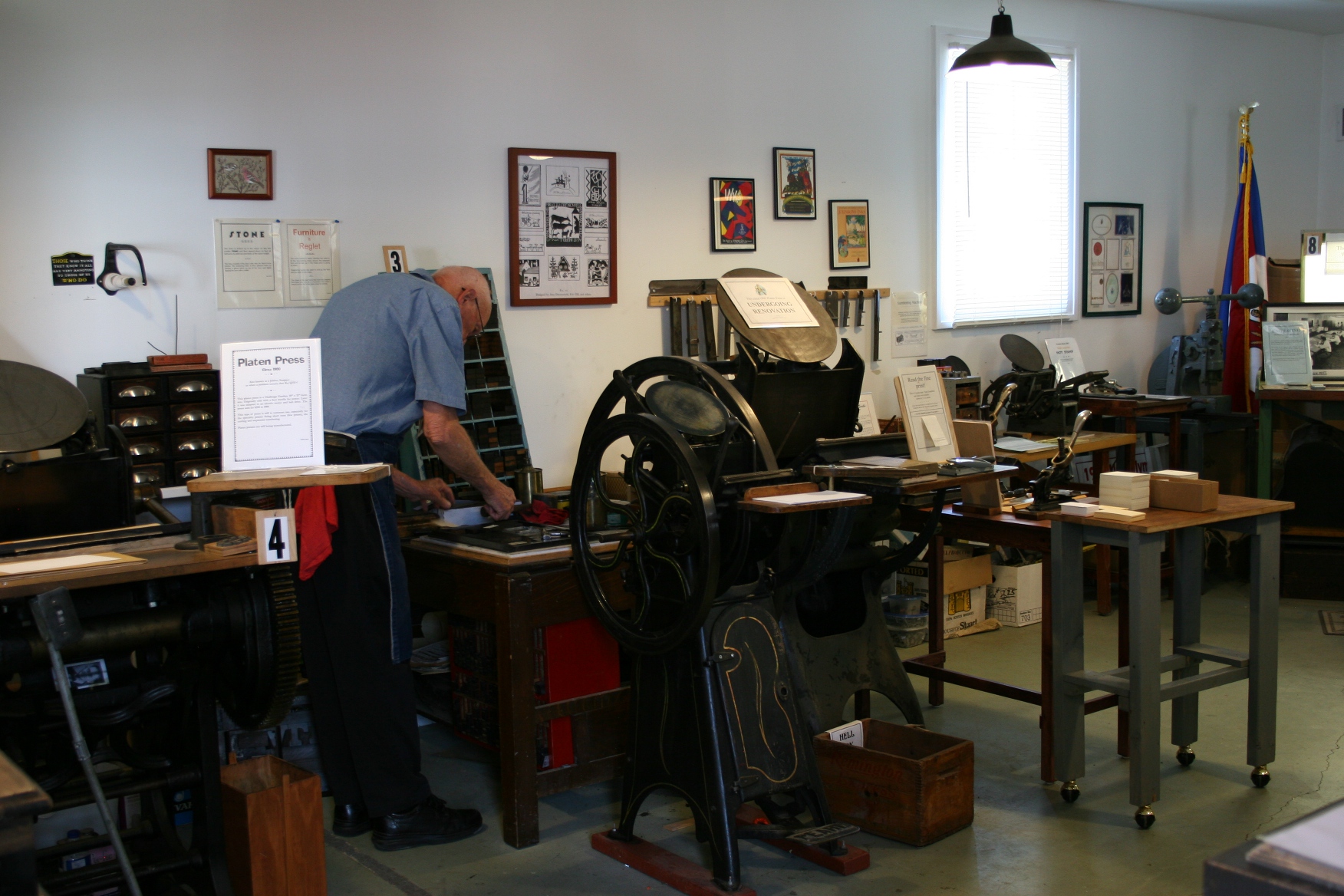
Pete the printer at work in the Village of Yesteryear print shop.

Of course, my spouse will tell you that, had I not been so interested in the village print shop, we could have knocked perhaps 30 minutes off our extravaganza tour. But given my journalism background; two years of employment at a weekly newspaper which printed auction bills and other items on an old Linotype machine; and my appreciation for the art of printing, I was fascinated by the working print shop and its resident printer, Pete Baxter.

Randy indulged my print obsession and I, likewise, later feigned interest in the engine display over in the agricultural section of the extravaganza.

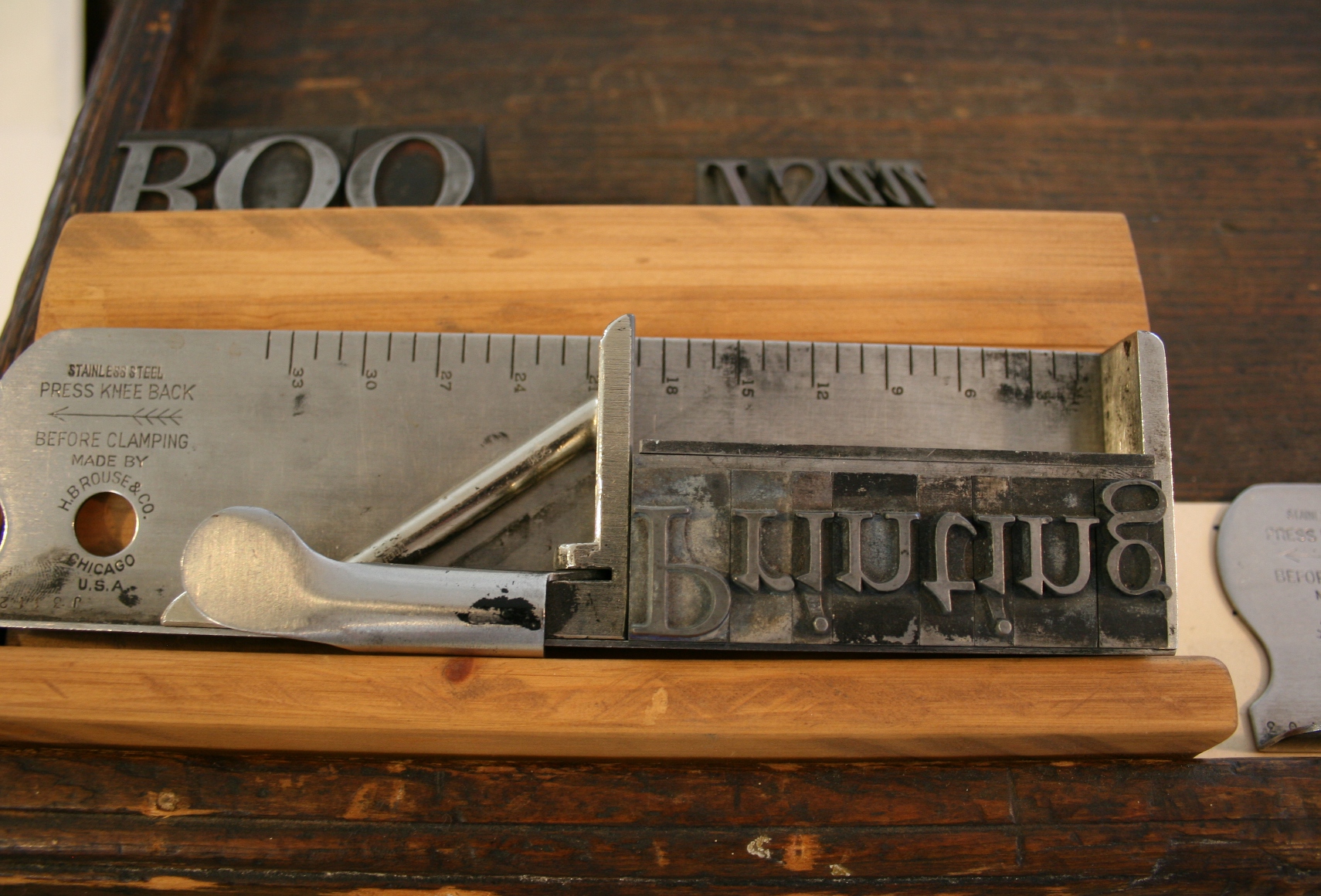
Letters laid out to spelling “printing.”

Let’s back up to that print shop and printer Pete, who once owned North Cal Printing, as you would expect, in California. Family brought Pete to Minnesota about a dozen years ago. And the old print shop at the Village of Yesteryear was one of the deciding factors in his settling specifically in Owatonna.

Today he’s an enthusiastic volunteer who dons a printer’s apron as he educates visitors, spins a few stories and inks up the press to spew out bookmarks and cards with messages like “Without a love for books the richest person is poor.”

Spend any time with this man who owns a library of 1,500 volumes; is a member of The Wördos, an organization which meets monthly in the metro to discuss errors in local and national media; and who knows the ins and outs of the printing business, and your interest in printing is likely to grow, too. When he mentioned the bit about The Wördos and their dissection of media grammar, usage and more, I wanted to grab back the business card I’d handed him for fear of him scrutinizing my writing. But I didn’t.

I wasn’t about to allow my insecurities to interfere with learning from an old-school printer educated in the 1940s at California Polytechnic State University during the transition from letterpress to offset printing.

Pete’s interest in printing stretches back to his childhood when he often accompanied his dad to a California street car station and stood at the window of a nearby newspaper office watching printers at work.

One day, as Pete dramatizes with arms gesturing, a worker exited the print shop, grabbed him by the arm and shouted, “Get your snot nose off my window.” He hauled young Pete inside, gave him a tour, and, as the printer says, “I was hooked.”

The next Christmas, he received a toy printing press and a case of type. Years later, he would earn a printing degree from Cal Poly and eventually own a print shop.
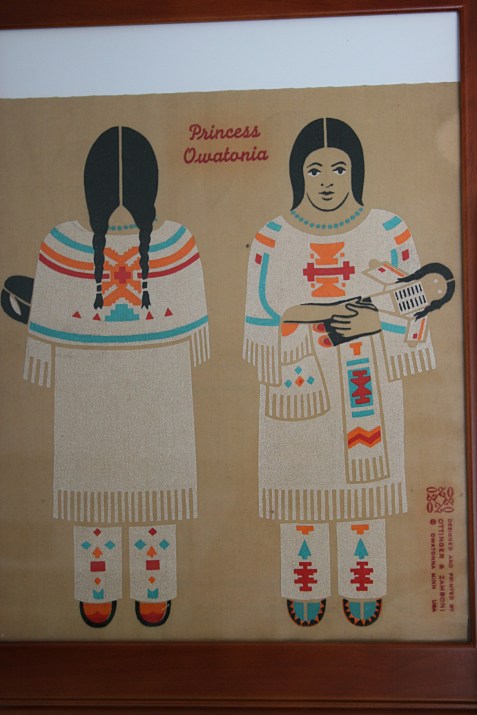
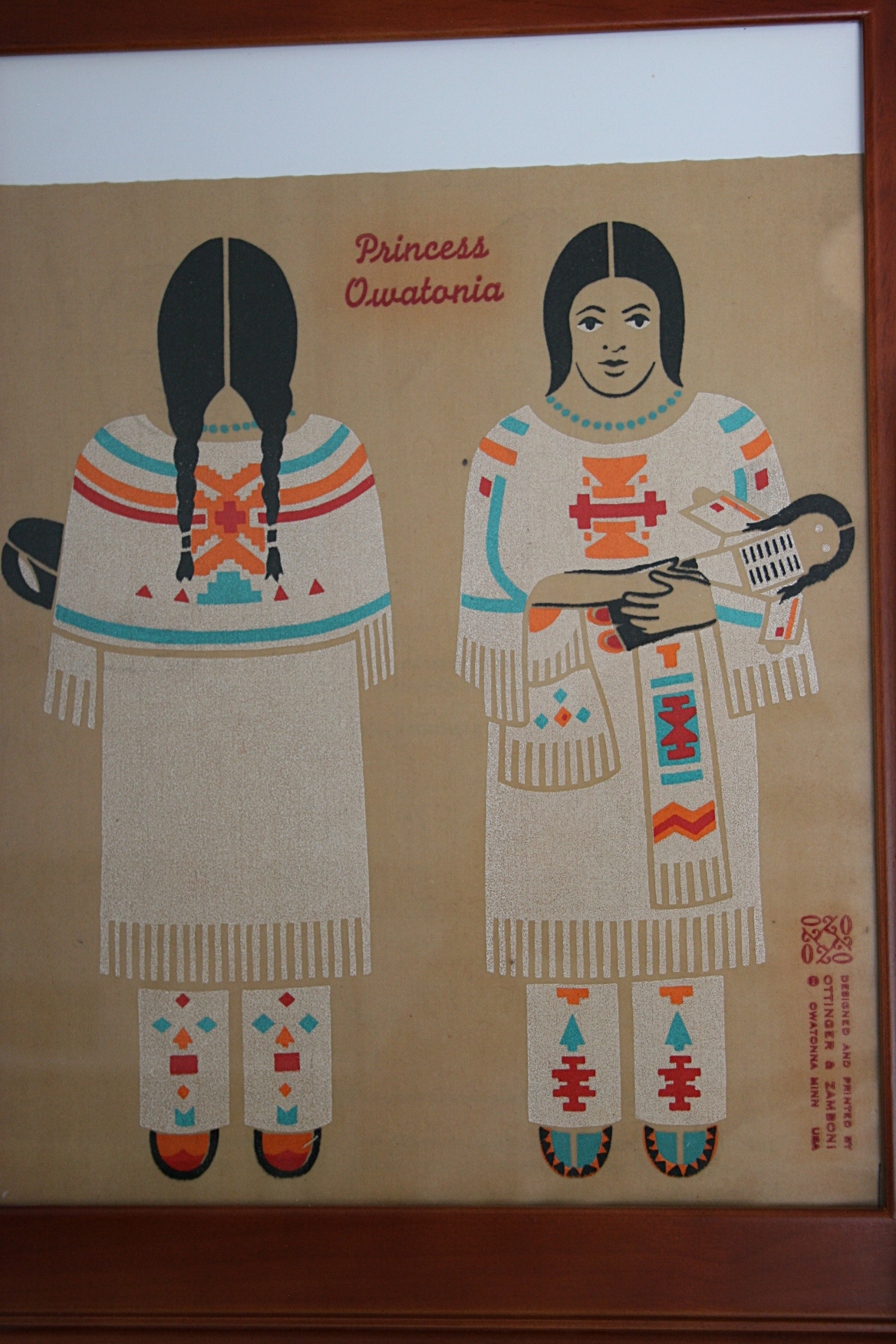
An original OZ Press print of the Indian princess after whom Owatonna is named, on display in the print shop.

That Pete the printer understands and appreciates printing is obvious to anyone who takes the time, as I did, to listen. He’s quick to spotlight the work of Owatonna’s probably most notable press, OZ Press. OZ co-owners Alice Ottinger and Jean Zamboni—thus the OZ name—donated an 1885 working printing press and artwork to the Village of Yesteryear print shop. Their press specialized in original art printing and silk screening during its 40 years in business, 22 of them in Owatonna.
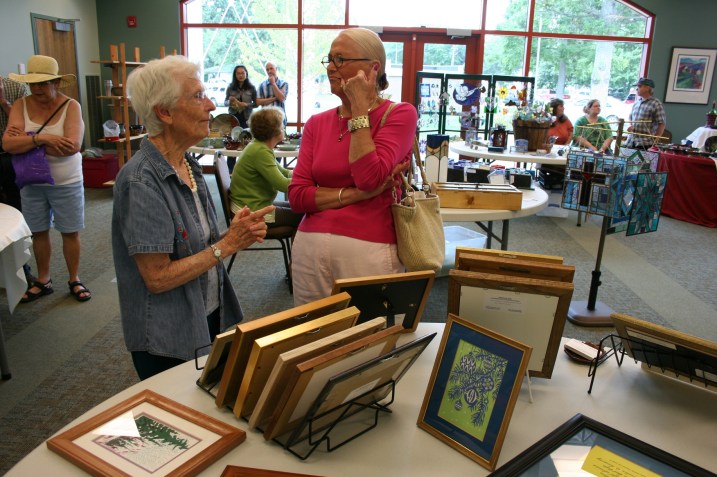
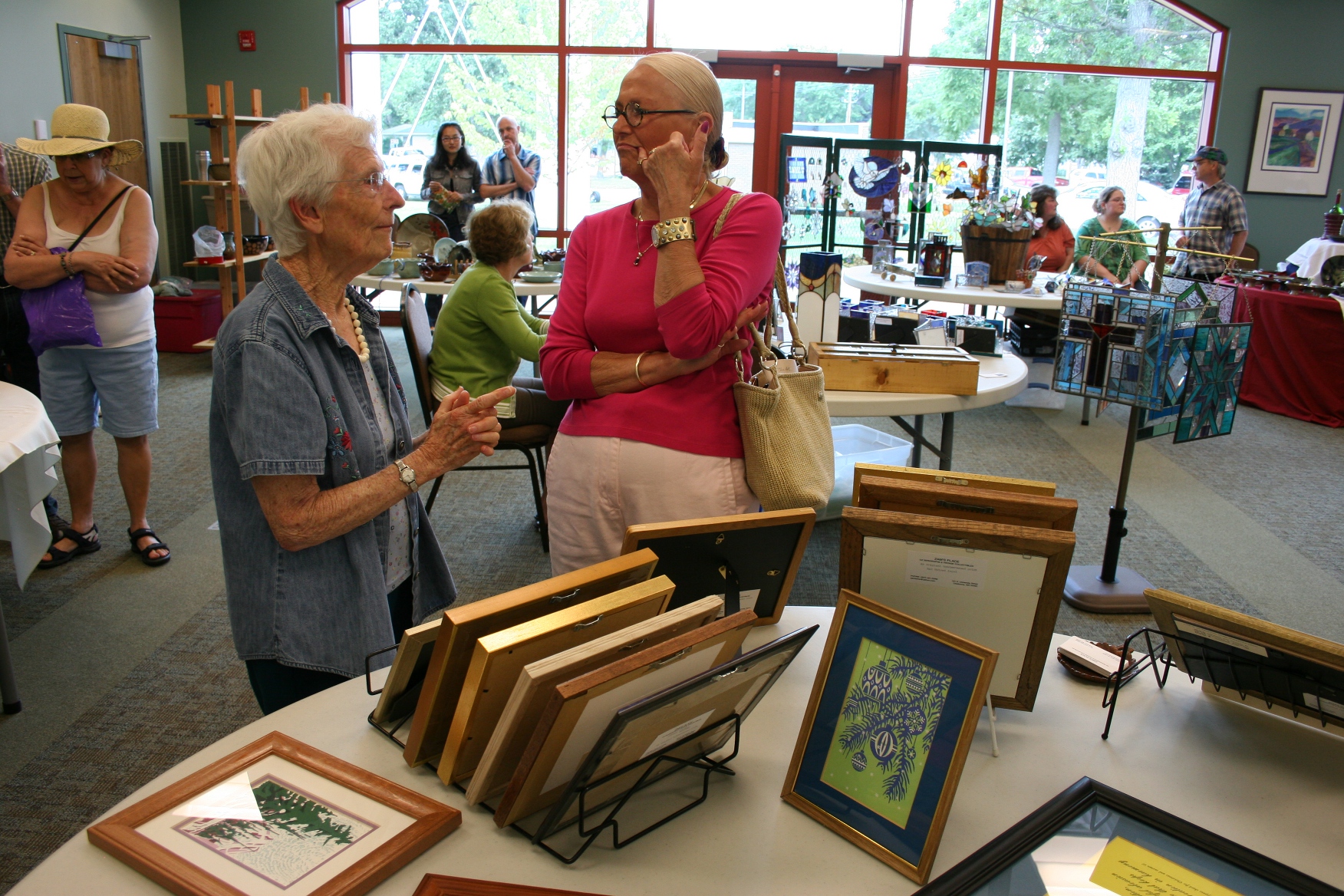
Jean Zambonia, left, talks about OZ Press at the artisan market. Framed OZ Press prints, on the table, were for sale.

Later I met Jean Zamboni in the new Steele County History Center and learned that she taught art at Minnesota State University, Mankato, before opening her press with friend Alice Ottinger. They designed some program covers for the college, did silk screening and eventually determined they could afford to start a press.

“So that was it,” Jean summarized as she stood next to a table where a limited selection of OZ framed prints were sold at the extravaganza. I wish now that I’d purchased one.

And you likely wish, about now, that I’d informed you of the Steele County Historical Society Extravaganza before the event. Mark it on your calendar for next July. Before that, though, you can attend Christmas in the Village, set for 4:30 – 8:30 p.m. Friday, November 30, and again from 10 a.m. – 2 p.m. on Saturday, December 1. The holiday celebration includes sleigh rides, visits by Santa and Mrs. Claus, children’s activities, selected buildings decorated for the season, a cookie sale, music and more. If it’s anything like the summer extravaganza, you will not want to miss it.
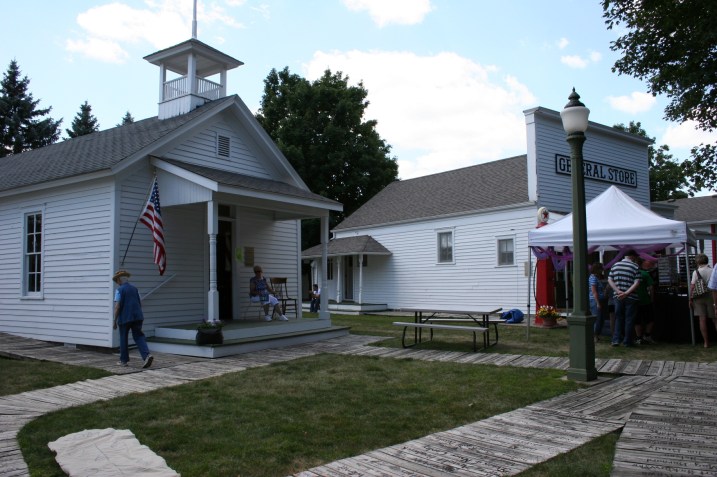
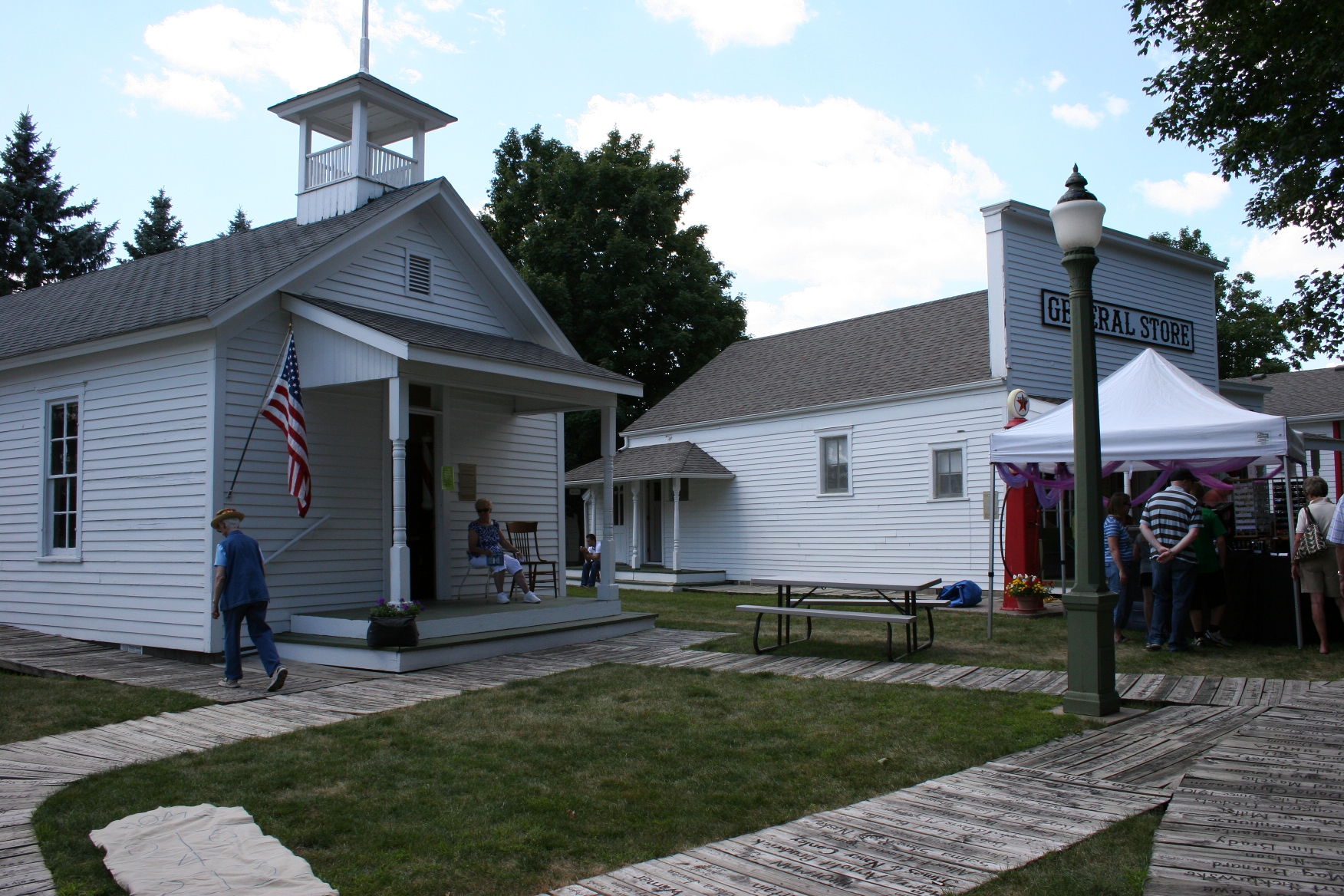
The general store and Museum of Professions at the Village of Yesteryear.

FYI: Click here to learn more about the Village of Yesteryear. Watch for several more posts from the extravaganza to be published here on Minnesota Prairie Roots.

© Copyright 2012 Audrey Kletscher Helbling


“Ted from Owatonna” honored for his firefighting efforts February 14, 2012

Filed under: Uncategorized — Audrey Kletscher Helbling @ 11:05 PM
Tags: , , , , , ,

“I HAVE A NEW-FOUND appreciation for what you guys do,” Ted Leon of Owatonna told members of the Faribault Professional Fire Fighters Local 665 Tuesday evening.

It’s the type of comment I’ve come to expect from Ted, who five months earlier stopped on a Saturday afternoon to extinguish a deck fire at my neighbor’s house. He’s not one to call attention to himself or his actions.

Ted Leon, originally known only as "Ted from Owatonna" extinguishes a fire on and under my neighbor's deck with water from a garden hose around 4 p.m. on Saturday, September 10, 2011.

But on Valentine’s Day evening, the spotlight centered on Ted as he received a Certificate of Recognition from the City of Faribault in a formal presentation before a City Council meeting and then afterward an Emergency Action Award from the firefighters during a casual gathering at the fire hall.

Faribault Mayor John Jasinski reads the city's Certificate of Recognition as Ted Leon, Director of Fire and Emergency Management Joe Berg and Jon Bolster of the fire department look on.

Kristin Klocek, left, and her daughter Kayleigh gather with Ted and Kathryn Leon and sons Jack and Thomas at the informal presentation in the fire hall by union president Ed Hoisington, right.

Ted Leon receives his award from the local firefighters union. This type of award is also given occasionally to those who assist at motor vehicle crashes. An award for helping at a fire was last given a year ago to Xcel Energy, Todd Rost of the fire department said.

It was there in the fire station, surrounded by his family, my neighbors and members of the fire department, that Ted expressed his gratitude to firefighters, recognizing the difficulty of their work. He shared, for the first time, how his heart was racing at the scene of the September 10, 2011, deck fire and for hours afterward.

That admission from Ted surprised me given his calm demeanor while fighting the flames. He spotted the blaze while driving on Willow Street, pulled over, instructed his wife, Kathryn, to call 911 and stay in the van with their three sons, and then ran toward the fire.

Kathryn told me Tuesday that the emergency call was actually made by a young man who also stopped. She locked eyes with him and he indicated he had contacted emergency personnel. The fire department arrived within minutes.

Alerted to the blaze by my teenage son, I grabbed my camera and raced barefoot across the street, reaching Kevin and Kristin Klocek’s home just as Ted was pulling a garden hose toward the burning deck.

He remembers focusing on putting out the fire. I remember screaming for my neighbors to get out of their house. Ted and I didn’t communicate. But if we had, I would have learned that he had already leapt through heat and flames to bang on the front door, alerting Kristin and her young daughter, Kayleigh, of the fire.

The City of Faribault, in the Certificate of Recognition, thanked this citizen firefighter, in part, with these words: “Your quick actions ensured the occupants of the home got out safely and the damage to the home remained minimal.”

Exactly.

I, too, thanked Ted Leon—again—Tuesday evening.

When I first thanked him, at the scene of the fire, I knew him only as “Ted from Owatonna.” He didn’t give me his last name that day, when I questioned his identity as he was about to drive away. But he was found anyway, round-about via a blog post I published on the fire. Bob Collins of Minnesota Public Radio picked up the story in his online NewsCut column. Then The Owatonna People’s Press and The Faribault Daily News published front page stories and photos I had taken, which led to the discovery of Ted Leon.

Ted told me Tuesday he’s not one to draw attention to himself, explaining why he didn’t give me his last name on that day we first met, the day of the fire. He was in a hurry, too, on that September afternoon to get to services at Divine Mercy Catholic Church about a mile away.

He wasn’t in any particular hurry Tuesday evening, posing for photos, but also taking time to thank the firefighters. That’s typical Ted, deflecting the spotlight away from himself..

When an alarm sounded at the fire hall as we were visiting on Tuesday, I advised Ted, “You better get going.” He didn’t miss a beat.

“I’m retired,” he quipped.

Kathryn, who earlier said everything happened so quickly at the September fire that she didn’t have time to worry about Ted, simply rolled her eyes and laughed.

The certificate Ted received from the City of Faribault.

TO READ MY September 10, 2011, blog post about the fire, click here.

To read yet another post about the day Ted was found, click here.

© Copyright 2012 Audrey Kletscher Helbling