Sunrise on Horseshoe Lake in the central Minnesota lakes region. (Minnesota Prairie Roots copyrighted file photo)
I ATTENDED A CONCERT at my church, Trinity Lutheran, Friday evening. Students from Concordia Academy in Roseville kicked off their spring break “Walk in the Light Tour” to Nashville with their first stop here in Faribault.
What a talented group of high school musicians who sang with joy, energy and depth. From spirituals to traditional worship to blessing songs and more, they performed in the light of faith.
One song in particular, “Thither Will I Go” by composer Tom Trenney, resonated with me. It’s based on a poem, “Light Looked Down,” by Laurence Housman (1865-1959). Although this poem was written long ago, the words are timeless.
The short three-line poem centers on light and darkness, war and peace, and hatred and love.
As I sat listening to these young people, my mind wandered to the No Kings Day protests today. “Thither Will I Go” would be a great protest song. As protesters, we shine light, peace and love.
I’d like those who criticize us, who question our reasons for protesting, who claim we are paid (we are not), who shout profanities at us, call us stupid and more, to consider the words written long ago by Laurence Housman. As protesters, we choose light over darkness, peace over war, love over hatred.
Thither will we go.
Where there is darkness, let there be light. Where there is war, let there be peace. Where there is hatred, let there be love.
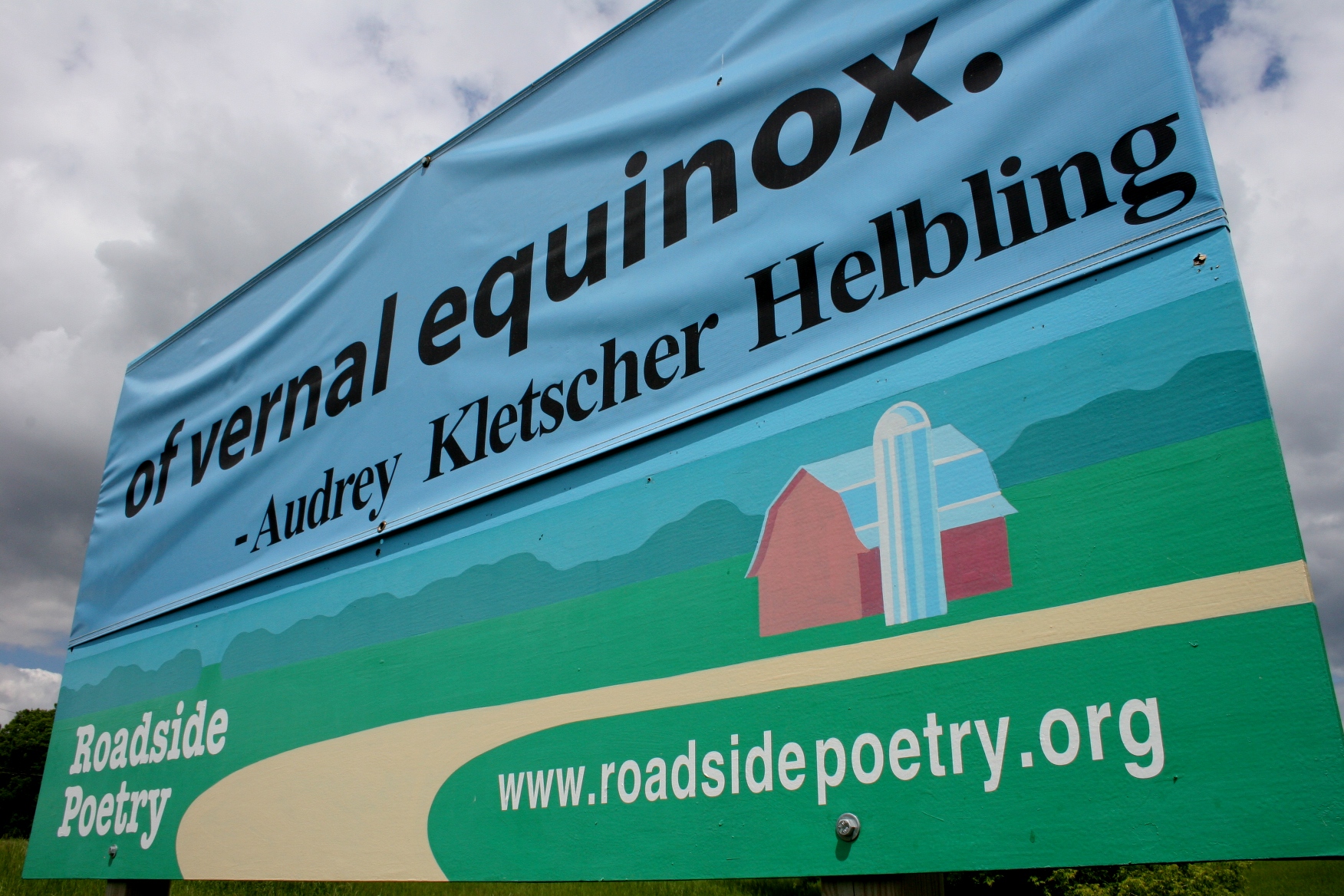
My poem about spring, shown here, was part of the 2011 Roadside Poetry Project. (Minnesota Prairie Roots copyrighted file photo 2011)
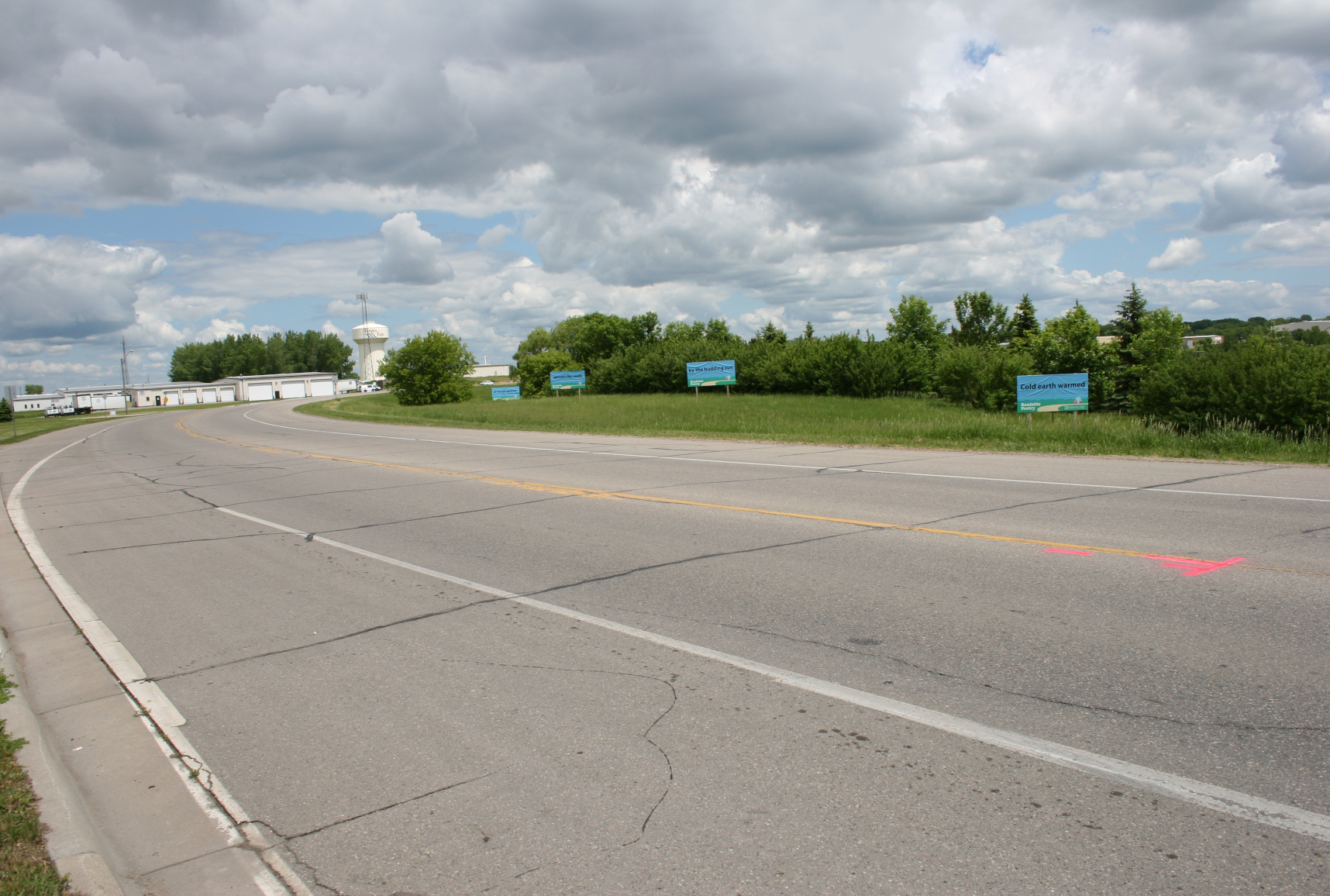
ON THIS FIRST DAY of spring, I want to share a poem I wrote in 2011. My spring-themed submission for the Roadside Poetry Project seasonal competition won. And, as a result, my poem was printed on billboard-sized signs, then placed along a roadway just off Interstate 94 in Fergus Falls in west central Minnesota. Some 100,000 vehicles a month passed by my poem.
Writing good poetry is not easy. And when you must write within guidelines, the process is even more challenging. Roadside Poetry contest rules called for only four lines of poetry with a maximum of 20 characters per line. The poem needed to fit on the signs and be readable from a distance.
Somehow, my brain managed to create what I consider a succinct and visually-strong poem defining spring. On this first day of spring, enjoy my short seasonal poem. Happy spring!
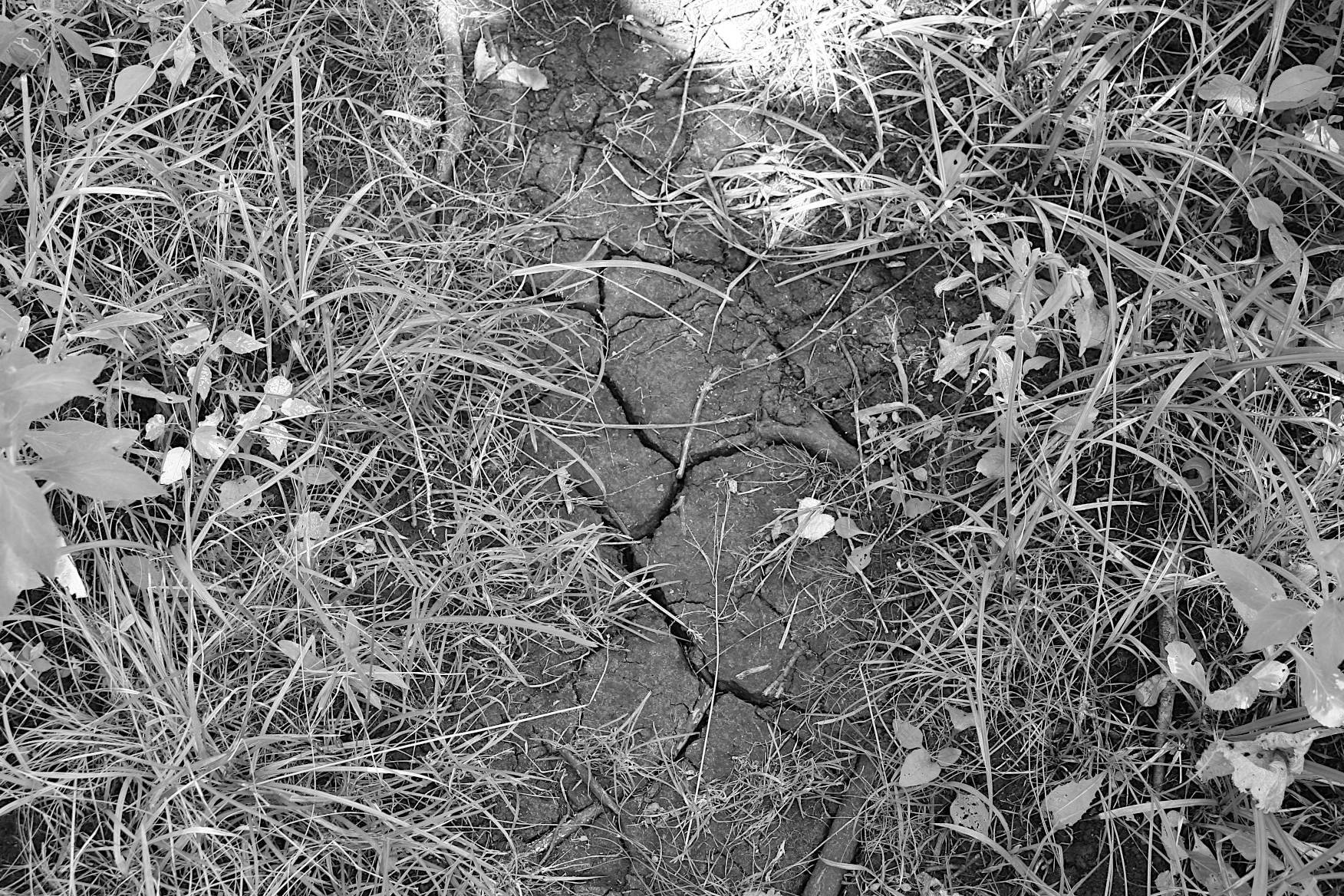
Parched, cracked earth by the Turtle Pond, River Bend Nature Center. (Minnesota Prairie Roots copyrighted file photo August 2021, used for illustration only)
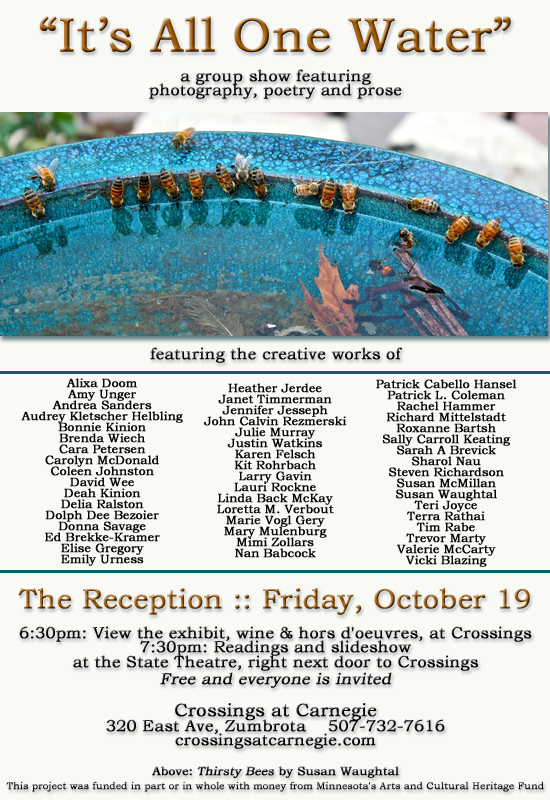
The invitation to the 2012 “It’s All One Water” reception and group show in Zumbrota.
The winning entries were printed in a beautiful 55-page booklet that paired the writing with submitted photos, all themed to water. I opted to pen a poem personifying Autumn as a woman searching for water upon the parched land. To this day I still love that strong visual, inspired by my long ago observations at River Bend Nature Center in Faribault.
And if I were to tap further into my visual memory, I would also see a semi trailer full of hay parked in a southwestern Minnesota farmyard in the summer of 1976. That was a year of severe drought, when my dad bought a boxcar full of hay from Montana so he could feed his cows and livestock. It was the year that nearly broke him as a farmer.
A REALLY DRY & WARM SEPTEMBER IN MINNESOTA
Here we are, 48 years later, settling once again into drought/abnormally dry weather conditions in Minnesota after a winter of minimal snow followed by an excessively wet spring, a dry-ish summer and now a record warm and dry September. This September, the Twin Cities recorded only 0.06 inches of rain and the most days of 80-degree or warmer high temps in any September. It doesn’t feel like fall in Minnesota, more like summer. But at least temperatures cool overnight.
Areas of western and central Minnesota are under a Red Flag Warning today, code words for a high fire danger, due to dry, windy conditions and dropping relative humidity. We are experiencing “near critical fire weather conditions” here in the southern part of the state.
AND THEN THERE’S TOO MUCH WATER
Contrast this with the weather my friends in western North Carolina and other areas affected by Hurricane Helene are experiencing. One is OK (as is her house). But she expects to be without power for a week and is relying on limited cell service at the local firehall. Another friend, a native Minnesotan, lost his car and may lose his home in Hendersonville after a creek swelled, flooding his garage (with four feet of water) and house (30 inches of floodwaters). A foundation wall “blew out” of his home. He is currently staying with family in Florida.
So, yes, even though the lack of rain and abnormally warm weather in Minnesota concern me, I feel a deeper concern for the folks dealing with loss of homes, businesses, infrastructures and, especially, deaths of loved ones. The devastation is horrific. It will take months, if not years, to recover.
RESPECT FOR WATER & MY POEM
In 2012, the following statement published in the intro to “It’s All One Water”: It is our hope to inspire respect, protection, preservation and awe in honor of water, our most precious of Natural Resources. How one views water right now depends on where they live. But I think we can all agree that water is “our most precious of Natural Resources.”
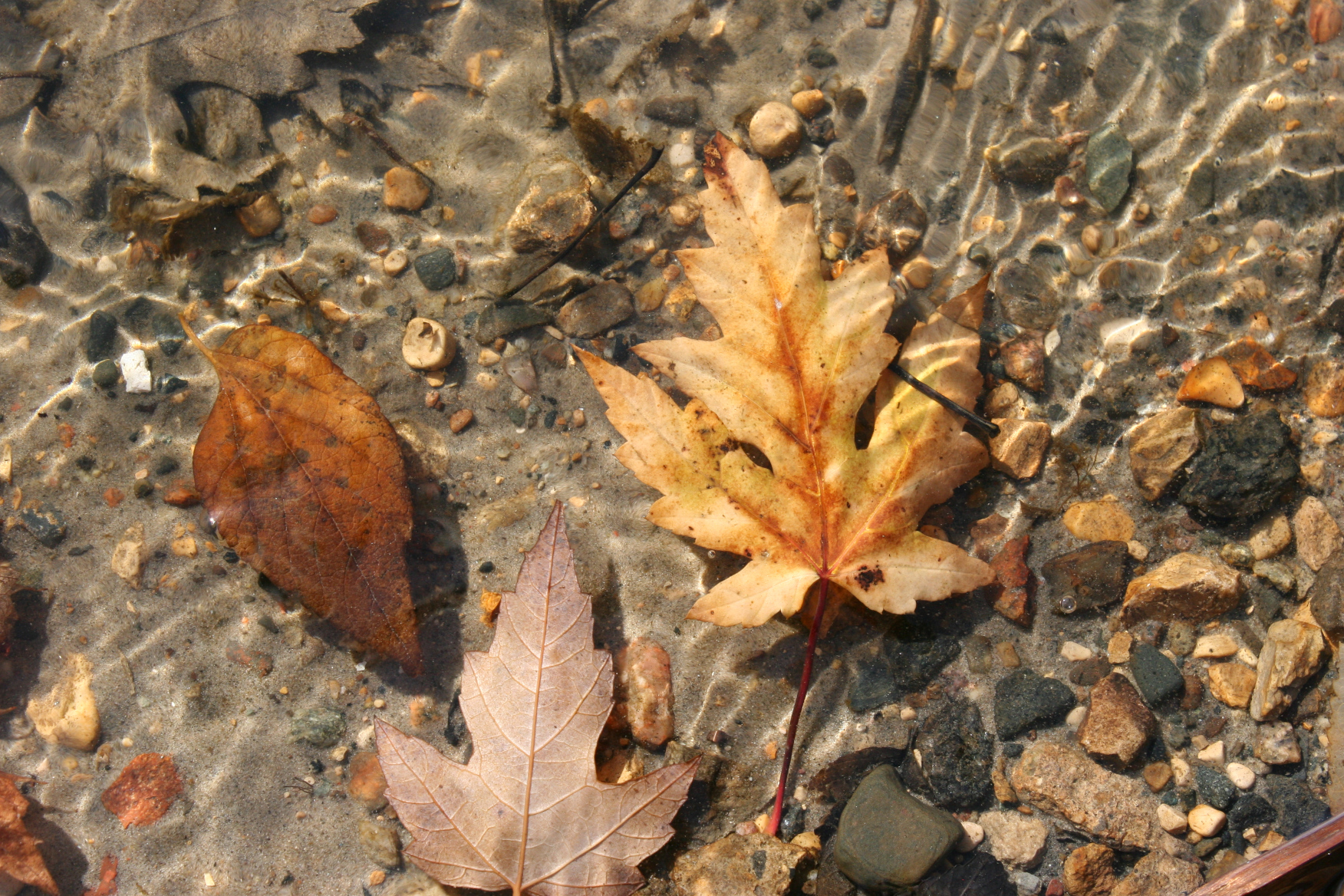
Autumn leaves in the Cannon River, Cannon River Wilderness Park. (Minnesota Prairie Roots copyrighted file photo 2021)
In which Autumn searches for Water
Water. The wayward word rises in a faint rasp,
barely a whisper above the drone of buzzing bees
weaving among glorious goldenrods.
I strain to hear as Autumn swishes through tall swaying grass,
strides toward the pond, yearning to quench her thirst
in this season when Sky has remained mostly silent.
But she finds there, at the pond site, the absence of Water,
only thin reeds of cattails and defiant weeds in cracked soil,
deep varicose veins crisscrossing Earth.
She pauses, squats low to the parched ground and murmurs
of an incessant chorus of frogs in the spring,
of Water which once nourished this marshland.
Autumn heaves herself up, considers her options
in a brittle landscape too early withered by lack of rain.
Defeat marks her face. Her shoulders slump. She trudges away, in search of Water.
Turek’s Auction Service, 303 Montgomery Ave. S.E. (Highway 21), Montgomery, has been “serving Minnesota since 1958.”(Minnesota Prairie Roots edited and copyrighted file photo February 2014)
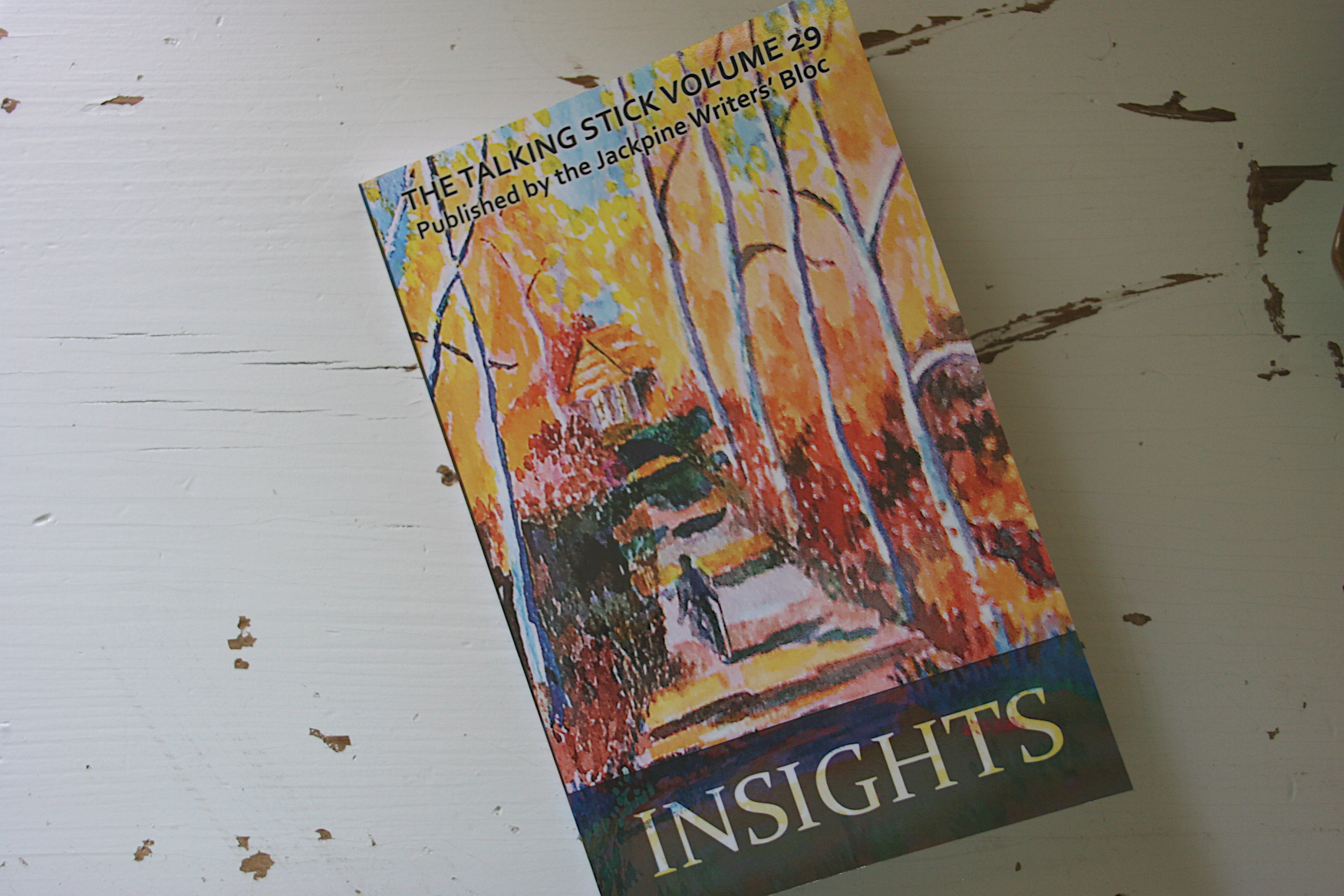
AUCTIONS ARE PART of my rural DNA. As such, a photo I took ten years ago of an auction barn on the edge of Montgomery, Minnesota, inspired me to write a poem. I entered “Sunday Afternoon at the Auction Barn” in the 2014 The Talking Stick writing competition. It earned second place in poetry and publication in The Talking Stick 23, Symmetry, a literary journal published by the northern Minnesota-based Jackpine Writers’ Bloc. It also earned the praise of noted Minnesota poet and poetry judge Margaret Hasse. She’s authored six full-length collections of poetry.
First, my poem:
Sunday Afternoon at the Auction Barn
Shoulder brushes shoulder as bidders settle onto plank benches
in the tightness of the arched roof auction barn,
oil stains shadowing the cement beneath their soles,
where a farmer once greased wheel bearings on his Case tractor.
The auctioneer chants in a steady cadence
that mesmerizes, sways the faithful fellowship
to raise hands, nod heads, tip bidding cards
in reverent respect of an aged rural liturgy.
Red Wing crock, cane back rocker, a Jacob’s ladder quilt,
goods of yesteryear coveted by those who commune here,
sipping steaming black coffee from Styrofoam cups.
In her critique of my poem, Hasse wrote:
“I loved how you turned a humdrum occasion of bidding on antiques in an old barn into a closely observed and luminous occasion. The writer John Ciiardi once wrote that close and careful observation can “leak a ghost.” The surprise of your poem was the elevation of a commercial or material enterprise into a spiritual gathering—with a fellowship, liturgy, reverent respect, and people who commune. The ending—visual and concrete—was just right. The poet Franklin Brainerd wrote a poem something to the effect, “in a world of crystal goblets, I come with my paper cup.” There’s something both unpretentious and appealing about “sipping steaming black coffee from Styrofoam cups.”
Hasse’s comment reflects that she understands the spirit and spirituality of my poem. It was a joy to write. As I recall, the words flowed easily from my brain to keyboard to screen as I visualized bidders inside that auction barn, like congregants in a church. When poetry works like that, it’s magical and fulfilling and beyond beautiful.
Minneopa State Park near Mankato is home to 30-40 bison fenced on 325 acres of primarily prairie. (Minnesota Prairie Roots copyrighted file photo 2019)
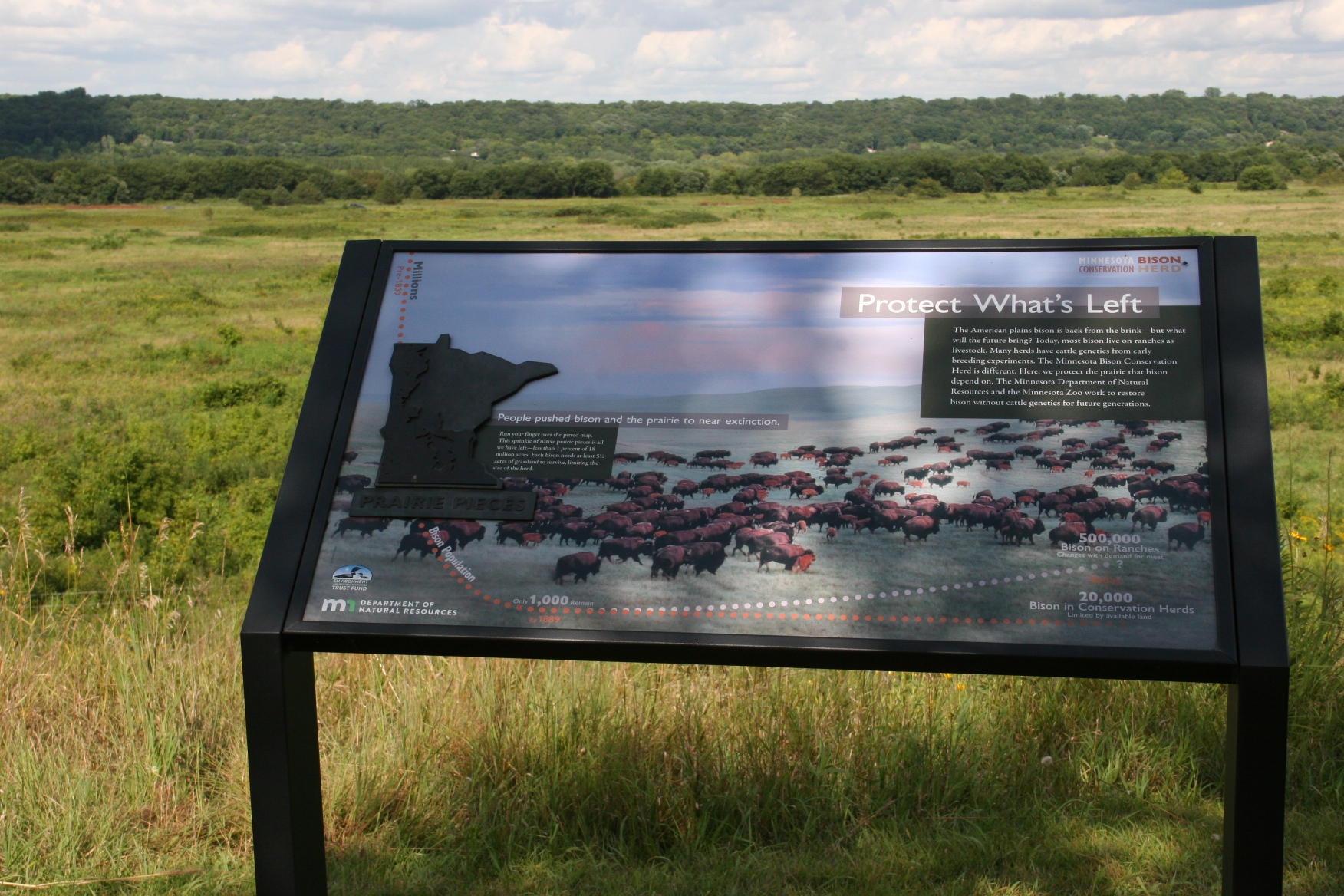
THEY ARE MASSIVE BEASTS, once roaming the American Great Plains by the millions. They are bison, also called buffalo, today numbering some 370,000 in North America. Most are raised as livestock. But some 31,000, or eight percent, are part of conservation herds, including right here in Minnesota. Such herds are designed to protect wild bison and preserve their genetic diversity.
Interpretive signage about bison overlooks the prairie at Minneopa State Park. (Minnesota Prairie Roots copyrighted file photo 2019)
An upcoming documentary, “The American Buffalo—A Story of Resilience” by awarding-winning filmmaker Ken Burns, and my own recently posted poem about bison prompted my renewed interest in this animal. Burns’ 4-hour film airs in two parts, at 7 pm on Monday, October 16, and on Tuesday, October 17, on PBS. His documentary traces the history of bison, their importance in Native peoples’ lives and culture, their near extinction, and efforts to bring them back.
Bison up close while driving through Minneopa State Park. (Minnesota Prairie Roots copyrighted file photo 2019)
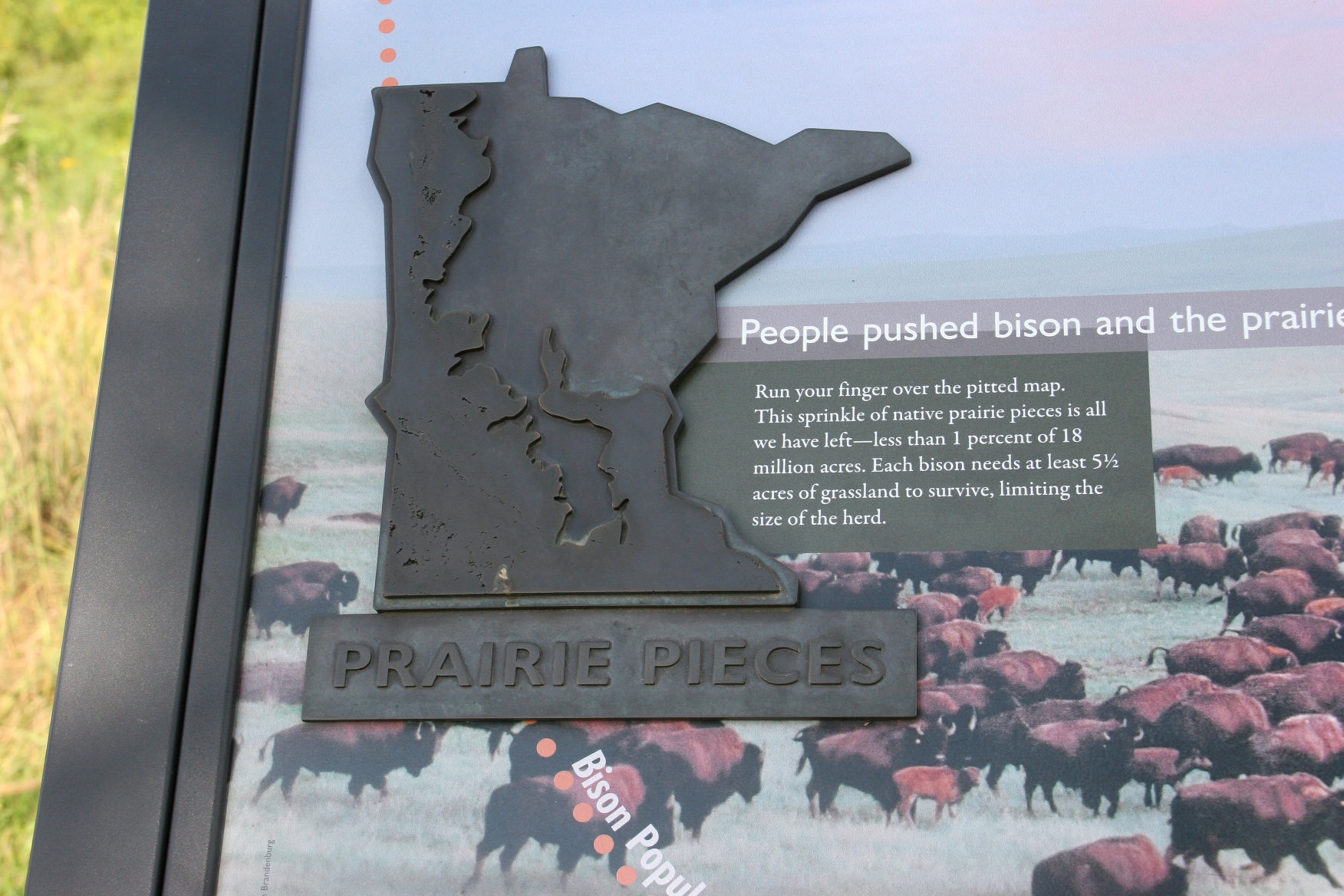
A map, posted in Minneopa State Park, shows the prairie and historic bison territory in Minnesota. (Minnesota Prairie Roots copyrighted file photo 2019)
Given the region’s rich Native heritage, the presence of a small group of bison in the Ramsey Park Zoo seems fitting. I recall rushing to see the buffalo there, both excited and intimidated by their massive hulk. Today I’m not so much afraid as respectful of their size and their importance in Indigenous Peoples’ culture.
A sculpture of White Buffalo Calf Woman, part of Indigenous culture, displayed at the 2011 Mankato City Art Walking Sculpture Tour. Artwork by Lee Leuning and Sherri Treeby. (Minnesota Prairie Roots copyrighted file photo 2011 by Audrey Kletscher Helbling)
One need only look back in history to see how invaluable bison were to these original inhabitants of the prairie, the plains. Bison provided food, shelter, clothing and more to Indigenous Peoples. They also held spiritual and cultural significance. Bison were considered kin, respected by those who respected Mother Earth.
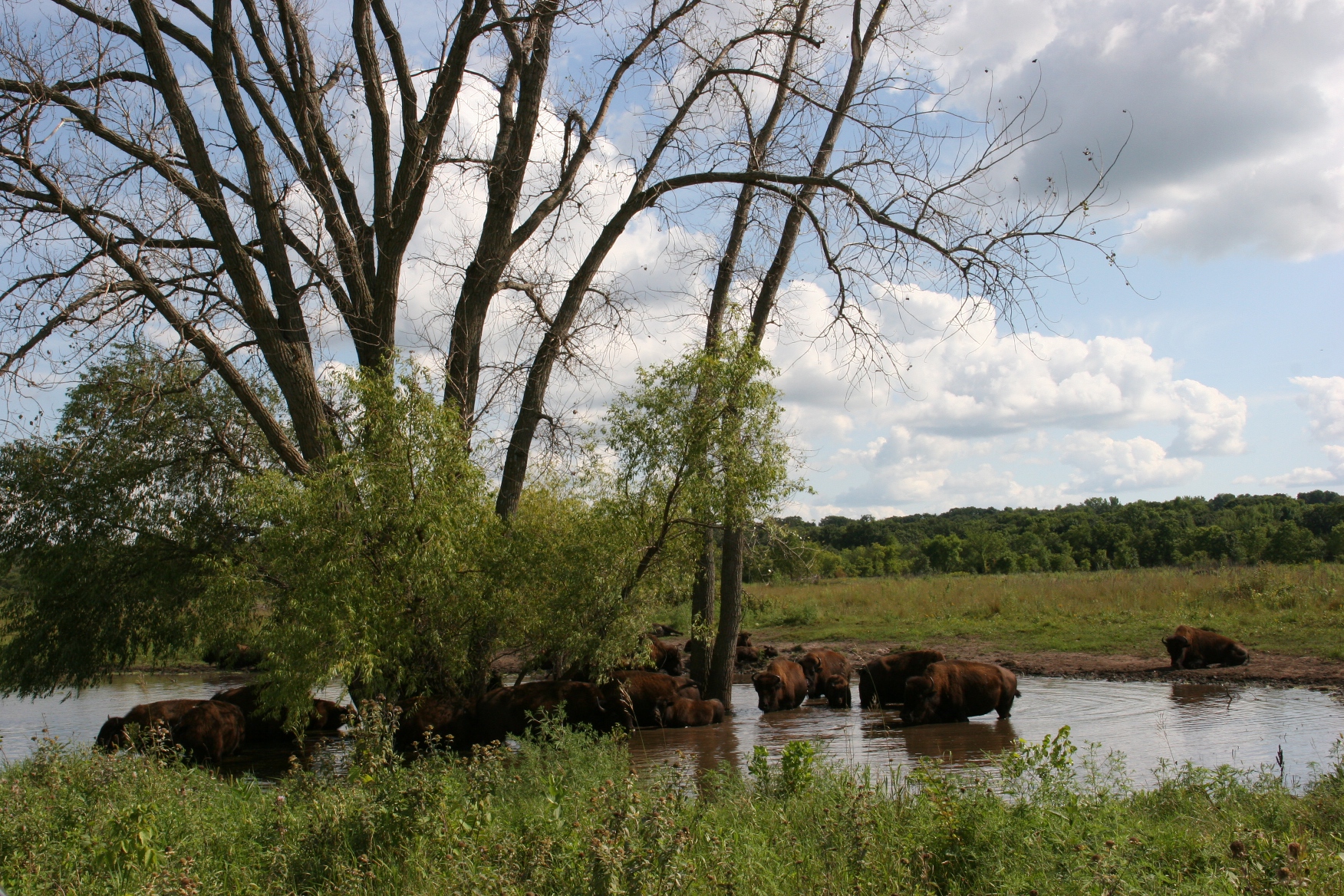
Bison at Minneopa State Park watering hole. (Minnesota Prairie Roots copyrighted file photo 2019)
And then the white man came in the 1800s, overtaking the land, nearly driving bison to extinction as they hunted and slaughtered the animal primarily for their hides.
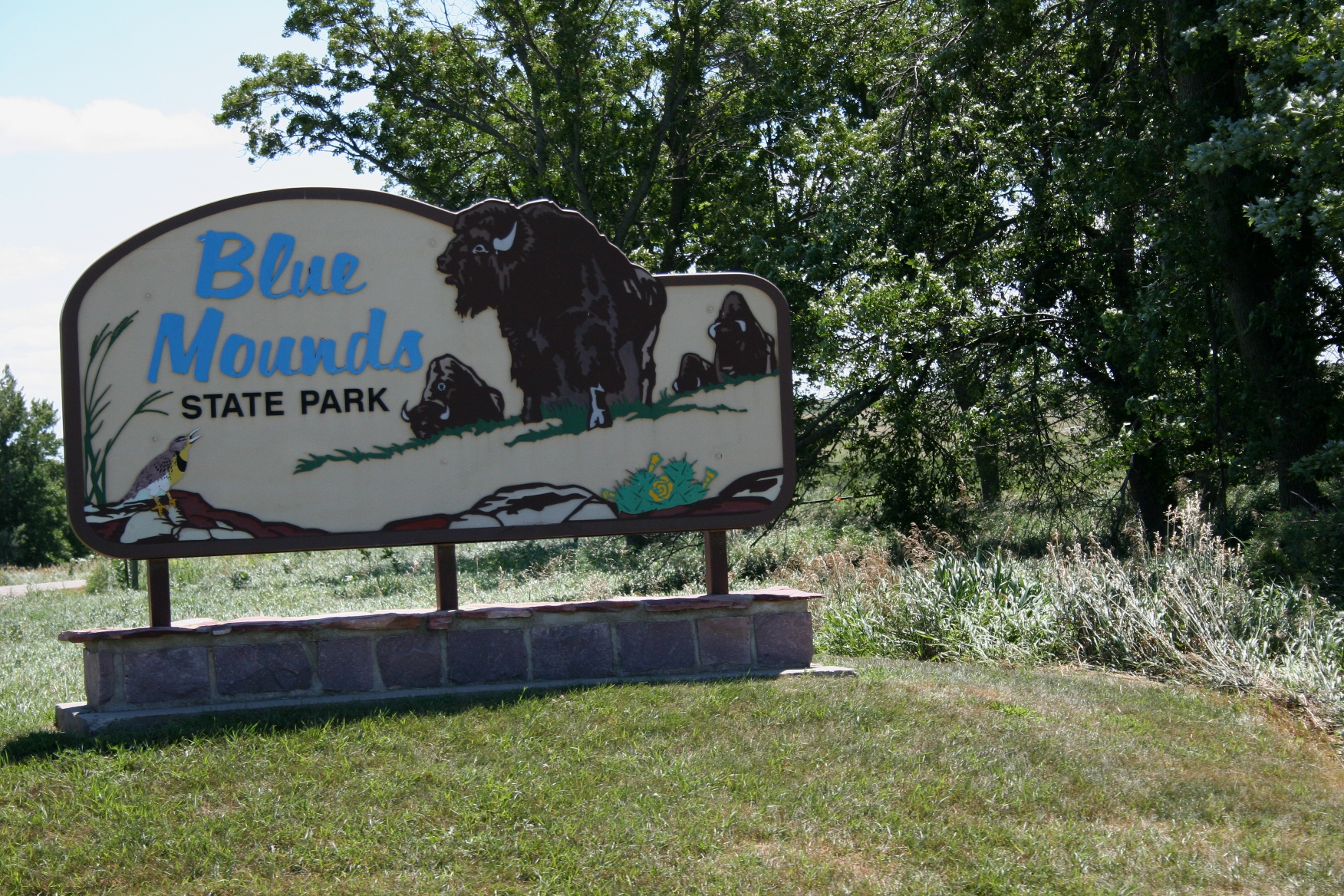
Blue Mounds State Park in rural Rock County, Minnesota, is home to 80-90 bison, although I did not see them when I visited the park in 2013.(Minnesota Prairie Roots copyrighted file photo 2013)
And so the story of bison is not only one of past atrocities in American history, but also one of personal history for me with those fenced bison in Minnesota’s largest municipal park, known as “The Little Yellowstone of Minnesota” for its beautiful natural topography seemingly like Yellowstone National Park. Yellowstone, the one in Wyoming, is home to nearly 6,000 bison.
A sign along the prairie’s edge at Minneopa State Park informs about bison in Minnesota. (Minnesota Prairie Roots copyrighted file photo 2019)
In my youth, I didn’t understand the importance of bison in Native culture. I simply delighted in seeing them in the zoo at then Alexander Ramsey Park in my native Redwood County. Neither did I recognize how offensive the name of the park I loved as a child—Alexander Ramsey Park. Alexander Ramsey served as our first territorial governor and then as the second state governor of Minnesota during the US-Dakota War of 1862. He offered a bounty to anyone who killed a Dakota person and called for Indigenous Peoples to be driven out of Minnesota.
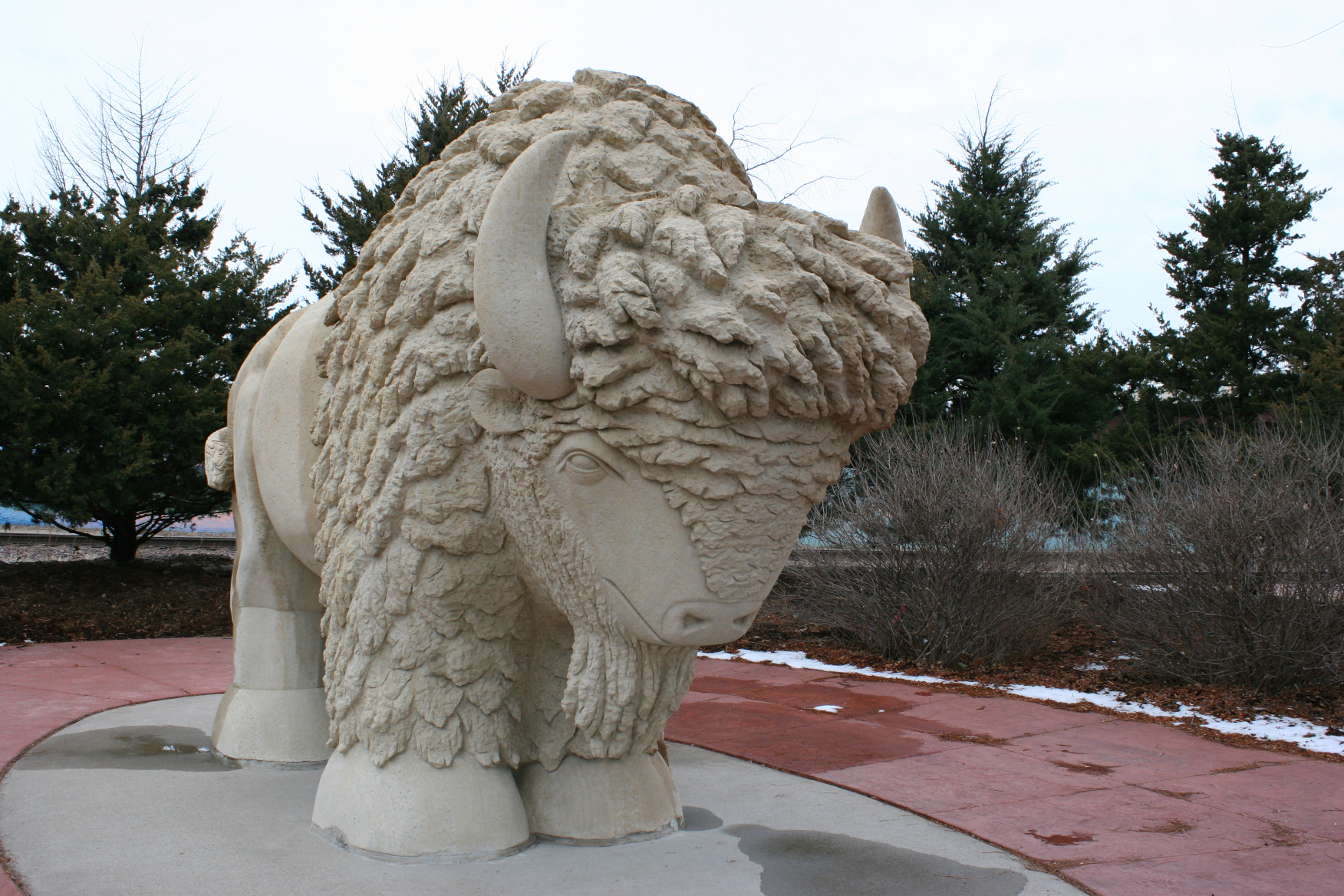
This 67-ton Kasota limestone sculpture stands in Reconciliation Park in Mankato. It symbolizes the spiritual survival of the Dakota People and honors the area’s Dakota heritage. The park is the site of the largest mass hanging in U.S. history. (Minnesota Prairie Roots copyrighted file photo 2019)
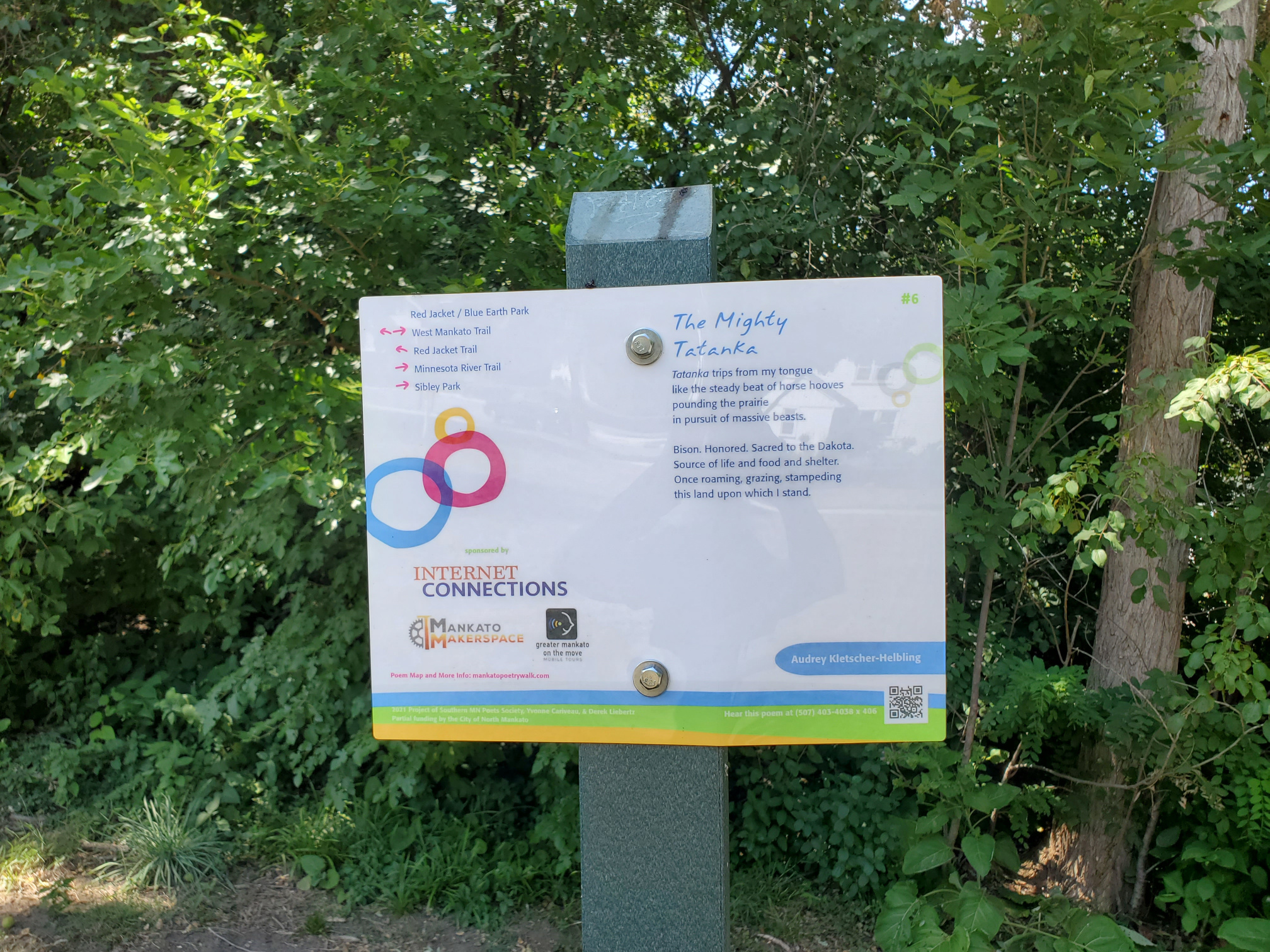
My poem posted along a recreational trail in Mankato. (Photo credit: Kay Herbst Helms)
I wanted to honor the original inhabitants of Mahkato, the bison, the Native culture, the land. And so I wrote “The Mighty Tatanka,” using the Dakota word for bison. My poem was selected for inclusion in the Mankato Poetry Walk & Ride and is posted on a sign in West Mankato.
The Mighty Tatanka
Tatanka trips from my tongue like the steady beat of horse hooves pounding the prairie in pursuit of massive beasts.
Bison. Honored. Sacred to the Dakota. Source of life and food and shelter. Once roaming, grazing, stampeding this land upon which I stand.
While my poem is succinct, limited by wordage requirements in the poetry competition, I’d like to think “The Mighty Tatanka” is powerful. It holds not only the rhythm of carefully selected words, but a story. A story of bison, of Indigenous Peoples, of a way of life, of a culture. It holds, too, honor for the land and of those who first inhabited, and respected, it.
#
FYI: My poem is posted on a sign along the West Mankato Trail near the intersection of Owatonna Street and Blue Earth and Sylvia Streets in West Mankato. You can listen to me read my poem by calling 507-403-4038 and entering 406.
Noted Minnesota wildlife photographer Jim Brandenberg’s (right in video) work, including this image of bison, is featured in a gallery bearing his name in Luverne, near Blue Mounds State Park. (Minnesota Prairie Roots copyrighted file photo 2013)
To see Minnesota Bison Conservation Herd bison in Minnesota, visit Minneopa State Park near Mankato, Blue Mounds State Park near Luverne, the Minnesota Zoological Garden, Oxbow Park & Zollman Zoo by Byron, and Spring Lake Park Reserve Bison Prairie in Dakota County.
I took poetic license and photoshopped this image of the button I wore identifying me as a poet at a poetry reading. (Minnesota Prairie Roots copyrighted file photo April 2015)
APRIL MARKS National Poetry Month, a time to celebrate poetic verse and poets. As a long-time writer, I unequivocally state that penning poetry is challenging. Why? Every. Single. Word. Counts.
That makes sense given the structure of poems.
I’ve written poetry off and on since high school. All those decades ago, I wrote angst-filled poems reflective of teenage moods, emotions and life. Recently a high school friend returned a poem I wrote for her nearly 50 years ago, a poem handwritten on lined notebook paper. The folded page, yellowed with age, holds words focusing on my future and the ultimate question at life’s end: What good have I done?
The poem dedicated to Janette is not particularly well-written. Yet, it has value in reflecting my thoughts, in opening myself up, in showing vulnerability to a trusted friend. Will I share it with you? No.
My poem, “Final Harvest,” and two pieces of creative nonfiction were selected for publication in this anthology in 2020. (Minnesota Prairie Roots copyrighted file photo 2020)
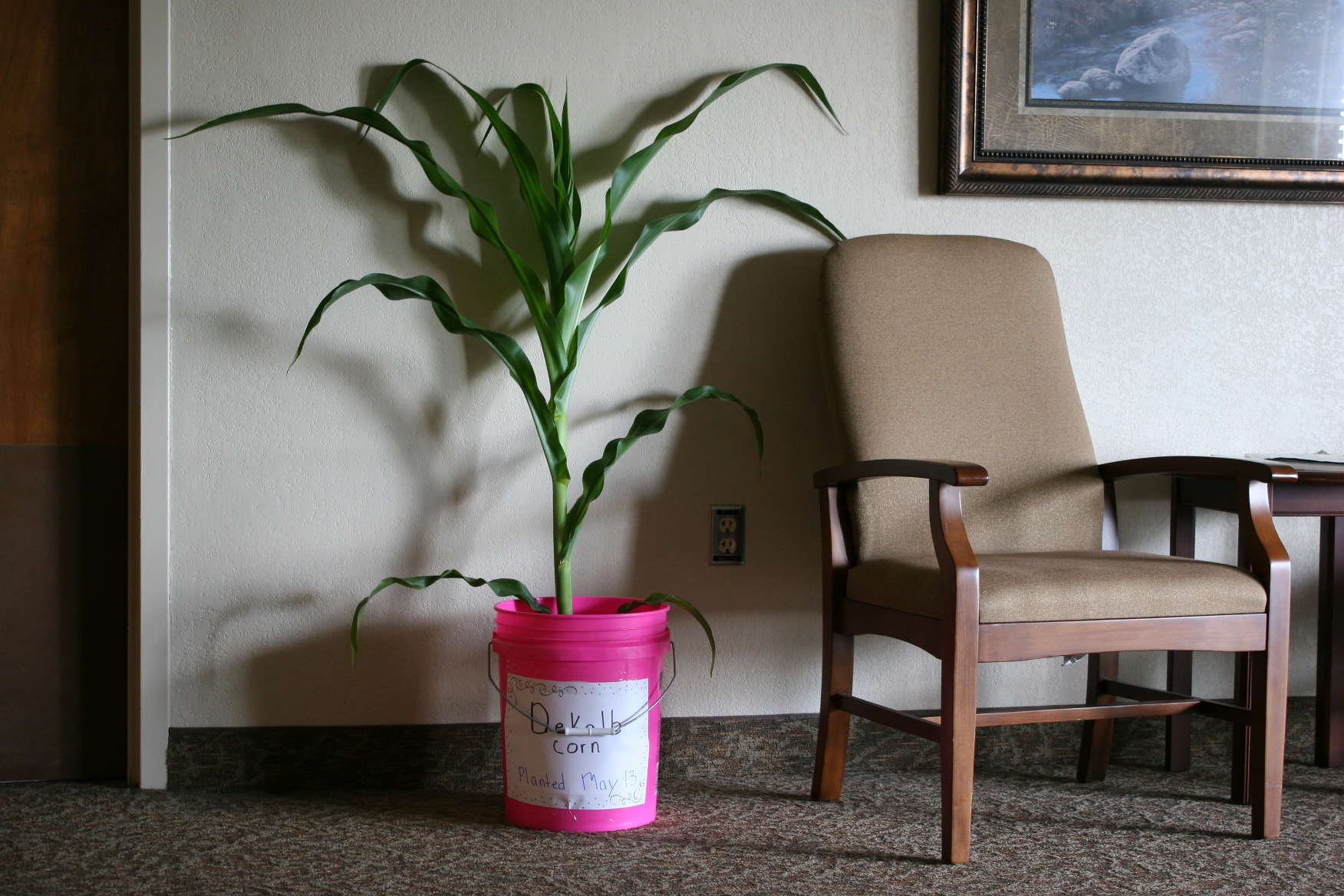
This scene at Parkview Senior Living in Belview, Minnesota, inspired a poem. (Minnesota Prairie Roots copyrighted file photo July 2019)
The poetry I write, like nearly all of my writing, carries a strong sense of place, often rooted in my agrarian roots. And, like nearly all of my creative writing, my poetry is rooted in truth. A cornstalk growing in a pink bucket in the community room at Parkview Senior Living, where my mom lived before her 2022 death, inspired “Final Harvest.” It is not at all angst-filled. But, in a round about way, it asks the same question: What good have I done?
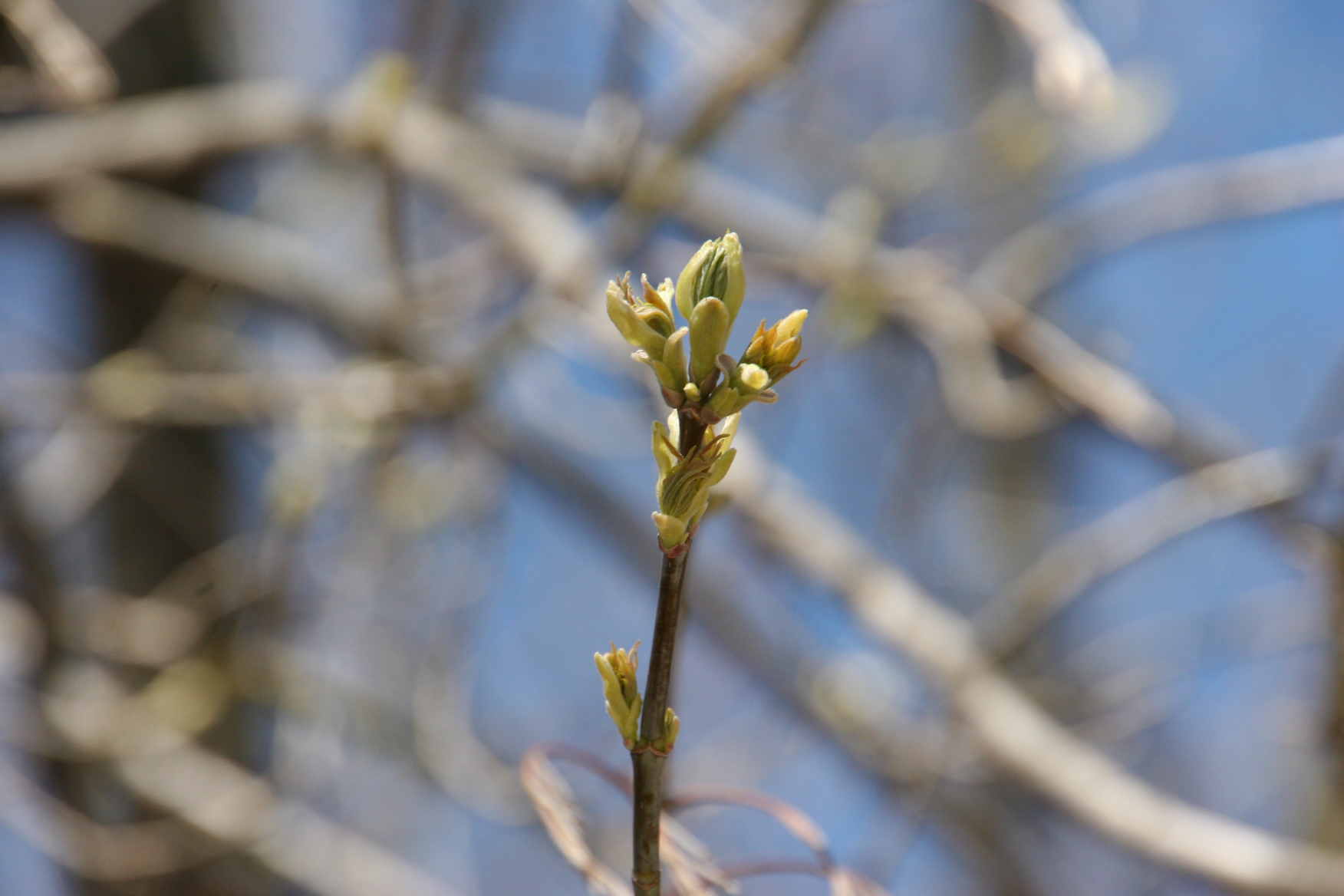
Trees bud at Falls Creek Park, rural Faribault, in late May 2022. (Minnesota Prairie Roots copyrighted file photo May 2022)
TODAY, THE FIRST DAY of spring, hope springs that this long winter of too much snow will soon exit Minnesota. Most Minnesotans, including me, are weary of days marked by new snowfall that has accumulated, pushing this 2022-2023 winter season into top 10 records in our state.
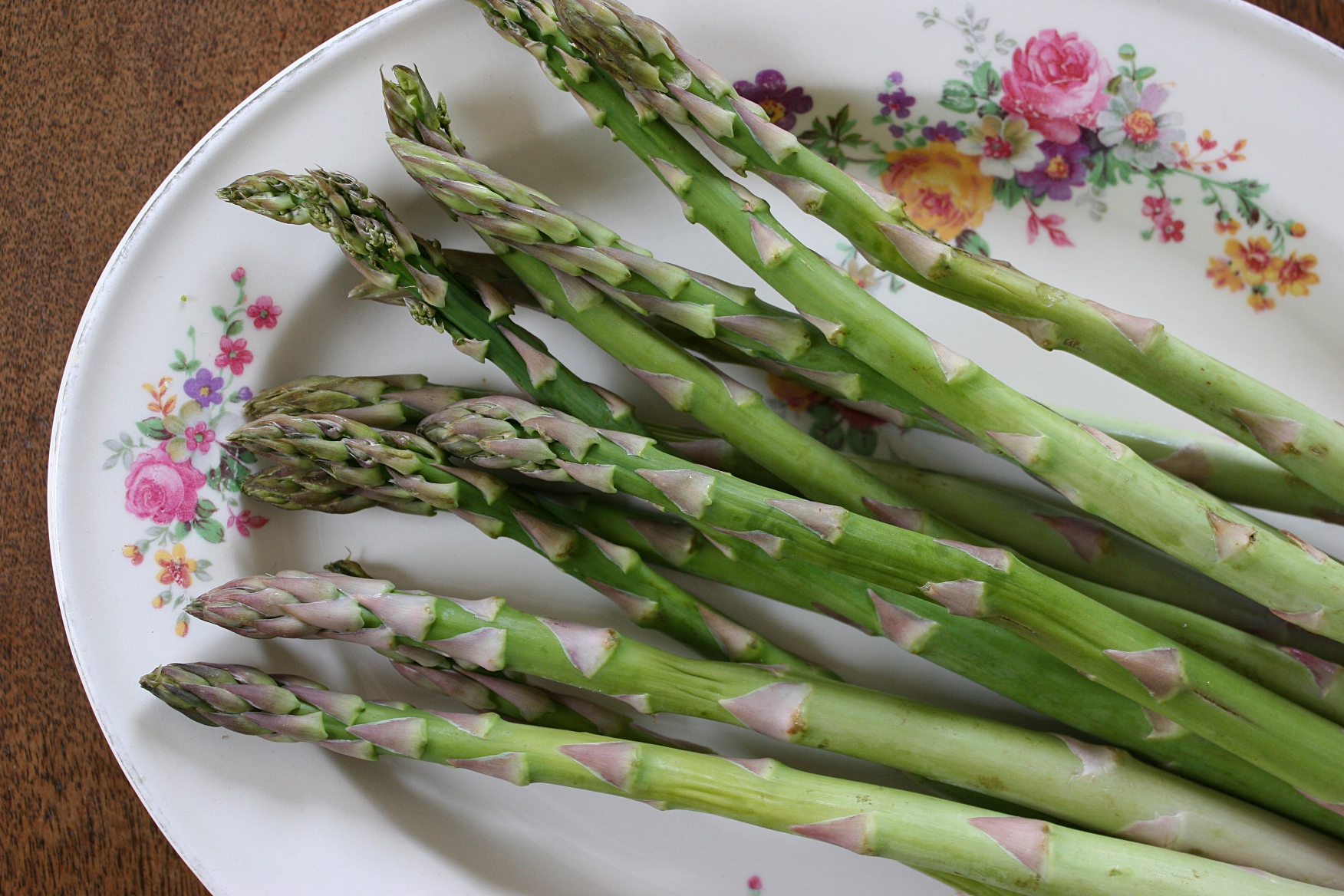
Asparagus, one of my favorite spring vegetables. (Minnesota Prairie Roots copyrighted file photo)
But now, with the official start of a new season on March 20—the season of new life, the season of planting and budding and greening—I feel a mental shift. Psychologically, my mind can envision a landscape shifting from colorless monochrome to vivid greens. I can feel the warmth of warmer days yet to come. I can smell the scent of dirt released, breaking from winter’s grip. I can hear the singsong chatter of returning birds. I can taste asparagus spears snapped from the soil.
A bud beginning to open in late April 2020. (Minnesota Prairie Roots copyrighted file photo April 2020)
All of this is yet to come. I understand that. A date on a calendar doesn’t mean spring in Minnesota. That season is realistically weeks away. April can still bring inches of snow.
Crocuses, always the first flower of spring in my flowerbeds. (Minnesota Prairie Roots copyrighted file photo March 2021)
But we are edging toward spring. I feel that in temps sometimes reaching just past 40 degrees. I feel it in the warmth of the sun, shining brighter, bolder, longer. I see dwindling snow packs and exposed patches of grass. I hear spring in vehicles splashing through puddles rather than crunching across snow. I see spring, too, in the endless potholes pocking roadways.
The first line in my winning poem, posted roadside in 2011. (Minnesota Prairie Roots copyrighted file photo 2011)
On this first day of spring, I am reminded of a poem I penned in 2011, a poem which splashed across four billboards along a road just off Interstate 94 in Fergus Falls in west central Minnesota. To this day, publication of that poem remains an especially rewarding experience for me as a poet.
Billboard number two of my spring-themed poem. (Minnesota Prairie Roots copyrighted file photo June 2011)
I submitted the poem to the now-defunct Roadside Poetry Project’s spring competition. Poems changed out seasonally in this Fergus Falls Area College Foundation funded contest. It was a bit of a challenge writing a spring-themed poem, as I recall. Not because of the theme, but rather the rules—four lines only with a 20-character-per-line limit. But, as a writer, it’s good to be challenged.
Line three of my Roadside Poetry Project spring poem. (Minnesota Prairie Roots copyrighted file photo June 2011)
I suppose you could say the same about Minnesota weather. It’s good to be challenged by an especially snowy winter so we appreciate spring’s arrival even more. Yes, that’s a positive perspective—a way to mentally and psychologically talk myself into enduring perhaps six more weeks of winter in this official season of spring.
The last of four billboards featuring my Roadside Poetry spring poem. (Minnesota Prairie Roots copyrighted file photo June 2011)
NOTE: I intentionally omitted any pictures showing snow/winter.
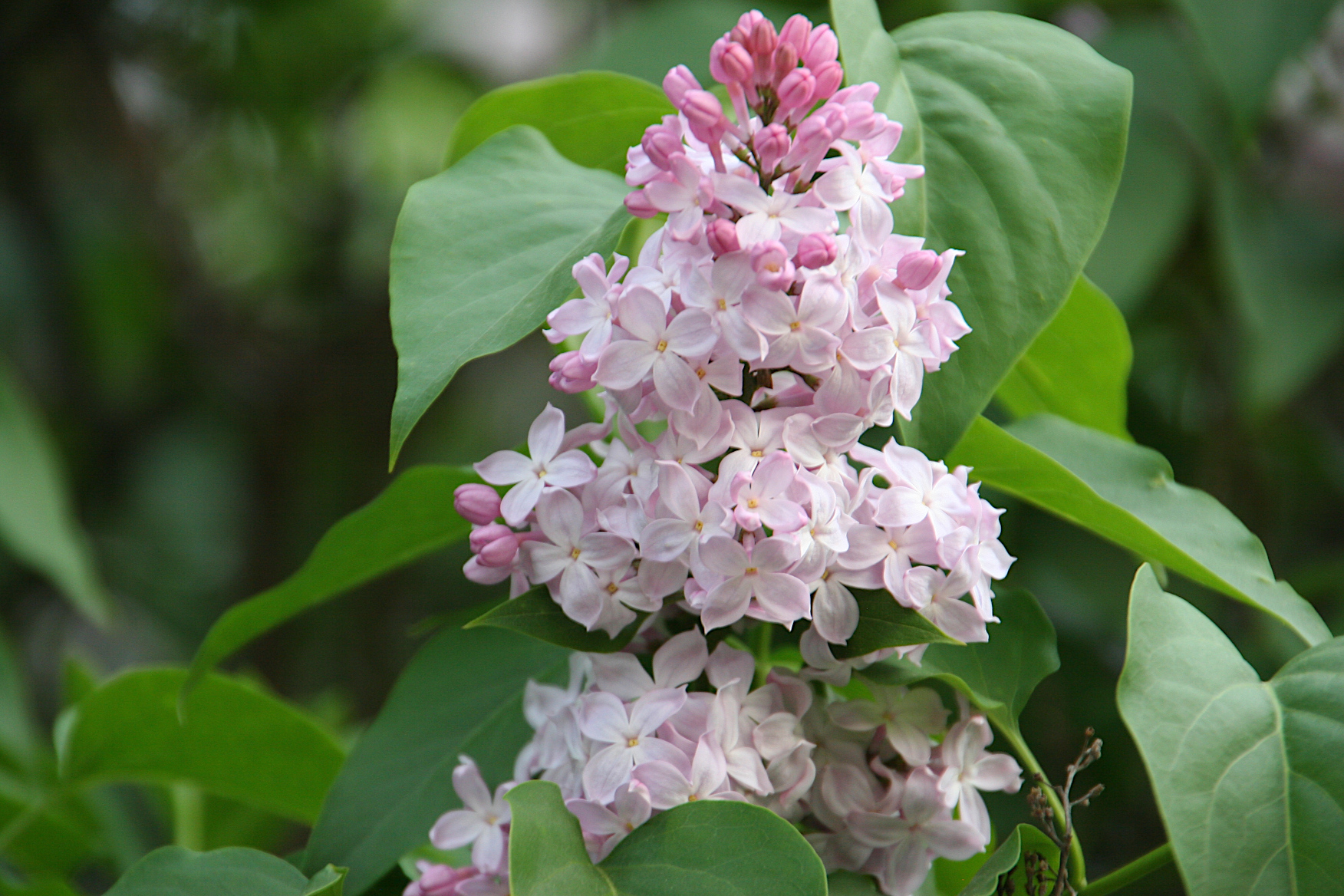
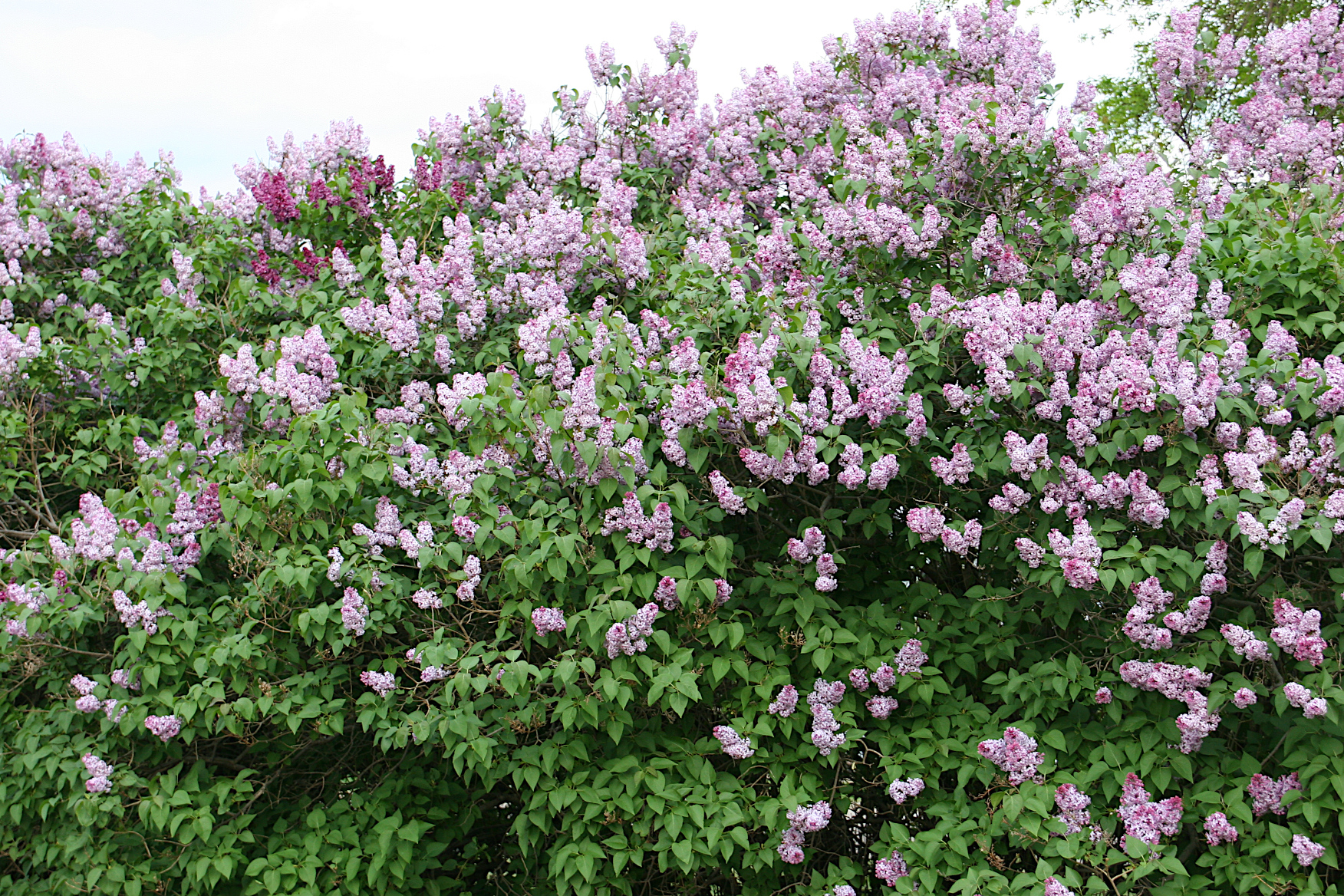
Lilacs grow in various shades in a row of bushes at North Alexander Park in Faribault. Minnesota Prairie Roots copyrighted photo.
LILACS PERFUME THE AIR, filling the lower level of my home with the scent of spring in Minnesota.
“Lilacs on the Table” inspired by my poem and painted by Jeanne Licari for Poet-Artist Collaboration XIII at Crossings in Carnegie in Zumbrota in 2014. File photo courtesy of Crossings.
These bouquets—three in my living room, another in the dining room and the fifth on the bathroom counter—are more than simply beautiful flowers. They are reminders. Of my bachelor uncle. Of my husband’s love. Of a poem I wrote in 2014 as part of a poet-artist collaboration.
Lilac bushes at North Alexander Park, Faribault. Minnesota Prairie Roots copyrighted photo.
While my beloved Uncle Mike is long gone, the memories of the lilac bush which grew on his farm remain. I think of him each May when Randy brings me clutches of lilacs. It’s a sweet tradition. Loving. Appreciated more than a dozen roses, although those are lovely, too.
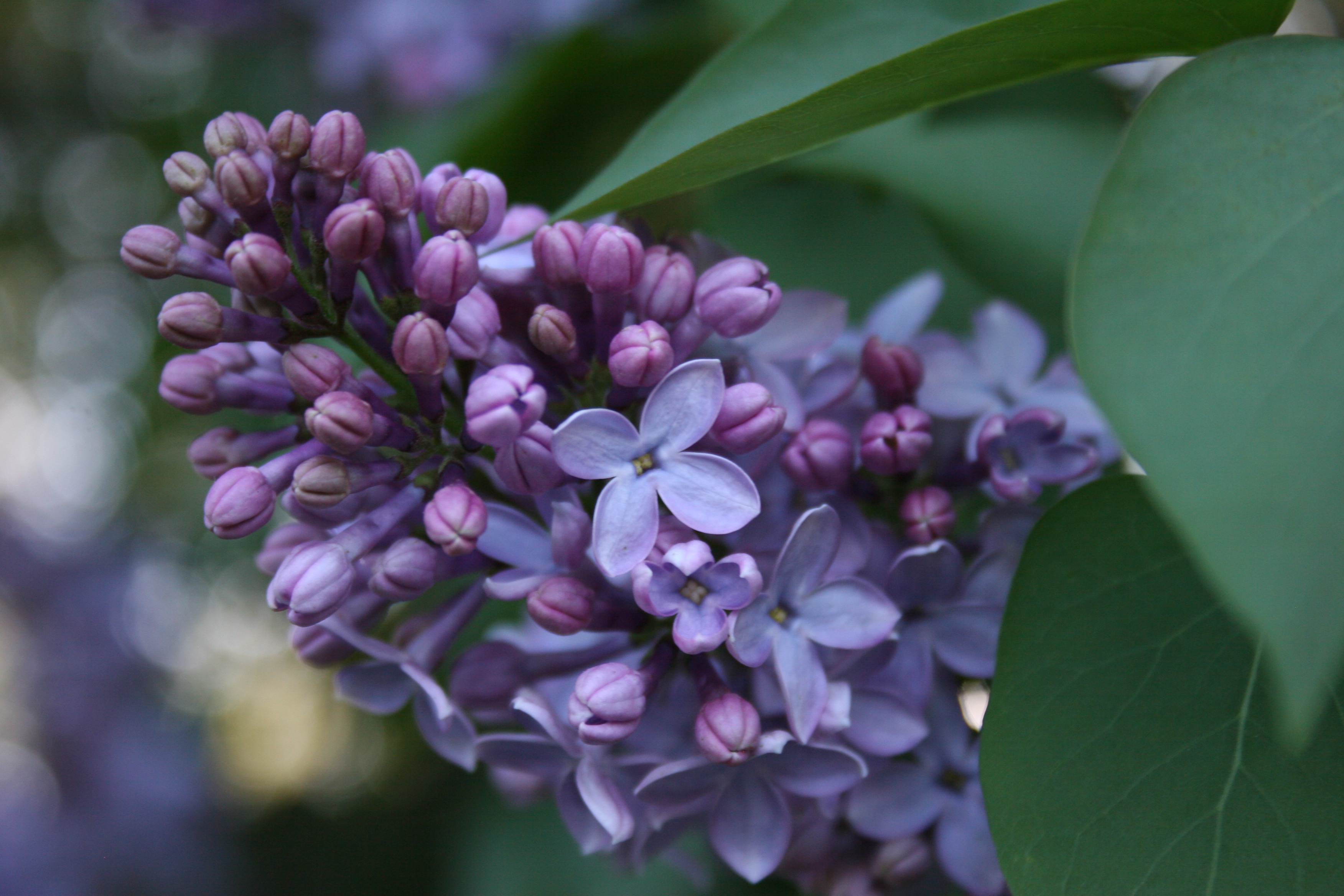
Lilacs, up close. Minnesota Prairie Roots copyrighted file photo 2013.
When Randy walked through the back door a few days ago with lilacs, I was surprised. Not that I should have been. He does this every May. I appreciate his thoughtfulness. I appreciate that he takes the time to gather these flowers for me at the end of a long work day.
There’s something simply sweet and precious about his remembering, his recognition of how much I value this heartfelt gift of love.
Lilacs
Breathing in the heady scent of lilacs each May, I remember my bachelor uncle and the gnarled bushes, heavy with purple blooms, that embraced his front porch and held the promises of sweet love never experienced.
He invited his sister-in-law, my mother, to clip lilacs, to enfold great sweeps of flowers into her arms, to set a still life painting upon the Formica kitchen table, romance perfuming our cow-scented farmhouse.
Such memories linger as my own love, decades later, pulls a jackknife from the pocket of his stained jeans, balances on the tips of his soiled Red Wing work shoes, clips and gathers great sweeps of lilacs into his arms.
To watch that 22-year-old Los Angeles poet stand before the nation’s capitol, before the new President and Vice President and so many others, and hear her deliver her poem with such passion filled me with hope.
Hope themed her poem. If you missed hearing Gorman’s poem, I’d encourage you to seek it out online and listen. Poetry, when read aloud by its author, takes on a depth missing if simply read silently to one’s self.
Gorman’s poem complemented, reinforced, the hopeful messages I took away from the day through speeches, songs, prayers and actions.
Words—like unity, resilience, strength, faith, respect, possibilities, together—resonated with me. Words that will write, as President Joe Biden said, “the unfolding story of our great nation.”
And part of that story will be the words of a young poet, who inspired hope on January 20, 2021.
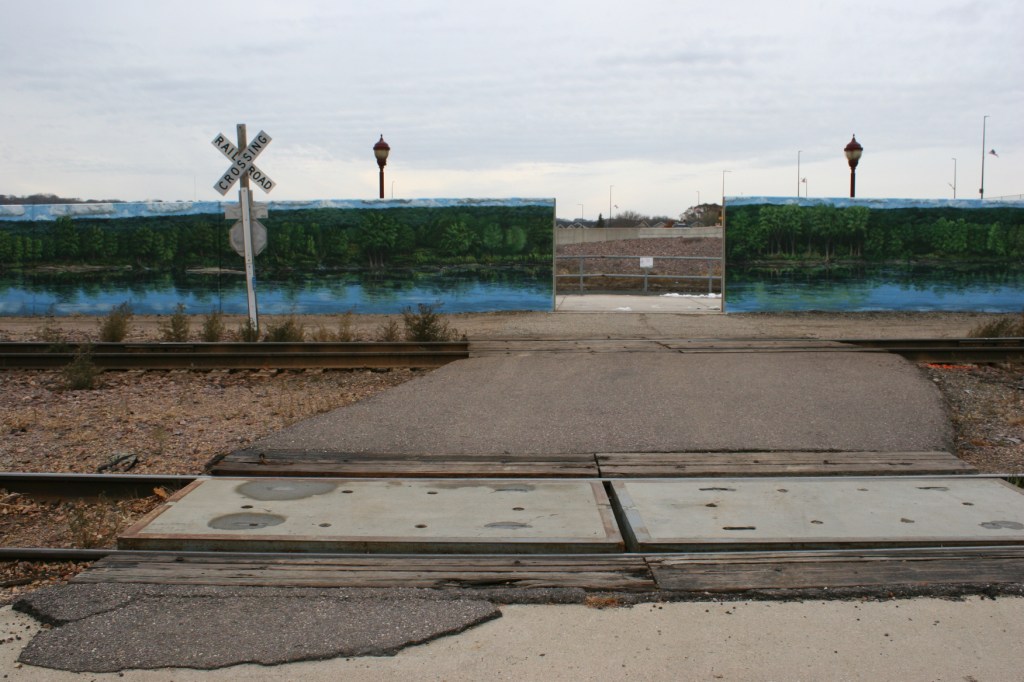
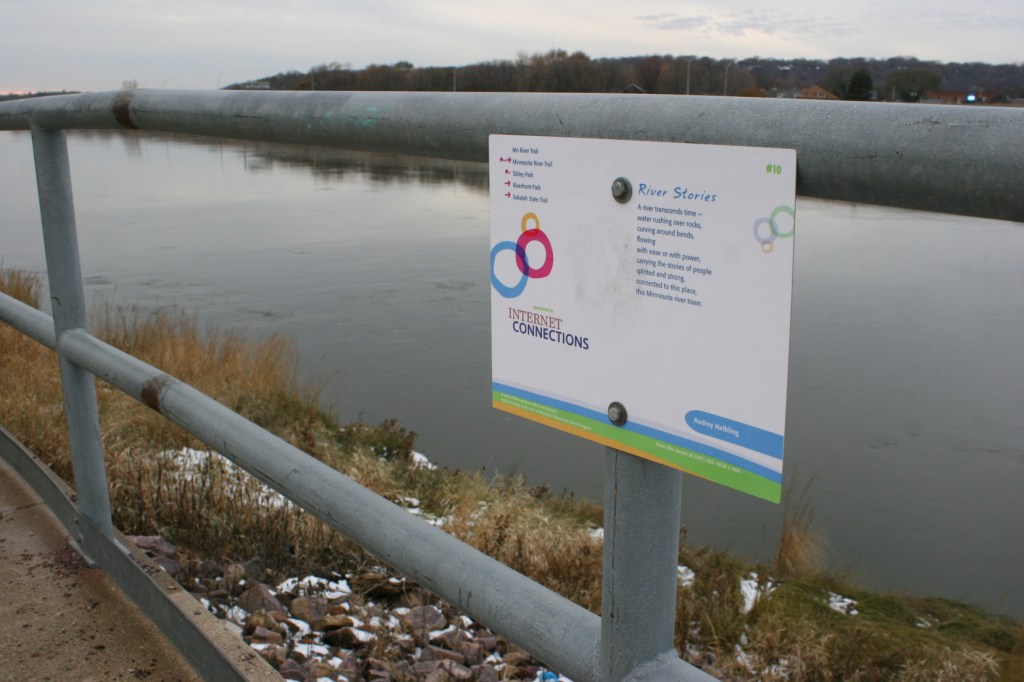
That’s my poem, viewed through the opening in the flood wall in downtown Mankato, Minnesota.
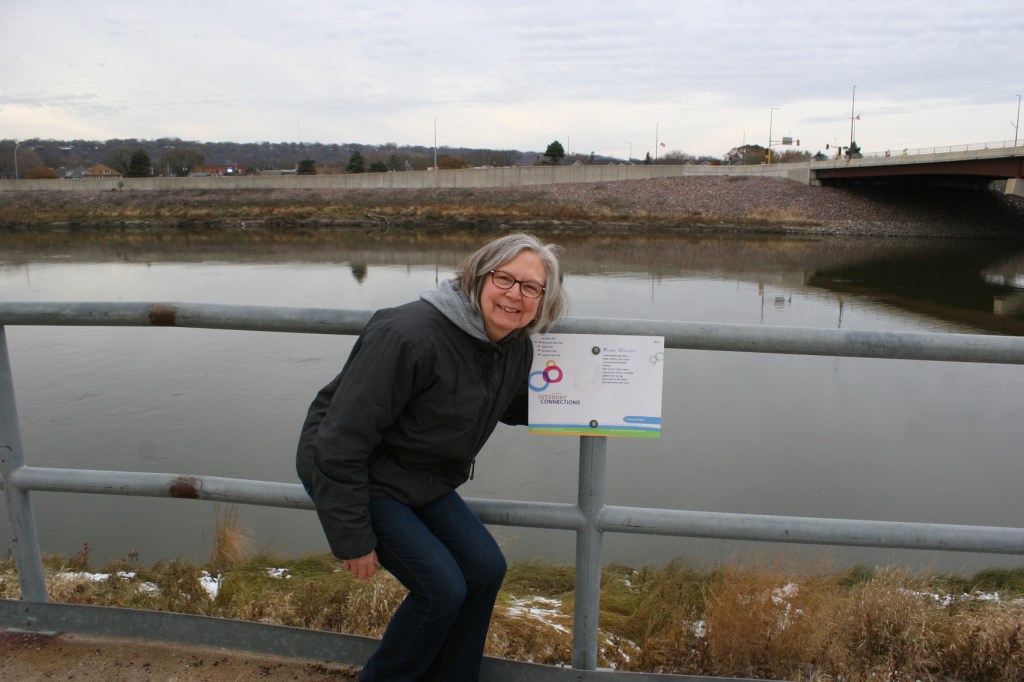
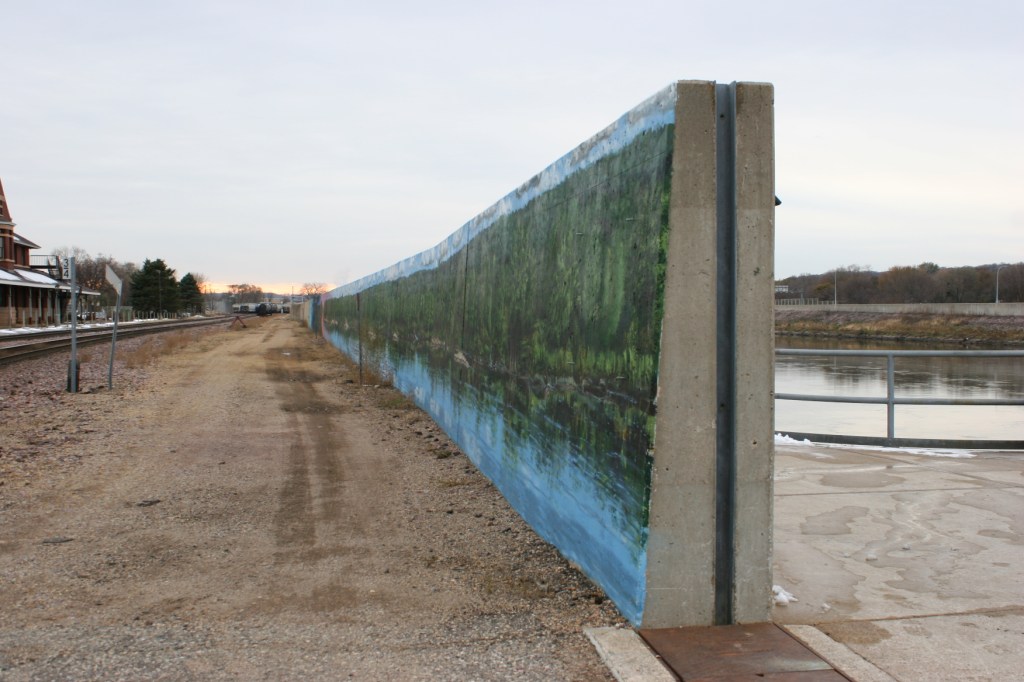
ALONG A BUSY STREET in the heart of downtown Mankato near Reconciliation Park, across a duo set of train tracks and then through an opening in a flood wall mural, you’ll find a work of literary art. Mine. A poem, River Stories.
Me, next to my posted poem, River Stories. Photo by Randy Helbling
Photographed from the opening in the flood wall, the mural showcases the Minnesota River, to the right.
My poem was recently selected for inclusion in the Mankato Poetry Walk & Ride, a public art project that now boasts 41 poems posted on signs throughout Greater Mankato. This, my fifth poem picked in recent years for the project, will be displayed for the next two years at the site along the Minnesota River Trail hugging the river. I am honored to share my poetry in such an accessible way via this ongoing effort of the Southern Minnesota Poets Society.
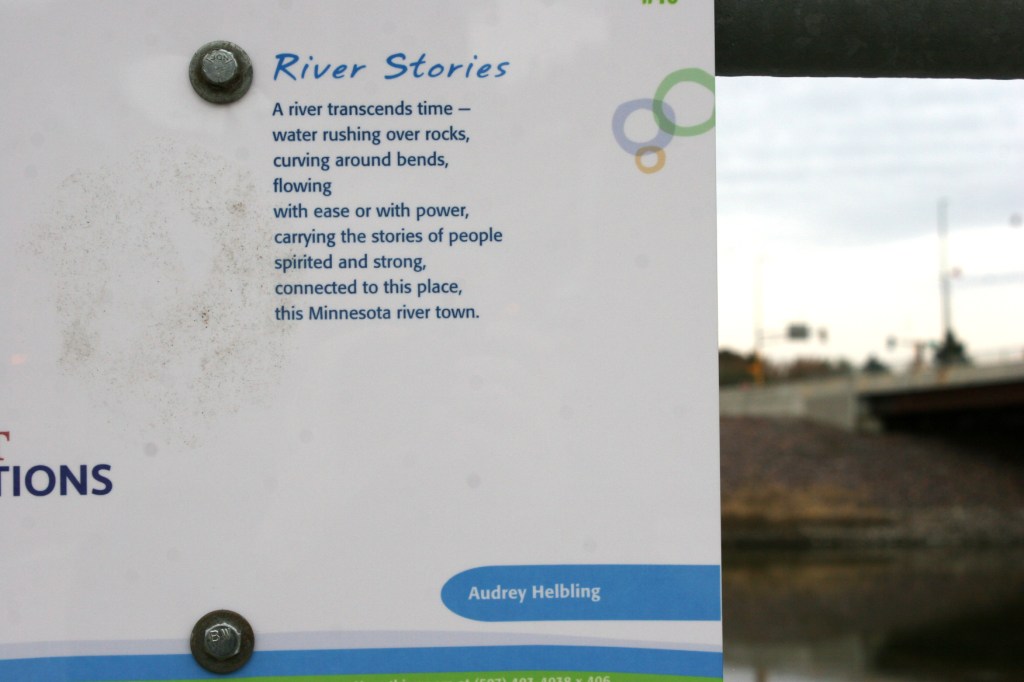
To hear River Stories, call 507-403-4038 and enter 406 when prompted. (That’s not me reading.)
This 67-ton Kasota stone sculpture stands in Reconciliation Park. It symbolizes the spiritual survival of the Dakota People and honors the area’s Dakota heritage. The park is the site of the largest mass execution in U.S. history. The U.S. government tried and hung 38 Dakota here following the U.S.-Dakota Conflict of 1862. The location of my poem near this park seems fitting as part of the city’s river stories.
The Mankato Poetry Walk & Ride is a competitive process which challenges Minnesota poets to pen poems of no more than 18 lines with a limit of 40 characters per line. River Stories is short at only nine lines. Just like crafting copy for children’s books, creating poetry is among the most challenging of writing disciplines. Every word must prove its worth. Poetry has made me a stronger and better writer.
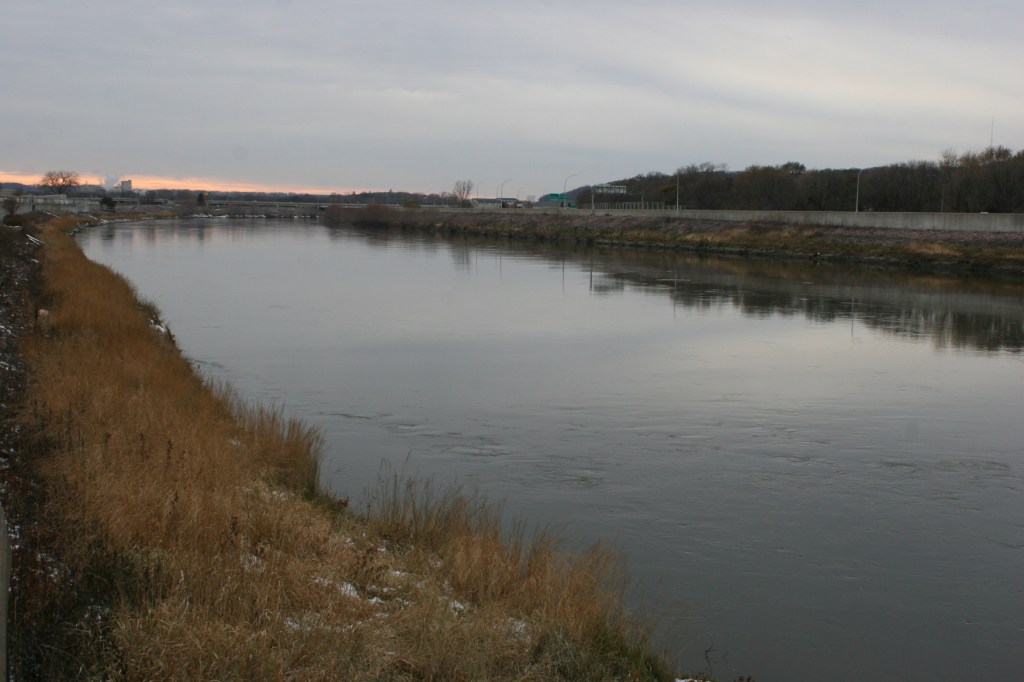
The Minnesota River, which runs through Mankato, inspired River Stories.
















 Minnesota Prairie Roots
Thither will we go March 28, 2026
Tags: "Light Looked Down", "Thither Will I Go", commentary, concert, Faribault, Laurence Housman, light, Minnesota, music, No Kings Day protest, opinion, poem, protesting, song, Tom Trenney
I ATTENDED A CONCERT at my church, Trinity Lutheran, Friday evening. Students from Concordia Academy in Roseville kicked off their spring break “Walk in the Light Tour” to Nashville with their first stop here in Faribault.
What a talented group of high school musicians who sang with joy, energy and depth. From spirituals to traditional worship to blessing songs and more, they performed in the light of faith.
One song in particular, “Thither Will I Go” by composer Tom Trenney, resonated with me. It’s based on a poem, “Light Looked Down,” by Laurence Housman (1865-1959). Although this poem was written long ago, the words are timeless.
The short three-line poem centers on light and darkness, war and peace, and hatred and love.
As I sat listening to these young people, my mind wandered to the No Kings Day protests today. “Thither Will I Go” would be a great protest song. As protesters, we shine light, peace and love.
I’d like those who criticize us, who question our reasons for protesting, who claim we are paid (we are not), who shout profanities at us, call us stupid and more, to consider the words written long ago by Laurence Housman. As protesters, we choose light over darkness, peace over war, love over hatred.
Thither will we go.
Where there is darkness, let there be light. Where there is war, let there be peace. Where there is hatred, let there be love.
© Copyright 2026 Audrey Kletscher Helbling