A drawing by my then young son of “something to remember” for a grade school assignment: A plane crashing into the World Trade Center. Minnesota Prairie Roots copyrighted file photo.
TWENTY YEARS. TWO DECADES. Two hundred and forty months.
Whatever words are attached to the time that has passed since the September 11, 2001, terrorist attacks on the United States, the reality of that day in our nation’s history remains forever imprinted upon our collective memories.
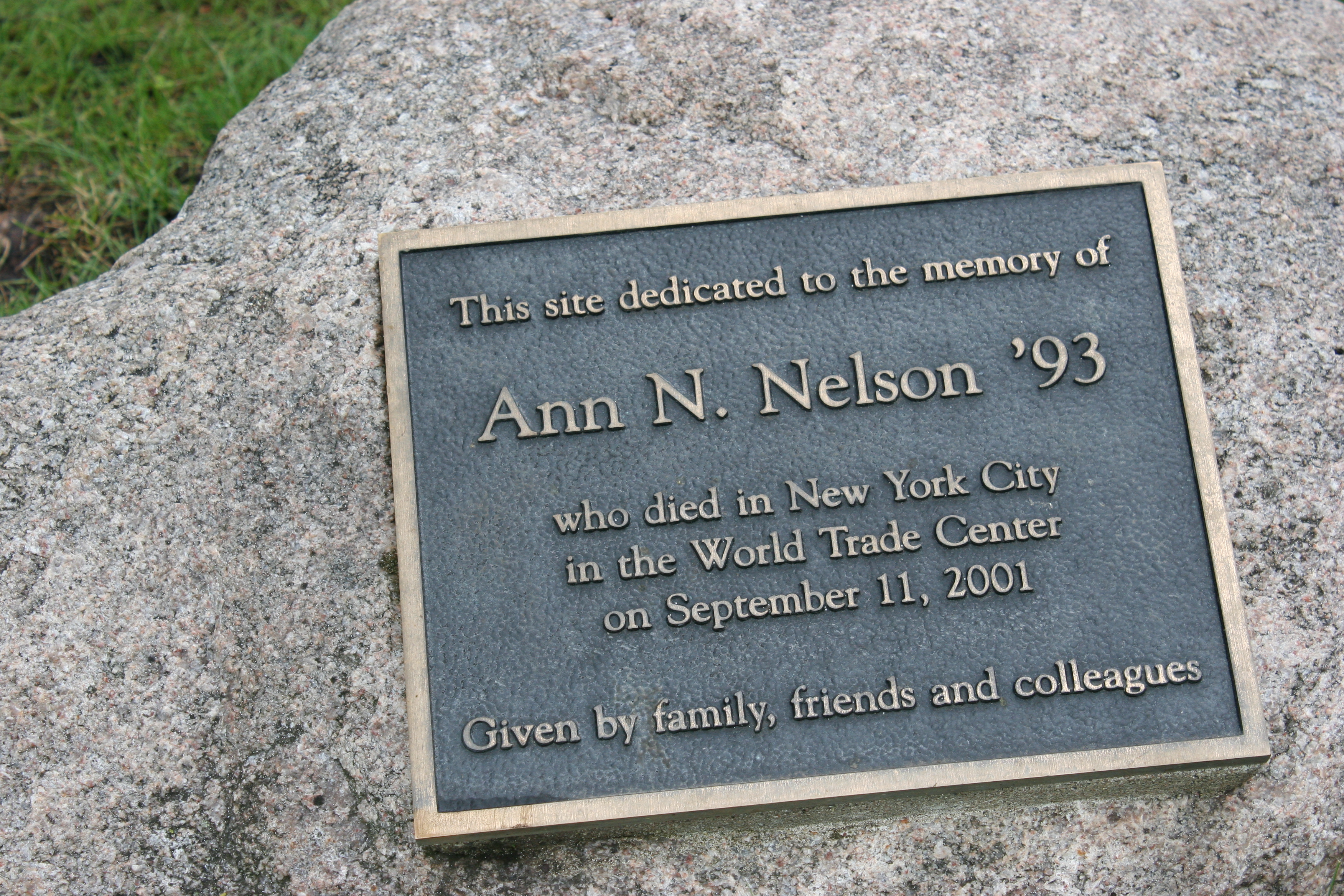
On the campus of Carleton College in Northfield, Minnesota, a plaque honors an alumna who died on 9/11. Minnesota Prairie Roots copyrighted file photo.
That day changed us. It changed how we view each other and the world. The acts of those terrorists not only claimed lives, but our sense of security. Our sense of peace. And much more.
I remember well that September morning, how my then seven-year-old son and his friend Sam reacted to scenes unfolding on our television set. My husband had phoned me from work, alerting me to the attacks. I switched on the TV. And the boys saw it all, right alongside me. Perhaps I should have been a responsible mother/caregiver and turned off the television. But I didn’t.
I reconstructed a tower using the same blocks my son and his friend used on September 11, 2001, to duplicate what they saw on television. These are also the same airplanes they flew into the tower. Minnesota Prairie Roots copyrighted file photo September 2001.
Soon Caleb and Sam were building twin towers with wooden blocks and flying toy airplanes into the skyscrapers. It was heart-breaking to watch. Both reality unfolding on the screen and then the re-enactment on my living room floor.
For a Minnesota mom geographically far-removed from the World Trade Center, the Pentagon and a field in Pennsylvania, none of this seemed distant. I felt the collective fear. I felt the collective pain. I felt the collective grief.
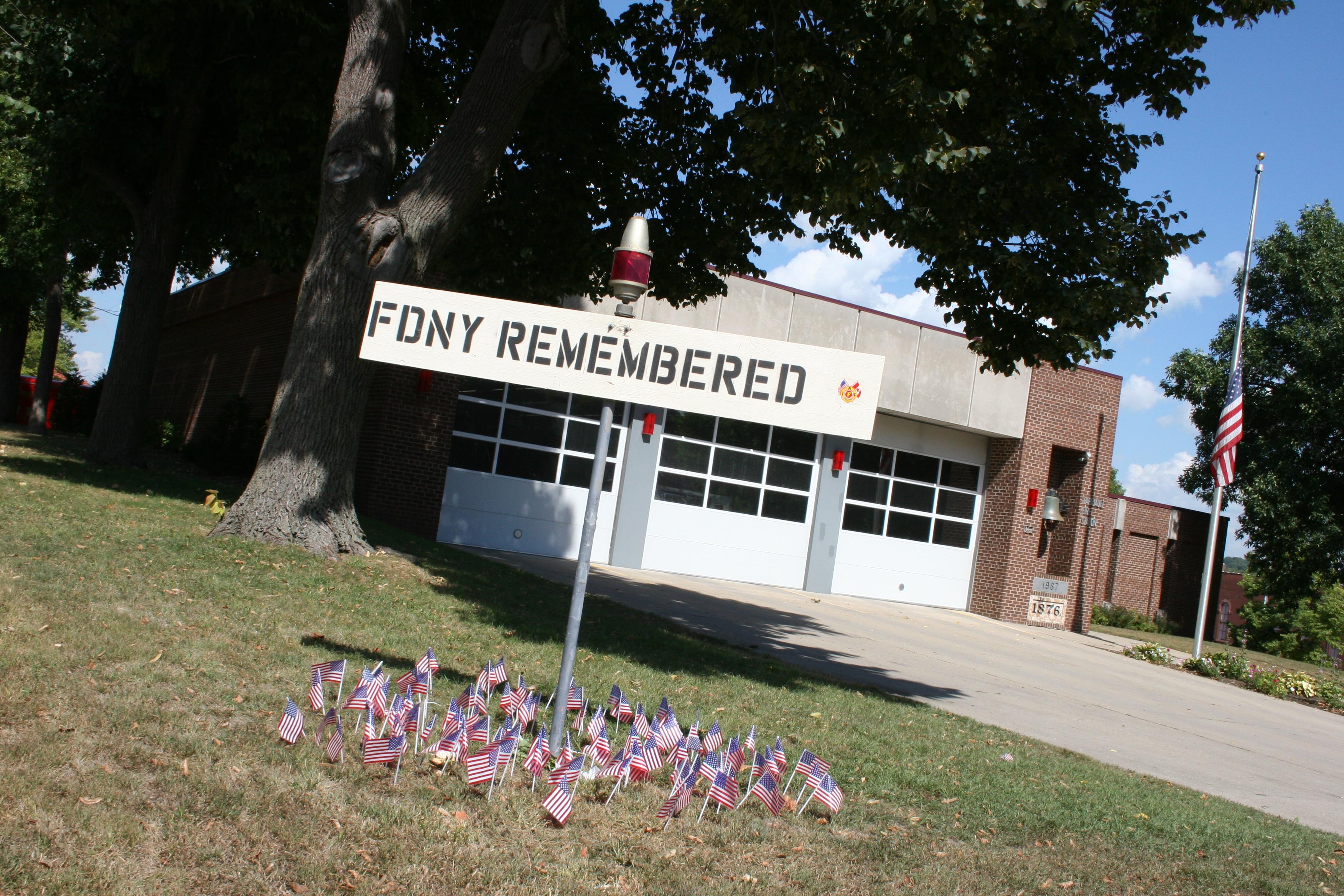
A memorial at the Faribault Fire Department honoring those who died on 9/11. The department will host a commemoration this Saturday, September 11, beginning at 7:46 am. That includes a welcome by the fire chief, a flag presentation, ringing of the bell and a brief eulogy. Minnesota Prairie Roots copyrighted file photo.
Today I remember, 20 years later, those who died. The families left without loved ones. The heroes. And those two little boys who saw, yet didn’t fully-understand, the events unfolding far from Minnesota. Yet too close.
Here’s a poem I wrote shortly after September 11, 2001:
September 11, 2001
You clutch your silver toy jetliners
then blast them into the twin towers,
blocks scattering across the floor.
Like that show on TV,
you tell me,
where the planes crashed
into those two tall buildings.
—————————————-
Somehow I must tell you
that this was no show on TV,
but real people
in real buildings.
Moms and Dads
with little boys just like you,
boys who build towers and fly toy airplanes.
—————————————————————
How do I begin to show you the truth
behind a scene so terrifying
that it keeps replaying in my mind?
Hollywood could have written the script,
the latest disaster film, grossing millions
for an industry embedded in itself.
You’re right; this could be a show on TV.
———————————————————-
Except this is very real,
so real that I want you to believe
those were just pretend buildings, pretend airplanes.
But you see the worry in my eyes,
hear the sadness in my voice.
You know the truth,
even before I tell you.
——————————-
My son, only seven years old,
too young to fully understand
the evil that has invaded the world,
the fear that grips the American heart, my heart,
the sense of security forever lost.
Like so many blocks scattered across the floor,
we must pick up the pieces and rebuild, peace by peace.
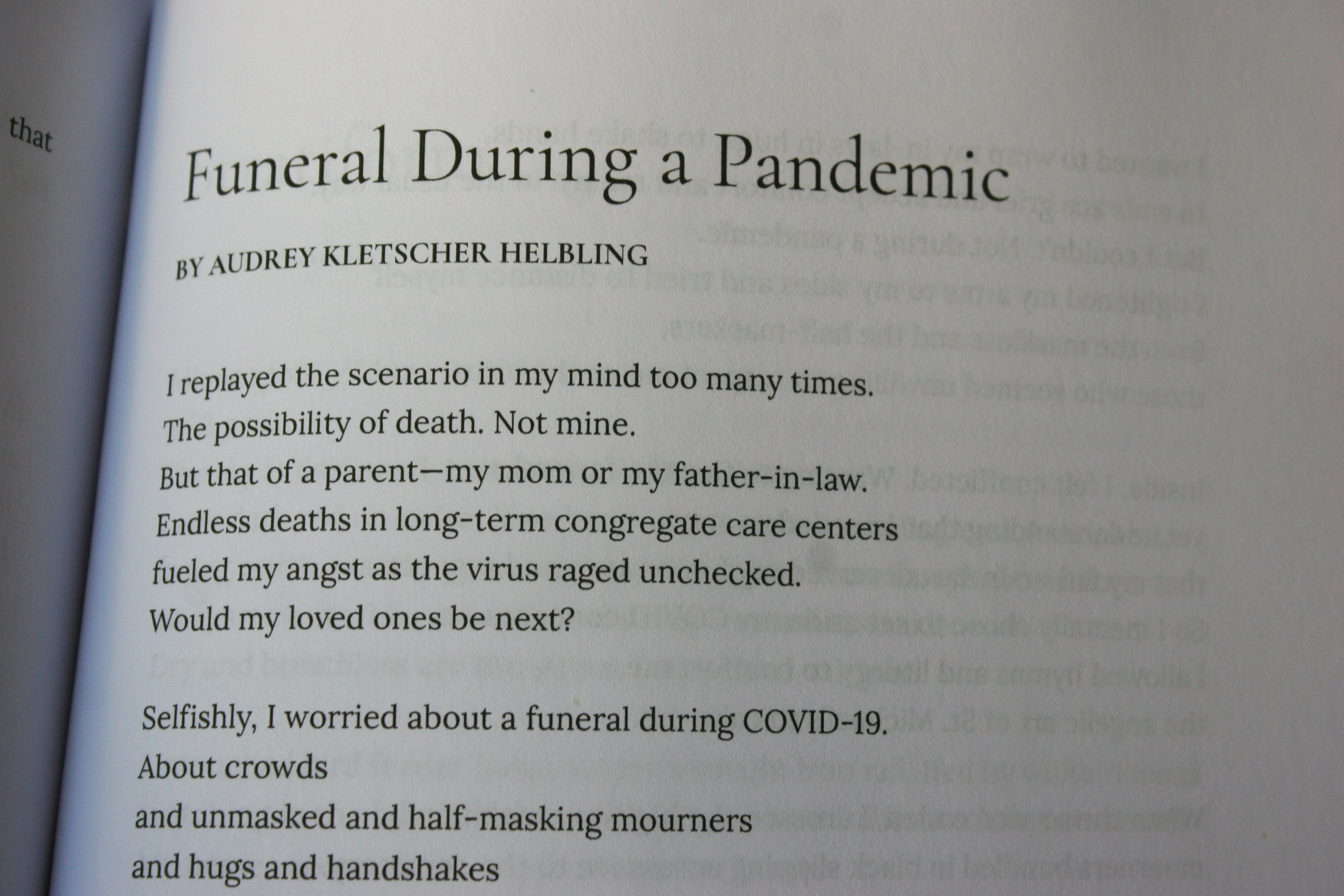
The collection includes my poem, “Funeral During a Pandemic.” Minnesota Prairie Roots photo.
I am humbled and honored to have “Funeral During a Pandemic” selected for publication in this award-nominated book. In my poem, I share my thoughts and experiences from my father-in-law’s funeral in a small rural Minnesota town. During a pandemic.
The book features short bios on each writer. Minnesota Prairie Roots photo.
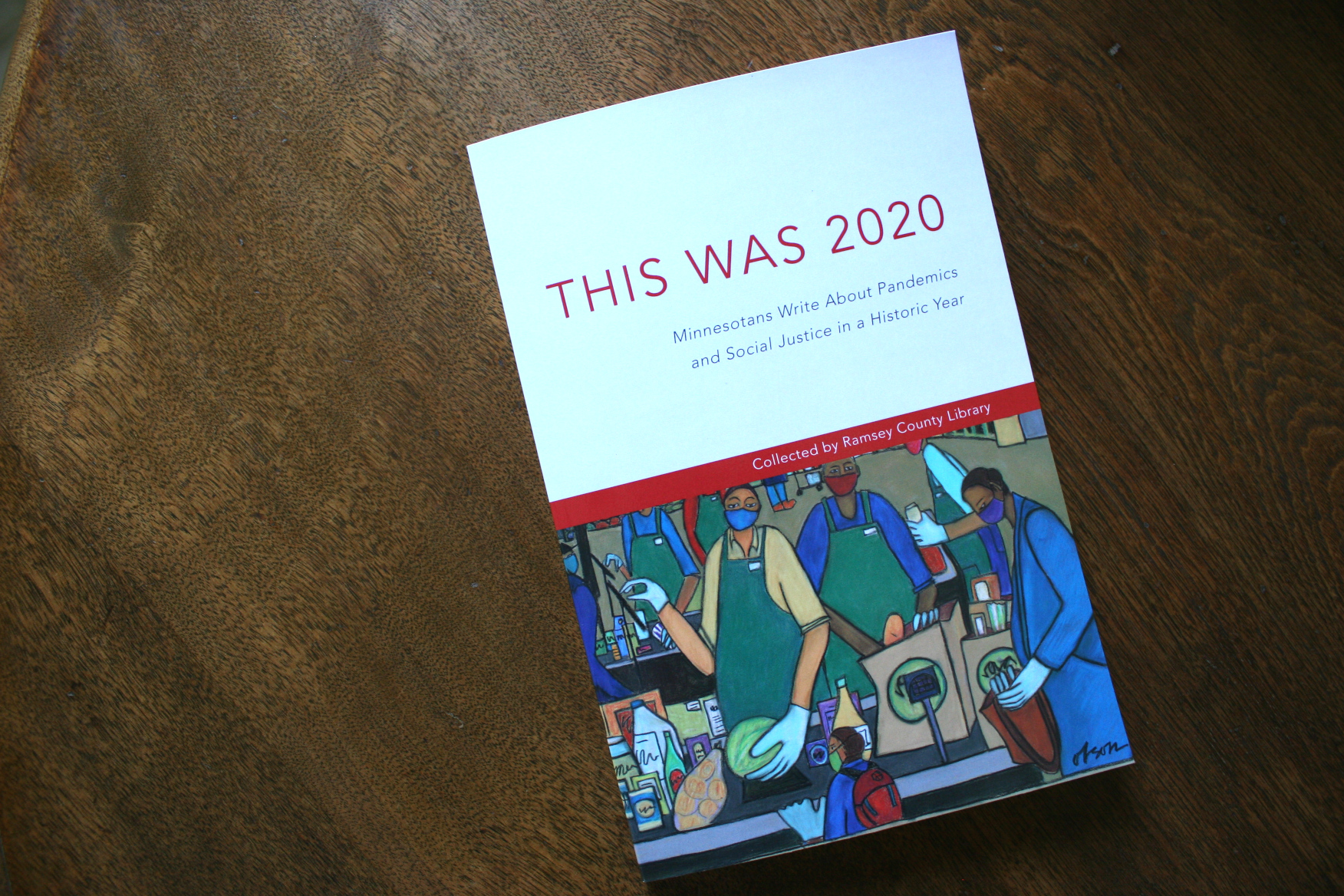
As the title of this collection conveys, the 170 pages of writing focus on pandemics and social justice. Those who penned these pieces, solicited by the Ramsey County Library via a competition, are a diverse group. In age. In writing backgrounds, although many are seasoned writers with extensive writing credentials. In skin color and ethnicity. In perspective and experience. That said, most writers live in the metro with a few of us from other places in Minnesota, including several from my county of Rice.
Those from outside the metro include a 12-year-old from New Market. Evelyn Pierson, in “My Experience at the George Floyd Memorial,” writes of her emotional reaction to visiting the site where Floyd died at the hands of police on May 25, 2020. It’s heart-wrenching—to feel her torrent of emotions, to read her insights and thoughts, to envision her tears. But it’s important, even necessary, to hear the voice of this eighth grader.
Just like it’s necessary to read Brainerd resident Susan Smith-Grier’s essay, “Black in White.” I find her observations and experiences of a black woman living in a primarily white community to be particularly powerful. She moved with her parents/family to north central Minnesota in the early 70s to escape the violence in Chicago. One of very few black families in her new northern home. The death of George Floyd triggered childhood memories of tear gas and rubber bullets, fires and looting…and then, today, a bit of hope that things will change.
Hope weaves into many of the pieces. As does overcoming the fear, the loss, the grief and more that too often defined 2020.
In his poem, “The streets emptied out, but their lungs,” Moyosore Orimoloye reminds us that, despite lungs filling with fluid from COVID, lungs also filled with song on the balconies of Turin.
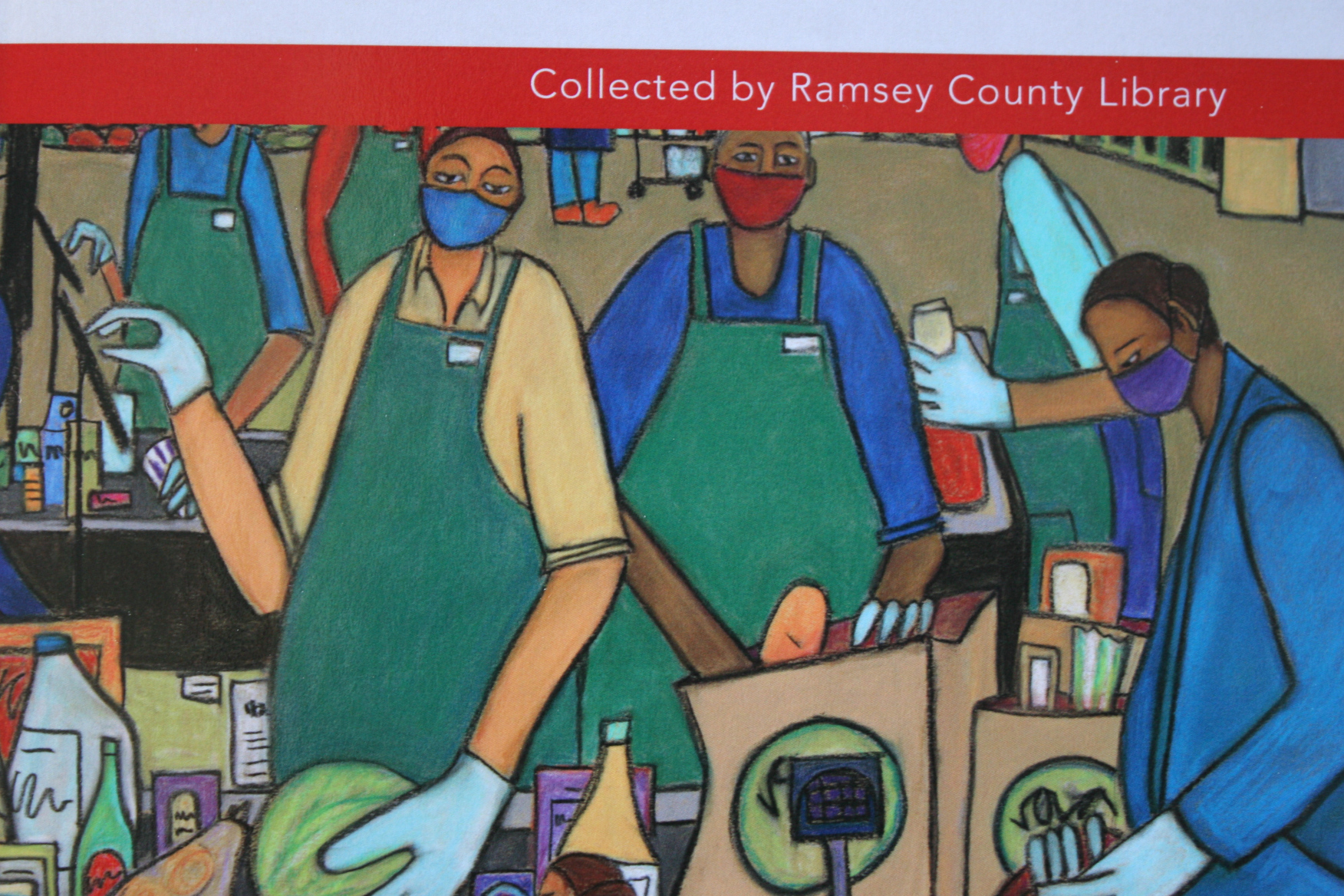
The incredible cover art features the work of Carolyn Olson, “Grocery Store Cashier and Bagger (Essential Workers Portrait Series #1). 2020, Duluth, MN. Minnesota Prairie Roots photo.
So many writers detailed how the pandemic affected them—from worries about going grocery shopping to separation from loved ones to ways in which they learned to cope. I found Dave Ryan’s “Living and Dying in Memory Care” profoundly relatable given my mom lives in a long-term care center. I’ve experienced some of the same scenarios—trying to visit through a window, for example. Before he could no longer visit his mom due to COVID restrictions, Ryan installed a video camera in her room. That connected him to her. But then the unthinkable happened. As I read the conclusion of his essay, my heart broke right along with his.
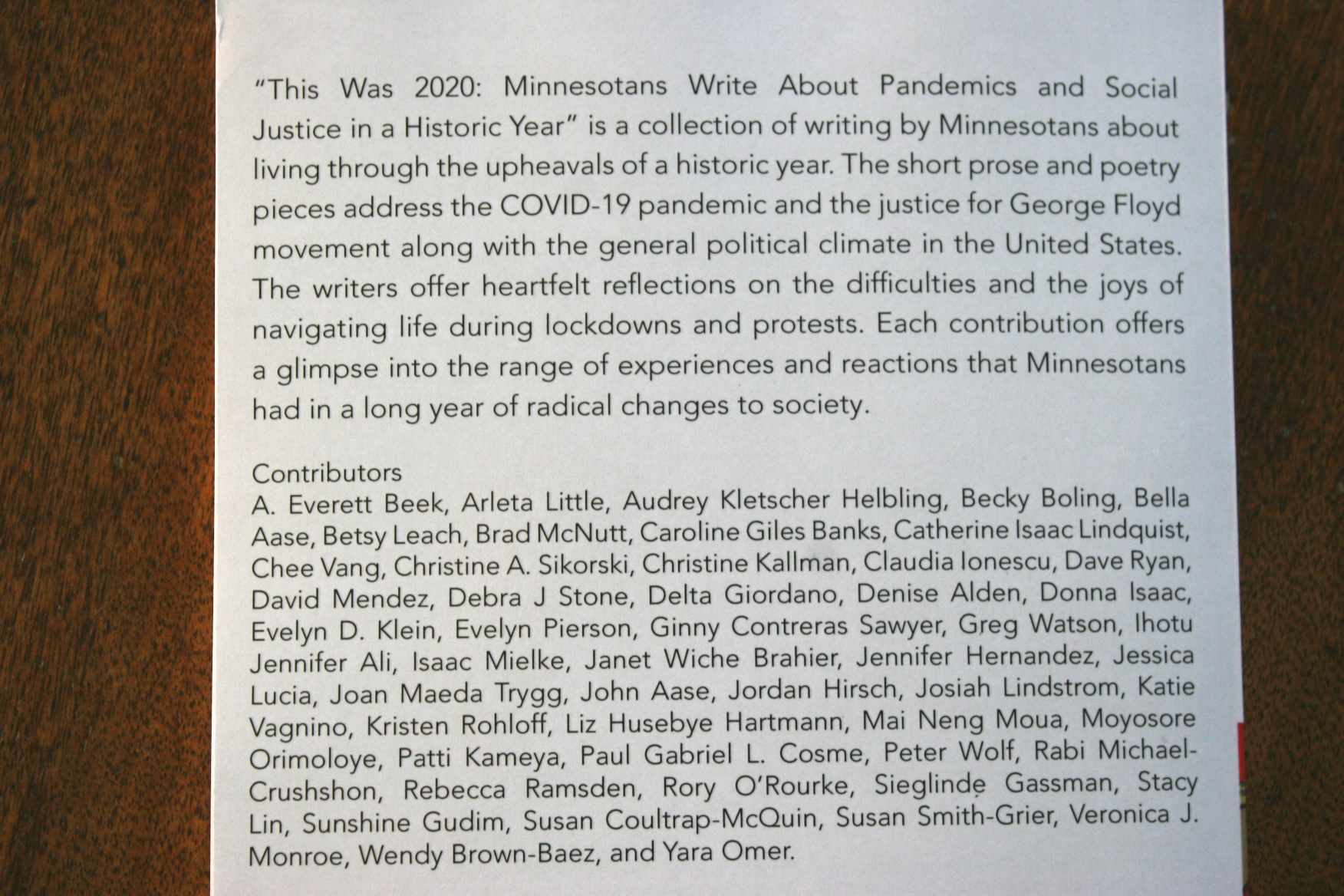
On the back cover, a summary of the book and a list of the writers whose work was selected for inclusion in this collection. Minnesota Prairie Roots photo.
These are stories you need to read. Real. Life. Authentic. Eye-opening (especially Chee Vang’s “To Kuv Niam,” about how her mother was treated upon contracting COVID). I learned so much, particularly from those writers who have experienced social injustice. From those writers, too, who live in the Twin Cities, who are widely-traveled and who have seen and experienced much more than a farmer’s daughter from southwestern Minnesota.
But I share one commonality with poet and educator Katie Vagnino of south Minneapolis. I am, like her, a Rapunzel with overgrown hair.
#
FYI: I encourage each one of you to purchase This Was 2020 by clicking here or buying it elsewhere (in print or as an e-book). Besides the 54 pieces, the book includes writing prompts, a discussion guide and a short list of grief, mental health, and anti-racism resources. This truly rates as an outstanding collection of writing that documents historical events which have forever changed us.
Publication of this book was made possible by the Minnesota Arts and Cultural Heritage Fund. Thank you, Minnesota voters, for supporting the arts. And thank you, Paul Lai of the Ramsey County Library for your hard work on, and dedication to, this book project. I appreciate you and every single writer who contributed to this exceptional must-read book.
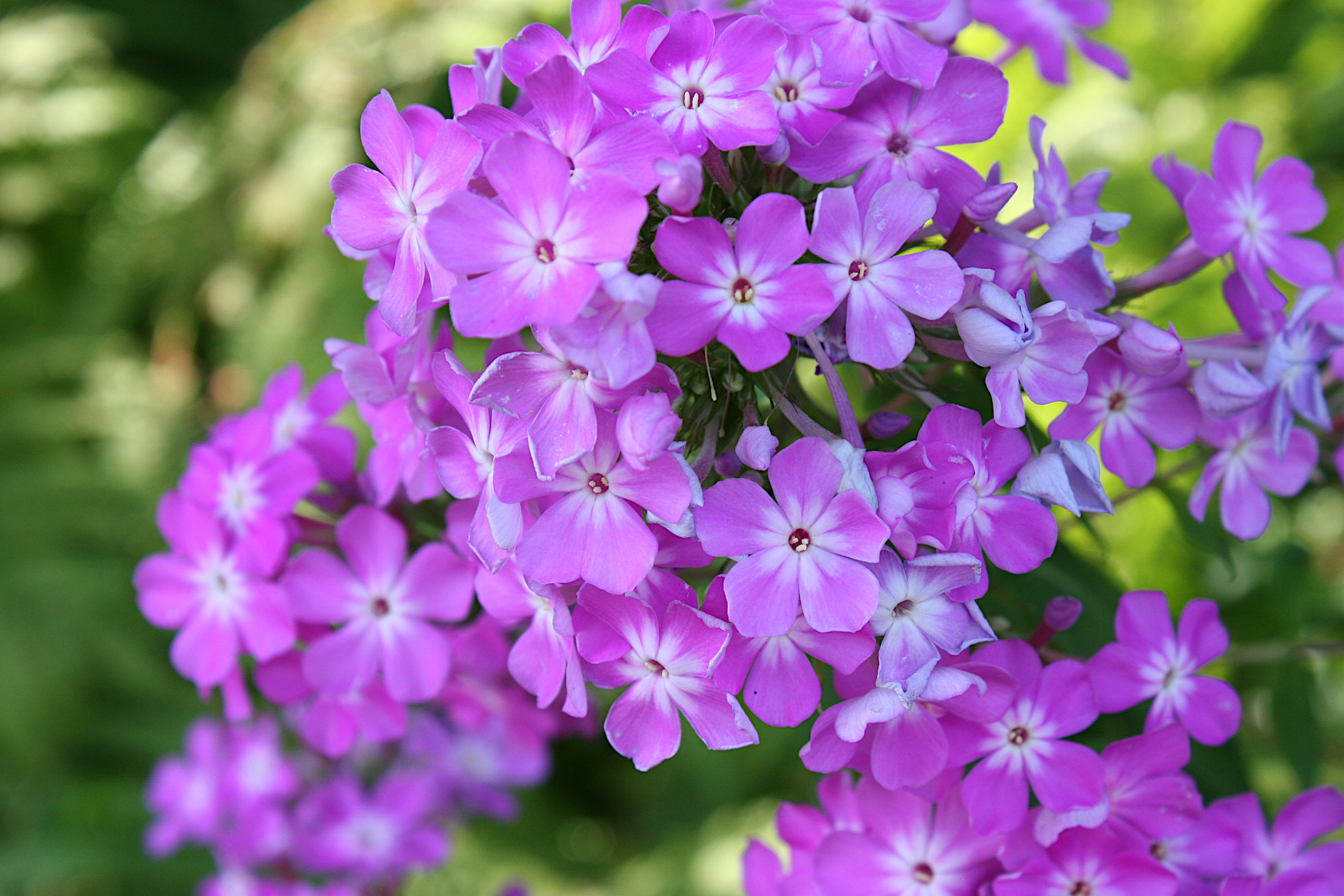
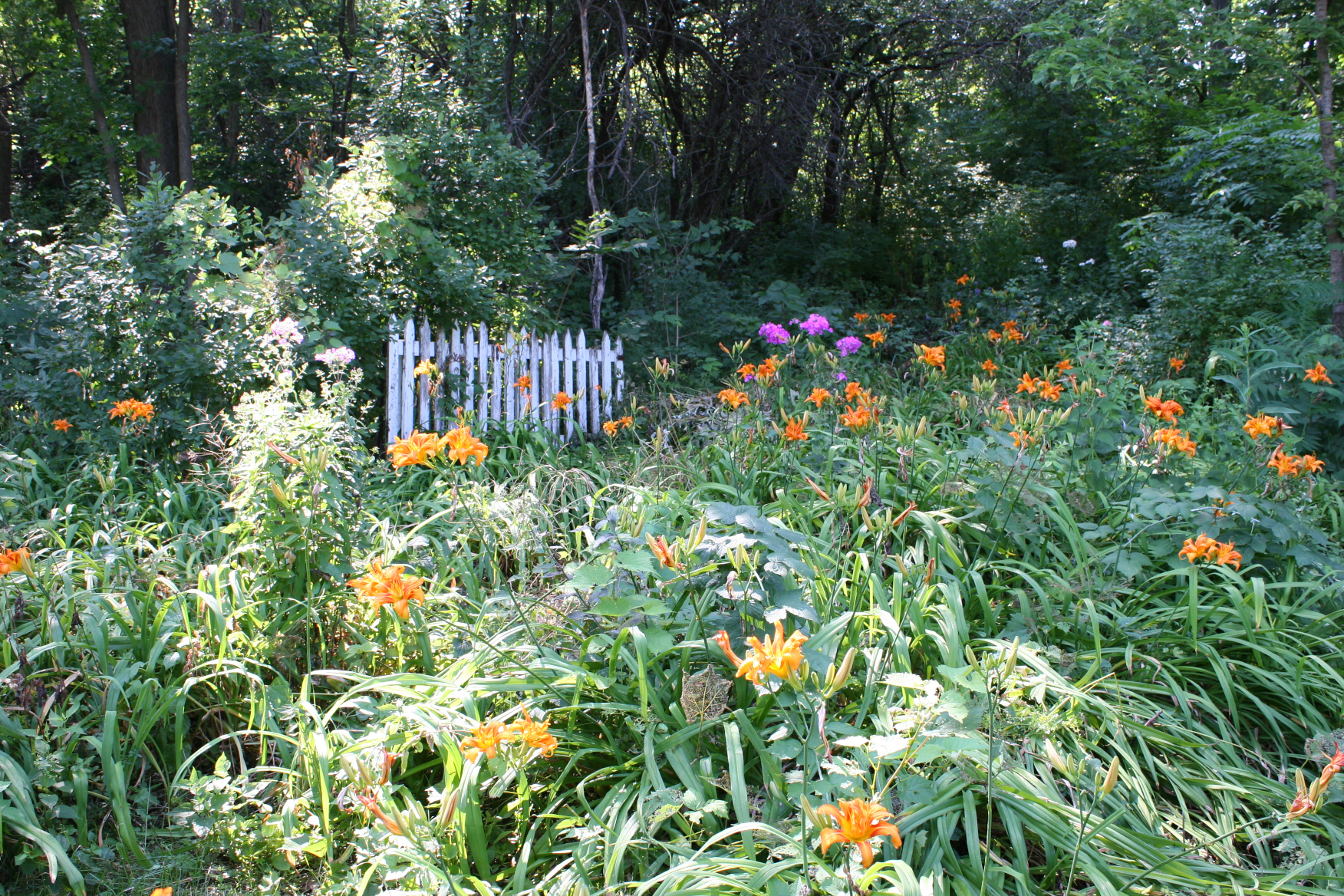
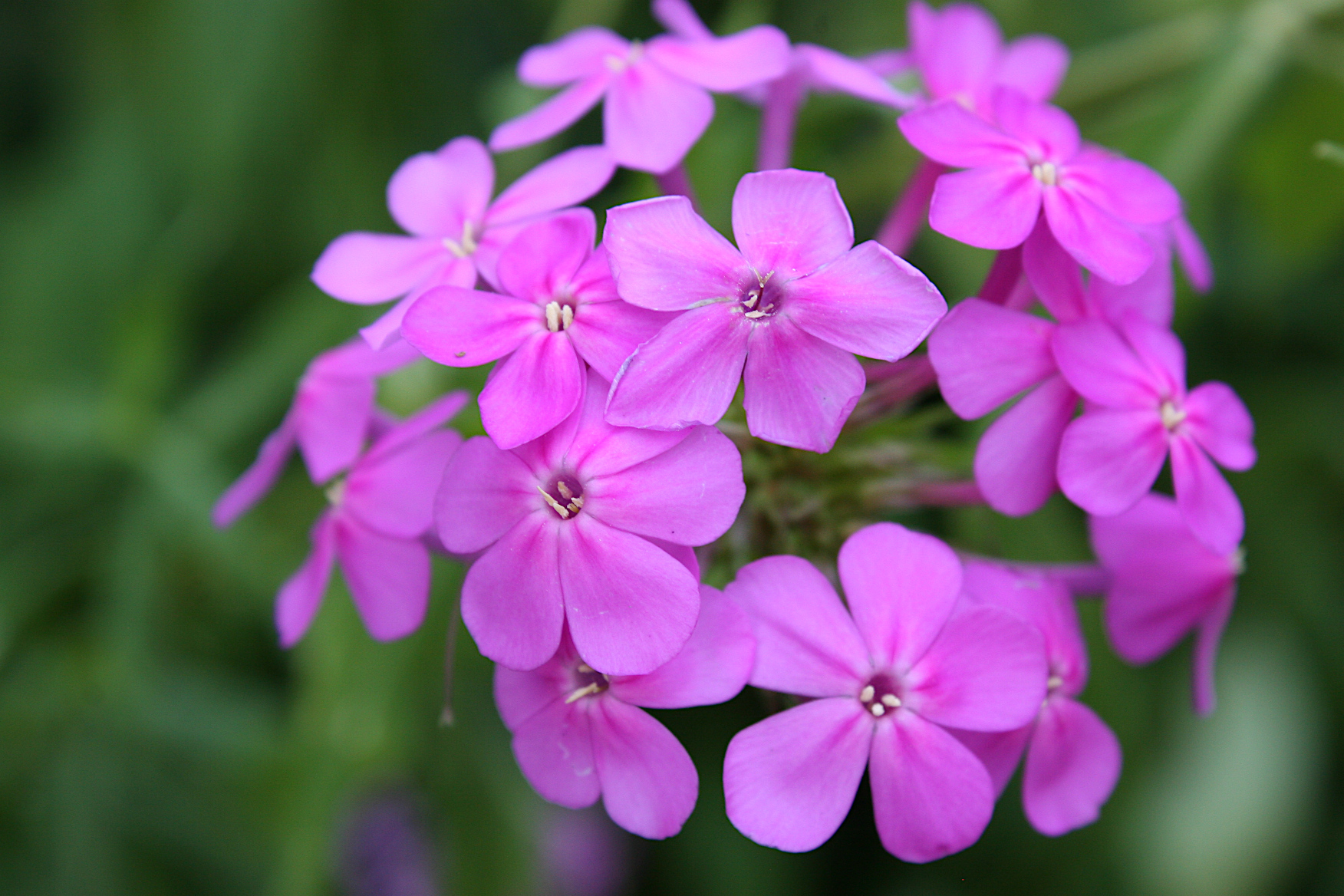
PHLOX IN VIBRANT SHADES of purple and pink, interspersed with occasional white blossoms, fill my flowerbeds. They thrive, their fragrance scenting the air that drifts through my office window.
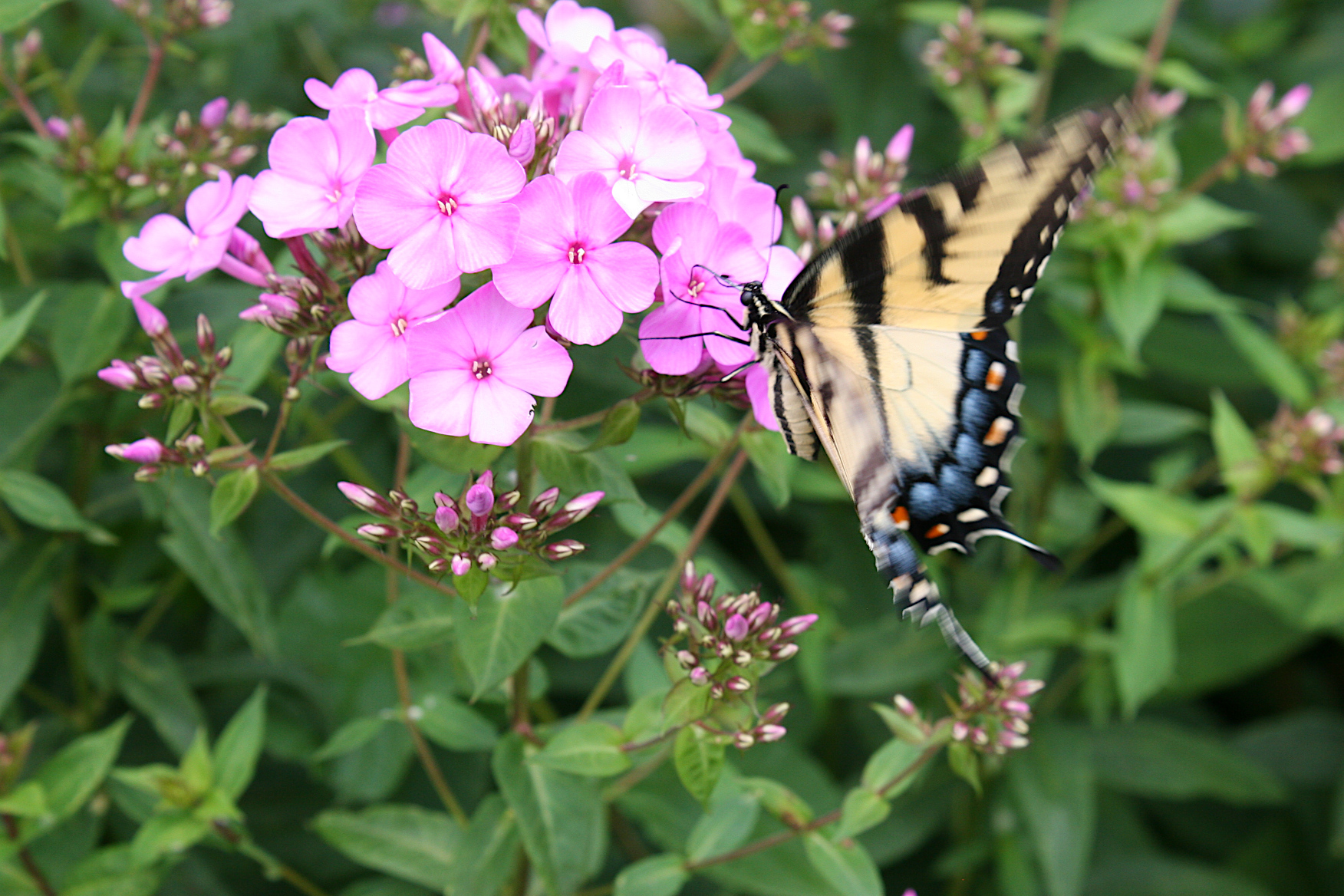
A yellow swallowtail butterfly. Minnesota Prairie Roots copyrighted photo 2021.
Occasionally I spot butterflies flitting among the phlox, random milkweeds, wild orange tiger lilies, ferns and other unidentified plants growing in a tangled mess of wildness. I love watching them—the monarchs and the swallowtails—their wings flapping with such incredible grace. They swoop and dip and pause. As if dancing. As if performing. As if penning poetry.
A mess of flowers grow on a hillside next to woods in our backyard. Minnesota Prairie Roots copyrighted photo 2021.
Moments like this imprint upon me the importance of pausing to appreciate the beauty of nature. The details of a flower petal. The curve of a butterfly wing. The bend of a milkweed pod.
Phlox up close. Minnesota Prairie Roots copyrighted photo 2021.
Now, more than ever, I need this connection to nature, these moments to reset. To see that, even as a pandemic rages, flowers still bloom and butterflies still fly.
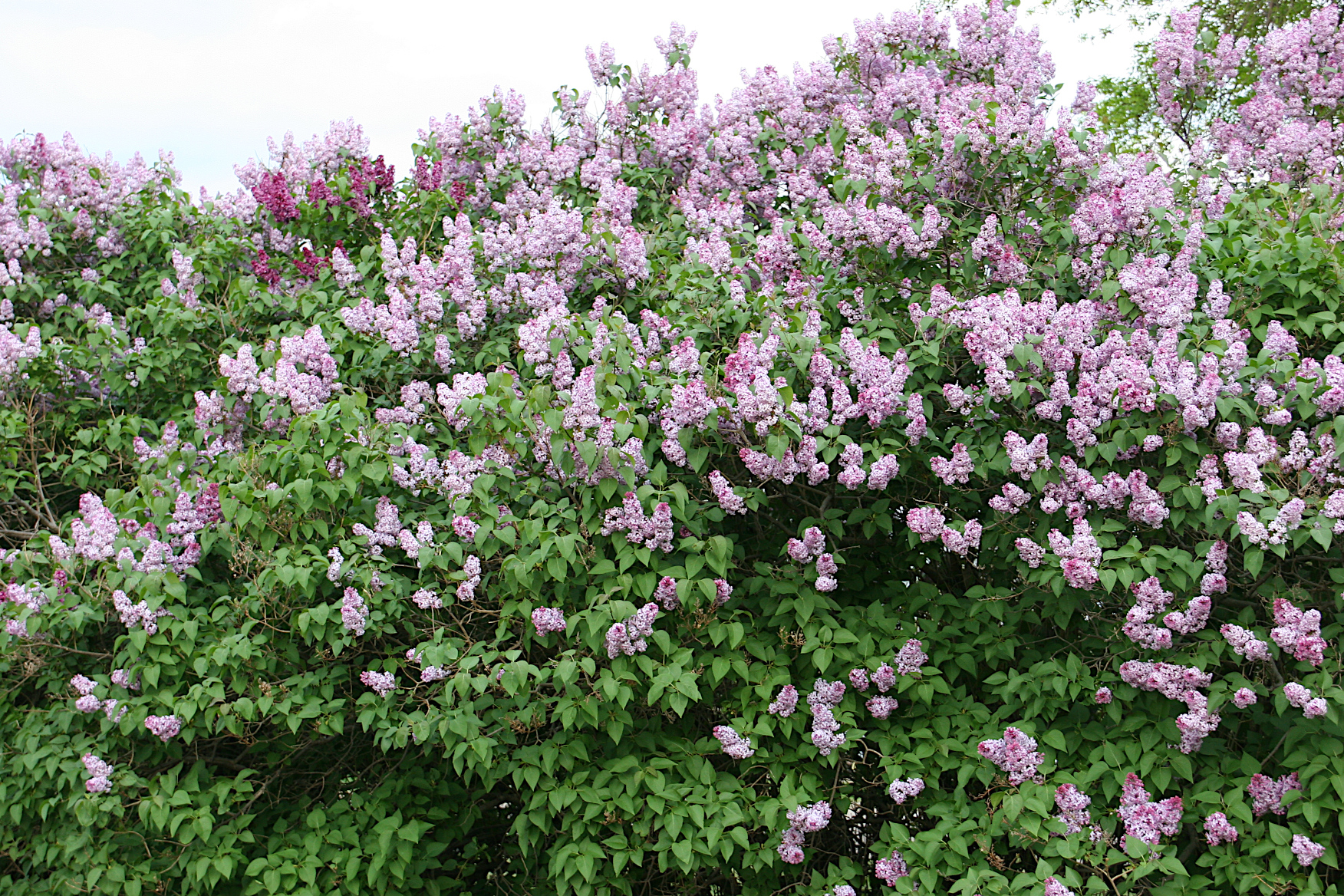
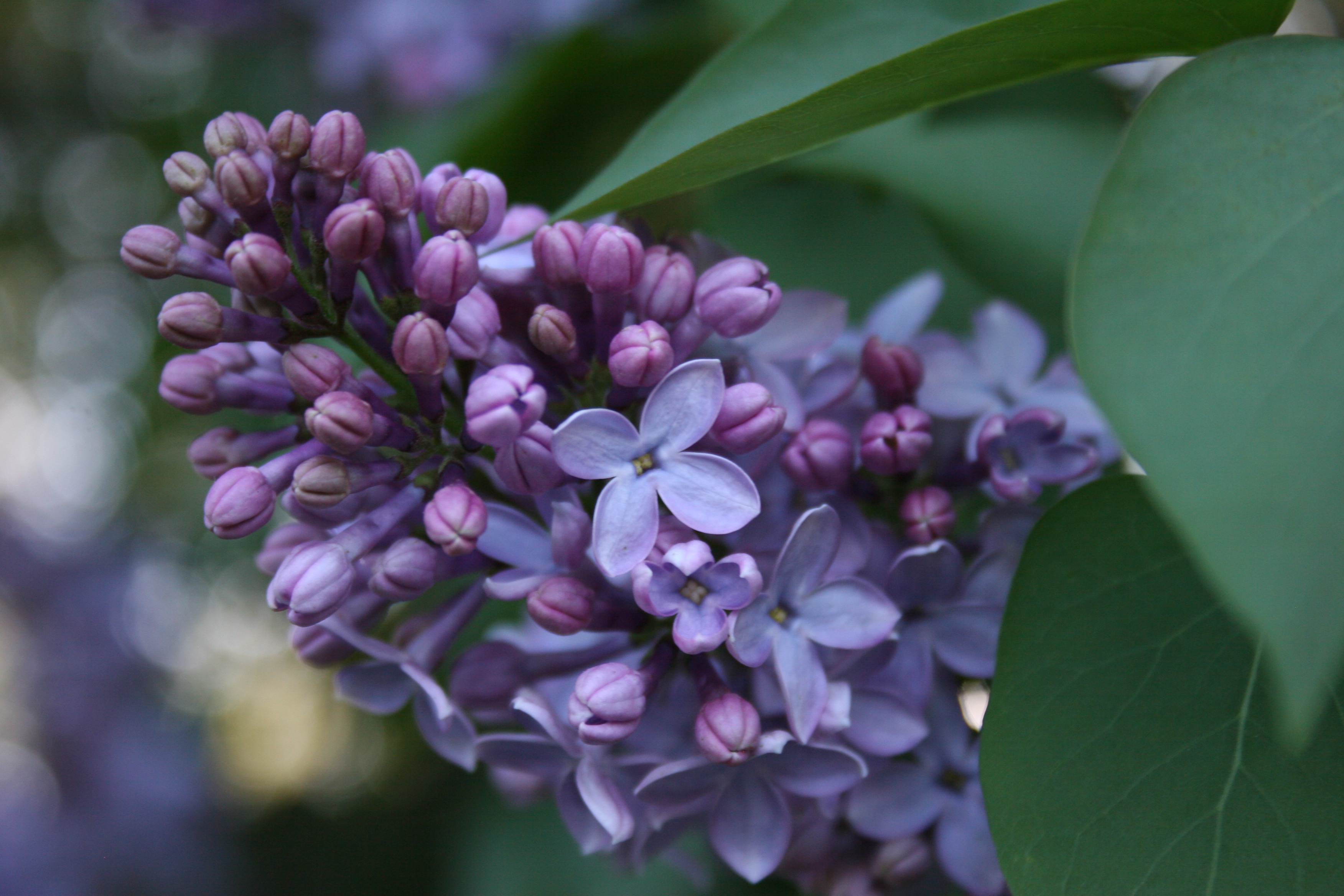
Lilacs grow in various shades in a row of bushes at North Alexander Park in Faribault. Minnesota Prairie Roots copyrighted photo.
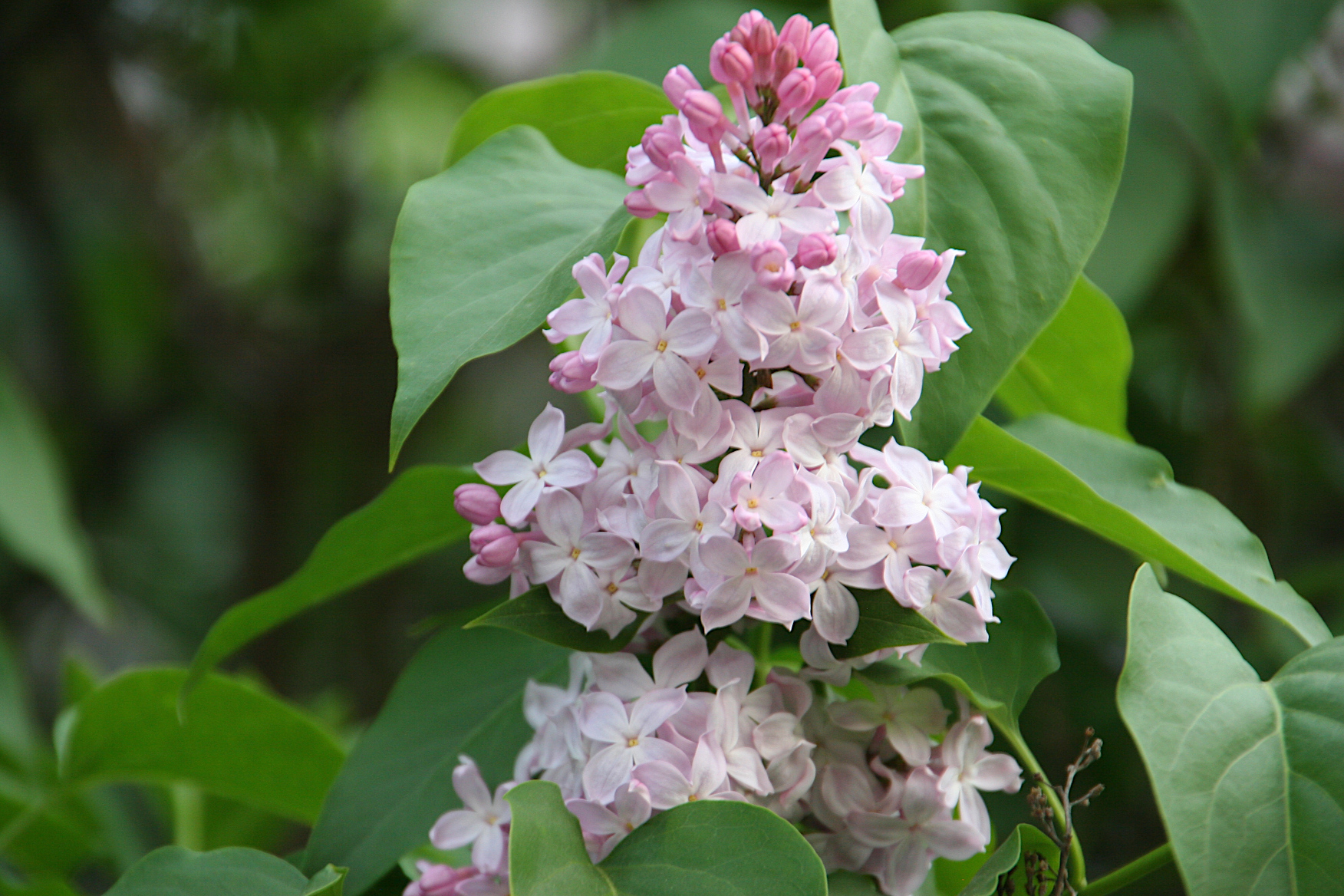
LILACS PERFUME THE AIR, filling the lower level of my home with the scent of spring in Minnesota.
“Lilacs on the Table” inspired by my poem and painted by Jeanne Licari for Poet-Artist Collaboration XIII at Crossings in Carnegie in Zumbrota in 2014. File photo courtesy of Crossings.
These bouquets—three in my living room, another in the dining room and the fifth on the bathroom counter—are more than simply beautiful flowers. They are reminders. Of my bachelor uncle. Of my husband’s love. Of a poem I wrote in 2014 as part of a poet-artist collaboration.
Lilac bushes at North Alexander Park, Faribault. Minnesota Prairie Roots copyrighted photo.
While my beloved Uncle Mike is long gone, the memories of the lilac bush which grew on his farm remain. I think of him each May when Randy brings me clutches of lilacs. It’s a sweet tradition. Loving. Appreciated more than a dozen roses, although those are lovely, too.
Lilacs, up close. Minnesota Prairie Roots copyrighted file photo 2013.
When Randy walked through the back door a few days ago with lilacs, I was surprised. Not that I should have been. He does this every May. I appreciate his thoughtfulness. I appreciate that he takes the time to gather these flowers for me at the end of a long work day.
There’s something simply sweet and precious about his remembering, his recognition of how much I value this heartfelt gift of love.
Lilacs
Breathing in the heady scent of lilacs each May, I remember my bachelor uncle and the gnarled bushes, heavy with purple blooms, that embraced his front porch and held the promises of sweet love never experienced.
He invited his sister-in-law, my mother, to clip lilacs, to enfold great sweeps of flowers into her arms, to set a still life painting upon the Formica kitchen table, romance perfuming our cow-scented farmhouse.
Such memories linger as my own love, decades later, pulls a jackknife from the pocket of his stained jeans, balances on the tips of his soiled Red Wing work shoes, clips and gathers great sweeps of lilacs into his arms.
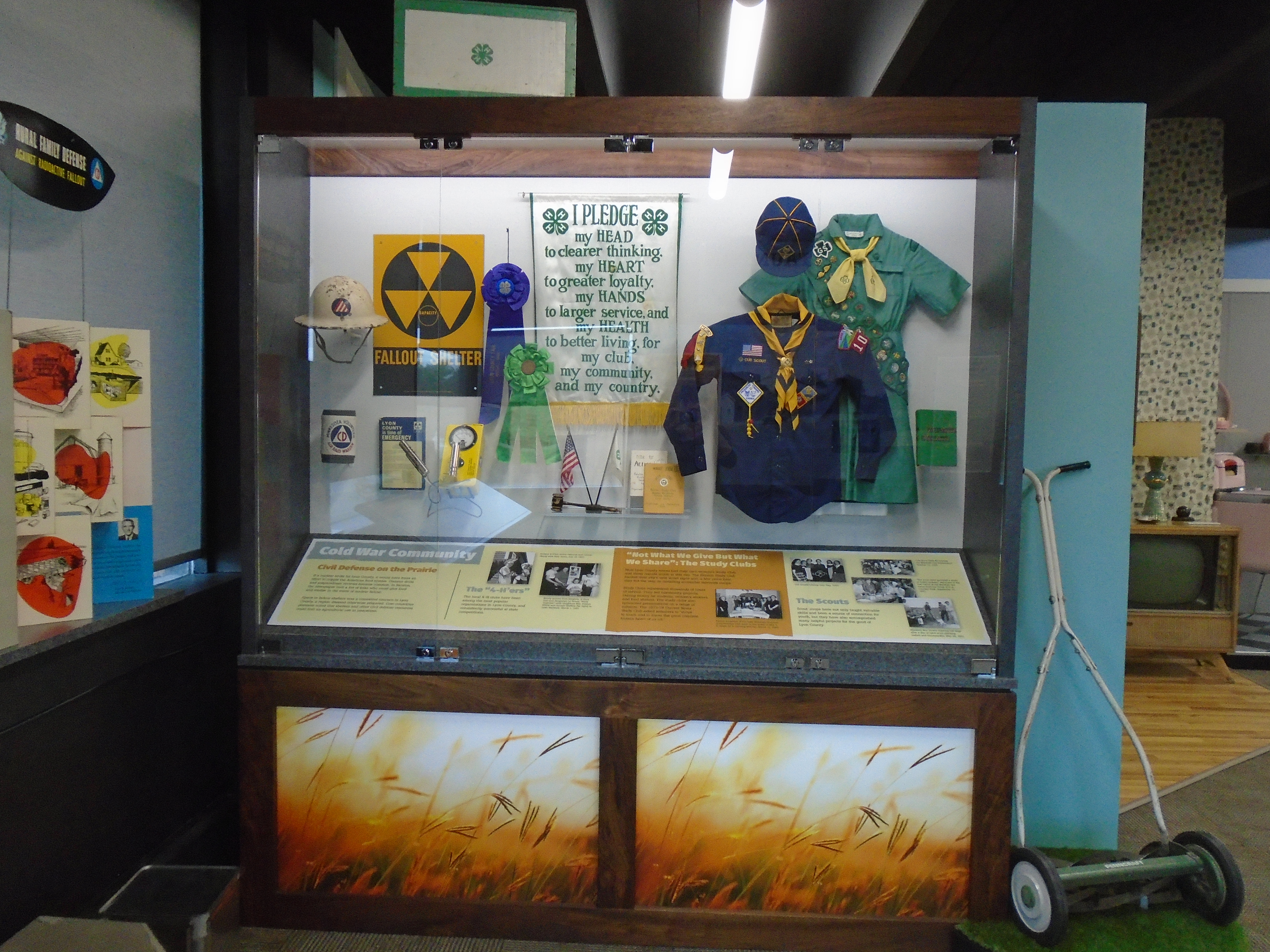
A portion of the “Making Lyon County Home” exhibit focuses on 4-H and more. Photo courtesy of the LCHS.
Museology Museum Services of Minneapolis also deserves recognition as lead contractor for the project. I was first contacted by Museology in January 2020 about inclusion of my rural-themed poem in this exhibit focusing on Lyon County and also reflective of the surrounding area in southwestern Minnesota. I feel incredibly honored to be part of an award-winning exhibit that connects people to the history of this rural region.
MALHM awards were also given to historical societies in Anoka, Carver and St. Louis counties and to the Minnesota African American Heritage Museum and Gallery. Susan Garwood, director of the Rice County Historical Society in Faribault (RCHS), earned the 2020 Lifetime Achievement Award for 30-plus years of service to organizations across Minnesota, including the RCHS, Northfield Historical Society and the MALHM. The award recognizes individuals who have made outstanding contributions and demonstrated leadership to Minnesota’s history community on a broad scale.
The state-wide Alliance serves some 500-plus local history groups throughout Minnesota with a basic mission “of connecting people to nearby history.” It also provides peer-to-peer support and aims “to raise the quality of work in the local history field in Minnesota.”
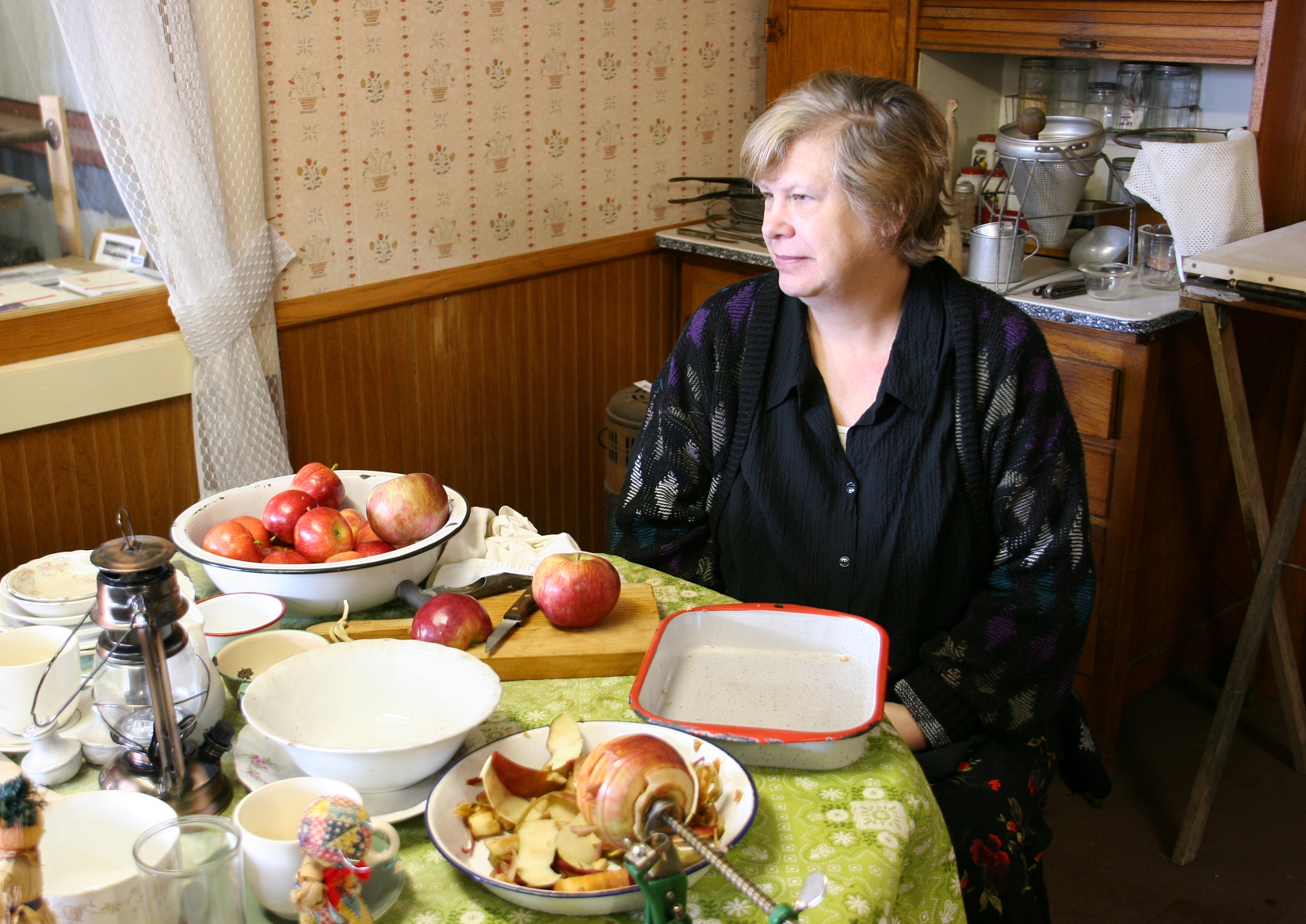
Mrs. Morris takes a break from making applesauce during A Night at the Museum at the Rice County Historical Society. This is an example of local living history. Minnesota Prairie Roots file photo October 2015.
A time existed when I didn’t appreciate history or history centers like I do now. My shift in appreciating history came when museum exhibits changed. When they became more personal and interactive. When an artifact was not just something encased in glass, but an object with meaning, purpose, depth. When living history became a standard. When stories became part of the story.
I photographed this abandoned farmhouse along Minnesota State Highway 19 east of Vesta (my hometown) on the southwestern Minnesota prairie in 2012. The house is no longer there. But it looks similar to the one in which I lived during the first 10-plus years of my life. This is the landscape of my upbringing and the place which shaped me. Minnesota Prairie Roots file photo.
That brings me back to my “Ode to My Farm Wife Mother.” After I posted on Tuesday about the poem’s inclusion in the Lyon County exhibit, my cousin Diane emailed a 1958 photo of my parents. And while I’m not sharing that image here, I will tell you that I was overjoyed to see a different side of my parents other than as, well, simply parents. They were young and clearly blissfully, joyfully in love. Diane also shared that her parents and mine would often attend dances together, leaving the kids with Grandma. As one of the oldest, Diane helped look after the babies, including me. I’d never heard that story or seen that black-and-white snapshot. To receive both now—with my dad long gone and my mom in failing health—was a gift. Such a gift.
I hope my poem, inspired by my mom, yet representative of all the hardworking farm women of the 1950s and 1960s, is also a gift to those who read it. I hope those who read my words, who view the accompanying photos, will reflect and feel gratitude for these strong rural women.
I shall forever feel grateful to my mom and to the rural region which shaped me and continues to inspire me today in my writing and photography.
FYI: If you didn’t see my back story on “Ode to My Farm Wife Mother,” please click here to read that initial post. The post includes my poem and more info about the new Lyon County exhibit.
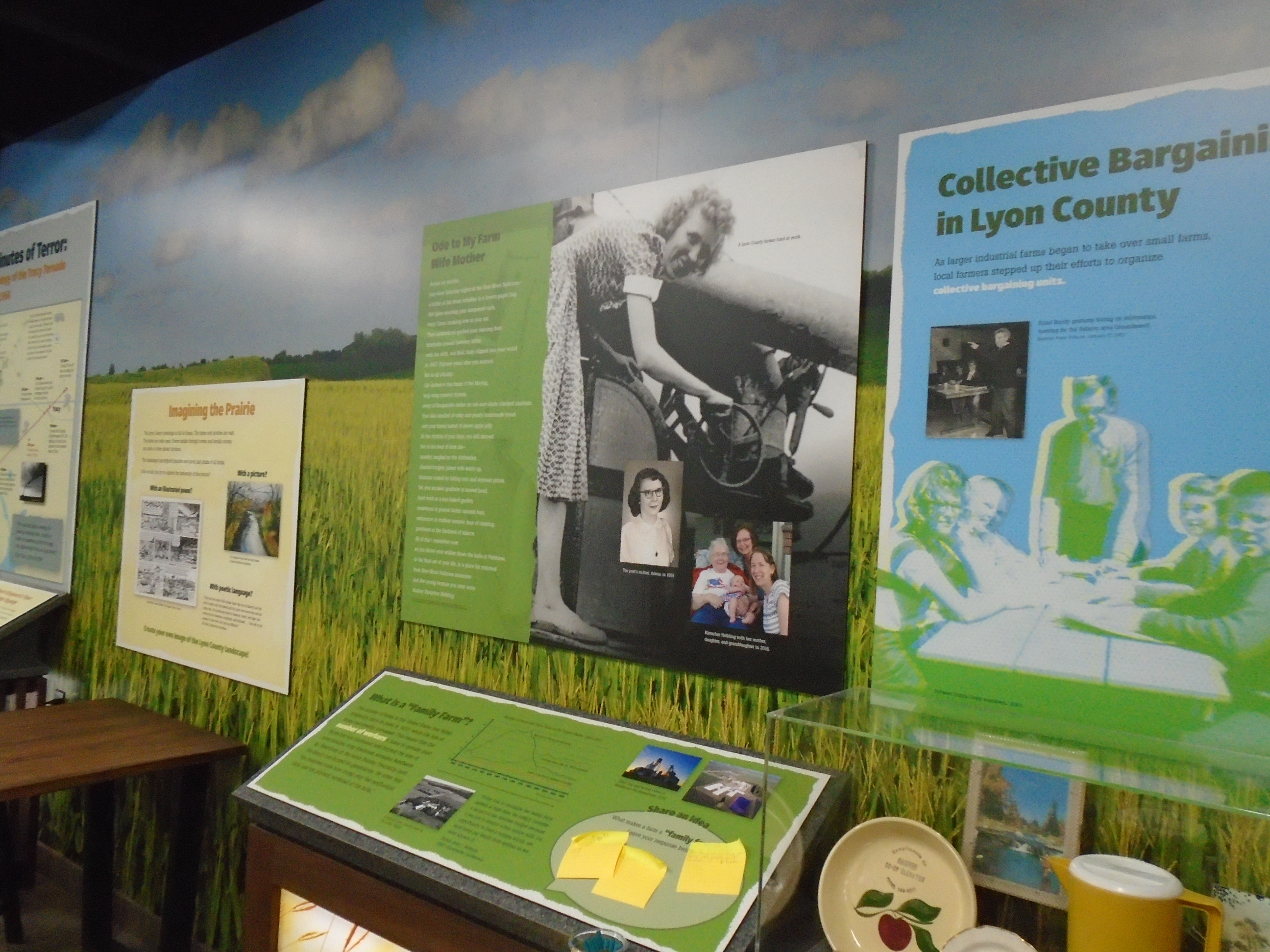
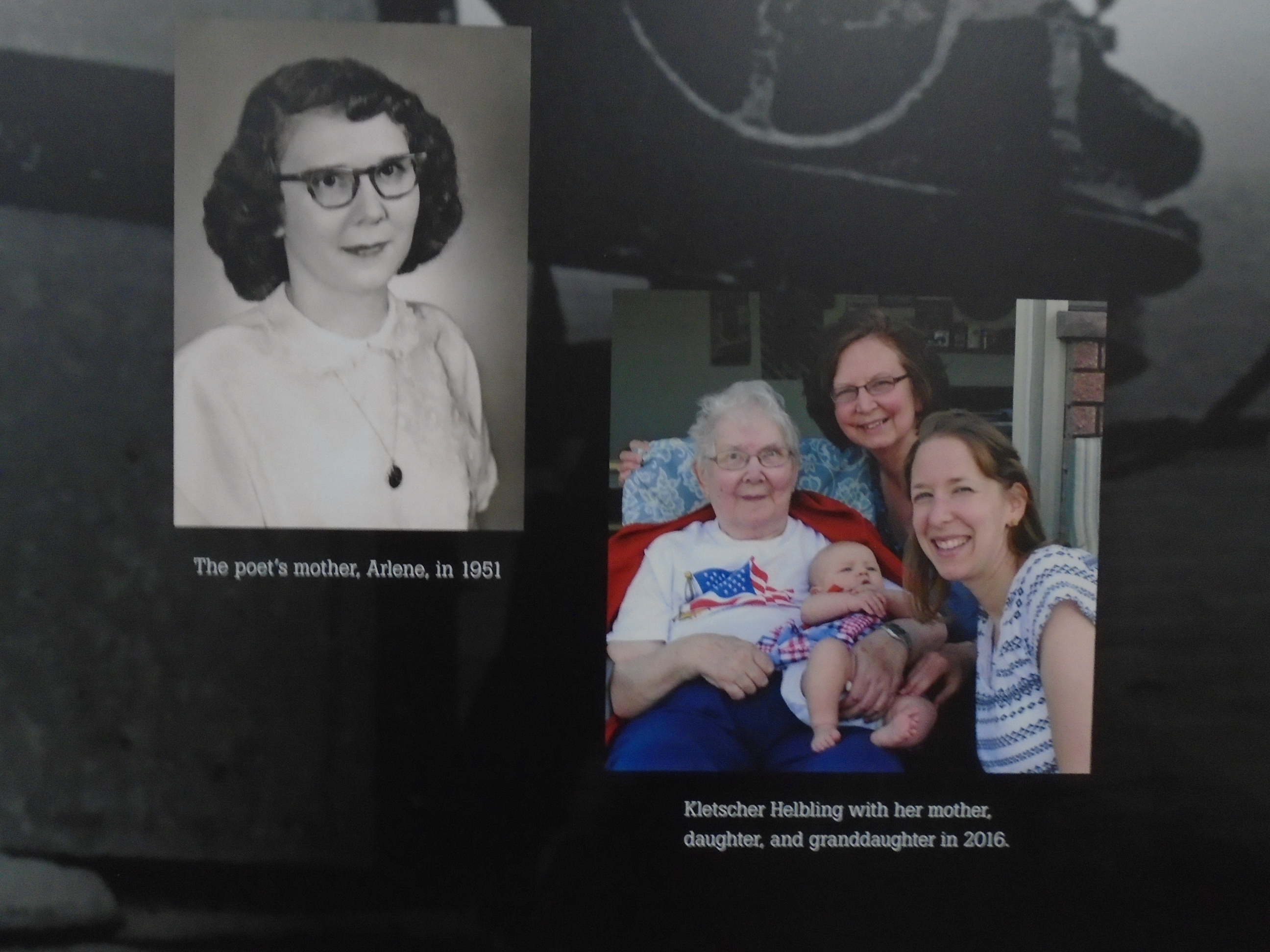
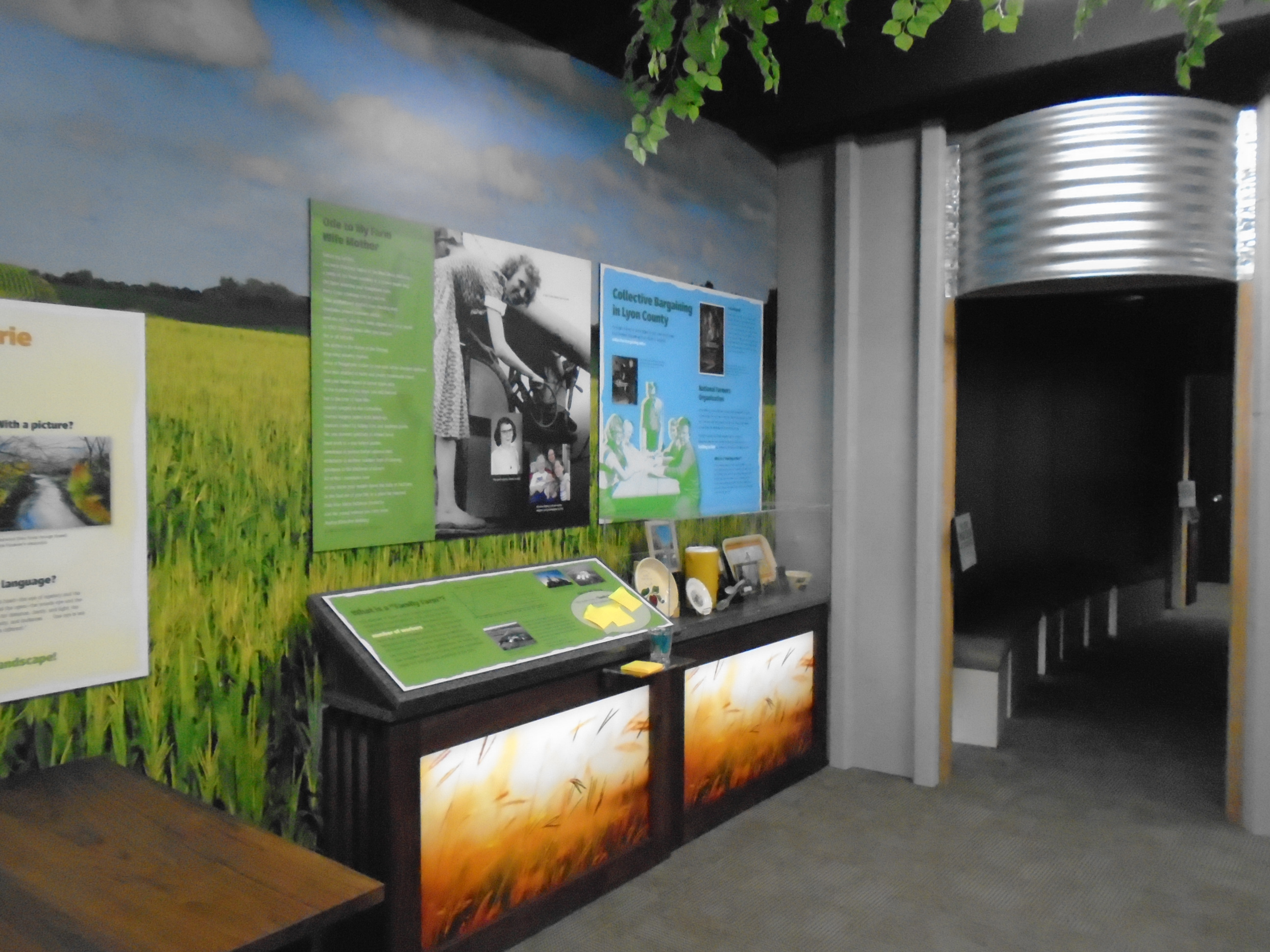
My poem (to the left of the woman in the dress), my mom’s high school graduation photo and a four-generation family photo of me, my mom, eldest daughter and granddaughter are included in a museum exhibit in southwestern Minnesota. Photo courtesy of the Lyon County Historical Society Museum.
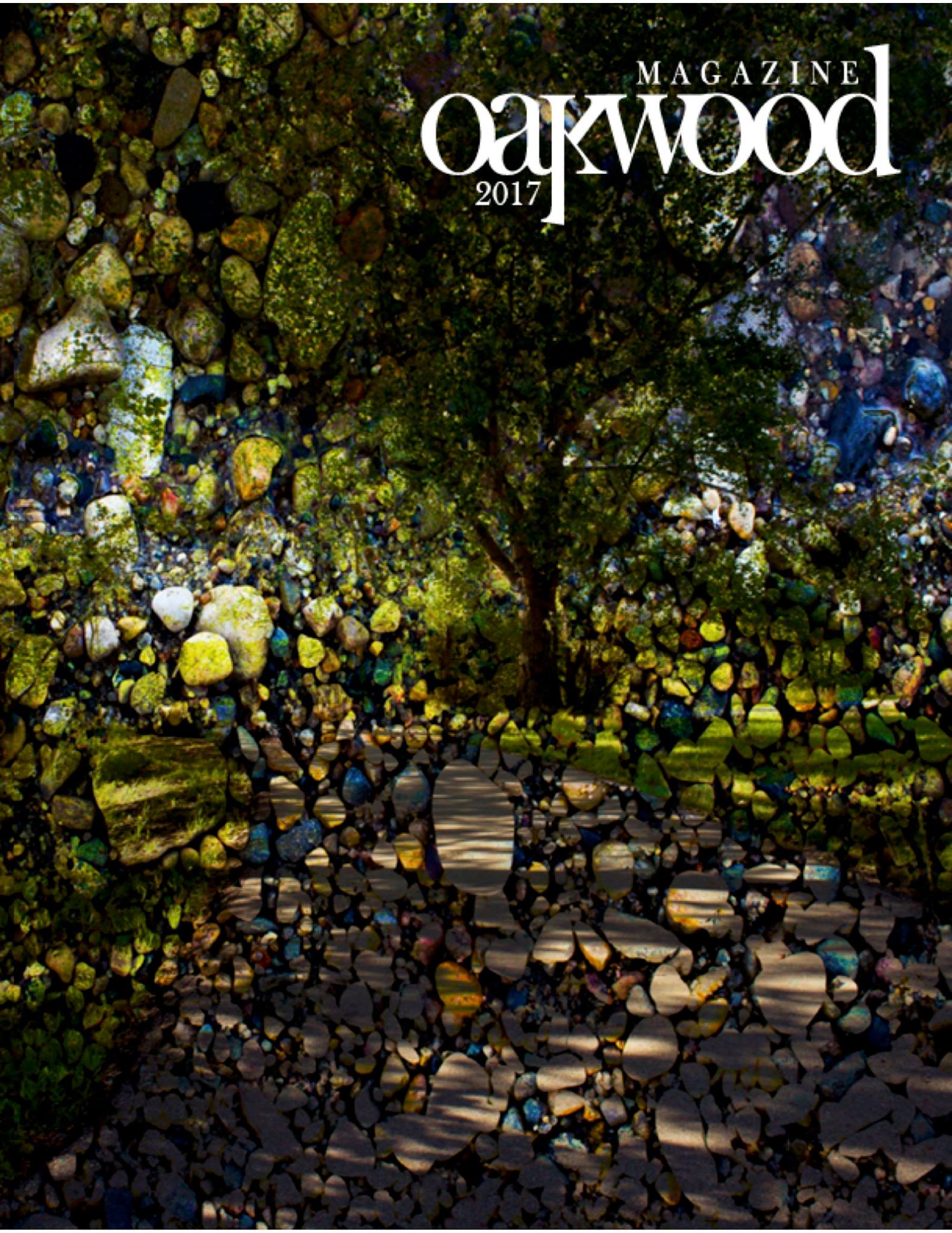
My poem first published in South Dakota State’s Oakwood literary magazine.
I feel humbled and honored to have my poem, inspired by memories of my hardworking farm wife mother, in the Lyon County Historical Society Museum’s newest semi-permanent exhibit, “Making Lyon County Home.” The exhibit opened in January. Its purpose, according to Executive Director Jennifer Andries, is “to share stories, artifacts, and photographs from Lyon County after World War II and to inspire residents and visitors to share their memories and experiences of growing up and living in Lyon County and the region.”
4-H and more are featured in this section of “Making Lyon County Home.” Photo courtesy of the Lyon County Historical Society Museum.
I grew up in this prime agricultural region, some 20 miles to the west on a dairy and crop farm near Vesta in Redwood County. I knew Marshall well back then as a shopping destination. A place to buy clothes, shoes and other essentials. But even more, I understood rural life decades ago because I lived it. I witnessed, too, how my mom worked hard to raise six children on our family farm. Before marriage, she attended Mankato Commercial College and then returned to her home area to work an office job in Marshall. Like most women of the 1950s, once she married, she stopped working off the farm.
These family photos complement my poem. Photo courtesy of the Lyon County Historical Society Museum.
My poem honors her in a poetic snapshot timeline of life beginning shortly before she married my farmer father. Saturday evening dances. Then rocking babies. Everyday life on the farm. Challenges. And finally, the final verse of Mom shoving her walker down the hallways of Parkview.
Whenever I write poetry, especially about life in rural Minnesota, I find myself deep within memory. Visualizing, tasting, smelling, hearing, even feeling. Although I took some creative license in penning “Ode to My Farm Wife Mother” (I don’t know that Mom ever drank whiskey or danced at the Blue Moon Ballroom in Marshall), it is primarily true. She met my dad at a dance in southwestern Minnesota. She washed laundry in a Maytag, baked bread every week, made the best peanut butter oatmeal bars…
An overview of the exhibit space featuring my poem and family photos. Photo courtesy of Lyon County Historical Society Museum.
I expect many who lived in this rural region in the 1950s-1970s can relate. Says LCHS Director Andries of my poem: “It is a good fit for the exhibit and fits with the agriculture section and the role of farm wives and mothers. The poem itself goes beyond just the agriculture area. I feel many people can resonate with the poem with the sense of being carefree while we are young but at some point we all have responsibilities but that doesn’t mean we lose our carefree spirit.”
Exactly.
Those sentiments were echoed by Tom Church, former managing director of Minneapolis-based Museology Museum Services, lead contractor for the “Making Lyon County Home” exhibit. Church first contacted me more than a year ago about using my poem. He said then that the poem “offers a nice snapshot of the era and setting we’re trying to evoke in several places within the exhibit and will fit well with our story.”
A 1950s era kitchen, left, is part of the “Making Lyon County Home” exhibit. Photo courtesy of the Lyon County Historical Society Museum.
I appreciate stories rooted in a strong sense of place. The new exhibit features themes of natural landscape, agriculture, education, industry and community. For example, the devastating and deadly June 13, 1968, F5 tornado in Tracy centers a display with information and oral histories. How well I remember that disaster. The 1980s farm crisis focuses another section. A late 1950s era kitchen fits the beginning time period of my poem.
Although I have yet to view the exhibit, I hope to do so this summer. And even more, I want my mom to know how she, and other farm women of the era, are honored via my poem. I want them to see themselves in my words, to understand the depth to which I value them. My mom, through her selflessness, her hard work, her kindness, her love, her faith, helped shape me. Today, as Mom lives out her final days in hospice, her memory and cognition diminished, I feel a deep sense of loss, of grief. But I hold onto the memories of a mother who read nursery rhymes, gardened, and, before I was born, enjoyed carefree Saturday evenings out with friends. Dancing. Laughing, Delighting in life.
FYI: The Lyon County Historical Society Museum, 301 West Lyon Street, Marshall, is open from 11 am – 4 pm Monday – Friday and from noon – 4 pm Saturdays. The “Making Lyon County Home” exhibit was partially funded by a Minnesota Historical and Cultural Heritage grant. The exhibit is semi-permanent, meaning artifacts and stories can be rotated to fit within the themes.
Ode to My Farm Wife Mother
Before my brother,
you were Saturday nights at the Blue Moon Ballroom—
a bottle of Jim Beam whiskey in a brown paper bag,
Old Spice scenting your dampened curls,
Perry Como crooning love in your ear.
Then motherhood quelled your dancing duet.
Interludes passed between births
until the sixth, and final, baby slipped into your world
in 1967. Thirteen years after you married.
Not at all unlucky.
Life shifted to the thrum of the Maytag,
sing-song nursery rhymes,
sway of Naugahyde rocker on red-and-white checked linoleum.
Your skin smelled of baby and yeasty homemade bread
and your kisses tasted of sweet apple jelly.
In the rhythm of your days, you still danced,
but to the beat of farm life—
laundry tangled on the clothesline,
charred burgers jazzed with ketch-up,
finances rocked by falling corn and soybean prices.
Yet, you showed gratitude in bowed head,
hard work in a sun-baked garden,
sweetness in peanut butter oatmeal bars,
endurance in endless summer days of canning,
goodness in the kindness of silence.
All of this I remember now
as you shove your walker down the halls of Parkview.
in the final set of your life, in a place far removed
These past few days, especially, of sunshine and 70-degree temps have sprung spring. To see buds forming, to hear birdsong, to feel sun upon skin…oh, the joy.
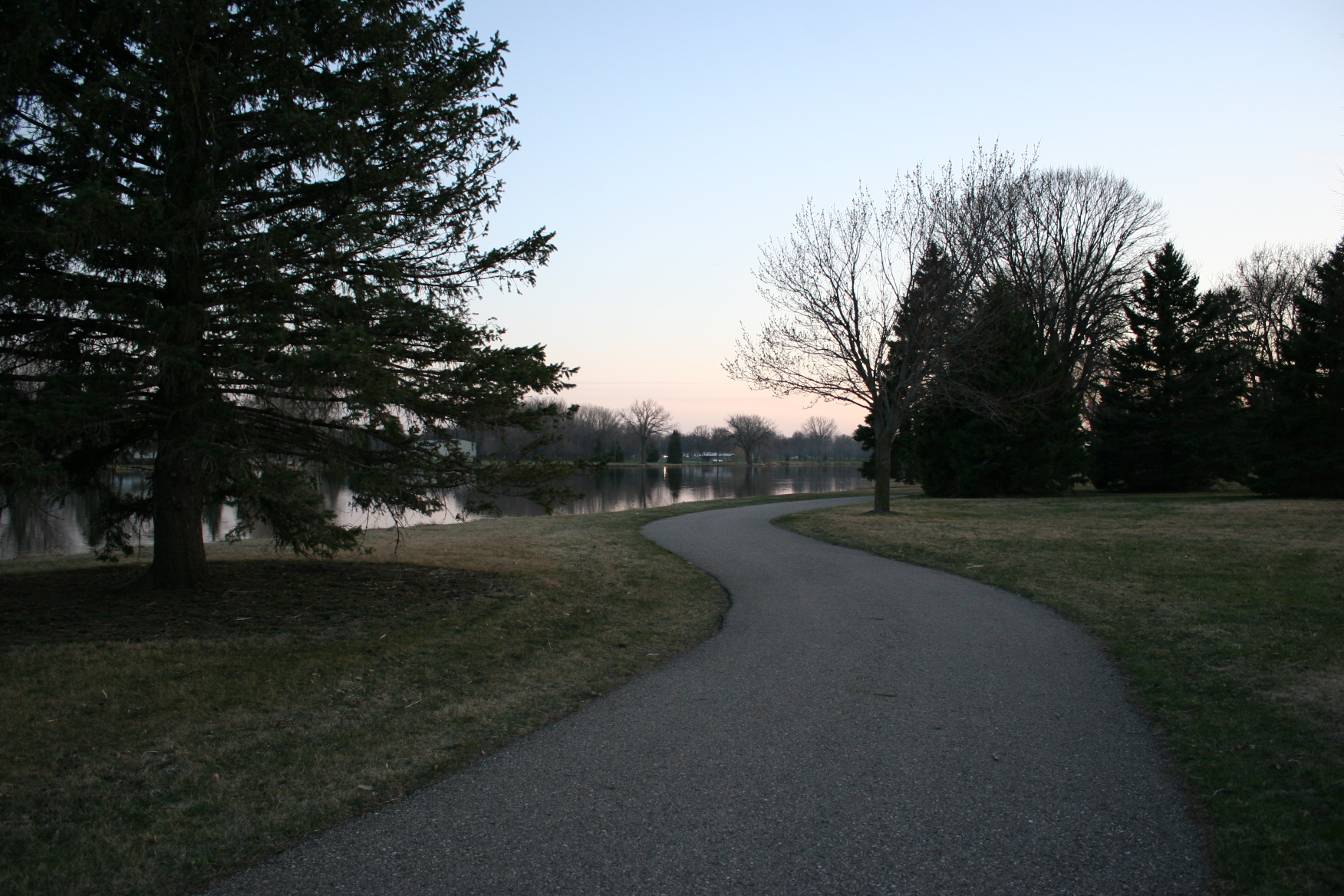
On Saturday evening, as the sun set, Randy and I followed the asphalt trail that winds along the Cannon River in North Alexander Park. It’s a favorite place to walk. Uncrowded. Beautiful.
The trail follows the river, curving around trees.
I love the way the trail curves around trees.
The river draws waterfowl.
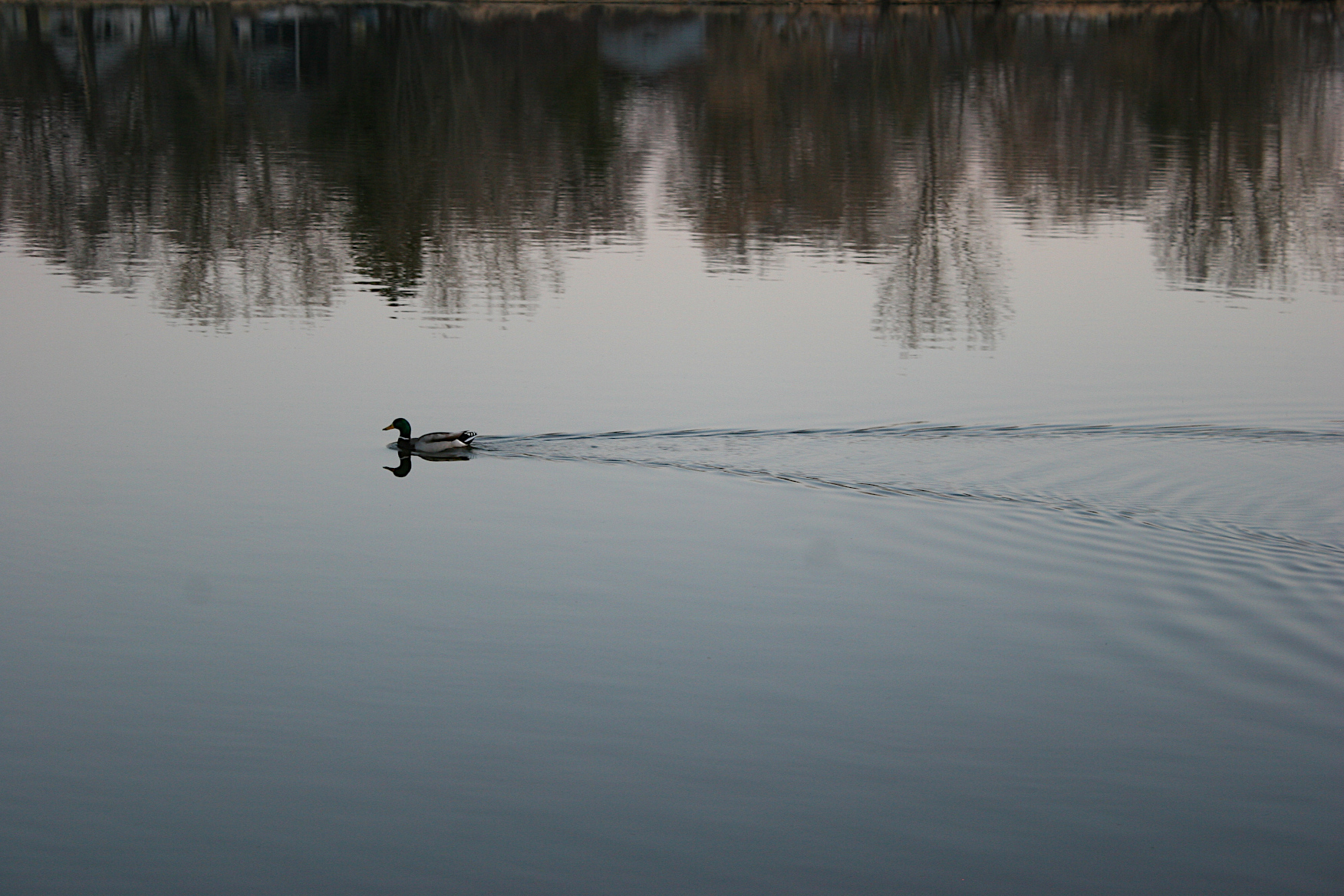
I love how the river draws my eyes to view reflections and to appreciate the ducks and geese which populate this waterway. The quacking of a lone mallard pulled me to river’s edge. I observed how the water trailed in a lengthy V as the duck paddled across the still surface. Poetry seen, not written.
The historic Faribault Woolen Mill, a subject I enjoy photographing any time of year.
Across the Cannon, the iconic Faribault Woolen Mill focused my eyes as it reflected in the river. And I thought of all the blankets woven here, the history of this place.
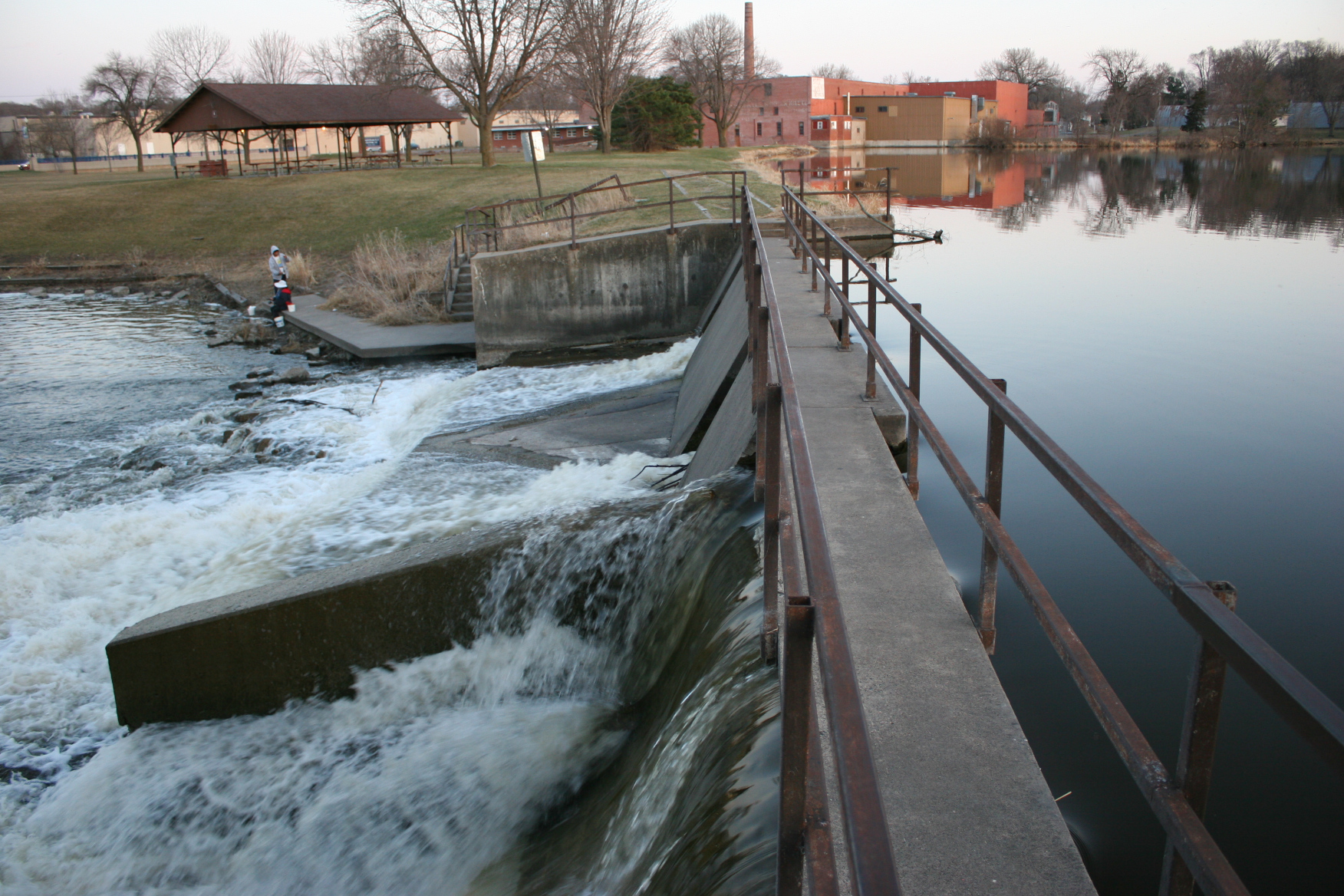
Water rushes over the Cannon River Dam by Father Slevin Park.
At the Cannon River Dam, aside the trail, I noticed how the dam walkway seemingly follows a straight line to the historic mill. Sometimes it’s about perspective, pausing to consider a place in a different way. I challenge myself, in my photography, to view my surroundings creatively. While I created, people fished, a popular activity along this stretch of the Cannon.
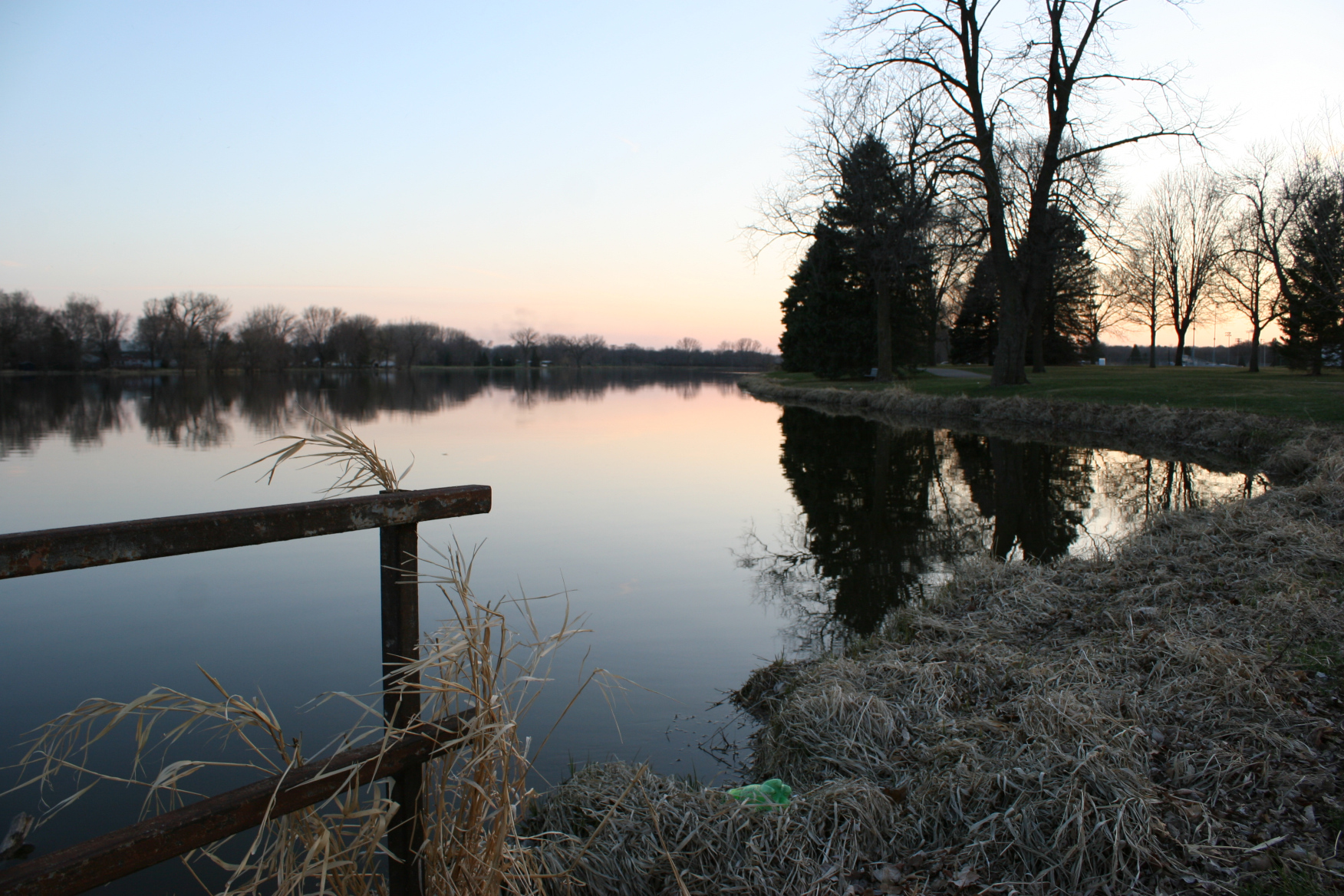
Looking down the Cannon, before it spills over the dam.
The river absorbed the pink tint of twilight. Soft. Muted. Another poem to photograph.
And if I’d had my zoom lens on my Canon EOS 20-D, I would also have photographed the two bald eagles following the river like a road map. I never tire of watching these majestic birds.
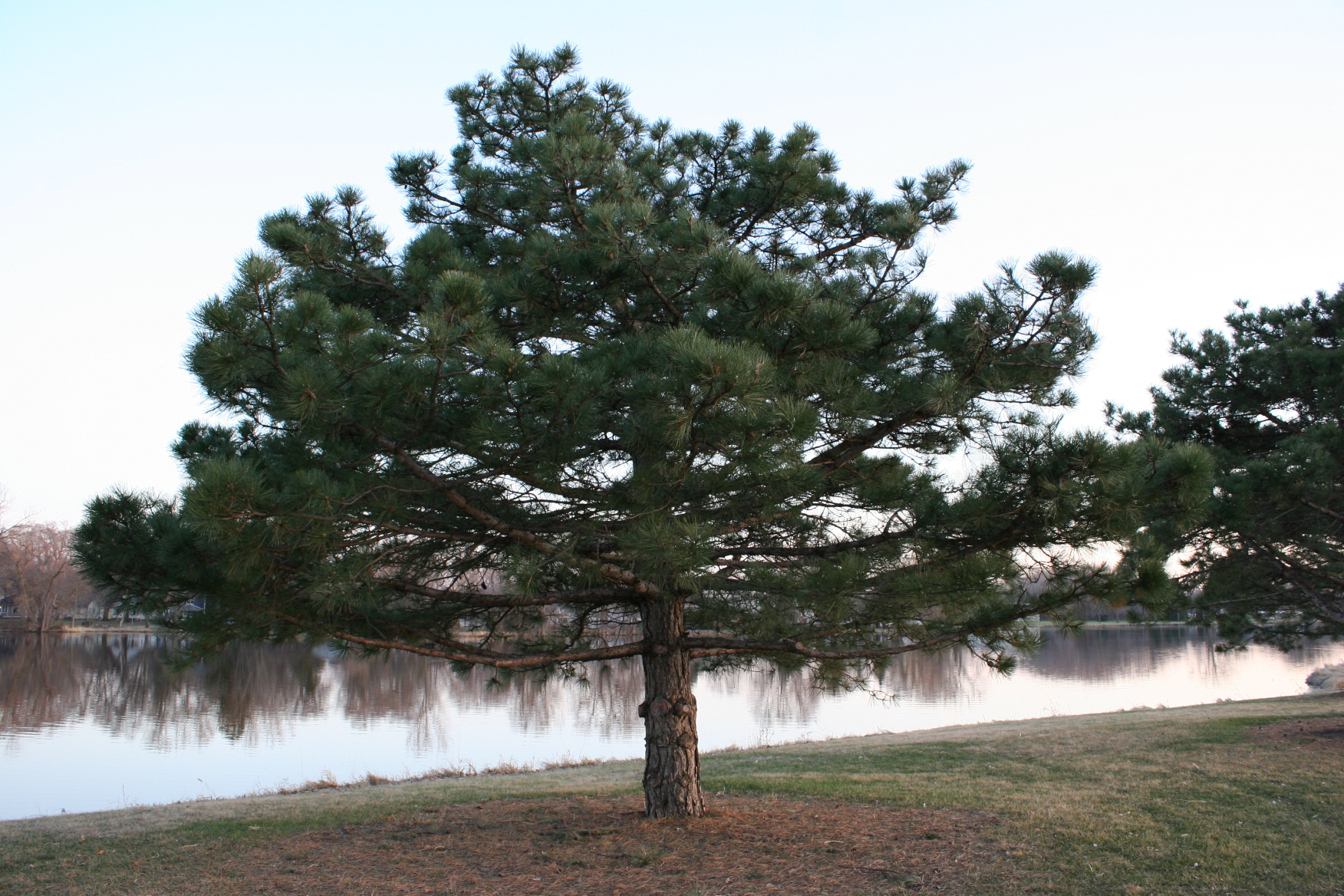
The top of this evergreen is lopped off, removed following a tornado several years ago.
As day edged closer to night, Randy and I retraced our route back to the van. A bit farther down the trail, teens packed basketball courts, their raucous voices rising.
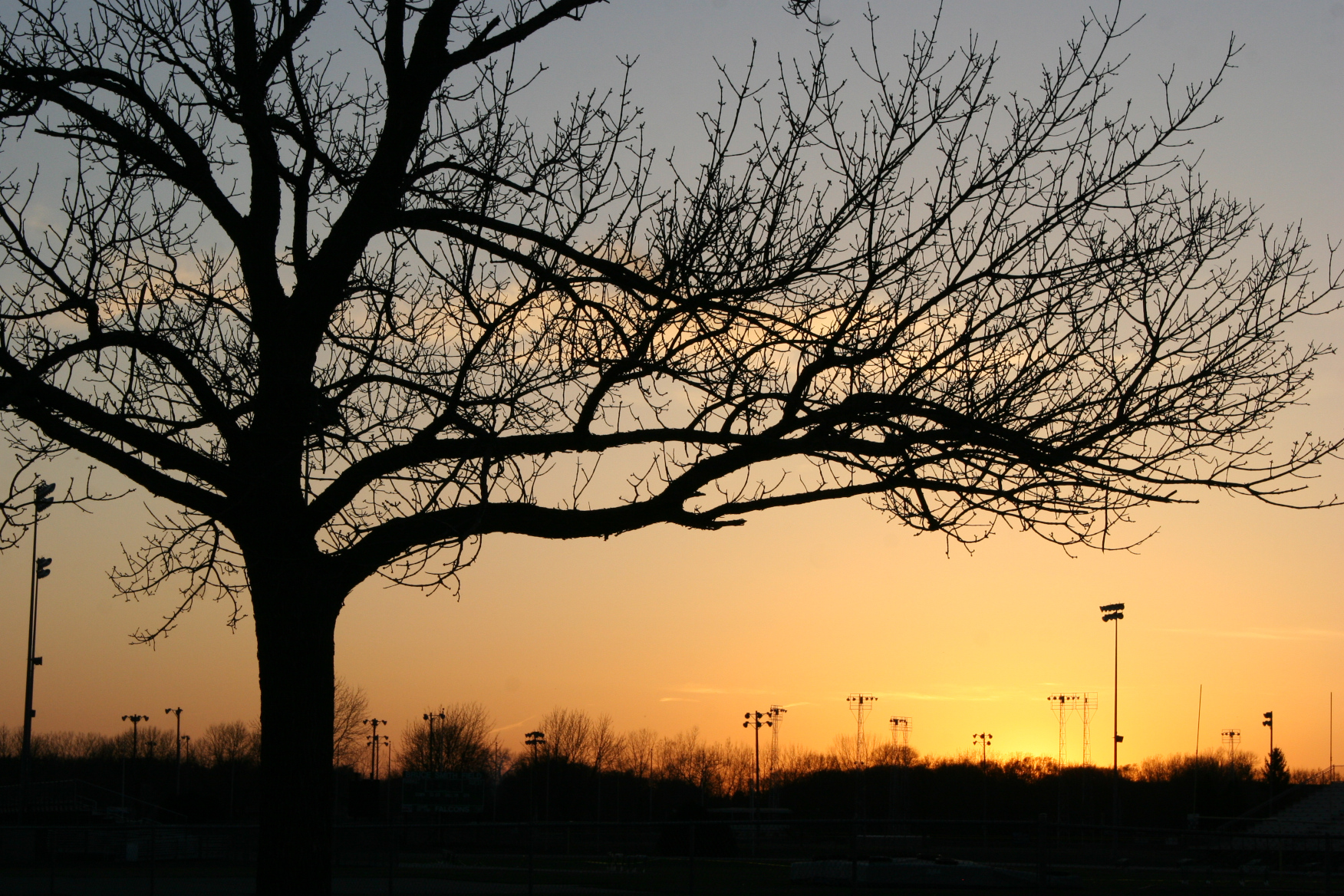
Ballpark lights and a treeline contrast with the orange hue of sunset.
To the west, the sun glowed fiery orange like an exclamation mark ending a glorious spring day in southeastern Minnesota.
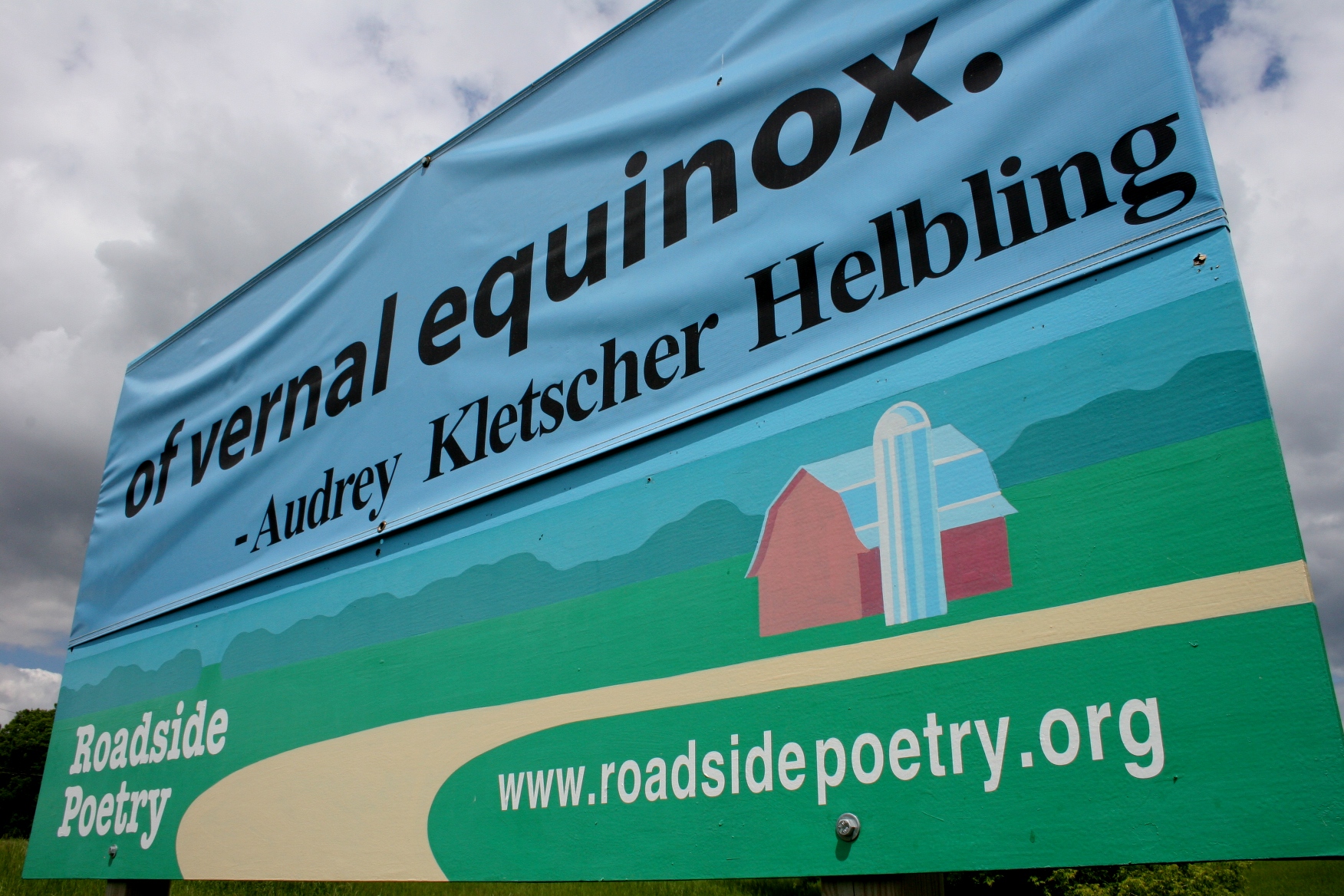
Billboards in my Roadside Poetry Project poem posted in Fergus Falls 10 years ago. Minnesota Prairie Roots file photo June 2011.
THE OFFICIAL ARRIVAL OF SPRING today seems reason to celebrate, especially here in Minnesota, the land of long winters. Or, as my California-raised son-in-law once thought, Almost Canada.
Billboard #2 in my poem. Minnesota Prairie Roots file photo June 2011.
From here on, daylight lengthens. And, after this past pandemic year, I’m thankful for the seasonal transition into more sunlight and resulting warmth and melting of snow. That said, this is still March and in Minnesota that likely means more cold and snowy days.
But, as we ease into spring, I feel a sense of renewal. Warm days with temps in the 50s and near 60, like those predicted for this weekend, are freeing, uplifting and promising.
Billboards #3 and 4. Minnesota Prairie Roots file photo June 2011.
Farmers, I expect, are itching to get into the fields, although it’s way too early for that. I still think like the farm-raised woman I am, connecting seasons to the cycle of planting, growing and harvesting. That will always remain an important part of my identity and continues to influence my writing and photography.
The last of four billboards featuring my Roadside Poetry spring poem. Minnesota Prairie Roots file photo June 2011.
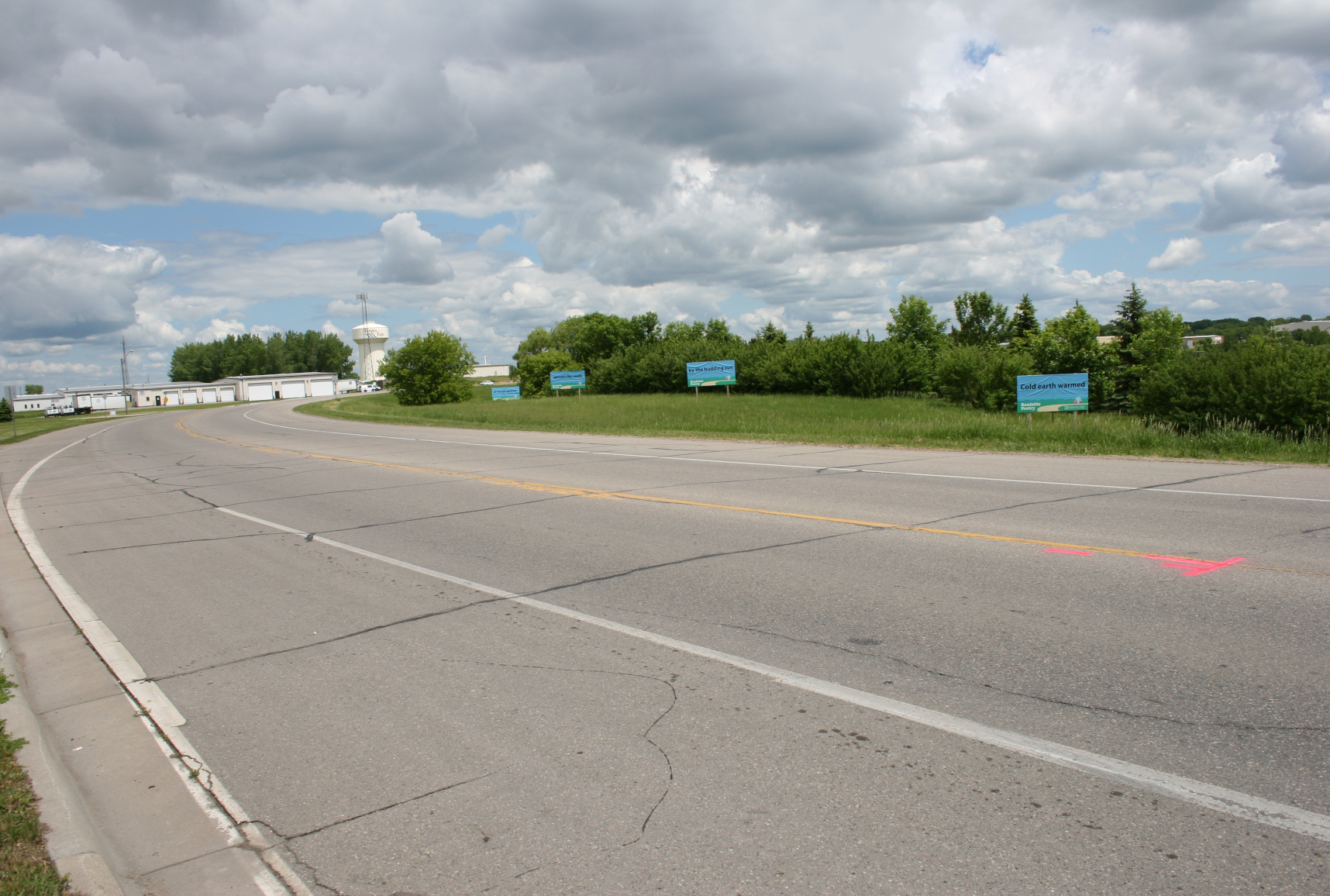
Flash back to 10 years ago and you can read that influence in a poem I penned and submitted to the Roadside Poetry Project. In four lines, each with a 20 character limit, I wrote a spring-themed poem that bannered on four billboards in Fergus Falls. It’s the most unusual spot my poetry has ever published.
The billboards posted along a road on the edge of Fergus Falls in 2011. Minnesota Prairie Roots file photo June 2011.
Designed “to celebrate the personal pulse of poetry in the landscape,” according to then Project Coordinator Paul Carney, my poem truly fit that mission. I wrote from experience, from a closeness to the land, from a landscape of understanding.
While the Roadside Poetry Project, funded by the Fergus Falls College Foundation, no longer exists, my poem endures in the legacy of my writing. To have written about spring from the perspective of a farmer’s daughter celebrates my rural Minnesota prairie roots. And spring.
To watch that 22-year-old Los Angeles poet stand before the nation’s capitol, before the new President and Vice President and so many others, and hear her deliver her poem with such passion filled me with hope.
Hope themed her poem. If you missed hearing Gorman’s poem, I’d encourage you to seek it out online and listen. Poetry, when read aloud by its author, takes on a depth missing if simply read silently to one’s self.
Gorman’s poem complemented, reinforced, the hopeful messages I took away from the day through speeches, songs, prayers and actions.
Words—like unity, resilience, strength, faith, respect, possibilities, together—resonated with me. Words that will write, as President Joe Biden said, “the unfolding story of our great nation.”
And part of that story will be the words of a young poet, who inspired hope on January 20, 2021.
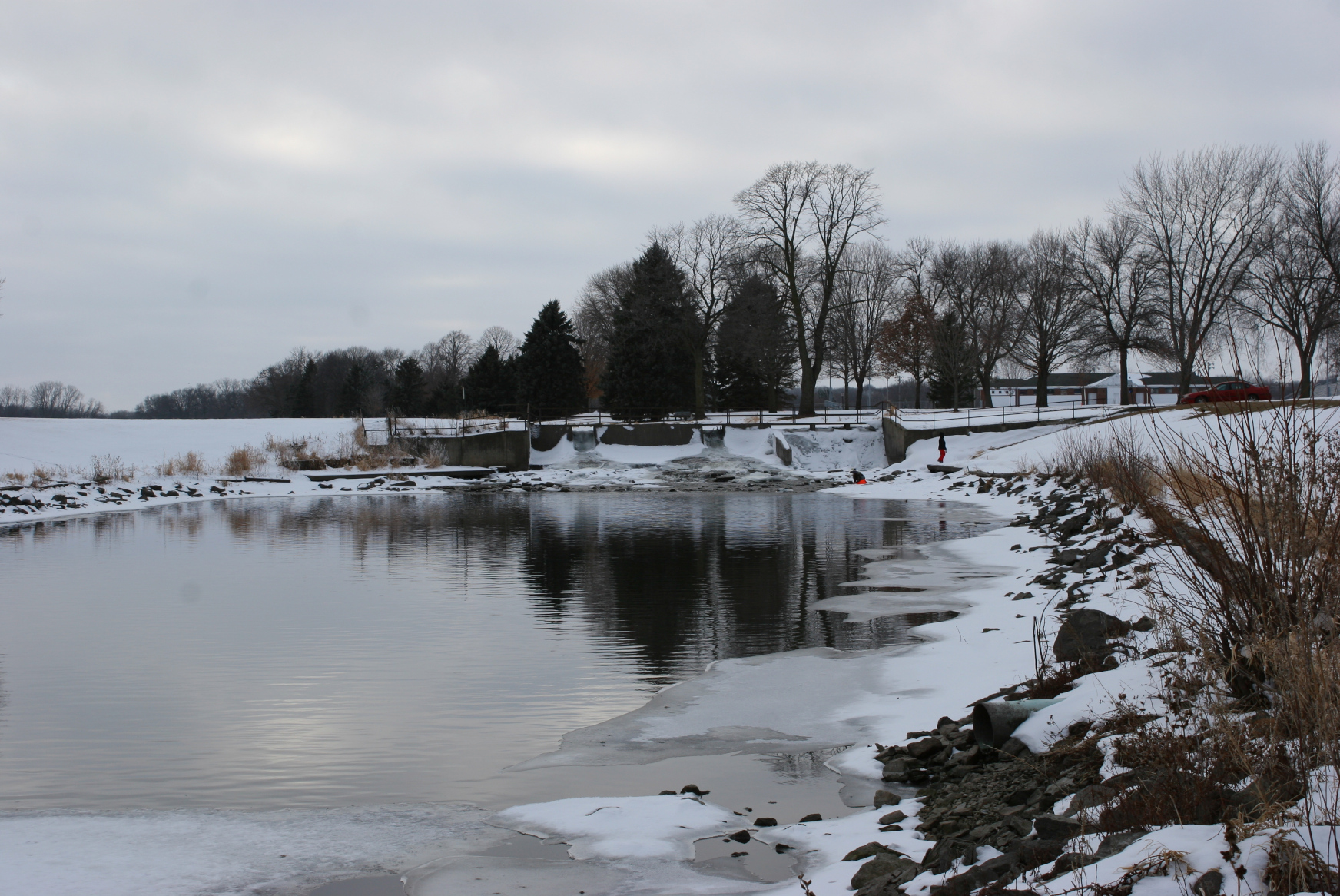
An overview of the Cannon River and the dam photographed from the river walk by the Rice County Fairgrounds/North Alexander Park.
RIVERS, STRONG AND MIGHTY, flow through our state. The Mississippi. The Minnesota. And here in my county of Rice, the Cannon and Straight Rivers.
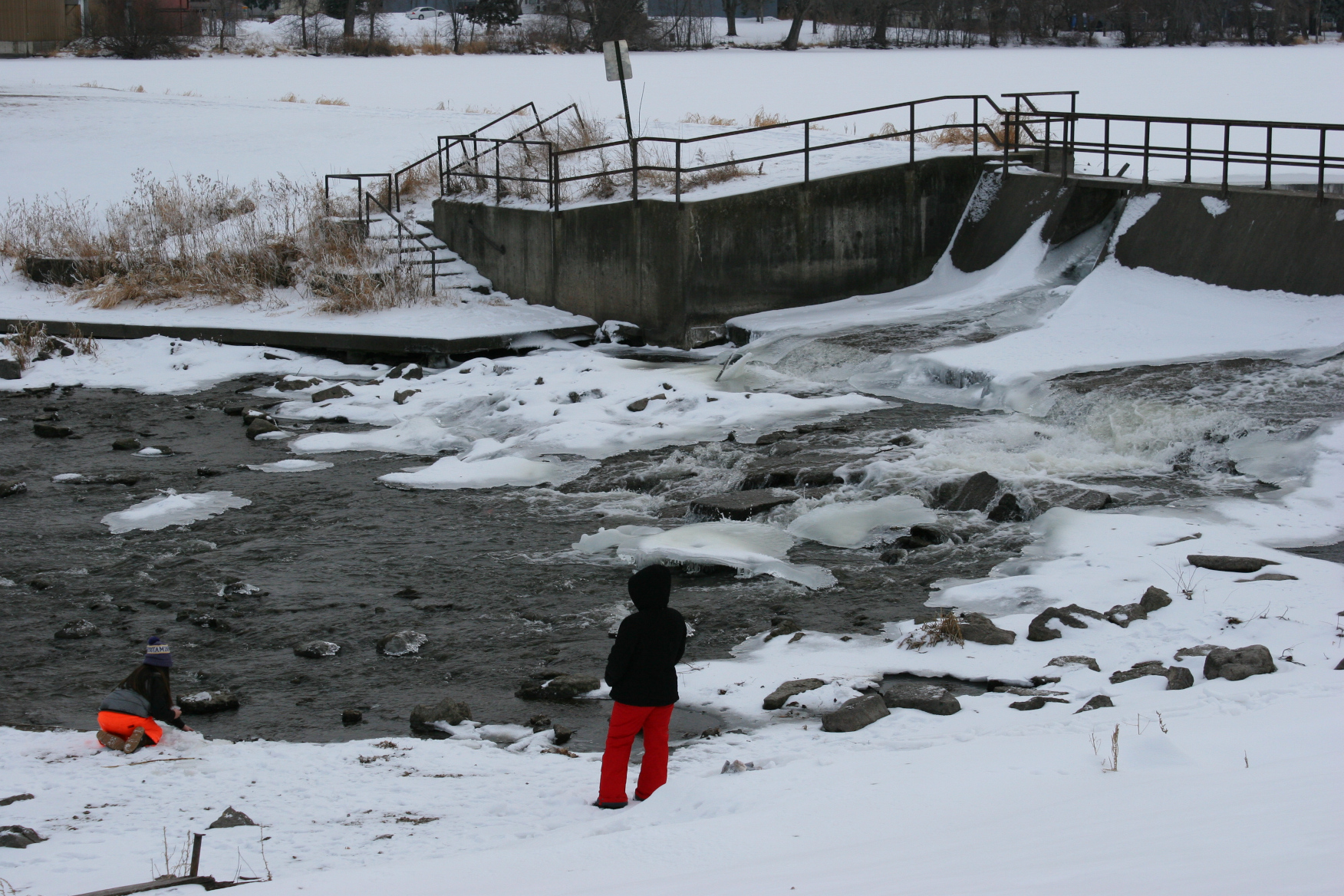
Up close to the Cannon River on a January afternoon. Initially, I thought this pair was fishing. They were, instead, playing beside the river.
Here, on these waters, early inhabitants traveled via canoe, traded along river banks, built flour and woolen mills. And formed communities like Faribault, Northfield, Dundas and Morristown, all with waterways that run through.
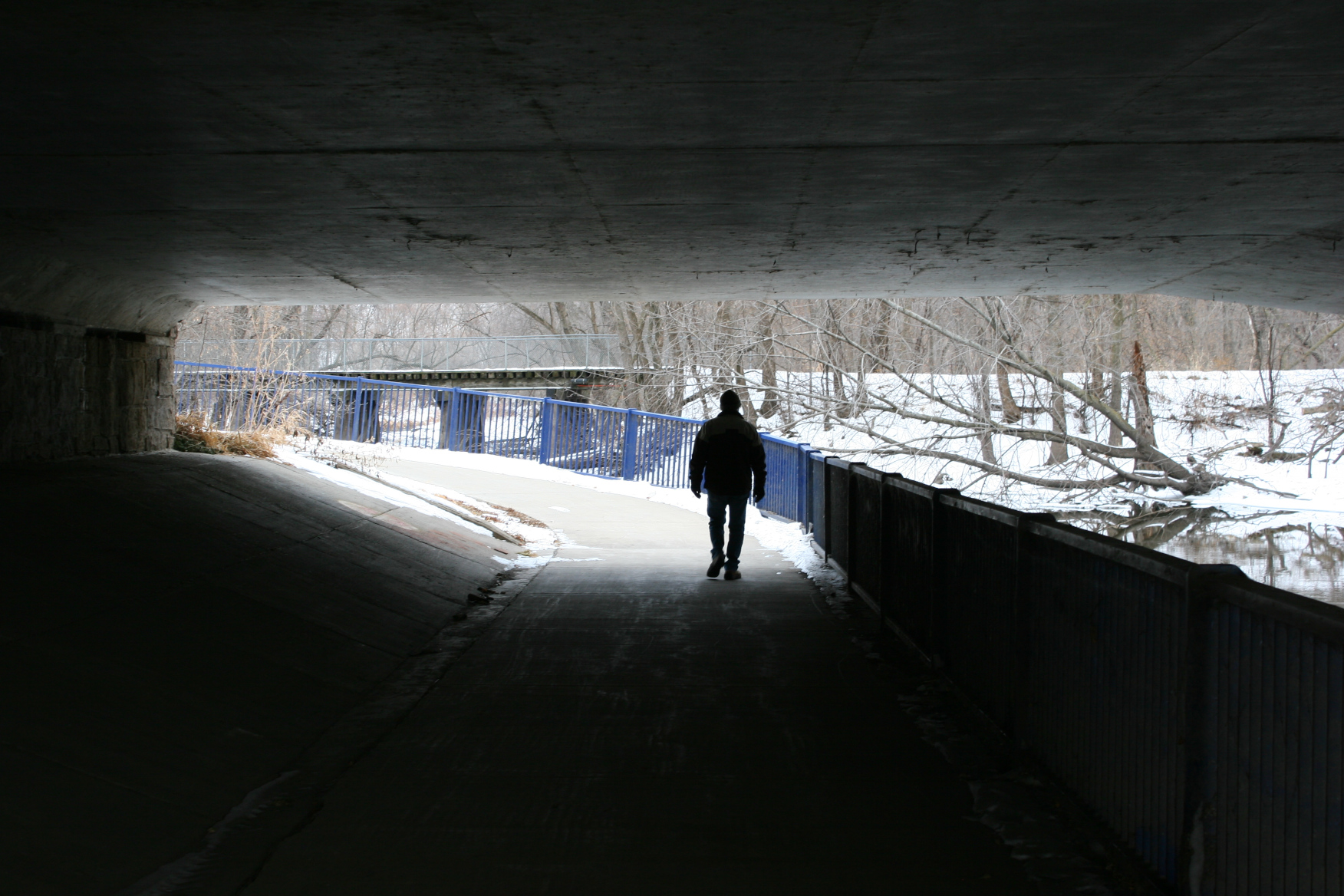
Randy walks on the river walk under the bridge spanning the Cannon River along Second Avenue in Faribault. The river is to his right.
Rivers are as much about nature as they are about our history. Like railroads, they helped to shape our towns and cities. And today, while no longer of the same utilitarian use, they remain valuable assets.
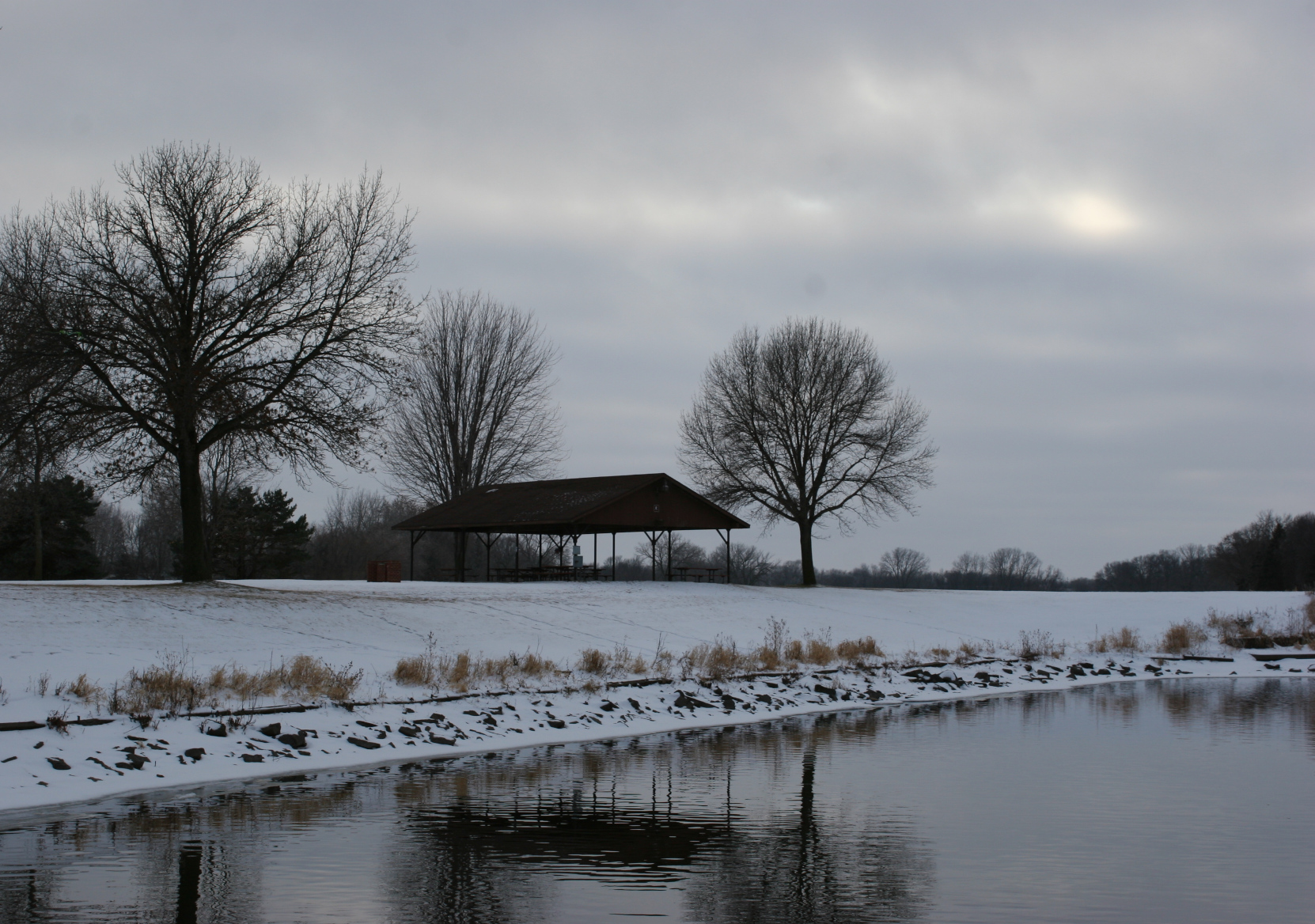
Many picnic shelters grace Faribault’s riverside parks.
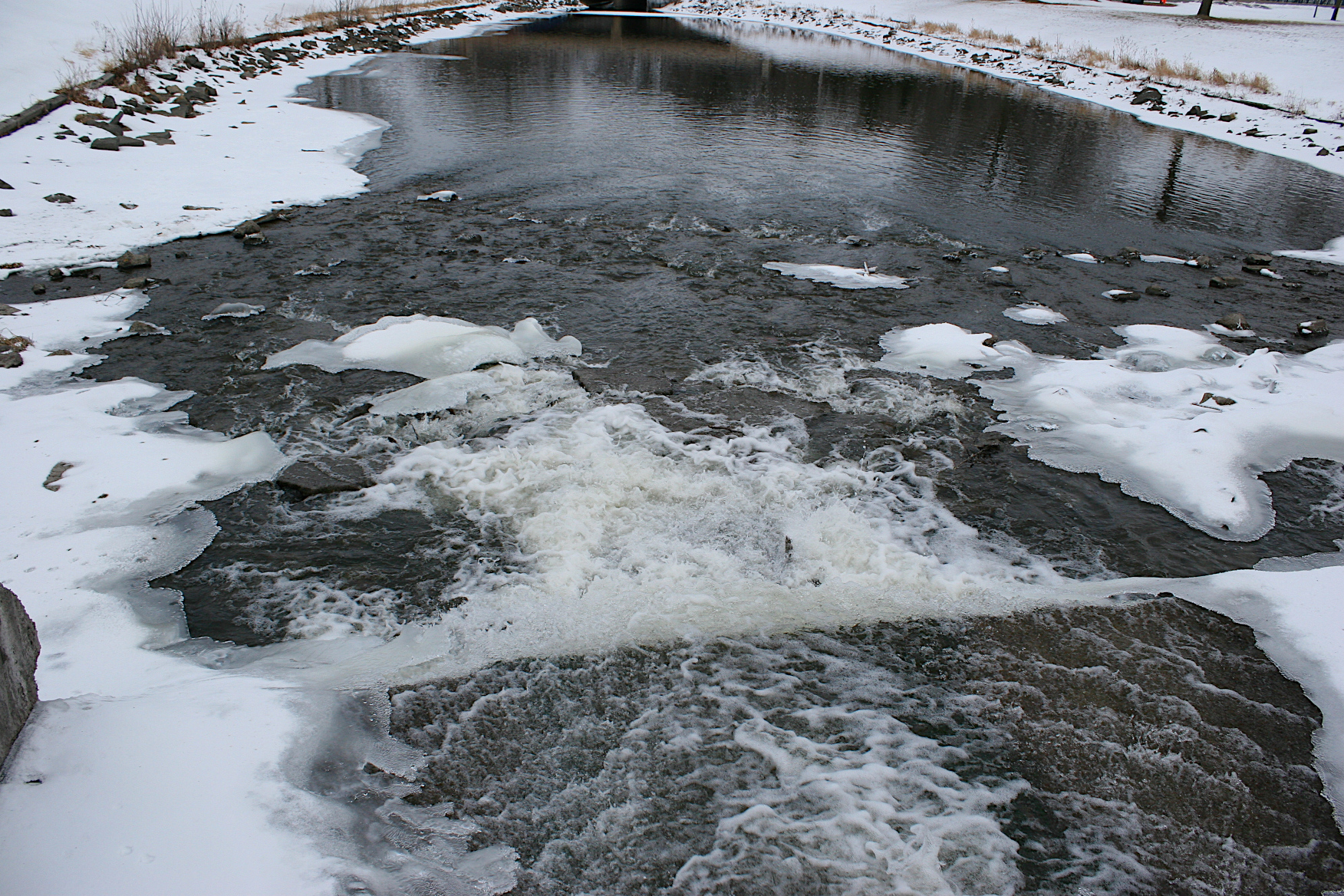
Water rushes over rocks and through ice at the dam by Father Slevin Park.
I am naturally drawn to water, as I expect many of you are. There’s something about water—its power, its motion, its almost hypnotic quality, its soothing sound when rushing over rocks. It’s like poetry flowing into the land.
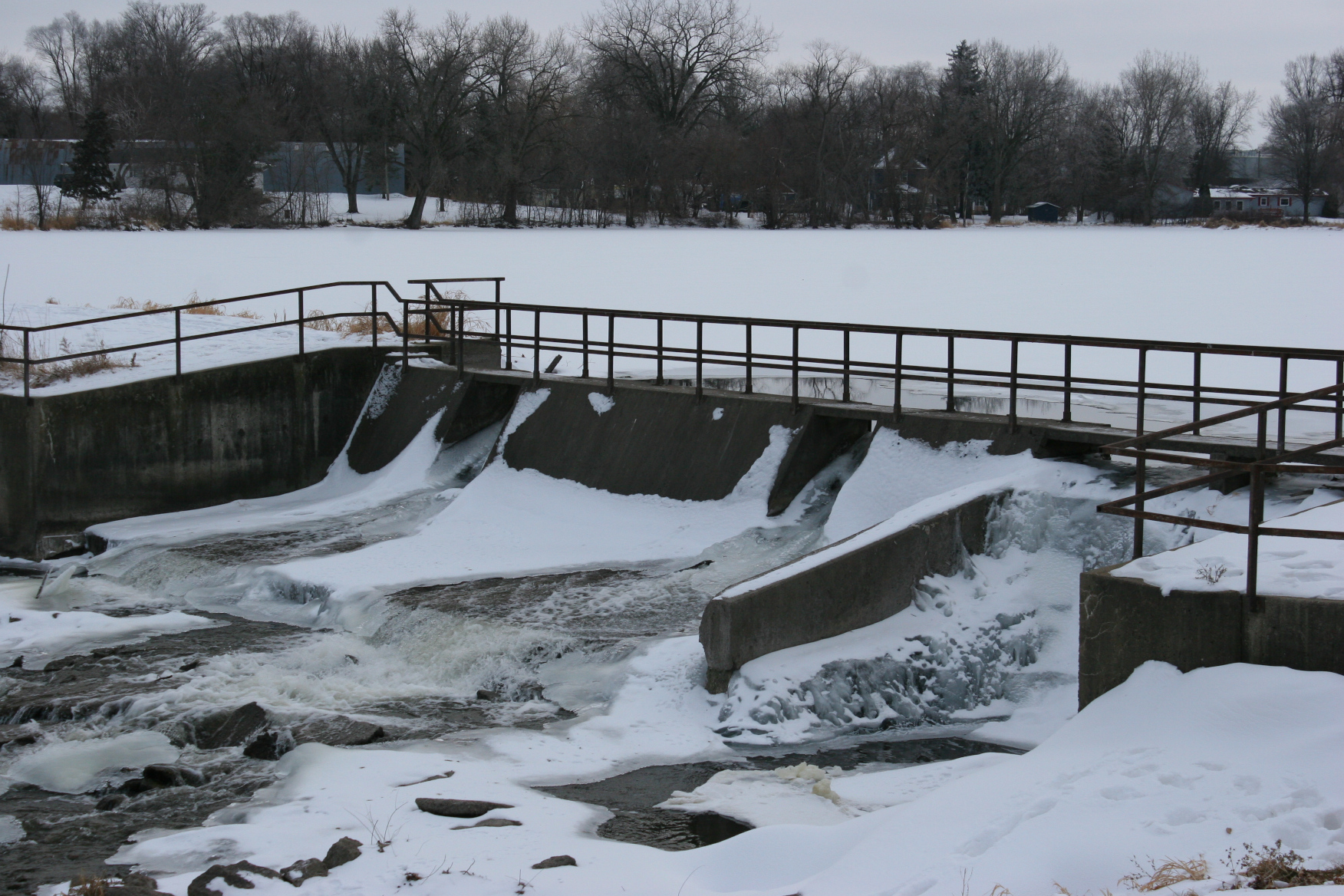
I stood on the narrow dam walkway to photograph water rushing over the dam on the Cannon River.
Even in the depth of winter, a river—whether iced over or still running—draws me near. To listen, like poetry read aloud. To view, like words of verse written upon paper. To photograph, like an artist and poet and writer who cares. And I do.
Water rushes over the dam along the Cannon River in Faribault.
To walk or pause beside a river is to appreciate art and history and nature. I feel connected to the rivers that trace like poetry through the landscape of southern Minnesota. My home. My place of peace and contentment when I walk beside the waters therein.
TELL ME: Do you have a favorite river? If so, please share why you appreciate this waterway.















 Minnesota Prairie Roots
Recent Comments