Minnesota Prairie Roots

Writing and photography by Audrey Kletscher Helbling

Praise, polkas and more at St. John’s Germanfest September 26, 2011

The Ray Sands Band played from 1 - 3 p.m. under the tent at Germanfest.

“APPLES, PEACHES, PUMPKIN PIE, who’s afraid to holler I…”

Above the plaintive baaing of a goat in the petting zoo, the old-time band pumped out the polka which isn’t about pie at all, but about love.

And so, under the tent, the bands played—Tim Chlan and Friends, The Ray Sands Band and The Stuttgart Three—at St. John’s United Church of Christ’s annual Germanfest in Wheeling Township near Nerstrand Big Woods State Park.

My husband and I arrived mid-afternoon Sunday to take in this annual celebration of the congregation’s German heritage during a polka praise service and more. As we sang the near-and-dear words of age-old hymns, the tangy scent of vinegar drifted into the sanctuary. “Just as I am, without one plea…Rock of Ages, cleft for me, let me hide myself in thee…”
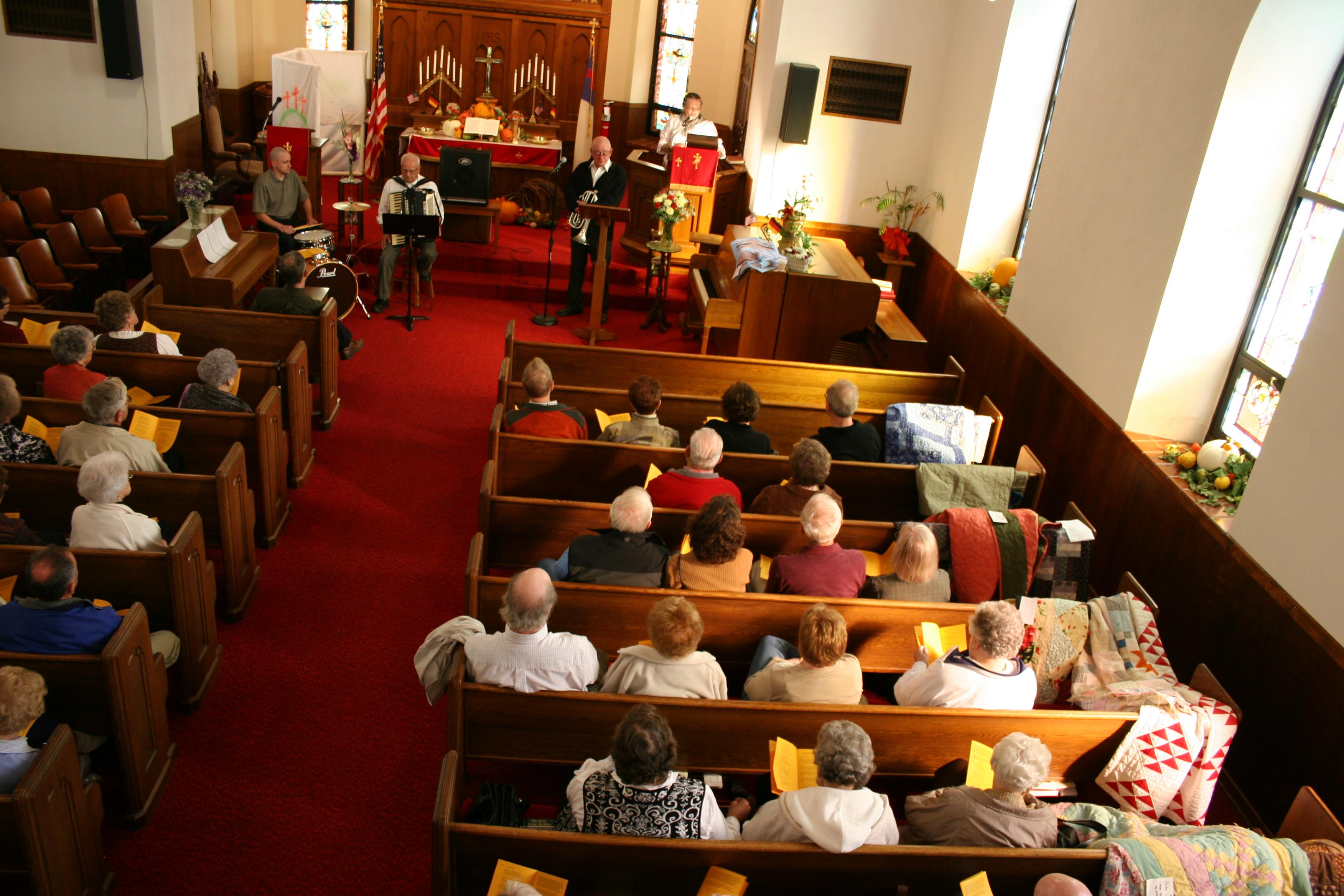
The Stuttgart Three from Rochester led the polka praise service inside St. John's sanctuary.
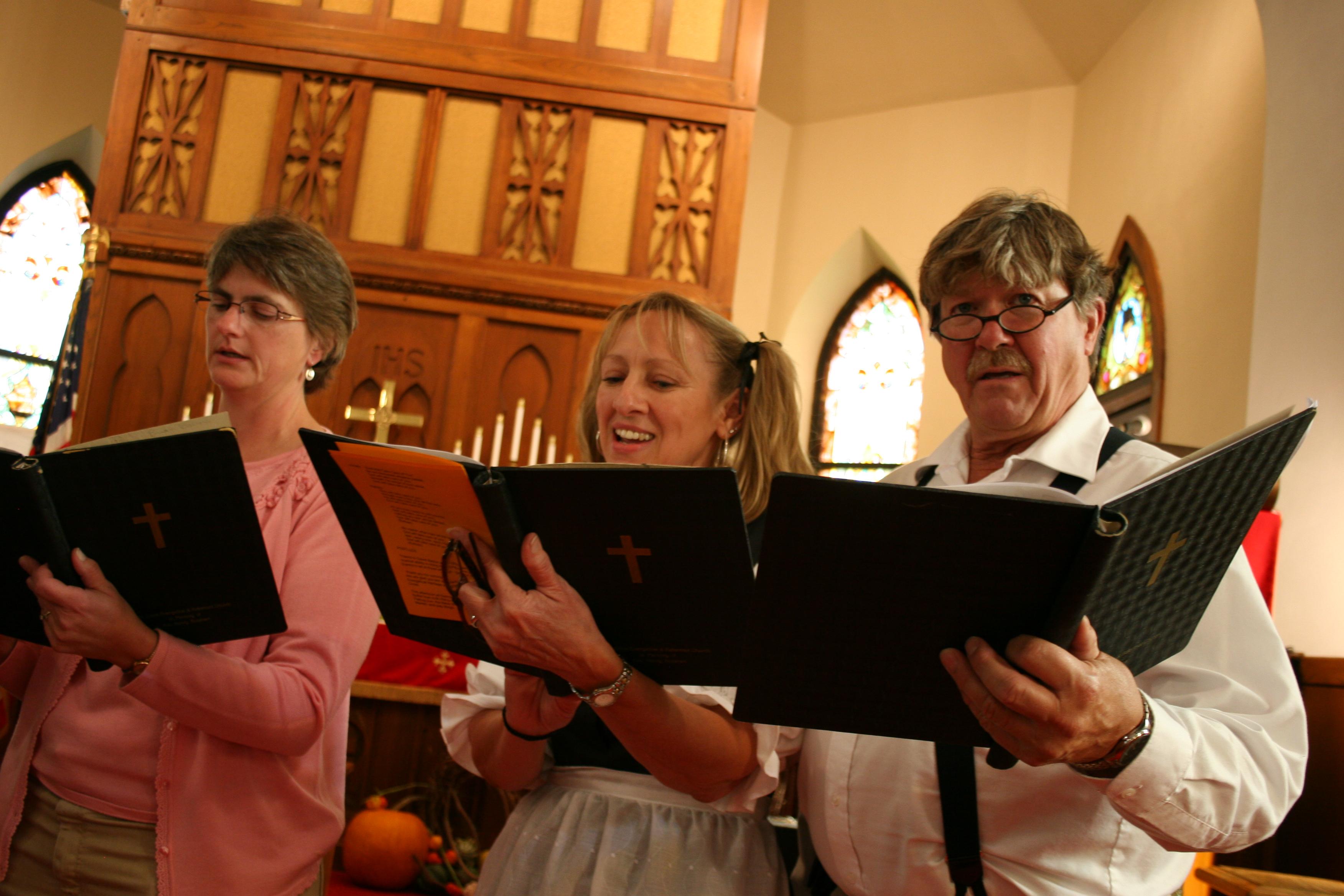
A musical quartet presented "Cleanse Me" and "Reach Out to Jesus" during the praise service.

Afterward we broke bread in the fellowship hall over a German buffet. Sauerkraut and sauerbraten. Brats. Rinderwurst and beets and green beans with bacon. Vinegar-laced German potato salad and mashed potatoes and more foods than I can remember. Homemade. Three hundred pounds of potatoes peeled. Nearly 60 dozen brats boiled and grilled. Bread pudding made from grandma’s recipe. Good, hearty food that tasted of the Mother Land.

It didn’t matter whether you were Deutsch or Dutch, Lutheran or Catholic or a long-time church member, whether a first-time attendee from Centerville or Faribault or a faithful former member from Blooming Prairie, you enjoyed, simply enjoyed, the hospitality of this congregation.
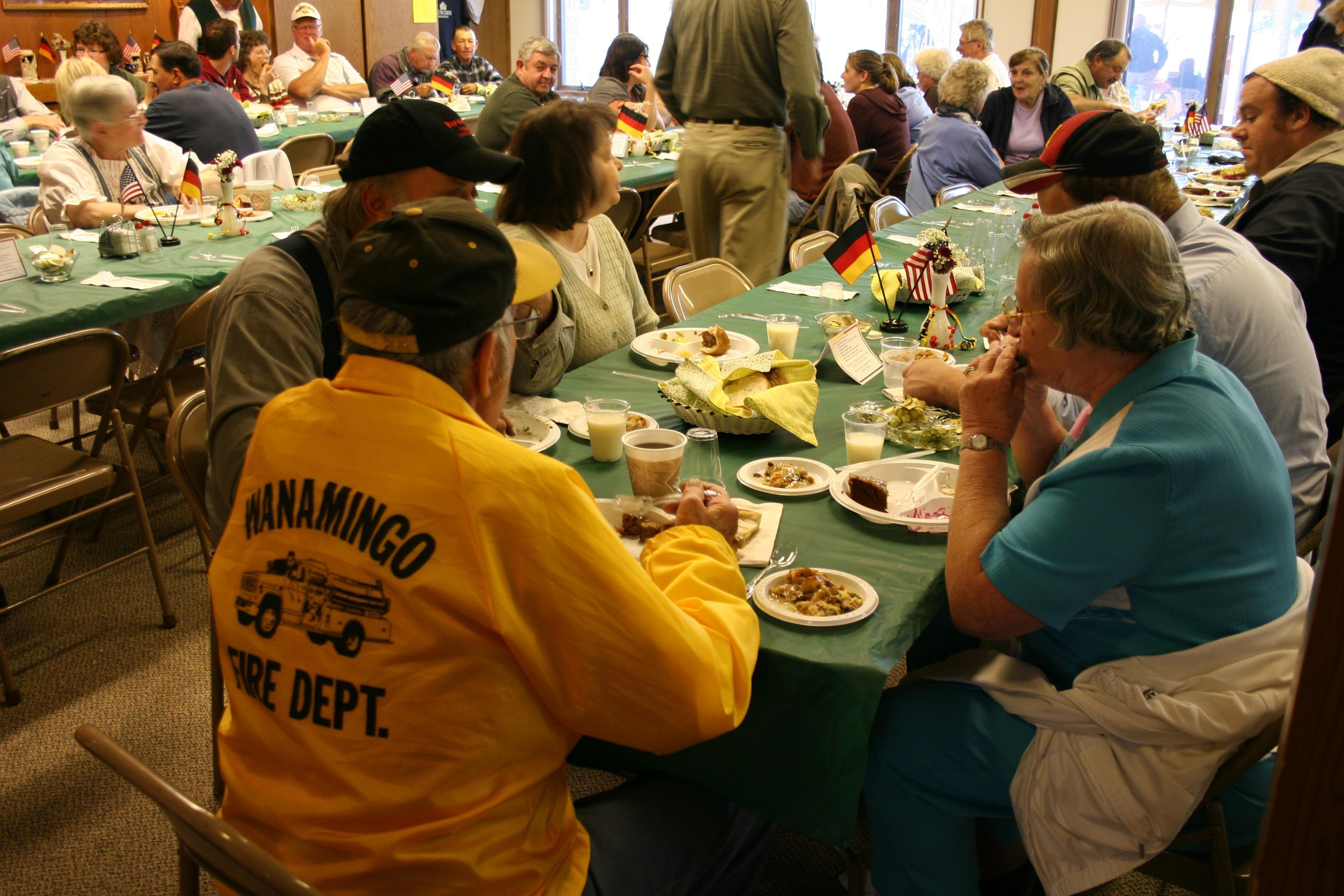
Diners enjoyed a German buffet in the fellowship hall before and after the praise service.
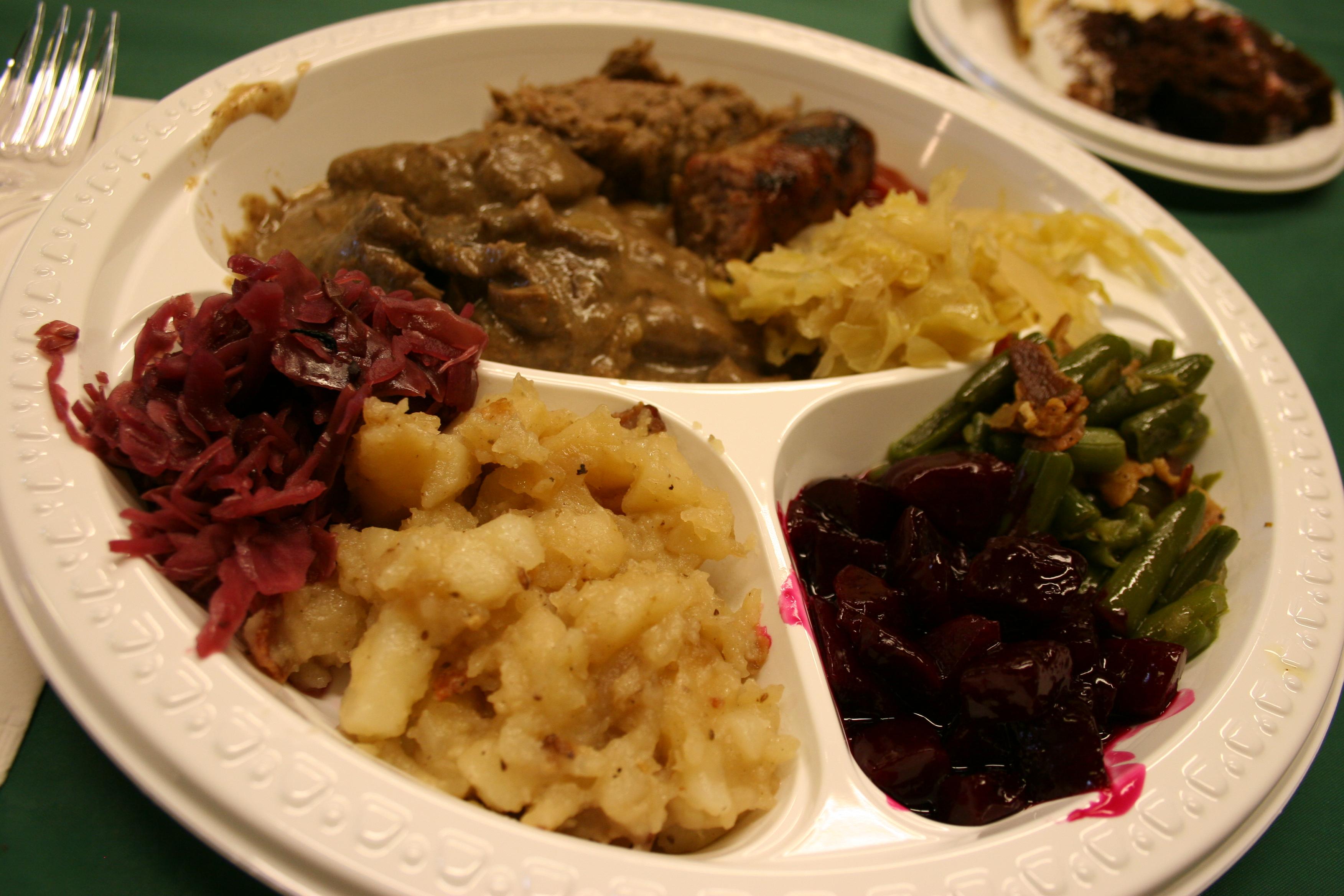
Deutsche food: German potato salad, red cabbage, sauerbraten, rinderwurst, a brat, sauerkraut, beets and green beans on my plate.
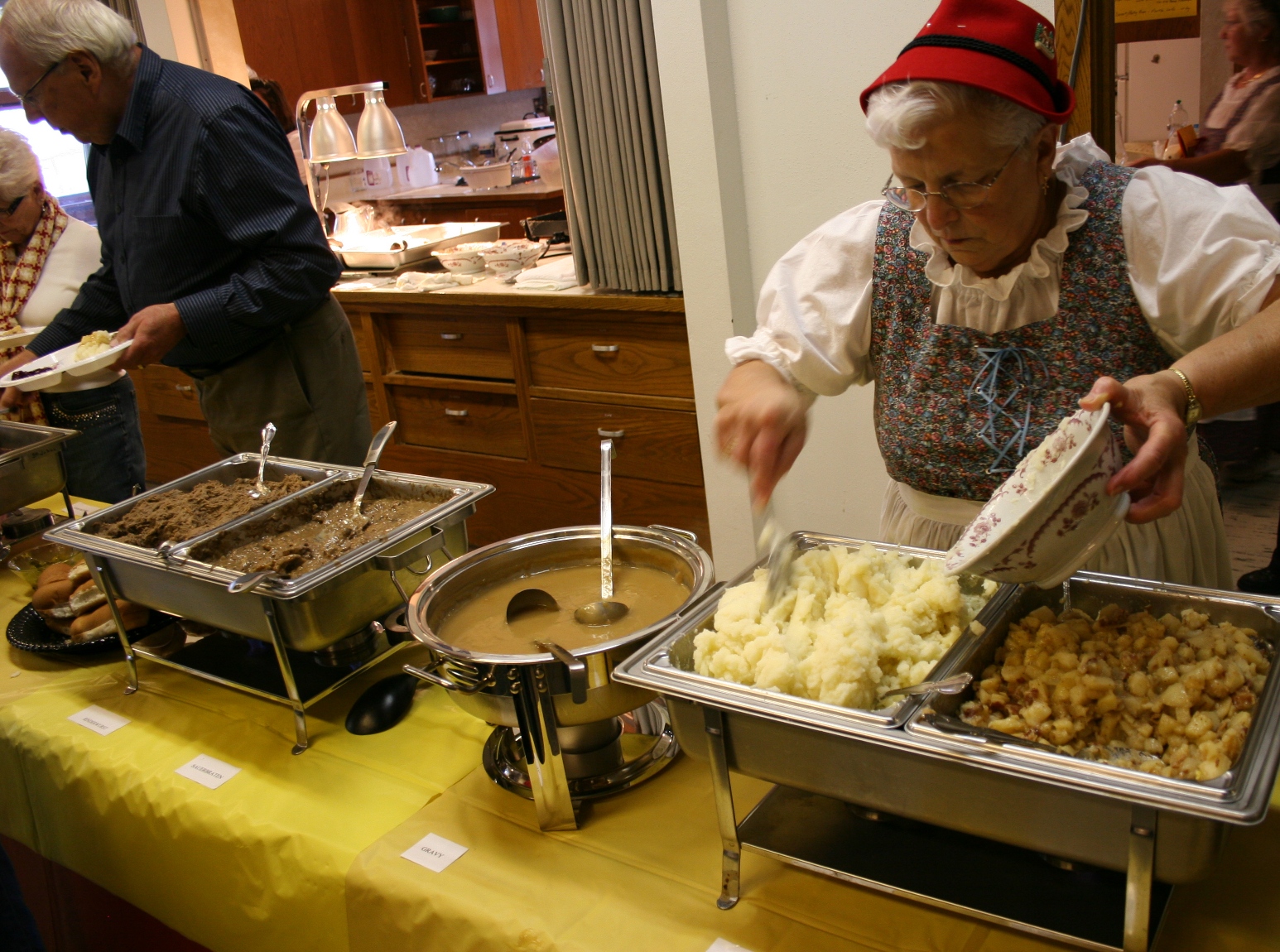
Volunteers kept the buffet trays filled with delicious homemade German foods.

Bingo and a quilt show. Geese and ponies and goats and birds in a petting zoo. Woodcarvings at the silent auction. Homebaked goods in the country store. Jars of apple jelly, glistening like gems in the sun. All of it, together, creating a memorable afternoon at this country church set among the flat corn and soybean fields of eastern Rice County.

This is the season of church festivals and dinners—of lutefisk and Swedish meatballs and ham and of vegetables dug from the earth.

It is a time to gather close, to remember the homeland from whence we came, to celebrate our heritage, to rejoice in the harvest.
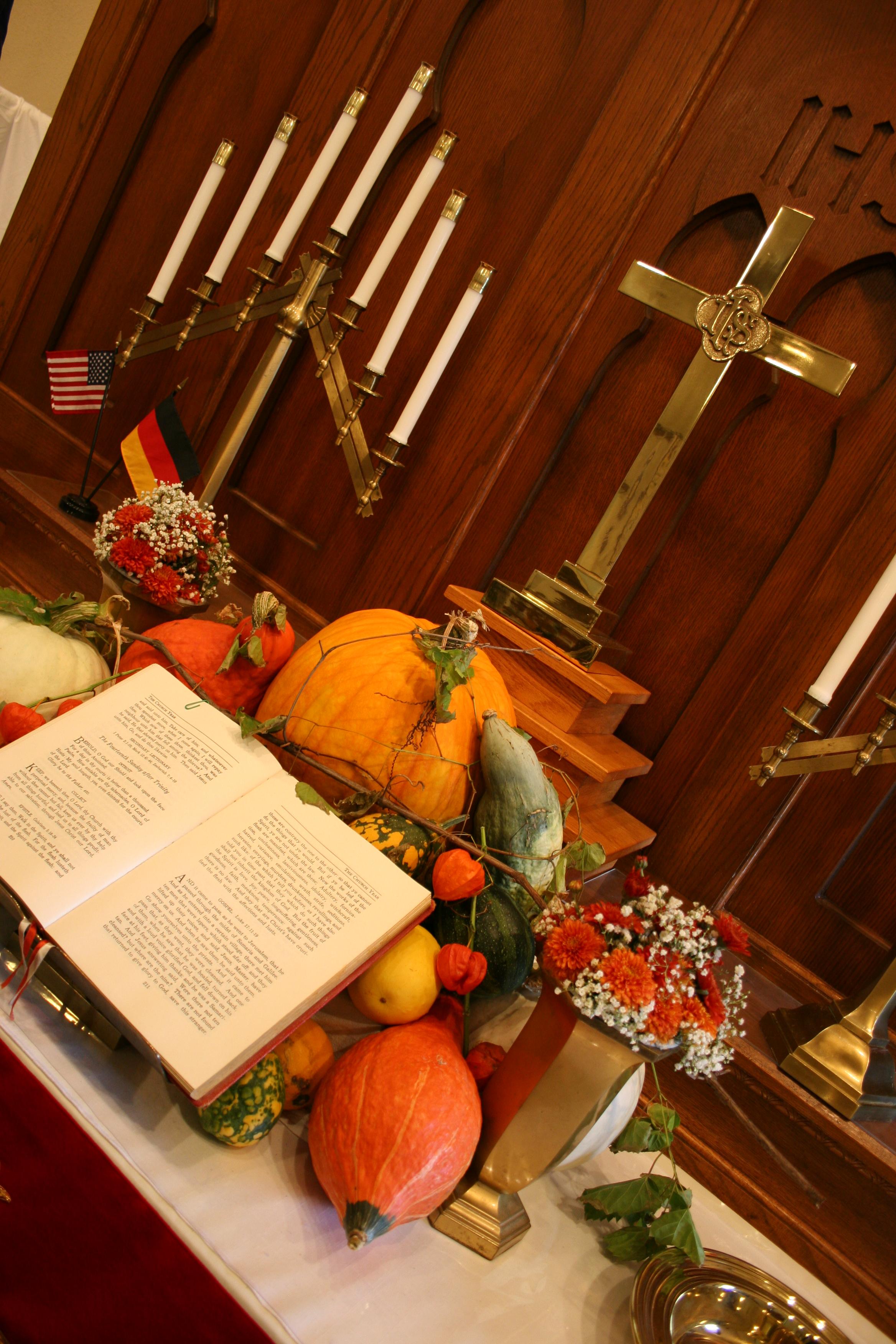
The sanctuary was decorated throughout with harvest vignettes, including this one on the altar.
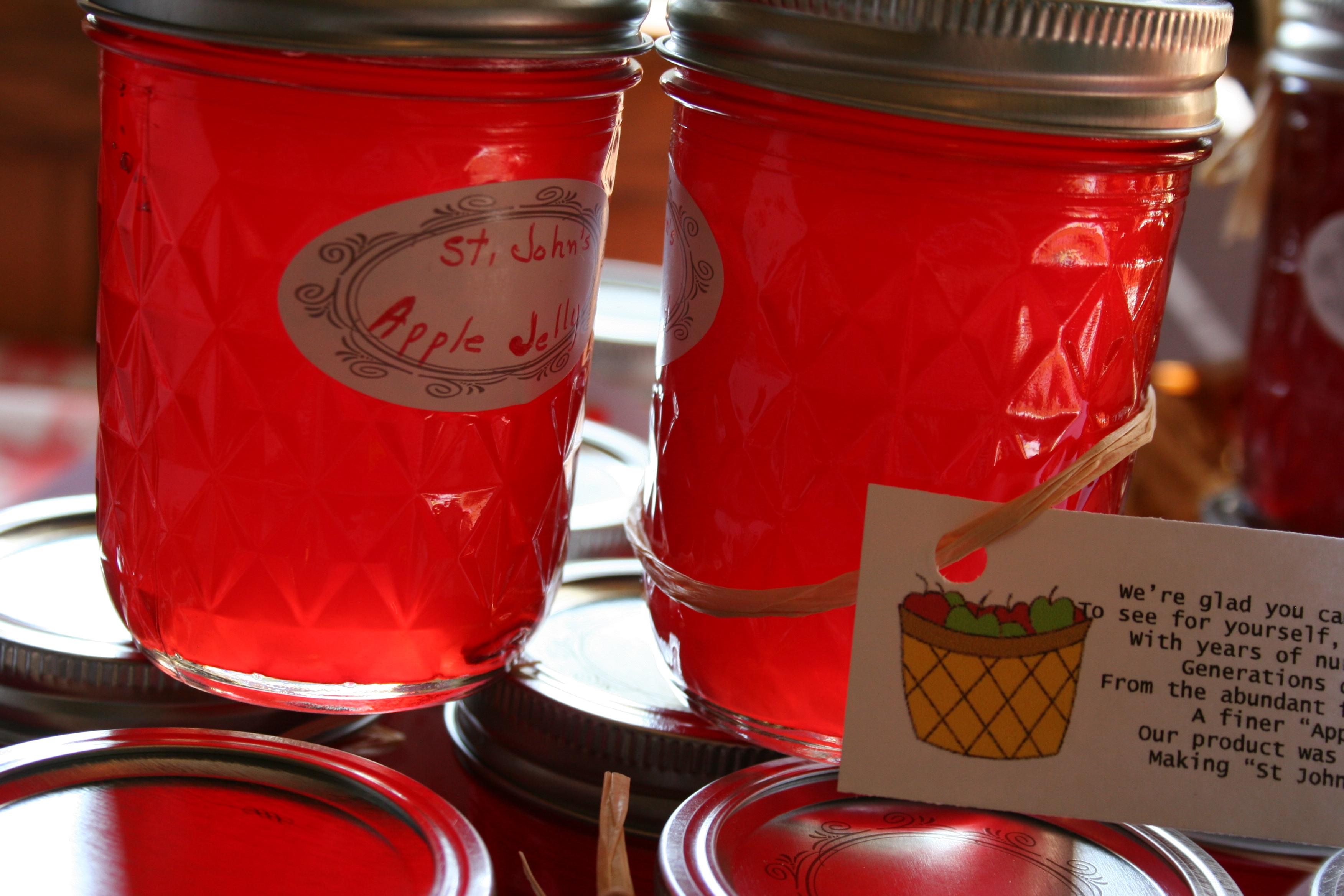
St. John's members make apple jelly and apple butter from fruit growing on an apple tree in the churchyard. The jelly and butter are sold at the festival.
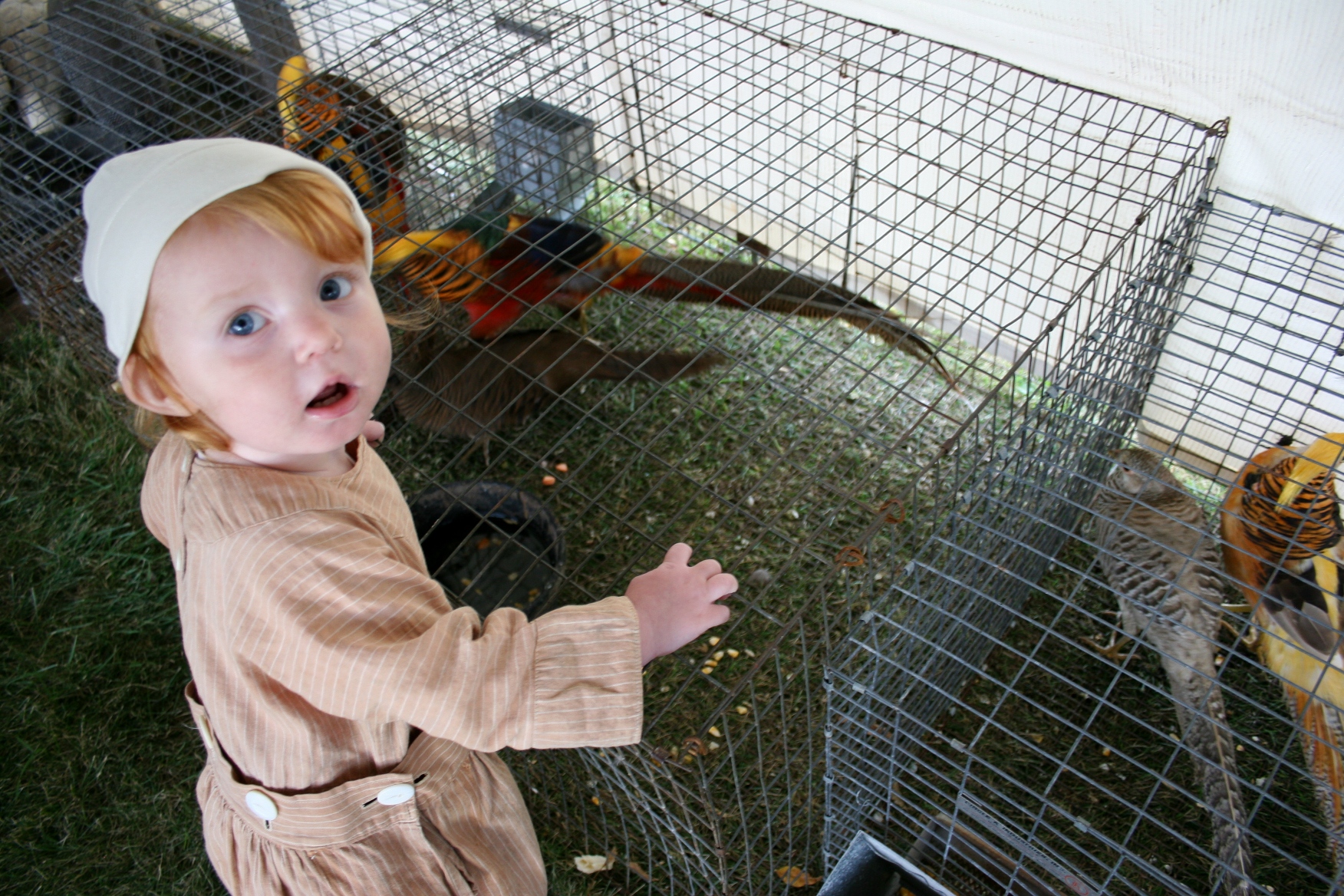
Juniper, 15 months, enjoyed the birds and animals at the petting zoo.
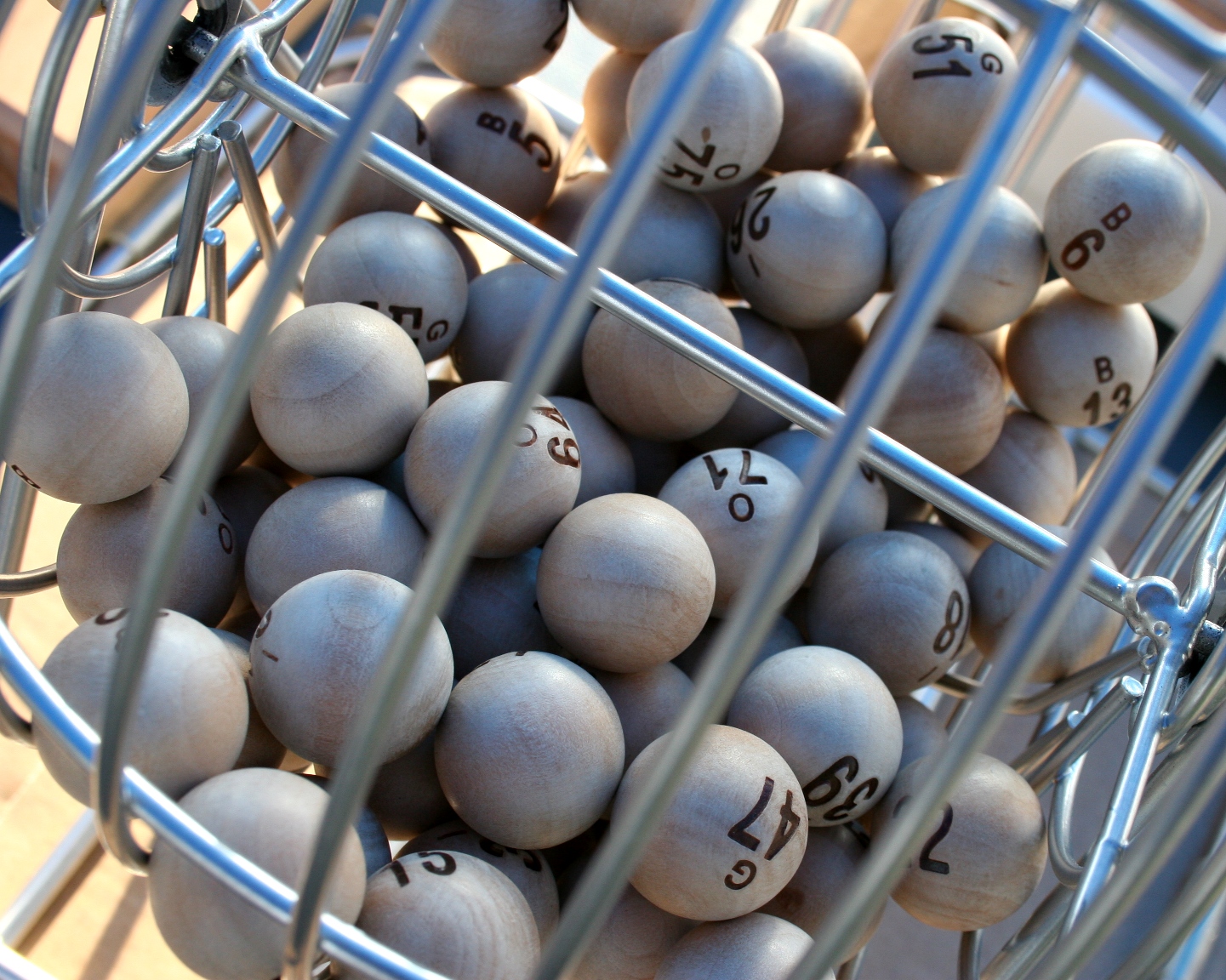
As is typical of most church festivals, attendees could play bingo outside under a tent.
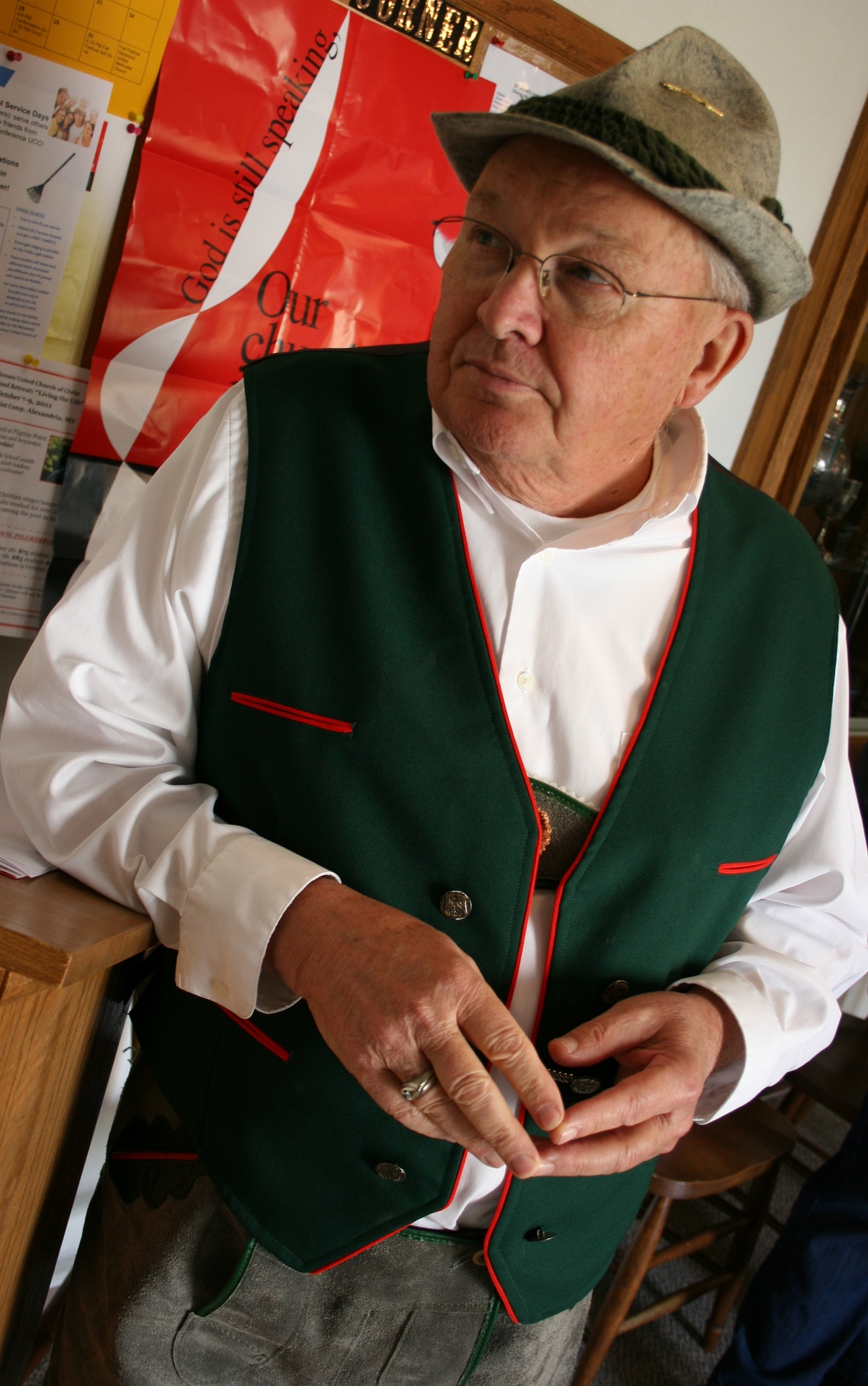
Many of the volunteer workers dressed in German costumes.
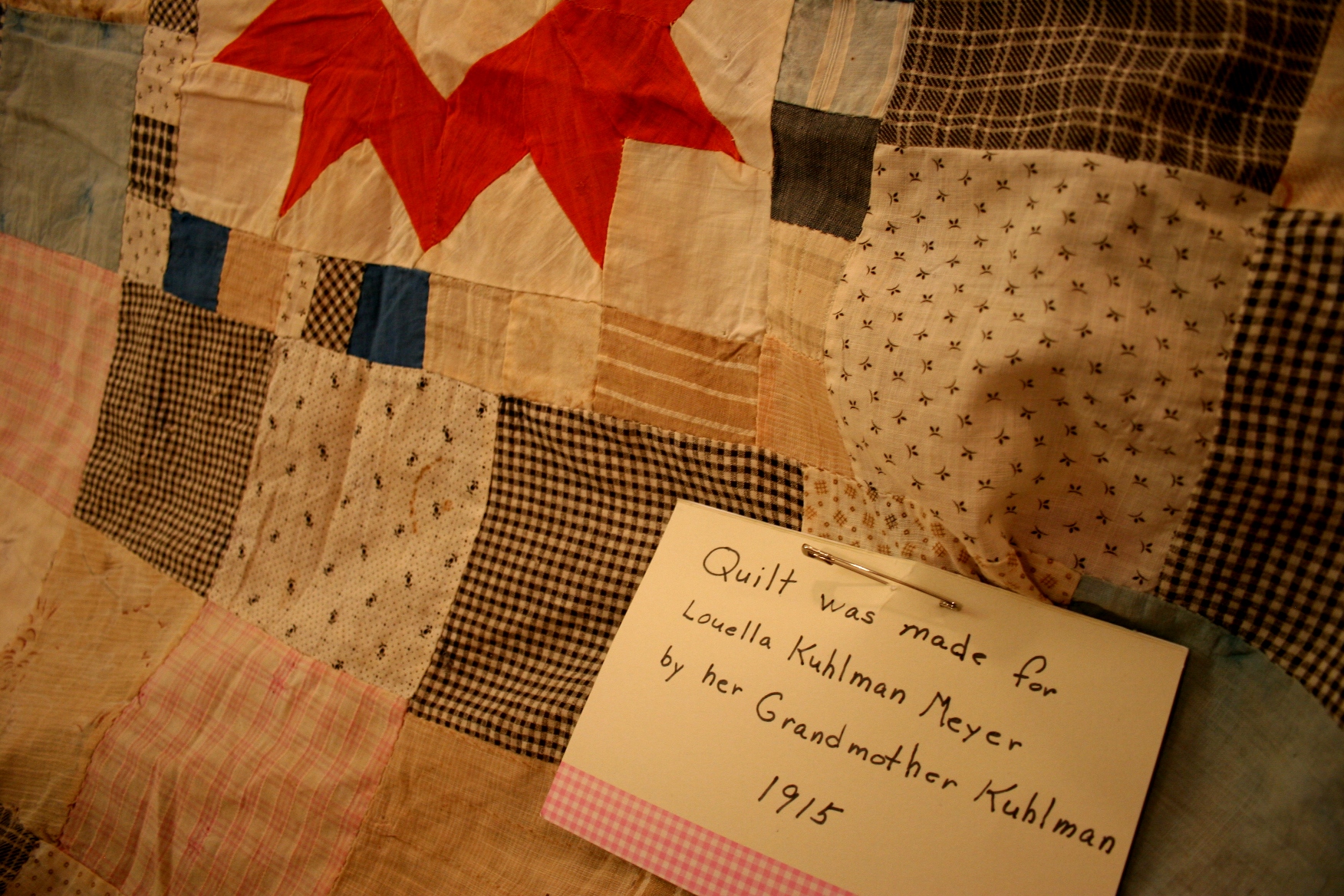
Each member of St. John's was asked to bring a quilt for the quilt show in the sanctuary. Quilts were draped over pews with brief information attached to each.
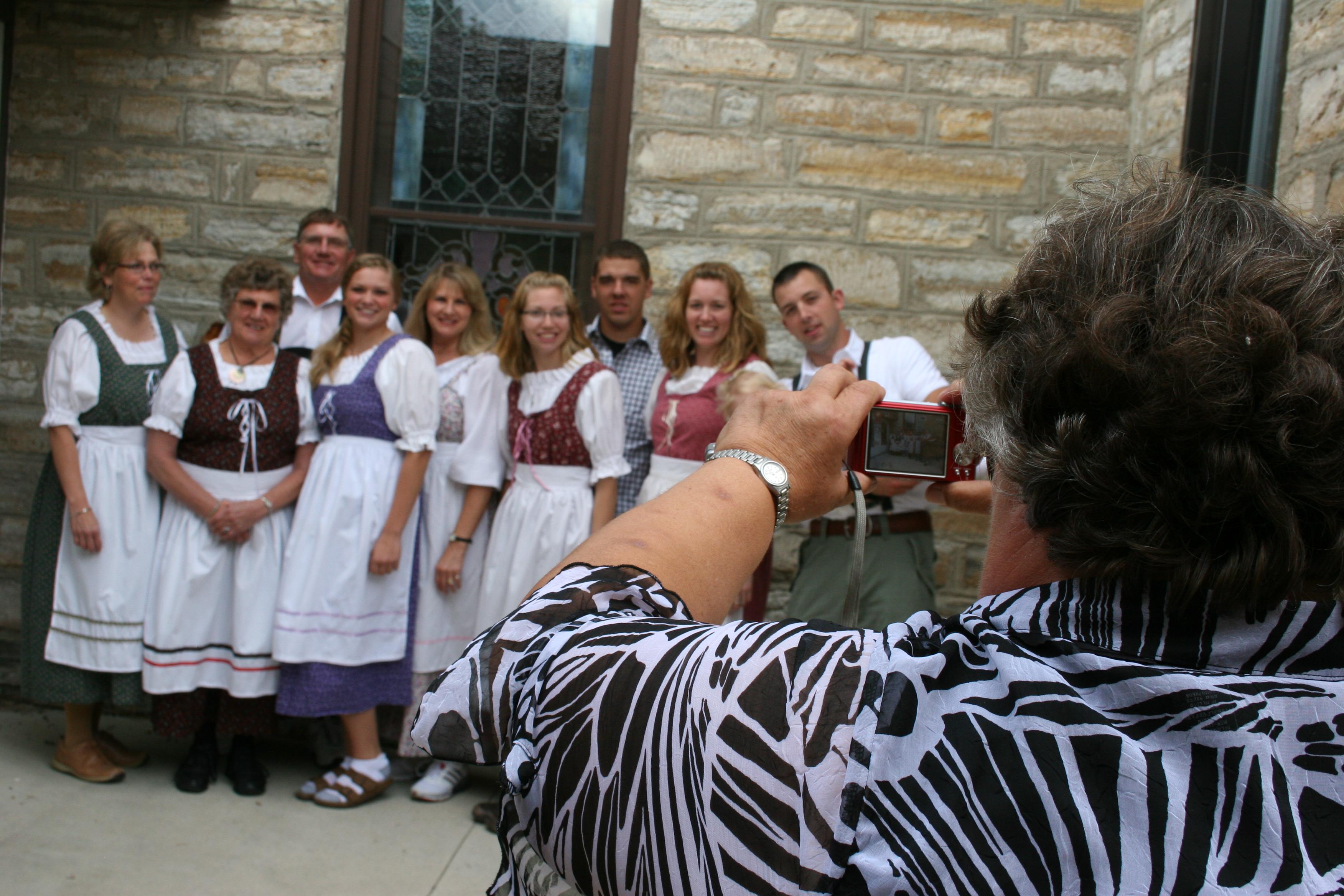
The Bultman family poses for a photo outside the stone church.
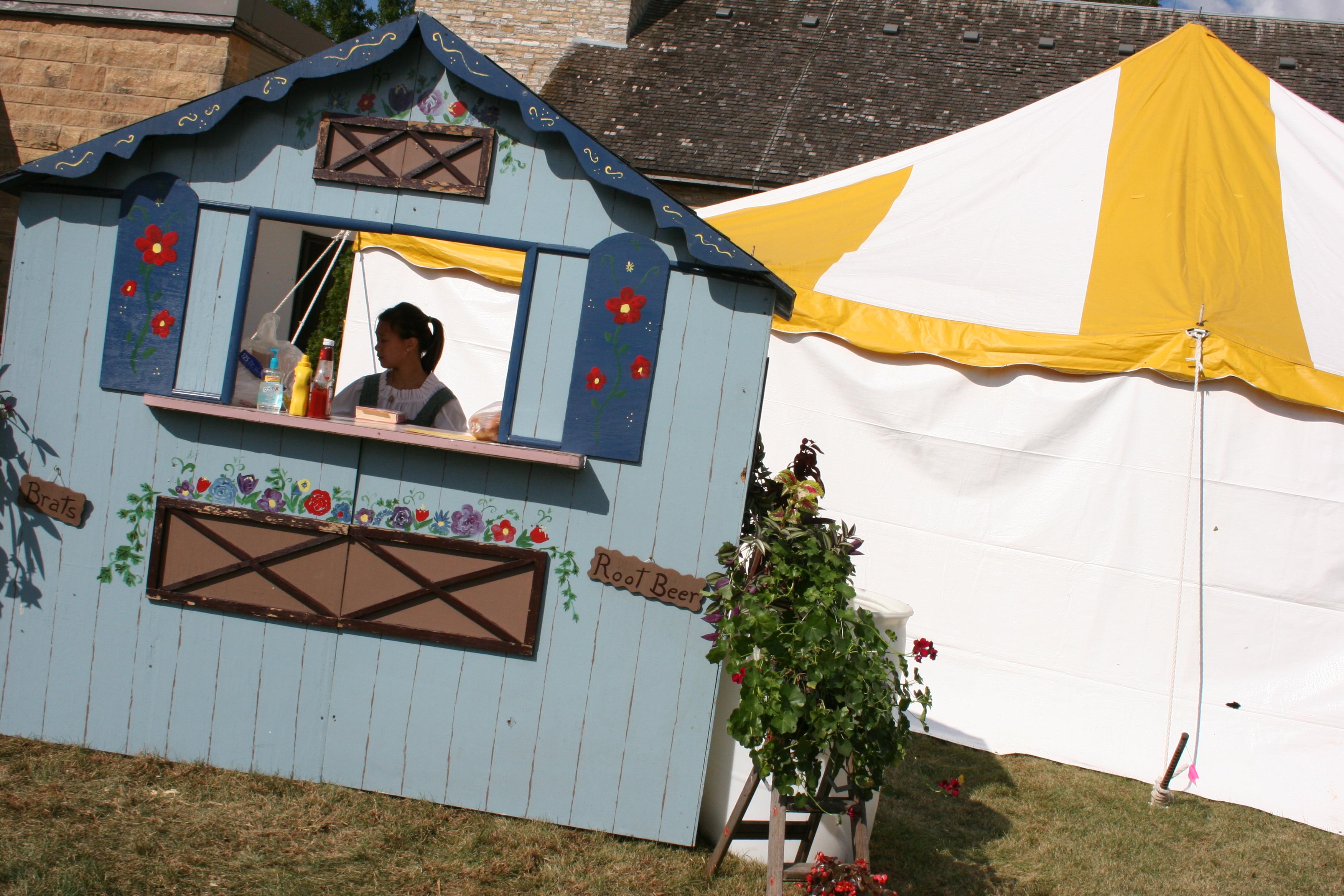
The brat and root beer stand next to the music tent.
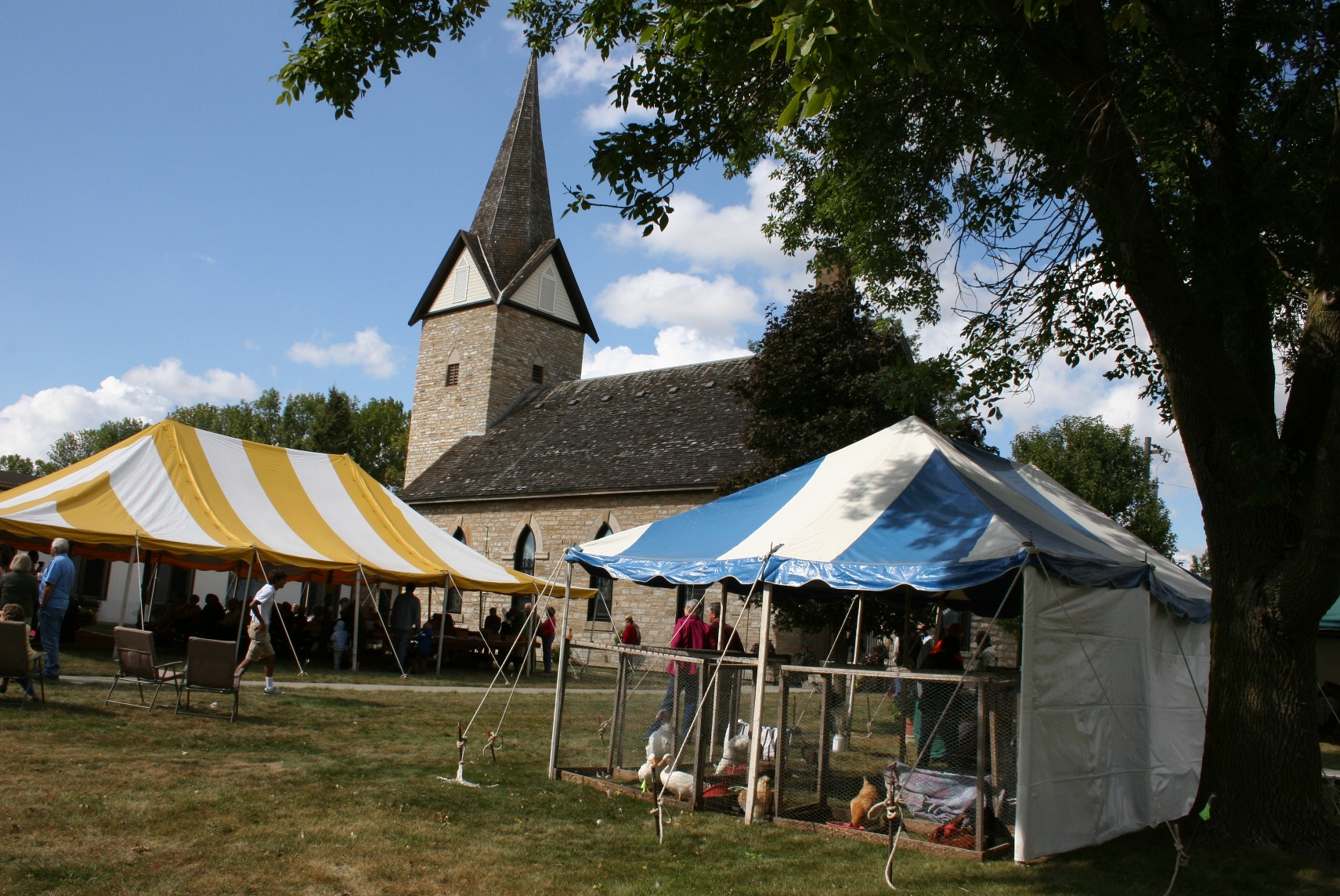
The festival grounds at St. John's U.C.C., Wheeling Township.
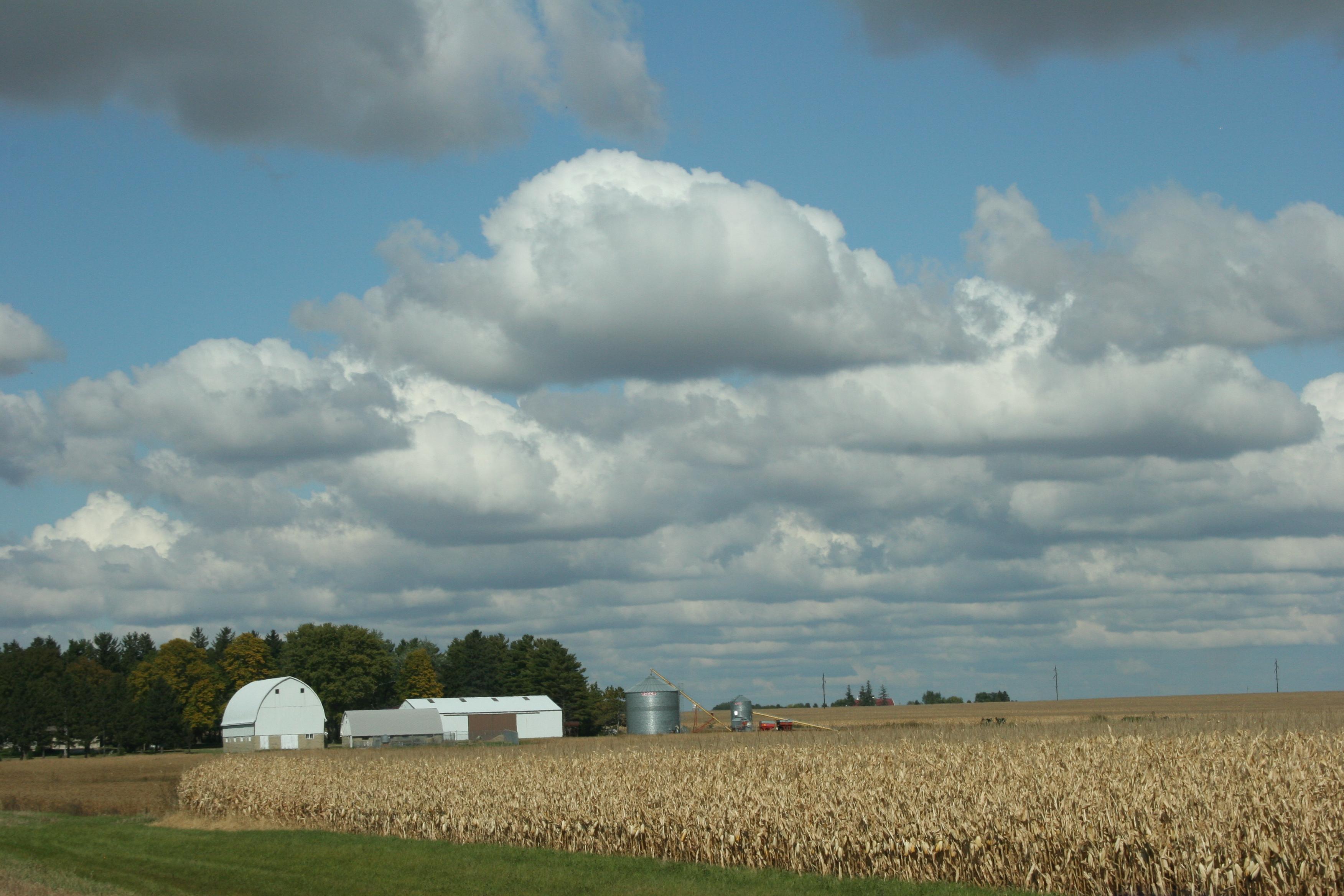
St. John's sits among the farm fields along Rice County Road 24

DO YOU ATTEND CHURCH dinners or festivals? If you have or know of an upcoming must-attend dinner, submit a comment. I’d like to hear about it.

ALSO, CHECK BACK for more photos from Germanfest.

© Copyright 2011 Audrey Kletscher Helbling


Harvest barn dance celebrates family, friends and yesteryear September 19, 2011

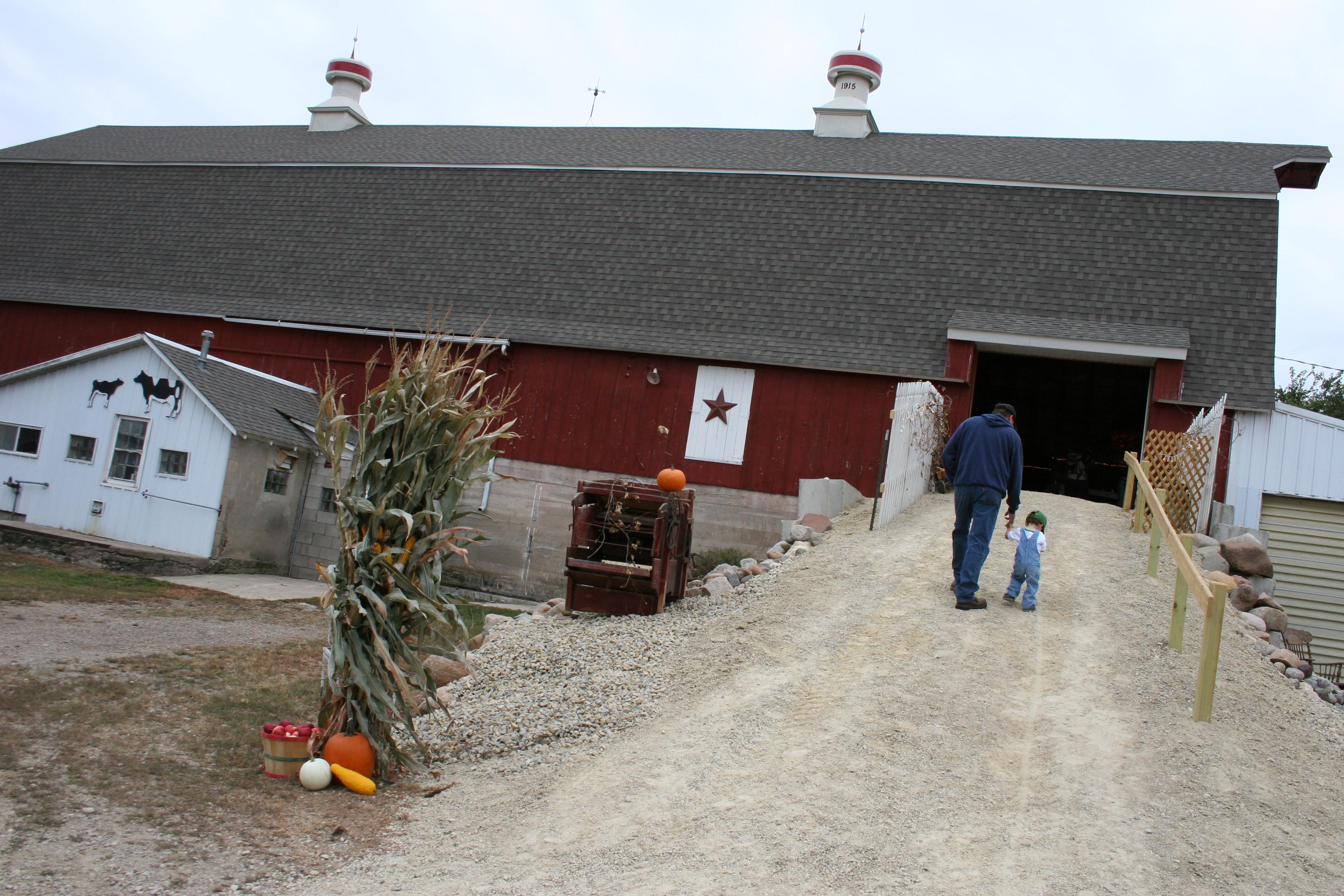
A father and son were among the hundreds of guests attending a dance in this 96-year-old barn.

IN THE 1930s, at the height of The Great Depression, a young Herb Becker attended dances in the sprawling red barn along Rice County Road 1 several miles west of Dundas.

Herb didn’t know it then, but in 1948 he and his wife Dorothy would buy the “Faber farm” site with the 36-foot by 100-foot barn.

Today his youngest son John and wife Debbie own the farm, purchased in 1988. Saturday they hosted their first-ever Harvest Time Barn Dance.

John and Debbie Becker have reshingled and done other work to their barn to keep it from deteriorating.

“It’s a dream come true,” John said several times through-out the event which brought the barn back full circle to his father Herb—who died in 2009—and those long-ago barn dances.

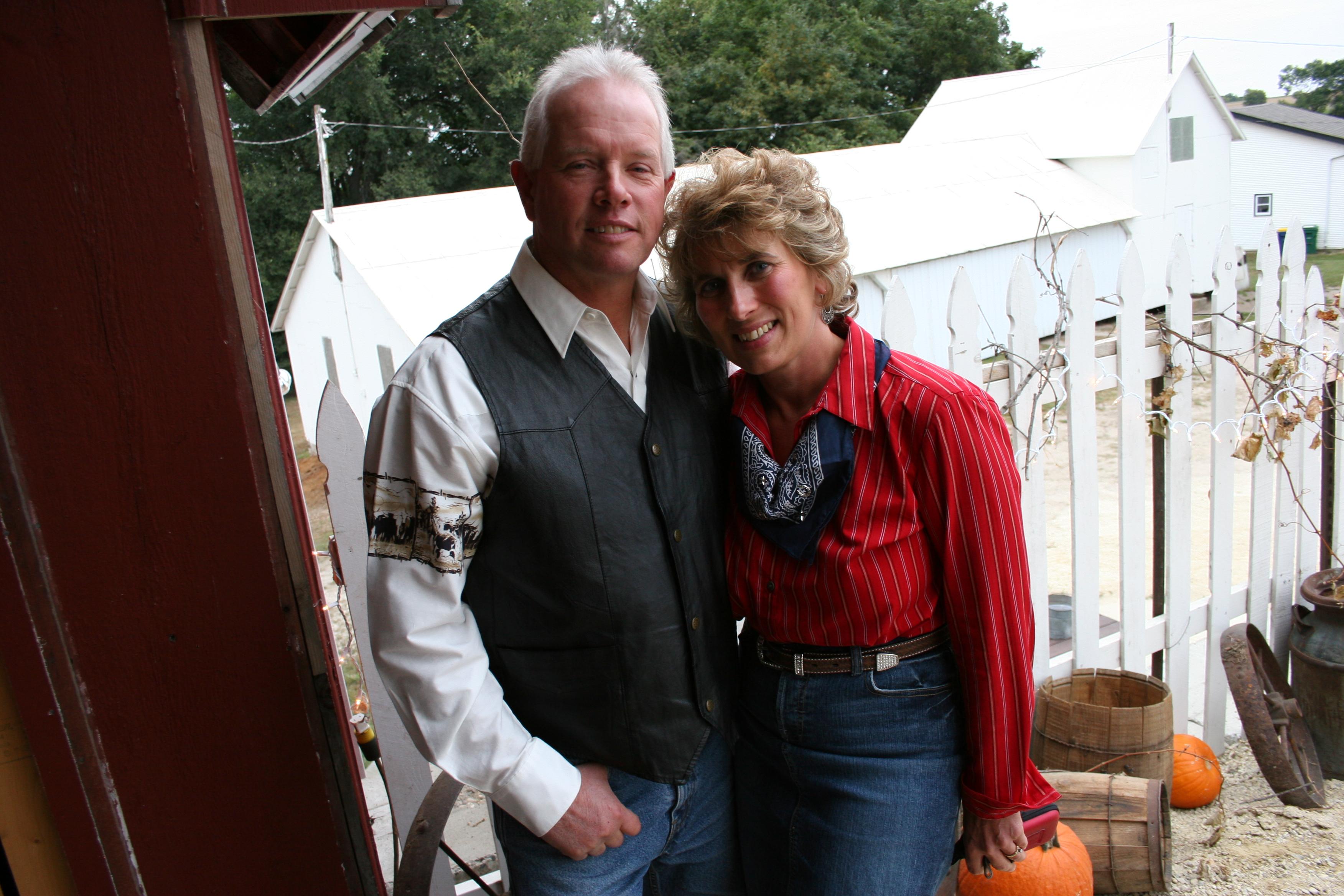
I bet Herb would have been pleased with the party that drew family, friends and neighbors of the Beckers together on a cool autumn evening to visit, eat and dance the night away in the old hay mow. My husband Randy and I were among our friends’ invited guests.

Everything about the celebration in this 1915 barn spoke to the kind of down-home neighborliness and love of family that define the Beckers and the Malechas (Debbie’s family). These are good, honest, hard-working people of faith with their roots planted deep in the earth. I doubt I stopped smiling all evening.

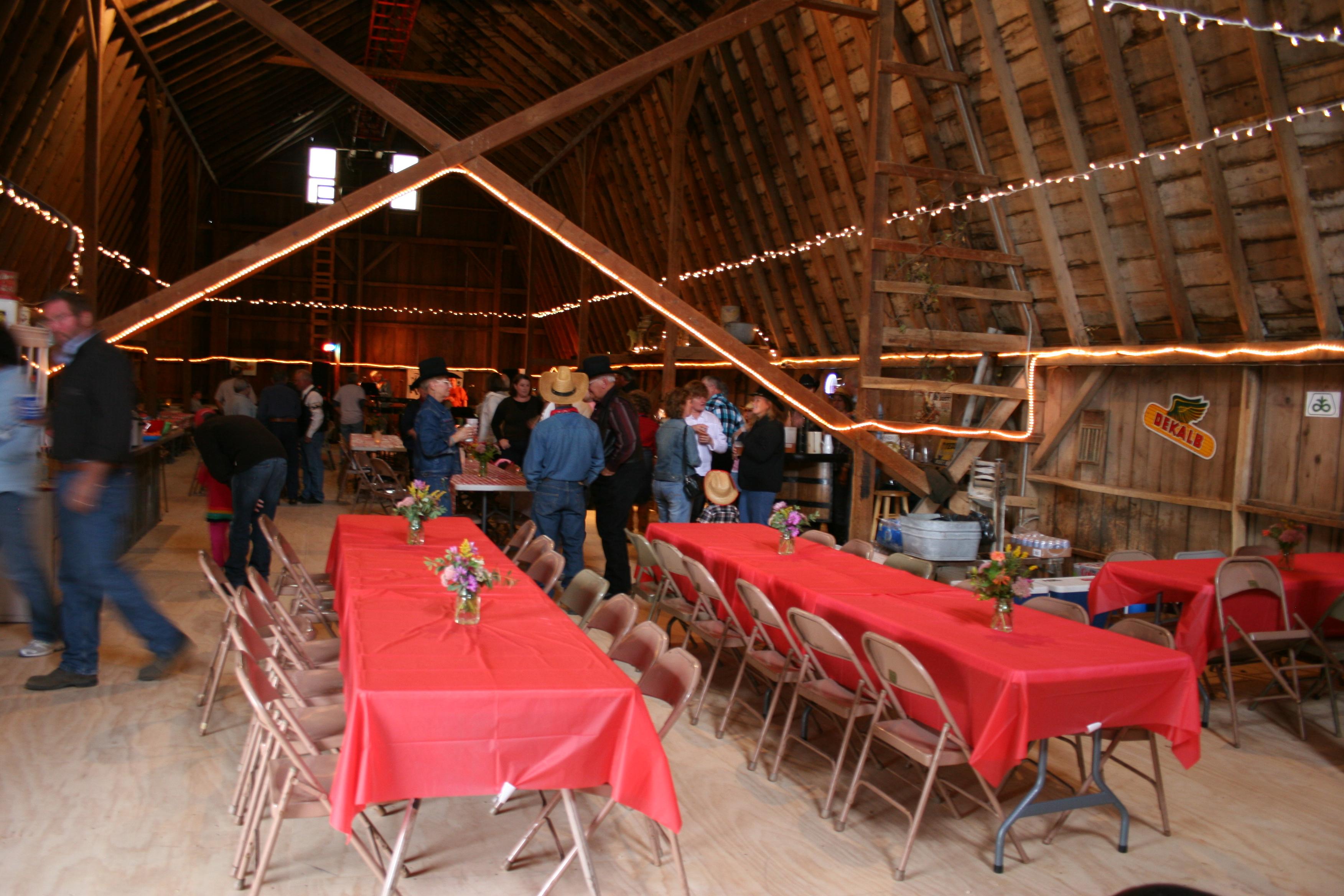
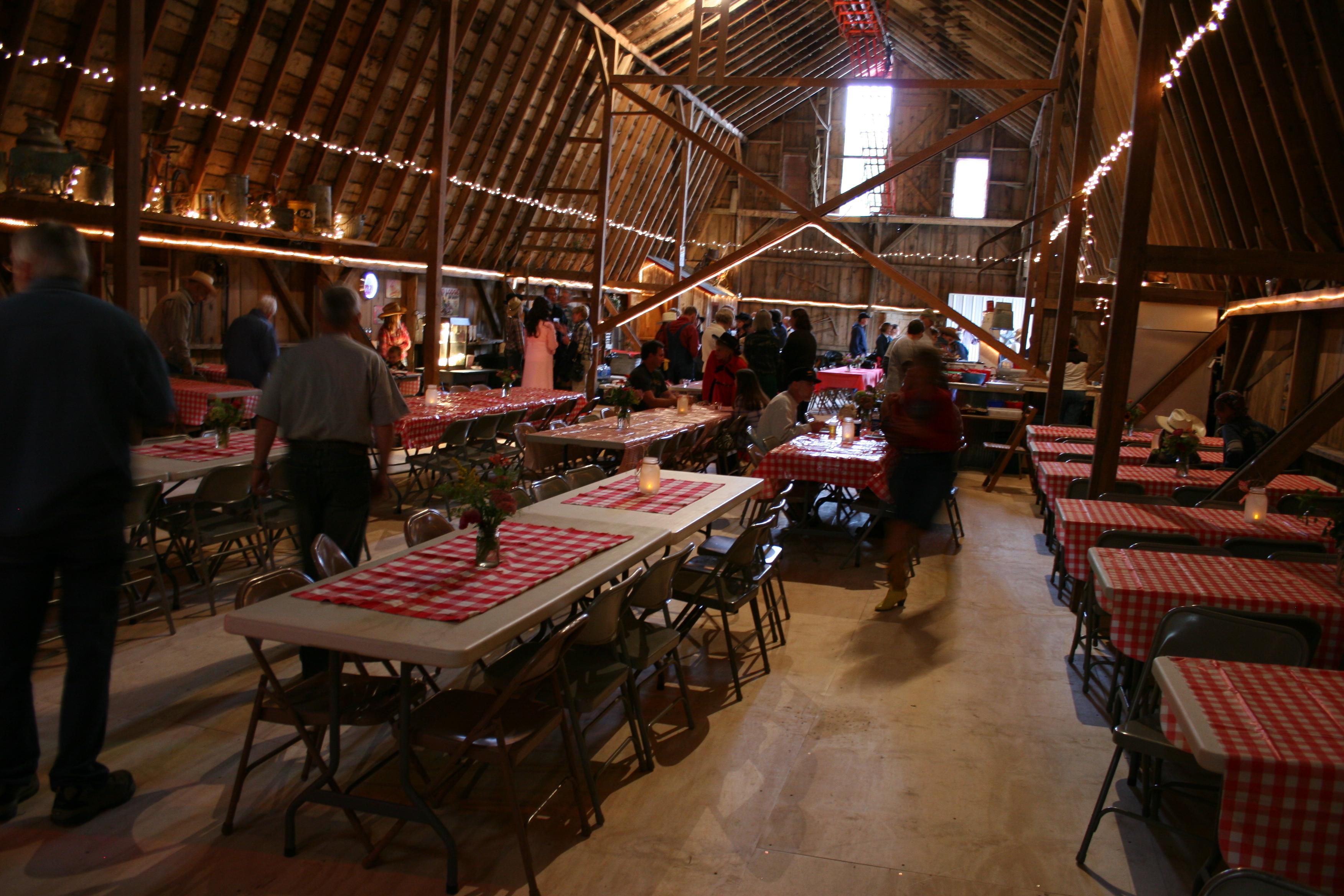
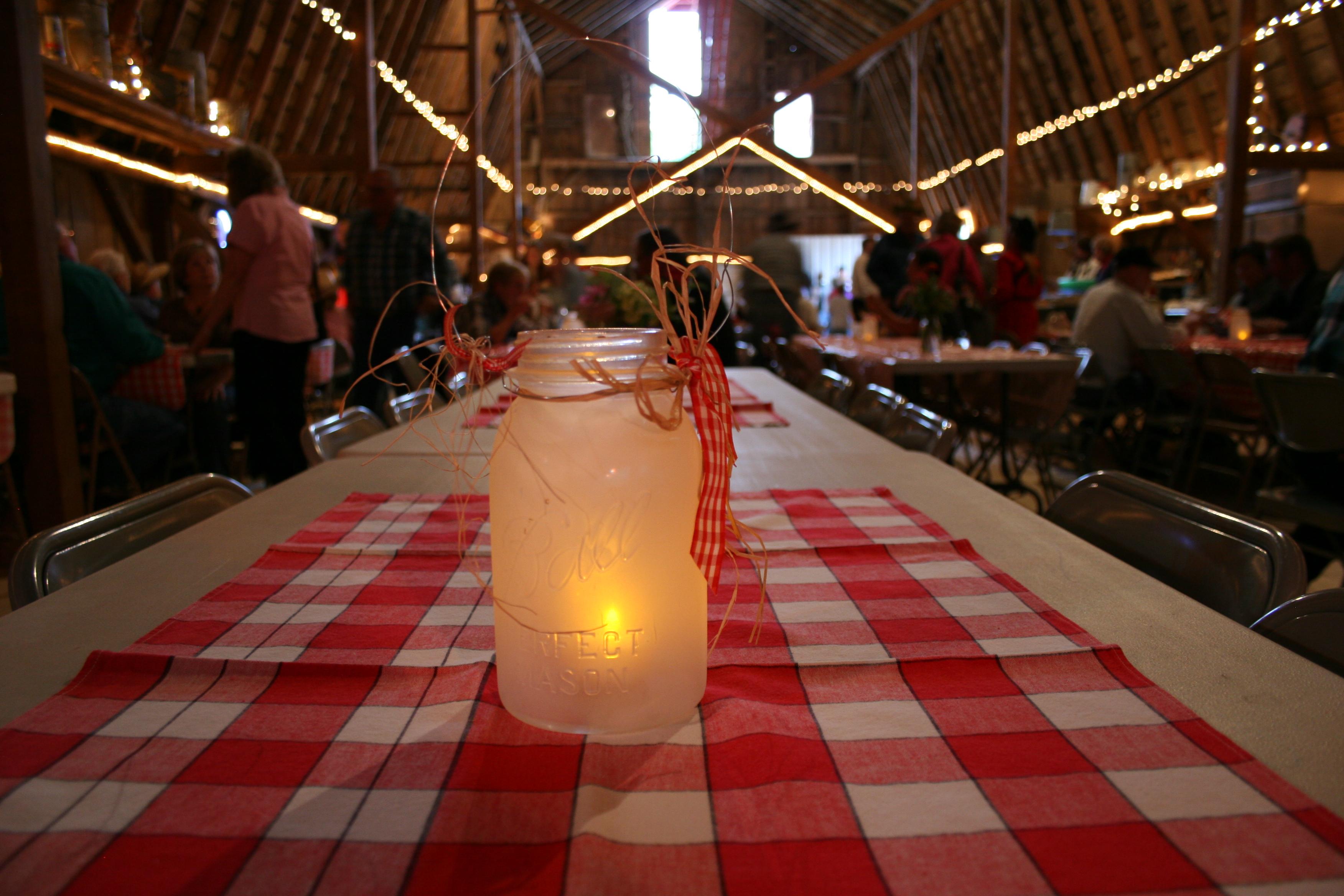
And there was plenty to smile about—from the country-style decorated barn complete with red-and-white checked tablecloths, zinnias/sedum/golden rod in fruit jars, pitchforks, bushel baskets, seed corn signage, wooden barrels, cream separator, horse harness and lots more to the kids and adults sporting cowboy hats, cowboy boots and other western attire to the welcoming, sometimes boot-stomping, music of The Revivals band.

Battery-operated tea light candles and flowers in quart jars decorated tables covered with red and/or red-and-white checked cloths. This photo looks toward the west end of the hay mow.

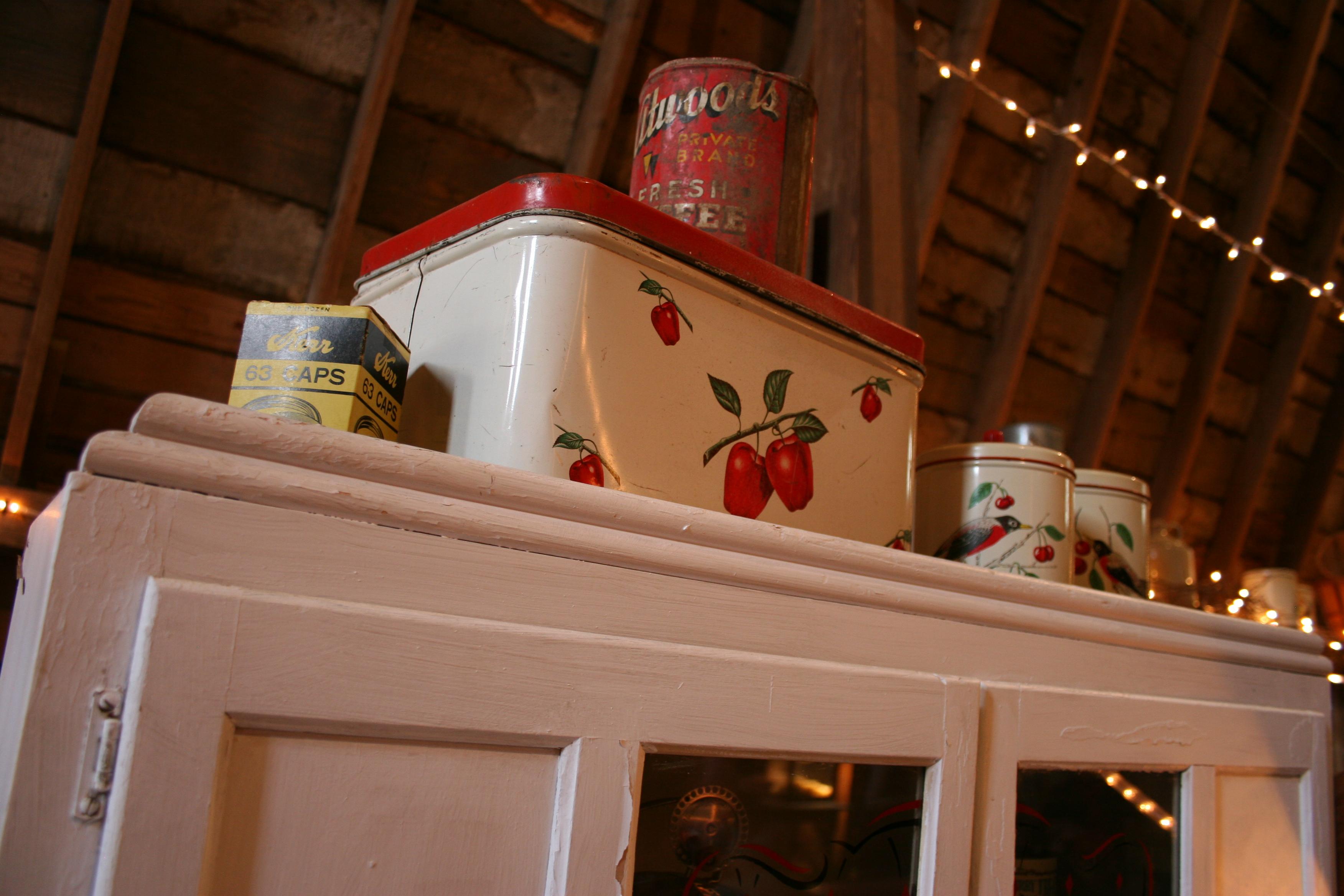
Everywhere collectibles and antiques were on display, creating a setting of simple country charm.

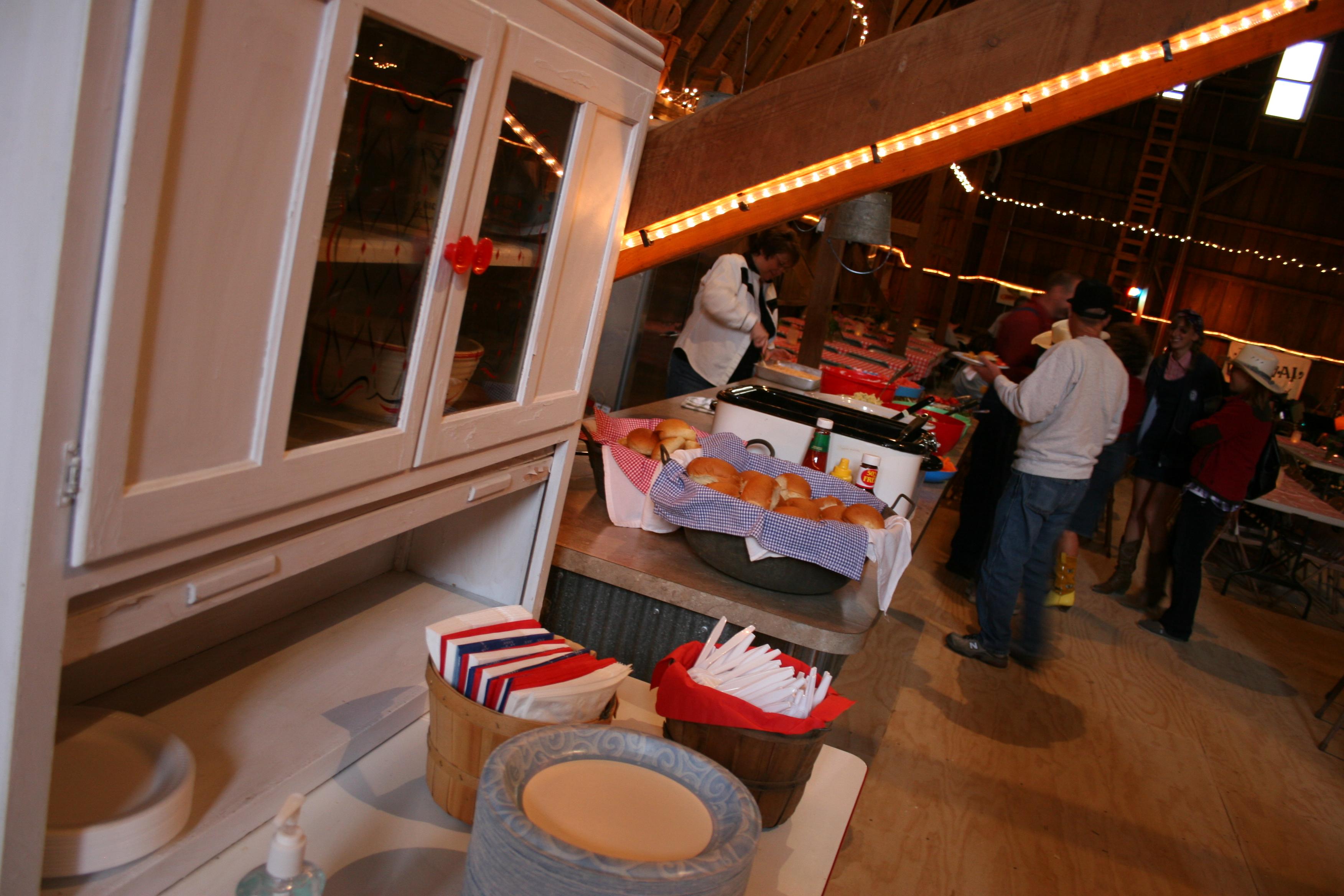
Guests indulged in tasty roast beef sandwiches, calico beans, an array of salads and bars.

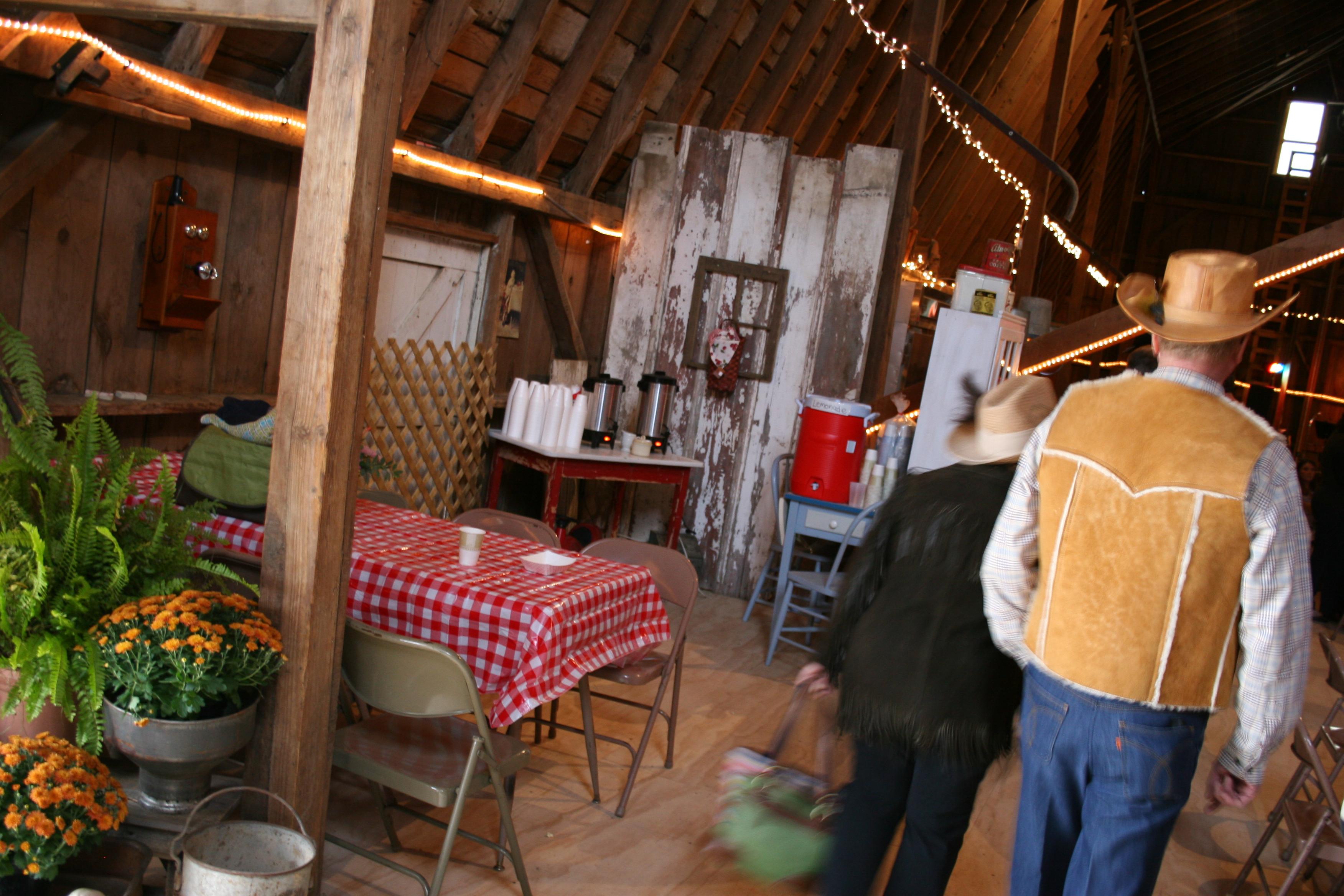
The Beckers created a coffee corner, where guests could grab some "De-Calf" or "Real Calf," visit, maybe even pull a deck of cards from the shelf for a game of Euchre.

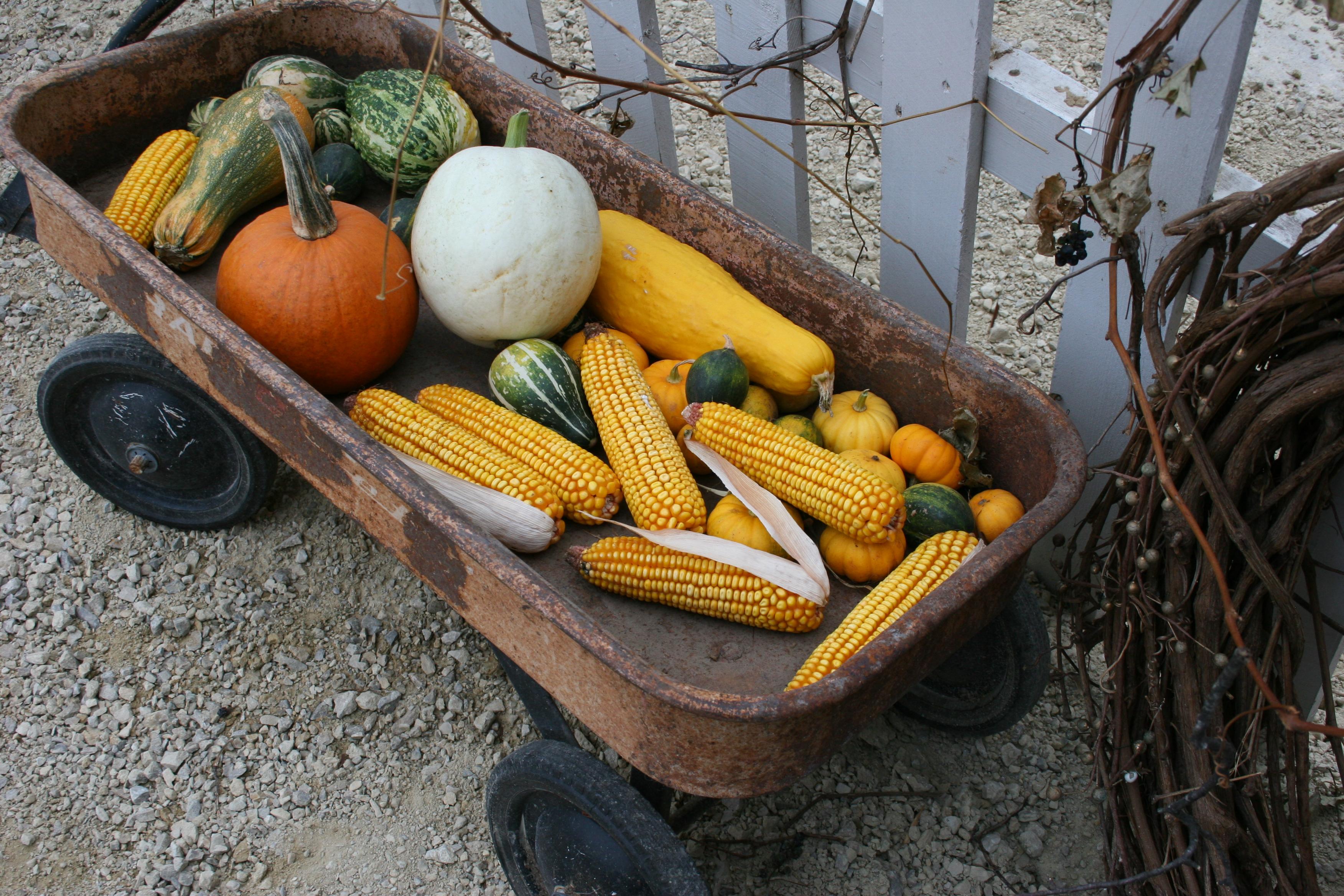
Fall and vintage decorations lined the pathway leading into the barn.

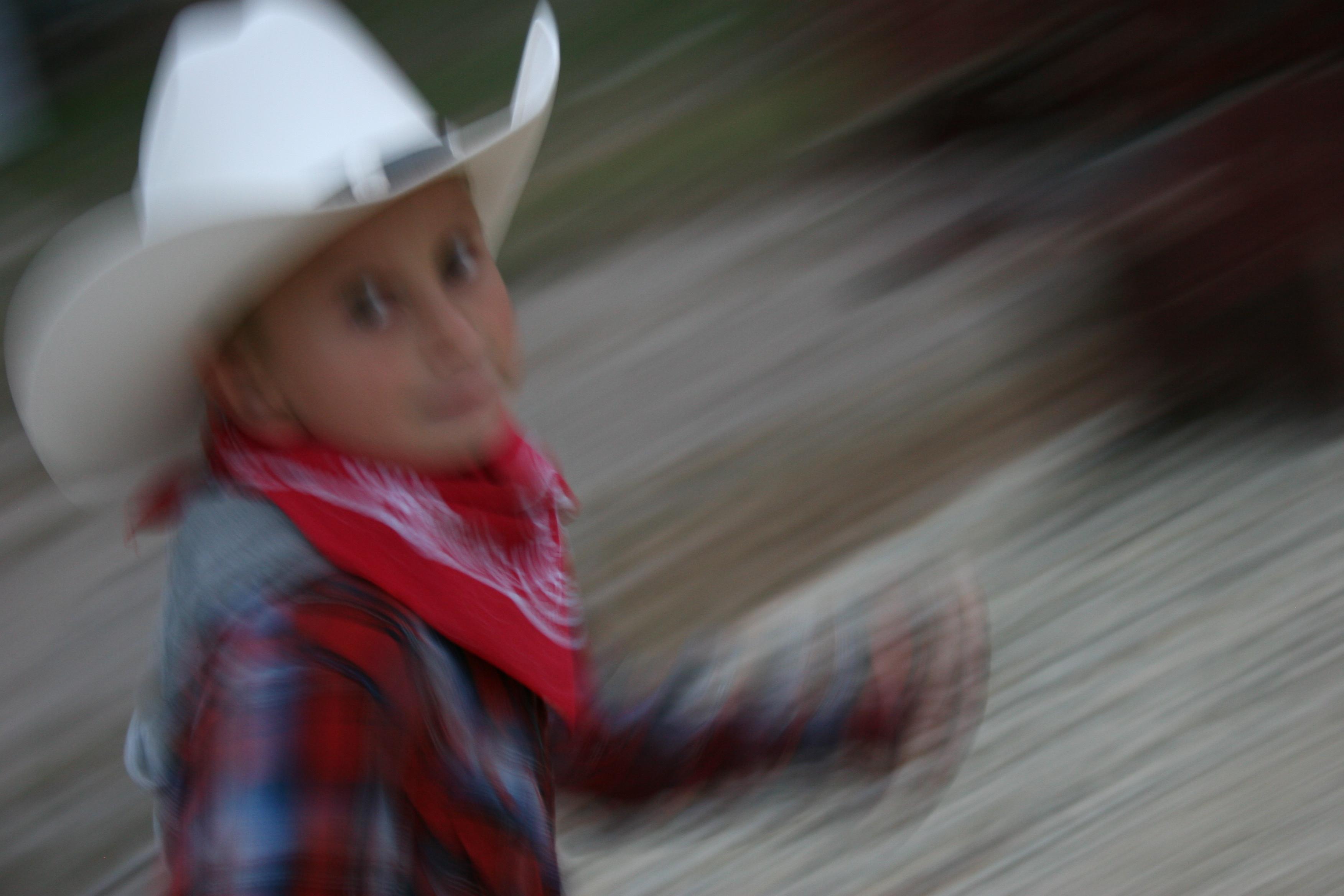
It was the type of evening reminiscent of the old-fashioned gatherings of yesteryear, when adults could visit while the kids played with carefree abandon. And they did on Saturday. Tag and hide-and-seek. Pick-up football in the dusty farm yard. Make-believe, chasing each other with cap guns blazing.

Kids ran and played and ran and played--all night.

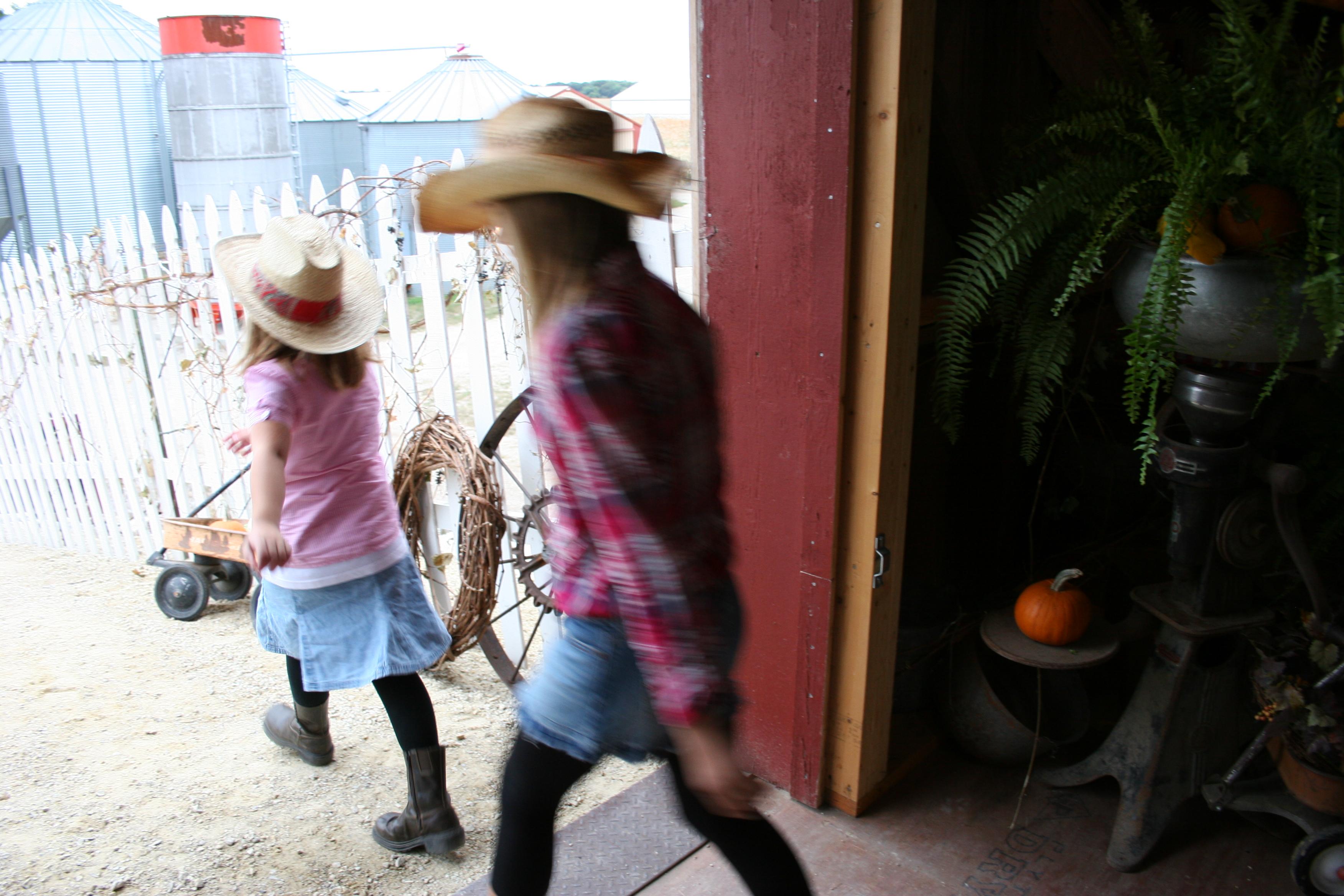
Heading out the barn door...

The kids, and a few adults, brought cap guns.

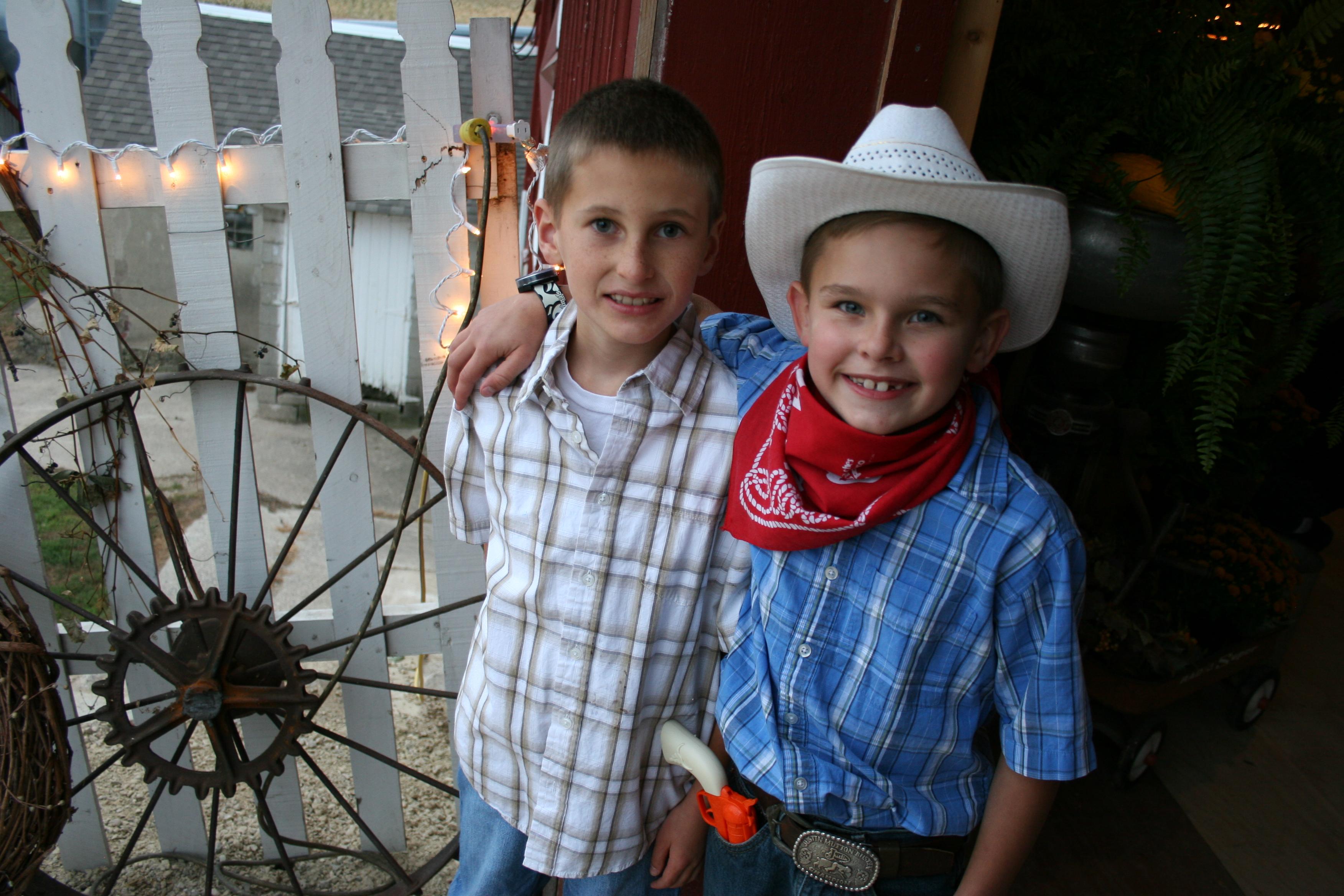
Probably my favorite image of the evening...no words necessary to describe these happy boys.

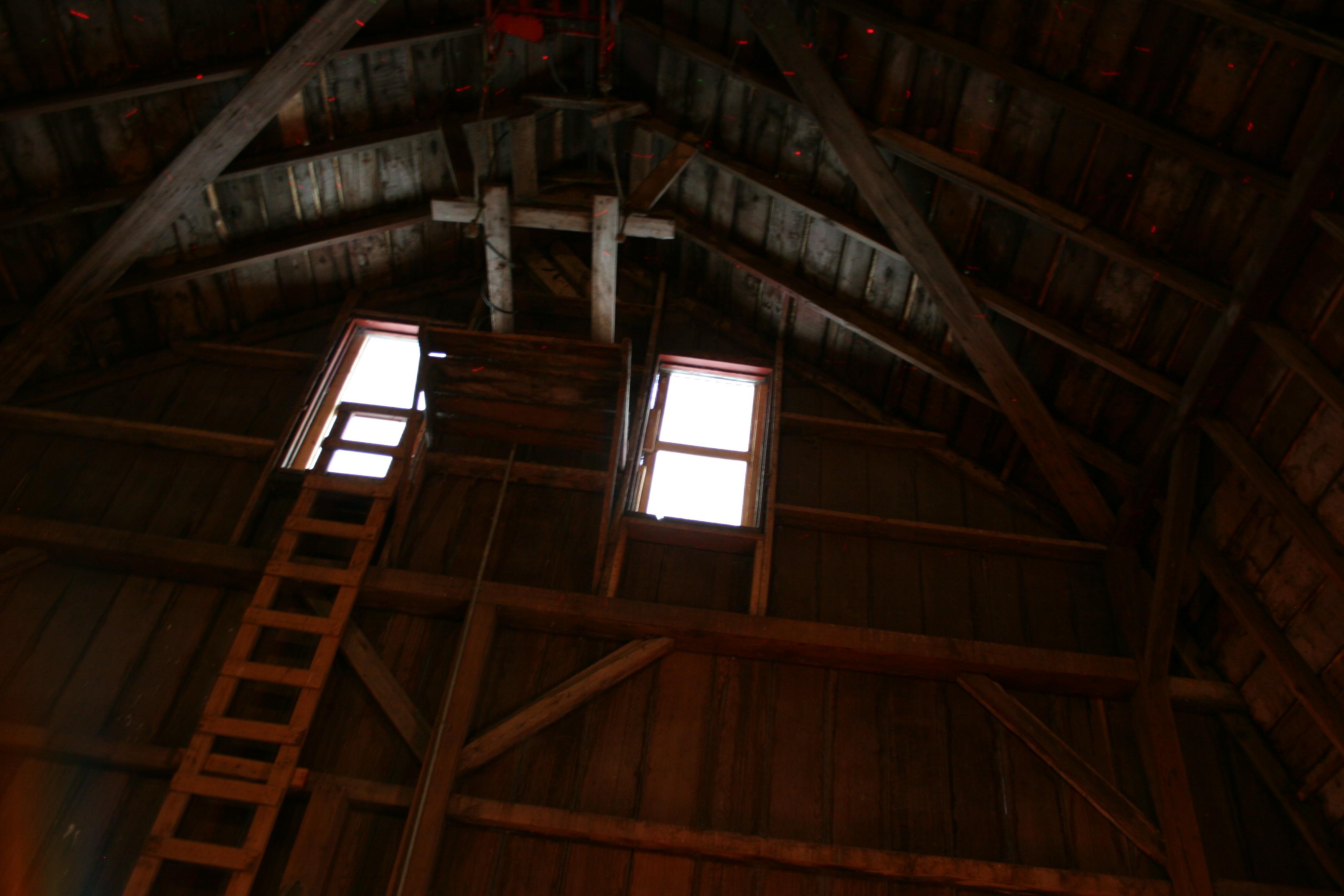
Inside, the adults admired the architectural bones of the barn, cranking necks upward toward the skeletal rafters, toward the conveyor that once carried hay bales across this dairy barn hay mow. And before that, the hay fork, on display outside the barn. They imagined climbing the ladder on the east end of the barn, like daring trapeze artists, to a platform above.

Looking toward the east end of the hay mow.

The east end of the hay mow with the ladder and platform and highlighting the barn's framework.

Looking toward the west end of the hay barn.

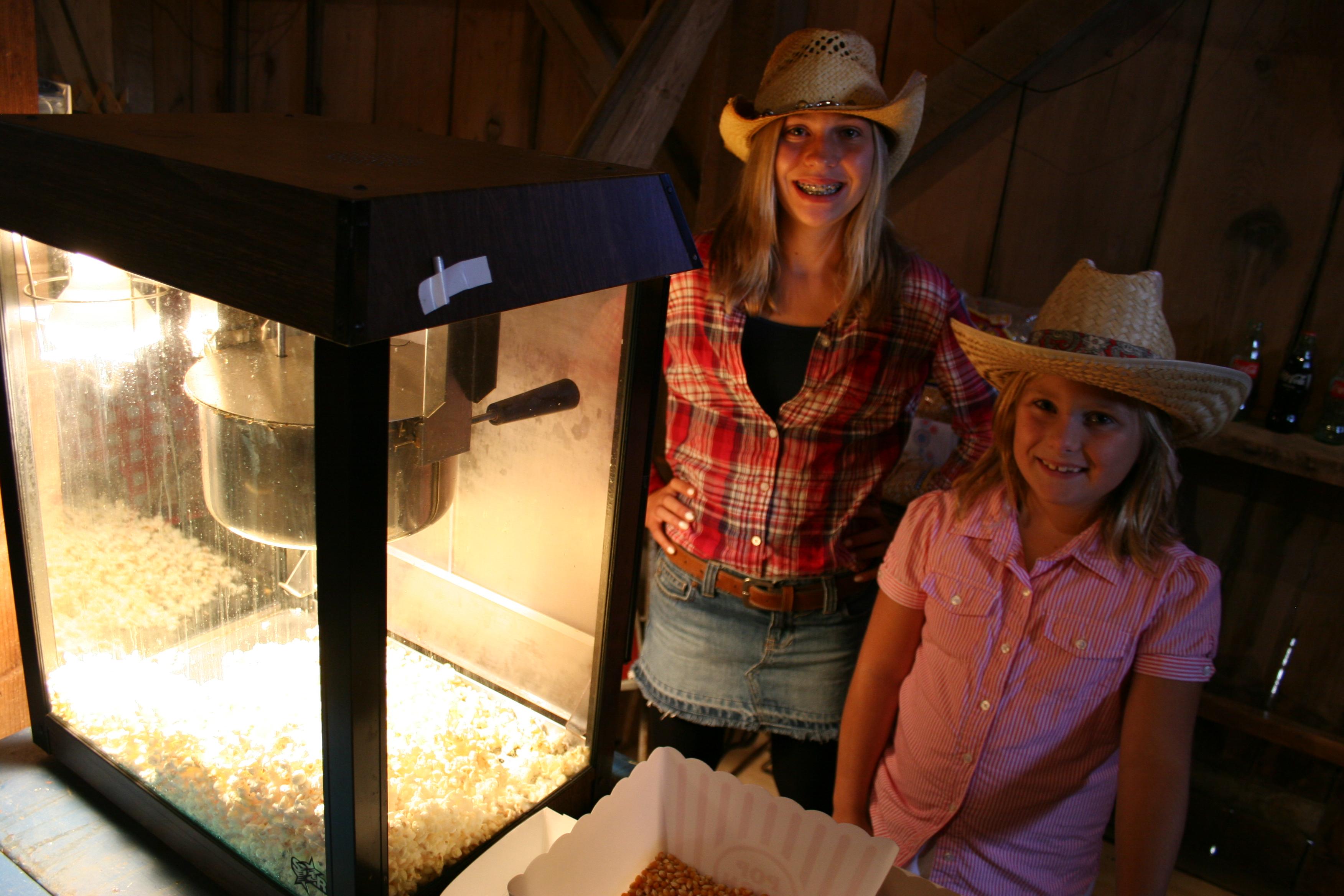
Pulling popcorn duty at the barn dance.

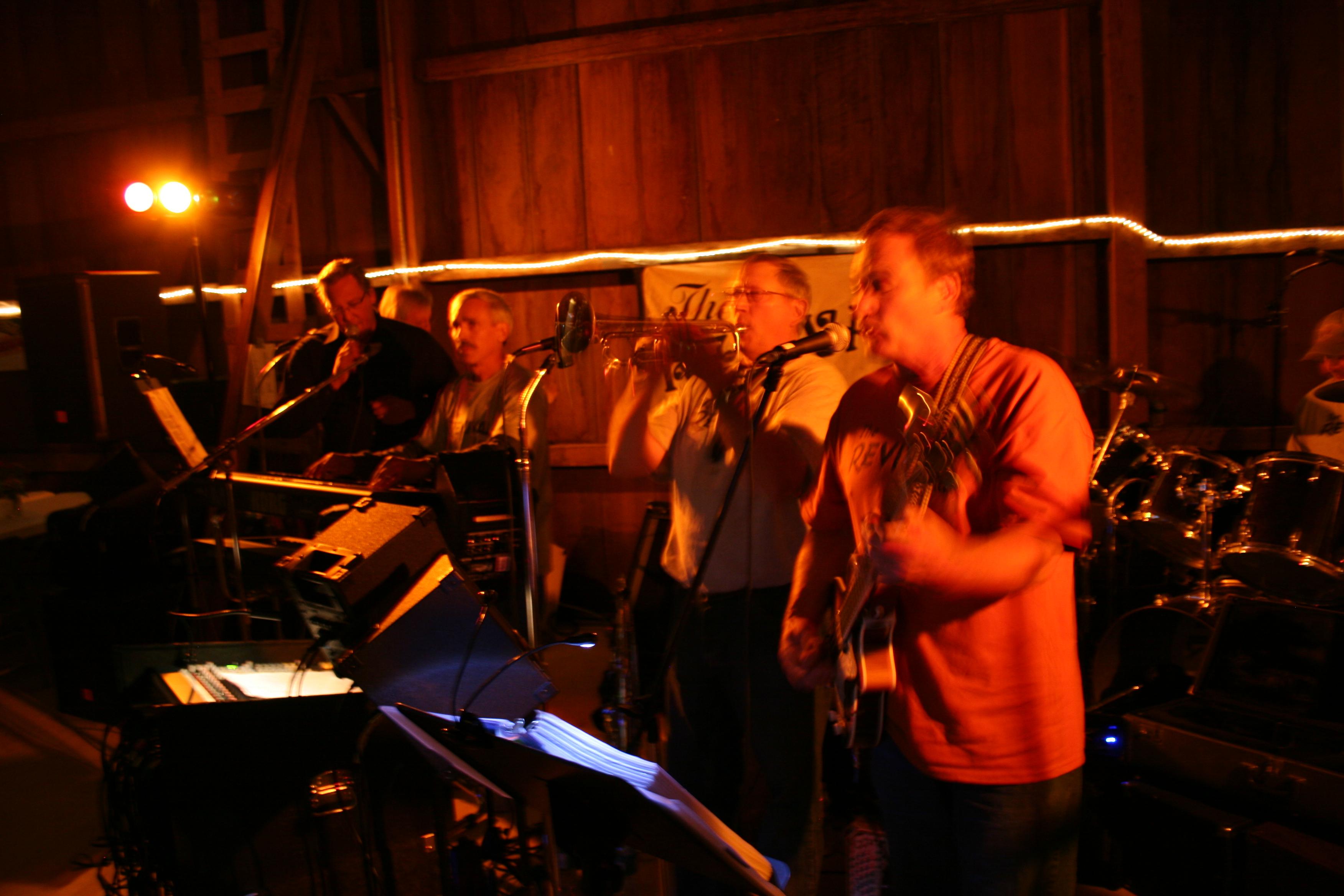
And later, when The Revivals from New Prague rocked the rafters with music that spanned polkas and waltzes to country and 1950s-1970s hits, adults and kids alike slid their feet across the corn meal-slicked plywood covering the maple floor that was too unsalvageable for refinishing. They twirled and shook and twisted.

And they danced like Herb would have wanted them to dance, celebrating life.

The Revivals from New Prague played a mix of music from old-time to rock.

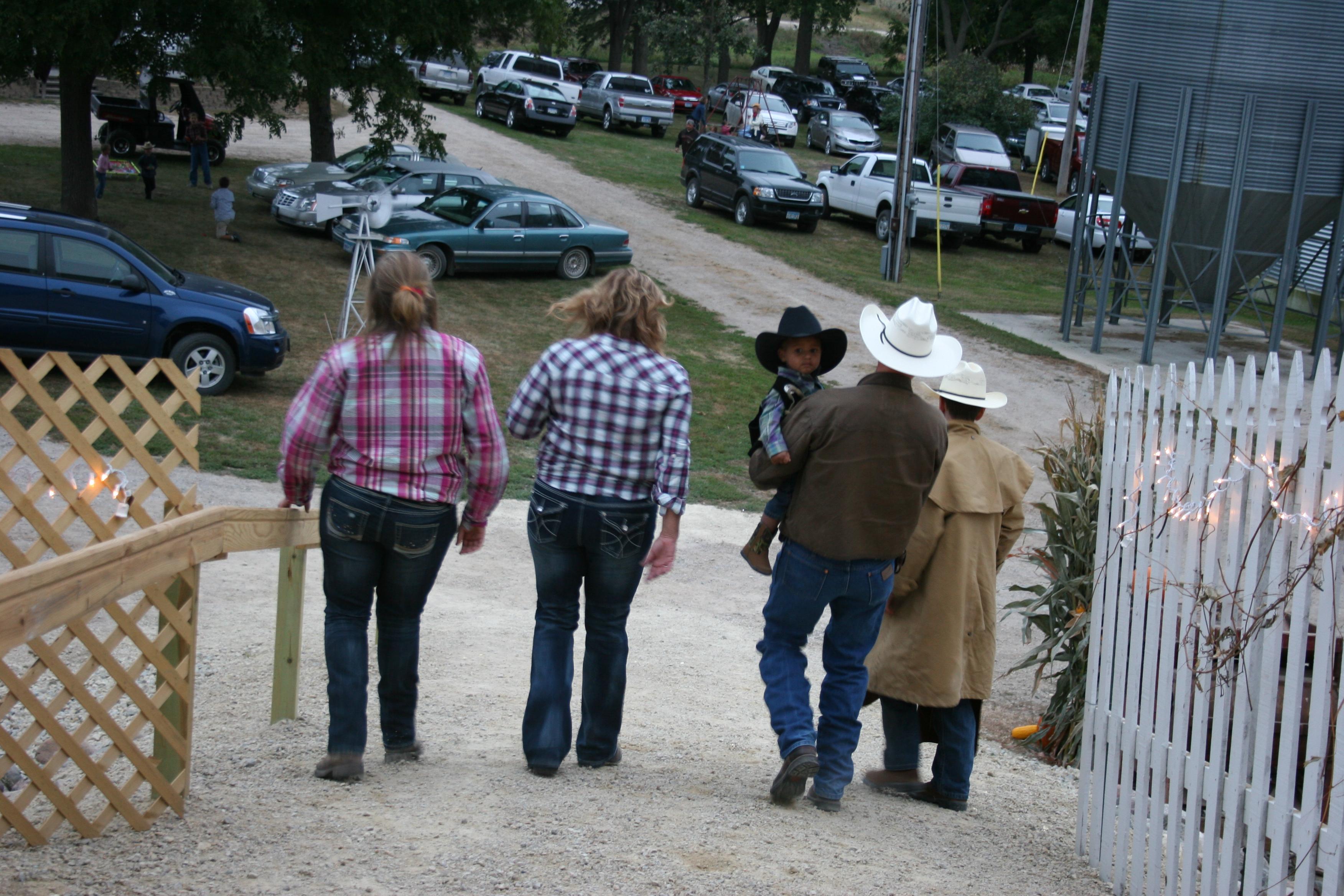
Leaving the barn dance. Vehicles packed the farm yard.

CHECK BACK FOR MORE barn dance images. I won’t have photos of the dancing; once I had my band shot, I put away the camera.

HAVE YOU EVER attended a barn dance? If you haven’t, you might want to become friends with the Beckers. I bet they’ll have plenty of requests for a repeat harvest dance next fall. Thanks, John and Debbie, for an absolutely memorable and fun evening.

© Copyright 2011 Audrey Kletscher Helbling
 

A close-up look at the Veseli Ho-Down August 24, 2011

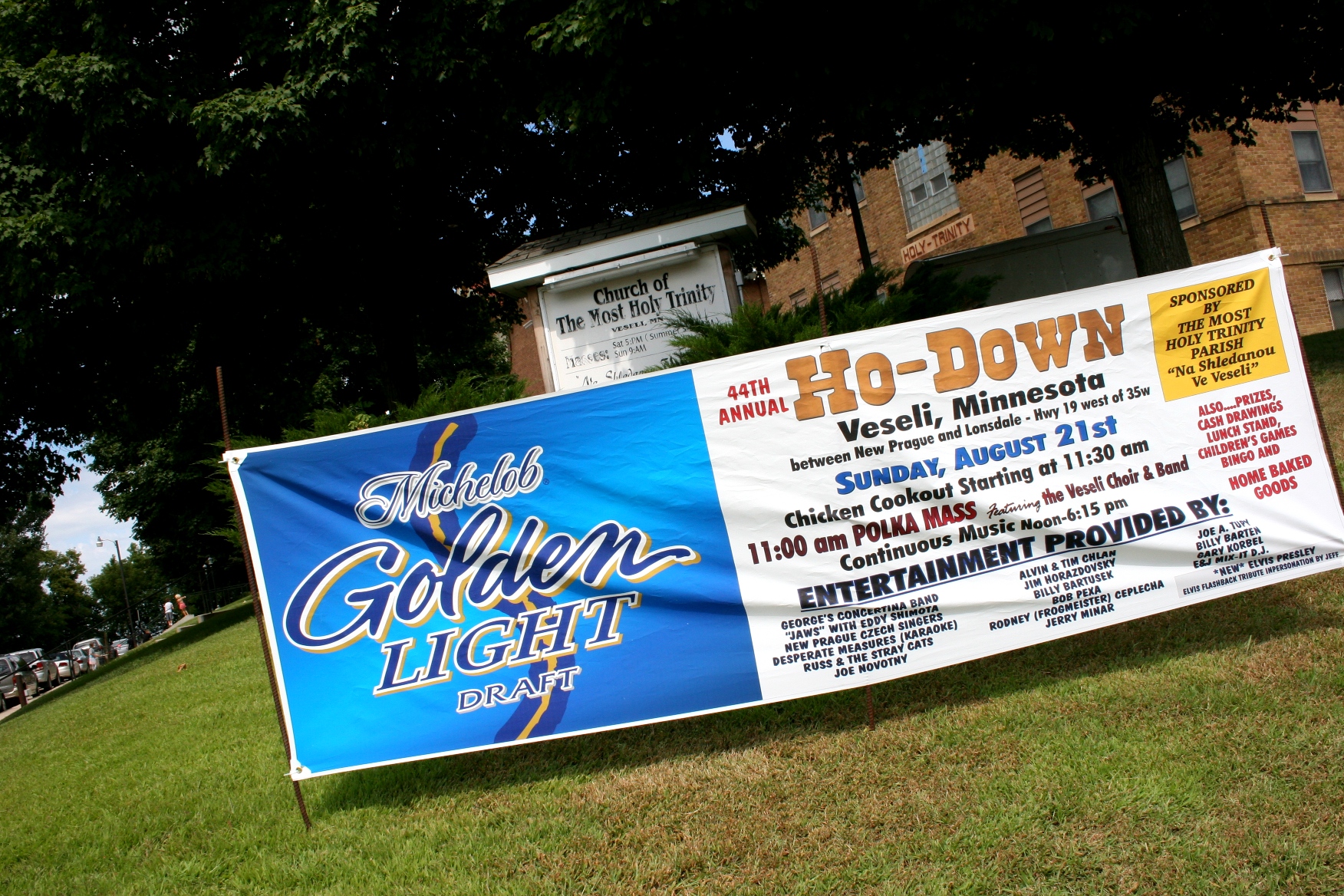
A banner below the hill by Most Holy Trinity Church and school welcomed attendees.

WHENEVER I ATTEND an event like the Veseli Ho-Down, or go anywhere, I notice the details.

That skill has evolved from my years as a writer, fine-tuned also by my work as a photographer. Photography encourages me to seek the faces, even the hands and feet, of individuals in a crowd to tell a story in an unexpected way.

I apply that same method to photographing buildings and activities, anything really. Give an overall picture, but then move in to showcase the often overlooked details.

That said, as promised in a previous post, below are more photos from the festival my husband and I attended on Sunday at Most Holy Trinity Catholic Church in Veseli, near Lonsdale in northwestern Rice County. Enjoy the details, from my perspective, of the Veseli Ho-Down.

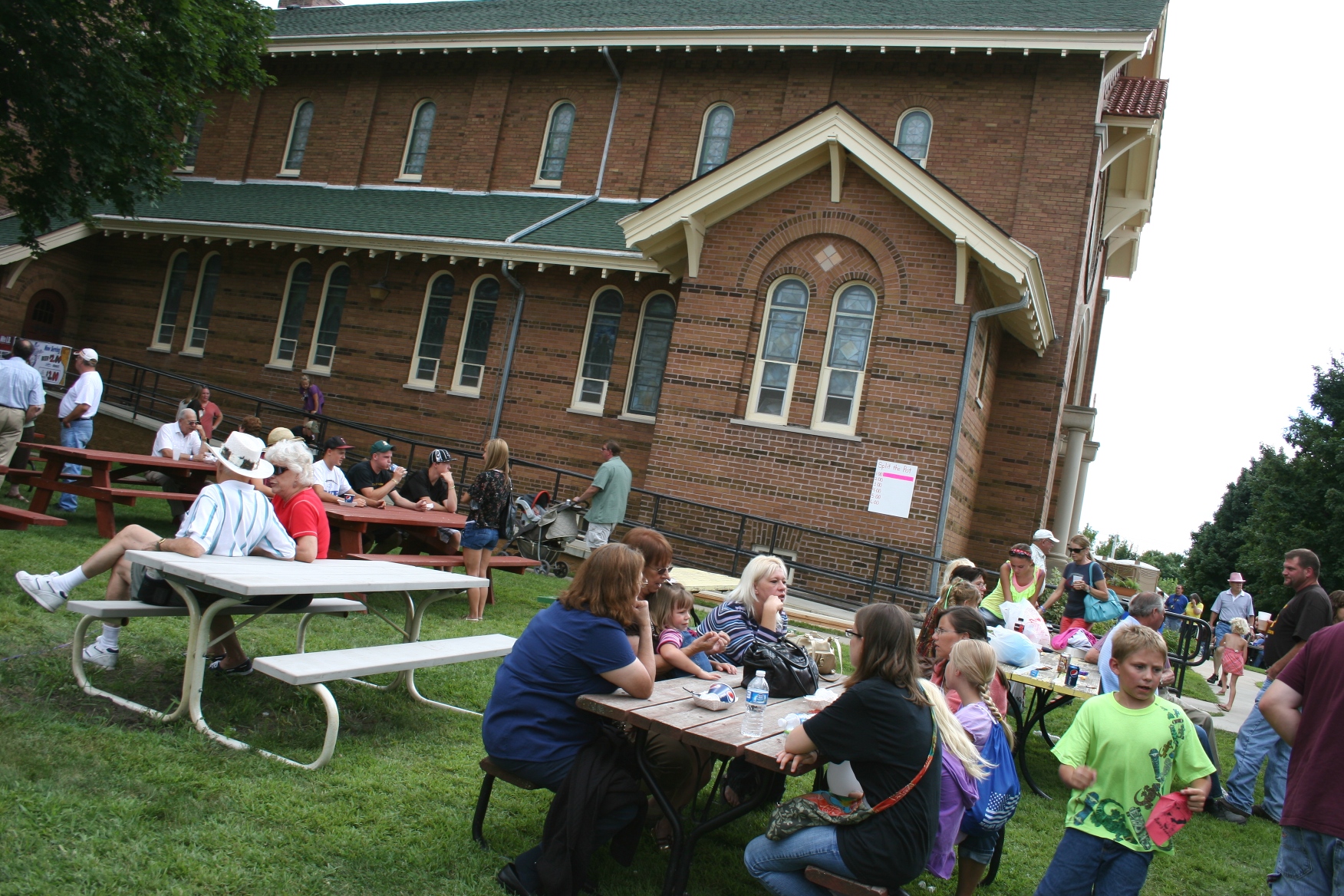
First...the crowd...and then a closer look at individuals, and more, at the festival...

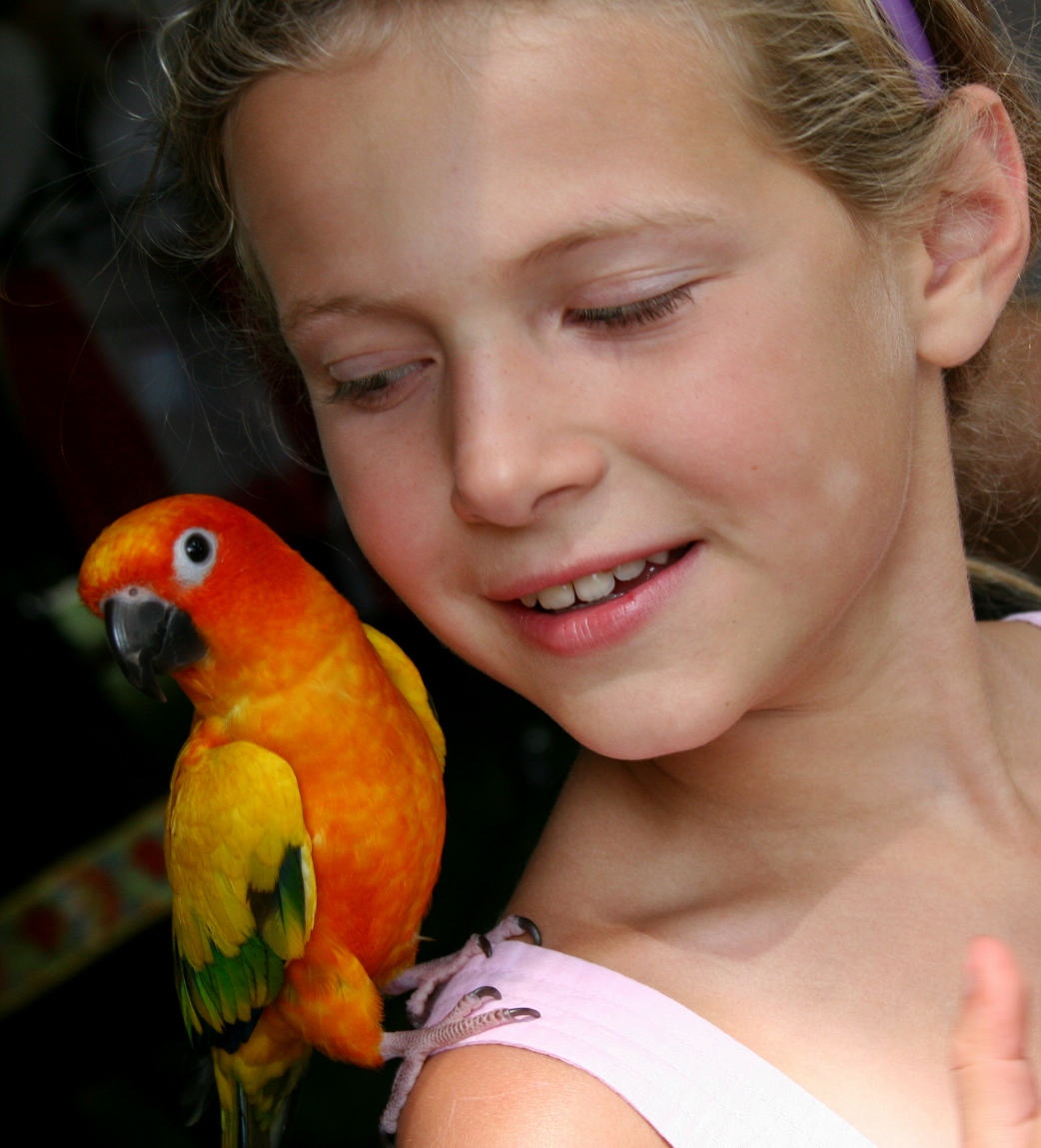
An employee from a Bloomington group home brought residents and their therapy bird, Buddy, to her hometown for the Ho-Down. The parakeet (is that correct?) quickly attracted the attention of fest-goers like this girl.

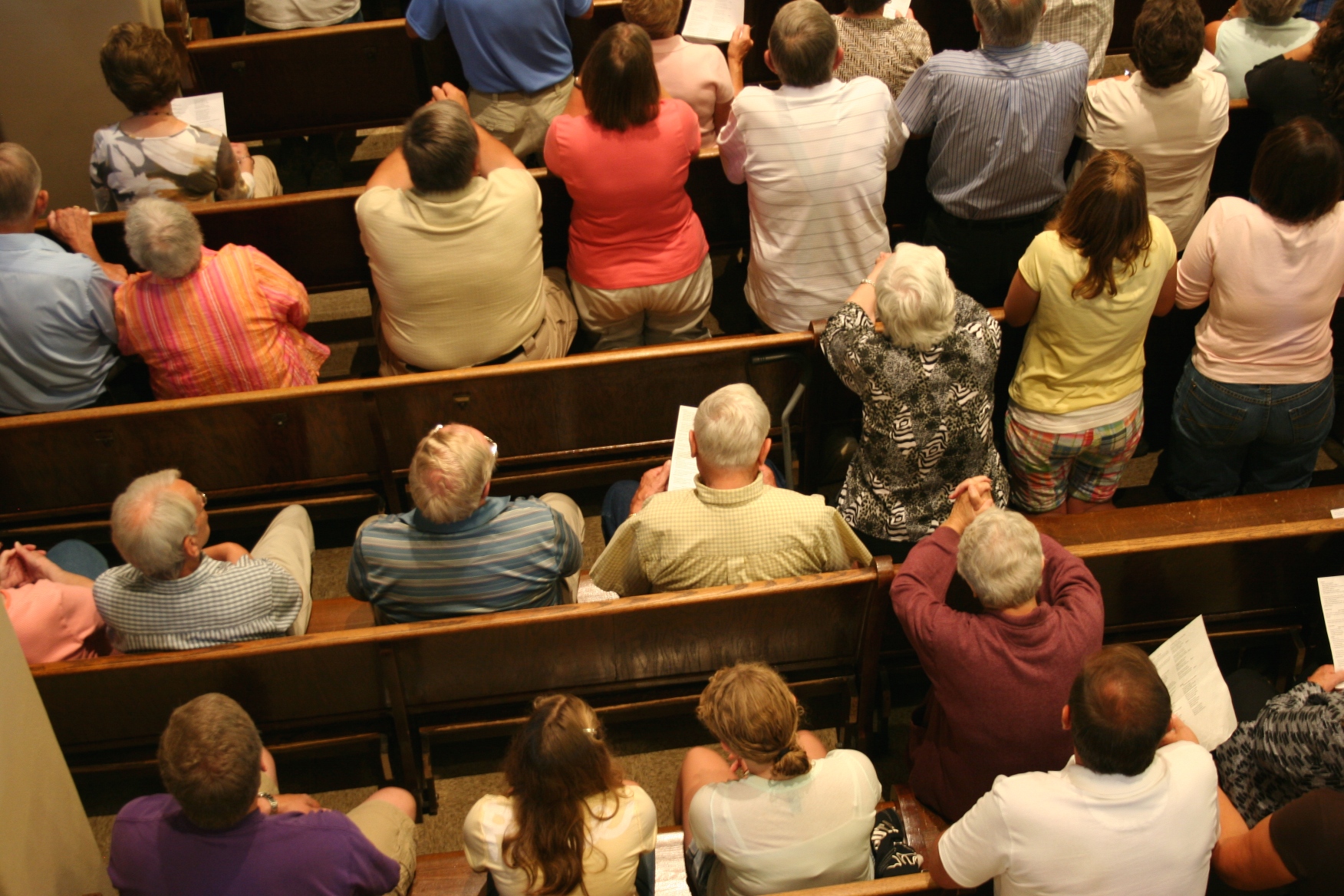
An 11 a.m. polka mass started the day's activities. I took this snippet image of worshipers from the balcony of Most Holy Trinity. I'll feature detailed photos of the church in another post, so check back.

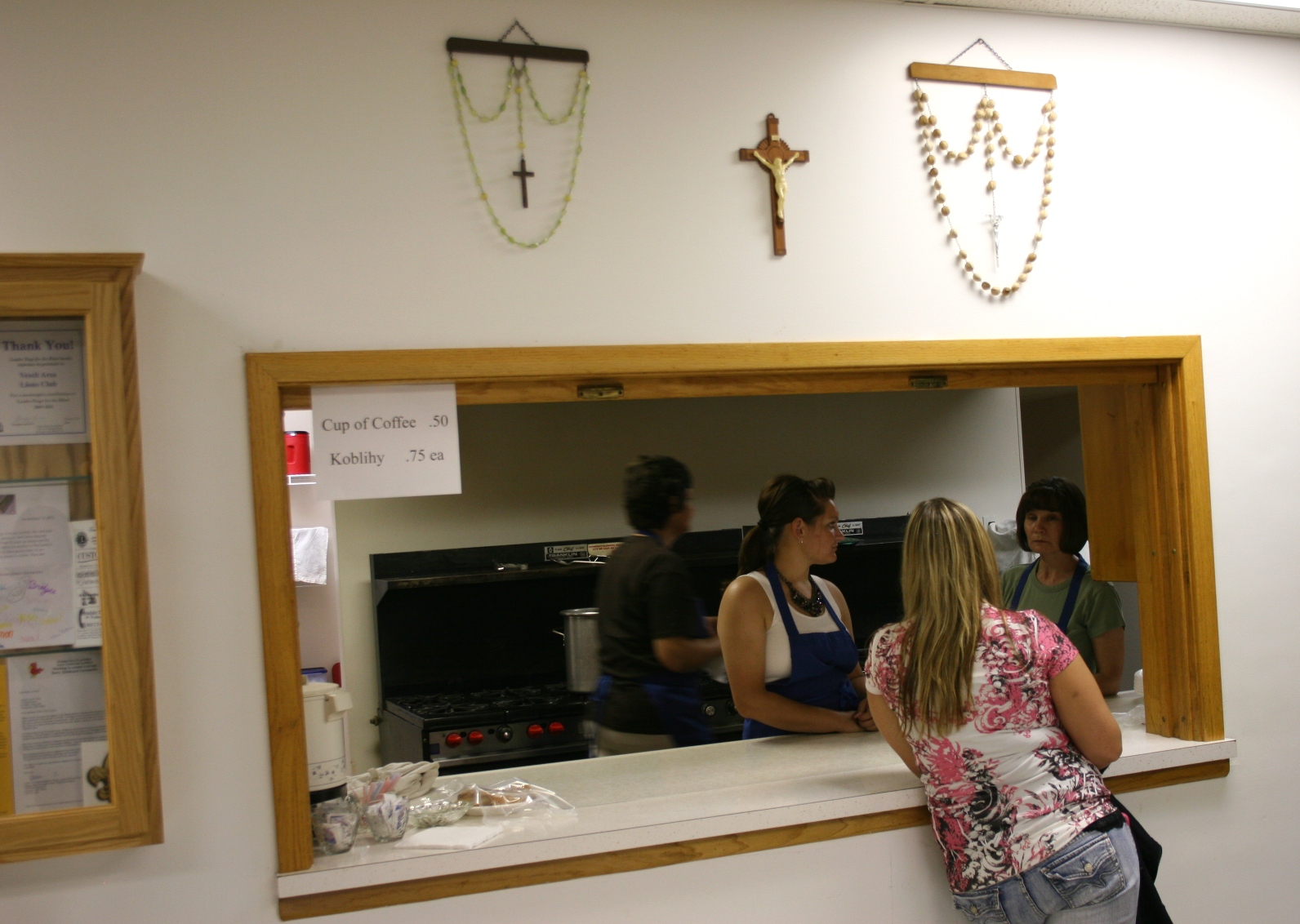
While technically not the best photo, I still like this image for the story it tells of women taking a break from their work in the church basement. When I noticed the rosaries and cross above the kitchen window opening, I knew I had to photograph this scene. The volunteers were selling baked goods.

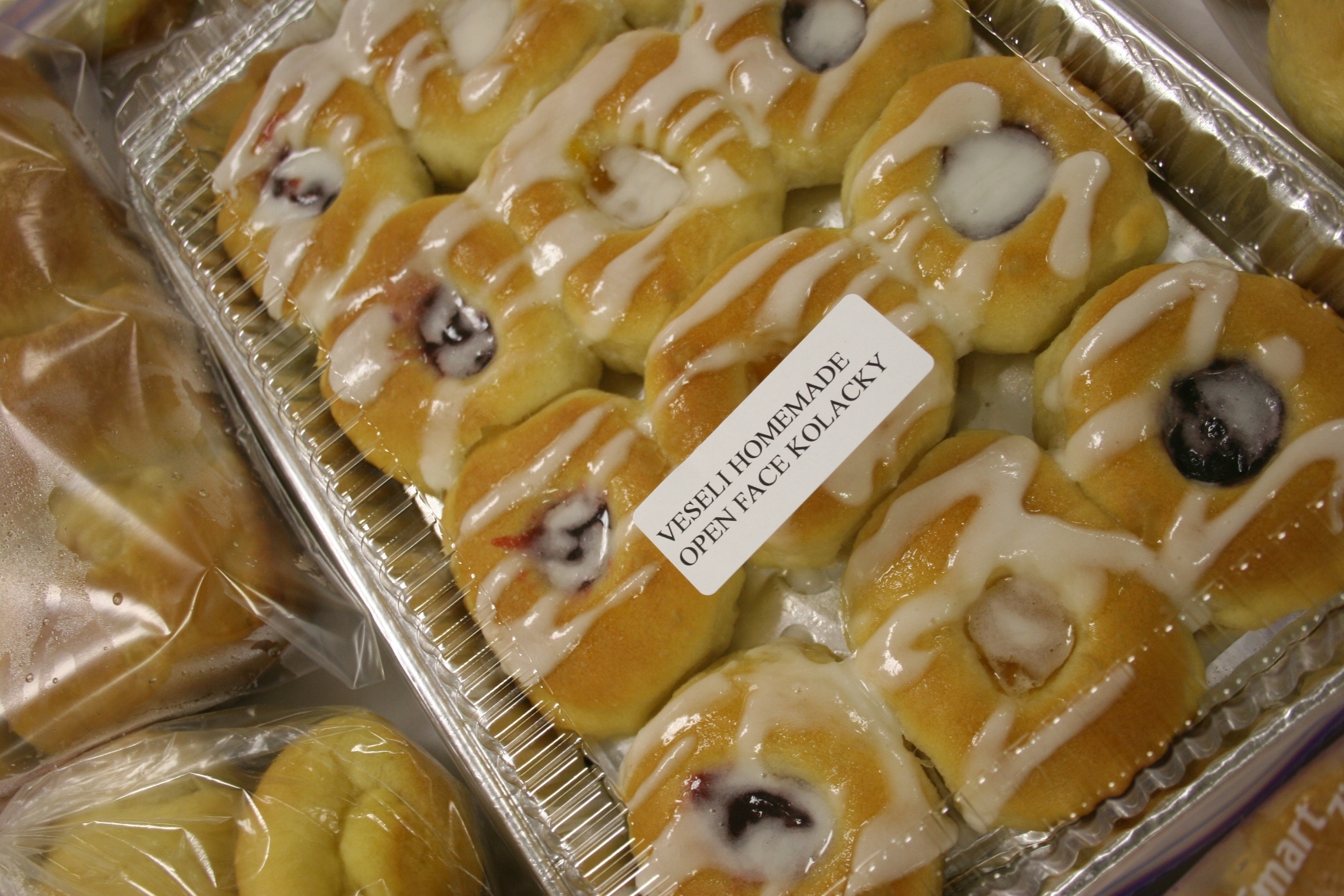
Kolacky, a Czech pastry, were among the many ethnic baked goods sold at the festival.

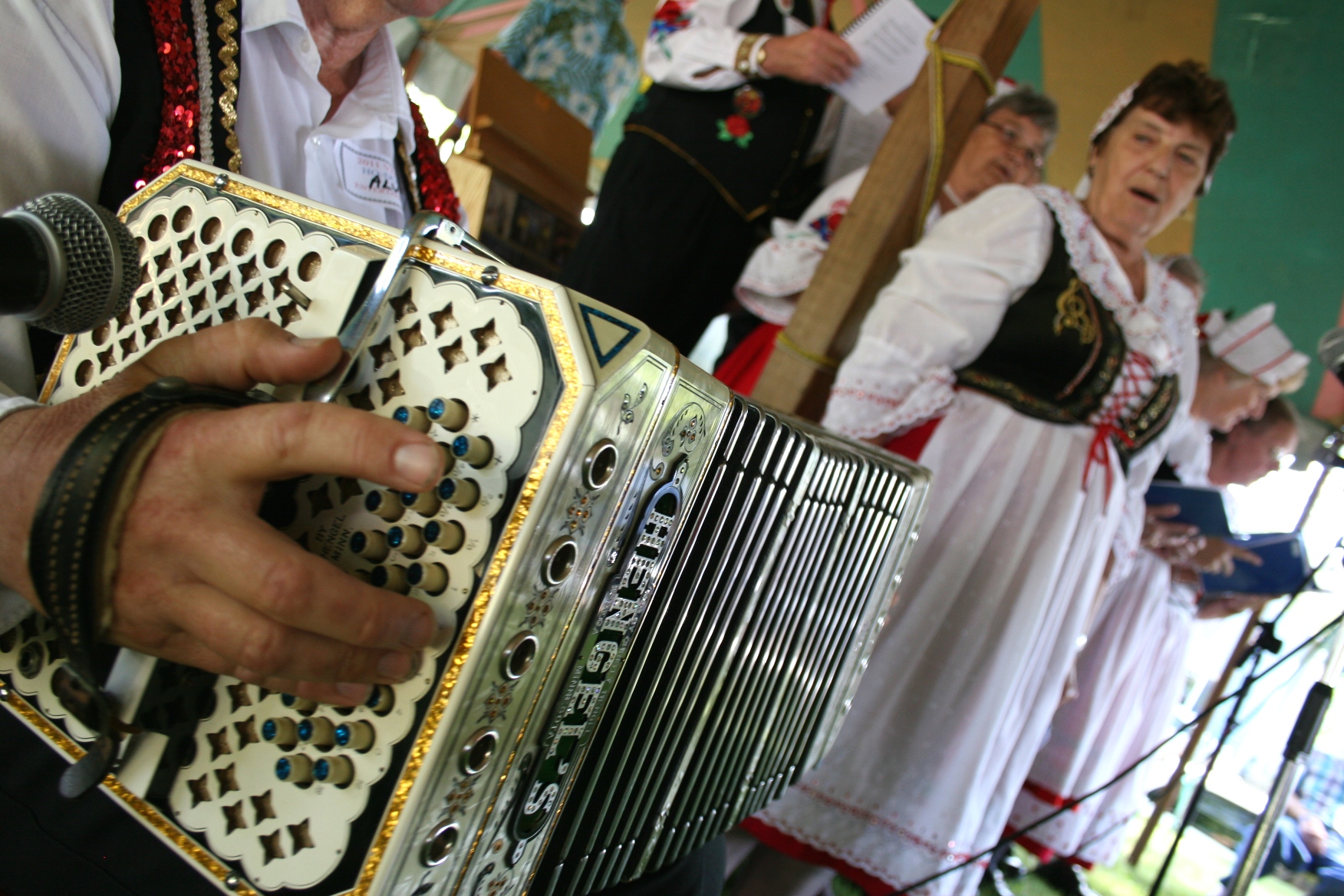
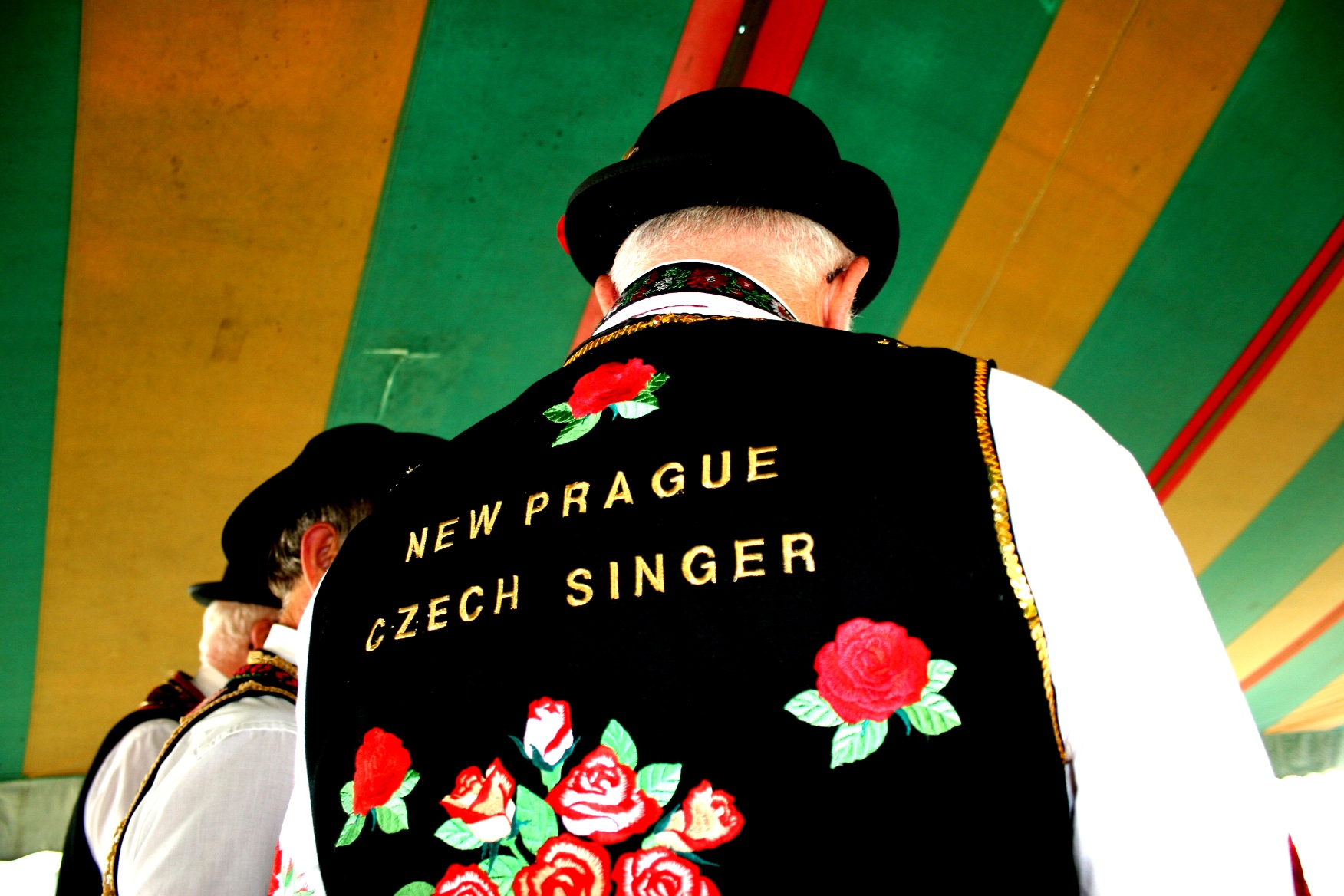
The New Prague Czech Singers performed in their mother tongue under a tent in mid-afternoon.

I upped the contrast on this image to make the colors pop on this costume worn by a Czech singer.

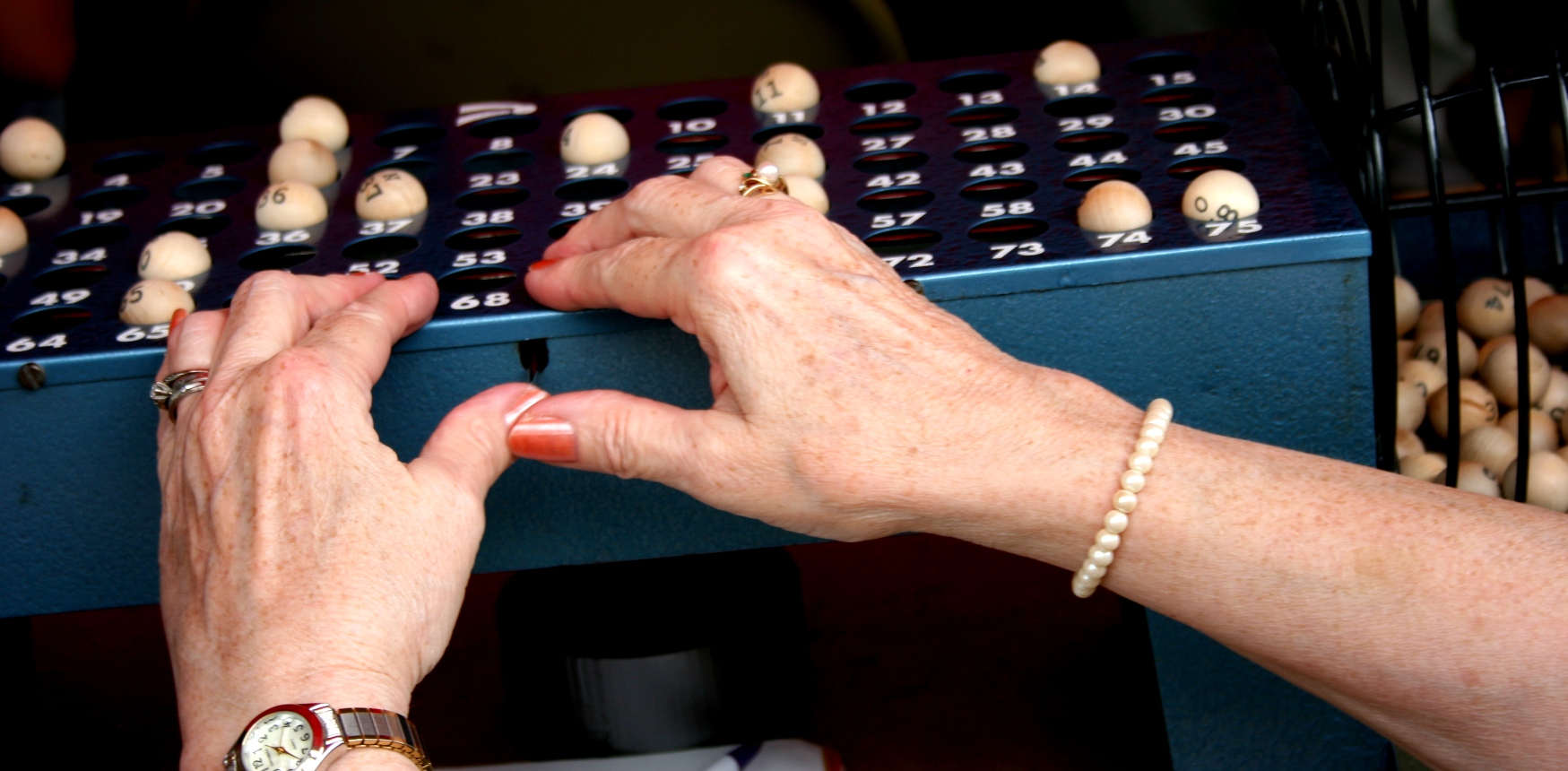
The hands of the bingo number caller, or whatever you call a person who calls bingo numbers.

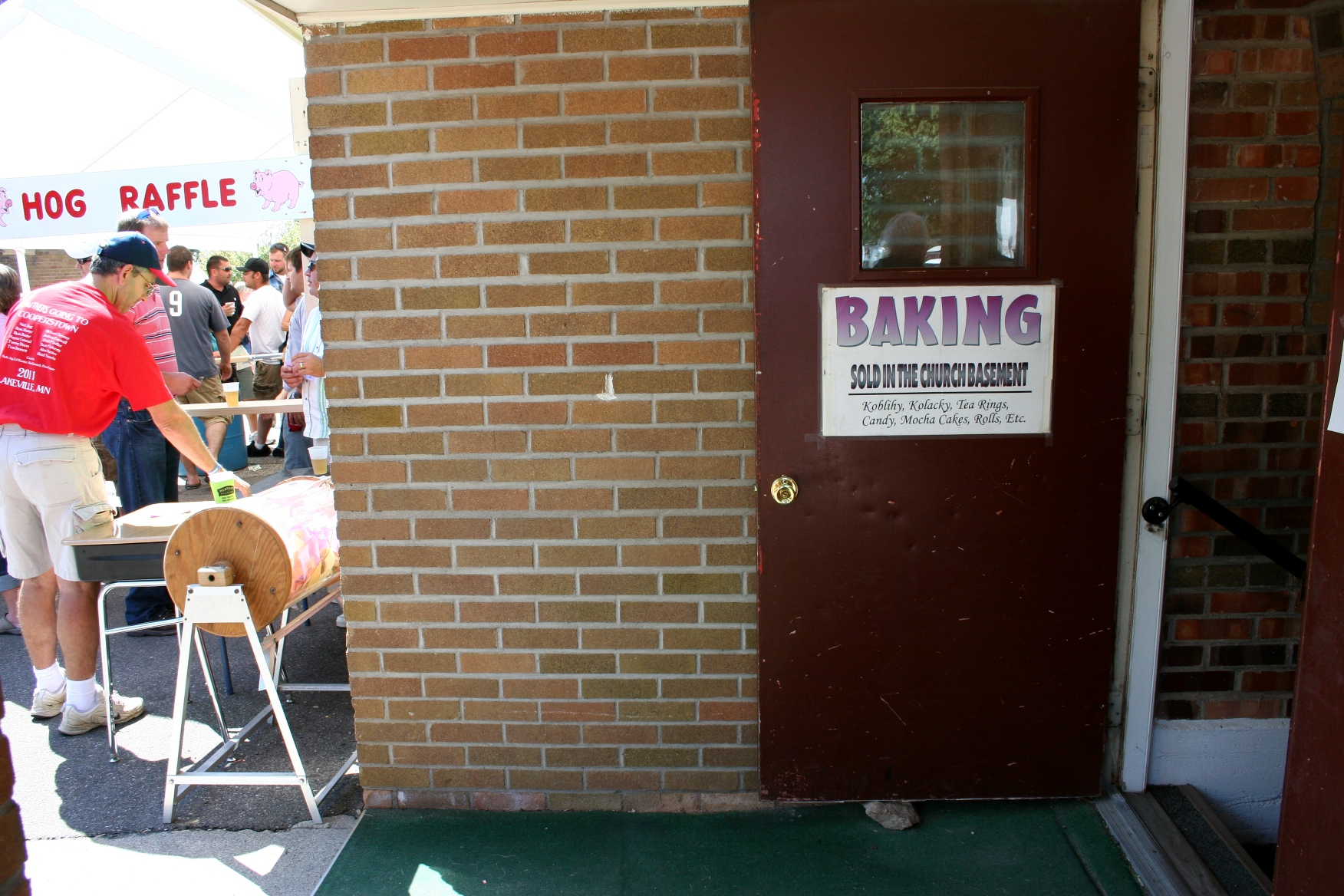
A sign on a propped-open-with-a-rock church basement door directs fest-goers to the bake sale. To the left in the photo is the station for the hog raffle.

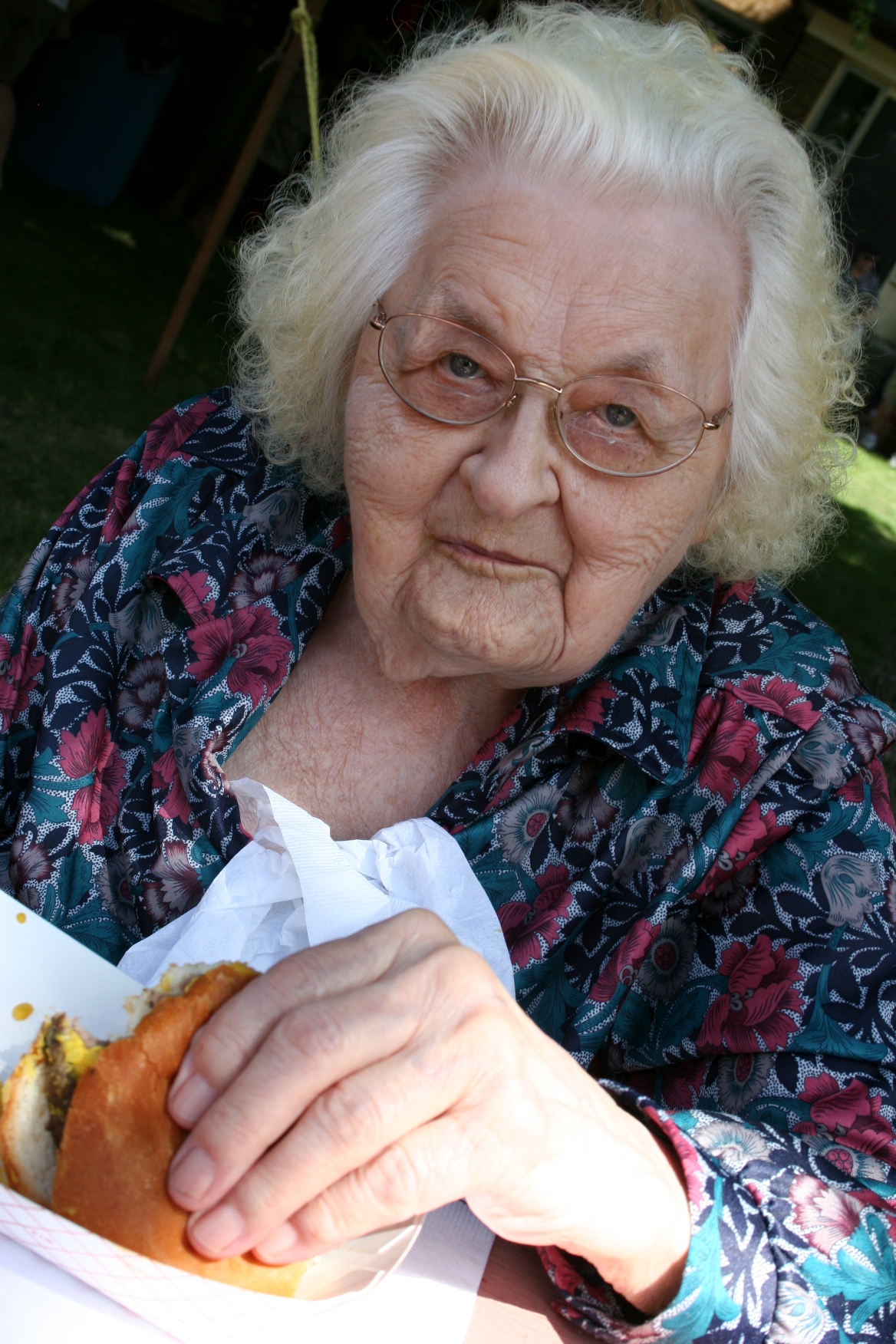
I met 94-year-old (almost 95) Celia enjoying a burger in the company of her great niece, Brenda. I was charmed by her beautiful face and quiet elegance. Ceila grew up near Webster and today lives on a farm with her bachelor son near Lonsdale. Celia typically attends about a half-dozen area church festivals each summer. Her great aunt likes visiting with people and enjoys the Czech music, Brenda says. A few weeks ago Celia won $100, half a hog and $10 playing bingo at the Immaculate Conception Church festival in Lonsdale. She's one lucky lady.

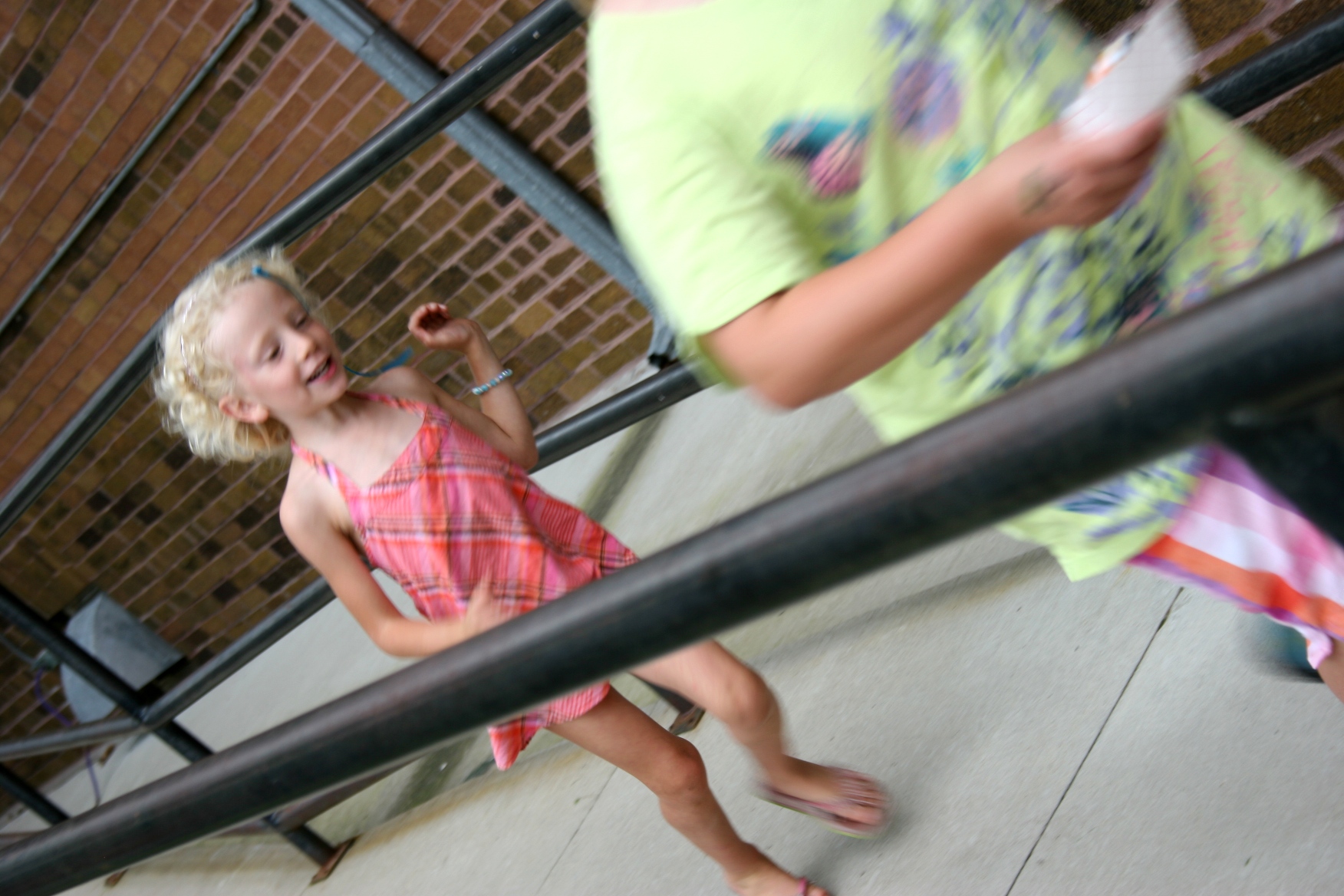
The kids, as kids will, chased each other up and down the handicapped entrance to the church.

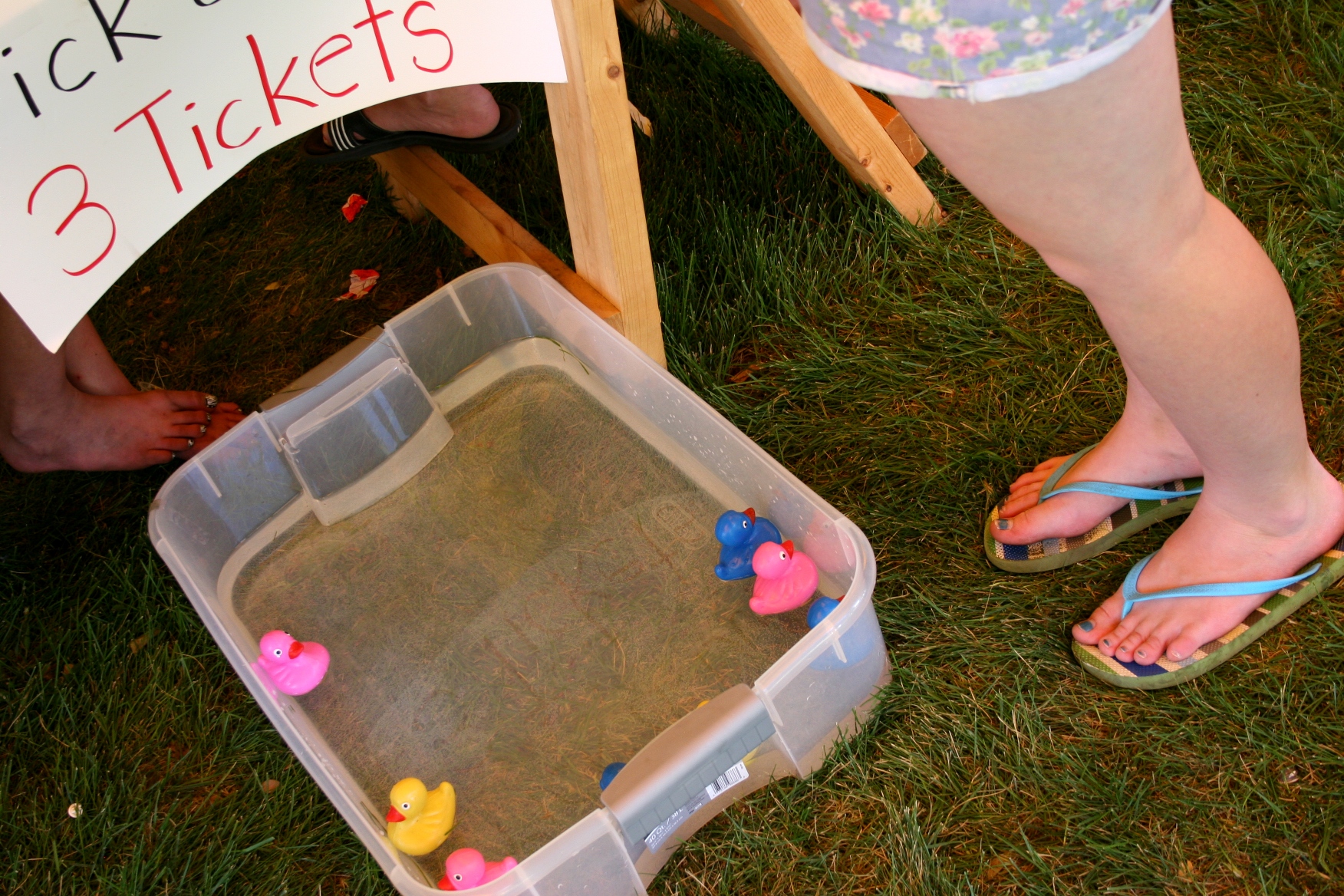
Waiting for customers at the duck pond in the kids' games tent.

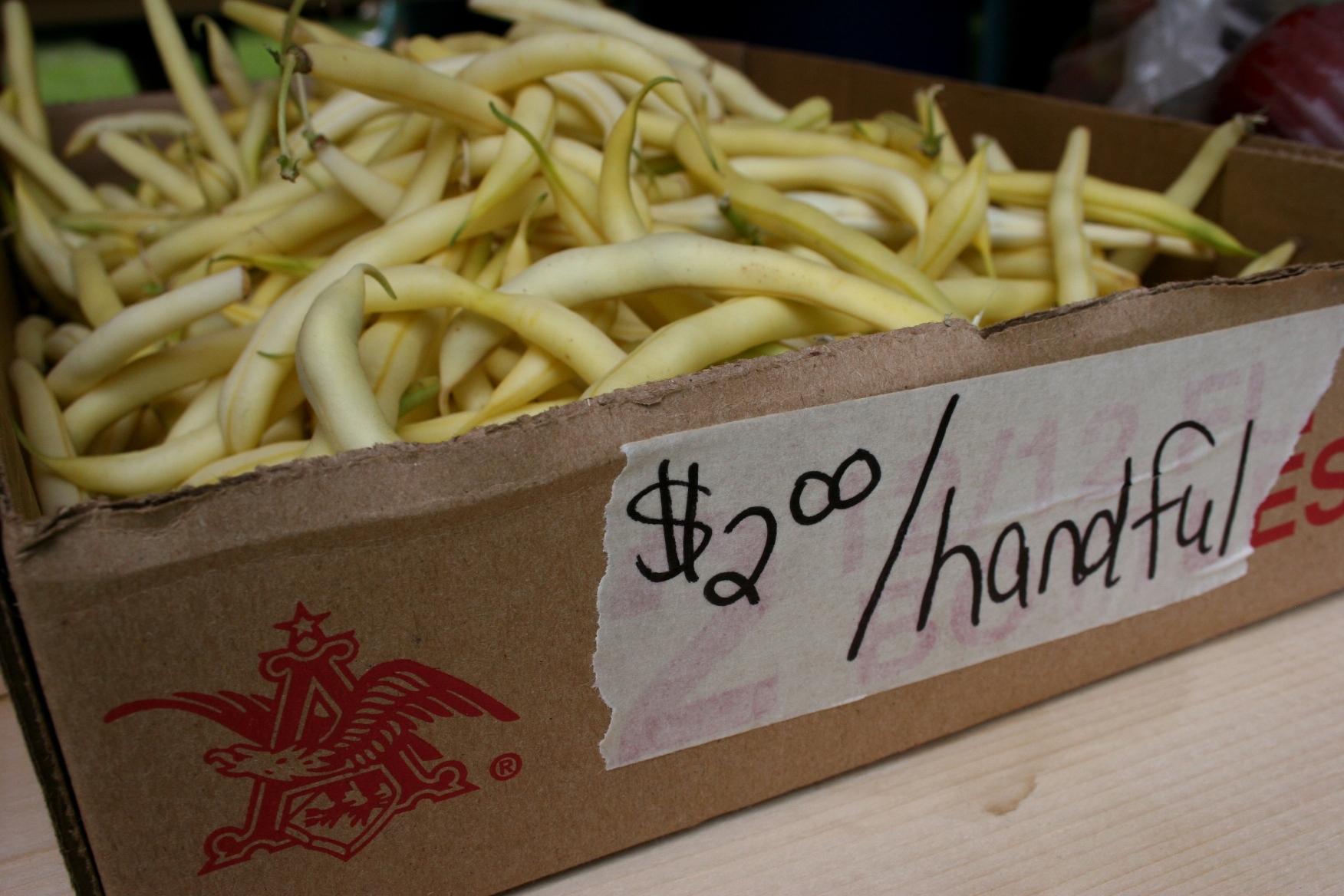
I laughed when I saw this sign on yellow beans for sale. That's an interesting way to sell produce.

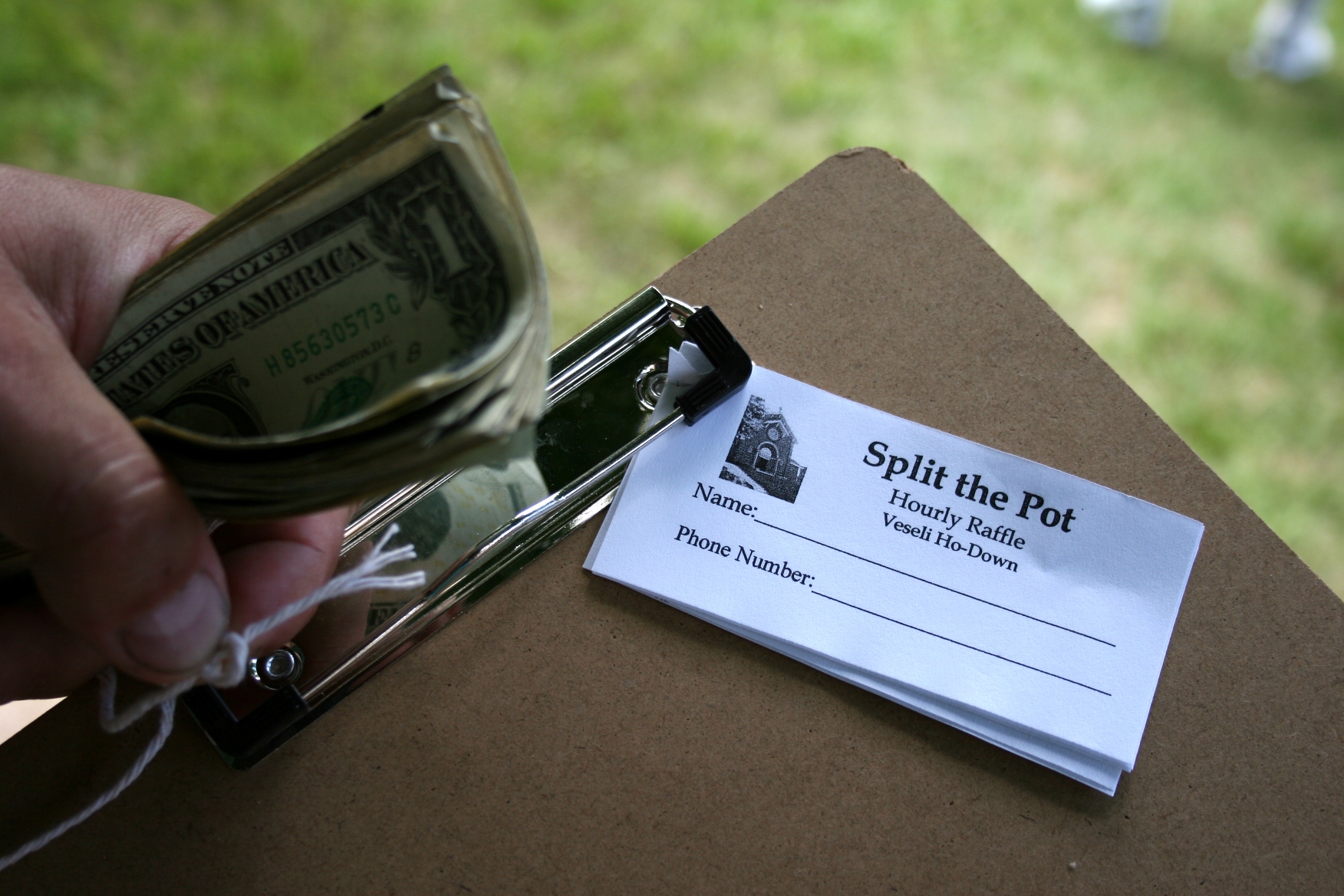
I am Lutheran. We do not do raffles. But everywhere I turned at the Ho-Down, someone was pedaling raffle tickets. As I waited in line for the chicken dinner, two men pushed Split the Pot raffle tickets. For $1, you buy a ticket. Every hour a winner is selected and gets half the money. The rest goes to the church. No, we did not win, but we contributed to Most Holy Trinity. These guys hustled the grounds all afternoon.

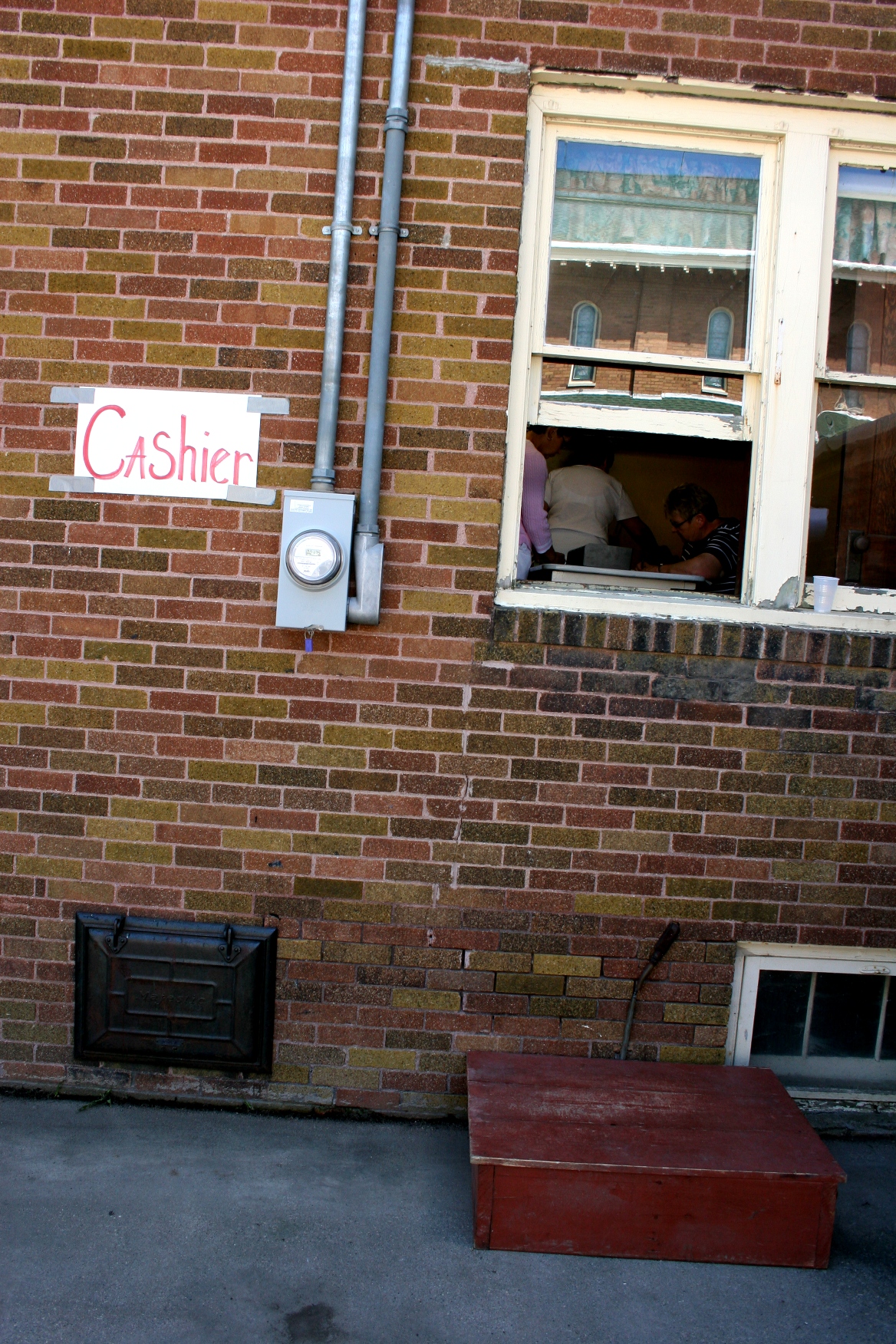
And where did all that raffle and other money go? Right through the cashier's window in the former Catholic school. I walked by this building numerous times before I noticed the sign, the open window and the well-worn step-up step. It's details like this that tell the complete story of small-town events like the Veseli Ho-Down.

© Copyright 2011 Audrey Kletscher Helbling
 

Memorial Day at Cannon City May 30, 2011

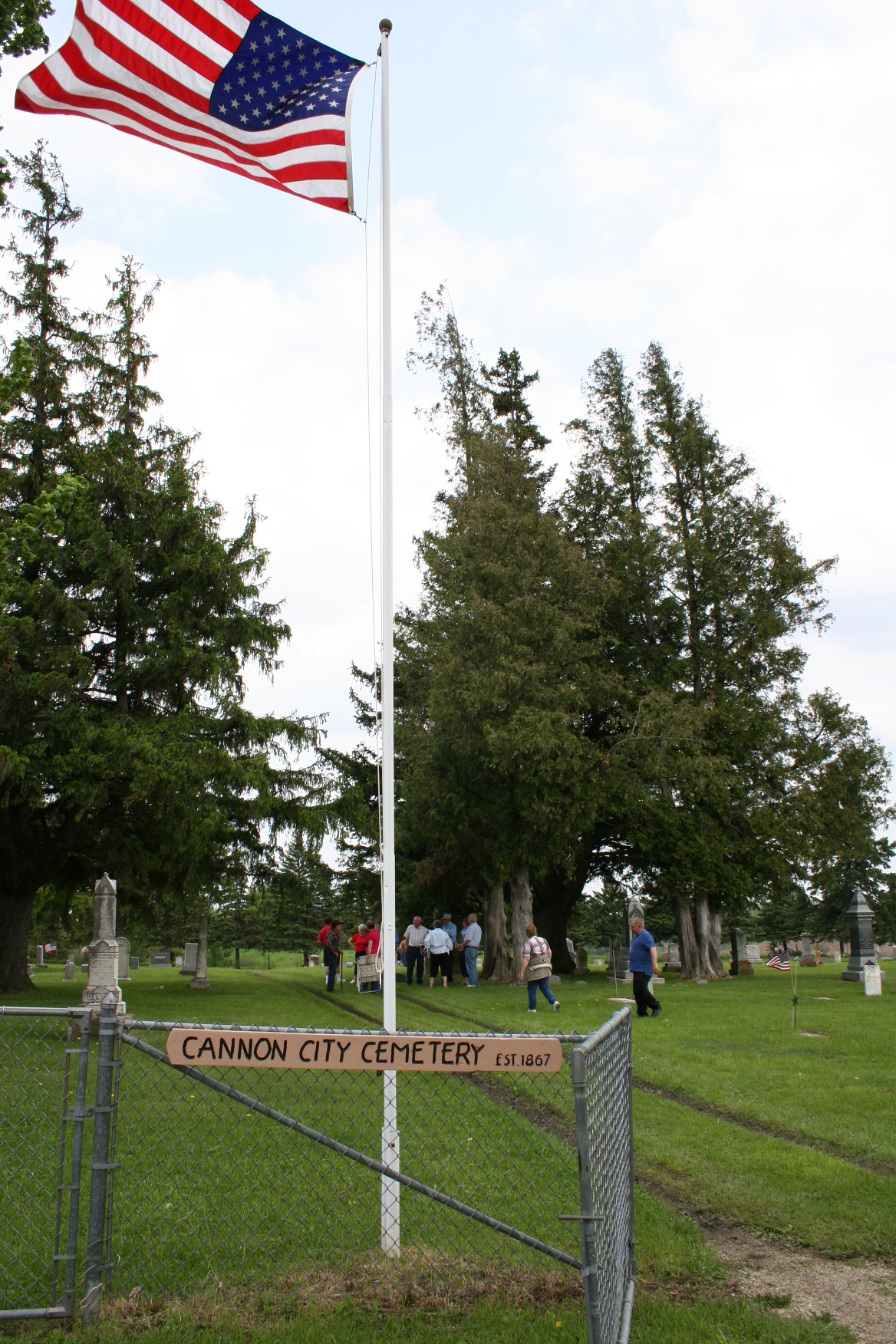
About 30 people gather at the Cannon City Cemetery for an afternoon Memorial Day observance.

IN THE SHELTER of the spruce, of the pines, we formed a semi circle, clustered together in this small country cemetery to honor the veterans buried here, 22 of them from the Civil War.

Ezekiel and Samuel. Spencer and Charles. Henry and Theodore. Emcee Mel Sanborn read the list of names as the wind whipped his words into sometimes inaudible, unintelligible syllables at the Cannon City Cemetery.

Since the late teens or early 1920s, folks have gathered in this Rice County cemetery every Memorial Day, initially called “Decoration Day,” to honor the war dead. Civil War veteran Elijah Walrod was quoted as saying that his son Luther “would strike up the Death March and lead the procession” from the nearby Cannon City School, along the country road to the cemetery.

School children—some of them in attendance at the 2011 Memorial Day observance—once marched with flags and flower bouquets and lilac wreaths and then, afterward, celebrated at the school picnic.

When the school closed in the 1960s, the Cannon City Cemetery Board took over the annual Memorial Day observance, a tradition that continues today, minus the Death March from the country school. It is an unpretentious, informal program that is touching and moving and heartfelt. Americana through and through.

My husband and I came here on this muggy afternoon to experience a small-town Memorial Day observance. We were the strangers among those who had grown up here and had loved ones buried in this ground butted against the rich black soil of farm fields.

Yet, we were welcomed like family and I felt as if I had stepped back in time to the Memorial Day observances of my youth—the days of patriotic songs and playing of taps and reading of “In Flanders Fields.” I mouthed the words silently: “In Flanders Fields the poppies grow between the crosses row on row…” These poetic lines I knew nearly from heart, having recited them as a young girl on the stage of the Vesta Community Hall some 125 miles from this cemetery.

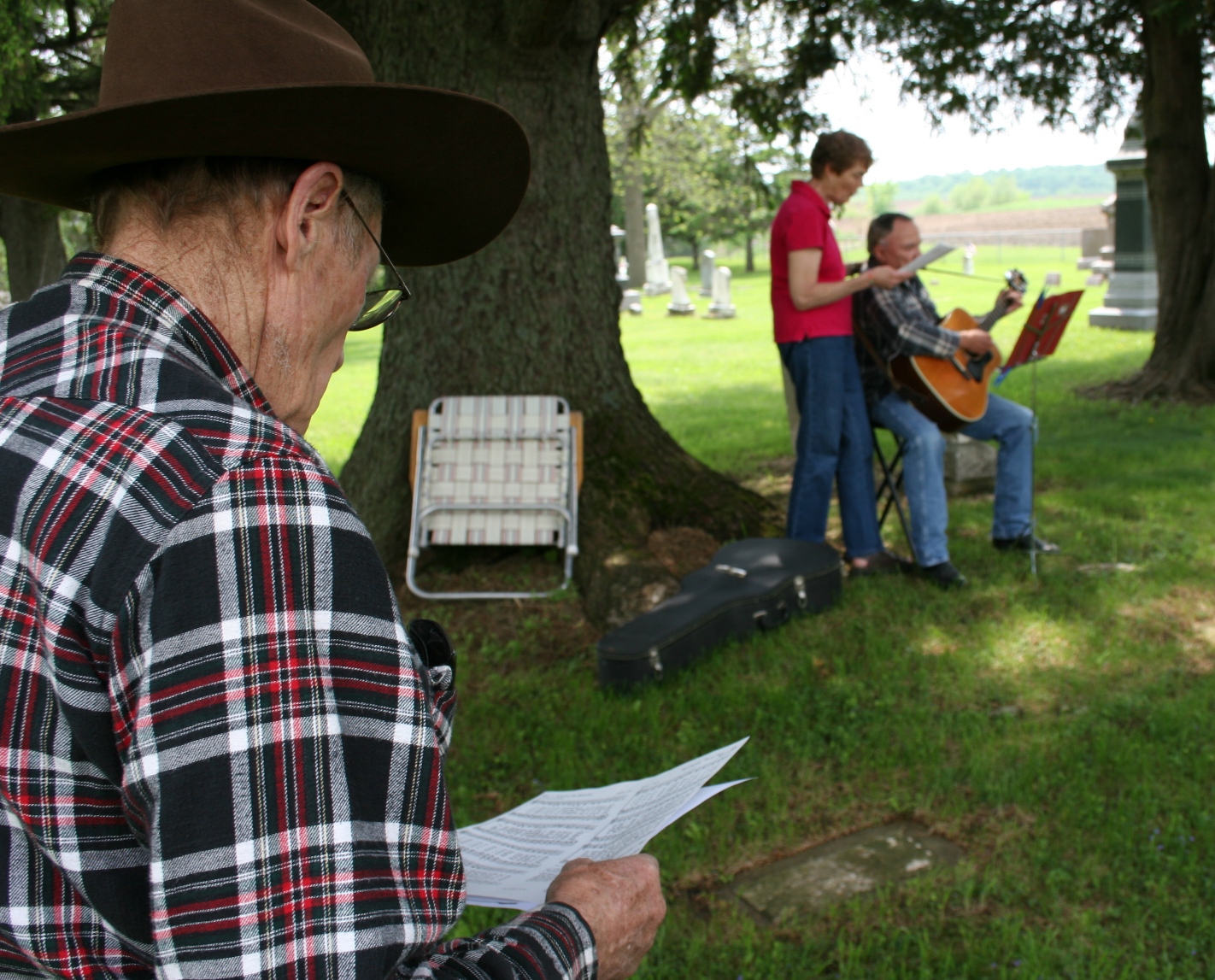
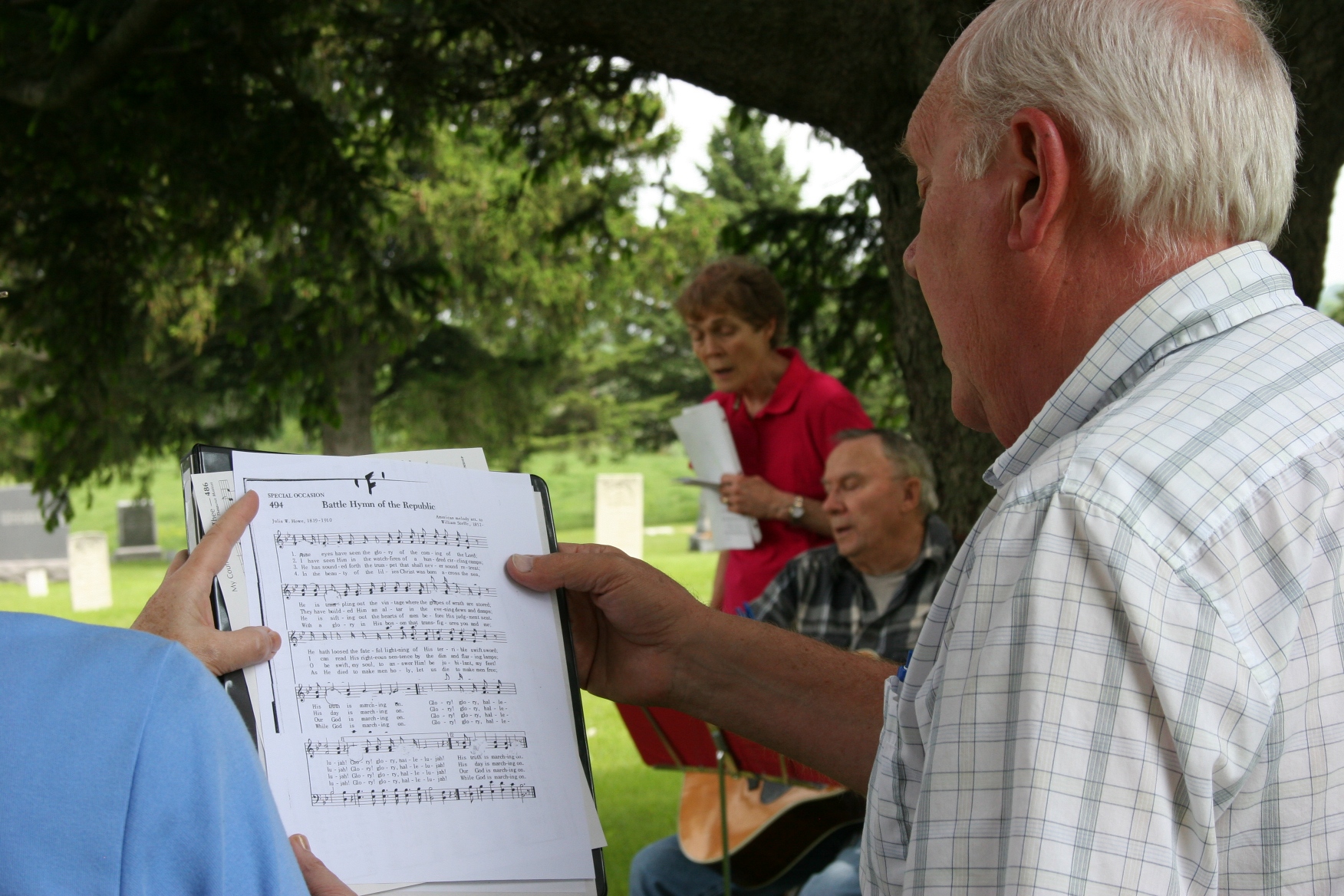
As Don Chester strummed his guitar and clamped his harmonica, we sang “My country, ‘Tis of Thee” “The Battle Hymn of the Republic” and other patriotic songs.

Bob (didn't get his last name) sings as Don and Judy Chester lead the group in song. Bob attended Cannon City School and participated in Memorial Day programs here as a student.

Song sheets were handed out to attendees. Here Mel Sanborn sings "The Battle Hymn of the Republic."

When Steve Bonde blasted “The Star Spangled Banner” on his trumpet, we sang along, turned toward the flag at the cemetery entrance, the brass quelling voices that drifted away with the word-flogging wind.

It mattered not how well or how loudly the 30 or so of us sang. It mattered not that a young girl darted inside the semi circle to pluck a dandelion from the grass. It mattered not that the occasional airplane droned out our voices. We were focused on the songs, “The Gettysburg Address” read by Audrey Sanborn Johnson, and, finally, Bonde’s mournful playing of taps.

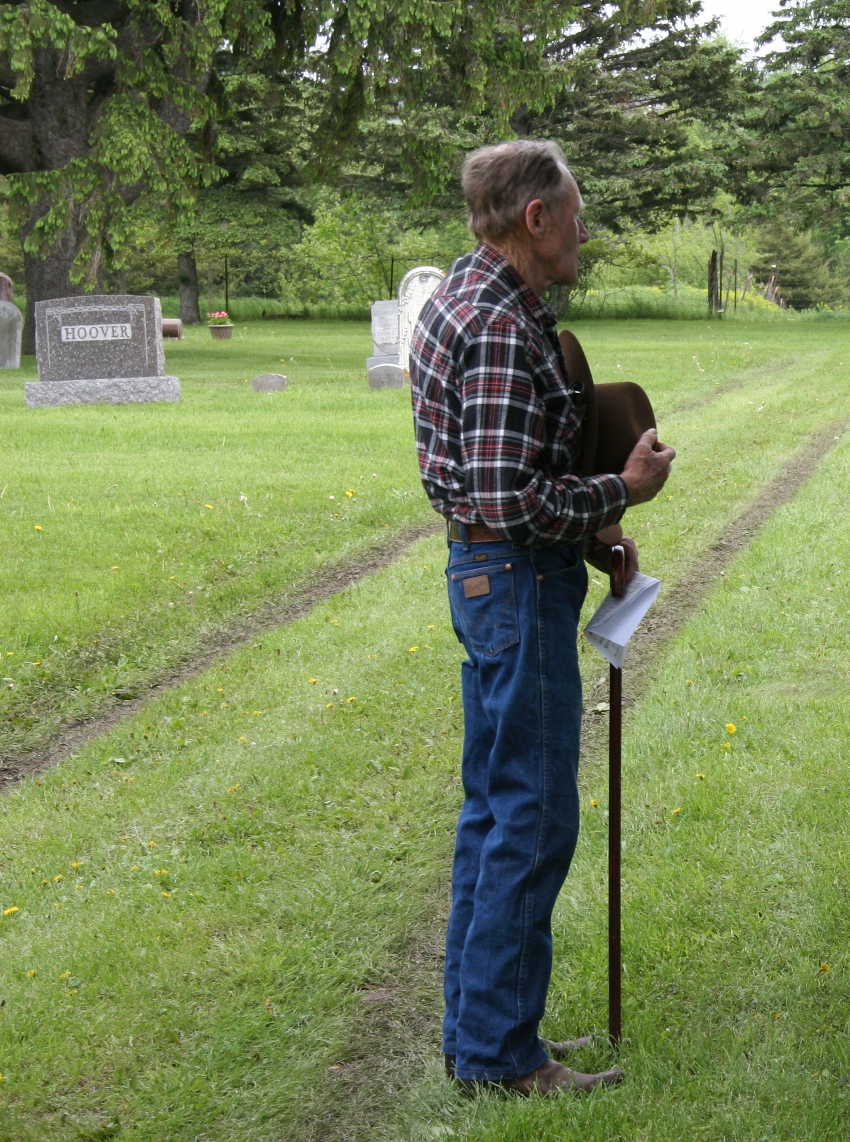
Long-time Cannon City resident Bob respectfully removes his cowboy hat during the playing of taps, a tribute that moves me to tears.

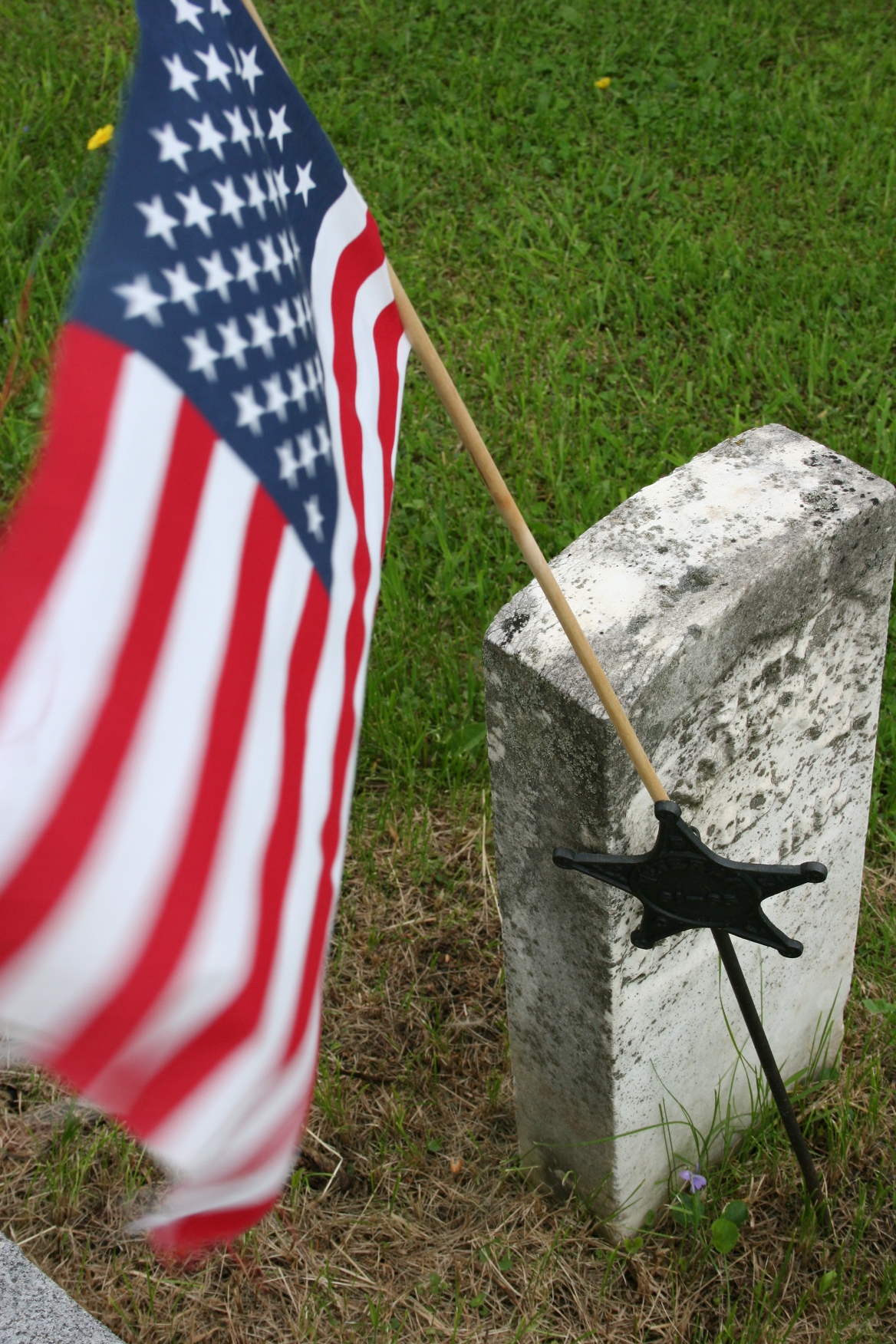
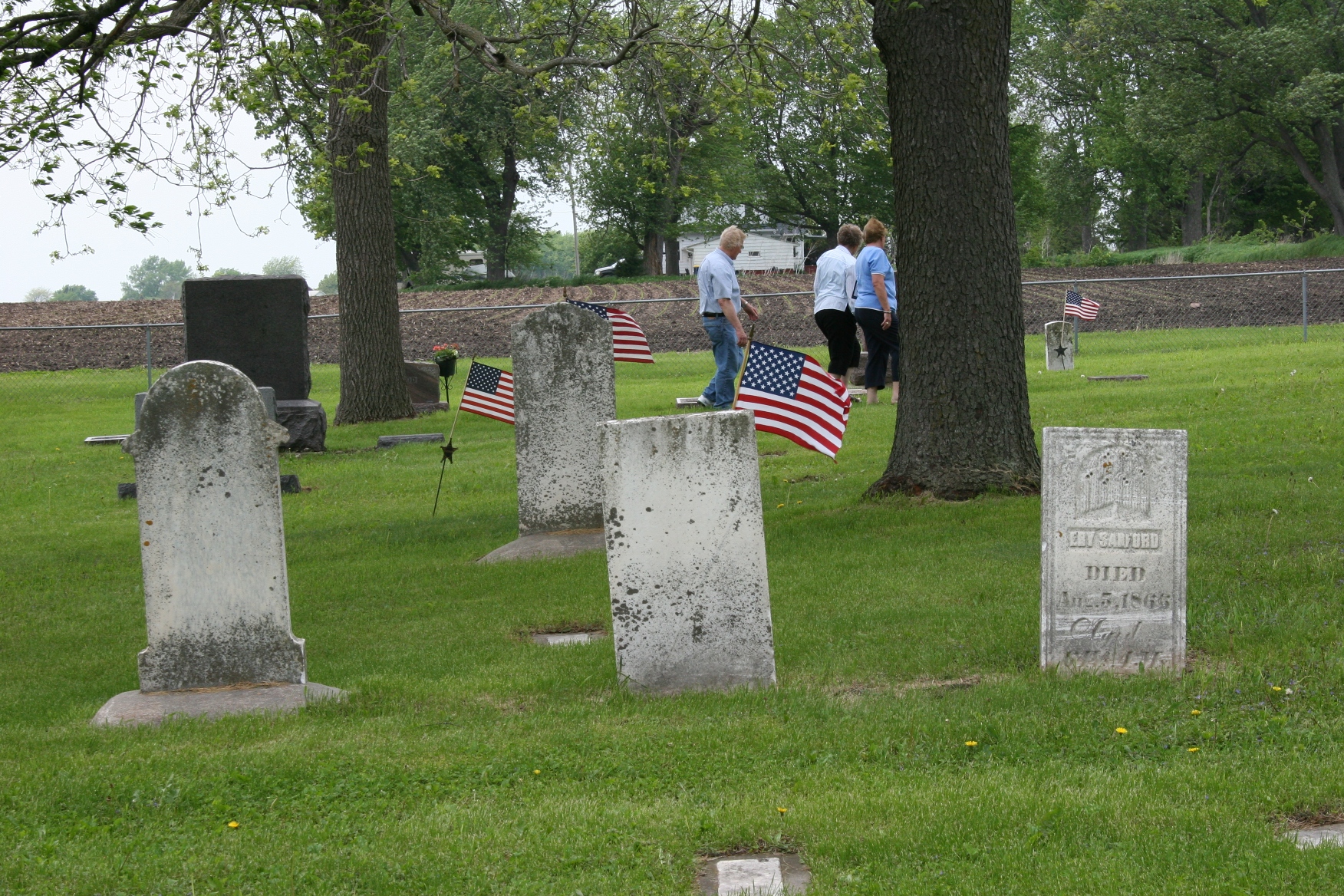
When the final note ended, the small group drifted, scattering across the cemetery to visit the graves of loved ones. I wandered, drawn by American flags to the final resting places of veterans. Names I did not know in an unfamiliar cemetery I was walking for the first time.

After the program, attendees visited gravesites.

Yet, despite the unfamiliarity with this place or these people, I felt connected to them by the reason I was here—to reflect upon the sacrifices made by so many American men and women in defense of our freedom. America. Land of the free and home of the brave.

A flag waves in the wind on a soldier's grave.

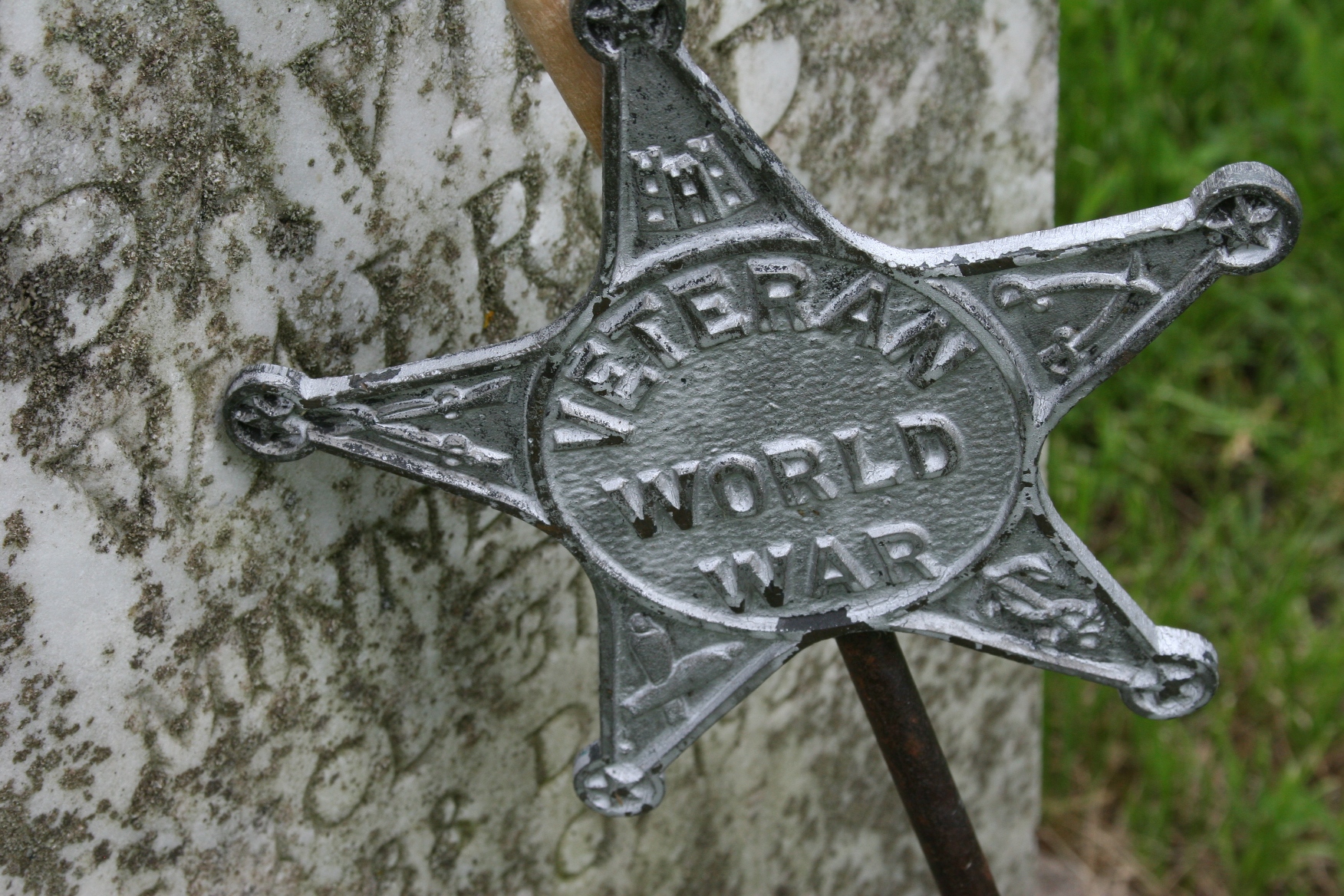
A star marks a veteran's tombstone.

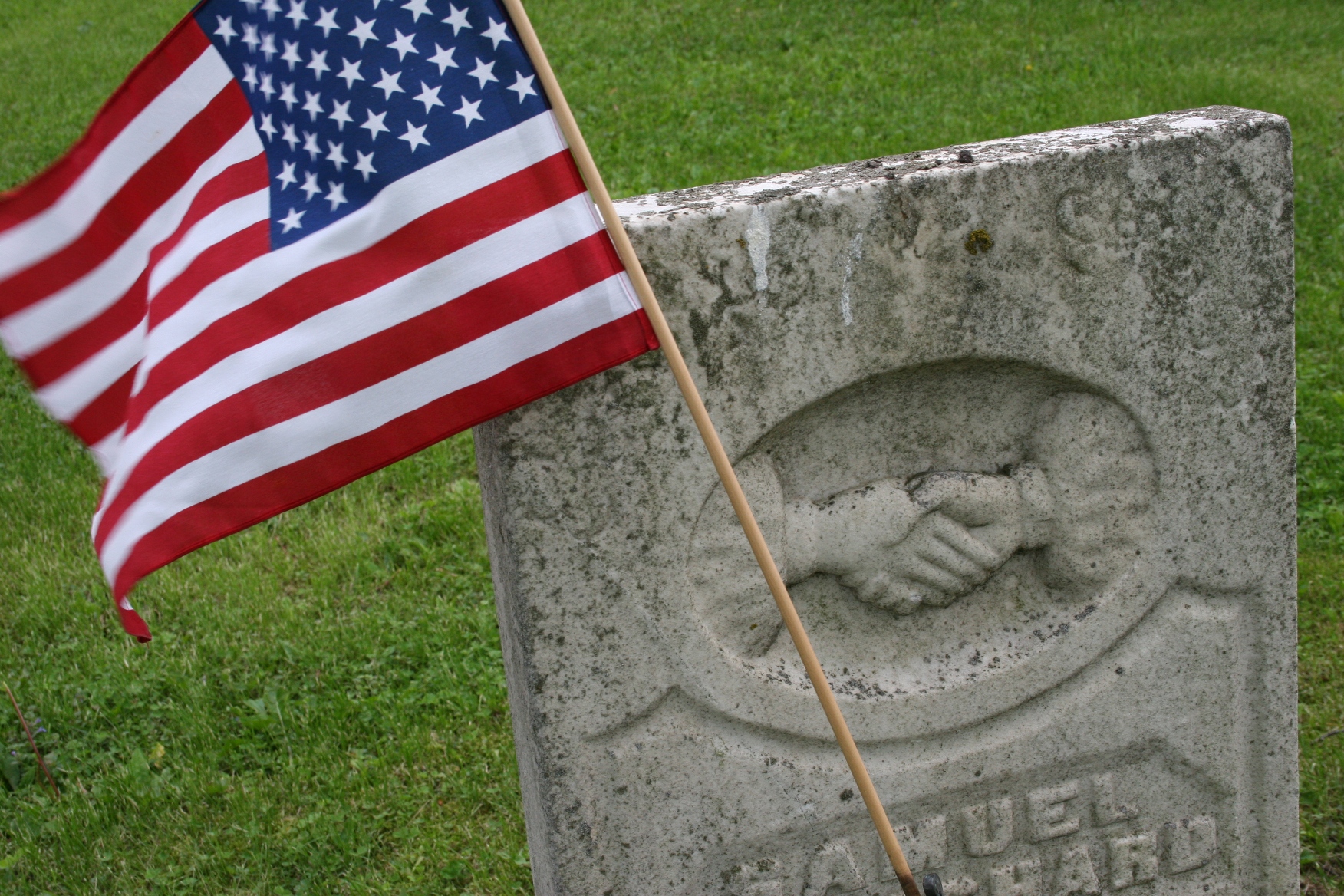
Can anyone explain the symbolism of these clasped hands on a veteran's grave?

A flag marks the entrance to the Cannon City Cemetery.

© Copyright 2011 Audrey Kletscher Helbling
 

Photographing barns November 19, 2010


A barn between Morristown and Waseca in a photo I shot last Sunday.


HARRIET TRAXLER OF CARVER has done exactly what I would someday like to accomplish. She has photographed a county full of barns and self-published 19 books, including two versions of Barns of Sibley County and books for each of the county’s 17 townships. She’s also created a 2011 barn calendar.
Traxler photographed 1,100-plus barns.

I’ll write more about Traxler’s barn project in a future post because I’ve only skimmed two of her books. The pair just arrived in my mailbox yesterday.

But I’m so giddy about what I’ve seen that I couldn’t wait to tell you. Anyone who loves old barns will absolutely appreciate Traxler’s books and her efforts to preserve barns through photography.

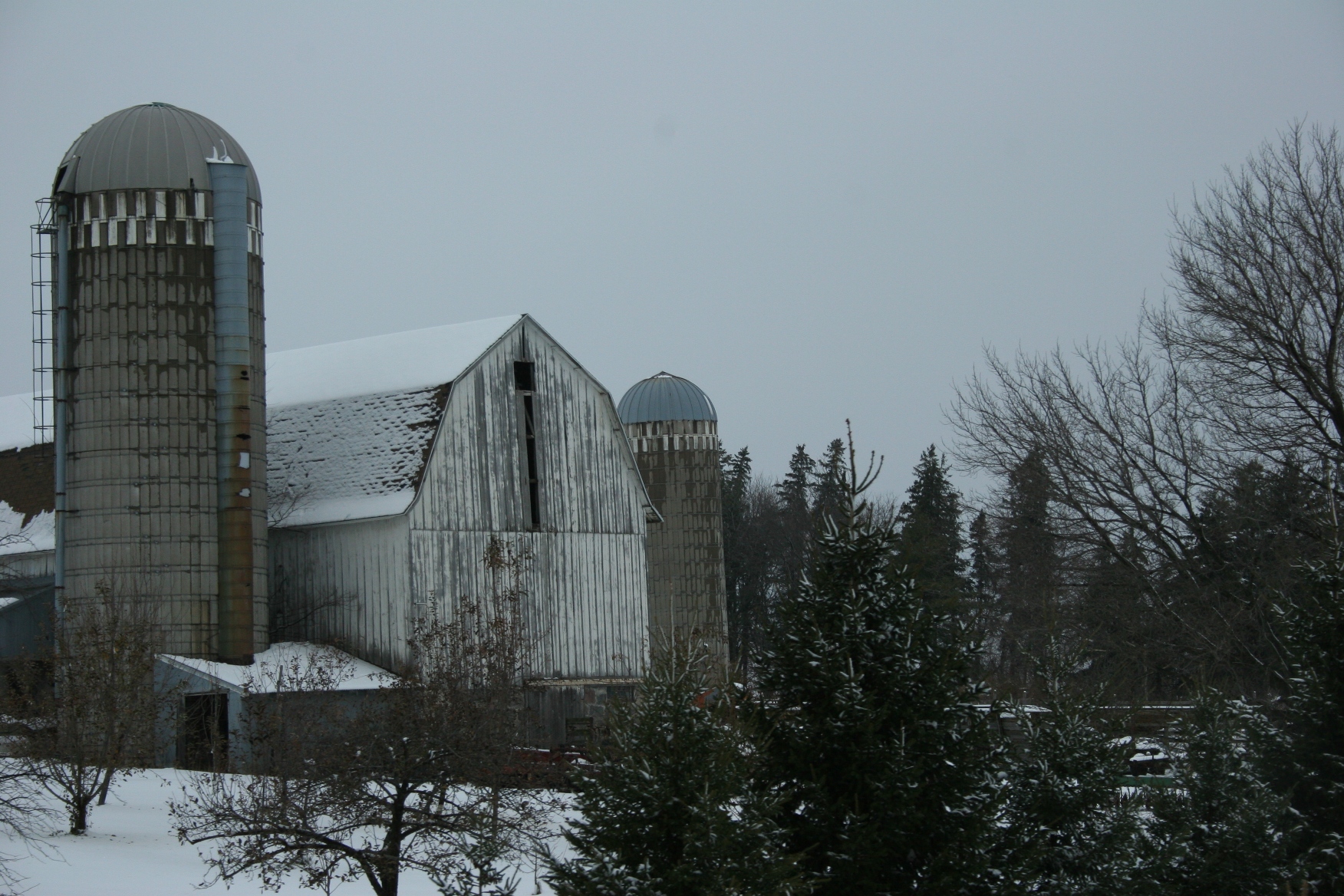
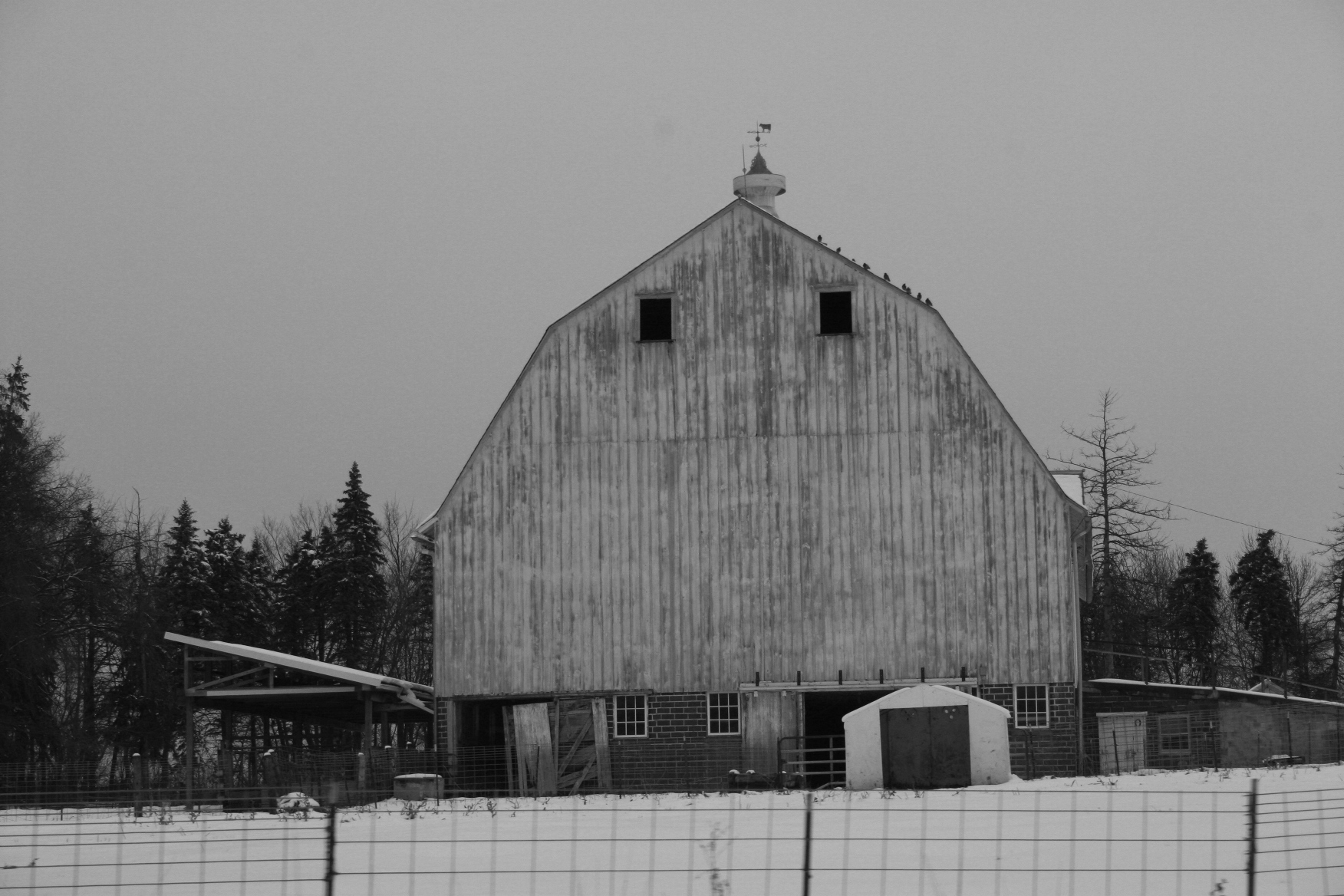
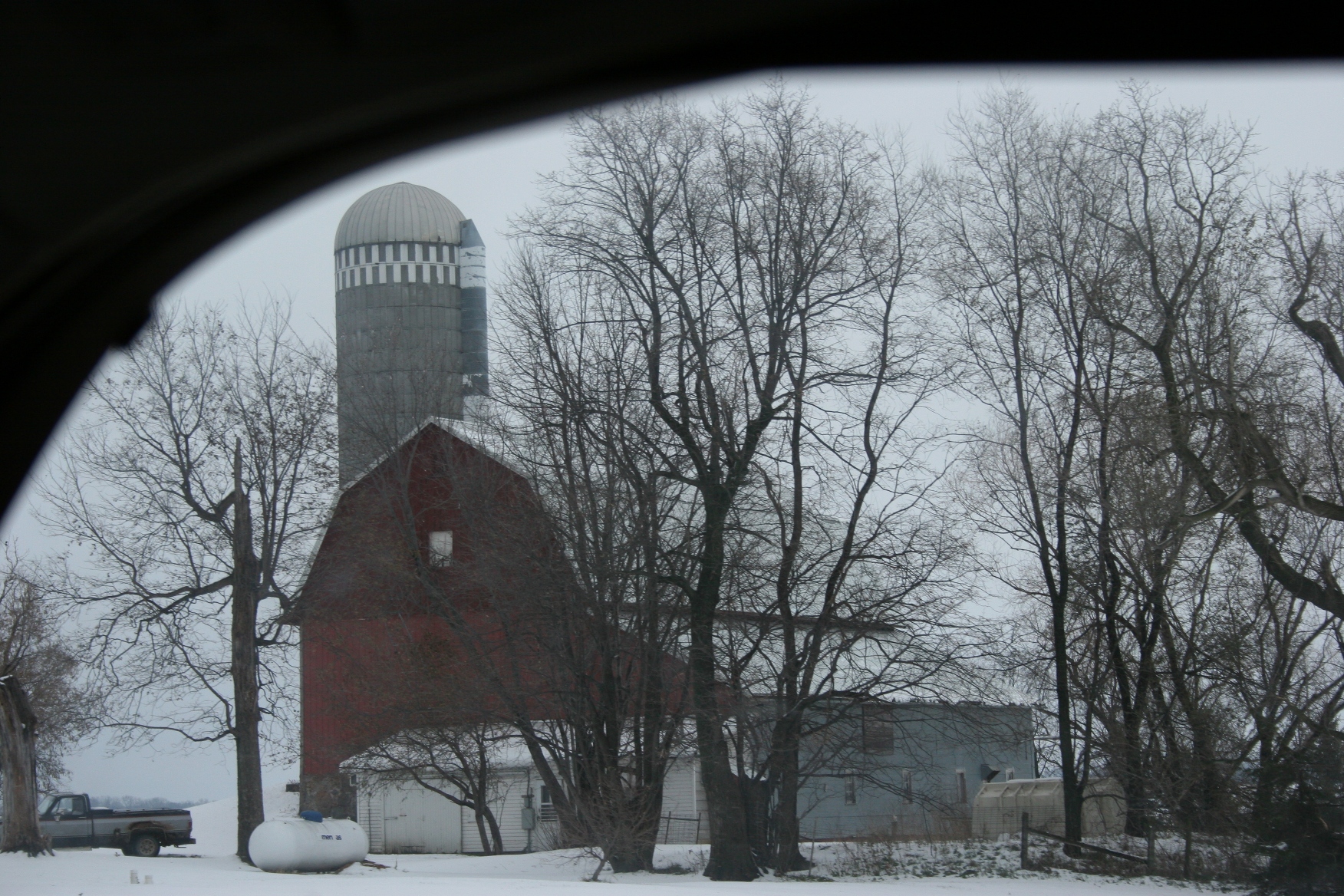
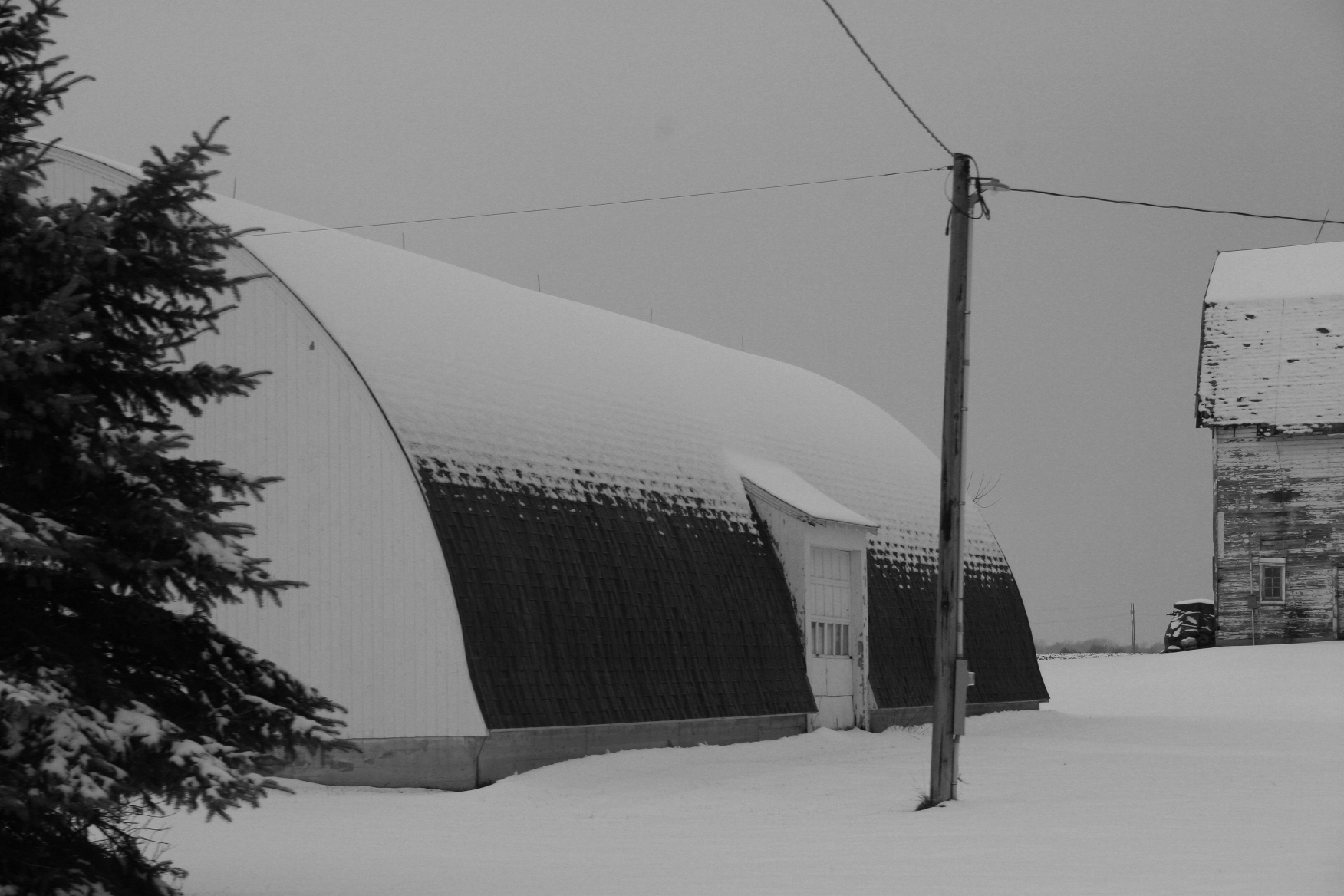
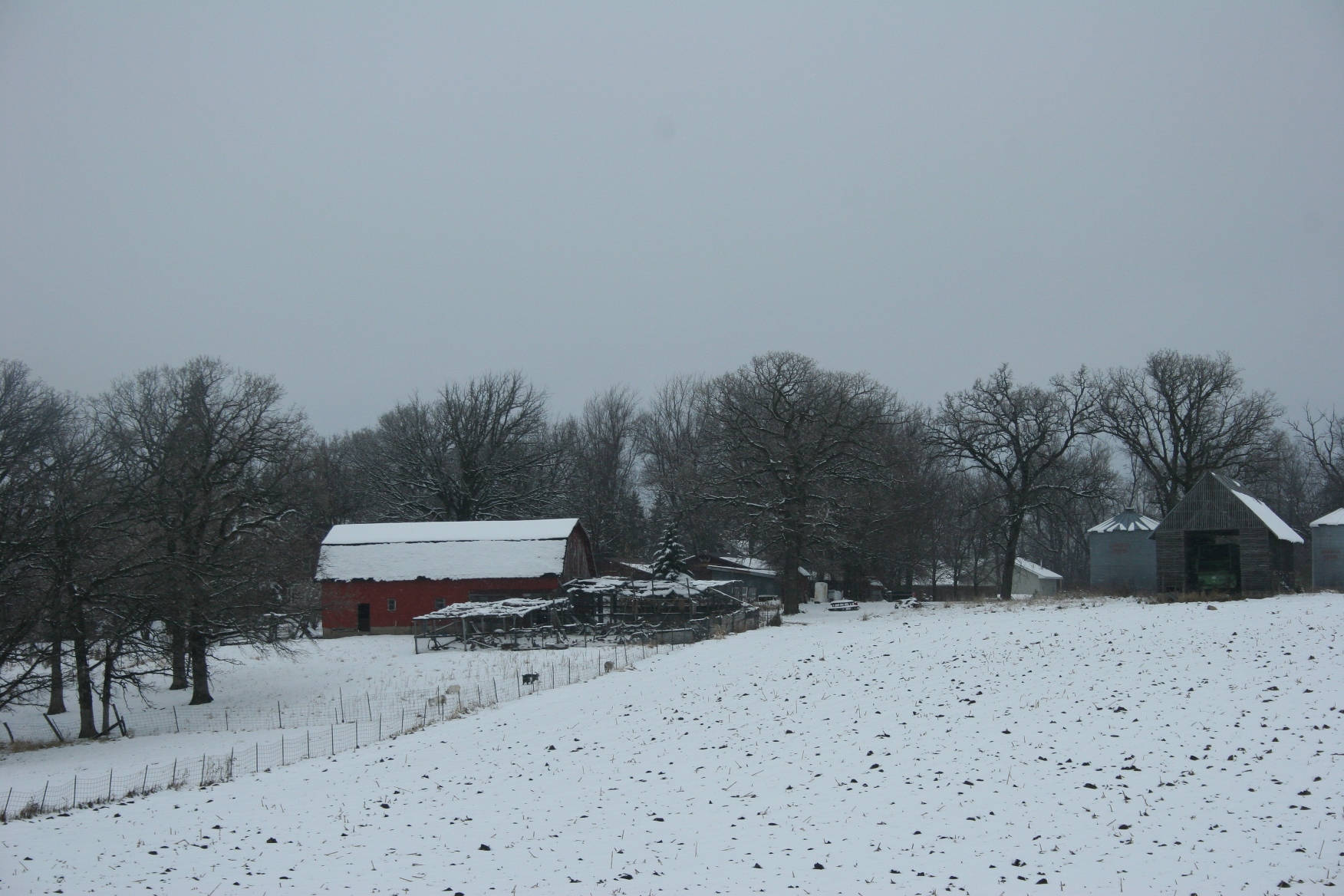
Now that I’ve shared my excitement over those barn books, I’ll show you a few more barn photos that I shot last Sunday along Rice County Highway 16 and Waseca County Highway 7 between Morristown and Waseca. These were taken through car windows—no waiting for the right lighting, no stopping to compose them. They are what they are and I think worthy of sharing with you. Enjoy.


Barn along Waseca County Highway 7


The driver's side rear car window frames this barn scene in a quick shot.


A machine shed with a barn-like appearance. Love the roof line.


Near the intersection of Waseca County Highway 7 and Minnesota Highway 13.


© Copyright 2010 Audrey Kletscher Helbling