Minnesota Prairie Roots

Writing and photography by Audrey Kletscher Helbling

“Testify,” an enlightening & unsettling exhibit focused on Black history April 18, 2025

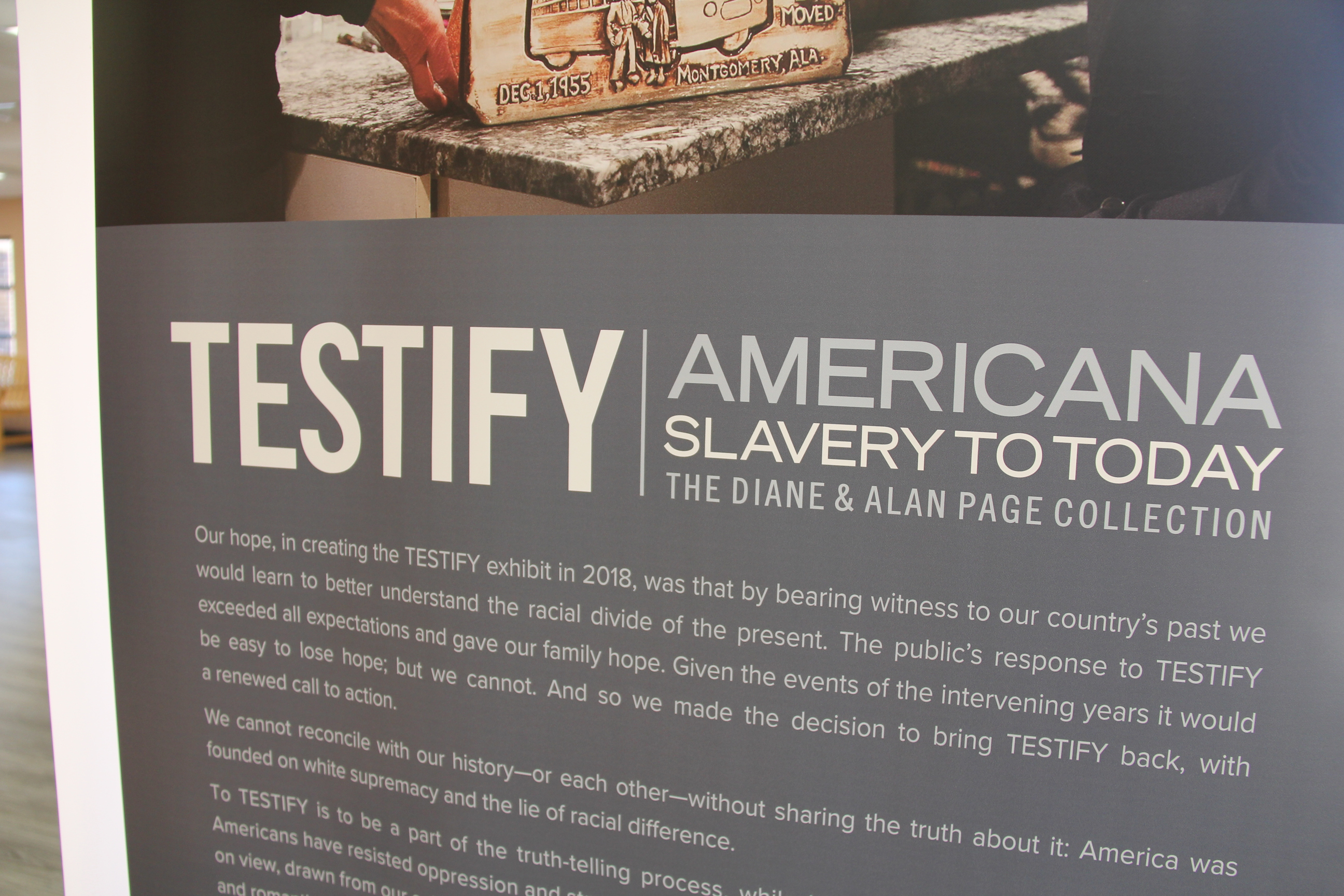
The first panel explains the “Testify” exhibit. (Minnesota Prairie Roots copyrighted photo April 2025)

THE IMAGES AND WORDS left me feeling simultaneously unsettled, uncomfortable, disturbed, enlightened, impressed, angry and incredibly sad. My emotional reaction is not surprising after viewing the traveling exhibit, “Testify—Americana Slavery to Today,” at my local public library.
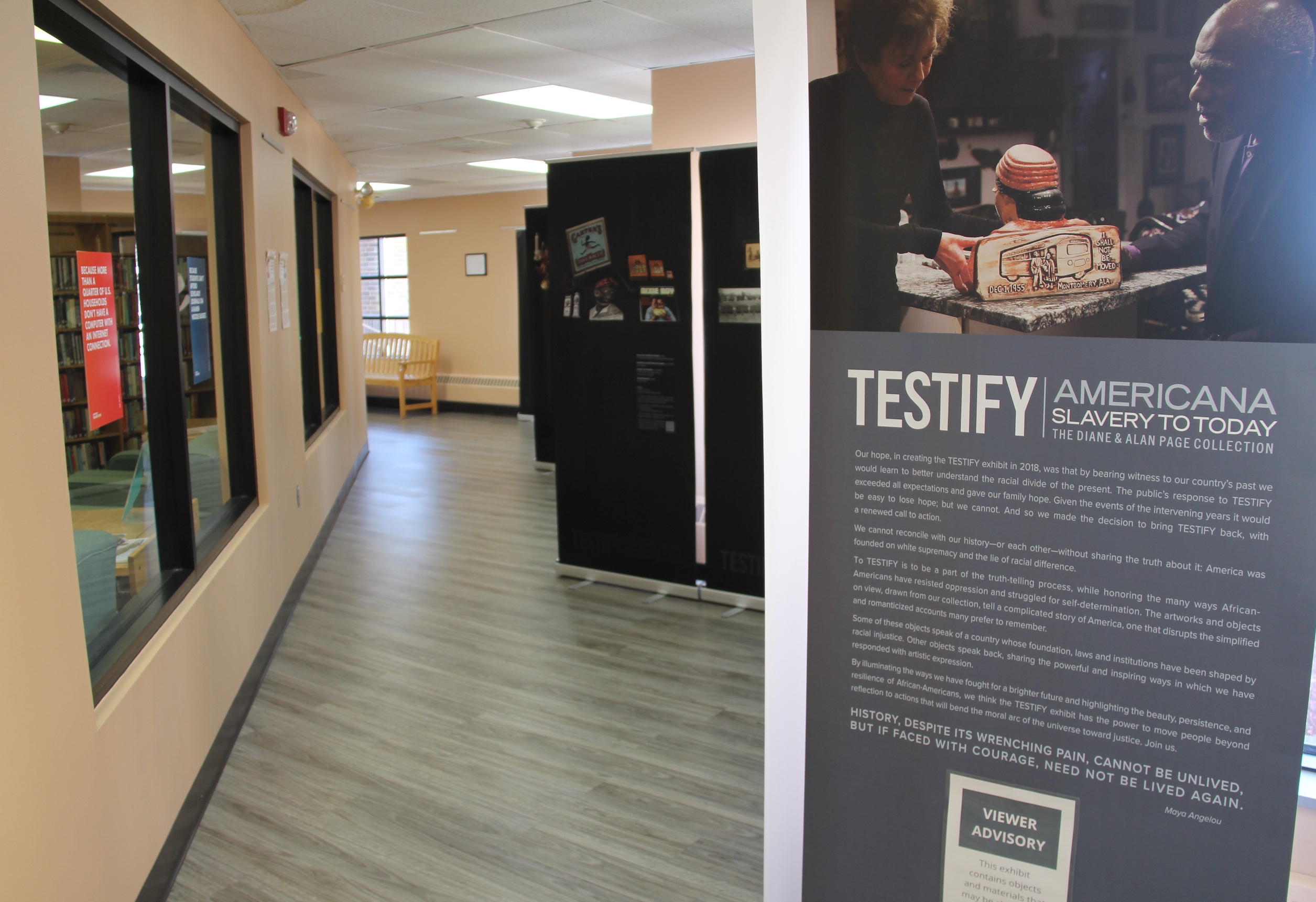
The 16 “Testify” panels stretch along the hallway connecting the library and community center in Faribault. (Minnesota Prairie Roots copyrighted photo April 2025)

The exhibit features photos of select African American art and artifacts from The Diane and Alan Page Collection. Alan Page, who is Black, was a Minnesota Supreme Court justice and, in the 1970s, a defensive lineman for the Minnesota Vikings. He’s in the NFL Hall of Fame. Diane, who was White, worked in marketing and was a businesswoman and notable philanthropist. She led the way in securing the art and artifacts in the couple’s collection.
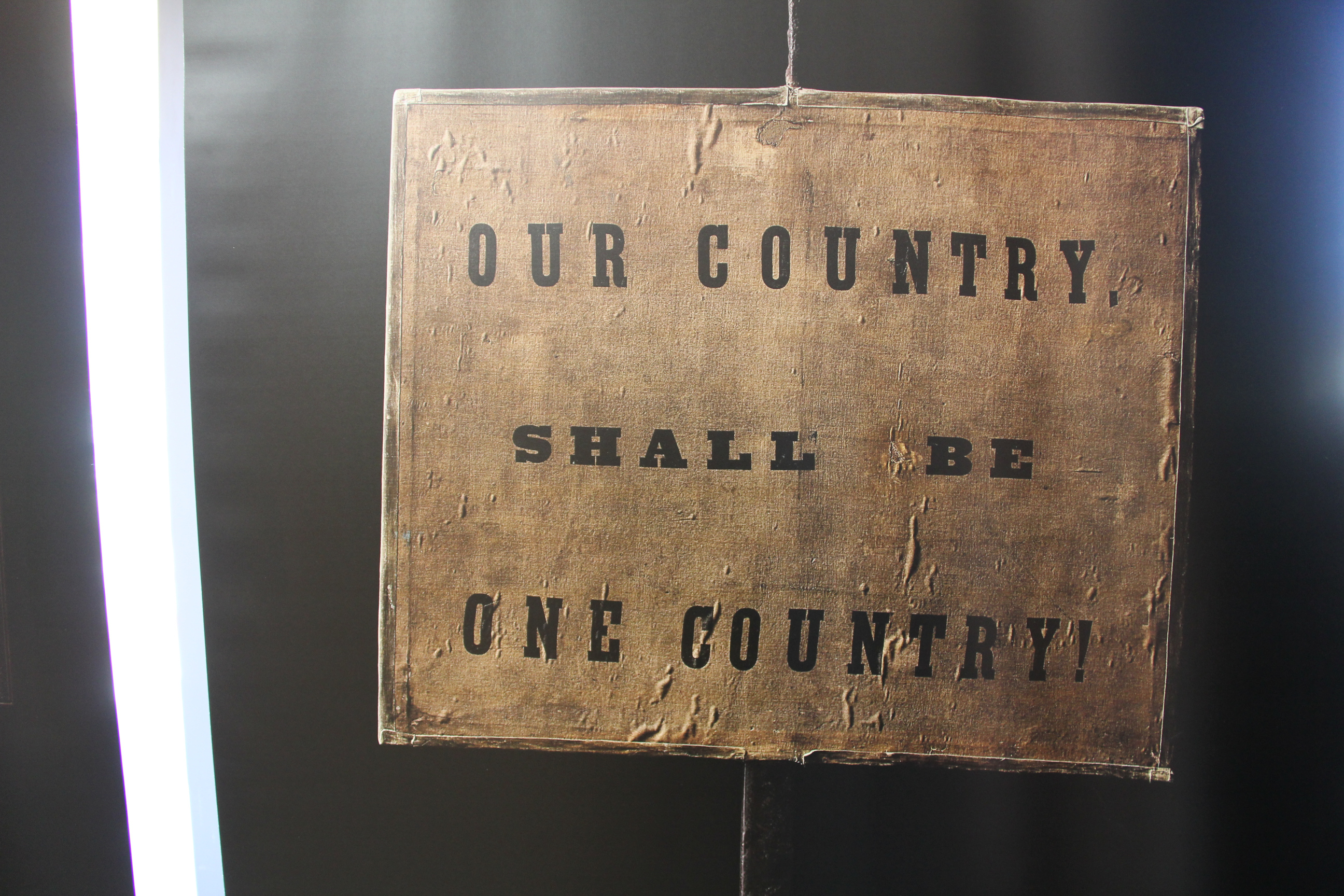
This 1864 banner may have been carried by freedmen at a rally or march. During the 1864 election of Abraham Lincoln, both political parties came together to reject slavery. (Minnesota Prairie Roots copyrighted photo April 2025)

I’m grateful Buckham Memorial Library (through SELCO, the regional library system) brought this exhibit to Faribault for the public to see. We can all learn from history, deepening our understanding. We begin to recognize perspectives and biases and can then move toward change and healing.
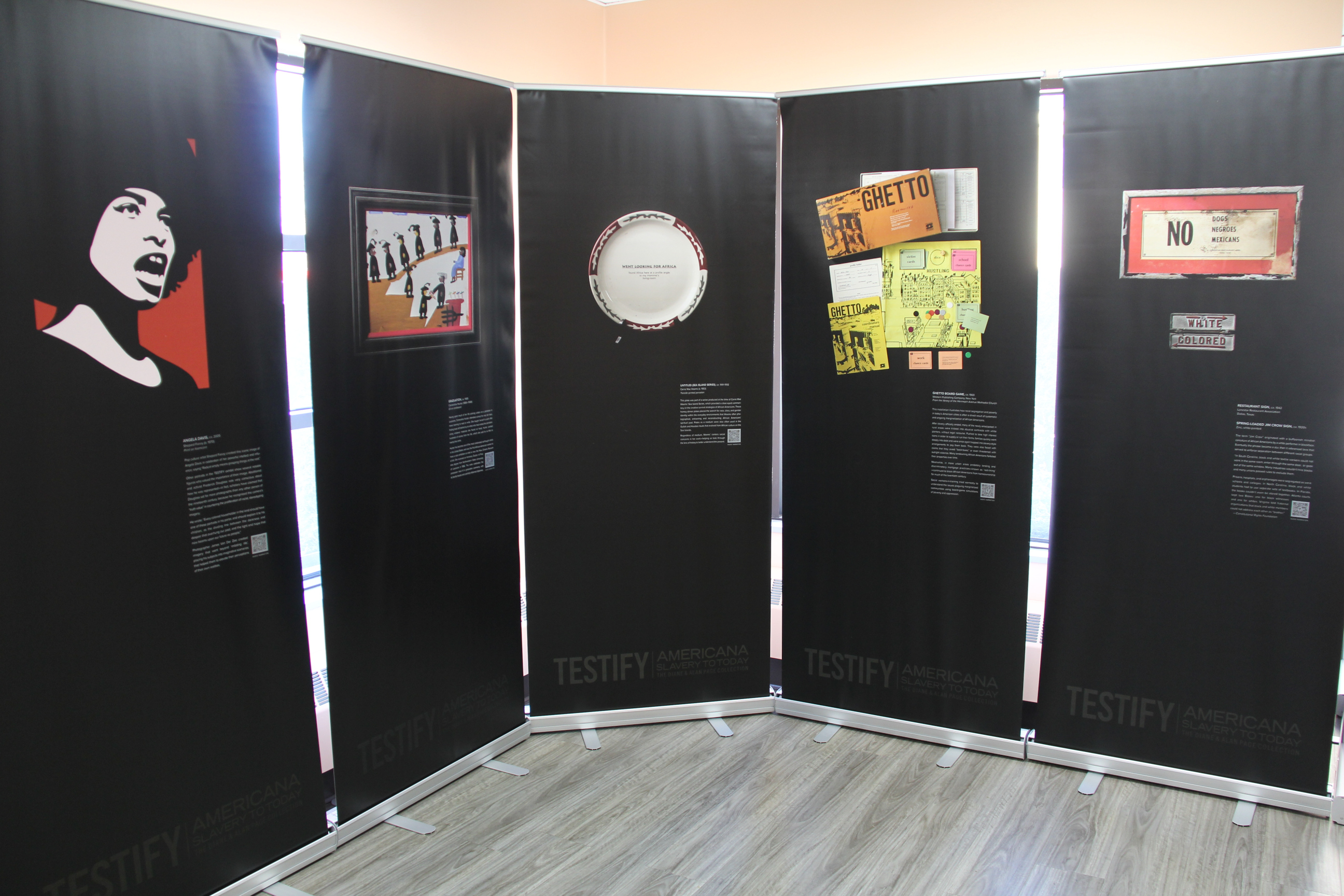
The last five panels cover a span of topics. (Minnesota Prairie Roots copyrighted photo April 2025)

As I walked my way along the 16 towering photo panels paired with text, I began to more fully appreciate the suffering, the abuse, but also the fortitude, of African Americans. Despite everything, they retained strength and resilience.
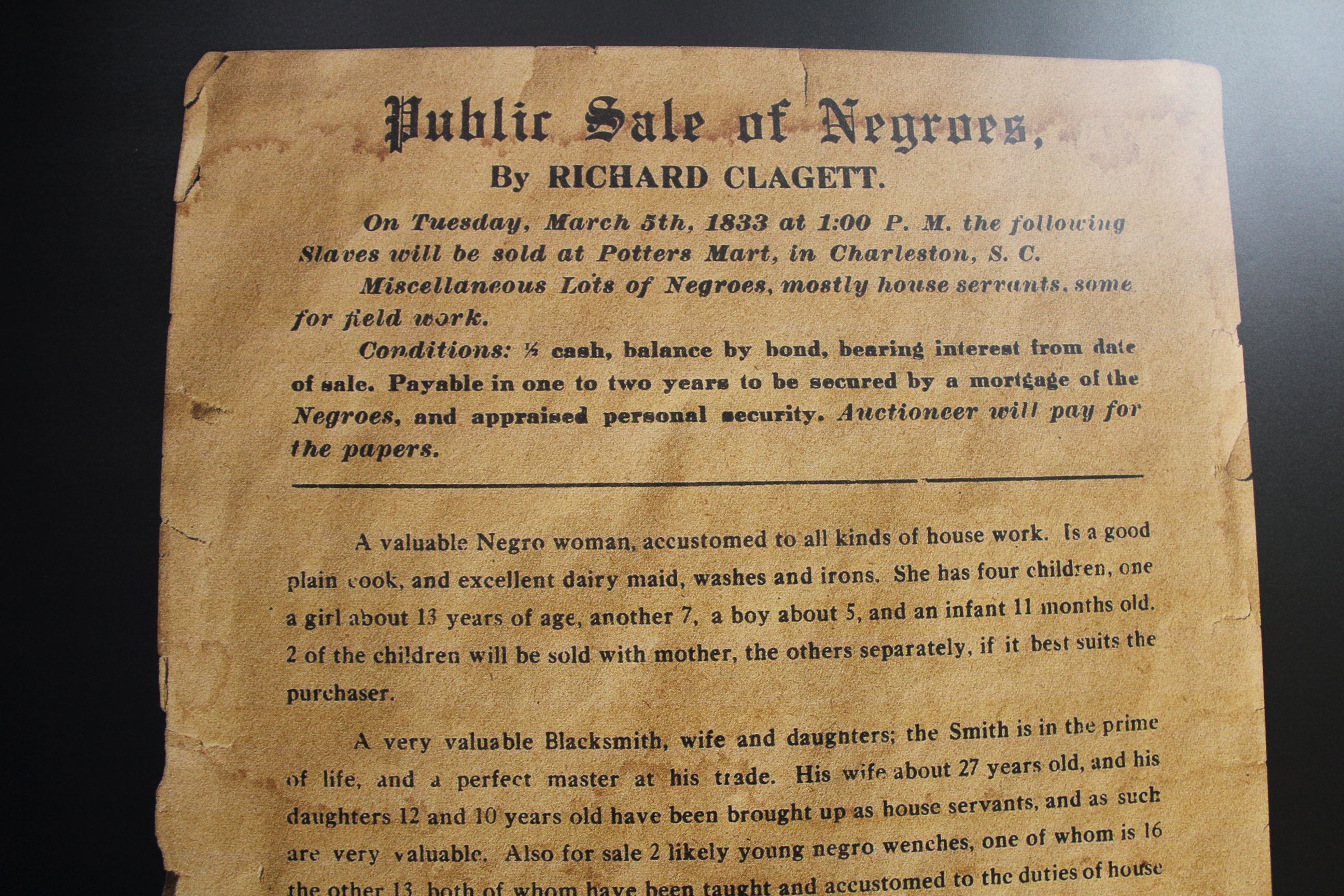
Notice of an 1833 slave auction in Charleston, South Carolina. (Minnesota Prairie Roots copyrighted photo April 2025)

Yet, how hard it must have been at times to hold hope, especially from slavery to the time of Jim Crow laws. When I read a Public Sale of Negroes notice from 1833, I read words of degradation. I cannot imagine being that “valuable Negro woman,” that “very valuable blacksmith,” the slaves in “miscellaneous lots of Negroes” who were auctioned off like so much property. What humanity does to one another seems unimaginable, unfathomable. Yet, it still happens today, just in different ways.
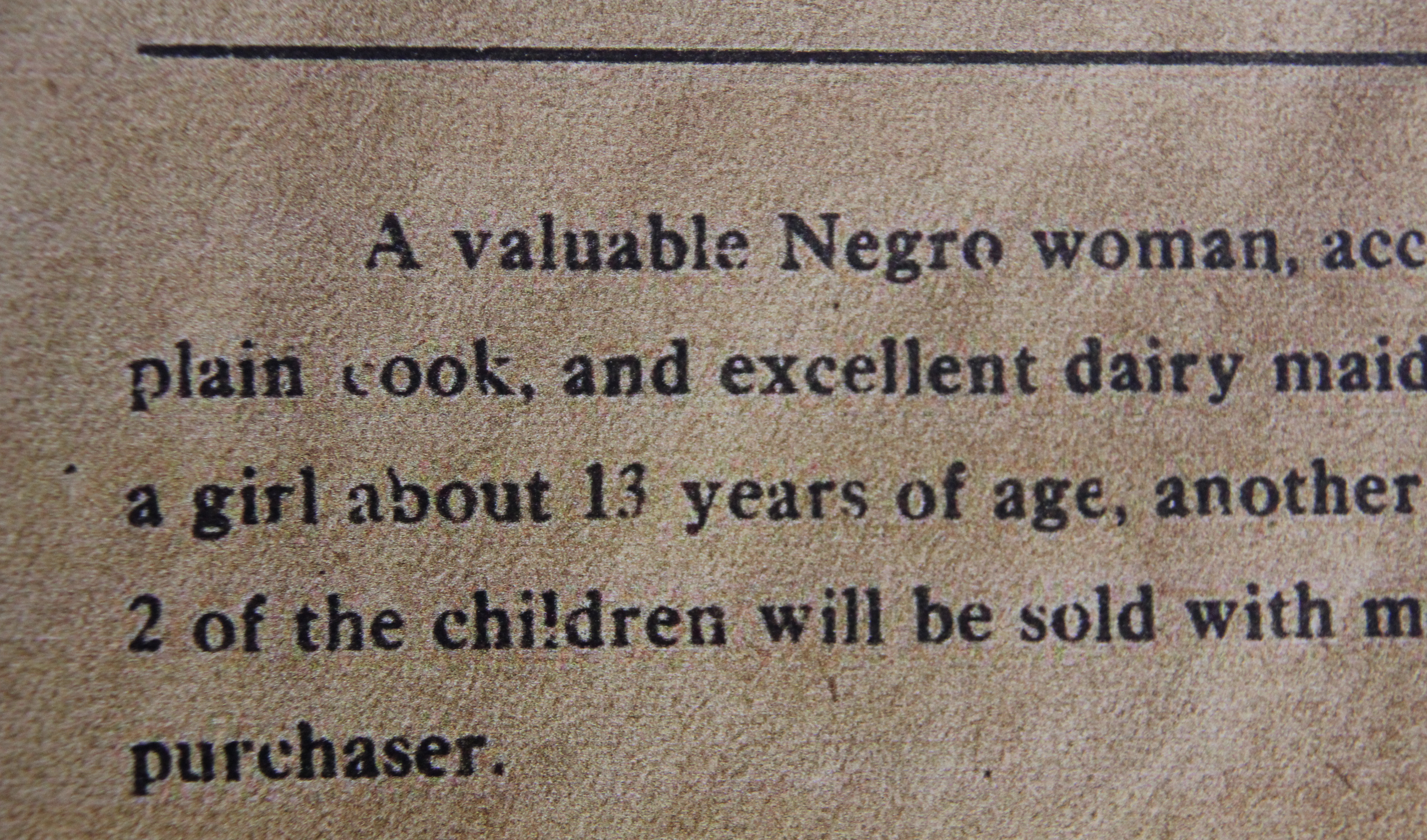
A description of a slave to be sold at the 1833 auction. (Minnesota Prairie Roots copyrighted photo April 2025)

As disturbing as that slave bill of sale was, a group photo of nine unclothed Black toddlers in a professional studio portrait titled “Alligator Bait” proved profoundly disturbing to me. So much so that I can’t bear to show this 1897 image to you. The accompanying text states that historians researched whether hunters actually used African American children as alligator bait. Results were inconclusive, which is telling.
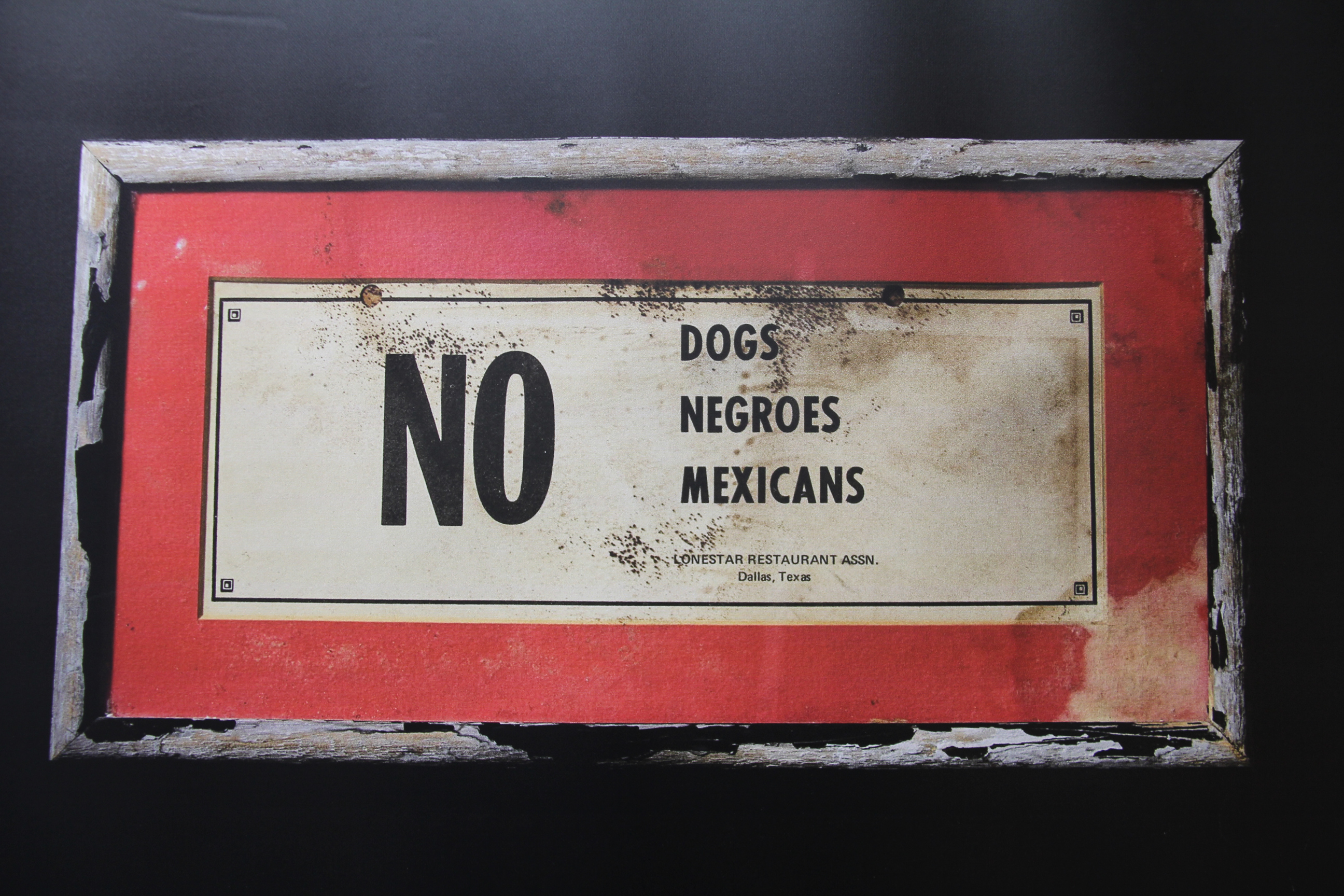
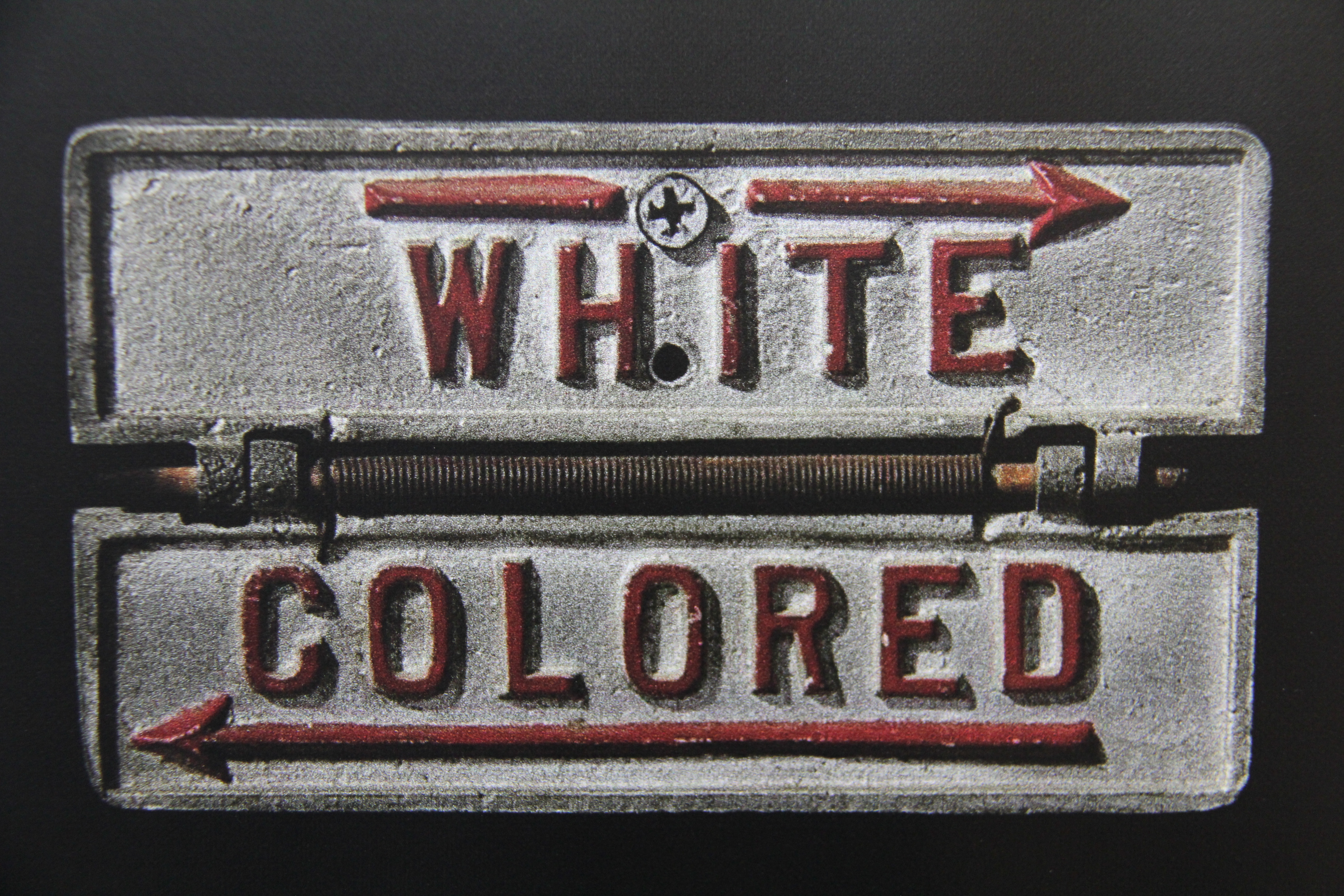
An unwelcoming 1942 sign from the Lonestar Restaurant Association in Dallas, Texas. (Minnesota Prairie Roots copyrighted photo April 2025)
A 1920s spring-loaded Jim Crow sign. (Minnesota Prairie Roots copyrighted photo April 2025)
Protest art from the Civil Rights Movement. (Minnesota Prairie Roots copyrighted photo April 2025)

A sign banning “dogs, Negroes and Mexicans” and another pointing Whites one way and “Colored” people the other prompted thoughts of, well, things have not changed all that much. Of course, they have, but not really if you dig deep or, conversely, read today’s headlines.
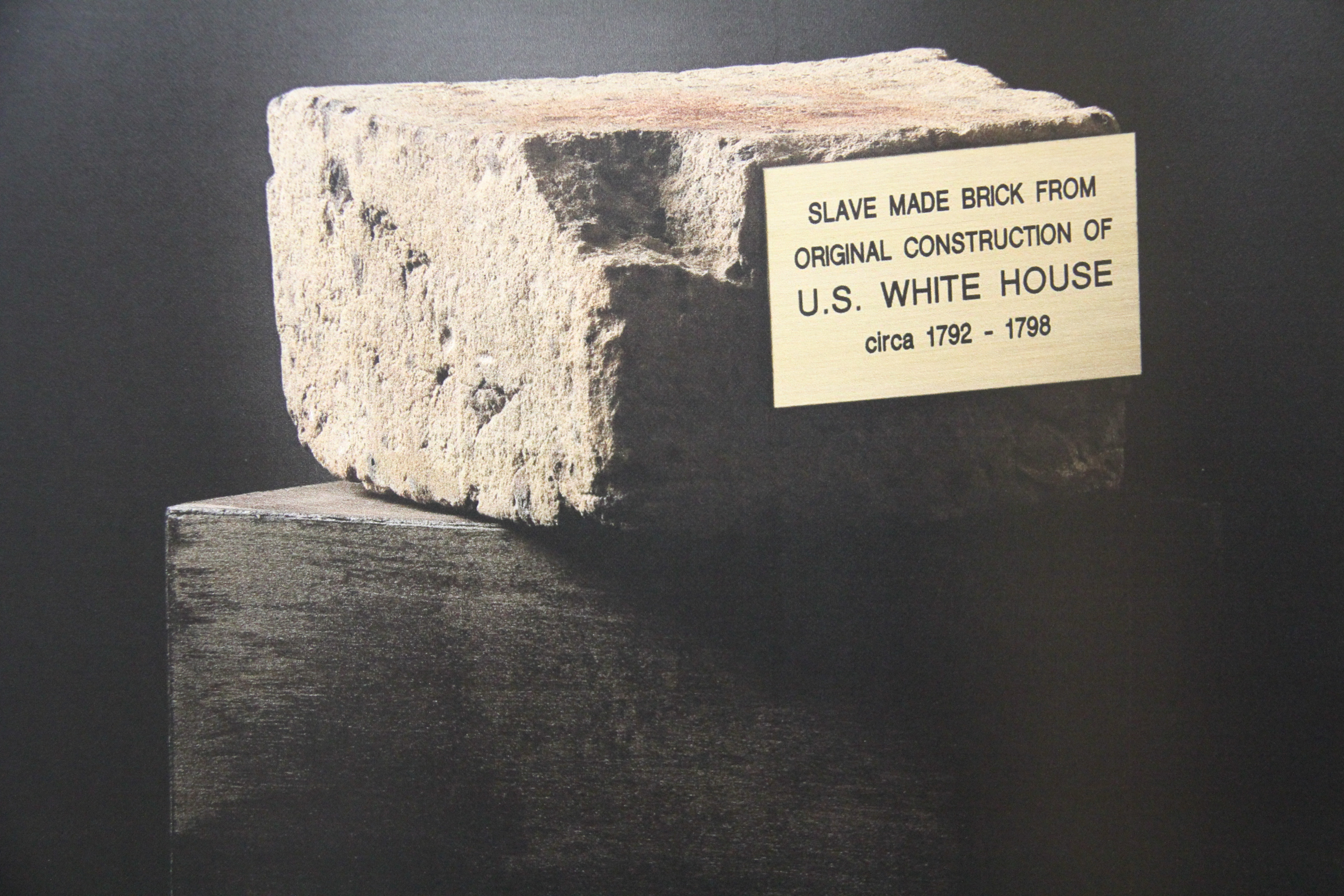
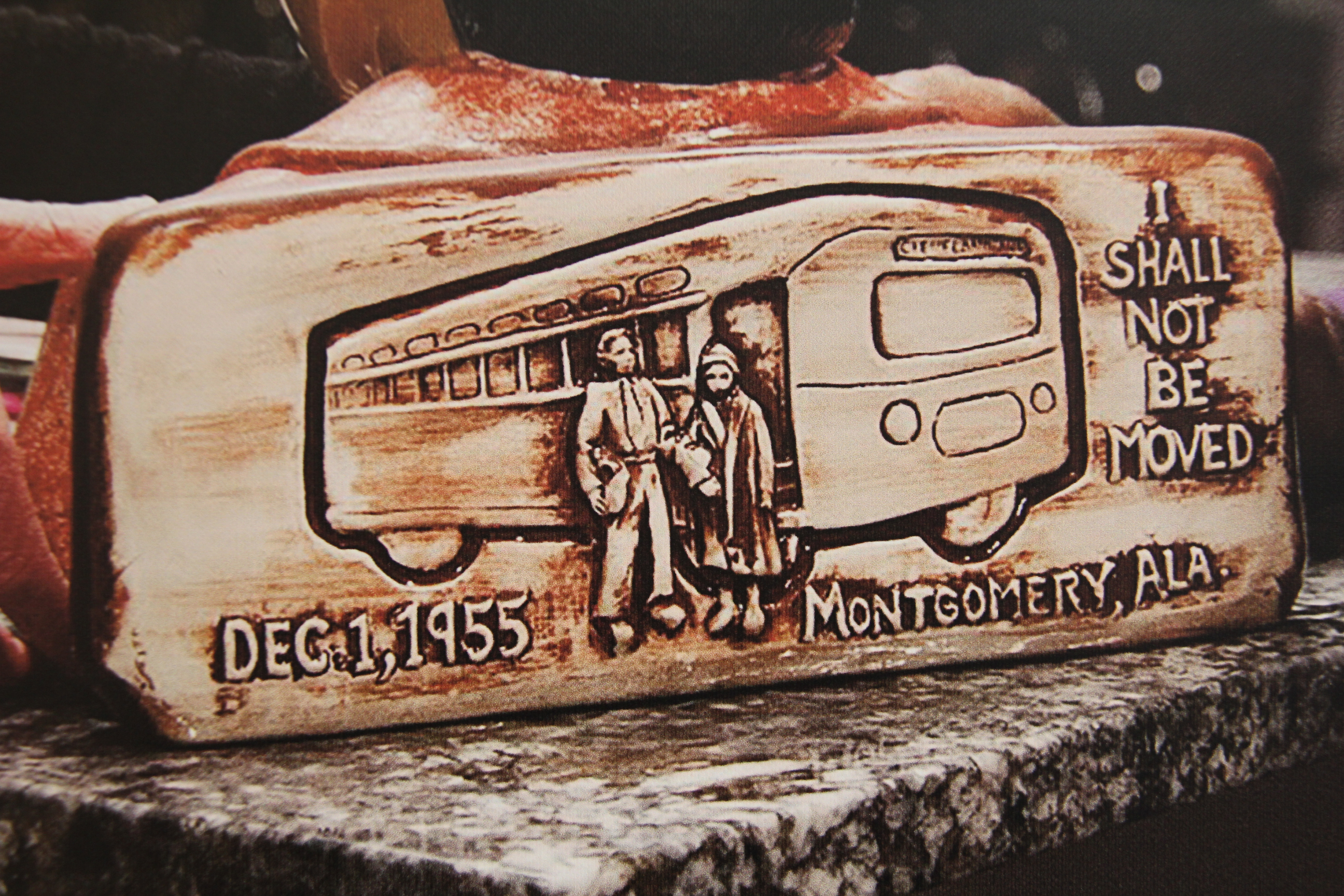
A brick crafted by slaves for the White House. (Minnesota Prairie Roots copyrighted photo April 2025)

I want to backtrack for a minute to the first photo I saw in the exhibit. It was of a single brick, circa 1792-1798. This singular object drove home the point that this country was built on the backs of slaves, like those who molded and laid the bricks for government buildings in Washington DC. That includes the White House and many U.S. Capitol buildings, according to the exhibit text. Unpaid slave labor. Think about that for a minute or ten.
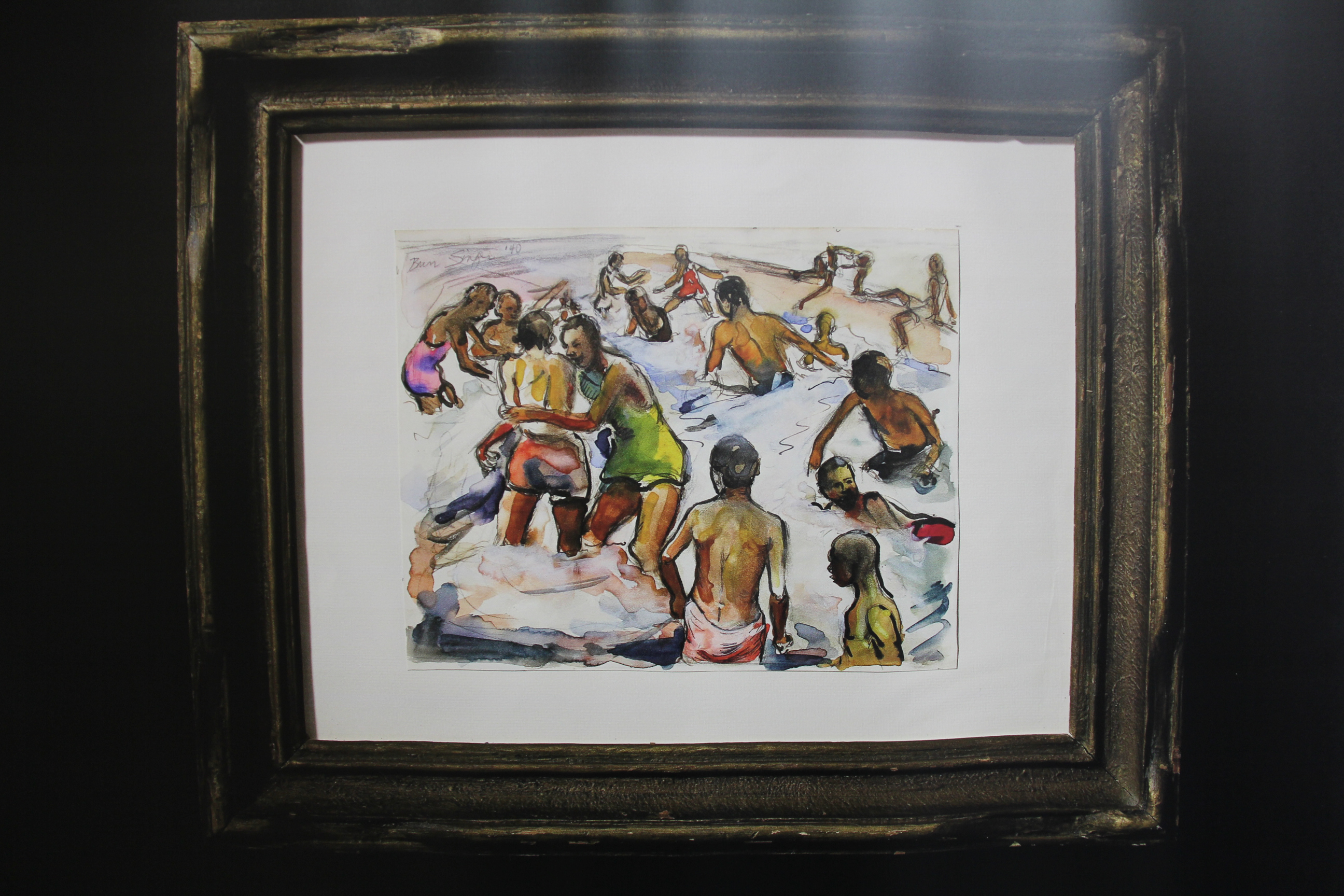
“Only on Thursdays,” a 1940 painting by Burr Singer. (Minnesota Prairie Roots copyrighted photo April 2025)

There’s lots to contemplate in the “Testify” exhibit. That includes the watercolor art of Burr Singer titled “Only on Thursdays.” If you just looked at the art without the title and context, you might think it was simply a depiction of African Americans swimming. But it’s not. Thursday was the only day Blacks could use the Pasadena public pool. This painting makes a statement.
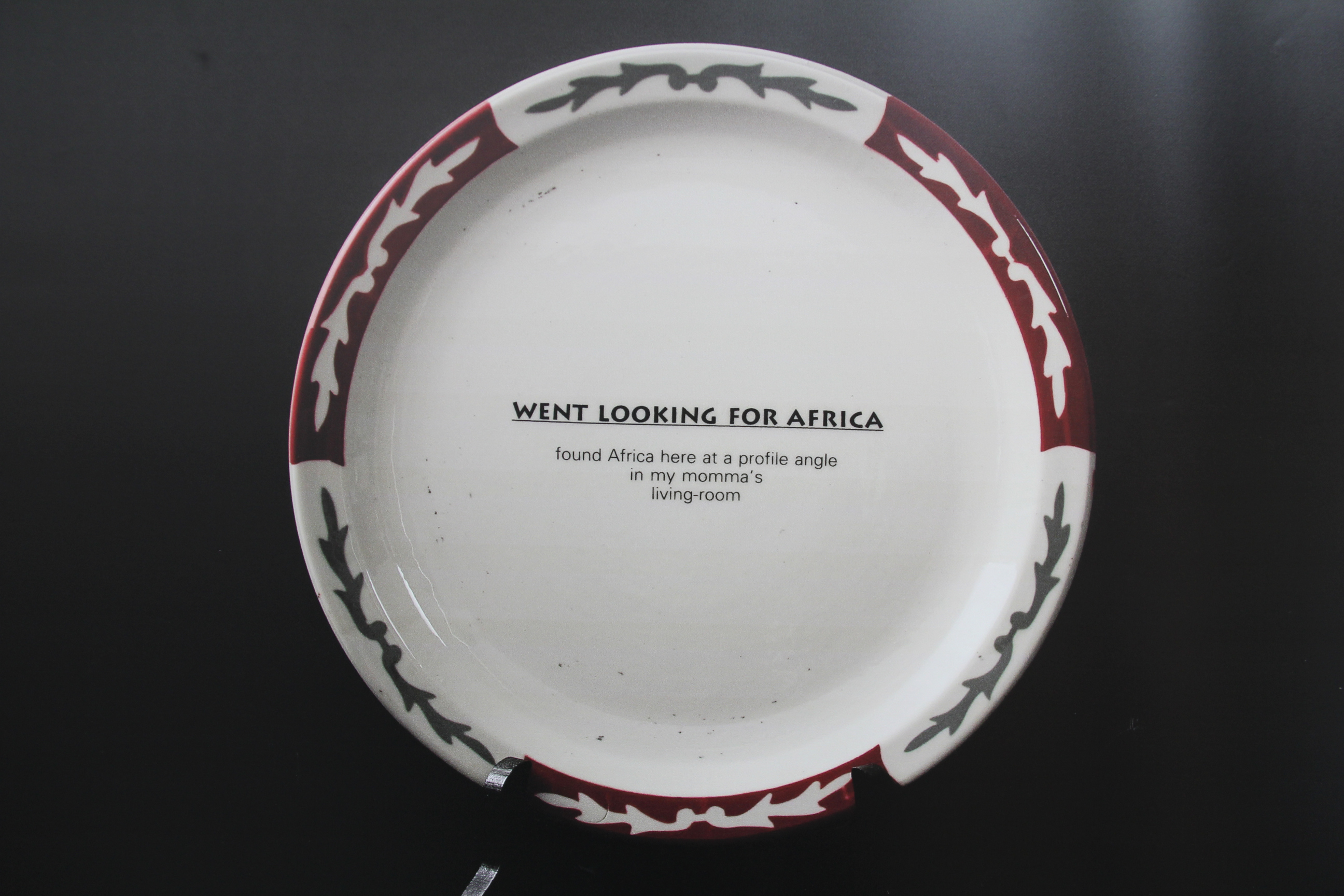
This 1991-1992 plate in Carrie Mae Weems’ Sea Island Series honors the creative survival strategies of African Americans. (Minnesota Prairie Roots copyrighted photo April 2025)

This exhibit makes a statement. Through images and words, it shines a light on the past, on Black history, on the atrocities of slavery and segregation and racism (both subtle and overt). Through “Testify,” truth-telling emerges for all to view and contemplate.
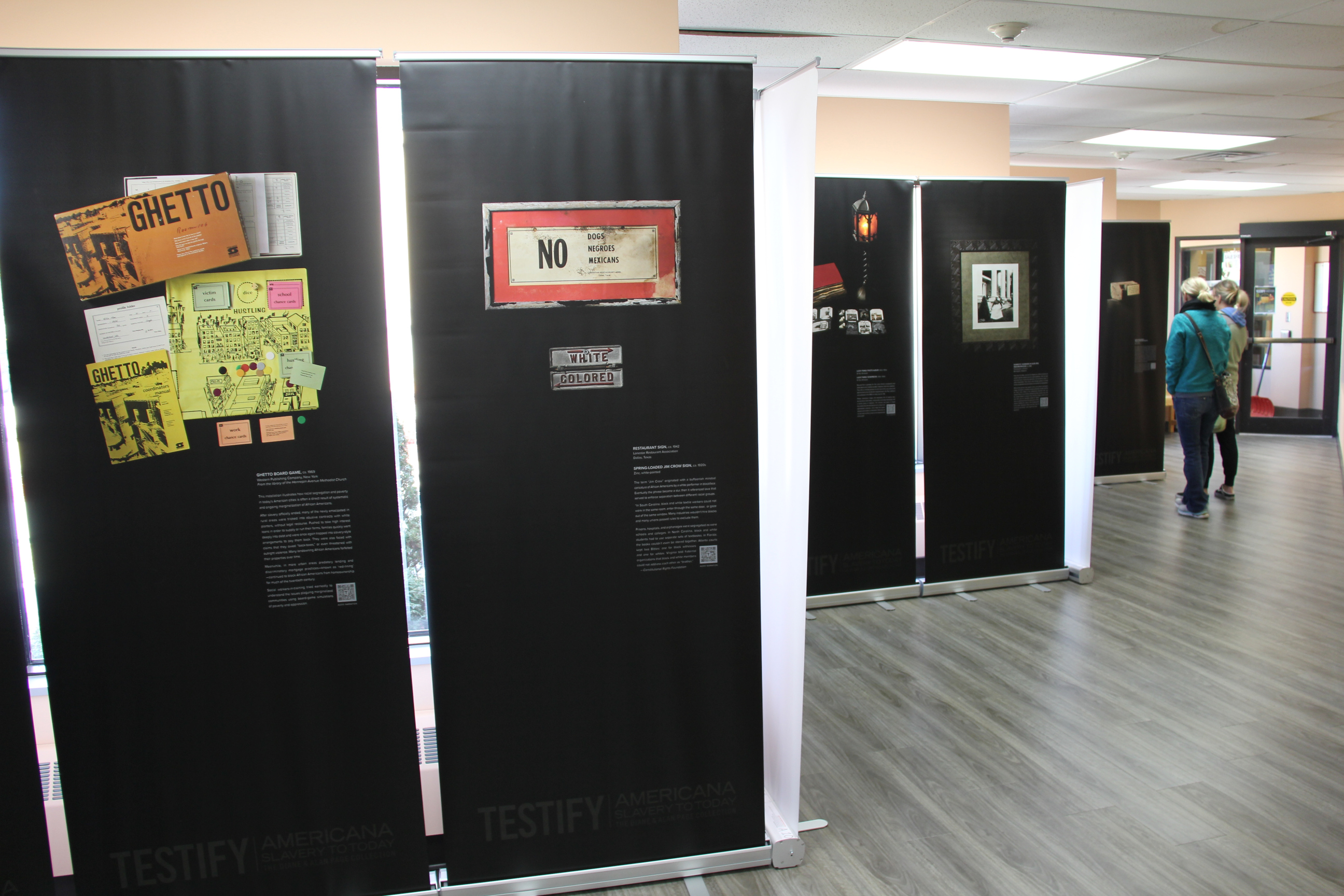
The panel to the far left shows a photo of the board game GHETTO. Social workers in training used the game to understand issues facing marginalized communities. (Minnesota Prairie Roots copyrighted photo April 2025)

FYI: “Testify—Americana Slavery to Today” is on display until April 23 in the corridor linking Buckham Memorial Library to the Faribault Community Center. The photos and information included in this story are only a sampling of what you will see in the exhibit. The Mabel Public Library hosts the exhibit from April 25-May 7.

© Copyright 2025 Audrey Kletscher Helbling


Award-winning book addresses slavery in compelling stories, haunting art February 21, 2024

I CAN’T IMAGINE a world without books. From the time I was first read to and then learned to read as a young child, I have loved books. From books, I’ve learned, I’ve escaped, I’ve broadened my world well beyond southern Minnesota.

From reading the writing of others, I’ve grown, too, as a writer. Laura Ingalls Wilder, in her Little House books, taught me the importance of detail, of setting, in writing. I grew up on the prairie, some 20 miles from Walnut Grove, once home to the Ingalls family. A grade school teacher read the entire Little House series to me and my classmates. Books have, in many ways, shaped me.

Book cover image sourced online.

But imagine a world without books. That was a reality for slaves in America, denied access to books and to education. I just finished reading Kin: Rooted in Hope, written by Carole Boston Weatherford and illustrated by her son, Jeffery Boston Weatherford. The young adult book, published by Atheneum Books for Young Readers, was named a Coretta Scott King Author Honor Book 2024. It is a book that ought to be read by everyone not only for its insightful poetry-style storytelling, but also for its haunting scratchboard art.

Looking down on the pages of the book with a mix of black and white paper. (Minnesota Prairie Roots copyrighted photo February 2024)

Adding to the overall subliminal effect is the way in which the book is printed. Black words ink white paper. White words imprint black pages. And the artwork is made by etching away black ink to reveal white. This mixed usage of black and white, reinforces the storyline of slavery and slave owners. Black. White.

As I read Kin, which I pulled from a book display for kids and teens at my local library, I was increasingly horrified by what I read. Sure, I’ve read about slavery in history books. But this approach of historical fiction really brought home the ugliness, the abuse, the violence, the awfulness of slavery in a personal way. Fiction rooted in truth.

Children born into slavery. Whippings. An auctioneer’s gavel. Names written on an inventory list along with commodities. Jemmy. Big Jacob. Lyddia. Tom. Walter. Isaac. Mush ladled into a trough. Swimming banned lest an escape to freedom be attempted. And on and on. Atrocities that seem unfathomable to inflict upon individuals chained in Africa, sailed to Maryland, sold, abused, treated like property by wealthy white families.

Photo used for illustration only. (Minnesota Prairie Roots copyrighted file photo)

But in the all of this, threads of kinship, endurance, strength and hope, even defiance, run. Perhaps my favorite line in the book is that of Prissy, a house servant waiting on a dinner guest. He leers at her, making an inappropriate comment. She wants to tell him that she spit in his soup. At this point half way into the book, I applaud her unstated rebellion. As the chapters unfold, so does the move toward freedom for slaves. The author writes of freedom at last and of current day issues (controversial statues in public places, the murder of George Floyd…), all interspersed with a whole lot of history (including historic figures like Frederick Douglass and Harriet Tubman…).

Even though this book is written for young adults, it should be read by older adults, too, who need to hear Prissy’s defiant voice. Author Carole Boston Weatherford gives voice to those who endured slavery, and to those whose family histories trace to enslavement, including her ancestors. Her son’s detailed scratchboard art reinforces the story, the words which wrench the spirit.

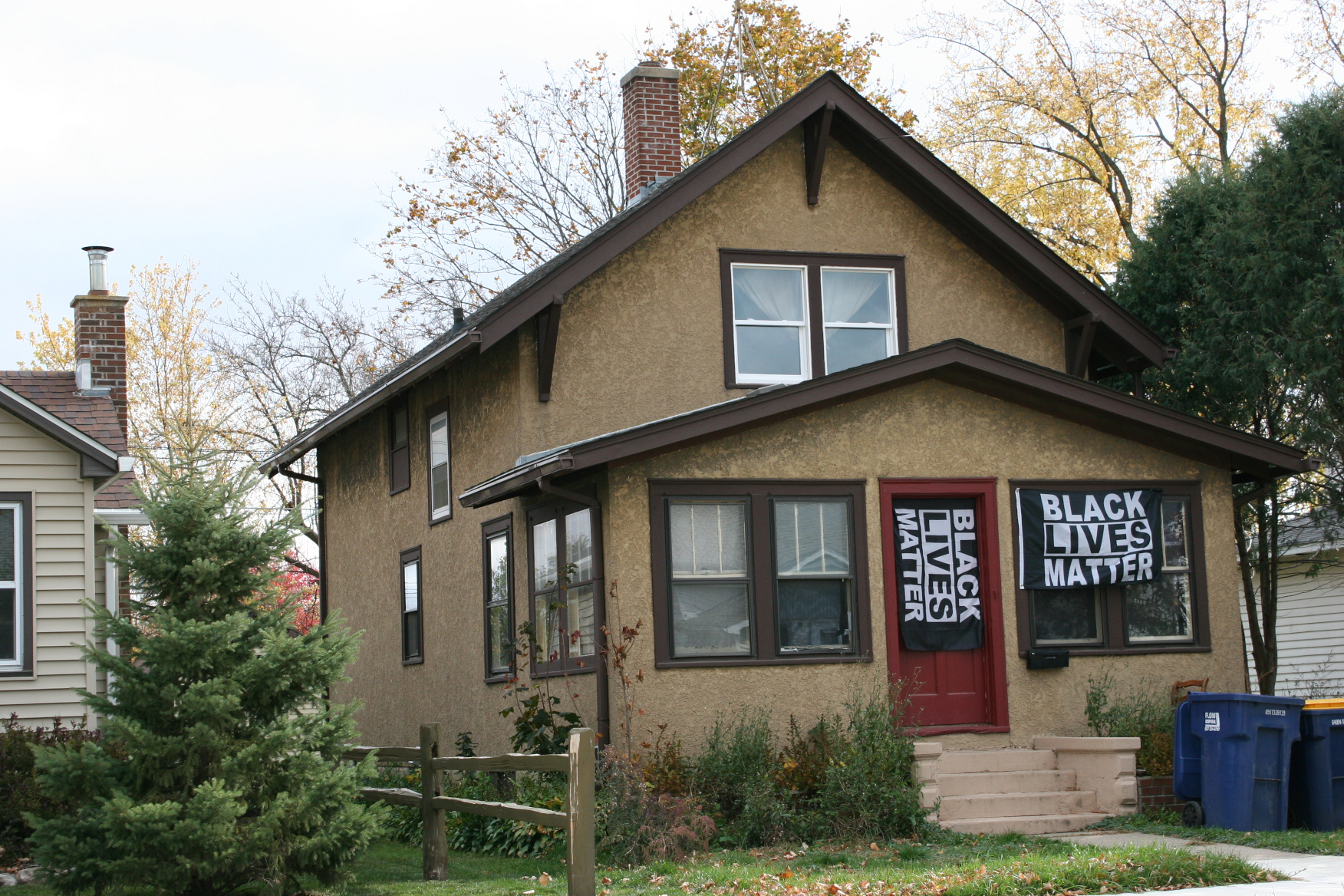
I photographed this scene in 2020 in Kenyon, MN. It remains one of my favorite images of this message given its location in a small town. (Minnesota Prairie Roots copyrighted file photo October 2020)

Kin: Rooted in Hope proves an especially fitting read during February, Black History Month. Through this book of historical fiction, I’ve learned more about a part of U.S. history which is horrendous in every possible way. That humanity can treat humanity so atrociously seems unfathomable…until I consider underlying and outright racist attitudes which continue yet today.

© Copyright 2024 Audrey Kletscher Helbling


Reflections on Juneteenth June 19, 2023

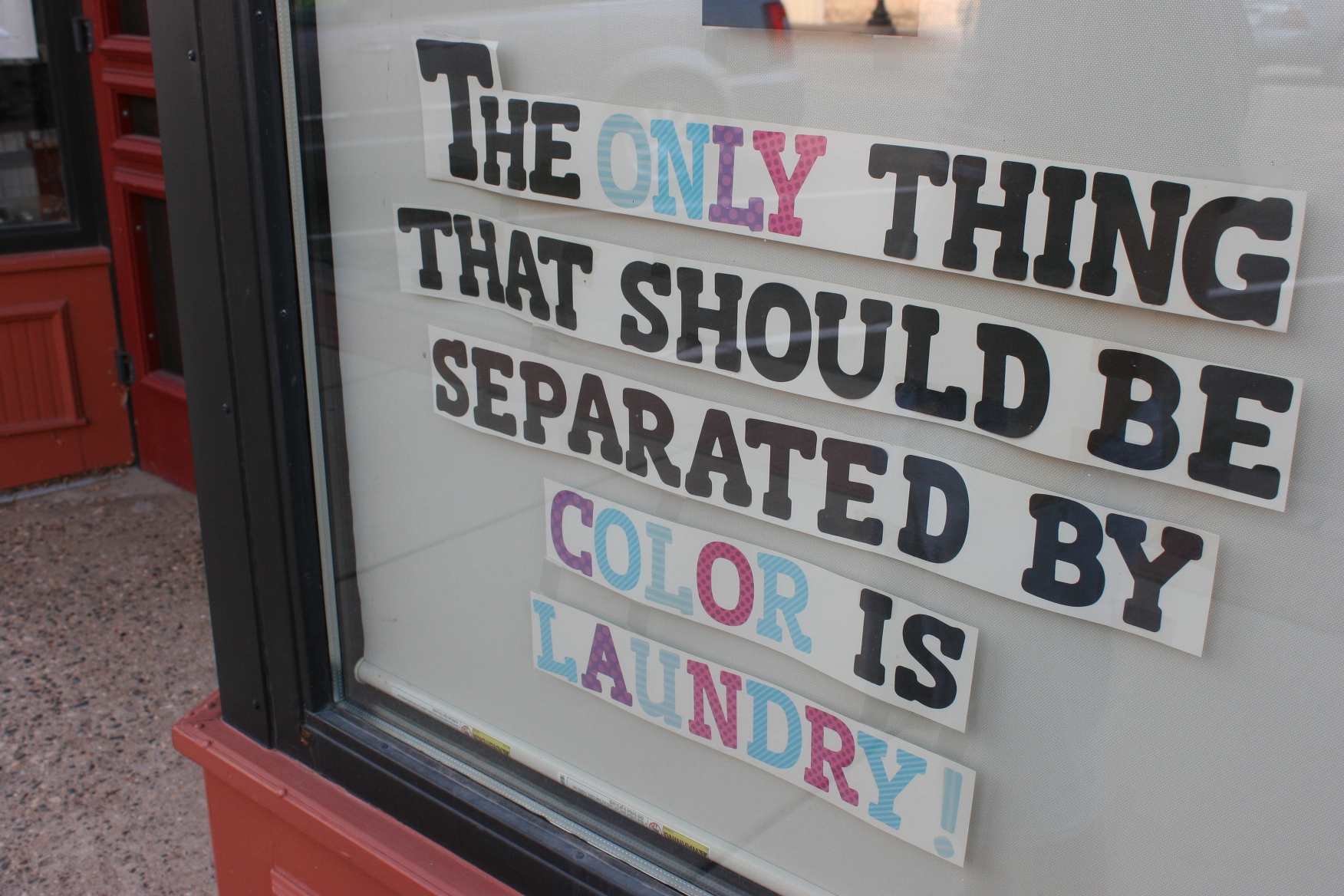
Photographed in August 2018 in a storefront window of a business in downtown Faribault. (Minnesota Prairie Roots copyrighted file photo 2018)

ON THIS DAY OF CELEBRATION, Juneteenth, I reflect on our nation’s past, on how far we’ve come and how far we have yet to go.

June 19, 1865, marks the day when enslaved people in Texas learned of the Emancipation Proclamation issued by President Abraham Lincoln 2 ½ years earlier. That proclamation freed slaves in Confederate states. It wasn’t until the 13th Amendment to the Constitution was passed in December 1865 that slavery was fully abolished in the entire United States.

Thinking about slavery is difficult. It’s emotionally challenging to consider that some 4 million men, women and children were “owned,” treated like property rather than human beings. Forced to work, forced to live under abusive and oppressive conditions. Without freedom to come and go.

Today the focus is not on the awfulness of slavery, but rather on the move from enslavement to freedom. Thus the celebrations on Juneteenth.

Moving onward as a people and a nation, we need to work harder on respecting one another, no matter our skin color, our social status, our differences. We’ve certainly made strides. But the reality is that we can do better.

© Copyright 2023 Audrey Kletscher Helbling


Thoughts on slavery & race on Juneteenth June 19, 2022

Photographed in August 2018 in a storefront window of a business in downtown Faribault, Minnesota. (Minnesota Prairie Roots file photo 2018)

AS A WHITE WOMAN and writer living in rural Minnesota, writing on the topic of Juneteenth isn’t easy or comfortable. Yet, it’s important for me to do so, to publicly recognize the federal holiday commemorating the emancipation of enslaved African Americans.

Why? Simply put, I care. I care that African Americans were treated with such disrespect, that they were “owned,” for no one should “own” anyone. Yet, these men, women and children were owned, used and abused by White slave owners who worked them, controlled them, imprisoned them, built our country’s early economy on their hardworking backs.

Artist Susan Griebel crafted this quilted art from fabric her mother-in-law, Margaret Griebel, acquired in Africa. Margaret’s husband served as a missionary in Nigeria. (Minnesota Prairie Roots copyrighted file photo)

I don’t pretend to be any sort of expert on slavery. But the very thought of it shakes me to the core. I can only imagine the emotions felt by those whose ancestors worked in servitude—in cotton and tobacco fields, in homes, in barns, on vast plantations…

Taking time on one June day to reflect on the freeing of slaves seems the least I can do. June 19th marks the date in 1865 when federal troops arrived in Galveston, Texas, to ensure the freedom of all enslaved people.

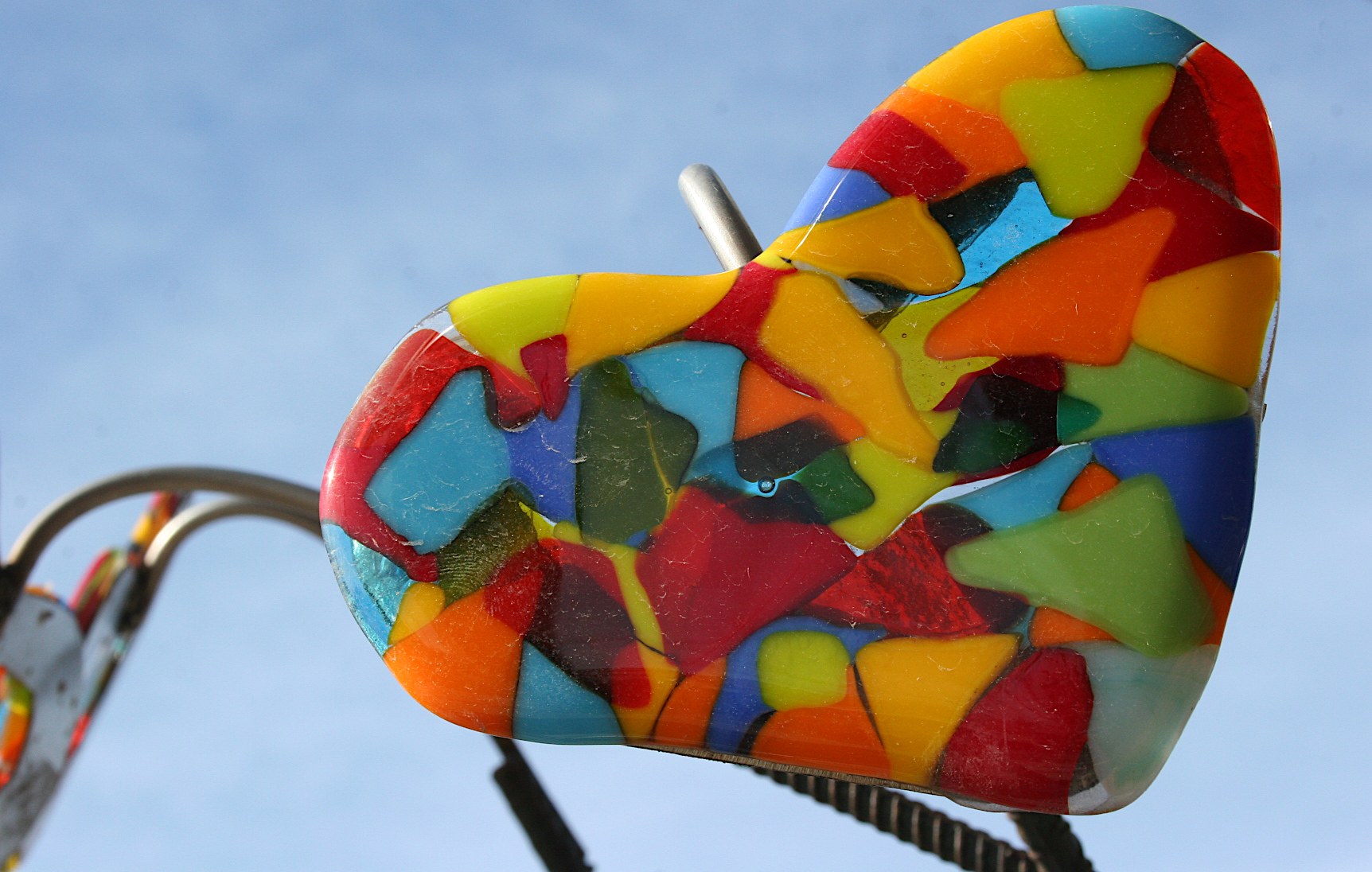
One of many hearts incorporated into a sculpture, “Spreading the Love” by Geralyn Thelen and Dale Lewis, located in downtown Northfield, Minnesota. (Minnesota Prairie Roots copyrighted file photo 2022)

Beyond reflecting on this date in history, I’ve tried to educate myself by reading, a skill most slaves were denied. Reading, whether stories written by reliable media, nonfiction or even fiction rooted in history, opens my mind to understanding. And with understanding comes compassion and an unwillingness to remain silent.

Too many times during my 60-plus years of life I’ve seen (think Confederate flags) and heard the animosities expressed toward people of color. And while this doesn’t apply specifically to Black people and slavery, I will speak up if someone starts bashing our local immigrant population with false claims and other unkind words. I fully recognize that, because my skin is colorless, my life is likely easier without preconceived ideas/prejudices/denied opportunities.

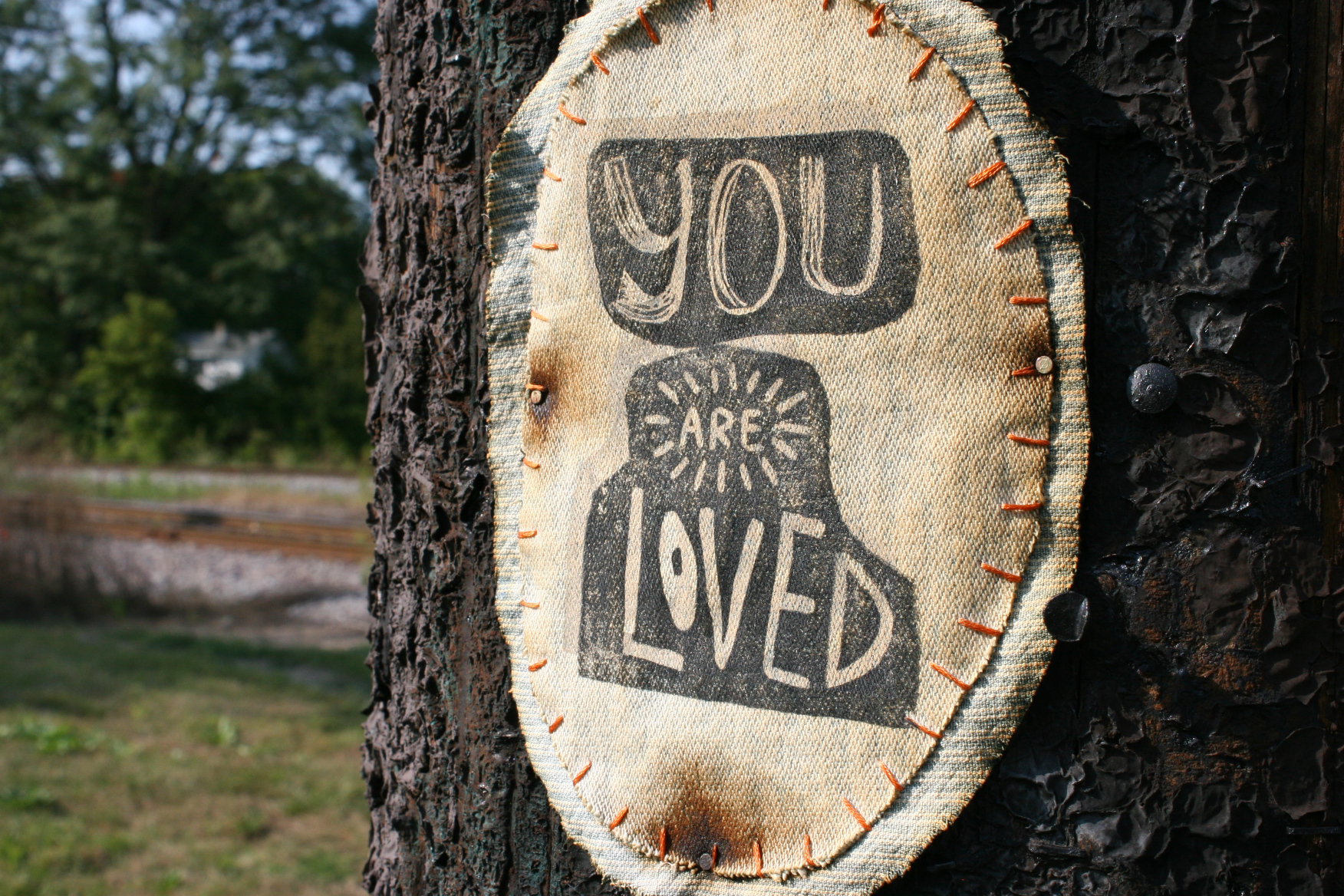
Love this uplifting message posted along a recreational trail in the Atwood Neighborhood of Madison, Wisconsin. (Minnesota Prairie Roots copyrighted file photo)

I appreciate that thoughts in this country are shifting, that we as a people are acknowledging past wrongs, that we’re trying. On the flip side, I see, too, hatred rising in ways I would never have imagined possible.

I admit that I grew up in a household where my father occasionally used the “n” word. It hurts to write that. The “n” word was part of his rural vocabulary, of the time, of growing up among others just like him. White. I grew up similarly, totally surrounded by those of Scandinavian, German, Polish, Irish and other descent, none with roots in Africa.

But I moved away, grew my knowledge and experiences, grew my exposure to new ideas and people and places. I’ve also gained insights into the challenges Blacks face from a biracial son-in-law. Today I live in a diverse neighborhood of Americans who are White, Latino, African…and I’m thankful for that. They carry, in their family histories, struggles and joys, the imprints of those who came before them. Today I honor those African Americans in Texas who 156 years ago first celebrated their freedom from slavery with “Jubilee Day” on June 19, 1866. And I honor all those slaves forced into lives not of their choosing, without freedom, but determined to be free.

© Copyright 2022 Audrey Kletscher Helbling


Thoughts & reflections on Juneteenth June 19, 2021

A chair placed before a Stephen Somerstein photo offers a spot to contemplate. Minnesota Prairie Roots copyrighted photo 2015.

IT’S A MEMORABLE IMAGE of an empty chair placed before a photo in the exhibit, “Selma to Montgomery: Marching Along the Voting Rights Trail.” In 2015, I viewed the traveling exhibit that visually highlights the Civil Rights movement and the photography of Stephen Somerstein.

Now, six years later, the contemplative photo I framed and shot with my Canon EOS 20-D in the Flaten Art Museum at St. Olaf College connects to our new federal holiday, Juneteenth. June 19 commemorates the end of slavery—the date in 1865 when Union soldiers informed slaves in Galveston, Texas, that they were free. Two-plus years after President Abraham Lincoln issued the Emancipation Proclamation freeing all enslaved persons held in states that had seceded from the Union.

That strong visual of the empty chair before that Somerstein photo sparks within me the desire, the need, to look deep within myself, and then beyond myself. To learn. To begin to understand in some small way what it means to be Black in America. To read the history. To recognize how slavery affected generations of families. How the hurts and wrongs of yesterday remain.

The official declaration of Juneteenth as a federal holiday certainly prompts me to research, reflect and contemplate. But I hope this new national observance initiates community conversations that bring change in a nation reeling from racial issues and injustices. It truly takes each of us at a grassroots personal level to effect change.

Recently, I listened as an elderly white woman spouted angry words about George Floyd, murdered by a Minneapolis police officer in May 2020. She claimed that Floyd was being portrayed as a “saint” when he was “nothing but a criminal.” I felt my blood pressure rising as she continued her rant about all the shootings in Minneapolis and how thankful she was that she didn’t live in the Cities. She missed the point of the protests—over police brutality, over racial injustices, over the needless death of a Black man (yes, one with a criminal record) while in police custody. I walked away. And maybe I shouldn’t have. Maybe I should have stayed and tried to discuss this with her. But I knew my efforts would prove futile. She saw this all as a metro, not a rural, “problem.”

I disagree. We are all human. No matter where we live, we ought to care about how others are treated, whatever their skin tone. Perhaps today, Juneteenth, we can sit quietly for a bit, contemplate and reflect on life in America today. How can we improve this country, starting right in our own neighborhoods and communities? Within ourselves.

© Copyright 2021 Audrey Kletscher Helbling