Minnesota Prairie Roots

Writing and photography by Audrey Kletscher Helbling

Reflecting on the legacy & celebrating the work of Martin Luther King, Jr. January 16, 2025

I took this photo of a student watching a video of Martin Luther King, Jr. in the exhibit “Selma to Montgomery: Marching Along the Voting Rights Trail” at St. Olaf College in 2015. It was an especially powerful exhibit. (Minnesota Prairie Roots copyrighted file photo 2015)

AS MARTIN LUTHER KING, JR. DAY approaches, I feel such gratitude to this activist, this civil rights leader, this man of integrity, love, justice and peace who left this world a better place. King inspires me to be better, live better, do better.

I appreciate that King is celebrated not only on a national level, but also locally in our cities and small towns. Even without a local celebration, we can each do our part to honor him by taking a moment to reflect on King’s legacy. His words inspire. As a writer, I especially value how eloquently he spoke with such power, passion and conviction.

His messages continue to resonate.

“Darkness cannot drive out darkness, only light can do that. Hate cannot drive out hate, only love can do that.”

“Injustice anywhere is a threat to justice everywhere.”

“I have a dream…”

And then there’s this quote, unfamiliar to me until now, but, oh, one that I find particularly fitting for each and every one of us: “Life’s most persistent and urgent question is, ‘What are you doing for others?’”

Visitors could photograph themselves at the Selma exhibit and express their thoughts. (Minnesota Prairie Roots copyrighted file photo 2015)

The community of St. Peter is taking that King quote and running with it on Monday, January 20, during an MLK Day of Service. The St. Peter Good Neighbor Diversity Council and Gustavus Adolphus College are partnering in this event to “foster a ‘Beloved Community’ and address issues of social justice and equity.” I love the word choices of “Beloved Community.” Already that shows me a depth of care for one another that will thread through Monday and beyond.

MLK Day in St. Peter begins with information shared about local service opportunities from 11:30 a.m.-1 p.m. in the campus center at Gustavus. Then later, folks can gather to share stories and conversations about King’s dream and how that is not yet realized. That’s from 1-2:30 p.m. in the Center for Inclusive Excellence at Gustavus and from 7-8:30 p.m. at the St. Peter Community Center.

To promote service and conversations personalizes this, takes the day well beyond just a commemoration.

Opinions expressed in the exhibit polling place at the Selma exhibit. (Minnesota Prairie Roots copyrighted file photo 2015)

Over in Northfield, the Northfield Human Rights Commission is celebrating MLK Day with a 7-8 p.m. gathering at the high school. The theme, “Mission Possible: Protecting Freedom, Justice and Democracy in the Spirit of Nonviolence 365” seems a fitting title for this event. Freedom. Justice. Democracy. Nonviolence. All are important and relevant words to carry with us 365 days of the year.

Minneapolis City Council member Robin Wonsley, a person of color who hails from Chicago, studied at Carleton College in Northfield and worked on racial justice and worker’s rights for several organizations, is the keynote speaker.

Additionally, and perhaps the aspect I appreciate most about the Northfield event, is a presentation of the annual (since 1998) Northfield Human Rights Award. That goes to an area individual, group or organization that has contributed to the advancement of human rights in Northfield. I think people need to be recognized when they’ve worked to create a “Beloved Community” via advancing human rights.

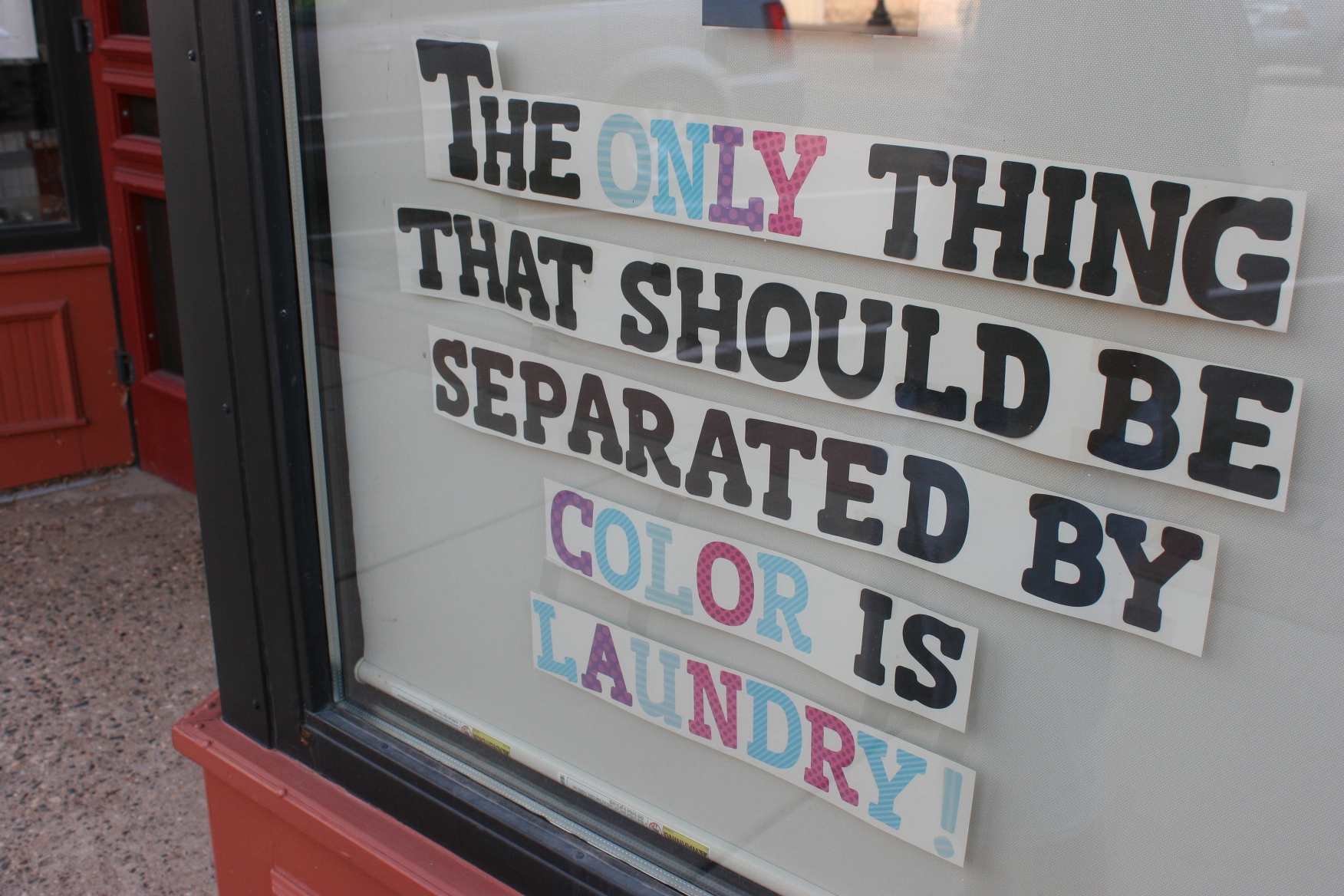
Photographed in August 2018 in the storefront window of a business in downtown Faribault, Minnesota. Minnesota Prairie Roots copyrighted file photo 2018)

In Owatonna, the Owatonna Human Rights Commission, Rainbowatonna, Alliance for Greater Equity and Riverland Community College are partnering to celebrate MLK Day with a lunch from noon to 1 p.m. at the Steele County History Center followed by a guest speaker. Seema Pothini, a Minnesota author and head equity specialist for the Equity Literacy Institute will talk.

Even if you can’t attend an event like one of the three I’ve highlighted here, I hope you will take time on Monday, January 20, to reflect. Consider the great work of Dr. Martin Luther King, Jr. Ponder how much has changed and how much work remains to be done. And then do what you can, no matter how big or how small, to live a life focused on love, justice, peace and service to others. Be the light that drives out darkness.

© Copyright 2025 Audrey Kletscher Helbling


Defining a Minnesota cold snap January 15, 2025

Filed under: Uncategorized — Audrey Kletscher Helbling @ 5:00 AM
Tags: , , , , , , , ,
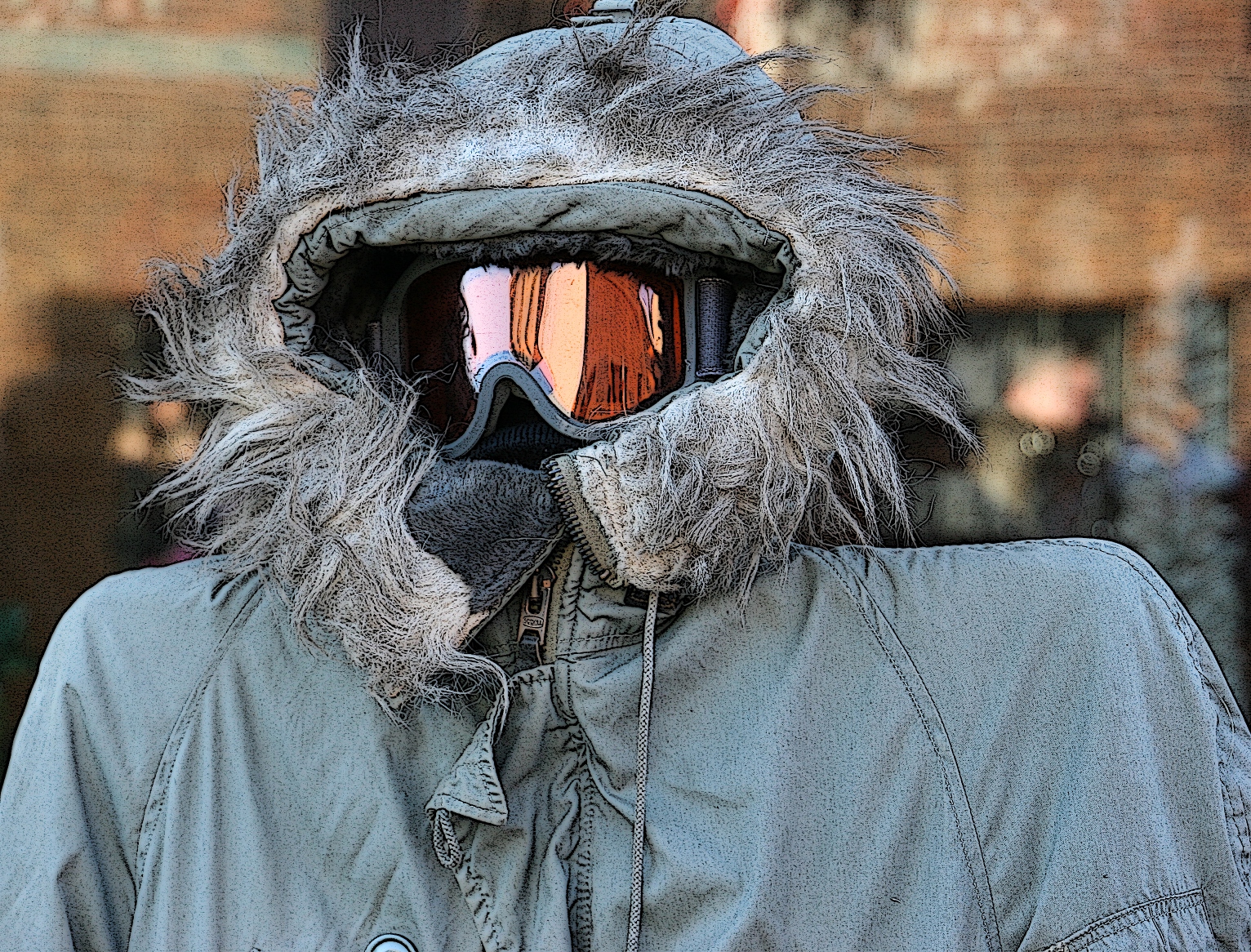
Bring out the cold weather gear like this photographed at a vintage snowmobile show during a past Winterfest. (Minnesota Prairie Roots copyrighted file photo)

WITH AIR TEMPS DIPPING into the single digit subzero range and windchills at around minus 25 degrees on recent mornings in Minnesota, we’ve been in a bit of a cold snap. We’ll get a several-day respite of 30 degrees before temps plunge again, dipping to even colder early next week when an arctic front moves in.

All this cold got me thinking about ways to define a cold snap. It’s not only about the way it feels, but also how it sounds and looks, yes, looks.

Here’s how a cold snap feels: Like a slap on the cheeks. Biting, bitter, unbelievably cold. Exposed skin can freeze in 10-15 minutes.

The cold of a cold snap also feels like ice on bare feet during a night-time trip to the bathroom. But even before that, cold feels like I-don’t-want-to-get-out-of-bed-from-under-these-warm-covers-because-the-house-is-cold. Our thermostat is set at 62 degrees at night. Comfortable, except during a cold snap when outdoor air seems to infiltrate the indoors.

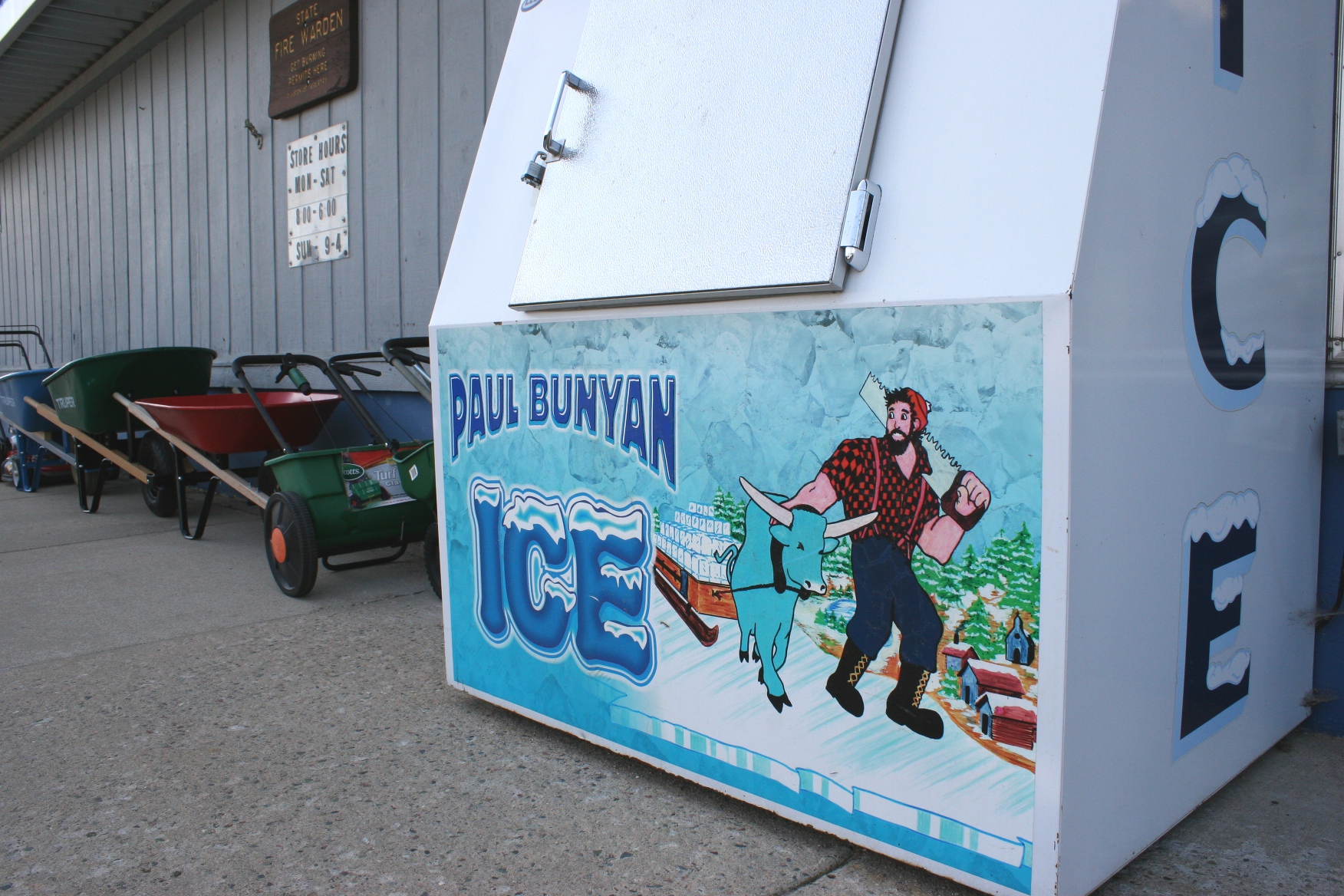
Legendary lumberjack Paul Bunyan has made wearing buffalo plaid flannel fashionable in Minnesota. Here he’s depicted on an ice machine outside Thurlow Hardware and Rental, Pequot Lakes. (Minnesota Prairie Roots copyrighted file photo)

These are the days of layering, of pulling out the warmest flannel or fleece. I wear a tee, topped by a flannel shirt, topped by a sweatshirt or sweater. Randy has pulled out his heavy duty quilt-lined flannel shirt that visually widens his girth. Who cares about fashion? Not me. The goal is to stay warm.

In the evenings, with the thermostat set at 68 degrees, we find additional warmth under fleece throws or, whoever grabs it first, under an especially warm fleece-lined denim quilt. We opt not to crank up the heat in an effort to keep our energy bill down. Even with that, heating an old house with natural gas gets costly.

Chicken Wild Rice Soup, one of my favorite soups, served at a fundraiser in St. Peter years ago. I made a batch of this soup earlier this week. (Minnesota Prairie Roots copyrighted file photo)

A cold snap feels like dry, itchy skin; aching joints; a parched throat. I’m drinking more water and tea. Water flowing from the tap first thing in the morning is ice cold. I’m cooking more soups and comfort foods like Chicken Wild Rice Soup and lasagna.

These deeply cold mornings, Randy warms the van before leaving for work. The sound of tires on the street past our house carries a sharpness and, if snow layers the pavement, tires crunch. Bitter cold holds a distinct, almost indescribable, sound.

Frost art on an upstairs window during a past winter. (Minnesota Prairie Roots copyrighted file photo)

Inside and outside, a cold snap is visible. I see it in the line of frost edging the bottoms of exterior doors. I pull a rag rug snug against the lower edge of the front door to block the draft. I see cold in the intricate frost patterns painted on bedroom windows upstairs.

These cold winter days have me dreaming of summer days at a central Minnesota lake cabin. (Minnesota Prairie Roots copyrighted file photo July 2020)

And when I look outside from my relatively warm house, it simply looks cold, the sky clear, the bright sunshine only an illusion of warmth. For many Minnesotans, though, warmth is a reality as residents escape to warmer places like Arizona, Texas and Florida. Whether for a week, a month or the entire winter, these vacationers and snowbirds seek a break from the bitter cold and snow of a Minnesota winter.

I can’t help but think about those experiencing homelessness, including right here in Faribault. Where are these individuals living, sleeping? Surely not in the tents I’ve seen pitched along the river bottom. In the metro area, facilities are opening as warming centers. So, yeah, even though I’m not fond of this cold snap, at least I have a home.

© Copyright 2025 Audrey Kletscher Helbling


Remembering Mom three years after her death January 13, 2025

Me with my mom in January 2020, right before COVID restrictions stopped visits to care centers. I saw little of Mom in the final years of her life due to the pandemic. (Minnesota Prairie Roots copyrighted file photo January 2020 by Randy Helbling)

TODAY, JANUARY 13, MARKS three years since my mom died. I hadn’t intended to write about this anniversary date. But then two friends blogged on topics that changed my mind.

My dear friend Beth Ann from North Carolina, who blogs at It’s Just Life, writes today about observing a grocery store encounter between a daughter and elderly mother that reminded her of her sweet mom whom she lost several years ago. The point of Beth Ann’s post is that grief comes in the most unexpected of moments and hits you hard. She’s right.

Hot fudge pudding cake slathered with real whipped cream and topped with sprinkles. (Minnesota Prairie Roots copyrighted file photo)

Then my friend Sue, who lives in Minnesota, winters in Arizona and blogs primarily about food at Ever Ready, published a post featuring Hot Fudge Sundae Cake. Waves of nostalgia and grief swept over me as I scrolled through Sue’s post. Hot Fudge Pudding Cake, as my family called this delectable, easy-to-make dessert, was a favorite of Mom’s and of me.

Neither Sue or Beth Ann could have known I would be reading their words on the third anniversary of Mom’s death. But I did. And it was meant to be because my grief needed an outlet. My friends’ writing prompted me to write this post.

The cover of the altered book created by Kathleen. (Minnesota Prairie Roots copyrighted file photo)

In the process of writing, I headed upstairs to pull a mini keepsake book from a closet. My friend Kathleen, formerly of Minnesota and now of Idaho, created the altered book for me following my mother’s death. She tapped into my blog to pull quotes, information and photos that truly summarize Mom’s life and our relationship. The book brims with words of love, faith, family and farm life, all at the essence of my mom. It truly is one of my most treasured possessions.

The first page in the keepsake book shows my mom holding me. (Minnesota Prairie Roots copyrighted file photo)

So on this day, while the grief of losing Mom feels particularly heavy, it is the creativity of friends that comforts me. Beth Ann’s “Right There in the Baking Aisle” resonates. Sue’s shared recipe brings smiles as I remember. And Kathleen’s keepsake mini altered book stirs within me so many memories of the mom I loved, and still love.

TELL ME: Who are you grieving? What can spark your grief? What comforts you in grief?

© Copyright 2025 Audrey Kletscher Helbling
 

Inspiring words for all of us from President Jimmy Carter’s funeral January 9, 2025

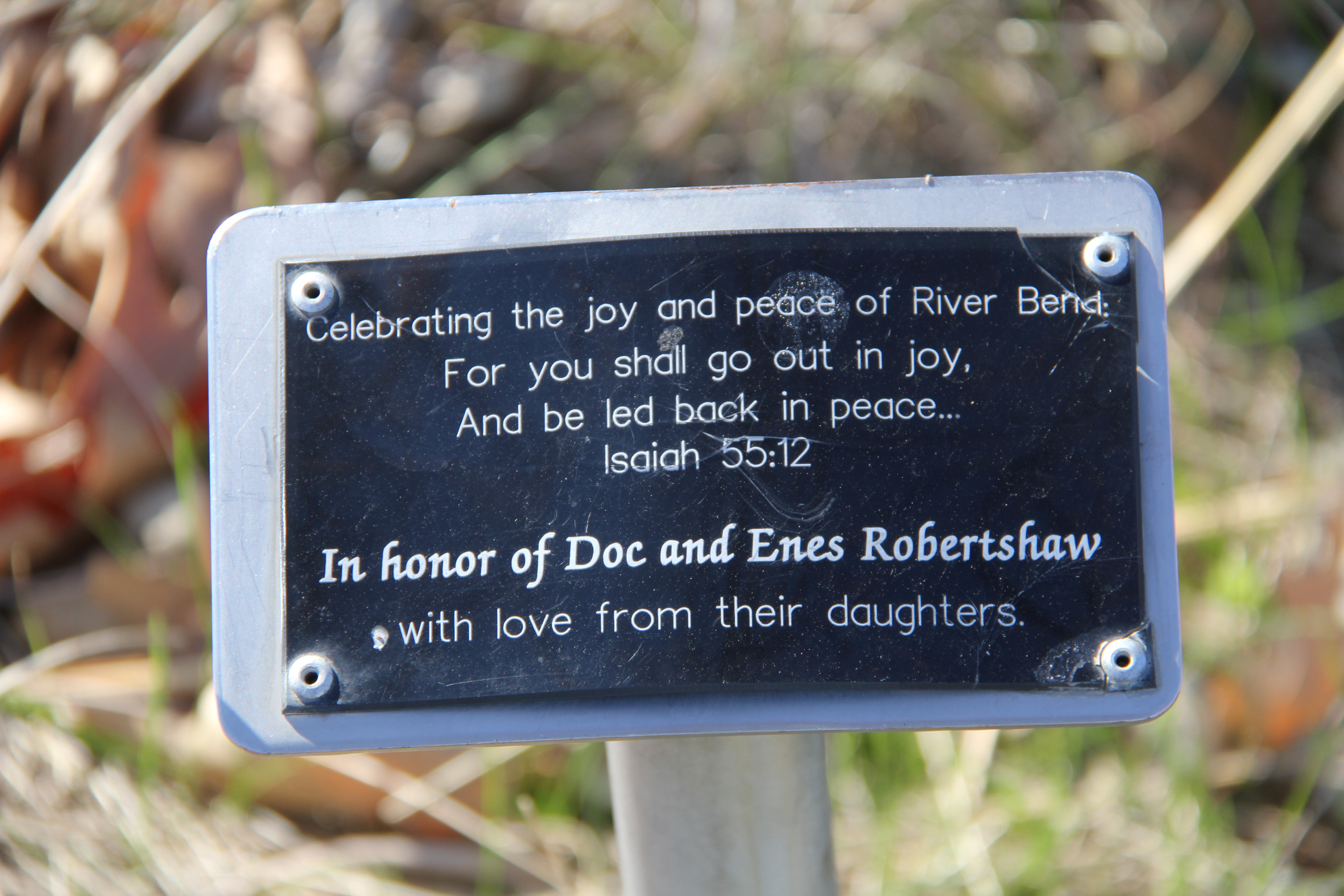
Encouraging words posted near a garden in the heart of downtown Faribault. (Minnesota Prairie Roots copyrighted file photo)

THEIR WORDS WERE MOVING, heartfelt, inspiring. Words that spoke to a selfless, loving, compassionate and kind man. Qualities we should strive to emulate.

It was not lost on me, as I watched the televised funeral of President Jimmy Carter this morning, that some of those attending the service at the National Cathedral in Washington DC have veered far from those traits. When you’re in public office, you are held to higher standards. Or at least you should be. I hope the politicians in the crowd were listening intently.

But I don’t want to get into a political discussion here. Rather, I want to offer a recap of the eulogies that really resonated with me.

A partial quote by civil rights leader and Senator John Lewis displayed on a window in Dundas, Minnesota. (Minnesota Prairie Roots copyrighted file photo)

I was especially impressed with the message delivered by Carter’s grandson Jason Carter. As I listened to this young man speak with such sincerity and eloquence, I thought, he should run for President some day. He spoke of a grandfather who was the same in public as in private, living a life of love and respect. Love. Respect. I can respect a man who, along with his wife, washed and reused plastic bags (as do I), still had a landline with dangling cord (I do) and wore crocs (I don’t). Jason brought laughter to the Cathedral while getting across his strong messages of faith, love and respect.

Peace art by Gracie Molden, Faribault Lutheran School, previously displayed at a student art show at the Paradise Center for the Arts. (Minnesota Prairie Roots copyrighted file photo)

Then there’s Ted Mondale who read the eulogy written a decade ago by his father, Vice President Walter Mondale. The stand-out lines written by the elder Mondale were these: that he and Carter “told the truth, obeyed the law and kept the peace.” Those words repeated in my head. I found myself thinking, if only all leaders held to those principles.

An especially bright spot in the heart of downtown Faribault is the Second Street Garden, a pocket garden with positive messages. (Minnesota Prairie Roots copyrighted file photo August 2019)

President Joe Biden, a long-time friend of Jimmy Carter and likewise a man of faith, focused on strength of character. Carter was, he said, a man of character who treated everyone with dignity and respect. There’s that word again—respect. He called Carter “a practitioner of good works” who followed the guideline of “love thy neighbor as thyself.” That statement followed Biden’s comment that faith requires action. I agree. There’s no doubt Carter lived his faith given his humanitarian work. Carter, Biden said, lived a life filled with the power of faith, hope and love.

From my personal art collection, peace dove art by Jose maria de Servin. (Minnesota Prairie Roots copyrighted file photo)

The Rev. Andrew Young, former US ambassador to the United Nations, spoke of a President who grew up as a minority in Sumter County, Georgia, among the majority Black. He celebrated Carter’s ability to get along with everyone, saying the President loved all of God’s children.

Certainly, many additional meaningful words were shared. But these are the messages that struck me as specific, yet broad. Words for all of us. Words that should inspire us to live better, be better.

It was fitting, too, that the gospel reading came from Matthew 5:1-16. That includes The Beatitudes from Jesus’ sermon on the mount and the four verses following. Blessed are…the poor…the meek…the peacemakers… Blessed are those who mourn.

On this national day of mourning for 100-year-old President Jimmy Carter, I feel inspired. Inspired to let my light shine (Matthew 5:16), not in a spotlight-on-me kind of way, but as someone who can light the world by being kind, caring and compassionate. By living a life of love and respect.

© Copyright 2025 Audrey Kletscher Helbling
 

Honoring President Jimmy Carter & a related personal story January 8, 2025

President Jimmy Carter in 2014. (Photo credit: LBJ Presidential Library)

HONEST. COMPASSIONATE. HUMBLE. All describe President Jimmy Carter, who died December 29, 2024, at the age of 100 and whose national funeral will be held Thursday at the Washington National Cathedral. A private funeral and burial will follow in Plains, Georgia.

In many ways, the name of Carter’s hometown, Plains (minus the “s”), describes this soft-spoken man. He was the son of a peanut farmer, grew up in a house without electricity or indoor plumbing, took over the family farm upon the death of this father. Having grown up on a family farm, in a home without a bathroom and closely rooted to the land, I understand Carter’s plain beginnings.

That Carter would go on to become governor of Georgia, the 39th President of the United States, winner of the Nobel Peace Prize and a beloved humanitarian proves that anyone can come from the plainest of places and make a positive difference in this world, emphasis on the word “positive.”

Peace on a tombstone at Valley Grove Cemetery, rural Nerstrand, Minnesota. (Minnesota Prairie Roots copyrighted file photo 2024)

BUILDING A LEGACY OF SERVICE

Certainly, Carter was not perfect—no one is—but the legacy he leaves is, at its core, that of service to others. We should all strive for that. To do good. To help others. To show love, kindness and compassion. For Carter, nowhere was that more evident than in his post-presidency work with Habitat for Humanity. He didn’t just pose for photo ops. He picked up a hammer and actually helped build Habitat houses.

He also built world peace. During his presidency, Carter helped negotiate a peace treaty between Israel and Egypt in 1979. His efforts led to signing of the Panama Canal Treaty in 1977. His work in the areas of peace, democracy, human rights, and economic and social development earned him that coveted Nobel Peace Prize.

Blessed are the peacemakers” fits President Jimmy Carter. This is a tombstone at Valley Grove Cemetery, rural Nerstrand. (Minnesota Prairie Roots copyrighted file photo 2024)

AN INTERNATIONAL CRISIS & MY CONNECTION

I was just finishing college and starting my career in journalism when Carter was in and ending his presidency. In 1981, while working as a newspaper reporter for the Mankato Free Press, I covered a major national event with a Carter connection. That was the homecoming of Bruce Laingen, one of 52 Americans held hostage for 444 days in Iran. Laingen, a native of Minnesota, was the top American diplomat at the U.S. Embassy in Tehran when protesters stormed the embassy in November 1979. Carter tried unsuccessfully to get those hostages released. On January 20, 1981, the day President Ronald Reagan was sworn into office, the hostages were finally freed. The timing of that release was obviously deliberate. Carter’s re-election bid failed in part due to the hostage crisis.

In my work as a reporter for the Free Press’ St. James News Bureau (my apartment) I covered the southern Minnesota angle on that international crisis. I drove from St. James to nearby small town Odin several times to interview Arvid Laingen at his business, the Odin Feed Mill. We talked about his brother Bruce and his captivity in Iran. I remember photographing Arvid against the feed mill backdrop, American flag draped from the building. When Bruce and the other hostages were released, I joined my regional editor and a Free Press photographer in covering Laingen’s homecoming parade in Odin. Well wishers lined the streets on that cold winter day. Yellow ribbons, which had become a national symbol of hope during the hostage crisis, ringed trees.

My work as a young journalist for a regional southern Minnesota daily newspaper connects me indirectly to President Carter. I admire Carter’s efforts to free the hostages. I can appreciate how defeated he must have felt as days ticked by and the Americans remained in captivity. But he did not let defeat define him. Carter went on to do incredible work worldwide after leaving the highest office in the country. Anyone who remains humble and serves selflessly earns my respect. Carter was clearly a man of integrity, of principles, of faith, someone who never forgot his roots. If only others in public office followed his path of plainness…

© Copyright 2025 Audrey Kletscher Helbling


A traffic stop & conversations about race & identity January 7, 2025

Book cover sourced online

EARLY ON A RECENT WEEKDAY MORNING, my husband was pulled over by a deputy sheriff while driving to work. Randy had no idea why he was being stopped on the edge of Faribault. The officer who approached the passenger side of our rusty 2005 white van and rapped on the window did not immediately tell Randy why he pulled him over.

But the questions and actions that followed left me unsettled and thinking about what could have unfolded. You see, I was in the middle of reading Our Hidden Conversations—What Americans Really Think About Race and Identity by Michele Norris, creator of The Race Card Project. That partially prompted my adverse reaction.

As I listened to Randy’s retelling of the traffic stop, I felt thankful that he is a past-middle-aged White guy. I felt a bit guilty for thinking that. But…

Randy, in his work jacket and uniform, was just driving to work at his job as an automotive machinist when he was pulled over and questioned. (Minnesota Prairie Roots copyrighted file photo)

DO YOU HAVE A WEAPON?”

After requesting the usual identifying documents, the officer asked Randy where he was going, where he worked, whether his address was current and how long he’s lived there. All seemed odd questions. But the next question proved even more unusual. The officer, peering into the van, asked Randy if he had a weapon. Thinking he was referring to an item on the floor between the seats, Randy leaned down and said, “No, it’s a snow brush.”

My immediate reaction to this part of the story was this: “You did what? You could have been shot!”

The deputy wasn’t referencing the brush on the floor, but what he thought was a weapon lying on the passenger seat. He reached inside the van and moved a pair of gloves aside to reveal the case for Randy’s glasses. The supposed gun.

I wasn’t there. I don’t know what was going through the deputy’s mind before and during the traffic stop. But I do recognize what could have happened had the cop felt threatened.

Only after all of this and after the deputy ran a license check did he tell Randy why he’d been stopped—because the brake light in the middle of the tailgate door was not working. Randy has since replaced the bulb.

Posted on a house in small town Dundas. (Minnesota Prairie Roots copyrighted file photo 2020)

THE “WHAT IFS?”

Why am I sharing this story? It’s not because I’m anti-law enforcement. I appreciate and respect our police and the important work they do in serving our communities and keeping us safe. Yet, had Randy been a person of color in the wrong place on the wrong day with an officer who perceived his actions as a threat, this traffic stop may have ended differently. Again, I’m not criticizing this specific cop or law enforcement in general.

Admittedly, Randy should not have reached toward that snow brush. But it is not ingrained in his mind to limit his movements, to think about how his actions may be perceived. Black men, especially, cannot risk such behavior. That I understand based on conversations with my son-in-law, who is biracial; on traffic stop shootings of Black men; and on the stories shared in Our Hidden Conversations—What Americans Really Think About Race and Identity.

A Dakota prayer focuses on reconciliation at the Dakota 38 Memorial in Reconciliation Park, Mankato. (Minnesota Prairie Roots copyrighted file photo November 2023)

READ OUR HIDDEN CONVERSATIONS

If you read one book in 2025, I encourage you to read this one. The author, who grew up in Minneapolis, is a well-respected, award-winning journalist and former host on National Public Radio. For 14 years, Michele Norris has collected responses to this prompt: Race. Your story. 6 words. Please send. Those responses, submitted on specially-printed postcards and online, shape Our Hidden Conversations. This ranks as one of the most powerful books I’ve ever read on race and identity and should be required reading for every American.

Norris does not focus solely on Blacks in her collection of stories shared by thousands. She also writes about the discrimination, the prejudices, the challenges faced by many others. One entire section, for example, is devoted to Indigenous Peoples. That includes information about long ago Indian boarding schools (specifically the one in Morris, Minnesota) and about the 38 Dakota men who were hung in Mankato, Minnesota following the U.S.-Dakota War of 1862. She writes about Japanese internment camps in America during WWII. She writes about challenges faced by people with disabilities. This is hard stuff. But so necessary to read, to understand the backstory, the history and how things have, and have not, changed. The author writes about lynching, about adopting Black babies, about Blackness perceived as a threat…

The lengthier sections penned by Norris are interspersed with shorter stories from those responding to The Race Card Project prompt. The six word responses are scattered throughout the pages, printed exactly as submitted. One mother wishes her Black son was a girl.

An especially bright spot with an uplifting message in a downtown Faribault pocket park. (Minnesota Prairie Roots copyrighted file photo 2019)

PAINFUL & REVEALING

I cannot even begin to tell you how painful it was at times to read the heartbreaking words printed in this book. It seems unfathomable that we as human beings can treat others with such inhumanity simply because of skin color or other differences. Yet, I saw myself in some of those words, specifically in the subtle (and sometimes not so subtle) racially-charged words that I heard and repeated as a child. I didn’t understand then that the rhyme I was reciting or the term my dad used for Brazil nuts were offensive. I recognize that now.

Like many others quoted in this book, I am determined to grow my knowledge, listen, treat others with respect and compassion, recognizing that we can all do better. I want that for my soon-to-be-born grandson, whose father is biracial, whose mother is White. I want him to grow up in a world where color matters not, where he is appreciated and valued for who he is (and not judged by his skin color), where he doesn’t have to think about what could happen if he is someday pulled over during a traffic stop.

© Copyrighted 2025 Audrey Kletscher Helbling

 

Reflecting on letters from first graders: All they wanted for Christmas December 31, 2024

Santa at Souba Greenhouse, Owatonna, during their “Christmas on the Farm.” (Minnesota Prairie Roots copyrighted file photo December 2024)

MAVERICK WANTED ONLY THREE THINGS for Christmas, so he wrote in a letter to Santa published recently in a Minnesota weekly newspaper. The first grader wanted a sled, a “lizard that climbs up the wall” and 100 packs of Cotton Candy Bubblegum. Did he get all three? I doubt it. But what Maverick did get from me was laughter, especially for that bubblegum ask. But, hey, I understand. I loved Bazooka bubblegum as a kid. Maverick and I would get along splendidly, if he agreed to share his bubblegum.

Every year I look forward to the letters to Santa Claus published in The Gaylord Hub, a small town weekly newspaper where I worked as a reporter and photographer fresh out of college with a journalism degree in 1978. Today that paper still arrives in my mailbox weekly, much to my delight. The community where I was affectionately called “The Cub from The Hub” will always hold a special place in my heart.

And those Santa letters, oh, those letters, what joy they bring me each December They are the stuff of a small town newspaper. I imagine parents clipping the published letters and years later pulling out the yellowed newsprint to share with their grown children.

I’VE BEEN GOOD, SANTA. BUT MOM?”

“I have been good for 3 days,” writes Sibley East first grader Sophia before asking for a toy remote control plane. Three days? I wonder if Santa had to think about that statement. If anything, Sophia was apparently being honest.

But then there’s Adelyn, who wasn’t as much concerned about her behavior as her mom’s, although she claims to have been “good.” Adelyn asks Santa, “Is my mom on the naughty list?” Cue the laughter from me…and maybe Mom.

Cats and canines were a popular gift request to Santa. (Minnesota Prairie Roots copyrighted file photo)

ALL I WANT FOR CHRISTMAS…

First graders are, if anything, unfiltered and honest. And they don’t hesitate to ask for whatever they want. It seems a lot of these kids wanted pets—specifically ten asked for cats or kittens, six for dogs and one, a guiny (sic) pig. That last request came from May. My guess is that most kids did not get the animals they wanted, except those asking for a robot dog or a toy dog.

Then there were the unusual gift requests. Erik wanted a chainsaw. I expect Santa nixed that pretty quickly considering age appropriateness. Dalton asked for a diamond, a rather odd request from an elementary school student. Violett wanted a camera that looks like a unicorn. Is there such a thing? Oliver asked to “get in the Titanic for Christmas,” which I wouldn’t recommend even if the Titanic was still afloat.

Plated Christmas cookies at a holiday event in Faribault. (Minnesota Prairie Roots copyrighted file photo 2014)

Kaelyn asked Santa for an iPhone, a Barbie toy and 5 cookies. No problem there, except with the phone, which I wouldn’t give to any of the five first graders who asked for one. I think Santa may have felt the same. But the Barbie toy and cookies? No problem. Santa has plenty of cookies to share. He probably gave Kaelyn more than five. And he likely had enough Barbie goods to give away.

Alia and May’s requests for make-up, though, gave me pause and I bet it did for Santa also. No first grader needs make-up for her sweet little face.

Kids are always interested in Santa’s reindeer and the elves. (Minnesota Prairie Roots copyrighted file photo 2023)

SWEET WORDS FOR SANTA

I love how several kids proclaimed their love for Santa. “I love you, Santa!” exclaimed Holden. Such sweet words likely proved reaffirming for the overworked, underpaid Santa Claus. Kieren stepped up the compliments. “Santa, you are awesome!” he wrote. “Thank you for giving us presents.” Awww, gratitude goes a long ways with Santa as does praise for his reindeer. Gauge bravely asked if he could come to Santa’s house because he really wants to meet the elves.

Candy canes and Christmas go hand-in-hand, here theming a Christmas tree in Faribault’s Central Park. (Minnesota Prairie Roots copyrighted file photo December 2024)

AND THEN THIS REQUEST

And then there’s the letter from Allison, who said she’s been helping her mom with the baby. She asked for only one thing—a candy cane. That broke my heart. One. Thing. I hope Santa gave her a hundred candy canes, several dozen cookies and a surprise gift that brought Allison, a good, kind (her words) and selfless soul, unfathomable Christmas joy. She, among all those letter-writing first graders, deserved a special gift.

© Copyright 2024 Audrey Kletscher Helbling


The Christmas that wasn’t December 30, 2024

Filed under: Uncategorized — Audrey Kletscher Helbling @ 1:08 PM

Tags: , , , , , ,
This shows a snippet of a Christmas card I received in 2023. To me it represents the gathering of family, all back home for the holidays. (Minnesota Prairie Roots file photo 2023)

I WANT A CHRISTMAS DO-OVER. Yup, 2024 marked the Christmas that did not happen. I’m not referencing the real reason for Christmas of celebrating Christ’s birth, but rather family time together. Due to illness, my core family could not gather.

I was over my COVID by Christmas, testing negative the day prior. But by that time, my son, a son-in-law and the grandkids were ill with influenza, which they presumably picked up at an extended family holiday gathering. Many others became ill, too, following that event. I didn’t attend due to my COVID. Our daughter is sick now and the granddaughter is still recovering.

Tis the season to spread viruses. And this Christmas seems worse than any I can recall in recent memory.

A plane arrives at Minneapolis-St. Paul International Airport. (Minnesota Prairie Roots copyrighted file photo)

The hardest thing through all of this, besides missing celebrating Christmas, was not seeing my son until a week after he arrived in Minnesota from Boston. But I didn’t want him here while I had COVID. And then he got sick. Finally, by the end of Christmas week, my mama’s heart could hold no more sadness. Except for occasional coughing, Caleb was through the worst of his illness. I had to see him.

I bought flowers (not this particular bouquet) for my eldest daughter, who had been caring for a houseful of sick family all of Christmas week. (Minnesota Prairie Roots copyrighted file photo May 2016)

So off Randy and I headed to our eldest daughter’s house late Friday morning, Christmas gifts stuffed into a cardboard box, banana bread packed and a bouquet of flowers in hand for Amber. Upon our arrival 35 minutes later, we unloaded the goods into the entry, the daughter, son-in-law and grandkids keeping their distance in the living room. Caleb watched the kids open their gifts from him while Randy loaded his suitcase and backpack into our van. I stepped indoors briefly, then waited outside.

Once we were all out of the house, Izzy and Isaac came to the front window and waved goodbye. There would be no hugs, only those sweet waves, which was better than nothing.

At this point, I was just happy to see my son and have some time with him before he flew out two days later. He worried that he might make Randy and me ill. I told Caleb that we were willing to take the risk because I needed to see him. I think most mothers would understand that. I cherish my time with my son given we see each other only once or twice a year. I am not one of those moms fortunate enough to have her kids all living in their hometown or nearby. That said, I am aware that some moms are grieving children who have passed or are estranged or cannot, for whatever reason, return home for the holidays. I’m sorry for the sadness and pain they feel at a time like Christmas.

The Boston skyline photographed from Tufts University. Randy and I traveled there in 2016 to attend Caleb’s graduation. He now lives and works in greater Boston. (Minnesota Prairie Roots copyrighted file photo May 2016)

The time I had with Caleb was brief. But it was enough. There were meals together. Conversations. Tears. Laughter. Love, lots of love. An unexpected gift from him of a massive mandala he laser cut, stained and glued together brought me to tears. Hearts theme the art. To me it represents family love. And the love of a son. The son I had to see. The son I hugged good morning and goodnight and then goodbye early Sunday evening as we dropped him off at the Minneapolis-St. Paul International Airport for his flight home. Home to Boston. Not Minnesota.

© Copyright 2024 Audrey Kletscher Helbling
 

My Christmas message for you December 25, 2024

Filed under: Uncategorized — Audrey Kletscher Helbling @ 5:00 AM
Tags: , , , , ,
A HOPE Christmas ornament, which is too heavy to hang on the tree. So I hang it on a drawer knob. (Minnesota Prairie Roots copyrighted photo December 2024)

HOPE. It’s a word that holds expectations, the promise of something better. And it’s one of my favorite words.

Today, Christmas Day, my hope is that you are celebrating in a way that is joyful and meaningful to you. Perhaps you are with friends or family. Maybe you are alone, far from loved ones. Wherever you are, whatever you are doing, I hope you understand how much you are cherished. Every. Single. One. Of you.

The older I grow, the more I realize how much we need each other, how connections make life so much richer, better.

Through my writing and photography, I’ve connected with people I would not have otherwise “met.” I have forged friendships across the country that have widened my world to new places, new perspectives, new experiences. What a blessing.

Hope and blessings fill my life. Today, Christmas Day, as I celebrate Christ’s birth as a woman of faith, I also celebrate you and what you mean to me. You are a gift.

Merry Christmas to each of you! May hope and joy fill your day.

Audrey

© Copyright 2024 Audrey Kletscher Helbling
 

Forgiveness on December 26 December 24, 2024

This limestone sculpture by Thomas Miller depicts a Dakota warrior. It sits across from Reconciliation Park in Mankato at the Blue Earth County Library. (Minnesota Prairie Roots copyrighted file photo November 2023)

FORGIVE EVERYONE EVERYTHING.

Powerful words on a bench at the Dakota 38 Memorial in Reconciliation Park. (Minnesota Prairie Roots copyrighted file photo November 2023)

Those uppercase engraved block words, white against red on a stone bench at the Dakota 38 Memorial in the heart of downtown Mankato at Reconciliation Park, hold the strength of a people who really have no reason to forgive. But they choose to do so. And in forgiveness comes healing.

The names of the 38 Dakota men hung in Mankato are listed on the Dakota 38 Memorial. (Minnesota Prairie Roots copyrighted file photo November 2023)

December 26 marks the date in 1862 when 38 Dakota men were hung near this site along the Minnesota River in America’s largest mass execution. Originally, 303 Dakota were sentenced to death following “trials” (the quotes are intentional) after the U.S.-Dakota War of 1862. President Abraham Lincoln reviewed the list of those sentenced to death, approving the hanging of thirty-eight. Thousands gathered to watch the execution on the day after Christmas 162 years ago.

Up close, names of the Dakota who were hung. (Minnesota Prairie Roots copyrighted file photo November 2023)

This history I learned early on, but only from a White perspective and only because of my roots in southwestern Minnesota, at the epicenter of the war. I expect many Americans, including many Minnesotans, to this day know nothing of this conflict that killed hundreds of Whites and Dakota. Internment and exile of the Dakota followed. Native Peoples suffered because of the atrocities before and after the war.

A massive limestone sculpture of a white buffalo in Reconciliation Park represents the spiritual survival of the Dakota. (Minnesota Prairie Roots copyrighted file photo November 2023)

This is history I’d encourage everyone to study. And not just from a one-sided perspective. I won’t pretend that I am fully-informed. I’m not. I do, though, have a much better understanding than I did growing up. I’ve read, listened, learned. I know of stolen land, broken treaties and promises. Starvation. Injustices. Demeaning words like those attributed to a trader who told starving Dakota to “eat grass.” Andrew Myrick was later reportedly found dead, his mouth stuffed with grass.

A sign in Reconciliation Park directs visitors to the many sites around Mankato focused on reconciliation and remembrance. (Minnesota Prairie Roots copyrighted file photo November 2023)

But back to those three words on that stone bench in Mankato: FORGIVE EVERYONE EVERYTHING. The Dakota truly have no reason to forgive. But they choose to do so. I’ve learned that forgiveness is part of Dakota culture and beliefs.

An overview of the location of Reconciliation Park along Riverfront Drive in Mankato, along the Minnesota River and across from the public library. (Minnesota Prairie Roots copyrighted file photo November 2023)

In the month of December, the attitude of forgiveness extends beyond words in stone to an annual horseback ride honoring the 38+2 (two more Dakota were sentenced to death two years later). This year, two rides—The Makatoh Reconciliation & Healing Horse Ride and The Dakota Exile Ride, the first originating in South Dakota, the other in Nebraska—will end on December 26 with gatherings at Reconciliation Park and the Blue Earth County Library, located across from each other.

Just down the street from Reconciliation Park, murals on the Ardent Mills grain silos celebrate the diversity of Mankato, including that of the Dakota. (Minnesota Prairie Roots copyrighted file photo November 2023)

These rides focus on educating, remembering, honoring, healing and forgiving. Five powerful verbs when connected with the U.S.-Dakota War of 1862.
Katherine Hughes’ poem ends with the word “forgiveness.” (Minnesota Prairie Roots copyrighted file photo November 2023)

The poem “Reconcile,” written by Katherine Hughes and posted in Reconciliation Park, closes with this powerful verse: Hope for a future/When memories remain/Balanced by forgiveness.

A Dakota prayer in the park ends with the word “reconciliation.” (Minnesota Prairie Roots copyrighted file photo November 2023)

FORGIVE EVERYONE EVERYTHING.

#

FYI: Here’s the schedule for the December 26 events. A community gathering is set for 9 am-10 am at Reconciliation Park and the library. Horseback riders arrive at 10 a.m. A ceremony in the park takes place from 10 am-11:30 am. From 11:30 am-1 pm, a healing circle will happen at the library with discussion surrounding the events of December 26, 1862, covering the past, present and future. A community meal for the horseback riders, who rode hundreds of miles to Mankato, follows.

© Copyright 2024 Audrey Kletscher Helbling