Minnesota Prairie Roots

Writing and photography by Audrey Kletscher Helbling

A Saturday morning in small town Minnesota July 19, 2014

Filed under: Uncategorized — Audrey Kletscher Helbling @ 6:00 AM
Tags: , , , , , , ,

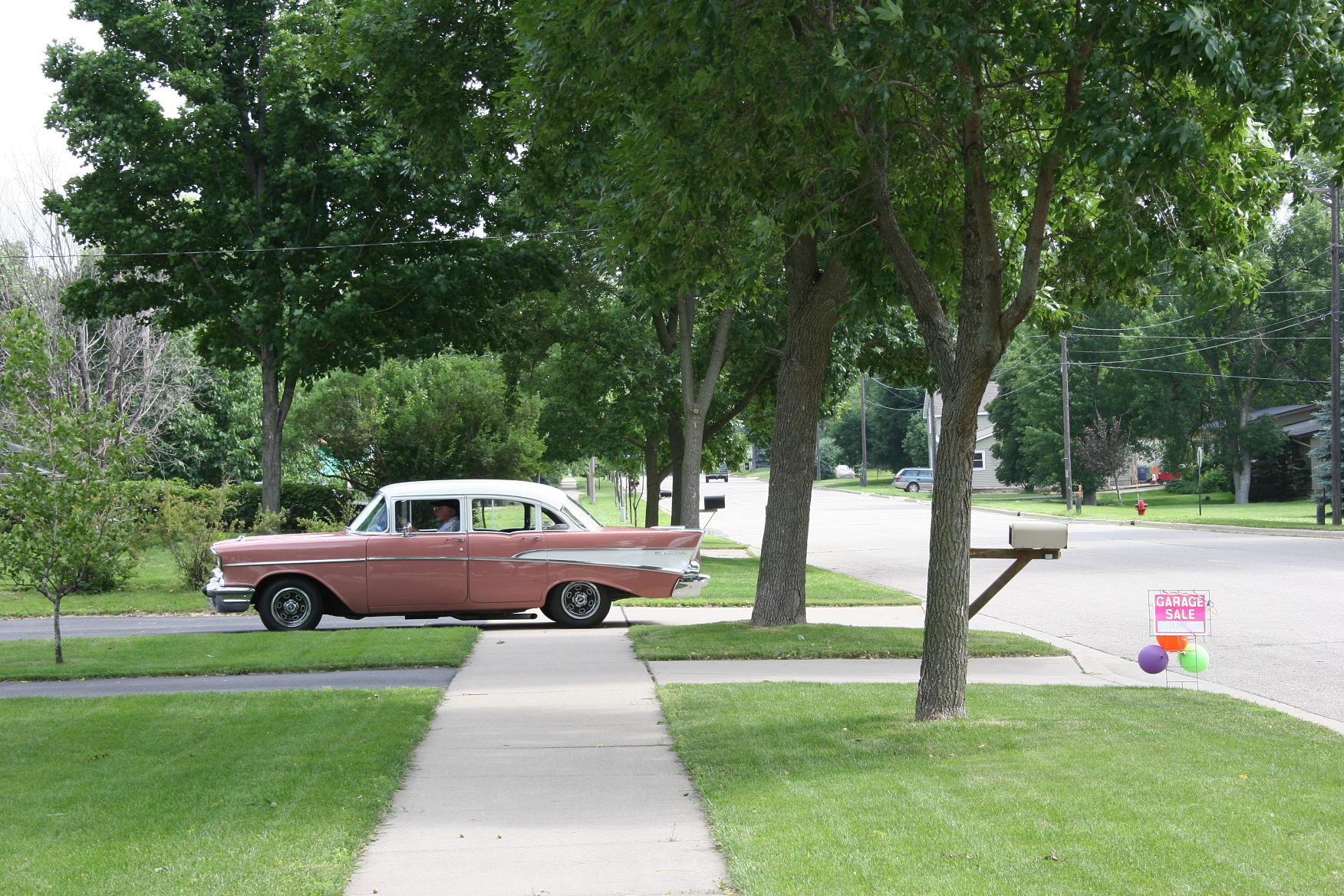
I DIDN’T BUY ANYTHING at this recent garage sale in Dundas. But I got this photo:


Garage sale in Dundas 2


I can’t quite put my finger on why I like this scene, this image.

It’s not because I’m some old car enthusiast, although I admire this shiny 1957 Chevy.

Rather it’s the serenity, I think, of a Saturday morning in a small town. This car collector had driven to Dundas for a car show, which was cancelled presumably because of the predicted rainfall. This scene speaks to me of small town living and contentment and simpler days when life was less hurried.

And I like, too, how the hue of the car is mimicked in the color of the garage sale sign. Not quite the same shade, but noticeable to my eye.

This photo could write a story. That’s my conclusion.

How does this scene speak to you?

Copyright 2014 Audrey Kletscher Helbling


Fabulous Fourth with family July 8, 2014

Filed under: Uncategorized — Audrey Kletscher Helbling @ 6:00 AM
Tags: , , , ,

FOR WEEKS I ANTICIPATED the Fourth of July. Not for the reason I should have, to celebrate our nation’s birth.

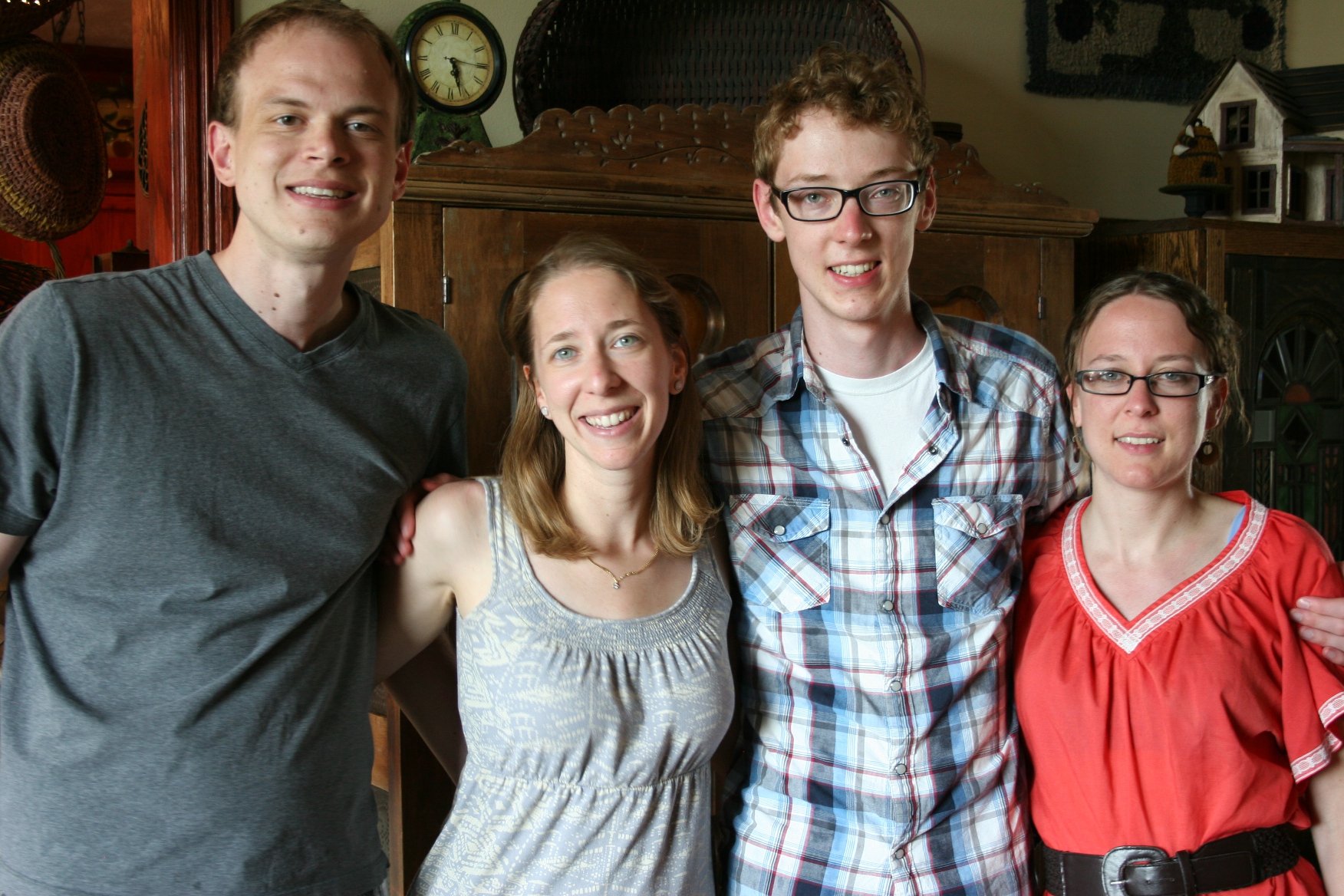
Son-in-law Marc, left, daughters Amber and Miranda, and son, Caleb.

Son-in-law Marc, left, with his wife (my daughter), Amber; son Caleb; and daughter Miranda.

But rather, I was looking forward to the holiday for the sole reason that my two daughters, son and son-in-law would be together for one day with my husband and me and my extended family.

With the son living in Boston and the second daughter 300 miles away in eastern Wisconsin, it is seldom we are all together. The last time was just before Christmas, for an evening.

Six months may not seem like a long time to be away from your kids. And it’s not in the span of time.

But, as a mother, I don’t think you ever fully adjust to the absence of the children you have loved even before birth.

I am blessed beyond measure by my family and am thankful for every moment we are together.

Yet, a certain melancholy creeps in. Without fail, I cry my eyes out every single time my daughter shuts the door on her red Chevy and my son rolls his luggage into the airport.

© Copyright 2014 Audrey Kletscher Helbling


Feeling unsettled in a rural Minnesota cemetery June 12, 2014

A TIME EXISTED when I avoided cemeteries. I was young then, unappreciative of their value from an artistic, historical and personal perspectives. And, if I’m honest, I’ll admit that I felt a bit afraid walking atop graves.

My thoughts have changed. Whenever my husband and I happen across a rural cemetery, we’ll often stop and wander.
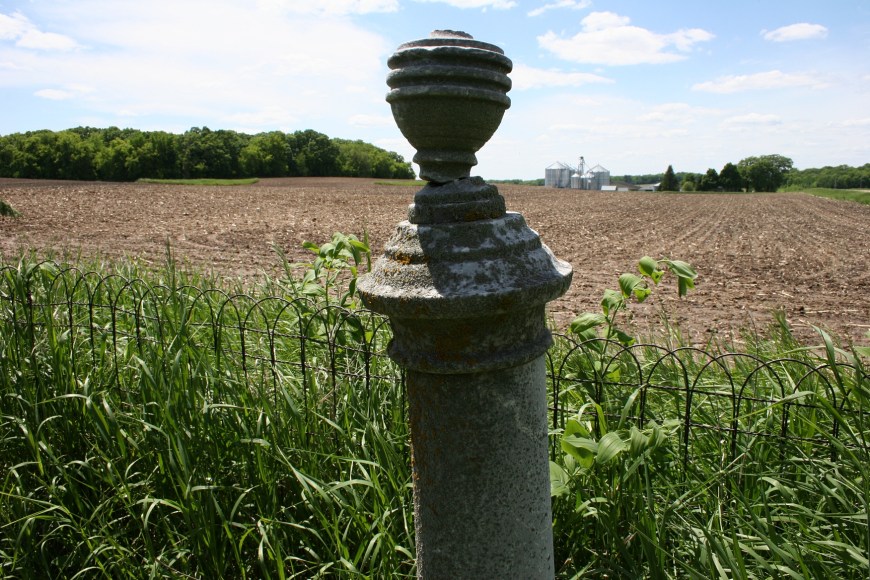
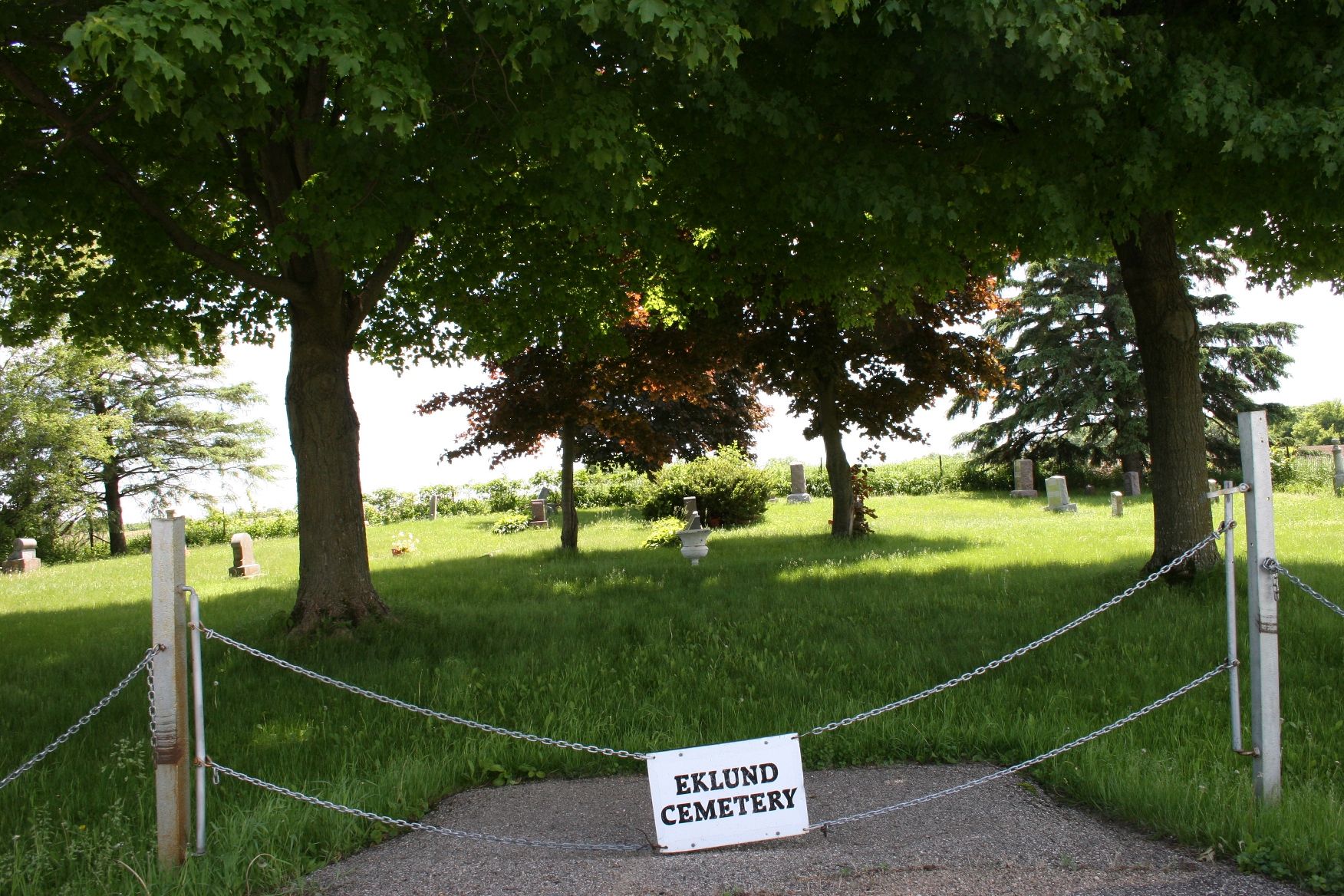
The aged Eklund Cemetery sits among farm fields in Walcott Township.

The aged Eklund Cemetery sits among farm fields in Walcott Township.

We did just that recently while in section 25 of Walcott Township in southeastern Rice County. This Minnesota township was named in honor of Samuel Walcott, an early, enthusiastic settler from Massachusetts. He returned to the East “after…his mind became distraught and he found an abiding place in an insane retreat in his native State.”

Randy, whose vision far surpasses mine, spotted the small final resting place along County Road 90, headed toward it and pulled into a field drive as no other parking exists.
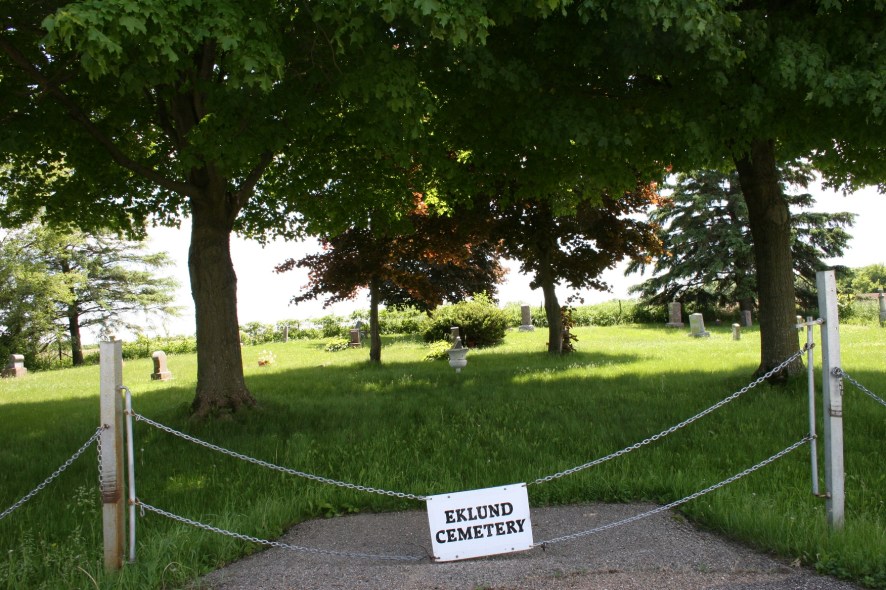
The unassuming entry to the Eklund Cemetery.

The entry to the Eklund Cemetery, which sits almost on top of the road.

Now I’ve explored many a country cemetery. But I’ve never had to step over a double stretch of chains to enter. That should have been my first clue that the Eklund Cemetery would trouble me.
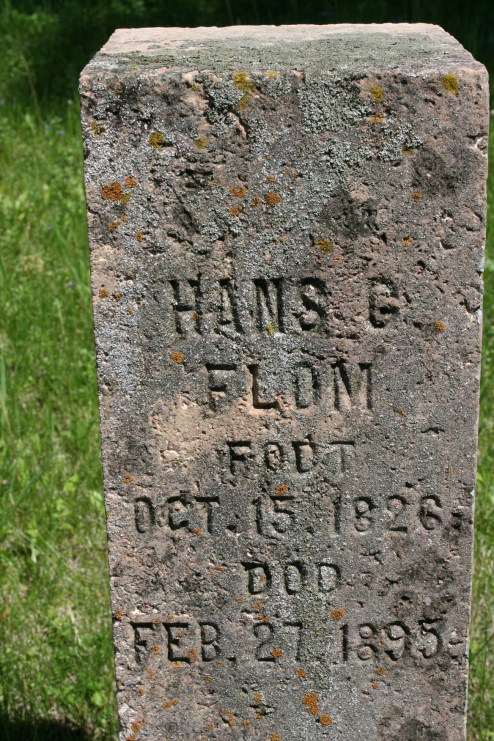
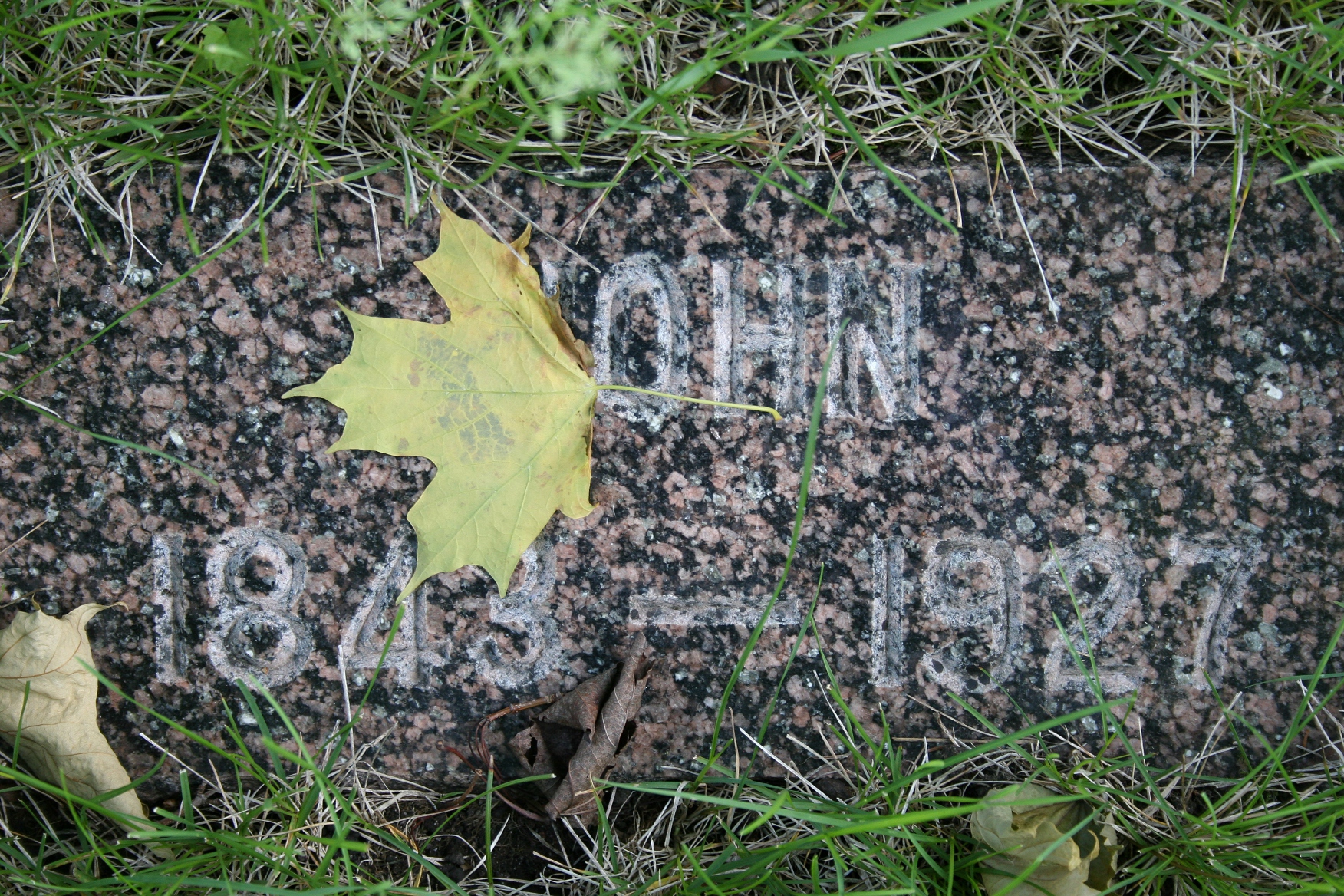
The old dates impressed me.

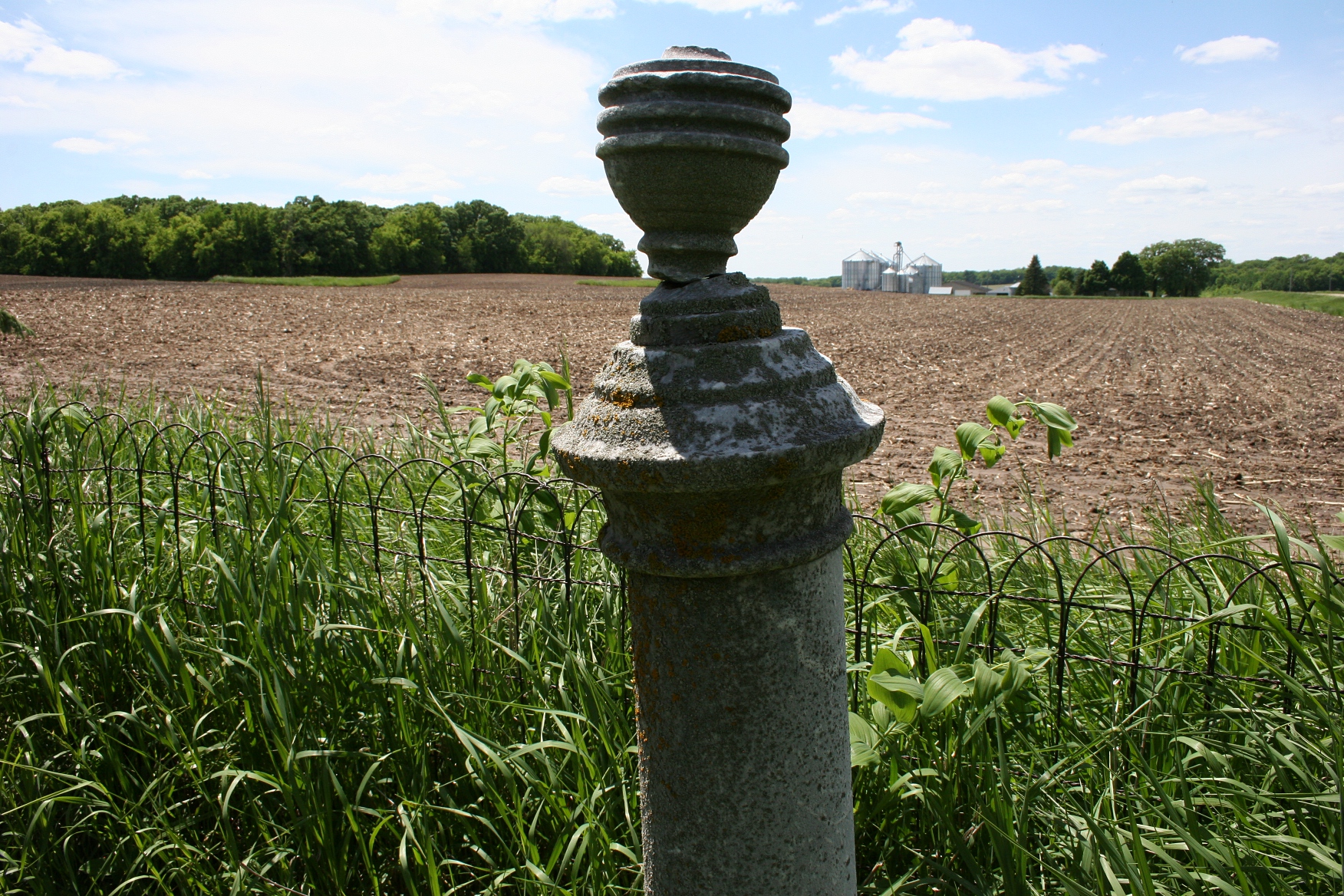
The old dates impressed me.

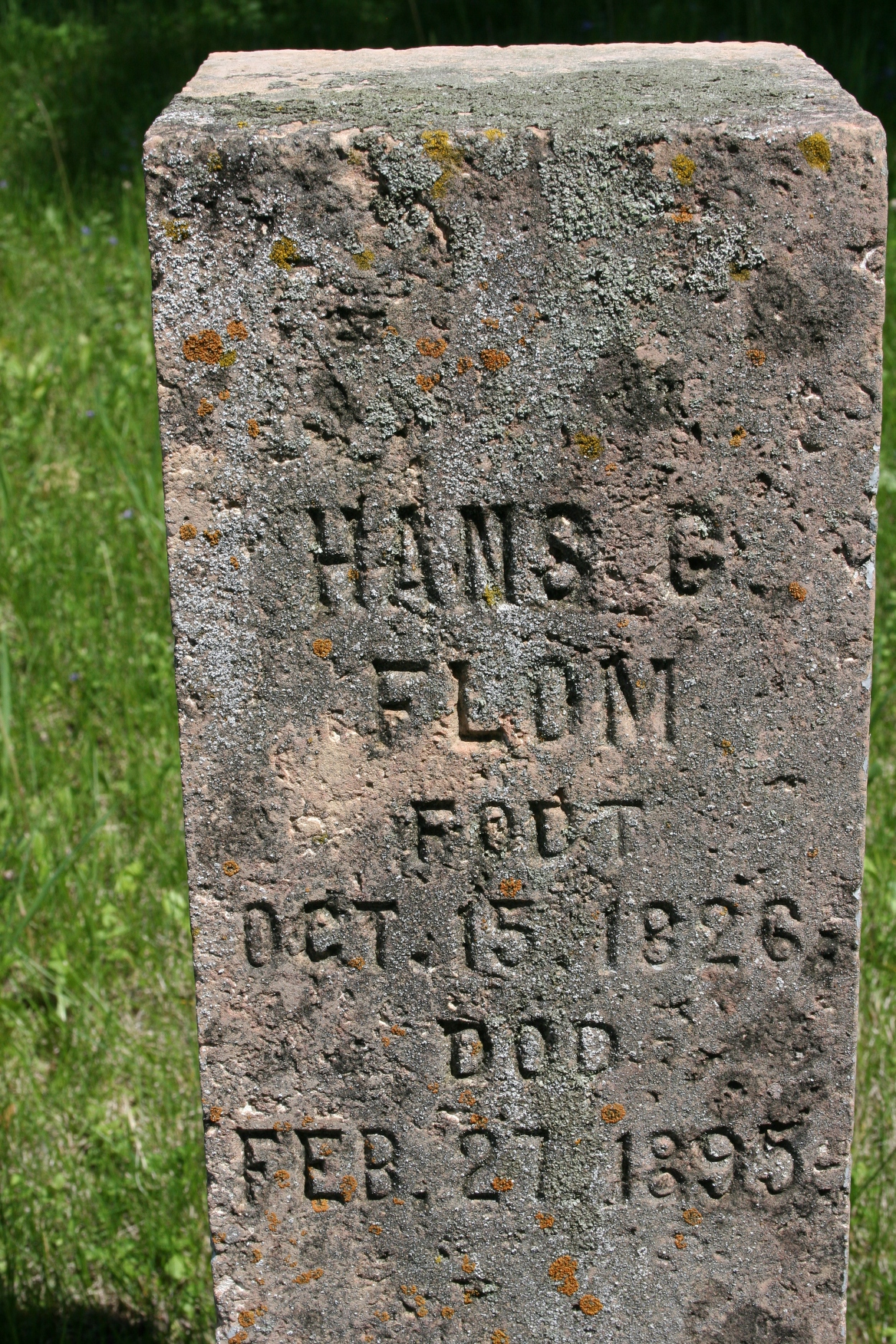
I felt almost instantly uncomfortable here as I meandered among aged tombstones marking the graves of early settlers like Hans Flom, born in 1826. There are 143 people buried at Eklund, including five with the Eklund surname.

The first burial here, of one-month-old Annie B.O. Sam, occurred after her February 28, 1884, death, according to the Dalby Database (a remarkable online collection of cemetery and other historical info compiled by Faribault residents John and Jan Dalby). A few months later, the 17-month-old daughter (listed only as “baby”) of Christ and Julie Davidson was buried here.

Such long ago dates impress me.
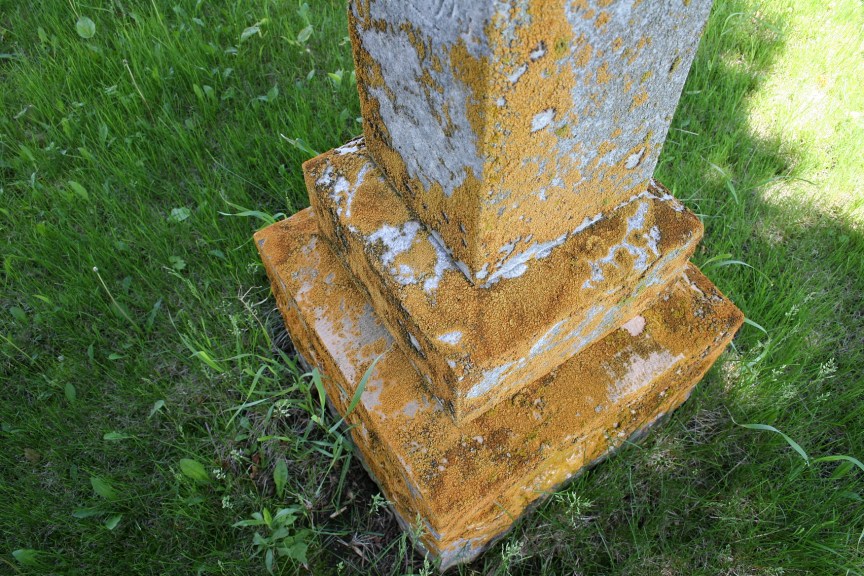
Weeds flourish among the weathered tombstones.

Weeds flourish among the weathered tombstones.

But I was unimpressed by the condition of the cemetery where dandelions and creeping Charlie and other weeds flourish in the too tall grass. Perhaps frequent rains have kept the caretaker away.
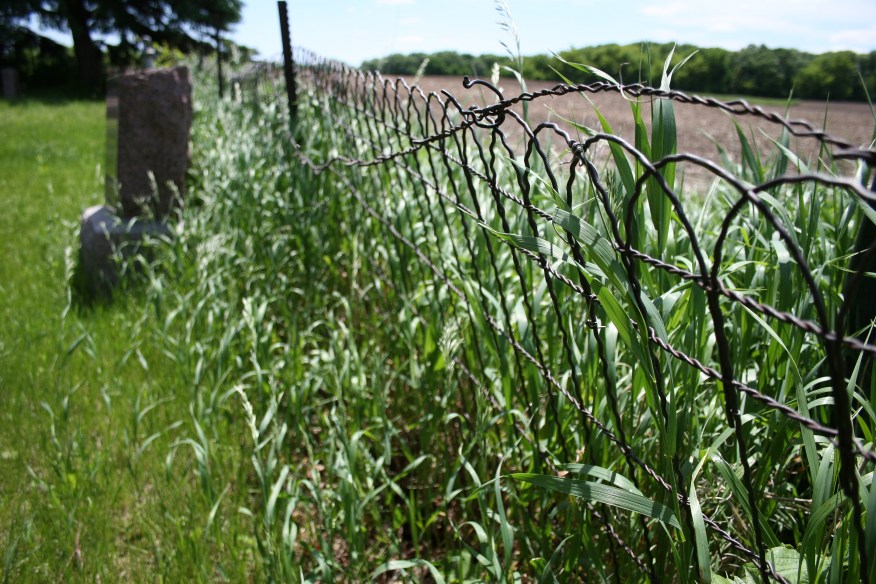
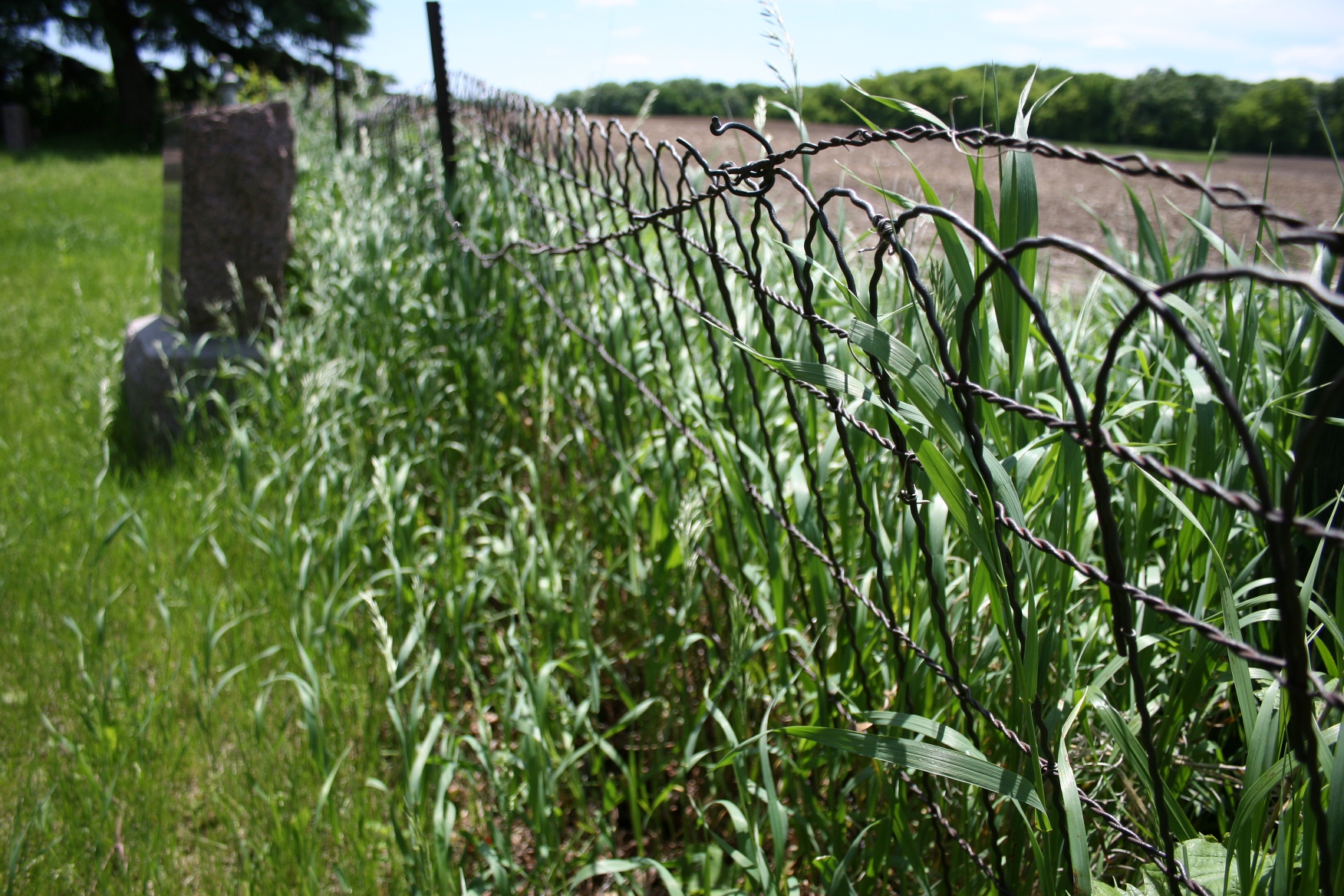
A fence separates graveyard from fields.

A fence separates graveyard from fields.

No matter, it was not the unkempt lawn that bothered me as much as the sunken graves, the marked depressions in the earth that show the precise spots of burials. When my husband remarked that vaults were not used back in the day, my concern increased. As foolish as it seems, I worried about suddenly sinking into a grave. And I’ve seldom felt that way before in a cemetery.
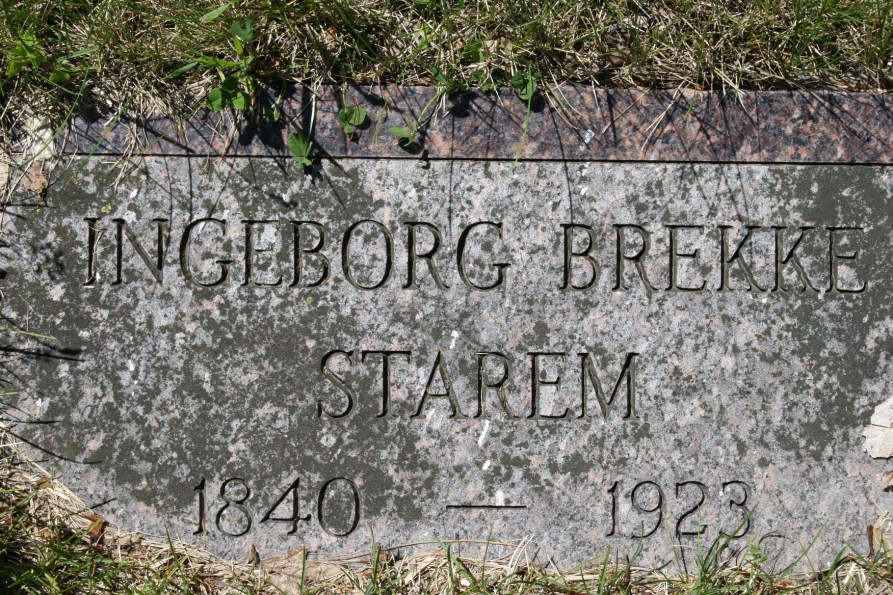
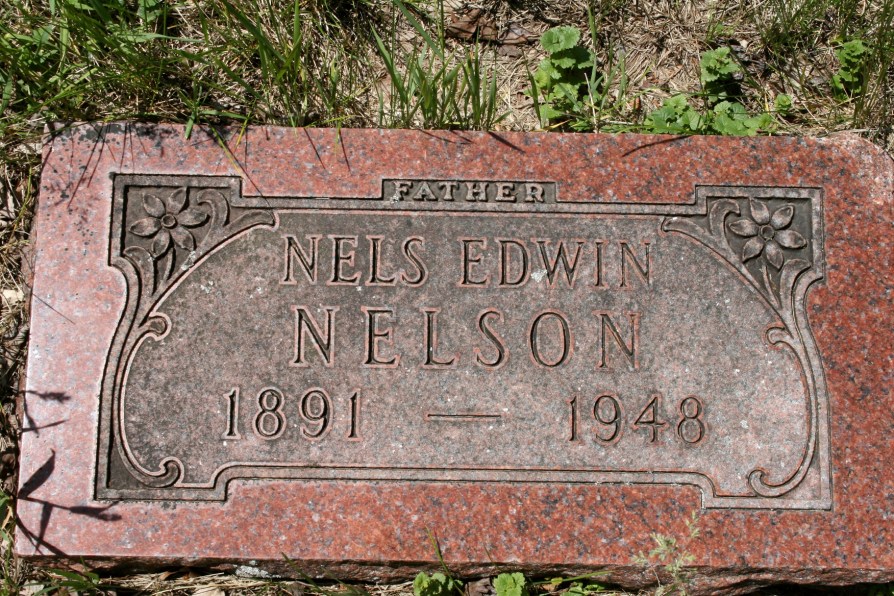
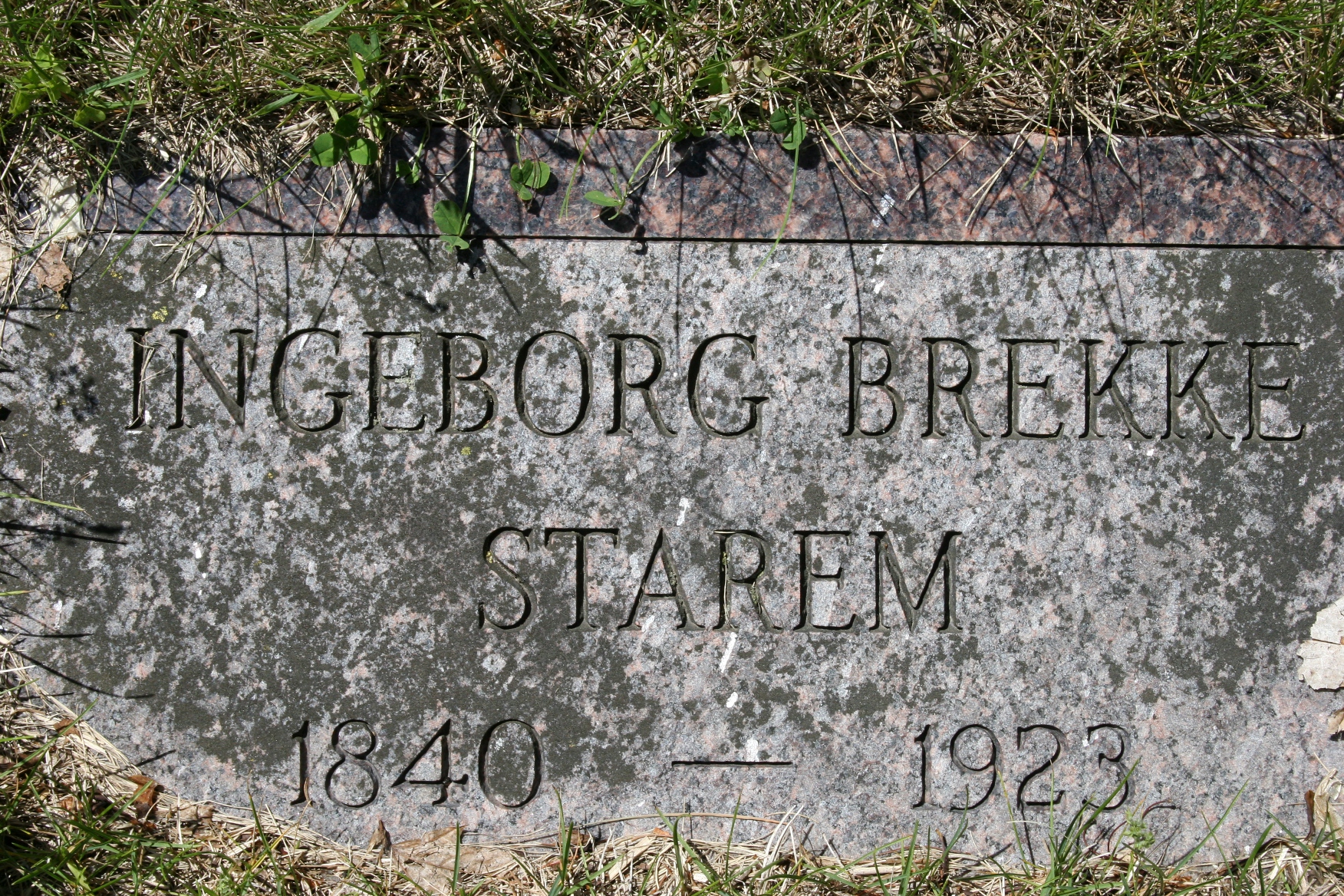
Eklund Cemetery, Ingeborg's gravestone

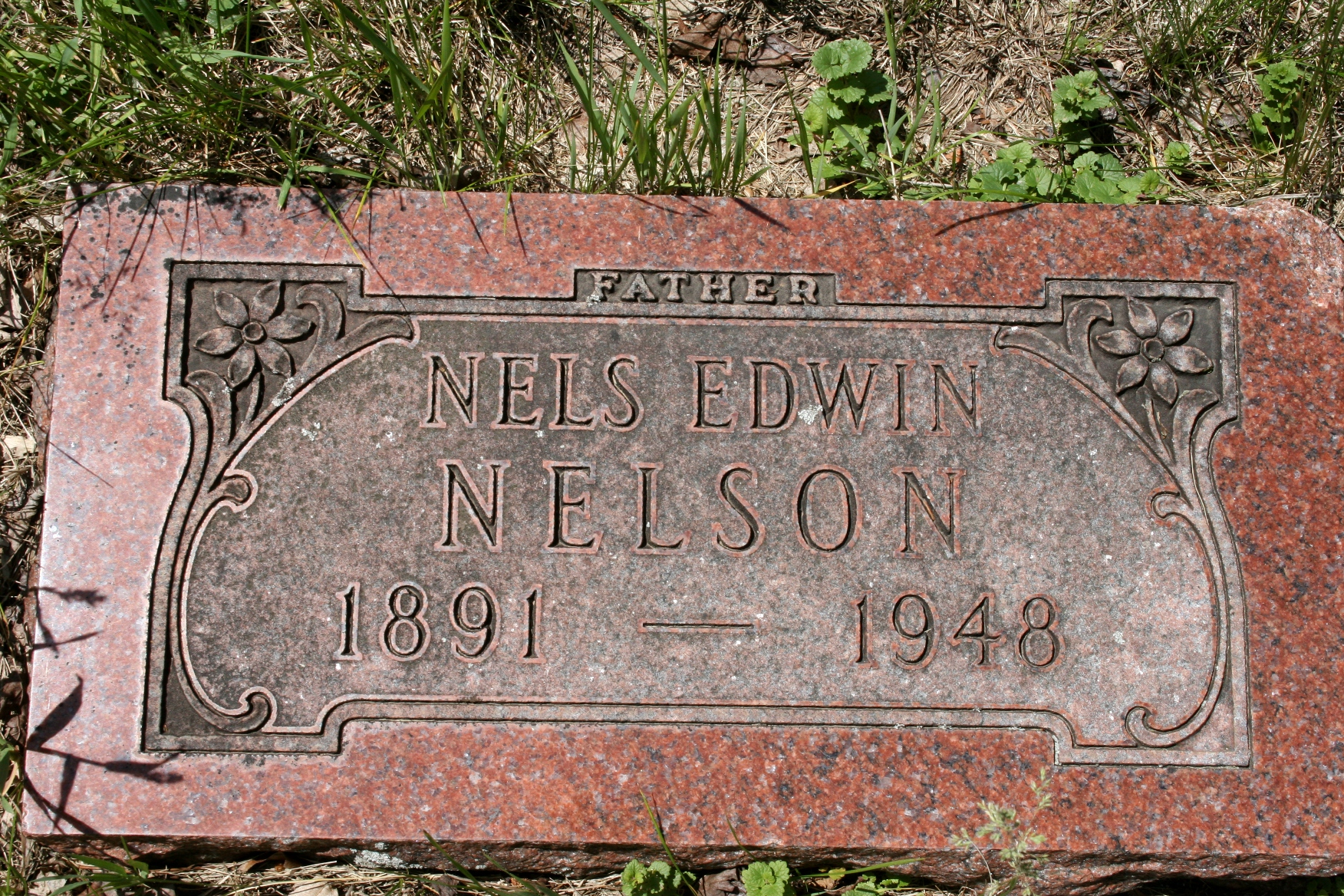
Eklund Cemetery, Nels Nelson gravestone

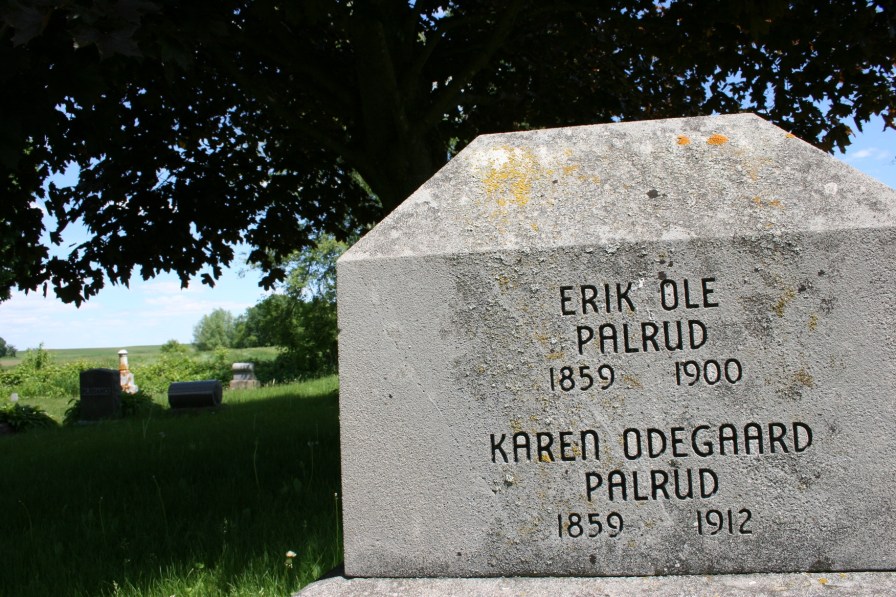
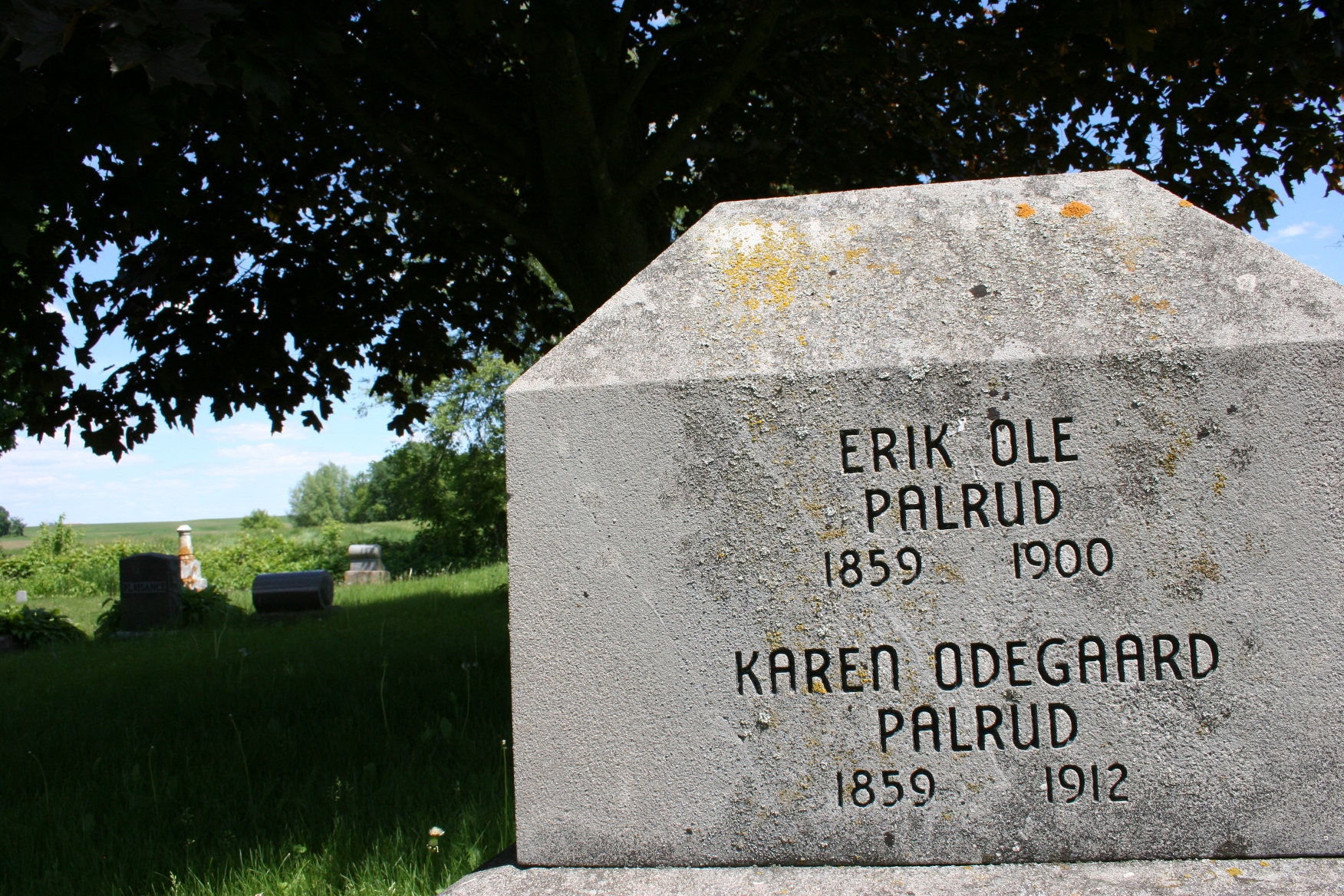
Eklund Cemetery, Palrud gravestone

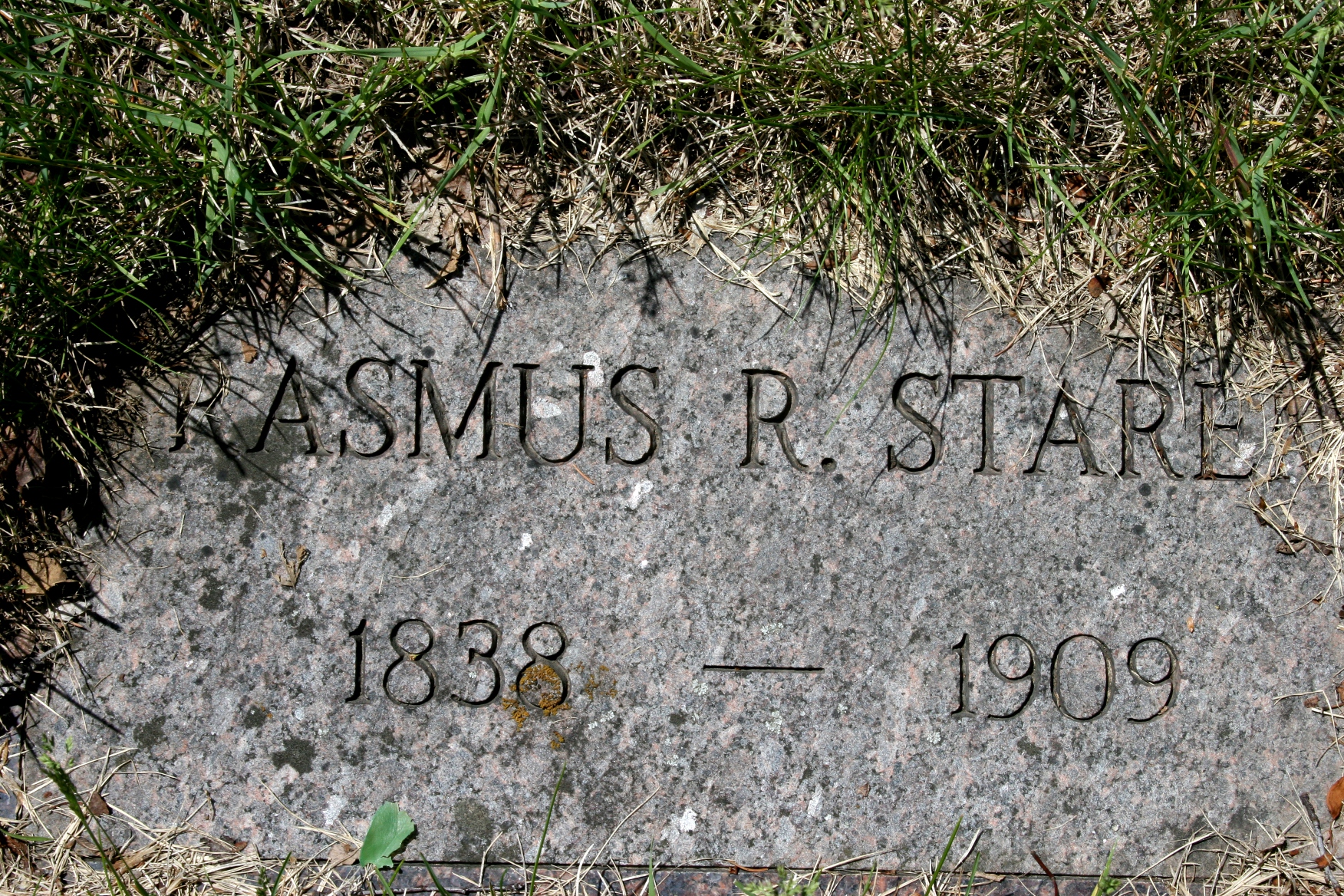
I hurried my tour, distracting myself by noticing the abundance of Norwegians names like Hans, Ingeborge, Nels and Erik, middle name Ole.
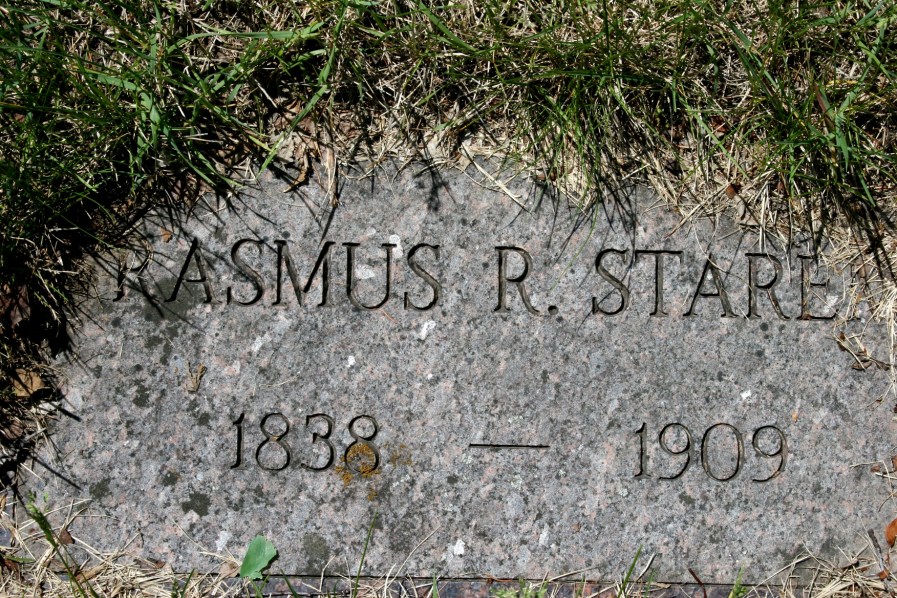
The most unusual name I noticed.

The most unusual name I noticed.

This cemetery once served Eklund (or Egelund) Evangelical Norwegian Lutheran Church, disbanded in 1957. That steepleless church building now sits off Minnesota State Highway 60 on Faribault’s east side, according to information written by Helga Sam Thompson. Its current use is that of a chiropractic office.
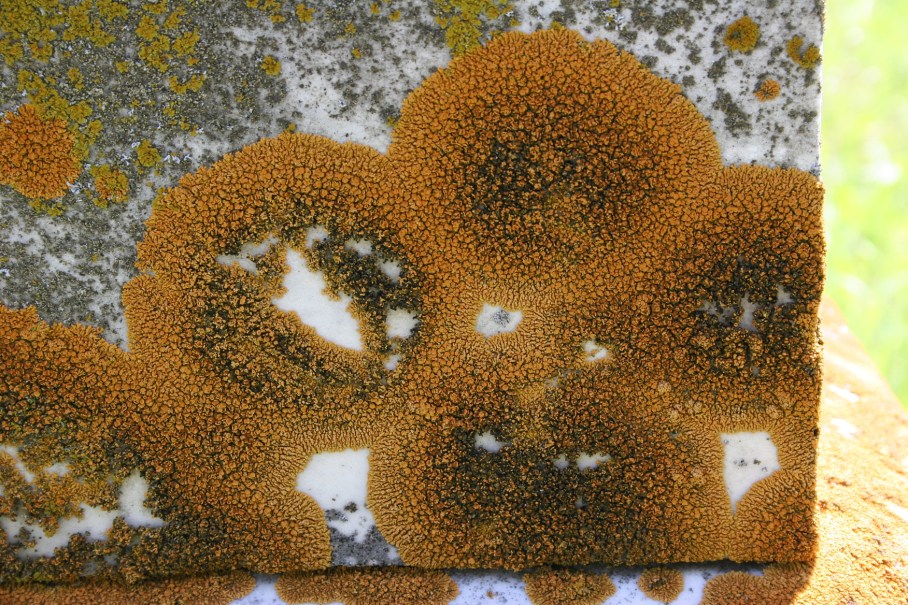
A close-up of a time-worn, weathered tombstone.

A close-up of a time-worn, weathered tombstone.

In one particular spot in the cemetery, I noticed a patch of black earth the size of a grave. Just dirt, unheaped, no grass, with weeds beginning to edge into the soil. No marker marked the spot. Again, that uncomfortable feeling settled upon me. The last burial here, of Bernard C. Sam, happened in 2011. Prior to that, the most recent burial, of 22-year-old Matthew David Caron, occurred in 1997.
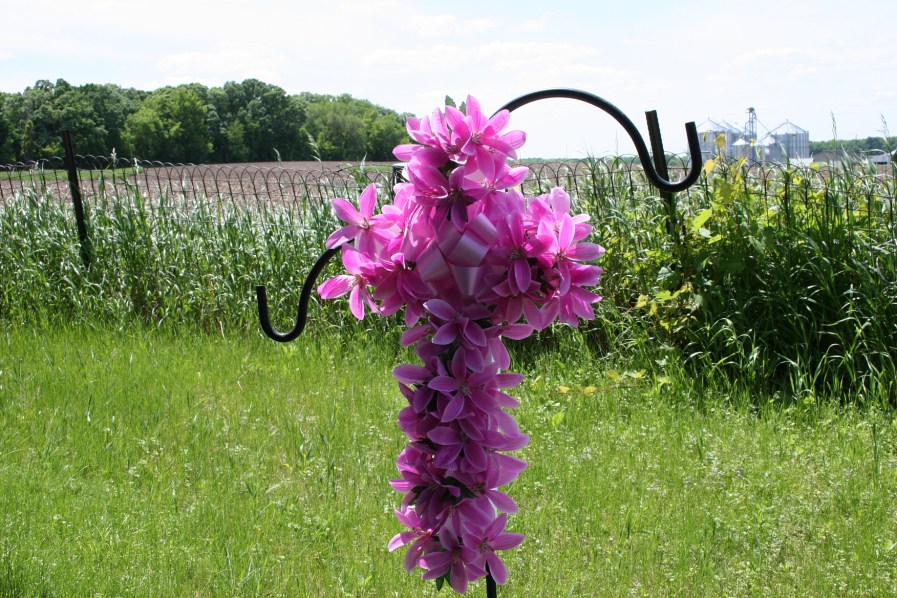
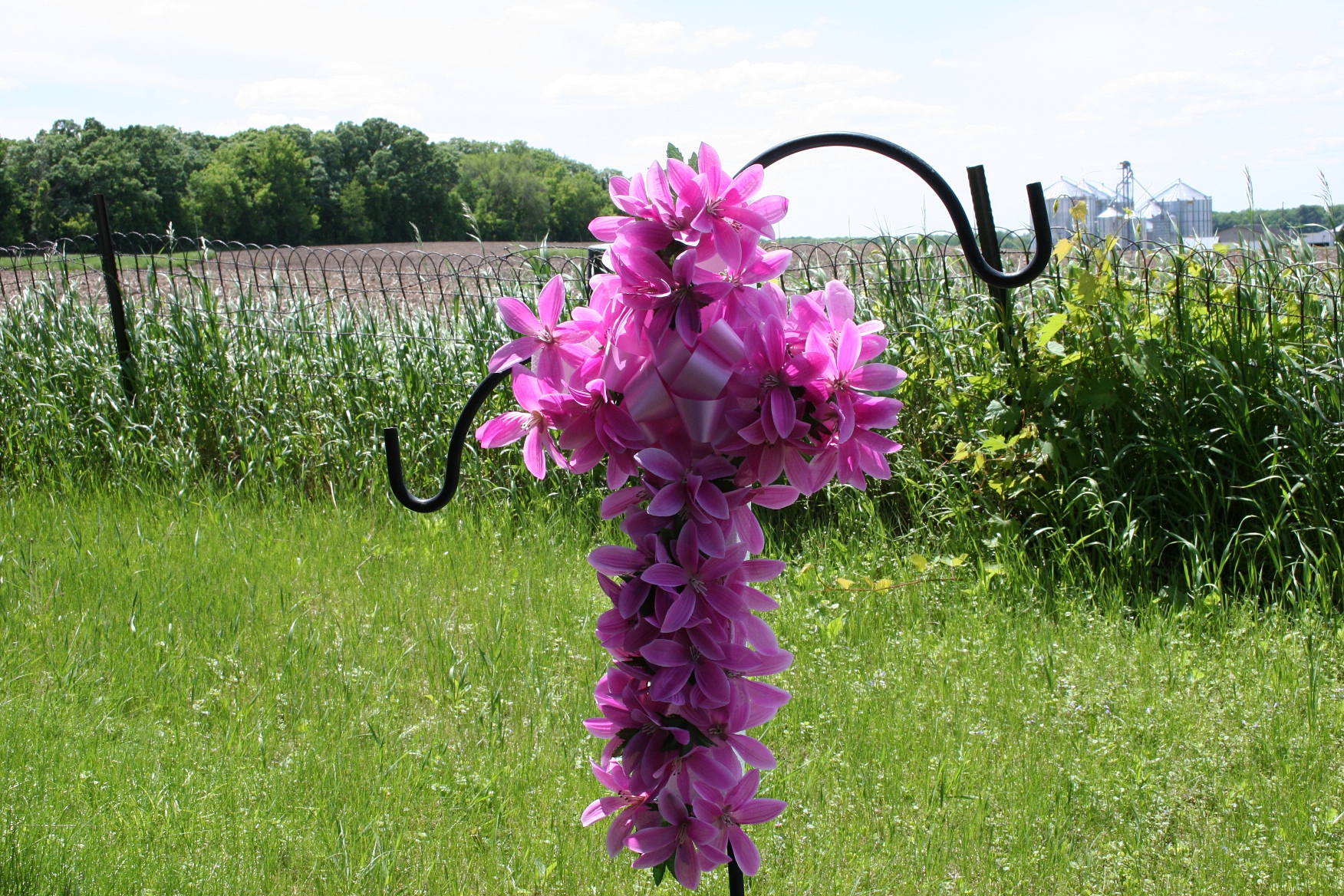
Someone still cares about a loved one buried here.

Someone still cares about a loved one buried here.

Shortly thereafter, Randy plucked an errant plastic flower petal from the ground, fallen from a gravestone cross. I advised him to leave the orchid colored bloom there. He did.
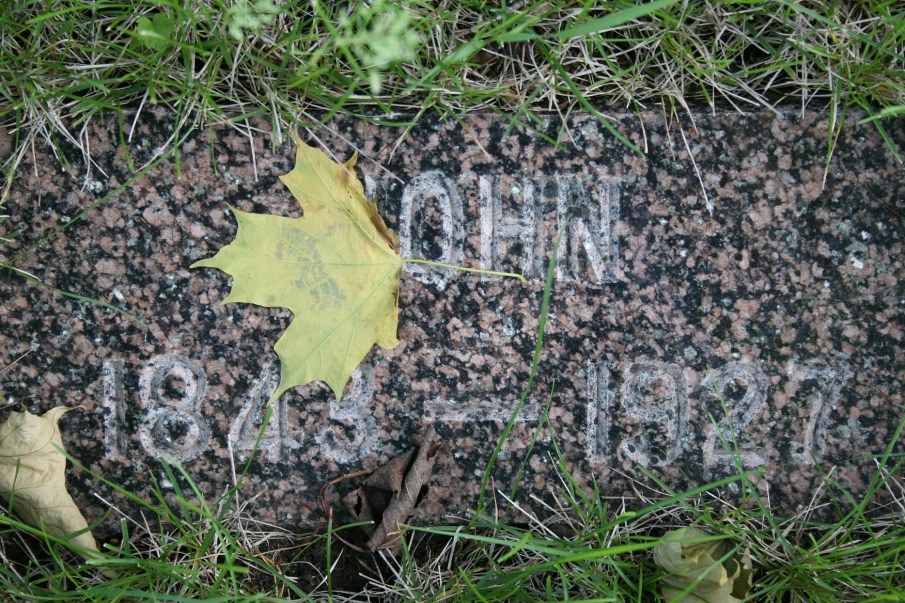
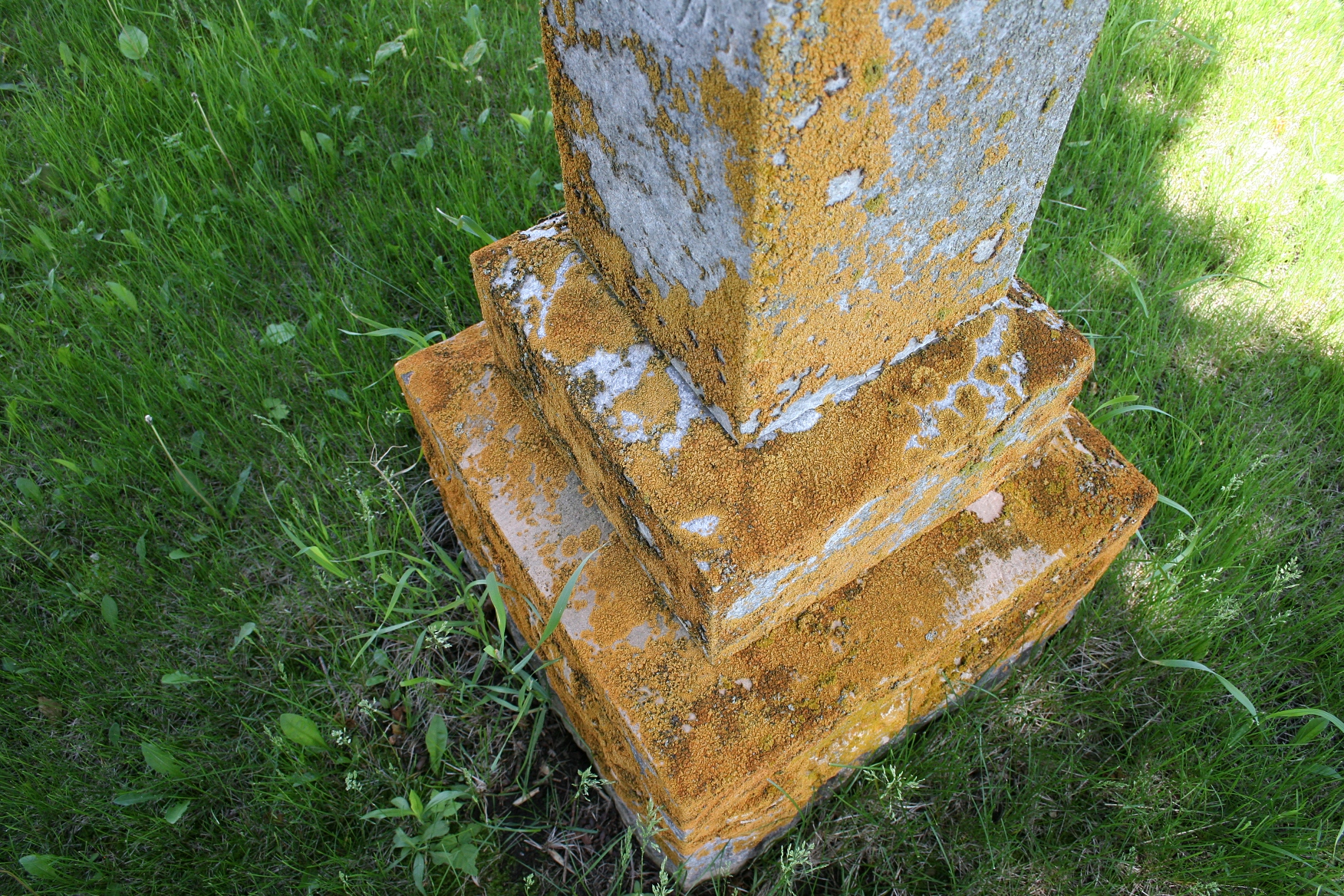
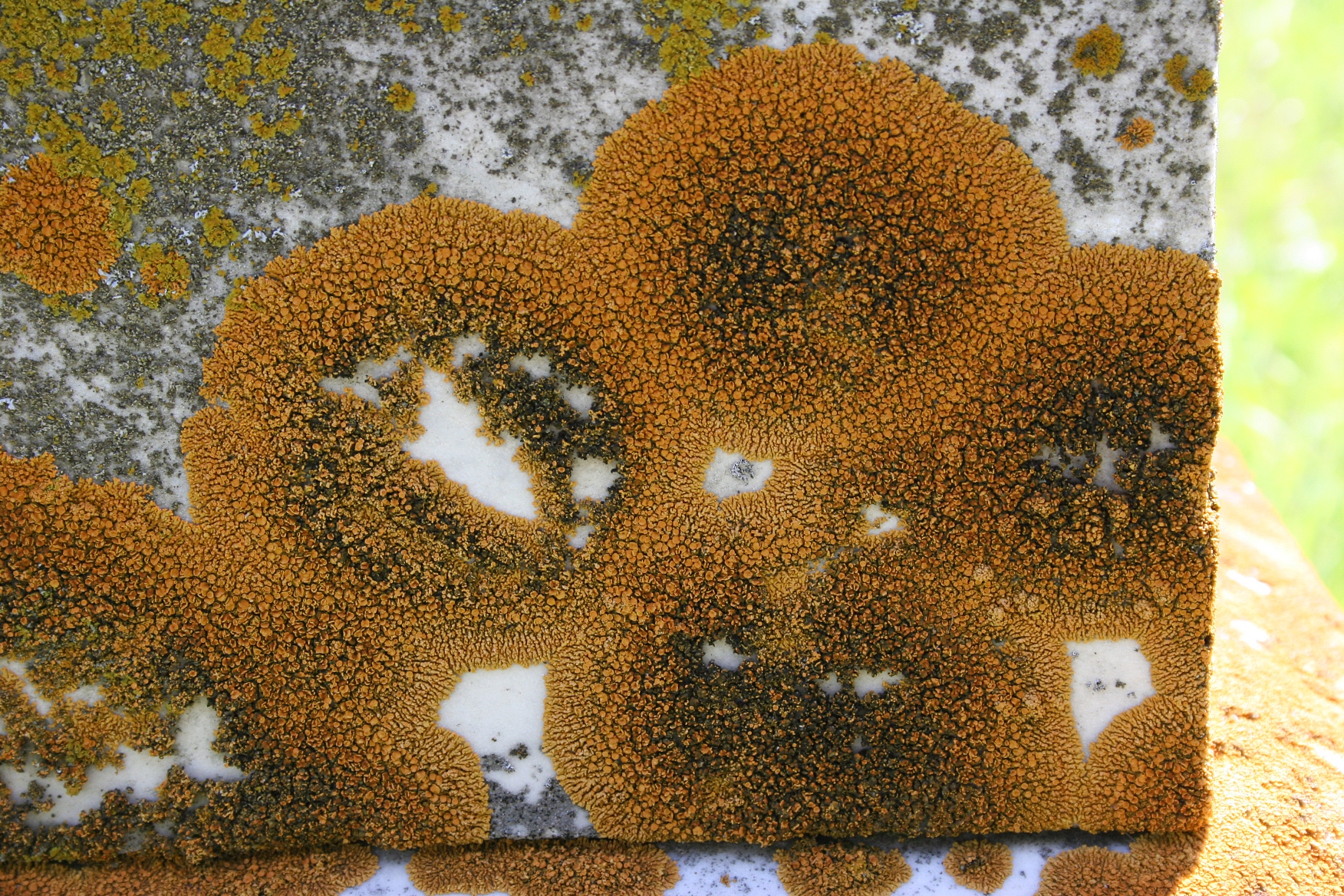
Nature leaves her signature on an in-ground grave marker.

Nature leaves her signature on an in-ground grave marker.

I wanted nothing from this cemetery. Nothing.

FYI: If you are into genealogy and/or history, visit the Dalby Database which includes a remarkable collection of 2.5 million records and increasing daily. Click here to read a summary of what you can find on this website. And then click here to reach the Dalby Database. John and Jan Dalby of Faribault were given the Minnesota Genealogical Society’s Pioneer Explorer Award in 2010.

Special thanks to John Dalby for providing me with links to information about Eklund Cemetery and church and Walcott Township histories.

© Copyright 2014 Audrey Kletscher Helbling


Remembering the true meaning of Memorial Day May 24, 2014

Filed under: Uncategorized — Audrey Kletscher Helbling @ 6:00 AM
Tags: , , , ,

MEMORIAL DAY MEANS, for many, a time of transitioning into summer activities. Picnics. Opening of the lake cabin. Thoughts of family vacations. A trek around the lake or dropping a fishing line into the water.

But for me, Memorial Day has always been about poppies and parades, ceremonies and cemeteries, American flags and American soldiers, my thoughts focused on those who’ve served our country. Like my Dad. Like his buddy, Ray, who died on a Korean battlefield the day before he was slated to return to his wife and infant daughter in Nebraska.

The Color Guard leads the 2013 Memorial Day parade in Faribault, Minnesota.

The Color Guard leads the 2013 Memorial Day parade in Faribault, Minnesota.

Today my thoughts are on my brother-in-law, Neil, currently deployed to Afghanistan. He’s serving in a medical facility, a somewhat safe place, if any place can truly be safe in a war zone.

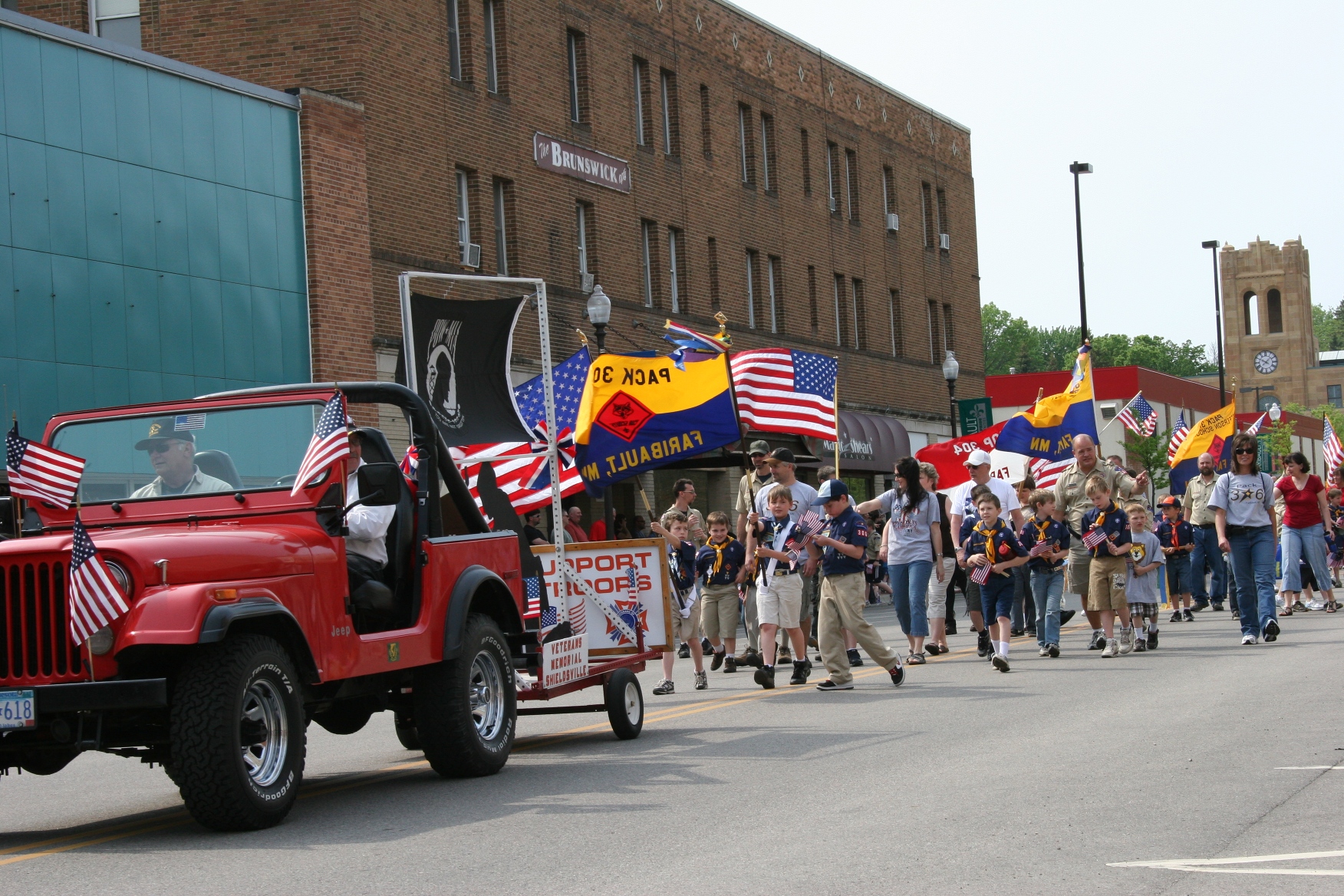
Boy Scouts march down Faribault's Central Avenue, giving away small American flags, during Monday's Memorial Day parade.

Boy Scouts march down Faribault’s Central Avenue, giving away small American flags, during the 2011 Memorial Day parade.

This Memorial Day weekend, please take time to attend a parade or a ceremony.

About 30 people gather at the Cannon City Cemetery for an afternoon Memorial Day observance.

About 30 people gather at the Cannon City Cemetery for an afternoon Memorial Day observance in 2011.

Visit a cemetery. Note the veterans’ graves. Pay homage. Remember the sacrifices.

All eyes are on the flag.

A flag flies high at Cannon City Cemetery. Minnesota Prairie Roots file photo 2012.

Then, when you’re firing up the grill, sipping a cold one, enjoying a wonderful day in a country where you are free, thank God, and those soldiers, for freedom.

BONUS:

FOR TIPS ON TEACHING your kids about Memorial Day, click here.

© Copyright 2014 Audrey Kletscher Helbling


Feeling at home, wherever you live May 16, 2014

Filed under: Uncategorized — Audrey Kletscher Helbling @ 6:00 AM
Tags: , , , , , , ,
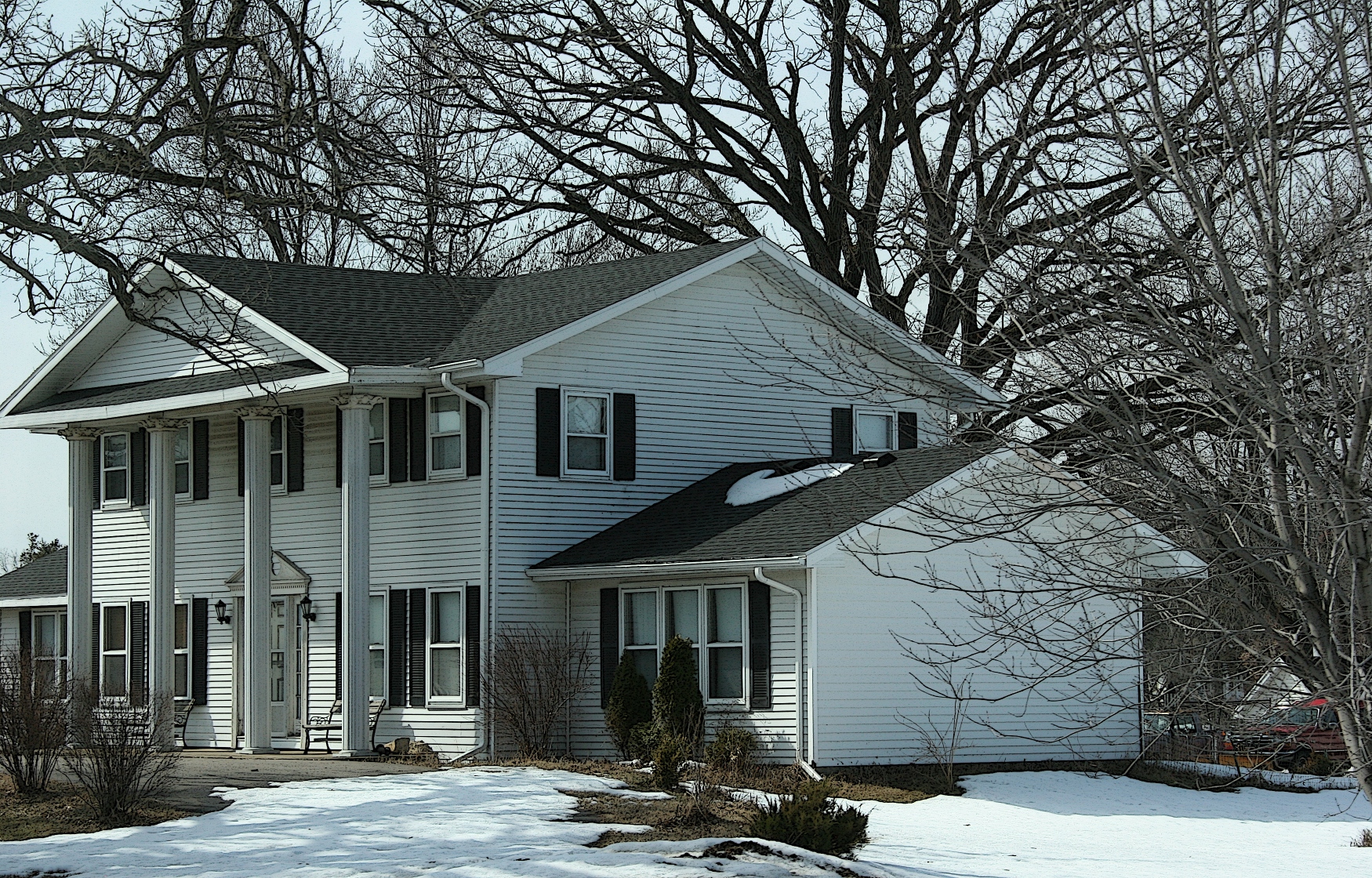
This colonial style home atop a hill along Wisconsin Highway 21 in Arkdale always catches my eye.

This lovely Colonial style home atop a hill along Wisconsin Highway 21 in Arkdale always catches my eye.

DO YOU PICTURE a dream home in your mind?

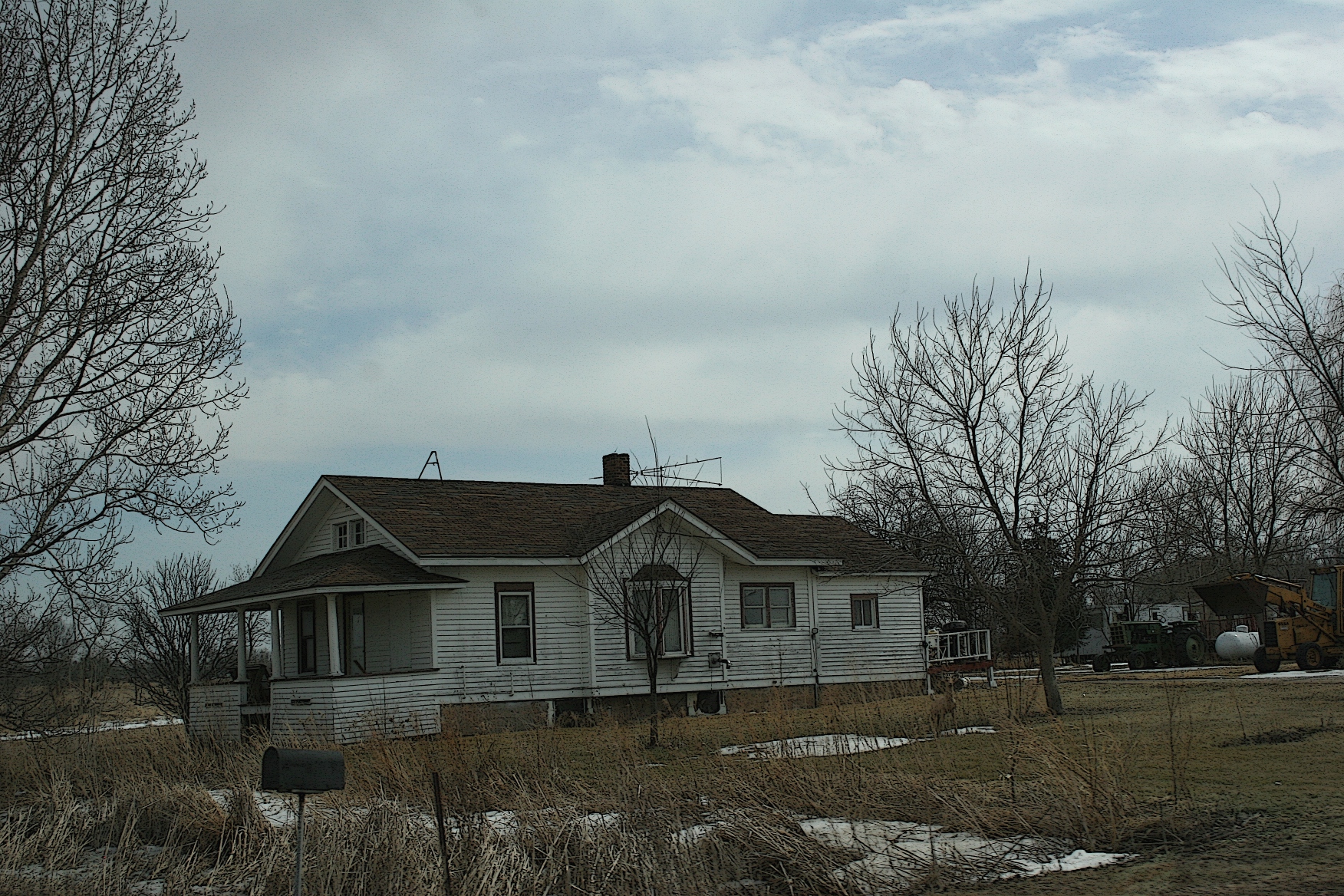
There is something sweet and endearing about the simplicity of this country home near Redgranite, Wisconsin. Perhaps it's the porch, the setting...the welcoming style.

There is something sweet and endearing about the simplicity of this country home near Redgranite, Wisconsin. Perhaps it’s the porch, the setting…the unassuming bungalow style.

Or are you living in your dream house?

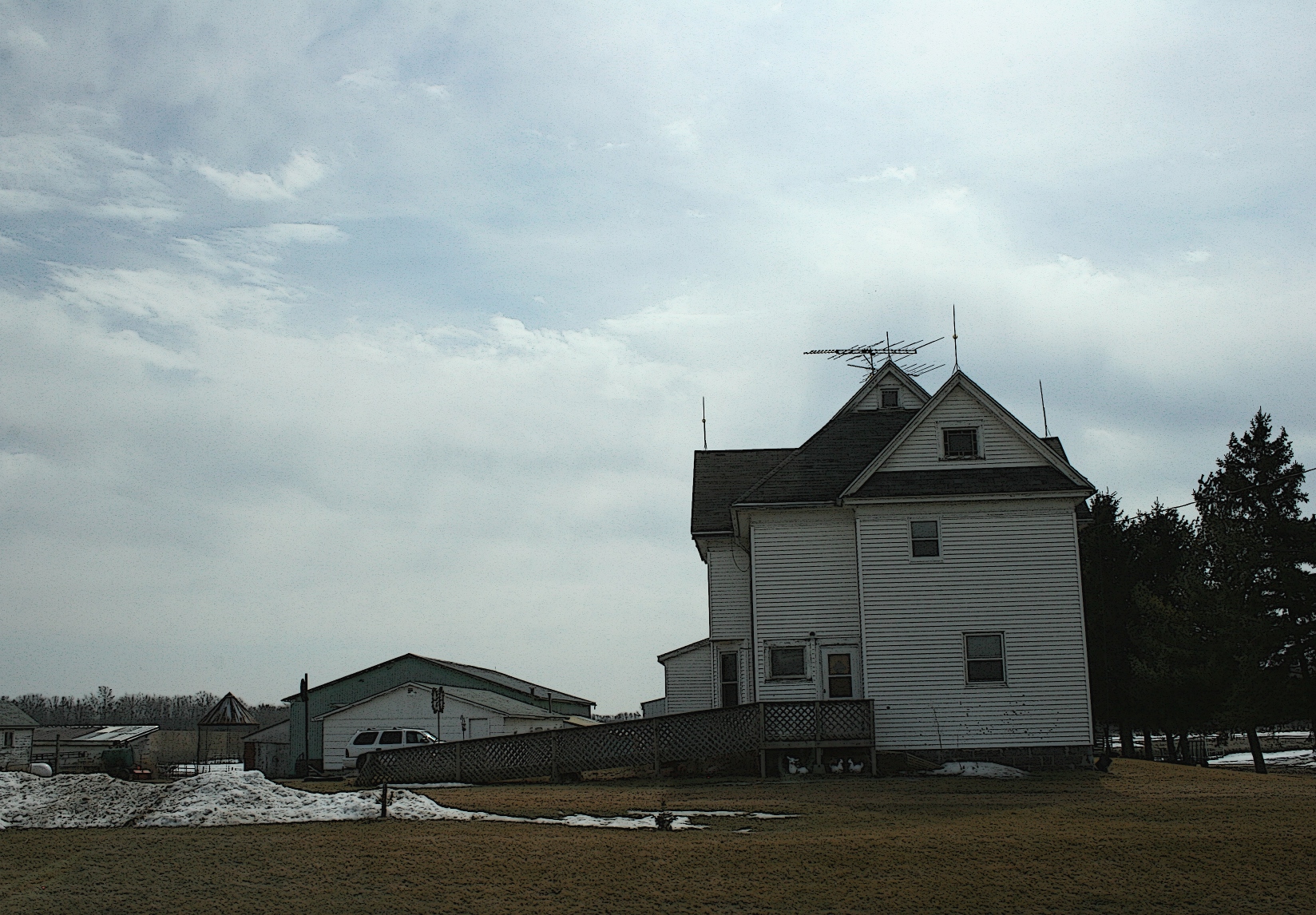
A sturdy farmhouse near Redgranite, Wisconsin.

A substantial farmhouse east of Redgranite, Wisconsin.

I’ve always wanted to live in a big white two-story farmhouse with a front porch. Rather like the farmhouse where my Uncle Glenn and Aunt Elaine and cousins lived near Echo, Minnesota.

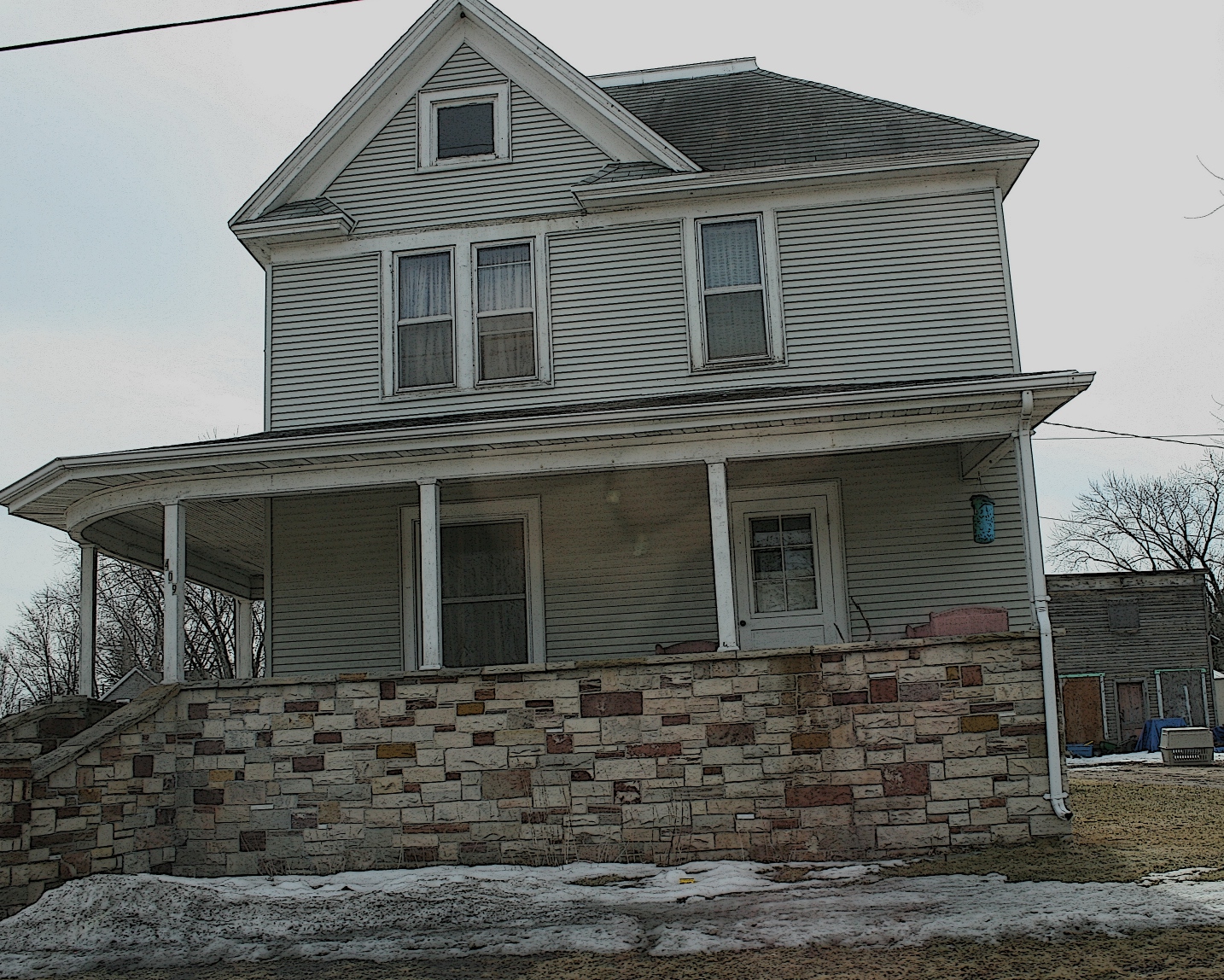
Open front porches, like this one on a home in Redgranite, Wisconsin, encourage neighborliness

Open front porches, like this one on a home in Redgranite, Wisconsin, encourage neighborliness and sitting outside on a beautiful afternoon or evening. Love the curve of the porch roofline and the stone front and steps.

The house, as I remember it, featured lots of dark woodwork with a built in buffet and that coveted porch.

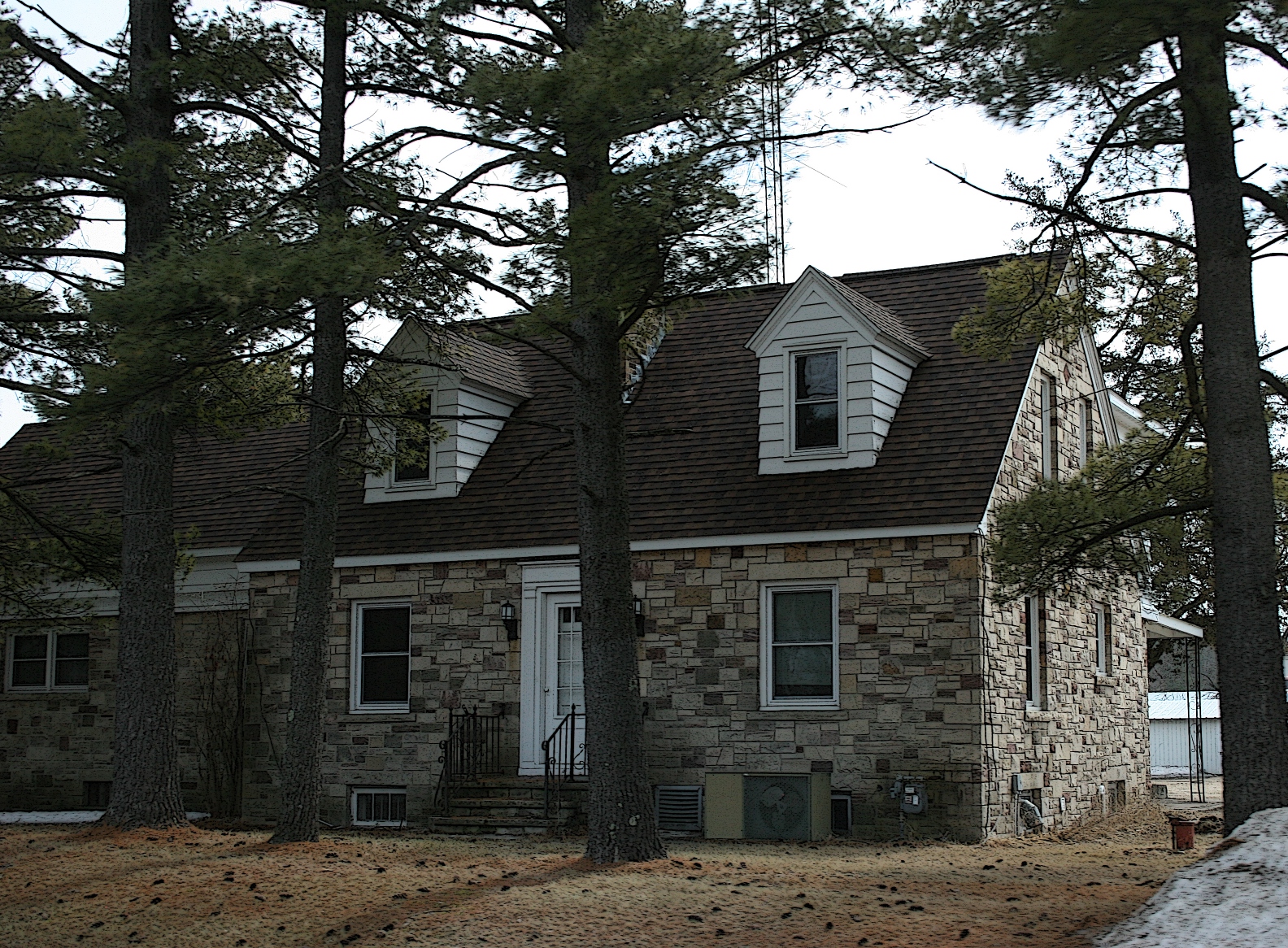
A stunning Cape Cod style home constructed from locally quarried stone near Redgranite, Wisconsin.

A stunning Cape Cod style home constructed from locally quarried stone near Redgranite, Wisconsin.

But then again, I also appreciate the Craftsman and Cape Cod styles of architecture.

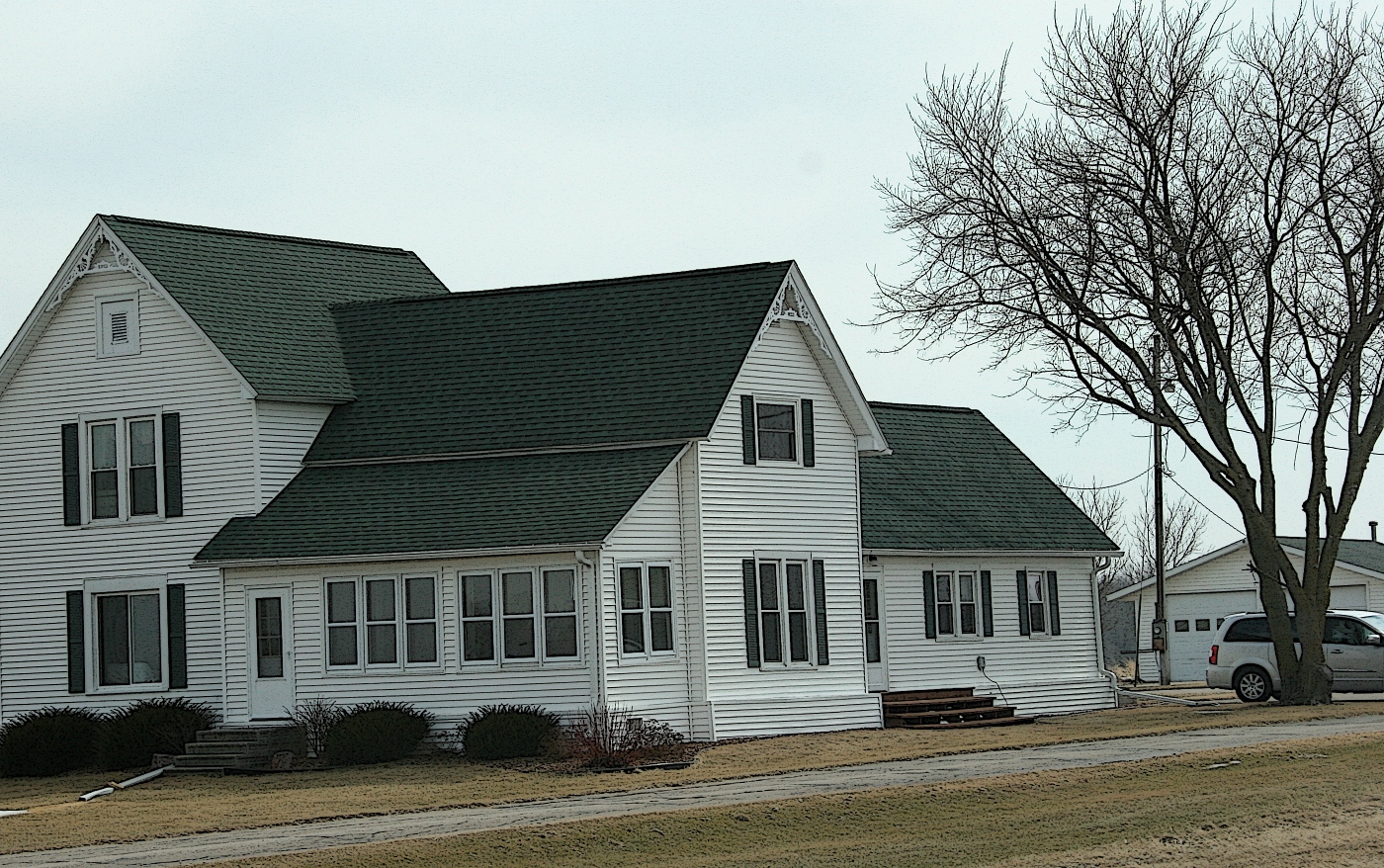
A well-kept farmhouse between Redgranite and Omro, Wisconsin, has likely evolved through the years with numerous additions.

A well-kept farmhouse between Redgranite and Omro, Wisconsin, has likely evolved through the years with numerous additions. I appreciate the enclosed porch and the Victorian detailed scrollwork near the roofline.

I’ve always preferred old over new, although sometimes I think living in a modern home would equal fewer maintenance worries.

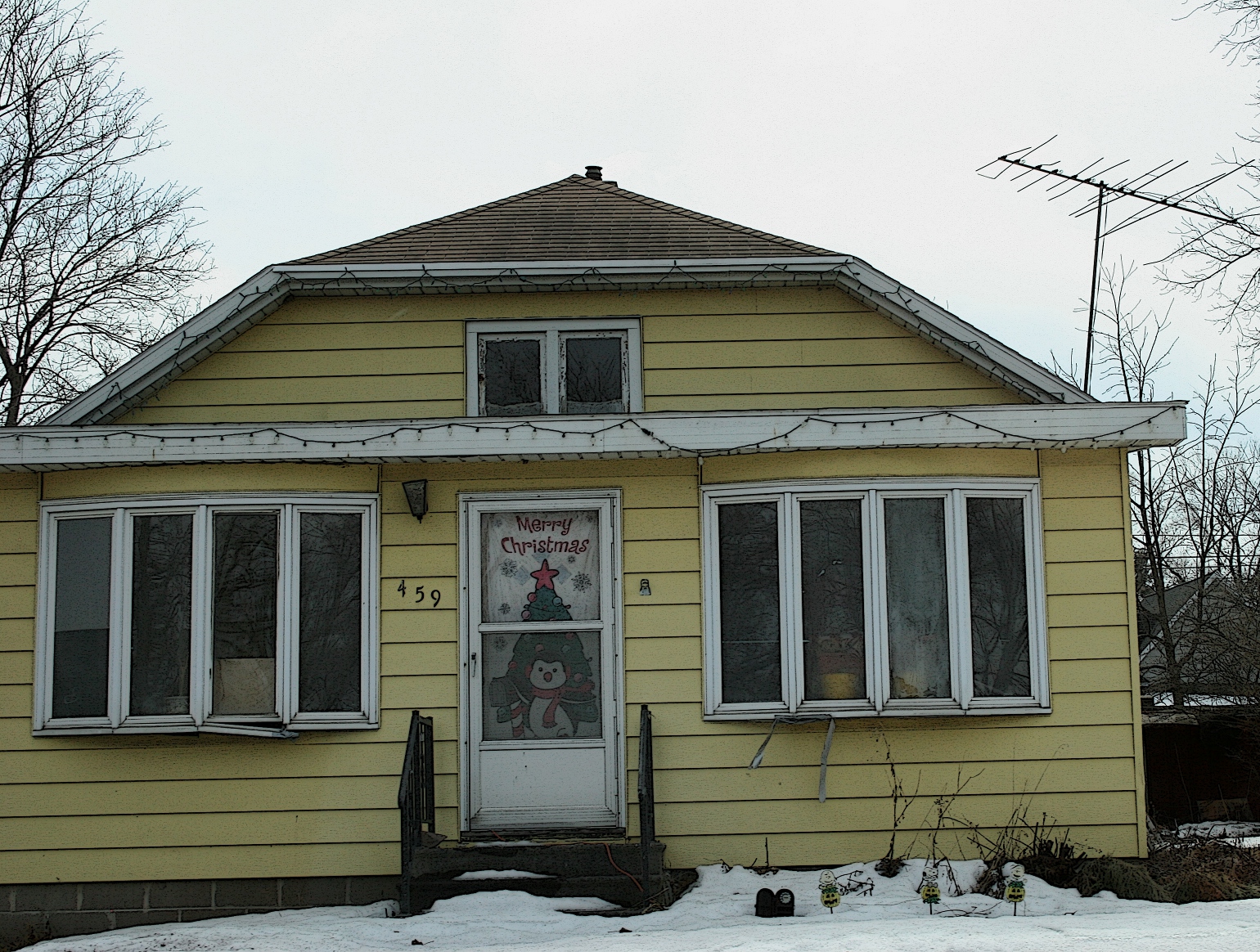
This cheery yellow house is located along Wisconsin Highway 21 in Redgranite. A welcoming holiday banner still graces the front door three months after Christmas.

This cheery yellow house is located along Wisconsin Highway 21 in Redgranite. Christmas lights and a welcoming holiday banner still grace this home three months after Christmas.

In the end, though, I’ve concluded that no matter where you live, it’s not the walls or design or age or style that truly define a home. It is simply being content where you’re at, with the people you love.

NOTE: These images were taken on a late March trip to eastern Wisconsin when snow still covered the ground. Not any more.

© Copyright 2014 Audrey Kletscher Helbling
 

The changing prairie view May 14, 2014

Newly-erected power lines, part of the Cap X2020 transmission line project, northwest of Morgan along Minnesota State Highway 67.

Newly-erected power lines, part of the Cap X2020 transmission line project northwest of Morgan along Minnesota State Highway 67, run seemingly into forever.

I FEEL ABOUT MONSTROSITY power lines as I do about wind turbines. I don’t appreciate their visual impact upon the land.

These towering giants, in my opinion, mar the landscape, distract and detract, cause me to feel small, unsettled and insignificant in their presence.

A farm site along Minnesota Highway 67 seems so small in comparison to the new transmission power poles.

A farm site along Minnesota State Highway 67 dwarfed by a new transmission power pole.

Perhaps it’s just the southwestern Minnesota prairie rooted girl in me who values her horizon wide and broad and vertically interrupted only by grain elevators, water towers, silos and groves of trees.

Old style power lines still run along Brown County Road 29.

Old style power lines still run along Brown County Road 29 between New Ulm and Morgan.

I wonder if my grandparents felt the same about the early rural electric co-op posts and lines strung along gravel township roads, the cement stave silos popping up on farms…old water-pumping windmills abandoned.

A cluster of Harvestore silos define a farm northeast of Vesta along Minnesota State Highway 19.

A cluster of Harvestore silos define a farm northeast of Vesta along Minnesota State Highway 19.

I felt a certain discontent when blue Harvestore silos began soldiering into southwestern Minnesota decades ago. They lacked personality and represented, to me, the demise of the small family farm.

Wind turbines in extreme southwestern Minnesota. Minnesota Prairie Roots file photo, July 2013.

Wind turbines in extreme southwestern Minnesota. Minnesota Prairie Roots file photo, July 2013.

These are my thoughts as I travel through my native prairie today. Progress does not always please me. Visually or otherwise.

(This post is cross posted at streets.mn.)

© Copyright 2014 Audrey Kletscher Helbling
 

Thoughts on motherhood May 9, 2014

Filed under: Uncategorized — Audrey Kletscher Helbling @ 6:00 AM
Tags: , , , , ,
I love this crazy, loving photo of my three kids, taken in February 2003.

I love this crazy, fun-loving photo of my three kids, taken in February 2003.

HOW DO YOU DEFINE a mother’s love?

Endless, unconditional, unshakable, fierce, enduring? I would choose all.

Yes, I’m repeating myself with some of these adjectives. But so what.

I am a mother of three now grown children, all in their twenties. I always find “adult children” to be an oxymoron. Yet, no matter the age of our offspring, they remain always our children. Once a mother, always a mother. You never stop caring and worrying and, for me, praying.

Have my kids frustrated and maddened me? Sure they have. But I expect I’ve done the same. None of us—parent or child—is perfect. Far from it.

As a mother, I try to do the best I can. I’ve praised when deserved. I listen. I offer advice when necessary. After all I do have a few decades more of experience and wisdom. I support my children. Not always their actions and decisions, but them. There’s a difference.

I cherish my kids. I love them enough to let them go. And we’re not talking geographical distance, although two of my trio live 1,300 and 300 miles away. I’m referencing that proverbial cutting of the apron strings, that realization that this has been my goal, to raise and then let go.

There are days when I’d like to turn back the clock, to swoop my three back into our home,

Busted in October of 1988 sneaking cookies and "hiding" in the corner of the kitchen to eat them.

My daughters, busted in October of 1988 sneaking cookies and “hiding” in the corner of the kitchen to eat them.

to admonish preschoolers for sneaking cookies from the cookie jar before lunch (all the while stifling laughter),

My Tufts University computer science and mathematics majors son played with LEGOs constantly while growing up. This photo was taken in June 2003.

My current Tufts University computer science and mathematics majors son played with LEGOs constantly while growing up. This photo, taken in June 2003, shows the zoo he created using his imagination. No LEGO kit involved here.

to step upon an errant LEGO,

My eldest stars as a flower in the May 1992 school play, "Leo the Late Bloomer."

My eldest (standing) stars as a flower in the May 1992 Trinity Lutheran School play, “Leo the Late Bloomer.”

to sit through one more end of the school year musical in a stuffy gymnasium.

The son, left, the eldest, the son-in-law and the second eldest daughter.

The son, left, the eldest, the son-in-law and the second daughter. Minnesota Prairie Roots file photo, December 2013, the last time my kids were together.

But time has passed. Snap. Just like that my kids are grown up, two working, one married, another still in college (and working this summer).

I am nearing sixty.

My own mother recently entered a nursing home.

Life changes.

But a mother’s love endures. Forever.

#

HAPPY MOTHER’S DAY to all of you moms out there!

And to my three children and my son-in-law, I love each of you now and forever.

© Copyright 2014 Audrey Kletscher Helbling
 

Bringing the magic of prom to a Minnesota nursing home May 6, 2014

Filed under: Uncategorized — Audrey Kletscher Helbling @ 6:00 AM
Tags: , , , , , , , ,


TIS PROM SEASON in Minnesota, that annual rite of spring which throws teenage girls into a spin over finding just the right dress, getting a fabulous up-do, planning photo sessions and doing whatever to create the perfect evening.

That’s all delightful, to live in a fairytale world.

But what a group of girls in rural southwestern Minnesota did on the day of their high school prom impresses me more than all the magical glitz and glam.

They took the time last weekend to share prom with the residents of a small town nursing home.

This my mother, who recently moved into Parkview Home in Belview, shared with me during our weekly Sunday evening phone conversation.

If those teens could have eavesdropped on our exchange, they would know just how happy they made my mom by stopping at their workplace before prom to show off their Cinderella selves.

Mom didn’t comment specifically on the dresses, although she did on the “fancy hair.”

And, she noted, some of the girls brought their dates, who, she laughed, looked a bit bored and “were probably wondering when they could leave.”

I don’t doubt her observation. Physically Mom is limited in her abilities. But mentally she is still, as they say, sharp as a tack.

This isn’t about my mother, though, who also profusely praised those prom-goers as kind and thoughtful.

Rather, this is about these young women and, yes, their dates, too. I am impressed by their care, kindness and generosity of spirit. They could have gone on their way, without a thought of stopping at Parkview. But they did. And for that, this daughter is grateful.

© Copyright 2014 Audrey Kletscher Helbling


How the planned attack on a Waseca school impacts me personally May 2, 2014

HOW DOES ONE BEGIN to write about a school tragedy averted?

That is my challenge as I reflect on the events of the past days in which a 17-year-old Waseca High School student allegedly planned to carry out a Columbine type massacre in his southern Minnesota school.

The school where my youngest sister and a friend teach and which my niece attends. The school I just drove past last Sunday while visiting my other sister in Waseca, a rural community of nearly 10,000 only a half hour drive away.

A 17-page court document outlines the charges against John David LaDue, described in media reports as a normal kid, a good kid. Now he faces multiple charges, including first degree premeditated attempted murder, in a plot to kill his family, a school resources officer and others in his school. (Click here to read the charges against LaDue and a Statement of Probable Cause filed in court documents.)

An arsenal of weapons, bombs and bomb-making equipment were found in his bedroom and a storage locker and a journal documented his plans, according to court records.

This could have been another Columbine, another Virginia Tech, another Sandy Hook, another American school tragedy. And this time it impacts those I love.

I’ve found so often in my life that, until an event touches me personally, I cannot fully understand or comprehend. It is something that happens somewhere else, to someone else. Not this time.

And not in the past: a dear friend’s father murdered; a SWAT team sweeping through my neighborhood in search of a murder weapon in a drug deal gone bad; my son struck by a hit-and-run driver; the frantic middle-of-the-night screams of a woman being assaulted across the street from my home; a frantic young man ringing my doorbell seeking protection from a gang of men in pursuit of him; a brother-in-law and sister-in-law’s niece murdered in a case of domestic violence, the son of a high school classmate and hometown neighbor hunkered down at Virginia Tech during the massacre of 32 there in April of 2007…

Now this.

It would be easy to despair, to wonder what this world is coming to. But I’m going to take my cue from Waseca School Superintendent Thomas Lee, who in a May 1 press conference (click here to read his entire statement) said in part: “We can either believe that this (arrest of John LaDue) occurred as a result of a lucky break or, as I do, choose to believe that God was looking out for all of us.”

Furthermore, Lee continues with these words worthy of reflection:

On another note I respectfully submit that these kind of events that have been happening in schools across this country should be a warning sign to us all. These events are like “canaries in the mines” – an indicator that something is deeply wrong in our culture. These kinds of events are unique to our American culture. They are certainly not found anywhere else in the world, except in very few isolated cases. Why are they unique to our American culture? What is it in our culture that fosters these kind of events? There will be many opinions about this – our obsession with violence, our tv shows and movies, lack of parenting, the prevalence of guns, corporate greed and of course, gridlock in our government. I suggest that these are all symptoms of a significantly degraded culture. We all know that nothing is guaranteed in this life but it is time that we collectively look into the mirror with honesty and integrity – that we ask ourselves how our choices are contributing to this degradation, and determine what we can do individually to stem the downward slide. We need to do everything possible to look out for one another – especially our kids.

The superintendent is spot on correct. Nothing is guaranteed in this life. And we need to look out for one another, especially our kids.

© Copyright 2014 Audrey Kletscher Helbling


“Love Story” revisited April 30, 2014

Filed under: Uncategorized — Audrey Kletscher Helbling @ 6:00 AM
Tags: , , , , , , , , ,
I now own a VHS copy of Love Story, purchased from the discard shelf at my local library.

I now own a VHS copy of Love Story, purchased from the discard shelf at my local library.

“Love means never having to say you’re sorry.”
FORTY-FOUR YEARS AGO, with the release of the film Love Story, those words quickly became a part of pop culture. They rolled off the lips of adolescents like me, a then high school freshman, who could fall easily, blissfully in love with the latest movie star featured in Tiger Beat magazine.

Now, four-plus decades later, I don’t quite believe the “love means” phrase spoken twice in the award-winning Paramount Pictures flick starring Ryan O’Neal and Ali MacGraw. Love does mean asking for forgiveness when you’ve wronged a loved one.
Despite that change in perspective, I still rank Love Story by writer Erich Segal as one of my all-time favorite movies. The plot, on the surface, seems hopelessly simple: Wealthy Harvard student Oliver Barrett IV falls in love with Jennifer Cavelleri, a Radcliffe student from a working-class family. Oliver’s father disapproves of Jenny and a rift develops between father and son. Eventually, Jenny dies of leukemia.

As a dreamy-eyed teen, I failed to see beyond the surface plot. But there’s so much more depth to this film than a romantic story that ends tragically. It just took decades, and numerous times viewing this movie, to figure that out. I had to get past the relationship between Oliver and Jenny, past my sadness over Jenny’s death, to understand.

So the last time I watched Love Story, just weeks ago, I really listened to the dialogue.

“I never see his face,” Oliver says of his father.

“Does he wear a mask?” Jenny asks.

“In a way,” Oliver replies.

That brief exchange speaks volumes to the stiff and formal relationship between Oliver and his father. The elder Barrett expects much of his son. But he does not expect him to marry below his social class.

“I mean she’s not some crazy hippie,” Oliver says of Jenny. I laugh when I hear that now. “Hippie” sounds so dated. But in 1970, when Love Story hit the big screen, rebellious, anti-establishment, free-loving, independent-thinking young people were, indeed, pegged as hippies.

“If you marry her now, I’ll not give you the time of day,” Oliver Barrett III tells his son.

So the line is drawn in the sand. Oliver chooses love over money and marries Jenny, even says in his wedding vows, “I give you my love, more precious than money.”

At this point in the movie, I nearly stand up and cheer, if not for my sadness over the broken relationship between father and son. Life is too short to sever ties with loved ones over differing opinions and expectations. Life is too short to choose money over love.

Surprisingly, I have not wept this time while watching Love Story. I wonder why. Perhaps it is because my approach to the film has been more analytical than emotional. I am also seeing, for the first time, two love stories (or lack thereof)—one between a man and a woman and the other between a father and son.

And I have been caught up in noticing the details—the rotary dial phone, the over-sized dark eyeglasses, the mini-skirts—that denote this as a 1970 film. I am taking in the beautiful winter scenery; the instrumental theme music, the lyrics “How do I begin to tell the story of my love,” replaying in my mind; and the one word in the film, “preppie,” that still irritates me after four decades.

I am regretting, too, that I no longer have the black and white poster of Ryan O’Neal and Ali MacGraw that once hung above my bed, in the lime green room with the candy stripe carpeting.

CLICK HERE TO READ how Love Story connects to a shop in Neenah, Wisconsin.

© Copyright 2014 Audrey Kletscher Helbling