Minnesota Prairie Roots

Writing and photography by Audrey Kletscher Helbling

House of Kahmanns: A story of trauma, family love & resilience May 1, 2024

IT WAS A TUESDAY in January 1964. Wash day in the Kahmann household. Outside, a ground blizzard raged, reducing visibility on the southwestern Minnesota prairie. The events of that morning, of that day, would forever change the lives of siblings Karl, Patsy, Eric, Andy, John, Paul, Kevin, Katy, Karen, Phillip, Jim and Beth, and their parents, Jack and Della.

That sets the scene for House of Kahmanns, a memoir by P.G. (Patsy) Kahmann, oldest daughter, second oldest among 12 children. Sixteen months earlier, the family moved from Kansas City, Missouri, to Minnesota when Jack, a traveling salesman in a farm business, was relocated. They settled near their maternal grandparents, into a rental home by Granite Falls.

I expect Jack Kahmann was driving in weather and road conditions similar to this. (Minnesota Prairie Roots copyrighted file photo, January 2020, used for illustration only)

This is familiar land to me in a familiar time. I was not quite eight years old in January 1964, living on a farm some 30 minutes away in neighboring Redwood County. I understand full well the fierce prairie wind that whips snow into white-out conditions. On that blustery morning, as Jack and Della and Della’s parents set out for medical and business appointments in Minneapolis, leaving the oldest, Karl, to care for the youngest children, Patsy and her school-age siblings boarded the school bus.

Rosary beads. (Minnesota Prairie Roots copyrighted file photo used for illustration only)

Patsy was in English class when she got the devastating news. There had been a crash. A bread truck driven by an unlicensed 14-year-old ran a stop sign and then a yield sign before slamming into the 1957 Chevy driven by Jack. Della, mother of a dozen, was the most seriously injured. “How many Hail Marys will it take to save my mother’s life?” Patsy asks herself.

An altar in a southern Minnesota Catholic church. (Minnesota Prairie Roots copyrighted file photo used for illustration only)

Faith, a strong Catholic faith, threads through this story. The Kahmanns were devout, prayerful, always in church. The church, or rather the local parish priest, would play the primary role in turning the initial tragedy into even more intense pain, suffering, separation and trauma for the family. Father Buckley demanded that the 12 children be placed with Catholic families while their parents recovered at a hospital 70 miles away. That, even though a Lutheran couple offered to move into the Kahmanns’ farm home and care for the children. Together.

At this point in the book, I felt my anger flashing. Anger over the inhumanity of a man of the cloth who is supposed to exude compassion, care and love. More atrocities by the priest followed. By the time I read the epilogue, I was irate, forgiveness far from my mind.

Love and forgiveness were taught in the Kahmann home. (Minnesota Prairie Roots copyrighted file photo used for illustration only)

But the Kahmanns were a loving and forgiving family. (Not necessarily of that priest.) One evening after they are all reunited, Jack asks his family to pray blessings upon the driver of the bread truck. Three-year-old Phillip mishears. “God bless the red truck!” he shouts. Laughter erupts. I needed that humor in a story weighing heavy upon my soul.

I wanted to step into the pages of the book and hug those kids and make everything better. Just as Millie Bea did when the Kahmanns lived in Kansas City and Jack was traveling around the country and Della needed extra help with the kids. The book flips back and forth in time and place between Missouri and Minnesota, before and after the crash.

The Kahmanns were not unfamiliar with trauma. In June 1955, Andy’s hand was nearly severed in a hand cement mixer. A Kansas City surgeon successfully reattached his limb, even though a priest told Jack that his son’s hand had been amputated. That was untrue.

Family love is such a strong theme in this book. (Minnesota Prairie Roots copyrighted file photo used for illustration only)

Through all of this, themes of love, strength and resilience thread. The Kahmann siblings clearly looked out for and loved one another and got through some pretty awful stuff. Their motto, Patsy writes, was “No one died. We all survived.” They never talked about the accident. I’m not surprised. Who did back then? Eventually the family would relocate to Bird Island, 32 miles directly east of Granite Falls. It was a new start in a new place following their 75 days apart, “75 days of confusion, anxiety and foreboding.”

And now, with publication of House of Kahmanns—A Memoir, A story about family love and shattered bonds, about finding each other in the aftermath, perhaps these siblings are talking about all they endured. For Patsy, it is also about keeping a promise. In the book dedication she writes: To Mom and Dad/I promised you I would write this story. And she did, with honesty, pain and a great deal of strength.

© Copyright 2024 Audrey Kletscher Helbling


No ordinary walk to the store, a book review January 17, 2023

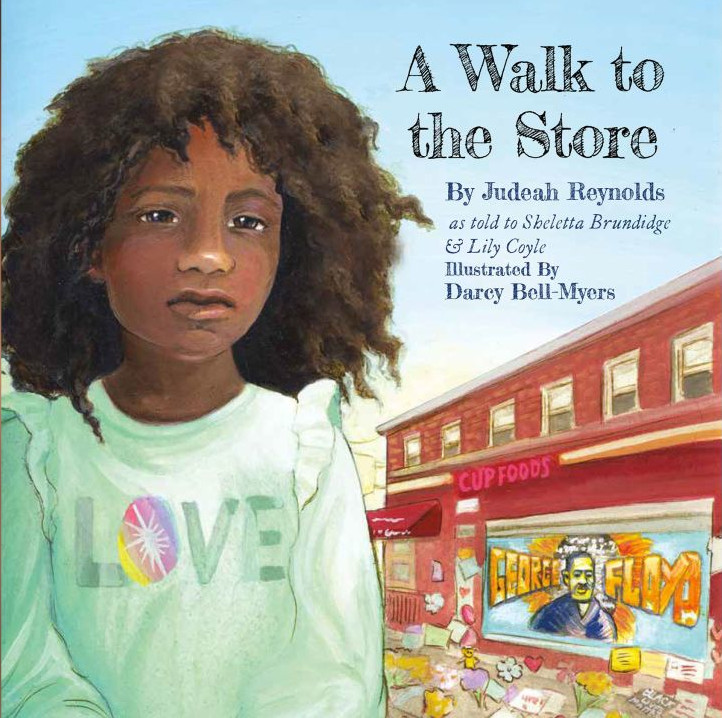
Book cover credit: Beaver’s Pond Press

SHE WAS ONLY NINE YEARS OLD, too young to walk alone to the store to buy candy with the $3 clutched in her hand. Eventually, her 17-year-old cousin, Darnella Frazier, agreed to accompany Judeah Reynolds to Cup Foods. That decision on May 25, 2020, would forever change their lives. And the world.

What happened in Minneapolis that evening—the murder of George Floyd at the hands of four Minneapolis police officers—is the subject of a powerful new children’s picture book, A Walk to the Store by Judeah Reynolds as told to Sheletta Brundidge and Lily Coyle.

When I learned of the book’s September 2022 release by St. Paul-based Beaver’s Pond Press, I knew immediately that I needed to read this recounting of Judeah’s witness to Floyd’s death. The cousins arrived on an unfolding scene outside Cup Foods where Floyd lay on the ground next to a squad car, a police officer pressing his knee into the 46-year-old’s neck. Judeah, Darnella and other bystanders pleaded with the police to stop while Darnella recorded the scene on her cellphone and then shared that video online. She won a 2021 Pulitzer Prize for that documentation.

While this book recounts the death of George Floyd from a child’s perspective, it is much more than a basic retelling. The story also reveals the trauma Judeah experienced. The sadness. The difficulty sleeping. The bad dreams. The replaying of Floyd’s killing in her mind.

But this is also a story of strength and hope and about being brave enough to speak up. To say something. To let your voice be heard. To effect change.

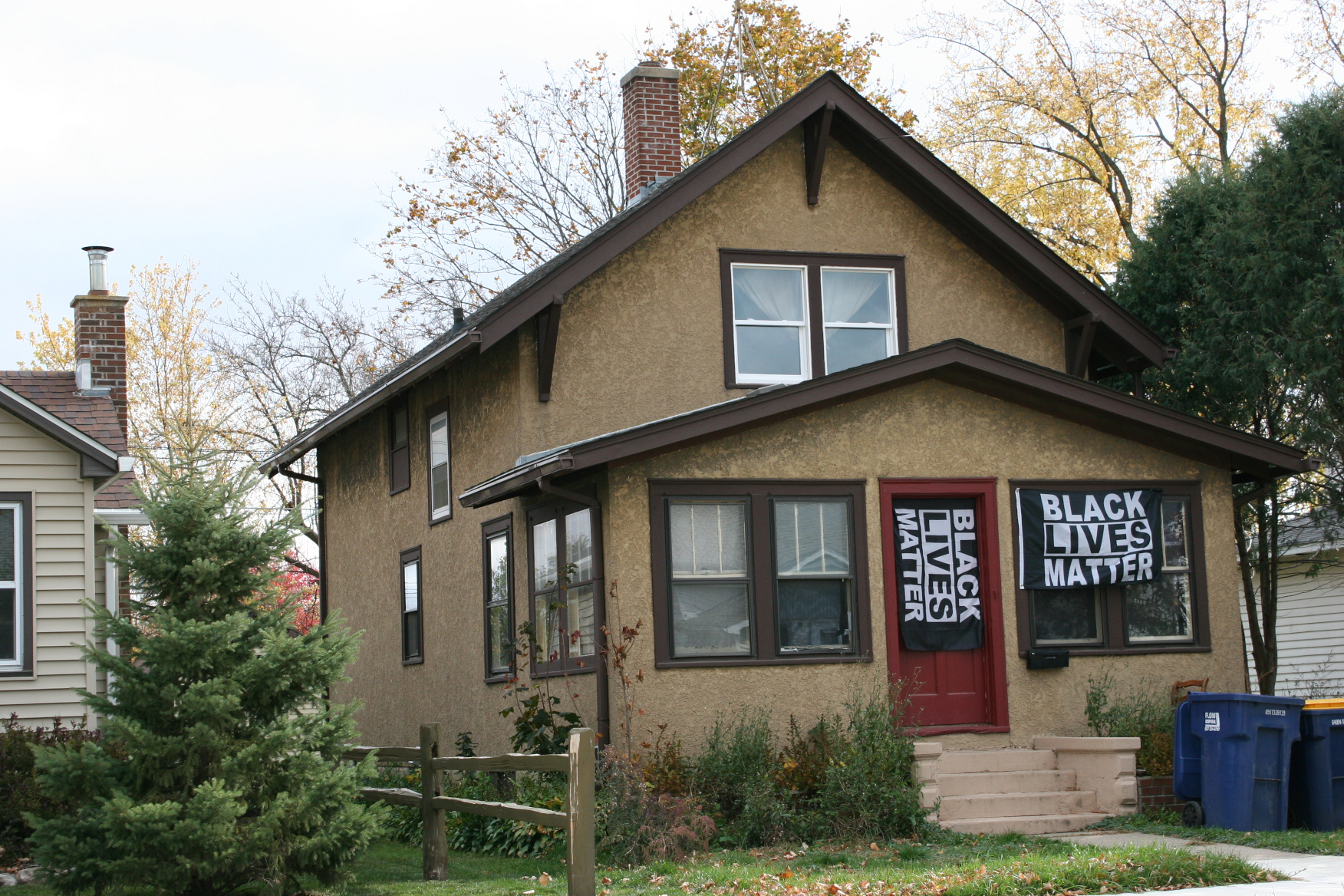
Messages like this are included in the book. I photographed this two years ago in small town Kenyon, MN. (Minnesota Prairie Roots copyrighted file photo 2020)

I heard Judeah’s determined voice in her words. I saw it, too, in Darcy Bell-Myers’ art, which reinforces the story with strong, message-filled illustrations. This book is empowering for children who read or hear this story. And it’s equally as impactful for adults.

At the end of the book is a list—How to Help Children Process a Traumatic Event. I appreciate the inclusion of those 10 suggestions given Judeah did, indeed, experience trauma. Her family even moved out of Minnesota.

This LOVE mural by Minneapolis artist Jordyn Brennan graces a building in the heart of historic downtown Faribault. The hands are signing LOVE. (Minnesota Prairie Roots copyrighted file photo June 2021)

As I finished reading A Walk to the Store, I considered how ironic that young Judeah wore a colorful shirt emblazoned with the word LOVE as she stood on the sidewalk outside Cup Foods, witness to George Floyd’s murder.

© Copyright 2023 Audrey Kletscher Helbling
 

Learning about my Somali neighbors via a new children’s book December 7, 2022

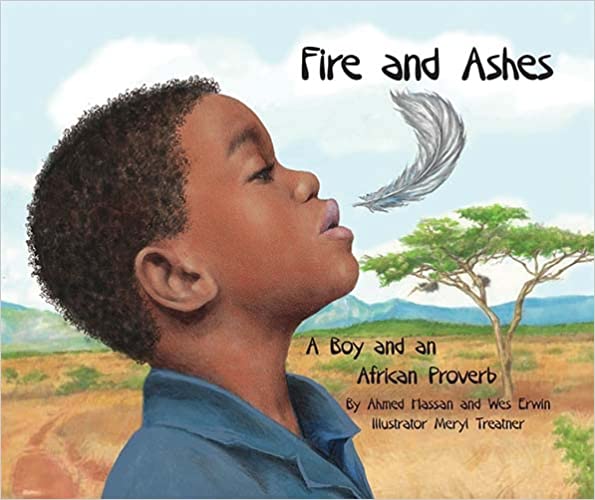
LIVING IN A MINNESOTA community with a sizable Somali population, I was excited to read the recently-published children’s picture book Fire and Ashes—A Boy and an African Proverb co-authored by Minnesotans Ahmed Hassan and Wes Erwin. Why? It’s important for me to learn about my new neighbors, their homeland, their culture, their experiences before resettling in Faribault. Reading books is one way to gain insights.

Fire and Ashes, even though a book geared toward children, is an enlightening read for adults, too. I found myself fully-engaged in the story of young Warfa, a refugee from Somalia who experienced unimaginable trauma. His trauma flares when he works on a school assignment—creating a poster about himself. I can almost feel my tummy hurting, my head spinning, my heart racing right along with Warfa as he relives terrifying moments in Africa. That includes witnessing the violent death of a neighbor. (Because of that, children should read this story with an adult.)

Award-winning children’s book illustrator Meryl Treatner reinforces the story line with art so realistic that I felt like I stepped into Africa and then into Warfa’s American classroom. I could almost smell the flowery scent of the acacia tree, feel the threat in a shadowy figure, hear Warfa’s uneven breathing.

It is Warfa’s grandma who helps her “little lion” deal with his anxiety via an African proverb and practical visualization and breathing techniques. Proverbs are used in many cultures to effectively teach, to pass along wisdom. The co-authors of Fire and Ashes, both licensed counselors, wrote this book not only to share a proverb, to tell Warfa’s story, but also to shine a light on mental health and self-care. The book includes authors’ notes and a link to additional supportive resources.

There are so many reasons to appreciate Fire and Ashes. The book gives readers like me a glimpse into atrocities experienced by my new neighbors. This book gives insights into culture. And for those who have endured any type of trauma, whether young like Warfa or two generations older, this book opens the door to discussion and then to healing, to an understanding that memories are ashes, not fire.

FYI: Fire and Ashes—A Boy and an African Proverb is available for check-out at Buckham Memorial Library in Faribault and the Lanesboro Public Library, local requests only. I hope other libraries in the 11-county Southeastern Libraries Cooperating system add this book to their collections. This book, published by The Little Fig, is the first in a series focusing on African proverbs. I’d recommend purchasing Fire and Ashes for your personal library or as a gift.

© Copyright 2022 Audrey Kletscher Helbling
 

Watching the 2018 Winter Olympics from the perspective of a Minnesota soldier’s daughter February 13, 2018

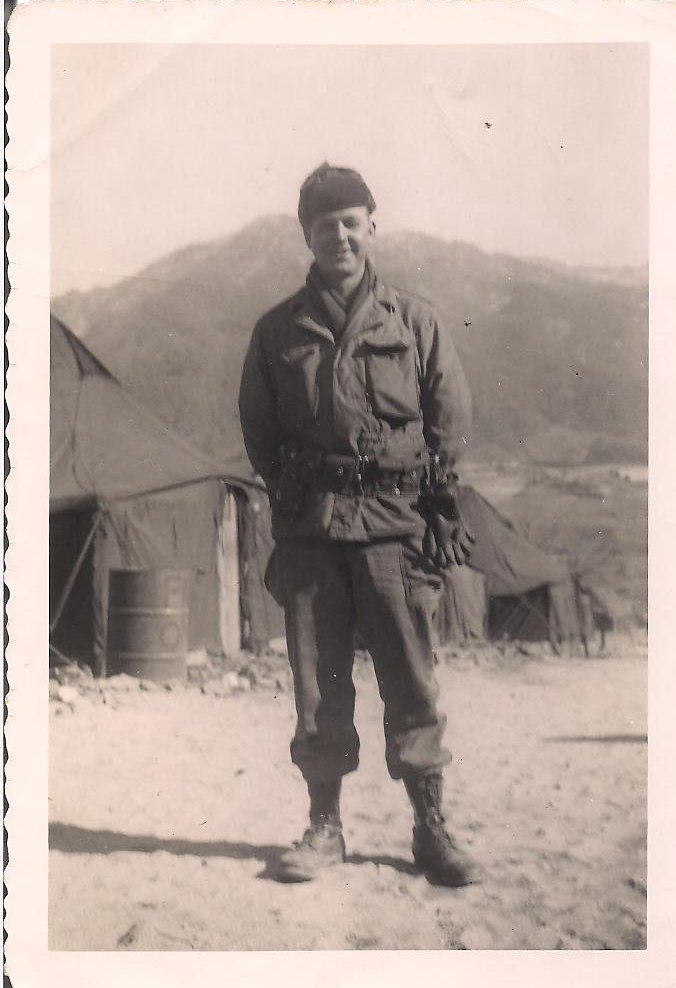
My dad, Elvern Kletscher, at Camp McNair in Korea, photo dated February 14 (1953).


WATCHING THE WINTER OLYMPICS the past several days, I’ve felt a closeness to my deceased father. He walked this soil, this mountainous land so different from the flat, open farm land of his southwestern Minnesota home.


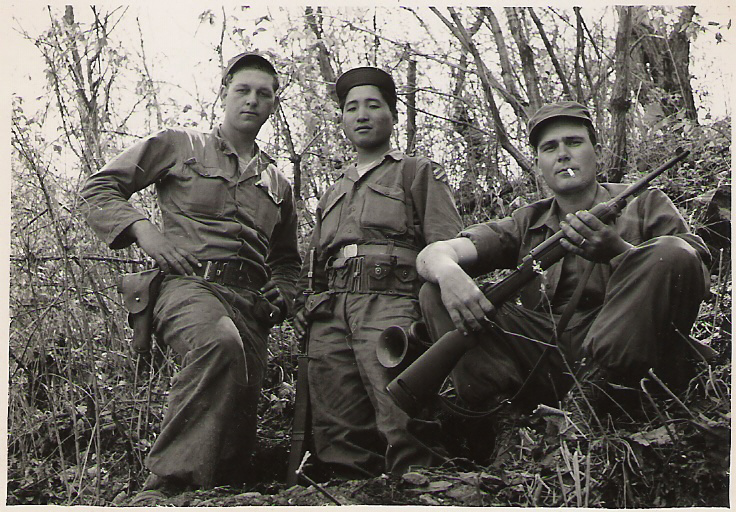
This photo from my dad’s collection is tagged as “Kim, Rowe, Allen & me, May 1953 Machine Gun Crew.” That’s my father on the right.


He landed here in 1952 with a ship full of other U.S. Army soldiers, gun in hand. A young man sent here by his government to fight on foreign land in a region that still is without solid peace. He fought on the front lines. Kill or be killed. Buddies dying. Explosions and hungry Korean orphans begging for food across barbed wire and him eating bark from trees and cold that felt even colder than the coldest of Minnesota winters.


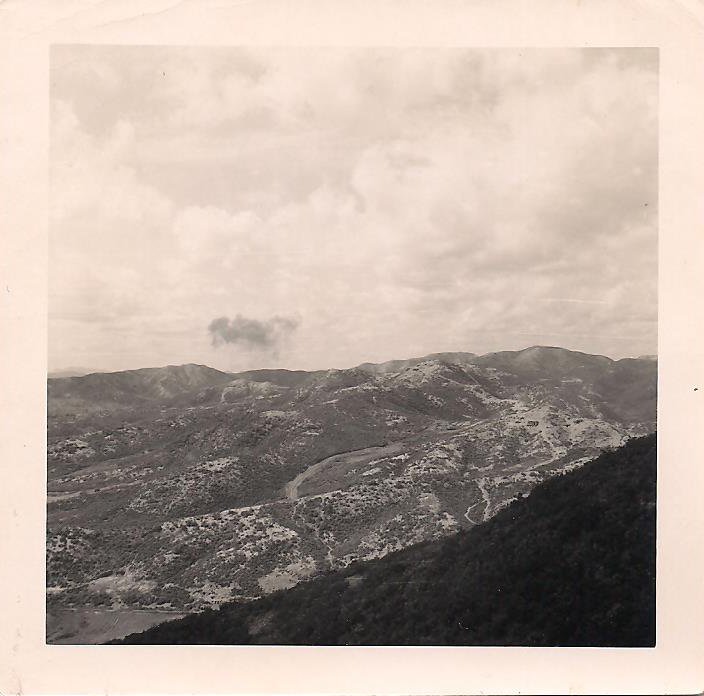
This photo, pulled from the shoebox which holds my dad’s military photos, is simply labeled “front line.” That would be “front line” as in Korea, where my soldier father fought.


When I see the blowing snow and rugged mountain ranges during Olympics coverage, I think of my foot solider infantryman father, ranging through and over those Korean mountains. Scared. Yet doing what he must to survive. Kill or be killed.


My father, Elvern Kletscher, on the left with two of his soldier buddies in Korea.


I think of him on Heartbreak Ridge, picking off a sniper who had taken many of his buddies. And I think of the fiery shrapnel piercing his skin and the Purple Heart he would claim decades later, when he was an old man. Because a fire had destroyed his military records. Because he had tucked most of his war memories away. Because no one cared about what happened on a Korean mountaintop in 1953.


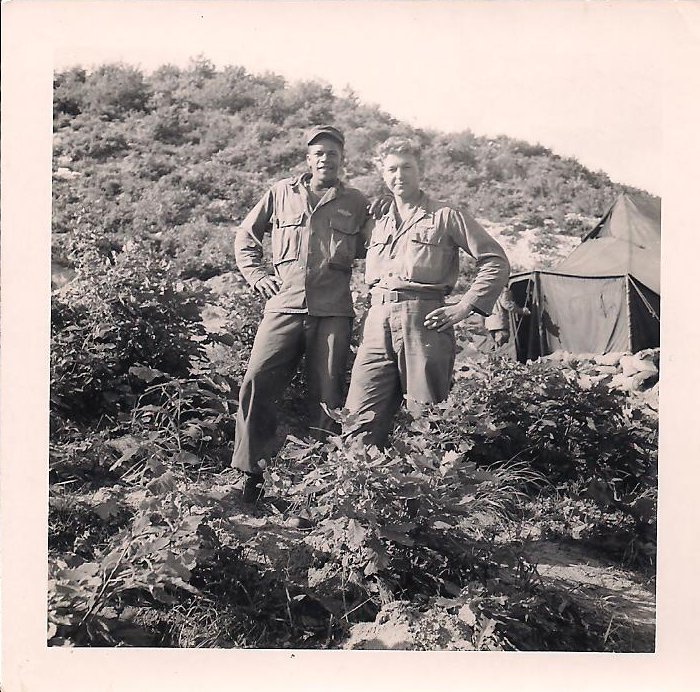
On the back of this photo, my dad simply wrote “a letter from home.” I appreciate this photo of my dad taken by an unknown buddy in Korea.


I regret that I didn’t understand him and the inner turmoil he carried with him from Korea back home to Minnesota. I regret that I didn’t ask more about his war experiences, that I didn’t recognize the trauma he suffered as a result. I regret that healing never fully came, although he found understanding and solace in the company of other veterans with similar shared experiences late in life.

All of this I consider when I view the Olympic athletes in their designer clothing, medals around their necks, applause of crowds, praise of many.

All of this I consider when I see the sister of the North Korean dictator seated behind our Vice President.

All of this I consider when I view those Korean mountains flashing across my TV screen.


Dad penciled on the back of this 1953 photo from Korea: “Sgt Smith & me from the States to Korea.”


I think of my dad as I retrieve a shoebox full of his black-and-white Korean War era photos. I sit on the sofa filing through those curled images while Olympic athletes ski and skate and propel themselves down an icy tunnel. On the back of one photo, I read my dad’s cursive notation: me in Korea May, 53.

Sixty-five years have passed since he left Korea. I wish I could sit with him now, ask him about his time in Korea, about the stories behind those photos. Perhaps he would talk, perhaps not.


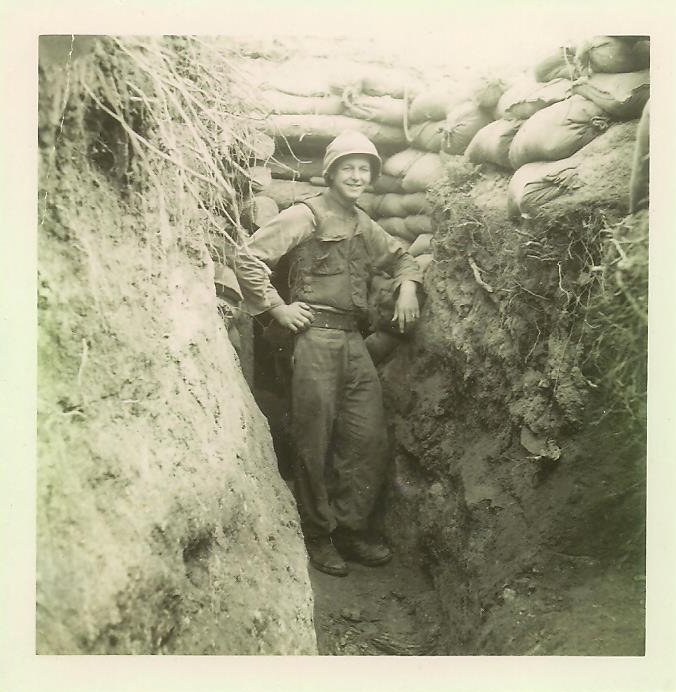
U.S. Army Cpl. Elvern Kletscher, my father, in the trenches in Korea.


I wonder, would he turn off the television or would he watch the Olympians perform? Could he handle seeing the backdrop of those rugged mountains where too many of his buddies died? Would he flash back to the horrors of war?


My dad carried home a July 31, 1953, memorial service bulletin from Sucham-dong, Korea. In the right column is listed the name of his fallen buddy, Raymond W. Scheibe.


The reality is that I can’t ask him. He died in 2003. But I can write. I can use my words to tell his story, to apologize for my lack of understanding, to honor him. And this I do as Olympians cross country ski, stop, sprawl stomach down, then fire their rifles in this land, this Korea. This land where my soldier father from Minnesota shot his weapon, too. Kill or be killed.

© Copyright 2018 Audrey Kletscher Helbling
 

When yet another vehicle strikes another child heading to school October 18, 2017

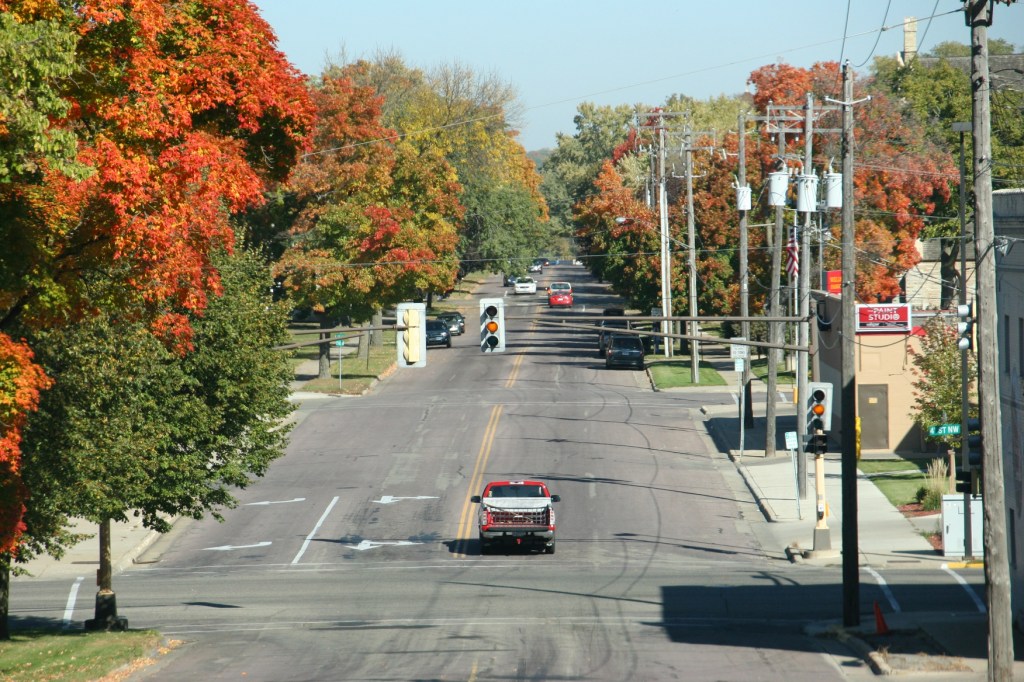
A teen was struck on busy Second Avenue (pictured here intersecting with Minnesota State Highway 60), several blocks north of this Faribault intersection. Minnesota Prairie Roots file photo October 2015.


IF YOU’VE EVER EXPERIENCED trauma, you understand how a news story can trigger difficult memories.

Tuesday morning a vehicle struck a 13-year-old girl as she crossed a busy Faribault street on the way to her bus stop. Conscious, but incoherent, she was airlifted to a Twin Cities trauma center with unknown injuries.

Now the 54-year-old male driver of the 1998 Lincoln Navigator that hit the girl faces possible charges. According to news reports, he drove his vehicle around the right side of vehicles stopped for the teen at the Second Avenue crosswalk.

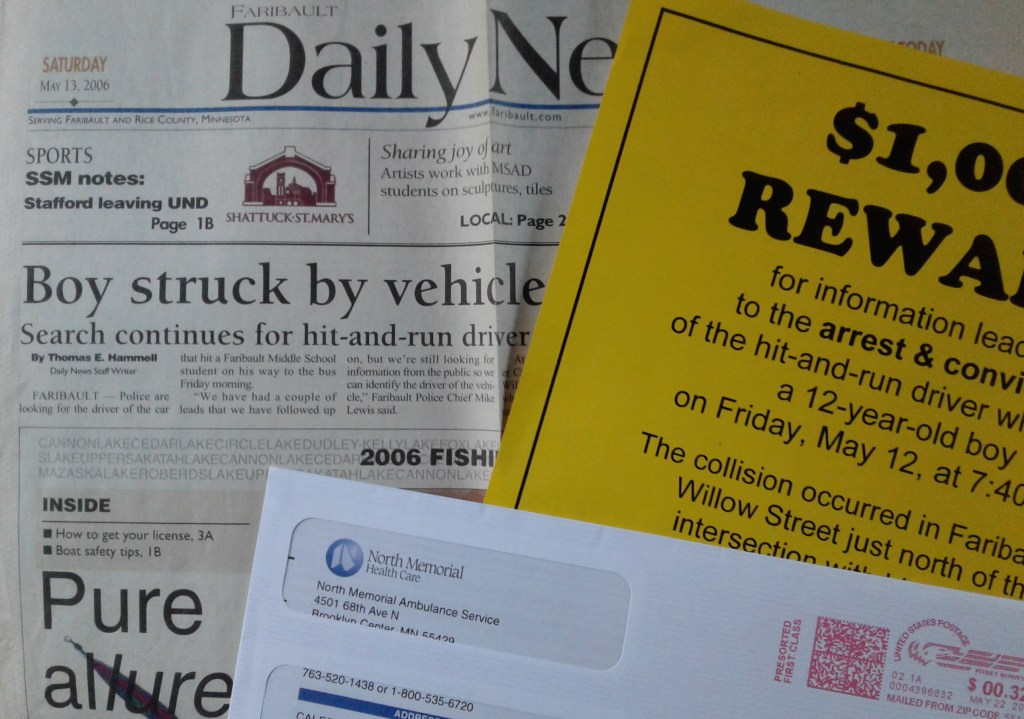
When I heard the news, my mind flashed back to May 12, 2006, the date a car hit my then 12-year-old son as he crossed a busy Faribault street on the way to his bus stop.

The similarities end in the commonality of Faribault Middle School students struck on busy streets around 7:30 a.m. while going to bus stops.

My son suffered only minor injuries of a broken bone in his hand, a possible rib fracture and a bump on his head after bouncing off the windshield of a blue 4-door car, possibly a Chevy Cavalier or Corsica. That driver left the scene and has never been found despite police follow-ups on many leads and a $1,000 reward offer (now expired).

In the years since that May morning when fear gripped my heart, I’ve sometimes wondered about that motorist. How could he/she drive away from my boy, just leave him lying on the side of the road? Police suspect, and I agree, that the driver had something to hide, a reason to continue on.


I still keep a file of email exchanges with police, newspaper clippings, medical bills, insurance documents, the accident report, the reward flier and even handwritten get well cards crafted by children to my son. This incident is part of my family’s history now, part of our story.

I changed on that May morning 11 years ago. I lost some faith in the goodness of people. For awhile I was angry, driven to find the man or woman who failed to stop. I couldn’t understand the lack of compassion and still can’t. But my resolve to find the individual lessened as the years passed, replaced by an acknowledgment that I likely will never have answers.

Still, on days like Tuesday when I hear of another child struck on her way to school, the memories rise, strong and painful.


FYI: Click here to read an award-winning poem I wrote about the hit-and-run involving my son.

© Copyright 2017 Audrey Kletscher Helbling


Don’t tell me you’re “fine” when you’re not & other insights March 5, 2017


HOW ARE YOU? I’ve never liked that question, even realizing the underlying kindness that laces those three trite words.

The standard answer of “I’m fine” is expected. The truth most often is not.


ttfa-1024x1024


Now Minneapolis writer Nora McInerny Purmort—who has faced her share of “I’m not fine” days—tackles the “How are you?” question in a podcast series from American Public Media. Terrible, (Thanks for Asking) is a must-listen series in which Nora seeks only honest responses to “How are you?”

I’ve listened to one podcast thus far. “Unbroken” features an interview with sexual assault survivor Sarah Super. It’s an incredible, horrible, powerful and, yes, sometimes graphic, story. But so worth your time for the insights revealed. Sarah is one strong woman. And we can learn so much from her about the importance of speaking up, of being heard and more.

Both she and Nora address the issue of silence. And, yes, I picked that from the interview because silence is all too pervasive. I’m talking the hard, uncomfortable silence that those who have suffered trauma, those who are dealing with health issues, those who are facing unimaginable difficulties and challenges hear. Yes, hear. Silence truly can be deafening.

Sarah cites the reason many friends and loved ones remained silent following her assault: “I didn’t know what to say or do.”

Puh-lease.

“Your silence,” Sarah says, “feels like apathy.” The definition of apathy is lack of interest, enthusiasm or concern. Lack of. Imagine how that feels to your loved one who is hurting. Lack of.

Nora reiterates Sarah’s thoughts: “Silence hurts when you are on the other end of something awful.”

In an interview with National Public Radio about her podcast series, Nora repeats, “The worst thing—and it doesn’t matter if you’re dealing with death, or if you’re dealing with all of these other things that we’ve talked to people about—silence is the worst thing you can hear from people.”

She gets it. Within six weeks, this young woman lost her father to cancer, miscarried and then lost her husband to brain cancer. Since then, Nora has authored the book It’s Okay to Laugh (Crying Is Cool, Too). And now the enlightening podcasts have followed.

What can we learn from all of this? My take-away is this: First, we need to speak up, to end the silence, to really care when we ask someone, “How are you?” And then we need to listen, really listen. That means setting aside our stories, our comments, our whatever, and truly focusing on what the other person is telling us. It’s about them. Not us.

#

CHECK BACK TOMORROW for a way that Minnesota is breaking the silence on an issue that affects all of us, directly or indirectly.

© Copyright 2017 Audrey Kletscher Helbling