Minnesota Prairie Roots

Writing and photography by Audrey Kletscher Helbling

Raising awareness about long COVID March 15, 2025

(Initial COVID-19; image from the CDC)

UNTIL MY ELDEST ALERTED me around noon today, I was unaware that March 15 marks a notable day. At least for me and the millions of others worldwide who suffer from long COVID. Today is International Long COVID Awareness Day.

I’ve been living with long COVID for more than two years now. And in that time-frame, I’ve attempted to raise awareness about this debilitating chronic condition. I will continue to do so, because it’s important for others to understand. With understanding comes compassion and support.

My lengthy list of symptoms began after I contracted COVID in January 2023. I never self-tested positive for the virus. But that is not necessary to get a long COVID diagnosis. My primary care doctor and specialists ruled out any other medical reason for my varied symptoms. The connection to COVID was clear even to me, someone not particularly medically-inclined.

Today I am mostly fine, although I still struggle with residual issues, especially in the sensory area. It took six months of vestibular rehab therapy and lots of hard work to get me to a better place. During much of 2023, I thought I would never reclaim my life. I have.

IT TOOK A TEAM

But I didn’t do it alone. First, I credit Dr. Todd Sykora at Allina Health, Faribault, for not giving up on me, for showing great compassion and care, admitting that he didn’t have the answers. His concern for my health ran, still runs, deep. His decision to refer me to physical therapy saved my life.

At Courage Kenny Rehabilitation Institute in Faribault, I met physical therapist Ryan Iverson who, among other areas, specializes in vestibular issues. He was the perfect fit for me and the symptoms I was experiencing. To hear him say that my symptoms were like those of someone suffering a traumatic brain injury was validating. And then the hard work began, week after week for six months. Like my primary care doctor, Ryan showed great compassion and care.

SHOW COMPASSION & CARE BECAUSE LONG COVID IS REAL

If I want to make any point here, it’s that individuals living with long COVID need the compassion, care and understanding of family and friends. What we face is real. Difficult and debilitating. Without the support of my husband and eldest daughter, I could not have managed those first nine months of living with long COVID. They did a lot for me and always supported and encouraged. If my other two adult children lived in Minnesota, I know they would have offered the same.

Today I use my experiences to encourage a young man in my community who has been dealing with long COVID for 1.5 years. He’s had to drop out of college. He’s had to, on occasion, use a wheelchair. He struggles with fatigue and brain fog and much more. I referred him to my therapist, Ryan, and he’s making progress. I also stay connected with this young man’s mom. I recognize that she needs support, too.

Thank you for reading this post. That shows you care and want to learn more about long COVID. Please support those who suffer from this chronic condition by, first, acknowledging their challenges and then encouraging them.

#

IF YOU DEAL with long COVID (what are your symptoms?) or know someone who has this chronic condition, please share your thoughts. How are you managing or supporting? What do you want people to know? Let’s, together, raise awareness.

© Copyright 2025 Audrey Kletscher Helbling


Long haul COVID officially recognized by MDH January 23, 2025

Filed under: Uncategorized — Audrey Kletscher Helbling @ 12:33 PM
Tags: , , , , , ,
A graphic of the original coronavirus. (Source: CDC 2021)

I FEEL VALIDATED. The Minnesota Department of Health now recognizes long haul COVID as an official, diagnosable illness (even with its own insurance code), according to media reports citing the MDH. I am thankful. This has been a long time coming for someone like me who lives with this illness.

I have often felt that people don’t necessarily understand the severity of long COVID, how it impacts the lives of those of us affected. It’s real. Not in our heads. Debilitating. Long-lasting. Results of a survey by MDH confirm that.

Thankfully, my primary care doctor listened to me, showing great care and compassion when we were trying to figure out what was going on with my body in early 2023. My many symptoms followed an illness that was assuredly COVID, even though I never tested positive for the illness. COVID tests, if not done at the right time or done incorrectly, can give inaccurate results.

When I look at the MDH’s long COVID check list, I see many of the long-lasting symptoms I experienced: fatigue, brain fog, trouble sleeping, headaches, heart palpitations, tightness in chest, dizziness (balance issues) upon standing, skin issues, hair loss, mood changes, and changes in taste and smell (for me intensified). And in the “other” category, I experienced sensory overload, which continues to plague me.

After many tests to rule out a tumor or other health issues, my doctor settled on long haul COVID as my diagnosis, although that’s not in my official health records. I need to get that changed with this new MDH determination.

Some of the initial exercises I did in vestibular rehab therapy to regain my sense of balance. (Minnesota Prairie Roots copyrighted file photo 2023)

I will feel forever grateful to Dr. Todd Sykora of Allina Health for listening to me, for his persistence, for prescribing a medication that eased some symptoms and for his suggestion that I try physical therapy.

I’ve written numerous times about my long COVID experience and treatment in an effort to raise awareness, educate and offer hope to those dealing with the illness. For me, the “help” was six months of vestibular rehab therapy to retrain my brain. My therapist treated me like I’d experienced a traumatic brain injury. He was spot on with that approach. I will feel forever grateful to Ryan Iverson at Courage Kenny Rehabilitation Institute in Faribault for getting me through some really challenging months and helping me reach my goal of “getting my life back.” That also came with lots of hard work on my part and the incredible support of my loving husband.

This hope stone, painted by a great niece, sits on my office desk. (Minnesota Prairie Roots copyrighted file photo)

Today I am using my experience to spread the message about long haul COVID and to also personally support a young man in my community dealing with its devastating affects. J, as I will call him, has been struggling for much longer than me and with much more severe symptoms. I’ve encouraged J (and his mom), offered hope and referred J to my physical therapist. He is making progress.

As for me, I’ve learned to mostly manage the few long haul COVID symptoms that persist, albeit less severe than in 2023. When I got sick with COVID again in December 2024 and then rebound COVID, some symptoms flared. But, for the most part, I’m OK. Like any health issue, you learn to live with it and manage. And when a state agency recognizes your illness as real, it feels validating and empowering.

© Copyright 2025 Audrey Kletscher Helbling
 

Feeling especially grateful this Thanksgiving November 27, 2024

I created this Thanksgiving display in a stoneware bowl. (Minnesota Prairie Roots copyrighted file photo)

GRATITUDE. It’s a word that gets tossed around a lot this week as we observe Thanksgiving. And that’s good as we all need to pause, reflect and focus on reasons to feel thankful.

Health and family often top that list. And I’m staying in that lane of feeling especially grateful this year for restoration of my health and for my dear family—my husband, three adult children, two grandchildren and sons-in-law. And the soon-to-be-born second grandson.

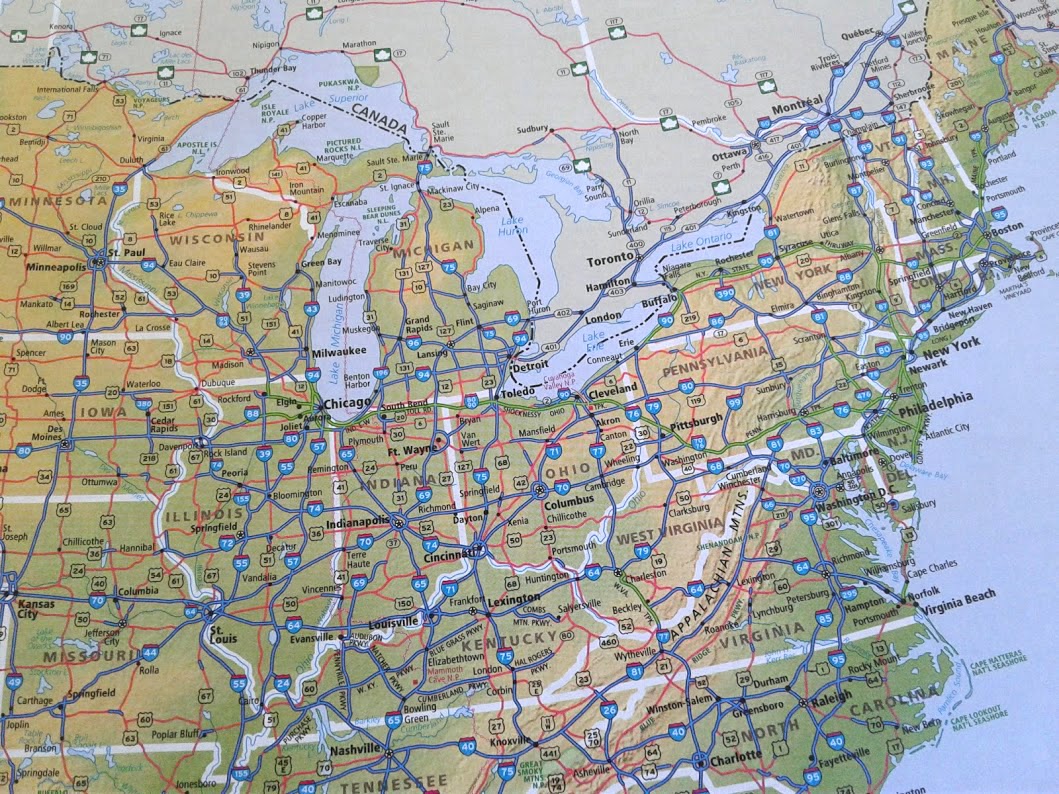
This map shows the geographical distance separating my family. (Minnesota Prairie Roots copyrighted file photo)

While my core family is scattered from Boston to eastern Wisconsin to Minnesota, we are never far apart, thanks to smartphones. So, yes, this mom and grandma, who once lived in the days of no phone service (not even a landline) and of typewriters, is especially grateful for technology that allows us to stay easily connected.

Still, that does not make up for in-person time together as a family. It doesn’t happen often that we are together. But in August, we were. All of us. For the annual Helbling family reunion. If ever my mama’s heart was full and happy, it was then. The son actually spent several weeks in Minnesota after flying in from Boston for the international unicycling convention in Bemidji and then staying until the reunion. To have that lengthy time with him, whom I typically only see at Christmas, was beyond wonderful. Technology allowed this extended stay as he could work remotely, although he did complain about my slow internet speed.

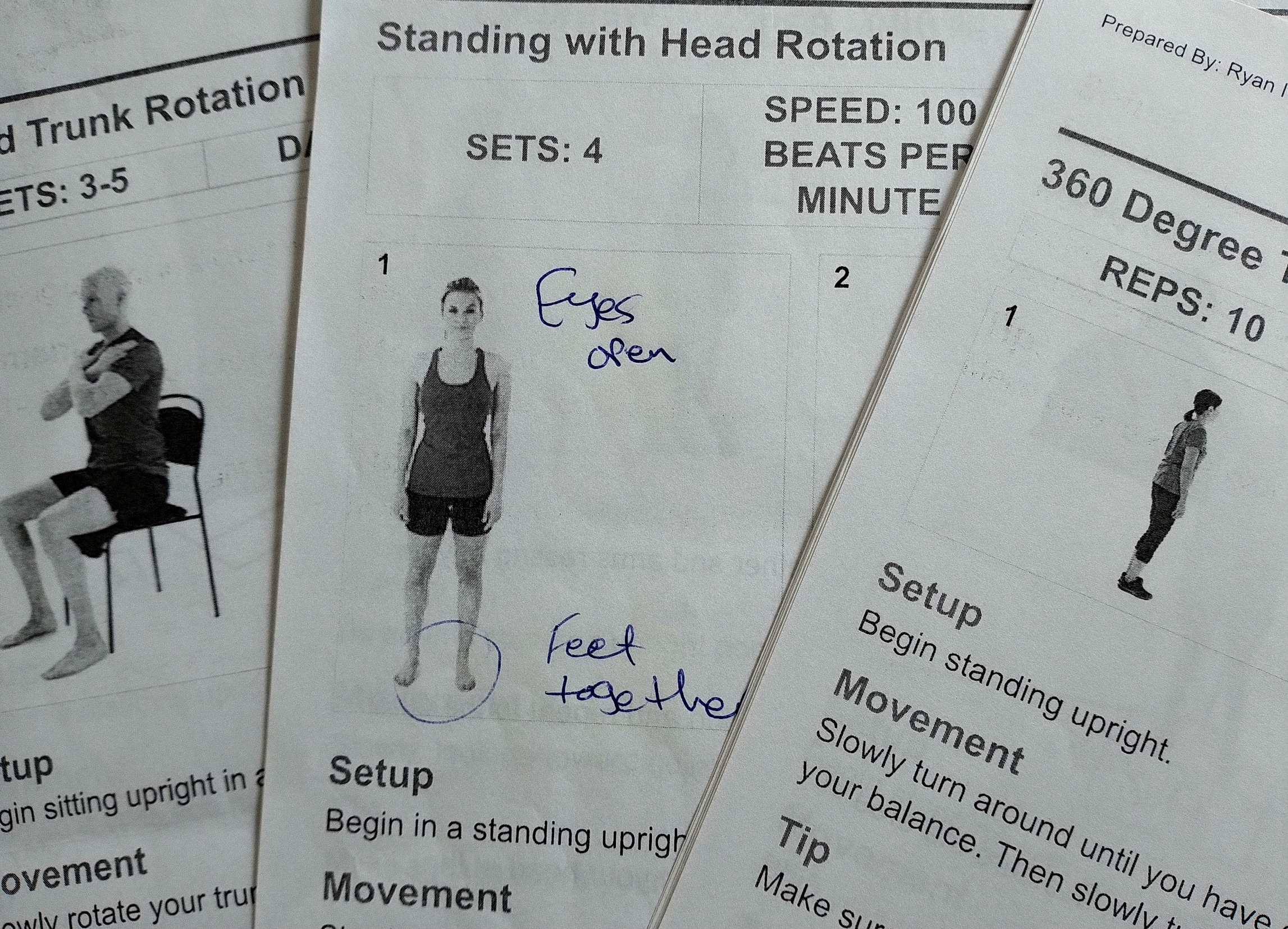
A sampling of some of the exercises I did while in vestibular rehab therapy at Courage Kenny, Faribault, from April to September 2023. (Minnesota Prairie Roots copyrighted file photo 2023)

And then there’s my health. This past year marked the year I reclaimed my life after spending 2023 dealing with issues caused by long haul COVID. I spent six months in vestibular rehab therapy to retrain my brain. I learned to feel comfortable walking without feeling unbalanced. I learned to manage sensory overload (which remains a residual problem). And much more. I shall be forever grateful to my healthcare team, specifically my physical therapist Ryan, and my family for getting me through an incredibly difficult health challenge. My symptoms were debilitating. Few understood then and few understand now what I experienced.

But because of that experience, I’ve been able to encourage and support others who are in the throes of debilitating long haul COVID. I understand. I empathize. And my compassion for them runs deep. This is real and life-changing.

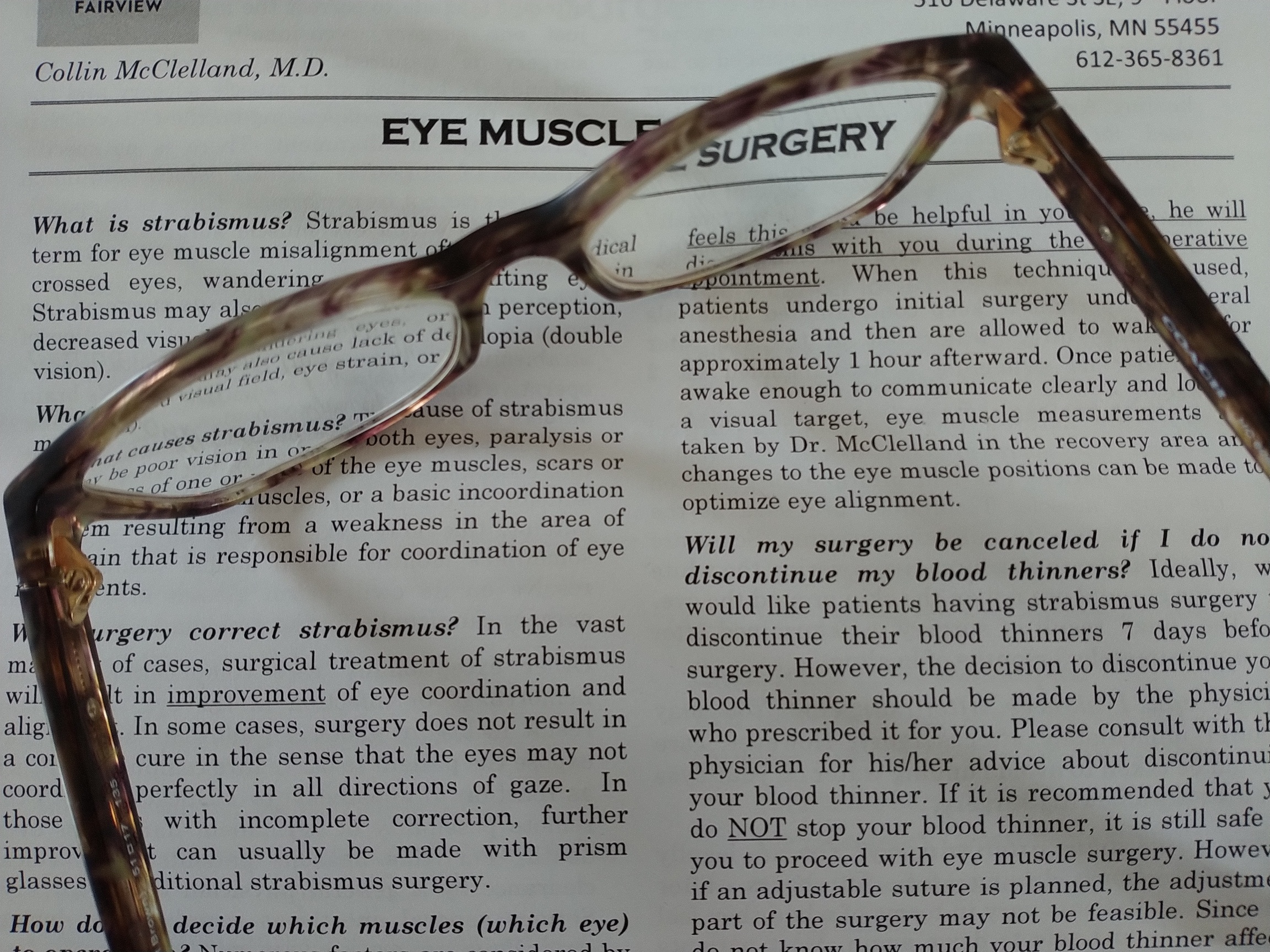
Information about the eye muscle surgery I underwent in Minneapolis under the care of a neuro ophthalmologist. I had this same surgery performed at age four. These are my pre-surgery eyeglasses, without mega prisms. (Minnesota Prairie Roots copyrighted file photo 2023)

In January, I underwent bilateral strabismus surgery to realign my eyes. Although that surgery failed (as it does up to 20 percent of the time), I remain grateful for one thing—my vision. It’s certainly far from perfect. I still see double if I’m not wearing my prism-heavy prescription eyeglasses. I struggle to tell if photos I am taking or processing are clear. But the bottom line is that I can see. And that is reason to feel grateful. I. Can. See.

This tag of reasons to feel grateful hung on a Gratitude Tree outside the Northfield Public Library in 2019. (Minnesota Prairie Roots copyrighted file photo)

In all of the challenges of life, reasons exist to feel thankful. It’s easy enough to fall into complacency and take good health, family, friends and life in general for granted. Don’t. None of those are a given. No matter what, we can choose to feel grateful, even in the midst of struggles. Something positive can come from negative. Life brims with reasons to feel grateful. I am.

Happy Thanksgiving, dear readers! I am grateful for all of you, for your support, for your friendship, for the light you shine in my life.

© Copyright 2024 Audrey Kletscher Helbling


Reflections & updates June 10, 2024

Photographed at the Rice County Master Gardeners garden in Faribault on one of my meandering walks. (Minnesota Prairie Roots copyrighted photo May 2024)

WHEN I GO FOR A WALK, I’m either walking to primarily exercise or to photograph. One involves fast-paced movement to increase my heart rate. The other entails a leisurely pace of observing the world around me.

There was a time when I always carried my camera. No more. I need to feel the freedom of just being, without thought of, oh, I need to photograph that. If I’m without my 35 mm digital camera and absolutely need to take a photo, I will use my smartphone.

An example of exercises I did in vestibular rehab therapy. (Minnesota Prairie Roots copyrighted file photo 2023)

A NEW PERSPECTIVE

What prompted this change? My health. Last summer was, for me, the summer that wasn’t. I was primarily housebound from April through September due to long haul COVID. You’ve probably read my story, detailed here. I dealt with balance, sleep, sensory and other issues. All aspects of my life were affected. I left my house only for medical appointments because I couldn’t handle being out in the world of noise, light, sound, movement. I felt overwhelmed. I sat in my darkened living room, curtains drawn, lights low, no sound.

But here I am, a year later, with six months of vestibular rehab therapy behind me, and doing significantly better. Time and a lot of hard work on my part got me to this better place health-wise. I still deal with residual sensory issues. But mostly, I manage. And when I don’t, I temporarily sequester myself.

That I am back walking and photographing is, in many ways, remarkable. Last summer I couldn’t walk half a block due to imbalance. And I certainly couldn’t use my camera. I credit my physical therapist for patiently working with me, helping me regain my sense of balance and build my tolerance and ability to manage sensory overload. There is hope for anyone dealing with similar issues. But it can be a difficult road. There’s no denying how often I felt unheard, unsupported, without hope.

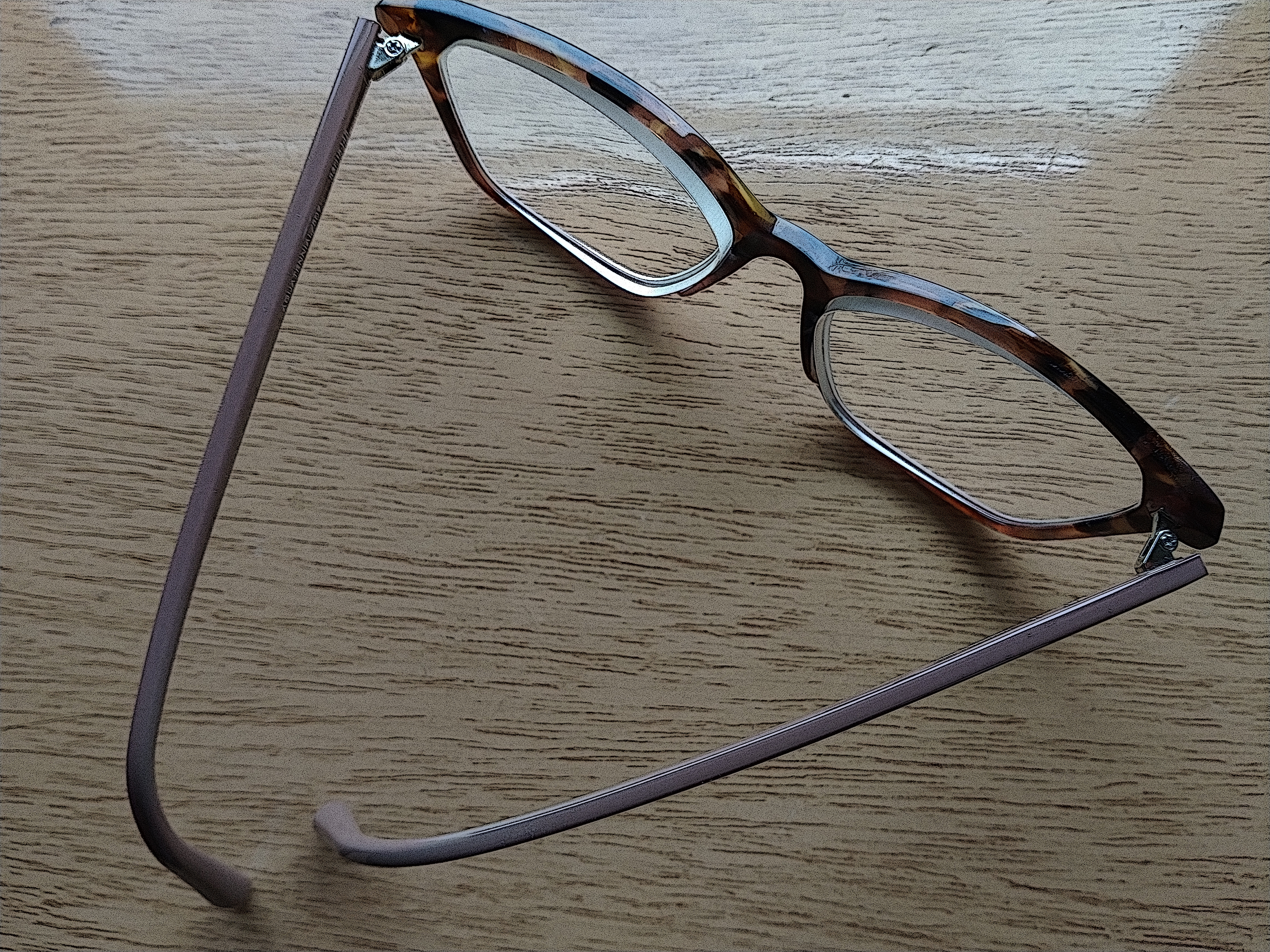
My new prism-heavy prescription eyeglasses. (Minnesota Prairie Roots copyrighted file photo May 2024)

DEALING WITH VISION ISSUES

At the same time all of this was happening, I was experiencing increasing double vision. In late January, I had bilateral strabismus eye surgery to realign my eyes. It was successful until it wasn’t. In 10-20 percent of cases, the eyes shift back to misalignment post-surgery. Mine did. I opted to try prism-heavy prescription lenses before considering a third surgery. I had my initial eye surgery at age four.

Four weeks out from getting my new prescription eyeglasses, my eyes and brain are still adjusting. The prisms have mostly corrected my double vision. But I’m struggling with distorted close-up vision, specifically slanting. I’m hoping, with time, that will vanish. I also can’t see things clearly on my computer screen, which is problematic when writing and when processing photos.

But onward I forge. Sometimes I push myself too much, taking too many photos, doing too many things. That results in strained, aching eyes and headaches. Often I feel just plain tired due to all the effort it takes to simply see. My brain and my eyes are working hard to focus my vision.

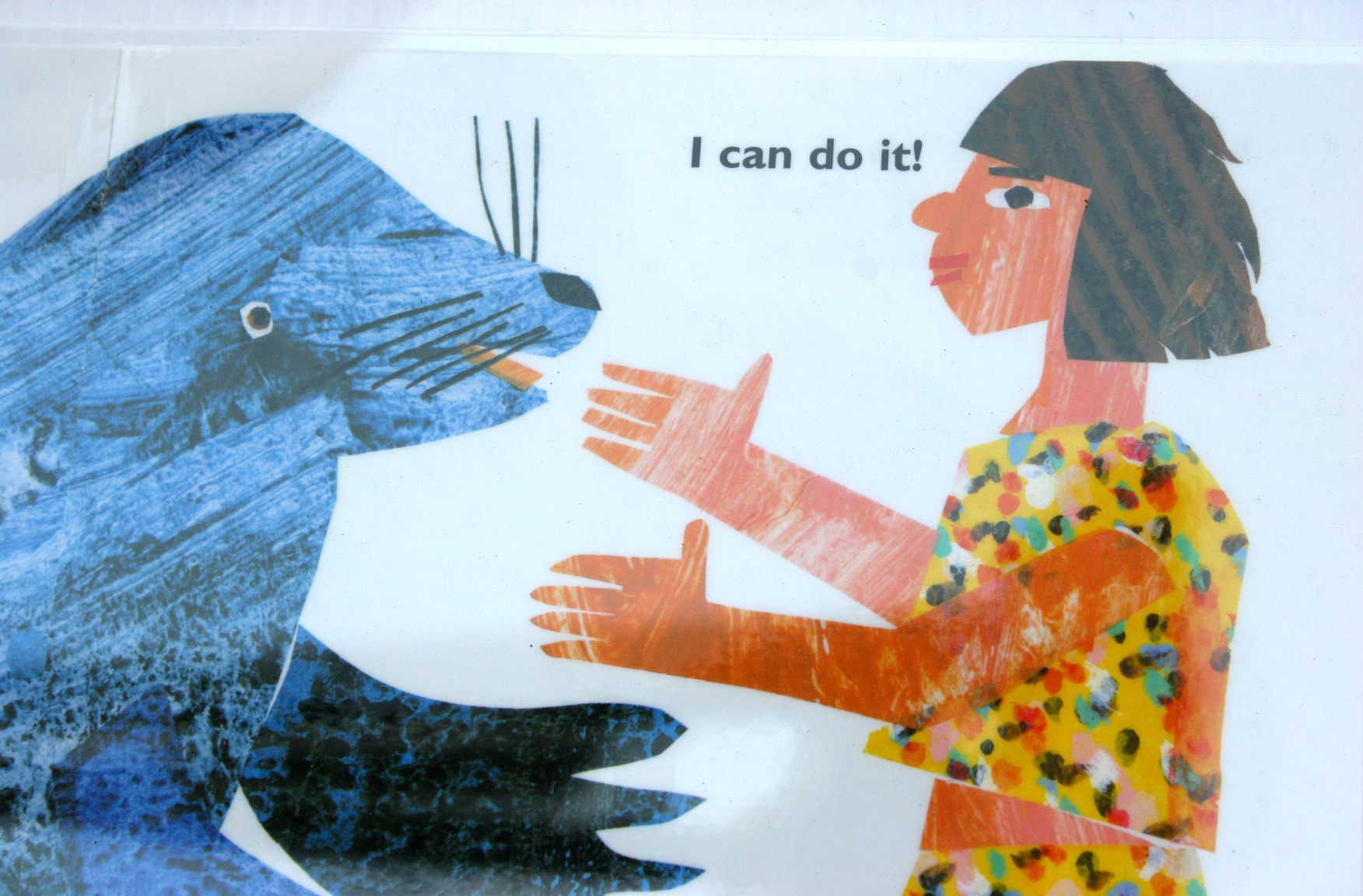
A page from Eric Carle’s book, From Head to Toe.

TAKE NOTHING FOR GRANTED

Too often in life, we take things for granted—the ability to walk, to hear, to see. And then something happens to us or someone we love and we realize that, hey, none of these are givens. I recognize that I have a responsibility to take care of myself in the best way I can. Sometimes that means walking to stay fit and sometimes that means walking to feed my creative spirit.

© Copyright 2024 Audrey Kletscher Helbling


Onward with hope post-COVID November 30, 2023

Filed under: Uncategorized — Audrey Kletscher Helbling @ 5:00 AM
Tags: , , , , , ,
My great niece Keira painted this HOPE stone, which sits on my office desk. (Minnesota Prairie Roots copyrighted file photo)

I HADN’T PLANNED on writing a third post related to my health issues following a case of suspected COVID in early January. But then blog readers shared their experiences with the virus and I felt compelled to write more, to offer insights and, most importantly, hope.

In this sharing of stories in the circle of my blog, I’ve learned that some of you have endured symptoms similar to mine. Keith in New York City. Diane in Iowa. And then Beth in Michigan with an altered sense of smell.

In the aftermath of COVID infections, there’s still much to learn. I quickly recognized that during my struggles and also via your stories. Answers don’t come easily. Help can be elusive. Frustration and despair set in and it’s a challenge to be heard, to remain hopeful. Telling our stories is important, necessary.

I received this book in the mail, sent anonymously by a reader. The book and note made me laugh and uplifted me when I really needed uplifting. (Minnesota Prairie Roots copyrighted file photo)

THE NEED FOR VALIDATION, FOR SUPPORT

I remember telling my physical therapist, Ryan, early on that I felt unseen because I was dealing with unseen neurological issues few seemed to understand. But when he compared my symptoms to those of someone with a traumatic brain injury, I felt validated. That’s all I needed, an affirmation that this was real, not just in my head. But it literally was in my head, in my brain.

My sister-in-law Rosie, who endured two concussions following falls, was (and is) among my biggest encouragers. She understands my symptoms, especially my inability to tolerate sensory overload. Having a key empathetic person is, in my opinion, vital. Likewise core family support is essential.

This quarter-sized token, gifted to me by my friend Beth Ann many years ago, lies on my computer desk. (Minnesota Prairie Roots copyrighted file photo)

GETTING HELP & SETTING GOALS

But personal support only goes so far. I am fortunate to have a primary care doctor who listens, shows great compassion, admits when he can’t help me, and referred me to specialists. My many office visits extended well beyond the allotted 20 minutes. Vestibular rehab therapy set me on a course to better health. I started therapy in mid-April. That continued weekly until mid-September. Therapy worked in retraining my brain, in helping me manage my symptoms.

On my final day of therapy in September, I told my therapist that I had three immediate goals: to get my hair cut, to return to worship services at church and to dine in a restaurant. Within two months, I accomplished all three with varying degrees of success. I share this to offer hope.

Here’s how I managed: I alerted my hair stylist to my sensory issues pre-appointment. Donita turned off the salon music and took care overall to minimize sensory input. Worship has proven a bit harder, especially managing the organ music, which often assaults me like a tsunami. Even with an ear plug, I struggle. I’ve learned that my brain struggles most in the early mornings and evenings and in busy environments. Restaurant dining remains challenging, although I managed in a quiet chain restaurant. I have yet to try a homegrown, noisy restaurant.

Inspirational and honoring words are embedded in mosaic tile at a memorial in Faribault. (Minnesota Prairie Roots copyrighted file photo)

HOLDING HOPE

There is hope. Always hope. It is, and has been, my go-to word through many struggles in life. For any of you struggling with post-COVID health issues, I hope I have offered you hope, or at least validated what you are experiencing.

These mini cards were a gift from Roxy, a blog reader from Owatonna who has been one of my strongest encouragers. I have sent these cards to others in need of support, passing along the gift of encouragement. (Minnesota Prairie Roots copyrighted file photo)

WAYS TO ENCOURAGE

For those of you who know someone dealing with long haul COVID, please support your family member or friend. Listen. Mail a greeting card. Text or call with encouraging words. (All helped me mentally; thank you, readers.) What we are going through may not be seen. But it is real, all too real.

#

FYI: To read my first post, “How COVID changed my life,” click here. To read my second post, “Retraining my brain post-COVID,” click here.

© Copyright 2023 Audrey Kletscher Helbling


Retraining my brain post-COVID November 29, 2023

This art by Faribault middle schooler Mohamed depicts how my brain felt post-COVID. (Minnesota Prairie Roots copyrighted file photo)

IT’S BEEN A JOURNEY. That best summarizes the path I’ve been on since January to reclaim my health. It’s been difficult, stressful, taxing, challenging, emotional and often overwhelming. But I was determined to do what I could to reach a better place health-wise in the aftermath of unconfirmed, but suspected, COVID.

This was a virus which messed with my brain, my neurological system, leaving me with a long list of debilitating symptoms. Prior to COVID, I was healthy, medication-free, living a normal life. And then…everything changed. (Click here to read my initial post about how COVID affected me.)

My route to managing long haul COVID began with my medical team, including my compassionate primary care doctor who listened, who admitted when he couldn’t help me, who referred me to specialists, who handed me tissues when I cried in the exam room. He never gave up on me. Nor did my vestibular rehab therapist.

Some of the exercises I did in vestibular rehab therapy. (Minnesota Prairie Roots copyrighted photo November 2023)

VESTIBULAR REHAB THERAPY, MY ROAD TO RECOVERY

I credit my physical therapist, Ryan at Courage Kenny Rehabilitation Institute in Faribault, for leading the way in my recovery. He has extra training in vestibular issues. From the get-go, Ryan encouraged me, worked with me, supported me, showed deep care and compassion. Those went a long way in empowering me to work hard. And that I did.

During those initial once-a-week visits with Ryan, I barely managed conversation with him. I would mostly close my eyes and listen as he told me how we would work first on overcoming my balance problems. And then I would do as he instructed. Simple things like turning my head while seated. Then trunk rotations. Then turning my head while walking. Soon rotating while walking. Moving my hands back and forth aside my head while listening to white noise. I was building my tolerance for sensory input one exercise at a time. Retraining my brain. It took many months to progress through these seemingly basic exercises. But they were helping.

Each session Ryan gave me homework, which I faithfully did. I understood that no amount of therapy would work if I wasn’t willing to work hard at home. Soon he was encouraging me to get out, to try socializing. He even convinced me I could manage a mid-summer stay at a lake cabin, giving me coping tools to handle the long drive (close my eyes and wear ear plugs and sunglasses), to handle sensory overload (take breaks) and more. I managed that vacation get-away, but not easily. I remember the evening I snuggled next to my eldest daughter, put my head on her shoulder and sobbed, “I can’t do this any more.”

A page from Eric Carle’s book, “From Head to Toe” inspires me. (Minnesota Prairie Roots copyrighted file photo)

ENCOURAGEMENT IN THE MIDST OF DESPAIR

Many times I felt despair, as if I wasn’t making progress. Ryan assured me I was improving, even if I couldn’t always see it. I often felt, too, like no one understood what I was going through (although I’m sure that’s not true). But what I had was unseen, literally in my head. And when people can’t see, or make no effort to understand neurological issues, support lacks. That said, I had a core support group of friends and several sisters-in-law who gave me ongoing encouragement.

And so the months passed. Randy and our eldest daughter, especially, offered unconditional love and support that carried me through some of my darkest days. I wanted desperately to feel better, to have my old life back, pre-virus. By mid-September when I’d advanced to virtual reality roller coaster rides, my physical therapist deemed me ready to graduate. I was ready, yet I wasn’t. I would miss Ryan’s weekly encouragement.

Here I am today, two months out from therapy’s end. I am in a much better place than when I began vestibular rehab therapy in mid-April. I am out and about. Grocery shopping, attending church, speed walking a half hour daily, going to concerts, socializing… I still struggle if I overdo it, if I have too much sensory input. I rely on ear plugs to handle loud music. I close my eyes. Sometimes I have to leave a place or event. I am not the same as I was pre-COVID.

Up next, eye muscle surgery. (Minnesota Prairie Roots copyrighted photo November 2023)

UP NEXT, EYE SURGERY

In January, I will undergo bilateral strabismus surgery at the University of Minnesota to realign my eyes. It is a re-do of a 1960 surgery. As my neuro ophthalmologist explained, the eye muscles that were surgically tightened decades ago have loosened through the decades. Up until my neurological system was affected by COVID, my brain compensated. No more. I am seeing double, and not just when I read. Trying to focus my vision to see only one exhausts me.

But in the all of everything I’ve endured since January, I’ve made significant progress. I’m doing much better. Mostly managing. And that is reason to feel thankful.

© Copyright 2023 Audrey Kletscher Helbling
 

No more VR roller coasters for this graduate September 26, 2023

(Minnesota Prairie Roots copyrighted file photo May 2016)

CUE “POMP AND CIRCUMSTANCE.” Wednesday, September 20, marked graduation day for me. After six months of vestibular rehab therapy at Courage Kenny Rehabilitation Institute in Faribault, I graduated.

It was a milestone day for me in managing the neurological issues I’ve faced following a *viral infection in early January. Twenty-one therapy sessions later and I’m much-improved. Not cured. Not fixed. Not all better. I’ll never be the same as I was pre-virus. But, through targeted therapy exercises, a lot of hard work and simply easing back into life, I’ve built my tolerance for everyday experiences. I can better handle sensory input. I can walk without feeling unbalanced. I can manage beyond sitting in a room with the curtains drawn to shut out light, windows closed to keep out noise.

I still have challenging days. I still struggle. But I am in a much better place than even a month ago.

And so I graduated. Not because I wanted to leave Courage Kenny and my incredibly knowledgeable, supportive and caring therapist. But Ryan and I mutually agreed that I was ready. And so he asked, on that final day together, whether he should cue “Pomp and Circumstance” on his laptop, the same laptop he used to introduce me to virtual reality roller coasters as part of my therapy. I told him we could pass on the music. And I am happy to pass on roller coaster rides.

But I did bring celebratory homemade carrot cake cupcakes with homemade cream cheese frosting. Ryan laughed when I walked through the door carrying that box of cupcakes to share with the Courage Kenny team. When I’d asked the week prior if we would have graduation cake, he said only if I brought it. So I did, along with a thank you card and homemade chocolate chip cookies for this professional who worked tirelessly to improve my health. I always felt like we were a team.

And now, like any new graduate, I hold the knowledge and tools that will help me handle daily living. I participated in class (kinda hard not to when you’re the only student). I did the assigned homework each week. I followed through by getting back into the real world, sometimes failing in my efforts, sometimes succeeding. I’ve done my best, through tears and discouragement and struggles, to rise above the challenges. And now I’ve graduated. Onward.

© Copyright 2023 Audrey Kletscher Helbling
* Even though I self-tested negative twice for COVID in January, my primary care doctor believes I had COVID, the cause of my multiple, ongoing neurological issues.


Invisible, but, oh, so real September 20, 2023

Early on in my diagnoses, my brain felt like this, scrambled. Art by Bill Nagel, previously exhibited at the Paradise Center for the Arts, Faribault. (Minnesota Prairie Roots copyrighted photo March 2023)

FOR ME, THE FEELING of imbalance started shortly after an early January virus, likely *COVID-19. At the time I didn’t make the connection between the two. But eventually medical professionals did. That led to multiple diagnoses of vestibular neuritis, Meniere’s Disease and peripheral sensory neuropathy. Yes, it’s been a lot to handle. But I’m in a much better place health-wise than nine months ago thanks to professional intervention and a whole lot of hard work.

The thing about having a vestibular disorder is that it’s unseen. You can’t see inside my brain to view the damage. And, for the most part, you can’t see the effects of a malfunctioning vestibular system, unless you’re my husband or eldest daughter who can. Randy and Amber can look at my face, see my eyes squinting, my look of fatigue, tell-tale signs I’m not doing well. And if I’m closing my eyes or holding my hands on the sides of my face, I’m blocking my peripheral vision, thus reducing visual input.

All of that aside, I’ve at least reclaimed my balance. Most days. Brief bouts of vertigo set me back mid-summer. Via vestibular rehab therapy to retrain my brain, I’ve learned to manage and live with my many ongoing symptoms and mostly get on with my life. Maybe not as I did previously, but with a renewed appreciation for something as simple as walking with confidence, as watching TV, as shopping for groceries.

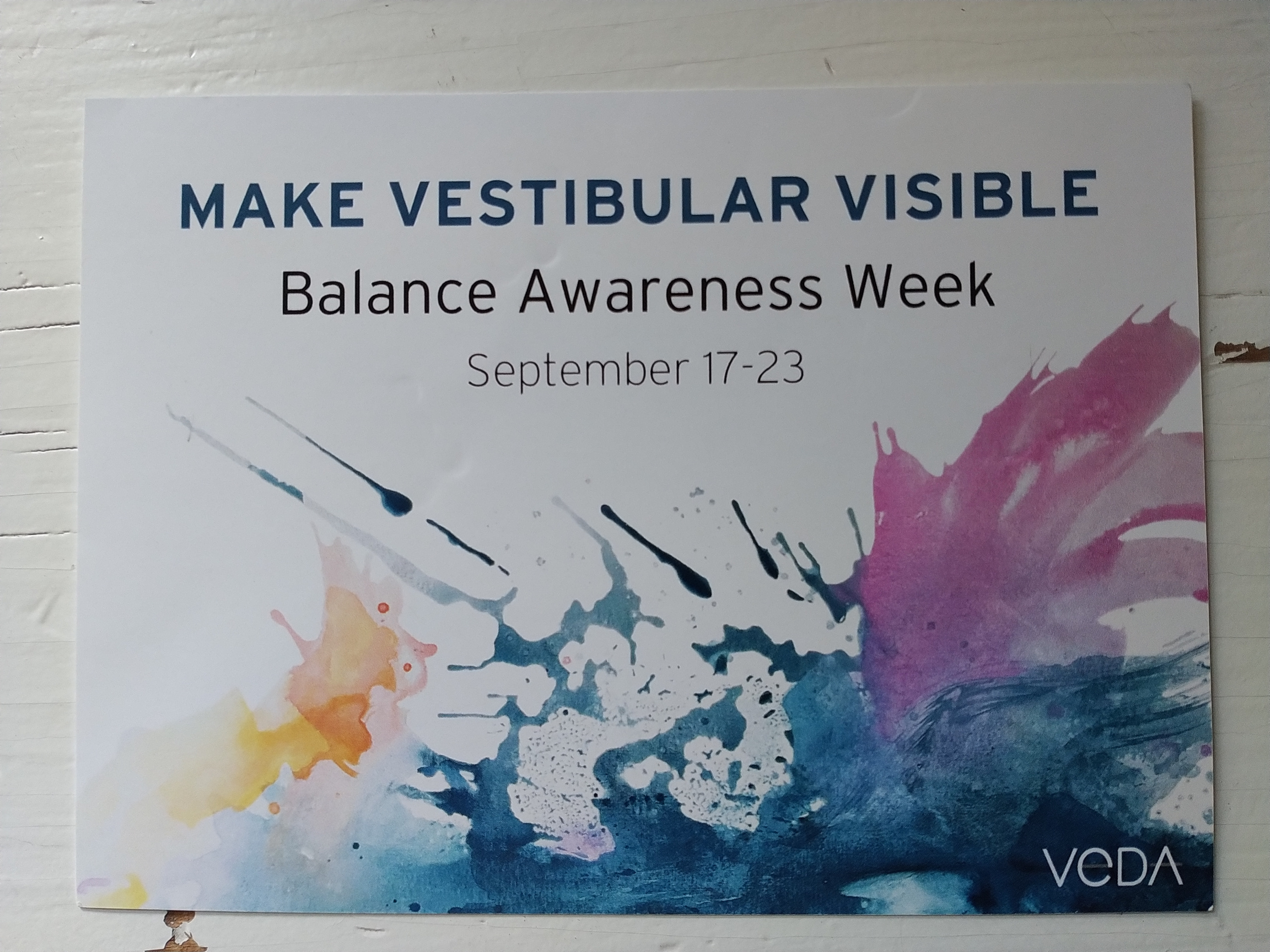
A promo postcard from VeDa. The painting, “Uncharted Waters,” is by vestibular patient Nicolle Cure.

FOCUS ON BALANCE

Today, though, I want to focus on balance, for two reasons. Imbalance was the first issue I overcame. And secondly, September 17-23 marks Balance Awareness Week, started in 1997 by the Vestibular Disorders Association. That national nonprofit is “a lifeline of support to anyone affected by vestibular (inner-ear and brain balance) disorders.” VeDA has proven an invaluable resource for me in learning about my vestibular-based diagnoses.

Knowledge is power. Just ask my physical therapist at Courage Kenny. Ryan answered many questions during my vestibular rehab therapy sessions, especially early on when I was just learning about my health issues. He always replied thoughtfully, helping me to understand what was happening in my brain and how we would work together through targeted exercises to manage my symptoms.

I’ve come a long way from the days of standing in place turning my head back and forth to the beat of a metronome. Today I’m power walking 15 minutes in the morning, 15 minutes in the evening with Randy. Even I’m amazed that I can do this. Not all that long ago, I couldn’t walk a block, often needing to hold onto Randy.

Fiona the Flamingo is VeDA’s Balance Awareness Week logo/mascot.

EVEN THOUGH MY DISORDER IS INVISIBLE, I STILL NEED TO BE SEEN, ENCOURAGED…

There is hope for anyone dealing with a vestibular disorder. Many seniors (and, yes, I’m a “senior”) struggle with balance. So do those who’ve suffered traumatic brain injuries like concussions. That includes my sister-in-law Rosie, my go-to support. Because she understands. And encourages. She realizes the importance of physical therapy in recovery.

In sharing a bit of my story with you, I am aiming to increase awareness. Make Vestibular Visible themes Balance Awareness Week. A promo from VeDA reads: Balance Awareness Week is our time to shout from the rooftops: “I have a vestibular disorder and this is my story.”

This is my story. One of challenges, of professional intervention, of hard work, of acceptance, of perseverance, of relying on others, of patience, of strength, of gratitude, of tears, of resilience, of focusing on what I can do (and not what I can’t). It is also a story of recognizing that no matter what we face in life—whether visible or invisible—we all need to be seen, to be uplifted, to feel cared for and loved.

#

© Copyright 2023 Audrey Kletscher Helbling

*I self-tested negative twice for COVID, but those tests (if done incorrectly and for other reasons) can be wrong, my primary doctor told me. He guesses I had COVID in January, and I agree based on my symptoms.


It’s been a roller coaster ride September 14, 2023

“The Legend,” one of a few remaining wooden roller coasters, located at Arnolds Park Amusement Park in the lakes region of northwestern Iowa. Built in 1930, it is the 13th oldest wooden roller coaster in the world. (Photo courtesy of Arnolds Park Amusement Park Marketing)

SOME 2 ½ MONTHS AGO, I boarded a roller coaster for the first time since I was a teenager screaming my lungs out while riding “The Legend,” a wooden roller coaster at Arnolds Park Amusement Park in Arnolds Park, Iowa. It’s not that I decided this would be a fun activity to try again in my late sixties. Rather, the choice was made for me, as part of my vestibular rehab therapy.

I warned my physical therapist that I don’t like amusement rides. But my comment didn’t deter Ryan. He determined that riding a virtual reality roller coaster on a June morning might be exactly what my brain needed to retrain itself. Since January, I’ve struggled with neurological-based issues resulting from a viral infection, suspected to be COVID, even though I twice self-tested negative for the virus. In early April, I started physical therapy and have been working hard ever since to manage my many debilitating symptoms.

Fast forward to today. I am in a much better place, even while on a VR roller coaster, a tool I’m using to build my visual, auditory and spatial tolerance. Early on I had doubts about my therapist’s plan. Initially, I couldn’t tolerate the VR roller coaster for long (less than a minute) before symptoms flared. After minimal exposure, my head hurt, my eyes hurt and I felt utterly exhausted. When I experienced a health setback mid-summer with vertigo returning, Ryan abandoned the amusement ride therapy for therapies less taxing on my brain.

ROCKS, RABBITS & A ROLLER COASTER

Slowly, surely, I started feeling better and Ryan decided it was time to pull out the VR headset again for another go on the roller coaster. I did not enthusiastically hop on board, only reluctantly agreeing to give it a try. I lasted 25 seconds on a roller coaster ride where boulders tumbled off rocky mountains toward me. Rabbits loping under the track proved the only redeeming feature. I hold a fondness for rabbits, my high school mascot being a White Rabbit.

That was two weeks ago. The following week I did better, albeit on a less visually-stimulating ride, this one under the sea in a darker environment. Still, I could manage only bursts of riding before needing to pause.

NOT ONE, NOT TWO, BUT THREE ROLLER COASTERS

Five days later I was back at therapy, knowing full well that I would again be riding a roller coaster. Make that plural. Three roller coasters. I started therapy Wednesday morning with the least stimulating under-the-sea ride. And just to make that more challenging, Ryan asked me to stand, rather than sit. He allowed me to place my hands on the back of a chair to ground myself. I successfully finished the ride, then took a break before re-boarding, this time without touching the chair. Success again. Time to up the challenge.

Ryan pulled out the rabbit-loping, boulders-falling themed ride. This time I completed the ride, which was visually much more exciting with dynamite and fire and a whole lot more coming at me. Once again, I tolerated the roller coaster twice while standing and without needing to stop.

I felt my confidence grow as each roller coaster ride became more sensory challenging. I could do this. But when the next ride began with a garish parrot getting in my face, I questioned whether I could manage a tropical-themed roller coaster with worn vivid red and yellow rails. (Was it even safe to ride?) It was a lot—the bold hues, the squawking flapping seagulls, the palm trees, the steep climbs, the height, the sharp turns. But I made it. Twice on that roller coaster curving toward the ocean.

DOING GREAT, BUT I HAVE MY LIMITS

My brain was adjusting, learning, retraining itself to take in more visual, auditory and spatial input. Ryan praised my success, both of us somewhat surprised by how well I’d tolerated those roller coasters Wednesday morning.

But before I left therapy, I wanted Ryan to know one thing. If he planned a field trip to nearby Valley Fair Amusement Park next Wednesday for a ride on a real roller coaster, I wouldn’t be showing up for therapy.

© Copyright 2023 Audrey Kletscher Helbling
 

A bit like Alfred Hitchcock’s “Vertigo” August 1, 2023

Filed under: Uncategorized — Audrey Kletscher Helbling @ 5:00 AM
Tags: , , , , , ,
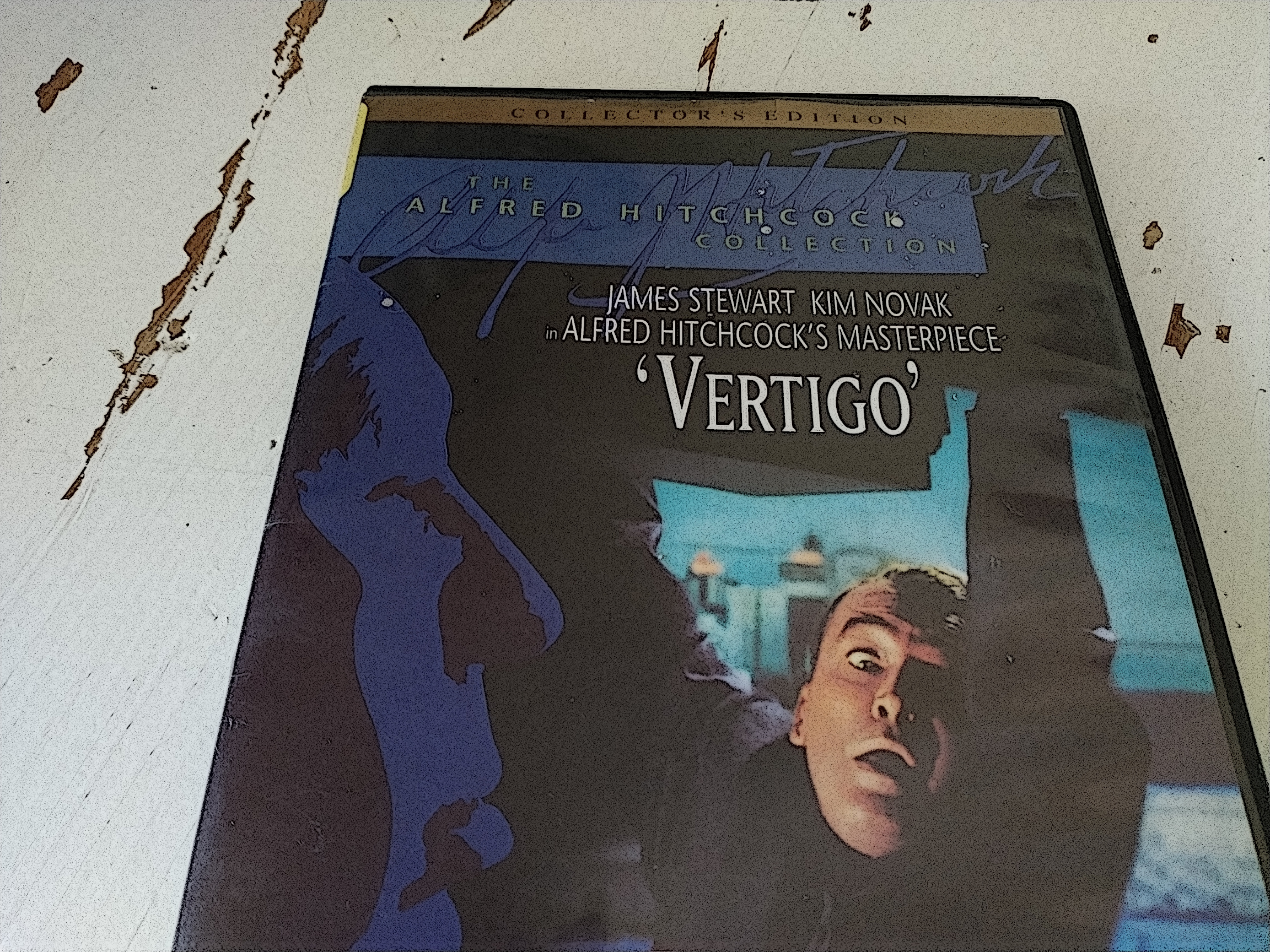
DVD cover of “Vertigo.” (Minnesota Prairie Roots copyrighted photo August 20230

VERTIGO.” I CAN BARELY TOLERATE reading the title of the movie, considered by many to be Alfred Hitchcock’s greatest achievement. That may be so. But when Randy pulled the “Vertigo” DVD from a shelf at the local library and asked if I wanted to watch it, my response was immediate. “NO!”

Vertigo is not something I want to see depicted in a masterpiece film by the simultaneous use of forward zoom and reverse tracking shot. No, thank you. I don’t need that visual. I recently experienced extreme vertigo in real life. And that was beyond awful.

But Randy was attempting to infuse humor into my thoughts, an effort I appreciate given all I’ve been through this summer. The vertigo I experienced back in early April returned a few weeks ago, leaving me dizzy and once again feeling unbalanced. To say I felt frustrated would be an understatement. I’d made notable progress in vestibular rehab therapy, which is retraining my brain in the areas of balance, handling sensory overload and more. All of this connects to my triple diagnoses of vestibular neuronitis, Meniere’s Disease and peripheral sensory neuropathy.

To feel two instances of vertigo and like I was living in a world once again a kilter seemed like a major setback. My physical therapist chose other words: “a bump in the road.” Ryan’s right. I didn’t lose the progress I’d made, just slowed down due to that speed bump. He’s so encouraging, one of the traits I most appreciate in a deeply compassionate and caring physical therapist.

Yet, on the Friday Ryan checked me for benign paroxysmal positional vertigo and then twice performed the Epley Maneuver to move misplaced crystals in my right inner ear back in place, I wasn’t all too happy about his action plan. It was, of course, a correct and necessary procedure. It involved Ryan turning my head to the right and holding it in place while I was sitting, then lying down on my back and going through an Alfred Hitchcock-worthy scene of extreme room spinning vertigo. I gripped Ryan’s forearm with such intensity that I later joked he should receive hazard pay. Without going into more nightmarish detail, he then repeated the procedure. The second time my vertigo had lessened. And when Ryan rechecked me for vertigo a week later, it was gone.

Now I’m trying to get back on track, rebuilding my confidence in doing the assorted exercises designed to retrain my brain. These are familiar exercises, ones I’d mostly mastered before the bump in the road. I left therapy Monday afternoon feeling absolutely wiped out, though, and symptomatic. It’s going to take time for my brain to adjust to exercising.

I’m determined to work hard, to do my exercise homework, to try and live my life as best I can while managing my symptoms. I understand my limits, when I need to take breaks (including limiting screen time) and how to help calm my system. Already my balance is improving. I’m slowly beginning to feel better, to eat better. (I’ve lost 15 pounds.) And I’m overcoming my fear of vertigo returning.

But I’ll never ever watch Alfred Hitchcock’s “Vertigo.” The title triggers too many nightmarish memories.

© Copyright 2023 Audrey Kletscher Helbling