Minnesota Prairie Roots

Writing and photography by Audrey Kletscher Helbling

Veterans Day 2025: Reflecting on Dad’s letter home from the frontline in Korea November 11, 2025

On the back of this photo, my dad simply penned “a letter from home.” I appreciate this photo taken by an unknown buddy while they were in the service. (From the Elvern Kletscher photo collection)

A SHORT BIT AGO, I reread a letter my dad wrote home to his parents in southwestern Minnesota on his 22nd birthday in March 1953. Dad penned the letter thousands of miles away in Korea, where he was fighting on the frontline during the Korean War.

Among my dad’s “Korea stuff” are a book of military instructions he carried into the battlefield, a newspaper clipping about him, and his dog tags atop his letter home, the chain circling the words “hell hole.” (Minnesota Prairie Roots copyrighted file photo November 2023)

One long paragraph of that missive stands out for me on this Veterans Day. That is Dad’s anger at the draft board and at those who thought it necessary to send young men like him into what he termed a “hell hole” and a war against Communism that he didn’t think could be won.

This photo from my dad’s collection is tagged as “Kim, Rowe, Allen & me, May 1953 Machine Gun Crew.” That’s my father on the right. (From the Elvern Kletscher photo collection)

I expect many others thought like Dad. How could you not after shooting, killing, watching your buddies die in battle? After living with hunger and bone-chilling cold in a mountainous land far from home.

At the time of his letter, Dad was especially concerned that his younger brother, Harold, would be drafted. He vowed revenge if that happened. I suppose when you’re an older brother and you’ve seen war like he has, you don’t want someone you love to experience the same. Dad’s words were just that. Words. Words written by a combat soldier weary of war. A soldier frustrated. A soldier counting the months until he could leave Korea and then be discharged from the Army.

Dad vented to his parents. He called for those in positions of power to come to the Korean battlefields, to see for themselves the realities of war. I imagine many a soldier wished the same, that officials, leaders and decision-makers understood the results of their policies, actions, decisions, orders.

My dad came home from Korea with the wounds of war. Mental, emotional and physical. He was wounded by shrapnel at Heartbreak Ridge. He experienced depression and post traumatic stress disorder.

Yet, he returned to America still patriotic, a proud American whose sacrifices and service were not then recognized. He served in what would become known as “The Forgotten War.” How demeaning, to be ignored, unsupported, just like Vietnam War veterans. Only decades later did Dad receive the Purple Heart he earned on the battlefield.

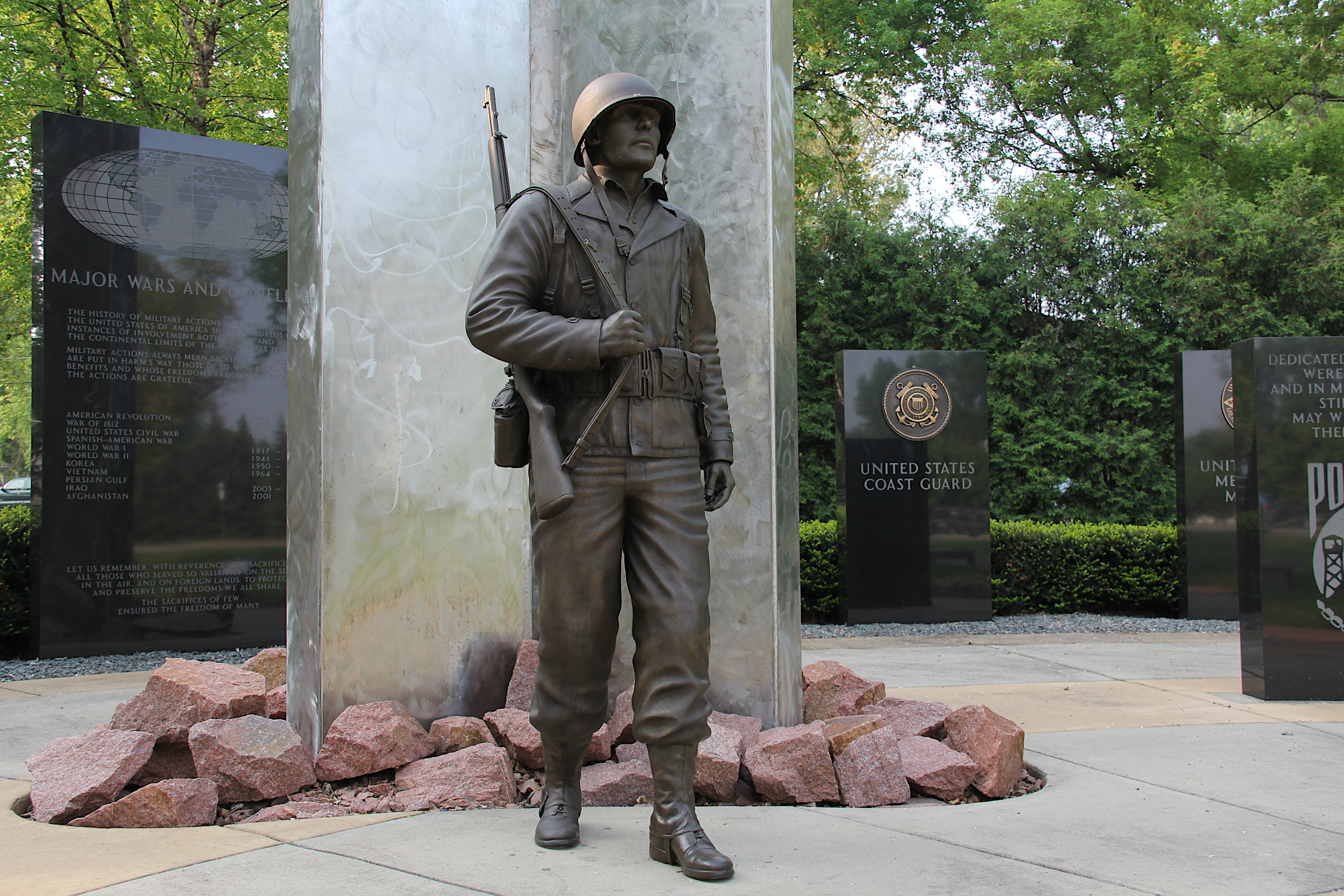
The Rice County Veterans’ Memorial in Faribault. This photo and five other vet-themed photos I took hang in public spaces at the new State Veterans Home in Bemidji. (Minnesota Prairie Roots copyrighted file photo)

Dad went on to become an active American Legion member, serving as commander of the local post. He taught me and my siblings to respect veterans and those who died in battle. We attended every Memorial Day program in my hometown of Vesta. Afterwards we gathered at the cemetery for the playing of taps, prayer and a gun salute. We wandered among the tombstones.

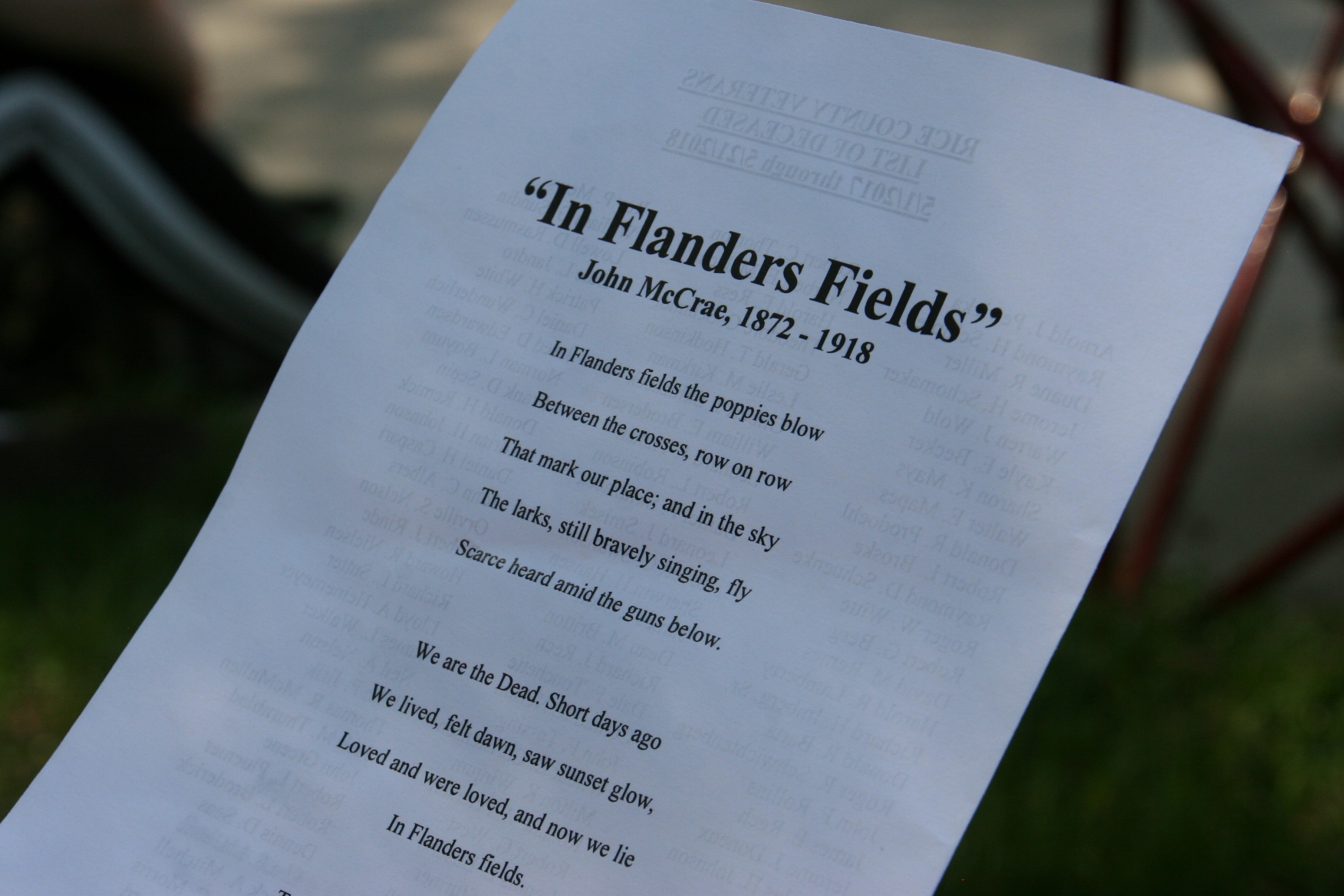
I joined the Junior American Legion Auxiliary, which mostly involved selling poppies on Poppy Day. I also read “In Flanders Fields” at the community Memorial Day program and placed paper poppies on a wreath. My mom was an active American Legion Auxiliary member.

Dad integrated back into life in rural Minnesota upon his return from Korea as if nothing had changed for him. But it had. And it did. Going through his box of “Korea stuff” 72 years after he wrote that birthday letter home to his parents, I glimpse the “hell hole” of war he experienced. My anger rises, too, for all he endured and suffered on the battlefield and upon his return home to rural Minnesota.

© Copyright 2025 Audrey Kletscher Helbling


Hearing, listening & the drone of war August 14, 2025

(Minnesota Prairie Roots copyrighted file photo)

IF I LISTEN CLOSELY, I can hear the incessant chirp of crickets beneath the steady drone of traffic rushing past my house. I live along a busy street, where noise is a constant except in the deep hours of the night. Even then, though, the lone blare of a siren may pierce the night silence, enough to awaken me.

I hear lots of sounds. But that’s not the same as listening. There’s a difference. Hearing is simply taking in sound waves. But listening requires intentional focus. Not only physically hearing, but also paying attention, picking up on verbal and non-verbal cues, remaining quiet.

Many of us are not particularly good at listening. It requires discipline, silence and an understanding that whatever we hear holds significance. Chirping crickets signal the end of summer. Screeching sirens indicate an emergency. And when someone is speaking to me, it means they have something to say. And I need to listen.

I consider myself to be a pretty good listener. As a journalist, I really honed my listening skills, a necessity in covering any news story, doing any interview. And on a personal level, I’ve always been more interested in what others are saying than in hearing my own voice.

Therein lies the problem. Too many of us like the sound of our own voices. If someone starts sharing their own story, their own challenges, we tend to interject our own stories. That’s when a push “pause” seems appropriate. Our listening skills need to kick in as we clamp our lips in silence and remember that the conversation is not about us.

So all of this leads me to the meeting between President Donald Trump and Russian President Vladimir Putin on Friday in Anchorage, Alaska, to discuss the war in Ukraine. Noticeably absent will be Ukrainian leader Volodymyr Zelenskyy. Now you’d think, given the war is raging in Ukraine, that Zelenskyy should be at the table. He asked to be there. But, if the two other leaders heard, they didn’t listen. A pre-meeting conversation between Trump and Zelenskyy isn’t the same as including the Ukrainian president in the summit.

From all accounts, the Trump administration is now billing Friday’s meeting as a “listening exercise.” I find that to be an interesting choice of words. I can’t imagine that either Trump or Putin will really be “listening,” based on past meetings between the two and observations I’ve made about them. But, hey, maybe this time they really will hear the crickets chirping above the drone of war, the blaring of sirens.

© Copyright 2025 Audrey Kletscher Helbling
 

Honoring & remembering our military men, & women, on Memorial Day in Faribault May 29, 2025

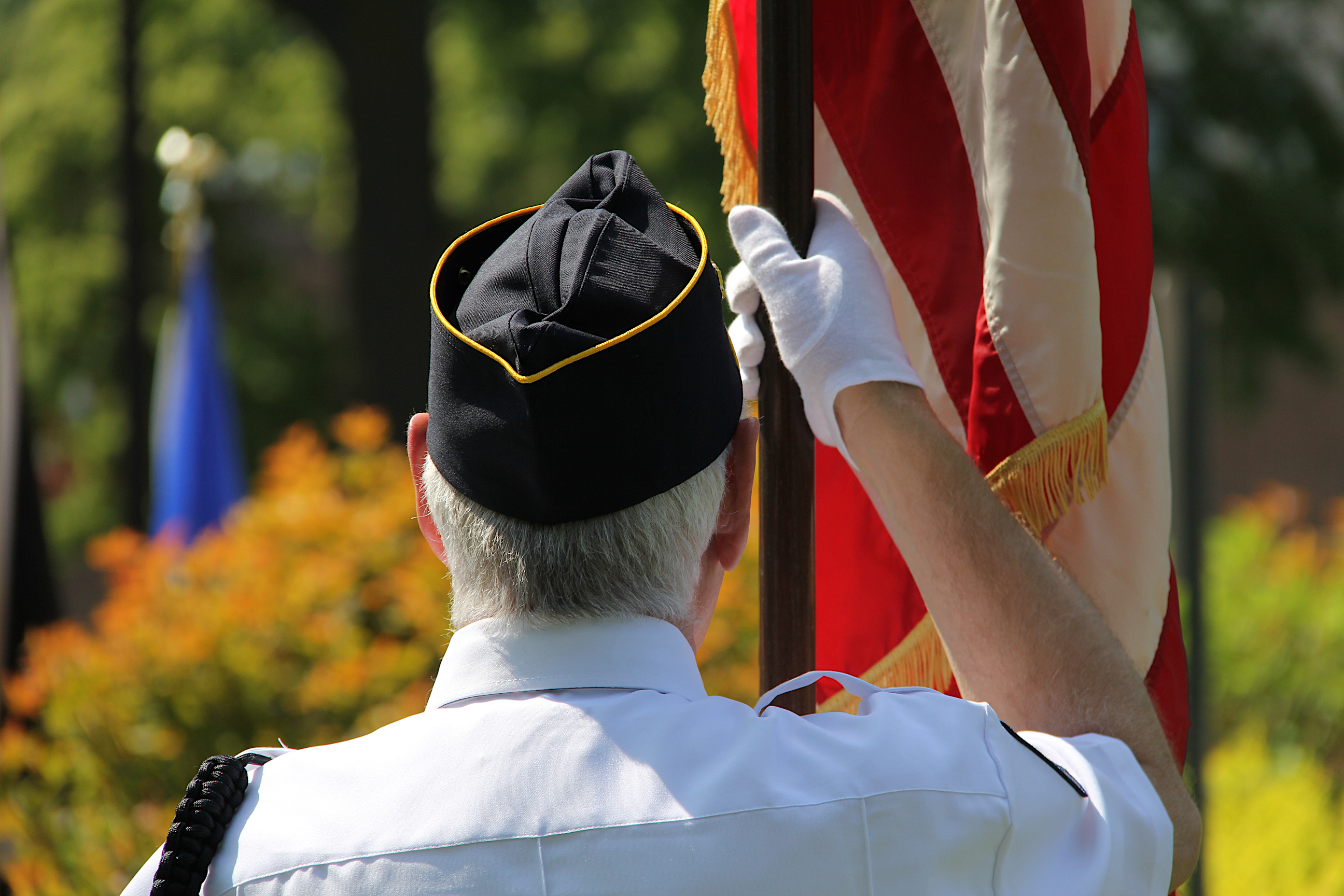
A member of the Faribault Color Guard holds the American Flag during the Memorial Day program. (Minnesota Prairie Roots copyrighted photo May 2025)

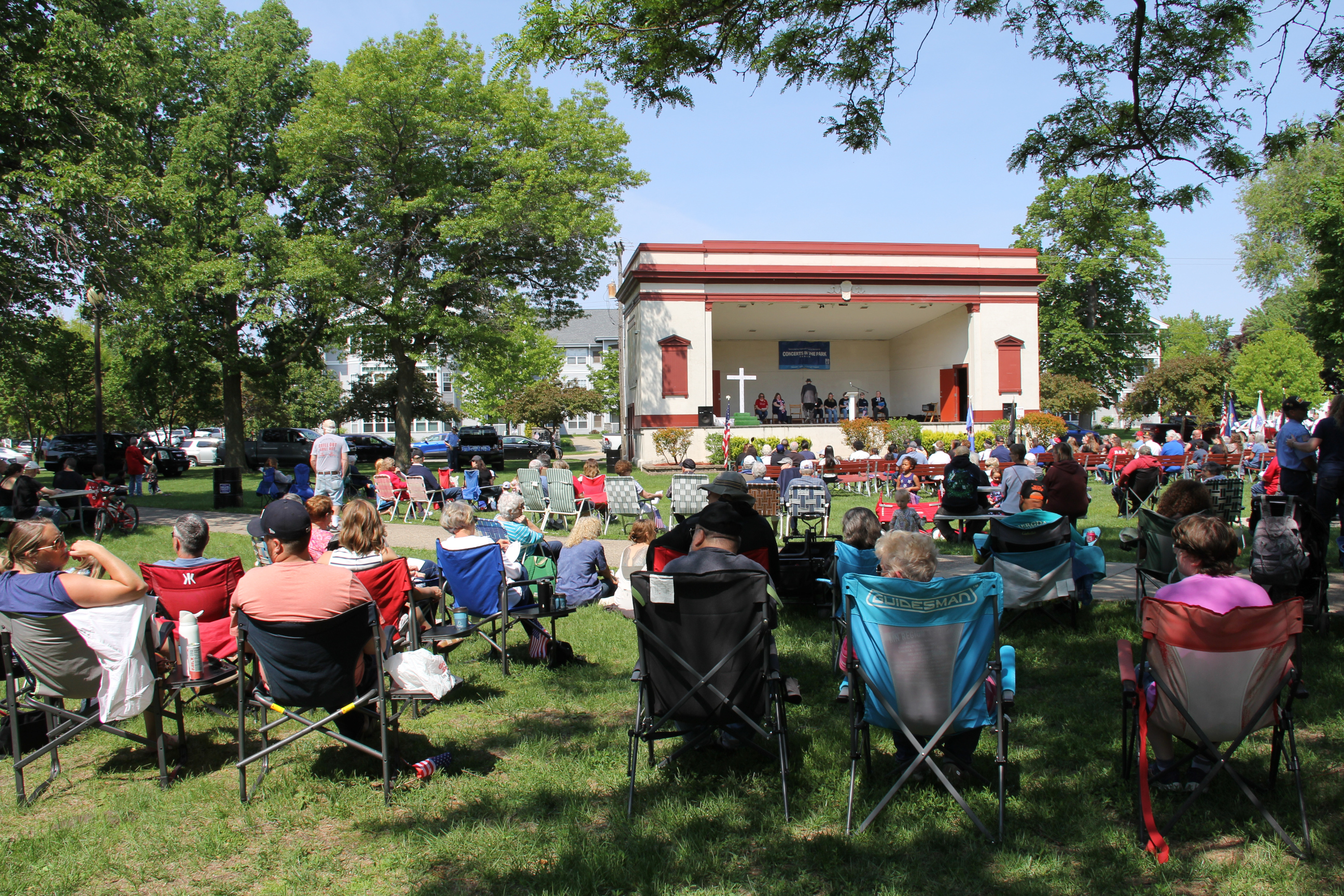
TWO THINGS IN THIS YEAR’S Faribault Memorial Day observances stood out for me from previous events. First, three military women—Kerrie Johnsrud, Peggy Johnson and Stephanie Johnsrud—were honored. Second, a soldier killed in action during the Vietnam War was remembered.

A large crowd (this shows only a portion) gathers in Central Park for the Memorial Day program. (Minnesota Prairie Roots copyrighted photo May 2025)

Both touched me in a memorable way. Too often, women have been overlooked. Not this year. Not in Faribault. Honored Combat Veteran Stephanie Johnsrud drove that point home by reminding the crowd gathered at Central Park that anyone can be a veteran, even a woman, and to break the stigma of women in the military. She served with the Army National Guard, including deployments to Kuwait and Iraq. Upon her return, the veteran wanted to have a welcome home party at a local military club, something met with a less-than-warm reception. It was heartbreaking to hear her words.

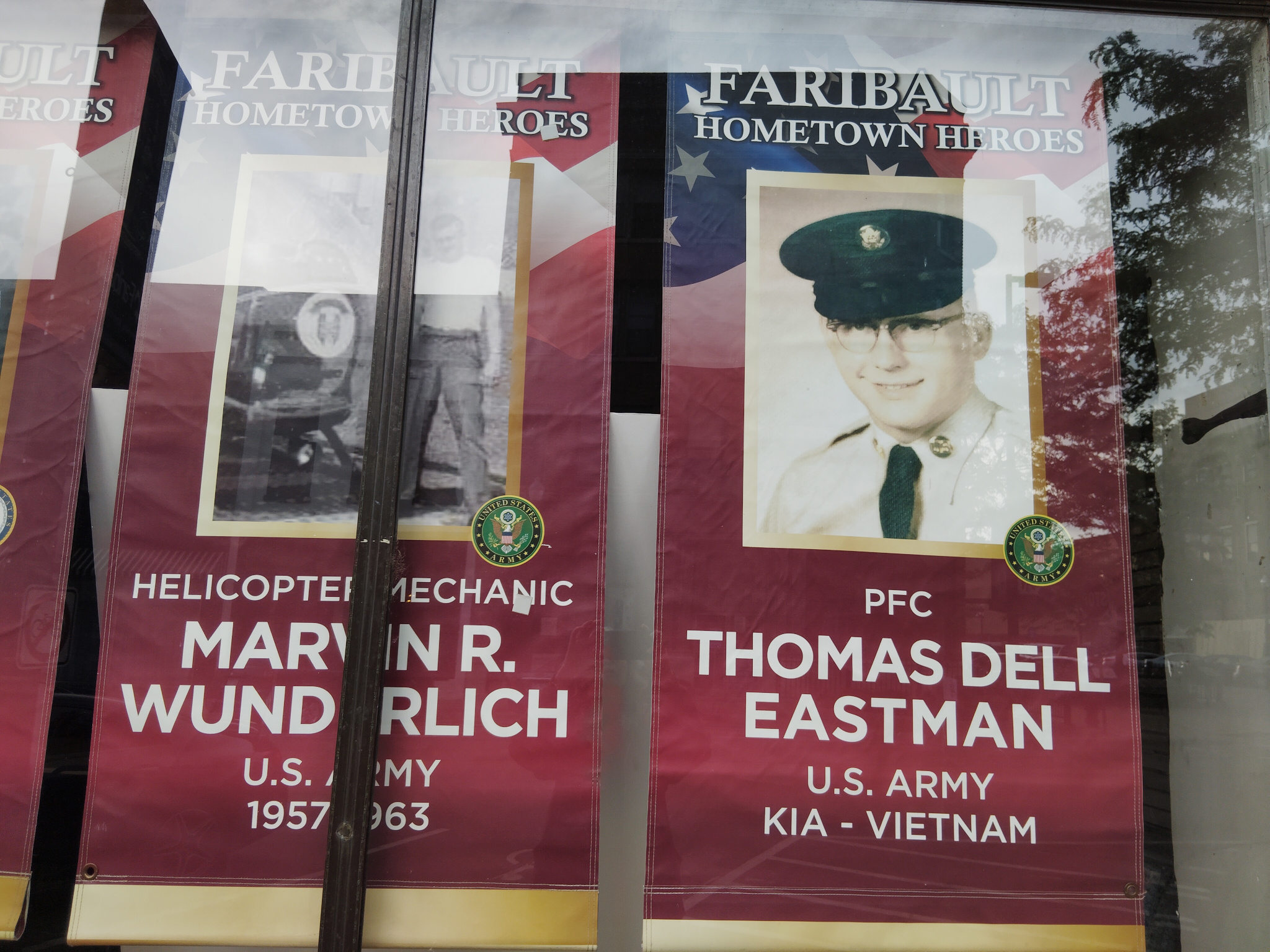
This banner of Thomas Eastman and other Faribault Hometown Heroes hangs in the front window of the former Eastman Music. (Minnesota Prairie Roots copyrighted photo May 2025)

Equally heartbreaking was the story of Army PFC Thomas Eastman, 21, of rural Faribault who was killed in Vietnam on May 5, 1966. He’d been deployed as an infantryman only months earlier. His name is listed on panel 7E, Line 30, of the Vietnam Memorial Wall, one of 1,086 Minnesotans listed on that monument.

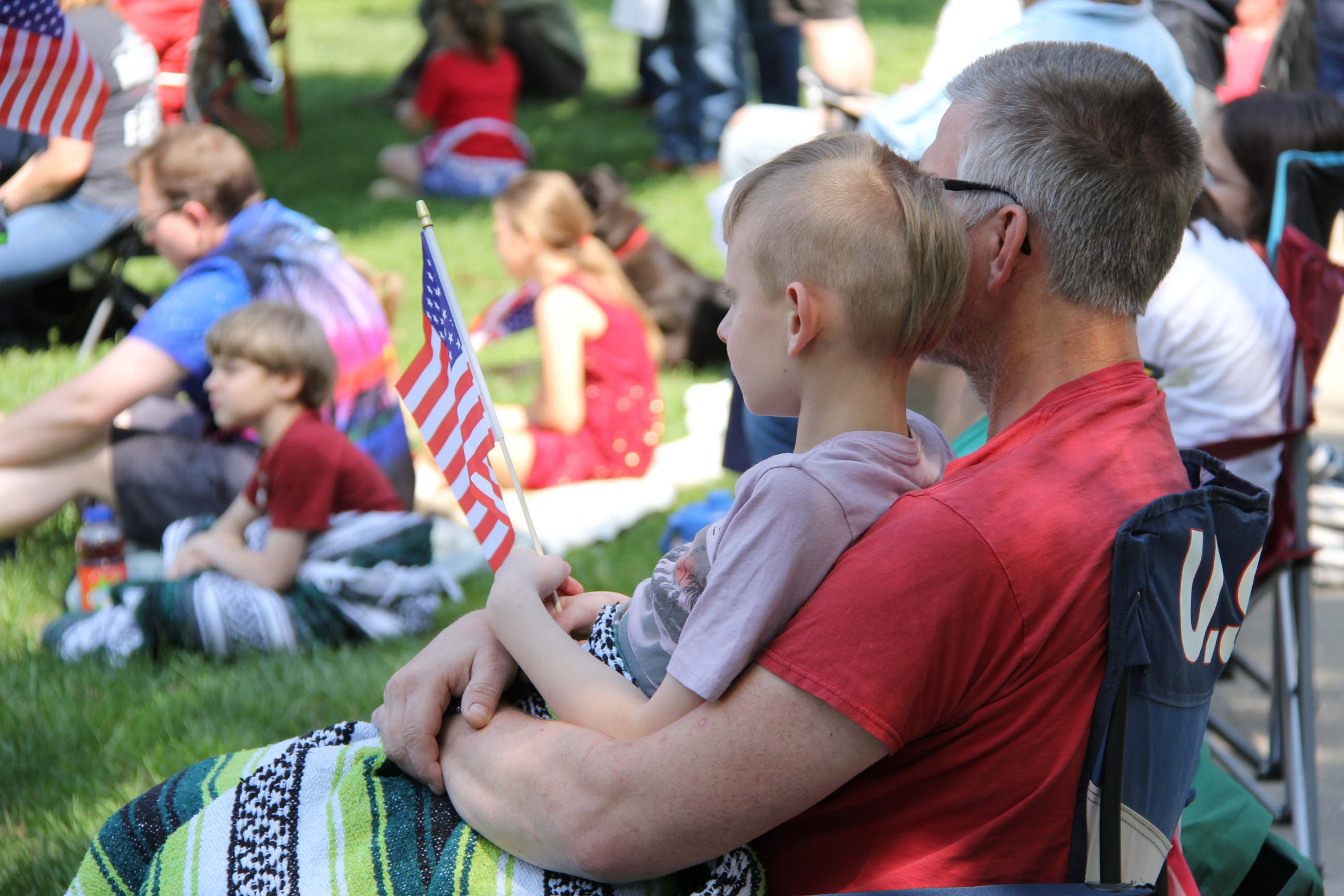
Love seeing children in attendance, listening and learning. (Minnesota Prairie Roots copyrighted photo May 2025)

Keynote speaker and emcee Gordy Kosfeld shared a bit about this young man, a 1963 Kenyon High School graduate. It was that information which personalized Eastman, took him from statistic to a beloved son, brother, uncle and friend. He wore thick glasses, loved fast cars, dogs and reading. And he planned to return to the farm upon his discharge.

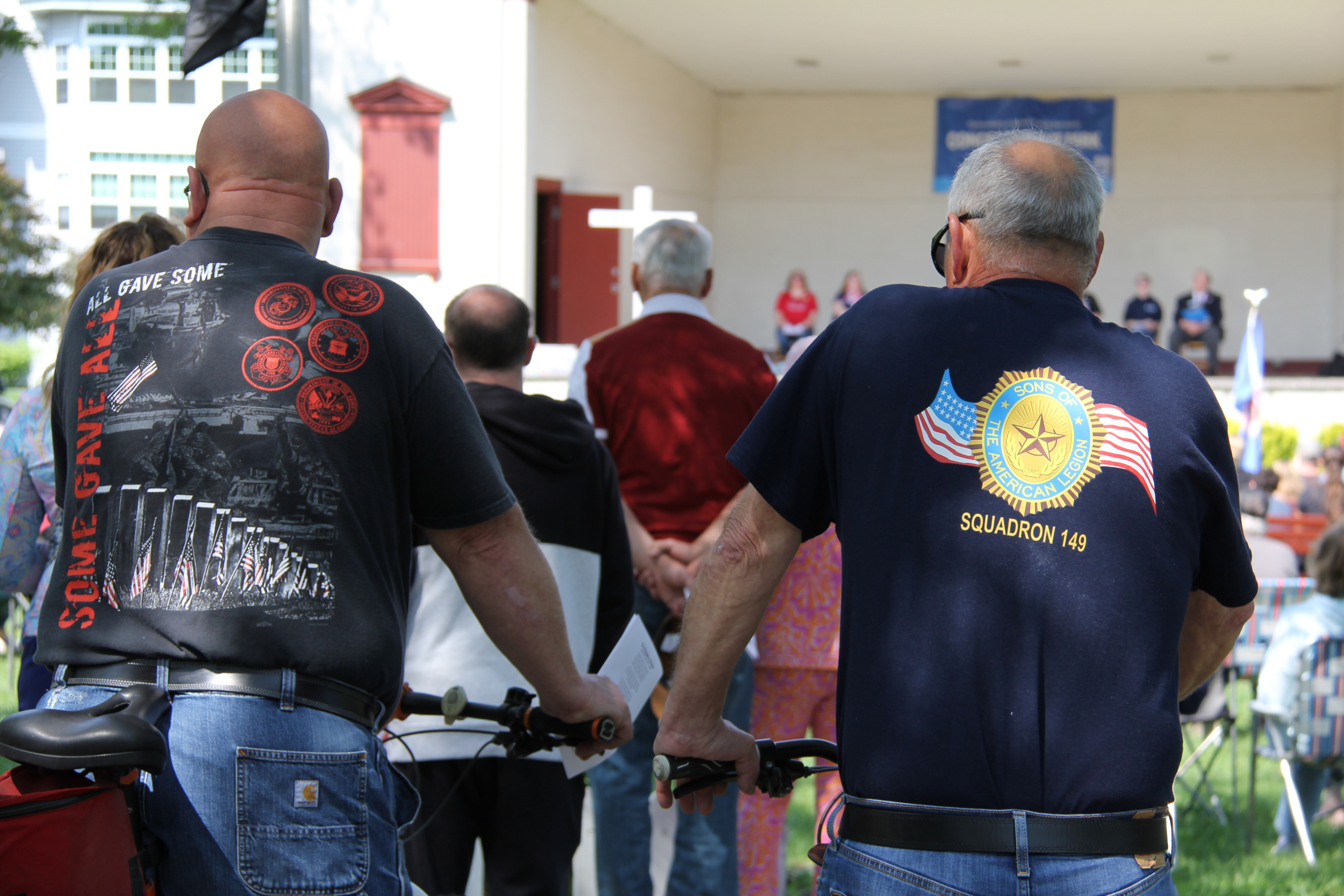
“All gave some. Some gave all.” A meaningful message on a t-shirt. I saw another message, “You matter,” printed on a plain black tee. I told the young man wearing it how much I appreciated those two simple, yet powerful, words. (Minnesota Prairie Roots copyrighted photo May 2025)

Eastman, Kosfeld said, sounded like “an ordinary guy” who died in a far away land in service to country. He was and he did. I think sometimes, in the mass of numbers, we forget that our military men and women are, like Eastman, individuals with families and stories, likes and dislikes, and loved ones back home who miss them. And, if they are killed in action, with loved ones who deeply grieve their tragic deaths. That includes 58,000-plus during the Vietnam War.

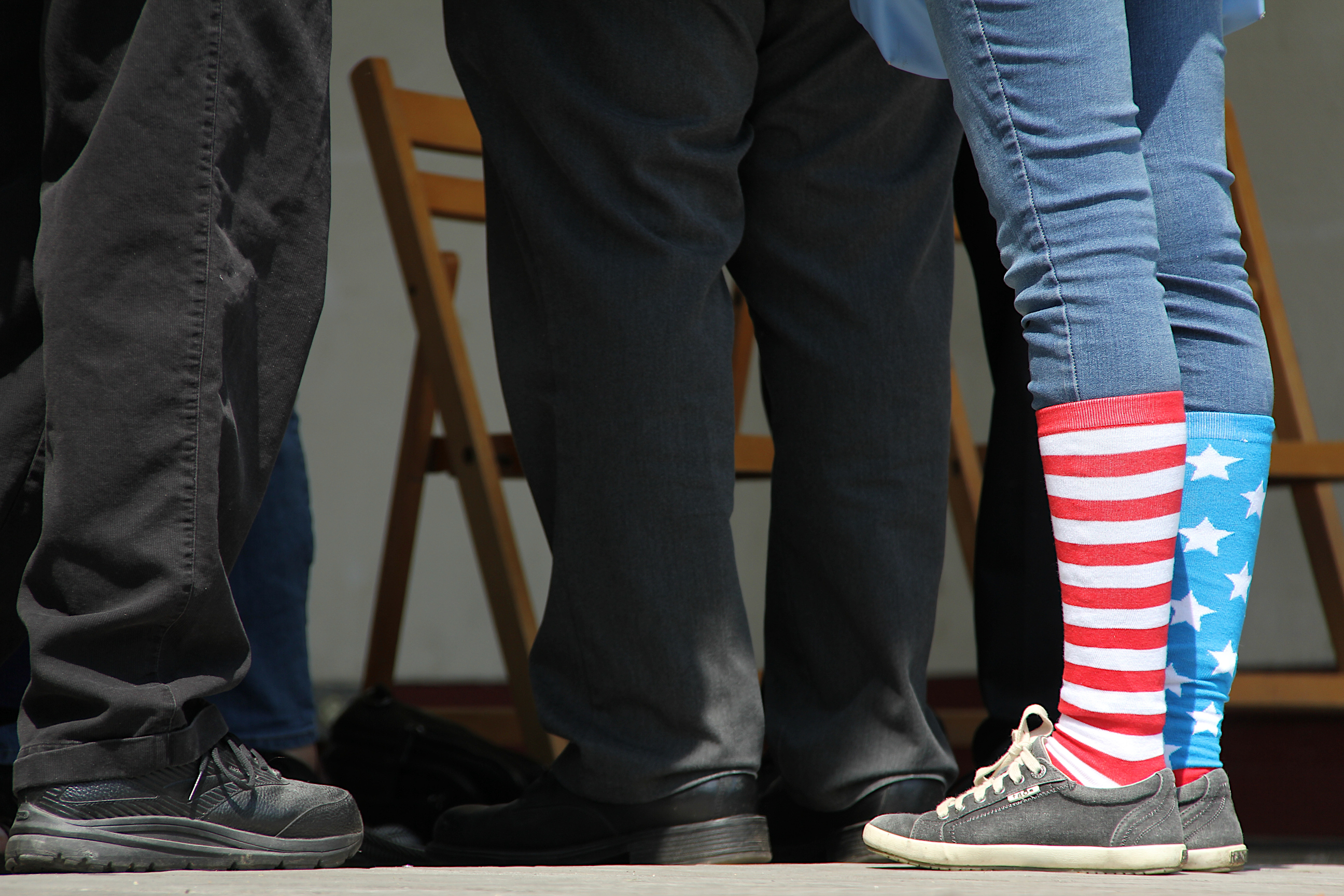
The emcee pointed out this unexpected patriotic visual, worn by a young woman on stage. (Minnesota Prairie Roots copyrighted photo May 2025)

During the past year, many grieved the loss of 109 Rice County veterans. Our veterans are aging. Dying. Men like Carl W. Ames, Phillip J. Dorn and my friend, 100-year-old Elmer R. Schulz. And, among all those male veterans, four deceased female veterans, Donna L. Schultz, Beverly J. Miller, Donna M. Cleland and Debra G. Norman. All 109 names were listed on the Memorial Day service program, a visual reminder that imprints upon the spirit the importance of honoring veterans not only in death, but in life.

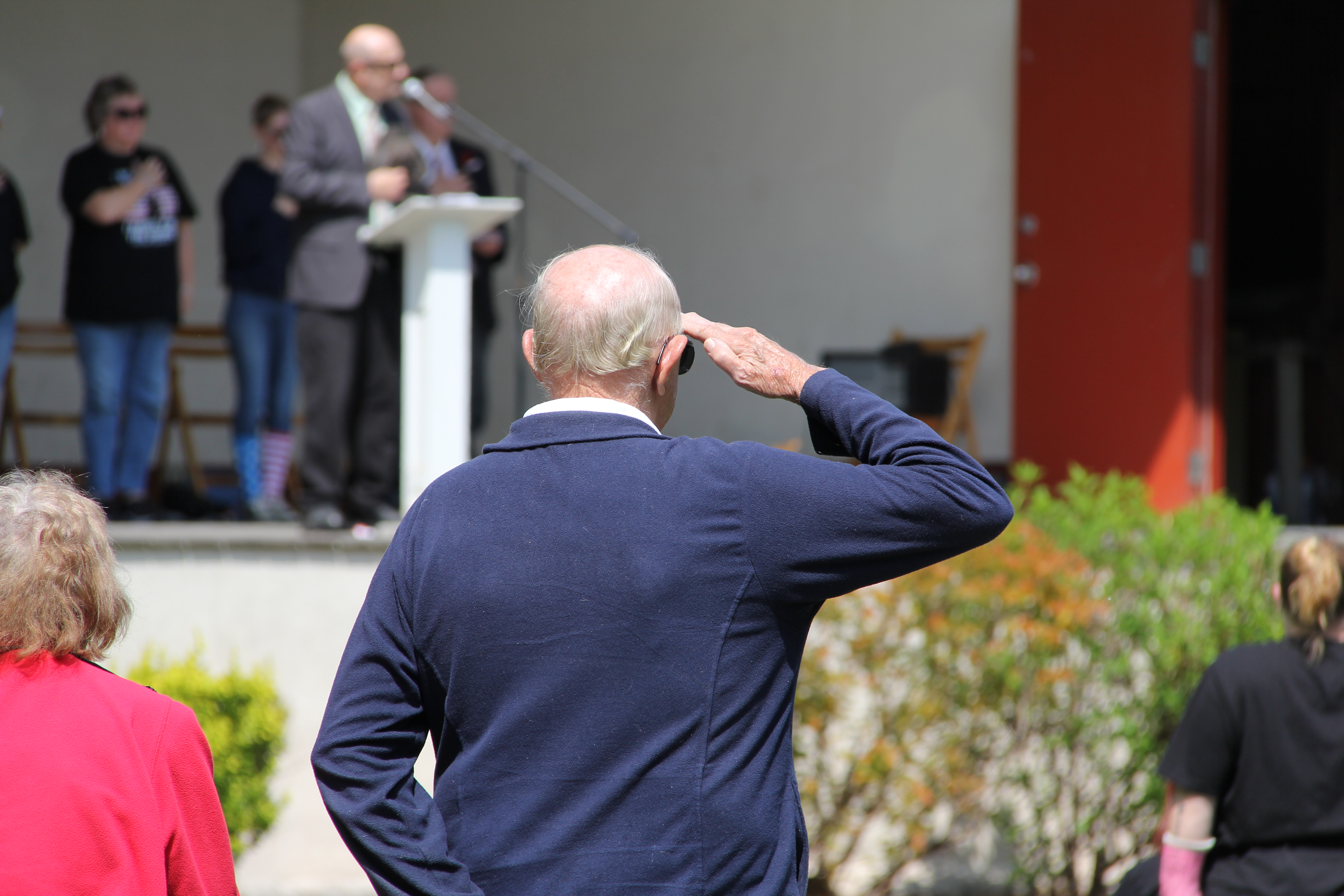
A veteran pays his respects by saluting. (Minnesota Prairie Roots copyrighted photo May 2025)

And that we did on Monday morning in Faribault’s Central Park. Young and old. We listened. We honored. We remembered.

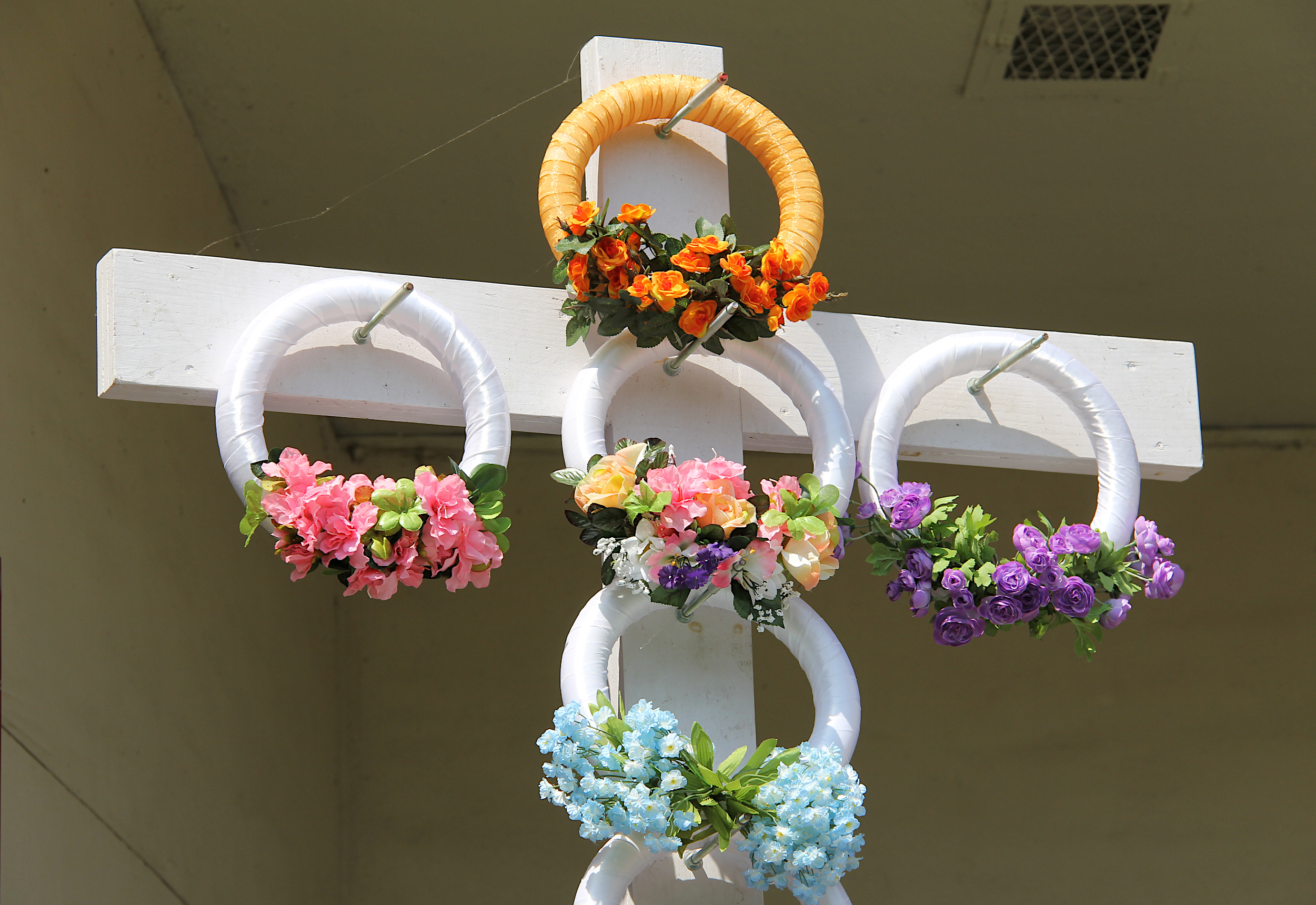
Members of the Faribault American Legion Auxiliary placed wreaths, each representing a war or conflict, on or at the base of this cross during Faribault’s Memorial Day program. (Minnesota Prairie Roots copyrighted photo May 2025)

This concludes my three-part series on Memorial Day observances in Faribault and in Cannon City. Click here to read about Faribault’s parade and here to read about the program at the Cannon City Cemetery.

© Copyright 2025 Audrey Kletscher Helbling
 

Remembering, honoring, grieving on Memorial Day May 22, 2025

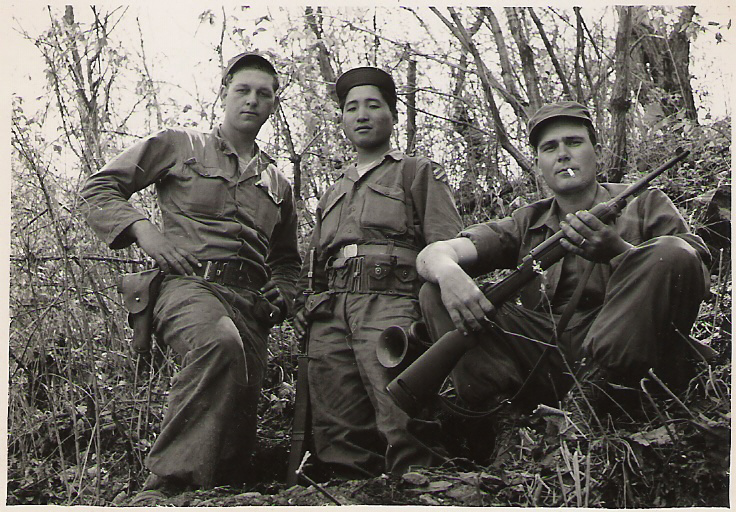
My father, Elvern Kletscher, left, with two of his soldier buddies in Korea.

WHEN MEMORIAL DAY ROLLS around each May, my thoughts shift to my dad, who served on the front lines during the Korean War. He survived, albeit with the emotional trauma that comes from killing and constant danger of being killed. His close buddy, though, did not survive. And that is the man I remember and honor today, along with others who’ve lost their lives in service to country.

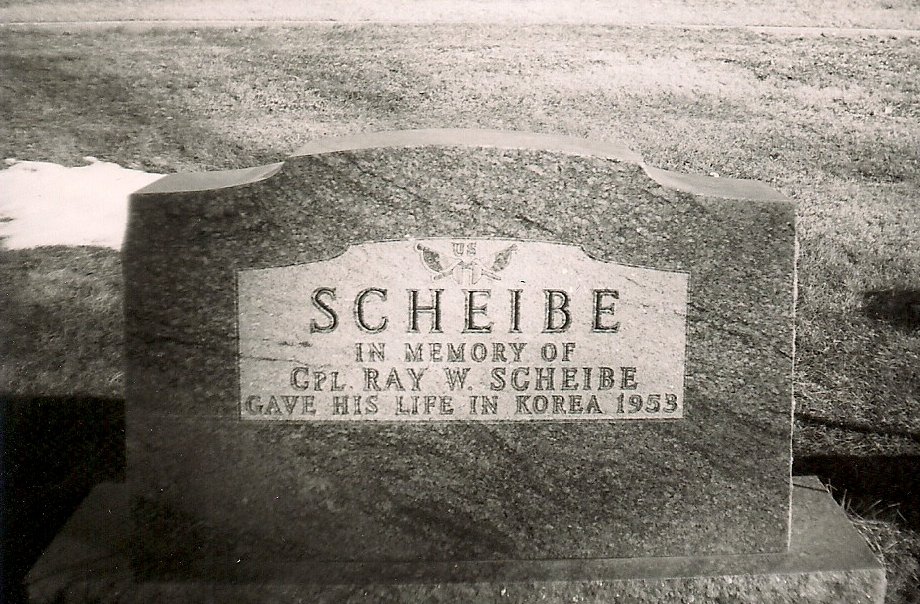
Sonny Nealon, Ray’s best friend in high school, sent me this photo of Ray’s gravestone. (Photo credit Sonny Nealon)

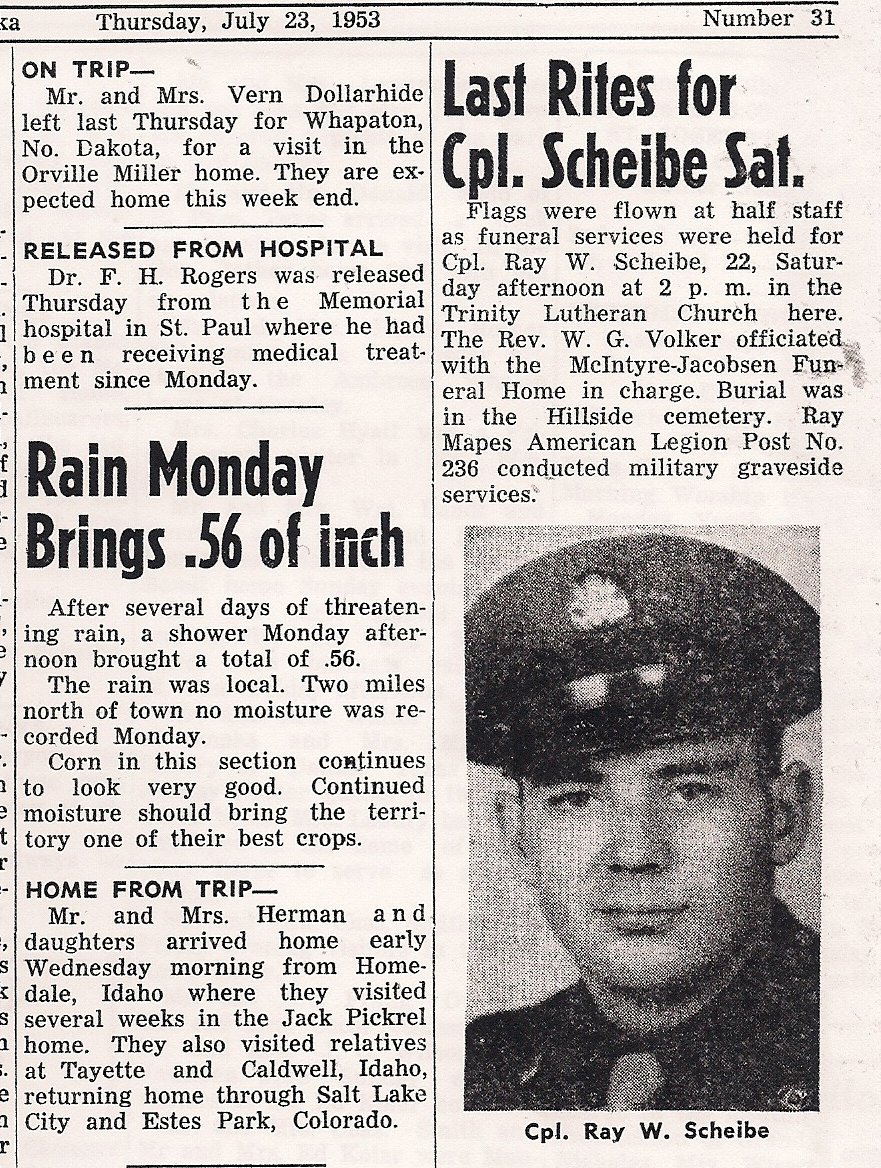
Corporal Ray W. Scheibe, 22, of Wolbach, Nebraska, died on June 2, 1953, blown apart by a mortar shell. My dad witnessed his horrific death, for war is nothing short of horrible. Ray was scheduled to leave Korea the next day, which makes his story even more tragic. He left behind grieving friends and family, including his wife, Marilyn, and 3-month-old daughter, Terri Rae, whom he had not yet seen. I’ve since found and connected with Terri in Iowa, but have yet to meet her.

A story about Cpl. Ray W. Scheibe, published in the July 23, 1953, issue of The Wolbach Messenger.

It is the individual stories of soldiers like Ray that take war to a personal level. A level that allows us to understand the meaning of the words “killed in action.” My father’s grief in losing Ray became, in some ways, my grief, too.

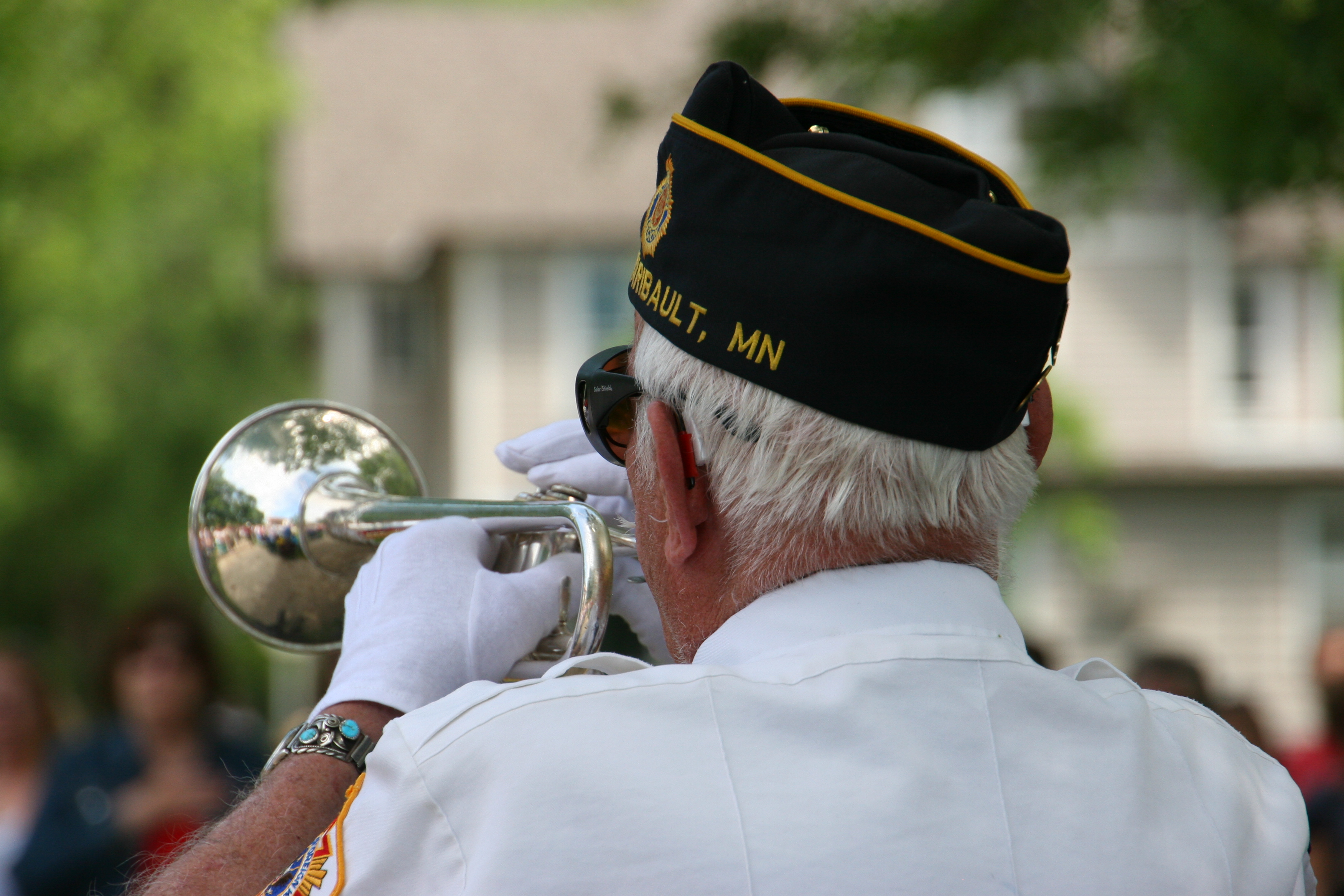
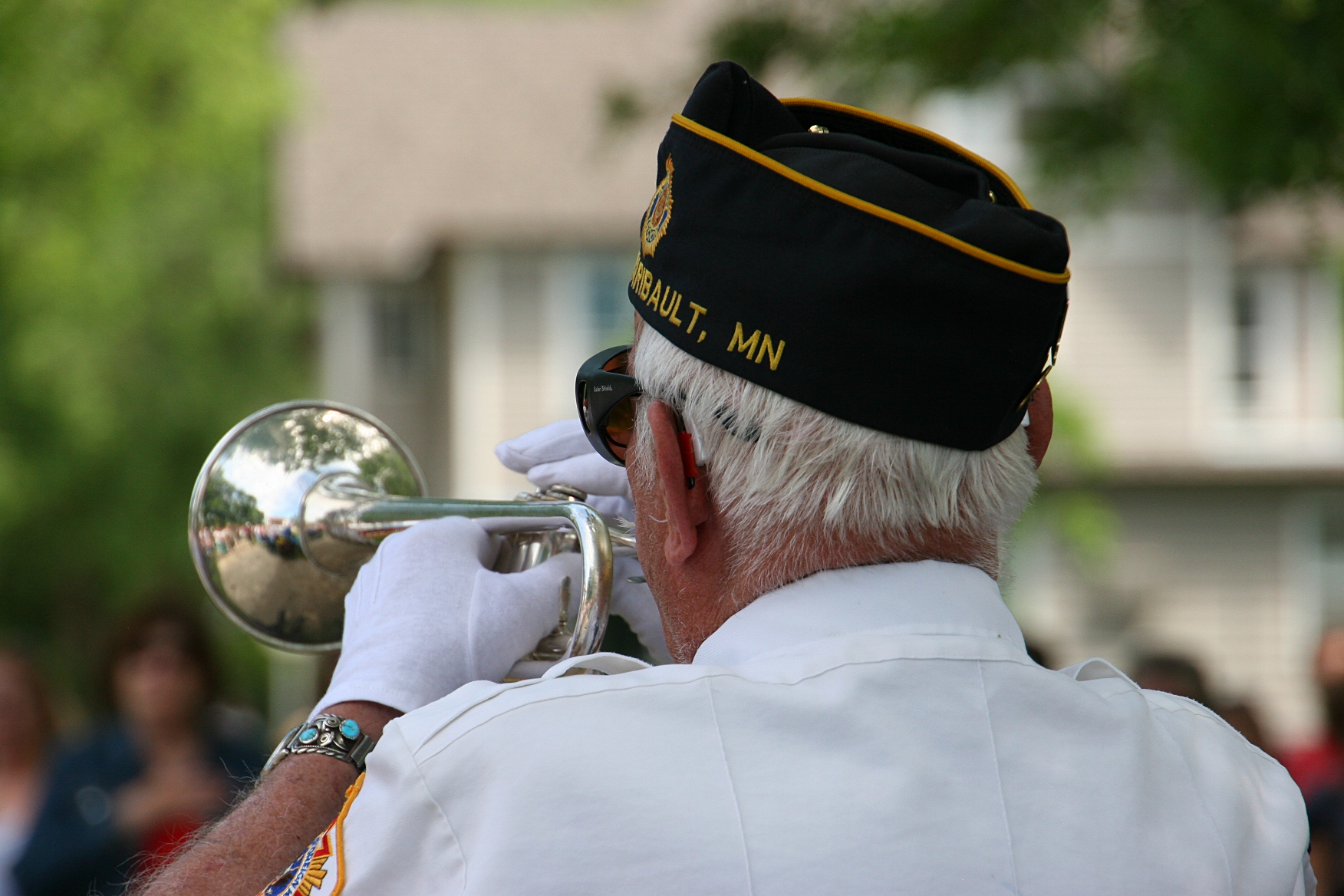
Playing taps at a past Memorial Day program in Faribault. (Minnesota Prairie Roots copyrighted file photo May 2016)

On Memorial Day we gather in collective grief to remember the many men and women who, like Ray, died while serving in the U.S. military. There will be parades and speeches, patriotic music and poetry, poppies and red-white-and-blue attire. Names read. Tears shed. Taps played. Guns fired. Flags carried. Graves visited.

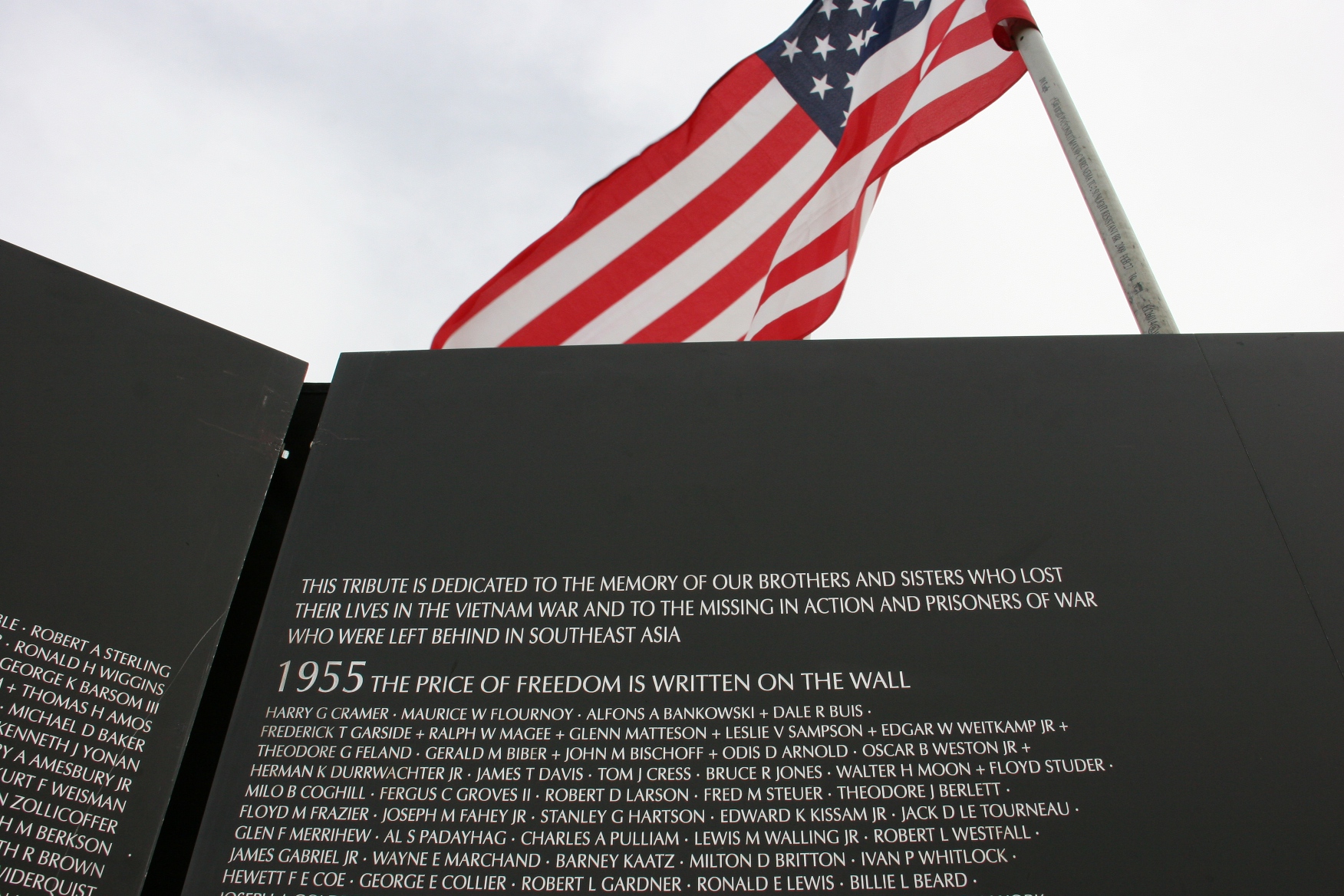
A message and names on the Traveling Vietnam Memorial Wall, which was in Faribault in 2016. (Minnesota Prairie Roots copyrighted file photo 2016)

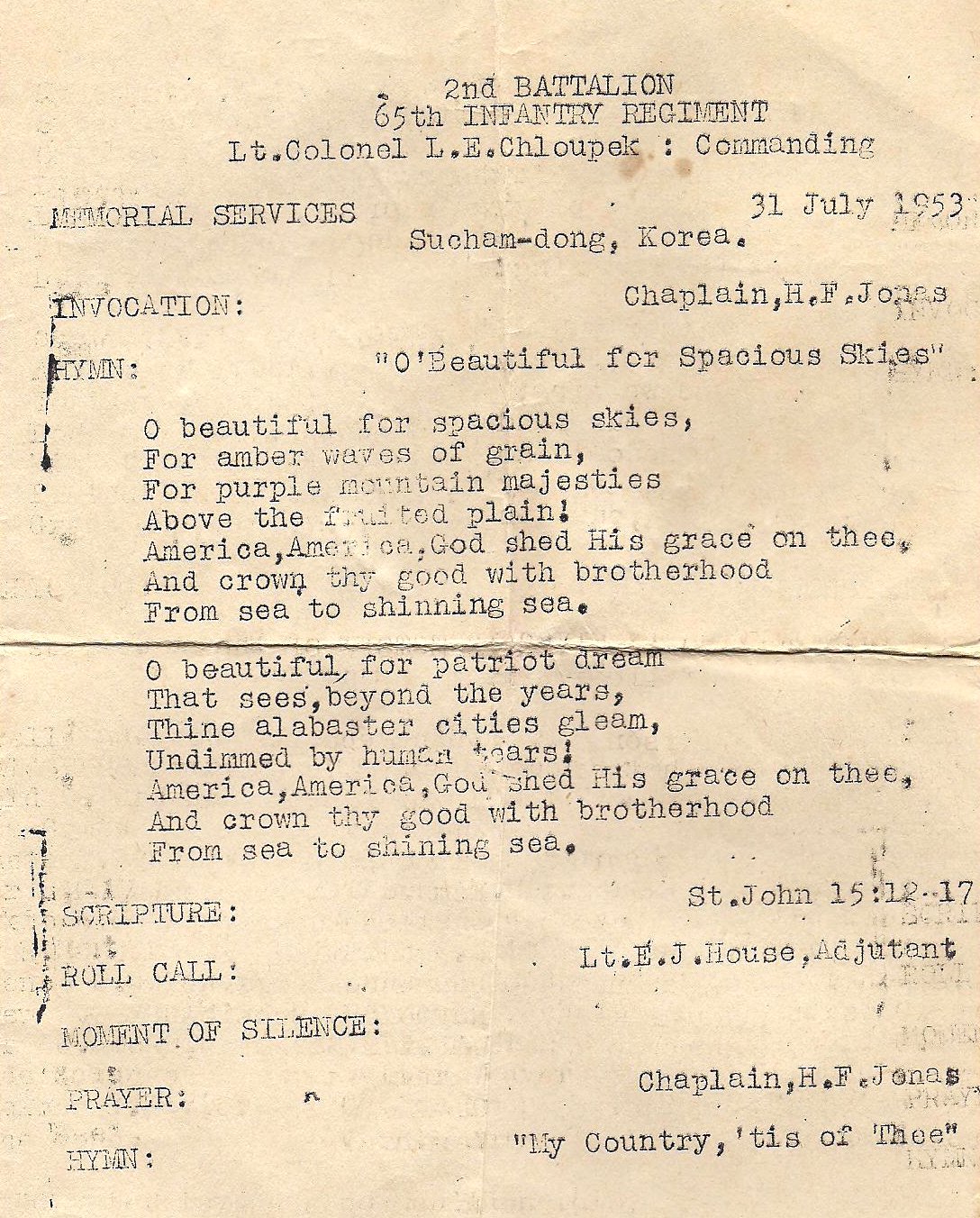
In our hearts, in the silence of our thoughts, we reflect upon what it truly means to give up life for country as did Ray and 27 other men listed in a July 31, 1953, memorial service bulletin my dad carried home from Korea. Below those names are these words from Scripture: Greater love has no man than this, that a man lay down his life for his friends (John 15:13).

Honoring fallen soldiers with a special monument at the Rice County Veterans’ Memorial in Faribault. (Minnesota Prairie Roots copyrighted file photo)

I get emotional as I open the creased, soiled and yellowing 72-year-old memorial service program from Such’am-dong, Korea. I’ve tucked it into a shoebox with Dad’s other military papers, photos and belongings to pull out twice annually on Memorial and Veterans Days. I need to read the fading typewritten names, to recognize and honor these men who never made it home.

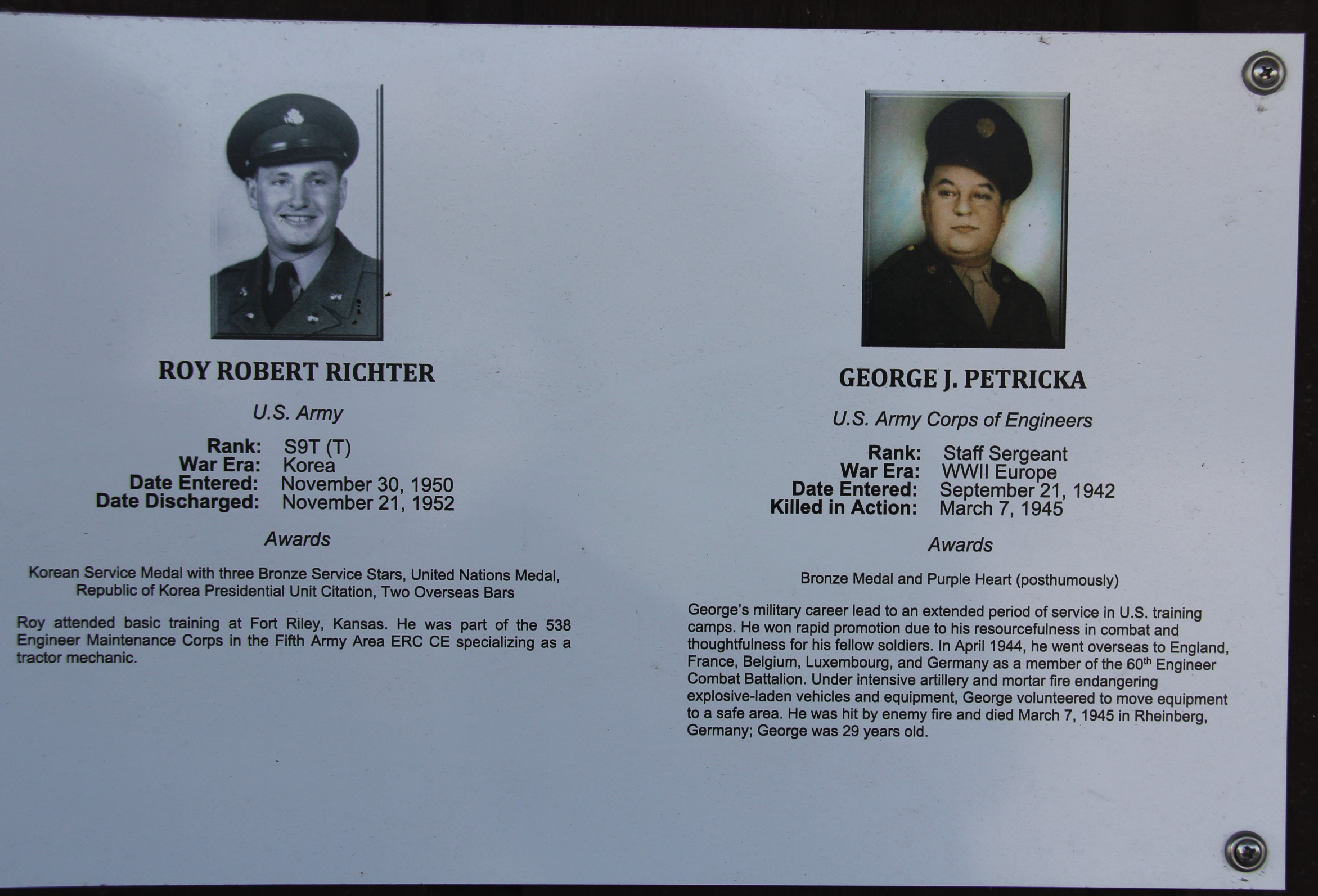
Montgomery, Minnesota, honors veterans via posting their photos and stories (339 thus far) throughout the downtown. To the right is the profile of George J. Petricka, killed in action during WW II on March 7, 1945. (Minnesota Prairie Roots copyrighted photo 2025)

I reread the list of alphabetized names from Turrell Anderson to Vernie Zurn. Raymond W. Scheibe falls at number 24. The surviving men of the 2nd Battalion, 65th Infantry Regiment, who mourned the 28 on that July day in 1953, carried the heavy weight of grief as they prayed, stood in silence, sang “America the Beautiful” and “My Country, ‘Tis of Thee.” And then they carried that grief home.

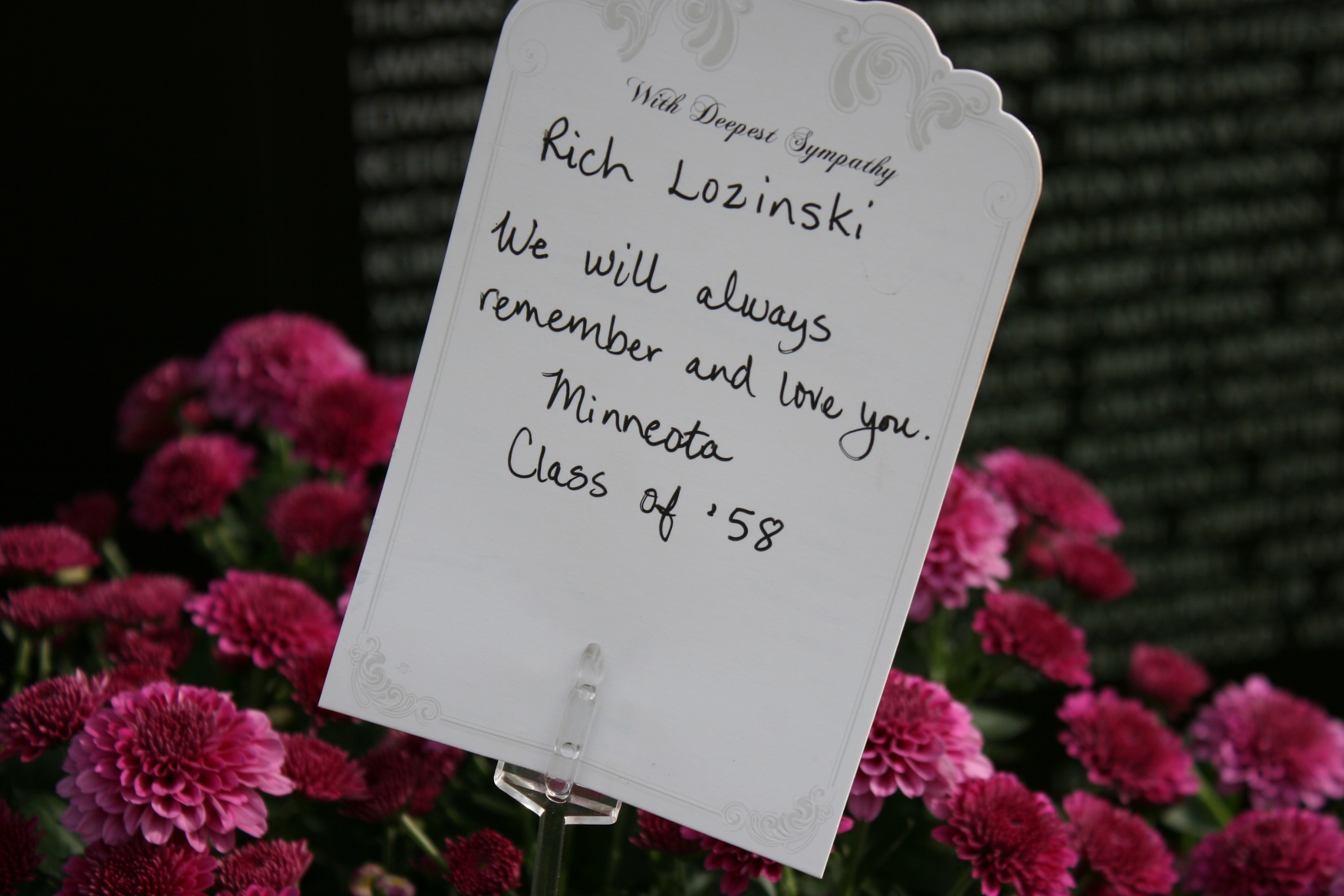
Grief in a note and mums left at the Traveling Vietnam Memorial Wall in Faribault. It honors Rich Lozinski, Class of 1958, Minneota, Minnesota. According to the online Wall list of those KIA, the name is spelled “Lozenski.” Rich was only 26 when he was killed in Quang Tri Province on May 19, 1967. (Minnesota Prairie Roots copyrighted file photo 2016)

Today, even decades after the death of a service member in war, grief carries through generations. It’s important to remember that, to respect that, to take time on Memorial Day for not only honoring, but also for grieving. In grief we begin to acknowledge and process loss. In grief we begin to heal. And in grief we begin to understand the ultimate sacrifice for country.

TELL ME: If you have a story to share about a service member who was killed in action, I’d like to hear. Who do you honor on this Memorial Day?

© Copyright 2025 Audrey Kletscher Helbling
 

A documentary, 50 years after the Vietnam War, showing in Faribault April 28, 2025

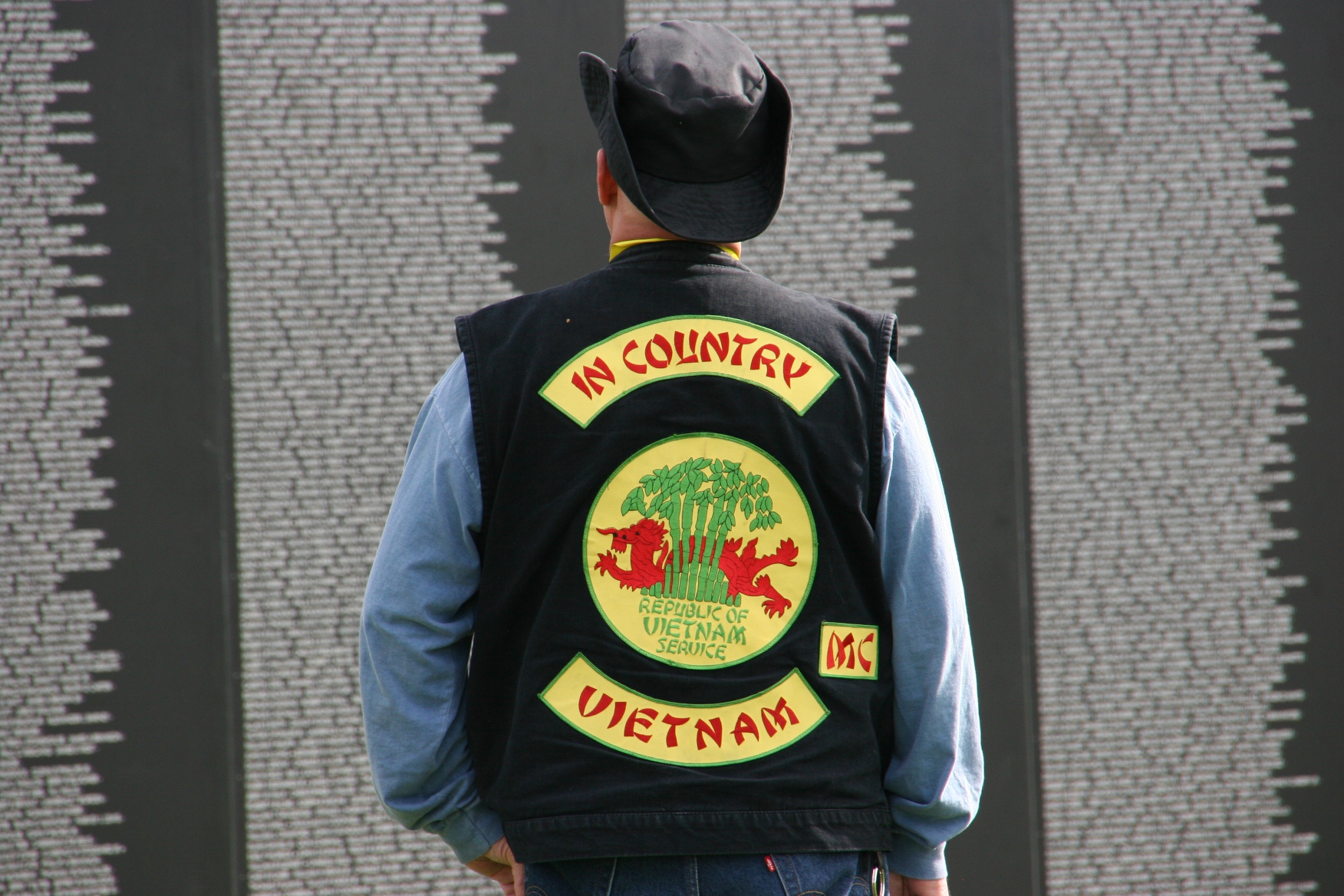
A Vietnam veteran views The Traveling Vietnam Memorial Wall when it came to the Rice County Fairgrounds in Faribault in 2016. All photos in this story were taken at that exhibit. (Minnesota Prairie Roots copyrighted file photo 2016)

MENTION THE VIETNAM WAR and the reaction will be mixed, depending. Some served. Some supported. Others protested. And some, like me, viewed the war as teens not quite old enough to vote, but old enough to care.

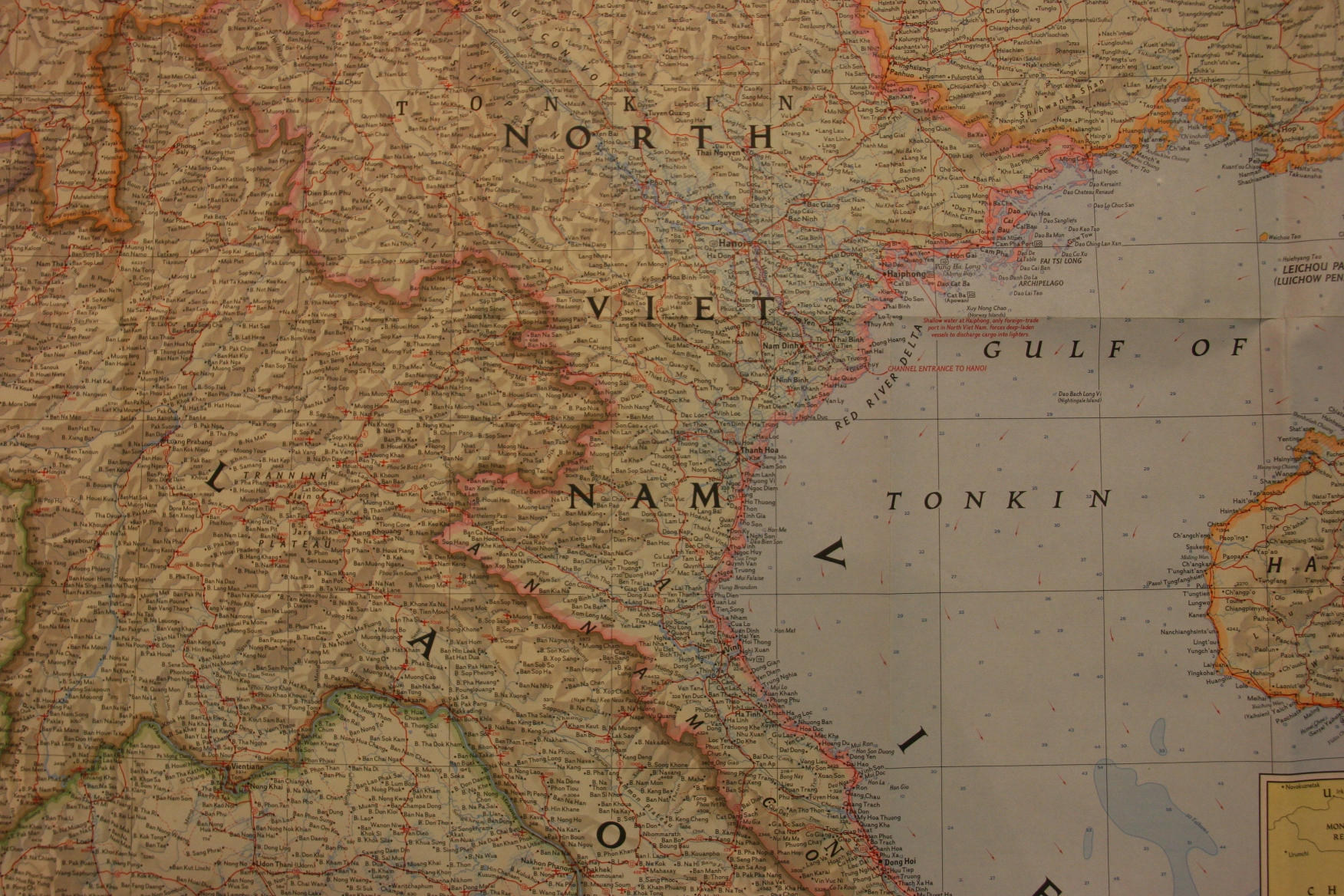
A map posted in the veterans’ lounge when the traveling wall was in Faribault. (Minnesota Prairie Roots copyrighted file photo 2016)

Fifty years ago on April 30, 1975, Communist forces seized control of the South Vietnamese capital, ending the war in what became known as “The Fall of Saigon.” Two years prior, with the signing of the Paris Peace Accords, the U.S. ended its direct military involvement in the conflict.

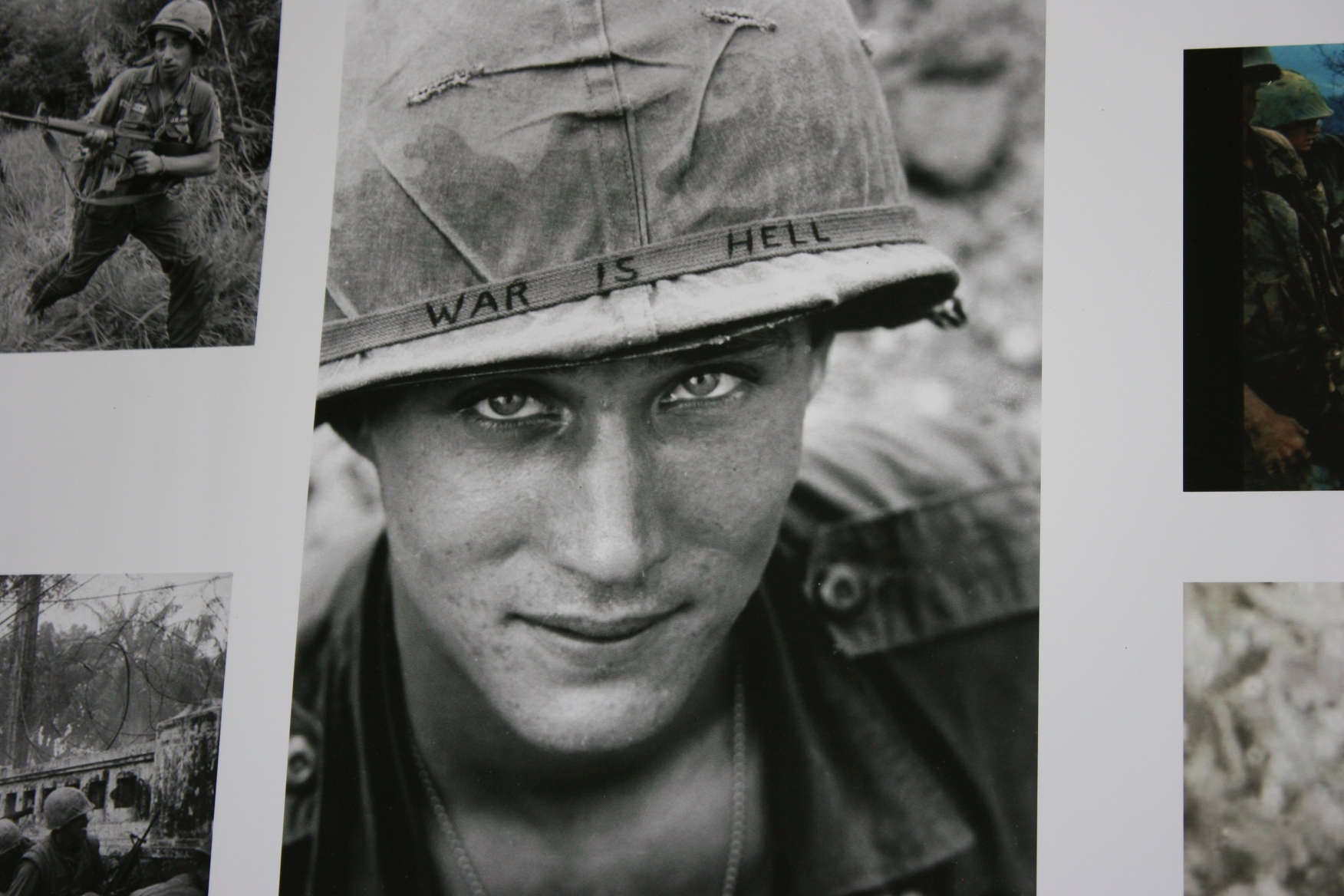
A soldier’s photo displayed in the traveling exhibit. (Minnesota Prairie Roots copyrighted file photo 2016)

But those two events did not end the pain and suffering or the issues which still linger and swirl regarding the Vietnam War.

The purpose of the wall and the names thereon. (Minnesota Prairie Roots copyrighted file photo 2016)

At 6:30 p.m. on Tuesday, April 29, American Legion Post #43, Unit #43 Auxiliary and Operation: 23 to Zero are hosting a showing of the 47-minute documentary film, “Truths and Myths About the Vietnam War,” at the Legion in Faribault. The film was produced by the Atlanta Vietnam Veterans Business Association “to honor those who served in the Vietnam War, by providing factual information to address the decades of misinformation that has presented a skewed historical perspective of the war,” according to the AVVBA website. “We believe this a very important and long overdue film, one that captures the information and lessons learned most Vietnam War veterans want reported about the war.”

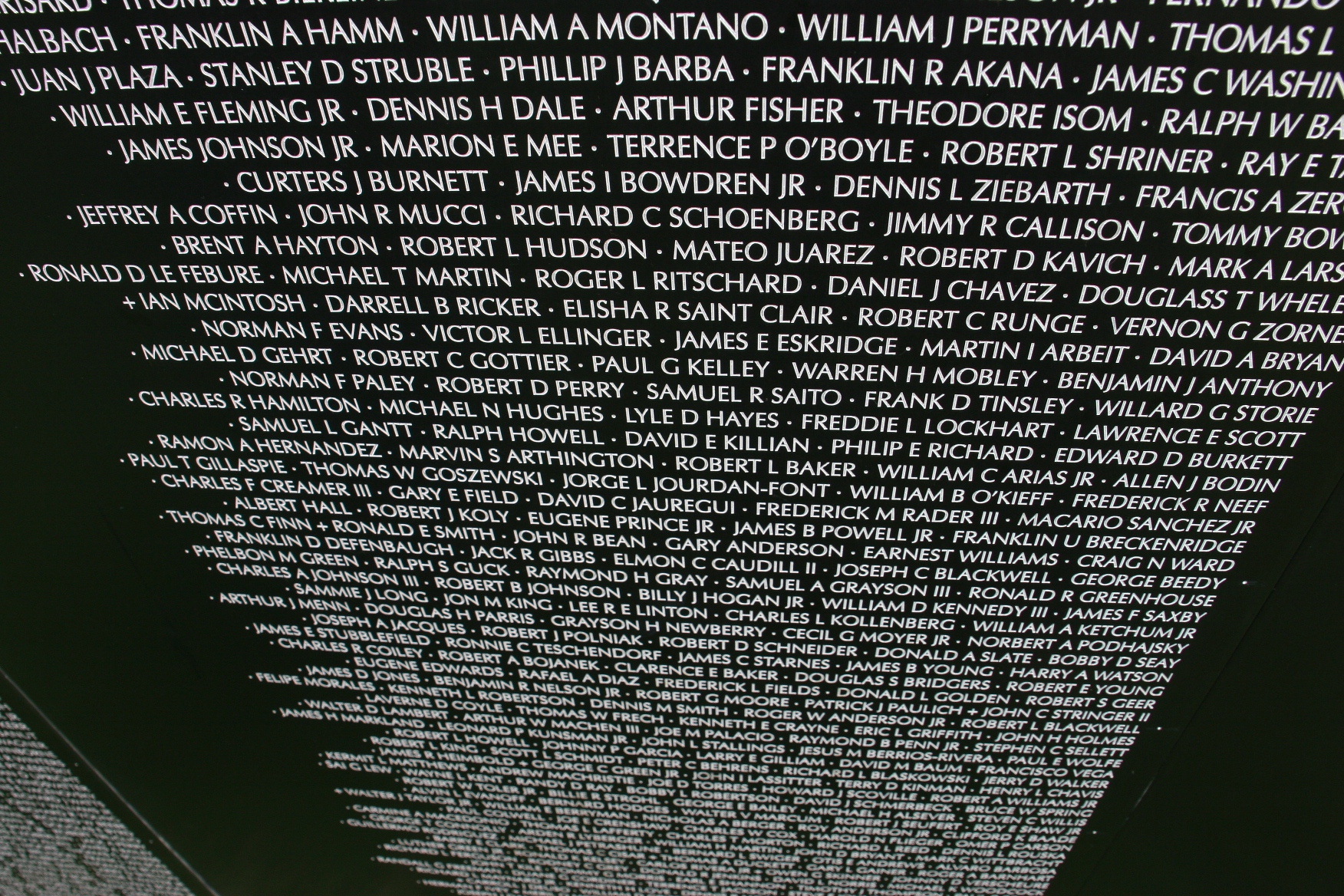
I lifted my camera and pointed the lens down at a panel filled with names of soldiers. (Minnesota Prairie Roots copyrighted file photo 2016)

Now I’m always interested in learning and considering different viewpoints. And it seems this 2024 documentary by Emmy Award-winning film producer David Naglieri will offer me some new insights and perspectives via a Medal of Honor recipient, those who served, and historians. The film promises to address many facets of the Vietnam War from media coverage to anti-war protests to politics to the treatment of returning soldiers and more.

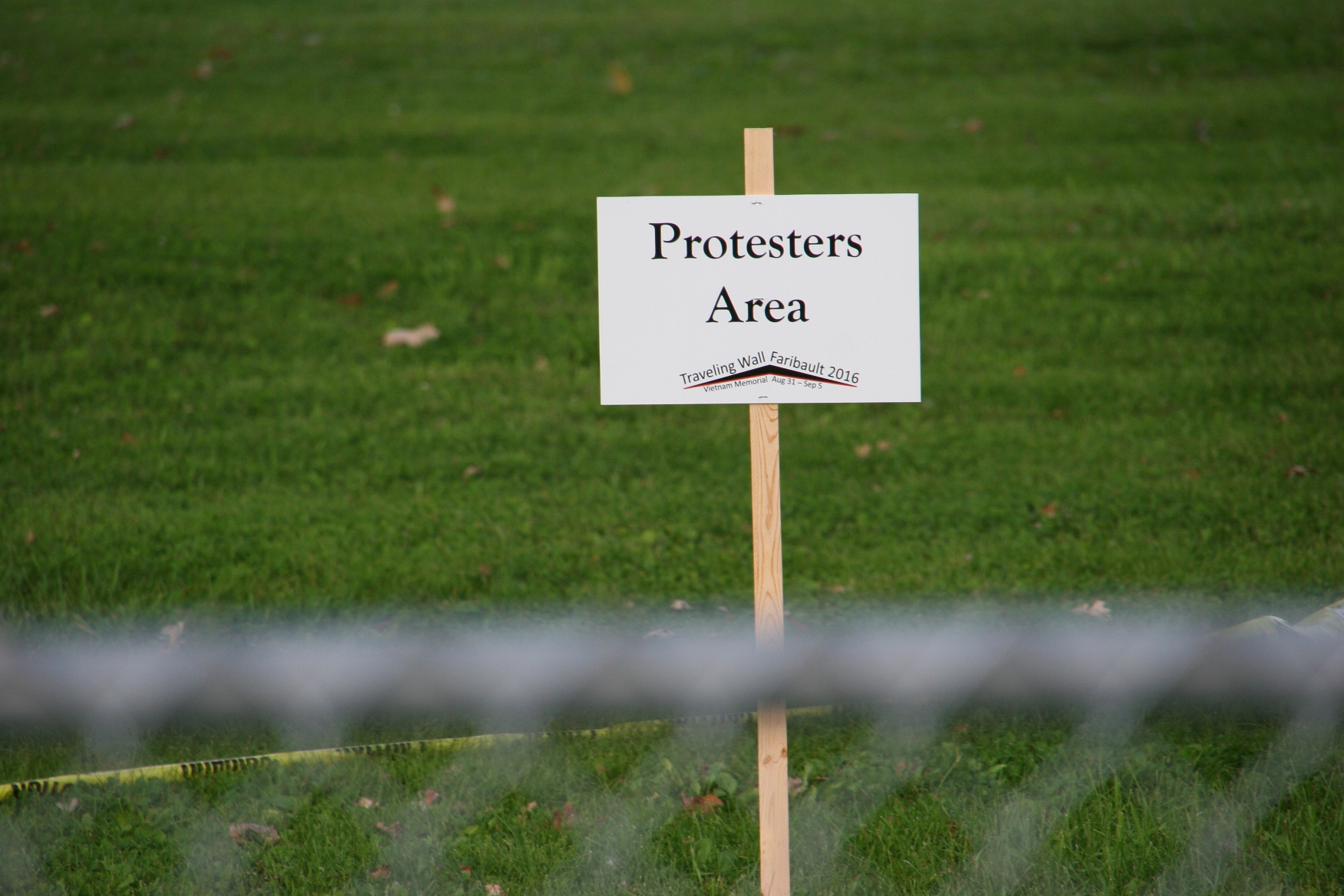
An area set aside for protesters on the northwest side of the fairgrounds. (Minnesota Prairie Roots copyrighted file photo 2016)

I well remember how poorly returning American soldiers were treated by many who opposed the war. They were not respected for their service. Rather, they were met with protests and disdain. I’m all for free speech and expressing our opinions via protests. But it had to be hard, really hard, for those Vietnam veterans, most of whom were drafted. I remember my own dad, who served on the front lines during the Korean War (“The Forgotten War”), sharing how he never felt supported and appreciated upon his return home.

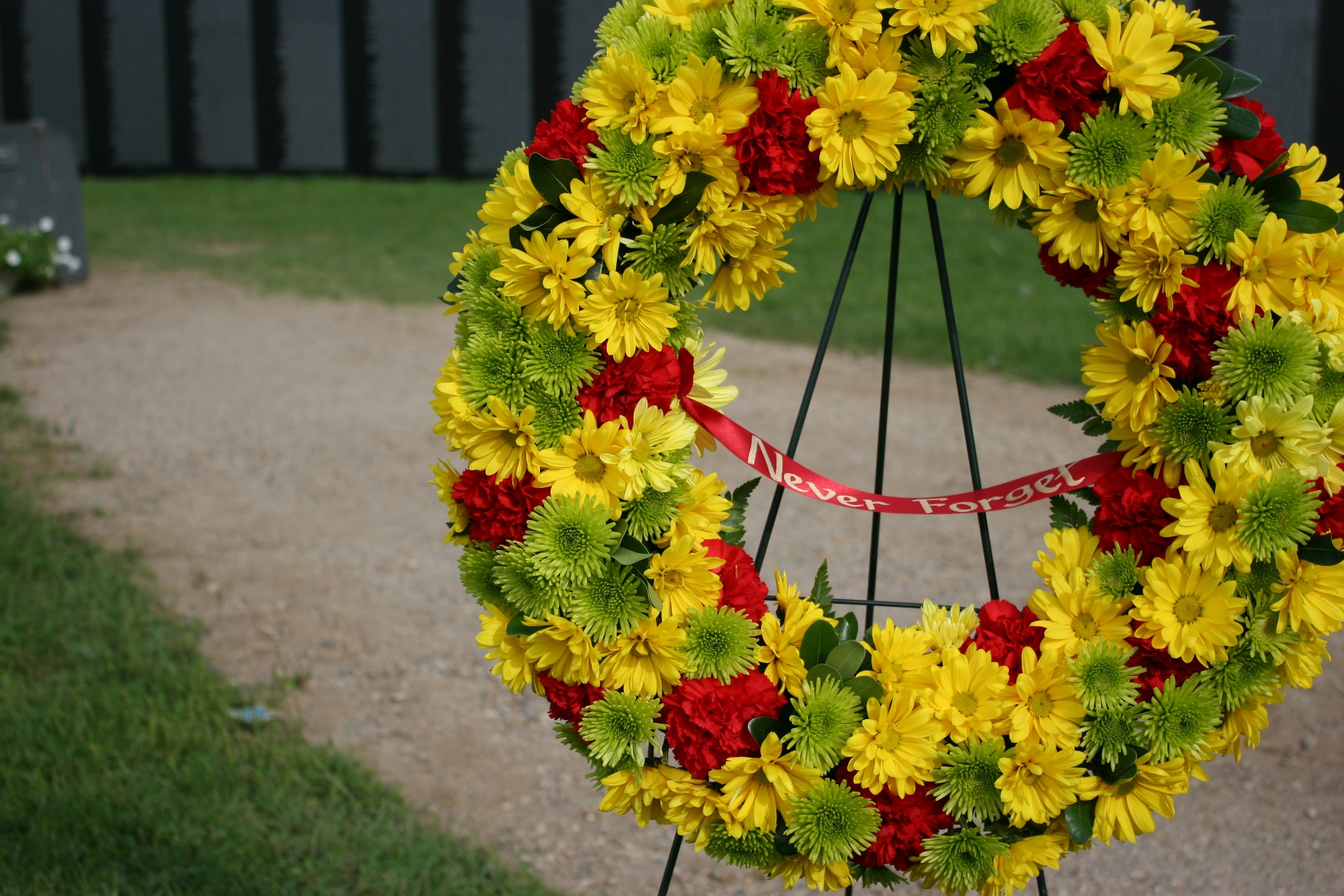
Multiple wreaths featured words of remembrance. (Minnesota Prairie Roots copyrighted file photo 2016)

Tuesday’s event at my local Legion, while focusing on the Vietnam War, will honor all veterans and offer them free wings during Wing Night. A social hour runs from 5:30-6:30 p.m. followed by the film screening from 6:30-8 p.m. The event is free and open to the public.

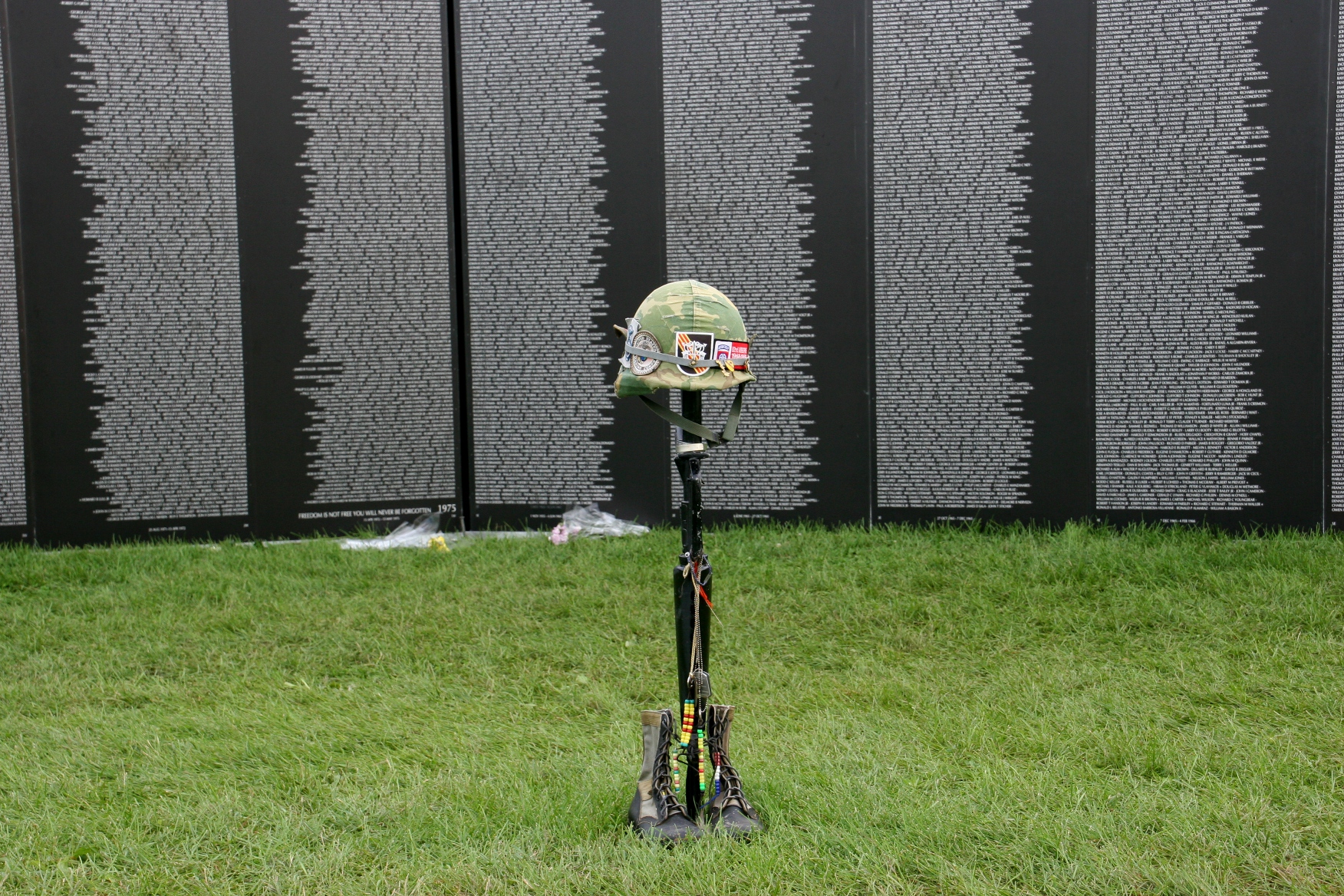
The ultimate honorary salute to a fallen soldier. (Minnesota Prairie Roots copyrighted file photo 2016)

I encourage you to attend, whether you are a veteran or friend/family member; were a war protester; were, like me, a Vietnam War-era teen (who wore a POW bracelet); or simply want to learn more about a war which claimed 58,220 American and millions of other lives and left countless traumatized.

#

FYI: You can watch “Truths and Myths About the Vietnam War” online by clicking here.

If you served in the Vietnam War, lost a loved one in the war, protested or otherwise, please feel free to share your experiences/thoughts in a respectful comment.

© Copyright 2025 Audrey Kletscher Helbling
 

Honoring Cpl. Ray Scheibe & others who died in war May 27, 2024

Honoring words on the Northfield Area Veterans Memorial. (Minnesota Prairie Roots copyrighted file photo May 2023)

THE WOOD-GRAIN cardboard shoebox, tattered around the edges, sits on a closet shelf in an upstairs spare bedroom. This box once held size 8D loafers from Pedwin Shoes for Men. Those are long gone, replaced by black-and-white photos, postcards, a military belt, documents and more.

This May 1953 photo, taken by my dad, shows his friend, Ray Scheibe, left, and other soldiers in Korea. (Photo credit: Elvern Kletscher)

A lime green note atop the lid identifies the contents as “Important stuff,” underlined twice, belonging to my dad, Elvern Kletscher. The papers and photos inside are the stuff of war, the Korean War. Dad served as a U.S. Army infantryman on the frontlines, earning the Purple Heart for injuries sustained in battle.

A July 31, 1953, memorial service bulletin from Sucham-dong, Korea. (Minnesota Prairie Roots copyrighted photo)

But this story is not about my father, who survived combat and returned home to southwestern Minnesota, albeit permanently scarred by the trauma of war. This is about 28 men from the 2nd Battalion, 65th Infantry Regiment, who died in Korea. Their names are typed inside a July 31, 1953, memorial service bulletin my dad carried home from war. The folder is creased in quarters, worn, letters fading. I’ve opened it many times. I imagine my Dad did, too, as he read the names listed in alphabetical order from A to Z. Turrell Anderson to Vernie Zurn. Near the end of that list, the name of his buddy, 22-year-old Raymond W. Scheibe.

A story about Cpl. Ray W. Scheibe, published in the July 23, 1953, issue of The Wolbach Messenger.

On June 2, 1953, the day before Ray was to leave Korea and return to his wife, Marilyn, and 3-month-old daughter, Terri Rae, in Wollbach, Nebraska, he died. Blown apart by a mortar shell, his horrific death witnessed by my father. I don’t think Dad ever fully recovered from the trauma of losing his friend. Who would?

(Photo credit: Sonny Nealon, Ray’s best friend in high school)

Today I honor Ray and all the other military men and women who have died in service to country. They made the ultimate sacrifice, leaving behind grieving families and friends. “Greater love has no man than this, that a man lay down his life for his friends.” That biblical quote from John 15:13 is typed below the names of the 28 men honored at that July 1953 memorial service in Suchan-dong, Korea. That had to be an overwhelmingly emotional event for the surviving soldiers.

The third page of the memorial service bulletin my soldier dad carried home from Korea. (Minnesota Prairie Roots copyrighted photo)

Seventy-one years after that memorial service, I feel emotional reading the 28 names, recognizing the immense loss, the grief, the trauma. That my dad kept this folder speaks to his grief, compassion and connection to those who fought in Korea. I honor him and those men by keeping this folder and all the other “important stuff” Dad carried back home to Minnesota.

His documents, photos and more are not mere “stuff.” Rather they represent individuals who died in war, who should always be remembered and honored, especially today, Memorial Day.

NOTE: In 2005, with the help of my brother-in-law Neil, who served in the military, I tracked down Ray Scheibe’s daughter, Terri, in southwestern Iowa. We’ve kept in touch all these years, but have yet to meet. Finding Terri brought my dad’s story full circle, bringing me peace. I shared with Terri how much her father meant to mine. To read my story about finding Terri, click here.

© Copyright 2024 Audrey Kletscher Helbling
 

Veterans Day reflections: “Returned from hell,” my father’s story November 8, 2023

Among my Dad’s papers, etc.: A letter home to his parents, a page of military instructions he carried into war, a newspaper clipping and his dog tag, circling the words “hell hole” in his letter. (Minnesota Prairie Roots copyrighted photo November 2023)

I RUN MY FINGERS across his dog tag, thumb caressing the raised letters and numbers stamped into metal. His name, KLETSCHER, ELVERN A. B blood type. P for Protestant. His Selective Service number, the same number on his Armed Forces of the United States Geneva Convention Identification Card, the laminated card he carried with him into war. Just like the duplicate dog tags that would identify him if he was injured or killed in action.

This photo from my dad’s collection is tagged as “Kim, Rowe, Allen & me, May 1953 Machine Gun Crew.” That’s my father on the right.

Seventy-one years ago, my dad was a fresh-faced young Minnesota farm boy fighting in the Korean War as a combat soldier for the U.S. Army. Each November, around Veterans Day, I pull out two shoeboxes filled with photos, letters, documents and more from Dad’s time in the service. And although I’ve looked through the contents many times in the 20 years since Dad died, I still feel the same overwhelming sense of sadness in all he experienced. The death of combat buddies. His killing of the enemy. Orphan children begging for food across barbed wire fences. The cold and hunger and fear. And then the Post Traumatic Stress Disorder he suffered upon his return home to southwestern Minnesota.

My dad brought this 7 x 9-inch cloth “RETURNED FROM HELL” patch home with him after serving for nearly a year in Korea. (Minnesota Prairie Roots copyrighted file photo)

I feel all of that as I touch his dog tag, run my fingers along the short chain like fingers worrying rosary beads in prayer. War is hell.

On the back of this photo, my dad simply penned “a letter from home.” I appreciate this photo of my dad taken by an unknown buddy in Korea.

Hell. Dad used that word in a March 4, 1953, letter to his parents and siblings. He criticized the draft board, his anger fueled by the possibility that a younger brother might also end up in Korea. He wrote, in part: “Do they know what it’s like over here? Hell no. Why the heck don’t some of them come over here and look this over? They’d probably come to there (sic) senses…” Not everything he wrote is printable. But his anger and frustration are palpable. And I don’t blame him.

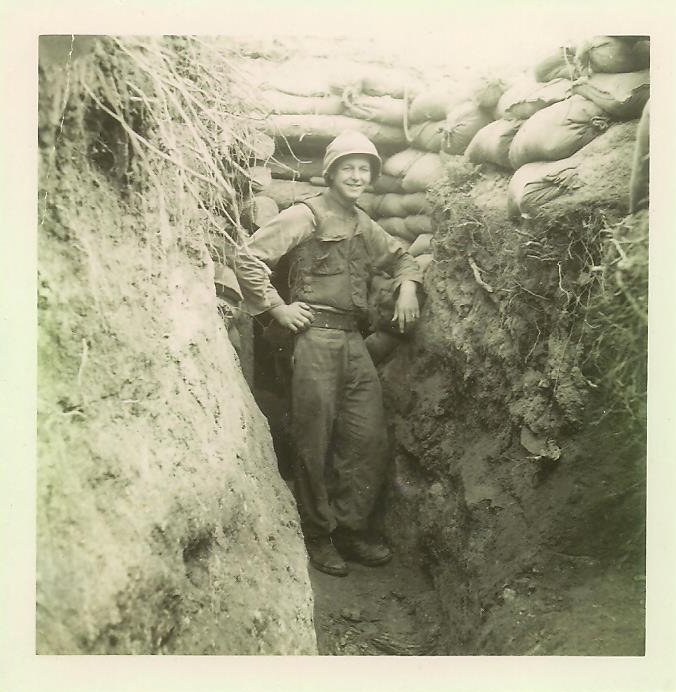
U.S. Army Cpl. Elvern Kletscher, my father, in the trenches in Korea.

War is hell. I try to imagine my dad penning that letter on his 22nd birthday. Missing his family. No cake, no nothing to celebrate. But rather worry about whether he would live to the next day. He had reason to fear for his life. Only a week prior, he was wounded in action at Heart Break Ridge while engaged in mortar firing with the enemy. Shrapnel struck him in the face and he was hospitalized for several days.

My grandparents, Ida and Henry Kletscher, posing with some of their children, flank my father, Elvern Kletscher, who is about to leave for military service in 1952.

Interestingly enough, Dad mentions none of that in his letter home. Rather, he closes with these sentences: “I’m feeling fine and don’t worry about me. I’ll write again soon.” I don’t believe Dad was “feeling fine,” in a place he called a “hell hole” in his letter.

My father, Elvern Kletscher, on the left with two of his soldier buddies in Korea.

As I filter through the shoeboxes holding his military belongings, I pick up a hardcover 4 x 6-inch black book. It’s tattered, bent, dirty, obviously well-used. When I open the cover to read the words Dad penciled across lined paper, the realities of war strike me full force. Here are details and instructions on weaponry—60 mm mortars, submachine guns, tank mines, smoke screens, chemical warfare… He writes about reconnaissance, combat and security patrols and “avoid contact with enemy—may have to fight in self defense.” There are diagrams and fire commands and details I don’t understand, and don’t necessarily want to understand.

My dad carried home a July 31, 1953, memorial service bulletin from Sucham-dong, Korea. In the right column is listed the name of his fallen buddy, Raymond W. Scheibe.

But “Conduct on lines” and the details that follow need no deciphering: “1) Hold fire until enemy is within 500 yards. 2) Listening post must have cover and concealment, must have good route for withdrawal…” I expect Dad carried this book into war. Just as he carried deep trauma home from “The Forgotten War,” as the Korean War has been dubbed.

Words imprinted on the Veterans’ Memorial in Northfield, Minnesota. (Minnesota Prairie Roots copyrighted file photo May 2023)

War is hell, even if done for the right reasons—to defend democracy and freedom and country. For his time in the Army in 1953, Dad was paid $266.27. It’s documented on his federal income tax return. So little for so much given, not that there’s ever enough payment for a combat soldier.

My dad’s military marker in the Vesta City Cemetery. (Minnesota Prairie Roots copyrighted file photo)

I wish I could wrap my arms around Dad, hold him, tell him how deeply sorry I am for the horrors he endured while fighting as an infantryman on the front lines during the Korean War. Mostly, I wish I could simply listen, sitting quietly as I finger the chain of his dog tag, the beads providing tactile comfort as he talked (if he would talk) about the personal hell that is war.

The Rice County, Minnesota, Veterans’ Memorial in Faribault. This photo and five others I took now grace public spaces in the newly-opened State Veterans Home in Bemidji. (Minnesota Prairie Roots copyrighted file photo)

NOTE: Please use this Veterans Day as a time to thank those who have served our country. But more than thanking, listen, support and encourage. The voices of our veterans need, and deserve, to be heard.

© Copyright 2023 Audrey Kletscher Helbling
 

Memorial Day remembrances & reflections May 25, 2023

A soldier sculpture centers the Northfield Area Veterans Memorial. (Minnesota Prairie Roots copyrighted photo May 2023)

HIS STRONG STANCE, one boot planted in front of the other, ramrod posture all point to his disciplined military training. I am looking at a sculpture of a US soldier, a combat infantryman. As I study him, I gaze into his haunted eyes, eyes that, by my perception, reveal the horrors of war.

Standing strong in service to country, a life-size soldier replica. (Minnesota Prairie Roots copyrighted photo May 2023)

Perhaps it is my own father’s stories of fighting on the front-line during the Korean War that shape my reaction to this soldier replica at the Northfield Area Veterans Memorial. But this could be anyone’s interpretation. That of a daughter, like me, whose father suffered from Post Traumatic Stress Disorder after leaving the killing fields of Korea. Or this could be the story of any active duty war veteran, the story of a spouse or child who lost a loved one on the battlefield, the stories of too many.

My dad took this photo of his buddies, including Ray Scheibe, left, in Korea. The photo is dated May 1953. Ray was killed in June. (Copyrighted photo by Elvern Kletscher)

This Memorial Day, I pause to remember those who gave the ultimate sacrifice—their lives—to assure my freedom. My dad’s Army buddy and friend Ray was among those. Ray died the day before he was to leave Korea and return to his wife and infant daughter in Nebraska. My father witnessed Ray’s death and it broke a part of him.

Honoring fallen soldiers with a special monument at the Rice County Veterans Memorial in Faribault. (Minnesota Prairie Roots copyrighted file photo)

These are the personal details we need to remember on Monday, a national day of mourning and remembrance for those who died on the battlefield. Veterans’ memorials and parades and programs all provide ways to honor the brave men and women who died in service to country. But their stories are equally as important. These are, after all, individuals with friends and families, likes and dislikes, histories written long before they were drafted or enlisted and then called to war.

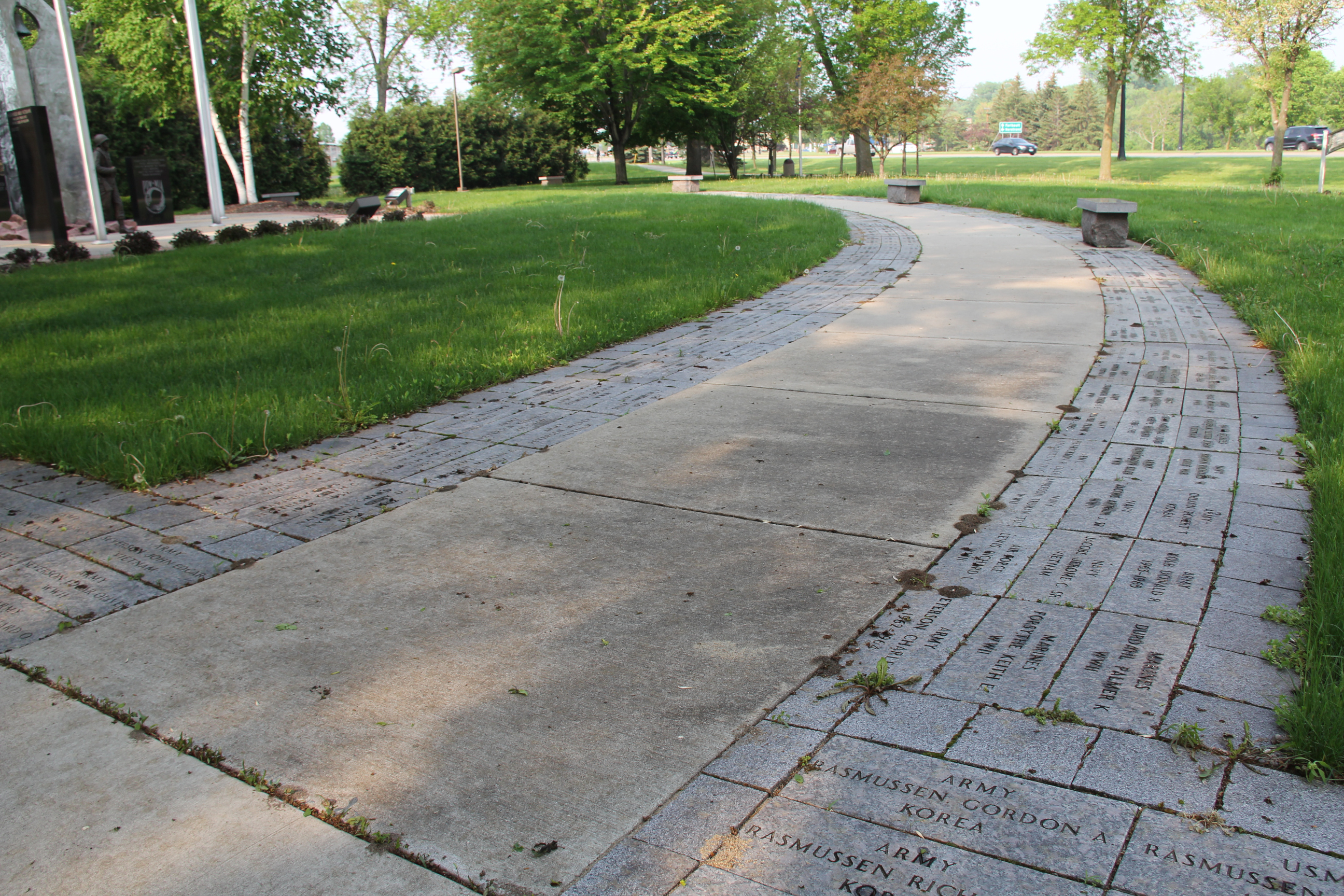
“The Walk of Remembrance” imprinted with veterans’ names and military information edges the Northfield Area Veterans Memorial. (Minnesota Prairie Roots copyrighted photo May 2023)
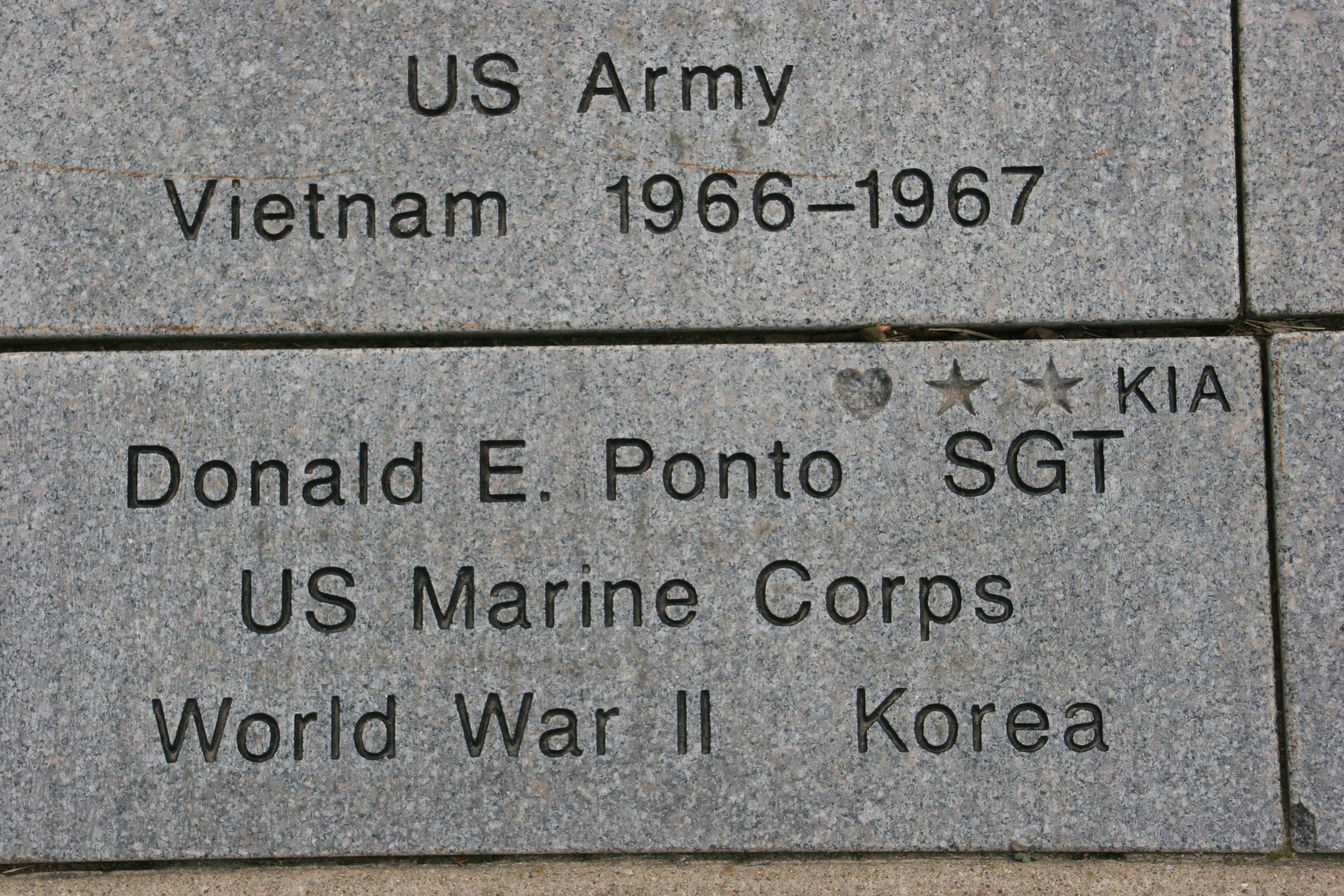
A paver at the Rice County Veterans Memorial honors Sgt Donald E. Ponto, killed in action in Korea. (Minnesota Prairie Roots copyrighted file photo)
A full view of the Northfield Area Veterans Memorial. The stones represent each branch of the military. (Minnesota Prairie Roots copyrighted photo May 2023)

Many Minnesota communities have veterans’ memorials. While designs differ, they share the commonalities of a centerpiece sculpture, sometimes a soldier or an eagle or some other strong symbol; pavers with veterans’ names imprinted; American and other flags; and ways to recognize all branches of the military. It is the names, accompanied by the initials KIA, which break my heart. KILLED IN ACTION. I recognize the intense pain and heartbreak experienced by loved ones back home. The grieving families. The Gold Star Mothers, a mother who lost a child in service to country. The fatherless children, like Teri, the infant daughter of my dad’s buddy, Ray. Overwhelming grief imprints upon those stone pavers.

An eagle at Veterans Memorial Park in Morristown. (Minnesota Prairie Roots copyrighted file photo)

This Memorial Day, I encourage you to reflect on the war dead whom we honor on Monday. Walk through a cemetery and pause at the graves marked by small American flags. Attend a Memorial Day program not out of a sense of obligation, but out of gratitude. I feel thankful for a free press. Not every country has such freedom.

My dad carried this memorial service bulletin home to Minnesota from Korea. In the right column is listed the name of his fallen buddy, Raymond W. Scheibe. (Minnesota Prairie Roots copyrighted file photo)

Spend time at a veterans’ memorial beyond a precursory walk through. Appreciate the words, the names, the symbols, the artwork. And, if a soldier sculpture centers the memorial, look into his eyes and remember this biblical quote pulled from the memorial service folder my dad carried home from Korea: Greater love has no man than this, that a man lay down his life for his friends (John 15:13).

Fitting words engraved in stone at the Northfield Area Veterans Memorial. (Minnesota Prairie Roots copyrighted photo May 2023)

That July 31, 1953, service folder from Sucham-dong Korea lists 28 soldiers who died on the battlefield, among them my dad’s beloved buddy, Raymond W. Scheibe, age 22. It is my dad’s grief and trauma I see when I gaze into the eyes of that soldier sculpture in Northfield. War carries so much death and loss and pain. I vicariously understand that. This Memorial Day I remember, reflect, honor, carry on my heart the heaviness of war.

© Copyright 2023 Audrey Kletscher Helbling
 

With thoughtful gratitude on Veterans Day November 11, 2022

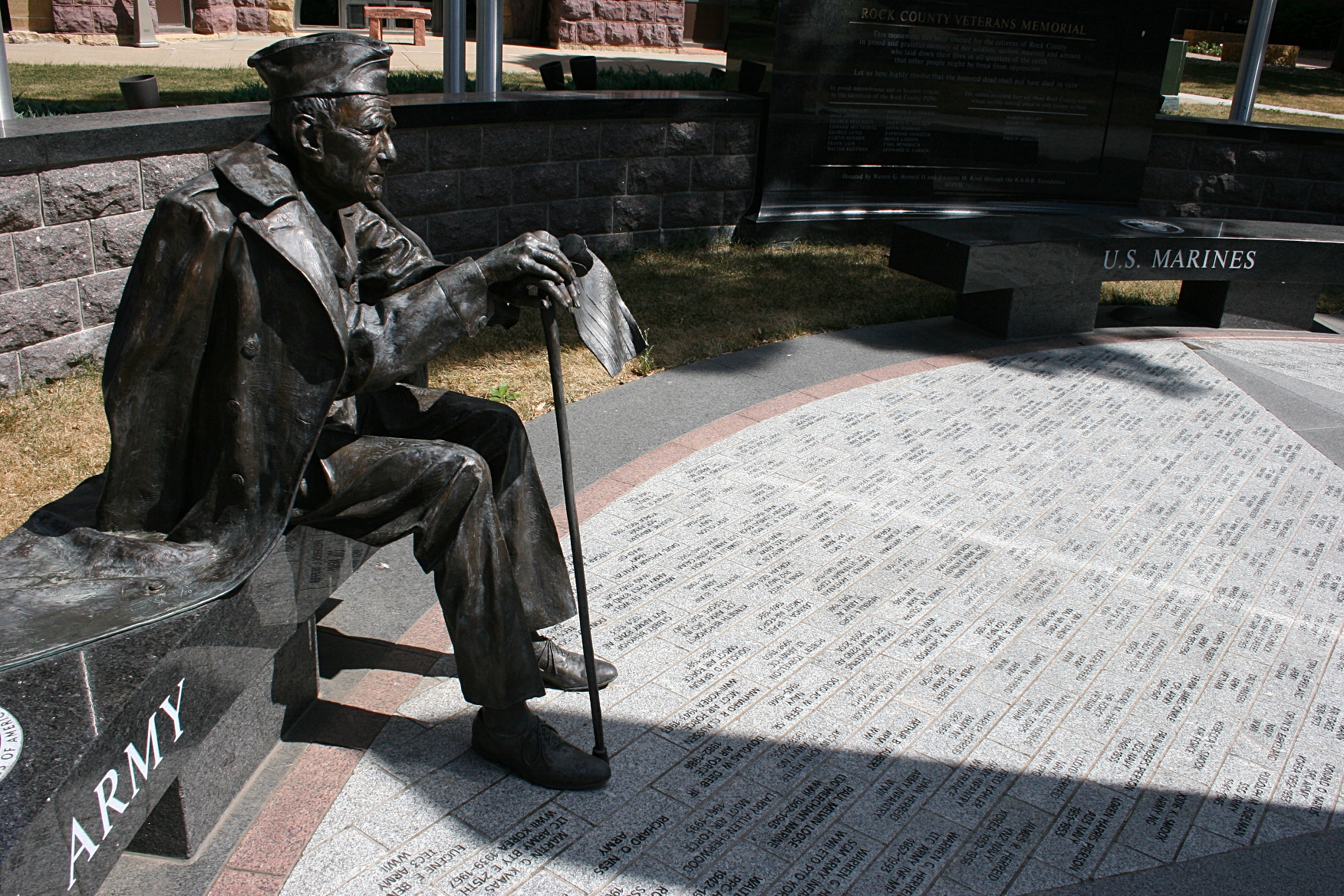
A bronze statue titled “Poppie” personalizes the Rock County Veterans Memorial in Luverne as do the names of some 1,600 veterans engraved in pavers. I’ve seen a lot of veterans memorials and this is among the most impressive. (Minnesota Prairie Roots copyrighted file photo August 2013)

NEARLY EVERY COMMUNITY has one. A veterans memorial. I appreciate that public recognition of military service in communities from rural to urban. Yet, acknowledgment of our veterans must stretch beyond public memorials.

Today, Veterans Day, I pause to personally thank the individuals who have served our country. That’s important to remember—individual service and sacrifice. I expect most of you can rattle off names of those in your circle who engaged in combat or other military work. They left their homes, their everyday lives, to answer the call of duty.

I feel gratitude to individuals who, either by draft or by choice, stood strong for democracy. Words like courage, commitment, strength, fortitude…filter into my thoughts when I think of our veterans.

But I also think of the physical, emotional and mental challenges too many combat veterans face post-war. I can never comprehend the pain, the trauma, the grief experienced by those who fought in war zones. I only know how my own father, an infantryman in the Korean War, battled the demons of war during his lifetime. That glimpse was enough to elicit deep concern within me.

We are making strides in recognizing and treating post traumatic stress disorder, for example. Not until near his 2003 death was my dad aware of his PTSD. He never got the intervention and help he needed upon arriving home from war. I’m thankful for the help available today, although I expect sometimes it’s not easily-accessible and not nearly enough.

Suicide among veterans remains high. After hearing a few of my dad’s stories of war atrocities and killing, I recognize the emotional and mental tolls on health. Returning to everyday life after experiencing the traumas of war brings challenges civilians will never fully understand. We need to be there for our veterans in ways that matter—support, compassion, care, understanding—with gratitude in our hearts.

TELL ME: If you’re a veteran, what would you like to hear today, Veterans Day? How can we as a country better honor and help you? If you know a veteran, what have you done to honor and help veterans?

© Copyright 2022 Audrey Kletscher Helbling
 

Focusing on the true meaning of Memorial Day May 28, 2022

My dad carried home a July 31, 1953, memorial service bulletin from Sucham-dong, Korea. In the right column is listed the name of his fallen buddy, Raymond W. Scheibe. (Minnesota Prairie Roots copyrighted file photo)

THIS HOLIDAY WEEKEND, as you fire up the grill, perhaps gather with family and friends or head Up North to the lake cabin, please pause to remember the reason for Memorial Day.

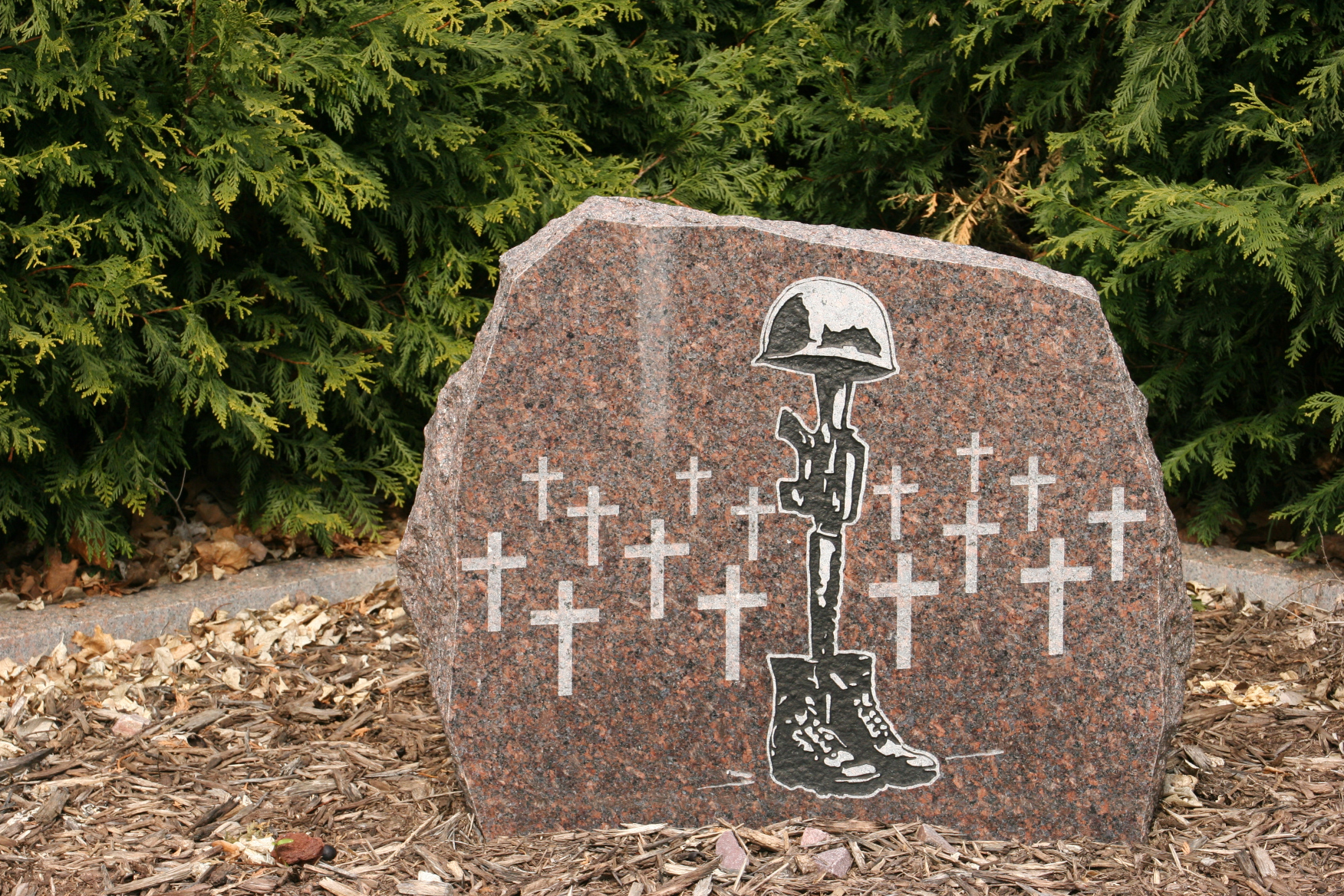
Helmet on rifle in boots is the universal symbol honoring fallen soldiers, this one at the Rice County Veterans’ Memorial in Faribault. (Minnesota Prairie Roots copyrighted file photo May 2020)
It’s not about the unofficial start of summer or a day off work or whatever. Rather, Memorial Day is a day for honoring those military men and women who died in service to their country. It is a day to reflect on that sacrifice of life, to honor, mourn, remember.

Printed on the back of a Memorial Day program folder in Faribault. (Minnesota Prairie Roots copyrighted file photo)

As the daughter of a Korean War veteran who served as an infantryman with the US Army on the frontlines in Korea and decades later received the Purple Heart, I grew up understanding the significance of Memorial Day. I attended the annual Memorial Day program in my hometown of Vesta, publicly read the poem, “In Flander’s Fields,” multiple times, went to the cemetery afterwards, listened to the haunting playing of taps.

A story about my dad’s Army buddy, Cpl. Ray W. Scheibe, killed in action and published in the July 23, 1953, issue of The Wolbach Messenger. Dad witnessed Ray’s death and was forever haunted by that awful memory. (Minnesota Prairie Roots copyrighted file photo)

My heart holds those Memorial Day memories which prompt me, to this day, to attend a local event honoring fallen soldiers.

A veteran plays taps at the conclusion of the 2016 Memorial Day program in Faribault. (Minnesota Prairie Roots copyrighted file photo 2016)

Yet it is not the pageantry of a parade, the flying of flags, the singing of patriotic songs, the delivery of speeches or even a poppy pinned to a lapel that moves me the most. Rather, it is the singular playing of taps. Mournful and heartwrenching in a way that grips my soul with grief. For those who died in service. For those left behind.

A paver at the Rice County Veterans’ Memorial notes the tragic death of Sgt. Donald E. Ponto, killed in action. (Minnesota Prairie Roots copyrighted file photo May 2020)

Memorial Day is, to me, a profoundly powerful day. It brings not only emotions of sorrow, but also of gratitude.

© Copyright 2022 Audrey Kletscher Helbling