Minnesota Prairie Roots

Writing and photography by Audrey Kletscher Helbling

The centenarian, the seamstress & the tortoise September 27, 2023

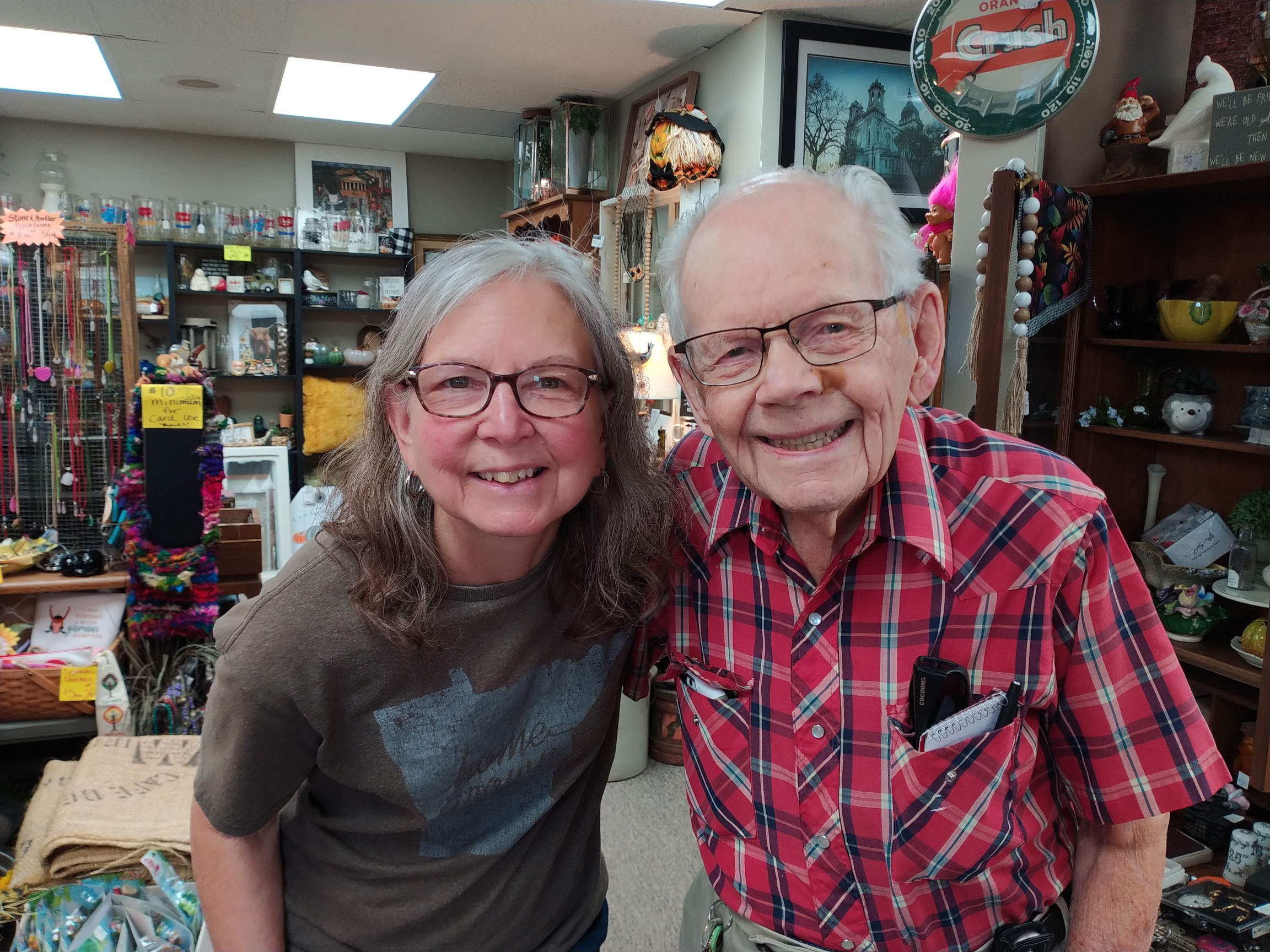
Audrey Kletscher Helbling and Mickey Nelson inside The Junk Monkey. (Copyrighted photo by Randy Helbling, September 2023)

IN THE EVERYDAY MOMENTS of life, I often strike up conversations with strangers given my innate desire to hear their stories, to connect, to learn, or simply to show I care. Through such encounters, I’ve met the most delightful individuals.

THE CENTENARIAN

Take Mickey Nelson, 103, of Clarks Grove.

“You’re 103?” I overheard the question, edged with disbelief, while recently browsing a local vintage, collectibles and treasures shop. That was enough for me to pause and head to the front of the store to meet this centenarian engaged in conversation with shopkeeper Theresa.

When I spotted Mickey, I understood why Theresa sounded so incredulous. Mickey looked not a day over 80. His smile, which reached his eyes, exuded positivity, joy. And then I heard his story, realizing I’d heard it three years earlier.

Mickey is, in every way, extraordinary. In 2020, he walked 100 miles in his small southern Minnesota community to celebrate his 100th birthday. He didn’t walk just to walk. Mickey walked for a purpose, to raise money for the Salvation Army. And he raised a whole lot—$115,000, his daughter Michelle said.

I was beyond impressed by this WW II veteran and his generosity. Mickey remembered the bread lines during the Great Depression. That sparked his 100-mile mission to gather monies for Salvation Army food assistance during COVID-19. A similar effort by an aged veteran in England, who walked 100 laps in his garden during the pandemic and raised $30 million for Britain’s healthcare system, also proved motivating for Mickey.

On this day, I felt honored to meet Mickey, whose story was broadly shared in the media in 2020, the reason it was familiar to me. I decided right then and there that I wanted my photo taken with this celebrity, a remarkable man not only for his generosity of spirit, but also for the spirit of joyfulness he exudes.
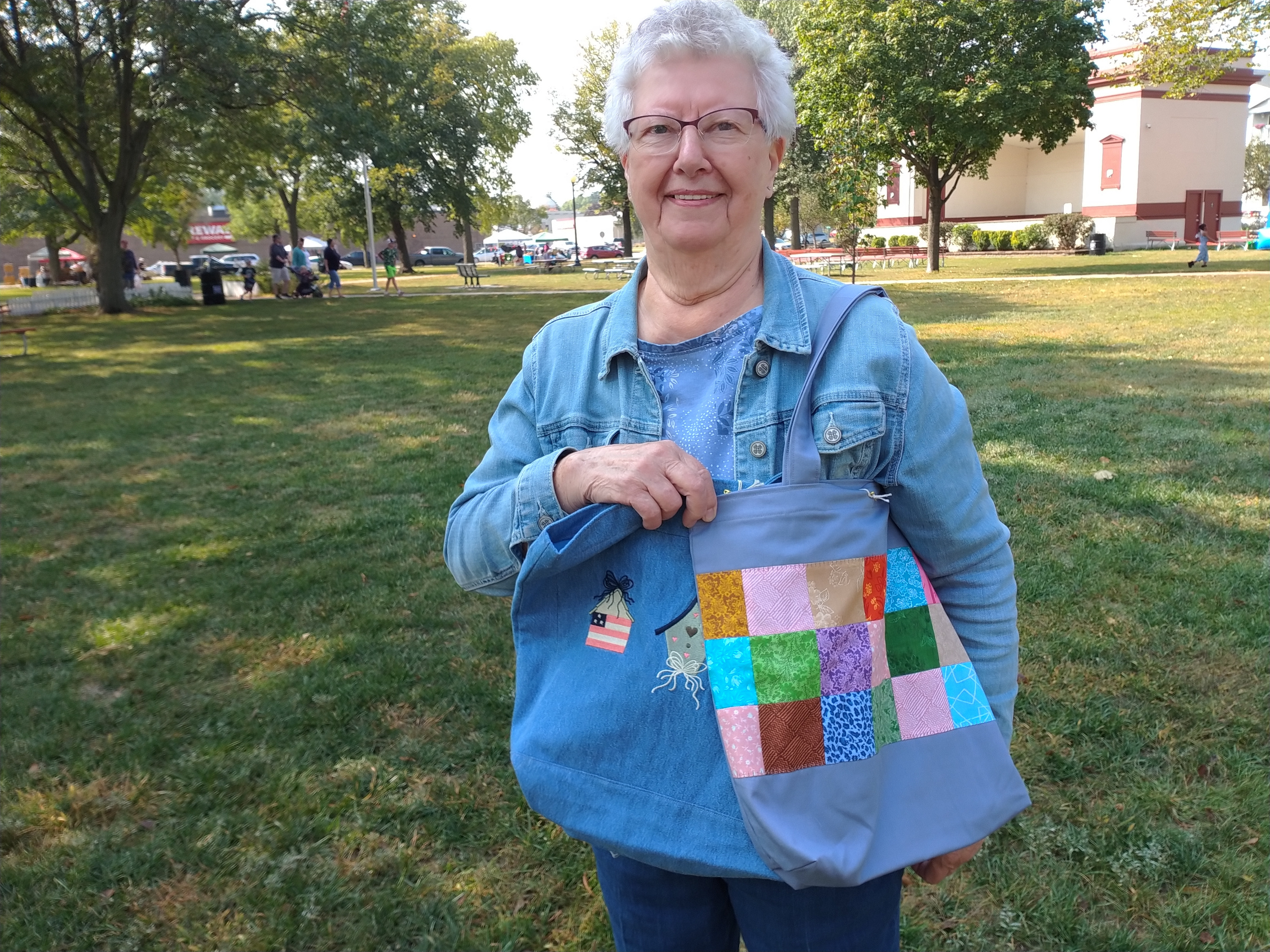
Virginia Malecha displays two of her tote bags, among creations she was vending at the Faribault Farmers’ Market. (Minnesota Prairie Roots copyrighted photo September 2023)

THE SEAMSTRESS

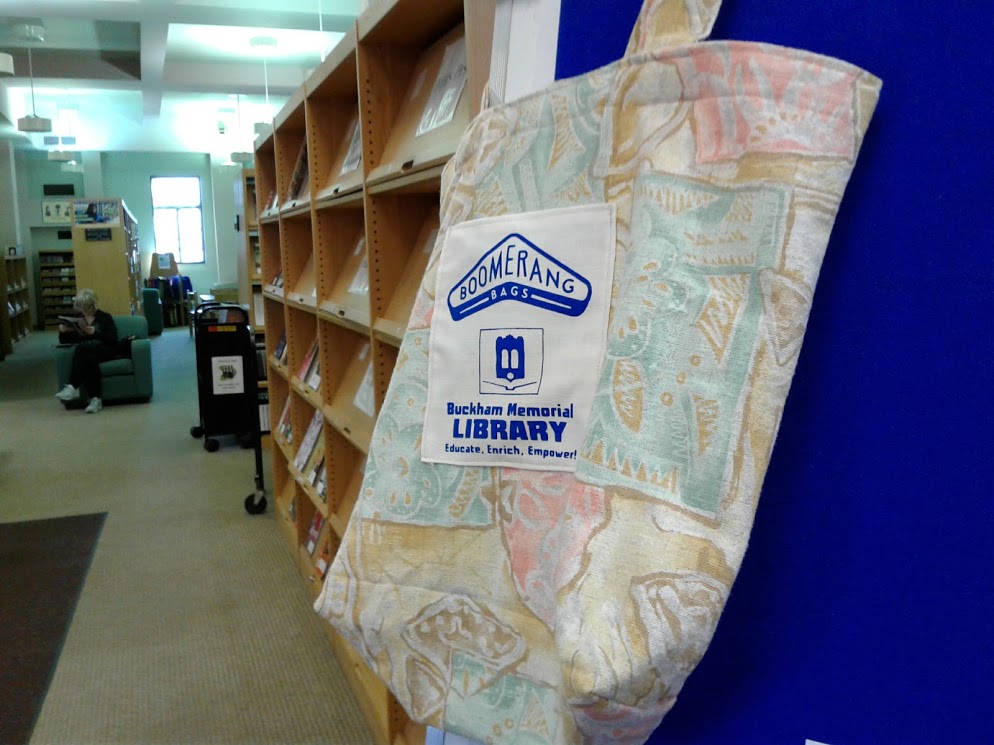
The same can be said for Virginia Malecha of Millersburg, whom I met while enjoying a pork burger during a recent event at the local co-op. She, like Mickey, exudes joy. And she, like Mickey, is generous. Virginia has sewn 200 cloth bags for patrons to use at the Northfield Public Library. As we talked, I learned that this seamstress has been sewing since age nine. She clearly enjoys the craft, stitching totes from recycled materials (such as clothing and duvets) and from her fabric stash collected through the decades.

Virginia invited me to stop at the Faribault Farmers’ Market to view more of her creations, including dish towels she machine embroiders, scrubbies and more. Two days later, I did just that. I was impressed by this kind, generous and friendly woman. She not only sews, but also taught herself to play the concertina and raised her family on a dairy farm (another connection given I grew up on a dairy farm). I asked to take her photo. I wanted to remember her beautiful smile and how she, like Mickey, inspired me. And it all started with a conversation over burgers in a co-op parking lot.

Not a tortoise, but a turtle, which is nearly as slow as a tortoise. (Minnesota Prairie Roots copyrighted file photo June 2020)

THE TORTOISE

And then there was the recent afternoon I met Paul (whose last name I never got) in the same park where Virginia vended her wares. He was walking, just like my husband and me. Randy and I were, however, going at a much faster pace. That led to a humorous moment, when Paul called us the hares, himself a tortoise. But, I reminded him, the tortoise wins the race.

On this day, though, I truly was the winner given the conversation that followed. We chatted a bit about retirement and other topics. But even before Paul mentioned that he was a retired Lutheran pastor from New Richland now relocated and living across the street from the park, I recognized his compassion. He listened as I shared about my neurological health issues caused by a virus in early January. His wife, he said, suffered a traumatic brain injury. Her challenges in many ways mimic mine. I felt, in that moment, understood, uplifted and incredibly thankful for this caring man.

Like Mickey and Virginia, we connected in an everyday moment of life. And I am the better for having met the three of them—the centenarian, the seamstress and the tortoise.

© Copyright 2023 Audrey Kletscher Helbling


No more VR roller coasters for this graduate September 26, 2023

(Minnesota Prairie Roots copyrighted file photo May 2016)

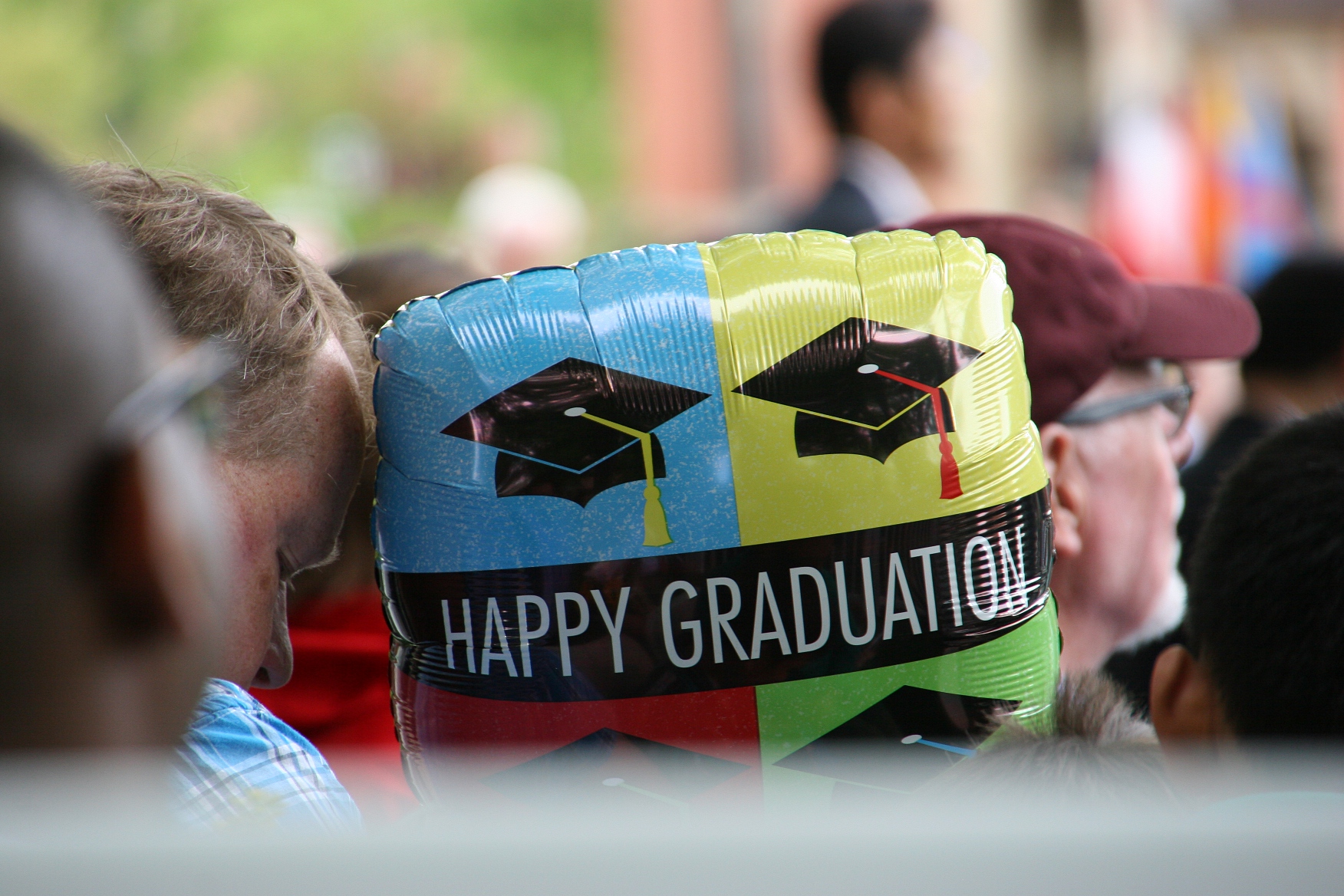
CUE “POMP AND CIRCUMSTANCE.” Wednesday, September 20, marked graduation day for me. After six months of vestibular rehab therapy at Courage Kenny Rehabilitation Institute in Faribault, I graduated.

It was a milestone day for me in managing the neurological issues I’ve faced following a *viral infection in early January. Twenty-one therapy sessions later and I’m much-improved. Not cured. Not fixed. Not all better. I’ll never be the same as I was pre-virus. But, through targeted therapy exercises, a lot of hard work and simply easing back into life, I’ve built my tolerance for everyday experiences. I can better handle sensory input. I can walk without feeling unbalanced. I can manage beyond sitting in a room with the curtains drawn to shut out light, windows closed to keep out noise.

I still have challenging days. I still struggle. But I am in a much better place than even a month ago.

And so I graduated. Not because I wanted to leave Courage Kenny and my incredibly knowledgeable, supportive and caring therapist. But Ryan and I mutually agreed that I was ready. And so he asked, on that final day together, whether he should cue “Pomp and Circumstance” on his laptop, the same laptop he used to introduce me to virtual reality roller coasters as part of my therapy. I told him we could pass on the music. And I am happy to pass on roller coaster rides.

But I did bring celebratory homemade carrot cake cupcakes with homemade cream cheese frosting. Ryan laughed when I walked through the door carrying that box of cupcakes to share with the Courage Kenny team. When I’d asked the week prior if we would have graduation cake, he said only if I brought it. So I did, along with a thank you card and homemade chocolate chip cookies for this professional who worked tirelessly to improve my health. I always felt like we were a team.

And now, like any new graduate, I hold the knowledge and tools that will help me handle daily living. I participated in class (kinda hard not to when you’re the only student). I did the assigned homework each week. I followed through by getting back into the real world, sometimes failing in my efforts, sometimes succeeding. I’ve done my best, through tears and discouragement and struggles, to rise above the challenges. And now I’ve graduated. Onward.

© Copyright 2023 Audrey Kletscher Helbling
* Even though I self-tested negative twice for COVID in January, my primary care doctor believes I had COVID, the cause of my multiple, ongoing neurological issues.


Celebrating the nearly $3 million legacy of Bob Crandall in Faribault September 25, 2023

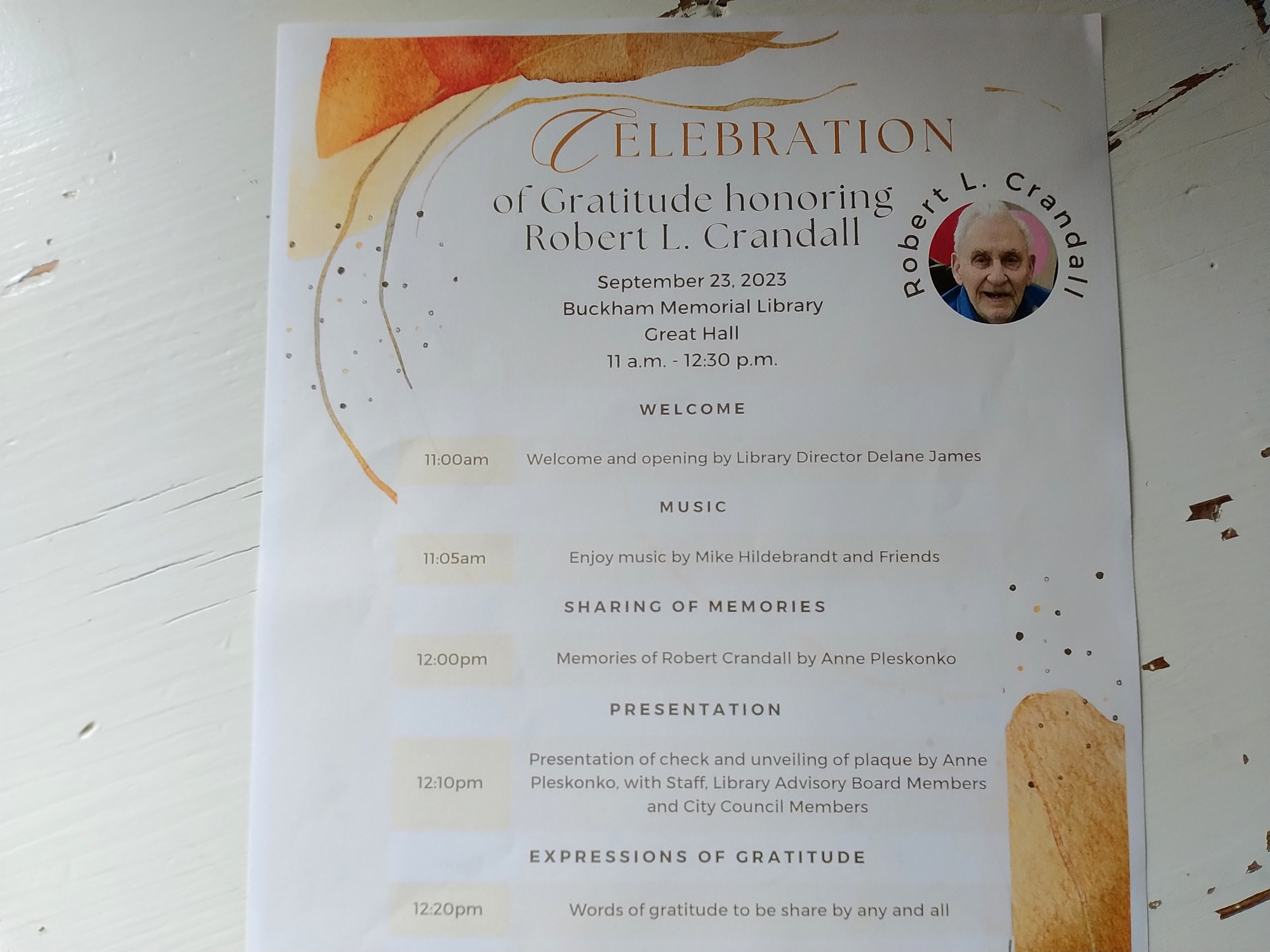
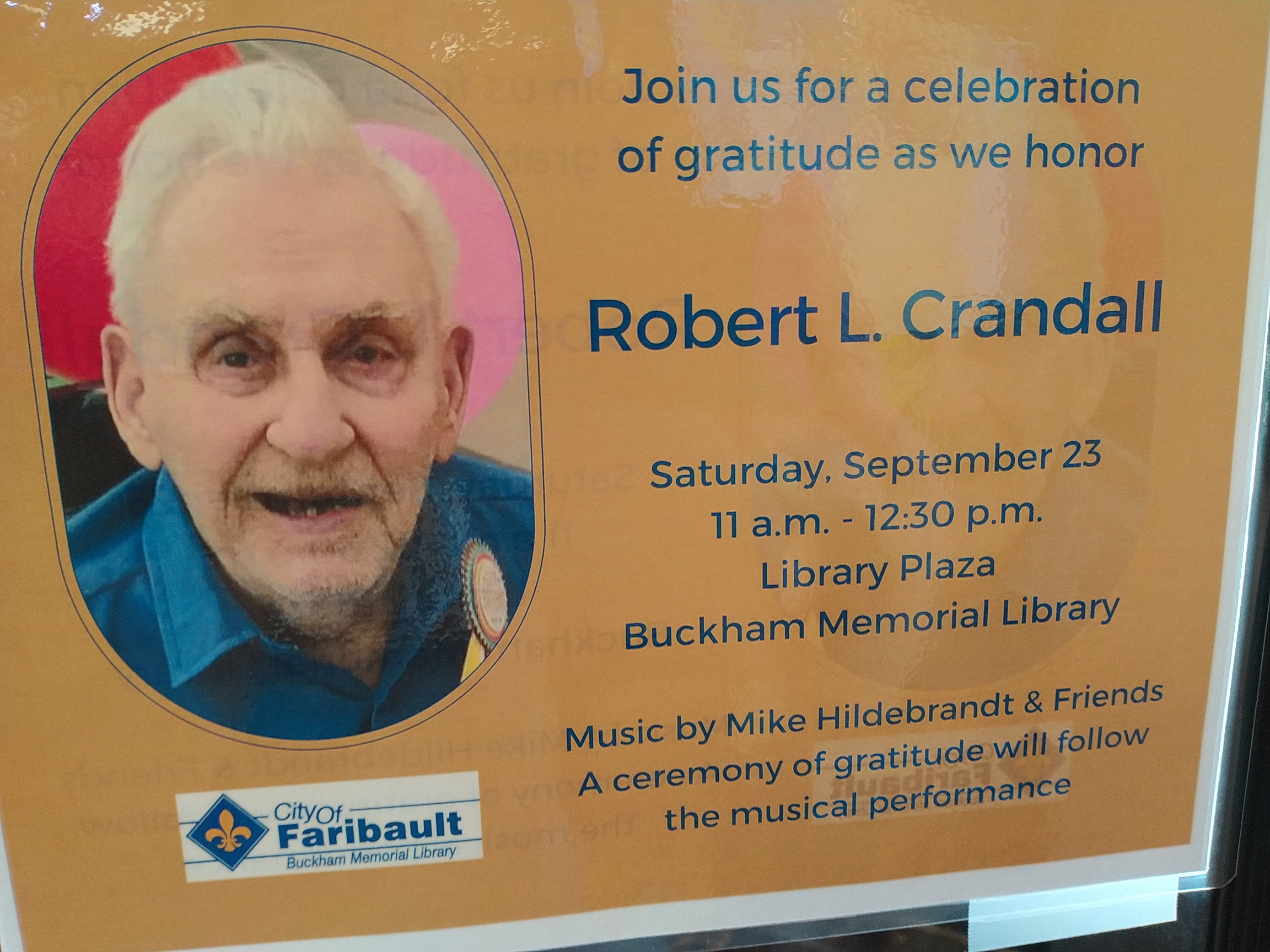
A portion of the program for the celebration honoring Robert L. Crandall. (Minnesota Prairie Roots copyrighted photo September 2023)

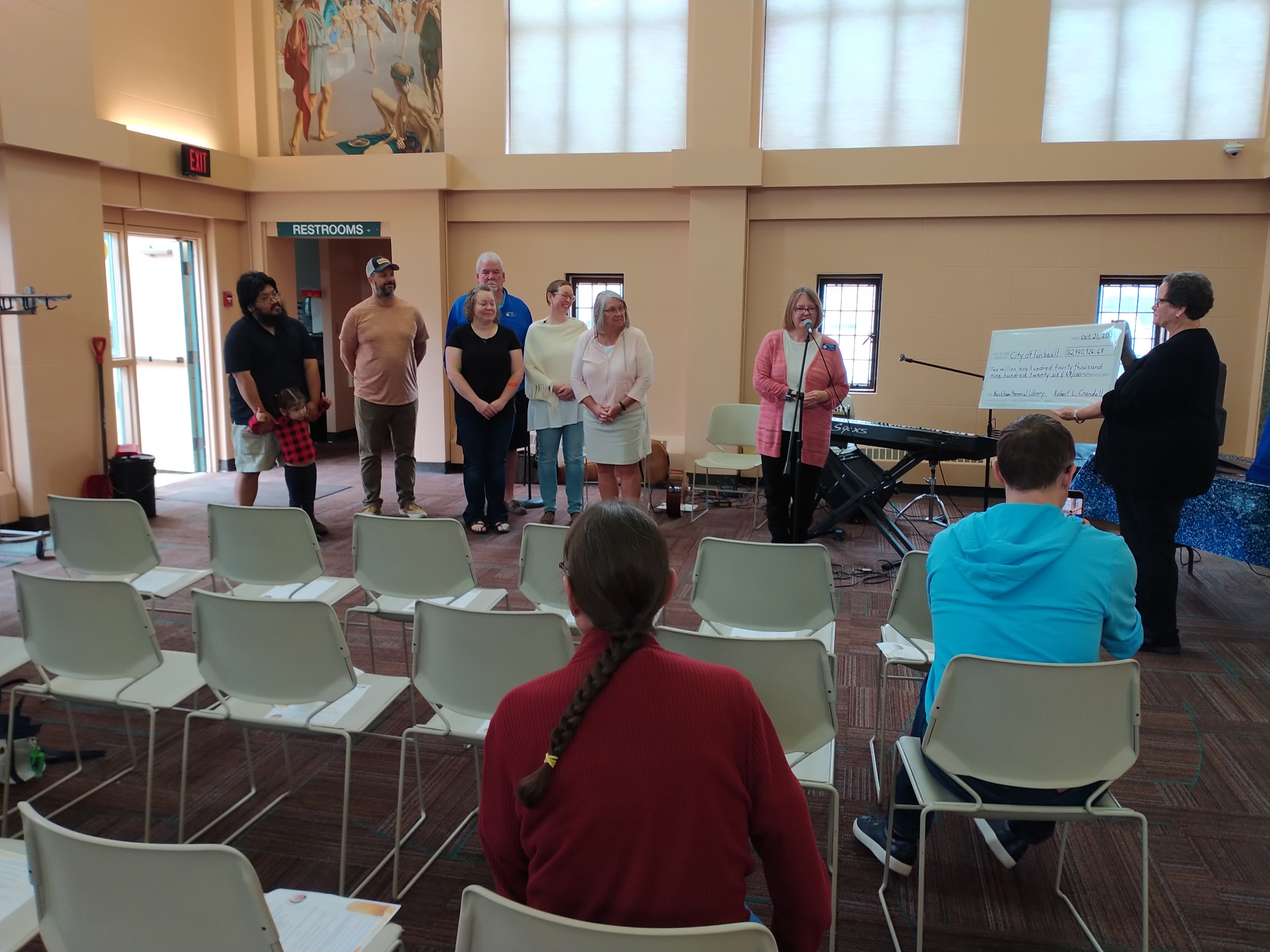
AS I SIPPED ROOT BEER through a colorful striped straw, the soda mixing with melting vanilla ice cream, I thought of the 93-year-old who enjoyed this simple summer treat. Bob, born Robert Lee Crandall, delighted in root beer floats. And on this first day of autumn, in the Great Hall of Buckham Memorial Library, an appreciative group gathered to honor this Faribault man for the legacy he left in his community.

Crandall, who died in January 2021, gifted nearly $3 million to the City of Faribault, designated specifically for the benefit of his beloved local library. That mega gift came in four installments totaling $2,940,927.

Anne Pleskonko, right, who knew Bob Crandall personally, presents a mock check for nearly $3 million to the Library Advisory Board, city officials, Library Director Delane James and others on Saturday.

What a gift. What a reason to celebrate with music (by Mike Hildebrandt, Dallas Musselmann and Doug Madow), memories and presentation of an over-sized check representing Crandall’s generosity. He will also be recognized with a permanent plaque to be installed in the library entry. Grateful words cast thereon will honor his gift and its impact on future generations.

Buckham Memorial Library, Faribault. (Minnesota Prairie Roots copyrighted file photo November 2022)

The monies, according to Library Director Delane James, will be used in three ways, in a plan created by the Library Advisory Board and approved by the Faribault City Council: A third of the original gift will become a permanent endowment that benefits both present and future library users. Another third will be used to upgrade the library’s current space. James cited technology, hearing loop system and acoustic treatments upgrades to the Great Hall, for example. And the final third of Crandall’s original gift will go toward equipping a future maker space incubator.

I’d like to think Crandall, old enough to remember the Great Depression as a young boy, would approve of this sound financial plan. He spent hours at the library, quietly reading and studying books about investing. And he kept up on the daily stock market, said Anne Pleskonko, who met Crandall six years ago in her then-job at Milestone Senior Living. She got to know the man behind the legacy—a man fond of John Wayne movies and television series like “The Andy Griffith Show” and “Columbo”.

She spoke of his sense of humor, of his walking and biking the Sakatah Singing Hills State Trail, of his fondness for bacon, molasses cookies and pickled pigs’ feet. And root beer floats.

A snippet of the words to be engraved on a permanent plaque honoring Robert Crandall. (Edited Minnesota Prairie Roots image, September 2023)

As I finished the last of my root beer float, I considered Pleskonko’s closing statement that Crandall’s nearly $3 million gift is “a gift for all for generations to come.” I understood that fully as I observed the young families surrounding me, including the sweet blonde-haired girl toddling across the carpet, leaving so many of us smiling. I’d like to think that Crandall would be smiling, too, happy to see little ones in the library he loved, the place where he gained knowledge on investing, the place he clearly held so dear.

© Copyright 2023 Audrey Kletscher Helbling
 

Celebrating a Faribault library patron’s $2.7 million legacy September 21, 2023

Posted on a door at Buckham Memorial Library, Faribault. (Minnesota Prairie Roots copyrighted photo September 2023)

IN LIFE AND IN DEATH, there are reasons to celebrate. And this Saturday, September 23, from 11 am – 12:30 pm, the City of Faribault will celebrate the legacy of Robert L. “Bob” Crandall.

The 93-year-old Faribault man, who died in January 2021, left $2.7 million to the city, specifying that his gift be used for the benefit of Buckham Memorial Library. Saturday’s gathering in the library’s Great Hall marks a public celebration of gratitude honoring Crandall and his gift.

The celebration has been moved inside to the Great Hall due to an uncompleted renovation project on the Library Plaza steps. (Minnesota Prairie Roots copyrighted file photo 2022)

He held a deep love for his local public library. According to his obituary, Crandall “spent many hours at the Buckham Memorial Library studying and reading books on investing.” He also watched CNBC to stay updated on the stock market. I can only assume that his focused reading and television viewing led to sound and knowledgeable investment strategies. As a result, my community, my library, is benefiting from this avid reader’s generosity.

I expect Saturday’s event, which begins with music by Mike Hildebrandt & Friends followed by a ceremony of gratitude, will reveal how some of Crandall’s legacy money was spent. The Faribault City Council, Library Advisory Board and staff tasked themselves with working together to ensure his gift would “make a positive and lasting impact for the citizens of Faribault.”

Inside a section of Buckham Memorial Library. (Minnesota Prairie Roots copyrighted file photo 2018)

Aside from his interest in investing, Crandall liked John Wayne movies and stamp collecting. And bacon. He also hiked, biked, played cards and vacationed in Mexico. Plus, he spoke fluent Spanish. I bet this nonagenarian shared many an interesting story about his travels, his life experiences, but in a humble and gracious way. He moved to my community decades ago to work at the then Faribault Regional Center.

The obituary for this Anoka-born man lists no surviving family, but many friends at his final home, Milestone Senior Living in Faribault. But he certainly leaves many other friends, people like me who appreciate his multi-million dollar gift to a place I love, too, Buckham Memorial Library.

Story updated at 9 pm Thursday, September 21, to reflect a new location for the celebration inside the library Great Hall rather than outdoors on the front plaza.

© Copyright 2023 Audrey Kletscher Helbling
 

Invisible, but, oh, so real September 20, 2023

Early on in my diagnoses, my brain felt like this, scrambled. Art by Bill Nagel, previously exhibited at the Paradise Center for the Arts, Faribault. (Minnesota Prairie Roots copyrighted photo March 2023)

FOR ME, THE FEELING of imbalance started shortly after an early January virus, likely *COVID-19. At the time I didn’t make the connection between the two. But eventually medical professionals did. That led to multiple diagnoses of vestibular neuritis, Meniere’s Disease and peripheral sensory neuropathy. Yes, it’s been a lot to handle. But I’m in a much better place health-wise than nine months ago thanks to professional intervention and a whole lot of hard work.

The thing about having a vestibular disorder is that it’s unseen. You can’t see inside my brain to view the damage. And, for the most part, you can’t see the effects of a malfunctioning vestibular system, unless you’re my husband or eldest daughter who can. Randy and Amber can look at my face, see my eyes squinting, my look of fatigue, tell-tale signs I’m not doing well. And if I’m closing my eyes or holding my hands on the sides of my face, I’m blocking my peripheral vision, thus reducing visual input.

All of that aside, I’ve at least reclaimed my balance. Most days. Brief bouts of vertigo set me back mid-summer. Via vestibular rehab therapy to retrain my brain, I’ve learned to manage and live with my many ongoing symptoms and mostly get on with my life. Maybe not as I did previously, but with a renewed appreciation for something as simple as walking with confidence, as watching TV, as shopping for groceries.

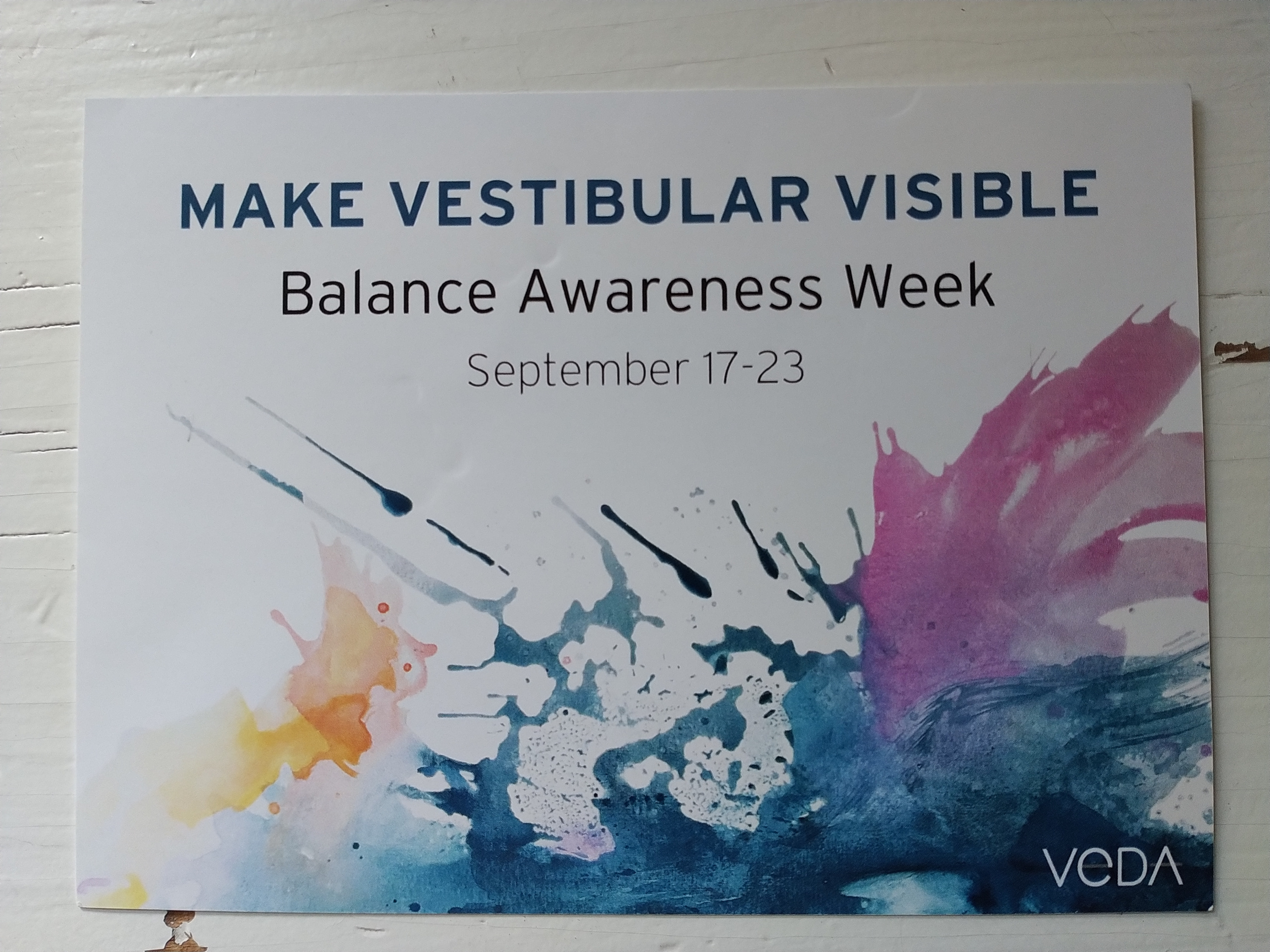
A promo postcard from VeDa. The painting, “Uncharted Waters,” is by vestibular patient Nicolle Cure.

FOCUS ON BALANCE

Today, though, I want to focus on balance, for two reasons. Imbalance was the first issue I overcame. And secondly, September 17-23 marks Balance Awareness Week, started in 1997 by the Vestibular Disorders Association. That national nonprofit is “a lifeline of support to anyone affected by vestibular (inner-ear and brain balance) disorders.” VeDA has proven an invaluable resource for me in learning about my vestibular-based diagnoses.

Knowledge is power. Just ask my physical therapist at Courage Kenny. Ryan answered many questions during my vestibular rehab therapy sessions, especially early on when I was just learning about my health issues. He always replied thoughtfully, helping me to understand what was happening in my brain and how we would work together through targeted exercises to manage my symptoms.

I’ve come a long way from the days of standing in place turning my head back and forth to the beat of a metronome. Today I’m power walking 15 minutes in the morning, 15 minutes in the evening with Randy. Even I’m amazed that I can do this. Not all that long ago, I couldn’t walk a block, often needing to hold onto Randy.

Fiona the Flamingo is VeDA’s Balance Awareness Week logo/mascot.

EVEN THOUGH MY DISORDER IS INVISIBLE, I STILL NEED TO BE SEEN, ENCOURAGED…

There is hope for anyone dealing with a vestibular disorder. Many seniors (and, yes, I’m a “senior”) struggle with balance. So do those who’ve suffered traumatic brain injuries like concussions. That includes my sister-in-law Rosie, my go-to support. Because she understands. And encourages. She realizes the importance of physical therapy in recovery.

In sharing a bit of my story with you, I am aiming to increase awareness. Make Vestibular Visible themes Balance Awareness Week. A promo from VeDA reads: Balance Awareness Week is our time to shout from the rooftops: “I have a vestibular disorder and this is my story.”

This is my story. One of challenges, of professional intervention, of hard work, of acceptance, of perseverance, of relying on others, of patience, of strength, of gratitude, of tears, of resilience, of focusing on what I can do (and not what I can’t). It is also a story of recognizing that no matter what we face in life—whether visible or invisible—we all need to be seen, to be uplifted, to feel cared for and loved.

#

© Copyright 2023 Audrey Kletscher Helbling

*I self-tested negative twice for COVID, but those tests (if done incorrectly and for other reasons) can be wrong, my primary doctor told me. He guesses I had COVID in January, and I agree based on my symptoms.


The power of hair among Native Peoples September 19, 2023

“My Powerful Hair,” published in 2023 by Abrams Books for Young Readers. (Book cover source: Abrams Books)

SOME OF THE MOST MEANINGFUL, enlightening and powerful books I’ve read, I’ve found in the children’s picture book section of my local public library. That includes My Powerful Hair written by Carole Lindstrom and illustrated by Steph Littlebird.

I happened upon this book while searching for recently-published astronaut and geography books for my 4-year-old grandson. I never did find those sought-after titles. Not that it mattered. What I discovered instead were three must-read books: My Powerful Hair, Boycott Blues—How Rosa Parks Inspired a Nation and We Are Better Together.

Parks is certainly familiar to me as the Black seamstress who in 1955 refused to give up her seat to a white man on a city bus in Montgomery, Alabama. That sparked a bus boycott and the Civil Rights Movement. Likewise, working together to effect change, to improve our world, to help one another is a familiar theme.

“The Native Man, His Eagle & His Chanupa,” an oil painting by Dana Hanson and part of her 2018 “Healing the Land” exhibit at the Owatonna Arts Center. (Minnesota Prairie Roots copyrighted file photo 2018, used for illustration only. Art copyrighted by Dana Hanson.)

THE IMPORTANCE OF HAIR REVEALED

It is the story on hair, though, which proved a particularly teachable read. My Powerful Hair focuses on Native Peoples’ hair and its importance in their culture, their history, their lives. Through the writing of New York Times bestselling and award-winning author Lindstrom, who is Anishinaabe/Metis (and an enrolled citizen of the Turtle Mountain Band of Ojibwe), and Indigenous artist Littlebird of Oregon’s Confederated Tribes of Grand Ronde, I learned the symbolism and power of hair in Native American culture. Admittedly, this is something I should have known, having grown up on the southwestern Minnesota prairie between the Upper Sioux and Lower Sioux Indian Reservations (today termed “communities”). I thought I was informed. But I wasn’t, not about hair.

Told from the perspective of a young Native girl, My Powerful Hair explains the reasons Native Peoples grow their hair long. And keep it long. Hair holds stories, memories, strength, sorrow, connections to each other and to Mother Earth. And more. Page after page, the narrator shares events in her life that weave into her hair. When Nimishoomis (her grandfather) taught her to fish, her hair reached her ears. When her cousins taught her to make moccasins, her hair flowed past her shoulders. In the sharing of these moments, I began to understand the power of hair in Native American culture.

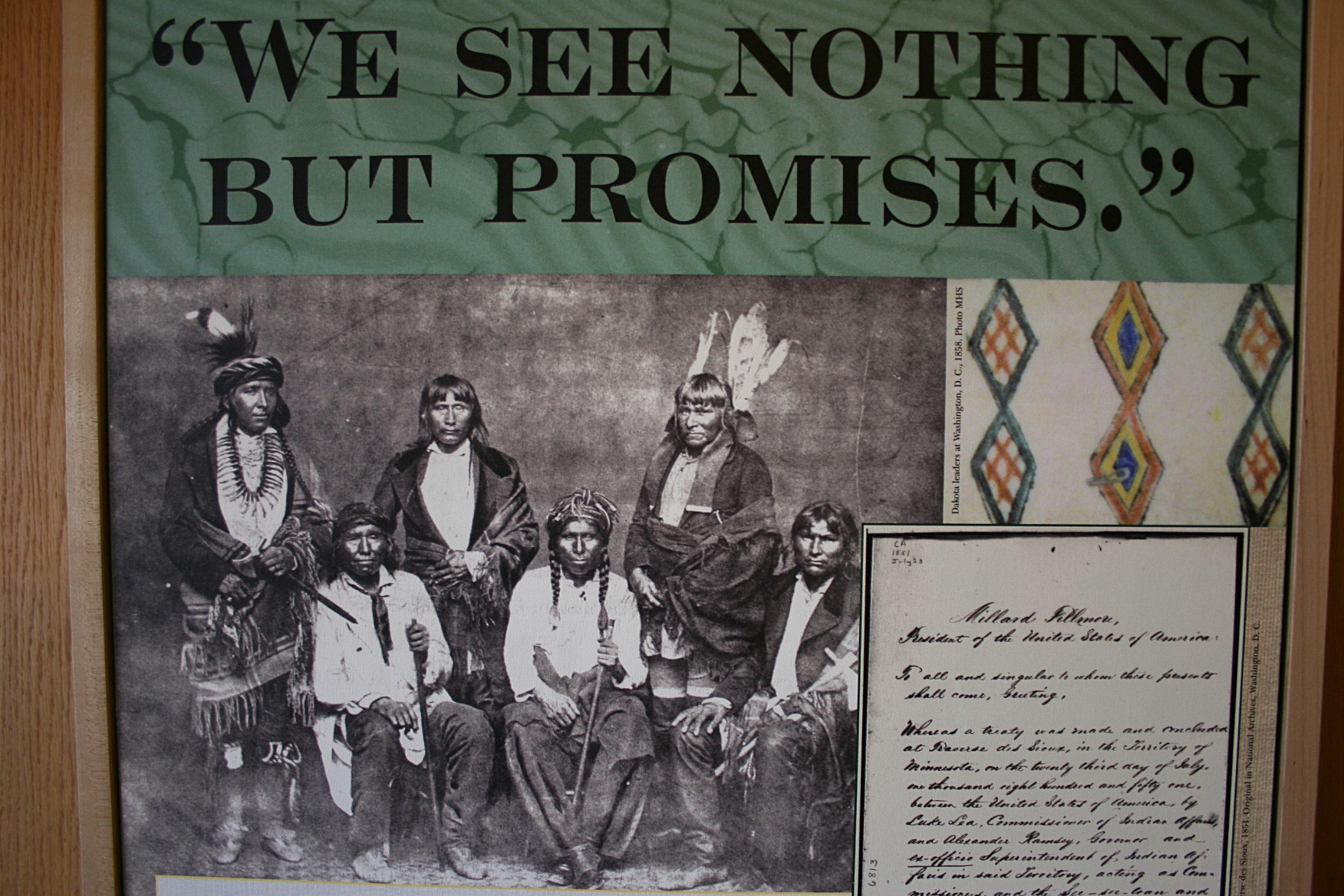
A photo panel at the Traverse des Sioux Treaty Center in St. Peter shows Dakota leaders photographed in Washington D.C. in 1858. The photo is from the Minnesota Historical Society and is used here for illustration only.

FORCED HAIRCUTS

I also understood fully, for the first time, the trauma inflicted upon Indigenous individuals forced long ago by white people to cut their hair. The writer and illustrator don’t hold back. In the first few pages, a young Nokomis (grandmother) is in tears as the hands of a Catholic nun grasp, then cut, her braids. It’s an emotionally impactful visual.

But this was reality at Indian boarding schools, within faith communities and elsewhere back in the day, in a time period when efforts focused on erasing Indigenous culture, on conforming Native Peoples to European ways. It was wrong.

Displayed at Bridge Square during Northfield’s Earth Day celebration in 2022. (Minnesota Prairie Roots copyrighted file photo April 2022, used for illustration only)

A TERRIBLE INJUSTICE”

A blogger friend from the central Minnesota lakes region recently shared a bit of her family’s experience per my request. Of unverified (records were often destroyed) Cherokee ancestry, Rose speaks of her mother’s trauma after being sent to a Catholic girls’ school in Crookston. “Mom didn’t tell us much about her experience there,” Rose says, “only that they made her cut her long black hair. My mom never cut her hair again for the rest of her life. She saw the forced haircut as a terrible injustice.” Injustice seems a fitting word.

In an author’s note, Carole Lindstrom shares the same trauma, documented, she writes, in a photo of her grandmother and two great aunts with their black hair shorn above their ears. They were forced into an Indian boarding school in the early 1900s.

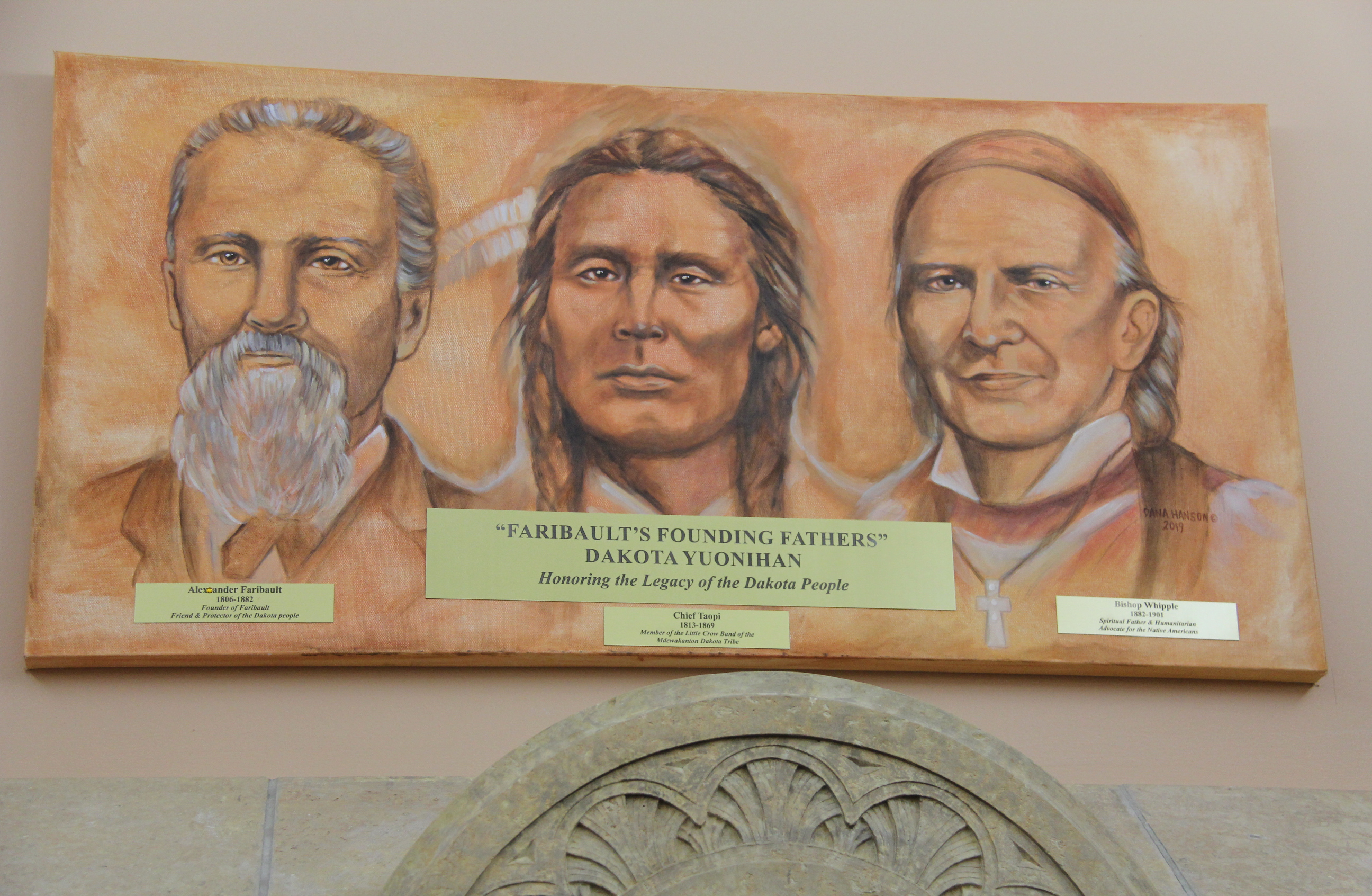
“Honoring the Legacy of the Dakota People” focuses this artwork by Dana Hanson. Chief Taopi centers the painting with Alexander Faribault to the left and Bishop Henry Whipple on the right. The word “Yuonihan” means honor or respect. This art hangs inside Buckham Memorial Library. (Minnesota Prairie Roots copyrighted file photo November 2022. Art copyrighted by Dana Hanson.)

POWER IN STORIES, IN HERITAGE, IN RESPECT

Rose is thankful for books like My Powerful Hair. “I am glad that stories like this are being told,” she says. “Much First Nations history nearly disappeared. And many First Nations keep their ceremonies and other information ‘secret’ so it won’t be distorted or misused by people who don’t understand, or who seek to harm them.” Based on history, that seems warranted.

This Minnesota woman has one more reason to feel grateful for children’s picture books by Indigenous Peoples. Her grandchildren are of Ojibwe heritage; their other grandmother lives on the White Earth Nation in northwestern Minnesota. “My hopes for my grandchildren are that they learn all they can about their Ojibwe ancestors and customs and values,” Rose says. “I hope they can choose what lessons they want to carry forward in their own life. I hope they are fantastic examples of how people from different backgrounds can get along and respect and love one another.”

And so I learned, not only from Rose, but from reading My Powerful Hair. Stories woven into our hair matter. For they are powerful.

© Copyright 2023 Audrey Kletscher Helbling


It’s been a roller coaster ride September 14, 2023

“The Legend,” one of a few remaining wooden roller coasters, located at Arnolds Park Amusement Park in the lakes region of northwestern Iowa. Built in 1930, it is the 13th oldest wooden roller coaster in the world. (Photo courtesy of Arnolds Park Amusement Park Marketing)

SOME 2 ½ MONTHS AGO, I boarded a roller coaster for the first time since I was a teenager screaming my lungs out while riding “The Legend,” a wooden roller coaster at Arnolds Park Amusement Park in Arnolds Park, Iowa. It’s not that I decided this would be a fun activity to try again in my late sixties. Rather, the choice was made for me, as part of my vestibular rehab therapy.

I warned my physical therapist that I don’t like amusement rides. But my comment didn’t deter Ryan. He determined that riding a virtual reality roller coaster on a June morning might be exactly what my brain needed to retrain itself. Since January, I’ve struggled with neurological-based issues resulting from a viral infection, suspected to be COVID, even though I twice self-tested negative for the virus. In early April, I started physical therapy and have been working hard ever since to manage my many debilitating symptoms.

Fast forward to today. I am in a much better place, even while on a VR roller coaster, a tool I’m using to build my visual, auditory and spatial tolerance. Early on I had doubts about my therapist’s plan. Initially, I couldn’t tolerate the VR roller coaster for long (less than a minute) before symptoms flared. After minimal exposure, my head hurt, my eyes hurt and I felt utterly exhausted. When I experienced a health setback mid-summer with vertigo returning, Ryan abandoned the amusement ride therapy for therapies less taxing on my brain.

ROCKS, RABBITS & A ROLLER COASTER

Slowly, surely, I started feeling better and Ryan decided it was time to pull out the VR headset again for another go on the roller coaster. I did not enthusiastically hop on board, only reluctantly agreeing to give it a try. I lasted 25 seconds on a roller coaster ride where boulders tumbled off rocky mountains toward me. Rabbits loping under the track proved the only redeeming feature. I hold a fondness for rabbits, my high school mascot being a White Rabbit.

That was two weeks ago. The following week I did better, albeit on a less visually-stimulating ride, this one under the sea in a darker environment. Still, I could manage only bursts of riding before needing to pause.

NOT ONE, NOT TWO, BUT THREE ROLLER COASTERS

Five days later I was back at therapy, knowing full well that I would again be riding a roller coaster. Make that plural. Three roller coasters. I started therapy Wednesday morning with the least stimulating under-the-sea ride. And just to make that more challenging, Ryan asked me to stand, rather than sit. He allowed me to place my hands on the back of a chair to ground myself. I successfully finished the ride, then took a break before re-boarding, this time without touching the chair. Success again. Time to up the challenge.

Ryan pulled out the rabbit-loping, boulders-falling themed ride. This time I completed the ride, which was visually much more exciting with dynamite and fire and a whole lot more coming at me. Once again, I tolerated the roller coaster twice while standing and without needing to stop.

I felt my confidence grow as each roller coaster ride became more sensory challenging. I could do this. But when the next ride began with a garish parrot getting in my face, I questioned whether I could manage a tropical-themed roller coaster with worn vivid red and yellow rails. (Was it even safe to ride?) It was a lot—the bold hues, the squawking flapping seagulls, the palm trees, the steep climbs, the height, the sharp turns. But I made it. Twice on that roller coaster curving toward the ocean.

DOING GREAT, BUT I HAVE MY LIMITS

My brain was adjusting, learning, retraining itself to take in more visual, auditory and spatial input. Ryan praised my success, both of us somewhat surprised by how well I’d tolerated those roller coasters Wednesday morning.

But before I left therapy, I wanted Ryan to know one thing. If he planned a field trip to nearby Valley Fair Amusement Park next Wednesday for a ride on a real roller coaster, I wouldn’t be showing up for therapy.

© Copyright 2023 Audrey Kletscher Helbling
 

Up close on the Straight River during a drought September 13, 2023

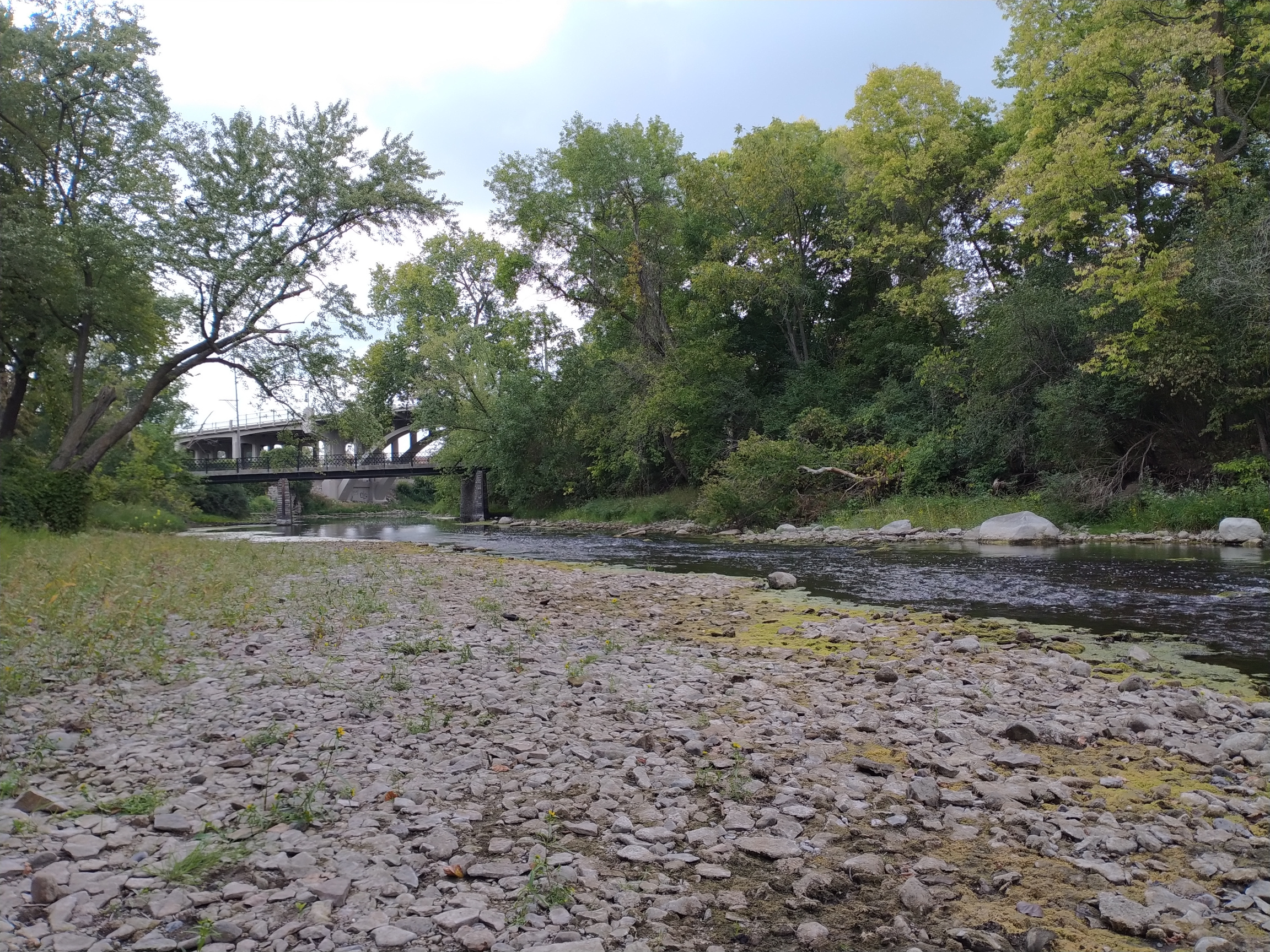
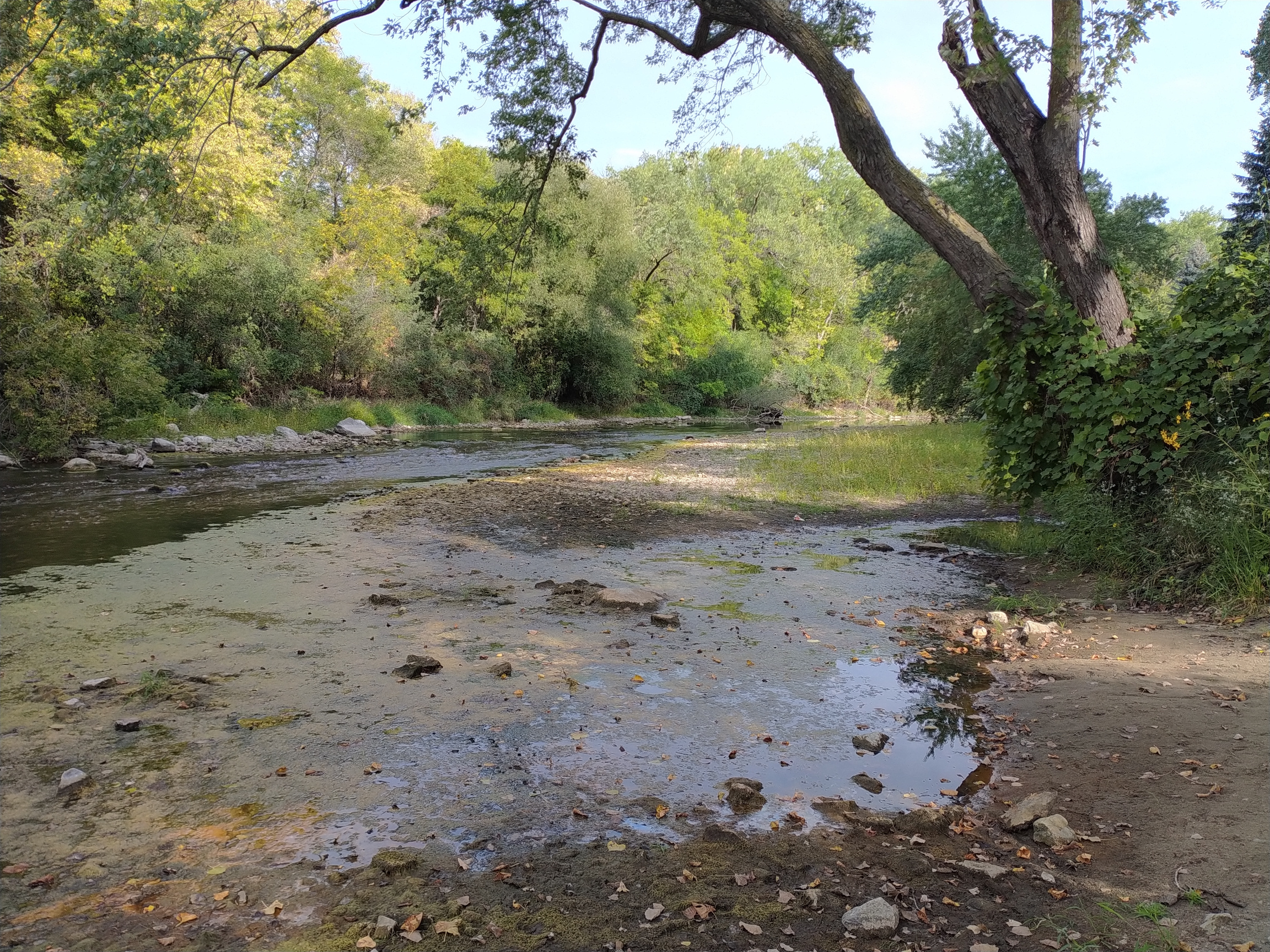
The river bottom revealed, weeds and flowers growing where once water flowed in the Straight River at Faribault’s Teepee Tonka Park. (Minnesota Prairie Roots copyrighted photo September 2023)

CAUTIOUSLY I SIDLED down the silty river bank, hand clasping Randy’s to steady myself. “This isn’t one of the smartest things we’ve done recently,” I said. I held no desire to slip on the unstable ground, to tumble and break a bone. I’ve twice done that. The doctor who recently diagnosed me with osteopenia likely would remind me of my bone density scan results and of my age, which is much closer to 70 than sixty.

But risk outweighed fear. I wanted to reach the dry river bottom, to stand upon the rocky bed, soles touching a place where water once flowed strong and steady.

In this summer of abnormally high temps and little rainfall, the water level in the Straight River, like so many other waterways in Minnesota, is low. The Minnesota Department of Natural Resources, which monitors river depths, terms the level of the Straight near Faribault as “scrapable.” Defined, that’s “so low that paddlers may have to get out of their watercraft to avoid rocks.” At the Straight River West Bridge Street location in Owatonna, the river level measures only slightly better at “low.” The Cannon River, into which the Straight flows, rates as “scrapable” in Morristown, near Faribault, in Northfield and in Welch.

The effects of the ongoing statewide drought are evident. My county of Rice, like 39 percent of Minnesota, is in a severe drought. And much of southeastern Minnesota, including more than half of Steele County to the south through which the Straight River twists and turns, is in an extreme drought.

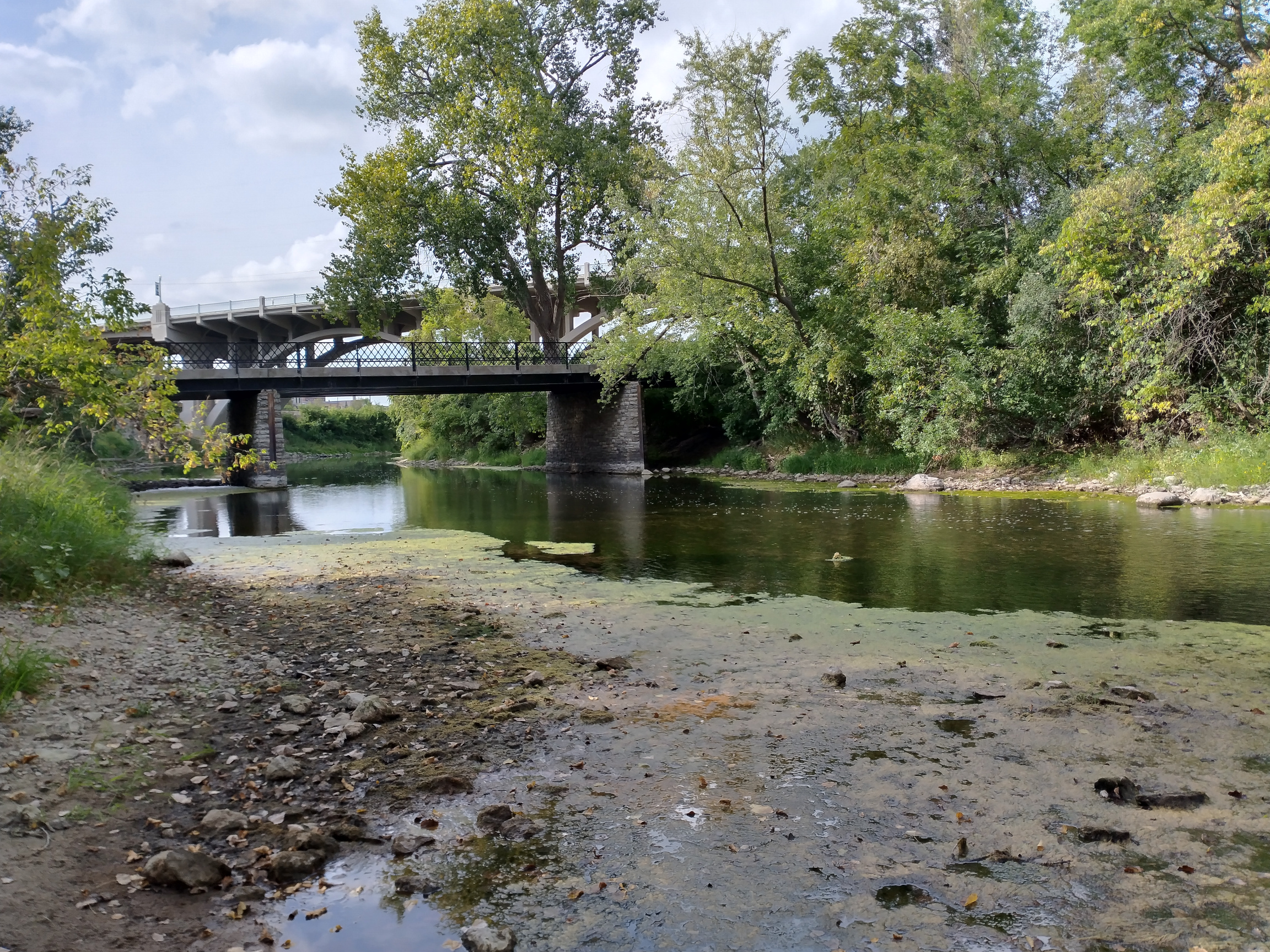
Stagnant water ponds near the bridge leading into Teepee Tonka Park with the viaduct in the distance. (Minnesota Prairie Roots copyrighted photo September 2023)

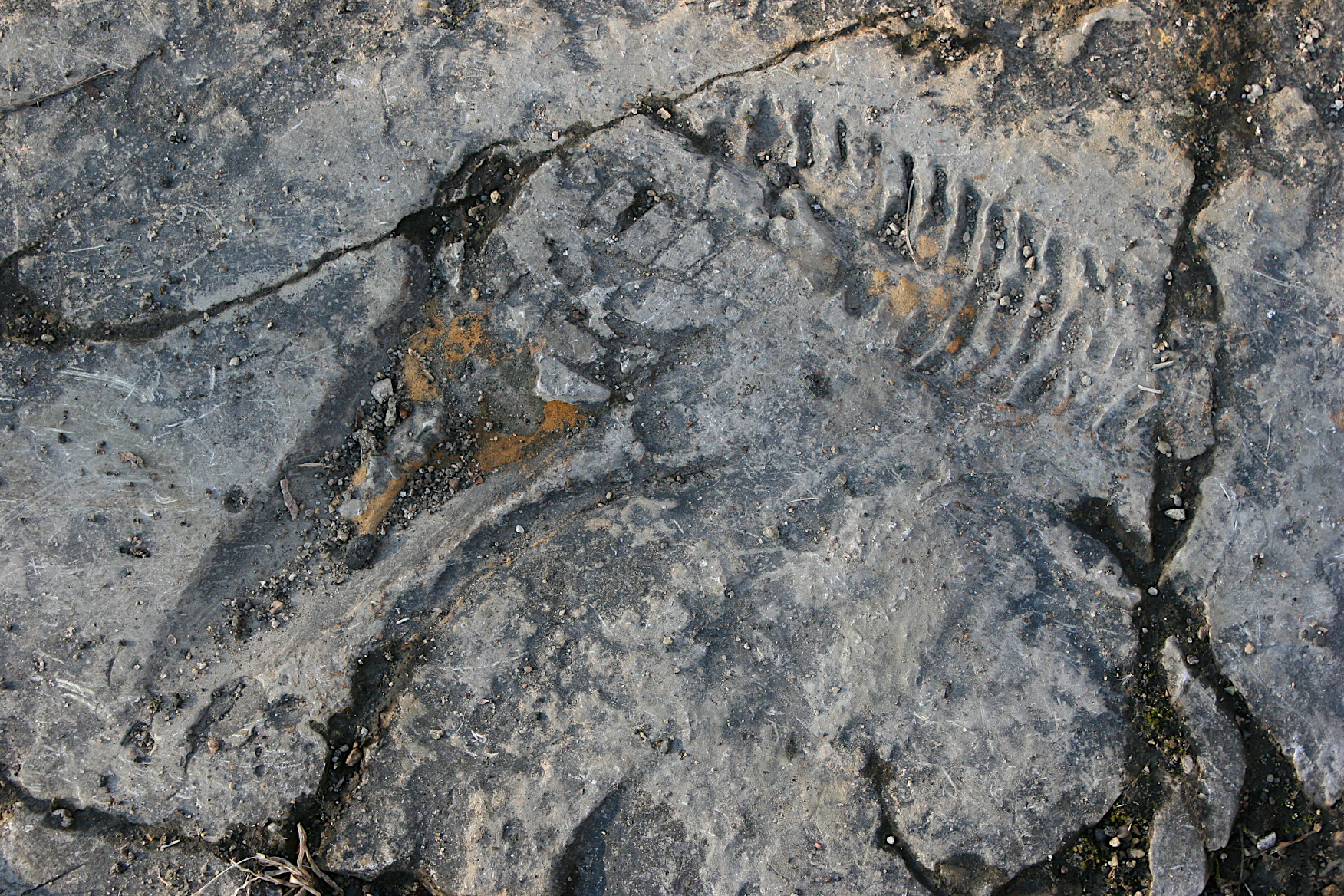
It’s no wonder that on this afternoon in mid-September, I can walk upon a rocky river bottom where water once flowed, even flooded this spring into Teepee Tonka Park near Faribault’s historic viaduct. Earlier this summer, a Faribault teen discovered a cephalopod fossil in an area of a local river typically under water. He refused to identify the specific waterway, but I guessed, perhaps incorrectly, that it was the Straight.

A fossil along a trail near the Straight River overlook in Faribault’s River Bend Nature Center, which connects to Teepee Tonka Park. (Minnesota Prairie Roots copyrighted file photo)

That fossil discovery was also part of my reason for descending the river bank near the east-side Faribault park entrance. I had great uncles who were rock hounds, inspiring in me a childhood fascination with agates and shells and interesting finds revealed only at ground level. That’s carried through into adulthood.

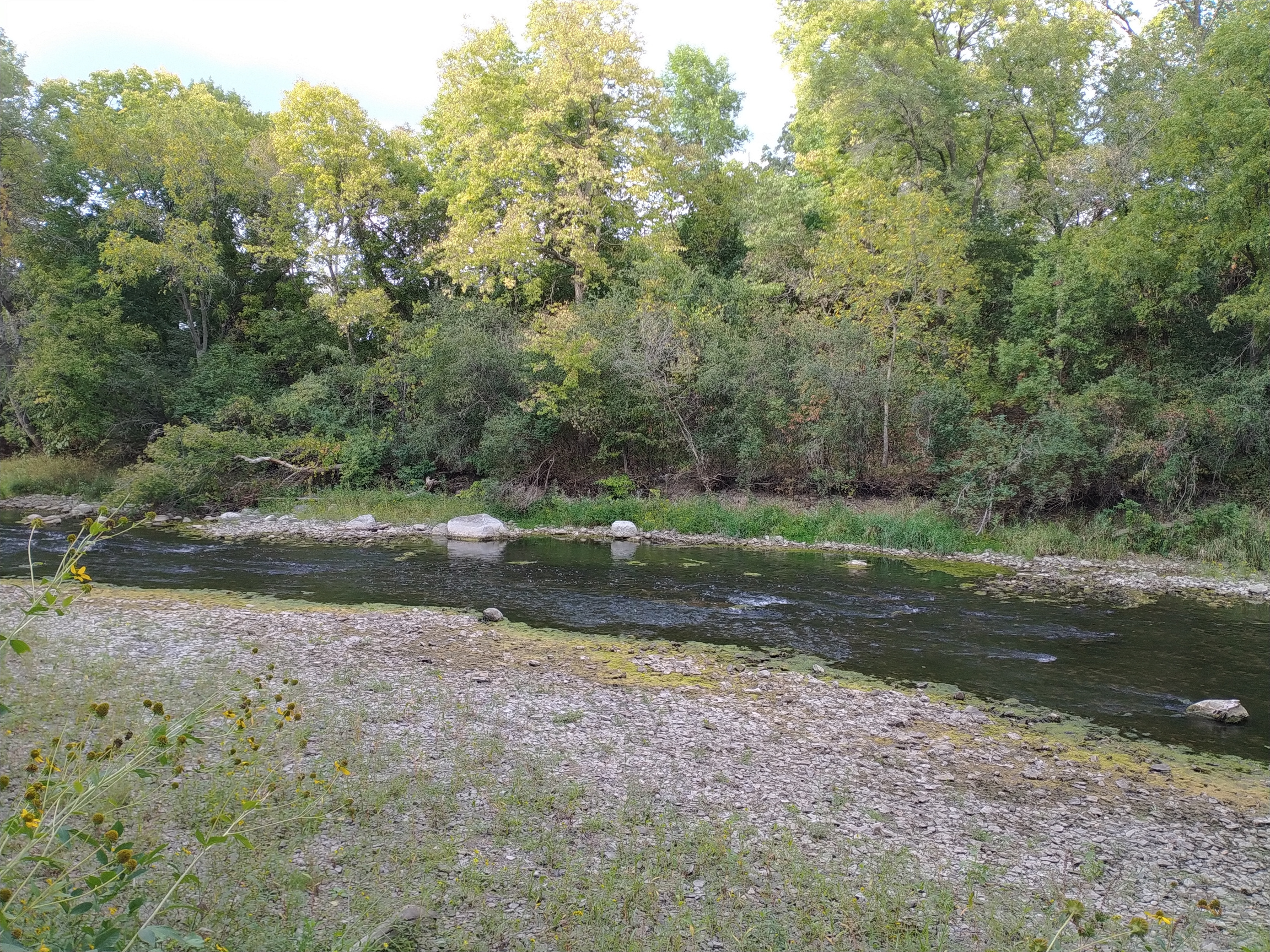
Wildflowers bend toward the narrowed river of exposed river bottom and rocks. (Minnesota Prairie Roots copyrighted photo September 2023)

But on this day I found nothing of interest, only weeds and wildflowers sprouting between stones aside the drought-narrowed river. Correction: I spotted a bra atop a rock, just out of reach in the river, and wondered about the story behind that.

Outdoor enthusiasts intending to paddle the Straight or Cannon rivers now would assuredly have their own disappointing stories to tell about abandoned plans. I observed ankle deep water in parts of the Straight, making water recreation impossible, any recreational outings scrapable.

Around this bend in the river, to the right, the water deepens a bit and flows freely. (Minnesota Prairie Roots copyrighted photo September 2023)

Only a pair of hunting dogs let loose by their owner in Teepee Tonka Park enjoyed the low river level on the day I eased down the river bank. They scrambled down the bank, surefooted, racing along river’s edge, shallow water splashing. Then back up they dashed, sprinting along the grassy bank before returning to the river. I delighted in their antics while simultaneously concerned they might come near me. I never quite trust strange dogs not under the control of their owner. A large muddy-pawed dog once jumped on me while I walked at a city park.

Mud. We’ve seen little of that in most parts of Minnesota this summer. There are exceptions, of course, including flash floods in Duluth on Monday, not something any of us want. Light rain fell in Faribault early on this week, enough to dampen the pavement. But I yearn to hear the steady thrum of rain upon the earth. Rain that will ease this drought, replenish our rivers, revive our waterways, restore the land.

© Copyright 2023 Audrey Kletscher Helbling
NOTE: DNR info referenced in this story is from September 5 on drought conditions and September 12 on river levels.


Connecting via “human books” in Owatonna September 12, 2023

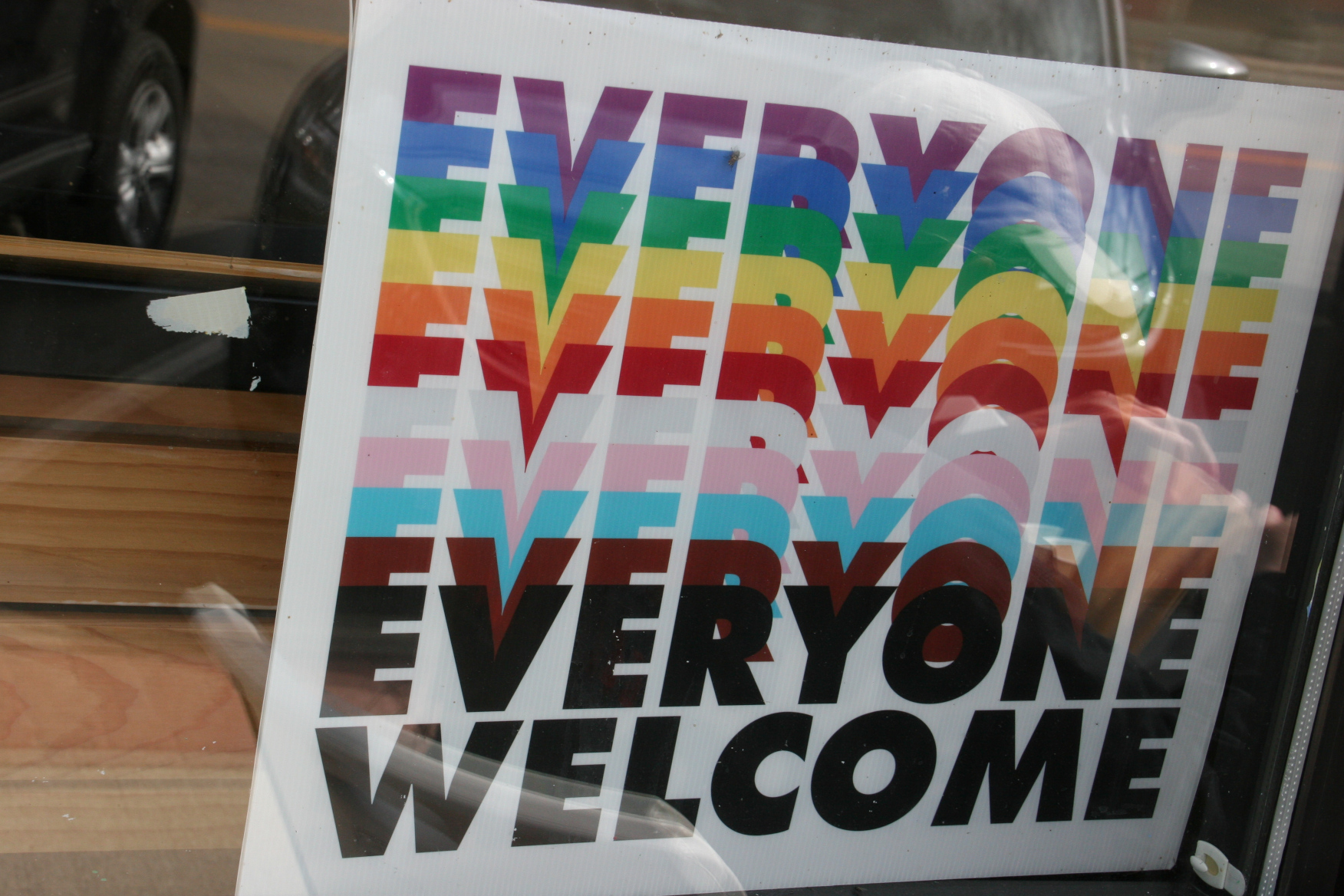
Photographed in the front window of a downtown Faribault business. (Minnesota Prairie Roots copyrighted file photo October 2022)

LISTENING TO AN AREA RADIO STATION Tuesday morning, I learned about a project which seems pure genius. It’s the Human Library®. Developed 23 years ago in Copenhagen and now spread internationally, the library “hosts personal conversations designed to challenge stigma and stereotypes.” And it’s coming to Owatonna this week.

From 4-7 pm Thursday, September 14, the Owatonna Human Rights Commission is hosting a Human Library® in the Gainey room at the public library. The goal is “to foster conversations that can challenge stereotypes and prejudices.”

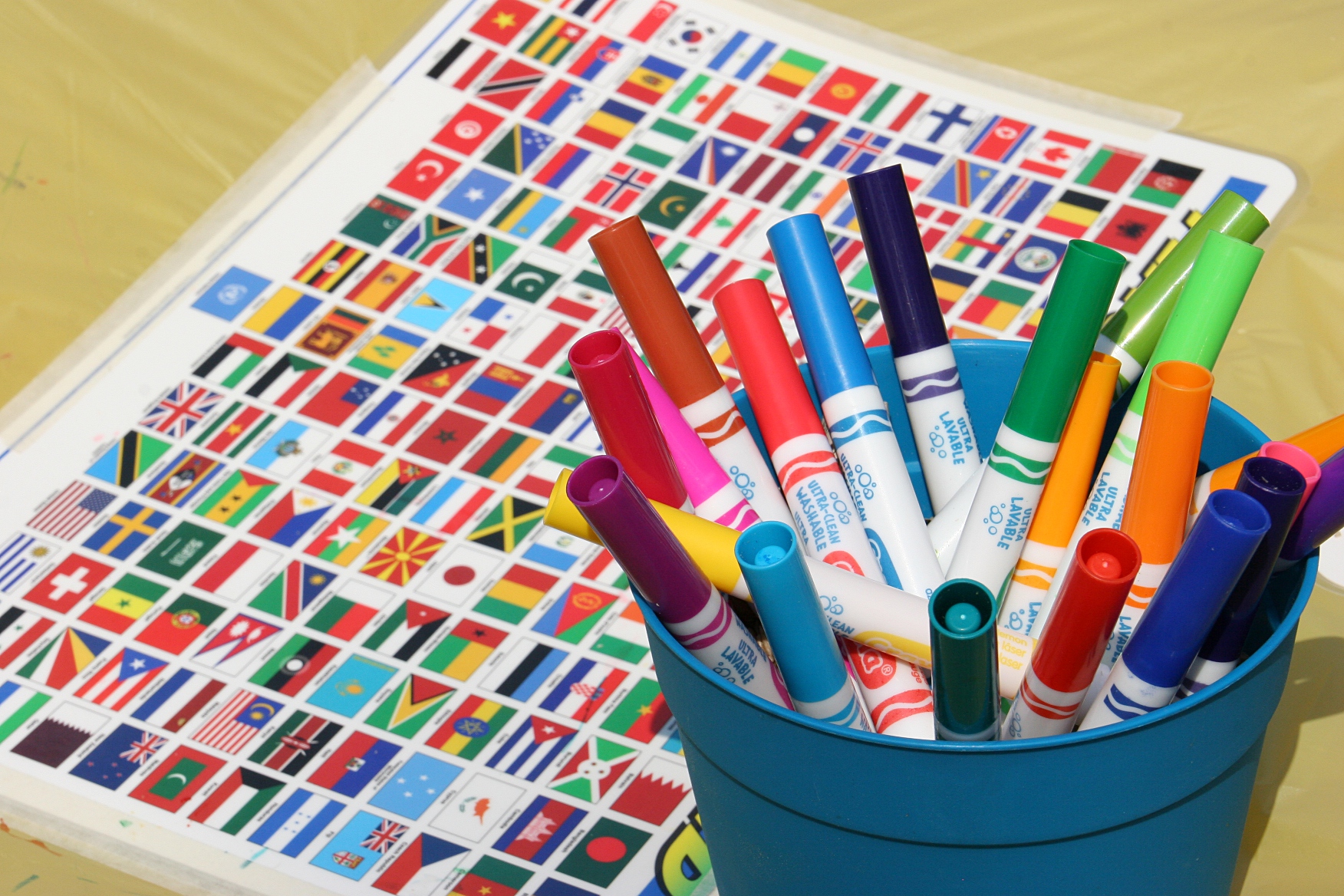
Kids of varied ethnicities and skin tones gather as one to break a pinata at a past International Festival Faribault. (Minnesota Prairie Roots copyrighted, award-winning photo, 2012)

I love this concept of one-on-one conversations among community members who might not otherwise connect. If we’re honest, most of us tend to stick with others who are most like us. Those in our circles. But this, oh, this opens the doors to meeting new people, to understanding, to friendships and much more. And we can only be the better for it by talking with one another, learning, growing our knowledge and compassion.

The idea is simple. Check out a “human book” for 15 minutes by meeting with community members who’ve agreed to participate in the project. Ask questions. Share. Simply chat, get to know one another. Break down barriers. Find common ground. Embrace differences. “Read” as many “human books” as time and availability allow.

We are a diverse country, as represented at a past International Festival in Faribault. (Minnesota Prairie Roots copyrighted file photo 2015)

The list of 20 participating individuals in Owatonna is lengthy and diverse, exactly as intended: Somali Americans, African Americans, senior citizens, business owners, religious leaders, Hispanic, LGBTQ+, educators, veterans, handicapped individuals, law enforcement officers, nonprofit leaders, recovered addicts and healthcare workers.

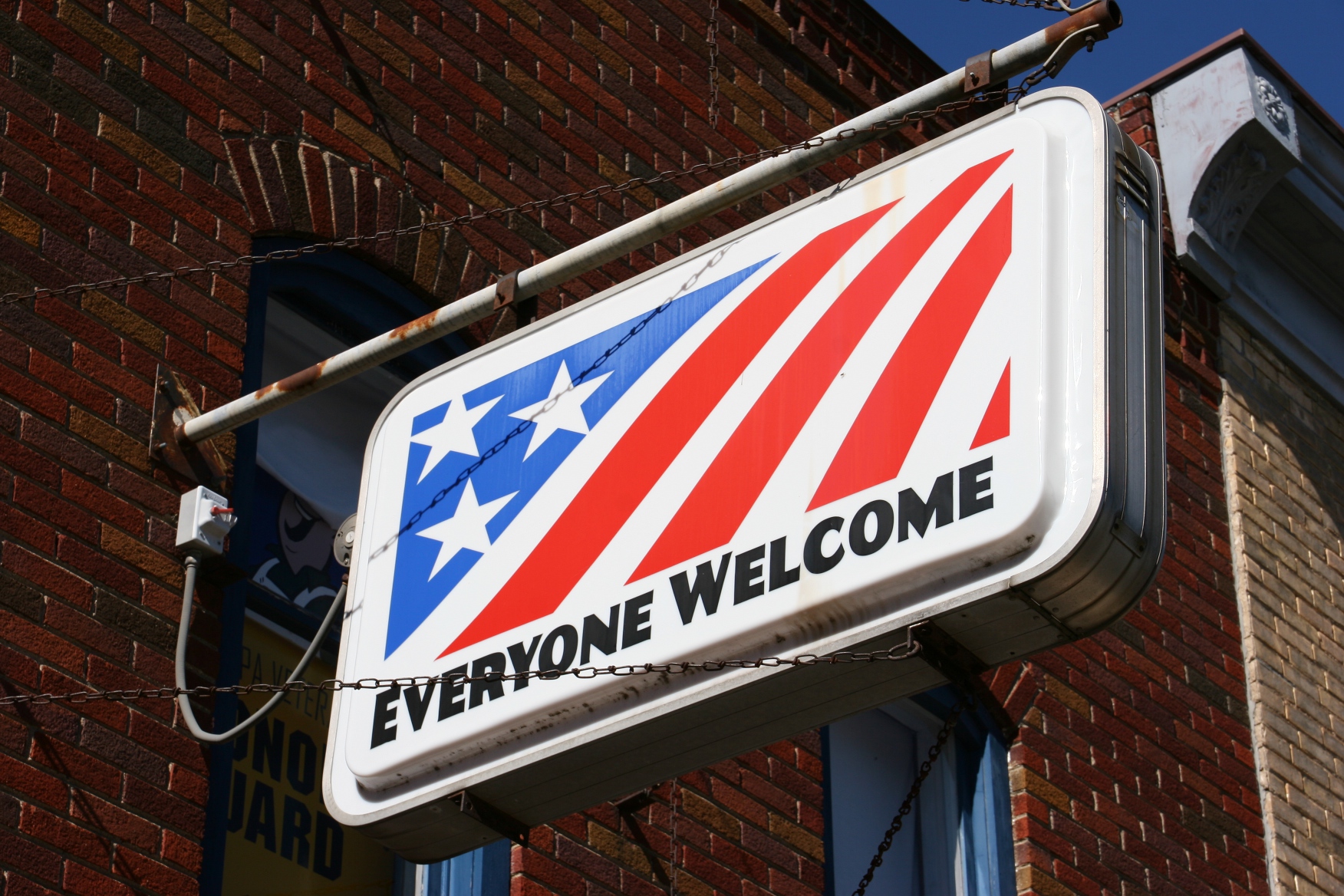
A welcoming sign hangs on the American Legion building in small town Mazeppa. (Minnesota Prairie Roots copyrighted photo March 2018)

Owatonna, like many communities in southern Minnesota and throughout the state, nation and world for that matter, has faced tough issues such as racism, prejudice, discrimination and hatred. Sometimes those issues are right there, publicly visible in ways that make me wonder how humans can treat each other with such disrespect and meanness. But just as dangerous are the insidious comments and behaviors that creep under the radar into communities. We all know they are there—the slights, the whispers, the off-the-cuff hurtful remarks, the intentional exclusion…

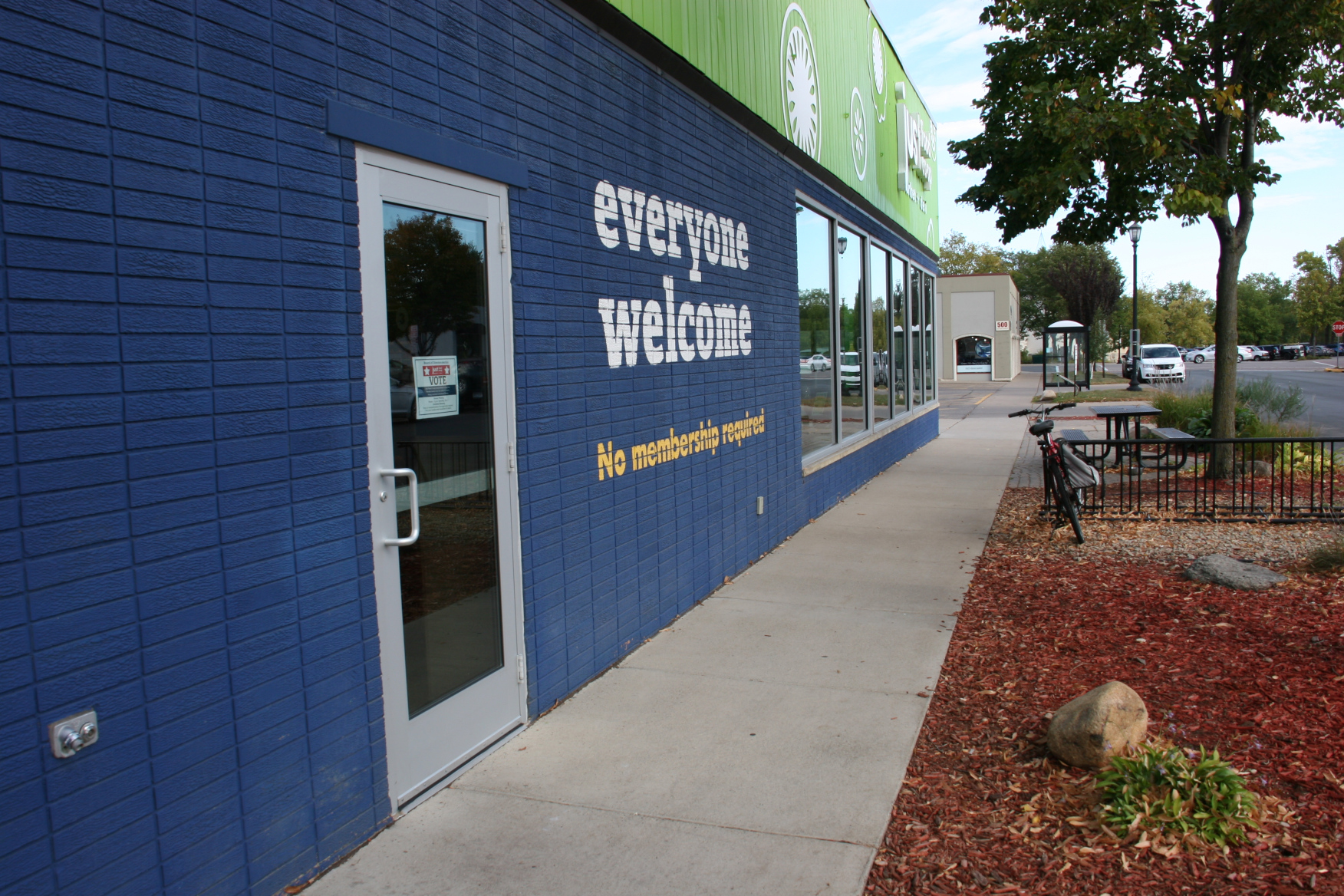
A welcoming message at Just Food Co-op in downtown Northfield. (Minnesota Prairie Roots copyrighted file photo September 2022)

I hold hope that projects like the Human Library® can effectively make a difference in enlightening, in changing attitudes, in helping each of realize that we are all human, more alike than we are different.

© Copyright 2023 Audrey Kletscher Helbling


“I Am Minnesota” immigrant portraits & stories inspire September 11, 2023

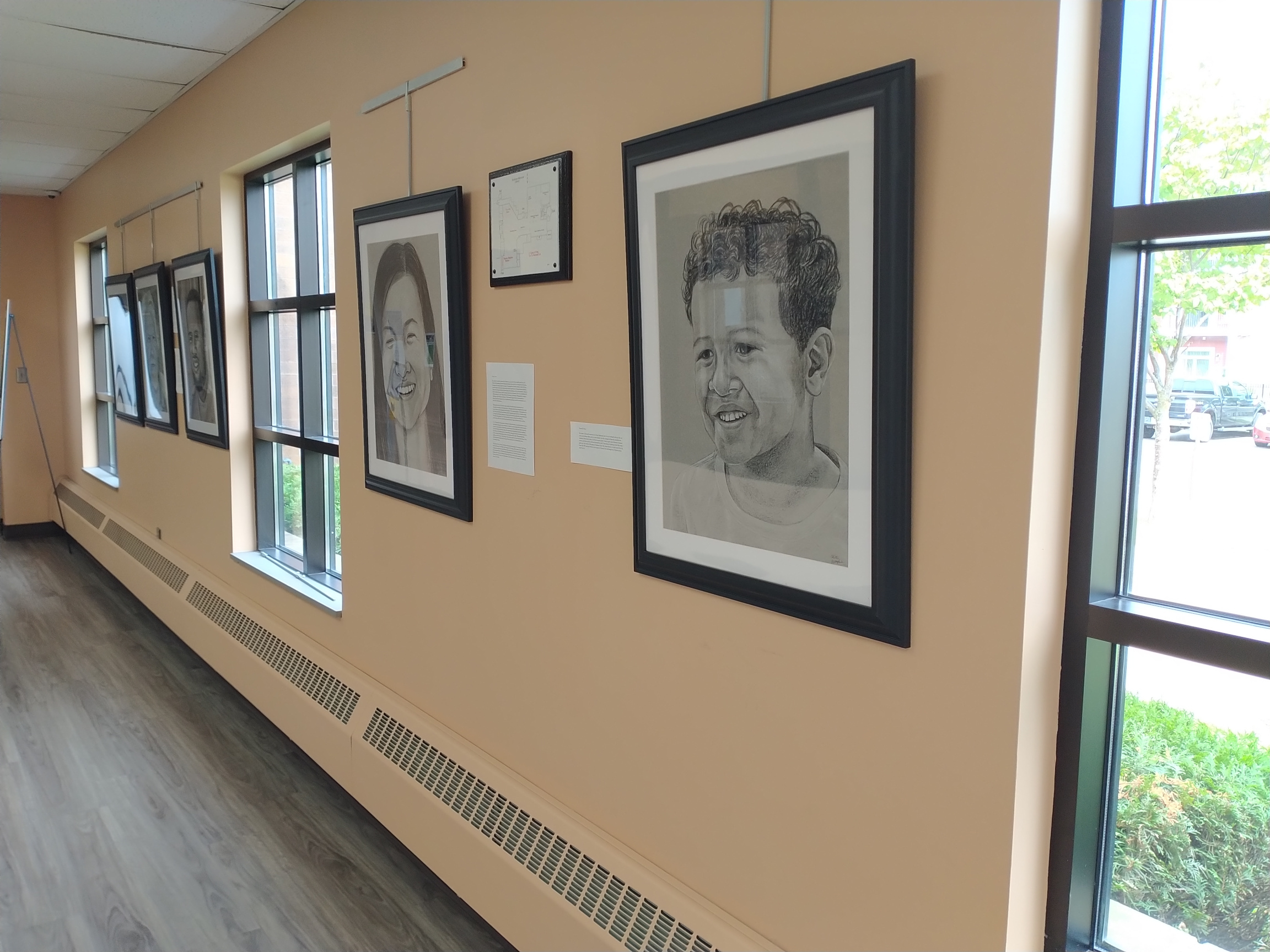
Portraits and stories, including that of Tin Tea owner, Chau, second from right, are featured in the newest “I Am Minnesota” exhibit. (Minnesota Prairie Roots copyrighted photo September 2023)

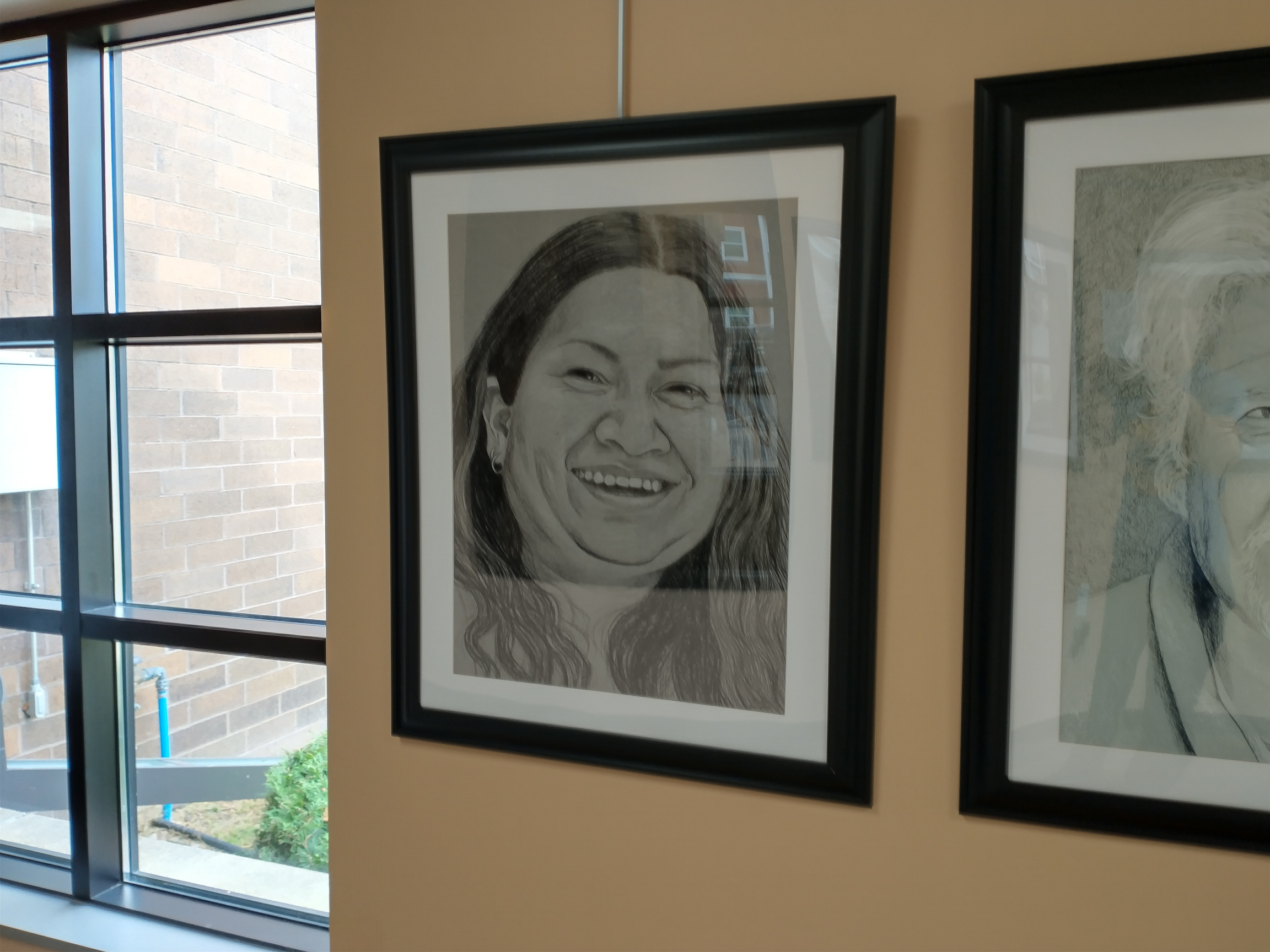
IN THE CORRIDOR LINKING Buckham Memorial Library and the Faribault Community Center, 13 portraits of immigrants and second-generation immigrants line the walls. They are the work of Faribault artist Kate Langlais in her updated “I Am Minnesota” project.

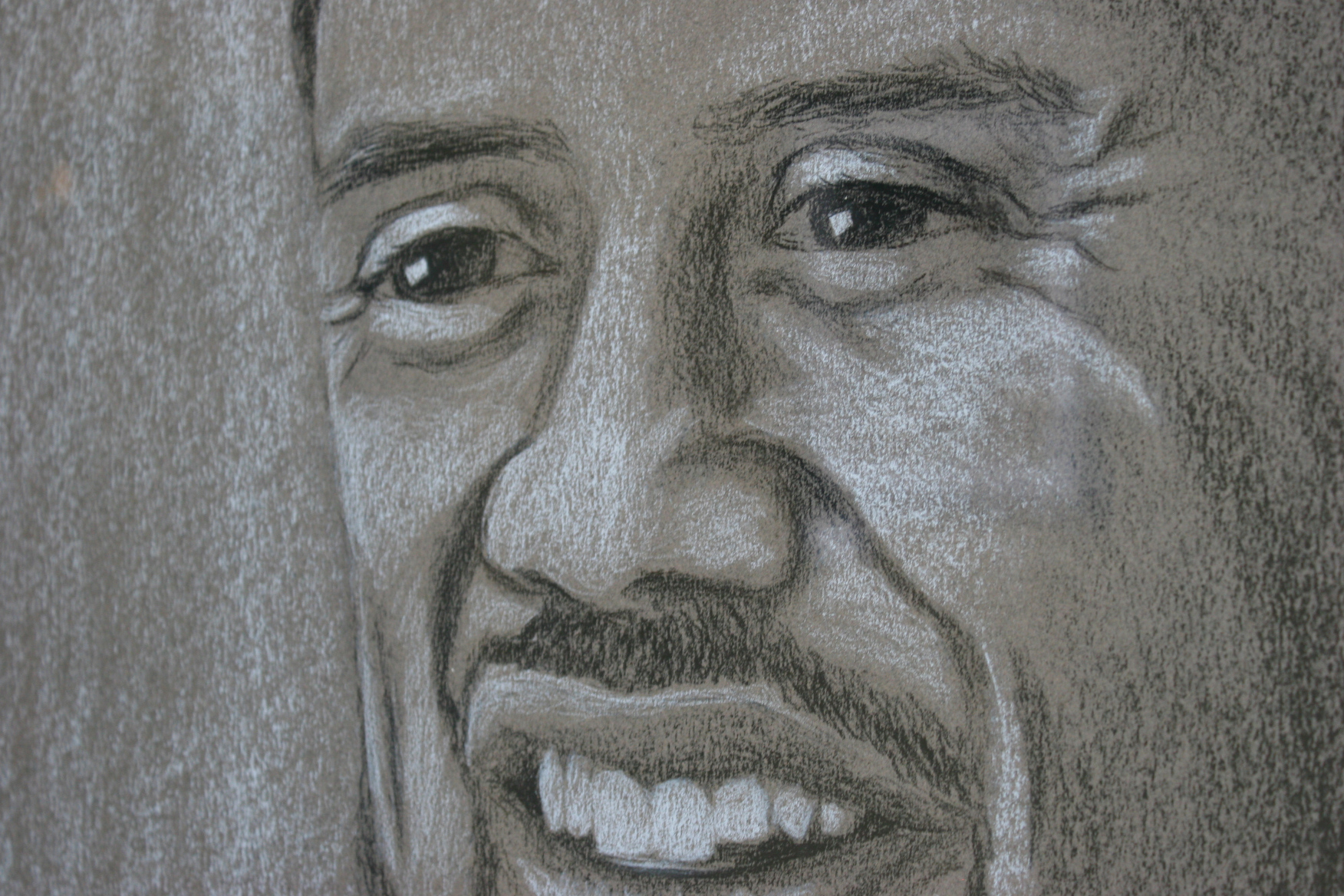
“Faysel,” who fled the war in Somalia. (Minnesota Prairie Roots copyrighted file photo September 2020)

This is a remarkable and revealing exhibit, which stretches well beyond faces portrayed primarily in black and white charcoal on gray paper. Langlais also includes the stories of those who now call this region home. Those stories hold the challenges and dreams, the successes, the gratitude and more of individuals who have become integral, and important, parts of our communities.

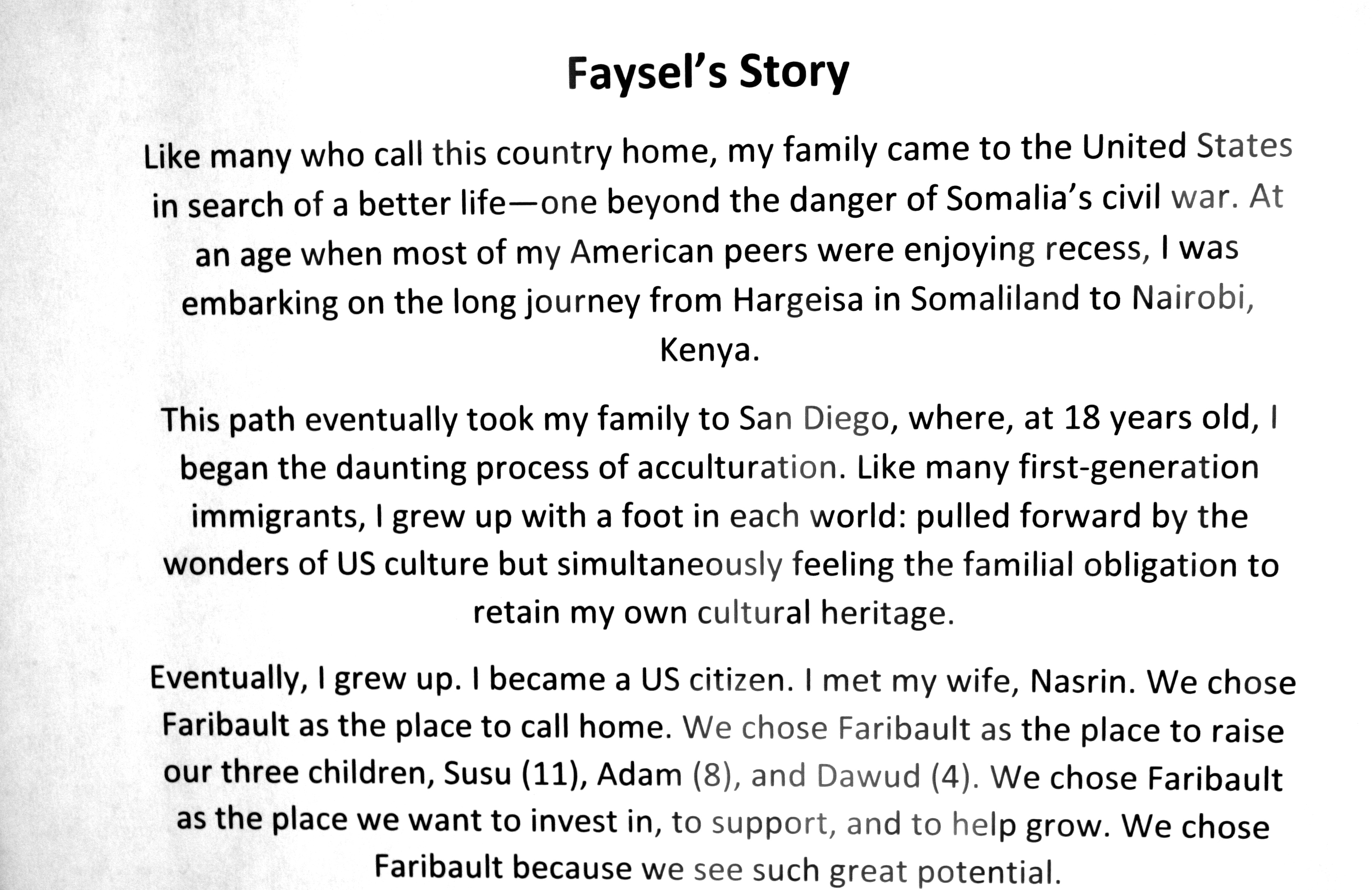
Faysel’s story from Langlais’ 2020 “I Am Minnesota” exhibit. (Minnesota Prairie Roots copyrighted file photo September 2020)

I saw Langlais’ first “I Am Minnesota” exhibit in 2020 at the Paradise Center for the Arts. She includes seven of those 2020 portrait-story pairings in her latest installation along with six new featured individuals. I appreciate her work today as much as I did three years ago.

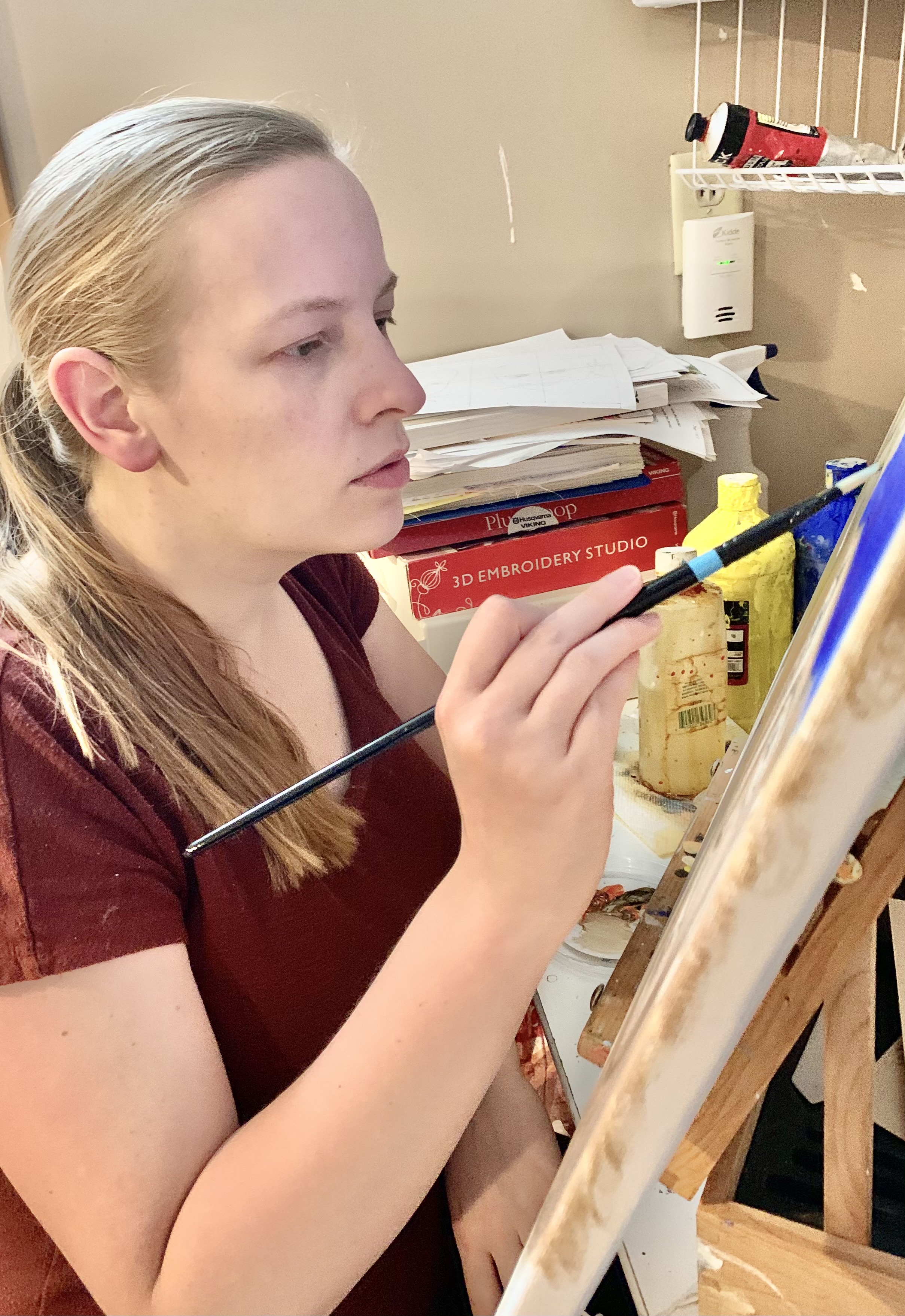
Kate Langlais at work in her home studio. (Photo courtesy of Kate Langlais, 2022)

In her artist’s statement, Langlais states in part that, “It is an honor to learn about each individual’s hardships and perseverance, as well as the beauty of their hopes and dreams.”

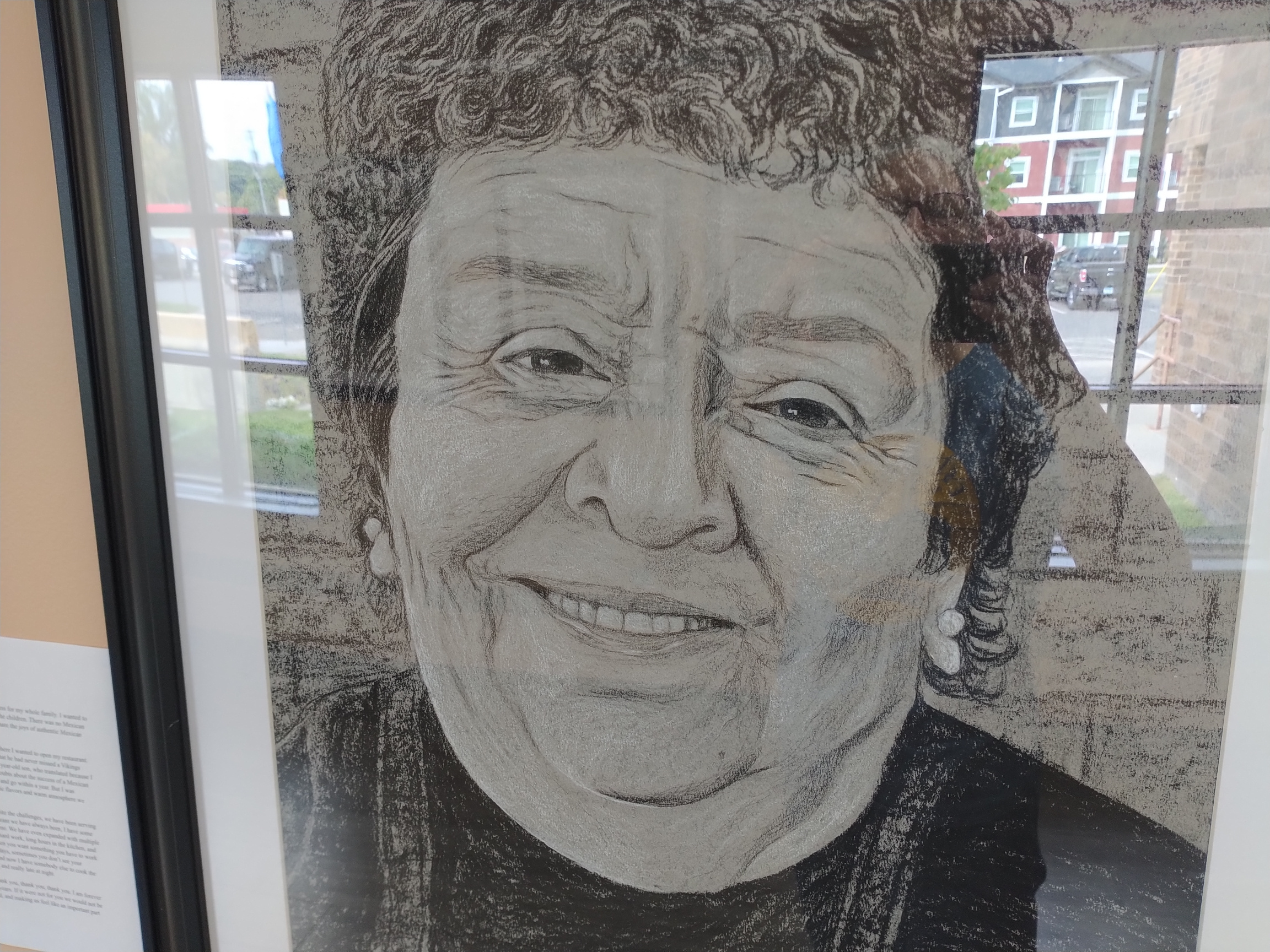
“Hilda,” successful Faribault business owner. (Minnesota Prairie Roots copyrighted photo September 2023)

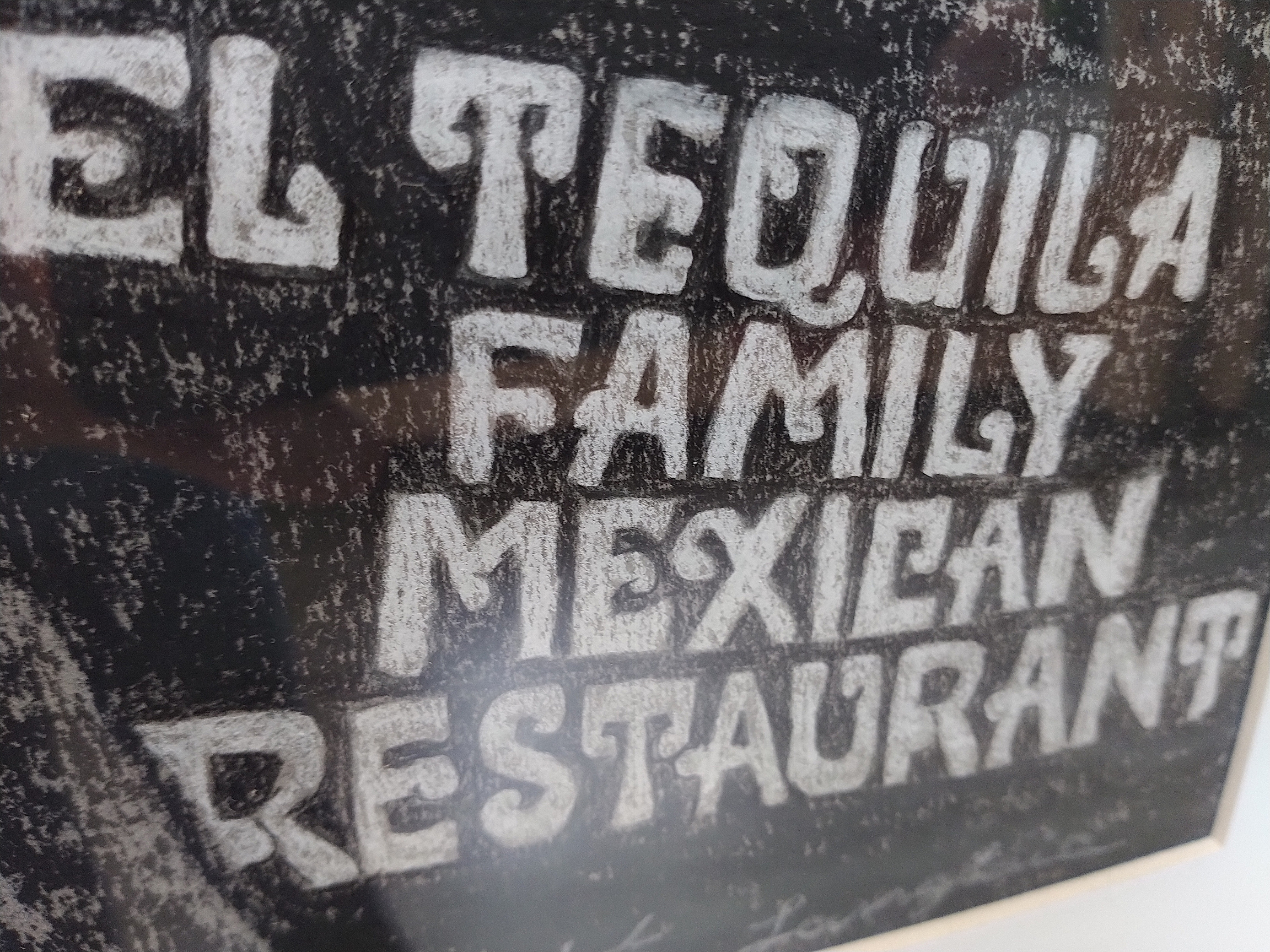
That includes the hopes and dreams of Hilda, who came to Faribault in 1996 with the goal of opening a family-run restaurant serving authentic Mexican food. Twenty-seven years later, El Tequila Family Mexican Restaurant is still going strong, even expanding to other communities. Hilda overcame a vocal naysayer who doubted such a restaurant could survive, let alone thrive, in Faribault. She proved him wrong and, in her story, expresses gratitude to a supportive community.

Likewise, another woman with a dream, second-generation Vietnamese-American Chau, opened Tin Tea in Northfield in June 2021 at the age of 19 while also a full-time student at St. Olaf College. Her story begins with gratitude to her parents: “My parents’ incredible journey from Vietnam to a new land left an indelible mark on my life. Filled with hardships and unwavering determination, their arrival in a foreign land with nothing but hope and courage inspired me deeply.”

An unidentified “I Am Minnesota” portrait of a woman hangs next to a drawing of Peter. (Minnesota Prairie Roots copyrighted photo September 2023)

To read these stories, to view these portraits, is to witness the strength and determination of individuals like Hilda and Chau. And Peter, an immigrant from the Netherlands who moved with his wife Virginia to Faribault in 2002. Since then, Peter, now a U.S. citizen, has volunteered tirelessly in Faribault, heading up the International Festival, being selected as “Citizen of the Year” (along with Virginia), elected to the City Council, recently named the new Rice County fair manager and more.

Included in Hilda’s portrait is the name of her successful Mexican restaurant, the first in Faribault and now one of several. (Minnesota Prairie Roots copyrighted photo September 2023)

Thirteen faces. Thirteen stories. They are ours to view, to read, to appreciate. For in seeing, we put faces to the word “immigrants.” For in reading, we learn their backstories. And in both, we begin to understand that our newest neighbors and their families overcame much to call this place, this southern Minnesota, home.

FYI: Kate Langlais’ “I Am Minnesota” exhibit will be up until Friday, September 15. A closing reception is slated for 5-7 pm with a free portrait drawing class beginning at 6 pm. Register for the drawing class at Faribault Parks and Recreation.

© Copyright 2023 Audrey Kletscher Helbling