Minnesota Prairie Roots

Writing and photography by Audrey Kletscher Helbling

So my vision is a little distorted right now May 16, 2024

Filed under: Uncategorized — Audrey Kletscher Helbling @ 5:00 AM
Tags: , , , , , , ,
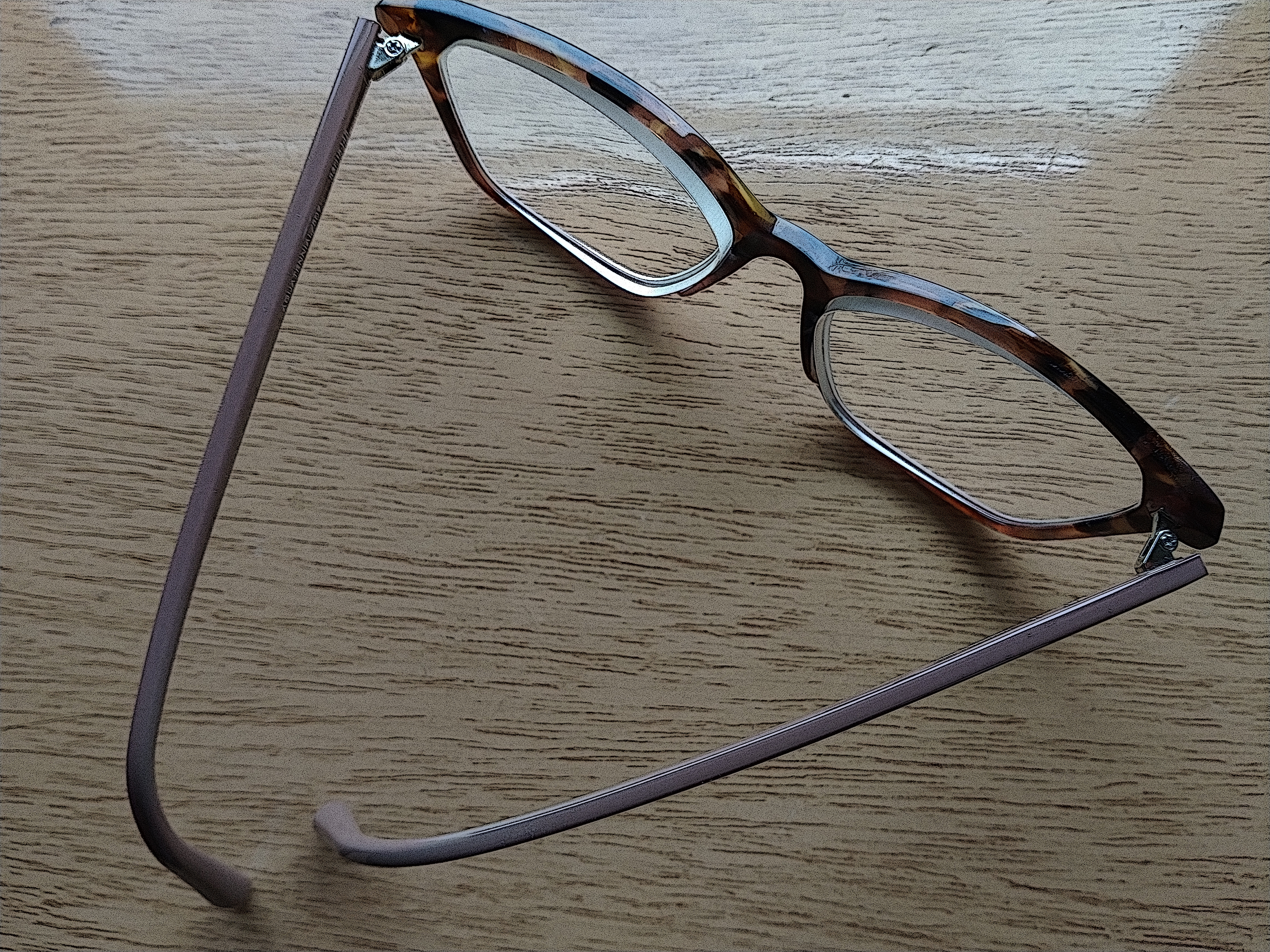
My new glasses with added prisms have rather thick lenses (especially the left one) near the nosepiece. (Minnesota Prairie Roots copyrighted and edited photo May 2024)

“DO NOT WEAR your glasses when you leave here,” she warned. I listened. I didn’t want Heidi picking me up off the pavement outside the eye clinic.

“Be careful going up and down steps tomorrow,” Randy warned Tuesday evening. I listened.

A MAJOR CHANGE

Just hours into my first day of wearing new prism-heavy prescription eyeglasses on Wednesday, I understand why my optician and my husband issued those warnings. These new glasses, which are supposed to help me deal with double vision via prisms, are a big change. Make that a major change.

Time will tell whether I can handle the “5 base in” horizontal prisms ground into each lens. That’s ten total, which Heidi says is a lot. I don’t pretend to understand all of these numbers. But the neuro ophthalmologist who did recent surgery to realign my eyes said I really needed fourteen. He didn’t think I could tolerate that amount.

TRYING TO AVOID ANOTHER SURGERY

Hopefully I can manage the prisms added to my glasses. If not, I will need to consider more surgery, something I’m hoping to avoid. I’ve already had bilateral strabismus surgery twice—at age four and most recently in late January. Immediately post-surgery, my eyes were in near perfect alignment. But then they reverted to being misaligned in a “significant regression of surgical effect.” This happens sometimes.

So here I am today, trying a new prescription with more prisms in hopes it will help me achieve “comfortable binocular vision” and avoid a third surgery on my eyes.

AN OVAL DINNER PLATE

As I type, I am looking at a computer screen that appears slanted, curved. My world is distorted. I’d been warned, but didn’t think the distortion would be quite this bad. A dinner plate, when tilted, appears oval rather than round. And when I pulled a key lime pie from the oven, I nearly dropped it. I saw a pie that was sliding; it wasn’t. I feel almost like I’m up high looking down on the world. It’s weird and odd and disconcerting.

But I’m trying. I intellectually understand that my eyes and brain are adjusting. I must give it time. Two weeks minimum, my surgeon said.

My optician, Heidi, who has supported me from pre-surgery through today, advised me to keep wearing my new glasses, as tempted as I am to pull out my old ones with fewer prisms. I stashed them in a drawer. Out of sight, out of mind. Well, maybe not out of mind.

HOLDING HOPE

I’ll check in with Heidi today. She asked me to do that, going above and beyond because she gets it. She also deals with double vision and prism eyeglasses. Her positive attitude and encouragement have helped me tremendously. The word “hope” runs strong in our conversations.

And that is my focus, along with being really really careful on steps and elsewhere as my eyes and brain adjust to these new lenses through which I view a currently distorted world.

© Copyright 2024 Audrey Kletscher Helbling


Celebrating Randy & 42 years together May 15, 2024

Filed under: Uncategorized — Audrey Kletscher Helbling @ 5:00 AM
Tags: , , , , , , , , ,
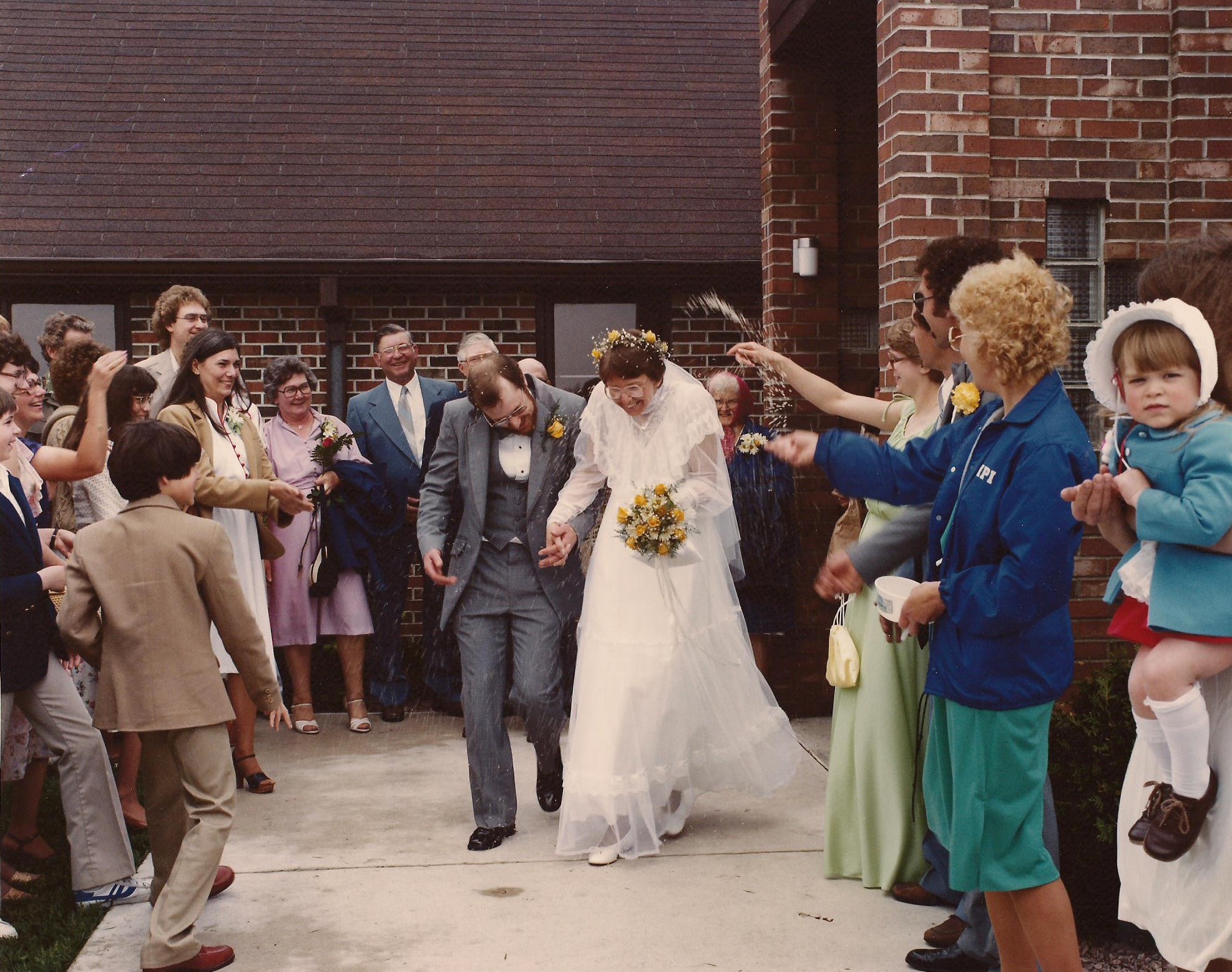
My husband, Randy, and I exit St. John’s Lutheran Church in Vesta following our May 15, 1982, wedding. (Photo credit: Williams Studio, Redwood Falls)

FOUR DECADES plus two years. Or 42 years. No matter how you view it, that’s a lot of time. Today marks 42 years since Randy and I were married at St. John’s Lutheran Church in my hometown of Vesta.

A favorite photo of Randy holding our then 10-day-old granddaughter, Isabelle. (Minnesota Prairie Roots file photo April 2016)

As anyone our age will tell you, time passes too quickly. Here we are today, comfortably settled into our life together. Kids long grown and gone. In semi-retirement. Grandparents of two. Understanding that this life we’ve built has been one of much joy, but also one of challenges. Nothing unusual about that. Such is life.

Through the all of it, we’ve supported one another. Leaned into each other. Been there. Done exactly as we promised we would, in sickness and in health.

Randy stands next to an Allis Chalmers corn chopper like the one that claimed his dad’s left hand and much of his arm in a 1967 accident. (Minnesota Prairie Roots copyrighted file photo)

Randy is the kind of guy who quietly steps up and helps, does the right thing. Back in 1967, long before I ever knew him and in a part of Minnesota unfamiliar to me, Randy saved a life. His father’s. They were working together, harvesting on the family farm, when the corn chopper plugged with corn. Tom hopped off the tractor to hand-feed corn into the chopper. As he did so, his hand was pulled into the spring-loaded roller. The chopper blades sliced off his fingers while his arm remained trapped in the roller. As his father screamed, Randy disengaged the power take-off. He then ran across swampland and along the cow pasture to a neighboring farm for help. If not for that heroic action by a boy who had just turned eleven, my future father-in-law would have died.

This is my husband. Calm. Steady. Dependable. A son who saved his father’s life. He was never publicly recognized for his actions. (I think he should be, even now nearly 57 years after the fact.) Life went on for the Helbling family, Dad now minus a hand and part of an arm. It was not easy.

This is a photo snapped with a cellphone of the X-ray showing the implant in my wrist, held in place by 10 screws. (Minnesota Prairie Roots copyrighted file photo 2018)

Randy has maintained that steady evenness throughout our marriage, a quality I appreciated when our younger daughter underwent surgery at age four, when our son was struck by a car, when I was in the worst throes of long haul COVID, unable to function. He’s always been there for our family, for me. When I broke my wrist six years ago, Randy stuck his hand out the van window to slap an imaginary emergency light atop the roof as I pleaded with him to drive faster to the emergency room. Yes, Randy possesses a sense of humor that balances my lack of a funny bone.

Admittedly, I don’t always understand his humor. But Randy still tries to make me laugh. Occasionally he cuts a cartoon from the local paper (I don’t read the funnies) and sticks it on the fridge. His latest came from “The Family Circus” with this line: Poems are like rap without music. When I finally noticed the clipping two days later, I texted him that Poems are NOT like rap. He knows I don’t like rap music.

Audrey and Randy, May 15, 1982. (Photo credit: Williams Studio. Redwood Falls)

Maybe he doesn’t like poems. But if he doesn’t, Randy hasn’t told me, his poetry writing wife. I bet if you had asked Randy 42 years ago whether he would ever attend a poetry reading, he would have vehemently replied, “No!” But he has. Many of them through the years, at which I’ve read my poems.

Randy is my greatest supporter in my writing career. He understands that the writing and photography I’ve done, and still do, are my life’s chosen work, not simply a hobby (as some others view it). I appreciate his appreciation of my creativity.

I appreciate his talents and skills also. Randy, supposedly retired from automotive machining (but not really), earns the praises of many a customer. They want “only Randy” to do their work. He is exceptional in his trade and truly irreplaceable.

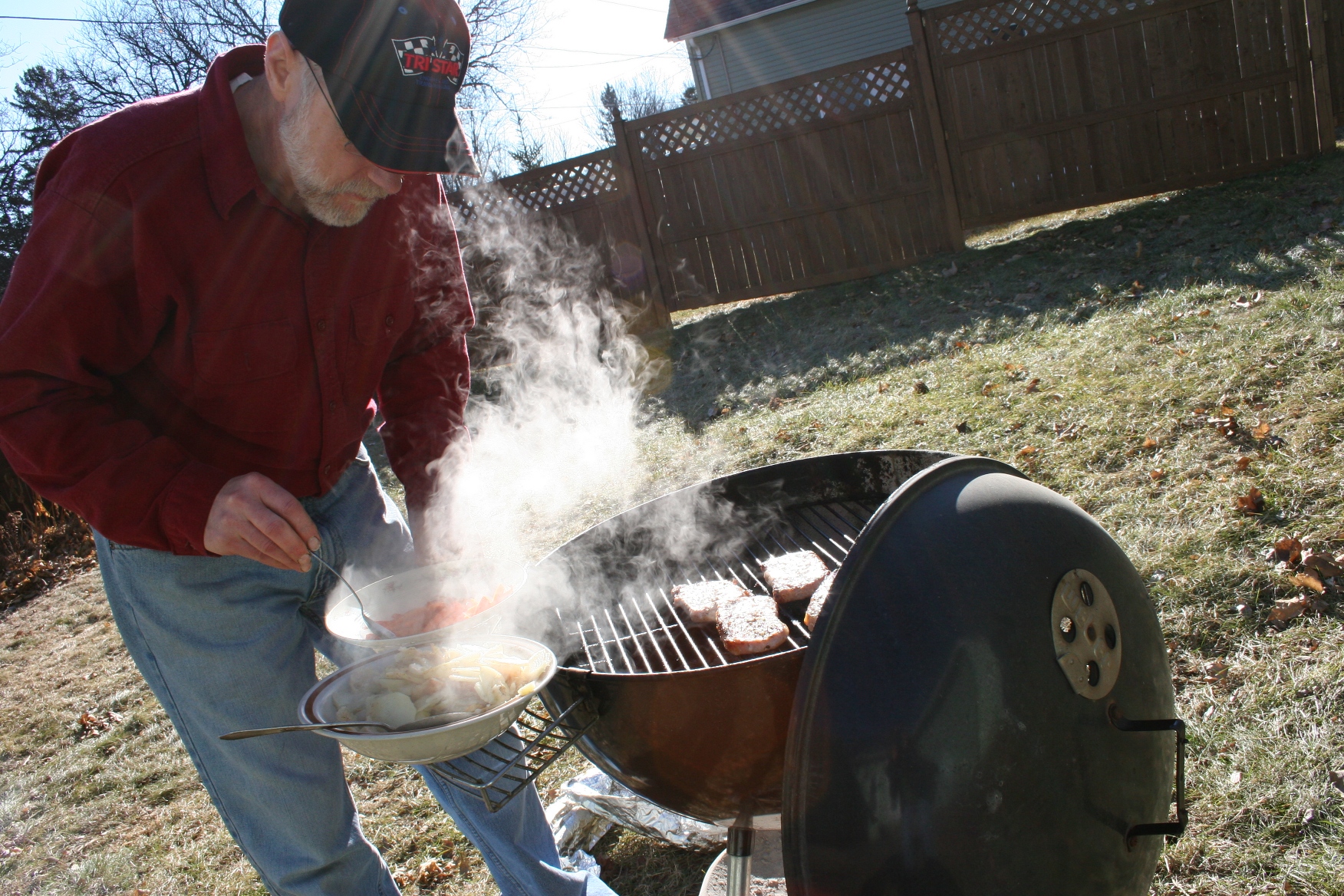
Randy grilling. He grills year-round. (Minnesota Prairie Roots copyrighted file photo)

Randy has other skills I’ve come to value through the decades. He is an excellent griller, still grilling everything the old school way on a Weber charcoal grill. He’s also mastered making grilled cheese and tomato soup for Saturday lunch and omelets for Sunday brunch.

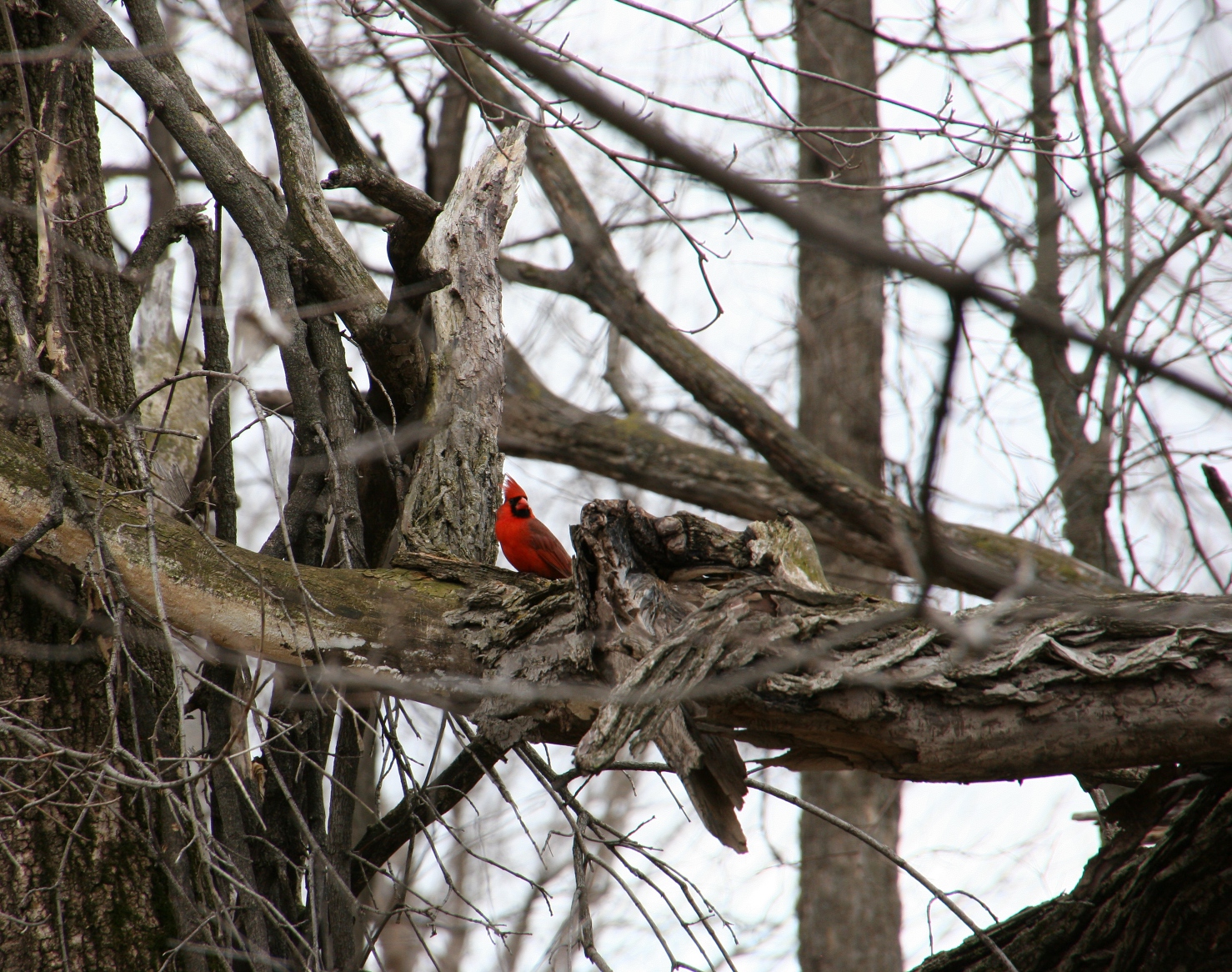
Randy can fool any cardinal with his realistic bird call. (Minnesota Prairie Roots copyrighted file photo)

And he’s really good at cardinal calls. The bird, not anything related to his Catholic upbringing. Whether in the backyard or walking in woods, Randy will answer a cardinal’s trill with his own. Yes, he sounds just like a cardinal.

Our life together now includes grandchildren. Here Randy walks with Isabelle and Isaac along a pine-edged driveway at a family member’s central Minnesota lake place. (Minnesota Prairie Roots copyrighted file photo July 2020)

We’ve built this life together on love, laughter, respect, support, encouragement, faith and so much more. Forty-two years. Four decades plus two years. Days, weeks, months, years…of blessings in good times and in bad. There for one another. Always.

© Copyright 2024 Audrey Kletscher Helbling
 

Color my world with spring May 14, 2024

Filed under: Uncategorized — Audrey Kletscher Helbling @ 5:00 AM
Tags: , , , , , , , , , , , ,
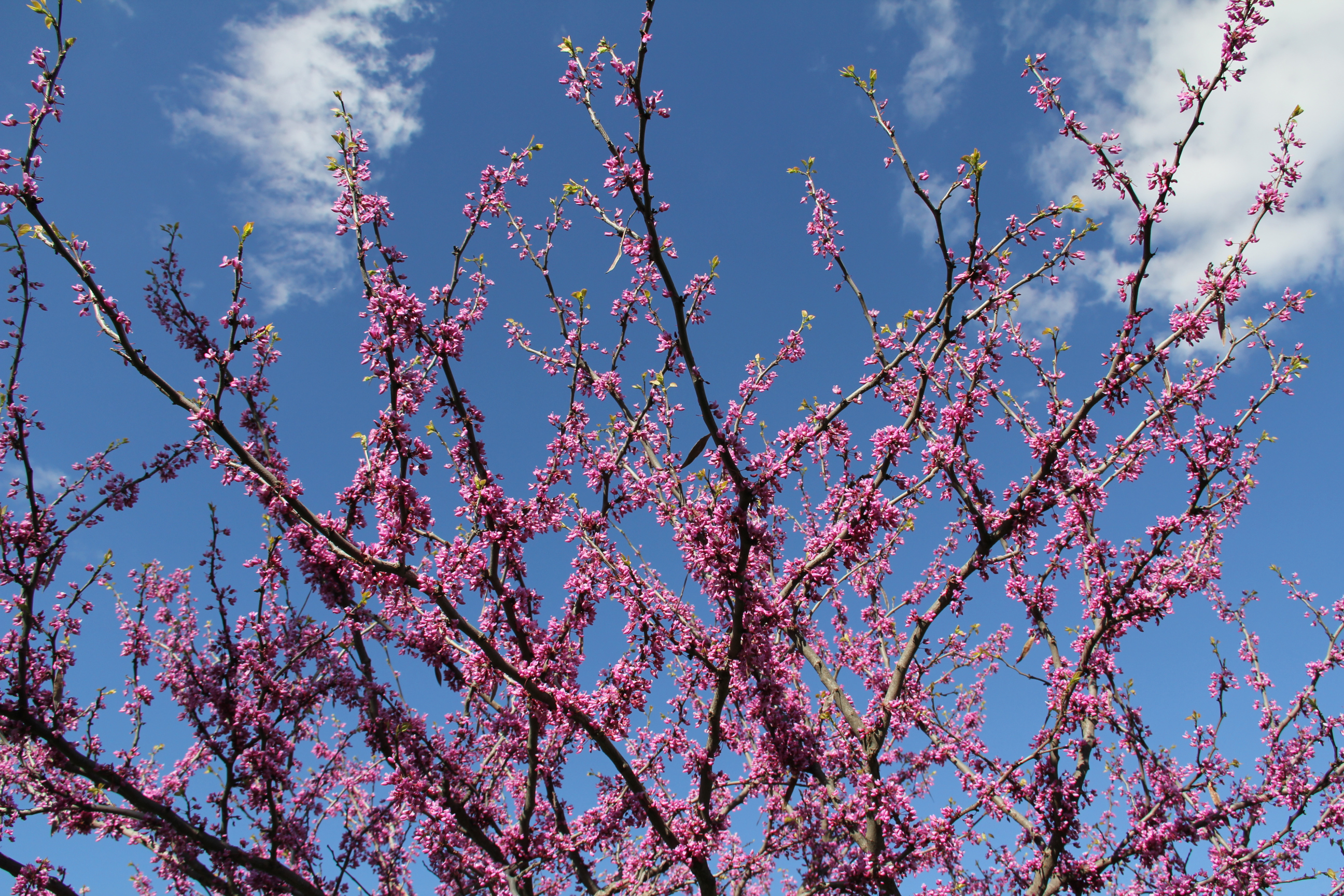
Looking up toward flowering branches and the bold blue sky of spring. (Minnesota Prairie Roots copyrighted photo May 2024)

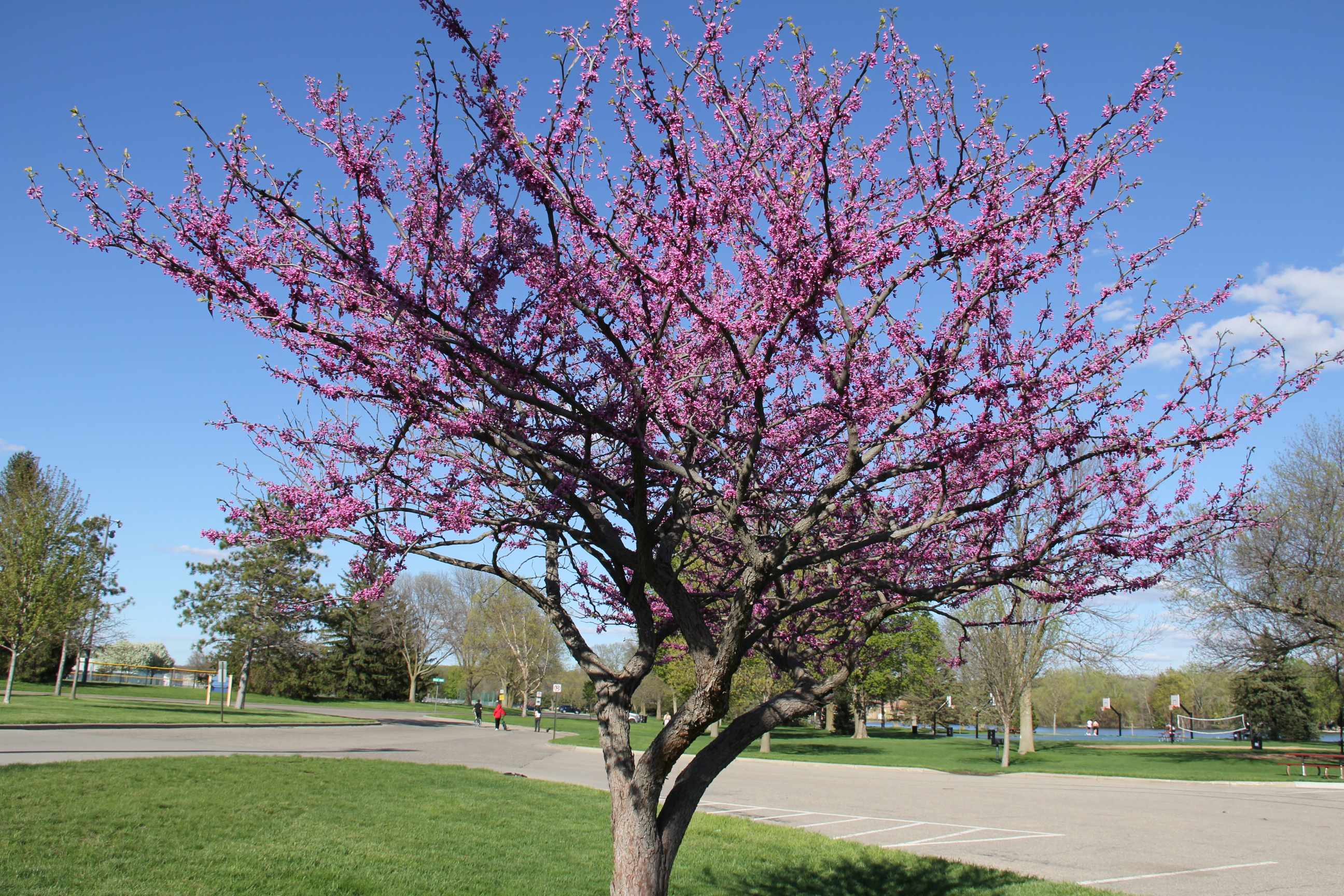
SPRING IN SOUTHERN MINNESOTA looks a lot like colors in a new box of crayons. Sharp. Bold. Vibrant. Vivid green grass. Bold blue sky. Hot pink tree blossoms. Spring flowers bursting bright reds and yellows. These are the hues of spring.

Color everywhere… (Minnesota Prairie Roots copyrighted photo May 2024)

The landscape is a page upon which nature colors over gray. The world explodes in color, a welcome visual delight to winter weary eyes.

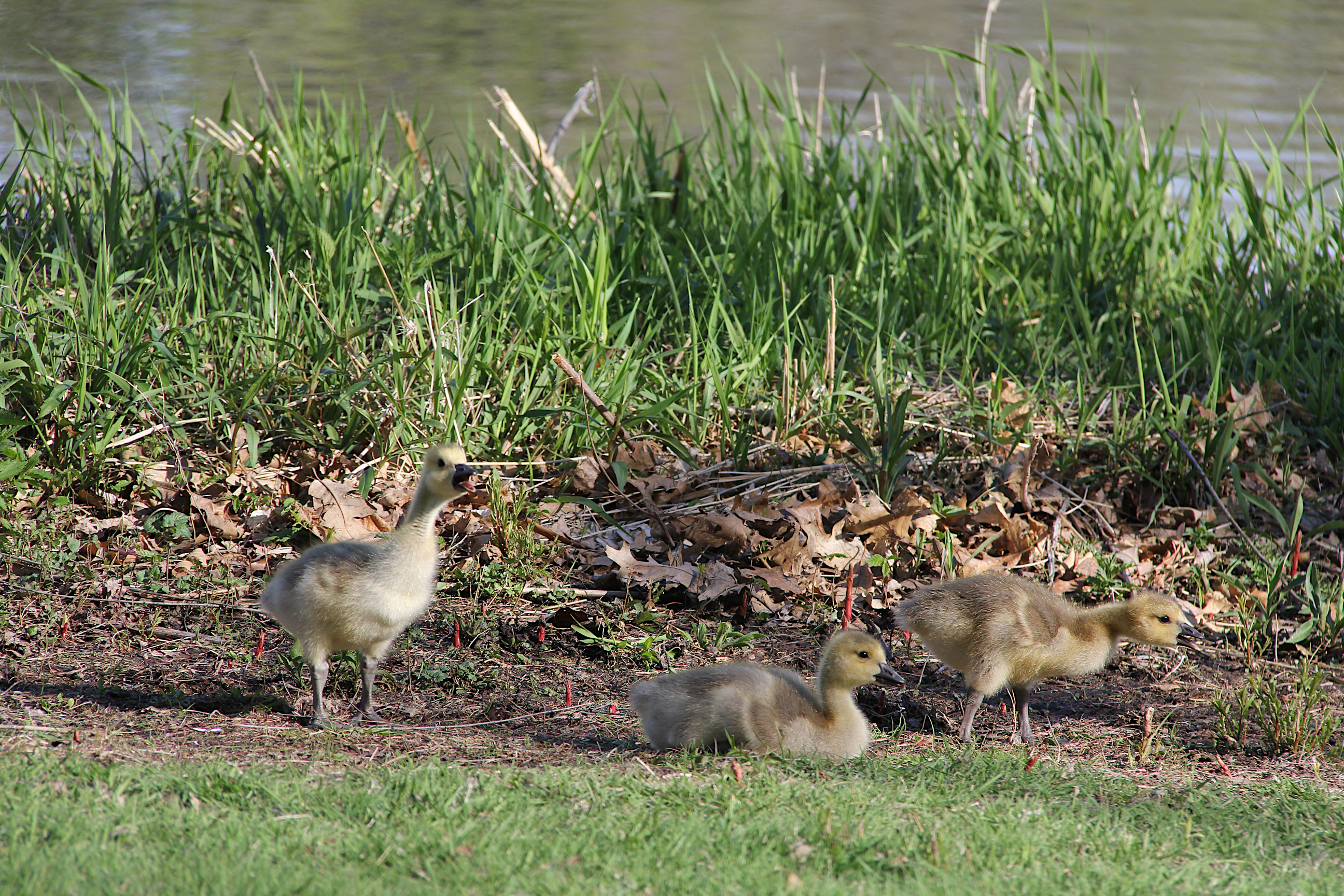
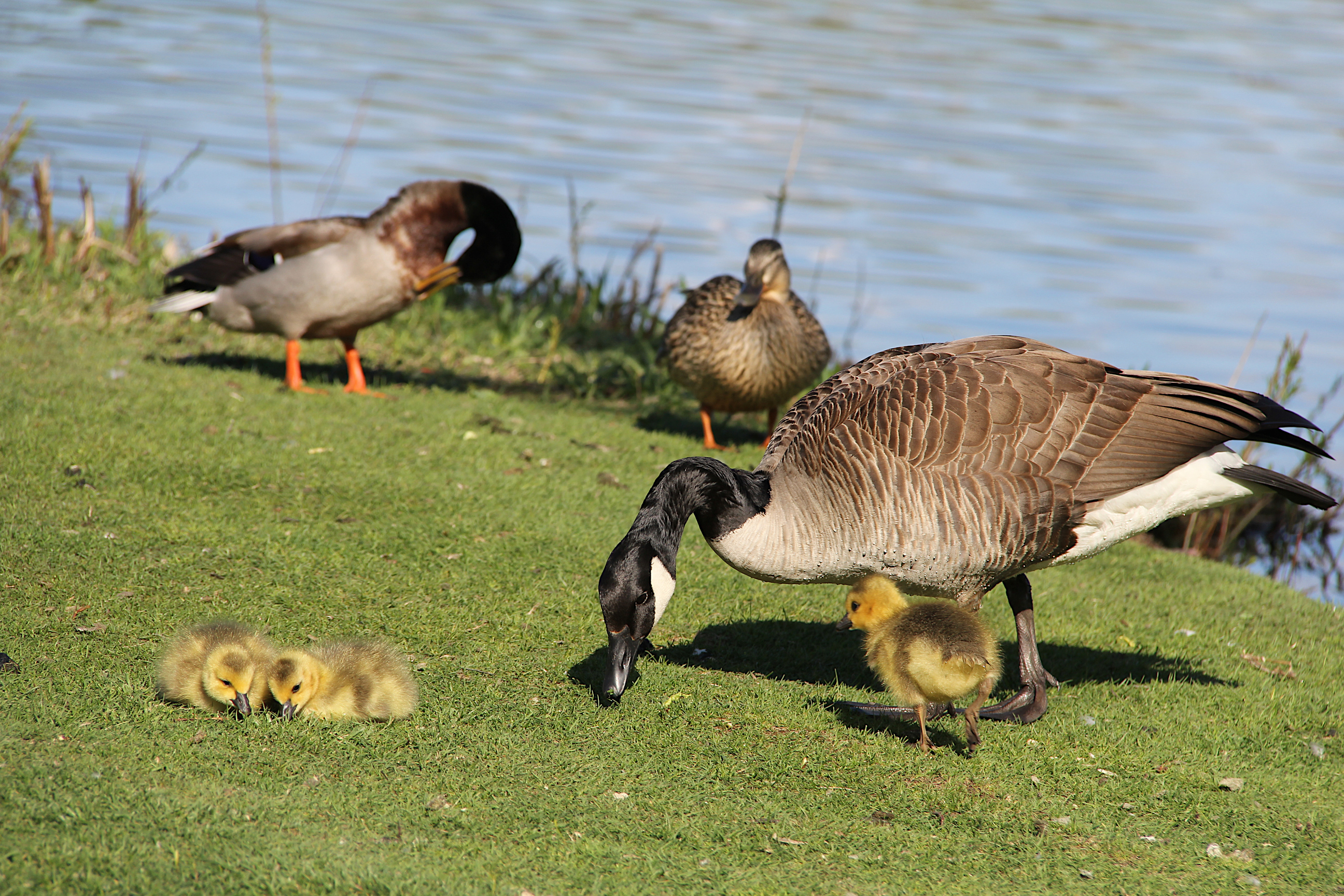
Growing goslings explore the river bank. (Minnesota Prairie Roots copyrighted photo May 2024)

I can’t get enough of this, even after more than sixty years of observing the seasonal transformation during April into May. It never gets old—this morphing of the seasons. How beautiful this world around us, teeming with new growth, new life.

Goose and goslings aside ducks along river’s edge. (Minnesota Prairie Roots copyrighted photo May 2024)

Every spring I await the goslings and ducklings. They are pure fluffy cuteness. I admire from afar, keenly aware of their protective parents. I dodge goose poop, not always successfully, to get within viewing range. But I respect their space.

Beautiful scene: a mallard drake swimming on the river. (Minnesota Prairie Roots copyrighted photo May 2024)

I find myself mesmerized by waterfowl as they forage for food along the shoreline or glide through the river, water rippling a trail. Reflections trace tranquility upon the water’s surface. All is quiet and good in that peaceful scene.

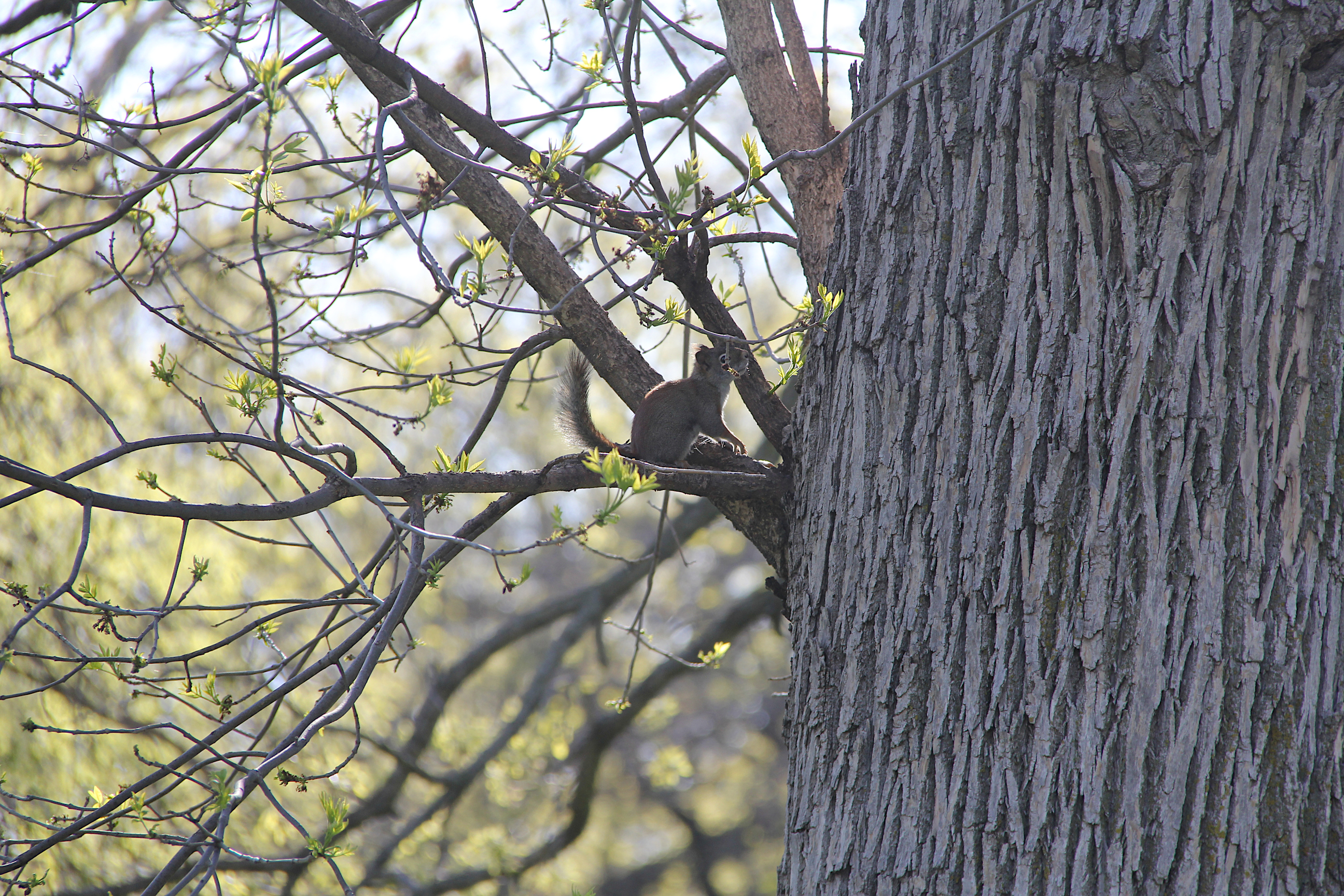
A squirrel, nearly camouflaged by a tree. (Minnesota Prairie Roots copyrighted photo May 2024)

But not all is still. On land, squirrels scamper up trees, root in the ground. I never tire of their antics, amazed by their acrobatic skills, their Olympian abilities to leap with precision, climb with speed. They are really quite amazing even if sometimes a nuisance when digging up lawns and in flower pots.

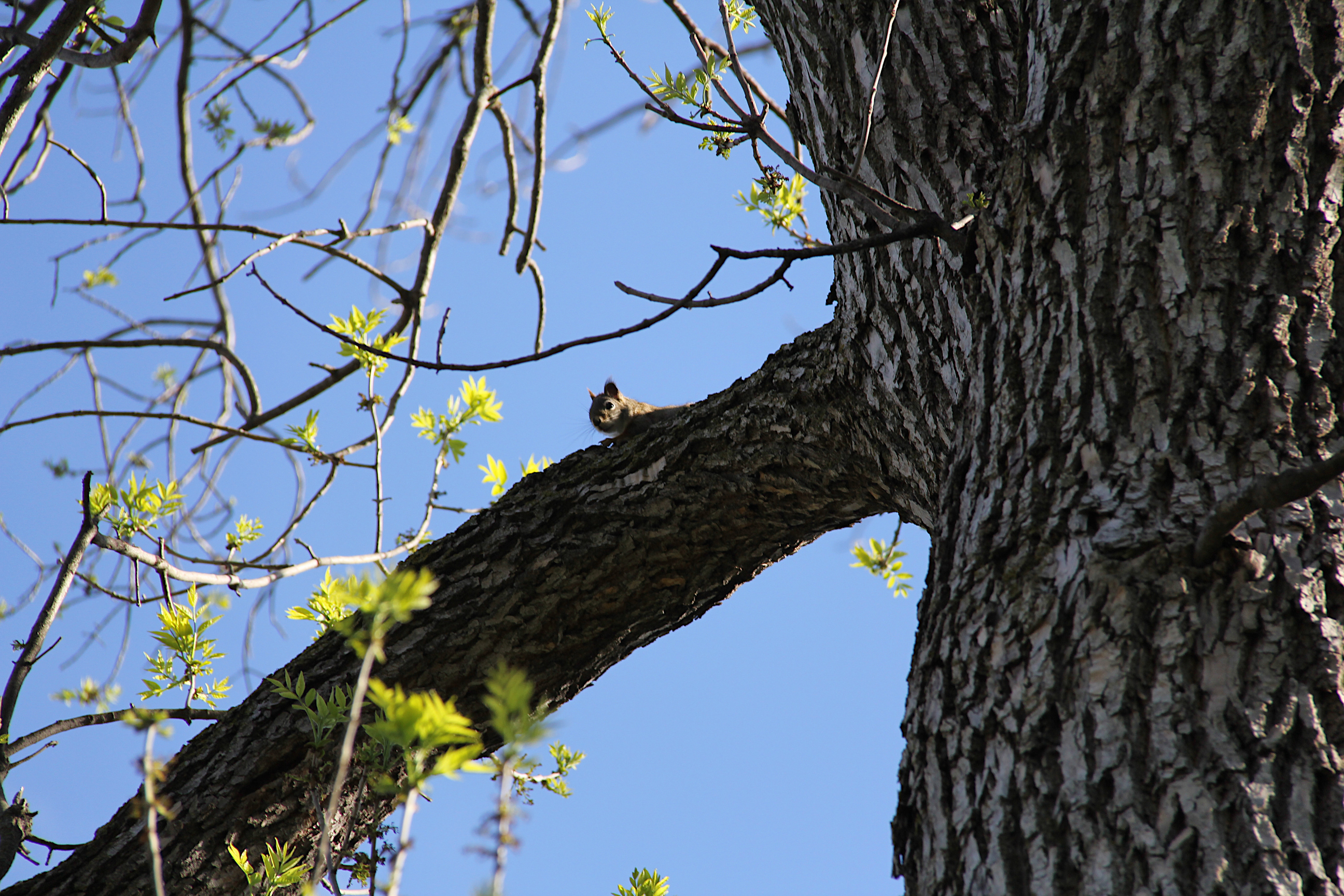
A squirrel peeks over a limb on a leafing tree. (Minnesota Prairie Roots copyrighted photo May 2024)

There’s so much to appreciate in this season not only visually, but in sound, too. Chirping birds, especially raucous this time of year. Trill of peepers in ponds and wetlands. Rustle of a rabbit across dried leaves. Call of a rooster pheasant in flight. Whisper of the wind through leafing treetops.

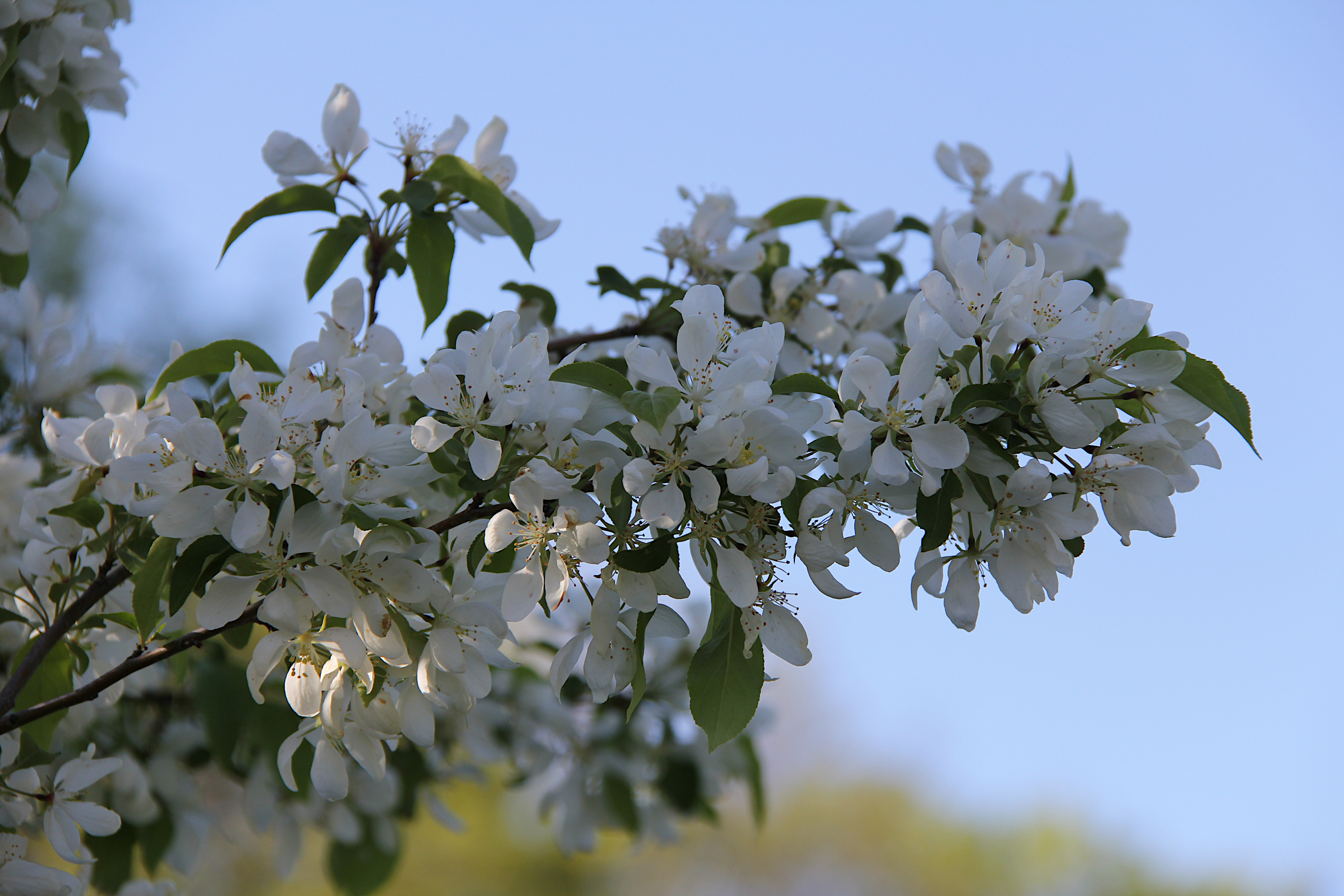
Fragrant blossoms blanket branches. (Minnesota Prairie Roots copyrighted photo May 2024)

And then the scent, oh, the distinct, earthy smell of spring. Soil. Rain. Flowers. I dip my nose into apple blossoms, their fragrance a reminder of apples to come, of apple crisp pulled from the oven, of pies baked in Grandma’s kitchen.

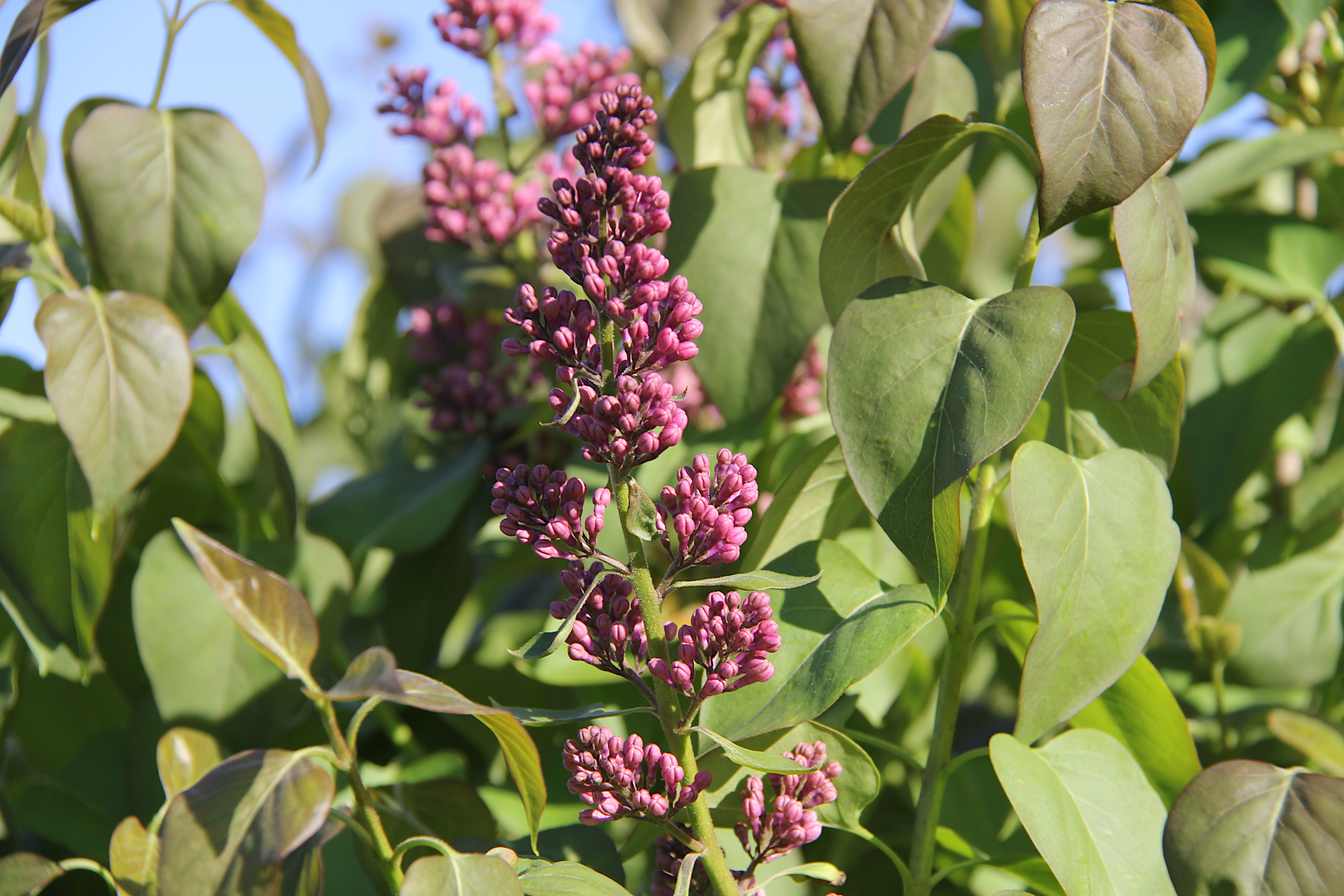
Lilacs are budding and flowering. (Minnesota Prairie Roots copyrighted photo May 2024)

But it is lilacs which, for me, hold the strongest scent of spring. Perhaps because of the memories connected to this flowering bush. I remember bouquets of lilacs filling my childhood farmhouse, their heavy perfume masking the odor of cow manure. The lilacs came from my bachelor uncle’s nearby farm. Mike would bring bouquets to his sister-in-law. Or my mom would drive the washboard gravel roads to pick her own. Today, my husband brings me bouquets of lilacs each May, understanding the memories and love these blossoms represent.

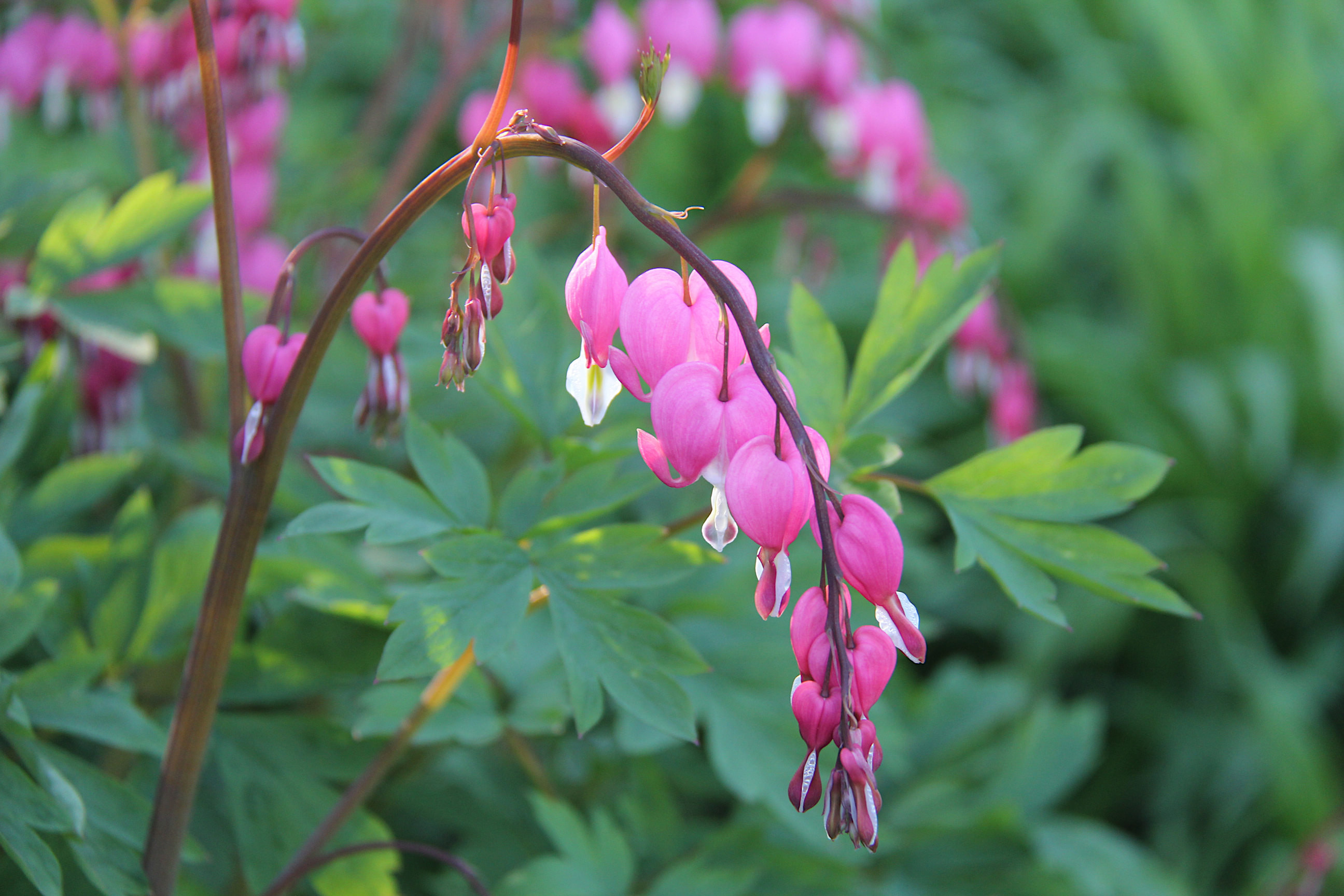
Bleeding hearts, one of the first flowers of spring. (Minnesota Prairie Roots copyrighted photo May 2024)

This is spring in Minnesota to me. All of it. Bold. Beautiful. Bright. Me, feeling like a kid giddy with joy over a box of new crayons.

© Copyright 2024 Audrey Kletscher Helbling


Mother’s Day reflections of love & gratitude May 10, 2024

Filed under: Uncategorized — Audrey Kletscher Helbling @ 11:52 AM
Tags: , , , , , , , ,
The only photo I have of my mom holding me. My dad is holding my brother Doug. (Minnesota Prairie Roots)

MOTHER’S DAY. It’s a day that can feel both sad and joyful. Sad if your mom is no longer living. Mine isn’t. Joyful if you have children, no matter their age.

It is a Sunday of gathering, of remembering, of honoring, of celebrating motherhood. Perhaps with a meal together. Perhaps with flowers delivered or received. Whatever, however, the focus should be one of love and gratitude.

I feel grateful for my lovely mom, who taught me kindness, compassion and care. Sure, she had her moments. Who wouldn’t with six kids spanning 12 years? We tested her patience more than once. But that didn’t diminish her love for us. Her own mother died at age 48, when I was only two months old, and I cannot imagine how difficult that was for my mom and her three younger siblings. So treasure your mom. Time together is precious.

The card I made for my mom as a child. (Minnesota Prairie Roots copyrighted photo)

So are words shared. As a writer, I value greeting cards as a way of expressing love and other emotions. My mom did, too. She saved cards, including a simple card I created for her in elementary school for Mother’s Day. I cut a flower photo from a seed catalog and pasted it to the front of a folded piece of paper, then printed I love you Mother. Audrey inside. The editor in me wants to add a comma and change the formal Mother to Mom. But I doubt Mom much cared. She was just happy to get a handcrafted card from her eldest daughter.

Likewise, I love getting greeting cards from my now-grown children. One arrived in the mail today from my second daughter, who lives 260 miles away in Madison, Wisconsin. I last saw her at Christmas. Her job as a letter carrier for the US Postal Service keeps her working 10-12 hours daily, usually six days a week. So seldom does Miranda have adequate time off to travel to Minnesota. I couldn’t help but think, as I opened her Mother’s Day card, that Miranda was likely dropping similar cards into mailboxes along her route.

Mothers always appreciate flowers. These were a gift from my daughter Amber and her family in 2021. (Minnesota Prairie Roots copyrighted file photo 2021)

She chose a lovely floral design card that is certainly “me.” And then my sweet daughter penned the most loving message. One that left me in tears. Hope you have a nice, relaxing day surrounded by the people you love. We love & miss you. Love, John & Miranda.

A plane leaves Minneapolis St. Paul International Airport. (Minnesota Prairie Roots copyrighted file photo)

I will be surrounded by people I love—my eldest daughter, Amber, son-in-law and two grandchildren—on Saturday. But “the people I love” also includes the rest of my family. And in that moment tears fell at the missing of Miranda and her brother, Caleb, both of whom I haven’t seen in more than four months. Caleb lives in Boston.

This photo of me with my mom was taken two years before her death. Minnesota Prairie Roots copyrighted file photo January 2020 by Randy Helbling)

To be a mom is to understand that separation is inevitable. Our kids grow up, move away, sometimes farther than we’d like. Things keep us apart. Death also separates. Daughters and sons have lost mothers. Mothers have lost children. But in the end, love remains. As does gratitude. I am grateful for my mom. Grateful for my three children. I am grateful to be a mother.

Happy Mother’s Day to all the moms out there! You are loved. And appreciated.

© Copyright 2024 Audrey Kletscher Helbling


The power of faith & friendship when facing loss May 9, 2024

Filed under: Uncategorized — Audrey Kletscher Helbling @ 5:00 AM
Tags: , , , , ,
I laid this memorial service folder for my friend Barb upon one of my vintage tablecloths. (Minnesota Prairie Roots May 2024)

WE STOOD SIDE-BY-SIDE, arms stretched around one another, watching as our husbands carried the gray casket and slid it into the waiting hearse. Six friends grieving the death of a seventh.

The day before her 73rd birthday, my friend Barb died from cancer. And here I was a week later, standing outside Trinity Lutheran Church, linked to the women beside me in grief and in love.

My emotions ran high on this beautiful May morning of sunshine and greening spring, of new life rising from the earth on the Monday Barb was laid to rest beneath the earth. I understood she was at peace, in her heavenly home, and that consoled me as tears fell.

Family and friends of Barb were gifted with these nail crosses after her funeral. The cross reinforced the sermon, titled “Nailed It.” (Minnesota Prairie Roots copyrighted photo May 2024)

Her service was signature Barb, one she planned. One that proclaimed her strong faith in words and in music. Oh, so much music, because Barb loved music. Our friend Steve sang “Who Am I?” Friend Char slid her bow across her violin, accompanying children as they sang “Jesus Loves Me” and later as mourners sang one of my favorite contemporary Christian songs, “10,000 Reasons.” Galen played “Beautiful Savior” on his harmonica, another favorite of mine and of my dear friend Barb. There was more music, so much that Barb wanted, some of which had to be trimmed lest the service got overly long.

Sitting in the front pew, just steps from Barb’s casket, I immersed myself in the service. I laughed when her brother-in-law Dave, the presiding pastor, shared that Barb instructed him to “shake them up” with his sermon. He did. When he spoke of hell and then abruptly stopped and sat down, I wondered if he was so overcome with emotion that he needed to pause. Not so. It was that “shake them up” moment Barb requested. He returned to the pulpit to finish his sermon with loving words of grace.

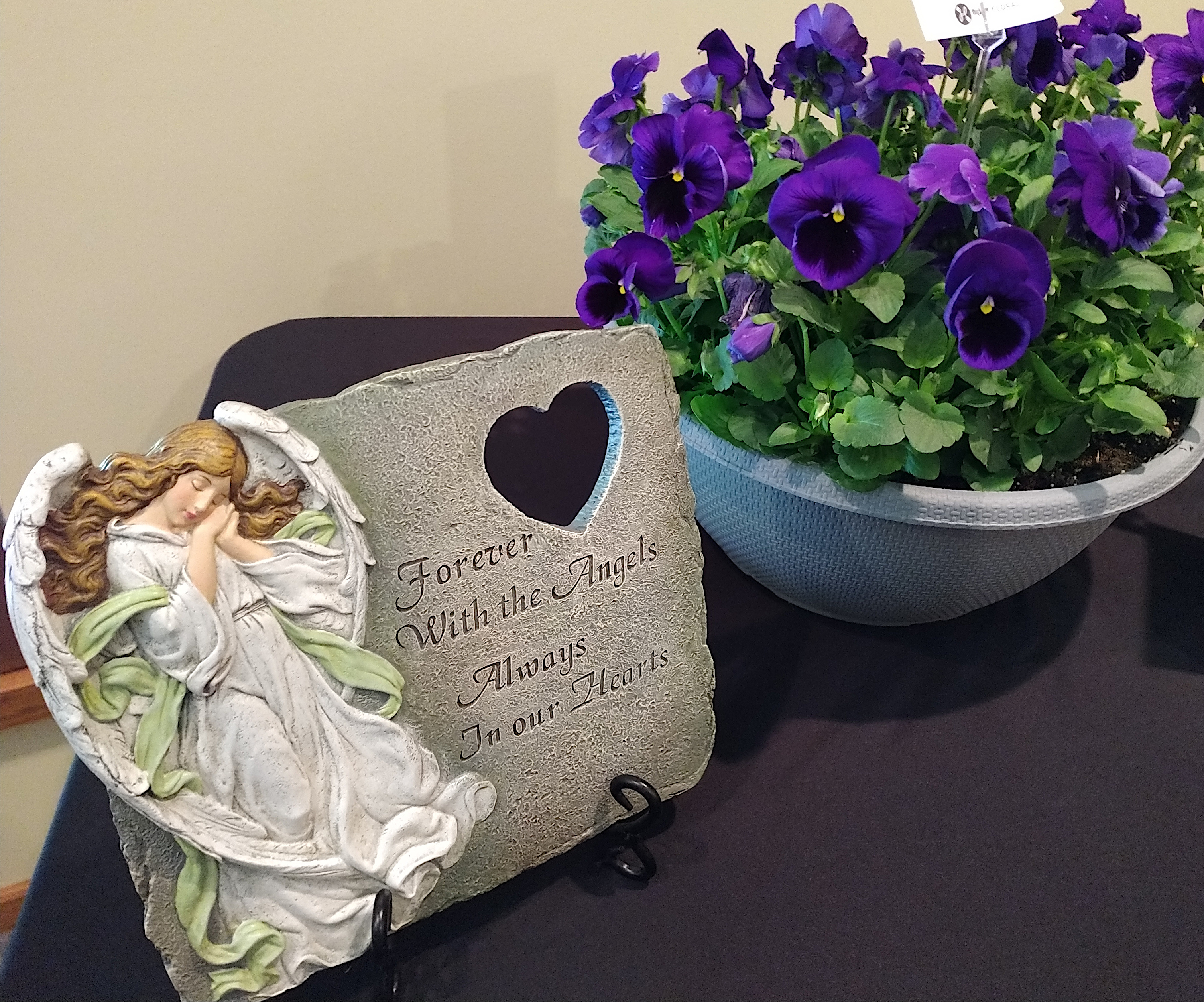
Our bible study group gifted this garden stone and pansy bowl in Barb’s favorite purple to her family. (Minnesota Prairie Roots copyrighted photo May 2024)

Barb loved her Lord, her family, her friends, old-time TV shows (particularly “Andy Griffith” and “The Beverly Hillbillies”) and the color purple. There was purple everywhere—flowers, ties, dress shirts, table coverings. Purple overflowed alongside love. Love in so many hugs. Love in words spoken by Barb’s eldest son. Love from God. Love surrounding us.

During the final weeks of her life, Barb continued to love on all of us, even as she lay bed-ridden. I would drop off a meal for her family, hoping to uplift my friend. And she uplifted me. She, who was dying. She never let me leave without kissing my cheek. I hold that precious memory now, the warmth of her lips pressed against my skin. To have that time with her to say goodbye eased me into her death. This time was a gift, as Barb’s husband, my friend Mike, reminded me, reminded all of us.

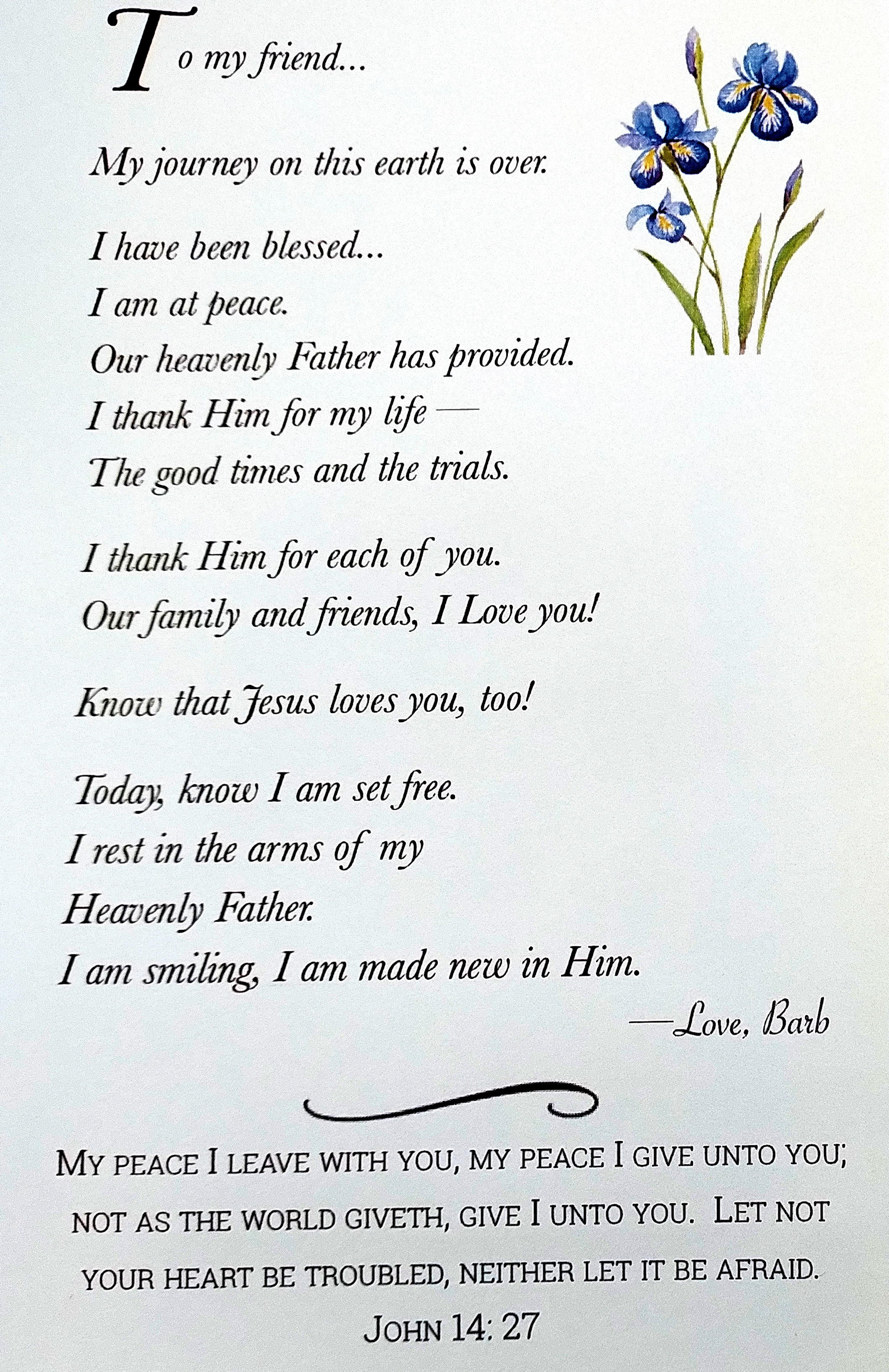
A loving message from Barb, printed in her memorial folder.

Barb gave so much, even in choosing the men who would carry her casket—Randy, John, Steve, Noel, Mark and Jeff. All of us friends, together in a long-time Bible study group. Twenty years of reading and studying God’s Word, of praying for one another, of growing in our faith and friendship. We have been through a lot together. Uplifted one another.

And here we were on this lovely spring morning, walking into church together behind the casket, behind the cross. Filling two pews at the front of the church. Listening and singing and crying and laughing. And then later filing out, waiting silently in the narthex, then outside. Reverently.

As the six guys moved toward the casket, we wives gathered on the side and I instinctively motioned for Debbie, Jackie, Mari, Mandy and Sonja to come closer. I needed to feel their closeness, the strength that comes from love and friendship in shared grief. It was a powerful and emotional moment standing together in a row, arms wrapped around one another. I felt Barb’s love embracing us. I heard her words, too: I thank Him for each of you. Our family and friends, I love you!

#

NOTE: I will miss my friend Barb and other loved ones I’ve lost in 2024: Uncle Robin; my brother-in-law Dale; and Aunt Jeanette. This has been a season of grief.


Cultural events connect, build community May 8, 2024

Filed under: Uncategorized — Audrey Kletscher Helbling @ 5:00 AM
Tags: , , , , , , , , ,
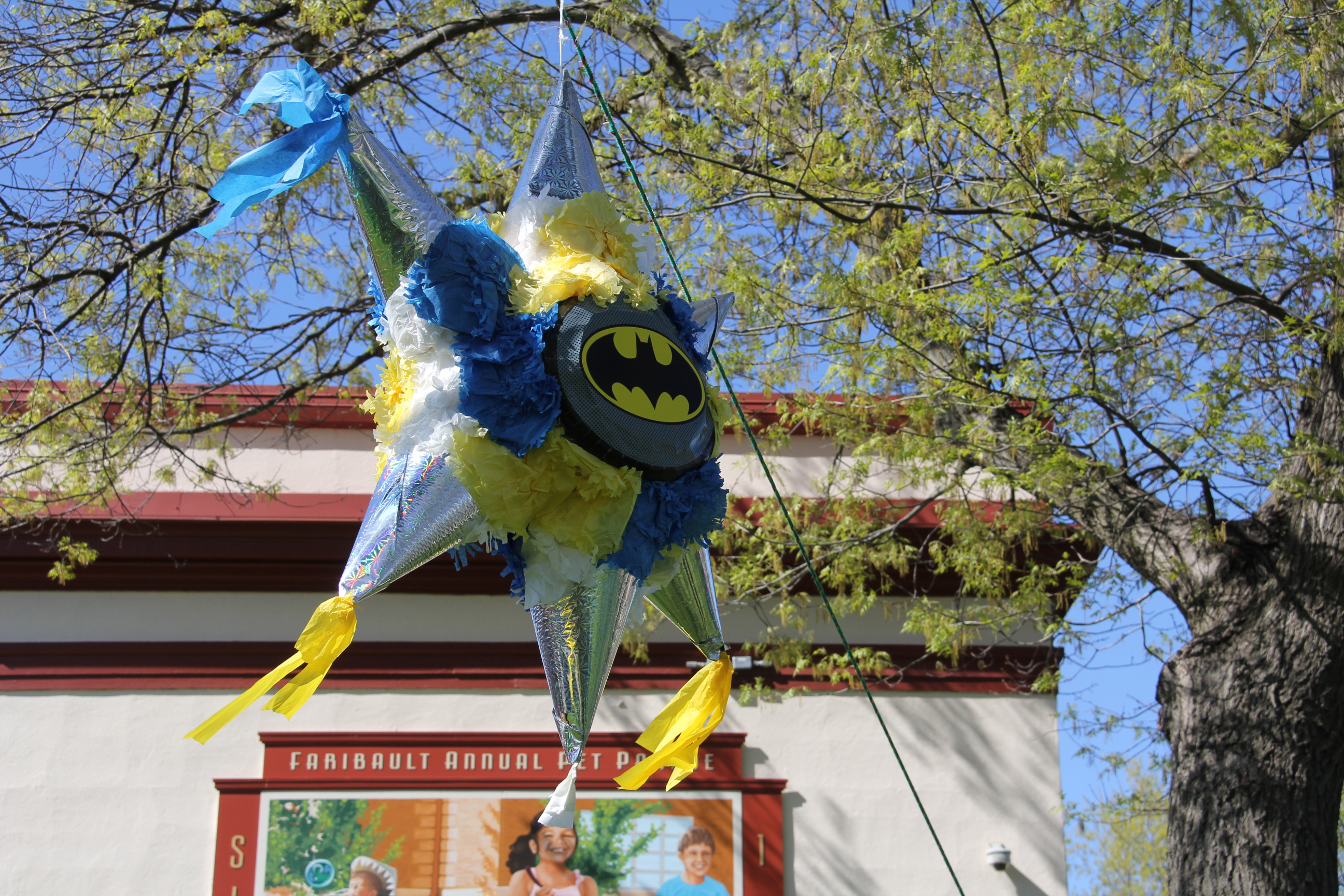
A pinata sways from a tree against the backdrop of the Central Park Bandshell. (Minnesota Prairie Roots copyrighted photo May 2024)

WHENEVER I ATTEND a culturally-focused community event, like the recent Cinco de Mayo celebration in Faribault, I feel joy. Joy because I’m learning, meeting my neighbors, growing my appreciation for the cultural diversity which defines Faribault and neighboring communities.

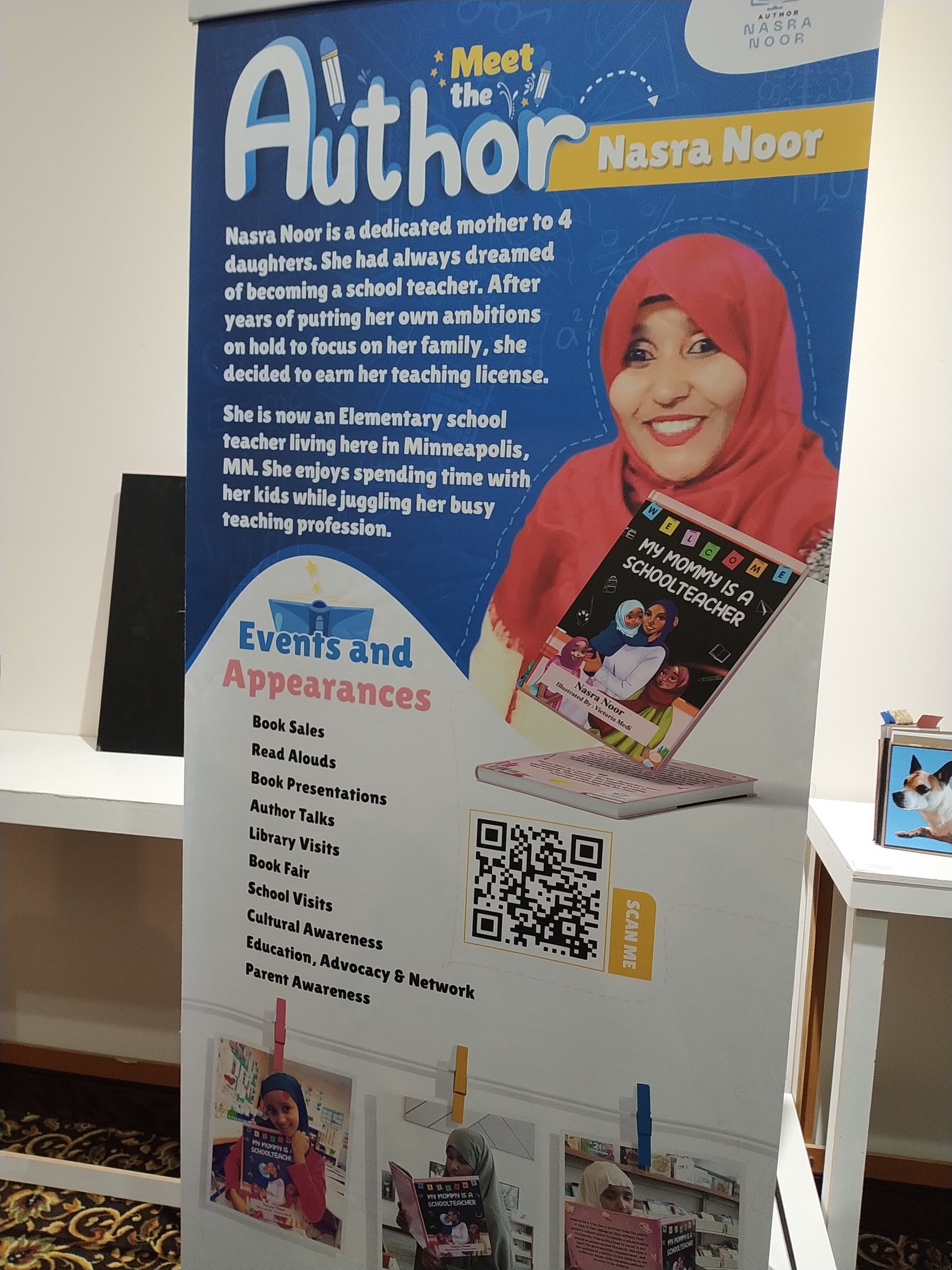
Nasra Noor, an author and teacher from Minneapolis, participated in a recent event at the Paradise Center for the Arts. (Minnesota Prairie Roots copyrighted photo April 2024)

The week prior, I attended an event celebrating our Somali population. There, too, I engaged with my new neighbors and learned more about them. I’ve always found gatherings that involve food and music to be a good way to connect. Both are universal, even if different.

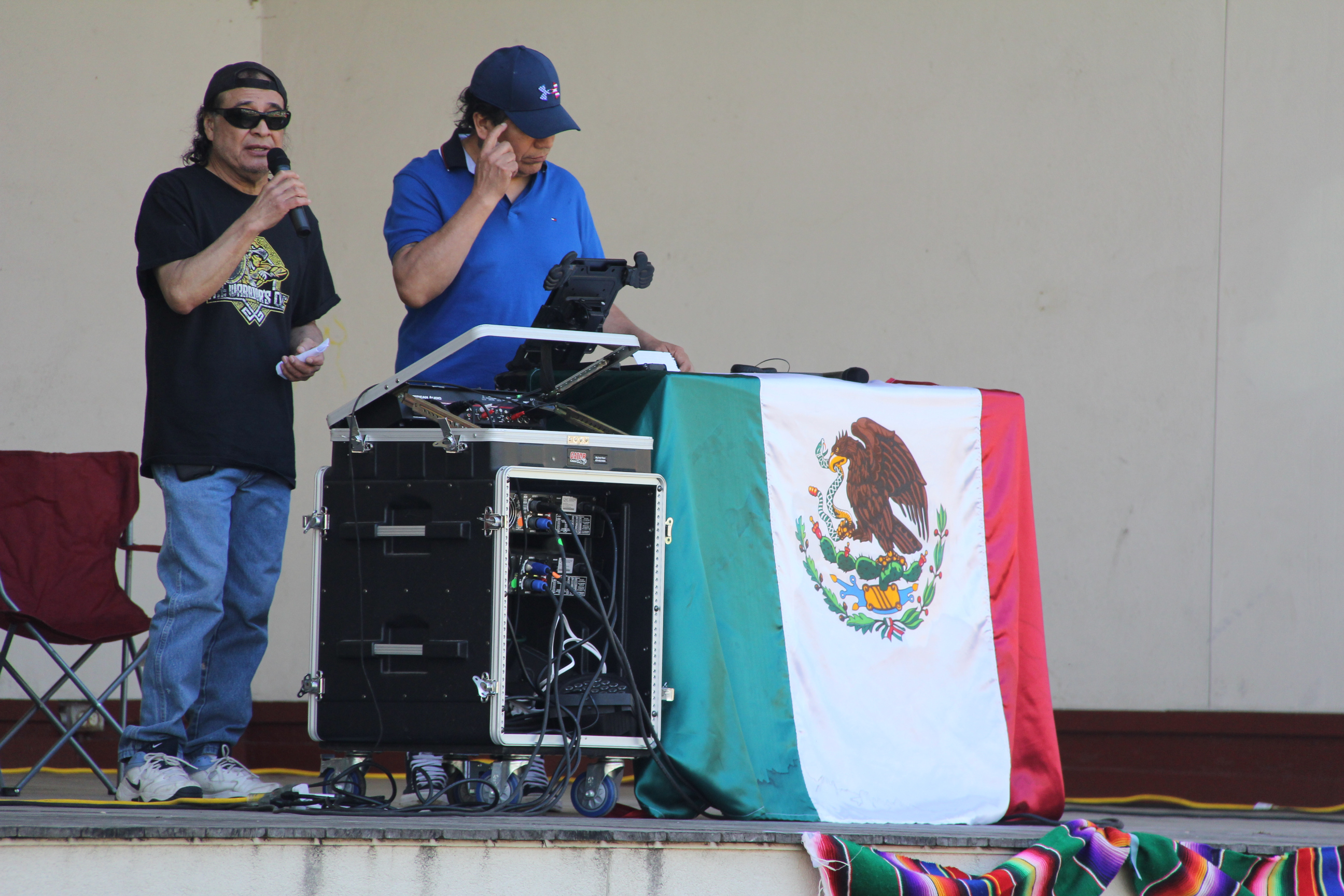
While I arrived too late for the dancers, I heard Latino music at Faribault’s Cinco de Mayo celebration in Central Park. (Minnesota Prairie Roots copyrighted photo May 2024)

Even when I don’t understand lyrics, I understand the rhythm of music.

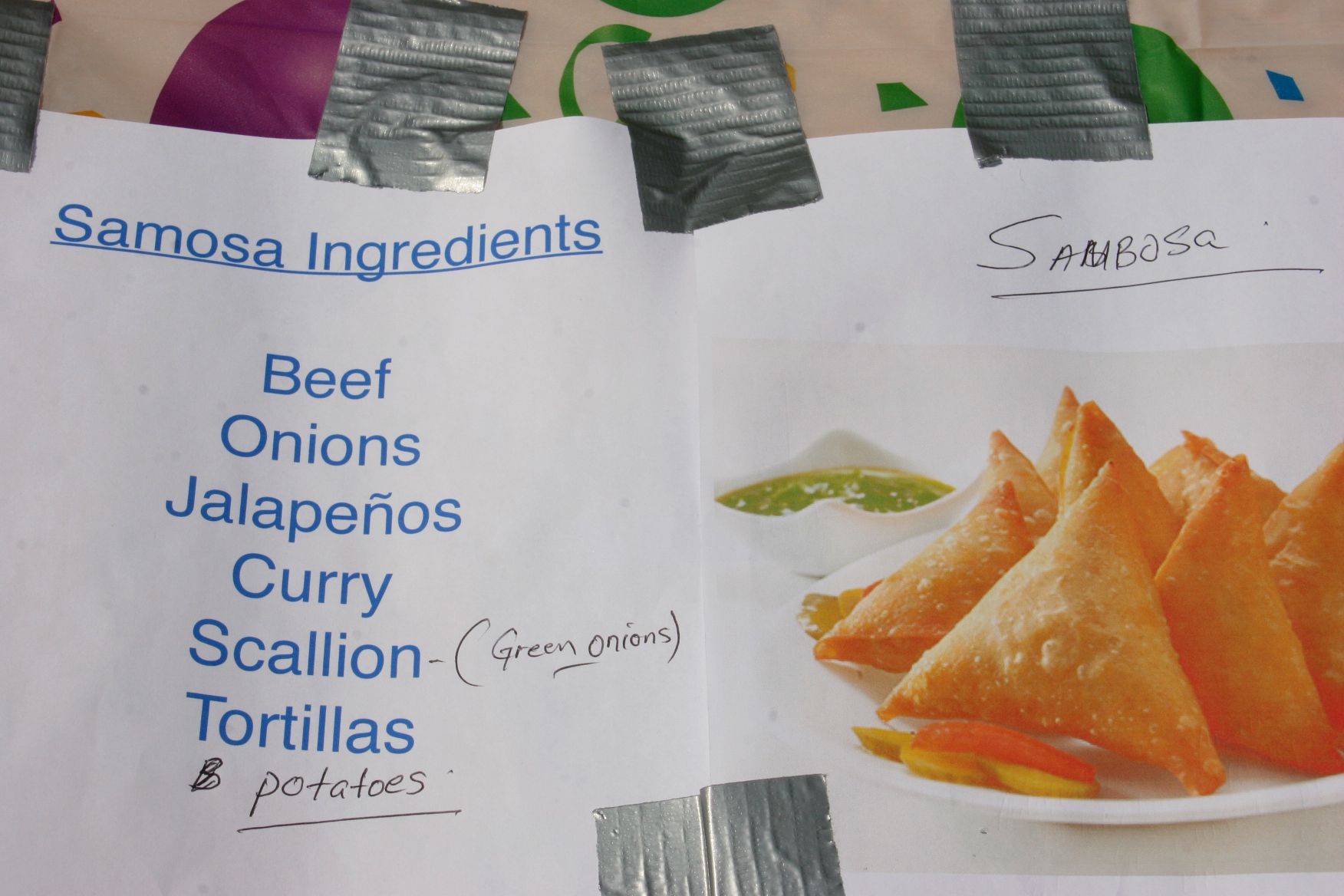
Somali food was served at a past International Festival Faribault, where this sign was photographed, and at a recent event. (Minnesota Prairie Roots copyrighted file photo)

Even when I haven’t tasted an ethnic food, I’m willing to try. And let me tell you, Somali tea tastes of ginger and cinnamon and other spices that appeal both to my sense of taste and of smell. Likewise, sambusa, which I was introduced to many years back, are delicious. I love the savory, spicy flavor of these meat-filled triangular pastries.

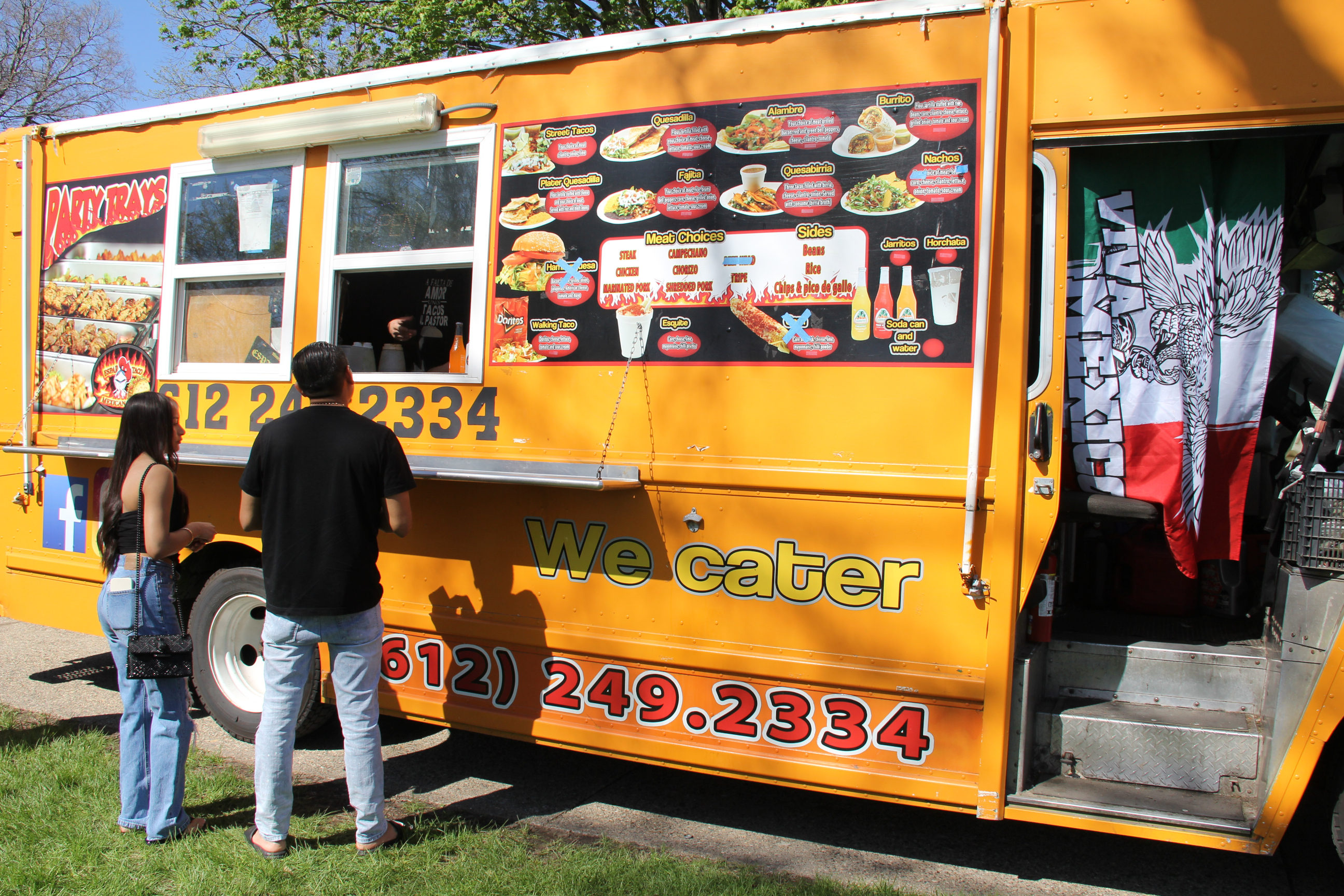
Among the Latino food vendors in the park. (Minnesota Prairie Roots copyrighted photo May 2024)

Latino food is a bit more familiar. But, because I don’t speak or read Spanish, I struggle with choices. I asked for help interpreting and translating, choosing a dish that featured shrimp. I love shrimp. Still, I didn’t realize I had just ordered soup laced with shrimp and corn. It was not my favorite. But, hey, at least I tried something new.

Sign on a food truck. (Minnesota Prairie Roots copyrighted photo May 2024)

That’s the thing. We have to be willing to step outside our familiar foods, music, language and more. Then, and only then, do we begin to feel connected in our community. We are no longer “them” and “us.” Rather, we are all one, living together in this place. It takes effort. It takes a willingness to stretch ourselves, to strike up conversations, to appreciate both differences and similarities.

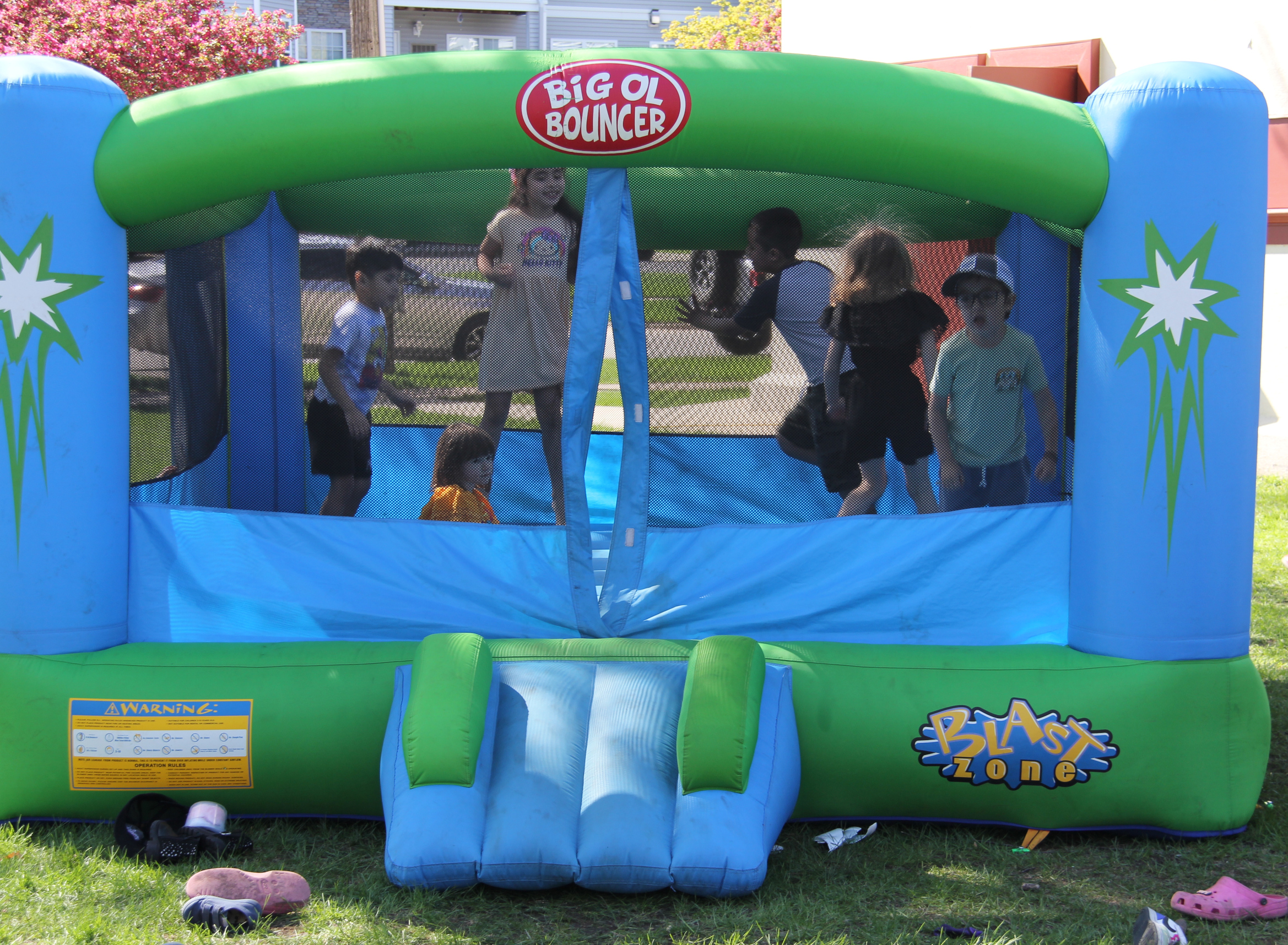
Together in the bounce house at Cinco de Mayo. (Minnesota Prairie Roots copyrighted photo May 2024)

It is the kids who give me the most hope. Kids are kids. When I see kids running, playing, dancing, singing, I see any kid. Not white, black, brown… Simply a kid.

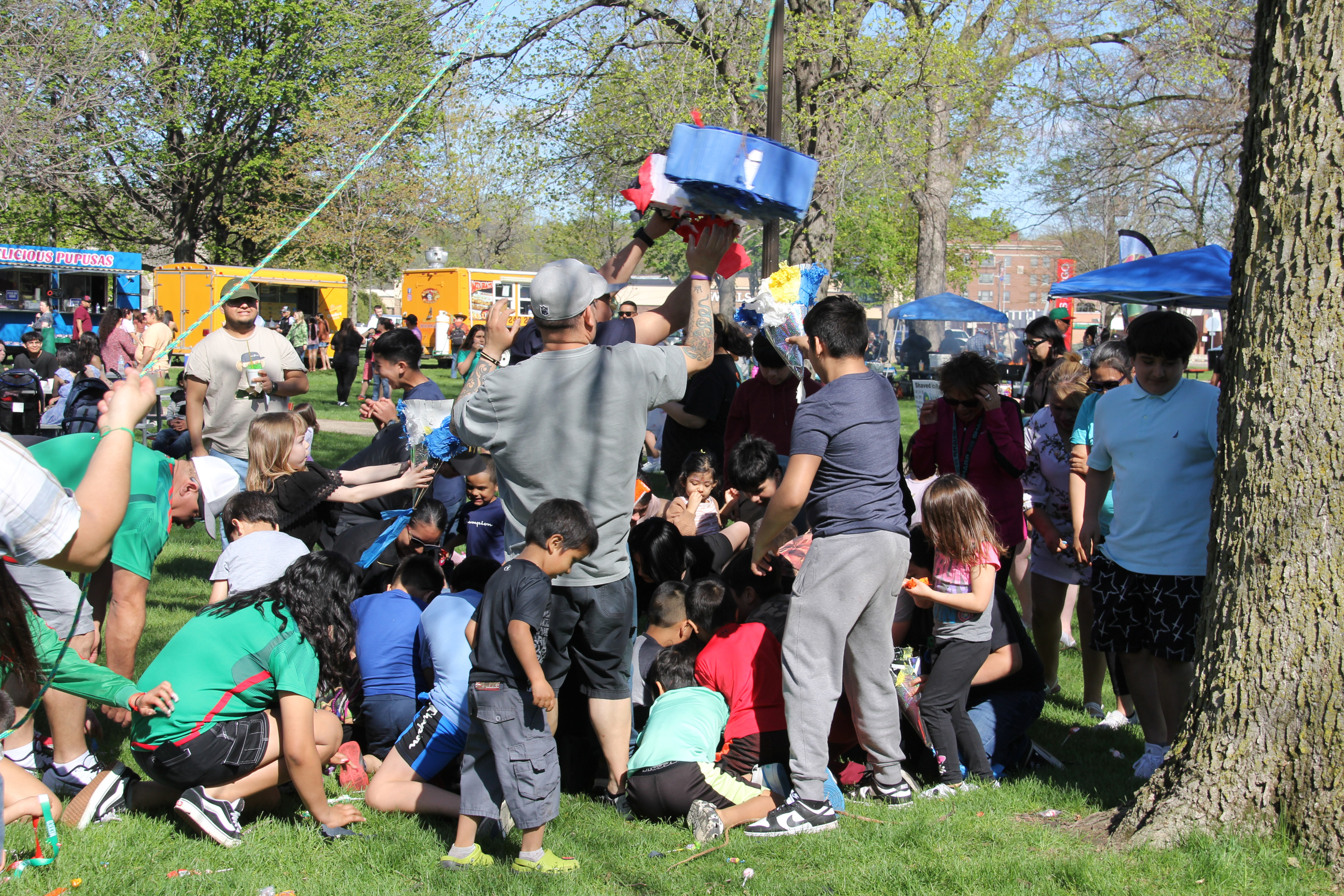
Gathering around the pinata. (Minnesota Prairie Roots copyrighted photo May 2024)
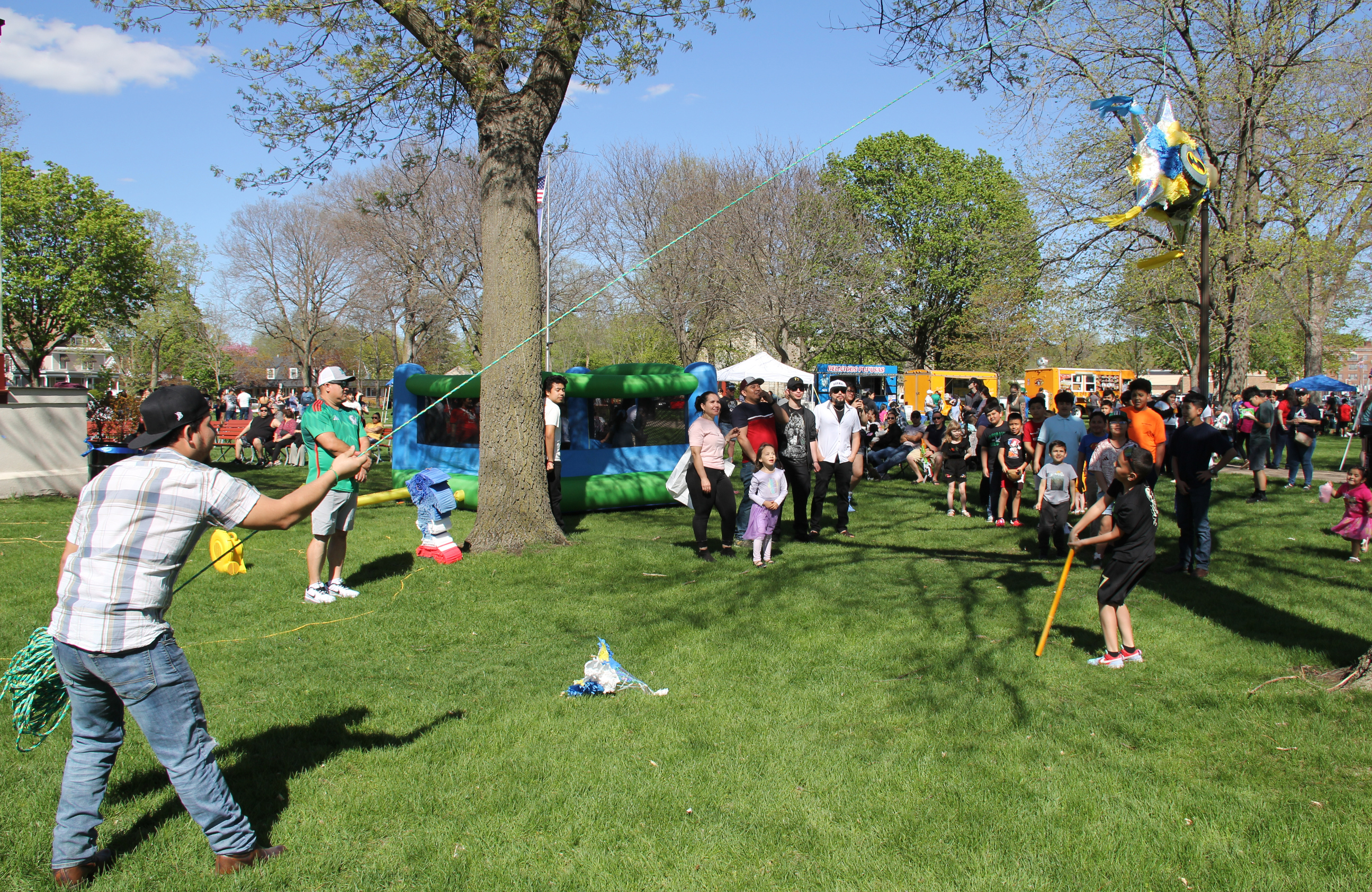
Taking aim at the pinata while others await their turn. (Minnesota Prairie Roots copyrighted photo May 2024)
Scrambling for candy after a pinata breaks. (Minnesota Prairie Roots copyrighted photo May 2024)

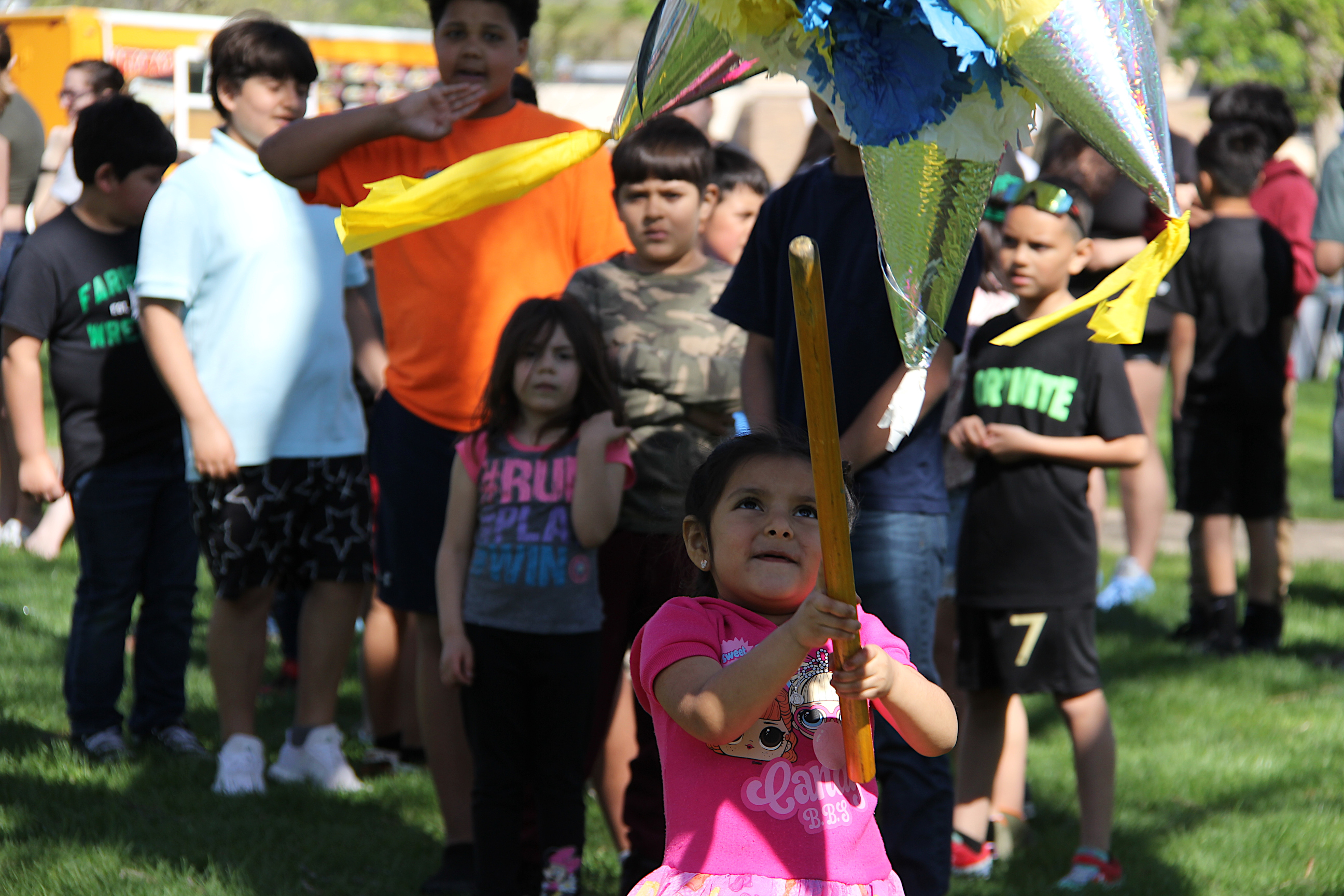
Watching a cluster of kids gathered on Cinco de Mayo to strike a pinata, I saw smiles, focus, determination, joy. They each had a singular goal: to get to the candy. They worked together. One kid took a swing, then another and another and another until it was time to pass the stick to the next kid. It took teamwork—a community of kids—to achieve the end goal. And when they scrambled for the falling candy, it was happy chaos. They’d done it. Together.

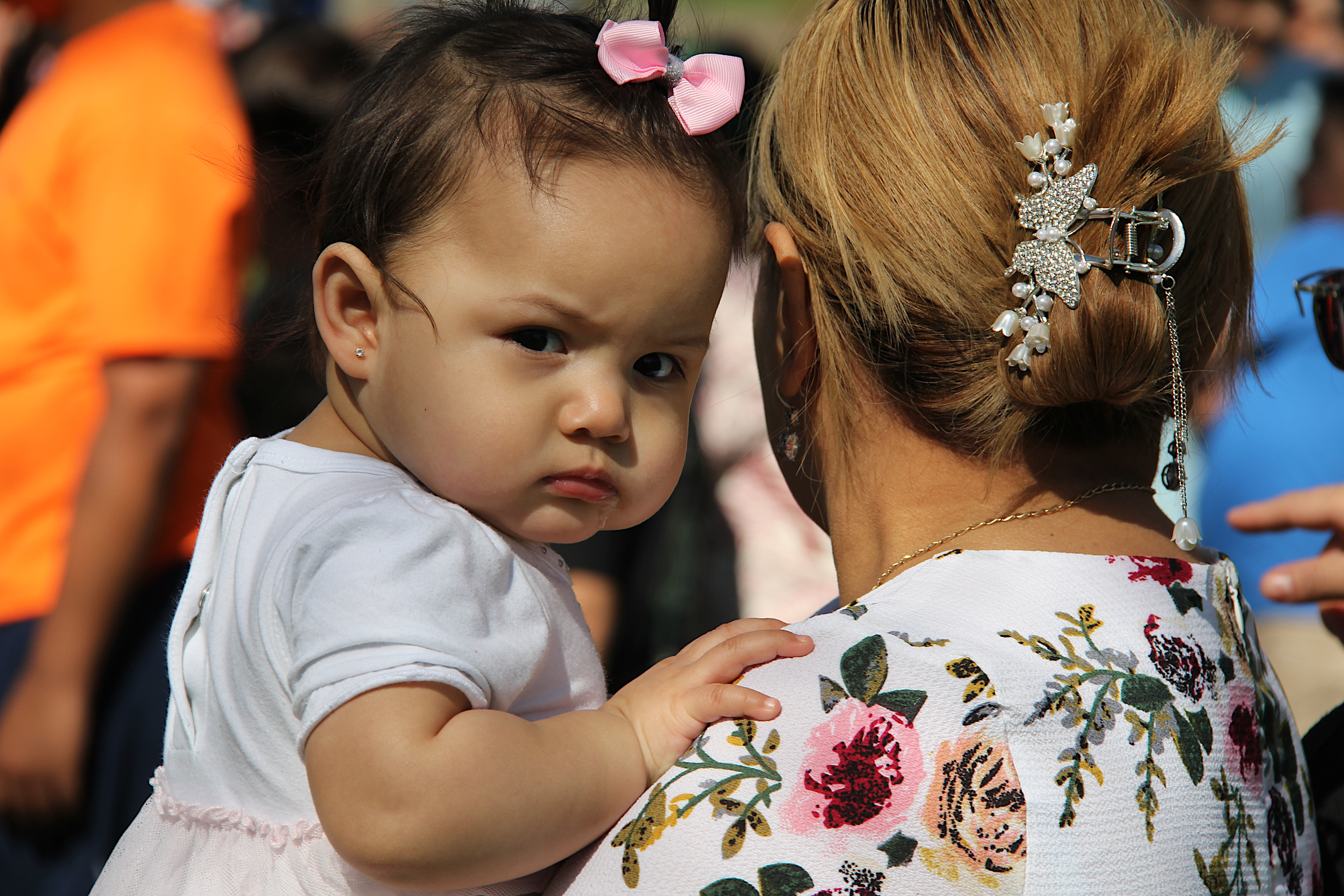
Children are our future, including this sweet little one photographed at the Cinco de Mayo celebration. (Minnesota Prairie Roots copyrighted photo May 2024)

We adults can learn a lot from the little ones. We are all in this world together. We live. We love. We struggle. We celebrate. We have hopes and dreams. More connects, than divides, us. That is what we need to remember no matter our backgrounds, our language, our food, our music…

© Copyright 2024 Audrey Kletscher Helbling


The eyes have it until they don’t May 7, 2024

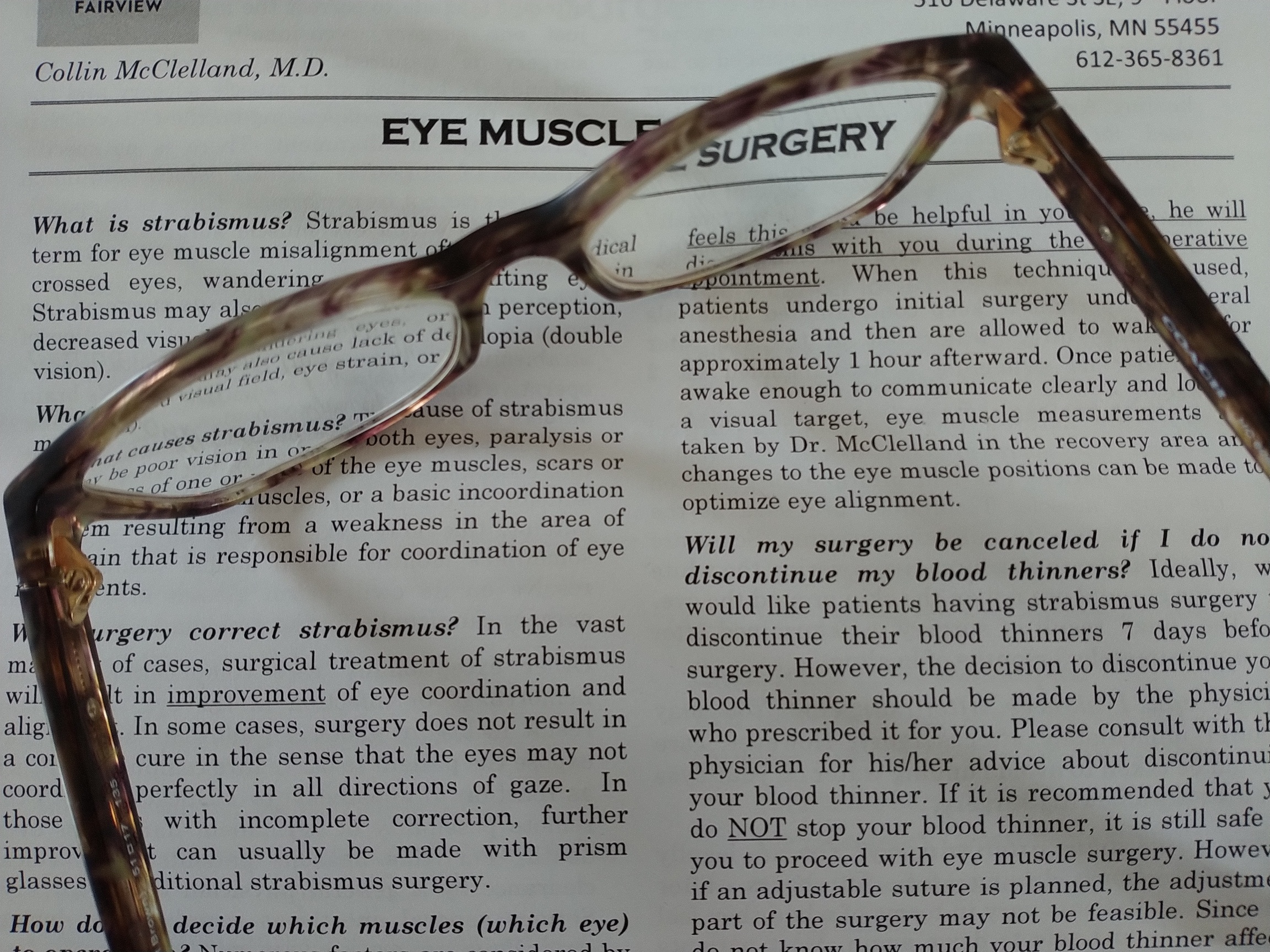
My old glasses atop info about bilateral strabismus eye surgery. (Minnesota Prairie Roots copyrighted file photo November 2023)

SIGNIFICANT REGRESSION OF SURGICAL EFFECT. Those are words you don’t want to read/hear following any surgery. But, three months out from surgery to realign my eyes, that’s where I’m at with my vision.

During my second post-op check last week with my neuro ophthalmologist, Dr. Collin McClleland, I learned that my eyes apparently have a mind of their own. They are back to not working together. This came as no surprise. I’ve been experiencing ongoing double vision, although less than before my January 22 surgery.

What I didn’t expect was the word “significant.” I knew the possibility existed that my eyes would return to misalignment; I did my homework in advance of bilateral strabismus eye surgery. But who thinks they are going to be in the minority of that final surgical outcome? Not me.

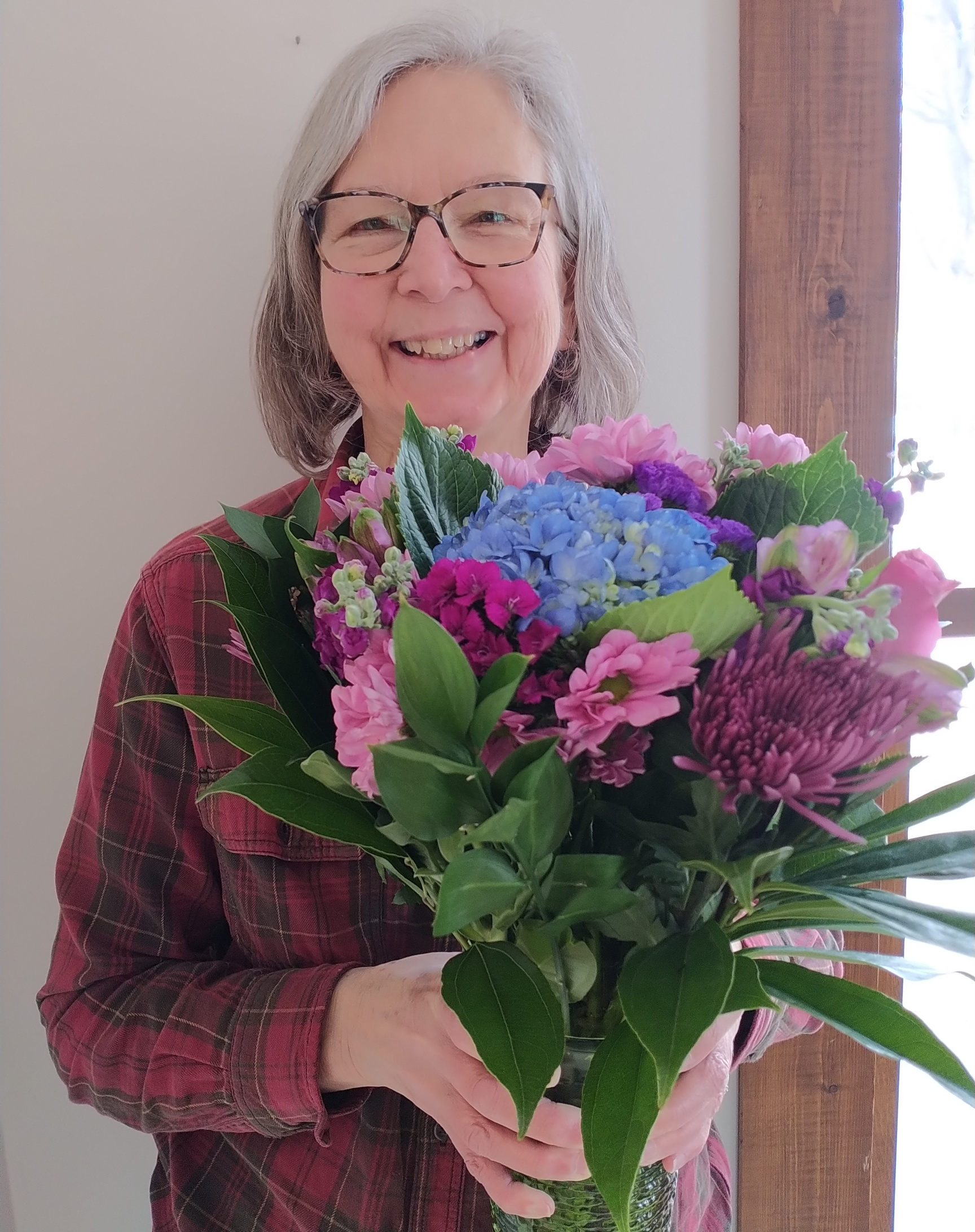
Several days after my January surgery, I was smiling, happy to have surgery behind me, happy with flowers from my family. (Minnesota Prairie Roots copyrighted file photo by Randy Helbling, January 2024)

Immediately after surgery, my eyes were in near perfect alignment. I was happy. My surgeon was happy. But then, as my eye muscles healed and my brain and eyes adjusted, the shift began.

Extensive testing during my recent appointment showed “significant regression.” I won’t confuse you with numbers and medical terminology. Suffice to say I’m frustrated and disappointed as is my surgeon. But, Dr. McClelland said, he wouldn’t have done anything differently during surgery. I needed it, and the surgery did improve alignment. I agree. Why my eyes reverted mostly back to their misaligned positions is unknown. I asked. There’s no answer.

I explained to my doctor that it takes effort sometimes to see just one, and not two. That exhausts me. And if I’m doing anything that requires a lot of visual back-and-forth, like shopping, my eyes feel like they’ve done calisthenics. They hurt. Whenever I have lots of sensory input or am doing multiple things, my double vision worsens. I was experiencing all of this before surgery, too.

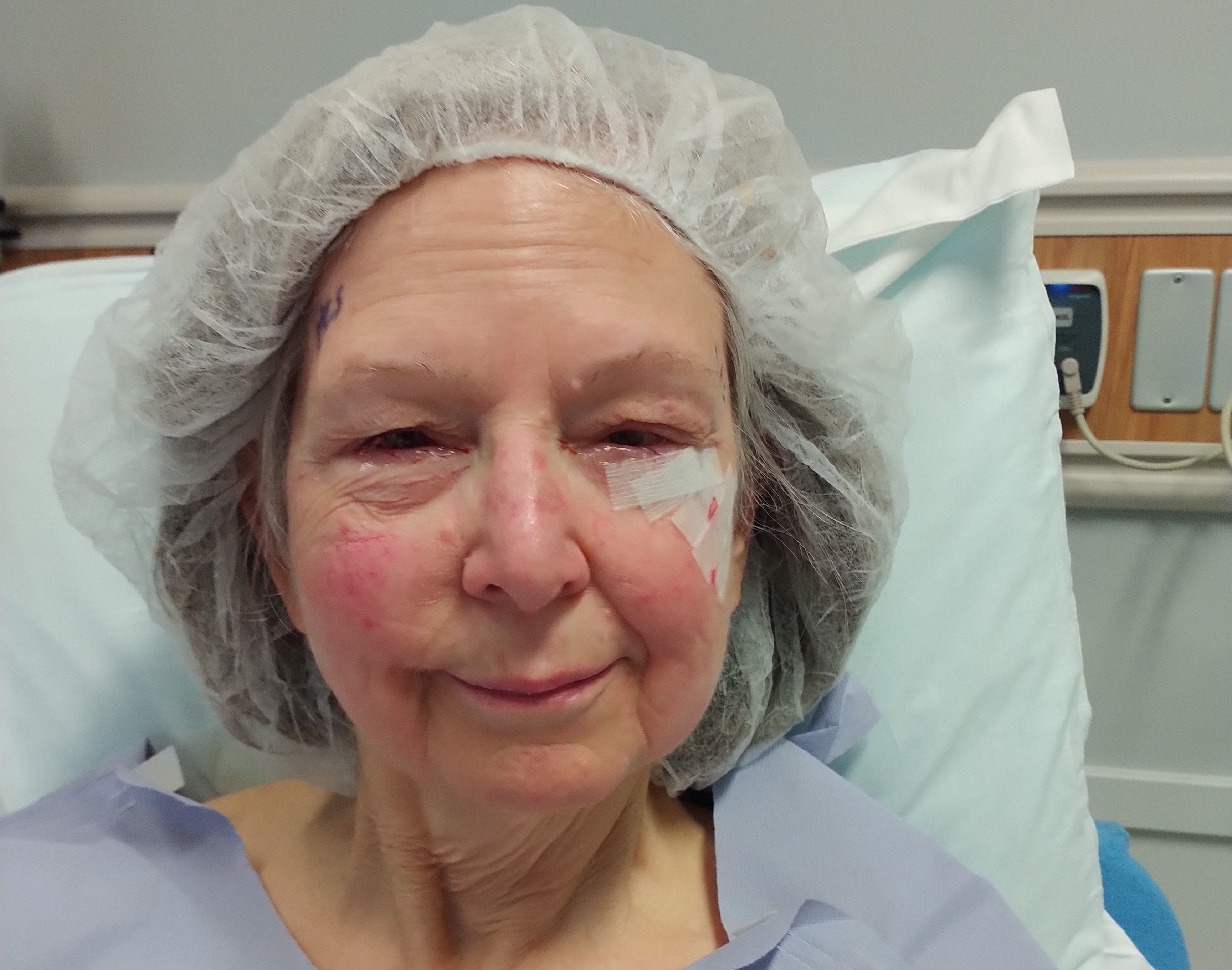
In the recovery room after surgery on both eyes in January. (Minnesota Prairie Roots copyrighted file photo by Randy Helbling, January 2024)

What to do next was the question of the morning. My surgeon offered two choices: One, add more prisms to my glasses and hope that alleviates some of my double vision. Or try surgery again. I was mentally unprepared for this. But I quickly opted for more prisms. I am in no hurry to rush back into an operating room, even if the 1 ½-hour surgery was not horrible and I have full confidence in Dr. McClelland. Surgery is surgery.

So here I am, no line bifocal prism glasses ordered. The lenses will take about two weeks to make given the extensive work required. Then I’ll be without glasses while the lenses are placed in my frames. Then the test begins. Will the added prisms, divided between both lenses, help with my double vision? Time will tell. Prisms bend light before it travels to your eyes and the brain has to sort it all out and create a singular image, or something like that.

The issue, my ophthalmologist explained, is whether I can tolerate more prisms added to my prescription lenses. I could experience distortion, what he calls “the fish bowl effect.” The goal is “comfortable singular binocular vision.” If I can’t handle the added prisms (which are actually less than they should be, but within the hopefully tolerable range), then I will need to revisit surgery.

That’s where I’m at today. Waiting for those prism-heavy lenses. I’m trying to prepare myself for what I know will be several weeks of adjusting to my new prescription. And hoping this non-surgical approach works.

These buildings house outpatient clinics, including the M Health Fairview Eye Clinic, on the campus of the University of Minnesota in Minneapolis. (Minnesota Prairie Roots copyrighted photo May 2024)

As disappointed and frustrated as I feel about the final surgical outcome, I remain grateful for the vision I do have, even if far from perfect. Sitting in the waiting room at M Health Fairview Eye Clinic in Minneapolis puts my situation in perspective. I have watched little kids there navigating with the aid of a white cane…

© Copyright 2024 Audrey Kletscher Helbling


Poetry that sings from Minnesota’s poet laureate May 2, 2024

Book cover sourced online. Cover watercolor painting, “The Musician,” is by Cherokee artist Roy Boney, Jr.

HER POEMS SING with the rhythm of a writer closely connected to land, heritage and history. She is Gwen Nell Westerman of Mankato, Minnesota poet laureate and author of Songs, Blood Deep, published by Duluth-based Holy Cow! Press.

Of Dakota and Cherokee heritage, Westerman honors her roots with poems that reflect a deep cultural appreciation for the natural world. The water. The sky. The seasons. The earth. The birds and animals. They are all there in her writing, in language that is down-to-earth descriptive. Readers can hear the birdsong, feel the breeze, see the morning light… That she pens nature poems mostly about the land of my heart—fields and prairie—endears me even more to her poetry.

This slim volume of collected poems is divided into seasons of the year, each chapter title written in the Dakota language. The book features multiple languages—Dakota, Cherokee, Spanish and English. That adds to its depth, showing that, no matter the language we speak, write or read, we are valued.

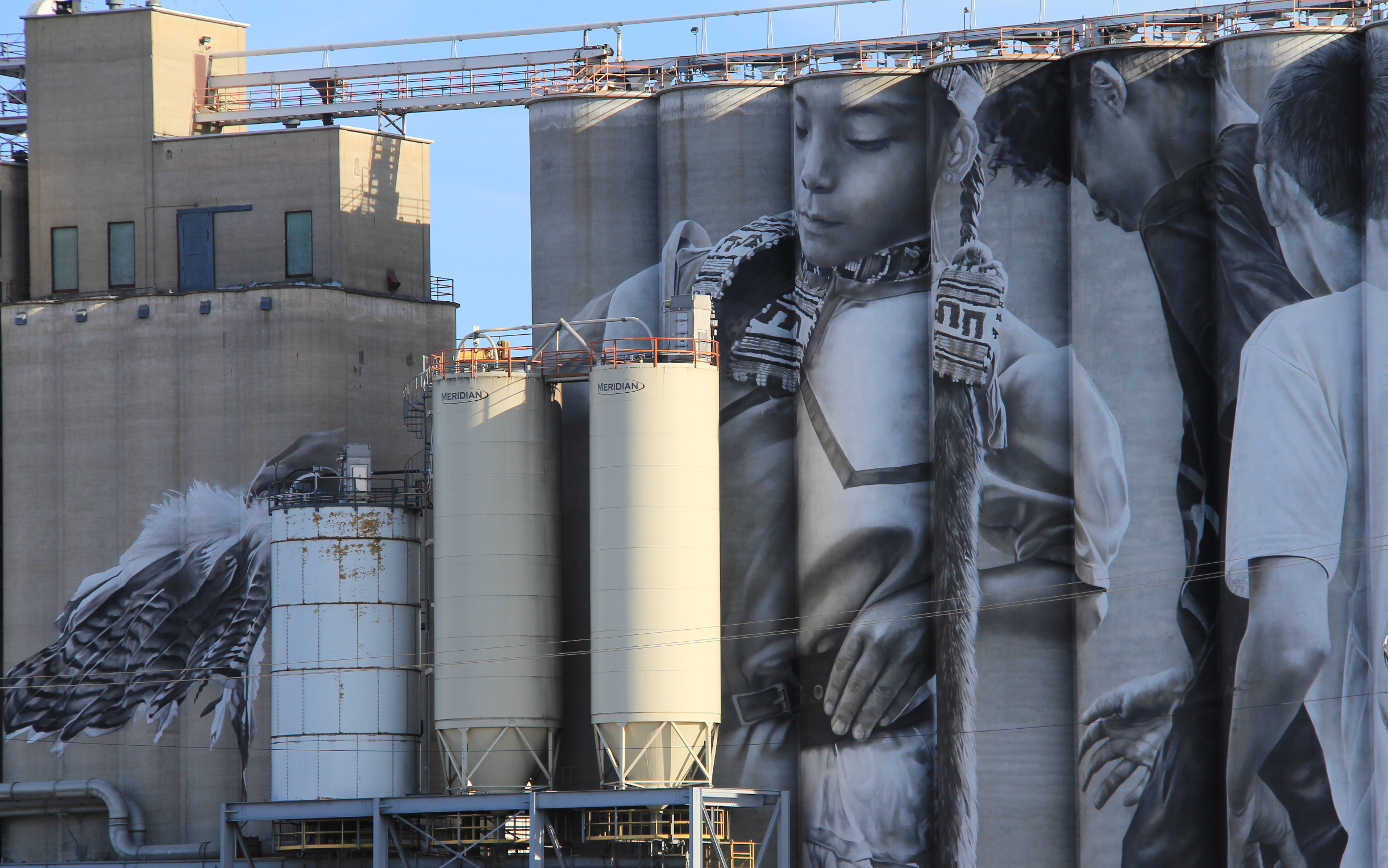
This silo mural in downtown Mankato celebrates the cultural diversity of the region, including the Dakota. (Minnesota Prairie Roots copyrighted photo November 2023)

Westerman clearly values her Native heritage, how lessons and stories have been passed to her through generations of women, especially. Songs, blood deep. In her poem “First Song,” she shares a lesson her grandmother taught her about the importance of sharing. After reading that thought-provoking poem, I considered how much better this world would be if we all focused on the singular act of sharing.

The Dakota 38 Memorial at Reconciliation Park in downtown Mankato lists the names of the 38 Dakota men hung at this site on December 26, 1862. (Minnesota Prairie Roots copyrighted photo November 2023)

This poet, who is also a gifted textile artist (creator of quilts), wraps us in her words. In the season of waniyetu, her poetry turns more reflective and introspective, as one would expect in winter. She writes of family, injustices and more. “Song for the Generations: December 26” is particularly moving as that date in history references the mass execution of 38 Dakota sentenced to death in 1862 and hung in Mankato. Westerman writes of rising and remembering, of singing and prayer. It’s a truly honorable poem that sings of sorrow and strength.

Her poems remind us that this land of which she writes was home first to Indigenous Peoples. Westerman writes of a state park in New Ulm, the sacred Jeffers Petroglyphs and Fort Snelling, where Dakota were imprisoned after the U.S.-Dakota War of 1862 and before their exile from Minnesota. The name of our state traces to Mni Sota Makoce, Dakota for “the land where the water reflects the sky.” It’s included in Westerman’s poetry.

I appreciate poems that counter the one-sided history I was taught. I appreciate Westerman’s style of writing that is gentle, yet strong, in spirit. Truthful in a way that feels forgiving and healing.

In the all of these poems, I read refrains of gratitude for the natural world, gratitude for heritage and gratitude for this place we share. We sang. We sing. Songs, blood deep.

FYI: Songs, Blood Deep, is a nominee for the 2024 Minnesota Book Award in poetry. The winner will be announced May 7. This is Westerman’s second poetry book. Her first: Follow the Blackbirds. In addition to writing poetry and creating quilts, Westerman teaches English, Humanities and Creative Writing at Minnesota State University, Mankato.

© Copyright 2024 Audrey Kletscher Helbling
 

House of Kahmanns: A story of trauma, family love & resilience May 1, 2024

IT WAS A TUESDAY in January 1964. Wash day in the Kahmann household. Outside, a ground blizzard raged, reducing visibility on the southwestern Minnesota prairie. The events of that morning, of that day, would forever change the lives of siblings Karl, Patsy, Eric, Andy, John, Paul, Kevin, Katy, Karen, Phillip, Jim and Beth, and their parents, Jack and Della.

That sets the scene for House of Kahmanns, a memoir by P.G. (Patsy) Kahmann, oldest daughter, second oldest among 12 children. Sixteen months earlier, the family moved from Kansas City, Missouri, to Minnesota when Jack, a traveling salesman in a farm business, was relocated. They settled near their maternal grandparents, into a rental home by Granite Falls.
I expect Jack Kahmann was driving in weather and road conditions similar to this. (Minnesota Prairie Roots copyrighted file photo, January 2020, used for illustration only)
This is familiar land to me in a familiar time. I was not quite eight years old in January 1964, living on a farm some 30 minutes away in neighboring Redwood County. I understand full well the fierce prairie wind that whips snow into white-out conditions. On that blustery morning, as Jack and Della and Della’s parents set out for medical and business appointments in Minneapolis, leaving the oldest, Karl, to care for the youngest children, Patsy and her school-age siblings boarded the school bus.
Rosary beads. (Minnesota Prairie Roots copyrighted file photo used for illustration only)

Patsy was in English class when she got the devastating news. There had been a crash. A bread truck driven by an unlicensed 14-year-old ran a stop sign and then a yield sign before slamming into the 1957 Chevy driven by Jack. Della, mother of a dozen, was the most seriously injured. “How many Hail Marys will it take to save my mother’s life?” Patsy asks herself.

An altar in a southern Minnesota Catholic church. (Minnesota Prairie Roots copyrighted file photo used for illustration only)

Faith, a strong Catholic faith, threads through this story. The Kahmanns were devout, prayerful, always in church. The church, or rather the local parish priest, would play the primary role in turning the initial tragedy into even more intense pain, suffering, separation and trauma for the family. Father Buckley demanded that the 12 children be placed with Catholic families while their parents recovered at a hospital 70 miles away. That, even though a Lutheran couple offered to move into the Kahmanns’ farm home and care for the children. Together.

At this point in the book, I felt my anger flashing. Anger over the inhumanity of a man of the cloth who is supposed to exude compassion, care and love. More atrocities by the priest followed. By the time I read the epilogue, I was irate, forgiveness far from my mind.

Love and forgiveness were taught in the Kahmann home. (Minnesota Prairie Roots copyrighted file photo used for illustration only)

But the Kahmanns were a loving and forgiving family. (Not necessarily of that priest.) One evening after they are all reunited, Jack asks his family to pray blessings upon the driver of the bread truck. Three-year-old Phillip mishears. “God bless the red truck!” he shouts. Laughter erupts. I needed that humor in a story weighing heavy upon my soul.

I wanted to step into the pages of the book and hug those kids and make everything better. Just as Millie Bea did when the Kahmanns lived in Kansas City and Jack was traveling around the country and Della needed extra help with the kids. The book flips back and forth in time and place between Missouri and Minnesota, before and after the crash.

The Kahmanns were not unfamiliar with trauma. In June 1955, Andy’s hand was nearly severed in a hand cement mixer. A Kansas City surgeon successfully reattached his limb, even though a priest told Jack that his son’s hand had been amputated. That was untrue.

Family love is such a strong theme in this book. (Minnesota Prairie Roots copyrighted file photo used for illustration only)

Through all of this, themes of love, strength and resilience thread. The Kahmann siblings clearly looked out for and loved one another and got through some pretty awful stuff. Their motto, Patsy writes, was “No one died. We all survived.” They never talked about the accident. I’m not surprised. Who did back then? Eventually the family would relocate to Bird Island, 32 miles directly east of Granite Falls. It was a new start in a new place following their 75 days apart, “75 days of confusion, anxiety and foreboding.”

And now, with publication of House of Kahmanns—A Memoir, A story about family love and shattered bonds, about finding each other in the aftermath, perhaps these siblings are talking about all they endured. For Patsy, it is also about keeping a promise. In the book dedication she writes: To Mom and Dad/I promised you I would write this story. And she did, with honesty, pain and a great deal of strength.

© Copyright 2024 Audrey Kletscher Helbling