Minnesota Prairie Roots

Writing and photography by Audrey Kletscher Helbling

Thrifting at the mall March 28, 2012

Filed under: Uncategorized — Audrey Kletscher Helbling @ 7:28 AM
Tags: , , , , , ,

Terry's Curiosities and Collectables offers mostly collectible glassware, not at thrift store prices, but lower than at an antique store. So for purposes of this post, I'm terming Terry's a thrift store.

LONG BEFORE thrifting became fashionable, I thrifted. I shopped primarily at garage and rummage sales because second-hand stores simply weren’t all that common nearly 27 years ago.

Yes, I’ve been thrifting that long, since before my first-born was born. Baby clothes and kids’ clothes, books and toys comprised those early bargain purchases.

As the years passed, my shopping habits shifted away from the needs of my growing-into-teenagers kids toward myself—to the vintage tablecloths, drinking glasses and prints/paintings/miscellaneous artwork I collect.

And as the years have passed and thrift stores have opened in my community of Faribault, I find myself turning more to those stores than to rummage sales to shop on the cheap.

I also focus more on nostalgia, discovering that which connects me to days gone-by. The older I grow, the more I appreciate my past.

Let me show you some of the merchandise I perused on a recent stop at Terry’s Curiosities and Collectables (sic) and the Salvation Army Store in the Faribo West Mall.

As long as you’re tagging along with me on this shopping trip, let’s play a little game. I’ll show you the goods and you guess which I purchased.

Here we go:

I remember when my mom popped these Sylvania flashbulbs into her camera.
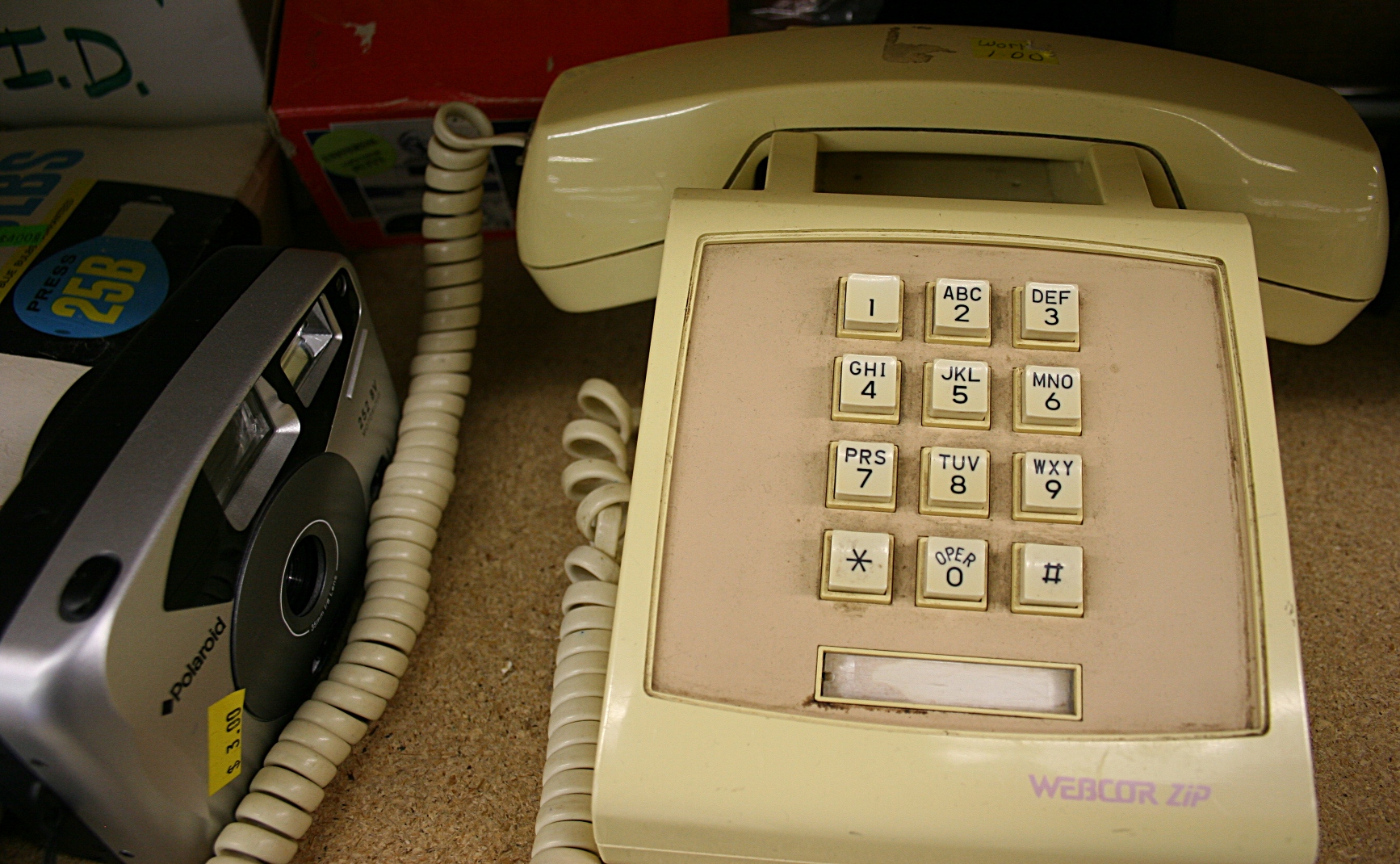
I remember the time my son saw a rotary dial phone in a thrift store and had no clue how to use it. Heck, I remember life without a phone growing up on the southwestern Minnesota prairie.

This vintage piece is as much clock as art. I call her "The Girl with Attitude."
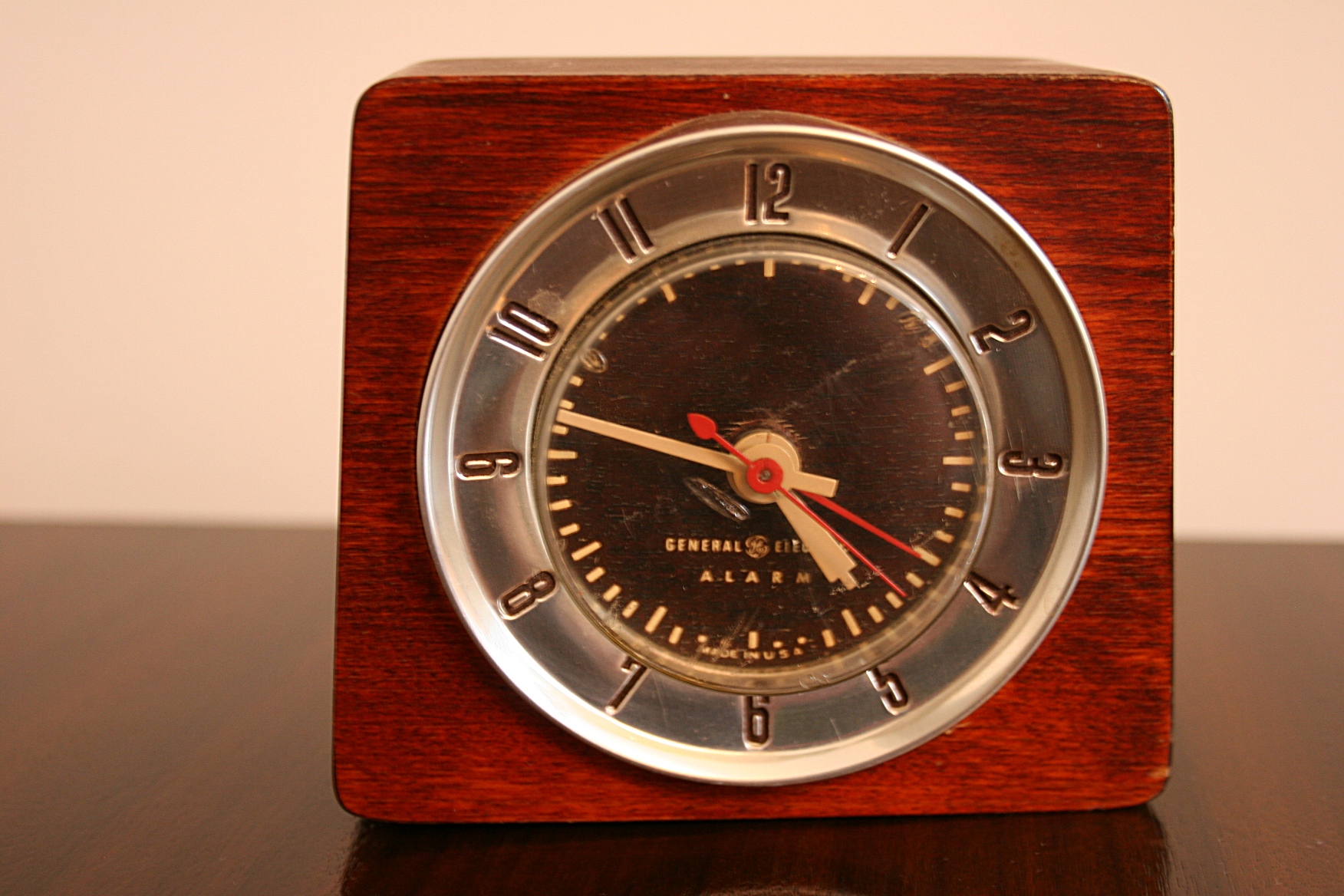
A working General Electric alarm clock made from wood.
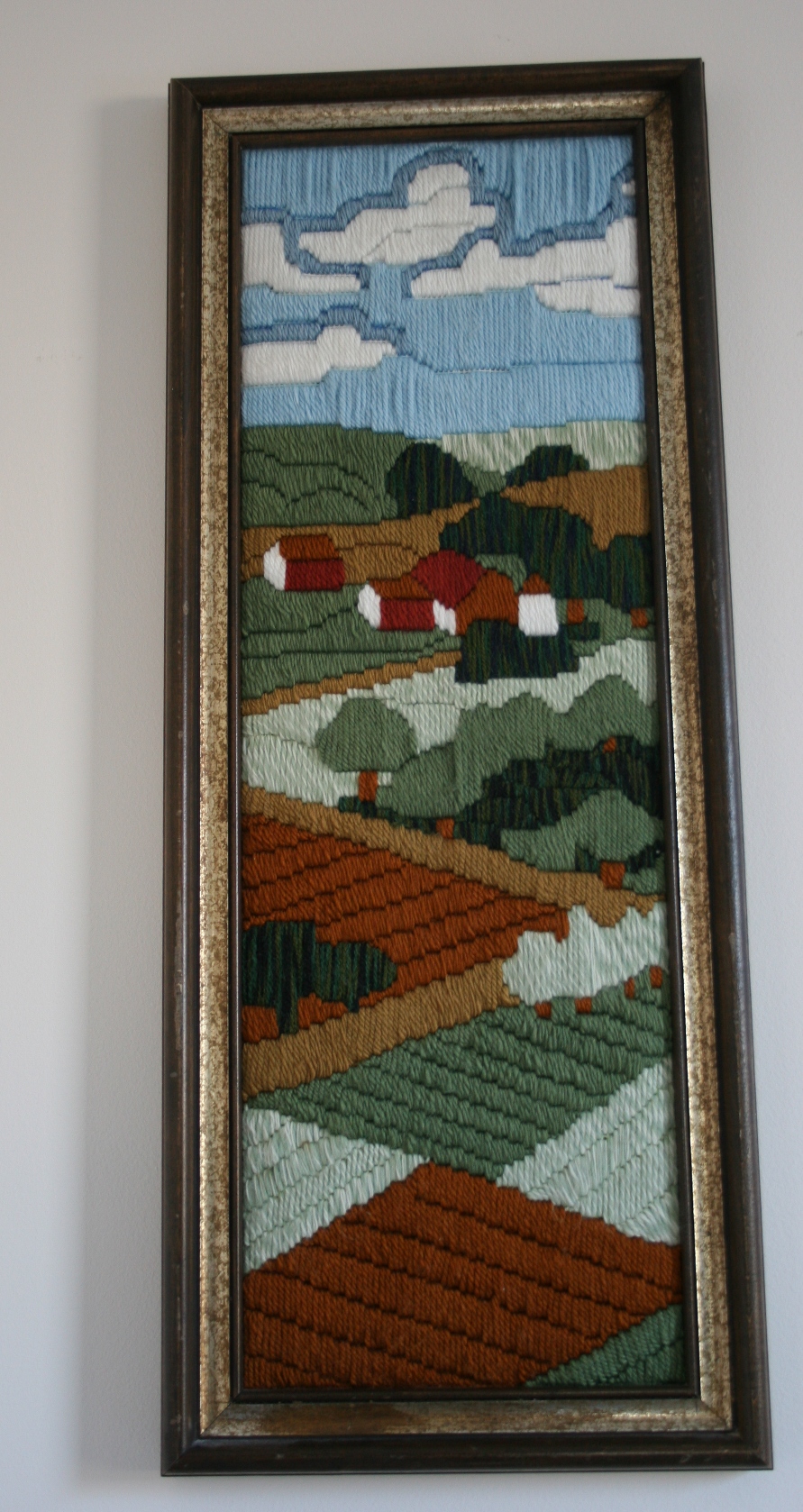
A hand-stitched rural scene.
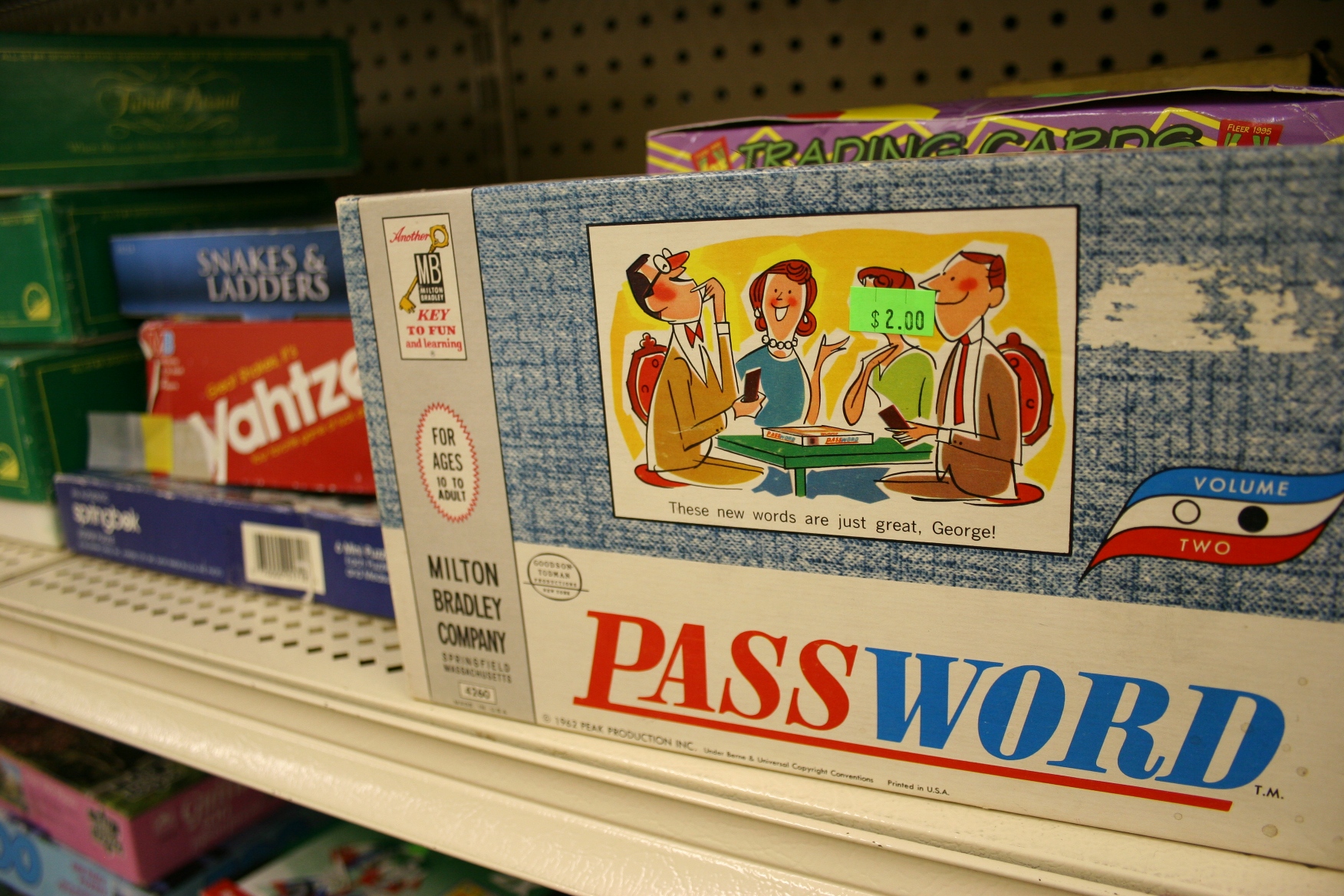
I found games packing shelves at the Salvation Army, including this vintage version of Password.

Alright then, have you made your guesses? Which of the above two did I buy?

And which of the above two did I wish I’d purchased?

PURCHASED: The General Electric alarm clock for $4 and the needlework art for $2.

SHOULD HAVE PURCHASED: The Password game at the Salvation Army and “The Girl with Attitude” clock (which I think was out of my thrifty price range) at Terry’s Curiosities and Collectables.

Would you have bought any of these items?

© Copyright 2012 Audrey Kletscher Helbling


Celebrating the regional poetry of Minnesota March 27, 2012

THREE APPARENTLY is the lucky number connected with this year’s soon-to-be-released sixth Poetic Strokes anthology published by my regional library system, Southeastern Libraries Cooperating.

At least, on the surface, with 30 poems by 30 poets from 13 communities, all those threes seem to point to that conclusion.

But I don’t bank success on luck—even if my poem of three verses—is among those that published.

Now I’m not privy to the criteria judges used to evaluate the 202 poems submitted by 202 poets from 34 communities within the 11 SELCO counties. But I trust their judgment to select the 30 best works.

Penning a poem worthy of publication takes time, effort and talent. I know. I’ve received my share of dismissals, including last year’s rejection of my three poems submitted to the Poetic Strokes competition. In retrospect, I can see now that those poems needed refining.

While none of us like rejection, it is often the best/only way to show us we can do better. On several occasions I’ve rewritten rejected poems and then had them accepted elsewhere.

I realize, too, that judges’ personal preferences in poetry and the publication itself also factor into acceptance or rejection of a poem. For example, when I’ve submitted to Lake Region Review and The Talking Stick, I’ve considered that these are Minnesota anthologies rooted in the region. I’ve successfully published in both.

Any of you who’ve read my poetry understand that I am a regional writer, with most of my poems connected to the land, specifically my native southwestern Minnesota. I am rooted to the geography of the prairie and to my experiences growing up there. That connection defines my distinct, poetic voice.

Take my poem, “Writing poetry as the sun rises,” just published in Poetic Strokes 2012. At first glance, the title seems to suggest I’ve veered from my voice. Not so. If not for my life-long deep appreciation of prairie sunrises and sunsets (even though I no longer live on the prairie), I may not have looked up from my computer one morning to appreciate the rising sun and then write about it.

Apparently my Minnesota prairie roots voice resonates with judges as I’ve entered numerous competitions and had my poems accepted for publication or display, including in the upcoming Poet-Artist Collaboration XI at Crossings at Carnegie in Zumbrota. Click here to learn more about that gallery show.

Five of my poems have also published in three volumes of Poetic Strokes. Make that six in four volumes. (This year’s competition allowed submission of only one poem.)

Copies of Poetic Strokes 2012 will be available for check-out at all SELCO libraries during the first week of April, National Poetry Month. Because the anthology was funded by the Minnesota’s Arts and Cultural Heritage Fund, the volume will not be sold. Published poets will each receive five complimentary copies.

To read a list of the poets published in this year’s Poetic Strokes—including five from my county of Rice—click here.

As long as we’re talking poetry here, SELCO will launch its Poets at the Library tour with an appearance by Morris-based writer Athena Kildegaard at 7 p.m. Monday, April 2, at the Owatonna Public Library. Kildegaard, a current Minnesota Book Award poetry finalist with Bodies of Light, has also written Rare Momentum. Both were published by the respected Red Dragonfly Press in Red Wing. Kildegaard’s third poetry collection, Cloves & Honey–love poems, has just been released by Nodin Press.

Poets Laura Purdie Salas, Barton Sutter, Su Smallen and Todd Boss—one of my personal favorites—are also part of the SELCO tour. Click here to learn more about Poets at the Library.

Now, I am not so naïve as to believe that all of you like and embrace poetry. But if you haven’t read poetry in awhile, then I’d suggest you try reading it again. Today’s poetry is not the rhyming, elitist poetry of your youth.

I will be the first to tell you, emphatically, that I find some poetry so totally out there that I have no hope of understanding it. That’s OK. Find a poet whose voice resonates with you and then listen and appreciate the words that touch your soul.

© Copyright 2012 Audrey Kletscher Helbling

 

Making mints, not quite like the masters, in March March 26, 2012

Filed under: Uncategorized — Audrey Kletscher Helbling @ 12:01 PM
Tags: , , , ,

IT WAS TEMPTING, mighty tempting, to pinch off a snippet of dough and roll it between my palms into the shape of a skinny squiggly snake.

But…, instead, I had to, like the others, abide by the rules and turn out molded hearts and roses, butterflies and shells, doves and rabbits…

It is what our aunts and mother, experts in the art of mint-making, would expect. For decades, these women have crafted homemade mints from cream cheese and powdered sugar for special family occasions like graduations, confirmations, weddings, bridal and baby showers, and birthdays.

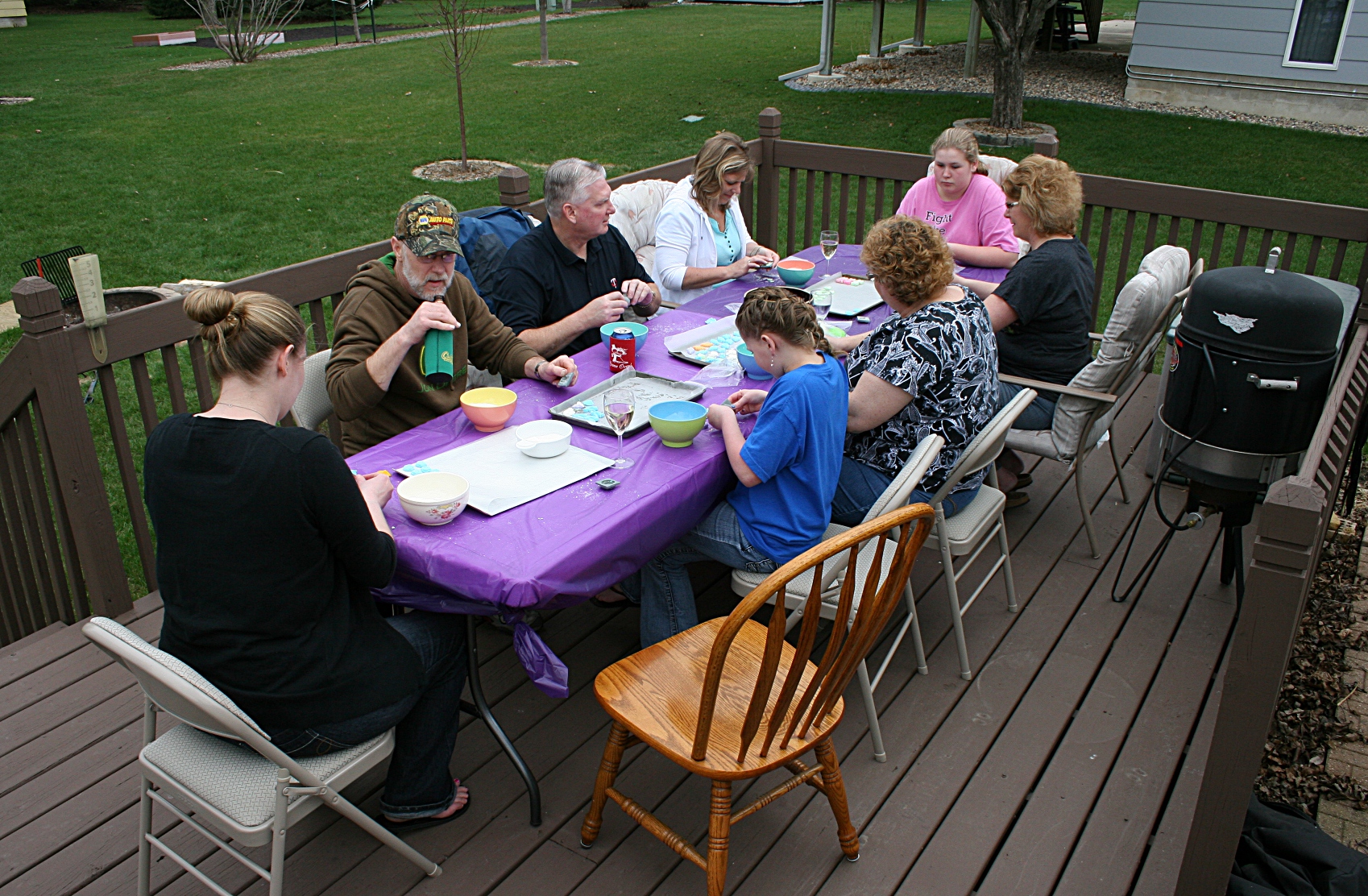
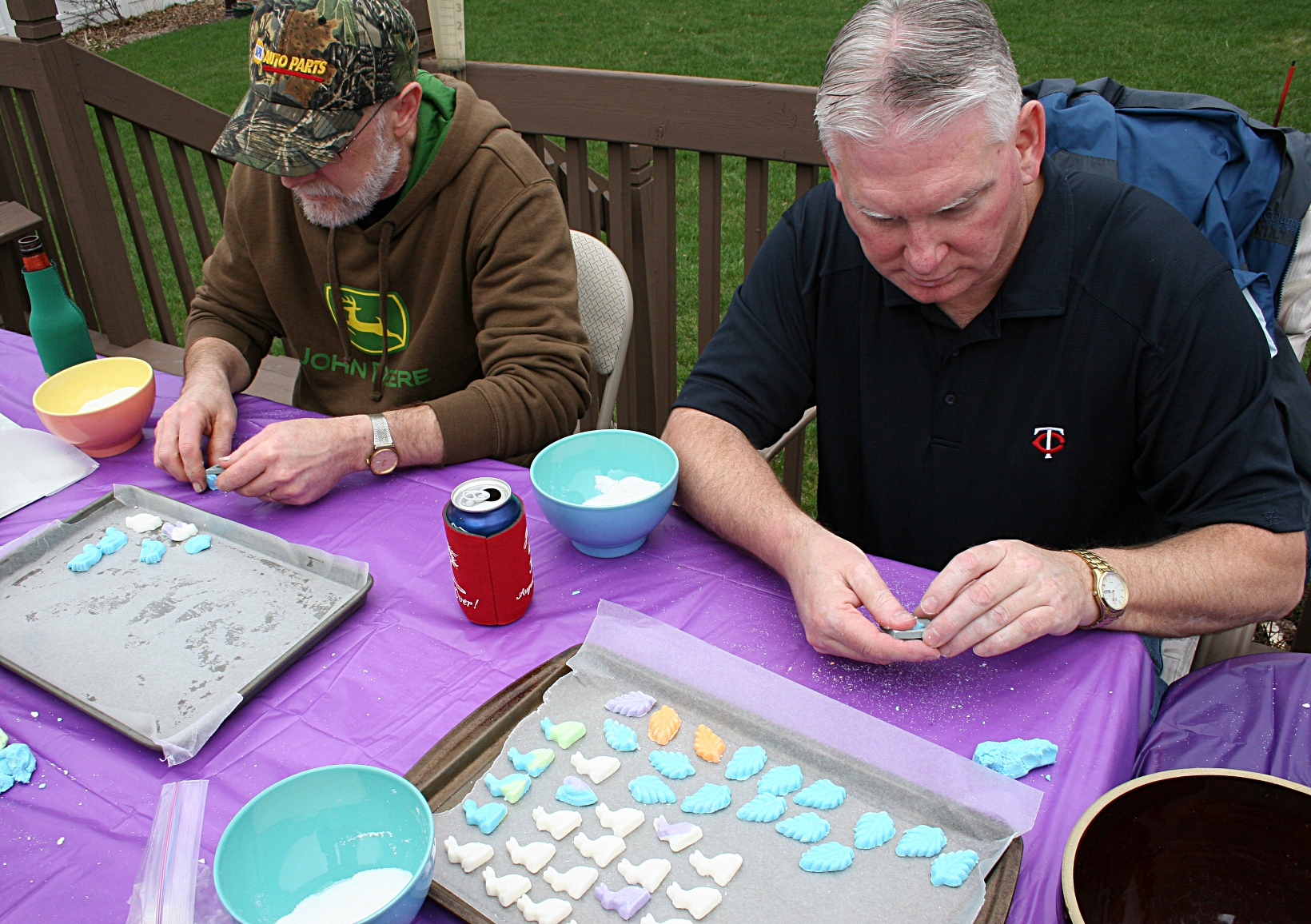
A new generation of mint-makers crafted mints Saturday afternoon on my sister Lanae's deck. I took a break (that's my empty chair in the front) to photograph the event. Can you believe this is March in Minnesota?

Saturday afternoon nine family members—none of whom were my aunts or my mother—gathered at my sister Lanae’s Waseca home to carry on the tradition of mint-making. Just to be clear, this was a one-time deal since we were preparing the mints for my mom’s upcoming 80th birthday party. We figured she shouldn’t have to make mints for her own party.

We just hope the professional mint-makers aren’t too harsh in judging our mints because, well, quality control ranked below the fun factor during our mint-making session.

For example, my oldest niece claimed that some of the roses I molded resembled snowflakes. But the teacher in her, not wanting to criticize too much, said how nice that snowflakes are each unique. Uh, huh. Even I understood that remark. She wasn’t exactly awarding a star for superior mint-making.

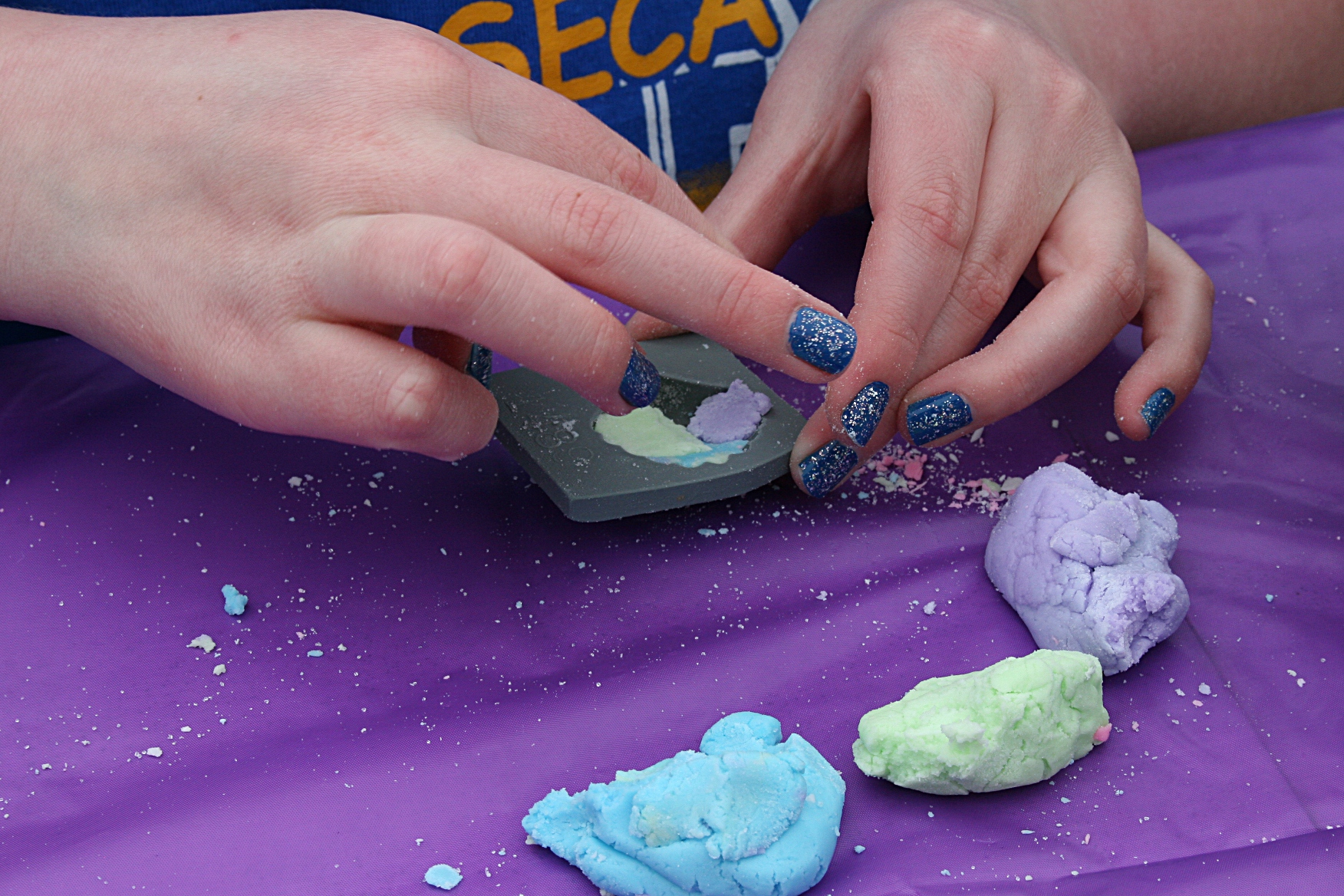
My 10-year-old niece, the youngest of the mint-makers, pushes the powdered sugar/cream cheese dough into a mold. She's mixing colors. Don't you love her nail polish?

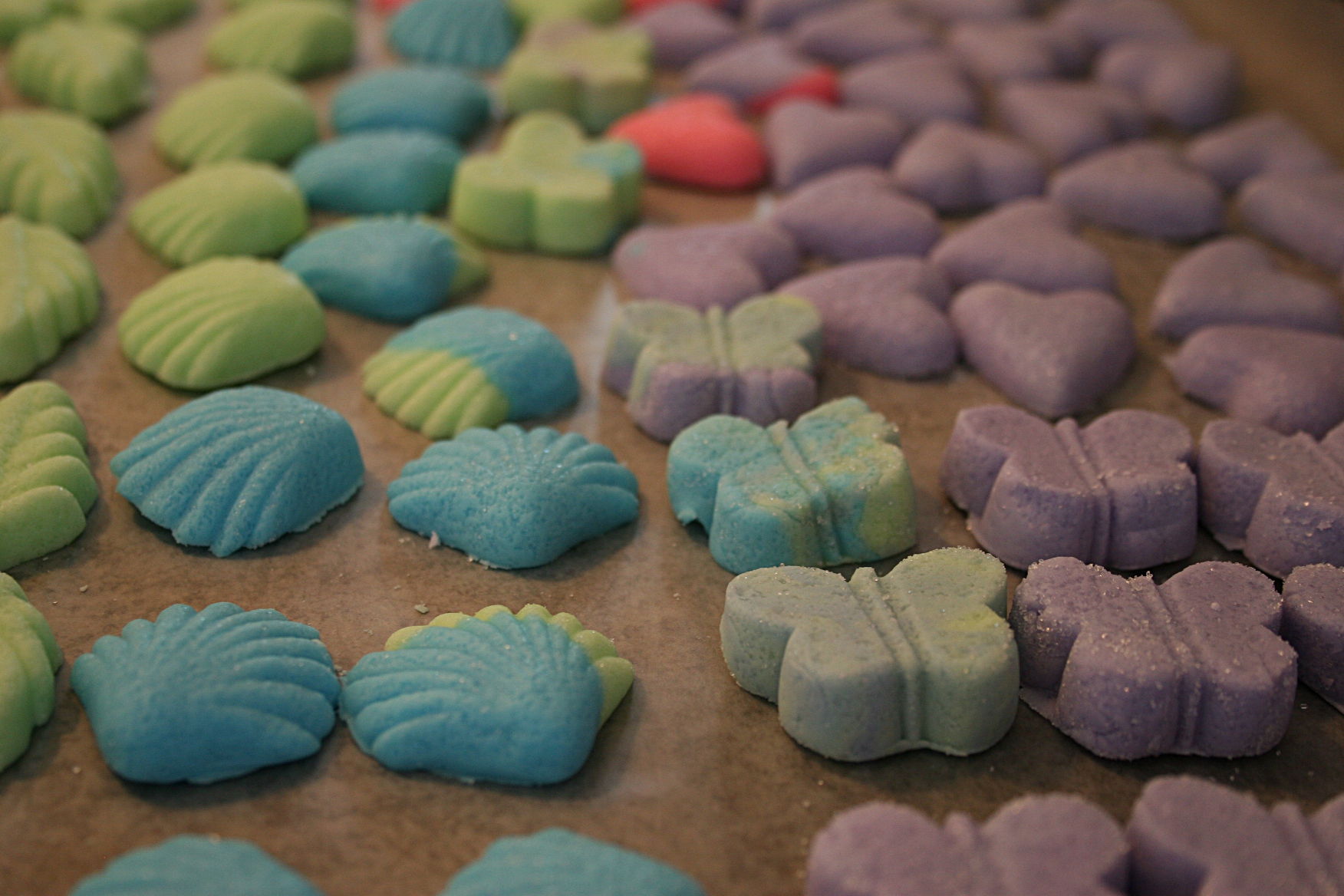
Expressing ourselves with multi-colored mints which will now need to air-dry for about five days.

Even the guys, AKA my husband on the left, and my middle brother, made mints.

I suppose you could say we weren’t stellar students. We did not follow the masters’ examples precisely, choosing to exercise our artistic freedom by molding multi-colored mints. “What will the aunts say?” we asked each other, barely masking our laughter.

At one point, someone suggested dipping a mint in salt, rather than sugar, just to shake things up a bit with the experienced mint-makers. But we decided not to rattle the masters too much.

If you’re among those attending my mom’s birthday party open house, enjoy the mints. And remember, these were not made by the master mint-makers.

Do you spot any snowflakes among these roses? I didn't think so.

© Copyright 2012 Audrey Kletscher Helbling
 

Blooming on the prairie March 25, 2012

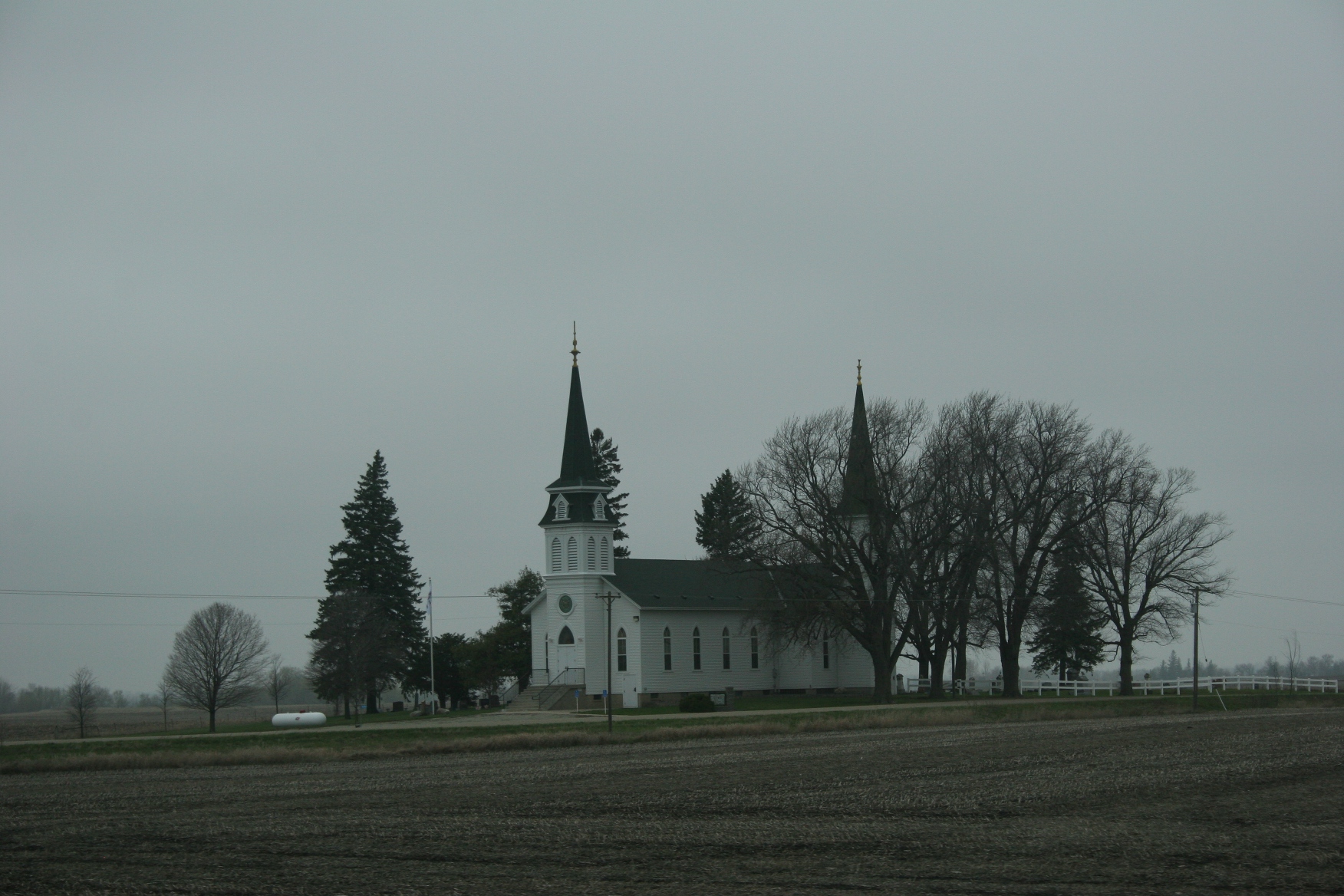
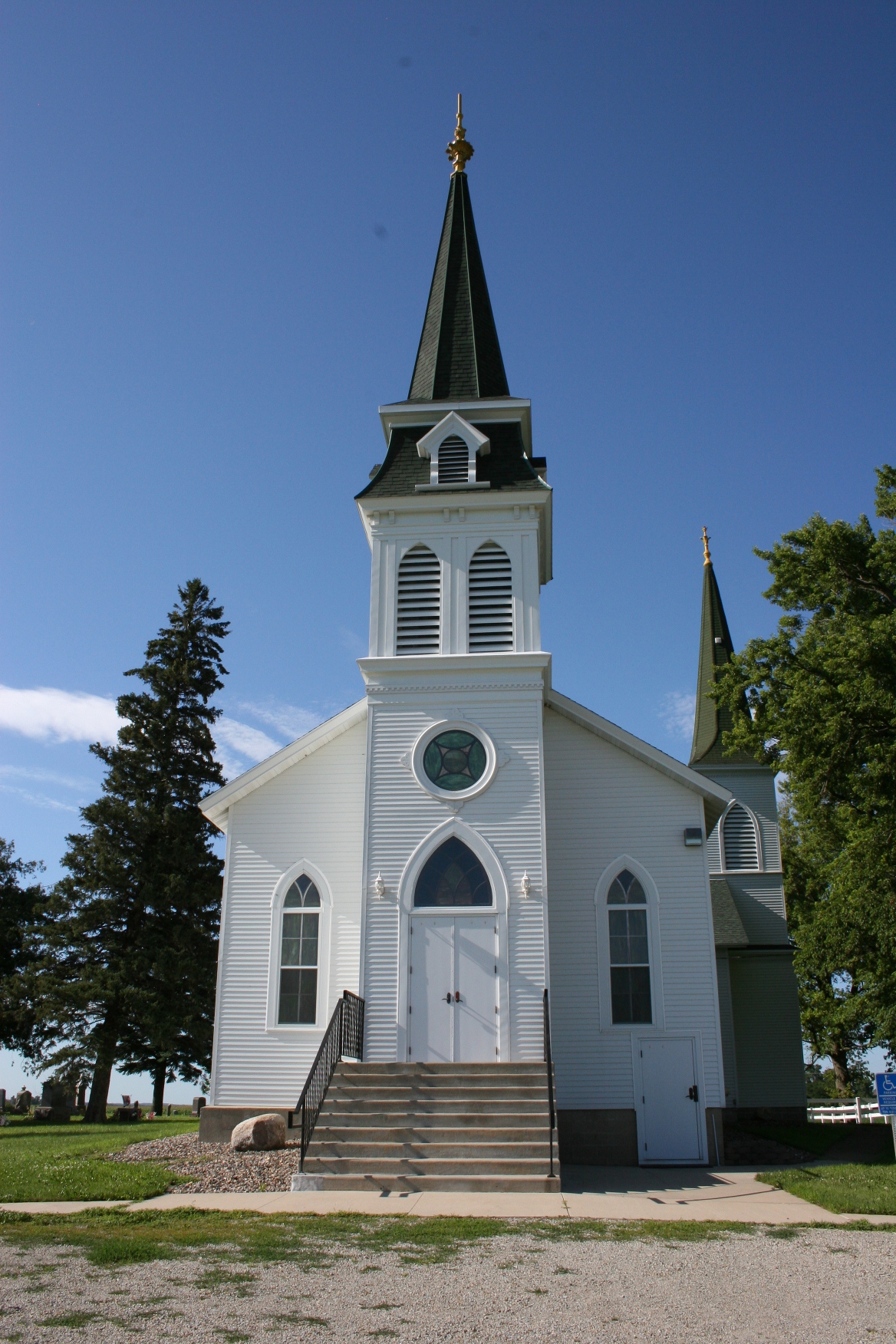
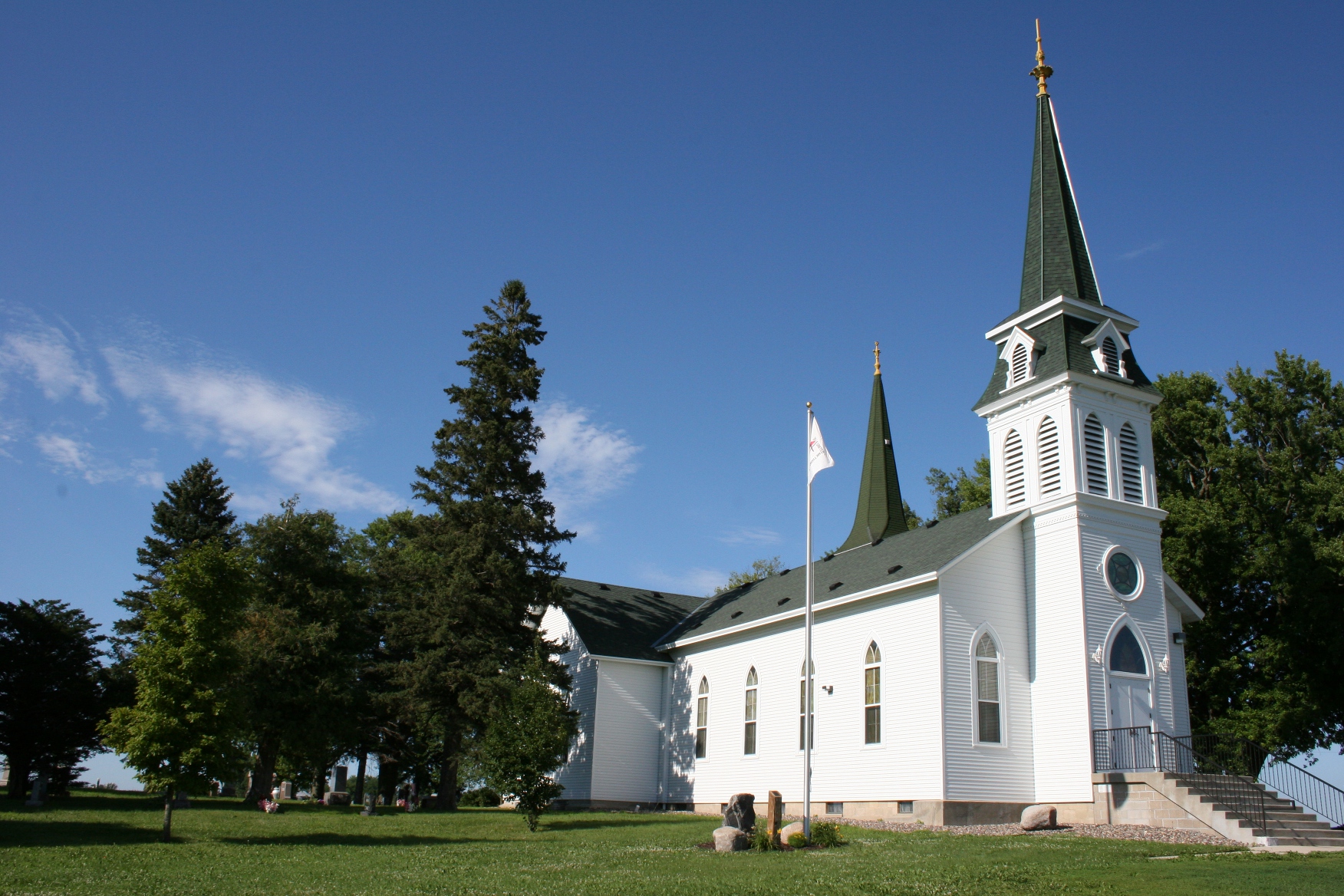
The former Immanuel church, front, was moved and connected to the Bethel church, back in 1951. The original parish was established in 1857. This photo was taken in the summer of 2011.

WHEN I FIRST SAW this country church last summer south of Morristown, I did a double take. It’s not often you spot two churches merged as one. At least not in the way Bethel and Immanuel became Blooming Grove United Methodist Church in 1951.

Rather than close one church and worship in a single facility, the Methodists opted to actually move one building, Immanuel, nearly four miles east to the Bethel site.

That was quite an event and quite a feat. Maurice Becht remembers in the parish newspaper, The Blooming Grove Methodist Visitor:

I had been helping off and on to get the church ready to move. When it was ready, I was standing off to the side looking when, all of a sudden, the front end of the church went down and the bell tower began to swing like a pendulum. Luckily, they had put a cable from the tower to the other end of the church so it didn’t break off. The front wheels had pulled out from under the church when the bolster slipped. We put it back on wheels and were going around the west side of Wilbert Remund’s buildings when we ran into a soft spot that had to be planked…

Wilbert and Marcella Remund recall:

Lloyd Zerck said that when he got the church moving, it had to be kept going, so Willie put his tractor on. That was just enough to keep it moving…

Eventually Immanuel reached its destination and work then continued to physically join the two buildings. Total project cost was around $16,000 with more than 7,000 hours in donated labor.

Blooming Grove United Methodist Church is located in northeastern Waseca County just off county road 10.

In a poem, “Historic Church in Action,” published in the March 1954 parish newspaper, Albert C. Reineke writes in the fourth verse:

In this alluring and peaceful countryside

Stands “God’s Temple” with towers high,

Two houses of worship now unified.

Sweet memories linger of years gone by.

I have no connection to Blooming Grove United Methodist Church. But I certainly do appreciate country churches and their rich and interesting histories.

"This church with its two steeples is a physical symbol of cooperation, compromise and trust," according to the church website. I photographed the church Saturday afternoon. Even on a hazy March day, Blooming Grove blooms on the prairie. My goal now is to get inside and photograph this church.

© Copyright 2012 Audrey Kletscher Helbling
 

Living with a hearing loss March 24, 2012

Filed under: Uncategorized — Audrey Kletscher Helbling @ 8:37 AM
Tags: , ,

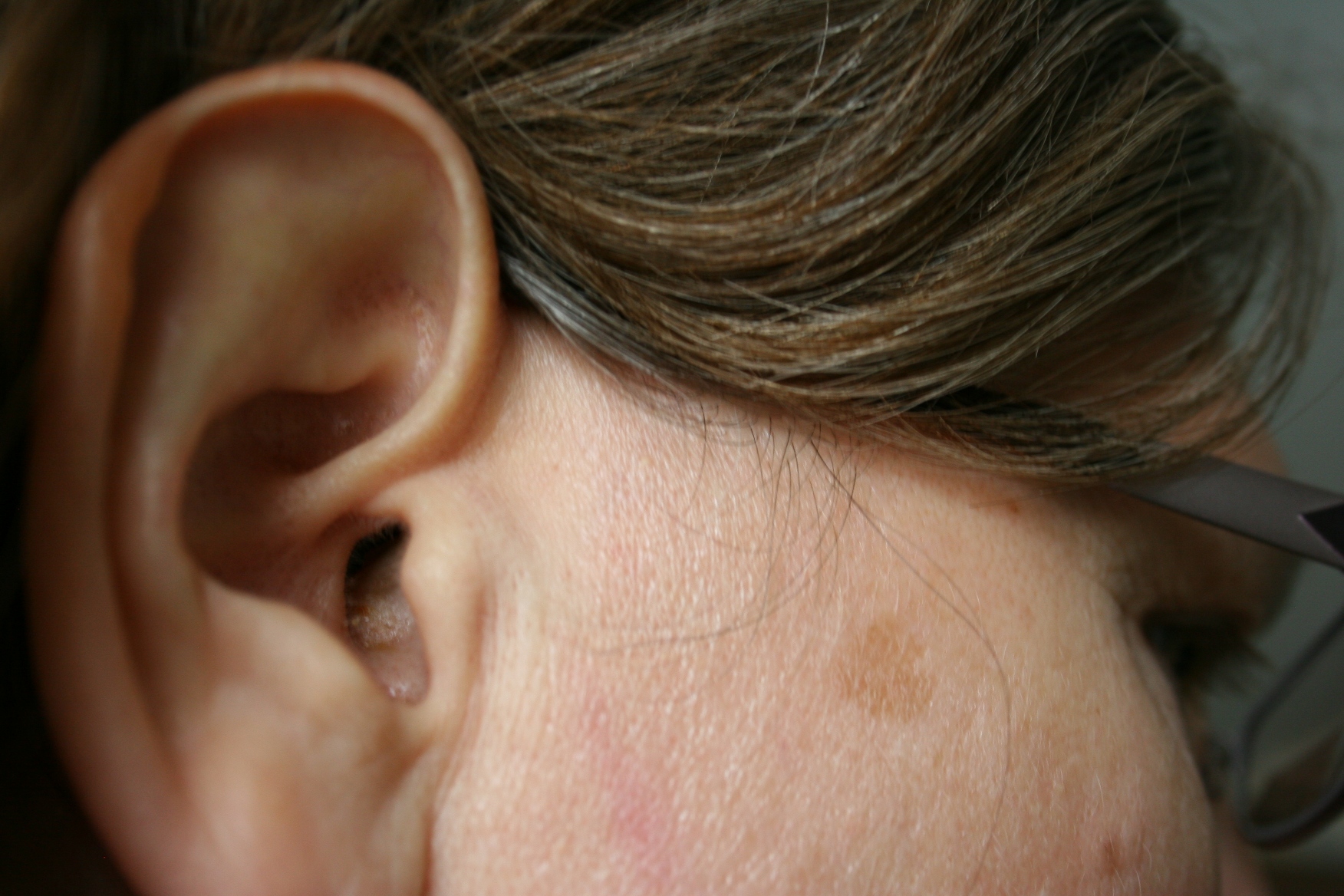
I hear only static and ringing in my right ear after a sudden hearing loss a year ago.

MOST OF THE TIME simply stating I am deaf in my right ear is easier than trying to explain how, a year ago, I lost 70 percent of the hearing in my right ear in an unexplained episode of sudden sensory hearing loss.

Hundreds of times since last March, I’ve repeated, “I am deaf in my right ear,” then turned my left ear toward whomever is speaking to me and asked them to repeat what they’ve just said.

This is not easy, this missing out on conversations, this always conscious effort to remember to sit or walk on the right side of a person. It is exhausting and frustrating and sometimes I just give up.

If I’m in a roomful of people, I may as well sit by myself in a corner. Hearing any snippet of conversation unless I move in close and concentrate is nearly impossible.

About now, you’re likely thinking, “Oh, Audrey, don’t be so vain, just get a darned hearing aid.”

Oh, believe me, if a hearing aid would improve my hearing, I would have one. I cried when an audiologist told me a hearing aid will not work with my type of hearing loss. Yes, I’ve been to specialists, done the MRI, the whole nine yards.

Nothing will change the fact that the door to hearing in my right ear slammed shut in an instant on a Friday afternoon in March of 2011.

In the grand scheme of health issues, hearing loss ranks rather low. Sure it’s inconvenient and annoying and bothersome. But it is not deadly or painful or totally life-altering. I can live with this disability.

And there’s at least one benefit. I live along a busy street, meaning traffic can sometimes keep me awake. Now I need only sleep with my right ear up, left ear pressed against the pillow. And, come morning if I’m still sleeping in that position, I won’t hear the alarm.

CLICK HERE to read my first post last March about this hearing loss.

© Copyright 2012 Audrey Kletscher Helbling
 

An unbelievable 83,451 still missing March 23, 2012

Filed under: Uncategorized — Audrey Kletscher Helbling @ 7:21 AM
Tags: , , , , ,

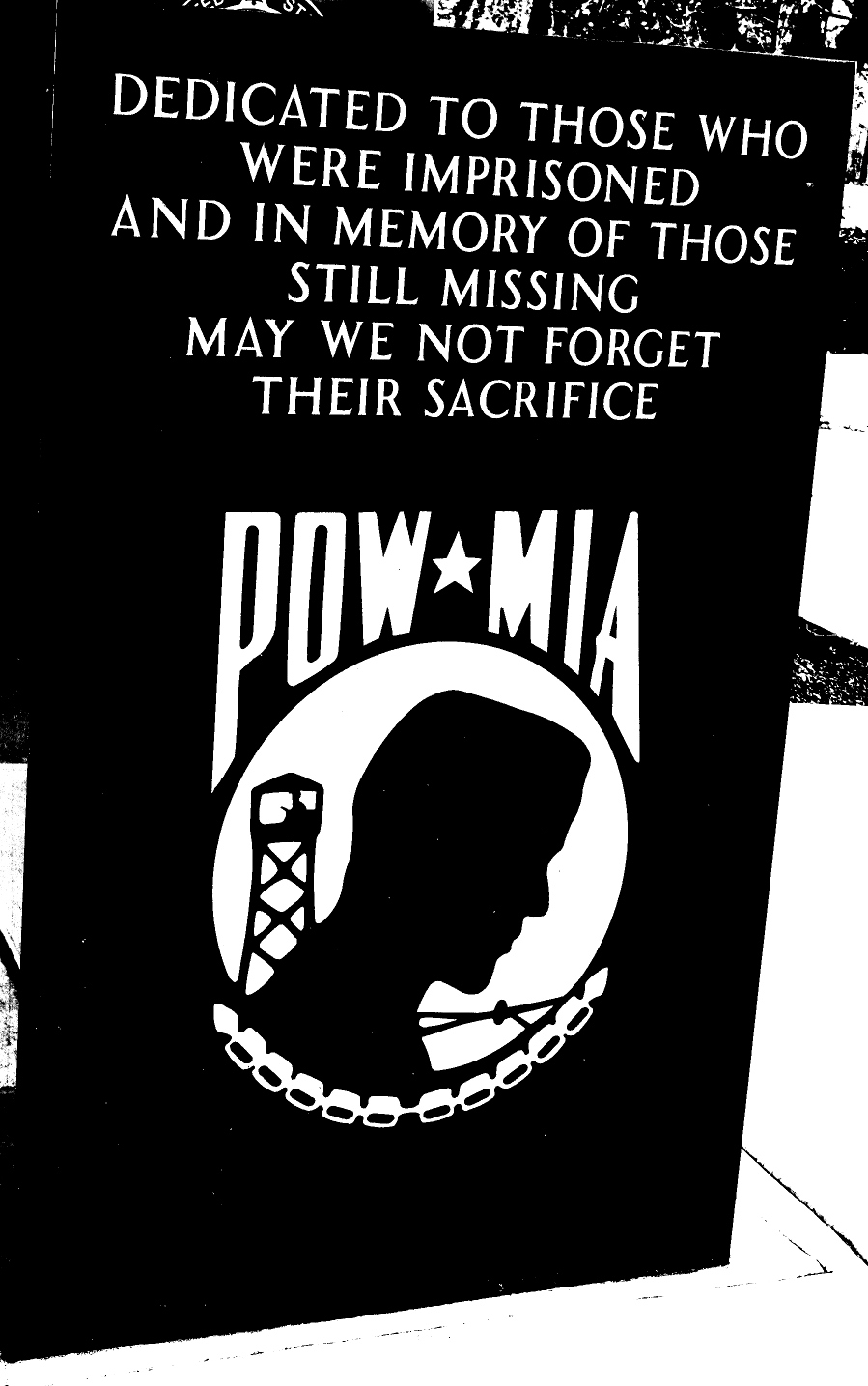
A tribute to POWs and MIAs at the veterans' memorial in Northfield.

United States suspends recovery of troop remains in North Korea

I nearly skipped over the AP article on page A5 of my local daily newspaper. But then I paused, allowed my eyes to linger on the headline before reading the heartbreaking story.

Just as efforts to find American service members missing during the Korean War were set to resume, that mission has been suspended. The action comes on the heels of North Korea’s plans to rocket-launch a satellite in apparent violation of United Nations’ sanctions.

That’s the situation in a nutshell. Hopeful families who have been waiting for the return of their loved ones for more than 60 years still wait.

I cannot imagine. The wait. The not knowing. The pain in losing a child to war. How many mothers and fathers of Korean War veterans have died without bringing their soldier boys back home for proper burial? Many.

The statistics shocked me. I had no idea that 7,960 Americans are unaccounted for from the Korean War, according to the Defense Prisoner of War-Missing Personnel Office, U.S. Department of Defense. Among the missing/unaccounted for are 146 Minnesotans. Click here to read that list.

But the numbers are even more staggering when you consider the totals for wars from World War II through the 1991 Gulf War. There are 83,451 Americans missing. That’s almost the entire population of Duluth. Most of the unaccounted for, 73,690, served during WW II.

Yet, until you begin thinking of the missing in terms of names, the totals seem merely overwhelming statistics that cannot be comprehended. So I went to the DPMO website and clicked on news releases. There I found what I was seeking—the names of soldiers gone missing in Korea and who, all these years later, have been identified through the use of modern-day forensics.

Just to explain, North Korea gave the U.S. 208 boxes of remains believed to be those of 200-400 U.S. servicemen, according to the DPMO.

Among the recently-identified remains are those of Army Cpl. William R. Sluss, 21, of Nickelsville, Va. He was captured by the Chinese and died as a result of malnutrition in the spring of 1951 while a POW in North Phyongan Province, North Korea.

The remains of Army Pfc. George A. Porter, 21, of Philadelphia, were also recently-identified. He was among more than 100 men taken prisoner by the Chinese during what became known as the “Hoengsong Massacre.”

And then there’s Sgt. Willie D. Hill, 20, of Catawba, N.C., whose infantry division was encircled by Chinese forces in November 1950 resulting in heavy losses, including that of Hill.

William. George. Willie.

They were young men lost to war, in a very literal sense.

I have never lost a loved one to death by war. But I have lost a loved one to war. My father fought as an infantryman on the front lines during the Korean War. He was wounded on Heartbreak Ridge and decades later, in May of 2000, was awarded a Purple Heart. He returned to Minnesota a changed man, unable to bury the horrific memories of buddies blown apart before his eyes, of enemies he’d killed.

Today he would have been identified as suffering from Post Traumatic Stress Syndrome. But back then, upon his military discharge in 1953, my dad was simply expected to return to civilian life as if nothing had changed for him personally.

April 3 marks nine years since my dad died at the age of 72. I am convinced that he would have lived longer had any type of counseling been available to him upon his return  to the farm fields of southwestern Minnesota.

Yet, despite my wish that he could have gotten help, I am thankful that he came home. In one piece. Alive.

Thousands of other American families do not have the comfort that is mine—to visit a cemetery knowing their loved one is buried here, on American soil.

© Copyright 2012 Audrey Kletscher Helbling
 

A Blackberry never tasted so sweet March 22, 2012

Filed under: Uncategorized — Audrey Kletscher Helbling @ 7:48 AM
Tags: , , , ,

“TELL ME AGAIN. What is a Blackberry Playbook? What does it do?”

I’ve asked him for the umpteenth second time and he is clearly frustrated with me.

“Never mind,” he says.

I persist because I want to understand. My son knows I am technologically-challenged, that I can’t distinguish a Blackberry from an iPAD or a Kindle. It is all too much for someone who grew up without a telephone during the early years of her life and only within the past 18 months acquired a cell phone. It is all too much for someone who learned to type on a manual typewriter. It is all too much for someone who recently upgraded from her 2003 desktop computer.

I don’t decry technology. I am simply slow to understand the ever-evolving world of high tech gadgets.

But my high school senior, with his scientifically and mathematically-wired brain, embraces technology and is planning a career in computer and/or electrical engineering. It’s a career path that will suit him perfectly, focusing on his passions.

That leads us to his latest endeavor, which ties in with the Blackberry Playbook. My son created Agon, a Blackberry Playbook game app which released March 17. Described as “an abstract strategy game with perfect information,” Agon was invented in France during the late 18th century. I won’t even attempt to explain the game or how my 18-year-old adapted it to the Blackberry. He would tell me, “Never mind,” if I asked. Click here to read for yourself. And feel free to try the game and post a review.

One reviewer compares the game, also known as “Queen’s Guards,” to chess. This does not surprise me. My teen plays chess and enjoys strategic board games like Settlers of Catan and Power Grid. Pull out those games and I run the other way. Give me word games. My boy once tried to teach me chess, but without success.

His success with Agon, though, has netted him a sweet prize—a Blackberry Playbook. Pretty cool, huh? Besides getting the actual product, this accomplishment can be listed on college scholarship applications and eventually on his resume.

Additionally, my son tasted sweet success at the recent Minnesota Science Olympiad, placing second in the astronomy competition. Yes, he knows a lot about the sky, too.  He and a teammate also took sixth in state with their gravity vehicle after coming in first at regionals. Faribault High School, his school, finished 14th overall in state among 33 schools.

Success tastes especially sweet when you’re only eighteen.

NOTE: The creators of Blackberry Playbook and the creator of the Agon app (namely my son) have no idea I wrote this post. I am simply a proud mother sharing my boy’s success. Had I not googled “Blackberry Playbook,” I would be mostly uninformed about this tablet.

© Copyright 2012 Audrey Kletscher Helbling

 

The gifts of the daffodil March 21, 2012

Filed under: Uncategorized — Audrey Kletscher Helbling @ 7:05 AM
Tags: , , , ,

The clutch of daffodils now blooming in my front yard flower bed.

NOTHING COMPARES to the daffodil. Bright. Cheery. A burst of brilliance in a dreary landscape of muted browns and grays.

Like an island in the vast sea or an oasis in the desolate desert, the daffodil provides a welcome respite for the winter weary sojourner’s eyes.

She holds the promise of spring unfurling in her petals, of sunshine-filled days ahead, of the earth erupting in new growth.

She causes me to smile and think of May baskets woven from construction paper and jumping rope and leg-kicking toward the sky upon a weathered board swing.

Simply put, the daffodil makes me happy.

© Copyright 2012 Audrey Kletscher Helbling
 

Animal art March 20, 2012

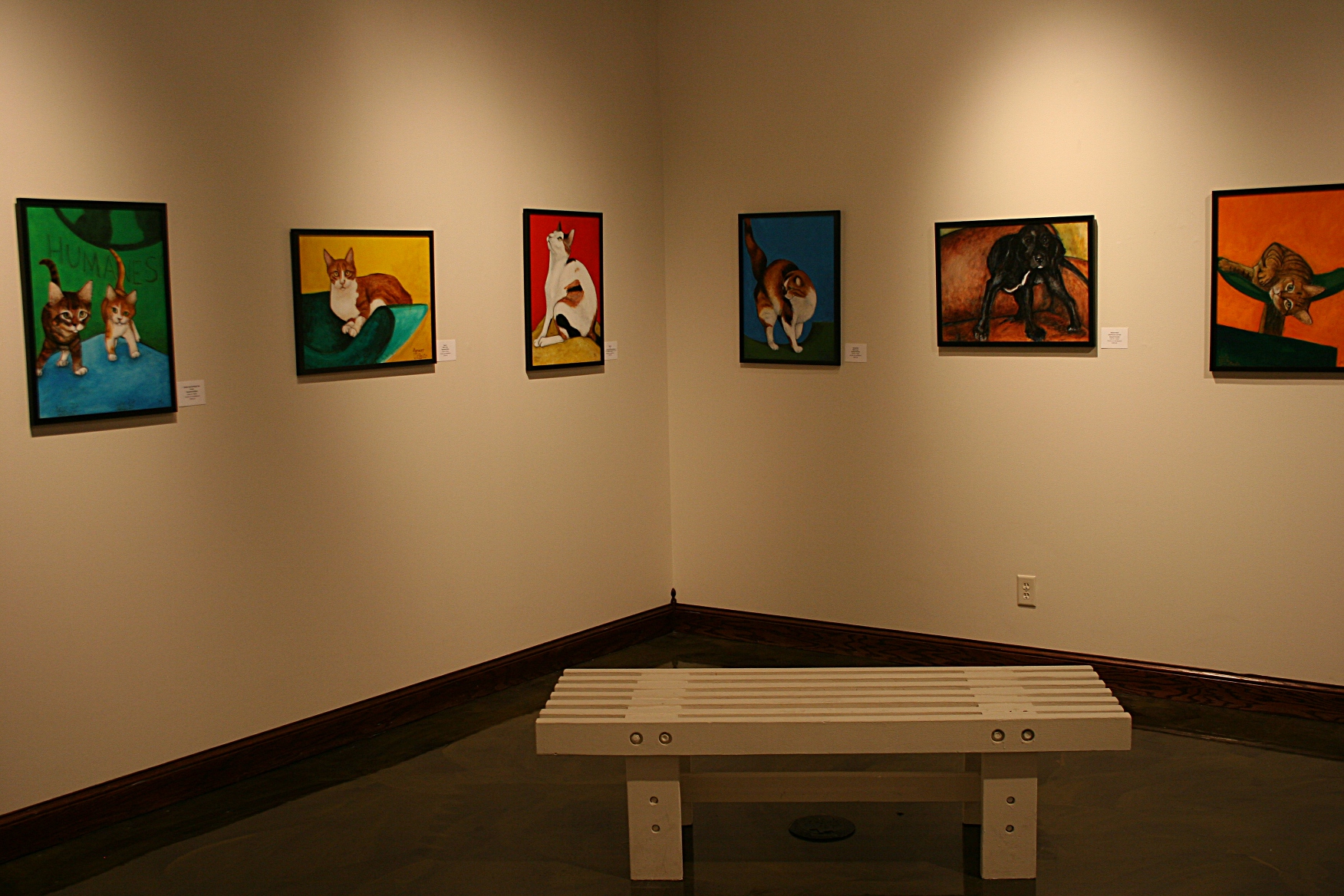
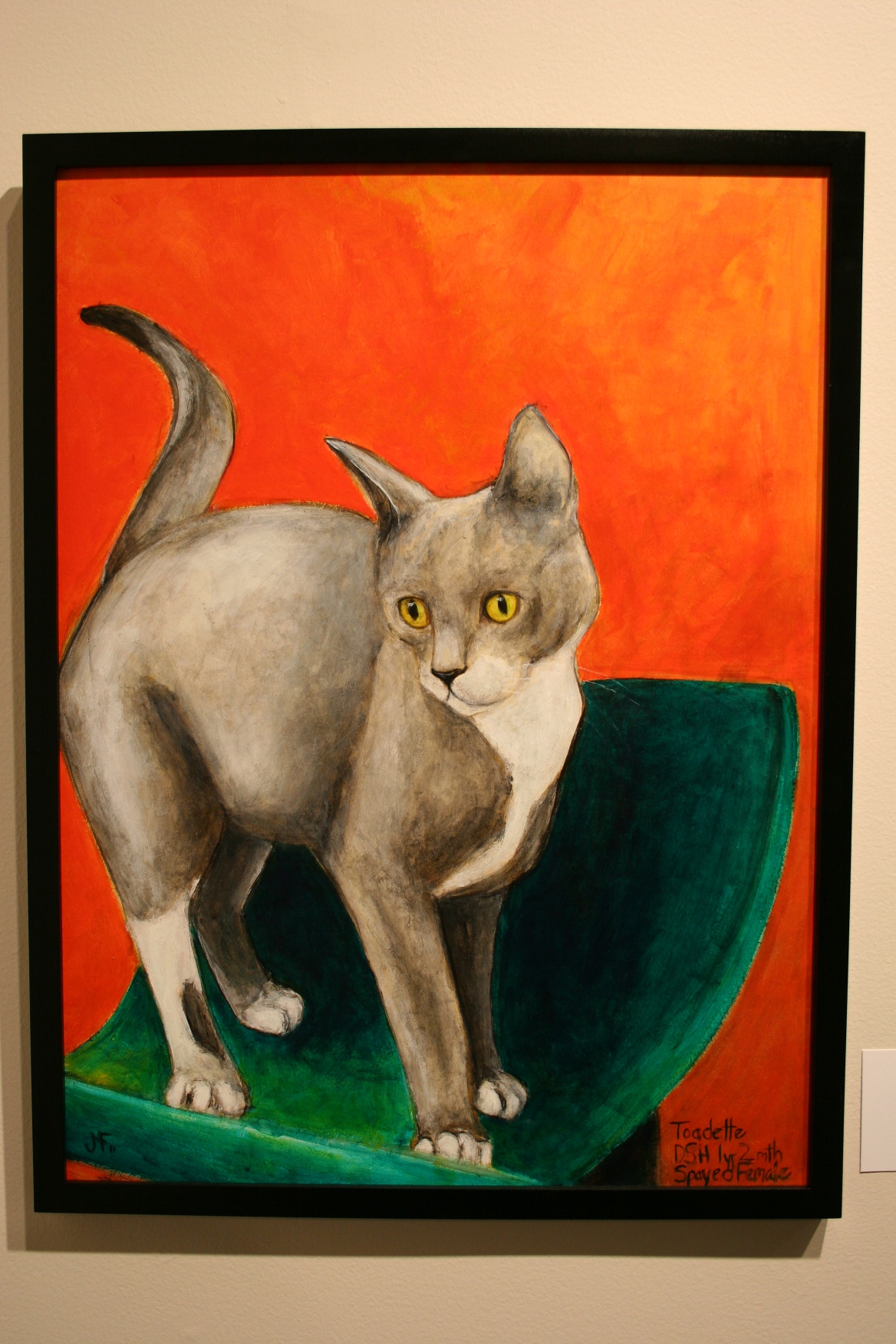
Some of Julie Fakler's pet portraits displayed at the Paradise Center for the Arts in Faribault.

COLORS, VIBRANT AND BOLD, first draw you toward Julie Fakler’s art in a current exhibit. But move closer and it is the expressive eyes that connect you to the subjects of her portraits, adoptive animals from Prairie’s Edge Humane Society in Faribault.

“I paint domestic animals and I was trying to think of a way to help out local domestic animals,” says this Faribault artist. “That’s when I came up with the idea to paint portraits of the animals at the Prairie’s Edge Humane Society.” The local animal shelter will receive a portion of the sales from portraits sold during Julie’s current exhibit.

A snippet of a cat portrait by Julie.

Julie merges her skills as an artist and her passion for animals into acrylic hardboard portraits that practically pull the viewer in for a closer look.

Her work is showing locally in two galleries with “Prairie’s Edge Humane Society Portraits” at the Paradise Center for the Arts, 321 Central Avenue, Faribault, through April 17 and “New Work” at the Northfield Arts Guild, 304 Division Street, Northfield, through March 31.

Recently, I perused Julie’s PCA exhibit for the second time, this visit with camera in tow and with the artist’s permission to photograph her work.

Adoptable cats and dogs are the subject of her Paradise exhibit. A grant from the Southeastern Minnesota Arts Council and McKnight Foundation funded the body of her work and the gallery show.

I’m not a pet owner. But Julie’s engaging portraits will cause anyone to fall for these adoptable animals whose spirits shine in her creations. In her artist statement, this Minnesota College of Arts and Design graduate says: “The images of the animals represent their energy, personality and physical attributes.”

I agree. I remember the first time I saw Julie’s art, during a studio art tour in the autumn of 2010. Her use of bold, mostly primary, colors give her work a memorable, signature flair. I thought then, and still think, that her vibrant art would suit a children’s picture book. Or maybe t-shirts or handbags or…

The possibilities seem endless for Julie’s art.

The vibrant colors and sweet faces in Julie's art are irresistible.

FYI: Click here for more information about artist Julie Fakler.

Click here to learn about Prairie’s Edge Humane Society.

© Copyright 2012 Audrey Kletscher Helbling
 

Lessons in gathering sap & making maple syrup on a summery day March 19, 2012

Filed under: Uncategorized — Audrey Kletscher Helbling @ 2:53 PM

Tags: , , , , , , ,

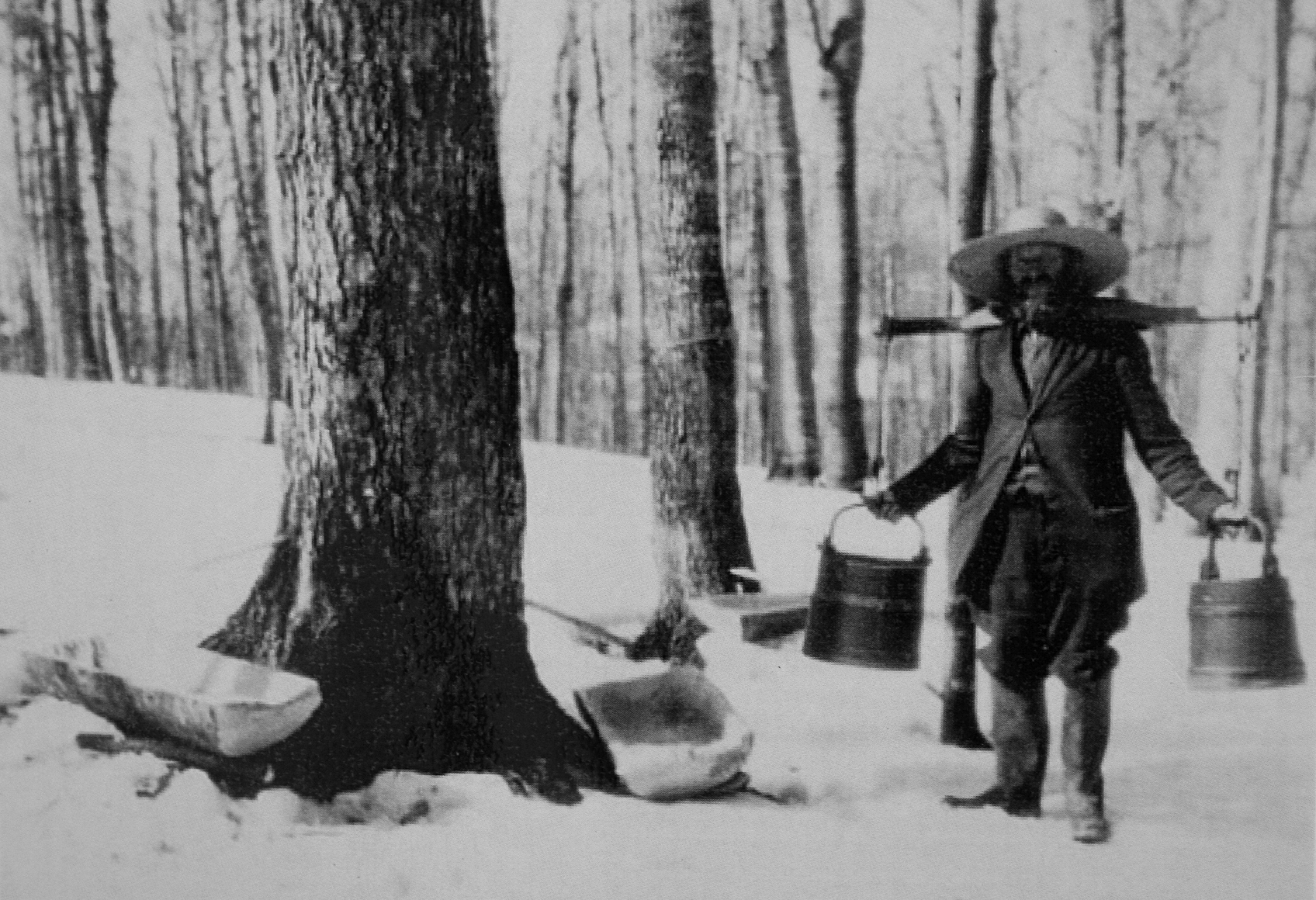
THE GATHERING OF MAPLE SAP at River Bend Nature Center in Faribault looked nothing like this on Sunday. Obviously, harvesting methods have changed since this vintage photo was taken. But so has the weather.

A copy of an historic photo displayed inside a teepee at River Bend Nature Center showed how sap was once harvested. Typically, there's still snow on the ground during the sap run.

Nature Center visitors (many clad in capris/shorts, t-shirts, flip flops and sandals) gathered to learn about making maple syrup on an unseasonably warm and snow-free afternoon more like June than March. This isn’t exactly sap-flowing weather with record day-time high temperatures near 80 and overnight temps well above freezing. Night-time temps need to dip below freezing for best sap yields.

Yet, the glum prospects for a bountiful sap harvest didn’t stop Nature Center volunteers and staff from leading visitors into the woods for a hands-on lesson in tapping trees.

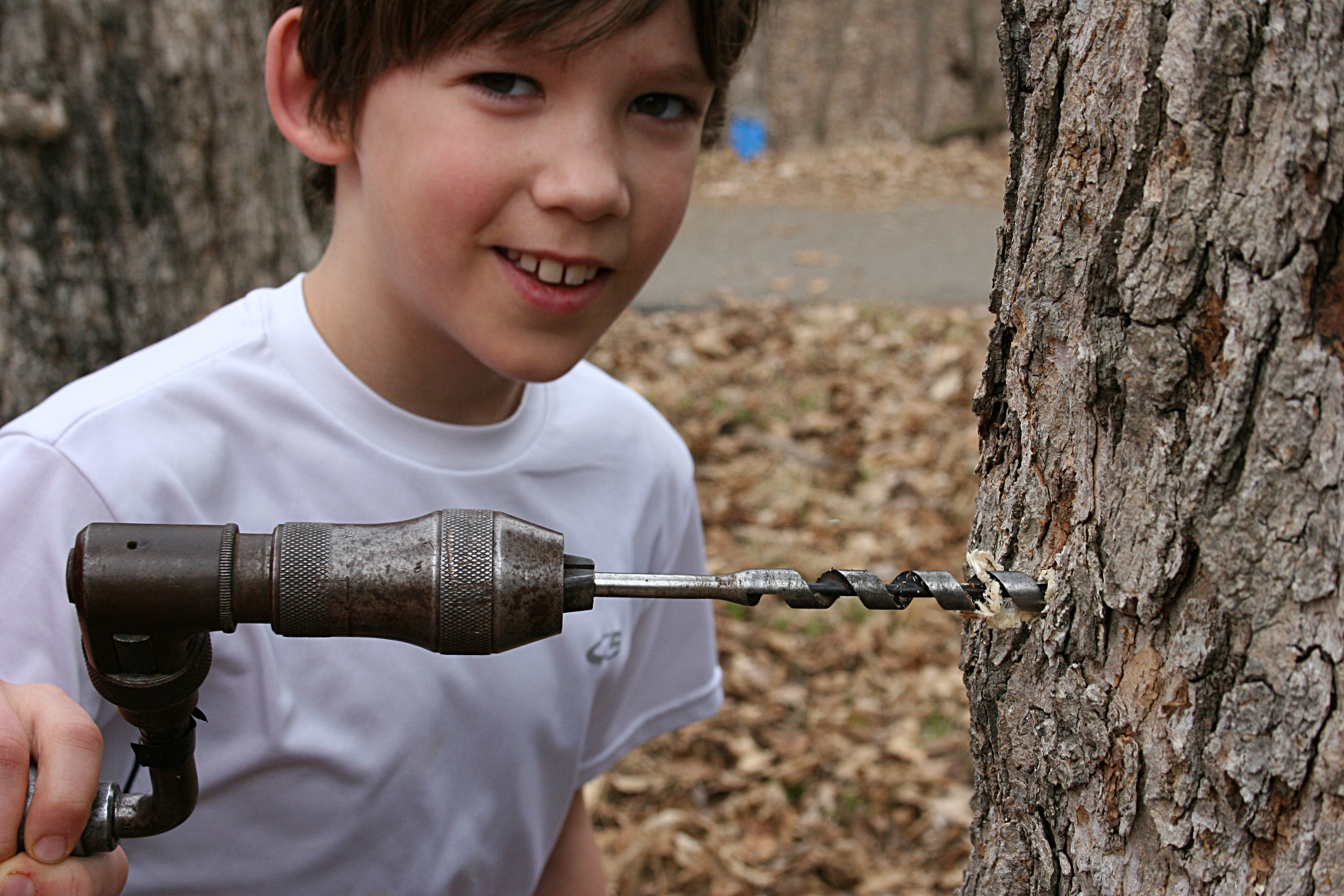
I busied myself taking photos while volunteer Diane walked us through the steps of selecting and tapping a tree. My husband and I passed on the opportunity to participate, instead allowing brothers Alex and Aaron and their mom, Betsy, from south Minneapolis to step up and get the sap flowing.

Alex took his turn drilling a hole into the maple tree.

Almost immediately after the drill bit was pulled from the hole, the clear sap started running from the spile.

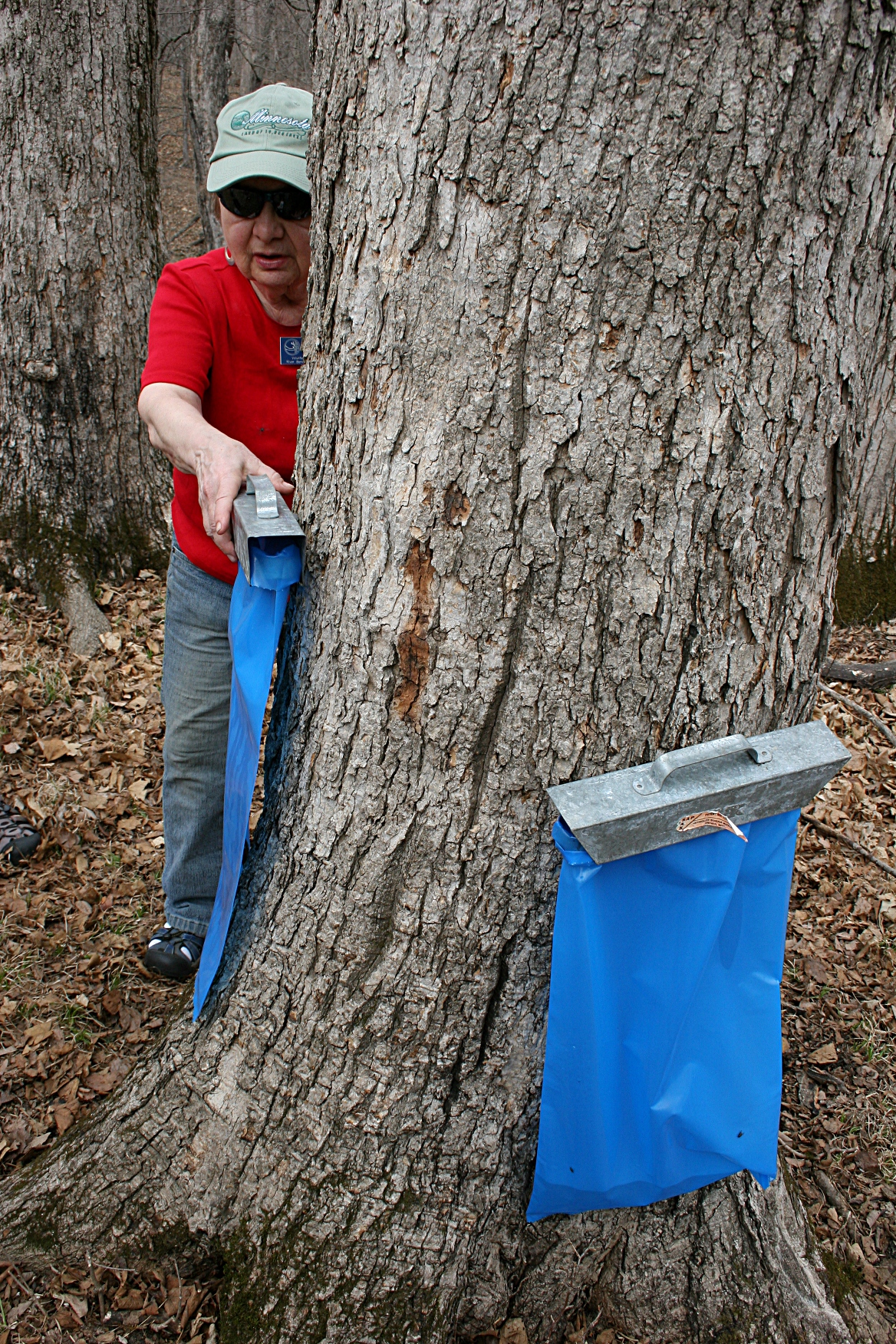
Volunteer Diane checks placement of the bag, usually three per tree, hung to collect sap. About 40 gallons of raw sap produce one gallon of syrup.

Besides the actual tapping process, we learned that sap runs up the tree, not down. I suppose that makes sense now that I think about it.

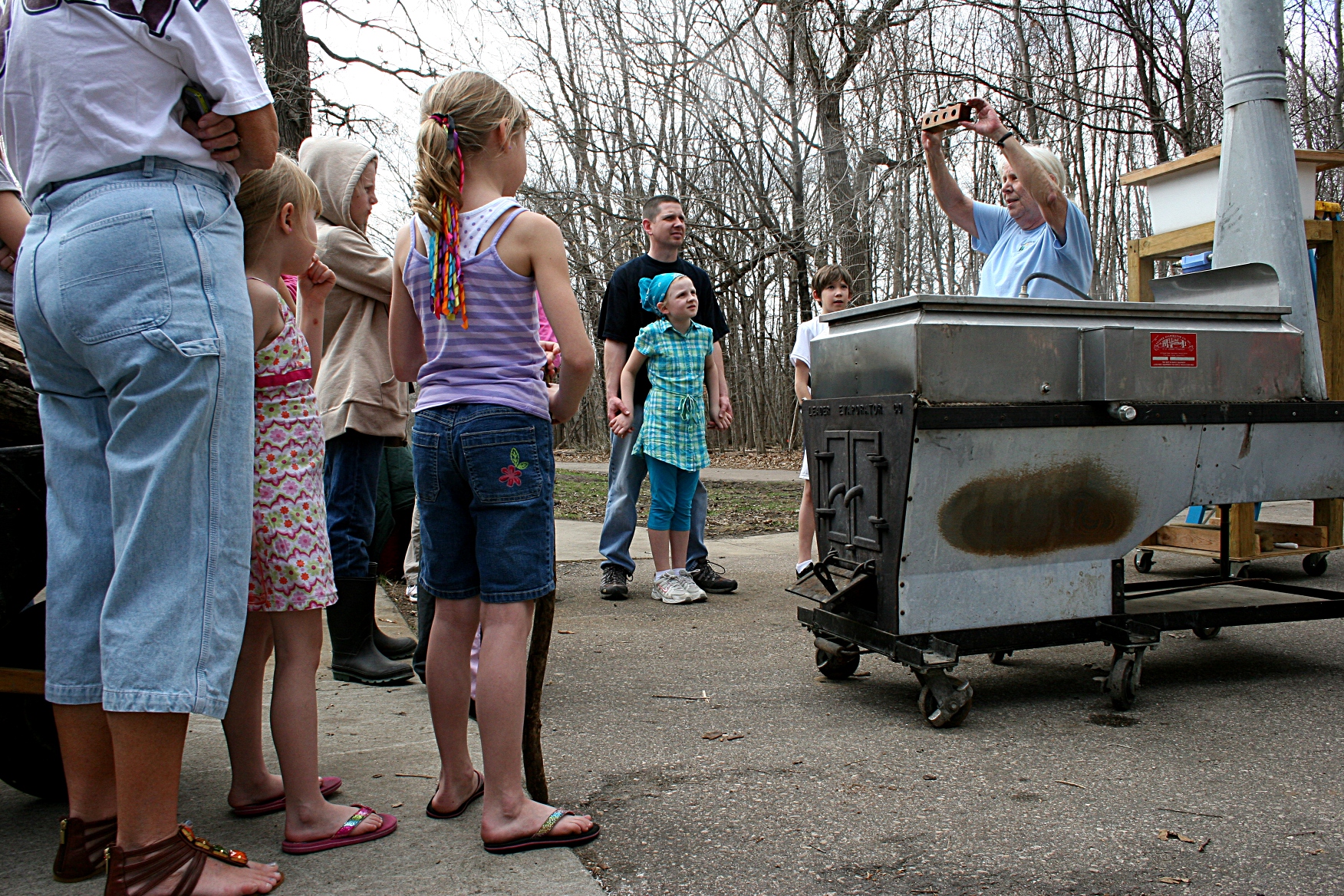
Later, after we’d tapped our tree and set the collection bag in place, we wandered over to the evaporator where staffer Elaine told us about boiling the water off the sap.

Nature Center staffer Elaine shows visitors four syrup samples and asks which would be sweeter. Typically the lighter-colored one. She also explained the process of boiling away the water in the wood-fired evaporator. Summer attire was the dress code of the day for most, with only a few exceptions.

For any would-be maple syrup makers, here’s the tip of the day from Elaine: “Do not do this in your kitchen. All the steam is sticky.” A good tip for those of us, too, who are photographers and like to get close to the action.

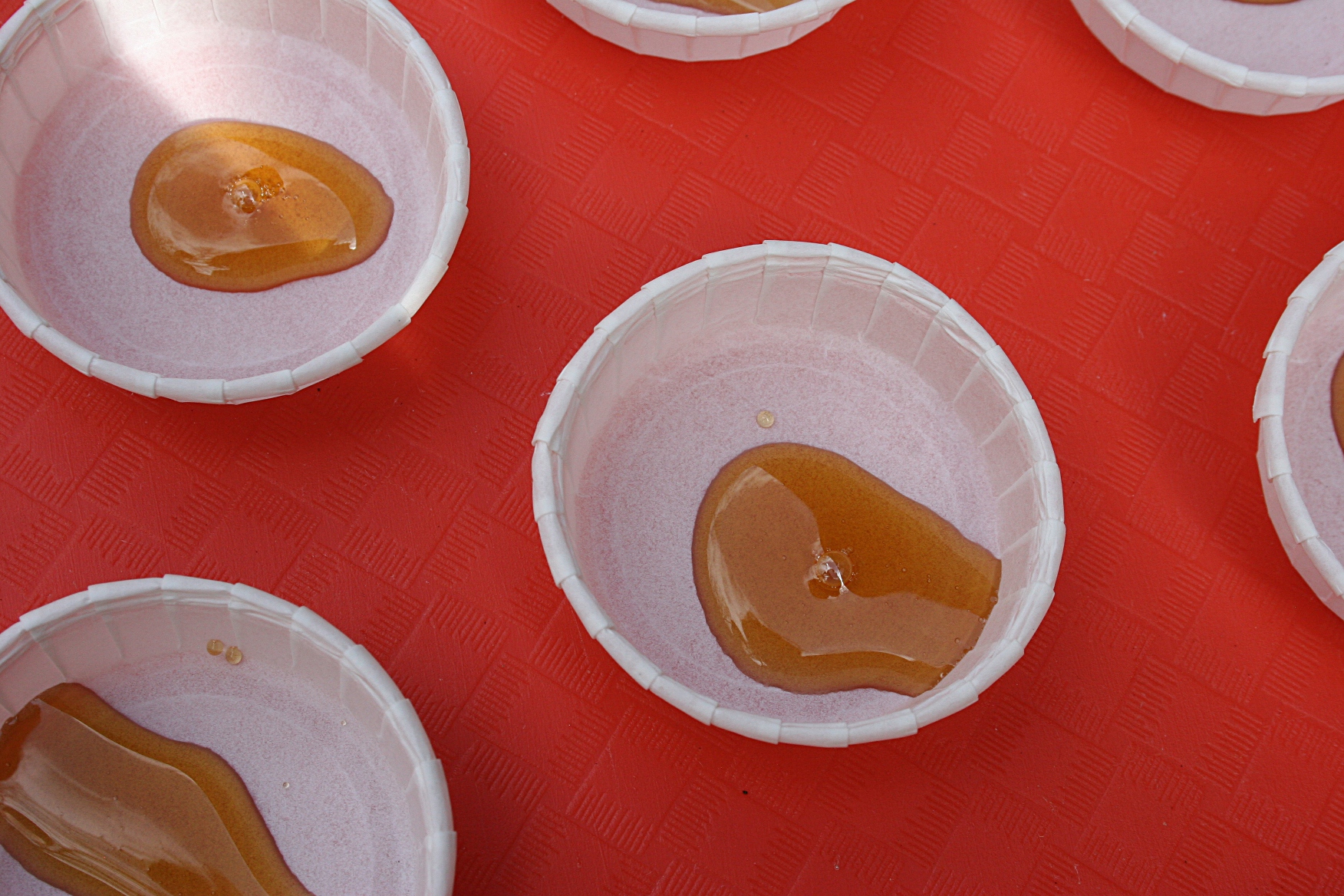
Before we headed over to the final station and a lesson in how Native Americans harvested and processed sap, we sampled homemade maple syrup. It was much thicker, darker and sweeter than the near colorless, runnier maple syrup I tasted last year at the farm of a Faribault area syrup maker. The sap’s sugar content and the cooking process can all affect the end product. I’d choose real maple syrup any day over imitation.

Samples of homemade maple syrup. Pure, delightful sweetness.

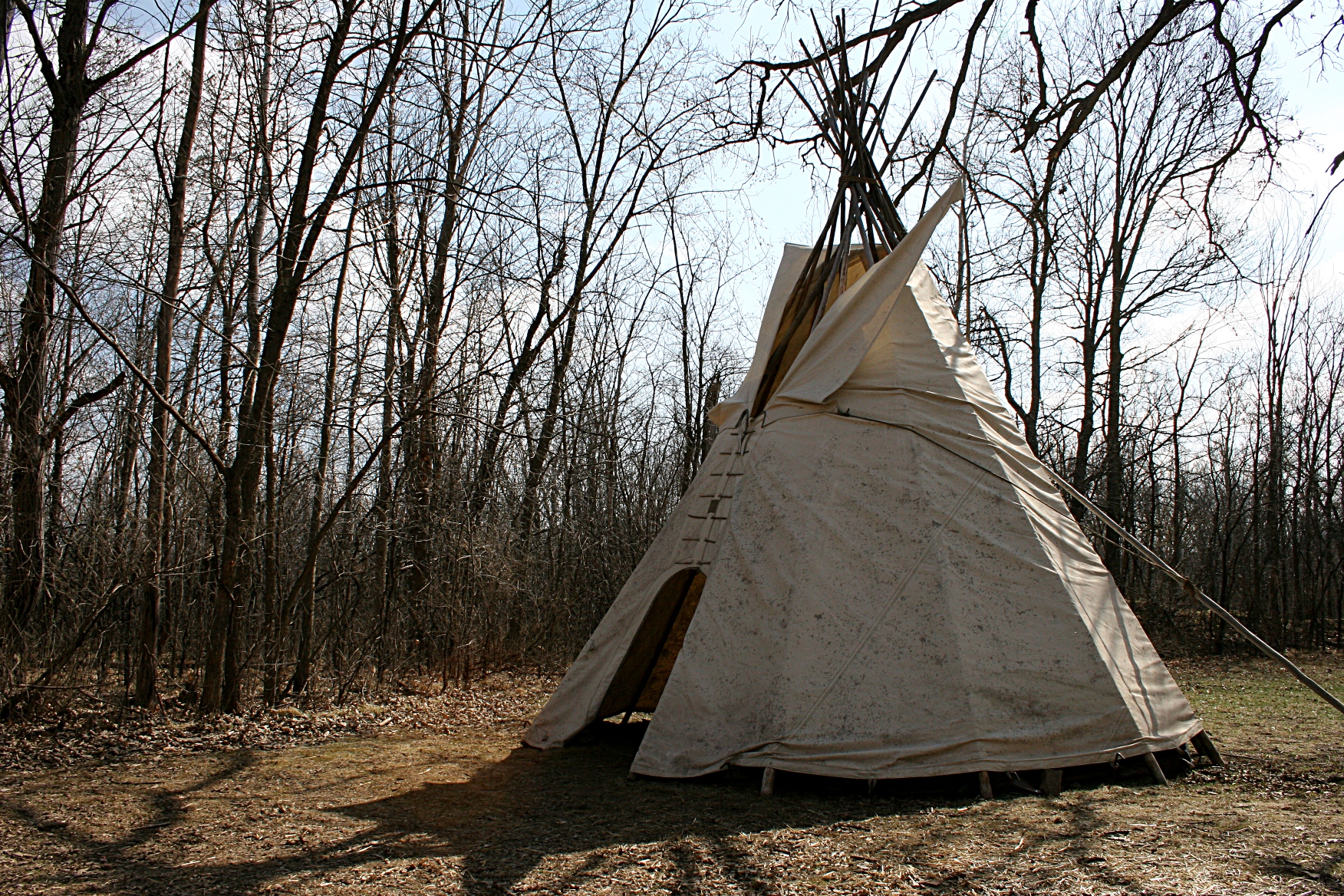
Inside the teepee, copies of vintage photos and books on maple syrup were available for visitors to peruse.

Over at the final station, near a teepee set up in the woods, we learned that Native Americans used hollowed-out elderberry sticks as spiles (spigots) and collected sap in waterproof birch baskets.

Much more information was shared. But since I was photographing scenes, I wasn’t taking notes. I figure if you really want to know the ins and outs of making maple syrup, you can research that yourself or attend a hands-on event.

If you want to sample River Bend’s homemade maple syrup, plan to attend the annual Pancake Brunch from 10:30 a.m. – 1 p.m. on Sunday, April 29. The event also includes an early morning Maple Syrup Fun Run (5K run and 1M walk). The top male and female adult and youth runners will each receive a bottle of River Bend maple syrup. Now how’s that for a sweet prize?

CLICK HERE for more information about the Maple Syrup Fun Run and Pancake Brunch.

© Copyright 2012 Audrey Kletscher Helbling