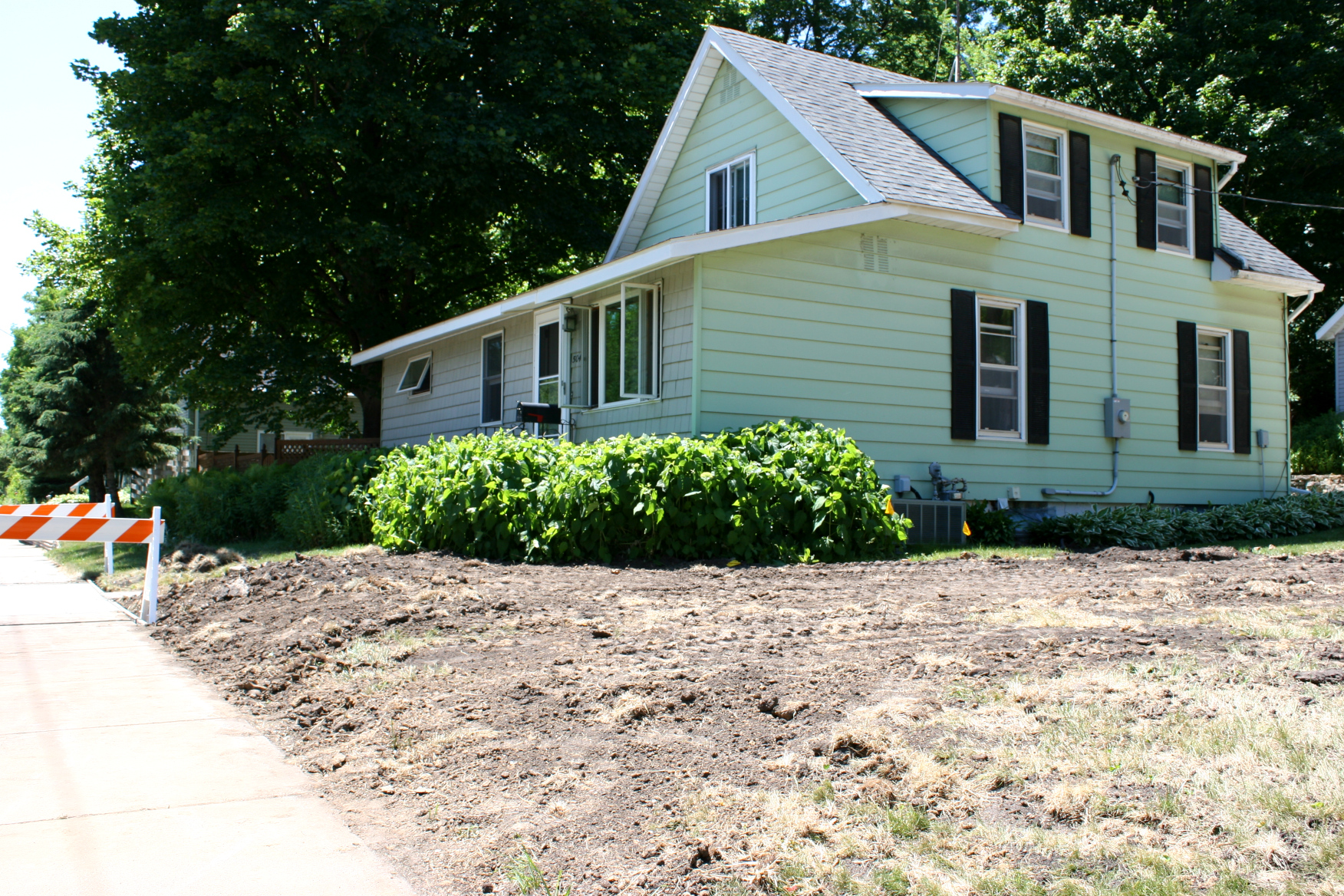
Our side yard, dug up during water line replacement and before it was overgrown with mostly invasive crabgrass. Minnesota Prairie Roots file photo June 2021.
AS I WRITE THIS EARLY WEDNESDAY afternoon, the civil defense siren blares. There’s no emergency, just a monthly routine testing of the system.
This time of day, after lunch, my energy dips. The wail of the siren interrupted my dozing off in the recliner while reading a book. It’s not often I fall asleep during the day, which is revealing in itself. I am tired because I’m not sleeping well. Lots on my mind. I tend to overthink. To ruminate. Uncertainty stresses me.
We’re all different personalities, different in the ways we handle whatever life throws at us. And that’s OK. Some of us are early risers, work best in the morning people while others are evening/night people. Nothing right or wrong about either. I’m up early, focusing on mental tasks in the morning.
Shortly I’m heading outside to pull crabgrass, a job I started last evening and which I found incredibly satisfying, even if labor intensive and sometimes difficult. To dislodge those strong roots from the soil and then toss the clump empowered me. I felt like I was ridding our yard of an unwanted invader. And I was.
Since the digging of our yard and replacement of a water line in June, the crabgrass has had plenty of time to take hold. I was happy just to see green again rather than bare earth as we await the right time to sod or seed in this drought. Randy informed me that the crabgrass needs to go. He wants to use chemicals. I don’t. Thus I am willing to pull weeds, although, in the end, he may still need to apply a weedkiller.
This isn’t about who’s right and who’s wrong, but about eventually solving a problem. About different approaches. About trying and evaluating. And, for me, about satisfaction that comes from doing something with my hands. Touching the soil. Reconnecting with the land. Remembering all the summers I pulled weeds from the family garden and cockleburrs and thistles from my dad’s soybean fields. We didn’t use chemicals back then to eradicate weeds.
But farming has changed. The world has changed. Life has changed. Yet, the satisfaction of pulling weeds by hand has not changed. Not for me.
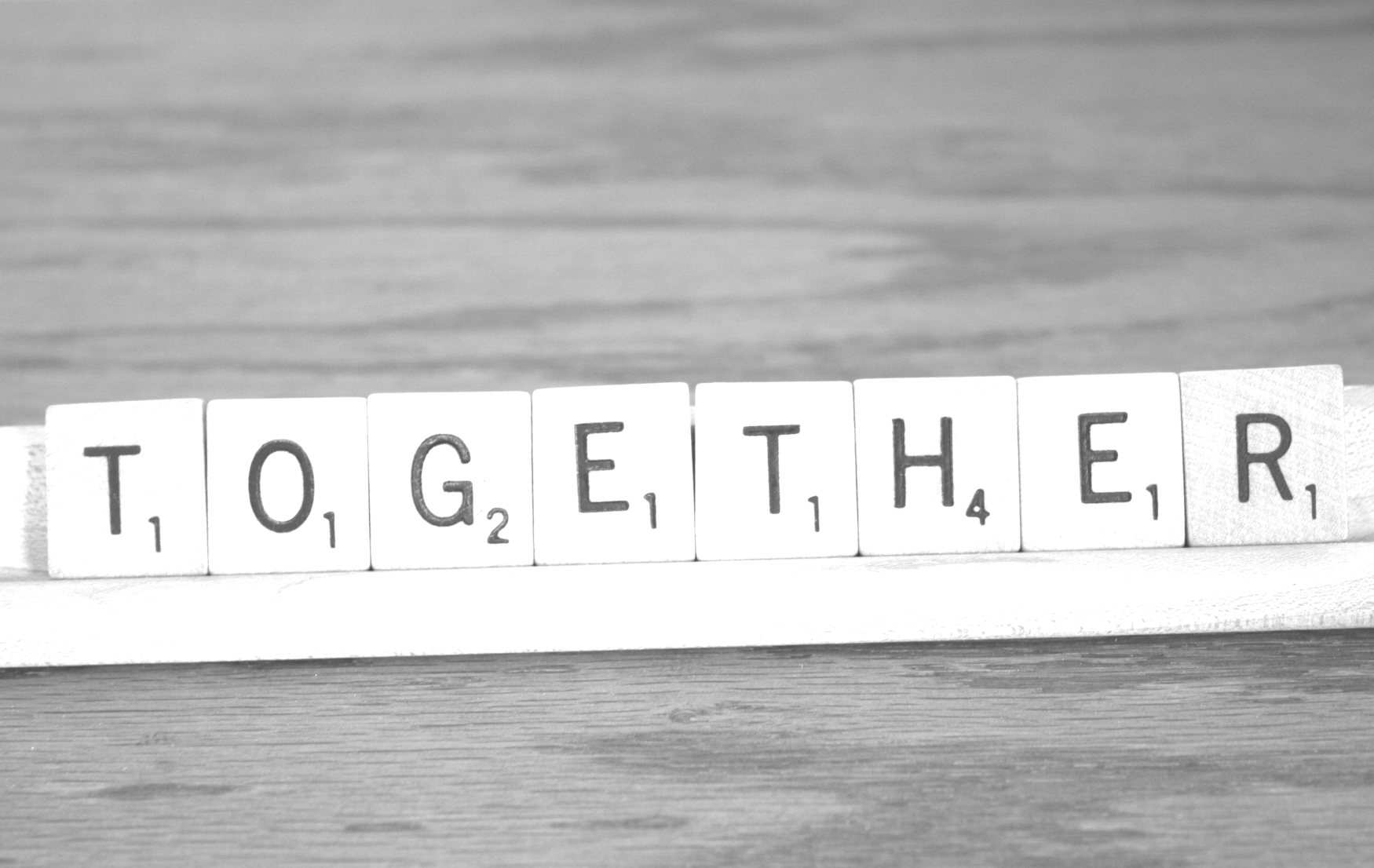
ON PAGES 444 and 445 of my 2003 Webster’s New World Thesaurus, I read synonyms for the word together. (Jointly) collectively, unitedly, commonly…
Clearly, together means everyone working toward a common goal/purpose for the good of all.
Many times people have come together, especially during disasters, to help others. I recall when my second daughter traveled twice to New Orleans to help with clean-up after Hurricane Katrina. Recently, rescuers worked tirelessly to find victims and survivors following the collapse of a condo in Surfside, Florida. Locally, folks are providing financial support for a professional juggler who broke both wrists after falling from a ladder during a performance.
These examples of togetherness, rooted in genuine care for others, encourage me. They give me hope. They uplift me.
Together and togetherness as defined in the Fourth Edition of Webster’s New World College Dictionary. Minnesota Prairie Roots photo.
DISHEARTENED & FRUSTRATED
As I reflect further, though, I grow disheartened. Disheartened because, as much as the “We’re all in this together” motto defines many official/marketing statements about COVID-19, I don’t feel it. I don’t see it. I don’t experience it. Perhaps it’s time for public health officials and others to ditch the word together as it relates to this global pandemic.
Like many, I feel such frustration that COVID is now back full force in the much more contagious and deadly delta variant. This didn’t need to happen…if only people would get vaccinated. I’m thankful to read that vaccination rates are rising. I hope that continues.
Now some retailers, colleges, entertainment venues and more in Minnesota are embracing those CDC guidelines and reinstating masking. For that I feel great gratitude.
My healthcare provider has also joined a growing number of providers requiring vaccination of all employees. Finally. I have never understood how anyone in the medical profession (and that includes those working in long-term care and assisted living) can, ethically or morally, continue to care for patients/residents while unvaccinated. And, looking at it from a patient perspective, I don’t want an unvaccinated nurse/doctor/lab tech/whoever near me, even if I am vaccinated.
One source for the definition of “together.” Minnesota Prairie Roots copyrighted photo 2021.
WHAT HAPPENED TO KEEPING STUDENTS SAFE?
That brings me to education. I really struggle with preschool-high schools that are not requiring students and staff to wear face masks going into the new school year. I fail to understand that thinking. Our public health officials tell us that masking is one very basic, and easy, way to help stop the spread of COVID. My concern focuses primarily on those under age 12, who can’t yet be vaccinated. Schools owe it to children, like my 5-year-old granddaughter, to implement the strongest health and safety protocols possible. Teachers fought last year for the best protection for themselves, and rightly so. Protecting our kids is equally as important.
When I hear people say, “Well, just keep your child home or send them to school in a mask,” I cringe. Most parents want their kids in the classroom. And putting the burden of protecting himself/herself on a young child seems pretty selfish and childish behavior on the part of adults. Most kids prefer to “fit it” with their peers. A parent may send their child to school with the directive to “wear your mask.” But we all know that doesn’t mean they will, especially if masking is optional and their classmates are mask-less.
Where’s the compassion, the care, the willingness to provide access to education for all in a safe school environment? It’s best, from a health and safety perspective, to require (rather than recommend) face masks in schools for everyone.
So, yeah, I’m not seeing much togetherness during this global pandemic. I’m disheartened. I’m disappointed. And, yes, I’m even angry. I feel like, just as we were making progress in ending the pandemic, we are now back to START, farther than ever from the FINISH LINE. I’m beyond frustrated. (Just like Minnesota Vikings head coach Mike Zimmer.)
That all said, we can decide, right now, to work together. to mask up, to get vaccinated, to make choices that protect ourselves and each other. To end this pandemic sooner rather than later.
NOTE: I welcome readers’ comments. However, if you are anti-vaccine or anti-mask, I will not give voice to those viewpoints on this, my personal blog. As always, with any posts, I screen/moderate comments and determine which I will, or won’t, publish.
Cuyuna City Hall. Minnesota Prairie Roots copyrighted photo July 2021.
During a recent cabin stay in the Brainerd lakes region, Randy and I routed through Cuyuna on our way to Crosby some four miles to the south. We often follow the road less traveled because doing so can lead to fascinating finds.
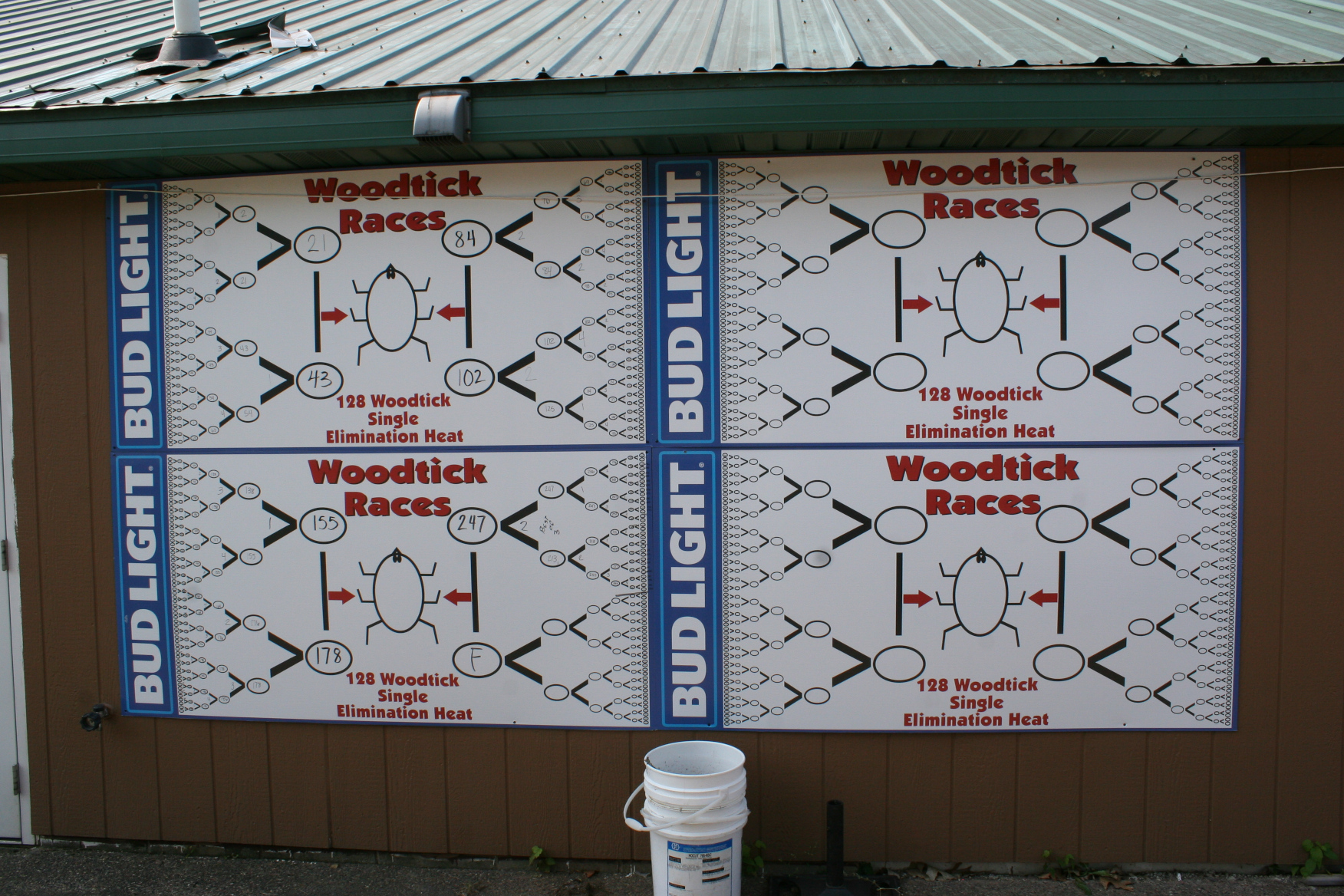
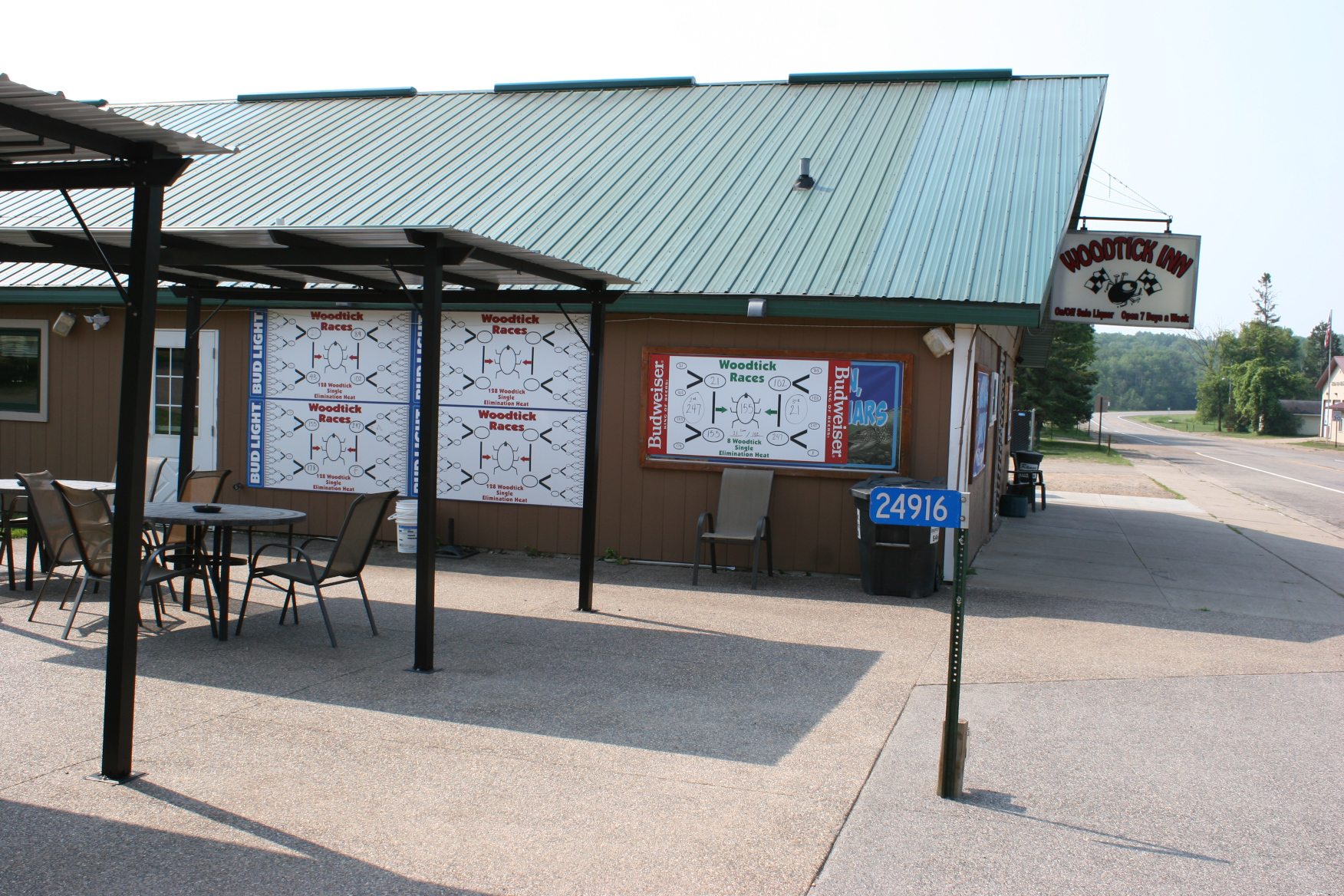
Woodtick Races scoreboards posted on the side of the Woodtick Inn. Minnesota Prairie Roots copyrighted photo July 2021.
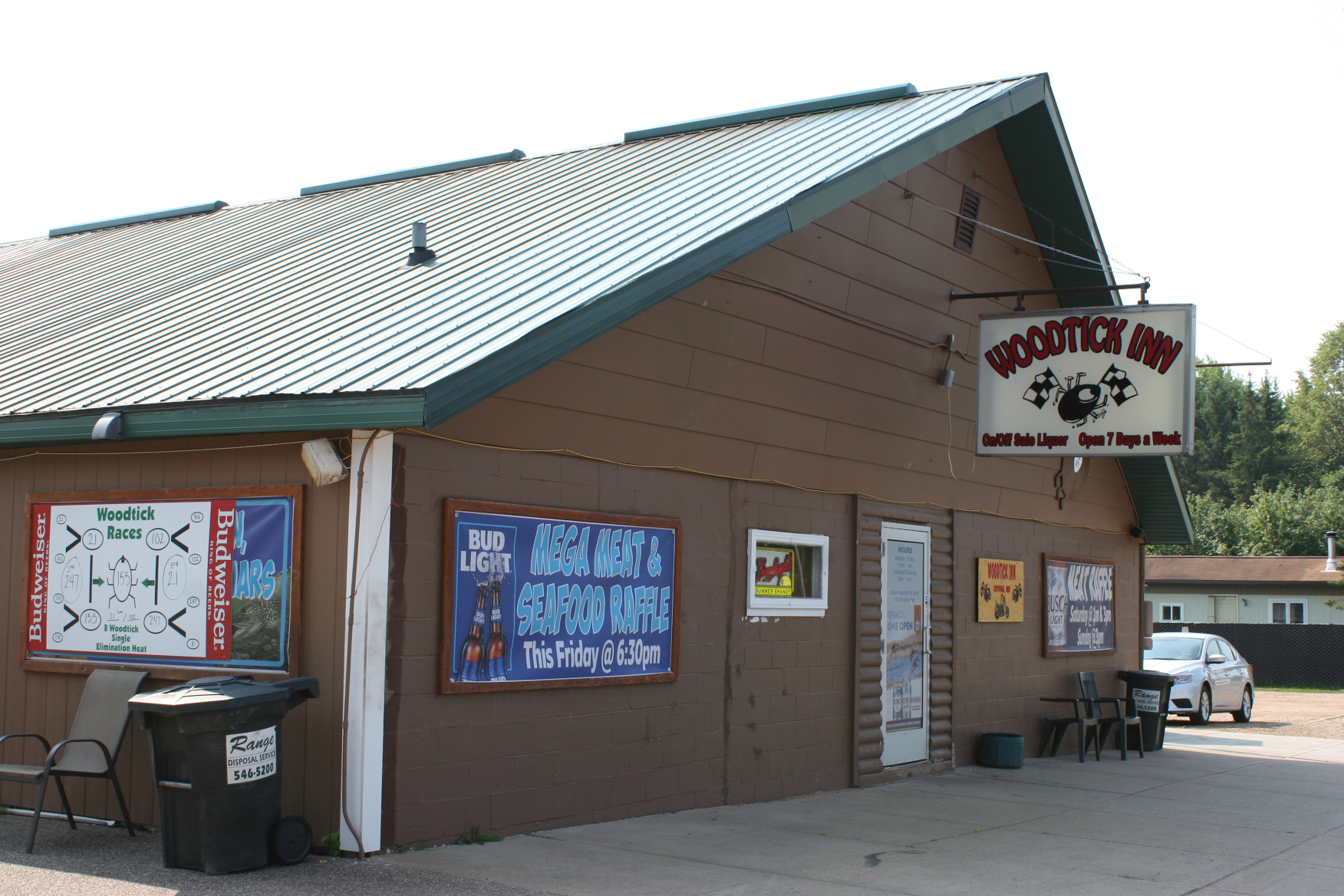
And for us on this day, it was the woodtick-dubbed bar and grill and, of all things, Woodtick Races. The Inn hosts the races annually on the second Saturday of June.
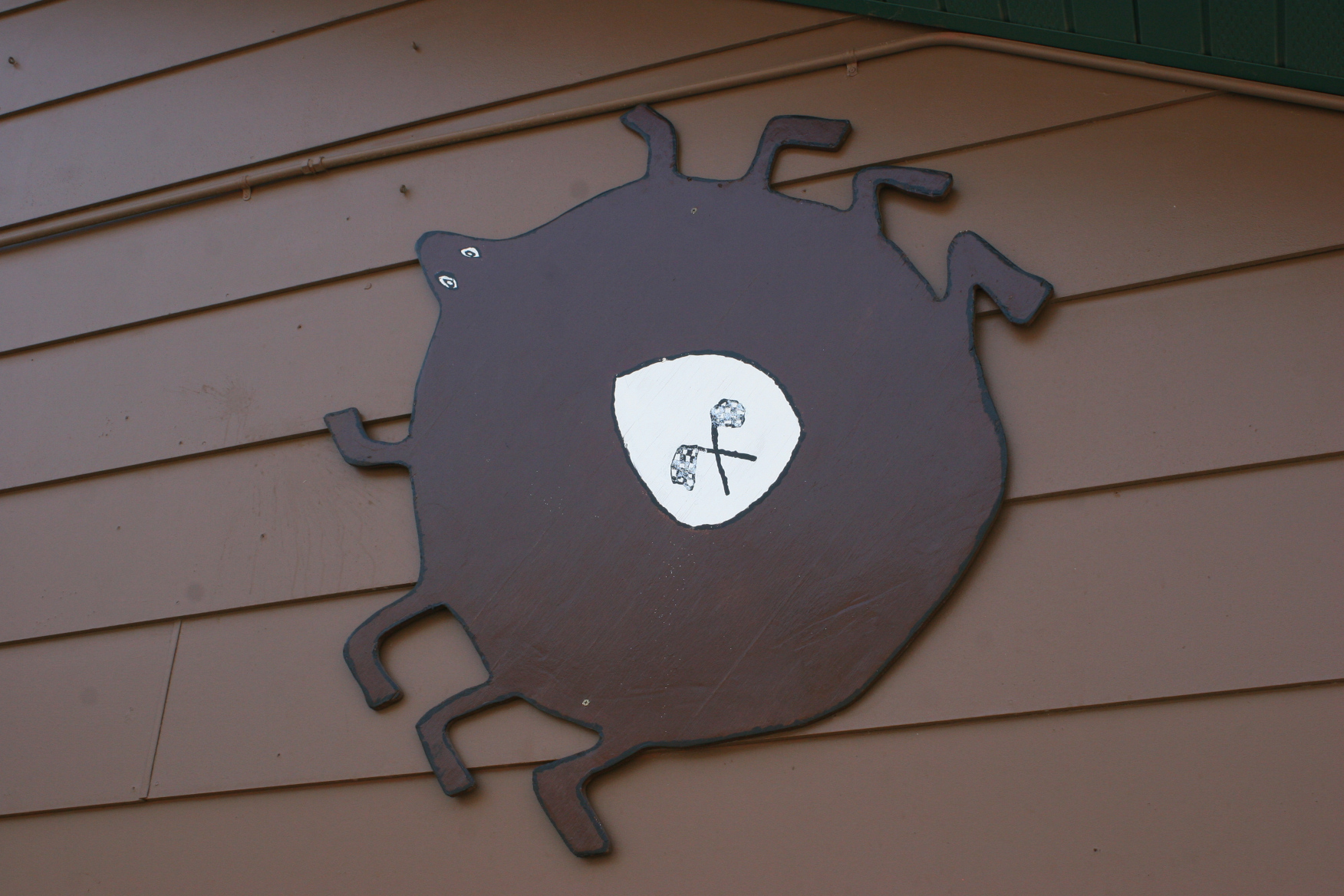
An artist’s rendition of a woodtick hangs on the bar’s exterior. Minnesota Prairie Roots copyrighted photo July 2021.
But let’s back up a minute. What, exactly, is a woodtick? It’s a parasitic arachnid. Yup, a nasty bug that will latch into your skin and suck your blood. Many varieties of woodticks exist. But those raced in Cuyuna are the common American Dog Tick. And, yes, these ticks will find a host in a dog.
The sign which first caught my eye when entering Cuyuna. Minnesota Prairie Roots copyrighted photo July 2021.
Many years have passed since a woodtick determined I would be a good feeding source. But, as a child, I often found ticks stuck to my skin after playing outdoors. And, yes, they can spread diseases. And, no, I don’t like them. Not one bit.
The Woodtick Inn also welcomes anglers in this big fishing region. Minnesota Prairie Roots copyrighted photo July 2021.
There’s plenty of outdoor space for racing woodticks. Minnesota Prairie Roots copyrighted photo July 2021.
And I expect the annual Woodtick Races also draw plenty of participants and curious observers. This year, the 42nd annual event, the top three cash prizes ranged from $224-$560. That’s a good chunk of change for a race with a $5 entry fee and an additional $1 if you buy a “caught” tick rather than bring your own.
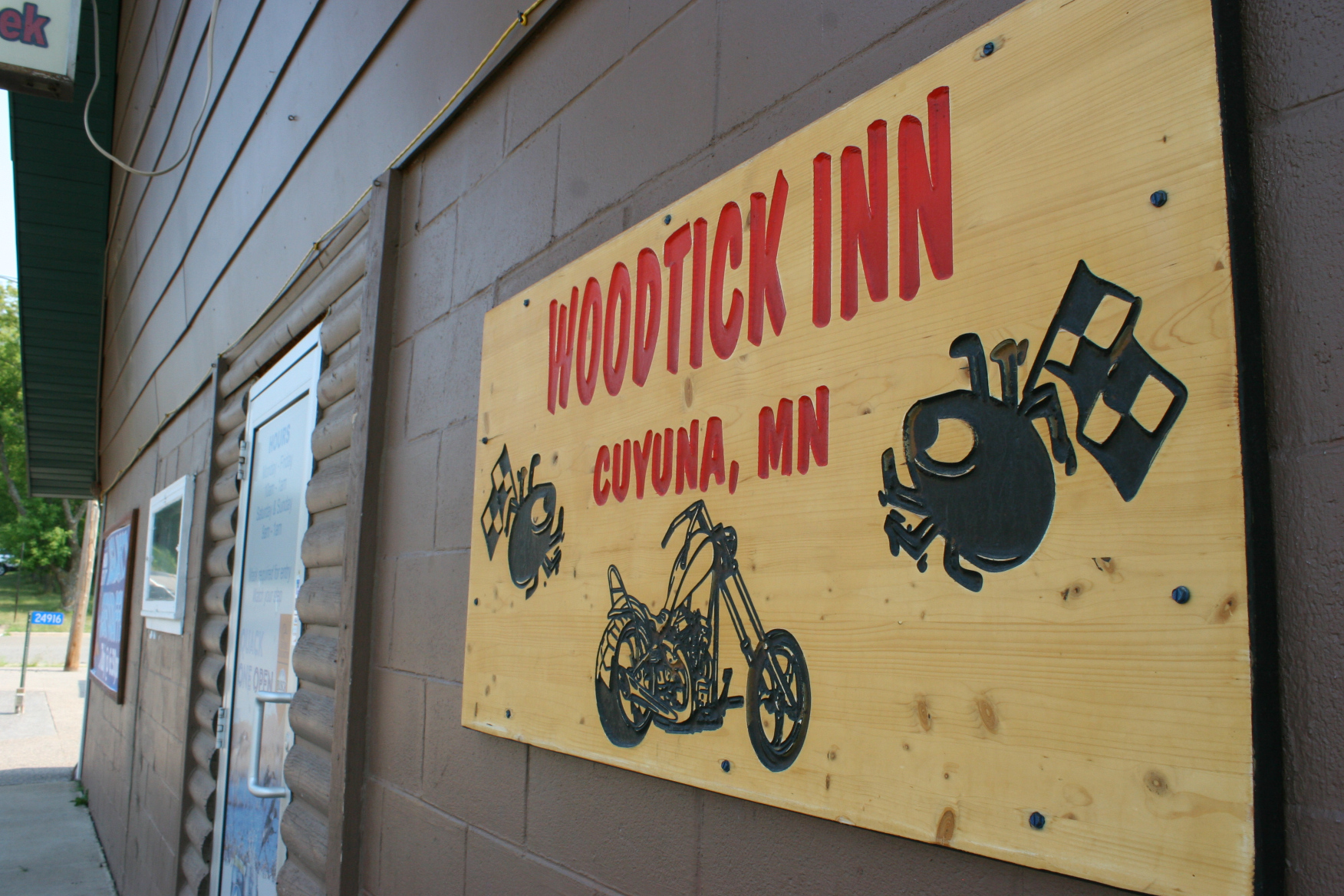
Lots of original signage identifies the Woodtick Inn. Minnesota Prairie Roots copyrighted photo July 2021.
I wondered aloud how event organizers gather woodticks for the races. “Send a kid into the woods,” Randy joked.
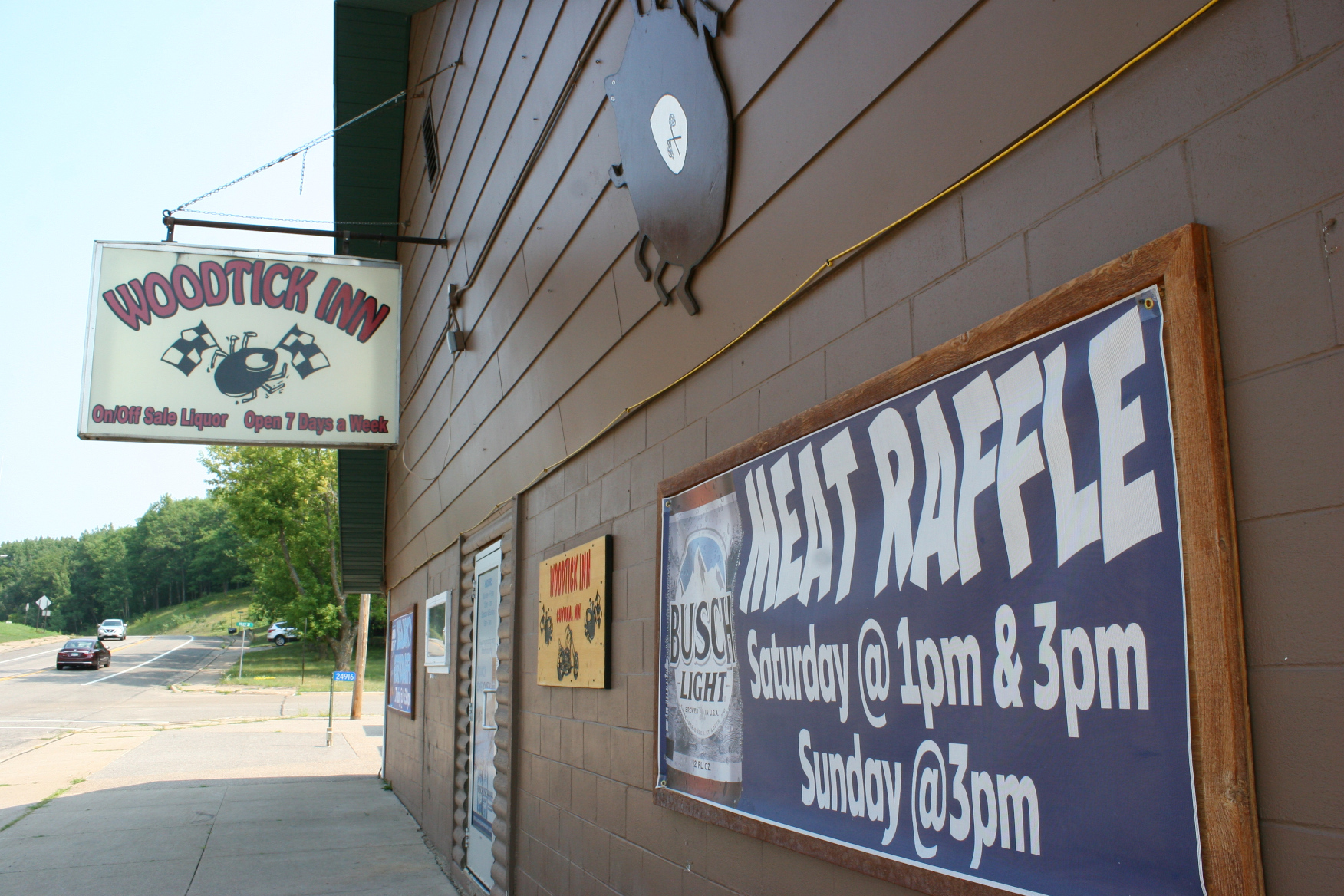
Meat raffles are a draw at the Woodtick Inn also. Minnesota Prairie Roots copyrighted photo July 2021.
However those ticks are gathered, the rules call for racers to place their woodticks in the middle of a circle on a table. Whichever tick reaches the outside of the circle first wins. And, yes, referees oversee the races.
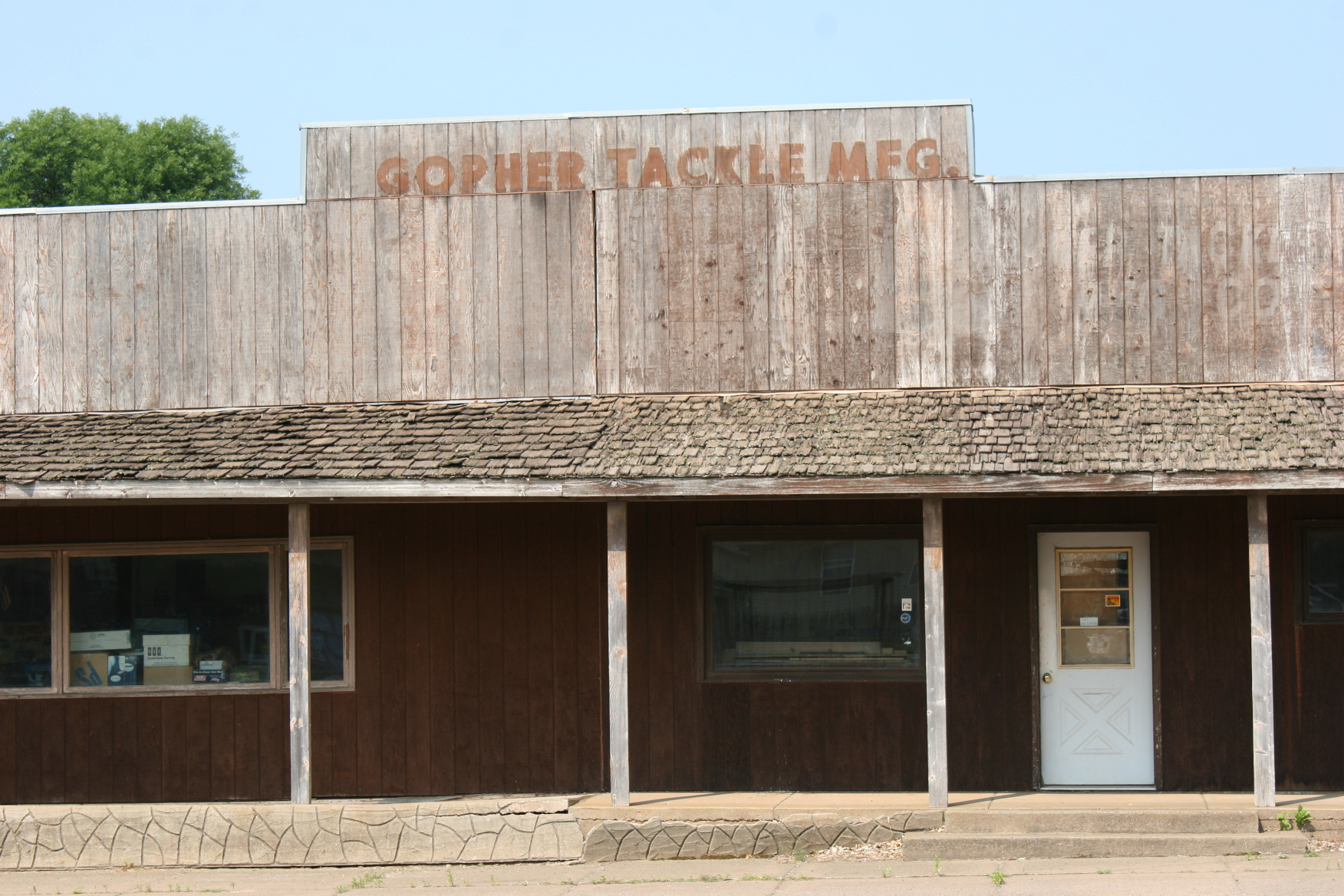
In 2021,Gopher Tackle, based in Cuyuna for 40 years, was sold and relocated to Milford, Iowa. Minnesota Prairie Roots copyrighted photo July 2021.
Some day I hope to witness these races at the Woodtick Inn in Cuyuna. And I need to further explore the spread-out town named after surveyor Cuyler Adams and his Saint Bernard, Una. The Cuyuna I saw is vastly different from a boom town that once housed a hospital, high school, theater, hotels, saloons, grocery stores and much more. A town once teeming with iron ore miners and their families. And today, woodticks.
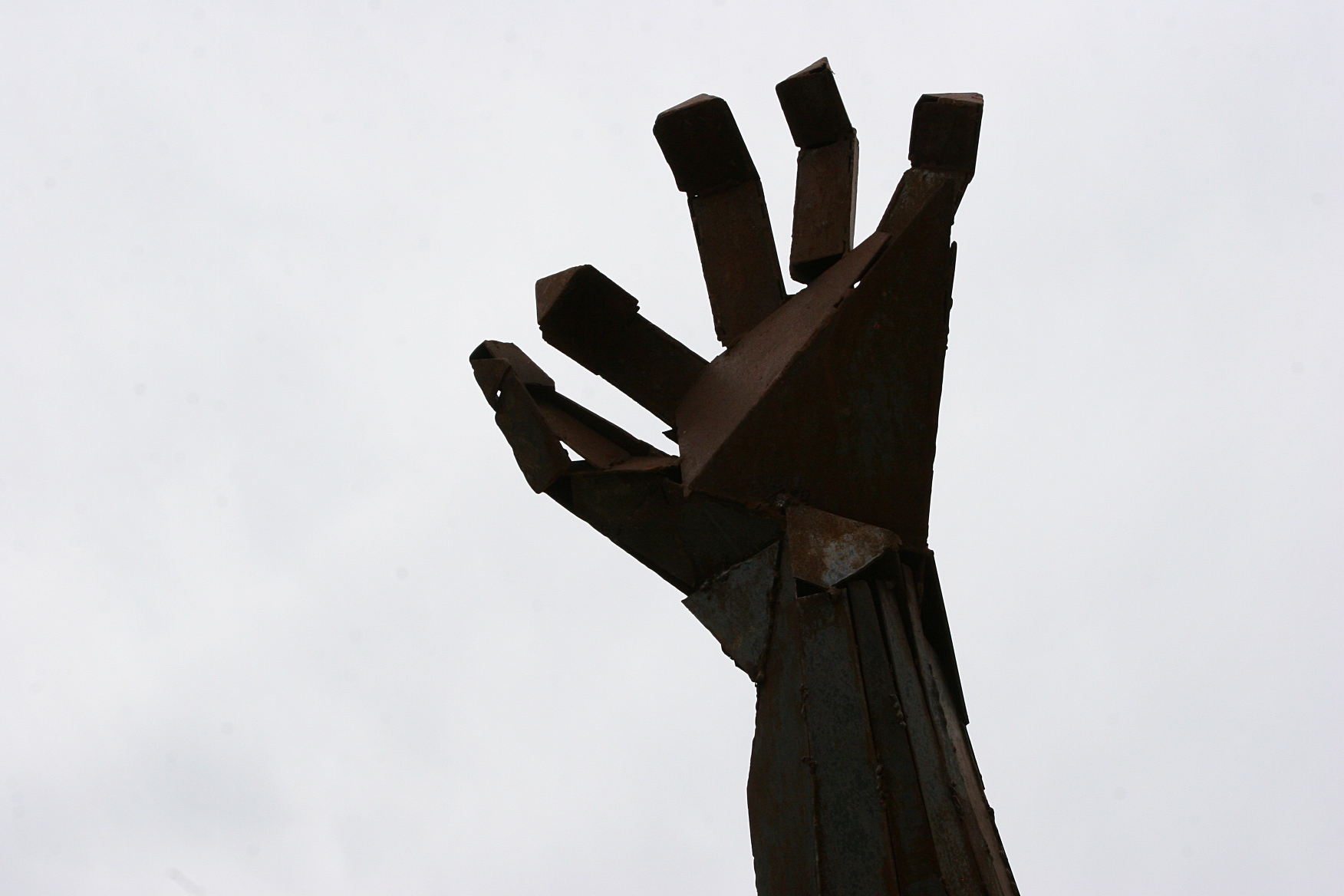
Part of the sculpture, “Waist Deep” themed to mental health. and outside the Northfield Public Library. Minnesota Prairie Roots file photo 2019.
I REACHED UNDER THE SINK, pulled out the garbage container and dumped the flour mixture into the trash. The morning prior, I’d tossed overcooked wild rice.
It’s not like me to waste food. But I’ve been stressed and distracted this week, causing me to lose focus. When preparing Blueberry-Banana Bread this morning, I couldn’t recall whether I’d added baking powder. So into the garbage the flour mix went. On Thursday I was similarly distracted and, while I heard the timer alert me to the rice being done, the grains needed a bit more cooking. Except I forgot. Lucky for me the rice didn’t burn to the point of a smoke alarm sounding.
STRESS & DISTRACTIONS
What’s the point of sharing this? My experiences, minor in comparison to US Olympic gymnast Simone Biles, reaffirm how stress and distraction can affect results. Because my thoughts were elsewhere, I burned the wild rice and couldn’t recall ingredients added, or not, to the flour mix. So I opted to start over and focus on the task. The results were delicious Chicken Wild Rice Hotdish and Blueberry-Banana Bread.
Perhaps Biles wishes she could start over. Or not. She recognized the mental stress and pressure she was feeling and chose to step out of the competition. That shows great personal strength. She chose to put her health first. She chose also to put her team first, realizing she was not at her best. I applaud the honesty, courage and recognition that her health needs to come first. She’s also reopened the discussion on mental health issues faced by athletes. That leads to other discussions about mental health in the general population.
STRONG & BRAVE
Some of the strongest, bravest people and families I know are those who live/deal with mental health challenges. They must not only find ways to cope and live their lives, but also overcome stigma and roadblocks. That can be undeniably difficult. These individuals and families need our compassion, love and support.
I fully expect Biles will have easy access to professional mental health care. Yet, for too many, that is not the case. Finances, lack of providers and more can limit treatment. That is reality.
FOCUSING
As I write this, I feel focused. Writing helps me mentally. And as a woman of faith, prayer helps, too. As does reading my Bible.
I’ve also eaten way too much Blueberry-Banana Bread today. Typically when I’m stressed, I don’t eat much. But there’s something about warm bread that keeps drawing me back to the kitchen…
Between pauses in writing and bites of bread, I still find my mind drifting. To my dear cousin Dawn and family who lost their husband/father/grandfather unexpectedly yesterday due to natural causes. Rich was only 58. The stress that family is experiencing must feel overwhelming. My heart hurts for all of them at their loss.
Because I was thinking of Dawn this morning, I was unfocused in the kitchen. I was also thinking of my son’s upcoming move, which will take him even farther away from Minnesota. My mind brimmed with concern, worry, sorrow and too many distracting thoughts. We all have days, maybe even weeks, when we feel stressed, unfocused.
ABOVE ALL, LISTEN
I hope that when you see someone struggling, you choose to encourage. To show compassion. To understand. To listen. To keep the focus on the friend or family member and not interject your own story, advice or opinions. Bake some Blueberry-Banana Bread or Chicken Wild Rice Hotdish (“casserole”if you live outside Minnesota) to take to and comfort someone. I expect Dawn’s refrigerator is already filled with food from those who love her and her family.
Most of all, simply be there. In a text, a note, a call or in-person. Show you care.
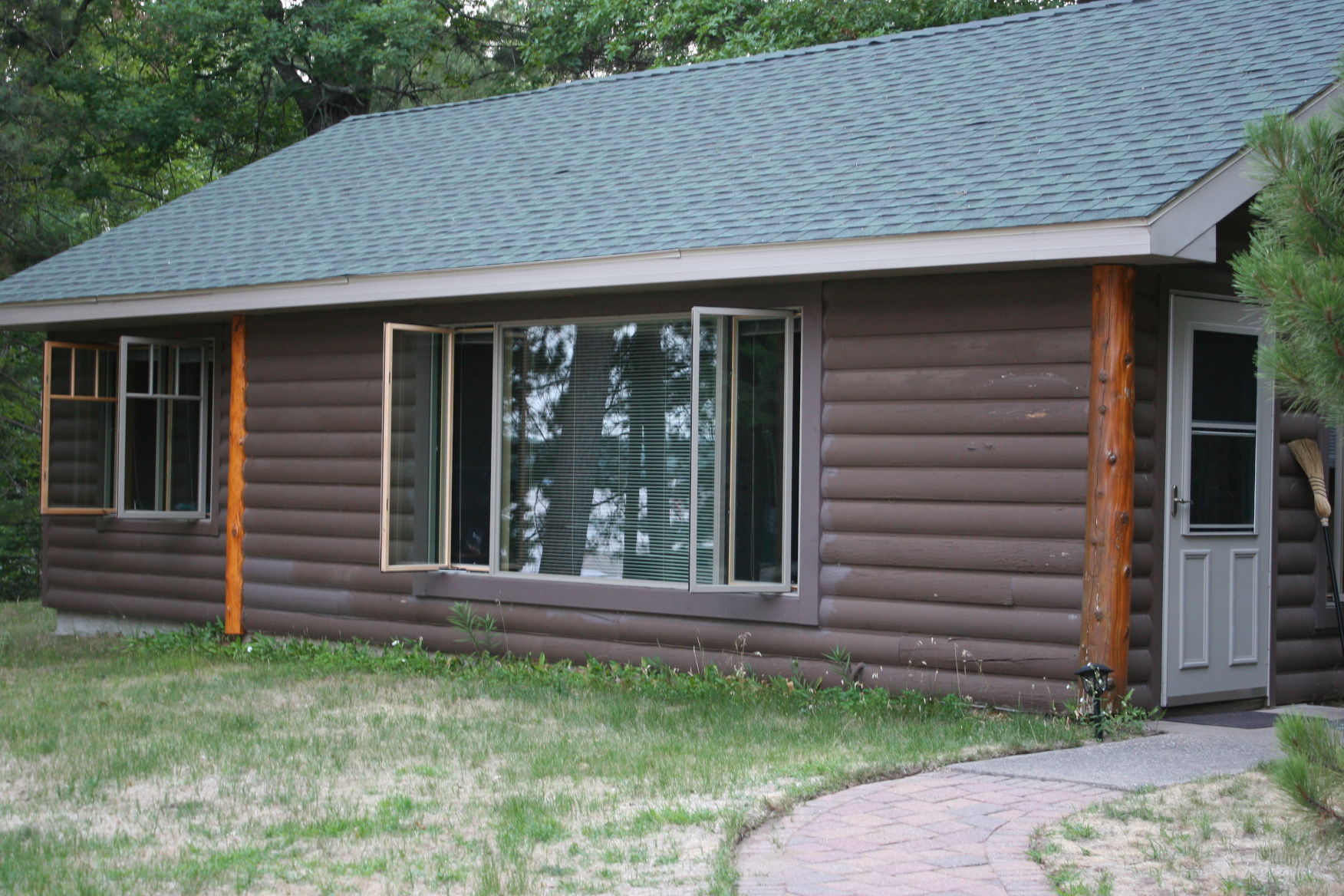
The lake cabin where we stay. Minnesota Prairie Roots copyrighted photo.
THROUGH THE SCRUB GRASS and pines we hurried. Me leading.
“You go first, Grandma,” 5-year-old Isabelle urged on our mission to corral the dragons. I’d heard them earlier, their breathy, fiery voices coming from near the cabin. Just down the lane, I noted the broken fence and the missing dragons.
There were no dragons, of course, except in our imaginations. But the sound of the blower vent on the water heater prompted the dragon round-up. We four—the two grandchildren and Grandpa and I—chased the creatures back to their enclosure.
Isaac waits to fish with Grandpa. Minnesota Prairie Roots copyrighted photo.
This dragon tale is among the memories I hold from our recent stay at a central Minnesota lakes region cabin. Time with Izzy and Isaac, 2 ½, and their parents is precious family time. Days of loving and bonding and building memories.
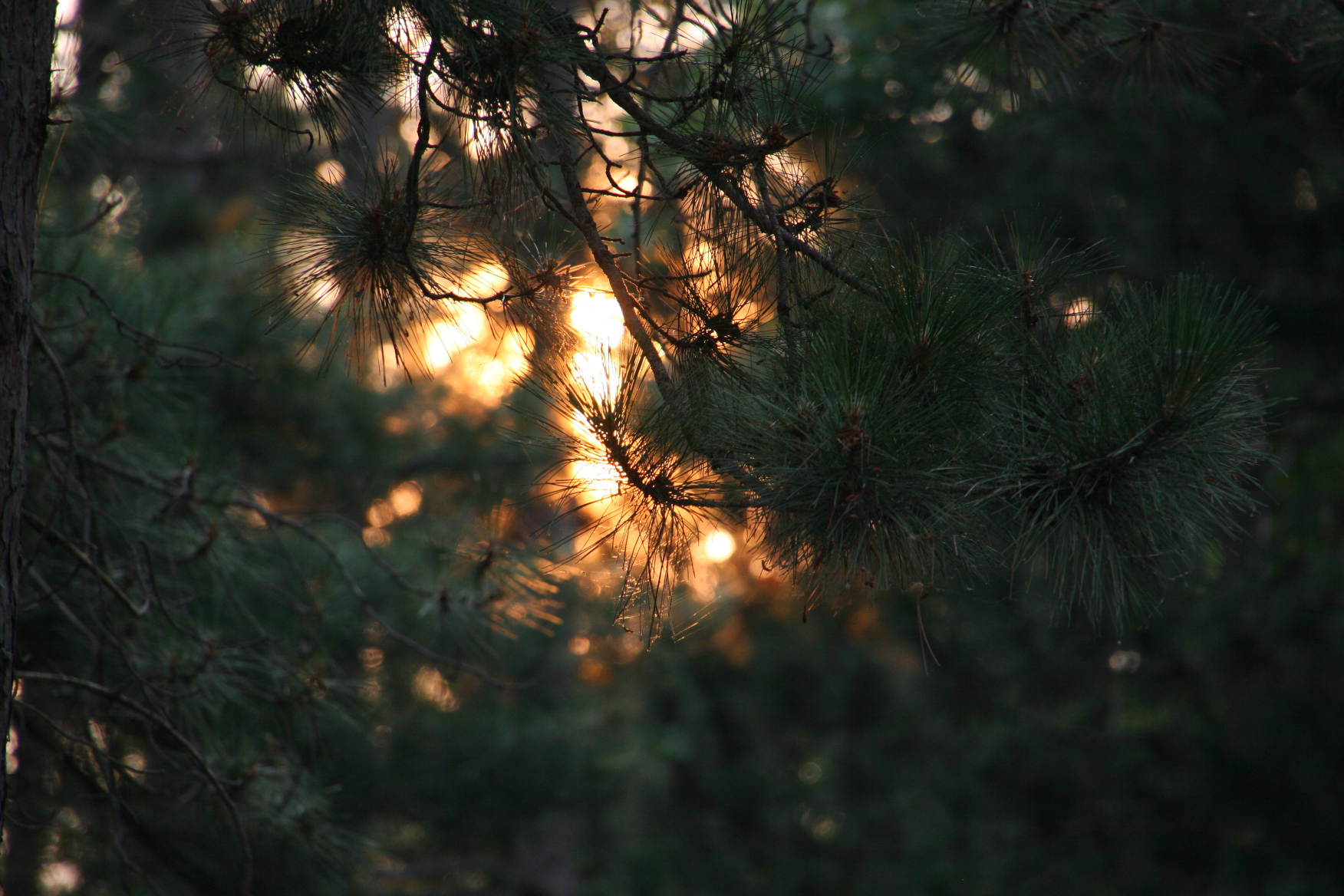
Sunset through the pines lining the driveway. Minnesota Prairie Roots copyrighted photo.
As in previous visits, Randy and I took the kids on numerous nature walks down the pine tree-lined driveway. And when we returned to the cabin, we dropped our finds in a tub of water. To see what would float—acorns, leaves, pinecones, twigs, birch bark… And what wouldn’t—stones. And that offered an opportunity to educate about Native Americans who crafted canoes from birch bark.
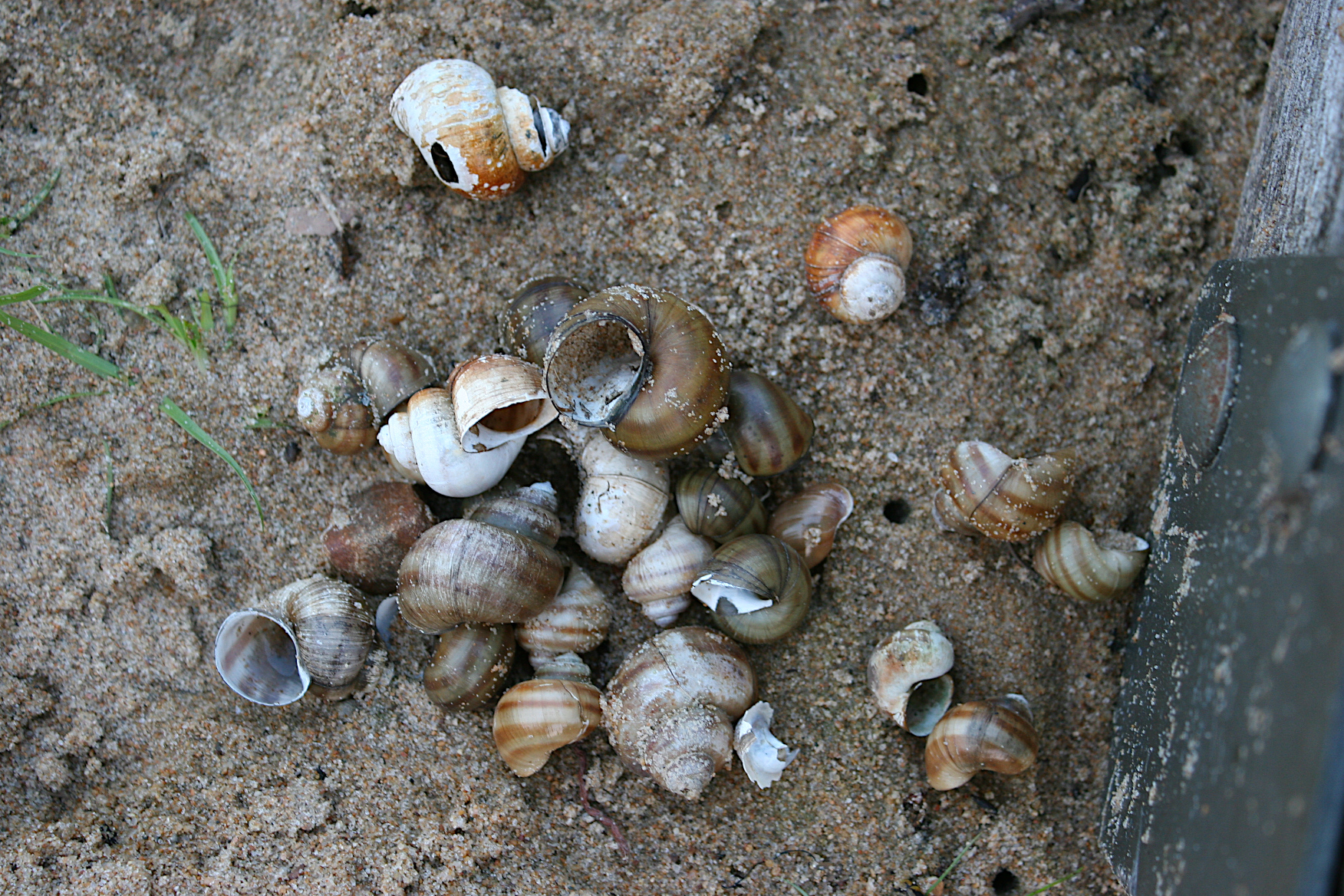
Izzy started a shell collection on the beach. Minnesota Prairie Roots copyrighted photo.
Staying at a lakeside cabin immerses us in nature without the distractions of technology and life in general. Izzy collected a mound of shells, five of which she was allowed to keep. I brought the rest home for Randy to bleach, dry and then deposit in a pint jar, a visual reminder of our time at the lake. Memories in a jar.
The water and beach drew us. To dip in the clear water, where schools of fish swarmed our feet.
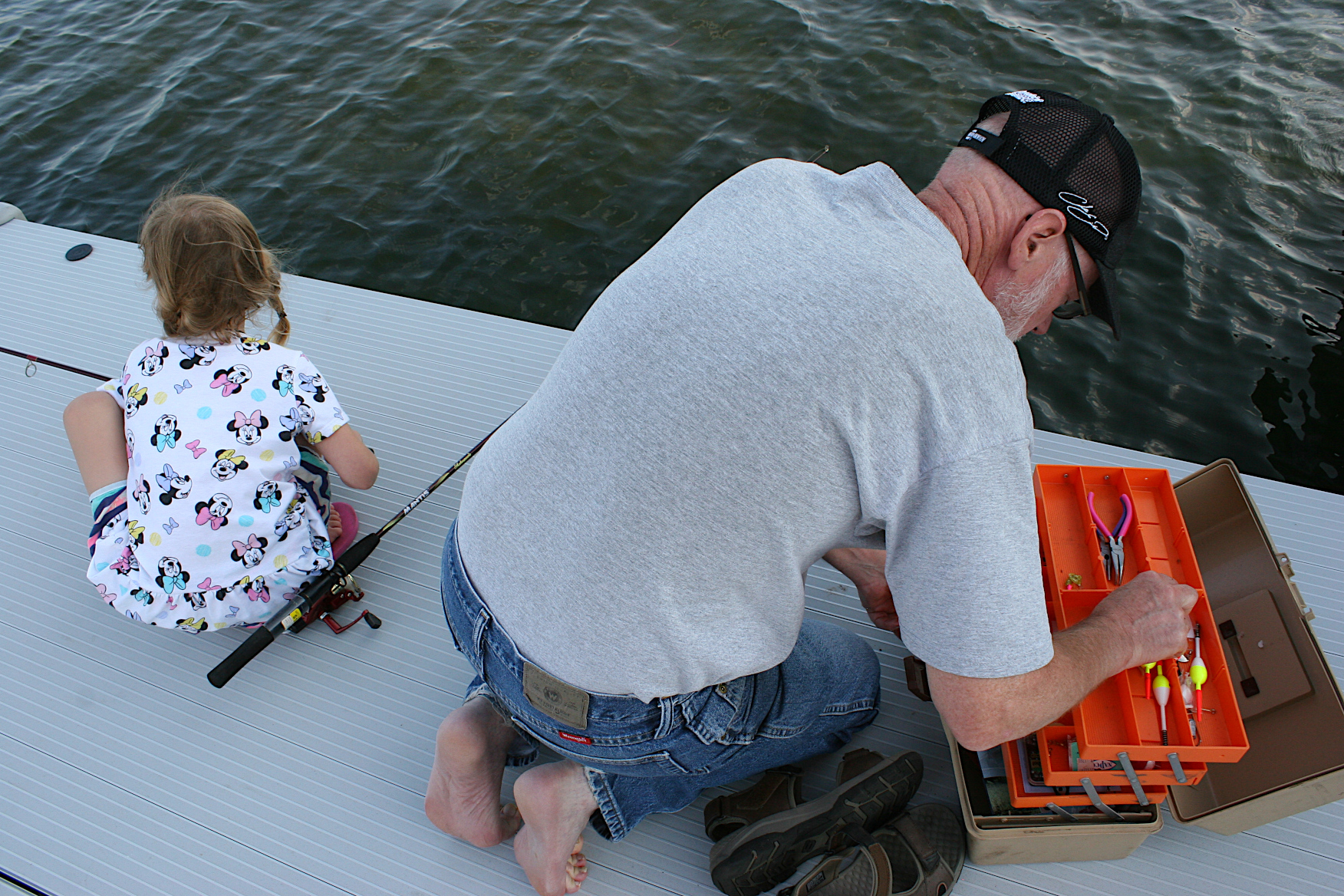
Preparing to fish. Minnesota Prairie Roots copyrighted photo.
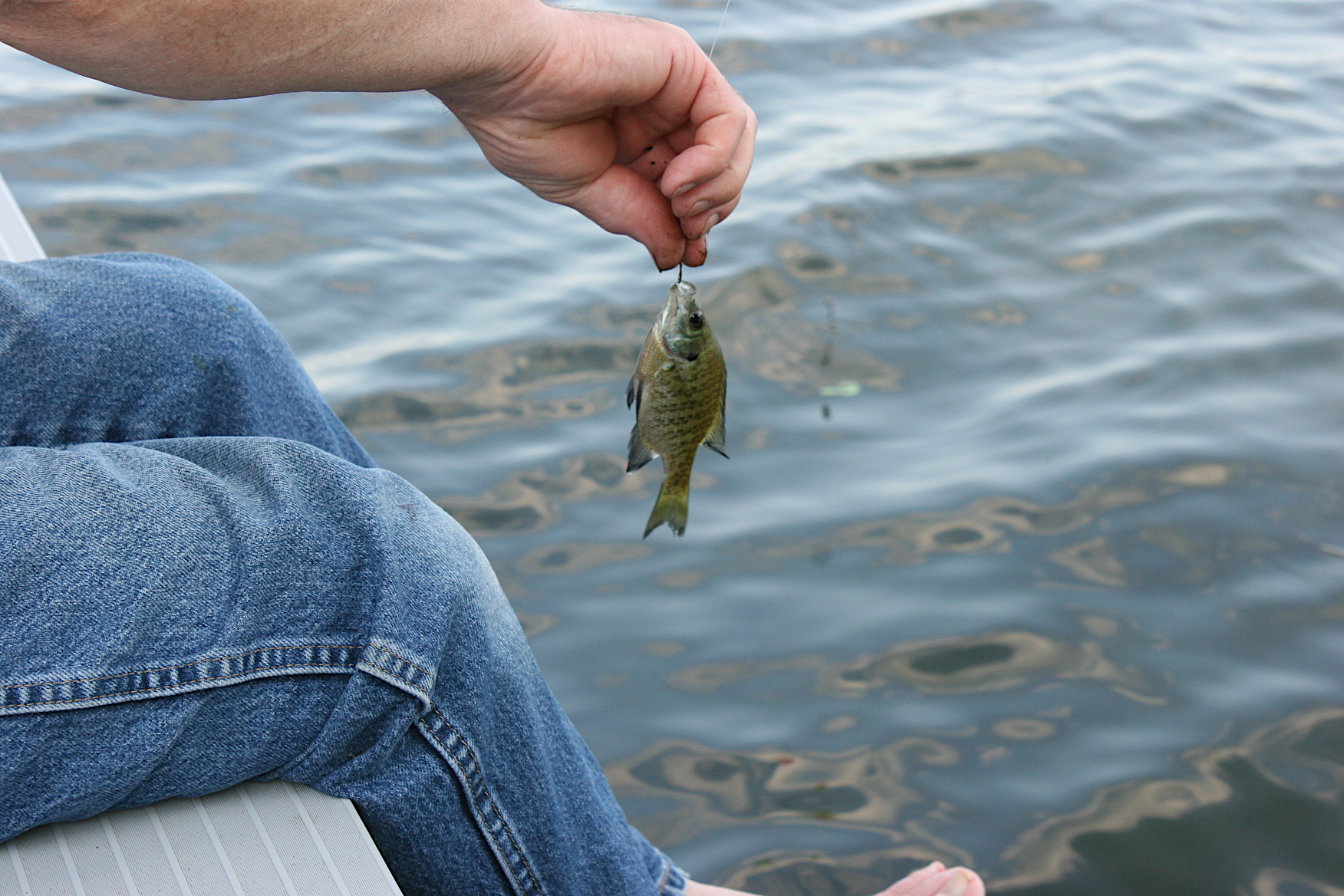
None of the fish were “keepers.” Minnesota Prairie Roots copyrighted photo.
Fishing, though, proved futile. While Randy, with the “help” of the grandkids, hooked some fish from the dock, all were too small to keep. Yet, the experience of fishing, of attempting to teach Izzy and Isaac how to reel in a line, bonds Grandpa and grandchildren. I loved watching the trio.
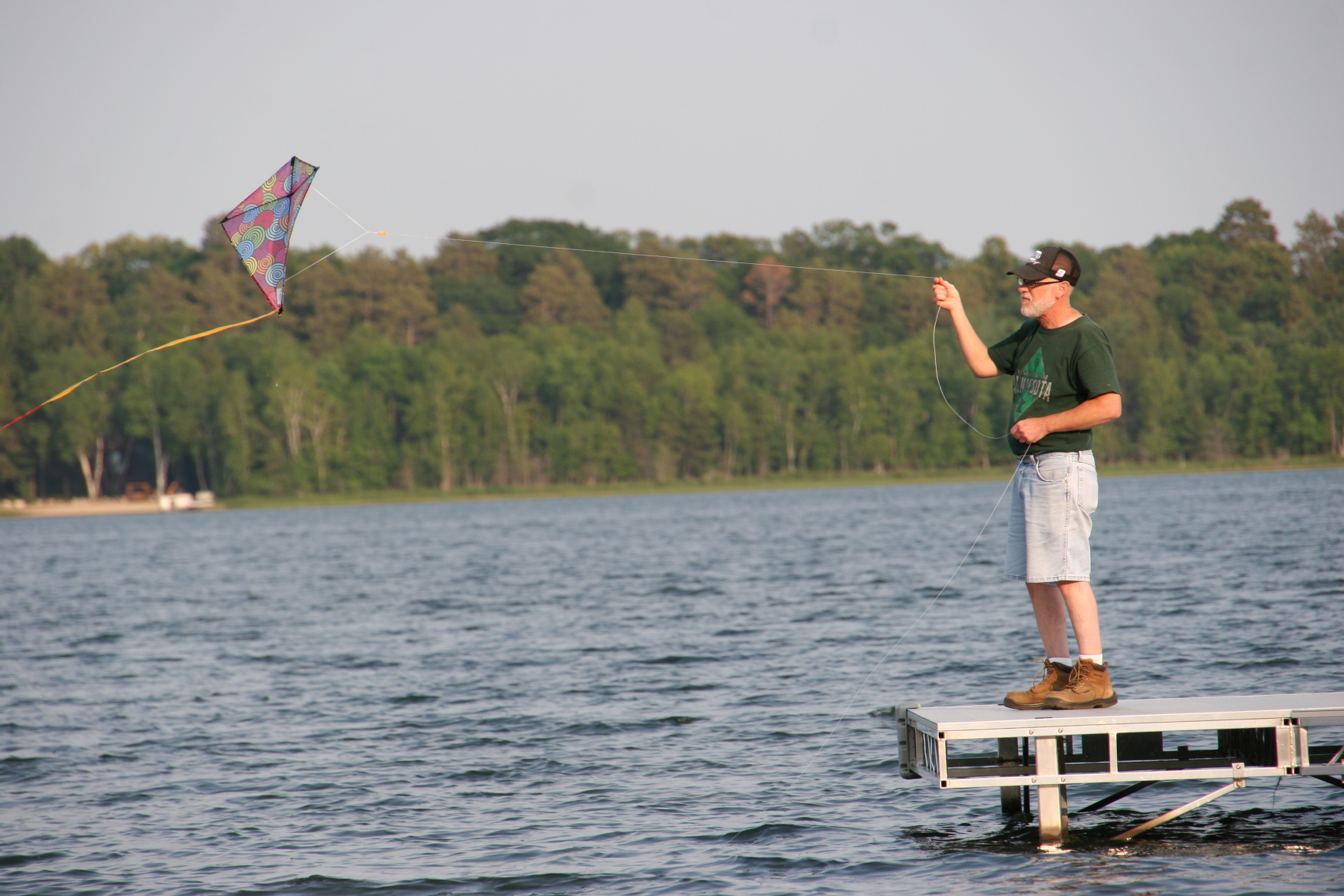
Launching a kite from the dock. Minnesota Prairie Roots copyrighted photo.
On one particularly windy day, Randy grabbed two kites from our van and headed to the end of the dock. The kids showed minimal interest, probably because they couldn’t run with the kite lakeside. We mostly watched from the beach as Randy patiently retrieved fallen kites from the water and then attempted relaunch. Repeatedly. His determination impressed me.
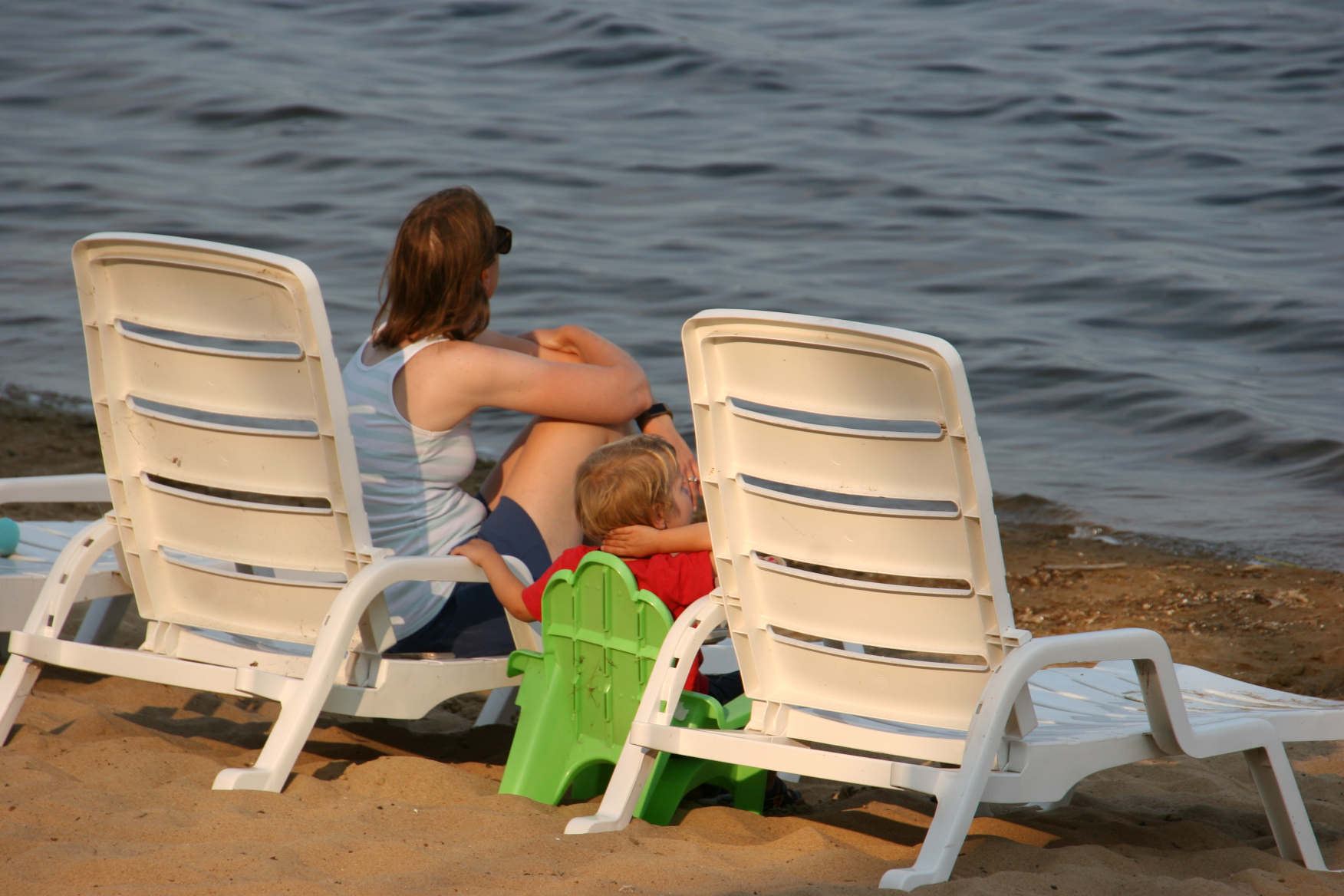
Our eldest daughter and grandson relax on the beach. Minnesota Prairie Roots copyrighted photo.
Like our last stay, Izzy opened her Sand Pie Bakery and we adults (role-playing vacationers) ordered pies in non-Minnesotan accents. Son-in-law Marc had us nearly rolling on the beach after he asked for a Mississippi Mud Pie in the thickest of Southern drawls. It was good fun, especially when Izzy claimed unfamiliarity with that particular pie while she stood with mud (sand) pie in hand.
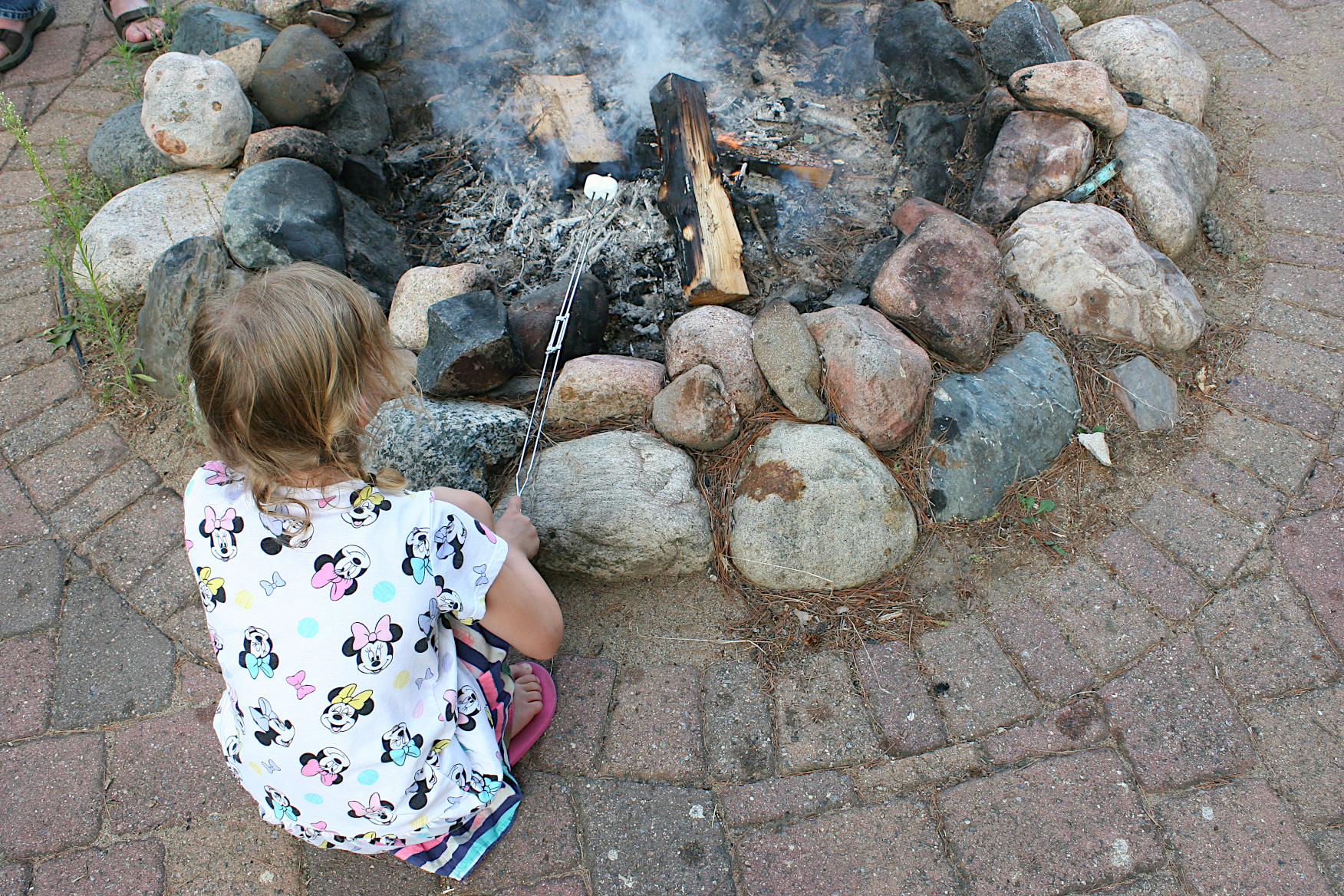
But the grandkids are enthusiastically familiar with s’mores, a campfire treat prepared each evening, except on the day strong winds warranted fire safety first due to tinder dry drought conditions. This visit Isaac joined his sister as a s’more making apprentice. I tasked him with spreading peanut butter on graham cracker halves, then adding Hershey pieces. Doing this myself would have proven easier, quicker. But easy and quick are not necessary on lake time.
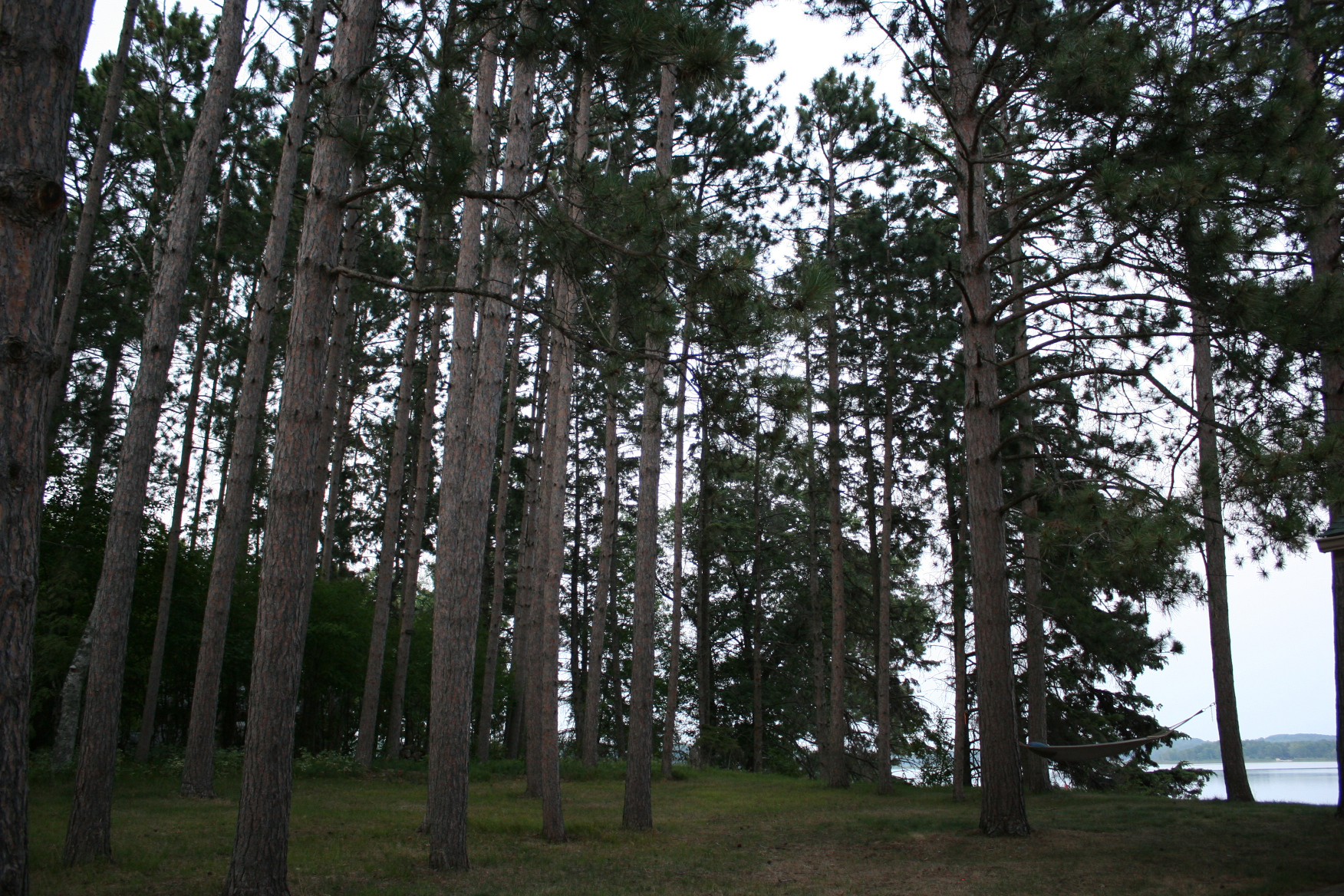
To the far right you can see the hammock strung between pines with the lake nearby. Minnesota Prairie Roots copyrighted photo.
I loved the lazy time of lying in the hammock strung between pines and with a lake view. Izzy and I lay there late one afternoon while I shared about my growing up on a farm. I’m not sure how the topic drifted to that. But my memories interested her…until she brought up bears. “What if there really was a bear here, Grandma?” She asked. We’d shared bear stories around the campfire during our last cabin stay. I didn’t have the heart to tell her the truth, that a bear had been sighted in the neighborhood. I didn’t want to scare her.
“We would just scare it away,” I said, as the hammock gently swayed. That proved good enough for her.
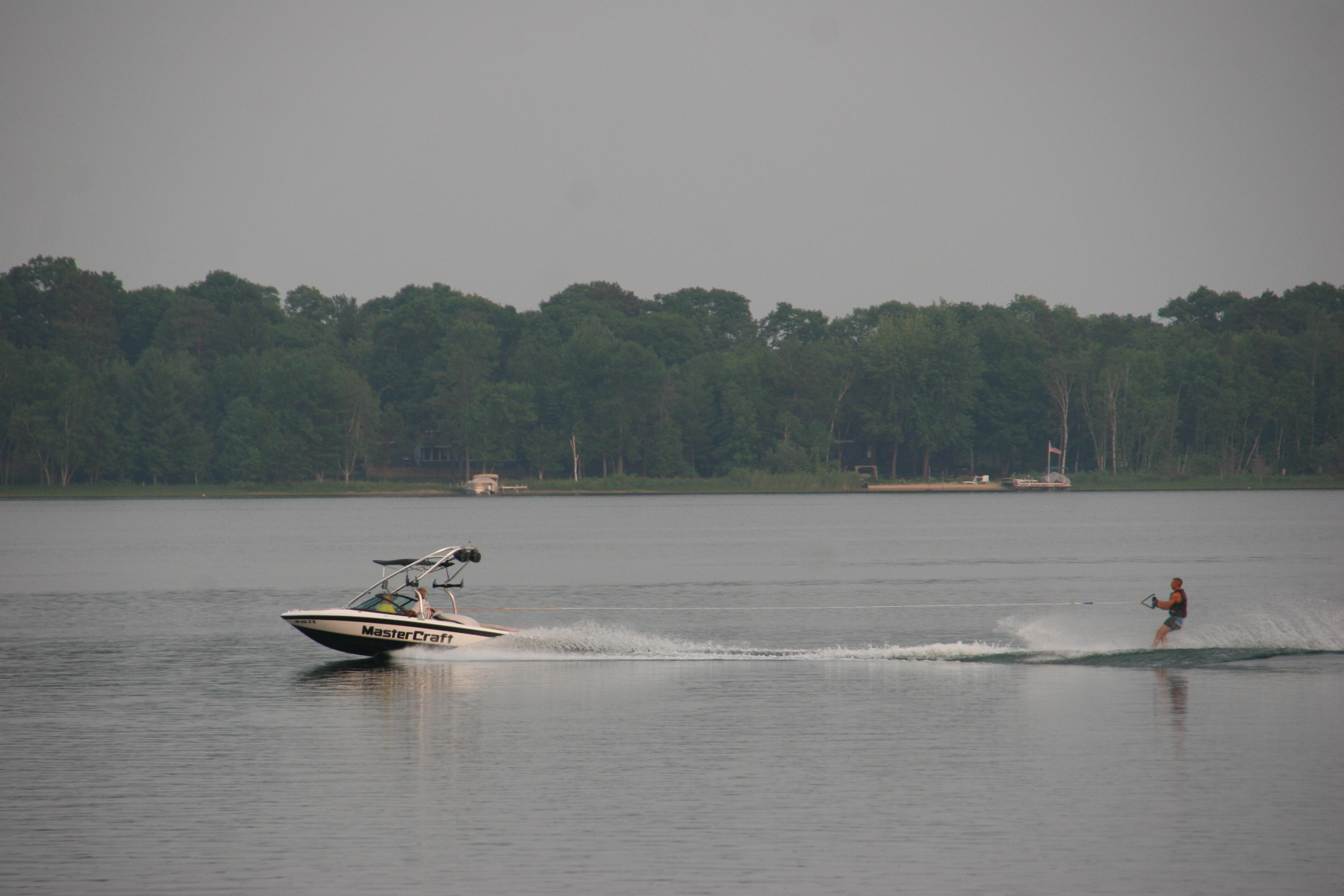
Horseshoe Lake was busy with water sports. Canadian wildfires created hazy skies. Minnesota Prairie Roots copyrighted photo.
She snuggled up to me. “I love you, Grandma.” In that moment, my heart overflowed with love for this precious little girl. This 5-year-old who wears tulle skirts on nature walks, who collects shells, who bakes pies from beach sand. Who, like me, didn’t want to leave the lake cabin…
Babe the Blue Ox, public art and photo op in Pequot Lakes. Minnesota Prairie Roots copyrighted photo.
ONLY RECENTLY HAVE I begun to explore the central Minnesota lakes region and small towns therein. Thanks to the generosity of a sister-in-law and brother-in-law, who are sharing their guest lake cabin with extended family, going Up North to the cabin is now a reality rather than a life-long dream. I feel incredibly blessed and grateful to experience what, for many Minnesotans, is a multi-generational part of their summers.
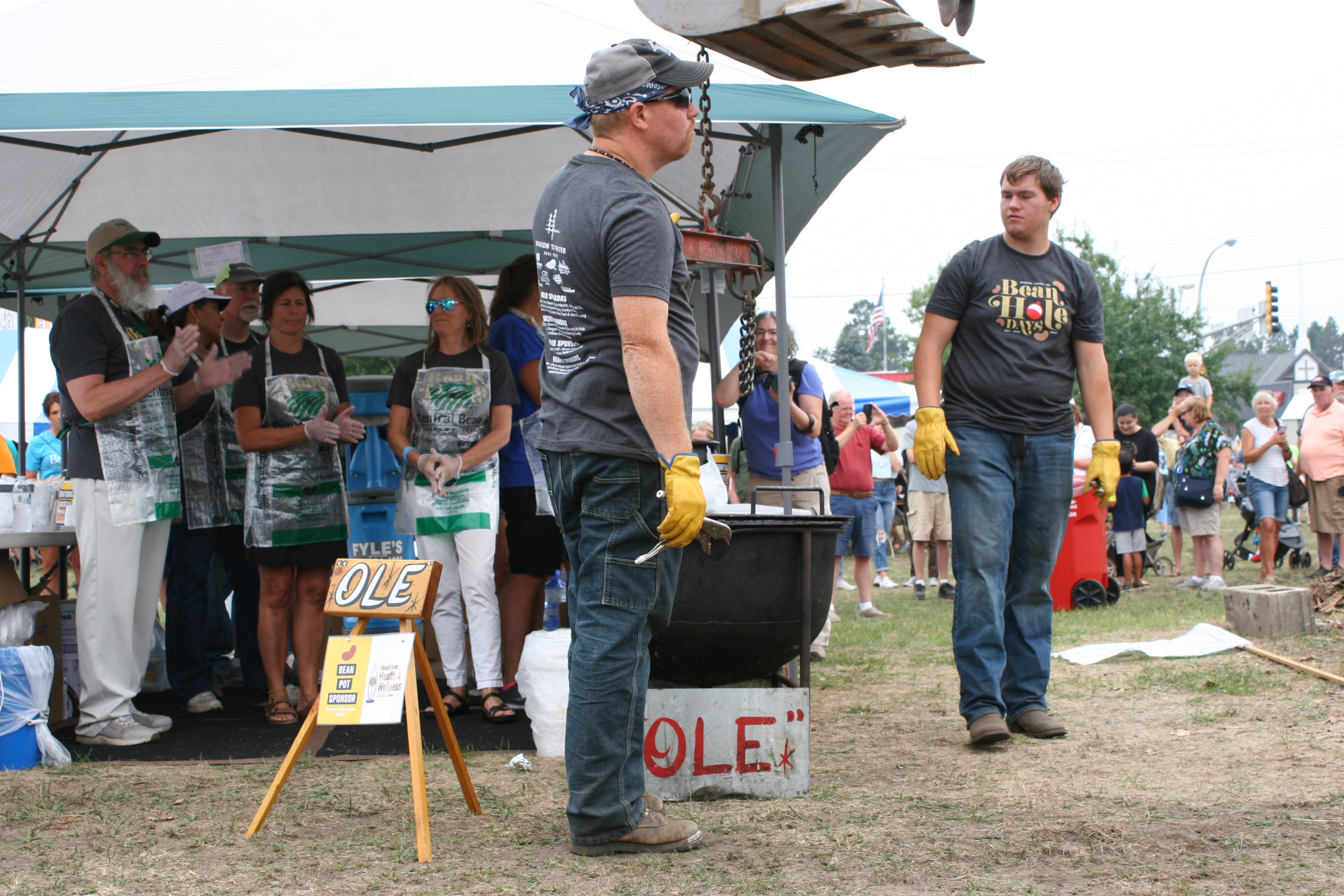
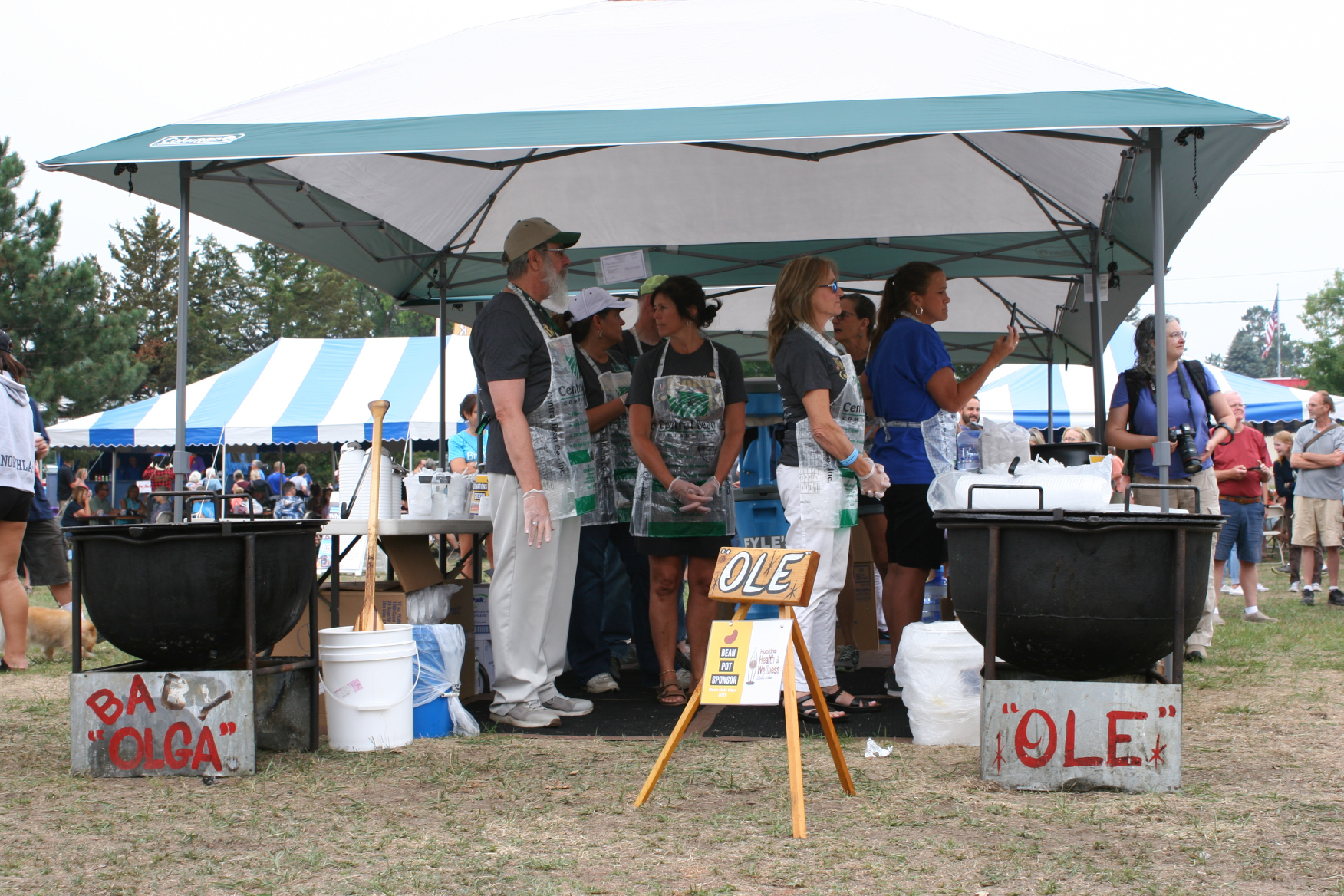
Kettles of baked beans, lifted from an underground pit, await serving during Pequot Lakes’ recent Bean Hole Days. Minnesota Prairie Roots copyrighted photo.
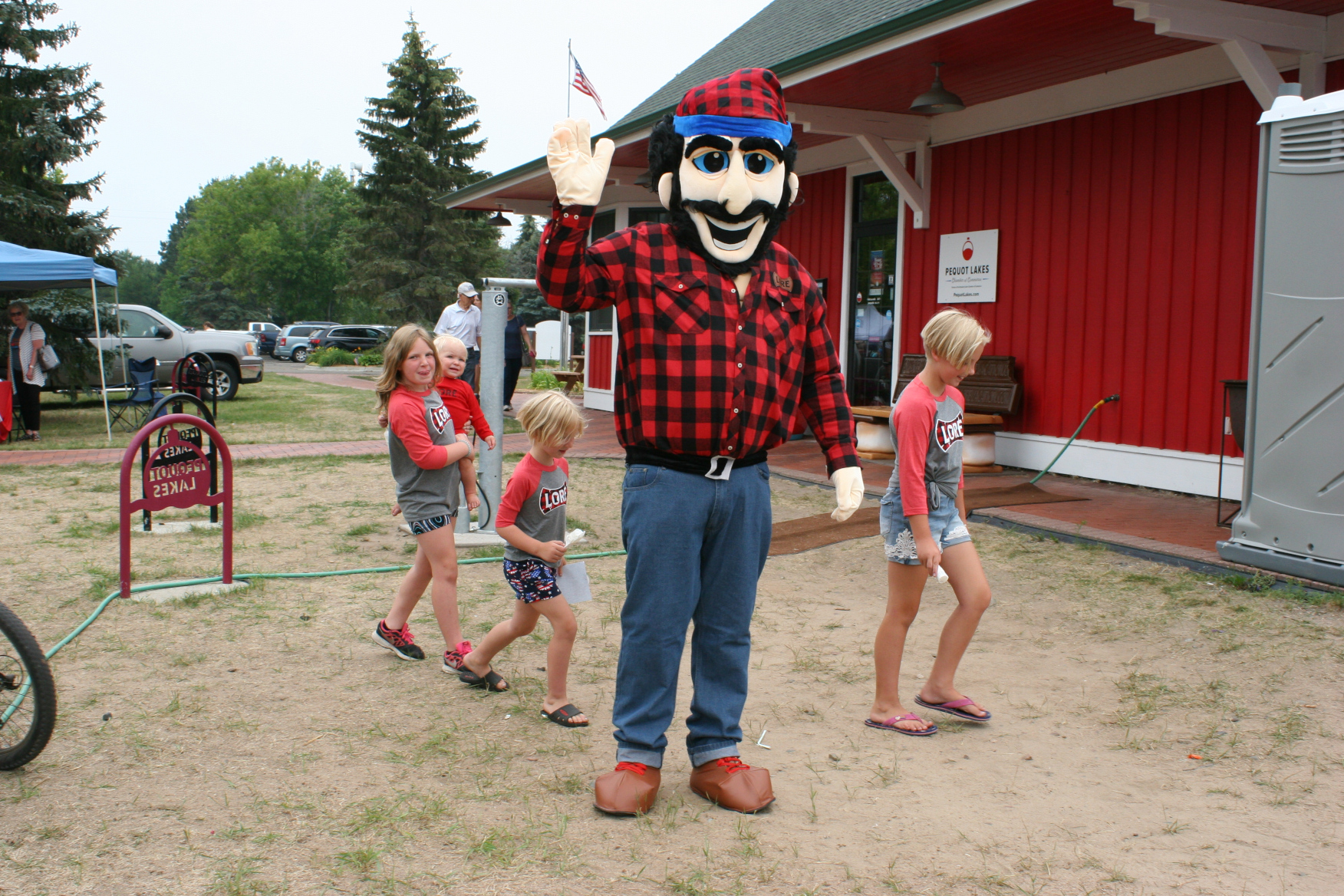
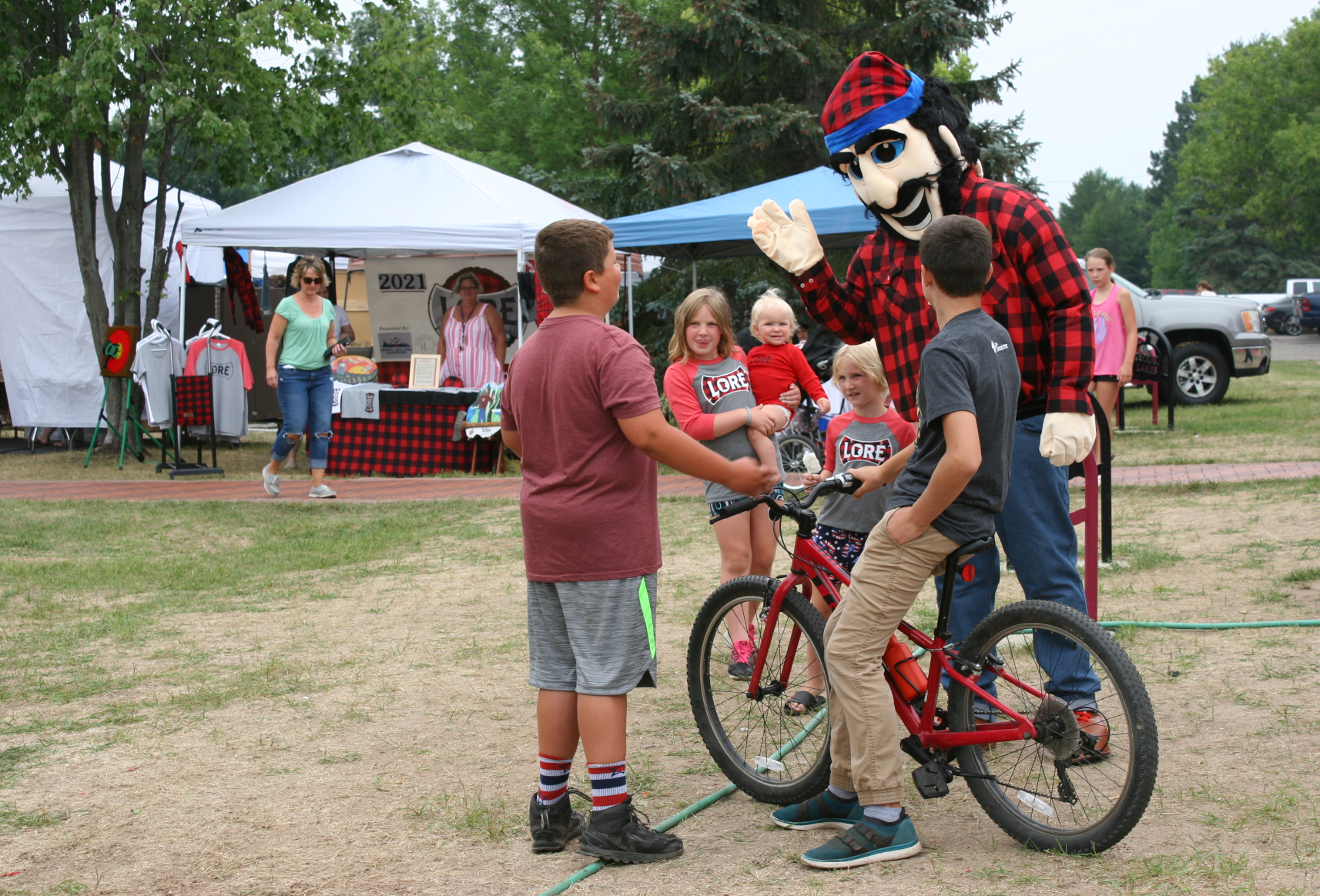
A friendly Paul Bunyan mingles with the crowd during Bean Hole Days. Minnesota Prairie Roots copyrighted photo.
This is Paul Bunyan land. The place of lumberjack lore. So different from my home in southeastern Minnesota. Paul and his side kick, Babe the Blue Ox, are universally appealing, creating a strong tourism branding identity for this region.
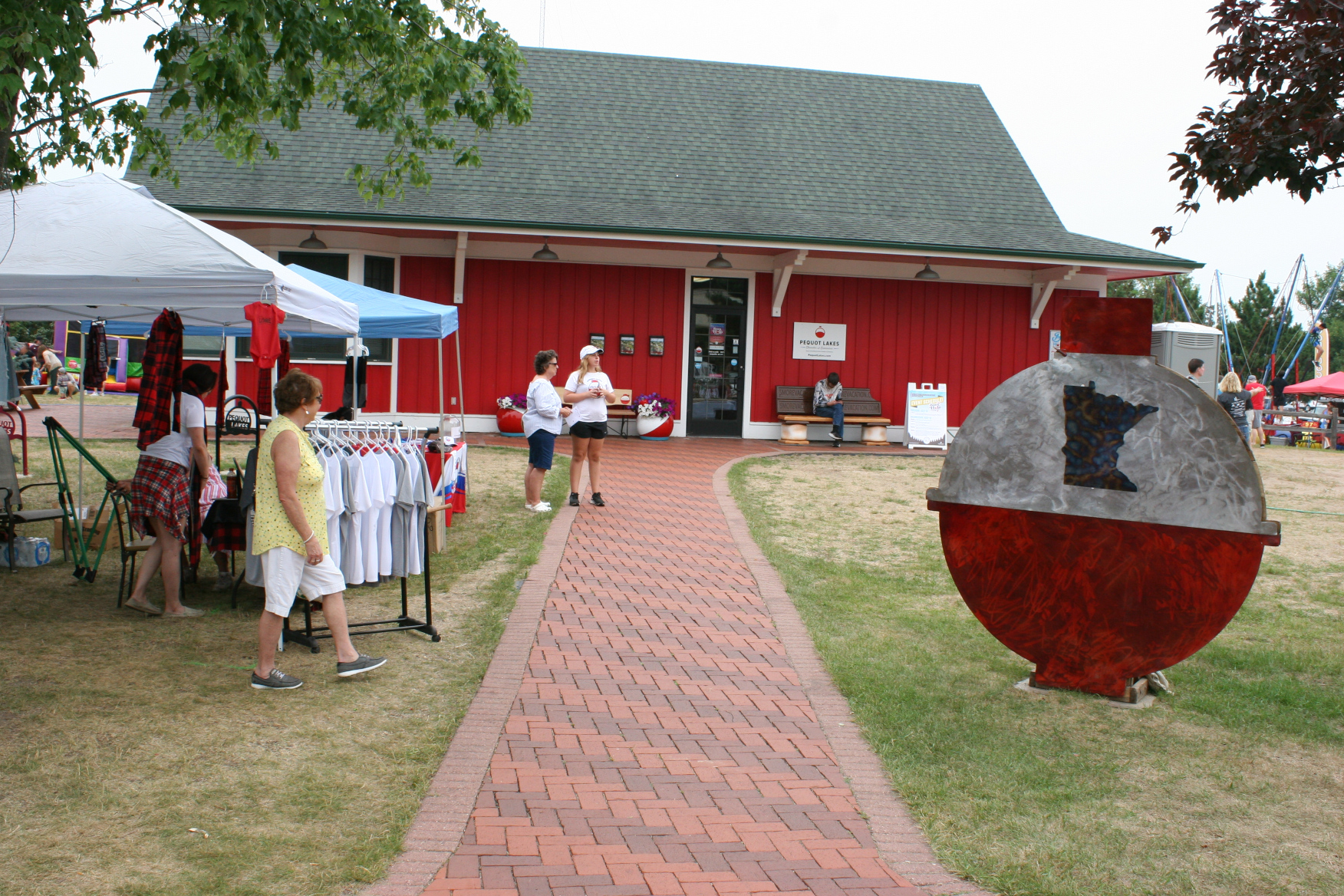
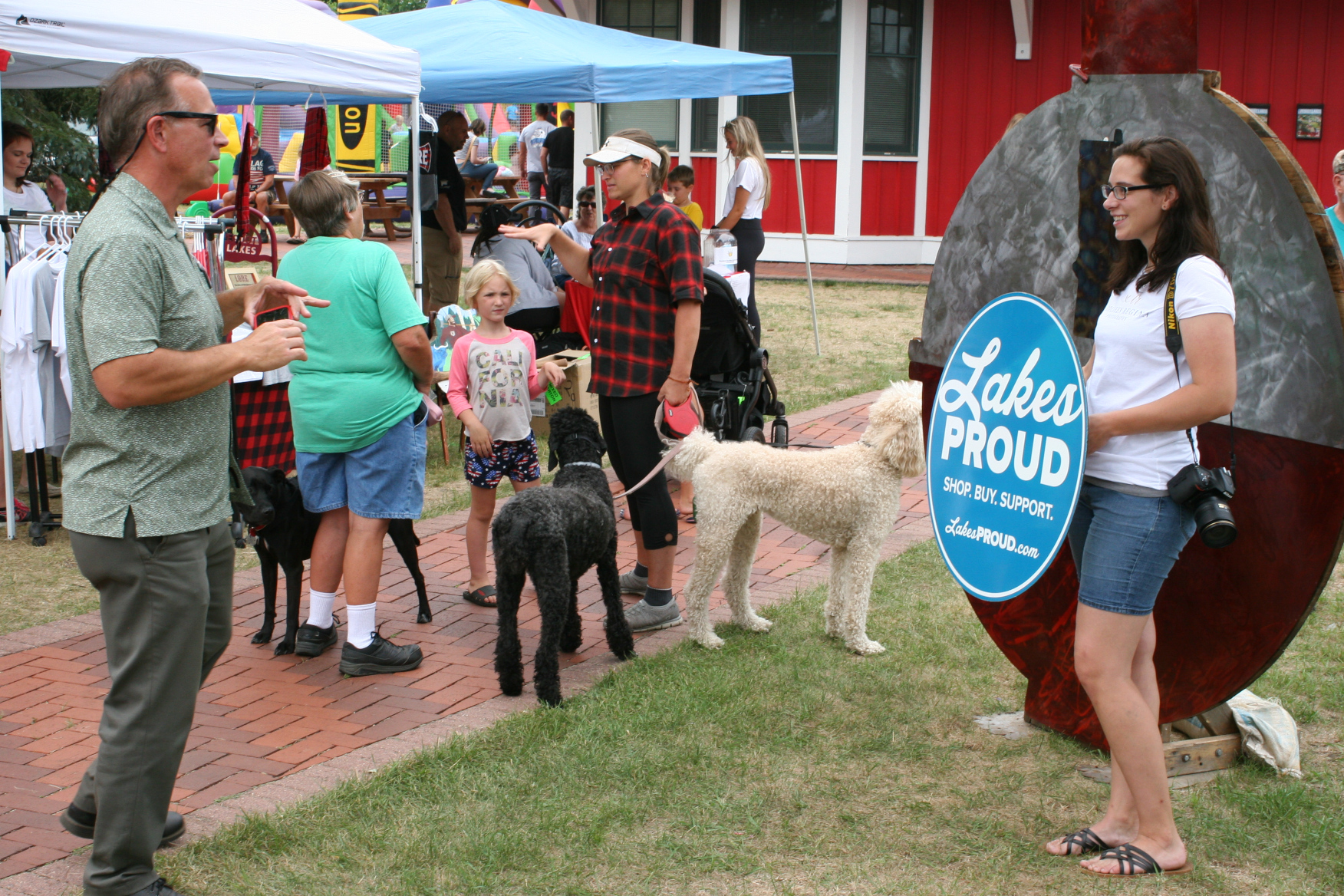
In Trailside Park, bobber sculpture and the Chamber of Commerce and Tourism office draw visitors. Minnesota Prairie Roots copyrighted photo.
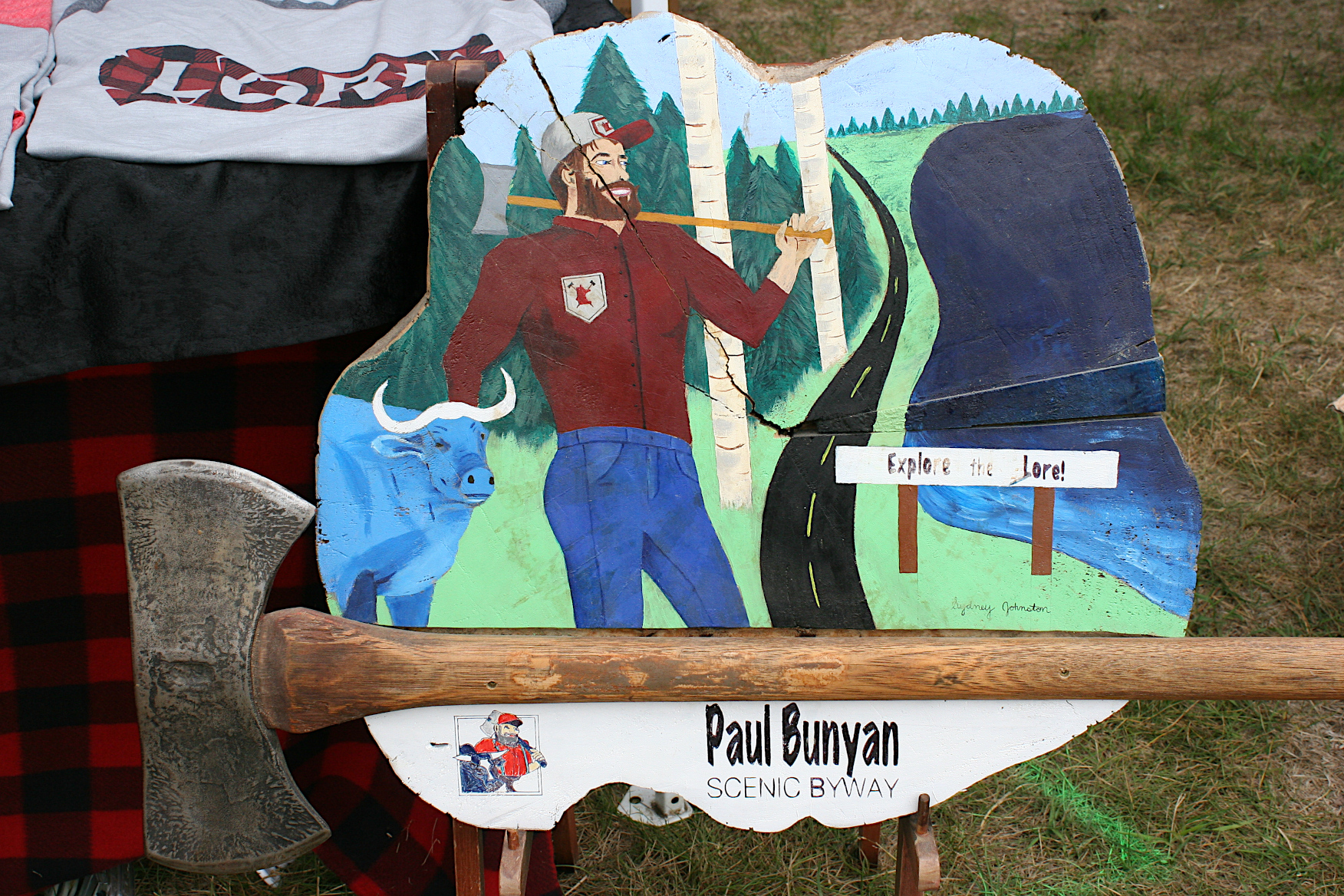
Paul Bunyan art promoting the scenic byway, spotted at Bean Hole Days. Minnesota Prairie Roots copyrighted photo.
And the Paul Bunyan Scenic Byway, a 54-mile route along county roads in scenic northern Crow Wing County and a portion of Cass County, also passes through Pequot Lakes.
The bobber sculpture proved popular with visitors during Bean Hole Days. Minnesota Prairie Roots copyrighted photo.
To visit this region is to appreciate and embrace the stories and character of Northwoods strong Paul Bunyan. And his sweetheart Lucette Diana Kensack (seen in Hackensack, a bit farther to the north).
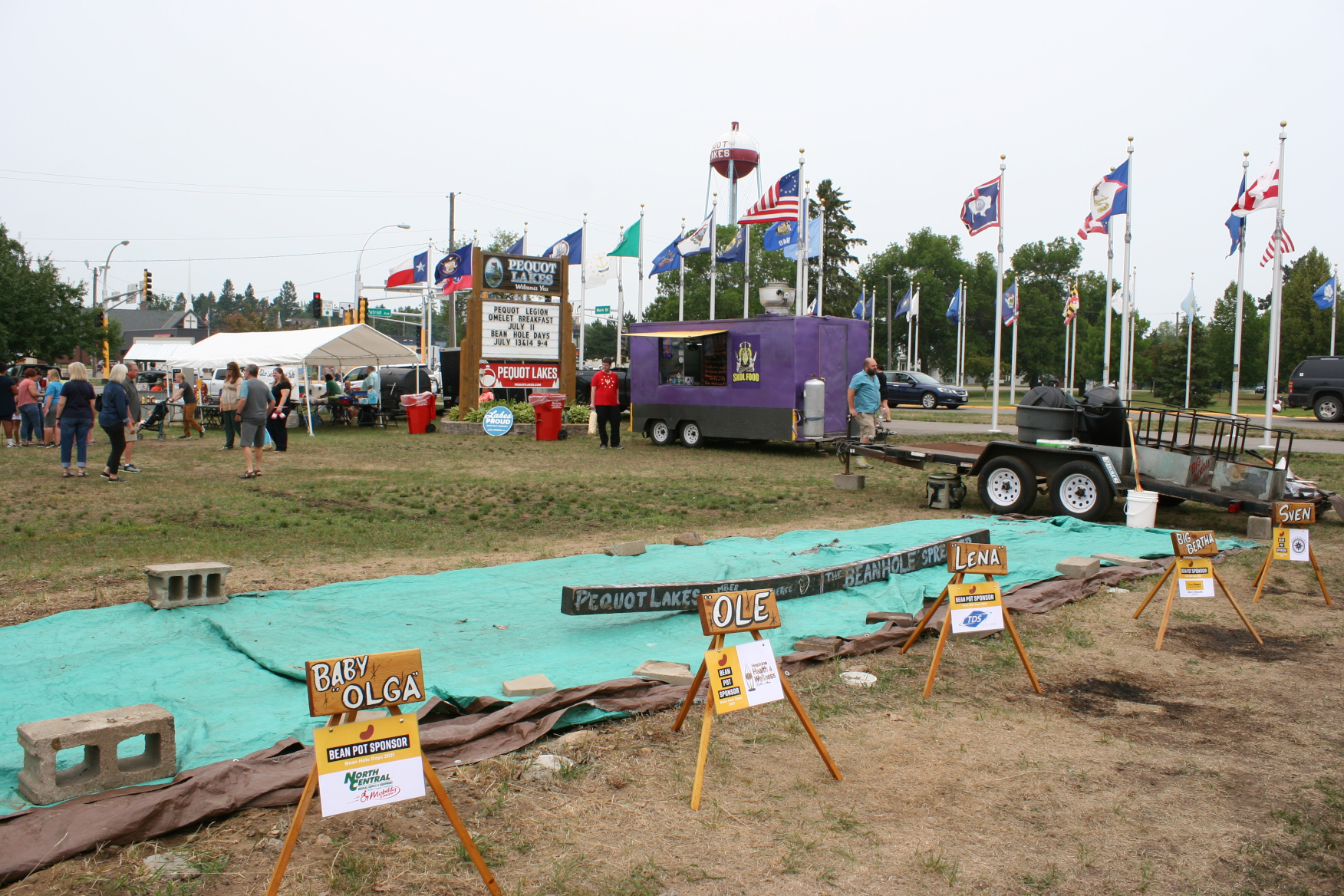
Kettles of beans bake in a covered pit. Each is named. Minnesota Prairie Roots copyrighted photo.
I appreciate how hard the good folks of this area work to brand this region and to create events that entertain and also provide visitors with unique experiences. Bean Hole Days, for example, rates as unlike anything I’ve ever attended. I loved everything about it from the people to the phenomenal homemade beans baked underground in Paul Bunyan-sized kettles.
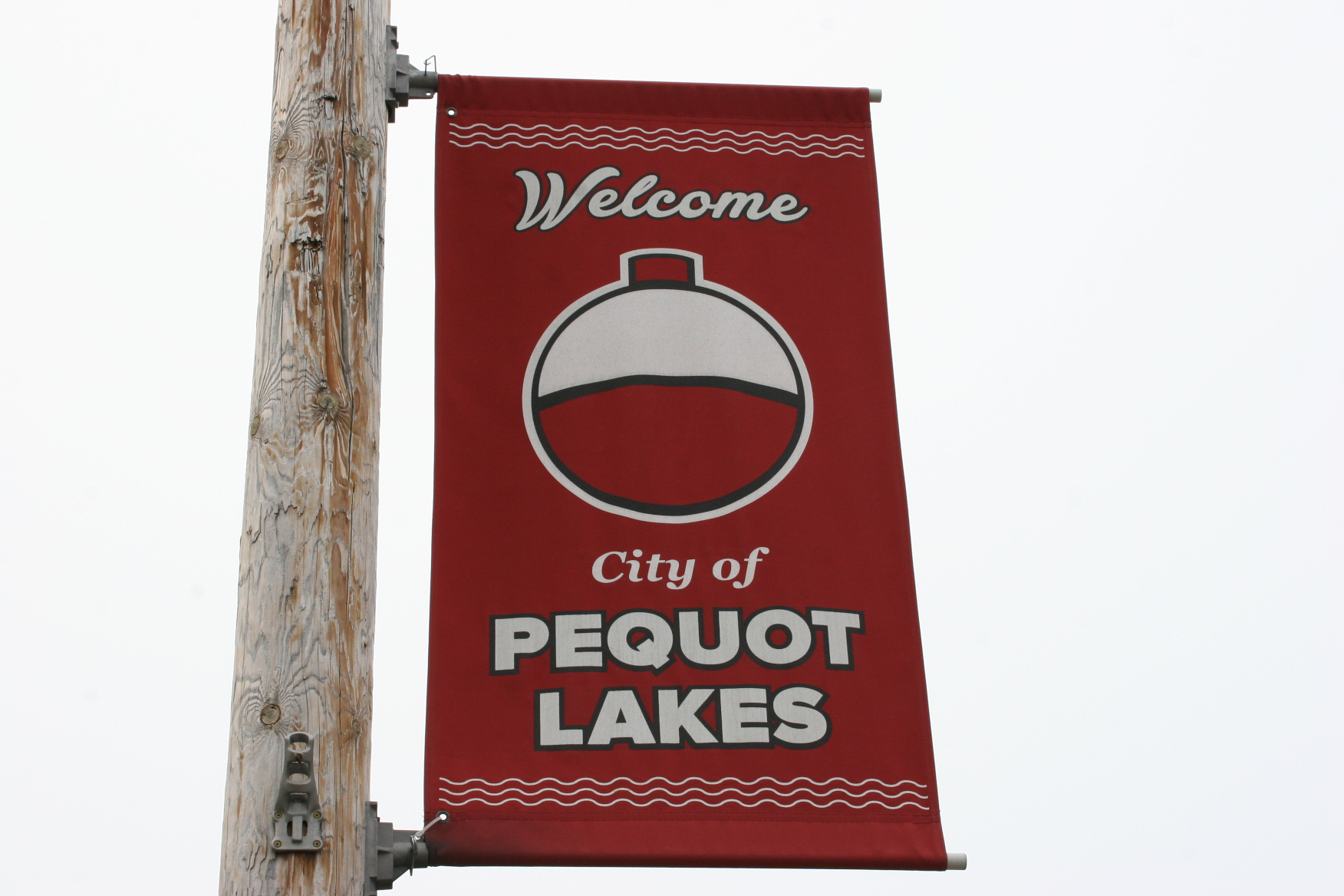
The bobber brands Pequot Lakes. Minnesota Prairie Roots copyrighted photo.
In about 10 more days, on Saturday, August 7, Pequot Lakes hosts another celebration—a Chokecherry Festival. Chokecherries are a tiny stone fruit often used in making jellies and jams. Pequot Lakes calls itself the Chokecherry Capital of Minnesota. I’m quite familiar with these berries, having picked more pails full than I care to remember while growing up on a southwestern Minnesota farm.
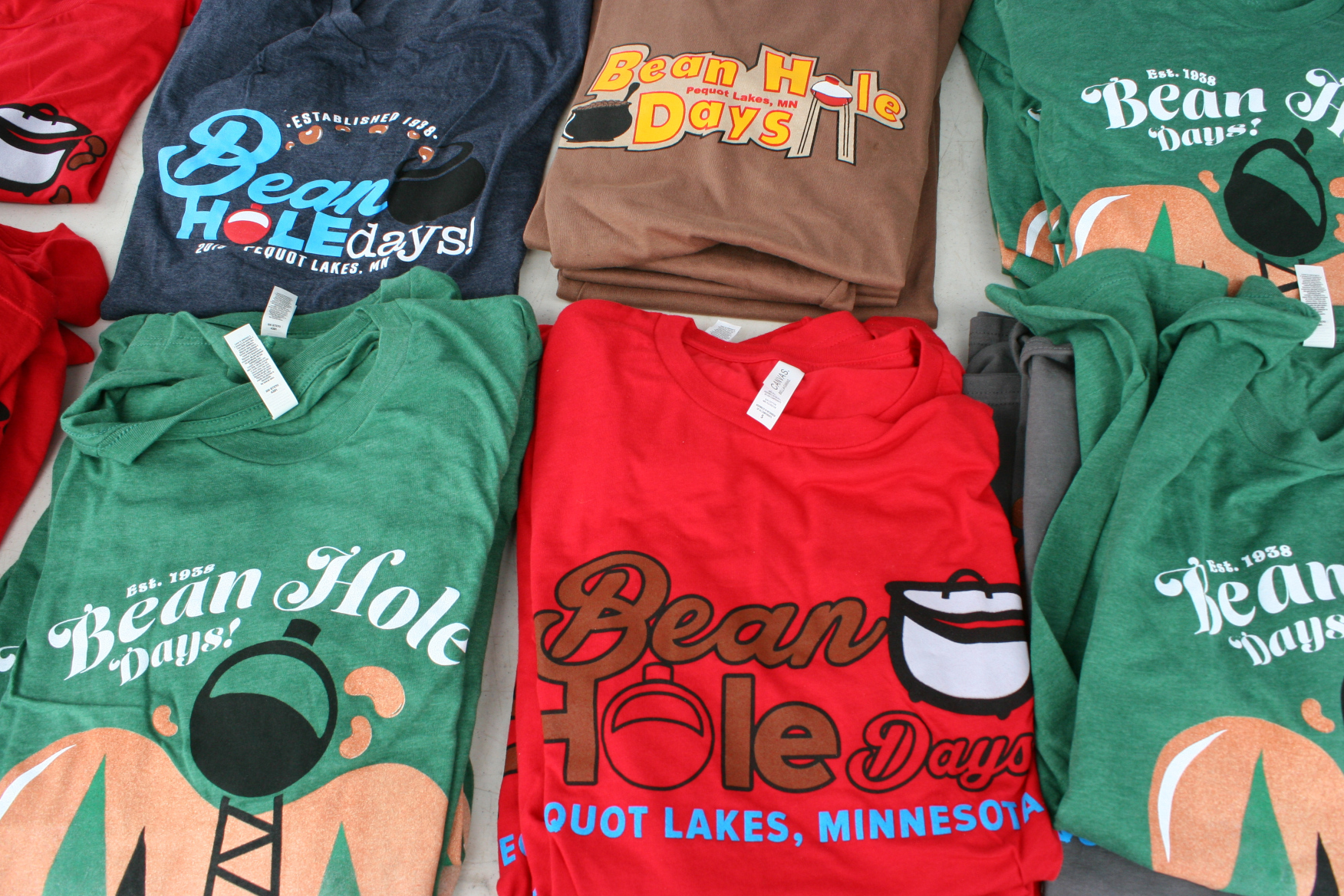
I expect vending of tees at the Chokecherry Festival, just like at Bean Hole Days. Minnesota Prairie Roots copyrighted photo.
That aside, it doesn’t appear the Pequot Lakes celebration includes any chokecherry harvesting. But it does feature a Pit Spitting Contest and a Chokecherry Culinary Contest with four categories. Jams/jellies/preserves, pastries, wine and originality.
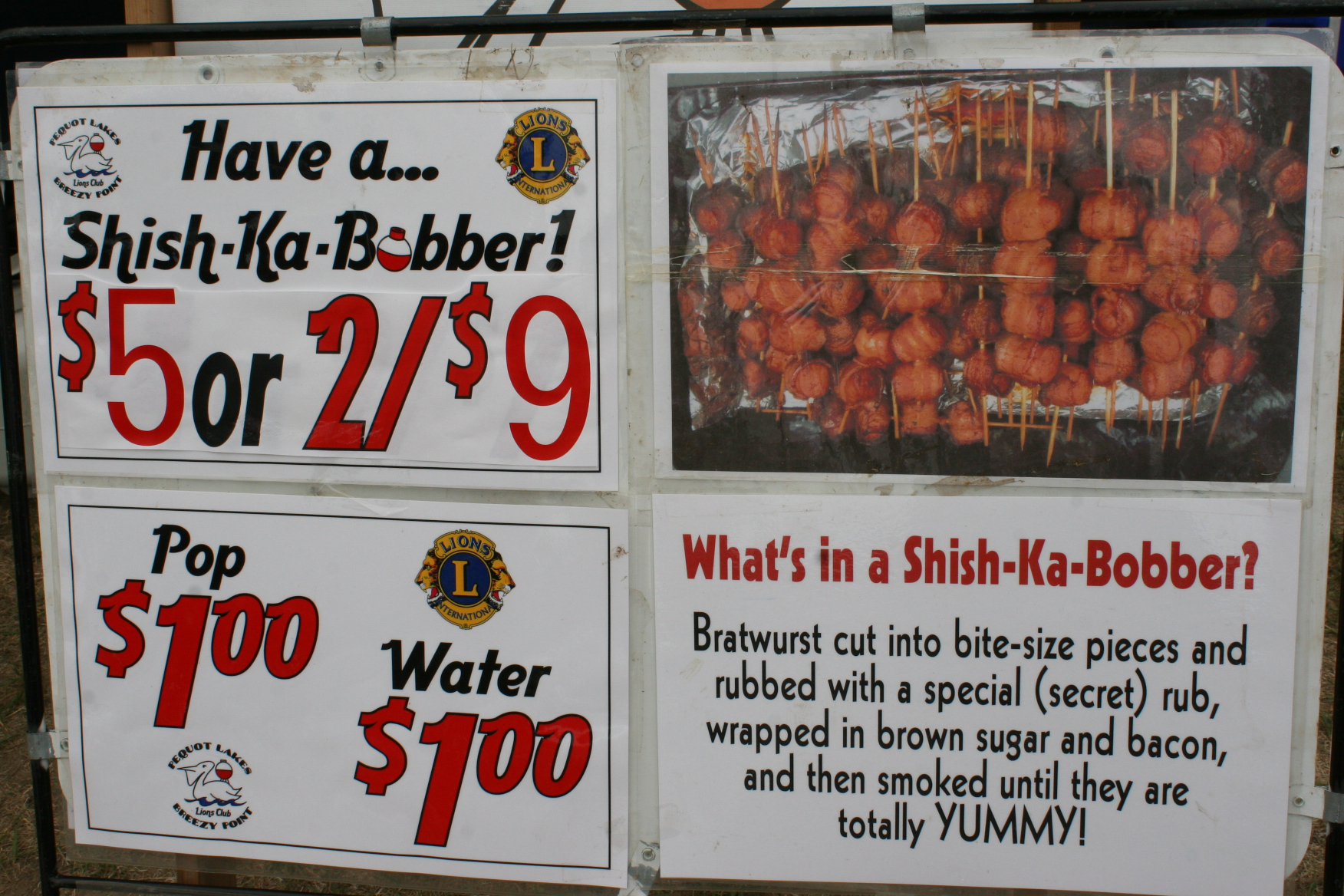
Festival food offered by the Pequot Lakes/Breezy Point Lions Club. Minnesota Prairie Roots copyrighted photo.
And just like at Bean Hole Days, the 9 a.m. – 4 p.m. event in Trailside Park includes an Arts-Crafts Fair, food vendors, kids’ activities and more.
Dogs are welcome. I photographed this one in the arms of a Arts/Crafts Fair vendor at Bean Hole Days. Minnesota Prairie Roots copyrighted photo.
I encourage you to take in small town celebrations like those offered in Pequot Lakes and neighboring communities in Paul Bunyan land. To do so is to experience the Northwoods culture, at least the side that draws tourists to town.
#
This marks the third, and final, in a series of posts on Pequot Lakes.
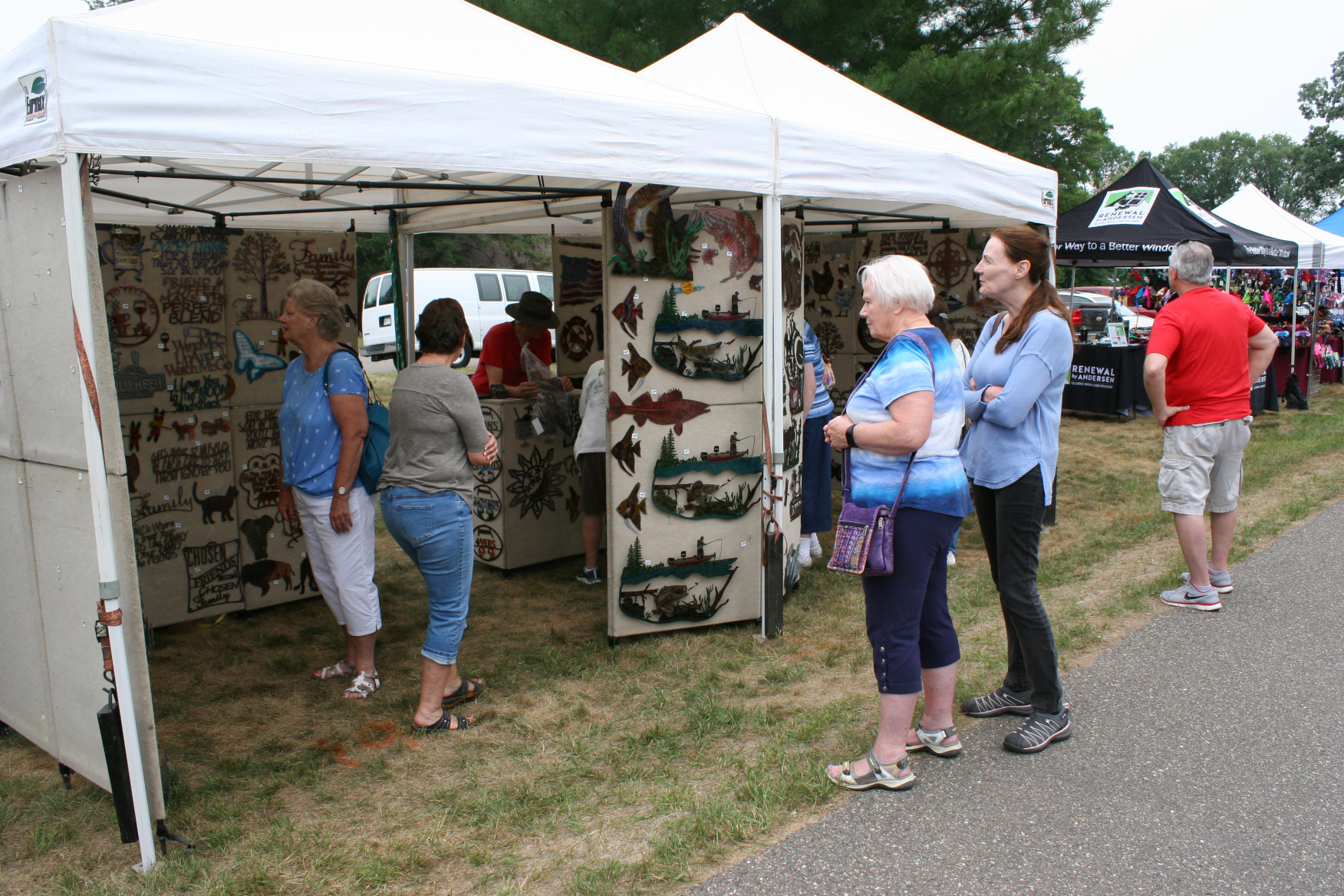
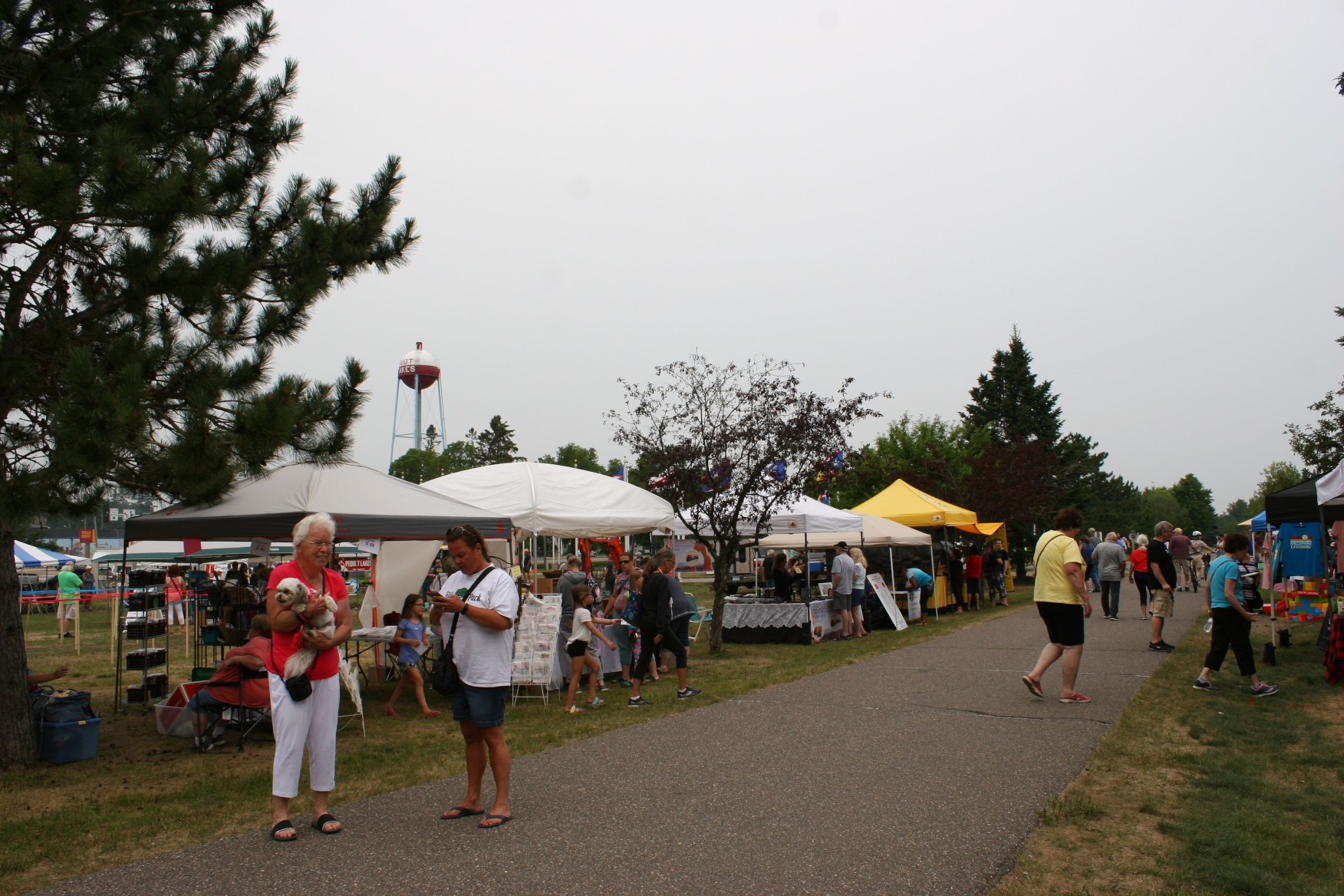
Lots and lots of arts and crafts, some with outdoor themes for cabin country. Minnesota Prairie Roots copyrighted photo.
While beans, baked in massive kettles in an underground pit, highlight this festival, the Arts & Crafts Fair adds another appealing dimension. I always enjoy meandering among vendor booths, occasionally chatting it up with these creatives.
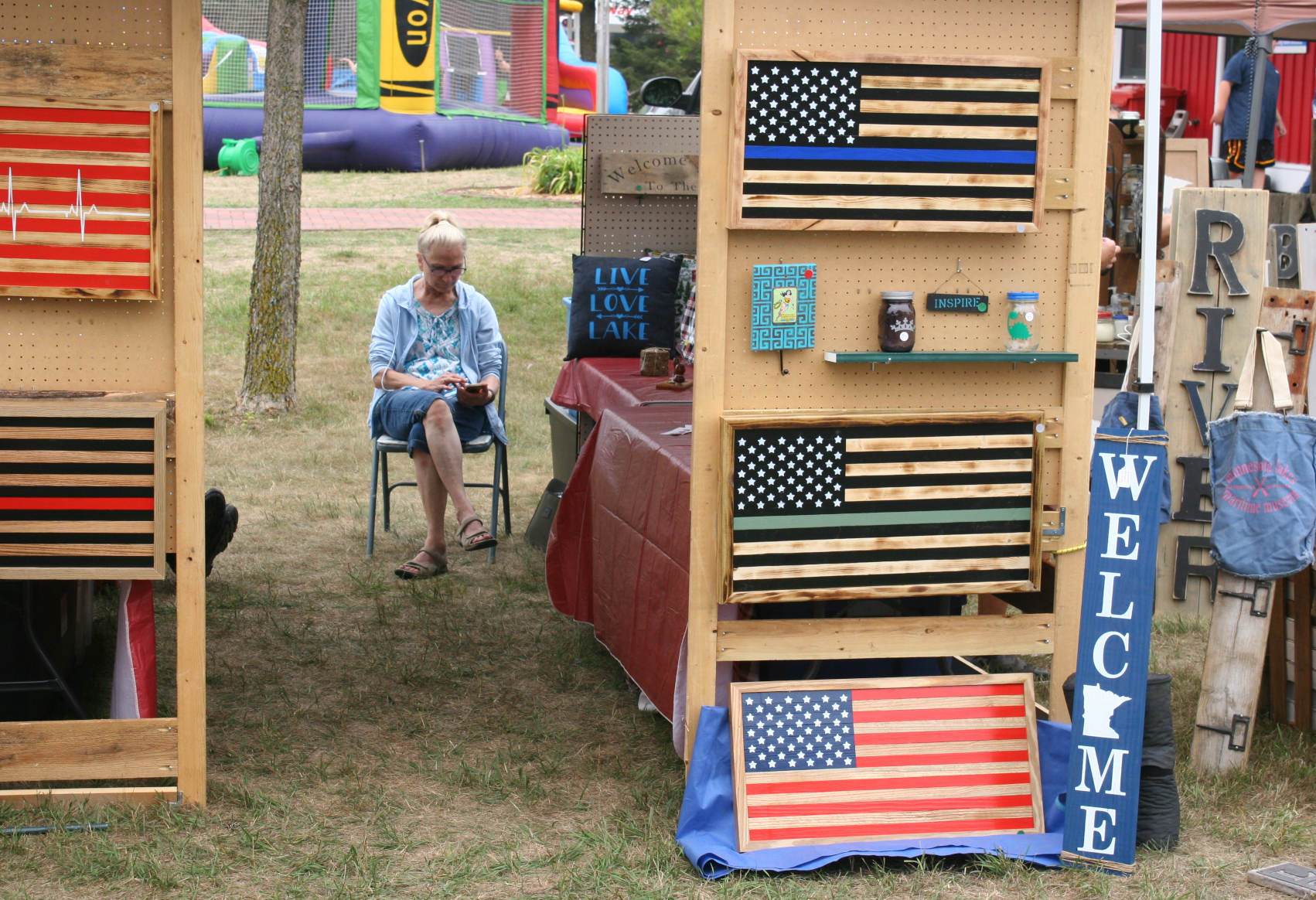
Featuring flags crafted from wood. Minnesota Prairie Roots copyrighted photo.
A time existed when I, too, created with my hands. As a teen, I sewed nearly all my clothes. I also stitched dresses for my paternal grandmother. I loved sewing. But college, life as a working professional and then motherhood ended that. Perhaps some day I’ll return to sewing and embroidery, two favorite hands-on crafts. For now I keep my hands primarily on my keyboard and DSLR camera.
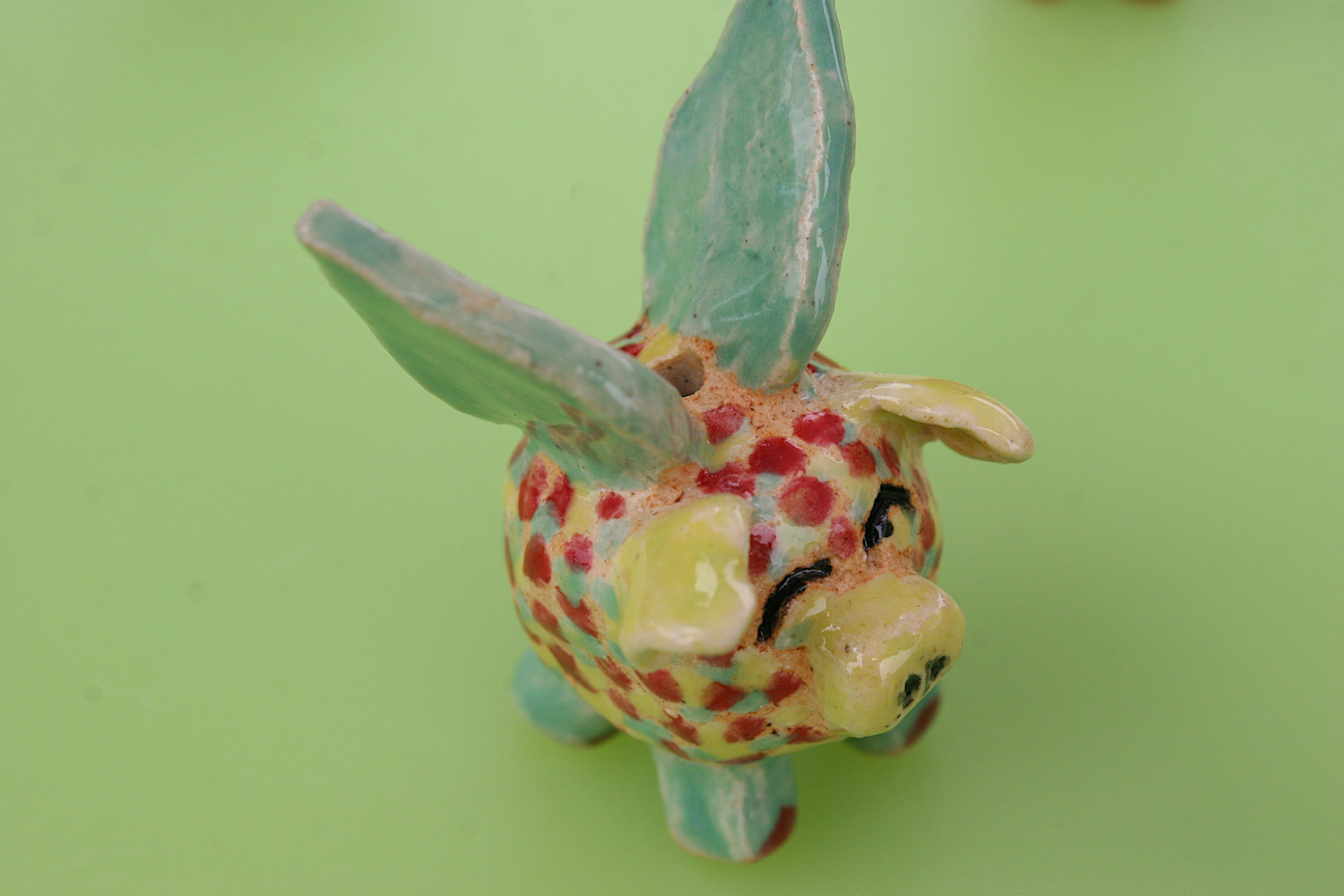
A Flying Pig by Alice Harris. Minnesota Prairie Roots copyrighted photo.
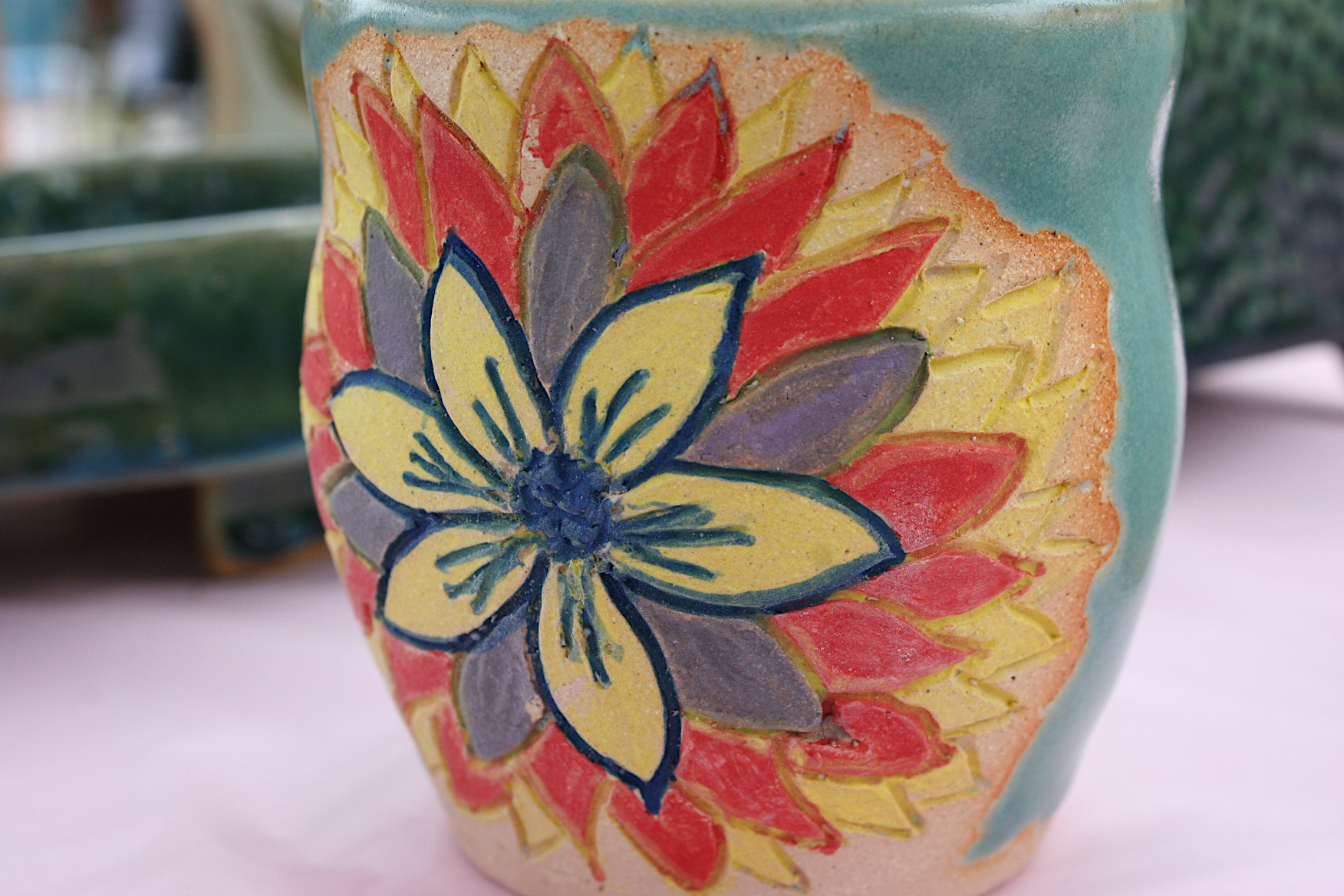
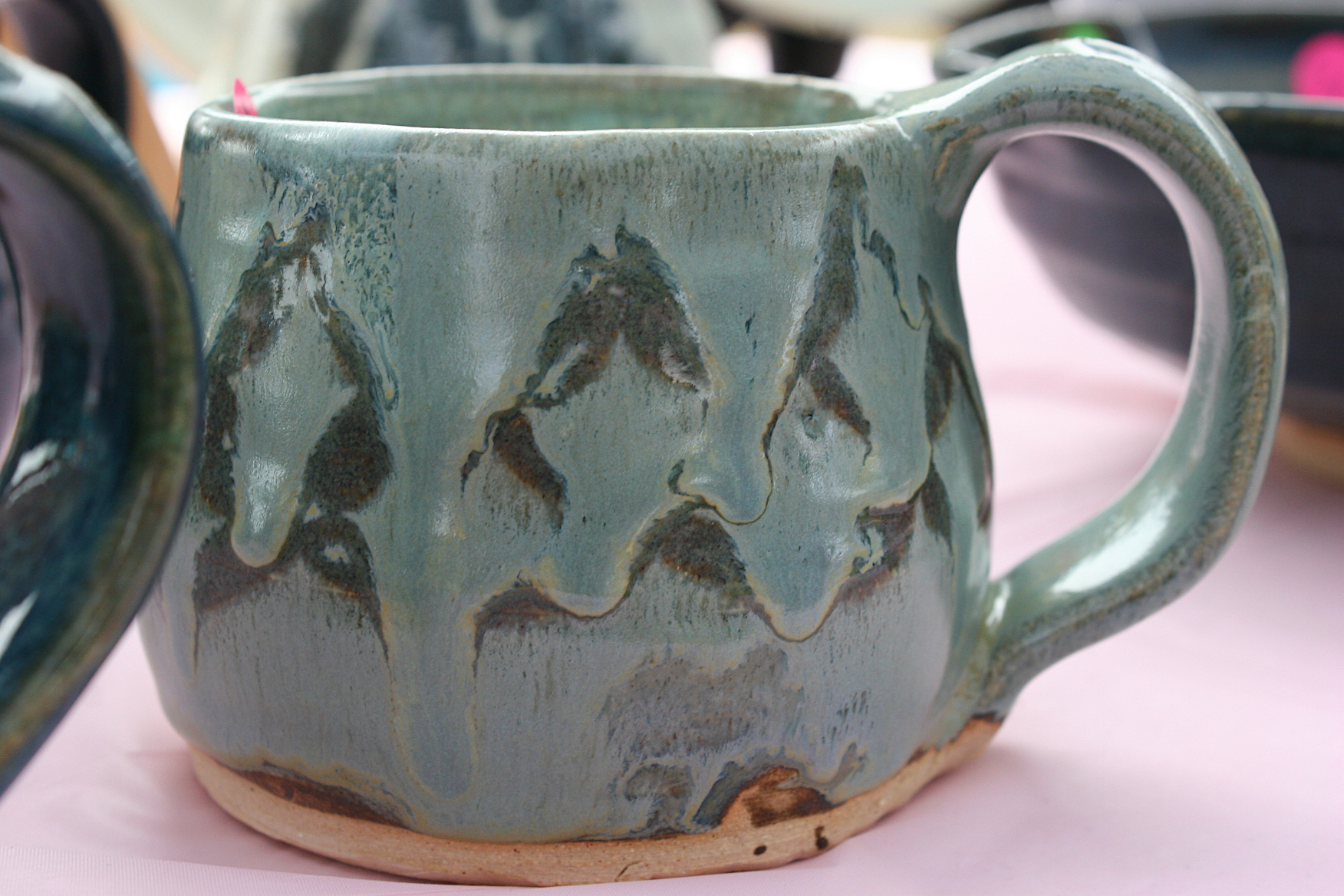
A mug by Dale Goodhue. Minnesota Prairie Roots copyrighted photo.
I admire the creative work of others, including those vending in Pequot Lakes. Like the pottery of Alice Harris and Dale Goodhue, Minnesota residents in the summer, Georgia residents in the winter. They create out of their When Pigs Fly Studio in Nisswa. Alice crafts the pigs while Dale creates more practical pottery pieces like mugs and plates. What a difference in approaches to pottery.
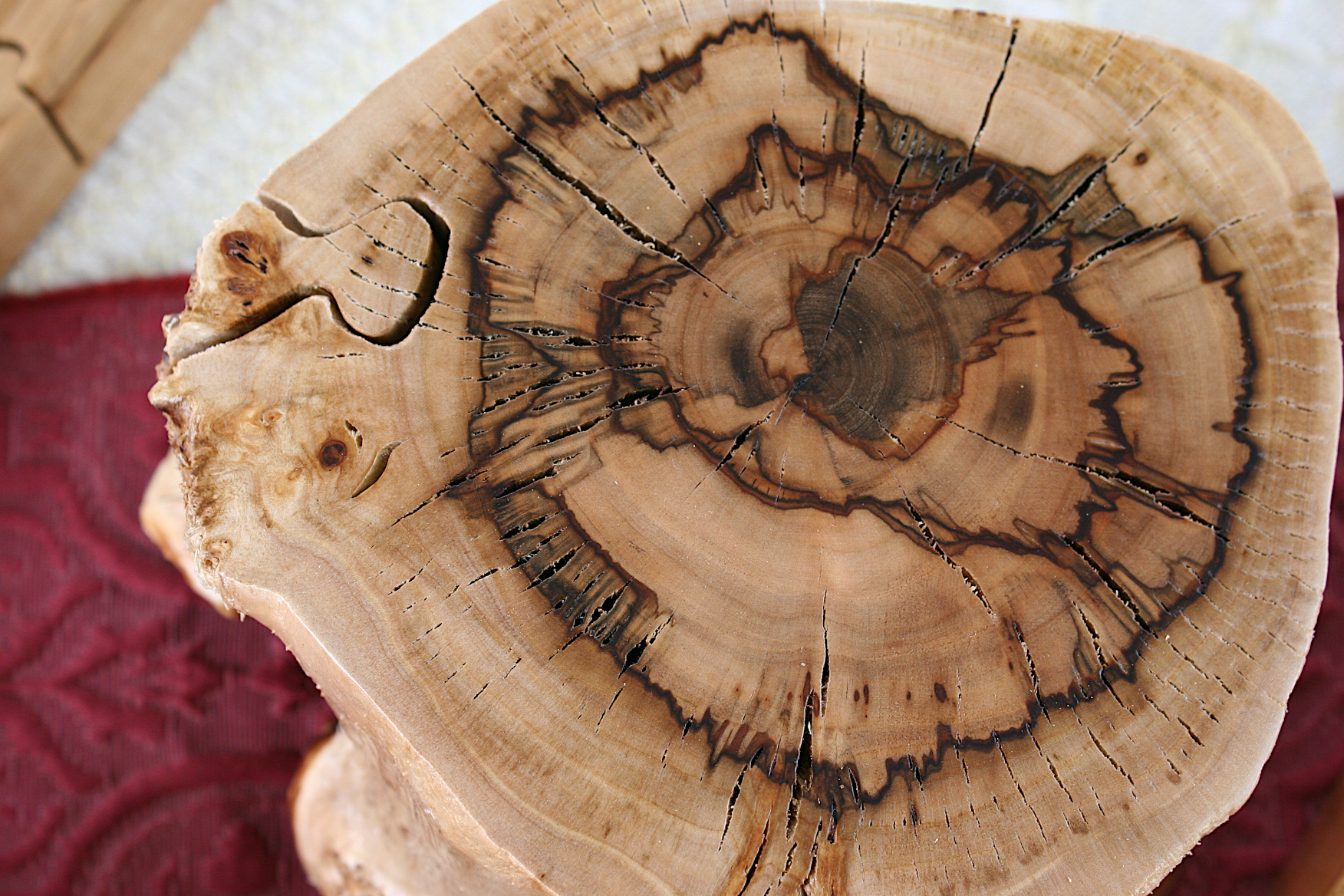
A Puzzle Box crafted by Ken Spurlin. Minnesota Prairie Roots copyrighted photo.
Perhaps the most unusual art I discovered are the Puzzle Boxes crafted by Ken Spurlin of Nevis. He takes a chunk of wood and then saws it into a puzzle with a hidden space inside. It’s magical.
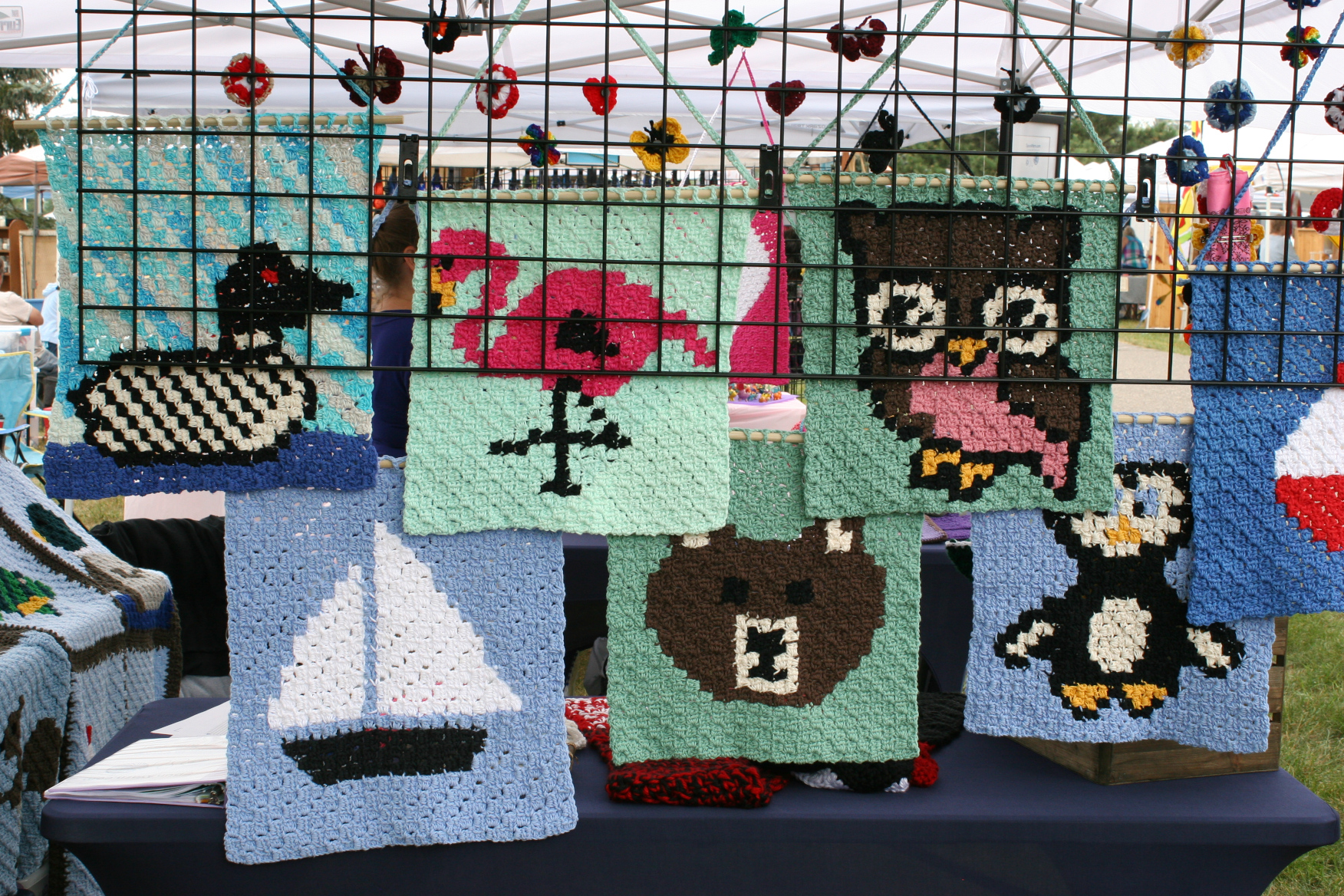
Crocheted art from Spun A Yarn. Minnesota Prairie Roots copyrighted photo.
When I spotted crocheted panels in the Spun A Yarn booth, I engaged in conversation with the artist, who, as it turns out, is also a freelance fiction editor and writer. Miranda Darrow (her pen name) creates “crochet with character.” Her crocheted loon panel caught my eye given the northwoods location of the Arts & Craft Fair. Loons are common on area lakes.
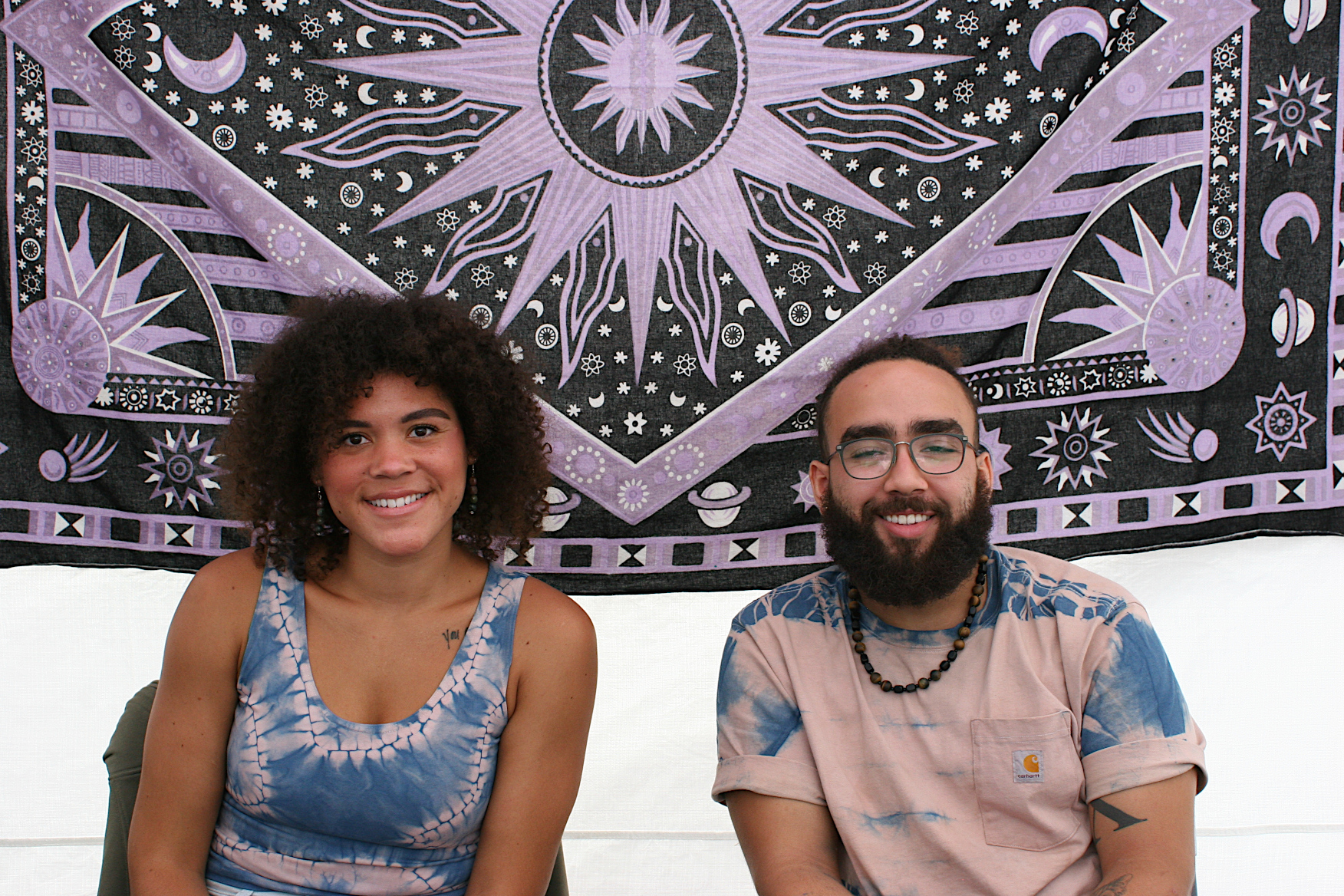
Vending dyed goods and other art. Minnesota Prairie Roots copyrighted photo.
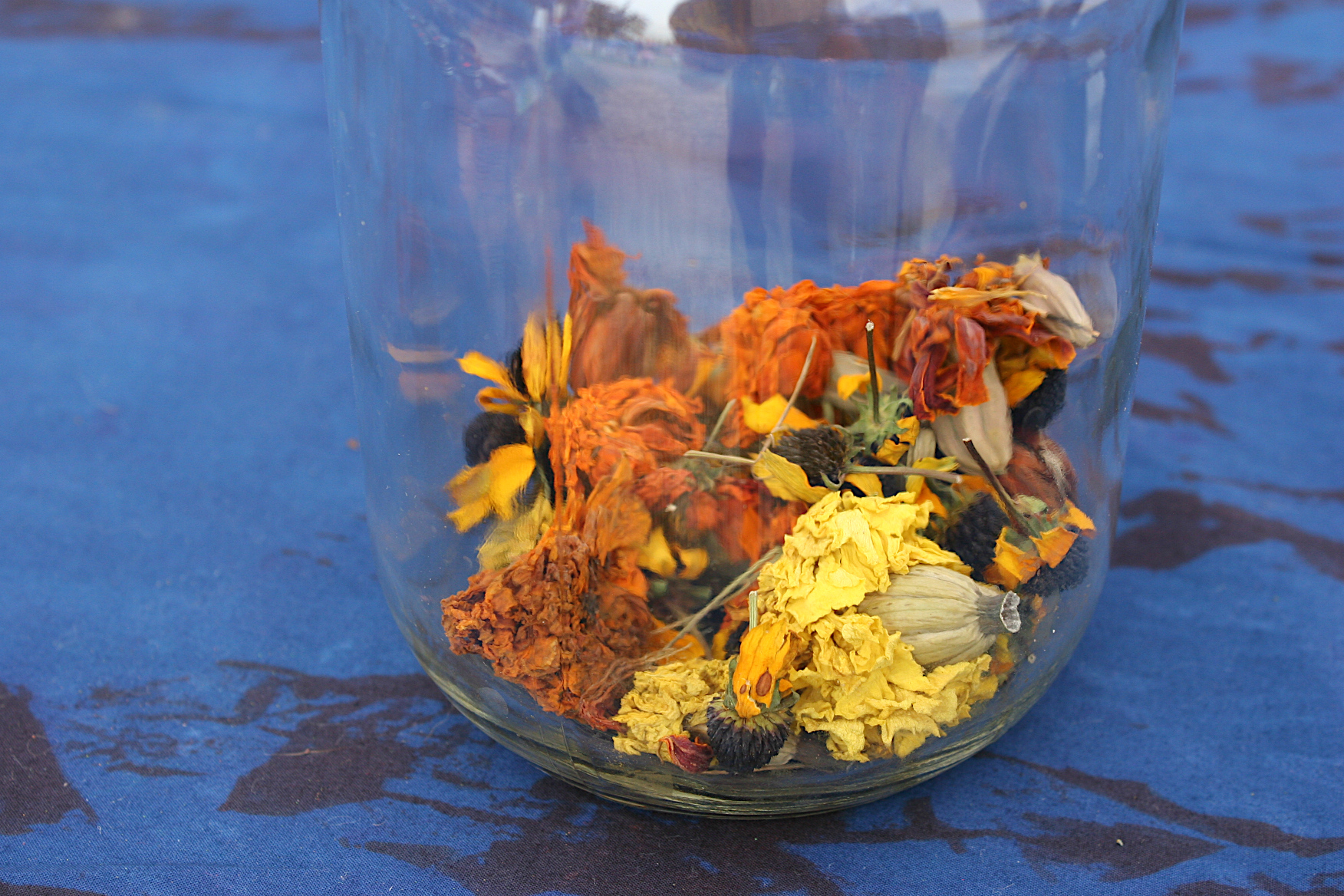
Used for natural dyes. Minnesota Prairie Roots copyrighted photo.
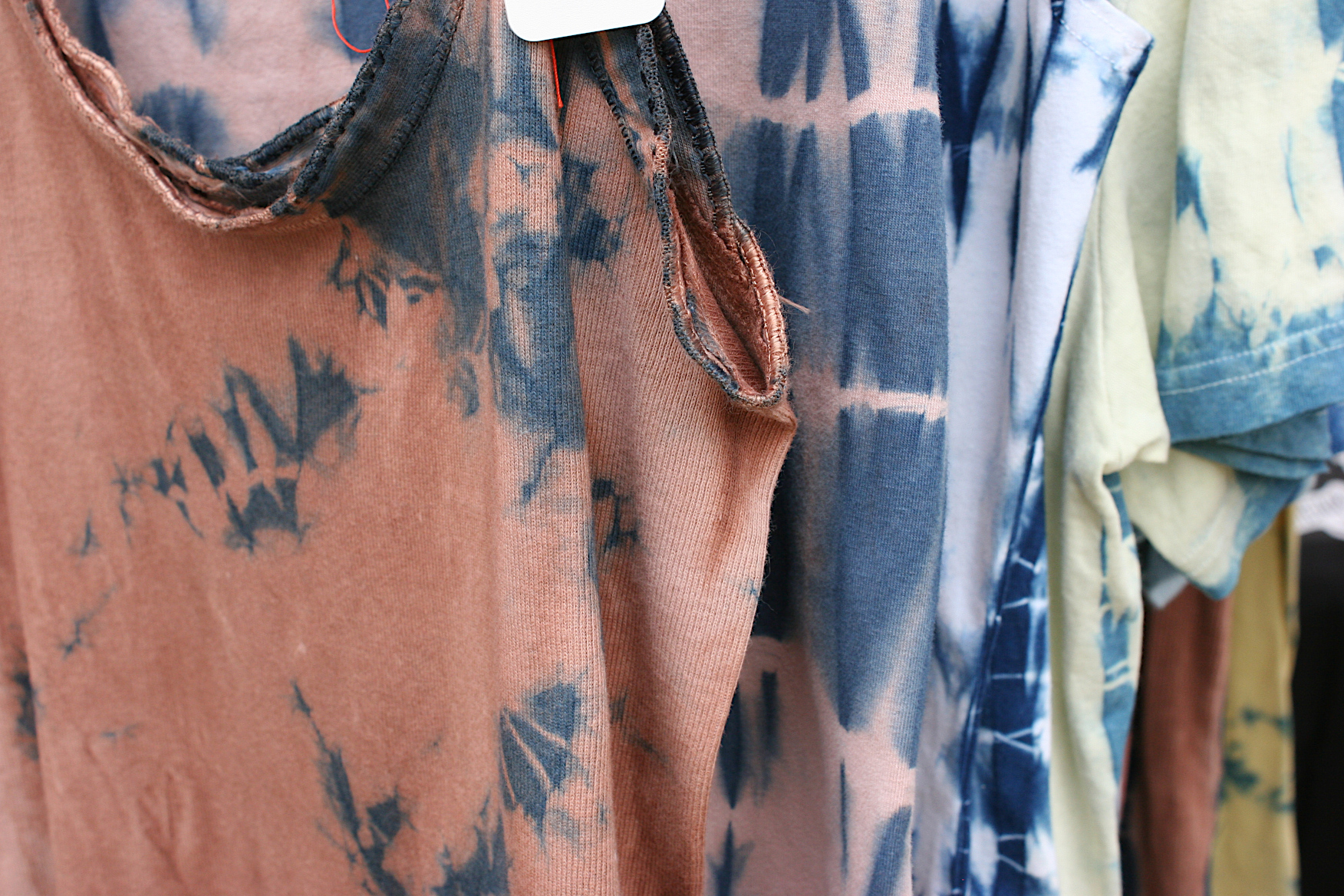
A sampling of the dyed clothing. Minnesota Prairie Roots copyrighted photo.
A creative backdrop and vendors dressed in dyed clothing caused me to stop and peruse the art of Shea J Maze and Diaspora Textiles. Memories of tie dying in the 70s flashed back. But unlike the chemicals I used to dye tees, these items are dyed naturally. A jar of dried flowers sitting on the table proved that. Beautiful, soft hues define this natural dying method.
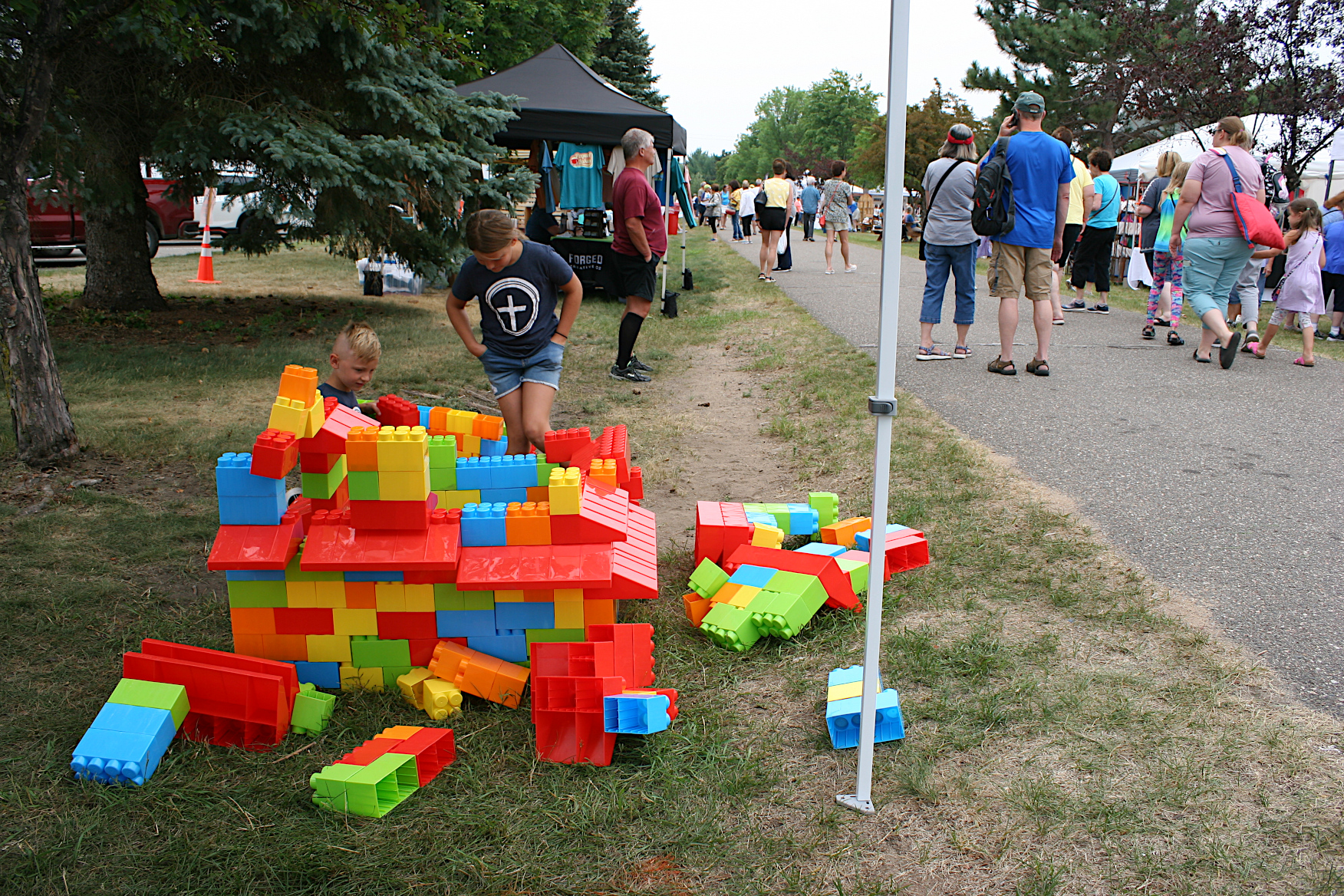
Kids play at the Wondertrek booth. Minnesota Prairie Roots copyrighted photo.
Farther along the trail, the bold colors of mega blocks drew kids (and me) to the booth of Wondertrek Baxter Children’s Museum. The museum is an in-process undertaking.
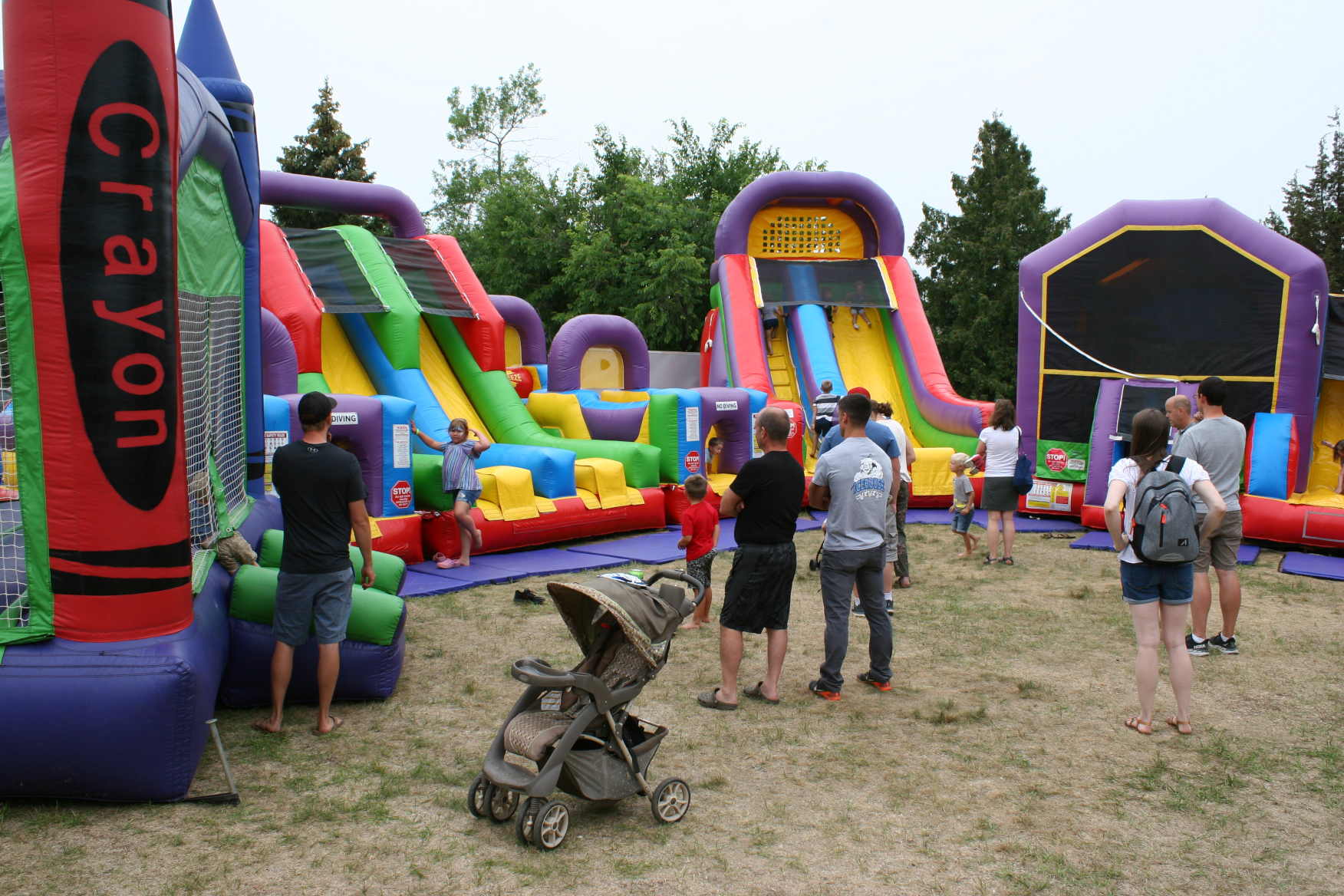
Bean Hole Days included a small carnival. Minnesota Prairie Roots copyrighted photo.
Across the park, inflatables splashed color into the landscape in temporary, interactive public art.
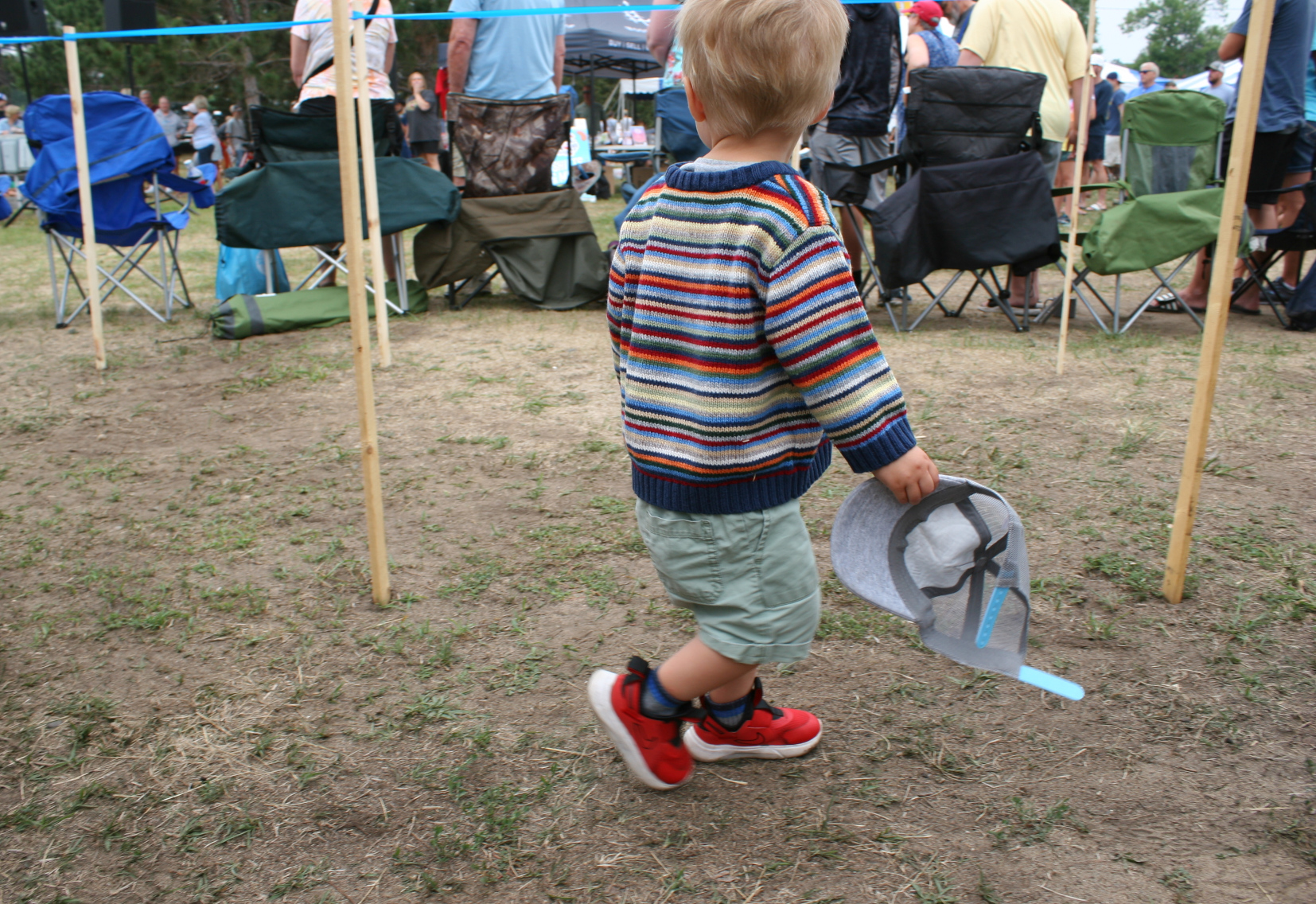
Loved this little guy’s colorful sweater. Minnesota Prairie Roots copyrighted photo.
I can see art most anywhere, including in the striped sweater worn by a preschooler wandering the fest grounds. Handcrafted or not, I don’t know. But I found it visually appealing, albeit seemingly too warm for the hot and humid July day.
Oh, the sweetness of this little girl, providing entertainment as people waited in line for free baked beans. Minnesota Prairie Roots copyrighted photo.
While I’ve only shown you a sampling of the arts and crafts featured in Pequot Lakes, I hope this entices you to attend Bean Hole Days next summer. Not only for the delicious baked beans but also for the art.
#
Please check back for one final post (of three) on Pequot Lakes Bean Hole Days.
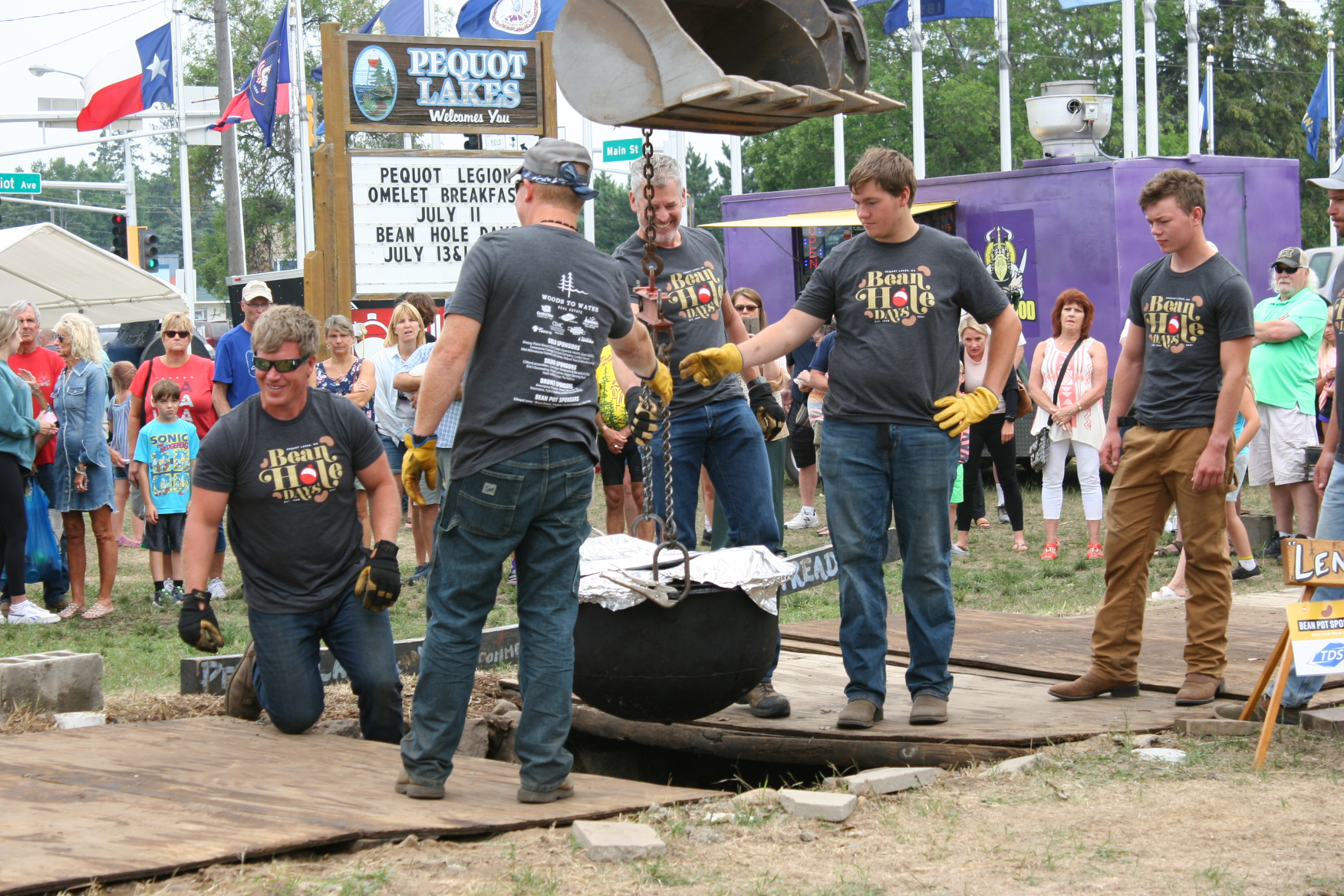
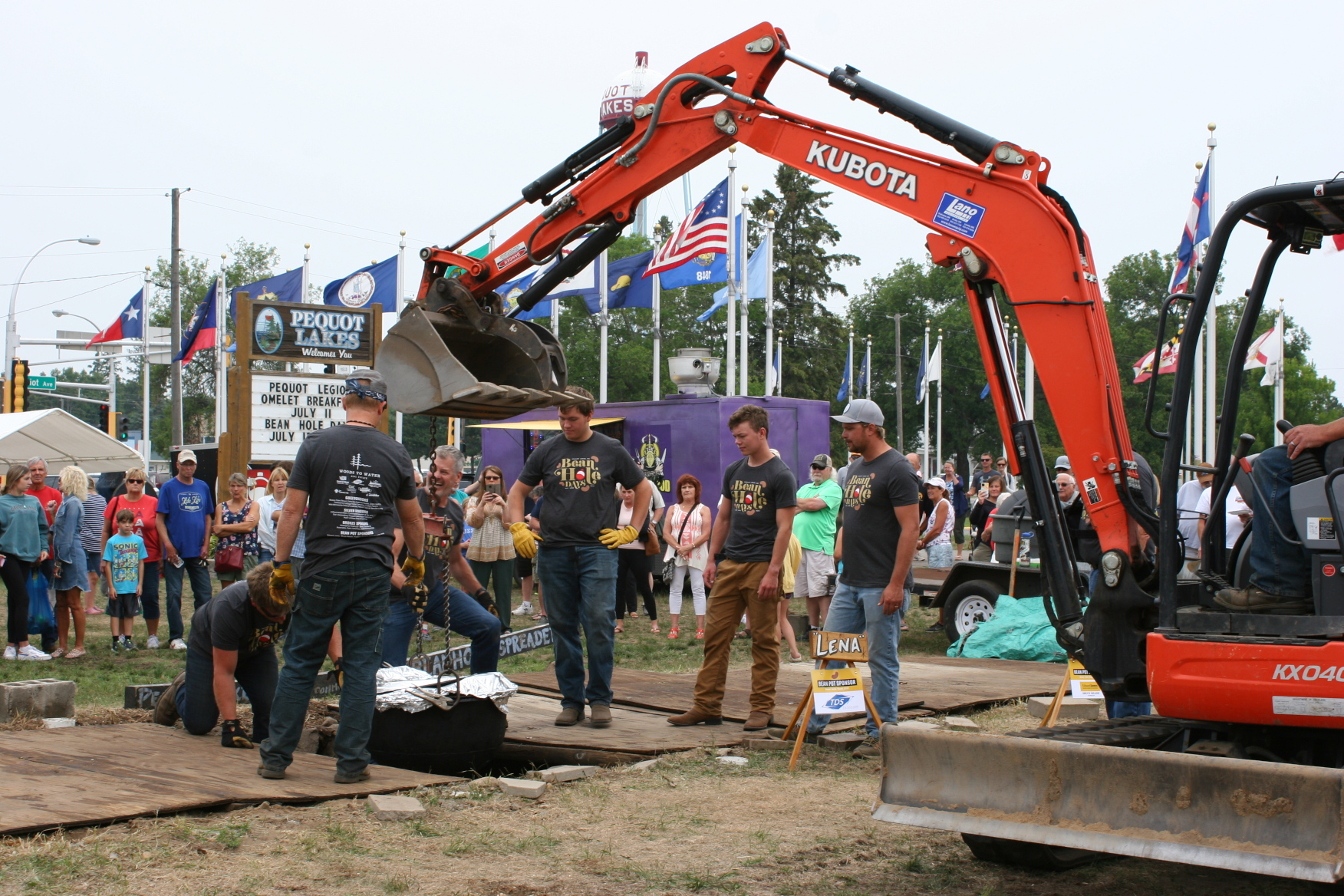
The Bean Hole crew guides a kettle of beans from an underground cooking pit at Bean Hole Days in Pequot Lakes. Minnesota Prairie Roots copyrighted photo.
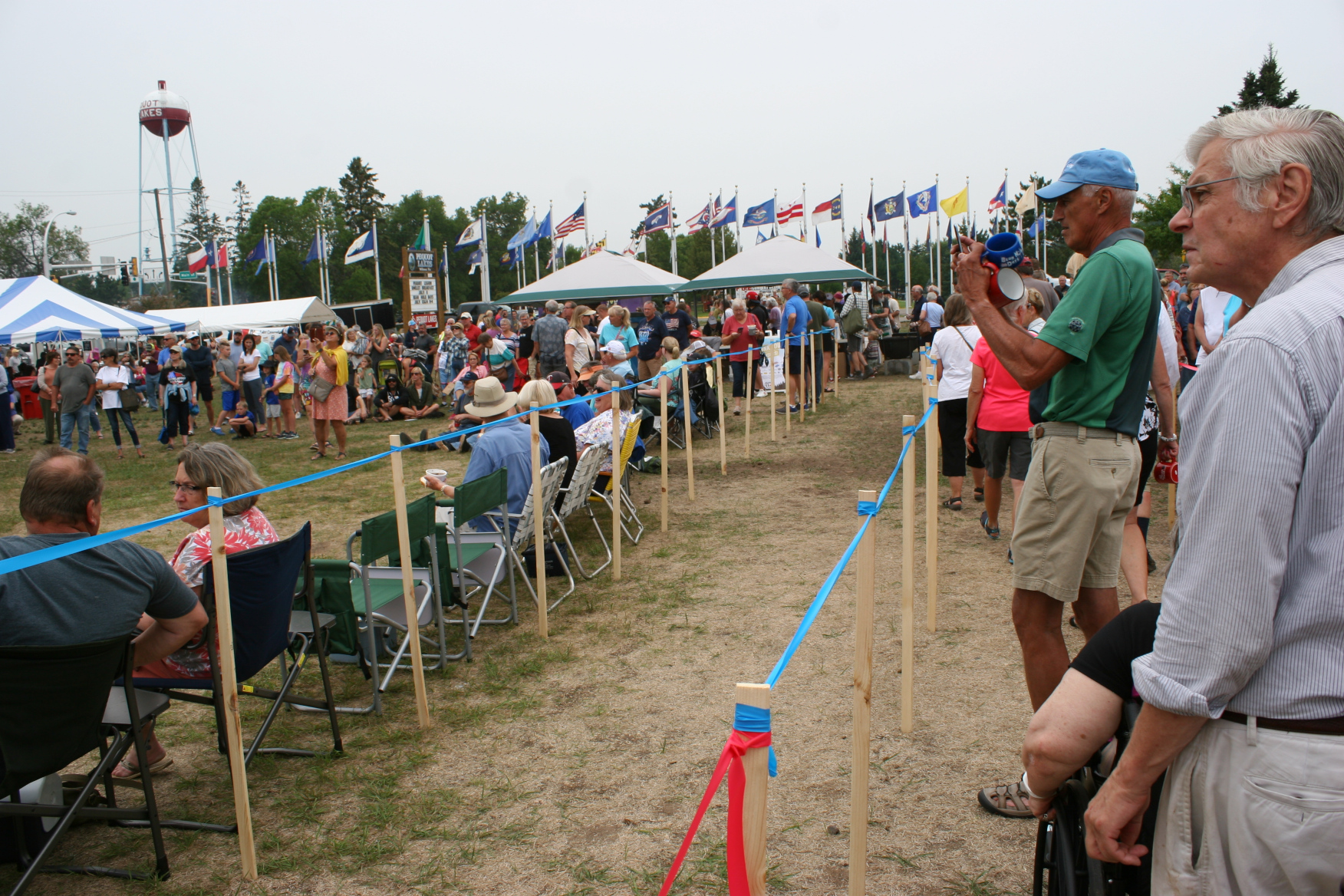
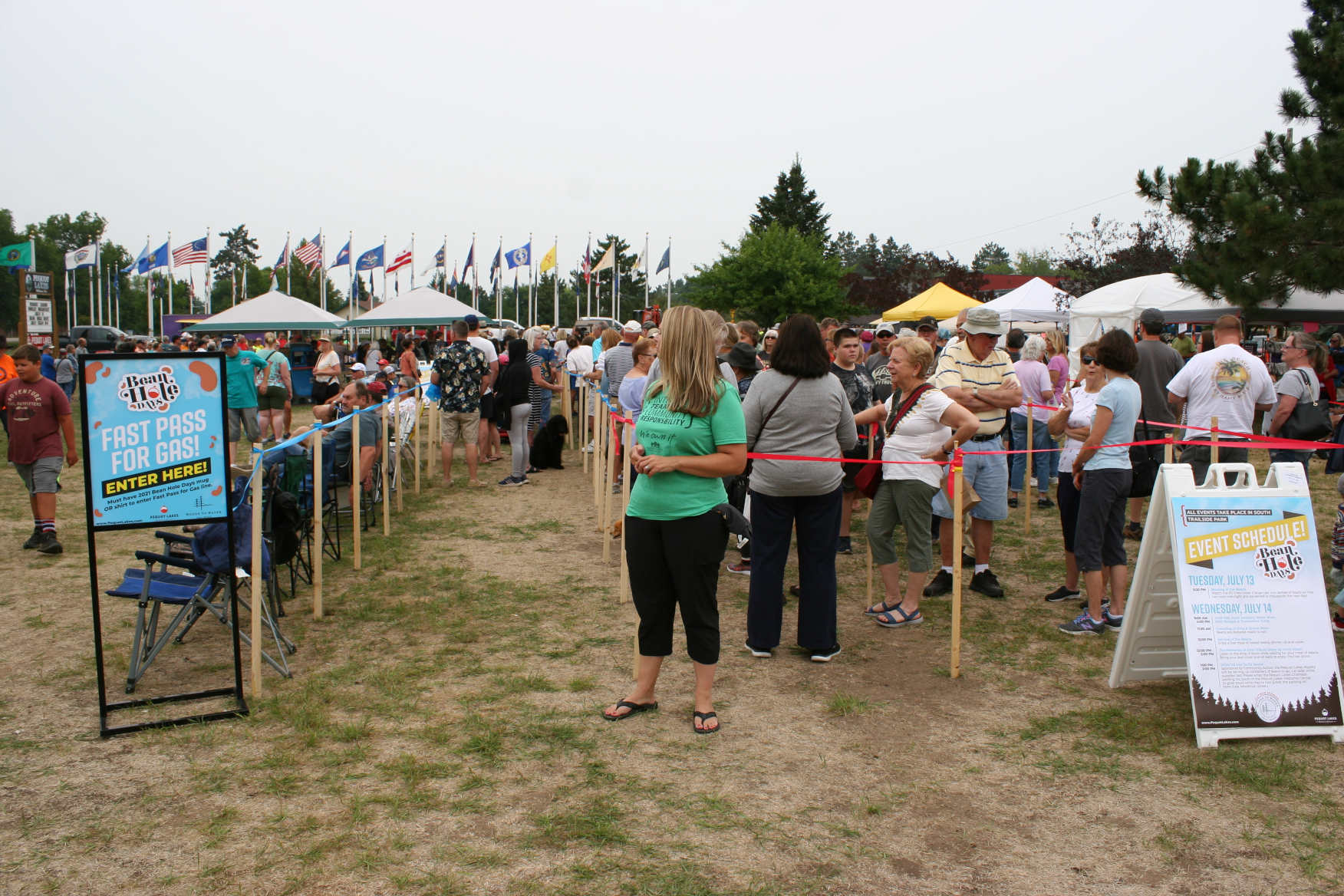
LONG LINES FORMED an hour before the event in makeshift narrow aisles crafted from stakes and ribbon. Folks waited not for Paul Bunyan, although he was there, working the crowd. And not for Elvis, although he performed. Rather, they waited for a serving of baked beans.
Thousands line up for a bowl of baked beans. Minnesota Prairie Roots copyrighted photo.
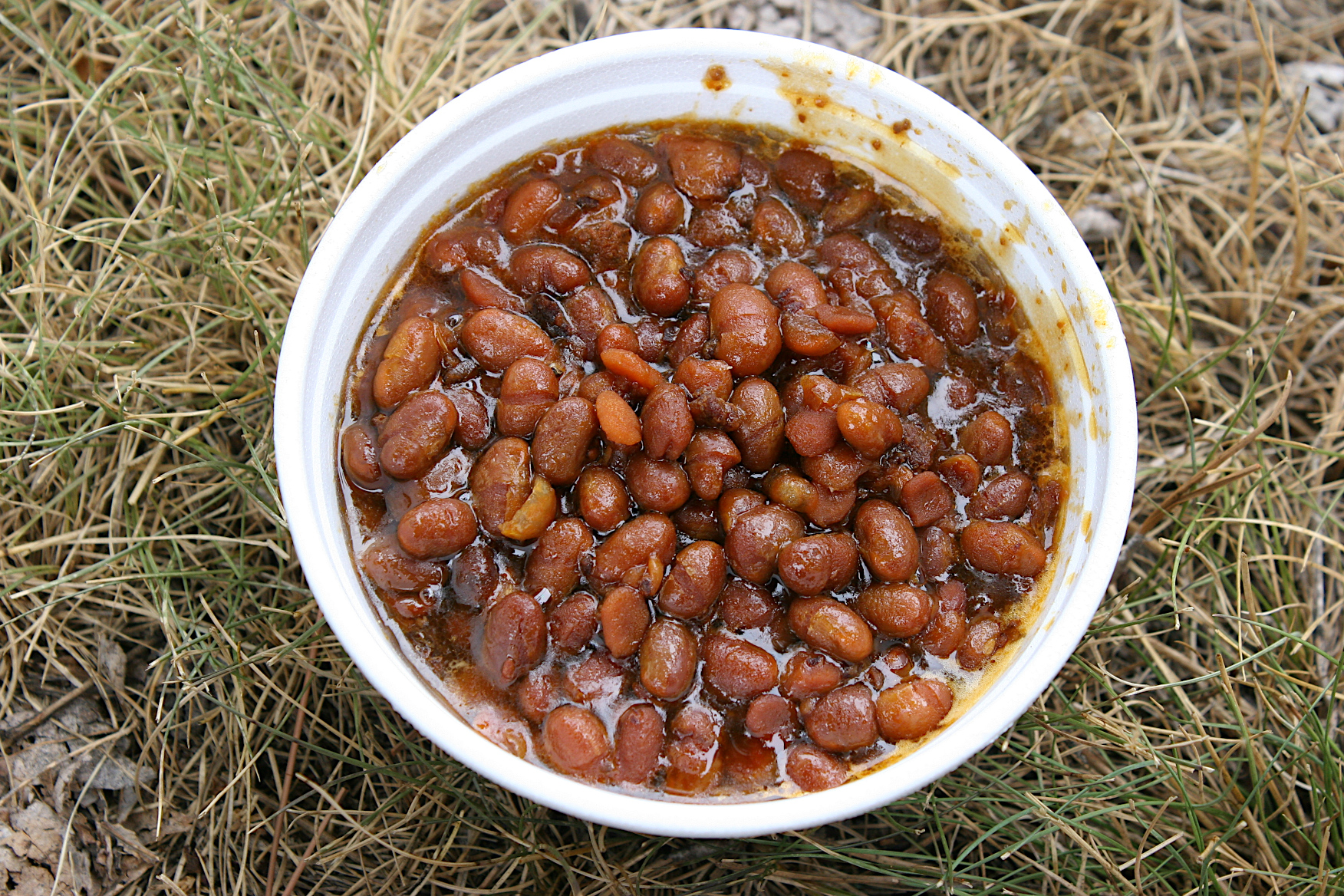
My bowl of baked beans. The beans are fee with donations accepted. Minnesota Prairie Roots copyrighted photo.
Lifting the kettles from the pit requires machinery and manpower. Minnesota Prairie Roots copyrighted photo.
This scene unfolded on Wednesday, July 14, during Bean Hole Days in Pequot Lakes, a small town in the central Minnesota lakes region. Randy and I, staying at a family member’s guest lake cabin south of nearby Crosslake, attended for the first time. And it was quite the experience. I mean that in a truly positive way. While I don’t like waiting, waiting for a generous serving of bacon-laced navy beans baked in a wood-fired pit proved well worth my time. I’ve never tasted better homemade baked beans.
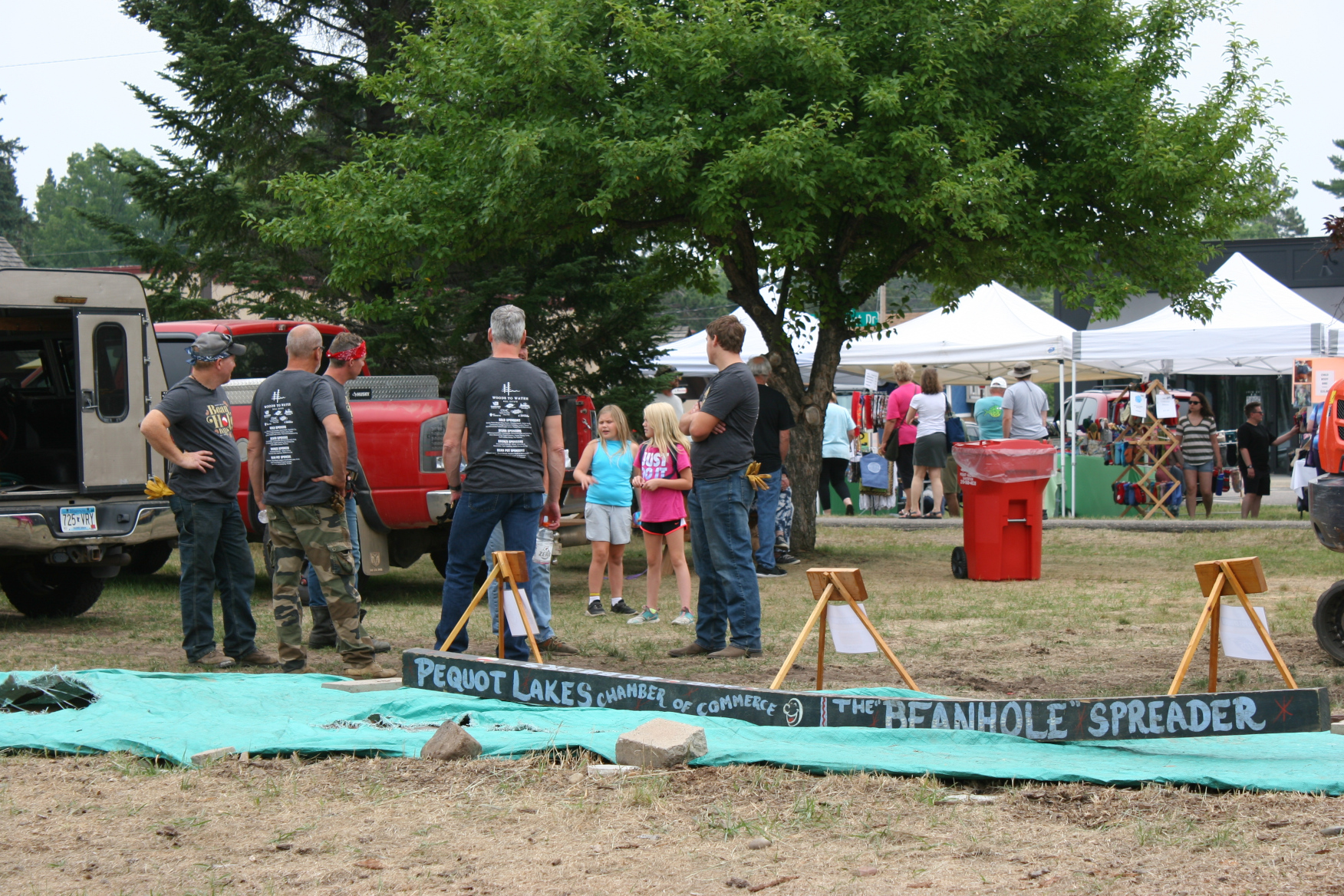
The bean crew waits near the pit where the beans bake. Minnesota Prairie Roots copyrighted photo.
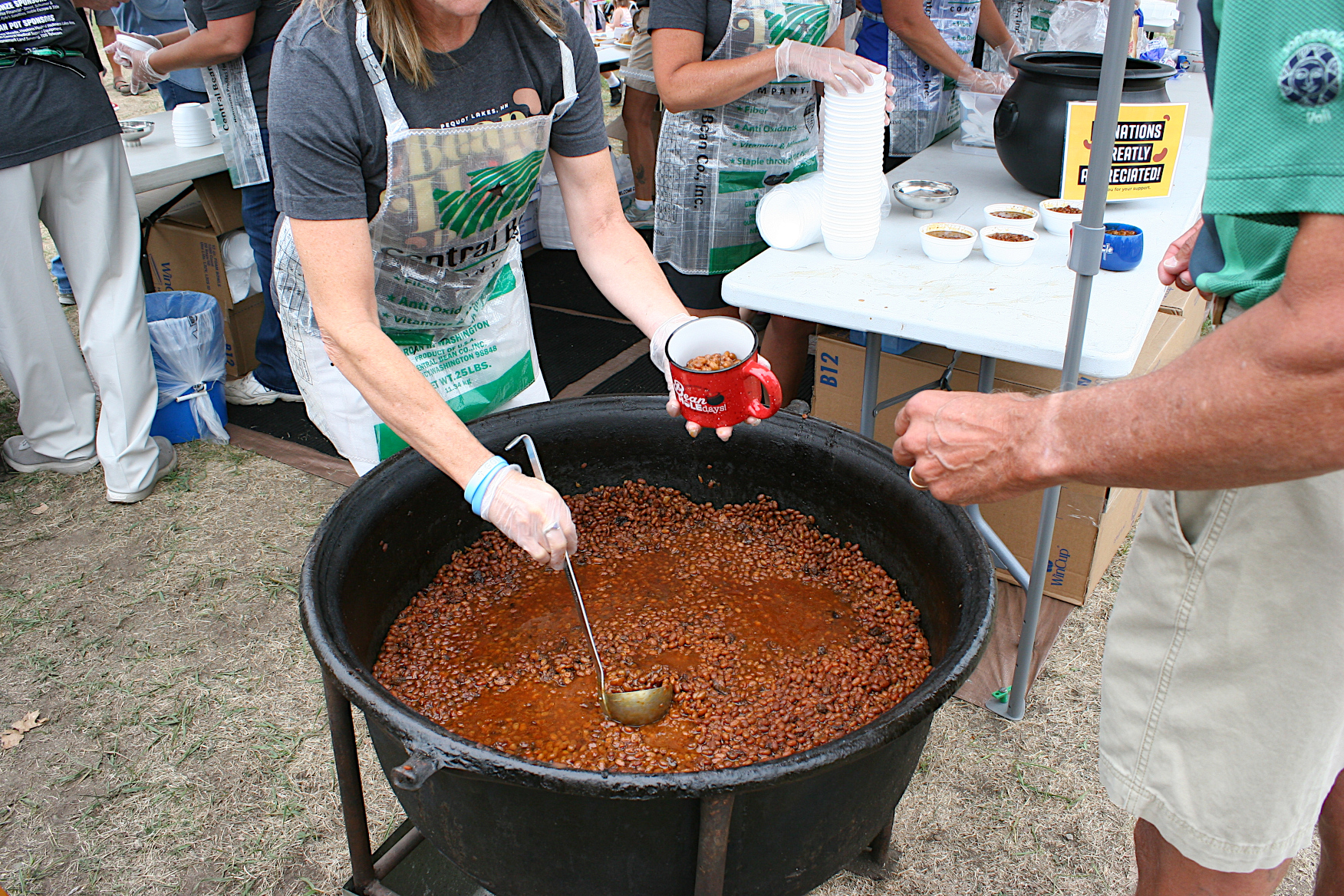
The process of crafting these beans is impressive. I missed the prep and lowering of massive cast iron kettles into the ground Tuesday. But in chatting with a bean crew member on Wednesday, I learned that the 350 pounds of navy beans were soaked and partially cooked with propane before lowering the cauldrons into the pit of wood coals for overnight baking. And yes, it takes a knowledgeable team and machinery for this operation.
Almost ready to serve beans. Minnesota Prairie Roots copyrighted photo.
My bean crew source wasn’t sharing details about ingredients, with the exception of 126 pounds of bacon mixed into the beans. The special “sauce,” which definitely tastes of molasses, is a guarded secret. And that’s all right. It adds to the mystery, the intrigue.
Lining up for beans under the direction of a volunteer. Minnesota Prairie Roots copyrighted photo.
From my observations, volunteers have this bean-baking down to a science. And they should. Bean Hole Days began in 1938 as a way for local businessmen to thank farmers for their business. Today, the focus seems more on drawing vacationers into town—to the local shops and restaurants. While waiting in line for 45 minutes, I chatted with couples from Baxter and the Twin Cities.
We arrived early with plenty of time to check out the arts and crafts. Minnesota Prairie Roots copyrighted photo.
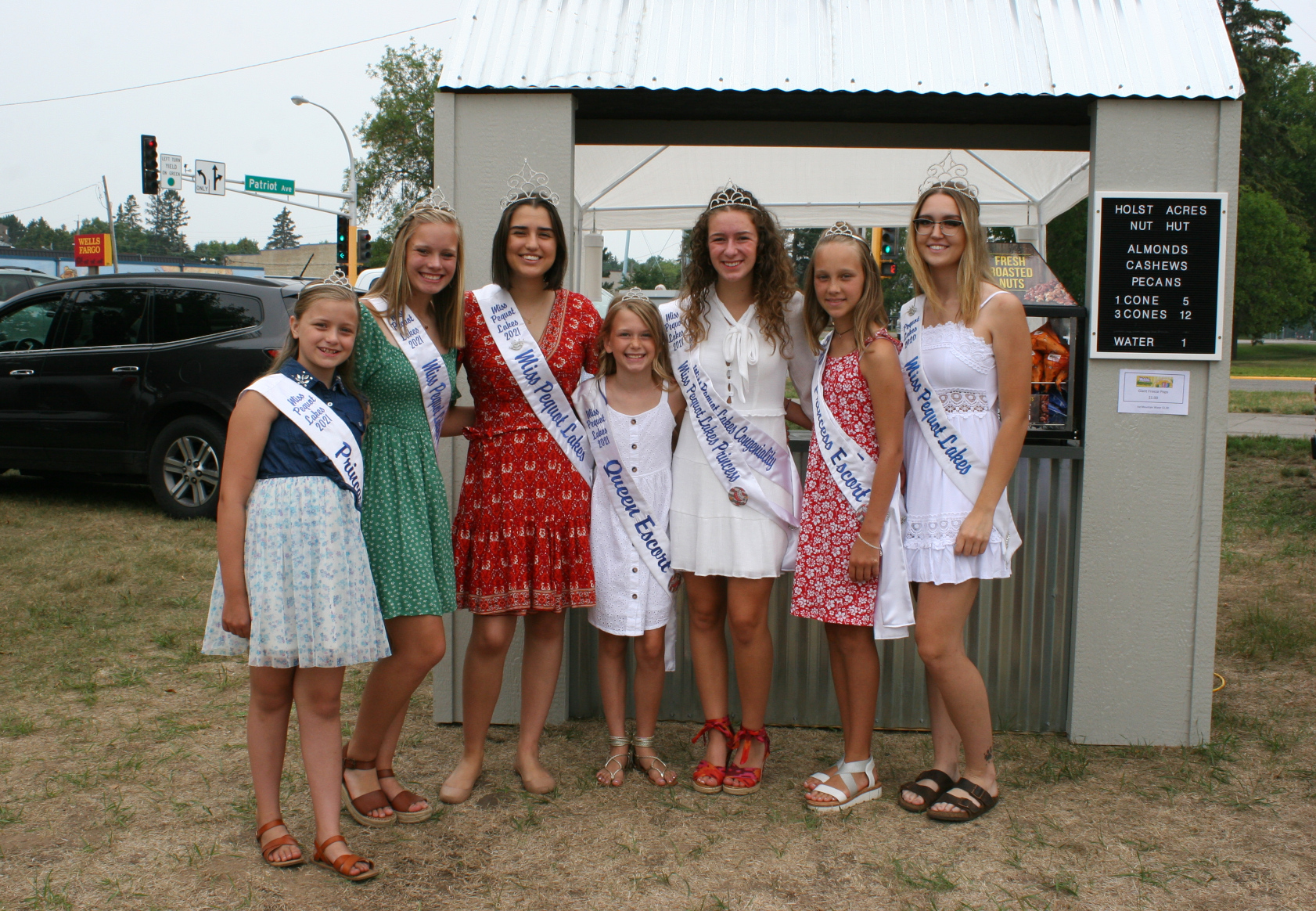
Bean Hole Days royalty. Minnesota Prairie Roots copyrighted photo.
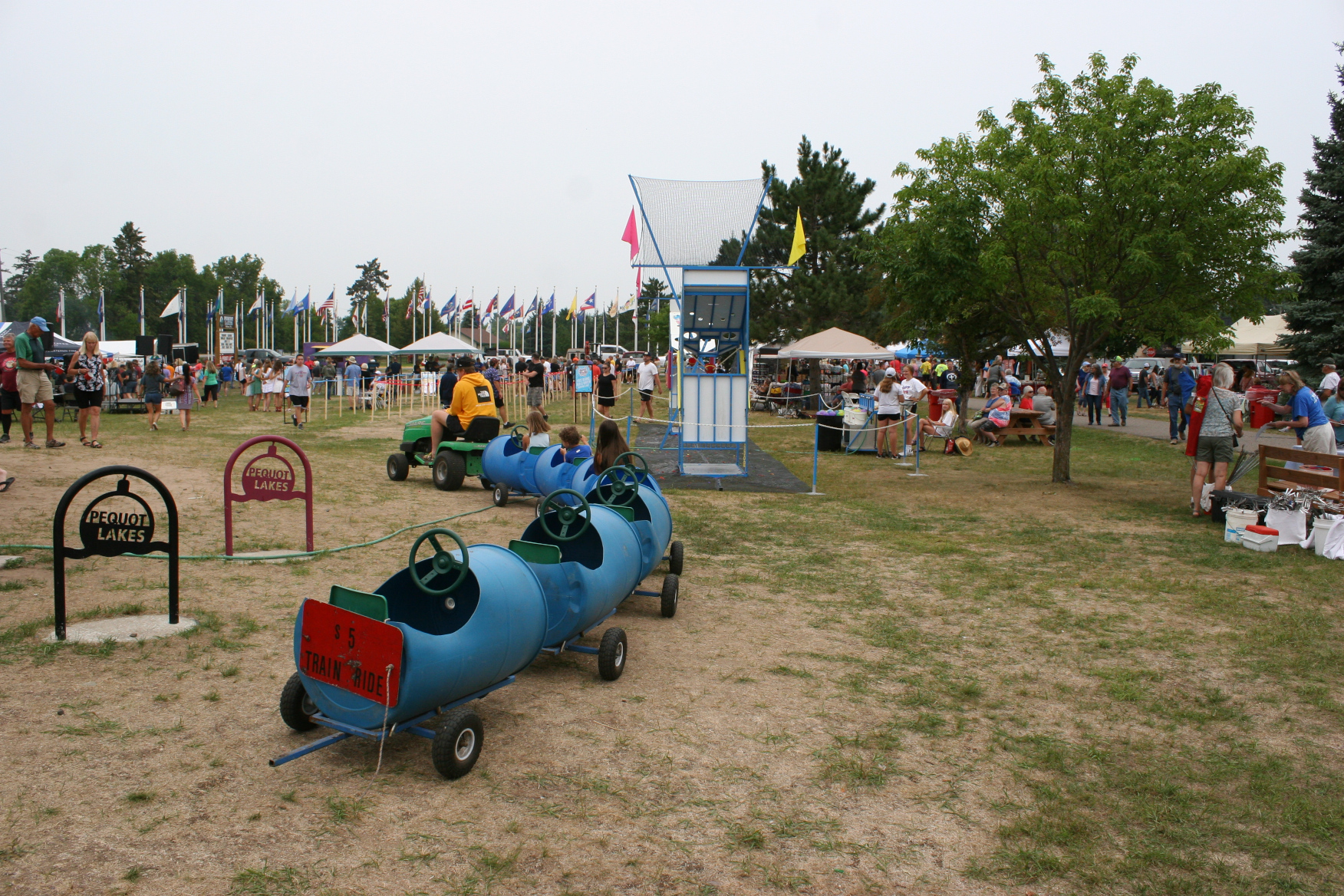
An old-fashioned barrel train weaves through the festival grounds. Minnesota Prairie Roots copyrighted photo.
This event at Trailside Park is about much more than beans. It also features an arts and craft fair, a small kiddie carnival, food vendors and crowning of Bean Hole royalty. And this year free COVID-19 vaccinations.
These friendly vendors sold art (Shea J. Maze) and naturally-dyed goods (Diaspora Textiles). Minnesota Prairie Roots copyrighted photo.
I enjoyed chatting with vendors, mingling, watching. And photographing.
Paul Bunyan greets Bean Hole Days attendees. Minnesota Prairie Roots copyrighted photo.
Bean Hole Days, because of its location in Pequot Lakes among lakes and pines in cabin country, reflects the Minnesota northwoods and all that entails. Fishing. The town water tower is shaped like a bobber. Paul Bunyan and Babe the Blue Ox. Paul shook hands, posed for photos and generally welcomed guests. Babe and bobber sculptures provided photo ops.
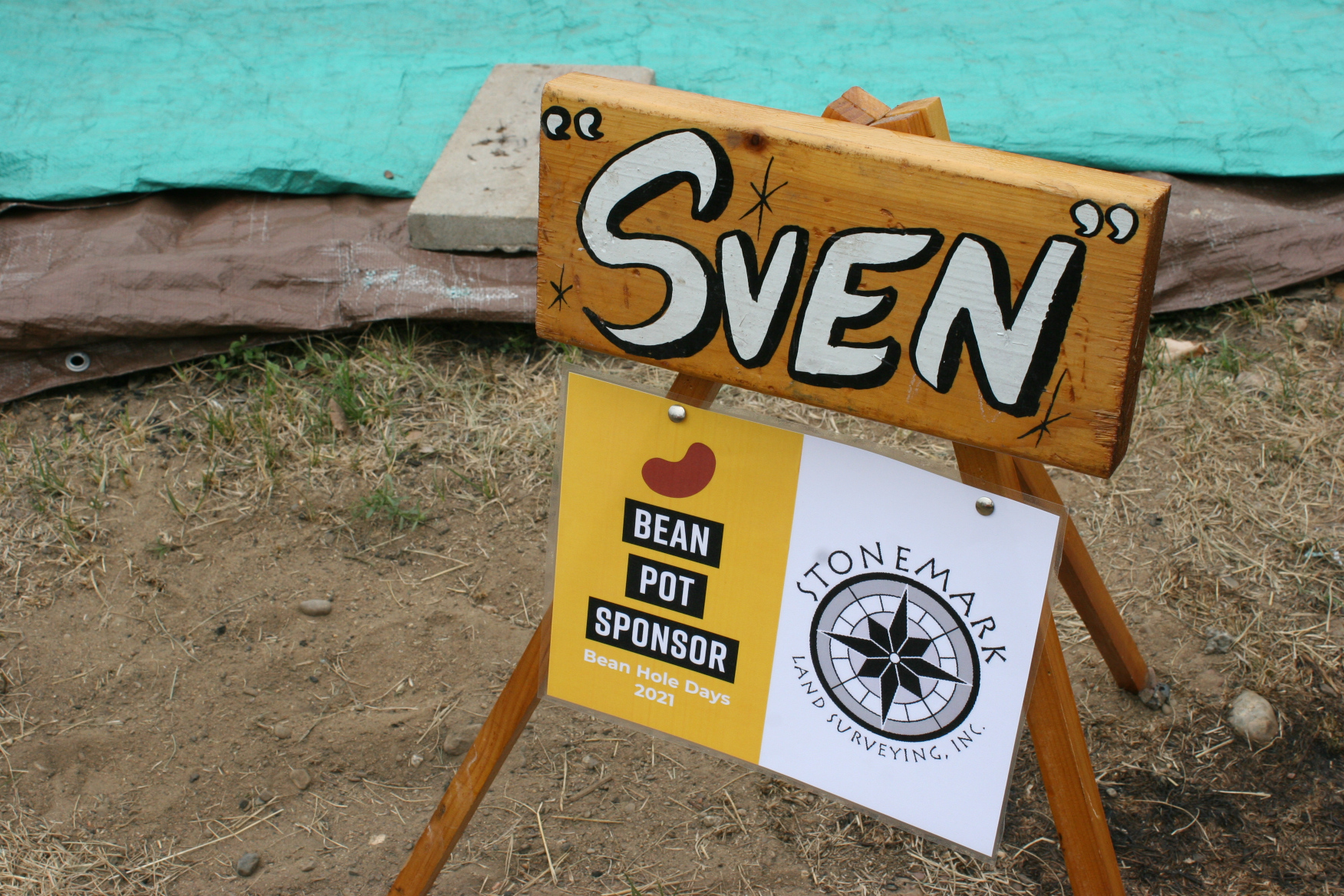
The kettles of beans are given Scandinavian names. Minnesota Prairie Roots copyrighted photo.
Even the kettles of beans, sponsored by area businesses, feature names connecting to the region’s heritage. Lena. Sven. Ole. And more.
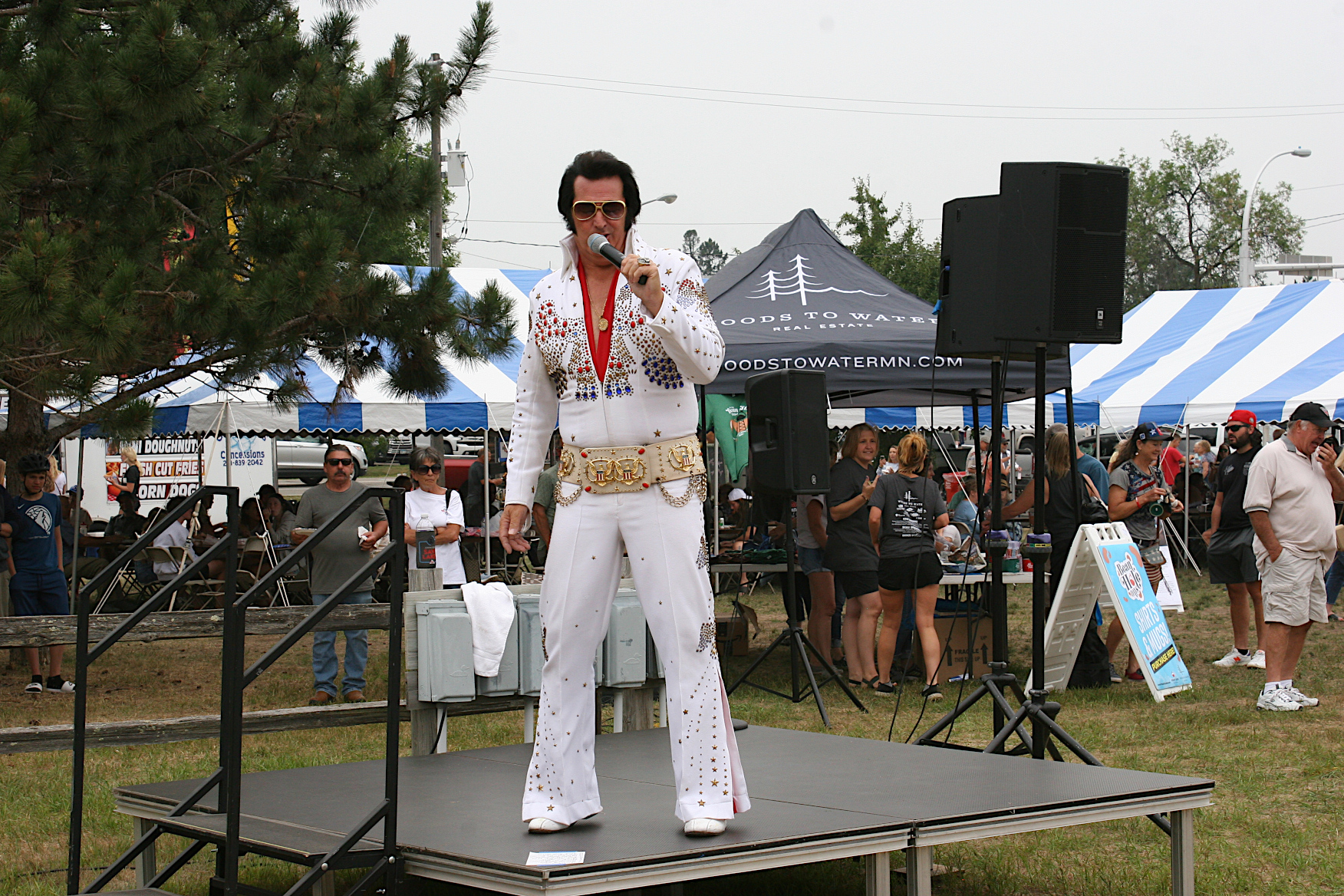
Elvis entertains the waiting crowd. Minnesota Prairie Roots copyrighted photo.
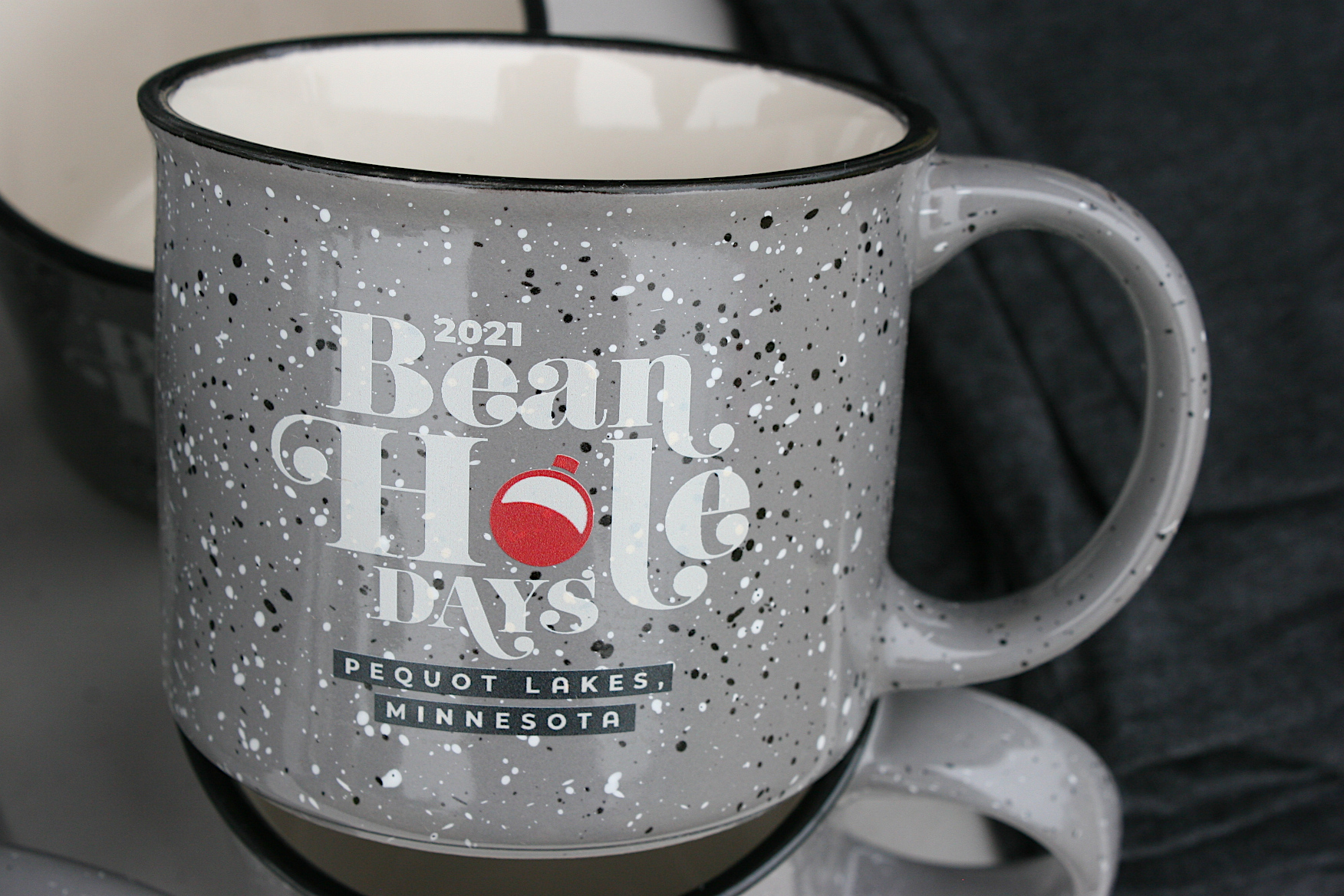
This mug allows you to go in the fast/first serving line. Minnesota Prairie Roots copyrighted photo.
Buy a mug and enter the fast lane. Minnesota Prairie Roots copyrighted photo.
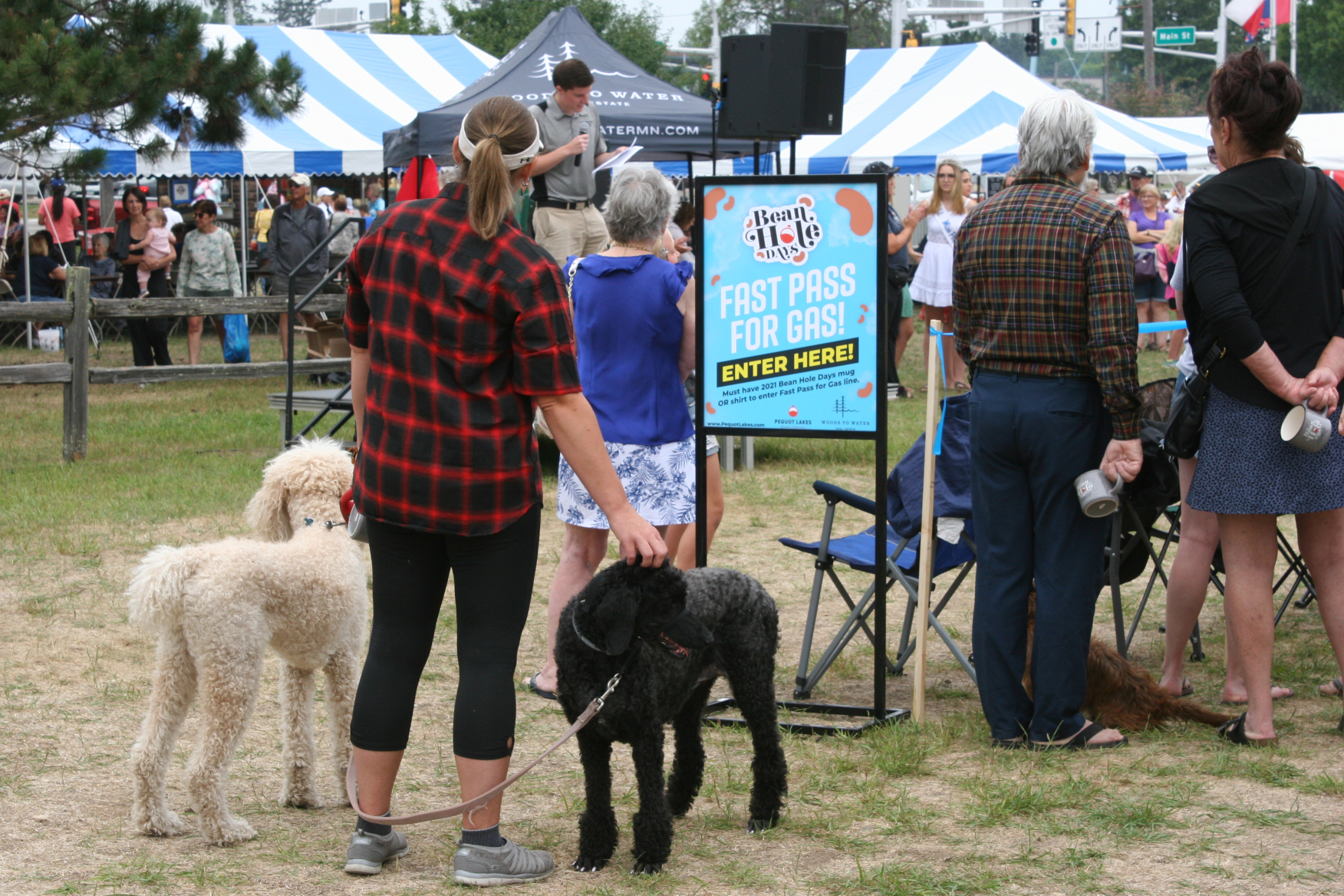
As I waited in line for beans, I danced to the music of Elvis performing live. That garnered a compliment from a volunteer guiding guests to the right serving kettles. Those who purchased a 2021 Bean Hole Days mug advanced through the FAST PASS FOR GAS line. I appreciated the humor. While Randy and I didn’t buy mugs, we left a donation.
Volunteers ladle generous portions of baked beans. Some people brought their mugs from past years. Minnesota Prairie Roots copyrighted photo.
And we left full of beans and appreciative of all the people who put together this unique small town Minnesota northwoods experience.
#
Please check back for more photos from Bean Hole Days as I couldn’t possibly fit everything into a single post.
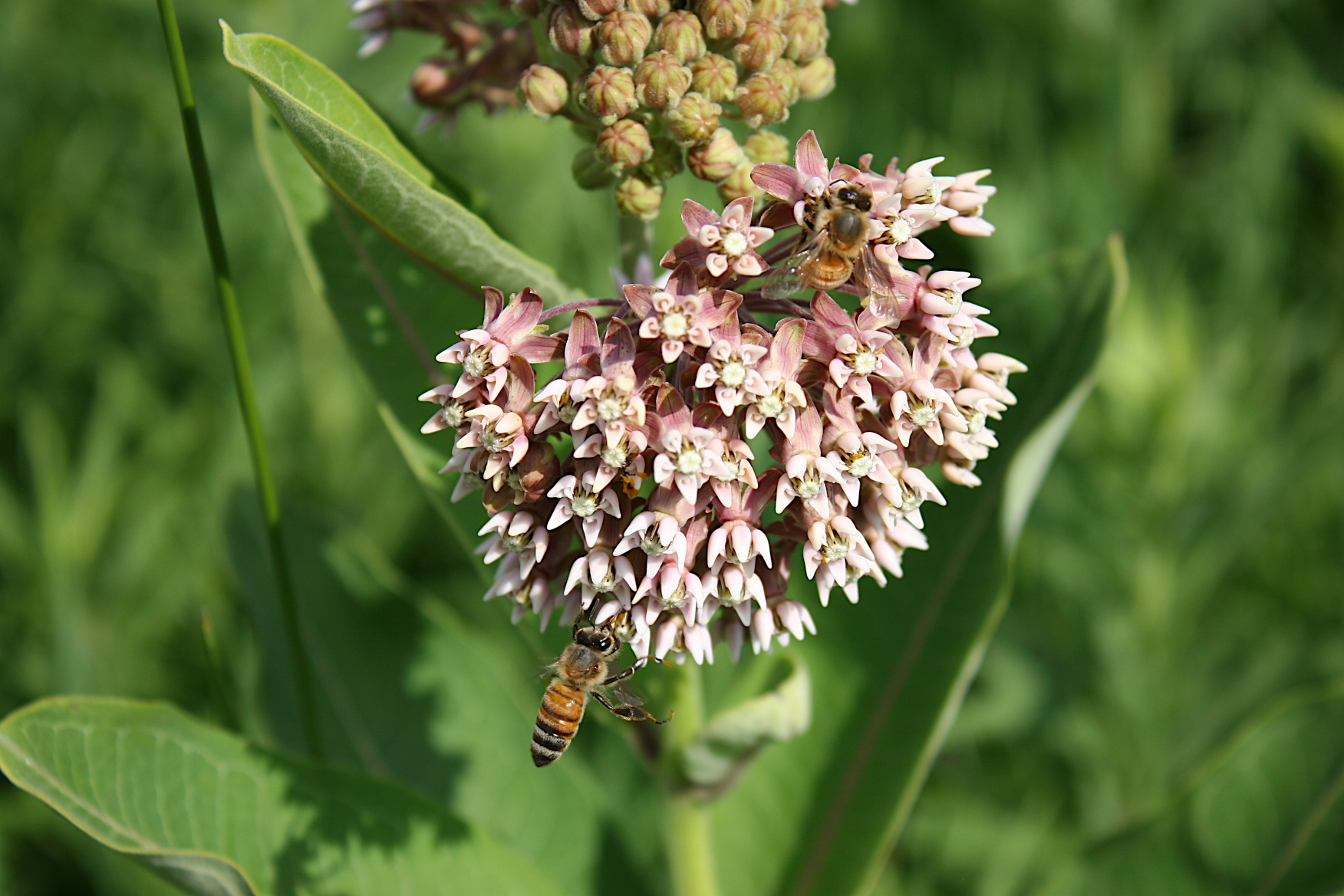
Bees feed on a milkweed flower at River Bend Nature Center, Faribault. Minnesota Prairie Roots copyrighted photo.
IN MY MESS OF FLOWERBEDS, which are anything but orderly, random milkweeds grow. Some sprouted in the lawn. Others simply popped up among the phlox and ferns and iris and greenery, seeds blown by the wind, dropping to the ground, rising now toward the sun.
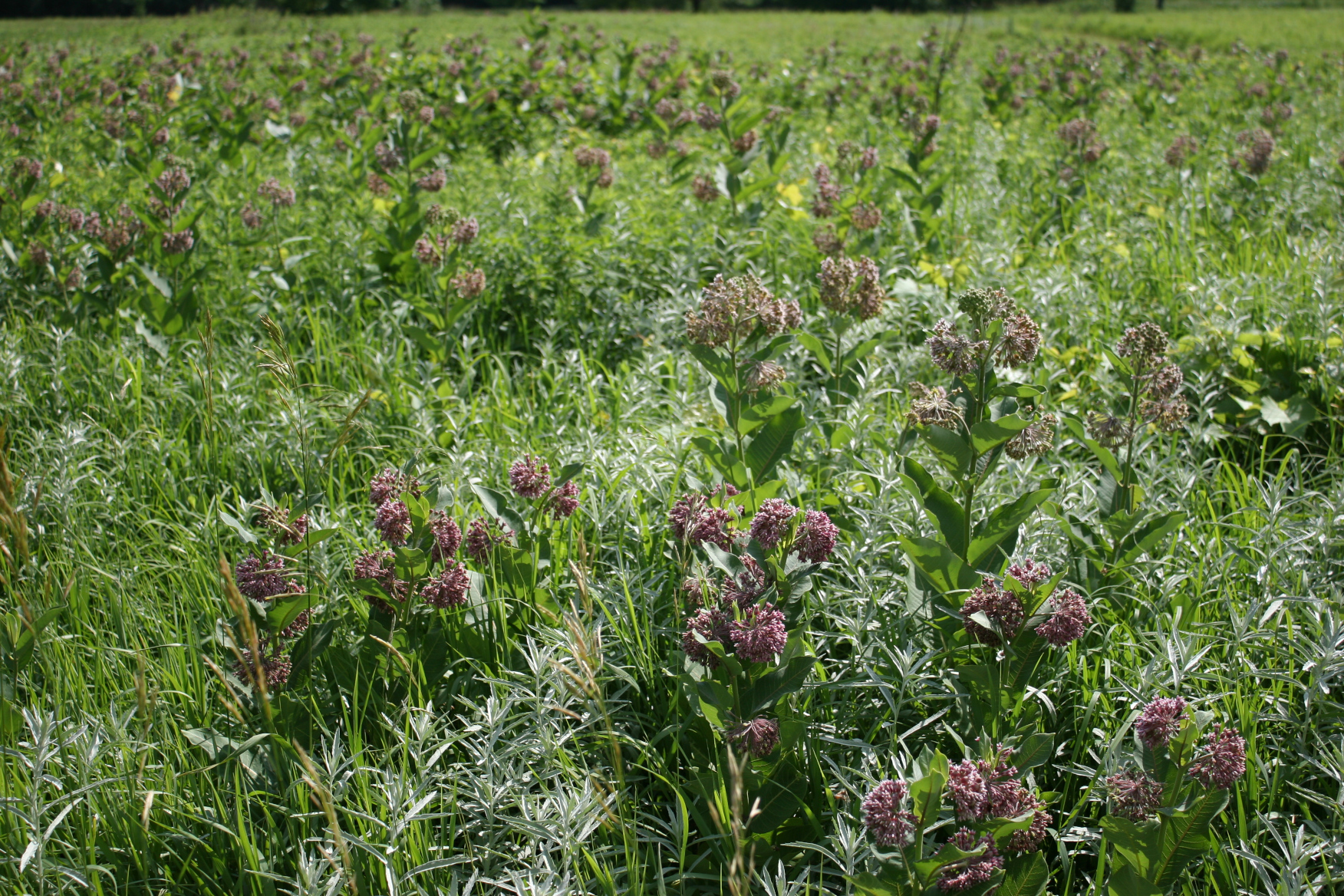
Milkweeds thrive on the prairie at River Bend. Minnesota Prairie Roots copyrighted photo.
Back in the days of my youth, I would have yanked these milkweeds from the soil under the direction of my farmer father. Remove those weeds from the corn and soybean fields. I know better now. Milkweed plants are essential to the monarch butterfly.
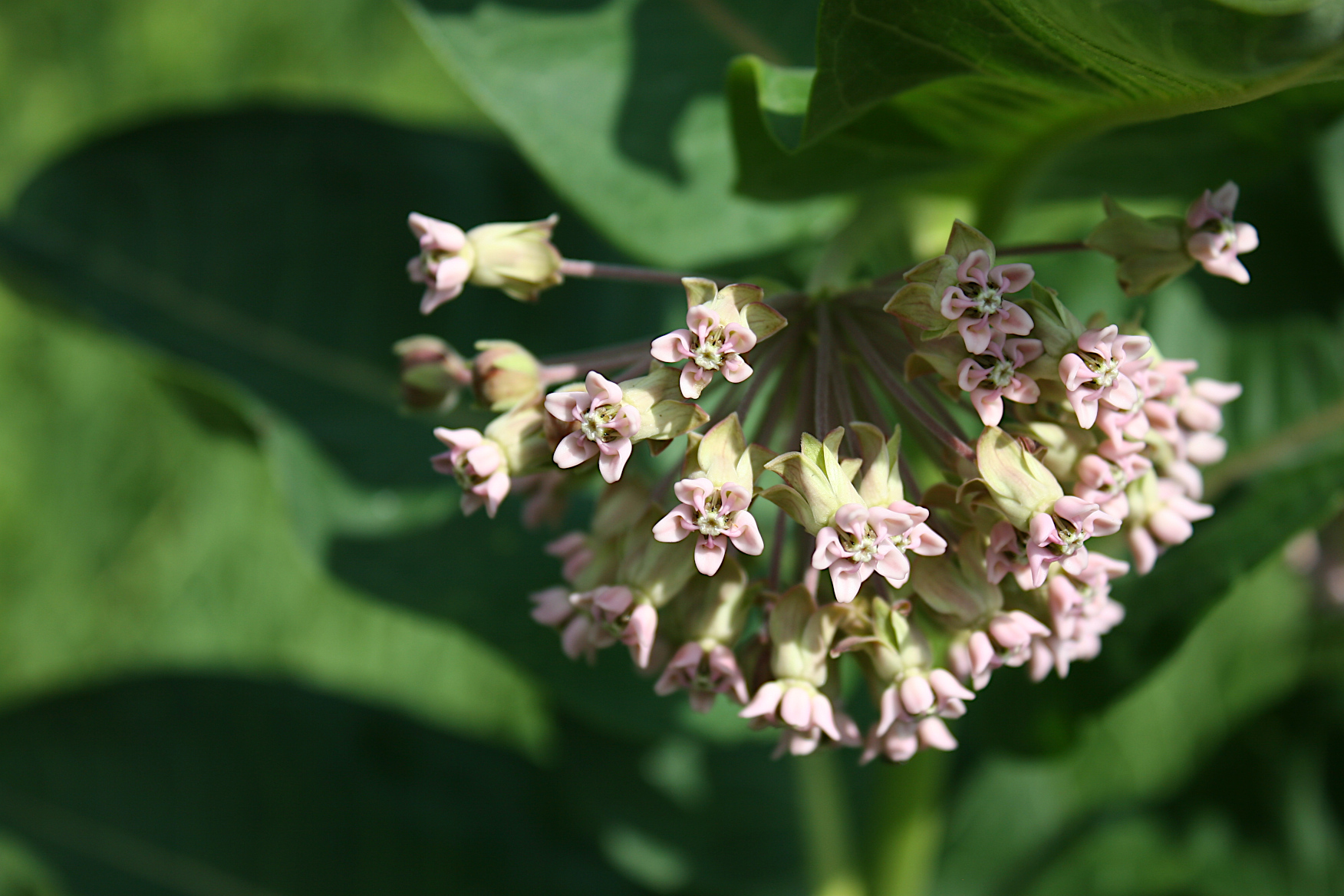
I love the dusty hue of the common milkweed. Minnesota Prairie Roots copyrighted photo.
The milkweed is the host plant for the monarch. They lay eggs on the leaves, the larvae then feeding on those leaves.
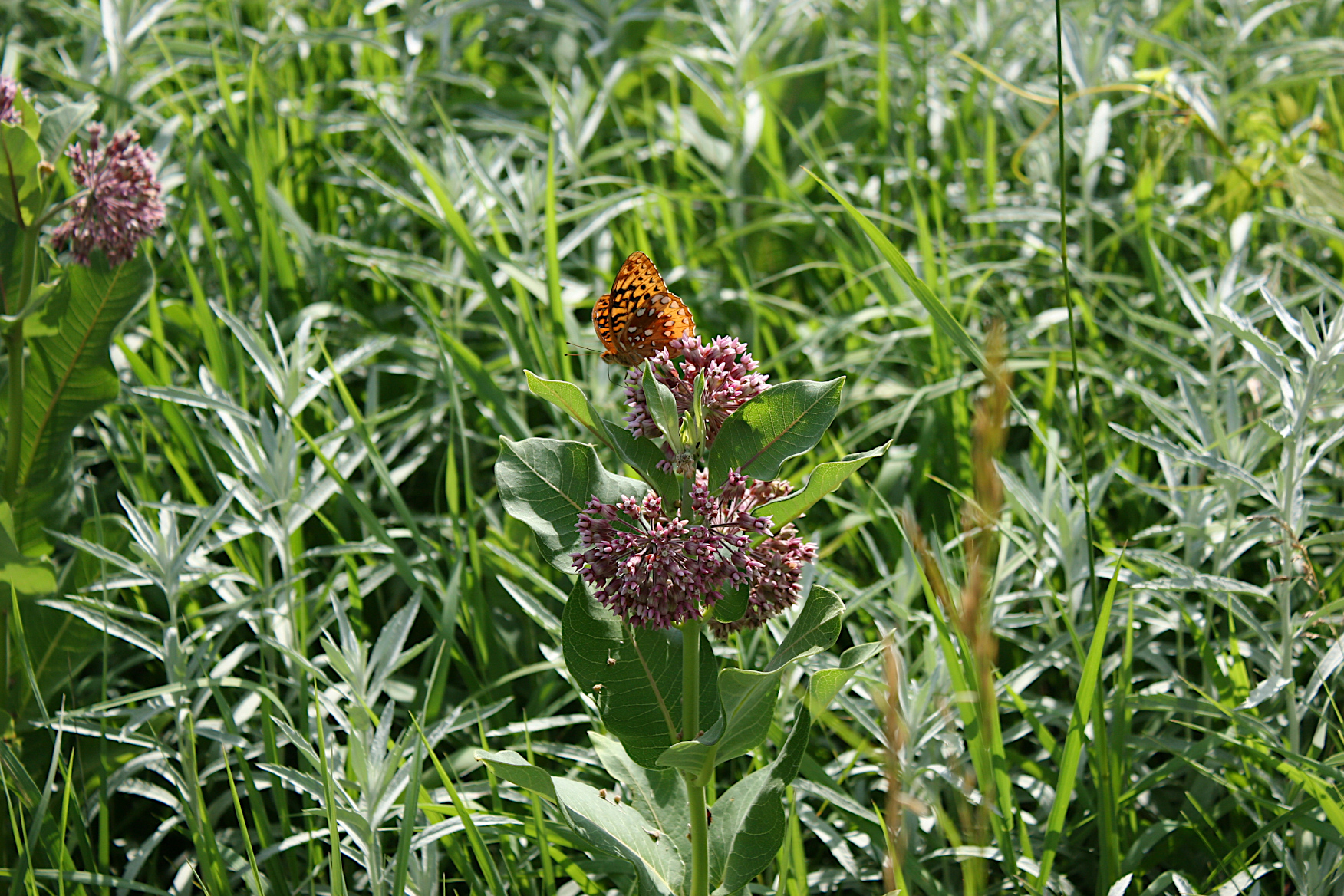
The milkweed attracts more than just monarchs. Minnesota Prairie Roots copyrighted photo.
Without milkweeds, the monarch would become extinct.
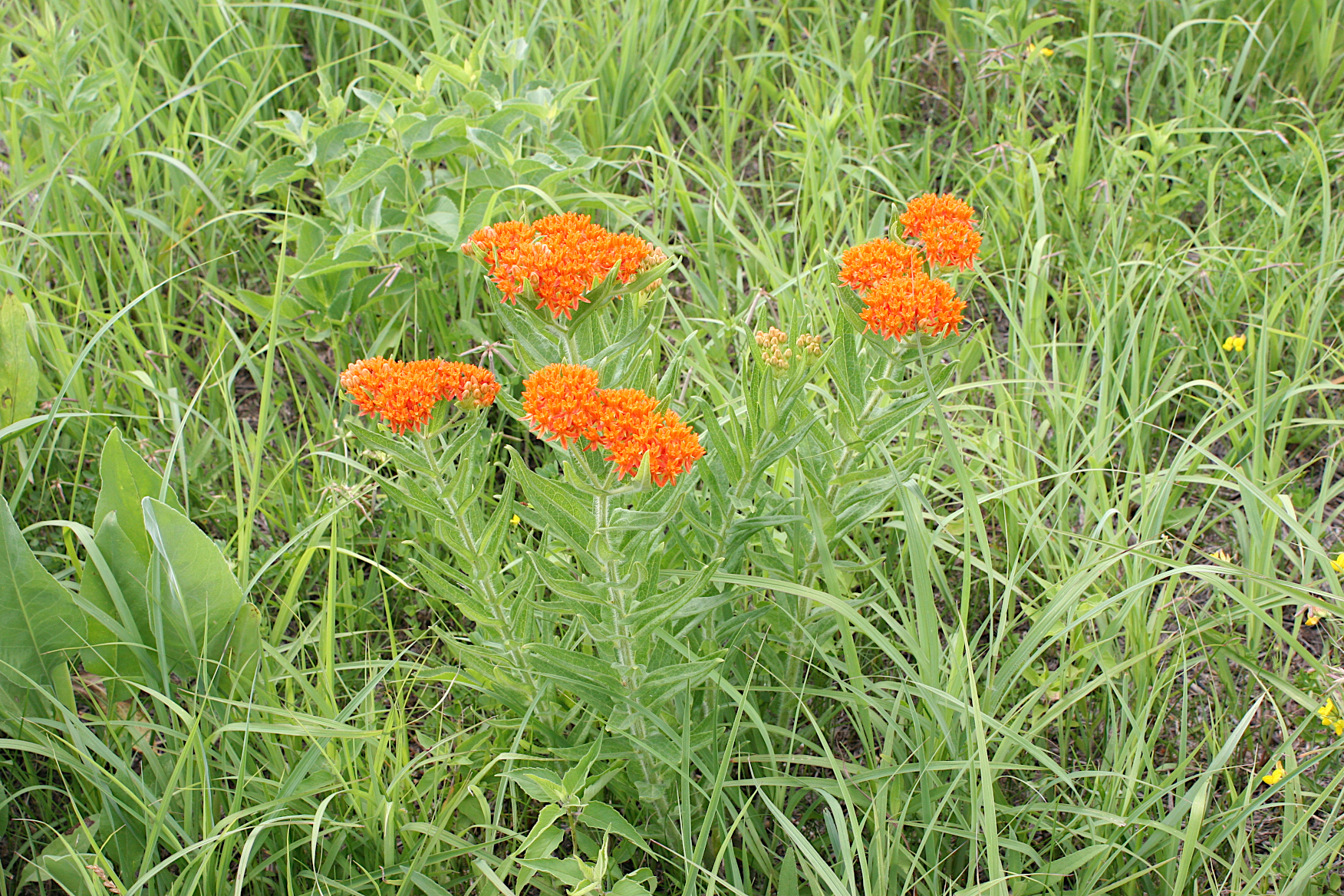
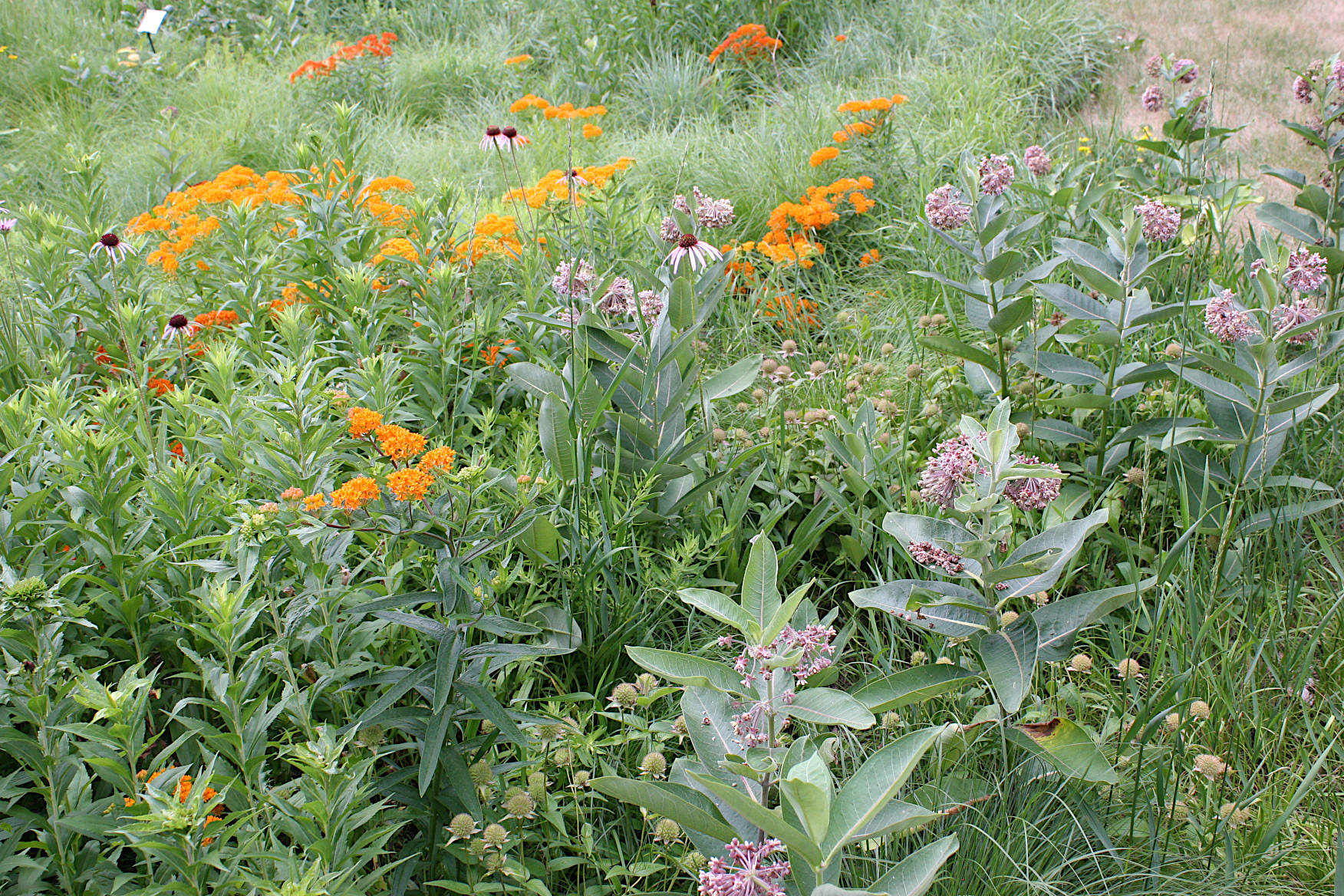
Butterfly milkweed, although much less abundant, also grows at River Bend. Minnesota Prairie Roots copyrighted photo.
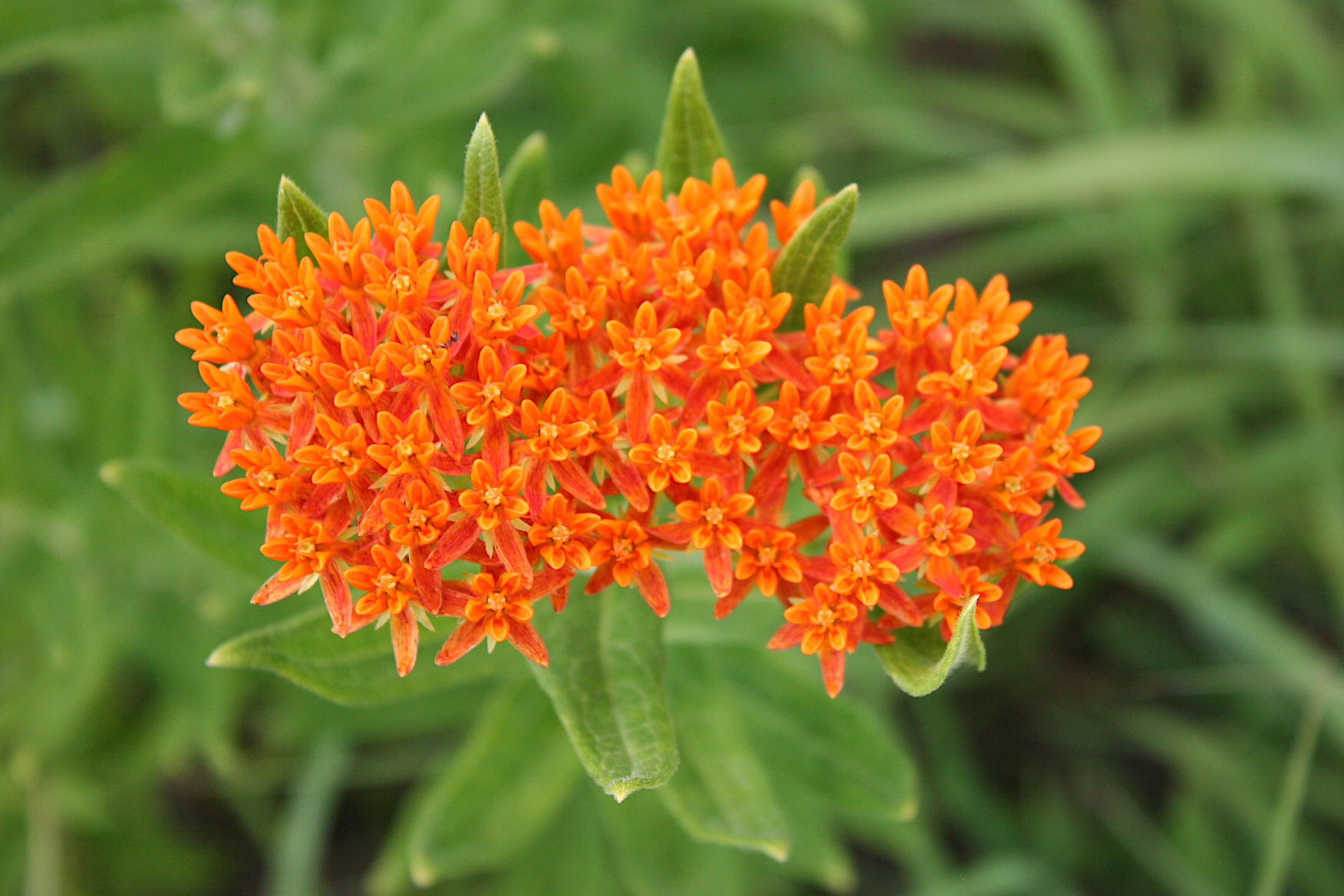
The exceedingly brilliant butterfly milkweed, up close. Minnesota Prairie Roots copyrighted photo.
I appreciate the value of this plant in the natural cycle, in sustaining the monarch butterfly population. This is but one example of how we are all intertwined. Every creature. One dependent on the other.
Milkweed and flowers flourish on the River Bend prairie. Minnesota Prairie Roots copyrighted photo.
I marvel at this intricate world God created. I love to watch a monarch butterfly flit through the air, settle on a blossom, drink its fill of nectar, then rise and fly. Delicate, yet sturdy. Dependent on milkweed and other flowers, yet free.
What a lovely and beautiful sight in a world where beauty is too often missed in the busyness of life, among all the weeds.
I photographed this woman’s shirt at a public event in Northfield. The message refers to struggles with mental illness. Minnesota Prairie Roots file photo.
IF YOU’VE FOLLOWED my writing long enough, you understand my dedication to increasing awareness on two important issues—domestic violence and mental health.
This week, both made headlines in my community. I can’t let this opportunity slide without sharing what’s happened/is happening in Faribault. We need to stay informed, to choose awareness over sticking our heads in the sand. Understanding leads to action and, perhaps, saving lives.
First the really good news for Faribault and the surrounding region (according to the Faribault Daily News): Our local hospital, District One, and Rice County Social Services are collaborating on new adult outpatient mental health services. The hospital, part of Allina Health, will offer a day treatment program and a partial hospitalization program for adults dealing with mental illnesses. Social services will provide referrals.
Photographed at the Northfield Public Library. Minnesota Prairie Roots file photo.
To say I am thrilled is an understatement. This is so needed in Rice County and the surrounding rural areas. Our access to mental health care, especially during or following a crisis, is limited. Waiting time to see a psychiatrist, if that doctor is even accepting new patients, can be up to six weeks. Can you imagine waiting six weeks if you were experiencing a heart attack? You would likely die. Individuals facing mental health issues—from depression to anxiety to bipolar to schizophrenia and more—deserve, and need, immediate access to local care. As do their families.
To get treatment and support locally, rather than traveling to the Twin Cities metro, will ease some of the stress during an already stressful situation. Even with this improvement in services, though, we really need more mental health professionals to alleviate the shortage and meet the area’s needs.
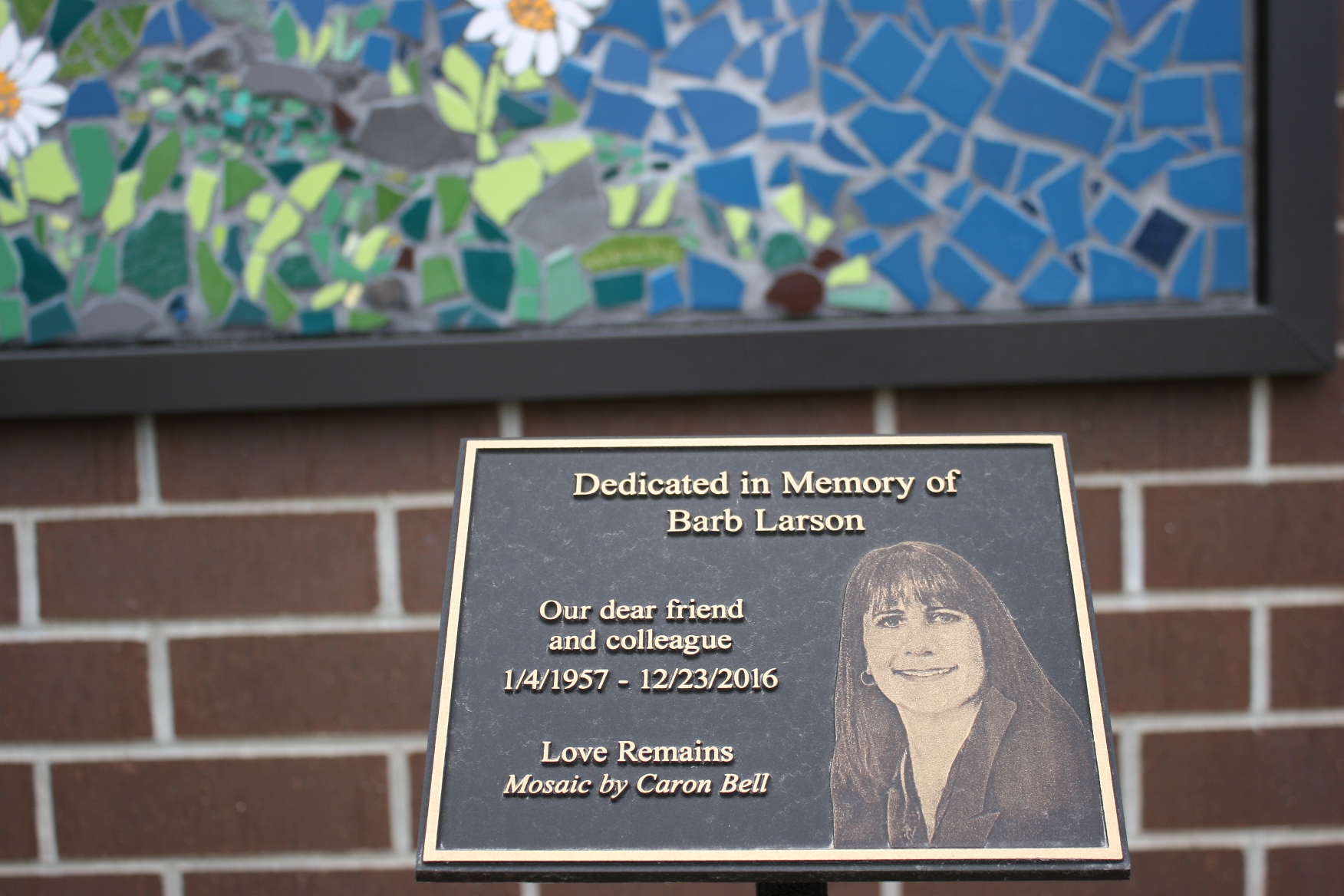
A mosaic on the exterior of the Faribault Chamber of Commerce & Tourism office honors employee Barb Larson, murdered there on December 23, 2016. Minnesota Prairie Roots file photo.
My heart breaks every time I read of such murder-suicides, or any act of domestic violence. Shortly before Christmas 2016, Barb Larson was shot and killed by her ex-husband, who then took his own life, in a high profile case in Faribault. She worked for the local tourism office. He was a retired police officer. That crime shook Faribault to its core.
In both of these situations—domestic abuse/violence and mental health crises—people are here to help. I feel thankful to live in a community that cares. No one ever needs to feel alone, to face life’s challenges and stresses solo.
Warning signs of domestic abuse/violence from a previous community event on the topic. Minnesota Prairie Roots file photo.
I know Amanda tried. She called 911. To make that call took strength and courage. Still, she died. If Amanda’s death can save one life, can result in one person safely leaving an abusive partner, then something positive has come from this tragedy.
Where does all of this leave us as individuals? I encourage you to educate yourself on domestic abuse/violence and mental illness. Then take that knowledge and show your care and compassion to those who need it. To those experiencing challenges. And their families. Listen. Support. Encourage. Refer to professionals. Be that person who chooses not to ignore, but rather to be there. To engage. To understand. To uplift. To care.
















 Minnesota Prairie Roots
Recent Comments